

Submitted:
28 August 2025
Posted:
29 August 2025
You are already at the latest version
Abstract
Anaerobic digestion (AD) is an environmentally friendly promising solution for recycling of agro-industrial wastes. However, overloading of an anaerobic digester with the substrate might cause inhibition of the AD process. Present study investigates effects of substrate to inoculum (S/I) ratio on the AD of Potato-chips processing (PCP) wastes from Potato-Chips Processing Industry (PCPI). The PCP wastes include expired potato-chips (EPC), recovered potato starch (RPS) and potato peels (PP). Mesophilic AD was carried out in batch-wise static reactors at 35±1 oC using 4 different S/I ratios (0.5, 1.0, 1.5 and 2.0 g VS/g VS) for each waste. Different optimum S/I ratios were obtained for the different wastes; however, pH ranges were comparable (7.0 to 7.5) for all batches. The optimum S/I for EPC, RPS and PP were 1.0, 1.5 and 2.0 respectively. Cumulative biogas yields for EPC, RPS and PP were 367.5±6.3, 310.0±5.5 and 202.5±4.9 ml/g VS added, respectively. Methane content of biogas yields ranged between 60% and 70%. There was a variable remarkable shift in the microbial population at the optimum S/I ratio of each waste. Firmicutes increased in case of EPC and RPS while decreased in case of PP. Conversely, Proteobacteria increased by using PP as substrate and decreased in case of EPC. Herein the results of AD of PCP wastes confirm its potential for onsite production of renewable bioenergy and reduction of energy bill in the PCPI. Also it provides guidance for optimizing the AD of PCP wastes for large scale application.
Keywords:
potato peels
; expired potato-chips
; recovered potato starch
; biogas
; anaerobic digestion
1. Introduction
Recently, global energy demand has increased faster than usual throughout all geographical regions, driven by accelerated industrialization and too rapid population growth [1]. As reported, fossil fuels including oil, natural gas and coal currently provide around 80% of the world energy supply [2]. Over-use of the fossil fuels has been encountered in many problems and the environmental implications of pollution have prompted significant interest in clean and sustainable energy sources [3,4]. Many countries like Egypt start depending on the renewable sources of energy to fulfill their growing demand. Sector of energy represents the most important cornerstone aspect among the 10 features of Egypt’s vision 2030 [5]. The vision suggests that energy resources should be used effectively and domestically, and there should be sufficient diversity in the power generation between fossil fuels and renewable resources [5]. Thus, suitable substitutes have drawn the researcher’s attention for producing renewable energy from different resources. Biofuels derived from biomass represents a viable option of renewable fuels since biomass is a sustainable source of organic matter that comes from animal and plant sources [6] and biomass-bed biofules have excellent environmental impacts.
Biogas is considered one of these renewable energy sources; however negligible portion of global renewable energy (6.3%) is produced from biogas that is derived from biomass of plants, animals and microorganisms [7]. Several initiatives and programs in Europe and recently in the whole world encourage use of biomass to produce renewable energy. The worldwide biogas industry has increased more than 90% between 2010 and 2018, making it one of the World's fastest-growing sectors [8]. Biodegradable organic matter is converted into energy-dense biogas, which is mostly composed of methane, carbon dioxide, hydrogen, and hydrogen sulfide under anaerobic digestion process [9].
Anaerobic digestion of organic wastes has gained interest as a way of producing renewable energy while also addressing issues related to safe disposal of organic wastes. Uncontrolled decompositions of the organic wastes in the landfills release substantial volume of methane that has 20 times global warming potential of carbon dioxide [10]. Anaerobic digestion is a multistage complex process in which hydrolysis is the first and the key component of the whole process. Hydrolytic bacteria hydrolyze complicated insoluble substrate macromolecules to produce simple and more soluble intermediates [11]. A vast number of microbial species, working together, on the organic substrates like carbohydrates, proteins, and lipids to generate volatile fatty acids (VFAs), which are subsequently handled by methanogenic bacteria to produce methane and carbon dioxide. Bacteria produce extracellular enzymes to hydrolyze particulate substrates into tiny transportable molecules that can pass across the cell membrane. Once these basic molecules get into the cell, they are utilized to generate energy and assemble biological components [12].
Recently, AD process has been widely used for remediation of many organic solid wastes. Potato crop is starchy tuberous and represents the 3rd most important crop for human consumption and its use as a staple food is steadily increasing [13]. In North-western Europe, Germany, France, Netherlands, UK and Belgium constitute the biggest five potato producers, with total potato crop production around 60% of EU-28 production before Brexit [14]. Potato peels are the most common by product of potato processing, accounting for around 15 % to 40% of waste by weight, depending on peeling method and their removal is becoming a serious concern [15]. In 2021, Egypt's potato production was estimated to be 6.9 million metric tons with a small rise above the production of year 2020 that recorded around 6.8 million metric tons [16]. Achinas et al. 2019 [17] examined the performance of anaerobic digestion of potato peels and impacts of different pre-treatments and co-digestion with different percentages of cow manure. It was found that co-digestion of potato peel waste and cow manure yielded up to 237.4 ml CH4/g VS added, whereas the maximum methane yield from the mono-digestion of potato peels was 217.8 ml CH4/g VS added. However, Fang et al. 2011 [18], used a potato-juice as a by-product from potato starch processing for biogas production in an up-flow anaerobic sludge blanket (UASB) and found that the maximum methane potential of the potato-juice was 470 ml CH4/g VS added. The difference in degradation efficiency is related to the microbial consortium, which consists of highly diverse communities within different trophic groups such as fermenting bacteria, syntrophic bacteria and methanogens. These groups such as Firmicutes, Proteobacteria, and Chloroflex will vary due to mainly pH change, substrate change and toxicity [19].
Potato-chips Processing Industry (PCPI) produces large amounts of different types of solid wastes. These solid wastes could represent a sustainable source of renewable energy by anaerobic digestion (AD). The AD and biodegradation of organic solid waste is eco-friendly method for energy recovery and stabilization of organic waste. There are different laboratory methods to estimate/determine rate of anaerobic biodegradation of organic wastes; liquid and solid. The elemental composition of the organic solid waste is recently used as an innovative method for theoretical determination of potential methane production from organic solid wastes [20,21]. However, the traditional lab method for the measurement of the anaerobic biodegradability and biochemical methane potential (BMP) of the anaerobic digestion of organic wastes under test conditions remains the most trusted one [22,23]. Thus the aim of the current study is the measurement of BMP and AD of potato-chips processing (PCP) wastes. The anaerobic digestion and biogas production from three different wastes from PCPI were investigated at different substrate/inoculum (S/I) ratios. These organic solid wastes include Expired Potato-Chips (EPC), Recovered Potato Starch (RPS) from wastewater stream and Potato Peels (PP) from screening process. The application of inoculum for starting anaerobic digestion has been arbitrary [24]. Therefore, there is a need to determine the optimum quantity of inoculum that is required for maximum specific biogas yield. Furthermore, to the best of our knowledge, the scientific information on the best S/I ratio for maximum biogas production from anaerobic digestion of these wastes is scarce in the literature. Establishing an optimum S/I ratio for enhanced anaerobic biodegradability and maximum biogas yield from PCP wastes is the target of the current study. Production and degradation of volatile fatty acids during the AD of PCP wastes have been assessed. Moreover, microbial community shifts during the AD of PCP wastes comparing to the initial sludge inoculum have been assessed and used to map the proposed mechanisms of biodegradation processes.
2. Materials and Methods
2.1. Anaerobic Biodegradability and Methane Production with Experimental Set-Up
Most of the anaerobic digestion and biodegradability assay is carried out using mesophilic sludge or bacteria within temperature range of 30-40 oC [22,23] and more specifically at temperature range of 35-37 oC under stirring or stagnant conditions [25,26]. The duration of the experiment is also important and it is recommended to be extended at least for 21 days and mostly extend for 100 days for solid wastes [27].
Batch anaerobic digestion bioassays were carried out to assess bioremediation and biogas production from three different potato-chips processing wastes inoculated with mesophilic anaerobic sludge at different S/I ratios. The experiments were carried out in duplicate at mesophilic condition (37 oC). Graduated serum bottles with 100 ml volumetric capacity for each were used. 20 ml head space has been left in each bottle to accommodate generated biogas. Four different S/I ratios were used for each substrate. The S/I ratios were 0.5, 1.0, 1.5 and 2.0 as shown in Table 1. In addition control bottles containing only demi-water and sludge inoculum were used to measure potential biogas production of the sludge inoculum. The phosphorus from KH2PO4 and nitrogen from NH4Cl were added according to the ratio of 200 (COD): 5 (N): 1 (P) or 142.9 (g volatile solids): 5 (N): 1 (P) assuming 1 g VS has 1.4 g COD.
2.2. Source of the Sludge Inoculum
The sludge inoculum was sampled from the anaerobic digester of excess sludge at Al-Gabal Al-Asfar wastewater treatment plant which represents the largest activated sludge municipal wastewater treatment plant in Egypt. The sludge sample has been subjected to laboratory analysis of total solids (TS), volatile solids (VS), total Kjehdahl nitrogen (TKN) and total phosphorus (TP) according to the standard methods, APHA 2023 [28].
Characteristics of the anaerobic sludge inoculum are presented in Table 2. Experiment was extended till the end or cease of biogas production.
2.3. Sampling of PCP Wastes
PCP wastes including EPC, RPS and PP were collected from one of the largest potato-chips processing factories in Egypt. The factory located in 6-October industrial city. Figure 1 shows process diagram of the industrial process including types of generated solid wastes and wastewater streams. Speed washing and dehydration process generates wastewater laden with high concentration of potato starch which should be recovered to decline pollution load. The starch recovery process from wastewater stream is carried out using rotating drums partially or half submerged in the wastewater tank where the starch is deposited on their surface and automatically removed from the drum surface with skimmer. The RPS was collected from the starch recovery machine. PP was obtained from the wastewater curved screen that is used to separate the potato peel from wastewater generated from peeling process. EPC was collected from the factory and this waste includes expired-shelf product returned back from the market, rejected product during the inspection process and product fallen on the ground during production and packaging process. Potato peel was washed several times with tap water to remove mud and then dried at 70 oC before use. RPS was dried in the oven at 70 oC before use. All solid wastes were grinded using electric grinder.
2.4. Analytical Methods
pH value was measured by JENWAY 3510 device, chemical oxygen demand (COD) was measured by HACH method, ammonia–nitrogen (NH4- N) (steam distillation, Behr S-1, Germany), TKN (Macro Kjeldhal digestion followed by steam distillation, Behr S-1, Germany), TS (drying oven, DHG-9055A, China) and VS (muffle furnace, Vulcan A-550, Germany), were measured according to the standard methods for the examination of water and wastewater [28]. TP was analyzed using potassium persulfate digestion method followed by colorimetric measurement using vanadomolybdate method, APHA 2023 [28]. For solid wastes, crude protein was calculated using TKN method (Crude protein = Organic nitrogen or TKN × 6.25) as described by [29] while lipids, crude fiber and carbohydrates were measured using methods described by [30]. All chemicals used in this study are analytical reagent (AR) grade.
Biogas composition was determined using portable biogas 5000 gas analyzer (Geotech, Geotechnical Instruments (UK) Ltd, England). VFAs in terms of propionate (HPr), acetate (HAc) and butyrate (HBu) were determined by high-performance liquid chromatography (HPLC) instrument (Agilent 1260). HPLC analysis was performed using InertSustain. The separation was done using the Eclipse AQ-C18 HP column (4.6 mm × 150 mm i.d., 3 μm). The mobile phase comprised 0.005-N sulfuric acid. The mobile phase was programmed consecutively in a linear gradient for the following flow rates: 0–4.5 min (0.8 mL/min); 4.5–4.7 min (1 mL/min); 4.7–4.71 min (1 mL/min); 4.71–8.8 min (1.2 mL/min); 8.8–9 min (1.3 mL/min); 9–23 min (1.3 mL/min); and 23–25 min (0.8 mL/min). A diode array detector was fixed at 210 nm. The injection volume was 5 μL for each sample solution. The column temperature was maintained at 55 °C.
2.5. Microbial Community Analysis: DNA Extraction and Metataxonomic Analysis
Samples from the sludge inoculum (I) and from the reactors at the optimum S/I ratios of EPC, RPS and PP were collected for microbial analysis. About 0.5 mL from the sample was used for DNA extraction using the PureLink™ Microbiome DNA Purification Kit (Invitrogen™, USA) according to instruction of the manufacture. High-throughput sequencing was performed using 16S rRNA gene at Illumina platform using the Nextera XT Index Kit (Illumina, USA) according to the methods described elsewhere [4].
3. Results and Discussions
3.1. Physicochemical Characteristics of PCP Wastes
The physicochemical characteristics of organic solid wastes (EPC, RPS and PP) from PCPI are shown in Table 3. The results showed great variation in total carbohydrates, crude protein and fat&lipid content of the three solid wastes. This variation is expected to affect the biogas yield of the wastes [31]. As showing from the results, RPS has limited nitrogen and phosphorous content; both are extremely necessary for the microbial growth, however, high protein content in the waste may cause excessive release of ammonia during the anaerobic digestion process. This ammonia may cause rise in pH with subsequent rise in the fraction of free ammonia which inhibits the AD process at excessive concentration [32,33]. Anaerobic sludge inoculum is added as a source of microbial consortium to reduce the lag phase and enhance biogas yield. Additionally anaerobic sludge inoculum act as a source of nitrogen and phosphorous and compensate their deficiency in the RPS. However, nitrogen and phosphorus were added from chemical sources to neutralized nitrogen and phosphorous deficiency in the solid wastes as mentioned in the materials and methods Section 2.1.
3.2. Impact of S/I Ratio on Biogas Yield
Figure 2 shows the results of the cumulative biogas at the different S/I ratios for EPC, RPS and PP. The results confirm importance of optimizing appropriate inoculum dosage to enhance microbial anaerobic digestion of organic wastes. The experiments were run using four different S/I ranging from 0.5 to 2.0. There was a distinct variation in the initial biogas yield during the first week of the AD process of EPC, RPS and PP compared to the control batch (CB).
Figure 2-A shows that the initial production of the biogas for lower S/I ratios of EPC i.e EPC-0.5, EPC-1.0 and EPC-1.5 exhibit better performance than higher S/I ratio i.e EPC-2.0, while the start-up performance for PP recorded the same produced biogas for all S/I ratios (Figure 2-B). The lower initial biogas production at S/I ratio of 2 in case of EPC could be attributed to high content of fat and lipids in the waste. In case of RPS the initial biogas production of S/I ratios of 1.0; 1.5 and 2.0 exhibits better performance than S/I ratio of 0.5; Figure 2-C. This observation was attributable to a consequent increase in active methanogen population occasioned by increased organic load and this was the same observation of Owamah and his colleagues [34] who reported that the start-up of higher S/I ratios was much better than lower S/I ratios for digestion of food waste and maize husk. On the other hand during the anaerobic digestion of potato peel waste, increasing the inoculum to substrate ratio significantly improved the biogas yield [17]. Variation between observation of Achinas [17] and the current study might be attributed to the variation in the solid content of the reactor since Achinas and his colleagues [17] used 1% solid content comparing to 2% in the current study. Determining of the optimum S/I ratio is crucial to enhance biogas production and is essential for further large scale anaerobic digestion operations as reported from Raposo et al. (2009) [35], however, that the different performance as shown in Figure 2 and a direct comparison of biogas production from EPC, RSP, and PP has not previously been documented. After 90 days of AD process of EPC, RSP and PP, the cumulatively produced biogas from anaerobic digester of EPC-0.5 was higher than the CB by 3.5 factor, however, the produced biogas was increased by 5.9, 5.4 and 5.5 factors for EPC-1.0, EPC-1.5 and EPC-2.0 as shown in Figure 2-A. For our knowledge, no study has been found in literature using this range of substrate to inoculum ratio to enhance biogas production from EPC for such comparison.
Regarding the AD of RSP, the produced biogas increased from 124 mL at the CB to 318 mL, 566 mL, 620 mL and 265 mL for RSP-0.5, RSP-1.0, RSP-1.5 and RSP-2.0. The results confirm that the optimum S/I ratio for AD of RSP was RSP-1.5. On the last comparison of AD of PP, the produced biogas of PP-2.0 was the optimum as the produced biogas reached to 3.2 time compared to CB, however, the produced biogas for using PP-0.5 was only 1.7 times compared to CB and this ratio increased to 2.6 for using PP-1.0 and increased to 2.9 for using PP-1.5. These results regarding mono-digestion of PP and EPC was different than Zhang et al. 2019 [36] who did a comparison for mono-digestion of PP and potato waste at only two S/I ratios of 0.5 and 1.0 and reported that the optimum S/I for both substrates was 0.5. The methane content of the biogas was 75%, 73% and 71% for EPC, RSP and PP and these percent of bio-methane was higher than Liang et al. 2015 [22], who reported that the methane content of biogas was ranged from 60% to 70% for anaerobic digester inoculated with PP and lactic acid fermentation residue.
Figure 3 shows the biogas yield for the control and different S/I ratios of EPC, RSP and PP. The biogas yield was 62.0 mL/g VS added for CB and this value increased by factor of 2.5, 4.9, 4.4 and 4.5 for EPC-0.5, EPC-1.0, EPC-1.5 and EPC-2.0 as shown in Figure 3-A. Optimum biogas yield using EPC as substrate was EPC-1.0 and the yield reached 338 mL/g VS added and this result was better that Jacob et al., 2016 [37] who used potato processing waste as substrate for dry anaerobic digestion process with using 5 g TS/L and reported that the yield of biogas production reached to only 239 L/Kg VS added. Figure 3-B shows that the biogas yield in CB increased by factors of 1.5, 3.5, 4.0 and 1.1 for RSP-0.5, RSP-1.0, RSP-1.5 and RSP-2.0. However, using PP as a feedstock with different S/I ratios increased the biogas yield by factor 0.7, 1.6, 1.9 and 2.2 for PP-0.5, PP-1.0, PP-1.5 and PP-2.0 as shown in Figure 3-C. The optimum biogas yield for EPC, RPS and PP were 338 mL/g VS added, 310 mL/g VS added and 202 mL/g VS added. The better results of EPC and RPS in comparison to PP could be attributed to higher content of lipids and fats in case of EPC (table 3). It is well known that fat and lipids have high carbon content than protein and carbohydrates and provide more biogas yield under anaerobic digestion. Also RPS contains more digestible carbohydrates (starch) than PP which contains more fibers and ash content (Table 3). The results of biogas yield in this study are lower than Zhang et al., 2019 [36] who reported 439 mL and 348 mL CH4/g VS by mono-digestion of parts of potato and PP, respectively. The results of biogas yields confirm that there is no ideal S/I ratio for all substrates as the optimum S/I ratio for EPC was 1.0 and this optimum became 1.5 in case of RSP, however, the optimum S/I ratio for PP was 2.0.
3.3. Effect of Using Different S/I Ratio on Treatment Efficiency and VFAs Degradation for EPC, RPS and PP
Figure 4-A shows TS degradation for all different S/I ratios. TS degradation ranged from 29.9% for S/I 0.5 to 42.1 % for S/I 1.0 using EPC as substrate. The removal of TS for RPS after using S/I of 1.5 and 2.0 was comparable and almost the same and this indicated that the behaviour of the bacteria was very similar for both S/I ratios. Using RPS as substrate change the behaviour of the bacterial community regarding to the digestion of TS. The degradation of TS was 16.1 % after using S/I of 0.5 for RPS and this degradation was doubled to reach 32.9 % after doubling the S/I ratio to 1.0. Increasing S/I ratio to 1.5 leads to increasing the degradation of TS to reach 57.6% and more increasing of S/I to 2.0, the degradation decreased to 41.8% and this indicate that toxicity has been happen for bacteria after increasing S/I ratio and confirm that there is no constant S/I ratio for all substrates.
The degradation for TS after using PP was increasing gradually from 19.0 %, 19.7 %, 24.2% to 37.2% for S/I 0.5, 1.0, 1.5 and 2.0. This was different from Liang et al., 2015 [22] who used only one ratio of S/I (1.0) and reported that the TS degradation reached to 74.5%. As shown in Figure 4-B, the optimum degradation for VS after using EPC, RPS and PP was S/I ratios of 1.0, 1.5 and 2.0. This was the same trend and observation for degradation of TS and this indicates that the degradation of VS was comparable with best biogas yield as shown in Figure 2. The degradation of VS for PP reached to 57.5 % at S/I ratio of 2.0 and this result better than Liang et al., 2015 [22] who reported that the VS removal was 35.5% for S/I ratio of 1.0. Figure 4-C shows COD degradation for the three different types of waste at different S/I ratios. COD degradation after using EPC as substrate was very close for all S/I ratios ranging from 55.6% to 61.9%, with mentioned that the optimum COD removal was using S/I ratio of 1.0 and this was different than Zhang et al., 2019 [36] who reported that the optimum S/I ratio was 0.5. COD degradation for using RPS was very variant ranging from 37% for S/I of 2.0 to 67% for S/I of 1.5 and this result was lower than Antwi et al., 2017 [38] who reported that COD removed by using up-flow anaerobic sludge blanket (UASB) at organic loading rate (OLR) ranging from 2.7 kg COD/m3.d to 13.27 kg COD/m3.d and various hydraulic retention times (72 h, 48 h and 36 h). By using this such scheme, COD degradation has been ranged from 92.1% to 97.7%. For using PP as substrate, COD was removed by 53%, 62.4%, 60% and 70.7% for S/I ratios of 0.5, 1.0, 1.5 and 2.0. The total volatile fatty acid (T.VFA) groups varied significantly after treatment with all substrates and different S/I ratios as shown in Table 4. The table shows that the total volatile fatty acids (T.VFA) produced after digestion were 187 mg/L for EPC-0.5 and 165 mg/L for EPC-1.0. For EPC-1.5 and EPC-2.0, the final T.VFA concentrations were 135 mg/L and 274 mg/L, respectively. These findings indicate that lower substrate-to-inoculum (S/I) ratios in EPC do not significantly enhance T.VFA degradation during the anaerobic digestion process. The high degradation confirms that the microorganisms utilized the different groups of acetic, propionic, and butyric acid. Furthermore, optimization of S/I ratios accelerated the transfer of electrons from acetogens as an energy source for the methanogens, resulting in higher conversion of T.VFAs to bio-methane. Regarding to TVFAs production using PP as substrate, there are some of the acids were in the fermenters compared to the other substrates as shown in Table 4. Some studies have attributed the increased VFAs yields to the involvement of organic matter and the microbial community [39,40] . For example, when adding different types of substrates, some major phyla, such as Firmicutes, Chloroflexi, and Proteobacteria, were significantly changed as will be shown later and this was the same observation of Ma et al., 2017 [41].
3.4. Microbial Community Shifts for AD of PCP Wastes at Optimum S/I Ratios
At the phylum level, there was a significant difference between the inoculum sludge, ECP-1.0, RPS-1.5 and PP-2.0 as shown in Figure 5. Firmicutes, Proteobacteria, and Chloroflex were the dominant phyla in the four samples. Figure 5 shows that the inoculum sludge was dominated by the representatives of bacteria – Firmicutes (42.0 %) and Proteobacteria (16.5 %) phyla and other co-dominating phyla like Chloroflex (11.11 %), Bacteroidota (8.9 %), Actinobacteriota (5.6 %), Fusobacteriota (5.5 %), Synergistota (2.1 %) and Euryarchaeota (0.29 %) respectively. These relative abundance was significant with the relative abundance that reported from Al-Shemy et al., 2024 [42] that has been used the same inoculum from the same source treatment plant for enhancement of biogas production from landfill leachate.
Figure 5 shows that after adding EPC for inoculum sludge at ratio (S/I=1.0) as optimum ratio, Firmicutes phyla increased to 59.8 % compared to inoculum sludge (42.0%), however, Firmicutes phyla was 49.6 % and 37.5% using RPS-1.5 and PP-2.0 as substrate and this variations confirm the highly difference between microbial community composition using the same potato industry waste [43]. Firmicutes phyla has been decreased using PP as substrate and was close to inoculum sludge using RPS and this was due to that fiber produced from potato starch and potato peels reduced the growth of Firmicutes phyla as reported from literature [44,45]. Chloroflex phyla increased from 11.11 % to 19.8% and 15.9% using EPC-1.0 and RPS-1.5 as substrate, however, this percent has been decreased to 9.5 % using PP-2.0 as substrate. The increase in Chloroflexi phylum when RPS was used as a substrate aligns with the findings of Antwi et al. (2017c) [46], who reported a similar rise in Chloroflexi abundance using potato starch wastewater. Chloroflex phyla are hydrolytic-fermentative bacteria that have the tendency to accelerate anaerobic degradation of cellulose by the production of cellulosomes enzyme to degrade recalcitrant microcrystalline cellulose [47]. Chloroflex phyla [45] could always be enriched under alkaline conditions, and these bacteria mainly participated in VFAs generation and the low amount of this phyla in PP community confirms VFAs results using PP as substrate [41]. Proteobacteria phyla decreased to 9.9 % using EPC-1.0 and recorded 16.1% as a significant percent with inoculum sludge (16.5 %) using RPS-1.5 as substrate and increased to 26.0 % using PP-2.0 as substrate. Similarly, Proteobacteria has been counted 12.7 % of the whole microbial community during potato starch processing wastewater treatment in an UASB [46], however, Proteobacteria slightly affected in the current study by starch waste and decreased from 16.5% to 16.1%. Proteobacteria phyla has been increased by using PP as a substrate and this is in agreement with what has been reported before that Proteobacteria were enriched under alkaline conditions with added agricultural residue like potato peels [48]. Moreover, Proteobacteria phyla, the second most abundant phyla using PP as substrate and this may be attributed that Pseudomonadaceae family from Proteobacteria phyla could be increased in AD system due to strong correlation with cellulose utilization during AD process [49,50]. Fusobacteriota phyla is gam-negative, non-motile and rod-shaped bacteria. Fusobacteriota phyla made up of two main families, Fusobacteriaceae and Leptotrichiaceae [51] and this phyla has been disappeared for all batches compared to inoculum sludge and this confirm that Fusobacteriota phyla cannot survive with all types of potato waste processing. However, Euryarchaeota phyla increased from 0.2 % in the inoculum sludge to a significant percent using all types of potato waste processing. Euryarchaeota phyla responsible for acetate biosynthesis (including carbon monoxide dehydrogenase and enzymes mainly produced by Firmicutes phyla) [52]. Euryarchaeota phyla increased from 0.29 % to 1.3%, 4.4% and 0.6 % using EPC-1.0, RPS-1.5 and PP-2.0. Using RPS as substrate increased Euryarchaeota phyla by 15 times and this was the same observation of [38] who stated that Euryarchaeota phyla increased using potato starch processing wastewater. Bacteroidota phyla has been disappeared using EPC-1.0 and RPS-1.5 and recorded a significant percent (6.1%) using PP-2.0. Some species of Bacteroidota phyla are considered of hydrolytic microbes, assisting in the conversion of macro molecular organic compounds, such as cellulose, protein, and lipids, into simple organic compounds and this has been stated by Hafez et al., 2024 [53] who stated that Bacteroidota has increased from 0.89 % to 32.0 % while using paper mill sludge that rich in cellulose as PP substrate. Synergistota phyla increased from 2.1 % in the inoculum sludge to 5.4 % using PP-2.0 as substrate and this due to Synergistota phyla is cellulostic bacteria and this was the same observation of Luiz et al.,2023 [54] who found that Synergistota phyla has increased by 10% compared to inoculum sludge after using micro-crystalline cellulose in batch and pilot scales.
3.5. Biodegradation Pathways of PCP Wastes
The anaerobic biodegradation of carbohydrates, lipids and cellulose occurs due to bacterial and enzymatic activities, as shown in Figure 6. The degradation of EPC that composed mainly from carbohydrates and lipids into mono-sugars and long chain fatty acids by bacterial activities of the Firmicutes, Proteobacteria, Chloflexi and Acinetobacter. Proteobacteria and Firmicutes phyla have a high capability for secreting the enzymes of alpha amylase and lipase [55] required for degradation of carbohydrates and lipids in the EPC. The same situation occurs for RPS which mostly contains starch. This starch degraded to simple sugars using mainly bacteria from Proteobacteria and Firmicutes phyla. The released sugars are converted into hydrogen that converted in the methanogenisis step into carbon dioxide and methane. Using PP in digestion usually converted into mono-sugars by bacterial activities of the Proteobacteria and Bacteroidiota phyla. Proteobacteria and Bacteroidiota phyla have a high capability for secreting the enzymes of cellulose required for organics degradation of PP. Besides the fact that most of the members of the phylum Proteobacteria that break down the cellulose were represented by Pseudomonas spp., and lignocelluloytic-related genus, Enterobacter sp [56]. Mono-sugars converted into pyruvic acids and latter compounds are converted into hydrogen that converted in the methanogenisis step into biogas.
4. Conclusions
Buttressing the earlier reports that the addition of inoculum could enhance biogas production from various substrates, this study has demonstrated that inoculum/substrate ratio ranging from 0.5 to 2.0 could greatly enhance the biogas yield and its methane content from the AD of PCP wastes; namely EPC, RPS and PP. Biogas yield was found to vary with inoculum/substrate ratios as well as source of substrate. The optimum S/I ratios which provide maximum biogas yield were 1.0, 1.5 and 2.0 for EPC, RPS and PP, respectively. Microbial community has been changed for each substrate as Firmicutes increased from 42 % at CB to 59.8 % at EPC-1.0, 49.6 % at RPS-1.5 and 37.5% at PP-2.0. Proteobacteria phyla decreased from 16.5% to 9.9 % by using EPC-1.0 and recorded the same percent of inoculum sludge by using RPS-1.5 while increased to 26.0 % by using PP-2.0. The study’s findings add to existing knowledge of sustainable biofuel production, suggesting that different PCP wastes can serve as potential feedstock to AD process for renewable energy production. Future research should focus on mixing EPC, RPS and PP to maximize efficiency of biogas production efficiency and industrial full-scale applications.
Acknowledgments
The authors would like to present their sincere thanks to the Science and Technology Development Fund (STDF) and National Academies, Sciences, Engineering and Medicine (NASEM). This study was financed by STDF within the framework of the U.S.-Egypt Science and Technology Joint Fund Cycle 21. The project title is valorization of agro-industrial waste and wastewater for biofuel and fish production (project ID 21000171).
Data Availability
Data will be made available on request.
References
- Zaky, A.S.; French, C.E.; Tucker, G.A.; Du, C. Improving the Productivity of Bioethanol Production Using Marine Yeast and Seawater-Based Media. Biomass and Bioenergy 2020, 139, 105615. [CrossRef]
- Monir, M.U.; Aziz, A.A.; Khatun, F.; Yousuf, A. Bioethanol Production through Syngas Fermentation in a Tar Free Bioreactor Using Clostridium Butyricum. Renew. Energy 2020, 157, 1116–1123. [CrossRef]
- Ferreira, S.; Moreira, N.A.; Monteiro, E. Bioenergy Overview for Portugal. Biomass and Bioenergy 2009, 33, 1567–1576. [CrossRef]
- Hellal, M.S.; Gamon, F.; Cema, G.; Hassan, G.K.; Mohamed, G.G.; Ziembińska-Buczyńska, A. Nanoparticle-Assisted Biohydrogen Production from Pretreated Food Industry Wastewater Sludge: Microbial Community Shifts in Batch and Continuous Processes. Energy Convers. Manag. 2024, 299. [CrossRef]
- Moharram, N.A.; Tarek, A.; Gaber, M.; Bayoumi, S. Brief Review on Egypt’s Renewable Energy Current Status and Future Vision. Energy Reports 2022, 8, 165–172. [CrossRef]
- Moustakas, K.; Rehan, M.; Loizidou, M.; Nizami, A.S.; Naqvi, M. Energy and Resource Recovery through Integrated Sustainable Waste Management. Appl. Energy 2020, 261, 114372. [CrossRef]
- Nair, L.G.; Agrawal, K.; Verma, P. An Overview of Sustainable Approaches for Bioenergy Production from Agro-Industrial Wastes. Energy Nexus 2022, 6, 100086. [CrossRef]
- Abanades, S.; Abbaspour, H.; Ahmadi, A.; Das, B.; Ehyaei, M.A.; Esmaeilion, F.; El Haj Assad, M.; Hajilounezhad, T.; Jamali, D.H.; Hmida, A.; et al. A Critical Review of Biogas Production and Usage with Legislations Framework across the Globe. Int. J. Environ. Sci. Technol. 2022, 19, 3377–3400. [CrossRef]
- Hassan, G.K.; Mahmoud, W.H.; Al-sayed, A.; Ismail, S.H.; El-Sherif, A.A.; Abd El Wahab, S.M. Multi-Functional of TiO2@Ag Core–Shell Nanostructure to Prevent Hydrogen Sulfide Formation during Anaerobic Digestion of Sewage Sludge with Boosting of Bio-CH4 Production. Fuel 2023, 333, 126608. [CrossRef]
- Mo, W.Y.; Man, Y.B.; Wong, M.H. Use of Food Waste, Fish Waste and Food Processing Waste for China’s Aquaculture Industry: Needs and Challenge. Sci. Total Environ. 2018, 613–614, 635–643. [CrossRef]
- Hassan, G.K.; Al-Sayed, A.; Afify, A.A.; El-Liethy, M.A.; Elagroudy, S.; El-Gohary, F.A. Production of Biofuels (H2&CH4) from Food Leftovers via Dual-Stage Anaerobic Digestion: Enhancement of Bioenergy Production and Determination of Metabolic Fingerprinting of Microbial Communities. Egypt. J. Chem. 2021, 64, 4105–4115. [CrossRef]
- Yang, X.; Chen, H.; Gao, H.; Li, Z. Bioconversion of Corn Straw by Coupling Ensiling and Solid-State Fermentation. Bioresour. Technol. 2001, 78, 277–280. [CrossRef]
- Devaux, A.; Goffart, J.-P.; Kromann, P.; Andrade-Piedra, J.; Polar, V.; Hareau, G. Correction to: The Potato of the Future: Opportunities and Challenges in Sustainable Agri-Food Systems. Potato Res. 2022, 65, 209–210. [CrossRef]
- Goffart, J.-P.; Haverkort, A.; Storey, M.; Haase, N.; Martin, M.; Lebrun, P.; Ryckmans, D.; Florins, D.; Demeulemeester, K. Potato Production in Northwestern Europe (Germany, France, the Netherlands, United Kingdom, Belgium): Characteristics, Issues, Challenges and Opportunities. Potato Res. 2022, 65, 503–547. [CrossRef]
- Sampaio, S.L.; Petropoulos, S.A.; Alexopoulos, A.; Heleno, S.A.; Santos-Buelga, C.; Barros, L.; Ferreira, I.C.F.R. Potato Peels as Sources of Functional Compounds for the Food Industry: A Review. Trends Food Sci. Technol. 2020, 103, 118–129. [CrossRef]
- Allam, A.; Mahmoud, M.; Mahmoud, S. An Analytical Study of the Production, Consumption and Exports of Potatoes in Egypt. Int. J. Environ. Stud. Res. 2022, 1, 274–284. [CrossRef]
- Achinas, S.; Li, Y.; Achinas, V.; Euverink, G.J.W. Biogas Potential from the Anaerobic Digestion of Potato Peels: Process Performance and Kinetics Evaluation. Energies 2019, 12. [CrossRef]
- Fang, C.; Boe, K.; Angelidaki, I. Biogas Production from Potato-Juice, a by-Product from Potato-Starch Processing, in Upflow Anaerobic Sludge Blanket (UASB) and Expanded Granular Sludge Bed (EGSB) Reactors. Bioresour. Technol. 2011, 102, 5734–5741. [CrossRef]
- Bialek, K.; Kim, J.; Lee, C.; Collins, G.; Mahony, T.; O’Flaherty, V. Quantitative and Qualitative Analyses of Methanogenic Community Development in High-Rate Anaerobic Bioreactors. Water Res. 2011, 45, 1298–1308. [CrossRef]
- Nielfa, A.; Cano, R.; Fdz-Polanco, M. Theoretical Methane Production Generated by the Co-Digestion of Organic Fraction Municipal Solid Waste and Biological Sludge. Biotechnol. Reports 2015, 5, 14–21. [CrossRef]
- Achinas, S.; Euverink, G.J.W. Theoretical Analysis of Biogas Potential Prediction from Agricultural Waste. Resour. Technol. 2016, 2, 143–147. [CrossRef]
- Liang, S.; McDonald, A.G. Anaerobic Digestion of Pre-Fermented Potato Peel Wastes for Methane Production. Waste Manag. 2015, 46, 197–200. [CrossRef]
- Elbeshbishy, E.; Nakhla, G.; Hafez, H. Biochemical Methane Potential (BMP) of Food Waste and Primary Sludge: Influence of Inoculum Pre-Incubation and Inoculum Source. Bioresour. Technol. 2012, 110, 18–25. [CrossRef]
- Müller, W.-R.; Frommert, I.; Jörg, R. Standardized Methods for Anaerobic Biodegradability Testing. Rev. Environ. Sci. Bio/Technology 2004, 3, 141–158. [CrossRef]
- Luo, J.; Zhou, J.; Qian, G.; Liu, J. Effective Anaerobic Biodegradation of Municipal Solid Waste Fresh Leachate Using a Novel Pilot-Scale Reactor: Comparison under Different Seeding Granular Sludge. Bioresour. Technol. 2014, 165, 152–157. [CrossRef]
- Neves, L.; Oliveira, R.; Alves, M.M. Influence of Inoculum Activity on the Bio-Methanization of a Kitchen Waste under Different Waste/Inoculum Ratios. Process Biochem. 2004, 39, 2019–2024. [CrossRef]
- Ponsá, S.; Gea, T.; Sánchez, A. Different Indices to Express Biodegradability in Organic Solid Wastes. J. Environ. Qual. 2010, 39, 706–712. [CrossRef]
- APHA Standard Methods for the Examination of Water and Wastewater; Lipps WC, Braun-Howland EB, Baxter TE, E., Ed.; 24th ed.; American Public Health Association, American Water Works Association, Water Environment Federation ., 2023;
- El-Shafai, S.A.; Abdelfattah, I.; Nasr, F.A.; Fawzy, M.E. Lemna Gibba and Azolla Filiculoides for Sewage Treatment and Plant Protein Production. Res. J. Pharm. Biol. Chem. Sci. 2016.
- Beshaw, T.; Demssie, K.; Tefera, M.; Guadie, A. Determination of Proximate Composition, Selected Essential and Heavy Metals in Sesame Seeds (Sesamum Indicum L.) from the Ethiopian Markets and Assessment of the Associated Health Risks. Toxicol. Reports 2022, 9, 1806–1812. [CrossRef]
- Abdul Aziz, N.I.H.; Hanafiah, M.M.; Mohamed Ali, M.Y. Sustainable Biogas Production from Agrowaste and Effluents – A Promising Step for Small-Scale Industry Income. Renew. Energy 2019. [CrossRef]
- Bücker, F.; Marder, M.; Peiter, M.R.; Lehn, D.N.; Esquerdo, V.M.; Antonio de Almeida Pinto, L.; Konrad, O. Fish Waste: An Efficient Alternative to Biogas and Methane Production in an Anaerobic Mono-Digestion System. Renew. Energy 2020. [CrossRef]
- Kim, M.J.; Kim, S.H. Conditions of Lag-Phase Reduction during Anaerobic Digestion of Protein for High-Efficiency Biogas Production. Biomass and Bioenergy 2020. [CrossRef]
- Owamah, H.I.; Ikpeseni, S.C.; Alfa, M.I.; Oyebisi, S.O.; Gopikumar, S.; David Samuel, O.; Ilabor, S.C. Influence of Inoculum/Substrate Ratio on Biogas Yield and Kinetics from the Anaerobic Co-Digestion of Food Waste and Maize Husk. Environ. Nanotechnology, Monit. Manag. 2021, 16, 100558. [CrossRef]
- Raposo, F.; Borja, R.; Martín, M.A.; Martín, A.; de la Rubia, M.A.; Rincón, B. Influence of Inoculum-Substrate Ratio on the Anaerobic Digestion of Sunflower Oil Cake in Batch Mode: Process Stability and Kinetic Evaluation. Chem. Eng. J. 2009, 149, 70–77. [CrossRef]
- Zhang, Y.; Caldwell, G.S.; Zealand, A.M.; Sallis, P.J. Anaerobic Co-Digestion of Microalgae Chlorella Vulgaris and Potato Processing Waste: Effect of Mixing Ratio, Waste Type and Substrate to Inoculum Ratio. Biochem. Eng. J. 2019, 143, 91–100. [CrossRef]
- Jacob, S.; Banerjee, R. Modeling and Optimization of Anaerobic Codigestion of Potato Waste and Aquatic Weed by Response Surface Methodology and Artificial Neural Network Coupled Genetic Algorithm. Bioresour. Technol. 2016, 214, 386–395. [CrossRef]
- Antwi, P.; Li, J.; Boadi, P.O.; Meng, J.; Koblah Quashie, F.; Wang, X.; Ren, N.; Buelna, G. Efficiency of an Upflow Anaerobic Sludge Blanket Reactor Treating Potato Starch Processing Wastewater and Related Process Kinetics, Functional Microbial Community and Sludge Morphology. Bioresour. Technol. 2017, 239, 105–116. [CrossRef]
- Yang, M.; Kuittinen, S.; Zhang, J.; Vepsäläinen, J.; Keinänen, M.; Pappinen, A. Co-Fermentation of Hemicellulose and Starch from Barley Straw and Grain for Efficient Pentoses Utilization in Acetone–Butanol–Ethanol Production. Bioresour. Technol. 2015, 179, 128–135. [CrossRef]
- Silvestre, G.; Fernández, B.; Bonmatí, A. Addition of Crude Glycerine as Strategy to Balance the C/N Ratio on Sewage Sludge Thermophilic and Mesophilic Anaerobic Co-Digestion. Bioresour. Technol. 2015, 193, 377–385. [CrossRef]
- Ma, H.; Liu, H.; Zhang, L.; Yang, M.; Fu, B.; Liu, H. Novel Insight into the Relationship between Organic Substrate Composition and Volatile Fatty Acids Distribution in Acidogenic Co-Fermentation. Biotechnol. Biofuels 2017, 10, 137. [CrossRef]
- Al-Shemy, M.T.; Gamoń, F.; Al-Sayed, A.; Hellal, M.S.; Ziembińska-Buczyńska, A.; Hassan, G.K. Silver Nanoparticles Incorporated with Superior Silica Nanoparticles-Based Rice Straw to Maximize Biogas Production from Anaerobic Digestion of Landfill Leachate. J. Environ. Manage. 2024, 365, 121715. [CrossRef]
- Barczynska, R.; Slizewska, K.; Litwin, M.; Szalecki, M.; Zarski, A.; Kapusniak, J. The Effect of Dietary Fibre Preparations from Potato Starch on the Growth and Activity of Bacterial Strains Belonging to the Phyla Firmicutes, Bacteroidetes, and Actinobacteria. J. Funct. Foods 2015, 19, 661–668. [CrossRef]
- Barczynska, R.; Jurgoński, A.; Slizewska, K.; Juśkiewicz, J.; Kapusniak, J. Effects of Potato Dextrin on the Composition and Metabolism of the Gut Microbiota in Rats Fed Standard and High-Fat Diets. J. Funct. Foods 2017, 34, 398–407. [CrossRef]
- Antwi, P.; Li, J.; Boadi, P.O.; Meng, J.; Shi, E.; Chi, X.; Deng, K.; Ayivi, F. Dosing Effect of Zero Valent Iron (ZVI) on Biomethanation and Microbial Community Distribution as Revealed by 16S RRNA High-Throughput Sequencing. Int. Biodeterior. Biodegradation 2017, 123, 191–199. [CrossRef]
- Antwi, P.; Li, J.; Opoku Boadi, P.; Meng, J.; Shi, E.; Xue, C.; Zhang, Y.; Ayivi, F. Functional Bacterial and Archaeal Diversity Revealed by 16S RRNA Gene Pyrosequencing during Potato Starch Processing Wastewater Treatment in an UASB. Bioresour. Technol. 2017, 235, 348–357. [CrossRef]
- Lynd, L.R.; Weimer, P.J.; van Zyl, W.H.; Pretorius, I.S. Microbial Cellulose Utilization: Fundamentals and Biotechnology. Microbiol. Mol. Biol. Rev. 2002, 66, 506–577. [CrossRef]
- Guo, Z.; Zhou, A.; Yang, C.; Liang, B.; Sangeetha, T.; He, Z.; Wang, L.; Cai, W.; Wang, A.; Liu, W. Enhanced Short Chain Fatty Acids Production from Waste Activated Sludge Conditioning with Typical Agricultural Residues: Carbon Source Composition Regulates Community Functions. Biotechnol. Biofuels 2015, 8, 192. [CrossRef]
- Puentes-Téllez, P.E.; Salles, J.F. Dynamics of Abundant and Rare Bacteria During Degradation of Lignocellulose from Sugarcane Biomass. Microb. Ecol. 2020, 79, 312–325. [CrossRef]
- Tawfik, A.; Hassan, G.K.; Awad, H.; Hassan, M.; Rojas, P.; Sanz, J.L.; Elsamadony, M.; Pant, D.; Fujii, M. Strengthen “the Sustainable Farm” Concept via Efficacious Conversion of Farm Wastes into Methane. Bioresour. Technol. 2021, 341. [CrossRef]
- Gupta, R.S.; Sethi, M. Phylogeny and Molecular Signatures for the Phylum Fusobacteria and Its Distinct Subclades. Anaerobe 2014, 28, 182–198. [CrossRef]
- Palomba, A.; Tanca, A.; Fraumene, C.; Abbondio, M.; Fancello, F.; Atzori, A.; Uzzau, S. Multi-Omic Biogeography of the Gastrointestinal Microbiota of a Pre-Weaned Lamb. Proteomes 2017, 5, 36. [CrossRef]
- Hafez, R.M.; Tawfik, A.; Hassan, G.K.; Kandil Zahran, M.; Younes, A.A.; Ziembińska-Buczyńska, A.; Gamoń, F.; Nasr, M. Valorization of Paper-Mill Sludge Laden with 2-Chlorotoluene Using Hydroxyapatite@biochar Nanocomposite to Enrich Methanogenic Community: A Techno-Economic Approach. Biomass and Bioenergy 2024, 190. [CrossRef]
- Luiz, F.N.; Passarini, M.R.Z.; Magrini, F.E.; Gaio, J.; Somer, J.G.; Meyer, R.F.; Paesi, S. Metataxonomic Characterization of the Microbial Community Involved in the Production of Biogas with Microcrystalline Cellulose in Pilot and Laboratory Scale. World J. Microbiol. Biotechnol. 2023, 39, 184. [CrossRef]
- Al-Fadhli, F.M.; Alhajeri, N.S.; Osman, A.I.; Tawfik, A. Enhancing Hydrogen Production from Oily Sludge: A Novel Approach Using Household Waste Digestate to Overcome Mono-Ethylene Glycol Inhibition. Int. J. Hydrogen Energy 2024. [CrossRef]
- Manfredi, A.P.; Perotti, N.I.; Martínez, M.A. Cellulose Degrading Bacteria Isolated from Industrial Samples and the Gut of Native Insects from Northwest of Argentina. J. Basic Microbiol. 2015, 55, 1384–1393. [CrossRef]
Figure 1.
Schematic diagram of PCPI showing sources of organic solid wastes.
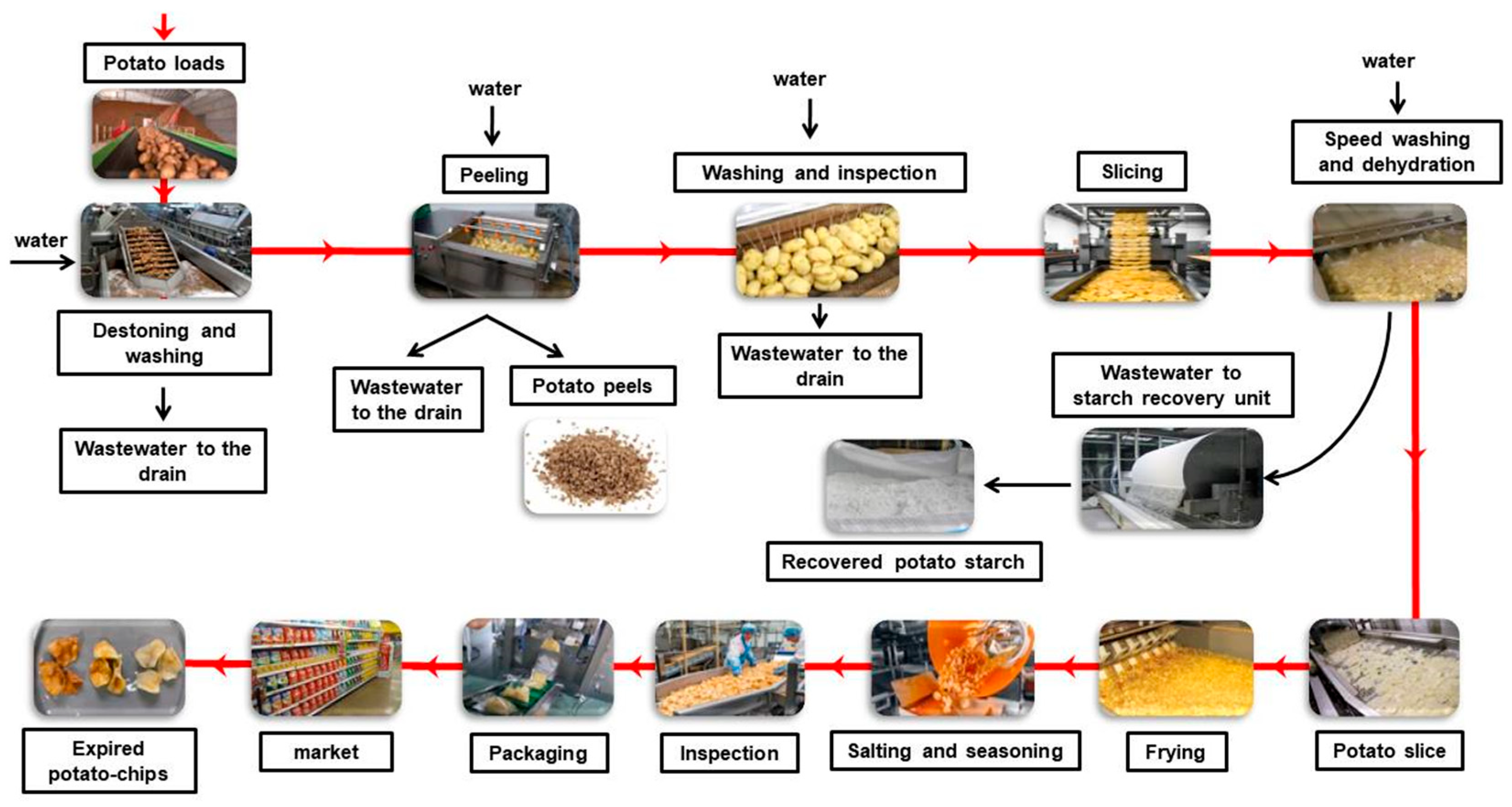
Figure 2.
Cumulative biogas yield for EPC (A), RPS (B) and PP (C) at different S/I ratios.
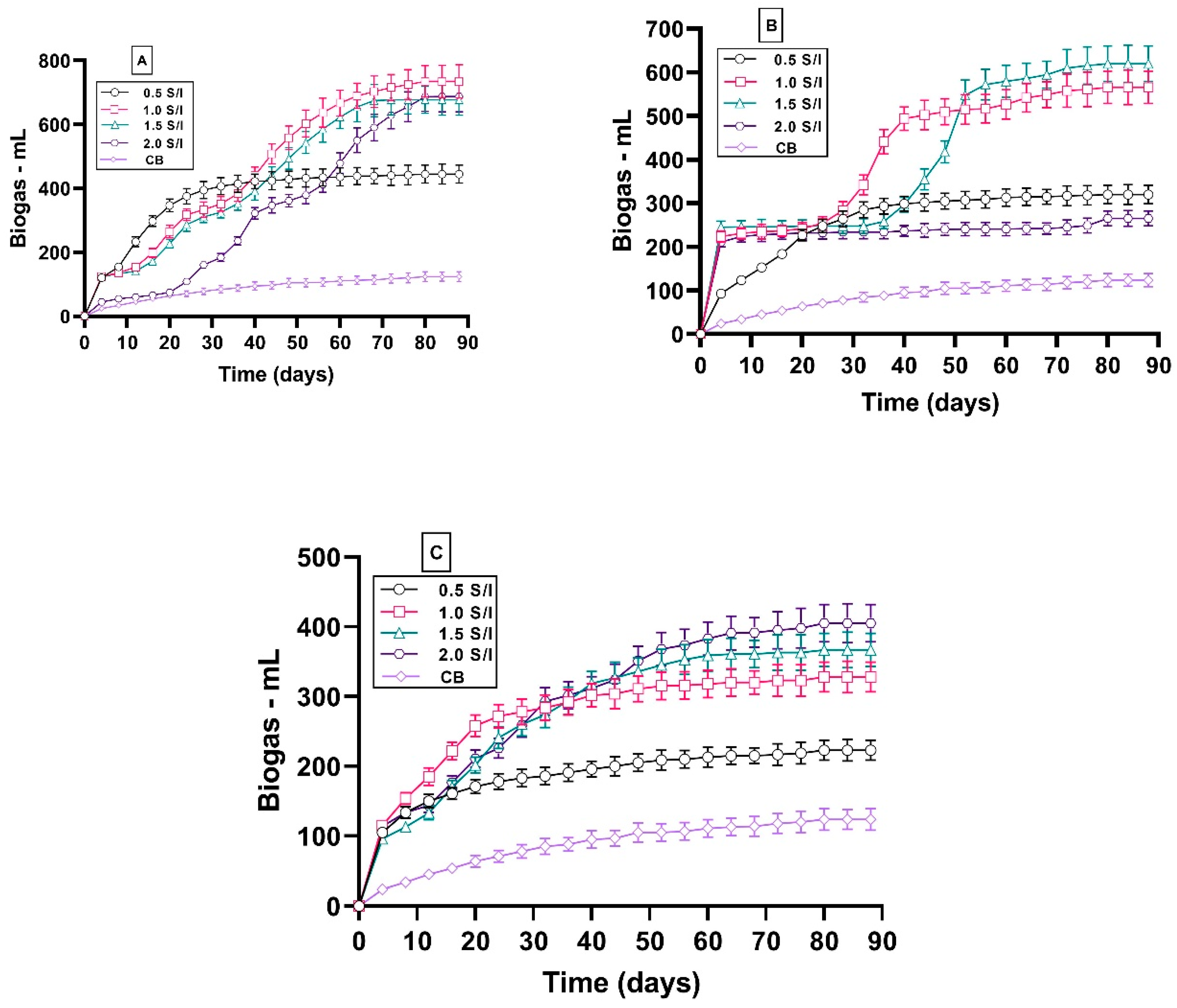
Figure 3.
Biogas yield in mL/g VS added for EPC (A), RSP (B) and PP (C) at different S/I ratios.
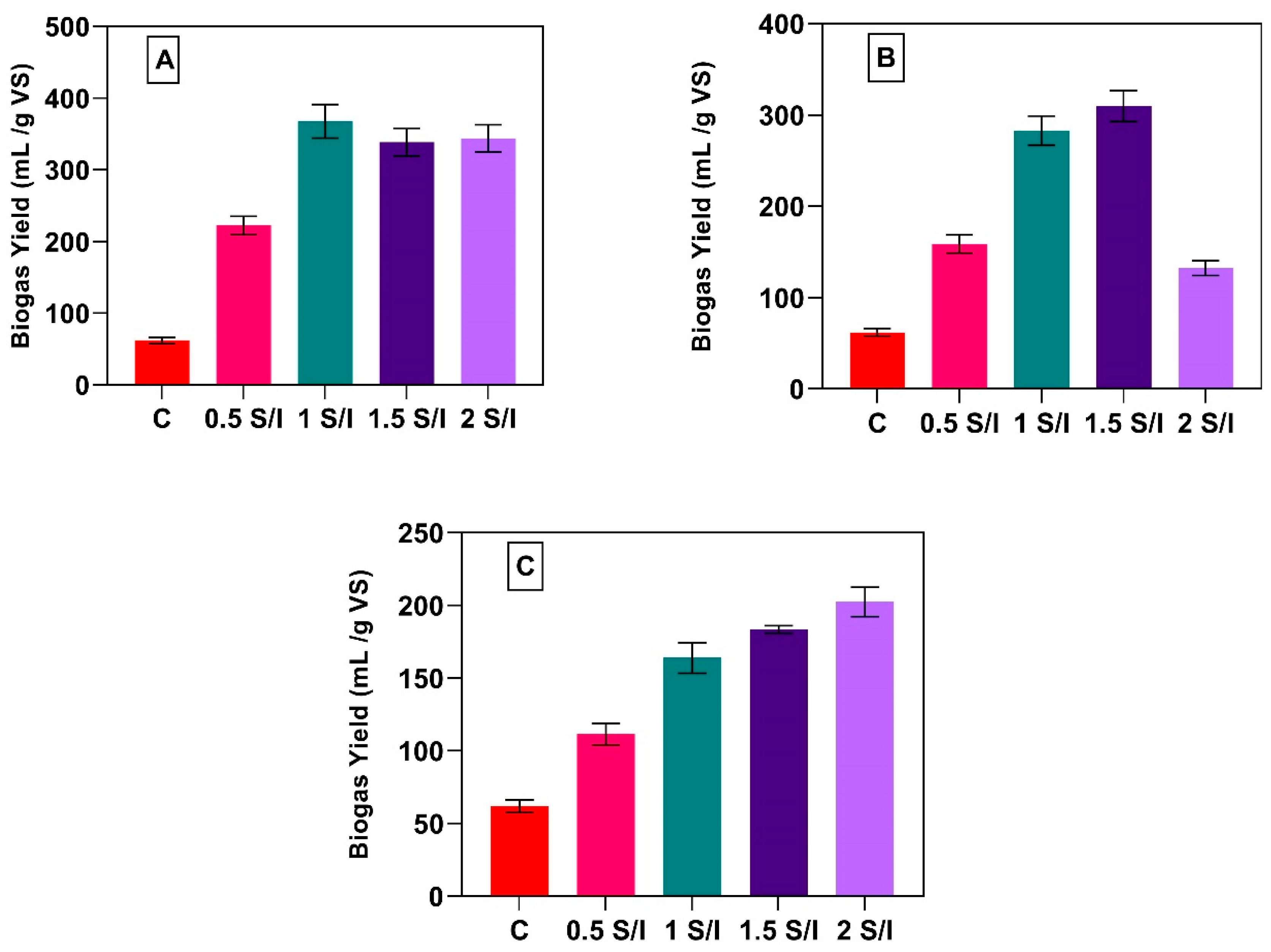
Figure 4.
Biodegradation of TS (A), VS (B) and COD (C) of EPC, RPS and PP at different S/I ratios.
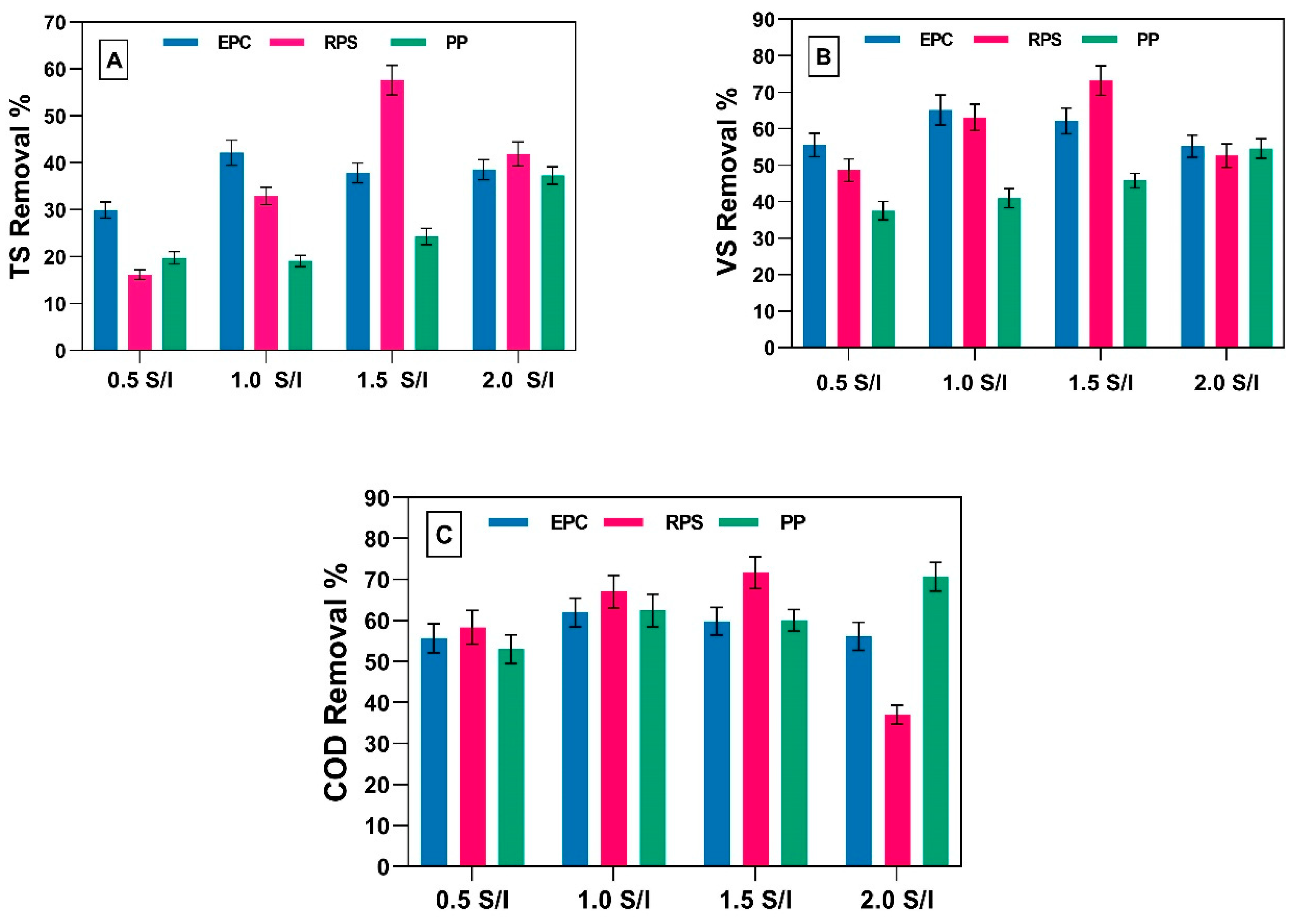
Figure 5.
Composition of microbial communities of the sludge samples for inoculum sludge, optimum EPC-1.0, RPS-1.5 and PP-2.0 at phylum levels.
Figure 5.
Composition of microbial communities of the sludge samples for inoculum sludge, optimum EPC-1.0, RPS-1.5 and PP-2.0 at phylum levels.
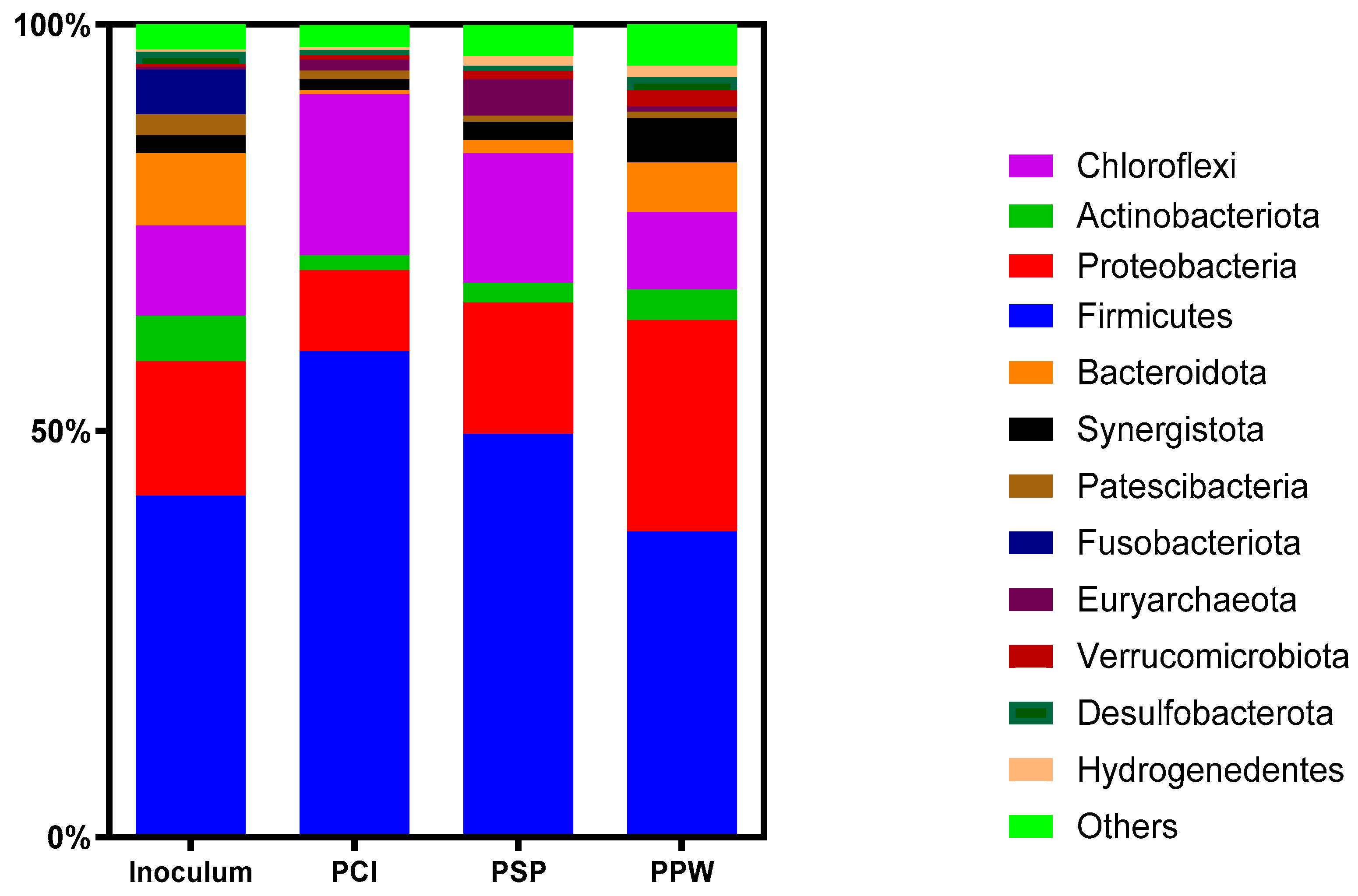
Figure 6.
The interactions between enzymatic metabolism pathways and AD routes of EPC, RPS and PP.
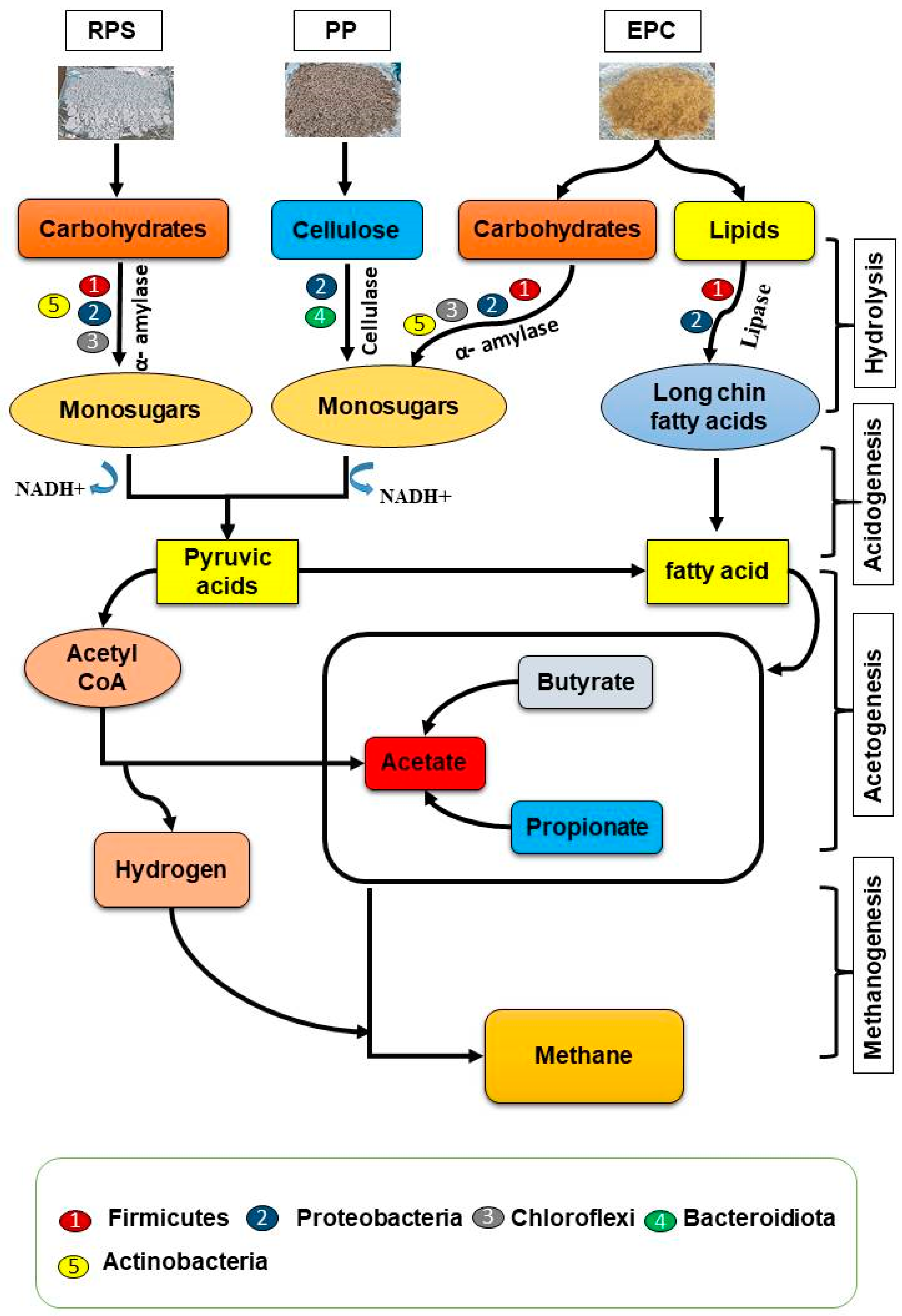

Table 1.
Different batches that used in the anaerobic digestion experiment with different S/I ratios.
Table 1.
Different batches that used in the anaerobic digestion experiment with different S/I ratios.
| Feed | S/I Ratios | Key |
| Control Batch (solely sludge) | 100 % inoculum | CB |
| Expired Potato-Chips | 0.5 | EPC-O.5 |
| 1.0 | EPC-1.0 | |
| 1.5 | EPC-1.5 | |
| 2.0 | EPC-2.0 | |
| Recovered Potato Starch | 0.5 | RPS-O.5 |
| 1.0 | RPS-1.0 | |
| 1.5 | RPS-1.5 | |
| 2.0 | RPS-2.0 | |
| Potato Peels | 0.5 | PP-0.5 |
| 1.0 | PP-1.0 | |
| 1.5 | PP-1.5 | |
| 2.0 | PP-2.0 |
Table 2.
Laboratory analyses of the anaerobic sludge inoculum*.
| Parameter | Dry solid | Volatile solids | VSS/TSS | TKN | TP |
| Unit | g/l | g/L | % | % DM | % DM |
| Anaerobic sludge | 35.0±0.2 | 27.0±0.5 | 77.2±1.7 | 4.48±0.06 | 0.9±0.02 |
*average of 3 samples.
Table 3.
Laboratory analyses of solid wastes collected from Potato-Chips Processing Industry (PCPI).
Table 3.
Laboratory analyses of solid wastes collected from Potato-Chips Processing Industry (PCPI).
| Parameter | % DM | OM | Protein | Ash | Fat&oil | Carbohydrates | TKN | TP |
| EPC | 97.4±0.05 | 96.97±0.24 | 5.55±0.02 | 3.03±0.06 | 39.00±0.84 | 49.82±0.29 | 0.89±0.03 | 0.50±0.01 |
| RPS | 63.6±0.06 | 99.57±0.03 | 0.28±0.01 | 0.43±0.01 | 0.87±0.01 | 98.14±0.30 | 0.045±0.00 | 0.17±0.01 |
| PP | 10.8±0.01 | 94.69±0.22 | 9.23±0.02 | 5.31±0.01 | 1.73±0.02 | 56.23±0.20 | 1.48±0.03 | 0.40±0.01 |
*Organic matter (OM) and other components are calculated as % of the dry matter.
Table 4.
The main produced VFAs of the EPC, RPS and PP for the different S/I ratios in mg/L.
| Samples/ Parameters |
Acetic acid* | Butyric acid* | Propionic acid* | TVFAs* |
| EPC 0.5 | 98 ± 7.5 | 44 ± 4.2 | 45 ± 3.5 | 187 ± 12.3 |
| EPC 1.0 | 95 ± 6.8 | 43 ± 3.9 | 27 ± 1.6 | 165 ± 11.5 |
| EPC 1.5 | 89 ± 7.2 | 33 ± 3.5 | 13 ± 0.5 | 135 ± 10.7 |
| EPC 2.0 | 165 ± 10.5 | 77 ± 5.6 | 32 ± 1.9 | 274 ± 18.7 |
| RPS 0.5 | 166 ± 9.4 | 111 ± 8.5 | 98 ± 1.5 | 375 ± 22.7 |
| RPS 1.0 | 66 ± 3.2 | 12 ± 1.5 | 10 ± 0.6 | 88 ± 6.7 |
| RPS 1.5 | 111 ± 9.5 | 55 ± 3.5 | 22 ± 0.9 | 188 ± 11.8 |
| RPS 2.0 | 142 ± 10.9 | 55 ± 2.7 | 44 ± 3.7 | 241 ± 19.7 |
| PP 0.5 | 112 ± 8.5 | 33 ± 0.8 | 45 ± 2.5 | 190 ± 16.7 |
| PP 1.0 | 180 ± 12.3 | 22 ± 0.7 | 17 ± 1.0 | 119 ± 9.9 |
| PP 1.5 | 175 ± 9.6 | 18 ± 0.5 | 13 ± 0.9 | 106 ± 9.6 |
| PP 2.0 | 177 ± 9.7 | 17 ± 0.3 | 12 ± 0.8 | 106 ± 9.7 |
* Effluent.
Disclaimer/Publisher’s Note: The statements, opinions and data contained in all publications are solely those of the individual author(s) and contributor(s) and not of MDPI and/or the editor(s). MDPI and/or the editor(s) disclaim responsibility for any injury to people or property resulting from any ideas, methods, instructions or products referred to in the content. |
© 2025 by the authors. Licensee MDPI, Basel, Switzerland. This article is an open access article distributed under the terms and conditions of the Creative Commons Attribution (CC BY) license (http://creativecommons.org/licenses/by/4.0/).
Copyright: This open access article is published under a Creative Commons CC BY 4.0 license, which permit the free download, distribution, and reuse, provided that the author and preprint are cited in any reuse.


