

Submitted:
25 August 2025
Posted:
27 August 2025
You are already at the latest version
Abstract
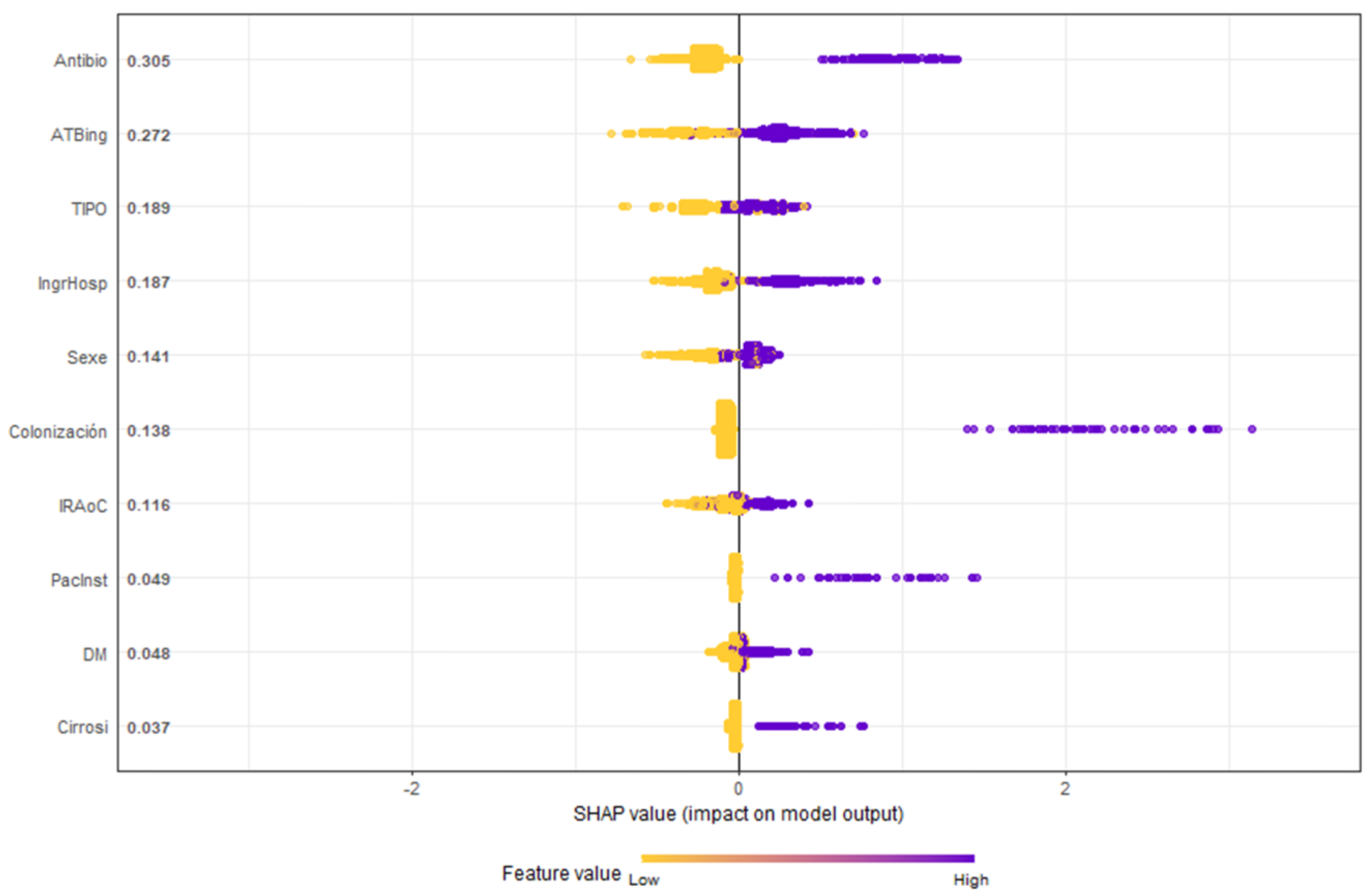
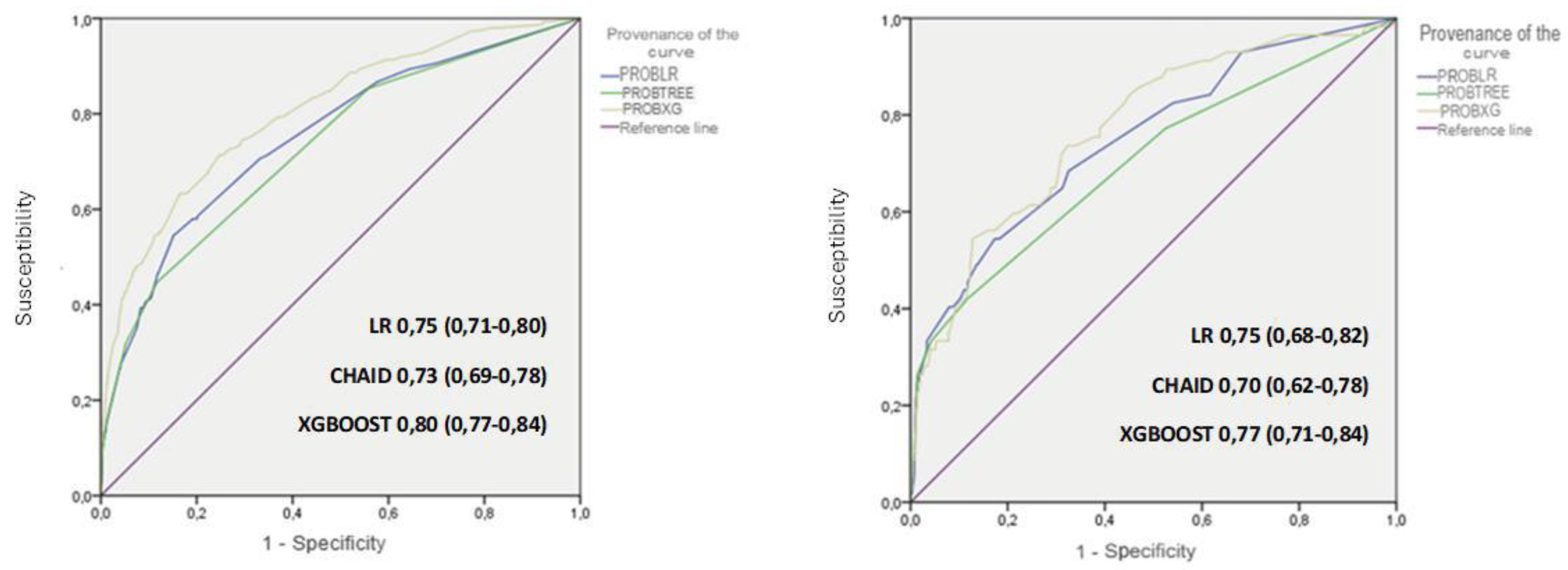
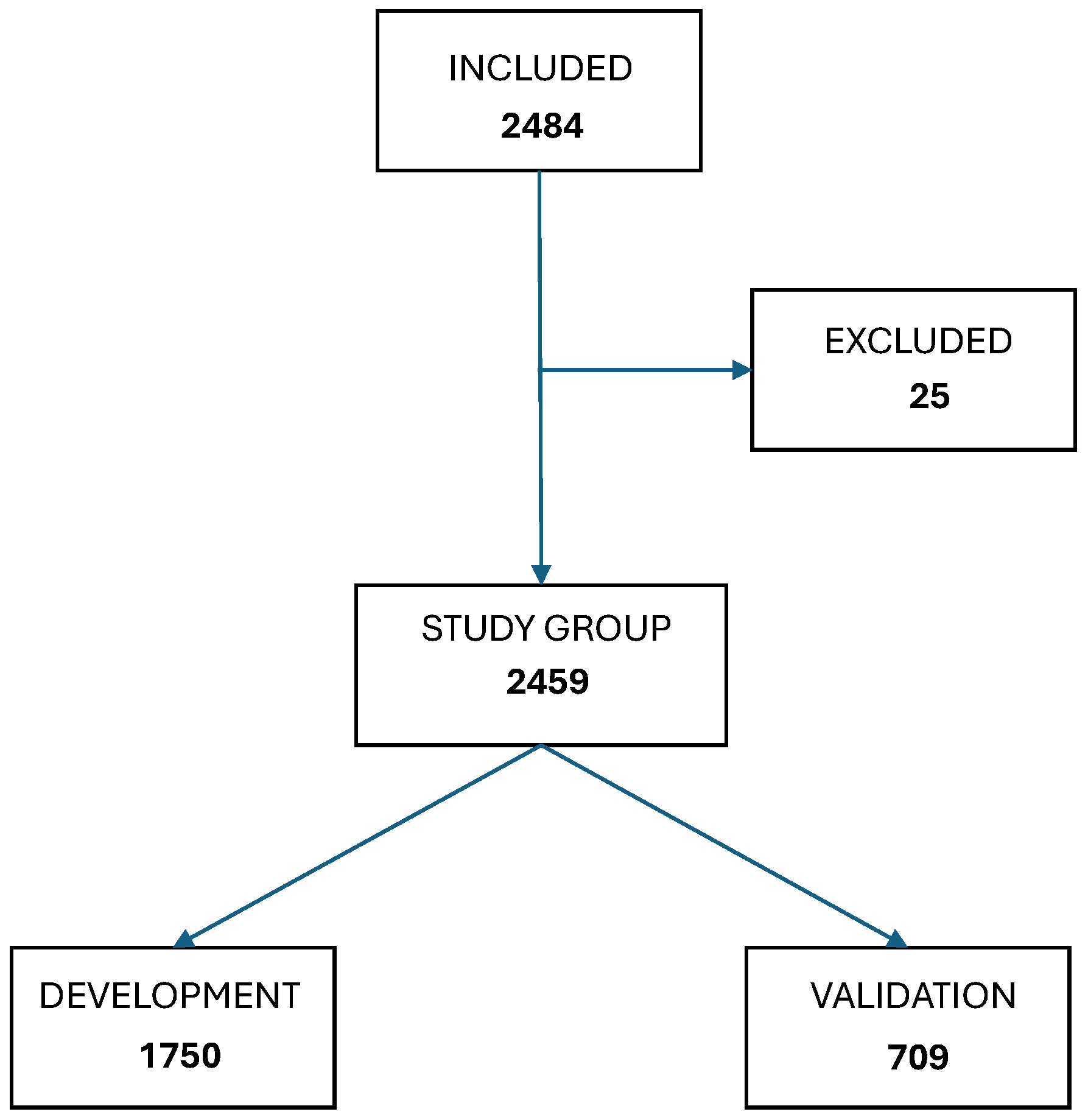
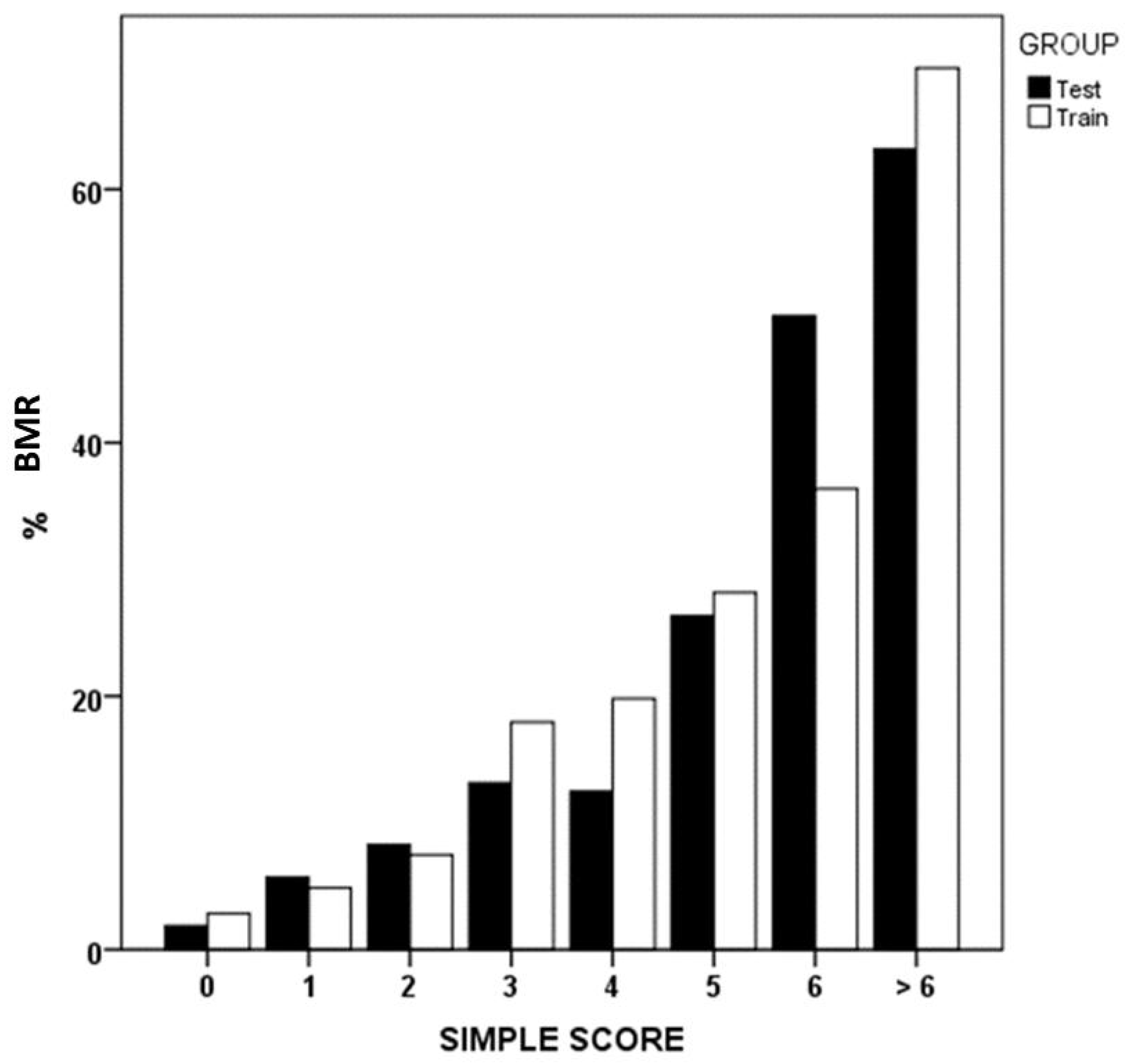
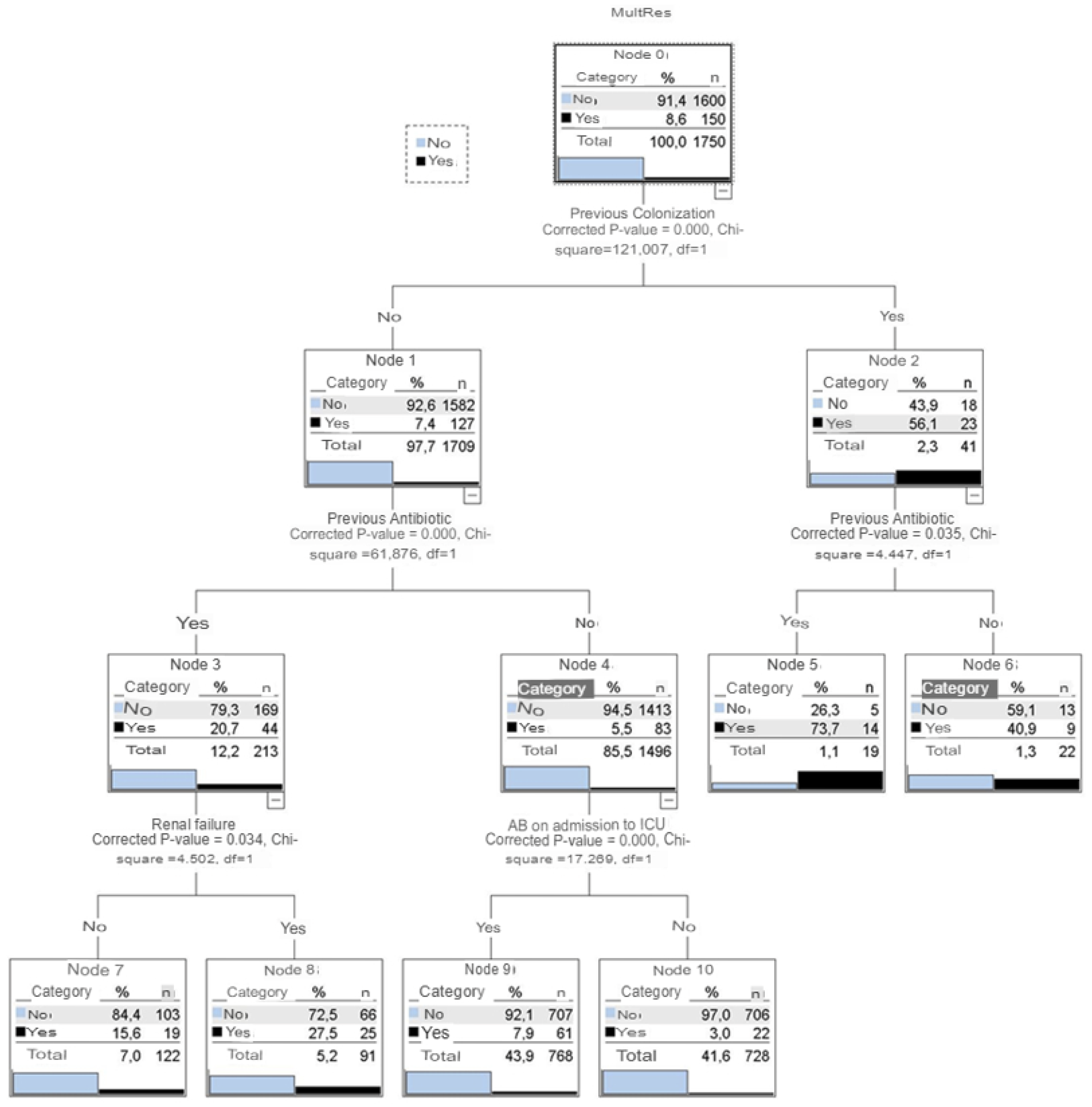
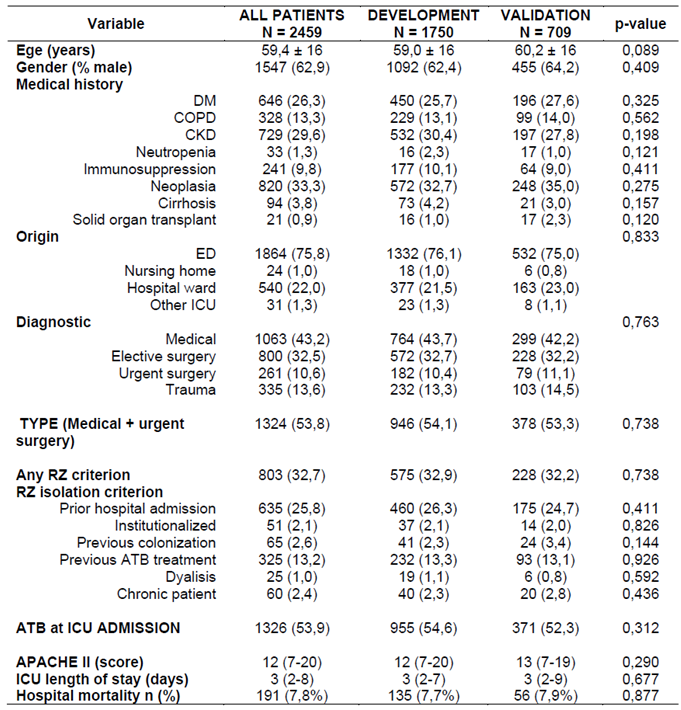
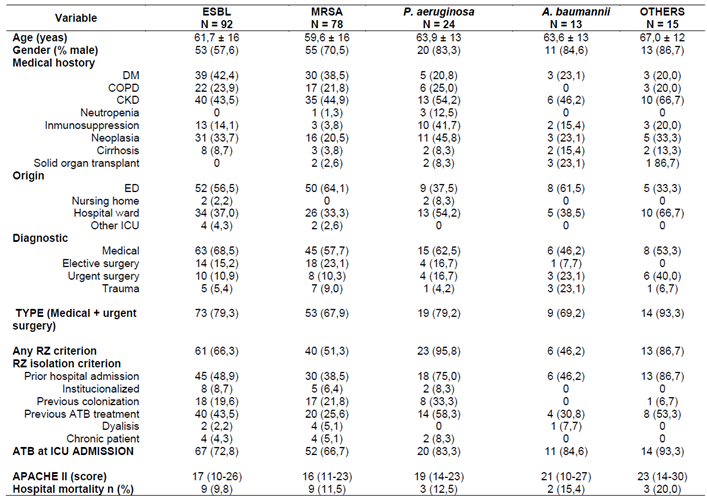
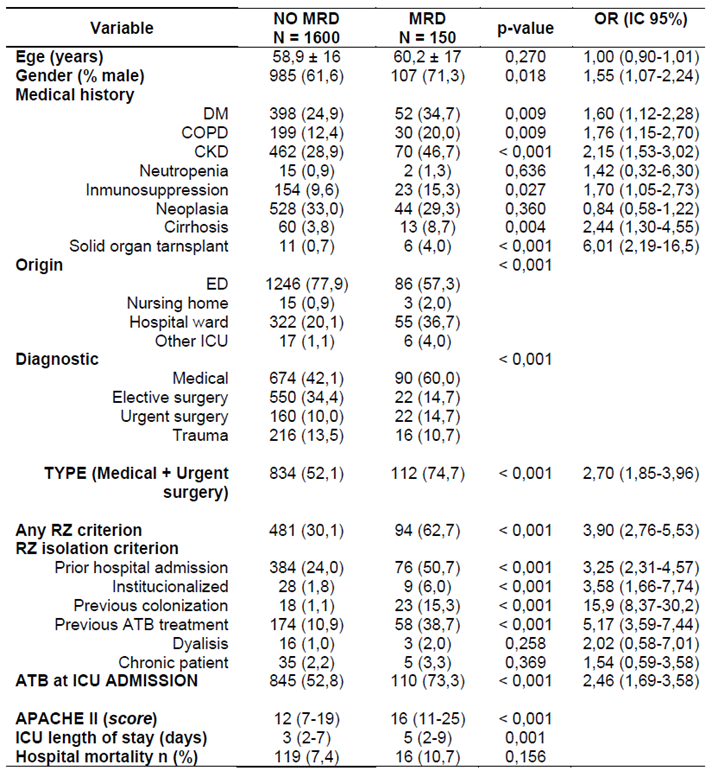
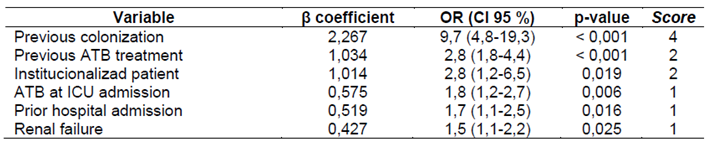
Objectives: To establish the risk of being a carrier of multidrug-resistant bacteria (MDR) upon ICU admission, according to the risk factors (RF) from the Spanish “Resistencia Zero” (RZ) project checklist, using machine learning methodology. Methods: A retrospective cohort study, conducted with a consecutive sample of patients admitted to the ICU between 2014 and 2016. The study analyzed the RZ RF for MDR, as well as other pathological variables and comorbidities. The study group was randomly divided into a Development Group (70%) and a Validation Group (30%). Several machine learning models were used: binary logistic regression, CHAID-type decision tree, and the XGBOOST methodology with SHAP analysis. Results: Data from 2459 patients were analyzed, of whom 210 (8.2%) were carriers of MDR. The risk grew with the accumulation of RF. Binary logistic regression identified colonization or previous infection by MDR, prior antibiotic treatment, living in nursing home, recent hospitalization, and renal failure as the most influential factors. The CHAID tree detected MDR in 56% of patients with previous colonization or infection, a figure that increased to almost 74% if they had also received antibiotic therapy. The XGBOOST model determined that variables related to antibiotic treatment were the most important. Conclusions: The RZ RF have limitations in predicting MDR upon ICU admission, and machine learning models offer certain advantages. Not all RF have the same importance, but their accumulation increases the risk. A group of patients with no identifiable RF, complicating decisions on preventive isolation.
Keywords:
1. Introduction
2. Materials and Methods
3. Results
4. Discussion
Author Contributions
Funding
Institutional Review Board Statement
Informed Consent Statement
Data Availability Statement
Conflicts of Interest
Abbreviations
| ATB | antibiotic |
| MDR | multidrug resistant bacteria |
| ICU | Intensive Care Unit |
| RZ | Resistencia Zero Project |
| RF | risk factors |
| ESBL | extended-spectrum beta-lactamase-producing Enterobacterales |
| MRSA | meticilin resistant Staphylococcus aureus |
| SEMICYUC | Sociedad Española de Medicina Intensiva y Unidades Coronarias |
| ML | machine learning |
| HUAV | Arnau de Vilanova University Hospital |
| DG | Development Group |
| VG | Validation Group |
| VRE | vancomycin-resistant Enterococcus spp. |
| DM | diabetes mellitus |
| COPD | chronic obstructive pulmonary disease |
| CKD | Chronic Kidney Disease |
| ED | emergency department |
| LR | logistic regression |
| CHAID | Chi-square automatic interaction detection |
| SHAP | SHapley Additive exPlanations |
| S | sensitivity |
| E | specificity |
| PPV | positive predictive value |
| NPV | negative predictive value |
| AUC | area under the curve |
References
- Caǧlayan Ç, Barnes SL, Pineles LL, Harris AD, Klein EY. A Data-Driven Framework for Identifying Intensive Care Unit Admissions Colonized With Multidrug-Resistant Organisms. Front Public Health. 2022 Mar 17;10.
- Cosgrove SE, Sakoulas G, Perencevich EN, Schwaber MJ, Karchmer AW, Carmeli Y. Comparison of Mortality Associated with Methicillin-Resistant and Methicillin-Susceptible Staphylococcus aureus Bacteremia: A Meta-analysis [Internet]. Vol. 36, Clinical Infectious Diseases. 2003. Available from: https://academic.oup.com/cid/article/36/1/53/283567.
- DiazGranados CA, Zimmer SM, Klein M, Jernigan JA. Comparison of Mortality Associated with Vancomycin-Resistant and Vancomycin-Susceptible Enterococcal Bloodstream Infections: A Meta-analysis. Clinical Infectious Diseases [Internet]. 2005;41:327–33. Available from: https://academic.oup.com/cid/article/41/3/327/337451.
- Cosgrove SE, Qi Y, Kaye KS, Harbarth S, Karchmer AW, Carmeli Y. The Impact of Methicillin Resistance in Staphylococcus aureus Bacteremia on Patient Outcomes: Mortality, Length of Stay, and Hospital Charges . Infect Control Hosp Epidemiol. 2005 Feb;26(2):166–74.
- Song X, Srinivasan A, Plaut D, Perl TM. Effect of Nosocomial Vancomycin-Resistant Enterococcal Bacteremia on Mortality, Length of Stay, and Costs. Infect Control Hosp Epidemiol. 2003 Apr;24(4):251–6.
- Maragakis LL, Perencevich EN, Cosgrove SE. Clinical and economic burden of antimicrobial resistance. Expert Rev Anti Infect Ther. 2008 Oct;6(5):751–63.
- Strich JR, Palmore TN. Preventing Transmission of Multidrug-Resistant Pathogens in the Intensive Care Unit. Infect Dis Clin North Am. 2017 Sep 1;31(3):535–50.
- Abella Álvarez A, Janeiro Lumbreras D, Lobo Valbuena B, Naharro Abellán A, Torrejón Pérez I, Enciso Calderón V, et al. Analysis of the predictive value of preventive isolation criteria in the intensive care unit. Medicina Intensiva (English Edition). 2021 May;45(4):205–10.
- Carvalho-Brugger S, Miralbés Torner M, Jiménez Jiménez G, Badallo O, Álvares Lerma F, Trujillano J, et al. Preventive isolation criteria for the detection of multidrug-resistant bacteria in patients admitted to the Intensive Care Unit: A multicenter study within the Zero Resistance program. Medicina Intensiva (English Edition). 2023 Nov;47(11):629–37.
- Padilla-Serrano A, Serrano-Castañeda J, Carranza-González; R, García-Bonillo M. Factores de riesgo de colonización por enterobacterias multirresistentes e impacto clínico. Rev Esp Quimioter. 2018;31(3):257–62.
- Ministerio de Sanidad SS e I. Prevención de la Emergencia de Bacterias Multirresistentes en el Paciente Crítico - “PROYECTO RESISTENCIA ZERO” (RZ) [Internet]. 2014 [cited 2024 Apr 4]. Available from: https://seguridaddelpaciente.sanidad.gob.es/practicasSeguras/seguridadPacienteCritico/docs/PROYECTO_RZ_-_VERSION_FINAL_26MARZO_2014.pdf.
- Garnacho Montero J, Lerma FÁ, Galleymore PR, Martínez MP, Rocha LÁ, Gaite FB, et al. Combatting resistance in intensive care: The multimodal approach of the Spanish ICU “Zero Resistance” program. Vol. 19, Critical Care. BioMed Central Ltd.; 2015.
- Yi F, Yang H, Chen D, Qin Y, Han H, Cui J, et al. XGBoost-SHAP-based interpretable diagnostic framework for alzheimer’s disease. BMC Med Inform Decis Mak. 2023 Dec 1;23(1).
- Collins GS, Reitsma JB, Altman DG, Moons KGM. Transparent reporting of a multivariable prediction model for individual prognosis or diagnosis (TRIPOD): The TRIPOD statement. BMJ (Online). 2015 Jan 7;350.
- GTEIS - SEMICYUC. SOCIEDAD ESPAÑOLA DE MEDICINA INTENSIVA, CRÍTICA Y UNIDADES CORONARIAS GRUPO DE TRABAJO DE ENFERMEDADES INFECCIOSAS “ESTUDIO NACIONAL DE VIGILANCIA DE INFECCIÓN NOSOCOMIAL EN UCI”. ENVIN-HELICS 2023 [Internet]. [cited 2024 Mar 31]. Available from: https://hws.vhebron.net/envin-helics/.
- Lundberg SM, Erion G, Chen H, DeGrave A, Prutkin JM, Nair B, et al. From local explanations to global understanding with explainable AI for trees. Nat Mach Intell. 2020 Jan 1;2(1):56–67.
- Abad C, Fearday A, Safdar N. Adverse effects of isolation in hospitalised patients: A systematic review. Vol. 76, Journal of Hospital Infection. 2010. p. 97–102.
- Marra AR, Edmond MB, Schweizer ML, Ryan GW, Diekema DJ. Discontinuing contact precautions for multidrug-resistant organisms: A systematic literature review and meta-analysis. Am J Infect Control. 2018 Mar 1;46(3):333–40.
- Morgan DJ, Wenzel RP, Bearman G. Contact precautions for endemic MRSA and VRE: Time to retire legal mandates. Vol. 318, JAMA - Journal of the American Medical Association. American Medical Association; 2017. p. 329–30.
- Cooper BS, Stone SP, Kibbler CC, Cookson BD, Roberts JA, Medley GF, et al. Isolation measures in the hospital management of methicillin resistant Staphylococcus aureus (MRSA): systematic review of the literature. BMJ. 2004;329:1–8.
- Djibré M, Fedun S, Le Guen P, Vimont S, Hafiani M, Fulgencio JP, et al. Universal versus targeted additional contact precautions for multidrug-resistant organism carriage for patients admitted to an intensive care unit. Am J Infect Control. 2017 Jul 1;45(7):728–34.
- López-Pueyo MJ, Barcenilla-Gaite F, Amaya-Villar R, Garnacho-Montero J. Multirresistencia antibiotica en unidades de criticos. Med Intensiva. 2011 Jan;35(1):41–53.
- Álvarez-Lerma F, Palomar M, Olaechea P, Otal JJ, Insausti J, Cerdá E, et al. Estudio nacional de vigilancia de infección nosocomial en unidades de cuidados intensivos. Informe evolutivo de los años 2003-2005. Med Intensiva. 2007;31(1):6–17.

Disclaimer/Publisher’s Note: The statements, opinions and data contained in all publications are solely those of the individual author(s) and contributor(s) and not of MDPI and/or the editor(s). MDPI and/or the editor(s) disclaim responsibility for any injury to people or property resulting from any ideas, methods, instructions or products referred to in the content. |
© 2025 by the authors. Licensee MDPI, Basel, Switzerland. This article is an open access article distributed under the terms and conditions of the Creative Commons Attribution (CC BY) license (http://creativecommons.org/licenses/by/4.0/).