Preprint
Review

This version is not peer-reviewed.

Shikonin as a Dietary Phytochemical with Multi-Target Anti-Cancer Activities: From Molecular Mechanisms to Translational Applications

A peer-reviewed article of this preprint also exists.

Submitted:

25 August 2025

Posted:

25 August 2025

You are already at the latest version

Abstract

Shikonin, a naphthoquinone from Lithospermum erythrorhizon, exhibits broad anticancer potential through multiple regulated cell death pathways. It induces apoptosis via mitogen-activated protein kinase (MAPK) signalling, reactive oxygen species (ROS) accumulation, endoplasmic reticulum (ER) stress, and p53 activation, and also triggers necroptosis through receptor-interacting protein kinase 1 (RIPK1), receptor-interacting protein kinase 3 (RIPK3), and mixed lineage kinase domain-like protein (MLKL), as well as ferroptosis and pyroptosis. Beyond cytotoxicity, shikonin suppresses metastasis by blocking epithelial–mesenchymal transition (EMT) and downregulating matrix metalloproteinase-2 (MMP-2) and matrix metalloproteinase-9 (MMP-9). It further disrupts tumour metabolism by targeting pyruvate kinase isoform M2 (PKM2) and modulating the Warburg effect. In combination, shikonin enhances the efficacy of chemotherapy (cisplatin, paclitaxel), targeted therapy (tamoxifen), and immunotherapy (anti-programmed cell death protein 1 [anti-PD-1]), thereby overcoming resistance. To address poor bioavailability, nanoparticles, liposomes, and derivatives such as β, β-dimethylacrylshikonin have been developed to improve potency and reduce toxicity. Preclinical studies show strong tumour regression in melanoma, breast, and ovarian cancer models. Although clinical validation remains limited, shikonin’s multifaceted actions, favourable safety, and therapeutic synergy highlight the need for rigorous clinical trials to define its oncological value.

Keywords: 
;  ;  ;  ;  

1. Introduction

According to the cancer statistics in 2025, an estimated two million new cancer cases and six hundred thousand cancer deaths are expected to occur in the United States [1]. Despite decades of advancement in oncology research, cancer remains a major global health challenge, particularly in advanced or metastatic stages. Conventional treatment such as surgery, chemotherapy, radiotherapy and immunotherapy, have significantly improved survival outcomes and have reduced mortality rates in cancer patients [2]. However, drug resistance driven by genetic mutations, tumour heterogeneity, and tumour microenvironment (TME) remains a critical barrier that hinders the effectiveness of conventional therapies and compromises long-term treatment outcomes [3]. Besides that, these therapies are often associated with systemic and off-target toxicities, characterized by fatigue, dermatological reactions, hepatotoxicity, cardiotoxicity and nephrotoxicity [4,5]. Therefore, natural compounds, especially dietary phytochemicals, have emerged as promising alternative therapeutic approaches due to their diverse biological activities, lower toxicity and accessibility from medicinal plants [6].
Phytochemicals are bioactive compounds derived from plants, including grains, fruits, vegetables, and herbs, recognised for their beneficial effects on human health. They can be categorized into several major classes, such as carotenoids, polyphenols, naphthoquinones and terpenoids, based on their chemical structures [7]. Since antiquity, plant-derived products have been incorporated into traditional medical system, such as Traditional Chinese Medicine (TCM) and Ayurveda, serving both preventive and therapeutic purposes [8]. For instance, ginger (Zingiber officinale) exhibits thermogenic properties that stimulate blood circulation and has long been used to treat respiratory disorders such as coughs and the common cold [9]. More recently, numerous studies have elucidated the molecular mechanisms through which phytochemicals regulate physiological processes and promote human health. Among these, bioactive compounds such as resveratrol, derived from grapes, and beta-carotene (β-carotene), found in carrots, exhibit antioxidant and anti-inflammatory effects in the treatment of acute pancreatitis [10,11].
With the growing interest in exploring dietary phytochemicals, shikonin has gained considerable attention as a bioactive naphthoquinone pigment with both pharmacological and therapeutic potential, particularly in cancer treatment. It is derived from the roots of Lithospermum erythrorhizon (purple gromwell, Zicao), an edible and medicinal plant long used in TCM and occasionally incorporated into functional foods [12,13,14]. This heritage supports its classification as a dietary phytochemical, reinforcing both its reputation for safety and its promise in long-term chemoprevention and integrative cancer care [15,16]. Recent studies show that shikonin suppresses tumour growth in lung, ovarian, and other cancers through diverse mechanisms, including apoptosis induction, cell cycle arrest, inhibition of metastasis, necroptosis, and disruption of tumour metabolism[17]. Its multi-targeted activity and relatively low systemic toxicity highlight shikonin as a compelling candidate for development as both a preventive agent and an adjunct to conventional cancer therapies [18].
In this review, we aim to provide an overview of the pharmacokinetic profile of shikonin and its anti-cancer mechanisms in regulating tumour progression. This review also discusses the potential of shikonin in combination therapy and the translational studies relevant to future research and clinical applications in cancer treatment.

2. Chemistry and Pharmacokinetics

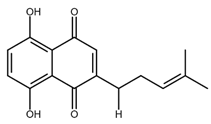
Shikonin is a naphthoquinone compound found abundantly in the roots of the Boraginaceae family, giving them a red-purple appearance [19]. The chemical structure of shikonin consists of a 1, 4-naphthoquinone core substituted with hydroxyl groups at positions 5 and 8, and a hydroxypentenyl side chain at position 2. Its molecular formula is C16H16O5 , with a molecular weight of 288.29 g/mol [12]. Shikonin has poor aqueous solubility but is highly soluble in organic solvents such as ethanol and chloroform [14]. Besides that, shikonin is sensitive to light and heat, and it can be easily degraded when exposed to temperatures above 60°C [20]. Shikonin also exhibits redox activity, which involves the transfer of two protons and two electrons at the naphthazarin moiety [21]. This property enables shikonin to function as a pro-oxidant agent by inducing oxidative stress in cancer cells to suppress tumour growth [22].
Shikonin is commonly isolated using maceration or Soxhlet extraction techniques with organic solvents like ethanol, methanol, hexane, ethyl acetate or chloroform [23,24]. Ethanol is often preferred due to low toxicity, ease of removal and high extraction yield. However, these methods have disadvantages such as long processing times, high energy consumption, risk of compound degradation and low extraction efficiency [25]. To overcome these drawbacks, alternative extraction techniques have been developed. Ultrasonic-assisted extraction (UAE) applies mechanical, thermal and cavitation effects to disrupt cell walls and enhance the release of bioactive compounds [26]. Furthermore, microwave-assisted extraction (MAE) is another effective extraction method, which involves the use of electromagnetic waves to heat the solvent and plant matrix within a closed system [27]. Supercritical carbon dioxide (SC-CO₂) extraction uses CO₂ above its critical temperature and pressure to dissolve target compounds from plant material [28]. These advanced extraction technologies are widely used, particularly in pharmaceutical and food industries, for their high extraction yield and purity, eco-friendly nature and short operation time [29,30].
Following the isolation of shikonin from plants, purification is essential to remove impurities and residual organic solvents. Common separation techniques include high-performance liquid chromatography (HPLC), high-speed counter-current chromatography (HSCCC) and column chromatography [23,31]. Besides that, plant cell culture technique has been employed to produce large quantities of shikonin. For instance, callus culture of Onosma bulbotrichum in Murashige and Skoog (MS) medium supplemented with growth hormones yielded 2.6 times more shikonin than wild plant roots [32]. Another study conducted by Yazaki et al. demonstrated that the hairy root culture of Lithospermum erythrorhizon infected with Agrobacterium rhizogenes produced a similar amount of shikonin as the cell suspension culture [33]. In addition, multiple studies have explored chemical synthesis pathways to generate shikonin and its derivatives [34,35]. Wang et al. developed a total synthesis pathway, which involves the asymmetrical hydrogenation of Ru (II) catalyst followed by removal of methyl groups, and results in high yield (47%) of shikonin production [36].
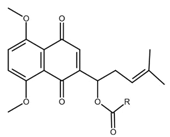
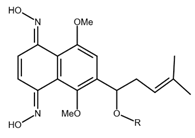
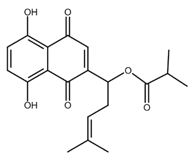
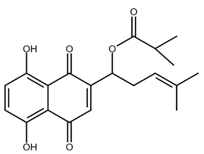
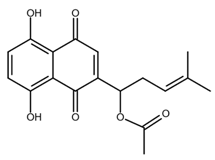
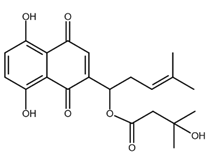
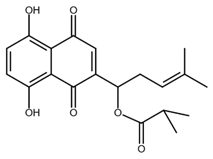
Apart from natural extraction, shikonin derivatives are obtained via semi-synthetic routes by chemically modifying the side chain attached to the naphthazarin structure. For instance, Zhou et al. demonstrated the methylation of phenolic hydroxyl group of shikonin produced its derivative, 5, 8-O-dimethylacrylshikonin. This study reported that 5, 8-O-dimethyl acylshikonin inhibited the tumour growth in Kunming (KM) mice with subcutaneous injection of Sarcoma S-180 cells [37]. Another research conducted by Huang et al. found that shikonin oxime derivatives incorporating a sulphur atom exhibited cytotoxic effects against breast cancer, leukaemia and prostate cancer cells [38]. Other derivatives, including α-methylbutyrylshikonin and β, β-dimethylacrylshikonin exhibited potent cytotoxicity against melanoma, leukaemia, colorectal cancer, gastric cancer, and medullary thyroid carcinoma cells [39,40,41,42,43]. In addition, acetylshikonin produced via acetylation of shikonin showed antitumour effects on oral squamous cell carcinoma (OSCC), non-small cell lung cancer (NSCLC) and colorectal cancer [44,45,46]. Other examples of shikonin derivatives such as β-hydroxyisovalerylshikonin, deoxyshikonin and isobutyrylshikonin demonstrated various anticancer activities on pancreatic cancer, cervical cancer and oral cancer [47,48,49,50]. [47,48,49,50]. Table 1 summarises the chemical structures and the anticancer effects of various shikonin derivatives. These findings highlight that the structural modifications of shikonin can significantly improve its pharmacological effects, facilitating the development of novel shikonin-based anticancer drugs.
The pharmacokinetics of shikonin has been primarily explored using in vivo animal models, such as rats, mice and dogs. Shikonin exhibits relatively low bioavailability due to its poor aqueous solubility and high metabolism rate. For example, a study on the oral administration of Zi-Cao-Cheng-Qi decoction (25 g/kg) in rats reported a blood concentration of shikonin at 0.5 hours post-administration of 0.48 µg/mL, with a total plasma protein binding rate of 64.6% [51]. However, another study reported that shikonin was undetectable in plasma of Sprague-Dawley (SD) rats 10 hours after an intravenous (IV) injection of shikonin at dose of 1.5 mg/kg [52]. This evidence suggests that shikonin undergoes a substantial first-pass effect (FPE) and rapid clearance in rats. After that, shikonin undergoes two phases of metabolism, involving the hydroxylation of naphthoquinone core and glucuronic acid conjugation [53]. Huang et al. found that shikonin upregulated the expression of drug metabolizing enzymes and transporters in primary rat hepatocytes, thereby modulating the detoxification and elimination pathways [54]. Finally, shikonin is excreted via both bile and urine [55].

3. Mechanisms of Anticancer Action

3.1. Induction of Apoptosis by Shikonin

3.1.1. Shikonin-Induced Intrinsic Apoptosis via MAPK Signalling and ROS-Mediated ER Stress

The intrinsic apoptotic pathway is primarily regulated by mitochondrial events and is characterized by the activation of caspases, the key executioners of apoptosis. Caspases such as caspase-3, -7, and -9 degrade cytoskeletal proteins, activate deoxyribonucleases (DNases), and cleave regulatory proteins such as poly (ADP-ribose) polymerase (PARP), thereby preventing DNA repair and committing cells to programmed cell death (PCD) [56,57,58]. Numerous studies have demonstrated that shikonin triggers intrinsic apoptosis through activation of the mitogen-activated protein kinase (MAPK) cascade, leading to downstream caspase-dependent apoptosis [59,60,61,62,63,64].
Shikonin-induced activation of MAPK pathways has been observed in multiple cancer types, including colon carcinoma, chondrosarcoma, blood cancers, melanoma, and renal cancer [59,60,61,62,64,65,66,67,68]. In colon carcinoma, shikonin treatment activated c-Jun N-terminal kinase (JNK) and promoted galectin-1 dimer formation to induce apoptosis in SW-620 cells, whereas radiation-resistant SNU-C5RR cells exhibited apoptosis associated with phosphorylation of JNK, p38, and extracellular signal-regulated kinase (ERK) [60,66]. In colorectal cancer (CRC) HCT-116 and HCT-15 cells, 1.5µM concentration of shikonin effectively activated the PERK/CHOP and IRE1α/JNK apoptotic pathways, indicating its involvement in oestrogen stress responses [69].
In bone cancer research, acetylshikonin and cyclopropylshikonin dose-dependently (0.5, 2.5, 5, or 10 µM) increased phosphorylation of ERK, JNK, and p38 in Ca-78 and SW-1353 chondrosarcoma cells, while shikonin downregulated ERK activity to induce apoptosis in U2OS osteosarcoma cells [61,68]. Similarly, in blood cancers, shikonin enhanced JNK activation and triggered intrinsic apoptosis in primary effusion lymphoma via reactive oxygen species (ROS) generation, and significantly elevated p38 and JNK phosphorylation in NB4 cells [65,70]. In melanoma A375M cells, apoptosis was associated with MAPK activation through a 2- to 7-folds increase in JNK and p38 phosphorylation in a dose-dependent manner (0, 2, or 4 µM ) [64]. In renal cancer, shikonin also found to induce apoptosis through downregulating p44/42 MAPK protein in Caki-2 and A-498 cells but shikonin induce apoptosis by enhancing p38 phosphorylation in Caki-1 and ACHN cells [62,67]. Other cancer models, including triple-negative breast cancer (TNBC) MDA-MB-231 cells, lung adenocarcinoma A546 cells, and pancreatic cancer PANC-1 cells, also demonstrated ERK inhibition and apoptosis induction following shikonin treatment [68]. In summary, shikonin-induced activation of the MAPK-mediated intrinsic apoptotic pathway exhibits pronounced potency in CRC cell lines.
Furthermore, shikonin has been found to induce ROS generation and activate apoptotic proteins, resulting in activation of caspase-dependent apoptosis in blood cancer, epidermoid carcinoma, brain cancer, and oral cancer [63,71]. In adult T-cell leukaemia/lymphoma ED- and TL-Om1 cells, shikonin rapidly upregulated ER stress proteins, including activating transcription factor 4 (ATF4), X-box binding protein 1 (XBP-1), and p38 MAPK, leading to apoptosis [63]. In glioma Hs683 cells, shikonin induced apoptosis via increased caspase-3, PERK, and CHOP expression, indicating ER stress-mediated cell death [71]. Similarly, shikonin induced late apoptosis percentage from 0.82% to 7.23% in oral cancer EC9706 cells by increasing Bax, cleaved caspase-3, and cleaved PARP levels, confirming caspase-dependent apoptosis [72]. Collectively, these findings demonstrate that shikonin effectively triggers intrinsic apoptotic pathways through MAPK activation, ROS generation, and ER stress signalling.

3.1.2. Extrinsic Apoptotic Pathways Triggered by Shikonin: Death Receptor and Caspase-8 Activation
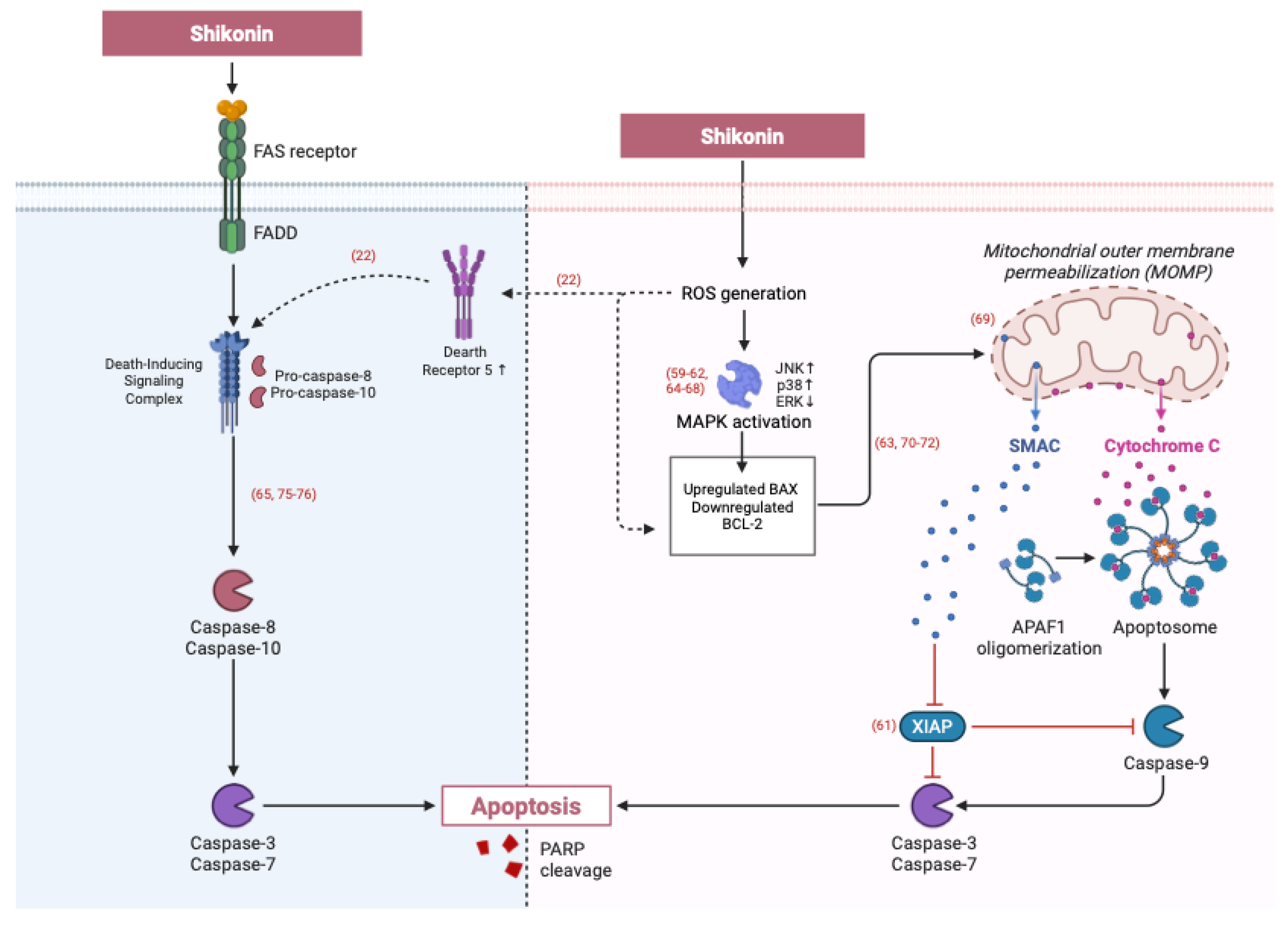
In contrast to the intrinsic apoptotic pathway, the extrinsic apoptotic pathway induces p53-independent apoptosis through the activation of Apo2 ligand/ tumour necrosis factor-related apoptosis-inducing ligand (rhApo2L/TRAIL) and Apomab in cancer therapy. These ligands bind to death receptors (DR) such as DR4 and DR5, triggering the death-inducing signalling complex (DISC) by recruiting the adapter Fas-associated death domain (FADD) and procaspases -8 and -10, ultimately leading to caspase-dependent apoptosis [73,74]. Shikonin has been shown to engage this extrinsic apoptotic machinery in multiple cancer models. In GTO primary effusion lymphoma cells, shikonin induced caspase-8-mediated apoptosis, accompanied by increased expression of caspases-3, -8, and -9 [65]. In QBC939 oral cancer cholangiocarcinoma cells, shikonin treatment enhanced cleaved caspase-3 and -8 expression [75]. Similarly, in another cholangiocarcinoma cell line, shikonin also upregulated DR5 and caspases-3, -8, and -9 through ROS-mediated activation of the JNK signalling cascade [22]. In ovarian cancer cell lines, including KURAMOCHI, OVSAHO, CP70, and ascites-derived E04 cells, shikonin activated Fas ligand (FasL)/caspase-8 signalling, as evidenced by increased FasL, cleaved caspase-8, -3, and -7 levels to induce extrinsic apoptosis [76]. These findings suggest that shikonin is capable of triggering extrinsic apoptotic pathways, particularly in ovarian and cholangiocarcinoma models, through death receptor activation and caspase-8 signalling.
Figure 1. Shikonin induce intrinsic and extrinsic apoptotic pathways in various cancers.
Preprints 173754 g001

3.1.3. Induction of Apoptosis Through Unique Signalling Pathways

Shikonin has been reported to target specific signalling pathways to induce caspase-dependent apoptosis in a variety of cancer cell lines. In liver cancer, shikonin dose-dependently targets pyrroline-5-carboxylate reductase 1 (PYCR1), leading to suppression of the PI3K/Akt/mTOR signalling pathway in hepatocellular carcinoma (HCC) SNU-449 and Hep-3B cells. Western blot analyses revealed reduced phosphorylation of PI3K, Akt, and mTOR, accompanied by increased levels of cleaved caspase-3, -9, and PARP, indicating that shikonin activates the caspase cascade through inhibition of PI3K/Akt/mTOR signalling [77]. Similarly, in SMMC-7721 HCC cells, shikonin treatment resulted in upregulation of p53 expression and downregulation of phosphorylated Akt and PI3K [78]. Another study reported that shikonin significantly reduced the protein expression of pyruvate kinase M2 (PKM2), HIF-1α, and PHD3, as well as the nuclear translocation of PKM2 and HIF-1α in SMMC-7721 cells [79] . In oral cancer, shikonin inhibited the Akt/mTOR signalling pathway, inducing apoptosis in TE-1 oesophageal cancer cells [80]. In lung cancer, shikonin triggered apoptosis in NSCLC A549 and PC-9 cell lines via the p53/miR-628-3p signalling axis, while in H1299 cells apoptosis was mediated by downregulation of the survivin signalling pathway [81,82]. In ovarian cancer, shikonin induced apoptosis in SKOV3 and A2780 cell lines by inhibiting the oestrogen signalling pathway and downregulating the expression of its downstream gene G protein-coupled oestrogen receptor (GPER) [83]. In skin cancer, shikonin inhibited STAT3 signalling, leading to apoptosis in A375 and A2058 melanoma cells [84]. In colon cancer, shikonin induced apoptosis by inhibiting the IL-6/STAT3 signalling pathway in HCT116 and SW480 cells, supported by the downregulation of JAK1 and JAK2 proteins after treatment [85]. Overall, these studies demonstrate that shikonin induces apoptosis across multiple cancer types by targeting unique oncogenic signalling pathways, including PI3K/Akt/mTOR, STAT3, oestrogen, and survivin pathways, ultimately converging on caspase-dependent cell death.

3.1.4. Shikonin and Its Derivatives Induces Apoptosis in drug-Resistant Cancer Cells

Shikonin also demonstrated incredible antitumor effects in various drug-resistant cancer cell lines. In the epidermal growth factor receptor (EGFR)-T790M-mutant drug-resistant NSCLC cell line H1975, shikonin treatment induced caspase-dependent apoptosis [86]. Similarly, in EGFR-mutated NSCLC H1299 cells, the shikonin derivative E5 inhibited the nuclear translocation of PKM2, thereby suppressing transcriptional activation of oncogenes and triggering apoptosis [87]. In colon cancer, shikonin induced apoptosis in oxaliplatin (OXA)-resistant HCT116 colorectal cancer cells through a ROS-mediated endoplasmic reticulum (ER) stress pathway [88].
Additionally, in 5-fluorouracil (5-FU)-resistant colorectal cancer SNU-C5/5-FUR cells, shikonin regulated glucose-regulated protein 78 (GRP78) and C/EBP homologous protein (CHOP) expression, increased ROS generation, elevated mitochondrial calcium (Ca²⁺) levels about 1.5-fold, and ultimately induced apoptosis [89]. Moreover, the shikonin ester derivative 4-aminophenoacetic acid induced apoptosis in Kirsten rat sarcoma virus (KRAS)-mutant HCT116 colon cancer cells by deactivating the Akt signalling pathway [90]. Cumulatively, these findings highlight that shikonin and its derivatives exert significant antitumor activity against drug-resistant cancers, including NSCLC and colorectal cancer, primarily through apoptosis induction mediated by diverse molecular mechanisms.

3.1.5. Apoptosis Effects of Shikonin Derivatives

Shikonin derivatives have also demonstrated potent antitumor effects by activating both intrinsic and extrinsic apoptotic pathways in various cancer cell lines [61,91,92,93]. In blood cancer, acylshikonin induced apoptosis in leukaemia K562 cells via the intrinsic pathway, as evidenced by increased levels of cleaved caspase-3, -9 and cleaved PARP [94]. In ovarian cancer, β-hydroxyisovaleryl-shikonin induced apoptosis in HeLa cells through inhibition of the PI3K/AKT/mTOR signalling pathway [48]. In colorectal cancer, the semi-synthetic derivative M12 enhanced ROS generation and disrupted mitochondrial membrane potential (MMP), resulting in intrinsic apoptosis, while β, β-dimethylacrylshikonin induced apoptosis in HCT-116 cells by downregulating B-cell lymphoma (Bcl)-2 and Bcl-xL and upregulating Bcl-2-associated X protein (Bax) and BH3-interacting domain death agonist (Bid) [41,48]. In skin cancer, cyclopropylacetylshikonin triggered apoptosis in WM9 and WM164 melanoma cells through activation of the caspase-3/7 cascade, whereas β, β-dimethylacrylshikonin induced NOXA-mediated, caspase-3-dependent apoptosis in BRAF- and NRAS-mutated melanoma subtypes [91,95]. In bone cancer, both acetylshikonin and cyclopropylshikonin upregulated caspase-7, -9, pro-apoptotic NOXA, and the DNA damage marker γH2AX within 24 hours of treatment in chondrosarcoma Cal78 and SW-1353 cells [61]. Furthermore, β, β-dimethylacrylshikonin effectively induced apoptosis in chordoma MUG-Chor1 and U-CH2 cell lines through upregulation of pro-apoptotic genes, including NOXA and p53 upregulated modulator of apoptosis (PUMA) [96]. In TNBC MDA-MB-231 cells, treatment with the shikonin derivative E2 modulated the pyruvate dehydrogenase kinase 1 (PDK1) and PDHC/PDK axis, leading to ROS accumulation, upregulation of Bax and Fas proteins, and subsequent apoptosis [92]. In essence, shikonin derivatives demonstrated strong pro-apoptotic activity across multiple cancer types, with particularly notable efficacy in colorectal, bone, skin, and chordoma subtypes, while β, β-dimethylacrylshikonin showed broad-spectrum antitumor activity.
Table 2. Shikonin derivatives induced apoptosis through multiple pathways in various cancers.
Shikonin Derivatives Target Cancer Types Pathways Results Ref.
Acetylshikonin Leukaemia K562 Intrinsic Increase levels of cleaved caspase 3, cleaved PARP, and caspase 9
[94]
β-hydroxyisovaleryl-shikonin
Ovarian cancer HeLa cells PI3K/AKT/mTOR signalling PI3K, AKT, mTOR and P70S6K mRNA expression levels decreased [48]
Shikonin M12 Colorectal cancer Intrinsic ROS generation, downregulated the mitochondrial membrane potential
[93]
β, β-Dimethylacrylshikonin HCT-116 cells Intrinsic Downregulate Bcl-2, upregulate Bax [41]

BRAF and NRAS-mutated skin cancer cells
Intrinsic NOXA-mediated, caspase 3 activation
[95]
Chordoma MUG-Chor1 and U-CH2 cell lines
Intrinsic Upregulate NOXA and PUMA genes [96]
Cyclopropyl-acetylshikonin Skin cancer WM9 and WM164 cells Intrinsic Activation of caspase 3/7 cascade- 3 [91]
Acetylshikonin and cyclopropylshikonin Chondrosarcoma Cal 78 and SW-1353 cell Intrinsic Upregulation caspase -7 and -9, pro-apoptotic NOXA genes, and γH2AX DNA damage marker
[61]
E2 Human triple-negative breast cancer MDA-MB-231 cell line Glucose metabolism regulator PDK1 and PDHC/PDK axis Accumulate ROS, upregulate Bax and Fas protein [92]

3.2. Cell Cycle Arrest

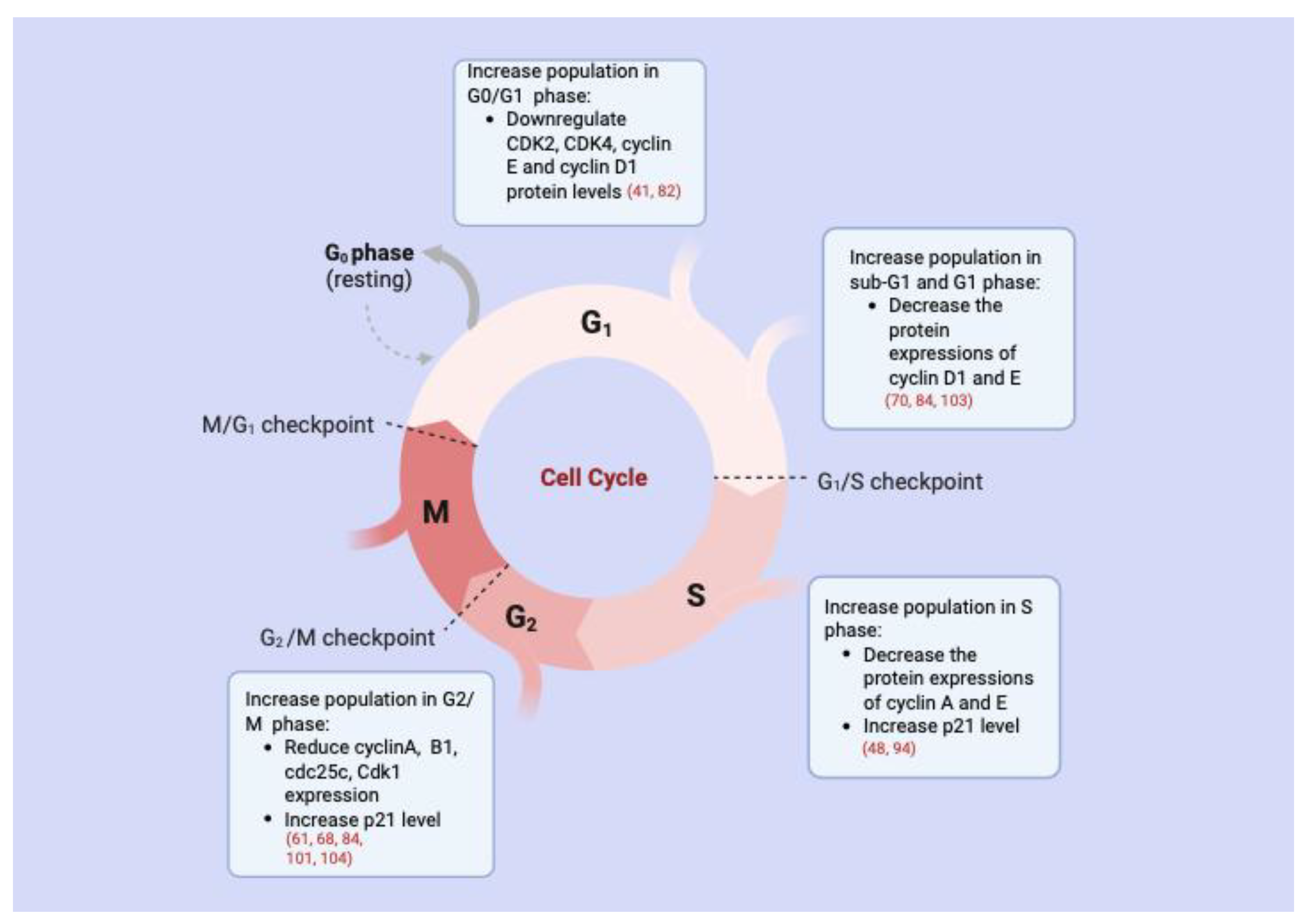
Cell cycle regulation is fundamental for maintaining controlled cell proliferation, and its dysregulation is a hallmark of tumorigenesis [97,98]. The cell cycle consists of the G1, S, G2, and M phases, which are primarily regulated by the cyclin-dependent kinase (CDK) family and controlled by restriction points and checkpoints [99,100]. In cancer therapy, induction of cell cycle arrest represents an important protective mechanism, as it allows cancer cells to respond to oxidative stress and DNA damage, ultimately leading to regulated cell death [97,98,99,100]. A number of studies have demonstrated that shikonin induces cell cycle arrest concomitant with regulated cell death pathways in prostate cancer, renal cell carcinoma, osteosarcoma, melanoma, and other cancers [84,101,102,103,104].
Many findings have reported that shikonin and its derivatives induce cell cycle arrest in sub-G1 and G2/M phase in various cancers. For example, in melanoma A375 and A2058 cell lines, shikonin dose-dependently inhibited cell proliferation and increased cell accumulation in the sub-G1 and G2/M phases. Treatment of melanoma B16F10 cells with the derivative 2-methylbutyryl shikonin also induced G2/M phase arrest, accompanied by reduced cyclin B1 and Cdk1 expression and increased p21 levels [84,104]. Another example of shikonin derivative, acetylshikonin induced sub-G1 arrest in osteosarcoma U2OS cells, increasing the sub-G1 population from 5.4% to 16.8% [103]. In prostate cancer models, shikonin exposure increased the G2/M phase population in both parental PC3 and docetaxel-resistant DU145 cells, accompanied by decreased levels of checkpoint proteins cyclin A, cyclin B, and CDK1 [101]. In A549 lung cancer and PANC-1 pancreatic cancer cells, shikonin time-dependently promoted G2/M arrest, while shikonin and cyclopropylshikonin induced G2/M arrest in human chondrosarcoma cells via suppression of Cdc25C expression [61,68].
On the other hand, shikonin can also induce cell cycle arrest at the G1 and S phases. In NSCLC H1299 cells, shikonin dose-dependently increased the cell population in the G0/G1 phase, which was associated with downregulation of CDK2, CDK4, cyclin E, and cyclin D1 protein levels [82]. Shikonin also induced cell cycle arrest at the G1 phase in leukaemia NB4 cells [70]. Additionally, acetylshikonin induced S phase arrest in leukaemia K562 cells via upregulation of the CDK inhibitor p21 [94], while β-hydroxyisovaleryl-shikonin treatment increased the proportion of ovarian cancer HeLa cells in the S phase [48]. In colorectal cancer, β, β-dimethylacrylshikonin induced G0/G1 arrest in HCT-116 cells [41]. Together, these findings indicate that shikonin and its derivatives can induce cell cycle arrest at multiple phases, including G1, S, G2/M, and sub-G1, across diverse cancer types, supporting their potential as modulators of cell cycle progression in cancer therapy.
Figure 2. Shikonin induces cell cycle arrest pathways in various cancer.
Preprints 173754 g002

3.3. Suppression of Metastasis and Invasion

Tumour metastasis remains the primary cause of cancer-related mortality and is a critical determinant of cancer prognosis. Aberrant epithelial-mesenchymal transition (EMT) is one of the hallmarks of metastasis and is commonly associated with invasion, due to the development of motility-invasive properties [105]. EMT is characterized by the loss of epithelial phenotypes and the acquisition of mesenchymal cell properties [106]. EMT is a multistep process regulated via various mechanisms such as the expression of EMT-translational factors such as SNAIL which upregulates the mesenchymal gene expression and downregulates the epithelial gene expression [105,106]. Subsequently, this can result in the “cadherin switch”, in which expression of the epithelial adhesion molecule E-cadherin is reduced while the mesenchymal marker N-cadherin is increased, promoting cell motility and proliferation [105]. Additionally, matrix metalloproteinase-2 (MMP-2) and matrix metalloproteinase-9 (MMP-9) are commonly upregulated during EMT. These enzymes degrade the extracellular matrix, facilitating cell detachment from the primary tumour site, and act as angiogenesis modulators by activating integrin signalling and promoting angiogenic factors such as angiostatin and endostatin [107].
Shikonin has demonstrated the ability to inhibit multiple steps of the metastatic cascade through various signalling pathways. Liu et al. reported that shikonin treatment (2.5 and 5.0 µM) suppressed cell proliferation and induced dose-dependent apoptosis in QBC939 cholangiocarcinoma cells. Cell invasion was reduced, and apoptosis and necrosis were increased, as assessed by Annexin V/propidium iodide flow cytometry [75]. Chen et al. showed that shikonin inhibited metastasis in prostate cancer PC-3 and DU145 cells by downregulating MMP-9 and MMP-2 expression, as observed via gelatin zymography. This effect was mediated by shikonin-induced ROS generation, which activated ERK1/2 and subsequently suppressed MMP-9 and MMP-2 expression [108]. Bhat et al. observed similar effects in shikonin-treated melanoma cells, alongside attenuated EMT via the regulation of the 1-κB⍺/ NFκB signalling pathways. I kappaB alpha (1-κB⍺) acts as an inhibitor of nuclear factor kappa B (NF-κB), a factor promoting tumour angiogenesis and metastasis [104].
Huang et al. reported that shikonin when administered at a dose of 5.0 µM downregulated tumour necrosis factor receptor-associated protein 1 (TRAP1) expression, resulting in decreased TE-1 human oesophageal cancer cell viability as observed in cell viability assays [80]. Consistent with previous studies, the shikonin-treated TE-1 cells were also found to have decreased MMP2 and MMP9 expression, consequently inhibiting cell migration and proliferation [75,80,108]. Zeng et al. demonstrated in an in vitro pancreatic cell model that β-hydroxyisovaleryl-shikonin was able to suppress EMT progression via inhibiting the phosphorylation of the PI3K/Akt pathway and reducing the expression of N-cadherin, MMP-9, and MMP-2 [47,109]. Similarly, Zhang et al. reported similar effects in shikonin-treated nasopharyngeal carcinoma cells with suppressed cell proliferation and migration [109]. Bao et al. reported findings that shikonin was able to exert antimetastatic properties on TNBC cells as demonstrated on wound healing and Transwell invasion assays. Western blots revealed that shikonin downregulated mesenchymal markers N-cadherin and vimentin expression and upregulated epithelial E-cadherin expression in the treated cells [106]. This was also observed by Mo et al. in human bladder cancer cells, linking EMT suppression with the inhibition of proton efflux pump sodium–hydrogen exchanger 1 (NHE1) by shikonin, though the linking mechanism between shikonin’s inhibitory effects of NHE1 and EMT suppression has yet to be further elucidated [110].
Shikonin’s involvement in EMT inhibition occurs not only with protein signalling pathways, but also in gene expression of tumour cells. For instance, it suppresses gene miR-15-5p expression, a microRNA found to promote breast cancer cell EMT and inhibit the expression of tumour suppressor gene phosphatase and tensin homologue (PTEN) [106]. Tabari et al. reported that co-treatment with shikonin and metformin upregulated PTEN expression in MCF-7 breast cancer cells, completely inhibiting cell migration within 24 hours at 3.0 µM shikonin and 7.0 mM metformin. Real-time polymerase chain reaction (RT-PCR) analysis revealed decreased expression of pro-EMT genes, such as SNAIL, and increased expression of the anti-EMT gene CDH1 (E-cadherin) [111]. Zhang et al. also elucidated that shikonin suppressed tumour cell metastasis via the p53/miR-361-5p/ZEB1 axis in glioblastoma cells. Western blot studies showed how shikonin upregulates the expression of p53, a mi3-361-5p promoter, which results in miR-365-5p inhibiting ZEB1 overexpression [112]. ZEB1 transcription factors play a major role in promoting EMT by inhibiting E-cadherin and CDH1 expression by binding to their promoters histone deacetylase (HDAC)1 and HDAC2 [113]. In summary, shikonin exerts anti-metastatic effects by interfering with multiple EMT regulatory mechanisms. It downregulates pro-EMT transcription factors (e.g., SNAIL) and microRNAs (e.g., miR-15-5p), while upregulating tumour suppressors and anti-EMT genes (e.g., CDH1 and PTEN). These changes suppress mesenchymal markers (N-cadherin, vimentin) and enhance epithelial markers (E-cadherin). In parallel, shikonin inhibits MMP expression through modulation of PI3K/Akt and activation of ERK1/2 signalling. Together, these molecular events translate into reduced migration, invasion, and metastatic potential in multiple tumour cell types.

3.4. Induction of Necroptosis

Necroptosis is a regulated form of cell death typically triggered by tumour necrosis factor-α (TNFα) or Toll-like receptors (TLRs) under conditions of caspase-8 inhibition. It is primarily mediated by the phosphorylation of receptor-interacting protein kinase 1 (RIPK1) and receptor-interacting protein kinase 3 (RIPK3), which subsequently phosphorylate mixed lineage kinase domain-like protein (MLKL), resulting in necrosome assembly, plasma membrane rupture, and the release of damage-associated molecular patterns (DAMPs) [114,115,116]. Recent studies have shown that shikonin induces necroptosis in various cancer cell types, including osteosarcoma, glioma, and chronic myeloid leukaemia, through mechanisms involving ROS generation, loss of MMP, and RIPK1/RIPK3 activation [117,118]. In glioma cells (SHG-44, U87, U251), shikonin upregulated RIPK1 and RIPK3 expression via excessive ROS production. By treating mitochondrial superoxide cleaner MnTBAP in these glioma cell lines, the ROS generation decreased while combination treatment of RIP1/RIP3 inhibitor and shikonin caused RIP1/RIP3 activation and necrosome assembly decreased, suggesting shikonin induces RIP1/RIP3 activation, which affects the downstream of ROS generation leading to gliomas necroptosis [118]. Other than SHG-44, U87, and U251 glioma cell lines, shikonin also showed necroptotic effects in A172 and T98G glioma cell lines by increasing RIP1/RIP3 and MLKL levels [118,119]. In chronic myeloid leukaemia (CML) resistant to tyrosine kinase inhibitors, shikonin downregulated miR-92a-1-5p, a negative regulator of MLKL, thereby activating the RIPK1/RIPK3/MLKL signalling axis to induce necroptosis [117]. In Jurkat T-cell leukaemia cells, shikonin triggered a RIP-1-dependent pathway during early apoptosis, suggesting that shikonin induces RIP1-dependent necroptotic pathway, which will affect the downstream of ROS generation leading to apoptosis [120]. In pancreatic cancer cells (AsPC-1 and PANC-1), shikonin dose-dependently induced both apoptosis and necroptosis. Interestingly, combined treatment with the necroptosis inhibitor Nec-1 and the apoptosis inhibitor zVAD in AsPC-1 cells shifted cell death predominantly toward necroptosis, indicating that shikonin can activate both pathways simultaneously [121]. Another research showed that shikonin induced more predominant necroptotic death in doxorubicin (DX)-resistant prostate cancer cell lines. They found that the combined administration of Nec-1 inhibitor and shikonin results in reversed anti-growth effects of shikonin in all parental and DX-resistant prostate cancer cell lines [101]. In breast adenocarcinoma MCF-7 cells, shikonin irreversibly inhibited the antioxidant enzyme thioredoxin reductase 1 (TrxR1), inducing oxidative stress and necroptosis, which was prevented by Nec-1 co-treatment. This suggests that targeting TrxR1 may sensitize cancer cells to shikonin-induced necroptosis [122]. Briefly, these findings indicate that shikonin can trigger necroptosis, often in conjunction with apoptosis, across diverse cancer types through pathways involving RIPK1/RIPK3/MLKL activation, ROS generation, and redox system disruption.
Figure 3. Shikonin induces necroptosis in various cancers.
Preprints 173754 g003

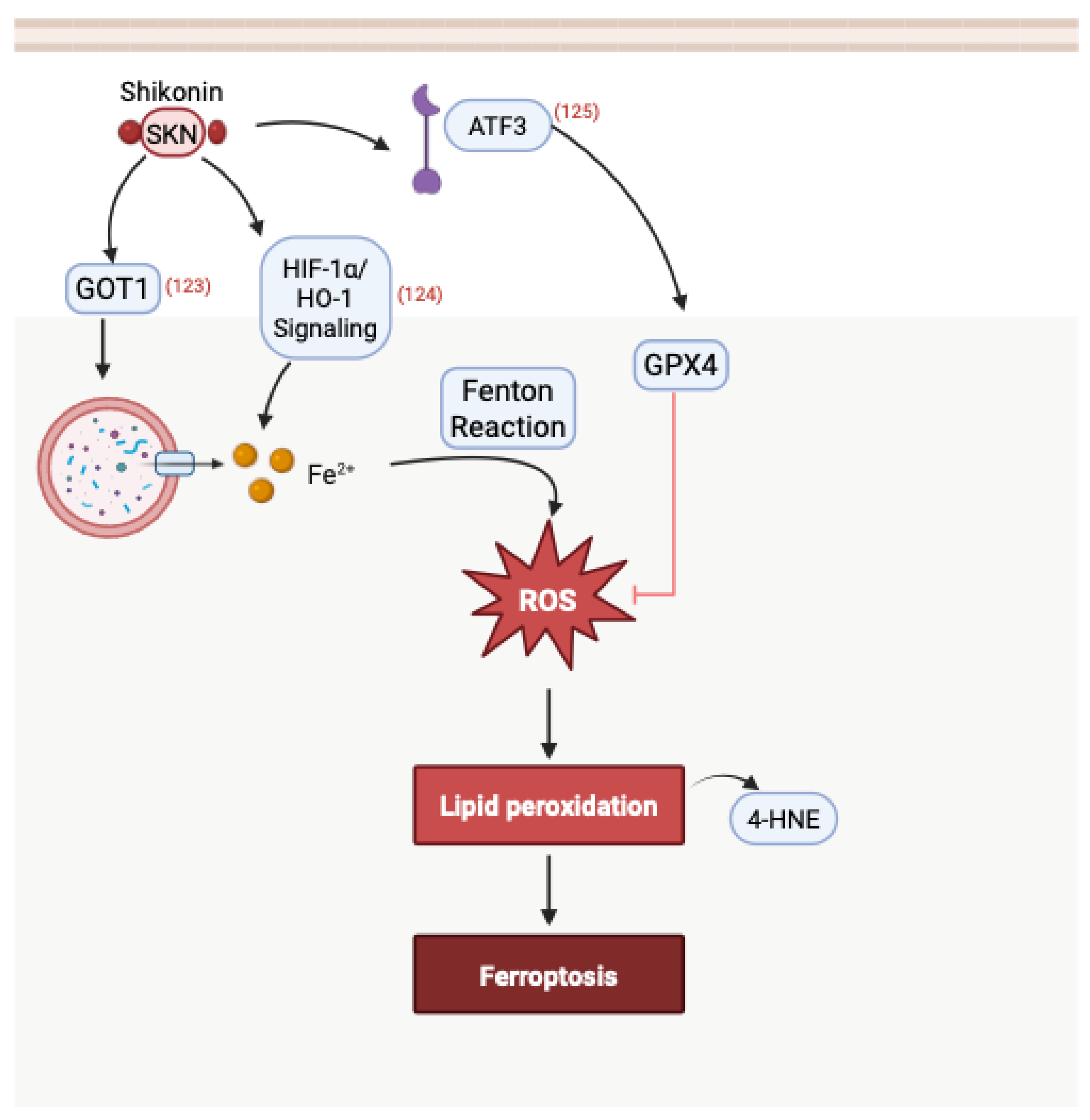
3.5. Induction of Ferroptosis

Ferroptosis is an iron-dependent form of regulated cell death mechanism that is mediated by iron, lipids, and ROS, which will affect mitochondrial membrane structure and mitochondrial volume [114,115,116]. Shikonin’s antitumor effects extend beyond apoptosis and necroptosis, as it has also been shown to induce ferroptosis in multiple myeloma (MM) through glutamic-oxaloacetic transaminase 1 (GOT-1)-mediated ferritinophagy, resulting in lactate dehydrogenase release and subsequent cell death [123]. In small cell lung cancer (SCLC), shikonin triggered ferroptosis by increasing oxidative stress and suppressing the antioxidant enzyme GPX4 via an ATF3-centered, epigenetically regulated pathway [124]. Moreover, in osteosarcoma MC63 cells, shikonin simultaneously induced apoptosis and ferroptosis, with its ferroptotic effect mediated by mitochondrial ROS (MitoROS)-triggered HIF-1α/HO-1 signalling. This led to iron overload, oxidative stress, and depletion of mitochondrial antioxidant defence enzymes [125]. In short, these findings indicate that shikonin can induce ferroptosis in osteosarcoma and small cell lung cancer, expanding its spectrum of regulated cell death mechanisms beyond apoptosis and necroptosis.
Figure 4. Shikonin induces ferroptosis in osteosarcoma and small cell lung cancer.
Preprints 173754 g004

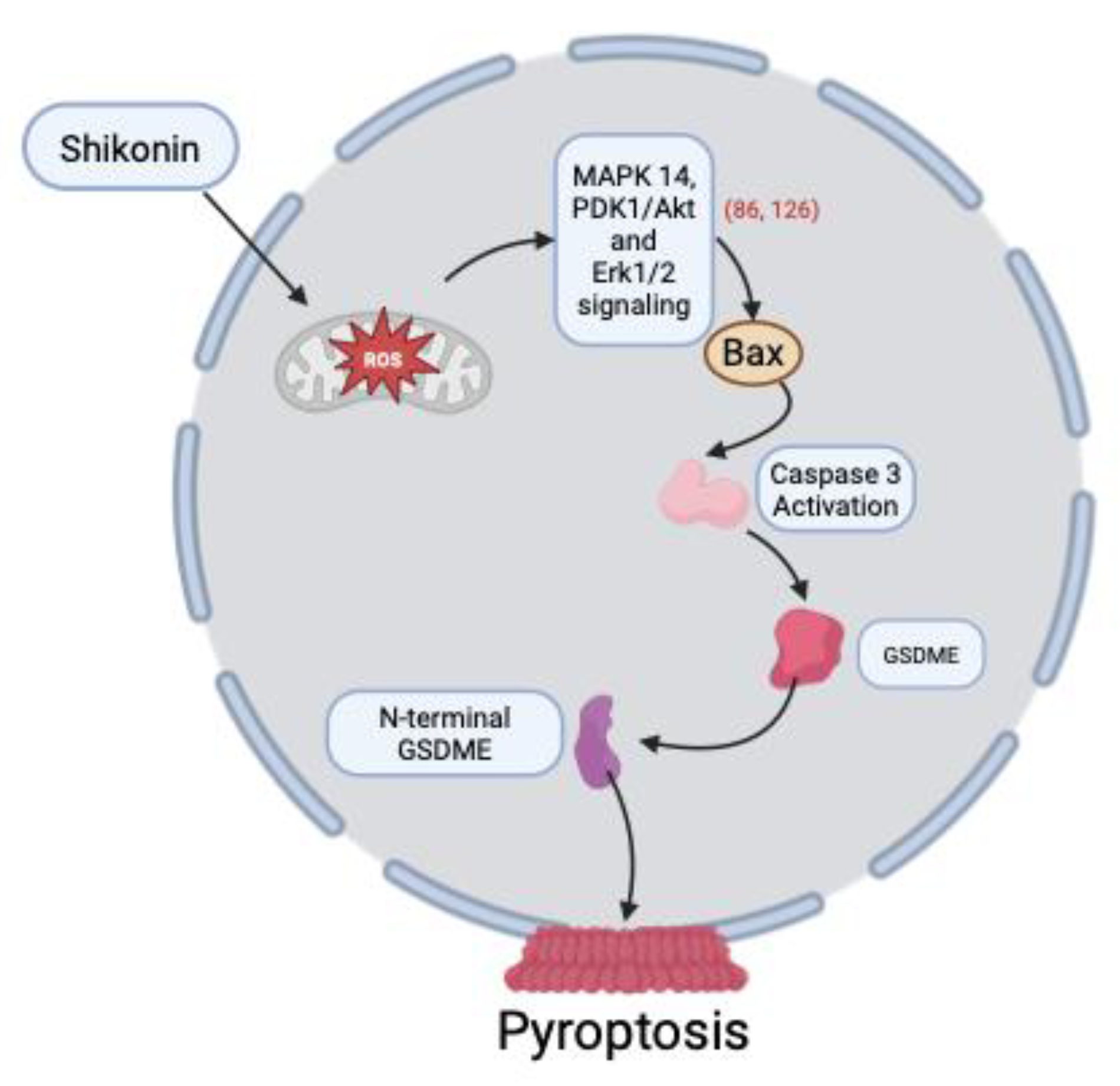
3.6. Induction of Pyroptosis

Pyroptosis is a proinflammatory form of regulated cell death pathway that can be triggered by caspase -1, -3, -4, and -5 and is mediated through three cellular pathways, which are granzyme-mediated, canonical, and non-canonical pathways [114,115,116]. Shikonin has demonstrated broad antitumor effects, including the induction of pyroptosis. In human gastric cancer (GC) cell lines SGC-7901 and BGC-823, shikonin induced pyroptosis in a time- and dose-dependent manner via a gasdermin E (GSDME)-mediated pathway. Mechanistically, shikonin increased intracellular ROS, resulting in Bax/caspase-3 activation while concurrently inhibiting MAPK14/p38α-regulated autophagy, thereby amplifying pyroptosis in gastric cancer cells [126]. Additionally, in the EGFR-T790M-mutant drug-resistant NSCLC cell line H1975, shikonin induced both pyroptosis and apoptosis by inhibiting PGE2-induced downstream signalling pathways, including PDK1/Akt and Erk1/2. Co-treatment with shikonin, the necroptosis inhibitor Nec-1, the apoptosis inhibitor zVAD, and the ferroptosis inhibitor Fer-1 revealed compromised cell membranes, confirming that shikonin triggers both pyroptosis and late-stage apoptosis in H1975 cells [86]. In brief, these findings indicate that shikonin is capable of inducing pyroptosis in gastric cancer and non-small cell lung cancer, further expanding its spectrum of regulated cell death mechanisms.
Figure 5. Shikonin induce pyroptosis through MAPK14, PDK1/Akt and Erk ½ pathways in gastric cancer and non-small cell lung cancer.
Preprints 173754 g005

3.7. Inhibition of Tumour Metabolism

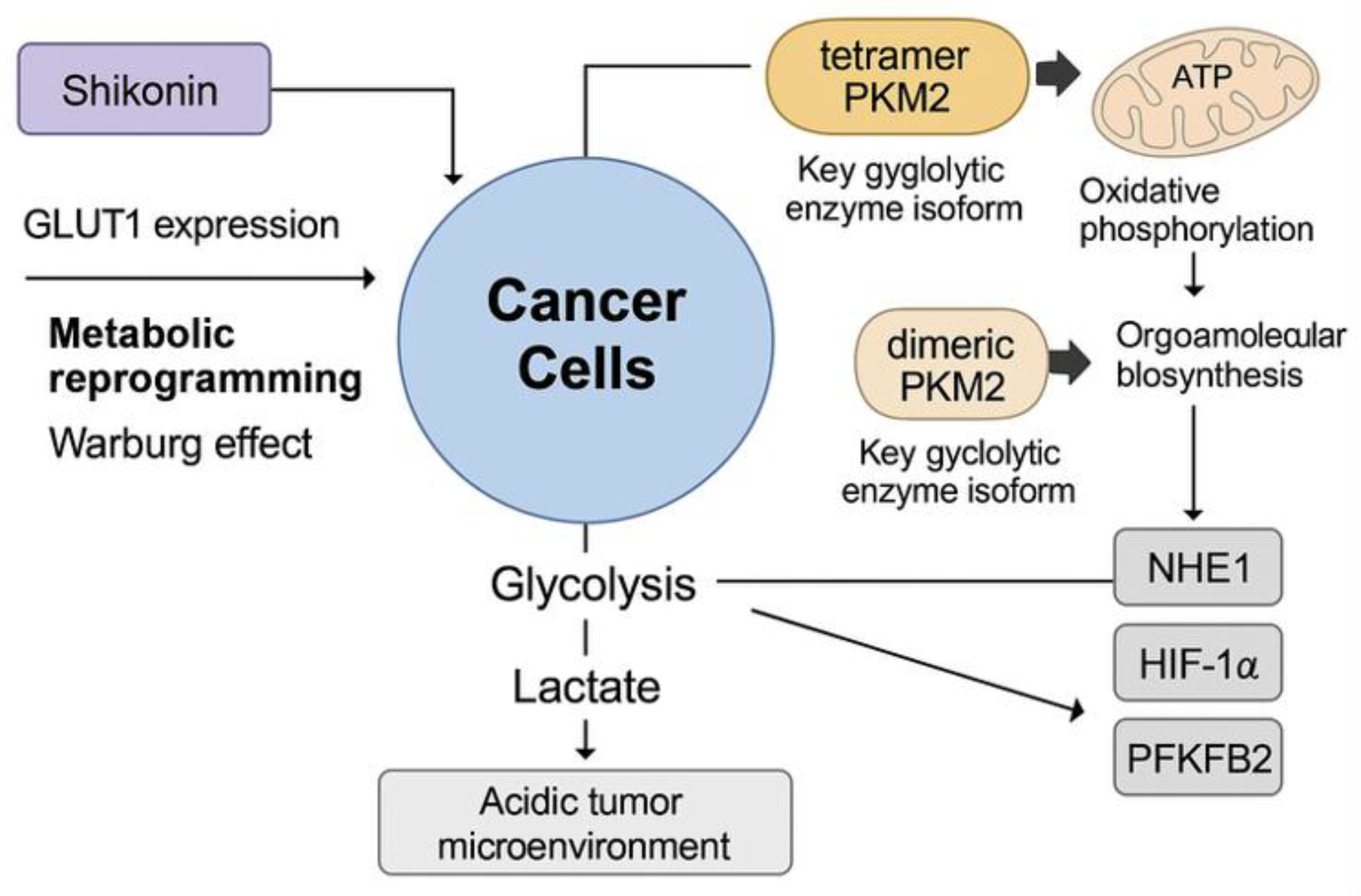
Tumour cells undergo metabolic reprogramming to meet the increased energy and biosynthetic demands required for rapid proliferation and metastasis [127]. One of the main altered metabolic processes is aggravated aerobic glycolysis, also known as the Warburg effect. It is characterised by increased glucose uptake in cancer cells that preferentially undergo aerobic glycolysis despite sufficient oxygen availability, leading to rapid ATP and lactate production [128]. The resulting acidic TME promotes metastatic cell proliferation and activates proliferation-associated factors such as transforming growth factor β (TGF-β) [129].
PKM2, a key glycolytic enzyme isoform, is frequently upregulated in cancer and plays a central role in metabolic and transcriptional regulation [130]. PKM2 exists in multiple conformations, including inactive monomers, active tetramers, and nuclear dimers. The dimeric form mainly plays a role in modulating cellular proliferation but is also able to stimulate the expression of transcription factors associated with glycolysis [131,132]. It is also able to promote the Warburg effect by favouring glucose-derived carbon utilisation for macromolecular biosynthesis while tetramer PKM2 is highly active and stimulates rapid ATP production via oxidative phosphorylation [133].
Shikonin has been shown to disrupt tumour metabolic reprogramming by directly inhibiting PKM2 activity and expression. Long et al. demonstrated that shikonin-loaded nanoparticles optimized with hyaluronic acid reduced lactate production in CT26 colorectal cancer cells through PKM2 inhibition. Shikonin was able to remodel the tumour immune microenvironment (TIME) by inhibiting lactate-induced immunosuppression and stimulating cancer cell apoptosis [129]. In NSCLC lines A549 and PC9, shikonin at doses of 4.0 µM, 6.0 µM, and 8.0 µM inhibited glucose uptake and lactate production. In the same study, Dai et al. confirmed that shikonin’s antiglycolytic properties were exerted via inhibiting PKM2 by observing its effectiveness in PKM2-deficient NSCLC cells [134]. Another study by Zhou et al. further proved shikonin’s involvement in inhibiting PKM2 activity by attenuating the guanosine triphosphate binding protein 4 (GTPBP4)-PKM2 dependent regulatory axis in glycolytic reprogramming in HCC. Tumours collected from mice xenografted with HCC cells lines showed upregulated levels of GTPM4, an inducer of dimer PKM2 production, was significantly correlated with poor prognosis, increased metastasis and tumour progression, and increased aerobic glycolysis contributing to the Warburg effect. However, Western blot and immunoprecipitation tests demonstrated that shikonin was able to completely inhibit GTPB4-PKM2 induced glycolytic activity thus suppressing HCC growth and metastasis [133]. Consistent with previous studies, Zhang et al. found that shikonin inhibited PKM2 activity in a dose-dependent manner in nasopharyngeal carcinoma cells, accompanied by significantly reduced ATP levels, lactate production, and glucose uptake. This demonstrates shikonin’s ability to alter the glycolytic flux and TME by inhibiting PKM2 [109]. Huang et al. observed via size-exclusion chromatography that shikonin inhibited the formation of PKM2 dimer and tetramer isoforms. Shikonin binds to the PKM2 isoforms and modulates PKM2 aggregation into a polymer, thus inhibiting its activity [131]. Additionally, it was also found that shikonin could selectively inhibit the formation of dimer PKM2 forms by binding to the tetramer forms and stabilizing them [131,132]. One such factor is hypoxia-inducible factor 1-alpha (HIF-1α) which encodes for the production of glycolytic enzymes, glucose transporters GLUT1, and PKM2 itself [132,134]. The inhibition causes downregulated expression of prolyl hydroxylase 3 (PHD3), a HIF-1⍺ coactivator, thus dysregulating the PHD3/HIF-1⍺ positive feedback loop [79]. Other than via the direct inhibition of PKM2, shikonin also acts on endocan, also known as the endothelial cell specific molecule 1 (ESM1) which facilitates the dimerization of PKM2 [135].
Shikonin has also been found to inhibit aerobic glycolysis via the inhibition of NHE1, a proton efflux pump, resulting in an acidic tumour cell intracellular microenvironment [110]. While an acidic intercellular microenvironment further aggravates metastasis, an acidic intracellular microenvironment inhibits DNA synthesis initiation, a process requiring an alkaline environment, consequently suppressing cell proliferation [110,129]. Additionally, shikonin exerts inhibitory properties on 6-phosphofruto-2-kinase/fructose-2,6-biphosphate (PFKFB2) expression, an enzymatic regulator of the fructose-2,6-bisphosphate synthesis and degradation in glycolysis [136].
Overall, shikonin is able to suppress tumour metabolism by acting on various mechanisms inhibiting the Warburg effect (Figure 6). It mainly acts on the glycolytic enzyme PKM2 via different approaches: direct inhibition via aggregation, preventing the formation of its tetramer and dimer isoforms, and targeting its transcriptional factor, HIF-⍺. Additionally, shikonin interferes with other factors of the glycolytic cycle as well, such as the inhibition of NHE1 and PFKFB2. This inhibition allows shikonin to alter the tumour intracellular and intercellular microenvironment, specifically by altering the pH levels against favouring tumour growth. Shikonin’s mechanisms in suppressing tumour metabolism is well established and has consistently shown improved prognosis over multiple studies, with lowered production of ATP and lactate, and glucose uptake.
Figure 6. Shikonin suppresses tumour metabolism by inhibiting PKM2 and glycolysis.
Preprints 173754 g006

4. Combination Therapy

4.1. Shikonin as a Chemosensitizer: Enhancing Chemotherapy and Overcoming Resistance

The therapeutic limitations of single-agent chemotherapy have driven widespread interest in combination strategies that can simultaneously target multiple cancer pathways [137]. Shikonin functions as a potent chemosensitizer, enhancing the efficacy of chemotherapeutic agents while overcoming drug resistance. In NSCLC, Dai et al. reported that shikonin significantly enhanced cisplatin sensitivity through dual inhibition of PKM2-mediated glycolysis and exosome signalling [134]. PKM2 is a central regulator of the Warburg effect, sustaining tumour growth through aerobic glycolysis and biosynthesis, while also promoting exosome release via non-metabolic activation of SNAP-23. These exosomes carry oncogenic cargo that remodel the TME, driving angiogenesis, metastasis, and immune evasion. Targeting PKM2 could therefore disrupt both metabolic reprogramming and exosome-mediated signalling, providing a dual approach to suppress tumour progression [138,139]. Shikonin suppresses PKM2 expression by inhibiting HIF-1α transcription and the splicing factors that drive PKM2 isoform selection. This disruption of the PKM2/HIF-1α axis reduces inflammation and oxidative stress [131]. Notably, shikonin exerted potent anti-tumour effects in NSCLC cells, with IC₅₀ values at 24 hours of 5.739 µM in A549 and 6.302 µM in PC9 cells. At 8 µM, shikonin reduced PK activity by ~33% within 20 minutes. In A549 cells, it markedly suppressed glucose uptake (~67%) and lactate production (~57%), compared with more modest reductions in PC9 cells (~24% and ~40%), reflecting greater sensitivity in A549. This metabolic inhibition corresponded with decreased PKM2 expression and activity, without changes in MCT1 or LDHA. PKM2 knockdown abolished these anti-glycolytic and anti-proliferative effects, confirming the dependence of shikonin’s action on PKM2 inactivation. Shikonin also impaired exosome release, reducing exosomal PKM2 secretion by ~69%, while exosome blockade with GW4869 produced similar restoration of cisplatin sensitivity. This decrease in exosome signalling coincided with a strong pro-apoptotic effect, with ~650% and ~525% increases in apoptosis at 6 µM observed in A549 and PC9 cells, respectively. Importantly, cisplatin-resistant NSCLC cells transferred resistance to cisplatin-sensitive A549 cells through exosomal PKM2, as shown by a ~72% reduction in cisplatin efficacy when A549 cells were exposed to cisplatin alone. Shikonin effectively reversed this acquired resistance in a dose-dependent manner, restoring up to ~100% of cisplatin sensitivity in cells cultured in conditioned media, confirming its ability to block PKM2-mediated resistance transfer. In nude mice inoculated with A549 cells, intraperitoneal co-treatment with shikonin and cisplatin markedly enhanced cisplatin sensitivity through metabolic reprogramming, resulting in the greatest reductions in tumour burden and ¹⁸F-FDG uptake compared with monotherapies. Shikonin downregulated PKM2 and Glut1 expression, as confirmed by immunohistochemistry (IHC), corresponding with a >50% decrease in glucose uptake on ¹⁸F-FDG PET/CT (SUVmax), and suppressed exosomal PKM2 release. Notably, inhibition of exosome secretion with GW4869 or direct targeting of exosomal PKM2 restored cisplatin responsiveness, underscoring shikonin’s dual action on intracellular metabolism and intercellular resistance transmission. These combined effects led to >70% reductions in tumour volume and weight [134].
Ni et al. demonstrated that shikonin synergises with cisplatin to overcome resistance in ovarian cancer by enhancing ferroptosis, an iron-dependent form of cell death driven by lipid peroxidation [140]. This approach is particularly effective against aggressive, apoptosis-resistant tumour cells, exploiting their dependence on iron and dysregulated lipid metabolism to induce lethal oxidative damage [141]. The study employed three cisplatin-resistant ovarian cancer cell lines, A2780/DDP, SKOV3/DDP, and OVCAR4/DDP, with average IC₅₀ values of 23.46 µM, 50.06 µM, and 18.06 µM, respectively. Compared with cisplatin alone, shikonin in combination therapy significantly upregulated heme oxygenase 1 (HMOX1), as shown by volcano plot analysis, where 23 proteins were downregulated and 35 were upregulated [140]. Increased HMOX1 expression promoted heme breakdown [142] and increased intracellular ferrous iron (Fe²⁺) levels by 50% in A2780/DDP and 100% in SKOV3/DDP cells [143]. Higher Fe²⁺ facilitated ROS production through Fenton reactions, generating hydroxyl radicals that attacked polyunsaturated fatty acids in cell membranes [144]. This triggered ~34% and ~50% increases in ROS levels in A2780/DDP and SKOV3/DDP cells, respectively, leading to ~33% and ~90% increases in lipid peroxidation [140]. The resulting oxidative stress overwhelmed antioxidant defences, compromised membrane integrity, and induced ferroptosis [145,146], thereby restoring cisplatin sensitivity in resistant ovarian cancer cells. In vivo, the therapeutic synergy was confirmed in a cisplatin-resistant ovarian cancer xenograft model using BALB/c nude mice inoculated with A2780/DDP cells. Shikonin at 0.8 mg/kg combined with cisplatin at 3.0 mg/kg suppressed tumour growth by over 67% compared to monotherapies, without causing weight loss or hepatorenal toxicity. IHC confirmed 3-fold upregulation of ferroptosis markers including HMOX1, TFRC, and POR. This dual action mechanism, inducing iron-dependent cell death while maintaining metabolic safety, highlights shikonin as an effective adjunct to platinum-based chemotherapy in overcoming resistance in ovarian cancer [140].
Besides cisplatin, shikonin also demonstrates synergistic effects with other chemotherapeutic drugs, such as paclitaxel. Du et al. investigated shikonin’s ability to sensitise esophageal squamous cell carcinoma (ESCC) to paclitaxel using KYSE270 and KYSE150 cell lines. In vitro, co-treatment with shikonin and paclitaxel increased p53 expression by approximately 200% [147]. P53 is a tumour suppressor that regulates genes involved in cell cycle arrest, apoptosis, senescence, autophagy, and DNA repair, and its upregulation led to markedly higher apoptosis, with a ~367% increase compared to either agent alone [147,148]. This was supported by enhanced caspase-3 cleavage, detected by Western blotting, and by nuclear fragmentation, both of which are established hallmarks of apoptosis. Caspase-3 acts as a key executioner protease, mediating programmed cell death by cleaving critical structural and regulatory proteins, while nuclear fragmentation reflects chromatin breakdown during late-stage apoptosis [149,150,151]. Moreover, p53 upregulation suppressed BCL2 expression by about 38% [147]. BCL2 is an anti-apoptotic protein that confers resistance to chemotherapy, and its reduction enhances sensitivity to treatment [152,153]. Whereas either shikonin or paclitaxel alone had minimal effects on p53 and BCL2, their combination significantly increased p53 and decreased BCL2, underscoring their cooperative role in promoting apoptosis [147].
Pancreatic cancer has a poor prognosis, with gemcitabine-based therapy providing only limited survival benefits. Ji et al. investigated whether combining shikonin with gemcitabine could enhance therapeutic efficacy by targeting p21-activated kinase 1 (PAK1) [154], an oncogenic kinase frequently overexpressed in pancreatic cancer that drives proliferation, survival, invasion, and therapy resistance [155,156]. Using the PANC-1 and BxPC-3 cell lines, shikonin was identified as a novel PAK1 inhibitor, with IC₅₀ values of 1.800 ± 0.013 μM in PANC-1 and 3.183 ± 0.321 μM in BxPC-3 cells. Western blot analysis confirmed that shikonin inhibited PAK1 phosphorylation and suppressed its downstream signalling pathways, including mTOR, MEK1, and c-RAF. Apoptosis was induced dose-dependently, with 3, 5, and 10 μM treatments causing 14.66%, 83.35%, and 90.50% apoptosis in BxPC-3 cells, and approximately 7%, 14%, and 17% in PANC-1 cells, respectively. Notably, shikonin markedly sensitised BxPC-3 cells to gemcitabine, reducing the IC₅₀ values from 14.22 to 2.18 μM, with strong synergism demonstrated by combination index values of 0.18. These findings highlight shikonin as a potent bioactive inhibitor of PAK1 and a promising candidate for combination therapy in pancreatic cancer [154].
Taken together, these studies underscore shikonin’s broad capacity to enhance chemotherapeutic efficacy by targeting diverse resistance mechanisms across multiple malignancies. Mechanistically, it disrupts tumour survival through dual blockade of PKM2-mediated glycolysis and exosome signalling in NSCLC, ferroptosis induction in cisplatin-resistant ovarian cancer, p53-dependent apoptosis in ESCC, and PAK1 inhibition in pancreatic cancer. Clinically, shikonin consistently restores drug sensitivity and amplifies cytotoxicity, highlighting its potential as a versatile adjunct to combination chemotherapy. These findings warrant further preclinical and clinical evaluation to establish its translational value in overcoming therapy resistance and improving patient outcomes.

4.2. Endocrine-Targeted Therapy and Resistance Modulation by Shikonin

Targeted therapies have transformed breast cancer treatment, yet their efficacy is often limited by the emergence of resistance mechanisms that diminish clinical benefit. Resistance can develop through on-target genetic alterations that impair drug binding, such as EGFR T790M and ALK mutations, or through activation of alternative survival pathways including MET amplification and KRAS mutations, which circumvent the inhibited signalling axis [157,158]. Shikonin has been shown to enhance the efficacy of endocrine-targeted therapy in both oestrogen receptor–positive (ER⁺) and –negative (ER⁻) breast cancers by modulating apoptotic and survival pathways. Lin et al. reported that combining shikonin with 4-hydroxytamoxifen (4-OHT) in MCF-7 (ER⁺) and MDA-MB-435S (ER⁻) cells produced maximum inhibition rates of 47% and 66%, respectively, surpassing the effects of either drug alone [159]. Mechanistically, shikonin targeted mitochondrial complex II (succinate dehydrogenase), causing electron transport chain dysfunction and excessive superoxide production, which increased ROS levels 2.3-fold in MCF-7 and 1.8-fold in MDA-MB-435S [159,160]. The resulting oxidative stress damaged mitochondrial components and triggered mitochondrial permeability transition pore opening, leading to loss of MMP by ~77% in MCF-7 and ~60% in MDA-MB-435S [159,161]. Dissipation of MMP initiated intrinsic apoptosis through cytochrome c release and Apaf-1/caspase-9 apoptosome formation, with concurrent Smac/DIABLO release neutralising IAPs and activating the caspase cascade [162]. Combination treatment increased early apoptosis by 22.9% in MCF-7 and late apoptosis by 26.3% in MDA-MB-435S. Additionally, shikonin suppressed PI3K expression by ~33% in MCF-7 and ~20% in MDA-MB-435S, while reducing AKT activity by ~68% only in MCF-7, implicating the PI3K/AKT/caspase-9 axis as a key mechanism in ER⁺ cells. In vivo, in a BALB/c mouse model bearing MCF-7 xenografts, the combination of shikonin (1.5 mg/kg) and 4-OHT (3 mg/kg) produced superior antitumour efficacy, achieving 76.65% tumour growth inhibition versus 57.20% for shikonin and 45.44% for 4-OHT alone. Tumour weight was reduced by 58% and 47% compared to 4-OHT and shikonin monotherapies, respectively. While shikonin alone caused mild adverse effects, the combination treatment maintained a favourable safety profile, with no significant body weight loss or renal toxicity. Histopathological analysis showed enhanced apoptosis and reduced malignancy in the combination group, as confirmed by H&E staining and IHC. These findings highlight the synergistic potential of shikonin to overcome endocrine resistance in ER⁺ breast cancer, with a 1:2 dose ratio (shikonin:4-OHT) emerging as an effective and tolerable regimen [159].
Complementing these findings, Zhang et al. investigated shikonin as a potential modulator of tamoxifen (TAM) resistance by targeting resistance-associated pathways and ultra-conserved long non-coding RNAs (lncRNAs) [163]. LncRNAs are non-protein-coding transcripts longer than 200 nucleotides that regulate gene expression and contribute to cancer progression by modulating chromatin structure, transcriptional programmes, and signalling pathways. Certain lncRNAs also drive tumour metastasis and therapy resistance through interactions with epigenetic complexes and hormone receptors [164]. Using TAM-resistant MCF-7R and parental MCF-7 cell lines, the study showed that MCF-7R cells expressed ~80% less of the ultra-conserved lncRNA uc.57 and ~280% more of its target gene BCL11A compared with TAM-sensitive cells, linking uc.57 downregulation and BCL11A upregulation to TAM resistance. Shikonin treatment restored uc.57 expression, which suppressed BCL11A and consequently inhibited the PI3K/AKT and MAPK pathways by ~50% [163]. The MAPK pathway promotes growth and angiogenesis through RAS/RAF/ERK signalling, while PI3K/AKT enhances survival and epithelial–mesenchymal transition through lipid-mediated signals. Frequent activation and crosstalk of these pathways contribute to tumour aggressiveness and endocrine therapy resistance, making their dual inhibition an important therapeutic goal [165,166,167]. Functionally, shikonin plus TAM suppressed MCF-7R cell growth by 69% in vitro, whereas TAM alone had no effect. In human breast tissue-derived SCID mouse models of TAM-resistant ER-positive breast cancer (MCF-7R xenografts), shikonin at 1.5 mg/kg combined with TAM (3 mg/kg) reduced tumour volume by over 50% compared to shikonin alone, effectively overcoming TAM resistance. Parallel experiments with uc.57-overexpressing MCF-7R-lv-uc.57 xenografts confirmed this mechanism, as TAM monotherapy significantly inhibited tumour growth in uc.57-positive tumours, recapitulating the effect of the shikonin–TAM combination. The five-week treatment caused no observable toxicity, with stable body weight and normal ALT/AST levels [163].
Together, these findings demonstrate shikonin’s ability to enhance endocrine-targeted therapies by disrupting both mitochondrial metabolism and transcriptional resistance pathways. Mechanistically, it induces mitochondrial dysfunction, elevates ROS production, and suppresses PI3K/AKT signaling in ER⁺ breast cancer, while restoring the uc.57–BCL11A axis and dual blockade of PI3K/AKT and MAPK pathways in tamoxifen-resistant models. Clinically, shikonin potentiates 4-OHT efficacy, restores tamoxifen responsiveness, and reduces tumour burden, supporting its role as a promising adjuvant strategy. These results highlight the translational value of shikonin in overcoming endocrine resistance, with uc.57 and BCL11A emerging as candidate biomarkers for future therapeutic development.

4.3. Shikonin Enhances Immunotherapy via Immunogenic Cell Death

Immunogenic cell death (ICD) is a regulated form of tumour cell death that stimulates adaptive immunity through the release of DAMPs such as calreticulin (CRT), ATP, HMGB1, and heat shock proteins. These signals recruit and mature dendritic cells (DC), enhance tumour antigen presentation, and activate cytotoxic T lymphocytes (CTL), establishing long-term immune memory. Shikonin induces ICD via ROS-driven apoptosis and necroptosis, marked by CRT exposure, ATP release, and HMGB1 secretion. Importantly, tumour lysates from shikonin-treated cells, especially when combined with pathogen-associated molecular patterns (PAMPs), further promote dendritic cell maturation and stimulate Th1 and Th17 responses, thereby reinforcing anti-tumour immunity [168,169].
In TNBC, Shahsaari et al. reported that shikonin enhances anti–PD-1 immune checkpoint therapy by inducing RIPK1/RIPK3-dependent necroptosis [170]. Necroptosis is a caspase-independent programmed cell death triggered when death receptors such as TNFR1 or cellular stress activate RIPK1, which phosphorylates RIPK3 to form the necrosome complex. This drives MLKL oligomerization, membrane permeabilization, and inflammatory necrosis [171,172,173]. Shikonin showed an IC₅₀ of 3.586 μM at 12 hours and acted by generating ROS, disrupting MMP (~83%), and upregulating RIPK1 (~35%) and RIPK3 (~40%). It demonstrated plasticity between death pathways, with necroptosis dominating when apoptosis was blocked by Z-VAD-FMK (necrosis ~20%, apoptosis ~2%) and apoptosis prevailing when necroptosis was inhibited by Nec-1 (necrosis ~3%, apoptosis ~39%). Caspase-3 and -8 activity increased by ~633% and ~288%, respectively, confirming strong apoptotic induction. Notably, shikonin’s capacity to trigger immunogenic necroptosis enhanced the efficacy of PD-1 blockade by reshaping the TME to favour immune infiltration and recognition. By targeting mitochondrial dysfunction and activating RIPK1/RIPK3/MLKL while preserving caspase-dependent apoptosis, shikonin presents a dual cytotoxic and immunomodulatory strategy for treating aggressive breast cancers [170].
Supporting evidence from Chen et al. demonstrated that shikonin synergises with PD-1 blockade to overcome immunotherapy resistance via a PKM2-ROS-Hsp70 immunogenic axis [174]. Hsp70 acts as a dual-function chaperone, maintaining proteostasis and inhibiting apoptosis intracellularly while serving extracellularly as a DAMP to activate antigen-presenting cells, enhance NK cell cytotoxicity, and stimulate pro-inflammatory cytokine production. Its context-dependent functions, both promoting tumour growth and facilitating immune recognition, make Hsp70 a compelling therapeutic target for inhibition to disrupt cancer survival or exploitation to boost immunogenic cell death and anti-tumour immunity [175,176,177]. Shikonin induced dual cell death in CT26 cells, combining dose-dependent apoptosis (12.47% at 5 μM and 20.17% at 10 μM) with PKM2-dependent ROS-mediated immunogenic cell death, confirmed by reversal with PKM2 silencing and NAC inhibition. It specifically enhanced CRT surface exposure (22.13 ± 0.153% at 5 μM; 23.70 ± 0.265% at 10 μM) and Hsp70 expression (32.61 ± 11.260) without significant changes in total CRT or HMGB1 levels or soluble HMGB1 release, as shown by western blot and ELISA. These changes remodelled the tumour microenvironment, increasing CD8⁺ T-cell infiltration (2.52 ± 0.659%) and dendritic cell recruitment (4.02 ± 2.112%). In vivo, CT26 cells were subcutaneously inoculated into the right inguinal region of SPF female BALB/c mice, and treatment was initiated once tumours reached approximately 62.5 mm³. Shikonin was administered intraperitoneally at 3 mg/kg, administered every 2 days for a total of seven doses, while anti-PD-1 antibody was given intraperitoneally at 50 µg per mouse on days 5 and 9.This combination significantly enhanced anti-PD-1 efficacy, reducing tumour volume by 40% compared to PD-1 monotherapy (294.1 ± 231.2 mm³ vs 489.2 mm³) and by 72% versus untreated controls (1048 ± 1016 mm³). The more than 3.5-fold reduction underscores shikonin’s therapeutic potential as an adjuvant to checkpoint inhibitors for microsatellite-stable colorectal cancers where PD-1 monotherapy typically fails [174].
Shikonin represents a promising phytochemical for immunotherapy-resistant clear cell renal cell carcinoma (ccRCC), demonstrating a distinctive triple mechanism of action when combined with ipilimumab. In SKRC17 and RCC53 cell lines, the latter derived from a patient with stage IV disease (pT2N1MxG2 to G3), Lyu et al. reported that shikonin directly suppressed cancer stem cells (CSCs), reducing migration and invasion by 50% and increasing apoptosis by approximately 344%, with an IC₅₀ of 1.32 μM. It also reprogrammed the immune microenvironment by decreasing FoxP3⁺ regulatory T cells by 70% and enhancing CD4⁺ and CD8⁺ T cell activation 2.5-fold in patient peripheral blood mononuclear cell (PBMC) co cultures. In addition, it modulates CSC-immune biomarkers including VCAM1, IL8, and CXCL1. Integrated NanoString profiling and network pharmacology identified 19 shared molecular targets underpinning the shikonin–ipilimumab synergy, with VCAM1 emerging as a predictive biomarker. High VCAM1 expression correlated with a 3-fold improvement in survival and increased NK/T-cell infiltration in TCGA data, although its prognostic significance was reversed under CTLA-4 blockade. Unlike current VEGF-TKI/ICI regimens limited to intermediate-poor risk IMDC patients, this combination uniquely addresses CSC-driven resistance through PKM2-mediated metabolic rewiring and ROS-dependent CSC elimination while enhancing tumour immunogenicity. Clinical translation is further supported by CSC marker downregulation (IL8, CXCL1, VCAM1), activation of immune and NK-cell signalling pathways, and stratification potential via Immunophenoscore, positioning the combination for future trials in ICI-refractory ccRCC [178].
In aggregate, these studies reveal that shikonin can enhance immunotherapy by reshaping the TIME. Mechanistically, it reduces lactate-induced immunosuppression, promotes DC activation, and stimulates cytotoxic T-cell responses while concurrently inhibiting immune checkpoints such as PD-1/PD-L1. In addition, shikonin has been reported to induce ICD, characterized by calreticulin exposure, ATP release, and HMGB1 secretion, thereby further enhancing antigen presentation and adaptive immune activation. Clinically, shikonin has shown the capacity to restore immune sensitivity and strengthen the efficacy of checkpoint inhibitors, highlighting its value in overcoming immune evasion. These findings warrant further preclinical validation and clinical trials to define optimal combination strategies and evaluate their safety and translational impact in immuno-oncology.

4.4. Shikonin Derivative β, β-Dimethylacrylshikonin Enhances Radiotherapy

To investigate the radio sensitising potential of shikonin, Kim et al. examined its analogue β, β-dimethylacrylshikonin and found that it markedly enhanced cancer cell sensitivity to ionising radiation (IR) through ROS-mediated mechanisms. In vitro studies across several cancer cell lines showed that HCT116 colorectal carcinoma cells exhibited the greatest reduction in viability (~44%) when pretreated with the analogue before IR, while LN428 glioma (~13%), H460 NSCLC (~26%), and A549 lung carcinoma (~18%) cells displayed only minor effects. Although the compound alone induced limited apoptosis, its combination with 5 Gy IR synergistically increased apoptotic cell death (~200%). This effect was linked to an approximately 123% increase in ROS and ~196% increase in DNA damage, with western blotting and immunofluorescence confirming elevated γ-H2AX expression. The ROS scavenger N-acetylcysteine suppressed both ROS accumulation and apoptosis (~27%), IC50 confirming ROS dependence. In HCT116 xenograft models, ββ dimethylacrylshikonin showed remarkable radiosensitisation, with combination therapy using 5 Gy ionising radiation and the analog achieving near complete tumour growth arrest (<500 mm³), compared to ~50% suppression with radiation alone and 3000 mm³ in untreated controls. This 6-fold enhancement of radiation efficacy occurred without observable toxicity, indicating a favourable therapeutic window for colorectal cancer and potential for significant radiation dose reduction in clinical settings. The analog's superiority over native shikonin underscores the value of structure activity optimization for radiotherapy adjuvants [143].
Together, the evidence underscores β, β-dimethylacrylshikonin as a potent radiosensitiser that augments the therapeutic efficacy of ionising radiation through ROS-mediated DNA double-strand breaks, repair pathway disruption, and apoptosis induction. Its pronounced activity in HCT116 colorectal carcinoma, particularly in p53 mutant models, highlights its potential to overcome radioresistance, while tumour type specificity observed in glioma and lung carcinoma lines suggests the need for biomarker-driven patient selection. Importantly, in vivo studies confirm its strong efficacy and favourable safety profile, reducing tumour burden without exacerbating normal tissue toxicity. These findings support further exploration of β, β-dimethylacrylshikonin and related shikonin analogues as promising adjuvant strategies to enhance radiotherapy outcomes.
Table 3. Synergistic Outcomes of Shikonin in Cancer Therapy.
Cancer Type Combination IC₅₀ (μM) Reduction Apoptosis (% Annexin V+) Key Molecular Changes Ref.
Lung
A549, PC9
Shikonin
+
Cisplatin
A549:
5.74 µM
PC9:
6.30 µM
A549:
+ 650%
PC9:
+ 525%
↓ PKM2
Preprints 173754 i009
↓ Glycolysis
Preprints 173754 i009
↓ Exosome
[134]
Ovary
A2780/DDP, SKOV3/DDP, OVCAR4/DDP
Shikonin
+
Cisplatin
A2780/DDP:
23.46 µM
SKOV3/DDP:
50.06 µM
OVCAR4/DDP:
18.06 µM
Not
reported
↑ HMOX1
Preprints 173754 i009
↑ heme breakdown
Preprints 173754 i009
↑ Fe²⁺
Preprints 173754 i009
↑ ROS
Preprints 173754 i009
↑ Lipid peroxidation
Preprints 173754 i009
↑ Ferroptosis
[140,142]
Esophagus
KYSE-150, KYSE-270
Shikonin
+
Paclitaxel
Not reported KYSE270:
+ ~367%
↑ p53 activation
Preprints 173754 i009
↓ Bcl-2 expression
[147]
Pancreas
PANC-1, BxPC-3
Shikonin
+
Gemcitabine
PANC-1:
1.800 μM
BxPC-3:
3.18 μM
PANC-1:
14.66%
(3 μM)
83.35%
(5 μM)
90.50%
(10 μM)
BxPC-3:
~7%
(3 μM)
~14%
(5 μM)
~17%
(10 μM)
↓ PAK1
Preprints 173754 i009
↓ Downstream signalling
Preprints 173754 i009
↑ Apoptosis
[154]
Breast
MDA-MB-435,
MCF-7
Shikonin
+
4-hydroxytamoxifen
Not reported MDA-MB-435S:
26.3%
MCF-7:
22.9%
↑ ROS
Preprints 173754 i009
↓ MMP
Preprints 173754 i009
↑ Apoptosis
[159]
Breast
MCF-7R
Shikonin
+
Tamoxifen
Not reported Not reported ↑ lncRNA uc.57; ↓ BCL11A; ↓PI3K/AKT & MAPK pathways [163]
Breast
MDA-MB-468
Shikonin
+
anti-PD-1
3.59 μM ~2%
(Z-VAD-FMK)
~39%
(Nec-1)
↑ RIP1K & RIP3K; ↑ ROS; ↓ mitochondrial membrane potential; necroptosis [170]
Colon
CT26
Shikonin
+
anti-PD-1
Not reported 12.47%
(5 μM)
20.17%
(10 μM)
↑ calreticulin exposure; ↑ Hsp70; antigen-presenting cell activation [174]
Colon
HCT116
LN428
H460
A549
β, β-Dimethylacrylshikonin
+
IR
Not reported ~200% ↑ ROS
Preprints 173754 i009
↑ DNA damage
Preprints 173754 i009
↑ Apoptosis
[143]
Kidney
SKRC-17
RCC-53
Shikonin
+
Ipilimumab
1.32 μM ~344% ↓ FoxP3⁺ Tregs; ↑ activation of CD8⁺ and CD4⁺ effector T cells [178]

5. Preclinical and Clinical Studies

Several in vivo preclinical studies have been conducted to evaluate the potential of shikonin as an anticancer agent based on its well-characterised mechanisms. Shikonin has demonstrated consistent anticancer effects across diverse in vivo tumour models, supporting its potential for clinical application. Moreover, shikonin shows promise in enhancing the efficacy of existing anticancer therapies, particularly in overcoming drug resistance when used in combination strategies. Table 4 summarises the preclinical and clinical studies evaluating shikonin and its derivatives in various cancer models.
Table 4. Preclinical and clinical evaluation of shikonin and its derivatives in cancer models.
Cancer Type/ Model Agent Mechanism of action Main Outcomes Ref
Melanoma (A375 xenograft, mice) Shikonin (5.0 mg/kg) ↑ Apoptotic proteins Greater tumour suppression vs dacarbazine [104]
Melanoma (B16F10 lung metastasis, mice) Shikonin + Quercetin PKM2 inhibition,
↓ platelet–tumour interaction,
↓ glycolysis
Fewer metastatic nodules; no adverse effects [179]
Breast cancer (Orthotopic; TNBC, MCF-7) Shikonin PDK1 inhibition, EMT suppression ↓ Tumour invasion & growth; TNBC sensitivity [17,180]
Breast cancer (MCF-7 xenograft, mice) Shikonin + siRNA/TGF-β nanoparticle ICD induction (calreticulin exposure), improved biodistribution 21.8% ICD; tumour-specific targeting [181]
HNSCC (xenograft, mice) Shikonin Suppression of FAM83A/PKM2 axis ↓ PKM2 expression; ↓ tumour progression [182]
Cervical & ovarian cancer (xenograft) Shikonin Apoptosis, anti-metastatic activity ↓ Tumour growth; ↑ cisplatin sensitivity [17,140]
Oral cancer (mouse model) Shikonin Apoptosis induction Tumour growth inhibition [183]
Pancreatic cancer (cell models) β-hydroxyisovaleryl-shikonin ↑ ROS, apoptosis Enhanced cytotoxicity [147]
Clinical trial (lung cancer, 1991) Shikonin (dose unclear) Not reported >25% tumour reduction; mean survival ~10 months [184]
Bhat et al. reported that shikonin significantly inhibited tumour growth in xenografted mice bearing human melanoma A375 cells, with Western blot analysis confirming increased expression of apoptotic proteins. At a dose of 5.0 mg/kg, shikonin-treated mice exhibited greater tumour suppression than those treated with dacarbazine, a standard chemotherapeutic agent [104]. Similarly, Zhu et al. demonstrated that combined treatment with shikonin and quercetin in a B16F10 melanoma mouse model significantly reduced the number of lung metastatic nodules without adverse effects, partially attributed to the inhibition of platelet–tumour interactions and glycolysis via PKM2 suppression [179].
Orthotopic mouse models of breast cancer treated with shikonin were found to have significant tumour growth inhibition and reduced tumour cell invasion in a study conducted by Pander et al. TNBC has also been found to be responsive to treatment with shikonin via mechanisms such as the inhibition of PDK1 [17]. TNBC cells were particularly sensitive to shikonin, which exerted antitumor effects via PDK1 inhibition and EMT suppression, two pathways closely associated with drug resistance and aggressive metastasis [180]. Li et al. developed an antigen-targeted nanoparticle system for co-delivery of shikonin, TGF-β, and small interfering RNA. Flow cytometry and confocal microscopy revealed that 21.8% of treated cells underwent immunogenic cell death, as indicated by calreticulin exposure. This nanoparticle system demonstrated optimal biodistribution, prolonged circulation time, and specific tumour cell targeting in vivo [181].
Zhang et al. conducted an in vivo study using BALB/c mice xenografted with head and neck squamous carcinoma cells targeting the FAM83A/PKM2 axis by suppressing PKM2 expression with shikonin. The study elucidated a newfound relationship between the involvement of FAM83A in PKM2 regulation and tumour progression, and indicated that shikonin could be a promising therapeutic treatment targeting the FAM83A/PKM2 axis in treating head and neck squamous cell carcinomas (HNSCC) [182].
There have also been animal studies based on cervical and ovarian cancer treatment with shikonin, which showed shikonin’s capabilities to suppress tumour progression but inhibiting metastasis and stimulating apoptosis [17]. Shikonin has also been found to improve treatment for cisplastin-resistant ovarian cancer cells by enhancing its cytotoxicity [140]. There have also been investigations into shikonin's effectiveness in oral cancer where Min et al. showed that oral cancer growth was successfully inhibited in a mouse model [183]. Shikonin derivatives have also been investigated, such as β-hydroxyisovaleryl-shikonin by Zeng et al. who observed increased cell apoptosis and ROS production in pancreatic cancer cells [47].
Due to its glycolysis inhibiting property, it induces weight loss in animal models and causes skin sensitisation [53]. Shikonin is also known to exert hepatotoxic effects due to its inhibitory effects against uridine 5’-diphosphate-glucuronosyltransferase, making it unsuitable for clinical usage despite its benefits as an anti-cancer therapeutic agent [34,53]. However, toxicity in vivo animal studies showed that the method of administration helped reduce the shikonin’s toxicity greatly. Oral administration resulted in little to no toxicity, with a >1.0g/kg LD50, while intraperitoneal and intravenous injections yielded results indicating specific toxicity. These findings suggest that tissue-specific targeting and optimized administration routes are critical to mitigating toxicity, although the roles of metabolism and toxicokinetics require further clarification [34].
Another limiting factor is the vague bioavailability of shikonin as it is easily influenced by patient-dependent factors such as metabolism and toxicokinetics. Establishing preclinical data has shown that shikonin may potentially damage normal tissues if not adequately targeted to cancer cells [53]. Prolonged shikonin treatment has been associated with nuclear membrane damage, although Tabari et al. demonstrated that co-treatment with metformin activated protective pathways such as AMP-activated protein kinase (AMPK), preventing this effect [111,185]. A popular method of targeted delivery of shikonin is with the use of liposomes, such as by Zhu et al. in their shikonin-quercetin study, which also showed adverse effects due to its tendency to accumulate in the liver resulting in hepatotoxicity rather than the intended targets [179]. A more optimal delivery approach may be via targeted nanoparticles, such as the Xu et al. shikonin-loaded mesoporous polydopamine-based nanoparticles in an emulsion which allowed improved drug solubility and release rate [186]. Alternatively, Chen et al. utilised hyaluronic acid-modified Fe-MOF nanoparticles as a glycolysis-mediated agent to deliver shikonin to the tumour site and reported improved shikonin solubility alongside combating the toxic nature of shikonin towards other healthy cells exposed [187].
Despite having well-established data in preclinical in vivo trials, there are very few existing and ongoing clinical trials involving the treatment of cancer using shikonin [53]. To date, the only documented clinical trial of the implementation of shikonin as an anti-cancer therapeutic agent was conducted by Guo et al. in 1991, in which shikonin was prescribed to advanced-stage lung cancer patients [184]. The study reported a tumour reduction of over 25% in diameter and an average survival of 10 months, but did not provide detailed information on dosage or adverse effects [184]. Much of these data are outdated and lack detailed information on dosing and administration. This lack of recent and comprehensive clinical data underscores the urgent need for modern clinical trials incorporating advanced drug delivery strategies and informed by preclinical findings to fully evaluate shikonin’s therapeutic potential. Figure 7 illustrates the preclinical and clinical landscape of shikonin, highlighting its broad anticancer efficacy alongside delivery and toxicity challenges that currently limit clinical translation.
Overall, preclinical studies consistently demonstrate that shikonin and its derivatives exert potent anticancer effects across diverse tumour models, acting through apoptosis induction, glycolysis inhibition, immunogenic cell death, and enhancement of combination therapies. While these findings highlight its translational promise, concerns regarding hepatotoxicity, limited bioavailability, and patient-dependent pharmacokinetics remain critical barriers. Only one outdated clinical trial has been reported, underscoring the urgent need for well-designed modern clinical studies. Future efforts should prioritise targeted delivery systems, toxicity mitigation, and biomarker-driven patient selection to establish shikonin as a viable adjuvant or stand-alone anticancer therapy.

6. Challenges and Future Perspectives

Despite compelling preclinical evidence supporting shikonin’s anticancer potential across multiple tumour types and its promise as a combination therapy candidate, significant barriers continue to hinder its clinical translation. Pharmacokinetic limitations remain a primary challenge, as poor aqueous solubility, rapid metabolism, and variable first-pass effects lead to extremely low systemic bioavailability. These issues are compounded by dose-dependent hepatotoxicity, skin sensitisation, and non-specific accumulation in healthy tissues such as the liver, raising important safety concerns. Such risks underline the need for comprehensive toxicological assessments before advancing to large-scale human trials. Furthermore, while preliminary studies suggest synergistic potential in treatment combinations, supporting evidence remains limited, with few clinical investigations to date. This underscores a persistent gap between promising preclinical findings and real-world application.
Addressing these limitations will require coordinated strategies, including optimised formulations, a clearer understanding of shikonin’s mechanisms, and well-designed clinical trials. One promising direction is tumour-targeted delivery systems, particularly nanoparticles, which can improve aqueous solubility, create prodrug analogues, and enhance selective accumulation at tumour sites. Advances in plant-derived nanomedicine also make it possible to co-encapsulate shikonin with complementary phytochemicals, maximising therapeutic efficacy while limiting off-target toxicity. A strong example is the MUC1@ACS nanocomplex, which combines shikonin with chitosan-coated silver nanoparticles and an MUC1 aptamer for highly specific delivery to TNBC cells. This system achieved a 6.02-fold increase in tumour accumulation compared to free drugs, induced necroptotic ICD via the RIPK3/p-RIPK3/MLKL pathway, and triggered potent systemic anti-tumour immunity. As a result, it produced a 68.5% reduction in primary tumour growth and a 91% decrease in metastatic lung and liver nodules, with complete distal tumour regression in some cases. Notably, it showed no significant organ toxicity, highlighting nanoparticles as a viable way to overcome shikonin’s bioavailability and safety barriers [188].
In the longer term, shikonin’s multifaceted mechanisms of action position it as a strong candidate for integration into precision oncology frameworks. Continued progress will depend on sustained multidisciplinary collaboration involving pharmacology and clinical oncology. With strategic optimisation and well-designed clinical trials, shikonin or its derivatives could become valuable therapeutic options for cancers that currently lack effective treatments, potentially transforming patient outcomes. Overall, bridging preclinical promise with clinical validation remains the critical step for establishing shikonin as a translational anticancer therapy.

7. Conclusions

In conclusion, although conventional cancer therapies have advanced, persistent challenges such as drug resistance and systemic toxicity continue to limit patient outcomes. Shikonin, a multifunctional natural compound, exerts potent anticancer activity through multiple forms of regulated cell death, suppression of epithelial–mesenchymal transition, and PKM2-driven metabolic disruption. Its ability to synergize with conventional therapeutic strategies presents a promising avenue to overcome therapeutic resistance. However, its clinical application is still restricted by poor bioavailability, dose-dependent hepatotoxicity, and the lack of well-designed clinical trials. Overcoming these obstacles through advanced drug delivery systems, rigorous preclinical evaluation, and translational studies will be essential for establishing clinical feasibility. By bridging the principles of traditional medicine with modern oncology, shikonin and its derivatives stand out as compelling candidates for innovative, synergistic cancer therapies, particularly in treatment-resistant malignancies. This review highlights shikonin as a bridge between natural product pharmacology and precision oncology, underscoring its potential to transform future cancer therapy.

Author Contributions

Conceptualization, C.-W. C., C.-H.C. and S.M.C.; writing—original draft preparation, C. -Y. L., Y. -T. T., A. Y. -J. L., Z. -J. C., C.-H.C. and S.M.C.; writing—review and editing, C.-H.C. and S.M.C. All authors have read and agreed to the published version of the manuscript.

Data Availability Statement

No new data were created or analysed in this study.

Conflicts of Interest

The authors declare no conflicts of interest.

Abbreviations

The following abbreviations are used in this manuscript:
1-κB⍺ I kappaB alpha
4-OHT 4-hydroxytamoxifen
5-FU 5-fluorouracil
AMPK AMP-activated protein kinase
ATF4 Activating transcription factor 4
β-carotene Beta-carotene
Bax Bcl-2-associated X protein
Bcl B-cell lymphoma
Bid BH3-interacting domain death agonist
Ca²⁺ Calcium
ccRCC Clear cell renal cell carcinoma
CDK Cyclin-dependent kinase
CHOP C/EBP homologous protein
CML Chronic myeloid leukaemia
CRC Colorectal cancer
CRT Calreticulin
CSCs Cancer stem cells
CTL Cytotoxic T lymphocytes
DAMPs Damage-associated molecular patterns
DC Dendritic cells
DISC Death-inducing signalling complex
DNases Deoxyribonucleases
DR Death receptor
DX Doxorubicin
EGFR Epidermal growth factor receptor
EMT Epithelial-mesenchymal transition
ER Endoplasmic reticulum
ER⁺ Oestrogen receptor–positive
ER⁻ Oestrogen receptor–negative
ERK Extracellular signal-regulated kinase
ESCC Oesophageal squamous cell carcinoma
ESM1 Endothelial cell specific molecule 1
FADD Fas-associated death domain
FASL Fas ligand
Fe²⁺ Ferrous iron
FPE First-pass effect
GC Gastric cancer
GOT-1 Glutamic-oxaloacetic transaminase 1
GPER G protein-coupled oestrogen receptor
GRP78 Glucose-regulated protein 78
GSDME Gasdermin E
GTPBP4 Guanosine triphosphate binding protein 4
HCC Hepatocellular carcinoma
HDAC Histone deacetylase
HIF-1α Hypoxia-inducible factor 1-alpha
HMOX1 Heme oxygenase 1
HNSCC Head and neck squamous cell carcinomas
HPLC High-performance liquid chromatography
HSCCC High-speed counter-current chromatography
ICD Immunogenic cell death
IHC Immunohistochemistry
IR Ionising radiation
IV Intravenous
JNK c-Jun N-terminal kinase
KM Kunming
KRAS Kirsten rat sarcoma virus
lncRNAs Long non-coding RNAs
MAE Microwave-assisted extraction
MAPK Mitogen-activated protein kinase
MitoROS Mitochondrial ROS
MLKL Mixed lineage kinase domain-like protein
MM Multiple myeloma
MMP Mitochondrial membrane potential
MMP-2 Matrix metalloproteinase-2
MMP-9 Matrix metalloproteinase-9
MS Murashige and Skoog
NF-κB Nuclear factor kappa B
NHE1 Sodium–hydrogen exchanger 1
NSCLC Non-small cell lung cancer
OSCC Oral squamous cell carcinoma
OXA Oxaliplatin
PAK1 p21-activated kinase 1
PAMPs Pathogen-associated molecular patterns
PARP Poly (ADP-ribose) polymerase
PBMC Patient peripheral blood mononuclear cell
PCD Programmed cell death
PDK1 Pyruvate dehydrogenase kinase 1
PFKFB2 6-phosphofruto-2-kinase/fructose-2,6-biphosphate
PHD3 Prolyl hydroxylase 3
PKM2 Pyruvate kinase isoform M2
PTEN Phosphatase and tensin homologue
PUMA p53 upregulated modulator of apoptosis
PYCR1 Pyrroline-5-carboxylate reductase 1
rhApo2L/TRAIL Apo2 ligand/ tumour necrosis factor-related apoptosis-inducing ligand
RIPK1 Receptor-interacting protein kinase1
RIPK3 Receptor-interacting protein kinase3
ROS Reactive oxygen species
RT-PCR Real-time polymerase chain reaction
SC-CO₂ Supercritical carbon dioxide
SCLC Small cell lung cancer
SD Sprague-Dawley
TAM Tamoxifen
TCM Traditional Chinese Medicine
TGF-β Transforming growth factor β
TIME Tumour immune microenvironment
TLRs Toll-like receptors
TME Tumour microenvironment
TNBC Triple negative breast cancer
TNFα Tumour necrosis factor-α
TRAP1 Tumour necrosis factor receptor-associated protein 1
TrxR1 Thioredoxin reductase 1
UAE Ultrasonic-assisted extraction
XBP-1 X-box binding protein 1

References

  1. Siegel RL, Kratzer TB, Giaquinto AN, Sung H, Jemal A. Cancer statistics, 2025. CA. 2025;75(1):10–45. [CrossRef]
  2. Debela DT, Muzazu SG, Heraro KD, Ndalama MT, Mesele BW, Haile DC, Kitui SK, Manyazewal T. New approaches and procedures for cancer treatment: Current perspectives. SAGE Open Med. 2021;9:20503121211034366. [CrossRef]
  3. Khan SU, Fatima K, Aisha S, Malik F. Unveiling the mechanisms and challenges of cancer drug resistance. Cell Commun Signal. 2024;22(1):109. [CrossRef]
  4. Katta B, Vijayakumar C, Dutta S, Dubashi B, Nelamangala Ramakrishnaiah VP. The incidence and severity of patient-reported side effects of chemotherapy in routine clinical care: A prospective observational study. Cureus. 2023;15(4):e38301. [CrossRef]
  5. Kennedy LB, Salama AKS. A review of cancer immunotherapy toxicity. CA Cancer J Clin. 2020;70(2):86–104. [CrossRef]
  6. Rathee S, Patil UK, Jain SK. Exploring the Potential of Dietary Phytochemicals in Cancer Prevention: A Comprehensive Review. J Explor Res Pharmacol. 2024;9(1):34–47. [CrossRef]
  7. Kumar A, P N, Kumar M, Jose A, Tomer V, Oz E, Proestos C, Zeng M, Elobeid T, K S, Oz F. Major Phytochemicals: Recent Advances in Health Benefits and Extraction Method. Molecules. 2023;28(2):887. [CrossRef]
  8. Jaiswal Y, Liang Z, Zhao Z. Botanical drugs in Ayurveda and Traditional Chinese Medicine. J Ethnopharmacol. 2016;194:245–59. [CrossRef]
  9. Gupta J, Sharma B, Sorout R, Singh RG, Ittishree, Sharma MC. Ginger (Zingiber officinale) in traditional Chinese medicine: A comprehensive review of its anti-inflammatory properties and clinical applications. Pharmacol Res Mod Chin Med. 2025;14:100561. [CrossRef]
  10. Hossain MS, Wazed MA, Asha S, Amin MR, Shimul IM. Dietary phytochemicals in health and disease: Mechanisms, clinical evidence, and applications: A comprehensive review. Food Sci Nutr. 2025;13(3):e70101. [CrossRef]
  11. Gezer A, Üstündağ H, Özkaraca M, Sari EK, Gür C. Therapeutic effects of resveratrol and β-carotene on L-arginine-induced acute pancreatitis through oxidative stress and inflammatory pathways in rats. Sci Rep. 2024;14(1):32068. [CrossRef]
  12. Song Y, Ding Q, Hao Y, Cui B, Ding C, Gao F. Pharmacological effects of shikonin and its potential in skin repair: A review. Molecules. 2023;28(24):7950. [CrossRef]
  13. Malik S, Brudzyńska P, Khan MR, Sytar O, Makhzoum A, Sionkowska A. Natural plant-derived compounds in food and cosmetics: A paradigm of shikonin and its derivatives. Materials. 2023;16(12):4377. [CrossRef]
  14. Andújar I, Ríos JL, Giner RM, Recio MC. Pharmacological properties of shikonin: A review of literature since 2002. Planta Med. 2013;79:1685–97. [CrossRef]
  15. Barkizatova G, Turgumbayeva A, Zhakipbekov K, Bekesheva K, Arystanov Z, Arystanova T, Kayupova F, Zhumalina K, Toxanbayeva Z, Ibragimova A, Blinova O, Utegenova G, Iztileu N, Shynykul Z. Exploring the pharmacological potential of Lithospermum officinale L.: A review of phytochemicals and ethnomedicinal uses. Molecules. 2024;29(8):1856. [CrossRef]
  16. Gautam S, Lapčík L, Lapčíková B. Pharmacological significance of Boraginaceae with special insights into shikonin and its potential in the food industry. Foods. 2024;13(9):1350. [CrossRef]
  17. Pandey P, Lakhanpal S, Jamuna KV, Singh A, Abohassan M, Park MN, Shin SW, Kang HN, Zahera M, Saeed M, Khan F, Kim B. Review projecting shikonin as a therapeutic candidate in female carcinomas: A preclinical perspective. Front Pharmacol. 2025;16:1627124. [CrossRef]
  18. Yan C, Li Q, Sun Q, Yang L, Liu X, Zhao Y, Shi M, Li X, Luo K. Promising nanomedicines of shikonin for cancer therapy. Int J Nanomedicine. 2023;18:1195–218. [CrossRef]
  19. Yazaki, K. Lithospermum erythrorhizon cell cultures: Present and future aspects. Plant Biotechnol. 2017;34(3):131–42. [CrossRef]
  20. Huang XY, Fu HL, Tang HQ, Yin ZQ, Zhang W, Shu G, Yin LZ, Zhao L, Yan XR, Lin JC. Optimization extraction of shikonin using ultrasound-assisted response surface methodology and antibacterial studies. Evid Based Complement Alternat Med. 2020;2020:1208617. [CrossRef]
  21. Leote RJB, Sanz CG, Diculescu VC. Electrochemical characterization of shikonin and in-situ evaluation of interaction with DNA. J Electroanal Chem. 2022;921:116663. [CrossRef]
  22. Qi K, Li J, Hu Y, Qiao Y, Mu Y. Research progress in mechanism of anticancer action of shikonin targeting reactive oxygen species. Front Pharmacol. 2024;15:1416781. [CrossRef]
  23. Sagratini G, Cristalli G, Giardinà D, Gioventù G, Maggi F, Ricciutelli M, Vittori S. Alkannin/shikonin mixture from roots of Onosma echioides (L.) L.: Extraction method study and quantification. J Sep Sci. 2008;31(6–7):945–52. [CrossRef]
  24. Azuma H, Li J, Youda R, Suzuki T, Miyamoto K, Taniguchi T, Nagasaki T. Improved isolation procedure for shikonin from the root of the Chinese medicinal plant Lithospermum erythrorhizon and its solubilization with cyclodextrins. J Appl Res Med Aromat Plants. 2016;3(2):58–63. [CrossRef]
  25. Gheisary B, Fattahi M, Alipour H. Enhancing extraction of shikonin and phenolic antioxidants from Echium italicum L. using ultrasound and response surface methodology: optimizing temperature, time, and liquid–solid ratio. Biomass Convers Biorefinery. 2025;15(10):15619–30. [CrossRef]
  26. Shen L, Pang S, Zhong M, Sun Y, Qayum A, Liu Y, Rashid A, Xu B, Liang Q, Ma H, Ren X. A comprehensive review of ultrasonic assisted extraction (UAE) for bioactive components: Principles, advantages, equipment, and combined technologies. Ultrason Sonochem. 2023;101:106646. [CrossRef]
  27. MS U, Ferdosh S, Haque Akanda MdJ, Ghafoor K, A.H. R, Ali MdE, Kamaruzzaman B.Y., M.B. F, S. H, Shaarani S, Islam Sarker MdZ. Techniques for the extraction of phytosterols and their benefits in human health: a review. Sep Sci Technol. 2018;53(14):2206–23. [CrossRef]
  28. Uwineza PA, Waśkiewicz A. Recent advances in supercritical fluid extraction of natural bioactive compounds from natural plant materials. Molecules. 2020;25(17):3847. [CrossRef]
  29. Liu T, Ma C, Yang L, Wang W, Sui X, Zhao C, Zu Y. Optimization of shikonin homogenate extraction from Arnebia euchroma using response surface methodology. Molecules. 2013;18(1):466–81. [CrossRef]
  30. Akgun IH, Erkucuk A, Pilavtepe M, Yesil-Celiktas O. Optimization of total alkannin yields of Alkanna tinctoria by using sub- and supercritical carbon dioxide extraction. J Supercrit Fluids. 2011;57(1):31–7. [CrossRef]
  31. Assimopoulou AN, Sturm S, Stuppner H, Papageorgiou VP. Preparative isolation and purification of alkannin/shikonin derivatives from natural products by high-speed counter-current chromatography. Biomed Chromatogr BMC. 2009;23(2):182–98. [CrossRef]
  32. Bagheri F, Tahvilian R, Karimi N, Chalabi M, Azami M. Shikonin production by callus culture of Onosma bulbotrichom as active pharmaceutical ingredient. Iran J Pharm Res. 2018;17(2):495–504.
  33. Yazaki K, Tanaka S, Matsuoka H, Sato F. Stable transformation of Lithospermum erythrorhizon by Agrobacterium rhizogenes and shikonin production of the transformants. Plant Cell Rep. 1998;18(3–4):214–9. [CrossRef]
  34. Yadav S, Sharma A, Nayik GA, Cooper R, Bhardwaj G, Sohal HS, Mutreja V, Kaur R, Areche FO, AlOudat M, Shaikh AM, Kovács B, Mohamed Ahmed AE. Review of Shikonin and Derivatives: Isolation, Chemistry, Biosynthesis, Pharmacology and Toxicology. Front Pharmacol. 2022;13:905755. [CrossRef]
  35. Wang F, Yao X, Zhang Y, Tang J. Synthesis, biological function and evaluation of Shikonin in cancer therapy. Fitoterapia. 2019;134:329–39. [CrossRef]
  36. Wang R, Guo H, Cui J, Li S. A novel and efficient total synthesis of shikonin. Tetrahedron Lett. 2012;53(31):3977–80. [CrossRef]
  37. Zhou W, Peng Y, Li SS. Semi-synthesis and anti-tumor activity of 5,8-O-dimethyl acylshikonin derivatives. Eur J Med Chem. 2010;45(12):6005–11. [CrossRef]
  38. Huang G, Zhao HR, Meng QQ, Zhang QJ, Dong JY, Zhu BQ, Li SS. Synthesis and biological evaluation of sulfur-containing shikonin oxime derivatives as potential antineoplastic agents. Eur J Med Chem. 2018;143:166–81. [CrossRef]
  39. Bhat AM, Bhat IA, Abdullah ST. Melanogenesis inhibition by (2-methylbutyryl) shikonin, a naturally occurring naphthoquinone, potentiates dacarbazine anti-melanoma efficacy via ROS-mediated apoptotic pathway. Pharmacol Res Mod Chin Med. 2025;16:100651. [CrossRef]
  40. Todorovic Z, Milovanovic J, Arsenijevic D, Vukovic N, Vukic M, Arsenijevic A, Djurdjevic P, Milovanovic M, Arsenijevic N. Shikonin Derivatives from Onsoma visianii Decrease Expression of Phosphorylated STAT3 in Leukemia Cells and Exert Antitumor Activity. Nutrients. 2021;13(4):1147. [CrossRef]
  41. Fan Y, Jin S, He J, Shao Z, Yan J, Feng T, Li H. Effect of β,β-Dimethylacrylshikonin on Inhibition of Human Colorectal Cancer Cell Growth in Vitro and in Vivo. Int J Mol Sci. 2012;13(7):9184–98. [CrossRef]
  42. Shen ZJ, Zhang YY, Feng YY, Ji SJ, Yu J, Zhou XW, Chen J, Xu Y, Zhang LM. β,β-Dimethylacrylshikonin exerts antitumor activity via Notch-1 signaling pathway in vitro and in vivo. Biochem Pharmacol. 2012;84(4):507–12. [CrossRef]
  43. Hasenoehrl C, Schwach G, Ghaffari-Tabrizi-Wizsy N, Fuchs R, Kretschmer N, Bauer R, Pfragner R. Anti-tumor effects of shikonin derivatives on human medullary thyroid carcinoma cells. Endocr Connect. 2017;6(2):53–62. [CrossRef]
  44. Shao KY, Luo SD, Huang EY, Chang TM, Botcha L, Sehar M, Liu JF, Chuang PK. Acetylshikonin induces cell necroptosis via mediating mitochondrial function and oxidative stress-regulated signaling in human Oral Cancer cells. Bioorganic Chem. 2025;159:108396. [CrossRef]
  45. Tang Y, Wang Y, Wang X, Zhao Z, Cai H, Xie M, Jiang X, Zhang L, Cheng J, Yang L, Wang L, Zhao C, Huang X. Acetylshikonin exerts anti-tumor effects on non-small cell lung cancer through dual inhibition of STAT3 and EGFR. Phytomedicine. 2022;101:154109. [CrossRef]
  46. Lin H, Ma X, Yang X, Chen Q, Wen Z, Yang M, Fu J, Yin T, Lu G, Qi J, Han H, Yang Y. Natural shikonin and acetyl-shikonin improve intestinal microbial and protein composition to alleviate colitis-associated colorectal cancer. Int Immunopharmacol. 2022;111:109097. [CrossRef]
  47. Zeng Y, Zhang H, Zhu M, Pu Q, Li J, Hu X. β-Hydroxyisovaleryl-Shikonin Exerts an Antitumor Effect on Pancreatic Cancer Through the PI3K/AKT Signaling Pathway. Front Oncol. 2022;12:904258. [CrossRef]
  48. Lu D, Qian J, Li W, Feng Q, Pan S, Zhang S. β-hydroxyisovaleryl-shikonin induces human cervical cancer cell apoptosis via PI3K/AKT/mTOR signaling. Oncol Lett. 2015;10(6):3434–42. [CrossRef]
  49. Lee CY, Chen PN, Kao SH, Wu HH, Hsiao YH, Huang TY, Wang PH, Yang SF. Deoxyshikonin triggers apoptosis in cervical cancer cells through p38 MAPK-mediated caspase activation. Environ Toxicol. 2024;39(9):4308–17. [CrossRef]
  50. Park DG, Kim DJ, Woo BH, Kim HJ, Choi YW, Park HR. Isobutyrylshikonin has a potentially stronger cytotoxic effect in oral cancer cells than its analogue shikonin in vitro. Arch Oral Biol. 2020;116:104774. [CrossRef]
  51. Li M, Chen X, Hu S, Wang R, Peng X, Bai X. Determination of blood concentrations of main active compounds in Zi-Cao-Cheng-Qi decoction and their total plasma protein binding rates based on hollow fiber liquid phase microextraction coupled with high performance liquid chromatography. J Chromatogr B. 2018;1072:355–61. [CrossRef]
  52. Shao YY, Yin Y, Lian BP, Leng JF, Xia YZ, Kong LY. Synthesis and biological evaluation of novel shikonin-benzo[b]furan derivatives as tubulin polymerization inhibitors targeting the colchicine binding site. Eur J Med Chem. 2020;190:112105. [CrossRef]
  53. Iranzadeh S, Dalil D, Kohansal S, Isakhani M. Shikonin in breast cancer treatment: a comprehensive review of molecular pathways and innovative strategies. J Pharm Pharmacol. 2024;76(8):967–82. [CrossRef]
  54. Huang CS, Chen HW, Lin TY, Lin AH, Lii CK. Shikonin upregulates the expression of drug-metabolizing enzymes and drug transporters in primary rat hepatocytes. J Ethnopharmacol. 2018;216:18–25. [CrossRef]
  55. Li H, Luo S, Zhou T. Studies on in vitro metabolism of shikonin. Phytotherapy Research. 1999;13(3):236–8. [CrossRef]
  56. Los M, Mozoluk M, Ferrari D, Stepczynska A, Stroh C, Renz A, Herceg Z, Wang ZQ, Schulze-Osthoff K. Activation and caspase-mediated inhibition of PARP: a molecular switch between fibroblast necrosis and apoptosis in death receptor signaling. Mol Biol Cell. 2002;13(3):978–88. [CrossRef]
  57. Kim JW, Kim K, Kang K, Joe CO. Inhibition of homodimerization of poly(ADP-ribose) polymerase by its C-terminal cleavage products produced during apoptosis. J Biol Chem. 2000 Mar 17;275(11):8121–5. [CrossRef]
  58. Chaitanya GV, Alexander JS, Babu PP. PARP-1 cleavage fragments: signatures of cell-death proteases in neurodegeneration. Cell Commun Signal. 2010;8:31. [CrossRef]
  59. Alam MM, Kariya R, Boonnate P, Kawaguchi A, Okada S. Induction of apoptosis by shikonin through ROS-mediated intrinsic and extrinsic apoptotic pathways in primary effusion lymphoma. Transl Oncol. 2021;14(3):101006. [CrossRef]
  60. Shilnikova K, Piao MJ, Kang KA, Fernando PDSM, Herath HMUL, Cho SJ, Hyun JW. Natural compound shikonin induces apoptosis and attenuates epithelial-to-mesenchymal transition in radiation-resistant human colon cancer cells. Biomol Ther (Seoul). 2022;30(2):137–44. [CrossRef]
  61. Lohberger B, Glänzer D, Kaltenegger H, Eck N, Leithner A, Bauer R, Kreutz D. Shikonin derivatives cause apoptosis and cell cycle arrest in human chondrosarcoma cells via death receptors and MAPK regulation. BMC Cancer. 2022;22:758. [CrossRef]
  62. Tsai MF, Chen SM, Ong AZ, Chung YH, Chen PN, Hsieh YH, Hsieh YS. Shikonin induced programmed cell death through generation of reactive oxygen species in renal cancer cells. Antioxidants (Basel). 2021;10(11):1831. [CrossRef]
  63. Boonnate P, Kariya R, Okada S. Shikonin induces ROS-dependent apoptosis via mitochondria depolarization and ER stress in adult T cell leukemia/lymphoma. Antioxidants (Basel). 2023;12(4):864. [CrossRef]
  64. Lee JH, Han SH, Kim YM, Kim SH, Yoo ES, Woo JS, Kim HJ, Baek NI, Lee SH, Lee CW, Kim KH. Shikonin inhibits proliferation of melanoma cells by MAPK pathway-mediated induction of apoptosis. Biosci Rep. 2021;41(1):BSR20203834. [CrossRef]
  65. Dwivedi, P. ROS mediated apoptotic pathways in primary effusion lymphoma: Comment on induction of apoptosis by shikonin through ROS-mediated intrinsic and extrinsic pathways in primary effusion lymphoma. Transl Oncol. 2021;14(7):101061. [CrossRef]
  66. Zhang N, Peng F, Wang Y, Yang L, Wu F, Wang X, Ye C, Han B, He G. Shikonin induces colorectal carcinoma cell apoptosis and autophagy by targeting galectin-1/JNK signaling axis. Int J Biol Sci. 2020;16(1):147–61. [CrossRef]
  67. Király J, Szabó E, Fodor P, Fejes Z, Nagy B, Juhász É, Földesi I, Gubán B, Jóna Á, Póka R, Kiss I. Shikonin causes an apoptotic effect on human kidney cancer cells through Ras/MAPK and PI3K/AKT pathways. Molecules. 2023;28(18):6725. [CrossRef]
  68. Wang F, Mayca Pozo F, Tian D, Geng X, Yao X, Zhang Y, Guo M. Shikonin inhibits cancer through p21 upregulation and apoptosis induction. Front Pharmacol. 2020;11:861. [CrossRef]
  69. Qi H, Zhang X, Liu H, Han M, Tang X, Qu S, Li S, Li J, Song G, Li B. Shikonin induced apoptosis mediated by endoplasmic reticulum stress in colorectal cancer cells. J Cancer. 2022;13(1):243–52. [CrossRef]
  70. Shan ZL, Zhong L, Xiao CL, Gan LG, Xu T, Song H, Zhou J, Chen J, Liu B, Xu J. Shikonin suppresses proliferation and induces apoptosis in human leukemia NB4 cells through modulation of MAPKs and c-Myc. Mol Med Rep. 2017;16(3):3055–60. [CrossRef]
  71. Ma X, Yu M, Hao C, Yang W. Shikonin induces tumor apoptosis in glioma cells via endoplasmic reticulum stress, and Bax/Bak mediated mitochondrial outer membrane permeability. J Ethnopharmacol. 2020;263:113059. [CrossRef]
  72. Zhang J, Guo J, Gu B, Wang F, Li Y, Shang L, Sun S, Zhao Y, Zhao Z. Shikonin induces autophagy and apoptosis in esophageal cancer EC9706 cells by regulating the AMPK/mTOR/ULK axis. Anal Cell Pathol (Amst). 2024;2024:7752299. [CrossRef]
  73. Ashkenazi, A. Targeting the extrinsic apoptotic pathway in cancer: lessons learned and future directions. J Clin Invest. 2015 Feb 2;125(2):487–9. [CrossRef]
  74. Ashkenazi, A. Targeting the extrinsic apoptosis pathway in cancer. Cytokine Growth Factor Rev. 2008;19(3–4):325–31. [CrossRef]
  75. Liu C, Xuan LQ, Li K, Feng Z, Lv C, Li XJ, Zhang J, Zhao Z, Wu Q. Shikonin inhibits cholangiocarcinoma cell line QBC939 by regulating apoptosis, proliferation, and invasion. Cell Transplant. 2021;30:0963689720979162. [CrossRef]
  76. Chang YH, Lin YJ, Huang CY, Harnod T, Ding DC. Shikonin impedes type 2 ovarian cancer progression via FasL/caspase-8 and miR-874-3p/XIAP axis and prohibits the properties of stemness. Am J Cancer Res. 2022;12(10):4584–601. PMID:36381841.
  77. Zhang J, Shang L, Jiang W, Wu W. Shikonin induces apoptosis and autophagy via downregulation of pyrroline-5-carboxylate reductase 1 in hepatocellular carcinoma cells. Bioengineered. 2022;13(3):7904–18. [CrossRef]
  78. Wang H, Liu Z, Li X, Zhao R, Pu Y, Wu H, Liu J, Wang F. Shikonin causes apoptosis by disrupting intracellular calcium homeostasis and mitochondrial function in human hepatoma cells. Exp Ther Med. 2018;15(2):1484–92. [CrossRef]
  79. Zhang H, Chen Z, Zhao X, Huo Q, Cheng X. Shikonin induces hepatocellular carcinoma cell apoptosis by suppressing PKM2/PHD3/HIF-1α signaling pathway. Nan Fang Yi Ke Da Xue Xue Bao. 2023;43(1):92–8. [CrossRef]
  80. Huang J, Zhao L, Gong C, Wang Y, Qu Y, Ji C, Zhang H, Wang J. Shikonin promotes apoptosis and attenuates migration and invasion of human esophageal cancer cells by inhibiting tumor necrosis factor receptor-associated protein 1 expression and AKT/mTOR signaling pathway. Evid Based Complement Alternat Med. 2021;2021:5386050. [CrossRef]
  81. Pan J, Li M, Yu F, Zhu F, Wang L, Ning D, Liu Y, Dong X, Zhang Y, Guo J. Up-regulation of p53/miR-628-3p pathway, a novel mechanism of shikonin on inhibiting proliferation and inducing apoptosis of A549 and PC-9 non–small cell lung cancer cell lines. Front Pharmacol. 2021;12:766165. [CrossRef]
  82. Wang H, Zuo J. Shikonin inhibits non-small-cell lung cancer H1299 cell growth through survivin signaling pathway. Anal Cell Pathol (Amst). 2021;2021:6435393. [CrossRef]
  83. Liu X, Yang Y, Tang X, Guo L, Tang X, Zhu T, Zhao L, Liu H. Shikonin mediates apoptosis through G protein-coupled estrogen receptor of ovarian cancer cells. Evid Based Complement Alternat Med. 2022;2022:6517732. [CrossRef]
  84. Cao HH, Liu DY, Lai YC, Chen YY, Yu LZ, Shao M, Lin ZX. Inhibition of the STAT3 signaling pathway contributes to the anti-melanoma activities of shikonin. Front Pharmacol. 2020;11:748. [CrossRef]
  85. Shi W, Men L, Pi X, Jiang T, Peng D, Huo S, Huang Y, Zhang Y, Zhang H, Zhang L, Sun M, Tang Y, Zhao C. Shikonin suppresses colon cancer cell growth and exerts synergistic effects by regulating ADAM17 and the IL-6/STAT3 signaling pathway. Int J Oncol. 2021;59(6):99. [CrossRef]
  86. Cao S, Li H, Ye X, Xing X, Xie Y, Zeng X, Zhou L, Wang J, Xu Y, Hu H, Wu B, Yu Y. Shikonin induces the apoptosis and pyroptosis of EGFR-T790M-mutant drug-resistant non-small cell lung cancer cells via the degradation of cyclooxygenase-2. Eur J Med Res. 2024;29:611. [CrossRef]
  87. Lin H, Han H, Yang M, Wen Z, Chen Q, Ma Y, Li Y, Liu J, Sun X, Wang L, Xu Z. PKM2/PDK1 dual-targeted shikonin derivatives restore the sensitivity of EGFR-mutated NSCLC cells to gefitinib by remodeling glucose metabolism. Eur J Med Chem. 2023;249:115166. [CrossRef]
  88. Zhang Z, Shen C, Zhou F, Zhang Y. Shikonin potentiates therapeutic efficacy of oxaliplatin through reactive oxygen species-mediated intrinsic apoptosis and endoplasmic reticulum stress in oxaliplatin-resistant colorectal cancer cells. Drug Dev Res. 2023;84(3):542–55. [CrossRef]
  89. Piao MJ, Han X, Kang KA, Fernando PDSM, Herath HMUL, Hyun JW. The endoplasmic reticulum stress response mediates shikonin-induced apoptosis of 5-fluorouracil–resistant colorectal cancer cells. Biomol Ther (Seoul). 2022;30(3):265–72. [CrossRef]
  90. Ma Y, Sun Y, Tu Q, Lin F, Mei F, Chen Q, Li X, Zhou Y, Zhao H. Novel phenoxyacetic acid (4-aminophenoacetic acid) shikonin ester kills KRAS mutant colon cancer cells via targeting the Akt allosteric site. Chem Biol Drug Des. 2025;105(5):70125. [CrossRef]
  91. Stallinger A, Kretschmer N, Kleinegger F, Brvar L, Liegl-Atzwanger B, Prokesch A, Rinner B, Kiesslich T, Heffeter P, Berger W, Lackner A, Dolznig H, Hohenegger M, Knausz H, Raml R, Ghaffari-Tabrizi-Wizsy N, Mühleisen A, Jakab M, Schicho R, Hufner A. β,β-Dimethylacrylshikonin induces apoptosis in melanoma cell lines by NOXA upregulation. J Nat Prod. 2020;83(2):305-315. [CrossRef]
  92. Chen Q, Han H, Lin F, Yang L, Feng L, Lai X, Xu L, Wang C, Ma Y, Sun Y, Zhang Y, Wen Z, Han S, Li P. Novel shikonin derivatives suppress cell proliferation, migration and induce apoptosis in human triple-negative breast cancer cells via regulating PDK1/PDHC axis. Life Sci. 2022;310:121077. [CrossRef]
  93. Han H, Wen Z, Yang M, Wang C, Ma Y, Chen Q, Xu L, Li P, Zhang Y, Sun Y, Feng L. Shikonin derivative suppresses colorectal cancer cell growth via reactive oxygen species-mediated mitochondrial apoptosis and PI3K/AKT pathway. Chem Biodivers. 2025;22(4):e202403291. [CrossRef]
  94. Hao G, Zhai J, Jiang H, Zhang Y, Wu M, Qiu Y, Zhu X, Zhao J, Xu W. Acetylshikonin induces apoptosis of human leukemia cell line K562 by inducing S phase cell cycle arrest, modulating ROS accumulation, depleting Bcr-Abl and blocking NF-κB signaling. Biomed Pharmacother. 2020;122:109677. [CrossRef]
  95. Durchschein C, Hufner A, Rinner B, Stallinger A, Deutsch A, Lohberger B, Kretschmer N. Synthesis of novel shikonin derivatives and pharmacological effects of cyclopropylacetylshikonin on melanoma cells. Molecules. 2018;23(11):2820. [CrossRef]
  96. Jahanafrooz Z, Stallinger A, Anders I, Kleinegger F, Lohberger B, Durchschein C, Kretschmer N. Influence of silibinin and β,β-dimethylacrylshikonin on chordoma cells. Phytomedicine. 2018;49:32-40. [CrossRef]
  97. Otto T, Sicinski P. Cell cycle proteins as promising targets in cancer therapy. Nat Rev Cancer. 2017;17(2):93-115. [CrossRef]
  98. Malumbres M, Barbacid M. Cell cycle, CDKs and cancer: a changing paradigm. Nat Rev Cancer. 2009;9(3):153-166. [CrossRef]
  99. Massagué, J. G1 cell-cycle control and cancer. Nature. 2004;432(7015):298-306. [CrossRef]
  100. Vermeulen K, Van Bockstaele DR, Berneman ZN. The cell cycle: a review of regulation, deregulation and therapeutic targets in cancer. Cell Prolif. 2003;36(3):131-149. [CrossRef]
  101. Markowitsch SD, Juetter KM, Schupp P, Hauschulte K, Vakhrusheva O, Slade KS, Thomas A, Kitanovic J, Sommer AK, Eckstein N, Gandesiri M, Bernhart SH, Kalbacher H, Wehland M, Grimm D, Efferth T, Barreto G. Shikonin reduces growth of docetaxel-resistant prostate cancer cells mainly through necroptosis. Cancers (Basel). 2021;13(4):882. [CrossRef]
  102. Markowitsch SD, Vakhrusheva O, Schupp P, Akele Y, Kitanovic J, Slade KS, Thomas A, Juetter KM, Efferth T, Barreto G. Shikonin inhibits cell growth of sunitinib-resistant renal cell carcinoma by activating the necrosome complex and inhibiting the AKT/mTOR signaling pathway. Cancers (Basel). 2022;14(5):1114. [CrossRef]
  103. Cha HS, Lee HK, Park SH, Nam MJ. Acetylshikonin induces apoptosis of human osteosarcoma U2OS cells by triggering ROS-dependent multiple signal pathways. Toxicology in Vitro. 2023;86:105521. [CrossRef]
  104. Bhat AM, Bhat IA, Malik MA, Kaiser P, Ramajayan P, Rayees SR, Rather RA, Hamid A, Sharma PR, Ahmad SM, Rather MA. Inhibition of IKK complex by (2-methylbutyryl) shikonin, a naturally occurring naphthoquinone, abrogates melanoma growth and progression via modulation of the IKK/NF-κB/EMT signaling axis. International Immunopharmacology. 2025;148:114026. [CrossRef]
  105. Huang Y, Hong W, Wei X. The molecular mechanisms and therapeutic strategies of EMT in tumor progression and metastasis. Journal of Hematology & Oncology. 2022;15:129. [CrossRef]
  106. Bao C, Liu T, Qian L, Xiao C, Zhou X, Ai H, Wang Y, Wu B, Shi S, Wang T. Shikonin inhibits migration and invasion of triple-negative breast cancer cells by suppressing epithelial–mesenchymal transition via miR-17-5p/PTEN/Akt pathway. Journal of Cancer. 2021;12(1):76–88. [CrossRef]
  107. Mustafa S, Koran S, AlOmair L. Insights into the role of matrix metalloproteinases in cancer and its various therapeutic aspects: a review. Frontiers in Molecular Biosciences. 2022;9:896099. [CrossRef]
  108. Chen Y, Zheng L, Liu J, Zhou Z, Cao X, Lv X, Chen F. Shikonin inhibits prostate cancer cells metastasis by reducing matrix metalloproteinase-2/-9 expression via AKT/mTOR and ROS/ERK1/2 pathways. International Immunopharmacology. 2014;21(2):447–455. [CrossRef]
  109. Zhang J, Zhou J, Xiao S. Shikonin inhibits growth, invasion and glycolysis of nasopharyngeal carcinoma cells through inactivating the phosphatidylinositol 3-kinase/AKT signal pathway. Anticancer Drugs. 2020;31(9):932–941. [CrossRef]
  110. Mo L, Xu L, Jia M, Su B, Hu Y, Hu Z, Hu S, Zhao H, Lin J, Wu X, Ma Y. Shikonin suppresses the epithelial-to-mesenchymal transition by downregulating NHE1 in bladder cancer cells. Journal of Cancer. 2021;12(22):6814–6824. [CrossRef]
  111. Tabari AR, Gavidel P, Sabouni F, Gardaneh M. Synergy between sublethal doses of shikonin and metformin fully inhibits breast cancer cell migration and reverses epithelial-mesenchymal transition. Mol Biol Rep. 2022;49(6):4307–4319. [CrossRef]
  112. Zhang F, Liu Z, Wang Y, Zuo L, Xu S, Liu Y, Chen J, Zhou J, Wang Y. Shikonin inhibits epithelial-mesenchymal transition in glioblastoma cells by upregulating p53 and promoting miR-361-5p level to suppress ZEB1 expression. BMC Neurosci. 2025;26:37. [CrossRef]
  113. Lu J, Fei F, Wu C, Mei J, Xu J, Lu P. ZEB1: Catalyst of immune escape during tumor metastasis. Biomed Pharmacother. 2022;153:113490. [CrossRef]
  114. Tong X, Tang R, Xiao M, Xu J, Wang W, Zhang B, Li L, Liu J, Liu Q, Guo J, Zhang Y, Chen Y, Sun Y, Gao Y, Liu Z. Targeting cell death pathways for cancer therapy: recent developments in necroptosis, pyroptosis, ferroptosis, and cuproptosis research. J Hematol Oncol. 2022;15:174. [CrossRef]
  115. Guo Z, Liu Y, Chen D, Sun Y, Li D, Meng Y, Zhang H, Xie J. Targeting regulated cell death: Apoptosis, necroptosis, pyroptosis, ferroptosis, and cuproptosis in anticancer immunity. J Transl Int Med. 2025;13(1):10–32. [CrossRef]
  116. Ai Y, Meng Y, Yan B, Zhou Q, Wang X. The biochemical pathways of apoptotic, necroptotic, pyroptotic, and ferroptotic cell death. Mol Cell. 2024;84(1):170–179. [CrossRef]
  117. Huang X, Chen Z, Ni F, Ye X, Qian W. Shikonin overcomes drug resistance and induces necroptosis by regulating the miR-92a-1-5p/MLKL axis in chronic myeloid leukemia. Aging (Albany NY). 2020;12(17):17662–17680. [CrossRef]
  118. Lu B, Gong X, Wang ZQ, Ding Y, Wang C, Luo TF, Li C, Liu J. Shikonin induces glioma cell necroptosis in vitro by ROS overproduction and promoting RIP1/RIP3 necrosome formation. Acta Pharmacol Sin. 2017;38(11):1543–1553. [CrossRef]
  119. Qin X, Zhang L, Liu J, Lu Y, Zhou F, Jin F. Shikonin induces glioma necroptosis, stemness decline, and impedes (immuno)proteasome activity. Stem Cells Int. 2024;2024:1348269. [CrossRef]
  120. Warnes, G. Flow cytometric detection of hyper-polarized mitochondria in regulated and accidental cell death processes. Apoptosis. 2020;25(7):548–557. [CrossRef]
  121. Chen C, Xiao W, Huang L, Yu G, Ni J, Yang L, Li X, Xu H, Zou C, Liu Y. Shikonin induces apoptosis and necroptosis in pancreatic cancer via regulating the expression of RIP1/RIP3 and synergizes the activity of gemcitabine. Am J Transl Res. 2017;9(12):5507–5517. [PubMed]
  122. Zhang Y, Sun S, Xu W, Yang R, Yang Y, Guo J, Dong Z, Zhou F, Zhang X, Wang H. Thioredoxin reductase 1 inhibitor shikonin promotes cell necroptosis via SecTRAPs generation and oxygen-coupled redox cycling. Free Radic Biol Med. 2022;180:52–62. [CrossRef]
  123. Li W, Fu H, Fang L, Chai H, Gao T, Chen Z, Wu J, Liu J, Zhou Y. Shikonin induces ferroptosis in multiple myeloma via GOT1-mediated ferritinophagy. Front Oncol. 2022;12:1025067. [CrossRef]
  124. Qian X, Zhu L, Xu M, Liu H, Yu X, Shao Q, Song H, Wang X, Chen Y. Shikonin suppresses small cell lung cancer growth via inducing ATF3-mediated ferroptosis to promote ROS accumulation. Chem Biol Interact. 2023;382:110588. [CrossRef]
  125. Lu C, Zhang Z, Fan Y, Wang X, Qian J, Bian Z. Shikonin induces ferroptosis in osteosarcomas through the mitochondrial ROS-regulated HIF-1α/HO-1 axis. Phytomedicine. 2024;135:156139. [CrossRef]
  126. Ju X, Zhang H, Wang J, Sun Z, Guo L, Wang Q. Shikonin triggers GSDME-mediated pyroptosis in tumours by regulating autophagy via the ROS-MAPK14/p38α axis. Phytomedicine. 2023;109:154596. [CrossRef]
  127. Finley LWS. What is cancer metabolism? Cell. 2023;186(8):1670–1688. [CrossRef]
  128. DeBerardinis RJ, Chandel NS. We need to talk about the Warburg effect. Nat Metab. 2020;2(2):127–129. [CrossRef]
  129. Long L, Xiong W, Lin F, Hou J, Chen G, Peng T, Li Q, Zhao Y, Zhang Y. Regulating lactate-related immunometabolism and EMT reversal for colorectal cancer liver metastases using shikonin targeted delivery. J Exp Clin Cancer Res. 2023;42:117. [CrossRef]
  130. Zhang Z, Deng X, Liu Y, Liu Y, Sun L, Chen F. PKM2, function and expression and regulation. Cell Biosci. 2019;9:52. [CrossRef]
  131. Huang B, Wang Q, Jiang L, Lu S, Li C, Xu C, Zhang T, Liu Z. Shikonin ameliorated mice colitis by inhibiting dimerization and tetramerization of PKM2 in macrophages. Front Pharmacol. 2022;13:926945. [CrossRef]
  132. Zahra K, Dey T, Ashish A, Mishra SP, Pandey U. Pyruvate kinase M2 and cancer: the role of PKM2 in promoting tumorigenesis. Front Oncol. 2020;10:159. [CrossRef]
  133. Zhou Q, Yin Y, Yu M, Gao D, Sun J, Yang Z, Han X, Chen H, Li W, Xu F, Pan Y. GTPBP4 promotes hepatocellular carcinoma progression and metastasis via the PKM2 dependent glucose metabolism. Redox Biol. 2022;56:102458. [CrossRef]
  134. Dai Y, Liu Y, Li J, Jin M, Yang H, Huang G. Shikonin inhibited glycolysis and sensitized cisplatin treatment in non-small cell lung cancer cells via the exosomal pyruvate kinase M2 pathway. Bioengineered. 2022;13(5):13906–13918. [CrossRef]
  135. Zhang J, Ouyang F, Gao A, Zeng T, Li M, Li H, Xie L, Wang Y, Zhou X. ESM1 enhances fatty acid synthesis and vascular mimicry in ovarian cancer by utilizing the PKM2-dependent Warburg effect within the hypoxic tumor microenvironment. Mol Cancer. 2024;23:94. [CrossRef]
  136. Sha L, Lv Z, Liu Y, Zhang Y, Sui X, Wang T, Wang G, Sun H. Shikonin inhibits the Warburg effect, cell proliferation, invasion and migration by downregulating PFKFB2 expression in lung cancer. Mol Med Rep. 2021;24(2):560. [CrossRef]
  137. Sun Y, Liu Y, Ma X, Hu H. The Influence of Cell Cycle Regulation on Chemotherapy. Int J Mol Sci. 2021;22(13):6923. [CrossRef]
  138. Rihan M, Sharma SS. Inhibition of Pyruvate kinase M2 (PKM2) by shikonin attenuates isoproterenol-induced acute myocardial infarction via reduction in inflammation, hypoxia, apoptosis, and fibrosis. Naunyn Schmiedebergs Arch Pharmacol. 2024;397(1):145–159. [CrossRef]
  139. Chen X, Chen S, Yu D. Protein kinase function of pyruvate kinase M2 and cancer. Cancer Cell Int. 2020;20(1):523. [CrossRef]
  140. Ni M, Zhou J, Zhu Z, Xu Q, Yin Z, Wang Y, Liu X, Zhang H. Shikonin and cisplatin synergistically overcome cisplatin resistance of ovarian cancer by inducing ferroptosis via upregulation of HMOX1 to promote Fe²⁺ accumulation. Phytomedicine. 2023;112:154701. [CrossRef]
  141. Chen X, Kang R, Kroemer G, Tang D. A narrative review of mechanisms of ferroptosis in cancer: new challenges and opportunities. Front Oncol. 2021;11:743940. [CrossRef]
  142. Yeudall S, Upchurch CM, Leitinger N. The clinical relevance of heme detoxification by the macrophage heme oxygenase system. Front Immunol. 2024;15:1379967. [CrossRef]
  143. Kwak SY, Jeong YK, Kim BY, Lee JY, Ahn HJ, Jeong JH, Kim HR, Kim IK. β,β-Dimethylacrylshikonin sensitizes human colon cancer cells to ionizing radiation through the upregulation of reactive oxygen species. Oncol Lett. 2014;7(6):1812–1818. [CrossRef]
  144. Liu Z, Pan S, Xu F, Wang Z, Zhao C, Xu X, Li J, Chen L, Wang H, Zhang L. Revealing the fundamental role of MoO₂ in promoting efficient and stable activation of persulfate by iron–carbon based catalysts: efficient Fe²⁺/Fe³⁺ cycling to generate reactive species. Water Res. 2022;225:119142. [CrossRef]
  145. Endale HT, Tesfaye W, Mengstie TA. ROS induced lipid peroxidation and their role in ferroptosis. Front Cell Dev Biol. 2023;11:1226044. [CrossRef]
  146. Zheng Y, Sun J, Luo Z, Li Y, Huang Y. Emerging mechanisms of lipid peroxidation in regulated cell death and its physiological implications. Cell Death Dis. 2024;15(11):859. [CrossRef]
  147. Du W, Hao X, Yuan Z, Wang Y, Zhang X, Liu J. Shikonin potentiates paclitaxel antitumor efficacy in esophageal cancer cells via the apoptotic pathway. Oncol Lett. 2019;18(3):3195–3201. [CrossRef]
  148. Wang H, Guo M, Wei H, Chen Y. Targeting p53 pathways: mechanisms, structures and advances in therapy. Signal Transduct Target Ther. 2023;8:92. [CrossRef]
  149. Ma J, Zhao J, Zhang C, Tan J, Cheng A, Niu Z, Wu H, Li F, Zhou Q, Han J. Cleavage of CAD by caspase-3 determines the cancer cell fate during chemotherapy. Nat Commun. 2025;16:5006. [CrossRef]
  150. Boudreau MW, Peh J, Hergenrother PJ. Procaspase-3 overexpression in cancer: a paradoxical observation with therapeutic potential. ACS Chem Biol. 2019;14(11):2335–2348. [CrossRef]
  151. Jiang M, Qi L, Li L, Li Y. The caspase-3/GSDME signal pathway as a switch between apoptosis and pyroptosis in cancer. Cell Death Discov. 2020;6:112. [CrossRef]
  152. Maji S, Panda S, Samal SK, Shriwas O, Rath R, Pellecchia M, Emdad L, Das SK, Fisher PB, Dash R. Bcl-2 antiapoptotic family proteins and chemoresistance in cancer. Adv Cancer Res. 2018;137:37–75. [CrossRef]
  153. Yuan B, Hao J, Zhang Q, Wang Y, Zhu Y. Role of Bcl-2 on drug resistance in breast cancer polyploidy-induced spindle poisons. Oncol Lett. 2020;19(3):1701–1710. [CrossRef]
  154. Ji W, Sun X, Gao Y, Lu M, Zhu L, Wang D, Xiang D, Zhang G, Wang H, Shao J. Natural compound shikonin is a novel PAK1 inhibitor and enhances efficacy of chemotherapy against pancreatic cancer cells. Molecules. 2022;27(9):2747. [CrossRef]
  155. Wang J, Zhu Y, Chen J, Yang Y, Zhu L, Zhao J, Xu N, Huang M, Qian J, Zhang S. Identification of a novel PAK1 inhibitor to treat pancreatic cancer. Acta Pharm Sin B. 2020;10(4):603–614. [CrossRef]
  156. Grebeňová D, Holoubek A, Röselová P, Obr A, Brodská B, Kuželová K. PAK1, PAK1Δ15, and PAK2: similarities, differences and mutual interactions. Sci Rep. 2019;9:17171. [CrossRef]
  157. Xiang Y, Liu X, Wang Y, Zheng D, Meng Q, Jiang L, Wu S, Yu H, Li Z. Mechanisms of resistance to targeted therapy and immunotherapy in non-small cell lung cancer: promising strategies to overcoming challenges. Front Immunol. 2024;15:1366260. [CrossRef]
  158. Sun R, Hou Z, Zhang Y, Jiang B. Drug resistance mechanisms and progress in the treatment of EGFR-mutated lung adenocarcinoma. Oncol Lett. 2022;24(5):408. [CrossRef]
  159. Lin HY, Han HW, Wang YS, He DL, Sun WX, Feng L, Yang ZX, Li ZX, Xu WH, Xu XX, Cui RJ. Shikonin and 4-hydroxytamoxifen synergistically inhibit the proliferation of breast cancer cells through activating apoptosis signaling pathway in vitro and in vivo. Chin Med. 2020;15:23. [CrossRef]
  160. Yang JT, Li ZL, Wu JY, Lu FJ, Chen CH. An oxidative stress mechanism of shikonin in human glioma cells. PLoS ONE. 2014;9(4):e94180. [CrossRef]
  161. Zhao RZ, Jiang S, Zhang L, Yu ZB. Mitochondrial electron transport chain, ROS generation and uncoupling (Review). Int J Mol Med. 2019;44(1):3–15. [CrossRef]
  162. Reis Y, Bernardo-Faura M, Richter D, Wolf T, Brors B, Hamacher-Brady A, Brady NR. Multi-parametric analysis and modeling of relationships between mitochondrial morphology and apoptosis. PLoS One. 2012;7(1):e28694. [CrossRef]
  163. Zhang CH, Wang J, Zhang LX, Lu YH, Ji TH, Xu L, Wang W, Zhang Y. Shikonin reduces tamoxifen resistance through long non-coding RNA uc.57. Oncotarget. 2017;8(51):88658–69. [CrossRef]
  164. Xue X, Yang YA, Zhang A, Fong K, Kim J, Song B, Li S, Zhao JC, Yu J. LncRNA HOTAIR enhances ER signaling and confers tamoxifen resistance in breast cancer. Oncogene. 2016;35(21):2746–55. [CrossRef]
  165. Loureiro G, Bahia DM, Lee MLM, de Souza MP, Kimura EYS, Rezende DC, Araujo GHR, Gonçalves AC, Faria FC, Borges KS, Lucena-Araujo AR, de Castro FA, Schamber-Reis BL. MAPK/ERK and PI3K/AKT signaling pathways are activated in adolescent and adult acute lymphoblastic leukemia. Cancer Rep (Hoboken). 2023;6(12):e1912. [CrossRef]
  166. Rascio F, Spadaccino F, Rocchetti MT, Castellano G, Stallone G, Netti GS, Ranieri E, Gesualdo L, Castellano G. The pathogenic role of PI3K/AKT pathway in cancer onset and drug resistance: an updated review. Cancers (Basel). 2021;13(16):3949. [CrossRef]
  167. He Y, Sun MM, Zhang GG, Yang J, Chen KS, Xu WW, Li B. Targeting PI3K/Akt signal transduction for cancer therapy. Signal Transduct Target Ther. 2021;6:425. [CrossRef]
  168. Chen Y, Wang Z, Zhang C, Su Y, Zhou T, Hu K. Revealing the mechanism of natural product-induced immunogenic cell death: opening a new chapter in tumor immunotherapy. Front Immunol. 2024;15:1470071. [CrossRef]
  169. Arimoto K, Miyauchi S, Liu M, Zhang DE. Emerging role of immunogenic cell death in cancer immunotherapy. Front Immunol. 2024;15:1390263. [CrossRef]
  170. Shahsavari Z, Karami-Tehrani F, Salami S, Ghasemzadeh M. RIP1K and RIP3K provoked by shikonin induce cell cycle arrest in the triple negative breast cancer cell line, MDA-MB-468: necroptosis as a desperate programmed suicide pathway. Tumour Biol. 2016;37(4):4479–91. [CrossRef]
  171. Grootjans S, Vanden Berghe T, Vandenabeele P. Initiation and execution mechanisms of necroptosis: an overview. Cell Death Differ. 2017;24(7):1184–95. [CrossRef]
  172. Yao K, Shi Z, Zhao F, Tan C, Zhang Y, Fan H, Li Z, Wang J. RIPK1 in necroptosis and recent progress in related pharmaceutics. Front Immunol. 2025;16:1480027. [CrossRef]
  173. Galluzzi L, Kepp O, Chan FKM, Kroemer G. Necroptosis: mechanisms and relevance to disease. Annu Rev Pathol. 2017;12:103–30. [CrossRef]
  174. Chen J, Liu J, Liu X, Wang J, Wang X, Ye X, Zhang Y, Li W. Shikonin improves the effectiveness of PD-1 blockade in colorectal cancer by enhancing immunogenicity via Hsp70 upregulation. Mol Biol Rep. 2024;51(1):86. [CrossRef]
  175. Zhang B, Qi R. The dual function of HSP70 in immune response and tumor immunity: from molecular regulation to therapeutic innovations. Front Immunol. 2025;16:1587414. [CrossRef]
  176. Albakova Z, Armeev GA, Kanevskiy LM, Kovalenko EI, Sapozhnikov AM. HSP70 multi-functionality in cancer. Cells. 2020;9(3):587. [CrossRef]
  177. Shevtsov M, Multhoff G. Heat shock protein–peptide and HSP-based immunotherapies for the treatment of cancer. Front Immunol. 2016;7:171. [CrossRef]
  178. Lyu C, Stadlbauer B, Wang L, Buchner A, Pohla H. Identification of a novel combination treatment strategy in clear cell renal cell carcinoma stem cells with shikonin and ipilimumab. Front Immunol. 2023;14:1186388. [CrossRef]
  179. Zhu J, Wang R, Yang C, Shao X, Zhang Y, Hou J, Liu H, Li X. Blocking tumor–platelet crosstalk to prevent tumor metastasis via reprogramming glycolysis using biomimetic membrane-hybridized liposomes. J Control Release. 2024;366:328–41. [CrossRef]
  180. Zhong W, Shen Z, Wang M, Wang H, Sun Y, Tao X, Xu J, Li Q. Tumor microenvironment-responsive nanomicelle with folic acid modification co-delivery of doxorubicin/shikonin for triple-negative breast cancer treatment. Pharmaceuticals (Basel). 2023;16(3):374. [CrossRef]
  181. Li J, Zhao M, Liang W, Wu S, Wang Z, Wang D. Codelivery of Shikonin and siTGF-β for enhanced triple negative breast cancer chemo-immunotherapy. J Control Release. 2022;342:308–320. [CrossRef]
  182. Zhang Y, Ji H, Liu X, Guo R, Zhao Z, Wang J, Song L, Wei Q, Zhou Q, Zhou X. FAM83A promotes the progression and metastasis of head and neck squamous cell carcinoma via PKM2-mediated aerobic glycolysis. FASEB J. 2025;39(14):e70796. [CrossRef]
  183. Wu MH, Chen CM, Chou PY, Wang CC, Tang YJ. Shikonin inhibits oral cancer progression through suppression of metastasis and angiogenesis and induction of autophagy and apoptosis. J Jundishapur Nat Pharm Prod. 2024;19:e151564. [CrossRef]
  184. Guo XP, Zhang XY, Zhang SD. Clinical trial on the effects of shikonin mixture on later stage lung cancer. Zhong Xi Yi Jie He Za Zhi. 1991;11(10):598–599, 580. PMID:1831527.
  185. Zhu H, Jia Z, Li YR, Danelisen I. Molecular mechanisms of action of metformin: latest advances and therapeutic implications. Clin Exp Med. 2023;23(7):2941–2951. [CrossRef]
  186. Xu XY, Kalambhe DR, Yu Y, Yu LX, Gu ZW, Jin XY, Liu GY, Yang B, Ren YP, Wu Y, Yang L. Co-delivery of shikonin and JQ1 inhibits triple-negative breast tumor progression and lung metastasis through inhibition of epithelial-mesenchymal transition and vasculogenic mimicry. Acta Pharmacol Sin. 2025. [CrossRef]
  187. Chen L, Zhao D, Ren X, Ren J, Meng X, Fu C, Zhang J, Wang J, Lu S. Shikonin-loaded hollow Fe-MOF nanoparticles for enhanced microwave thermal therapy. ACS Biomater Sci Eng. 2023;9(9):5405–5417. [CrossRef]
  188. Liang J, Tian X, Zhou M, Yan F, Fan J, Qin Y, Yu Z, Zhang J, Zhang Q. Shikonin and chitosan-silver nanoparticles synergize against triple-negative breast cancer through RIPK3-triggered necroptotic immunogenic cell death. Biomaterials. 2024;309:122608. [CrossRef]
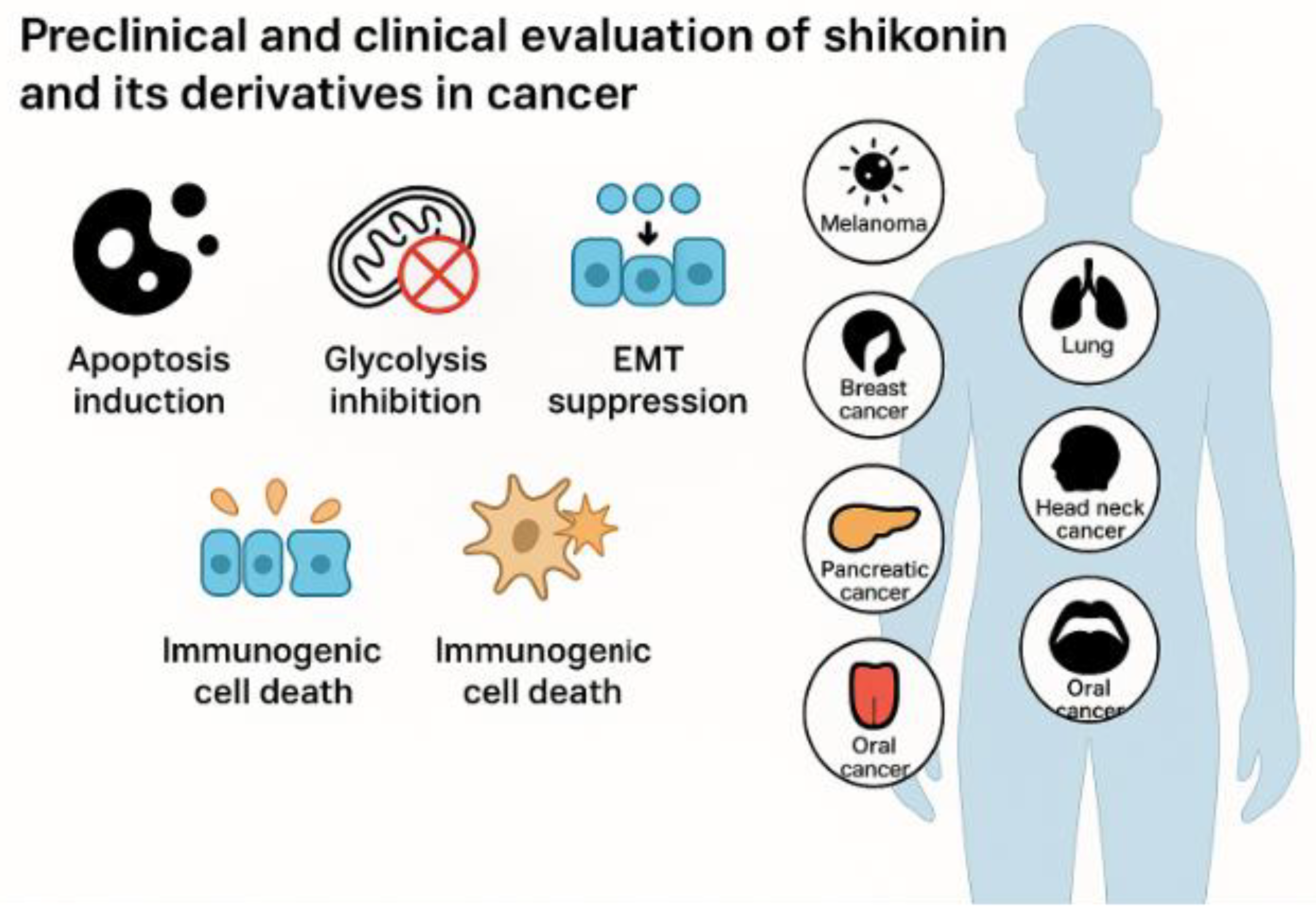
Figure 7. Preclinical and clinical studies of shikonin: broad anticancer efficacy with delivery and toxicity challenges limiting clinical translation.
Preprints 173754 g007
Table 1. Shikonin Derivatives and Associated Cancer Targets.
Shikonin derivatives Chemical Structure Cancer Types Ref.
5, 8-O-dimethyl acylshikonin Preprints 173754 i001 Colon cancer
Leukaemia
Breast cancer
[37]
Shikonin oxime derivative Preprints 173754 i002 Breast cancer
Leukaemia
Prostate cancer
[38]
α-methylbutyrylshikonin Preprints 173754 i003 Melanoma

Leukaemia
[39,40]
β-β-dimethylacrylshikonin Preprints 173754 i004 Colorectal cancer

Gastric cancer

Medullary thyroid cancer
[41,42,43]
Acetylshikonin Preprints 173754 i005 Oral squamous cell carcinoma (OSCC)

Non-small cell lung cancer (NSCLC)

Colorectal cancer
[44,45,46,47]
β-hydroxyisovalerylshikonin Preprints 173754 i006 Pancreatic cancer

Cervical cancer

[47,48]
Deoxyshikonin Preprints 173754 i007 Cervical cancer [49]
Isobutyrylshikonin Preprints 173754 i008 Oral cancer [50]
Disclaimer/Publisher’s Note: The statements, opinions and data contained in all publications are solely those of the individual author(s) and contributor(s) and not of MDPI and/or the editor(s). MDPI and/or the editor(s) disclaim responsibility for any injury to people or property resulting from any ideas, methods, instructions or products referred to in the content.
Copyright: This open access article is published under a Creative Commons CC BY 4.0 license, which permit the free download, distribution, and reuse, provided that the author and preprint are cited in any reuse.
Prerpints.org logo

Preprints.org is a free preprint server supported by MDPI in Basel, Switzerland.

Subscribe

Disclaimer

Terms of Use

Privacy Policy

Privacy Settings

© 2025 MDPI (Basel, Switzerland) unless otherwise stated