

Submitted:
20 August 2025
Posted:
22 August 2025
You are already at the latest version
Abstract
Air Pollutants pose a growing public health concern in Puerto Rico (PR), particularly from rapid industrialization, military activities, environmental changes and natural disasters. Criteria and hazardous air pollutants (HAPs) emissions from these sources include 193 chemicals— e.g., particulate matter (PM), carbon monoxide, volatile organic compounds, and heavy metals —coincide with rising respiratory disease rates (e.g. lung cancer) documented in national and regional health registries. This study aimed to review major air pollutants in PR, their molecular carcinogenic mechanisms (mostly focused on respiratory-related cancers), and the geographic areas impacted significantly. We conducted an extensive literature search utilizing peer-reviewed scientific articles (PubMed and Web of Science), governmental reports (EPA, WHO, State of Global Air), public health registries (Puerto Rico Central Cancer Registry and International Agency for Research on Cancer) and local reports. Data on pollutant type, source, molecular pathways, and carcinogenic properties were extracted and synthesized. Our analysis identified ethylene oxide (EtO), polycyclic aromatic hydrocarbons, and particulate matter (PM) from industrial sites as key pollutants. The municipalities of Salinas and Vieques, hubs of industrial activity and military exercises, respectively, emerged as critical hotspots where high concentrations of monitored pollutants (e.g., EtO, formaldehyde, 2,3,7,8-tetrachlorodibenzo-p-dioxin (TCDD) and diesel PM) are associated with a significant prevalence of cancer and respiratory diseases. These agents, known to induce genomic instability and chromosomal aberrations, were correlated with elevated local cancer incidence. Our findings underscore the urgent need for targeted public health interventions and support a multi-pronged strategy that includes: 1) enhanced regulatory oversight of EtO and other hazardous air pollutant emissions; 2) community-based biomonitoring of high-risk populations; and 3) investment in public health infrastructure and a transition to cleaner energy sources. Integrating rigorous environmental science with public health advocacy is essential to strengthen PR’s cancer-control continuum and foster resilience in its most vulnerable communities.
Keywords:
carcinogens
; hazardous air pollutants (HAPs)
; health risks
; industrial emissions
; natural contaminants
; Puerto Rico
; cancer
1. Introduction
Air pollution is a major global environmental health risk for morbidity and mortality, contributing substantially to the burden of chronic diseases, including cancer. According to the State of Global Air, air pollution was linked to 8.1 million deaths worldwide in 2021 [1]. Ranking it as the second most significant risk factor for premature death globally [1]. Previously, the World Health Organization (WHO) indicated that ambient (outdoor) air pollution was linked to approximately 4.2 million premature deaths globally in 2019, with a significant proportion attributed to noncommunicable diseases such as lung cancer, cardiovascular diseases, and chronic respiratory conditions [2]. Outdoor air pollution (particularly PM2.5) was officially classified as carcinogenic to humans (Group 1) by the International Agency for Research on Cancer (IARC) in 2013 [3], with sufficient evidence linking exposure to increased lung cancer risk and limited evidence for other types [4]. Emerging evidence suggests that air pollution may play a significant role in driving lung cancer in non-smokers, highlighting the need for stronger environmental health protections [5,6]. These findings highlight the critical importance of understanding the components of air pollution that contribute to its carcinogenicity.
Puerto Rico (PR) is an unincorporated territory of the United States located in the northeastern Caribbean, within the Greater Antilles. Although commonly referred to as an island, PR is actually an archipelago consisting of the main island and several smaller islands and islets, some inhabited (such as Vieques and Culebra) and others uninhabited. Its southern borders face the Caribbean Sea, while its northern and eastern shores face the Atlantic. The main island of PR is divided into three geographical regions: mountains, coastal lowlands, and karst country. This geographical makeup of PR combined with densely populated urban centers can exacerbates environmental health challenges In addition, its industrial history, military activities, and recent natural disasters (e.g., hurricanes) have contributed to a complex air pollution profile characterized by elevated levels of PM, volatile organic compounds (VOCs), heavy metals, and persistent organic pollutants (POPs) across the island[7,8,9,10]. Particularly, the destruction of PR's electrical grid by Hurricane Maria in 2017 led to a surge in the use of backup diesel generators, markedly increasing combustion-derived emissions of PM, nitrogen oxides (NOx), carbon monoxide (CO), and hazardous air pollutants (HAPs) across the island [7]. Vieques, an island municipality of PR, experienced decades (from the 1940s until 2003) of U.S. Navy bombing exercises that released unique toxicants such as depleted uranium (DU), heavy metals, and explosives residues, raising concerns over potential carcinogenic risks in exposed populations [11,12,13,14,15,16]. In addition to local sources, transboundary pollution events, such as Saharan dust intrusions, periodically introduce additional PM and associated metals to Puerto Rican air, further complicating the exposure landscape [17]. According to 2022 cancer statistics for Puerto Rico, lung cancer ranked as the fourth most diagnosed cancer for both men (5.4% of new cases) and women (4.0%). Despite this incidence ranking, lung cancer demonstrated a disproportionately high mortality burden, ranking as the second most lethal cancer for both sexes and accounting for 11.5% of cancer-related deaths in men and 8.9% in women [18]. This significant lethality of lung cancer directs attention toward potential environmental contributors, particularly in regions of PR with documented histories of high air pollution.
A study conducted in November 2017 [7] deployed four real-time affordable multi-pollutant (RAMP) monitors and a black carbon monitor in the San Juan Metro Area. During the first month of data collection, these monitors recorded high levels of CO and sulfur dioxide (SO2) every night. Observations indicated higher PM10 concentrations in the most densely populated areas, including San Juan, Bayamon, Guaynabo, Cataño, and Carolina [19]. These areas host major industrial sources, such as power plants, refineries, ports, an airport, landfills, dense traffic, and road dust resuspension [19].
In PR, up to 59 trace elements have been measured in airborne PM samples collected from various sites, which are categorized as either rural or urban [10]. Studies have shown that rural areas tend to have higher levels of certain metals compared to urban areas. Conversely, other metals, commonly associated with fossil fuel combustion and biomass burning, were found at elevated levels in urban areas. Additionally, trade winds occasionally bring in dust from distant sources. To facilitate the monitoring of HAPs, Sen-Severe, an institution in Pittsburgh, PA, collaborated with Carnegie Mellon University (CMU) to develop RAMP monitors. These monitors have been utilized in various scientific investigations to quantify and analyze HAP emissions various regions in San Juan [7]. Although RAMPs are not federally recognized as equivalent methods, their data can meet U.S. Environmental Protection Agency (EPA) quality standards for monitoring of nitrogen dioxide (NO2), ozone (O3) and CO [7].
Despite these challenges, air quality monitoring infrastructure in PR remains limited, with significant data gaps persisting in the characterization of HAPs and their health effects on the island’s population. Low-cost sensor networks and community-engaged research initiatives have attempted to address these gaps, yet comprehensive epidemiological and mechanistic studies linking exposure to specific pollutants with carcinogenic outcomes are still urgently needed [7].
This review examines major sources of HAPs, key pollutants, mechanisms of carcinogenesis-focusing on emissions from military, industrial, and natural sources. We highlight pollutants of concern, including PM, VOCs, NOx, CO, SO2, O3, heavy metals, POPs, ammonia (NH3), and military-specific contaminants like DU. By synthesizing findings from epidemiology, toxicology, and environmental monitoring, we aim to identify critical knowledge gaps and propose future research directions to better understand and mitigate air pollution-related cancer risks in PR.
2. Overview of Air Pollutants: Definitions and Classifications
Anthropogenic sources that release pollutants and hazardous materials into the atmosphere have multiplied exponentially since the onset of the industrial revolution. Examples of anthropogenic sources include industrial emissions, vehicle exhaust, fossil fuel combustion, and military activities. This has gradually degraded air quality, especially in urban and industrialized regions.
The WHO defines air pollution as the presence of harmful pollutants, such as smoke, gases, or vapors, in the atmosphere at concentrations and lengths of time that may be harmful to human health. Air pollutants are typically categorized into two major groups: criteria pollutants and HAPs.
Criteria pollutants are six common air pollutants— PM10, PM2.5, ground-level O3, NO2, SO2, CO, and lead (Pb) — regulated under the U.S. Clean Air Act due to their widespread presence and well-documented health impacts [20]. They are spread across the country and can harm public health and the environment. These pollutants have strong evidence linking them to adverse health outcomes [21]. The EPA has established the National Ambient Air Quality Standards (NAAQS), maximum allowable concentration for each pollutant. Table 1 summarizes their major sources and health impacts.
Note: These are the six “criteria” pollutants regulated by NAAQS. While not the focus of this review, they form the backdrop of general air quality in Puerto Rico and can indirectly indicate the presence of co-emitted toxic pollutants.
PR generally complies with NAAQS for most criteria pollutants; however, in 2023, the EPA designated San Juan and Guayama-Salinas as non-attainment areas for SO₂, largely due to emissions from power plants [27]. In 2024, emission reduction plans targeting PREPA’s San Juan, Palo Seco, and Aguirre facilities were approved [27].
HAPs, also known as air toxics, comprise 187 (excluding methyl ethyl ketone,2005, and caprolactam,1996) chemicals identified in the U.S. Clean Air Act Amendments of 1990 for their potential to cause cancer and other serious health effects [28]. These include VOCs like benzene and formaldehyde, heavy metals like arsenic and mercury, POPs like dioxins polycyclic aromatic hydrocarbons (PAHs), industrial byproducts, pesticides, and military-specific toxics like DU [29]. HAPs are less widespread than criteria pollutants but can be highly toxic.
Unlike criteria pollutants, HAPs are not regulated through NAAQS but through technology-based emissions standards under the National Emissions Standards for Hazardous Air Pollutants (NESHAP). Even at low concentrations, long-term exposure to HAPs can significantly increase the risk of cancers (e.g. leukemia from benzene exposure) and a myriad of non-cancer outcomes, including birth defects, and neurological disorders [29]. Notably, many HAPs, such as mercury and persistent organics, can also contribute to local or regional environmental problems through deposition onto soil and water, subsequently bioaccumulating in food chains and creating indirect exposure routes.
PR follows the U.S. EPA regulations, implementing emission limits such as Maximum Achievable Control Technology (MACT) standards for HAPs. Among these pollutants, only lead is subject to NAAQS. In contrast, benzene, arsenic, chromium VI, ethylene oxide (EtO), and PM containing carcinogens are regulated primarily through emissions control technologies rather than ambient air limits.
To better understand pollutant exposure, the EPA developed the Air Quality System (AQS) database, which offers amounts of air pollutants measured through thousands of monitoring stations across the US, including PR [30]. This resource allows researchers to assess pollutant levels historically (1980–2024) and in real-time, supporting studies of daily, seasonal, and long-term exposures [30].
In PR, concerns about HAP exposures have intensified over the past decade due to multiple high-profile events and findings: the identification of extreme cancer risk “hotspots” near industrial facilities [31], controversies over coal ash disposal in the south of the island [32], and the aftermath of natural disasters like Hurricane María (2017) which led to prolonged island-wide generator use and debris burning [7]. As a result, PR’s residents suffer elevated rates of asthma, cancer, diabetes, and heart disease in certain areas, raising questions about the contribution of environmental pollutants [33].
3. Sources of HAPs in PR
Scientific research has focused on a number of industrial sites in PR because of the significant increases in the prevalence of various cancers and other diseases that pose a threat to the general health of those who live in or near these areas [9,10].
As a result, PR’s industrial history and energy infrastructure have created a mosaic of HAP emission sources across the island. Figure 1 highlights several major pollution hotspots in PR, reflecting clusters of industrial facilities and other sources of air toxics; several of these locations have been designated as Superfund sites by the U.S. EPA due to historical contamination. Broadly, sources of HAPs in PR include both stationary sources (such as industrial or commercial facilities, power generation, and waste sites) and mobile sources (including transportation). Figure 1 maps major HAP emission hotspots across PR, including fossil fuel plants, EtO sterilizer sites, transportation hubs, and legacy military zones.
Stationary Combustion Sources and the Energy Sector: The island's electrical grid and, thus, the island's local air monitoring network suffered significant setbacks during Hurricane Maria in 2017. As a result, power outages have become more frequent and many residents relied on these generators for extended periods (primary combustion sources)[7], introducing large quantities of combustion-related pollutants such as CO, SO₂, black carbon, and VOCs into the air [7]. These emissions included hazardous air toxics like benzene and formaldehyde.
Electric power in PR has traditionally relied on fossil fuels, including coal and oil. The Applied Energy Services (AES) Puerto Rico coal-fired power plant in Guayama (southeast PR) began operation in 2002 under a 25-year contract with Puerto Rico Electric Power Authority (PREPA) and has since been a significant source of air toxics and community concern [32]. This plant emits not only criteria pollutants (SO2, NOx, PM) but also mercury, arsenic, chromium, nickel, cobalt, radium and other metals found in coal, as well as acid gases and organic HAPs from combustion. Notably, AES Puerto Rico generates over 300,000 tons of coal ash annually from its Guayama facility. AES’s operations have left a legacy of coal ash, the residual waste, stored in a large uncovered pile on-site and previously distributed as fill material off-site [32,36]. Indeed, an epidemiological study by the University of Puerto Rico Graduate School of Public Health found higher rates of respiratory and cardiovascular diseases, asthma, skin rashes, and even spontaneous abortions in the Guayama community compared to a control area, potentially linked to chronic exposure to AES’s emissions and ash [32].
Besides AES, PR has oil-fired power plants (e.g., at Palo Seco west of San Juan, Aguirre in Salinas, and Costa Sur in Guayanilla/Ponce). These plants emit SO2 and nickel compounds (from residual oil) and contributed to past NAAQS violations [27]; they likely also emit HAPs such as VOCs and PAHs from incomplete combustion. In recent years, natural gas has been introduced (e.g., EcoElectrica LNG plant in Penuelas), which can reduce some emissions but still produces formaldehyde and other HAPs from gas turbines.
Industrial and Manufacturing Emissions: During the mid-20th century, particularly in the aftermath of World War II, the Puerto Rican government implemented a comprehensive economic initiative aimed, known as "Operation Bootstrap" (Operación Manos a la Obra in Spanish). The objective was to transition PR from an agricultural to an industrialized economy. The initiative promoted the investment of factories from US and foreign countries in the areas of textiles and petrochemicals from 1947-1970, then, pharmaceuticals, medical devices and technology from 1970-2000. Consequently, the manufacturing sector in PR is another major HAP source.
One contemporary issue has been emissions of EtO from commercial sterilization facilities. PR, surprisingly, is home to seven medical device sterilizer plants (reflecting the large medical device industry on the island), the highest concentration of such facilities relative to population in the US [31]. These facilities use EtO gas, a potent human carcinogen, to sterilize medical equipment, which can leak or be vented to the atmosphere. In 1998, the EPA identified four PR sterilizers (in Salinas, Añasco, Fajardo, Villalba) as among the most hazardous in the nation with extremely high EtO concentrations (>121 µg/m³) and with modeled cancer risks well above 100 per million for nearby residents [31]. In fact, the Steri-Tech EtO plant in Salinas has been reported to confer an excess cancer risk on the order of 6000 per million for those closest to it [31], an astonishingly high risk driven almost entirely by EtO emissions. These facilities also garnered attention due to regulatory violations: for example, Steri-Tech (Salinas) was cited by Occupational Safety and Health Administration (OSHA) in 2019 and EPA in 2021 for improper handling and under-reporting of EtO emissions, and faced fines for exposing workers and communities to the carcinogen [37].
Other industrial sources in PR include petroleum handling and chemical storage (e.g., fuel terminals to supply transport and generators), which release hydrocarbon and VOC emissions (like benzene and toluene) especially if there are leaks or during tank loading. Commonwealth Oil Refining Company (CORCO) and Caribbean Petroleum Corporation (CAPECO), a major oil refinery and storage complex in Peñuelas/Guayanilla and Cataño/Bayamón, operated in past decades and likely contributed significantly to these emissions [38] and soot deposition in nearby communities [34]. In the 2000s, the EPA and Puerto Rico Environmental Quality Board investigated the emissions of lead and arsenic into the surrounding environment from the Battery Recycling Company in Arecibo [39].
Waste management sites represent another significant source of HAPs in PR. Many of the island's 29 landfills were constructed in the 1950s and 1960s without modern gas emission controls, resulting in the uncontrolled release of landfill gases. These emissions include hazardous pollutants like VOCs, heavy metals, methane and ammonia. Furthermore, past proposals for waste-to-energy incinerators, like the controversial project in Arecibo of the Energy Answers International (2012-2017), have raised serious public health concerns regarding potential emissions of highly toxic compounds, including dioxins and mercury [40,41].
PM₂.₅ air quality in PR from industrial sources is currently limited due to insufficient monitoring and research. Available information lacks the necessary detail on the measurement, sources and potential health impacts of PM2.5 [9]. Although a few studies have assessed individual chemicals from industrial sources, industrial facilities are recognized as sources of carcinogenic air pollutants [24,25,32,34,36,37,39,42]. These include NO₂, SO₂, CO, PM, VOCs, EtO, formaldehyde, dioxin, PAHs, benzene, 1,3-butadiene, and heavy metals such as lead, arsenic, mercury, chromium, cobalt, lithium, molybdenum, radium, selenium. Populations living near these sites in PR experience unequal exposure burdens [39].
Mobile Sources and Transportation: With over 3 million residents and heavy tourism, PR has a high density of vehicles, especially in the San Juan metropolitan area. Vehicle exhaust is a significant contributor to urban air toxics: gasoline-powered cars and trucks emit benzene, 1,3-butadiene, acetaldehyde, and formaldehyde (all carcinogenic or toxic), while diesel engines (buses, trucks, backup generators) release a particularly harmful mix of PM with adsorbed organics (diesel PM is classified by IARC as carcinogenic to humans, largely due to lung cancer risk) [42,43].
The northern coast of PR, particularly San Juan and surrounding municipalities, exhibits higher PM2.5 levels due to dense urbanization and industrial activity [10]. In contrast, southern regions contribute significantly to air pollution through stationary sources, including multiple power plants that have operated for decades [9,44] .
Additionally, ports and airports represent high-emission zones, resulting in significant residents’ exposure to mobile-source HAPs. The Port of San Juan, one of the busiest in the Caribbean, is a significant source of PM, sulfur compounds, and PAHs due to emissions from idling diesel ships and cargo vessels. Similarly, airline traffic through San Juan’s airport, Luis Muñoz Marín International Airport, contributes ultrafine particles and VOCs.
Following the collapse of PR’s electrical grid during Hurricane María (2017), widespread reliance on backup diesel generators created acute, hybrid stationary/mobile pollution sources [7]. Air monitoring data from the post-María period revealed sharp increases in SO₂, CO, and black carbon, attributed to intense generator usage [7]. These generators emitted additional HAPs such as benzene and formaldehyde, compounding the respiratory and cardiovascular risks during disaster recovery periods. This implies that disaster scenarios can acutely increase mobile/stationary hybrid sources.
Natural and Episodic Sources: PR is seasonally affected by Saharan dust transported across the Atlantic each spring and summer[45]. Metro area (San Juan, Guaynabo and Cataño) and eastern municipalities (Fajardo, Vieques and Culebra) are the first impacted due to easterly trade winds [46,47]. Southern areas such as Salinas, Ponce and Guayama often report higher concentrations due to drier conditions and wind channels [48]. During peak events (June–August), central regions like Caguas still experience worsened air quality, particularly impacting children, the elderly, and individuals with respiratory conditions [48]. These plumes contain PM2.5-10, rich in silica, trace metals, and sometimes microbial contaminants, and have been associated with increased respiratory irritation, asthma exacerbations, and emergency room visits [17,49]. Although mineral dust is not listed as a HAP, its particulate composition and ability to adsorb other toxics make it a significant episodic source of airborne health risk (e.g., asthma exacerbations) [17]. Occasionally, volcanic emissions from Caribbean sources (e.g., Montserrat’s Soufrière Hills) reach PR, contributing sulfurous haze. Though infrequent, these events temporarily degrade air quality [50].
Agricultural and Open Burning Sources: While large-scale sugarcane field burning has declined with agricultural shifts, open burning of household waste and storm debris remains common, particularly in rural areas with limited waste management infrastructure [10,19,51]. This practice emits a complex mixture of HAPs including dioxins/furans, benzene, styrene, and PAHs from the combustion of plastics and other materials [52]. After Hurricanes Irma and María in 2017, illegal or informal burning of debris was reported, which raised concerns over PAHs and dioxins in affected communities [53]. Despite known health risks, such burning remains largely unregulated and constitutes a substantial localized hazard. Moreover, pesticide use in agriculture poses airborne risks through volatilization. Compounds such as chlorpyrifos, paraquat, and atrazine may drift into ambient air, though empirical data for PR remains limited [54,55,56].
Biogenic and Soil Emissions: PR’s natural landscapes contribute to air pollution via biogenic volatile organic compounds (BVOCs) and soil emissions of NOₓ. Emissions of isoprene, monoterpenes, and n-alkanes from vegetation, along with n-alkanoic acids from biomass decomposition, are well-documented precursors to secondary organic aerosol (SOA) formation, especially during the summer due to enhanced photochemical activity [57,58,59,60]. Soils account for approximately 15% of global NOx emissions, influenced by microbial activity, moisture content, and fertilizer application [61]. These emissions, while natural, interact with anthropogenic pollutants to elevate O3 and aerosol levels, contributing around 75-90% of annual global SOA production [62].
In general, comprehensive air sampling across PR has identified region-specific patterns: alkanes, esters, phthalates, and siloxanes dominate in the south; phenyl phosphates and n-alkanoic acids are prevalent in urbanized areas like Bayamón and Humacao [9].
Table 2 summarizes major sources of HAPs in PR, ranging from energy and manufacturing sectors to legacy military contamination and natural dust events. Across these source categories, a clear pattern of environmental injustice emerges: communities located near high-emission facilities, such as the AES coal plant in Guayama and EtO sterilizers in Salinas, Añasco, and Fajardo, are often low-income, predominantly Afro-Puerto Rican, and face disproportionate exposure burdens [31,32]. These patterns highlight the need for targeted, community-based monitoring strategies and more stringent regulatory controls to mitigate the public health risks associated with HAPs.
4. Key Pollutants and Carcinogenic Classifications
A consolidated overview of the island’s major HAP sources, associated pollutants, and classifications by IARC and the U.S. EPA’s Integrated Risk Information System (IRIS) is presented in Table 2 [63]. Among these HAPs present in PR’s atmosphere, a subset stands out as particularly important due to their prevalence, toxicity, and associations with local sources. Many of these pollutants are known human carcinogens (Group 1 IARC; “known” or “likely” human carcinogen per EPA), and they also cause other health effects (e.g. neurological damage or respiratory disease). This section focuses on pollutants that either: (1) dominate the estimated cancer risk in PR based on exposure assessments, or (2) have been the subject of public and scientific concern due to their prevalence or regulatory attention.
Benzene and 1,3-Butadiene: Both benzene and 1,3-butadiene are emitted from vehicle exhaust, industrial activities, and open burning. Benzene is a well-established human carcinogen (IARC Group 1), associated with leukemia and other hematologic malignancies. 1,3-butadiene, also Group 1, increases risks of lymphomas and leukemias [63,64].
In PR’s urban centers, especially along high-traffic corridors, these pollutants are among the most significant contributors to air toxics-related cancer risk. They are relatively reactive in air, so concentrations can vary over short distances, at the highest near busy roads or industrial sources like refineries.
Formaldehyde and Acetaldehyde: These carbonyl compounds, formaldehyde (Group 1) and acetaldehyde (Group 2B) [63], are formed both directly through combustion (e.g., vehicle engines, power plants) and secondarily via atmospheric photochemical reactions from other VOCs. Formaldehyde is a known cause of nasopharyngeal cancer and possibly leukemia [63,64]. Warm, sunny conditions in PR favor secondary formation, leading to elevated background concentrations.
Ethylene Oxide (EtO): EtO is a potent alkylating agent used in commercial sterilization. It is classified as a Group 1 carcinogen and is linked to lymphoid and breast cancers [63], and in 2016 the EPA’s IRIS assessment found EtO to be far more carcinogenic than previously thought, with an inhalation unit risk that makes it one of the most hazardous air toxics on a per-unit basis[65]. In communities near PR’s sterilizer plants, EtO is the single largest contributor to estimated cancer risk – accounting for 90–96% of air toxics risk in the most impacted census tractsucsusa.org. For example, the town of Salinas (near Steri-Tech) has an overall air toxics lifetime cancer risk of roughly 400 per million, of which EtO accounts for >90% [31]. These values are dramatically above the typical US background air toxics risk (~30 per million) [66]. The presence of seven EtO-emitting plants on a small island is thus a major concern.
From a regulatory perspective, EPA only in 2023 moved to tighten EtO emission standards by requiring 99.99% emission reduction – a response that came after years of advocacy, including in PR where communities demanded action as early as 2016 [37]. Before these changes, companies were allowed to emit significantly more, explaining the high ambient risks observed. Notably, industrial sites in permanently inhabited regions of PR have reported releases of several carcinogenic chemicals, such as EtO (580 pounds) and benzene (6594 pounds) [39]. EtO’s health risk and recent enforcement in PR exemplify how emerging science can identify previously under-appreciated pollution problems.
Polycyclic Aromatic Hydrocarbons (PAHs): PAHs are a class of organic chemicals formed during incomplete combustion of carbon-containing material (coal, oil, wood, tobacco, etc.). They include compounds like benzo[a]pyrene (BaP), benzo[k]fluoranthene, and dozens of others. PAHs often adsorb onto soot particles. BaP is a Group 1 carcinogen (causes lung and skin cancers via DNA-adduct formation) [4,63]. PAHs as a mixture are typically considered probable carcinogens. In PR, PAHs emanate from vehicle exhaust (especially diesel), open burning of waste or biomass, and the coal plant emissions. People in communities like Guayama (near the coal plant) or those exposed to a lot of vehicle smoke (e.g., busy intersections in San Juan) inhale PAHs. Aside from cancer, PAHs can cause respiratory and cardiovascular toxicity and even developmental effects if exposure occurs in utero[63]. Monitoring of specific PAHs in PR is limited, but deposition on soils near highways or around the AES plant has shown PAH contamination, suggesting significant emission sources.
Metals (Arsenic, Chromium (VI), Nickel, Cadmium, Lead): Several toxic metals are present in PR’s air from industrial sources, especially in coal ash-producing industries. Arsenic is found in coal (and thus in coal plant emissions and ash) and in residual oil; it’s a Group 1 carcinogen, causing lung, skin, and bladder cancers upon chronic exposure via inhalation or drinking water [4,63]. Arsenic in airborne particulate form can be inhaled or ingested after settling [4]. Chromium (VI), used in some industrial processes and present in coal ash, is another Group 1 carcinogen (lung cancer via inhalation of chromate dust) [4,63]. Nickel compounds (from oil combustion or metal plating industries) are carcinogenic to the lung and nasal cavity (Group 1, e.g., nickel refinery dust)[4,63]. PR’s oil plants historically emitted nickel; monitoring around Palo Seco power plant in the early 2000s showed fine particles enriched in nickel and vanadium. Cadmium, emitted from waste burning and previously from battery recycling, is a probable carcinogen and a known kidney toxin [4]. Lead, while much reduced in air since leaded gasoline was banned, can still be emitted from smelters or legacy contaminated dust[4]. Lead is classified as probably carcinogenic (Group 2A by IARC) and definitively toxic to neurological development [63]. The Arecibo battery recycling facility (before closure) led to elevated airborne lead; some contaminated soil can still resuspend into air. In addition, emerging research underscores that heavy metals such as cadmium, lead, and mercury released as HAPs by industrial activity can deposit in soil and water[83]. These pollutants can accumulate in ecosystems and enter the human body through multiple exposure routes, contributing to long-term health risks including carcinogenesis through mechanisms involving oxidative damage, inflammation, and interference with cellular processes[83].
Dioxins and Furans: These are POPs formed during combustion of chlorine-containing materials (e.g., burning plastic or medical waste, or as a byproduct of certain chemical processes). The most toxic dioxin (2,3,7,8-tetrachlorodibenzo-p-dioxin or TCDD) is Group 1 carcinogen and is infamous from Agent Orange and Seveso. Dioxins cause a range of cancers and other effects (e.g., endocrine disruption and immune dysfunction) [63]. In PR, dioxins could be released from any incineration of chlorine-containing materials. This includes open burning of trash (e.g., many household wastes like PVC plastic release dioxins when burned), and historically, a U.S. Navy facility in Penuelas incinerated hazardous waste (including possibly Agent Orange) in the 1970s. Soil tests in some locations (e.g., Vieques) have found dioxin-like compounds. While routine ambient dioxin data are lacking, this pollutant class is worth noting due to its potency.
Diesel PM: Although not a single chemical, diesel exhaust particulate is often treated as a distinct air toxic in risk assessments. IARC classified diesel engine exhaust as carcinogenic to humans (Group 1) in 2012, based on sufficient evidence for lung cancer. In PR, diesel engines are prevalent in trucks, ferries, generators, and heavy equipment. Diesel PM is essentially a carbon core with a cocktail of HAPs on it (including PAHs, nitro-PAHs, and metals). Epidemiologically, long-term exposure to traffic-related PM (of which diesel is a key component) is linked to a higher risk of lung cancer [63]. In PR, diesel emissions from trucks, ferries, generators, and backup power systems contribute significantly to fine PM exposures and associated lung cancer risk.
Coal Ash: As a byproduct of coal combustion, coal ash is a major source of airborne and fugitive emissions in communities near coal-fired power plants such as the AES facility in Guayama. Coal ash continues contaminating air, soil, and groundwater on-site and off-site. Fugitive dust from the coal ash (often called “Agremax”) is a manufactured aggregate composed of a mixture of fly ash and bottom ash that are moistened with water to produce a solidified material. PR's Law 40-2017 prohibits disposal of loose fly ash or bottom ash but does not ban the use of Agremax, considered as a solid waste. Between 2004 and 2012, over 2 million tons of Agremax were transported to the municipalities of Salinas, Humacao, Peñuelas, Ponce, Santa Isabel, Coamo, Caguas, Juncos, San Juan, Dorado, Arroyo, Guayama, Mayaguez, and Toa Baja often without appropriate containment [84], exposing communities to fugitive dust and raising environmental concerns. Communities downwind in Guayama, Humacao and Peñuelas have complained of coal ash dust blowing into homes and schools and fear increased cancers and other illnesses [36]. Indeed, an epidemiological study by the University of Puerto Rico Graduate School of Public Health found higher rates of respiratory and cardiovascular diseases, asthma, skin rashes, and even spontaneous abortions in the Guayama community compared to a control area, potentially linked to chronic exposure to AES’s emissions and ash[32]. Independent analyses and EPA monitoring have shown that coal ash leaches toxic elements, such as arsenic, hexavalent chromium, cadmium, selenium, nickel molybdenum, and lithium, at concentrations exceeding federal thresholds, especially into the South Coast Aquifer, which serves approximately 140,000 people [85]. While coal ash as a whole is not classified by IARC, many of these leaches toxic elements are Group 1 carcinogens, and others like lead and crystalline silica are Group 2A, meaning exposure to coal ash dust or leachate carries significant carcinogenic risk [86]. Coal ash dust can also become airborne, contributing to inhalation exposures to these toxic metals [87]. Despite Puerto Rican law banning coal ash disposal in 2017, loopholes permitted continued use and storage of Agremax [88]. Monitoring at the AES site since 2018 has revealed repeated groundwater exceedances for carcinogenic and toxic metals, prompting a 2024 EPA enforcement agreement requiring AES to enhance monitoring, notify the public, and implement corrective action [89,90]. Inhalation or ingestion of ash-derived pollutants has been linked to increased risks of cancer, kidney and cardiovascular disease, and developmental harm, especially in low-income communities that disproportionately bear the burden of environmental contamination [32,83,91,92].
Other Carcinogenic Pollutants: Other notable HAPs in PR include: vinyl chloride (Group 1, causes a rare liver cancer; used in plastics industry - not currently produced in PR but could be present near PVC usage or waste) [28,67]; methylene chloride (solvent, Group 2A, used in manufacturing) [28,29,71]; chloroprene (used to make neoprene; not produced in PR, but worth noting as similar facilities exist in US causing local cancer risks) [28]; Polychlorinated biphenyls (PCBs) (legacy pollutants that volatilize from contaminated sites or old electrical equipment, probable human carcinogens) [28,29,67]; atrazine and paraquat (pesticides, Group 2B, with limited airborne exposure data but known toxicity when volatilized) [54,55]; MTBE and chloroprene (Group 2B, present in fuel additives and industrial processes elsewhere; relevant due to similar industry types in PR) [28,29,67]. Understanding the nature of these pollutants is crucial, but equally important is how they cause harm.
5. Mechanisms of Respiratory-Related Carcinogenesis by Air Pollutants
Growing evidence links air pollution to increased cancer incidence, underscoring the importance of clarifying the biological pathways that mediate this association. In this review, we focus on respiratory-related cancers, which represent the most commonly associated malignancies arising from exposure to air pollutants. HAPs can initiate and promote cancer through multiple biological pathways (Figure 2).
Carcinogenesis from inhaled pollutants is a multi-step process: initiation (inducing genetic damage in cells), promotion (fostering an environment where damaged cells proliferate), and progression (leading to malignant transformation and tumor growth). HAPs, depending on their chemical nature, may act at one or more stages by causing genetic instability, oxidative stress, chronic inflammation, epigenetic alterations, cytotoxicity/proliferation followed by compensatory proliferation, receptor-mediated signaling disruptions, immunosuppression, and synergistic interactions from mixed exposures. Table 3 summarizes key mechanisms and relevant air pollutants.
Many HAPs are genotoxic, meaning they directly interact with DNA, causing mutations in genes critical to cancer initiation [94]. Consequently, HAPs can induce TP53 mutations, which are commonly observed in cancers of the lung, larynx, nasopharynx, and oral cavity due to their direct exposure to inhaled toxins [95]. For example, PAHs like benzo[a]pyrene are metabolized in the body to reactive intermediates that form DNA adducts – essentially pieces of PAH chemically bound to DNA [4]. EtO directly alkylates DNA bases (e.g., BRCA1/2), while benzene metabolites cause chromosomal breaks, linking exposure to leukemia (e.g., RUNX1) [63] and underscoring the hematologic impact of airborne hazardous exposures. In addition, EGFR amplifications are frequently found in lung cancers in response to environmental carcinogens (e.g., benzene, acrolein) [95]. Studies have found significantly higher mutation burdens in lung cancers from polluted environments compared to low-pollution areas, consistent with pollution-driven DNA damage [96].
Inhaled pollutants, especially particulates (e.g., diesel PM, coal ash dust), can trigger chronic inflammation in respiratory tissues, generating reactive oxygen species (ROS) and inflammatory cytokines [97]. Persistent ROS damage DNA, proteins, and cell membranes lipids, increasing genetic errors and promoting tumor development [98]. For instance, long-term exposure to fine PM is associated with chronic lung inflammation [99,100]; where animal studies have shown that particles can induce tumors in lungs partly via an inflammation-mediated pathway [101]. Metals (e.g., iron, copper, cadmium, mercury, nickel, lead, and arsenic) also generate ROS and impair antioxidant defenses, compounding oxidative DNA damage[102].
Beyond direct DNA mutations, air pollutants (PM2.5 and PM10) significantly impact epigenetic regulation, altering gene expression without modifying DNA sequences, known as DNA methylation (adding or removing methyl groups on cytosine bases in DNA [103,104,105]. Histone modifications (which affect how DNA is packaged) and microRNA expression changes have also been observed with pollutant exposure [106]. These epigenetic changes can be an early step in carcinogenesis and might serve as biomarkers of exposure or effect.
Highly reactive pollutants like formaldehyde cause significant cytotoxicity, particularly to nasal epithelium cells, leading to repeated regenerative proliferation cycles that increase spontaneous mutations and cancer risk [107].
Pollutants such as dioxins, dibenzofurans and non-ortho substituted PCBs and PAHs activate cellular receptors, like the aryl hydrocarbon receptor (AhR), influencing gene expression related to cellular proliferation and differentiation, potentially enhancing carcinogenesis [108]. EtO’s epidemiological link to breast cancer suggests additional hormonal pathways complementing its genotoxic effects [109,110].
Long-term exposure to certain HAPs (e.g., dioxins and heavy metals) can suppress aspects of the immune system, crucial for tumor surveillance. Reduced immune efficiency allows nascent tumor cells to evade immune elimination, thus facilitating tumor establishment and progression. Animal studies confirm increased tumor incidence due to immunotoxic effects of pollutants like dioxins [93,111,112]. In reality, human exposure typically involves pollutant mixtures, resulting in interactions that enhance carcinogenic risk beyond individual effects. Metals such as arsenic and cadmium can inhibit DNA repair mechanisms, exacerbating genetic damage from co-exposures [113]. Diesel PMs facilitate deeper lung penetration of adsorbed carcinogenic PAHs, amplifying their potency [114,115]. Such interactions underscore the complex and compounded risks inherent in real-world exposures.
Measures of dose-response evaluation make an effort to classify the connections between pollution exposure and subsequent health outcomes [116,117]. Data from past scientific investigations demonstrates that populations residing close to pollutant sources or deposition areas frequently suffer adverse health effects from unmanaged pollutant exposures contaminating air, water, soil and food supplies [118]. Despite methodological constraints and knowledge gaps, environmental health risk assessment methodologies incorporate exposure parameters such as pollutant concentration and duration, as well as socioeconomic factors to estimate health risks [119,120].
6. Other Respiratory Conditions Induced by Air Pollutants
Several HAPs have been also found to be associated with an array of adverse health outcomes, including respiratory and cardiovascular disease, and developmental disorders. Although randomized controlled trials are challenging, hence, rare due to ethical and practical limitations, substantial evidence from observational studies, case series, and toxicological research supports associations between HAP exposure and adverse health risks [121]. The US EPA and WHO have identified several HAPs benzene, and formaldehyde as significant contributors to exacerbation of chronic and respiratory diseases, impaired lung function and premature mortality [29,122]. Some HAPs, including isocyanates and formaldehyde, are also known as occupational asthmagens and may contribute to asthma initiation or worsening [123,124]. A correlation has been observed between specific complex mixes of HAPs, such as CO, NO2, SO2, O3, and PM2.5 and PM10, with an increased incidence of respiratory symptoms and hospital admissions due to asthma [125]. Correlative evidence links HAP exposure to increased hospitalizations for asthma and other respiratory conditions, though exact mechanisms and causality remain under investigation [121,126].
Emerging research suggests that fine PM, particularly from biomass burning or traffic emissions, penetrates deep into alveolar spaces and initiates inflammatory responses via activation of airway macrophages and epithelial cells [121]. These biological processes align with mechanistic models of chronic obstructive pulmonary disease (COPD), lung cancer and, potentially, other respiratory disorders like tuberculosis, and pneumoconiosis [98,127]. The complexity of pollutant mixtures and variable exposure patterns complicates attribution, yet mechanistic plausibility remains robust [121].
Although establishing definitive causal links between respiratory disorders and HAP exposure and respiratory disorders remains complex, robust observational and mechanistic evidence supports the carcinogenic classification of outdoor air pollution by agencies such as the IARC [68,128].
Understanding these mechanisms enables the identification of biomarkers for exposure and early effects, enabling targeted interventions such as antioxidants or policy-driven emission reductions. This mechanistic insight highlights the heightened risks within communities simultaneously exposed to multiple pollutants (e.g., PM and EtO) as observed in Puerto Rican populations. Biomonitoring studies conducted locally (e.g., PAH-DNA adduct levels comparing industrial versus rural areas) emphasize the need for expanded research on these mechanisms in affected populations.
7. Epidemiological and Toxicological Evidence in PR
Despite growing concerns about environmental health disparities, research directly linking HAP exposure to health outcomes in PR remains limited. However, a synthesis of available evidence from modeled risk assessments, environmental monitoring, epidemiological studies, and community health surveys suggests significant public health implications, particularly regarding carcinogenic risk.
Data from the U.S. EPA’s National Air Toxics Assessment and the updated AirToxScreen reveal elevated cancer risks in multiple Puerto Rican census tracts, largely driven by EtO, formaldehyde, and benzene [66]. The Salinas and Añasco tracts, adjacent to commercial sterilizers, rank among the highest nationwide for ambient HAP-related cancer risk. Estimated excess lifetime cancer risks from EtO exposure alone reached 5,000–6,000 per million at facility boundaries - far exceeding EPA’s risk thresholds (1–100 per million). Census-tract level risks averaged ~400 per million in Salinas and ~200 per million in Añasco, with EtO accounting for >90% of the estimated burden. These estimates place affected communities among the most at-risk nationwide [37].
Routine monitoring of HAPs in PR is sparse. However, targeted studies and regulatory efforts provide insight into pollutant exposures. Elevated airborne lead concentrations were detected near the Arecibo battery recycling facility, declining to below NAAQS levels after its closure [36]. Community sampling in Guayama identified arsenic-rich coal ash transported via wind, prompting EPA enforcement against the AES plant for repeated opacity violations in 2021 [32]. VOCs, including EtO, have been historically under-monitored, but recent EPA Region 2 deployments confirmed EtO presence near sterilizer facilities, although comprehensive datasets are still pending.
Annual PM₂.₅ levels typically range between 6 and 10 µg/m³, below the 2005 WHO limit but exceeding the 2021 annual average guideline of 5 µg/m³ [129]. Episodic PM₁₀ spikes during Saharan dust events can exceed 150 µg/m³ [48]. Chemical speciation indicates contributions from traffic emissions, sea salt, crustal dust, and power generation. Limited studies have also documented the presence of PAHs in PM₂.₅ samples from urban and rural areas. Additionally, San Juan and Guayama-Salinas were designated SO₂ nonattainment zones in the 2010s due to emissions from the AES coal plant and Aguirre oil facility [27]. Elevated SO₂ likely co-occurs with acid gases and metal-rich particulates, suggesting broader HAP exposure.
A 2016 community-based study in Guayama reported elevated respiratory, cardiovascular, dermatologic, and reproductive disorders in populations downwind of the AES plant [32]. While causal inference is limited, observed conditions are consistent with toxic exposures to coal ash constituents such as arsenic and PAHs. Though overall cancer incidence in PR is slightly lower than in the mainland US, site-specific elevations exist [130,131]. Vieques, historically impacted by military training and munitions disposal, shows a 23–27% higher cancer incidence rate compared to the main island [132]. Biomonitoring in 2013 documented elevated arsenic, lead, and mercury levels among residents, suggesting legacy exposure[8]. Historical data also link intense bombing periods to reduced birth weights and preterm births[8].
PR also reports one of the highest asthma prevalence rates in the US [48]. In Cataño, increased asthma attacks were associated with elevated sulfur and PM levels [34]. Following Hurricane María, widespread generator use contributed to spikes in SO₂ and black carbon, coinciding with increased respiratory hospitalizations [7]. In Salinas, residents have reported cancer clusters near the EtO-emitting Steri-Tech facility, compounded by operational incidents such as explosions. In Penuelas and Guayama, public concern over coal ash transport and disposal has catalyzed local policy responses. OSHA citations of excessive EtO exposure among Steri-Tech workers has also indicated the urgent need for improved workplace protections and suggest potential environmental releases [37].
Table 4 provides a detailed assessment of ambient air pollutants, including HAPs, concentrations across PR from 2000 to 2023, with a focus on urban, industrial, and agriculturally impacted zones. It integrates toxicological benchmarks, including inhalation unit risks (IURs), reference concentrations (RfCs), and derived metrics like lifetime cancer risk (LCR), cancer risk level (CRL), and hazard quotient (HQ). Several pollutants, including EtO, formaldehyde, and diesel PM, exceeded conservative cancer or non-cancer risk thresholds, particularly in urban and post-hurricane contexts. Notably, acrolein and EtO present non-cancer hazard quotients above 1, suggesting acute or chronic respiratory risks. The high cancer risk associated with TCDD (dioxin) and benzo[a]pyrene reaffirms long-standing concerns over legacy and combustion-derived pollutants. The majority of contaminants remain within regulatory thresholds; however, cumulative exposures and multi-pollutant synergies, particularly in underserved communities, underscore the importance of continued monitoring, epidemiological tracking, and source mitigation. To visualize the presence of air pollutants presented in Table 4, we created Figure 3 to contrast them across different zones of PR. This analysis reveals Salinas as a critical hotspot, being the municipality, most affected by a high burden of air pollutants.
Collectively, modeled cancer risks, environmental measurements, and health indicators suggest that air toxics pose a serious but under-characterized risk to public health in PR. While existing studies highlight plausible exposure-disease associations in impacted communities, the absence of longitudinal epidemiological cohorts and integrated biomonitoring hinders causal attribution. Addressing these data gaps is essential to inform targeted interventions and environmental justice efforts on the island.
8. Conclusions
PR presents a compelling case study in the intersection of environmental health, policy, and environmental justice. This review highlights the influence of HAPs, including emissions from historical, military activities petrochemical facilities, vehicular traffic, natural environmental dust, coal combustion, and EtO sterilizers, on air quality and potential health outcomes. Modeled risk assessments and emerging epidemiological data suggest elevated cancer and respiratory disease risks in communities adjacent to major pollution sources, with disproportionately high burdens among low-income and marginalized populations.
Despite these concerns, critical knowledge gaps persist. Limited local monitoring, sparse longitudinal health data, and insufficient exposure assessment have hindered definitive causal inference. Nonetheless, the toxicological profiles of key pollutants, especially known carcinogens such as EtO, TCDD and Diesel PM warrant precautionary action. Regulatory efforts, such as the EPA’s updated EtO rules and PR’s coal phase-out, represent necessary, though overdue, progress.
To ensure the effectiveness of these interventions, their outcomes should be systematically assessed through longitudinal tracking of environmental pollutant levels and associated health metrics. Continued investment in monitoring infrastructure, enforcement mechanisms, and community-engaged research is essential to ensure accountability and sustained public health benefits. As PR transitions to alternative energy sources, guided by its Energy Public Policy Act (Act 17-2019), which mandates 100% renewable energy by 2050, careful attention must be paid to secondary pollutants such as O3, formaldehyde, and nitrogen oxides. While this transition is supported by U.S. Department of Energy initiatives and integrated resource plans prioritizing solar and battery storage, interim reliance on natural gas raises concerns about methane leaks and combustion-related emissions that must be actively managed [138].
The Puerto Rican experience underscores how geographic isolation, colonial governance, and limited regulatory capacity can amplify environmental vulnerability. It also illustrates enduring environmental injustice, as exemplified by the long-standing contamination in Vieques, coal ash exposure in Guayama/Peñuelas, and elevated cancer risks in Salinas. Addressing these disparities requires coordinated action by scientists, public health practitioners, and policymakers.
Ultimately, advancing environmental health in PR will contribute to the broader understanding of air pollution impacts in tropical and island contexts, settings often underrepresented in global literature. It also affirms the central aim of environmental public health: to safeguard all communities, especially those historically overlooked, from the harms of pollution. In particular, there is a pressing need for well-designed, large-scale studies evaluating the link between air pollution and cancer in Puerto Rican populations. Generating such evidence will be critical for informing policy, validating community concerns, and guiding long-term prevention strategies tailored to the island's unique environmental and socio-political context.
Author Contributions
DK: Conceptualization, Investigation, Funding acquisition, Writing-original draft, Preparation of tables, Writing-review & editing; CS: Investigation, Writing-review & editing, Preparation and development of figures; EP: Writing-original draft; ST: Investigation; GM: Investigation; LM: Conceptualization; YD: Conceptualization, Investigation, Supervision, Funding acquisition, Writing-original draft, Writing-review & editing. All authors read and approved the submitted version.
Funding
DK and ST is supported by the National Cancer Institute of the National Institutes of Health under Award Number U54CA267789. YD and LM are supported by the Puerto Rico IDeA Network Biomedical Research Excellence (PR-INBRE) (NIH-NIGMS Award Number P20 GM103475-19). YD is also supported by the Hispanic Clinical and Translational Research Education and Career Development (HCTRECD) Award (NIH-NIMHD Award Number R25MD007607). LM is also supported by an Academic Research Enhancement Award (AREA) for Undergraduate-Focused Institutions (NIH-NIEHS Award Number 1R15ES035973). GM and CS are supported by Cancer Prevention and Control (CAPAC) Research Training Program (NIH-NCI Award Number R25CA240120). The content is solely the responsibility of the authors and does not necessarily represent the official views of the sponsoring agencies.
Acknowledgments
Yamixa Delgado acknowledge San Juan Bautista School of Medicine (SJBSM) for its sponsorship and support on the completion of this study. Devrim Kaya acknowledge San Diego State University (SDSU) for its support on the completion of this study.
Conflicts of Interest
The authors declare that they have no conflicts of interest.
References
- (HEI), H.E.I. State of Global Air 2024: A Special Report on Global Exposure to Air Pollution and Its Health Impacts, With a Focus on Children’s Health. Available online: https://www.stateofglobalair.org/resources/report/state-global-air-report-2024 (accessed on 05/28/2025).
- (WHO), W.H.O. Ambient Air Pollution: A Global Assessment of Exposure and Burden of Disease. Available online: https://www.who.int/news-room/fact-sheets/detail/ambient-(outdoor)-air-quality-and-health (accessed on 4 October 2025).
- Cancer, I.A.f.R.o.; Outdoor air pollution a leading environmental cause of cancer deaths. Press Release No 221. Available online: https://www.iarc.who.int/wp-content/uploads/2018/07/pr221_E.pdf (accessed on 04/10/2025).
- Turner, M.C.; Andersen, Z.J.; Baccarelli, A.; Diver, W.R.; Gapstur, S.M.; Pope, C.A., 3rd; Prada, D.; Samet, J.; Thurston, G.; Cohen, A. Outdoor air pollution and cancer: An overview of the current evidence and public health recommendations. CA Cancer J Clin 2020. [Google Scholar] [CrossRef]
- Leitch, C. Air Pollution Found to Drive Lung Cancer in Non Smokers. Available online: https://www.labroots.com/trending/genetics-and-genomics/29299/air-pollution-found-drive-lung-cancer-smokers (accessed on 07/20/2025).
- Díaz-Gay, M.; Zhang, T.; Hoang, P.H.; Leduc, C.; Baine, M.K.; Travis, W.D.; Sholl, L.M.; Joubert, P.; Khandekar, A.; Zhao, W.; et al. The mutagenic forces shaping the genomes of lung cancer in never smokers. Nature 2025. [Google Scholar] [CrossRef]
- Subramanian, R.; Ellis, A.; Torres-Delgado, E.; Tanzer, R.; Malings, C.; Rivera, F.; Morales, M.; Baumgardner, D.; Presto, A.A.; Mayol-Bracero, O.L. Air Quality in Puerto Rico in the Aftermath of Hurricane Maria: A Case Study on the Use of Lower Cost Air Quality Monitors. ACS Earth and Space Chemistry 2018, 2, 1179–1186. [Google Scholar] [CrossRef]
- Jirau-Colón, H.; Cosme, A.; Marcial-Vega, V.; Jiménez-Vélez, B. Toxic Metals Depuration Profiles from a Population Adjacent to a Military Target Range (Vieques) and Main Island Puerto Rico. International journal of environmental research and public health 2020, 17, 264. [Google Scholar] [CrossRef]
- Toro-Heredia, J.; Jirau-Colón, H.; Jiménez-Vélez, B.D. Linking PM2.5 organic constituents, relative toxicity and health effects in Puerto Rico. Environmental Challenges 2021, 5, 100350. [Google Scholar] [CrossRef]
- Jirau-Colón, H.; Toro-Heredia, J.; Layuno, J.; Calderon, E.D.; Gioda, A.; Jiménez-Vélez, B.D. Distribution of toxic metals and relative toxicity of airborne PM2.5 in Puerto Rico. Environ Sci Pollut R 2021, 28, 16504–16516. [Google Scholar] [CrossRef]
- Massol-Deyá, A.; Pérez, D.; Pérez, E.; Berrios, M.; Diaz, E. Trace elements analysis in forage samples from a US Navy bombing range (Vieques, Puerto Rico). International journal of environmental research and public health 2005, 2, 263–266. [Google Scholar] [CrossRef] [PubMed]
- Sanderson, H.; Patrik, F.; Steven, S.R.; Jesper, C.; Per, L.; and Becker, T. Civilian exposure to munitions-specific carcinogens and resulting cancer risks for civilians on the Puerto Rican island of Vieques following military exercises from 1947 to 1998. Global Security: Health, Science and Policy 2017, 2, 40–61. [Google Scholar] [CrossRef]
- Ortiz-Roque, C.; López-Rivera, Y. Mercury contamination in reproductive age women in a Caribbean island: Vieques. Journal of Epidemiology and Community Health 2004, 58, 756–757. [Google Scholar] [CrossRef]
- Yang, Z.; Fan, B.; Lu, Y.; Cao, Z.; Yu, S.; Fan, F.; Zhu, M. Malignant transformation of human bronchial epithelial cell (BEAS-2B) induced by depleted uranium. Ai Zheng 2002, 21, 944–948. [Google Scholar]
- Briner, W. The toxicity of depleted uranium. International journal of environmental research and public health 2010, 7, 303–313. [Google Scholar] [CrossRef]
- Singh, P.; Tiwari, D.; Mishra, M.; Kumar, D. Molecular Mechanisms of Heavy Metal Toxicity in Cancer Progression. In Networking of Mutagens in Environmental Toxicology, Kesari, K.K., Ed.; Springer International Publishing: Cham, 2019; pp. 49–79. [Google Scholar]
- Rodríguez-Cotto, R.I.; Ortiz-Martínez, M.G.; Rivera-Ramírez, E.; Méndez, L.B.; Dávila, J.C.; Jiménez-Vélez, B.D. African Dust Storms Reaching Puerto Rican Coast Stimulate the Secretion of IL-6 and IL-8 and Cause Cytotoxicity to Human Bronchial Epithelial Cells (BEAS-2B). Health (Irvine Calif) 2013, 5, 14–28. [Google Scholar] [CrossRef]
- Ferlay, J.E.M.; Lam, F.; et al. Global Cancer Observatory: Cancer Today. Available online: https://gco.iarc.who.int/media/globocan/factsheets/populations/630-puerto-rico-fact-sheet.pdf (accessed on 08/10/2025).
- Tirado-Delgado, J.M. The spatial and temporal distribution of particulate matter pollution on the island of Puerto Rico. Howard University, 2009.
- Agency, U.S.E.P. Hazardous Air Pollutants (HAPs). Available online: https://www.epa.gov/haps (accessed on 06/04/2025).
- Thurston, G.D. Outdoor Air Pollution: Sources, Atmospheric Transport and Human Health Effects; Academic Press: 2025; pp. 184–197.
- (NHDES), N.H.D.o.E.S. Criteria Pollutants. Available online: https://www.des.nh.gov/air/state-implementation-plans/criteria-pollutants (accessed on 04/25/2025).
- Kim, B.-J.; Kwon, J.-W.; Seo, J.-H.; Kim, H.-B.; Lee, S.-Y.; Park, K.-S.; Yu, J.; Kim, H.-C.; Leem, J.-H.; Sakong, J.; et al. Association of ozone exposure with asthma, allergic rhinitis, and allergic sensitization. Annals of Allergy, Asthma & Immunology 2011, 107, 214–219.e211. [Google Scholar] [CrossRef] [PubMed]
- Chen, T.-M.; Kuschner, W.G.; Gokhale, J.; Shofer, S. Outdoor Air Pollution: Nitrogen Dioxide, Sulfur Dioxide, and Carbon Monoxide Health Effects. The American Journal of the Medical Sciences 2007, 333, 249–256. [Google Scholar] [CrossRef]
- Manisalidis, I.; Stavropoulou, E.; Stavropoulos, A.; Bezirtzoglou, E. Environmental and Health Impacts of Air Pollution: A Review. Frontiers in Public Health 2020, 8. [Google Scholar] [CrossRef] [PubMed]
- Ramírez Ortega, D.; González Esquivel, D.F.; Blanco Ayala, T.; Pineda, B.; Gómez Manzo, S.; Marcial Quino, J.; Carrillo Mora, P.; Pérez de la Cruz, V. Cognitive Impairment Induced by Lead Exposure during Lifespan: Mechanisms of Lead Neurotoxicity. Toxics 2021, 9. [Google Scholar] [CrossRef] [PubMed]
- Agency, U.S.E.P. News Release: EPA proposes to find that two areas in Puerto Rico do not meet AQS for sulfur dioxide and proposes to approve elements of Puerto Rico’s plan to improve air quality. Available online: https://www.epa.gov/newsreleases/epa-proposes-find-two-areas-puerto-rico-do-not-meet-air-quality-standards-sulfur-0 (accessed on 06/04/2025).
- Agency, U.S.E.P. Initial List of Hazardous Air Pollutants with Modifications. Available online: https://www.epa.gov/haps/initial-list-hazardous-air-pollutants-modifications#mods (accessed on 06/04/2025).
- Agency, U.S.E.P. Health and Environmental Effects of Hazardous Air Pollutants. Available online: https://www.epa.gov/haps/health-and-environmental-effects-hazardous-air-pollutants (accessed on 06/04/2025).
- Agency, U.S.E.P. Air Data: Air Quality Data Collected at Outdoor Monitors Across the US. Available online: https://www.epa.gov/outdoor-air-quality-data (accessed on 06/04/2025).
- (UCS), U.o.C.S. Ethylene Oxide in Puerto Rico. Available online: https://www.ucs.org/resources/puerto-rico (accessed on 04/25/2025).
- Earthjustice. Toxic Coal Ash in Puerto Rico: The Hazardous Legacy of the AES-PR Coal Plant. Available online: https://earthjustice.org/feature/coal-ash-states/puerto-rico (accessed on 04/25/2025).
- Lafarga Previdi, I.; Vélez Vega, C.M. Health Disparities Research Framework Adaptation to Reflect Puerto Rico’s Socio-Cultural Context. International journal of environmental research and public health 2020, 17. [Google Scholar] [CrossRef]
- Loyo-Berríos, N.I.; Irizarry, R.; Hennessey, J.G.; Tao, X.G.; Matanoski, G. Air Pollution Sources and Childhood Asthma Attacks in Cataño, Puerto Rico. American Journal of Epidemiology 2007, 165, 927–935. [Google Scholar] [CrossRef]
- Agency, U.S.E.P. The Battery Recycling Company, Superfund Site Profile, Superfund Site Information. Available online: https://cumulis.epa.gov/supercpad/SiteProfiles/index.cfm?fuseaction=second.cleanup&id=0206263 (accessed on 06/11/2025).
- PBS. PBS NewsHour: Coal ash raising concerns over health risks in Puerto Rico. Available online: https://www.pbs.org/newshour/show/coal-ash-raising-concerns-over-health-risks-in-puerto-rico (accessed on 04/25/2025).
- Rosado Lebrón, J.A. EPA Took Six Years to Regulate Toxic Emission in Puerto Rico That Could Cause Cancer. Centro de Periodismo Investigativo (CPI), 2022. [Google Scholar]
- Agency, U.S.E.P. EPA gives public picture of Puerto Rico’s environmental releases: Many new industry groups, including utilities, report toxic releases for first time; U.S. Environmental Protection Agency: 2000/05/11 2000.
- Madrigal, J.M.; Flory, A.; Fisher, J.A.; Sharp, E.; Graubard, B.I.; Ward, M.H.; Jones, R.R. Sociodemographic inequities in the burden of carcinogenic industrial air emissions in the United States. J Natl Cancer Inst 2024, 116, 737–744. [Google Scholar] [CrossRef]
- Padilla Dalmau, C.A.; Ocasio Torres, M.E. Disaster debris is pushing Puerto Rico’s landfills to the brink. Available online: https://economichardship.org/2022/10/disaster-debris-is-pushing-puerto-ricos-landfills-to-the-brink/ (accessed on 07/27/2025).
- Padilla Dalmau, C.A.; Ocasio Torres, M.E. Disaster debris is pushing Puerto Rico’s landfills to the brink. Available online: https://grist.org/extreme-weather/disaster-debris-is-pushing-puerto-ricos-landfills-to-the-brink/ (accessed on 07/27/2025).
- Cancer, I.A.f.R.o. Diesel and Gasoline Engine Exhausts and Some Nitroarenes. IARC Monographs on the Evaluation of Carcinogenic Risks to Humans; International Agency for Research on Cancer: 2014; Volume 105, pp. 9–699.
- Silverman, D.T. Diesel Exhaust and Lung Cancer-Aftermath of Becoming an IARC Group 1 Carcinogen. Am J Epidemiol 2018, 187, 1149–1152. [Google Scholar] [CrossRef]
- Agency, U.S.E.P. Toxics Release Inventory (TRI) Program: 2019 TRI National Analysis. Available online: https://www.epa.gov/trinationalanalysis (accessed on 05/20/2025).
- Reid, J.S. Analysis of measurements of Saharan dust by airborne and ground-based remote sensing methods during the Puerto Rico Dust Experiment (PRIDE). J. Geophys. Res. 2003, 108, 8586. [Google Scholar] [CrossRef]
- Ortiz-Martínez, M.G.; Rodríguez-Cotto, R.I.; Ortiz-Rivera, M.A.; Pluguez-Turull, C.W.; Jiménez-Vélez, B.D. Linking Endotoxins, African Dust PM10 and Asthma in an Urban and Rural Environment of Puerto Rico. Mediators Inflammation 2015, 2015, 1–14. [Google Scholar] [CrossRef]
- Ortiz-Martínez, M.G.; Rodríguez-Cotto, R.I.; Ortiz-Rivera, M.A.; Pluguez-Turull, C.W.; Jiménez-Vélez, B.D. Linking Endotoxins, African Dust PM10 and Asthma in an Urban and Rural Environment of Puerto Rico. Mediators of Inflammation 2015, 2015, 784212. [Google Scholar] [CrossRef]
- Morales-Medina, M.; Ortíz-Martínez, A.P.; Pérez-Cardona, C.M.; Rueda-Roa, D.; Otis, D.; Pérez-Matías, E.; Muller-Karger, F.; Mayol-Bracero, O.; Méndez-Lázaro, P. Who Is Affected by Saharan Dust in the Caribbean? A Spatial Analysis and Citizen’s Perspective from Puerto Rico during the Godzilla Dust Event in June 2020. Weather, Climate, and Society 2024, 16, 205–219. [Google Scholar] [CrossRef]
- Sabia, S.; Morris, K.R. NASA Helps Puerto Rico Prepare for Saharan Dust Impacts, 2020. Available online: https://www.nasa.gov/missions/aqua/nasa-helps-puerto-rico-prepare-for-saharan-dust-impacts (accessed on 04/25/2025).
- Horwell, C.J.; Baxter, P.J. The respiratory health hazards of volcanic ash: a review for volcanic risk mitigation. Bulletin of Volcanology 2006, 69, 1–24. [Google Scholar] [CrossRef]
- Kim, B.M.; Seo, J.; Kim, J.Y.; Lee, J.Y.; Kim, Y. Transported vs. local contributions from secondary and biomass burning sources to PM2.5. Atmospheric Environment 2016, 144, 24–36. [Google Scholar] [CrossRef]
- Pathak, G.; Nichter, M.; Hardon, A.; Moyer, E. The Open Burning of Plastic Wastes is an Urgent Global Health Issue. Ann Glob Health 2024, 90, 3. [Google Scholar] [CrossRef] [PubMed]
- Sierra, C. Army Corps engineers begin burning hurricane debris in Puerto Rico. Available online: https://www.sierraclub.org/press-releases/2018/02/army-corps-engineers-begin-burning-hurricane-debris-puerto-rico (accessed on 07/27/2025).
- Zúñiga-Venegas Liliana, A.; Hyland, C.; Muñoz-Quezada María, T.; Quirós-Alcalá, L.; Butinof, M.; Buralli, R.; Cardenas, A.; Fernandez Ricardo, A.; Foerster, C.; Gouveia, N.; et al. Health Effects of Pesticide Exposure in Latin American and the Caribbean Populations: A Scoping Review. Environ Health Persp 2022, 130. [Google Scholar] [CrossRef]
- Santiago, X.B.; Rivera, D.; Pabon, A.; Garcia, A. An Examination of the Use of Pesticides in Puerto Rican Agriculture. RURALS: Review of Undergraduate Research in Agricultural and Life Sciences 2016, 10, Article–1. [Google Scholar]
- Agency, U.S.E.P. Paraquat Dichloride: Tier II Epidemiology Report. Available online: https://19january2021snapshot.epa.gov/sites/static/files/2019-08/documents/paraquat_epi_review.pdf (accessed on 06/04/2025).
- Bryant, D.J.; Nelson, B.S.; Swift, S.J.; Budisulistiorini, S.H.; Drysdale, W.S.; Vaughan, A.R.; Newland, M.J.; Hopkins, J.R.; Cash, J.M.; Langford, B.; et al. Biogenic and anthropogenic sources of isoprene and monoterpenes and their secondary organic aerosol in Delhi, India. Atmos. Chem. Phys. 2023, 23, 61–83. [Google Scholar] [CrossRef]
- Hantson, S.; Knorr, W.; Schurgers, G.; Pugh, T.A.M.; Arneth, A. Global isoprene and monoterpene emissions under changing climate, vegetation, CO2 and land use. Atmospheric Environment 2017, 155, 35–45. [Google Scholar] [CrossRef]
- McFiggans, G.; Mentel, T.F.; Wildt, J.; Pullinen, I.; Kang, S.; Kleist, E.; Schmitt, S.; Springer, M.; Tillmann, R.; Wu, C.; et al. Secondary organic aerosol reduced by mixture of atmospheric vapours. Nature 2019, 565, 587–593. [Google Scholar] [CrossRef] [PubMed]
- Xu, L.; Guo, H.; Boyd, C.M.; Klein, M.; Bougiatioti, A.; Cerully, K.M.; Hite, J.R.; Isaacman-VanWertz, G.; Kreisberg, N.M.; Knote, C.; et al. Effects of anthropogenic emissions on aerosol formation from isoprene and monoterpenes in the southeastern United States. Proceedings of the National Academy of Sciences 2015, 112, 37–42. [Google Scholar] [CrossRef] [PubMed]
- Weng, H.; Lin, J.; Martin, R.; Millet, D.B.; Jaeglé, L.; Ridley, D.; Keller, C.; Li, C.; Du, M.; Meng, J. Global high-resolution emissions of soil NOx, sea salt aerosols, and biogenic volatile organic compounds. Scientific Data 2020, 7, 148. [Google Scholar] [CrossRef]
- Kelly, J.M.; Doherty, R.M.; O'Connor, F.M.; Mann, G.W. The impact of biogenic, anthropogenic, and biomass burning volatile organic compound emissions on regional and seasonal variations in secondary organic aerosol. Atmos. Chem. Phys. 2018, 18, 7393–7422. [Google Scholar] [CrossRef]
- Agency, U.S.E.P. IRIS Advanced Search. Available online: https://cfpub.epa.gov/ncea/iris/search/index.cfm (accessed on 06/04/2025).
- Agency, U.S.E.P. Integrated Risk Information System (IRIS). Available online: https://iris.epa.gov (accessed on 06/04/2025).
- Cancer, I.A.f.R.o. Chemical Agents and Related Occupations; International Agency for Research on Cancer: Lyon, France, 2012; Volume 100F. [Google Scholar]
- Agency, U.S.E.P. 2014 National Air Toxics Assessment (NATA) Summary of Results. Available online: https://www.epa.gov/sites/default/files/2020-07/documents/nata_2014_summary_of_results.pdf (accessed on 06/04/2025).
- Cancer, I.A.f.R.o. List of classifications by cancer sites with sufficient or limited evidence in humans (IARC Monographs Volumes 1–138a). Available online: https://monographs.iarc.who.int/wp-content/uploads/2019/07/Classifications_by_cancer_site.pdf (accessed on 05/22/2025).
- Cancer, I.A.f.R.o. Monographs on the Identification of Carcinogenic Hazards to Humans. Available online: https://publications.iarc.fr/Book-And-Report-Series/Iarc-Monographs-On-The-Identification-Of-Carcinogenic-Hazards-To-Humans (accessed on 05/22/2025).
- (NTP), N.T.P. Completed RoC Evaluations. Available online: https://ntp.niehs.nih.gov/research/assessments/cancer/completed/roc (accessed on 05/25/2025).
- Agency, U.S.E.P. AP-42 Section 1.3: Fuel Oil Combustion. Available online: https://www.epa.gov/sites/default/files/2020-09/documents/1.3_fuel_oil_combustion.pdf (accessed on 06/04/2025).
- Joshi, D.R.; Adhikari, N. An Overview on Common Organic Solvents and Their Toxicity. Journal of Pharmaceutical Research International 2019, 28, 1–18. [Google Scholar] [CrossRef]
- Davidson, C.J.; Hannigan, J.H.; Bowen, S.E. Effects of inhaled combined Benzene, Toluene, Ethylbenzene, and Xylenes (BTEX): Toward an environmental exposure model. Environmental toxicology and pharmacology 2021, 81, 103518. [Google Scholar] [CrossRef]
- Al-Moubaraki, A.H.; Obot, I.B. Corrosion challenges in petroleum refinery operations: Sources, mechanisms, mitigation, and future outlook. Journal of Saudi Chemical Society 2021, 25, 101370. [Google Scholar] [CrossRef]
- Agency, U.S.E.P. Toxicological Review of Benzene (Noncancer Effects). Available online: https://iris.epa.gov/static/pdfs/0276tr.pdf (accessed on 06/04/2025).
- Corbin, J.C.; Mensah, A.A.; Pieber, S.M.; Orasche, J.; Michalke, B.; Zanatta, M.; Czech, H.; Massabò, D.; Buatier de Mongeot, F.; Mennucci, C.; et al. Trace Metals in Soot and PM(2.5) from Heavy-Fuel-Oil Combustion in a Marine Engine. Environ Sci Technol 2018, 52, 6714–6722. [Google Scholar] [CrossRef]
- Chin, J.Y.; Batterman, S.A.; Northrop, W.F.; Bohac, S.V.; Assanis, D.N. Gaseous and Particulate Emissions from Diesel Engines at Idle and under Load: Comparison of Biodiesel Blend and Ultralow Sulfur Diesel Fuels. Energy Fuels 2012, 26, 6737–6748. [Google Scholar] [CrossRef]
- Bendtsen, K.M.; Bengtsen, E.; Saber, A.T.; Vogel, U. A review of health effects associated with exposure to jet engine emissions in and around airports. Environmental health : a global access science source 2021, 20, 10. [Google Scholar] [CrossRef]
- Chatterjee, S.; Deb, U.; Datta, S.; Walther, C.; Gupta, D.K. Common explosives (TNT, RDX, HMX) and their fate in the environment: Emphasizing bioremediation. Chemosphere 2017, 184, 438–451. [Google Scholar] [CrossRef] [PubMed]
- Matei, E.; Râpă, M.; Mateș, I.M.; Popescu, A.-F.; Bădiceanu, A.; Balint, A.I.; Covaliu-Mierlă, C.I. Heavy Metals in Particulate Matter—Trends and Impacts on Environment. Molecules (Basel, Switzerland) 2025, 30, 1455. [Google Scholar] [CrossRef] [PubMed]
- Golden, D.M. Interaction of combustion with the atmosphere. Proceedings of the Combustion Institute 2000, 28, 2383–2392. [Google Scholar] [CrossRef]
- Ünlü Endirlik, B.; Wincent, E.; Dreij, K. Non-additive mixture effects of benzo[a]pyrene and pesticides in vitro and in vivo: Role of AhR signaling. Environ Pollut 2023, 316, 120510. [Google Scholar] [CrossRef]
- Wyer, K.E.; Kelleghan, D.B.; Blanes-Vidal, V.; Schauberger, G.; Curran, T.P. Ammonia emissions from agriculture and their contribution to fine particulate matter: A review of implications for human health. Journal of environmental management 2022, 323, 116285. [Google Scholar] [CrossRef] [PubMed]
- Shaked, Y.; Yang, J.; Monaghan, M.; van Gerwen, M. The Association between Metals and Thyroid Cancer in Puerto Rico—A National Health and Nutrition Examination Survey Analysis and Ecological Study. Toxics 2024, 12, 632. [Google Scholar] [CrossRef]
- Lydersen, K. In Puerto Rico, residents wait for accountability, cleanup of toxic coal ash “caminos blancos” – Sierra Nevada Ally. Available online: https://sierranevadaally.org/2023/10/15/in-puerto-rico-residents-wait-for-accountability-cleanup-of-toxic-coal-ash-caminos-blancos/ (accessed on 06/20/2025).
- (CDPI), C.d.P.I. Damage by coal ash to the southern aquifer cannot be undone. Available online: https://periodismoinvestigativo.com/2019/03/damage-by-coal-ash-to-the-southern-aquifer-cannot-be-undone/ (accessed on 06/20/2025).
- Cancer, I.A.f.R.o. Agents Classified by the IARC Monographs, Volumes 1–138. Available online: https://monographs.iarc.who.int/agents-classified-by-the-iarc/ (accessed on 6/20/2025).
- Evans, L. Ash in Lungs: How Breathing Coal Ash is Hazardous to Your Health. Available online: https://earthjustice.org/article/ash-in-lungs-how-breathing-coal-ash-is-hazardous-to-your-health (accessed on 06/20/2025).
- (CDPI), C.d.P.I. Centro de Periodismo Investigativo (CDPI): Gobierno aprueba ley contra las cenizas, pero se enreda en su aplicación. Available online: https://periodismoinvestigativo.com/2017/07/gobierno-aprueba-ley-contra-las-cenizas-pero-se-enreda-en-su-aplicacion/ (accessed on 06/20/2025).
- Agency, U.S.E.P. EPA Settlement with AES Requires More Monitoring and Payment of Penalty for Clean Air Act Violations in Guayama, Puerto Rico. Available online: https://www.epa.gov/newsreleases/epa-settlement-aes-requires-more-monitoring-and-payment-penalty-clean-air-act (accessed on 06/04/2025).
- Kantrow, M. EPA slaps $3.1M fine on AES Puerto Rico, requires more monitoring. Available online: https://newsismybusiness.com/epa-slaps-3-1m-fine-on-aes-puerto-rico-requires-more-monitoring/ (accessed on 06/20/2025).
- Aponte, J. Corporations Are Poisoning People in Puerto Rico With Coal Ash. Available online: https://truthout.org/articles/corporations-are-poisoning-people-in-puerto-rico-with-coal-ash/ (accessed on 06/20/2025).
- Dávila-Ruhaak, S. Making the Case for a Right to a Healthy Environment for the Protection of Vulnerable Communities: A Case of Coal-Ash Disaster in Puerto Rico. Michigan Journal of Environmental & Administrative Law 2020, 9. [Google Scholar]
- (IRIS), I.R.I.S. A to Z List. Available online: https://iris.epa.gov/AtoZ/?list_type=alpha (accessed on 06/20/2025).
- Yu, X.J.; Yang, M.J.; Zhou, B.; Wang, G.Z.; Huang, Y.C.; Wu, L.C.; Cheng, X.; Wen, Z.S.; Huang, J.Y.; Zhang, Y.D.; et al. Characterization of Somatic Mutations in Air Pollution-Related Lung Cancer. EBioMedicine 2015, 2, 583–590. [Google Scholar] [CrossRef]
- Mudipalli, A. Airborne Carcinogens: Mechanisms of Cancer. In Air Pollution and Health Effects, Nadadur, S.S., Hollingsworth, J.W., Eds.; Springer London: London, 2015; pp. 151–184. [Google Scholar]
- Wang, L.H.; Wu, C.F.; Rajasekaran, N.; Shin, Y.K. Loss of Tumor Suppressor Gene Function in Human Cancer: An Overview. Cell Physiol Biochem 2018, 51, 2647–2693. [Google Scholar] [CrossRef]
- Cho, A.K.; Sioutas, C.; Miguel, A.H.; Kumagai, Y.; Schmitz, D.A.; Singh, M.; Eiguren-Fernandez, A.; Froines, J.R. Redox activity of airborne particulate matter at different sites in the Los Angeles Basin. Environ Res 2005, 99, 40–47. [Google Scholar] [CrossRef]
- Lee, C.W.; Vo, T.T.T.; Wu, C.Z.; Chi, M.C.; Lin, C.M.; Fang, M.L.; Lee, I.T. The Inducible Role of Ambient Particulate Matter in Cancer Progression via Oxidative Stress-Mediated Reactive Oxygen Species Pathways: A Recent Perception. Cancers (Basel) 2020, 12. [Google Scholar] [CrossRef]
- Li, T.; Hu, R.; Chen, Z.; Li, Q.; Huang, S.; Zhu, Z.; Zhou, L.F. Fine particulate matter (PM(2.5)): The culprit for chronic lung diseases in China. Chronic Dis Transl Med 2018, 4, 176–186. [Google Scholar] [CrossRef]
- Guo, C.; Hoek, G.; Chang, L.Y.; Bo, Y.; Lin, C.; Huang, B.; Chan, T.C.; Tam, T.; Lau, A.K.H.; Lao, X.Q. Long-Term Exposure to Ambient Fine Particulate Matter (PM2.5) and Lung Function in Children, Adolescents, and Young Adults: A Longitudinal Cohort Study. Environ Health Perspect 2019, 127, 127008. [Google Scholar] [CrossRef] [PubMed]
- Park, S.H.; Yoon, S.J.; Choi, S.; Jung, J.; Park, J.Y.; Park, Y.H.; Seo, J.; Lee, J.; Lee, M.S.; Lee, S.J.; et al. Particulate matter promotes cancer metastasis through increased HBEGF expression in macrophages. Exp Mol Med 2022, 54, 1901–1912. [Google Scholar] [CrossRef] [PubMed]
- Birben, E.; Sahiner, U.M.; Sackesen, C.; Erzurum, S.; Kalayci, O. Oxidative stress and antioxidant defense. World Allergy Organ J 2012, 5, 9–19. [Google Scholar] [CrossRef]
- Baccarelli, A.; Wright, R.O.; Bollati, V.; Tarantini, L.; Litonjua, A.A.; Suh, H.H.; Zanobetti, A.; Sparrow, D.; Vokonas, P.S.; Schwartz, J. Rapid DNA Methylation Changes after Exposure to Traffic Particles. Am J Respir Crit Care Med 2009, 179, 572–578. [Google Scholar] [CrossRef]
- Mostafavi, N.; Vermeulen, R.; Ghantous, A.; Hoek, G.; Probst-Hensch, N.; Herceg, Z.; Tarallo, S.; Naccarati, A.; Kleinjans, J.C.S.; Imboden, M.; et al. Acute changes in DNA methylation in relation to 24 h personal air pollution exposure measurements: A panel study in four European countries. Environment international 2018, 120, 11–21. [Google Scholar] [CrossRef]
- Peng, D.; Liu, X.-Y.; Sheng, Y.-H.; Li, S.-Q.; Zhang, D.; Chen, B.; Yu, P.; Li, Z.-Y.; Li, S.; Xu, R.-B. Ambient air pollution and the risk of cancer: Evidence from global cohort studies and epigenetic-related causal inference. J Hazard Mater 2025, 489, 137619. [Google Scholar] [CrossRef]
- Wu, H.; Eckhardt, C.M.; Baccarelli, A.A. Molecular mechanisms of environmental exposures and human disease. Nature Reviews Genetics 2023, 24, 332–344. [Google Scholar] [CrossRef]
- Szende, B.; Tyihák, E. Effect of formaldehyde on cell proliferation and death. Cell Biol Int 2010, 34, 1273–1282. [Google Scholar] [CrossRef] [PubMed]
- Vogeley, C.; Sondermann, N.C.; Woeste, S.; Momin, A.A.; Gilardino, V.; Hartung, F.; Heinen, M.; Maaß, S.K.; Mescher, M.; Pollet, M.; et al. Unraveling the differential impact of PAHs and dioxin-like compounds on AKR1C3 reveals the EGFR extracellular domain as a critical determinant of the AHR response. Environment international 2022, 158, 106989. [Google Scholar] [CrossRef] [PubMed]
- Kelly-Reif, K.; Bertke, S.J.; Stayner, L.; Steenland, K. Exposure to Ethylene Oxide and Relative Rates of Female Breast Cancer Mortality: 62 Years of Follow-Up in a Large US Occupational Cohort. Environ Health Persp 2025, 133, 057013. [Google Scholar] [CrossRef] [PubMed]
- Sampson, J.N.; Falk, R.T.; Schairer, C.; Moore, S.C.; Fuhrman, B.J.; Dallal, C.M.; Bauer, D.C.; Dorgan, J.F.; Shu, X.-O.; Zheng, W.; et al. Association of Estrogen Metabolism with Breast Cancer Risk in Different Cohorts of Postmenopausal Women. Cancer Research 2017, 77, 918–925. [Google Scholar] [CrossRef]
- Chen, R.-J.; Siao, S.-H.; Hsu, C.-H.; Chang, C.-Y.; Chang, L.W.; Wu, C.-H.; Lin, P.; Wang, Y.-J. TCDD Promotes Lung Tumors via Attenuation of Apoptosis through Activation of the Akt and ERK1/2 Signaling Pathways. Plos One 2014, 9, e99586. [Google Scholar] [CrossRef]
- Buñay, J.; Kossai, M.; Damon-Soubeyrant, C.; De Haze, A.; Saru, J.P.; Trousson, A.; de Joussineau, C.; Bouchareb, E.; Kocer, A.; Vialat, M.; et al. Persistent organic pollutants promote aggressiveness in prostate cancer. Oncogene 2023, 42, 2854–2867. [Google Scholar] [CrossRef]
- Beyersmann, D.; Hartwig, A. Carcinogenic metal compounds: recent insight into molecular and cellular mechanisms. Archives of Toxicology 2008, 82, 493–512. [Google Scholar] [CrossRef]
- Wu, X.; Ciminieri, C.; Bos, I.S.T.; Woest, M.E.; D'Ambrosi, A.; Wardenaar, R.; Spierings, D.C.J.; Königshoff, M.; Schmidt, M.W.I.; Kistemaker, L.E.M.; et al. Diesel exhaust particles distort lung epithelial progenitors and their fibroblast niche. Environ Pollut 2022, 305, 119292. [Google Scholar] [CrossRef]
- Risom, L.; Møller, P.; Loft, S. Oxidative stress-induced DNA damage by particulate air pollution. Mutation Research/Fundamental and Molecular Mechanisms of Mutagenesis 2005, 592, 119–137. [Google Scholar] [CrossRef]
- Potera, C. Making Sense of Carcinogens: A New Method for Navigating Mechanistic Data. Environ Health Persp 2016, 124, A113–A113. [Google Scholar] [CrossRef]
- DeMarini, D.M.; Gwinn, W.; Watkins, E.; Reisfeld, B.; Chiu, W.A.; Zeise, L.; Barupal, D.; Bhatti, P.; Cross, K.; Dogliotti, E.; et al. IARC Workshop on the Key Characteristics of Carcinogens: Assessment of End Points for Evaluating Mechanistic Evidence of Carcinogenic Hazards. Environ Health Perspect 2025, 133, 25001. [Google Scholar] [CrossRef]
- Brender, J.D.; Maantay, J.A.; Chakraborty, J. Residential Proximity to Environmental Hazards and Adverse Health Outcomes. American Journal of Public Health 2011, 101, S37–S52. [Google Scholar] [CrossRef] [PubMed]
- National Academies of Sciences, E. , Medicine (NASEM). Using 21st Century Science to Improve Risk-Related Evaluations; The National Academies Press: Washington, DC, 2017; p. 200. [Google Scholar]
- Prüss-Üstün, A.; Wolf, J.; Corvalán, C.; Bos, R.; Neira, D.M. Preventing Disease through Healthy Environments; World Health Organization: 2016.
- Guarnieri, M.; Balmes, J.R. Outdoor air pollution and asthma. The Lancet 2014, 383, 1581–1592. [Google Scholar] [CrossRef] [PubMed]
- (WHO), W.H.O. Executive summary: Guidelines for Indoor Air Quality: Selected Pollutants; WHO: Geneva, 2010. [Google Scholar]
- Rai, R.; El-Zaemey, S.; Dorji, N.; Fritschi, L. Occupational exposures to hazardous chemicals and agents among healthcare workers in Bhutan. Am J Ind Med 2020, 63, 1109–1115. [Google Scholar] [CrossRef]
- Bello, A.; Xue, Y.; Gore, R.; Woskie, S.; Bello, D. Assessment and control of exposures to polymeric methylene diphenyl diisocyanate (pMDI) in spray polyurethane foam applicators. Int J Hyg Environ Health 2019, 222, 804–815. [Google Scholar] [CrossRef] [PubMed]
- Aslam, R.; Sharif, F.; Baqar, M.; Nizami, A.S.; Ashraf, U. Role of ambient air pollution in asthma spread among various population groups of Lahore City: a case study. Environmental science and pollution research international 2023, 30, 8682–8697. [Google Scholar] [CrossRef]
- Kamis, A.; Cao, R.; He, Y.; Tian, Y.; Wu, C. Predicting Lung Cancer in the United States: A Multiple Model Examination of Public Health Factors. International journal of environmental research and public health 2021, 18, 6127. [Google Scholar] [CrossRef]
- Zhai, X.; Wang, J.; Sun, J.; Xin, L. PM2.5 induces inflammatory responses via oxidative stress-mediated mitophagy in human bronchial epithelial cells. Toxicology Research 2022, 11, 195–205. [Google Scholar] [CrossRef]
- Loomis, D.; Grosse, Y.; Lauby-Secretan, B.; Ghissassi, F.E.; Bouvard, V.; Benbrahim-Tallaa, L.; Guha, N.; Baan, R.; Mattock, H.; Straif, K. The carcinogenicity of outdoor air pollution. The Lancet Oncology 2013, 14, 1262–1263. [Google Scholar] [CrossRef]
- (WHO), W.H.O. Global Air Quality Guidelines: Particulate Matter (PM2.5 and PM10), Ozone, Nitrogen Dioxide, Sulfur Dioxide and Carbon Monoxide; World Health Organization: Geneva, 2021. [Google Scholar]
- Ho, G.Y.; Figueroa-Vallés, N.R.; De La Torre-Feliciano, T.; Tucker, K.L.; Tortolero-Luna, G.; Rivera, W.T.; Jiménez-Velázquez, I.Z.; Ortiz-Martínez, A.P.; Rohan, T.E. Cancer disparities between mainland and island Puerto Ricans. Rev Panam Salud Publica 2009, 25, 394–400. [Google Scholar] [CrossRef]
- Figueroa-Vallés, N.R.; Ortiz-Ortiz, K.J.; Pérez-Ríos, N.; Villanueva-Rosa, E.; Traverso-Ortiz, M.; Torres-Cintrón, C.R.; Suárez-Ramos, T. Cancer in Puerto Rico, 2004–2009; Puerto Rico Central Cancer Registry: San Juan, PR, 2012. [Google Scholar]
- Fernández Porto, J. Vieques: Environmental and Ecological Damage. Diálogo 2000, 4, 7. [Google Scholar]
- Remigio, R.V.; Andreotti, G.; Sandler, D.P.; Erickson, P.A.; Koutros, S.; Albert, P.S.; Hurwitz, L.M.; Parks, C.G.; Lubin, J.H.; Hofmann, J.N.; et al. An Updated Evaluation of Atrazine-Cancer Incidence Associations among Pesticide Applicators in the Agricultural Health Study Cohort. Environ Health Perspect 2024, 132, 27010. [Google Scholar] [CrossRef]
- (NCBI):, N.C.f.B.I.; (NIH), N.I.o.H. PubChem. Available online: https://pubchem.ncbi.nlm.nih.gov/ (accessed on 05/22/2025).
- Agency, U.S.E.P. Technical Fact Sheet - 2,4,6-Trinitrotoluene (TNT); U.S. Environmental Protection Agency: 2014.
- Agency, U.S.E.P. NAAQS Table. Available online: https://www.epa.gov/criteria-air-pollutants/naaqs-table#4 (accessed on 05/22/2025).
- Office of Environmental Health Hazard Assessment (OEHHA), C.E.P.A. Chronic Toxicity Summary: Silica (Crystalline, Respirable), 2: of Environmental Health Hazard Assessment (OEHHA), California Environmental Protection Agency, 2005.
- Energy, U.S.D.o. Puerto Rico Grid Resilience and Transitions to 100% Renewable Energy Study (PR100). Available online: https://www.energy.gov/gdo/puerto-rico-grid-resilience-and-transitions-100-renewable-energy-study-pr100 (accessed on 06/04/2025).
Figure 1.
Major environmental pollution hotspots in Puerto Rico (PR). Icons indicate locations of significant stationary and legacy pollution sources. These include power generation facilities (coal, oil, and natural gas), medical device sterilizer plants emitting HAPs like EtO, and pharmaceutical manufacturing centers [9,19,27,31,32]. The San Juan metropolitan area is marked by high vehicle density, port, and airport activity, contributing to air pollution [10,19]. The south region (Guayama–Peñuelas) continues to host the island’s largest fossil fuel infrastructure. Legacy contamination sites—such as a petrochemical complex in the south, a former battery smelter in the north, and a former military bombing range in Vieques—pose ongoing environmental health risks [8,9,10,11,16,34,35]. Poorly managed major landfills also contribute various HAPs. (Map adapted from Union of Concerned Scientists and EPA data [32].).
Figure 1.
Major environmental pollution hotspots in Puerto Rico (PR). Icons indicate locations of significant stationary and legacy pollution sources. These include power generation facilities (coal, oil, and natural gas), medical device sterilizer plants emitting HAPs like EtO, and pharmaceutical manufacturing centers [9,19,27,31,32]. The San Juan metropolitan area is marked by high vehicle density, port, and airport activity, contributing to air pollution [10,19]. The south region (Guayama–Peñuelas) continues to host the island’s largest fossil fuel infrastructure. Legacy contamination sites—such as a petrochemical complex in the south, a former battery smelter in the north, and a former military bombing range in Vieques—pose ongoing environmental health risks [8,9,10,11,16,34,35]. Poorly managed major landfills also contribute various HAPs. (Map adapted from Union of Concerned Scientists and EPA data [32].).
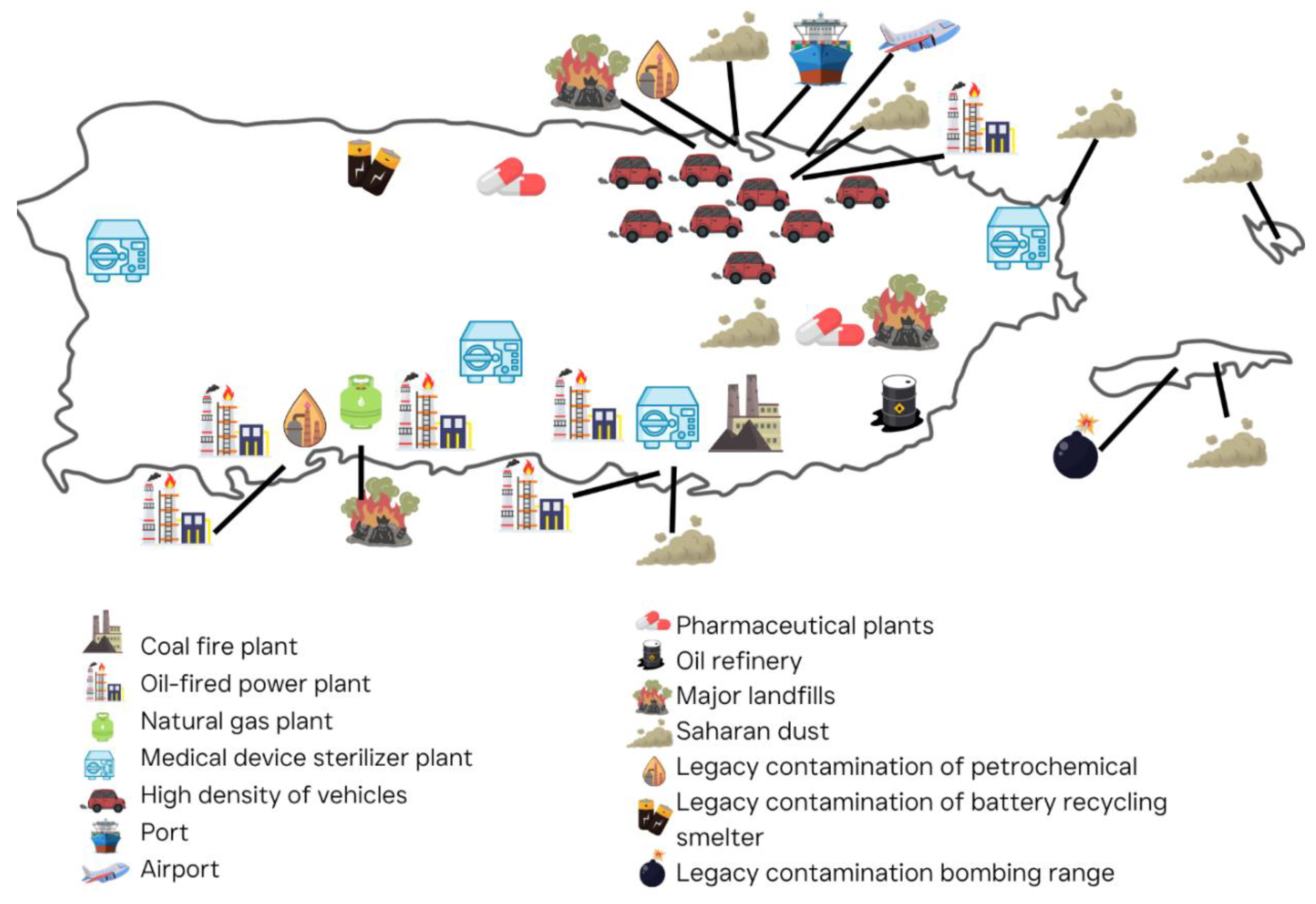
Figure 2.
Multi-step carcinogenesis process developed by hazardous air pollutants (HAPs) exposure.
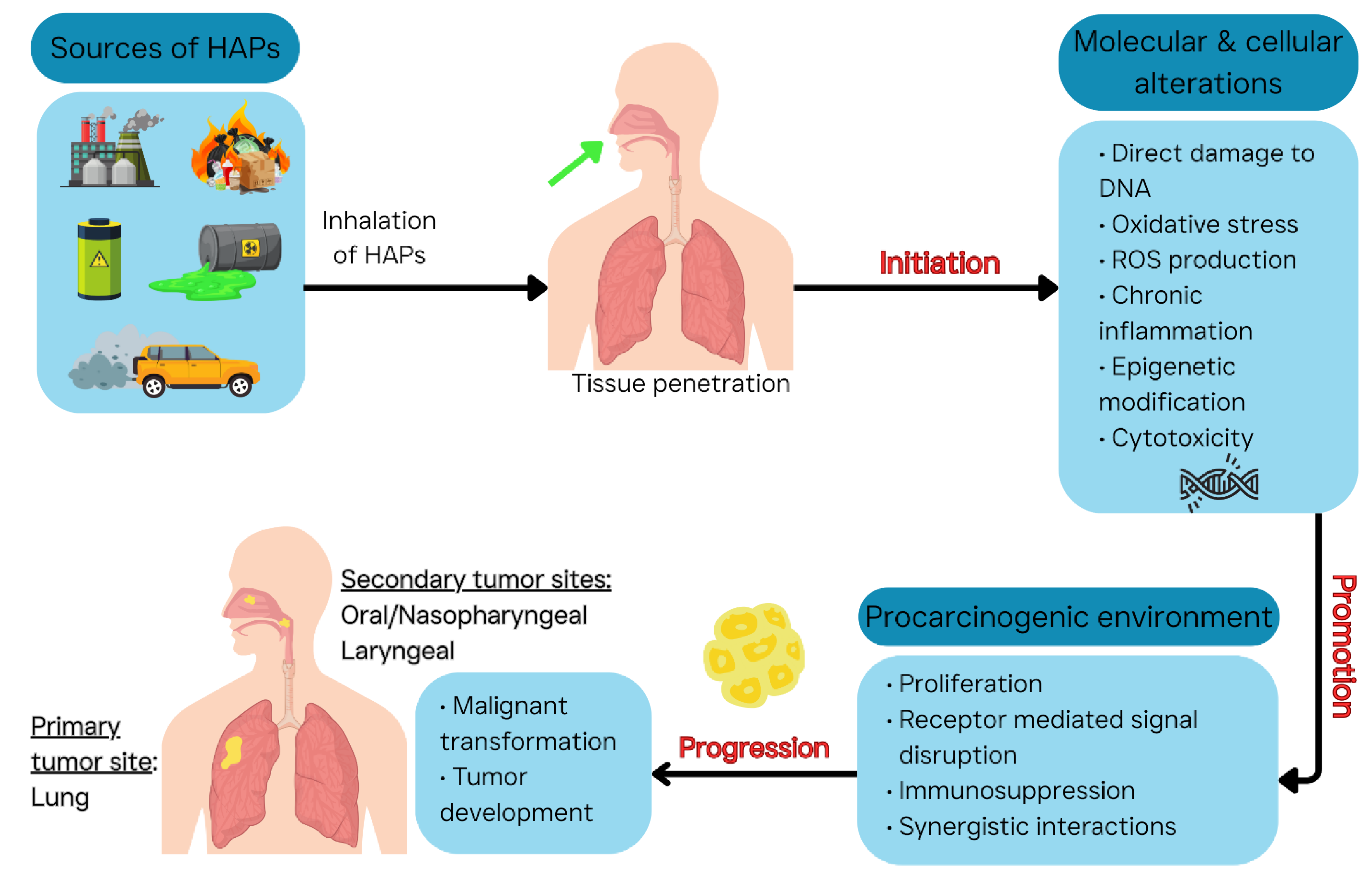
Figure 3.
Air Pollutants Monitored by Cities in Puerto Rico (PR).
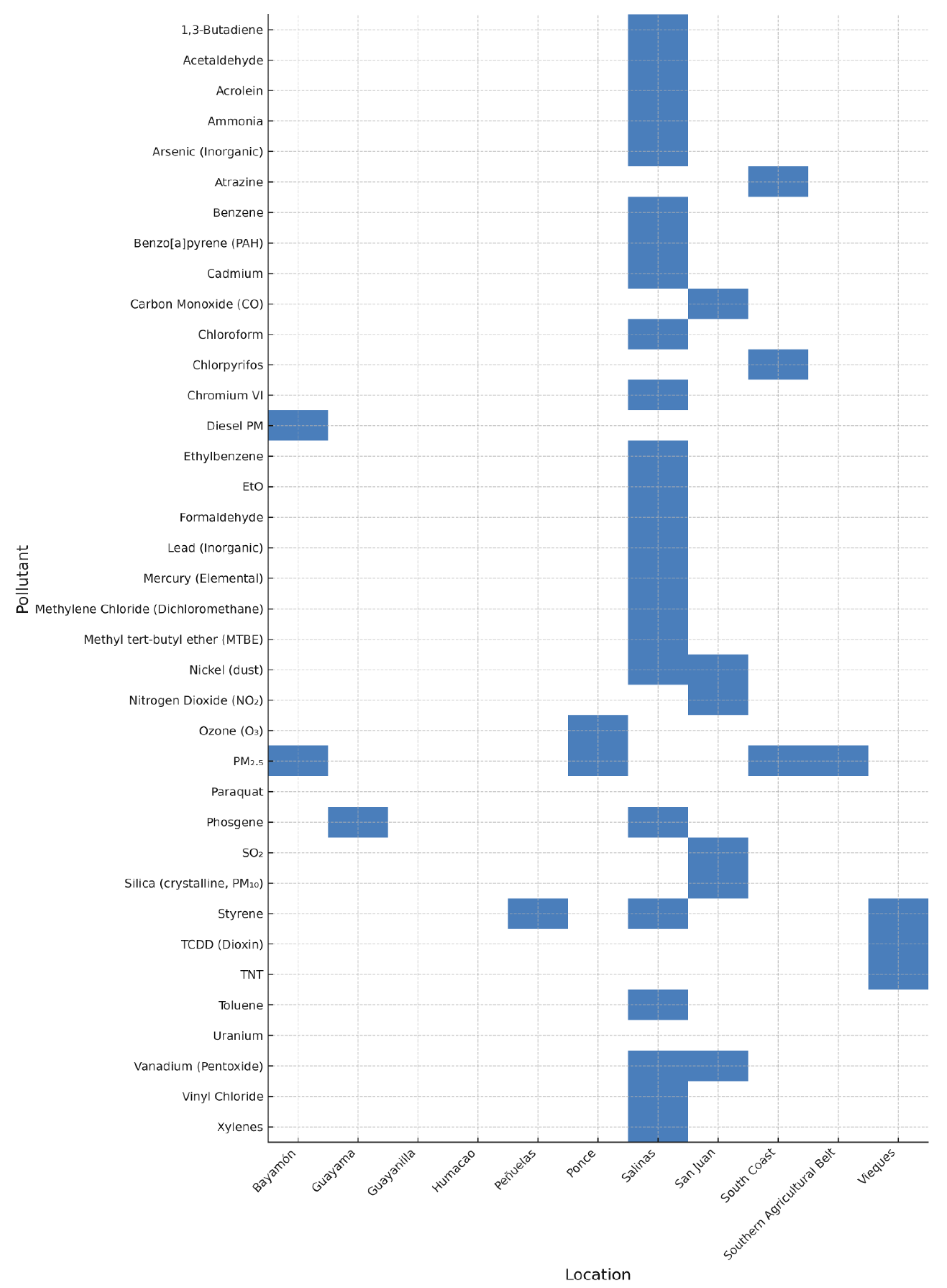

| Pollutant | Major Sources | Key Health Effects |
|---|---|---|
| Particulate Matter (PM2.5, PM10) | Combustion (vehicles, power plants, fires); construction dust; Saharan dust (natural) | Lung irritation, asthma exacerbation, reduced lung function; heart attack, arrhythmia, stroke; lung cancer (PM2.5 classified as Group 1 carcinogen). |
| Ozone (O3) | Not directly emitted; formed from NOx + VOCs in sunlight (photochemical smog) | Coughing, throat irritation; asthma attack; impaired lung development in children; oxidative stress on respiratory tract. |
| Nitrogen Dioxide (NO2) | Vehicle exhaust; power plants (burning fuel at high temps) | Airway inflammation; aggravates asthma and increases susceptibility to infections; contributes to smog and secondary PM formation. |
| Sulfur Dioxide (SO2) | Coal and oil combustion (power plants, ships); refining ore | Bronchoconstriction especially in asthmatics; wheezing, shortness of breath; precursor to sulfate particles and acid rain |
| Carbon Monoxide (CO) | Incomplete combustion (vehicles, generators, fires) | Reduces oxygen delivery (forms carboxyhemoglobin); at moderate levels causes headaches, dizziness; at high levels can be fatal (affects heart and brain). |
| Lead (Pb) | Historically, leaded gasoline (now phased out); metal smelters; battery recycling; old paint dust | Neurotoxin: cognitive impairment, behavioral problems in children; hypertension, kidney damage in adults; a probable carcinogen. |
Table 2.
Major sources of hazardous air pollutants (HAPs) in Puerto Rico (PR).
| Source Category | Potential Sources in PR | Notable Hazardous Pollutants Emitted | IARC Classification (Group) [67,68] | EPA Classification (IRIS/NTP) [63,69] |
|---|---|---|---|---|
| Coal-Fired Power Plant (Combustion) | AES-PR Guayama coal plant (since 2002) | Arsenic, Chromium VI, Nickel, Lead, Mercury (in fly ash), PAHs, fine PM [32]. | Group 1 (Arsenic, Chromium VI, Nickel, PAHs), Group 2B (Lead) | Carcinogenic (Arsenic, Chromium VI, Nickel), Probable Carcinogen (PAHs) |
| Oil-Fired Power Plants | PREPA plants (Palo Seco, San Juan, Aguirre, Costa Sur) | SO2 (→ sulfate PM), Nickel, Vanadium; formaldehyde and benzene, NOx (→O3 formation) [70]. | Group 1 (Benzene, Formaldehyde), Group 2B (Vanadium) | Carcinogenic (Benzene, Formaldehyde); Nickel - Probable |
| Medical Device Sterilizers | Steri-Tech (Salinas), Edwards Lifesciences (Anasco), Customed (Fajardo), Medtronic (Villalba), etc. | EtO, ethylene chlorohydrin, trace amounts of other VOCs [31]. | Group 1 (EtO) | Carcinogenic (EtO) |
| Pharmaceutical & Chemical Manufacturing | Pharma plants in Barceloneta, Gurabo, etc. | Solvents (methylene chloride, chloroform, toluene), alcohols and ethers, ethylene dichloride, dichlorobenzene, acid gases, ammonia, phosgene [71]. | Group 2A (Methylene chloride), Group 2B (Chloroform) | Probable Carcinogen (Methylene chloride) |
| Petrochemical Storage & Refineries | Penuelas and Yabucoa oil terminals; former CORCO | Benzene, Toluene, Ethylbenzene, Xylenes (BTEX) [72], hydrogen sulfide [73], PAHs, vinyl chloride, styrene. | Group 1 (Benzene, Vinyl chloride), Group 2B (Styrene) | Carcinogenic (Benzene, Vinyl chloride); Styrene - Reasonably Anticipated |
| Waste Disposal | Landfills (Juncos, Penuelas, Toa Baja), open burning, proposed Arecibo incinerator (not built) | Dioxins/Furans (if waste burned), PCBs (if old electrical waste burned), mercury and lead fumes, methanol, benzene, methane with VOC mix, airborne arsenic, molybdenum, radium in dust [32]. | Group 1 (Dioxins, PCBs); Mercury compounds - Group 2B | Carcinogenic (Dioxins, PCBs); Mercury - Probable Carcinogen |
| Transportation – Road (engines) | ~3 million vehicles (San Juan metro, PR-52, PR-22, etc.) | Benzene and 1,3-butadiene, formaldehyde, acetaldehyde (from fuel combustion), diesel PM (soot with adsorbed PAHs like benzo[a]pyrene and nitropyrenes), acrolein (a reactive irritant), MTBE (from fuel) traces [4,74]. | Group 1 (Benzene, 1,3-butadiene, Diesel exhaust), Group 2B (Acrolein, MTBE) | Carcinogenic (Benzene, 1,3-butadiene, Diesel exhaust particles) |
| Transportation – Marine/Air | Port of San Juan (ships, ferries), airports (SJU, BQN, PSE) | SO2, PM, vanadium, nickel [75], benzene, PAHs [76], formaldehyde [77]. | Group 1 (Benzene, PAHs); Vanadium compounds Group 2B | Carcinogenic (Benzene, PAHs); Formaldehyde - Carcinogenic |
| Natural Dust Events | Saharan dust episodes | Silica particles, iron, aluminum, endotoxins and pollen (not classified as HAP, but relevant to particulate toxicity), pesticide residues [49]. | PM Group 1 (Silica crystalline); Endotoxins not classified | Silica (Crystalline) - Known Human Carcinogen; Dust/PM - Respiratory hazard |
| Military/ Ordnance | Vieques bombing range (historic), training sites | RDX, TNT [78], lead, mercury, uranium [79], NO2 and CO from blasts [80]. | Group 2A (TNT), Group 2B (Lead inorganic, Uranium compounds) | TNT - Reasonably anticipated carcinogen; Lead/Uranium - Probable Carcinogens |
| Agricultural Emissions | Sugar cane field burning; pest control fumigation | Benzo[a]pyrene, atrazine, paraquat, chlorpyrifos [81], ammonia [82]. | Group 1 (Benzo[a]pyrene); Group 2B (Atrazine, Paraquat) | Benzo[a]pyrene - Known carcinogen; Atrazine, Paraquat - Possible carcinogens |
Note: The above list is not exhaustive of all HAPs but focuses on those relevant to PR’s context. Group 1 = carcinogenic to humans; 2A = probably carcinogenic; 2B = possibly carcinogenic (IARC). EPA classifications are based on Integrated Risk Information System (IRIS) or the National Toxicology Program: many listed “known” or “likely” carcinogens. All listed pollutants also have significant non-cancer health effects (e.g., neurotoxicity for lead, immunotoxicity for dioxins, etc.).
Table 3.
Molecular and cellular mechanisms of carcinogenesis by hazardous air pollutants (HAPs).
| Mechanism | Description | Example HAPs [4,6,93] |
|---|---|---|
| Direct DNA Damage (Genotoxicity) | Chemical binds to or chemically alters DNA, causing mutations if not repaired. | PAHs (e.g., benzo[a]pyrene) form DNA adducts; EtO alkylates DNA bases; Benzene metabolites cause chromosomal breaks. |
| Oxidative Stress & ROS | Overproduction of reactive oxygen species leading to DNA strand breaks, base damage; also, lipid peroxidation. | Diesel PM and ultrafine particles (generate ROS in lungs); Arsenic (impairs antioxidants); O3 (an oxidant gas) causes oxidative DNA damage indirectly. |
| Chronic Inflammation | Persistent activation of immune/inflammatory cells, releasing cytokines and ROS, promoting cell proliferation and DNA damage. | PM (coal ash dust, silica from Saharan dust) causing lung inflammation; Wood smoke and endotoxin also contribute. |
| Epigenetic Modification | Changes in gene expression without DNA mutation: DNA methylation, histone modification, microRNAs. | Traffic-related air pollution associated with DNA hypermethylation of p16, p53 genes; Nickel and arsenic cause DNA methylation changes (silencing genes); Diesel exhaust can alter microRNA profiles in respiratory cells. |
| Cytotoxicity & Proliferation | Cell injury or death followed by regenerative proliferation increases risk of cancerous growth. | Formaldehyde (cytotoxic to nasal cells, causing compensatory hyperplasia); Acrolein (toxic to lung cells); strong acids or alkalis in aerosols can injure airway lining. |
| Receptor-Mediated Pathways | Activation of cellular receptors that drive proliferation or inhibit apoptosis. | Dioxins/PAHs activating AhR (leads to altered expression of growth-related genes); Endocrine disruptors (some pesticides, bisphenol A in dust) activating estrogen receptors potentially promoting hormone-sensitive tumors. |
| Immunosuppression | Impaired immune surveillance of tumors. | Dioxins (TCDD) and PCBs – diminish T-cell function; Polycyclic aromatic hydrocarbons – some evidence of immune modulation; high lead exposure – affects immune responses. |
| Interaction of Mixed Exposures | Synergistic or additive effects of multiple pollutants. | Tobacco smoke + asbestos (synergistic lung cancer risk, relevant as smokers in polluted areas have higher risk than additive); Diesel PM + viruses (inflammation can potentiate other carcinogens). |
Table 4.
Air pollutant concentrations in Puerto Rico (PR) with associated inhalation risk metrics (midpoint, IUR, RfC, LCR, CRL, HQ) and interpretations based on health impacts and regulatory thresholds.
Table 4.
Air pollutant concentrations in Puerto Rico (PR) with associated inhalation risk metrics (midpoint, IUR, RfC, LCR, CRL, HQ) and interpretations based on health impacts and regulatory thresholds.
| Air Pollutants | Concentration (µg/m³) | Years | Location | Midpoint (µg/m³) | IUR per (µg/m³)a ,e [7,63,133,134,135,136,137] |
RfC (mg/m³)b,e [7,63,133,134,135,136,137] |
LCRc | CRLd,e | HQd,e |
|---|---|---|---|---|---|---|---|---|---|
| 1,3-Butadiene | 0.1–0.3 | 2015–2016 | Salinas | 0.2 | 3.00 × 10⁻⁵ | 2.00 × 10⁻³ | 6.00 × 10⁻⁶ | Moderate | 1.00 × 10⁻¹ |
| Acetaldehyde | 1.0–2.0 | 2015–2016 | Salinas | 1.5 | 2.20 × 10⁻⁶ | 9.00 × 10⁻³ | 3.30 × 10⁻⁶ | Moderate | 1.67 × 10⁻¹ |
| Acrolein | 0.02–0.05 | 2015–2016 | Salinas | 0.04 | 2.00 × 10⁻⁵ | 2.00 × 10⁰ | |||
| Ammonia | 1.0–3.0 | 2015–2016 | Salinas | 2 | 5.00 × 10⁻¹ | 4.00 × 10⁻³ | |||
| Arsenic (Inorganic) | 0.0005–0.0023 | 2015–2016 | Salinas | 0.0014 | 4.30 × 10⁻³ | 1.50 × 10⁻⁵ | 6.02 × 10⁻⁶ | Moderate | 9.33 × 10⁻² |
| Atrazine | 0.3–0.7 | 2022 | South Coast | 0.5 | 1.00 × 10⁻⁵ | 5.00 × 10⁻⁶ | Moderate | ||
| Benzene | 0.5–1.5 | 2015–2016 | Salinas | 1 | 7.80 × 10⁻⁶ | 3.00 × 10⁻² | 7.80 × 10⁻⁶ | Moderate | 3.33 × 10⁻² |
| Benzo[a]pyrene (PAH) | 0.0001–0.0005 | 2015–2016 | Salinas | 0.0003 | 6.00 × 10⁻⁴ | 2.00 × 10⁻⁶ | 1.80 × 10⁻⁷ | Low | 1.50 × 10⁻¹ |
| Cadmium | 0.003–0.007 | 2015–2016 | Salinas | 0.005 | 1.80 × 10⁻³ | 1.00 × 10⁻⁵ | 9.00 × 10⁻⁶ | Moderate | 5.00 × 10⁻¹ |
| Carbon Monoxide (CO) | 600–10,000 | 2017 | San Juan | 5,300 | 2.30 × 10¹ | 2.30 × 10⁻¹ | |||
| Chloroform | 0.1–0.3 | 2015–2016 | Salinas | 0.2 | 2.30 × 10⁻⁵ | 1.95 × 10⁻³ | 4.60 × 10⁻⁶ | Moderate | 1.03 × 10⁻¹ |
| Chlorpyrifos | 0.2–0.4 | 2022 | South Coast | 0.3 | |||||
| Chromium VI | 0.0001–0.0005 | 2015–2016 | Salinas | 0.0003 | 1.80 × 10⁻² | 3.00 × 10⁻⁵ | 5.40 × 10⁻⁶ | Moderate | 1.00 × 10⁻² |
| Diesel PM | 0.3–1.2 | 2017–2018 | San Juan, Bayamón | 0.8 | 3.00 × 10⁻⁴ | 2.40 × 10⁻⁴ | High | ||
| Ethylbenzene | 0.6–1.5 | 2015–2016 | Salinas | 1.05 | 2.50 × 10⁻⁶ | 1.00 × 10⁰ | 2.63 × 10⁻⁶ | Moderate | 1.05 × 10⁻³ |
| EtO | 0.3–121 | 2023 | Salinas | 60 | 3.00 × 10⁻³ | 3.00 × 10⁻² | 1.80 × 10⁻¹ | High | 2.00 × 10⁰ |
| Formaldehyde | 1.0–3.0 | 2015–2016 | Salinas | 2 | 1.10 × 10⁻⁵ | 7.00 × 10⁻³ | 2.20 × 10⁻⁵ | Elevated | 2.86 × 10⁻¹ |
| Lead (Inorganic) | 0.05–0.2 | 2015–2016 | Salinas | 0.125 | 1.20 × 10⁻⁵ | 1.50 × 10⁻⁶ | Moderate | ||
| Mercury (Elemental) | 0.0005–0.0015 | 2015–2016 | Salinas | 0.001 | 3.00 × 10⁻⁴ | 3.00 × 10⁻⁴ | 3.00 × 10⁻⁷ | Low | 3.33 × 10⁻³ |
| Methylene Chloride (Dichloromethane) | 0.1–0.5 | 2015–2016 | Salinas | 0.3 | 1.70 × 10⁻⁸ | 6.00 × 10⁻¹ | 5.10 × 10⁻⁹ | Low | 5.00 × 10⁻⁴ |
| Methyl tert-butyl ether (MTBE) | 0.5–1.0 | 2015–2016 | Salinas | 0.8 | 2.60 × 10⁻⁷ | 3.00 × 10⁰ | 2.08 × 10⁻⁷ | Low | 2.67 × 10⁻⁴ |
| Nickel (dust) | 0.0012–0.0034 | 2015–2016 | Salinas | 0.0023 | 2.60 × 10⁻⁴ | 1.00 × 10⁻⁵ | 5.98 × 10⁻⁷ | Low | 2.30 × 10⁻¹ |
| Nitrogen Dioxide (NO₂) | 10–45 | 2015–2017 | San Juan | 27.5 | 4.70 × 10⁻¹ | 5.85 × 10⁻² | |||
| Ozone (O3) | 50–100 | 2015–2017 | San Juan Ponce |
75 | 1.80 × 10⁻¹ | 4.17 × 10⁻¹ | |||
| Paraquat | 0.3–0.5 | 2022 | Southern Agricultural Belt | 0.4 | |||||
| Phosgene | 0.1–0.3 | 2015–2016 | Salinas | 0.2 | 3.00 × 10⁻⁴ | 6.67 × 10⁻¹ | |||
| PM2.5 | 4.33–5.82 | 2015–2016 | Ponce, Bayamón, Guayama, Guayanilla, Humacao | 5.2 | |||||
| Silica (crystalline, PM10) | 0.3–0.6 | 2015–2016 | San Juan (Saharan dust events) | 0.5 | 3.00 × 10⁻³ | 1.67 × 10⁻¹ | |||
| SO₂ | 10–80 | 2017 | San Juan, Guayama | 45 | 2.62 × 10⁻² | 1.72 × 10⁰ | |||
| Styrene | 0.5–1.5 | 2015–2016 | Salinas | 1 | 1.00 × 10⁰ | 1.00 × 10⁻³ | |||
| TCDD (Dioxin, 2,3,7,8-Tetrachlorodibenzo-p-dioxin) | 0.000005–0.00002 | Legacy/Modeled Penuelas (burning), Vieques (legacy) | 0.00001 | 3.80 × 10¹ | 4.00 × 10⁻⁸ | 3.80 × 10⁻⁴ | High | 2.50 × 10⁻¹ | |
| 2,4,6-Trinitrotoluene (TNT)e | 0.2–0.4 | Historical (2000s) | Vieques | 0.3 | 5.00 × 10⁻¹ | 6.00 × 10⁻⁴ | |||
| Toluene | 0.5–1.5 | 2015–2016 | Salinas | 1 | 5.00 × 10⁰ | 2.00 × 10⁻⁴ | |||
| Uranium | 0.1–0.3 | 2003–2005 | Vieques | 0.2 | 4.00 × 10⁻⁵ | 5.00 × 10⁰ | |||
| Vanadium (Pentoxide) | 0.0005–0.0015 | 2015–2016 | San Juan, Salinas | 0.001 | 8.30 × 10⁻³ | 7.00 × 10⁻⁶ | 8.30 × 10⁻⁶ | Moderate | 1.43 × 10⁻¹ |
| Vinyl Chloride | 0.1–0.5 | 2015–2016 | Salinas | 0.3 | 4.40 × 10⁻⁶ | 1.00 × 10⁻¹ | 1.32 × 10⁻⁶ | Moderate | 3.00 × 10⁻³ |
| Xylenes | 1.0–1.5 | 2015–2016 | Salinas | 1.2 | 1.00 × 10⁻¹ | 1.20 × 10⁻² |
Notes: aIUR (Inhalation Unit Risk): Represents the estimated risk of cancer from inhaling a substance over a lifetime from EPA IRIS or OEHHA databases. bRfC (Reference Concentration): Indicates the daily inhalation exposure level for the human population that is likely to be without an appreciable risk of deleterious effects during a lifetime. cLifetime Cancer Risk (LCR) = Concentration (µg/m³) × IUR (µg/m³)⁻¹; LCR is interpreted based on standard risk categories. dCancer Risk Level (CRL): ≥1E-4: High risk; ≥1E-5: Elevated risk; ≥1E-6: Moderate risk; <1E-6: Low risk; dNon-Cancer Risk (Hazard Quotient - HQ), HQ = Concentration (µg/m³) ÷ (RfC × 1000); HQ > 1 indicates possible concern for non-cancer effects. ethe recommended airborne exposure limit TNT (REL) established by the National Institute for Occupational Safety and Health (NIOSH) used for RfC;eEmpty cells indicate that no authoritative IUR or RfC values are available from IRIS/OEHHA/ATSDR, or the pollutant is assessed using alternative health endpoints (e.g., blood lead levels, ambient air standards). Occupational exposure limits were not used.
Disclaimer/Publisher’s Note: The statements, opinions and data contained in all publications are solely those of the individual author(s) and contributor(s) and not of MDPI and/or the editor(s). MDPI and/or the editor(s) disclaim responsibility for any injury to people or property resulting from any ideas, methods, instructions or products referred to in the content. |
© 2025 by the authors. Licensee MDPI, Basel, Switzerland. This article is an open access article distributed under the terms and conditions of the Creative Commons Attribution (CC BY) license (http://creativecommons.org/licenses/by/4.0/).
Copyright: This open access article is published under a Creative Commons CC BY 4.0 license, which permit the free download, distribution, and reuse, provided that the author and preprint are cited in any reuse.


