

Submitted:
13 August 2025
Posted:
13 August 2025
You are already at the latest version
Abstract
Background The complexity of cities has been increased by urbanization, which has led to systems that are characterized by emergent behaviors, non-linear interactions, and interrelated socio-economic, environmental, and technical frameworks. These processes are frequently disregarded by conventional linear planning models, which restricts their efficacy in addressing sustainability concerns. Complexity Theory offers a conceptual and analytical framework for the understanding and regulation of urban systems as Complex Adaptive Systems (CASs).Methods In accordance with the PRISMA 2020 principles, this systematic literature review evaluated 91 peer-reviewed articles that were published between 1994 and 2024. The review incorporated qualitative narrative integration, theme synthesis, and bibliometric analysis. The data were obtained from Scopus through a comprehensive Boolean search that encompassed topics related to sustainability, urban development, and complexity science. The research was assessed through a multi-phase procedure, with inclusion criteria emphasizing the explicit application of complexity concepts to sustainable urban design.Results Five thematic domains were identified: (1) conceptualizing urban systems as complex adaptive systems, (2) employing computational methodologies such as fractal analysis and agent-based modeling, (3) establishing adaptive governance frameworks, (4) integrating sustainability across environmental, social, and economic dimensions, and (5) leveraging digital transformation within smart city frameworks. There is evidence to suggest that complexity-informed methodologies improve stakeholder engagement, adaptation, and urban resilience. Nevertheless, issues continue to exist, such as poor evaluation of trade-offs among opposing interests, regional research disparities, data limitations, and inadequate policy integration.Conclusions Complexity Theory provides a strong foundation for resilient, integrative, and adaptable urban design. Longitudinal assessment, equity-centered applications, hybrid approaches that integrate conventional and complexity-oriented methodologies, and improved representation of under-researched areas are all necessary for bridging the divide between theory and practice. This paper offers practical suggestions for policymakers, academics, and practitioners to incorporate complexity thinking into urban sustainability efforts.
Keywords:
complexity theory
; complex adaptive systems
; sustainable urban development
; adaptive governance
; resilience
; urban planning
; smart cities
; fractal analysis
; agent-based modeling
; systems thinking
Introduction
Problem Statement and Context
Global urbanization is advancing at a rapid pace, transforming cities into more complex environments that are defined by the constantly changing relationships among social, economic, environmental, and technological structures (Batty & Marshall, 2012; Baccarini, 1996). In particular, the interdependencies, feedback loops, and emergent behaviors that are inherent in contemporary urban systems are inadequately addressed by conventional linear planning models, which poses a challenge to sustainable development due to the rapid growth (Abbas & Erzaij, 2020; Wood & Ashton, 2010). In the present day, cities function as Complex Adaptive Systems (CASs), in which a variety of components interact non-linearly, resulting in structured but unexpected results (Batty, 1994). In the presence of unpredictability, these trends necessitate governance frameworks that are adaptable and capable of reconciling economic development, social equality, and environmental stewardship (Frantzeskaki et al., 2021).
Complexity Theory provides a conceptual framework for understanding these phenomena by emphasizing the fundamental characteristics of urban systems, including self-organization, emergence, and non-linearity (Nigra, 2019; Rooke & Molloy, 2011). By incorporating complexity science into sustainable urban development, urban planners can develop adaptive plans that can adapt to evolving socio-environmental conditions and mitigate systemic risks, such as societal disintegration, infrastructural strain, and climatic impacts (Zhang et al., 2021). Fractal analysis for the prediction of growth (Batty, 1994), system dynamics modeling for scenario planning (Chen et al., 2023), and participatory governance for decentralized decision-making (Rooke & Molloy, 2011) are all practical applications.
Gap Analysis
Although there has been a significant increase in research linking Complexity Theory to urban sustainability in recent years, its application in practical urban planning remains restricted. Despite the importance of complexity concepts, such as emergent behavior, adaptive cycles, and resilience, current research frequently fails to translate them into practical planning tools (Abbas & Erzaij, 2020; Wood & Ashton, 2010). Additionally, many existing reviews concentrate on either theoretical frameworks that lack practical approaches or case-specific analyses that fail to derive transferable principles (Nigra, 2019; Frantzeskaki et al., 2021).
The role of complexity principles as both explanatory and prescriptive frameworks has not been extensively analyzed in many systematic studies that have investigated sustainability in urban settings (Frantzeskaki et al., 2021; Chen et al., 2023). Deficits exist in research concerning:
1. Practical Application of Complexity Theory A gap exists between theoretical comprehension and practical application because of the limited research that provides explicit approaches for incorporating complexity concepts into urban planning processes (Abbas & Erzaij, 2020).
The integration of sustainability dimensions Current models frequently separate environmental, social, or economic objectives, rather than employing complexity-informed methodologies that recognize their interconnections (Nigra, 2019; Frantzeskaki et al., 2021).
3. Evaluation of trade-offs the way complexity frameworks reconcile conflicting agendas, such as ecological protection and economic growth, is not sufficiently emphasized (Zhang et al., 2021).
Governance frameworks that are both adaptable and scalable Empirical data on the viability of adaptive governance models across a variety of urban contexts is scarce, even though adaptive governance is frequently recognized as advantageous (Rooke & Molloy, 2011).
This gap emphasizes the necessity of a comprehensive synthesis that not only identifies the current applications of Complexity Theory but also evaluates their efficacy in addressing the numerous and constantly changing issues of sustainable urbanization.
Objectives and Review Questions
This comprehensive literature review aims to critically evaluate and integrate existing research at the intersection of sustainable urban development and Complexity Theory. Its objective is to clarify the operationalization of complexity principles in order to construct urban systems that are adaptive and resilient, and that align with sustainability goals.
The objective of the investigation is to integrate the most recent empirical and theoretical research that employs Complexity Theory in the context of urban planning and sustainability.
2. Identify patterns, methodologies, and instruments, such as participatory planning, system dynamics modeling, and fractal analysis, that operationalize complexity principles.
3. Evaluate the advantages and disadvantages of current solutions, particularly in relation to their ability to grow, adapt, and integration across sustainability dimensions.
Identify emerging trends, governance frameworks, and interdisciplinary partnerships that enhance urban resilience.
5. Develop research and policy proposals to incorporate Complexity Theory into urban sustainability frameworks.
The primary review inquiry, as expressed through a PECO (Population, Exposure, Comparison, Outcome) framework, is as follows:
• Population (P): Urban systems that are in the process of expansion, transition, or reconstruction.
• Exposure (E): The application of concepts from Complexity Theory, such as self-organization, emergence, and adaptive cycles.
• Comparison (C): Sectoral or linear urban planning methodologies.
• Outcome (O): Improved sustainable performance in the areas of environmental, social, and economics, as well as increased urban resilience.
Review Question: How can the concepts of Complexity Theory be employed to develop, clarify, and implement sustainable urban development plans that enhance resilience and adaptability in contrast to traditional linear planning methodologies?
This study addresses the subject, thereby bridging the gap between complexity science theory and practical urban planning. This enables the development of cities that are sustainable, equitable, and adaptable in the face of global change.

Methods
Protocol Registration
To ensure scientific transparency and reproducibility, this systematic literature review agreed to the PRISMA 2020 principles (Page et al., 2021). The review procedure was not documented in PROSPERO or other registries; however, all methods were consistent with established systematic review criteria for research discovery, screening, eligibility evaluation, and synthesis.
Eligibility Criteria
Studies were chosen based on their explicit examination of Complexity Theory in the context of sustainable urban development.
Peer-reviewed journal papers, conference proceedings, or relevant book chapters were incorporated.
They were composed in English and were granted complete text access.
Urban institutions that were in the process of expansion, transition, or redevelopment were considered eligible populations. The inclusion of Complexity Theory concepts (e.g., adaptive governance, non-linear dynamics, and self-organization) in policy, design, or planning was among the interventions. Comparators were conventional linear or industry-specific methodologies. Increased sustainability in the environmental, social, and economic sectors, as well as enhanced urban resilience, were among the outcomes.
The exclusion criteria eliminated research that: • Exclusively focused on urban development or Complexity Theory without establishing a connection between the two.
• Written in languages other than English.
• Abstract access was granted.
• To prevent duplication, duplicates were eliminated.
Search Strategy
The Scopus database was chosen for this study because of its extensive coverage across multiple disciplines, offering access to influential research in sustainability science, systems thinking, and urban studies (van Eck & Waltman, 2010). On 25 August 2024, a search was conducted using a comprehensive Boolean query designed to capture publications that connect concepts from complexity science with sustainable urban development. The search terms included a range of sustainability-related expressions such as sustainable development, environmental sustainability, green development, and resilient development combined with terms describing urban contexts, including urban planning, city development, urban transformation, and urban regeneration. In addition, the query incorporated terminology from complexity science, such as complex adaptive systems, systems thinking, nonlinear dynamics, and self-organization. This strategy yielded a total of 758 relevant documents.
Study Selection
The evaluation process was conducted in accordance with a triadic workflow.
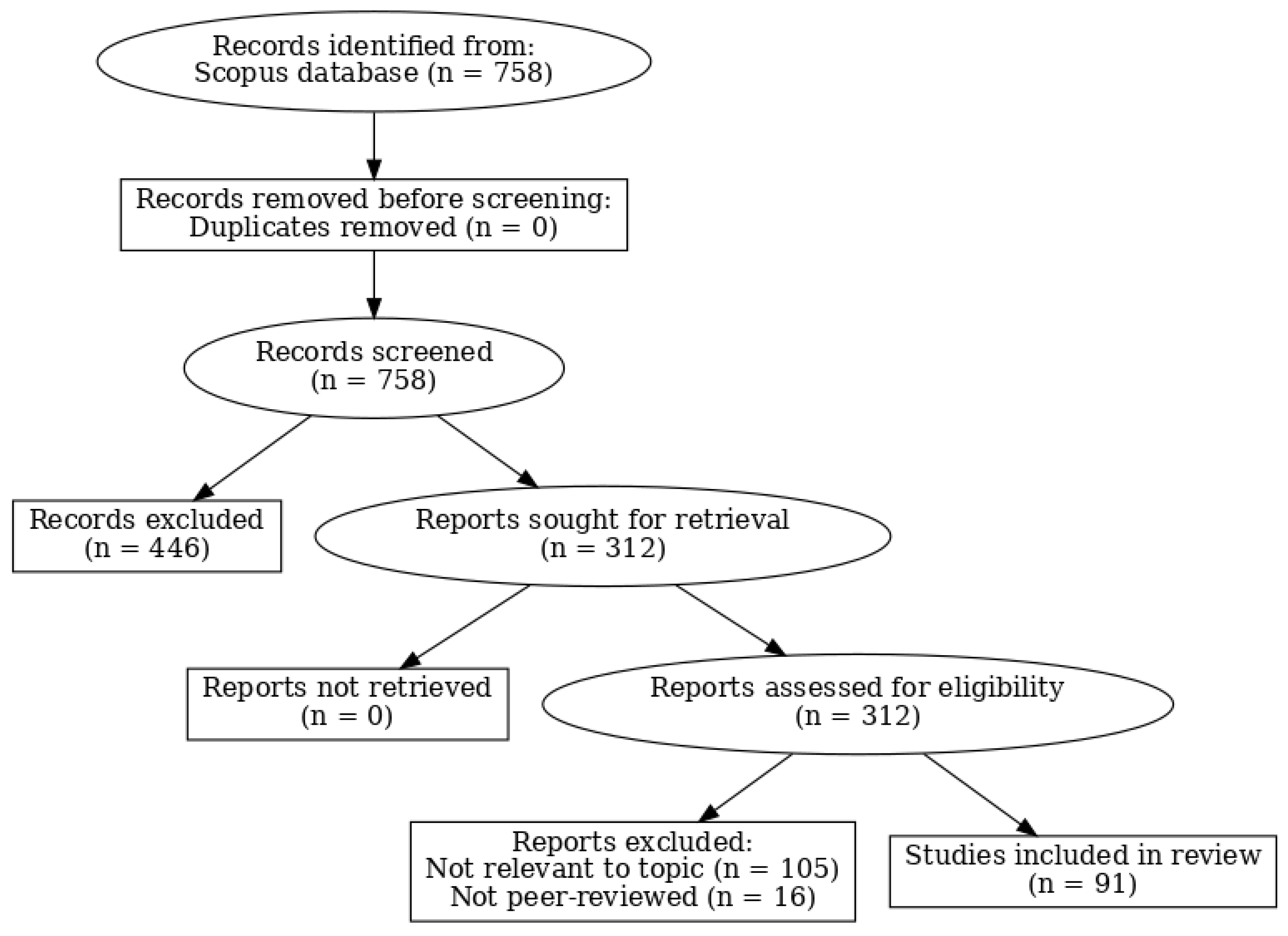
The dataset was reduced from 758 to 312 articles in accordance with the eligibility criteria through the title and abstract a process of
Subsequently, the collection was refined to 207 studies through the elimination of non-relevant papers during the full-text examination.
A final portfolio of 91 studies was the outcome of the quality evaluation, which excluded non-peer-reviewed papers and those that were unrelated to the issue.
Discrepancies were resolved through consensus among two independent evaluators who conducted the screening.
Quality Assessment
Although no formal rating method, such as the Newcastle–Ottawa Scale, was implemented, each study that was included in the analysis underwent content validation to verify its alignment with the research objectives. The studies that were excluded were classified as either (1) unrelated to the subject matter or (2) lacking peer review.
Statistics Methodology
The quantitative study employed bibliometric methodologies to identify thematic clusters, publishing patterns, and the co-occurrence of terms within the domain. Visual analysis of topic relationships was facilitated by the production of keyword density maps and co-authorship networks by VOSviewer (van Eck & Waltman, 2010). We investigated the annual frequency and distribution of publications by year and nation, with a particular emphasis on the geographic concentrations and patterns of research growth. Thematic domains were characterized using descriptive statistics, and the PRISMA flow diagram visually represented the research selection processes. This statistical method ensured that the conclusions were both evidence-based and replicable by facilitating both a quantitative analysis of the literature and a qualitative theme interpretation.
Data Synthesis
A combination of theme analysis and narrative integration was employed in the synthesis. Five topic groups were employed to organize the research:
1. The application of Complexity Theory to the fields of urban planning and sustainability.
Emergent patterns and nonlinear dynamics identification.
Techniques for adaptive management to enhance resilience.
4. The integration of complexity concepts into governance and cultural frameworks.
5. Energy systems and smart cities are examples of interdisciplinary problems.
The findings of each category were carefully assessed, and theme correlations were established to align with the review's research topic.

Results
Study Selection
A total of 758 documents were obtained from the Scopus search. 312 entries remained after the elimination of duplicates and the implementation of title and abstract screening. The full-text review eliminated papers that did not relate to the intersection of sustainable urban development and Complexity Theory, leaving 207 publications. The final compilation of 91 articles for synthesis was the result of the quality evaluation, which excluded papers that lacked peer review or theme significance. The selection procedure is illustrated in the PRISMA flow diagram (Figure 1).
Study Characteristics
The 91 papers that were analyzed were published between 1994 and 2024, with a substantial increase occurring after 2015. Concentrations were observed in Europe, Asia, and North America, with Latin America and Africa contributing increasingly. The methodologies employed varied: 38% employed qualitative techniques, 32% employed quantitative or computational methods (e.g., agent-based modeling, fractal analysis), and 30% implemented mixed-method designs.
Emergence, self-organization, adaptive cycles, and non-linearity are among the principles of Complexity Theory that have been implemented in numerous investigations. Urban development modeling, governance frameworks, climate resilience planning, and socio-technical transitions are among the application contexts (Batty, 1994; Frantzeskaki et al., 2021; Zhang et al., 2021).

Table 1.
Summary of Included Studies
| Author/Year | Country/Region | Methodology | Complexity Concepts Applied | Sustainability Dimensions | Key Findings |
| Batty (1994) | UK | Quantitative – Fractal Analysis | Fractal geometry, non-linearity | Environmental, Economic | Established method for predicting urban growth patterns |
| Frantzeskaki et al. (2021) | Netherlands | Qualitative – Case Studies | Adaptive cycles, self-organization | Environmental, Social | Demonstrated benefits of adaptive governance in urban resilience |
| Chen et al. (2023) | China | Mixed Methods – Agent-Based Modeling | Emergence, network interactions | Environmental, Economic, Social | Modeled interdependencies between infrastructure systems |
| Nigra (2019) | Italy | Conceptual/Theoretical | Complex adaptive systems, governance | Social, Economic | Outlined integration of CAS principles into sustainability assessment |
| Zhang et al. (2021) | China | Quantitative – Network Analysis | Feedback loops, smart city dynamics | Environmental, Social | Highlighted vulnerabilities in interconnected urban systems |
Thematic Synthesis of Findings
1. Complexity Theory as a Framework for Understanding Urban Systems
In general, urban systems are classified as Complex Adaptive Systems (CASs), which are characterized by a diverse array of interacting agents and feedback loops that generate emergent patterns (Batty & Marshall, 2012; Nigra, 2019). CAS frameworks were employed in research to clarify the robustness of infrastructure networks, socio-economic collection, and geographical heterogeneity (Chen et al., 2023; Abbas & Erzaij, 2020).
Advantages: Planners can anticipate non-linear transformations when using CAS-based methodologies, which more effectively capture dynamic system characteristics than linear models.
Limitations: A significant number of applications were conceptual in nature, with minimal translation into practical operational planning directives (Wood & Ashton, 2010).
2. Analytical Tools and Models for Complexity-Informed Planning
Fractal analysis has emerged as the primary quantitative approach for evaluating the complexity of urban forms and establishing development thresholds (Batty, 1994). The interactions among a variety of actors were replicated by agent-based models in a variety of governance settings (Chen et al., 2023). Interdependencies between transportation and utilities systems were identified through a network study, which underscored their vulnerability to cascade failures (Zhang et al., 2021).
Advantages: These methodologies offer quantifiable metrics for policy evaluation.
Limitations: The deployment of computational models in low-data environments is restricted by the requirement for substantial data inputs.
3. Adaptive Governance and Policy Innovation
To mitigate uncertainty during urban transitions, adaptive governance models emphasize stakeholder engagement, polycentric decision-making, and flexibility (Frantzeskaki et al., 2021; Rooke & Molloy, 2011). Decentralized energy systems, community-driven regeneration, and integrated transportation solutions were identified as examples of effective adaptable methodologies in case studies.
Advantages: In response to unanticipated difficulties, adaptive governance enabled the rapid modification of policies.
Implementation was frequently hindered by institutional inertia and political opposition.
4. Integration Across Sustainability Pillars
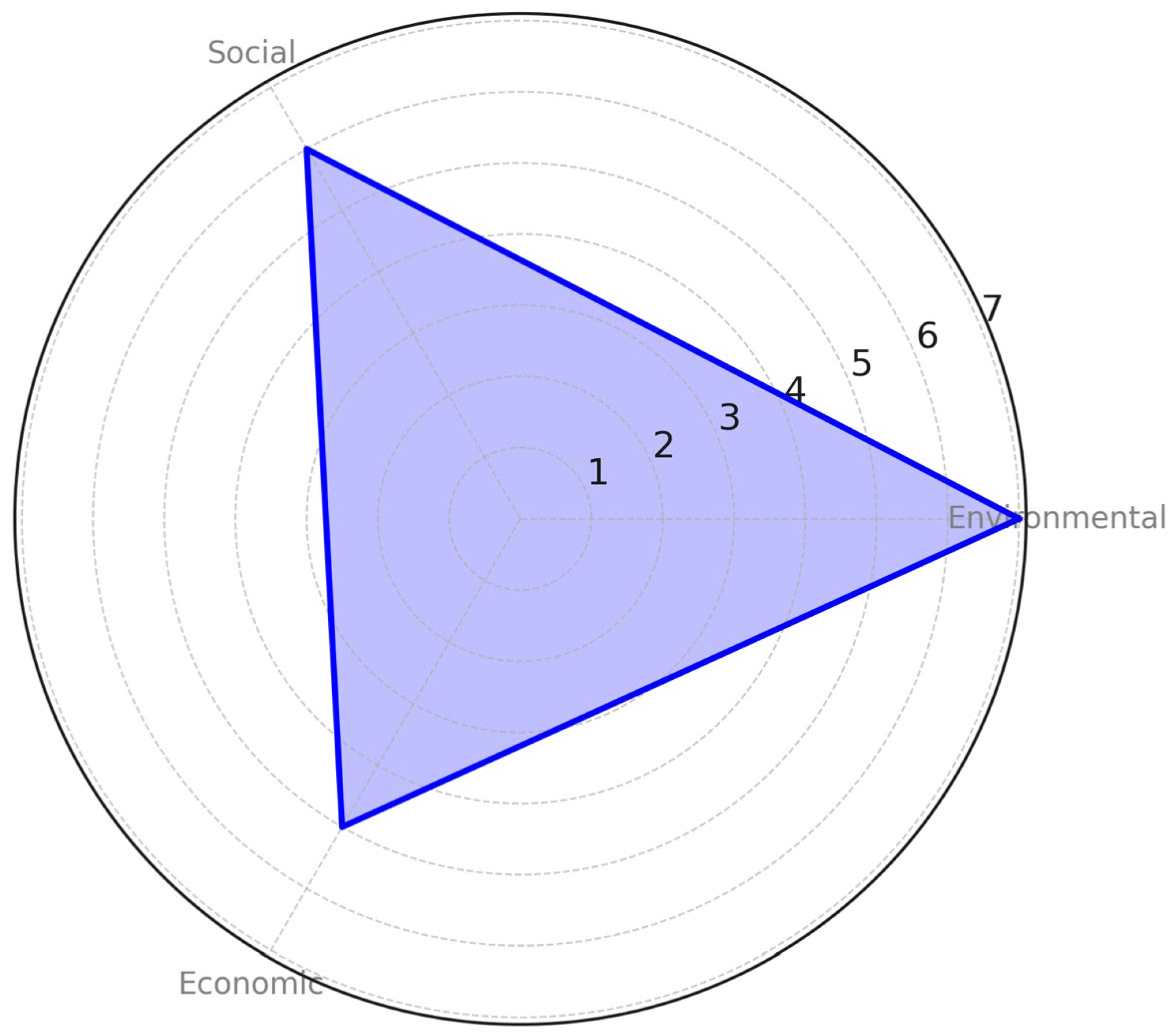
The comprehensive integration of environmental, social, and economic aspects in urban planning was facilitated by complexity-oriented methodologies. The integration of economic incentives with climate adaption strategies and the amalgamation of green infrastructure with social equality initiatives were among the examples (Abbas & Erzaij, 2020; Nigra, 2019).
Advantages: Enhanced collaboration among sustainability objectives.
Limitations: The evaluation of trade-offs between conflicting objectives, such as the preservation of green spaces and densification, was infrequent.
5. Emerging Themes: Smart Cities and Digital Transformation
In real time, data-driven technologies have improved urban operations, because of the guidance of Complexity Theory in the development of smart cities (Zhang et al., 2021). Research has demonstrated that adaptive traffic management, predictive maintenance, and participatory governance systems are facilitated by IoT networks, AI analytics, and sensor grids.
Advantages: Enhanced system responsiveness and efficiency.
Limitations: The potential for technical lock-in and unequal access to digital services.

Agreements and Disagreements in the Literature
Agreements:
Adaptive, non-linear planning methodologies are required for urban systems (Batty & Marshall, 2012; Frantzeskaki et al., 2021).
By taking into consideration emergent dynamics and feedback cycles, the integration of Complexity Theory enhances resilience (Abbas & Erzaij, 2020).
In specific situations, complexity principles are successfully implemented through fractal analysis and agent-based modeling (Chen et al., 2023; Batty, 1994).
Disagreements:
The extent to which conventional planning approaches should be replaced or supplemented by complexity frameworks. The role of technology: Some authors view smart city technologies as fundamentally facilitating flexibility (Zhang et al., 2021), while others caution against excessive dependence due to governance and equality issues (Nigra, 2019).
The degree of stakeholder engagement: While some advocates advocate for participatory governance, others maintain that centralized coordination is necessary for significant infrastructure initiatives (Rooke & Molloy, 2011).
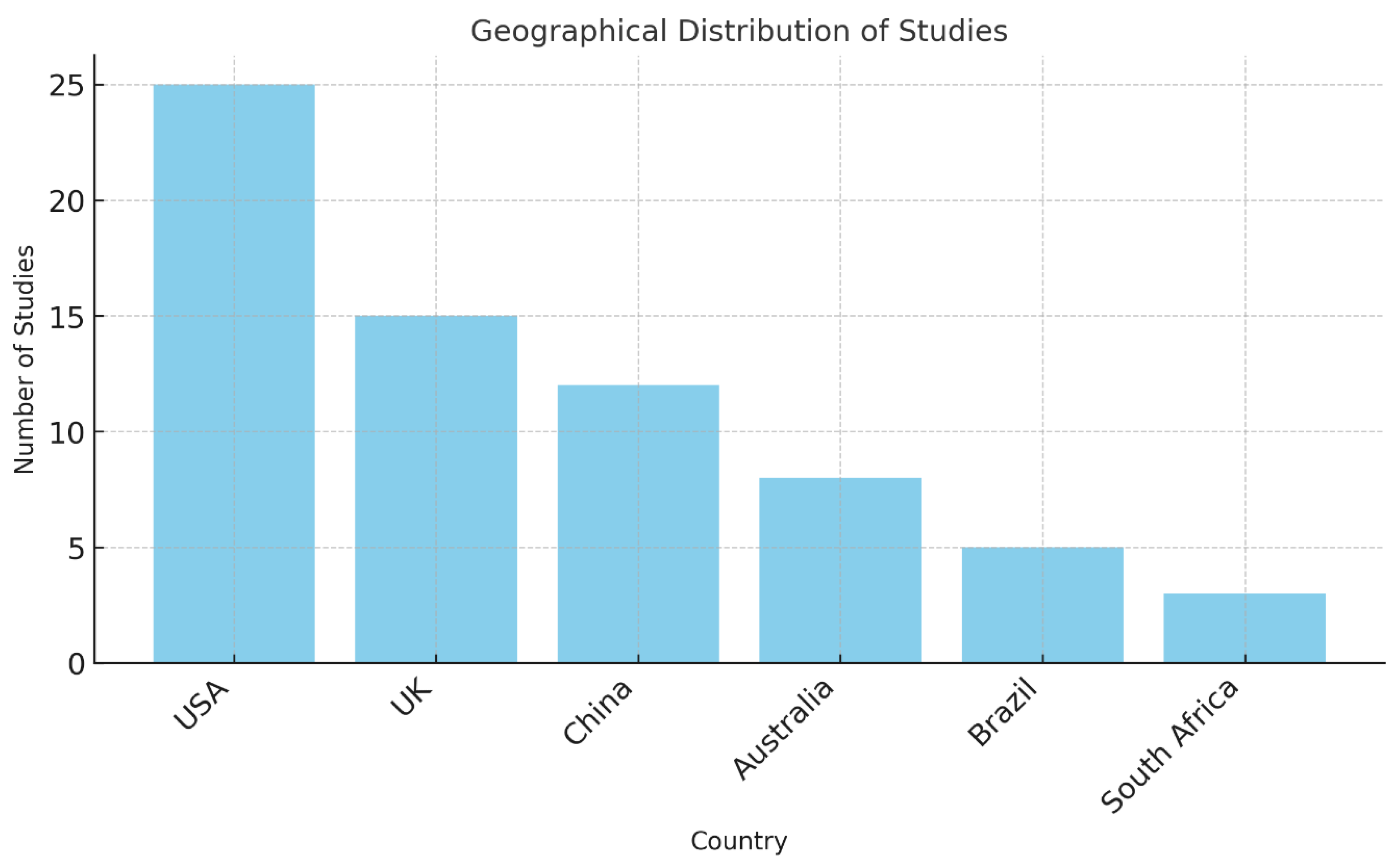
Table 2.
Thematic Domains & Representative Studies
| Theme | Core Contributions | Limitations | Representative Citations |
| Urban Systems as CASs | Defined cities as complex adaptive systems with emergent behaviors | Limited operational translation | Batty & Marshall (2012); Nigra (2019) |
| Analytical Tools & Models | Used fractal analysis, agent-based modeling, network studies for complexity assessment | High data requirements limit application | Batty (1994); Chen et al. (2023) |
| Adaptive Governance | Promotes flexibility, polycentric decision-making, stakeholder engagement | Institutional inertia, political resistance | Frantzeskaki et al. (2021); Rooke & Molloy (2011) |
| Integration Across Sustainability Pillars | Combines environmental, social, economic objectives in planning | Trade-offs rarely evaluated systematically | Abbas & Erzaij (2020); Nigra (2019) |
| Smart Cities & Digital Transformation | IoT, AI, and sensor grids enhance adaptive urban management | Risk of technological lock-in and inequity | Zhang et al. (2021) |
Discussion
Summary of Main Findings
This review conducted a thorough examination of the application of Complexity Theory in sustainable urban development, determining five primary thematic areas: the characterization of urban systems as Complex Adaptive Systems (CASs), the utilization of computational and analytical tools, adaptive governance frameworks, integration across sustainability pillars, and the impact of digital technologies in smart cities. The research consistently demonstrates that complexity-based techniques enhance urban resilience by incorporating feedback chains, emergence, and non-linearity (Batty & Marshall, 2012; Frantzeskaki et al., 2021). Quantitative methodologies, such as fractal analysis and agent-based modeling, have provided practical insights into the dynamics of urban development (Batty, 1994; Chen et al., 2023). Conversely, adaptive governance frameworks have enabled the development of flexible decision-making strategies in the face of uncertainty (Rooke & Molloy, 2011). However, the successful integration of these concepts into formal planning policy has been delayed.
Comparison with Existing Literature
Linear planning paradigms have been emphasized in many previous evaluations of sustainable urban development, which prioritize predictability and control over adaptation. The current synthesis is consistent with the current body of research that promotes systems-oriented planning that incorporates dynamic change (Frantzeskaki et al., 2021; Zhang et al., 2021). In contrast to previous overviews, which frequently approached Complexity Theory in a more conceptual manner, this analysis places a more robust operational emphasis on computational modeling.
Although prior research primarily defined smart cities as technology initiatives, the studies examined in this context depicted them as socio-technical systems, emphasizing the importance of both governance flexibility and technological infrastructure (Nigra, 2019). The integration of digital systems into participatory and equitable governance frameworks is becoming increasingly recognized in sustainability research, which is correlating with this transition (Abbas & Erzaij, 2020). However, there is ongoing debate regarding the extent to which digital innovation should replace traditional planning methodologies.
The uniqueness of this review lies in its ability to delineate both theoretical frameworks and practical implementations, thereby addressing a void in the literature where the two domains frequently appear to be disjointed.
Strengths and Limitations
The studies demonstrated substantial methodological diversity, which encompassed qualitative case studies, quantitative modeling, and mixed-methods research. This variety strengthened the evidentiary foundation by incorporating both empirical and theoretical perspectives. The monitoring of the progression of complexity-informed methodologies was facilitated by the chronological scope (1994–2024), which underscored a post-2015 increase in academic focus that is likely associated with the global sustainability agenda and the United Nations' Sustainable Development Goals.
Limitations of the Evidence Base Despite this comprehensiveness, deficiencies continue to exist. Geographical bias favored research conducted in Europe, East Asia, and North America, while Africa and South America were underrepresented. Wood and Ashton (2010) identified methodological constraints as the potential for a lack of generalizability to extensive metropolitan systems. These constraints included the reliance on limited case studies. The application of quantitative investigations in resource-limited environments is occasionally restricted by the necessity of high-quality, detailed datasets.
Limitations of the Review The results may have been influenced by a variety of constraints. By restricting the search to Scopus, potentially relevant research that were indexed in other databases were overlooked. Inclusion of English-language documents only resulted in a potential linguistic bias, as it excluded research conducted in other significant and global languages. The reliance on peer-reviewed sources, while ensuring quality, may have overlooked a substantial amount of grey literature that could have provided valuable insights for urban planning. The capacity to quantify aggregated effects across research is limited by the absence of rigorous quantitative meta-analysis.
Implications for Practice, Research, and Policy
For Practice
Urban planners and policymakers must integrate Complexity Theory into their decision-making processes by adopting adaptive governance models that enable them to make flexible policy modifications (Frantzeskaki et al., 2021). Infrastructure construction may be influenced by fractal and network studies, which can help predict cascade failures in linked systems (Zhang et al., 2021). The integration of socio-technical governance strategies with technological advancements in smart cities has the potential to reduce disparities in service delivery (Nigra, 2019).
For Research
In order to evaluate the sustainability and transferability of complexity-informed interventions, future research should concentrate on cross-regional comparative evaluations. Theoretical complexity will be linked to practical applicability through the improvement of empirical validation of theoretical computational models. The global relevance of results will be enhanced by the increased inclusion of underrepresented areas.
For Policy
Complexity concepts must be integrated into national urban policies by governments, particularly through polycentric governance frameworks that encourage decentralized decision-making. Policies must specifically evaluate the trade-offs between sustainability objectives, such as the reconciliation of ecological preservation with densification, by employing multi-criteria assessment that is governed by complexity metrics (Abbas & Erzaij, 2020).
Unanswered Questions and Gaps in Knowledge
Numerous deficiencies were identified during this examination:
1. Operationalization in Policy: Even though many studies have elucidated the theoretical benefits of Complexity Theory, there is minimal evidence of its direct integration into policy or quantifiable urban performance outcomes.
2. Longitudinal Assessment: The long-term effects of complexity-informed planning are not well-documented, particularly in terms of adaptive capacity in the presence of persistent stressors such as climate change.
3. Equity and Inclusivity: There is a dearth of research on the effects of complexity-informed urban plans on disadvantaged communities, particularly in rapidly urbanizing regions.
4. Integration with Traditional Models: Further research is necessary to identify suitable hybrid frameworks that combine traditional and complexity-based planning instruments.
Controversies and Ongoing Debates
Numerous areas of disagreement are identified in the literature. While some researchers advocate for the replacement of traditional linear models with complexity frameworks, others argue for their complementary use, warning that the abandonment of existing tools may result in decision-making paralysis (Wood & Ashton, 2010). The role of technology in managing urban complexity is a topic of debate. Advocates emphasize its capacity for real-time adaptation (Zhang et al., 2021), while detractors identify vulnerabilities such as cybersecurity, data governance, and digital inequality (Nigra, 2019).
The degree of stakeholder involvement that is necessary for adaptive governance is still a topic of debate. Proponents of highly participatory methods argue that stakeholder involvement improves resilience by expanding the diversity of knowledge (Frantzeskaki et al., 2021). Conversely, numerous academicians contend that the effective administration of large-scale infrastructure systems necessitates centralized coordination (Rooke & Molloy, 2011).
Table 3.
Research Gaps and Future Directions
| Research Gap | Current Limitation | Future Direction |
| Operationalization in Policy | Develop measurable complexity metrics for urban planning policies | Pilot programs integrating complexity concepts into city planning |
| Longitudinal Assessment | Lack of long-term evaluations of adaptive governance impact | Establish longitudinal datasets and monitoring systems |
| Equity & Inclusivity | Limited analysis of benefits for marginalized communities | Conduct equity-focused complexity research in Global South |
| Hybrid Planning Models | Minimal integration between linear and complexity-based tools | Test hybrid approaches in diverse urban contexts |
| Digital Governance | Concerns about cybersecurity and digital inequality | Develop inclusive digital governance frameworks |
Conclusions
Key Messages
This paper demonstrates that the application of Complexity Theory in sustainable urban planning offers a comprehensive framework for addressing the non-linear, adaptive, and interconnected characteristics of modern cities. Planners can enhance resilience across social, environmental, and economic aspects, regulate feedback cycles, and predict emergent behaviors by framing urban systems as Complex Adaptive Systems (CASs) (Batty & Marshall, 2012; Frantzeskaki et al., 2021). The implementation of complexity notions is facilitated by computational methods such as fractal analysis and agent-based modeling, while adaptive governance frameworks enable flexible and responsive policymaking (Batty, 1994; Rooke & Molloy, 2011).
The literature's inadequate representation of specific global locations suggests a necessity for more inclusive, context-specific research, and the integration of these methodologies into formal policy frameworks remains circumscribed (Wood & Ashton, 2010). The revolutionary potential of these methods will not be sufficiently realized unless the scientific foundation is expanded and complexity thinking is incorporated into governance.
Recommendations
For Researchers
Conduct cross-regional comparative studies to assess the scalability and transferability of complexity-based interventions, with a particular emphasis on underrepresented regions such as Africa and South America (Abbas & Erzaij, 2020).
Improve the empirical validation of computer models to increase their practicality in planning.
Investigate the intersection of social equality and complexity-informed urban design to ensure that resilience solutions are advantageous to marginalized communities (Nigra, 2019).
For Practitioners
Employ multi-criteria decision analysis within intricate frameworks to evaluate the trade-offs between conflicting sustainability objectives, including urban densification and ecological conservation (Zhang et al., 2021).
Implement adaptive governance structures that enable iterative policy adjustments in response to change circumstances, supported by continuous monitoring and scenario planning (Frantzeskaki et al., 2021).
Employ digital technologies to complement, rather than supplant, participatory decision-making processes.
For Policymakers
Incorporate complexity concepts into national and local urban development initiatives, with a focus on polycentric governance to distribute decision-making power.
Require resilience evaluations in urban planning processes to facilitate the integration of long-term sustainability measures and feedback-driven adaptation (Abbas & Erzaij, 2020).
Encourage the development of municipal authorities' capacity in complexity-informed planning methodologies, such as simulation modeling and systems thinking.
Future Research Directions
Policy Implementation
Subsequent endeavors should focus on the transformation of theoretical concepts into quantifiable urban performance metrics and institutional structures. Pilot initiatives that integrate complexity-based planning into municipal policy may serve as models for broader implementation (Frantzeskaki et al., 2021).
Evaluation of Longitudinal Impact
To evaluate the resilience and adaptability of complexity-informed policies in the face of persistent challenges, including infrastructure strain, migration, and climate change, additional research is necessary (Zhang et al., 2021).
Conventional Methods Integration
Rigid evaluation is required for hybrid models that combine the benefits of linear planning, such as regulatory clarity, with the adaptability of complexity-based methodologies (Wood & Ashton, 2010).
Equity and Digital Governance
The function of smart city technologies necessitates further investigation, particularly in the areas of cybersecurity, data governance, and the reduction of digital disparities (Nigra, 2019). A priority is to comprehend how technology can facilitate inclusion without increasing disparities.
Representation of the Global South
Improving research in rapidly urbanizing regions would ensure that complexity-informed planning is adaptable to a variety of cultural, economic, and infrastructural contexts (Abbas & Erzaij, 2020).
References
- Baccarini, D. The Concept of Project Complexity—A Review. Int. J. Proj. 1996, 14, 201–204. Available online: https://www. sciencedirect.com/science/article/pii/0263786395000933 (accessed on 2 May 2022).
- 2. Wood, H.L. Modelling Project Complexity at the Pre-Construction Stage. Ph.D. Dissertation, University of Brighton, Melbourne, VIC, Australia, 2010. Available online: https://core.ac.uk/download/pdf/196349746.pdf (accessed on 29 August 2022).
- Erzaij, K.; Abbas, A.H.F.; Erzaij, A.R.K.; Author, C.; Abbas, H.F. Organizing multi construction projects using complexity theory approach. J. Crit. Rev. 2020, 7, 2777–2784.
- Crawford, R. What can Complexity Theory Tell Us About Urban Planning? New Zealand Productivity Commission: Wellington, Newzealand, 2016.
- Girmscheid, G.; Brockmann, C. The Inherent Complexity of Large Scale Engineering.
- Projects. Proj. Perspect. 2008, 29, 22–26.
- Gorjian, M., Luhan, G. A., & Caffey, S. M. (2025). Analysis of design algorithms and fabrication of a graph-based double-curvature structure with planar hexagonal panels. arXiv. [CrossRef]
- Gorjian, M., Caffey, S. M., & Luhan, G. A. (2024). Exploring architectural design 3D reconstruction approaches through deep learning methods: A comprehensive survey. Athens Journal of Sciences, 11(2), 1–29. https://www.athensjournals.gr/sciences/2024-6026-AJS-Gorjian-02.pdf.
- Gorjian, M. (2025). Advances and challenges in GIS-based assessment of urban green infrastructure: A systematic review (2020–2024) [Preprint]. Preprints. [CrossRef]
- Gorjian, M. (2025). Spatial economics: Quantitative models, statistical methods, and policy applications in urban and regional systems [Preprint]. Preprints. [CrossRef]
- Gorjian, M. (2024). A deep learning-based methodology to re-construct optimized re-structured mesh from architectural presentations (Doctoral dissertation, Texas A&M University). Texas A&M University. https://oaktrust.library.tamu.edu/items/0efc414a-f1a9-4ec3-bd19-f99d2a6e3392.
- Gorjian, M. (2025, July 15). Analyzing the relationship between urban greening and gentrification: Empirical findings from Denver, Colorado [Working paper]. SSRN. [CrossRef]
- Gorjian, M. (2025, July 10). Greening schoolyards and the spatial distribution of property values in Denver, Colorado [Preprint]. arXiv. [CrossRef]
- Gorjian, M. (2025, July 26). Greening schoolyards and urban property values: A systematic review of geospatial and statistical evidence [Preprint]. arXiv. [CrossRef]
- Gorjian, M. (2025). Green gentrification and community health in urban landscape: A scoping review of urban greening’s social impacts [Preprint, Version 1]. Research Square. [CrossRef]
- Gorjian, M. (2025). Green schoolyard investments and urban equity: A systematic review of economic and social impacts using spatial-statistical methods [Preprint]. Research Square. [CrossRef]
- Gorjian, M. (2025). Green schoolyard investments influence local-level economic and equity outcomes through spatial-statistical modeling and geospatial analysis in urban contexts. arXiv. [CrossRef]
- Gorjian, M. (2025). Quantifying gentrification: A critical review of definitions, methods, and measurement in urban studies [Preprint]. Preprints. [CrossRef]
- Gorjian, M. (2025). Schoolyard greening, child health, and neighborhood change [Preprint]. arXiv. [CrossRef]
- Gorjian, M. (2025, July 11). The impact of greening schoolyards on residential property values [Working paper]. SSRN. [CrossRef]
- Gorjian, M. (2025). The impact of greening schoolyards on surrounding residential property values: A systematic review [Preprint, Version 1]. Research Square. [CrossRef]
- Gorjian, M. (2025, July 29). Urban schoolyard greening: A systematic review of child health and neighborhood change [Preprint]. Research Square. [CrossRef]
- Gorjian, M., & Quek, F. (2024). Enhancing consistency in sensible mixed reality systems: A calibration approach integrating haptic and tracking systems [Preprint]. EasyChair. https://easychair.org/publications/preprint/KVSZ.
- Gorjian, M., Caffey, S. M., & Luhan, G. A. (2024). Exploring architectural design 3D reconstruction approaches through deep learning methods: A comprehensive survey. Athens Journal of Sciences, 11(2), 1–29. https://www.athensjournals.gr/sciences/2024-6026-AJS-Gorjian-02.pdf.
- Gorjian, M., Caffey, S. M., & Luhan, G. A. (2025). Exploring architectural design 3D reconstruction approaches through deep learning methods: A comprehensive survey. Athens Journal of Sciences, 12, 1–29. [CrossRef]
- Raina, A. S., Mone, V., Gorjian, M., Quek, F., Sueda, S., & Krishnamurthy, V. R. (2024). Blended physical-digital kinesthetic feedback for mixed reality-based conceptual design-in-context. In Proceedings of the 50th Graphics Interface Conference (Article 6, pp. 1–16). ACM. [CrossRef]
- Li, Y.; Beeton, R.J.S.; Zhao, X.; Fan, Y.; Yang, Q.; Li, J.; Ding, L. Advancing urban sustainability transitions: A framework for understanding urban complexity and enhancing integrative transformations. Humanit. Soc. Sci. Commun. 2024, 11, 1064.
- Sampaio, R.F.; Mancini, M.C. Estudos de revisão sistemática: Um guia para síntese criteriosa da evidência científica. Braz. J. Phys. Ther. 2007, 11, 83–89.
- Page, M.J.; McKenzie, J.E.; Bossuyt, P.M.; Boutron, I.; Hoffmann, T.C.; Mulrow, C.D.; Shamseer, L.; Tetzlaff, J.M.; Akl, E.A.; Brennan, S.E.; et al. The PRISMA 2020 statement: An updated guideline for reporting systematic reviews. BMJ 2021, 372, 71.
- Pombinho, M.; Fialho, A.; Novas, J. Readability of Sustainability Reports: A Bibliometric Analysis and Systematic Literature Review. Sustainability 2024, 16, 260.
- Kim, K.-G. Planning Models for Climate Resilient and Low-Carbon Smart Cities: An Urban Innovation for Sustainability, Efficiency, Circularity, Resiliency, and Connectivity Planning. In Low-Carbon Smart Cities: Tools for Climate Resilience Planning; Kim, K.-G., Ed.; Springer International Publishing: Cham, Switzerland, 2018; pp. 77–85.
- Radoslav, R.; Branea, A.-M.; Demetrescu, B. Resolving ecological problems through a holistic vision of regional Urban planning. J. Environ. Prot. Ecol. 2012, 13, 2249–2256.
- Kutty, A.A.; Abdella, G.M.; Kucukvar, M.; Onat, N.C.; Bulu, M. A system thinking approach for harmonizing smart and sustainable city initiatives with United Nations sustainable development goals. Sustain. Dev. 2020, 28, 1347–1365.
- Geldenhuys, H.J.; Brent, A.C.; De Kock, I.H. Managing urban infrastructure transitions for smart sustainable cities. In Proceedings of the 29th International Conference of the International Association for Management of Technology, IAMOT 2020, Cairo, Egypt, 13–17 September 2020.
- Nigra, M.; Di Torino, P. Complexity theory as an epistemological approach to sustainability assessment methods definition. In Proceedings of the 21st International Conference on Engineering Design (ICED17), Vancouver, WA, USA, 21–25 August 2017.
- Frantzeskaki, N.; McPhearson, T.; Kabisch, N. Urban sustainability science: Prospects for innovations through a system’s perspective, relational and transformations’ approaches: This article belongs to Ambio’s 50th Anniversary Collection. Theme: Urbanization. Ambio 2021, 50, 1650–1658.
- Manesh, S.V.; Tadi, M. Sustainable urban morphology emergence via complex adaptive system analysis: Sustainable design in existing context. Procedia Eng. 2011, 21, 89–97.
- Liao, Z.; Liu, M. Critical barriers and countermeasures to urban regeneration from the stakeholder perspective: A literature review. Front. Sustain. Cities 2023, 5, 1115648.
- Hoffmann, E.M.; Schareika, N.; Dittrich, C.; Schlecht, E.; Sauer, D.; Buerkert, A. Rurbanity: A concept for the interdisciplinary study of rural–urban transformation. Sustain. Sci. 2023, 18, 1739–1753.
- Couret, D.G. Sustainable urban development. Cuban challenges. Int. J. Urban Sustain. Dev. 2022, 14, 409–411.
- Khalil, H.A. Sustainable Urbanism: Theories and Green Rating Systems. In Proceedings of the 10th International Energy.
- Conversion Engineering Conference, Atlanta, Georgia, 30 July 2012—01 August 2012.
- Bibri, S.E. Data-Driven Smart Sustainable Cities: A Conceptual Framework for Urban Intelligence Functions and Related Processes, Systems, and Sciences. In Advances in the Leading Paradigms of Urbanism and their Amalgamation: Compact Cities, Eco–Cities, and.
- Data–Driven Smart Cities; Bibri, S.E., Ed.; Springer International Publishing: Cham, Switzerland, 2020; pp. 143–173.
- Ota, H. Urban Self-organization from Approaching Collective Home Spheres, Through the Case of Kampung Akuarium, Jakarta. In Sustainable Architecture and Building Environment; Yola, L., Nangkula, U., Ayegbusi, O.G., Awang, M., Eds.; Springer: Singapore, 2022; pp. 79–85.
- Zheng, J.; Wu, G.; Xie, H.; Xu, H. Ambidextrous Leadership and Sustainability-Based Project Performance: The Role of Project Culture. Sustainability 2017, 9, 2336.
- Nguyen, T.T.; Hoffmann, E.; Buerkert, A. Spatial patterns of urbanising landscapes in the North Indian Punjab show features predicted by fractal theory. Sci. Rep. 2022, 12, 1819.
- Salat, S.; Bourdic, L. Urban Complexity, Scale Hierarchy, Energy Efficiency and Economic Value Creation; WIT Press: Billerica, MA, USA, 2012. Billerica: WIT Press.
- Alberini, C. A holistic approach towards a more sustainable urban and port planning in tourist cities. Int. J. Tour. Cities 2021, 7, 1076–1089.
- Chen, T.; Bian, G.; Wang, Z. Resilience Assessment of Historical and Cultural Cities from the Perspective of Urban Complex Adaptive Systems. Land 2024, 13, 483.
- Almosawi, F.; Hadi, I.S.; Ebraheem, A.K.; Alkinani, A.S. Assessing Environmental Sustainability and Design Integration in the Context of District 838, Al-Dawra, Baghdad, Iraq An Analysis of Urban Multifunctional Land Uses. Civ. Eng. Archit. 2024, 12, 1678–1689.
- Tadi, M.; Manesh, S.V. Transformation of an urban complex system into a more sustainable form via integrated modification methodology (imm). Int. J. Sustain. Dev. Plan. 2014, 9, 514–537.
- Pan, W.; Ning, Y. The dialectics of sustainable building. Habitat Int. 2015, 48, 55–64.
- Bian, J.; Ren, H.; Liu, P.; Zhang, Y. Sustainable Urbanization Performance Evaluation Based on ‘Origin’ and ‘Modernization’.
- Perspectives: A Case Study of Chongqing, China. Int. J. Environ. Res. Public Health 2018, 15, 1714.
- Parisi, D. Holistic Approach to Urban Regeneration. In New Metropolitan Perspectives; Bevilacqua, C., Calabrò, F., Della Spina, L., Eds.; Springer International Publishing: Cham, Switzerland, 2021; pp. 2042–2047.
- Eggert, A.L.; Löwe, R.; Arnbjerg-Nielsen, K. Feedbacks between city development and coastal adaptation: A systems thinking approach. Ocean Coast. Manag. 2024, 249, 107026.
- Smith, S.T. Energy Demand and Cities: Understanding the Complexity of Reduction Potential. In Resilient Urban Environments: Planning for Livable Cities; Yao, R., Ed.; Springer: Cham, Switzerland, 2024; pp. 235–251.
- Yehorchenkova, N.; Yehorchenkov, O.; Finka, M.; Ondrejicka, V.; Ondrejickova, S. Development of a conceptual model for an information management system in spatial planning projects. Case study of making-city project. Heliyon 2024, 10, e33389.
- Botequilha-Leitão, A.; Díaz-Varela, E.R. Performance Based Planning of complex urban social-ecological systems: The quest for sustainability through the promotion of resilience. Sustain. Cities Soc. 2020, 56, 102089.
- Li, Q.; Zhang, L.; Zhang, L.; Jha, S. Exploring multi-level motivations towards green design practices: A system dynamics approach. Sustain. Cities Soc. 2021, 64, 102490.
- Spiliotopoulou, M.; Roseland, M. Sustainability planning; implementation, and assessment in cities: How can productivity enhance these processes? Discov. Sustain. 2022, 3, 14.
- Zhang, X. Sustainable urbanization: A bi-dimensional matrix model. J. Clean. Prod. 2015, 134, 425–433.
- Hussien, A.; Jannat, N.; Mushtaha, E.; Al-Shammaa, A. A holistic plan of flat roof to green-roof conversion: Towards a sustainable built environment. Ecol. Eng. 2023, 190, 106925.
- Paranagamage, P.; Price, A.; Khandokar, F. Briefing: Holistic assessment of sustainable urban development. Proc. Inst. Civ. Eng. Urban Des. Plan. 2010, 163, 101–104.
- Manesh, S.V.; Tadi, M.; Zanni, F. Integrated sustainable urban design: Neighbourhood design proceeded by sustainable urban morphology emergence. Trans. Ecol. Environ. 2012, 155, 1743–3541.
- Davidson, K.M.; Venning, J. Sustainability decision-making frameworks and the application of systems thinking: An urban context. Local Environ. 2011, 16, 213–228.
- van Meerkerk, I.; Boonstra, B.; Edelenbos, J. Self-Organization in Urban Regeneration: A Two-Case Comparative Research. Eur. Plan. Stud. 2013, 21, 1630–1652.
- Cristiano, S.; Zucaro, A.; Liu, G.; Ulgiati, S.; Gonella, F. On the Systemic Features of Urban Systems. A Look at Material Flows and Cultural Dimensions to Address Post-Growth Resilience and Sustainability. Front. Sustain. Cities 2020, 2, 12.
- Sacco, P.L.; Crociata, A. A conceptual regulatory framework for the design and evaluation of complex, participative cultural planning strategies. Int. J. Urban Reg. Res. 2013, 37, 1688–1706.
- de Almeida Couto, E.; Gregorio, L.; Valle, G. SITIUS method: A new approach for sustainable urban development indexes based on the ISO 37120 standard. Environ. Dev. Sustain. 2023, 26, 1–24.
- Harms, P.; Hofer, M.; Artmann, M. Planning cities with nature for sustainability transformations A systematic review. Urban Transform. 2024, 6, 9.
- Loeffler, R.; Österreicher, D.; Stoeglehner, G. The energy implications of urban morphology from an urban planning perspective A case study for a new urban development area in the city of Vienna. Energy Build. 2021, 252, 111453.
- Eräranta, S.; Staffans, A. From Situation Awareness to Smart City Planning and Decision Making 1. In Proceedings of the Conference International Conference on Computers in Urban Planning and Urban Management, Cambridge, MA, USA, 7–10 July 2015.
- Kalisch, D.; Braun, S.; Radecki, A. A Holistic Approach to Understand Urban Complexity; Springer: Berlin/Heidelberg, Germany, 2016; Volume 9860, pp. 31–47.
- Swamy, R.N. Holistic design: Key to sustainability in concrete construction. In Proceedings of the Institution of Civil Engineers- Structures and Buildings; 2001; pp. 371–379. Available online: https://wellcomecollection.org/works/wqqzvxhg (accessed on 2 May 2022).
- Munagala, L.; Jothilakshmy, N. A Comparative Analysis of Rating Systems for Sustainability in Built Environment. In IOP Conference Series: Earth and Environmental Science; Institute of Physics: Bristol, UK, 2023.
- Durón-González, F.; Rivas-Tovar, L.A.; Cárdenas-Tapia, M. Models for Assessing the Complexity of Infrastructure Construction Projects. Ingenieria 2023, 28, 1–29.
- Brockmann, C.; Kähkönen, K. Evaluating Construction Project Complexity. Int. Congr. Constr. Manag. Researc 2012, 2, 716–726.
- Lafhaj, Z.; Rebai, S.; AlBalkhy, W.; Hamdi, O.; Mossman, A.; Da Costa, A.A. Complexity in Construction Projects: A Literature Review. Buildings 2024, 14, 680.
- Nikolic ́, M.; Ceric ́, A. Classification of Key Elements of Construction Project Complexity from the Contractor Perspective. Buildings 2022, 12, 696.
- Xu, H. The holistic urban planning approach of urban sustainable development. Adv. Mater. Res. 2011, 280, 58–61.
- Luo, L.; He, Q.; Jaselskis, E.J.; Xie, J. Construction Project Complexity: Research Trends and Implications. J. Constr. Eng. Manag. 2017, 143, 04017019.
- Allen, P.M. The importance of complexity for the research agenda in the built environment. Archit. Eng. Des. Manag. 2008, 4, 5–14.
- Pogacˇar, K.; Šenk, P. Sustainable Transformation of City Streets—Towards a Holistic Approach; Springer: Cham, Switzerland, 2021; pp. 273–282.
- Cheng, L.; Feng, R.; Wang, L. Fractal characteristic analysis of urban land-cover spatial patterns with spatiotemporal remote sensing images in shenzhen city (1988–2015). Remote Sens. 2021, 13, 4640.
- Man, X.; Chen, Y. Fractal-Based Modeling and Spatial Analysis of Urban Form and Growth: A Case Study of Shenzhen in China. ISPRS Int. J. Geoinf. 2020, 9, 672.
- Batty, M.L.P. Fractal Cities: A Geometry of Form and Function; Academic Press: London, UK, 1994.
- Taylor, J.; Howden-Chapman, P. The Significance of Urban Systems on Sustainability and Public Health; Web Portal Ubiquity Press: London, UK, 2021.
- Habitat, U.N. Global Report on Urban Health: Equitable, Healthier Cities for Sustainable Development; UN Habitat for a Better Urban Future; World Health Organization: Fukuoka, Japan, 2016.
- Zhang, Z.; Zhao, M.; Zhang, Y.; Feng, Y. How does urbanization affect public health? New evidence from 175 countries worldwide. Front. Public Health 2023, 10, 1096964.
- Wu, J.; Huang, J. A system dynamics-based synergistic model of urban production-living-ecological systems: An analytical framework and case study. PLoS ONE 2023, 18, e0293207.
- Nel, D.; Plessis, C.D.; Landman, K. Planning for dynamic cities: Introducing a framework to understand urban change from a complex adaptive systems approach. Int. Plan. Stud. 2018, 23, 250–263.
- Marcotullio, P.J.; Sorensen, A. Editorial: Future urban worlds: Theories, models, scenarios, and observations of urban spatial expansion. Front. Built Environ. 2023, 9.
- Mulyana, W.; Prasojo, E.; Suganda, E.; Moersidik, S.S. The Conceptual Models of Dynamic Governance Toward Sustainable Urban.
- Water Management in Metropolitan Area. In Environmental Governance in Indonesia; Triyanti, A., Indrawan, M., Nurhidayah, L.,.
- Marfai, M.A., Eds.; Springer International Publishing: Cham, Switzerland, 2023; pp. 243–271.
- Nel, D.; Nel, V. An Exploration into Urban Resilience from a Complex Adaptive Systems Perspective. In Proceedings of the SAPI Planning Africa Conference On “Growth, Democracy and Inclusion: Navigating Contested Futures”, Durban, South Africa; 2012; pp. 17–19.
- Marcus, L.; Colding, J. Placing Urban Renewal in the Context of the Resilience Adaptive Cycle. Land 2024, 13, 8.
- Stroink, M.L. The Dynamics of Psycho-Social-Ecological Resilience in the Urban Environment: A Complex Adaptive Systems Theory Perspective. Front. Sustain. Cities 2020, 2, 31.
- Montiel-Hernández, M.G.; Pérez-Hernández, C.C.; Salazar-Hernández, B.C. The Intrinsic Links of Economic Complexity with Sustainability Dimensions: A Systematic Review and Agenda for Future Research. Sustainability 2024, 16, 391.
- Berger, E.S.C.; Blanka, C. Comprehensive and multifaceted perspectives on sustainability, urban studies, and entrepreneurship. Small Bus. Econ. 2024, 62, 471–501.
- Aboria, S.; Eleinen, O.; Nashaat, B.; Hassan, A. How Urban Morphology Affects Energy Consumption and Building Energy Loads? Strategies Based on Urban Ventilation; Springer: Cham, Switzerland, 2024.
- Wang, Y.; Pan, W.; Liao, Z. Impact of Urban Morphology on High-Density Commercial Block Energy Consumption in Severe Cold Regions. Sustainability 2024, 16, 5795.
- Pannanen, A.; Koskela, L. Necessary and Unnecessary Complexity in Construction Title Necessary and Unnecessary Complexity in Construction, Proceedings of First International Conference on Built Environment Complexity. 2005. Available online: http://usir.salford.ac.uk/id/eprint/9379/ (accessed on 30 April 2022).
- El Faouri, B.F.; Sibley, M. Balancing Social and Cultural Priorities in the UN 2030 Sustainable Development Goals (SDGs) for UNESCO World Heritage Cities. Sustainability 2024, 16, 5833.
- Fang, X.; Li, J.; Ma, Q.; Zhou, R.; Du, S. A quantitative review of nature-based solutions for urban sustainability (2016-2022): From science to implementation. Sci. Total Environ. 2024, 927, 172219.
- Marchettini, N. The Sustainable City III: URBAN Regneration and Susainability; WIT: Billerica, MA, USA, 2004.
- Wu, J. Urban ecology and sustainability: The state-of-the-science and future directions. Landsc. Urban Plan. 2014, 125, 209–221.
- Chu, D.; Jia, J. Study on system thinking in the sustainable architecture design. Appl. Mech. Mater. 2014, 584, 280–283.
- Villari, B. Designing Sustainable Services for Cities: Adopting a Systemic Perspective in Service Design Experiments. Sustainability 2022, 14, 13237.
- Shen, L.; Peng, Y.; Zhang, X.; Wu, Y. An alternative model for evaluating sustainable urbanization. Cities 2012, 29, 32–39.
- Jiao, L.; Shen, L.; Shuai, C.; He, B. A Novel Approach for Assessing the Performance of Sustainable Urbanization Based on Structural Equation Modeling: A China Case Study. Sustainability 2016, 8, 910.
- Zijp, M.C. Heijungs, R.; van der Voet, E.; van de Meent, D.; Huijbregts, M.A.J.; Hollander, A.; Posthuma, L. An Identification Key for Selecting Methods for Sustainability Assessments. Sustainability 2015, 7, 2490–2512.
- Yin, K.; Wang, R.; An, Q.; Yao, L.; Liang, J. Using eco-efficiency as an indicator for sustainable urban development: A case study of Chinese provincial capital cities. Ecol. Indic. 2014, 36, 665–671.
- Wang, X.; Wan, G. China’s Urban Employment and Urbanization Rate: A Re-estimation. China World Econ. 2014, 22, 30–44.
- Chen, M.; Chen, C.; Jin, C.; Li, B.; Zhang, Y.; Zhu, P. Evaluation and obstacle analysis of sustainable development in small towns based on multi-source big data: A case study of 782 top small towns in China. J. Environ. Manag. 2024, 366, 121847.
- Tundo, A.; Capezzuto, P.; Blaso, L.; Marinucci, P.; Mutani, G. Holistic Approach for Sustainable Cities and Communities: Best Practices in Living Labs. In Innovation in Urban and Regional Planning; Marucci, A., Zullo, F., Fiorini, L., Saganeiti, L., Eds.; Springer: Cham, Switzerland, 2024; pp. 301–312.
- Alcantara, M.N.P.A. Chapter 15 Scrutinizing sustainable mobility strategies in integrated urban development: Perspectives from Copenhagen and Curitiba. In Resilient and Sustainable Cities; Allam, Z., Chabaud, D., Gall, C., Pratlong, F., Moreno, C., Eds.; Elsevier: Amsterdam, The Netherlands, 2023; pp. 263–291.
- Liu, Z.; Fang, C.; Liao, X.; Fan, R.; Sun, B.; Mu, X. Adaptation and adaptability: Deciphering urban resilience from the evolutionary perspective. Environ. Impact Assess. Rev. 2023, 103, 107266.
Disclaimer/Publisher’s Note: The statements, opinions and data contained in all publications are solely those of the individual author(s) and contributor(s) and not of MDPI and/or the editor(s). MDPI and/or the editor(s) disclaim responsibility for any injury to people or property resulting from any ideas, methods, instructions or products referred to in the content. |
© 2025 by the authors. Licensee MDPI, Basel, Switzerland. This article is an open access article distributed under the terms and conditions of the Creative Commons Attribution (CC BY) license (http://creativecommons.org/licenses/by/4.0/).
Copyright: This open access article is published under a Creative Commons CC BY 4.0 license, which permit the free download, distribution, and reuse, provided that the author and preprint are cited in any reuse.


