

Submitted:
11 August 2025
Posted:
13 August 2025
You are already at the latest version
Abstract
Chronic kidney disease (CKD) is a progressive global health burden often diagnosed in late stages due to reliance on invasive and centralized blood and urine tests. Saliva, as a non-invasive diagnostic fluid, has emerged as a promising alternative for assessing renal function. This scoping review aims to evaluate the diagnostic accuracy of salivary biomarkers compared to traditional methods, and to explore the potential of emerging biosensing technologies for CKD detection and monitoring; Methods: A comprehensive literature search was conducted in PubMed/MEDLINE, Scopus, Web of Science, and Cochrane Library up to July 1, 2025, following the PRISMA-ScR guidelines. Studies involving adult CKD patients and healthy controls that assessed the diagnostic performance of salivary biomarkers against validated reference standards (e.g., serum creatinine, eGFR) were included. A total of 29 eligible studies were selected after applying predefined inclusion and exclusion criteria. Results: Salivary creatinine and urea were the most frequently assessed biomarkers and demonstrated strong correlations with serum levels (AUCs up to 1.00; sensitivity and specificity frequently >85%). Several studies reported high diagnostic potential for novel salivary markers such as Trimethylamine N-oxide (TMAO), cystatin C, and amino acids. Technological innovations, including electrochemical biosensors and ATR-FTIR spectroscopy, showed promise for enhancing sensitivity and enabling point-of-care testing. However, heterogeneity in sampling protocols and limited data for early-stage CKD were notable limitations; Conclusions: Salivary diagnostics, supported by biosensor technologies, offer a feasible and non-invasive alternative for CKD screening and monitoring. Standardization, broader clinical validation, and integration into dental workflows are key to clinical implementation.
Keywords:
salivary biomarkers
; chronic kidney disease
; non-invasive diagnostics
; biosensors
; point-of-care testing
; dental screening
; diagnostic accuracy
1. Introduction
Chronic kidney disease (CKD) is a progressive and irreversible condition marked by structural or functional abnormalities of the kidney lasting for more than three months [1]. Affecting over 850 million people globally—approximately 8–16% of the world’s population—CKD is a major public health challenge with a silent clinical course in its early stages [2,3]. Diagnosis often occurs only when significant renal impairment has already developed, limiting the effectiveness of early interventions. The disease is staged based on estimated glomerular filtration rate (eGFR) and albumin-to-creatinine ratio (ACR), as recommended by the Kidney Disease: Improving Global Outcomes (KDIGO) guidelines [1,3].
Diabetes mellitus, particularly type 2, and hypertension are the leading causes of CKD, although a considerable number of cases remain of unknown etiology [4]. Without timely diagnosis and management, CKD progresses toward end-stage kidney disease (ESKD), requiring dialysis or kidney transplantation and contributing to high morbidity, mortality, and healthcare costs. By 2030, the number of individuals requiring renal replacement therapy is projected to reach 5.4 million, and by 2040, CKD is expected to be the fifth leading cause of death worldwide [5].
Historically, serum creatinine and urea have been the primary markers for assessing renal function, with blood sampling considered the gold standard [6,7]. While these methods are clinically validated and widely used, they are invasive, time-consuming, and dependent on laboratory infrastructure [8]. This imposes logistical and economic burdens, particularly in low-resource settings, and can negatively impact patient compliance with regular monitoring [8,9].
In this context, saliva has emerged as a promising noninvasive alternative for assessing renal function [8,10,11]. Saliva offers several practical advantages: it is easy to collect, minimally invasive, painless, and does not require specialized personnel or equipment, making it especially attractive for point-of-care and home-based testing. Saliva is considered a filtrate of blood, reflecting systemic biochemical changes through transcellular and paracellular transport pathways [12]. Consequently, biomarkers commonly used to assess kidney function—such as creatinine, urea, cystatin C, and various electrolytes—have been detected in saliva with varying degrees of correlation to serum and urine levels [13,14,15].
Recent studies have reported encouraging evidence of the diagnostic potential of salivary biomarkers, with some demonstrating strong correlations with their serum counterparts, particularly for creatinine and urea [14,16]. However, there remains considerable variability in results across CKD stages and patient populations, particularly in early disease detection and post-dialysis monitoring [17]. This inconsistency presents a significant knowledge gap regarding the diagnostic validity, sensitivity, and specificity of saliva-based assessments. Without a clearer understanding of these parameters, the widespread clinical adoption of salivary diagnostics remains limited.
The present scoping review addresses this gap by evaluating both traditional and emerging approaches to CKD biomarker detection, with a special focus on salivary diagnostics. It explores the integration of conventional biochemical assessments with advancements in biosensing technologies—such as electrochemical sensors, immunoassays, and microfluidic platforms—that aim to overcome current limitations in sensitivity and analytical reliability. These biosensor-driven strategies offer potential for rapid, low-cost, and decentralized diagnostics, which could transform CKD screening and monitoring, particularly in underserved populations.
By examining the diagnostic equivalence and clinical utility of salivary biomarkers compared to conventional fluids, this review aims to provide a comprehensive overview of the current evidence and guide future research in the development of accessible, noninvasive diagnostic tools for chronic kidney disease.
2. Materials and Methods
This scoping review explored existing studies assessing the diagnostic performance, specifically the accuracy, sensitivity, and specificity, of salivary biomarkers in detecting CKD. It also aimed to identify existing limitations in terms of standardization, clinical implementation, and technological innovation. A comprehensive literature search was carried out across multiple databases, including PubMed/MEDLINE, Scopus, Web of Science, and the Cochrane Library, without applying any publication year filters, up to 1st of July 2025. The search strategy followed the Preferred Reporting Items for Systematic Reviews and Meta-Analyses for scoping reviews (PRISMA-ScR) guidelines [18]. To ensure completeness, supplementary searches were conducted in gray literature sources, specialized Google search tools, relevant institutional or scientific websites, and the reference and citation lists of the selected publications. The research question was formulated using the PICOS framework (Population, Intervention, Comparator, Outcome, Study Design), as outlined in Table 1. The search utilized a combination of Medical Subject Headings (MeSH), keywords, synonyms, and free-text terms, combined with the Boolean operators “AND” and “OR”. The complete search strategy and the PRISMA-ScR checklist are provided in the Supplementary Materials.
The review was guided by two central questions: (1) How do salivary biomarkers (e.g., urea, creatinine, ammonia, pH) compare to traditional blood and urine-based diagnostics in terms of accuracy, sensitivity, and specificity? (2) How can digital salivary diagnostic tools be incorporated into dental clinical workflows for early CKD screening and monitoring of systemic health?
The specific objectives of this review were:
- -
- To evaluate the diagnostic accuracy, sensitivity, and specificity of salivary biomarkers in CKD.
- -
- To compare salivary biomarkers with traditional blood and urine markers for CKD diagnosis and monitoring.
- -
- To assess which salivary biomarkers demonstrate the highest diagnostic performance and are most suitable for guiding dietary management, continuous monitoring, and referral for medical intervention or dialysis.
- -
- To explore how oral health factors and dental clinical workflows influence the reliability and integration of salivary diagnostics for CKD detection.
- -
- To assess the technologies and methodologies used to detect CKD-related biomarkers in saliva, including biosensors, spectrophotometry, and microfluidic devices.
- -
- To identify limitations and challenges in the clinical application of salivary diagnostics for CKD.
- -
- To propose future directions and standardization strategies for the implementation of saliva-based diagnostics.
Studies were eligible for inclusion if they involved adult participants (≥18 years) with a confirmed diagnosis of CKD or at risk for CKD (e.g., due to diabetes or hypertension) and reported on salivary biomarkers relevant to kidney function. Eligible studies evaluated diagnostic accuracy metrics (e.g., sensitivity, specificity, Area Under the Curve -AUC) or reported correlations between salivary and serum or urine biomarker levels. Only studies comparing salivary findings with traditional blood or urine markers were considered. Additional inclusion criteria required a minimum of 20 CKD patients and the inclusion of a healthy control group. Furthermore, studies were required to use a validated reference standard for CKD diagnosis, such as glomerular filtration rate (GFR), serum creatinine (sCr), or blood urea nitrogen (BUN).
Excluded were pediatric studies, preclinical (animal or in vitro) investigations, and studies involving acute kidney injury or conditions known to severely alter salivary composition (e.g., Sjögren’s syndrome, salivary gland irradiation). To avoid redundancy with prior systematic reviews, studies focusing solely on changes in salivary biomarkers before and after hemodialysis in ESKD patients with or without a comparator healthy group were also excluded. This decision was made in light of the systematic review with meta-analysis by Rodrigues et al., which thoroughly evaluated this specific clinical context [7].
Eligible study designs included observational studies (cross-sectional, cohort, case-control), diagnostic accuracy studies, and clinical validation studies. Reviews, editorials, case reports, and non-comparative studies were excluded.
After removing duplicates, title and abstract screening was conducted in a blinded manner using Catchii.org by two independent reviewers (E.V.V. and E.D.B.), followed by full-text assessment of the eligible articles. Discrepancies were resolved through discussion or by a third reviewer (C.M.C.). Data were extracted using a structured Excel form capturing study characteristics, population details, salivary biomarkers assessed, comparator tests, analytical methods, diagnostic outcomes, and technological readiness.
3. Results
The initial search across the four databases yielded a total of 753 publications. After screening, 219 duplicates were removed, and 516 studies were independently assessed by the two reviewers based on title and abstract. A total of 449 studies were excluded during this stage. The full texts of the remaining 67 studies were retrieved and evaluated against the inclusion and exclusion criteria.
Out of these, 50 studies were excluded for the following reasons:
- -
- 2 were poster abstracts presented at the 49th Turkish Physiology Congress of the Turkish Society of Physiological Sciences in 2024 [19],
- -
- -
- -
- 19 for not meeting the inclusion/exclusion criteria (e.g., sample size fewer than 20 participants [46,47], absence of specific CKD patient cohorts [48], lack of a healthy comparator group [12,13,14,17,49,50,51,52,53,54,55,56,57], lack of validated kidney function assessment methods [58,59], or inclusion of pediatric populations [60]).
Meanwhile, an additional search in other databases yielded 17 more records. After eligibility assessment, 12 of these were included, resulting in a total of 29 studies [2,3,5,9,61,62,63,64,65,66,67,68,69,70,71,72,73,74,75,76,77,78,79,80,81,82,83,84,85] included in the scoping review.
The PRISMA flow diagram illustrating the study selection process is presented in Figure 1.
Table 2 summarizes the key data extracted from the 29 included studies. The table presents information on study design, population characteristics, biomarker(s) investigated, methods of saliva collection and analysis, and main findings.
The 29 studies included in this review were conducted across 16 countries, with a strong representation from Asia, notably India with 8 studies, China, Japan, Thailand, Vietnam, as well as contributions from Europe, the Middle East, South America, and Africa, reflecting the global interest in salivary biomarkers for chronic kidney disease detection. Figure 2 illustrates the global distribution of the studies included in this review.
Regarding the biomarkers tested, creatinine and urea remain the most validated salivary markers, showing strong correlations with serum levels and CKD stage. The diagnostic performance of salivary creatinine and urea across studies is summarized in Table 3.
Creatinine and urea symbols retrieved from Wikimedia Commons (CC0 license).
In addition to conventional well tested biomarkers, creatinine and urea, several studies explored novel salivary markers such as TMAO, cystatin variants, specific amino acids, and proteomic profiles. Table 4 summarizes these exploratory findings, which may contribute to improved non-invasive diagnostics pending further clinical validation.
4. Discussion
CKD represents a major global health burden, affecting millions of individuals and contributing to over 1.4 million deaths and more than 40 million disability-adjusted life years annually [1]. The increasing prevalence of CKD is largely driven by aging populations and the widespread incidence of hypertension and diabetes [87]. Current diagnostic practices rely heavily on serum and urine analyses, such as eGFR and albumin-to-creatinine ratios, which, while effective, often present logistical and economic challenges—particularly in resource-limited settings [88]. Despite advancements in clinical protocols, there remains a critical unmet need for non-invasive, accessible, and cost-effective diagnostic tools that can facilitate early detection and continuous monitoring of CKD [89]. Developing alternative approaches that overcome the limitations of traditional testing is essential for improving clinical outcomes and reducing the overall burden of this chronic condition [90].
Saliva is increasingly recognized as a valuable biological fluid for non-invasive diagnostics, offering a practical alternative to blood and urine testing, particularly in point-of-care settings [37,91]. Its collection is simple, safe, and well tolerated, making it suitable for populations where venipuncture may be challenging, such as pediatric, elderly, or chronically ill patients [1]. The diagnostic potential of saliva is rooted in its rich and dynamic composition, which mirrors many of the biomolecules present in systemic circulation [91].
Physiologically, saliva is a viscoelastic and hypotonic fluid secreted primarily by the parotid, submandibular, and sublingual glands. Its production is tightly regulated by the autonomic nervous system, with parasympathetic stimulation favoring serous secretion and sympathetic activity enhancing mucous output [92]. On average, adults produce between 500 and 1500 mL of saliva daily, and its flow rate and composition are influenced by circadian rhythms, gland type, and external stimuli [93]. Saliva transitions from an isotonic fluid at the acinar level to a hypotonic one in the ducts due to ionic modifications, particularly the reabsorption of sodium and chloride [94].
The biochemical complexity of saliva is remarkable, with over 2000 proteins and peptides identified, including enzymes (e.g., α-amylase), mucins, antimicrobial peptides, hormones, and immunoglobulins. It also contains electrolytes such as sodium, potassium, calcium, and bicarbonate, the latter contributing significantly to its buffering capacity and maintenance of oral pH [95,96]. Many salivary components—such as cortisol, creatinine, urea, and albumin—have diagnostic relevance, as their concentrations reflect systemic physiological and pathological states. In fact, around 27% of salivary proteins are shared with blood, supporting the feasibility of saliva-based diagnostics for systemic diseases [37].
Beyond composition, the mechanisms facilitating the entry of systemic biomarkers into saliva further enhance its diagnostic value. Molecules reach saliva through transcellular diffusion, active transport, or paracellular ultrafiltration via salivary acini and gingival crevices [97,98]. This enables the detection of a broad range of analytes, including low-molecular-weight substances like urea and creatinine, which are particularly relevant in renal disease monitoring. Additionally, hormones and other small lipophilic molecules diffuse readily into saliva, allowing for hormonal profiling and stress assessment [99].
As a historical overview, salivary biomarker research in CKD has evolved significantly over the past four decades. Pioneering studies in the 1980s laid the foundation, Akai et al. (1983) [80], for instance, demonstrated that salivary urea nitrogen levels closely reflected serum values using a urease-based dry reagent strip read by a reflectance spectrometer, achieving a high correlation coefficient (r ≈ 0.93).
By the mid-1990s, researchers like Lloyd et al. (1996) [65] extended this concept to salivary creatinine, showing that creatinine concentration in saliva (about 10–15% of the serum level in healthy individuals) rises dramatically in CKD patients and correlates strongly with impaired renal function. Lloyd’s clinical validation achieved nearly 100% sensitivity and ~96% specificity for detecting elevated serum creatinine using a saliva cutoff, solidifying saliva’s potential as a noninvasive diagnostic fluid. In subsequent years, key methodological shifts enhanced the reliability of salivary tests: collection techniques became more standardized (e.g. fasting morning samples or swab-based collection to ensure consistency), and analytical technologies advanced from simple colorimetric assays to sophisticated platforms.
Today, portable biosensors enable rapid, on-site measurement of salivary biomarkers with impressive sensitivity. Nanomaterial-based electrochemical sensors, for example, can detect creatinine at concentrations far lower than those measurable by traditional Jaffé assays, addressing earlier limitations in detection thresholds. Spectroscopic techniques such as attenuated total reflectance FTIR (ATR-FTIR) [3] spectroscopy have also been introduced, allowing for non-reagent-based quantification of salivary urea and detection of broader biochemical signatures associated with uremia. In parallel, there has been a notable shift from single-analyte approaches toward multi-marker panels and omics-based strategies. Recent studies have demonstrated the feasibility of simultaneously measuring urea, creatinine, cystatin C, and additional metabolites to improve diagnostic precision and staging accuracy in CKD.
This historical progression, from early validations of urea and creatinine to the integration of biosensing, spectroscopy, and multiplex assays, underscores the growing analytical robustness and clinical relevance of salivary diagnostics in nephrology. An overview of key milestones and validation data is illustrated in Figure 3.
In addition to these diagnostic performance metrics, a strong and consistent correlation between salivary and serum levels of urea and creatinine has been observed across multiple studies. Lasisi et al. [9], Bagalad et al. [84], and Pham [76] all reported high correlation coefficients, indicating that salivary levels closely track serum elevations. Notably, Khursheed et al. [63] found that an electrochemical biosensor provided superior salivary creatinine recovery compared to the conventional Jaffe method. However, despite these encouraging findings, other studies such as Picolo et al. [2] and Wang et al. [77] suggest that integrating salivary biomarkers with systemic parameters, like age or diabetes status, may enhance predictive accuracy, particularly in early-stage CKD.
Among the investigated biomarkers, creatinine and urea remain the most validated and widely studied, consistently demonstrating robust performance. In addition, emerging markers offer potential for more refined monitoring and staging. For example, TMAO (trimethylamine N-oxide), as reported by Korytowska-Przybylska et al. [64], may help distinguish CKD stages and guide dietary interventions. Similarly, cystatin C and specific amino acids (e.g., arginine, valine, histidine, as described by Wang et al. [77]) have shown promise as indicators of nephropathy, particularly in diabetic populations. Spectroscopy-based markers, such as FTIR spectral bands, have also demonstrated excellent accuracy for detecting advanced CKD, with studies by Tangwanichgapong et al. [3] and Lin et al. [5] reporting AUC values of up to 1.0. These findings collectively support the development of multi-marker salivary panels for real-time monitoring, dietary guidance, and early clinical intervention.
Importantly, the reliability of salivary diagnostics can be influenced by oral health status. Pham & Le [68] observed that CKD progression is associated with deteriorating oral conditions, including reduced salivary flow and a higher Decayed, Missing, and Filled Teeth (DMFT) index, which can affect biomarker concentration and stability. Salivary composition may be altered by xerostomia, uremic halitosis, or systemic acidosis, introducing variability. Additionally, differences in collection methods, such as passive drool versus swabbing, can impact reproducibility. Given their routine patient contact and procedural standardization, dental clinics may serve as optimal environments for implementing saliva-based CKD screening, particularly when oral health assessments are included.
From a technological standpoint, a wide array of analytical methods has been used to detect CKD-related biomarkers in saliva. Electrochemical sensors, like the DPV-based system employed by Khursheed et al. [63], offer ultra-sensitive detection for creatinine. Spectroscopic techniques such as ATR-FTIR, used by Lin et al. [5] and Tangwanichgapong et al. [3], provide high-resolution molecular fingerprinting. Mass spectrometry platforms (e.g., LC-MS/MS and UPLC-MS/MS) have enabled precise detection of protein and amino acid profiles, as demonstrated by Picolo et al.[2] and Wang et al. [77]. Colorimetric assays remain prevalent, especially in resource-limited settings, while biosensing probes and salivary conductivity devices, as seen in the studies by Lu et al. [66] and Lin et al. [5], offer point-of-care potential for indirect renal function assessment.
Despite these advancements, several challenges continue to impede the clinical adoption of salivary diagnostics for CKD. These include variability in collection protocols (e.g., stimulated vs. unstimulated saliva, time of day), interference from oral health conditions, and a lack of standardized cutoff values or reference ranges. Moreover, studies have not consistently accounted for population-specific biological variability, with limited representation across different racial and ethnic groups, such as Asian, African, or European populations, which may influence biomarker expression and diagnostic thresholds. The limited validation in early-stage CKD and pediatric populations, regulatory barriers for point-of-care devices, and the high cost of advanced technologies like mass spectrometry constrain broader clinical implementation.
To overcome these barriers, several key strategies should be pursued. These include developing standardized operating procedures (SOPs) for saliva collection, storage, and analysis; conducting large-scale validation studies across diverse populations (including pediatric, diabetic, and hypertensive groups); and integrating multi-analyte biosensors into wearable or chairside platforms with cloud-based data management. Additionally, incorporating oral health assessments into diagnostic workflows, establishing international calibration standards, and designing clinical trials to assess the impact of salivary monitoring on referral decisions and patient outcomes will be essential. Finally, cross-disciplinary training and collaboration among nephrologists, dentists, and primary care providers can facilitate the integration of saliva-based diagnostics into routine healthcare.
The limitations of the present scoping review include the exclusion of pediatric populations, restriction to studies published in English, and the requirement for a minimum of 20 participants and a control group, which may have led to the omission of smaller or non-comparative studies.
5. Conclusions
This scoping review highlights the growing body of evidence supporting the diagnostic utility of saliva in the detection and monitoring of CKD. Salivary biomarkers such as creatinine and urea consistently demonstrate strong correlations with serum levels and CKD staging, with several studies reporting high diagnostic accuracy (AUCs > 0.90) and sensitivities and specificities approaching those of traditional blood and urine tests.
The review also underscores the emergence of novel salivary biomarkers—such as trimethylamine N-oxide (TMAO), cystatin variants, and specific amino acids—which may enhance early-stage detection and disease stratification, particularly when integrated into multi-analyte panels.
Importantly, advances in biosensing technologies, including electrochemical sensors, ATR-FTIR spectroscopy, and portable point-of-care devices, offer promising solutions to current diagnostic limitations by enabling rapid, non-invasive, and decentralized monitoring. However, challenges such as variability in saliva composition, oral health influence, lack of standardized collection protocols, and limited validation in early CKD stages must be addressed before widespread clinical implementation.
To translate salivary diagnostics into routine clinical and dental workflows, future research should prioritize large-scale validation studies, development of standardized procedures, integration of oral health assessments, and regulatory approval of diagnostic platforms. Interdisciplinary collaboration between nephrology, dentistry, and biomedical engineering will be essential to advance saliva as a viable alternative to blood and urine in CKD care.
Supplementary Materials
The following supporting information can be downloaded at the website of this paper posted on Preprints.org.
Author Contributions
Conceptualization, E.V.V. and C.M.C; methodology, E.V.V., E.D.B., and C.M.C.; software, E.V.V. and C.M.C ; validation, E.V.V., E.D.B., and C.M.C.; formal analysis, E.V.V. and C.M.C; investigation, E.V.V., E.D.B., and C.M.C.; resources, C.M.C.; data curation, E.V.V., E.D.B., and C.M.C; writing—original draft preparation, E.V.V. and C.M.C; writing—review and editing, E.V.V., E.D.B., and C.M.C.; visualization, E.V.V., E.D.B., and C.M.C.; supervision, C.M.C.; project administration, C.M.C.; funding acquisition, C.M.C. All authors have read and agreed to the published version of the manuscript.
Funding
This research received no external funding.
Institutional Review Board Statement
Not applicable.
Informed Consent Statement
Not applicable.
Data Availability Statement
Data supporting reported results are available as supplementary materials.
Acknowledgments
Dr. Elena Valentina Vacarel acknowledges Professor Ana Maria Alexandra Stanescu for supervising her PhD research, and confirms that this manuscript is part of the work conducted during her doctoral program.
Conflicts of Interest
The authors declare no conflicts of interest.
Abbreviations
The following abbreviations are used in this manuscript:
| CKD | Chronic Kidney disease |
| eGFR | estimated Glomerular Filtration Rate |
| KDIGO | Kidney Disease: Improving Global Outcomes |
| ACR | Albumin-to-Creatinine Ratio |
| AUC | Area Under the Curve |
| ESKD | End-Stage Kidney Disease |
| DPV | Differential Pulse Voltammetry |
| LOD | Limit of Detection |
| Ag@GO | Silver nanoparticles (Ag) integrated with Graphene Oxide (GO), |
| GCE | Glassy Carbon Electrode |
| API5 | Apoptosis In-hibitor 5 |
| PI-PLC | Phosphatidylinositol-specific Phospholipase C |
| LC-MS/MS | Liquid Chromatography–Tandem Mass Spectrometry |
| ATR-FTIR spectroscopy | Attenuated Total Reflectance Fourier Transform Infrared Spectroscopy |
| TMAO | Trimethylamine N-oxide |
| PICOS | Population, Intervention, Comparator, Outcome, Study Design |
| PRISMA-ScR | Preferred Reporting Items for Systematic Reviews and Meta-Analyses for scoping reviews |
| TMAO | Trimethylamine N-oxide |
| sCR | Serum creatinine |
| BUN | Blood urea nitrogen |
| DMFT | Decayed, Missing, and Filled Teeth |
| UPLC-MS/MS | Ultra Performance Liquid Chromatography -Tandem Mass Spectrometry |
| SOPs | Standardized operating procedures |
References
- Stevens, P.E.; Ahmed, S.B.; Carrero, J.J.; Foster, B.; Francis, A.; Hall, R.K.; Herrington, W.G.; Hill, G.; Inker, L.A.; Kazancıoğlu, R.; et al. KDIGO 2024 Clinical Practice Guideline for the Evaluation and Management of Chronic Kidney Disease. Kidney Int. 2024, 105, S117–S314. [Google Scholar] [CrossRef]
- Picolo, B.U.; Silva, N.R.; Martins, M.M.; Almeida-Souza, H.O.; de Sousa, L.C.M.; Polveiro, R.C.; Goulart Filho, L.R.; Sabino-Silva, R.; Alonso-Goulart, V.; Saraiva da Silva, L. Salivary proteomics profiling reveals potential biomarkers for chronic kidney disease: a pilot study. Front. Med. 2024, 11, 1302637. [Google Scholar] [CrossRef]
- Tangwanichgapong, K.; Klanrit, P.; Chatchawal, P.; Wongwattanakul, M.; Pongskul, C.; Chaichit, R.; Hormdee, D. Salivary attenuated total reflectance-fourier transform infrared spectroscopy combined with chemometric analysis: A potential point-of-care approach for chronic kidney disease screening. Photodiagnosis Photodyn. Ther. 2025, 52, 104502. [Google Scholar] [CrossRef]
- Connolly, P.; Stapleton, S.; Mosoyan, G.; Fligelman, I.; Tonar, Y.C.; Fleming, F.; Donovan, M.J. Analytical validation of a multi-biomarker algorithmic test for prediction of progressive kidney function decline in patients with early-stage kidney disease. Clin. Proteomics 2021, 18. [Google Scholar] [CrossRef]
- Lin, C.W.; Tsai, Y.H.; Lu, Y.P.; Yang, J.T.; Chen, M.Y.; Huang, T.J.; Weng, R.C.; Tung, C.W. Application of a Novel Biosensor for Salivary Conductivity in Detecting Chronic Kidney Disease. Biosensors 2022, 12, 178. [Google Scholar] [CrossRef] [PubMed]
- Rodrigues, R.P.C.B.; de Andrade Vieira, W.; Siqueira, W.L.; Blumenberg, C.; de Macedo Bernardino, Í.; Cardoso, S.V.; Flores-Mir, C.; Paranhos, L.R. Saliva as an alternative to blood in the determination of uremic state in adult patients with chronic kidney disease: a systematic review and meta-analysis. Clin. Oral Investig. 2020, 24, 2203–2217. [Google Scholar] [CrossRef] [PubMed]
- RODRIGUES, R.P.C.B.; VIEIRA, de A. W.; SIQUEIRA, L.W.; AGOSTINI, B.A.; MOFFA, E.B.; PARANHOS, L.R. Saliva as a tool for monitoring hemodialysis: a systematic review and meta-analysis. Braz. Oral Res. 2020, 35, e016. [Google Scholar] [CrossRef]
- Beshay, M.; Rhee, C.M.; Kalantar-Zadeh, K. Novel monitoring of renal function and medication levels in saliva and capillary blood of patients with kidney disease. Curr. Opin. Nephrol. Hypertens. 2022, 31, 100–108. [Google Scholar] [CrossRef] [PubMed]
- Lasisi, T.J.; Raji, Y.R.; Salako, B.L. Salivary creatinine and urea analysis in patients with chronic kidney disease: a case control study. BMC Nephrol. 2016, 17. [Google Scholar] [CrossRef]
- Lawrence, H.P. Salivary markers of systemic disease: noninvasive diagnosis of disease and monitoring of general health. J. Can. Dent. Assoc. 2002, 68, 170–174. [Google Scholar]
- Zhang, Y.; Sun, J.; Lin, C.C.; Abemayor, E.; Wang, M.B.; Wong, D.T.W. The emerging landscape of salivary diagnostics. Periodontol. 2000 2016, 70, 38–52. [Google Scholar] [CrossRef]
- Gonçalves, I.M.F.; Pessoa, M.B.; Leitão, A. de S.; Godoy, G.P.; Nonaka, C.F.W.; Alves, P.M. Salivary and Serum Biochemical Analysis from Patients with Chronic Renal Failure in Hemodialysis: A Cross-Sectional Study. Pesqui. Bras. Odontopediatria Clin. Integr. 2021, 21, e0036. [Google Scholar] [CrossRef]
- Temilola, D.O.; Bezuidenhout, K.; Erasmus, R.T.; Stephen, L.; Davids, M.R.; Holmes, H. Salivary creatinine as a diagnostic tool for evaluating patients with chronic kidney disease. 20, 6. [CrossRef]
- Liyanage, T.D.; Amarasiri, S.S.; Attanayake, A.P. Correlation Between Salivary and Serum Biomarkers of Kidney Function in Chronic Kidney Disease Patients Attending the Nephrology Clinics at Teaching Hospital Karapitiya, Sri Lanka. Ceylon J. Sci. 2024, 53, 427–433. [Google Scholar] [CrossRef]
- Kovalčíková, A.G.; Pavlov, K.; Lipták, R.; Hladová, M.; Renczés, E.; Boor, P.; Podracká, Ľ.; Šebeková, K.; Hodosy, J.; Tóthová, Ľ.; et al. Dynamics of salivary markers of kidney functions in acute and chronic kidney diseases. Sci. Reports 2020 101 2020, 10, 1–12. [Google Scholar] [CrossRef]
- Diforti, J.F.; Cunningham, T.; Piccinini, E.; Marmisollé, W.A.; Piccinini, J.M.; Azzaroni, O. Noninvasive and Multiplex Self-Test of Kidney Disease Biomarkers with Graphene-Based Lab-on-a-Chip (G-LOC): Toward Digital Diagnostics in the Hands of Patients. 96, 5832. [Google Scholar] [CrossRef]
- Nogalcheva, A.N.; Konstantinova, D.; Pechalova, P. Salivary creatinine and urea in patients with end-stage chronic kidney disease could not be used as diagnostic biomarkers for the effectiveness of dialysis treatment. G. Ital. di Nefrol. organo Uff. della Soc. Ital. di Nefrol. 2018, 35. [Google Scholar]
- Tricco, A.C.; Lillie, E.; Zarin, W.; O’Brien, K.K.; Colquhoun, H.; Levac, D.; Moher, D.; Peters, M.D.J.; Horsley, T.; Weeks, L.; et al. PRISMA extension for scoping reviews (PRISMA-ScR): Checklist and explanation. Ann. Intern. Med. 2018, 169, 467–473. [Google Scholar] [CrossRef]
- Poster Communications. Acta Physiol. 2025, 241, e70004. [CrossRef]
- Bhaskar, N.; Suchetha, M.; Philip, N.Y. Time Series Classification-Based Correlational Neural Network with Bidirectional LSTM for Automated Detection of Kidney Disease. IEEE Sens. J. 2021, 21, 4811–4818. [Google Scholar] [CrossRef]
- Saeed, M.; Saddique, Z.; Mujahid, A.; Afzal, A. Discerning biomimetic nanozyme electrodes based on g-C3N4 nanosheets and molecularly imprinted polythiophene nanofibers for detecting creatinine in microliter droplets of human saliva. Biosens. Bioelectron. 2024, 247, 115899. [Google Scholar] [CrossRef]
- Soni, A.; Surana, R.K.; Jha, S.K. Smartphone based optical biosensor for the detection of urea in saliva. Sensors Actuators B Chem. 2018, 269, 346–353. [Google Scholar] [CrossRef]
- Thepchuay, Y.; Costa, C.F.A.; Mesquita, R.B.R.; Sampaio-Maia, B.; Nacapricha, D.; Rangel, A.O.S.S. Flow-based method for the determination of biomarkers urea and ammoniacal nitrogen in saliva. Bioanalysis 2020, 12, 455–465. [Google Scholar] [CrossRef]
- Wang, K.H.; Hsieh, J.C.; Chen, C.C.; Zan, H.W.; Meng, H.F.; Kuo, S.Y.; Nguyễn, M.T.N. A low-cost, portable and easy-operated salivary urea sensor for point-of-care application. Biosens. Bioelectron. 2019, 132, 352–359. [Google Scholar] [CrossRef]
- Yang, M.; Perera, G.; Dhanabalan, S.S.; Mahasivam, S.; Dong, D.; Cheong, Y.Z.; Xu, C.; Francis, P.; Elango, M.; Borkhatariya, S.; et al. Rapid Conductometric Sensing of Chronic Kidney Disease Biomarkers: Specific and Precise Detection of Creatinine and Cystatin C in Artificial Saliva. Adv. Sens. Res. 2024, 3, 2400042. [Google Scholar] [CrossRef]
- Chi, Y.J.; Ryu, B.; Ahn, S.; Koh, W.G. A colorimetric biosensor based on a biodegradable fluidic device capable of efficient saliva sampling and salivary biomarker detection. Sensors Actuators B Chem. 2023, 396, 134601. [Google Scholar] [CrossRef]
- Domínguez-Aragón, A.; Conejo-Dávila, A.S.; Zaragoza-Contreras, E.A.; Dominguez, R.B. Pretreated Screen-Printed Carbon Electrode and Cu Nanoparticles for Creatinine Detection in Artificial Saliva. Chemosensors 2023, 11, 102. [Google Scholar] [CrossRef]
- Ferreira, F.T.S.M.; Rangel, A.O.S.S.; Mesquita, R.B.R. A Microfluidic Paper-Based Device for Monitoring Urease Activity in Saliva. Biosensors 2025, 15, 48. [Google Scholar] [CrossRef] [PubMed]
- Huang, J.; Sokolikova, M.; Ruiz-Gonzalez, A.; Kong, Y.; Wang, Y.; Liu, Y.; Xu, L.; Wang, M.; Mattevi, C.; Davenport, A.; et al. Ultrasensitive colorimetric detection of creatinine via its dual binding affinity for silver nanoparticles and silver ions. RSC Adv. 2024, 14, 9114. [Google Scholar] [CrossRef] [PubMed]
- Bhaskar, N.; Suchetha, M. A Computationally Efficient Correlational Neural Network for Automated Prediction of Chronic Kidney Disease. IRBM 2021, 42, 268–276. [Google Scholar] [CrossRef]
- Kalasin, S.; Sangnuang, P.; Khownarumit, P.; Tang, I.M.; Surareungchai, W. Salivary Creatinine Detection Using a Cu(I)/Cu(II) Catalyst Layer of a Supercapacitive Hybrid Sensor: A Wireless IoT Device to Monitor Kidney Diseases for Remote Medical Mobility. ACS Biomater. Sci. Eng. 2020, 6, 5895–5910. [Google Scholar] [CrossRef]
- Teodoro Nepomuceno, G.; Silva Neres dos Santos, R.; Avance Pavese, L.; Parize, G.; Pallos, D.; Sorelli Carneiro-Ramos, M.; da Silva Martinho, H. Periodontal disease in chronic kidney disease patients: salivomics by Fourier-transform infrared spectroscopy. J. Opt. Soc. Am. A. Opt. Image Sci. Vis. 2023, 40, C93. [Google Scholar] [CrossRef]
- Saddique, Z.; Shahzad, N.; Saeed, M.; Afzal, A. Biomimetic Polythiophene: g-C3N4 Nanotube Composites with Induced Creatinine and Uric Acid Specificity for Portable CKD and Gout Detection. ACS Appl. bio Mater. 2025, 8, 4262–4271. [Google Scholar] [CrossRef]
- Madhvapathy, S.R.; Cho, S.; Gessaroli, E.; Forte, E.; Xiong, Y.; Gallon, L.; Rogers, J.A. Implantable bioelectronics and wearable sensors for kidney health and disease. Nat. Rev. Nephrol. 2025, 21, 443–463. [Google Scholar] [CrossRef]
- Han, S.; Yamamoto, S.; Jung, C.Y.; Jin, D.Y.; Lee, T.; Kim, J.S. Wearable sensors for monitoring chronic kidney disease. Commun. Mater. 2024 51 2024, 5, 1–8. [Google Scholar] [CrossRef]
- Kumaran, R.; Abdalla, M.M.I.; Caszo, B.A.; Somanath, S.D. Saliva urea nitrogen for detection of kidney disease in adults: A meta-analysis of diagnostic test accuracy. PLoS One 2025, 20. [Google Scholar] [CrossRef] [PubMed]
- Pittman, T.W.; Decsi, D.B.; Punyadeera, C.; Henry, C.S. Saliva-based microfluidic point-of-care diagnostic. Theranostics 2023, 13, 1091. [Google Scholar] [CrossRef] [PubMed]
- Celec, P.; Tóthová, Ľ.; Šebeková, K.; Podracká, Ľ.; Boor, P. Salivary markers of kidney function - Potentials and limitations. Clin. Chim. Acta. 2016, 453, 28–37. [Google Scholar] [CrossRef]
- Kukkar, D.; Zhang, D.; Jeon, B.H.; Kim, K.H. Recent advances in wearable biosensors for non-invasive monitoring of specific metabolites and electrolytes associated with chronic kidney disease: Performance evaluation and future challenges. TrAC Trends Anal. Chem. 2022, 150, 116570. [Google Scholar] [CrossRef]
- Calice-Silva, V.; Raimann, J.G.; Wu, W.; Pecoits-Filho, R.; Kotanko, P.; Levin, N. Salivary Urea Nitrogen as a Biomarker for Renal Dysfunction. Biomarkers Kidney Dis. 2015, 1–19. [Google Scholar] [CrossRef]
- Albahri, J.; Allison, H.; Whitehead, K.A.; Muhamadali, H. The role of salivary metabolomics in chronic periodontitis: bridging oral and systemic diseases. Metabolomics 2025, 21. [Google Scholar] [CrossRef] [PubMed]
- Gonzalez-Gallardo, C.L.; Arjona, N.; Álvarez-Contreras, L.; Guerra-Balcázar, M. Correction: Electrochemical creatinine detection for advanced point-of-care sensing devices: a review. RSC Adv. 2022, 12, 31890. [Google Scholar] [CrossRef]
- Divya; Darshna; Sammi, A. ; Chandra, P. Design and development of opto-electrochemical biosensing devices for diagnosing chronic kidney disease. Biotechnol. Bioeng. 2023, 120, 3116–3136. [Google Scholar] [CrossRef]
- Ornelas-González, A.; Ortiz-Martínez, M.; González-González, M.; Rito-Palomares, M. Enzymatic Methods for Salivary Biomarkers Detection: Overview and Current Challenges. Molecules 2021, 26. [Google Scholar] [CrossRef] [PubMed]
- Liu, K.Z.; Tian, G.; Ko, A.C.T.; Geissler, M.; Brassard, D.; Veres, T. Detection of renal biomarkers in chronic kidney disease using microfluidics: progress, challenges and opportunities. Biomed. Microdevices 2020, 22. [Google Scholar] [CrossRef]
- Lakshmi, A.D.; Purnima, S.; Atchaya, V.; Avesha, R.; Bharathi, S.D.; Prasanna, S. Salivary Biomarkers in the Diagnosis of Diabetic Nephropathy - An Non- Invasive Approach. Biomed. Pharmacol. J. 2024, 17, 359–367. [Google Scholar] [CrossRef]
- Rodrigues, R.P.C.B.; Aguiar, E.M.G.; Cardoso-Sousa, L.; Caixeta, D.C.; Guedes, C.C.F.V.; Siqueira, W.L.; Maia, Y.C.P.; Cardoso, S.V.; Sabino-Silva, R. Differential Molecular Signature of Human Saliva Using ATR-FTIR Spectroscopy for Chronic Kidney Disease Diagnosis. Braz. Dent. J. 2019, 30, 437–445. [Google Scholar] [CrossRef]
- Christodoulides, N.; Mohanty, S.; Miller, C.S.; Langub, M.C.; Floriano, P.N.; Dharshan, P.; Ali, M.F.; Bernard, B.; Romanovicz, D.; Anslyn, E.; et al. Application of microchip assay system for the measurement of C-reactive protein in human saliva. Lab Chip 2005, 5, 261–269. [Google Scholar] [CrossRef] [PubMed]
- Rajolani, A.; Alaee, A.; Nafar, M.; Kharazi-Fard, M.-J.; Ghods, K.; Rajolani, A.; Alaee, A.; Nafar, M.; Kharazi-Fard, M.-J.; Ghods, K.; et al. Association Between the Chemical Composition of Saliva and Serum in Patients with Kidney Failure. Nephro-Urology Mon. 2024 161 2024, 16. [Google Scholar] [CrossRef]
- Swapna, L.A.; Koppolu, P.; Prince, J. Oral health in diabetic and nondiabetic patients with chronic kidney disease. Saudi J. Kidney Dis. Transpl. 2017, 28, 1099–1105. [Google Scholar] [CrossRef]
- Walt, D.R.; Blicharz, T.M.; Hayman, R.B.; Rissin, D.M.; Bowden, M.; Siqueira, W.L.; Helmerhorst, E.J.; Grand-Pierre, N.; Oppenheim, F.G.; Bhatia, J.S.; et al. Microsensor arrays for saliva diagnostics. Ann. N. Y. Acad. Sci. 2007, 1098, 389–400. [Google Scholar] [CrossRef]
- Adelaars, S.; Lapré, C.S.M.; Raaijmakers, P.; Konings, C.J.A.M.; Mischi, M.; Bouwman, R.A.; van de Kerkhof, D. A novel LC-MS/MS assay for low concentrations of creatinine in sweat and saliva to validate biosensors for continuous monitoring of renal function. J. Chromatogr. B. Analyt. Technol. Biomed. Life Sci. 2025, 1252. [Google Scholar] [CrossRef] [PubMed]
- Bhuvaneswari, V.N.; Alexander, H.; Shenoy, M.T.; D, S.; Kanakasekaran, S.; Kumar, M.P.; Murugiah, V. Comparison of Serum Urea, Salivary Urea, and Creatinine Levels in Pre-Dialysis and Post-Dialysis Patients: A Case-Control Study. Cureus 2023, 15, e36685. [Google Scholar] [CrossRef]
- Chacko, J.; Haward, R.; Roy Karintholil, A.; Sabu, J.; Austin Fernades, G. Exploring the Relationship Between Serum Creatinine and Salivary Creatinine Levels in Patients With Chronic Kidney Disease in South India: A Cross-Sectional Study. Cureus 2024, 16. [Google Scholar] [CrossRef] [PubMed]
- Evans, R.D.R.; Hemmila, U.; Mzinganjira, H.; Mtekateka, M.; Banda, E.; Sibale, N.; Kawale, Z.; Phiri, C.; Dreyer, G.; Calice-Silva, V.; et al. Diagnostic performance of a point-of-care saliva urea nitrogen dipstick to screen for kidney disease in low-resource settings where serum creatinine is unavailable. BMJ Glob. Heal. 2020, 5, e002312. [Google Scholar] [CrossRef] [PubMed]
- Fyneface, C.A.; Onengiyeofori, I.; Tamuno-Emine, D. Evaluation of Saliva for Monitoring Renal Function in Haemodialysis Patients at University of Port Harcourt Teaching Hospital. Asian J. Biochem. Genet. Mol. Biol. 2018, 1–6. [Google Scholar] [CrossRef]
- Han, Q.; Wang, X.; Ding, X.; Hao, J.; Li, Q.; Wang, J.; Yu, H.; Tang, Z.; Yang, F.; Cai, G.; et al. Salivary Glycopatterns as Potential Non-Invasive Biomarkers for Diagnosing and Reflecting Severity and Prognosis of Diabetic Nephropathy. Front. Endocrinol. (Lausanne). 2022, 13, 790586. [Google Scholar] [CrossRef]
- Imirzalioglu, P.; Onay, E.O.; Agca, E.; Ogus, E. Dental erosion in chronic renal failure. Clin. Oral Investig. 2007, 11, 175–180. [Google Scholar] [CrossRef]
- Gaál Kovalčíková, A.; Pančíková, A.; Konečná, B.; Klamárová, T.; Novák, B.; Kovaľová, E.; Podracká, Ľ.; Celec, P.; Tóthová, Ľ. Urea and creatinine levels in saliva of patients with and without periodontitis. Eur. J. Oral Sci. 2019, 127, 417–424. [Google Scholar] [CrossRef]
- Goll, R.D.; Mookerjee, B.K. Correlation of biochemical parameters in serum and saliva in chronic azotemic patients and patients on chronic hemodialysis. J. Dial. 1978, 2, 399–414. [Google Scholar] [CrossRef] [PubMed]
- Choudhry, A.A.; Khandhadiya, K.; Kumar, S.; Singh, R.G.; Prasad, M. Efficacy of Salivary Urea and Creatinine Compared to Serum Levels in Chronic Kidney Disease Patients: A Cross-sectional Study. J. Clin. DIAGNOSTIC Res. 2024. [Google Scholar] [CrossRef]
- Harish, S.; Shantaram, M. Salivary biomarkers for diagnosing renal functions in patients with type 2 diabetes: A correlative study. 40. [CrossRef]
- Khursheed, S.; Sarwar, S.; Hussain, D.; Shah, M.R.; Barek, J.; Malik, M.I. Electrochemical detection of creatinine at picomolar scale with an extended linear dynamic range in human body fluids for diagnosis of kidney dysfunction. Anal. Chim. Acta 2025, 1353, 343978. [Google Scholar] [CrossRef]
- Korytowska-Przybylska, N.; Michorowska, S.; Wyczałkowska-Tomasik, A.; Pączek, L.; Giebułtowicz, J. Development of a novel method for the simultaneous detection of trimethylamine N-oxide and creatinine in the saliva of patients with chronic kidney disease - Its utility in saliva as an alternative to blood. J. Pharm. Biomed. Anal. 2023, 234. [Google Scholar] [CrossRef] [PubMed]
- Lloyd, J.E.; Broughton, A.; Selby, C. Salivary creatinine assays as a potential screen for renal disease. Ann. Clin. Biochem. 1996, 33 ( Pt 5) Pt 5, 428–431. [Google Scholar] [CrossRef]
- Lu, Y.P.; Huang, J.W.; Lee, I.N.; Weng, R.C.; Lin, M.Y.; Yang, J.T.; Lin, C.T. A Portable System to Monitor Saliva Conductivity for Dehydration Diagnosis and Kidney Healthcare. Sci. Reports 2019 91 2019, 9, 1–9. [Google Scholar] [CrossRef]
- Padwal, M.K.; Momin, A.A.; Diwan, A.; Phade, V. Efficacy of Salivary Creatinine and Urea and their Association with Serum Creatinine and Urea Levels in Severe Chronic Kidney Disease Patients. Indian J. Med. Biochem. 2023, 26, 15–19. [Google Scholar] [CrossRef]
- Pham, T.A.V.; Le, D.D. Dental condition and salivary characteristics in Vietnamese patients with chronic kidney disease. Int. J. Dent. Hyg. 2019, 17, 253–260. [Google Scholar] [CrossRef] [PubMed]
- Pillai, D.S.; Babu, S.G.; Castelino, R.; Buch, S.A. Estimation of Serum and Salivary Creatinine and Urea Levels in Chronic Kidney Disease: A Case-Control Study. J. Indian Acad. Oral Med. Radiol. 2023, 35, 176–181. [Google Scholar] [CrossRef]
- Poposki, B.; Ivanovski, K.; Stefanova, R.; Dirjanska, K.; Rambabova-Bushljetik, I.; Ristovski, V.; Risteska, N. Salivary Markers in Patients with Chronic Kidney Disease. Pril. (Makedonska Akad. na Nauk. i Umet. Oddelenie za Med. Nauk. 2023, 44, 139–147. [Google Scholar] [CrossRef]
- Shamsan, B.A.; Journal, A.U. Saliva As An Alternative Fluid For Kidney Diseases Assessment. Albaydha Univ. J. 2023, 5, 2023. [Google Scholar] [CrossRef]
- Techatanawat, S.; Surarit, R.; Chairatvit, K.; Roytrakul, S.; Khovidhunkit, W.; Thanakun, S.; Izumi, Y.; Khovidhunkit, S. on P. Salivary and serum cystatin SA levels in patients with type 2 diabetes mellitus or diabetic nephropathy. Arch. Oral Biol. 2019, 104, 67–75. [Google Scholar] [CrossRef] [PubMed]
- Trzcionka, A.; Twardawa, H.; Mocny-Pachońska, K.; Korkosz, R.; Tanasiewicz, M. Oral Mucosa Status and Saliva Parameters of Multimorbid Adult Patients Diagnosed with End-Stage Chronic Kidney Disease. Int. J. Environ. Res. Public Health 2021, 18. [Google Scholar] [CrossRef]
- Lin, T.L.; Evans, R.D.R.; Unwin, R.J.; Norman, J.T.; Rich, P.R. Assessment of Measurement of Salivary Urea by ATR-FTIR Spectroscopy to Screen for CKD. Kidney360 2021, 3, 357–363. [Google Scholar] [CrossRef]
- Venkatapathy, R.; Govindarajan, V.; Oza, N.; Parameswaran, S.; Pennagaram Dhanasekaran, B.; Prashad, K. V. Salivary creatinine estimation as an alternative to serum creatinine in chronic kidney disease patients. Int. J. Nephrol. 2014, 2014. [Google Scholar] [CrossRef] [PubMed]
- Pham, T.A.V. Validation of the salivary urea and creatinine tests as screening methods of chronic kidney disease in Vietnamese patients. Acta Odontol. Scand. 2017, 75, 551–556. [Google Scholar] [CrossRef]
- Wang, J.; Zhou, C.; Zhang, Q.; Liu, Z. Metabolomic profiling of amino acids study reveals a distinct diagnostic model for diabetic kidney disease. Amino Acids 2023, 55, 1563–1572. [Google Scholar] [CrossRef] [PubMed]
- Yan, J.; Su, B.; Liu, Q.; Zhou, L.; Tang, X.; Liu, Y.; Author, C. Comparison and correlation study of polar biomarkers of CKD patients in saliva and serum by UPLC-ESI-MS. J. Adv. Med. Sci. 2019, 2, 16–24. [Google Scholar] [CrossRef]
- Nagarathinam, A.E.; Dineshkumar, T.; Rajkumar, K.; Rameshkumar, A.; Shruthi, T.A.; Alzahrani, K.J.; Alzahrani, F.M.; Halawani, I.F.; Patil, S. Validation of Diagnostic Utility of Salivary Urea in Patients with Chronic Kidney Disease in Chennai: A Cross-Sectional Study. Niger. J. Clin. Pract. 2023, 26, 1868–1875. [Google Scholar] [CrossRef]
- Akai, T.; Naka, K.; Yoshikawa, C.; Okuda, K.; Okamoto, T.; Yamagami, S.; Inoue, T.; Yamao, Y.; Yamada, S. Salivary urea nitrogen as an index to renal function: a test-strip method. Clin. Chem. 1983, 29, 1825–1827. [Google Scholar] [CrossRef]
- Tawfeeq Salih Alsamarai, A.; Ayad Husain, A.; Abdul-Kader Saleh, T.; Mohamad Thabit, N. Salivary Cystatin C as a Biochemical Marker for Chronic Renal Failure. Eurasian J. Anal. Chem. 2018, 13, 01–08. [Google Scholar] [CrossRef]
- Ashwini, C.; Priscilla David, M.; Runjhun, S. Comparative evaluation of creatinine in serum and saliva of chronic kidney disease patients. Glob. J. Res. Anal. 2023, 195–198. [Google Scholar] [CrossRef]
- Hamdy El-Shalakany, A.; Said Abd Al-Baky Mashal, B.; Abd Al-Aziz Kora, M.; Sedkey Bader, R.; Hamdy, A.; Said Abd Al-Baky, B.; Abd Al-Aziz, M.; Sedkey, R. Clinical significance of saliva urea and creatinine levels in patients with chronic kidney disease. Menoufia Med. J. 2015, 28, 22. [Google Scholar] [CrossRef]
- Bagalad, B.S.; Mohankumar, K.P.; Madhushankari, G.S.; Donoghue, M.; Kuberappa, P.H. Diagnostic accuracy of salivary creatinine, urea, and potassium levels to assess dialysis need in renal failure patients. Dent. Res. J. (Isfahan). 2017, 14, 13–18. [Google Scholar] [CrossRef]
- Bilancio, G.; Cavallo, P.; Lombardi, C.; Guarino, E.; Cozza, V.; Giordano, F.; Palladino, G.; Cirillo, M. Salivary levels of phosphorus and urea as indices of their plasma levels in nephropathic patients. J. Clin. Lab. Anal. 2018, 32, e22449. [Google Scholar] [CrossRef]
- Page, M.J.; McKenzie, J.E.; Bossuyt, P.M.; Boutron, I.; Hoffmann, T.C.; Mulrow, C.D.; Shamseer, L.; Tetzlaff, J.M.; Akl, E.A.; Brennan, S.E.; et al. The PRISMA 2020 statement: an updated guideline for reporting systematic reviews. BMJ 2021, 372. [Google Scholar] [CrossRef]
- Francis, A.; Harhay, M.N.; Ong, A.C.M.; Tummalapalli, S.L.; Ortiz, A.; Fogo, A.B.; Fliser, D.; Roy-Chaudhury, P.; Fontana, M.; Nangaku, M.; et al. Chronic kidney disease and the global public health agenda: an international consensus. Nat. Rev. Nephrol. 2024 207 2024, 20, 473–485. [Google Scholar] [CrossRef]
- Konta, T.; Asahi, K.; Tamura, K.; Tanaka, F.; Fukui, A.; Nakamura, Y.; Hirose, J.; Ohara, K.; Shijoh, Y.; Carter, M.; et al. The health-economic impact of urine albumin-to-creatinine ratio testing for chronic kidney disease in Japanese non-diabetic patients. Clin. Exp. Nephrol. 2024, 29, 583. [Google Scholar] [CrossRef]
- Kostev, K.; Lang, M.; Tröbs, S.O.; Urbisch, S.; Gabler, M. The Underdiagnosis of Chronic Kidney Disease in Patients with a Documented Estimated Glomerular Filtration Rate and/or Urine Albumin–Creatinine Ratio in Germany. Med. 2025, Vol. 61, Page 843 2025, 61, 843. [Google Scholar] [CrossRef]
- Alobaidi, S. Emerging Biomarkers and Advanced Diagnostics in Chronic Kidney Disease: Early Detection Through Multi-Omics and AI. Diagnostics 2025, 15, 1225. [Google Scholar] [CrossRef]
- Surdu, A.; Foia, L.G.; Luchian, I.; Trifan, D.; Tatarciuc, M.S.; Scutariu, M.M.; Ciupilan, C.; Budala, D.G. Saliva as a Diagnostic Tool for Systemic Diseases—A Narrative Review. Med. 2025, Vol. 61, Page 243 2025, 61, 243. [Google Scholar] [CrossRef] [PubMed]
- Porcheri, C.; Mitsiadis, T.A. Physiology, Pathology and Regeneration of Salivary Glands. Cells 2019, Vol. 8, Page 976 2019, 8, 976. [Google Scholar] [CrossRef] [PubMed]
- Shang, Y.F.; Shen, Y.Y.; Zhang, M.C.; Lv, M.C.; Wang, T.Y.; Chen, X.Q.; Lin, J. Progress in salivary glands: Endocrine glands with immune functions. Front. Endocrinol. (Lausanne). 2023, 14, 1061235. [Google Scholar] [CrossRef] [PubMed]
- Chibly, A.; Aure, M.; Patel, V.; Hoffman, M.P. Salivary gland function, development, and regeneration. Physiol. Rev. 2022, 102, 1495. [Google Scholar] [CrossRef] [PubMed]
- Parraca, J.A.; Rubio-Zarapuz, A.; Tornero-Aguilera, J.F.; Clemente-Suárez, V.J.; Tomas-Carus, P.; Costa, A.R. Analyzing the Biochemistry of Saliva: Flow, Total Protein, Amylase Enzymatic Activity, and Their Interconnections. Int. J. Mol. Sci. 2025, 26. [Google Scholar] [CrossRef] [PubMed]
- Sgiea, E.D.; Cristache, C.M.; Mihut, T.; Drafta, S.; Beuran, I.A. The Integration of Salivary pH Meters and Artificial Intelligence in the Early Diagnosis and Management of Dental Caries in Pediatric Dentistry: A Scoping Review. Oral 2025, 5, 12. [Google Scholar] [CrossRef]
- Abdul, N.S.; AlGhannam, S.M.; Almughaiseeb, A.A.; Bindawoad, F.A.; alduraibi, S.M.; Shenoy, M. A review on salivary constituents and their role in diagnostics. Bioinformation 2022, 18, 1021. [Google Scholar] [CrossRef]
- Drafta, S.; Guita, D.M.; Cristache, C.M.; Beuran, I.A.; Burlibasa, M.; Petre, A.E.; Burlibasa, L. Could Pro-Inflammatory Cytokines Levels IL-6, IL-8, TNFα, Total Antioxidant Status and Lactate Dehydrogenase Be Associated with Peri-Implant Bone Loss? A Pilot Study. Appl. Sci. 2021, 11, 11012. [Google Scholar] [CrossRef]
- Kusov, P.A.; Kotelevtsev, Y. V.; Drachev, V.P. Cortisol Monitoring Devices toward Implementation for Clinically Relevant Biosensing In Vivo. Molecules 2023, 28, 2353. [Google Scholar] [CrossRef] [PubMed]
Figure 1.
PRISMA [86] flow diagram showing the number of records identified, included and excluded.
Figure 1.
PRISMA [86] flow diagram showing the number of records identified, included and excluded.
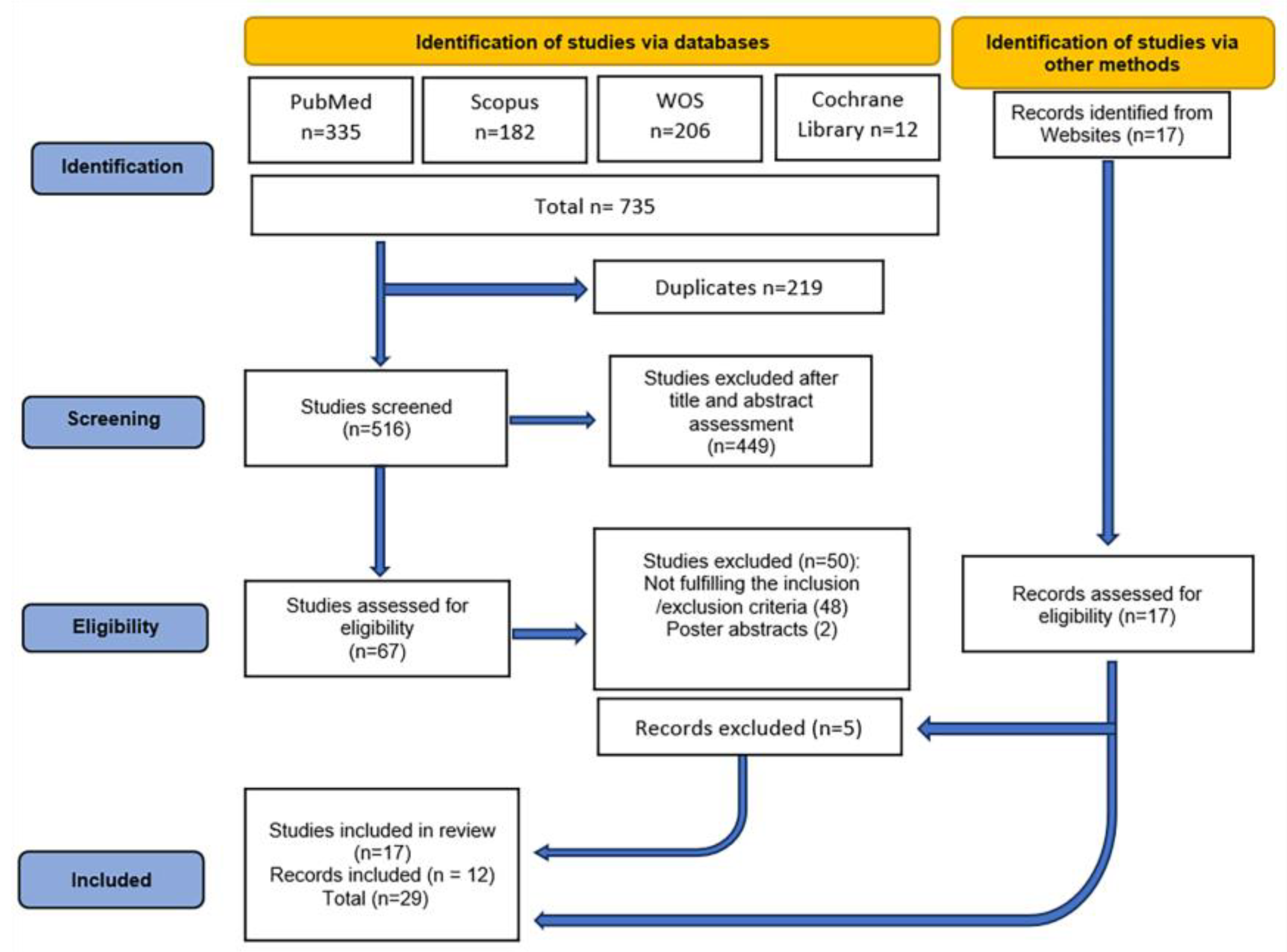
Figure 2.
Geographic distribution of the included studies.
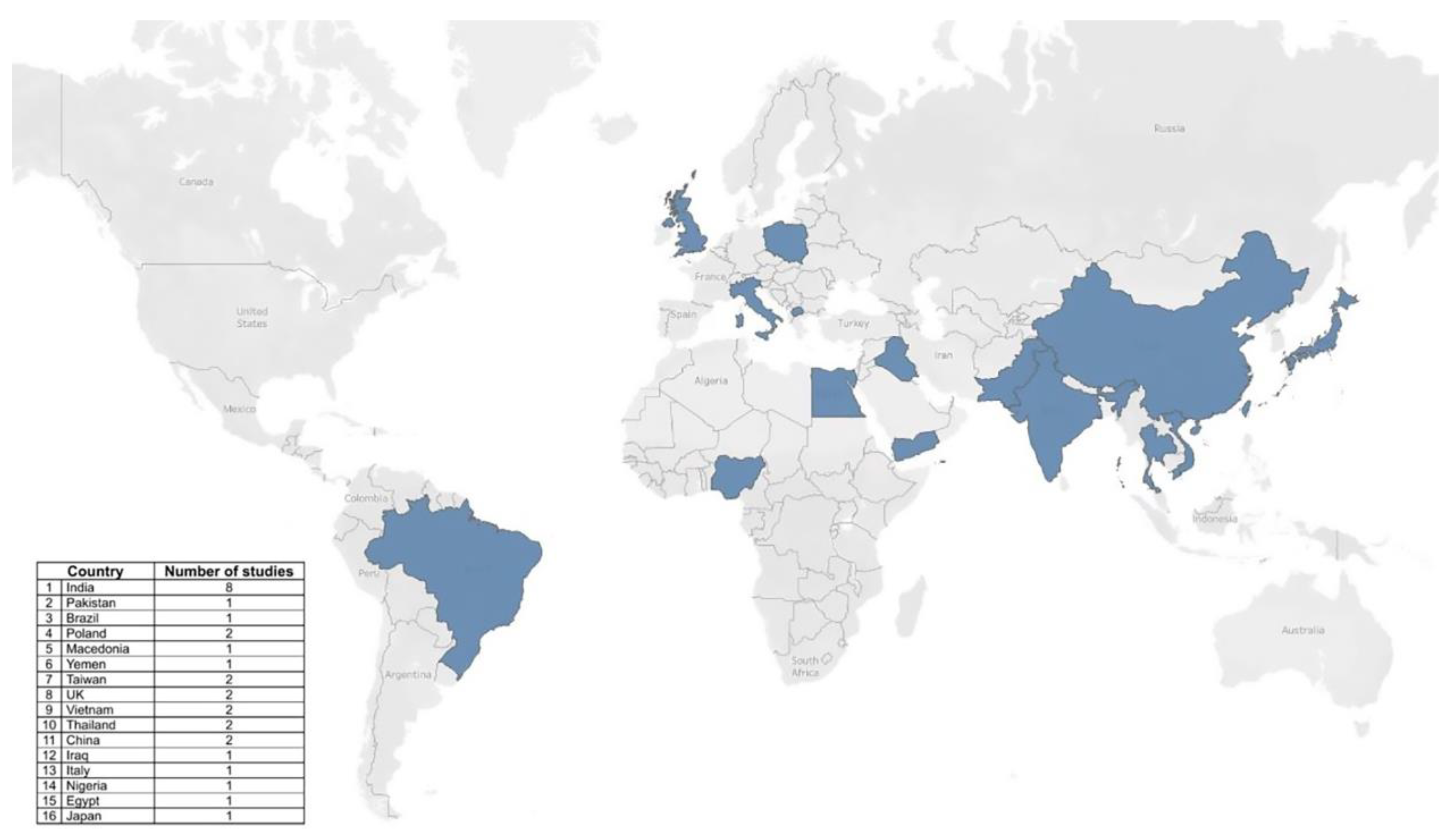
Figure 3.
Following these technological and methodological advances, numerous contemporary studies have confirmed the high diagnostic accuracy of salivary biomarkers in CKD. For example, Padwal et al. [67] and Venkatapathy et al. [75] both reported AUCs exceeding 0.95 for salivary creatinine, with sensitivities and specificities approaching 100%. Likewise, Choudhry et al. [61] found strong diagnostic performance for both urea (AUC: 0.78) and creatinine (AUC: 0.86). Supporting these results, Tangwanichgapong et al. [3] employed ATR-FTIR spectroscopy and achieved near-perfect sensitivity and specificity (100%) in their comparisons. Overall, sensitivity values for salivary biomarkers have ranged between 75% and 100%, while specificity has typically fallen between 80% and 100%, confirming their reliability for detecting CKD—particularly in its more advanced stages.
Figure 3.
Following these technological and methodological advances, numerous contemporary studies have confirmed the high diagnostic accuracy of salivary biomarkers in CKD. For example, Padwal et al. [67] and Venkatapathy et al. [75] both reported AUCs exceeding 0.95 for salivary creatinine, with sensitivities and specificities approaching 100%. Likewise, Choudhry et al. [61] found strong diagnostic performance for both urea (AUC: 0.78) and creatinine (AUC: 0.86). Supporting these results, Tangwanichgapong et al. [3] employed ATR-FTIR spectroscopy and achieved near-perfect sensitivity and specificity (100%) in their comparisons. Overall, sensitivity values for salivary biomarkers have ranged between 75% and 100%, while specificity has typically fallen between 80% and 100%, confirming their reliability for detecting CKD—particularly in its more advanced stages.
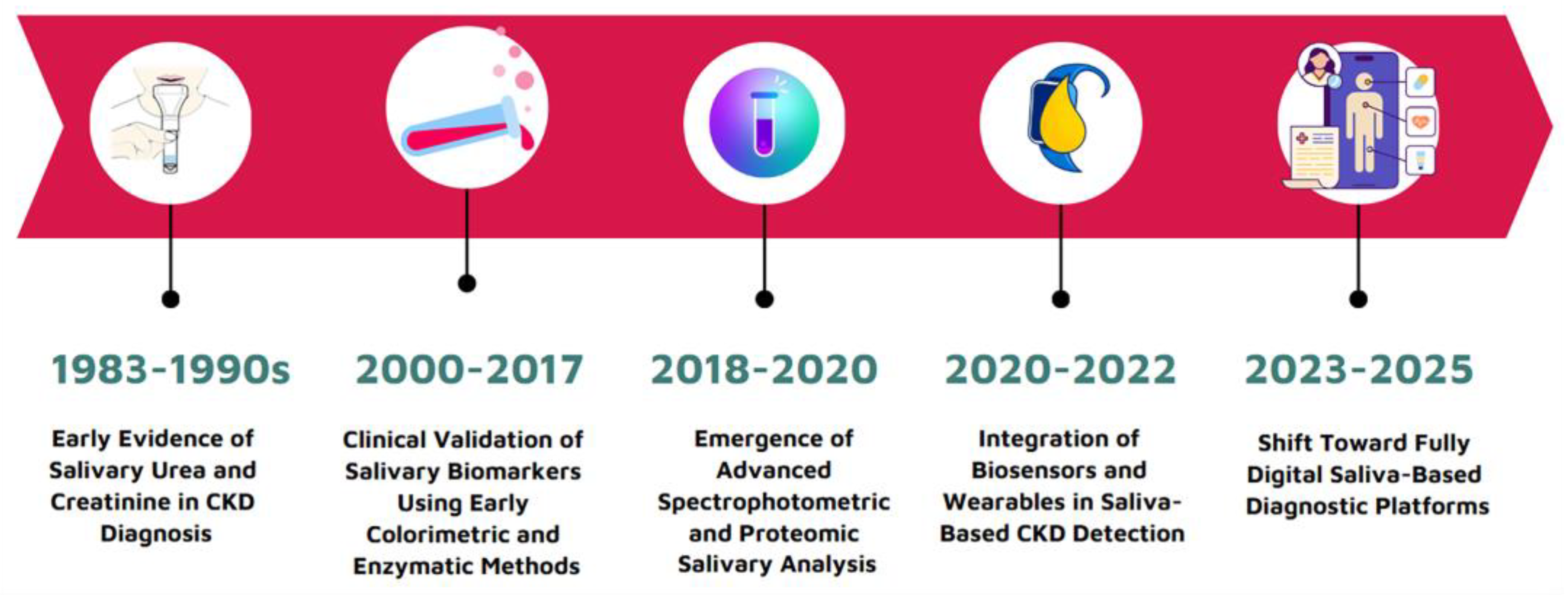

Table 1.
Research question formulated based the PICOS framework.
| Component | Description |
| P (Population) | Adults (≥18 years) diagnosed with chronic kidney disease (any stage) or individuals at risk of CKD (e.g., with diabetes, hypertension, cardiovascular disease) |
| I (Intervention/Exposure) | Use of salivary biomarkers (e.g., urea, creatinine, ammonia, pH, uric acid, cystatin C) for the detection or monitoring of CKD, including application of digital diagnostic tools such as biosensors or lab-on-a-chip technologies |
| C (Comparator) | Traditional blood- and urine-based diagnostic methods (e.g., serum creatinine, eGFR, urinary albumin-to-creatinine ratio, 24h creatinine clearance) |
| O (Outcomes) | Diagnostic accuracy metrics (sensitivity, specificity, predictive values, correlation coefficients, AUC); feasibility and clinical utility of salivary diagnostics |
| S (Study Design) | Observational studies (cross-sectional, case-control, cohort), diagnostic accuracy studies, and clinical validation studies involving human participants |
Table 2.
Characteristics of the included studies.
| Author, Year, Location, Setting | Study Design | Participants (CKD/Control) | Biomarkers Investigated | Collection & Analysis Methods | Key Findings & Outcomes | Diagnostic Accuracy |
| Khursheed et al., 2025, Pakistan, University [63] | Cross-sectional | 27 total (saliva, serum, urine from patients with high/low creatinine, 9 controls) | Creatinine | Electrochemical detection via DPV with Ag@GO/TiO2-GCE sensor | Saliva creatinine recovery 91–97%; superior to Jaffe’s method | Sensitivity: 15.74 µA/pM.cm², LOD: 1.15 pM, AUC not reported |
| Picolo et al., 2025, Brazil, University [2] | Pilot cross-sectional | 10 ESKD, 10 controls | Proteomic markers (API5, PI-PLC, Sgsm2) | LC-MS/MS, amylase depletion | 3 proteins absent in CKD, present in controls | AUC: ~0.8, suggested biomarker potential |
| Tangwanichgapong et al., 2025, Thailand, University [3] | Cross-sectional matched-pair | 24 ESKD, 24 controls | Salivary spectral bands | ATR-FTIR spectroscopy | Clear biochemical spectral differences between ESKD and controls | Accuracy: 87.5–100%, Sensitivity: 75–100%, Specificity: 100% |
| Choudhry et al., 2024, India, University [61] | Cross-sectional | 30 CKD, 30 controls | Urea, Creatinine | Passive drool, autoanalyzer | Significant group difference; strong correlations | Urea AUC: 0.78, Sensitivity: 90%, Creatinine AUC: 0.86, Sensitivity: 89% |
| Ashwini et al., 2023, India, Hospital [82] | Cross-sectional | 20 CKD (stages 3–5), 20 controls | Creatinine | Spitting after fasting; Jaffe’s method | Strong serum/saliva correlation | AUC: 0.879, Sensitivity: 75%, Specificity: 90% |
| Korytowska-Przybylska et al., 2023, Poland, University [64] | Observational | 31 CKD, 20 controls | TMAO, Creatinine | Salivette swab, LC-MS/MS | TMAO more effective for stage IV discrimination | No AUC; correlation with CKD stage |
| Nagarathinam et al., 2023, India, Hospital [79] | Cross-sectional | 150 CKD across 5 stages / 30 controls | Urea | Unstimulated saliva; spitting; GLDH enzymatic assay | Salivary urea progressively increased across CKD stages | AUC: 0.917; Sensitivity: 88%, Specificity: 84%, Cutoff: 28.25 mg/dL |
| Pillai et al., 2023, India, Dental Hospital [69] | Case-control | 120 total (30 controls, 90 CKD stage 3–5) | Urea, Creatinine | Spit technique, centrifuge, colorimetry | Significant correlation between saliva and serum | No diagnostic metrics |
| Poposki et al., 2023, N. Macedonia, University [70] | Cross-sectional | 32 CKD (stages 2–5), 20 controls | Urea, Creatinine, Albumin, Uric acid | Unstimulated saliva, centrifuge | Salivary urea correlated with CKD stage | No AUC; correlation stats given |
| Shamsan, 2023, Yemen, Sana’a University [71] | Cross-sectional | 59 renal disease patients / 20 controls | Multiple electrolytes, Creatinine, Urea, TP, Albumin | Unstimulated saliva; colorimetry via Chemray 240 | Elevated renal biomarkers across all saliva samples | No diagnostic metrics; statistically significant |
| Wang et al., 2023, China, University [77] | Observational | 90 total (30 DN,30 Type II DM, 30 controls) | Amino acids (arginine, valine, histidine) | UPLC-MS/MS | Combined biomarker model highly predictive | Combined AUC: 0.957, Saliva Arginine AUC: 0.75 |
| Lin et al., 2022, Taiwan, Hospital | Pilot cross-sectional | 214 adults, CKD prevalence 11.2% | Conductivity (indirect biomarkers) | Swab collection + biosensing probe | Conductivity correlates with CKD indicators | AUC: 0.648 (conductivity alone), 0.798 with age/gender/weight |
| Lin et al., 2022, UK, University College London [5] | Diagnostic accuracy | 20 CKD (stages 1–5), 6 controls | Urea | ATR-FTIR spectroscopy | Significant differentiation by stage | AUC: up to 1.00 (CKD 4–5), Sensitivity: 100%, Specificity: up to 100% |
| Padwal et al., 2022, India, Hospital [67] | Case-control | 50 CKD (stages 4–5), 50 controls | Creatinine, Urea | Spitting method, enzymatic and Jaffe’s methods | Significant elevation in CKD; strong correlations | Creatinine AUC: 1.000, Sensitivity/Specificity: 100%; Urea AUC: 0.98 |
| Trzcionka et al., 2021, Poland, University [73] | Observational | 180 CKD on dialysis, 48 controls | Saliva flow, pH, buffering | Saliva-Check buffer kit | Hemodialysis reduces flow, alters buffer | No diagnostic metrics |
| Harish et al., 2020, India, University [62] | Observational | 180 total (90 controls, 90 diabetics ± nephropathy) | Urea, Creatinine, Glucose, Uric acid | Fasting, spitting, centrifuge, autoanalyzer | CKD group shows elevated levels; saliva tracks serum well | No AUC reported; significant correlations |
| Lu et al., 2019, Taiwan, University [66] | Clinical validation | 30 total (10 CKD, 10 healthy adults, 10 farmers) | Saliva conductivity | Swab collection, Au electrode sensing | Significant differences across groups | Sensitivity: 93%, Specificity: 80% |
| Pham & Le, 2019, Vietnam, Hospital [68] | Cross-sectional | 111 CKD, 109 non-CKD | Urea, Creatinine, Flow rate | Dual saliva collection, chem analyzer | Xerostomia & DMFT worsen with CKD stage | Regression R² for flow rate: 0.75 |
| Techatanawat et al., 2019, Thailand, Hospital [72] | Observa tional | 82 subjects (29 DM, 20 DN,8 NDIN, 25 controls) | Cystatin SA | ELISA, proteomics | Cystatin SA tracks nephropathy severity | Salivary levels showed upward trends; no AUC reported |
| Yan et al., 2019, China, University [78] | Observational | 27 CKD / 27 controls | L-phenylalanine, L-tryptophan, Creatinine | LC-MS/MS with hydrophilic chromatography | Salivary levels elevated in CKD; significant correlation | Combined AUC: 0.936, Sensitivity: 88.9%, Specificity: 92.6% |
| Alsamarai et al., 2018, Iraq, University [81] | Case-control | 29 CKD, 20 controls | Cystatin C, Urea, Creatinine | ELISA, colorimetric methods | Cystatin C shown as superior saliva marker | No AUC reported |
| Bilancio et al., 2018, Italy, University [85] | Observational | 30 CKD, 15 controls | Phosphorus, Urea | Salivette method, molybdate UV, NADH methods | Saliva correlates highly with plasma; reproducible method | No diagnostic metrics; strong correlations reported |
| Pham 2017, Vietnam, University [76] | Diagnostic study | 112 CKD, 108 controls | Urea, Creatinine | Spitting after fasting, analyzer | CKD group had elevated levels; strong correlation | Creatinine AUC: 0.92, Sensitivity: 86.5%, Specificity: 87.2% |
| Bagalad et al., 2016, India, University [84] | Case-control | 41 CKD, 41 controls | Urea, Creatinine, Electrolytes | Spit method, centrifuge, autoanalyzer | All CKD biomarkers elevated; cutoff values established | Creatinine AUC: 0.90, Sensitivity: 93%, Specificity: 90% |
| Lasisi et al., 2016, Nigeria, University [9] | Cross-sectional | 50 CKD (stages 4–5), 49 controls | Urea, Creatinine | Unstimulated whole saliva; Jaffe & Marsh methods | Salivary levels significantly elevated; strong correlation with serum | Creatinine AUC: 0.97, Sensitivity: 94%, Specificity: 85% |
| Abeer Hamdy, 2015, Egypt, University [83] | Cross-sectional | 40 CKD (incl. ESKD) / 10 healthy controls | Urea, Creatinine | Unstimulated saliva; passive drool; colorimetric and rate techniques | Significant serum–saliva correlation across CKD stages | Creatinine AUC: 0.876; Sensitivity: 92%, Urea AUC: 0.796; Sensitivity: 90% |
| Venkatapathy et al., 2014, India, University [75] | Case-control | 105 CKD (stage 4/5), 37 controls | Creatinine | Spitting technique; autoanalyzer; Jaffe method | Salivary creatinine elevated; strong correlation with serum | AUC: 0.967; Sensitivity: 97.14%, Specificity: 86.5%; Cutoff: 0.2 mg/dL |
| Lloyd et al., 1996, UK, Hospital [65] | Diagnostic accuracy | 26 CKD / 23 healthy | Creatinine | Stimulated mixed saliva; chewing gum; Jaffe rate reaction | Salivary creatinine significantly elevated; strong CKD-specific correlation | Sensitivity: up to 100%, Specificity: up to 100%, AUC: ~0.97 |
| Akai et al., 1983, Japan, University [80] | Method validation | 44 CKD / 12 controls | Urea nitrogen | Dry-reagent test strip; reflectance spectrometer | High correlation (r = 0.93) with serum levels; method simple and reliable | No AUC; r values indicate diagnostic potential |
DPV=Differential Pulse Voltammetry, AUC= Area Under the Curve, LOD= Limit of Detection, Ag@GO = Silver nanoparticles (Ag) integrated with Graphene Oxide (GO), GCE = Glassy Carbon Electrode, ESKD= End-Stage Kidney Disease, API5 = Apoptosis Inhibitor 5, PI-PLC = Phosphatidylinositol-specific Phospholipase C, Sgsm2 –=Small G Protein Signaling Modulator 2, LC-MS/MS= Liquid Chromatography–Tandem Mass Spectrometry, CKD= Chronic Kidney disease, ATR-FTIR spectroscopy=Attenuated Total Reflectance Fourier Transform Infrared Spectroscopy, TMAO= Trimethylamine N-oxide, GLDH= Glutamate Dehydrogenase, UPLC-MS/MS= Ultra Performance Liquid Chromatography Tandem Mass Spectrometry, ANN = Artificial Neural Network, DMFT = Decayed, Missing, and Filled Teeth, DM= Diabetes Mellitus, DN= Diabetic Nephropathy, NDIN= Non-Diabetic Individuals with Nephropathy, ELISA= Enzyme-Linked Immunosorbent Assay, NADH Method= Nicotinamide Adenine Dinucleotide – Hydrogen Method.
Table 3.
Diagnostic Performance of Salivary Creatinine and Urea Across Studies.
| Biomarker | Study | AUC | Sensitivity / Specificity | Additional Observations |
Creatinine (2-Amino-1-methyl-5H-imidazol-4-one)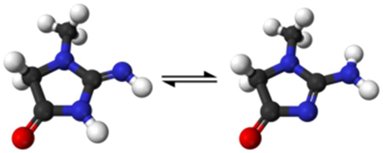
|
Padwal 2022[67] | 1.000 | 100% / 100% | Excellent accuracy using enzymatic and Jaffe’s methods |
| Venkatapathy 2014[75] | 0.967 | 97.14% / 86.5% | Strong serum correlation; cutoff: 0.2 mg/dL | |
| Lasisi 2016[9] | 0.970 | 94% / 85% | Strong correlation with serum | |
| Pham 2017[76] | 0.920 | 86.5% / 87.2% | Based on fasting samples | |
| Bagalad 2016[84] | 0.900 | 93% / 90% | Cutoff values established | |
| Abeer Hamdy 2015[83] | 0.876 | 92% / not reported | Good correlation with CKD stage | |
| Ashwini 2023[82] | 0.879 | 75% / 90% | Good serum correlation; Jaffe’s method used | |
| Choudhry 2024[61] | 0.860 | 89% / not reported | Passive drool method | |
| Khursheed 2025[63] | Not reported | Sensitivity: 15.74 µA/pM.cm² | Electrochemical detection; strong recovery rates | |
Urea (Carbonic diamide) 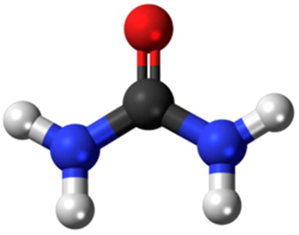
|
Padwal 2022[67] | 0.980 | Not specified | Colorimetric method |
| Nagarathinam 2023[79] | 0.917 | 88% / 84% | Clear stage-wise increase; GLDH enzymatic assay | |
| Abeer Hamdy 2015[83] | 0.796 | 90% / not reported | Passive drool technique | |
| Choudhry 2024[61] | 0.780 | 90% / not reported | Saliva/serum correlation-strong | |
| Ashwini 2023[82] | Not reported | 75% / 90% | Spitting technique after fasting |
Table 4.
Emerging or Novel Biomarkers.
| Biomarker | Diagnostic Potential | Study / Additional Observations |
| TMAO | Correlated with stage IV | Korytowska 2023[64] / may help in stage-specific detection |
| Cystatin (SA, C) | Trend correlates with severity | Techatanawat 2019[72]; Alsamarai 2018[81] |
| Proteins (API5, PI-PLC, Sgsm2) | Present in controls, absent in CKD | Picolo 2025[2] /AUC ~0.8 |
| L-phenylalanine & L-tryptophan | Combined AUC = 0.936 | Yan 2019[78] |
| Conductivity | AUC: 0.648 (alone), 0.798 with demographics | Lin 2022[5] ; Lu 2019[66] / showed 93% sensitivity |
| pH | Average salivary pH was:ϦHigher in the control group (~7.0)ϦLower in CKD patients, especially those with diabetes (e.g., 5.96 in CKD + diabetes group) | Trzcionka 2021[73]/ pH was not directly used as a diagnostic marker, but is an indirect indicator of salivary alterations in CKD, particularly in advanced stages / comorbid conditions.Ϧ |
Disclaimer/Publisher’s Note: The statements, opinions and data contained in all publications are solely those of the individual author(s) and contributor(s) and not of MDPI and/or the editor(s). MDPI and/or the editor(s) disclaim responsibility for any injury to people or property resulting from any ideas, methods, instructions or products referred to in the content. |
© 2025 by the authors. Licensee MDPI, Basel, Switzerland. This article is an open access article distributed under the terms and conditions of the Creative Commons Attribution (CC BY) license (http://creativecommons.org/licenses/by/4.0/).
Copyright: This open access article is published under a Creative Commons CC BY 4.0 license, which permit the free download, distribution, and reuse, provided that the author and preprint are cited in any reuse.


