

Submitted:
06 August 2025
Posted:
07 August 2025
You are already at the latest version
Abstract
Diet is a key lifestyle factor that provides many important nutrients to combat oxidative stress (OS) and promote health. Carotenoids are naturally occurring pigments found in plants and have been linked to various health benefits including reducing the risk of age-related diseases and promoting healthy aging. Advancements in technology have provided a non-invasive method to determine carotenoid antioxidant levels by scanning the skin by spectroscopy measurements to quantitatively estimate and validate the fruit and vegetable consumption (FVC) in individuals from diverse populations. In addition to diet as a lifestyle factor, smoking and increased body weight or high body mass index (BMI > 30) have been shown to reduce the body’s capacity to combat oxidative stress. Intake of nutraceutical supplements have been shown to enhance its defensive function. This report examined data from a global database of approximately 21 million skin scans, providing evidence that these lifestyle factors and smoking had the greatest negative impact in skin carotenoid scores (SCS) (at 19.16 K). Next individuals with an increased BMI (at 23.65 K) who did not smoke had a SCS at 23.65 K. Lastly, individuals that had a normal BMI and did not smoke but had no or low FVC and no nutraceutical supplementation had SCS at 29.74 K. All these negative lifestyle factors had lower SCS compared to the average global skin carotenoid score (at 32.74 K). The present findings confirm and extend previous reports on the important impact lifestyle factors have on skin carotenoid scores.
Keywords:
lifestyle
; skin
; carotenoid
; smoking
; BMI
; fruit/vegetable intake
; nutritional supplementation
; antioxidant
; oxidative stress
1. Introduction
Diet is a key lifestyle factor that contributes to providing many important nutrients to combat oxidative stress and promote health [1,2]. Dietary patterns have been identified, which are associated with healthy aging such as diets rich in plant-based foods and diets having moderate amounts of healthy animal-based foods [3,4]. One of the emerging heroes of dietary interventions are carotenoids due to their antioxidant ability to neutralize free radicals along with their anti-inflammatory actions [5,6]. Carotenoids are naturally occurring pigments found in plants and have been linked to various health benefits including reducing the risk of age-related diseases and promoting healthy aging [5,6,7,8]. Studies suggest that higher dietary intake of carotenoids such as β-carotene, lutein, and zeaxanthin are associated with slower aging at the biological level [7,8]. For example, a cross-sectional study in 27,338 adults from NHANES 1999-2018 found that increased dietary intakes of carotenoids were associated with parameters reflecting lower biological aging [9]. Carotenoids derived from fruit and vegetable consumption (FVC) are metabolized then deposited into the blood, skin and tissues that enhance antioxidant activity [5,6,7,8]. The best method (traditionally) for monitoring carotenoid levels was to analyze blood samples using high-performance liquid chromatography (HPLC) or mass spectrometry (MS), which made the process invasive and time-consuming [10,11]. The advancements in technology have provided a non-invasive method to determine carotenoid antioxidant levels by scanning the skin by via spectroscopy measurements to quantitatively estimate and validate the FVC in diverse populations ranging from children to adults [10,11].
In addition to diet as a lifestyle factor, smoking and increased body weight or high body mass index (BMI > 30) have been shown to reduce the body’s capacity to combat oxidative stress [8,12], whereas intake of nutraceutical supplements has been shown to enhance its defensive function [6,8,12]. For example, several lifestyle factors like smoking, physical inactivity and poor diet may contribute to up to 50 % of premature deaths and can reduce life expectancy by 7 to 17 years [12,13].
We previously reported global skin carotenoid levels using spectroscopy-based RRS technology, where the average skin carotenoid score was 32.74 K Raman intensity units (RIU) based on 21.27 million scans from over 20 countries in individuals age 0 (or before 1 year of age) to 100 years of age [14,15,16]. This was accomplished by data mining of previously collected skin carotenoid scores (SCS) (of data collected for more than 20 years from 2002 to 2025 totaling over 21 million scans) using the BioPhotonic Scanner revealing the lifelong profiles of skin carotenoid levels [14,15,16].
In this report (again via data mining of the available data) we compared the average global skin carotenoid scores or levels to groups of individuals with different lifestyle factors or parameters such as a) smokers b) high BMI, c) no or low FVC and d) no consumption of nutraceutical supplements daily. The results of this comparative analysis are displayed in section 3.
2. Methods
A typical Skin Carotenoid Score (SCS) measured by the Nu Skin BioPhotonic S3 Scanner ranges from 10,000 to over 89,000 Raman Intensity Units (RIU), with 42,000 RIU being an average score [14,15,16]. This range indicates a moderate consumption of fruits and vegetables. Scores below 37,000 RIU may suggest a need for increased FVC or antioxidant supplementation, while scores above 46,000 RIU indicate a high level of carotenoids likely from a diet rich in carotenoids and/or supplementation. As shown in Figure 1, the color-coded skin carotenoid scan scores are displayed.
As stated previously data was mined from a vast bank of skin carotenoid scans from 2002-2025, which represented thousands to millions of scans [14,15,16]. This data was collected from corporate events, academic institutions and schools where individuals filled out a questionnaire and were scanned in a uniform manner over several years to quantify global skin carotenoid antioxidant scores.
3. Impact of Lifestyle Factors on Skin Carotenoid Levels
The lifetime SCS globally averaged 32.73K RIU, is displayed in Figure 1.
Lifestyle factors such as a) smoking*, b) high body mass index (BMI of 30 or greater), c) no or low FVC and d) no nutraceutical supplementation provide a different histogram curve skewed to the left (Figure 3). Here 60% of individuals are scoring low for skin carotenoids. This is a major concern for this demographic. Not only are they not getting an adequate level of carotenoids in their diet, but they are also being exposed to oxidative stress [17,18] with a less-than-ideal body volume to distribute their antioxidants [19,20].
For consideration, we proposed that SCAN-KNOW-GO from a previous scientific report [16]. For example, Scanning your skin (non-invasively) you can Know your carotenoid levels to Go forward and enhance your healthspan by lifestyle factors (e.g., diet, smoking, managing body weight, stress and exercise). Thus, this educates people on lifestyle factors supporting healthspan and provides information around key lifestyle modifications that can enhance carotenoid levels and provide healthspan benefits. For example by making one lifestyle modification such as choosing not to smoke (but having a high BMI and no nutraceutical supplementation), the skin carotenoid scores improved as shown in Figure 3. Also, if two lifestyle changes are made, such as not smoking and having a normal BMI, but having less than 2 servings of FVC daily, the skin carotenoid scores were further improved (Figure 4).
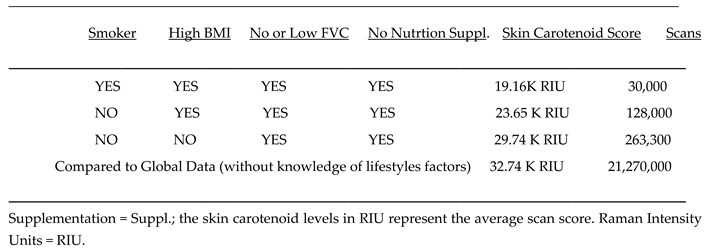
Comparing the impact of lifestyle factors in tabular form of the data shown above in figures 1 through 4 is shown in Table 1, below. Thus, the ranking of how lifestyle factors impact skin carotenoids levels is apparent from this data.
In analyzing the database of skin carotenoid scores for individuals improving their lifestyle from ‘unhealthy’ to including more healthy lifestyle choices improves their score, therefore indicating higher levels of endogenous carotenoids available to defend the body against daily stressors, providing overall wellness benefits [17,18,19,20].
Increasing carotenoid consumption through diet or supplementation offers a route to enhance ones overall health, as measured and indicated through skin carotenoid levels. Thus SCAN-KNOW-GO is a simple, non invasive way to monitor important health biomarkers improving healthspan [16]. Thus, measuring carotenoid levels in skin noninvasively is promising as a way to assess healthspan; improving this measurement though the increased consumption of carotenoids is a way an individual can improve their health for the duration of their life.
4. Discussion and Conclusions
The growing interest in natural antioxidants with their potential health benefits has fueled academic, industrial and corporate reseach to investigate and report on the antioxidant capabilities of carotenoids [5,6,7,8,9]. Carotenoids are essential to protect and maintain human health and well-being [5,6,7,8,9]. The therapeutic potential of carotenoids in preventing and managing human disorders/diseases covers a variety of tissues, organs and conditions for nutraceutical, pharmaceutical and cosmetic applications. A recent study revealed that the carotenoid market is projected to reach up to 1.9 billion USD by 2026 [21]. It is well established that non-invasive spectroscopy-based technologies can estimate carotenoid levels via skin carotenoid scans [10,11,22] in order for individuals to determine their carotenoid status to improve their health and quality of life. This report proposes that the multi-faceted impact that carotenoids have on human health can enhance healthspan, and the non-invasive methods to determine skin carotenoid levels can assist individuals in monitoring and maintaing healthy carotenoid levels and confirms and extends previously reported data from our laboratory [14,15,16] as well as those of other investigators [5,6,8,11]
The impact of lifestyle factors such as smoking, increased body weight or a high BMI along with no or low fruit and vegetable intake (FVI) and no nutraceutical supplement intake has a detrimential impact on skin carotenoids levels, and the implications for reduced antioxidant capacity for the body to combat oxidative stress is greatly reduced. The present results are aligned with previous reports that suggest carotenoid intake via the diet or nutraceutical supplementation may benefit smokers, but the impact is greatly reduced due to this lifesytle factor [12,19,20]. Also, the present results support the recent findings, where high skin carotenoid scores were associated with a lower likelyhood of having metabolic syndrome in the general Japanese poplution [23]. Thus the importance of lifesytle factors on skin carotenoids levels and on general health parametrs plays an important role in human wellbeing and influencing the healthspan of individuals.
Remarkably using data mining of published studies, where millions of skin carotenoids scans have been performed worldwide [14,15,16], provides an exploration into the variation of carotenoid levels in individuals that reflect health and wellness. Addditionally, the impact of lifestyle factors such as smoking, increased body weight and whether individuals consume fruits and vegetables and/or nutraceutical supplementation is reported herein. In this regard, almost every body organ and tissue is impacted by these lifestyle factors, which have been reviewed [24]. Previous results showed that nutraceutical supplementation from a vast database suggest that this method of consuming carotenoids may be as good or better compared to multiple dietary servings of carotenoids daily from food sources [16]. By harnessing the synergistic potential of carotenoids to improve health, healthspan may be enhanced through advancing modern technology [16,25,26,27,28].
Supplement statement: The global average skin carotenoid levels by RRS technology have been published as separate studies, however, the impact of lifestyle factors on skin carotenoid levels has not. Only with the advent of better computational entry and management of large data sets has it been possible to create this magnitude of database which can be queried in a consistent and accurate manner.
Author Contributions
HK was involved in conceptualization, formal analysis, investigation, data curation, writing-original draft preparation, further writing, review and editing, providing supervision, project administration and funding acquisition of this work. JB, NF, SF & MR were involved in data analysis, data organization and compilation/assembling. EDL was involved in data analysis, data organization, writing-original draft preparation, further writing, review and editing and funding acquisition for this work. All authors have read and agreed to the published version of the manuscript.
Funding
This research was funded by NSE Products Inc. and, in part, by the College of Life Sciences at Brigham Young University (grant number 19-2215).
Institutional Review Board Statement
Not applicable, this narrative review is based upon previously conducted studies and does not contain new data/results of human participants or animals performed by the authors. All ethical guidelines were previously followed.
Informed Consent Statement
Not applicable, this narrative review is based upon previously conducted studies and does not contain new data/results of human participants or animals performed by the authors.
Data Availability Statement
The data cited in this review are contained within the publications/presentations, etc. within the publications referenced.
Conflicts of Interest
The authors declare no conflicts of interest. The funders had no role in the design, presentation, collection of research information and scientific references, or in the analyses, interpretation of the presented data/information, in the writing of the manuscript; or in the decision to publish the contents of this narrative review.
Abbreviations
The following abbreviations are used in this manuscript:
| BMI | body mass index |
| FVC | fruit and vegetable consumption |
| FVI | fruit and vegetable intake |
| HPLC | high-performance liquid chromatography |
| MS | mass spectrometry |
| OS | oxidative stress |
| RIU | Raman intensity units |
| RS | reflective spectroscopy |
| RRS | resonance Raman spectroscopy |
| SCS | skin carotenoid score |
| T2D | type 2 diabetes |
| USD | United States dollar |
References
- Liguori, I.; Russo, G.; Curcio, F.; Bulli, G.; Aran, L.; Della-Morte, D.; Gargiulo, G.; Testa, G.; Cacciatore, F.; Bonaduce, D.; Abete, P. Oxidative stress, aging and disease. Clin. Interv. Aging 2018, 13, 757–772. [Google Scholar] [CrossRef]
- Chandimali, N.; Bak, S.G.; Park, E.H.; Lim, H.-J.; Won, Y.-S.; Kim, E.-K.; Park, S.-I.; Lee, S.J. Free radicals and their impact on health and antioxidant defenses: A review. Cell Death Discov. 2025, 11, 19. [Google Scholar] [CrossRef] [PubMed]
- Kassis, A.; Fochot, M.-C.; Horcajada, M.-N.; Horstman, A.M.H.; Duncan, P.; Bergonzelli, G.; Preitner, N.; Zimmermann, D.; Bosco, N.; Vidal, K.; et al. Nutritional and lifestyle management of the aging journey: A narrative review. Front. Nutr. 2023, 9, 1087505. [Google Scholar] [CrossRef] [PubMed]
- Tessier, A.-J.; Wang, F.; Korat, A.A.; Eliassen, A.H.; Chavarro, J.; Grodstein, F.; Li, J.; Liang, L.; Willett, W.C.; Sun, Q.; Stampher, M.J.; Hu FBGuasch-Ferre, M. Optimal dietary patterns for healthy aging. Nat. Med. 2025, 31, 1644–1652. [Google Scholar] [CrossRef]
- Roa, A.V.; Rao, L.G. Carotenoids and human health. Pharmacol. Res. 2007, 55, 207–216. [Google Scholar] [CrossRef]
- Crupi, P.; Faienza, M.F.; Naeem, M.Y.; Corbo, F.; Clodoveo, M.L.; Muraglia, M. Overview of the potential beneficial effects of carotenoids on consumer health and well-being. Antioxidants 2023, 12, 1069. [Google Scholar] [CrossRef]
- Terao, J. Revisiting carotenoids as dietary antioxidants for human health and disease prevention. Food Funct. 2023, 14, 7799–7824. [Google Scholar] [CrossRef]
- Bakac, E.R.; Percin, E.; Gunes-Bayir, A.; Dadak, A. A narrative review: The effects and importance of carotenoids on aging and aging-related diseases. Int. J. Mol. Sci. 2023, 24, 15199. [Google Scholar] [CrossRef]
- Qi, X.; Wang, X.; Cheng, L.; Li, Y.; Dang, K.; Yang, S.; Wang, Y.; Zhou, R.; Zhang, C.; Li, Y. Dietary carotenoids intakes and biological aging among US adults, NHANES 1999-2018. Nutr. J. 2025, 24, 9. [Google Scholar] [CrossRef]
- Madore, M.; Hwang, J.-E.; Park, J.-Y.; Ahn, S.; Joung, H.; Chun, O.K. A narrative review of factors associated with skin carotenoid levels. Nutrients 2023, 15, 2156. [Google Scholar] [CrossRef]
- Mayne, S.T.; Cartmel, B.; Scarmo, S.; Jahns, L.; Ermakov, I.V.; Gellermann, W. Resonance Raman spectroscopic evaluation of skin carotenoids as a biomarker of carotenoid status for human studies. Arch. Biochem. Biophys. 2013, 539, 163–170. [Google Scholar] [CrossRef]
- Rippe, J.M. Lifestyle Medicine: The health promoting power of daily habits and practices. Am. J. Lifestyle Med. 2018, 12, 499–512. [Google Scholar] [CrossRef] [PubMed]
- Li, Y.; Schoufour, J.; Wang, D.D.; Dhana, K.; Pan, A.; Liu, X.; Song, M.; Liu, G.; Shin, H.J.; Sun, Q.; Al-Shaar, L.; Wang, M.; Rimm, E.B.; Hertzmark, E.; Stampfer, M.J.; Willett, W.C.; Franco, O.H.; Hu, F.B. Healthy lifestyle and life expectancy free of cancer, cardiovascular disease, and type 2 diabetes: Prospective cohort study. BMJ 2020, 368, I6669. [Google Scholar] [CrossRef] [PubMed]
- Knaggs, H.; Hester, S.N.; Gibb, T.; Riggs, M.; Ferguson, S.; Major, R.; Fisk, N. Global, gender, and age variation in skin carotenoid scores (SCS) quantified by spectroscopy reflects a measure of health and wellness 2025 10th International Conference on Health & Nutrition, Chicago, IL, USA, Integrative Nutrition. in press.
- Major, R.; Hester, S.; Gibb, T.; Riggs, M.; Ferguson, S.; Knaggs, H.; Fisk, N. The correlation between skin carotenoid scores and specific diet and lifestyle choices 2025 10th International Conference on Health and Nutrition, Chicago, IL, USA, Integrative Nutrition. in press.
- Knaggs, H.; Lephart, E.D. Global Lifetime Non-invasive Spectroscopy-based RRS Quantification of Skin Carotenoids Provides Evidence for Enhancing the Human Healthspan – A Narrative Review 2025. / https://www.preprints.org/manuscript/202507.0634/v1. 8 July. [CrossRef]
- Liguori, I.; Russo, G.; Curcio, F.; Bulli, G.; Aran, L.; Della-Morte, D.; Gargiulo, G.; Testa, G.; Cacciatore, F.; Bonaduce, D.; Abete, P. Oxidative stress, aging and disease. Clin. Interv. Aging 2018, 13, 757–772. [Google Scholar] [CrossRef]
- Chandimali, N.; Bak, S.G.; Park, E.H.; Lim, H.-J.; Won, Y.-S.; Kim, E.-K.; Park, S.-I.; Lee, S.J. Free radicals and their impact on health and antioxidant defenses: A review. Cell Death Discov. 2025, 11, 19. [Google Scholar] [CrossRef]
- Astori, E.; Garavaglia, M.L.; Colombo, G.; Landoni, L.; Portinaro, N.M.; Milzani, A.; Dalle-Donne, I. Antioxidants in Smokers. Nutr. Res. Rev. 2022, 35, 70–97. [Google Scholar] [CrossRef]
- Ahmadkhaniha, R.; Yousefian, F.; Noushin, R. Impact of smoking on oxidant/antioxidant status and oxidative stress index levels in serum of university students. J. Environ. Health Sci. Eng. 2021, 19, 1043–1046. [Google Scholar] [CrossRef]
- Grand View Research. Carotenoids Market Size, Share & Trends Analysis Report By Product, By Application (Food, Supplements, Feed, Pharmaceuticals, Cosmetics), By Source, By Region, And Segment Forecasts, 2024 – 2030. https://www.grandviewresearch.com/industry-analysis/carotenoids-market. Accessed 20 JUN 2025.
- Radtke, M.D.; Pitts, S.J.; Jahns, L.; Firnhaber, G.; Loofbourrow, B.M.; Zeng, A.; Scherr, R.E. Criterion-related validity of spectroscopy-based skin carotenoid measurements as a proxy for fruit and vegetable intake: A systematic review. Adv. Nutr. 2020, 11, 1282–1299. [Google Scholar] [CrossRef]
- Kimura, Y.; Huta, J.; Shibata, M.; Honda, T.; Sakata, S.; Furutay, Y.; Oishi, E.; Kitazono, T.; Ninomiya, T. Skin carotenoid scores and metabolic syndrome in a general Japanese population: The Hisayama study. Internat. J. Obes. 2024, 48, 1465–1471. [Google Scholar] [CrossRef]
- Rippe, J.M. Lifestyle Medicine, 3rd ed.; CRC Press, Taylor & Francis Group: Boca Raton, FL, USA, 2019; pp. 1–1404. [Google Scholar]
- Ashokkumar, V.; Flora, G.; Sevannan, M.; Sripriya, R.; Chen, W.H.; Park, J.-H.; Banu, J.R.; Kumar, G. Technological advances in the production of carotenoids and their applications – A critical review. Bioscource Tech. 2023, 367, 128215. [Google Scholar] [CrossRef]
- Budzianowska, A.; Banas, K.; Budzianowski, J.; Kikowsaka, M. Antioxidants to defend healthy and youthful skin – current trends and future directions in cosmetology. Appl. Sci. 2025, 15, 2571. [Google Scholar] [CrossRef]
- Bas, T.G. Bioactivity and bioavailability of carotenoids applied in human health: Technological advances and innovations. Int. J. Mol. Sci. 2024, 25, 7603. [Google Scholar] [CrossRef]
- Ortega-Regules, A.E.; Martinez-Thomas, J.A.; Schurenkamper-Carrillo, K.; de Parrodi, C.A.; Lopez-Mendez, J.L.; Lozada-Ramirez, J.D. Recent advances in the therapeutic potential of carotenoids in preventing and managing metabolic disorders. Plants 2024, 13, 1584. [Google Scholar] [CrossRef]
Figure 1.
Example of skin carotenoid (color-coded) ranges with a NuSkin BioPhotonic S3 Scanner used with permission.
Figure 1.
Example of skin carotenoid (color-coded) ranges with a NuSkin BioPhotonic S3 Scanner used with permission.
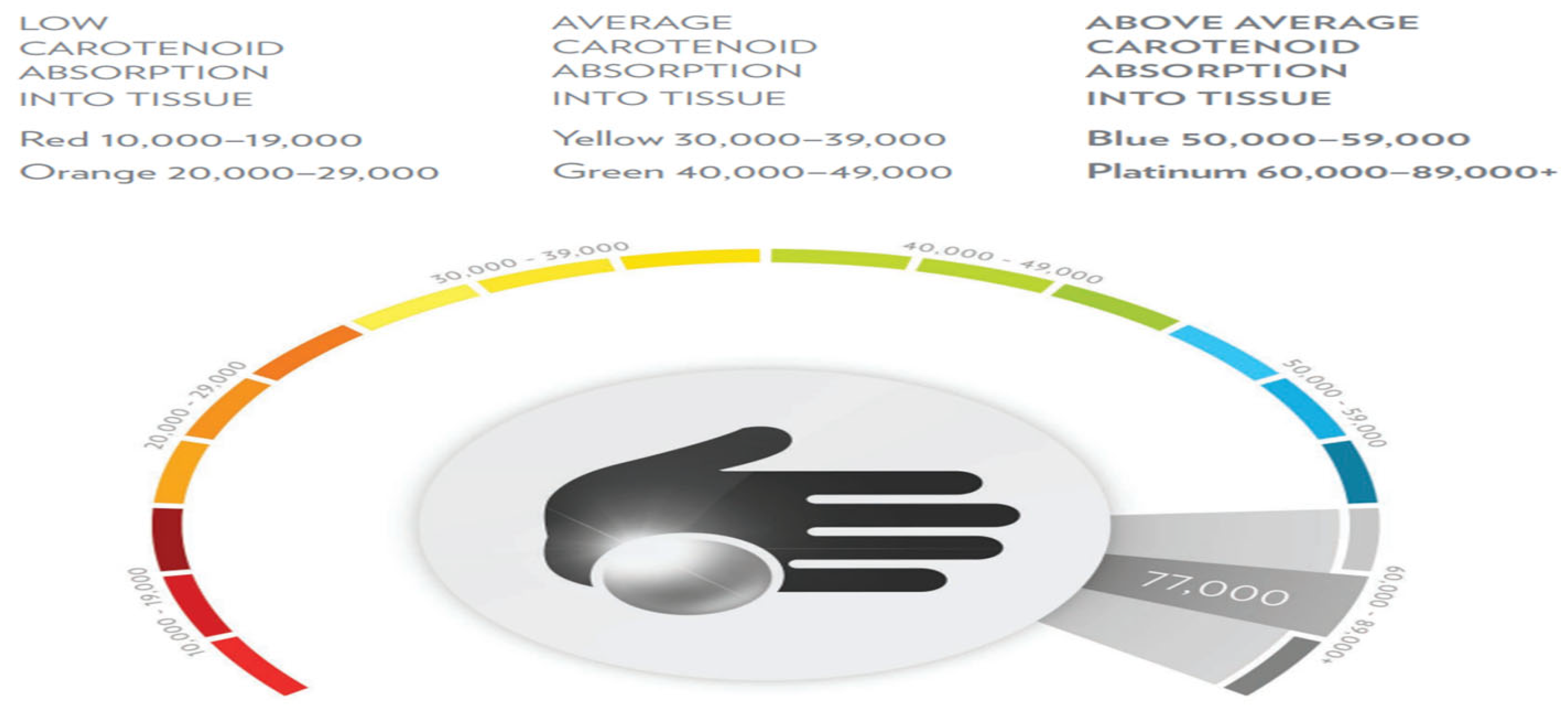
Figure 1.
Total Data Collected from 2002 to 2025 Representing 21.27 million scans. The average skin carotenoid score was 32.74K RIU globally. The count on the y-axis represents the percentage of scans within a given bar of the histogram profile that is color-coded. Low Carotenoid Absorption into Tissue: Red – 10,000 - 19,000 RIU, Orange 20,000-29,000 RIU; Average Carotenoid Absorption into Tissue: Yellow – 30,000 – 39,000 RIU, Green 40,000 – 49,000 RIU and Above Carotenoid Absorption into Tissue: Blue 50,000 – 59,000 RIU, Purple 60,000 – 90,000 RIU.
Figure 1.
Total Data Collected from 2002 to 2025 Representing 21.27 million scans. The average skin carotenoid score was 32.74K RIU globally. The count on the y-axis represents the percentage of scans within a given bar of the histogram profile that is color-coded. Low Carotenoid Absorption into Tissue: Red – 10,000 - 19,000 RIU, Orange 20,000-29,000 RIU; Average Carotenoid Absorption into Tissue: Yellow – 30,000 – 39,000 RIU, Green 40,000 – 49,000 RIU and Above Carotenoid Absorption into Tissue: Blue 50,000 – 59,000 RIU, Purple 60,000 – 90,000 RIU.
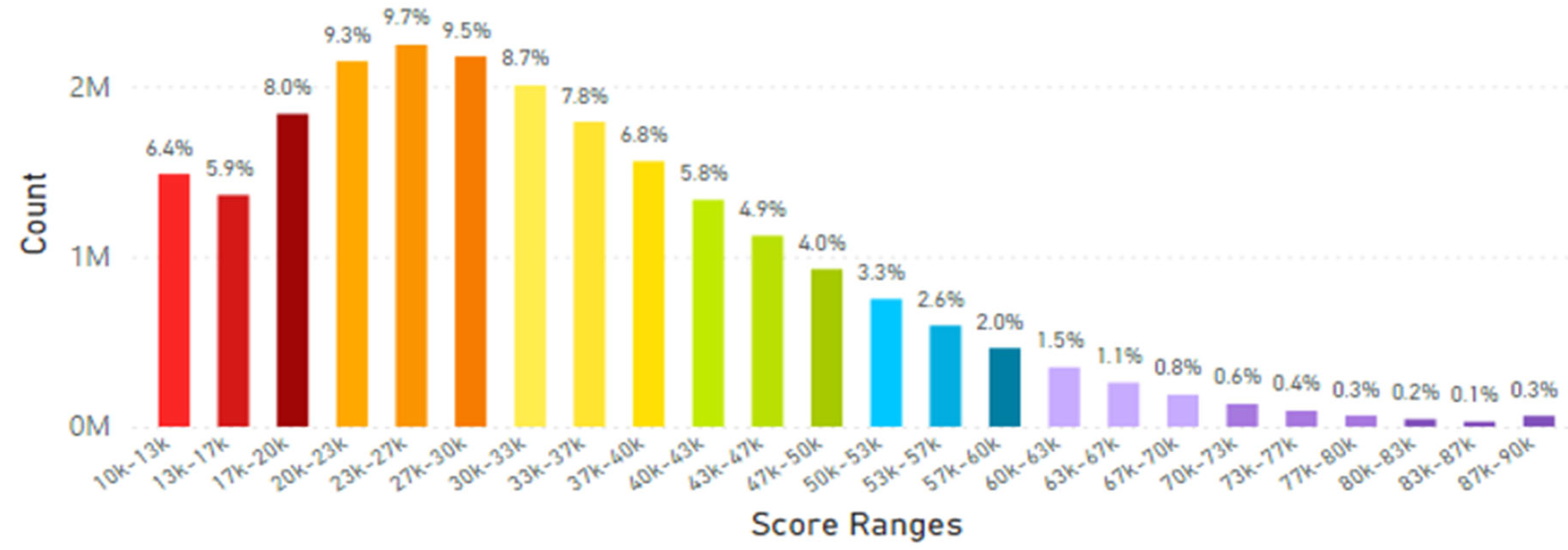
Figure 2.
This figure displays data from 38K scans of individuals pursuing ‘unhealthy’ lifestyle factors, such as smoking with a high BMI, no or low FVC and no nutraceutical supplementation. The average scan score was 19.16K RIU. A smoker * is an adult who smokes any amount of cigarettes every day. Raman intensity units = RIU.
Figure 2.
This figure displays data from 38K scans of individuals pursuing ‘unhealthy’ lifestyle factors, such as smoking with a high BMI, no or low FVC and no nutraceutical supplementation. The average scan score was 19.16K RIU. A smoker * is an adult who smokes any amount of cigarettes every day. Raman intensity units = RIU.
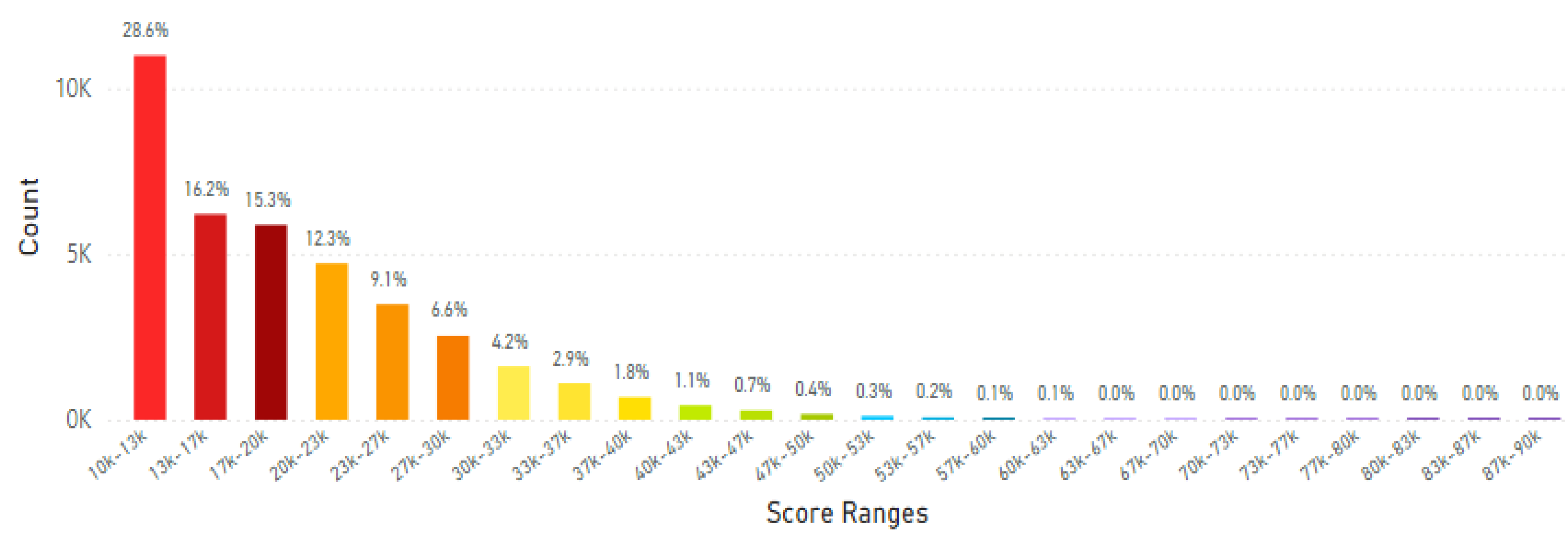
Figure 3.
This figure displays data collected from 128K scans of individuals with high BMI parameters, less than 2 servings FVC daily and did not smoke. The average scan score improved to 23.65K RIU
Figure 3.
This figure displays data collected from 128K scans of individuals with high BMI parameters, less than 2 servings FVC daily and did not smoke. The average scan score improved to 23.65K RIU
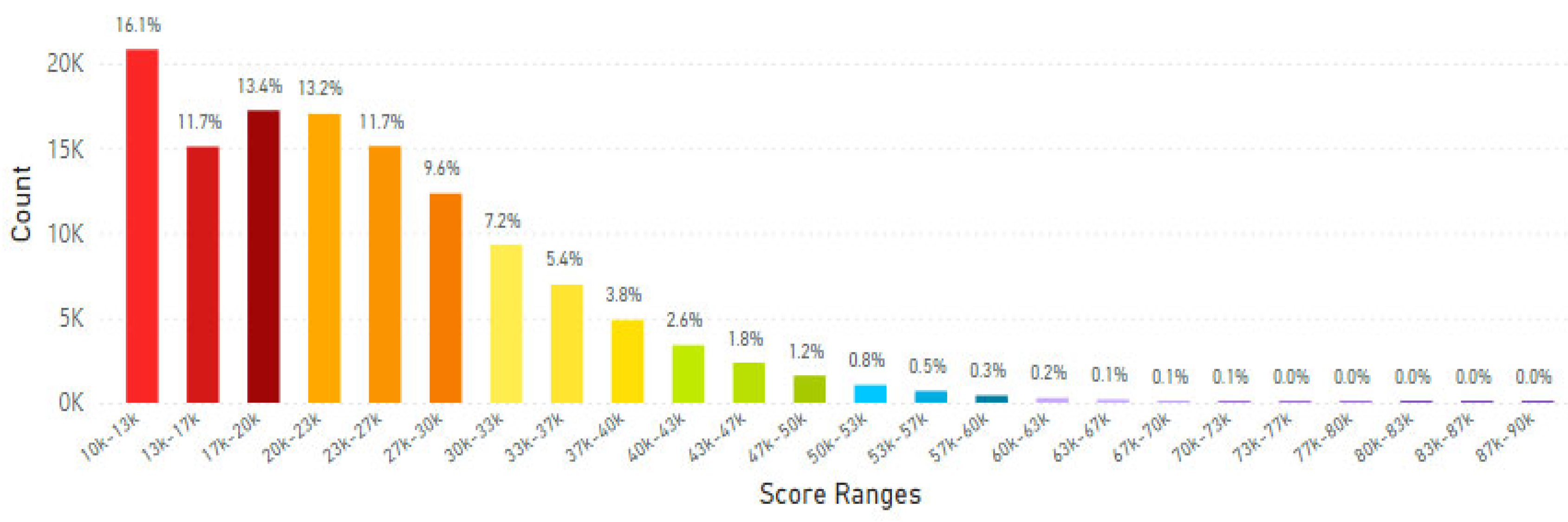
Figure 4.
This figure displays data collected from 263.3K scans of individuals that had a normal BMI, were not smokers, had less than 2 servings of FVC daily and did not consume any nutraceutical supplementation. The average scan score improved to 29.74K RIU.
Figure 4.
This figure displays data collected from 263.3K scans of individuals that had a normal BMI, were not smokers, had less than 2 servings of FVC daily and did not consume any nutraceutical supplementation. The average scan score improved to 29.74K RIU.
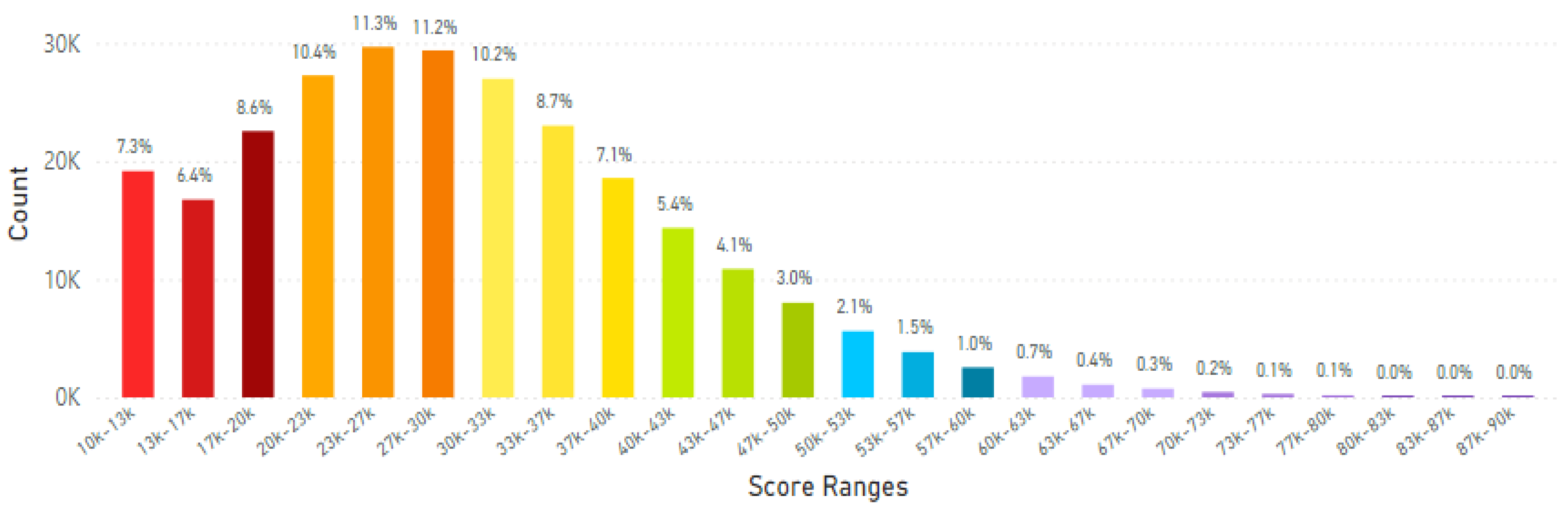

Table 1.
Lifestyle Changes Impact Global Skin Carotenoid Scores and Influences Healthspan.
Disclaimer/Publisher’s Note: The statements, opinions and data contained in all publications are solely those of the individual author(s) and contributor(s) and not of MDPI and/or the editor(s). MDPI and/or the editor(s) disclaim responsibility for any injury to people or property resulting from any ideas, methods, instructions or products referred to in the content. |
© 2025 by the authors. Licensee MDPI, Basel, Switzerland. This article is an open access article distributed under the terms and conditions of the Creative Commons Attribution (CC BY) license (http://creativecommons.org/licenses/by/4.0/).
Copyright: This open access article is published under a Creative Commons CC BY 4.0 license, which permit the free download, distribution, and reuse, provided that the author and preprint are cited in any reuse.