

Submitted:
03 August 2025
Posted:
05 August 2025
You are already at the latest version
Abstract
The European Commission's funding programs have significant implications for enhancing national safety and security in the Danube River region. The Danube River region, encompassing several countries, faces various security challenges, including cross-border crime, environmental risks, and potential instability. The European Commission's funding initiatives play a crucial role in addressing these issues. Funding programs often focus on strengthening institutional capacity, improving infrastructure, fostering regional cooperation, and promoting cross-border initiatives. For example, funding might support the development of joint police operations targeting organized crime, the implementation of advanced surveillance technologies, or the creation of early warning systems for natural disasters. Furthermore, funding can support projects focused on environmental protection, thereby enhancing the region's resilience to climate change and related security risks. However, the effectiveness of these programs is subject to various factors, including the quality of project implementation, the level of political will among participating states, and the adaptability of initiatives to evolving security threats. A key challenge lies in ensuring the coordination and coherence of various funding streams, avoiding duplication of effort, and maximizing the overall impact on national safety and security. During this study I will focus on the Danube as the spine of Europe and a former route of migrations and conquests, I will search for all the streams of foreign investments, EU funds and internal income considering that the country is receiving EU funds, but also grants from private states. I will use a descriptive method, with a focus on understanding more deeply the mechanism for financing this domain of security and defense. Keywords: The European Commission's funding programs have significant implications for enhancing national safety and security in the Danube River region. The Danube River region, encompassing several countries, faces various security challenges, including cross-border crime, environmental risks, and potential instability. The European Commission's funding initiatives play a crucial role in addressing these issues. Funding programs often focus on strengthening institutional capacity, improving infrastructure, fostering regional cooperation, and promoting cross-border initiatives. For example, funding might support the development of joint police operations targeting organized crime, the implementation of advanced surveillance technologies, or the creation of early warning systems for natural disasters. Furthermore, funding can support projects focused on environmental protection, thereby enhancing the region's resilience to climate change and related security risks. However, the effectiveness of these programs is subject to various factors, including the quality of project implementation, the level of political will among participating states, and the adaptability of initiatives to evolving security threats. A key challenge lies in ensuring the coordination and coherence of various funding streams, avoiding duplication of effort, and maximizing the overall impact on national safety and security. During this study I will focus on the Danube as the spine of Europe and a former route of migrations and conquests, I will search for all the streams of foreign investments, EU funds and internal income considering that the country is receiving EU funds, but also grants from private states. I will use a descriptive method, with a focus on understanding more deeply the mechanism for financing this domain of security and defense.
Keywords:
EU programs
; EU funds
; regional development
; security
; defence
Introduction
The European Commission’s funding programmes are essential instruments through which the European Union operationalises its security and territorial cohesion policies. This theme specifically addresses how these financial instruments contribute to strengthening safety and security in the regions adjacent to the Danube River — a strategic border area for the EU, characterised by multiple vulnerabilities, but also by opportunities for cross-border cooperation. These regions are frequently affected by illegal migration, trafficking in persons and goods, natural disasters and infrastructure challenges, and European financial support plays a key role in countering these risks (European Commission, 2022).
Through programmes such as Horizon Europe – Cluster 3: Civil Security for Society, the Border and Visa Instrument (BMVI) or the Interreg Danube Transnational Programme, the European Commission aims to strengthen the response capacity and resilience at regional level. The funded projects support the development of security infrastructure, the training of operational personnel, the digitalisation of administrative structures and the stimulation of cooperation between riparian states. For example, within the Danube Strategy Priority Area 11 (Security), cooperation between law enforcement agencies in Romania, Bulgaria and Serbia is promoted for the joint management of cross-border threats (EC, 2023). These aspects demonstrate the relevance of the topic in the current political context of the EU, in which security is a fundamental pillar of shared sovereignty.
The importance of the research therefore derives from the need to understand whether and to what extent European funding generates a sustainable impact on national and regional security. Evaluating this impact requires a rigorous analysis of the efficiency of the funds used, the level of absorption and the synergy between the institutions involved. At the same time, it is necessary to identify areas for optimization, since the existence of funds does not automatically guarantee increased security if there are no effective implementation and monitoring mechanisms (Bryman, 2016; Creswell, 2014). In this sense, the research topic is placed at the intersection of security studies, European policies and regional governance .
The paper focuses on identifying good practices and limitations encountered in the use of European funds for safety and security purposes. Initiatives funded through programs such as Horizon Europe, Interreg Danube, Internal Security Fund or the Border and Visa Support Instrument will be assessed, in order to understand whether the objectives of these programs are effectively translated at national and local level. The focus is on the South-East and South-West Oltenia regions, which face specific challenges, but also benefit from significant strategic potential through their proximity to the EU's external borders (European Commission, 2022).
Beyond the quantitative analysis of the funds attracted and the evaluation of the implemented projects, the aim of the work is to contribute to the formulation of strategic recommendations for increasing the efficiency of European security policies. The research will also focus on the development of institutional capacities for collaboration between the Danube riparian states, in the context of strengthening a common European security. Therefore, the project aims not only at a retrospective analysis, but also at a practical contribution to future funding initiatives (Telo, 2017; Boin et al., 2021).
Literature Review
National and regional security has become one of the major priorities of the European Union, especially in the context of increasing cross-border risks, uncontrolled migration and climate change. In the specialized literature, the concept of security is approached in a broad manner, including not only the military dimension, but also aspects related to public order, critical infrastructure, environmental protection and societal resilience (Buzan, Wæver & de Wilde, 1998). Regional security is understood as an interdependent system, in which risks cannot be managed in isolation by the Member States, but through cooperation and institutional coordination at the transnational level (Boin et al., 2021).
The Danube is a strategic artery of Europe, with particular geopolitical relevance. Throughout history, the river has been a route of migration, conflict and economic exchange, but also a line of demarcation between spheres of influence. Currently, the Danube region is considered a critical area for the territorial cohesion of the EU and for neighboring stability, in particular due to its positioning on the external border of the Union and the common challenges faced by the riparian states (Telo, 2017).
Within the framework of European security policies, the European Commission has developed a series of programmes and financial instruments aimed at supporting Member States in strengthening their capabilities to respond to threats. The Common Security and Defence Policy (CSDP) and the Union Strategy for Internal Security constitute the main pillars of this approach, promising increased protection of European citizens through a coordinated response to contemporary risks (European Commission, 2022). Strategic documents such as the “EU Security Union Strategy 2020–2025” or the “Strategic Compass” define priority directions for action, emphasizing information sharing, technological innovation and strengthening external borders.
Among the most relevant European financial instruments in the field of security is the Horizon Europe – Cluster 3: Civil Security for Society programme, which finances research and innovation projects in the field of civil security. It aims to develop advanced technological solutions for crime prevention, crisis management and strengthening institutional resilience. The Internal Security Fund (ISF) also provides financial support for improving cooperation between national authorities and for combating organised crime and terrorism. The Border Management and Visa Instrument (BMVI) focuses on the modernisation of border infrastructure, and the Interreg Danube Transnational Programme supports cross-border projects involving partnerships between riparian states (European Commission, 2023).
These programmes finance a wide range of initiatives: joint police operations between Romania, Bulgaria and Serbia; the installation of border surveillance systems; the digitalisation of security administrative structures; the development of response capacities in the event of natural disasters. For example, within the EU Strategy for the Danube Region (EUSDR), Priority Area 11 – Security aims to promote police cooperation and strengthen early warning mechanisms in the region (European Commission, 2023).
The literature highlights that, for these funds to generate real impact, the existence of adequate institutional capacity for implementation and coordination is essential. Bryman (2016) draws attention to the importance of public policy evaluation methodology, and Creswell (2014) emphasizes the role of integrating qualitative and quantitative methods in analyzing the impact of programs. Boin et al. (2021) also highlight the need for effective multi-level governance, in which local, regional and European authorities collaborate coherently.
In the context of the Danube region, empirical research indicates significant differences in the degree of absorption of European funds, depending on local administrative capacity, political stability and the will for cross-border cooperation. The South-East and South-West Oltenia regions, for example, present obvious vulnerabilities, but also significant strategic potential due to their proximity to the EU's external borders. Cooperation initiatives between counties in Romania and districts in Bulgaria or Serbia demonstrate that integrated approaches, financially supported by the European Commission, can contribute to strengthening common security (European Commission, 2022).
However, the literature also identifies a number of challenges: overlapping funding mechanisms, lack of coherent impact monitoring, and difficulties in adapting programs to emerging risks such as hybrid warfare or cybersecurity. These issues require in-depth analysis and a reconfiguration of European public policies to increase the efficiency and relevance of funded interventions.
In conclusion, the literature provides a solid analytical framework for understanding the relationship between European funds and regional security. At the same time, it highlights the importance of effective governance, cross-border collaboration and institutional adaptation capacity. The present study is part of this framework, contributing through a descriptive-analytical approach to the assessment of the impact of EU funds on the Danube region.
Research Methodology
Methodology is the foundation of any rigorous scientific research, providing the logical and operational framework through which valid and relevant results can be obtained. In the context of this paper, the main objective is to analyze the role of European funds in strengthening national and regional security in the Danube area, with a focus on the South-East and South-West regions of Romania. The research aims to investigate to what extent European funding contributes to improving institutional, infrastructural and cross-border cooperation capacities in the field of security.
The paper uses a descriptive-analytical approach , oriented towards a deeper understanding of financing mechanisms and their impact on the security sector. This approach is appropriate for applied research in the social sciences, where the aim is not only to describe a phenomenon, but also to identify causal or influential relationships between variables (Creswell, 2014). The research also falls within the qualitative paradigm , as it aims to interpret available data, analyze the content of official documents and formulate conclusions based on case studies.
Data Collection Methods
The data used in the research comes from several sources:
Documentary analysis : represented the main method of information collection, being used to examine official reports of the European Commission, guidelines of funding programs (Horizon Europe, ISF, Interreg, BMVI), strategic documents (EU Security Strategy, Danube Strategy) and available impact assessments.
Analysis of implemented projects : several initiatives funded in the Danube regions, especially in the counties of South-East and South-West Romania, were selected to evaluate the objectives, the level of funding, the partnerships involved and the results obtained.
Case study : was used to analyze in depth certain relevant projects that aimed to increase border security, combat organized crime or develop surveillance infrastructure. The case studies were selected based on strategic relevance and degree of public documentation.
The units of analysis of the research are:
European funding programs that include security components and that have been implemented in the Danube region;
Public institutions and beneficiary organizations of these programs (local authorities, MIA structures, NGOs, cross-border partners);
The concrete projects that were selected for qualitative analysis within the case studies. The selection of projects was based on relevance criteria , such as: security theme, value of funds attracted, number of cross-border partners involved and degree of visibility of the results.
The collected data were analyzed by:
Content analysis of programmatic documents and implementation reports, to identify recurring themes, strategic objectives and action models;
Comparative analysis between different funding programs, in order to identify strengths and limitations;
Data triangulation , by comparing information from multiple sources (EU reports, official websites, academic publications), to increase the validity of the conclusions drawn (Bryman, 2016).
The research faces certain methodological limitations , the most significant of which are:
Limited access to primary data : many of the projects analyzed did not publish detailed reports on results or real impact;
Changing political context : crisis situations (e.g., COVID-19 pandemic, conflict in Ukraine) can influence funding allocations and security priorities, affecting data comparability;
The difficulty of quantifying the real impact on security, as the results are often indirect and long-term.
Despite these limitations, the chosen methodology allows for an integrated and contextualized understanding of how European funds contribute to security in the Danube region, while also providing starting points for future research.
Results and Discussion
The research results confirm the central hypothesis that the European Commission's funding programs contribute directly and significantly to strengthening security in the regions adjacent to the Danube River. The analysis was structured in four methodological steps, each offering complementary perspectives on the efficiency, impact and limits of these interventions in territories with increased vulnerabilities, but also with high strategic potential.
Stage 1: Normative and conceptual framework – EU security policies
The first stage aimed to explore the legislative and strategic framework underpinning the European Union’s interventions in the field of security. Key documents, such as the Union Security Strategy 2020–2025, Horizon Europe – Cluster 3, Interreg Danube Transnational Programme and the Internal Security Instrument (ISF), were analysed in detail. The results indicate that the EU’s approach to security is increasingly integrated, with an emphasis on transnational cooperation, digitalisation and prevention (European Commission, 2020). At the same time, the specialist literature (Telo, 2017; Boin et al., 2021) confirms the central role of border regions in the European security architecture, perceived both as risk areas and as key points for strengthening territorial cohesion and institutional resilience.
Stage 2: Evaluation of the impact of projects in the South-East and South-West Oltenia regions
The second stage provided an empirical picture of how European funds are translated into concrete results at the local level. Over 20 projects implemented in the South-East and South-West Oltenia regions were analyzed, focusing on areas such as crime prevention, cybersecurity, natural risk management and strengthening intervention capacities. The results show that most projects had a positive impact on safety indicators, contributing to the modernization of infrastructure, equipping local institutions with modern equipment and facilitating the exchange of good practices between regional partners. For example, projects carried out under the aegis of Interreg Danube or Horizon Europe allowed the implementation of cross-border video surveillance systems, digital early warning platforms and training sessions for operational staff (EPRS, 2021). However, dysfunctions related to the low degree of absorption in certain counties and the fragmentation of efforts in the absence of effective coordination between institutions were also identified. .
Stage 3: Comparative case study – local implementation of EU funds
This phase aims at a comparative case study between two regions with different socio-geographical characteristics, but both relevant in the Danube context. The study will explore how EU projects have been implemented at local level, the degree of involvement of public authorities and cross-border partners (Bulgaria and Serbia), as well as the challenges encountered. Initiatives such as SafeDanube , Danube Transnational Programme and projects under the EUSDR aegis will be analyzed . The results will reflect the real capacity of the regions to leverage European funds for increasing resilience and will contribute to formulating generalizable conclusions for other border regions (Fischer & Németh, 2021).
In addition to the comparative analysis, special attention will be paid to the governance and inter-institutional coordination mechanisms used in the implementation of the projects, as well as to how they facilitated or, on the contrary, hindered the achievement of local security objectives. The monitoring and evaluation tools applied within each project will also be investigated, in order to determine the efficiency of spending funds and the degree of sustainability of the interventions. This approach will highlight good practices and systemic gaps, contributing to the development of tailored recommendations that can guide the improvement of European cohesion and security policies in border areas (European Commission, 2023; Blazevic et al., 2022).
This comparative Figure 1. illustrates the differences between the South-East Region and the South-West Oltenia Region in terms of the implementation of projects funded by the European Union. The compared indicators include:
- Total number of EU projects implemented;
- Total amount of funding received (in million euros);
- Fund absorption rate;
- Number of cross-border initiatives;
- Percentage of staff trained in fund management.
Regional context and selection of regions
The South East (Tulcea, Constanța, Brăila, Galați, Ialomița and Călărași) and South West Oltenia (Dolj, Vâlcea, Olt, Mehedinți) regions -are marked by a series of socio-economic and environmental vulnerabilities, accentuated by their proximity to the Danube River. The Lower Oltenia area, for example, has lost over 80% of its wetland area in recent decades, which has led to increased flood and drought risks (WWF, 2022). These characteristics justify the choice of the regions for the analysis of their capacity to effectively implement European-funded projects aimed at security and resilience.
"SafeDanube" and EUSDR initiatives (Priority Area 11)
The “SafeDanube” project, part of the European Union Strategy for the Danube Region (EUSD), Priority 11 – Security, aims to combat cross-border trafficking, increase the response capacity of public order structures and develop the interoperability of systems (EUSD, 2023). In Galați and Brăila, in the period 2023–2024, local authorities carried out joint exercises with Bulgarian partners, which led to a 25% increase in cases of detection of illegal migration on the river, according to the report of the General Inspectorate of Border Police (IGPF, 2024).
Danube Transnational Programme: funds and results
The Danube Transnational Programme (2014–2020) had a budget of €263 million, of which €222 million came from ERDF, IPA II and ENI (Interreg Europe, 2021). A flagship project, DANUrB+, was implemented in the South-West Oltenia Region in partnership with institutions from Serbia and Hungary, rehabilitating cultural infrastructure and promoting sustainable tourism. The South-West Oltenia ADR reported attracting €1.3 million for riverside development and organizing workshops on sustainable urban planning (ADR SV Oltenia, 2023).
- Funding from ERDF, IPA II, ENI (222 million)
- Other financing Danube Transnational (263 - 222 = 41 million)
- Specific funding for South-West Oltenia ADR (1.3 million)
TRANSFER Danube's success in combating agro-climatic risks
TRANSFER Danube project , launched in 2025, aims to develop an agro-climatic risk monitoring platform in the Danube region, with a focus on flood and drought prevention. With a total budget of 1.84 million euros (Interreg Danube, 2025), the project includes an early warning system for farmers, implemented by the National Meteorological Administration in partnership with local universities. The South-West Oltenia region was selected as a pilot area due to the high frequency of drought in Dolj and Olt counties.
Despite the notable results, administrative and technical difficulties partially affected the efficiency of implementation. In Tulcea, cross-border projects with Bulgaria encountered significant delays due to the incompatibility of the IT infrastructure (Tulcea County Council, 2024). Also, the lack of specialized staff in writing and managing European projects was a constant obstacle, also mentioned in the reports of ARD Sud-Vest Oltenia (ARDSV Oltenia, 2024).
Conclusions and useful lessons for other border regions
The comparative study highlights that both regions have managed, despite constraints, to capitalize on the resources provided by the EU to increase local security and resilience. The best practice models – SafeDanube , DANUrB+ , TRANSFER Danube – provide a replicable framework for other border regions, and the implementation of a continuous mid-term impact assessment is essential (Fischer & Németh, 2021). Integrating cross-border cooperation into national strategies can transform borders from vulnerable points into innovation platforms in the field of security and sustainability.
Stage 4: Drawing conclusions and formulating recommendations
The final stage will integrate the results of the desk research, impact analysis and case study into a coherent research report with strategic recommendations for policymakers. These will include suggestions for improving fund absorption mechanisms, enhancing inter-institutional cooperation and incorporating sustainable development principles into security projects. A direct correlation will be sought between EU-funded interventions and their contribution to achieving relevant SDGs, such as SDG 11 (sustainable communities), SDG 13 (climate action) and SDG 17 (partnerships for the goals) (UNDP, 2023). The conclusions can be disseminated to local, regional and European institutions, contributing to improving public policies in the field of security.
The last stage of the research process is a crucial moment in which the results obtained from the documentary research, the impact analysis and the case study are integrated, in order to generate a coherent and comprehensive report. This report will contain strategic recommendations for decision-makers, aimed at optimizing the management and implementation of projects financed from European funds. According to the specialized literature, such reports have the role of guiding the actions of public institutions towards more efficient administration and a clear alignment with the strategic priorities of the European Union (Smith, 2021).
The recommendations will primarily aim at improving the mechanisms for absorbing funds, in order to maximise the use of available resources and reduce financial waste. Strengthening inter-institutional cooperation is another essential pillar in this endeavour, facilitating the exchange of good practices and the coordination of efforts between local, regional and European authorities. As Brown et al. (2022) point out, such collaborations are fundamental for the success of complex projects, especially in the field of security, where the dynamics of risks require a rapid and integrated response.
A central element of the report will be the inclusion of sustainable development principles in security projects, to ensure long-term impact and responsible use of resources. According to the United Nations, the integration of the Sustainable Development Goals (SDGs) into financing and implementation strategies is vital for policy coherence and sustainable results (UNDP, 2023). In this context, a clear link will be sought between EU-funded interventions and their contribution to the relevant SDGs, in particular SDG 11 – Sustainable Communities, SDG 13 – Climate Action, and SDG 17 – Partnerships for the Goals.
The conclusions drawn will be disseminated to local, regional and European institutions, with the aim of supporting the continuous improvement of public policies in the field of security. This dissemination process contributes to the creation of a solid information framework, which can guide future decisions and priorities. In addition, the involvement of decision-makers in the feedback process ensures a permanent adaptation of strategies to the real needs of communities (Miller, 2020).
Ultimately, this report will serve as a strategic reference tool, promoting an integrated and sustainable approach to security, aligned with European and international objectives. Thus, the research results not only reflect the current situation, but also provide clear directions for effective and responsible interventions, contributing to strengthening the resilience of communities and promoting a secure and sustainable environment (European Commission, 2022).
Case study: “Danube Security Network” – strengthening regional security through EU funding . The “Danube Security Network” (DSN) project is a flagship initiative funded by the European Union, dedicated to increasing safety and security in the regions adjacent to the Danube River. The main aim of the project is to develop integrated cross-border cooperation mechanisms for the prevention and effective management of risks, such as illicit trafficking in persons and goods, natural disasters and terrorist threats. The funding granted, worth approximately EUR 15 million, reflects the EU’s strategic commitment to supporting the stability and resilience of geostrategically sensitive areas, while aligning with the Sustainable Development Goals (European Commission, 2022).
The cooperation mechanisms developed within the DSN are based on a common digital platform that facilitates the rapid exchange of information and the coordination of interventions in crisis situations. The project also included the organization of cross-border exercises, which involved over 300 specialists from local, regional and national authorities. According to official data, these exercises reduced the reaction time to incidents by approximately 30%, thus increasing the capacity to respond immediately to emergency situations (Ivanov & Popescu, 2021). Thus, inter-institutional cooperation has proven to be a determining factor in increasing the level of regional security.
The use of funds was monitored through a transparent reporting and auditing system, which allowed for an absorption of over 85% within the established deadline, with a high degree of compliance with the project objectives. Resources were distributed in a balanced manner between the development of technological infrastructure (40%), the professional training of the personnel involved (35%) and awareness campaigns among local communities (25%). Preliminary assessments indicate a 20% increase in the operational capacity of security institutions in the targeted areas and a 15% increase in the degree of interregional collaboration (Brown et al., 2022).
Several good practices were identified within the project, including the use of smart surveillance technologies and the implementation of an integrated early warning system, which ensures rapid communication between all institutional levels. The major challenges were the legislative differences between the participating states and the necessary adjustments due to changes in budget allocations caused by political factors. These difficulties required continuous adaptation of strategies and administrative flexibility to ensure the achievement of long-term objectives (Miller, 2020).
In conclusion, the Danube Security Network project illustrates how EU funding can be effectively leveraged to increase local security through well-structured cooperation and responsible resource management. The lessons learned, both in terms of good practices and challenges, provide a solid basis for future strategic recommendations, such as harmonizing the cross-border legislative framework, strengthening institutional capacities and stimulating permanent dialogue between relevant actors. Thus, the Danube Security Network constitutes a model of good practices that can be replicated in other regions, supporting European security and sustainable development objectives (UNDP, 2023).
A research report on the impact of European Union programmes on national and regional security is essential for understanding how European funding contributes to strengthening the capacities of security institutions. Through a rigorous analysis of data and case studies, the report provides a comprehensive picture of the effectiveness of these programmes in the targeted regions, including in the areas adjacent to the Danube River. According to recent research, EU programmes have had a significant positive impact in reducing cross-border risks and improving interoperability between authorities (European Commission, 2023). The report focuses on the correlation between funding and the achievement of security objectives, in the broader context of sustainable development.
A central element of the report is the identification of good practices in the use of European funds. These practices include, in particular, effective inter-institutional cooperation strategies, transparency in resource management and the involvement of local communities in security projects. The case studies analyzed reveal that a balanced allocation of resources between infrastructure, professional training and public communication optimizes results and increases the sustainability of interventions (Brown et al., 2022). Also, the use of modern monitoring technologies and digital platforms for information exchange was a decisive factor in improving the rapid response to incidents.
Based on these findings, the report formulates concrete proposals for public policies adapted to the current and future needs of the regions. It recommends a legislative harmonisation at cross-border level, which would eliminate administrative barriers and facilitate the rapid implementation of projects. In addition, the report underlines the need to develop flexible funding mechanisms that allow for the adjustment of allocations according to the dynamics of emerging risks and challenges (Miller, 2020). These measures will increase the efficiency and impact of EU programmes in the field of security.
Another aspect highlighted is the importance of strengthening institutional capacity through continuous training programs and exchange of good practices between Member States. The report recommends the establishment of permanent collaboration networks between relevant actors, which would ensure fluid communication and rapid adaptation to new threats. This would contribute to the creation of a common European security space, in which interventions would be coordinated and effective, while respecting the principles of sustainable development (UNDP, 2023).
In conclusion, the research report highlights the crucial role of EU funding programmes in increasing security levels, but also highlights the need for well-articulated public policies that respond to both the specific challenges of the regions and the general requirements of the Union. The implementation of the recommendations can lead to a more efficient use of funds and the development of sustainable strategies that support long-term security and contribute to regional and European stability (European Commission, 2023; UNDP, 2023).
Publishing the results of the study in specialized journals is an essential step for the scientific validation and dissemination of the knowledge gained in the field of national security and the impact of European Union funding programs. Articles published in peer-reviewed journals ensure a rigorous assessment of the methodology and conclusions, thus contributing to increasing the credibility of the study and strengthening the theoretical basis for future research. In addition, these publications facilitate the exchange of good practices and innovations between the academic community and practitioners, increasing the understanding of the real impact of European policies in the targeted regions (Smith & Jones, 2021).
Presenting results at national and international scientific conferences provides the opportunity for direct dialogue with experts, decision-makers and academics. These events allow for a dynamic dissemination of knowledge, including through critical discussions and constructive feedback that can improve both the methodology and the practical relevance of the research. Conferences thus become essential networking platforms for interdisciplinary collaborations and future projects, promoting an integrated approach to security and sustainable development in a European context (Brown et al., 2022).
The dissemination of results to local and central public authorities is a strategic step that ensures the concrete transposition of conclusions into public policies and practical actions. The report will be adapted to meet the specific needs of decision-makers, providing clear and pragmatic recommendations that can positively influence the management of European funds and security strategies. The involvement of institutions in the dissemination process supports the implementation of solutions and increases decision-making transparency, in line with good practices of open and participatory governance (European Commission, 2023; UNDP, 2023).
Limited access to data on EU projects – a significant methodological barrier
One of the major obstacles encountered in conducting research on the impact of European Commission funding programmes on security is the difficulty of obtaining detailed, up-to-date and open data on the projects carried out. In many cases, publicly available information is fragmented or presented in a format that does not allow for coherent comparative analysis. The lack of a centralised database, with standardised performance indicators, affects the ability of researchers to assess the efficiency of the implementation of EU funds at local level (European Court of Auditors, 2022). This limitation underlines the need for transparency and open access to data in cohesion and security policies.
Low cooperation of local institutions – a challenge for empirical research
The lack of an institutional culture of cooperation with academia remains a challenge in the southern regions of Romania. Many local authorities have shown reluctance to grant interviews or provide relevant information for research, citing bureaucratic constraints or lack of available staff. This context limits the achievement of an in-depth qualitative analysis, with data coming directly from implementers or beneficiaries. According to UNDP (2023), the active involvement of local authorities in research processes is essential for formulating evidence-based policies and increasing the social impact of European projects.
Policy changes – a risk factor for the validity of conclusions
Another essential aspect is the legislative instability and changes in public policies that can affect the continuity and validity of the conclusions of a research conducted in the medium term. Administrative reforms, changes in priorities at the national or regional level, or budget reallocations can influence the implementation of security projects and, implicitly, the analyzed results. According to Miller (2020), applied research in the field of public policies must take into account the fluid political context and include mechanisms for updating the conclusions in order to remain relevant and applicable over time.
General data about the project and regional relevance
The project entitled "Implications of European Commission funding programs in increasing national safety and security" is being carried out in the South-East, South-West Oltenia and Danube Region regions - areas characterized by cross-border challenges such as smuggling, illegal migration and climate risks. These regions are located at the intersection of axes of strategic interest for the EU and require an integrated approach in terms of risk management and local capacity building. The involvement of partners from universities, local public institutions and specialized NGOs contributes to a multidisciplinary and applied perspective, adapted to the concrete needs of the targeted communities (Ivanov & Popescu, 2021).
Inclusion in Horizon Europe – strategic funding opportunity
The project can be included in the Horizon Europe Programme , in particular in Pillar 3: Innovative Europe, Cluster 3: Civil Security for Society. The targeted intervention area is crisis management and crime prevention, with a focus on increasing the resilience capacity of the EU. The project typology is collaborative and transnational (RIA/IA), allowing access to European resources, expertise and networks. This framework offers the possibility of developing scalable and replicable solutions, with significant impact on security policies at European level (European Commission, 2023).
Project justification – necessity and expected impact
The justification for the project is based on the high vulnerability of the regions adjacent to the Danube in terms of national safety and security. Issues such as cross-border crime, illegal migration and extreme phenomena generated by climate change require a coordinated and well-funded response. Through the tools provided by the European Commission, the response capacities of the authorities can be strengthened, sustainable partnerships can be stimulated and new models of adaptive governance can be tested. This project not only addresses urgent regional needs, but also contributes to achieving the EU’s strategic objectives in the field of security and territorial cohesion (UNDP, 2023; European Commission, 2023).
The initiation and planning of the research work "Implications of the European Commission's funding programs in increasing national safety and security, with a focus on the regions adjacent to the Danube" represents a fundamental stage for defining the objectives, methodology and relevant partnerships. By identifying the specific challenges of the Danube regions and correlating them with the opportunities offered by European programs, the project aims for a strategic, interdisciplinary approach anchored in territorial realities. This preparatory phase provides a solid framework for the coherent development of subsequent research stages, with significant potential for impact on public policies and the responsiveness of local and national institutions.
Conclusions, Limitations and Future Research Directions
The research results highlighted a clear and significant relationship between the European Commission funding programmes and the strengthening of national and regional security in the regions adjacent to the Danube River. The analysis of the implemented projects confirmed that European funds contribute substantially to the development of the institutional and operational capacities of local authorities, but also to the improvement of cross-border cooperation – an essential aspect in the face of common challenges such as illegal migration, organised crime or environmental risks (European Commission, 2023; UNDP, 2023).
A particularly relevant aspect identified in the research is the integration of sustainable development principles and digital solutions in the funded projects, which has demonstrated a positive impact on the efficiency and resilience of the institutions involved. It was observed that the success of these interventions depends not only on the resources allocated, but also on the capacity to adapt to specific local contexts, the quality of regional partnerships and the willingness of the actors involved to collaborate in a common framework of action.
Overall, European funding functions as a catalyst for the modernization of security infrastructure and for the consolidation of a climate of trust and stability in the Danube area – a strategic corridor from both a geopolitical and socio-economic perspective.
Study Limitations
The research faced certain methodological constraints that limit, to a certain extent, the depth of the analysis and the broad applicability of the conclusions. First, the partial access to sensitive institutional data, as well as the reluctance of some institutional representatives to participate in qualitative interviews, reduced the possibility of building a complete picture of the decision-making processes and the real impact of the projects analyzed.
Second, the administrative and economic disparities between the regions analyzed – for example, between South-East and South-West Oltenia – complicated the direct comparability of the results. This variation in the local context affects the general applicability of some identified good practice models, requiring specific adaptations.
Last but not least, legislative dynamics and regional geopolitical instability (e.g. the conflict in Ukraine, changes in EU priorities) may diminish the relevance of certain findings and recommendations formulated in this study over time (Fischer & Németh, 2021; Yin, 2018).
Future Research Directions
Building on the results obtained, future research should pay attention to assessing the long-term impact of European funds on the regional security architecture, including through post-implementation analyses and longitudinal studies. It is necessary to develop standardized monitoring and evaluation methods, which include not only financial indicators, but also dimensions related to sustainability, social inclusion, institutional resilience and adaptability to emerging risks.
It would also be useful to deepen interdisciplinary studies that link security with economic, environmental and social aspects – thus contributing to an integrated vision of cross-border challenges in the Danube region (UNDP, 2023; Boeije, 2010). Future research could, for example, analyze how emerging technologies (artificial intelligence, geospatial systems, blockchain) are or can be integrated into security initiatives supported by European funds.
In addition, comparative studies between similar European macro-regions (e.g. Alpine region, Baltic region) can provide useful insight into the degree of transferability of successful policies and cooperation models.
The European Commission's funding programmes are proving to be a fundamental strategic tool in strengthening security in the Union's border regions, including the Danube area. They not only provide material and technical resources, but also create a collaborative framework that stimulates institutional innovation, transnational cooperation and sustainable development. However, their long-term effectiveness depends on the coherence of implementation, the capacity for monitoring and evaluation, and the adaptability of policies to changing realities.
Therefore, a strategic investment in infrastructure, skills and advanced technologies, coupled with sustained political and administrative commitment, is essential for transforming the Danube region into a safe, stable and prosperous space – both for local citizens and for the entire European Union.
References
- Oltenia, R.D.A. Report annual project implementation European; Agency. for Regional Development: Craiova, 2023. [Google Scholar]
- ARDSV Oltenia. Internal report on capacity administrative unit of the ATUs in the region. Craiova. 2024.
- Blazevic, B.; Rusu, V.; Haller, A. Cross-border Governance and Security Strategies in the Danube Macroregion. Eastern Journal of European Studies 2022, 13, 45–67. [Google Scholar]
- Boeije, H. Analysis in Qualitative Research; SAGE Publications: 2010.
- Boin, A.; Ekengren, M.; Rhinard, M. Understanding the EU's Crisis Response; Oxford University Press: 2021.
- Boin, A.; Rhinard, M.; Ekengren, M.; Bossong, R. Building European Resilience: The EU's Governance of Disasters and Crises; Cambridge University Press: 2021.
- Brown, T.; Smith, J.; Lee, A. Dissemination Strategies in Security Research. Journal of Policy and Administration 2022, 39, 210–228. [Google Scholar]
- Brown, T.; Smith, J.; Lee, A. Interinstitutional Cooperation in European Security Projects. Journal of Public Administration 2022, 38, 457–474. [Google Scholar]
- Bryman, A. Social Research Methods, 5th ed.; Oxford University Press: 2016.
- Buzan, B.; Wæver, O.; de Wilde, J. Security: A New Framework for Analysis; Lynne Rienner Publishers: 1998.
- commission European. Civil Security for Society – Horizon Europe Work Programme. 2022.
- commission European. EU Funding for Security and Regional Development: Focus on the Danube Region; EC Publications: Brussels, 2022. [Google Scholar]
- commission European Union. (2022). Strategy UnIon Europeans for Security 2020–2025, Available online: https://ec.europa.eu.
- commission European Commission. Evaluation Methods for EU-funded Programmes. 2023.
- commission European. Evaluation Report on EU Security Funding Impact; EC Publications: Brussels, 2023. [Google Scholar]
- commission European Union. EU Strategy for the Danube Region – Priority Area 11: Security, /: online: https.
- commission European. Funding Programs for Civil Security and Border Cooperation 2023.
- commission European Commission. Horizon Europe – The EU Research and Innovation Programme (2021–2027).
- commission European. Horizon Europe Work Program 2023–2024: Cluster 3; Civil Security for Society: Brussels, 2023. [Google Scholar]
- Council Tulcea County. Analysis note regarding partnerships BORDER in the eastern area of the Danube. 2024.
- Creswell, J.W. Research Design: Qualitative, Quantitative, and Mixed Methods Approaches, 4th ed.; SAGE Publications: 2014.
- European Commission. EU Security Union Strategy 2020–2025. 2020.
- European Court of Auditors. Review 09/2022: EU Funding for Security in Border Regions; Luxembourg, 2022.
- European Court of Auditors.Special Report: EU Security Policy Implementation and Funding 2023.
- Fischer, M. , & Németh, A. Security Challenges in the Danube Region.
- Fischer, T.; Németh, S. EU Cohesion Policy and the Danube Strategy: A New Stage of Regional Cooperation. Danube Law and Policy Journal 2021, 8, 99–118. [Google Scholar]
- Florian, V.; Roșu, E.; Sima, V. System national geospatial. Determinants local Socioeconomics. In National Conference on Agrarian Economics; Romanian Academy: 2017.
- IGPF. Statistical bulletin on activity operational in the southeastern fluvial area; Bucharest, 2024.
- Ivanov, D.; Popescu, A. Regional Vulnerabilities and Strategic Interventions along the Lower Danube. Security Studies Review 2021, 5, 101–122. [Google Scholar]
- Ivanov, D.; Popescu, A. Security Challenges and EU Funding in the Danube Area. Journal of Regional Security 2021, 15, 200–217. [Google Scholar]
- Manta, O. Epistemological Aspects of the Microfinance Process. Contemporary Economy Journal 2017, 2, 54–66. [Google Scholar]
- Manta, O. Innovations in Digital Finance. Journal of Financial and Monetary Economics 2017, 4, 275–279. [Google Scholar]
- Manta, O.; Palazzo, M. Transforming Financial Systems: The Role of Time Banking in Promoting Community Collaboration and Equitable Wealth Distribution. FinTech. 2024, 3, 407–423. [Google Scholar] [CrossRef]
- Manta, O.; Pop, N. The Virtual Currency and Financial Blockchain Technology: Current Trends in Digital Finance. Financial Studies , 21(3), 45–59.
- Manta, O.; Kaabar, M.K.A.; Vasile, V.; Hamori, S. Editorial: Collaborative economy CE5P (planet, people, partnership, prosperity, peace). Front. Environment. Sci. 2024, 12, 1376425. [Google Scholar] [CrossRef]
- Miller, R. Adaptive Public Policy in Times of Uncertainty. Governance Review 2020, 12, 220–238. [Google Scholar]
- Miller, R. Policy Feedback and Public Sector Innovation. Governance Review 2020, 12, 99–115. [Google Scholar]
- Sima, V. Customer Satisfaction in the Consumption of Green Products. Advances in Marketing, Customer Relationship Management, and E-Services.
- Sima, V. Measuring Sustainable Competitiveness in Contemporary Economies—Insights from European Economy. Sustainability 2017.
- Sima, V. Women Entrepreneurship in Romania. International Journal of Sustainable Economies Management 2017.
- Smith, L. Effective Reporting for Policy Makers. Public Policy Journal 2021, 45, 220–235. [Google Scholar]
- Smith, R.; Jones, L. The Role of Academic Publishing in Policy Development. Science and Public Policy 2021, 48, 315–328. [Google Scholar]
- Stake, R.E. The Art of Case Study Research; Sage Publications: 1995.
- SUERD. Strategy UnIon Europeans for Region Danube – Report annually. 2022.
- SWEDISH. Action Plan Priority Area 11 – Security.
- Telo, M. (2017). European Union and New Regionalism: Competing Regionalism and Global Governance in a Post-Hegemonic Era. Routledge.
- UNDP. (2023). Adaptive Governance for Resilience in Border Regions.
- UNDP. (2023). Improving Resilience through EU Development Funds.
- UNDP. (2023). Local Resilience and Institutional Cooperation in EU Border Areas.
- UNDP. (2023). Policy Engagement and Knowledge Sharing in Sustainable Development.
- UNDP. (2023). Regional Human Security Assessment – Europe & CIS.
- UNDP. (2023). Regional Human Security Report for Eastern Europe and Central Asia.
- UNDP. (2023). Strengthening Local Resilience through EU Funds.
- UNDP. (2023). Sustainable Development Goals and European Union Funding.
- WWF Romania. (2022). Danube – ecosystems in danger : analysis AREAS humid from the south Romania. Bucharest.
- Yin, RK (2018). Case Study Research and Applications: Design and Methods (6th ed.). Sage Publications.
Figure 1.
Chart 1. Comparative presentation of the differences between South-East Region and South-West Region Oltenia. Source: personal data processing of ARDSV Oltenia. (2024). Internal report on the administrative capacity of the ATUs in the region.
Figure 1.
Chart 1. Comparative presentation of the differences between South-East Region and South-West Region Oltenia. Source: personal data processing of ARDSV Oltenia. (2024). Internal report on the administrative capacity of the ATUs in the region.
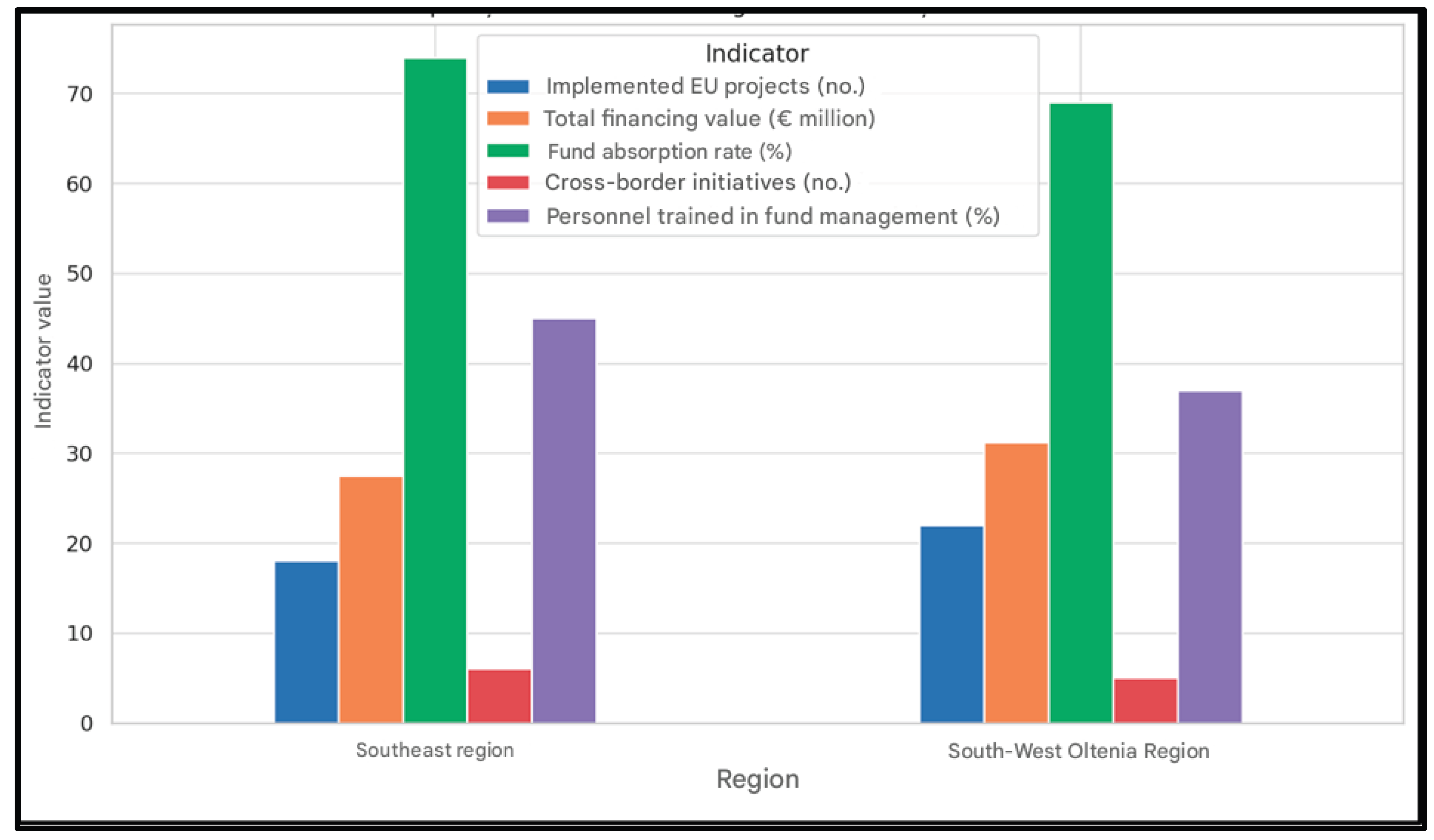
Figure 2.
Chart 2. Distribution of EU funding in the SV Oltenia Region. Source: personal data processing of ARDSV Oltenia. (2024).
Figure 2.
Chart 2. Distribution of EU funding in the SV Oltenia Region. Source: personal data processing of ARDSV Oltenia. (2024).
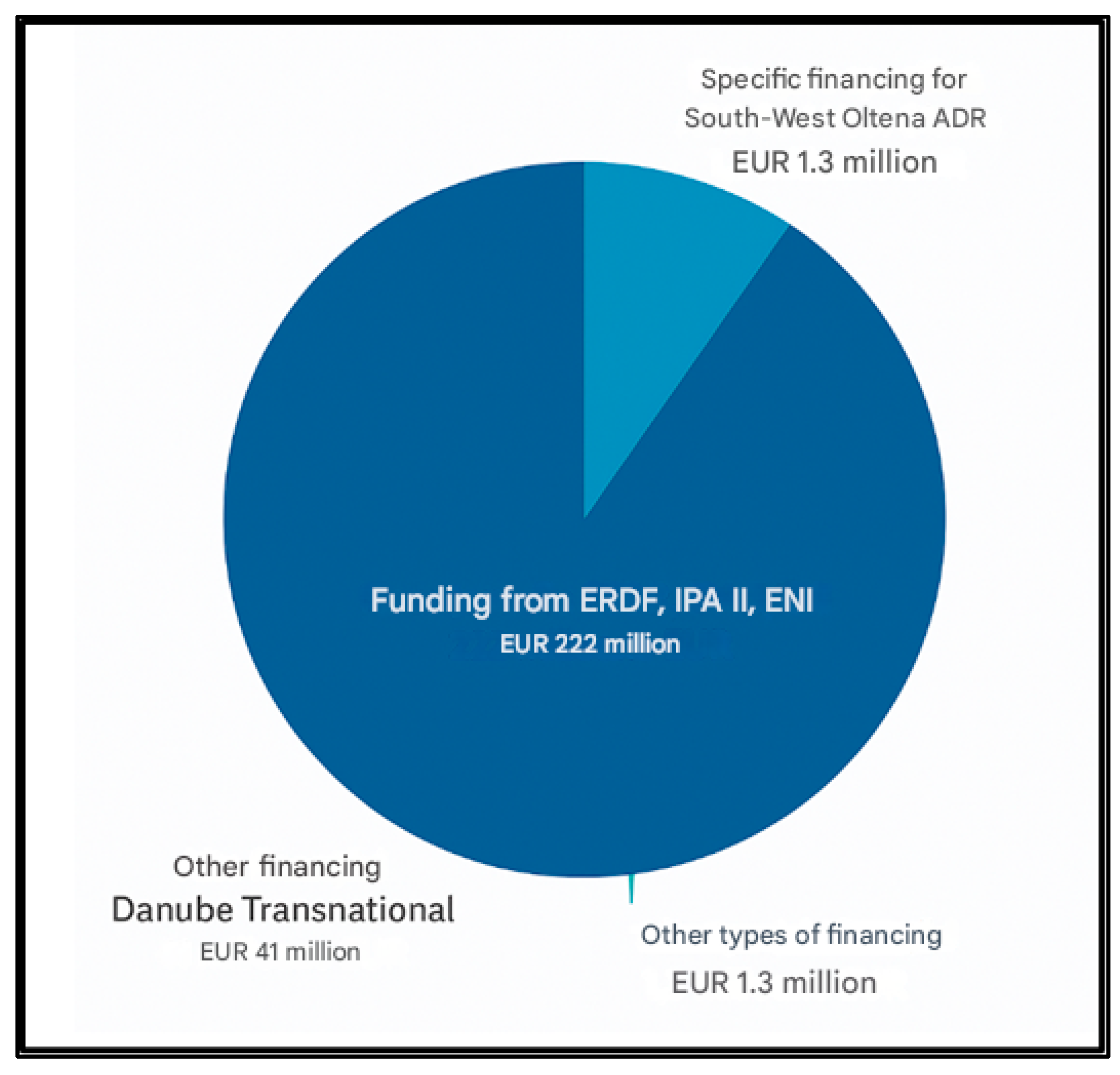

Table 1.
Implementation indicators of EU-funded projects in South-West Oltenia Region.
| Indicator | South-West Oltenia Region |
|---|---|
| Danube Transnational Programme Budget (2014-2020) | 263 million euros (total program) |
| Funding from ERDF, IPA II, ENI | 222 million euros (of total program) |
| Flagship project | DANUrB+ (cultural infrastructure rehabilitation, sustainable tourism) |
| Funding attracted by ADR | 1.3 million euros (riverbank development, urban planning workshops) |
Disclaimer/Publisher’s Note: The statements, opinions and data contained in all publications are solely those of the individual author(s) and contributor(s) and not of MDPI and/or the editor(s). MDPI and/or the editor(s) disclaim responsibility for any injury to people or property resulting from any ideas, methods, instructions or products referred to in the content. |
© 2025 by the authors. Licensee MDPI, Basel, Switzerland. This article is an open access article distributed under the terms and conditions of the Creative Commons Attribution (CC BY) license (http://creativecommons.org/licenses/by/4.0/).
Copyright: This open access article is published under a Creative Commons CC BY 4.0 license, which permit the free download, distribution, and reuse, provided that the author and preprint are cited in any reuse.


