

Submitted:
30 July 2025
Posted:
31 July 2025
You are already at the latest version
Abstract
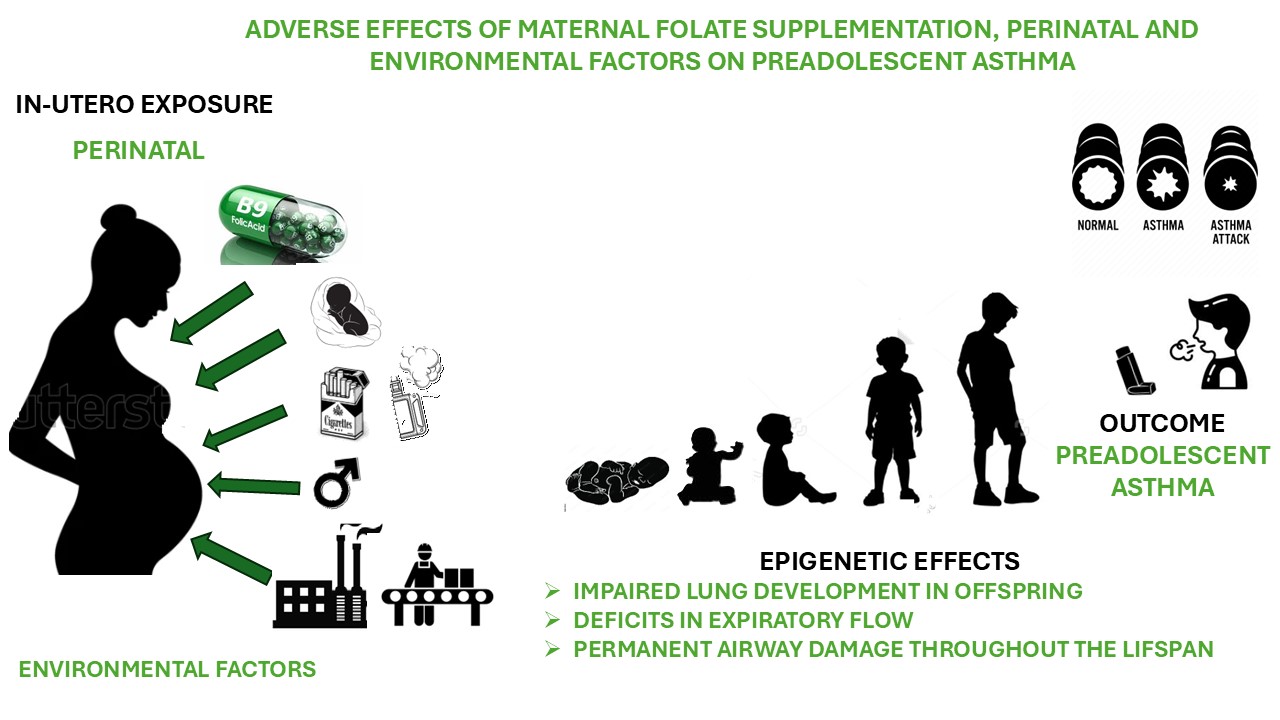
Background While the importance of folic acid supplementation during pregnancy in the prevention of neural tube defects in offspring is well-established, its potential role in pediatric asthma development remains unclear, with limited evidence to date. Aim To identify perinatal and environmental factors that modify the association between maternal folic acid intake and pre-adolescent asthma. Methods Cross-sectional analysis of the Healthy Growth Study that consisted of 2332 preadolescents (mean age 11 years, asthma n = 451), 50% boys attending elementary schools in Greece. Questionnaires were used to collect data on sociodemographic, perinatal, and environmental characteristics, asthma prevalence and maternal folic acid supplementation during pregnancy (trimesters 1, 2, and 3). Logistic regression models explored the association between maternal folic acid supplementation and preadolescent asthma accounting for perinatal and environmental exposures. Results Adjusted regression models showed that maternal folic acid supplementation during the 3rd-trimester was associated with 34% increased odds of pre-adolescent asthma. Stratified analyses per perinatal and environmental factors revealed significantly higher asthma odds with folic acid supplementation during 2nd- and 3rd-trimesters among pre-adolescents born < 37 weeks, non-smoking mothers, in pre-adolescents attending schools of low socio-economic level, in neighborhoods having less traffic and more parks. Contrastingly, in appropriate for gestational age (AGA), infant’s 1st -trimester supplementation increased asthma odds. Conclusions Maternal folic acid supplementation, particularly in later trimesters, was modestly associated with increased odds of pre-adolescent asthma, modified by perinatal and environmental factors. Future research should explore whether continued folic acid supplementation beyond the 1st-trimester carries differential risks or benefits in asthma.
Keywords:
Asthma
; environment
; epigenetics
; maternal folic acid supplementation
; pre-adolescents
; pregnancy
; perinatal
1. Introduction
The high incidence of asthma during pediatric years continues to baffle the medical community. Global trends substantiate that about 9% of children and 11% adolescents live with asthma [1]. Asthma, a chronic inflammatory lung disease, is defined by characteristic symptoms of wheezing, cough, chest tightness, and shortness of breath of varying severity and intensity [2]. On a world-wide scale, this lung disorder is ranked amongst the top 20 chronic pediatric diseases for disability-adjusted life years [3], exerting a serious threat to children’s wellbeing [3]. Furthermore, it contributes to increased morbidity, causing a physical and mental toll [4]. Asthma-related mortality rates are highest in countries of low and lower-middle sociodemographic index [5] due to underdiagnosis and inadequate treatment [6]. Even in high-income countries, population-specific differences in asthma risk and management have been observed, underscoring the need for localized evidence [7]. In this context, studying the Greek pediatric population is particularly important, given potential variations in genetic predisposition, diet, healthcare access, and environmental exposures that may influence asthma outcomes [8,9]. This condition is one of the main reasons for children’s school absenteeism [10], poor academic performance [11], and sleep deprivation [12]. In general, asthma results in decreased quality of life for the patient and a financial burden for the family and national healthcare system due to the need for emergency visits, hospitalizations, and medication use [13]. Disturbingly, the World Health Organization (WHO) predicts that by the year 2030, 400 million children, adolescents, and adults will suffer from asthma globally [14]. Currently, there is no remedy for asthma. Medication remains the gold standard for managing bronchial symptoms [2]. However, asthma control in pediatric populations remains suboptimal due to non-compliance with therapy [15] and in some cases limited access to healthcare resources, and inadequate availability of pulmonary function tests and medications [16]. Therefore, identifying risk factors to prevent asthma onset is critical to curbing its rise and burden in pediatric populations.
Over the last decade, increasing attention has been given to the impact of in-utero life on offspring health. The infamous Barker’s theory proposes that the intrauterine environment that the growing fetus is directly exposed to, including the maternal diet, plays a central role in the development of future chronic diseases in adulthood, including allergies [17]. Maternal exposures to nutritional and non-nutritional stressors during pregnancy can be transferred to the fetus via the placenta, shaping fetal immune responses during critical periods of development [18]. It is believed that environmental insults could cause epigenetic alterations, including DNA methylation, histone modifications and non-coding RNAs, impacting gene expression, favoring asthma development in progeny [19]. The concept of developmental plasticity or sensitivity to environmental stimuli, the phenomenon by which a specific genotype could initiate a diversity of physiological or morphological states in response to different environmental conditions during critical stages of development, is indeed intriguing [17] and warrants further investigation. This cascade could prime and trigger allergic sensitization, and lead to allergic disorders, including asthma in pediatric years [18].
A plethora of systematic reviews and meta-analyses have documented the significance of maternal diet quality promoting favorable birth outcomes [20,21]. Specifically, poor maternal diet quality has been significantly associated with higher odds of low birth weight, small for gestational age (SGA) [20,21], and preterm birth [21]. Emerging evidence also suggests that, maternal diet during pregnancy may influence the risk of asthma development in offspring [22]. While folic acid supplementation is well-established for its role in preventing neural tube defects in offspring [23], its potential contribution to pediatric asthma remains unclear and warrants further investigation. In particular, there is limited evidence on the effects of folic acid supplementation by trimester of exposure, and whether environmental or perinatal factors (e.g., socioeconomic status, preterm birth, or air pollution) may modify this association. Recently, Li et al. conducted a meta-analysis investigating the effect of maternal folic acid supplementation during pregnancy that included 15 studies and over 200, 000 children from 1-10 years old [24]. Results showed that exposure to maternal folic acid supplementation during pregnancy was associated with 11% higher risk of asthma in children (RR = 1.11; 95% CI = 1.06–1.17). In the same line, Yang et al. conducted a systematic review of 18 relevant studies (13 cohort studies, 5 case-control) investigating the effect of folic acid intake during pregnancy, and childhood asthma [25]. Pooled analysis of data from 253, 000 cases (ages ranged from 1 to12 years), and about 50, 000 children with asthma revealed that maternal folic acid intake during the first trimester was associated with 9% higher odds of asthma in offspring (first trimester OR = 1.09; 95% CI = 1.05–1.12), 15% higher odds in the third trimester (OR = 1.15; 95% CI = 1.04–1.26), and 13% higher odds of asthma for folic acid intake during the whole pregnancy (OR = 1.13; 95% CI = 1.10–1.16). Interestingly, the dose-response analysis showed that folic acid supplementation > 581 μg/day increased asthma risk in offspring [25]. Therefore, the potential association between folic acid association during pregnancy, commonly prescribed to prevent neural tube defects, and the risk of asthma in offspring warrants careful consideration.
Despite growing evidence, there is still a gap in understanding how perinatal and environmental factors may modify this association. This study aimed to identify such modifiers that influence the relationship between maternal folic acid supplementation and asthma in pre-adolescent children. We hypothesized that perinatal and various environmental exposures strengthen/predict the association between maternal folic acid supplementation and asthma in pre-adolescence. From a public health point of view, the findings of this study may have relevance in formulating public health strategies and on the implementation of childhood asthma preventive measures, especially in those at high risk for this condition. Early intervention could prevent future occurrences of asthma and alleviate the worldwide burden of this chronic respiratory disease.
2. Materials and Methods
2.1. Study Design and Population
The present study was a secondary analysis of data from the Hellenic Healthy Growth Study (HGS) which was a 2-year observational study conducted from May 2007 until June 2009 [26]. The study population included 2332 Greek schoolchildren aged 9-11 years old, 451 with asthma, attending grades five and six of elementary school situated in the district of Athens, Northern Thessaloniki, Aitoloakarnania and Southern Heraklion, Crete. The sampling of municipalities and schools was random, multistage, and stratified according to parental educational level and the total population of preadolescent students. Socio-economic levels (SEL) defined as high, medium, and low were based on data from the Hellenic National Statistical Service of Greece (2001) [27]. Municipalities and schools were selected from these three SEL groups, thus providing a representative sample of the National population. Complete details of the study design and methodologies are available in a previous publication [26].
2.2. Ethical Considerations
The HGS was conducted in accordance with the Declaration of Helsinki. Ethical approval of the study protocol was obtained from the Hellenic Ministry of Education and Human Ethics Committee of Harokopio University, Athens, Greece (Protocol ID 16/19.12.2006). On study enrollment, parents were informed of the study objectives and signed written informed consent.
2.3. Data Collection
The involvement in the HGS study was voluntary. Parents willing to participate were instructed to attend face-to-face interviews scheduled during school hours, or telephone interviews were conducted by rigorously trained researchers. In all schools and districts’, standardized questionnaires were used to collate details on sociodemographic characteristics as well as perinatal and environmental exposures. More specifically, information included mother’s age (years), maternal educational level (primary, secondary, tertiary), children’s age (years), sex and socio-economic level of schools (lower, medium, higher). Perinatal and environmental characteristics comprised of: gestational age (weeks), mode of delivery (Cesarean, normal route), gestational diabetes (Yes, No, I don’t know), weight category for gestational age (appropriate (AGA), small (SGA) or large for gestational age (LGA)), exclusive breastfeeding (Yes/No), pre-pregnancy weight (underweight, normal, overweight, obese), pregnancy weight gain (kg), folic acid intake (trimesters 1-3), maternal smoking during pregnancy (Yes/No), passive smoking during pregnancy (Yes/No), neighborhood has parks and areas for exercise (disagree/agree), and neighborhood has too much traffic (disagree/agree).
2.4. Asthma Status
The presence of asthma in preadolescents was assessed using the International Study on Asthma and Allergy in Childhood (ISAAC) core respiratory questionnaire [28], which assessed asthma prevalence or wheezing in 6-7-year-old children and 13-14-year-old adolescents. For the purpose of this study, a composite variable for ‘asthma’ (yes or no) was created by summing a positive answer of ‘yes’ for these questions.
2.5. Maternal Folic Acid Supplementation
Maternal folic acid supplementation throughout pregnancy was self-reported and assessed through the question, ‘Which trimester of pregnancy did your take folic acid supplements (1st, 2nd, or 3rd)?’
2.6. Statistical Analysis
Statistical analysis was performed using the Statistical Package for Social Sciences (SPSS, version 24.0, Armonk, New York, IBM Corp). Missing data were handled using listwise deletion. Complete-case analysis was conducted, with 2,066 participants retained for multivariable regression models. All analyses were two-tailed, and statistical significance was considered at alpha = 0.05. Continuous variables were assessed if they conformed with the normal distribution using the Kolmogorov-Smirnov test and graphically via the P-P plot. Continuous variables are presented as means ± standard deviation (SD) and as medians, minimum/maximum values, and interquartile range (IQR) in the case of skewness. Group differences were evaluated using an independent t-test for normally distributed variables and by the non-parametric Mann-Whitney and Chi-Square tests, otherwise. Associations between maternal folic acid supplementation (independent variable) and pre-adolescent asthma (dependent) were assessed using logistic regression models stratified by children’s sex, socioeconomic levels, gestational age, infant weight for age and maternal smoking during pregnancy. Adjustments were made for potential perinatal and environmental characteristics based on risk factors for asthma from the literature. Namely, children’s sex, maternal education level, exclusive breastfeeding, passive smoking during pregnancy, pre-pregnancy weight, maternal age, gestational diabetes, pregnancy weight gain, and mode of delivery [29,30,31].
To evaluate potential effect modification, stratified analyses were conducted by child sex, gestational age, weight-for-gestational age, maternal smoking during pregnancy, neighborhood characteristics, and school socioeconomic level. These factors were selected based on previous evidence of their potential to influence asthma risk and observed differences across exposure and outcome groups in our data [32,33,34]. The strength of the effect size is described as odds ratio (OR) and 95% confidence intervals (CI).
3. Results
In this cross-sectional analysis of 2,332 pre-adolescents, those with asthma (n = 451, 19.3%) had a slightly lower mean age (11.10 ± 0.62 years) compared to those without asthma (11.18 ± 0.68 years; p = 0.040). A significantly higher proportion of males (58.3%, n = 263) was observed among pre-adolescents with asthma compared to those without asthma (47.4%, n = 892, p-value<0.001). There was a significant association between school socio-economic level and pre-adolescent asthma status (p= 0.017). A greater proportion of pre-adolescents with asthma was observed at the higher school socio-economic level (46.8%, n = 211) compared to pre-adolescents without asthma (39.5%, n = 743). Whereas lower proportions of pre-adolescents with asthma were observed in lower (29.6%, n = 133) and medium (23.6%, n = 106) school socio-economic levels, compared to those without asthma (lower = 26.5 %, n = 498 and medium = 34%, n = 638. A slightly lower proportion of pre-adolescents with asthma resided in neighborhoods with high traffic (64.5%, n = 236) compared to those without asthma (68.9%, n = 1062, p = 0.042). Furthermore, a higher proportion of pre-adolescents with asthma (29.7%) were born to mothers who were exposed to passive smoking during pregnancy compared to those without asthma (25.1%, p = 0.047). Additionally, a higher percentage of pre-adolescents with asthma were delivered via caesarean section compared to those without asthma (33.7%, n = 152 vs. 27.4%, n = 515, p = 0.008). Although a slightly higher prevalence of asthma was noted among pre-adolescents whose mothers took folic acid during pregnancy, compared to those without asthma, this difference did not reach statistical significance across the first (18.9% vs. 15.3%, p = 0.059), second (25.1% vs. 20.9%, p = 0.054), and third trimester (23.6% vs. 19.6%, p = 0.059). No significant differences in asthma prevalence were observed concerning maternal education level, neighborhood park availability, gestational age, weight-for-gestational age, exclusive breastfeeding, and maternal smoking during pregnancy (p > 0.05 for all) (Table 1).
Regression models showed significant associations between maternal folic acid supplementation during the third-trimester of pregnancy and increased odds of pre-adolescent asthma. More specifically, adjusted odds ratios (aORs) indicated a 32% higher likelihood of asthma with supplementation during the first trimester (aOR = 1.32; 95% CI: 0.99, 1.76; p = 0.063), 30% in the second trimester (aOR=1.30, 95% CI: 0.99, 1.68; p = 0.051), although non-significant, while 34% higher during the third trimester (aOR = 1.34; 95% CI: 1.03, 1.75; p = 0.030). Stratified analyses revealed that these associations were significant among male pre-adolescents for the first- and second-trimester pregnancy supplementation, with the highest odds observed for first-trimester pregnancy supplementation (aOR = 1.57; 95% CI: 1.07, 2.29; p = 0.018). No significant associations were found among females (Table 2).
Table 3 presents the association between maternal folic acid supplementation and pre-adolescent asthma, stratified by perinatal characteristics. Among children born at term (≥37 weeks), folic acid supplementation during pregnancy was not associated was not associated with pre-adolescent asthma. However, in pre-adolescents born prematurely, (<37 weeks), a significant association was observed for third-trimester supplementation (aOR = 1.82; 95% CI: 1.01, 3.27; p = 0.046). When stratified by weight-for-gestational age, AGA infants exhibited a significant association between first-trimester folic acid intake and asthma (aOR = 1.41; 95% CI: 1.02, 1.95; p = 0.036). No significant associations were found among SGA or LGA infants across all trimesters.
Table 4 presents the associations between maternal folic acid supplementation during pregnancy and the odds of pre-adolescent asthma, stratified by environmental and external factors. Among non-smoking mothers, second-trimester supplementation was associated with an aOR of 1.44 (95% CI: 1.08, 1.91; p = 0.012), and third-trimester supplementation with an aOR of 1.52 (95% CI: 1.14, 2.02; p = 0.005). No significant associations were observed among mothers who smoked during pregnancy. Stratification by school SEL indicated that in the low SEL group, maternal folic acid supplementation throughout pregnancy was associated with pre-adolescent asthma, with the highest odd observed when the supplementation occurred in the third-trimester with an aOR of 2.02 (95% CI: 1.17, 3.49; p = 0.011. No significant associations were found in medium or high SEL groups. Regarding neighborhood characteristics, in areas with neighbourhoods reported to have less traffic and more parks, third-trimester supplementation was linked to an aOR of 1.73 (95% CI: 1.07, 2.82; p = 0.026) and an aOR of 1.52 (95%CI: 1.00, 2.30; p = 0.047) respective
4. Discussion
The present study endeavoured to identify perinatal and environmental exposures that contribute to the association of maternal folic acid supplementation during pregnancy and pre-adolescent asthma. Our analysis found that folic acid supplementation during the third trimester was associated with increased odds of asthma in pre-adolescents. Stratified analyses revealed stronger associations among male children, those born preterm, children of non-smoking mothers, those attending schools in low socioeconomic areas, and those living in neighborhoods with less traffic and parks. Additionally, among AGA infants, first-trimester supplementation was significantly associated with increased asthma odds.
Descriptive statistics revealed that, in comparison to healthy pre-adolescents without asthma, those with asthma belonged to the male sex, attended schools of lower socio-economic level, were delivered via caesarean section, and were born to mothers exposed to passive smoking during pregnancy. These features are consistent with data from previous studies [24,25,35,36,37,38]. Clinical and animal studies have demonstrated gender disparities in asthma development [35,36,39], with boys exhibiting higher susceptibility to wheezing and asthma than girls before puberty, after which the prevalence pattern is reversed [35,36].
An outstanding finding of the current study, data analysis revealed that maternal folic acid supplementation during pregnancy, particularly during the third trimester, was associated with increased asthma odds during preadolescence. The perinatal period offers a window of opportunity for the influence of environmental factors (including nutrition) modulated by intrauterine epigenetic programming [40]. This is in line with the Barker theory that environmental events during the first 1000 days of life are pivotal in determining the development of chronic diseases, including allergic disease in later life [41]. Conceptually, fetal plasticity during this critical time of fetal maturation and organ development might explain the association between maternal diet and childhood asthma. In line with the Barker hypothesis, there may be a critical window during the third month trimester when prenatal folic acid exposure predisposes the fetus to an asthma phenotype [41]. Folic acid, a methyl donor and key player in the one-carbon cycle, is pivotal for the synthesis of methionine and S-adenosylmethionine (SAM) which are essential intermediates for DNA methylation, the synthesis of nucleotides, protein (especially methionine) and in regulating homocysteine levels, a cardiovascular risk factor [40,42]. Hollingsworth et al., in a murine model, demonstrated that a methyl-rich diet during pregnancy caused aberrations in DNA methylation at RUNX3 loci [43]. In fact, hypermethylation of RUNX3 loci triggered differentiation of T-cells towards a Th2 phenotype that promoted asthma induction in mice. In addition, increased airway hyperreactivity, higher levels of lung lavage eosinophilia, IL-13, and IgE, characteristic features of asthma pathogenesis, were noted in mice fed a methyl rich diet vs. regular diet. Interestingly, mice exposed to a methyl-rich diet postnatally, during lactation or in adulthood did not induce an asthma phenotype. Emerging research indicates that epigenetic mechanisms such as gene methylation could play an essential role in childhood asthma through the regulation of genes involved in allergic responses [19]. Epigenetic control of IgE and nitric oxide might promote and maintain airway inflammation, creating a background favoring asthma development [44]. More specifically, hypomethylation of interleukin-6 (IL-6) and nitric oxide synthase-2(NOS-2) was associated with increased fractional exhaled oxide (FeNO), forced expiratory volume in 1 second, and wheezing in 8-11-year-olds [44]. Human and invitro studies demonstrate that two microRNAs, specifically miR-155 and miR-221, were associated with T- helper 2 (Th2)-derived cytokine inflammation (IL-13) and cellular elements of the immunological response relevant to asthma including eosinophils, macrophages, and mast cells [45,46,47].
Another important finding in our study was that stratified analyses revealed stronger associations in specific subgroups. The association between first and second trimester folic acid supplementation and pre-adolescent asthma was stronger by approximately 50%, in males, while the association with the third trimester supplementation was stronger by 82% in children born prematurely (< 37 weeks). Prematurity is a well-established risk factor for asthma development. For example, Zhang et al. conducted a cross-sectional analysis of over 90, 000 children (<17 years) using data from the U.S. National Survey of Children’s Health (NSCH) (2011-2012), reporting that children born preterm had 64% higher odds of developing asthma compared to their full-term peers, even after adjusting for sociodemographic and environmental factors [48]. This further underscore the relevance of perinatal exposures in shaping long-term respiratory outcomes in children. In contrast to the present study, studies focused solely on full-term infants, have also demonstrated that maternal folic acid supplementation during pregnancy is associated with increased asthma risk in offspring [24,25], further emphasizing the need to consider both timing and context of exposure.
In addition, AGA infants exhibited a significant association between 1st-trimester folic acid supplementation and asthma by 40% increased odds. Regarding the birthweight for gestational age on asthma risk in childhood, Wang et al. (2022) performed a meta-analysis exploring the impact of birth weight corrected for gestational age on asthma [49]. Data from 12 studies and over 6 million participants revealed that infants SGA and LGA were not associated with increased asthma risk as compared to the non-SGA or appropriate AGA group [49]. Paradoxically, our study found that AGA was associated with increased asthma odds. With respect to mode of delivery, a contemporary meta-analysis of thirty-five cohorts undertaken by Zhong et al., documented that offspring delivered by caesarean section had 18% higher odds of asthma incidence as compared to delivery via normal route [50]
With respect to environmental exposures, associations between folic acid supplementation during the third trimester and pre-adolescent asthma were stronger among non-smoking mothers by 52%, in those attending schools located in lower socioeconomic areas by 102%, and in neighborhoods having less traffic by 73% and parks by 52%. The positive association between folic acid supplementation among preadolescents of non-smoking mothers may reflect epigenetically mediated transgenerational effects [19,41], whereas in smoking mothers, this association might be masked by the overriding effects of tobacco-related exposures [19]. A pooled analysis of eight birth cohort studies (n > 21, 000), reported a 65% increased risk of asthma in preschoolers exposed to maternal smoking [51]. While data from ‘Japan Environment and Children’s Study (JECS)’ (n ≈ 75, 000 mother-child dyads), found a 14% increased risk of asthma with passive smoking and had 34% increased risk with active smoking during pregnancy [37]. These effects may be mediated by epigenetic changes, such as DNA methylation and histone modifications [41,52]. Overall, the findings of this study support the original hypothesis that perinatal and environmental factors modify the association between maternal folic acid supplementation during pregnancy and pre-adolescent asthma and are substantiated by evidence from the literature [48]. These risk factors are representative of the complex interplay between genes and environmental exposures that influence fetal lung development and immunologic responses, thereby leading to asthma in later life [17,19].
More specifically, the positive association between maternal folic acid intake and asthma in preadolescents attending schools in low socioeconomic regions and residing in neighbourhoods with less traffic is possible for a variety of reasons, namely socioeconomic disparities [5,53]. Taken together, conditions of poverty [5], poor housing and living conditions [5], unhealthy diets [54], and limited access to medical and health care centres [16], are some parameters linking asthma in preadolescents belonging to vulnerable families. On the other hand, the finding of increased asthma odds in neighborhoods with parks might be explained by increased exposure to pollen, a common asthma trigger [55].
To sum up, these results are consistent with the theory of perinatal synergistic mechanisms, which suggests that perinatal factors alone have little or no effect on asthma development and confer a slight increase in risk. For this reason, the risk associated with folic acid supplementation during pregnancy may be amplified when it interacts with other perinatal or environmental exposures, rather than acting as an isolated factor.
4.1. Strengths and Limitations
To the best of our knowledge, this is the first study identifying/elucidating perinatal and environmental factors that strengthen the association between maternal folic acid supplementation and asthma in pre-adolescents and specifically in the Hellenic pediatric population. To date, there exists a multitude of studies focusing on the impact of maternal supplementation during pregnancy and neural tube defects in offspring [56]. Hence, this study is important in providing novel insights on respiratory outcomes extending the existing literature beyond neurological disorders and contributing valuable data to the field of pediatric respiratory health.
From a statistical point of view, prior studies have examined the impact of maternal folic acid supplementation in pediatric asthma, adjusting for a few covariates (such as maternal age at delivery, parity, child sex, birth weight, education, and maternal race) [57,58]. We also controlled for a range of potential perinatal and environmental risk factors for asthma collated from research studies [29,30,31]. Thus, minimizing the likelihood of bias in the results and strengthening the validity and credibility of our findings. Another forte is that schools were selected from municipalities located in lower, medium, and higher socio-economic areas; hence our findings could be extrapolated to and representative of the national Hellenic population. However, it is important to acknowledge that women at risk of preterm birth may be more likely to receive supplements. Additionally, we lacked data on family history of asthma, which may have led to residual confounding.
Our study offers three key innovations. First, it tests a novel hypothesis grounded in Barker’s theory of developmental origins of health and disease, specifically, ‘the impact of perinatal and environmental stimuli during intrauterine life on the association of maternal folic acid supplementation and asthma outcome’ [41]. Second, unlike most previous studies targeting asthma during infancy and early childhood [59], our research addresses the understudies transitional period between childhood and adolescence. With the onset of puberty, preadolescence is a critical period of physical, psychological, and social development [60]. Biologically, the surge in female sex hormones during this age primes the background/setting for asthma development in adolescent females and women [35]. Third, rather than assessing supplementation across the entire pregnancy as a single exposure, the study examined its effects during distinct and critical windows of fetal development—namely the first, second, and third trimesters. This approach allows for a more nuanced understanding of the timing-specific influences of folic acid on asthma risk and helps identify potential sensitive periods of susceptibility. Given the well-established critical window for folic acid to prevent neural tube defects—specifically spina bifida—in early gestation (400 µg/day starting ≥1 month before conception through the first 2–3 months)[61], it becomes clinically relevant to evaluate trimester-specific supplementation. By continuing folic acid during early pregnancy and then discontinuing supplementation in later trimesters, one might still confer the protective benefit against neural tube defects, while potentially reducing the asthma risk linked to later-stage folic acid exposure. The analyses by trimester thus support exploring whether a targeted cessation of supplementation after the neurulation period could optimize both neural tube and respiratory outcomes.
On the other hand, this study has certain limitations. A weakness of cross-sectional studies, is the inability to determine a causal inference of maternal folic acid supplementation and pre-adolescent asthma [62]. However, our study is useful in setting the foundations for new hypotheses to be addressed in well-designed longitudinal studies in a variety of settings. A downfall of this study was that folic acid supplementation was assessed qualitatively, and we did not have objective biomarkers on folic acid status or data on the exact quantity of folic acid supplemented to mothers. Another discrepancy, asthma was assessed qualitatively using a questionnaire that is prone to reporting bias [63]. Ideally, spirometry is the gold standard of pulmonary function tests that is accurate in assessing pulmonary mechanics and in diagnosing asthma in children and adolescents [64]. Moreover, the associations reported are modest and often borderline significant and should be interpreted with caution. Alternatively, in parents, a lack of recognizing symptoms as characteristic features of asthma might result in information bias. Finally, a pitfall in this study was that we did not take into account the Tanner stages of sexual maturity [60] as a possible source of confounding, which is worth further exploration.
5. Conclusions
Maternal folic acid supplementation, particularly during the later trimesters, was modestly associated with increased odds of preadolescent asthma, with potential modification by perinatal and environmental factors. While these findings are exploratory, they underscore the need for future research to assess whether the timing of folic acid exposure during pregnancy may differentially influence asthma risk.
Author Contributions
Conceptualization, MB Data curation, GM; Statistical Analysis: MP; Writing—original/final draft, MP, EK; Writing—review & editing, MB, BE, GM, DIV, MA, CA, YM; Visualization, MB, MP Supervision, MB, BE, GM, YM. All authors have read and agreed to the published version of the manuscript.
Funding
The Healthy Growth Study and specifically GM was co-financed by the European Union (European Social Fund – ESF) and Greek national funds through the Operational Program ‘Education and Lifelong Learning’ of the National Strategic Reference Framework (NSRF) – Research Funding Program: Heracleitus II. Investing in knowledge society through the European Social Fund. The funders had no role in the design, analysis or writing of this article.
Institutional Review Board Statement
The HGS was conducted in accordance with the Declaration of Helsinki. Ethical approval of the study protocol was obtained from the Hellenic Ministry of Education and Human Ethics Committee of Harokopio University, Athens, Greece (Protocol ID 16/19.12.2006).
Informed Consent Statement
On study enrollment, parents were informed of the study objectives and signed written informed consent
Data Availability Statement
All data generated or analyzed during this study are included in this published article.
Conflicts of Interest
The authors declarate no conflict of interest.
Abbreviations
The following abbreviations are used in this manuscript:
| AGA | Appropriate for gestational age |
| 95%CI | 95% Confidence Interval |
| HGS | Healthy Growth Study |
| ISAAC | International Study on Asthma and Allergy in Childhood |
| IQR | Interquartile range |
| LGA | Large for gestational age |
| OR | Odds ratio |
| SGA | Small for gestational age |
| WHO | World Health Organization |
References
- Yuan L, Tao J, Wang J, She W, Zou Y, Li R, Ma Y, Sun C, Bi S, Wei S, et al: Global, regional, national burden of asthma from 1990 to 2021, with projections of incidence to 2050: a systematic analysis of the global burden of disease study 2021. eClinical Medicine 2025, 80.
- Global Strategy for Asthma Management and Prevention [https://ginasthma.org/2024-report/].
- Serebrisky D, Wiznia A: Pediatric Asthma: A Global Epidemic. Ann Glob Health 2019, 85:6. [CrossRef]
- Plaza-González S, Zabala-Baños MdC, Astasio-Picado Á, Jurado-Palomo J: Psychological and Sociocultural Determinants in Childhood Asthma Disease: Impact on Quality of Life. Internat J Environ Res Public Health 2022, 19:2652. [CrossRef]
- Holden KA, Hawcutt DB, Sinha IP: Socioeconomic determinants of outcomes in childhood asthma. Paediatr Respir Revs 2025. S1526-0542(25)00028-4. [CrossRef]
- Mallol J: Childhood asthma in developing countries. Low income aspects and related matters. Allergolog. Immunopathol 2000, 28:283-286.
- Asher MI, García-Marcos L, Pearce NE, Strachan DP: Trends in worldwide asthma prevalence. Eur Respir J 2020, 56. [CrossRef]
- Karachaliou F, Vlachopapadopoulou E, Psaltopoulou T, Manios Y, Koutsouki D, Bogdanis G, Carayianni V, Sergentanis T, Hatzakis A, Michalacos S: Prevalence of asthma symptoms and association with obesity, sedentary lifestyle and sociodemographic factors: data from the Hellenic National Action Plan for the assessment, prevention and treatment of childhood obesity (MIS301205). J Asthma 2020, 57:55-61. [CrossRef]
- Konstantakopoulou O KD, Economou C and Charalambous G Barriers in Access to Pharmaceutical Care in Greece: The Case Study of the Out-of-Hospital Management of Patients With Acute Asthma. Front Public Health 2018, 6:199. [CrossRef]
- Johnson SB, Spin P, Connolly F, Stein M, Cheng TL, K. C: Asthma and Attendance in Urban Schools. Prev Chronic Dis 2019, 16:190074. [CrossRef]
- Toyran M, Yagmur IT, Guvenir H, Haci IA, Bahceci S, Batmaz SB, Topal OY, Celik IK, Karaatmaca B, Misirlioglu ED, et al: Asthma control affects school absence, achievement and quality of school life: a multicenter study. Allergolog Immunopathol. 2020, 48:545-552. [CrossRef]
- Reiter J, Ramagopal M, Gileles-Hillel A, Forno E: Sleep disorders in children with asthma. Pediatr Pulmonol 2022, 57:1851-1859. [CrossRef]
- Perry R, Braileanu G, Palmer T, Stevens P: The Economic Burden of Pediatric Asthma in the United States: Literature Review of Current Evidence. Pharmacoeconomics 2019, 37:155-167. [CrossRef]
- Boulieri A, Hansell A, Blangiardo M: Investigating trends in asthma and COPD through multiple data sources: A small area study. Spat Spatiotemporal Epidemiol 2016, 19:28-36. [CrossRef]
- Halterman JS, Auinger P, Conn KM, Lynch K, Yoos HL, Szilagyi PG: Inadequate Therapy and Poor Symptom Control among Children with Asthma: Findings from a Multistate Sample. Ambulatory Pediatr 2007, 7:153-159. [CrossRef]
- Dubaybo BA: The Care of Asthma Patients in Communities with Limited Resources. Res Rep Trop Med 2021, 12:33-38. [CrossRef]
- Barker DJ: The developmental origins of adult disease. J Am Coll Nutr 2004, 23:588S-595S. [CrossRef]
- Warner JO: The early life origins of asthma and related allergic disorders. Arch Dis Child 2004, 89:97-102. [CrossRef]
- Gomez JL: Epigenetics in Asthma. Curr Allergy Asthma Rep 2019, 19:56. [CrossRef]
- Tareke AA, Melak EG, Mengistu BK, Hussen J, Molla A: Association between maternal dietary diversity during pregnancy and birth outcomes: evidence from a systematic review and meta-analysis. BMC Nutrition 2024, 10:151. [CrossRef]
- Chia A-R, Chen L-W, Lai JS, Wong CH, Neelakantan N, Van Dam RM, Chong MF-F: Maternal dietary patterns and birth outcomes: a systematic review and meta-analysis. Adv Nutr 2019, 10:685-695. [CrossRef]
- Chen L-W, Lyons B, Navarro P, Shivappa N, Mehegan J, Murrin CM, Hébert JR, Kelleher CC, Phillips CM: Maternal dietary inflammatory potential and quality are associated with offspring asthma risk over 10-year follow-up: the Lifeways Cross-Generation Cohort Study. Am J Clin Nutr 2020, 111:440-447. [CrossRef]
- De-Regil LM, Peña-Rosas JP, Fernández-Gaxiola AC, Rayco-Solon P: Effects and safety of periconceptional oral folate supplementation for preventing birth defects. Cochrane Database of Systematic Reviews 2015. [CrossRef]
- Li W, Xu B, Cao Y, Shao Y, Wu W, Zhou J, Tan X, Wu X, Kong J, Hu C, et al: Association of maternal folate intake during pregnancy with infant asthma risk. Sci Rep 2019, 9:8347. [CrossRef]
- Yang F, Zhu J, Wang Z, Wang L, Tan T, Sun L: Relationship between maternal folic acid supplementation during pregnancy and risk of childhood asthma: Systematic review and dose-response meta-analysis. Front Pediatr 2022, Volume 10 - 2022. [CrossRef]
- Moschonis G, Tanagra S, Vandorou A, Kyriakou AE, Dede V, Siatitsa PE, Koumpitski A, Androutsos O, Grammatikaki E, Kantilafti M, et al: Social, economic and demographic correlates of overweight and obesity in primary-school children: preliminary data from the Healthy Growth Study. Public Health Nutr 2010, 13:1693-1700. [CrossRef]
- Hellenic National Statistical Service of Greece [https://www.statistics.gr/en/home/].
- Asher M, Keil U, Anderson H, Beasley R, Crane J, Martinez F, Mitchell E, Pearce N, Sibbald B, Stewart A: International Study of Asthma and Allergies in Childhood (ISAAC): rationale and methods. Eur Respir J 1995, 8:483-491. [CrossRef]
- Beasley R, Semprini A, Mitchell EA: Risk factors for asthma: is prevention possible? Lancet 2015, 386:1075-1085. [CrossRef]
- Rosenquist NA, Richards M, Ferber JR, Li DK, Ryu SY, Burkin H, Strickland MJ, Darrow LA: Prepregnancy body mass index and risk of childhood asthma. Allergy 2023, 78:1234-1244. [CrossRef]
- Dumas O, Arroyo AC, Faridi MK, James K, Hsu S, Powe C, Camargo CA, Jr.: Cohort Study of Maternal Gestational Weight Gain, Gestational Diabetes, and Childhood Asthma. Nutrients 2022, 14:5188. [CrossRef]
- Shah R, Newcomb DC: Sex Bias in Asthma Prevalence and Pathogenesis. Front Immunol 2018, Volume 9 - 2018. [CrossRef]
- Leps C, Carson C, Quigley MA: Gestational age at birth and wheezing trajectories at 3-11 years. Arch Dis Child 2018, 103:1138-1144. [CrossRef]
- Zacharasiewicz A: Maternal smoking in pregnancy and its influence on childhood asthma. ERJ Open Research 2016, 2:00042-02016. [CrossRef]
- Zhang GQ, Özuygur Ermis SS, Rådinger M, Bossios A, Kankaanranta H, Nwaru B: Sex Disparities in Asthma Development and Clinical Outcomes: Implications for Treatment Strategies. J Asthma Allergy 2022, 15:231-247. [CrossRef]
- Vink NM, Postma DS, Schouten JP, Rosmalen JG, Boezen HM: Gender differences in asthma development and remission during transition through puberty: the TRacking Adolescents' Individual Lives Survey (TRAILS) study. J Allergy Clin Immunol 2010, 126:498-504.e491-496. [CrossRef]
- Miyake K, Kushima M, Shinohara R, Horiuchi S, Otawa S, Akiyama Y, Ooka T, Kojima R, Yokomichi H, Yamagata Z, et al: Maternal smoking status before and during pregnancy and bronchial asthma at 3 years of age: a prospective cohort study. Sci Reps 2023, 13:3234. [CrossRef]
- Gambadauro A, Galletta F, Andrenacci B, Foti Randazzese S, Patria MF, Manti S: Impact of E-Cigarettes on Fetal and Neonatal Lung Development: The Influence of Oxidative Stress and Inflammation. Antioxidants 2025, 14:262. [CrossRef]
- Hayashi T, Adachi Y, Hasegawa K, Morimoto M: Less sensitivity for late airway inflammation in males than females in BALB/c mice. Scand J Immunol 2003, 57:562-567. [CrossRef]
- Papamichael MM, Katsardis C: Chapter 18 - Nutrient intake, epigenetics, and asthma. In Epigenetics in Human Disease (Third Edition). Edited by Tollefsbol T: Academic Press; 2024: 677-716. [CrossRef]
- Barker DJ: The origins of the developmental origins theory. J Intern Med 2007, 261:412-417. [CrossRef]
- Graham IM, O'Callaghan P: Vitamins, homocysteine and cardiovascular risk. Cardiovasc Drugs Ther 2002, 16:383-389. [CrossRef]
- Hollingsworth JW, Maruoka S, Boon K, Garantziotis S, Li Z, Tomfohr J, Bailey N, Potts EN, Whitehead G, Brass DM, Schwartz DA: In utero supplementation with methyl donors enhances allergic airway disease in mice. J Clin Invest 2008, 118:3462-3469. [CrossRef]
- Baccarelli A, Rusconi F, Bollati V, Catelan D, Accetta G, Hou L, Barbone F, Bertazzi PA, Biggeri A: Nasal cell DNA methylation, inflammation, lung function and wheezing in children with asthma. Epigenomics 2012, 4:91-100. [CrossRef]
- Malmhäll C, Alawieh S, Lu Y, Sjöstrand M, Bossios A, Eldh M, Rådinger M: MicroRNA-155 is essential for T(H)2-mediated allergen-induced eosinophilic inflammation in the lung. J Allergy Clin Immunol 2014, 133:1429-1438, 1438.e1421-1427. [CrossRef]
- Martinez-Nunez RT, Louafi F, Sanchez-Elsner T: The interleukin 13 (IL-13) pathway in human macrophages is modulated by microRNA-155 via direct targeting of interleukin 13 receptor alpha1 (IL13Ralpha1). J Biol Chem 2011, 286:1786-1794. [CrossRef]
- Mayoral RJ, Deho L, Rusca N, Bartonicek N, Saini HK, Enright AJ, Monticelli S: MiR-221 influences effector functions and actin cytoskeleton in mast cells. PLoS One 2011, 6:e26133. [CrossRef]
- Zhang J, Ma C, Yang A, Zhang R, Gong J, Mo F: Is preterm birth associated with asthma among children from birth to 17 years old? -A study based on 2011-2012 US National Survey of Children’s Health. Ital J Pediatr 2018, 44:151. [CrossRef]
- Wang J, Zhang Z, Chen O: What is the impact of birth weight corrected for gestational age on later onset asthma: a meta-analysis. Allergy Asthma Clin Immunol 2022, 18:1. [CrossRef]
- Zhong Z, Chen M, Dai S, Wang Y, Yao J, Shentu H, Huang J, Yu C, Zhang H, Wang T, Ren W: Association of cesarean section with asthma in children/adolescents: a systematic review and meta-analysis based on cohort studies. BMC Pediatr 2023, 23:571. [CrossRef]
- Neuman Å, Hohmann C, Orsini N, Pershagen G, Eller E, Kjaer HF, Gehring U, Granell R, Henderson J, Heinrich J, et al: Maternal smoking in pregnancy and asthma in preschool children: a pooled analysis of eight birth cohorts. Am J Respir Crit Care Med 2012, 186:1037-1043. [CrossRef]
- Bianco-Miotto T, Craig JM, Gasser YP, van Dijk SJ, Ozanne SE: Epigenetics and DOHaD: from basics to birth and beyond. J Dev Orig Health Dis 2017, 8:513-519. [CrossRef]
- Mallol J, Crane J, von Mutius E, Odhiambo J, Keil U, Stewart A: The International Study of Asthma and Allergies in Childhood (ISAAC) Phase Three: A global synthesis. Allergolog Immunopathol 2013, 41:73-85. [CrossRef]
- Ellwood P, Asher MI, García-Marcos L, Williams H, Keil U, Robertson C, Nagel G: Do fast foods cause asthma, rhinoconjunctivitis and eczema? Global findings from the International Study of Asthma and Allergies in Childhood (ISAAC) phase three. Thorax 2013, 68:351-360. [CrossRef]
- Dadvand P, Villanueva CM, Font-Ribera L, Martinez D, Basagaña X, Belmonte J, Vrijheid M, Gražulevičienė R, Kogevinas M, Nieuwenhuijsen MJ: Risks and Benefits of Green Spaces for Children: A Cross-Sectional Study of Associations with Sedentary Behavior, Obesity, Asthma, and Allergy. Environ Health Perspectives 2014, 122:1329-1335. [CrossRef]
- Abate BB, Kumsa H, Kibret GA, Wodaynew T, Habtie TE, Kassa M, Munie MA, Temesgen D, Tilahun BD, Merchaw A, et al: Preconception Folic Acid and Multivitamin Supplementation for the Prevention of Neural Tube Defect: An Umbrella Review of Systematic Review and Meta-analysis. Neuroepidemiology 2024:1-14. [CrossRef]
- Adgent MA, Vereen S, McCullough A, Jones SH, Torstenson E, Velez Edwards DR, Hartmann KE, Carroll KN: Periconceptional folic acid supplementation and child asthma: a Right From the Start follow-up study. J Matern Fetal Neonatal Med 2022, 35:10232-10238. [CrossRef]
- Parr CL, Magnus MC, Karlstad Ø, Haugen M, Refsum H, Ueland PM, McCann A, Nafstad P, Håberg SE, Nystad W, London SJ: Maternal Folate Intake during Pregnancy and Childhood Asthma in a Population-based Cohort. Am J Respir Crit Care Med 2017, 195:221-228. [CrossRef]
- Clark NM, Dodge JA, Thomas LJ, Andridge RR, Awad D, Paton JY: Asthma in 10- to 13-year-olds: challenges at a time of transition. Clin Pediatr 2010, 49:931-937. [CrossRef]
- Emmanuel M, BR. B: Tanner Stages. In StatPearls [Internet]. Treasure Island (FL), USA: StatPearls Publishing; 2022.
- IOM: Dietary reference intakes for thiamin, riboflavin, niacin, vitamin B6, folate, vitamin B12, pantothenic acid, biotin, and choline. Washington, DC USA: National Academy; 1998.
- Wang X, Cheng Z: Cross-Sectional Studies: Strengths, Weaknesses, and Recommendations. Chest 2020, 158:S65-S71. [CrossRef]
- Kuphanga D: Questionnaires in Research: Their Role, Advantages, and Main Aspects.2024.
- Katsardis CV, Alexandraki S, Paraskakis E: Chapter 2: Spirometry in children 6-16 years old In Paediatric Pulmonary Function Testing Indications and Interpretation. Edited by Katsardis Ch, Koumbourlis A, Anthracopoulos M & Paraskakis E. New York, USA NOVA Biomedical.; 2015: 15–42.

Table 1.
Characteristics of participants by pre-adolescent asthma status (N = 2,332).
| Characteristics. | Pre-adolescent asthma | |||
|---|---|---|---|---|
| No n (%) | Yes n (%) | P-value | ||
| Childhood | ||||
| Age (years), n (Mean ± S.D) | 1876 (11.2 ± 0.7) | 450 (11.1 ±0.6) | 0.040b | |
| Child Sex, n (%) | Males | 892 (47.4) | 263 (58.3) | < 0.001a |
| Females | 989 (52.6) | 188 (41.7) | ||
| Socio-economic Level of School (SEL), n (%) | Lower | 498 (26.5) | 106 (23.6) | 0.017a |
| Medium | 638 (34.0) | 133 (29.6) | ||
| Higher | 743 (39.5) | 211 (46.8) | ||
| Mothers educational level, n (%) | Primary | 127 (7.4) | 24 (5.9) | 0.47a |
| Secondary | 845 (49.3) | 211 (51.6) | ||
| Tertiary | 742 (43.3) | 174 (42.5) | ||
|
Maternal age (years) [Median, (min, max) IQR] |
[40 (26, 58) IQR: 32] | [40(28, 58) IQR: 30] | 0.002c | |
| Environmental | ||||
| Neighborhood has parks areas for exercise, n (%) | Agree | 694 (46.6) | 175 (48.1) | 0.60a |
| Disagree | 797 (53.5) | 189 (51.9) | ||
| Neighborhood too much traffic, n (%) | Agree | 1062 (68.9) | 236 (64.5) | 0.042a |
| Disagree | 456 (31.1) | 130 (35.5) | ||
| Perinatal | ||||
| Gestational diabetes n (%) | Yes | 41(2.2) | 17(3.8) | 0.047a |
| No/I don’t know | 1836(97.8) | 428(96.2) | ||
| Mode of delivery, n (%) | Normal Birth | 1366 (72.6) | 299 (66.3) | 0.008a |
| Caesarean | 515 (27.4) | 152 (33.7) | ||
| Gestational age, n (%) | < 37 weeks | 339 (18.0) | 99 (21.9) | 0.05a |
| ≥ 37 weeks | 1542 (82.0) | 352 (78.1) | ||
| Weight categories for gestational age, n (%) | AGA | 1528 (81.2) | 347 (76.9) | 0.12a |
| SGA | 219 (11.6) | 65 (14.4) | ||
| LGA | 134 (7.1) | 39 (6.7) | ||
| Exclusive breastfeeding, n (%) | Not Exclusive | 1724 (91.6) | 418 (92.7) | 0.47a |
| Exclusive | 157 (8.4) | 33 (7.3) | ||
| Maternal folic acid intake during pregnancy | ||||
| Trimester 1, n (%) | No | 1594 (84.7) | 365 (81.1) | 0.059a |
| Yes | 287 (15.3) | 85 (18.9) | ||
| Trimester 2, n (%) | No | 1487 (79.1) | 337 (74.9) | 0.054a |
| Yes | 394 (20.9) | 113 (25.1) | ||
| Trimester 3, n (%) | No | 1513 (80.4) | 344 (76.4) | 0.059a |
| Yes | 368 (19.6) | 106 (23.6) | ||
| Mother smoking during pregnancy | No | 1578 (83.9) | 381 (84.5) | 0.76a |
| Yes | 303 (16.1) | 70 (15.5) | ||
| Passive smoking during pregnancy, n (%) | No | 1408 (74.9) | 317 (70.3) | 0.047a |
| Yes | 473 (25.1) | 134 (29.7) | ||
Bold text: statistically significant at 0.05. P-value estimated using Chi-square test, bIndependent Sample t-test. c Mann-Whitney U test. Key: SGA: small for gestational age, AGA: Appropriate for gestational age, LGA: large for gestational age; Min: Minimum, Max: Maximum, IQR: Interquartile range.
Table 2.
Association Between Maternal Folic Acid Supplementation During Pregnancy and Pre-Adolescent Asthma, Overall and Stratified by Child's Sex.
Table 2.
Association Between Maternal Folic Acid Supplementation During Pregnancy and Pre-Adolescent Asthma, Overall and Stratified by Child's Sex.
| Maternal Folic acid Intake (Yes). | Pre-adolescent asthma | |||||
|---|---|---|---|---|---|---|
| n | cOR (95%CI), P-value | n | aOR (95%CI), Padj* | |||
| 1ST Trimester | 372 | 1.29(0.99, 1.69), 0.059 | 322 | 1.32(0.99, 1.76), p=0.063 | ||
| 2nd Trimester | 507 | 1.27(0.99, 1.61), 0.055 | 445 | 1.30(0.99, 1.68), p=0.051 | ||
| 3rd Trimester | 474 | 1.27(0.99, 1.62), 0.059 | 411 | 1.34(1.03, 1.75), p=0.030 | ||
| Stratified analysis by child sex | ||||||
| cOR (95%CI), P-value | aOR (95%CI), Padj* | |||||
| Strata→ | n | Male | Female | Male | Female | |
| 1ST Trimester | 2066 | 1.42(1.00, 2.01), 0.050 | 1.11(0.73, 1.70), 0.62 | 1.57(1.07, 2.29), 0.018 | 1.00(0.62, 1.61), 0.99 | |
| 2nd Trimester | 2066 | 1.36(0.99, 1.86), 0.053 | 1.09(0,74, 1.59), 0.67 | 1.50(1.07, 2.11), 0.018 | 1.01(0.66, 1.54), 0.96 | |
| 3rd Trimester | 2066 | 1.29(0.93, 1.77), 0.12 | 1.18(0.80, 1.73), 0.41 | 1.36(0.96, 1.93) 0.09 | 1.27(0.84, 1.93), 0.26 | |
Bold text: statistically significant at 0.05; Key: cOR: Crude odds ratio; CI: Confidence interval; aOR: Adjusted odds ratio. Reference group 0= No asthma. *Padj: P-value estimated from the regression model adjusted for children’s sex, maternal education level, breastfeeding exclusive, passive smoking during pregnancy, pre-pregnancy weight, maternal age, gestational diabetes, pregnancy weight gain, and mode of delivery.
Table 3.
Association Between Maternal Folic Acid Supplementation During Pregnancy and Pre-Adolescent Asthma, Stratified by Perinatal Characteristics.
Table 3.
Association Between Maternal Folic Acid Supplementation During Pregnancy and Pre-Adolescent Asthma, Stratified by Perinatal Characteristics.
| . | Pre-adolescent Asthma | ||||||
|---|---|---|---|---|---|---|---|
| cOR (95%CI), P-value | aOR (95%CI), Padj* | ||||||
| By Gestational age | |||||||
| Maternal Folic acid Intake (Yes) | n | Gestational Age < 37 weeks | Gestational Age ≥ 37 weeks | Gestational Age < 37 weeks | Gestational Age ≥ 37 weeks | ||
| 1st Trimester | 2066 | 1.25(0.69, 2.27), 0.45 | 1.31(0.97,1.76), 0.08 | 1.46(0.77, 2.77), 0.25 | 1.29(0.94, 1,80), 0.12 | ||
| 2nd Trimester | 2066 | 1.12(0.65, 1.92), 0.69 | 1.31(1.00, 1.71), 0.048 | 1.25(0.69, 2.25), 0.45 | 1.33(0.99, 1.77), 0.058 | ||
| 3rd Trimester | 2066 | 1.44(0.83, 2.47), 0.19 | 1.24(0.94,1.63), 0.13 | 1.82(1.01, 3.27), 0.046 | 1.28(0.95, 1.73), 0.11 | ||
| By weight for age | |||||||
| cOR (95%CI), P-value | aOR (95%CI), Padj* | ||||||
| Maternal Folic acid Intake (Yes) | n | Weight for age =AGA | Weight for age =SGA | Weight for age =LGA | Weight for age=AGA | Weight for age = SGA | Weight for age=LGA |
| 1st Trimester | 2066 | 1.39(1.03, 1.88), 0.029 | 0.87(0.40, 185), 0.71 | 1.21(0.44, 3.30), 0.71 | 1.41(1.02, 1.95), 0.036 | 1.02(0.45, 2.34), 0.96 | 0.85(0.24, 2.99), 0.80 |
| 2nd Trimester | 2066 | 1.24(0.94, 1.63), 0.12 | 1.14(0.61, 2.13), 0.68 | 1.81(0.77, 4.27), 0.17 | 1.24(0.92, 1.68), 0.15 | 1.41(0.72, 2.76), 0.32 | 1.84(0.65, 5.20), 0.25 |
| 3rd Trimester | 2066 | 1.20(0.90, 1.59), 0.21 | 1.36(0.73, 2.53), 0.33 | 1.72(0.74, 4.03), 0.21 | 1.24(0.92, 1.69), 0.16 | 1.76(0.90, 3.42), 0.09 | 1.37(0.47, 3.95), 0.56 |
Bold text: statistically significant at 0.05. Reference group 0 = No asthma. *Padj: P-value estimated from the regression model adjusted for maternal education level, breastfeeding exclusive, passive smoking during pregnancy, pre-pregnancy weight, maternal age, gestational diabetes, pregnancy weight gain, and mode of delivery. Key: CI: Confidence interval; aOR: Adjusted odds ratio, SGA: Small for gestational age, AGA: Appropriate for gestational age, LGA: Large for gestational age.
Table 4.
Association Between Maternal Folic Acid Supplementation During Pregnancy and Pre-Adolescent Asthma, Stratified by Environmental and External Factors.
Table 4.
Association Between Maternal Folic Acid Supplementation During Pregnancy and Pre-Adolescent Asthma, Stratified by Environmental and External Factors.
| . | Pre-adolescent Asthma | ||||||||||
|---|---|---|---|---|---|---|---|---|---|---|---|
| cOR (95%CI), P-value | aOR (95%CI), Padj* | ||||||||||
| Maternal smoking | |||||||||||
| Maternal Folic acid Intake (Yes) | n | Maternal Smoking = No |
Maternal smoking = Yes | Maternal Smoking = No | Maternal Smoking = Yes | ||||||
| 1st Trimester | 2066 | 1.31(0.97, 1.75), 0.073 | 1.23(0.64, 2.39), 0.53 | 1.37(1.00, 1.88), 0.050 | 1.12(0.52, 2.40), 0.77 | ||||||
| 2nd Trimester | 2066 | 1.35(1.04, 1.75), 0.025 | 0.92(0.51, 1.69), 0.80 | 1.44(1.08, 1.91), 0.012 | 0.80(0.40, 1.57), 0.51 | ||||||
| 3rd Trimester | 2066 | 1.36(1.03, 1.77), 0.027 | 0.91(0.48, 1.70), 0.76 | 1.52(1.14, 2.02), 0.005 | 0.80(0.40, 1.61), 0.53 | ||||||
| School economic level | |||||||||||
| cOR (95%CI), P-value | aOR (95%CI), Padj* | ||||||||||
| Maternal Folic acid Intake (Yes) | n | SEL = Low | SEL= Medium | SEL = High | SEL = Low | SEL = Medium |
SEL = High |
||||
| 1st Trimester | 2066 | 1.84(1.05, 3.21), 0.034 | 1.02(0.61, 1.70), 0.95 | 1.23(0.84, 1.80), 0.29 | 1.94 (1.07, 3.55), 0.030 | 1.03(0.59, 1.81), 0.92 | 1.26 (0.83, 1.93), 0.27 | ||||
| 2nd Trimester | 2066 | 1.68(1.03,2.77), 0.039 | 1.10(0.70, 1.72), 0.69 | 1.17(0.83,1.66), 0.37 | 1.87 (1.10, 3.19), 0.021 | 1.11(0.68, 1.83), 0.67 | 1.17(0.80, 1.71), 0.42 | ||||
| 3rd Trimester | 2066 | 1.73(1.04,2.85), 0.034 | 1.01(0.64, 1.61), 0.95 | 1.22(0.86,1.75), 0.27 | 2.02 (1.17, 3.49), 0.011 | 1.10(0.66, 1.82), 0.72 | 1.29(0.88, 1.91), 0.19 | ||||
| Neighborhood parks | |||||||||||
| Maternal Folic acid Intake (Yes) | n | Neighborhood parks = Agree | Neighborhood parks = Disagree | Neighborhood parks = Agree | Neighborhood parks = Disagree | ||||||
| cOR (95%CI), P-value | aOR (95%CI), Padj* | ||||||||||
| 1st Trimester | 1664 | 1.15(0.75, 1.77), 0.511 | 1.61(1.08, 2.40), 0.020 | 1.21(0.76, 1.93), 0.413 | 1.60(1.04, 2.49), 0.034 | ||||||
| 2nd Trimester | 1664 | 1.41(0.97, 2.05), 0.069 | 1.18(0.82, 1.72), 0.369 | 1.41(0.94, 2.12), 0.098 | 1.24(0.84, 1.85), 0.282 | ||||||
| 3rd Trimester | 1664 | 1.52(1.04, 2.23), 0.031 | 1.09(0.74, 1.59), 0.673 | 1.52(1.00, 2.30), 0.047 | 1.18(0.78, 1.79), 0.422 | ||||||
| Neighborhood traffic | |||||||||||
| Maternal Folic acid Intake (Yes) | n | Neighborhood traffic = Agree | Neighborhood traffic = Disagree | Neighborhood traffic = Agree | Neighborhood traffic = Disagree | ||||||
| cOR (95%CI), P-value | aOR (95%CI), Padj* | ||||||||||
| 1st Trimester | 1694 | 1.28(0.89, 1.84), 0.187 | 1.57(0.96, 2.56), 0.073 | 1.32(0.89, 1.98), 0.172 | 1.55(0.92, 2.63), 0.103 | ||||||
| 2nd Trimester | 1694 | 1.31(0.95, 1.81), 0.103 | 1.63(1.05, 2.52), 0.029 | 1.39(0.97, 1.98), 0.069 | 1.52(0.95,2.45), 0.081 | ||||||
| 3rd Trimester | 1694 | 1.28(0.92, 1.79), 0.143 | 1.74(1.11, 2.72), 0.016 | 1.37(0.96, 1.97), 0.086 | 1.73(1.07, 2.82), 0.026 | ||||||
Bold text: statistically significant at 0.05. Reference group 0= No asthma. *Padj: P-value estimated from the regression model adjusted for maternal education level, breastfeeding exclusive and passive smoking during pregnancy, pre-pregnancy weight, maternal age, gestational diabetes, pregnancy weight gain and mode of delivery. Key: SEL: School economic level, cOR: Crude odds ratio, aOR: Adjusted odds ratio, CI: Confidence interval.
Disclaimer/Publisher’s Note: The statements, opinions and data contained in all publications are solely those of the individual author(s) and contributor(s) and not of MDPI and/or the editor(s). MDPI and/or the editor(s) disclaim responsibility for any injury to people or property resulting from any ideas, methods, instructions or products referred to in the content. |
© 2025 by the authors. Licensee MDPI, Basel, Switzerland. This article is an open access article distributed under the terms and conditions of the Creative Commons Attribution (CC BY) license (https://creativecommons.org/licenses/by/4.0/).
Copyright: This open access article is published under a Creative Commons CC BY 4.0 license, which permit the free download, distribution, and reuse, provided that the author and preprint are cited in any reuse.