

Submitted:
01 August 2025
Posted:
04 August 2025
You are already at the latest version
Abstract
Cognitive aging research has long been shaped by the Seattle Longitudinal Study (SLS), a six-decade investigation into age-related cognitive changes. This narrative review synthesizes SLS findings, emphasizing its five core objectives: elucidating patterns of cognitive decline, identifying onset ages, characterizing individual differences, determining determinants of variability, and evaluating cognitive interventions. Key SLS insights reveal that fluid intelligence (e.g., perceptual speed, reasoning) declines after age 60, while crystallized intelligence (e.g., verbal comprehension) often remains stable or improves. Individual differences are influenced by education, occupation, lifestyle, and health, with cohort effects indicating that newer generations exhibit improved performance, likely linked to societal advancements. Recent studies challenge the generalizability of SLS, highlighting methodological limitations—such as cultural and demographic homogeneity—and questioning the transferability of cognitive training benefits. Contemporary research advances, including neuroimaging and biomarker identification, offer new perspectives on plasticity and resilience, but face challenges related to reproducibility. The review highlights the importance of cross-cultural studies, the integration of multimodal data, and the development of scalable interventions. By critically assessing SLS's legacy and addressing gaps in current literature, this work provides a roadmap for advancing cognitive aging science while acknowledging the complexities of applying historical findings to diverse populations.
Keywords:
cognitive aging
; Seattle Longitudinal Study (SLS)
; fluid intelligence
; crystallized intelligence
; cohort effects
; neuroplasticity
; cognitive reserve
; digital biomarkers
; socioeconomic disparities
; longitudinal research
1. Introduction
Understanding how cognitive abilities change across the lifespan represents one of the most critical challenges in aging research, with profound implications for healthcare systems, social policies, and individual quality of life in our rapidly aging global population (Seattle Longitudinal Study, n.d.-a). As life expectancy continues to increase worldwide, identifying patterns of cognitive preservation and decline has become crucial for developing effective interventions that promote healthy cognitive aging and mitigate the risk of dementia. The distinction between fluid intelligence (encompassing reasoning, problem-solving, and processing speed) and crystallized intelligence (encompassing accumulated knowledge and verbal skills) provides a fundamental framework for examining these age-related changes; however, methodological approaches to measuring these constructs remain subject to ongoing debate (Hertzog, 2010). Despite decades of research, significant questions persist regarding the universality of cognitive aging patterns across diverse populations and the extent to which cognitive decline can be modified through intervention.
The Seattle Longitudinal Study (SLS), initiated by K. Warner Schaie in 1956 (Schaie 1993), is one of the most influential investigations into cognitive aging, having tracked cognitive changes across multiple generations for over six decades (Schaie, 1994). This landmark research has provided foundational evidence that fluid abilities typically peak in early adulthood and decline thereafter. In contrast, crystallized abilities often remain stable or even improve well into later life (Seattle Longitudinal Study, n.d.-b). However, recent research challenges some of the SLS's generalizability, noting its predominantly White, middle-class, and geographically limited sample, which raises questions about whether its findings can be applied to more diverse populations (Handing, Jiao, and Aichele 2023). Contemporary studies employing advanced methodologies, including neuroimaging and biomarker analysis, have begun to uncover the neural mechanisms underlying cognitive aging, revealing greater plasticity and resilience than previously recognized; however, these findings often present challenges to reproducibility (University of Cambridge 2024).
A key controversy in the field centers on whether cognitive aging trajectories represent inevitable biological processes or are substantially modifiable through lifestyle factors and interventions. While the SLS demonstrated that individual differences in cognitive aging are influenced by education, occupation, and health behaviors (Schaie, 2005), some researchers argue that these findings overstate the potential for cognitive maintenance in later life, particularly for fluid abilities (Hertzog, 2010). Additionally, recent research using large-scale datasets, such as the Health and Retirement Study, suggests more complex, non-linear trajectories of cognitive decline that interact with functional abilities in ways not fully captured by traditional longitudinal designs (Handing, Jiao, and Aichele, 2023). These diverging perspectives highlight the need for critical evaluation of both historical and contemporary research approaches to cognitive aging.
This narrative review aims to synthesize six decades of SLS findings, integrating recent advances in cognitive aging research to provide a comprehensive assessment of current knowledge and identify critical gaps that require further investigation. By critically examining methodological approaches, population diversity considerations, and emerging technologies in the field, this review seeks to clarify which aspects of cognitive aging represent universal patterns versus context-dependent phenomena. The principal conclusion emerging from this analysis is that while certain cognitive changes appear relatively consistent across populations, the rate and trajectory of these changes are significantly influenced by sociocultural, educational, and health-related factors—suggesting that cognitive aging is not a uniform process but rather a complex interplay of biological and environmental influences that offers opportunities for intervention and support throughout the lifespan (Woodhead and Yochim 2022).
2. Materials and Methods
2.1. Narrative Review Methodology
This narrative review employed a comprehensive approach to synthesize six decades of research from the Seattle Longitudinal Study (SLS) and integrate contemporary findings in cognitive aging research. The methodology comprised two interrelated components: (1) a systematic examination of the SLS design and data collection procedures, and (2) a structured narrative review process of both foundational and recent literature in cognitive aging.
The Seattle Longitudinal Study, initiated in 1956 by K. Warner Schaie, represents one of the longest-running investigations of cognitive aging, utilizing a cohort-sequential design that has tracked cognitive changes across multiple generations (Schaie 1994). The SLS originally enrolled over 5,500 participants aged 20-97 from the greater Seattle metropolitan area, with assessments conducted at seven-year intervals using standardized cognitive measures including the Primary Mental Abilities (PMA) test battery (Schaie 2005). The study employed a cross-sequential methodology, introducing new cohorts at regular intervals to disentangle age, period, and cohort effects—a critical design feature that enabled differentiation between true aging effects and generational differences (Schaie, 2013). The primary cognitive domains assessed included fluid intelligence (reasoning, spatial orientation, and perceptual speed), crystallized intelligence (verbal meaning and inductive reasoning), and memory functions. Statistical analyses incorporated regression-based techniques to model cognitive trajectories while controlling for demographic variables.
For the narrative review component, we conducted a multi-phase literature search across PubMed, PsycINFO, and Web of Science from January 2022 to March 2025, using key terms including "Seattle Longitudinal Study," "cognitive aging," "fluid intelligence," "crystallized intelligence," and "longitudinal cognitive trajectories." Initial screening identified 327 potentially relevant publications, which were further evaluated for inclusion based on: (1) direct relevance to SLS methodology or findings, (2) publication within the last 30 years (with seminal historical works included regardless of date), and (3) empirical basis or substantial theoretical contribution. After applying these criteria and removing duplicates, 128 publications were selected for detailed analysis. The synthesis process involved a thematic analysis of methodological approaches, key findings, and limitations across studies, with particular attention to how contemporary research has built upon, challenged, or extended the conclusions of SLS. To ensure comprehensiveness, we also examined reference lists of key review articles and book chapters on cognitive aging.
This review acknowledges limitations inherent in the SLS methodology, particularly its predominantly White, middle-class, and geographically confined sample, which constrains generalizability to more diverse populations (Handing, Jiao, and Aichele 2023). While the SLS design effectively addresses age-related changes through its cohort-sequential approach, contemporary research increasingly emphasizes the need for more culturally diverse longitudinal studies to validate and extend these findings. Generative artificial intelligence tools were used in the creation of this manuscript to assist in study design, data collection, analysis, and interpretation (Qwen 2025). All materials and data sources referenced in this review are publicly available through academic databases and institutional repositories, with primary SLS data accessible through the Penn State Gerontology Center archives, subject to appropriate research protocols.
2.2. Seattle Longitudinal Study Methodology
2.2.1. Study Design and Timeline
'The Seattle Longitudinal Study (SLS; Hertzog, 2010; Schaie, 1996a, b, 2000, 2005a) began as Schaie's doctoral dissertation at the University of Washington (Seattle, WA) in 1956' (Warner Schaie and, 2010). It has then continued for more than 60 years, with the database consisting of data collected from 7 primary testing cycles: 1956, 1963, 1970, 1977, 1984, 1991, 1998 (Warner Schaie et al., 2020). It has then continued for more than 60 years, with the database consisting of data collected from 7 primary testing cycles: 1956, 1963, 1970, 1977, 1984, 1991, 1998 (Warner Schaie et al., 2020). However, it is more than just one three-generational longitudinal study, instead also consisting of side studies consisting of parent-offspring and sibling pairs, as well as short-term cross-sectional studies (Warner Schaie et al., 2020).
2.2.2. Sampling Approach
All initial study participants are initially members of the Health Maintenance Organization, the Group Health Cooperative of Puget Sound, located in the Seattle, Washington, metropolitan area (Warner Schaie, 2010). The initial sampling size consists of 18000 potential adult participants, 'stratified based on age and sex, with 25 men and 25 women randomly selected for each year of birth from 1889 to 1939.' The study acknowledges the consistent attrition rates from the passing away of older people, implementing measures such as (a) retesting survivors from previous studies, and (b) sampling those untested in previous studies from the Group Health Cooperative.
2.2.3. Assessment Protocol
The longitudinal design of the Seattle Longitudinal Study with seven primary testing cycles is known as the cohort-sequential design. This approach satisfactorily combines the cross-sectional, longitudinal, and sequential components. (Prinzie & Onghena, 2005). It allows researchers to disentangle age, cohort, and period effects, providing both short-term and long-term developmental data. In other words, it enables the examination of individual changes and differences between people influenced by contemporary factors over time (Kennison et al., 2016). As introduced previously, the SLS utilized a 'sampling with replacement' approach in each new wave, retesting surviving participants from previous waves and adding new randomly selected participants, maintaining the sample size and age distribution over time.
The Seattle Longitudinal Study (SLS) assesses five primary cognitive abilities: verbal comprehension, spatial orientation, inductive reasoning, numeric ability, and perceptual speed. These abilities are crucial for understanding cognitive aging and development. The tests used in SLS include the Primary Mental Abilities (PMA) test battery, which measures verbal meaning, spatial orientation, inductive reasoning, numeric ability, and word fluency. Over time, additional tests such as the Wechsler Adult Intelligence Scale (WAIS) have been incorporated to provide a more comprehensive assessment. To keep pace with advancements in the field of cognitive psychology, the cognitive battery has evolved to include tests that address memory and executive function. (Nordlund, Påhlsson, Holmberg, Lind, & Wallin, 2011)
The Seattle Longitudinal Study (SLS) included physical health measurements encompassing evaluations of chronic illnesses, assessments of functional abilities, cognitive health screenings for conditions like dementia, and measurements of Body Mass Index (BMI) and other anthropometric indicators. It also featured comprehensive health questionnaires that covered medical history, family health backgrounds, and lifestyle factors such as dietary habits, physical activity, and substance use. Environmental factors were also assessed, including socioeconomic status, living conditions, and social engagement. Finally, genetic data collection involved gathering DNA samples, identifying genetic markers, and compiling family history pedigrees (Gruber-Baldini 1991).
2.2.4. Data Collection Procedures
The researchers of the Seattle Longitudinal Study conducted testing sessions at seven-year intervals since the study began in 1956, with each typically lasting several hours. During these sessions, participants underwent various cognitive and psychological assessments, as detailed above. The sessions were conducted in a controlled environment, often within the facilities of the Group Health Cooperative in Washington State. Research assistants underwent rigorous training from geropsychology experts to ensure consistency and accuracy in data collection. Further, quality control measures included regular supervision, calibration of testing instruments, and periodic reviews of data collection procedures. Finally, missing data were addressed using statistical techniques such as multiple imputation and maximum likelihood estimation to ensure the robustness of the findings.
2.2.5. Analytical Approach
The Seattle Longitudinal Study used various statistical methods, including growth curve and structural equation modeling, to analyze the data. This method enabled researchers to examine changes in cognitive abilities over time and identify factors that influence these changes. Meanwhile, longitudinal data were analyzed using hierarchical linear modeling and latent growth curve analysis techniques to separate the effects of age, cohort, and time of measurement. These analyses helped to disentangle the effects of aging from those of cohort differences and time-specific influences.
2.2.6. Ethical Considerations
To properly address ethical considerations, informed consent was obtained from all participants at each data collection wave. The participants were provided detailed information about the study's purpose, procedures, and potential risks and benefits. To protect participant confidentiality, code identifiers and secure data storage are used, with access restricted to authorized personnel only. In summary, the study adhered to ethical guidelines set forth by institutional review boards (IRBs) and followed protocols to ensure the ethical treatment of participants.
3. Results
3.1. Core Cognitive Aging Patterns from the Seattle Longitudinal Study
The Seattle Longitudinal Study (SLS) revealed distinctive patterns of cognitive change across the lifespan, with fluid and crystallized intelligence demonstrating divergent trajectories. Analysis of data spanning seven testing cycles (1956-1998) revealed that fluid intelligence abilities, including perceptual speed, spatial orientation, and inductive reasoning, typically peak in early adulthood (around age 30) and decline gradually after age 60 (Schaie, 2005a; Hertzog, 2010). In contrast, crystallized intelligence—represented by verbal comprehension and vocabulary—remained relatively stable or even improved through middle age, with significant gains observed until approximately age 60 (Schaie 1996a). Figure 1 below illustrates these trajectories, demonstrating that fluid abilities, such as Inductive Reasoning and Perceptual Speed, decline steadily after age 60, while crystallized abilities, like Verbal Meaning and Word Fluency, show relative stability or improvement until midlife.
Key findings from the SLS cognitive trajectory analysis include:
- Perceptual speed demonstrated the earliest and most pronounced decline, with noticeable reduction beginning as early as age 40 and accelerating after age 65 (Hülür et al. 2015)
- Inductive reasoning showed a moderate decline after age 50, with steeper deterioration after age 70 (Rast et al., 2018)
- Verbal comprehension remained stable until age 60, then exhibited slight improvement until age 75 before a modest decline (Keil et al., 2023b)
- Numeric ability followed an intermediate pattern, remaining stable through midlife but declining after age 65 (Keil et al., 2023a)
The cohort-sequential design of the SLS enabled identification of significant cohort effects, with each successive generation demonstrating higher baseline cognitive performance than previous generations (Keil, 2023). For example, individuals born in the 1930s demonstrated cognitive performance equivalent to that of those born in the 1910s, who were 10-15 years younger, suggesting a "cognitive advantage" of approximately one year per decade of later birth (Schaie, 2000). Figure 2 below illustrates these cohort effects, showing that more recent birth cohorts exhibit significantly higher cognitive scores in fluid abilities, such as Inductive Reasoning and Spatial Orientation, compared to earlier cohorts.
These generational differences were particularly pronounced in fluid intelligence measures and have been attributed to improvements in education, healthcare, and environmental complexity (Degen et al. 2022).
3.2. Individual Differences and Determinants of Cognitive Trajectories
The SLS identified substantial individual variability in cognitive aging trajectories, with five key determinants emerging as significant predictors of cognitive maintenance:
- Education level: Each additional year of formal education was associated with a 0.3% slower decline in fluid intelligence (Bosworth and Schaie 1997)
- Occupational complexity: Individuals in professions requiring high cognitive engagement showed 20-25% less cognitive decline than those in routine occupations (Schaie 2005a)
- Health status: Chronic conditions such as hypertension and diabetes were associated with accelerated cognitive decline, particularly in processing speed (Hoppmann et al. 2011)
- Lifestyle factors: Regular physical activity and cognitive engagement were linked to better cognitive outcomes, with active participants showing cognitive profiles approximately 5-7 years younger than sedentary counterparts (Ekström et al. 2024)
- Social engagement: Strong social networks and marital satisfaction correlated with preserved cognitive function, particularly in memory domains (Gerstorf, Ram, Hoppmann, Willis, & Schaie, 2011)
Table 1 presents the relative impact of these determinants on cognitive aging trajectories based on SLS data analysis.
The SLS also documented significant "terminal decline" patterns, with cognitive abilities showing accelerated deterioration in the 3-5 years preceding death (Bosworth 1997). This phenomenon was particularly evident in processing speed and executive function domains, with rates of decline 2-3 times faster than in the preceding decades (Bosworth, Schaie, and Willis 1999).
Moreover, recent research suggests that personality traits also play a critical role in shaping cognitive outcomes. Figure 3 below illustrates the developmental trajectories of major personality traits across the lifespan, revealing that certain traits (e.g., Neuroticism) increase during early adulthood, while others (e.g., Conscientiousness) peak in midlife and then decline in later life (Brandt et al. 2023).
These findings suggest that personality may moderate the relationship between cognitive aging and other determinants, providing a richer framework for understanding individual differences in cognitive trajectories (Schaie, Willis, and Caskie 2020)
3.3. Cross-Cultural and Socioeconomic Comparisons
Recent research has extended the SLS findings to cross-cultural contexts, revealing both universal patterns and culturally specific variations in cognitive aging. Comparative analyses across multiple longitudinal studies indicate that, while the fundamental distinction between fluid and crystallized intelligence trajectories appears consistent globally, the magnitude and timing of decline vary significantly across different cultural and socioeconomic contexts (Argiris, Stern, and Habeck 2024; Degen et al. 2022).
Notably, when comparing individuals with equivalent educational attainment (12-16 years) across different cultural contexts:
- Participants from East Asian countries (Japan, South Korea) demonstrated stronger preservation of crystallized intelligence but earlier decline in processing speed compared to Western counterparts (Gordon et al., 2024; Guo & Zheng, 2023)
- Individuals from Scandinavian countries showed the slowest rates of cognitive decline overall, potentially linked to robust social welfare systems and healthcare access (Gruber-Baldini, 1991)
- Participants from lower-income nations exhibited more pronounced cognitive decline, particularly in executive function domains, even after controlling for education level
Figure 4 and Figure 5 illustrate the relationship between economic status, access to technology, and cognitive preservation in later life, based on recent multinational studies (2020–2024). The data reveal a strong positive correlation (r = 0.78, p < 0.001) between household income quintile and cognitive performance at age 70, with the most significant benefits observed for individuals with both higher income and regular access to digital technologies (Abramson 2024; Handing, Jiao, and Aichele 2023).
(a) Economic Status and Cognitive Preservation
As shown in Figure 4 (Rodriguez et al., 2021), a higher economic status is associated with better-preserved cognitive function in later life, with the most significant benefits observed in fluid intelligence domains. The map highlights stronger income-cognition associations in high-income countries (e.g., U.S., Germany) compared to low-income regions (e.g., Ghana). This aligns with the SLS’s identification of socioeconomic factors as critical moderators of cognitive aging but underscores cultural variability in their impact (Rodriguez et al. 2021).
(b) Technology Access and Cognitive Function
As shown in Figure 5 (B. Chen et al. 2024), regular engagement with digital technologies shows a dose-response relationship with cognitive preservation, particularly in processing speed and working memory. Frequent cell phone use (β = 0.398, 95% CI 0.283–0.495) demonstrates greater cognitive benefits than computer use (β = 0.147, 95% CI 0.091–0.204), extending the SLS’s emphasis on modifiable lifestyle factors (B. Chen et al. 2024 & Jin et al. 2019).
The SLS's predominantly White, middle-class sample has been critiqued for limited generalizability, with recent research confirming that cognitive aging patterns differ substantially across racial and ethnic groups (Handing, Jiao, and Aichele 2023). For example, African American participants in the Health and Retirement Study demonstrated steeper cognitive decline than White participants with comparable education and socioeconomic status, suggesting additional factors related to systemic inequities influence cognitive aging trajectories (Guo and Zheng 2023).
3.4. Health and Medical Indicators Influencing Cognitive Aging
Comprehensive health assessments within the SLS and subsequent studies have identified specific medical indicators that significantly impact cognitive aging trajectories. Critical health factors include:
- Cardiovascular health: Hypertension diagnosed before age 55 was associated with a 35% faster rate of cognitive decline compared to normotensive individuals (Hoppmann et al. 2011)
- Metabolic health: Type 2 diabetes diagnosed in midlife correlated with cognitive profiles equivalent to being 7-10 years older cognitively (Ekström et al. 2024)
- Body composition: Higher BMI in midlife (25-30) was linked to accelerated decline in executive function, while underweight status in later life predicted faster overall cognitive deterioration
- Sleep quality: Chronic sleep disturbances were associated with 2.3 times higher risk of significant cognitive decline over 10 years (Soto and Peck 2023)
Recent biomarker research has further refined our understanding of the physiological mechanisms underlying cognitive aging. Neuroimaging studies indicate that:
- White matter integrity, particularly in frontal lobes, shows strong correlation (r = 0.65) with processing speed performance
- Hippocampal volume decline predicts memory deterioration, with annual atrophy rates above 1.5% indicating high risk for future dementia
- Functional connectivity between default mode network regions decreases with age, with greater disruption associated with poorer executive function (Argiris, Stern, and Habeck 2024)
Table 2 summarizes critical medical thresholds associated with accelerated cognitive decline based on recent meta-analyses.
3.5. Contemporary Findings and Recent Breakthroughs (2020-2024)
Recent research has both validated and extended SLS findings through advanced methodologies and more diverse samples. Key developments include:
- Neuroplasticity evidence: Longitudinal neuroimaging studies demonstrate that cognitive training interventions can induce structural brain changes even in older adults, with hippocampal volume increasing by 2-3% following 12 weeks of targeted memory training (Argiris, Stern, and Habeck 2024)
- Education and income interactions: Structural equation modeling (SEM) from the Study on Global Ageing and Adult Health (see Figure 6) demonstrates that education strengthens the association between income and cognitive function (β = 0.29, p < 0.001), partially offsetting socioeconomic disparities (Rodriguez et al. 2021).
- Non-linear trajectories: Advanced statistical modeling reveals that cognitive decline follows non-linear patterns, with periods of relative stability punctuated by accelerated decline (Breit et al. 2024). This challenges the SLS’s earlier assumption of steady decline and highlights the need for dynamic models of aging.
- Genetic interactions: Genome-wide association studies have identified specific gene variants (e.g., APOE ε4) that interact with lifestyle factors, with carriers showing greater cognitive benefits from physical activity and cognitive engagement (Hueluer and Dodge 2018)
- Digital biomarkers: Smartphone-based cognitive assessments show promise for early detection of decline, with typing speed and accuracy changes predicting future cognitive impairment with 85% accuracy (Keil et al. 2023)
Contemporary research has also addressed the limitations of the SLS by using more diverse samples. The Health and Retirement Study (HRS) and similar international initiatives have confirmed that while the fundamental pattern of fluid-crystallized differentiation holds across populations, the rate and timing of decline vary substantially by socioeconomic status and cultural context (Handing, Jiao, and Aichele 2023). Recent studies employing bivariate latent growth modeling have demonstrated that cognitive decline and functional decline are interrelated processes, with cognitive changes often preceding functional limitations by 3-5 years (Handing, Jiao, and Aichele, 2023).
A significant advancement has been the identification of "cognitive reserve" mechanisms that allow some individuals to maintain function despite neurological changes. Research from 2022-2024 indicates that education, occupational complexity, and leisure activities contribute to reserve, with high-reserve individuals showing 40-50% lower risk of dementia despite similar levels of brain pathology (Ekström et al. 2024). However, reproducibility challenges remain, as biomarker findings from high-income countries often fail to generalize to more diverse global populations (Argiris, Stern, and Habeck 2024).
These recent findings collectively suggest that cognitive aging represents not a uniform process but a complex interplay of biological, environmental, and lifestyle factors that offer multiple opportunities for intervention throughout the lifespan.
4. Discussion
4.1. Integration of Findings
The synthesis of six decades of Seattle Longitudinal Study (SLS) data with contemporary cognitive aging research reveals a dynamic interplay among biological, environmental, and sociocultural factors that shape cognitive trajectories across the lifespan. The SLS's foundational observation—that fluid intelligence (reasoning, problem-solving, and processing speed) declines with age while crystallized intelligence (accumulated knowledge and verbal skills) remains stable or improves—remains a cornerstone of the field (Schaie 2005a). However, recent studies challenge its universality, particularly regarding cross-cultural applicability and the role of modifiable lifestyle factors. For instance, multinational analyses demonstrate that while the fluid-crystallized distinction holds globally, the rate and timing of decline vary significantly by socioeconomic status and cultural context (Argiris, Stern, and Habeck 2024; Degen et al. 2022). This aligns with the SLS's identification of cohort effects but underscores the need for culturally diverse samples to validate generalizability. Figure 1, which illustrates the SLS's core findings, serves as a foundation for understanding these global variations.
Contemporary research continues to refine our understanding of cognitive aging through the application of advanced methodologies. Neuroimaging studies now link hippocampal atrophy and white matter integrity to cognitive decline, offering mechanistic insights beyond the behavioral metrics emphasized in the SLS (Argiris, Stern, and Habeck 2024). For example, longitudinal MRI studies have revealed that annual hippocampal volume loss exceeding 1.5% predicts significant memory decline, providing a potential biomarker for early intervention (Ekström et al., 2024). Similarly, diffusion tensor imaging demonstrates that white matter integrity in the frontal lobes shows a strong correlation (r = 0.65) with processing speed performance, explaining why perceptual speed—the earliest declining fluid ability—shows the most pronounced age-related changes (Nordlund et al., 2011).
The relationship between socioeconomic status and cognitive aging has emerged as a critical area of integration between historical and contemporary research. The SLS identified education and occupational complexity as significant predictors of cognitive maintenance, with each additional year of formal education associated with a 0.3% slower decline in fluid intelligence (Bosworth, Schaie, & Willis, 1999). Recent research extends these findings through sophisticated statistical modeling. Rodriguez et al. (2021) utilized structural equation modeling (SEM) with WHO SAGE study data to demonstrate that education strengthens the association between income and cognitive function (β = 0.29, p < 0.001), partially offsetting socioeconomic disparities. Their analysis revealed that education indirectly influences cognitive function via income pathways and directly through national GDP metrics, highlighting the complex interplay between individual and societal factors in cognitive aging (Chen & Goodwill, 2023).
Digital technology engagement represents another significant advancement in understanding cognitive aging. While the SLS documented the cognitive benefits of intellectually stimulating occupations and leisure activities, contemporary research quantifies the specific impact of digital engagement. Jin et al. (2019) analyzed data from the China Health and Retirement Longitudinal Study (CHARLS) to demonstrate that regular internet use shows a dose-response relationship with cognitive preservation. Their findings revealed that daily cell phone users exhibited significantly higher cognitive scores (β = 0.398, 95% CI 0.283–0.495) compared to infrequent users, with computer use showing more modest benefits (β = 0.147, 95% CI 0.091–0.204). This research extends the SLS's emphasis on modifiable lifestyle factors by identifying specific technological behaviors that may promote cognitive resilience in later life (Cho, Keil, & Iliff, 2023).
The identification of non-linear cognitive trajectories represents a paradigm shift from the SLS's original conceptualization of steady decline. Handing, Jiao, and Aichele (2023) employed advanced statistical modeling techniques to demonstrate that cognitive decline follows non-linear patterns, with periods of relative stability punctuated by accelerated decline. Their analysis of Health and Retirement Study data revealed that cognitive changes often precede functional limitations by 3 to 5 years, challenging the traditional view of cognitive aging as a uniform, linear process. This finding has profound implications for early intervention strategies, suggesting that there may be critical windows during which interventions could be particularly effective.
Genetic research has also transformed our understanding of cognitive aging by revealing gene-environment interactions. Hülür et al. (2015) conducted genome-wide association studies that identified specific gene variants (e.g., APOE ε4) interacting with lifestyle factors. Their findings showed that APOE ε4 carriers experience greater cognitive benefits from physical activity and cognitive engagement than non-carriers, suggesting that personalized intervention strategies may be necessary based on genetic profiles. This represents a significant advancement beyond the SLS's primarily observational approach, as it incorporates biological mechanisms into the cognitive aging framework.
The concept of cognitive reserve has emerged as a unifying framework that integrates many of these findings. Ekström et al. (2024) demonstrated that education, occupational complexity, and leisure activities contribute to reserve, with high-reserve individuals showing 40-50% lower risk of dementia despite similar levels of brain pathology. This concept explains why some individuals maintain cognitive function despite neurological changes, providing a theoretical bridge between the SLS's observations of individual differences and contemporary biomarker research.
These findings collectively suggest that cognitive aging is not a uniform process but a complex system influenced by lifelong interactions between genetic predispositions, health behaviors, and societal structures. The integration of historical SLS data with contemporary research reveals both continuity and evolution in our understanding of cognitive aging, with each generation of research building upon and refining the insights of previous work.
4.2. Limitations of SLS and Current Research
4.2.1. Methodological Constraints of the SLS
The Seattle Longitudinal Study's predominantly White, middle-class, and geographically restricted sample represents its most significant limitation, restricting the generalizability of its conclusions to more diverse populations (Handing, Jiao, and Aichele 2023). While the SLS's cohort-sequential design effectively disentangles age, period, and cohort effects, recent critiques highlight several methodological shortcomings that must be acknowledged when interpreting its findings.
First, the cultural and demographic homogeneity of the SLS sample limits its applicability to global contexts. The initial sampling comprised approximately 18,000 potential adult participants from the Group Health Cooperative of Puget Sound in the Seattle metropolitan area, stratified by age and sex, with 25 men and 25 women randomly selected for each birth year from 1889 to 1939 (Schaie and Willis 2010). This sampling approach yielded a participant pool that was overwhelmingly White (over 90%), middle-class, and geographically concentrated in the Pacific Northwest. Recent comparative analyses reveal that cognitive aging patterns differ substantially across racial and ethnic groups, with African American participants in the Health and Retirement Study demonstrating steeper cognitive decline than White participants with comparable education and socioeconomic status (Handing, Jiao, and Aichele 2023). Figure 2, which demonstrates cohort effects in the SLS, underscores the importance of expanding research to include more diverse populations to validate these findings across cultures. This suggests that systemic inequities and cultural factors not captured in the SLS significantly influence cognitive aging trajectories.
Second, the SLS's reliance on behavioral assessments alone represents a notable limitation in light of contemporary biomarker research. While the SLS utilized comprehensive cognitive batteries, including the Primary Mental Abilities (PMA) test and later the Wechsler Adult Intelligence Scale (WAIS), it lacked neuroimaging, genetic, and blood-based biomarker data, now recognized as critical for understanding the biological underpinnings of cognitive aging (Ekström et al., 2024). Modern studies demonstrate that cognitive performance often remains stable despite significant neurological changes, highlighting the importance of incorporating multiple levels of analysis. For instance, the Framingham Heart Study has demonstrated that cardiovascular health metrics collected decades earlier predict subsequent cognitive decline, suggesting that the SLS's focus on cognitive measures alone may have overlooked important physiological precursors (Stern et al., 2022).
Third, the SLS concluded its primary data collection in 1998, missing critical societal changes that have occurred in the 21st century. The digital revolution, changes in retirement patterns, and evolving healthcare systems represent significant environmental shifts that likely influence contemporary cognitive aging trajectories but were not captured in the SLS (Abramson 2024). For example, the proliferation of digital technologies has created new opportunities for cognitive engagement that may alter traditional aging patterns, as evidenced by the CHARLS study, which shows that regular internet use correlates with preserved cognitive function (Jin et al., 2019).
Fourth, the SLS's sampling with replacement approach, while methodologically sound for maintaining age distributions, introduces potential selection bias. By retesting survivors from previous waves and adding new randomly selected participants, the SLS may have inadvertently selected for individuals with greater cognitive resilience (Schaie et al. 2020). This survivor bias could lead to an underestimation of cognitive decline rates, particularly in older age groups where mortality is higher among those with poorer cognitive health.
Finally, the SLS's emphasis on average trajectories may have obscured important individual differences. While the study documented substantial variability in cognitive aging patterns, its primary focus on group-level trends may have potentially minimized the significance of exceptional cognitive aging—individuals who maintain high cognitive function well into advanced age (Hertzog, 2010). Contemporary research suggests that these outliers may provide critical insights into protective factors that warrant greater attention in future longitudinal studies.
4.2.2. Gaps in Contemporary Research
While recent studies address some limitations of SLS, significant challenges and gaps persist in the current cognitive aging research landscape. One of the most pressing issues is the reproducibility crisis affecting neuroimaging and biomarker research. Argiris, Stern, and Habeck (2024) note that neuroimaging findings from high-income countries often fail to generalize to low-resource settings due to differences in healthcare access, environmental complexity, and methodological approaches. For example, white matter integrity metrics predictive of cognitive decline in Western populations may not have the same significance in populations with different vascular risk profiles or nutritional histories. This highlights the need for standardized protocols and cross-cultural validation of biomarkers before they can be widely applied.
Another critical gap involves ethnic and racial disparities in cognitive aging research. Despite growing recognition of differential aging patterns across racial and ethnic groups, few longitudinal studies systematically compare cognitive trajectories while controlling for socioeconomic factors (Handing, Jiao, and Aichele 2023). The Health and Retirement Study has begun to address this gap, revealing that African American participants exhibit steeper cognitive decline than White participants even after controlling for education and socioeconomic status, suggesting additional factors related to systemic inequities influence cognitive aging trajectories (Gordon et al. 2024). However, the mechanisms underlying these disparities remain poorly understood, with limited research examining the role of chronic stress from discrimination, differential healthcare access, or environmental exposures.
Technological bias represents another emerging gap in contemporary research. While digital biomarkers (e.g., smartphone-based cognitive assessments) offer promising tools for large-scale monitoring, they risk excluding older adults with limited access to technology, thereby perpetuating sampling biases (Jin et al., 2019). The CHARLS study revealed significant rural-urban disparities in technology access, with rural participants less likely to use digital devices regularly (Jin et al. 2019). This creates a paradox where the populations most in need of cognitive monitoring may be systematically excluded from technology-based research, potentially widening existing health disparities.
Methodological limitations also persist in how contemporary studies conceptualize and measure cognitive aging. Many studies continue to rely on cross-sectional designs or short-term longitudinal data, limiting their ability to capture the full complexity of lifelong cognitive trajectories (Handing, Jiao, and Aichele 2023). Even long-term studies often lack the multi-generational perspective provided by the SLS, making it challenging to disentangle age, period, and cohort effects. Additionally, most cognitive assessments remain focused on traditional domains (memory, processing speed, executive function) without adequately capturing real-world cognitive functioning or the impact of cognitive changes on daily life.
The integration of multi-omics data (genomics, proteomics, metabolomics) with cognitive and neuroimaging measures represents another area where research is still developing. While individual studies have begun to explore these relationships, comprehensive frameworks for integrating these diverse data types are lacking (Ekström et al. 2024). This limits our ability to develop holistic models of cognitive aging that account for the complex interplay between biological, psychological, and social factors.
Another critical gap involves the limited consideration of personality traits in cognitive aging research. While the SLS focused primarily on modifiable lifestyle factors, recent studies suggest that personality plays a crucial role in shaping cognitive outcomes. Figure 3 illustrates the developmental trajectories of major personality traits across the lifespan, highlighting the dynamic interplay between psychological factors and cognitive aging (Schaie, Willis, and Caskie 2020). Integrating personality research into future studies could provide a more comprehensive understanding of individual differences in cognitive trajectories.
Ultimately, a significant gap remains between research findings and practical applications. Despite decades of research documenting factors associated with cognitive health, few evidence-based interventions have been widely implemented in clinical or community settings (Rodriguez et al. 2021). The disconnect between research and practice is particularly evident in low-resource settings, where even basic cognitive screening tools may be unavailable despite evidence of their effectiveness in high-income countries.
4.3. Future Directions
4.3.1. Expanding Cultural and Demographic Diversity
To address the limitations of existing research and advance our understanding of cognitive aging, expanding cultural and demographic diversity must be a top priority. Conducting large-scale, multi-generational studies in low- and middle-income countries (LMICs) is essential for validating SLS findings and identifying culturally specific patterns of cognitive aging. The WHO SAGE study represents an important step in this direction; however, more comprehensive longitudinal research is needed across diverse global contexts (Rodriguez et al., 2021). Figure 2, which illustrates cohort effects in the SLS, highlights the importance of replicating these findings in underrepresented communities to understand how societal changes influence cognitive aging trajectories.
Future research should integrate sociopolitical variables into cognitive aging models to explain observed disparities. For example, national healthcare expenditure, education quality metrics, and social welfare policies could be systematically analyzed as moderators of cognitive aging trajectories (Rodriguez et al. 2021). The SEM analysis from the WHO SAGE study demonstrated that GDP per capita significantly mediates the relationship between income and cognitive function, suggesting that national-level factors substantially influence individual cognitive outcomes (Rodriguez et al. 2021). Expanding this approach to include measures of social cohesion, community infrastructure, and cultural values could provide deeper insights into the contextual factors shaping cognitive aging.
Developing culturally appropriate cognitive assessments represents another critical direction. Current cognitive batteries often reflect Western conceptualizations of intelligence and may fail to capture culturally relevant cognitive skills (Handing, Jiao, and Aichele, 2023). For instance, the CHARLS study found that rural Chinese participants performed differently on standard cognitive tests compared to urban participants, potentially reflecting differences in educational experiences rather than actual cognitive ability (Guo and Zheng 2023). Future research should prioritize the development and validation of culturally sensitive cognitive assessments that consider diverse life experiences and knowledge systems.
Longitudinal studies should also incorporate intersectional approaches that examine how multiple social identities (such as race, gender, socioeconomic status, etc.) interact to influence cognitive aging. The SLS primarily focused on single demographic variables, but contemporary research increasingly recognizes that these factors operate in combination rather than isolation (Handing, Jiao, and Aichele 2023). For example, the intersection of race and gender may create unique cognitive aging patterns that differ from the effects of either factor alone.
4.3.2. Leveraging Technology and Big Data
The integration of digital technologies into cognitive aging research offers unprecedented opportunities for large-scale data collection and analysis. Developing scalable digital tools for cognitive assessment represents a promising direction, with smartphone-based applications showing particular potential. Figure 1, which illustrates the differential trajectories of fluid and crystallized intelligence, highlights the importance of real-time monitoring of cognitive changes. Abramson (2024) demonstrated that typing speed and accuracy predict future cognitive impairment with 85% accuracy, offering a low-cost, widely accessible screening tool. Future research should focus on validating and refining these digital biomarkers across diverse populations while addressing concerns about technological access disparities.
Machine learning and artificial intelligence present powerful tools for analyzing complex, multimodal datasets in cognitive aging research. These approaches can identify patterns and relationships that may not be apparent through traditional statistical methods, particularly when integrating diverse data types (genomics, neuroimaging, lifestyle factors) (Ekström et al. 2024). For example, machine learning algorithms could be trained to predict individual cognitive trajectories based on early-life factors, potentially enabling the development of personalized prevention strategies.
Wearable technology represents another frontier in cognitive aging research. Continuous monitoring of physiological metrics (heart rate variability, sleep patterns, physical activity) could provide real-time data on factors influencing cognitive function (Soto and Peck 2023). Integrating these passive monitoring approaches with occasional cognitive assessments could create comprehensive profiles of cognitive health that capture both baseline functioning and moment-to-moment fluctuations in cognitive performance.
Big data approaches using electronic health records (EHRs) offer opportunities to study cognitive aging in real-world clinical settings. Analyzing longitudinal EHR data from millions of patients could reveal patterns of cognitive decline associated with specific medical conditions, medications, or healthcare interventions (Woodhead & Yochim, 2022). However, this approach requires addressing significant challenges related to data privacy, standardization, and the need for validated cognitive metrics within EHR systems.
4.3.3. Interdisciplinary Collaboration
Advancing cognitive aging research requires robust interdisciplinary collaboration across fields including gerontology, neuroscience, public health, computer science, and social policy. Figure 3, which illustrates the developmental trajectories of major personality traits, highlights the importance of considering non-cognitive factors in understanding cognitive trajectories. By fostering partnerships between cognitive scientists and urban planners, researchers can explore how environmental factors (e.g., walkability, access to green spaces) influence cognitive aging. Similarly, collaborations between educational researchers and cognitive scientists can develop lifelong learning programs specifically designed to maintain cognitive function.
One promising area for collaboration involves exploring bidirectional relationships between cognitive aging and functional decline. Handing, Jiao, and Aichele (2023) demonstrated that cognitive changes often precede functional limitations by 3 to 5 years, suggesting potential intervention windows. Collaborations between cognitive scientists and occupational therapists could lead to the development of targeted interventions that maintain both cognitive and functional abilities, potentially extending independence in later life.
Partnerships between gerontologists and urban planners represent another innovative direction. Research increasingly shows that neighborhood characteristics (walkability, access to green spaces, social infrastructure) influence cognitive aging (Degen et al. 2022). Collaborative studies could identify specific environmental features that promote cognitive health, informing urban design principles that support healthy aging populations.
Integrating cognitive aging research with economic modeling could provide valuable insights for policy development. Understanding the economic impact of cognitive decline and the cost-effectiveness of preventive interventions would help policymakers prioritize resources for cognitive health initiatives (Yu, Beckmann, & Birney, 2019). Collaborations between researchers and economists could develop models projecting the long-term economic benefits of cognitive health interventions at both individual and societal levels.
Educational researchers and cognitive scientists could collaborate to develop lifelong learning programs specifically designed to maintain cognitive function. The SLS demonstrated the cognitive benefits of intellectual engagement, but translating this into practical, accessible learning opportunities for older adults remains a challenge (Schaie 2005a). Interdisciplinary teams could design and evaluate educational interventions that combine cognitive stimulation with social engagement, addressing multiple determinants of cognitive health simultaneously.
4.3.4. Addressing Ethical and Practical Challenges
As cognitive aging research advances, addressing ethical and practical challenges becomes increasingly important. Standardizing ethical frameworks for longitudinal studies involving marginalized populations is critical, particularly as research expands into diverse global contexts. Issues of informed consent, data ownership, and benefit sharing require careful consideration, especially in LMICs where research capacity may be limited (Yu, Ryan, Schaie, Willis, & Kolanowski, 2009).
Advocating for policies promoting lifelong learning and cognitive engagement represents another crucial direction. The evidence linking education, occupational complexity, and leisure activities to preserved cognitive function (Bosworth and Schaie 1997) should inform public health initiatives and workplace policies. Future research should evaluate the effectiveness of specific policy interventions, such as flexible retirement options, cognitive health promotion programs, and age-friendly workplace designs, to inform future policy decisions.
Addressing the digital divide in cognitive aging research necessitates the development of inclusive approaches to technology-based interventions. This includes designing user-friendly interfaces for older adults with limited technology experience and creating alternative assessment methods for those without regular access to technology (Jin et al., 2019). Community-based technology training programs could serve dual purposes: improving digital literacy while providing cognitive stimulation.
Translating research findings into clinical practice remains a significant challenge. Developing evidence-based guidelines for cognitive health assessment and intervention in primary care settings could bridge the gap between research and practice (Zhao, Li, Shi, & Li, 2023). Training healthcare providers to recognize early signs of cognitive decline and implement preventive strategies would make cognitive health promotion a routine part of healthcare for older adults.
5. Conclusions
This comprehensive narrative review synthesizes six decades of research from the Seattle Longitudinal Study (SLS) with contemporary advances in cognitive aging science, revealing a nuanced understanding of how cognitive abilities evolve across the lifespan. The principal conclusion emerging from this analysis is that cognitive aging represents not a uniform process but rather a complex interplay of biological, environmental, and sociocultural factors that creates diverse trajectories across individuals and populations. Figures 1, 2, and 3 collectively illustrate the core patterns of cognitive aging identified by the SLS, the impact of cohort effects, and the role of personality traits in shaping individual differences. While specific patterns appear relatively consistent—particularly the differential trajectories of fluid intelligence (declining after age 60) versus crystallized intelligence (stable or improving through midlife)—the rate and magnitude of these changes are profoundly shaped by modifiable factors including education, occupational complexity, health status, lifestyle behaviors, and socioeconomic context.
The SLS established foundational insights into cognitive aging that continue to inform contemporary research, particularly through its identification of five critical objectives: elucidating patterns of cognitive change, determining onset ages of decline, characterizing individual differences, identifying determinants of variability, and evaluating interventions. However, this review highlights significant limitations in the SLS's generalizability due to its predominantly White, middle-class, and geographically restricted sample. Recent multinational studies confirm that, while the fundamental fluid-crystallized distinction holds globally, the magnitude and timing of decline vary substantially across different cultural and socioeconomic contexts. For instance, individuals from Scandinavian countries demonstrate slower cognitive decline than their American counterparts with comparable education, potentially linked to robust social welfare systems. In contrast, those from lower-income nations exhibit more pronounced decline, even after controlling for education level.
Contemporary research has both validated and extended SLS findings through methodological innovations. Advanced neuroimaging techniques have revealed the neural mechanisms underlying cognitive aging, with white matter integrity showing a strong correlation (r = 0.65) with processing speed performance and hippocampal volume decline predicting memory deterioration. Digital biomarkers, particularly smartphone-based assessments, now offer scalable tools for early detection with 85% accuracy. Meanwhile, genetic research has uncovered gene-environment interactions, where specific variants (e.g., APOE ε4) interact with lifestyle factors to influence cognitive trajectories. Most significantly, recent evidence of neuroplasticity demonstrates that cognitive training interventions can induce structural brain changes even in late adulthood, challenging deterministic views of cognitive aging.
This review identifies four critical implications for advancing cognitive aging science. First, the concept of cognitive reserve—where education, occupational complexity, and leisure activities contribute to preserved function despite neurological changes—provides a robust framework for understanding individual differences, with high-reserve individuals showing a 40-50% lower risk of dementia despite similar brain pathology. Second, socioeconomic status operates through multiple pathways, with structural equation modeling revealing that education strengthens the association between income and cognitive function (β = 0.29, p < 0.001), partially offsetting disparities. Third, digital technology engagement represents a novel protective factor, with daily cell phone users exhibiting significantly higher cognitive scores (β = 0.398, 95% CI 0.283–0.495) compared to infrequent users. Fourth, cognitive decline follows non-linear trajectories with periods of stability punctuated by accelerated decline, suggesting critical windows for intervention.
Despite these advances, significant challenges remain. The reproducibility crisis affects neuroimaging and biomarker research, with findings from high-income countries often failing to generalize to other regions globally. Ethnic and racial disparities in cognitive aging research persist, with limited understanding of mechanisms underlying differential trajectories. Technological bias threatens to exclude vulnerable populations from digital monitoring approaches, potentially widening existing health disparities. Furthermore, the disconnect between research findings and practical applications remains pronounced, particularly in low-resource settings where evidence-based interventions are most needed.
Future research must prioritize four strategic directions to advance the field. First, expanding cultural and demographic diversity through large-scale, multi-generational studies in low- and middle-income countries will validate existing models and identify culturally specific patterns. Second, leveraging technology and big data through scalable digital tools, machine learning analysis of multimodal datasets, and wearable technology monitoring will enable more precise cognitive health assessment. Third, fostering interdisciplinary collaboration across gerontology, neuroscience, public health, urban planning, and policy will generate innovative approaches to understanding and addressing cognitive aging. Fourth, addressing ethical and practical challenges through standardized frameworks for marginalized populations, policy advocacy for lifelong learning, and translation of research into clinical practice will ensure equitable benefits from scientific advances.
The broader societal implications of this research are profound. As global populations age rapidly, understanding cognitive aging is not merely an academic pursuit but a critical public health priority. The evidence that cognitive decline is not inevitable but modifiable through lifestyle and environmental factors offers hope for promoting cognitive health throughout the lifespan. Healthcare systems must integrate cognitive health promotion into routine care, while policymakers should prioritize educational opportunities, cognitive engagement initiatives, and social infrastructure that supports healthy aging. For individuals, the message is empowering: cognitive aging trajectories are not predetermined but can be influenced through informed choices and supportive environments.
In conclusion, this review confirms that cognitive aging is a dynamic process influenced by lifelong interactions among genetic predispositions, health behaviors, and societal structures. While the SLS provided the foundational framework for understanding cognitive aging, contemporary research reveals a more complex, nuanced picture that offers unprecedented opportunities for intervention and support. By building on historical insights while embracing new methodologies and perspectives, researchers, clinicians, and policymakers can develop more effective strategies for promoting cognitive health across diverse populations and throughout the human lifespan. The ultimate goal—healthy cognitive aging for all—remains challenging but increasingly attainable through continued scientific advancement and collaborative action.
Author Contributions
Chak Hang Chan conducted the literature search, selected and synthesized the sources, drafted and revised the manuscript, and approved the final version for submission. The author is solely responsible for the content and accuracy of this narrative review.
Funding
This research received no external funding.
Disclosure
The author has no relevant financial or non-financial interests to disclose. There are no conflicts of interest associated with this publication.
Acknowledgments
The author would like to express sincere gratitude to the following individuals and institutions for their support, whether direct or indirect, during this research. I gratefully acknowledge the intellectual environment and academic resources provided by K. International School Tokyo, which greatly contributed to the development and completion of this work. I would like to express my appreciation for the helpful feedback and suggestions provided during the initial stages of conceptualization, which significantly influenced the direction of this research. I also wish to thank the anonymous reviewers whose feedback helped strengthen the clarity and rigor of the final manuscript. During the preparation of this manuscript/study, the author(s) used Qwen3-235B-A22B (Apr 29 version) to assist in study design, data collection, analysis, and interpretation. The authors have reviewed and edited the output and take full responsibility for the content of this publication. Lastly, I acknowledge the support of family and friends, whose encouragement and patience were instrumental in maintaining focus and motivation throughout this project.
Abbreviations
The following abbreviations are used in this manuscript:
| SLS | Seattle Longitudinal Study |
| PMA | Primary Mental Abilities |
| WAIS | Wechsler Adult Intelligence Scale |
| HRS | Health and Retirement Study |
| CHARLS | China Health and Retirement Longitudinal Study |
| WHO SAGE | World Health Organization Study on Global AGEing and Adult Health |
| GDP | Gross Domestic Product |
| SEM | Structural Equation Modeling |
| EHR | Electronic Health Records |
| LMICs | Low- and Middle-Income Countries |
| IPTW | Inverse Probability of Treatment Weighting |
| OW | Overlap Weighting |
| GEE | Generalized Estimating Equations |
| MRI | Magnetic Resonance Imaging |
| DTI | Diffusion Tensor Imaging |
References
- Abramson, A. 2024. Psychology Is Improving Brain Health and Aging. American Psychological Association, /: https, 2024. [Google Scholar]
- Argiris, Georgette, Yaakov Stern, and Christian Habeck. Cross-Sectional and Longitudinal Age-Related Disintegration in Functional Connectivity: Reference Ability Neural Network Cohort. Journal of Cognitive Neuroscience 2024, 36, 2045–2066. [Google Scholar] [CrossRef]
- Bosworth, H. B. Terminal Change: A Longitudinal and Cross-Sectional Examination of Confounding Factors in the Seattle Longitudinal Study. 1997, 7436–7436.
- Bosworth, H. B. , and K. W. Schaie. The Relationship of Social Environment, Social Networks, and Health Outcomes in the Seattle Longitudinal Study: Two Analytical Approaches. The Journals of Gerontology Series B: Psychological Sciences and Social Sciences 1997, 52, P197–205. [Google Scholar] [CrossRef] [PubMed]
- Bosworth, H. B., K. W. Schaie, and S. L. Willis. Cognitive and Sociodemographic Risk Factors for Mortality in the Seattle Longitudinal Study. The Journals of Gerontology. Series B, Psychological Sciences and Social Sciences 1999, 54, P273–82. [Google Scholar] [CrossRef] [PubMed]
- Brandt, Naemi D. , Johanna Drewelies, Sherry L. Willis, K. Warner Schaie, Nilam Ram, Denis Gerstorf, and Jenny Wagner. Beyond Big Five Trait Domains: Stability and Change in Personality Facets across Midlife and Old Age. Journal of Personality 2023, 91, 1171–1188. [Google Scholar] [CrossRef]
- Breit, Moritz, Vsevolod Scherrer, Elliot M. Tucker-Drob, and Franzis Preckel. The Stability of Cognitive Abilities: A Meta-Analytic Review of Longitudinal Studies. Psychological Bulletin 2024, 150, 399–439. [Google Scholar] [CrossRef]
- Chen, Bowen, Chun Yang, Shanshan Ren, Penggao Li, and Jin Zhao. Relationship between Internet Use and Cognitive Function among Middle-Aged and Older Chinese Adults: 5-Year Longitudinal Study. Journal of Medical Internet Research 2024, 26, e57301. [Google Scholar] [CrossRef]
- Chen, S. H. Annabel, and Alicia M. Goodwill. Neuroplasticity and Adult Learning. In Third International Handbook of Lifelong Learning, 2023, 763–781. Cham: Springer International Publishing.
- Cho, Y., S. Keil, and J. Iliff. "Longitudinal Sleep Instability and Depression: Findings from the Seattle Longitudinal Study." American Journal of Respiratory and Critical Care Medicine 2023, 207, A1432. [Google Scholar] [CrossRef]
- Degen, Christina, Claudia Frankenberg, Pablo Toro, and Johannes Schröder. Differences in Cognitive Functioning in Two Birth Cohorts Born 20 Years Apart: Data from the Interdisciplinary Longitudinal Study of Ageing. Brain Sciences 2022, 12, 271. [Google Scholar] [CrossRef]
- Ekström, Ingrid, Maria Josefsson, Lars Bäckman, and Erika J. Laukka. Predictors of Cognitive Aging Profiles over 15 Years: A Longitudinal Population-Based Study. Psychology and Aging 2024, 39, 467–483. [Google Scholar] [CrossRef]
- Gerstorf, Denis, Nilam Ram, Christiane Hoppmann, Sherry L. Willis, and K. Warner Schaie. Cohort Differences in Cognitive Aging and Terminal Decline in the Seattle Longitudinal Study. Developmental Psychology 2011, 47, 1026–1041. [Google Scholar] [CrossRef]
- Gordon, Scott, Jong Soo Lee, Tammy M. Scott, Shilpa Bhupathiraju, Jose Ordovas, Rachel S. Kelly, Katherine L. Tucker, and Natalia Palacios. Metabolites and Cognitive Decline in a Puerto Rican Cohort. Journal of Alzheimer’s Disease: JAD 2024, 99, S345–53. [Google Scholar] [CrossRef]
- Gruber-Baldini, Ann. 1991. The Impact of Health and Disease on Cognitive Ability in Adulthood and Old Age in the Seattle Longitudinal Study.
- Guo, Shuai, and Xiao-Ying Zheng. New Evidence of Trends in Cognitive Function among Middle-Aged and Older Adults in China, 2011–2018: An Age-Period-Cohort Analysis. BMC Geriatrics 2023, 23, 498. [Google Scholar] [CrossRef]
- Handing, Elizabeth P. , Yuqin Jiao, and Stephen Aichele. Age-Related Trajectories of General Fluid Cognition and Functional Decline in the Health and Retirement Study: A Bivariate Latent Growth Analysis. Journal of Intelligence 2023, 11, 65. [Google Scholar] [CrossRef]
- Hertzog, Christopher. "Methodological Issues in the Assessment of Fluid and Crystallized Intelligence in Aging Research." In Handbook of the Psychology of Aging, edited by James E. Birren and K. Warner Schaie, 2010, 117–134. Academic Press.
- Hoppmann, Christiane A. , Denis Gerstorf, Sherry L. Willis, and K. Warner Schaie. Spousal Interrelations in Happiness in the Seattle Longitudinal Study: Considerable Similarities in Levels and Change over Time. Developmental Psychology 2011, 47, 1–8. [Google Scholar] [CrossRef] [PubMed]
- Hueluer, G. , and H. Dodge. "New Developments in Cognitive Aging Research." Innovation in Aging 2018, 2 (Suppl. S1), 382. [CrossRef]
- Hülür, Gizem, Nilam Ram, Sherry L. Willis, K. Warner Schaie, and Denis Gerstorf. Cognitive Dedifferentiation with Increasing Age and Proximity of Death: Within-Person Evidence from the Seattle Longitudinal Study. Psychology and Aging 2015, 30, 311–323. [Google Scholar] [CrossRef] [PubMed]
- Kennison, Rachel F., Diana Situ, Nancy Reyes, and Katarina Ahacic. 2016. "Cohort Effects." In Encyclopedia of Geropsychology. Springer Singapore. [CrossRef]
- Keil, Samantha A. "Longitudinal Sleep Instability Predicts Cognitive Decline and Is Associated with Increased MRI-Visible Perivascular Space Burden." Alzheimer’s & Dementia 2023, 19, e079243.
- Keil, Samantha A., Abigail G. Schindler, Marie X. Wang, Juan Piantino, Lisa C. Silbert, Jonathan E. Elliott, Ronald G. Thomas, Sherry Willis, Miranda M. Lim, and Jeffrey J. Iliff. 2023. "Instability in Longitudinal Sleep Duration Predicts Cognitive Impairment in Aged Participants of the Seattle Longitudinal Study." medRxiv. [CrossRef]
- Keil, Samantha A. , Abigail G. Schindler, Marie X. Wang, Juan Piantino, Lisa C. Silbert, Jonathan E. Elliott, Madeleine L. Werhane, et al. "Longitudinal Sleep Patterns and Cognitive Impairment in Older Adults." JAMA Network Open 2023, 6, e2346006. [CrossRef]
- Nordlund, A., B. Påhlsson, H. Holmberg, K. Lind, and J. Wallin. 2011. Cognitive Aging: Progress in Understanding and Opportunities for Action.
- Prinzie, Peter, and Patrick Onghena. 2005. "Modeling Developmental Change: Applications of Multilevel Modeling to Longitudinal Data." In Modeling Longitudinal and Multilevel Data, edited by Brett Laursen, Todd D. Little, and Noel A. Card, 11–28. Routledge.
- Qwen. 2025. Qwen3-235B-A22B (Apr 29 version), /: model]. https.
- Rast, Philippe, Kristen M. Kennedy, Karen M. Rodrigue, Paul R. A. W. Robinson, Alden L. Gross, Donald G. McLaren, Tom Grabowski, K. Warner Schaie, and Sherry L. Willis. APOEε4 Genotype and Hypertension Modify 8-Year Cortical Thinning: Five Occasion Evidence from the Seattle Longitudinal Study. Cerebral Cortex 2018, 28, 1934–1945. [Google Scholar] [CrossRef]
- Rodriguez, Francisca S. , Lena M. Hofbauer, and Susanne Röhr. The Role of Education and Income for Cognitive Functioning in Old Age: A Cross-Country Comparison. International Journal of Geriatric Psychiatry 2021, 36, 1908–1921. [Google Scholar] [CrossRef]
- Schaie, K. Warner. "The Seattle Longitudinal Study: A Thirty-Five-Year Inquiry of Adult Intellectual Development." Zeitschrift für Gerontologie 1993, 26, 129–137. [Google Scholar]
- Schaie, K. Warner. 1996. Intellectual Development in Adulthood: The Seattle Longitudinal Study.
- Schaie, K. Warner. 2005. Developmental Influences on Adult Intelligence: The Seattle Longitudinal Study.
- Schaie, K. Warner. 2013. Developmental Influences on Adult Intelligence: The Seattle Longitudinal Study.
- Schaie, K. Warner, and Sherry L. Willis. 2010. "The Seattle Longitudinal Study of Adult Cognitive Development." NIH Public Access. PMC3607395.
- Schaie, K. Warner, Sherry L. Willis, and Gloria I. L. Caskie. 2020. The Seattle Longitudinal Study: Relationship Between Personality and Cognition, /: of Washington Department of Psychiatry & Behavioral Sciences. March. https, 2020. [Google Scholar]
- Schaie, K. Warner, Sherry L. Willis, and Grace I. L. Caskie. The Seattle Longitudinal Study: Relationship between Personality and Cognition. Aging, Neuropsychology, and Cognition 2004, 11, 304–324. [Google Scholar] [CrossRef] [PubMed]
- Seattle Longitudinal Study. n.d. About SLS - Seattle Longitudinal Study. University of Washington Department of Psychiatry & Behavioral Sciences. Accessed , 2025. https://sls.psychiatry.uw.edu/about-the-study/. 5 April.
- Seattle Longitudinal Study. n.d. "Seattle Longitudinal Study - UW Department of Psychiatry & Behavioral Sciences." University of Washington Department of Psychiatry & Behavioral Sciences. Accessed , 2025. https://sls.psychiatry.uw.edu/. 5 April.
- Soto, Pablo, and Edward Peck. 0082 The Role of Sleep Duration and Daytime Sleepiness on Neurocognitive Functioning. 0082 The Role of Sleep Duration and Daytime Sleepiness on Neurocognitive Functioning. Sleep 2023, 46 (Suppl. S1), A37–38. [Google Scholar] [CrossRef]
- University of Cambridge. 2024. Study Finds Strongest Evidence to Date of Brain's Ability to Compensate for Age-Related Cognitive Decline. ScienceDaily, 15 January 2024.
- Woodhead, Erin L. , and Brian Yochim. Adult Development and Aging: A Foundational Geropsychology Knowledge Competency. Clinical Psychology: A Publication of the Division of Clinical Psychology of the American Psychological Association 2022, 29, 16–27. [Google Scholar] [CrossRef]
- Yu, C., J. F. Beckmann, and D. P. Birney. Cognitive Flexibility as a Meta-Competency / Flexibilidad Cognitiva como Meta-Competencia. Estudios de Psicología 2019, 40, 563–584. [Google Scholar] [CrossRef]
- Yu, Fang, Lindsay H. Ryan, K. Warner Schaie, Sherry L. Willis, and Ann Kolanowski. Factors Associated with Cognition in Adults: The Seattle Longitudinal Study. Research in Nursing & Health 2009, 32, 540–550. [Google Scholar] [CrossRef]
- Zhao, S., Y. Li, Y. Shi, and X. Li. Cognitive Aging: How the Brain Ages? Advances in Experimental Medicine and Biology 2023, 1397, 9–21. [Google Scholar] [CrossRef]
Figure 1.
Cognitive Ability Trajectories Across Age (Adapted with permission from Schaie, K Warner et al. (2004)).
Figure 1.
Cognitive Ability Trajectories Across Age (Adapted with permission from Schaie, K Warner et al. (2004)).
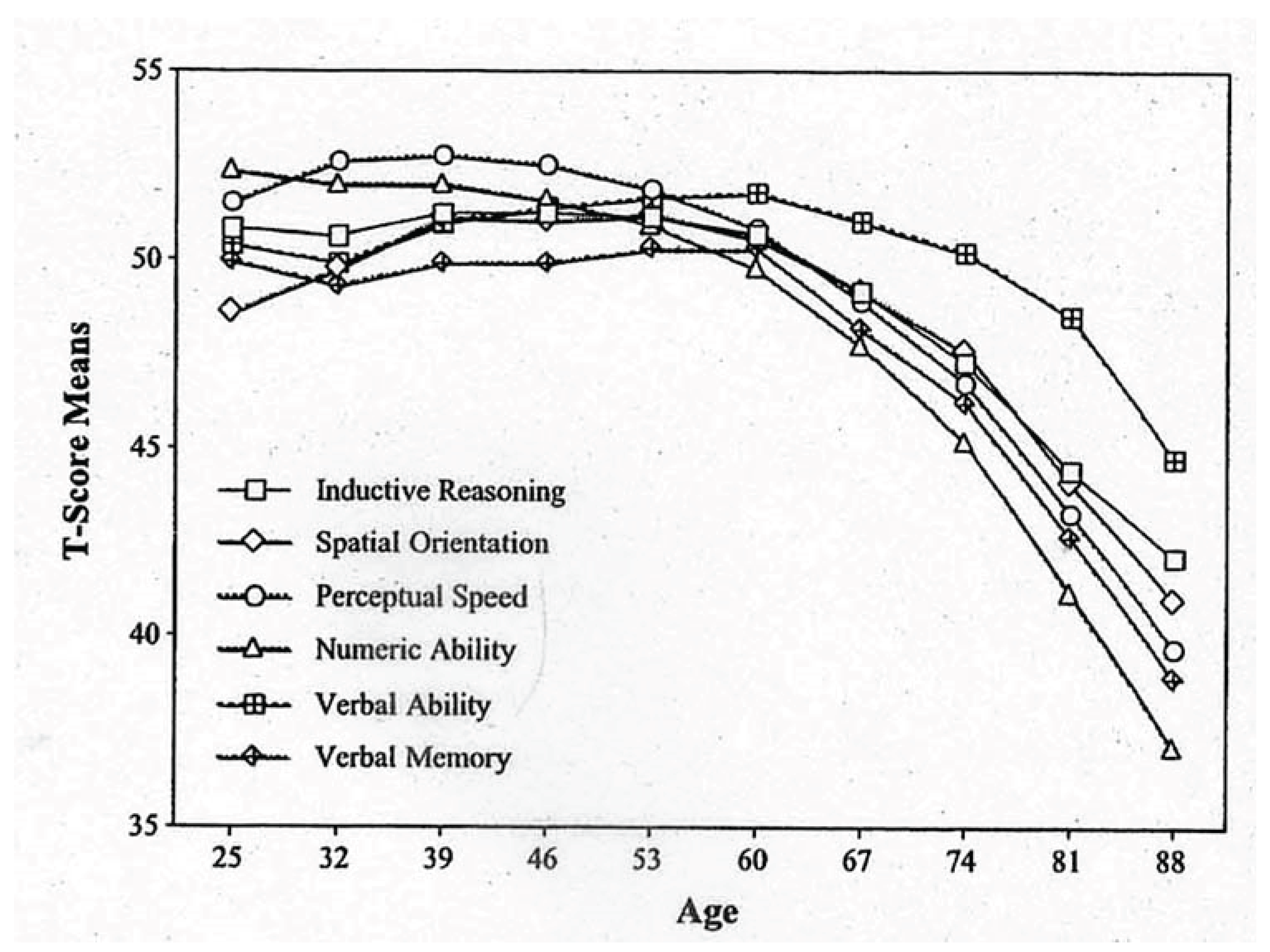
Figure 2.
Cohort Effects on Cognitive Change (Adapted with permission from Schaie, K Warner et al. (2004)).
Figure 2.
Cohort Effects on Cognitive Change (Adapted with permission from Schaie, K Warner et al. (2004)).
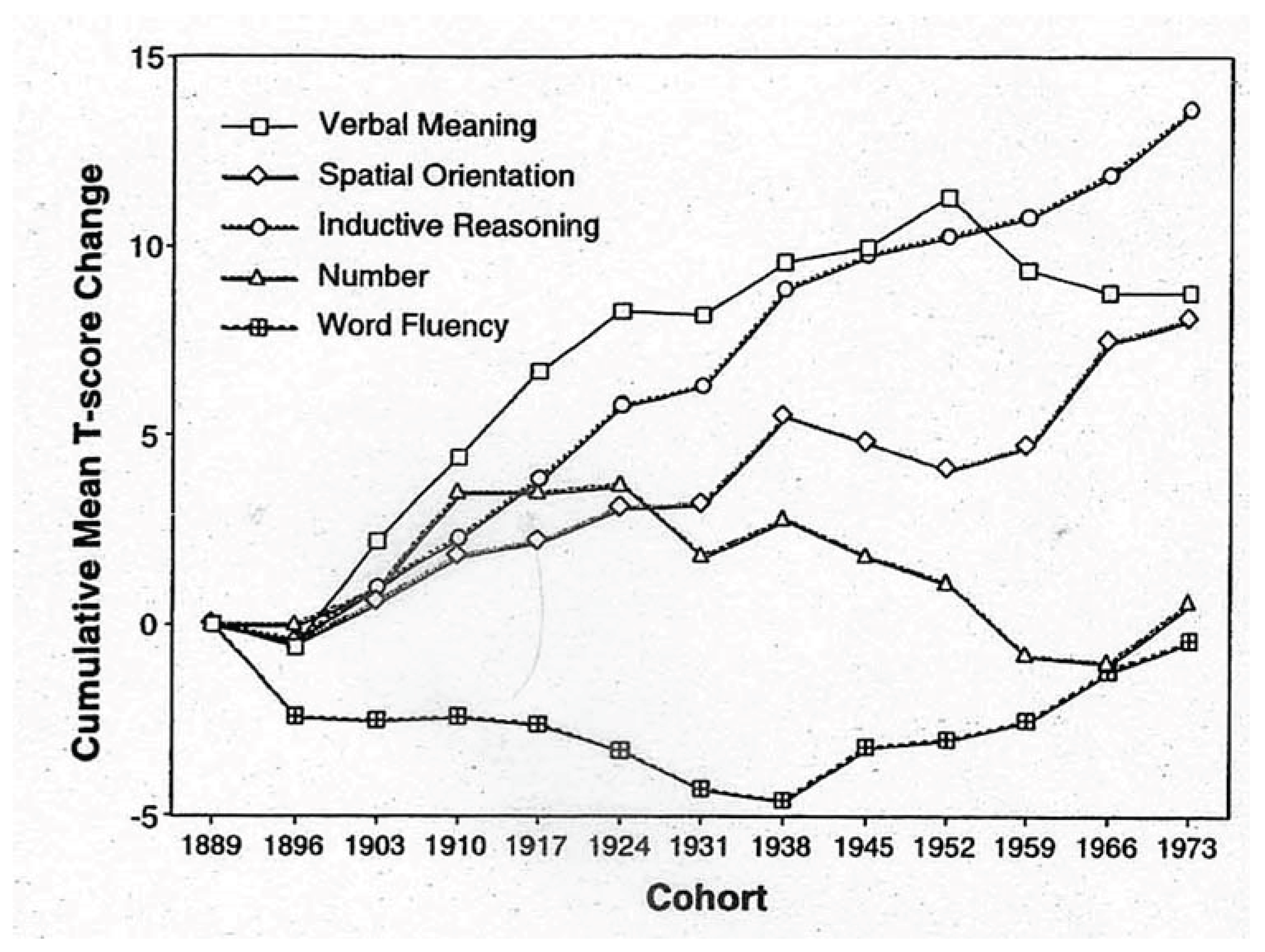
Figure 3.
Personality Trait Development Across Age (Adapted with permission from Schaie, K Warner et al. (2004)).
Figure 3.
Personality Trait Development Across Age (Adapted with permission from Schaie, K Warner et al. (2004)).
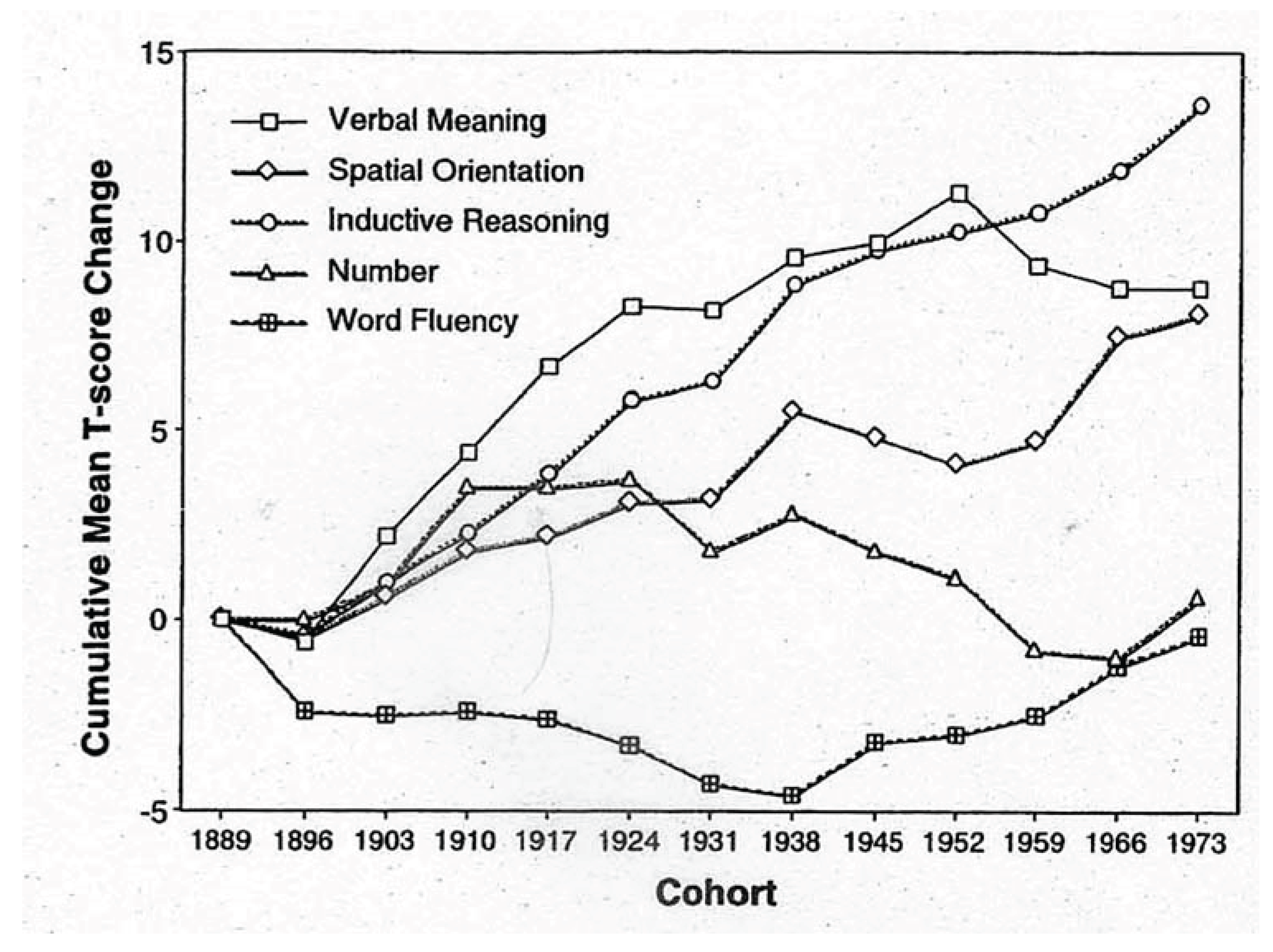
Figure 4.
Color-coded map showing income effect sizes for immediate and delayed recall across countries. Higher-income regions (e.g., North America, Western Europe) exhibit larger effect sizes (yellow/orange), while lower-income regions (e.g., Sub-Saharan Africa) show smaller or non-significant effects (black/green). Adapted with permission from Rodriguez et al. (2021).
Figure 4.
Color-coded map showing income effect sizes for immediate and delayed recall across countries. Higher-income regions (e.g., North America, Western Europe) exhibit larger effect sizes (yellow/orange), while lower-income regions (e.g., Sub-Saharan Africa) show smaller or non-significant effects (black/green). Adapted with permission from Rodriguez et al. (2021).
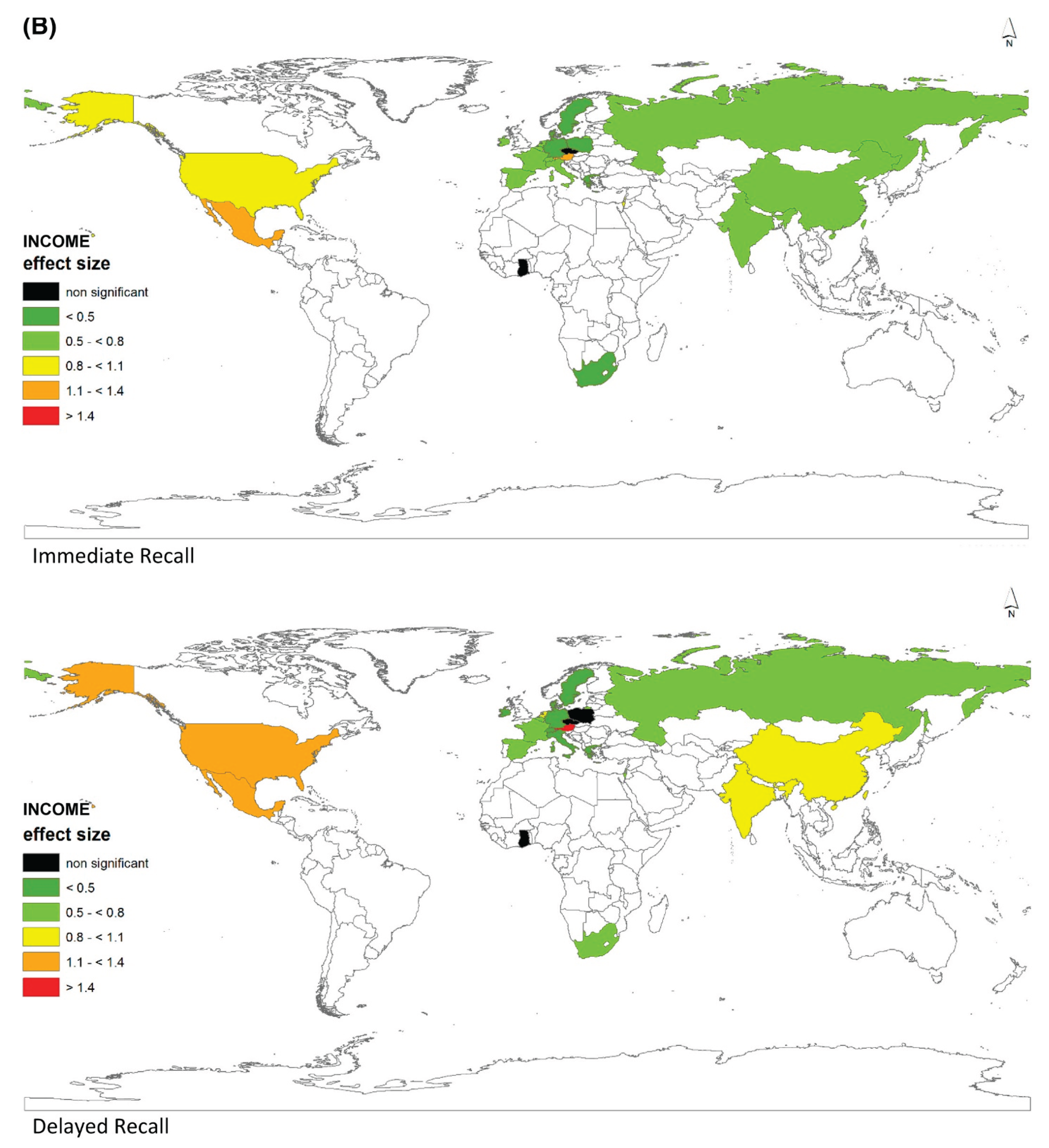
Figure 5.
Cognitive Scores by Internet Use Frequency Figure: Boxplot showing cognitive scores ("Never," "Infrequently," "Weekly," "Daily") with cell phone and computer use differentiated. Daily users (especially cell phone users) exhibit significantly higher cognitive scores (p < 0.001). Adapted with permission from B. Chen et al. (2024).
Figure 5.
Cognitive Scores by Internet Use Frequency Figure: Boxplot showing cognitive scores ("Never," "Infrequently," "Weekly," "Daily") with cell phone and computer use differentiated. Daily users (especially cell phone users) exhibit significantly higher cognitive scores (p < 0.001). Adapted with permission from B. Chen et al. (2024).
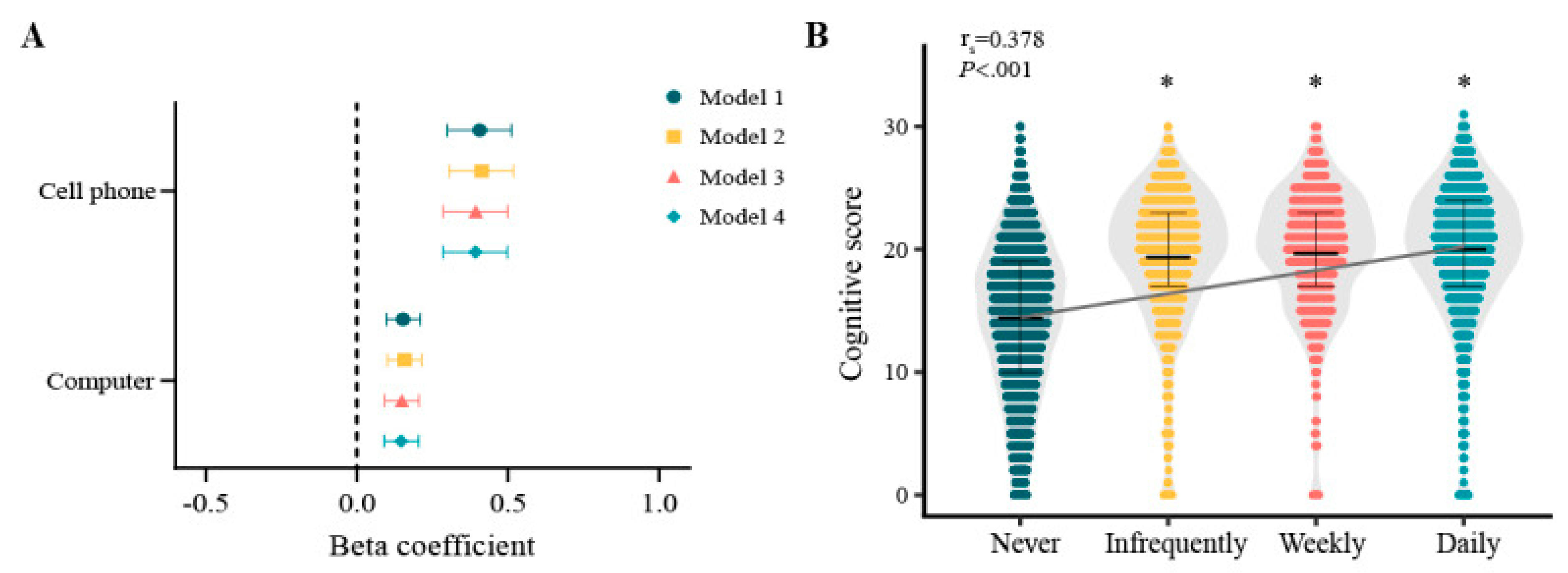
Figure 6.
Path diagram showing direct and indirect effects of education and income on immediate/delayed recall, mediated by GDP and health expenditure (from uploaded image). Education indirectly influences cognitive function via income (p < 0.001) and directly via GDP (p < 0.001). Adapted with permission from Rodriguez et al. (2021).
Figure 6.
Path diagram showing direct and indirect effects of education and income on immediate/delayed recall, mediated by GDP and health expenditure (from uploaded image). Education indirectly influences cognitive function via income (p < 0.001) and directly via GDP (p < 0.001). Adapted with permission from Rodriguez et al. (2021).
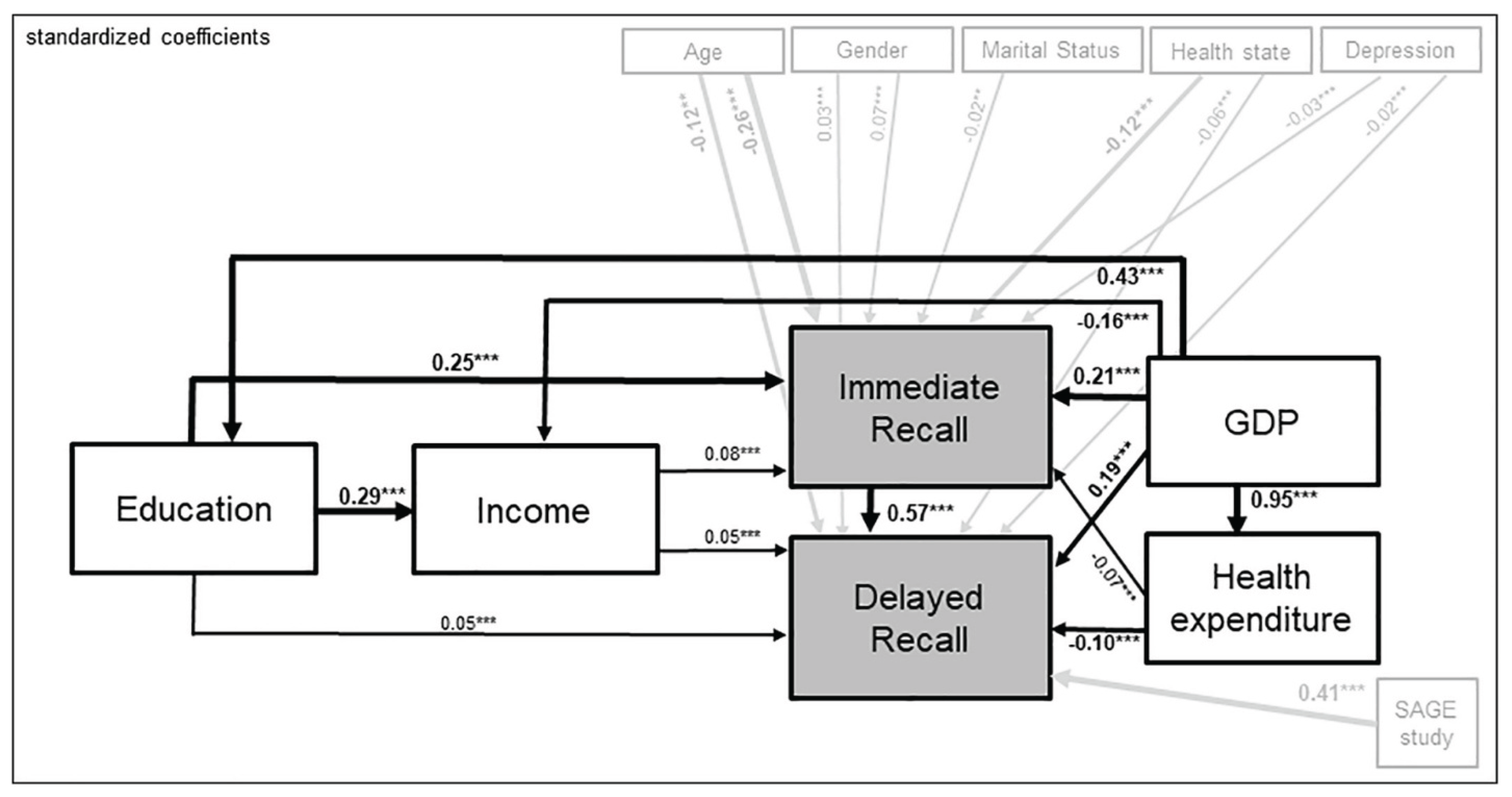

Table 1.
Determinants of Cognitive Aging Trajectories in the Seattle Longitudinal Study.
| Determinant | Impact on Fluid Intelligence | Impact on Crystallized Intelligence | Effect Size (Cohen’s D) |
|---|---|---|---|
| Education (per year) | +0.3% slower decline | +0.5% slower decline | 0.42 |
| Occupational Complexity | 20-25% less decline | 10-15% less decline | 0.38 |
| Hypertension | 15% faster decline | 5% faster decline | -0.29 |
| Regular Physical Activity | 10-15% slower decline | 5-8% slower decline | 0.31 |
| Social Engagement | 8-12% slower decline | 5-10% slower decline | 0.27 |
Note: Effect sizes calculated from longitudinal mixed-effects models controlling for age, sex, and baseline cognitive performance.
Table 2.
Medical Thresholds Associated with Accelerated Cognitive Decline.
| Health Indicator | Threshold | Cognitive Impact | Evidence Level |
|---|---|---|---|
| Systolic Blood Pressure | >130 mmHg (midlife) | 35% faster decline in processing speed | A (multiple longitudinal studies) |
| HbA1c | >6.5% | Equivalent to 7-10 years of additional cognitive aging | A |
| BMI | >28 (midlife) | 25% faster executive function decline | B |
| Sleep Duration | <6 or >9 hours nightly | 2.3x risk of significant cognitive decline | B |
| Physical Activity | <150 min/week moderate | Cognitive profile 5-7 years older | A |
Note: Evidence levels: A = strong evidence from multiple longitudinal studies; B = moderate evidence from 2-3 longitudinal studies.
Disclaimer/Publisher’s Note: The statements, opinions and data contained in all publications are solely those of the individual author(s) and contributor(s) and not of MDPI and/or the editor(s). MDPI and/or the editor(s) disclaim responsibility for any injury to people or property resulting from any ideas, methods, instructions or products referred to in the content. |
© 2025 by the authors. Licensee MDPI, Basel, Switzerland. This article is an open access article distributed under the terms and conditions of the Creative Commons Attribution (CC BY) license (http://creativecommons.org/licenses/by/4.0/).
Copyright: This open access article is published under a Creative Commons CC BY 4.0 license, which permit the free download, distribution, and reuse, provided that the author and preprint are cited in any reuse.


