

Submitted:
11 July 2025
Posted:
11 July 2025
You are already at the latest version
Abstract
Climate change affects One Health in a variety of ways, but for some locations, particularly in poor countries, there is sparse information about the projected changes in climate-related health risks. People respond to changes in climate-driven natural hazards—which affect health in ways that are often not captured by system-theory concepts. Community-level responses to repeated hazard impacts, such as shifts in social networks and economic strategy, can reduce welfare losses and raise collective risks elsewhere. This study is a scoping review, and numerous health risks associated with climate change are frequently ignored within a single One Health data set or inadequately integrated into broader climate adaptation frameworks, particularly at the global level. To effectively address these issues, methodologies for precisely assessing the single one health risks associated with climate change were developed and implemented. Provides a decision-support system for health that estimates a ‘heat-health watch/warning’ will require a set of decision thresholds to trigger dissemination of warnings and response plans by agencies with state-specific responsibilities. Concluded and acknowledged that numerous policies and training programs are necessary and that the insights gained from existing responses are more likely to be applicable in other industrialized contexts. Furthermore, the one health impact of heat waves and cold waves is relatively robust; there is a pressing need to address additional topics that are pertinent to public health on a continental scale moving forward. Concern over climate change’s range of one health impacts has contributed directly to the widespread use of ad hoc protective measures.
Keywords:
One Health
; Public Health & Policies
; policy response
; environmental factors
; climate change
Introduction
Climate change is a significant global issue that threatens the One Health and livelihoods of a large population [1]. The One Health Summit emphasizes the need to take a collaborative approach to address this crisis, focusing on preventive measures and scientifically informed strategies[2]. Climate change intensifies existing health challenges and introduces new ones [3], compounded by population growth, urbanization, and human encroachment on wildlife habitats [4]. This increases the risk of health impacts, particularly in lower-income countries, affecting food security, safety, nutrition, and overall health [5]. Climate change also hinders progress in addressing poverty, conflict resolution [6], gender discrimination, healthcare access, and other critical components of the Sustainable Development Agenda [7,8]. A holistic approach is crucial, addressing risk factors and mitigation strategies while recognizing achievable outcome targets [9]. A One Health approach to adapting to climate change can play a crucial role in enhancing food security by addressing various aspects such as food and nutrition security, environmental sanitation, and climate change responses across multiple species to mitigate biodiversity loss [10]. The interconnectedness of health has gained support through the "One World – One Health" initiative [11]. However, it is important to note that current discussions regarding the health impacts of climate change have primarily focused on human health, often neglecting indicators related to animal health [12,13]. The One Health approach emphasizes the shared nature of health among humans, animals, and the environment and underscores the necessity for sustainable improvements in social and environmental services both locally and globally [14]. To address the objectives of this study's climate change impacts and policy responses on the One Health approach, cooperation, consistent procedures, and a commitment to addressing intricate new health risks are all required, according to the gaps in the literature. To identify and assess essential policy instruments for creative policies based on technical, environmental, organizational, and regulatory developments influencing climate change and one's health in order to suggest strategic pathways for the evolution of intelligent, human-centered, and flexible policies. The aim and scope of this study are to investigate new opportunities in climate change impacts on One Health and policy responses, and to provide a roadmap for how governance, global policies, organizations, and regulatory bodies may adjust to an increasingly complex risk environment in one health. To assess the present study's readiness to respond to climate-related and digital risk areas. To investigate models for intelligent policy and decentralized risk response. Key target areas include one-health systems, climate-adaptive risk planning, human-centered design, and worldwide harmonization of one-health and public health standards.
Materials and Methods
Methodology
This scoping review study combines current literature searches from Scopus, PubMed, Embase, and Web of Science, as well as databases and platforms from international organizations such as the European Union (E.U.), Copernicus, WHO/AFRO, ECDC, EUPHA, and others, until June 16, 2025, to identify knowledge gaps and lead future research. Scoping reviews provide a comprehensive overview of a broad topic, avoiding a critical assessment of specific studies. They synthesize diverse evidence sources and follow a flexible protocol, using logic models to summarize reviews and research priorities. The purpose of scoping reviews is to identify research gaps, map literature, facilitate collaboration, and determine the necessity of a systematic review. These reviews are typically conducted when the topic is broad, multidisciplinary, and requires public dissemination of relevant literature. This scoping study followed the Preferred Reporting Items for Systematic-Scoping Reviews (PRISMA) criteria, and flow chart diagram of this study's showing with Figure 1, [74].
Search Strategy
A search for "climate change" and "One Health" yielded 1695 hits in literature, studies, reports, primarily journal articles, conference papes. The literature was scrutinized to extract patterns in publications and citation counts. The search was restricted to title/abstracts from 2020 until June 2025, revealing 173 relevant hits. The current initiative focuses on climate change and one health issues related to policy responses, and relevant 9 studies selected hits as show in the Table 1.
The literature was analyzed for topics and issues that would benefit from integrated approaches to health, focusing on the benefits of closer cooperation between human and animal health in addressing climate change issues. A search for "climate change" and "One Health" yielded 1695 hits in the literature, studies, reports, journal articles, and conference papers. The literature was scrutinized to extract patterns in publications and citation counts. The current initiative studies results report of table 1 focuses on climate change and one health issues related to policy responses. The literature was analysed for topics and issues that would benefit from integrated approaches to health, focusing on the benefits of closer cooperation between human health and animal health in addressing climate change issues.
Inclusion and Exclusion Criteria
The results of a search for articles related to climate change and One Health were screened, resulting in adjectival publications. The methods and the results highlight the potential benefits of integrated approaches in addressing climate change-related health risks and addressing and flow chart diagram of this study showing with Figure 1.
The articles were categorized into health impacts of climate change, response systems to mitigate climate change-related health risks, and integrated approaches in relation to these policy responses. The screening criteria relating to the paradigm framework were employed, and the resulting categories included one health impacts, and approaches to mitigate health threats, also opportunities of integrated approaches in the policy recommendations, strategies and proposals management. Out of 73 selected abstracts, articles covering solutions to climate change impacts approaches on one health and policy responses were found to be relevant for this paradigmatic and peer-review approach to integrated.
Methodological Constraints
Research on the long-term effects of climate change on One Health faces methodological constraints, hindering comprehensive understanding of the complex web of interactive processes. Understanding heat waves and outbreaks of explosive parasites requires extensive multi-country research with detailed meteorologic time series and high-resolution space-time-resolved epidemiologic data. Long-term data for modeling reservoirs, vectors, and parasites is often absent or insufficiently fine-scaled. Despite the emergence of new systems to monitor and predict early warning signals of societal or environmental crises, crucial scientific challenges remain, such as disentanglement of climate change and variability from other mega-trends.
Results of Meta-Analysis
The exposure of health impacts in policy documents helps understand the prioritization of anticipated health risks. Climate change impacts, grouped by risk category, health effect, exposure sector, and world region, account for most of the 50 health impacts. Water availability, high-temperature exposed population, and disease vector spread pose more anticipated health risks than other categories. Policy documents mainly focus on high-income countries and developing regions, with health impacts covering wider world regions being included in fewer documents. This study assesses the exposure of anticipated climate change impacts on health in international policy documents and their correlation with countries' human development levels using meta-analysis. Countries with fair human development are less aware of climate change impacts on health compared to countries with high human development. Policymakers should ensure sustainable clean energy solutions are scaled up while managing health risks arising from energy transition strategies based on research evidence. More research on climate change impacts on health is needed to better inform policymakers, especially in developing and emerging countries.
Quality Assessment of Reviews
The scoping review study included nine reviews with appropriate inclusion criteria and risk of bias, influencing the conclusions drawn in the systematic review. The strength of the conclusions depends on the inclusion of reviews that meet a minimum standard of quality using the Robvis 2 risk-of-bias assessment figures tools. The quality of the reviews should be assessed to avoid being influenced by extraneous variables and focus on the quality of the conduct of the review. The only tool that has been validated as a means to assess the methodological quality of scoping and systematic reviews is the Robvis 2 assoccciated with PRISMA [74,75], showing in Figure 2, Figure 3 and Figure 4.
Identifies the research question and inclusion criteria, data extraction by at least two independent data extractors, comprehensive literature review with searching of at least two databases, key word identification, detailed list of included/excluded criteria, studies and study characteristics, assessment of included studies, and consideration of quality assessments in analysis quality and conclusions. Understanding those interactions with climate knowledge provides a basis for optimized adaptive strategies through the One Health concept. Future research must address these facets relative to the sensitivities, vulnerabilities, resilience, and environmental sustainability of, respectively, local, regional, national and global One Health systems.
Statistical Analysis
The study summarizes a multidisciplinary approach to analyzing literature using review includes peer-reviewed research, and selected studies, excluding non-academic and predatory publications. PubMed, a search engine, has uncovered 73 relevant articles and abstracts on climate change and One Health approaches on policy responses in English language. The quality of the design and methodology of the included studies was evaluated within the framework of the current review evaluation of the reporting of statistical techniques and findings, as well as the methodology in Published Literature recommendations. The study uses the dual operators "AND" and "OR" to combine terms, using keywords in a two-stage search. The evaluation focuses on rigorous techniques and a thorough grasp of the extent, range, and character of the literature for the nine studies that were ultimately chosen.
The selection process is summarized in the PRISMA flow chart diagram shows in Figure 4.
Challenges Data Gaps and Limitations
A systematic search of the PubMed, especially in Scopus and Web of Science database revealed a lack of papers specifically addressing One Health aspects of climate change. The search was conducted in English, and most papers were biomedical and focused only on humans. The resilience of ecosystems depends on undisturbed functioning and diversity, and improved understanding of threshold effects and emergent responses is essential for establishing early warning systems. Adaptive management, including vegetation, fauna, and humans, is often a pragmatic strategy for restoration. In the long term, integrated participatory surveillance and improvement measures that involve all stakeholders are the most promising response. The evidence for a framework aligning existing efforts and expanding them to animal health was proposed to assess the effects of climate change on the health of all organisms. A One Health approach to climate change may significantly contribute to food security, with a focus on animal source foods, extensive livestock systems, environmental sanitation, and the potential of integrated community-based syndromic surveillance and response systems in relation to climate change-related emerging diseases.
Results from Literature Review Studies
Impacts of Climate Change on Health
Climate change is a significant environmental and health equity challenge, with health impacts and health costs being far greater than other costs like crop yield losses or infrastructure damage [15]. The burden of climate-sensitive diseases is greatest for the poorest populations, highlighting health inequity [16]. Many of the health impacts of climate are particularly threat to poor people in low- and middle-income countries [17]. Mortality risk from weather-related natural disasters being 50 times greater, health costs related to flooding being more than 200 times greater [18], and vector-borne diseases being almost 300 times greater in developing nations than in developed countries [19]. Urban settings create local climate conditions that cause most of the direct human health hazards due to the urban-heat-island effect, increased air pollution, flooding or water shortages [20]. The health sector is engaged almost nowhere in climate change mitigation and adaptation planning, which is crucial to address the increasing number of deaths and diseases related to pollution from burning fossil fuels, increasing incidence, spatial expansion [21]. The intensity of extreme weather events, and developing knowledge and skills at the local level to implement prevention/adaptation programs [22]. To face these threats, actions need to be taken in the health system to strengthen primary health care, develop preventive programs [23]. Crucial deal with the emergence or re-emergence of infectious and vector-borne diseases associated with changes in climate, human habitation, and agricultural practices [24,25]. Global warming, a phenomenon affecting the Earth's temperature, has led to significant social, economic, and environmental changes [26]. The Earth has warmed by 2°C over a century, causing catastrophic secondary changes that become irreversible at 3°C, [27]. This synchronous increase in temperature and other changes significantly impacts vulnerable regions [28].
One Health Framework in Climate Change
Globally, human, animal, and plant health are being significantly impacted by climate variability and extremes [29]. Storms, droughts, floods, and heat waves are some of these consequences [30]. However, a lot of global frameworks ignore the wider environmental conditions necessary for the survival of both untamed and domesticated species of plants and animals in favor of concentrating on infrastructure, agriculture, and human health [31]. Efforts to lessen the adverse effects of climate change on people, animals, plants [32], and ecosystems are hampered by inadequate awareness and governance of environmental elements, which leads to incorrect responses from health systems [33]. Health is a complex issue that is intertwined with environmental vulnerabilities [8,33]. A health approach that integrates health into ecosystems can help address the impact of climate change and its effects on health [34]. A One Health approach, which emphasizes animal source foods, extensive livestock systems, adequate water, and environmental sanitation [35]. A significantly contribute to food security and health equity [36]. This approach can also help reduce health risks associated with climate change [37]. A robust and transparent implementation of this approach can significantly contribute to food security and health equity [38].
Integration of Health Systems
The health approach, a One Health approach, aims to address interrelated health issues by integrating diverse disciplines and practices [39]. This approach involves transdisciplinary processes to design, implement, and evaluate integrated solutions for various dimensions, including societal, cultural, political, and economic aspects [40]. The solutions are often context-specific, requiring broad application [41]. With climate change influencing health challenges, there is growing interest in integrated approaches and intersectoral collaboration [42]. Solutions derived from scientific evidence on a broader governance level may be needed to address global health challenges [43,44].
Key Findings Results
Global changes, including climate change, environmental changes, and demographic changes, are interconnected and interconnected. These changes can impact vector, reservoir, and pathogen lifecycles, seasonal patterns, and the management of diseases like paratuberculosis, foot-and-mouth disease, and brucellosis. Environmental changes include emerging diseases in wildlife, invasive alien species, and habitat destruction. To address these effects, a comprehensive framework recognizing the linkage between humans, animals, and their environment is needed. Ecosystem approaches to health frameworks, which consider the interconnected network of changes, can help devise predictive governance measures. Integrated community-based surveillance of zoonotic pathogens, a One Health approach, and enhanced livestock systems can contribute to food security and reduce outbreak costs. Regional and global integrated syndromic surveillance and response systems are also essential responses.
Discussion
Policy Responses to Climate Change
The One Health approach to climate change focuses on addressing interconnected issues across sectors, including the health of interdependent biota and socio-economic and political systems [45]. This approach emphasizes the importance of modeling biological and socioeconomic systems' behaviors and a pre-emptive response capacity to early warning signals [46]. A One Health approach to climate change can significantly contribute to food security by emphasizing animal source foods, environmental sanitation [47], and integrated syndromic surveillance and response systems [48]. Case studies from urban, peri-urban, and rural domains highlight the need for surveillance and early response of livestock and human syndromes likely driven by climate change[49,50,51]. This approach highlights the potential for co-distributed policy interventions in the context of socio-political settings.
Global Policies
Climate change is a global concern, and countries are urged to design national action plans to meet global climate goals [52]. Health, agriculture, and livestock sectors must demonstrate their national action plans to mitigate and adapt to climate change [53]. The One Health system has been the focus of several global policies, including the FAO's efforts to mitigate climate change's impact, environmental pollution, and disruption of biological interaction chains [54]. The WHO/AFRO coordinated the establishment of a Regional Working Group on Animal-Human Health Interface to combat zoonotic diseases and tackle climate change's effects on the One Health system [55]. Global policies like the WHO Climate Change and Health Coping Strategies focus on the human health side [56]. Addressing transboundary and emerging diseases of livestock, modeling links between climate change and human infectious diseases, animal and zoonotic diseases of wildlife, domestic reservoirs and vectors, biodiversity loss, and anthropogenic land use change [57]. However, WHO policy recognition of links between climate change and health, particularly food safety, is acknowledged [58].
National and International Strategies
Europe is implementing national multi-sectoral One Health strategies to address climate-induced risks for human, animal, and ecosystem health [59]. Governments are promoting collaboration platforms and objectives to mitigate risks [60]. Baseline assessments on health and climate risks are being conducted to highlight and prioritize risks for One Health and collaboration across sectors [61]. Health adaptation measures are being identified and implemented, with long-term objectives being concrete and specific enough for immediate action [62]. Countries with similar climate risks, such as heat in Europe and insect-borne diseases in Europe and South Africa, are jointly assessing risks and adaptation measures [63]. A variety of tools can assist in implementing multi-sectoral plans, with a focus on infectious disease transmission, environmental exposures [64], health services, vector control, and health co-benefits [65]. Monitoring and evaluation frameworks should be developed to enable continuous utilization of these tools and address unanticipated effects [66]. The Global Climate Crisis has significantly affected human health, with AI-Driven Analysis highlighting the negative effects on public health [67,68]. The crisis has led to increased risks in workplace hazards, among global populations and especially on the public health workforce [69,70]. The effects of heat stress on occupational safety, health, and hygiene are also evident [70,71]. The future food supply International faces challenges and AI-powered solutions needs with innovative policies, while air pollution and indoor air quality in high risk and sensitive populations with also health issues further exacerbate these negative effects [72,73].
Policy Recommendations and Future Research Directions
Evidence points to an increase in vector-borne zoonotic pathogens due to climate change in Lower and Middle Income Countries. Veterinary surveillance is crucial to mitigate these risks, but the cost may be lower if detected early. Community-based surveillance, involving participatory mapping and incentivised record keeping, can be a promising approach. This system supports literate norm-entrepreneurs and informal veterinary service provision along trade routes, empowering nano-scale entrepreneurship against human conflict and climate change. This non-hierarchical, fragmentation-tolerant organizational form is effective against human conflict and climate change. The health concept emphasizes sustainability in response to climate change. Understanding climate interactions and trends is crucial for optimizing adaptive strategies. The One Health concept, which includes mechanisms for food security, antimicrobial resistance control, and environmental sanitation, can help address these challenges and ensure sustainable health systems.
Experience with other emerging diseases suggests that outbreaks of emerging vector-borne zoonotic pathogens are much cheaper to control when detected early in the vector or livestock than later on at the human level. Integrated surveillance and response of a consortium of human and veterinary health authorities may be a promising avenue to reduce the health effects of climate change.
Limitations
Many trends remain theoretical or based on preliminary research, also the regional inequalities in resources and technology may cause delays in adoption of the One Health approach to climate change focuses on addressing policy responses.
Conclusions
The research community is optimistic about plausible climate projections and analyses, but must confront the limits of sustainability in the use of climate products, interpretation of scientific knowledge, and national interests. The global effort in climate modelling and observation has continued and even been enhanced over the last three decades, despite a long history of climate science denial and malaise regarding climate mitigation potential. Efforts to mitigate climate change remain fragmentary and deeply contested, with limited geopolitical funds leading to struggles to define causes and consequences of climate injustice. Climate change mitigation also risks on-vulnerable states foregoing opportunities for socioeconomic development associated with fossil fuel resource extraction. Limits to sustainability in efforts to mitigate climate change justice among fossil fuel-holding states lead to limits in climate adaptation as the temporal and spatial risks associated with climate impacts move beyond limits. The resilience perspective's Achilles heel is its assumption that social-ecological systems can always recover from disturbances of anthropogenic climate change, and the potential collapse of crucial social-ecological systems remains largely unarticulated and unexplored.
Author Contributions
I.A. project administration conceived and supervised the study; I.A. designed the research and wrote the manuscript; I.A. performed the research, and wrote the revise of the the manuscript, and analyzed the data; N.S. helped with data analysis. All authors took part in the editing of the manuscript and reviewed the manuscript. All authors read and approved the final manuscript.
Funding
This work was carried out without any financial support or any other funding.
Ethics approval and consent to participate
Not applicable
Consent for publication
The authors give full consent to publish this research.
Data availability
The datasets used during the current study are available from the corresponding author on reasonable request.
Acknowledgements
Additionally, we would like to express our appreciation to the, Editor-in-Chief, Editors, and reviewers for their valuable feedback and insightful suggestions for improving this article.
Competing interests
The authors declare no competing interests.
Abbreviations
| AI | Artificial Intelligent |
| ECDC | European Centre for Disease Prevention and Control |
| EUPHA | European Public Health Association |
| E.U. | European Union |
| WHO | World Health Organization |
| PRISMA | Preferred Reporting Items for Systematic and Met-analysis |
| ML | Machine Learning |
References
- Ebi, Kristie L., et al. "Extreme weather and climate change: population health and health system implications." Annual review of public health 42.1 (2021): 293-315. [CrossRef]
- Morufu Olalekan Raimi, Tonye Vivien Odubo & Adedoyin Oluwatoyin Omidiji (2021) Creating the Healthiest Nation: Climate Change and Environmental Health Impacts in Nigeria: A Narrative Review. Scholink Sustainability in Environment. ISSN (2021).
- Abbass, Kashif, et al. "A review of the global climate change impacts, adaptation, and sustainable mitigation measures." Environmental science and pollution research 29.28 (2022): 42539-42559. [CrossRef]
- Zinsstag, A. Kaiser-Grolimund, K. Heitz-Tokpa, et al., "Advancing One human–animal–environment Health for global health security: what does the evidence say?" The Lancet, 2023. [CrossRef]
- Zinsstag, J., Crump, L., Schelling, E., Hattendorf, J., Osman Maidane, Y., Osman Ali, K., Muhummed, A., Adem Umer, A., Aliyi, F., Nooh, F., Ibrahim Abdikadir, M., Mohammed Ali, S., Hartinger, S., Mäusezahl, D., Berger Gonzalez de White, M., Cordon-Rosales, C., Alvarez Castillo, D., McCracken, J., Abakar, F., Cercamondi, C., Emmenegger, S., Maier, E., Karanja, S., Bolon, I., Ruiz de Castañeda, R., Bonfoh, B., Tschopp, R., Probst-Hensch, N., and Cissé, G. "Climate change and One Health." 2018. [CrossRef]
- Johnson, D., Parsons, M., and Fisher, K. "Engaging Indigenous perspectives on health, wellbeing and climate change. A new research agenda for holistic climate action in Aotearoa and beyond." Local Environment, 2021. [CrossRef]
- Timothy R., et al. "A conceptual framework for cross-border impacts of climate change." Global Environmental Change 69 (2021): 102307. [CrossRef]
- Arshad, Kashaf, et al. "Air pollution and climate change as grand challenges to sustainability." Science of The Total Environment (2024): 172370. [CrossRef]
- Bezgrebelna, Mariya, et al. "Climate change, weather, housing precarity, and homelessness: A systematic review of reviews." International Journal of Environmental Research and Public Health 18.11 (2021): 5812. [CrossRef]
- A. Iacovino and L. Randazzo, "Climate change and food security in the One Health perspective," BioLaw Journal-Rivista di BioDiritto, 2023.
- A.S. Bernstein, A.W. Ando, T. Loch-Temzelides, et al., "The costs and benefits of primary prevention of zoonotic pandemics," *Science*, 2022. [CrossRef]
- S. Singh, P. Sharma, N. Pal, D. K. Sarma, "Holistic one health surveillance framework: synergizing environmental, animal, and human determinants for enhanced infectious disease management," ACS Infectious Diseases, 2024. [CrossRef]
- J. Charlier, H. W. Barkema, P. Becher, et al., "Disease control tools to secure animal and public health in a densely populated world," Planetary Health, vol. 2022. thelancet.com. [CrossRef]
- L. Yajie, M. G. M. Johar, and A. I. Hajamydeen, "Poultry disease early detection methods using deep learning technology," *Indonesian Journal of …*, 2023. [CrossRef]
- C. Yenew, G. M. Bayeh, A. A. Gebeyehu, A. S. Enawgaw, et al., "Scoping review on assessing climate-sensitive health risks," BMC Public Health, 2025. [CrossRef]
- U. Sesay and A. Osborne, "Building climate-resilient health systems in Sierra Leone: addressing the dual burden of infectious and climate-related diseases," Infectious Diseases of Poverty, 2025. [CrossRef]
- M. I. Kabir, D. M. Hossain, M. T. H. Shawon, M. M. A. Khan, "Understanding climate-sensitive diseases in Bangladesh using systematic review and government data repository," PloS One, vol. 2025. [CrossRef]
- T. Alcayna, I. Fletcher, R. Gibb, L. Tremblay, S. Funk, "Climate-sensitive disease outbreaks in the aftermath of extreme climatic events: A scoping review," One Earth, vol. 5, no. 2, pp. 123-135, 2022. [CrossRef]
- D. J. Moriah, "Climate Change and Its Effects on Environmental Health: Challenges and Solutions for Vulnerable Populations," Social Sciences, 2025.
- A. Dimitrova, A. Gershunov, M. C. Levy, et al., "Uncovering social and environmental factors that increase the burden of climate-sensitive diarrheal infections on children," Proceedings of the National Academy of Sciences, vol. 2023. [CrossRef]
- R. H. Tantia and S. Patil, "Evaluating Climate-Sensitive Diseases in Maharashtra and the Essential Role of Preventive Social Medicine in Their Control.," Frontiers in Health Informatics, 2024.
- M. M. Khine and U. Langkulsen, "The implications of climate change on health among vulnerable populations in South Africa: a systematic review," Journal of Environmental Research and Public Health, vol. 2023. [CrossRef]
- R. P. Moreira, F. B. B. de Oliveira, T. L. de Araujo, et al., "Health interventions for preventing climate-sensitive diseases: scoping Review," Journal of Urban, vol. 2022, Springer. [CrossRef]
- C. Q. Hoang, Q. P. H. Nguyen, T. P. H. Nguyen, H. T. Nguyen, et al., "Identification of climate-sensitive disease incidences in Vietnam: A longitudinal retrospective analysis of infectious disease rates between 2014 and 2022," Heliyon, 2025. [CrossRef]
- A. Rossati Global Warming and Its Health Impact. Int J Occup Environ Med. 2017;8(1):7-20.
- A. J. Rodriguez-Morales and A. E. Paniz-Mondolfi, "The constant threat of zoonotic and vector-borne emerging tropical diseases: living on the edge," Frontiers in Tropical Diseases, 2021. [CrossRef]
- B. Mubemba, M. M. Mburu, K. Changula, "… of vector-borne zoonotic pathogens in Zambia: A clarion call to scaling-up 'One Health' research in the wake of emerging and re-emerging infectious diseases," PLOS Neglected Tropical Diseases, vol. 2022. [CrossRef]
- W. Socha, M. Kwasnik, M. Larska, J. Rola, "Vector-borne viral diseases as a current threat for human and animal health—One Health perspective," Journal of Clinical …, vol. 2022. [CrossRef]
- S. P. Dash, P. Dipankar, and P. S. Burange, "Climate change: how it impacts the emergence, transmission, resistance and consequences of viral infections in animals and plants," Critical Reviews in..., vol. 2021, Taylor & Francis. [CrossRef]
- I. Secretariat, M. L. Gullino, R. Albajes, and I. Al-Jboory, "Scientific review of the impact of climate change on plant pests," 2021.
- J. M. Tiedje, M. A. Bruns, A. Casadevall, C. S. Criddle, et al., "Microbes and climate change: a research prospectus for the future," MBio, 2022. [CrossRef]
- I. Agache, V. Sampath, J. Aguilera, C. A. Akdis, M. Akdis, et al., "Climate change and global health: a call to more research and more action," Allergy, vol. 77, no. 1, pp. 123-134, 2022. [CrossRef]
- W. M. de Souza and S. C. Weaver, "Effects of climate change and human activities on vector-borne diseases," Nature Reviews Microbiology, 2024. [CrossRef]
- M. K. Gislason, A. M. Kennedy, and S. M. Witham, "The interplay between social and ecological determinants of mental health for children and youth in the climate crisis," Journal of Environmental, vol. 2021. [CrossRef]
- L. Berrang-Ford, A. J. Sietsma, M. Callaghan, et al., "Systematic mapping of global research on climate and health: a machine learning review," Planetary Health, 2021. [CrossRef]
- E. L. Lawrance and R. Thompson, "The impact of climate change on mental health and emotional wellbeing: a narrative review of current evidence, and its implications," *Review of Psychiatry*, vol. 2022, Taylor & Francis. [CrossRef]
- A. Elnaiem, O. Mohamed-Ahmed, A. Zumla, J. Mecaskey, "Global and regional governance of One Health and implications for global health security," The Lancet, 2023. [CrossRef]
- F. Sultana, "Climate change, COVID-19, and the co-production of injustices: A feminist reading of overlapping crises," Social & Cultural Geography, 2021. [CrossRef]
- K. Goniewicz, F. M. Burkle, and A. Khorram-Manesh, "Transforming global public health: climate collaboration, political challenges, and systemic change," Journal of Infection and Public Health, vol. 2024, Elsevier. [CrossRef]
- AMP Arredondo, S. Yasobant, W. Bruchhausen, et al., "Intersectoral collaboration shaping One Health in the policy agenda: A comparative analysis of Ghana and India," One Health, vol. 12, pp. 100201, 2021. [CrossRef]
- M. Birley and R. Bos, "10. Health impact assessment: a tool for intersectoral collaboration," Innovative strategies for vector control, 2021.
- A. S. Gousse-Lessard, P. Gachon, L. Lessard, et al., "Intersectoral approaches: The key to mitigating psychosocial and health consequences of disasters and systemic risks," in *… and Management: An …*, 2022. [CrossRef]
- V. T. Sanga, E. D. Karimuribo, and A. S. Hoza, "One Health in practice: Benefits and challenges of multisectoral coordination and collaboration in managing public health risks: A meta-analysis," Journal of One Health, 2024. [CrossRef]
- M. Amri, A. Chatur, and P. O'Campo, "Intersectoral and multisectoral approaches to health policy: an umbrella review protocol," Health Research Policy and Systems, 2022. [CrossRef]
- J. A. Roth and J. Galyon, "Food security: The ultimate one-health challenge," One Health, 2024. [CrossRef]
- A. Wijerathna-Yapa and R. Pathirana, "Sustainable agro-food systems for addressing climate change and food security," Agriculture, 2022. [CrossRef]
- J. C. Prata, J. P. da Costa, I. Lopes, A. L. Andrady, et al., "A One Health perspective of the impacts of microplastics on animal, human and environmental health," *Science of the Total Environment*, vol. 2021, Elsevier. [CrossRef]
- M. G. Muluneh, "Impact of climate change on biodiversity and food security: a global perspective—a review article," Agriculture & Food Security, 2021. [CrossRef]
- B. K. Singh, M. Delgado-Baquerizo, E. Egidi, et al., "Climate change impacts on plant pathogens, food security and paths forward," Nature Reviews, 2023. [CrossRef]
- I. Agache, M. L. Hernandez, J. M. Radbel, H. Renz, "An overview of climate changes and its effects on health–from mechanisms to One Health," The Journal of Allergy, 2024. [CrossRef]
- J. S. Liu, X. C. Li, Q. Y. Zhang, L. F. Han, S. Xia, K. Kassegne, "China's application of the One Health approach in addressing public health threats at the human-animal-environment interface: Advances and challenges," One Health, vol. 2023, Elsevier. [CrossRef]
- Adamopoulos, I.; Frantzana, A.; Syrou, N. Climate Crises Associated with Epidemiological, Environmental, and Ecosystem Effects of a Storm: Flooding, Landslides, and Damage to Urban and Rural Areas (Extreme Weather Events of Storm Daniel in Thessaly, Greece). Med. Sci. Forum 2024, 25, 7.
- WG Lavey and HJ Chapman, "Present and Future Climate Change Crisis–One Health Challenges and Solutions," Global One Health and Infectious Diseases, 2025.
- T. S. Lu, J. Olsen, and P. L. Kinney, "Climate change and temperature-related mortality: implications for health-related climate policy," Biomedical and Environmental Sciences, 2021. [CrossRef]
- M. Dellar, G. Geerling, K. Kok, P. van Bodegom, "Creating the Dutch One Health Shared Socio-economic Pathways (SSPs), Regional Environmental Change, 2024. [CrossRef]
- E. W. Ansah, M. Amoadu, P. Obeng, and J. O. Sarfo, "Health systems response to climate change adaptation: a scoping review of global evidence," BMC public health, 2024. [CrossRef]
- A. D. Hoeben, I. M. Otto, and M. F. Chersich, "Integrating public health in European climate change adaptation policy and planning," Climate Policy, 2023. [CrossRef]
- E. Such, K. Smith, H. B. Woods, and others, "Governance of intersectoral collaborations for population health and to reduce health inequalities in high-income countries: a complexity-informed systematic review," *Journal of Health Policy*, vol. 2022. [CrossRef]
- S. J. Kobrin, "Managing political risk assessment: Strategic response to environmental change," 2022.
- Y. Sun, Y. Zou, J. Jiang, and Y. Yang, "Climate change risks and financial performance of the electric power sector: Evidence from listed companies in China," Climate Risk Management, 2023. [CrossRef]
- L. Berrang-Ford, A. R. Siders, A. Lesnikowski, et al., "A systematic global stocktake of evidence on human adaptation to climate change," *Nature Climate Change*, vol. 11, no. 11, pp. 1-11, 2021. [CrossRef]
- F. Ma, J. Cao, Y. Wang, S. A. Vigne et al., "Dissecting climate change risk and financial market instability: Implications for ecological risk management," Risk Analysis, 2025. [CrossRef]
- F. S. Khatibi, A. Dedekorkut-Howes, M. Howes, et al., "Can public awareness, knowledge and engagement improve climate change adaptation policies?" Discover, vol. 2021, Springer. [CrossRef]
- A. Raihan, "A review of the global climate change impacts, adaptation strategies, and mitigation options in the socio-economic and environmental sectors," Journal of Environmental Science and Economics, 2023. [CrossRef]
- O. Renn, M. Laubichler, K. Lucas, and W. Kröger, "Systemic risks from different perspectives," in *… analysis*, 2022. [CrossRef]
- P. Antwi-Agyei and L. C. Stringer, "Improving the effectiveness of agricultural extension services in supporting farmers to adapt to climate change: Insights from northeastern Ghana," Climate Risk Management, 2021. [CrossRef]
- Adamopoulos, I.; Frantzana, A.; Adamopoulou, J.; Syrou, N. Climate Change and Adverse Public Health Impacts on Human Health and Water Resources. Environ. Sci. Proc. 2023, 26, 178. [Google Scholar]
- Adamopoulos, I.; Valamontes, A.; Tsirkas, P.; Dounias, G. Predicting Workplace Hazard, Stress and Burnout Among Public Health Inspectors: An AI-Driven Analysis in the Context of Climate Change. Eur. J. Investig. Health Psychol. Educ. 2025, 15, 65. [Google Scholar] [CrossRef] [PubMed]
- Adamopoulos, I.; Syrou, N.; Mpourazanis, G.; Constantinidis, T.C.; Dounias, G. The Association of the Global Climate Crisis with Environmental Risks and the Impact of Heat Stress on Occupational Safety, Health, and Hygiene. Med. Sci. Forum 2025, 33, 2. [Google Scholar] [CrossRef]
- Ioannis Adamopoulos et al. “The Impact of PFAS on the Public Health and Safety of Future Food Supply in Europe: Challenges and AI-Driven Solutions”. In: European Journal of Sustainable Development Research (2025). [CrossRef]
- Adamopoulos, I.; Syrou, N.; Vito, D. Climate Change Risks and Impacts on Public Health Correlated with Air Pollution—African Dust in South Europe. Med. Sci. Forum 2025, 33, 1. [Google Scholar] [CrossRef]
- Adamopoulos, I.; Syrou, N. Climate Change, Air Pollution, African Dust Impacts on Public Health and Sustainability in Europe. Eur. J. Public Health 2024, 34, ckae144.1374. [Google Scholar] [CrossRef]
- Adamopoulos, I.P.; Syrou, N.F.; Mijwil, M.; Thapa, P.; Ali, G.; Dávid, L.D. Quality of indoor air in educational institutions and adverse public health in Europe: A scoping review. Electron. J. Gen. Med. 2025, 22, em632. [Google Scholar] [CrossRef] [PubMed]
- Page MJ, McKenzie JE, Bossuyt PM, Boutron I, Hoffmann TC, Mulrow CD, et al. The PRISMA 2020 statement: an updated guideline for reporting systematic reviews. BMJ 2021;372:n71. [CrossRef]
- McGuinness, LA, Higgins, JPT. Risk-of-bias VISualization (robvis): An R package and Shiny web app for visualizing risk-of-bias assessments. Res Syn Meth. 2020; 1- 7. [CrossRef]
Figure 1.
The methods and results diagram of the study.
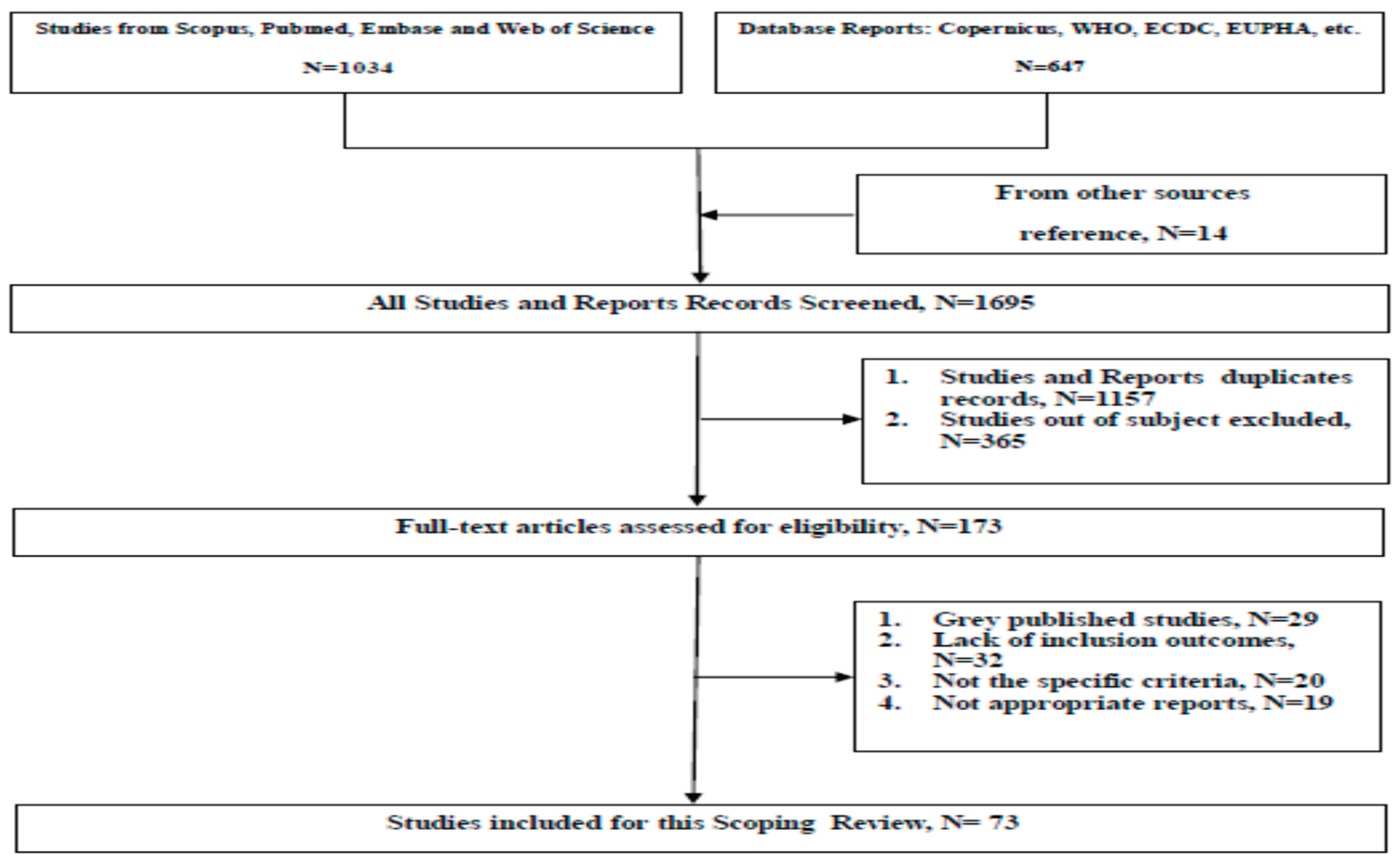
Figure 2.
Traffic-light plot Risk of Bias of domains studies included in the scoping review.
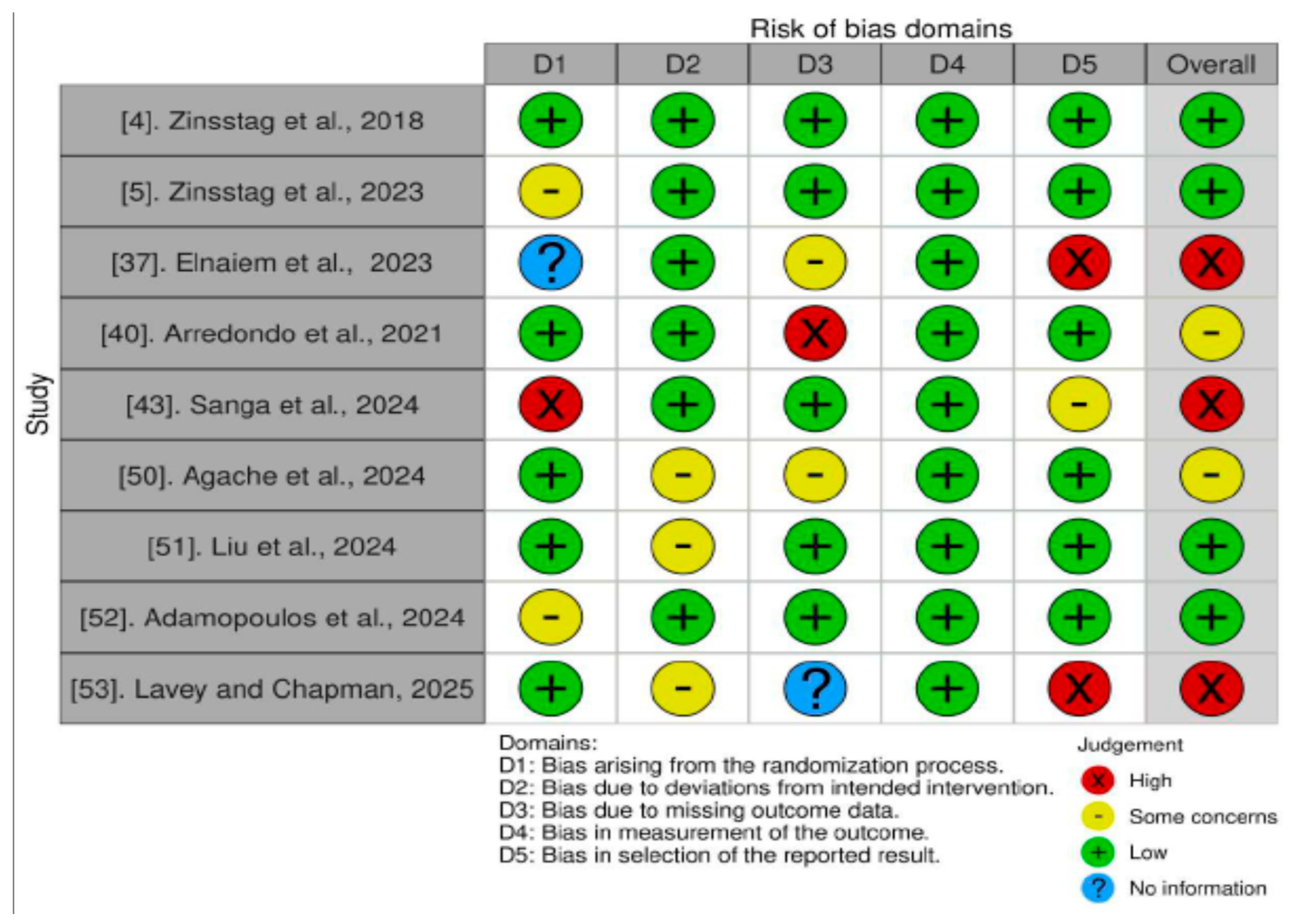
Figure 3.
Summary Plot Risk of Bias of studies included in the scoping review.
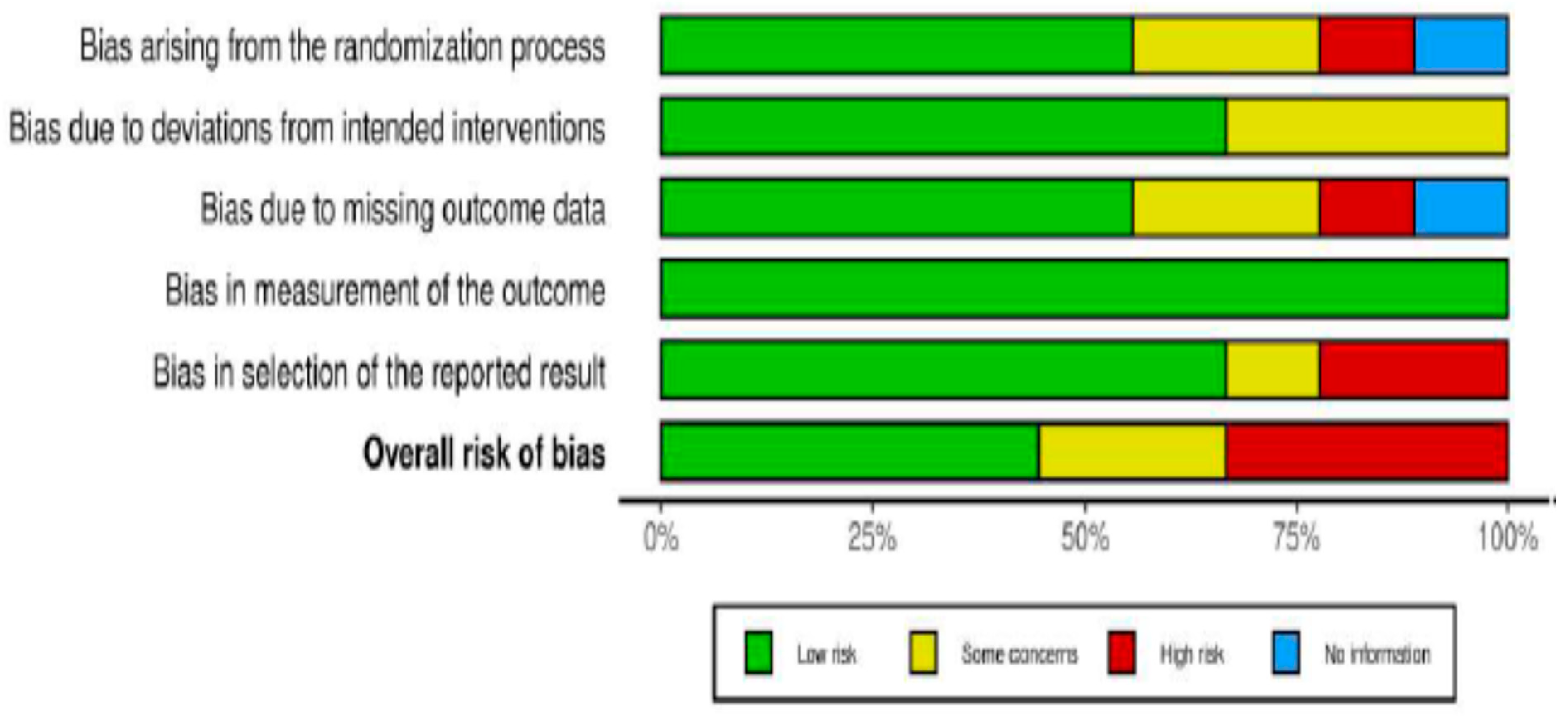
Figure 4.
The PRISMA flow chart diagram of the selected analyzing studies of scoping review.
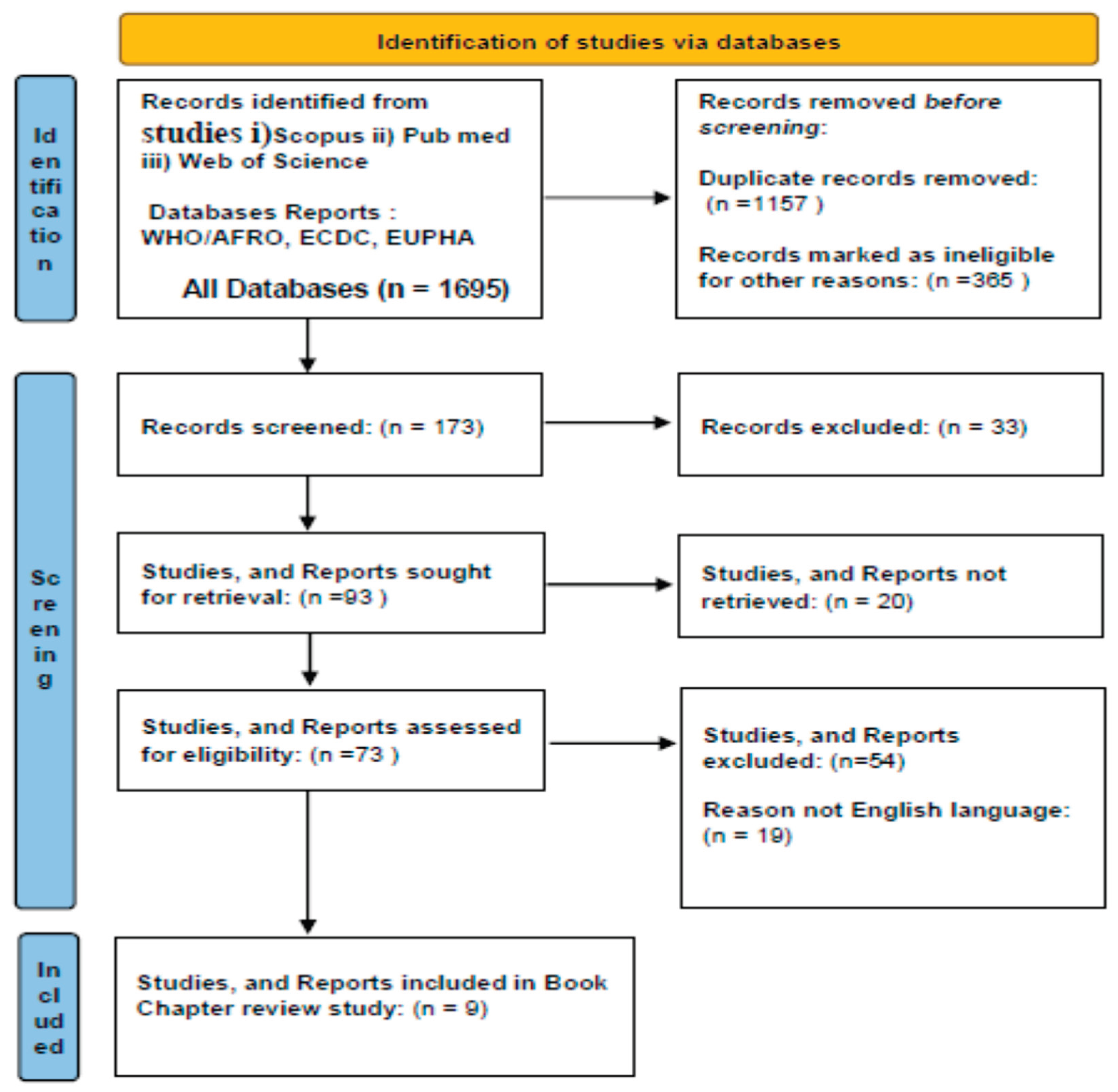

Table 1.
The basic situation and quality evaluation of the included studies.
| Author | Type of study | Sample | Treatment conditions | Main findings | Total number of cases investigated | Follow up | Limitations | |
|---|---|---|---|---|---|---|---|---|
| 1 | Shanga et al. 2024 | Meta-analysis | 157 | OHA | 69.6% it is a beneficial to adopt OHA to enhance early detection and response to outbreaks and other health threats | Not mentioned | Not mentioned | Inadequate coordination and funding |
| 2 | Adamopoulos et al 2024 | Review | 25.000 | Not mentioned | Climate crisis and disasters can have serious repercussions for public health | 12.000 | Not mentioned | Not mentioned |
| 3 | Agache et al. 2024 | Review | 4.4% of GHG emissions | Not mentioned | The evidence on the impact of climate change on health should inform the management plan for allergic diseases by inclusion of risk evaluation and of adaptation and mitigation measures tailored to the type of environmental stressor by shared decision-making with the patient | Not mentioned | Not mentioned | Numerous climate policies have failed to stop climate change |
| 4 | Jing-Shu Liu et al. 2023 | Retrospective study | 596 | ELISA, biological therapy | The prevalence of EGPA in the SA population was 3.9% in cohort study | 23 | 10 years | Cost and patient’s preferences for biological therapy |
| 5 | Jing-Shu Liu et al. 2023 | Review | 56.34 | SPO model | China ranks highest in food security (scores 72.56 and ranks 6th), and lowest in climate change (48.74, 11th) | Not mentioned | Not mentioned | Challenges in translating policies into practical measures |
| 6 | Zinsstag et al. 2023 | Review | Not mentioned | IHR monitoring and evaluation framework and OIE performance of veterinary services pathway | The FAO, OIE and WHO currently play pivotal roles in stimulating OHO at the national and regional levels but will need increased support and allies to both strengthen current activities as well as address a wider set of health hazards across the Socio Ecological System | Not mentioned | Not mentioned | Not mentioned |
| 7 | Elnaiem et al. 2023 | Review | Not mentioned | Not mentioned | Financing mechanisms that predominantly focus on response to crises, and the chronic underinvestment for epidemic and emergency prevention, mitigation, and preparedness activities | East Africa | Not mentioned | Not mentioned |
| 8 | Arredondo et al. 2021 | Comparative analysis | Not mentioned | Not mentioned | The management of the impact of flood and droughts on health provided a good example of intersectoral collaborations achieved by sectoral integration | Ghana and India | Not mentioned | The onset of the global epidemic of AI became one among other successful cases of ISC for OH in most parts of the globe |
| 9 | Zinsstag 2018 et al. | Mini-Review | Not mentioned | PEP against rabies | Not mentioned | Not mentioned | Not mentioned | Failure of communication of public, animal health surveillance systems |
Disclaimer/Publisher’s Note: The statements, opinions and data contained in all publications are solely those of the individual author(s) and contributor(s) and not of MDPI and/or the editor(s). MDPI and/or the editor(s) disclaim responsibility for any injury to people or property resulting from any ideas, methods, instructions or products referred to in the content. |
© 2025 by the authors. Licensee MDPI, Basel, Switzerland. This article is an open access article distributed under the terms and conditions of the Creative Commons Attribution (CC BY) license (http://creativecommons.org/licenses/by/4.0/).
Copyright: This open access article is published under a Creative Commons CC BY 4.0 license, which permit the free download, distribution, and reuse, provided that the author and preprint are cited in any reuse.


