

Submitted:
30 June 2025
Posted:
02 July 2025
You are already at the latest version
Abstract
An increasing environmental concern, air pollution has a significant impact on biodiversity, including bird species. Because of their high metabolic rates, high levels of mobility, and direct exposure to the atmosphere, birds are especially susceptible to air pollutants. The current understanding of the effects of different air pollutants, including particulate matter, sulphur dioxide, nitrogen oxides, carbon monoxide, and ozone, on bird physiology, behaviour, reproduction, and survival is compiled in this review. The indirect impacts of pollution on avian food sources, habitat quality, and migration patterns are also covered. The review concludes by underscoring the necessity of more research on how birds react to complex pollutant mixtures and integrated conservation strategies.
Keywords:
air pollution
; birds
; respiratory effects
; reproductive toxicity
; avian ecology
; conservation
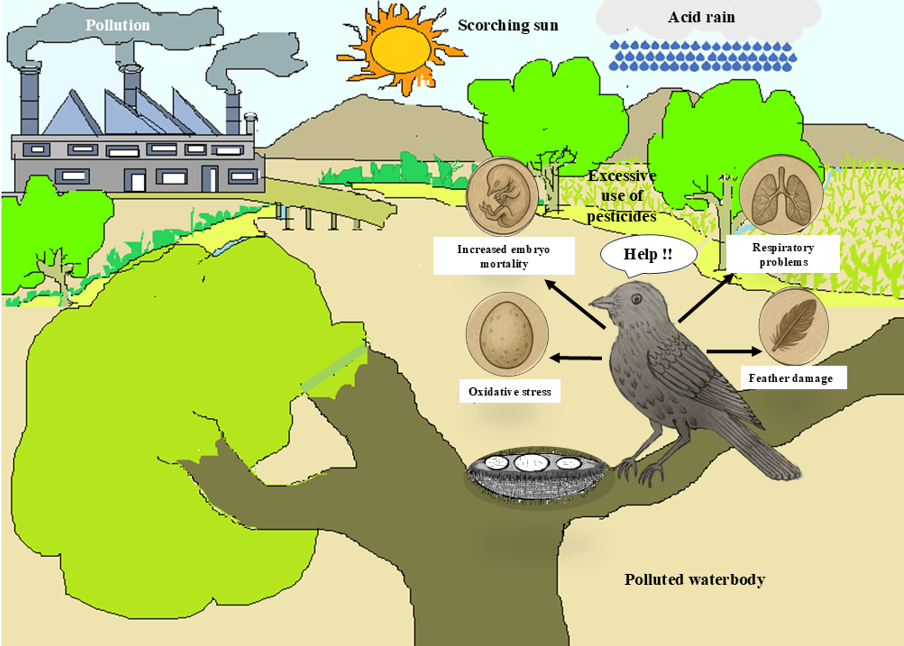
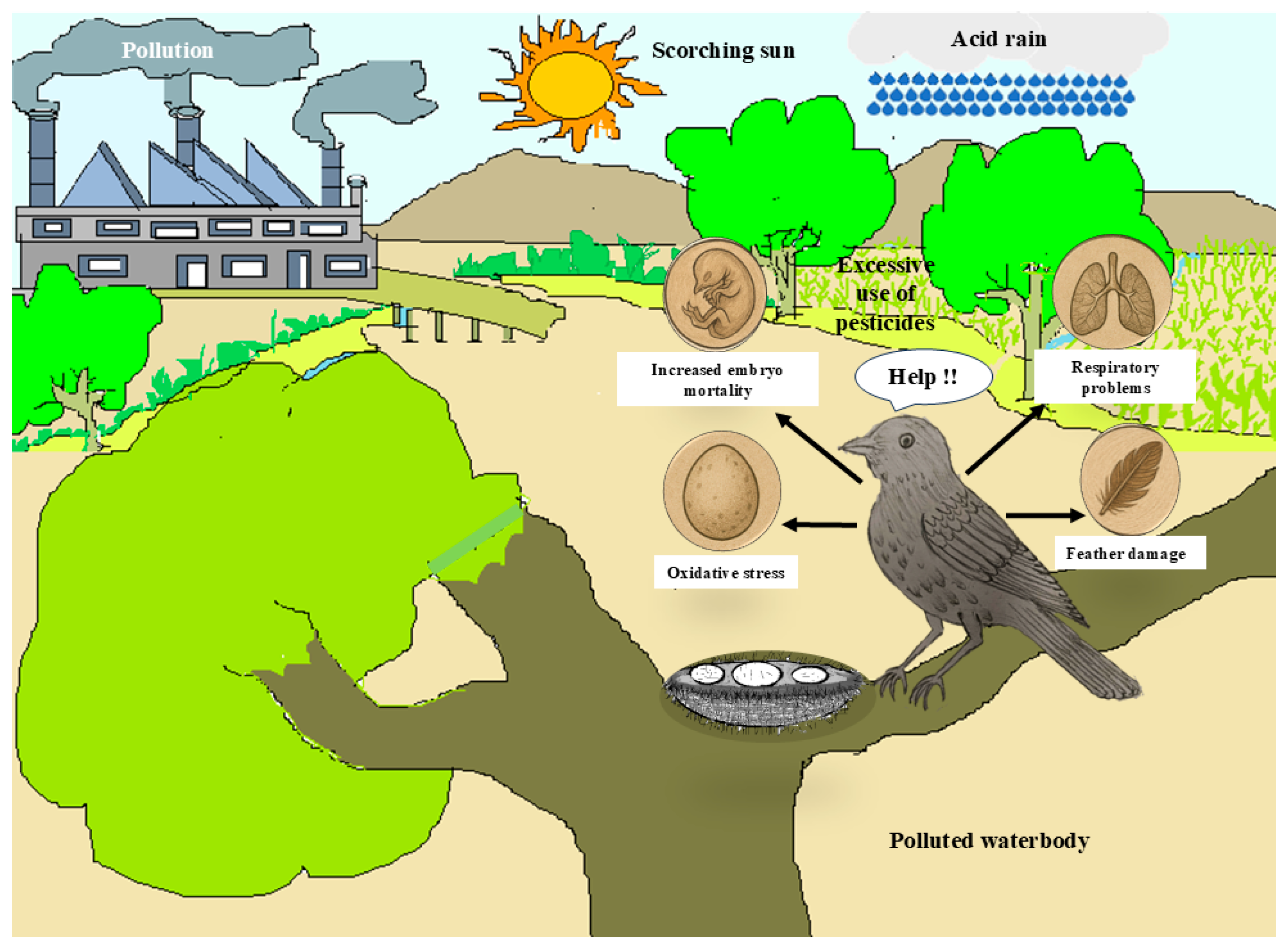
Figure 1.
Effects of air pollution on birds.
1. Introduction
Air pollution poses a mounting threat to global biodiversity, with birds serving as sensitive indicators of environmental degradation. Identifying pollutant sources enables targeted environmental policies and risk assessments for habitats critical to bird populations (Table 1). A recent meta-analysis by Smith et al. (2023) published in Ecological Indicators compiled over 150 avian studies and confirmed significant correlations between air quality indices and bird abundance, diversity, and breeding success, highlighting the role of birds as frontline indicators of ecosystem health. This review synthesizes recent findings with some foundational studies to provide continuity in emerging research themes on how air pollutants such as particulate matter (PM2.5, PM10), nitrogen oxides (NOx), ozone (O3), and heavy metals impact avian physiology, behaviour, reproduction, migration, and communication. Understanding avian responses to pollution provides early insights into ecosystem collapse and can serve as a benchmark for broader conservation efforts (Şekercioğlu et al. 2023). This review compiles and analyzes recent global studies on avian responses to air pollutants, with a focus on unique physiological, behavioural, reproductive, and aerodynamic consequences. The article also highlights alterations in aerodynamics and navigation due to pollution exposure and assesses conservation and mitigation strategies.
2. Sources and Types of Air Pollutants Affecting Birds
2.1. Respiratory Effects
In addition to having impaired lung function, birds exposed to high gas and particulate matter concentrations show histopathological damage to their respiratory tissues (Sanderfoot et al. 2017). Fine particles can overload the respiratory systems of birds, resulting in respiratory stress and inflammation. In urban China, birds exposed to PM2.5 exhibited increased macrophage infiltration and decreased lung volume (Zhang et al. 2025). 51 bird species had an average of 416 microplastic particles per gramme in their lungs, according to a study conducted in the Chengdu region of China. Polyethylene (PE), polyvinyl chloride (PVC), and tyre fragments were among the plastics, suggesting inhalation as a primary exposure pathway. Inhaled pollutants produce reactive oxygen species (ROS), which damage cells and tissues while overwhelming antioxidant defences. Sulphur dioxide (SO₂), nitrogen oxides (NOx), and ozone (O₃) cause lung damage and oxidative stress. Reduced erythrocyte counts and oxidative stress markers in feral pigeons have been associated with NOx inhalation (Salmón et al., 2018) (Figure 2).
2.2. Physiological Effects
Industrial operations and the burning of fossil fuels release metals like lead, cadmium, and mercury into the atmosphere (Kumar et al. 2025). These could infiltrate feathers and tissues, affecting the neurological and reproductive systems. Due to proximity to smelters, royal spoonbill blood lead levels in Colombia surpassed 210 µg/L (Bjedov et al., 2024). Egret feathers from wetlands in Bhubaneswar, India, had high levels of Zn (84 µg/g) and Cu (15.6 µg/g) (Tyagi et al. 2020). The immunity of house sparrows from high-ozone regions of Mexico was compromised by their lower natural antibody titres (Salaberria et al. 2023). In-depth physiological analysis identifies pollution's less-lethal impacts, which helps identify environmental stress in bird populations early. Limited long-term research linking the length of exposure to pollutants to immunological and biochemical alterations. A lack of information regarding the genetic consequences and intergenerational effects of prolonged exposure to pollutants.
2.3. Behavioural Effects and Endocrine Disfunction
Volatile organic compounds may affect endocrine function and bird behaviour (Ottinger et al. 2008). Exposure to heavy metals and volatile organic compounds can impair one's ability to navigate, think clearly, and avoid predators (Table 2). Ozone hinders forest birds' ability to defend their territory and attract mates by reducing their singing behaviour (Condolin et al. 2019). Decreases in migratory warbler populations throughout North America are correlated with ozone pollution (Liang et al. 2020). Exposure to heavy metals and microplastics has changed the timing of migration, causing delays in departures and a rise in confusion. The local extinction of delicate insectivorous birds in urban settings is associated with air pollution in Europe (Morelli et al. 2023). In susceptible passerines, prolonged exposure has been associated with diminished cognitive abilities, tremors, and even death. Behavioural plasticity provides non-invasive markers of environmental impact by reflecting stress or adaptation in real time (Caizergues et al. 2022). Setting priorities for conservation resources and tactics is aided by the differentiation of species-specific vulnerabilities. Preserving biodiversity in the face of increasing urbanisation requires converting research into workable conservation frameworks (Marzluff et al. 2008). supports the creation of policies and environmental education by offering a comprehensive and current understanding of how air pollution affects birds and inability to evaluate sub-lethal pollutant impacts across a variety of bird species using standardised behavioural metrics. Very few databases are available for regionally endemic and lesser-known species in developing nations and inadequate evaluation of these interventions' scalability and long-term efficacy.
2.4. Effects on Migration and Aerodynamics
Barton et al. (2023) demonstrates that air pollution is increasingly interfering with migration patterns, both spatially and temporally. Jat et al. (2021) found that increases in PM2.5 levels above 120 µg/m³ pushed bar-headed geese and Arctic terns to veer up to 250–320 km from their usual migratory routes across the Indo-Gangetic Plain. According to a Ross, 2023 and his East Asia Flyway Consortium study, the average arrival times of barn swallows across Chinese monitoring stations were also 14% later. Long-distance migrants experience increased metabolic strain and decreased survival as a result of the energetic cost of flight rising under pollution stress due to compromised respiratory efficiency and altered thermoregulation (Hedenström et al. 2024). The survival of species and the flow of genetic material depend on migration. Disruptions can affect biodiversity and ecosystems in a cascade of ways (Table 3). Research on the effects of air pollution on wingbeat dynamics and flight muscle performance is limited and need more research work on it.
2.5. Reproductive Effects
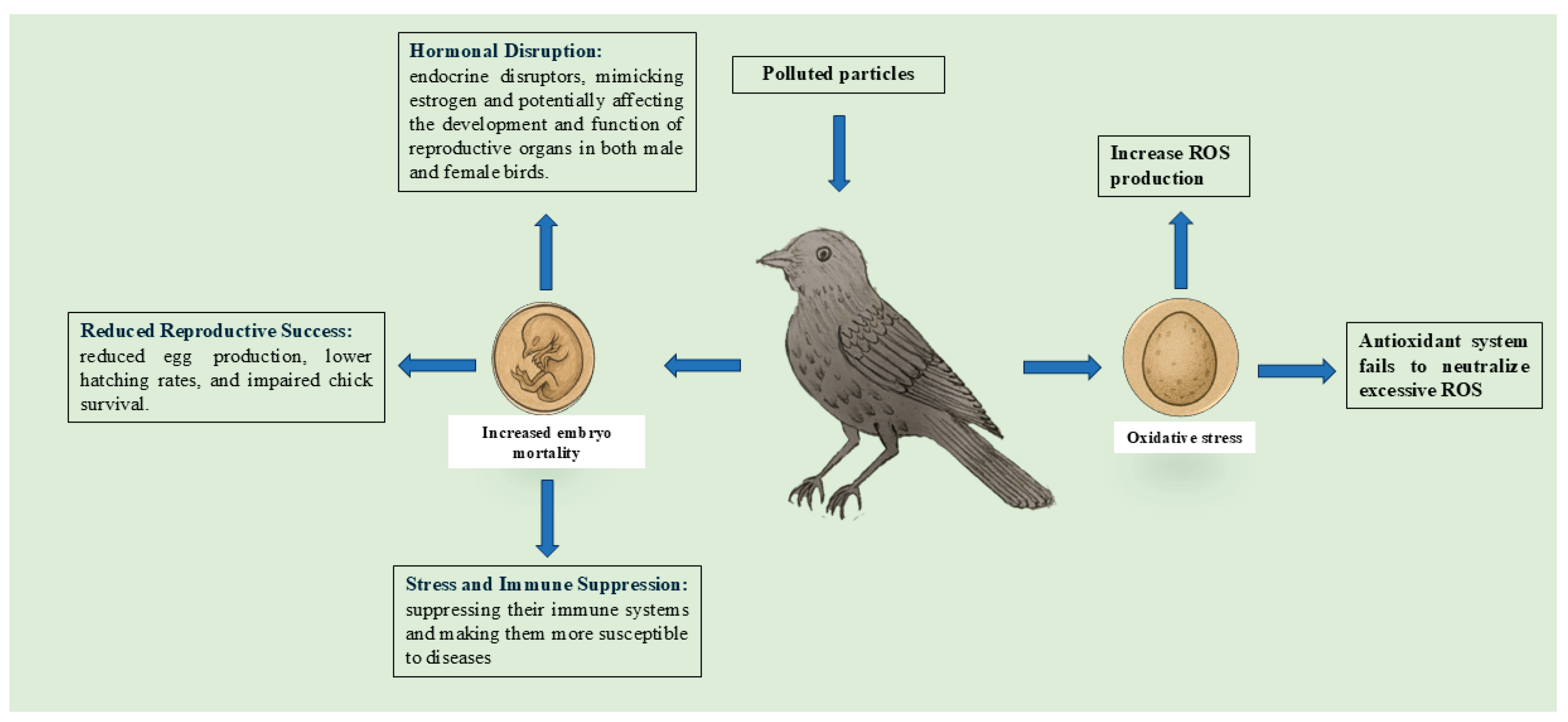
Since population sustainability depends on reproductive success, it is essential for species conservation to comprehend how pollution affects reproductive decline. By imitating or blocking hormones, pollutants can disrupt growth, the stress response, and reproduction (Coppock et al. 2022). Polluted environments have been shown to have lower fledgling survival, thinner eggshells, and lower hatching success. Reduced clutch size, eggshell thinning, and decreased fertility are all linked to heavy metals like Pb and Hg (Mora, 2003). Acid rain, which comes from SO₂ and NOx, causes soil to become more acidic, which lowers the amount of calcium available for healthy eggshells (Graveland, 1998). Pollutants can alter the way parents raise and care for their young, which may further impact the development of the offspring (Grace et al. 2024). Hormonal imbalances brought on by pollutants like dioxins and polychlorinated biphenyls (PCB) can have an impact on reproductive physiology (Coppock et al. 2022) (Table 4).
Figure 3.
Effects of air pollution on Reproductive and oxidative stress in birds.
2.6. Effects on Communication and Vocalization
Pollution impacts communication by causing avian mating calls to become less complex, loud, and frequent (Condolin et al. 2019). In impacted bird populations, these acoustic disturbances can reduce reproductive success and destabilise community structure by harming territorial defence, modifying social hierarchies, and affecting mate attraction. Pollutants that are both acoustic and chemical disrupt vocal signals (Brumm et al. 2013). In Germany, urban blackbirds exposed to nitrogen oxide showed a 25% reduction in the volume of their dawn chorus (Iqbal, 2024). This reduction may result in a lower rate of successful reproduction and weakened territorial defence since it probably affects mate attraction and territory establishment, both of which rely significantly on vocal cues. Social organisation and reproduction depend on acoustic communication (Yadav et al. 2024). Population dynamics and mating success are at risk due to disturbances. Because of acoustic communication systems are not well understood in relation to the combined effects of noise and chemical pollution (Table 5).
2.7. Effects on Food Habitat, Migration, and Population
The availability of fruits, seeds, and insects is reduced as a result of vegetation changes brought on by air pollution.
Bird song complexity and activity were reduced by 15% for days after exposure to wildfire smoke (Sanderfoot et al. 2024). Acid rain is a byproduct of SO₂ and NOx that changes aquatic food webs, affecting water birds that rely on fish and invertebrates (Richard et al. 2024). Wading and diving birds have less access to aquatic food due to increased eutrophication caused by nitrogen deposition (Ngatia et al. 2019) and excessive use of pesticides in fields (Saha et al. 2024; Sanyal et al. 2024). Degraded habitats have fewer nesting sites and increased susceptibility to predators. Insect and plant diversity are reduced in polluted habitats (Saha et al. 2025), which also reduces food sources and nesting materials. Because pollutants interfere with orientation and magnetoreception, they can cause disruptions to migration routes (Wiltschko et al. 2023). Long-term exposure may lead to population declines in urban and industrial areas (Kekkonen, 2017). Long-term changes in community composition have been observed in high-pollution areas. Elevated levels of heavy metals in urban birds' feathers and blood samples, including sparrows and pigeons (Asgari et al. 2024). Forest birds in North America and Europe have declined in sensitive species in regions with elevated NOx and O₃ levels (Reif et al. 2023). Birds in coal mining regions like China and India have high mortality, decreased diversity, and obvious respiratory distress (Cortes-Ramirez et al. 2018). But, The dispersion of pollutants across migratory corridors and nesting habitats has not been fine-scale mapped. According to a recent study by Barton et al. (2023), avian health can act as an early warning system for human exposure to air pollutants because bird population declines are correlated with an increase in respiratory illnesses in urban areas.
3. Levels of Effects of Air Pollution on Bird Species
According to the Kekkonen (2017), the most affected species include European starlings, house sparrows, and rock pigeons, which show significant pollution-related effects such as heavy metal bioaccumulation, song disturbance, and infertility. For example, a study in Beijing in 2023 found that house sparrows had blood lead levels 30% higher than those in suburban areas, and starlings nesting near roads had a 40% lower chance of successfully launching their young (Shang et al. 2023). Swallows, black kites, and great tits, show measurable but varying effects, such as delayed migration, altered plumage quality, and weakened immune systems. Arrivals of barn swallows at Chinese monitoring stations were delayed by 14%, according to Mitchell et al. (2024). Resilient species such as crows, rose-ringed parakeets, and cattle egrets display adaptive behaviour, such as flexible foraging and urban nesting, with minimal physiological impact, despite the presence of subtle stress markers (such as elevated corticosterone) in some urban populations (Chitty et al. 2024) (Table 6a–c).
4. Conservation and Mitigation Strategies
Air quality sensors are being installed in urban green spaces, wetlands, forests, and migratory stopovers (Raihan, 2023). Over 50 protected areas have ozone and PM2.5 monitors integrated by the German Federal Agency for Nature Conservation (Petry et al. 2020). According to Salmón et al. (2018) a negative correlation between Eurasian blackbirds' (Turdus merula) nesting success and elevated ozone levels. Permits early conservation measures and risk assessment in real time for vulnerable bird populations (Battisti et al. 2023). Creation of tree corridors, vertical gardens, and green belts to improve air quality and lower pollution levels close to bird habitats. According to a 2023 study conducted in Ahmedabad, India, urban parks with a lot of trees lowered PM2.5 levels by 37%, which was good for local bird species like bulbuls and tailorbirds (Suhane et al. 2023). Utilisation of indigenous plant species with a high capacity to absorb pollutants and draw birds (e.g., Ficus benghalensis, Azadirachta indica) (Roy et al. 2020). In addition to serving as pollutant sinks, wetlands offer bird breeding and feeding grounds. Heavy metal concentrations in sediments were lowered by up to 60% through wetland restoration projects that used artificial floating wetlands, allowing spoonbills, herons, and ibises to recolonise (Pandiyan et al. 2023). Collisions with illuminated structures are the cause of many migratory bird deaths. "Lights Out" programs provide a solution to this issue (Kenney, 2015). The initiative's participating skyscrapers reported a 60% decrease in collisions between birds and buildings during spring migration (Lomery, 2020). Efficiency of mating and alarm calling is decreased. Sound-absorbing vegetation installation and construction activity control during nesting seasons (Bošnjaković et al. 2024). In the vicinity of Ramsar wetlands, India, the Central Pollution Control Board (CPCB) implemented more stringent SO₂ and NOx emission limits in 2024 (Mathew et al. 2025). The air quality index (AQI) improved by 20% and the number of migratory birds, such as ruddy shelducks and northern pintails, increased after enforcement around Chilika Lake, for instance, according to satellite and field monitoring (Muduli et al. 2024). The heavy metal or particulate load is measured by routinely sampling birds such as pigeons, egrets, and crows. Heavy metal monitoring using feathers is inexpensive, scalable, and non-invasive. The "Air Safe Birds" project, which Bird Life International started in Southeast Asia in 2023 and involved over 30,000 citizen-reported entries, identified bird absence hotspots close to heavily polluted roads (Tan et al. 2023). Local governments use the data to plan low-emission times or reroute traffic around important bird areas.
5. Discussion
Globally, air pollution poses a serious but frequently disregarded threat to bird populations. Large-scale changes in community structure and migration patterns are among its effects, as are respiratory and reproductive impairments. For avian biodiversity to survive in an increasingly industrialised world, effective conservation initiatives must combine habitat preservation and pollution control (Kolawole et al. 2023). The success of current models like Singapore, New York, and Chilika suggests that science-driven, participatory conservation is not only feasible but effective. However, scaling these models, particularly in the Global South, remains a priority for global avian conservation. These strategies showcase a multidisciplinary approach, combining ecology, technology, urban planning, and community engagement to address the air pollution crisis affecting birds. Air pollution's impact on reproduction is one of the most critical and underappreciated factors contributing to bird population declines (Barton et al. 2023). It not only reduces individual fitness but threatens species viability over time. Protecting avian reproductive health should be central in policy, monitoring, and mitigation strategies. Bird communication is essential for survival and reproduction (Podos et al. 2022). Air pollution, both directly and indirectly, compromises the acoustic and visual signals birds depend on (Passarotto et al. 2025). This leads to disrupted mating, reduced fitness, and ecological imbalance. Understanding and mitigating these impacts through acoustic monitoring, policy changes, and habitat design is crucial for bird conservation in an increasingly polluted world. Air pollution reshapes the behaviour of birds in profound ways, often reducing their ability to survive, reproduce, and thrive. These behavioural shifts especially in foraging, nesting, mating, and migration are early ecological warning signals (Saha et al. 2025). Addressing them requires urgent mitigation of air pollution, continued behavioural monitoring, and integration of avian ethology into environmental policy.
6. Conclusions
The study of air pollution effects on birds is not only scientifically and ecologically crucial but also urgent. With rising urbanization, industrial output, and anthropogenic emissions, understanding avian responses helps protect ecosystem health, biodiversity integrity, and ultimately, human well-being. This research lays the groundwork for adaptive environmental management and conservation strategies tailored to emerging pollution threats in both global and local contexts. Longitudinal studies tracking pollutant exposure and reproductive success over generations. Species-specific sensitivity profiling, especially for migratory and apex species. Integrated pollution assessments, combining air, water, plastic, noise, and light stressors. Biomarker development, such as microplastic counts, stress hormones, and feather colour metrics. This review demonstrates the multifaceted impacts of air pollution on avifauna and underscores the necessity of integrative, data-driven approaches to conserve birds in polluted habitats. As air quality continues to decline globally, understanding and mitigating its effects on bird populations is not only essential for biodiversity conservation but also for ensuring ecological balance and sustainability.
Author Contributions
Sangita Maiti Dutta: Supervision, Conceptualization, Visualization, Validation, Review; Madhumita Dubey: Conceptualization, Visualization, Validation, Data curation, review; Raja Saha: Writing – review & editing, Writing – original draft, Visualization, Validation, Methodology, Data curation, Conceptualization.
Funding
This research received no external funding.
Institutional Review Board Statement
Not applicable.
Data Availability Statement
Every dataset that was examined for this study is openly accessible to the public.
Acknowledgments
We would like to thank the higher authorities of Midnapore City College for giving us the suitable decorum for performing our research work. We would like to thank Mr. Tuhin khaddar for guiding in images preparation and giving the valuable advices. We also thank Dr. Somaka Sanyal for his support and encouragement.
Conflicts of Interest
The writers say they have no competing interests.
Code Availability
No software is used for writing this manuscript.
References
- Abdullah, M., Khan, R. A., Rafay, M., Hussain, T., Ruby, T., Rehman, F., ... & Akhtar, S. (2017). Habitat ecology and breeding performance of Cattle Egret (Bubulcus ibis) in Faisalabad, Pakistan. Pakistan Journal of Zoology, 49(5). [CrossRef]
- Alamshah, A. (2024). The Morphological and Behavioral Responses of Jungle Crows (Corvus macrorhynchos) to Environmental and Human-Induced Changes (Doctoral dissertation, State University of New York at Binghamton).
- Alves Soares, T., Caspers, B. A., & Loos, H. M. (2024). Volatile organic compounds in preen oil and feathers–a review. Biological Reviews, 99(3), 1085-1099. [CrossRef]
- Asgari, F., Sajjadi, N., Zaeimdar, M., Sadeghi, M., & Tehrani, M. M. E. (2024). Comparative analysis of heavy metal accumulation in urban pigeon feathers: A case study in the Zinc Industrial Town of Zanjan. Results in Engineering, 23, 102849. [CrossRef]
- Bala, M., Sharma, A., & Sharma, G. (2020). Assessment of heavy metals in faecal pellets of blue rock pigeon from rural and industrial environment in India. Environmental Science and Pollution Research, 27(35), 43646-43655. [CrossRef]
- Barton, M. G., Henderson, I., Border, J. A., & Siriwardena, G. (2023). A review of the impacts of air pollution on terrestrial birds. Science of the total environment, 873, 162136. [CrossRef]
- Battisti, C., Perchinelli, M., Vanadia, S., Giovacchini, P., & Marsili, L. (2023). Monitoring effectiveness of an operational project on two threatened landbirds: Applying a before–after threat analysis and threat reduction assessment. Land, 12(2), 464. [CrossRef]
- Binner, A. R., Smith, G., Bateman, I. J., Day, B. H., Agarwala, M., & Harwood, A. (2017). Valuing the social and environmental contribution of woodlands and trees in England, Scotland and Wales. Forestry Commission. http://hdl.handle.net/10871/25958.
- Bjedov, D., Bernal-Alviz, J., Buelvas-Soto, J. A., Jurman, L. A., & Marrugo-Negrete, J. L. (2024). Elevated Heavy Metal (loid) Blood and Feather Concentrations in Wetland Birds from Different Trophic Levels Indicate Exposure to Environmental Pollutants. Archives of environmental contamination and toxicology, 87(2), 127-143. [CrossRef]
- Borghesi, F. (2016). Environmental pollution and hunting: exposure of birds to metals in their trophic areas, and of humans to lead in game birds. [CrossRef]
- Bošnjaković, M., Hrkać, F., Stoić, M., & Hradovi, I. (2024). Environmental Impact of Wind Farms. Environments, 11(11), 257. [CrossRef]
- Briseño-Jaramillo, M., Hutschenreiter, A., Aureli, F., & Ríos-Chelén, A. A. (2025). Passive acoustic monitoring and acoustic indices reveal noise-related changes in bird vocalisations. Bioacoustics, 34(2), 167-187. [CrossRef]
- Brumm, H., & Zollinger, S. A. (2013). Avian vocal production in noise. Animal communication and noise, 187-227. [CrossRef]
- Caizergues, A. E., Grégoire, A., Choquet, R., Perret, S., & Charmantier, A. (2022). Are behaviour and stress-related phenotypes in urban birds adaptive?. Journal of Animal Ecology, 91(8), 1627-1641. [CrossRef]
- Candolin, U., & Wong, B. B. (2019). Mate choice in a polluted world: consequences for individuals, populations and communities. Philosophical Transactions of the Royal Society B, 374(1781), 20180055. [CrossRef]
- Chitty, J., & Yeates, J. (2018). Birds (Avia). Companion Animal Care and Welfare: The UFAW Companion Animal Handbook, 293-317. [CrossRef]
- Coppock, R. W., & Dziwenka, M. M. (2022). Reproductive and developmental toxicity in avian species. Reproductive and Developmental Toxicology, 1461-1486. [CrossRef]
- Cortes-Ramirez, J., Naish, S., Sly, P. D., & Jagals, P. (2018). Mortality and morbidity in populations in the vicinity of coal mining: a systematic review. BMC public health, 18, 1-17. [CrossRef]
- Espín, S., Andersson, T., Haapoja, M., Hyvönen, R., Kluen, E., Kolunen, H., ... & Eeva, T. (2024). Fecal calcium levels of bird nestlings as a potential indicator of species-specific metal sensitivity. Environmental Pollution, 345, 123181. [CrossRef]
- Fuller, M. E. (2015). The structure and properties of down feathers and their use in the outdoor industry (Doctoral dissertation, University of Leeds).
- Giovanetti, L. (2024). Ecotoxicological status of two bird species (Falco tinnunculus and Parus major) and the influence of changing environtments: a multi-biomarker and complementary approach. https://hdl.handle.net/20.500.14242/158002.
- Grace, J. K., Duran, E., Ottinger, M. A., Woodrey, M. S., & Maness, T. J. (2022). Microplastics in the Gulf of Mexico: a bird’s eye view. Sustainability, 14(13), 7849. [CrossRef]
- Grace, J., Duran, E., Ottinger, M. A., & Maness, T. (2024). Sublethal effects of early-life exposure to common and emerging contaminants in birds. Current Research in Toxicology, 100190. [CrossRef]
- Graveland, J. (1998). Effects of acid rain on bird populations. Environmental Reviews, 6(1), 41-54. [CrossRef]
- Hedenström, A., & Hedh, L. (2024). Seasonal patterns and processes of migration in a long-distance migratory bird: energy or time minimization?. Proceedings of the Royal Society B, 291(2024), 20240624. [CrossRef]
- Iqbal, M. (2024). Physical Sensing for Assessing Environmental Influences on Bird Distribution, Migration, and Demography: An Integrated Study of Avian Diversity, Vocalization Patterns, and Habitat Characteristics (Doctoral dissertation, The University of Texas at Dallas).
- Jat, R., & Gurjar, B. R. (2021). Contribution of different source sectors and source regions of Indo-Gangetic Plain in India to PM2. 5 pollution and its short-term health impacts during peak polluted winter. Atmospheric Pollution Research, 12(4), 89-100. [CrossRef]
- Johannessen, C., Liggio, J., Zhang, X., Saini, A., & Harner, T. (2022). Composition and transformation chemistry of tire-wear derived organic chemicals and implications for air pollution. Atmospheric Pollution Research, 13(9), 101533. [CrossRef]
- Kannan, A., Basu, J., Roy, R., Pal, M., Rama Rao, S. V., Chatterjee, R. N., ... & Ghosh, A. (2025). Gender identification of chicks using vocalisation signals, artificial intelligence and machine learning techniques: Current status and future prospects. World's Poultry Science Journal, 81(1), 87-102. [CrossRef]
- Katzner, T. E., Pain, D. J., McTee, M., Brown, L., Cuadros, S., Pokras, M., ... & Schulz, J. H. (2024). Lead poisoning of raptors: state of the science and cross-discipline mitigation options for a global problem. Biological Reviews, 99(5), 1672-1699. [CrossRef]
- Kekkonen, J. (2017). Pollutants in urbanized areas: Direct and indirect effects on bird populations. Ecology and conservation of birds in urban environments, 227-250. [CrossRef]
- Kenney, D. T. (2015). Aesthetic danger: how the human need for light and spacious views kills birds and what we can (and should) do to fix this invisible hazard. J. Animal & Nat. Resource L., 11, 137.
- Kolawole, A. S., & Iyiola, A. O. (2023). Environmental pollution: threats, impact on biodiversity, and protection strategies. In Sustainable utilization and conservation of Africa’s biological resources and environment (pp. 377-409). Singapore: Springer Nature Singapore. [CrossRef]
- Kopij, G. (2023). Population development of three sympatric dove species in African acacia savanna following a drought. Zoology and Ecology (formerly Acta Zoologica Lithuanica), 33(1). [CrossRef]
- Kubacka, J. (2024). Immune challenge and reproductive performance in the great tit (Parus major) and zebra finch (Taeniopygia guttata) (Doctoral dissertation).
- Kucharska, K. (2023). Trends and implications of lead and mercury exposure in Black Storks and Mute Swans sampled in Poland (Doctoral dissertation). http://hdl.handle.net/11716/12596.
- Kumar, M. V., & Raju, H. P. (2025). Heavy Metals in the Environment: Sources, Fate, and Health Implications. Groundwater Resource Management Planning Strategies: A Geospatial Approach: Volume 1, 135. [CrossRef]
- Liang, Y., Rudik, I., Zou, E. Y., Johnston, A., Rodewald, A. D., & Kling, C. L. (2020). Conservation cobenefits from air pollution regulation: Evidence from birds. Proceedings of the National Academy of Sciences, 117(49), 30900-30906. [CrossRef]
- Lombardo, G., Rambaldi Migliore, N., Colombo, G., Capodiferro, M. R., Formenti, G., Caprioli, M., ... & Torroni, A. (2022). The mitogenome relationships and phylogeography of barn swallows (Hirundo rustica). Molecular Biology and Evolution, 39(6), msac113. [CrossRef]
- Lomery, L. (2025). Saving Two Birds With One Façade: Landscape Design for Urban Wildlife Habitat and Bird-Building Collision Prevention (Master's thesis, Rutgers The State University of New Jersey, School of Graduate Studies).
- Madhu, N. R., Sarkar, B., Slama, P., Jha, N. K., Ghorai, S. K., Jana, S. K., ... & Roychoudhury, S. (2022). Effect of environmental stressors, xenobiotics, and oxidative stress on male reproductive and sexual health. In Oxidative Stress and Toxicity in Reproductive Biology and Medicine: A Comprehensive Update on Male Infertility Volume II (pp. 33-58). Cham: Springer International Publishing. [CrossRef]
- Magory Cohen, T., Major, R. E., Kumar, R. S., Nair, M., Ewart, K. M., Hauber, M. E., & Dor, R. (2021). Rapid morphological changes as agents of adaptation in introduced populations of the common myna (Acridotheres tristis). Evolutionary Ecology, 35, 443-462. [CrossRef]
- Mahata, N., & Sharma, H. P. (2023). Birds along the Bagmati river corridor in urban areas and factors affecting their abundance. Environmental Challenges, 11, 100685. [CrossRef]
- Marzluff, J. M., & Ewing, K. (2008). Restoration of fragmented landscapes for the conservation of birds: a general framework and specific recommendations for urbanizing landscapes. Urban ecology: An international perspective on the interaction between humans and nature, 739-755. [CrossRef]
- Mathew, A., Kunal, R., Sharma, K. V., & Shekar, P. R. (2025). Environmental impacts of COVID-19 lockdown on Indian metropolitan cities: a comprehensive analysis of air quality, water quality, and surface temperatures. International Journal of System Assurance Engineering and Management, 16(1), 136-174. [CrossRef]
- Mitchell, L. (2019). The influence of environmental variation on individual foraging and habitat selection behaviour of the European nightjar (Doctoral dissertation, University of York).
- Mitchell, L., Brust, V., Karwinkel, T., Åkesson, S., Kishkinev, D., Norevik, G., ... & Schmaljohann, H. (2024). Mapping migratory routes: Avian conservation-focused opportunities for a pan-European automated telemetry network. [CrossRef]
- Mora, M. A. (2003). Heavy metals and metalloids in egg contents and eggshells of passerine birds from Arizona. Environmental Pollution, 125(3), 393-400. [CrossRef]
- Morelli, F., Tryjanowski, P., Ibáñez-Álamo, J. D., Díaz, M., Suhonen, J., Pape Møller, A., ... & Benedetti, Y. (2023). Effects of light and noise pollution on avian communities of European cities are correlated with the species’ diet. Scientific Reports, 13(1), 4361. [CrossRef]
- Muduli, P. R., & Acharya, P. (2024). Monitoring of Water Quality of Asia's Largest Brackish Water System, Chilika Lagoon. In Aquatic Ecosystems Monitoring (pp. 65-87). CRC Press.
- Ngatia, L., Grace III, J. M., & Moriasi, D. (2019). Nitrogen and Phosphorus Eutrophication in Marine. Monitoring of marine pollution, 77.
- Onyeabor, E. (2024). Strategies for Atmospheric Pollution Abatement and Control. In Environmental Law: International and Regional African Perspectives on Law and Management (pp. 255-374). Cham: Springer Nature Switzerland. [CrossRef]
- Ottinger, M. A., Lavoie, E., Thompson, N., Barton, A., Whitehouse, K., Barton, M., ... & Viglietti-Panzica, C. (2008). Neuroendocrine and behavioral effects of embryonic exposure to endocrine disrupting chemicals in birds. Brain Research Reviews, 57(2), 376-385. [CrossRef]
- Pandiyan, J., Arumugam, R., Al-Ghanim, K. A., Sachivkina, N., Nicoletti, M., & Govindarajan, M. (2023). Heavy metals in wetland ecosystem: Investigating metal contamination in waterbirds via primary feathers and its effect on population and diversity. Soil Systems, 7(4), 104. [CrossRef]
- Passarotto, A., Morosinotto, C., & Karell, P. (2025). Experimental noise and light pollution alter prey detection in a nocturnal bird of prey. Journal of Animal Ecology. [CrossRef]
- Petry, L., Herold, H., Meinel, G., Meiers, T., Müller, I., Kalusche, E., ... & Gengenbach, C. (2020). Air quality monitoring and data management in Germany–Status quo and suggestions for improvement. The International Archives of the Photogrammetry, Remote Sensing and Spatial Information Sciences, 44, 37-4. [CrossRef]
- Podos, J., & Webster, M. S. (2022). Ecology and evolution of bird sounds. Current Biology, 32(20), R1100-R1104. [CrossRef]
- Rahmani, A. R. (2022). Indian Avian Diversity: Status, Challenges, and Solutions. In Biodiversity in India: Status, Issues and Challenges (pp. 175-190). Singapore: Springer Nature Singapore. [CrossRef]
- Raihan, A. (2023). A review on the role of green vegetation in improving urban environmental quality. Eco Cities, 4(2), 2387. [CrossRef]
- Reif, J., Gamero, A., Flousek, J., & Hůnová, I. (2023). Ambient ozone–new threat to birds in mountain ecosystems?. Science of the Total Environment, 876, 162711. [CrossRef]
- Relić, R., & Đukić-Stojčić, M. (2023). Influence of Environmental Pollution on Animal Behavior. Contemporary Agriculture, 72(4), 216-223. [CrossRef]
- Richard, G., Sawyer, W. E., & Sharipov, A. (2024). Environmental Impacts of Air Pollution. In Sustainable Strategies for Air Pollution Mitigation: Development, Economics, and Technologies (pp. 47-76). Cham: Springer Nature Switzerland. [CrossRef]
- Rio, P., Caldarelli, M., Gasbarrini, A., Gambassi, G., & Cianci, R. (2024). The impact of climate change on immunity and gut microbiota in the development of disease. Diseases, 12(6), 118. [CrossRef]
- Robson, C. (2020). Field guide to the birds of Thailand. Bloomsbury Publishing.
- Ross, T. A. (2023). Are Pollutants and Emerging Diseases Endangering a Global Migratory Flyway? (Doctoral dissertation, Deakin University).
- Roy, A., Bhattacharya, T., & Kumari, M. (2020). Air pollution tolerance, metal accumulation and dust capturing capacity of common tropical trees in commercial and industrial sites. Science of the Total Environment, 722, 137622. [CrossRef]
- Rutkiewicz, J. M. (2012). Neurochemical Biomarkers to Assess Mercury's Health Impacts in Birds (Doctoral dissertation).
- Saha, R., & Dutta, S. M. (2024). Pesticides’ mode of action on aquatic life. Toxicology Reports, 101780. [CrossRef]
- Saha, R., Bhunia, M., Rakshit, S., Sanyal, S., & Dutta, S. M. Investigating the insect biodiversity of an agricultural area in Midnapore, West Bengal, India.
- Saha, R., & Dutta, S. M. (2025). Pyrethroids have become a barrier to the daily existence of molluscs. Journal of Hazardous Materials Letters, 100144. [CrossRef]
- Salaberria, C., Chávez-Zichinelli, C. A., López-Rull, I., Romano, M. C., & Schondube, J. E. (2023). Physiological status of House Sparrows (Passer domesticus) along an ozone pollution gradient. Ecotoxicology, 32(2), 261-272. [CrossRef]
- Saleem, A., Awan, T., & Akhtar, M. F. (2024). A comprehensive review on endocrine toxicity of gaseous components and particulate matter in smog. Frontiers in Endocrinology, 15, 1294205. [CrossRef]
- Salmón, P., Stroh, E., Herrera-Dueñas, A., von Post, M., & Isaksson, C. (2018). Oxidative stress in birds along a NOx and urbanisation gradient: an interspecific approach. Science of the Total Environment, 622, 635-643. [CrossRef]
- Sanderfoot, O. V., & Holloway, T. (2017). Air pollution impacts on avian species via inhalation exposure and associated outcomes. Environmental Research Letters, 12(8), 083002. [CrossRef]
- Sanderfoot, O. V., Tingley, M. W., Bassing, S. B., Vaughan, J. K., June, N. A., & Gardner, B. (2024). Hazardous wildfire smoke events can alter dawn soundscapes in dry forests of central and eastern Washington, United States. Global Ecology and Conservation, 54, e03044. [CrossRef]
- Sanyal, S., Chakravorty, P. P., & Saha, R. (2024). Evaluation of changes in reproductive and biochemical parameters in indigenous earthworm Perionyx excavatus (Perrier, 1872) against impact of selected pesticides. International Journal of Entomology Research, 9(6), 47-52.
- Saulnier, A., Bleu, J., Boos, A., Millet, M., Zahn, S., Ronot, P., ... & Massemin, S. (2023). Reproductive differences between urban and forest birds across the years: importance of environmental and weather parameters. Urban Ecosystems, 26(2), 395-410. [CrossRef]
- Shang, J., Cun, S., Zhang, S., & Liang, W. (2023). Metabolic adjustment in urban birds: glycometabolic enzyme activities in urban and rural tree sparrows (Passer montanus). Urban Ecosystems, 26(6), 1607-1614. [CrossRef]
- Şekercioğlu, Ç. H., Sutherland, W. J., Buechley, E. R., Li, B. V., Ocampo-Peñuela, N., & Mahamued, B. A. (2023). Avian biodiversity collapse in the Anthropocene: drivers and consequences. Frontiers in Ecology and Evolution, 11, 1202621. [CrossRef]
- Singha, R., & Singha, S. (2024). Safeguarding Health in Times of Heavy Air Pollution: Practical Precautions and Insights. Available at SSRN 5007592. [CrossRef]
- Smith, P. A., Smith, A. C., Andres, B., Francis, C. M., Harrington, B., Friis, C., ... & Brown, S. (2023). Accelerating declines of North America’s shorebirds signal the need for urgent conservation action. Ornithological Applications, 125(2), duad003. [CrossRef]
- Suhane, S., Polara, R., Gajjar, A., Agrawal, R., & Sharma, U. (2023). The Effect of Urban Green Spaces on Air Pollution Reduction: A Case of Ahmedabad. In E3S Web of Conferences (Vol. 436, p. 10009). EDP Sciences. [CrossRef]
- Tan, D. J., Freymueller, N. A., Teo, K. M., Symes, W. S., Lum, S. K., & Rheindt, F. E. (2023). Disentangling the biotic and abiotic drivers of bird-building collisions in a tropical Asian city using ecological niche modeling. bioRxiv, 2023-06. [CrossRef]
- Tyagi, N., Raghuvanshi, R., Upadhyay, M. K., Srivastava, A. K., Suprasanna, P., & Srivastava, S. (2020). Elemental (As, Zn, Fe and Cu) analysis and health risk assessment of rice grains and rice based food products collected from markets from different cities of Gangetic basin, India. Journal of Food Composition and Analysis, 93, 103612. [CrossRef]
- Wiltschko, R., & Wiltschko, W. (2023). Magnetoreception and Bird Navigation. In Oxford Research Encyclopedia of Neuroscience. [CrossRef]
- Yadav, S., Rab, S., Wan, M., Yadav, D., & Singh, V. R. (2024). Sound Communication in Nature. In Handbook of Vibroacoustics, Noise and Harshness (pp. 951-976). Singapore: Springer Nature Singapore. [CrossRef]
- Yap, K. N. (2018). Physiological basis of aerobic capacity and workload ability in birds.
- Zhang, C. (2021). Characterization of typical airborne fibrous particles and their aerodynamic removal (Doctoral dissertation, University of Illinois at Urbana-Champaign).
- Zhang, H., Guo, J., Peng, P., Wang, M., Shen, J., Sun, X., ... & Li, X. (2025). Evolution and biological characteristics of the circulated H8N4 avian influenza viruses. Journal of Integrative Agriculture, 24(6), 2342-2355. [CrossRef]
Figure 2.
Effects of air pollution on respiratory system in birds.
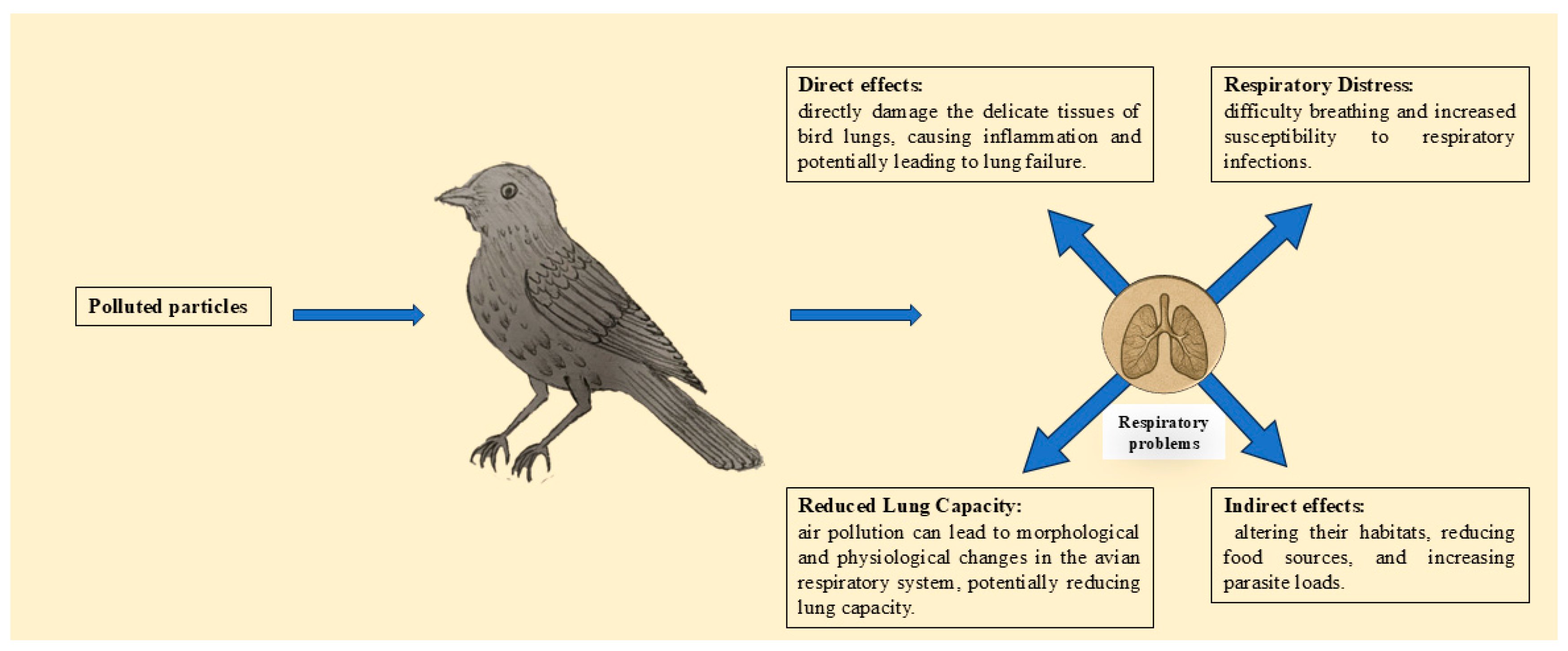

Table 1.
Types of Air Pollutants Impacting Birds.
| Pollutant | Source | Effect on Birds | Reference |
|---|---|---|---|
| Particulate Matter (PM2.5, PM10) | Combustion, industrial dust | Respiratory inflammation, lung damage | Barton et al. 2023 |
| Nitrogen Oxides (NOx), Sulfur Dioxide (SO₂) | Vehicle exhaust, power plants | Acid rain, immune suppression | Richard et al. 2024 |
| Ozone (O₃) | Secondary pollutant from NOx + VOCs | Lung lesions, reduced foraging | Sanderfoot et al. 2017 |
| Heavy Metals (Pb, Hg, Cd, Zn) | Smelting, fuel combustion | Neurotoxicity, reproductive damage | Borghesi et al. 2016 |
| Microplastics & VOCs | Urban dust, tire wear | Lung blockage, endocrine disruption | Johannessen et al. 2022 |
Table 2.
Behavioural Changes by Pollutant.
| Behaviour | Pollutant(s) | Effect | Reference |
|---|---|---|---|
| Foraging | PM2.5, SO₂ | Reduced activity, disorientation | Singha et al. 2024 |
| Mating | NOx, PM10 | Reduced courtship, mating calls | Onyeabor et al. 2024 |
| Migration | O₃, CO₂, PM | Route shift, delay, energy loss | Rio et al. 2024 |
| Nesting | PM, VOCs | Higher, riskier nest sites; poor materials | Barton et al. 2023 |
| Aggression/Stress | O₃, heavy metals | Higher agitation, anxiety | Relić et al. 2023 |
| Parental care | O₃, Pb, NO₂ | Less feeding, more abandonment | Borghesi et al. 2016 |
| Flocking | PM, noise | Disorganized flocks, social breakdown | Barton et al. 2023 |
Table 3.
Air Pollution Disrupts Avian Aerodynamics.
| Pollution Type | Aerodynamic Effect | Biological Impact | reference |
|---|---|---|---|
| Particulate Matter (PM2.5, dust, soot) | Deposits on feathers increase drag, reduce lift | More energy spent during flight, increased fatigue | Zhang et al. 2021 |
| Heavy Metals (Pb, Hg) | Neurotoxicity affects neuromuscular control of wings | Impaired flight coordination and stability | Rutkiewicz et al. 2012 |
| Volatile Organic Compounds (VOCs) | Damage feather keratin and reduce waterproofing | Impaired insulation and flight in birds | Alves Soares et al. 2024 |
| Microplastics (airborne fibres) | Embed in feather barbs | Disrupts aerodynamic feather alignment | Fuller, 2015 |
| Ozone (O₃) | Causes oxidative stress on wing muscles | Weakened power stroke and manoeuvrability | Yap, 2018 |
Table 4.
Reproductive effects of pollutants.
| Pollutant | Reproductive Impact | Example | Reference |
|---|---|---|---|
| PM2.5 / Soot | Hormonal imbalance, embryo toxicity | Magpies (China, 2023) | Saleem et al. 2024 |
| NOx & SO₂ | Delayed ovulation, low mating success | Great tits (France, 2023) | Saulnier et al. 2023 |
| Heavy metals (Pb, Cd) | Thin shells, deformities | Tree swallows (USA, 2022) | Espín et al. 2024 |
| VOCs / O₃ | Oxidative stress in ovaries/testes | Pigeons (India, 2024) | Madhu et al. 2022 |
| Microplastics | Hormonal interference | Egrets in coastal Taiwan (2024) | Grace et al. 2022 |
Table 5.
Communication disruption by pollutions.
| Pollution Type | Communication Effect | Example | Reference |
|---|---|---|---|
| PM2.5 / O₃ / NOx | Reduces song quality, affects brain centres | UK starlings (2023) | Binner et al. 2017 |
| Heavy metals | Affects song learning, memory | Canadian sparrows (2024) | Giovanetti et al. 2024 |
| VOCs | Delays vocal development in chicks | India (2023) | Kannan et al. 2025 |
| Urban noise | Causes acoustic masking, vocal fatigue | Germany (2024) | Briseño-Jaramillo et al. 2025 |
| Haze/soot | Obscures plumage signals | Thailand doves (2023) | Robson et al. 2020 |
Table 6.
(a): Highly Affected Species. (b): Moderately Affected Species. (c): Minimally Affected / Resilient Species.
Table 6.
(a): Highly Affected Species. (b): Moderately Affected Species. (c): Minimally Affected / Resilient Species.
| Species | Region | Key Impacts | Reference |
|---|---|---|---|
| House Sparrow (Passer domesticus) | India, China | Oxidative stress, low reproductive success, reduced song activity | Mahata et al. 2023 |
| Rock Pigeon (Columba livia) | Urban centers globally | High Pb and Cd accumulation, behavioural anxiety, egg deformities | Bala et al. 2020 |
| European Starling (Sturnus vulgaris) | UK, Poland | Decreased song complexity, neurotoxicity, reduced clutch size | Kucharska, 2023 |
| Common Myna (Acridotheres tristis) | South Asia | Delayed breeding, altered foraging behaviour | Magory Cohen et al. 2021 |
| Tree Swallow (Tachycineta bicolor) | USA | Shell thinning, embryonic mortality, altered flight | Coppock et al. 2022 |
| Species | Region | Key Impacts | Reference |
| Great Tit (Parus major) | Europe | Changes in song patterns, delayed hatching, immune suppression | Kubacka et al. 2024 |
| Barn Swallow (Hirundo rustica) | Spain, Turkey | Route shifts in migration, altered plumage brightness | Lombardo et al. 2022 |
| Black Kite (Milvus migrans) | India | High heavy metal load, mild reproductive suppression | Katzner et al. 2024 |
| Nightjar (Caprimulgus europaeus) | UK | Decreased nocturnal activity under ozone peaks | Mitchell, 2019 |
| Laughing Dove (Spilopelia senegalensis) | Africa, Middle East | Nesting changes, reduced body mass | Kopij, 2023 |
| Species | Region | Key Impacts | Reference |
| Cattle Egret (Bubulcus ibis) | Global tropics | Minor shifts in nesting behaviour | Abdullah et al. 2017 |
| House Crow (Corvus splendens) | Asia | Short-term stress response, adaptive foraging | Alamshah, 2024 |
| Feral Parakeet (Psittacula krameri) | Europe, India | No major reproduction issues in smog zones | Rahmani, 2022 |
Disclaimer/Publisher’s Note: The statements, opinions and data contained in all publications are solely those of the individual author(s) and contributor(s) and not of MDPI and/or the editor(s). MDPI and/or the editor(s) disclaim responsibility for any injury to people or property resulting from any ideas, methods, instructions or products referred to in the content. |
© 2025 by the authors. Licensee MDPI, Basel, Switzerland. This article is an open access article distributed under the terms and conditions of the Creative Commons Attribution (CC BY) license (http://creativecommons.org/licenses/by/4.0/).
Copyright: This open access article is published under a Creative Commons CC BY 4.0 license, which permit the free download, distribution, and reuse, provided that the author and preprint are cited in any reuse.