
Submitted:
26 June 2025
Posted:
30 June 2025
You are already at the latest version
Abstract
People with disabilities (PwD) and carers report higher levels of isolation and lower physical activity (PA) participation than the general population. Yet, both PA and social connection are linked to improved health and quality of life. Innovative approaches are needed to address these disparities. This study aimed to: (1) explore PwD and carers’ experiences with PA, social connection, and online platforms, and (2) examine their preferences and expectations for online tools supporting these needs. Six workshops (N = 17; 6 PwD, 6 carers, 5 both; aged 20–73 years, M = 52.94, SD = 15.21) participated in the co-design of the ConnectUp platform prototype. Data were analyzed using reflective thematic analysis, identifying four key themes: (1) safety and vulnerability online; (2) disability inclusion and creating authentic social connections; (3) physical activity and disability; and (4) meaningful representation of PwD and carers on online platforms. Participants emphasized the need for platforms that foster genuine inclusion, real con-nections, and support for PA. The co-design process ensured these preferences shaped platform development. The ConnectUp prototype is currently being further co-developed and refined for national rollout, aiming to reduce isolation and promote wellbeing for PwD and carers through inclusive digital engagement.
Keywords:
physical activity
; social connection
; loneliness
; disability
; digital health
1. Introduction
In Australia, one in six people live with a disability, which may be physical, intellectual, behavioral, or related to mental health (Australian Institute of Health and Welfare [AIHW], 2024). People with disabilities (PwD) experience poorer outcomes across multiple life domains, including employment, education, housing, and social support, embedding disadvantage into their daily lives (AIHW, 2024). This systemic marginalisation contributes to social exclusion and isolation, which in turn can limit participation in activities that promote wellbeing (Macdonald et al., 2018).
Carers of PwD face similar challenges. They often have fewer opportunities to engage in health-promoting activities compared to non-carers, due to caregiving responsibilities, emotional strain, and time limitations (Farrugia et al., 2019). The combined impact of living with a disability or providing care can significantly reduce opportunities for physical activity (PA) participation (Lacey et al., 2022; Martin Ginis et al., 2021).
The benefits of regular PA are well established and include improvements in mental health (Singh et al., 2023), physical health (Posadzki et al., 2020), and cognitive functioning (Mandolesi et al., 2018). Additionally, PA has been linked to increased social connection among PwD, contributing to enhanced overall wellbeing (Maenhout & Melville, 2024). Despite these benefits, participation in PA remains significantly lower among PwD and their carers when compared to the general population (Australian Bureau of Statistics, 2022).
A range of barriers contribute to this disparity, including environmental inaccessibility, negative attitudes from staff and other users at PA venues (e.g., gyms, recreation centres, sporting clubs), and a lack of knowledge about safe and suitable activities (Nikolajsen et al., 2021; Salomon et al., 2019). Financial constraints and insufficient social support from family and friends further limit participation (AIHW, 2024; Nikolajsen et al., 2021; Salomon et al., 2019). Even when initial access is improved, maintaining long-term PA engagement can be challenging without ongoing motivation and support (Kwasnicka et al., 2016). However, individuals with strong social support and enabling environments are more likely to sustain behaviour change (Kwasnicka et al., 2016).
Digital platforms, including social media and mobile applications, are increasingly playing a role in enhancing social connection and promoting PA among PwD. Social platforms can help reduce geographical and environmental barriers by enabling remote communication and community participation (Viluckienė & Ruškus, 2017; Lai et al., 2019). Apps like Bumble for Friends and other “people-nearby” applications allow users to form new connections within their local area, expanding their social networks (Hsiao & Dillahunt, 2017; Mican et al., 2020; Procentese & Gatti, 2019). The COVID-19 pandemic further highlighted the potential of online tools—such as Zoom and Facebook—for helping PwD stay connected through structured virtual events (Spassiani et al., 2023).
Despite these opportunities, PwD often hesitate to use open-access platforms due to concerns about safety, previous negative experiences, and exposure to cyberbullying (Alhaboby et al., 2023). This emphasizes the need for safer, more inclusive online environments. Platforms like Alvie and Livewire have been developed to address these issues for specific groups of PwD, yet there is currently no digital platform tailored to the needs of adult PwD and carers that supports both social connection and promotes PA engagement.
Co-design presents a promising approach to addressing these challenges and designing novel inclusive online tools. Involving PwD and carers directly in the design process enables the development of platforms that reflect their specific needs, values, and lived experiences, promoting genuine inclusion from the outset (Zhu et al., 2022; Labattaglia et al., 2023). Although co-design can be time consuming, it is often cost-effective in the long term by reducing the need for redesign (Henni et al., 2022; Kulkarni, 2019).
An online platform designed specifically for PwD and carers has the potential to provide a safe, inclusive, and engaging digital space (Vaughn, 2015). In response to this need, ConnectUp was developed in collaboration with Carers WA. The platform aims to foster social connection and promote participation in PA among PwD and carers. To inform the design of the ConnectUp prototype, this study aimed to: (1) explore PwD and carers’ experiences with PA, social connection, and online platforms, and (2) examine their preferences and expectations for online tools supporting these needs.
2. Materials and Methods
2.1. Research Design
This study employed a phenomenological approach to explore the lived experiences of people with disabilities (PwD) and carers in online environments (Moustakas, 1994). These past experiences shaped participants’ future consciousness, their ability to anticipate, imagine, and form expectations about future possibilities which informed their preferences and expectations for the prototype ConnectUp platform (Ahvenharju et al., 2018). Co-design workshops were conducted to collaboratively develop the platform, ensuring that the design process was grounded in the real-life experiences, needs, and insights of PwD and carers.
2.2. Participants
Six workshops were conducted with 17 participants (male = 8, female =9; PwD = 6, carer = 6, and PwD and carer = 5) aged 20 to 73 years (M = 52.94, SD = 15.21). Participants’ disabilities included physical, intellectual, and mental health conditions. Participants who were carers had different caring responsibilities ranging from ad-hoc caring to full time caring roles.

Table 1.
Number of workshops, participants and objectives of each workshop.
| Workshop number | Participants | Objectives |
| 1 – 4 | PwD n = 6 Carer n=6 Carer and PwD n = 5 (Total N = 17) |
To explore participants’ experiences, perspectives and opinions of social connectedness, engagement in PA, and the use of online platforms. To collect information regarding the participants’ preferences and expectations of an online platform, and the perceived barriers and enablers to physical activity participation and social interaction. |
| 5 | PwD n = 2 Carer n = 3 (Total n = 5) |
To explore participants’ feedback and perspectives on the prototype online platform (developed based on workshops 1-4). |
| 6 | Representatives of the community organizations (Total n = 13) |
To gain interest and feedback regarding the preliminary prototypes from potential adopters of the platform. To discuss potential ways to promote, implement and scale the platform. (The results of workshop 6 are reported elsewhere) |
1 Some of the participants from workshop 5 also attended workshops 1-4. This article reports results of workshops 1-5 only. Workshop 6 informed further successful funding applications for national roll-out of the ConnectUp platform.
Participants were included in the study if they were adults (aged ≥18) and identified as a PwD, a current carer, or both and had to understand and speak English. Participant recruitment was facilitated by Carers WA (a non-profit, community-based organization and registered charity dedicated to improving the lives of carers living in Western Australia) and utilized a convenience sampling approach, which included carers representatives’ network, Carers WA social media, and word of mouth.
2.3. Materials
Participants completed pen-and-paper demographic questionnaires, including questions on age, gender, whether they are a carer or PwD, and type of disability if they identified as having one.
Workshops 1-4 used a predetermined set of questions (discussion topics, Appendix A) to target specific content and engage participants. Workshop 5-6 used a draft prototype of the ConnectUp platform (Figure 1), to facilitate direct feedback and recommendations to platform developers. Workshops averaged 92 minutes in duration (M = 92.34, SD = 15.28).
2.4. Procedure
PwD, carers, and key stakeholders (workshop 6) were invited to attend workshops conducted by Carers WA. Workshops 1-5 were facilitated by a person with a disability (SJe) with the support of a behavioral researcher (DK). A web design specialist (AS) facilitated workshop five; workshop six was facilitated by a behavioral researcher (DK). Participants were asked about their experiences, beliefs, and attitudes towards improving social connection, PA, and general well-being. The initial two workshops were held at Cityplace Community Centre in Perth, WA. Data were digitally audio and video recorded. Workshops 3-6 were held online via Zoom, which enabled digital audio-visual recording. Workshop recordings were then transcribed using Otter.ai, an online transcription tool.
2.5. Analysis
Reflexive thematic analysis (Braun & Clarke, 2006, 2019) was completed using NVivo software and applying conservative methods such as ‘sticky notes’ and hand-drawn mind maps. The transcripts were analyzed in six-stages: (1) familiarizing oneself with data; (2) generating initial codes; (3) searching for themes; (4) reviewing themes; (5) defining and naming themes, and (6) producing the report. Stage one involved four researchers (SJo, CA, EJ, GM) reviewing audio-visual and transcript data to establish familiarity. Within stage two, the same four researchers (SJo, CA, EJ and GM) independently coded the transcript data using NVivo software. Stage three involved the initial search for themes (SJo, CA, EJ and GM) discussing their independent coding to establish and achieve consensus on comparable concepts as themes developed. During stage four and five, the four researchers (SJo, CA, EJ and GM) who coded the data engaged in peer review of the initial themes and defining and naming themes with three experienced researchers (JMV, CT and DK). All researchers participated in stage six, the write-up and development of the thematic narrative. To ensure the trustworthiness of the coding and theme development process, researchers engaged in regular team meetings and an audit trail for code and theme development was maintained. To ensure that the prototype of the ConnectUp platform could meet the needs of PwD and carers, the research team provided participants with the opportunity to provide feedback on the findings.
2.6. Researcher Characteristics and Reflexivity Statement
During this research project four researchers (SJo, CA, EJ and GM) were Occupational Therapy Honors students and they led data analysis and reporting under the supervision of JMV, EM, CT and DK. JMV is a physiology researcher with expertise in measurement and analysis of physical activity in various populations. SJe identifies as living with a disability, working for Carers WA in the system policy and strategy role. As a person with a disability, SJe led the facilitation of the co-design workshops. During this research project, JH was working for Carers WA as a community capacity development officer, together with PR who is a lead team manager at the same organization. SJe, JH and PR, led consumer recruitment for the project. AS is a computer engineer and web design specialist with experience developing IT solutions for non-government organizations, and he led the development of the online platform; he also identifies as a PwD. EM is a health psychologist who has experience working with individuals with various lived experiences, including living with diabetes and mental health challenges. CT is an occupational therapist with research and clinical experience working with people with physical and mental health conditions. DK is a behavioral scientist with expertise in digital health. DK co-facilitated the co-design workshops with SJe.
3. Results
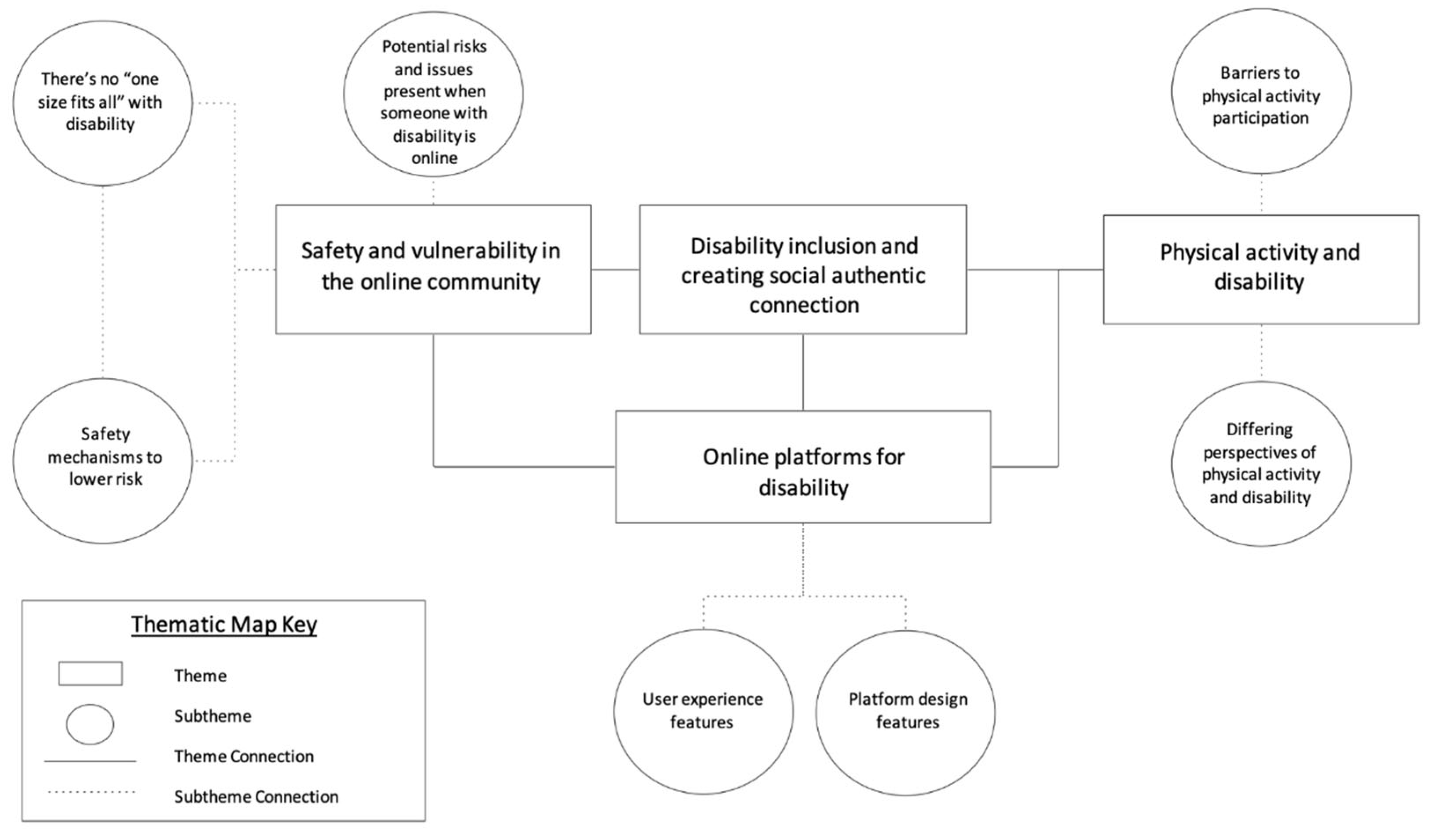
The study results informed the design of the ConnectUp platform. Four themes were identified in the data (Figure 2 shows the intersection of themes and subthemes). They were: (1) safety and vulnerability online; (2) disability inclusion and creating authentic social connections; (3) physical activity and disability; and (4) meaningful representation of PwD and carers on online platforms.
3.1. Theme 1 Safety and Vulnerability in the Online Environment
Safety was the most prominent topic within each workshop and was emphasized by all groups (PwD and carers). Safety was identified as the foundation for PwD to authentically engage in an online space. The safety theme incorporated privacy, cybersecurity, social safety, physical safety, psychological safety, and financial protection. Participants articulated a broader sense of vulnerability within the online community. Three sub-themes were identified within this theme.
3.1.1. Potential Risks and Issues Present When Someone with a Disability Is Online
Reports of abuse, harassment, or coercion were commonly reported experiences of PwD when engaging in online social connections. Having a cognitive disability was presented by participants as potentially having an increased risk of negative experiences such as online scamming. Additionally, many participants discussed online bullying and discriminatory comments that caused distress and made them feel unsafe online. These issues were noted despite many participants utilising online systems to improve safety; one participant reflected:
One of the issues was lots of scammers calling him and saying to do this, and I keep saying to him: “nobody’s gonna call you like that”. But his level of ability to make decisions is not there anymore. Participant 13 (Carer)
3.1.2. There’s No ‘One Size Fits All’ for Safety
Issues relating to safety varied depending on the type or impact of disability. Concerns from participants with mental health conditions highlighted the potential for emotional triggers when socializing with others and the difficulty of communicating that, especially online.
Participants discussed the need to balance autonomy and support from carers when communicating online, especially for those with intellectual disabilities. Furthermore, it was noted that using online platforms can be difficult due to social behaviors and the fear of miscommunication.
I think it’s hard. Particularly if you’ve got some sort of intellectual disability. With those chatlines, you have the potential to say things you don’t really mean to say, or they’re misinterpreted or some other thing, and there can be a real danger there. Participant 2 (PwD)
3.1.3. Safety Mechanisms Are Necessary for Online Platforms to Lower Risks
Discussions about safety and mitigating risk for PwD utilising online platforms were recurrent throughout all workshops. To mitigate risk and support safety education and awareness, participants suggested comprehensive, accessible guides covering topics such as privacy, online safety, and considerations for meeting people in person.
User-friendly language accessible for all disabilities, LGBTQI+ populations, and culturally diverse groups was identified as a basic consideration to support inclusion. When abuse or safety concerns become apparent, participants suggested that the platform moderators should be reactive, enabling reporting of harassment or hurtful language. Finally, carers expressed that guardian access features could be beneficial in supporting those with disadvantaged insight, judgement, or communication abilities.
My daughter is not on Facebook, she’s not on Instagram, she doesn’t have the capacity to be on those... I’d love to be able to create the profile of who she is as an individual. But it be that I’ve got ownership over it, because she’s not going to be the one putting in the preferences, it’s going to be me, just talking on her behalf. I’m advocating for her, but I think it’s important that she, as an individual, has her identity. Participant 2 (Carer).
3.2. Theme 2Disability Inclusion and Creating Authentic Social Connections
This theme reflected PwD and carers’ desire for social connection and inclusion. The discussions focused on previous social experiences, including positive and negative experiences in social situations. Participants also stated that inclusivity influenced whether a social experience would be positive or negative. Many participants agreed that an inclusive environment facilitated opportunities for social connection. However, labelling social groups as ‘inclusive’ did not automatically mean social connection would occur.
Sports organizations across the board now often say they’re inclusive, they all have inclusive policies… But my daughter for example, does mainstream netball and does ‘No Limits’ netball, which is a disability contest. ‘No Limits’ netball is her ‘fun netball’. She gets there, she hugs the girls, they run up to her. She does mainstream netball; it’s more competitive netball and those girls don’t talk to her. Participant 2 (Carer)
Participants expressed challenges in establishing social connections for PwD noting that developing a platform such as ConnectUp will allow PwD and carers to connect with each other and engage in PA together, further building on their peer network. The participants thought the connections facilitated on the ConnectUp platform could be inclusive and guided by the person’s interests and experiences.
These [individuals] are going to grow older, they need their own friend groups, they can’t just rely on us or the carers all the time. They need people that want to do like minded things. They need those connections to keep them going through life as they get older. Participant 2 (Carer)
PwD reported anxiety about possible misinterpretations of social cues, which can lead to miscommunications on online messaging platforms. This generated further recommendations for the ConnectUp platform, including communication prompts to assist participants with appropriate questions and suggestions while using the chat function.
I think having support in helping with language because sometimes I struggled in school, and I struggled with language. I think having a [tool] that you can click on that says ‘this is what you could suggest’ or ways of helping with the communication. Like prompts and stuff like that because I think there’s so much pressure – I [often] don’t know what to say. Participant 13 (PwD and Carer)
Awareness of barriers experienced by PwD was raised as an important aspect of creating authentic social connections and improving disability inclusion. Participants discussion focused on PwD’s barriers in accessing and participating in social connections and PA. These barriers included the lack of awareness in terms of venues, public places, and society in creating an accessible and inclusive environment for PwD.
[People can be] scared about hurting people with disability, so they just don’t want to play with them. Because they’re worried that ‘oh if we touch her, she’ll break something’. Or ‘if we push her too hard, she’ll fall, and we’ll get in trouble for that’. So, they just kind of segregate you. Participant 13 (PwD and Carer)
3.3. Theme 3 Participation in Physical Activity for PwD and Carers
This theme refers to the PA topics identified in the discussions and has two subthemes: (a) differing perspectives of PA and disability and (b) barriers to PA participation.
3.3.1. Differing Perspectives of Physical Activity and Disability
Participants were aware of the benefits of PA and generally held positive intentions towards participation. However, experiences of PA participation varied between individuals. Some had positive experiences within both disability-exclusive and non-exclusive PA types; however, experiences were more often negative.
She is very reluctant to participate in sports. I think that’s more of the growing up process of being rejected. I think it’s quite deep within her now that sport often means ridicule, and so it’s hard to get her involved. Participant 4 (Carer)
Participants with physical disabilities or those who expressed difficulties with social judgement often had negative experiences from injuries from PA. Participants expressed issues with a lack of insight into physical limitations and safety from others during contact sports.
We want to compete, but other people don’t want to challenge you and even when you can do more... but then you’re also more vulnerable physically. Participant 14 (PwD)
Additionally, some participants noted that past experiences of bullying and exclusion while participating in social sports had resulted in negative associations with PA. For participants with mental health conditions, these past experiences heightened anxieties towards participation in PA, resulting in further avoidance.
Growing up, sports has always been this very segregating experience because I [thought], ‘oh, you can’t do sports. Well, you sit outside. Participant 15 (PwD)
3.3.2. Environmental, Social and Financial Barriers to PA
Participants reported environmental barriers more frequently than social barriers to PA participation. A prominent environmental barrier was that participants did not know what PA options were available within their community. Consequently, participants reported that they “missed out” on activities that have occurred due to a lack of knowledge about activities, places, and events and limited available resources with regularly updated information.
Participants also noted that the National Disability Insurance Scheme (NDIS) could be perceived as a barrier, and they expressed confusion in claiming social or recreational supports to engage in PA. Participants reported that they were concerned about needing support in the community and their confusion about the usability of companion cards (for PwD who require attendant care support to participate in community venues).
Furthermore, people in receipt of disability support payments noted additional concerns about the costs associated with PA, which posed as a further financial barrier. Participants also reported that they perceive the lack of time to participate in PA due to their frequent appointments, changes in energy or health, and restricted funded hours of support work. Consequently, participants felt they either had no time for recreation or, in contrast, too much time spent being sedentary.
I feel as a carer, the person I care for some days, there are appointments from the time you get up... and so there is no time for anything really. But then other days, there’s nothing to do. So, you’ve got to grab your opportunity when you can. So, I think it’s different for everybody. Participant 1 (PwD and Carer)
When people were able to find suitable activities that were financially and logistically feasible, social barriers impacted PA participation. Participants agreed that they felt more motivated to participate in PA when they had someone else with them, but many did not have companions in these contexts. Participants reported that this often led to decreased motivation and reduced PA participation. In contrast, prospects of socialization within PA participation were met with enthusiasm and excitement from participants.
You might have a group of 10 people that meet up, that you have already talked to you beforehand, and you go there feeling more confident... Knowing I’m not the only person with inaccessible needs going. And because we’re all going together. There’s that feeling of solidarity. Participant 16 (PwD and Carer)
3.4. Theme 4 Including PwD and Carers on an Online Platform
This theme outlines what PwD wanted to include in the online platform and contains two subthemes, (a) platform design features and (b) user experience perspectives.
3.4.1. Accessible Online Platform Design Features
Accessibility was described as the key foundation to the design of the platform. Participants recognized that the accessibility needs differ amongst PwD and suggested the options of voice-to-text and hands-free to be incorporated features within the platform.
His hands get cramps, or they don’t always work to type even though we have got a special mouse… So that will be something useful if they can use it with the words to respond to the actual speech. Participant 13 (PwD and Carer)
Participants noted that some PwD use assistive technology for online access, but not all online platforms are compatible for their use. Participants indicated that the platform should be adaptable and compatible with a wide range of devices, including those using assistive technology.
“Keep it simple stupid” was a common phrase used to describe the design of the platform itself, championing the need for a simple online interface. To enhance accessibility, participants suggested that the platform should be modifiable to suit the users’ preferences, such as options to zoom, greyscale, increase font sizes and picture imageries for the visual presentation of the platform, and voice control features for navigation.
3.4.2. User Autonomy in the Online Experience
Participants indicated that to foster social connection through the platform, autonomy would need to be the key component in platform design. Participants need choice in dictating how they navigate the platform and develop new connections with others. To do so, options to set preferences around ages, genders, interests, and travel distances are important features to include in the design.
I feel safer selecting female. So, to be able to have that option of saying hey, I’d just feel more comfortable meeting with another girl. Participant 16 (PwD and Carer)
When shown the set-up of a personal profile in the prototype, participants stated that they did not like “dropdown boxes and forms”. Participants argued that such methods can trigger anxiety, because PwD regularly complete forms, e.g., service agreements. Participants instead suggested that the profile should incorporate a series of easy to answer, quizzes, short questions and some open text fields.
I’ve been having to fill out a lot of online forms lately, so got some experience. And so many of them drive me nuts because they have, you know, anything with prefilled boxes, we don’t all fit into boxes. I come across them all the time. And it’s like, you cannot find the answer that fits you. Participant 16 (PwD and Carer)
Some participants said it would be beneficial to allow users the option of taking a break from the platform. Participants recommended a simple “this person is taking time away from the platform for now” message within chats or individual profiles.
I [have] anxiety. I might feel social one minute, and then tomorrow I might not feel social. Could there be a pause button? So, I can take myself off and on. Participant 15 (PwD)
Participants noted that the technology literacy of PwD could be a limiting factor to using the platform. Many participants indicated that their technology literacy was low. Lower technology literacy was thought to have a negative impact on participants’ perspectives on platform development. Participants stated that they were hesitant to provide basic information required to join the platforms, such as emails and personal information, which is often necessary for authentication within any platform. Overall, study participants were enthusiastic about the platform’s development, which will allow them to connect with people like them and engage in different forms of PA at the convenient time and in the most suitable location. They also expressed their enthusiasm that they are involved in the platform development early on and that their voices are “being heard” when the features and functionalities are being designed.
4. Discussion
This study was conducted to develop a prototype online platform to foster social connection for PwD and carers through PA, and to explore the preferences of PwD and carers towards social online platforms and PA. A total of four interconnected themes were identified in the analysis: (1) safety and vulnerability in the online environment, (2) disability inclusion and creating authentic social connections, (3) participation in physical activity for PwD and carers, and (4) including PwD and carers on an online platform. that the provision of adequate safety mechanisms must be at the forefront of online platform development to enable authentic and safe engagement. The identified barriers to PwD engaging in PA included social exclusion, potential harm, environmental issues, and lack of knowledge of available activities. Participants expressed the need for a simple, easy-to-use, non-confrontational platform that enabled universal accessibility. Finally, PwD and carers indicated their desire for social connection and genuine inclusion would motivate engagement in the ConnectUp platform, which may assist in creating authentic social connections and participation in PA.
Social exclusion for PwD can be attributed to misconstrued societal judgements and/or ableist perceptions (Ma & Mak, 2022). Aligned with previous research the findings from this study emphasized the exclusion of PwD within mainstream sports, whilst experiences with disability-inclusive sports were perceived more positively (Declerck et al., 2021). This can be attributed to building further connections within an environment of people with similar backgrounds, interests, or needs (Ipsen & Repke, 2022). Social inclusion and connection are associated with social opportunities and can simultaneously enable new social connections for PwD (Gooding et al., 2017). An importance of developing an inclusive online environment to enable social connections in PwD and carers was highlighted in this study. PwD may encounter barriers to inclusion when such needs are not considered in the design phase (Benz et al., 2024).
The reality for many PwD are challenges arising from living in a society that is designed for people without disabilities, and the inclusion of PwD may be often an afterthought (Gooding et al., 2017). The perspectives from the participants of this study suggested that PwD commonly felt a lack of inclusion due to the limited accessible environments, social exclusion, difficulty establishing and maintaining social connections, and insufficient knowledge about disability within the general public (Babik & Gardner, 2021). These environmental barriers are commonly associated with negatively affecting participation in PA for PwD (Nikolajsen et al., 2021; Salomon et al., 2019). The findings of this study and previous research highlighted the difficulties in participating in PA due to energy levels, lack of time, or financial restraints (Jacinto et al., 2021).
Social media can be used to transcend such environmental barriers by providing instant access to broader social connections (Dobransky & Hargittai, 2016). Consequently, social media has the potential to allow PwD to navigate non-inclusive physical environments, which often involves intricate logistical planning. While online social platforms can reduce some barriers to inclusion, the vulnerability of PwDs regarding online safety is another barrier that needs to be considered (Holmes & O’Loughlin, 2014). Previous harassment and emotional harm experienced online by PwD and carers often leads to them being hesitant to use online platforms (Alhaboby et al., 2019). Fostering accessibility should be at the forefront of designing the online platform to ensure safety and usability for the target user group of PwD (Ha et al., 2023). Technology has reduced many barriers for PwD, but special consideration is required to prevent the creation of new challenges in the process of developing online platforms.
The design concept of universal design benefits the general population and is not limited to PwD, it allows flexibility and autonomy in how users interact online (Kulkarni, 2019). This incorporates choice when creating profiles and a filtering system within the user matching component, with safety components and accessible design at the forefront (Labattaglia et al., 2023). These findings are consistent with previous literature identifying accessibility features, including enhancing graphic design to simplify the user experience (Kairy et al., 2021). To achieve accessibility when designing an online platform, PwD and carers must be included and have a voice during the initial and implementation stages of design. A co-design process gave voice to PwD and carers to stipulate their wants and needs, facilitating true inclusion. Incorporating participants in the co-design process from the early stages was necessary in achieving true inclusion. Whilst it may result in a longer process initially, including the targeted user group in co-design can be more efficient and cost-effective as it enables a universal design from the outset (Henni et al., 2022; Kulkarni, 2019).
This study has several strengths. First, it allowed PwD and carers to participate in designing the prototype online platform to meet their needs and wants. Second, through workshop discussions and co-design, this study offers insights into PwD’s and carers’ lived experiences of inclusion and accessibility. Third, the findings highlight the importance of having the appropriate safety mechanisms, accessible features and autonomy as key features to enable an inclusive online platform for PwD and carers.
The findings of this study need to be considered in line with the following limitations. Although the aim was to recruit a diverse sample of PwD and carers in terms of disability type, the included sample was not as diverse as anticipated (e.g., people with limited hearing or limited vision did not participate). During workshops, there was a potential for social desirability bias, and participants potentially provided socially desirable opinions and insights; however, the results did reflect a diversity of opinions. Finally, member checking was inconclusive due to the low response rate (only one person participated).
Further research is needed to understand the relationship between purposefully designed online platforms for PwD and carers and its influence on social connection through PA. Also, there is a need to pilot, implement, and scale the ConnectUp to fully understand this tool’s effectiveness, cost-effectiveness, and maintenance. The proposed online platform can potentially improve participation in PA and social connections for PwD and carers. The platform is currently further co-designed and it will be rolled out nationally in Australia in 2026.
5. Conclusions
Participants’ insights offered critical guidance on the features that contribute to a user-friendly online platform for social connection among PwD and carers. A strong emphasis was placed on safety, reflecting the vulnerability many PwD experience in online environments. Equally important was the need for genuine inclusion—both in platform design and user experience—which was seen as essential for fostering motivation and enabling authentic social connection.
Participants also identified environmental barriers as the primary obstacles to engaging in PA. Common challenges included a lack of accessible venues, limited information about available activities, and experiences of social exclusion. These barriers often compounded the difficulty of maintaining regular PA. To address these issues, participants recommended several features to enhance accessibility and usability. These included autonomous control over user profiles, the ability to pause accounts, integrated communication prompts, a customizable interface, and voice control for navigation. Incorporating such elements into platform design can significantly improve user experience and ensure the platform meets the diverse needs of PwD and carers.
Author Contributions
Conceptualization, SJe, PR, AS, EM, DK; methodology, SJe, PR, AS, EM, DK; software, AS; validation, JMV, CT; formal analysis, SJo, CA, EJ, GM, JMV, CT, EM, DK; investigation, SJe, AS, EM, DK; resources, JMV, CT, DK; data curation, SJe, JH, PR, EM, DK; writing—original draft preparation, SJo, CA, EJ, GM, JMV, CT, EM, DK; writing—review and editing, SJo, CA, EJ, GM, JMV, SJe, JH, PR, AS, EM, CT, DK; visualization, SJo, CA, EJ, GM, JMV, CT, EM, DK; supervision, JMV, CT, EM, DK; project administration, JH; funding acquisition, SJe, PR, EM, DK. All authors have read and agreed to the published version of the manuscript.
Funding
This research was funded by the Information, Linkages and Capacity Building - Social and Community Participation 2020-21 - 4- G16E4OI; Community Grants Hub, on behalf of the Department of Social Services, Australian Government.
Institutional Review Board Statement
The study was conducted in accordance with the Declaration of Helsinki and approved by the Institutional Review Board by the Human Research Ethics Committee at Curtin University (HRE2021-0678).
Informed Consent Statement
Informed consent was obtained from all subjects involved in the study.
Data Availability Statement
Data is available on request from the study authors.
Acknowledgments
We would like to acknowledge all study participants for contributing to this project and sharing their lived experience during co-design sessions.
Conflicts of Interest
The authors declare no conflicts of interest.
Abbreviations
The following abbreviations are used in this manuscript:
| PwD | People with Disability |
| PA | Physical Activity |
Appendix A
Appendix A.1 Workshops discussion topics / prompts
Physical activity
- -
- Do you do any physical activity?
- -
- What physical activity do you engage in (or would you like to engage in)?
- -
- What sort of physical activity habits do you have (or would you like to have)?
- -
- What are the main barriers to being physically active/engage in sports and
Other physical activities?
- -
- Do you have time to be active/engage in sports / exercise?
- -
- Is it easy to be active in the community where you live, work?
- -
- Do you feel confident that you can be physically active / exercise/ take on new sports?
- -
- Would you feel safe undertaking physical activity/ exercise/ trying new sports?
- -
- Are people who you spend your time with active? Do they exercise often?
- -
- What are your main reasons for being physically active / engaging in sports and other physical activities? (Things that make being physically active/engage in sports and other physical activities much easier)
- -
- What would be your main reason to be active/ to exercise?
Social connection
- -
- Would you say you are socially connected with many people?
- -
- How do you usually meet new people / make new social connections?
- -
- What are the best places to meet new people?
- -
- What are the best activities to do to meet new people?
- -
- Is it easy for you to meet new people / do social activities?
- -
- What are your key barriers to meeting new people / doing social activities?
- -
- Do you have time to meet new people / be social?
- -
- Where you live, work, is it easy to meet new people / be social?
- -
- Do you feel confident that you can meet new people / be social?
- -
- Do you feel safe meeting new people?
- -
- Would you like to meet new people?
- -
- What are your main reasons for meeting new people/being social?
- -
- What makes meeting new people/ doing social activities easier for you?
- -
- What are your key facilitators to meeting new people / doing social activities? (things that make meeting new people / doing social activities easier)
Technology use
- -
- -Do you often use technology - mobile phone, laptop, other gadgets and devices?
- -
- -Do you often download new apps and use them?
- -
- -Do you use social media? E.g. Facebook, Instagram, Twitter, TikTok
- -
- Have you ever used any dating apps? If so, what was your experience? If not, why not?
- -
- -Have you ever used any apps that help you with exercise, steps tracking, sleep monitoring etc?
- -
- -Have you ever chatted to someone online who you have never met in person?
- -
- -Have you ever met someone in real life who you initially met online?
- -
- What would be your worry about meeting someone who you met online?
- -
- -What would be the fun and exciting part of meeting someone who you have initially met online?
- -
- -Do you use any Assistive Technology (AT) when using a mobile phone, laptop, other gadgets and devices?
- -
- -Do you use an AAC Device (AAC is short for Augmentative and Alternative Communication) - devices, systems to replace or support natural speech?
References
- Ahvenharju, S., Minkkinen, M., & Lalot, F. (2018). The five dimensions of Futures Consciousness. Futures, 104, 1-13. [CrossRef]
- Alhaboby, Z. A., Barnes, J., Evans, H., & Short, E. (2019). Cyber-Victimization of People With Chronic Conditions and Disabilities: A Systematic Review of Scope and Impact. Trauma, Violence, & Abuse, 20(3), 398-415. [CrossRef]
- Alhaboby, Z. A., Barnes, J., Evans, H., & Short, E. (2023). Cybervictimization of Adults With Long-term Conditions: Cross-sectional Study. J Med Internet Res, 25, e39933. [CrossRef]
- Australian Bureau of Statistics. (2022). Physical activity. ABS. https://www.abs.gov.au/statistics/health/health-conditions-and-risks/physical-activity/latest-release.
- Australian Institute of Health and Welfare. (2024). People with disability in Australia.
- Babik, I., & Gardner, E. S. (2021). Factors Affecting the Perception of Disability: A Developmental Perspective. Frontiers in psychology, 12, 702166. [CrossRef]
- Benz, C., Scott-Jeffs, W., McKercher, K. A., Welsh, M., Norman, R., Hendrie, D., Locantro, M., & Robinson, S. (2024). Community-based participatory-research through co-design: supporting collaboration from all sides of disability. Research Involvement and Engagement, 10(1), 47. [CrossRef]
- Braun, V., & Clarke, V. (2006). Using thematic analysis in psychology. Qualitative Research in Psychology, 3(2), 77-101. [CrossRef]
- Braun, V., & Clarke, V. (2019). Reflecting on reflexive thematic analysis. Qualitative Research in Sport, Exercise and Health, 11(4), 589-597. [CrossRef]
- Declerck, L., Stoquart, G., Lejeune, T., Vanderthommen, M., & Kaux, J. F. (2021). Barriers to development and expansion of adaptive physical activity and sports for individuals with a physical disability in sports clubs and centres. Science & Sports, 36(3), 202-209. [CrossRef]
- Dobransky, K., & Hargittai, E. (2016). Unrealized potential: Exploring the digital disability divide. Poetics, 58, 18-28. [CrossRef]
- Farrugia, T., Hewitt, A., Bourke-Taylor, H., & Joosten, A. V. (2019). The impact of carer status on participation in healthy activity and self-reported health among Australian women over 50 years. Australian Occupational Therapy Journal, 66(1), 23-32. [CrossRef]
- Gooding, P., Anderson, J., & McVilly, K. (2017). Disability and social inclusion ‘Down Under’: A systematic literature review. Journal of social inclusion, 8(2), 5. [CrossRef]
- Ha, S., Ho, S. H., Bae, Y.-H., Lee, M., Kim, J. H., Kim, J. H., & Lee, J. (2023). Digital Health Equity and Tailored Health Care Service for People With Disability: User-Centered Design and Usability Study [Original Paper]. J Med Internet Res, 25, e50029. [CrossRef]
- Henni, S. H., Maurud, S., Fuglerud, K. S., & Moen, A. (2022). The experiences, needs and barriers of people with impairments related to usability and accessibility of digital health solutions, levels of involvement in the design process and strategies for participatory and universal design: a scoping review. BMC public health, 22(1), 35. [CrossRef]
- Holmes, K. M., & O’Loughlin, N. (2014). The experiences of people with learning disabilities on social networking sites. British Journal of Learning Disabilities, 42(1), 1-5. [CrossRef]
- Hsiao, J. C.-Y., & Dillahunt, T. R. (2017). People-Nearby Applications: How Newcomers Move Their Relationships Offline and Develop Social and Cultural Capital. Proceedings of the 2017 ACM Conference on Computer Supported Cooperative Work and Social Computing.
- Ipsen, C., & Repke, M. (2022). Reaching people with disabilities to learn about their experiences of social connection and loneliness. Disability and Health Journal, 15(1), 101220. [CrossRef]
- Jacinto, M., Vitorino, A. S., Palmeira, D., Antunes, R., Matos, R., Ferreira, J. P., & Bento, T. (2021). Perceived Barriers of Physical Activity Participation in Individuals with Intellectual Disability—A Systematic Review. Healthcare, 9(11), 1521. https://www.mdpi.com/2227-9032/9/11/1521.
- Kairy, D., Mostafavi, M. A., Blanchette-Dallaire, C., Belanger, E., Corbeil, A., Kandiah, M., Wu, T. Q., & Mazer, B. (2021). A Mobile App to Optimize Social Participation for Individuals with Physical Disabilities: Content Validation and Usability Testing. International journal of environmental research and public health, 18(4). [CrossRef]
- Kulkarni, M. (2019). Digital accessibility: Challenges and opportunities. IIMB Management Review, 31(1), 91-98. [CrossRef]
- Kwasnicka, D., Dombrowski, S. U., White, M., & Sniehotta, F. (2016). Theoretical explanations for maintenance of behavior change: a systematic review of behavior theories. Health Psychology Review, 10(3), 277-296. [CrossRef]
- Labattaglia, O., Reay, S., & Nakarada-Kordic, I. (2023). Co-designing accessible co-design. Design for Health, 7(3), 366-382. [CrossRef]
- Lacey, R. E., Xue, B., & McMunn, A. (2022). The mental and physical health of young carers: a systematic review. The Lancet Public Health, 7(9), e787-e796. [CrossRef]
- Lai, B., Wilroy, J., Young, H. J., Howell, J., Rimmer, J. H., Mehta, T., & Thirumalai, M. (2019). A Mobile App to Promote Adapted Exercise and Social Networking for People With Physical Disabilities: Usability Study. JMIR Form Res, 3(1), e11689. [CrossRef]
- Ma, G. Y. K., & Mak, W. W. S. (2022). Meta-analysis of studies on the impact of mobility disability simulation programs on attitudes toward people with disabilities and environmental in/accessibility. PLOS ONE, 17(6), e0269357. [CrossRef]
- Macdonald, S. J., Deacon, L., Nixon, J., Akintola, A., Gillingham, A., Kent, J., Ellis, G., Mathews, D., Ismail, A., Sullivan, S., Dore, S., & Highmore, L. (2018). ‘The invisible enemy’: disability, loneliness and isolation. Disability & Society, 33(7), 1138-1159. [CrossRef]
- Maenhout, L., & Melville, C. A. (2024). Unravelling the link between physical activity and peer social connectedness in young people with intellectual disabilities: a systematic review of quantitative studies. Journal of Intellectual Disability Research, 68(2), 95-112. [CrossRef]
- Mandolesi, L., Polverino, A., Montuori, S., Foti, F., Ferraioli, G., Sorrentino, P., & Sorrentino, G. (2018). Effects of Physical Exercise on Cognitive Functioning and Wellbeing: Biological and Psychological Benefits. Frontiers in psychology, 9, 509. [CrossRef]
- Martin Ginis, K. A., van der Ploeg, H. P., Foster, C., Lai, B., McBride, C. B., Ng, K., Pratt, M., Shirazipour, C. H., Smith, B., Vásquez, P. M., & Heath, G. W. (2021). Participation of people living with disabilities in physical activity: a global perspective. The Lancet, 398(10298), 443-455. [CrossRef]
- Mican, D., Sitar-Tăut, D.-A., & Mihuţ, I.-S. (2020). User Behavior on Online Social Networks: Relationships among Social Activities and Satisfaction. Symmetry, 12(10), 1656. https://www.mdpi.com/2073-8994/12/10/1656.
- Moustakas, C. E. (1994). Phenomenological research methods (1st ed.). SAGE.
- National Health and Medical Research Council. (2023). National Statement on Ethical Conduct in Human Research. N. H. a. M. R. Council. https://www.nhmrc.gov.au/about-us/publications/national-statement-ethical-conduct-human-research-2007-updated-2018.
- Nikolajsen, H., Sandal, L. F., Juhl, C. B., Troelsen, J., & Juul-Kristensen, B. (2021). Barriers to, and Facilitators of, Exercising in Fitness Centres among Adults with and without Physical Disabilities: A Scoping Review. International journal of environmental research and public health, 18(14). [CrossRef]
- Posadzki, P., Pieper, D., Bajpai, R., Makaruk, H., Könsgen, N., Neuhaus, A. L., & Semwal, M. (2020). Exercise/physical activity and health outcomes: an overview of Cochrane systematic reviews. BMC public health, 20(1), 1724. [CrossRef]
- Procentese, F., & Gatti, F. (2019). People-nearby applications and local communities: Questioning about individuals’ loneliness and social motivations toward people-nearby applications. Journal of Community Psychology, 47(5), 1282-1294. [CrossRef]
- Salomon, C., Whittle, E., Bellamy, J., Evans, E., Teasdale, S., Samaras, K., Ward, P. B., Hsu, M., & Trollor, J. (2019). A qualitative exploration of barriers and enablers of healthy lifestyle engagement for older Australians with intellectual disabilities. Research and Practice in Intellectual and Developmental Disabilities, 6(2), 182-191. [CrossRef]
- Singh, B., Olds, T., Curtis, R., Dumuid, D., Virgara, R., Watson, A., Szeto, K., Connor, E., Ferguson, T., Eglitis, E., Miatke, A., Simpson, C. E. M., & Maher, C. (2023). Effectiveness of physical activity interventions for improving depression, anxiety and distress: an overview of systematic reviews. British Journal of Sports Medicine, 57(18), 1203. [CrossRef]
- Spassiani, N. A., Becaj, M., Miller, C., Hiddleston, A., Hume, A., & Tait, S. (2023). ‘Now that I am connected this isn’t social isolation, this is engaging with people’: Staying connected during the COVID-19 pandemic. British Journal of Learning Disabilities, 51(1), 99-110. [CrossRef]
- Vaughn, D. N. (2015). MeetUp and Social Capital: Building Community in the Digital Age (Publication Number 1595208) [M.A., University of Denver]. ProQuest One Academic. United States -- Colorado. https://www.proquest.com/dissertations-theses/meetup-social-capital-building-community-digital/docview/1710109701/se-2?accountid=10382.
- Viluckienė, Y., & Ruškus, J. (2017). Configurations of Using Social Networking Sites and Perceived Online Social Capital Among Adults With and Without Disabilities [journal article]. Polish Sociological Review, 199(3), 387-404. https://polish-sociological-review.eu/Configurations-of-Using-Social-Networking-Sites-and-Perceived-Online-Social-Capital,119445,0,2.html.
- Zhu, R., Hardy, D., & Myers, T. (2022). Community Led Co-Design of a Social Networking Platform with Adolescents with Autism Spectrum Disorder. Journal of Autism and Developmental Disorders, 52(1), 38-51. [CrossRef]
Figure 1.
Screenshots of prototype of the ConnectUp platform that was developed based on the workshop insights.
Figure 1.
Screenshots of prototype of the ConnectUp platform that was developed based on the workshop insights.
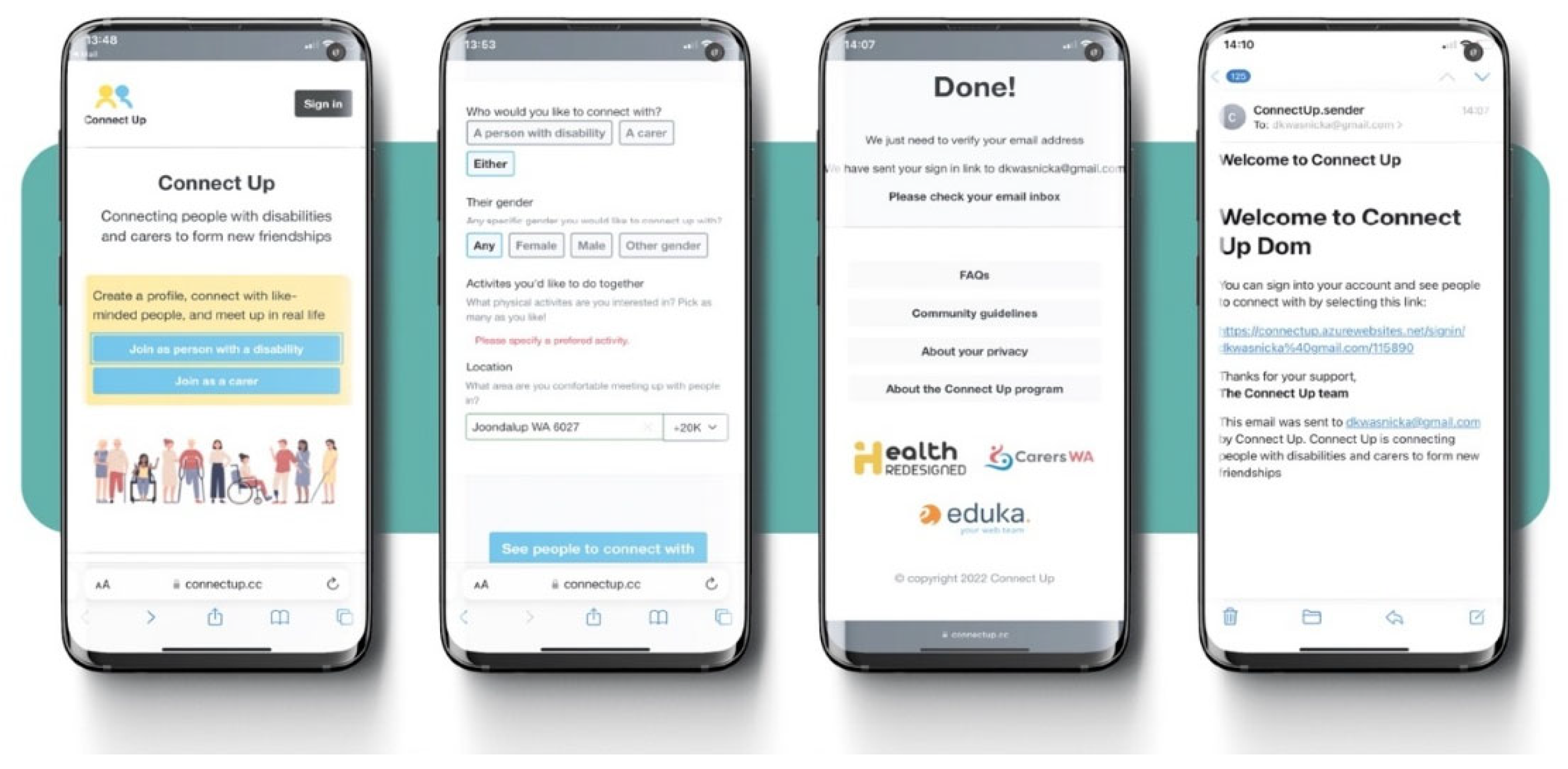
Figure 2.
Key themes and sub-themes derived from the workshops.
Disclaimer/Publisher’s Note: The statements, opinions and data contained in all publications are solely those of the individual author(s) and contributor(s) and not of MDPI and/or the editor(s). MDPI and/or the editor(s) disclaim responsibility for any injury to people or property resulting from any ideas, methods, instructions or products referred to in the content. |
© 2025 by the authors. Licensee MDPI, Basel, Switzerland. This article is an open access article distributed under the terms and conditions of the Creative Commons Attribution (CC BY) license (http://creativecommons.org/licenses/by/4.0/).
Copyright: This open access article is published under a Creative Commons CC BY 4.0 license, which permit the free download, distribution, and reuse, provided that the author and preprint are cited in any reuse.