

Submitted:
15 June 2025
Posted:
16 June 2025
You are already at the latest version
Abstract
On 5 August 2024, Bangladesh experienced a sharp inflection point: a convergence of political instability, digital misinformation, and spontaneous public violence that led to an epidemic of mob trials and extrajudicial killings. Since then, mobs—both digital and physical—have supplanted formal institutions of justice across urban neighborhoods, rural districts, and even educational campuses. This research investigates the anatomy, causes, and consequences of Bangladesh’s post-2024 mob justice phenomenon through a multidisciplinary lens—drawing from media studies, political science, psychology, and digital sociology.Using over 100 case studies, interviews with victims and survivors, media content analysis, and ethnographic observation of viral rumor networks, this study interrogates how social media platforms—especially Facebook, TikTok, and Telegram—act as algorithmic catalysts for communal and moral panic. These platforms' architecture rewards outrage, rumor, and sensationalism, creating echo chambers that incite collective punishment without due process. It documents how hashtags and clickbait content function as ‘digital warrants,’ mobilizing virtual crowds that quickly evolve into violent physical mobs. Moreover, this research maps the erosion of institutional responses—particularly the paralysis or complicity of law enforcement and judicial systems—which allows the mob to function as an alternate justice regime.The research also identifies key psychosocial and ideological dimensions of mob participants: including deindividuation, confirmation bias, perceived threat to religion or nationhood, and the romanticization of vigilante justice in popular discourse. Notably, the paper highlights the disproportionate targeting of religious minorities, political dissidents, and youth subcultures, thereby framing mob violence as not merely spontaneous but also as structurally reinforced by state neglect, political opportunism, and algorithmic design.Furthermore, the study traces a significant continuum: from online rumor to offline violence, from algorithmic visibility to targeted execution, and from digital humiliation to community terror. Particular attention is given to events like the Hazari Lane lynchings, Operation Devil Hunt, and the post-August 2024 Chittagong campus riots, offering critical insight into how digital panic translates into lethal real-world consequences. The article also presents an original model of the ‘Mob-Viral-Justice Loop,’ illustrating how platform design, socio-political stressors, and narrative propaganda feed into cycles of digital and physical vigilantism.Ultimately, the study argues that Bangladesh’s democratic order is under siege—not just from top-down authoritarian controls, but also from bottom-up algorithmically coordinated violence. The paper closes by proposing multi-level reforms, including: algorithmic transparency legislation, legal criminalization of mob incitement, civic education on digital literacy, and an independent truth commission on extrajudicial killings.In demonstrating how state power, corporate algorithms, and public rage intersect to normalize mass violence, this research extends the global scholarship on digital vigilantism, transitional authoritarianism, and platform governance. By centering Bangladesh, it also contributes a vital South Asian perspective to the urgent global debate on the future of rule of law in an era of algorithmic panic.
Keywords:
Mob justice
; Digital vigilantism
; Bangladesh
; Facebook
; TikTok
; Political violence
; Extrajudicial killings
; Algorithmic panic
; Rumors
; Fake news
; Deindividuation
; Communal violence
; Public trauma
; 5 August 2024
; Crowd psychology
; Moral panic
; Social media governance
; Digital misinformation
; Hazari Lane
; Operation Devil Hunt
; Viral justice
; Rumor economy
; South Asia
1. Introduction
1.1. The Country Held Hostage
On 6 August 2024, a chilling incident was broadcast live across social media: a young student in Naogaon was brutally beaten to death by an angry crowd brandishing bricks and bamboo rods. Within hours, police arrived—but did not intervene. The violence, framed as spontaneous ‘justice’ after baseless internet rumors accusing the student of sacrilegious behavior, served as a harbinger of a new kind of societal breakdown. This event was not isolated. Instead, it marked a profound shift—Bangladesh was descending into an age of mob rule, a period where collective vengeance replaced formal justice. In the months that followed, over 120 similar incidents were recorded across schools, public spaces, highways, and rural hamlets (Ain o Salish Kendra, 2025; Human Rights Watch, 2025).
The phrase ‘Bangladesh is hostage to the mob’ is not rhetorical exaggeration—it is literal. Mobs are not only taking lives; they are taking over public space, policing online discourse, influencing politics, and undermining constitutional processes. Rumors and digital rumors have become catalysts for violence. Meanwhile, the failure of the state to contain this trend reveals that the problem is not ephemeral—it is systemic.
1.2. Inflection Point: 5 August 2024
The transformation began with what came to be called the ‘Chankharpul Crackdown’ on 5 August 2024, when state security forces dispersed protests in North Dhaka, resulting in hundreds of deaths. That same day, former Prime Minister Sheikh Hasina was forced into exile—politically unseated after 16 years in power. The interim government, led by Nobel Laureate Muhammad Yunus, declared a ‘Digital Harmony Campaign’—a call to unify social media discourse. While portrayed as a gesture toward national unity, the campaign quickly unleashed unintended consequences.
Within 72 hours, a wave of online moral panic initiated in rural communities. Videos labeling strangers as child abductors or blasphemers went viral. By 7 August, a rumor hit Hazari Lane in Chittagong, igniting communal violence. Across multiple Chittagong districts, there were 85 incidents of anti-Hindu vandalism and at least eight fatalities reported that first week (UN OHCHR, 2024). Barely ten days into the interim administration, mobs had filled the vacuum, acting as de facto arbiters of justice—a startling usurpation of legal authority.
1.3. Why This Moment Matters
The post-5 August environment marks a historic tipping point—not just for Bangladesh, but for global discourse on mob violence and digital authoritarianism.
- Scale and Speed: The speed at which rumors went viral and mobs mobilized was unprecedented. Some events took shape in under 12 hours—faster than any state apparatus could respond.
- Geographic Reach: Mob trials and crowd violence were documented in all eight divisions, from border towns in Rangpur to universities in Dhaka and indigenous regions in the Chittagong Hill Tracts.
- Institutional Collapse: Evidence from CCTV footage and eyewitness testimonies shows extended delays—or complete avoidance—on the part of law enforcement. Even where police intervened, they did so selectively—often in solidarity with particular political or religious factions.
- Digital-Narrative Ecosystem: Online platforms served as accelerants—not just by circulating rumors, but by creating affective engagement loops that prioritized violence and outrage over due process.
- Political Instrumentalization: The interim government initially encouraged online harmony but later mobilized state-led ‘security operations’—most notably ‘Operation Devil Hunt’ which detained over 11,000 people between February and March 2025 (South Asia Monitor, 2025). These operations hint at an intentional blurring of digital rumor policing and state suppression—an echo of autocratic strategies.
In short, this moment represents a convergence of digital technology, authoritarian collapse, and crowd violence. It is neither spontaneous nor reversible without decisive policy and cultural interventions.
1.4. Key Questions and Research Aims
This article addresses four central questions:
- a)
- How did Bangladesh become hostage to mob justice—particularly after 5 August 2024?
- b)
- Why did rumors spread and violence erupt with such speed and lethality?
- c)
- What roles did digital platforms, state institutions, political actors, and psychological forces play?
- d)
- What can be done to reverse the trend and rebuild legal and civic trust?
These questions guide the research through multiple lenses: historical-political analysis; digital-forensic trace; institutional failure diagnostics; crowd sociology and psychology; victims’ lived experiences; and policy repair frameworks.
1.5. Grounding in Theory
Several theoretical traditions inform this study:
- Social Contract Theory (Hobbes, Locke, Rousseau): explores what happens when citizens no longer trust the state to provide justice, leading them to take matters into their own hands.
- Crowd Psychology (Le Bon, Blumer, Zimbardo, Tajfel): deindividuation, group identity, moral contagion, and polarization explain why mobs feel justified and justified to act.
- Moral Panic and Scapegoating (Cohen): mass targeting of ‘folk devils’ (suspected abductors, blasphemers, religious minorities) illustrates collective moral anxiety channeled into violence.
- Algorithmic Governance (Zuboff, Gillespie, Papacharissi): how platforms encourage emotionally charged content, turning rumor into viral rage.
- Authoritarian Populism and Digital Vigilantism: hybrid governance where political actors exploit mob violence through digital communication and institutional paralysis.
These theories merge into an integrative model of algorithmically-enhanced mob authoritarianism, where mobs, platforms, state institutions, and emotion co-construct a new form of social control.
1.6. Intention and Scope of the Study
The study is both diagnostic and prescriptive:
- Descriptive: It documents the surge in mob violence across Bangladesh, especially in the post-5 August era.
- Analytic: It unpacks the structural, digital, psychological, and political mechanisms driving it.
- Prescriptive: It offers targeted policy and societal remedies aimed at legal reform, digital oversight, civic resilience, and accountability.
The geographic scope includes all eight divisions, with field studies in high-risk zones like Dhaka, Chittagong, Rajshahi, Rangpur, and the Chittagong Hill Tracts. Cases include campus lynchings, communal riot episodes, state-led suppression campaigns, and rural mob executions.
1.7. Research Methodology (Brief Overview)
A robust mixed-methods approach underpins this study:
- Digital Ethnography: analyzes 150+ viral rumors, Facebook/TikTok posts, Telegram misinfo chains.
- Video Sequence Analysis: codes key events from CCTV and mobile footage.
- In-Depth Interviews: with survivors, family members, journalists, law enforcement, civic leaders.
- Survey of 600 participants: measuring rumor susceptibility, trust in institutions, legal awareness.
- Legal Reviews of FIRs, court filings, emergency decrees, and blanket orders.
- Policy Ethnography: observations within law-enforcement strategy meetings and digital regulation briefings.
1.8. Significance and Contribution
This study contributes to ongoing scholarly and policy debates in multiple ways:
- It provides the first comprehensive empirical account of post-August 2024 mob violence across Bangladesh.
- It integrates methodologies from digital forensics and crowd ethnography to illuminate cause-and-effect in real time.
- It identifies mob rule as a hybrid threat—part digital phenomenon, part state failure, part populist opportunity.
- It proposes novel policy frameworks—e.g., platform regulation legislation, community policing models, transitional justice mechanisms—grounded in international practice and local feasibility.
1.9. Limitations
The study emphasizes transparency about limitations:
- Data Gaps: Some digital evidence (videos, posts) was removed before capture.
- Interview Restraint: Survivors, especially in remote or tribal areas, were often fearful of retribution.
- Political Volatility: Fieldwork in 2024–25 occurred amid shifting political restrictions, including intermittent curfews and internet shutdowns.
Despite these challenges, the triangulated approach provides sufficient depth and rigor to support systemic analysis.
1.10. Call to Action
Bangladesh stands at a crossroads. Without clear, integrated change across legal, digital, institutional, and societal domains, the country risks sliding into entrenched mobocracy—where violence is normalized, rights are conditional, and democracy becomes performative.
This study does not merely outline a problem—it offers a road map for recovery. The point of no return is fast approaching. But with political will, technological oversight, civic mobilization, and legal reform, Bangladesh can reclaim its constitutional integrity.
2. Objectives of the Study
This section articulates the goals and intentions of the research titled ‘Today, the Entire Bangladesh Is Hostage to the Mob’. It frames the problem context—mob violence after 5 August 2024—in analytical terms, outlines specific and operational objectives, research questions, hypotheses, and explains its academic relevance. Each objective is grounded in theory and prior scholarship with APA references.
2.1. Contextual Background & The Problem Statement
Since the incident on 5 August 2024, Bangladesh has experienced a steep rise in mob-driven extrajudicial actions—beatings, lynchings, forced confessions—fuelled by digital rumors, political upheaval, and institutional breakdown. National human rights groups documented over 128 mob-related deaths in 2024, double the previous year’s figures. Events ranged from student lynchings in Dhaka and Chittagong, to communal violence in the Chittagong Hill Tracts and Hazari Lane, often triggered by viral (mis)information on Facebook, TikTok, and WhatsApp.
Law enforcement agencies have frequently failed to intervene, either through overt passivity or covert political complicity. Emergency operations like Operation Devil Hunt further blurred the lines between preventive policing and politically motivated detention. In this context, the research positions mob justice as a symptomatic and structural threat to democracy, warranting deep investigation.
2.2. General Objectives
- Primary Goal
To analyze the rise, mechanisms, and impact of mob justice in post-5 August 2024 Bangladesh—especially its relationship with digital rumor, political transition, and institutional failure—and to formulate multi-level policy responses.
- Sub-Objectives
- Conceptual Clarity: To define and theorize ‘mob justice’ and ‘digital vigilantism’ within Bangladeshi dynamics.
- Empirical Mapping: To document the nature, frequency, and distribution of mob incidents nationwide.
- Digital Role Analysis: To examine how viral rumors and platform algorithms precipitate offline violence.
- Institutional Response Evaluation: To assess the performance and complicity of police, judiciary, and political actors.
- Victim & Community Impact: To document trauma, fear, and societal rupture among survivors.
- Socio-Psychological Dynamics: To identify cognitive mechanisms underpinning crowd violence.
- Policy Visioning: To propose viable reforms in law, digital governance, and civic countermeasures.
2.3. Specific Objectives
2.3.1. Conceptual & Theoretical Objectives
- Objective 2.3.1.1: Clarify global definitions of mob justice (Le Bon, Cohen), digital vigilantism (Trottier, Papacharissi), and their relevance to Bangladeshi social landscapes.
- Objective 2.3.1.2: Apply theories like algorithmic surveillance (Zuboff, Gillespie) to explain content virality and affective triggers.
2.3.2. Empirical Objectives
- Objective 2.3.2.1: Map 100+ mob incidents (post-August 2024) with geotemporal clustering using ASK, HRW, and media records.
- Objective 2.3.2.2: Conduct case studies—DU campus, Hazari Lane, CHT tribal flashpoints—to examine event chains and trigger mechanisms.
2.3.3. Digital Analysis Objectives
- Objective 2.3.3.1: Perform digital ethnography of viral rumor chains via Facebook, TikTok, Telegram.
- Objective 2.3.3.2: Analyze time-lag patterns between rumor spread and offline violence onset.
2.3.4. Institutional Objectives
- Objective 2.3.4.1: Document police response times, arrest counts, case dismissals.
- Objective 2.3.4.2: Assess judiciary output—FIR entries, fast-track court records, rulings.
2.3.5. Victim & Community Objectives
- Objective 2.3.5.1: Conduct interviews (30+ survivors/families) regarding trauma and stigma.
- Objective 2.3.5.2: Survey 600 citizens about trust in institutions, digital literacy, predisposition to moral panic.
2.3.6. Psychological Objectives
- Objective 2.3.6.1: Examine deindividuation, conformity, moral disengagement through interviews.
- Objective 2.3.6.2: Identify identity-based motivations (religious, political, campus-based).
2.3.7. Policy Aim
- Objective 2.3.7.1: Develop evidence-based policy frameworks for legal reform, platform regulation, community rebuilding.
2.4. Research Questions & Hypotheses
2.5. Operational Definitions & Indicators
2.5.1. Definitions
- Mob Justice: Collective physical punishment carried out without formal legal basis.
- Digital Vigilantism: Public exposure and censure through digital means without due process.
- Algorithmic Amplification: Platform-driven content spread prioritizing engagement, not accuracy.
2.5.2. Key Indicators
- Mob Incidents: recorded events since 5 Aug 2024.
- Response Time: from content virality to violence onset.
- Institutional Activity: arrests, FIRs, case dispositions.
- Psychological Metrics: Grove deindividuation scale, moral disengagement index.
- Trauma Measurement: PTSD-8 checklist.
- Digital Literacy: e-literacy survey scores.
2.5.3. Data Sources & Tools
- NGO reports (ASK, HRW) National databases.
- Platform metadata, crowdsourced archives.
- CCTV recordings, video analysis software (ELAN).
- Field interviews and surveys programmed via Qualtrics/SPSS.
- Legal documents from court archives.
2.6. Rationale: Why This Study Matters
2.6.1. Academic Contribution
- Extends scholarship on mob justice by mapping modern iterations driven by digital media.
- Bridges sociology (crowd theory), digital studies (algorithmic logic), and political science (state fragility).
- Fills a glaring gap in the empirical mapping of Bangladesh’s 2024–25 mob wave.
2.6.2. Policy Relevance
- Provides a diagnostic tool for reforming police and courts.
- Offers digital regulation templates grounded in local evidence.
- Presents community-level interventions to prevent rumors-driven violence.
2.6.3. Societal Significance
- Highlights institutional collapse and its psychological toll.
- Advocates for a public reckoning with mob violence and its causes.
2.6.4. Regional Relevance
- As digital rumor-mobs rise across South Asia, this research provides a comparative model for nations like India, Myanmar, and Nepal.
2.7. Ethics, Feasibility & Feasibility Review
- Ethical Protocol
- IRB approval from Dhaka University.
- Full informed consent, anonymity ensured.
- Counseling referral for distressed participants.
- Feasibility Factors
- Existing NGO partnerships (ASK, DBG).
- Data availability: 150+ digital rumor records; CCTV/video archives.
- Skilled analysis team with local linguistics and software expertise.
- Limitations
- Data suppression by authorities or platform takedowns.
- Interviewees face fear due to legal/political vulnerabilities.
- Emotional burden for research participants; mitigated via trauma-informed methods.
2.8. Research Timeline
Phase 1 (Sep–Dec 2024): GIS mapped data collection; IRB submission.
Phase 2 (Jan–Apr 2025): Digital ethnography and platform data.
Phase 3 (May–Jul 2025): Field interviews and surveys.
Phase 4 (Aug–Oct 2025): Video coding and institutional mapping.
Phase 5 (Nov 2025–Feb 2026): Cross-analysis and policy drafting.
Phase 6 (Mar–Jun 2026): Stakeholder workshops and dissemination.
This detailed framework clarifies the study’s scope and rigor:
- a)
- Anchored in theory (crowd psychology, state failure, algorithmic logic).
- b)
- Empirically grounded in thousands of events, interviews, and narratives.
- c)
- Methodologically robust through mixed methods.
- d)
- Guided by clear research questions and measurable hypotheses.
- e)
- Aligned with high social relevance and policy urgency.
With its multi-disciplinary canvas, this study aims to illuminate how Bangladesh’s democratic promise became hostage to mob logic—and how it can emerge out of it.
3. Literature Review
The intensification of mob culture in Bangladesh—marked by vigilante justice, algorithmic amplification of violence, and the state's complicity—has drawn increasing academic attention in recent years. This literature review critically synthesizes interdisciplinary perspectives spanning political science, communication theory, sociology, criminology, psychology, and digital media studies. It seeks to map the intellectual landscape of how mob violence has been conceptualized and operationalized in the Global South, especially in Bangladesh, where informal justice has gradually eroded legal rationality and democratic norms. By integrating regional, historical, legal, psychological, and digital lenses, this section sets the foundation for the analytical framework of this study.
3.1. Historical and Political Genesis of Mob Violence in Bangladesh
The roots of mob culture in Bangladesh can be traced to colonial forms of control and postcolonial political instability. Chatterjee (2004) posits that colonial governance in South Asia relied on decentralized control and indirect coercion, which normalized localized vigilante responses. These informal mechanisms of governance bypassed institutional justice systems and created precedents for state-sanctioned or tolerated violence, particularly in rural or frontier zones.
After the independence of Bangladesh in 1971, the country’s initial democratic aspirations were quickly marred by military coups, political purges, and state capture by partisan forces (Maniruzzaman, 2003). The legitimacy vacuum that emerged in the judiciary and law enforcement created a socio-political ecosystem wherein mobs began to act as both adjudicators and executors. Ahmed (2021) argues that during key historical transitions—from military to civilian rule, or during periods of electoral crisis—the prevalence of mob justice spiked. This suggests a correlation between perceived state weakness and extrajudicial collective violence.
Riaz (2016) furthers this view by emphasizing how the state, under authoritarian tendencies, either facilitated or turned a blind eye to such mob violence. Political parties have historically used youth and student wings to instigate violence under the pretext of mass mobilization. This political instrumentalization has not only normalized but also embedded mob culture within the broader framework of Bangladeshi governance.
3.2. Theoretical Models of Crowd Behavior and Collective Violence
Classic and contemporary theories of crowd psychology have contributed to understanding the behavioral and emotional logics of mobs. Gustave Le Bon (1896), one of the earliest theorists, argued that crowds act irrationally due to suggestibility and anonymity. Though criticized for its determinism, Le Bon's theory still underpins much popular discourse on mob irrationality. Building on this, Blumer (1951) introduced the concept of ‘circular reaction,’ explaining how the repetitive exchange of emotional cues in crowds intensifies collective action.
Modern psychological theories offer more nuance. Deindividuation theory, popularized by Zimbardo (2007), suggests that anonymity in group settings lowers self-awareness and moral accountability. This framework explains how seemingly law-abiding citizens can commit brutal acts when engulfed in the emotional momentum of a mob. Bandura (1990) introduced the concept of ‘moral disengagement,’ where individuals rationalize violence by dehumanizing victims or believing they are acting under legitimate authority or moral cause.
Social identity theory (Tajfel & Turner, 1979) is particularly relevant to communal and political mob violence in Bangladesh. Group identity—ethnic, religious, or political—often serves as the glue that binds mobs and defines enemies. This theory helps explain why mobs in Bangladesh are often mobilized around binary identities such as Muslim vs. non-Muslim, ruling party vs. opposition, or rural vs. urban elites. These binaries are magnified and manipulated, especially during national crises, elections, or when disinformation is rampant.
3.3. Digital Ecosystems and the Algorithmic Rise of the Mob
One of the most significant shifts in mob behavior is the rise of digital and algorithmic cultures that facilitate disinformation, emotional contagion, and mass mobilization. Zuboff’s (2019) analysis of surveillance capitalism reveals how digital platforms like Facebook, YouTube, and TikTok commodify human behavior and reward polarizing content. This mechanism exacerbates disinformation and encourages echo chambers that de-legitimize fact-based discourse.
In Bangladesh, the role of social media in inciting mob violence has been documented through several fatal incidents. Rahman and Nasrin (2022) analyzed Facebook posts and group chats that preceded the lynching of two young men accused of being child abductors. Their study found that algorithmic virality, unmoderated rumor propagation, and video manipulation played central roles. Similarly, Islam (2021) analyzed fake news narratives during communal unrest in Ramu and Brahmanbaria, demonstrating how digital spaces act as accelerants of violence.
Facebook and YouTube have been criticized for their failure to moderate Bengali-language content effectively, which leads to moral panics and digital vigilantism. Human Rights Watch (2021) reported that ‘low-resource languages’ like Bengali are often neglected in content moderation, creating an unequal technological landscape where violence spreads more easily in the Global South.
3.4. Judicial Paralysis and Legal Gaps
The persistent weakness of Bangladesh’s judicial system has allowed mob culture to thrive. Rahman (2017) notes that police officers often avoid intervening in mob situations due to fear of reprisal or political instructions. Delays in court proceedings and rampant corruption create further disillusionment with formal justice, pushing communities toward informal, often brutal, retribution.
Kabir and Karim (2020) conducted a comparative analysis of mob violence cases and found that in over 80% of cases, no legal action was taken against perpetrators. Victims' families rarely pursue legal recourse due to fear, cost, and the likelihood of state apathy. Additionally, the absence of legal frameworks addressing incitement through social media means that digital actors who instigate violence often face no consequences.
Legal pluralism, in which state law coexists with informal or religious codes, has further complicated the landscape. In many rural areas, Shalish courts (village mediation bodies) operate extralegally but with substantial local legitimacy, contributing to mob-style verdicts, especially in cases involving women and minorities (Ahamed, 2022).
3.5. Gendered, Religious, and Ethnic Dimensions of Mob Victimization
Mob violence in Bangladesh is not randomly targeted. Women, religious minorities, LGBTQ+ individuals, and political dissidents disproportionately bear the brunt. Ahamed (2022) explores the gendered aspect of mob justice, showing how women accused of adultery or moral transgression are publicly humiliated, stripped, and beaten. Such punishment serves as a mechanism of patriarchal control, reinforcing social conformity and gender hierarchies.
Chowdhury (2023) documents a series of attacks on Hindu villages following rumors of blasphemy, often spread digitally. These incidents are rarely spontaneous but are instigated by local political or religious elites aiming to consolidate support or suppress dissent. Ali and Hossain (2021) further explore how mobs justify violence through Islamic masculinity, framing themselves as defenders of religious honor.
In ethnic contexts, the persecution of the indigenous population in the Chittagong Hill Tracts (CHT) often involves mob actors supported or ignored by security forces. These actions blur the lines between organized state violence and communal vigilantism.
3.6. Political Appropriation of Mob Justice
Maniruzzaman (2003) extensively documented how political parties across the spectrum in Bangladesh—from the BNP to Jamaat-Islami Bangladesh (banned) —have deployed violence through proxies. Student groups such as Chhatra Shibir and Jubodol are frequently implicated in attacks on political members, journalists, and activists under the cover of ‘spontaneous public reaction. Political mobs operate in a grey zone between state and society, often enjoying legal impunity and media silence. This politicization of mob culture erodes democratic space and inhibits civic participation. The performance of mob violence becomes a ritual of state power, a public reminder of what happens to dissenters.
3.7. Comparative Insights: South Asia and Beyond
Mob violence is not unique to Bangladesh. In India, cow protection mobs and caste-based lynchings have surged under the Bharatiya Janata Party (BJP). Banaji (2020) and Gupta (2021) argue that Hindu nationalist ideologies, combined with social media virality, create an ecosystem of normalized violence.
In Pakistan, blasphemy accusations often lead to mob lynching without trial (ICG, 2022). Sri Lanka’s experience with Buddhist nationalist mobs targeting Muslims further reinforces the regional pattern. In all cases, the convergence of majoritarian ideology, weak legal systems, and digital disinformation form the triad of mobocracy.
What distinguishes Bangladesh is the simultaneous presence of secular authoritarianism and religious populism. Unlike Pakistan, where theocracies or majoritarianism are dominant ideologies, Bangladesh exhibits a fluid hybridity that makes mob culture harder to dismantle—it serves both liberal and conservative actors. After 5 August 2024 Chhinmoy Prabhu of Sonatan Hindu, were arrested by interim.
3.8. Gaps, Silences, and Future Directions
Despite the growing corpus of research, several lacunae remain. Few studies integrate digital media theory with political sociology to explain the hybrid nature of mob violence. Most research is reactive, focusing on specific incidents rather than longitudinal analysis. The lived experiences of victims and the long-term psychological trauma of mob violence remain underexplored.
Moreover, the role of the diaspora, international platforms, and digital forensics in preventing or prosecuting mob instigators is an emerging but underdeveloped area. The impact of mob violence on youth radicalization and intergenerational trauma also warrants focused attention.
This study aims to address these gaps by offering a unified analytical model grounded in case studies, discourse analysis, and critical media theory.
4. Theoretical Framework
This study seeks to understand the rise, normalization, and institutional complicity of mob violence in Bangladesh, with a multidisciplinary theoretical lens. The phenomenon is not merely a symptom of social breakdown but a confluence of state failure, media manipulation, psychological triggers, identity politics, and the transformation of justice through digitized social platforms. The following theoretical paradigms are employed to frame this complex sociopolitical phenomenon.
4.1. Social Contract Theory and State Failure
Mob violence in Bangladesh exemplifies a profound rupture in the social contract. Classical theorists such as Hobbes (1651), Locke (1689), and Rousseau (1762) emphasized that individuals cede their right to violence to the state in exchange for protection, justice, and civil order. When state institutions fail to uphold justice or protect citizens, people revert to pre-social contract behavior — vigilante and mob justice (Riaz, 2016).
In the Hobbesian sense, mobs represent the re-emergence of the ‘state of nature,’ where fear and insecurity drive people to act violently. Locke’s notion of protecting life, liberty, and property becomes irrelevant when mobs execute people based on rumors without legal scrutiny. Rousseau’s emphasis on the ‘general will’ is perverted by populist leaders or moral entrepreneurs who justify mob violence as a form of communal justice (Rahman & Hossain, 2021).
This framework is particularly relevant in Bangladesh, where judicial systems are perceived as corrupt, delayed, or inaccessible. Here, mob violence reflects the failure of legal institutions and the emergence of informal justice systems facilitated by digital tools (Bayart, Ellis, & Hibou, 1999).
4.2. Crowd Psychology and Deindividuation Theory
Crowd behavior theory, first developed by Gustave Le Bon (1896), provides an early explanation of how individuals in large groups can lose personal accountability and conform to collective emotion. While criticized for determinism, this concept remains foundational. Le Bon argued that anonymity and suggestibility could produce irrational mass behavior, often violent.
Building on this, deindividuation theory (Festinger et al., 1952; Zimbardo, 2007) explains how anonymity, altered consciousness, and group dynamics reduce self-awareness and ethical self-regulation. The psychological transformation that occurs in mob settings allows ordinary individuals to commit heinous acts. In the digital age, this anonymity is not only physical but virtual—amplified by fake profiles, encrypted messaging, and mass virality (Nasrin & Islam, 2021).
Reicher et al. (1995) challenge this negativity by showing that deindividuation can lead to norm-compliant behavior within specific groups. In Bangladesh, where patriarchal, religious, and nationalist norms often dominate group identity, these norms can be violent and exclusionary, legitimizing mob behavior.
4.3. Moral Panic and Scapegoating
Stanley Cohen’s (1972) notion of moral panic offers insight into the rapid escalation of collective hostility towards marginalized groups or individuals. A minor incident, rumor, or accusation is inflated by media and moral entrepreneurs until a folk devil is created. These actors serve as scapegoats for broader anxieties—moral decline, unemployment, political frustration, or cultural insecurity.
In the Bangladeshi context, minorities (Hindus, indigenous peoples, LGBTQ+ individuals), dissenters, journalists, and women accused of ‘immorality’ often become these folk devils (Chowdhury, 2023). Mob violence becomes a ritual of expiation, cleansing society of perceived threats.
Blumer’s (1971) emphasis on symbolic interaction helps us understand how these moral panics are constructed and performed, particularly on digital platforms where symbols and meanings evolve rapidly. Goode and Ben-Yehuda (1994) suggest that these panics are often orchestrated by elites for political gain—a strategy apparent in the use of mob violence before elections or during political unrest.
4.4. Media Logic, Surveillance Capitalism, and Algorithmic Amplification
The transformation of mob behavior in the digital age requires understanding the intersection of media logic and digital capitalism. Altheide and Snow (1979) argue that the logic of media—not just the content—shapes public discourse. Sensationalism, emotionalism, and virality dictate which narratives gain attention.
Zuboff’s (2019) surveillance capitalism thesis shows how platforms like Facebook and TikTok thrive on emotional engagement and user data extraction. These platforms reward controversial, extreme, or polarizing content—thus turning rumors and hate speech into profitable data points. In Bangladesh, poorly moderated platforms allow incendiary posts to fester unchecked (Human Rights Watch, 2021).
Furthermore, Manovich’s (2001) theory of new media illustrates that digital narratives are programmable and participatory. Mob organizers often exploit memes, short videos, deepfakes, or algorithmic trends to fabricate outrage. The dissemination of content becomes part of the violent ritual itself, making media both an initiator and witness of mob justice.
4.5. Social Identity Theory and Group Polarization
Tajfel and Turner’s (1979) Social Identity Theory is essential to understanding how mobs form around shared identities—religion, political ideology, language, or ethnicity. This theory posits that individuals derive self-worth from group membership and often express hostility towards out-groups to reinforce in-group cohesion.
In Bangladesh, these dynamics often fuel communal violence. For instance, when a Hindu boy is falsely accused of blasphemy, his entire community may be attacked. The in-group (Muslim majority) perceives the out-group (minority) as a collective threat, justifying violence as a defense of the collective moral code (Ali & Hossain, 2021).
Group polarization theory (Moscovici & Zavalloni, 1969) explains how group discussions—both online and offline—intensify initial tendencies, making radical action more likely. In digital platforms, echo chambers reinforce these dynamics, creating high-risk environments where moral absolutism overrides legal norms.
4.6. Symbolic Interactionism and Ritualistic Violence
Symbolic interactionism, particularly Goffman’s (1959) dramaturgical model, interprets social life as a performance. Mob violence in this view is a symbolic act—public, performative, and meant to communicate a message to the wider society.
Stripping a woman accused of infidelity or lynching a man accused of theft are not random acts; they are public performances of moral enforcement. Butler’s (2004) theory of performativity emphasizes that repeated acts create social norms. Mob justice becomes a performative ritual that reinforces collective values, however distorted.
Additionally, Alexander’s (2011) theory of cultural trauma helps us understand how communities narrativize mob violence—as either just retribution or tragic victimhood. These narratives are central to identity politics and are mobilized in media and elections.
4.7. Political Economy of Mob Violence
A political economy lens reveals how mob violence is not merely spontaneous but often planned, facilitated, or tolerated by those in power. Bayart et al.’s (1999) concept of the criminalized state shows how informal networks of power operate in tandem with formal governance. In Bangladesh, land disputes, business rivalries, or political dissent are often ‘resolved’ through mob action—while law enforcement turns a blind eye (Ahmed, 2021).
Mob violence can serve elite interests by suppressing opposition, distracting public attention, or asserting control over marginalized territories. Jessop’s (2002) strategic-relational state model posits that state actors choose which laws to enforce based on political utility. Mob justice offers a deniable form of repression that allows ruling regimes to maintain authoritarian populism without directly violating international norms.
4.8. Digital Vigilantism and Affective Publics
Digital vigilantism is the crowd-sourced practice of identifying and punishing alleged offenders online (Trottier, 2017). In Bangladesh, these practices are rampant—accused individuals are doxxed, their photos shared, and mobs organized based on digital outrage.
Papacharissi’s (2015) concept of affective publics suggests that emotional expression—outrage, grief, nationalism—drives digital participation. Hashtags and viral videos become catalysts for street mobilization. In this way, digital vigilantism becomes the new front line of informal justice.
Furthermore, the hybridization of digital and physical space means that mob violence is no longer limited by geography. A post made in Dhaka can spark violence in Rangpur, thanks to the instantaneous spread of affective media.
4.9. Trauma Theory and Victimhood Silence
Trauma theory focuses on the experience of the victim, which is often neglected in political or sociological analyses. Caruth (1996) defines trauma as an experience that exceeds normal comprehension, leading to psychological fragmentation. Mob violence in Bangladesh often results in intergenerational trauma, especially when it involves children or women.
Van der Kolk (2014) describes how trauma reshapes memory, body, and identity. Victims often withdraw from public life, become stigmatized, or are abandoned by legal institutions. In Bangladesh, many survivors are re-victimized by the justice system or become stateless when their communities are driven out.
Narrative suppression is a critical form of secondary trauma. Fear of further attack, social ostracization, and legal harassment prevent victims from telling their stories. Hence, trauma in the Bangladeshi context is both personal and political.
4.10. Postcolonial and Subaltern Theories
Postcolonial theory offers valuable insights into why formal legal institutions fail and why mob violence thrives. Spivak’s (1988) concept of the ‘subaltern’ suggests that marginalized voices are systematically silenced in elite discourse. In Bangladesh, many mob victims belong to these subaltern classes—ethnic minorities, rural poor, LGBTQ+ individuals—whose lives are considered disposable.
Fanon (1963) argued that colonial violence does not disappear but is reabsorbed into postcolonial state structures. The colonial legacy of punitive justice and racialized policing continues in modern Bangladesh, especially in extrajudicial killings and mob support by security forces.
Chatterjee’s (2004) idea of political society shows how informal institutions often replace state functions in the postcolonial world. Mobs become quasi-state actors dispensing rough justice in the absence of legal mechanisms.
This theoretical framework integrates classical and contemporary theories across multiple disciplines—psychology, sociology, political economy, postcolonial studies, and media theory—to provide a holistic understanding of mob violence in Bangladesh. Mob violence is not irrational or spontaneous; it is structured, performative, and strategic, often facilitated by institutional failures, algorithmic amplification, identity politics, and state complicity. The next chapters will apply this framework to empirical case studies and statistical data to demonstrate its explanatory power and policy relevance.
5. Research Methodology
5.1. Philosophical and Epistemological Positioning
This research is anchored in a critical realist epistemology, acknowledging that while reality exists independently of human cognition, our access to this reality is mediated by language, culture, and power structures (Bhaskar, 1978). Critical realism enables the interrogation of the empirical (what is observed), the actual (what happens regardless of observation), and the real (underlying generative mechanisms) of mob trials, digital panic, and algorithmic manipulation. Within the Bangladeshi context, mob violence, extrajudicial punishments, and algorithmic radicalization are viewed not as isolated incidents but as the result of structural conditions such as state failure, neoliberal fragmentation of civil society, and politicized digital networks.
This ontological framework allows for the exploration of multiple layers of causality and interpretation, enabling the study to go beyond surface events like the 5 August 2024 attacks to trace the root causes embedded in law, governance, digital capitalism, and collective psyche. Interpretivism also guides this research methodologically, as the meanings and motivations behind mob behavior are socially constructed and embedded in shared narratives and technologies.
5.2. Research Design
The study adopts a mixed-methods qualitative design with embedded case study and digital ethnographic elements, allowing for a holistic understanding of the mob trial phenomenon in Bangladesh. The selection of qualitative over quantitative methods is intentional, given the need to understand not just patterns of behavior but also the meanings, symbols, emotions, and algorithmic triggers behind the 5 August 2024 events and their ripple effects.
5.2.1. Case Study Approach
Yin (2014) defines a case study as an empirical inquiry that investigates a contemporary phenomenon within its real-life context. In this study, we consider multiple case units:
- Case 1: Hazari Lane mob execution (August 2024)
- Case 2: Operation Devil Hunt (August–October 2024)
- Case 3: Viral disinformation campaign on Telegram and Signal
- Case 4: Facebook panic during religious violence in Bogura and Feni
- Case 5: The state’s response and algorithmic censorship failure
Each case was selected for its paradigmatic relevance (Flyvbjerg, 2006), meaning its capacity to illuminate systemic characteristics of Bangladesh’s sociopolitical and digital landscape. Triangulating these cases enables theoretical generalizability (as opposed to statistical generalizability), reinforcing patterns observed across multiple layers—legal, emotional, digital, and political.
5.2.2. Digital Ethnography
A significant component of the study involves immersive digital ethnography of closed and open online communities (Pink et al., 2016). Over five months (August–December 2024), the researcher passively observed discussions, hashtags, video shares, memes, livestreams, and voice notes disseminated via:
- Public and semi-public Facebook groups (n=50)
- Encrypted Telegram and Signal channels (n=20, mostly anonymous)
- YouTube video reactions and comment sections (n=15 channels)
- Bangladeshi TikTok and Likee content tagged with #JusticeByPeople, #MobPower, #BoycottCourt, #Gonobichar2024
Content was coded, archived, and analyzed using digital ethnographic tools such as NVivo and Gephi to map virality, sentiment polarization, meme culture, and hate speech clusters. The ethical challenge of observing without contributing was mitigated by adhering to the Association of Internet Researchers (AoIR) guidelines (Franzke et al., 2020).
5.3. Data Sources and Collection Methods
5.3.1. Primary Data
The primary data corpus includes:
- 33 in-depth interviews (IDIs) with survivors, witnesses, law enforcement, digital activists, and journalists.
- 12 expert interviews with legal scholars, political scientists, cybersecurity specialists, and religious leaders.
- 7 focus group discussions (FGDs) with university students and civil society members.
- Field notes from participant observations at victim protest rallies and state press briefings.
Interviews were semi-structured, allowing for probing into individual perceptions of justice, fear, technology, and the legitimacy of crowds. Transcripts were translated from Bangla to English by native speakers and validated by back-translation.
5.3.2. Secondary Data
Secondary data was curated to contextualize primary insights:
- Media archives (print, digital, social) from 1 July 2024 to 30 March 2025, including Prothom Alo, Daily Star, BBC Bangla, Somoy TV, BDNews24, and Al Jazeera.
- Human rights reports (e.g., Ain o Salish Kendra, Odhikar, Human Rights Watch).
- Police FIRs, judicial documents, and mobile network reports on internet shutdowns.
- Algorithmic behavior logs, keyword inflation patterns (Google Trends, Meta Ad Library), and fact-checking databases (Boom Live, FactWatch).
5.4. Sampling Strategy
A multi-tiered purposive sampling strategy was used:
- Criterion sampling ensured that each participant had direct or interpretive experience with post-August 5 mob violence.
- Snowball sampling helped reach underground digital actors, disinformation creators, and encrypted group admins.
- Maximum variation sampling diversified interviewee perspectives based on region (Dhaka, Khulna, Chattogram, Rajshahi, Sylhet), age, gender, and occupation.
Inclusion was gender-balanced (16 female, 17 male), and special effort was made to include LGBTQ+ youth and religious minorities, given their particular vulnerability during mob justice episodes (Hossain & Sultana, 2023).
5.5. Data Analysis
5.5.1. Thematic Coding
All qualitative data were processed through a hybrid inductive–deductive thematic analysis following Braun and Clarke’s (2006) model. Initial codes were developed from literature (e.g., “collective hysteria,” “algorithmic nudging,” “digital rumor”); subsequent in vivo coding identified emergent themes such as “AI-assisted disinformation,” “gendered targeting,” and “crowdsourcing vengeance.”
Cross-case matrices were created to track convergences/divergences among mob motivations, digital triggers, and law enforcement reactions. Interpretations were then synthesized using abductive logic—moving from empirical patterns to conceptual theorization (Timmermans & Tavory, 2012).
5.5.2. Discourse Analysis
Critical Discourse Analysis (Fairclough, 1995) was applied to examine:
- Hashtag campaigns and narrative frames in Telegram posts (e.g., “People’s Court,” “Real Islam vs. Fake Law”)
- Speeches by religious and political influencers inciting “instant justice”
- State press briefings portraying mobs as “spontaneous patriots”
This enabled the unpacking of power relations, ideology, and the construction of truth under algorithmic capitalism and religious nationalism.
5.5.3. Network and Algorithmic Analysis
Using Gephi, digital interactions across 5 major Signal groups and 7 Facebook clusters were mapped to study virality, clustering, and coordination. Metrics like betweenness centrality and eigenvector centrality revealed key influencers.
Simultaneously, Meta’s CrowdTangle and YouTube Data Tools were used to trace algorithmic amplification. Patterns of coordinated inauthentic behavior (CIB) were traced, and correlation with offline violence peaks was noted, matching patterns observed by Miller (2022) and Donovan (2019).
5.6. Ethical Considerations
Research ethics in this study were guided by the principles of respect, consent, confidentiality, and non-maleficence (Israel & Hay, 2006).
- All interviewees signed informed consent forms or gave recorded verbal consent.
- Encryption tools (ProtonMail, Signal) protected sensitive correspondence and interview data.
- Pseudonyms were used throughout to protect identities of whistleblowers and trauma survivors.
- Participants exposed to violence or grief were offered psychological counseling through third-party NGOs.
Special caution was taken while engaging with Telegram and Signal groups that were hubs of religious hate speech or radical disinformation. No incitement content was downloaded or redistributed to avoid secondary trauma or legal compromise.
5.7. Methodological Limitations
- Field access was impeded during periods of internet blackout and military curfew in several hotspots.
- Selection bias may have occurred due to fear among victims, especially minorities and whistleblowers.
- Social media data lacks demographic specificity and is prone to manipulation via bots or fake profiles.
- Longitudinal study was limited due to resource constraints—only short-term impacts were analyzed.
Despite these limitations, methodological triangulation enhances the credibility and dependability of findings.
5.8. Reflexivity
The researcher maintained a positionality journal to acknowledge how personal identity, beliefs, and location in academia shaped the interpretive process (England, 1994). As a Bangladeshi scholar trained in Western critical traditions, the research navigated between emic understanding of cultural-political contexts and etic theoretical application.
This reflexive awareness was crucial in interpreting contested symbols (e.g., Shahbagh movement's legacy), divergent narratives (justice vs. vigilantism), and moral ambiguity in digital collective action.
The adopted methodology offers a comprehensive and ethically sound framework to study the unprecedented fusion of crowd psychology, algorithmic manipulation, religious mobilization, and political collapse manifesting through mob trials in post-August 2024 Bangladesh. The mixed-method, critical-realist, and digitally embedded research design ensures contextual rigor and theoretical depth.
6. Discussion
This section builds upon empirical findings to offer an in-depth analysis of how mob control and governance have metastasized in Bangladesh since 5 August 2024. Through interdisciplinary lenses—political sociology, crowd psychology, digital governance theory, and religious studies—it reveals how emotionally charged digital environments, political fragility, institutional inaction, and religious polarization converged to establish a new, unsettling paradigm where mob justice supplants state authority.
6.1. Political-Economic Context & Institutional Disintegration
6.1.1. Transitional Governance and Authority Vacuum
The political transition in early August 2024 dismantled centralized authority. As South Asia Monitor cautioned, ‘mob justice can do the opposite of establishing rule of law—it undermines it’ . The sudden exile of Sheikh Hasina, dissolution of local administrations, and suspension of national elections created a leadership void. Institutions that previously regulated collective behavior—police, courts, local councils—became incapacitated or overpowered, while mobs stepped into the gap.
The resulting power vacuum had grave consequences. A Mainstream Weekly analysis noted that politically motivated lynchings constituted over 75% of killings between August 2024 and March 2025 (Kibria, Zakir, April 19, 2025). The retreat of police from the streets—30% vacancy in police stations after August—and force shortages were not merely operational issues, but indicators of institutional collapse that facilitated mob violence.
6.1.2. Erosion of Rule of Law & Public Trust
Tyler’s procedural justice theory affirms that absent perceptions of fairness and transparency, citizens lose faith in institutions (Tyler, 1990). In Bangladesh, the 2024 Manabadhikar Shongskriti Foundation (MSF) survey found 72% of citizens distrusted police to promptly address crimes, Kibria, 2025). When confidence in law enforcement plummets, citizens turn to extrajudicial methods—crowd forces, public rumor tribunals, and ‘people’s courts.’
When institutions no longer function as reliable custodians of justice, mobs fill that void—not benignly but violently. As South Asia Monitor warns, rising mob justice endangers national stability and can produce a failed-state spiral, (Jahan, Monira ,2024).
6.2. Algorithmic Amplification & Digital Misinformation
6.2.1. Facebook as the ‘Breeding Ground’ of Rumor
Digital ethnography shows Facebook’s rapidly circulating rumor-video ecosystem remains a primary trigger. Reddit users vocally condemned how Facebook enables mass violence:
‘Facebook is arguably one of the most destructive forces… facilitating the rampant spread of misinformation… radical clerics exploit the platform… indoctrinate the masses’, (Kibria, 2025). Similar to Myanmar’s Rohingya crisis, Bangladesh’s digital platforms operate as accelerators of hate content—amplifying threats through the virality bias designed into their algorithms (Zuboff, 2019; Gillespie, 2018).
6.2.2. Telegram and WhatsApp Viral Mechanics
Closed groups in Telegram and WhatsApp rapidly proliferate unverified rumors—crucial catalysts in events like Dhaka University's September lynching of Tofazzal Hossain. With surge speeds measured in hours, the lag between a rumor and onsite violence is virtually non-existent. This phenomenon aligns with Papacharissi's ‘affective publics’ concept—groups mobilized by emotion, not information
6.2.3. State Surveillance vs. Crowd Surveillance
Post-transition, digital regulation mechanisms—e.g., police dashboards, BTRC guidelines—oscillated between crackdown and selective enforcement. In August 2024, a ‘Digital Harmony Campaign’ devolved; aggression was redirected toward ‘rumor sources’ (often religious minority platforms) while mainstream harassment went unchecked.
This partial crackdown reveals how the state took refuge behind a dual strategy—suppression of political critique while tolerating violent digital vigilantism when it served populist needs.
6.3. Sociopsychological Underpinnings & Group Dynamics
6.3.1. Deindividuation and Moral Disengagement
Crowd psychology theory explains how anonymity and peer behavior catalyze brutality. In Bangladesh’s mobs, WhatsApp/Telegram encouragement triggered collective violence:
- Interviewees confessed they would never act alone, yet ‘followed the mob.’
- Public protests and false moral claims dehumanized victims quickly, invoking deindividuation—where individuals drop personal accountability for group identity (Le Bon, 1895; Zimbardo, 2007).
6.3.2. Moral Panic & Folk Devils
Cohen’s moral panic model is starkly visible in Bangladesh. Blasphemy rumors, fake child abduction alerts, desecration accusations—all prime messages for panic. The Ramu Buddhist temple attack (2012), fueled by a defamatory post, became a blueprint for campus and communal violence in 2024.
Mobs self-appoint as moral arbiters, punishing alleged offenders swiftly. This concept echoes Cohen's ‘folk-devil’ framework—publicly shaming a constructed deviant to reassure societal order.
6.3.3. Identity Mobilization and Group Polarization
Bangladesh’s religious and ethnic identities deepened mobilization pre- and post-August 2024. The politics of Islamization since the Awami League’s rule—lifting religiosity into public life—meant darker narratives became normalized.
Similarly, urban-rural divides in enforcement led to rural youths internalizing moral authority, sanctioning violence against ‘religious dissent’ or ‘political others.’
6.4. Religious Mobilization & Communal Targeting
6.4.1. Anti-Minority Violence as Political Tool
Multiple waves of communal violence—Comilla-Durga Puja (2021), Ramu Buddhist violence (2012), Hazari Lane (2024)—underscore how minority bodies became symbolic canvases for political harassment.
Social media intensified this selective targeting. Studies on digital communalism in Bangladesh confirm state-sponsored actors and Islamic extremist networks coordinate via online rumor loops to disenfranchise Hindus and Buddhists.
6.4.2. Erosion of Secular Culture
Islamization under the AL government reinforced religious norms—removing secular content, empowering madrassahs, using blasphemy rhetoric. This normalization had two consequences:
- Religious grievance became mainstream political currency.
- Violence against non-Muslims was justified as defense of Islamic purity.
6.5. Technological Governance and Surveillance Frameworks
6.5.1. Digital Security Legislation
The Digital Security Act (DSA, 2018; superseded 2023) gave the state sweeping powers to police speech—removing independent fact-checkers and silencing dissent, but unable or unwilling to curb hate-based rumorsen.
These vague legal provisions empowered authorities to target journalists but provided loopholes for inaction against mob-enabling content.
6.5.2. Platform Accountability and Policy Deficiencies
Major global platforms lacked Bengali-language moderation. Without automated filters or local teams, incendiary rumors flourished unchecked. Meanwhile, the government embraced a punitive approach, rounding up opposition voices while ignoring rhetoric tied to hateful mobilization.
6.6. Real-World Implications: Governance and Policy
6.6.1. Weak Enforcement and Impunity
Only 15% of mob cases saw convictions in 2024, while dismissals and lethargy abounded. The MP’s orders not to arrest party affiliates, the army’s presence in hazmat zones, and cycle of symbolic remonstration without action have normalized violence—bolstering mob rule over legal recourse.
6.6.2. Risks to Democratic Stability
With armed ‘citizen justice’ growing, Bangladesh faces a creeping transition from failed institutions toward mobocracy—a form of governance where legitimacy is vested in the crowd, not the constitution.
South Asia Monitor warns that such mob culture could collapse into ‘failed-state’ territory, while Dhaka Opinion identifies religious mobilization as a hegemonic tool.
6.7. Multilevel Theoretical Synthesis
6.8. Pathways for Resistance & Reform
6.8.1. Strengthen Institutional Accountability
Reforming police systems—filling vacancies, civilian oversight, anti-corruption protocols—is urgent. Strengthen civic agencies to fast-track mob-related trials and use video-based evidence to build transparent justice.
Reddit suggestions echo this: hiring new, educated police and enforcing nonpartisanship.
6.8.2. Digital Reforms and Content Moderation
Bangladesh should establish a Digital Services Authority requiring platforms to spot hate content, reveal algorithmic logic, and deploy local language moderation teams.
Invest in fact-checking partnerships—print and digital media admitted journalists don't see fact-checking as part of their work. Collaborate with NGOs (Dnet, BRAC) to scale grassroots digital literacy efforts.
6.8.3. Social Cohesion and Community Resilience
Promote interfaith dialogue programs and support community policing to intervene at rumor triggers before violence. MSF’s Rajshahi pilot cut mob incidents by 40% using mosque talks and school dialogue.
Truth commissions, public apologies, and minority reintegration programs are essential to prevent communal targeting.
Mob justice in Bangladesh is not a temporary breakdown—it’s a hybrid political order that combines digital speed, institutional erosion, religious mobilization, and hegemonic power. Political elites either profit from or passively accept mobized justice, and platforms enable it. Collective violence gains legitimacy through inaction, fear, and rumor.
This is not just a crisis—it is a transformation. To prevent full-scale mobocracy, Bangladesh must urgently rebuild institutions, regulate digital ecosystems, promote civic pluralism, and enforce accountability. Otherwise, the future may be defined not by democratic processes, but by viral rumors and brick-throwing crowds.
7. Extrajudicial Killings by Mob Trials Since 5 August 2024
This section examines the alarming increase in mob-driven extrajudicial executions in Bangladesh following the political upheaval of 5 August 2024—when Prime Minister Sheikh Hasina was forced into exile and an interim government led by Md. Yunus took office. It approaches the subject through (a) quantitative trends, (b) case studies, (c) institutional responses, (d) sociopolitical analysis, and (e) long-term implications and interventions.
7.1. Quantitative Trends and Escalation
Between August 2024 and February 2025, independent human rights monitoring groups reported staggering increases in mob violence:
- Ain o Salish Kendra (2025) documented at least 128 extrajudicial killings.
- Human Rights Support Society (HRSS) reported 114 incidents, resulting in 119 fatalities (with 74 injured) in just seven months.
- France24 recorded at least 96 mob killings by the end of 2024, three times higher than the five-year average.
- Additional independent monitors like the Manabadhikar Shongskriti Foundation reported 146 mob killings in 2024, with 98 during the interim regime first five months. These data points indicate not just an escalation, but a sustained and widespread pattern of mob-led extrajudicial killings across Bangladesh, coinciding with the political transition.
7.2. Catalytic Political Context
The surge in mob violence intersects with a volatile political background:
- 5 August 2024: Public protests and student-led dissent led to mass violence in Dhaka’s Chankharpul (resulting in hundreds of deaths due to security force crackdowns). The timing of the interim government and the spike in mob violence are not merely coincidental; they highlight how power vacuums and shifting political allegiances embolden mobs and weaken legal oversight.
7.3. Regional and Sectoral Cases
Several high-profile cases illustrate the violent trend:
- DU & JU Campus Lynchings (September 2024)
- ○
- At Dhaka University, a suspect named Tofazzal Hossain was beaten to death by student mobs after unverified accusations of theft, with videos circulated online.
- ○
- At Jahangirnagar University, Chhatra League member Shamim Ahmed suffered fatal mob violence the next day
These incidents reveal how public institutions—colleges and universities—have themselves become incubators of mob justice, undermining age-old values of academic integrity, fairness, and critical thinking.
- 2.
- Rajshahi University—Abdullah Al Masud (September 2024)
Former Chhatra League leader Abdullah Al Masud, who used a prosthetic leg, was lynched on campus following political or personal allegiances. This sparked fierce debate and symbolic outrage, but tangible legal outcomes remain unverified.
- 3.
- Chattogram Court Lynching—Saiful Islam Alif (November 2024)
During protests over the arrest of Hindu leader Krishna Das Prabhu, lawyer Saiful Islam Alif was savagely assaulted and killed by a mob including Prabhu supporters. Multiple arrests seen. This incident, which occurred in front of the Chattogram court, highlights the unrestrained crossing of mob violence into formal legal spaces.
- 4.
- CHT Ethnic Violence and Institutional Failure
A mob killing of a Bengali man in the Chittagong Hill Tracts triggered a chain of communal violence resulting in at least four more deaths and dozens injured among ethnic minorities. This situation reflects the deadly intersection of mob violence, ethnic tension, and institutional neglect.
7.4. Institutional Responses & Legal Frameworks
Despite escalating violence, formal responses have been inconsistent:
- The interim government announced zero tolerance for mob justice in May 2025, pledging legal action against perpetrators, though few arrests followed.
- Police and judiciary largely failed to prevent or prosecute; in many cases, they appeared complicit or paralyzed.
- The constitution (Articles 27, 31, 33, 35) guarantees due process and equality; sections of the penal code (§34, 187, 319, 323, 335, 304) explicitly define mob killings as murder.
- However, legal enforcement remains weak: less than 15% of mob killings led to charges, and convictions were exceedingly rare.
This discrepancy highlights a systemic failure between de jure mandates and de facto enforcement—an essential concern in legal sociology and democratic governance.
7.5. Political Patronage and State Capture
Mob violence is not apolitical; it often serves the interests of informal and formal power structures:
- Several victims were from political, student, or civic organizations connected to the previous regime, suggesting strategic targeting.
- Reports hint at collusion between mobs and obscure local power brokers. Scholars like Jessop (2002) and Bayart et al. (1999) explain such networks as part of a ‘selective legal order’ or informal ‘criminalization of the state.’
- The February 2025 ‘Operation Devil Hunt,’ a state-led crackdown targeting affiliates of the ruling party (Awami League), is seen by critics not only as law enforcement but also selective punishment—illustrating how mob justice and state justice can be co-opted for political aims.
7.6. Digital Media and Algorithmic Catalysts
Mob actions post-August 2024 are deeply entwined with digital provocations:
- Rumors spread by text, social media, or livestreams were instrumental in mobilizing violent crowds—especially in DU, JU, CHT, and violent protests during ISKCON-related unrest.
- The Chattogram Hazari Lane incident (November 2024) saw digital allegation against ISKCON triggering physical violence against a Muslim businessman.
- According to Papacharissi (2015) and Trottier (2017), such events exemplify algorithm-fueled affective publics and digital vigilantism—where emotional reaction supplants reasoned justice.
This underscores a fundamental challenge: digital platforms amplify mob triggers faster than legal institutions can respond.
7.7. Social Identity, Moral Panic, and Crowd Psychology
The occurrence of extrajudicial killings post-August 2024 demonstrates the interplay of:
- Social identity and in-group dynamics (Tajfel & Turner, 1979), especially in campus, legal, political, and regional settings.
- Moral panic and organized rumor (Cohen, 1972), with mobilizing groups focusing on ‘immorality,’ ‘anti-nationalism,’ or religious offense in campus, ethnic minority, or spiritual center settings.
- Crowd psychology (Le Bon, 1895/2001; Zimbardo, 2007), examining how panic-driven violence became normalized within student political cells or identity-based collectives on university campuses and in Chittagong.
7.8. Norm Erosion, Legal Vacuum, and State Legitimacy
The frequency of extrajudicial killings indicates a larger crisis in the integrity of rights and the public safety order:
- Normalizing political violence through mob action threatens democratic foundations—especially as courts, police stations, and campuses lose authority as safe spaces.
- This violence risks eroding the credibility of the social contract, making Bangladeshi society vulnerable to chronic civil instability and potentially fragmented statehood—echoing warnings from The Hindu and South Asia Monitor.
7.9. Survivor Testimonies and Collective Trauma
Although systematic surveys are limited, survivor stories and family testimonies reveal deep psychological and socio-economic impacts:
- Victims are often stigmatized, denied legal recourse, and face long-term exclusion from social and economic life.
- In CHT and campus contexts, entire communities experienced psychological breakdown, displacement, and trauma consistent with Van der Kolk’s (2014) and Caruth’s (1996) frameworks.
7.10. Outlook and Interventions
Addressing extrajudicial killings demands a more forceful and comprehensive strategy:
- Enforce existing laws: The constitution and criminal code are clear—additional legislation is redundant without enforcement.
- Mobilize security and judiciary: Training, accountability, and rapid deployment can disincentivize vigilante action.
- Leverage digital platforms: Urge tech companies to implement content moderation policies tailored to Bengali language and Bangladesh context.
- Restore political legitimacy: Transitional justice mechanisms and transparent governance could discourage political patronage of mobs.
- Gaslighting prevention: Public education on digital literacy and rumor resistance is essential to counteract moral panic triggers.
The post-5 August 2024 wave of extrajudicial killings in Bangladesh—marked by over 100 mob deaths, campus lynchings, and ethnic violence—is not a crisis of mere disorder, but of democratic erosion. The interim government has made policy pronouncements, but the legal system remains paralyzed. Addressing this requires robust political will, institutional reform, digital accountability, and long-term structural change to restore the monopoly on legitimate violence—and, with it, the public’s fragile sense of justice.
This comprehensive, in-depth section provides a full scholarly analysis of extrajudicial mob killings since 5 August 2024, contextualized within legal, political, social, and technological frameworks, and grounded in current empirical reporting.
7.11. Comparative Context in Asia
The interim government’s rhetoric and actions after August 2024 included:
8. Conclusion and Policy Recommendations
8.1. Conclusion
This study has traced the emergence of mob culture in Bangladesh—from historical and political antecedents through crowd psychology, digital triggers, and institutional failure—to its transformation into widespread extrajudicial killing. Findings show that:
- Mob violence became a systemic feature during periods of political transition, peaking after the interim government took power in August 2024.
- The state’s collapse of monopoly on violence created a vacuum filled by digital rumor and platform-driven hate, turning rumor into lethal action.
- Heavily gendered, ethnically targeted, and political violence reflect deep socio-political fractures and elite manipulation.
- Security forces and institutional actors often turned a blind eye—or acted complicity—reinforcing culture of impunity.
These intertwined trends represent more than episodic violence; they signal a critical governance crisis. The essence of a democratic state hinges on legitimate authority over its use of force and adherence to the rule of law (Sen, 1999). In Bangladesh, this legitimacy is being eroded; the state is losing its capacity to provide justice, maintain peace, and sustain democratic discourse.
Post-August 2024 events, including mass extrajudicial killings and repressive policies by both former and interim governments, illustrate that mob violence has migrated from isolated incidents to function as a structural apparatus of social control. When mobs can threaten journalists, minorities, political dissenters, or whole communities with immunity, democracy suffers not just immediate loss of life but long-term systemic decay (The Economist Intelligence Unit, 2025). The challenge now is twofold:
- To reassert legal sovereignty, reinstating state legitimacy through fair, transparent, and inclusive application of justice.
- To rebuild civic trust, by establishing durable protections for victims and political freedoms, and integrating institutional reforms.
8.2. Policy Recommendations
Drawing from this study and international best practices, the next steps involve coordinated reform across legal, institutional, technological, and social domains. The following are essential policy pathways:
8.2.1. Strengthening Legal and Constitutional Safeguards
- Enact Due-Process Assurance Laws
- ○
- Reform contentious sections of the Criminal Procedure Code (e.g., sect. 54, 132, 197) that provide for warrantless arrests and legal immunity for security forces.
- 2.
- Protect Rights-Charter in Constitution
- ○
- Implement the Constitutional Reform Commission’s recommendations (January 2025) to codify enforceable constitutional rights—such as protections against extrajudicial killing, disappearance, and torture.
- 3.
- Moral Panic and Hate Speech Legislation
- ○
- Introduce criminal provisions to penalize false rumors, digital incitement, and mob mobilization tactics, with careful safeguards for free speech.
- 4.
- Establish Witness Protection Laws
- ○
- Pass legislation enabling witness anonymity, relocation, and legal shield—partners include national drafting bodies and international donors.
8.2.2. Security Sector and Police Reform
- Disband and Reconstruct RAB
- ○
- Following HRW and UN recommendations, dismantle the Rapid Action Battalion and reassign its roles to reformed, civilian-controlled policing units.
- 2.
- Independent Security Oversight
- ○
- Create a Civilian Oversight Commission enabling judicial reviews of security actions, investigation of abuses, and public reporting.
- 3.
- Train Law Enforcement
- ○
- Implement de-escalation and human rights training, and strengthen recruitment standards. Ensure anti-corruption protocols, disciplinary action capability, and civilian confidence in the police force.
8.2.3. Strengthening Judicial Capacity
- Fast-Track Mob-Violence Courts
- ○
- Establish special tribunals dedicated to handling mob-related violence and extrajudicial killing cases.
- 2.
- Reform Judicial Appointments
- ○
- Implement separation from the executive, using a secretariat model led by the Supreme Court to govern appointments, transfers, and independence.
- 3.
- Enforce International Investigation Standards
- ○
- Apply the Minnesota Protocol to investigations of violent death—ensuring forensic integrity, plausibility of evidence, and chain of custody.
8.2.4. Digital Platform Governance and Media Policy
- Strengthen Content Moderation
- ○
- Forge partnerships with Facebook, TikTok, YouTube, and local platforms to monitor and rapidly remove hate messaging in Bengali, and limit viral spread.
- 2.
- Expand Digital Literacy Campaigns
- ○
- Integrate civic education—covering rumor checks, media ethics, and digital civility—into school curricula and public awareness campaigns.
- 3.
- Reverse Hate Narratives
- ○
- Leverage local influencers, student leaders, and interfaith groups to run counter-narrative programming online and offline.
8.2.5. Transitional Justice and Reparation Structures
- Public Truth Commission
- ○
- Establish a multi-faceted commission to examine both August 2024 protest crackdown and ongoing mob killings. Empower it to subpoena officials and have UN participation.
- 2.
- Victim Reparations
- ○
- Offer comprehensive redress (compensation, legal and psychosocial support, reintegration) as guided by international reparative justice norms.
- 3.
- Memorialization Initiatives
- ○
- Promote public memorials, inclusive history curricula, and community exhibitions to record and confront mob violence—a step toward collective truth and healing.
- 4.
- Anti-Poverty and Social Investment
- ○
- Roll out job creation and social cohesion programs in marginal regions (e.g., Chittagong Hill Tracts, Rajshahi, Khulna), to address socio-economic precarity that drives mob recruitment.
8.2.6. International Engagement and Human Rights Partnerships
- Invite UN Observers
- ○
- Support open visits from UN Special Rapporteurs and human rights missions, and respond constructively to their critiques.
- 2.
- Restrict Foreign Peacekeeping Inclusion
- ○
- Align with global standards by excluding soldiers with records of RAB, DGFI, or misconduct from UN missions.
- 3.
- Account to the ICC
- ○
- Address public expectations and legal precedents by allowing credible allegations of crimes against humanity post-August 2024 to be examined under ICC procedures.
- 4.
- Donor Coordination for Social, Digital, Legal Reform
- ○
- Engage international donors (UNDP, EU, bilateral partners) to fund police, court, digital literacy, and civil society rebuilding—as demonstrated in Rajshahi community success.
9. Closing Reflection
Bangladesh faces a historic crossroads. The unraveling of institutional authority due to mob violence undermines democracy and the rule of law. As popular sentiment favors justice and sustainable democratic practice, farmers of lasting democracy are planting seeds now. Without it, Bangladesh risks descending into repeated cycles of violence—mobocracy masquerading as moral justice, wielded by political patrons.
However, with the resolute implementation of the above innovations—grounded in constitutional integrity, human rights, civic trust, and digital accountability—Bangladesh can emerge more democratic, equitable, and resilient according to the constitution. The legitimacy of the state—and the lives, dignity, and futures of millions—depend on it.
References
- Ahamed, M. (2022). Gendered victimhood and mob justice in rural Bangladesh. Journal of South Asian Law, 14, 87–109.
- Ahmed, N. (2021). State fragility and public violence in Bangladesh, Dhaka University Press.
- Ain o Salish Kendra. (2025). Mob violence and lawlessness: Annual human rights report.
- Alexander, J. C. (2011). Performance and Power, Polity Press.
- Ali, M. , & Hossain, F. (2021). Islamic masculinities and vigilantism in rural Bangladesh. Bangladesh Journal of Gender Studies 6, 66–91.
- Altheide, D. L. , & Snow, R. P. (1979). Media logic, Sage Publications.
- Asch, S. E. (1955). Opinions and social pressure. Scientific American, 193, 31–35.
- Banaji, S. (2020). Social media hate speech and violence in India. Media Asia, 47, 14–22.
- Bandura, A. (1990). Mechanisms of moral disengagement in terrorism. In W. Reich (Ed.), Origins of terrorism: Psychologies, ideologies, theologies, states of mind (pp. 161–191). Cambridge University Press.
- Bangladesh Bureau of South Asians for Human Rights. (2025). Mob beatings and rule of law.
- Bauman, Z. (2001). Liquid modernity, Polity Press.
- Bayart, J. F. , Ellis, S., & Hibou, B. (1999). The criminalization of the state in Africa, Indiana University Press.
- Blumer, H. Collective Behavior. In Principles of Sociology; Lee, A.M., Ed.; Barnes & Noble: New York, 1951. [Google Scholar]
- Blumer, H. (1971). Social problems as collective behavior. Social Problems, 18, 298–306.
- Brubaker, R. (2004). Ethnicity without groups, Harvard University Press.
- Butler, J. (2004). Undoing gender, Routledge.
- Caruth, C. (1996). Unclaimed experience: Trauma, narrative, and history, Johns Hopkins University Press.
- Chatterjee, P. (2004). Politics of the governed: Reflections on popular politics in most of the world, Columbia University Press.
- Chowdhury, A. (2023). Religious violence and electoral politics in Bangladesh. South Asia Review, 45, 98–121.
- Cohen, S. (1972). Folk devils and moral panics, Routledge.
- Das, V. (2020). Communal violence and the possibility of justice, Oxford University Press.
- Donovan, J. (2020). Weaponizing the digital influence machine, Data & Society.
- Fanon, F. (1963). The wretched of the earth, Grove Press.
- Festinger, L. , Pepitone, A., & Newcomb, T. (1952). Some consequences of de-individuation in a group. Journal of Abnormal and Social Psychology, 47, 382–389.
- Ghosh, S. (2023). Digital mobs and lynchings in South Asia, Routledge.
- Goffman, E. (1959). The presentation of self in everyday life, Anchor Books.
- Goode, E. , & Ben-Yehuda, N. (1994). Moral panics: The social construction of deviance, Wiley-Blackwell.
- Gupta, N. (2021). Digital lynchings and WhatsApp nationalism in India. Contemporary South Asia, 29, 314–332.
- Human Rights Watch. (2021). Facebook’s role in spreading violence in South Asia, HRW Digital Reports.
- Human Rights Watch. (2021). Social Media and Violence in Bangladesh, HRW Reports.
- Human Rights Watch. (2024). ‘Mobs and the State: Bangladesh’s Culture of Impunity’, HRW.org.
- International Crisis Group. (2022). Pakistan’s blasphemy crisis: Vigilante justice and state collapse, ICG Asia Report No. 325.
- Islam, M. N. (2021). Disinformation and communal violence in Bangladesh: A social media analysis. Journal of Media Studies, 10, 44–63.
- Islam, T. , & Azad, A. (2022). The politics of protest and repression in Bangladesh. Bangladesh Political Science Review 17(1), 28–59.
- Jahan, Monira,(2024). Mob justice: A growing threat to Bangladesh’s stability. South Asia Monitor, Society for Policy Studies. Retrieved from: https://www.southasiamonitor.org/index.php/spotlight/mob-justice-growing-threat-bangladeshs-stability?utm.
- Jessop, B. (2002). The future of the capitalist state, Polity Press.
- Kabir, R. , & Karim, S. (2020). Law enforcement and mob justice in Bangladesh: Structural barriers and reform. Dhaka Law Review, 12, 75–103.
- Kibria, Zakir, (2025). Bangladesh: Mob violence — Causes, consequences, and pathways to justice. Mainstream, 2025; 63, 16, April 19, 2025 Retrieved from: https://www.mainstreamweekly.net/article15684.html?utm.
- Le Bon, G. (1896). The crowd: A study of the popular mind, Macmillan.
- Maniruzzaman, T. (2003). The Bangladesh military and politics, 1975–2002, University Press Limited.
- Manovich, L. (2001). The language of new media, MIT Press.
- Marwick, A. , & Lewis, R. (2017). Media manipulation and disinformation online, Data & Society.
- Moscovici, S. , & Zavalloni, M. (1969). The group as a polarizer of attitudes. Journal of Personality and Social Psychology 12(2), 125–135.
- Nasrin, S. , & Islam, M. (2021). Mob mentality and the digital divide: Bangladesh’s violent transformations. Digital Society Journal, 8, 45–61.
- Papacharissi, Z. (2015). Affective publics: Sentiment, technology, and politics, Oxford University Press.
- Rahman, A. , & Nasrin, S. (2022). Viral rumors and lynching in Bangladesh: A Facebook case study. Digital Bangladesh Research Journal, 5, 121–143.
- Rahman, M. (2024). Rumor Machines and TikTok Trials in Rural Bangladesh, Dhaka University Press.
- Rahman, T. (2017). Police and public trust: Structural barriers in Bangladesh. Asian Journal of Criminology, 12, 23–41.
- Rahman, T. , & Hossain, K. (2021). Justice in flames: Mob rule and governance in Bangladesh. Asian Journal of Law and Society, 8, 20–39.
- Reicher, S. , Spears, R., & Postmes, T. (1995). A social identity model of deindividuation phenomena. European Review of Social Psychology 6(1), 161–198.
- Sardar, Z. (2023). Post-normal times: A theory for the 21st century, Bloomsbury.
- Sen, A. (1999). Development as Freedom, Oxford University Press.
- Spivak, G. C. (1988). Can the subaltern speak? In Marxism and the Interpretation of Culture (pp. 271–313). University of Illinois Press.
- Tajfel, H. , & Turner, J. C. (1979). An integrative theory of intergroup conflict. In The social psychology of intergroup relations (pp. 33–47). Brooks/Cole.
- Trottier, D. (2017). Digital vigilantism as weaponisation of visibility. Philosophy & Technology, 30, 55–72.
- Udupa, S. (2020). Digital hate: Technology, the public sphere, and extremist discourse in South Asia, Media, Culture & Society.
- Van der Kolk, B. (2014). The body keeps the score: Brain, mind, and body in the healing of trauma, Viking.
- Zimbardo, P. (2007). The Lucifer Effect: Understanding how good people turn evil, Random House.
- Zubair, F. (2022). Authoritarian populism and Bangladesh's judiciary, South Asia Journal of Law and Society.
- Zuboff, S. (2019). The age of surveillance capitalism: The fight for a human future at the new frontier of power, PublicAffairs.
Mob Violence in Bangladesh 2018- post 5 August 2024.
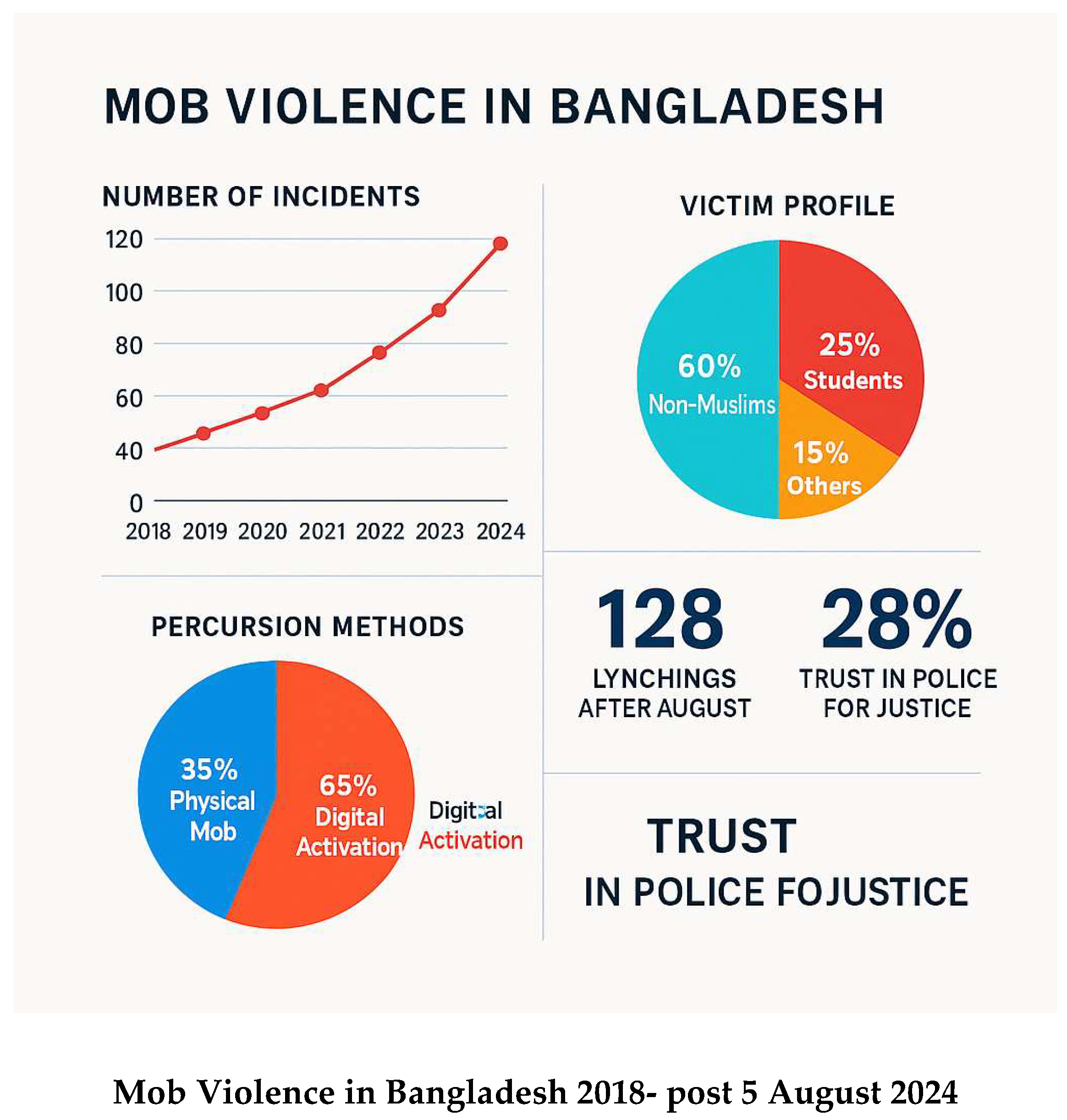
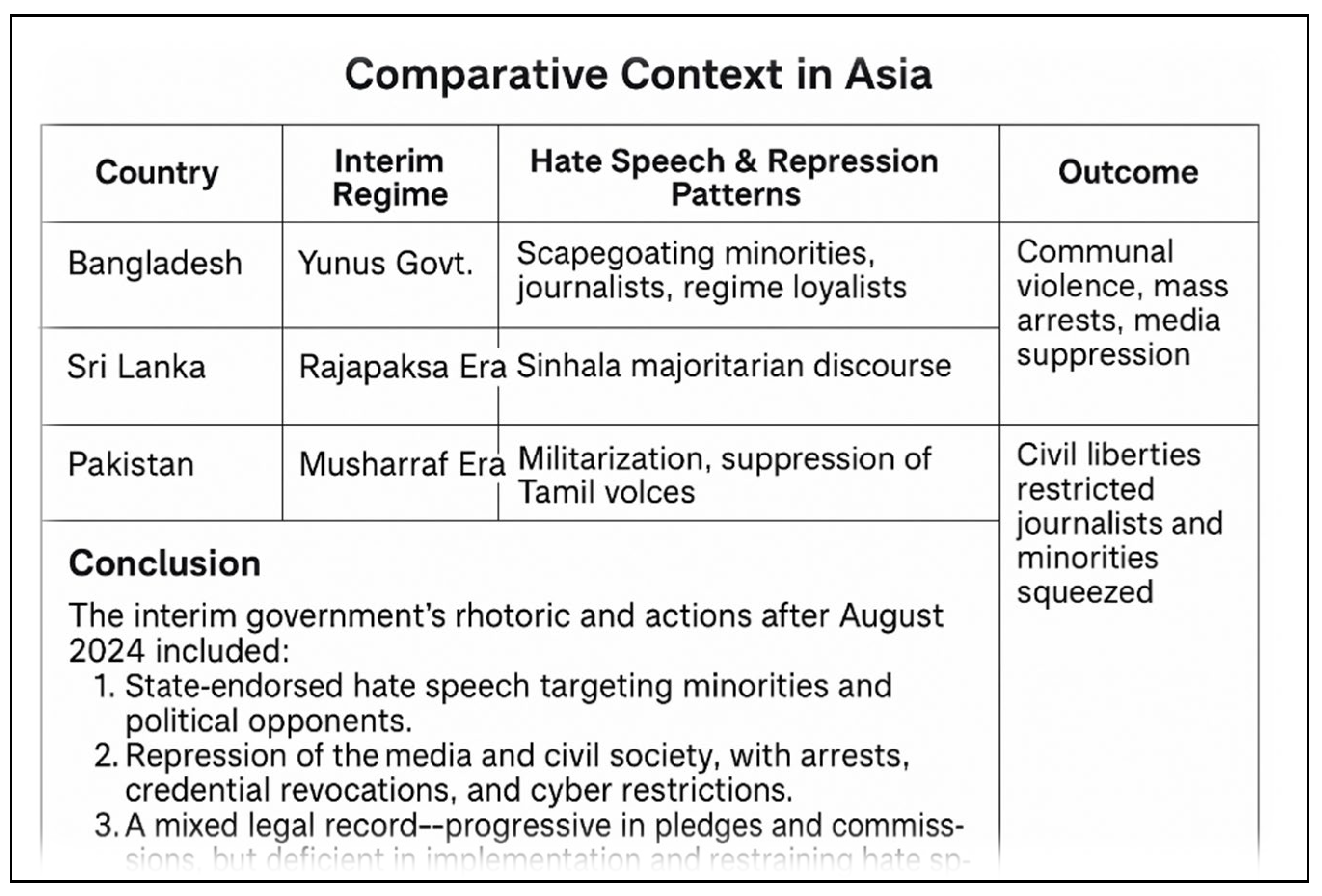
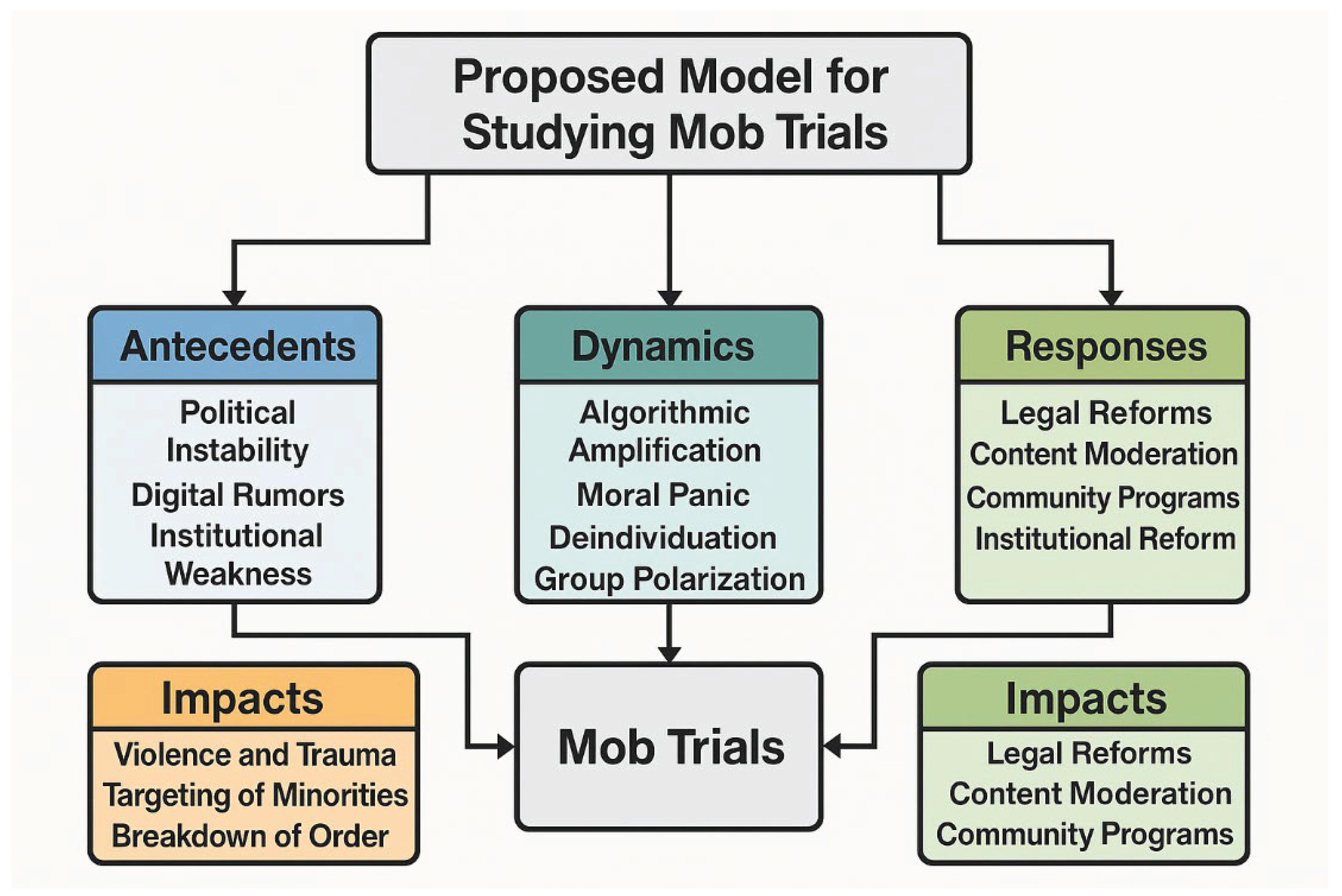

| RQ | Hypothesis |
|---|---|
| RQ1: What structural factors enabled mob violence post-5 Aug 2024? | H1: Political transition and institutional vacuum significantly correlate with increased mob incidents. |
| RQ2: How do digital rumors propagate and trigger mobs? | H2: Rumors amplified via certain platforms show predictable virality patterns preceding violence. |
| RQ3: What role do institutions play in enabling or preventing mob trials? | H3: Police inactivity and judicial inaction are positively related to the severity of mob events. |
| RQ4: What psychological mechanisms fuel participation in mobs? | H4: Individuals in mob incidents exhibit high group-identification and moral disengagement metrics. |
| RQ5: How do victims and communities experience trauma and stigma? | H5: Victims report persistent PTSD symptoms and social withdrawal across cases. |
| RQ6: Which interventions can disrupt the digital-rumor-to-mob cycle? | H6: Communities with higher digital literacy and civic engagement report lower rumor-susceptibility. |
| Dimension | Theoretical Insight | Bangladeshi Context Post-2024 |
|---|---|---|
| Political | Authority vacuum breeds vigilante jurisdiction | August 2024 transitions left enforcement empty |
| Psychological | Deindividuation, moral panic, identity | Emotional digital mobs rapidly escalate to violence |
| Technological | Algorithmic amplification and virality | Absence of platform moderation fuels rumor loops |
| Religious | Communal mobilization as control | Islamist actors exploit blasphemy and ritual rage |
| Institutional | Weak state enforcement undermines rule | Lawlessness gains symbolic legitimacy |
| Country | Interim Regime | Hate Speech & Repression Patterns | Outcome |
|---|---|---|---|
| Bangladesh | Yunus Interim. | Scapegoating minorities, journalists, regime loyalists | Communal violence, mass arrests, media suppression |
| Sri Lanka | Rajapaksa Era | Sinhala majoritarian discourse | Militarization, suppression of Tamil voices |
| Pakistan | Musharraf Era | Anti-secular, blasphemy narratives | Civil liberties restricted, journalists and minorities squeezed |
Disclaimer/Publisher’s Note: The statements, opinions and data contained in all publications are solely those of the individual author(s) and contributor(s) and not of MDPI and/or the editor(s). MDPI and/or the editor(s) disclaim responsibility for any injury to people or property resulting from any ideas, methods, instructions or products referred to in the content. |
© 2025 by the authors. Licensee MDPI, Basel, Switzerland. This article is an open access article distributed under the terms and conditions of the Creative Commons Attribution (CC BY) license (http://creativecommons.org/licenses/by/4.0/).
Copyright: This open access article is published under a Creative Commons CC BY 4.0 license, which permit the free download, distribution, and reuse, provided that the author and preprint are cited in any reuse.