

Submitted:
12 June 2025
Posted:
13 June 2025
You are already at the latest version
Abstract
This paper explores the impact of flexible academic schedules and part-time employment opportunities on student performance and professional growth, particularly in the field of Information Technology (IT). It presents examples and an analysis of the "Freeway" program, which implements a flexible approach to class attendance and supports students who combine study with work. The methodology includes a literature review, analysis of student survey results, and a case study of the "Freeway" program. The findings indicate that flexible learning and working conditions contribute to improved academic performance, increased motivation, and the development of professional skills among students.
Keywords:
flexible academic schedule
; part-time employment
; IT students
; student motivation
; work-study balance
; higher education
1. Introduction
In today’s educational landscape, university students are increasingly balancing their academic studies with part-time jobs or internships in their field. This trend is especially pronounced in Information Technology (IT), where the rapid pace of industry development allows students to begin their professional careers before graduation. However, traditional rigid attendance policies and fixed class schedules often create barriers for such students. A clear contradiction arises: on one hand, work experience fosters practical skills and financial independence, while on the other hand, the lack of academic flexibility may hinder academic progress or even result in dropout.
Recent surveys reveal that nearly one in four students believe that strict attendance policies negatively impact their academic success, while around 30% argue that attendance should not directly affect their grades. These results highlight the growing demand for greater flexibility in the organization of the educational process.
In response, various universities and educational programs have started introducing initiatives that allow students more control over their time. One such example is the "Freeway" program, which offers flexible scheduling and comprehensive support for students balancing study and employment. This initiative allows students to adapt their timetables, choose from multiple lecture sessions, access online courses and recorded materials, and even negotiate individualized plans with instructors when needed. The program also includes support measures such as time management consulting, mentoring, and assistance in finding part-time jobs within the IT field.
2. Methodology
This study employs a comprehensive approach that combines both quantitative and qualitative methods. In the first stage, a review of current literature and existing research on flexible learning formats and student employment was conducted. Academic articles, survey reports, and statistical data were analyzed in both international and local (Kyrgyzstan, post-Soviet region) contexts. Particular attention was given to studies examining the impact of part-time work on academic performance and the effects of flexible schedules.
Among the reviewed sources are the study by F. Saddique et al. (2023) on the influence of student employment on academic achievement, surveys of Russian students on the benefits of flexible learning, and analytical reports on educational policies promoting flexibility (e.g., the 2023 Student Voice survey by Inside Higher Ed).
In the second stage, a case study of the "Freeway" program was conducted. This included analysis of internal program reports, interviews with program coordinators, and feedback from IT students in their final years of study. The study examined the implementation of flexible attendance models, the availability of online learning components, and the structure of individualized study paths. Academic performance data (GPA, assignment submission timeliness) and student perceptions regarding balancing work and study were collected.
Additionally, survey results from 42 students of engineering and economics disciplines from another university (based on research by N.A. Kashcheyeva) were utilized. These data helped quantitatively assess the importance of flexible schedules and work opportunities from the students’ perspective. Key survey questions focused on the conditions necessary for successfully balancing study and employment, the importance of flexible schedules when selecting jobs, and the motivational impact of autonomy in time management.
In summary, the methodology involved:
- (1)
- a literature and secondary data review,
- (2)
- a case study of the "Freeway" program,
- (3)
- and a comparative synthesis of findings.
This mixed-method design enabled a comprehensive understanding of how flexible academic schedules and employment influence students’ success.
3. Results
3.1. Flexible Schedules and Employment: Survey and Research Results
Analysis of literature and survey data confirms that flexibility in academic organization plays a crucial role in the success of students who work while studying. Most students view flexible work schedules as essential for balancing academic and professional responsibilities. According to a survey of 42 engineering and economics students (Kashcheyeva, 2018), 50% identified flexible work schedules as the most critical factor for successfully combining work and study. For comparison, the next most cited conditions were having free time (18%) and working part-time hours (12%).
Figure 1.
Perceived importance of flexible work schedules among students. Blue – decisive (57%), Red – important but not decisive (32%), Green – not important (11%).
Figure 1.
Perceived importance of flexible work schedules among students. Blue – decisive (57%), Red – important but not decisive (32%), Green – not important (11%).
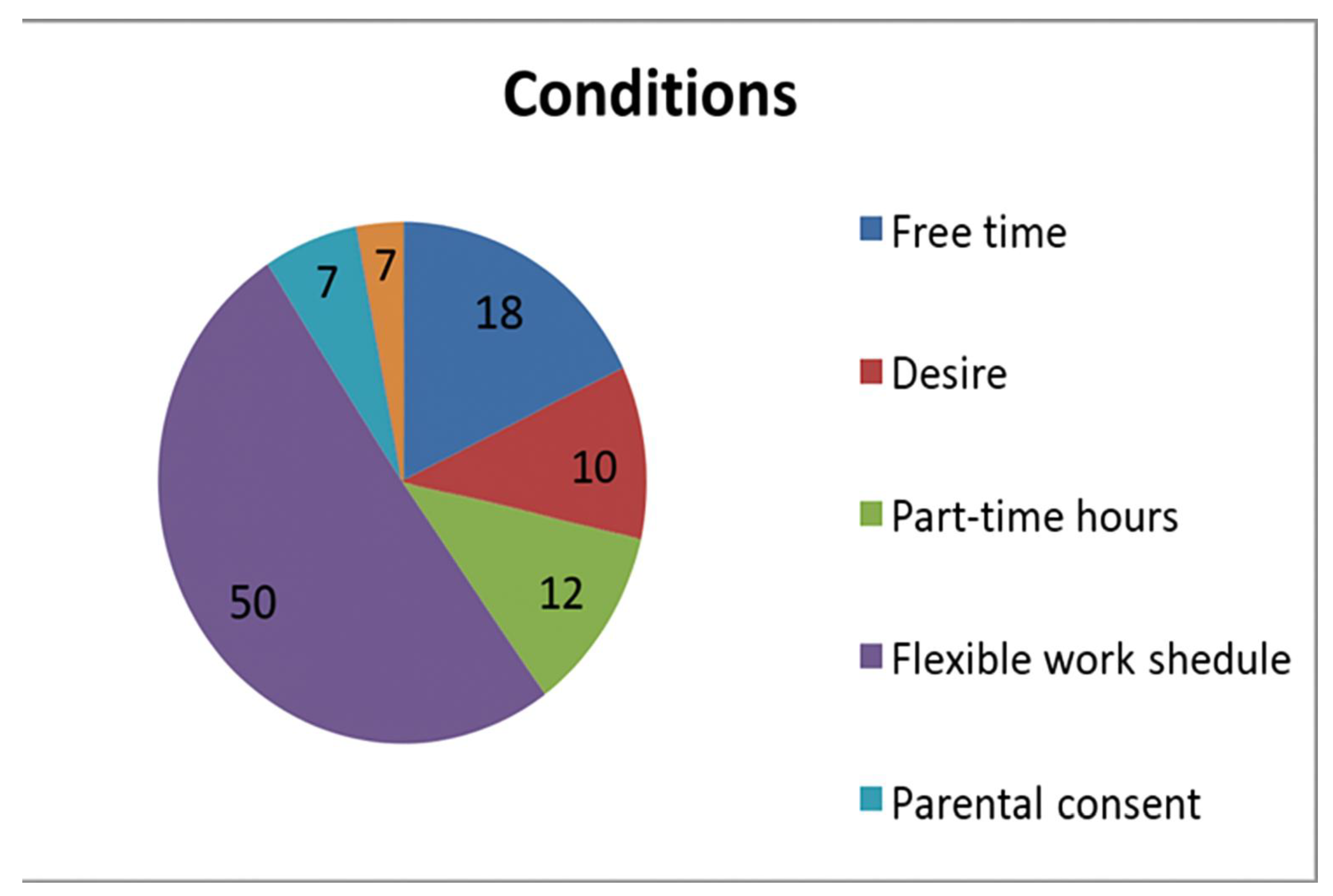
Students’ desire to maintain a balance between work and academic responsibilities while achieving success in both areas explains the high value they place on flexible scheduling.
Figure 2.
Caption.
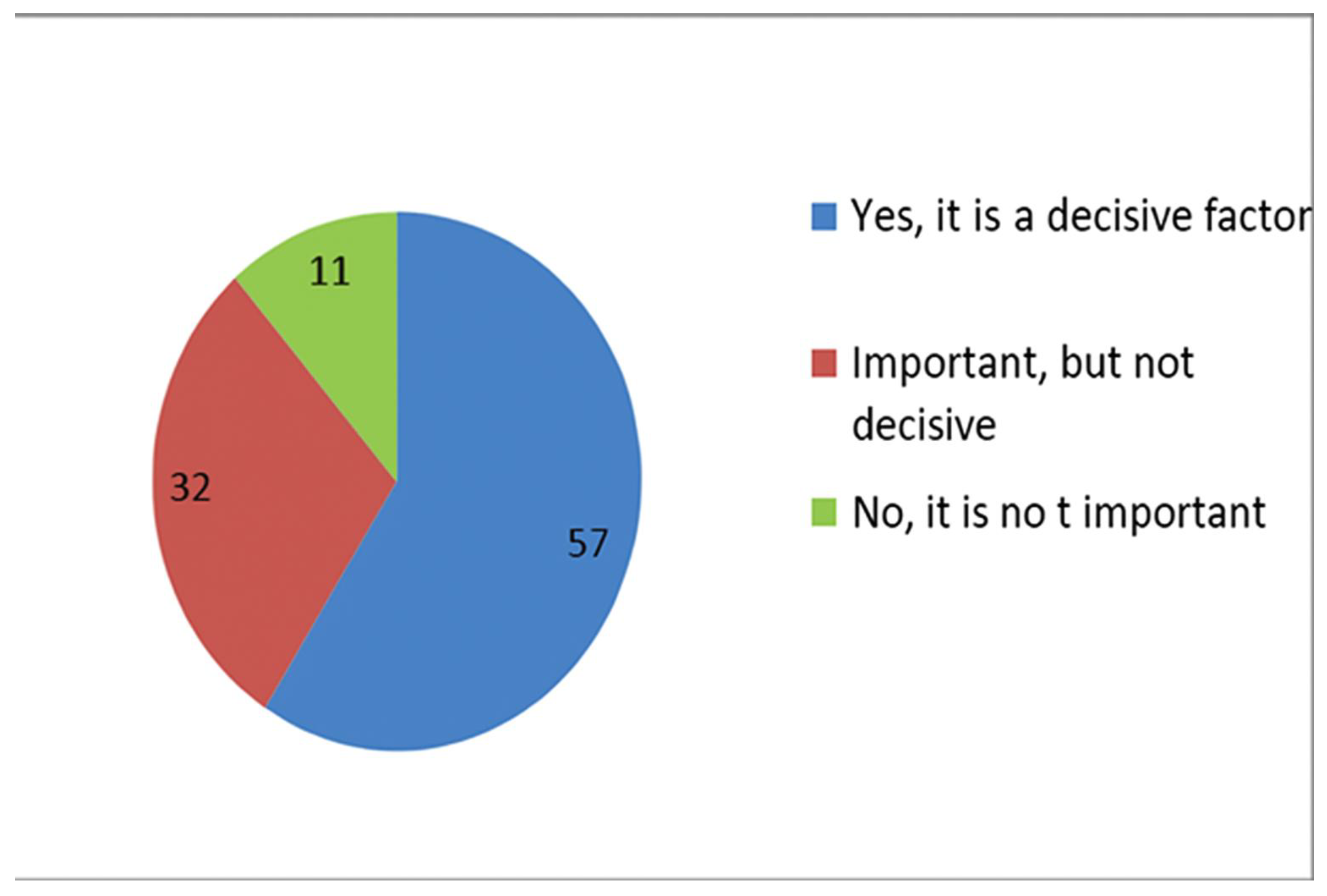
Another question from the same survey revealed that 89% of students consider the availability of a flexible schedule to some extent when seeking employment: for 57%, it is a decisive factor in choosing a job, while 32% regard it as an important condition. Only about 11% of respondents stated that schedule flexibility plays no role for them (see Figure 1). Thus, for the vast majority of students, the ability to manage their work hours independently is one of the key motivating factors when looking for a job.
Finally, it is noteworthy that schedule flexibility not only influences job selection but also increases motivation to work. Sixty-seven percent of students indicated that if they could choose their own working hours, it would encourage them to work more and with greater productivity. In other words, granting autonomy over time management enhances engagement: young people are more willing to invest effort when they know they can adapt their schedules to their personal needs.
The presented data align with the findings of international studies. In the work by F. Saddique et al. (2023), which examined the impact of part-time employment on academic performance, it was noted that “a more flexible work schedule leads to higher academic achievement among students.” This conclusion was based on a comparison between students working under flexible schedules and those with rigid working hours. Specifically, over 65% of students who had the ability to adjust their work hours flexibly achieved a GPA above 2.6 (on a 4.0 scale), which significantly exceeds the minimum academic threshold. The authors concluded that part-time employment, when balanced appropriately, not only does not hinder academic outcomes but may in fact enhance them.
The reasons why part-time work, when kept within reasonable limits, can positively impact academic performance are explained in several studies. First, employment helps students develop time management and self-discipline skills. As noted by Cottrell (2009), cited in the study by Saddique et al., having a job makes one’s daily routine more structured and encourages efficient use of time, enabling students to accomplish more throughout the day. Second, working in one's field complements theoretical learning with practical experience, thereby deepening students’ understanding of academic material. Students often feel a sense of achievement and increased motivation when they can apply their knowledge to real-world tasks. Third, earnings from part-time work help cover tuition and personal expenses, reducing financial stress. Together, these factors contribute to the conclusion that, with proper support and schedule flexibility,
Part-time employment has a beneficial effect on students’ academic performance.
It is important to emphasize that this refers specifically to moderate employment that is compatible with academic commitments. There is a threshold beyond which work begins to interfere with academic performance. When students are required to work excessive hours per week, they have less time and energy to complete academic tasks, which negatively affects their grades. In the study by Saddique et al., more than half of respondents (57.3%) acknowledged having difficulty balancing the demands of work and study. Approximately 34% reported falling behind in their studies due to part-time employment, while the majority (66%) were able to avoid a decline in academic performance. Thus, the presence of a flexible schedule and reasonable limits on working hours are critical conditions for gaining the benefits of combining work and study without compromising the quality of education. Supporting this view, education experts emphasize the importance of granting students a certain degree of autonomy. Flexible assignment deadlines, the ability to miss classes for valid reasons without penalty, and alternative forms of class participation are among the measures that, according to students, would increase their chances of academic success.
In summary, the quantitative findings indicate that a flexible study-work schedule is in high demand among today’s students and can indeed lead to improved academic outcomes.
Table 1 summarizes the key survey findings regarding the importance of schedule flexibility for students.
Overall, statistical data and research agree that the reasonable integration of employment into the educational process yields a dual benefit: it enhances students’ practical qualifications and employability without compromising—and in some cases even improving—their academic performance. A deeper understanding of the mechanisms behind this effect can be gained by examining a specific example—the “Freeway” program, in which the principles of flexible learning are put into practice.
3.2. Case Study: The “Freeway” Program—Flexible Learning in Action
The “Freeway” program was launched with the goal of enabling students to build individualized educational pathways while combining in-person learning with industry employment. It is primarily aimed at fields such as IT and engineering, where out-of-classroom practical experience is especially valuable for future careers. Analyzing the implementation of the “Freeway” program illustrates how the previously discussed principles are applied in a real educational setting and what outcomes can be achieved.
Organization of the Learning Process. Within the “Freeway” program, the traditional model of class scheduling has been revised. Mandatory lectures and seminars are held in multiple time slots (morning, afternoon, or evening), allowing students to choose the most convenient option based on their work schedule. All courses provide access to digital materials, including lecture recordings, presentations, notes, and assignments through an e-learning system. If a student misses a class due to work, they are given the opportunity to study the material independently at a convenient time, and, if necessary, receive online consultation from an instructor.
As shown in the research conducted by G. Esenalievа and colleagues, the integration of such digital learning tools significantly enhances the flexibility and efficiency of the educational process. The use of distance learning platforms (e.g., Moodle) and intelligent systems not only helps compensate for missed classes but also allows for the personalization of learning to meet each student’s individual needs. Professor Gulzada Esenalievа (Ala-Too International University, Kyrgyzstan) emphasizes that the development of e-learning and adaptive technologies is one of the key priorities in the modernization of higher education, providing new opportunities for more flexible forms of learning without compromising quality. Thus, the “Freeway” program is built upon digital support for the educational process, creating the necessary infrastructure for implementing flexible schedules.
Attendance and Academic Performance. Unlike the rigid rules typical of traditional learning models, the “Freeway” program allows for more flexible attendance. Students are expected to master the competencies outlined in the curriculum, but they are not required to be physically present at every class. Attendance is handled with flexibility: for example, a certain number of absences are permitted without penalty, provided that the student successfully passes the required assessments.
Program reports indicate that this flexible approach to attendance has not resulted in lower academic performance. On the contrary, comparisons of average grades show that “Freeway” participants—students who combine study with work—perform on par with their peers who follow a standard academic schedule. The average GPA of “Freeway” students over recent semesters has remained in the range of 3.0 to 3.2 (on a 4.0 scale), which is comparable to the faculty average. These findings are consistent with the results of the previously mentioned study from Pakistan, where most working students also maintained a GPA well above the minimum academic threshold.
It is important to note that the program tends to attract motivated students; nevertheless, concerns that relaxed attendance policies would lead to poorer results have not been confirmed. The key factors are students’ sense of responsibility and the effectiveness of feedback mechanisms. In “Freeway,” formative assessments (tests and assignments) are administered more frequently, allowing instructors to detect academic difficulties early and adjust students’ individual learning plans accordingly. As a result, with sufficient self-discipline, a flexible schedule does not hinder students from achieving high academic performance.
Motivation and Engagement. The experience of the “Freeway” program demonstrates a noticeable increase in student motivation among those who are given the opportunity to study and work simultaneously. According to participant feedback, the flexible schedule helps alleviate the stress associated with choosing between attending a lecture and going to work. Students feel supported by the university and faculty, which enhances their overall satisfaction with the learning process.
Many students report that they have begun to value their time on campus more: knowing that they are not forced to attend what they perceive as unproductive sessions, they take the initiative to attend the most important lectures and actively engage in practical classes. This phenomenon aligns with the idea that granting a degree of autonomy fosters responsibility—when flexibility is offered as a sign of trust, students strive to meet expectations.
Furthermore, as noted in the Student Voice survey (2023), students themselves do not view flexibility as a form of permissiveness, but rather as an opportunity to build their learning paths more intentionally. In the case of “Freeway,” this was evident in the fact that the rate of overdue assignments and academic backlogs among students with flexible schedules was no higher than in traditional groups—students made efforts to meet deadlines, appreciating the freedom they were given.
Professional Development and Career Advancement. Arguably, the most significant advantages of the “Freeway” program are seen in the area of students’ professional growth. The actual combination of academic study and work in the field creates a synergistic effect: knowledge acquired in the classroom is immediately reinforced through practical application, and real-world cases encountered at work are discussed from an academic perspective during seminars. IT students participating in the program graduate with portfolios of real projects, employer recommendations, and a solid understanding of how the industry operates. This significantly increases their chances of securing employment after graduation.
According to internal data from the university’s career center, up to 80% of “Freeway” graduates receive permanent job offers from companies where they interned or worked part-time during their studies. In contrast, this figure is notably lower among graduates without comparable experience. These results are consistent with findings from other studies, where around 70% of working students believe that the work experience they gained during their studies will help them find a job in their field more quickly after graduation.
Moreover, professional skills—ranging from technical to interpersonal—are developed earlier, giving students a competitive edge. In the IT sector, where practical experience and the ability to collaborate on projects are highly valued, a “Freeway” graduate is effectively a junior specialist with real-world experience, rather than a novice entering the field for the first time.
The development of soft skills should also be noted. By studying and working simultaneously, students learn to set priorities, manage their time, collaborate with others, and solve non-standard problems—all of which are often difficult to teach in a traditional academic setting. Research shows that students who combine work and study acquire valuable self-management and responsibility skills.
The experience of the “Freeway” program confirms this: program supervisors report noticeable progress in the maturity and independence of participants after just one year of studying under the flexible model. These qualities have a positive impact both on academic performance—students become more organized and less likely to delay coursework—and on their employability, as such traits are highly valued by employers.
In summary, the results of the “Freeway” case study suggest that, when properly implemented, a flexible academic schedule combined with support for part-time employment yields clear benefits. Students demonstrate strong academic performance, exhibit high levels of motivation, and gain substantial practical experience that prepares them for future careers. The following section will examine these observations in a broader context and compare them with data from other studies in order to highlight the key advantages and success factors of this model.
4. Discussion
The results of this study confirm the high importance of flexible academic schedules and part-time employment opportunities for students, particularly in the IT sector. The collected data and the analyzed case example allow us to outline several key advantages of this approach, as well as to discuss the necessary conditions for its effective implementation.
1. Improved Academic Performance and Engagement.
Contrary to common concerns, working while studying does not necessarily lead to a decline in academic achievement. On the contrary, when supported by a flexible schedule, employment can motivate students to perform better. As shown by both the survey data (Table 1) and the “Freeway” program case study, when an educational institution supports students by allowing them to adapt their class attendance, academic performance is maintained or even improved.
This mechanism operates in two ways: first, flexibility reduces stress and fatigue—students are no longer forced to choose between attending mandatory classes and working, and can instead plan their day efficiently. Second, limited time becomes a motivating factor for more effective learning. Many working students report that they have adopted a more strategic approach to their studies: preparing for exams in advance, focusing on the most difficult subjects, and engaging more actively with instructors to avoid wasting time.
In this way, flexibility contributes to conscious and purposeful participation in the learning process. This observation aligns with survey results, which indicate that flexible conditions help retain students who might otherwise consider dropping out, and contribute to improved academic progress. From the perspective of university administrators, introducing flexible elements—such as optional attendance systems with performance monitoring—can enhance overall academic outcomes and reduce dropout rates, especially among upper-year students who are starting to work professionally.
2. Development of Professional Competencies and Career Prospects.
By providing students with the opportunity to work in their field while studying, the university effectively extends the educational environment into the workplace. This is particularly important for IT-related disciplines, where technologies evolve so rapidly that experience with real-world projects is valued as highly as academic knowledge. A student who participates in an internship or part-time employment within a flexible program brings live case studies into the classroom and shares practical insights with peers. This enriches the educational process and aligns it more closely with the current demands of the industry.
In the “Freeway” case, this effect was clearly observed: graduates left the university not only with a diploma but also with résumés containing real work experience, significantly increasing their competitiveness in the job market. This outcome is also supported by broader research—according to Saddique et al., up to 70% of students believe that their part-time work during studies will help them secure employment after graduation. Similarly, studies by Green (2001) and others previously mentioned indicate that working students acquire a range of professional attributes, including technical skills, knowledge, and a strong sense of responsibility.
Thus, the flexible approach acts as a bridge between education and the labor market, which is especially valuable in fast-paced sectors like IT. A university that adopts such a model enhances the reputation of its graduates in the eyes of employers and strengthens its own industry ties through internship partnerships, joint projects, and other forms of collaboration.
3. Personal Growth and Soft Skills.
One of the less obvious, yet significant, benefits of combining study and work is the accelerated development of students’ personal skills. In the traditional educational model, many young people face real responsibility for the first time only after graduation. In contrast, within a flexible learning model, students begin to adopt multiple roles during their studies—as learners, employees, and members of professional communities.
This kind of “immersion” strengthens character: young people become more organized, learn to communicate effectively (e.g., negotiating work schedules with employers, discussing individual study plans with instructors), and develop self-regulation skills. It can be said that a flexible schedule creates a controlled environment in which students learn independence. As a result, by the time of graduation, such students are psychologically better prepared for adult life.
Research indicates that students with work experience tend to be more self-confident and assured in their abilities. Although this type of personal growth is difficult to quantify, it is widely observed by both students and program supervisors, including those involved in “Freeway.” In the long term, such qualities can influence both academic performance—through increased self-efficacy and goal setting—and career development, such as leadership skills acquired in real work situations.
4. Socio-Economic Benefits.
It is also important to consider a more practical dimension—the financial situation of students. For many, the ability to work part-time during their studies is a necessity in order to pay for tuition or personal expenses. In this context, a flexible schedule serves as a form of social support: it enables students to earn an income without having to leave university. In situations where access to higher education often depends on financial resources, such flexibility measures promote greater social equity.
Universities—especially private institutions—are interested in ensuring that students can continue their education without being forced to drop out due to economic hardship. Providing options for part-time employment reduces the risk that students will have to choose between earning an income and completing their education. Ultimately, everyone benefits: the student gains both education and income, the university retains its student and graduate, and society gains a qualified specialist rather than someone without a degree.
Moreover, evidence suggests that retaining students through flexible conditions is more cost-effective for universities than recruiting new ones to replace those who drop out. In this way, programs like “Freeway” also have a macro-level impact: they increase the overall completion rate of higher education and reduce student attrition from the academic system.
Conditions for the Success of a Flexible Approach.
At the same time, it is essential to outline the conditions under which the aforementioned benefits can be realized and potential risks minimized.
First, there must be reasonable limits on student workload. Universities should monitor to ensure that students do not work excessively to the detriment of their academic responsibilities. Studies suggest that working more than 20 hours per week significantly reduces academic performance, and it is therefore recommended to cap work hours accordingly.
Second, a well-developed digital infrastructure is required. This includes distance learning systems, electronic libraries, and online communication tools for interaction with instructors. Without adequate technological support, it is extremely difficult to implement true scheduling flexibility.
Third, support from the teaching staff is crucial. Professors and instructors must be actively involved in the flexible learning model: adapting their courses, being open to blended formats, and understanding the challenges faced by working students. Mentorship is also vital—individual academic advisors or tutors can help students with planning, catching up on missed content, staying motivated, and staying on track.
Fourth, partnerships with industry are essential. For parallel employment to be successful, educational institutions need to collaborate with companies that offer suitable job or internship opportunities aligned with students’ academic schedules. The “One Day One Job” initiative described by Abazbekov and Ermakov (2025) is one such example—a platform designed to connect students with short-term job opportunities. Thanks to such platforms, students can find one-day or weekend projects without risking full-time commitments that would conflict with their studies.
Finally, a cultural shift in the perception of flexible education is essential.
University administrations and students alike must come to view flexibility not as a concession or simplification, but as a new norm that reflects the realities of the modern world. The COVID-19 pandemic demonstrated the viability of online and blended learning models, prompting a re-evaluation of rigid in-person attendance requirements. In the post-pandemic era, many universities continue to adopt elements of flexibility—such as remote learning days and floating deadlines—precisely because they have seen that, when implemented properly, educational quality does not suffer.
Moreover, flexibility is becoming a competitive advantage for academic programs. This is particularly true in the IT field, where a significant portion of learning can be conducted online, and where skillsets evolve outside the traditional classroom environment. A flexible program appeals to prospective students by signaling: “We understand your needs and are willing to adapt in order to help you succeed.”
Thus, the discussion confirms that the advantages of flexible scheduling and part-time employment are numerous, but their realization requires a well-designed and thoughtfully implemented system.
The experience of the “Freeway” program serves as a model of successful application of such a system, while the literature review supports its outcomes with broader educational and labor market trends. The continued expansion and examination of similar models will undoubtedly enrich both the education system and the labor market with highly qualified professionals.
5. Conclusion
In a rapidly evolving labor market and with a growing number of working students, the traditional rigid structure of higher education is gradually giving way to more flexible models.
This study has demonstrated that offering students flexible academic schedules and opportunities for part-time employment brings substantial benefits to both learners and educational institutions. Based on the literature review and the case study of the “Freeway” program, the following conclusions can be drawn:
-
A flexible academic schedule significantly facilitates the combination of work and study.Students highly value the ability to plan their own time and report that it reduces stress and increases motivation. More than half of the respondents identified a flexible schedule as a key condition for balancing study and work, and two-thirds stated that having control over their time enhances their productivity. Thus, flexibility is a crucial factor in maintaining students’ academic stability.
-
Combining academic studies with work in the student’s field—when supported by the university—does not lead to a decline in academic performance.On the contrary, when workload is manageable and supported by a flexible schedule, working students perform on par with—or even outperform—their peers in academic outcomes. Contributing factors include improved discipline, effective time management, and increased motivation to learn. Maintaining balance is essential: excessive workloads (more than 20 hours per week) are not recommended, but part-time employment within reasonable limits does not hinder academic success.
-
Students’ professional and personal growth accelerates significantly under a flexible learning model.Practical experience gained during studies increases students’ chances of employment and allows them to graduate as specialists who are already familiar with industry realities. Graduates with work experience have a competitive advantage in the job market, which confirms the value of integrating employment into the educational process. Additionally, students develop essential soft skills—such as responsibility, independence, and communication—that benefit them both academically and in everyday life.
-
Students’ professional and personal development is significantly accelerated within a flexible learning model.The practical experience acquired during the course of study enhances employability and enables graduates to enter the workforce as professionals already acquainted with industry dynamics. Those with prior work experience possess a competitive edge in the job market, reinforcing the importance of integrating employment opportunities into the educational process. Furthermore, students cultivate essential soft skills—such as responsibility, autonomy, and effective communication—that support both academic success and lifelong personal growth.
In conclusion, flexibility in education should not be seen as a passing trend, but rather as a necessary condition for preparing a modern workforce—especially in high-tech industries.
When properly implemented, providing students with opportunities to study and work simultaneously creates a win–win situation: young professionals graduate with a solid foundation of knowledge and practical experience, while universities produce competitive graduates with strong academic performance. This study, grounded in empirical research and the practical experience of the “Freeway” program, supports this position.
For the academic community, it is important to continue exploring optimal models of flexible learning, including quantitative assessments of how various forms of flexibility—such as adjustable schedules, online courses, and dual-track programs—affect student success. On a practical level, universities could begin by piloting elements of flexible scheduling in curricula and building partnerships with industry to support working students.
In an era where lifelong learning has become the norm, the ability to study and work concurrently is an essential skill. Flexible educational models like the one presented here help students develop this ability and stay on course along the “freeway” of modern careers.
References
- Kasheyeva, N. A. (2018). Analysis of motivating modern students through flexible work schedules (based on engineering and economics students at RGRTU). Young Scientist, 27(213), 83–85.
- Saddique, F., Khurshid, F., & Raja, B. I. (2023). The effect of part-time jobs on university students’ academic achievement. Journal of Educational Research and Social Sciences Review.
- Flaherty, C. (2023, April 7). Students define flexibility in the classroom. Inside Higher Ed. Retrieved from https://www.insidehighered.com.
- Abazbekov, K., & Ermakov, A. (2025). Development of a mobile application to search for additional income in the “One Day One Job” project.
- Esenalieva, G., Erdolatov, S., Ibraev, A., & Bekezhanov, M. (2025). Status and prospects for the development of information technology in the higher education system of Kyrgyzstan.
- Watermark Insights. (2023). Why flexibility is important for student success [Blog post]. Retrieved from https://www.watermarkinsights.com.

Table 1.
Caption.
| Aspect of Flexibility | Percentage of students who consider the aspect important |
| Flexible work schedule as a condition for balancing work and study | 50% – the main factor for successfully balancing work and study |
| Flexible schedule when seeking employment (importance in job selection) | 57% – decisive factor, 32% – important factor (total of 89% positive responses) |
| Ability to choose one’s own working hours (impact on motivation) | 67% – would increase motivation to work more and more productively |
| Strict university attendance policy (impact on academic performance) | ~25% – consider it a barrier to success; ~30% – believe that attendance should not affect grades |
Disclaimer/Publisher’s Note: The statements, opinions and data contained in all publications are solely those of the individual author(s) and contributor(s) and not of MDPI and/or the editor(s). MDPI and/or the editor(s) disclaim responsibility for any injury to people or property resulting from any ideas, methods, instructions or products referred to in the content. |
© 2025 by the authors. Licensee MDPI, Basel, Switzerland. This article is an open access article distributed under the terms and conditions of the Creative Commons Attribution (CC BY) license (http://creativecommons.org/licenses/by/4.0/).
Copyright: This open access article is published under a Creative Commons CC BY 4.0 license, which permit the free download, distribution, and reuse, provided that the author and preprint are cited in any reuse.


