

Submitted:
19 March 2026
Posted:
23 March 2026
You are already at the latest version
Abstract
Despite advances in surgical and laser techniques, skin graft scars remain challenging to treat, and conventional interventions frequently yield limited outcomes. The Pinholxell method represents a reconstruction-based laser approach that combines a pinhole procedure—utilizing a CO₂ laser to create deep columns measuring approximately 1 mm in diameter—with an immediate fractional CO₂ laser overlay.This dual-mode system enables simultaneous deep dermal remodeling and superficial epidermal regeneration. The macro-pinhole columns act as controlled zones of injury that initiate a localized cytokine cascade, while the intervening intact tissue serves as a “safety zone,” supporting structured dermal regeneration and epithelial recovery.This study presents five cases of patients with skin graft scars treated using the Pinholxell method. The treatment protocols included repeated sessions of Pinholxell therapy administered at 2-month intervals, supplemented with additional fractional CO₂ laser procedures as clinically indicated. The number of treatment sessions was determined based on the severity and characteristics of the scar, including the degree of hypertrophy and the presence of keloidal features.On average, patients underwent 5 to 10 sessions of Pinholxell therapy, along with 7 to 10 sessions of adjunctive fractional CO₂ laser treatments, tailored to enhance epidermal resurfacing and promote comprehensive dermal remodeling, particularly in cases with extensive fibrosis, elevated vascularity, or nodular keloidal architecture. The treatment period ranged from 18 months to 4 years and 4 months.All patients exhibited marked clinical improvement in pigmentation, thickness, surface texture, and pliability of the scar, along with alleviation of symptoms such as pruritus, pain, and functional limitations caused by contracture. No complications were observed, and patient satisfaction was high.These findings suggest that the Pinholxell method is not merely a resurfacing technique but a structured reconstruction strategy for skin graft scars, offering both structural and symptomatic improvement through targeted tissue remodeling and regeneration.
Keywords:
Pinholxell
; CO2 laser
; fractional CO2
; skin graft scar
; hypertrophic scar
; contracture
; dermal remodeling
Introduction
Skin grafting plays a pivotal role in the surgical reconstruction of extensive wounds, including deep burns and full-thickness skin loss, by providing essential coverage and facilitating re-epithelialization [1]. In clinical practice, large-area skin grafts are often indispensable for managing severe burns or traumatic injuries involving significant tissue loss. However, despite their utility in wound closure, grafted sites are frequently associated with long-term complications, notably scarring-related issues such as hypertrophy, rigidity, pigmentary disturbance, and contracture formation, which can substantially compromise both function and cosmetic outcomes [2]. Conventional dermatologic interventions, such as CO2 laser resurfacing and intralesional corticosteroid injections, can reduce scar height and tension, thereby improving the appearance of certain scars; however, outcomes are frequently suboptimal [3,4,5]. These limitations highlight the need for a more structured reconstruction strategy that goes beyond surface-level correction and addresses the underlying dermal architecture.
The Pinholxell method is an innovative laser-based treatment technique that combines two distinct yet complementary modalities within a reconstruction-oriented framework. First, vertically oriented pinhole columns are created in the scar tissue using a focused CO2 laser in a pinhole configuration, forming controlled micro-injury zones within the dermis. This is immediately followed by the application of a fractional CO2 laser over the same area, which enhances both epidermal resurfacing and dermal remodeling. This two-step approach constitutes a dual-mode system that enables simultaneous deep dermal remodeling and superficial epidermal regeneration. The pinhole columns are thought to initiate localized regenerative signaling, including a cytokine-mediated cascade, while the intervening intact tissue acts as a “safety zone,” preserving structural integrity and facilitating organized tissue repair [6,7]. Through this coordinated mechanism, the technique induces structured restoration of both dermal and epidermal architecture [8].
This case series presents the clinical outcomes of five patients with post-skin graft scarring treated using the Pinholxell method. The treatment protocol involved multiple sessions, with long-term follow-up exceeding three years. In all cases, the Pinholxell technique demonstrated substantial improvements in scar appearance, including normalization of pigmentation, reduction in textural irregularities, and increased pliability. Furthermore, patients experienced meaningful symptomatic relief, including resolution of pruritus, reduction in pain, and improved range of motion in affected areas. These findings suggest that the Pinholxell method is not merely a resurfacing technique but a reconstruction-based therapeutic strategy for the management of complex graft-related scars.
Method
The Pinholxell treatment was performed in two sequential stages as a structured dual-mode reconstruction procedure designed to induce synergistic dermal remodeling and epidermal regeneration.
In the first stage, deep vertical pinhole columns measuring approximately 1 mm in diameter were created in the scar tissue using a DS-40U CO2 laser (DSE, Seoul, Republic of Korea). The laser was set to a pulse duration of 200–500 μs with a repeat interval of 5 ms, enabling precise and controlled thermal ablation extending into the deeper dermis. These microcolumns functioned as focal zones of controlled micro-injury, initiating localized regenerative responses and promoting dermal remodeling.
In the second stage, a fractional CO2 laser overlay was immediately applied using the eCO2® system (Lutronic Corporation, Goyang, Republic of Korea) with parameters of 26 mJ and a density of 100 spots/cm2. This overlay targeted the superficial layers as well as the intact tissue between pinhole columns, facilitating re-epithelialization while preserving these intervening areas as functional “safety zones,” thereby supporting organized tissue repair and enhancing the overall regenerative response (Figure 1).
Topical anesthesia was achieved using a 5% lidocaine cream applied for one hour prior to each session. In clinical experience, extending the duration of anesthetic application was associated with improved patient comfort, suggesting a time-dependent reduction in procedural pain. Postoperative care included the application of petrolatum gauze for up to three days, followed by the use of a moisturizer and intermittent application of clobetasol cream (0.05%).
Result
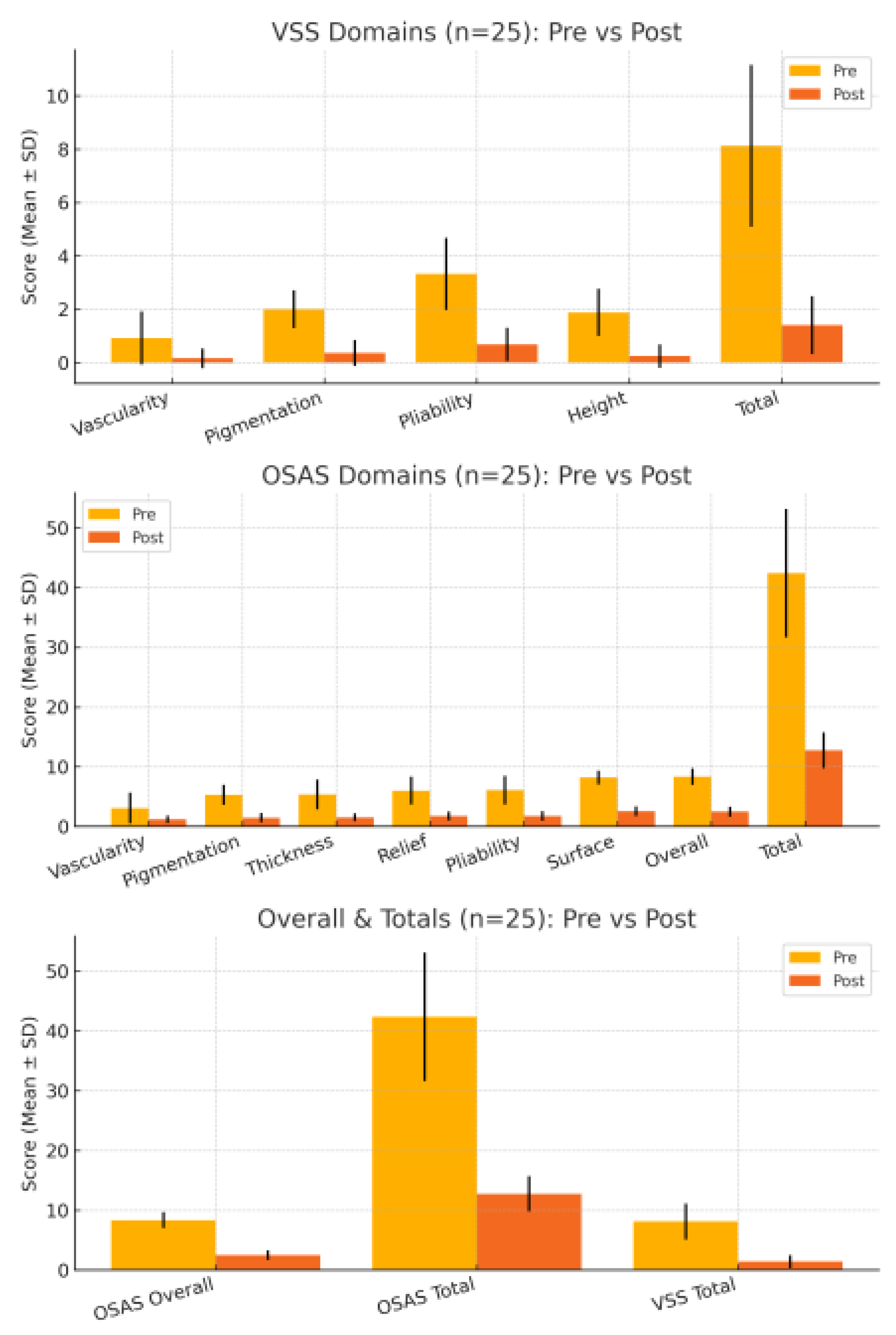
Twenty-five patients with skin graft scars completed the treatment protocol and were assessed using the Observer Scar Assessment Scale (OSAS) and the Vancouver Scar Scale (VSS). All OSAS domains—vascularity, pigmentation, thickness, relief, pliability, and surface—demonstrated significant post-treatment improvement (all P < .001, paired t-test). Notably, vascularity, pigmentation, and thickness decreased from 3.08 ± 2.58 to 1.20 ± 0.65, 5.32 ± 1.68 to 1.48 ± 0.77, and 5.36 ± 2.48 to 1.52 ± 0.65, respectively. Relief and pliability improved from 6.00 ± 2.33 to 1.76 ± 0.72 and from 6.08 ± 2.41 to 1.76 ± 0.83, and the surface score showed the greatest absolute reduction from 8.20 ± 1.15 to 2.56 ± 0.82. The OSAS “Overall Opinion” improved from 8.36 ± 1.35 to 2.48 ± 0.82 (P < .001). The OSAS Total decreased from 42.40 ± 10.75 to 12.76 ± 2.96 (mean difference, 29.64; t = 16.417; P < .001), representing an overall ~70% reduction.
VSS outcomes likewise showed significant improvement across all domains—vascularity, pigmentation, pliability, and height (all P < .001, paired t-test). Mean vascularity decreased from 0.92 ± 1.00 to 0.16 ± 0.37, pigmentation from 2.00 ± 0.71 to 0.36 ± 0.49, pliability from 3.32 ± 1.35 to 0.68 ± 0.63, and height from 1.88 ± 0.88 to 0.24 ± 0.44. The VSS Total declined from 8.12 ± 3.03 to 1.40 ± 1.08 (mean difference, 6.72; t = 13.483; P < .001), corresponding to an overall ~83% reduction.
These quantitative improvements reflect not only superficial changes in scar appearance but also a substantial restoration of dermal structure and functional properties, supporting the reconstruction-based mechanism of the Pinholxell method.

Table 1.
OSAS Score Statistics (n = 25).
| Parameter | Pre Mean ± SD | Post Mean ± SD | Mean Diff | t-value | p-value |
| Vascularity | 3.08 ± 2.58 | 1.20 ± 0.65 | 1.88 | 4.301 | P < 0.001 |
| Pigmentation | 5.32 ± 1.68 | 1.48 ± 0.77 | 3.84 | 13.668 | P < 0.001 |
| Thickness | 5.36 ± 2.48 | 1.52 ± 0.65 | 3.84 | 9.436 | P < 0.001 |
| Relief | 6.00 ± 2.33 | 1.76 ± 0.72 | 4.24 | 11.163 | P < 0.001 |
| Pliability | 6.08 ± 2.41 | 1.76 ± 0.83 | 4.32 | 11.316 | P < 0.001 |
| Surface | 8.20 ± 1.15 | 2.56 ± 0.82 | 5.64 | 23.777 | P < 0.001 |
| Overall | 8.36 ± 1.35 | 2.48 ± 0.82 | 5.88 | 19.852 | P < 0.001 |
| Total Score | 42.40 ± 10.75 | 12.76 ± 2.96 | 29.64 | 16.417 | P < 0.001 |
Table 2.
VSS Score Statistics (n = 25).
| Table | Parameter | Pre Mean ± SD | Post Mean ± SD | Mean Diff | t-value | p-value |
| VSS | Vascularity | 0.92 ± 1.00 | 0.16 ± 0.37 | 0.76 | 3.919 | P < 0.001 |
| VSS | Pigmentation | 2.00 ± 0.71 | 0.36 ± 0.49 | 1.64 | 12.859 | P < 0.001 |
| VSS | Pliability | 3.32 ± 1.35 | 0.68 ± 0.63 | 2.64 | 11.475 | P < 0.001 |
| VSS | Height | 1.88 ± 0.88 | 0.24 ± 0.44 | 1.64 | 12.859 | P < 0.001 |
| VSS | Total | 8.12 ± 3.03 | 1.40 ± 1.08 | 6.72 | 13.483 | P < 0.001 |
Figure 2.
Mean ± SD scores for (A) Vancouver Scar Scale (VSS) domains, (B) Observer Scar Assessment Scale (OSAS) domains, and (C) OSAS Overall Opinion, OSAS Total, and VSS Total in 25 patients with skin graft scars before (yellow) and after (orange) treatment. All domains and total scores demonstrated statistically significant improvement (P < .001, paired t-test). The largest relative reductions were observed in pliability and pigmentation for VSS, and in surface, relief, and pliability for OSAS, with the greatest overall change in OSAS Overall Opinion and total scores. Figure placeholder: Mean ± SD scores for (A) VSS domains, (B) OSAS domains, and (C) OSAS Overall Opinion, OSAS Total, and VSS Total in 25 patients with skin graft scars before (yellow) and after (orange) treatment. All domains and total scores showed statistically significant improvement (P < .001, paired t-test).
Figure 2.
Mean ± SD scores for (A) Vancouver Scar Scale (VSS) domains, (B) Observer Scar Assessment Scale (OSAS) domains, and (C) OSAS Overall Opinion, OSAS Total, and VSS Total in 25 patients with skin graft scars before (yellow) and after (orange) treatment. All domains and total scores demonstrated statistically significant improvement (P < .001, paired t-test). The largest relative reductions were observed in pliability and pigmentation for VSS, and in surface, relief, and pliability for OSAS, with the greatest overall change in OSAS Overall Opinion and total scores. Figure placeholder: Mean ± SD scores for (A) VSS domains, (B) OSAS domains, and (C) OSAS Overall Opinion, OSAS Total, and VSS Total in 25 patients with skin graft scars before (yellow) and after (orange) treatment. All domains and total scores showed statistically significant improvement (P < .001, paired t-test).
2.1. Case 1
A 67-year-old male presented with early hypertrophic and keloid scarring 4 months after undergoing a skin graft for a chemical burn sustained 5 months prior. The graft site, located on the medial aspect of the foot and ankle, exhibited raised, darkly pigmented keloid tissue with irregular texture, surface scaling, and prominent nodular borders. The patient experienced severe pruritus, persistent pain, and difficulty walking due to tissue tightness and contracture at the ankle joint.
Total treatment time was 18 month.
- The pigmentation of the scar significantly normalized. The previously dark violaceous and reddish discoloration diminished, blending more seamlessly with the surrounding skin.
- There was a marked reduction in scar thickness and protrusion. The previously elevated, nodular keloidal margins flattened considerably, resulting in a more even surface contour.
- The texture of the skin improved noticeably. The rough, scaly, and irregular surface observed before treatment became smoother, with improved elasticity and a healthy sheen.
- Subjective symptoms, including persistent itching and pain, were fully relieved. The patient reported no discomfort during rest or ambulation following treatment.
- Functional recovery was also observed. The initial gait disturbance caused by contracture and scar tightness around the ankle was resolved.
The patient regained the ability to walk unaided, indicating a significant improvement in mobility and joint flexibility.
When keloid formation accompanies the early stage of skin graft healing, the treatment becomes significantly more complex. The symptoms and scar thickness tend to fluctuate, alternating between improvement and worsening. However, with careful and experienced clinical judgment, timely interventions have been made, allowing the patient to recover steadily without complications. Pre- and post-treatment images are displayed in Figure 3.
2.2. Case 2
A 38-year-old woman presented with hypertrophic changes at a forearm skin graft site one year following graft surgery for a childhood burn scar caused by candle wax. The distal margin of the graft exhibited keloidal scarring extending toward the dorsal aspect of the wrist. The patient experienced ongoing pruritus and pain, with the elevated scar tissue contributing to restricted wrist mobility secondary to contracture. She underwent five Pinholxell sessions and ten fractional CO2 laser procedures.
The total treatment time was 4 years and 4 months.
- Scar thickness and firmness reduced noticeably, showing a smoother and more uniform texture.
- Skin tone normalized, with reduced redness and the demarcation blended with the surrounding tissue.
- Pain and itching completely resolved.
- Wrist flexibility and range of motion improved significantly.
The patient reported being satisfied, and no complications occurred. Pre- and post-treatment images are displayed in Figure 4.
2.3. Case 3
A 29-year-old man underwent facial skin grafting 10 years ago. The procedure was performed to address post-traumatic deformities resulting from a traffic accident sustained 25 years prior. Despite the prolonged interval, the skin graft remained incompletely integrated with the underlying dermis, and the grafted patches remained clearly demarcated. He underwent twelve consecutive Pinholxell sessions, followed by eight fractional CO2 laser procedures.
The total treatment time was 3 years and 3 months.
- The scar surface became significantly flatter and less fibrotic, with a marked improvement in contour integration and reduced skin tension.
- The hard, bumpy texture softened, and the demarcation lines visibly blended.
- The color of the scar blended more harmoniously with the adjacent skin.
- Overall facial symmetry improved, with perioral movement appearing more natural.
The treatment was well tolerated, with no reported complications. The patient expressed satisfaction with the results. Pre- and post-treatment images are displayed in Figure 5.
2.4. Case 4
A 17-year-old woman presented with a forearm skin graft performed 4 years prior, following a hot water burn sustained 7 years ago. The graft was characterized by mild hypertrophy, surface irregularity, dark brown pigmentation, and hypopigmented suture lines. She underwent seven Pinholxell sessions and seven fractional CO2 laser procedures. Additionally, three sessions of 1064 nm Q-switched Nd:YAG laser were performed over a five-month period, concurrently with the fractional laser treatments.
The total treatment time was 3 years and 3 months.
- The surface texture of the scar normalized significantly, with a marked reduction in rigidity and a more uniform appearance.
- The hyperpigmented areas and keratotic features largely resolved, reflecting substantial improvement in both pigmentation and overall color uniformity.
- Elevated, hypopigmented suture lines at the scar margins became less prominent and blended more seamlessly into adjacent tissue.
- The reduced skin thickness alleviated wrist movement discomfort, improving flexibility.
The patient experienced no adverse events and expressed overall satisfaction with the results. Pre-, mid-, and post-treatment clinical images are provided in Figure 6.
2.5. Case 5
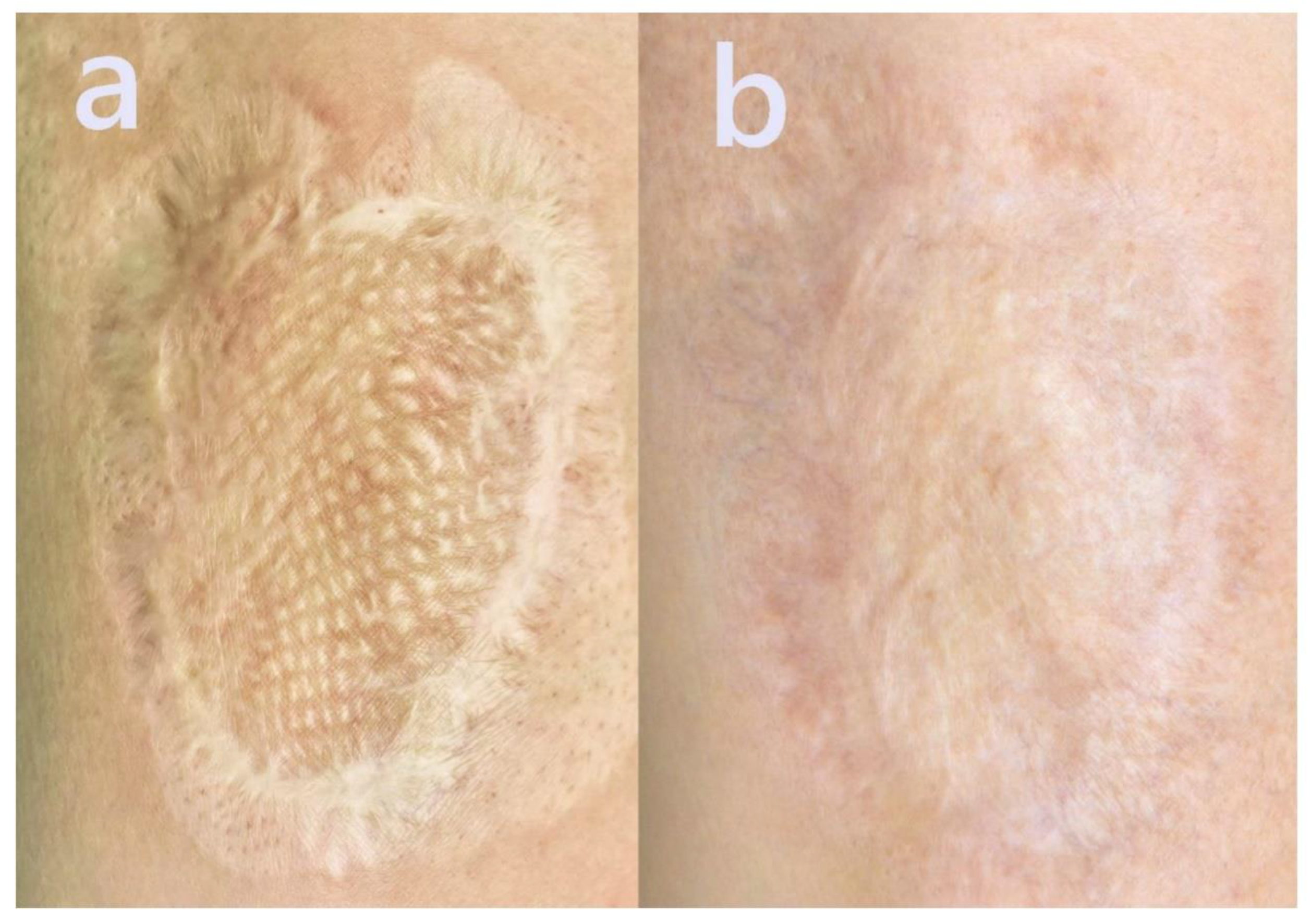
A 60-year-old female patient presented with a large hypertrophic scar on the lower extremity, resulting from a childhood burn injury. During hospitalization in early childhood, a mesh-type split-thickness skin graft was applied. The grafted area exhibited significant textural irregularity, fibrosis, and visible mesh pattern remnants.
The total treatment time was 2 year.
- Scar thickness and stiffness were markedly reduced, resulting in a significantly flatter and less fibrotic surface. Mesh-pattern ridges characteristic of split-thickness grafts became less visible, indicating dermal remodeling and integration with surrounding tissue.
- The previously elevated and indurated texture softened, leading to smoother surface contours and improved tactile quality.
- Scar color transitioned toward a more natural skin tone, demonstrating pigment normalization and better chromatic blending with adjacent skin.
- Scar boundaries became less defined, suggesting successful contour integration and edge softening.
- Overall cosmetic appearance improved, enhancing patient satisfaction and restoring a more natural visual skin landscape.
The patient underwent an uneventful two-year course of Pinholxell therapy with steady improvement. However, the treatment was concluded before full maturation of the scar, leaving some room for refinement. Additional fractional CO2 laser sessions may have further improved texture and brought the scar closer to normal skin quality.
Pre- and post-treatment clinical images are provided in Figure 7.
Discussion
The Pinholxell method represents a novel and targeted approach to the treatment of hypertrophic and post-graft scars, leveraging the synergistic effects of two sequential CO2 laser modalities within a reconstruction-oriented framework. By first generating vertically oriented pinhole columns with a focused CO2 laser and subsequently applying a fractional CO2 laser overlay, this technique enables simultaneous deep dermal remodeling and superficial epidermal regeneration. This dual-mode mechanism may contribute to improved scar remodeling outcomes while potentially reducing the risks associated with more invasive or monomodal interventions [9,10,11].
The results from the five presented cases suggest that the Pinholxell method may have clinical utility in managing scars resulting from skin grafts. Skin graft scars often involve a combination of surface irregularity, color mismatch, stiffness, and underlying fibrotic changes that can interfere with both appearance and function, particularly when located near joints or visible areas [1,2]. The five representative cases demonstrate the potential adaptability of the Pinholxell method in addressing varied presentations of post-graft scarring. Treatment plans were supplemented and modified as needed based on individual scar morphology, reflecting a flexible, patient-specific approach.
The pinhole method proposed by Lee et al. in 2015 (“pinhole method 4.0”) demonstrated notable improvements in hypertrophic burn scars [6]. The pinhole columns are thought to disrupt irregular and dense collagen bundles while facilitating the uniform deposition of collagen and elastin. In the context of the Pinholxell method, these columns may additionally function as controlled micro-injury zones that initiate localized regenerative signaling, including a cytokine-mediated cascade, thereby potentially contributing to dermal remodeling. Furthermore, the spacing between columns preserves intervening intact tissue, which may serve as a functional “safety zone,” helping to minimize excessive thermal damage while supporting organized tissue repair [6,7].
Li et al. applied a CO2 laser to split-thickness skin grafts in a porcine model and found that a combined dual-scan protocol, consisting of high fluence–low density and low fluence–high density settings, yielded significant improvements in scar thickness and pigmentation [8]. This protocol shares conceptual similarities with the Pinholxell method in its delivery parameters and therapeutic intent, particularly in its balance between controlled tissue injury and preservation of surrounding structures, which may facilitate coordinated dermal and epidermal regeneration.
In the current series, the Vancouver Scar Scale (VSS) total score improved from 8.12 ± 3.03 pre-treatment to 1.40 ± 1.08 post-treatment (mean difference 6.72), while the Observer Scar Assessment Scale (OSAS) total score improved from 19.74 ± 7.05 to 5.72 ± 2.27 (mean difference 14.02). All subdomains—including vascularity, pigmentation, pliability, and height (VSS) and vascularity, pigmentation, and thickness (OSAS)—demonstrated statistically significant improvements (p < 0.001), reflecting both objective and clinically meaningful changes in scar characteristics. These findings may be consistent with a process of progressive dermal remodeling and functional improvement, although the underlying mechanisms require further investigation.
Nonetheless, the scope of the findings is constrained by the limited sample size and retrospective design. All patients included in this case series were Fitzpatrick skin types III to V (Korean), which may limit the generalizability of the findings to populations with different skin phototypes. Given the known differences in pigmentation response and the risk of post-inflammatory hyperpigmentation among various skin types, further investigation is needed to evaluate the safety and efficacy of the Pinholxell method across a broader range of populations. In addition, the absence of a control group limits the ability to draw definitive conclusions regarding comparative effectiveness. Future studies with larger cohorts, standardized outcome measures, and prospective or randomized designs will be important to better define treatment parameters and assess long-term outcomes.
Conclusions
In this retrospective cohort of 25 patients with skin graft scars treated using the dual-step Pinholxell CO2 protocol, improvements were observed across all OSAS and VSS domains (paired t-tests, all P < .001). The OSAS total score decreased from 42.40 ± 10.75 to 12.76 ± 2.96 (mean difference, 29.64; approximately 70% reduction), and the VSS total decreased from 8.12 ± 3.03 to 1.40 ± 1.08 (mean difference, 6.72; approximately 83% reduction). Patients also reported reductions in pruritus and pain, along with improvements in texture, pigmentation, pliability, and contracture-related functional limitation. The treatment was generally well tolerated, with no observed complications and a high level of patient satisfaction. These findings suggest that the Pinholxell method may represent a potentially useful option for the long-term management of graft-related scars.
However, given the retrospective design and absence of a control group, the results should be interpreted with caution. Larger, multicentre prospective studies—ideally with randomized controlled designs—are warranted to further evaluate efficacy, optimize treatment parameters (including energy, density, and treatment intervals), and assess long-term outcomes across diverse skin phototypes.
Author Contributions
The author has read and agreed to the published version of the manuscript.
Funding
This research received no external funding.
Institutional Review Board Statement
This study was conducted in accordance with the Declaration of Helsinki. Ethical review and approval were waived due to the retrospective nature with written patient consent.
Informed Consent Statement
Informed consent was obtained from all subjects involved in the study. Written informed consent was obtained from the patients to publish this paper.
Data Availability Statement
The data supporting the findings of this study are available within the article; further inquiries can be directed to the corresponding author.
Conflicts of Interest
The author declares no conflicts of interest.
References
- Aleman Paredes, K.; et al. Comparative outcomes of graft types in burn reconstruction: A systematic review. Cureus 2024, 16, e54277. [Google Scholar] [PubMed]
- Harrison, CA; MacNeil, S. The mechanism of skin graft contraction: An update. Burns 2008, 34, 153–163. [Google Scholar] [CrossRef] [PubMed]
- Baumann, ME; et al. FXCO2 therapy of existing burn scars in a porcine model. Burns Open. 2019, 3, 89–95. [Google Scholar] [CrossRef]
- Zhuang, Z; Li, Y; Wei, X. Intralesional triamcinolone for keloids/hypertrophic scars: Systematic review. Burns 2021, 47(5), 987–998. [Google Scholar] [CrossRef] [PubMed]
- Leszczynski, R; et al. Laser therapy for hypertrophic and keloid scars. Cochrane Database Syst Rev. 2022, (9), CD011642. [Google Scholar] [CrossRef] [PubMed]
- Lee, SJ; et al. Combination laser-cision and pinhole CO2 for hypertrophic burn scars. Lasers Surg Med. 2014, 46, 380–384. [Google Scholar] [CrossRef] [PubMed]
- Whang, SW; et al. Burn scars treated by pinhole method using a carbon dioxide laser. J Dermatol 2006, 33, 869–872. [Google Scholar] [CrossRef] [PubMed]
- Li, J; et al. Dual-scan CO2 protocol in split-thickness graft contraction (red Duroc pig). Burns Trauma. 2021, 9, tkab048. [Google Scholar] [CrossRef] [PubMed]
- Cox, C; et al. CO2 resurfacing for scars of the hand/upper extremity. Scars Burn Heal. 2022, 8, 20595131211047694. [Google Scholar] [CrossRef] [PubMed]
- Klifto, KM; Asif, M; Hultman, CS. Laser management of hypertrophic burn scars: Review. Burns Trauma 2020, 8, tkz003. [Google Scholar] [CrossRef] [PubMed]
- Shirakami, E; Yamakawa, S; Hayashida, K. Strategies to prevent hypertrophic scars: Molecular evidence. Burns Trauma. 2020, 8, tkz004. [Google Scholar] [CrossRef] [PubMed]
- Poetschke, J; Gauglitz, GG. Hyperpigmented Scar. In Textbook on Scar Management; Springer, 2020; pp. 505–507. [Google Scholar]
Figure 1.
Demonstration on human skin, illustrating the application pattern of the Pinholxell method. (a)right arm area; (b) left cheek region. Larger openings correspond to pinhole columns, while smaller white dots indicate the fractional CO2 laser overlay. The patient provided informed consent for the use and publication of these images.
Figure 1.
Demonstration on human skin, illustrating the application pattern of the Pinholxell method. (a)right arm area; (b) left cheek region. Larger openings correspond to pinhole columns, while smaller white dots indicate the fractional CO2 laser overlay. The patient provided informed consent for the use and publication of these images.
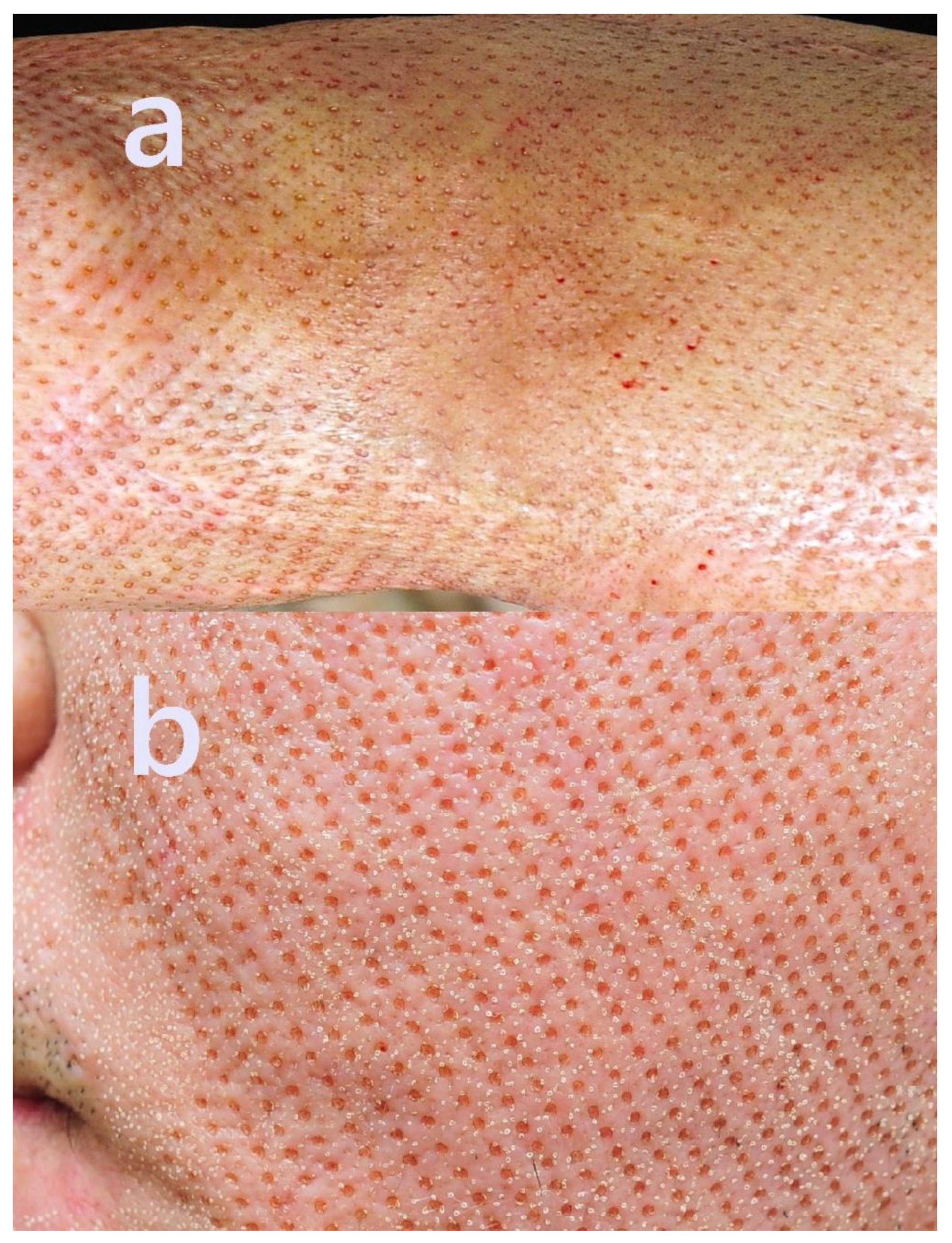
Figure 3.
Scar photographs taken at baseline (a) and after completion of treatment (b).
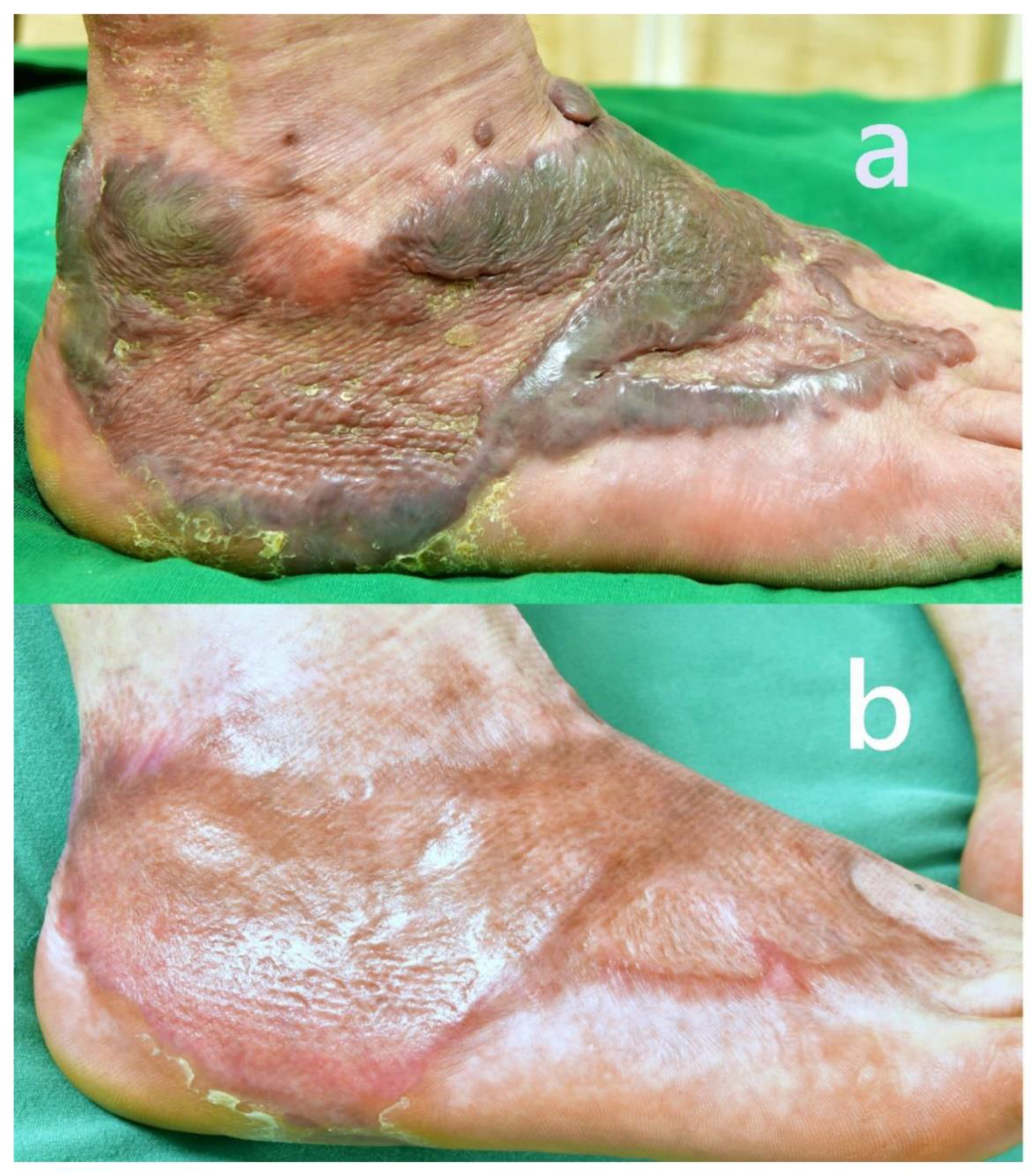
Figure 4.
Scar photographs taken at baseline (a) and after completion of treatment (b).
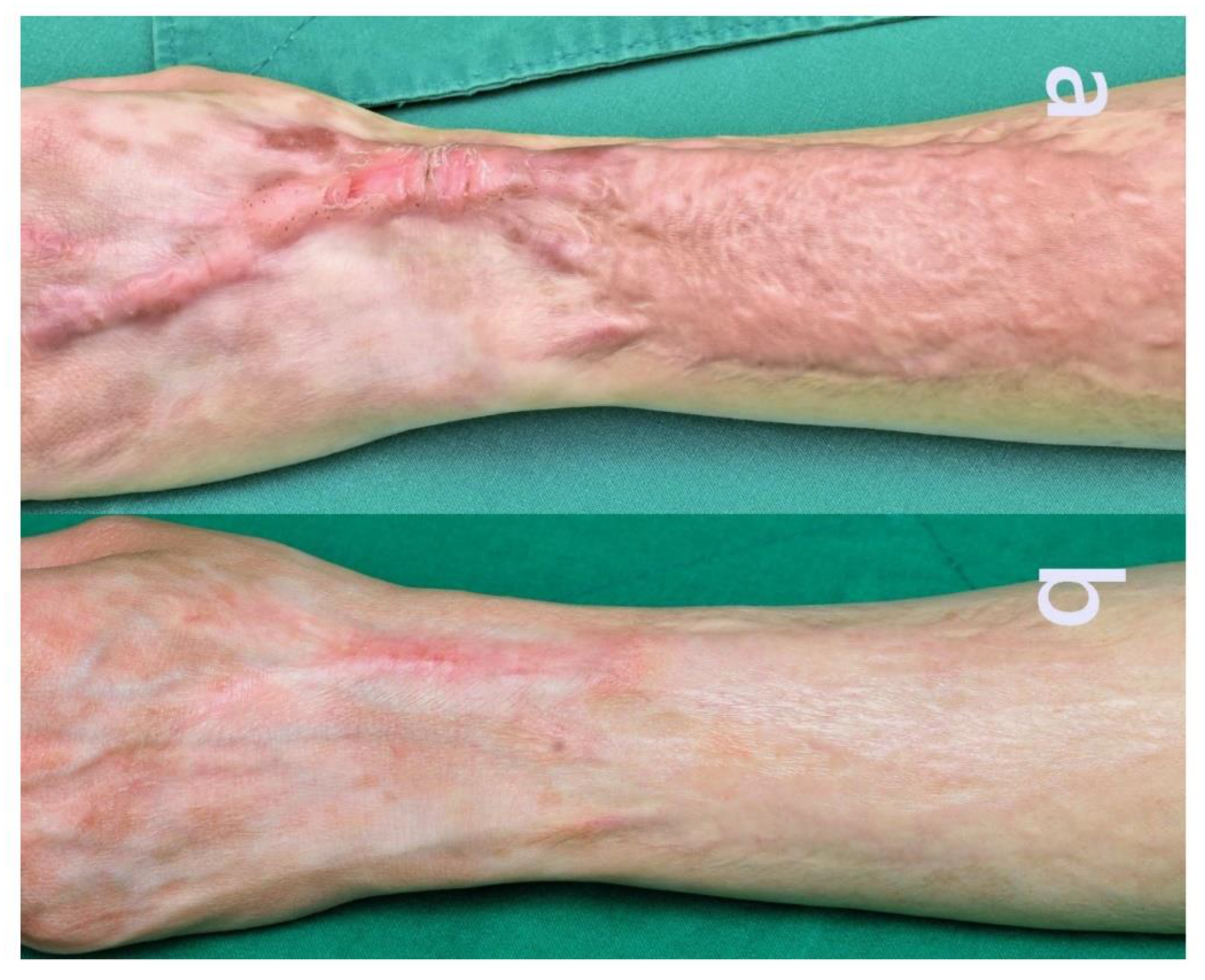
Figure 5.
Scar photographs taken at baseline (a) and after completion of treatment (b).
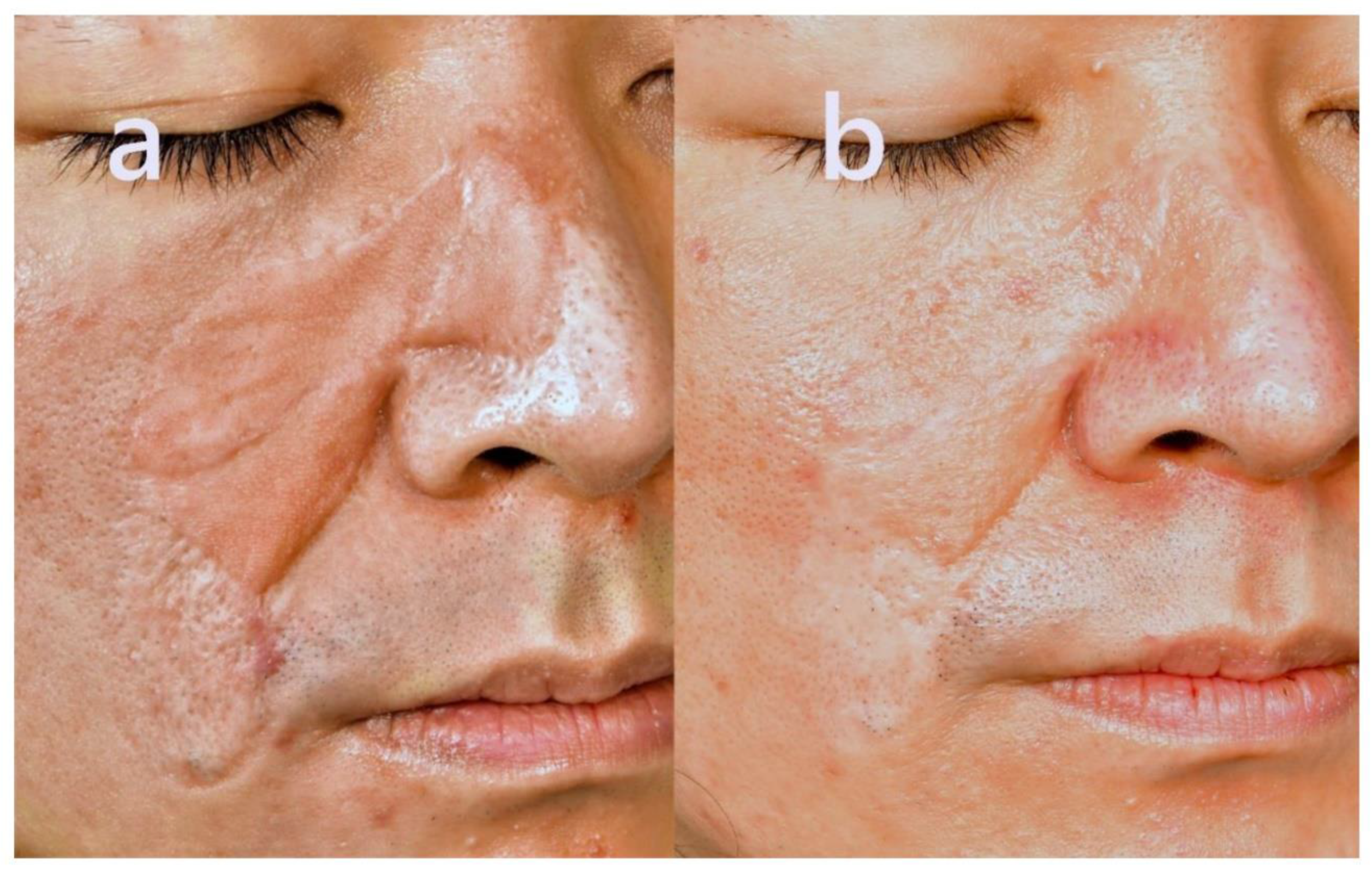
Figure 6.
Serial photographs of the scar throughout the treatment course. (a) Baseline image prior to treatment initiation; (b) interim image following three treatment sessions (Pinholxell); (c) final image after the completion of treatment.
Figure 6.
Serial photographs of the scar throughout the treatment course. (a) Baseline image prior to treatment initiation; (b) interim image following three treatment sessions (Pinholxell); (c) final image after the completion of treatment.
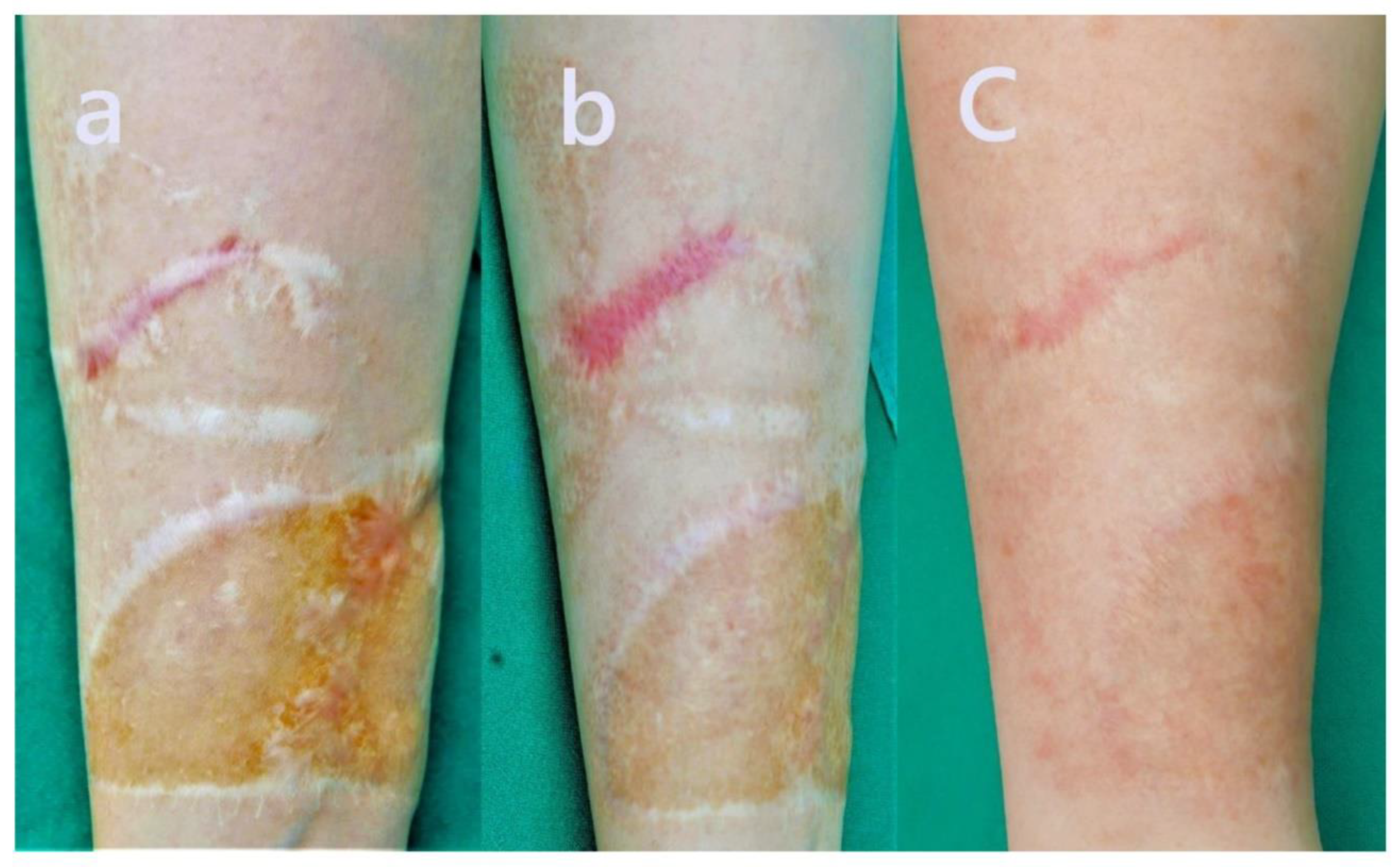
Figure 7.
Scar photographs taken at baseline (a) and after completion of treatment (b).
Disclaimer/Publisher’s Note: The statements, opinions and data contained in all publications are solely those of the individual author(s) and contributor(s) and not of MDPI and/or the editor(s). MDPI and/or the editor(s) disclaim responsibility for any injury to people or property resulting from any ideas, methods, instructions or products referred to in the content. |
© 2026 by the author. Licensee MDPI, Basel, Switzerland. This article is an open access article distributed under the terms and conditions of the Creative Commons Attribution (CC BY) license (http://creativecommons.org/licenses/by/4.0/).
Copyright: This open access article is published under a Creative Commons CC BY 4.0 license, which permit the free download, distribution, and reuse, provided that the author and preprint are cited in any reuse.


