

Submitted:
30 May 2025
Posted:
02 June 2025
You are already at the latest version
Abstract
A revolutionary approach to improving the efficiency, safety and sustainability of transport networks across the continent is the deployment of Intelligent Transport Systems (ITS) in Europe. Since the European Commission’s 2010 Directive, the Framework for the Deployment of ITS has made significant progress to address important issues such as traffic congestion, road safety and environmental impact. ITS is considered essential for achieving the EU’s ambitious climate goals and for improving the quality of urban life through innovative mobility solutions.ITS has a vital role in optimizing transportation operations and integrating complex technologies such as vehicle-to-vehicle communication, real-time data analysis, and automated traffic management. This integration has improved the transportation ecosystem, providing both operators and users with better decision-making opportunities. Studies show that ITS initiatives also have many socioeconomic benefits, such as reduced fuel consumption and shorter travel times.In Europe, the development of ITS face obstacles despite progress. These include regulatory issues, technical interoperability issues and the need to increase data sharing between stakeholders. These issues have sparked ongoing discussions about the effectiveness of the current legislative framework and the need for more uniform policies to promote innovation and cooperation between Member States.Intelligent Transportation Systems remain at the heart of European transport policy, which aims to create smarter, greener and more inclusive future mobility solutions. ITS is poised to play a key role in addressing contemporary urban challenges through continuous innovation and legislative support. Ultimately, it will contribute to a sustainable transport network across Europe.
Keywords:
intelligent transportation systems
; urban mobility
; sustainability
; traffic management
; innovation
1. Introduction
Intelligent transport has a significant impact on urban and regional mobility, and is a continuously changing area of modern infrastructure. The present study reviews Intelligent Transport Systems (ITS) in Europe and analyses their progress, challenges and benefits. ITS is essential for optimizing transport flows, reducing emissions and improving road safety in today's world, characterized by sustainability objectives and accelerated urbanization.
The main objective of this research is to examine how ITS has changed European transport by providing advanced technological solutions to current mobility challenges. The study examines European legislation, the adoption of ITS in different Member States and the effects on sustainability, road safety and transport efficiency. This analysis attempts to find the essential elements that contribute to the success of ITS, as well as the problems that hinder wider and uniform implementation.
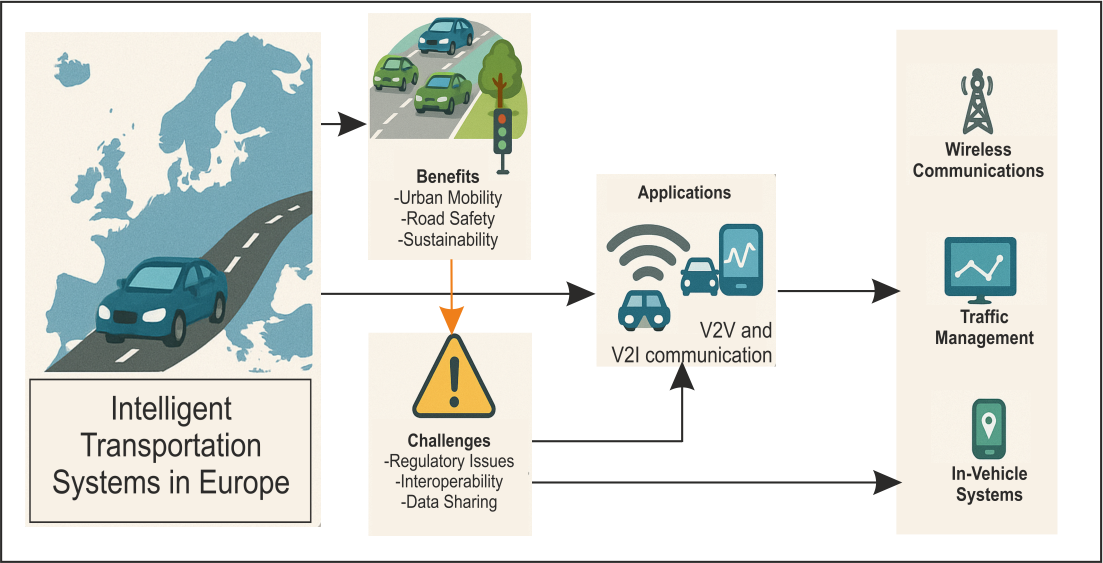
For better picturing of the connections between different factors, respectively the main topics addressed through the present paper, the figures shown were AI-generated based on the authors’ input in the napkin[.]ai open access software.
Research hypotheses provide a theoretical basis for the study, opening the path to analyse and interpret the research (Figure 1). In this context, it is believed that intelligent transportation systems (ITS) improve urban mobility by reducing congestion and increasing traffic efficiency.
Furthermore, ITS is considered essential for improving road safety, as solutions such as vehicle-to-infrastructure (V2I) and vehicle-to-vehicle (V2V) communication have the potential to significantly reduce the number of road traffic accidents. However, the implementation of ITS faces numerous obstacles, such as technical, legislative and economic. These obstacles are mainly caused by the lack of a framework to standardize and interoperate between different technologies. Furthermore, an important element of the research is the relationship between ITS systems and the EU's sustainability objectives, as these systems help to reduce environmental impacts by optimizing routes and encouraging users of public and alternative transport.
These hypotheses constitute the analytical basis of the study, which was evaluated by examining European legislation, the initiatives implemented for ITS and their effects on transport and the environment.
The objectives of the review are to establish the main directions of the analysis and to obtain a comprehensive understanding of the evolution and impacts of ITS in Europe. The main issues addressed in this article, which represent the aims of the review, are presented in Figure 2.
Firstly, the study aims to examine aspects of the historical evolution of ITS and how Directive 2010/40/EU has affected Europe’s legislative framework, the focus being on how regulations and policies have helped in the implementation of these systems. Another important objective is to determine the essential components of ITS and which role they play in optimizing transport. These technologies include automation, artificial intelligence (AI) and vehicle-to-infrastructure communications. In addition, the analysis examines the main European initiatives supporting the development of ITS and how they affect road safety, urban mobility and environmental sustainability. Another objective of the research is to identify obstacles and problems that arise in the implementation of ITS, whether of a technical, legislative or economic nature, based on relevant case studies. These studies highlight the use of ITS in European cities, focusing on good practices and lessons learned. Finally, the analysis examines trends and future plans for ITS development in Europe and provide suggestions to increase the efficiency and interoperability of systems in order to achieve digitalization and sustainability goals.
This study provides additional value due to its in-depth and comprehensive analysis of the evolution, impacts and challenges of ITS in Europe. It represents an integrated perspective on how technological developments, the legislative framework and sustainability objectives interact with each other, with strategic implications for public policies and the future development of intelligent mobility. The study therefore offers useful information for researchers, transport authorities, policy makers and industry to help create a more efficient and sustainable transport environment.
2. A Brief History of ITS in Europe
In recent decades, there has been a significant increase in the use of ITS due to the high demand to improve the safety, efficiency and sustainability of transport in Europe. These systems use modern communication and information technologies to improve traffic management, reduce environmental impacts and increase road safety [1]. The adoption of Directive 2010/40/EU marked an important step in the formalization of ITS in the EU. It established a framework for the coordinated deployment of ITS applications in all Member States. The aim of this directive was to help ITS technologies work together across Europe [2].
ITS technology has changed the way transport in Europe has evolved, as shown in Figure 3. This highlights the importance of Cooperative Intelligent Transport Systems (C-ITS), autonomous vehicles and the Internet of Things (IoT) in increasing operational efficiency, safety and traffic flow.
C-ITS enhance traffic flow, reduce congestion, and increase road safety by facilitating V2I and V2V communication. Dynamic management of transportation networks and sharing of real-time traffic data are possible due to this connectivity [3].
Autonomous vehicles operate without human intervention using sophisticated sensors, machine learning algorithms, and artificial intelligence. By optimizing traffic flows, reducing accidents, and facilitating access for people who cannot drive, these types of vehicles have the potential to change the way transportation is carried out [4].
Thanks to technologies embedded in the Internet of Things, data can be collected and analysed from various sources, such as mobile devices, infrastructure, and vehicles. This data-driven approach facilitates real-time decision-making, such as optimizing transportation operations and predictive maintenance of infrastructure [5].
ITS was initially developed to address road traffic congestion and rising emissions in Europe. Research initiatives and pilot projects investigated the integration of transport systems with information and communication technologies (ICT) in the 1990s. These efforts laid the foundation for the development of dynamic traffic management systems as well as real-time data-driven decision-making systems [6].
Directive 2010/40/EU marked an important step in the regulation of ITS in Europe. It highlighted the importance of collaboration between Member States, industry stakeholders and public authorities to ensure that ITS applications are implemented in a coherent and coordinated manner. Road safety, congestion reduction and reduction of pollutant emissions were the main priorities of the directive [7]. The Directive initiated a series of programs to encourage the deployment of ITS in European regions. For example, the Euralille 3000 project used ITS in urban areas to enhance traffic monitoring and public transport organization, and to improve the quality of life in the city [8].
In addition, the European Union has prioritized vehicle-to-infrastructure communication technologies, which facilitate seamless interaction between vehicles and road traffic management systems. This advance in real-time data transfer has improved road safety and traffic flow management [9].
Consequently, a number of studies have examined in detail the development and strategic application of ITS in Europe.
For example, the study [10] examines the development of V2V and V2I communication standards. It shows how a decade of research and development, as well as pilot projects, paved the way for cooperative ITS. This led to the finalization of C-ITS standards by 2014 and enabled the launch of connected mobility services in that year.
Furthermore, the paper [11] provides a historical overview of ITS in Europe, from the first research in telematics to the principles of modern ITS. It highlights the role of the European standardization organizations (CEN, CENELEC and ETSI) in creating a solid technical and legal framework for ITS applications in different transport domains.
Going on, [12] presents the strategic vision of ITS for safe, efficient and sustainable transport in Europe. It examines how legislation, such as Directive 2010/40/EU and the 2008 ITS Action Plans influenced national implementation, promoting interoperable and seamless services between Member States and improving the efficiency of international transport.
The study [13] examines ITS standardization in Europe and the United States between 1991 and 2012. Ultimately, Europe’s government-led and policy-based strategy has encouraged strong top-down cooperation and faster standardization among stakeholders. Europe’s proactive policies and cooperative frameworks have enabled rapid integration of ITS. These frameworks underscore the importance of deliberate policy support in the growth of these technologies.
The European Commission’s Directorate-General for Mobility and Transport has highlighted the strategic importance of ITS for creating new services and jobs in the transport sector by 2030. The report highlighted the importance of data sharing and digital technologies in improving the safety and efficiency of travel in Europe, which benefits all stakeholders, including governments, private companies and consumers [14]. As ITS continues to evolve, the integration of emerging technologies such as 5G connectivity, artificial intelligence and blockchain, will further transform the transport landscape in Europe, making it more adaptable, safe and sustainable [15].
3. Key Components of Intelligent Transportation Systems
Intelligent Transport Systems are comprised of strategies and technologies designed to increase the sustainability, safety and efficiency of transport networks. To improve the user experience and optimize traffic management, these systems integrate both software and hardware modules [4].
ITS components are divided into hardware and software, as shown in Figure 4. Short-range IoT devices and wireless communications, as well as long-range infrastructure sensors that can be connected to smartphones, are part of the hardware. The platform includes data analysis platforms and traffic management applications. Through this integration, ITS can improve mobility in cities.
A variety of devices designed to collect, process, and transmit transport-relevant data are part of the hardware components of ITS. These include a wide range of technologies, such as sensors, cameras, traffic signals, IoT-based transportation devices and vehicle detection systems, all of which are essential for the efficient operation of modern ITS [5,9,16]:
- −
- Sensors, cameras and traffic Signals: due to road conditions, vehicles movement and traffic flows, cameras and sensors collect data in real time. Smart traffic signals with GPS technology reduce congestion and manage dynamic traffic.
- −
- IoT transportation devices: road units, sensors, detection cameras and traffic light control devices are just a few of the IoT technologies that are widely used in ITS. These devices are vital for traffic control systems and route optimization, as they collect real-time data on weather conditions and road traffic flow.
- −
- Vehicle detection systems are aimed at tracking vehicles in critical areas using technologies such as electronic beacons, automatic license plate recognition and magnetic signature detection. Automatic incident detection and monitoring of traffic flows at intersections and checkpoints require these software components of ITS.
- −
- ITS software processes and analyses data collected by hardware components. This enables real-time decision-making and efficient management of road traffic. Road traffic management software enables the control of vehicle flows, optimization of routes, and reduction of environmental impacts. It helps with vehicle-to-everything (V2X) communication and adaptive traffic light control, respectively [3].
- −
- Platforms that enable data analysis: by processing and interpreting data collected from traffic, data analysis platforms improve vehicle flows, increase safety and reduce environmental impact. These platforms help transport management to optimize road infrastructure [14].
ITS requires the integration of mobility solutions and interoperability between different technologies. This is essential to facilitate a continuous flow of information between different means of transport. According to European Directive 2010/40/EU, interoperable systems that enable smooth communication between vehicles, infrastructure and other modes of transport are essential [2].
Figure 5 presents the main components of ITS, as well as their roles in the process of collecting, transmitting and analysing data to optimize urban mobility.
Public transport operators in local communities play a key role in organizing these systems. Users can access multiple modes of transport in a single application with Mobility as a Service (MaaS) platforms [15].
Moreover, ITS offers a range of safety features to protect road users and optimize response in emergency situations. eCall is an automated system that, when a collision is detected, transmits information about an accident, including the location and identification of the vehicle, to the emergency services. This technology can save lives and significantly improve response times in road accidents [8]. In addition to eCall, ITS also integrates other safety technologies. These include early warning systems, and prioritization of emergency vehicles at traffic lights. These technologies make transportation safer, by reducing the number of accidents and their consequences [9].
Intelligent Transport Systems components play a critical role in transforming global transport infrastructure. The seamless integration of ITS hardware and software, along with interoperability and advanced safety functionalities, contribute to creating a safer, more efficient and more sustainable transport environment.
4. Major ITS Initiatives in Europe
The European Union has recognized the importance of Intelligent Transport Systems (ITS) in improving the safety, efficiency and sustainability of transport networks. The integration of road and rail networks helps facilitate sustainable means of transport such as cycling, scooters and walking [17].This reduces emissions and improves the quality of life in cities.
In Figure 6, important ITS initiatives in Europe are grouped into categories such as innovation and societal challenges, legislative changes, and significant initiatives. These groups help to drive the overall growth of ITS in Europe.
To improve interoperability between systems and guarantee the integration of ITS with different types of transport, the directive 2010/40/EU specifies technical requirements and regulatory conditions for harmonized implementation in the Member States [2].
Following extensive consultations with private and public stakeholders, the Committee of Ministers of the Council of Europe adopted a revised version of the directive in 2023. The aim of the new regulation is to eliminate monopoly practices and facilitate seamless interoperability between different transport systems, creating a level playing field for ITS applications [18].
To accelerate the deployment of ITS in Europe, the European Commission has launched a number of strategic initiatives. From the New European Innovation Agenda, which aims to place Europe at the forefront of cutting-edge technological innovation, these programs include the following [19,20]:
- -
- Battery 2030+, which is an effort to position Europe as a leader in battery technology by developing high-performance, safe and sustainable batteries. Efficient batteries are essential for electric vehicles and a cleaner economy.
- -
- Graphene Flagship, which reflects Europe’s commitment to improving materials science, exploring the applicability of graphene in various transport applications, such as sensors and lightweight materials for vehicles.
- -
- Social Challenges and Innovation in ITS: Addressing societal challenges such as sustainable mobility and social inclusion are closely related to the implementation of ITS. Projects funded through the European Union’s Horizon 2020 emphasize that transport solutions should be easy to use and accessible to everyone, regardless of age, gender or social status [19]. The incorporation of social innovations into ITS underlines the European Union's commitment to developing a transport system that meets the needs of all users, facilitating the mobility of people with disabilities and those belonging to disadvantaged communities [18].
- -
- Cross-Border Collaboration and Activities: For ITS projects to be successfully implemented, Member States, local governments and private sector stakeholders need to work together. However, the objective of hindering international trade is often met by legislative obstacles, especially in areas where national regulations are strict [17]. The European Commission is addressing these issues by creating a single market for sustainable digital goods and services. This facilitates innovation and the integration of new business models into the ITS ecosystem [21].
Through these programs, Europe hopes to create a solid framework for Intelligent Transport Systems, which will not only improve transport efficiency, but also promote social equality and the environment. The future of European mobility is based on ITS, which addresses inclusive transport solutions, efficient batteries and innovative materials.
5. Benefits of ITS
A wide range of benefits offered by ITS significantly contribute to increasing the efficiency, safety and sustainability of transport networks across Europe. To address the challenges of accelerated urbanization, traffic congestion and environmental problems, these benefits are essential. To improve the user experience and optimize transport operations, ITS uses technologies such as AI and real-time data analytics [22].
Figure 7 shows the benefits of ITS, which include reduced emissions and pollution; improved road safety by reducing the number of accidents; increased economic efficiency by optimizing traffic flow and reducing costs; improved mobility by increasing comfort and accessibility; and public health benefits by encouraging a healthier lifestyle and reducing stress.
5.1. Environmental Impact
ITS can significantly reduce greenhouse gas emissions. Public transport has much lower emissions than individual motorized transport. This makes urban mobility account for around 40% of CO2 emissions. ITS encourages the use of public transport and reduces dependence on fossil fuels, thus reducing air pollution [23]. For example, a report by the European Commission [24] shows that the implementation of intelligent traffic management systems has reduced fuel consumption by 11%.
5.2. Improving Road Safety
The main objective of ITS development is to ensure road safety, which aims to reduce the number and severity of accidents. eCall, which speeds up emergency responses after accidents, and C-ITS, which facilitate communication between vehicles and infrastructure, are examples of current approaches [25]. These innovations are likely to contribute to the EU’s goal of achieving zero road deaths by 2050 [26].
5.3. Economic Efficiency
Due to lost time and inefficient logistics, traffic congestion costs the European Union economy more than 1% of Gross Domestic Product (GDP) annually. By improving traffic management, reducing travel times and improving operational efficiency, ITS improves economic competitiveness [27]. A report by the European Commission shows that ITS can reduce travel times by 66% [28].
5.4. Improved Mobility
By efficiently coordinating different modes of transport, ITS improves the travel experience. Prague is one of many cities where smart solutions, such as artificial intelligence-based traffic management systems, are improving the efficiency of urban transit while respecting historic infrastructure [29]. Travelers are empowered to make informed choices with the help of mobile applications that offer a variety of transport options, leading to the development of more environmentally friendly means of transport [30].
5.5. Public Health Benefits
Congested transportation not only wastes time, but also puts people at risk due to increased exposure to hazardous emissions. Traffic congestion increases the release of fine particulate matter (PM2.5), which can affect cardiovascular and respiratory systems [31].
Cities can improve air quality and promote healthier urban environments by reducing congestion through ITS [32].
ITS has played a major role in transforming transport networks in Europe. From reducing environmental impact and increasing road safety, to improving economic efficiency and public health, ITS represents an integrated solution to current and future challenges in urban and regional mobility.
6. Challenges and Obstacles in the Implementation of ITS in Europe
In Europe, the deployment of ITS faces a number of challenges and obstacles that prevent the widespread and effective implementation of these systems in all Member States. A number of technical, regulatory and operational issues are the sources of these problems. In order to accelerate technological progress in the field of transport, European-level solutions are needed to address the existing obstacles, despite the significant benefits that ITS offer in terms of road safety, efficiency and sustainability [33].
6.1. Technical Interoperability Issues
The lack of technical interoperability between different Cellular Vehicle-to-Everything (C-V2X) solutions and existing technologies such as LTE-V2X (Long Term Evolution based Vehicle to Everything) and 5G-NR VANET (Fifth-Generation New Radio Vehicular Ad-hoc Networks) is one of the main issues in ITS deployment. Currently, there is no common standard that facilitates the seamless integration of multiple systems and technologies, making large-scale deployment more difficult [34]. Furthermore, although essential, the principle of technological neutrality is not directly included in the ITS Directive; rather, it is the responsibility of the government to control the radio spectrum. To prevent problems arising from new technologies or inappropriate upgrades, it is essential to guarantee backward compatibility [35].
6.2. Data Sharing and Cooperation Between Actors
The evaluation of the existing ITS Directive highlighted persistent problems related to the availability and sharing of data that are necessary for the provision of reliable ITS services. When stakeholders do not work together or do not collaborate well, these problems are exacerbated [36]. This highlights the need for better compliance with current practices and rules.
The European Commission recognizes that ITS deployment is often limited to a narrow geographical scale, and that further measures are needed to improve interoperability and data sharing across the European Union [37].
6.3. Regulatory and Administrative Barriers
Businesses and services providers face restrictive regulations that differ greatly between Member States and hinder cross-border ITS operations. The use of these divergent regulatory strategies could lead to unnecessary duplication of compliance checks; this can complicate the market entry of new technologies and innovations [38].
Despite the European Commission’s efforts to address these regulatory obstacles, many issues remain unresolved, in particular regarding the rapid availability of permits required for the deployment of new technologies [39].
6.4. Challenges in Scalability and ITS Deployment
Because there are many stakeholders involved, large-scale deployment of ITS technologies presents a number of complicated issues. This often leads to fragmented initiatives that are difficult to transfer to other cities. Each plan is based on specific local needs, making it difficult to implement the widespread adoption required to have a transformative impact on urban sustainability and mobility [40].
6.5. Synergies with Other Sectors
In Europe, there is a continuous effort to promote cooperation between the transport and aerospace domains to improve timing and positioning services needed for ITS applications. Although the European Union Space Programme provides vital space-based information, the full potential of these collaborations has not yet been fully exploited [41]. To maximise the benefits of digitalisation in the road sector and to facilitate faster deployment of ITS services across Europe, it is essential to address issues related to interoperability, cooperation and data sharing [42].
7. Case Studies: Implementing ITS in European Cities
To improve urban mobility and promote sustainability, ITS should be deployed in European cities. The strategic plans of many municipalities are in line with the objectives of the European Green Deal and take into account local and global environmental factors.
As these systems reduce traffic, enable cleaner modes of transport and encourage modal shifts from private vehicles, they are essential for reducing carbon emissions [43].
ITS improves the quality of life in cities by improving air quality, reducing noise pollution and making more efficient use of transport infrastructure. They also help support long-term climate goals and digital transformation strategies at city level.
Table 1 presents a selection of European cities that have implemented ITS of various types between 2020 and 2023. The year of implementation, the type of ITS solution chosen, the financial investment allocated (in millions of euros) and the results achieved after implementation are all presented below. Examples include smart parking systems and traffic management based on artificial intelligence (Berlin), autonomous bus fleets (Madrid), as well as the integration of bicycles into the ITS infrastructure (Amsterdam).
The results show the benefits of ITS for urban mobility, which include a reduction in travel time, an increase in the efficiency of public transport, a reduction in CO2 emissions and an improvement in pedestrian safety. This information shows how important the strategic investment in the digitalisation of urban transport is and how relevant it is for achieving the objectives of the European Green Deal.
Each city develops its plans according to the problems arising in the area, but they all have a common goal: the development of environmentally friendly, efficient and accessible transport systems.
For other cities in Europe seeking smart and sustainable mobility solutions [65], these examples can serve as a model.
The implementation of Intelligent Transport Systems in European cities is a significant step towards sustainable urban mobility and reduced environmental impact. Case studies from several European cities have demonstrated how important it is for residents, corporations and governments to work together for such projects to be successful. As technology advances, European cities will need to change their approaches to fully exploit the potential of ITS.
8. Measuring the Success and Efficiency of ITS in Europe
In Europe, the evaluation of ITS is based on Key Performance Indicators (KPI), which are used to assess the efficiency and success of the systems. These KPIs include a thorough analysis of the terminology, calculation methods and types of calculations used in each of the 28 EU countries.
Figure 8 presents important elements for measuring the success and effectiveness of ITS implementation. These include quantitative and qualitative KPIs, evaluation criteria such as benchmarking and compliance with standards; recommendations for improvements through training and improved data collection; and evaluation issues such as resource limitations and data accuracy.
A study led by DG MOVE, the European Commission’s Directorate-General for Mobility and Transport, found good practices and current applications of KPIs in the European Union, which involved stakeholders through interviews and workshops [66]. Specific ITS KPIs include:
- −
- reducing travel times;
- −
- increasing road safety, including reducing the number of accidents and casualties;
- −
- optimising fuel consumption and reducing carbon emissions;
- −
- increasing the use of public transport and sustainable alternatives.
Evaluation criteria based on the SMART matrix (Specific, Measurable, Attainable, Relevant and Time-bound), and are used to evaluate smart mobility strategies. In order to establish accountability in assessing the effects and success of ITS implementation, this evaluation framework emphasizes the importance of setting concrete and measurable objectives [67]. ITS evaluation includes:
- −
- output indicators: immediate data, such as the number of sensors installed or kilometres of smart infrastructure developed;
- −
- impact indicators: measuring long-term effects, such as reducing pollution and increasing energy efficiency.
8.1. Challenges in Evaluation
While evaluation frameworks for ITS and smart cities initiatives exist, they often focus on technological, social and economic elements, neglecting environmental consequences. Understanding the role of ITS in global sustainability is limited by the lack of comprehensive evaluation models. In addition, issues of interoperability of ITS services and difficulties in data sharing continue to constitute significant obstacles to effective evaluation [68]. Such challenges include:
- −
- lack of standardization of indicators across Member States;
- −
- limited access to relevant data for evaluation;
- −
- difficulty in measuring the indirect impact of ITS on health and the environment.
8.2. Recommendations for Improvement
The following measures are suggested to improve the efficiency of ITS [69]:
- −
- mandatory collection and sharing of essential data to guarantee their quality and accessibility;
- −
- encouraging collaboration between stakeholders, such as local authorities, private enterprises and end-users;
- −
- strengthening support mechanisms, such as the INNOSUP programme, which helps SMEs (Small and Medium-sized Enterprises) to develop innovations and helps to develop new technologies and transport solutions.
By funding projects that promote emerging technologies in transport and mobility, the INNOSUP Programme, part of Horizon 2020, plays a key role in promoting innovation. The programme accelerates the introduction of new ITS solutions to the European market by supporting SMEs [70].
To further develop ITS and achieve the goals of sustainability and enhanced urban mobility, it is essential to measure its efficiency and success in Europe. KPIs, together with strict evaluation frameworks and cooperation between stakeholders, guarantee coherent and efficient ITS deployment at EU level. However, to solve the current problems, an integrated approach is needed that includes data standardisation, interoperability and open data sharing.
9. Future Trends in ITS in Europe
Advances in digital technologies and innovative practices have led to a significant transformation of the ITS industry in Europe. The European Commission has highlighted the importance of the Strategic Technology Platform in Europe to increase manufacturing capabilities in areas such as microelectronics, artificial intelligence and cybersecurity. Ensuring the necessary technological infrastructure is essential to help the adoption of ITS [71]. According to Figure 9, future trends in ITS focus on four main pillars: sustainable mobility, artificial intelligence and automation, digitalisation and policy frameworks. All these trends lead to a more efficient, safe and environmentally sound future of transport.
A major trend that will change mobility in Europe will be the integration of automation and artificial intelligence into transport systems. Increasing safety, optimizing routes and optimizing traffic management are all possible with the help of emerging automation technologies. AI-based solutions will be essential for the development of the industry in terms of predictive maintenance, facilitating real-time decisions and analysing big data volumes [28].
According to the eGovernment Benchmark, the ongoing digital transformation of public services demonstrates the commitment of European countries to modernize transport infrastructure. The 2021 and 2022 eGovernment Benchmark reports indicate significant progress in the digitalization of government services, directly influencing the implementation of ITS technologies. This transformation is crucial for creating seamless interfaces between users and transport systems [72].
The current legislative and regulatory framework will have a significant impact on future trends in ITS. The aim of the revision of the ITS Directive is to ensure the efficient integration of emerging technologies into existing systems. The proposed measures focus on accelerating the implementation of innovations without bureaucratic obstacles and improving collaboration between stakeholders. These actions are essential for Europe to adapt to the ever-changing technological evolution, while addressing environmental issues and traffic congestion [73].
Sustainable mobility will remain a major priority in the development of ITS. Transport solutions that encourage environmentally friendly practices, such as cycling, walking and public transport, will be integrated into future climate goals. This emphasis reflects both regulatory pressures and the public desire for more sustainable urban mobility options [74].
The integration of advanced technologies, innovative policies and an increased focus on sustainability will shape the future of ITS as Europe continues to invest in Intelligent Transport Systems. Efficient and environmentally friendly urban mobility, adapted to the needs of the 21st century, will require collaboration between authorities, the technology industry and local communities.
10. Conclusions
In Europe, the deployment and development of Intelligent Transport Systems (ITS) is a continuous process of adaptation to the emerging challenges of urban and regional mobility. Europe has demonstrated a remarkable capacity for innovation and adaptation since the adoption of Directive 2010/40/EU, which created a coherent framework for the integration of ITS by all Member States. This has continued with the deployment of emerging technologies such as autonomous vehicles, the Internet of Things (IoT) and artificial intelligence (AI).
These changes have been driven by the desire to improve the safety, efficiency and sustainability of transport. Projects such as Euralille 3000 and initiatives in cities such as Berlin, Kaunas, Riga, Tartu and Cluj-Napoca demonstrate how ITS can change urban infrastructure, reducing emissions, optimizing road traffic flows and improving the quality of life in the city. The benefits of ITS are multiple and these benefits cover key areas:
- −
- positive impact on the environment, by reducing CO₂ emissions and air pollution;
- −
- improving road safety, with technologies such as eCall and C-ITS, which reduce the frequency and severity of road traffic accidents;
- −
- economic efficiency, with ITS contributing to reducing travel times and optimising fuel consumption;
- −
- improving public health, by reducing exposure to traffic-related pollution and promoting active mobility.
In Europe, despite these advantages, there are a number of challenges. The adoption of ITS is not uniform due to technical interoperability issues, insufficient data sharing and regulatory issues. In addition, to assess the impact of ITS on society and the environment, stronger assessment frameworks and standardized indicators are needed.
The integration of emerging technologies such as 5G, blockchain and vehicle automation will have a significant impact on the future of ITS in Europe. Encouraging innovation and accelerating ITS deployment will be possible through EU policies and funding initiatives such as Horizon 2020 and INNOSUP. In addition, the strategic directions of ITS in the coming decades will be driven by an increased focus on sustainable mobility and green solutions.
Ultimately, the future of urban and regional transport depends on intelligent transport systems. Europe has the chance to become a world leader in this field if it supports technological progress, sustainability and social inclusion in transport.
Author Contributions
Conceptualization, methodology and writing of original draft N.C.; Language proofing and final review of the manuscript I.D.; Funding acquisition D.M.; Methodology review and data proofing A.T.; Conceptualization and review of final manuscript I.B. All authors have read and agreed to the published version of the manuscript.
Funding
This research received no external funding.
Data Availability Statement
Not applicable.
Acknowledgments
This paper is supported by European Union’s Horizon 2020 research and innovation programme under grant agreement No 101121530, project ZERO-MOVE Zero Emission Mobility (HORIZON-RIA-SGA-NZC).
Conflicts of Interest
The authors declare no conflicts of interest.
References
- Tong, J.; Nassir, N.; Lavieri, P.; Sarvi, M. Putting the Connectivity in C-ITS - Investigating Pathways to Accelerate the Uptake of Road Safety and Efficiency Technologies; 2020.
- *** European Union Directive 2010/40/EU of the European Parliament and of the Council of 7 July 2010 on the Framework for the Deployment of Intelligent Transport Systems in the Field of Road Transport and for Interfaces with Other Modes of Transport.
- Maerivoet, S.; Flötteröd, Y.-P.; Alms, R.; Schindler, J. TransAID | Transition Areas for Infrastructure-Assisted Driving TransAID | D4.1 | Overview of Existing and Enhanced Traffic Management Procedures.
- Henke, I.; Bifulco, G.N.; Carteni, A.; Di Francesco, L.; Di Stasio, A. A Smart Road Application: The A2 Mediterranean Highway Project in Italy. Lecture Notes in Networks and Systems 2021, 227, 690–700. [Google Scholar] [CrossRef]
- Tonec Vrančić, M.; Škorput, P.; Vidović, K. An Advanced Driver Information System at Critical Points in the Multimodal Traffic Network. Sustainability 2024, Vol. 16, Page 372 2023, 16, 372. [Google Scholar] [CrossRef]
- *** International Transport Forum ITF Transport Outlook 2021; OECD, 2021; ISBN 9789282174975.
- Coppola, A. C-ITS Services and Advanced Vehicle Control for Complex Traffic Scenarios, Universita degli studi di Napoli Federico II, 2020.
- Lokaj, Z.; Šrotýř, M.; Vaniš, M.; Janda, I.; Ščerba, T. Detection of Non-Personal Data Leading to User Identification, Including Related Recommendations for the Field of Autonomous Mobility. The Lawyer Quarterly 2023, 388–407. [Google Scholar]
- Nakanishi, Y.J.; Auza, P.M. Connected Vehicles and Driving Automation Systems. Springer Handbooks 2023, Part F674, 1079–1113. [Google Scholar] [CrossRef]
- Festag, A. Cooperative Intelligent Transport Systems Standards in Europe. IEEE Communications Magazine 2014, 52, 166–172. [Google Scholar] [CrossRef]
- TransNav Journal - Development and Standardization of Intelligent Transport Systems. Available online: https://www.transnav.eu/Article_Development_and_Standardization_Nowacki,23,378.html (accessed on 5 May 2025).
- Ágnes, L. European Tendencies and Co-Operation in the Field of ITS Systems - National Achievements and Challenges in Hungary. Selected Scientific Papers: Journal of Civil Engineering 2016, 11, 85–96. [Google Scholar] [CrossRef]
- Duan, R. A Comparative Study on ITS (Intelligent Transport System) Standardization Policies in the U.S. and Europe. Heliyon 2023, 9, e21310. [Google Scholar] [CrossRef]
- Pütz, F.; Murphy, F.; Mullins, M.; O’Malley, L. Connected Automated Vehicles and Insurance: Analysing Future Market-Structure from a Business Ecosystem Perspective. Technol Soc 2019, 59, 101182. [Google Scholar] [CrossRef]
- Andraško, J.; Hamuľák, O.; Mesarčík, M.; Kerikmäe, T.; Kajander, A. Sustainable Data Governance for Cooperative, Connected and Automated Mobility in the European Union. Sustainability 2021, Vol. 13, Page 10610 2021, 13, 10610. [Google Scholar] [CrossRef]
- Qureshi, K.N.; Abdullah, H. A Survey on Intelligent Transportation Systems. 2013. [CrossRef]
- Fraga-Lamas, P.; Fernández-Caramés, T.M.; Castedo, L. Towards the Internet of Smart Trains: A Review on Industrial IoT-Connected Railways. Sensors 2017, Vol. 17, Page 1457 2017, 17, 1457. [Google Scholar] [CrossRef]
- Rend, A.; Schaus, M. Towards a Resilient and Sustainable Post-Pandemic Recovery (Executive Summary): The New Industrial Strategy for Europe. 2021.
- Forastero, Á.G. Resources, Conservation & Recycling Advances Circular Economy in Andalusia: A Review of Public and Non-Governmental Initiatives. Resources, Conservation & Recycling Advances 2023, 17, 200133. [Google Scholar] [CrossRef]
- Eldin, J.; Ibrahim, F.M.; Khatoon, U.T.; Velidandi, A. An Overview on the Role of Government Initiatives in Nanotechnology Innovation for Sustainable Economic Development and Research Progress. Sustainability 2025, Vol. 17, Page 1250 2025, 17, 1250. [Google Scholar] [CrossRef]
- Hung, A. Chip Legislative Endeavors in the United States and European Union: A Comparative Analysis Based on China’s Disruptive Production Technologies. Journal of Law, Technology & Policy 2024.
- Butler, L.; Yigitcanlar, T.; Paz, A. Smart Urban Mobility Innovations: A Comprehensive Review and Evaluation. IEEE Access 2020, 8, 196034–196049. [Google Scholar] [CrossRef]
- Gallo, M.; Marinelli, M. Sustainable Mobility: A Review of Possible Actions and Policies. Sustainability 2020, Vol. 12, Page 7499 2020, 12, 7499. [Google Scholar] [CrossRef]
- Alonso, F.; Faus, M.; Tormo, M.T.; Useche, S.A. Could Technology and Intelligent Transport Systems Help Improve Mobility in an Emerging Country? Challenges, Opportunities, Gaps and Other Evidence from the Caribbean. Applied Sciences 2022, Vol. 12, Page 4759 2022, 12, 4759. [Google Scholar] [CrossRef]
- Alam, M.; Ferreira, J.; Fonseca, J. Introduction to Intelligent Transportation Systems. Studies in Systems, Decision and Control 2016, 52, 1–17. [Google Scholar] [CrossRef]
- Kljaić, Z.; Pavković, D.; Cipek, M.; Trstenjak, M.; Mlinarić, T.J.; Nikšić, M. An Overview of Current Challenges and Emerging Technologies to Facilitate Increased Energy Efficiency, Safety, and Sustainability of Railway Transport. Future Internet 2023, Vol. 15, Page 347 2023, 15, 347. [Google Scholar] [CrossRef]
- Grant-Muller, S.; Usher, M. Intelligent Transport Systems: The Propensity for Environmental and Economic Benefits. Technol Forecast Soc Change 2014, 82, 149–166. [Google Scholar] [CrossRef]
- Nikitas, A.; Michalakopoulou, K.; Njoya, E.T.; Karampatzakis, D. Artificial Intelligence, Transport and the Smart City: Definitions and Dimensions of a New Mobility Era. Sustainability 2020, Vol. 12, Page 2789 2020, 12, 2789. [Google Scholar] [CrossRef]
- Paiva, S.; Ahad, M.A.; Tripathi, G.; Feroz, N.; Casalino, G. Enabling Technologies for Urban Smart Mobility: Recent Trends, Opportunities and Challenges. Sensors 2021, Vol. 21, Page 2143 2021, 21, 2143. [Google Scholar] [CrossRef]
- Munhoz, P.A.M.S.A.; Dias, F. da C.; Chinelli, C.K.; Guedes, A.L.A.; Dos Santos, J.A.N.; E Silva, W. da S.; Soares, C.A.P. Smart Mobility: The Main Drivers for Increasing the Intelligence of Urban Mobility. Sustainability 2020, Vol. 12, Page 10675 2020, 12, 10675. [Google Scholar] [CrossRef]
- Gohar, A.; Nencioni, G.; Khyam, O.; Li, X. The Role of 5G Technologies in a Smart City: The Case for Intelligent Transportation System. Sustainability 2021, Vol. 13, Page 5188 2021, 13, 5188. [Google Scholar] [CrossRef]
- Crayton, T.J.; Meier, B.M. Autonomous Vehicles: Developing a Public Health Research Agenda to Frame the Future of Transportation Policy. J Transp Health 2017, 6, 245–252. [Google Scholar] [CrossRef]
- Combetto, M.; Rodriguez Müller, A.P. Artificial Intelligence for Interoperability in the European Public Sector. [CrossRef]
- Khaled Elhosseny Ghazy Essawy, S.; Ying Wong, J.; Colpaert, P. Achieving Interoperability in Mobility as a Service: A Data Ecosystem Leveraging Semantic Web Technologies. 2024.
- Mazzetto, S. A Review of Urban Digital Twins Integration, Challenges, and Future Directions in Smart City Development. Sustainability 2024, Vol. 16, Page 8337 2024, 16, 8337. [Google Scholar] [CrossRef]
- Singh, P.; Elmi, Z.; Krishna Meriga, V.; Pasha, J.; Dulebenets, M.A. Internet of Things for Sustainable Railway Transportation: Past, Present, and Future. Cleaner Logistics and Supply Chain 2022, 4, 100065. [Google Scholar] [CrossRef]
- Harris, I.; Wang, Y.; Wang, H. ICT in Multimodal Transport and Technological Trends: Unleashing Potential for the Future. Int J Prod Econ 2015, 159, 88–103. [Google Scholar] [CrossRef]
- Wolniak, R.; Stecuła, K. Artificial Intelligence in Smart Cities—Applications, Barriers, and Future Directions: A Review. Smart Cities 2024, Vol. 7, Pages 1346-1389 2024, 7, 1346–1389. [Google Scholar] [CrossRef]
- Abdulrahman, Y.; Arnautovic, E.; Parezanovic, V.; Svetinovic, D. AI and Blockchain Synergy in Aerospace Engineering: An Impact Survey on Operational Efficiency and Technological Challenges. IEEE Access 2023, 11, 87790–87804. [Google Scholar] [CrossRef]
- Psara, K.; Papadimitriou, C.; Efstratiadi, M.; Tsakanikas, S.; Papadopoulos, P.; Tobin, P. European Energy Regulatory, Socioeconomic, and Organizational Aspects: An Analysis of Barriers Related to Data-Driven Services across Electricity Sectors. Energies 2022, Vol. 15, Page 2197 2022, 15, 2197. [Google Scholar] [CrossRef]
- Komninos, N.; Kakderi, C.; Mora, L.; Panori, A.; Sefertzi, E. Towards High Impact Smart Cities: A Universal Architecture Based on Connected Intelligence Spaces. Journal of the Knowledge Economy 2022, 13, 1169–1197. [Google Scholar] [CrossRef]
- Bellini, P.; Bilotta, S.; Collini, E.; Fanfani, M.; Nesi, P. Data Sources and Models for Integrated Mobility and Transport Solutions. Sensors 2024, Vol. 24, Page 441 2024, 24, 441. [Google Scholar] [CrossRef] [PubMed]
- Cepeliauskaite, G.; Keppner, B.; Simkute, Z.; Stasiskiene, Z.; Leuser, L.; Kalnina, I.; Kotovica, N.; Andiņš, J.; Muiste, M. Smart-Mobility Services for Climate Mitigation in Urban Areas: Case Studies of Baltic Countries and Germany. Sustainability 2021, Vol. 13, Page 4127 2021, 13, 4127. [Google Scholar] [CrossRef]
- Berlin Installs Smart Traffic Technology at Intersections - Smart Cities World. Available online: https://www.smartcitiesworld.net/news/berlin-installs-smart-traffic-technology-at-intersections-5522 (accessed on 5 May 2025).
- Smart and Innovative City Parking Management | Egis. Available online: https://www.egis-group.com/projects/paris-smart-parking (accessed on 5 May 2025).
- Así Es El Primer Autobús Urbano Sin Conductor Que Ya Circula En La Comunidad de Madrid - Cadena Dial. Available online: https://www.cadenadial.com/2025/primer-autobus-urbano-comunidad-de-madrid-398067.html (accessed on 5 May 2025).
- The Evolution of Bicycling in Amsterdam. [CrossRef]
- Vienna’s Smart Traffic Lights Are Now Getting Even Smarter. Available online: https://www.tugraz.at/en/tu-graz/services/news-stories/tu-graz-news/singleview/article/wiens-smarte-ampeln-werden-nun-noch-klueger (accessed on 5 May 2025).
- How to Get around Milan by Public Transport ATM, Azienda Trasporti Milanesi. Available online: https://www.atm.it/EN/VIAGGIACONNOI/BIGLIETTI/Pages/HowtogetaroundMilanbypublictransport.aspx (accessed on 5 May 2025).
- Driving 5G Innovation for Urban Public Transport - Ericsson. Available online: https://www.ericsson.com/en/cases/2021/5g-ride-driving-innovation-for-urban-public-transport (accessed on 5 May 2025).
- Helsinki Intelligent Transport System Development Programme 2030 Developing Traffic Information, New Mobility Services and Automation.
- Road Safety | Brussels Mobilty. Available online: https://old-bm.irisnet.be/en/road-safety (accessed on 5 May 2025).
- Electric Buses Are Starting to Reach More Parts of the Lisbon Metropolitan Area. Available online: https://lisboaparapessoas.pt/en/2023/08/29/carris-metropolitana-electric-buses/ (accessed on 5 May 2025).
- Study on “State of the Art of Electronic Road Tolling” MOVE/D3/2014-259 European Commission DIRECTORATE-GENERAL FOR MOBILITY AND TRANSPORT Directorate D-Logistics, Maritime and Land Transport and Passenger Rights Report. 2015.
- New AI-Enabled Traffic Control System in Prague. Available online: https://www.yunextraffic.com/newsroom/prague-ai-enabled-traffic-control-system/ (accessed on 5 May 2025).
- View of Analysis of Model Predictive Intersection Control for Autonomous Vehicles. Available online: https://pp.bme.hu/tr/article/view/22082/9771 (accessed on 5 May 2025).
- Poland - Infrastructure & Intelligent Transportation Systems. Available online: https://www.trade.gov/country-commercial-guides/poland-infrastructure-intelligent-transportation-systems (accessed on 5 May 2025).
- Bucharest Metro Operator to Continue Its Investment Plan. Available online: https://www.railwaypro.com/wp/metrorex-to-continue-its-investment-programme/ (accessed on 5 May 2025).
- EU Mission: 100 Climate Neutral and Smart Cities by 2030 Program. Available online: https://clujnapoca2030.ro/?publications=the-public-transport-of-cluj-napoca-and-the-path-to-climate-neutrality (accessed on 5 May 2025).
- Projects : Publishable Information : About Us : Rīgas Satiksme. Available online: https://www.rigassatiksme.lv/en/about-us/publishable-information/projects/adaptation-of-the-riga-tram-infrastructure-to-the-low-floor-tram-parameters/ (accessed on 5 May 2025).
- Smart Cities World - Mobility-as-a-Service - Tallinn and Tartu to Jointly Develop Mobility Platform. Available online: https://www.smartcitiesworld.net/mobility-as-a-service/tallinn-and-tartu-to-jointly-develop-mobility-platform-8687 (accessed on 5 May 2025).
- Smart Cities World - Road Travel - Vilnius Launches Traffic Monitoring System Trial. Available online: https://www.smartcitiesworld.net/road-travel/vilnius-launches-traffic-monitoring-system-trial-10403 (accessed on 5 May 2025).
- Police Cameras Will Automatically Impose Fines for Running a Red Light - News. Available online: https://new.bnr.bg/en/post/101846713/police-cameras-will-automatically-impose-fines-for-running-a-red-light (accessed on 5 May 2025).
- AI on the Edge: The Future of Real-Time, Decentralized Traffic Control - MulticoreWare. Available online: https://multicorewareinc.com/ai-on-the-edge-the-future-of-real-time-decentralized-traffic-control/ (accessed on 5 May 2025).
- Correia, D.; Marques, J.L.; Teixeira, L. The State-of-the-Art of Smart Cities in the European Union. Smart Cities 2022, Vol. 5, Pages 1776-1810 2022, 5, 1776–1810. [Google Scholar] [CrossRef]
- Oikonomou, M.; Sekadakis, M.; Katrakazas, C.; Ziakopoulos, A.; Vlahogianni, E.; Yannis, G. Identifying KPIs for the Safety Assessment of Autonomous Vehicles through Traffic Microsimulation.
- Debnath, A.K.; Chin, H.C.; Haque, M.M.; Yuen, B. A Methodological Framework for Benchmarking Smart Transport Cities. Cities 2014, 37, 47–56. [Google Scholar] [CrossRef]
- Rissola, G.; Sörvik, J. Digital Innovation Hubs in Smart Specialisation Strategies Early Lessons from European Regions. [CrossRef]
- Abels, C.M.; Anheier, H.K.; Begg, I.; Featherstone, K. Enhancing Europe’s Global Power: A Scenario Exercise with Eight Proposals. Glob Policy 2020, 11, 128–142. [Google Scholar] [CrossRef]
- Moreira-Dantas, I.R.; Martínez-Zarzoso, I.; Torres-Munguía, J.A. Sustainable Food Chains to Achieve SDG-12 in Europe: Perspectives from Multi-Stakeholders Initiatives. 2022, 1–26. [CrossRef]
- Angelidou, M.; Politis, C.; Panori, A.; Barkratsas, T.; Fellnhofer, K. Emerging Smart City, Transport and Energy Trends in Urban Settings: Results of a Pan-European Foresight Exercise with 120 Experts. Technol Forecast Soc Change 2022, 183, 121915. [Google Scholar] [CrossRef]
- Tsakalidis, A.; Gkoumas, K.; Pekár, F. Digital Transformation Supporting Transport Decarbonisation: Technological Developments in EU-Funded Research and Innovation. Sustainability 2020, Vol. 12, Page 3762 2020, 12, 3762. [Google Scholar] [CrossRef]
- Tariq, M.U. Smart Transportation Systems: Paving the Way for Sustainable Urban Mobility. https://services.igi-global.com/resolvedoi/resolve.aspx?doi=10.4018/979-8-3693-3755-4.ch010 1AD, 254–283. [CrossRef]
- Noussan, M.; Tagliapietra, S. The Effect of Digitalization in the Energy Consumption of Passenger Transport: An Analysis of Future Scenarios for Europe. J Clean Prod 2020, 258, 120926. [Google Scholar] [CrossRef]
Figure 1.
Intelligent transportation systems research hypotheses.
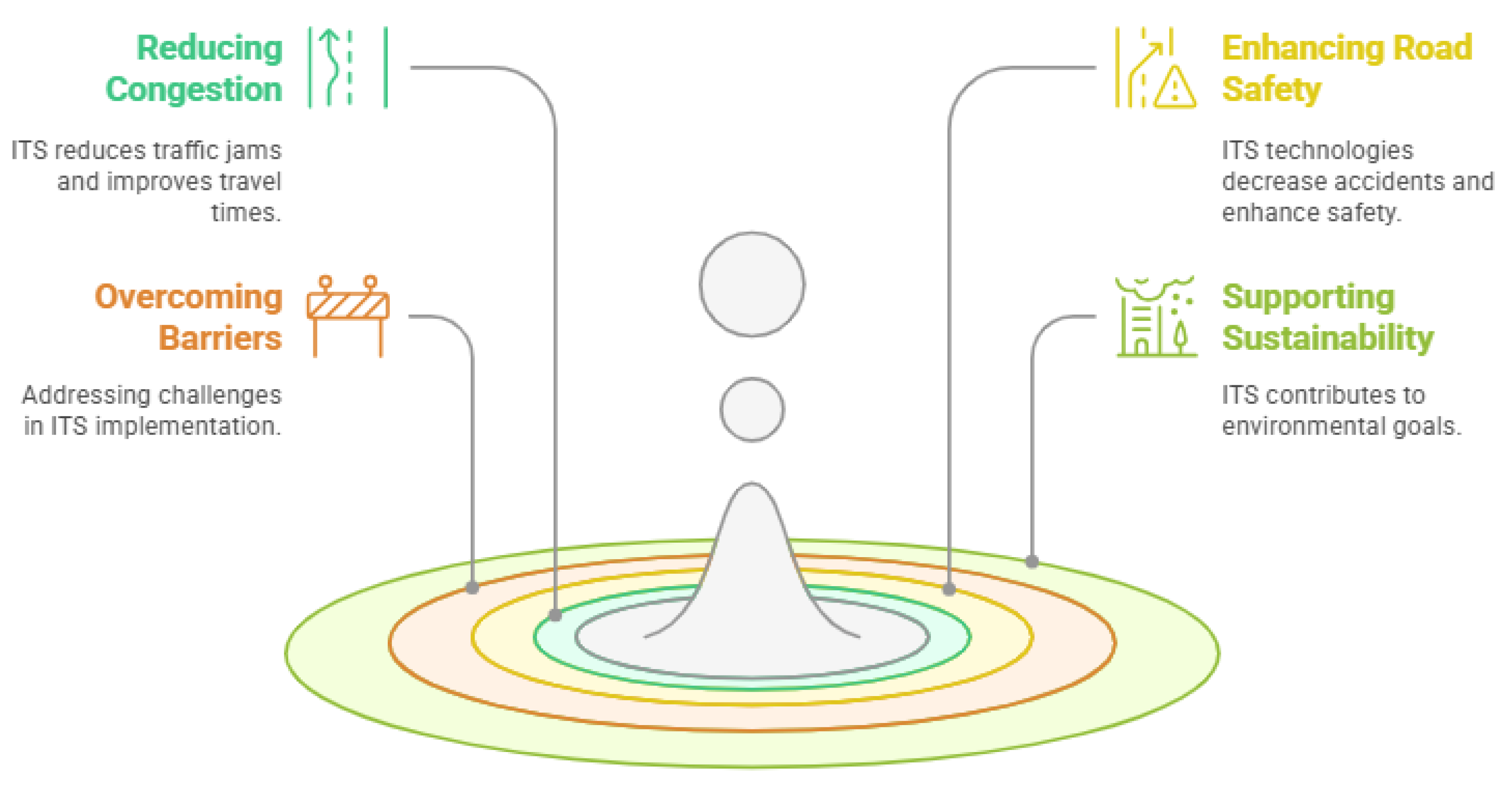
Figure 2.
The main areas related to ITS, addressed in the present paper.
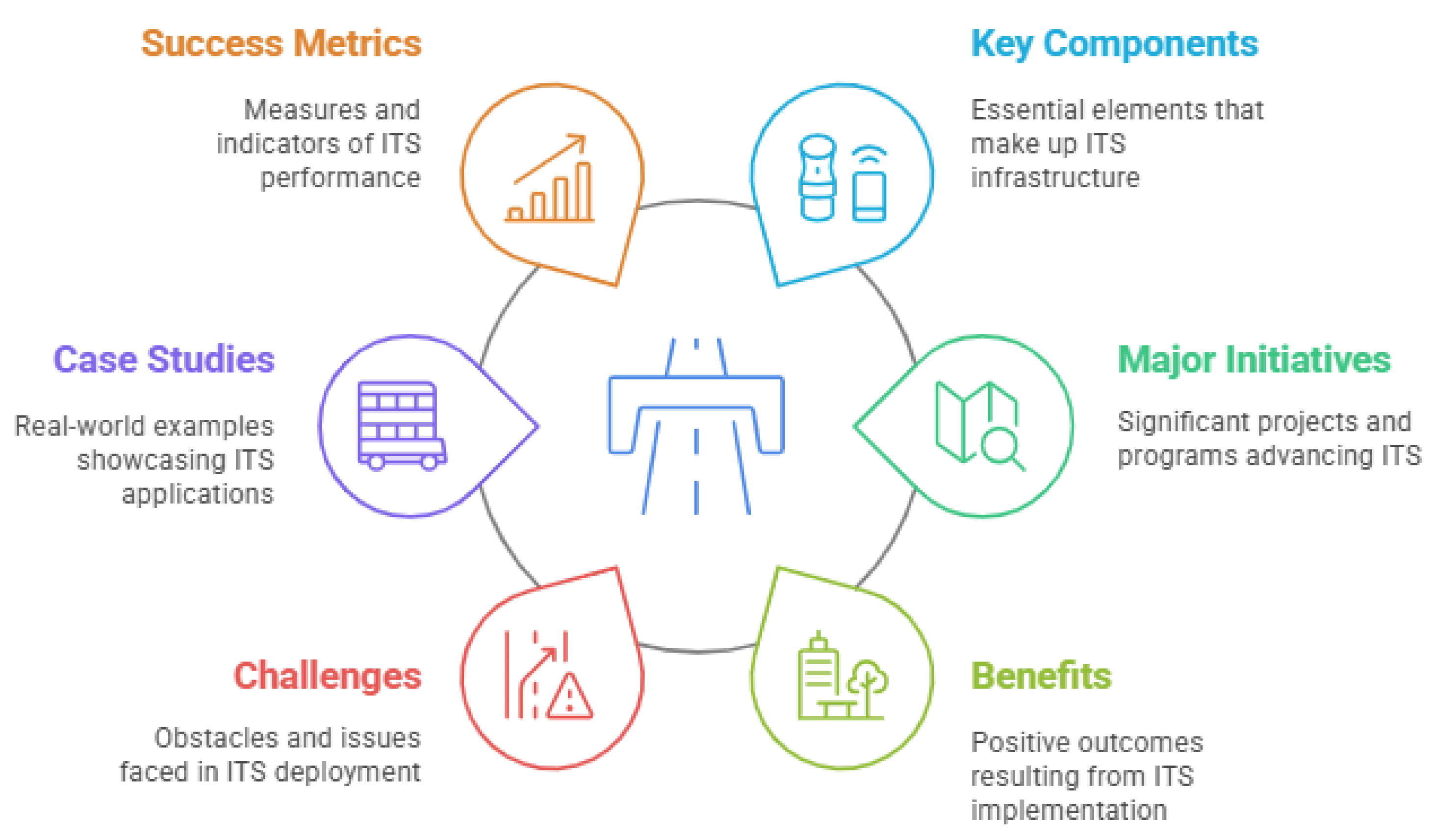
Figure 3.
The role of ITS in European transportation.
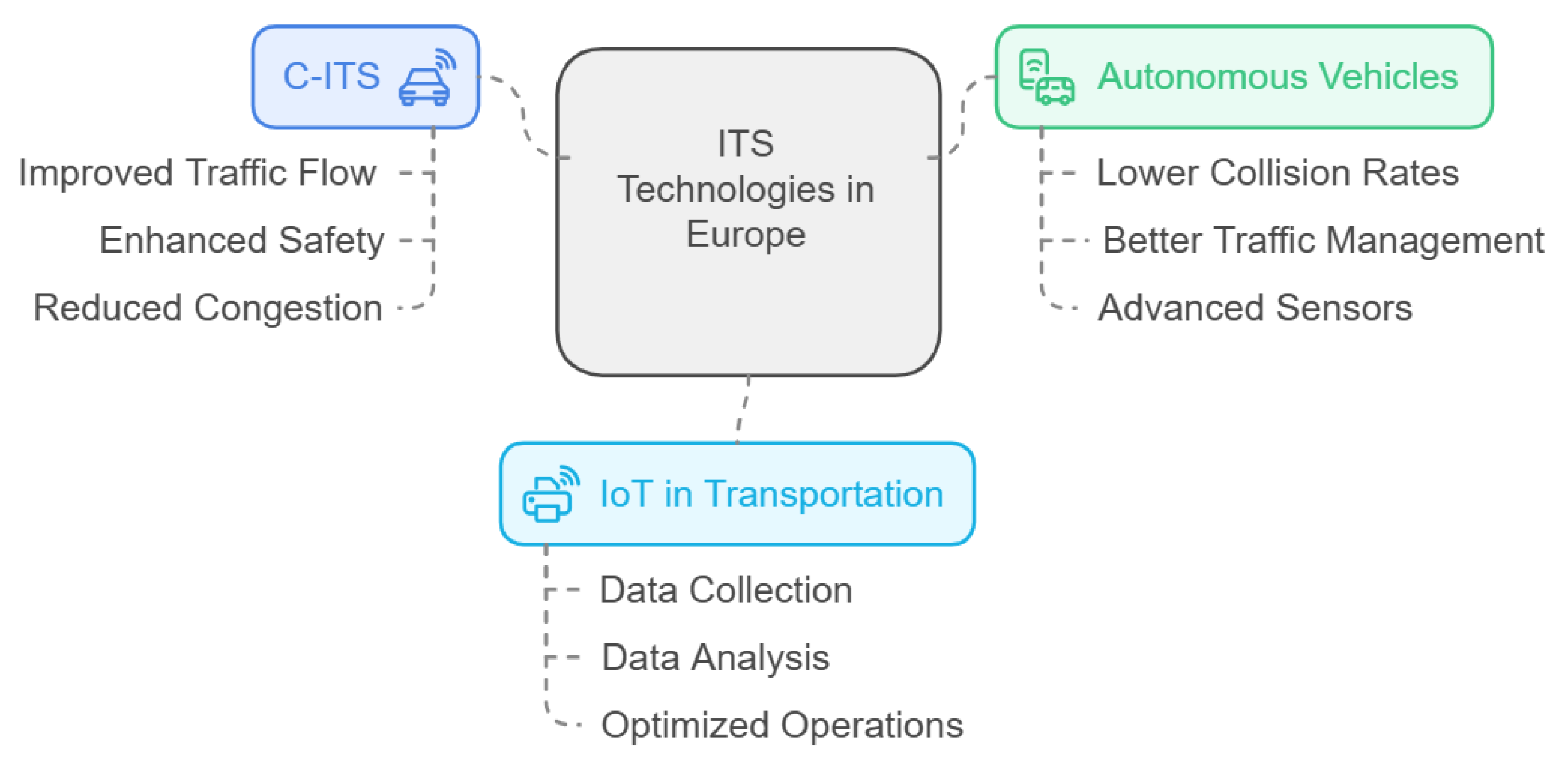
Figure 4.
Main hardware and software components of ITS.
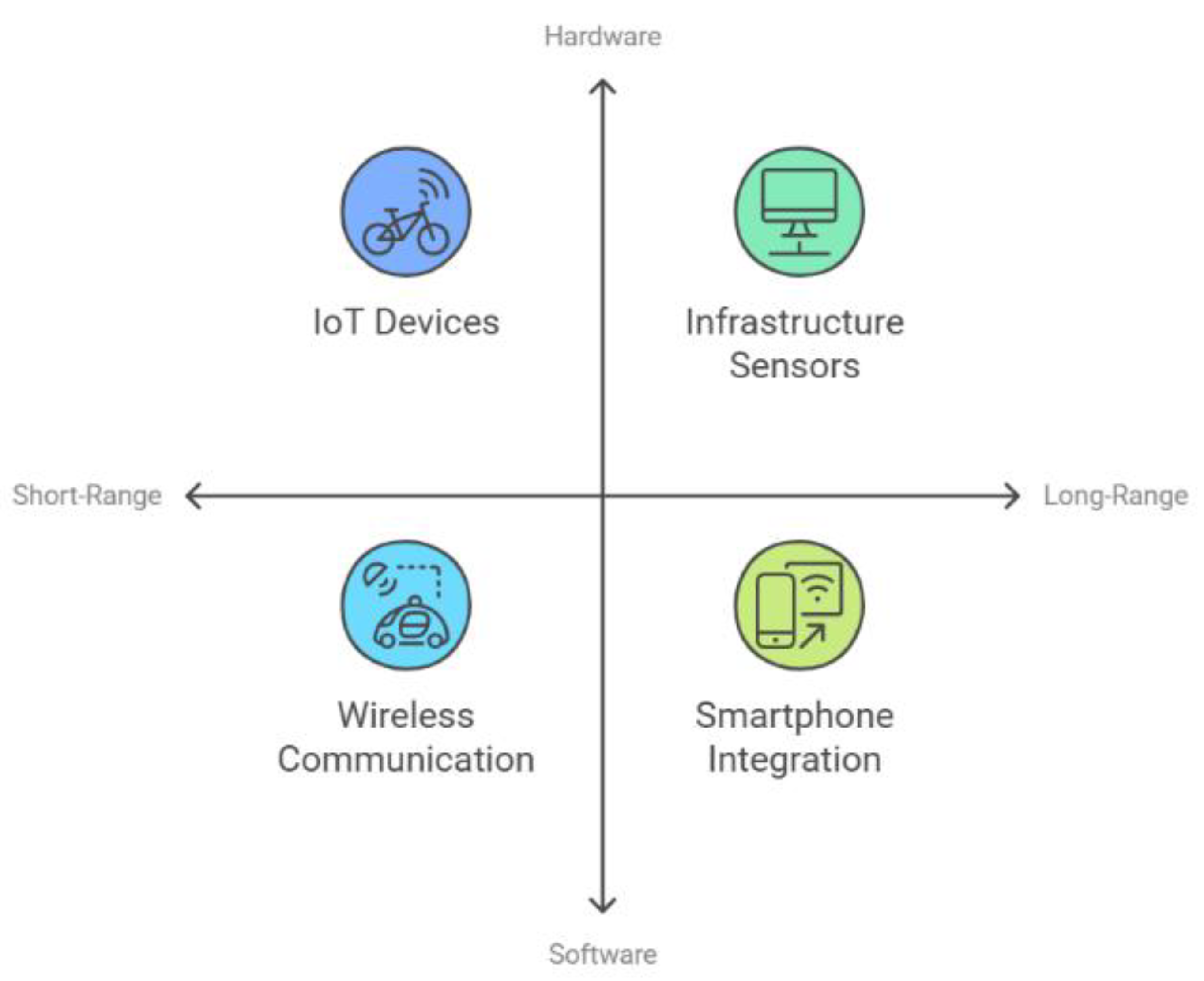
Figure 5.
Core ITS components supporting real-time data analysis and interoperability.
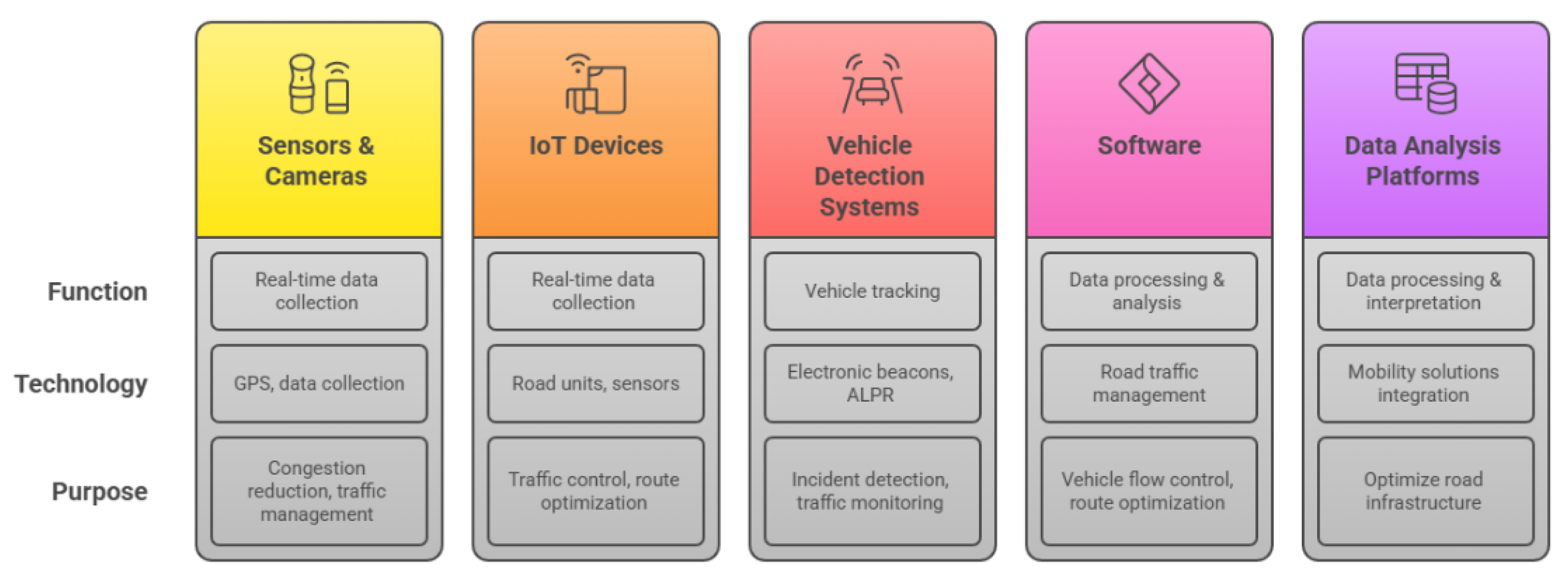
Figure 6.
Major ITS initiatives in Europe.
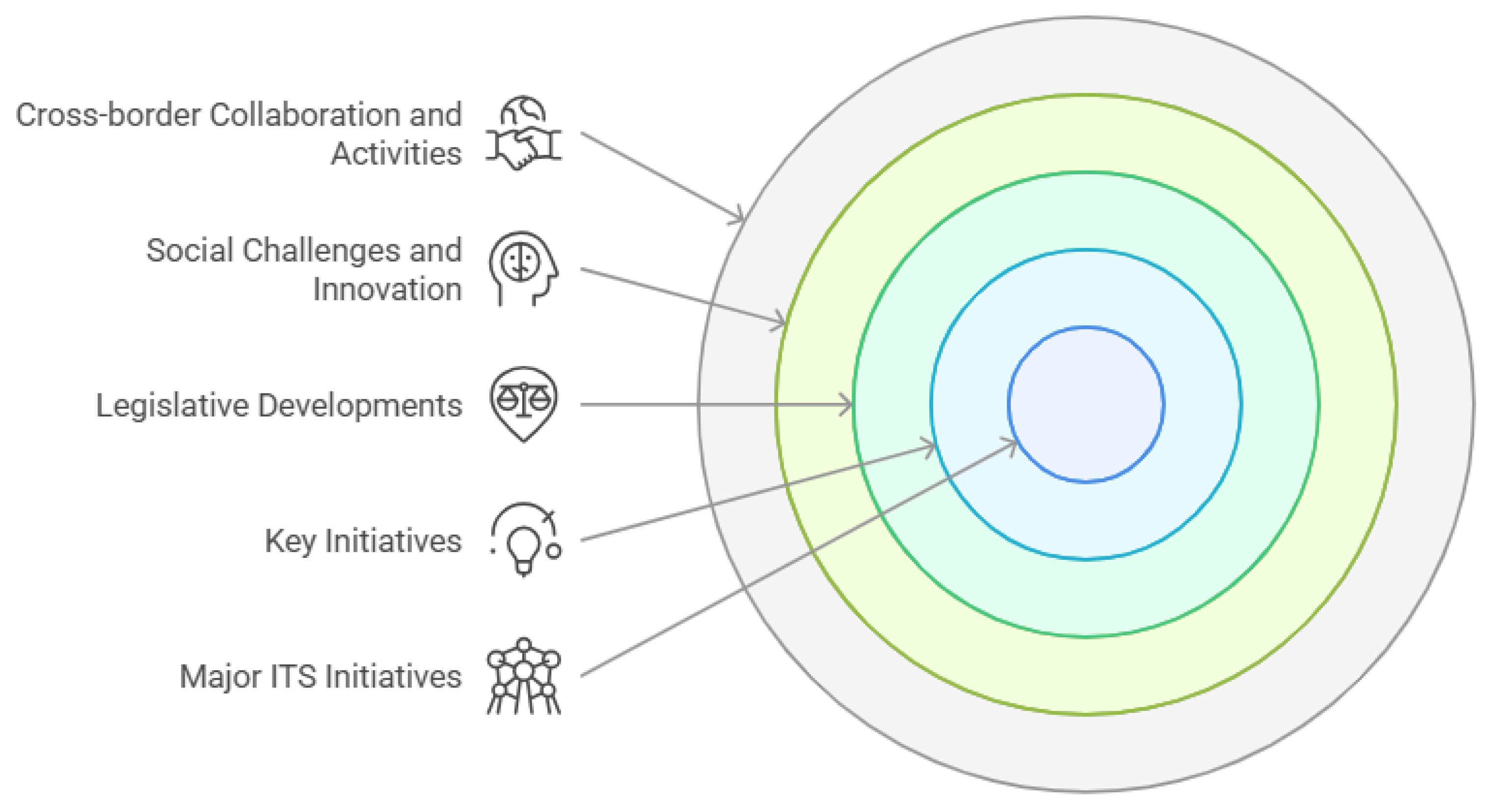
Figure 7.
Benefits of ITS.
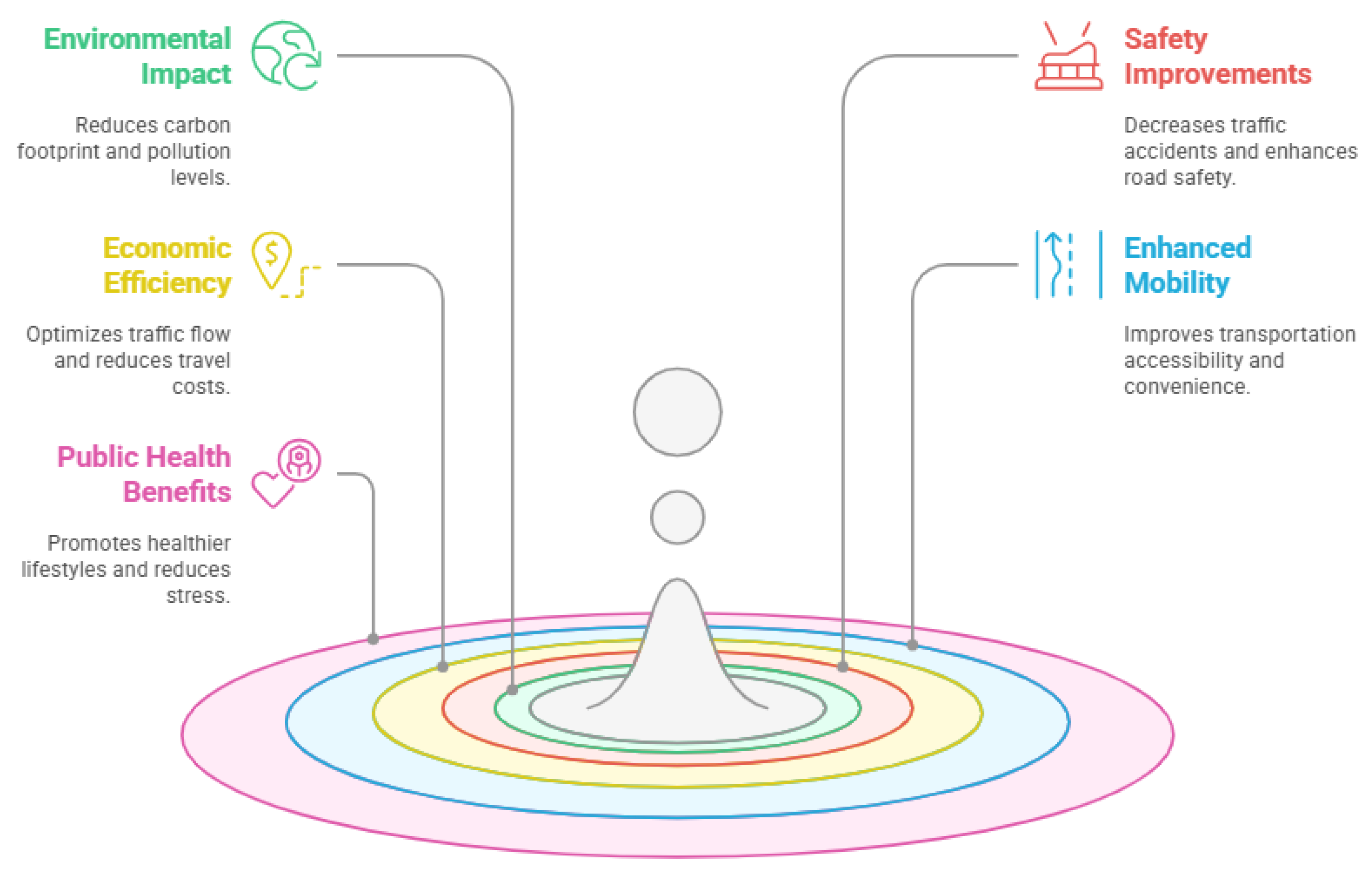
Figure 8.
Measurement of success and effectiveness of ITS through KPIs.
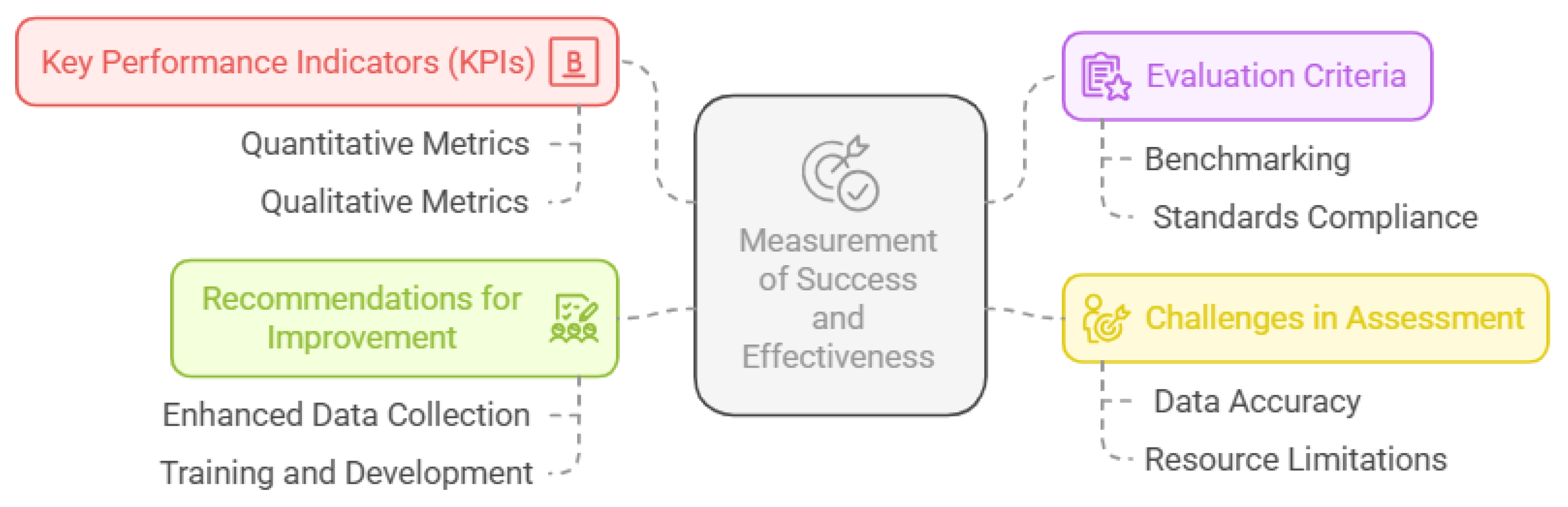
Figure 9.
Future trends in ITS.
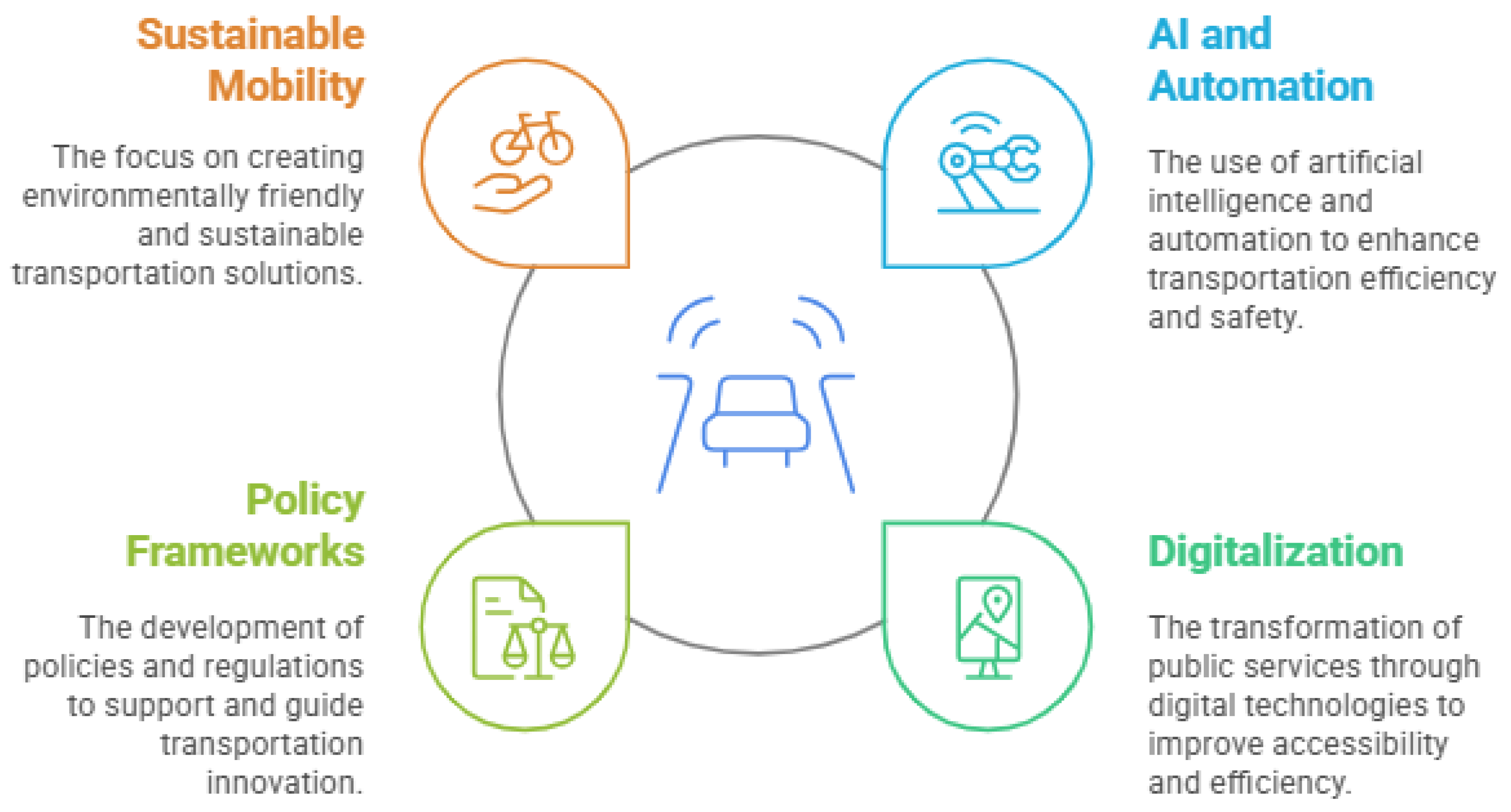

Table 1.
Results achieved through the implementation of ITS in urban areas.
| City, Country | Year of implementation |
Type of ITS implemented |
Investment [million €] | Results achieved |
|---|---|---|---|---|
| Berlin, Germany [44] |
2021 | AI-based traffic management | 250 | 15% reduction in congestion |
| Paris, France [45] | 2022 | Smart parking systems | 180 | 30% improved parking efficiency |
| Madrid, Spain [46] | 2023 | Autonomous bus fleet | 200 | 20% reduction in commute time |
| Amsterdam, Netherlands [47] | 2021 | Bicycle ITS integration | 150 | 25% increase in cycling trips |
| Vienna, Austria [48] |
2022 | Smart pedestrian crossings | 170 | 40% fewer pedestrian accidents |
| Milan, Italy [49] | 2023 | Real-time public transport tracking | 190 | 10% increase in public transport use |
| Stockholm, Sweden [50] | 2020 | 5G-enabled traffic signals | 220 | 20% reduction in travel delays |
| Helsinki, Finland [51] |
2021 | AI-powered congestion control | 230 | 18% lower CO2 emissions |
| Brussels, Belgium [52] |
2022 | V2I communication systems | 210 | Improved road safety by 25% |
| Lisbon, Portugal [53] |
2023 | Electric bus fleet expansion | 260 | 30% reduction in fuel costs |
| Copenhagen, Denmark [54] | 2021 | Smart tolling system | 240 | 10% increase in toll revenue |
| Prague, Czech Republic [55] | 2022 | AI-based transit scheduling | 200 | 15% improvement in bus punctuality |
| Budapest, Hungary [56] |
2023 | Intelligent intersection control | 180 | 12% decrease in traffic congestion |
| Warsaw, Poland [57] |
2021 | Smart highway system | 250 | 20% improved traffic flow |
| Bucharest, Romania [58] |
2022 | ITS-integrated metro system | 220 | 10% more metro users |
| Cluj-Napoca, Romania [59] | 2023 | Integrated smart transport systems (smart lights, e-ticketing, real-time info) | 160 | Enhanced urban efficiency and sustainability |
| Riga, Latvia [60] | 2023 | Electric tram modernization | 210 | 15% energy savings |
| Tallinn, Estonia [61] |
2021 | Real-time urban mobility apps | 190 | 20% improved transit efficiency |
| Vilnius, Lithuania [62] |
2022 | Smart pedestrian monitoring | 180 | 30% reduction in pedestrian accidents |
| Sofia, Bulgaria [63] |
2023 | Intelligent traffic cameras | 170 | 12% more effective law enforcement |
| Zagreb, Croatia [64] |
2021 | AI-based vehicle tracking | 160 | 10% reduction in transport delays |
Disclaimer/Publisher’s Note: The statements, opinions and data contained in all publications are solely those of the individual author(s) and contributor(s) and not of MDPI and/or the editor(s). MDPI and/or the editor(s) disclaim responsibility for any injury to people or property resulting from any ideas, methods, instructions or products referred to in the content. |
© 2025 by the authors. Licensee MDPI, Basel, Switzerland. This article is an open access article distributed under the terms and conditions of the Creative Commons Attribution (CC BY) license (http://creativecommons.org/licenses/by/4.0/).
Copyright: This open access article is published under a Creative Commons CC BY 4.0 license, which permit the free download, distribution, and reuse, provided that the author and preprint are cited in any reuse.