
Submitted:
31 May 2025
Posted:
04 June 2025
You are already at the latest version
Abstract
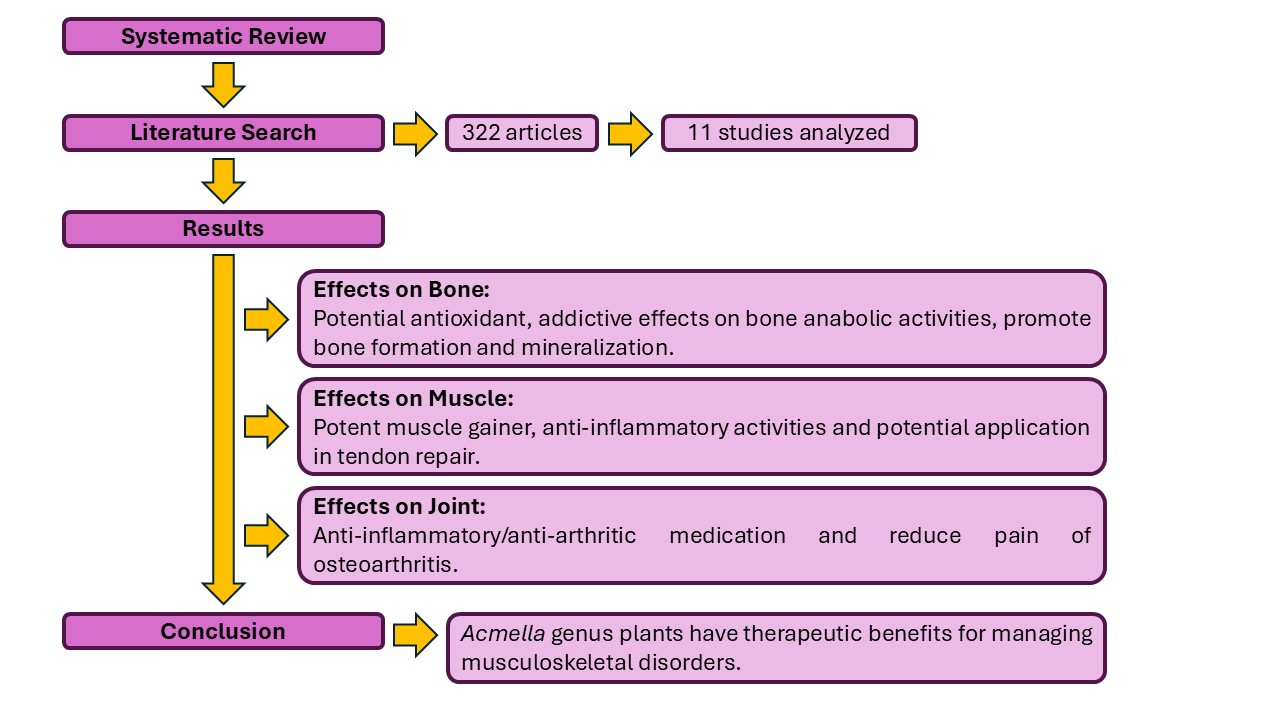
Background: The genus Acmella has received growing attention for its pharmacological properties, including its potential applications in musculoskeletal disorders (MSD). Plants in this genus such as Spilanthes acmella, Blainvillea acmella, Acmella uliginosa and Acmella oleracea contain various bioactive compounds which have demonstrated anti-inflammatory, analgesic, and anti-arthritic properties. This systematic review evaluates the clinical and preclinical evidence supporting the use of plants from Acmella genus for treatment of MSD such as arthritis, osteoporosis, muscle injuries, joint inflammation, and other related pathologies. Methods: The methodology used in this study involved a systematic literature review, following the Preferred Reporting Items for Systematic Reviews and Meta-Analysis (PRISMA) guidelines, along with synthesis analysis and quality appraisal. The articles were retrieved from Scopus, Google Scholar and PubMed databases. Results: Eleven articles were further analysed to determine the therapeutic potential of Acmella genus plants for musculosketelal disorders. The plants included were Spilanthes acmella, Blainvillea acmella, Acmella uliginosa, and Acmella olerecia. The musculoskeletal disorders investigated were osteoporosis, osteoarthritis and myopathies. The extracts from these plants were shown to decrease inflammation, enhance joint health, relieve pain, and stimulate osteogenic activity. These effects may be contributed with several active compounds found in these plants. Conclusions: The available evidence suggests that Spilanthes acmella and Blainvillea acmella have potential to treat osteoporosis. Acmella oleracea and Acmella uliginosa have potential to be used for treatment of osteoarthritis while Spilanthes acmella in treating myopathies. Further research is needed to establish efficacy, optimal dosing, and safety of these plants.
Keywords:
Acmella genus plant
; musculoskeletal disorders
; osteoporosis
; muscle strains
; tendonitis
; osteoarthritis
1. Introduction
Medicinal plants have long been a primary and widely used source of safe and effective remedies among populations. Although the use of synthetic medicines has grown in recent years [1,2], the World Health Organization (WHO) estimates that approximately 80% of the global population continues to rely on medicinal plants as a primary means of addressing health issues, particularly in developing countries [3].
Musculoskeletal disorders are a significant global public health concern, impacting the muscles, bones, joints, tendons, ligaments, and related structures. Conditions such as arthritis, osteoporosis, tendonitis, and myopathies are prominent contributors to disability and diminished quality of life. While pharmacological treatments like nonsteroidal anti-inflammatory drugs, corticosteroids, and disease-modifying antirheumatic drugs are commonly used, their effectiveness is often constrained by side effects, highlighting the need for alternative therapeutic approaches [4,5,6,7].
Plant-derived natural products are increasingly recognized for their potential in addressing pain, inflammation, and other musculoskeletal conditions. Within traditional medicine, species from the Asteraceae family have been extensively utilized for their pain-relieving and anti-inflammatory effects [8]. Notably, plants from the Acmella genus, including Spilanthes acmella, Blainvillea acmella, Acmella oleracea, and Acmella uliginosa, are being actively studied for their bioactive properties.
The objective of this systematic review is to summarize the evidence on the use of Acmella genus plants, specifically Spilanthes acmella, Blainvillea acmella, Acmella uliginosa and Acmella oleracea, for musculoskeletal disorders by evaluating preclinical and clinical evidence.
Background on Acmella Genus Plants
Spilanthes acmella, Blainvillea acmella, Acmella uliginosa and Acmella oleracea are all plants that belong to the Asteraceae family, commonly known as the daisy family or sunflower family. These plants are typically herbaceous and perennial, often growing in tropical and subtropical regions. They generally have yellow or orange flower heads with a daisy-like appearance. They are also called toothache plant, buzz button or paracress, depending on cultural or regional naming conventions [9,10].
This family includes a wide variety of plants, many of which are used in traditional medicine for their anti-inflammatory, antibacterial, and analgesic properties. The primary compounds of interest include spilanthol and other alkylamides and flavonoids, contributing to their medicinal properties [11,12,13,14].
They are all related through the Acmella genus but the species within this genus are sometimes grouped under different scientific names. The confusion in the classification and naming of herbal plants results from several factors including taxonomic changes, variations in common names across regions and cultures, morphological variability, and a lack of standardization in classification systems [15,16].
To avoid confusion, this systematic review addressed all these plants as Acmella genus plants. In the search for relevant journal articles, the keyword ‘Acmella’ was used to retrieve all the articles on related plants such as Spilanthes acmella, Blainvillea acmella, Acmella uliginosa, Acmella oleracea and Acmella caulirhiza. The keyword ‘spilanthol’ was also used since it is the active compound for the Acmella genus plants.
2. Materials and Methods
2.1. Search Strategy
This systematic review analyzed all published studies investigating the antibacterial properties of plants from the Acmella genus, including Spilanthes acmella, Acmella oleracea, Acmella paniculata, Acmella uliginosa, and Acmella caulirhiza. The selection of eligible studies was guided by the PICOS framework (Population, Intervention, Comparison/Comparator, Outcomes, and Study design) [17] (Table 1). The goal was to identify relevant studies investigating the therapeutic effects of plants from Acmella genus in treating musculoskeletal disorders. A systematic review of the literature was conducted across Scopus, Google Scholar, and PubMed databases to identify the relevant studies.
The search strategy to identify relevant articles involved using the following keywords: Acmella; spilanthol; musculoskeletal; arthritis; osteoarthritis; tendonitis; osteoporosis; bone; muscle. These keywords were combined using Boolean operators such as AND, OR, and parentheses to ensure logical grouping and exhaustive retrieval (Table 2).
In the screening phase, the articles were selected according to the inclusion and exclusion criteria (Table 3).
2.2. Eligibility of Research Articles
Articles to be included in the review were selected in three phases. First, the titles of the articles were screened and any article that did not match the inclusion criteria were excluded. During this phase, duplicates were also removed. Second, the abstracts of the remaining articles were screened and excluded if they did not meet the inclusion criteria. Lastly, the full text of the remaining articles from the second phase were obtained. The selected articles were thoroughly read to exclude any articles that did not meet the inclusion criteria.
The screening was carried out by at least two reviewers. The selection of articles to be included in the review had to be agreed by at least two reviewers before proceeding into the data extraction phase. Any discrepancies were resolved through consensus between the reviewers.
2.3. Data Extraction
Data extraction was performed in a standardized manner with the use of a data collection form. Extracted data included: (1) authors; (2) type of plants and dose; (3) study design and sample size; (4) objectives; (5) parameters; (6) findings, and (7) conclusion. Extracted data were tabulated to facilitate comparative analysis.
2.4. Quality Assessment
To ensure the reliability of the included studies, their quality was assessed by two independent researchers using standardized evaluation tools. The Newcastle-Ottawa Scale (NOS) was applied to evaluate the quality of human interventional studies, while SYRCLE’s risk of bias tool was used for in vivo and in vitro studies, assessing biases such as selection, performance, detection, attrition, and reporting. Studies deemed to be of low quality were either excluded from the review or their limitations were explicitly acknowledged.
2.5. Data Synthesis
The data synthesis was carried out using a narrative synthesis approach. Preclinical studies (including in vitro and in vivo models) were analyzed separately from clinical trials due to variations in methodologies and outcome measures. The process involved the following steps:
- Summarizing preclinical findings related to mechanisms affecting inflammation, bone formation, and joint health.
- Assessing clinical evidence with a focus on key musculoskeletal outcomes, such as pain reduction, decreased joint inflammation, and functional improvement.
- Investigating shared mechanisms of action observed in both clinical and preclinical studies, particularly the effects of compounds like spilanthol on pathways such as nuclear factor kappa-light-chain-enhancer of activated B cells (NF-κ), Wnt/β-catenin, and others involved in bone metabolism.
2.6. Handling Missing Data
For studies with incomplete or missing data, efforts were made to reach out to the corresponding authors to request clarification or supplementary information. If no response was obtained, the study was either excluded or analyzed solely using the data that were available.
2.7. Ethical Considerations
While this systematic review did not involve direct experimentation on humans or animals, it adhered to ethical research standards. The included studies were all peer-reviewed publications that had obtained ethical approval for their respective experiments and clinical trials.
3. Results
The literature searches on the databases identified 322 relevant articles. Two reviewers independently assessed the title and abstract of all articles for inclusion or exclusion criteria. Differences of opinion between the reviewers regarding the selection of the articles were resolved by discussion. A total of 18 articles were retrieved for further assessment on their full texts. Seven of these articles were excluded because the interest of this review was not part of their primary studies, or they were not related with objective of the systematic review.
In terms of quality assessments, all the selected articles have low risk of bias. For the human studies by Rondanelli et al. [18] and Pradhan et al. [19], by using Newcastle-Ottawa Scale (NOS), the quality of these interventional studies were found to be acceptable. While for the rest of the studies, SYRCLE’s risk of bias tool did not detect any major biases. Finally, 11 articles were included for the purpose of this review. The characteristics of these articles are presented in Appendix A (Table A1). A flow chart of the selection process, including reasons for exclusion, is shown in Figure 1.
3.1. Overview of Evidence
3.1.1. Effects on Bone
There are 4 studies selected in relation to the effects of Acmella genus plants on bone cells, with three in vitro and one in-vivo studies. As for the in vitro studies of Widyowati et al. [20] and Abdul Rahim et al. [21], MC3T3-E1 cells (osteoblast-like cells) were treated with either ethanol or methanol extract of Spilanthes acmella or Blainvillea acmella leaves at doses ranging from 2.93 µg/ml to 1,500 µg/ml. In another study by Widyowati et al. [22], MC3T3-E1 cells were exposed to 12 isolated compounds of Spilanthes acmella at doses of 12.5 and 25 μM.
All the in vitro studies had measured alkaline phosphatase (ALP) activities to determine bone formation activities by osteoblasts. In addition, Widyowati et al. [22] had measured calcium deposition, while Abdul Rahim et al. [21] measured calcium deposition and collagen formation as well. All the studies have concluded that Acmella genus plants were able to promote bone formation. Widyowati et al. [22] have also identified 6 compounds responsible for bone formation. While Abdul Rahim et al. [21] managed to positively correlate the phenolic contents of the plants with the bone formation activities.
With regards to the in vivo study using steroid-induced osteoporosis mice model, combination of the plant with exercise had increased the osteoblast cells [23]. Overall, it can be concluded that the leaves extract of this plant had exhibited bone formation activities in both in vitro and in vivo studies. Therefore, it has potential to be investigated further as an anti-osteoporotic agent, especially in terms of animal and human studies.
3.1.2. Effects on Muscle
There is only one study by Pradhan et al. [19] investigating the effects of Acmella genus plant on muscle mass. It was a human study carried out on 240 subjects receiving commercial preparations of Spilanthes acmella (SA3X) for 2 months. Muscle mass was assessed by measuring the circumferences of mid-upper arm (MUAC), chest (CC), and thigh (TC). It was found that Spilanthes acmella had caused a significant increase in mid-upper arm circumference. There were no significant changes in the circumferences of chest and thigh. Thus, this indicated that Spilanthes acmella may be used to stimulate muscle growth.
3.1.3. Effects on Joint
The studies were carried out to determine the anti-inflammatory activities of Acmella genus plant extracts in treating osteoarthritis. The inclusion criteria of this review were satisfied by one in vitro study, five in vivo studies, and one human study. Stein et al. [24] had carried out both in vitro and in vivo studies. In the in-vitro study, Acmella oleracea extract and spilanthol treatments on Vascular Smooth Muscle Cells (VSMC) in hyperglycemic media were able to reduce chymase activity and expression and reduce reactive oxygen species.
As for the in vivo studies, the leaves or flowers extracts of Spilanthes acmella, Acmella uliginosa and Acmella oleracea were used, mostly given orally to animal model, except for Stein et al. [24], which injected the extract intraperitoneally and Moro et al. [25] which applied the extract topically to the site of tendon injury. Furthermore, Stein et al. [24] had isolated spilanthol and used it as one of the treatments.
Doses of Acmella genus plant extracts given orally or intraperitoneally to animal models varied from 10 to 833 mg/kg. For the topical application by Moro et al. [25], Acmella oleracea lyophilizate was added to a base ointment of anhydrous lanolin and solid vaseline 30:70 w/w at a concentration of 20% w/w. Several types of irritants were used to induce paw oedema or arthritis in rats such as Carrageenan and Freund’s Complete Adjuvant (CFA) [26] as well as monosodium iodate [27]. While Moro et al. [25], induced arthritis surgically by partial transection of calcaneal tendon.
In all the in vivo studies, the Acmella genus plant extracts were able to reduce pain, swelling, and inflammation, with improved joint histology. Biochemically, the extracts were also able to reduce inflammatory cytokines (interleukin-1 beta; IL-1β and tumor necrosis factor; TNF-α), nitric oxide (NO) and creatinine levels while haemoglobin, serum protein and albumin levels were raised. In the animal study by Paul et al. [28], combination of Acmella uliginosa and aloe vera was found to produce synergistic anti-arthritis and anti-inflammatory actions. Paul et al. [28] was also able to identify five potent anti-inflammatory compounds within Acmella uliginosa namely 9-Octadecenoic acid (Z)-phenylmethyl ester, à-N-Normethadol, astaxanthin, caryophyllene oxide and fenretinide.
Nevertheless, in the human study by Rondanelli et al. [18], food-grade lecithin-based formulation of Zingiber officinale (ginger) and Acmella oleracea standardized extracts (Mitidol™) in the form of tablet was given orally to 50 patients with knee osteoarthritis, twice daily for 4 weeks. The combination of Acmella oleracea and Zingiber officinale was effective in reducing joint pain as shown by the reduced a visual analog scale (VAS), improved knee function as indicated by better Western Ontario and McMaster Universities Osteoarthritis (WOMAC) index and Tegner Lysholm Knee Scoring Scale and improved 36-Item Short Form Health Survey (SF-36) physical activity and dual-energy X-ray absorptiometry (DEXA) fat distribution. This was accompanied by reduction in inflammatory markers, erythrocyte sedimentation rate (ESR) and C-reactive protein (CRP).
Table 4 shows a brief characteristics and summary of the information retrieved from the 11 studies that fulfilled the inclusion criteria and were incorporated into the review.
4. Discussion
Musculoskeletal disorders (MSD) encompass a range of conditions that impact the muscles, bones, joints, tendons, ligaments, and other structures that provide support and enable movement. These disorders can result in pain, stiffness, inflammation, and reduced mobility, greatly affecting a person’s capacity to carry out everyday tasks. Common examples of MSDs include arthritis, osteoporosis, back pain, tendonitis, and muscle strains. These conditions may arise from various factors, such as injuries, repetitive strain, aging, or underlying health issues [29,30].
The Acmella genus consists of flowering plants belonging to the Asteraceae family, known for their medicinal and bioactive properties. Species like Spilanthes acmella and Acmella oleracea contain bioactive compounds, such as spilanthol, which are thought to contribute to their therapeutic effects [31,32]. In this review the potential therapeutic effects of Acmella genus plants on MSD were assessed.
Agents that promote bone formation or bone anabolic activity have potential to be developed as drugs for prevention or treatment of osteoporosis [33,34,35]. To date, studies looking at the potential of Acmella genus plants in prevention and treatment of osteoporosis are mainly in vitro studies. There is only one in vivo study and no human studies.
The in-vitro studies were carried out using MC3T3-E1 as osteoblast-like cells. In these studies, Acmella genus plant extracts exhibited bone formation activities and therefore have potential as anti-osteoporotic agents. Osteoporosis occurs when there is an imbalance between bone formation and resorption. Besides the bone formation activity by osteoblasts, bone resorption by osteoclasts plays an important role in the pathogenesis of osteoporosis [36,37,38]. In future, osteoclasts should also be studied to determine whether Acmella genus plants may also inhibit osteoclasts activity.
The only animal study on Acmella genus plants, had adopted steroid-induced osteoporosis rat model. Although, this is an important type of osteoporosis, the study on postmenopausal osteoporosis, the major type of osteoporosis represented by ovariectomised rat model, is lacking [39,40,41]. The Spilanthes acmella leaves extract given orally at the dose of about 200 mg/kg was successful in maintaining osteoblast number but only when combined with another intervention, exercise. The dose used was low compared to the 1500 mg/kg of Acmella uliginosa, another Acmella genus plant, which did not produce any toxic effects on rat [25]. In a toxicity study using zebrafish embryo test, Spilantes acmella was not found to have any lethal effect on zebrafish embryo at the highest concentration of 20% v/v [42].
There should be more animal studies looking at other osteoporosis models, especially estrogen-deficient or postmenopausal models. The sole intervention of the Acmella genus plants should be investigated and more robust bone parameters such as bone histomorphometry, DEXA and micro-computed tomography (micro-CT) should be employed. If there are positive outcomes with animal studies, then human study may be warranted.
A study conducted by Widyowati et al. [22] has identified 6 active compounds in Spilanthes acmella which promoted bone formation, namely 1,3-butanediol 3-pyroglutamate, 2-deoxy-d-ribono-1,4-lactone, methyl pyroglutamate, ampelopsisionoside, icariside B1, and benzylα-l-arabinopyranosyl-(1→6)-β-d-glucopyranoside. Abdul Rahim et al. [21] have reported that terpenoids of α-cubebene, caryophyllene, caryophyllene oxide, phytol and flavonoids of pinostrobin and apigenin were the compounds that may contribute to both antioxidant and bone anabolic activities of Blainvillea acmella. However, these active compounds should also be tested in animal studies, rather than using the crude extracts. This is important for the development of the compounds isolated from Acmella genus plants into anti-osteoporotic agents.
In comparison to the studies on bone, studies on the effects of Acmella genus plants on osteoarthritis are more comprehensive with many animal studies and one human study. Acmella genus plants, mainly in the form of Acmella oleracea, were found to reduce inflammation in Vascular Smooth Muscle Cells (VSMC), and various osteoarthritic animal models. The highest dose of the plant extract used was 833 mg/kg which was still lower than the LD50 dose of Acmella uliginosa of more than 1500 mg/kg [24]. In terms of route of administration, Stein et al. [24] had administered the extract intraperitoneally (IP), which was able to reduce pain and swelling of the paws induced by formalin. As opposed to oral administration, IP administration of plant extract has higher bioavailability and faster action [43]. Another study by Moro et al. [25] applied the extract topically to the surgical site after partial transection of calcaneal tendon. This method of administration acts locally and does not get into systematic circulation, therefore reducing any adverse events [44].
Moreover, Acmella genus plants may also be combined with other plants such as aloe vera and ginger to treat osteoarthritis. The combinations are synergistic as the combined effects produced greater anti-arthritis and anti-inflammatory actions. Several active compounds in Acmella uliginosa have been identified with anti-inflammatory activities. They warrant further processes to evaluate, optimize, and test them for potential therapeutic use as anti-osteoarthritis agents.
There were positive outcomes from a human study in patients with knee osteoarthritis [18]. However, it was a quasi-experimental design which lacks random assignment, making it susceptible to biases. Acmella oleracea was also combined with another plant, ginger, and therefore the sole anti-osteoarthritis effects of the Acmella genus plant cannot be elucidated. All these make it challenging to confidently attribute the observed outcomes to the effects of Acmella genus plants.
Furthermore, a human study has reported that supplementations of commercial preparation of Spilanthes acmella were able to increase the muscle mass of the mid-upper arm [19]. However, no increase in muscle mass was recorded for muscles in the chest and thigh regions. There are questions raised about the selectivity of the plant extract on muscle in certain parts of the body. There are also several limitations identified by the authors such as the recruitment of the participants was not random and selective to gym-goers and the 24-hour dietary recall method may not be reliable.
5. Conclusions
The Acmella genus, particularly species like Spilanthes acmella and Acmella oleracea, shows promise for managing musculoskeletal disorders, with evidence suggesting its potential in both osteoarthritis and osteoporosis treatment. While in-vitro studies demonstrate positive effects on bone formation, further animal research is needed, especially in estrogen-deficient or postmenopausal models, to confirm these benefits. The active compounds identified in Acmella plants may contribute to their anti-inflammatory and bone-promoting properties, warranting further investigation into their therapeutic potential. Although the existing animal studies and human trials on osteoarthritis show encouraging results, there are limitations in study design and the need for more robust data to confirm these effects. Ultimately, continued research into isolated compounds, optimal dosages, and intervention methods is essential to fully realize the therapeutic benefits of Acmella genus plants in musculoskeletal disorders.
Competing Interests
The authors have declared that no competing interest exists.
Author Contributions
Conceptualization, A.N.S. and I.N.M; validation, A.N.S. and I.N.M; formal analysis, A.N.S.; writing-original draft preparation, A.N.S; writing-review and editing, A.N.S., I.N.M, M.M.A.M., R.A.R., A.n.S., N.R.A.R. and E.S.M.R; visualization, A.N.S; graphical abstract, M.M.A.M.; supervision and final approval of the manuscript, A.N.S. and I.N.M. All authors have read and agreed to the published version of the manuscript.
Funding
This study was conducted without any external financial support.
Institutional Review Board Statement
Not applicable.
Data Availability Statement
Not applicable.
Abbreviations
The following abbreviations are used in this manuscript:
| MSD | Musculoskeletal disorders |
| PRISMA | Preferred Reporting Items for Systematic Reviews and Meta-Analysis |
| WHO | World Health Organization |
| PICOS | Population, Intervention, Comparison/Comparator, Outcomes, and Study |
| NOS | Newcastle-Ottawa Scale |
| SYRCLE | Systematic Review Centre for Laboratory Animal Experimentation |
| NF-κB | Nuclear factor kappa-light-chain-enhancer of activated B cells |
| MC3T3-E1 cells | Murine calvarial pre-osteoblast cell line |
| ALP | Alkaline phosphatase |
| MUAC | Mid upper arm circumference |
| CC | Chest circumference |
| TC | Thigh circumference |
| VSMC | Vascular smooth muscle cells |
| CFA | Carrageenan and Freund’s Complete Adjuvant |
| IL-1β | Interleukin-1 beta |
| TNF-α | Tumor necrosis factor |
| NO | Nitric oxide |
| VAS | Visual analog scale |
| WOMAC | Western Ontario and McMaster Universities Osteoarthritis |
| SF-36 | 36-Item Short Form Health Survey |
| DEXA | Dual-energy X-ray absorptiometry |
| ESR | Erythrocyte sedimentation rate |
| CRP | C-reactive protein |
| Micro-CT | Micro-computed tomography |
| IP | Intraperitoneally |
| GCMS | Gas chromatography/mass spectrometry |
| LCTOFMS | Liquid chromatography time-of-flight mass spectrometry |
| DPPH | 2,2-ediphenyl-1-picrylhydrazyl |
| ABTS | 2,2'-azino-bis (3-ethylbenzothiazoline-6-sulfonic acid) |
| FRAP | Ferric ion reducing antioxidant potential |
| BW | Body weight |
| SA3X | Spilanthes acmella |
| ROS | Reactive oxygen species |
| ELSA | Ethanolic extract of leaves of Spilanthes acmella |
| MIO | Monosodium iodate |
| GC/MS | Gas chromatography/mass spectrometry |
References
- Breitling, R.; Takano, E. Synthetic biology advances for pharmaceutical production. Current opinion in biotechnology 2015, 35, 46-51. https://doi.org/10.1016/j.copbio.2015.02.004.
- Buenz; Eric, J.; et al. The Ethnopharmacologic Contribution to Bioprospecting Natural Products. Annual review of pharmacology and toxicology 2018, 58, 509-530. [CrossRef]
- [Internet] World Health Organization. WHO Traditional Medicine Strategy: 2014-2023. https://iris.who.int/handle/10665/92455.
- Smith, E.; Hoy, D.G.; Cross, M.; et al. The global burden of other musculoskeletal disorders: estimates from the Global Burden of Disease 2010 study. Annals of the Rheumatic Diseases 2014, 73(8), 1462-1469. [CrossRef]
- Hoy, D.G.; Smith, E.; Cross, M.; et al. Reflecting on the global burden of musculoskeletal conditions: lessons learnt from the Global Burden of Disease 2010 study and the next steps forward. Annals of the Rheumatic Diseases 2015, 74(1), 4–7. [CrossRef]
- Barham, L.; Hodkinson, B. Assessment of quality of life in musculo-skeletal health. Journal of Musculoskeletal Health 2017, 15(3), 123-135. [CrossRef]
- Hunter, D.J.; Bierma-Zeinstra, S. Osteoarthritis. The Lancet 2019, 393(10182), 1745-1759. [CrossRef]
- Borrelli, F.; Izzo, A.A. The plant kingdom as a source of anti-inflammatory and anti-cancer agents. Phytotherapy Research 2000, 14(8), 581-591. [CrossRef]
- Uthpala, T.G.G.; Navaratne, S.B. Acmella oleracea plant; identification, applications and use as an emerging food source – Review. Food Reviews International 2020, 36(8), 795-818. [CrossRef]
- Panyadee, P.; Inta, A. Taxonomy and ethnobotany of Acmella (Asteraceae) in Thailand. Biodiversitas 2022, 23(4), 2177-2186. [CrossRef]
- Wagner, H.; Breu, W.; Willer, F.; Wierer, M.; Remiger, P.; Schwenker, G. In Vitro Inhibition of Arachidonate Metabolism by some Alkamides and Prenylated Phenols. Planta medica. 1989 55(6), 566-567. [CrossRef]
- Wu, L.C.; Fan, N.C.; Lin, M.H.; Chu, I.R.; Huang, S.J.; Hu, C.Y.; Han, S.Y. Anti-inflammatory effect of spilanthol from Spilanthes acmella on murine macrophage by down-regulating LPS-induced inflammatory mediators. J Agric Food Chem 2008, 56, 2341-2349. [CrossRef]
- Tiwari, K.L.; Jadhav, S.K.; Joshi, V. An updated review on medicinal herb genus Spilanthes. Zhong xi yi jie he xue bao. Journal of Chinese integrative medicine 2011, 9(11), 1170-1178. [CrossRef]
- Monroe, D.; Luo, R.; Tran, K.; Richards, K.M.; Barbosa, A.F.; de Carvalho, M.G.; Sabaa-Srur, A.U.O.; Smith, R.E. LC-HRMS and NMR Analysis of Lyophilized Acmella oleracea Capitula, Leaves and Stems. The Natural Products Journal 2016, 6. [CrossRef]
- Heywood, V.H.; Ball, P. Flowering Plant Families of the World. Firefly Books 2007. ISBN: 9781842461655.
- Dauncey, E.A.; Irving, J.; Allkin, R.; Robinson, N. Common mistakes when using plant names and how to avoid them. European journal of integrative medicine 2016, 8(5), 597-601. [CrossRef]
- Methley, A.M.; Campbell, S.; Chew-Graham, C.; McNally, R.; Cheraghi-Sohi, S. PICO, PICOS and SPIDER: a comparison study of specificity and sensitivity in three search tools for qualitative systematic reviews. BMC health services research 2014, 14, 579. [CrossRef]
- Rondanelli, M.; Riva, A.; Allegrini, P.; Faliva, M.A.; Naso, M.; Peroni, G.; Nichetti, M.; Gasparri, C.; Spadaccini, D.; Iannello, G.; Infantino, V.; Fazia, T.; Bernardinelli, L.; Perna, S. The Use of a New Food-Grade Lecithin Formulation of Highly Standardized Ginger (Zingiber officinale) and Acmella oleracea Extracts for the Treatment of Pain and Inflammation in a Group of Subjects with Moderate Knee Osteoarthritis. Journal of pain research 2020, 13, 761-770. [CrossRef]
- Pradhan, N.R.; Mishra, K.G.; Patnaik, N.; Nayak, R. Evaluation of effects of Spilanthes acmella extract on muscle mass and sexual potency in males: A population-based study. Journal of family medicine and primary care. 2021 10(11), 4242-4246. [CrossRef]
- Widyowati, R. Alkaline Phosphatase Activity of Graptophylum pictum and Spilanthes acmella Fractions against MC3T3-E1 Cells as Marker of Osteoblast Differentiation Cells. International Journal of Pharmacy and Pharmaceutical Sciences 2011, 3(1), 34-37. ISSN- 0975-1491.
- Abdul Rahim, R.; Jayusman, P.A.; Lim, V.; Ahmad, N.H.; Abdul Hamid, Z.A.; Mohamed, S.M.; Muhammad, N.; Ahmad, F.; Mokhtar, N.M.; Mohamed, N.; Shuid, A.N.; Naina Mohamed, I. Phytochemical Analysis, Antioxidant and Bone Anabolic Effects of Blainvillea acmella (L.) Philipson. Frontiers in Pharmacology 2022, 12. [CrossRef]
- Widyowati, R. New Methyl Threonolactones and Pyroglutamates of Spilanthes acmella (L.) L. and Their Bone Formation Activities. Molecules 2020, 25, 1-11. [CrossRef]
- Laswati, H.; Subadi, I.; Widyowati, R.; Agil, M.; Pangkahila, J. Spilanthes acmella and physical exercise increased testosterone levels and osteoblast cells in glucocorticoid-induced osteoporosis male mice. Bali Medical Journal 2015, 4, 76. [CrossRef]
- Stein, R.; Berger, M.; Santana de Cecco, B.; Mallmann, L.P.; Terraciano, P.B.; Driemeier, D.; Rodrigues, E.; Beys-da-Silva, W.O.; Konrath, E.L. Chymase inhibition: A key factor in the anti-inflammatory activity of ethanolic extracts and spilanthol isolated from Acmella oleracea. Journal of ethnopharmacology 2021, 270, 113610. [CrossRef]
- Moro, S.D.; de Oliveira Fujii, L.; Teodoro, L.F.; Frauz, K.; Mazoni, A.F.; Esquisatto, M.A.; Rodrigues, R.A.; Pimentel, E.R.; de Aro, A.A. Acmella oleracea extract increases collagen content and organization in partially transected tendons. Microscopy Research and Technique 2021, 84, 2588-2597. [CrossRef]
- Barman, S.; Sahu, N.; Deka, S.; Dutta, S.; Das, S. Anti-inflammatory and analgesic activity of leaves of Spilanthes acmella (ELSA) in experimental animal models. Pharmacologyonline 2009, 1, 1027-1034.
- Indrayani, I. Potential of Legetan Leaves (Acmella oleracea) as a Therapeutic Modality for Osteoarthritis: An In Vivo Study. Eureka Herba Indonesia 2024, 5(2), 441-445. [CrossRef]
- Paul, S.; Sarkar, S.; Dutta, T.; Bhattacharjee, S. Assessment of anti-inflammatory and anti-arthritic properties of Acmella uliginosa (Sw.) Cass. based on experiments in arthritic rat models and qualitative gas chromatography-mass spectrometry analyses. Journal of intercultural ethnopharmacology 2016, 5(3), 257-262. [CrossRef]
- Woolf, A.D.; Pfleger, B. Burden of major musculoskeletal conditions. World Health Organization Bulletin 2003, 81(9), 646-656. [CrossRef]
- Van der Tempel, J.; Zambon, P. Musculoskeletal disorders: Pathophysiology and management. Journal of Musculoskeletal Research 2016, 19(4), 113-126. [CrossRef]
- Kaur, S.; Arora, D.S. Antibacterial activity of Spilanthes acmella and its bioactive constituents. Phytomedicine 2009, 16(12), 1115-1119. [CrossRef]
- Ghosh, A.; Saha, S. Pharmacological potential of Acmella oleracea (L.) R.K. Jansen: A review. Journal of Ethnopharmacology 2014, 154(1), 51-62. [CrossRef]
- Miller, P.D.; Hattersley, G.; Riis, B.J.; et al. Effect of Abaloparatide vs Placebo on New Vertebral Fractures in Postmenopausal Women with Osteoporosis: A Randomized Clinical Trial. JAMA 2016, 316(7), 722-733. [CrossRef]
- Cosman, F.; Crittenden, D.B.; Adachi, J.D.; et al. Romosozumab Treatment in Postmenopausal Women with Osteoporosis. New England Journal of Medicine 2016, 375(16), 1532-1543. [CrossRef]
- Langdahl, B.L.; Libanati, C.; Crittenden, D.B.; et al. Romosozumab (a sclerostin monoclonal antibody) versus teriparatide in postmenopausal women with osteoporosis transitioning from bisphosphonate therapy: a randomised, open-label, phase 3 trial. The Lancet 2017, 390(10102), 1585-1594. [CrossRef]
- Sims, N.A.; Gooi, J.H. Bone remodeling: Multiple cellular interactions required for coupling of bone formation and resorption. Seminars in Cell & Developmental Biology 2008, 19(5), 444-451. [CrossRef]
- Raggatt, L.J.; Partridge, N.C. Cellular and molecular mechanisms of bone remodeling. The Journal of Biological Chemistry 2010, 285(33), 25103-25108. [CrossRef]
- Khosla, S.; Hofbauer, L.C. Osteoporosis treatment: recent developments and ongoing challenges. The Lancet Diabetes & Endocrinology 2017, 5(11), 898-907. [CrossRef]
- Zhang, Y.; Wei, L.; Miron, R.J.; Shi, B.; Bian, Z. Anabolic bone formation via a site-specific bone-targeting delivery system by interfering with semaphorin 4D expression. Journal of Bone and Mineral Research 2020, 35(6), 1147-1160. [CrossRef]
- Li, X.; Han, Y.; Guan, Y.; Zhang, L.; Bai, C. Icariin promotes bone formation via the ERα-Wnt/β-catenin signaling pathway in the osteoprotegerin-deficient OVX mice. Journal of Cellular Physiology 2021, 236(1), 180-191. [CrossRef]
- Wang, P.; Zhang, F.; He, Q.; Wang, J.; Shiu, H.T. Effects of treadmill exercise on bone mass, microarchitecture, and turnover in ovariectomized rats: A systematic review and meta-analysis. Osteoporosis International 2022, 33(2), 327-342.
- Dubey, S.; Maity, S.; Singh, M.; Saraf, S.A.; Saha, S. Phytochemistry, Pharmacology and Toxicology of Spilanthes acmella: A Review. Advances in pharmacological sciences 2013, 423750. [CrossRef]
- Al Shoyaib, A.; Archie, S.R.; Karamyan, V.T. Intraperitoneal Route of Drug Administration: Should it Be Used in Experimental Animal Studies?. Pharmaceutical research 2019, 37(1), 12. [CrossRef]
- Nudo, S.; Jimenez-Garcia, J.A.; Dover, G. Efficacy of topical versus oral analgesic medication compared to a placebo in injured athletes: A systematic review with meta-analysis. Scandinavian journal of medicine & science in sports 2023, 33(10), 1884-1900. [CrossRef]
Figure 1.
Prisma 2020 flow diagram.
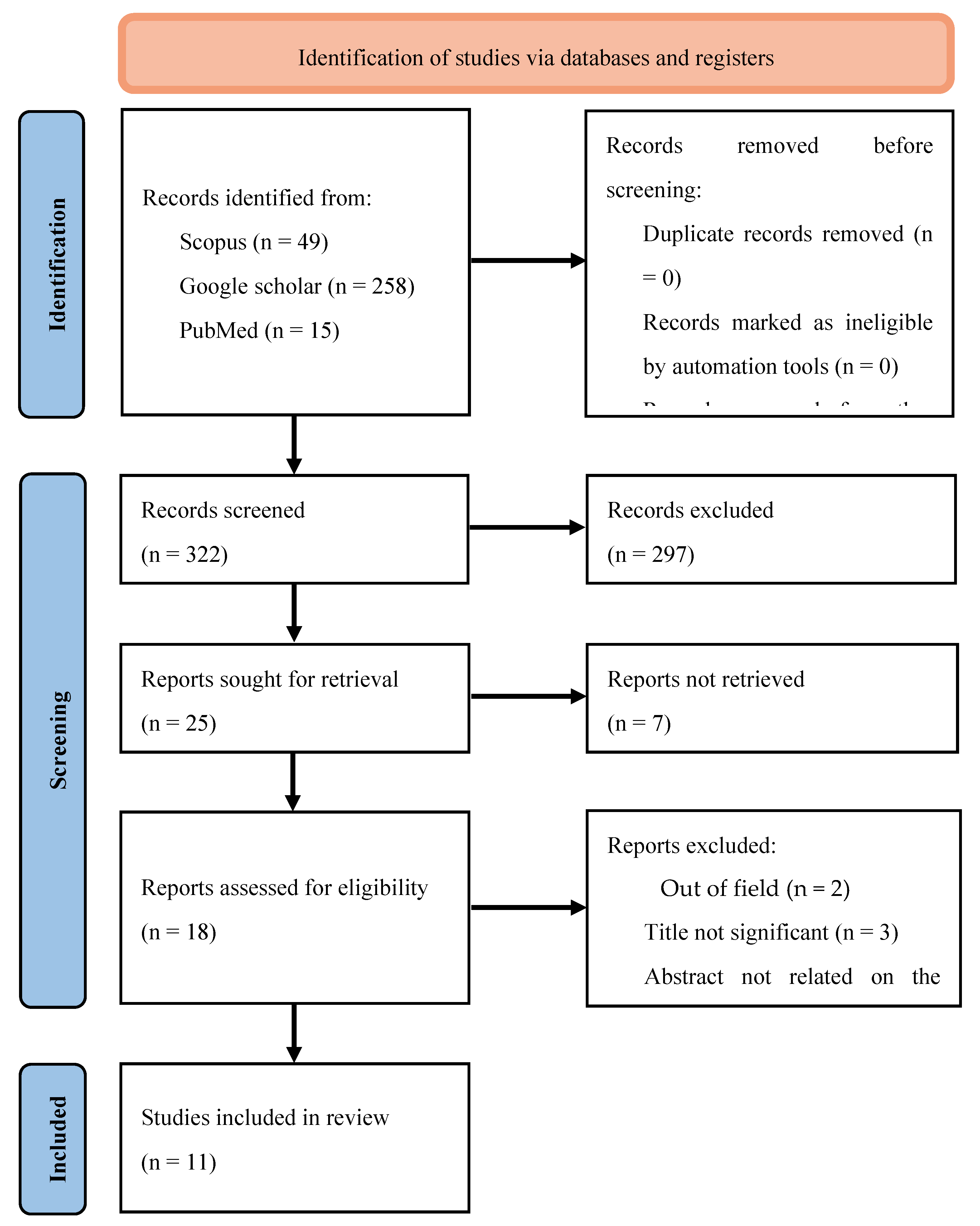

Table 1.
PICOS framework.
| Inclusion | Exclusion | |
|---|---|---|
| Population | Cell line Animal model Patients |
- |
| Intervention | Acmella genus plant extracts | - |
| Comparison | Cells not receiving Acmella plant extracts Positive and negative control groups |
- |
| Outcome | Bone cell parameters Arthritis scoring Muscle circumferences |
- |
| Study Type | In vitro and in vivo studies, randomized controlled studies, case-control studies, cohort studies | Case reports, editorials, communications, reviews, meta-analysis |
Table 2.
Search syntax used in study.
| Source | Search Term | Filters | Number of Results |
|---|---|---|---|
| Scopus | TITLE-ABS-KEY [("Acmella" OR "spilanthol") AND (musc* OR arth* OR tendon* OR osteo* OR bone)] | English language Publication years: 2004-2024 |
49 |
| Google Scholar | ("Acmella" OR “spilanthol") AND (musc* OR arth* OR tendon* OR osteo* OR bone) | English language Publication years: 2004-2024 |
258 |
| PubMed | [("Acmella"[All Fields] OR "spilanthol"[All Fields]) AND ("musc*"[All Fields] OR "arth*"[All Fields] OR "tendon*"[All Fields] OR "osteo*"[All Fields] OR ("bone and bones"[MeSH Terms] OR ("bone"[All Fields] AND "bones"[All Fields]) OR "bone and bones"[All Fields] OR "bone"[All Fields]) | English language Publication years: 2004-2024 |
15 |
Table 3.
Selection criteria for papers included in the systematic review.
| Inclusion criteria | Exclusion criteria |
|---|---|
| English language | Non-English language articles |
| Articles published within the past 20 years (2004-2024) | Articles published earlier than 2004 |
| Articles with abstracts | Reviews or meta-analyses |
| Research articles | Letters, editorials or case studies |
Table 4.
Characteristics and summary of the studies included in the review.
| Author and Year | Type of plant extract | Dose | Study design and sample size | Musculoskeletal related objective | Parameters | Musculoskeletal findings | Outcomes |
|---|---|---|---|---|---|---|---|
| Widyowati et al., 2011 [20] | Ethanol extract of the leaves of Spilanthes acmella |
50 μg/mL | In vitro, MC3T3-E1 osteoblast cells | To discover the ideal anabolic agent by measuring on alkaline phosphatase (ALP) activity as a marker of osteoblast differentiation |
i. ALP activity | The Spilanthes acmella had a dose-dependent stimulatory activity on ALP up to 25 g/mL |
Spilanthes acmella has bone anabolic activities |
| Abdul Rahim et al., 2022 [21] | Ethanol extract of Blainvillea acmella leaves |
2.93 µg/ml to 1,500 µg/ml |
In vitro, MC3T3-E1 osteoblast cells | To determine the relationship between phytochemical compounds, antioxidants and bone anabolic activities of Spilanthes acmella |
i. GCMS and LCTOFMS analyses. ii. Antioxidant activities: DPPH, ABTS, and FRAP assays iii. Bone formation: collagen formation, ALP activity and Alizarin red assay |
Positive correlations were observed between phenolic content to antioxidant and bone anabolic activities |
Blainvillea acmella may be a valuable antioxidant and anti-osteoporosis agent |
| Widyowati et al., 2020 [22] | Isolated compounds of methanol extract of Spilanthes acmella leaves |
12.5 & 25 μM | In vitro, MC3T3-E1 osteoblast cells | To test the isolated compounds of Spilanthes acmella for bone formation activities | i. ALP activities ii. Calcium deposition (Alizarin red staining) |
These compounds stimulated both ALP and mineralization activities.: 1,3-butanediol 3-pyroglutamate, 2-deoxy-d-ribono-1,4-lactone, methyl pyroglutamate, ampelopsisionoside, icariside B1, and benzyl α-l-arabinopyranosyl-(1→6)-β-d-glucopyranoside |
Six active compounds in Spilanthes acmella were identified to promote bone formation and mineralisation |
| Laswati et al., 2015 [23] | Ethanol extract of the leaves of Spilanthes acmella |
4.14 mg/20 g BW/day |
In vivo study, glucocorticoid-inducedosteoporosis mice |
To analyze the effect of Spilanthes acmella and physical exercise in increasing testosterone and osteoblast cells of femoral’s trabecular glucocorticoid-induced osteoporosis male mice |
i. Testosterone levels ii. Bone histology |
Combination of Spilanthes acmella and exercise increased testosterone level and osteoblast cells compared to osteoporosis group |
Spilanthes acmella have an additive effect to exercise in protection against glucocorticoid-induced osteoporosis |
| Pradhan et al., 2021 [19] | SA3X capsules (containing 500 mg of Spilanthes acmella extract, standardized to 3.5% spilanthol delivering 17.5 mg spilanthol) |
Population based study: 240 male subjects | To determine the effects of Spilanthes acmella on muscle mass | i. Muscle mass assessments: mid upper-arm circumference (MUAC), chest circumference (CC), thigh circumference (TC) | A significant increase in the MUAC | Spilanthes acmella may be a potent muscle gainer | |
| Stein et al., 2021 [24] |
Acmella oleracea leaves and flowers extracts; Spilanthol |
In vitro: 25–100 μg/mL Spilanthol: 50–200 μM In vivo: 10, 30 & 100 mg/kg intraperitoneal injections (IP) Spilanthol: 6.2 mg/kg IP |
In vitro: Vascular smooth muscle cells (VSMC) in hyperglycemic media In vivo study: Formalin induced paw edema in rats |
To characterize the anti-inflammatory effects of Acmella oleracea and spilanthol |
In vitro: i. Chymase ii. ROS production In vivo: i. Paw volume ii. NO level iii. Histology – cellularity |
Reduced chymase activity & expressions and reduced ROS production Reduced paw edema, NO production and cell tissue infiltration |
Acmella oleracea and spilanthol possess significant anti-inflammatory activity |
| Moro et al., 2021 [25] | Topical application of 20% Acmella oleracea leaves and flowers ointment | In vivo study: rats with partial transection of calcaneal tendon | To analyze the effects of topical application of Acmella oleracea ointment (20%) on the repair process of the calcaneal tendon in rats |
i. Morphometry ii. Polarization microscopy: birefringence iii. Measurements iv. Biomechanical parameters v. Hydroxyproline quantification |
Topical Acmella oleracea promoted healing of calcaneal tendon Higher birefringence values and hydroxyproline concentration of collagen in the tendon |
Topical Acmella oleracea ointment increased the molecular organization and content of collagen, thus presenting a potential application in tendon repair |
|
| Barman et al., 2009 [26] | Ethanolic extract of leaves of Spilanthes acmella |
500 mg/kg | In vivo study: Carrageenan and Freund’s Complete Adjuvant induced rat paw edema | To evaluate the anti-inflammatory and analgesic activities of Spilanthes acmella |
i. Paw volume ii. Arthritis index |
ELSA (500 mg/kg, p.o) showed significant reduction in paw volume and arthritis score compared to the control group |
Spilanthes acmella possesses significant anti-inflammatory activity |
| Indrayani et al., 2024 [27] |
Acmella oleracea leaves ethanol extract |
200 & 400 mg/kg BW | In vivo study: monosodium iodate (MIO) induced knee osteoarthritis of rat | To evaluate the potential of Acmella oleracea leaves for treatment of osteoarthritis in a rat model | i. Pain scores using the Randall Selitto method ii. Interleukin-1β (IL-1β) and tumor necrosis factor-α (TNF-α) levels. iii. Knee joint histology |
Reduced pain scores. Lowered IL-1β levels (200, and 400 mg/kg BW) Lowered TNF-α levels (400 mg/kg BW) |
Acmella oleracea leaf extract can reduce pain and inflammation of osteoarthritis -induced rat joint homogenates |
| Paul et al., 2016 [28] |
Acmella uliginosa (AU) (Sw.) Cass. Flower |
417 mg/kg and 833 mg/kg | In vivo study: rats with model of arthritic paw swelling, Freund’s Complete Adjuvant | To explore the anti-arthritic properties of Acmella uliginosa |
i. Paw circumference, ii. serum biochemical parameters, iii. Gas chromatography/mass spectrometry (GC/MS) analyses |
Reduced paw swelling. Increased hemoglobin, serum protein, and albumin levels. Normal creatinine level. GC/MS analyses revealed five anti-inflammatory compounds |
Crude flower homogenate of AU contains potential anti-inflammatory compounds which could be used as an anti-inflammatory/anti-arthritic medication |
| Rondanelli et al., 2020 [18] | Food-grade lecithin formulation of standardized extracts of Zingiber officinale and Acmella oleracea |
2 tablet/day for 4 weeks | Quasi-experimental human study: 50 patients with knee osteoarthritis |
To evaluate the efficacy of lecithin formulation of standardized extracts of Zingiber officinale and Acmella oleracea in reducing the pain and inflammation of osteoarthritis |
i. Pain intensity by visual analogue scale (VAS) ii. WOMAC (Western Ontario and McMaster Universities Arthritis) Index and Tegner Lysholm Knee Scoring iii. Health-related quality of life: 36-Item Short Form Health Survey (SF-36) iv. C-reactive protein (CRP) and erythrocyte sedimentation rate (ESR) v. Body fat composition by dual-energy X-ray absorptiometry (DEXA) |
A significant decrease in VAS. Significant improvements in WOMAC, Lysholm and SF-36 scores. Significant decrease in CRP and ESR and increase in fat-free mass |
The tested formulation seems to be effective in reducing pain and inflammation of osteoarthritis |
Disclaimer/Publisher’s Note: The statements, opinions and data contained in all publications are solely those of the individual author(s) and contributor(s) and not of MDPI and/or the editor(s). MDPI and/or the editor(s) disclaim responsibility for any injury to people or property resulting from any ideas, methods, instructions or products referred to in the content. |
© 2025 by the authors. Licensee MDPI, Basel, Switzerland. This article is an open access article distributed under the terms and conditions of the Creative Commons Attribution (CC BY) license (http://creativecommons.org/licenses/by/4.0/).
Copyright: This open access article is published under a Creative Commons CC BY 4.0 license, which permit the free download, distribution, and reuse, provided that the author and preprint are cited in any reuse.