

Submitted:
28 May 2025
Posted:
30 May 2025
You are already at the latest version
Abstract
Chemical hazards in food present a significant health risk. The objective of our review is to understand health risks associated with chemical contaminants in products of animal origin (POAO) in Cambodia where there is no known published study. We followed the “Preferred Reporting Items for Systematic Reviews and Meta-Analyses” (PRISMA) guidelines. A total of 23 reports were included for review. The findings are presented according to the PRISMA guidelines.
The studies mostly focused on fishery products, with arsenic and mercury being the most frequently studied hazards. The evidence of banned substances such as chloramphenicol and certain organo-chlorine pesticides (OCP) were reported in fish and meat. The average concentration of polycyclic aromatic hydrocarbons (PAH) in smoked fish exceeded the EU limits ranging from 0.034 to 17.2 ppm with the average mean concentration of 1.92 ppm. The pooled geometric means of arsenic and mercury in fish were 0.40 ppm (95% CI: 0.25–0.66 ppm) and ~0.14 ppm (95% CI: 0.087 to 0.223) respectively. The health risk of mercury contamination in fishery product needs the attention of the risk managers. However, industrial contaminants such as polybrominated diphenyl ethers (PBDE) and butyl tin in marine fishes were lower than that reported elsewhere such as Japan.
We discuss the implications of the findings for human health and national food control systems (NFCS), the capacity of different agencies to undertake chemical risk assessment, the utility of SLRs for risk assessment and communication in low- and middle-income countries (LMICs), and the need for further research.
Keywords:
chemical hazards
; products of animal origin
; systematic literature review and meta-analysis
; food control system
; Cambodia
1. Introduction
Codex Alimentarius Commission (CAC) defines food hazard as a biological, chemical, or physical agent present in food that may lead to a negative health effect [1]. Chemical hazards in food include substances that can result in adverse health effects, regardless of their source, whether they come from natural origins or are introduced during food production and handling [2]. The presence of chemical contaminants in food is unintentional and undesirable as these substances can pose health risks ranging from mild headache to cancer when present at specific concentrations [3]. Foodborne chemicals consist of a wide range of substances such as elemental contaminants which include lead and cadmium, alongside persistent organic pollutants (POPs) such as organochlorine pesticides. Other examples of chemical contaminants in food include veterinary medical products (VMPs), food allergens and non-food grade food additives. Of the numerous chemical groups, naturally occurring toxins and environmental pollutants are particularly concerning for human health [4,5]. A variety of strategies are available to mitigate the risks associated with the chemical contaminants and to lower their concentrations in food, which include the enforcement of regulatory measures and the adoption of best practices. It is imperative to regulate the levels of chemical toxins in food products and minimize consumer exposure through food consumption. These regulatory frameworks especially enforcing legislations and establishment of robust monitoring and surveillance system are critical elements of risk management approaches designed to tackle the issue of chemical contaminants that can occur at any stage of food production chain particularly in developing countries [4,6,7].
There is an essential gap for Cambodia to implement a standardized monitoring system for chemical contamination throughout the entire food production chain to facilitate a comprehensive understanding of the specific contaminants responsible for public health issues and the pathways through which these contaminants infiltrate food systems. Such knowledge would enable the identification of key control points, thereby optimizing efforts to reduce contamination levels effectively [8]. In May 2001, Cambodia officially ratified the Stockholm Convention on Persistent Organic Pollutants (POPs), aiming to safeguard human health and the environment from the adverse effects of these substances. Subsequently, in 2006, the country formulated a National Implementation Plan (NIP) with support from the United Nations Environment Programme (UNEP), which was later revised in 2015 to correspond with UNEP's updated inventory of POPs [9].
The challenges identified in previous studies in Cambodia included insufficient import control, inappropriate labelling practices, and the ongoing use of substances that are illegal or restricted [10]]. While there are ongoing national initiatives such as education programmes to improve food safety and reduce chemical contamination in food production, particularly with respect to pesticides, Cambodia has still witnessed notable outbreaks related to pesticide and herbicide presence in food items [11]. Concerns regarding chemical toxins in food in Cambodia have been documented in earlier reports, particularly focusing on the use of fertilizers and pesticides aimed at boosting agricultural yields to accommodate the growing demand associated with population expansion and rising income levels. In addition, Fisheries Administration (FiA) of Cambodia has initiated the implementation of the National Residue Monitoring Plan (NRMP) for farmed fish in ten provinces in Cambodia with the support of the European Union (EU) and United Nations Industrial Development Organization (UNIDO) since 2020. By contrast, there have been no known published studies on compilation of different types of potential chemical toxins in POAO in Cambodia in the past two decades.
This systematic review aims to evaluate the concentration levels of various chemical hazards—including environmental contaminants, persistent organic pollutants (POPs), and veterinary medical products (VMPs)—in POAO in Cambodia over a 23-year period. In addition to analysing contamination levels, the review compiles related data on study type, publication year, food source, and geographic location to identify knowledge gaps and priorities for strengthening Cambodia’s National Food Control System (NFCS). The specific objectives are (1) identify reported chemical hazards in POAO. (2) quantify concentrations of chemical toxins that exceed Cambodian, Codex Alimentarius Commission (CAC), and EU regulatory limits. (3) map contamination findings across different Cambodian provinces.
2. Materials and Methods
2.1. Protocol Development and Registration
The review protocol was developed according to the Preferred Reporting Items for Systematic Review and Meta-Analysis protocols (PRISMA-P) 2015 statement [12]. The review approach is identical to that applied for biological hazards in POAO in Cambodia [13]; however, the data concerning chemical hazards was analysed separately. The concept of the protocol for chemical contaminants in POAO followed the previous review studies conducted by the International Livestock Research Institute (ILRI) for the Feed the Future Initiatives of the United States Agency for International Development (USAID) [14,15,16].
The PROSPERO registration number generated in March 2023 is PROSPERO 2023 CRD42023409476 can be found at the weblink: https://www.crd.york.ac.uk/prospero/display_record.php?ID=CRD42023409476 (accessed on 27/03/2023).
The definitions of the key terms used in this review are listed in Annex 1.
2.2. Eligibility Criteria
The review methodology followed the updated “PRISMA” guidelines available since 2020 [17].
2.2.1. Inclusion Criteria
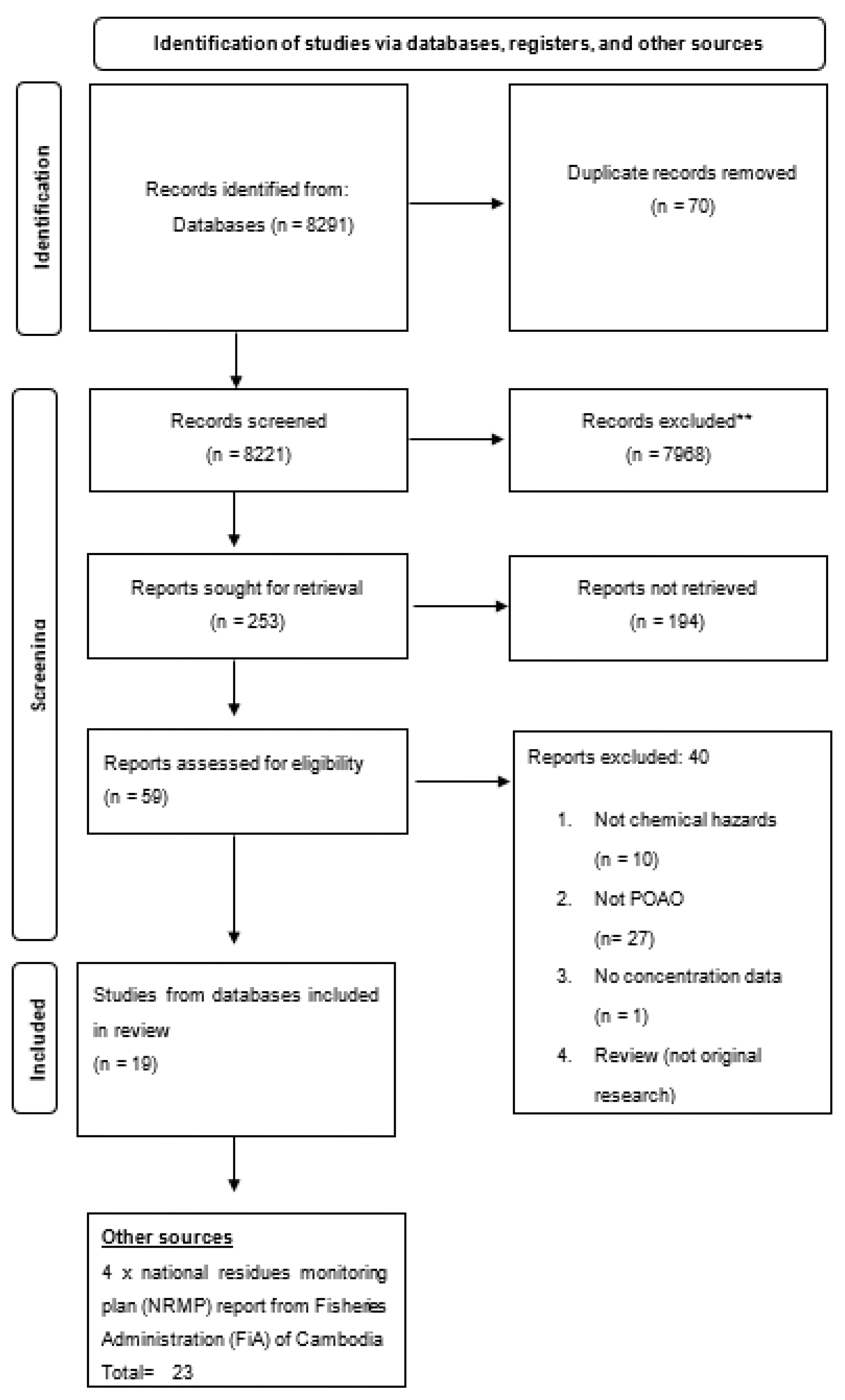
The review established specific inclusion criteria, focusing on studies published in English within the timeframe of 1 January 2000, to 31 December 2022 from three academic databases namely Scopus, PubMed, and Google Scholar. Additionally, reports from the NRMP sourced from the Fisheries Administration (FiA) between January 1, 2020, and March 31, 2024, were also included. The review included a variety of study types, such as exploratory studies, observational studies, and residue monitoring reports. Included studies were those that reported on the concentration of chemical hazards and provided related information, including sampling and testing methods, equipment employed, and the various stages of the production chain for food sourcing animals and different types of POAO. The reports retrieved from the chosen search databases and the FiA are presented in Figure 1.
2.2.2. Exclusion Criteria
In conducting this review, certain exclusion criteria were applied. These included the omission of studies published in any language other than English, such as Khmer, as well as those that concentrated on non-foodborne hazards, biological hazards, and food types that were not classified as POAO. Additionally, laboratory studies that did not report on the concentration of chemical toxins, the equipment and methods utilized, or that involved populations outside of Cambodia were excluded. Studies that solely presented exposure data pertaining to humans were also not considered.
2.3. Databases and Search Strategy
Like the previous study [1,3], the search databases used for this review were Scopus, PubMed, and Google Scholar. The study selection included “(Foodborne OR “food borne” OR food-borne OR “food safety” OR “food related” OR “food associated” OR “food derived” OR “food* illness” OR “food* disease*” OR “food* intoxica*” OR “food pathogen” OR “food* poison*” OR “food* microb*” OR “food* vir*” OR “food parasit*” OR “food* toxin” OR “food* contamina*” OR “food* hazard*” AND (Cambodia*))”. Boolean operators (AND, OR, NOT or AND NOT) were used to combine or exclude the keywords in the search databases.
2.4. Screening and Study Selection
Results from three databases were compiled into a unified Excel sheet, and any duplicate studies were removed using Microsoft Excel. The initial step involved screening publication titles and abstracts in accordance with the inclusion and exclusion criteria specified in the review protocol. This screening was performed solely by the research student, with guidance from the supervisory team and external contributors. Following this, full papers associated with the accepted abstracts were sought and retrieved for the review.
Furthermore, the NRMP reports from the FiA that were submitted to the Directorate-General for Health and Food Safety of the European Commission (DG Sante) covering the period from the 2020 farming season to the 2023-2024 season were specifically requested for research purposes, and access to these documents was granted in August 2023.
2.5. Quality Assessment Criteria
To ensure the quality of each selected paper identified from the databases and all reports obtained from the FiA, the contents of the studies were assessed using the following four quality criteria questions (see Table 1 for details).
- Is the method of study scientifically sound and clear?
- Is the laboratory testing method used for chemical contaminants in food appropriate?
- Are the descriptions of data analysis for key outputs (sampling, test methods and concentration) accurate and precise?
- Are the outcomes and conclusions of the selected studies clearly written?
These quality assessment criteria were adapted from the previous systematic literature review (SLR) conducted by ILRI [13,14]. The studies were categorized into three classifications: "good," "medium," and "poor." For data extraction, only those studies rated as good or medium were chosen (refer to Table 1). The selected studies were subsequently presented to the research team for evaluation and feedback.
2.6. Data Extraction
Following a thorough full-text screening, articles that were found to meet acceptable quality criteria were included for data extraction. The review concentrated on chemical contaminants present in food-sourced animals and POAO at any point in the production chain. The data extracted comprised of the type of food animal and POAO, the name and type of chemical contaminant, concentration details (including total sample counts, production chain type and stage, geographical context, sampling methods, analytical procedures, equipment used, and publication year), and the classification of the initiative (whether it was led by international institutions, involved joint efforts between national and international organizations, or was conducted by national institutions alone).
2.7. Data Analysis
2.7.1. Meta-Analysis Of Arsenic And Mercury Concentration In Fish[18,19,20]
For arsenic contamination in fish, we conducted a random-effects meta-analysis with the data extracted from the seven published papers. The between-study variance (τ²) was estimated using Restricted Maximum Likelihood (REML), which is more robust than the traditional DerSimonian–Laird (DL) method, particularly when heterogeneity is high. To improve the accuracy of standard errors and confidence intervals, we applied the Knapp–Hartung adjustment, which is recommended in random-effects models with either few studies or high heterogeneity. Meta-regression was performed using random-effects models to explore potential sources of heterogeneity. Lastly, potential publication bias and small-study effects were assessed using funnel plots, trim and fit analysis and the Egger test. Details methods and findings can be accessed in Supplementary material 2.
For mercury in fish, a pooled meta-analysis was conducted with the data extracted from 4 published papers as the heterogeneity was estimable (I², τ²) and random-effects model was used to reflect between-study variability. Meta-regression was not conducted as it needs at least 10 studies per predictor to avoid overfitting and spurious associations. Details methods and findings of the meta-analysis for mercury in fish can be accessed in Supplementary material 3.
2.7.2. Descriptive and Basic Statistical Analysis
Other than arsenic and mercury present in fish, the remaining chemical contaminants could not undergo meta-analysis due to limited data availability, including missing values of standard deviations and ranges, and were therefore primarily analysed descriptively. However, the basic statistics was calculated for each of the remaining chemical contaminant in Microsoft Excel for the values of minimum, maximum, average, and percentage of total number of samples exceeded the maximum residue limits set by the CAC and the EU. Hazards indexes (HI) for lead and mercury detected in meat (beef, beef viscera, and pork), eggs, and fishes were calculated according to the data availability and estimates as stated in 2.8.
2.8. Health Risk Assessment of Chemical Toxins in Fishery Products
Health risk assessments for cadmium and mercury were performed following methodologies applied in previous studies [21,22], as adequate data for these contaminants were obtained from the studies included in our review. The findings are presented in Table 4. To evaluate the toxicological implications of human exposure to the chemical contaminants identified in POAO, it is crucial to calculate the estimated weekly intake (EWI) of environmental contaminants and compare it with the tolerable weekly intake (TWI) set by the European Food Safety Authority (EFSA). The human health risk assessments were based on the TWI database and the estimated annual per capita consumption of POAO, assuming an average body weight of 60 kg for the Cambodian population. The estimated annual fish consumption in Cambodia is 63 kg per capita, which includes 44.2 kg of inland fish and 17.3 kg of marine fish [23]. According to the report of General Directorate of Animal Health and Production (GDAHP), the annual consumption meat per capita per year in 2024 was 18.5 kg consisting of 5.15 kg of beef and water buffalo, 9.35 kg of pork, 3.95 kg of poultry, and 0.05 kg of lamb and goat meat.
The European Food Safety Authority established the Tolerable Weekly Intake (TWI) of cadmium and mercury as 2.5 and 4 μg/kg body weight respectively. The results obtained were utilized to calculate the EWI, expressed in μg/kg body weight/day, using the following equation:
EWI= C x F/W
Where:
- C = concentration of the contaminant (μg/kg),
- F = weekly food consumption per person (kg),
- W = mean body weight (60 kg)
The evaluation of health risk was conducted using the hazard index (HI), which was determined by calculating the ratio of estimated weekly intake (EWI) to the tolerable weekly intake (TWI) values as follows.
HI= Estimated weekly intake (μg/kg bw)/ Tolerable weekly intake (μg/kg bw)
2.9. Calculation of DALY/Population of Cambodia
The calculation of foodborne illnesses, deaths, and Disability-Adjusted Life Years (DALY) caused by certain chemical toxins and contaminants per population in Cambodia was based on the estimation provided by the WHO [24,25]. The population of Cambodia, according to the World Bank data estimated in 2022 was 16,767,842[26]. The DALYs for Cambodian population for metals namely arsenic, cadmium, lead, and mercury were summarized in table 5 and other toxins such as aflatoxin, cyanide in cassava, and dioxin were stated in table 6.
3. Results
As shown in Figure 1, a total of 8,291 records were retrieved from three academic databases and residue monitoring reports of FiA as stated earlier. After the removal of duplicates using Excel, the number of records available for screening decreased to 8,221. During the title screening phase, 7,968 records were eliminated due to their irrelevance to food safety hazards. This process led to the assessment of 253 abstracts, resulting in the exclusion of 194 reports that pertained to human cases rather than food-sourced animals or POAO. Ultimately, 19 records underwent a comprehensive review, while 40 records were discarded for various reasons detailed in Figure 1. The list of records included in the review is presented in Supplementary material 1. Additionally, four reports were obtained with the consent of the FiA and were reviewed for data extraction.
The evidence of chemical hazards in products of animal origin in Cambodia from 2000 to 2024 reported by 23 studies included in the review were summarized in Table 2. Likewise, Table 3 summarized the evidence of concentration of chemical contaminants in different POAO in Cambodia from 2000 to 2024 in terms of minimum, maximum, average, and percentage of non-compliances against the maximum residue levels established by the CAC and the EU.
Figure 1.
PRISMA flowchart showing identification, screening, and inclusion of eligible articles reporting chemical hazards in animals and POAO in Cambodia from 2000 to 2023.
Figure 1.
PRISMA flowchart showing identification, screening, and inclusion of eligible articles reporting chemical hazards in animals and POAO in Cambodia from 2000 to 2023.
3.1. Type of Study Initiatives
Figure 2 illustrates there is an unavailability of evidence indicating that national research institutions conducted studies independently, without the collaboration of international partners for funding or technical assistance. Conversely, the establishment of bilateral or multilateral partnerships between national and international entities resulted in the execution of ten studies, which benefitted from the financial or technical support of these collaborators. Among the bilateral studies, those associated with the EU-funded the CAPFISH-Capture: Postharvest Fisheries Development project implemented by UNIDO had the highest frequencies, followed by collaborations with the Republic of Korea. The UNIDO initiative facilitated the FiA in executing the NRMP and in preparing the report for submission to the DG Sante of the European Commission for the EU market access for farmed fish from Cambodia. The NRMP studies focused on the presence of veterinary drug residues, pesticides, and contaminants, including persistent organic pollutants and metals, in freshwater farmed fish intended for the EU market. Furthermore, the joint studies included contributions from Belgium, Singapore, and Malaysia, as well as multiple international partners. In contrast, four studies were conducted by research institutions in Japan, three were jointly executed by China, Korea, and Malaysia, two studies were reported collaboratively by the USA and Canada, two studies reported by the research institutions in the Czech Republic, and one study each was conducted by China and Denmark. In contrast, our review found no indications of bilateral research partnerships between Cambodia and its neighbouring countries, namely Thailand, Laos PDR, and Vietnam.
3.2. Number of Reviewed Studies And Geographical Coverage
As shown in Figure 3, Kandal province had the largest number of studies included in the review, with Kampong Chhnang following closely behind. In contrast to the biological hazards found in POAO [13]in Cambodia, only two studies were conducted in Phnom Penh, the capital of Cambodia, however, Kandal is the nearest province to Phnom Penh. Over the past two decades in Cambodia, we did not identify any evidence of published research concerning chemical contaminants in food across nine out of the 25 provinces. These provinces included Pailin, Oddar Meanchey, Preah Vihear, Stung Trung, Ratanakiri, Mondulkiri, Tbong Khmum, Svay Rieng, and Kep. The evidence regarding chemical contamination in POAO studies was not comprehensive, as it did not cover all provinces of the entire country, particularly the plateau region and the border provinces adjacent to Lao PDR, Thailand, and Vietnam.
3.3. Number of Publications and Reports From 2000 to 2023
Figure 4 illustrates that only one study conducted in 2002 focused on monitoring butyl tin contamination in coastal waters was identified for the duration of 2000-2004 period. The period from 2005 to 2009 marked a peak in the frequency of such studies, followed by a slight decrease during the intervals of 2010-2014 and 2015-2019. Over the subsequent four years, there was an increase in the number of studies addressing chemical contamination, with expectations of further growth by the end of 2024. The year 2020 marked the beginning of NRMP studies aimed at investigating veterinary drug residues, pesticides, and environmental contaminants, such as persistent organic pollutants (POPs) and metals, in farmed fish, driven by a partnership among public institutions, including the FiA.
3.4. Number of Studies for Different Groups of Chemical Contaminants
The data presented in Figure 5 indicates that 15 of the 23 studies and reports addressed elemental toxins, specifically arsenic, cadmium, lead, and mercury. Meanwhile, 11 studies and reports focused on various toxins identified as persistent organic pollutants (POPs), which cover organochlorine pesticides, polycyclic aromatic hydrocarbon (PAHs), and butyl tin. Moreover, the review also included findings on the occurrence of residues of various veterinary medical products in farmed fish across 10 provinces in Cambodia. Nonetheless, the scope of veterinary medical products within POAO was restricted to farmed fish namely tilapia, catfish, and snakehead in ten provinces of Cambodia, while evidence of other essential meat products such as pork, chicken, and beef were not observed in the review. A cross-sectional study conducted in 2016, which examined dietary exposure and human risk assessment of phthalate esters in fish, meat, and viscera in Cambodia, was also incorporated into the review. We did not identify studies of other potential contaminants in POAO such as mycotoxins, dioxins, chlorates and so on.
3.5. Summary of Evidence of Chemical Contaminants in POAO
3.5.1. Findings From Meta-Analysis of Arsenic (Meta-Regression)
The pooled geometric mean arsenic concentration in fish was 0.40 ppm (95% CI: 0.25–0.66 ppm). The 95% prediction interval ranged from 0.015 to 10.50 µg/g, indicating that a future study under similar conditions could plausibly report arsenic concentrations anywhere in this range — consistent with extensive between-study heterogeneity. The results of heterogeneity statistics supported and confirmed extreme between-study variability, beyond what would be expected by chance alone.
3.5.2. Findings From Meta-Analysis of Mercury (Pooled Concentration)
The average mercury level in fish is ~0.14 ppm (95% CI: 0.087 to 0.223), significantly above zero and it serves a meaningful finding for risk or regulation. Large τ² suggesting large between-study variance (log scale) and high I2 95% of total variability is between studies. Cochran’s Q confirms significant heterogeneity. There is substantial unexplained variability across studies, suggesting differences in species, sites, methods, or other study-level characteristics. In a future study, the mercury level could plausibly fall anywhere between 0.012 and 1.65 µg/g — a very wide range, consistent with the high heterogeneity. Most studies carry ~3% weight, indicating a balanced sample. No single study dominates the result, but the high τ² reduces precision.
3.5.3. Descriptive and Basic Statistical Analysis
A summary of various chemical contaminants found in POAO was presented, detailing the names of hazards, food sources, sampling locations, and specific sampling points. Additionally, the total number of samples, testing methodologies, and equipment utilized were outlined in Table 2. The ∑Organochlorine pesticides included the summation of DDT, HCH, CHL, DRINs, Mirex, and HCB. The concentrations of each identified chemical hazard in the food were further analysed, providing minimum, maximum, and average values. Furthermore, the percentage of non-compliance with the maximum residue limits established by the CAC and the EU was also included in the Table 3.

Table 2.
Summary of evidence of chemical hazards in products of animal origin in Cambodia from 2000 to 2023 reported by 23 studies included in the review (Reference paper are listed in Supplomenetary material 1 (S1)).
Table 2.
Summary of evidence of chemical hazards in products of animal origin in Cambodia from 2000 to 2023 reported by 23 studies included in the review (Reference paper are listed in Supplomenetary material 1 (S1)).
| Name of hazard | Name of food/source | Sampling location | Sampling point | Total number of samples | Test methods | Equipment used | Ref.Paper No (S1) |
|---|---|---|---|---|---|---|---|
| Arsenic (Inorganic arsenic and total arsenic) | Snails, Clams, fishes, meat, viscera | Kampong Cham, Kandal, Kratie, Tonle Sap | Aquaculture site and nature (lakes, ponds, rivers) | 331 | Acid digestion, internal procedures | HPLC-ICP-MS, ICP-MS, ICP-OES, ETAAS | 1, 2, 10, 14, 15, 16, 18 |
| Benzo[a]pyrene | Processed fishery products | Battambang, Kampong Cham, Kampong Chhnang, Kandal, Siem Reap | Processing sites and markets | 105 | Accelerated solvent extraction, modified QuECheRS | GC/MS, HPLC- FLD | 5, 11, 13 |
| Cadmium | Fish and fishery products | Tonle Sap, Phnom Penh | Coastal water | 208 | Acid digestion method | ICP-MS, ETAAS | 9, 10, 14, 18 |
| Chloramphenicol | Freshwater farmed fish | Kandal, Prey Veng, Takeo, Kampong Cham, Kampong Chhnang, Pursat, Battambang, Kampong Thom, Siem Reap, and Banteay Meanchey | Freshwater fish farms | 129 | LC/MS/MS | LC-MS/MS | FiA report 1, 2, 3, 4 |
| Hexachlorobenzene (HCB) | Fish, mussels, meat, viscera | Kampong Cham, Kratie, Kandal, Sihanoukville | Coastal water and markets | 184 | USEPA 3620B & 3640A, lipid extraction | GC-MSD, GC-ECD | 3, 17 |
| hexachlorocyclohexane isomers (HCHs) | Fish, meat, viscera | Kampong Cham, Kratie, Kandal | Coastal water | 46 | Lipid extraction | GC-ECD | 3 |
| Lead | Fish | Coastal areas, Phnom Penh, Tonle Sap, Kandal, Prey Veng, Takeo, Kampong Cham, Kampong Chhnang, Pursat, Battambang, Kampong Thom, Siem Reap, and Banteay Meanchey | Coastal water, lake & freshwater fish farms | 249 | Acid digestion | ICP-MS | 9, 10, 14, 18 and FiA report 1, 2 & 3 |
| Mercury | Fish, meat, viscera, egg | Kandal, Prey Veng, Takeo, Kampong Cham, Kampong Chhnang, Pursat, Battambang, Kampong Thom, Siem Reap, and Banteay Meanchey Phnom Penh, Tonle Sap | Coastal water, farms and markets | 495 | Acid digestion, USEPA 7473, standard addition method, | AAS, Direct mercury analyser, ICP-MS | 7, 9, 10, 12, 19, and FiA report 1, 2,3,4 |
| ∑Organochlorine pesticides | Mussels, fish, meat, viscera | Kampong Cham, Kandal, Kratie | Markets | 138 | USEPA 3620B & 3640A | GC-MSD | 17 |
| Phthalate esters | Fish, meat, viscera | Kampong Cham, Kandal, Kratie | Farms and markets | 42 | USEPA 3540C & 3620B | GC-MS | 6 |
| Polycyclic aromatic hydrocarbon (PAH4) | Smoked freshwater fish | Battambang, Kampong Cham, Kampong Chhanag, Kampong Thom, Kandal, Siem Reap | Market, processing sites | 105 | In house method, Accelerated solvent extraction, modified QuECheRS | HPLC-FLD, GC-MS | 5,11,13 |
| Polycyclic aromatic hydrocarbon (PAH12) | Mussels, smoked freshwater fish | Battambang, Kampong Cham, Kampong Chhnang, Kandal, Koh Kong | Jetty, wharf wall, buoys, and rocks, processing sites | >87 (>30 + 57) |
In house extraction method, modified QuECheRS | GC-MS | 8, 11 |
| polybrominated diphenyl ethers (PBDEs) | Green mussels and blue mussels | Koh Kong, Koh Preab, Sihanoukville | Coastal water | 46 | Lipid extraction | GC-ECD | 3 |
| Total bytyltin | Green mussels | Koh Kong, Sihanoukville | Fisheries sites & international and commercial harbour | 419 | Modified lipid extraction | GC-FPD | 4 |
| Tri butyltin | Green mussels | Koh Kong, Sihanoukville | Fisheries sites & international and commercial harbour | 419 | Modified lipid extraction | GC-FPD | 4 |
Table 3.
Evidence of concentration of chemical contaminants in different POAO in Cambodia from 2000 to 2023.
Table 3.
Evidence of concentration of chemical contaminants in different POAO in Cambodia from 2000 to 2023.
| Chemical contaminant | Product | Minimum concentration in ppm | Maximum concentration in ppm | Average concentration in ppm | % Exceeded National MRL (Mostly based on Codex’s MRL) | % Exceeded the EU’s MRL/Action level |
| Arsenic | Beef | 0.004 | 0.1 | 0.056 | NA | NA |
| Arsenic | Beef viscera | 0.002 | 0.03 | 0.01 | NA | NA |
| Arsenic | Egg | 0.02 | 0.06 | 0.04 | NA | NA |
| Arsenic | Pork | 0.01 | 0.02 | 0.015 | NA | NA |
| Benzo[a]pyrene | Fishery products | 0.005 | 0.9 | 0.13 | 94.29 | 100 |
| Cadmium | Fish | 0.0003 | 0.28 | 0.035 | 9.09 | 9.09 |
| Chloramphenicol | Freshwater fish | 0.03 | 1.18 | 0.255 | 100 | 100 |
| Lead | Freshwater fish | <LOD | 0.31 | 0.05 | 5.88 | 5.88 |
| Mercury | Beef | 0.004 | 0.02 | 0.01 | NA | NA |
| Mercury | Beef viscera | 0.001 | 0.01 | 0.004 | NA | NA |
| Mercury | Egg | 0.001 | 0.024 | 0.02 | NA | NA |
| Mercury | Pork | 0.002 | 0.02 | 0.01 | NA | NA |
| ∑Organochlorine pesticides | Beef | 0.01 | 0.04 | 0.025 | 100 | 100 |
| ∑Organochlorine pesticides | Beef viscera | 0.007 | 0.19 | 0.05 | 100 | 100 |
| ∑Organochlorine pesticides | Egg | 0.009 | 0.028 | 0.018 | 100 | 100 |
| ∑Organochlorine pesticides | Fishery products | 0.008 | 0.04 | 0.019 | 100 | 100 |
| ∑Organochlorine pesticides | Pork | 0.009 | 0.14 | 0.01 | 100 | 100 |
| Phthalate esters | Beef | 0.88 | 2.65 | 1.73 | NA | NA |
| Phthalate esters | Beef viscera | 0.99 | 2.28 | 1.87 | NA | NA |
| Phthalate esters | Fishery products | 0.92 | 2.26 | 1.59 | NA | NA |
| Phthalate esters | Pork | 0.92 | 1.24 | 1.08 | NA | NA |
| Polycyclic aromatic hydrocarbon (PAH 4) | Processed fishery products | 0.034 | 17.2 | 1.92 | NA | 100 |
| Polycyclic aromatic hydrocarbon (PAH 12) | Mussels, processed fishery products | 0.021 | 17.2 | 4.05 | NA | NA |
| Tributyltin (Wet weight) | Marine fish | 0.0024 | 0.088 | 0.015 | NA | NA |
| Total butyl tin (wet weight) | Marine fish | 0.0024 | 0.15 | 0.027 | NA | NA |
3.6. Evidence of Elemental Contaminants Detected in POAO
In total, 15 out of 23 studies included in our review focused on different types of elemental toxins specifically arsenic, cadmium, lead, and mercury in various POAO including beef, beef viscera, egg, fishes, and pork. Under the group of elements, 1283 samples were tested, and details of each contaminant is as described below.
3.6.1. Arsenic
The evidence of concentrations of arsenic and related information were reported in seven out of 19 published papers (Paper 1, 2, 10, 14, 15, 16 and 18 of Annex 2 of this chapter) [27,28,29,30,31,32,33]. The 331 samples were taken from snails, clams, fish, beef, beef viscera, and pork. The sampling locations were aquaculture sites, Tonle Sap Lake, ponds, and rivers as well as from markets in Kampong Cham, Kratie, and Kandal provinces. For the laboratory analysis, acid digestion methods and internal procedures were applied by using different equipment with reliable accuracy and sensitivity such as electrothermal atomic absorption spectrometry (ETAAS), Inductively Coupled Plasma Mass Spectrometry (ICP-MS), Inductively Coupled Plasma Optical Emission Spectrometry (ICP-OES), high-performance liquid chromatography (HPLC)-ICP-MS. According the to the results of meta-analysis, the pooled geometric mean arsenic concentration in fish was 0.40 ppm (95% CI: 0.25–0.66 ppm). Details of meta regression analysis can be found at Supplementary material 2. Resulting from the basic statistical analysis, the concentrations of arsenic in beef, beef viscera, and egg were shown in Table 3. Despite the maximum limits of arsenic in other products such as rice and salt, the Codex Alimentarius Commission (CAC) and the EU do not have the specific maximum limit of arsenic in fish.
3.6.2. Cadmium
In our review, Papers 9, 10, 14, and 18 [31,32,33,34] identified cadmium contamination in POAO. A total of 208 samples were gathered from both freshwater and marine environments in coastal regions, including Phnom Penh and the Tonle Sap Lake area. The acid digestion method was employed to assess cadmium levels in food, utilizing ETAAS and ICP-MS techniques. The concentration of cadmium in fishery products varied from 0.0003 ppm to 0.035 ppm, with an average concentration of 0.28 ppm. The CAC and EU have established the maximum level of cadmium in fish as 0.05 ppm. Our review indicates that 9.09% of the samples tested did not meet the standards set by the CAC and the EU.
3.6.3. Lead
The concentration and related information of lead in POAO were reported in Paper 9, 10, 14, and 18 of published databases and NRMP reports of the FiA [31,32,33,34]. A total of 249 freshwater fish samples were collected from various locations, including Phnom Penh, Tonle Sap Lake, Kandal, Prey Veng, Takeo, Kampong Cham, Kampong Chhnang, Pursat, Battambang, Kampong Thom, Siem Reap, and Banteay Meanchey. The laboratory analysis employed the acid digestion technique in conjunction with ICP-MS equipment. The lead concentration in the fish samples varied from below the limit of detection (LOD) to 0.31 ppm, with an average concentration of 0.05 ppm. The maximum limit of lead in fish established by the CAC and EU is 0.3 ppm. Notably, 5.88% of the samples failed to meet the standards set by the CAC and the EU.
3.6.4. Mercury
The mercury contamination in POAO in Cambodia was reported in Paper 7, 9, 10, 12, 19, [31,34,35,36,37] and NRMP reports of the FiA. A total of 495 samples were gathered from various locations, including coastal waters, fish farms, and markets in Phnom Penh, Tonle Sap Lake, Kandal, Prey Veng, Takeo, Kampong Cham, Kampong Chhnang, Pursat, Battambang, Kampong Thom, Siem Reap, and Banteay Meanchey. For laboratory analysis, the acid digestion method was employed alongside techniques outlined by the United States Environmental Protection Agency (USEPA) under method no. 7473, utilizing AAS, direct mercury analysers, and ICP-MS equipment. The results of meta-analysis revealed the pooled estimate of average mercury in fish is ~0.14 ppm (95% CI: 0.087 to 0.223). The concentrations of mercury in parts per million (ppm) for beef, beef viscera, eggs, and pork are summarized in Table 3. In total, 1.75% of the samples tested for mercury did not meet the CAC and EU standards.
3.7. Evidence of POPs Reported in POAO in Cambodia from 2000 to 2023
In our review, seven studies reported the different types of POPs consisting of PAH, polybrominated diphenyl ethers (PBDE), butyl tin, and organochlorine pesticides. In total, 1130 samples were tested under the group of POPs particularly for Benzo[a]pyrene (BaP), summation of 4 and 12 PAH (ƩPAH4 and ƩPAH12), summation of organochlorine pesticides (OCP), hexachlorobenzene (HCB), hexachlorocyclohexane isomers (HCHs), PBDEs, total butyl tin and tri butyl tin. The detailed findings are elaborated as below.
3.7.1. Polycyclic Aromatic Hydrocarbons (PAH)
In our review, four papers reported the concentration of PAH in POAO specifically in beef, beef viscera, clams, eggs, fish, pork and snails [38,39,40,41]. A total of 297 samples were obtained from processing sites and various locations.
3.7.1.1. Benzo [a] Pyrene (BaP)
Benzo (a) Pyrene (BaP) is a PAH, and three studies (Paper 5, 11, and 13) separately reported the concentrations of BaP in processed fishery products [38,40,41]. A total of 105 samples were obtained from fishery processing sites and markets in the provinces of Battambang, Kampong Cham, Kampong Chhnang, Kandal, and Siem Reap. The analysis of these samples utilized accelerated solvent extraction alongside modified Quick, Easy, Cheap, Effective, Rugged, and Safe (QuEChERS) methods, utilizing Gas Chromatography-Mass Spectrometry (GC/MS) and High-Performance Liquid Chromatography with a fluorescence detector (HPLC-FLD). The concentration levels of BaP were found to range from 0.005 ppm to 0.9 ppm, with an average concentration of 0.13 ppm. It is found that 94.29% of the samples did not comply with the standards established by the CAC, which allows a maximum concentration of 0.005 ppm, while all samples (100%) surpassed the EU’s permissible limit of 0.002 ppm.
3.7.1.2. Sum of Polycyclic Aromatic Hydrocarbon 4 (ƩPAH4)
The sum of 4 PAH (ƩPAH4) included the combination of BaP, Chrysene, Benzo[α]anthracene, Benzo[β]fluoranthene, and three studies (Paper 5, 11, and 13) separately reported the concentrations of BaP in processed fishery products[38,40,41]. A total of 105 samples were collected from fishery processing sites and markets across the provinces of Battambang, Kampong Cham, Kampong Chhnang, Kandal, and Siem Reap. The analysis employed accelerated solvent extraction in conjunction with modified QuEChERS techniques, utilizing Gas Chromatography-Mass Spectrometry (GC/MS) and High-Performance Liquid Chromatography with a fluorescence detector (HPLC-FLD). The BaP concentration levels varied from 0.034 ppm to 17.2 ppm, with an average concentration of 1.92 ppm. While the CAC does not establish a specific maximum limit for ƩPAH4, all samples analyzed failed to meet the EU's threshold of 0.012 ppm.
3.7.1.3. Sum of Polycyclic Aromatic Hydrocarbon 12 (ƩPAH12)
The sum of 12 different PAH (ƩPAH12) consists of the sum of Fluorene, Phenanthrene, Anthracene, Fluoranthene, Pyrene, Chrysene, Benzo[a]anthracene, Benzo[b]fluoranthene, Benzo[a]pyrene, Indeno[1,2,3-cd]pyrene,Dibenzo[a,h]anthraceneandBenzo[ghi]perylene. In our review, 2 studies (paper 8 and 11) reported the concentration of ƩPAH12 [39,40]. A total of over 87 samples comprising mussels and smoked freshwater fish were gathered from various locations, including wharf walls, buoys, rocks, and processing sites in Battambang, Kampong Cham, Kampong Chhnang, Kandal, and Koh Kong. The paper 8 did not specify the exact samples number, instead it stated that more than 30 were collected. Laboratory analyses were conducted utilizing modified QuEChERS methodologies in conjunction with GC-MS instrumentation. The concentration of ƩPAH12 varied between 0.021 ppm and 17.2 ppm, with an average concentration of 4.05 ppm. Both the CAC and the EU do not have any specific limits for the concentration of ƩPAH12 in fish and fishery products.
3.7.2. Other polycyclic aromatic hydrocarbons
In addition to PAH, our review identified other chemical contaminants under the category of POPs. These include butyl tin, organochlorine pesticides and polybrominated diphenyl ethers (PBDEs) as follows.
3.7.2.1. Evidence of Butyl tin in fishery products
A study (Paper 4) included in the review reported the concentration of two types of butyl tin namely total butyl tin and tributyl tin in marine fish [42]. This study was conducted in Cambodia as part of the Asia-Pacific mussel watch programme to monitor the contamination of butyl tin in coastal waters of developing countries in Asia but not specifically for the purposes of food contamination. A total of 419 marine fish specimens were collected from Koh Kong and Sihanouk Ville, which included fishery sites, international harbour and commercial harbours. For the analysis of these samples, a modified lipid extraction method was employed, utilizing GC-FPD as the analytical equipment. The concentration of total butyl tin (expressed in wet weight) varied between 0.0024 ppm and 0.15 ppm, with an average concentration of 0.027 ppm. Similarly, the levels of tri butyl tin in the marine fish samples ranged from 0.0024 ppm to 0.088 ppm, yielding an average concentration of 0.015 ppm. It is noteworthy that neither the CAC nor the EU has established a maximum permissible limit for butyl tin in fish.
3.7.2.1. Evidence of POPs (PBDE and Organochlorine pesticides) in POAO
In our review, a study (Paper 3) reported the concentration of PBDE in 46 mussel samples collected from the coastal areas namely Koh Kong and Sihanouk Ville. The lipid extraction method was utilised by using the electron capture detector in the GC (GC-ECD) [43]. Two studies revealed the concentration of organochlorine pesticides in 138 fish and mussel samples collected from Koh Kong, Sihanouk Ville, Kampong Cham, Kratie, and Kandal provinces. For testing the samples, USEPA methods 3620B and 3640 A were employed by using GC-MS equipment[43,44].
Table 4.
Evidence of PBDE and organochlorine pesticides in marine fish and mussels.
| Product | Hazard | Location | Concentration in ppm | Reference (S1) |
|---|---|---|---|---|
| Mussels | PBDEs (mono-hepta) | Sihanoukville | 0.0053 | Paper 3 |
| Mussels | PBDEs (mono-hepta) | Sihanoukville | 0.0023 | |
| Mussels | HCB | Sihanoukville | <0.001 | |
| Mussels | HCB | Sihanoukville | <0.001 | |
| Fish | HCB | Kampong Cham | 0.00009 | Paper 17 |
| Fish | HCB | Kratie | 0.00025 | |
| Fish | HCB | Kandal | 0.00107 | |
| Fish | CHLs | Kampong Cham | 0.00035 | Paper 17 |
| Fish | CHLs | Kratie | 0.00111 | |
| Fish | CHLs | Kandal | 0.0032 | |
| Fish | DRINs | Kampong Cham | 0.00051 | Paper 17 |
| Fish | DRINs | Kratie | 0.00065 | |
| Fish | DRINs | Kandal | 0.00294 | |
| Fish | Mirex | Kampong Cham | 0.00045 | Paper 17 |
| Fish | Mirex | Kratie | 0.00031 | |
| Fish | Mirex | Kandal | 0.00035 | |
| Mussels | DDTs | Sihanoukville | 0.12 | Paper 3 |
| Mussels | DDTs | Sihanoukville | 0.12 | |
| Fish | DDTs | Kampong Cham | 0.00547 | Paper 17 |
| Fish | DDTs | Kratie | 0.00949 | |
| Fish | DDTs | Kandal | 0.023 | |
| Mussels | PCBs | Sihanoukville | 0.3 | Paper 3 |
| Mussels | PCBs | Sihanoukville | 0.2 | |
| Mussels | CHLs | Sihanoukville | 0.0041 | Paper 3 |
| Mussels | CHLs | Sihanoukville | 0.0025 | |
| Mussels | HCHs | Sihanoukville | 0.0055 | Paper 3 |
| Mussels | HCHs | Sihanoukville | 0.0072 | |
| Fish | HCHs | Kampong Cham | 0.00101 | Paper 17 |
| Fish | HCHs | Kratie | 0.00186 | |
| Fish | HCHs | Kandal | 0.00572 |
3.8. Evidence of Residues Of Veterinary Medicines In Farmed Fish
We conducted a review of the NRMP reports [45,46,47,48] of the FiA submitted to the DG-Sante of the EU annually since 2020 until 2023 fish farming seasons. These reports adhered to the standard template established by the EU for the purposes of sampling, testing, and reporting. From 2020 to 2023, 129 samples were analysed at an ISO 17025 accredited laboratory by using LC-MS-MS equipment for the presence of banned substances such as Chloramphenicol in three different varieties of freshwater farmed fish namely Pangasius catfish, snakehead, and tilapia from the fish farms in Kandal, Prey Veng, Takeo, Kampong Cham, Kampong Chhnang, Pursat, Battambang, Kampong Thom, Siem Reap, and Banteay Meanchey provinces. The concentration of chloramphenicol in farmed fish ranged from 0.03 ppm to 1.18 ppm with the average concentration of 0.255 ppm. In total, 23 out of 129 samples tested were not complied with national legislation and the requirements of the CAC and the EU. During the 2022 fish farming season, three pangasius catfish samples were found to be contaminated with another banned substances like nitrofuran metabolites (0.19 ppm in Kampong Chhnang and 0.14 ppm in Takeo province) and leuco-malachite green 1.46 ppm in Kandal province.
3.9. Evidence of Other Chemical Contaminants in POAO
Our review identified a study that reported the concentration of phthalate eaters[49] in POAO specifically beef, beef viscera, fish, and pork. The total number of 42 samples were gathered from the farms and markets in Kampong Cham, Kratie, and Kandal provinces. The GC-MS equipment was used by employing the USEPA 3540C and 3620B methods. The concentration of phthalate esters in beef, beef viscera, fish and pork are summarised in table 3. Both the CAC and the EU do not set the maximum limits of phthalate esters in POAO.
3.10. Health risk Assessment of Exposure to Cadmium and Mercury in POAO
As shown in table 4, none of the hazard index of each average chemical toxin concentration in POAO exceeded 1 which could lead to potential health threat. However, mercury concentrations in fish were the highest amongst other type of POAO such as beef, beef viscera, egg, and pork. The mercury levels reached 3. These findings suggest a potential health risk associated with fish consumption and highlights the need for more comprehensive research on this issue.
Table 5.
Health risk assessment of exposure to cadmium and mercury contamination in POAO in Cambodia.
Table 5.
Health risk assessment of exposure to cadmium and mercury contamination in POAO in Cambodia.
| Hazard | Name of product | HI (Minimum) | HI (Maximum) | HI (Average) |
|---|---|---|---|---|
| Cadmium | Freshwater fish | 0.002 | 0.28 | 0.22 |
| Mercury | Beef | 0.002 | 0.008 | 0.004 |
| Mercury | Beef viscera | 0.0004 | 0.004 | 0.002 |
| Mercury | Egg | 0.0004 | 0.01 | 0.008 |
| Mercury | Fish | 0.5 | 1.0 | 0.75 |
| Mercury | Pork | 0.002 | 0.01 | 0.008 |
3.11. Estimates of DALYs for Population in Cambodia
According to the regional classification established by the World Health Organization (WHO), Cambodia is categorized within the Western Pacific Region (WPR) B. As illustrated in Table 4 and 5, the estimates of disability-adjusted life years (DALYs) per population in Cambodia were calculated according to the DALYs per 100,000 individuals in WPR B[24]. The Foodborne Disease Burden Epidemiology Reference Group (FERG), which was formed by the World Health Organization (WHO), has released its preliminary findings regarding the global and regional effects of foodborne illnesses, deaths caused by foodborne diseases and DALYs. These findings released in 2015 and 2019 [24,50] covered chemical contaminants in food namely elements (arsenic, cadmium, lead, and mercury) as well as aflatoxin, cyanite in cassava, and dioxin.
Table 6.
Median rates of foodborne DALYs of population in Cambodia with 95% uncertainty intervals [[24].
Table 6.
Median rates of foodborne DALYs of population in Cambodia with 95% uncertainty intervals [[24].
| Hazard | DALY/100,000 population in WPR B | DALY for population in Cambodia |
| Total | 182 (44–647) | 30517 (7378-108488) |
| Arsenic | 20 (5–36) | 3353 (838-562226) |
| Bladder cancer | 4 (0.8–6) | 671 (134-1006) |
| Lung cancer | 12 (3–21) | 2012 (503-3521) |
| Skin cancer | 5 (1–8) | 838 (168-1341) |
| Cadmium | 0.5 (0.1–7) | 84 (17-1174) |
| CKD Stage 4 | 0.08 (0.01–1) | 13 (2-168) |
| CKD Stage 5 | 0.4 (0.08–6) | 67 (13-1006) |
| Lead | 117 (0–584) | 19618 (0-97924) |
| ID, Mild | 109 (0–525) | 18277 (0-88031) |
| ID, Moderate | 8 (0–55) | 1341 (0-9222) |
| ID, Severe | 0.3 (0–2) | 50 (0-335) |
| Methyl mercury | 41 (14–93) | 6875 (2347-15594) |
| ID, Mild | 37 (13–85) | 6204 (2180-14253) |
| ID, Moderate | 4 (1–9) | 671 (168-1509) |
Table 7.
Medium rate per 100,000 foodborne illnesses, deaths, and DALY by WHO regions, with 95% UIs [[25].
Table 7.
Medium rate per 100,000 foodborne illnesses, deaths, and DALY by WHO regions, with 95% UIs [[25].
| Region | Chemical | Total | |||
|---|---|---|---|---|---|
| Aflatoxin | Cyanide in cassava | Dioxin | |||
| AFRO | FB Illnesses (95% CI) | 0.4 (0.1–1) | 0.1 (0.01–0.4) | 0.2 (0.07–7) | 0.7 (0.3–8) |
| FB Deaths (95% CI) | 0.4 (0.1–1) | 0.03 (0.003–0.08) | 0 (0–0) | 0.4 (0.1–1) | |
| FB DALYs (95% CI) | 15 (5–40) | 2 (0.2–6) | 0.2 (0.07–8) | 18 (7–49) | |
| AMRO | FB Illnesses (95% CI) | 0.08 (0.02–0.6) | 0 (0–0) | 0.2 (0.05–6) | 0.2 (0.1–7) |
| FB Deaths (95% CI) | 0.08 (0.02–0.6) | 0 (0–0) | 0 (0–0) | 0.08 (0.02–0.6) | |
| FB DALYs (95% CI) | 2 (0.4–15) | 0 (0–0) | 0.2 (0.07–9) | 2 (0.6–24) | |
| SEARO | FB Illnesses (95% CI) | 0.2 (0.08–0.6) | 0 (0–0) | 9 (8–32) | 10 (8–32) |
| FB Deaths (95% CI) | 0.2 (0.08–0.5) | 0 (0–0) | 0 (0–0) | 0.2 (0.07–0.5) | |
| FB DALYs (95% CI) | 7 (2–17) | 0 (0–0) | 12 (10–41) | 19 (13–54) | |
| WPRO | FB Illnesses (95% CI) | 0.6 (0.1–2) | 0 (0–0) | 0.05 (0.005–4) | 0.8 (0.1–5) |
| FB Deaths (95% CI) | 0.5 (0.09–2) | 0 (0–0) | 0 (0–0) | 0.5 (0.09–2) | |
| FB DALYs (95% CI) | 16 (3–63) | 0 (0–0) | 0.07 (0.007–6) | 16 (3–65) | |
| Cambodia | FB Illnesses (95% CI) | 101 (17-335) | 0 (0–0) | 8 (1-671) | 143 (17-838) |
| FB Deaths (95% CI) | 84 (15-335) | 0 (0–0) | 0 (0–0) | 84 (15-335) | |
| FB DALYs (95% CI) | 2683 (503-10564) | 0 (0–0) | 12 (1-1006) | 2683 (503-10899) | |
| GLOBAL | FB Illnesses (95% CI) | 0.3 (0.1–0.8) | 0.02 (0.002–0.04) | 3 (2–16) | 3 (3–17) |
| FB Deaths (95% CI) | 0.3 (0.1–0.7) | 0.003 (0–0.01) | 0 (0–0) | 0.3 (0.1–0.8) | |
| FB DALYs (95% CI) | 9 (4–24) | 0.3 (0.03–0.8) | 3 (3–20) | 13 (7–39) | |
4. Discussion
The evidence of our review indicated that Cambodia has effectively engaged with international research institutions to investigate chemical toxins in POAO over the past 23 years. However, this collaboration has predominantly with the international partners, with limited involvement from regional stakeholders in Southeast Asia region (Figure 2). Aside from Malaysia and Singapore, there has been an absence of research collaboration with other immediate neighbouring countries, Thailand, Vietnam, and Lao PDR. The results suggest that food control authorities should embark on their own research initiatives concerning chemical contaminants in POAO. As shown in Figure 3, most studies have been concentrated in provinces surrounding Phnom Penh, the capital of Cambodia, likely due to the area's high population density and economic activities, which aligns with previous research findings in Burkina Faso and studies on biological hazards in Cambodia [13,14].
Research on chemical toxins in POAO has not been undertaken in nine of the 25 provinces in Cambodia, revealing a considerable gap in the existing literature. These provinces are in the plateau region and are adjacent to neighbouring countries. Given the substantial volume of informal trade between Cambodia and its neighbours, particularly Thailand and Vietnam [51], it is surprising that studies focusing on risk-based food import control measures have not been established yet. In contrast to the increasing research on biological hazards in Cambodia, investigations into food chemical toxins in POAO have not seen a significant rise recently over the period of two decades (Figure 4), likely due to the limited national analytical infrastructure and a lack of interest from international or regional collaborators.
Our findings (Figure 5) indicated that not all studies included in our review concentrated on food safety related issues; specifically, three out of the nineteen published studies were directed towards environmental monitoring and assessment initiatives [39,42,43]. Nonetheless, these environmental monitoring programs provided indirect advantages to the country's food control system, highlighting the necessity and significance of implementing the "One Health Approach." In our review, we categorized chemical toxins in food into three distinct groups: elemental toxins, which include arsenic, cadmium, lead, and mercury; persistent organic pollutants (POPs), which encompass butyl tin, organochlorine pesticides, polycyclic aromatic hydrocarbons (PAHs), and polybrominated diphenyl ethers (PBDEs); and veterinary medicinal products (VMPs), which align with the EU’s NRMP requirements. It is noteworthy that there is a lack of known or published research concerning processing-related toxins in POAO, such as chlorates found in fish and other seafood, which arise from the improper application of chlorine-based sanitizing agents during processing.
Toxic elements represent a significant health risk among various contaminants due to their nature as non-biodegradable xenobiotics, which can persist in the environment and ultimately enter the food chain. The consumption of contaminated food is a primary pathway for exposure to these hazardous metals [22]. Given the significant fish consumption in Cambodia, there is a pressing need for more comprehensive studies on arsenic contamination in fish to facilitate both quantitative and qualitative risk assessments. Our review indicates that the highest arsenic concentration found in freshwater fish was 10.7 ppm, which is notably lower than the levels detected in snakehead fish, which ranged from 13.1 ppm to 22.2 ppm as reported in Thailand [52]. Arsenic dietary intake primarily derives from fish, shellfish, meat, poultry, dairy products, and cereals. The arsenic found in fish and shellfish typically exists as organic compounds which are low toxicity. In regions where arsenic is prevalent in the environment, foods like rice irrigated and cooked with water contaminated with high levels of arsenic significantly contribute to the overall daily arsenic consumption [53]. Rice and fish represent two main staple food Cambodia. Therefore, it is crucial for risk managers to assess the risk of arsenic in food to protect the public health and to promote the fair trade.
For arsenic contamination in fish, a sub-group analysis was conducted using REML sub-group meta-analysis in Stata and Cochran’s Q to test heterogeneity across sub-groups. Analytical method appeared to influence measured arsenic concentrations, with higher values reported in studies using combination of HPLC/ICP-MS, although this may also reflect co-linearity with publication year or sampling site. There was a strong trend of decreasing arsenic concentrations in more recent studies, which may reflect changes in contamination levels, analytical methods, or study locations. Mean arsenic concentrations varied significantly by province. Kandal had substantially higher pooled levels than Tonle Sap and the other provinces, although internal variability was also high. Previous studies [29,30] indicated high risk of arsenic contamination in food in Kandal province. Arsenic concentrations were significantly higher in farmed and artificial water bodies compared to natural sites (except for one atypically high natural wetland). Burrow pits and controlled environments had the highest mean levels.
In 2015, the FERG of the WHO estimated that more than 1 million illnesses were attributable to four specific metals, arsenic, cadmium, lead, and methyl mercury. Among these, lead was responsible for 54% of the cases, methylmercury accounted for 22%, arsenic contributed to 20%, and cadmium was linked to 1%. Notably, arsenic was the leading cause of mortality, accounting for 96% of deaths, while cadmium was associated with 4% of fatalities [24]. The data presented in Table 5 illustrates the DALYs attributed to elemental toxins in Cambodia, as estimated by the FERG for the Western Pacific Region B. The findings indicate that lead is responsible for the highest incidence of DALYs, with methyl mercury following in significance.
Diet serves as the principal route for exposure to mercury (Hg). Annually, Hg is responsible for approximately 250,000 instances of intellectual disability worldwide, contributing to nearly 2 million disability-adjusted life years (DALYs) on a global scale. Notably, the Western Pacific B subregion is accountable for over one-third of these DALYs [54]. As shown in table 4, the health risk assessment concerning mercury in POAO indicated that the hazard index was highest for fishery products, with an average mercury index value of 0.75 ranged between 0.5 and 1. The upper range equaled to the threshold of 1, underscoring the significant health risks associated with exposure to mercury in fish within Cambodia. It is crucial for the national competent authorities to initiate the environmental monitoring programme and to take the necessary measures to prevent and control the mercury contamination in food producing animals. However, the mercury concentration in other POAOs such as beef, beef viscera, and egg were negligible as the values were well below 1.
Point nine of Article 6 of the Cambodian law on the management of pesticides and fertilizers[55], enacted in 2012, emphasizes the importance of monitoring, regulating, and enforcing legal measures related to all management activities and the compliance with standard requirements for pesticides and fertilizers. Likewise, the first point of Article 50 of the law clearly states that the trading of highly toxic pesticides, which are designated as banned in Cambodia or by relevant international treaties, is prohibited.
Our review identified contamination of various POPs in POAO in Cambodia. In terms of PAH contamination, the national competent authority needs to take urgent measures because the BaP and PAH analytical results were not complied with the CAC and the EU as shown in table 3. Cambodia is a member of Stockholm convention on managing POPs. The revision of the National Implementation Plan (NIP) establishes a legislative framework concerning persistent organic pollutants (POPs) in Cambodia. This framework encompasses both international commitments and national regulations pertaining to POPs. It is noteworthy that the majority of legislation addressing POPs in Cambodia does not specifically regulate their management. Within the Cambodian context, the implementation of the Stockholm Convention is facilitated through various regulations related to persistent organic pollutants [9]. A crucial component of the NIP update is the strategy and action plan for the management of POPs in Cambodia. This section delineates the objectives of the NIP, as well as the national priorities and strategies for managing these pollutants.
The action plan for POPs is divided into two segments: the first focuses on updating the management plan for existing POPs, which includes pesticides, polychlorinated biphenyls (PCBs), and unintentionally produced POPs; the second segment involves the development of an action plan for ten new POPs, with Cambodia concentrating specifically on polybrominated diphenyl ethers (PBDEs) in the e-waste and transportation sectors, as well as perfluorooctane sulfonate (PFOS) in firefighting applications. Additionally, the POPs action plan outlines a timeline for the implementation of the NIP, along with an estimated budget for financial requirements and future funding needs(Project Coordination Unit, 2015).
The NRMP's implementation in Cambodia from 2020 to 2023 utilized a segregated system that focused on 10 out of the 25 provinces. The monitoring efforts focused on three specific species of finfish: pangasius catfish, snakehead, and tilapia. The four NRMP reports from 2020 to 2023 farming seasons we examined indicated the detection of Chloramphenicol, nitrofuran metabolites, and leuco-malachite green, all of which are prohibited substances in food-producing animals in Cambodia and EU member states. This underscores the necessity to broaden the monitoring framework to include additional farmed fish and shrimp species, as well as to conduct further research to gain a comprehensive understanding of antibiotic usage in Cambodia. In a similar vein, antibiotics are extensively employed in Vietnam's aquaculture sector to manage diseases. Research conducted in Vietnam revealed that the proportion of antibiotics utilized in fish farming exceeded that in shrimp farming. Furthermore, some fish and shrimp farmers in Vietnam have resorted to using banned veterinary medicinal products, indicating a need for mandatory veterinary prescriptions [56].
The majority of fish farms in Cambodia are currently in the process of implementing Good Aquaculture Practices (GAqP). At present, 32 farms are registered with the Department of Aquaculture Development (DAD), which mandates adherence to fundamental agricultural practices as stipulated by the Aquaculture Order enforced in 2012. Additionally, 7 farms have received certification from the DAD in accordance with the Cambodian standards for GAqP. An extensive training initiative has been launched and continues under the Capfish Aquaculture Program for the years 2023-2024. This program has provided foundational training in GAqP to 2,100 farms and households across 10 provinces, with participants attending 2 to 3 training sessions. The training activities are set to persist until the conclusion of 2025 aiming to minimize the use of banned substances and to comply with the National GAqP requirements.
In terms of other chemical contaminants except for elemental toxins, POPs, and veterinary drug residues, a study in our review revealed the levels of phthalate esters present in meat and fish. The findings indicated that beef exhibited both the lowest and highest concentrations of phthalate esters, ranging from 0.88 ppm to 2.64 ppm. In contrast, the concentration of phthalate esters in clear chicken soup samples analysed in Thailand was significantly lower, with values between 0.02 ppm and 0.07 ppm [57]. We identified an absence of other studies of potential chemical contaminants in POAO that have not yet been publicly available or very likely the level of contamination has not yet been assessed in Cambodia.
As shown in table 6, the WHO estimated that the contamination of aflatoxin in food has the highest DALYs in WPR B where Cambodia belongs to. However, there has been no known or published study of mycotoxins particularly aflatoxin in POAO such as milk, meat and seafood. The textile and garment sector in Cambodia plays a crucial role in the national economy, contributing significantly to export revenues and providing employment for a substantial number of individuals [58]. Nevertheless, this industry has the potential to produce dioxins, which may lead to the contamination of POAO. Nevertheless, our review did not uncover any prior efforts addressing dioxin, a potential chemical contaminant in POAO.
The studies included in our review provided several recommendations, which emphasized the importance of maintaining ongoing research collaboration. Additionally, they highlighted the necessity of establishing monitoring and surveillance programs, conducting health risk assessments for potential contaminants in widely consumed foods such as fish and vegetables, and enhancing data availability, particularly regarding the daily usage of mercury-containing products in Cambodia.
5. Conclusions
This review represents the first systematic literature review and meta-analysis of foodborne hazards in Cambodia, synthesizing available data on arsenic and mercury concentrations in fish. While the number of studies remains limited and many are based on small sample sizes, the analysis offers a structured and transparent approach to aggregating existing evidence. Heterogeneity was high as expected given diversity of studies (in terms of ecosystem, species, value chain node), small sample sizes, and the challenges of conducting robust surveys and laboratory analyses in low- and middle-income countries (LMICs). In these circumstances, meta-analysis is useful, not just to produce a single estimate, but to characterize the distribution of observed concentrations, assess heterogeneity, and inform data gaps. Cambodia’s newly promulgated Food Safety Law (2022) creates a timely opportunity for evidence-informed decision-making, and this review offers a foundational dataset to guide surveillance, regulatory thresholds, and future research priorities.
In the last 23 years, Cambodia has engaged with both regional and international partners regarding chemical hazards in food and chemical toxins in the marine environment, despite the limited evidence of research collaboration with its neighbouring trade partners. It is essential for food control regulators to prioritize bilateral or multilateral partnerships with neighbouring countries, particularly Thailand and Vietnam, given the complexities of border food trade, which is often more difficult to regulate due to its informal nature and lower volumes compared to standard trade. The competent authority is advised to focus on conducting similar investigations into biological and chemical toxins in perishable food products, especially products not of animal origin as well as in drinking water and even animal feed. This approach will facilitate the establishment of a comprehensive risk-based food control system in Cambodia. Furthermore, since previous research on chemical toxins in POAO has predominantly concentrated on fishery products and elemental toxins, it is crucial to broaden the scope to cover sectors beyond fisheries and to include potential contaminants in food with the countrywide geographical coverage. The implementation of a risk-based food control strategy is advised in Cambodia to ensure the optimal use of available resources.
The studies included in this review were solely conducted by a research student, which introduces the potential for selection bias. Furthermore, over the last 23 years, both the equipment utilized, and the methodologies employed for laboratory analysis of each toxin have experienced considerable fluctuations. Therefore, the results of the review should be interpreted with cautions. Nevertheless, the results offer valuable insights that serve a solid foundation for the future work. this review also provides foundational evidence to support the development of a more robust National Food Control System (NFCS). The use of systematic reviews and meta-analyses, as demonstrated in this study, should be institutionalized as part of Cambodia's national risk analysis framework to guide decision-making, prioritize resources, and protect public health.
Supplementary Materials
The following supporting information can be downloaded at the website of this paper posted on Preprints.org.
Author Contributions
Conceptualization, L.N, D.G., and S.P.S.; methodology, D.G., S.P.S. and T.C.; validation, R.C., K.F. and C.C.; formal analysis, D.G and S.P.S., resources, S.S.T., R.T. S.N., and L.K.; writing—original draft preparation, S.P.S.; writing—review and editing, D.G., L.N., and C.R.; supervision, L.N., D.G., N.Z. and R.C. All authors have read and agreed to the published version of the manuscript.
Funding
This research received no external funding.
Institutional Review Board Statement
Not applicable.
Informed Consent Statement
Not applicable.
Data Availability Statement
Data are contained within the article and Supplementary Materials.
Acknowledgments
We express our gratitude to the Directors General of the General Directorate of Animal Health and Production and the Fisheries Administration in Phnom Penh, Cambodia, for their authorization and assistance regarding the research project undertaken by a Ph.D. candidate from Natural Resources Institute of the University of Greenwich. We extend our sincere gratitude to Dr. Kristina Roesel and Dr Stephen Young for their invaluable guidance in the conceptualization and data analysis of this review. Their dedication, time, and kind contributions were instrumental in shaping this work.
Conflicts of Interest
The authors declare no conflicts of interest.
Abbreviations
The following abbreviations are used in this manuscript:
| ADI | Acceptable daily intake |
| AFRO | Africa Regional Office |
| AMRO | America Regional Office |
| AOAC | Association of Official Agricultural Chemists |
| BaP | Benzo[a]pyrene |
| BW | Body weight |
| C | Concentration of the contaminant |
| CAC | Codex Alimentarius Commission |
| CCS | Cambodian Chemical Society |
| CHLs | Heptachlor, trans-chlordane, cis-chlordane, trans-nonachlor, and cis-nonachlor |
| CKD | Chronic kidney disease |
| CTTF | Chemicals and Toxins Task Force |
| DAD | Department of Aquaculture Department |
| DALYs | Disability Adjusted Life Years |
| DDT | dichloro-diphenyl-trichloroethane |
| DG SANTE | Directorate-General for Health and Food Safety |
| DL | DerSimonian–Laird method |
| DRINs | Aldrin, dieldrin, and endrin |
| EDI | Estimated daily intake |
| EFSA | European Food Safety Authority |
| EMRO | Eastern Mediterranean Regional Office |
| ETAAS | Electrothermal atomic absorption spectrometry |
| EU | The European Union |
| EURO | European Regional Office |
| EWI | Estimated weekly intake |
| F | Weekly food consumption per person |
| FAO | Food and Agriculture Organization of United Nations |
| FERG | Foodborne Disease Burden Epidemiology Reference Group |
| FiA | Fisheries Administration |
| FLD | Fluorescence detector |
| GAqP | Good aquaculture practices |
| GC | Gas chromatography |
| GDAHP | General Directorate of Animal Health and Production |
| HCB | Hexachlorobenzene |
| HCH | Hexachlorocyclohexane |
| HI | Hazard index |
| HPLC | High performance liquid chromatography |
| ICP-MS | Inductively coupled plasma mass spectrometry |
| ICP-OES | Inductively coupled plasma optical emission spectroscopy |
| ID | Intellectual disability |
| ILRI | International Livestock Research Institute |
| JECFA | The Joint FAO/WHO Expert Committee on Food Additives |
| kg | kilogram |
| LC-MS | Liquid chromatography-mass spectrometry |
| LOD | Limit of detection |
| LOQ | Limit of quantification |
| MAFF | Ministry of Agriculture, Forestry and Fisheries |
| Mirex | Organochlorine insecticide |
| MS | Mass spectrometry |
| NFCS | National Food Control System |
| NRMP | National residue monitoring plan |
| NIP | National implementation plan |
| OCP | Organochlorine pesticide |
| PAH | Polycyclic aromatic hydrocarbon |
| PBDE | Polybrominated Diphenyl Ethers |
| PCB | Polychlorinated biphenyls |
| PFOS | Perfluorooctane sulfonate |
| POAO | Products of animal origin |
| POPs | Persistent organic pollutants |
| ppm | Parts per million |
| PRISMA | Preferred Reporting Items for Systematic Review and Meta-analysis |
| PROSPERO | International database for registering systematic review protocols |
| QuEChERS | Quick, Easy, Cheap, Effective, Rugged and Safe |
| REML | Restricted Maximum Likelihood |
| SEARO | Southeast Asia Regional Office |
| SLR | Systematic literature review |
| TWI | Total weekly intake |
| UNEP | United Nations Environment Programme |
| UNIDO | United Nations Industrial Development Organization |
| USAID | United States Agency for International Development |
| USEPA | United States Environmental Protection Agency |
| VMP | Veterinary medical products |
| W | Mean body weight |
| WHO | World Health Organization |
| WPR B | Western Pacific Region B |
| WPRO | Western Pacific Regional Office |
6. References
- Codex Alimentarius, Commission. General Principles of Food Hygiene CXC 1-1969. Codex Alimentarius International Food Standards; Codex Alimentarius Commission, 1969; pp. 1–38. https://www.fao.org/fao-who-codexalimentarius/sh-proxy/it/?lnk=1&url=https%253A%252F%252Fworkspace.fao.org%252Fsites%252Fcodex%252FStandards%252FCXC%2B1-1969%252FCXC_001e.pdf (accessed 2023-02-09).
- European Court of Auditors. Chemical Hazards in Our Food: EU Food Safety Policy Protects Us but Faces Challenges; Luxembourg, 2019. [Google Scholar]
- World Health Organization. WHO estimates of the global burden of foodborne diseases: foodborne disease burden epidemiology reference group 2007-2015; World Health Organization. https://iris.who.int/bitstream/handle/10665/199350/9789241565165_eng.pdf?sequence=1 (accessed 2023-08-10).
- World Health Organization. Food Safety. Website. https://www.who.int/news-room/fact-sheets/detail/food-safety#:~:text=Major%20foodborne%20illnesses%20and%20causes,food%20hazards%20are%20listed%20below (accessed 2024-10-17).
- European Food Safety Authority. Chemical contaminants in food and feed. Website. https://www.efsa.europa.eu/en/topics/topic/chemical-contaminants-food-feed (accessed 2024-10-29).
- Food Standards Agency. Chemical contaminants. Website. https://www.food.gov.uk/business-guidance/chemical-contaminants (accessed 2024-06-23).
- Onyeaka, H.; Ghosh, S.; Obileke, K.; Miri, T.; Odeyemi, O.A.; Nwaiwu, O.; Tamasiga, P. Preventing Chemical Contaminants in Food: Challenges and Prospects for Safe and Sustainable Food Production. Food Control 2024, 155, 110040. [Google Scholar] [CrossRef]
- Thompson, L.; Vipham, J.; Hok, L.; Ebner, P. Towards Improving Food Safety in Cambodia: Current Status and Emerging Opportunities. Glob Food Sec 2021, 31, 100572. [Google Scholar] [CrossRef]
- Project Coordination Unit. Updating of the National Implementation Plan for the Stockholm Convention on Persistent Organic Pollutants; Ministry of Environment, Royal Government of Cambodia: Phnom Penh, 2015. [Google Scholar]
- Sokcheng Thai. Toxins in food raise health concerns. DW Webpage. https://www.dw.com/en/toxic-chemicals-in-food-raise-health-concerns-in-cambodia/a-19485459#:~:text=%22Some%20illegal%20pesticides%20are%20sold,No%20short%2Dterm%20solution? (accessed 2024-10-29).
- Ebner, P.; Vipham, J.; Hok, L. Food Safety in Cambodia: Current Programs and Opportunities. 2020. https://ag.purdue.edu/food-safety-innovation-lab/wp-content/uploads/2021/01/FSIL-Food-Safety-in-Cambodia-Current-Programs-and-Opportunities-Final.pdf (accessed 2024-08-12).
- Moher, D.; Shamseer, L.; Clarke, M.; Ghersi, D.; Liberati, A.; Petticrew, M.; Shekelle, P.; Stewart, L.A. Preferred Reporting Items for Systematic Review and Meta-Analysis Protocols (PRISMA-P) 2015 Statement. Syst Rev 2015, 4, 1. [Google Scholar] [CrossRef]
- San, S.P.; Chea, R.; Grace, D.; Roesel, K.; Tum, S.; Young, S.; Charaslertrangsi, T.; Zand, N.; Thombathu, S.S.; Thorng, R.; Kong, L.; Fidero, K.; Nicolaides, L. Biological Hazards and Indicators Found in Products of Animal Origin in Cambodia from 2000 to 2022: A Systematic Review. Int J Environ Res Public Health 2024, 21, 1621. [Google Scholar] [CrossRef] [PubMed]
- Dinede, G.; Amenu, K.; Alonso, S.; Gazu, L.; Mutua, F.; Roesel, K.; Lindahl, J.F.; Sousa, F.M.; Ulrich, P.; Guadu, T.; Dione, M.; Ilboudo, G.; Knight-Jones, T.J.D.; Grace, D. Foodborne Hazards in Food in Burkina Faso, 1990–2019: A Systematic Review and Meta-Analysis. Front Sustain Food Syst 2023, 7. [Google Scholar] [CrossRef]
- Global Alliance for Improved Nutrition. Literature Review on Foodborne Disease Hazards in Food and Beverages in Ethiopia; 2022. [Google Scholar]
- Gazu, L.; Alonso, S.; Mutua, F.; Roesel, K.; Lindahl, J.F.; Amenu, K.; Maximiano Sousa, F.; Ulrich, P.; Guadu, T.; Dione, M.; Ilboudo, G.; Knight-Jones, T.; Grace, D. Foodborne Disease Hazards and Burden in Ethiopia: A Systematic Literature Review, 1990–2019. Front Sustain Food Syst 2023, 7. [Google Scholar] [CrossRef]
- Page, M.J.; McKenzie, J.E.; Bossuyt, P.M.; Boutron, I.; Hoffmann, T.C.; Mulrow, C.D.; Shamseer, L.; Tetzlaff, J.M.; Akl, E.A.; Brennan, S.E.; Chou, R.; Glanville, J.; Grimshaw, J.M.; Hróbjartsson, A.; Lalu, M.M.; Li, T.; Loder, E.W.; Mayo-Wilson, E.; McDonald, S.; McGuinness, L.A.; Stewart, L.A.; Thomas, J.; Tricco, A.C.; Welch, V.A.; Whiting, P.; Moher, D. The PRISMA 2020 Statement: An Updated Guideline for Reporting Systematic Reviews. BMJ 2021, n71. [Google Scholar] [CrossRef]
- Hozo, S.P.; Djulbegovic, B.; Hozo, I. Estimating the Mean and Variance from the Median, Range, and the Size of a Sample. BMC Med Res Methodol 2005, 5, 13. [Google Scholar] [CrossRef]
- Weir, C.J.; Butcher, I.; Assi, V.; Lewis, S.C.; Murray, G.D.; Langhorne, P.; Brady, M.C. Dealing with Missing Standard Deviation and Mean Values in Meta-Analysis of Continuous Outcomes: A Systematic Review. BMC Med Res Methodol 2018, 18, 25. [Google Scholar] [CrossRef]
- Walter, S.D.; Yao, X. Effect Sizes Can Be Calculated for Studies Reporting Ranges for Outcome Variables in Systematic Reviews. J Clin Epidemiol 2007, 60, 849–852. [Google Scholar] [CrossRef]
- Siraj, J.; Mekonen, S.; Astatkie, H.; Gure, A. Organochlorine Pesticide Residues in Tea and Their Potential Risks to Consumers in Ethiopia. Heliyon 2021, 7, e07667. [Google Scholar] [CrossRef] [PubMed]
- Nava, V.; Di Bella, G.; Fazio, F.; Potortì, A.G.; Lo Turco, V.; Licata, P. Hg Content in EU and Non-EU Processed Meat and Fish Foods. Applied Sciences 2023, 13, 793. [Google Scholar] [CrossRef]
- Ngin Kamsan. Country fishery trade: Cambodia; Southeast Asian Fishery Development Center (SEAFDEC).
- Gibb, H.J.; Barchowsky, A.; Bellinger, D.; Bolger, P.M.; Carrington, C.; Havelaar, A.H.; Oberoi, S.; Zang, Y.; O’Leary, K.; Devleesschauwer, B. Estimates of the 2015 Global and Regional Disease Burden from Four Foodborne Metals – Arsenic, Cadmium, Lead and Methylmercury. Environ Res 2019, 174, 188–194. [Google Scholar] [CrossRef] [PubMed]
- Gibb, H.; Devleesschauwer, B.; Bolger, P.M.; Wu, F.; Ezendam, J.; Cliff, J.; Zeilmaker, M.; Verger, P.; Pitt, J.; Baines, J.; Adegoke, G.; Afshari, R.; Liu, Y.; Bokkers, B.; van Loveren, H.; Mengelers, M.; Brandon, E.; Havelaar, A.H.; Bellinger, D. World Health Organization Estimates of the Global and Regional Disease Burden of Four Foodborne Chemical Toxins, 2010: A Data Synthesis. F1000Res 2015, 4, 1393. [Google Scholar] [CrossRef]
- World Bank. Population, total-Cambodia; World Bank. https://data.worldbank.org/indicator/SP.POP.TOTL?locations=KH (accessed 2023-12-21).
- Murphy, T.; Sampson, M.; Le, X.; Irvine, K.; Gerads, R.; Smith, L.; Parr, T. Arsenic Bioaccumulation in an Arsenic Rich Area of Cambodia. In Water Resources and Development in Southeast Asia; Irvine, K., Murphy, T., Vermette, S., Vanchan, V., Eds.; Pearson Custom Publishing: Boston, MA, 2010. [Google Scholar]
- Phan, K.; Kim, K.-W. Arsenic Health Risk in Foodstuffs in the Mekong River Basin of Cambodia. In 5th International Arsenic Symposium; Faculty of Science and technology, International University, Phnom Penh: Miyazaki, Japan, 2018. [Google Scholar]
- Wang, H.-S.; Sthiannopkao, S.; Chen, Z.-J.; Man, Y.-B.; Du, J.; Xing, G.-H.; Kim, K.-W.; Mohamed Yasin, M.S.; Hashim, J.H.; Wong, M.-H. Arsenic Concentration in Rice, Fish, Meat and Vegetables in Cambodia: A Preliminary Risk Assessment. Environ Geochem Health 2013, 35, 745–755. [Google Scholar] [CrossRef]
- Phan, K.; Sthiannopkao, S.; Heng, S.; Phan, S.; Huoy, L.; Wong, M.H.; Kim, K.-W. Arsenic Contamination in the Food Chain and Its Risk Assessment of Populations Residing in the Mekong River Basin of Cambodia. J Hazard Mater 2013, 262, 1064–1071. [Google Scholar] [CrossRef]
- Agusa, T.; Kunito, T.; Sudaryanto, A.; Monirith, I.; Kan-Atireklap, S.; Iwata, H.; Ismail, A.; Sanguansin, J.; Muchtar, M.; Tana, T.S.; Tanabe, S. Exposure Assessment for Trace Elements from Consumption of Marine Fish in Southeast Asia. Environmental Pollution 2007, 145, 766–777. [Google Scholar] [CrossRef]
- Basri, D.F.; Abu Bakar, N.F.; Fudholi, A.; Ruslan, M.H.; Saroeun, I. Comparison of Selected Metals Content in Cambodian Striped Snakehead Fish ( Channa Striata ) Using Solar Drying System and Open Sun Drying. J Environ Public Health 2015, 2015, 1–6. [Google Scholar] [CrossRef]
- Marcussen, H.; Dalsgaard, A.; Holm, P.E. Element Concentrations in Water Spinach ( Ipomoea Aquatica Forssk.), Fish and Sediment from a Wetland Production System That Receives Wastewater from Phnom Penh, Cambodia. Journal of Environmental Science and Health, Part A 2009, 44, 67–77. [Google Scholar] [CrossRef]
- Kelly, B.C.; Myo, A.N.; Pi, N.; Bayen, S.; Leakhena, P.C.; Chou, M.; Tan, B.H. Human Exposure to Trace Elements in Central Cambodia: Influence of Seasonal Hydrology and Food-Chain Bioaccumulation Behaviour. Ecotoxicol Environ Saf 2018, 162, 112–120. [Google Scholar] [CrossRef]
- Cheng, Z.; Wang, H.-S.; Du, J.; Sthiannopkao, S.; Xing, G.-H.; Kim, K.-W.; Yasin, M.S.M.; Hashim, J.H.; Wong, M.-H. Dietary Exposure and Risk Assessment of Mercury via Total Diet Study in Cambodia. Chemosphere 2013, 92, 143–149. [Google Scholar] [CrossRef] [PubMed]
- Murphy, T.; Irvine, K. Mercury Contamination along the Mekong River, Cambodia. Environmental Science 2009, 6, 1–9. [Google Scholar] [CrossRef]
- Agusa, T.; Kunito, T.; Iwata, H.; Monirith, I.; Tana, T.S.; Subramanian, A.; Tanabe, S. Mercury Contamination in Human Hair and Fish from Cambodia: Levels, Specific Accumulation and Risk Assessment. Environmental Pollution 2005, 134, 79–86. [Google Scholar] [CrossRef] [PubMed]
- Douny, C.; Mith, H.; Igout, A.; Scippo, M.-L. Fatty Acid Intake, Biogenic Amines and Polycyclic Aromatic Hydrocarbons Exposure through the Consumption of Nine Species of Smoked Freshwater Fish from Cambodia. Food Control 2021, 130, 108219. [Google Scholar] [CrossRef]
- Isobe, T.; Takada, H.; Kanai, M.; Tsutsumi, S.; Isobe, K.O.; Boonyatumanond, R.; Zakaria, M.P. Distribution of Polycyclic Aromatic Hydrocarbons (PAHs) and Phenolic Endocrine Disrupting Chemicals in South and Southeast Asian Mussels. Environ Monit Assess 2007, 135, 423–440. [Google Scholar] [CrossRef]
- Slámová, T.; Fraňková, A.; Banout, J. Influence of Traditional Cambodian Smoking Practices on the Concentration of Polycyclic Aromatic Hydrocarbons (PAHs) in Smoked Fish Processed in the Tonle Sap Area, Cambodia. Journal of Food Composition and Analysis 2021, 100, 103902. [Google Scholar] [CrossRef]
- Slámová, T.; Fraňková, A.; Hubáčková, A.; Banout, J. Polycyclic Aromatic Hydrocarbons in Cambodian Smoked Fish. Food Additives & Contaminants: Part B 2017, 1–8. [Google Scholar] [CrossRef]
- Sudaryanto, A.; Takahashi, S.; Monirith, I.; Ismail, A.; Muchtar, M.; Zheng, J.; Richardson, B.J.; Subramanian, A.; Prudente, M.; Hue, N.D.; Tanabe, S. Asia-Pacific Mussel Watch: Monitoring of Butyltin Contamination in Coastal Waters of Asian Developing Countries. Environ Toxicol Chem 2002, 21, 2119–2130. [Google Scholar] [CrossRef]
- Ramu, K.; Kajiwara, N.; Sudaryanto, A.; Isobe, T.; Takahashi, S.; Subramanian, A.; Ueno, D.; Zheng, G.J.; Lam, P.K.S.; Takada, H.; Zakaria, M.P.; Viet, P.H.; Prudente, M.; Tana, T.S.; Tanabe, S. Asian Mussel Watch Program: Contamination Status of Polybrominated Diphenyl Ethers and Organochlorines in Coastal Waters of Asian Countries. Environ Sci Technol 2007, 41, 4580–4586. [Google Scholar] [CrossRef]
- Wang, H.-S.; Sthiannopkao, S.; Du, J.; Chen, Z.-J.; Kim, K.-W.; Mohamed Yasin, M.S.; Hashim, J.H.; Wong, C.K.-C.; Wong, M.-H. Daily Intake and Human Risk Assessment of Organochlorine Pesticides (OCPs) Based on Cambodian Market Basket Data. J Hazard Mater 2011, 192, 1441–1449. [Google Scholar] [CrossRef]
- Fisheries Administration. The National Residue Monitoring Plan for Aquaculture Products; Phnom Penh, 2020. [Google Scholar]
- Fisheries Administration. The National Residue Monitoring Plan for Aquaculture Products; Phnom Penh, 2021. [Google Scholar]
- Fisheries Administration. The National Residue Monitoring Plan for Aquaculture Products; Phnom Penh, 2022. [Google Scholar]
- Fisheries Administration. The National Residue Monitoring Plan for Aquaculture Products; Phnom Penh, 2023. [Google Scholar]
- Cheng, Z.; Li, H.-H.; Wang, H.; Zhu, X.-M.; Sthiannopkao, S.; Kim, K.-W.; Yasin, M.S.M.; Hashim, J.H.; Wong, M.-H. Dietary Exposure and Human Risk Assessment of Phthalate Esters Based on Total Diet Study in Cambodia. Environ Res 2016, 150, 423–430. [Google Scholar] [CrossRef] [PubMed]
- Gibb, H.; Devleesschauwer, B.; Bolger, P.M.; Wu, F.; Ezendam, J.; Cliff, J.; Zeilmaker, M.; Verger, P.; Pitt, J.; Baines, J.; Adegoke, G.; Afshari, R.; Liu, Y.; Bokkers, B.; van Loveren, H.; Mengelers, M.; Brandon, E.; Havelaar, A.H.; Bellinger, D. World Health Organization Estimates of the Global and Regional Disease Burden of Four Foodborne Chemical Toxins, 2010: A Data Synthesis. F1000Res 2015, 4, 1393. [Google Scholar] [CrossRef] [PubMed]
- Piseth, S.; Monyoudom, Y.; Tynarath, H. Cambodia’s Agri-Food Trade: Structure, New Emerging Potentials, Challenges & Impacts of Covid-19. PRCI Research Papers 321061,Michigan State University, Department of Agricultural, Food and Resource Economics, Food Security Group, 2021; 1–24. [Google Scholar]
- Jankong, P.; Chalhoub, C.; Kienzl, N.; Goessler, W.; Francesconi, K.A.; Visoottiviseth, P. Arsenic Accumulation and Speciation in Freshwater Fish Living in Arsenic-Contaminated Waters. Environmental Chemistry 2007, 4, 11. [Google Scholar] [CrossRef]
- World Health Organization. EXPOSURE TO ARSENIC: A MAJOR PUBLIC HEALTH CONCERN. In Department of Public Health, Environmental and Social Determinants of Health; World Health Organization: Geneva, Switzerland, 2019. [Google Scholar]
- Bellinger, D.C.; Devleesschauwer, B.; O’Leary, K.; Gibb, H.J. Global Burden of Intellectual Disability Resulting from Prenatal Exposure to Methylmercury, 2015. Environ Res 2019, 170, 416–421. [Google Scholar] [CrossRef]
- Ministry of Agriculture, F. and F. Law on the Management of Pesticides and Fertilizers; https://faolex.fao.org/docs/pdf/cam151539.pdf: Phnom Penh, Cambodia, 2012.
- Luu, Q.H.; Nguyen, T.B.T.; Nguyen, T.L.A.; Do, T.T.T.; Dao, T.H.T.; Padungtod, P. Antibiotics Use in Fish and Shrimp Farms in Vietnam. Aquac Rep 2021, 20, 100711. [Google Scholar] [CrossRef]
- Makkliang, F.; Kanatharana, P.; Thavarungkul, P.; Thammakhet, C. Development of Magnetic Micro-Solid Phase Extraction for Analysis of Phthalate Esters in Packaged Food. Food Chem 2015, 166, 275–282. [Google Scholar] [CrossRef]
- Marc Beckmann. Fostering a Sustainable Textile Industry in Cambodia; GIZ Cambodia.
Figure 2.
Evidence of study frequencies for chemical contamination in animals and POAO in Cambodia conducted by joint initiative, and international institutions from 2000 to 2023.
Figure 2.
Evidence of study frequencies for chemical contamination in animals and POAO in Cambodia conducted by joint initiative, and international institutions from 2000 to 2023.
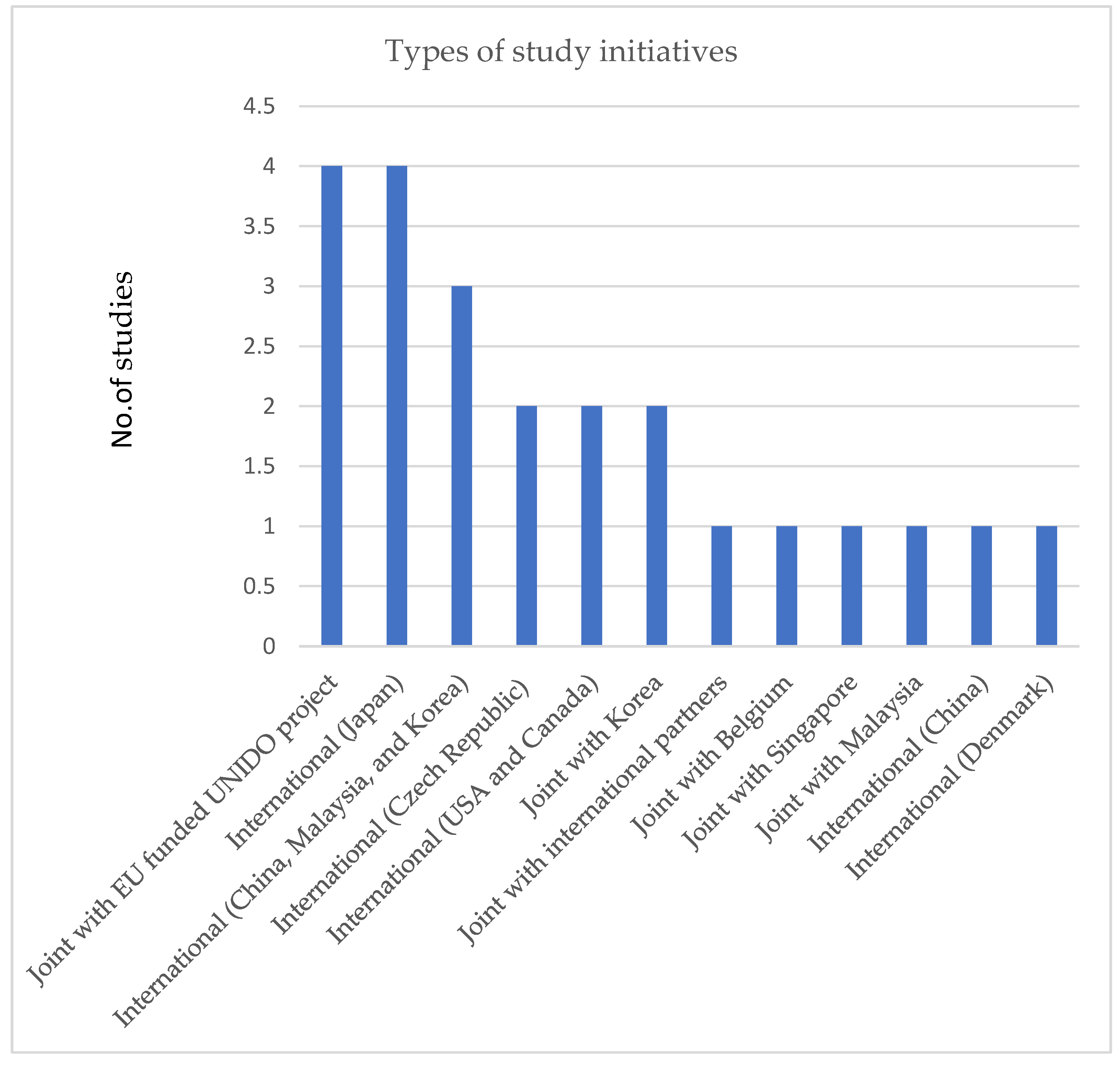
Figure 3.
Frequency of studies on chemical contaminants in certain provinces in Cambodia from 2000 to 2023.
Figure 3.
Frequency of studies on chemical contaminants in certain provinces in Cambodia from 2000 to 2023.
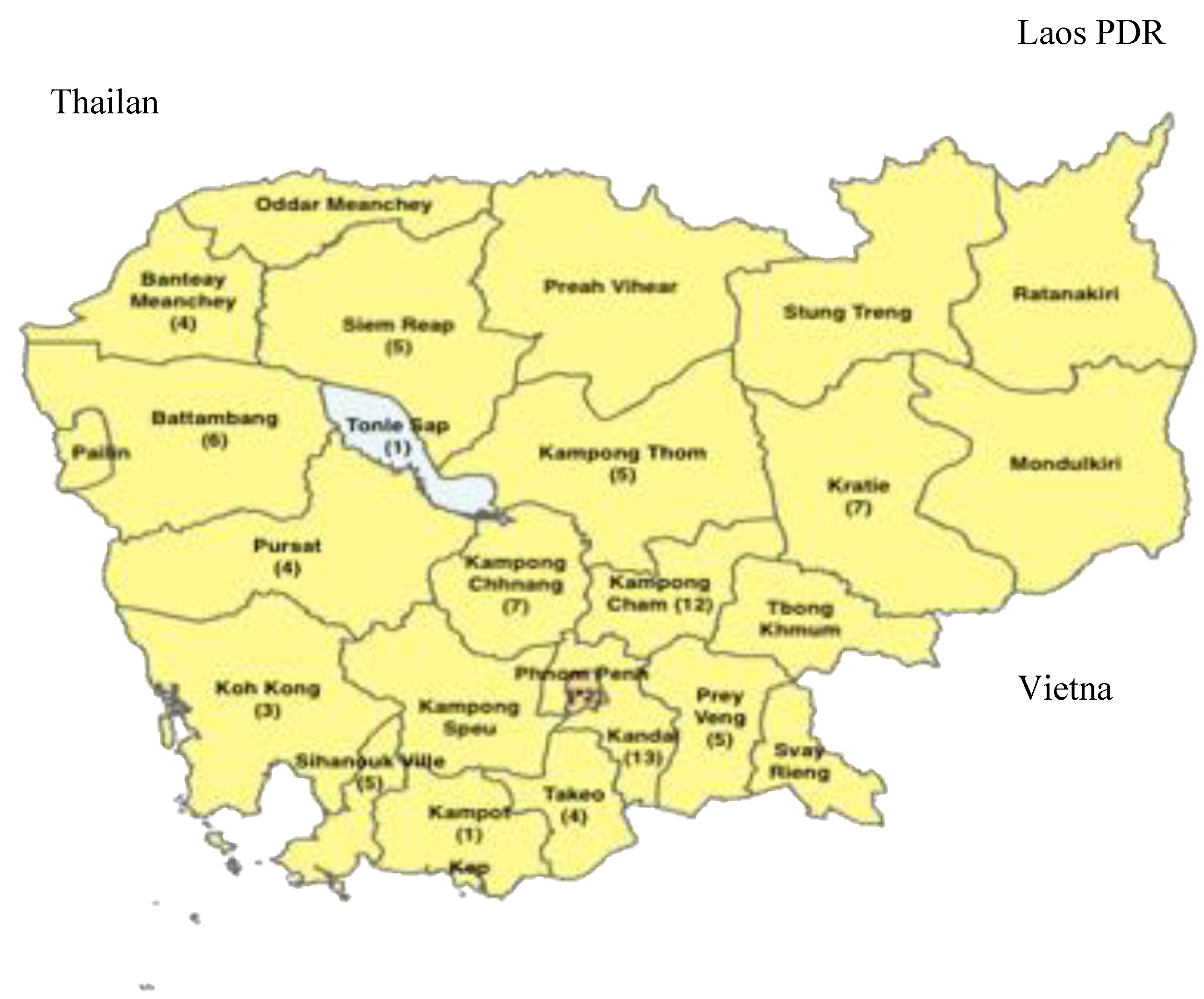
Figure 4.
Number of publications of chemical hazards in POAO in Cambodia for different intervals from 2000 to 2023.
Figure 4.
Number of publications of chemical hazards in POAO in Cambodia for different intervals from 2000 to 2023.
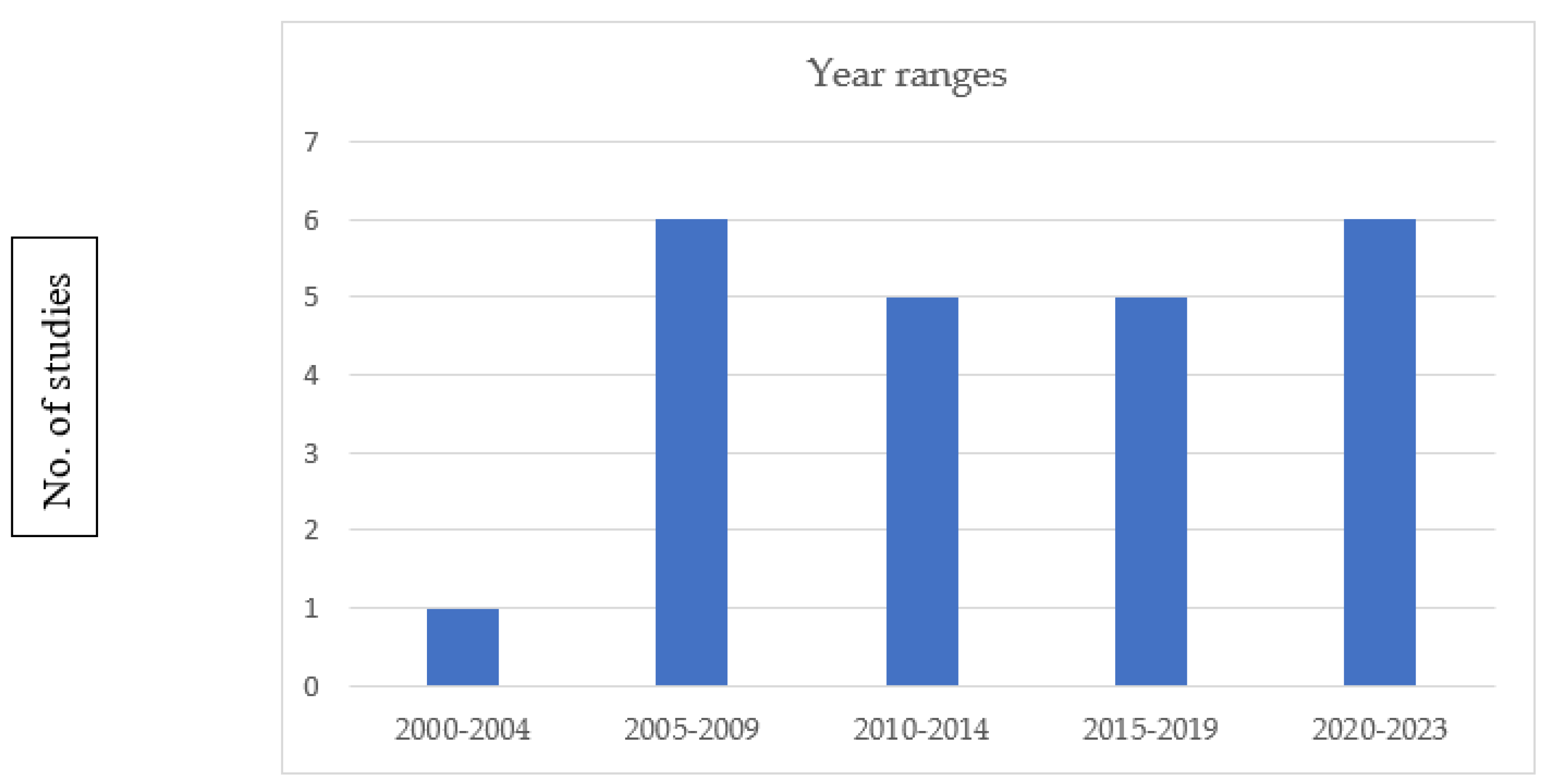
Figure 5.
Evidence of frequency of studies identified for different groups of chemical hazards in POAO in Cambodia from 2000 to 2023.
Figure 5.
Evidence of frequency of studies identified for different groups of chemical hazards in POAO in Cambodia from 2000 to 2023.
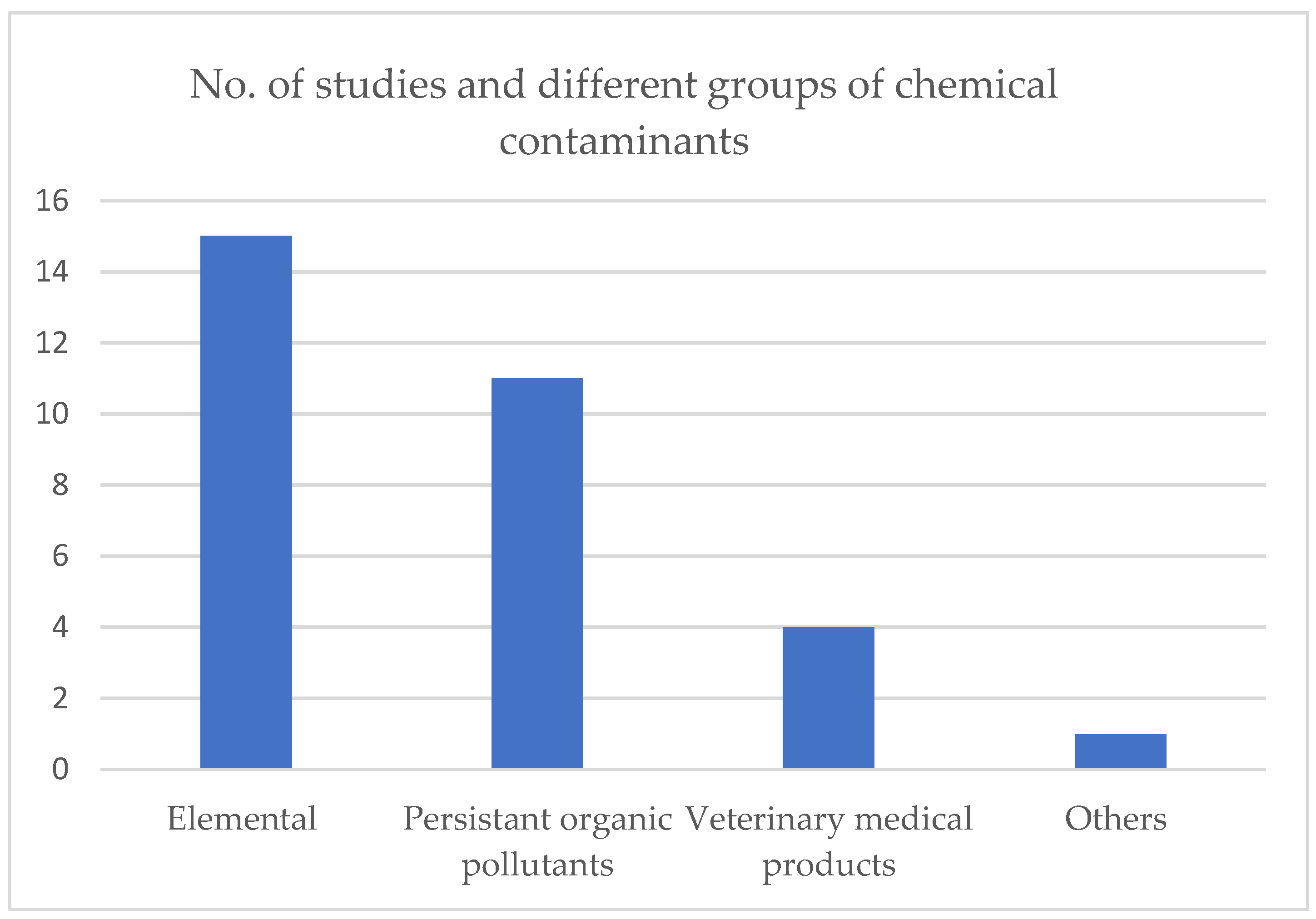
Table 1.
Quality assessment criteria for full-text review.
| Quality Criteria | Good | Medium | Poor |
|---|---|---|---|
| Scientific method | -Clarity of study including subject, setting, and sampling points in detail -Clear description of appropriate sampling method |
-Detailed description of study subject, setting, and sampling points but somewhat unclear. -Sampling methods not clearly described but contained enough information for data extraction |
-The key part of study setting for example sampling points are not described at all. -Unclear/invalid sampling methods |
| Testing method | -Standard laboratory testing methods were used (use of relevant ISO method or equivalent) and accuracy of equipment meets the needs of the national/EU/Codex | -The laboratory testing methods were acceptable or valid (use of the AOAC method or equivalent) and accuracy of equipment meets the needs of the national/EU/Codex | -The laboratory testing method was not acceptable or was invalid (use of rapid test kit). Use of equipment did not guarantee the accuracy of results |
| Information for use of equipment | -Detailed information available for use of equipment | -Sufficient information for use of equipment | -Insufficient or unclear information for use of equipment |
| Results accuracy for data extraction | -Detailed and accurate results | -Sufficient results for data extraction | -Insufficient or incomplete results presentation |
Disclaimer/Publisher’s Note: The statements, opinions and data contained in all publications are solely those of the individual author(s) and contributor(s) and not of MDPI and/or the editor(s). MDPI and/or the editor(s) disclaim responsibility for any injury to people or property resulting from any ideas, methods, instructions or products referred to in the content. |
© 2025 by the authors. Licensee MDPI, Basel, Switzerland. This article is an open access article distributed under the terms and conditions of the Creative Commons Attribution (CC BY) license (http://creativecommons.org/licenses/by/4.0/).
Copyright: This open access article is published under a Creative Commons CC BY 4.0 license, which permit the free download, distribution, and reuse, provided that the author and preprint are cited in any reuse.