

Submitted:
29 May 2025
Posted:
29 May 2025
You are already at the latest version
Abstract
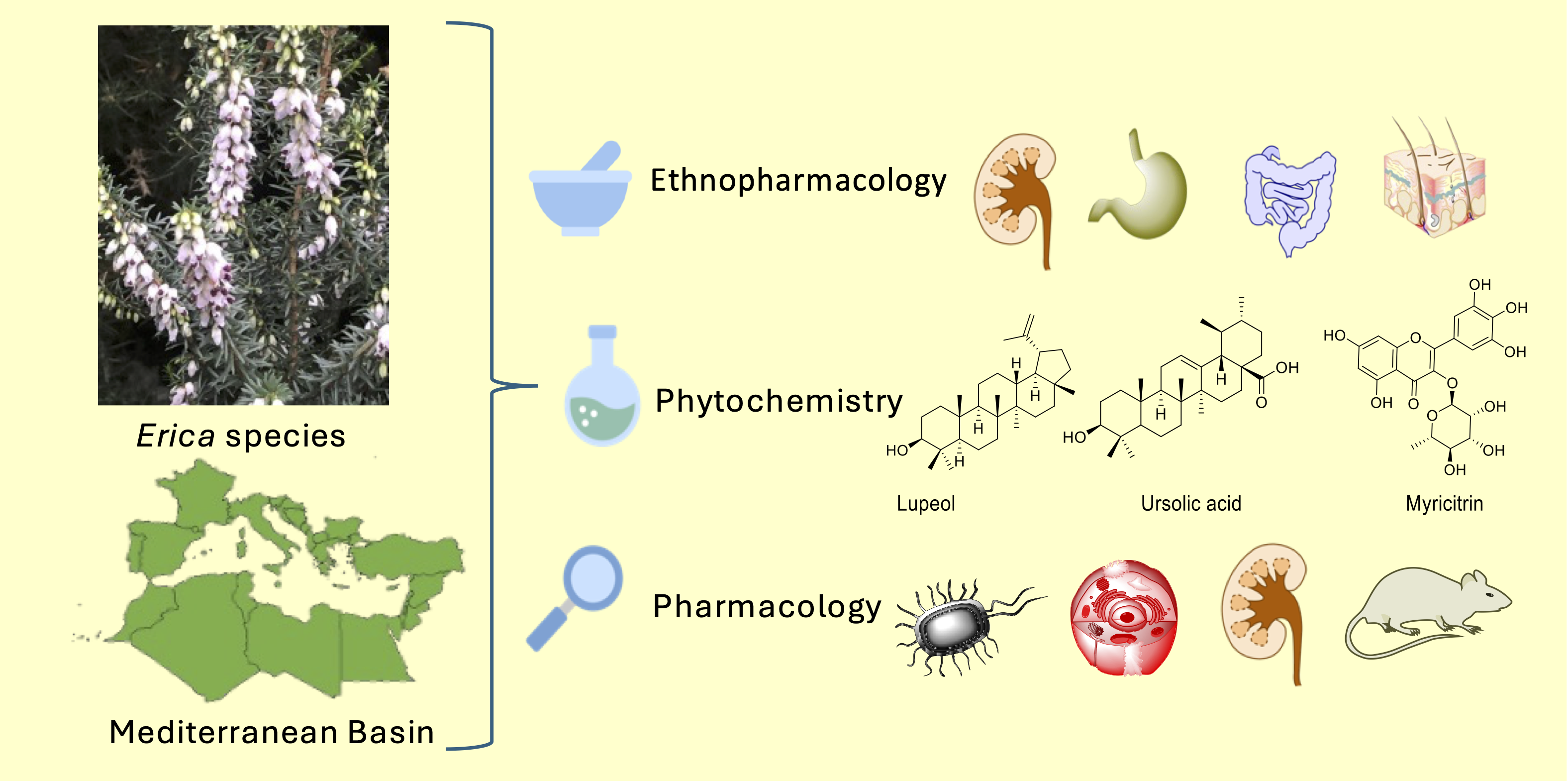
Erica species native to the Mediterranean basin are the principal Ericas that have found use in traditional medicine. Examples include treatments for urinary tract disorders, inflammatory conditions, gastrointestinal ailments and weight loss. This review critically evaluates the ethnobotanical usage, phytochemical profiles and pharmacological potential of the Mediterranean Erica species, including Erica arborea, Erica multiflora and Erica manipuliflora. A wide spectrum of bioactive secondary metabolites has been identified across these species, notably pentacyclic triterpenes (e.g. lupeol, ursolic acid and oleanolic acid) and polyphenolics (e.g. myricetin and quercetin glycosides). Extracts of these species have demonstrated antioxidant, anti-inflammatory, analgesic, antimicrobial and diuretic activities in vitro and/or in vivo, providing pharmacological support for traditional uses. Phytochemical profiles vary by species, plant part, geography and extraction technique. Filsuvez®, comprising pentacyclic triterpenes from birch bark, has clinical approval for the treatment of partial thickness wounds associated with dystrophic and junctional epidermolysis bullosa. The undoubted reservoir of pentacyclic triterpenes and flavonoid glycosides in Mediterranean Erica species warrants further comprehensive mechanistic studies, toxicological evaluations and clinical validation.
Keywords:
Mediterranean Ericas
; diuretics
; anti-microbials
; anti-inflammatory
; analgesics
; anti-urolithiatics
; essential oils
; triterpenoids
; polyphenolics
; anthocyanidins
1. Introduction
The Ericaceae family comprises 4250 species and 124 genera which include Erica (Heath), Arbutus, Azalea, Vaccinium, Rhododendron and Calluna [1,2,3,4,5]. The Erica genus encompasses a diverse range of evergreen shrubs recognized for their striking floral displays and remarkable adaptations to nutrient-poor soils. This genus consists of over 800 species distributed across various global regions, including South America, Europe, eastern most areas of Asia and South Africa, where the highest concentration of species can be found in the Cape Floristic Region [6]. Furthermore, Erica species are also present in other areas of Africa, particularly in the northern deserts situated between the equator and the Mediterranean Sea [7]. In general, Erica is one of the three most widely distributed genera of the Ericaceae within the Mediterranean region [8,9]. The name Erica comes from the ancient Greek word Ereiko, which means to break, referring to a tea made from a heath species that was believed to dissolve or break gallstones. The Swedish botanist Linnaeus used this term to define the genus in the eighteenth century [10,11]. The primary objective of this review is to present a thorough analysis of the traditional uses, phytochemistry and pharmacology of Erica species found in countries surrounding the Mediterranean basin namely E. arborea, E. multiflora, E. manipuliflora, E. scoparia, E. australis, E. sicula. subsp. sicula, E. sicula subsp. bocquetii, E. spiculifolia, E. terminalis, E. lusitanica, E. andevalensis, E. umbellata and E. erigena. In southern European countries such as Italy, Portugal, Spain, France, Malta and Greece, as well as North African nations like Morocco, Algeria and Tunisia, and eastern Mediterranean countries including Turkey, Syria and Lebanon, specific Erica spp. are recognized for their applications in traditional medicine. They have been employed by local communities to address a variety of health conditions, including uses for their reputed anti-inflammatory, anti-urolithiatic, antioxidant, antibacterial, antiviral, antiseptic, astringent, antiulcer, analgesic and antihyperlipidemic effects [12,13]. Significant secondary metabolites of pharmacological interest isolated from these plants encompass polyphenolics, [9,14,15,16,17,18,19] triterpenes [12,20], anthocyanidins [21], essential oils [22,23] and fatty acids [24]. Notably, polyphenolics and triterpenoids are regarded as the key contributors to the therapeutic effects observed for various biological activities [12,16,25].
2. Characteristic Features and Geographical Distribution of Erica spp. in the Mediterranean Basin Region
Most Erica species are evergreen shrubs that attain heights ranging from 20 to 150 cm and possess needle-like leaves with some species growing several meters in height. Their adaptability allows them to thrive in a diverse array of soil types, including those that are nutrient-poor and characterized by low rainfall. A comprehensive description of each Erica is detailed in the textbook entitled Hardy Heathers from the Northern Hemisphere by E. Charles Nelson and summarized in Table 1 [7].
3. Traditional Uses of Erica Species
Ethnobotany explores the relationship between humans and plants, particularly the traditional uses of plants for medicine, food and other purposes [26,27,28]. It has been instrumental in discovering and developing many medicines from plant sources and preserving ethnobotanical knowledge is crucial to safeguard the socio-cultural heritage and practices of indigenous and local communities [29,30,31]. The Mediterranean basin, with approximately 25,000 plant species, is ethnobotanically rich [32,33,34,35] and ethnomedical uses of Erica species are reported throughout the region in Asian, African and European cultures (Figure 1). Reports on the ethnobotanical applications of Erica species from the literature are summarized in Table 2.
In Turkey, the Erica species E. arborea and E. manipuliflora Salisb. are widely used in traditional medicine for the treatment of a wide range of conditions such as urinary tract infections, kidney stones, hypertension and inflammatory diseases as well as for promoting weight loss [15,26,27,36,37,38,39,40,41,42,43,44,45,46,47,48,49,50,51,52,53,54,55,56,57,58,59,60,61,62]. There are also reports of the use of E. manipuliflora for skin conditions such as boils [62] and eczema [63] for gastrointestinal conditions such as constipation [64,65] and as an anthelmintic [66]. In Lebanon, Syria and Cyprus, similar traditional applications are reported for E. manipuliflora Salisb. [67,68,69,70]. In Algeria, E. arborea is used in traditional medicine for gastrointestinal illnesses including pinworm infection and stomachache and as a diuretic, anti-inflammatory and antimicrobial agent for a wide variety of conditions [8,71,72,73,74,75,76,77,78,79,80]. It also has reported use for nervousness [81]. E. multiflora preparations are employed in folk medicine in Tunisia [51,82,83] while Morocco is rich in Erica species and traditional medicinal applications in the region are reported for E. multiflora, E. scoparia, E. terminalis, E. australis and E. arborea [82,84,85,86,87,88,89,90,91,92]. In Southern European countries, the most extensively reported traditional medicinal uses of Erica species are in the treatment of urinary, prostate and kidney disorders with herbal infusions and decoctions employed for diuretic, anti-inflammatory and antiseptic purposes. In Spain, E. multiflora has reported use for wound healing [93] and E. terminalis for urinary tract infection [94], while E. scoparia was employed for its antiemetic and antispasmodic action [95]. In Portugal, E. australis has reported use for prostate and kidney health [96] while in Greece, E. manipuliflora Salisb. is reported as a treatment for prostate and urinary tract disorders [97]. E. arborea was employed in Greece for several conditions including rheumatism, anaemia and cystitis [97] while in Italy, it has reported use for nervous system disorders [98], oral infections [99], prostatic cystitis [100] and as a sedative in veterinary medicine [101]. E. multiflora was also valued for its sedative properties in Italy [102] and for its diuretic and antirheumatic effects and has reported use for urinary tract disorders in Malta [103]. In Bosnia and Herzegovina, E. erigena has been utilized for renal disorders [104].
Pharmacological effects of Erica preparations have been harnessed in regions of the Mediterranean basin since ancient times. Reference to Erica can be found in the writings of Dioscorides who described that cataplasms prepared from the leaves of Erica ‘do heal the biting of serpents’ [105]. Despite their extensive traditional applications, ethnopharmacological studies remain limited. Further toxicological, pharmacological and clinical research is necessary to validate these uses and refine medicinal formulations.
4. Chemical Constituents of Erica Species of the Mediterranean Basin
A diverse range of natural products have been identified in the Mediterranean Erica species. These include simple long chain alkanes, alcohols, aldehydes and fatty acids/esters to several classes of terpenoids, phenolics, phenolic acids, flavonoids and flavonoid glycosides. In many cases the exact saccharide unit(s) attached to the phenols or flavonoids in glycosidic form have not been fully characterized and these are generally referred to as pentosides or hexosides.
4.1. Essential Oil Constituents
The contents of mono- and sesquiterpenoids in the aerial parts, flowers and leaves of E. manipuliflora have been profiled with Germacrene D (14.76%, 15.55% and 13.58% respectively), tau-cadinol (7.53%, 4.11% and 8.96%), caryophyllene oxide (3.92%, 5.17% and 8.55%), β-caryophyllene (7.24%, 5.97% and 7.73%) and α-terpineol (6.85%, 6.14% and 4.18%) representing the dominant terpenoids present [106]. Sesquiterpene hydrocarbons (37.01%) were found to be dominant in the leaves while monoterpenoids (42.58%) predominated in the flowers [106]. Studies on the constituents of the essential oil of E. arborea leaves identified 75 components of which palmitic acid (33.3%), (Z,Z,Z)-9,12,15-octadecatrien-1-ol (6.6%) and nonacosane (6.1%) were the main constituents [22]. Terpenoids, including β-fenchyl alcohol, β-caryophyllene, β-bourbonene, ionol, cis-geranylacetone and germacrene-D represented the minor constituents together with eugenol [22]. A study on the constituents of E. australis essential oil, a plant with light pink, medium pink or dark pink flowers, was conducted following hydro-distillation of the dried flowering tops to investigate if flower color correlated with differences in volatile composition. No correlation was observed but 43 volatile constituents were identified. The most abundant compound was 1-octen-3-ol (33-38%), followed by n-nonanal (8-11%), n-octanol (6-7%), n-heptanol (4%), cis-3-hexen-1-ol (2-5%), 2-octen-1-ol (2-3%), 2-trans, 4-trans-decadienal (2-4%), 2-trans-decenal (2%) and nonanoic acid (2%)[107]. Only minor amounts of terpene constituents were present, namely geranyl acetone (1.7%), trans, trans-α-farnesene (0.8%) and a trace amount of cis-bourbonene [107]. Volatile terpenes are emitted by Erica spp. A study on E. multiflora in Spain found the principal monoterpenes emitted were α-pinene, β-pinene, β-myrcene, A3-carene and limonene, emissions varying seasonally and in response to experimental drought [108]. The composition of aerial parts of E. spiculifolia Salisb. essential oil following hydro-distillation has been comprehensively reported identifying 38 monoterpenes (46.2%), 30 sesquiterpenes (31.7%) and 2 diterpenes (0.4%) [109]. An additional 30 compounds, representing 14.3% of the oil comprised non-terpenoid constituents. The monoterpenes, α-terpineol (7.5%), endo-borneol (7.2%), pinocarveol (5.9%) and thymol (3.7%), were identified as the major oxygenated compounds. Within the sesquiterpene class, caryophyllene oxide (5.0%), caryophyllene (4.2%), τ-murrolol (3.5%), spathulenol (2.9%) and α-cadinol (2.3%) were profiled [109] (Table 3), (Figure 2).
4.2. Triterpenoids
Mediterranean heath species, and heaths generally, are a rich source of triterpenes with the pentacyclic triterpenes by far the most dominant class, especially those based on the ursane, oleanane and lupane scaffolds together with modest amounts of sterols and steroidal ketones. In depth qualitative and quantitative analysis of the content of these constituents has been carried out on E. arborea by GC-MS [12] and to a lesser extent on E. manipuliflora [110], E. andevalensis[111] and E. multiflora [112]. In E. arborea, ursolic acid (14,889.49 μg/g) was a dominant triterpenoid in the profile followed by oleanolic acid (6022.89 μg/g), and while not separated by GC-MS, a mixture of lupeol/α-amyrin totaled 23,809.86 μg/g suggesting that these neutral triterpenoids may in fact be present in higher amounts[12]. A modest level of β-amyrin (2396.95 μg/g) was also present. The most dominant sterols were sitosterol and campesterol, 846.15 μg/g and 304.60 μg/g respectively. Sitostenone and tremulone, 50.49 μg/g and 82.73 μg/g respectively, were identified as the principal steroid ketones[12]. Ursolic acid has also been isolated from the aerial parts of E. manipuliflora [110] and E. andevalensis while α-amyrin has also been documented from E. andevalensis [111] and lupenone identified by HPLC in the leaves of E. multiflora [112] (Table 4), (Figure 3).
4.3. Phenolic Acids and Esters
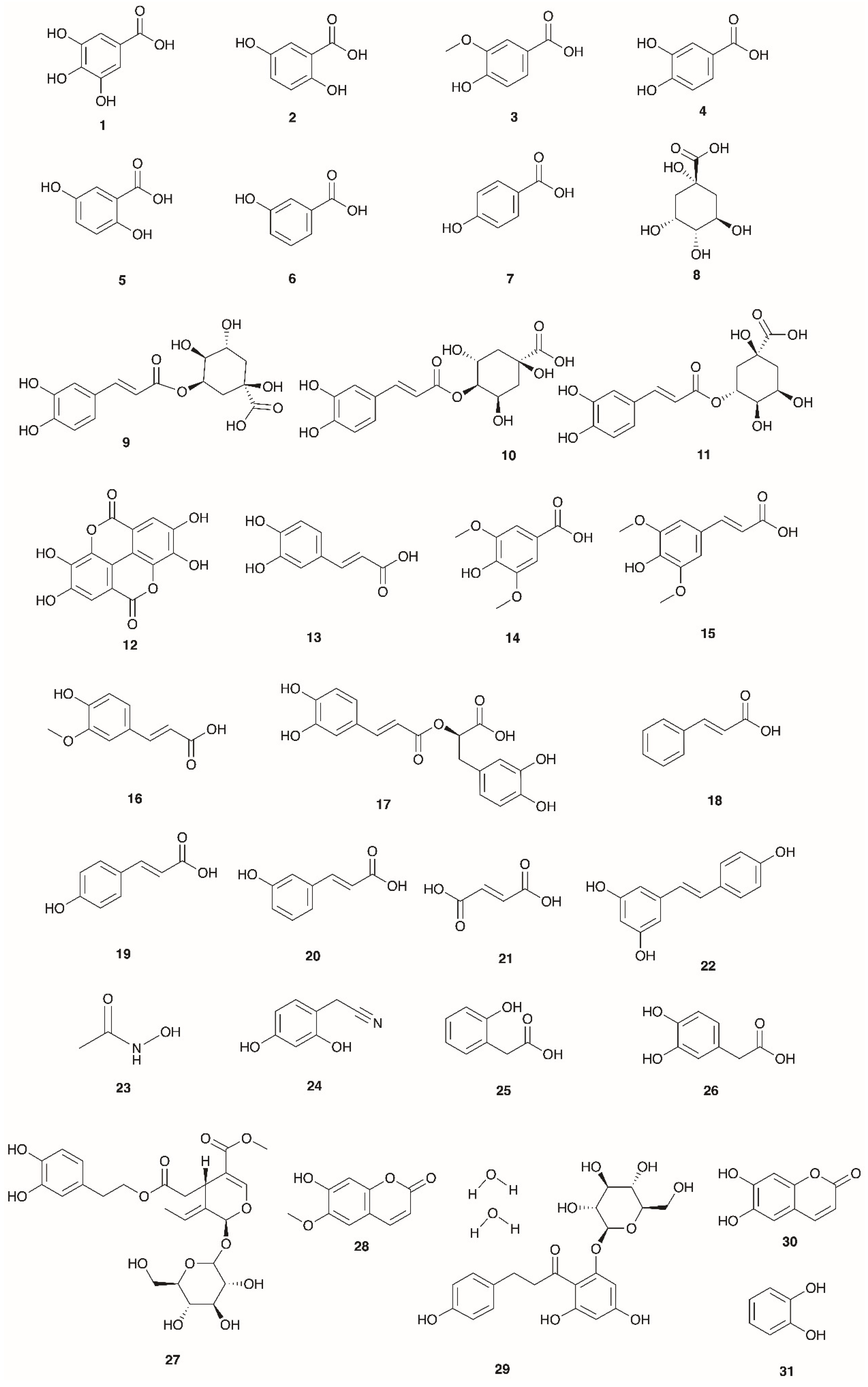
Many of the biosynthetic precursor compounds to flavonoids have also been identified in the Mediterranean Erica spp., including quinic, shikimic, gallic and phenyl acetic acids as well as the aryl C3 acids: cinnamic, coumaric, caffeic, ferulic and sinapic acids and esters/ether conjugate forms thereof [9,16,17,18,19,85,87,113,114,115,116,117]. Invariably, many of these constituents are present in lower amounts relative to the more extended flavonoid series except for 5-O-caffeoylquinic acid (583.28 mg/kg) in E. arborea [9]. Interestingly, in E. multiflora leaves, the level of 5-O-caffeoylquinic acid at 53.93 mg/kg [87] is 10-fold less than in E. arborea. Table 5, Figure 4 documents the species name, plant part from which the compound has been isolated and the identification method used as well as the Mediterranean country of origin.
Figure 3.
Structures of phenolic acids/esters/glycosides profiled in Mediterranean Erica species.
4.4. Phenylpropanoid Glucosides
4.5. Flavonoids and Flavonoid Glycosides
Across all Mediterranean heath species, the most widely studied class of secondary metabolites are the flavonoids in both aglycone and glycoside forms. In many cases the exact mono/disaccharide has been identified, but the literature is full of examples where the sugar moiety has not been identified and the constituents are ambiguously specified as pentosides or hexosides, thus preventing true correlation of the active principle(s) with biological data. Of the flavonoid forms present, myricetin, quercetin, kaempferol and apigenin are the most common with some species also containing isorhamnetin and naringenin [9,16,18,19,85,87,113,115,117,120]. Both qualitative and quantitative analyses of the flavonoids in E. arborea, E. scoparia, E. multiflora, E. australis and E. manipuliflora have been documented [9,16,18,19,85,87,113,115,117,120]. While over 70 phenolic type compounds in E. arborea have been identified ranging from phenolic acids/esters to flavonoids in both free and glycoside form, the principal flavonoids identified were quercetin (598.72 mg/kg), quercetin 3-O-glucoside (633.41 mg/kg), kaempferol 3-O-glucoside (475.95 mg/kg), epicatechin (588.00 mg/kg) and catechin (27.43 mg/kg) when an accelerated solvent extraction procedure was performed on its dried powdered leaves [9]. A limited number of other flavonoids in free form have been identified and quantified including taxifolin, eriodictyol, luteolin and kaempferol [9]. Interestingly, the content of these constituents and that of the related glycoside forms varied considerably depending on the extraction method used ranging from microwave-assisted, ultrasound-assisted, solvent based to Soxhlet extraction methods. Of these, the ultrasound-assisted method proved to be the least efficient with the optimal method being accelerated solvent extraction [9]. LC-MS/MS analysis of a methanol extract of E. multiflora leaves harvested in Tunisia found that quercetin-3-O-glucoside and kaempferol-3-O-glucoside in almost equal proportions collectively constituted 60%, by area percentage, of the polyphenols present in the extract [117]. Methyl-dihydro-quercetin hexoside, myricetin and quercetin-3-O-rutinoside represented the other significant flavonoids present [117]. Overall, the total flavonoid content is significantly lower relative to E. arborea and E. scoparia. By far the most dominant flavonoid type in E. scoparia is myricetin which is present as myricetin-O-hexoside (184.38 mg/kg) and myricetin-O-rhamnoside (153.65 mg/kg) [87]. Several flavonoid glycosides have been identified, but not quantified, in E. australis. These include gossypetin glycoside, myricetin 3-O-glucoside, myricetin 3-O-rhamnoside, quercetin 3-O-rhamnoside, kaempferol 3-O-rhamnoside, quercetin acetyl-rhamnoside, quercetin 3-O-(6”-rhamnosyl) glucoside (rutin), quercetin 3-O-glucoside, isorhamnetin 3-O-glucoside, kaempferol 3-O-glucoside (astragalin) and quercetin 3-O-rhamnoside [18,115,121] (Table 7), (Figure 6).
4.6. Catechins
A range of catechin compounds has been identified in Mediterranean Ericas, specifically in the species E. australis, E. multiflora, E. andevalensis, E. manipuliflora, and E. arborea. These compounds, which include epigallocatechin, catechin, catechin hydrate, and epicatechin are detailed in Table 8 and Figure 7 [9,18,19,74,85,113,116,124].
4.7. Anthocyanidins
Numerous anthocyanidins, including dimer and trimer compounds, have been identified in the Mediterranean E. australis such as delphinidin 3, 5-O-diglucoside, cyanidin 3,5-O-diglucoside, pelargonidin 3-5-O-diglucoside, delphinidin-3-O-glucoside, cyanidin-3-O-glucoside and pelargonidin-3-O-glucoside [113] (Table 9), (Figure 8).
A vast battery of secondary metabolites has been identified in Mediterranean Erica spp. These range from the terpenoid series (mono-, sesqui-, to the tri-terpenoids in particular) to polyphenolics where the flavonoid series predominates in both aglycone and glycoside presentations. Their characterization has relied significantly on the use of chromatographic methods, particularly GC-MS and HPLC with or without MS detection. Unambiguous characterization remains outstanding in some cases, particularly for flavonoid glycoside constituents. In this regard, further studies are warranted focusing on the use of NMR as a characterization tool.
5. Biological Activities
5.1. Anti-Inflammatory Activity
Several studies have documented the anti-inflammatory activities of Mediterranean Erica spp. in vivo. Akkol et al. probed the anti-inflammatory activities of extracts of the aerial parts of E. arborea, E. manipuliflora, E. bocquetii and E. sicula subsp. libanotica collected in Turkey. In this study, an aqueous extract and a methanol extract were examined for each species under investigation, as well as sequential solvent fractionations of the methanol extracts with chloroform, ethyl acetate and n-butanol. Of these extracts, the ethyl acetate extracts of E. arborea, E. bocquetii and E. manipuliflora at a dose of 100 mg/kg po inhibited the initial and second phases of the inflammatory response in a carrageenan-induced hind paw oedema model in mice with efficacy comparable to indomethacin at 10 mg/kg po. The same extracts also showed significant anti-inflammatory effects when used topically against ear oedema provoked by local application of 12-O-tetradecanoylphorbol-13-acetate (TPA) These extracts, as well as the ethyl acetate extract of E. sicula subsp. libanotica, also significantly inhibited inflammation in a prostaglandin E2 (PGE2) - induced hind paw oedema mouse model [51]. Traditional medicinal use of Erica spp. is often as an infusion or decoction in water. Akkol et al. did not observe significant anti-inflammatory effects in their in vivo models with oral administration of aqueous extracts of several Erica spp. at 100 mg/kg. However, in a study on the anti-inflammatory effects of an aqueous extract of Algerian E. arborea aerial parts prepared by decoction, carrageenan induced paw oedema and croton oil induced ear edema in mice were significantly reduced by the extract at doses of 250 and 500 mg/kg [8]. Amezouar et al. found that an ethanolic extract of Moroccan E. arborea leaves could inhibit carrageenan-induced paw oedema in the rat at 200 and 400 mg/kg po. Amari et al. examined the topical and oral anti-inflammatory effects of hydro-methanolic extracts of E. arborea leaves and flowers. Both extracts showed significant anti-inflammatory activity in the xylene-induced ear oedema model, topical application of 0.5 mg/ear proving as effective as topical indomethacin at the same dose. In a parallel study, using croton oil to induce oedema, both extracts were again effective in reducing the swelling with the leaf extract proving marginally more potent. Both extracts were effective in these models when administered orally in the dose range 100 – 500 mg/kg and the effect was found to be dose dependent [24].
5.2. Analgesic Activity
Studies on the analgesic activity of the Mediterranean Erica species have been documented. Using p-benzoquinone to induce abdominal constriction in mice, Akkol et al. showed that the ethyl acetate extracts of Turkish E. arborea, E. manipuliflora and E. bocquetii had notable antinociceptive activity at a dose of 100 mg/kg. These ethyl acetate extracts were prepared by sequential solvent fractionations of the methanol extracts with chloroform followed by ethyl acetate [51]. Nayebi et al. examined the analgesic effect of a hydromethanolic extract of the leaves and flowers Turkish E. arborea using the formalin test in mice as a model of tonic inflammatory pain. Intraperitoneal (i.p.) administration of the extract at a dose of 10 mg/kg decreased formalin-induced paw licking time in the early phase (0-5 min after formalin administration) and late phase (20-60 min after formalin administration). However, efficacy was not found to be dose dependent. Higher doses of the extract at 20 mg/kg and 30 mg/kg did not produce significant reductions in paw licking time which the authors rationalized could be due to the presence of pro-algesic constituents in the plant extract [126].
5.3. Antioxidant Activity
Several studies have examined the antioxidant activity of E. arborea, E. multiflora, E. scoparia and E. australis using well-established antioxidant assays including the 2,2-diphenyl-1-picrylhydrazyl (DPPH), 2,2′-azino-bis(3-ethylbenzothiazoline-6-sulfonic acid (ABTS), CUPric reducing antioxidant capacity (CUPRAC) and ferric ion reducing antioxidant power (FRAP) assays. These assays typically measure the ability of compounds within an extract to donate an electron or hydrogen atom. Invariably associated with the antioxidant studies are assays that determine the total phenol, flavonoid and tannin content. Of the Erica species, the most studied is E. arborea. In this context, Amari et al. conducted a series of sequential solvent extractions (using hexane, chloroform, ethyl acetate and water) on E. arborea sourced from Djebel of Tadergount mountain in Bejaia, Northern Algeria. In the DPPH assay, the flower extracts generally showed better activity than the leaf extracts, with IC50 values ranging from 38.18 to 60.16 μg/mL for leaves and 17.72 to 65.29 μg/mL for flowers. The ethyl acetate extract of the flowers was the most active with the chloroform extract being the least effective. Of note, in the FRAP assay, the crude methanolic leaf extract was more effective than the flower extract with respective IC50 values of 2.91 and 6.22 μg/mL [127]. An ethanolic leaf extract of E. arborea, collected at an altitude of 1072 m in the Taza region of Morocco, displayed an IC50 of 10.22 μg/mL in the DPPH assay, which was comparable to butylhydroxytoluene 8.87 μg/mL. In the FRAP assay, the IC50 value obtained for the extract was 9.48 μg/mL [128]. In a more extensive study by Guendouze-Bouchefa et al. a defatted methanol extract of the aerial flowering parts of E. arborea demonstrated antioxidant activity against DPPH (IC50, 5.7 mg/L), ABTS (IC50, 6.8 mg/L) and superoxide anion radical with an antioxidant index value (AI50) of 213 mg/L. Using the same extraction methods and assays the respective IC50 values for the aerial flowering parts of E. multiflora were 10.2 mg/mL and 9.0 mg/mL with AI50 value of 261 mg/L in the superoxide anion radical assay [164]. While studies conducted using solvents of varying polarities will ultimately result in extracts with differences in phytochemical composition the same can be anticipated if different extraction techniques are employed. This is exemplified by the work of Zengin et al. who used accelerated solvent extraction, microwave-assisted extraction, maceration, Soxhlet and ultrasound-assisted extraction methods to prepare extracts for investigation of the antioxidant activity of E. arborea leaf. They found that the extract prepared by accelerated solvent extraction had significantly higher antioxidant activity when evaluated using the DPPH, ABTS, CUPRAC and FRAP assays than the extracts produced by the other extraction methods. A comparison of the antioxidant activity between E. arborea and E. bocquetii extracts prepared with a gradient polarity range of extraction solvents demonstrated that the alcoholic and aqueous extracts of E. bocquetii were more effective than the corresponding extracts for E. arborea [129]. At the level of the individual constituents, a phenylpropanoid glucoside and flavonoid glycosides isolated from a methanol extract of E. arborea leaves showed antioxidant activity in the DPPH assay. The RC50 value for the phenylpropanoid glucoside, ericarborin, was 2.44 × 10⁻⁵ mg/mL vs 2.88 × 10⁻⁵ mg/mL for quercetin [15]. In the same study, a series of flavonoid glycoside derivatives of dihydromyricetin, quercetin and apigenin were evaluated. Of these, quercetin 3-O-D-glucopyranoside was the most active, but still over forty-fold less active than quercetin. A comparison of the antioxidant activity of the hydroalcoholic extracts of the leaves and aerial parts of E. multiflora and E. scoparia was conducted using the DPPH and FRAP assays. In this study, the aerial extract of E. scoparia was the most effective with an IC50 value of 0.142 mg/mL vs 0.611 mg/mL for E. multiflora in the DPPH assay. A similar correlation was observed in the FRAP assay, measured as ascorbic acid equivalents/mL, with an almost 3-fold difference in activity, 1.898 ASE/mL vs 5.538 ASE/mL for E. scoparia over E. multiflora. The data can be rationalized based on the total phenolic content in their aerial parts, E. scoparia, calculated as 9528.93 mg/kg vs 399.01 mg/kg for E. multiflora [87]. The aerial parts of E. multiflora were extracted separately with acetonitrile/water and water and evaluated in the DPPH assay. The water extract was more than two-fold more active in this assay with EC50 value of 8.55 μg/mL vs 20.70 μg/mL for the acetonitrile/water extract [85]. A similar study using an aqueous extract of E. australis flowering parts found significant radical scavenging activity, with IC50 values of 6.7 µg/mL for the decoction and 10.5 µg/mL for the herbal infusion [121]. An ethanolic leaf extract of E. multiflora with was found to have an IC50 value of 10.85 mg/mL in DPPH and an EC50 value of 17.89 mg/mL in a ferric-reducing antioxidant assay [130]. A study conducted by Köroğlu et al. showed strong antioxidant activities for all extracts with different polarities of the aerial parts of E. arborea, in the following order: ethyl acetate > aqueous > crude > chloroform extract. IC50 values against DPPH varied from 38.18 to 60.16 μg/mL for leaves and from 17.72 to 65.29 μg/mL for flowers [74]. In another study on the antioxidant activity of aqueous extracts of E. australis and E. arborea leaves and flowers, IC50 values ranged from 66.6 to 537.6 μg/mL in the DPPH assay and 296.3 to 4,910.1 μg/mL in the ABTS assay respectively, the aqueous extracts of leaves of E. australis and E. arborea possessing the highest antioxidant capacity and phenolic content [131]. Another study showed that the total phenolic content of an aqueous extract of E. arborea was 31.55 ± 0.45 mg GAE/g extract [17].
5.4. Antibacterial Activity
The discovery of new antimicrobial agents remains a key goal in drug development, particularly as antimicrobial resistance to our antibiotic armoury has emerged as one of the leading global threats to public health [132]. Microbial natural products have been the most prolific source of clinically used antimicrobial agents and it is anticipated that the natural world can continue to fuel the development pipeline [133]. Traditional medicinal knowledge can inform bioprospecting efforts and in the case of the Mediterranean Ericas, traditional uses for wound healing and urinary tract infection have prompted antibacterial studies in these species. Guendouze-Bouchefa et al. evaluated the antibacterial effects of defatted methanol extracts of Algerian E. arborea and E. multiflora flowered aerial parts. The extracts were determined to have bactericidal activity against the gram-positive strains tested but were inactive against the gram-negative strains tested. The minimum inhibitory concentrations (MICs) of the E. arborea and E. multiflora extracts against S. aureus ATCC 6538 were 500 mg/L and 250 mg/L respectively while both extracts were determined to have a MIC against S. aureus C 100459 (MRSA) of 250 mg/L in broth microdilution assays, the authors considering plant extracts that display a MIC below 500 mg/L as active and worthy of further exploration. The extracts were inactive against P. aeruginosa AATCC 9027 and E. coli ATCC 25922. The effect of combining either plant extract with either cefotaxime or streptomycin was additive against S. aureus C100459 but the combinations had no beneficial interaction against P. aeruginosa [16]. Amari et al. also investigated the antibacterial activity of E. arborea harvested during flowering in north Algeria. Qualitative assessment by an agar disk diffusion test determined that a hydro-methanolic leaf extract and a hydro-methanolic flower extract inhibited the growth of three gram-negative strains, Escherichia coli ATCC 11303, Pseudomonas aeruginosa ATCC 27853 and Salmonella gallinarum ATCC700623, and three gram-positive strains, Bacillus cereus ATCC10987, Micrococcus luteus ATCC 27141 and Staphylococcus aureus ATCC 25923. MICs were subsequently determined. Relatively high concentrations of the extracts were needed to achieve inhibitory effects against all strains tested. Against M. luteus, the MICs were 1.60 mg/mL and 2.14 mg/mL for the flower extract and leaf extract respectively, while against P. aeruginosa the leaf extract was slightly more effective with an MIC of 2.44 mg/mL in comparison to 9.13 mg/mL for the flower extract. Both extracts were determined as low mg/mL inhibitors of B. cereus, S. aureus, E. coli and S. gallinarum, with determined MICs in the range 3.50 - 8.77 mg/mL [24]. In another study on E. arborea collected in Algeria, aqueous extracts of the leaves or flowers showed inhibitory potential in an agar diffusion assay against the gram-positive bacteria, Staphylococcus aureus ATCC 25923, Bacillus subtilus CLAM20302 and Bacillus cereus CLAMH300 but were found inactive against the gram-negative bacteria Escherichia coli ATCC 25922, Streptococcus sp. and Pseudomonas aeruginosa ATCC 27853. The activities for both extracts were modest but the leaf extract was found more potent with reported MIC values in the range 6.25 to 12.50 mg/mL in comparison to 25 mg/mL for the flower extract [80]. A study on the antimicrobial activities of the hexane, ethanol, methanol, ethyl acetate and aqueous extracts of the aerial parts of E. arborea L. and E. bocquetii P.F. Stevens from Turkey found that all the extracts of both species, ranging from non-polar to polar, had inhibitory activity against Escherichia coli ATCC 11230 G and all extracts except the hexane extracts had inhibitory activity against Escherichia coli ATCC 29998 in a disk diffusion assay of 100 µg extract/disk. The ethyl acetate and aqueous extracts of E. bocquetii and the ethanol extract of E. arborea demonstrated activity against Staphylococus aureus ATCC 6538P while the ethyl acetate and ethanol extracts of E. bocquetii showed activity against Salmonella typhimirium CCM 5445. None of the extracts showed activity against Staphylococcus epidermidis ATCC 12228, Enterobacter cloacae ATCC 13047, Enterococcus faecalis ATCC 29212 and Pseudomonas aeruginosa ATCC 27853 [129]. A methanol extract, sequential to chloroform extraction, of the aerial parts of E. multiflora collected in Spain showed modest antimicrobial activity with a MIC of 1 g/L against Staphylococcus aureus ATCC 25923 and a MIC >1 g/L against Klebsiella pneumoniae ATCC 18883 and Mycobacterium phlei CECT 3009. However, when analyzed by TLC bioautography, inhibition bands were not observed. While this may be due to limits of detection or limitations of the method, it is possible that the observed activity was due to additive effects or synergistic effects between multiple constituents of the extract [93]. Nefzi et al. found that the ethanol extract of E. manipuliflora leaves harvested in Tunisia had antibacterial activity against Staphylococcus aureus ATCC 29213 and Escherichia coli ATCC 8739 reporting an MIC against each strain of 0.04 mg/mL. The extract also demonstrated activity against Salmonella typhimurium NCTC 6017 and Listeria monocytogenes ATCC 7644, albeit less potent, with a MIC of 3.84 mg/mL in each case. These results did not indicate any selective antimicrobial activity based on differences in bacterial cell walls [130]. Modest antimicrobial activity has also been reported for an ethanol extract of flowering aerial parts of E. manipuliflora Salisb. collected in Turkey against S. aureus ATCC 25923, E. coli ATCC 25922 and S. typhimurium ATCC 14028 [19]. Tlas et al. examined the antibacterial activity of essential oils from E. manipuliflora Salisb. against two gram-positive strains Bacillus subtilis and Staphylococcus aureus and two gram negative strains, Escherichia coli and Salmonella enteritidis by assessment of the minimum bactericidal concentration (MBC) of oil hydro-distilled from aerial parts collected before flowering and in full flowering in Syria. Both extracts achieved a full bactericidal effect on all strains tested. The authors reported greater sensitivity of gram-positive strains to the extracts and that the essential oil of material collected during full flowering had greater potency against some of the tested strains. The MBCs against Bacillus subtilis for the oils from material collected before flowering and in full flowering were 16 mg/mL and 8 mg/mL respectively while the MBC against Staphylococcus aureus was 16 mg/mL for both extracts. The MBC of both extracts was 32 mg/mL against Salmonella enteritidis while the oil from the full flowering collection showed greater activity against Escherichia coli with a reported MBC of 16 mg/mL in comparison to 32 mg/mL for the oil from the before flowering growth period [134].
While several studies report antibacterial effects for Erica species of the Mediterranean basin, the results are sometimes contradictory, a situation that is often encountered in antibacterial studies on natural products.[135] This is due to differences in methodologies, from extraction to strain selection to assay method, and also to a lack of consensus on what constitutes good activity, particularly in the context of a complex plant extract. Additionally, plant factors may contribute to biological effects such as plant part(s), season of harvesting and geographical location. In general, the antibacterial activities reported for the Erica species are attributed to the polyphenolic profiles of the plants, but little work has been done to fully delineate the constituent effects. Bio-guided fractionation and isolation can identify the contributing constituents and probe for additive or synergistic effects but dereplication methods are needed to avoid rediscovery of known, well studied compounds. Overall, extracts of Erica species have been shown to have low to moderate antibacterial effects, particularly against gram-positive strains. It is worth noting that low potency antimicrobials can still offer potential as part of combination therapies. Plant phenolics can act synergistically with antibiotics. Such synergies have therapeutic potential and are of particular interest in the restoration of activity of last resort antibiotics against antimicrobial resistant strains.
5.5. Antiviral Activity
Antiherpetic activity has been reported for E. mutiflora. In a cytopathic effect (CPE) inhibition assay, a methanolic extract of the aerial parts of Tunisian E. multiflora showed high in vitro activity against Herpes simplex virus type 1 with an EC50 of 132.6 µg/mL in comparison to an EC50 of 0.8 µg/mL for the positive control, acyclovir. The extract showed complete cell protection against HSV-1-induced CPE at 500 µg/mL without toxicity to the host cells. In the same study, acetone and hexane extracts of the plant were found inactive [83].
5.6. Melanogenesis Stimulation
Upregulation of melanogenesis and tyrosinase activity are potential targets in the treatment of hypopigmentation disorders. An ethyl acetate leaf extract of E. multiflora, and one of its constituents, lupenone, were reported to stimulate melanogenesis in vitro by increasing the expression of tyrosinase enzyme. Lupenone treatment at 0.1 μM was comparable to treatment with 100 nM alpha-melanocyte stimulating hormone (α-MSH), a compound known to increase the melanin content of B16 cells [112].
5.7. Anti-Hyperlipidemia
Hyperlipidaemia represents a significant risk factor for the early development of atherosclerosis resulting in cardiovascular complications [136]. A plausible approach to target hyperlipidaemia is by diet and/or lipid lowering drugs [137]. In Eastern Morocco, E. multiflora is often used as an alternative therapy to treat hyperlipidemia. In this context, a study was conducted in a Triton WR-1339 induced hyperlipidemic rat model to evaluate the anti-hyperlipidemic effects of an aqueous extract of E. multiflora flowers administered intragastically at a dose of 0.25 g/100 g BW in comparison with fenofibrate 65 mg/kg BW as the control lipid-lowering agent. The extract treatment significantly lowered total cholesterol and triglycerides at 7 h and 24 h after administration in comparison to the hyperlipidemic control group and to a greater extent than fenofibrate. The reduction in plasma total cholesterol by the extract was associated with a decrease in the LDL fraction, with HDL cholesterol not significantly altered by Triton WR-1339 induction or by the treatments [86]. Khlifi et al. determined the effects of a methanol leaf extract from E. multiflora harvested in Tunisia on mitigating the effects of metabolic syndrome in rats induced by a high fat and high fructose diet. The extract, at a dose of 250 mg/kg BW, prevented body weight gain, reduced total cholesterol, triglycerides and LDL-c and with an increase in HDL-c. Extract treatment also mitigated elevated glucose and insulin levels improving insulin homeostasis, reduced markers of inflammation and promoted antioxidant enzyme activities [117].
5.8. Acetylcholinesterase Inhibition
The naturally occurring acetylcholinesterase (AChE) inhibitor galantamine and rivastigmine, a semi-synthetic derivative of physostigmine, are used clinically for the treatment of early onset dementia of the Alzheimer’s type [138,139]. In addition, essential oils extracted from Salvia officinalis (Sage) and Melaleuca alternifolia (Tea tree) are noted AChE inhibitors [140,141]. In the context of the Mediterranean Erica spp. both a decoction (IC50, 257.9 µg/mL) and infusion preparation (IC50, 296.8 µg/mL) of the aerial parts of E. australis inhibited acetylcholinesterase [121]. A study evaluated E. arborea ethanol extracts prepared by different extraction techniques as AChE and butyrylcholinesterase (BChE) inhibitors. The study compared ethanol extracts prepared by microwave-assisted, ultrasound-assisted, Soxhlet and accelerated solvent as well as by traditional solvent extraction. In general, activity against both enzymes were dependent on the extraction method used with accelerated solvent extraction proving optimal. The activity of the extracts against AChE and BChE were in the range of 3.71–4.91 mg galantamine equivalents (GALAE)/g and 5.52–6.18 mg GALAE/g respectively [9].
5.9. Anti-Urolithiatic Activity
Urolithiasis is a kidney disorder in which stones form due to excessive mineral deposition in the urinary tract. It is a condition that affects 2-3% of the population. Approximately 80% of a kidney stone is composed of calcium oxalate mixed with calcium phosphate [142]. Two important processes for kidney stone formation/crystal build up in the urinary tract are calcium oxalate nucleation and crystal aggregation, both phenomena that are relatively easily measured in vitro. In this context, hydro-methanolic extracts of E. arborea L. leaf and flower at concentrations of 62.5, 125, and 500 µg/mL were evaluated in both assays. In the nucleation assay across all concentrations used for both extracts, inhibition ranged from ~88% to 98% with slightly better inhibition for the flower extract. In the aggregation assay, inhibition was generally lower across all concentrations used with the leaf extract (75.63%) exhibiting slightly better activity over the flower extract (72.87%) at 500 µg/mL. The ability of both extracts to inhibit nucleation and aggregation may relate to calcium binding to flavonoid constituents present in E. arborea [124].
5.10. Diuretic Effect
Medicines that reduce fluid buildup in the body are known as diuretics. The classical drug in this class is furosemide. In this context a comparative study was conducted comparing the effectiveness of aqueous extracts of E. multiflora flowers to furosemide using a rodent model [82]. At a dose of 0.250 g/kg the extract significantly increased urinary output of water and electrolytes excretion within 1, 4 h and throughout the 24 h study period. The effect was thought to be unrelated to the K+ plant content. A higher dose of 0.500 g/kg of the extract was especially effective [82].
5.11. Anti-Fungal Activity
E. arborea plant material from a local market in Turkey was extracted with 95% ethanol and was found to have antifungal activity against Aspergillus niger and Candida albicans (ATTC 60192) in a disk diffusion assay [143]. However, in another study the hexane, ethanol, methanol, ethyl acetate and aqueous extracts of the aerial parts of E. arborea from Turkey, as well as E. bocquetii, showed no activity against Candida albicans [129]. In another study, aqueous extracts of the leaves or flowers of E. arborea from Algeria were found inactive against Aspergillus flavus and Aspergillus niger [80].
5.12. Antileishmanial Activity
Leishmaniases are parasitic diseases caused by various species of protozoa of the genus Leishmania and transmitted by biting sandflies. Leishmaniasis is a disease that affects some of the world’s poorest people and is associated with malnutrition and weakened immunity, population displacement and poor living conditions. There is a need for effective and affordable treatments for this disease in addition to prevention and control strategies. The methanol extract of E. arborea flower from Algeria showed significant leishmanicidal activity and reliable selectivity indices. It was most effective against L. major with an IC50 against the promastigote form of 43.98 μg/mL but also demonstrated activity against L. infantum promastigotes (IC50= 61.27 μg/mL) and so may contain promising antileishmanial phytochemical constituents [73].
5.13. Hair Growth Promoting Activity
E. multiflora has been identified as possessing hair growth promoting activity. A study on plant material collected in Tunisia and extracted with 70% ethanol found that the extract promoted the growth of human follicular dermal papilla cells (HFDPCs) in vitro by stimulating cell mitosis. The hair growth promoting effect of the extract was also demonstrated in a murine in vivo model following subcutaneous injection at test sites, thought by the authors to be due to indirect stimulation of the anagen or growth phase of the hair cycle from the telogen or resting phase [84].
6. Toxicity of Erica Species
Research conducted by Sadki et al. on E. multiflora demonstrates promising results, indicating that even at high dosages, the E. multiflora extract does not display significant signs of toxicity [82]. Furthermore, a study by Amroun et al. explored the safety and toxicity of an aqueous extract of E. arborea (EAAE) in rats, emphasizing both acute and sub-acute toxicity evaluations. In the acute toxicity phase, rats were administered a single dose of 2000 mg/kg or 5000 mg/kg of EAAE, alongside distilled water as a control. The results were encouraging, showing no signs of toxicity or mortality over a 14-day monitoring period for either dosage in both male and female rats, which underscores the extract’s relative safety. In the sub-acute toxicity assessment, rats received daily doses of EAAE (250, 500, and 1000 mg/kg) for 28 days. Notably, no mortality or toxic effects were observed, and there were no abnormal behaviours or morphological changes detected in either sex. These findings strongly suggest that EAAE extract may be safe for consumption at the tested levels. Nevertheless, it would be beneficial to conduct further research to deepen our understanding of its safety and potential effects [8].
7. Conclusions and Perspectives
The field of plant-based medicines continues to flourish but oftentimes the reputed traditional use of such products is not supported by validated studies at the phytochemical, pharmacological or clinical level. This situation is precisely the case with the Mediterranean heaths which have found widespread traditional use for the treatment of a myriad of conditions including inflammation, pain, diabetes, urinary tract-infections, weight loss treatments and gallstones. Where pharmacological studies are reported on the Mediterranean Ericas these are oftentimes not supported by a complete phytochemical analysis of the extract used in the study. This is an important omission stemming from the multitude of factors that affect phytochemical content including genetics, climatic conditions, plant age, cultivation conditions, geographical location and microenvironments within the same geographical location. Phytochemically, studies have been reported on E. arborea regarding its triterpenoid, phenolic acid, flavan-3-ol, pro-anthocyanidin and flavonoid/glycoside constituents. However, in many cases the exact sugar unit or its point of attachment on the flavonoid backbone is not known, thus making a direct correlation between phytochemical constituents present and outcomes of pharmacological studies challenging. In this context, further spectroscopic studies are warranted using advanced nuclear magnetic resonance spectroscopy techniques combined with high resolution mass spectroscopy and x-ray crystallography to unambiguously confirm the identity of the phytochemical constituents. Once the identity of the constituents is known in a given plant, detailed qualitative and quantitative studies should follow to precisely establish the levels of each constituent. In this regard, further studies can build upon the data generated to date on Mediterranean Erica spp. where GC/GCMS has been used to profile the volatile constituents and higher order terpenoid constituents following derivatization. While HPLC/LCMS has been used for qualitative and quantitative studies of what might loosely be termed the phenolic constituents, HPLC has also been utilized for the analysis of pentacyclic triterpenes at low wavelength detection, circa 210 nm. This is challenging as many of the long chain hydrocarbon compounds present in Erica spp. also absorb at this wavelength.
In conclusion, a true correlation between traditional use and observed therapeutic effects is only valid if the plant material has been sourced from the precise region where it is used. In establishing a direct correlation, detailed phytochemical analysis of the plant material should be conducted in parallel with pharmacological studies. Despite this obvious weakness in pharmacological studies reported to date, Mediterranean Ericas have shown potential in a broad range of in vitro and/or in vivo assays that measure antioxidant, anti-inflammatory, analgesic and antimicrobial activity of extracts and individual constituents. Further studies to determine the quality, safety, and efficacy of Mediterranean Ericas in traditional medicine are warranted. Their richness in pentacyclic triterpenes, similar to those contained in the clinically approved birch bark extract, Filsuvez®®, should serve as the impetus for future work with Mediterranean Ericas [144].
Data Availability Statement
This review article does not report primary research results, use of software, or computational code.
Acknowledgements
KJ acknowledges financial support received from the Government of Saudi Arabia.
Conflicts of Interest
There are no conflicts to declare.
References
- Christenhusz, M.J.M.; Byng, J.W. The number of known plants species in the world and its annual increase. Phytotaxa 2016, 261, 201–217. [Google Scholar] [CrossRef]
- Fatima, B.; Anteur Djame, L.; Mohammed, B. , The study groups to Erica arborea phytoecologique in the north–west Algerian: case of the forest bissa. Plant Archives 2017, 17, (2), 1478–1482. [Google Scholar]
- Kron, K.A.; Chase, M.W. Systematics of the Ericaceae, Empetraceae, Epacridaceae and Related Taxa Based Upon rbcL Sequence Data. Ann. Mo. Bot. Gard. 1993, 80, 735. [Google Scholar] [CrossRef]
- McGuire, A.F.; Kron, K.A. Phylogenetic Relationships of European and African Ericas. Int. J. Plant Sci. 2005, 166, 311–318. [Google Scholar] [CrossRef]
- Ojeda, F. , Biogeography of seeder and resprouter Erica species in the Cape Floristic Region—Where are the resprouters? Biological Journal of the Linnean Society 1998, 63, (3), 331–347. [Google Scholar] [CrossRef]
- Adu-Amankwaah, F.; Mpundu, H.V.; Nyambo, K.; Strauss, P.; Tapfuma, K.I.; Tshililo, N.; Badejo, M.V.; Mabasa, L.; Mavumengwana, V.; Baatjies, L. Phytochemical and pharmacological review of Erica Genus (L.) Ericaceae plants. Phytomedicine Plus 2024, 5. [Google Scholar] [CrossRef]
- Nelson, E. C., Hardy heathers from the northern hemisphere. Kew Publishing, Royal Botanic Gardens Kew: 2011.
- Amroun, D.; Hamoudi, M.; Khennouf, S.; Boutefnouchet, S.; Harzallah, D.; Amrane, M.; Dahamna, S. In-vivo anti-inflammatory activity and safety assessment of the aqueous extract of Algerian Erica arborea L. (Ericaceae) aerial parts. J. Ethnopharmacol. 2021, 271, 113881. [Google Scholar] [CrossRef]
- Zengin, G.; Cvetanović, A.; Gašić, U.; Stupar, A.; Bulut, G.; Senkardes, I.; Dogan, A.; Seebaluck-Sandoram, R.; Rengasamy, K.R.; Sinan, K.I.; et al. Chemical composition and bio-functional perspectives of Erica arborea L. extracts obtained by different extraction techniques: Innovative insights. Ind. Crop. Prod. 2019, 142, 111843. [Google Scholar] [CrossRef]
- Szkudlarz, P. Taxonomy of South African ericas (Erica L.) and differentiation of their seeds. Biodivers. Res. Conserv. 30. [CrossRef]
- Oliver, E., Erica, A Remarkable Genus. Veld & Flora 1972, 58, (1), 57.
- Gadouche, L.; Alsoufi, A.S.M.; Pacholska, D.; Skotarek, A.; Pączkowski, C.; Szakiel, A. Triterpenoid and Steroid Content of Lipophilic Extracts of Selected Medicinal Plants of the Mediterranean Region. Molecules 2023, 28, 697. [Google Scholar] [CrossRef]
- Köroğlu, A.; Kendi̇r, G. The leaf anatomy of some Erica taxa native to Turkey. Turk. J. Bot. 2012, 36, 253–262. [Google Scholar] [CrossRef]
- Nazemiyeh, H.; Bahadori, F.; Delazar, A.; Ay, M.; Topcu, G.; Kolak, U.; Nahar, L.; Auzie, A.A.; Sarker, S.D. Tricetin 4′-O-α-L-rhamnopyranoside: A new flavonoid from the aerial parts of Erica arborea. Chem. Nat. Compd. 2008, 44, 174–177. [Google Scholar] [CrossRef]
- Nazemiyeh, H.; Bahadori, F.; Delazar, A.; Ay, M.; Topçu, G.; Nahar, L.; Majinda, R.R.; Sarker, S.D. Antioxidant phenolic compounds from the leaves ofErica Arborea(Ericaceae). Nat. Prod. Res. 2008, 22, 1385–1392. [Google Scholar] [CrossRef] [PubMed]
- Guendouze-Bouchefa, N.; Madani, K.; Chibane, M.; Boulekbache-Makhlouf, L.; Hauchard, D.; Kiendrebeogo, M.; Stévigny, C.; Okusa, P.N.; Duez, P. Phenolic compounds, antioxidant and antibacterial activities of three Ericaceae from Algeria. Ind. Crop. Prod. 2015, 70, 459–466. [Google Scholar] [CrossRef]
- Tlili, N.; Sarikurkcu, C. Bioactive compounds profile, enzyme inhibitory and antioxidant activities of water extracts from five selected medicinal plants. Ind. Crop. Prod. 2020, 151. [Google Scholar] [CrossRef]
- Márquez-García, B.; Fernández, M.Á.; Córdoba, F. Phenolics composition in Erica sp. differentially exposed to metal pollution in the Iberian Southwestern Pyritic Belt. Bioresour. Technol. 2008, 100, 446–451. [Google Scholar] [CrossRef]
- Yüksel, A. K.; Dikici, E.; Yüksel, M.; Işik, M.; Tozoğlu, F.; Köksal, E. , Phytochemicals analysis and some bioactive properties of Erica manipuliflora Salisb. (EMS); antibacterial, antiradical and anti-lipid peroxidation. Iranian Journal of Pharmaceutical Research: IJPR 2021, 20, (4), 422. [Google Scholar]
- Ayuso Gonzalez, M.; Reyes Ruiz, M.; Toro Sainz, M. , Antimicrobial activity of isolated triterpenic compounds from Erica andevalensis Cabezudo-Ribera. An Real Acad Farm 1991, 57, 419–423. [Google Scholar]
- Crowden, R.; Jarman, S. Anthocyanins in the genus Erica. Phytochemistry 1976, 15, 1796–1797. [Google Scholar] [CrossRef]
- Bessah, R.; Benyoussef, E.-H. , Essential oil composition of Erica arborea L. leaves from Algeria. Journal of Essential Oil Bearing Plants 2014, 17, (5), 931–935. [Google Scholar]
- Sen, B.; Gurdal, B.; Estep, A.S.; Tabanca, N.; Kurkcuoglu, M.; Goger, F.; Gul, Z.; Bardakci, H.; Becnel, J.; Mat, A.; et al. The insecticidal activities of Erica manipuliflora Salisb. Extracts in the flowering and fruiting periods and their evaluation in term of chemical profiles of active extracts. Ind. Crop. Prod. 2022, 187. [Google Scholar] [CrossRef]
- Amari, S.; Karbab, A.; Charef, N.; Arrar, L.; Mubarak, M.S. Anti-urolithiatic, antibacterial, anti-inflammatory and analgesic effects of Erica arborea flowers and leaves hydromethanolic extracts: An ethnopharmacological study. Saudi J. Biol. Sci. 2023, 30, 103785. [Google Scholar] [CrossRef] [PubMed]
- Feás, X.; Estevinho, M. L. , A survey of the in vitro antifungal activity of heather (Erica sp. ) organic honey. Journal of medicinal food 2011, 14, (10), 1284–1288. [Google Scholar]
- Bozkurt, A.E.; Terzioğlu, S. The Aromatic-Medicinal Plant Taxa of pure Scots pine stands in Sürmene - Camburnu (Trabzon). Int. J. Second. Metab. 2017, 4, 517–529. [Google Scholar] [CrossRef]
- Sargin, S.A. Plants used against obesity in Turkish folk medicine: A review. J. Ethnopharmacol. 2021, 270, 113841. [Google Scholar] [CrossRef] [PubMed]
- Capasso, F.; Grandolini, G.; Izzo, A. A., Fitoterapia: impiego razionale delle droghe vegetali. Springer Science & Business Media: 2006.
- Bhat, M.N.; Singh, B.; Surmal, O.; Singh, B.; Shivgotra, V.; Musarella, C.M. Ethnobotany of the Himalayas: Safeguarding Medical Practices and Traditional Uses of Kashmir Regions. Biology 2021, 10, 851. [Google Scholar] [CrossRef]
- Maruca, G.; Spampinato, G.; Turiano, D.; Laghetti, G.; Musarella, C.M. Ethnobotanical notes about medicinal and useful plants of the Reventino Massif tradition (Calabria region, Southern Italy). Genet. Resour. Crop. Evol. 2019, 66, 1027–1040. [Google Scholar] [CrossRef]
- Tavilla, G.; Crisafulli, A.; Ranno, V.; Picone, R.M.; Redouan, F.Z.; del Galdo, G.G. First contribution to the ethnobotanical knowledge in the Peloritani Mounts (NE Sicily). Res. J. Ecol. Environ. Sci. 2022, 2, 1–34. [Google Scholar] [CrossRef]
- Heywood, V., The Mediterranean region a major centre of plant diversity. Wild food and non-food plants: Information networking. Chania: CIHEAM-IAMC 1999, 5-13.
- Quezel, P., Definition of the Mediterranean region and the origin of its flora. Geobotany 1985.
- Greuter, W. , Botanical diversity, endemism, rarity, and extinction in the Mediterranean area: an analysis based on the published volumes of Med-Checklist. Botanika chronika 1991, 10, 63–79. [Google Scholar]
- González-Tejero, M.; Casares-Porcel, M.; Sánchez-Rojas, C.; Ramiro-Gutiérrez, J.; Molero-Mesa, J.; Pieroni, A.; Giusti, M.; Censorii, E.; de Pasquale, C.; Della, A.; et al. Medicinal plants in the Mediterranean area: Synthesis of the results of the project Rubia. J. Ethnopharmacol. 2008, 116, 341–357. [Google Scholar] [CrossRef]
- Sargin, S. A.; Selvi, S.; López, V. , Ethnomedicinal plants of sarigöl district (manisa), Turkey. Journal of ethnopharmacology 2015, 171, 64–84. [Google Scholar] [CrossRef]
- Güven, K.; Bekler, F.M.; Yalaz, S.; Güven, R.G.; Aksu, M.D.; Ipekçi, M.; Tuşar, F.R.; POLAT, N. Evaluation of antibacterial effects of some traditional plants against pathogen microorganisms. Banat. J. Biotechnol. 2020, 11, 38–49. [Google Scholar] [CrossRef] [PubMed]
- Güneş, S.; Savran, A.; Paksoy, M.Y.; Koşar, M.; Çakılcıoğlu, U. Ethnopharmacological survey of medicinal plants in Karaisalı and its surrounding (Adana-Turkey). J. Herb. Med. 2017, 8, 68–75. [Google Scholar] [CrossRef]
- Gürdal, B.; Kültür, Ş. , An ethnobotanical study of medicinal plants in Marmaris (Muğla, Turkey). Journal of ethnopharmacology 2013, 146, (1), 113–126. [Google Scholar] [CrossRef]
- Sağıroğlu, M.; Dalgıç, S.; Toksoy, S. , Medicinal plants used in Dalaman (Muğla), Turkey. Journal of Medicinal Plants Research 2013, 7, (28), 2053–2066. [Google Scholar]
- KALANKAN, G.; ÖZKAN, Z. C.; AKBULUT, S. , Medicinal and aromatic wild plants and traditional usage of them in Mount Ida (Balıkesir/Turkey). Journal of Applied Biological Sciences 2015, 9, (3), 25–33. [Google Scholar]
- Polat, R.; Satıl, F. , An ethnobotanical survey of medicinal plants in Edremit Gulf (Balıkesir–Turkey). Journal of Ethnopharmacology 2012, 139, (2), 626–641. [Google Scholar] [CrossRef]
- Tuzlacı, E.; Aymaz, P.E. Turkish folk medicinal plants, Part IV: Gönen (Balıkesir). Fitoterapia 2001, 72, 323–343. [Google Scholar] [CrossRef] [PubMed]
- Genç, G. E.; Özhatay, N. , An ethnobotanical study in Çatalca (European part of Istanbul) II. Turkish Journal of Pharmaceutical Sciences 2006, 3, (2), 73–89. [Google Scholar]
- Erarslan, Z.B.; Kültür, Ş. Ethnoveterinary medicine in Turkey: a comprehensive review. Turk. J. Veter- Anim. Sci. 2019, 43, 555–582. [Google Scholar] [CrossRef]
- Alan, S. Ç.; Rahşan, Ö. , Medicinal plants used in wound treatment in veterinary folklore in Turkey: A literature review. Kafkas Üniversitesi Veteriner Fakültesi Dergisi 2021, 27, (5). [Google Scholar]
- Gürbüz, I.; ÖZKAN, A.M.G.; Akaydin, G.; Salihoğlu, E.; GÜNBATAN, T.; Demirci, F.; Yeşilada, E. Folk medicine in Düzce Province (Turkey). Turk. J. Bot. 2019, 43, 769–784. [Google Scholar] [CrossRef]
- Kızılarslan, Ç., An ethnobotanical survey in the south part of İzmit Gulf. İstanbul University 2008.
- Şen, G.; Akbulut, S.; Karaköse, M. Ethnopharmacological study of medicinal plants in Kastamonu province (Türkiye). Open Chem. 2022, 20, 873–911. [Google Scholar] [CrossRef]
- Baytop, T. , Therapy with medicinal plants in Turkey (past and present). Publication of the istanbul University 1999, 312, 2–3. [Google Scholar]
- Akkol, E.K.; Yeşilada, E.; Güvenç, A. Valuation of anti-inflammatory and antinociceptive activities of Erica species native to Turkey. J. Ethnopharmacol. 2007, 116, 251–257. [Google Scholar] [CrossRef] [PubMed]
- Uzun, S.P.; Bozdağ, R.Ş. ETHNOBOTANICAL STUDY ON TRADED MEDICINAL PLANTS AND HERBAL MARKET ANALYSES IN GAZIANTEP/TURKEY. Appl. Ecol. Environ. Res. 2022, 20, 3955–3976. [Google Scholar] [CrossRef]
- FAKİR, H.; Korkmaz, M.; Güller, B. , Medicinal plant diversity of western Mediterrenean region in Turkey. Journal of Applied Biological Sciences 2009, 3, (2), 33–43. [Google Scholar]
- Güzel, Y.; Güzelşemme, M.; Miski, M. Ethnobotany of medicinal plants used in Antakya: A multicultural district in Hatay Province of Turkey. J. Ethnopharmacol. 2015, 174, 118–152. [Google Scholar] [CrossRef]
- Obón, C.; Rivera, D.; Fonollá, E.; Alcaraz, F.; Attieh, L. A Comparison Study on Traditional Mixtures of Herbal Teas Used in Eastern Mediterranean Area. Front. Pharmacol. 2021, 12. [Google Scholar] [CrossRef]
- Celik, S.; Karabacak, E.; Uysal, I., Plants have been collected from Mythological Kazdağı (Mt. Ida) National Park, West Turkey by Turkmens and their folk, cultural and social uses. Editorial Advisory Board e 2005, 835.
- Kültür, Ş.; Gürdal, B.; Sari, A.; Meli̇koğlu, G. Traditional herbal remedies used in kidney diseases in Turkey: an overview. Turk. J. Bot. 2021, 45, 269–287. [Google Scholar] [CrossRef]
- Sargın, S.A.; Akçicek, E.; Selvi, S. An ethnobotanical study of medicinal plants used by the local people of Alaşehir (Manisa) in Turkey. J. Ethnopharmacol. 2013, 150, 860–874. [Google Scholar] [CrossRef]
- Olcay, B.; Kultur, S. Medicinal Plants Used In Traditional Treatment of Hypertension in Turkey. 2020, 6, 80-95. [CrossRef]
- Ozturk, M.; Altay, V.; Latiff, A.; Shareef, S.; Shaheen, F.; Iqbal Choudhry, M., Potential medicinal plants used in the hypertension in Turkey, Pakistan, and Malaysia. Plant and Human Health, Volume 1: Ethnobotany and Physiology 2018, 595-618.
- Akbulut, S.; Yilmaz, D. , Ethnobotanical knowledge on the plants used by people on the Datca Peninsula (Mulga, Turkey). Applied Ecology and Environmental Research 2022, 20, (2). [Google Scholar] [CrossRef]
- Göç, F.; Erel, E.; Sarı, A. , Plants used in traditional treatment for boils in Turkey. International Journal of Traditional and Complementary Medicine Research 2021, 2, (1), 49–61. [Google Scholar]
- Erarslan, Z. B.; Ecevit-genç, G.; Kültür, Ş. , Medicinal plants traditionally used to treat skin diseases in Turkey–eczema, psoriasis, vitiligo. Journal of Faculty of Pharmacy of Ankara University 2020, 44, (1), 137–166. [Google Scholar]
- KARAHAN, F.; Büşra, K. , An Ethnobotanical Study in Ceylanlı Village (Kırıkhan/Hatay-Türkiye). Commagene Journal of Biology 2022, 6, 218–231. [Google Scholar] [CrossRef]
- Akbulut, S.; Bayramoglu, M.M. The Trade and Use of Some Medical and Aromatic Herbs in Turkey. Stud. ETHNO-MEDICINE 2013, 7, 67–77. [Google Scholar] [CrossRef]
- imşek, A.; Toptan, Ö. Ü. M.; Özenoğlu, A.; Tekinşen, K. K.; Bayraktar, M.; Uysal, F. F.; Tekin, M.; Bayraktar, N.; Telli, Ö. Ü. A. E.; Güneş, Ö. Ü. A. E., Tip Bilimlerinde Farkli Bakişlar. 2019.
- Marc, E.B.; Nelly, A.; Annick, D.-D.; Frederic, D. Plants used as remedies antirheumatic and antineuralgic in the traditional medicine of Lebanon. J. Ethnopharmacol. 2008, 120, 315–334. [Google Scholar] [CrossRef]
- ABOU-CHAAR, C. I., Medicinal plants of Lebanon. Archaeology & history in Lebanon 2004, (19), 70-85.
- Khatib, C.; Nattouf, A.; Agha, M. I. H., Ethnobotanical survey of medicinal herbs in the Western region in Syria (Latakia and Tartus). 2021.
- Ozturk, M.; Altay, V.; Gonenç, T., Herbal from high mountains in the East Mediterranean. Drug discovery from herbs–approaches and applications. DAYA Publishing House, New Delhi 2017, 327-367.
- Benarba, B.; Belabid, L.; Righi, K.; Bekkar, A.A.; Elouissi, M.; Khaldi, A.; Hamimed, A. Ethnobotanical study of medicinal plants used by traditional healers in Mascara (North West of Algeria). J. Ethnopharmacol. 2015, 175, 626–637. [Google Scholar] [CrossRef]
- Senouci, F.; Ababou, A.; Chouieb, M. Ethnobotanical Survey of the Medicinal Plants used in the Southern Mediterranean. Case Study: The Region of Bissa (Northeastern Dahra Mountains, Algeria). Pharmacogn. J. 2019, 11, 647–659. [Google Scholar] [CrossRef]
- Eddaikra, N.; Boudjelal, A.; Sbabdji, M.A.; Eddaikra, A.; Boudrissa, A.; Bouhenna, M.M.; Chemat, S.; Harrat, Z. Leishmanicidal and Cytotoxic Activity of Algerian Medicinal Plants on Leishmania major and Leishmania infantum. J. Med Microbiol. Infect. Dis. 2019, 7, 66–71. [Google Scholar] [CrossRef]
- Amari, S. Evaluation of the anti-urolithiatic, antibacterial, anti-inflammatory and analgesic activities of the hydro-methanolic extracts from different parts of Erica arborea L. 2023.
- Taïbi, K.; Abderrahim, L.A.; Boussaid, M.; Taibi, F.; Achir, M.; Souana, K.; Benaissa, T.; Farhi, K.H.; Naamani, F.Z.; Said, K.N. Unraveling the ethnopharmacological potential of medicinal plants used in Algerian traditional medicine for urinary diseases. Eur. J. Integr. Med. 2021, 44. [Google Scholar] [CrossRef]
- Meddour, R.; Sahar, O.; Ouyessad, M. Enquête ethnobotanique des plantes médicinales dans le Parc national du Djurdjura et sa zone d’influence, Algérie - Ethnobotanical survey on medicinal plants in the Djurdjura National Park and its influence area, Algeria. Ethnobot. Res. Appl. 2020, 20. [Google Scholar] [CrossRef]
- Hadj-Said, D.; Bouazza, B. Medicinal plants used for the treatment of respiratory diseases in Kabylia, north of Algeria: an ethnomedicinal survey. J. Herb. Med. 2023, 40. [Google Scholar] [CrossRef]
- Senouci, F.; Ababou, A.; Senouci, S.; Bouzada, N. Traditional Medicinal Plants Applied for the Treatment of Gastrointestinal Diseases in Chlef, Algeria. Egypt. J. Bot. 2022, 63, 419–429. [Google Scholar] [CrossRef]
- Meddour, R.; Meddour-Sahar, O. , Medicinal plants and their traditional uses in Kabylia (Tizi Ouzou, Algeria). Arabian Journal of Medicinal and Aromatic Plants 2015, 1, (2), 137–151. [Google Scholar]
- Yaici, K.; Dahamna, S.; Moualek, I.; Habold, D.; Houali, K. , Évaluation de la teneur des composés phénoliques, des propriétés antioxydantes et antimicrobiennes de l’espèce Erica arborea L. (Ericaceae) dans la médecine traditionnelle du Tell sétifien dans l’Est Algérien. Phytothérapie 2021, 19, (4), 226–234. [Google Scholar]
- Skeffington, M.S.; Scott, N. Were the five rare heathers of the west of Ireland introduced through human activity? An ecological, genetic, biogeographical and historical assessment. Br. Ir. Bot. 2023, 5. [Google Scholar] [CrossRef]
- Sadki, C.; Hacht, B.; Souliman, A.; Atmani, F. Acute diuretic activity of aqueous Erica multiflora flowers and Cynodon dactylon rhizomes extracts in rats. J. Ethnopharmacol. 2010, 128, 352–356. [Google Scholar] [CrossRef]
- Ben Sassi, A.; Harzallah-Skhiri, F.; Bourgougnon, N.; Aouni, M. , Antiviral activity of some Tunisian medicinal plants against Herpes simplex virus type 1. Natural Product Research 2008, 22, (1), 53–65. [Google Scholar] [CrossRef]
- Kawano, M.; Han, J.; Kchouk, M.E.; Isoda, H. Hair growth regulation by the extract of aromatic plant Erica multiflora. J. Nat. Med. 2009, 63, 335–339. [Google Scholar] [CrossRef]
- Fatma, G.; Sami, B. H. A.; Ahmed, L. , Investigation of extracts from Tunisian ethnomedicinal plants as antioxidants, cytotoxins, and antimicrobials. Biomedical and Environmental Sciences 2017, 30, (11), 811–824. [Google Scholar]
- Harnafi, H.; Bouanani, N.e.H.; Aziz, M.; Caid, H.S.; Ghalim, N.; Amrani, S. The hypolipidaemic activity of aqueous Erica multiflora flowers extract in Triton WR-1339 induced hyperlipidaemic rats: A comparison with fenofibrate. J. Ethnopharmacol. 2007, 109, 156–160. [Google Scholar] [CrossRef] [PubMed]
- Bekkai, D.; Oulad El Majdoub, Y.; Bekkai, H.; Cacciola, F.; Miceli, N.; Taviano, M. F.; Cavò, E.; Errabii, T.; Laganà Vinci, R.; Mondello, L. , Determination of the Phenolic Profile by Liquid Chromatography, Evaluation of Antioxidant Activity and Toxicity of Moroccan Erica multiflora, Erica scoparia, and Calluna vulgaris (Ericaceae). Molecules 2022, 27, (13), 3979. [Google Scholar] [CrossRef]
- Noureddine, B.; Mostafa, E.; Mandal, S.C. Ethnobotanical, pharmacological, phytochemical, and clinical investigations on Moroccan medicinal plants traditionally used for the management of renal dysfunctions. J. Ethnopharmacol. 2022, 292, 115178. [Google Scholar] [CrossRef] [PubMed]
- Chaachouay, N.; Azeroual, A.; Douira, A.; Zidane, L. Ethnoveterinary practices of medicinal plants among the Zemmour and Zayane tribes, Middle Atlas, Morocco. South Afr. J. Bot. 2022, 151, 826–840. [Google Scholar] [CrossRef]
- Bachar, M.; ElYacoubi, H.; Zidane, L.; Rochdi, A. Ethnomedicinal and traditional phytotherapeutic plants used in Bouhachem Natural Regional Park (Rif of Morocco): Case of Bni-Leit and Al-Oued districts. J. Pharm. Pharmacogn. Res. 2021, 9, 284–312. [Google Scholar] [CrossRef]
- Carrera, C.; Aliaño-González, M.J.; Rodríguez-López, J.; Ferreiro-González, M.; Ojeda-Copete, F.; Barbero, G.F.; Palma, M. Optimization of an Ultrasound-Assisted Extraction Method for the Analysis of Major Anthocyanin Content in Erica australis Flowers. Molecules 2021, 26, 2884. [Google Scholar] [CrossRef]
- aromatiques et médicinales du Maroc, P., Aromatic and medicinal plants of Morocco: Richness, diversity and threats. Bulletin de l’Institut Scientifique, Rabat 2016, (38), 27-42.
- Rios, J.; Recio, M.; Villar, A. , Antimicrobial activity of selected plants employed in the Spanish Mediterranean area. Journal of ethnopharmacology 1987, 21, (2), 139–152. [Google Scholar] [CrossRef]
- Benítez, G.; González-Tejero, M.; Molero-Mesa, J. Pharmaceutical ethnobotany in the western part of Granada province (southern Spain): Ethnopharmacological synthesis. J. Ethnopharmacol. 2010, 129, 87–105. [Google Scholar] [CrossRef]
- Bonet, M. À.; Parada, M.; Selga, A.; Valles, J. , Studies on pharmaceutical ethnobotany in the regions of L’Alt Empordà and Les Guilleries (Catalonia, Iberian Peninsula). Journal of Ethnopharmacology 1999, 68, (1–3), 145. [Google Scholar] [CrossRef]
- Neves, J.M.; Matos, C.; Moutinho, C.; Queiroz, G.; Gomes, L.R. Ethnopharmacological notes about ancient uses of medicinal plants in Trás-os-Montes (northern of Portugal). J. Ethnopharmacol. 2009, 124, 270–283. [Google Scholar] [CrossRef]
- Brussell, D.E. Medicinal Plants of Mt. Pelion, Greece. Econ. Bot. 2004, 58, S174–S202. [Google Scholar] [CrossRef]
- Viegi, L.; Pieroni, A.; Guarrera, P.M.; Vangelisti, R. A review of plants used in folk veterinary medicine in Italy as basis for a databank. J. Ethnopharmacol. 2003, 89, 221–244. [Google Scholar] [CrossRef] [PubMed]
- Cornara, L.; La Rocca, A.; Marsili, S.; Mariotti, M. Traditional uses of plants in the Eastern Riviera (Liguria, Italy). J. Ethnopharmacol. 2009, 125, 16–30. [Google Scholar] [CrossRef] [PubMed]
- Antonone, R.; De Simone, F.; Morrica, P.; Ramundo, E. Traditional phytotherapy in the Roccamonfina volcanic group, Campania, Southern Italy. J. Ethnopharmacol. 1988, 22, 295–306. [Google Scholar] [CrossRef]
- Pieroni, A.; Howard, P.; Volpato, G.; Santoro, R. Natural Remedies and Nutraceuticals Used in Ethnoveterinary Practices in Inland Southern Italy. Veter- Res. Commun. 2004, 28, 55–80. [Google Scholar] [CrossRef]
- La Rosa, A.; Cornara, L.; Saitta, A.; Salam, A.M.; Grammatico, S.; Caputo, M.; La Mantia, T.; Quave, C.L. Additional file 1 of Ethnobotany of the Aegadian Islands: safeguarding biocultural refugia in the Mediterranean. [CrossRef]
- Caruana, U.; Attard, E. An Ethno Botanical Survey of Medicinal Plants Used in the Island of Gozo. Stud. ETHNO-MEDICINE 2016, 10, 269–281. [Google Scholar] [CrossRef]
- Šarić-Kundalić, B.; Dobeš, C.; Klatte-Asselmeyer, V.; Saukel, J. Ethnobotanical survey of traditionally used plants in human therapy of east, north and north-east Bosnia and Herzegovina. J. Ethnopharmacol. 2011, 133, 1051–1076. [Google Scholar] [CrossRef]
- Gunther, R. T., The Greek herbal of dioscorides. 1959.
- Kuş, Ç.; Taş, M.; Küçükaydin, S.; Tel-Çayan, G.; Duru, M.E. Chemical analysis and in vitro antioxidant and anticholinesterase activities of essential oils and extracts from different parts of Erica manipuliflora. Sanat Tasar. Derg. 2019, 23, 1098–1105. [Google Scholar] [CrossRef]
- Dias, P.; Martins, A.; Figueiredo, A. C.; Rauter, A. P. , Flower Colour and Essential oil composition in Erica australis L. Grown in Portugal. Journal of Essential Oil Bearing Plants 2016, 19, (4), 1013–1018. [Google Scholar]
- Llusià, J.; Peñuelas, J.; Alessio, G.A.; Estiarte, M. Contrasting Species-Specific, Compound-Specific, Seasonal, and Interannual Responses of Foliar Isoprenoid Emissions to Experimental Drought in a Mediterranean Shrubland. Int. J. Plant Sci. 2008, 169, 637–645. [Google Scholar] [CrossRef]
- Mitic, V.D.; Ilic, M.D.; Stankov-Jovanovic, V.P.; Stojanovic, G.S.; Dimitrijevic, M.V. Essential oil composition of Erica spiculifolia Salisb - first report. Nat. Prod. Res. 2017, 32, 222–224. [Google Scholar] [CrossRef] [PubMed]
- Omuzbuken, B.; Kacar, A.; Avunduk, S. The Antifungal Activity of Erica manipuliflora Salisb. Extracts and Secondary Metabolite: Ursolic Acid. Mosc. Univ. Chem. Bull. 2021, 76, 227–229. [Google Scholar] [CrossRef]
- Martín-Cordero, C.; Reyes, M.; Ayuso, M.J.; Toro, V. Cytotoxic Triterpenoids from Erica andevalensis. Z. Fur Naturforschung Sect. C-A J. Biosci. 2001, 56, 45–48. [Google Scholar] [CrossRef] [PubMed]
- Villareal, M. O.; Han, J.; Matsuyama, K.; Sekii, Y.; Smaoui, A.; Shigemori, H.; Isoda, H. , Lupenone from Erica multiflora leaf extract stimulates melanogenesis in B16 murine melanoma cells through the inhibition of ERK1/2 activation. Planta medica 2013, 79, (03/04), 236–243. [Google Scholar] [CrossRef]
- Nunes, R.; Carvalho, I. S. , Antioxidant activities, distribution of phenolics and free amino acids of Erica australis L. leaves and flowers collected in Algarve, Portugal. Natural Product Research 2013, 27, (18), 1664–1667. [Google Scholar]
- Ballester, A.; Albo, J.M.; Vieitez, E. The allelopathic potential of Erica scoparia L. Oecologia 1977, 30, 55–61. [Google Scholar] [CrossRef]
- Carballeira, A. , Phenolic inhibitors in Erica australis L. and in associated soil. Journal of Chemical Ecology. 1980, 6, 593–596. [Google Scholar] [CrossRef]
- Márquez-García, B.; Fernández-Recamales, M.Á.; Córdoba, F. Effects of Cadmium on Phenolic Composition and Antioxidant Activities of Erica andevalensis. J. Bot. 2012, 2012, 1–6. [Google Scholar] [CrossRef]
- Khlifi, R.; Dhaouefi, Z.; Ben Toumia, I.; Lahmar, A.; Sioud, F.; Bouhajeb, R.; Bellalah, A.; Chekir-Ghedira, L. Erica multiflora extract rich in quercetin-3-O-glucoside and kaempferol-3-O-glucoside alleviates high fat and fructose diet-induced fatty liver disease by modulating metabolic and inflammatory pathways in Wistar rats. 2020, 86, 108490. [CrossRef]
- Demirkiran, O.; Topçu, G.; Bahadori, F.; Ay, M.; Nazemiyeh, H.; Choudhary, I. Two New Phenylpropanoid Glycosides from the Leaves and Flowers of Erica arborea. Helvetica Chim. Acta 2010, 93, 77–83. [Google Scholar] [CrossRef]
- Ballester, A.; Verwey, A.; Overeem, J. , 2-Hydroxyphenyl acetic acid and 2, 4-dihydroxyphenyl acetonitrile from Erica scoparia: phytochemical report. Phytochemistry 1975, 14, (7), 1667–1668. [Google Scholar] [CrossRef]
- Gournelis, D.C. Flavonoids of Erica verticillata. J. Nat. Prod. 1995, 58, 1065–1069. [Google Scholar] [CrossRef]
- Dias, P.; Falé, P.L.; Martins, A.; Rauter, A.P. Digestibility and Bioavailability of the Active Components ofErica australisL. Aqueous Extracts and Their Therapeutic Potential as Acetylcholinesterase Inhibitors. Evidence-Based Complement. Altern. Med. 2015, 2015, 1–7. [Google Scholar] [CrossRef] [PubMed]
- Aires, A.; Carvalho, R. , Profiling of Polyphenol Composition and Antiradical Capacity of Erica cinerea. Antioxidants 2017, (3), 72. [Google Scholar] [CrossRef]
- Reyes, M.; Martín, C.; de la Lastra, C.A.; Trujillo, J.; Toro, M.V.; Ayuso, M.J. Antiulcerogenicity of the Flavonoid Fraction from Erica andevalensis Cabezudo-Rivera. Z. Fur Naturforschung Sect. C-A J. Biosci. 1996, 51, 563–569. [Google Scholar] [CrossRef]
- Amari, S.; Karbab, A.; Charef, N.; Arrar, L.; Mubarak, M.S. Anti-urolithiatic, antibacterial, anti-inflammatory and analgesic effects of Erica arborea flowers and leaves hydromethanolic extracts: An ethnopharmacological study. Saudi J. Biol. Sci. 2023, 30, 103785. [Google Scholar] [CrossRef]
- Kacar, A.; Avunduk, S.; Omuzbuken, B.; Aykin, E. , Biocidal activities of a triterpenoid saponin and flavonoid extracts from the Erica manipuliflora Salisb. against microfouling bacteria. International Journal of Agriculture Forestry and Life Sciences 2018, 2, (2), 40–46. [Google Scholar]
- MOHAJEL, N. A. R.; NAZEMIEH, H.; Omidbakhsh, R.; Çobanoglu, S., Analgesic effect of the methanol extract of Erica arborea (L.) in mice using formalin test. 2008.
- Amari, S.; Ahlem, K.; Arrar, L.; Noureddine, C. Fractionation, Phytochemical Screening and Antioxidant Activity of Different Sub-Fractions from Leaves and Flowers of Erica arborea L. Turk. J. Agric. - Food Sci. Technol. 2023, 11, 830–837. [Google Scholar] [CrossRef]
- Amezouar, F.; Badri, W.; Hsaine, M.; Bourhim, N.; Fougrach, H. , Évaluation des activités antioxydante et anti-inflammatoire de Erica arborea L. du Maroc. Pathologie Biologie 2013, 61, (6), 254–258. [Google Scholar] [CrossRef]
- Kıvçak, B.; Erdoğan, T. F.; Gönenç, T.; Pabuçcuoğlu, A.; Oran, E.; Kahraman, F.; Öztürk, T. , Erıca bocquetıı p. F. Stevens And Erıca arborea L.’nın Antioksidan, Antimikrobiyal Ve Sitotoksik Aktiviteler. Gümüşhane Üniversitesi Sağlık Bilimleri Dergisi 2013, 2, (1), 52–65. [Google Scholar]
- Nefzi, K.; Ben Jemaa, M.; Baraket, M.; Dakhlaoui, S.; Msaada, K.; Nasr, Z. In Vitro Antioxidant, Antibacterial and Mechanisms of Action of Ethanolic Extracts of Five Tunisian Plants against Bacteria. Appl. Sci. 2022, 12, 5038. [Google Scholar] [CrossRef]
- Nunes, R.; Anastácio, A.; Carvalho, I.S. Antioxidant and Free Radical Scavenging Activities of Different Plant Parts from Two Erica Species. J. Food Qual. 2012, 35, 307–314. [Google Scholar] [CrossRef]
- Murray, C.J.L.; Ikuta, K.S.; Sharara, F.; Swetschinski, L.; Aguilar, G.R.; Gray, A.; Han, C.; Bisignano, C.; Rao, P.; Wool, E.; et al. Global burden of bacterial antimicrobial resistance in 2019: a systematic analysis. Lancet 2022, 399, 629–655. [Google Scholar] [CrossRef] [PubMed]
- Miethke, M.; Pieroni, M.; Weber, T.; Brönstrup, M.; Hammann, P.; Halby, L.; Arimondo, P.B.; Glaser, P.; Aigle, B.; Bode, H.B.; et al. Towards the sustainable discovery and development of new antibiotics. Nat. Rev. Chem. 2021, 5, 726–749. [Google Scholar] [CrossRef] [PubMed]
- Tlas, L.; Chama, I.A.; Fandi, J.A.; Alhaddad, E.J. In vitro antibacterial activity and chemical composition of Syrian Erica manipuliflora essential oil. Bull. Pharm. Sci. Assiut 2021. [Google Scholar] [CrossRef]
- Rios, J.-L.; Recio, M. C. , Medicinal plants and antimicrobial activity. Journal of ethnopharmacology 2005, 100, (1–2), 80. [Google Scholar] [CrossRef]
- Stokes 3rd, J.; Kannel, W.; Wolf, P. A.; Cupples, L.; D’agostino, R. The relative importance of selected risk factors for various manifestations of cardiovascular disease among men and women from 35 to 64 years old: 30 years of follow-up in the Framingham Study. Circulation 1987, 75, (6 Pt 2), V65–73. [Google Scholar]
- La Rosa, J.; Hunninghake, D.; Bush, D. , The cholesterol fact: a summary of the evidence relating dietary fats, serum cholesterol and CHD. A joint statement by the American Heart Association and the National Heart–Lung and Blood Institute. Circulation 1990, 81, 1721–1733. [Google Scholar]
- S. Schneider, L., A critical review of cholinesterase inhibitors as a treatment modality in Alzheimer’s disease. Dialogues in clinical neuroscience 2000, 2, (2), 111–128.
- Halpin, C. M.; Reilly, C.; Walsh, J. J. , Nature’s anti-alzheimer’s drug: Isolation and structure elucidation of galantamine from Leucojum aestivum. Journal of chemical education 2010, 87, (11), 1242–1243. [Google Scholar] [CrossRef]
- Mills, C.; Cleary, B.V.; Walsh, J.J.; Gilmer, J.F. Inhibition of acetylcholinesterase by Tea Tree oil. J. Pharm. Pharmacol. 2004, 56, 375–379. [Google Scholar] [CrossRef]
- Perry, N.; Court, G.; Bidet, N.; Court, J.; Perry, E. EUROPEAN HERBS WITH CHOLINERGIC ACTIVITIES: POTENTIAL IN DEMENTIA THERAPY. Int. J. Geriatr. Psychiatry 1996, 11, 1063–1069. [Google Scholar] [CrossRef]
- Khan, S. R.; Pearle, M. S.; Robertson, W. G.; Gambaro, G.; Canales, B. K.; Doizi, S.; Traxer, O.; Tiselius, H.-G. , Kidney stones. Nature reviews Disease primers 2016, 2, (1), 1–23. [Google Scholar] [CrossRef]
- Ertürk, Ö. Antibacterial and antifungal activity of ethanolic extracts from eleven spice plants. Biologia 2006, 61, 275–278. [Google Scholar] [CrossRef]
- Heo, Y.-A. Birch Bark Extract: A Review in Epidermolysis Bullosa. Drugs 2023, 83, 1309–1314. [Google Scholar] [CrossRef] [PubMed]
Figure 1.
Countries of the Mediterranean basin and the Erica species with traditional use reports in those countries.
Figure 1.
Countries of the Mediterranean basin and the Erica species with traditional use reports in those countries.

Figure 2.
Structures of essential oil constituents profiled in Mediterranean Erica species.
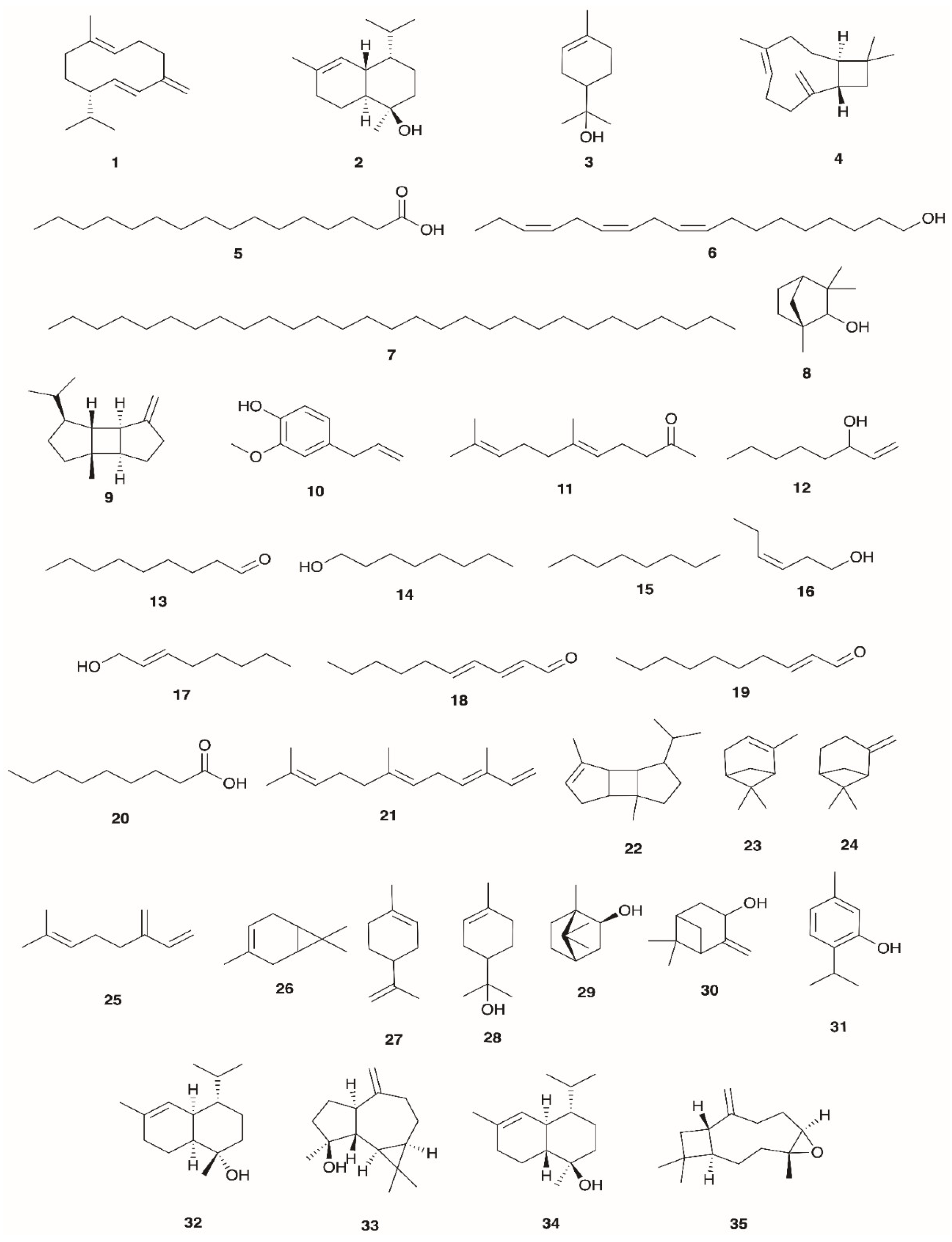
Figure 3.
Structures of triterpenoid constituents profiled in Mediterranean Erica species.
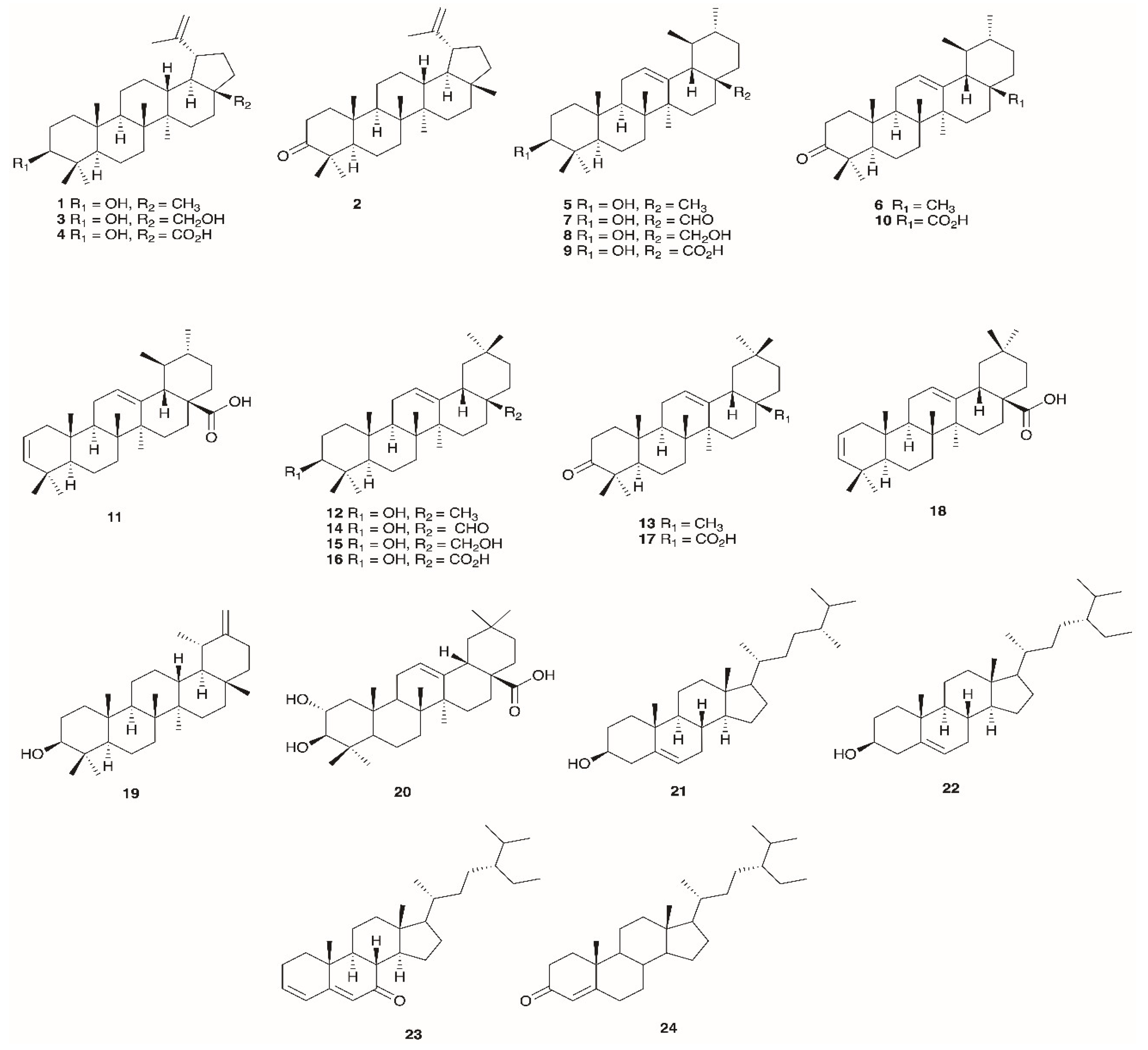
Figure 4.
Structures of phenylpropanoid glucosides identified in E. arborea.
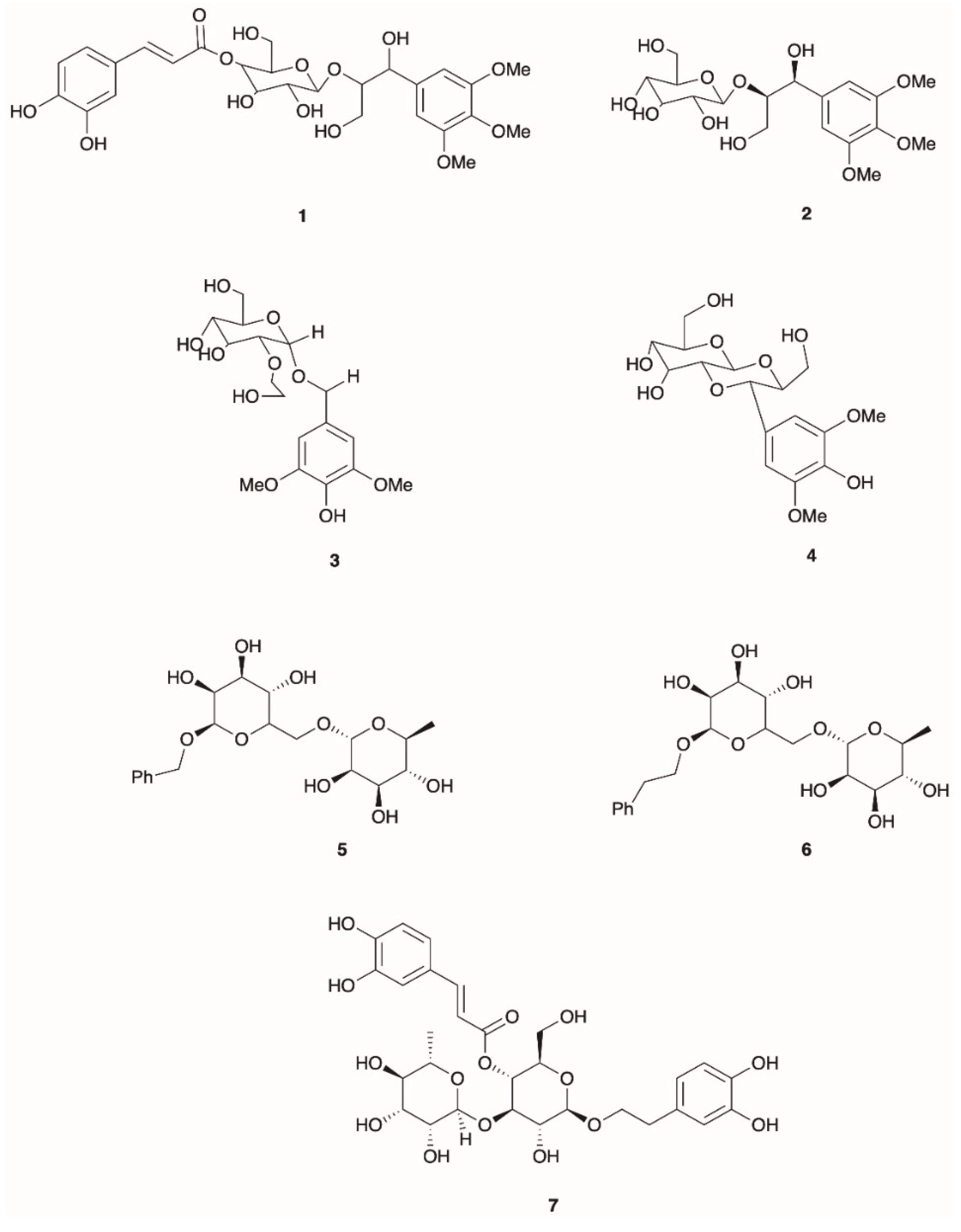
Figure 5.
Structures of flavonoids and their glycosides profiled in Mediterranean Erica species.
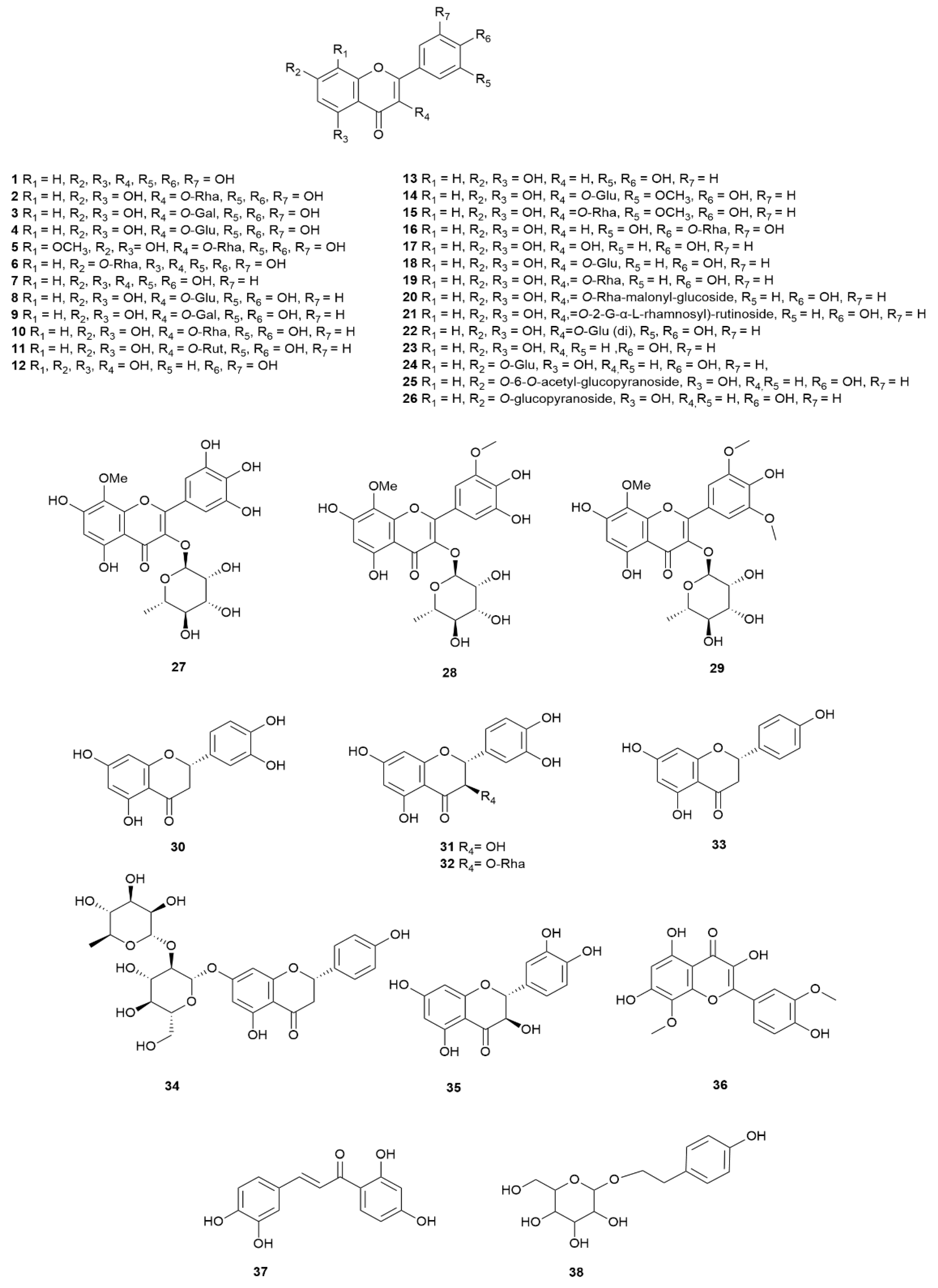
Figure 7.
Structures of catechins profiled in Mediterranean Erica species.
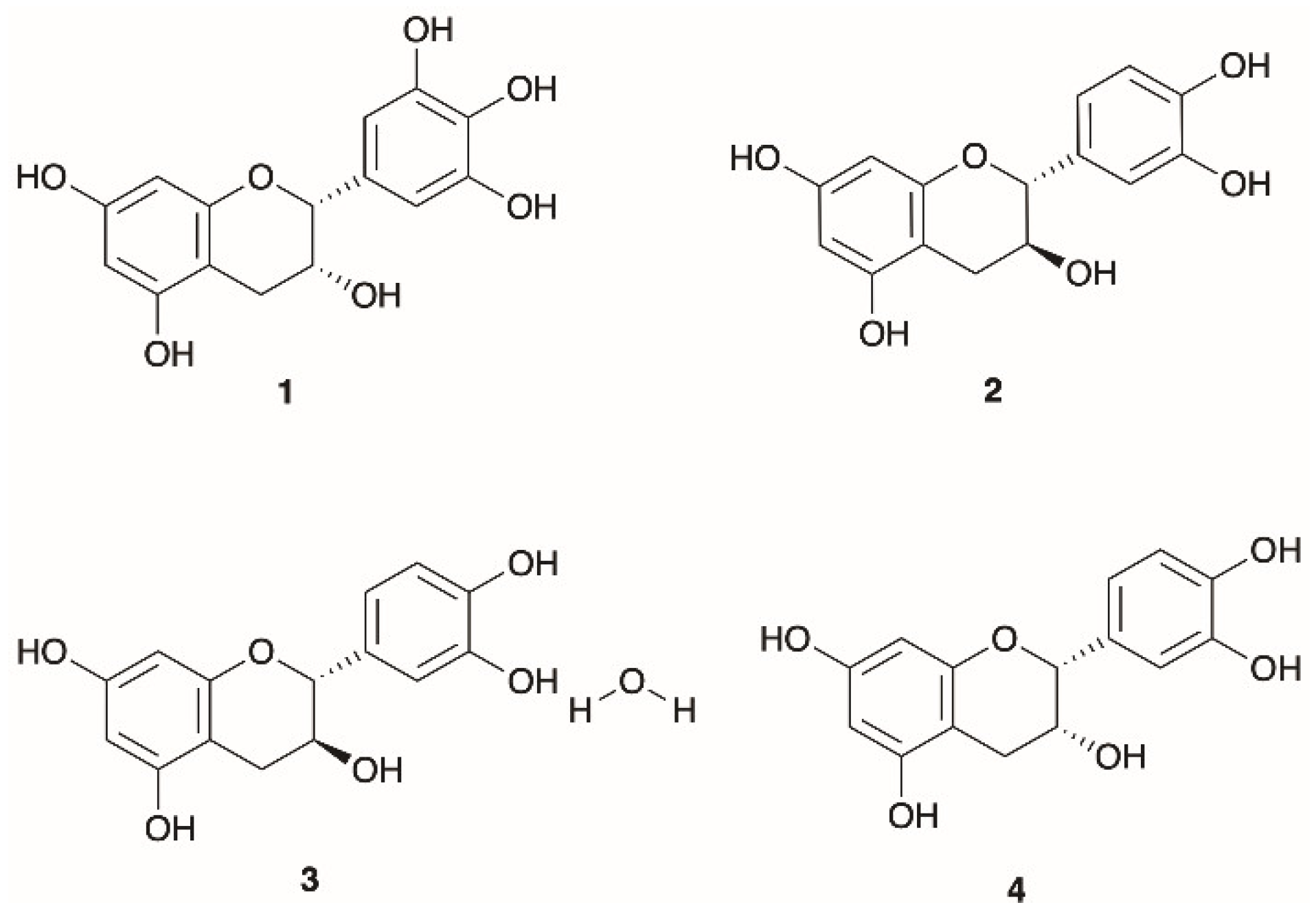
Figure 6.
Structures of anthocyanidins profiled in E. australis.
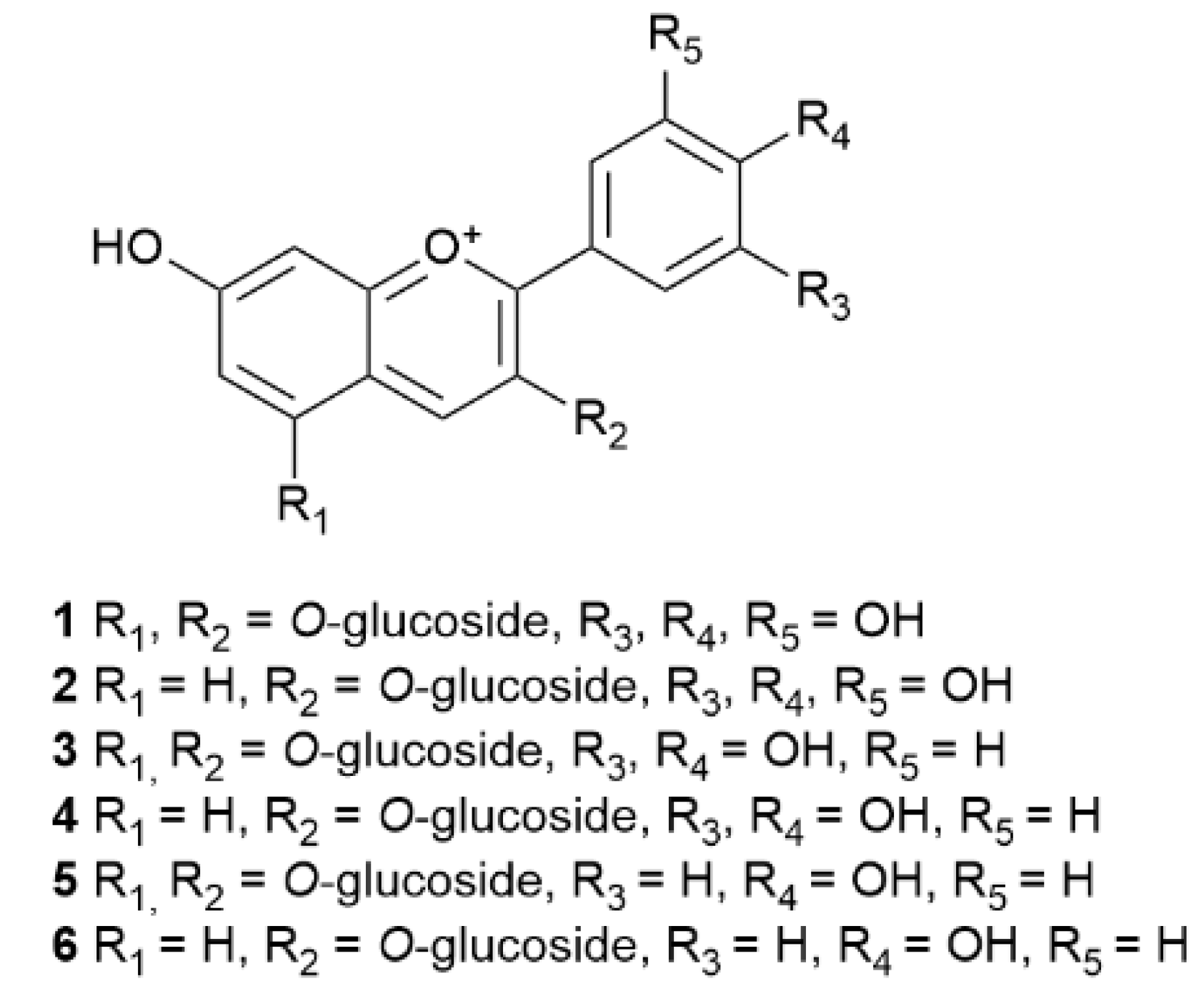

Table 1.
Morphological characteristics and geographical locations of Erica species in regions of the Mediterranean basin.
Table 1.
Morphological characteristics and geographical locations of Erica species in regions of the Mediterranean basin.
| Species | Height | Leaf Morphology | Flower Morphology | Growing regions in the Mediterranean basin |
|
E. arborea (Tree heath) |
To 7 m | Leaves arranged in whorls of 3, linear, 5-7 mm in length | White or very pale pink, terminal on short leafy shoots in umbels of 2-4 | Widely distributed in the region across southern Europe, northern Africa and to the east in countries including Turkey, Lebanon and Syria |
|
E. multiflora (Many-flowered heath) |
To 2.5 m | Thick, leathery leaves arranged in whorls of 3-5, linear, 10-15 mm in length and 1-1.5 mm broad | White to pink in axillary clusters of 1-4 | Europe: eastern Spain and the Balearic Islands, southern France (including the northern tip of Corsica), Italy (including Lampedusa, Sardinia and Sicily), Malta and Gozo, southern coastal Croatia, Albania and north-west Greece. North Africa: Algeria, Morocco, Tunisia and Libya |
|
E. scoparia, E. scoparia subsp. scoparia (Besom heath) |
1 to 4 m | Leaves arranged in whorls of 3 or 4, linear, 4-10 mm in length | Inflorescences are numerous and crowded on shoots; individual inflorescence are umbels of 1-3 greenish flowers, rarely tinged with red, on very reduced lateral branchlets | Western Mediterranean basin. Europe: Portugal, Spain including the Balearic Islands, southern and south-western France including Corsica, north-western Italy and Sardinia. North Africa: Morocco, Algeria and Tunisia |
|
E. manipuliflora (Whorled heath) |
To 4 m | Leathery leaves arranged in whorls of 3 or 4, 3-9 mm in length | Inflorescences composed of several to many axillary umbels of 1-5 flowers on very short shoots, in varying shades of mauve, pink or rarely white | Italy, southern Croatia, Montenegro, Albania, Greece including Crete and the Ionian and Aegean islands, Turkey, Northern Cyprus, Syria and Lebanon |
|
E. australis (Southern heath) |
To 2.5 m | Leaves arranged in whorls of 4, linear in shape, to 7 mm in length | The inflorescences are terminal on leafy lateral shoots, flowers in 4s, sometimes with subsidiary whorls, in varying shades of pale pink to lilac-link and sometimes white | Western Iberian Peninsula, in regions of Portugal and Spain, as well as in northern Morocco |
|
E. terminalis (Corsican heath) |
To 2-3 m | Leaves arranged in whorls of 4-5, lanceolate to linear, to 9 mm in length | Inflorescences are a single terminal umbel, or a compound inflorescence of several umbels on leafy lateral shoots, generally in pink to purple | Southwestern and southern Europe: Spain, Corsica and Italy including Sardinia. North Africa: Morocco |
| E. sicula. subsp. sicula (Sicilian heath) | To 0.6 m | Leaves arranged in whorls of 4 to 5, spreading or ascending, linear 3-13 mm in length | Inflorescences with 2-8 flowers in terminal umbels on main or axillary shoots in pale to deep pink, sometimes white | Italy (specifically Sicily), Libya, Turkey (specifically Anatolia), and also areas of Cyprus, Lebanon and Libya |
|
E. sicula subsp. bocquetii (Bocquet’s heath) |
To 0.25 m often spreading to form hummocks | Leaves arranged in whorls of 3 to 4, spreading or ascending, linear, 3-6 mm in length |
Flowers 2-3, rarely solitary, in umbel, terminal on main or axillary shoots in pale to deep pink | Western Asia: Turkey (Anatolia only) above 1,000 m altitude |
|
E. spiculifolia (Balkan heath, Spike heath) |
To 15 cm | Arranged in irregular whorls of 2 to 6 or spirally arranged, linear-lanceolate, 4-6 mm in length, although the leaves found in inflorescences can be longer, reaching up to 9 mm | The inflorescences typically consist of a terminal raceme with 8 - 40 flowers, in bright pink to red-pink, very rarely white | South-eastern Europe: Bosnia and Herzegovina, Montenegro, Macedonia, Albania and Greece. Western Asia: northern Turkey |
|
E. umbellata (Dwarf Spanish heath) |
To 0.6 m | Leaves arranged in whorls of 3, linear, small at 2-5 mm length and 0.5 mm in width | Inflorescences are terminal umbels of 1-6 flowers, in pink to purple, occasionally white | Spain and Portugal and northern Morocco |
| E. andevalensis | To 2 m | Arranged in whorls of 4 to 5, with young shoot internodes ~ 1.5 mm long, while older shoot internodes range from 5 to 7.5 mm long, ovate, ~ 5 mm in length and to 2.5 mm in width | Inflorescences are terminal and umbellate in dark pink, rarely white | South-western Iberian Peninsula only, in regions of Spain and Portugal |
|
E. lusitanica (Spanish heath, Portuguese heath) |
To 4.5 m | Leaves arranged in whorls of 4 (sometimes in 3s), linear with edges parallel or lanceolate and narrowing slightly to tip, 7 mm in length and 0.5 mm in width | Inflorescences are numerous and crowded towards ends of shoots, 1-4 flowers in each terminal umbel at tip of short, leafy lateral shoots, in white, often tinged pink in the bud | Iberian Peninsula: Small pockets widely scattered in southern and western Portugal and south-western Spain |
Table 2.
Summary of the traditional uses of Mediterranean Erica spp. in countries of the Mediterranean basin from the literature.
Table 2.
Summary of the traditional uses of Mediterranean Erica spp. in countries of the Mediterranean basin from the literature.
|
Plant species (Local name) |
Region | Plant part(s) | Preparation | Uses/Treatment | Reference(s) |
| Western Asia | |||||
| Turkey | |||||
| E. manipuliflora Salisb. | Turkey | Flowers, branches and leaves | Decoction/Infusion |
Obesity | [27] |
| E. manipuliflora Salisb.(Püren) | Karaisalı | Branches and flowers | Infusion | Weight loss | [38] |
|
E. manipuliflora Salisb. (Piren, Funda) |
Marmaris, Muğla | Leaves | Infusion | Weight loss and as a diuretic | [39] |
|
E. manipuliflora Salisb. (Püren and Funda) |
Dalaman, Muğla | Leaves and flowers | Decoction |
Weight loss and for diabetes treatment | [40] |
|
E. arborea (Funda) |
Mount Ida (Balıkesir) | Leaves | Infusion | Weight loss | [41] |
|
E. arborea (Briar, Tree heath) |
Turkey | Leaves and seeds | Infusion | For treatment of obesity | [27] |
|
E. arborea (Püren, Piren) |
Edremit Bay (Balıkesir) | Flowers and branches | Infusion | Asthma |
[42] |
|
E. arborea (Funda) |
Gönen, Balıkesir |
Flowering branches | Decoction |
Diuretic | [43] |
|
E. arborea (Funda, Piren, Süpürge otu, Süpürge çalısı) |
Çatalca | Fruit | Externally | Foot wounds and mouth sores | [44,45,46] |
|
E. arborea (Funda, Piren, Süpürge otu, Süpürge çalısı) |
Çatalca | Fruit | Internally | Foot and mouth disease in animals | [44] |
|
E. arborea (Çalısüpürgesi, pirançalısı) |
Düzce province | Flowers | Infusion | Sooth itching in anal fissure | [47] |
|
E. arborea (Süpürge) |
South part of İzmit Gulf | Aerial parts | Decoction |
Hypertension | [48] |
|
E. arborea (Funda) |
Kastamonu province | Leaves | Infusion | Inflammation, urinary tract infection and kidney stones | [49] |
| E. arborea | Turkey | Leaves and flowers | Not defined | Constipation, diuretic, hypertension, renal lithiasis, inflammation, sooth itching in anal fissure, urinary tract infection, kidney stones, renal fluid flow, poor eyesight, snakebites, stomach problems, sleeping disorders, mouth sores, poor circulation, colds, gout, lumbago, muscular aches, motion sickness, hangover cure | [15,37,50] |
| E. arborea | Turkey | Leaves | A glass of 5% decoction or infusion | Edema | [51] |
|
E. arborea (Funda/ Tree heath) |
Sourced in Gaziantep herbal markets, Turkey | Leaves and shoots | Infusion | Urinary and respiratory disorders | [52] |
| E. arborea | Turkey | Flower tips | Decoction |
Renal lithiasis, diuretic and a urinary antiseptic | [26] |
|
E. manipuliflora Salisb. (Püren, püren otu, süpürge otu, sükürte otu, süpürtge out) |
Sarigöl/Manisa | Flowering branches and aerial parts | Decoction (One teacup, 3 times a day for 4–5 weeks) |
Urinary tract infection and diuretic | [36] |
|
E. manipuliflora Salisb. (Süpürge) |
Western region of Turkey | Shoots | Infusion | Diuretic | [53] |
|
E. manipuliflora Salisb. (Acram) |
In the district of Antakya | Flowering parts | Not defined | Anthelmintic | [54,55] |
|
E. manipuliflora Salisb. (Funda) |
Kazdağı National Park, West Turkey | Leaves | Not defined | Urinary tract infection and appetite suppressant | [56] |
|
E. manipuliflora Salisb. (Püren, Pürenotu, Süpürgeotu, Sükürteotu) |
Turkey | Flowers and branches | Decoction Internal/drink one glass 3 times a day for 4–8 weeks |
Kidney stones | [57] |
|
E. manipuliflora Salisb. (Püren, Pürenotu, Süpürgeotu, Sükürteotu and Funda) |
Alaşehir (Manisa) | Flowers, branches and leaves | Decoction (one glass 3 times daily) or infusion | Diabetes, hypertension, constipation, arthritis, obesity, nephralgia, gastrointestinal diseases, diuretic, ureter infection, sedative and kidney stones | [28,37,39,40,41,54,57,58,59,60,61,62] |
|
E. manipuliflora Salisb. (Funda, Püren) |
Turkey | Flowers and leaves | Decoction | Hypertension | [59,60] |
|
E. manipuliflora Salisb. (Piren, Püren) |
Datça Peninsula, South-west Turkey | Flowers | Infusion | Sedative | [61] |
|
E. manipuliflora Salisb. (Funda, Süpürge out and Püren) |
Turkey | Aerial parts | External as ointment with olive oil | Boils | [62] |
|
E. manipuliflora Salisb. (Funda, Süpürge out, Püren) |
Turkey | Fruit, flowers and branches | As ointment with olive oil | Eczema | [63] |
|
E. manipuliflora Salisb. (Püren) |
Ceylanlı village of Kırıkhan district of Hatay area | Stems | Not defined | Diuretic, constipation, arthritis and weight loss | [64] |
|
E. manipuliflora Salisb. and E. arborea |
Turkey | Aerial parts | Infusion | Constipation, urethritis and diuretic effects | [65] |
|
E. manipuliflora Salisb. (Püren) |
Antakya | Flowers | Infusion | Anthelmintic properties | [66] |
| Lebanon | |||||
|
E. manipuliflora Salisb. (Khalanj laqui, Shantaf) |
Lebanon | Flowers and twigs | Decoction | Rheumatism and antineuralgic | [67] |
| E. manipuliflora Salisb. | Lebanon | Flowers | Not defined | Sedative | [68] |
| Syria | |||||
|
E. manipuliflora Salisb. (Ajram) |
Western Region (Latakia and Tartus) | Flowers | Decoction | Sedative, diuretic, gout and urinary tract infection, while the heather honey of the plant is commonly used as a tonic, expectorant, to treat rheumatism asthma, dysmenorrhea and arthritis, as a laxative, disinfectant for the respiratory tract, urinary tract infections, acute nephritis, relieving nerve pain, depression, treating insomnia, bladder and prostate pain and enlargement | [69] |
| Syria, Lebanon, Turkey, Cyprus | |||||
| E. manipuliflora Salisb. | Syria, Lebanon, Turkey, Cyprus | Flowers, leaves, branches and shoots | Infusion/Decoction and boiled | Urethritis, arthritis, weight loss, diuretic, constipation | [70] |
| North Africa | |||||
| Algeria | |||||
|
E. arborea (Khlenj) |
Algeria | Aerial parts and stems | Oral, infusion or decoction | Diuretic, anti-inflammatory, astringent, antiulcer and antimicrobial agent, treat hypertension, kidney inflammations, urolithiasis, renal lithiasis, pinworm infection, urinary infections, stomachache and prostate diseases |
[8,71,72,73,74,75] |
|
E. arborea (Bouhadad, khlenj) |
Tadergount, Derguina-Bejaia, North of Algeria | Flowers, leaves and aerial parts | External/Internal | Kidney stones, eczema, urinary and gastric diseases, inflammation, microbial infections and snakebites | [74] |
|
E. arborea (Elkhlilanj) |
Algeria | Aerial parts | Infusion/Decoction | Lithiasis and urinary infections | [75] |
|
E. arborea (Akhlendj) |
The Djurdjura National Park | Flowers | Infusion | Physical weakness and anxiety | [76] |
|
E. arborea (Axlenǧ) |
Kabylia region | Leaves/Roots | Decoction, Cataplasm | Rheumatism | [77] |
|
E. arborea (Elkhlilanj) |
The region of Chlef | Stems | Infusion | Gastrointestinal illnesses including pinworm infection and stomachache | [78] |
|
E. arborea (Akheloundj) |
Kabylia area (North Algeria) | Flowers | Internal | Urinary stone | [79] |
|
E. arborea (Akheloundj) |
Kabylia area (North Algeria) | Flowers | External | Freckles | [79] |
| E. arborea | The Setifian Tell, East Algeria | Flowers | Infusion | Acute and chronic urinary infection | [80] |
|
E. arborea (Akhlenj) |
Djurdjura Biosphere Reserve | Flowers | Decoction | Indigestion and nervousness | [81] |
| Tunisia | |||||
| E. multiflora | Kalaa Sghira | Aerial parts | Not defined | Diuretic, urinary infections, tranquillizing, astringent and prostate cancer | [51,82,83] |
| Morocco | |||||
| E. multiflora | Morocco | Not defined | Not defined | Diuretic | [82] |
|
E. multiflora (Khlenj) |
Morocco | Not defined | Not defined | Hypertension, inflammation, hyperlipidemia and atherosclerosis | [84,85,86] |
| E. scoparia and E. multiflora | Northern Morocco | Not defined | Infusion | Analgesic and anti-inflammatory activities | [87] |
| E. multiflora | Northern Morocco | Not defined | Infusion | Liver function repair effects and antilithiatic actions | [87] |
|
E. terminalis Salisb. (El Khalanj) |
Zemmour and Zayane | Whole plant | Decoction or oral | Veterinary use for lameness | [89] |
|
E. arborea (Khlenj) |
Bni-Leit and Al-Oued districts, a part of the Natural Regional Park of Bouhachem | Seeds | Decoction or local application | Headaches and sexual diseases | [90] |
| E. australis | Morocco | Not defined | Infusion | Diuretic, antiseptic and to treat infected wounds | [91] |
| Southern European countries | |||||
| Spain | |||||
|
E. multiflora (Brezo o Erica) |
Spain | Aerial parts | Not defined | Wound healing | [93] |
| E. terminalis Salisb. | Western part of Granada (southern Spain) | Flowers | Decoction | Urinary infections | [94] |
|
E. scoparia (Bruc) |
L’Alt Empordà and Les Guilleries, located in North East Catalonia | Floral tops | Infusion | Antiemetic and antispasmodic | [95] |
| Portugal | |||||
| E. australis | In Vilar de Perdizes | Flower | Not defined | Prostate, bladder and kidney disease | [96] |
| Greece | |||||
| E. arborea | Mt. Pelion | Leaves and stems | Decoction | Rheumatism, anemia, cystitis, diarrhea, diuretic and acne, | [97] |
|
E. manipuliflora Salisb. (Sousora) |
Mt. Pelion | Leaves, flowers and stems | Decoction | Urinary tract diseases and treat prostate | [97] |
| Italy | |||||
|
E. arborea (Ulece) |
Peninsula Sorrentina, Campania, Southern Italy | Not defined | Not defined | Nervous system disorders in folk veterinary medicine | [98] |
|
E. arborea (Urxa and Socche) |
Eastern Riviera (Liguria) | Not defined | Not defined | Mouth infections | [99] |
| E. arborea | Roccamonfina region in Campania, Southern Italy | Flowers | Decoction | Prostatic cystitis | [100] |
| E. arborea | Inland Southern Italy | Stems | Not defined | Sedative in veterinary medicine | [101] |
| Malta | |||||
|
E. multiflora (Xkattapietra) |
Gozo, Malta | Aerial parts | Decoction | Urinary tract disorders | [103] |
| Bosnia and Herzegovina | |||||
|
E. erigena R. Ross (Erika) |
Middle, southern and western Bosnia and Herzegovina | Aerial parts | Not defined | Renal disorders | [104] |
Table 3.
Essential oil constituents identified in Mediterranean Erica species.
| No. | Compound | Species | Location | Plant part(s) | Identification | Reference |
| 1 | Germacrene-D | E. arborea | Algeria | Leaves | GC/MS | [22] |
| E. manipuliflora | Turkey | Aerial parts | GC/MS | [106] | ||
| 2 | Tau-cadinol | E. manipuliflora | Turkey | Aerial parts | GC/MS | [106] |
| 3 | α-terpineol | |||||
| 4 | β-caryophyllene | E. manipuliflora | Turkey | Aerial parts | GC/MS | [106] |
| E. arborea | Algeria | Leaves | GC/MS | [22] | ||
| 5 | Palmitic acid | E. arborea | Algeria | Leaves | GC/MS | [22] |
| 6 | (Z,Z,Z)-9,12,15-octadecatrien-1-ol | |||||
| 7 | Nonacosane | |||||
| 8 | β-Fenchyl alcohol | |||||
| 9 | β-bourbonene | |||||
| 10 | Eugenol | |||||
| 11 | Geranylacetone | E. arborea | Algeria | Leaves | GC/MS | [22] |
| E. australis | Portugal | Flowering aerial parts | GC/MS | [107] | ||
| 12 | 1-octen-3-ol | E. australis | Portugal | Flowering aerial parts | GC/MS | [107] |
| 13 | n-nonanal | |||||
| 14 | n-octanol | |||||
| 15 | n-heptanol | |||||
| 16 | cis-3-hexen-1-ol | |||||
| 17 | 2-octen-1-ol | |||||
| 18 | 2-trans, 4-trans-decadienal | |||||
| 19 | 2-trans-decenal | |||||
| 20 | Nonanoic acid | |||||
| 21 | trans, trans-α-farnesene | |||||
| 22 | cis-bourbonene | |||||
| 23 | α-pinene | E. multiflora | Spain | Foliar emissions | GC/MS | [108] |
| 24 | β-pinene | |||||
| 25 | β-myrcene | |||||
| 26 | A3 -carene | |||||
| 27 | Limonene | |||||
| 28 | α-terpineol | E. spiculifolia Salisb. | Bulgaria | Aerial parts | GC/MS | [109] |
| 29 | Endo-borneol | |||||
| 30 | Pinocarveol | |||||
| 31 | Thymol | |||||
| 32 | τ-murrolol | |||||
| 33 | Spathulenol | |||||
| 34 | α-cadinol | |||||
| 35 | Caryophyllene oxide | E. spiculifolia Salisb. | Bulgaria | Aerial parts | GC/MS | [109] |
| E. manipuliflora | Turkey | Aerial parts | GC/MS | [106] |
Table 4.
Triterpenoids identified in Mediterranean Erica species.
| No. | Compound | Species | Location | Plant part(s) | Identification | Reference |
| 1 | Lupeol | E. arborea | Algeria | Aerial parts | GC-MS | [12] |
| 2 | Lupenone | E. arborea | Algeria | Aerial parts | GC-MS | [12] |
| E. multiflora | Tunisia | Leaves | HPLC | [112] | ||
| 3 | Betulin | E. arborea | Algeria | Aerial parts | GC-MS | [12] |
| 4 | Betulinic acid | |||||
| 5 | α-amyrin | E. arborea | Algeria | Aerial parts | GC-MS | [12] |
| E. andevalensis | Spain | Aerial parts | IR, MS, NMR | [111] | ||
| 6 | α-amyrenone | E. arborea | Algeria | Aerial parts | GC-MS | [12] |
| 7 | Ursolic aldehyde | |||||
| 8 | Uvaol | |||||
| 9 | Ursolic acid | E. arborea | Algeria | Aerial part | GC-MS | [12] |
| E. manipuliflora | Turkey | Aerial parts | NMR and MS | [110] | ||
| E. andevalensis | Spain | Aerial parts | IR, MS, NMR | [111] | ||
| 10 | 3-oxoursolic acid | E. arborea | Algeria | Aerial parts | GC-MS | [12] |
| 11 | Ursa-2,12-dien-28-oic acid | |||||
| 12 | β-amyrin | |||||
| 13 | β-amyrenone | |||||
| 14 | Oleanolic aldehyde | |||||
| 15 | Erythrodiol | |||||
| 16 | Oleanolic acid | |||||
| 17 | 3-oxooleanolic acid | |||||
| 18 | Olean-2,12-dien-28-oic acid | |||||
| 19 | Taraxasterol | |||||
| 20 | Maslinic acid | |||||
| 21 | Campesterol | |||||
| 22 | Sitosterol | |||||
| 23 | Tremulone | |||||
| 24 | Sitostenone |
Table 5.
Phenolic acids/esters/glycosides identified in Mediterranean Erica species.
| No. | Compound | Species | Location | Plant part(s) | Identification | Reference |
| 1 | Gallic acid | E. arborea | Turkey | Not defined | LC–ESI–MS/MS | [17] |
| E. manipuliflora | Turkey | Aerial parts | LC-MS/MS | [19] | ||
| E. multiflora | Tunisia | Aerial parts | HPLC | [85] | ||
| E. australis | Portugal | Leaves and flowers | HPLC | [113] | ||
| 2 | Gentisic acid | E. scoparia | Spain | Leaves | TLC | [114] |
| E. australis | Portugal | Leaves and flowers | HPLC | [113] | ||
| E. australis | Spain | Flowers, stems and roots | TLC | [115] | ||
| 3 | Vanillic acid | E. manipuliflora | Turkey | Aerial parts | LC-MS/MS | [19] |
| E. arborea | Turkey | Leaves | HPLC-LTQ OrbiTrap MS | [9] | ||
| E. multiflora | Tunisia | Aerial parts | HPLC | [85] | ||
| E. australis | Spain | Leaves, stems and roots | TLC | [115] | ||
| E. scoparia | Spain | Leaves | TLC | [114] | ||
| E. andevalensis | Spain | Leaves | HPLC | [18] | ||
| E. australis | Spain | Leaves | HPLC | [18] | ||
| E. arborea | Spain | Leaves | HPLC | [18] | ||
| 4 | 3,4-Dihydroxybenzoic acid | E. arborea | Turkey | Not defined | LC–ESI–MS/MS | [17] |
| E. manipuliflora | Turkey | Aerial parts | LC-MS/MS | [19] | ||
| E. scoparia | Spain | Leaves | TLC | [114] | ||
| E. arborea | Turkey | Leaves | HPLC-LTQ OrbiTrap MS | [9] | ||
| 5 | 2,5-Dihydroxybenzoic acid | E. arborea | Turkey | Leaves | HPLC-LTQ OrbiTrap MS | [9] |
| E. arborea | Turkey | Not defined | LC–ESI–MS/MS | [17] | ||
| 6 | 3-Hydroxybenzoic acid | E. arborea | Turkey | Not defined | LC–ESI–MS/MS | [17] |
| 7 | 4-Hydroxybenzoic acid | E. arborea | Turkey | Leaves | HPLC-LTQ OrbiTrap MS | [9] |
| E. arborea | Turkey | Not defined | LC–ESI–MS/MS | [17] | ||
| E. manipuliflora | Turkey | Aerial parts | LC-MS/MS | [19] | ||
| E. australis | Spain | Leaves, stems, roots and flowers | TLC | [115] | ||
| 8 | Quinic acid | E. multiflora | Tunisia | Leaves | LC–MS/MS | [117 |
| 9 | 5-O-Caffeoylquinic acid | E. arborea | Turkey | Leaves | HPLC-LTQ OrbiTrap MS | [9] |
| 10 | 4-O-Caffeoylquinic acid | E. multiflora | Morocco | Aerial parts | LC–DAD/ESI–MS | [87] |
| 11 | 3-O-Caffeoylquinic Acid (Chlorogenic acid) | E. multiflora | Tunisia | Leaves | LC–MS/MS | [117] |
| E. arborea | Turkey | Not defined | LC–ESI–MS/MS | [17] | ||
| E. arborea | Turkey | Leaves | HPLC-LTQ OrbiTrap MS | [9] | ||
| E. australis | Portugal | Leaves and flowers | HPLC | [113] | ||
| 12 | Ellagic acid | E. andevalensis | Spain | Leaves | HPLC | [18] |
| E. australis | Spain | Leaves | HPLC | [18] | ||
| E. arborea | Spain | Leaves | HPLC | [18] | ||
| 13 | Caffeic acid | E. arborea | Turkey | Leaves | HPLC-LTQ OrbiTrap MS | [9] |
| E. arborea | Spain | Leaves | HPLC | [18] | ||
| E. multiflora | Algeria | Flowered aerial parts | HPLC–DAD–ESI-MS | [16] | ||
| E. manipuliflora | Turkey | Aerial parts | LC-MS/MS | [19] | ||
| E. scoparia | Spain | Leaves | TLC | [114] | ||
| E. australis | Portugal | Leaves and flowers | HPLC | [113] | ||
| E. australis | Spain | Roots | TLC | [115] | ||
| E. andevalensis | Spain | Leaves | HPLC | [18] | ||
| E. australis | Spain | Leaves | HPLC | [18] | ||
| 14 | Syringic acid | E. arborea | Turkey | Not defined | LC–ESI–MS/MS | [17] |
| E. scoparia | Spain | Leaves | TLC | [114] | ||
| 15 | Sinapic acid | E. arborea | Turkey | Not defined | LC–ESI–MS/MS | [17] |
| E. australis | Portugal | Leaves and flowers | HPLC | [113] | ||
| E. australis | Spain | Roots | TLC | [115] | ||
| 16 | Ferulic acid | E. arborea | Turkey | Not defined | LC–ESI–MS/MS | [17] |
| E. scoparia | Spain | Leaves | TLC | [114] | ||
| E. australis | Spain | Leaves, stems, roots and flowers | TLC | [115] | ||
| 17 | Rosmarinic acid | E. arborea | Turkey | Not defined | LC–ESI–MS/MS | [17] |
| 18 | Cinnamic acid | E. australis | Portugal | Leaves and flowers | HPLC | [113] |
| E. andevalensis | Spain | Seeds | HPLC | [116] | ||
| E. andevalensis | Spain | Leaves | HPLC | [18] | ||
| 19 | p-Coumaric acid | E. arborea | Turkey | Leaves | HPLC-LTQ OrbiTrap MS | [9] |
| E. multiflora | Algeria | Flowered aerial parts | HPLC–DAD–ESI-M | [16] | ||
| E. scoparia | Spain | Leaves | TLC | [114] | ||
| E. australis | Portugal | Leaves and flowers | HPLC | [113] | ||
| E. australis | Spain | Leaves, flowers and roots | TLC | [115] | ||
| E. australis | Spain | Leaves | HPLC | [18] | ||
| E. andevalensis | Spain | Leaves | HPLC | [18] | ||
| E. andevalensis | Spain | Seeds | HPLC | [116] | ||
| 20 | m-Coumaric acid | E. australis | Spain | Leaves | HPLC | [18] |
| E. arborea | Spain | Leaves | HPLC | [18] | ||
| E. andevalensis | Spain | Seeds | HPLC | [116] | ||
| 21 | Fumaric acid | E. manipuliflora | Turkey | Aerial parts | LC-MS/MS | [19] |
| 22 | Resveratrol | E. manipuliflora | Turkey | Aerial parts | LC-MS/MS | [19] |
| 23 | Acetohydroxamic Acid | E. manipuliflora | Turkey | Aerial parts | LC-MS/MS | [19] |
| 24 | 2,4-dihydroxy-phenyl acetonitrile | E. scoparia | Spain | Leaves | NMR | [119] |
| 25 | 2-hydroxyphenyl acetic acid | E. scoparia | Spain | Leaves | NMR | [119] |
| 26 | 3,4-Dihydroxyphenyl acetic acid | E. arborea | Turkey | Not defined | LC–ESI–MS/MS | [17] |
| 27 | Oleuropein | E. manipuliflora | Turkey | Aerial parts | LC-MS/MS | [19] |
| 28 | Scopoletin | E. australis | Spain | Leaves, flowers, stems and roots | TLC | [115] |
| 29 | Phloridzin dihydrate | E. manipuliflora | Turkey | Aerial parts | LC-MS/MS | [19] |
| 30 | Aesculetin | E. australis | Spain | Leaves, flowers, stems and roots | TLC | [115] |
| 31 | Pyrocatechol | E. arborea | Turkey | Not defined | LC–ESI–MS/MS | [17] |
Table 6.
Phenylpropanoid glucosides identified in E. arborea.
| No. | Compound | Species | Location | Plant part(s) | Identification | Reference |
| 1 | Ericarborin | E. arborea | Turkey | Leaves | NMR | [15] |
| 2 | 1,2-erythro-1-(3,4,5-trimethoxyphenyl)-2-(β-D-glucopyranosyloxy) propan-1,3-diol | E. arborea | Turkey | Leaves and Flowers | NMR and MS | [118] |
| 3 | Ericarboside | |||||
| 4 | Ficuscarpanoside B | |||||
| 5 | Benzylrutinoside | |||||
| 6 | Phenethylrutinoside | |||||
| 7 | Verbascoside | E. arborea | Turkey | Not defined | LC–ESI-MS/MS | [17] |
Table 7.
Flavonoids and their glycosides profiled in Mediterranean Erica species.
| No. | Compound | Species | Location | Plant part(s) | Identification | Reference(s) |
| 1 | Myricetin |
E. arborea | Turkey | Leaves | HPLC-LTQ Orbitrap MS | [9] |
| E. manipuliflora | Turkey | Aerial parts | LC-MS/MS | [19] | ||
| E. manipuliflora | Greece | Aerial parts | NMR | [120] | ||
| E. andevalensis | Spain | Leaves | HPLC | [18] | ||
| E. australis | Spain | Leaves | HPLC | [18] | ||
| E. arborea | Spain | Leaves | HPLC | [18] | ||
| E. multiflora | Tunisia | Leaves | LC–MS/MS | [117] | ||
| E. australis | Portugal | Leaves and flowers |
HPLC | [113] | ||
| E. australis | Spain | Flowers and roots | TLC | [115] | ||
| 2 | Myricetin 3-O-rhamnoside | E. scoparia | Morocco | Leaves | LC–DAD/ESI–MS | [87] |
| E. australis | Portugal | Flowering aerial parts | HPLC-DAD and HPLC-ESI-MS | [121] | ||
| 3 | Myricetin 3-O-galactoside | E. andevalensis | Spain | Flowering tops | IR, MS, NMR | [122] |
| E. andevalensis | Spain | Flowering tops | IR, MS, NMR | [123] | ||
| 4 | Myricetin 3-O-glucoside | E. multiflora | Tunisia | Leaves | LC–MS/MS | [117] |
| E. australis | Portugal | Flowering aerial parts | HPLC-DAD and HPLC-ESI-MS | [121] | ||
| 5 | 8-Methoxy-myricetin 3-O-rhamnoside | E. arborea | Turkey | Leaves | HPLC-LTQ OrbiTrap MS | [9] |
| E. scoparia | Morocco | Aerial parts | LC–DAD/ESI–MS | [87] | ||
| 6 | Myricetin 7-O-rhamnoside | E. arborea | Turkey | Leaves | HPLC-LTQ Orbitrap MS | [9] |
| 7 | Quercetin | E. australis | Spain | Leaves, flowers and roots | TLC | [115] |
| E. arborea | Turkey | Leaves | HPLC-LTQ Orbitrap MS | [9] | ||
| E. manipuliflora | Turkey | Aerial parts | LC-MS/MS | [19] | ||
| E. multiflora | Algeria | Flowered aerial parts | HPLC–DAD–ESI-MS | [16] | ||
| E. multiflora | Morocco | Aerial parts and leaves | LC–DAD/ESI–MS | [87] | ||
| E. multiflora | Tunisia | Aerial parts | HPLC | [85] | ||
| E. manipuliflora | Greece | Aerial parts | NMR | [120] | ||
| E. australis | Portugal | Leaves and flowers |
HPLC | [113] | ||
| 8 | Quercetin 3-O-β-D-glucopyranoside |
E. arborea | Turkey | Leaves | NMR | [15] |
| E. arborea | Turkey | Leaves | HPLC-LTQ Orbitrap MS | [9] | ||
| E. multiflora | Tunisia | Leaves | LC–MS/MS | [117] | ||
| 9 | Quercetin 3-O-galactoside (Hyperoside) | E. arborea | Turkey | Not defined | LC–ESI–MS/MS | [17] |
| 10 | Quercetin 3-O-α-L-rhamnopyranoside |
E. arborea | Turkey | Leaves | NMR | [15] |
| E. arborea | Turkey | Leaves | HPLC-LTQ Orbitrap MS | [9] | ||
| E. australis | Portugal | Flowering aerial parts | HPLC-DAD and HPLC-ESI-MS | [121] | ||
| 11 | Quercetin 3-O-rutinoside | E. multiflora | Tunisia | Leaves | LC–MS/MS | [117] |
| 12 | Gossypetin | E. australis | Portugal | Flowering aerial parts | HPLC-DAD and HPLC-ESI-MS | [121] |
| 13 | Luteolin | E. arborea | Turkey | Leaves | HPLC-LTQ Orbitrap MS | [9] |
| E. manipuliflora | Turkey | Aerial parts | LC-MS/MS | [19] | ||
| 14 | Isorhamnetin 3-O-glucoside | E. arborea | Turkey | Leaves | HPLC-LTQ Orbitrap MS | [9] |
| 15 | Isorhamnetin 3-O-α-L-rhamnopyranoside | E. arborea | Turkey | Aerial parts | UV, MS, and NMR | [14] |
| 16 | Tricetin 4′-O-α-L-rhamnopyranoside | E. arborea | Turkey | Aerial parts | UV, MS, and NMR | [14] |
| 17 | Kaempferol |
E. arborea | Turkey | Leaves | HPLC-LTQ Orbitrap MS | [9] |
| E. multiflora | Tunisia | Aerial parts | HPLC | [85] | ||
| E. multiflora | Algeria | Flowered aerial parts | HPLC–DAD–ESI-MS | [16] | ||
| E. andevalensis | Spain | Leaves | HPLC | [18] | ||
| E. australis | Spain | Leaves | HPLC | [18] | ||
| E. arborea | Spain | Leaves | HPLC | [18] | ||
| E. australis | Portugal | Leaves and flowers | HPLC | [113] | ||
| E. australis | Spain | Leaves, flowers and roots | TLC | [115] | ||
| 18 | Kaempferol 3-O-glucoside | E. arborea | Algeria | Leaves and flowers | HPLC-MS | [74,122,124] |
| E. arborea | Turkey | Leaves | HPLC-LTQ Orbitrap MS | [9] | ||
| E. multiflora | Tunisia | Leaves | LC–MS/MS | [117] | ||
| 19 | Kaempferol 3-O-rhamnoside | E. arborea | Turkey | Leaves | HPLC-LTQ Orbitrap MS | [9] |
| E. australis | Portugal | Flowering aerial parts | HPLC-DAD and HPLC-ESI-MS | [121] | ||
| 20 | Kaempferol 3-O –rhamnoside-malonyl-glucoside | E. multiflora | Tunisia | Leaves | LC–MS/MS | [117] |
| 21 | Kaempferol 3-O–2G-α - L -rhamnosyl-rutinoside | E. multiflora | Tunisia | Leaves | LC–MS/MS | [117] |
| 22 | Rutin |
E. multiflora | Morocco | Aerial parts | LC–DAD/ESI–MS | [87] |
| E. multiflora | Tunisia | Aerial parts | HPLC | [85] | ||
| E. andevalensis | Spain | Leaves | HPLC | [18] | ||
| E. andevalensis | Spain | Seeds | HPLC | [116] | ||
| E. australis | Spain | Leaves | HPLC | [18] | ||
| E. arborea | Spain | Leaves | HPLC | [18] | ||
| 23 | Apigenin | E. arborea | Turkey | Leaves | HPLC-LTQ Orbitrap MS | [9] |
| E. multiflora | Tunisia | Aerial parts | HPLC | [85] | ||
| 24 | Apigenin 7-O -glucoside | E. arborea | Turkey | Leaves | NMR | [15] |
| E. arborea | Turkey | Leaves | HPLC-LTQ Orbitrap MS | [9] | ||
| E. multiflora | Tunisia | Leaves | LC–MS/MS | [117] | ||
| 25 | Apigenin 7-O-β-D-(6-O-acetyl-glucopyranoside) | E. arborea | Turkey | Leaves | NMR | [15] |
| 26 | Apigenin 7-O-D-glucopyranoside | E. arborea | Turkey | Leaves | NMR | [15] |
| 27 | 3,5,7,3′,4′,5′-hexahydroxy-8-methoxyflavone-3- O -L-rhamnopyranoside |
E. manipuliflora |
Greece |
Aerial parts |
NMR |
[120] |
| 28 | 3,5,7,3′,4′-pentahydroxy-8,5′-dimethoxyflavone-3- O - α -L-rhamnopyranoside | |||||
| 29 | 3,5,7,4′-tetrahydroxy-8,3′, 5′ -trimethoxyflavone- 3- O - α -L-rhamnopyranoside | |||||
| 30 | Eriodictyol | E. arborea | Turkey | Leaves | HPLC-LTQ Orbitrap MS | [9] |
| 31 | Taxifolin | E. arborea | Turkey | Leaves | HPLC-LTQ Orbitrap MS | [9] |
| 32 | Taxifolin 3-O-rhamnoside | E. arborea | Turkey | Leaves | HPLC-LTQ Orbitrap MS | [9] |
| 33 | Naringenin | E. manipuliflora | Turkey | Aerial parts | LC-MS/MS | [19] |
| E. multiflora | Tunisia | Aerial parts | HPLC | [85] | ||
| 34 | Naringin |
E. multiflora |
Algeria | Flowered aerial parts | HPLC–DAD–ESI-MS | [16] |
| 35 | Aromodedrin | E. arborea | Turkey | Leaves | HPLC-LTQ Orbitrap MS | [9] |
| 36 | Limocitrin | E. arborea | Turkey | Leaves | HPLC-LTQ Orbitrap MS | [9] |
| 37 | Butein | E. manipuliflora | Turkey | Aerial parts | LC-MS/MS | [19] |
| 38 | Phenylethanoid glycosides | E. manipuliflora | Turkey | Aerial parts | TL | [125] |
Table 8.
Catechins profiled in Mediterranean Erica species.
| No. | Compound | Species | Location | Plant part(s) | Identification | Reference(s) |
| 1 | Epigallocatechin | E. arborea | Turkey | Leaves | HPLC-LTQ Orbitrap MS | [9] |
| 2 | Catechin | E. arborea | Turkey | Leaves | HPLC-LTQ Orbitrap MS | [9] |
| E. multiflora | Tunisia | Aerial parts | HPLC | [85] | ||
| E. andevalensis | Spain | Leaves | HPLC | [18] | ||
| E. australis | Spain | Leaves | HPLC | [18] | ||
| E. arborea | Spain | Leaves | HPLC | [18] | ||
| E. australis | Portugal | Leaves and flowers | HPLC | [113] | ||
| E. australis, E. arborea | Spain | Leaves | HPLC | [18] | ||
| 3 | Catechin hydrate | E. manipuliflora | Turkey | Aerial parts | LC-MS/MS | [19] |
| 4 | Epicatechin | E. arborea | Turkey | Leaves | HPLC-LTQ Orbitrap MS | [9] |
| E. multiflora | Tunisia | Aerial parts | HPLC | [85] | ||
| E. andevalensis | Spain | Leaves | HPLC | [18] | ||
| E. australis | Spain | Leaves | HPLC | [18] | ||
| E. arborea | Spain | Leaves | HPLC | [18] | ||
| E. arborea | Algeria | Leaves and flowers | HPLC-MS | [74,124] | ||
| E. australis | Portugal | Leaves and flowers | HPLC | [113] | ||
| E. andevalensis | Spain | Seeds | HPLC | [116] | ||
Table 9.
Anthocyanidins profiled in E. australis.
| No. | Compound | Species | Location | Plant Parts | Identification | Reference |
| 1 | Delphinidin 3-5-O-diglucoside | E. australis | Portugal | Leaves and flowers | HPLC | [113] |
| 2 | Delphinidin 3-O-glucoside | |||||
| 3 | Cyanidin 3,5-O-diglucoside | |||||
| 4 | Cyanidin 3-O-glucoside | |||||
| 5 | Pelargonidin 3-5-O-diglucoside | |||||
| 6 | Pelargonidin 3-O -glucoside |
Disclaimer/Publisher’s Note: The statements, opinions and data contained in all publications are solely those of the individual author(s) and contributor(s) and not of MDPI and/or the editor(s). MDPI and/or the editor(s) disclaim responsibility for any injury to people or property resulting from any ideas, methods, instructions or products referred to in the content. |
© 2025 by the authors. Licensee MDPI, Basel, Switzerland. This article is an open access article distributed under the terms and conditions of the Creative Commons Attribution (CC BY) license (http://creativecommons.org/licenses/by/4.0/).
Copyright: This open access article is published under a Creative Commons CC BY 4.0 license, which permit the free download, distribution, and reuse, provided that the author and preprint are cited in any reuse.