

Submitted:
26 May 2025
Posted:
27 May 2025
You are already at the latest version
Abstract
Background/Objectives: The ongoing obesity epidemic remains a significant public health challenge in the U.S. Nearly one-third of adults are overweight, and nearly half of the population (42.4%) has obesity. These conditions, driven by poor and unsustainable diets, are major risk factors for several chronic diseases, including heart disease, which continues to be the leading cause of death in the country. This review aims to examine existing research on healthcare professionals' attitudes and perceptions of plant-based nutrition and explore how this knowledge can be utilized to promote the adoption of plant-based diets (PBDs) among Americans as an alternative to the standard American diet. Methods: PubMed and Web of Science databases were searched initially in April 2024. Out of the 151 articles identified, 27 were deemed eligible and included in the narrative review. Results: Nine key themes were identified as major influences on the attitudes and behaviors of health professionals regarding PBDs. These themes were mapped to the domains of the Theoretical Domains Framework (TDF) to identify key enablers and barriers to implementation of PBDs in routine care for patients. Conclusions: Key barriers to incorporating plant-based nutrition into routine care include time constraints, limited educational resources, insufficient skills, lack of multidisciplinary collaboration, and inadequate professional training. Access to evidence-based research summaries, clear guidelines, ongoing professional development, and other relevant educational resources were identified as facilitators of successfully integrating PBDs into everyday practice.
Keywords:
Plant-based diets
; attitudes
; health professionals
; obesity
1. Introduction
Although obesity has been around for centuries, the obesity epidemic is a new phenomenon that continues to be an issue of public health concern in the US [1]. According to the National Institute of Health (NIH) [2], nearly one in three adults in the US are overweight, and nearly half the population (42.4%) has obesity. Children are also grappling with obesity, with close to twenty percent (19.3%) of children aged two to nineteen years having obesity, despite intense focus on reducing childhood obesity [3]. In the last one hundred years, obesity has increased from 3.4% to 35%, a tenfold jump [4]. Overweight and obesity are risk factors for several other chronic diseases including diabetes, high blood pressure, stroke, certain cancers, and heart disease, which is America’s number one killer [1,5]. These chronic conditions have significant health and economic costs. According to the Center for Disease Control and Prevention (CDC), 90% of the country’s 4.1 trillion-dollar annual health expenditure is spent on chronic and mental health conditions. Obesity alone costs America’s health care system $ 173 billion annually [6].
The etiology of obesity is complex and multifaceted, comprising a complex interplay of genetic, metabolic, behavioral, environmental, and socioeconomic factors among others [7,8]. The World cancer research fund attributes obesity to two broad causes: lack of physical activity, and poor diets characterized by high consumption of processed foods (foods that have been altered from their natural state through various methods to enhance shelf life, flavor, texture, or convenience) and red meat, and very low intake of fruits and vegetables, whole grains and fiber [9]. Poor diets are also inextricably linked to the declining health of the planet by way of degradation of natural resources, greenhouse gas emissions, and loss of biodiversity [10,11]. There is growing consensus that the standard American diet, which is high in processed foods, refined carbohydrates and added sugars, unhealthy fats, high fat dairy, and red meat, while low in fruits, vegetables, nuts and seeds, and whole grains, is unsustainable for promoting long-term human and planetary health [12,13].
Sustainable diets are defined by the Food and Agricultural Organization (FAO) as diets that promote all dimensions of an individual’s health and wellbeing, have low environmental pressure and impact, are accessible, affordable, safe, and equitable, and are culturally acceptable [14]. Plant-based diets (PBDs) are generally defined as diets that maximize consumption of nutrient-dense whole plant foods and minimize intake of processed foods, oils and animal foods (including high-fat dairy products and eggs). In essence, they emphasize the intake of whole: grains, fruits, vegetables, seeds, nuts, beans, lentils, soybeans, and herbs and spices. PBDs support nutrition security and human health and are associated with reduced risk of most of the top ten leading causes of death in America [15,16,17,18,19,20]. They are similarly associated with reduced greenhouse gas emissions and environmental degradation; have low environmental pressure and impact and consequently promote environmental and ecological health [21,22,23,24,25]. PBDs are also associated with lower body weight and a decline in weight gain [15,26,27,28,29,30].
Current research underscores the benefits of PBDs, and several scientific and regulatory bodies have consistently recommended them. The Academy of Nutrition and Dietetics (the world’s largest organization of food and nutrition professionals) has issued a position paper on vegetarian diets. It has been commended as being healthful and nutritionally adequate for all stages of the lifecycle including pregnancy, lactation, infancy, childhood, adolescence, and for athletes, when appropriately planned [31,32]. The American Institute for Cancer Research (AICR) has also recommended PBDs as being protective against cancer [33]. Additionally, the 2020-2025 Dietary Guidelines for Americans like the previous guidelines (2015-2020) continue to recommend and highlight the benefits of plant-based eating patterns [34].
Despite the potential benefits of plant-based nutrition, its adoption in the USA remains low, with less than 10% of Americans following a PBD [35,36,37]. Encouraging the US population to transition from the standard American diet to adopt more minimally processed PBDs requires involvement of various public health stakeholders who are the gatekeepers of nutrition education. Dietitians and nutritionists are specifically trained in the application of food, nutrition, and dietetics to promote public health and wellbeing. However, studies show that dietetic practitioners have knowledge gaps and low self-efficacy regarding plant-based nutrition and are less likely to recommend PBDs to clients. A study done by Crawford and Worsley [38] reported that although patients were willing to try PBDs, in Europe, healthcare providers were less likely to recommend lifestyle modification (including adopting PBDs) as a form of disease management. They cited patients’ unwillingness to adopt PBDs and lack of adequate information about plant-based nutrition as their reasons for not recommending plant-based nutrition to their clients. Contrarily, a study done by Morton and colleagues [39] revealed that 55% of patients were more willing to implement a PBD for three weeks if a nutritionist or dietitian recommended it.
The narrative review aims to explore and synthesize existing research to examine attitudes and perceptions of health professionals (including dietitians, nutritionists, physicians, nurses, and other health care professionals) towards PBDs, and how this information can be utilized to support adoption of plant-based nutrition among Americans.
1.1. Plant-Based Diets
Plant-based diets generally emphasize consumption of whole grains, fruits, vegetables, nuts, legumes, and seeds, while minimizing processed foods, oils, and animal products [40,41]. There are several variations of PBDs including: lacto-vegetarian and ovo- vegetarian diets, lacto-ovo vegetarian diets, pesco-vegetarian diets, and vegan diets [11,42]. There are other diets related to PBDs such as the Mediterranean diet, and Dietary Approaches to stop Hypertension (DASH) diet which call for reduced consumption of meat and animal products [43,44,45]. Table 1 below provides a breakdown of common PBDs.
1.2. Benefits of Plant-Based Diets
Diet and lifestyle-related chronic diseases are the leading causes of death in the developed world and in the U.S. [25,46]. However, in most cases, these can be prevented through lifestyle and dietary changes. [47]. Diets low in sugar, sodium, refined grains, processed foods, and animal-based foods can substantially benefit both human and planetary health and reportedly save the global economy between 1 trillion to 31 trillion US dollars which is equivalent to between 0.4% and 13% of global Gross domestic product (GDP) [48].
1.3. Theoretical Domains Framework (TDF)
The Theoretical Domains Framework (TDF) was developed for implementation of research to identify influences of health professionals’ behavior in relation to implementation of evidence-based recommendations. The TDF integrates 33 theories of behavior and behavior change, and 128 key theoretical constructs related to behavior change into a single framework with 14 theoretical domains, which cover the main factors influencing practitioner clinical behavior and behavior change. The 14 domains include: knowledge (knowledge about a condition or scientific rationale), skills (competence/skill assessment), social/ professional role and identity (influence of societal and professional roles on behavior), beliefs about capabilities (self-efficacy/self-confidence to perform behavior), optimism, beliefs about consequences/anticipated outcomes/attitude, reinforcement, intentions, goals, memory, attention and decision processes, environmental context and resources (environmental constraints), social influences, emotion, and behavioral regulation. [49,50,51,52].
2. Materials and Methods
The methodology outlined by Arskey and O’Malley [53] was used, which includes identifying the research question, finding relevant research studies, study selection, compiling data, summarizing and reporting findings.
2.1. Research Question
This review seeks to explore an important research question: what factors serve as enablers and barriers for health care professionals regarding their recommendation of plant-based nutrition to their patients? By examining existing literature, this review will investigate the influences that encourage or hinder health care professionals in promoting plant-based nutrition as part of patient care.
2.2. Literature Search
The literature search was conducted using the PubMed and Web of Science databases, selected for their extensive coverage of biomedical and clinical research, as well as their robust citation metrics and comprehensive indexing. These were accessed through Kansas State University. The initial search was done on April 18, 2024. To investigate attitudes and perceptions of health professionals, the search terms used included: [Attitude OR perception OR view OR opinion OR belief OR “Attitude of Health Personnel’] AND [Dietitian OR nutritionist] OR health professional OR Health Personnel] AND [Vegan OR vegetarian OR plant-based diet OR Mediterranean diet] OR DASH diet] OR “dietary approaches to stop hypertension Diet” OR “Plant-Based"]. All research articles published in English with at least one search term from each category were considered, and no filter was applied regarding year of publication.
2.3. Eligibility Criteria
Peer-reviewed studies in the English language available in full text were included. The articles included had to be investigating views, opinions, attitudes, or perceptions of health professionals towards any of the plant-based diets/terms used in the search terms. In case of interventions, the evaluation/assessment had to have been done prior to the intervention. Elimination criteria included: articles not written in English, commentaries or reviews, studies where only vegan/plant-based health professionals were involved, studies where intervention preceded assessment, and studies where subjects were not health professionals.
2.4. Data Profiling and Synthesis of Results
An Excel table was created to extract relevant data from the 27 articles including title, author, year of publication, country of origin, study design, key study objectives, sample size, methodology, and key findings. Key factors shaping health professionals’ attitudes, perceptions, and behavioral practices towards PBDs were identified through the iterative process of coding and comparison across the 27 studies. Data from each study was coded using descriptive labels that captured key concepts related to the research question; these initial codes were then refined and grouped into preliminary factors/themes. A cross-study comparison was conducted to validate and refine these preliminary factors/themes. Factors identified within individual studies were cross-referenced with themes observed across multiple studies to identify overarching patterns. This process of comparison and synthesis allowed for the development of comprehensive themes/factors that captured the breadth and depth of the research question. A combined deductive/ inductive approach was used to map key factors/themes to the domains of the Theoretical Domains Framework.
2.5. Article Search and Selection
The initial search yielded 151 articles. This was narrowed down to 31 articles after title and abstract screening and elimination of 17 duplicate articles. After full article screening, eight articles were further excluded because they did not meet eligibility criteria. Cross referencing AI tools, Scispace and Bunni, yielded four more articles which brought the total number of articles used for the review to 27. The flow of the article selection process is depicted in Figure 1.
3. Results
3.1. General Overview of Included Studies
All the articles were published between 2015 and 2024, except for one article which was published in 1999. Majority [62.9%] were published between 2020 and 2024. Twenty-three of the twenty-seven articles used questionnaires for data collection. Two used interviews exclusively and the other two used both interviews and questionnaires. The articles came from 12 countries, with most (15/27, 55.5%) articles coming from the USA (9/27) and Australia (6/27). Other countries were Canada (2/27), the UK (2/27), Spain (2/27), France (1/27), Peru (1/27), New Zealand (1/27), Israel (1/27), South Africa (1/27), Italy (1/27), and the Netherlands (1/27). Nine studies were conducted with only dietitians or nutritionists [54,55,56,57,58,59,60,61,62], eight included dietitians/nutritionists and various health professionals, and ten studies were conducted with health professionals not including dietitians or nutritionists. Details of characteristics pertaining to the articles are depicted in Table 2.
3.2. General Overview of Health Professionals’ Attitudes and Perceptions
Currently, there is a paucity of research investigating attitudes and perceptions of health professionals towards plant-based diets. PBDs were perceived favorably by health professionals except in 3 studies [63,64,65]. Reasons for these negative attitudes include association of PBDs with higher risk of nutrient deficiencies among pregnant women and among children [63,64], health professionals linking PBDs with eating disorders and consequently nutrient deficiencies among youth with eating disorders [65]. Positive attributes associated with PBDs included being healthy [66,67], management of chronic conditions such as chronic kidney disease, type 2 diabetes, and cardiovascular disease [CVD] among others [54,56,58,68], reducing risk of chronic co-morbidities, weight loss [69], being more environmentally sustainable [70] and others.
3.3. Factors Influencing Health Professionals’ Attitudes and Perceptions Towards Plant-Based Diets
Nine key themes were identified during analysis as key determinants influencing attitudes, viewpoints, opinions, and behavior/practice of health professionals regarding plant-based nutrition. These were knowledge, education and training, evidence-based guidelines, multidisciplinary collaboration, personal experience and interest, educational resources for both patients and health professionals, lack of time, safety and compliance challenges, and lack of confidence in patient capabilities. These were mapped to TDF domains (based on theoretical relevance and empirical evidence) and stratified into enablers and barriers to implementation of PBDs in routine care for patients as shown in Table 3. The most salient TDF domains determined to be strongly linked to these themes were environmental context and resources (n=5), skills (n=4), social/professional role and identity (n=3), beliefs about consequences (n=3), and knowledge (n=2) where n refers to the number of key themes coded to a particular domain. Other domains that were identified were optimism, goals, emotion, beliefs about capabilities, and social influences.
3.3.1. Knowledge
Knowledge was identified in 12 of the 27 studies that were analyzed, as a key factor that can either enable or act as a barrier for health professionals to implementing and recommend plant-based nutrition. Generally, majority of health professionals considered their knowledge about plant-based nutrition insufficient and inadequate [55,64,69,71]. Most lacked knowledge about the definitions of PBDs, the key principles behind them, their benefits for human health, disease management and planetary health, as well as the robust scientific evidence supporting their application through various stages of the lifecycle among others. Health professionals with a history of following PBDs were found to be more knowledgeable about PBDs than their counterparts who had never tried any version of PBDs. High knowledge scores in some studies were found to be positively correlated with positive attitudes towards PBDs [63].
3.3.2. Education and Training
Ten of the twenty-seven studies reviewed reported participants indicated their university and professional education and training had not equipped them with education and skills related to plant-based nutrition, and therefore felt less confident about discussing and implementing it in their practice [58,60,64,69,72,73]. Harkin and colleagues [74] reported that in a sample of 140 physicians and 96 cardiologists, only 13.5% agreed that their academic training had prepared them to discuss nutrition with their patients. Within this group, 78.4% thought additional training in nutrition would help them provide better clinical care in the prevention of cardiovascular diseases. For many, scientific literature was not the main source of information but rather media, online sources, and social settings. Several studies reported education and training as an enabler for health professionals to discuss and recommend plant-based nutrition with their patients [37,54,62,65,68,73].
3.3.3. Evidence-Based Guidelines
A few studies suggested that some health professionals were aware of the scientific research supporting claims about the benefits of plant-based nutrition, particularly in the prevention and management of chronic diseases. [37,56,58]. In other studies, participants were not aware of the scientific evidence backing claims made about the benefits of plant-based nutrition, and as such these health professionals were more reluctant to discuss or recommend plant-based nutrition in their practice [58,69,73]. Some health professionals indicated that having robust evidence-based guidelines/summaries of research findings regarding plant-based nutrition would increase their self-efficacy and enable them to discuss and recommend it to their clients [39,60,62,72,78]. One of the participants in Lee and colleagues’ [37] study is quoted as saying that, “there is a lack of clear clinical practice guidelines and diet-specific educational support.”
3.3.4. Multidisciplinary Collaboration
In connection with evidence-based guidelines, a few studies also highlighted the need for collaborations across various health/scientific disciplines involved in providing healthcare services relating to diet and nutrition to patients. They opined that having consistent messaging would avoid causing confusion to clients [54,56,58,73]
3.3.5. Personal Experience and Interest
Health professionals were more inclined to provide regular counseling on plant-based nutrition if they personally adhered to it most of the time or always in contrast to only occasionally or less frequently [58,67]. Studies showed that most participants did not adhere to or have any personal experience with any of the PBDs [37,61,62,75,76]. Consequently, they perceived them as unrealistic, complicated, difficult to sustain, lacking in variety, not filling, and cost-prohibitive among other reasons. On the other hand, participants who had tried some of the PBDs were found to have more positive attitudes. These were driven by factors such as curiosity, environmental and ethical concerns, health benefits, and factors related to personal preference regarding taste, cost, and ingredients [60,67,75].
3.3.6. Educational Resources
Several participants indicated that access to opportunities for practical based professional development, such as scientific conferences, continuous training programs and plant-based nutrition-related education resources [58] and tools for both health professionals and their clients, would enhance their ability to deliver improved clinical care to their patients. These would have to be evidence-based, easily accessible and visually appealing, and could be in the form of mobile phone applications with clear and concise messaging, handouts, posters, recipes, cookbooks, menu plans, and food swaps among others [54,56,58,70].
3.3.7. Lack of Time
Study participants also reported that they were limited by time constraints regarding keeping up with literature and had limited clinician time to discuss and counsel patients on plant-based nutrition [1,58,68,69,76,77,78]. Time constraints were also linked to the inability of patients to adopt PBDs with respect to food preparation because patients tend to prioritize convenience over other factors.
3.3.8. Safety and Compliance Challenges
Study participants expressed fear around potassium control in patients with chronic kidney disease especially in instances of comorbid conditions such as diabetes and CVD. There were concerns about prescribing dried fruit, nuts, and seeds regarding potassium control and fear of inducing hyperkalemia and/or hyperglycemia [54,56,68,78].
3.3.9. Lack of Confidence in Patient Capabilities
Several health professionals expressed a lack of belief in patients’ capabilities to change behavior and improve diet adherence. Some opined PBDs were “not realistic for the patient,” and that patients are not interested in plant-based nutrition and have knowledge deficit of diet–disease relationship. They also asserted socioeconomic challenges, culturally diverse backgrounds coupled with long-held unhealthy eating patterns, and heavy reliance on convenience foods, as key challenges to aligning diet education regarding patient adoption of plant-based nutrition [68,73]. In contrast, some expressed support for single nutrient-based advice as more straightforward, with evidence of clearer links to management of specific clinical risk markers [73]. Some patients were reported as unwilling to have appointments with a dietitian [69]. Participants working in private versus public settings were also more likely to strongly agree they were confident to counsel patients on plant-based nutrition [69].
4. Discussion and Conclusions
The purpose of this review was to assess health professionals’ attitudes and perceptions toward plant-based nutrition, and how these influence their decision to incorporate it into their routine practice. The review revealed that health professionals—such as dietitians, nutritionists, physicians, nurses and other health professionals—often felt unprepared and uncertain about including plant-based nutrition in their daily practice. Health professionals managing patients who could benefit from plant-based nutrition were often found to have knowledge gaps and a lack of essential resources. This study identified nine themes that influenced health professionals’ attitudes and behaviors/practices regarding plant-based nutrition. By aligning these themes with the domains of the Theoretical Domains Framework (TDF), the study highlighted important enablers and facilitators that could promote behavior change among health professionals, while also highlighting barriers to integration of plant-based nutrition into routine patient counseling.
The most prominent domain highlighted by this study was environmental context and resources. This reveals that whether a health professional’s environment or circumstances support or hinder the application of plant-based nutrition in daily practice is a key factor. A systematic review by Boocock and colleagues [79] examining clinicians’ perceived barriers and enablers to dietary management of adults with type 2 diabetes, also reported environmental context and resources as the most significant TDF domain in their study. Similarly, a study by Mayr and associates [69] exploring clinician perspectives of barriers and enablers to implementing the Mediterranean dietary pattern in routine care for both coronary heart disease and type 2 diabetes, also reported environmental context and resources to be the dominant domain. In the present study, this domain encompassed education and training, multidisciplinary collaboration, educational resources and lack of time. Misinformation was identified as a barrier [69,80]. Limited patient consultation time and educational resources have been recognized in other studies as barriers to health professionals providing nutrition education and integrating evidence-based practices such as plant-based nutrition in routine care [81,82].
“Skills” was the second most prominent TDF domain. It was related to 4 of the 9 identified influencers of health professionals’ behaviors in relation to plant-based nutrition. This domain according to Atkins and colleagues [52] relates to proficiency acquired through practice, and encompasses skills development, competence, ability, interpersonal skills, practice, and skills’ assessment as constructs. Lack of or limited skills was identified in several studies as a barrier to health professionals discussing and recommending plant-based nutrition to patients [58,73]. Additionally, lack of skills such as meal planning and cooking skills, was also identified as a barrier for patients’ adoption of PBDs [37,54,58,78]. In the current study, this domain encompassed themes such as knowledge, education and training, and evidence-based guidelines. Access to relevant evidence-based research summaries and guidelines was considered an enabler; however, the lack of time to keep up to date with relevant scientific literature was a barrier. Other studies have also identified time constraints for finding and reviewing scientific information, limited skills in critically analyzing scientific literature, and a lack of research applicable to everyday practice, as key barriers to incorporating plant-based nutrition in routine care [58,88,89]. Research shows that improved access to skill-based professional training on PBDs, coupled with consistent integration into university curricula, would enhance health professionals’ knowledge, skills, confidence, and self-efficacy in delivering evidence-based nutrition education. Furthermore, these opportunities could be more effectively supported and integrated within existing healthcare frameworks to further strengthen outcomes [69,79,83,84,85,86].
Other significant domains were social/professional role and identity, and beliefs about consequences. The social/professional role and identity domain encompasses aspects like professional identity, role, social identity, professional boundaries, professional confidence, group identity, and leadership. Several studies revealed participants reported inadequate professional training as a barrier to discussing and recommending PBDs to clients. In contrast, professional development opportunities such as scientific conferences, ongoing training programs, and PBD-based educational resources were seen as facilitators for discussing and recommending PBDs during routine practice. A lack of multidisciplinary collaboration —where knowledge is exchanged both within and across disciplines—was identified as a barrier and a major source of misinformation when providing nutrition education to clients [37,54,62,65,68,69]. Health professionals who were well-informed about evidence-based research and current dietary guidelines were more likely to recommend plant-based nutrition to their clients. This further emphasized the importance of improved access to practice-focused professional development on plant-based nutrition [69,80].
The domain of beliefs about consequences encompasses expectations about outcomes, characteristics of those outcomes, and consequences [50,52]. Boocock and colleagues [79] suggest that health professionals’ beliefs regarding consequences of interventions, such as recommending plant-based nutrition in management of chronic conditions, may lead to reservations about their effectiveness for patients. Mayr and colleagues [69] found that clinicians’ lack of optimism and belief in the potential consequences led them to doubt that recommending a Mediterranean dietary pattern (a type of PBD) would improve clinical outcomes for patients with coronary heart disease and type 2 diabetes. This perspective contrasts with the positive findings from an umbrella review of meta-analyses by Dinu and colleagues [87] which included 13 meta-analyses of observational studies and 16 meta-analyses of randomized controlled trials, covering a total of 12.8 million subjects and investigating 37 health outcomes including cardiovascular outcomes, cancer outcomes, cognitive disorders and metabolic disorders among others.
Credible scientific studies demonstrate that adopting a plant-based diet is linked to better health outcomes, reduced body weight, and reduced long-term weight gain, positioning it as a promising strategy in combating the obesity epidemic [38,90,91,92,93,94,95]. Additionally, PBDs support the preservation of biodiversity and planetary health [11,96,97,98] while also being affordable and culturally acceptable [99]. This review explored key factors influencing health professionals’ attitudes and perceptions toward plant-based nutrition and its implementation in practice. Major barriers to integrating plant-based nutrition into routine care include limited time and educational resources, insufficient skills, a lack of multidisciplinary collaboration, and inadequate professional training. On the other hand, ongoing professional development, multidisciplinary collaboration, and access to evidence-based guidelines and other relevant resources were found to facilitate the successful integration of plant-based nutrition into routine practice.
To increase the adoption of PBDs within the American population, it is crucial to prioritize strategies that support health professionals in counseling on plant-based nutrition while also addressing identified barriers. Health professionals need continuous opportunities to enhance their knowledge and skills through targeted training programs, workshops, and conferences related to PBDs. Multidisciplinary collaboration between dietitians, physicians, nurses, and other health professionals is also crucial for sharing expertise and providing comprehensive care. Access to up-to-date, evidence-based guidelines and resources will further empower health professionals to confidently recommend plant-based nutrition, ensuring that patient care is informed by the latest scientific research. Policy makers should draft policies and update food-based dietary guidelines to align with current scientific literature and prioritize public health concerns such as reduced risk of chronic diseases and premature mortality. This information should be made available to all health professionals involved in nutrition counseling, including physicians, nurses, dietitians, nutritionists, extension agents and others. Policies and guidelines should also be clearly communicated and widely disseminated to the public through popular media channels, ensuring clarity and consistency to avoid confusion and conflicting messages. Since a lack of personal experience with plant-based nutrition principles hindered the ability to recommend them to patients, experiential education, such as culinary nutrition, could be an effective strategy to enhance health professionals’ knowledge of plant-based nutrition and boost their self-efficacy, while culinary programs in schools and community centers for both adults and children could also help develop practical cooking skills for PBDs [100,101,102,103]. To further encourage the shift towards adopting PBDs, a holistic approach is required that integrates regulatory, technological, financial, and environmental factors [11,104].
This study provides valuable insights into health professionals’ attitudes and perceptions toward plant-based nutrition; however, it is not without limitations. The predominance of observational studies in the analysis limits the generalizability of the findings. However, inclusion of studies from various countries with various health professionals provided a more diverse background. Future research could address some of these limitations by incorporating a larger number of studies.
Author Contributions
Conceptualization, methodology, analysis and draft preparation, J.S.; supervision and funding acquisition, P.B.; Review P.B., K.W., L.H., and T.K. All authors have read and agreed to the published version of the manuscript.
Funding
This research received no external funding.
Institutional Review Board Statement
Ethical review and approval were not applicable for this study, as it did not involve humans or animals.
Conflicts of Interest
The authors declare no conflicts of interest.
Abbreviations
The following abbreviations are used in this manuscript:
| PBD | Plant-based diet |
| TDF | Theoretical Domains Framework |
| NIH | National Institute of Health |
| CDC | Center for Disease Control and Prevention |
| FAO | Food and Agriculture Organization |
| AICR | American Institute for Cancer Research |
| DASH | Dietary Approaches to stop Hypertension |
| MD | Mediterranean diet |
References
- Regestein Q. R. (2018). The big, bad obesity pandemic. Menopause (New York, N.Y.), 25(2), 129–132. [CrossRef]
- National Institute of Health [NIH] https://www.niddk.nih.gov/health-information/healthstatistics/overweight-obesity, accessed 2/1/24].
- Skinner, A. C., Ravanbakht, S. N., Skelton, J. A., Perrin, E. M., & Armstrong, S. C. [2018]. Prevalence of Obesity and Severe Obesity in US Children, 1999-2016. Pediatrics, 141[3], e20173459. [CrossRef]
- Helmchen and Henderson, 2018 Helmchen, L. A., & Henderson, R. M. [2004]. Changes in the distribution of body mass index of white US men, 1890-2000. Annals of human biology, 31[2], 174–181. [CrossRef]
- Centers for Disease Control and Prevention. [2023]. Health, United States, 2021: Data brief [No. 456]. www.cdc.gov/nchs/products/databriefs/db456.htm].
- Ward, Z. J., Bleich, S. N., Long, M. W., & Gortmaker, S. L. [2021]. Association of body mass index with health care expenditures in the United States by age and sex. PloS one, 16[3], e0247307. [CrossRef]
- Swinburn, B., Egger, G., & Raza, F. [1999]. Dissecting obesogenic environments: the development and application of a framework for identifying and prioritizing environmental interventions for obesity. Preventive medicine, 29[6 Pt 1], 563–570. [CrossRef]
- Meldrum, D. R., Morris, M. A., & Gambone, J. C. (2017). Obesity pandemic: causes, consequences, and solutions-but do we have the will? Fertility and sterility, 107(4), 833–839. [CrossRef]
- World Cancer Research Fund. [2018]. Summary of the third expert report: Diet, nutrition, physical activity and cancer. https://www.wcrf.org/wp-content/uploads/2021/02/Summary-of-Third-Expert-Report-2018.pdf.
- Romanello, M., Di Napoli, C., Drummond, P., Green, C., Kennard, H., Lampard, P., Scamman, D., Arnell, N., Ayeb-Karlsson, S., Ford, L. B., Belesova, K., Bowen, K., Cai, W., Callaghan, M., Campbell-Lendrum, D., Chambers, J., van Daalen, K. R., Dalin, C., Dasandi, N., Dasgupta, S., … Costello, A. [2022]. The 2022 report of the Lancet Countdown on health and climate change: health at the mercy of fossil fuels. Lancet [London, England], 400[10363], 1619–1654. [CrossRef]
- Viroli, G., Kalmpourtzidou, A., & Cena, H. [2023]. Exploring Benefits and Barriers of Plant-Based Diets: Health, Environmental Impact, Food Accessibility and Acceptability. Nutrients, 15[22], 4723. [CrossRef]
- Searchinger, T., Waite, R., Hanson, C., Ranganathan, J., Dumas, P., Matthews, E., & Klirs, C. [2019]. Creating a sustainable food future: A menu of solutions to feed nearly 10 billion people by 2050. Final report.
- The Rockefeller Foundation. https://www.rockefellerfoundation.org/report/true-cost-of-food-measuring-what-matters-to-transform-the-u-s-food-system/ accessed 3/28/2024].
- Food and Agriculture Organization. [2021]. The state of food and agriculture 2021: A report on the future of food. https://www.fao.org/3/ca6640en/ca6640en.pdf [accessed on 28 March 2024].
- Dinu, M., Abbate, R., Gensini, G. F., Casini, A., & Sofi, F. [2017]. Vegetarian, vegan diets and multiple health outcomes: A systematic review with meta-analysis of observational studies. Critical reviews in food science and nutrition, 57[17], 3640–3649. [CrossRef]
- Toumpanakis, A., Turnbull, T., & Alba-Barba, I. [2018]. Effectiveness of plant-based diets in promoting well-being in the management of type 2 diabetes: a systematic review. BMJ open diabetes research & care, 6[1], e000534. [CrossRef]
- Chiavaroli, L., Nishi, S. K., Khan, T. A., Braunstein, C. R., Glenn, A. J., Mejia, S. B., Rahelić, D., Kahleová, H., Salas-Salvadó, J., Jenkins, D. J. A., Kendall, C. W. C., & Sievenpiper, J. L. [2018]. Portfolio Dietary Pattern and Cardiovascular Disease: A Systematic Review and Meta-analysis of Controlled Trials. Progress in cardiovascular diseases, 61[1], 43–53. [CrossRef]
- Qian, F., Liu, G., Hu, F. B., Bhupathiraju, S. N., & Sun, Q. [2019]. Association Between Plant-Based Dietary Patterns and Risk of Type 2 Diabetes: A Systematic Review and Meta-analysis. JAMA internal medicine, 179[10], 1335–1344. [CrossRef]
- Rees, K., Takeda, A., Martin, N., Ellis, L., Wijesekara, D., Vepa, A., Das, A., Hartley, L., & Stranges, S. [2019]. Mediterranean-style diet for the primary and secondary prevention of cardiovascular disease. The Cochrane database of systematic reviews, 3[3], CD009825. [CrossRef]
- Centers for Disease Control and Prevention. [n.d.]. FastStats: Deaths. https://www.cdc.gov/nchs/fastats/deaths.htm.
- Springmann, M., Wiebe, K., Mason-D’Croz, D., Sulser, T. B., Rayner, M., & Scarborough, P. [2018]. Health and nutritional aspects of sustainable diet strategies and their association with environmental impacts: a global modelling analysis with country-level detail. The Lancet. Planetary health, 2[10], e451–e461. [CrossRef]
- Willett, W., Rockström, J., Loken, B., Springmann, M., Lang, T., Vermeulen, S., Garnett, T., Tilman, D., DeClerck, F., Wood, A., Jonell, M., Clark, M., Gordon, L. J., Fanzo, J., Hawkes, C., Zurayk, R., Rivera, J. A., De Vries, W., Majele Sibanda, L., Afshin, A., … Murray, C. J. L. [2019]. Food in the Anthropocene: the EAT-Lancet Commission on healthy diets from sustainable food systems. Lancet [London, England], 393[10170], 447–492. [CrossRef]
- Drewnowski, A., Finley, J., Hess, J. M., Ingram, J., Miller, G., & Peters, C. [2020]. Toward Healthy Diets from Sustainable Food Systems. Current developments in nutrition, 4[6], nzaa083. [CrossRef]
- Kraak, V. I., & Consavage Stanley, K. [2023]. An economic lens for sustainable dietary guidelines. The Lancet. Planetary health, 7[5], e350–e351. [CrossRef]
- Consavage Stanley, K., Hedrick, V. E., Serrano, E., Holz, A., & Kraak, V. I. [2023]. US Adults’ Perceptions, Beliefs, and Behaviors towards Plant-Rich Dietary Patterns and Practices: International Food Information Council Food and Health Survey Insights, 2012-2022. Nutrients, 15[23], 4990. [CrossRef]
- Koutras, Y., Chrysostomou, S., Poulimeneas, D., & Yannakoulia, M. [2022]. Examining the associations between a posteriori dietary patterns and obesity indexes: Systematic review of observational studies. Nutrition and health, 28[2], 149–162. [CrossRef]
- Spencer, E. A., Appleby, P. N., Davey, G. K., & Key, T. J. [2003]. Diet and body mass index in 38000 EPIC-Oxford meat-eaters, fish-eaters, vegetarians and vegans. International journal of obesity and related metabolic disorders : journal of the International Association for the Study of Obesity, 27[6], 728–734. [CrossRef]
- Jarvis, S. E., Nguyen, M., & Malik, V. S. [2022]. Association between adherence to plant-based dietary patterns and obesity risk: a systematic review of prospective cohort studies. Applied physiology, nutrition, and metabolism = Physiologie appliquee, nutrition et metabolisme, 47[12], 1115–1133. [CrossRef]
- Huang, R. Y., Huang, C. C., Hu, F. B., & Chavarro, J. E. [2016]. Vegetarian Diets and Weight Reduction: A Meta-Analysis of Randomized Controlled Trials. Journal of general internal medicine,31[1], 109–116. [CrossRef]
- Klementova, M., Thieme, L., Haluzik, M., Pavlovicova, R., Hill, M., Pelikanova, T., & Kahleova, H. [2019]. A Plant-Based Meal Increases Gastrointestinal Hormones and Satiety More Than an Energy- and Macronutrient-Matched Processed-Meat Meal in T2D, Obese, and Healthy Men: A Three-Group Randomized Crossover Study. Nutrients, 11[1], 157. [CrossRef]
- Melina, V., Craig, W., & Levin, S. [2016]. Position of the Academy of Nutrition and Dietetics: Vegetarian Diets. Journal of the Academy of Nutrition and Dietetics, 116[12], 1970–1980. [CrossRef]
- Craig, W. J., Mangels, A. R., & American Dietetic Association [2009]. Position of the American Dietetic Association: vegetarian diets. Journal of the American Dietetic Association, 109[7], 1266–1282. [CrossRef]
- American Institute for Cancer Research. [2023]. What is a plant-based diet? AICR’s take. https://www.aicr.org/resources/blog/what-is-a-plant-based-diet-aicrs-take/.
- U.S. Department of Agriculture & U.S. Department of Health and Human Services. [2020]. 2020-2025 dietary guidelines for Americans. https://www.dietaryguidelines.gov.
- Nielsen. [2018]. Plant-based food options are sprouting: Growth for retailers. https://www.nielsen.com/us/en/insights/article/2018/plant-based-food-options-are-sprouting-growth-for-retailers/.
- Reinhart, 2019 Reinhart, R. [2019]. Snapshot: Few Americans are vegetarian or vegan. Gallup. https://news.gallup.com/poll/238328/snapshot-few-americans-vegetarian-vegan.aspx.
- Lee, V., McKay, T., & Ardern, C. I. [2015]. Awareness and perception of plant-based diets for the treatment and management of type 2 diabetes in a community education clinic: a pilot study. Journal of nutrition and metabolism, 2015, 236234. [CrossRef]
- Lea, E. J., Crawford, D., & Worsley, A. [2006]. Public views of the benefits and barriers to the consumption of a plant-based diet. European journal of clinical nutrition, 60[7], 828–837. [CrossRef]
- Morton, K. F., Pantalos, D. C., Ziegler, C., & Patel, P. D. [2021]. Whole-Foods, Plant-Based Diet Perceptions of Medical Trainees Compared to Their Patients: A Cross-Sectional Pilot Study. American journal of lifestyle medicine, 16[3], 318–333. [CrossRef]
- Willet W. C., & Stampfer, M. J. (2013). Current evidence on healthy eating. Annual review of public health, 34, 77–95. [CrossRef]
- Kent, G., Kehoe, L., Flynn, A., & Walton, J. [2022]. Plant-based diets: a review of the definitions and nutritional role in the adult diet. The Proceedings of the Nutrition Society, 81[1], 62–74. [CrossRef]
- Laine, J. E., Huybrechts, I., Gunter, M. J., Ferrari, P., Weiderpass, E., Tsilidis, K., Aune, D., Schulze, M. B., Bergmann, M., Temme, E. H. M., Boer, J. M. A., Agnoli, C., Ericson, U., Stubbendorff, A., Ibsen, D. B., Dahm, C. C., Deschasaux, M., Touvier, M., Kesse-Guyot, E., Sánchez Pérez, M. J., Vineis, P. [2021]. Co-benefits from sustainable dietary shifts for population and environmental health: an assessment from a large European cohort study. The Lancet. Planetary health, 5[11], e786–e796. [CrossRef]
- Sacks, F. M., Svetkey, L. P., Vollmer, W. M., Appel, L. J., Bray, G. A., Harsha, D., ... & Cutler, J. A. [2001]. Effects on blood pressure of reduced dietary sodium and the Dietary Approaches to Stop Hypertension [DASH] diet. New England journal of medicine, 344[1], 3-10.
- Sofi, F., Cesari, F., Abbate, R., Gensini, G. F., & Casini, A. [2008]. Adherence to Mediterranean diet and health status: meta-analysis. BMJ [Clinical research ed.], 337, a1344. [CrossRef]
- Willett, W., Rockström, J., Loken, B., Springmann, M., Lang, T., Vermeulen, S., Garnett, T., Tilman, D., DeClerck, F., Wood, A., Jonell, M., Clark, M., Gordon, L. J., Fanzo, J., Hawkes, C., Zurayk, R., Rivera, J. A., De Vries, W., Majele Sibanda, L., Afshin, A., … Murray, C. J. L. [2019]. Food in the Anthropocene: the EAT-Lancet Commission on healthy diets from sustainable food systems. Lancet [London, England], 393[10170], 447–492. [CrossRef]
- Marczak, L., O’Rourke, K., & Shepard, D. [2016]. When and why people die in the United States, 1990-2013. Jama, 315[3], 241-241.
- Hemler, E. C., & Hu, F. B. [2019]. Plant-Based Diets for Personal, Population, and Planetary Health. Advances in nutrition [Bethesda, Md.], 10[Suppl_4], S275–S283. [CrossRef]
- Springmann, M., Godfray, H. C., Rayner, M., & Scarborough, P. [2016]. Analysis and valuation of the health and climate change cobenefits of dietary change. Proceedings of the National Academy of Sciences of the United States of America, 113[15], 4146–4151. [CrossRef]
- Michie, S., Johnston, M., Abraham, C., Lawton, R., Parker, D., Walker, A., & "Psychological Theory" Group [2005]. Making psychological theory useful for implementing evidence based practice: a consensus approach. Quality & safety in health care, 14[1], 26–33. [CrossRef]
- Cane, J., O’Connor, D., & Michie, S. [2012]. Validation of the theoretical domains framework for use in behaviour change and implementation research. Implementation science : IS, 7, 37. [CrossRef]
- French, S. D., Green, S. E., O’Connor, D. A., McKenzie, J. E., Francis, J. J., Michie, S., Buchbinder, R., Schattner, P., Spike, N., & Grimshaw, J. M. [2012]. Developing theory-informed behaviour change interventions to implement evidence into practice: a systematic approach using the Theoretical Domains Framework. Implementation science : IS, 7, 38. [CrossRef]
- Atkins, L., Francis, J., Islam, R., O’Connor, D., Patey, A., Ivers, N., Foy, R., Duncan, E. M., Colquhoun, H., Grimshaw, J. M., Lawton, R., & Michie, S. [2017]. A guide to using the Theoretical Domains Framework of behaviour change to investigate implementation problems. Implementation science: IS, 12[1], 77. [CrossRef]
- Arksey, H., & O’Malley, L. [2005]. Scoping studies: towards a methodological framework. International journal of social research methodology, 8[1], 19-32.
- Stanford, J., Zuck, M., Stefoska-Needham, A., Charlton, K., & Lambert, K. [2022]. Acceptability of Plant-Based Diets for People with Chronic Kidney Disease: Perspectives of Renal Dietitians. Nutrients, 14[1], 216. [CrossRef]
- Hughes, G. J., Kress, K. S., Armbrecht, E. S., Mukherjea, R., & Mattfeldt-Beman, M. [2014]. Initial investigation of dietitian perception of plant-based protein quality. Food science & nutrition, 2[4], 371–379. [CrossRef]
- Moutou, K. E., England, C., Gutteridge, C., Toumpakari, Z., McArdle, P. D., & Papadaki, A. [2022]. Exploring dietitians’ practice and views of giving advice on dietary patterns to patients with type 2 diabetes mellitus: A qualitative study. Journal of human nutrition and dietetics: the official journal of the British Dietetic Association, 35[1], 179–190. [CrossRef]
- Hawkins, I. W., Mangels, A. R., Goldman, R., & Wood, R. J. [2019]. Dietetics Program Directors in the United States Support Teaching Vegetarian and Vegan Nutrition and Half Connect Vegetarian and Vegan Diets to Environmental Impact. Frontiers in nutrition, 6, 123. [CrossRef]
- Mayr, H. L., Kostjasyn, S. P., Campbell, K. L., Palmer, M., & Hickman, I. J. [2020]. Investigating Whether the Mediterranean Dietary Pattern Is Integrated in Routine Dietetic Practice for Management of Chronic Conditions: A National Survey of Dietitians. Nutrients, 12[11], 3395. [CrossRef]
- Asher, K. E., Doucet, S., & Luke, A. [2021]. Registered dietitians’ perceptions and use of the plant-based recommendations in the 2019 Canada’s Food Guide. Journal of human nutrition and dietetics: the official journal of the British Dietetic Association, 34[4], 715–723. [CrossRef]
- Saintila, J., Calizaya-Milla, Y. E., & Javier-Aliaga, D. J. [2021]. Knowledge of Vegetarian and Nonvegetarian Peruvian Dietitians about Vegetarianism at Different Stages of Life. Nutrition and metabolic insights, 14, 1178638821997123. [CrossRef]
- Janse Van Rensburg, L. M., & Wiles, N. L. [2021]. The opinion of KwaZulu-Natal dietitians regarding the use of a whole-foods plant-based diet in the management of non-communicable diseases. South African Journal of Clinical Nutrition, 34[2], 60-64.
- Duncan, K.H., & Bergman, E. [1999]. Knowledge and attitudes of registered dietitians concerning vegetarian diets. Nutrition Research, 19, 1741-1748.
- Hamiel, U., Landau, N., Eshel Fuhrer, A., Shalem, T., & Goldman, M. [2020]. The Knowledge and Attitudes of Pediatricians in Israel Towards Vegetarianism. Journal of pediatric gastroenterology and nutrition, 71[1], 119–124. [CrossRef]
- Meulenbroeks, D., Versmissen, I., Prins, N., Jonkers, D., Gubbels, J., & Scheepers, H. [2021]. Care by Midwives, Obstetricians, and Dietitians for Pregnant Women Following a Strict Plant-Based Diet: A Cross-Sectional Study. Nutrients, 13[7], 2394. [CrossRef]
- Albertelli, T., Carretier, E., Loisel, A., Moro, M. R., & Blanchet, C. [2024]. Vegetarianism and eating disorders: The subjective experience of healthcare professionals. Appetite, 193, 107136. [CrossRef]
- McHugh, P., Smith, M., Wright, N., Bush, S., & Pullon, S. [2019]. If You Don’t Eat Meat… You’ll Die. A Mixed-Method Survey of Health-Professionals’ Beliefs. Nutrients, 11[12], 3028. [CrossRef]
- Estell, M., Hughes, J., & Grafenauer, S. [2021]. Plant protein and plant-based meat alternatives: Consumer and nutrition professional attitudes and perceptions. Sustainability, 13[3], 1478.
- Betz, M. V., Nemec, K. B., & Zisman, A. L. [2022]. Plant-based Diets in Kidney Disease: Nephrology Professionals’ Perspective. Journal of renal nutrition : the official journal of the Council on Renal Nutrition of the National Kidney Foundation, 32[5], 552–559. [CrossRef]
- Mayr, H. L., Kelly, J. T., Macdonald, G. A., Russell, A. W., & Hickman, I. J. [2022]. Clinician Perspectives of Barriers and Enablers to Implementing the Mediterranean Dietary Pattern in Routine Care for Coronary Heart Disease and Type 2 Diabetes: A Qualitative Interview Study. Journal of the Academy of Nutrition and Dietetics, 122[7], 1263–1282. [CrossRef]
- Fresán, U., Vidal-Carou, M. C., Ramos-Truchero, G., de Pipaon, M. S., Moreno, L. A., & Salas-Salvadó, J. [2023]. Knowledge, attitude, and patient advice on sustainable diets among Spanish health professionals. Frontiers in nutrition, 10, 1182226. [CrossRef]
- Bettinelli, M. E., Bezze, E., Morasca, L., Plevani, L., Sorrentino, G., Morniroli, D., Giannì, M. L., & Mosca, F. [2019]. Knowledge of Health Professionals Regarding Vegetarian Diets from Pregnancy to Adolescence: An Observational Study. Nutrients, 11[5], 1149. [CrossRef]
- Olfert, M. D., Wattick, R. A., & Hagedorn, R. L. [2020]. Experiential Application of a Culinary Medicine Cultural Immersion Program for Health Professionals. Journal of medical education and curricular development, 7, 2382120520927396. [CrossRef]
- Mayr, H. L., Kelly, J. T., Macdonald, G. A., & Hickman, I. J. [2022]. ‘Focus on diet quality’: a qualitative study of clinicians’ perspectives of use of the Mediterranean dietary pattern for non-alcoholic fatty liver disease. The British journal of nutrition, 128[7], 1220–1230. [CrossRef]
- Harkin, N., Johnston, E., Mathews, T., Guo, Y., Schwartzbard, A., Berger, J., & Gianos, E. [2018]. Physicians’ Dietary Knowledge, Attitudes, and Counseling Practices: The Experience of a Single Health Care Center at Changing the Landscape for Dietary Education. American journal of lifestyle medicine, 13[3], 292–300. [CrossRef]
- Krause, A. J., & Williams, K. A., Sr [2017]. Understanding and Adopting Plant-Based Nutrition: A Survey of Medical Providers. American journal of lifestyle medicine, 13[3], 312–318. [CrossRef]
- Sentenach-Carbo, A., Batlle, C., Franquesa, M., García-Fernandez, E., Rico, L., Shamirian-Pulido, L., Pérez, M., Deu-Valenzuela, E., Ardite, E., Funtikova, A. N., Estruch, R., & Bach-Faig, A. [2019]. Adherence Of Spanish Primary Physicians And Clinical Practise To The Mediterranean Diet. European journal of clinical nutrition, 72[Suppl 1], 92–98. [CrossRef]
- Aggarwal, M., Singh Ospina, N., Kazory, A., Joseph, I., Zaidi, Z., Ataya, A., Agito, M., Bubb, M., Hahn, P., & Sattari, M. [2019]. The Mismatch of Nutrition and Lifestyle Beliefs and Actions Among Physicians: A Wake-Up Call. American journal of lifestyle medicine, 14[3], 304–315. [CrossRef]
- Lessem, A., Gould, S. M., Evans, J., & Dunemn, K. [2020]. A whole-food plant-based experiential education program for health care providers results in personal and professional changes. Journal of the American Association of Nurse Practitioners, 32[12], 788–794. [CrossRef]
- Boocock, R. C., Lake, A. A., Haste, A., & Moore, H. J. [2021]. Clinicians’ perceived barriers and enablers to the dietary management of adults with type 2 diabetes in primary care: A systematic review. Journal of human nutrition and dietetics : the official journal of the British Dietetic Association, 34[6], 1042–1052. [CrossRef]
- Catapan, S. C., Nair, U., Gray, L., Cristina Marino Calvo, M., Bird, D., Janda, M., Fatehi, F., Menon, A., & Russell, A. [2021]. Same goals, different challenges: A systematic review of perspectives of people with diabetes and healthcare professionals on Type 2 diabetes care. Diabetic medicine : a journal of the British Diabetic Association, 38[9], e14625. [CrossRef]
- Williams, B., Perillo, S., & Brown, T. [2015]. What are the factors of organizational culture in health care settings that act as barriers to the implementation of evidence-based practice? A scoping review. Nurse education today, 35[2], e34–e41. [CrossRef]
- Gray, M., Joy, E., Plath, D., & Webb, S. A. [2013]. Implementing Evidence-Based Practice: A Review of the Empirical Research Literature. Research on Socia.
- Gianfrancesco, C., & Johnson, M. [2020]. Exploring the provision of diabetes nutrition education by practice nurses in primary care settings. Journal of human nutrition and dietetics : the official journal of the British Dietetic Association, 33[2], 263–273. [CrossRef]
- Smeets, R. G. M., Kroese, M. E. A. L., Ruwaard, D., Hameleers, N., & Elissen, A. M. J. [2020]. Person-centred and efficient care delivery for high-need, high-cost patients: primary care professionals’ experiences. BMC family practice, 21[1], 106. [CrossRef]
- Frank, E., Wright, E. H., Serdula, M. K., Elon, L. K., & Baldwin, G. [2002]. Personal and professional nutrition-related practices of US female physicians. The American journal of clinical nutrition, 75[2], 326–332. [CrossRef]
- Landry, M. J., Ward, C. P., Koh, L. M., & Gardner, C. D. [2024]. The knowledge, attitudes, and perceptions towards a plant-based dietary pattern: a survey of obstetrician-gynecologists. Frontiers in nutrition, 11, 1381132. [CrossRef]
- Dinu, M., Pagliai, G., Casini, A., & Sofi, F. [2018]. Mediterranean diet and multiple health outcomes: an umbrella review of meta-analyses of observational studies and randomised trials. European journal of clinical nutrition, 72[1], 30–43. [CrossRef]
- Soguel, L., Vaucher, C., Bengough, T., Burnand, B., & Desroches, S. [2019]. Knowledge Translation and Evidence-Based Practice: A Qualitative Study on Clinical Dietitians’ Perceptions and Practices in Switzerland. Journal of the Academy of Nutrition and Dietetics, 119[11], 1882–1889. [CrossRef]
- Byham-Gray, L. D., Gilbride, J. A., Dixon, L. B., & Stage, F. K. [2005]. Evidence-based practice: what are dietitians’ perceptions, attitudes, and knowledge? Journal of the American Dietetic Association, 105[10], 1574–1581. [CrossRef]
- Lea, E., & Worsley, A. [2003]. Benefits and barriers to the consumption of a vegetarian diet in Australia. Public health nutrition, 6[5], 505–511. [CrossRef]
- Lea, E., & Worsley, A. [2003]. The factors associated with the belief that vegetarian diets provide health benefits. Asia Pacific journal of clinical nutrition, 12[3], 296–303.
- Fehér, A., Gazdecki, M., Véha, M., Szakály, M., & Szakály, Z. [2020]. A Comprehensive Review of the Benefits of and the Barriers to the Switch to a Plant-Based Diet. Sustainability, 12[10], 4136. [CrossRef]
- Graça, J., Oliveira, A., & Calheiros, M. M. [2015]. Meat, beyond the plate. Data-driven hypotheses for understanding consumer willingness to adopt a more plant-based diet. Appetite, 90, 80–90. [CrossRef]
- Mullee, A., Vermeire, L., Vanaelst, B., Mullie, P., Deriemaeker, P., Leenaert, T., De Henauw, S., Dunne, A., Gunter, M. J., Clarys, P., & Huybrechts, I. [2017]. Vegetarianism and meat consumption: A comparison of attitudes and beliefs between vegetarian, semi-vegetarian, and omnivorous subjects in Belgium. Appetite, 114, 299–305. [CrossRef]
- Springmann, M., Clark, M., Mason-D’Croz, D., Wiebe, K., Bodirsky, B. L., Lassaletta, L., de Vries, W., Vermeulen, S. J., Herrero, M., Carlson, K. M., Jonell, M., Troell, M., DeClerck, F., Gordon, L. J., Zurayk, R., Scarborough, P., Rayner, M., Loken, B., Fanzo, J., Godfray, H. C. J., … Willett, W. [2018]. Options for keeping the food system within environmental limits. Nature, 562[7728], 519–525. [CrossRef]
- Fresán, U., & Sabaté, J. [2019]. Vegetarian Diets: Planetary Health and Its Alignment with Human Health. Advances in nutrition [Bethesda, Md.], 10[Suppl_4], S380–S388. [CrossRef]
- Hallström, E., Carlsson-Kanyama, A., & Börjesson, P. [2015]. Environmental impact of dietary change: a systematic review. Journal of cleaner production, 91, 1-11.
- Vanham, D., Hoekstra, A. Y., & Bidoglio, G. [2013]. Potential water saving through changes in European diets. Environment international, 61, 45–56. [CrossRef]
- Moreno, L. A., Meyer, R., Donovan, S. M., Goulet, O., Haines, J., Kok, F. J., & Van’t Veer, P. [2022]. Perspective: Striking a Balance between Planetary and Human Health-Is There a Path Forward?. Advances in nutrition [Bethesda, Md.], 13[2], 355–375. [CrossRef]
- Folkvord, F.; Anschütz, D.; Geurts, M. Watching TV Cooking Programs: Effects on Actual Food Intake among Children. J. Nutr. Educ. Behav. 2020, 52, 3–9; Erratum in J. Nutr. Educ. Behav.
- Pierce, B., Bowden, B., McCullagh, M., Diehl, A., Chissell, Z., Rodriguez, R., Berman, B. M., & D Adamo, C. R. [2017]. A Summer Health Program for African American High School Students in Baltimore, Maryland: Community Partnership for Integrative Health. Explore [New York, N.Y.], 13[3], 186–197. [CrossRef]
- Onwezen, M. C., Bouwman, E. P., Reinders, M. J., & Dagevos, H. [2021]. A systematic review on consumer acceptance of alternative proteins: Pulses, algae, insects, plant-based meat alternatives, and cultured meat. Appetite, 159, 105058. [CrossRef]
- Orsini, F., Gasperi, D., Marchetti, L., Piovene, C., Draghetti, S., Ramazzotti, S., ... & Gianquinto, G. [2014]. Exploring the production capacity of rooftop gardens [RTGs] in urban agriculture: the potential impact on food and nutrition security, biodiversity and other ecosystem services in the city of Bologna. Food Security, 6, 781-792.
- Davies A. R. [2020]. Toward a Sustainable Food System for the European Union: Insights from the Social Sciences. One earth [Cambridge, Mass.], 3[1], 27–31. [CrossRef]
Figure 1.
Flow diagram of review selection process from initial search to final number of included studies.
Figure 1.
Flow diagram of review selection process from initial search to final number of included studies.
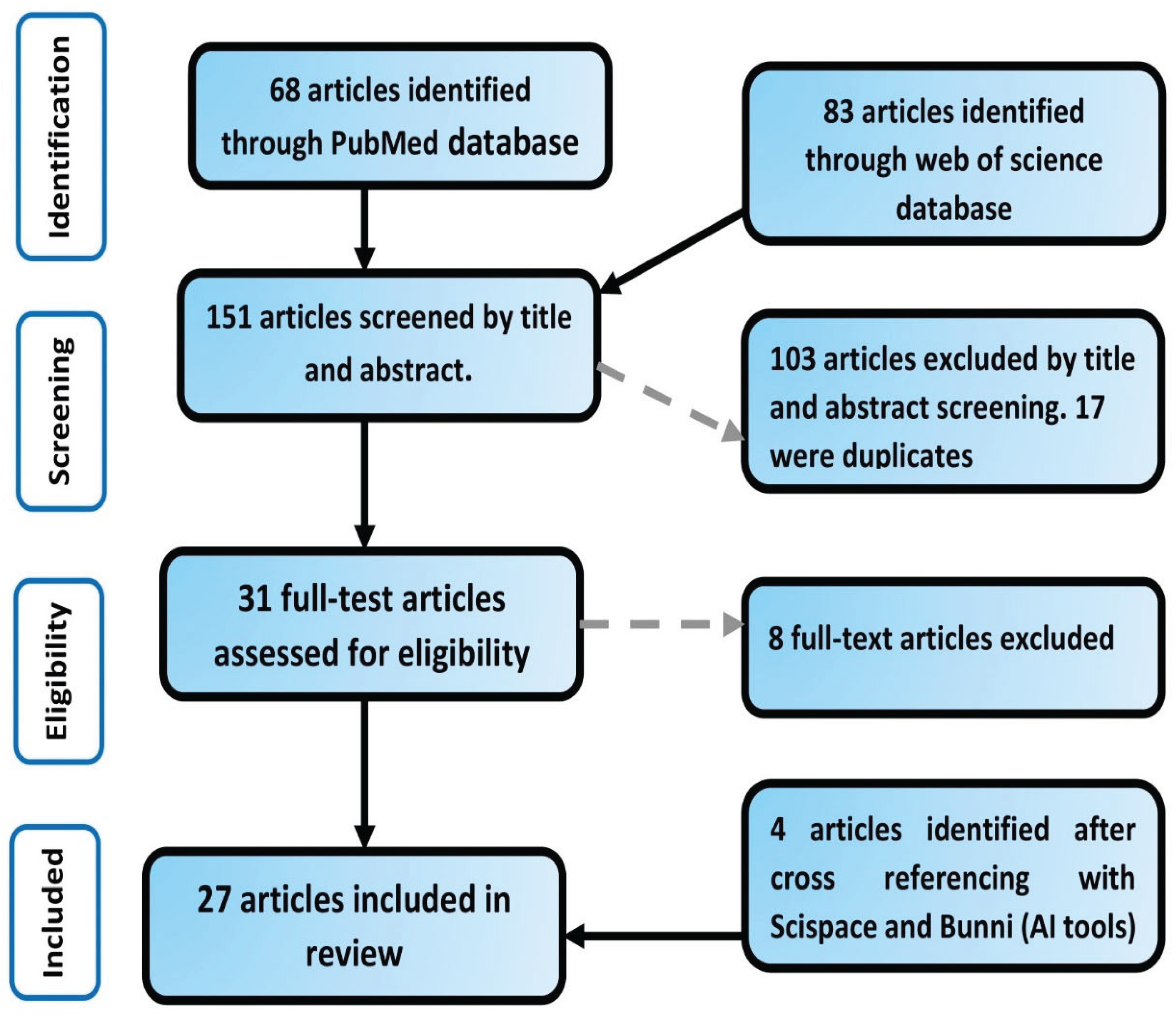

Table 1.
Dietary Patterns That Emphasize Consumption of Plant Foods.
| Dietary pattern | Foods |
|---|---|
| Lacto-vegetarian diet | Includes dairy |
| Ovo-vegetarian diet | Includes eggs |
| Lacto-ovo vegetarian diet | Includes dairy and eggs |
| Pesco-vegetarian diet | Includes fish and seafood |
| Vegan diet | Excludes all meat and all animal products |
| Mediterranean diet | Based on fruits, vegetables, whole grains, legumes and moderate consumption of dairy and fish, and low consumption of meat and sweets |
| DASH diet | Based on vegetables, fruits, and whole grains; includes fat-free low-fat dairy products, fish, poultry, beans and nuts. |
Table 2.
Summary of articles included in the review with key characteristics.
| Author, Year | Country | Study Design | Population and sample | Objective | Methodology | Key Findings |
|---|---|---|---|---|---|---|
| Stanford et al., 2022 | Australia | Cross-sectional | 35 renal dietitians completed online surveys, and 11 participated in in-depth interviews | Explore perspectives of renal dietitians regarding PBDs for chronic kidney disease [CKD] management, and evaluate their acceptability of a hypothetical plant-based dietary prescription | Exploratory Mixed methods: Short online questionnaire and in-depth semi-structured interview | Renal Dietitians perceived PBDs as beneficial to patients with CKD |
| Betz et al., 2022 | USA | Cross-sectional | 382 dietitians [154 physicians, 62 nurse practitioners, 32 fellows, 13 physician assistants, 14 other professionals | Understand perspectives of nephrology professionals towards use of PBDs for treatment of CKD | Online questionnaire based on previous survey | Nephrology professionals believed PBDs were beneficial in management of CKD, but dietitians were more likely to be aware of the benefits of PBDs than other professionals |
| Fuller & Hill, 2022 | UK | Cross-sectional | 116 specialist eating disorder professionals, 90 General mental health and 186 other professionals | Investigate attitudes of healthcare professionals towards veganism | Self-reported questionnaire based on General eating habits and ATvegan questionnaires | All had positive views of veganism, but general mental health professionals had more positive attitudes than eating disorder specialists and other professionals |
| Bettinelli et al., 2019 | Italy | Cross-sectional | 140 nurses,135 pediatric nurses, 60 midwives, 43 health care support workers, 40 staff nurses | Assess knowledge of healthcare professionals regarding adoption of vegetarian diets from pregnancy through adolescence | Online questionnaire developed for the study and pre-tested | Clinicians had positive view of the Mediterranean diet (MD), though it was not routinely recommended due to limited knowledge, practice skills and training. |
| Hughes et al., 2014 | USA | cross-sectional | 136 dietitians of which 124 were registered dietitians | Assess dietitians’ perceptions of plant-based protein quality | Online questionnaire developed for the study and pre-tested | Dietitians had a positive attitude towards PBDs but knowledge about plant-based protein quality was limited |
| Moutou et al., 2021 | UK | Cross-sectional | N=12 registered dietitians | Explore dietitians’ views about advising on 5 dietary patterns (including MD and DASH diets) deemed effective for management of type 2 diabetes | Semi-structured interviews with short demographic questionnaires developed for the study. | Study participants considered the MD effective, but most had mixed responses about the DASH diet. |
| Mayr et al., 2022 | Australia | Cross-sectional | N=57 clinicians (21 nurses, 19 doctors, 13 dietitians and 4 physiotherapists) | Explore multidisciplinary health care professionals’ perspectives on recommending MD to patients with coronary heart disease and type 2 diabetes | Qualitative study with individual semi-structured interviews via telephone or face-to- face | The MD was not routinely recommended, clinicians had limited knowledge and practice skills regarding MD, barriers to recommending the MD were lack of education and training, and personal experience/interest |
| Meulenbroeks et al., 2021 | Netherlands | Cross-sectional | N=411 (121 midwives, 179 obstetricians, and 111 dietitians) | Evaluate self-reported knowledge and advice given by Dutch obstetric caregivers and dietitians to pregnant women following PBDs | Online questionnaire developed based on focus group interviews | Both obstetricians and midwives reported limited knowledge about strict PBDs. Only 38.7% of dietitians felt they had enough knowledge to advise pregnant women on strict PBDs. They believed that women following a strict PBD during pregnancy were at a higher risk of nutrient deficiencies. |
| Mayr et al., 2022 | Australia | Cross-sectional | N=14 (7 doctors, 3 nurses, 3 dietitians and 1 exercise physiologist) | Assess multidisciplinary clinicians’ perspectives on whether the Mediterranean diet (MD) is recommended in routine management of non-alcoholic liver disease | Semi-structured individual phone and face-to-face interviews | The MD was seen as an evidence-based approach for enhancing diet quality, promoting weight loss, and reducing the risk of chronic co-morbidities. However, some doctors and nurses had limited knowledge of the specific literature supporting the benefits of following a MD. |
| Hawkins et al., 2019 | USA | cross- sectional |
N= 205 nutrition and dietetics program directors | Investigate curricular practices in accredited dietetics programs and assess prevalence and perceived importance of vegetarian and vegan nutrition instruction | Online questionnaire developed for the study and pre-tested | Over 90% of program directors agreed that vegetarian nutrition should be taught, while 87% agreed that vegan nutrition should be taught. Program directors in northeastern programs had higher percentages of agreement than those in southern programs. 51% and 49% of the programs teach vegetarian and vegan nutrition, respectively. |
| Albertelli et al., 2024 | France | Cross- sectional |
N= 18 (14 dietitians, 3 physicians specialized in nutrition, and 1 psychiatrist) | Investigate healthcare professionals’ subjective experience of vegetarianism in patients with eating disorders (ED) | Qualitative study with remotely administered semi- structured interviews via videoconferences and telephone. | Health professionals regarded vegetarianism as a restrictive approach and often linked it to eating disorders in patients. They were strongly opposed to veganism, citing risk of severe nutritional deficiencies. |
| Mayr et al., 2020 | Australia | Cross- sectional |
N=182 dietitians who had practiced with at least one of the relevant chronic disease patient groups. | Evaluate the extent the MD is routinely recommended by dietitians to patients with chronic diseases. | Online questionnaire based on TDF | 62%, 46%, and 39% of dietitians strongly agreed that there was enough evidence to support recommending MD to patients with CVD, type 2 diabetes, and non-alcoholic liver disease respectively. 48% strongly agreed that they were knowledgeable about the principles of MD, and 46% were confident in counseling patients about MD. |
| McHugh et al., 2019 | New Zealand | Cross- sectional |
N=41 (20 doctors, 13 nurses, 7 pharmacists, and 1 osteopath) | Investigate whether health professionals have sufficient nutrition education for their roles in health education and promotion, and whether their nutrition beliefs were consistent with current literature | Mixed methods including online de novo questionnaire and one focus group | PBDs were generally viewed as beneficial to health but deemed complicated. 43% of participants reported dissatisfaction with the amount of nutritional training received. |
| Olfert et al., 2020 | USA | descriptive case study | N= 29 health professionals, 15 currently practicing in cohort 1 and 14 aspiring health professionals in cohort 2 from various disciplines | Determine effectiveness of culinary medicine and MD to enhance nutritional knowledge, attitudes and self-efficacy of current and aspiring (student) health professionals | Online questionnaire developed but influenced by evidence-based sources | At baseline, cohort 2 had higher attitude and knowledge scores. There was no significant difference in mean self-efficacy scores or mean MD adherence scores. |
| Hamiel et al., 2020 | Israel | Cross- sectional |
N=270 pediatricians, 14.1% were following a vegetarian diet | Assess knowledge and attitudes of pediatricians towards vegetarian diets | Online questionnaire based on Previously validated questionnaire | Pediatricians had knowledge gaps regarding vegetarian nutrition, and most did not have a positive attitude towards vegetarian diets. Knowledge was positively correlated with attitude |
| Lessem et al., 2020 | USA | Experiential education program | N=30 (13 nurse practitioners, 14 registered nurses, and 3 physicians) | Increase knowledge and acceptance of whole-food plant-based [WFPB] diet, and likelihood of counseling patients about the diet among health care workers | Online questionnaires based on previously validated research | Pre intervention average knowledge scores were 65.4%. Average self-efficacy scores for knowledge and counseling were 2.64 and 2.38 at baseline on a scale of 1 to 4. |
| Sentenach et al., 2019 | Spain | Cross- sectional |
N=422 physicians (PREDIMED screener) and N= 212 physicians (knowledge/opinion survey) | Evaluate physicians’ knowledge/awareness of and adherence to a MD | Online questionnaire based on PREDIMED MD screener previously used in the PREDIMED study | Most physicians did not adhere to MD but 70% considered themselves knowledgeable about the benefits of the MD, and 60% were willing to recommend it to patients |
| Estell & Hughes, 2021 | Australia | cross- sectional |
N=660 [228 nutrition professionals | Explore consumer and nutrition professional perceptions and attitudes to plant protein including plant-based meat alternatives | Online questionnaire based on previous research | Over 80% of nutrition professionals agreed that following a PBD promoted good nutrition, and over 70% disagreed that it was hard to meet protein requirements while following a PBD. |
| Asher et al., 2021 | Canada | cross- sectional |
N=403 dietitians | Assess Canadian registered Dietitians’ attitudes and behaviors towards the new food guidelines’ increased plant-based recommendations | Online questionnaire developed for the study and pre-tested | Over 80% of dietitians considered the food guide’s recommendation to choose plant-based protein foods as evidence-based. Most had a positive view of the new guidelines, and 58.7% were more likely to encourage their clients to select plant-based protein options. |
| Aggarwal et al., 2019 | USA | cross- sectional |
N=303 physicians from departments of cardiology and general medicine | Assess nutrition and exercise knowledge and personal health behaviors of physicians | Online questionnaire based on validated surveys | Less than 25% of the physicians in the study followed the facets of MD |
| Saintila et al., 2021 | Peru | cross- sectional |
N=179 registered dietitians [72 vegetarians and 107 non-vegetarians] | Compare level of knowledge of vegetarian and non-vegetarian Peruvian dietitians regarding vegetarianism | Online questionnaire based on the recommendations of the current dietary guidelines | Vegetarian dietitians were more knowledgeable about the risks and benefits associated with vegetarian diets |
| Janse et al., 2021 | South Africa | cross- sectional |
N=101 dietitians [45 government employed and 48 in private practice] | Assess whether dietitians in South Africa would use a whole foods plant-based diet (WFPBD) to address chronic diseases | Online questionnaire based on validated surveys | A significant number of dietitians reported inadequate university training surrounding PBDs, albeit a significant number of them were confident about prescribing PBDs to clients. |
| Duncan & Bergman, 1999 | USA | cross- sectional |
N=183 registered dietitians from Vermont, Nebraska, and Washington | Investigate what registered dietitians know about safety, adequacy, and health benefits of vegetarian diets | paper questionnaire sent by mail | Average knowledge and attitude scores were greater for registered dietitians who were currently or had previously followed a vegetarian diet. Overall knowledge scores varied between states. |
| Fresan et al., 2023 | Spain | cross- sectional |
N=2545 health professionals (550 dietitian-nutritionists, 1139 nurses, 427 physicians and 346 pharmacists, and 83 others) | Assess knowledge and attitudes regarding sustainable diets among health professionals in Spain | Online questionnaire developed for the study | 21.5% of respondents had not previously heard about sustainable diets, and 32.4% acknowledged their limited knowledge about the subject. Most when presented with information about sustainable diets considered it important to promote them. |
| Krause et al., 2019 | USA | cross- sectional |
N=64 (12 residents,6 fellows, 46 physician attendings) | Assess medical providers’ knowledge of plant-based nutrition and their willingness to recommend it to patients | Online questionnaire developed for the study | 33% of respondents were willing to recommend PBDs, while majority (51%) responded with maybe. Only 28% were willing to adopt a PBDs, 25% were willing to try it for 6 months or more. |
| Lee et al., 2015 | Canada | cross- sectional |
n= 98 patients n=25 healthcare providers | Assess awareness, barriers, and promoters of plant-based diet use for management of type 2 diabetes for the development of an educational program | 2 sets of questionnaires for patients and health care providers were developed for the study. | 72% of health care providers reported knowledge of PBDs for management of type 2 while majority of patients (89%) had not heard of using PBDs to treat/manage type 2 diabetes. Less than 50% of respondents were aware of the benefits of PBDs regarding other chronic conditions. |
| Harkin et al., 2018 | USA | cross- sectional |
N=236 (140 physicians and 96 cardiologists) | Assess basic nutritional knowledge, attitudes, and practices of physicians | Online questionnaire based on validated surveys | Nutrition knowledge was average, with only 13.5% feeling sufficiently trained to discuss nutrition with their patients. Physicians most commonly recommended the Mediterranean diet (55.1%), followed by the DASH diet (38.2%), to their patients. |
Table 3.
Identified Themes Mapped to TDF Domains.
| Theme | TDF Domains | Enablers | Barriers |
|---|---|---|---|
| Knowledge | -Knowledge -Skills |
- Personal experience with PBDs -Knowledge of diet-disease relationship -Adequate knowledge of PBDs and their benefits -Knowledge of scientific rationale for PBDs |
-Limited knowledge of basic principles of PBDs to discuss with patients -Lack of knowledge about benefits of PBDs - Limited knowledge and practice skills -Limited knowledge exchange within and across multidisciplinary teams. |
| Education and training | -Skills -Social/professional role and identity -Environmental context and resources |
-Education about PBDs at university level and continuous professional evidence-based training, conferences, etc -Patient knowledge about PBDs -Online nutrition education |
-Lack of education or training at degree and professional levels -Misinformation from other health professionals and non-peer-reviewed sources such as internet, media -Low self-efficacy to discuss PBDs with patients due to inadequate training |
| Evidence-based guidelines | -Skills -Social/professional role and identity -Beliefs about consequences |
-Awareness of peer-reviewed evidence -Awareness of current dietary guidelines in support of PBDs -Access to position papers in support of PBDs from respectable scientific bodies |
-Perceived lack of evidence-based properly tested practice guidelines -Lack of access to evidence summaries -Disagreement with available evidence |
| Multi-disciplinary collaboration | - Social/professional role and identity - Environmental context andresources -Social influences |
-Consistent messaging from various health professionals | -Misinformation from other health professionals - Limited knowledge exchange within and across multidisciplinary teams. |
| Personal experience and interest | -Skills -Beliefs about capabilities - Environmental context and resources |
-Health professionals trying out PBDs even if for a limited time, and counseling patients based on evidence and experience |
-Lack of health professional/patient personal experience with PBDs - Lack of interest to try PBDs even for a short time. -Providing counseling based on personal biases rather than evidence |
| Educational resources for both patients and health professionals | -Knowledge - Environmental context and resources |
-Availability of educational materials such as meal plans, menu plans, food checklists, recipes, and mobile apps to teach and share with patients - Access to evidence summaries - Access to visually appealing content for patients |
-Absence of patient education tools and resources/materials -Low confidence to discuss PBDs with patients -Limited/non-existent practical- based professional development -Access to clinical guidelines related to PBDs. |
| Lack of time | -Goals -Environmental context and resources |
-Access to resources and tools to share with clients to use at home |
-Limited time allocated to patients’ consultations -Limited time to keep up with peer-reviewed literature -Belief that patients prioritize convenience foods over food preparation due to limited time |
| Safety and compliance challenges | - Beliefs about consequences -Emotion |
- Individual patient counselling -Access to evidence-based clinical guidelines -Having knowledge of PBD benefits |
-Fear of inducing comorbidities like hyperkalemia and or hyperglycemia among patients with chronic kidney disease [CKD] -Fear around potassium control among patients with CKD -Deficiency concerns |
| Lack of confidence in patient capabilities | - Beliefs about consequences -Optimism |
-Educating patients about PBD health benefits and key concepts -Individual patient counselling -Inclusion of evidence-based or endorsed patient resources and tools. -Goal setting around changing patient dietary patterns |
-Diet presumed unrealistic for patients of low socioeconomic background - PBDs perceived to be incompatible with patient food culture and eating patterns -Patients deemed to have low health literacy/knowledge deficit of diet-disease relationship -Assume patients are unwilling to try PBDs because they are hard/complicated |
Disclaimer/Publisher’s Note: The statements, opinions and data contained in all publications are solely those of the individual author(s) and contributor(s) and not of MDPI and/or the editor(s). MDPI and/or the editor(s) disclaim responsibility for any injury to people or property resulting from any ideas, methods, instructions or products referred to in the content. |
© 2025 by the authors. Licensee MDPI, Basel, Switzerland. This article is an open access article distributed under the terms and conditions of the Creative Commons Attribution (CC BY) license (http://creativecommons.org/licenses/by/4.0/).
Copyright: This open access article is published under a Creative Commons CC BY 4.0 license, which permit the free download, distribution, and reuse, provided that the author and preprint are cited in any reuse.


