
Submitted:
15 May 2025
Posted:
19 May 2025
You are already at the latest version
Abstract
The central objective of motorcycling is the journey, where being on the road becomes the focus (e.g. OMT, 1944). Its link to tourism is deeply rooted in the experience of travelling long distances to discover exceptional places, offering a mix of unforgettable moments and a sense of freedom.
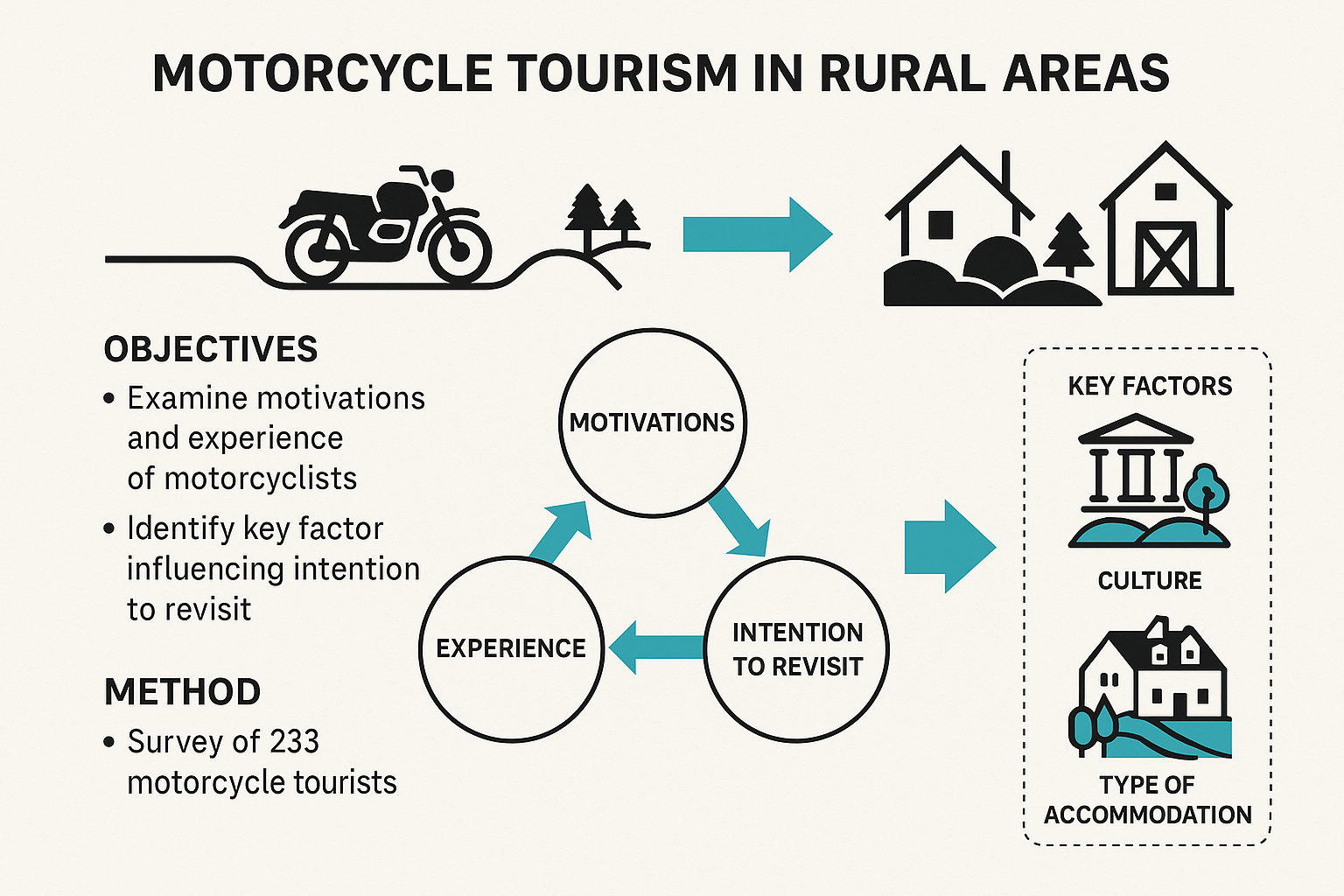
This study aims to fill gaps in previous research on motorcycling by focusing on small-scale events and rural areas, analysing the influence of socio-demographic variables, emphasising cultural interaction and sustainability, and considering the gender perspective. These contributions provide new perspectives and data that can inform policies, marketing strategies and sustainable practices in motorcycle tourism. In addition, the work serves as a model for future studies in other regions or tourism contexts, expanding knowledge in the area.
A bibliometric analysis of management publications from the Web of Science Core Collection focusing on tourism, motivation, rural areas and motorcycles was carried out using VOSviewer software. Structured questionnaires were distributed face-to-face at rural motorcycling events and the data were analysed using statistical methods, namely principal component analysis and logistic regression.
Despite the traditional male supremacy of motorcycling, the growing participation of women is converting these standards. This research explores the gender dynamics within motorcycling, highlighting the barriers women face and their aspirations for equality. Overall, the study improves perception of the dynamics of motorcycling, its impact on rural areas and the motivations of motorcyclists, providing vital information for this niche market.
Keywords:
motorcycling
; motorcycle tourism
; sustainability and rural development
; motivation factors
; gender perspectives
1. Introduction
A literature review highlights the scarcity of research in this area in its various guises. One of the possible reasons is the lack of a significant and strategic effort (Cudny and Jolliffe, 2019). Existing studies on motorcycling tend to focus mainly on large-scale events (Scol, 2016), specialised itineraries for motorcyclists (Monteiro et al., 2021) and motorsport competitions (Peric and Vitezic, 2016). Little attention is paid to small-scale motorcycling events/meetings, as mentioned by (Getz and Page, 2016), who point to a deficit of studies on these events in rural areas. Li (2021) reinforces this idea by pointing out that “Events can attract tourists and outside investment to rural communities, resulting in more employment, business opportunities, increased household income and tax revenue for local governments, improved infrastructure, restoration of heritage resources and beautification of the rural landscape” (p. 3).
The aim of this article is therefore to fill in some gaps in previous studies on motorcycling, focusing not on large-scale events but on small-scale events in rural areas. An earlier study, such as MOTO FESTA—Brazil, conducted by (da Rocha et al., 2020), showed that participants had little interest in exploring the town’s tourist attractions and preferred to stay only at the meeting place. This type of meeting does not contribute significantly to the development of the community but is limited to being a meeting point for motorcycle enthusiasts.
In the case of motorcycle tourism in rural areas, especially among groups looking to explore, get to know the destination and enjoy the outdoors (Sykes and Kelly, 2014), the dynamic is the opposite. A study by CEDA and Pires (2019) confirms that motorcyclists are motivated by objectives such as meeting locals (73.4%), visiting historical sites (61.0%) and consuming local products and services (47.7%), thus reflecting an intense interaction with nature, cultural immersion and economic development.
This study, more broadly, offers valuable information by introducing new perspectives, such as analysing gender, accommodation preferences, cultural interaction and motorcyclists’ motivations, as well as addressing issues such as seasonality and the focus on rural areas with low tourist density.
To meet the general aim of the synthesis, two research objectives (ROs) were developed:
(RO1): Do motorcyclists show tendencies, motivations and ambitions to visit rural areas, and can they act as agents of tourism development in these areas?
(RO2): Do rural areas have viable conditions for attracting and boosting motorcycle tourism?
There is currently a growing trend with the emergence of travel agencies offering motorcycle tours, for example, the DREAM RIDERS GROUP. This study can provide important insights for creating more personalised itineraries. Everyone will benefit from implementing new projects that attract new tourists, especially those who practise motorcycle tourism throughout various times of the year, such as motorcycle tourism enthusiasts.
2. Research Background
2.1. Motorcycling: Beyond Travelling—A Culture of Freedom, Adventure, and Community
Motorcycling involves the use of motorcycles as a means of transportation, transcending mere travel. It embodies a philosophy of life, a distinctive means of existence and interaction within a specialised community of like-minded individuals. Once associated with gangs and lawbreakers, today these riders are well-regarded by society (Frash Jr and Blose, 2019; Frash Jr et al., 2018; Scol, 2016). There are motorcycle clubs to which they belong, with people often associating closely with their places of residence or the locations they identify with the most. They organise gatherings and events that involve travel, socialising through music, and sharing meals. Their attire typically includes traditional black waistcoats adorned with engraved symbols., and the characterised and decorated helmets are also part of the identity of the practitioners of this activity (Cater, 2017a; Scherhag and Scuttari, 2022; Sykes, 2021).
Since the 1950s, the motorcycling culture has grown exponentially and currently occupies a significant market share in the land travel sector. Given the development of safer, better equipped, more comfortable and larger motorcycles, there are now more fans from different age groups and higher economic classes (Cater, 2012; Cater, 2017a; Cater, 2017b; Scherhag and Scuttari, 2022; Scol, 2016; Sykes, 2021).
These vehicles are increasingly being used for leisure purposes and not just for everyday commuting. They are not only used for faster journeys in large urban centres, bypassing the long queues of cars, but also in outlying towns with roads in mountains and plains. These locations have seen an increase in the flow of motorcyclists looking for quieter places with more distinctive landscapes (Cater, 2017b).
As a mode of transport for tourism purposes, the concept of motorcycle tourism has emerged, which refers to trips made by tourists using a motorcycle as their main means of transport. They can be independent travellers, members of clubs that organise trips, sportsmen, classic riders (e.g., riders of classic Harley-Davidson motorbikes), off-roaders (Cater, 2017a) and can be active or passive (drivers or companions) (Wu et al., 2021).
The journey and how the motorcycle is ridden are more significant than the destination (Ramírez-Hurtado et al., 2022; Scherhag and Scuttari, 2022). Motorcycle enthusiasts not only want to enjoy a different kind of driving, i.e., a freer, more adrenaline-fuelled experience, feeling the winding bends more intensely and having more contact with the outdoors, but they also want to discover new places, landscapes, and attractions and get to know new cultures on their bikes (Scherhag et al., 2022). This form of tourism, which combines the passion for motorcycles with the exploration of new places, offering unique experiences to enthusiasts, is a niche of cultural, adventure and sports tourism that has gained considerable attention in recent years (Cater, 2012; Ramírez-Hurtado et al., 2022).
The combination of the thrill and freedom of riding; the discovery of new places and cultures with the adoption of their philosophy; and the sense of community and camaraderie provide these riders with differentiated and personalised experiences (Frash Jr and Blose, 2019; Frash Jr et al., 2018; Scol, 2016).
The increase in motorcycle tourism can also be attributed to other factors such as:
(i) Motivation and Experience
The sense of freedom and adventure is a key motivator for motorcycle tourists. This freedom is not only about choosing their routes but also about being more in touch with the environment, which allows access to places which would be less accessible by car. Despite the physical and psychological demands, including challenging weather conditions and road situations, the excitement of the journey, the authenticity of the experience, and the creation of lasting memories are highly rewarding (Cater, 2017a; Cater, 2017b; Ramírez-Hurtado et al., 2022).
(ii) Cultural and Scenic Engagement
Motorcycle tourists are driven by the desire to explore new places and enjoy scenic and panoramic routes. These journeys along winding roads foster a deeper connection with destinations and local communities. Popular locations for such trips include the Mae Hong Son Loop in Thailand, Route 66 in the United States, and the Alps in Europe (Cater, 2017b; Ramírez-Hurtado et al., 2022).
(iii) Social Media and Community Influence
The role of media and social networks in influencing motorcycle tourism culture is significant. Many riders document their journeys through photographs, videos, or travel diaries, serving not only to inform but also to inspire new travellers (Cater, 2017a; Cater, 2017b; Ramírez-Hurtado et al., 2022).
(iv) Logistics and Planning
Planning for motorcycle tourism trips involves detailed route analysis and considerations for logistics like fuelling, accommodation, and catering. However, some travellers prefer spontaneous trips with minimal planning. These riders, more common in summer, may travel for days or months, covering thousands of kilometres, and staying in various accommodations like hotels, campsites or hostels. Their quest for unexplored and unique places often leads them to rural areas, significantly contributing to the tourism development and economic impact of these less touristy locations (Cater, 2012; Cater, 2017a; Cater, 2017b; Scol, 2016).
As with other types of small- and large-scale events, motivations vary greatly. Larger events are massive gatherings of motorcycle enthusiasts, where thousands of riders meet at a specific location to celebrate motorcycle culture. Events typically feature activities such as motor parades, concerts, races, and exhibitions, with the event portfolio serving as the primary motivation for attendees (Ziakas, 2010). Regarding motorcycle gatherings in rural areas, participants primarily seek individual trips or small group travels, allowing motorcyclists to explore various destinations and routes. The primary emphasis is on the journey itself, discovering new landscapes and cultures, and the personal experiences gained along the way (Monteiro et al., 2019).
2.2. Motorcycle Tourism in Rural Areas: Economic Growth, Socio-Cultural Dynamics, and Environmental Considerations
Motorcycle tourism in rural areas has demonstrated a notable capacity to contribute to the development of disadvantaged communities and regions in terms of infrastructure, accessibility, and tourism appeal. While its economic impact is significant, it is equally crucial to address the socio-cultural and environmental challenges it presents (Dileep and Pagliara, 2023; Nickerson et al., 2019; Sykes and Kelly, 2016).
In economic terms, these impacts are particularly meaningful for less frequented rural areas, as they stimulate local economies generate income (e.g., accommodation, catering, transport, etc.) and increase employability. Regarding sociocultural impacts, the interplay between motorcycles and the local community can encourage the creation of cultural events, the preservation of local traditions and cultural exchange. Despite the negative environmental impacts that may arise in these areas, there is a growing awareness of the importance of environmental preservation, not least because motorcycle enthusiasts seek nature in its pure state (Gronau and Große Hokamp, 2022; León, 2007; Tripathi and Shaheer, 2024).
The literature exploring the intersection of motorcycling and tourism, particularly in rural areas, remains notably scarce (Cater, 2012; Frash Jr and Blose, 2019; Frash Jr et al., 2018; Ramoa et al., 2021; Scherhag et al., 2022; Scol, 2016; Walker, 2010). Therefore, it is important to understand the motivations, experiences and impacts of motorcycle tourism in rural areas.
2.3. Revitalising Rural Tourism: Revealing the True Spirit of Motorcycle Tourism
Biker gatherings are increasingly becoming a niche market for events. In the aftermath of Covid-19, there is a noticeable shift towards preferences for more spacious and liberating environments. This trend is particularly evident in the growth of motorcycle tourism (Cater, 2017a; Cater, 2017b; Quadri-Felitti et al., 2019). When discussing motivations, it is crucial to recognise that these can vary widely and may not be universally applicable. Motivations are shaped by a mix of intrinsic and extrinsic factors, including cultural contexts, personal needs, and individual experiences, indicating a broad spectrum of influences that define the profile of motorcycle tourists.
Understanding the profile of motorcycle tourists, rather than focusing on specific traits, is essential. This group often shares similar motivations and behaviours, predominantly characterised by a desire for social interaction and the need to seek adventure and new experiences, as indicated in several studies (Heide and Scuttari, 2022; Monteiro et al., 2021; Ramoa et al., 2021; Sykes and Kelly, 2016). However, there remains a stigma associated with the motorcyclist segment. This stereotype was notably perpetuated by Walt Becker’s film “The Wild Hogs” (2007), which portrayed bikers as perpetrating “terror” and depicting them as “antisocial”, with “pseudo-deviant” behaviour (Thompson, 2008). Society has often been shaped by these dramatised portrayals, yet recent studies have aimed to elucidate the genuine intentions and motivations of individuals labelled as “bikers”. Scol (2016) highlights this issue, stating “Motorbike tourism has long been overlooked or dismissed by regions and tourism professionals due to a negative perception of motorbikes and their riders” (n.p).
Considering that rural areas have a very close analogy to a traditional culture, with very common behavioural roots among the community (Anico and Peralta, 2006; Bernardi, 2007; Coll, 2002; Silva and Hespanhol, 2016), when a group of motorcycle tourists appears, due to their reputation, there is sometimes a feeling of insecurity, but at the same time curiosity (Zhuang et al., 2021). Some studies carried out over the years (Austin et al., 2010; Goodmann, 2014 ; Sykes, 2021; Thompson, 2008) have helped to change this image somewhat, but more research is needed to understand this tourist phenomenon and make society realise that motorcycling in rural areas can be an incredible experience for adventure enthusiasts and beneficial for the community (Sykes and Kelly, 2016). According to Artal-Tur et al. (2019) tourism has the potential to transform remote areas into thriving destinations, thereby improving living conditions significantly.
Rural areas are favoured by motorcyclists because, as already mentioned, they are nature lovers. Exploring rural locations on a motorcycle reveals scenic experiences, travelling along green paths provides an adrenaline rush and these emotions and tranquillity are high among the motivations for motorcycle tourists. All these emotions stem from the drive for freedom and independence that defines this type of endeavour. The motorcycle allows one to control the journey, the stops, the routes, and the interaction with the locals; as Provetti (2013) describes it: “Sitting on a motorbike amplifies the sensation that man and machine are one. The wheels are our legs, the handlebars our arms, the engine our heart” (p. 15). In short, the enchantment of motorcycle tourism is centred on the combination of exciting adventures, cultural immersion, and the sense of freedom it provides (Scol, 2016).
2.4. Gender Dynamics in Motorcycle Tourism: Motivations and Cultural Shifts
Behaviour is not exclusively determined by fundamental needs alone; some actions occur without motivation, triggered solely by external stimuli (Maslow, 1987). As far as motorcycle tourists are concerned, this external influence is quite marked, above all due to the stereotype created around the image of men associated with motorcycles rather than women (Sabat, 2005; Schouten et al., 2012). Although it is thought that the connection between women and motorcycles is recent, this is not at all true. In 1916, the Van Buren sisters embarked on a motorcycle journey’ to showcase women’s capabilities and advocate for their active participation in the war effort, aiming to demonstrate that women possess skills equal to those of men (This Day in Automative History, 2024). In the history of motorcycling, there are several women, in addition to the Van Buren sisters, such as Clare Consuelo Sheridan, Bessie Stringfield and Dot Robinson, who have contributed to history and have been considered pioneers in the emancipation of the female gender in the field of motorcycling, contradicting male power. Schouten and McAlexander (1995) strengthened this idea: “Women are treated largely as motorcycle accessories, that is, adornments who ride on the back of a man’s bike” (p. 55).
When it comes to motivations, these can vary significantly among individuals; however, distinct trends can be observed between genders in motorcycle tourism. Table 1 below summarises different studies carried out on the subject and provides an overview of motivations based on different studies, such as (Borstlap and Saayman, 2018; Duarte, 2019; Mesquita, 2007; Reilly et al., 2022; Romy and Dewan, 2021; Silva and Hespanhol, 2016).
The table above outlines key motivational factors influencing motorcycle tourism, with particular attention to gender distinctions. Despite being in the 21st century, women’s empowerment emerges as a significant theme. This trend is consistently observed across various studies and is considered a key motivation among female motorcyclists. Miyake (2018) in her book “The Gendered Motorcycle: Representations in Society, Media and Popular Culture” published by I.B Taurus, underscores the issue of gender portrayal in the media, where women are often depicted as passengers rather than drivers, reinforcing gender stereotypes in motorcycling culture and contributing to lower motorcycle ownership among women. Female motorcyclists frequently cite motivations such as the need for affirmation and a desire for equal recognition in the biker community.
On the other hand, male motivations in motorcycle tourism tend to align with the “lone wolf” archetype, seeking to assert individuality within their peer group and to distinguish themselves from female motorcyclists. For instance, Terry et al. (2015) study on the TT Races suggests that such events are predominantly seen as a male domain.
This gender-based dichotomy in motivations reflects broader societal and cultural narratives that shape the experiences and identities of motorcyclists, influencing their participation in motorcycle tourism.
Over the years, perspectives on gender roles, particularly within the context of motorcycle culture, have evolved towards a more open and inclusive understanding. There has been a shift away from traditional “macho” stereotypes towards embracing diverse expressions of humanity. Burbano-Valente et al. (2019) touch upon this progression in their research, suggesting that there is an ongoing effort to reconstruct male identity beyond essentialist views. They argue for alternative ways to be or become a man, which allows for a broader exploration of identity. This exploration moves away from focusing solely on physical prowess or conventional masculine traits and towards a deeper, more introspective understanding of the self. Their study posits that moving beyond the need to constantly prove one’s masculinity opens possibilities for men to discover more authentic versions of themselves.
2.5. Terms That Bring Together Tourism, Motivation, Rural and Motorcycle—Clusters of Terms from the General Literature
A bibliometric analysis (VOSviewer) was carried out as a first step. The aim was to explore patterns and trends related to motorcycle tourism. The VOSviewer software is a tool designed for creating and visualising network data maps, as defined by Van Eck and Waltman in 2019. The analysis concentrated on literature sourced from journals and proceedings indexed in the Clarivate Analytics Web of Science Core Collection and Scopus databases.
For this research, a bibliometric analysis of management publications was performed in the Web of Science Core Collection, focusing particularly on themes such as tourism, motivation, rural areas, and motorcycles. In the bibliometric analysis carried out with VOSviewer, a minimum co-occurrence threshold of 2 was used. This value was set considering the number of articles analysed (42), with the aim of ensuring the inclusion of relevant terms for the formation of thematic clusters, while preserving the analytical depth and representativeness of the data. This analysis used cluster techniques, resulting in the identification of four distinct groups represented by the colours red, green, blue, and yellow. These colours represent the semantic proximity of words, determined by their frequency of occurrence in the literature.
The clusters identified by VOSviewer form part of the qualitative methodological component of this study, providing insights into thematic patterns and research priorities that informed subsequent stages, including questionnaire development and quantitative analysis.
The yellow group underscores the significance placed on service, product quality, and opportunities. It highlights that events should incorporate elements that deliver a hospitable experience. Opportunity, as defined by Scherhag et al. (2022) involves “exploring new, unfamiliar regions and/or cultures, which is a crucial aspect of adventure motorcycle tours” (p. 324). Service importance is exemplified by “Certification as a motorcycle-friendly hotel can both demonstrate competence and simplify accommodation choices for motorcycle travellers” (Scherhag et al., 2022, p. 323), and includes specific services like “providing helmet lockers (e.g., at the Krimmler Waterfalls in Austria)” (2022, p. 325).
The blue group delves deeper into the motivations that drive bikers, such as adventure, connection with nature, and social interaction. Research by Ramoa et al. (2021) supports this, stating that “the most motivating factors for motorcycling include interaction with nature, appreciation of beauty (79.0%), adrenaline and excitement (72.9%), enjoyment in shared activities (60.0%), and overcoming challenges (50.7%)” (p. 413). This group emphasises these aspects as pivotal in determining bikers’ destination choices and experiences.
The green group highlights an understanding of this niche market and its unique characteristics. Catering to this segment involves considering various factors. As noted by Sykes and Kelly (2016) “Rural sightseeing, state/national parks, and historic sites/churches are potential activities appealing to motorcyclists” (p. 553).
The red group confirms the beneficial impact of motorcycle events on rural development. Scol (2016) observes that “Enthusiasts often extend their stays in nearby accommodations during events, contributing to local tourism and exploring the region” (n.p.).
2.6. Tapping into the Potential: Motorcycle Tourism in Rural Areas and Its Impacts on Local Economies and Culture
The increasingly significant role of motorcycle tourism in rural areas and its broader impact on the tourism industry has been studied in different ways by authors such as Ramírez-Hurtado et al. (2022); Sousa and Ferreira (2023); Sukanya (2017) and Sykes and Kelly (2016).
(i) Economic impact: motorcycle tourism significantly enhances the economic dynamics of rural tourism. The spending of motorcycle tourists on various services and products, from accommodation to local crafts, injects vital funds into rural economies (Sousa and Ferreira, 2023; Sykes et al., 2012).
(ii) From a sustainable development perspective, the emphasis on integrating offerings from local businesses such as wineries and artisans, is aligned with the sustainable development aspect of motorcycle tourism. This approach not only supports local economies but also helps to preserve the local culture and environment (Sukanya, 2017).
(iii) Infrastructure development and strategic planning: the need for investment in heritage restoration and infrastructure, as well as the strategic positioning of motorcycle tourism within national tourism strategies, reflects the importance of infrastructure development and thoughtful planning in enhancing the experience of motorcycle tourists and supporting local communities (Ramírez-Hurtado et al., 2022; Sukanya, 2017).
(iv) Understanding tourist motivations: that merely hosting events is not sufficient to attract motorcycle tourists underlines the need to understand the unique motivations and interests of this group. This understanding is crucial for creating tailored experiences that cater to the specific needs of motorcycle tourists, thereby ensuring longer stays and repeated visits (Sykes and Kelly, 2016).
(v) Cultural and community impact: the observation that motorcycle tourists often extend their stay beyond events and explore local areas indicates potential for greater cultural exchange and community engagement, leading to a deeper appreciation of rural lifestyles and traditions (Sukanya, 2017).
In conclusion, to effectively attract and satisfy motorcycle tourists, rural destinations must understand and cater to their specific needs, including personalised accommodation, mechanical support, and opportunities for cultural immersion. This approach not only enriches the tourist experience but also is aligned with broader objectives of economic development, cultural preservation, and sustainable tourism practices in rural areas.
Based on the literature review, the study applied a structured questionnaire to explore the motivations, impacts and profiles of participants, with an highlighting on gender and the rural context, as detailed below.
3. Methodology and Methods
The methodology of this study includes, as a first step, a bibliometric analysis using the VOSviewer software. This qualitative method was essential to identify clusters of terms frequently associated with tourism, motivation, rural areas and motorcycles in publications indexed in the Web of Science and Scopus databases. The results of this analysis helped to guide the development of the questionnaire and the theoretical framework of the study.
To achieve the objectives of the study, a structured questionnaire with closed answers was drawn up, taking into account the five assumptions (researchable, relevant, informative, reliable and effective) and the four steps of the conceptual model (an outline of research elements, a selection of characteristics (variables) of these elements, a description of the nature of the relationships between the variables and the formulation of hypotheses and suppositions based on the above) suggested by Jonker and Pennink (2010), as well as by Easterby-Smith et al. (2021).
Considering the characteristics of the study, i.e., small biker events in rural areas with low tourist density and the off-season, the questionnaire was administered between October 2022 and April 2023 to the GAMA (Grupo de Amigos Motard’s de Abrantes), the participants in the Moto Churrasco event (Grupo Motard Amigos Serranos de Seia), the GMFEQ (Grupo Motard Foge com Elas de Queluz), the Bikers of Lapa (Lapa) and the regional gathering of “Os Foquins” (Moto Clube da Nazaré). The questionnaires were carried out face to face and 233 valid responses were obtained (sample size, n = 233), which can be considered a significant/representative size given the typology of the event and the fact that the responses were obtained face to face.
For the questions on the Likert scale, an inverted four-point classification was used, where 1 = Very important, 2 = Important, 3 = More or less important and 4 = Not at all important.
In terms of methods, descriptive methods were used to characterise the sample and to assess the existence of relationships between some of the characteristics under study. To reduce the size of the different characteristics, an exploratory data analysis was carried out (PCA—principal component analysis, with the factors estimated on the common variance) and to assess the dimensions/variables that could influence the intention to repeat/return to the event in future editions, a binary logistic regression was applied (1—Yes; 0—No).
3.1. Analysis of the Results
Based on the type of questionnaire and the variables involved, along with the methods previously discussed, the results were analysed as follows.
3.2. Sample Profile
In terms of the characterisation of the sample profile (see Table 2), the majority of the respondents are male (68.7%), aged 44 or over (52.8%), and have a low or medium level of education (until lower-secondary (112) or until upper-secondary (92)), 46.4% work in the service or agricultural industries and 55.4% intend to sleep in tents at the venue. It should be noted that the men are more than twice as numerous as the women, that only 2.6% are aged between 18 and 24 and that 24.8% have higher education or are specialists.
After quality control of the data and after characterising the sample, several cross-analyses were made between different variables to assess patterns that could be established.
In this way, given that these are nominal/ordinary variables/characteristics, we used measures of the association like the coefficients phi, Cramer’s V and contingency coefficient, which indicated that there were statistically significant relationships/associations, between age and type of accommodation in this activity (phi = 0.686; Cramer’s V = 0.307; contingency coefficient = 0.566, all with p-value = 0.016 < 0.05); between education level and kind of participant in the activity (phi = 0.363; Cramer’s V = 0.257; contingency coefficient = 0.341, all with p-value = 0.001 < 0.05); between age and kind of participant in the activity (phi = 0.477; Cramer’s V = 0.238; contingency coefficient = 0.430, all with p-value = 0.001 < 0.05); between gender and kind of participant in the activity (phi = 0.760; Cramer’s V = 0.760; contingency coefficient = 0.605, all with p-value = 0.001 < 0.05); and between gender and answers to the question When you come to this type of meeting, do you limit yourself to the event space or do you take the opportunity to get to know the region? (phi = 0.175; Cramer’s V = 0.175; contingency coefficient = 0.173, all with p-value = 0.028 < 0.05).
In this context, we can emphasise the influence that age, gender, and education level may have on some of the participants’ decision-making, such as the type of accommodation or the definition of the type of participant (e.g., biker, resident or pillion).
3.3. Exploratory Data Analysis
To reduce the structural dimension, and because the model used has not been studied, we used exploratory data analysis (PCA) to obtain the patterns that would allow us to later build a decision-making model (i.e., a binary logistic regression model) in terms of future participation in the event. Given the different scales used, we first carried out an internal consistency analysis using Cronbach’s alpha (Cronbach, 1951) which, with a value of 0.841, shows an overall internal consistency. The results obtained by applying principal component analysis (Table 3 below) show that the technique applied is appropriate because the inverse correlation matrix is very close to the diagonal matrix when comparing the observed linear correlation coefficients with the partial correlation coefficients (Kaiser-Meyer-Olkin test, KMO = 0.809 > 0.5 is a good indicator, Marôco (2021) and that the correlation matrix is different from the identity matrix (Bartlett’s test of sphericity, = 1368.459; Sig.(p-value) < 0.001).
By using the Kaiser criterion (with eigenvalues greater than 1) and the varimax rotation method (orthogonal method), the four factors obtained are shown in Table 3, which explains a total variance of 68.3%, which can be considered good (Marôco, 2021) given the typology of the data. Applying Cronbach’s alpha (Cronbach, 1951) to each of the factors obtained, except F4 because it consists of only one item, the results show that they are reasonably internally consistent, which leads to the conclusion that they are useful for the regression model.
3.4. Binary Regression Model
As mentioned above, one of the aims of the study is to find out whether participants intend to take part in this type of event again in the future. For both the organisation and local structures, this is a pertinent question because we can influence future decision-making at the regional level. To answer the question, we constructed a multivariable logistic regression model in which the response variable Y is a binary (or dichotomous) variable with two values: 1—Yes (intend to return/repeat) and 0—No (do not intend to return/repeat) and one set of p covariates, x1, x2, …., xp, and XT = (1, x1, x2, …, xp), where the model is given by the expression that defines the probability of the event of interest occurring, i.e., by:
where is the coefficient associated with the covariate xi.
Because the covariates can be nominal, ordinal, or in scale, Hosmer and Lemeshow (2000) recommend constructing a set of dummy or coding variables, and this work was carried out as described in Table 4. These variables are defined as follows:
Thus, the multivariable logistic regression model with p covariates in which the jth covariate is discrete with categories is defined, in terms of the logit function, by:
where denotes the dummy variable and is the coefficient, both associated with the category l of the covariate j by rewriting (1) in the form:
In Table 4 we show the coding’s used for the covariates included in the initial model.
Therefore, we included the following covariates in the initial model: gender (G), Age (D11), type of accommodation used when carrying out this activity (D21), number of times at this event (D31), yearly frequency of this activity (D41) and the four factors obtained by the PCA (cultural (F1), hospitality (F2), location (F3) and climate (F4)).
Using the stepwise forward algorithm: Wald, in the SPSS 29.0 software, and the likelihood ratio statistic, we obtained the denominated null model (Table 5). The results allow us to conclude that the model depends only on the constant ( that is statistically significant (Wald test = 81.972, p-value = 0.001 < 0.05).
Considering the independent term in the model, the algorithm reached the stopping criterion after seven interactions. In addition to the constant, the covariates included in the model were: cultural (F1) and type of accommodation used when carrying out this activity (D25) (Table 6), which can be written as:
To test the adequacy of the model, we used the Hosmer and Lemeshow test (Hosmer and Lemeshow, 2000). In the first step, the fit is not verified (we reject the null hypothesis, p-value = 0.008 < 0.05), but in the second step the model’s fit to the data is verified as the null hypothesis is not rejected (p-value = 0.337 > 0.05) (see Table 7).
On the other hand, to measure the adherence capacity of the model, we used the pseudo R2 of Nagelkerke (R2Nag = 0.336, and -2log likelihood = 43.584) and the R2 of Cox & Snell (R2CS = 0.079, and -2log likelihood = 43.584), indicators of the quality of the fit. From the values obtained, we can see that the model’s adherence is reasonable in R2 of Nagelkerke (explaining 33.6% of the event’s repetition) but is very low in R2 of Cox & Snell (only explaining 7.9% of the event’s repetition).
Considering the poor results obtained with the first model, a new model was built without the constant (, as it seemed to us to be misinterpreted or insignificant in the context of the study. Under the above conditions, a new model was obtained, presented below in Table 8, in which a change can be highlighted in the number of the predictors, consecutively a better specification, and a significant improvement in the results, although the precision of the results was poor due to the amplitude of the confidence intervals obtained for the D21.
As before, and from Table 8, the model can be rewritten as:
For example, a participant with an index of 3 on the cultural scale (F1 ranges from -1.71 to 4.37) and staying in local accommodation (1), keeping the other covariates ceteris paribus, has a probability of repeating the event of 78.52%. In addition, a participant with an index of 3 (0, zero) on the cultural scale and staying in a hostel (1), keeping the other covariates ceteris paribus, has a probability of revisiting the event of 83.74%. A participant with an index of 3 on the cultural scale and staying in a hotel (1), ceteris paribus for the other covariates, has a 92.14% chance of taking part in the event again. Therefore, it can be deduced that as the convenience/comfort of the accommodation increases, participants are more likely to return to the event in future years.
By using the Hosmer and Lemeshow test, it can be confirmed that the model fits the data (p-value = 0.062 > 0.05, Table 9) and by using the Cox & Snell and Nagelkerke tests (Table 10), it can be confirmed that the new model explains 67.8% and 90.4%, respectively, of the intentions to return to the event.
From the model (6), it can be concluded that the significant influences on the decision to repeat the event are the cultural aspects offered and the types of accommodation, which is understandable given the typology of the participants in terms of age. Most of them are middle-aged and are no longer willing to sleep in tents, for example, and are more orientated towards cultural aspects and shopping only if necessary.
3.5. Factors Influencing Destination Choice and Visitor Retention
The analysis of the data found allowed us to observe that cultural heritage and historical attractions are important in the choice of destinations by motorcyclists. These results suggest elevated interest among motorcycle tourists in destinations with significant cultural and historical heritage.
The PCA shows that the component aggregating indicators related to culture is the one with the largest weight (38.47% of the 68.30% of total variance explained). It is consequently presumed that the inclusion of local cultural elements in tourism strategies can improve visitor retention and promote longer stays. This evidence indicates that the integration of cultural elements integrated into the tourism offer need to be incorporated, for example through the creation of themed routes or historical reconstructions.
Additionally, the logistic regression model makes possible to verify the influence of the type of accommodation on the likelihood of return. The preference for differed and comfortable accommodation options indicates that increasing the accommodation offering can be an input factor in attracting repeat visitors.
The results obtained underline the need to adapt the tourist offer to the inclinations and expectations of motorcyclists. Improving cultural experiences and increasing the quality of accommodation can enhance the attraction capacity of destinations, promoting increased visitor retention rates. However, other factors, such as infrastructure and local involvement, also contribute to visitor retention.
4. Discussion and Conclusions
This study explores the dynamics of motorcycling travel and light up on its regenerative potential for both, motorcycling travellers and the rural communities, that host them. The findings highlight the distinctive characteristics of motorcycling travellers, mostly between the ages of 44 and 54. This traveller prefers to stay in hotels or guesthouses and attach importance to cultural immersion. These perceptions highlight motivational factors and critical behaviours that support informed decision making to attract and received this niche tourism market.
The analysis revealed statistically significant relationships between key demographic variables and travel behaviours, such as:
- The relationship between age and accommodation preferences.
- The influence of education level on the role of participants in activities.
- Gender differences in activity participation and regional exploration behaviour.
These relationships reveal the differentiated preferences of motorcycle travellers and suggest that cultural, hospitality and location factors are key to fostering loyalty and repeat visits. In particular, the study highlights that the level of comfort of accommodation significantly influences the likelihood of tourists returning to events. This finding is consistent with the demographic profile of the sample, which includes people who value comfort and cultural experiences over basic accommodation. The factor “Culture” was indicated as having a substantial impact on motorcyclists’ choice of destination, as suggested by CEDA and Pires (2019), Ramírez-Hurtado et al. (2022) and Relloso and Apritado (2023) even though other factors such as infrastructure and weather conditions also play a part.
The results suggest that motorcyclists mostly prefer less crowded and more scenic routes, while indicating an interest in sustainable development initiatives and the preservation of local cultural heritage. This unique interaction between traveller, route and destination provides a transformative sensory experience that is fundamental to motorcycle tourism. To attract smaller motorcycling events, regions need to create strategic investments. Priorities include the rejuvenation and preservation of tangible and intangible heritage and the development of quality accommodation. The preference for more comfortable accommodation, particularly in the 44+ age group, corroborates the findings of Cater (2017), who identified an increasing appreciation of amenities by motorcyclists on longer trips.
Motorcyclists’ choices start with iconic destinations, but additional factors such as motivation, community interaction, variety of activities, heritage and landscapes significantly influence their choices. Also the cluster analysis (Figure 1) indicated the centrality of terms related to ’culture’, ’accommodation’ and ’motivation’, themes that have also emerged in the literature as the main factors in motorcyclists’ decisions when choosing destinations (CEDA and Pires, 2019; Scherhag et al., 2022). Rural areas must therefore capitalise on these attributes to position themselves as attractive destinations for this high-value market niche.
Towards Sustainable Motorcycle Tourism: Insights, Impacts, and Strategies for Rural Development
This research allows for a better understanding of motorcyclists’ motivations, providing valuable information for drawing up targeted marketing strategies and regional development plans. The results of the study indicate that tourism involving motorcycling can contribute to the economic development of rural areas, particularly using local services and interaction with the local community (Gogoi and Maheshwari, 2024).
Environmental awareness emerges as a critical factor among motorcycle tourists, with their preference for unspoilt rural landscapes, encouraging sustainable practices and the discovery of lesser-known destinations. By promoting these ‘hidden gems’, the study underlines the potential of rural areas to diversify their tourist offerings and reduce seasonality, since motorcycle tourism can be practised all year round.
Gender perspectives also play a key role in understanding this niche market. The research lists the diverse motivations and experiences of both male and female motorcyclists an aspect of motorcycle tourism that is often forgotten. Female participants point to autonomy and empowerment, challenging traditional gender stereotypes and contributing to inclusion in the tourism industry, consistent with the study by Miyake (2018). While men are more likely to value adrenaline and technical challenge (Borstlap and Saayman, 2018). Although gender has been briefly analysed in this study, we recognise that the depth and nuances of this aspect require more detailed investigation, which will be explored in a separate article focusing on gender issues in motorcycling tourism.
The methodological approach of this study uses structured face-to-face questionnaires at specific events, ensuring high quality data and contextual relevance. This face-to-face approach can be adapted for future research, contributing to the enrichment of methodologies applied to tourism studies.
Overall, this study provides a holistic understanding of the dynamics, motivations and impacts of motorcycle tourism on rural areas. The study offers insights that could support the development of motorcycle tourism as a potentially sustainable and economically beneficial sector, underlining the value of cultural immersion, environmental conservation and inclusion. These contributions help to mitigate some gaps in the existing literature, provide a framework for future studies, and can guide rural destinations in utilizing their unique resources to attract motorcycle tourists.
5. Limitations and Future Research Suggestions
This study’s findings are not without limitations, which may influence their interpretation. Firstly, the use of a structured and closed questionnaire may limit the depth of understanding of motorcyclists’ experiences, making it difficult to include unforeseen variables and limiting the identification of particularities.
Furthermore, the research may give rise to a selection bias, given that the data were collected exclusively at specific rural motorcycling events. Thus, the results hegemonically reflect the preferences and behaviours of these participants, which means that they are not representative of the entire motorcycle tourism community, including individual traveller’s or participants in urban meetings or festivals. Likewise, the conclusions may not be fully generalizable to other contexts, such as urban events or different geographic regions, so future research is suggested to explore a wider range of scenarios to validate these conclusions.
Another aspect to consider is the lack of interviews or other qualitative methods, which limits the understanding of participants’ motivations. Regarding gender analysis, this was not explored in depth, since the presence of women as “drivers” is diminished. Therefore, the study does not directly address issues related to the inclusion of women in this practice, and it is recommended that future research focus more on this topic.
Finally, the analysis does not explore in detail the economic and environmental impacts, sustainability and rural development, aspects that deserve to be further explored in future studies for a more comprehensive understanding of the role of motorcycle tourism in these areas.
Despite these limitations, this study establishes a basis for understanding motorcycle tourism in rural areas, offering valuable knowledge that can inform future research and contribute to the development of tourism strategies.
Furthermore, this paper enhances a comprehensive perspective on motorcycle tourism, providing essential information for defining policies and practices that promote inclusion, sustainability and economic growth in rural communities. Furthermore, this study serves as a reference for future research in other regions with similar characteristics and tourism contexts, broadening the understanding of this tourism niche.
Author Contributions
Anabela Monteiro: Investigation, Project administration, Data Collection, Supervision, Writing-original draft, Writing-review & editing. Sofia Lopes: Conceptualization, Investigation, Data collection, Resources, Validation, Writing-original draft, Writing-review & editing. Manuel do Carmo: Data curation, Formal analysis, Methodology, Resources, Validation, Writing-original draft, Writing-review & editing.
Institutional Review Board Statement
The authors have anonymized their case report so that it does not include any potential identifiers.
Informed Consent Statement
All responses are completely anonymous. No personal identifying information or IP addresses were collected, and all data responses were analyzed anonymously.
Data Availability Statement
The file is uploaded in supplementary files via the submission system for peer review.
Acknowledgments
We would like to show our gratitude to CITUR—Center for Tourism Research, Development and Innovation, Pólo do Politécnico de Leiria, Portugal. This work is financed by National Funds through FCT—Foundation for Science and Technology, IP, within the scope of the reference project UIDB/04470/2020. Open access funding provided by FCT|FCCN (b-on). This study was also partially funded by National Funds through FCT—Foundation for Science and Technology under Project No. UIDB/05183/2020 (MED), Project No. UID/MAT/04674/2020 (CIMA), https://doi.org/10.54499/UIDB/04674/2020 support the author Manuel do Carmo.
Conflicts of Interest
The author(s) declare no competing interests. One the author is Associate Editors—Anabela Monteiro.
References
- Anico M, Peralta E (2006) Patrimónios e Identidades: ficções contemporâneas. Oeiras: Celta, p 15-20.
- Artal-Tur A, Briones-Peñalver AJ, Bernal-Conesa JA, Martínez-Salgado O (2019) Rural community tourism and sustainable advantages in Nicaragua. International Journal of Contemporary Hospitality Management 31(6):2232–2252. [CrossRef]
- Austin DM, Gagne P, Orend A (2010) Commodification and popular imagery of the biker in American culture. The Journal of Popular Culture 43(5):942–963.
- Bernardi B (2007) Introdução aos Estudos Etno-Antropológicos. Edições 70.
- Borstlap H, Saayman M (2018) Is there difference between men and women motorcyclists? Acta Commercii 18(1):1–10. https://hdl.handle.net/10520/EJC-dd376c985.
- Burbano-Valente J, Gafaro-Barrera ME, Torres-Quintero AP, Dominguez-Torres MT (2019) Masculinities in transit: the voices of motorcyclists. Masculinities & Social Change 8(2):145-170. [CrossRef]
- Cater C (2012) Motorcycle Tourism in Ceredigion. Tourism Society.
- Cater CI (2017a) Long way up: Peripheral motorcycle tourism to the North Cape. In: Arctic tourism experiences: Production, consumption, and sustainability. CABI Publishing.
- Cater CI (2017b) Tourism on two wheels: Patterns of motorcycle leisure in Wales. Tourism Management 61:180–189. [CrossRef]
- CEDA, Pires PDS (2019) O mototurismo e a sua relação com o turismo de aventura e o ecoturismo. Turismo: Visão e Ação 21(2):195–216. [CrossRef]
- Coll AN (2002) Propostas para uma diversidade cultural intercultural na era da globalização. São Paulo: Instituto Pólis.
- Cronbach LJ (1951) Coefficient alpha and the internal structure of tests. Psychometrica 16(3): 297–334. [CrossRef]
- Cudny W, Jolliffe J (2019) Car tourism–conceptualization and research advancement. Geografický časopis/Geographical Journal 71(4):319-340.
- da Rocha JM, Nunes Filho DM, Ximes RAS, Neto LG, dos Santos UMR (2020) Turismo de Eventos e o Desenvolvimento da Fronteira Oeste do RS: Uma análise do 3 Moto Festa Na Cidade de São Gabriel-RS. In Anais do VI Seminário de Pesquisa em Turismo de Mercosul, Universidade de Caxias do Sul, 9-10 july, Brasil.
- Dileep MR, Pagliara F (2023) Drive Tourism: Cars, Motorcycles and RVs. In Transportation Systems for Tourism. Cham: Springer International Publishing, p 137–152.
- Duarte PDS (2019) O processo de identificação dos membros de tribos urbanas: o caso do grupo de motociclismo da Harley-Davidson, Doctoral dissertation.
- Easterby-Smith M, Jaspersen LJ, Thorpe R, Valizade D (2021) Management and business research. Sage.
- Frash Jr RE, Blose JE (2019) Serious leisure as a predictor of travel intentions and flow in motorcycle tourism. Tourism Recreation Research 44(4):516-531. [CrossRef]
- Frash Jr RE, Blose JE, Smith WW, Scherhag K (2018) A multidisciplinary marketing profile of motorcycle tourists: explorers escaping routine to find flow on scenic routes. Tourism Recreation Research 43(4): 432-444. [CrossRef]
- Getz D, Page SJ (2016) Progress and prospects for event tourism research. Tourism Management 52: 593–631. [CrossRef]
- Gogoi P, Maheshwari A (2024) Mapping the Impact of Motorcycle Tourism in Trans-Himalayas: A Study on Alternative Livelihood Creation in Rural Ladakh, India. In: Chhabra D, Atal N, Maheshwari A (eds) Sustainable Development and Resilience of Tourism. Springer, Cham. [CrossRef]
- Goodmann T (2014) Riding a straight line between the wild one and wild hogs. International Journal of Motorcycle Studies 10.
- Gronau W, Große Hokamp J (2022). Motorcycle Tourism: The long ride towards an academic field of research–a literature review. Zeitschrift für Tourismuswissenschaft 14(3):48–262. [CrossRef]
- Heide T, Scuttari A (2022) Holiday Preferences and Travel Behavior of German Motorcyclists. A Cluster Analysis. Zeitschrift für Tourismuswissenschaft 14(3):284–302. [CrossRef]
- Hosmer DW, Lemeshow S (2000) Applied Logistic Regression. Wiley. New York.
- Jonker J, Pennink B (2010) The essence of research methodology: A concise guide for master and PhD students in management science. Springer Science & Business Media.
- León YM (2007) The impact of tourism on rural livelihoods in the Dominican Republic’s coastal areas. The Journal of development studies 43(2):340–359. [CrossRef]
- Li X (2021) Residents’ Perceptions of Small-scale Rural Events: A Dual Theory Approach. Events and Tourism Review 4(2):1. [CrossRef]
- Marôco J (2021) Análise Estatística com o SPSS Statistics v18–v27. Lisboa: Report.
- Maslow AH (1987) Motivation and personality (3rd ed.). Delhi, India: Pearson Education.
- Mesquita MEA (2007) Territórios e territorialidades urbanas em Goiânia: as tribos dos moto clubes. Boletim Goiano de Geografia 27(3):125–142.
- Miyake E (2018) The Gendered Motorcycle: Representations in Society, Media and Popular Culture. Bloomsbury Publishing.
- Monteiro A, Bernardo A, Gomes C, Silva F, Peneirol J, Machado S (2021) Moto Turismo, uma cultura de aposta como produto turístico. Tourism and Hospitality International Journal 16:59–66. [CrossRef]
- Monteiro A, Lopes S, Santos P (2019) Two-wheeled tourism: Motard, a subculture of interest for tourism and hospitality in isolated areas? Paper presented in ATMC 2019—“Marketing for more sustainable and collaborative tourism.” Namur.
- Nickerson NP, Grau K, Sage JL, Bermingham C (2019) Motorcycle Touring in Montana: A Market Analysis. Institute for Tourism and Recreation Research, University of Montana, p 1–47.
- Peric M, Vitezic V (2016) Impact of global economic crisis on firm growth. SMALL BUSINESS ECONOMICS 46:1–12. [CrossRef]
- Provetti R (2013) A caminho do Céu, uma Viagem de Moto pelo Altiplano Andino. Nova Letra Gráfica e Editora.
- Quadri-Felitti D, Sykes D, Chen F (2019) Is motorcycle tourism ready to rev up in Pennsylvania? An exploratory study of suppliers’ business attitudes of motorcycle tourism. International Journal of Culture, Tourism and Hospitality Research 13(1):1-15. [CrossRef]
- Ramírez-Hurtado JM, Oliva-López F, Berbel-Pineda, JM (2022) Antecedents and outcomes of memorable tourism experiences in tourism recreation: the case of motorcycle tourism. Tourism Recreation Research 49(5): 1126–1139. [CrossRef]
- Ramoa CEA, Pires PS, Añaña ES (2021) Motorcycle tourism and nature: An analysis of motorcyclists motivations to travel. Leisure Studies 40(3):407-423. [CrossRef]
- Reilly KH, Wang SM, Crossa A (2022) Gender disparities in New York City bike share usage. International Journal of Sustainable Transportation 16(3):237–245. [CrossRef]
- Relloso FS, Apritado JMM (2023) Motorcycle Tourism: Tourist Motivational Intention, Tourism Components, and Safety and Security Towards Destination Experience in the Attractions of Bicol Region. International Journal on Hospitality and Tourism Research 2(2): 124-135.
- Romy A, Dewan M (2021) The Bikerni: an ethnographic study on women motorcyclists in modern India. Journal of Tourism and Cultural Change 19(6):868–883. [CrossRef]
- Sabat R (2005) Imagens de gêneros e produção de cultura. Gênero em discursos da mídia. Florianópolis: Mulheres.
- Scherhag K, Gross S, Sand M (2022) Adventures on two wheels–Comparative study of motorcycle adventure tourists in Germany, Austria and Switzerland. Zeitschrift für Tourismuswissenschaft 14(3):303–332. [CrossRef]
- Scherhag K, Scuttari A (2022) Introduction to the Special Issue on “Motorcycle Tourism.” Zeitschrift für Tourismuswissenschaft 14(3):243–247. [CrossRef]
- Schouten JW, Martin DM, McAlexander JH (2012) The evolution of a subculture of consumption. In Consumer tribes, Routledge, p 82–90.
- Schouten JW, McAlexander JH (1995) Subcultures of consumption: An ethnography of the new bikers. Journal of Consumer Research 22(1):43–61. [CrossRef]
- Scol J (2016) Motorcycle tourism: renewed geographies of a marginal tourism practice. Via. Tourism Review 9. [CrossRef]
- Silva JM, Hespanhol RADM (2016) Discussão sobre comunidade e características das comunidades rurais no município de Catalão (GO). Sociedade & Natureza 28(3):361–374.
- Sousa EA, Ferreira CC (2023) O Universo Motard: Atuação do movimento no Turismo de Portugal para além das concentrações. In Conference: XIV Posgraduate Conference, Management, Hospitality and Tourism. Lisbon: ISCAL; ESGHT.
- Sukanya P (2017) WOMEN AND MOTORCYCLING: PARTICIPATION IN MACHO RECREATION. In: Coudhuri S, Basu C (eds) Caste, Gender and Media: Significant Sociological Trends in India. Netaji Subhas Open University, p 123-135.
- Sykes D (2021) Cruising and Clanning: The Motorcycle Tourism Tribal Experience. In: Pforr C, Dowling R, Volgger M (ed) Consumer Tribes in Tourism: Contemporary Perspectives on Special-Interest Tourism. Singapore: Springer, p 189–202. [CrossRef]
- Sykes D, Kelly KG (2016) Motorcycle drive tourism leading to rural tourism opportunities. Tourism Economics 22(3):543–557.
- Sykes DM, Kelly KG (2014) Motorcycle tourism demand generators and dynamic interaction leisure. International Journal of Culture, Tourism and Hospitality Research 8(1):92–102. [CrossRef]
- Sykes DM, Kelly KG, Ireland BN (2012) Mapping the study of motorcycle tourism: Impacts and opportunities. In Proceedings of International Conference on Tourism and Events: Opportunities, Impacts and Change, p 20–22.
- Terry A, Maddrell A, Gale T, Arlidge S (2015) Specators’ negotiations of risk, masculinity and performative mobilities at the TT races. Mobilities 10(4):628–648. [CrossRef]
- This Day in Automative History (2024) September 8, 1916—The Van Buren sisters complete a cross country motorcycle ride. https://automotivehistory.org/the-van-buren-sisters-motorcycle-journey/. Accessed 14 september 2024.
- Thompson WE (2008) Pseudo-Deviance and The “New Biker” Subculture: Hogs, Blogs, Leathers, and Lattes. Deviant Behavior 30(1):89–114. [CrossRef]
- Tripathi A, Shaheer I (2024) Missing tales of motorcycle backpackers. Tourism Recreation Research 49(3):671-675. [CrossRef]
- Van Ech and And Waltman, 2019???
- Walker L (2010) Tourism and leisure motorcycle riding. In Drive tourism. Routledge, p 160–172.
- Wu.
- Zhuang X, Hou X, Feng Z, Lin Z, Li J (2021) Subjective norms, attitudes, and intentions of AR technology use in tourism experience: The moderating effect of millennials. Leisure Studies 40(3):392–406. [CrossRef]
Figure 1.
Clusters of terms in the general literature (VOSviewer software). Source: Own elaboration.
Figure 1.
Clusters of terms in the general literature (VOSviewer software). Source: Own elaboration.
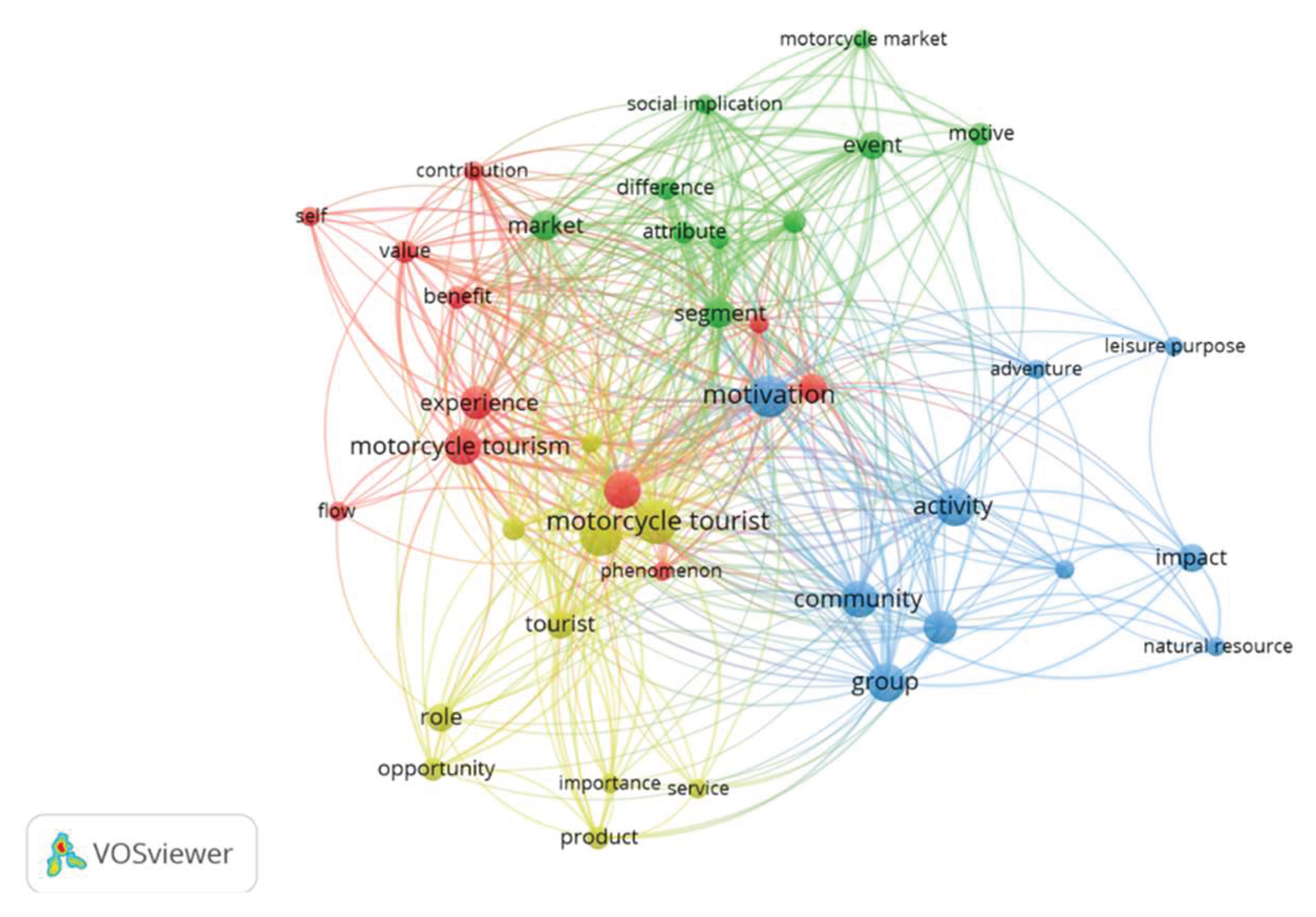

Table 1.
Motorcycle tourism difference between genders.
| Male gender | Female gender |
|---|---|
| Adventure and thrill-seeking | Affirmation and breaking with stereotypes |
| Connection and companionship | Generating links with a community |
| Freedom and independence | The search for the self and personal growth |
| Technical and mechanical curiosity | Proximity to nature and the environment |
Source: Own elaboration.
Table 2.
Sociodemographic data.
| Characteristic | Classification | Total Sample (n=233) | Percentage % |
|---|---|---|---|
| Gender | Female | 73 | 31.3 |
| Male | 160 | 68.7 | |
| Age | 18–24 | 6 | 2.6 |
| 25–34 | 29 | 12.4 | |
| 34–44 | 75 | 32.2 | |
| 44–54 | 79 | 33.9 | |
| 55–64 | 36 | 15.5 | |
| Over 64 years | 8 | 3.4 | |
| Education level | Until lower-secondary | 112 | 48.1 |
| Until upper-secondary | 92 | 39.5 | |
| Higher education | 29 | 12.4 | |
| Employment | Higher/specialist of intellectual and technical professions | 29 | 12.4 |
| Specialised technical | 45 | 19.3 | |
| Employee of services/trade/administrative or employee in industry or agriculture | 108 | 46.4 | |
| Other professional occupation | 28 | 12.0 | |
| Student/retired/domestic/inactive | 23 | 9.9 | |
|
Type of accommodation in this activity |
Local accommodation | 20 | 8.6 |
| Caravan | 14 | 6.0 | |
| Hostel | 8 | 3.4 | |
| Hotel | 36 | 15.5 | |
| Tent at the event venue | 129 | 55.4 | |
| Home family/friends | 26 | 11.2 |
Source: Own elaboration.
Table 3.
Factors and items.
| Factors and items | Loadings by factor | Total variance explained (%) | Cronbach’s alpha by factor |
|---|---|---|---|
| F1—Cultural | 38.466 | 0.877 | |
| Cultural heritage of the region | 0.885 | ||
| Intangible heritage of the region | 0.884 | ||
| Historical heritage | 0.867 | ||
| Landscape and nature | 0.653 | ||
| Contact with the culture of the region | 0.548 | ||
| Knowing new places | 0.506 | ||
| F2—Hospitality | 11.284 | 0.617 | |
| Socialising | 0.798 | ||
| Hospitality | 0.707 | ||
| Adventure | 0.532 | ||
| Making new friendships | 0.522 | ||
| F3—Location | 8.474 | 0.671 | |
| Programme of the event | 0.832 | ||
| Location | 0.830 | ||
| F4—Climate | 8.058 | ||
| Climate | 0.843 | ||
| KMO | 0.809 | ||
| Bartlett’s test of sphericity | = 1368.459; Sig. (p-value) < 0.001 | ||
| Cronbach’s alpha total | 0.841 | ||
Source: Own elaboration.
Table 4.
—Coding of the dummy variables.
| Categorical Variables Codings | Parameter coding | |||||
|---|---|---|---|---|---|---|
| (1) | (2) | (3) | (4) | (5) | ||
| Age (j = 1) | 18–24 (D11) | 0 | 0 | 0 | 0 | 0 |
| 25–34 (D12) | 1 | 0 | 0 | 0 | 0 | |
| 35–44 (D13) | 0 | 1 | 0 | 0 | 0 | |
| 45–54 (D14) | 0 | 0 | 1 | 0 | 0 | |
| 55–64 (D15) | 0 | 0 | 0 | 1 | 0 | |
| > 64 years (D16) | 0 | 0 | 0 | 0 | 1 | |
| What type of accommodation do you use when carrying out this activity? (j = 2) | Local accommodation (D21) | 0 | 0 | 0 | 0 | 0 |
| Caravan (D22) | 1 | 0 | 0 | 0 | 0 | |
| Hostel (D23) | 0 | 1 | 0 | 0 | 0 | |
| Hotel (D24) | 0 | 0 | 1 | 0 | 0 | |
| Tent at the event venue (D25) | 0 | 0 | 0 | 1 | 0 | |
| Home family/friends (D26) | 0 | 0 | 0 | 0 | 1 | |
| How many times have you been to this event? (j = 3) |
1 to 3 (D31) | 0 | 0 | 0 | - | - |
| 3 to 5 (D32) | 1 | 0 | 0 | - | - | |
| 5 to 8 (D33) | 0 | 1 | 0 | - | - | |
| More than 8 (D34) | 0 | 0 | 1 | - | - | |
| How often do you perform this activity yearly? (j = 4) |
1 to 3 times (D41) | 0 | 0 | 0 | - | - |
| 3 to 5 times (D42) | 1 | 0 | 0 | - | - | |
| 5 to 8 times (D43) | 0 | 1 | 0 | - | - | |
| More than 8 times (D44) | 0 | 0 | 1 | - | - | |
Source: Own elaboration.
Table 5.
Null Model.
| Variables in the equation | β | S.E. | Wald | df | Sig. (p-value) |
Exp(β) (OR) | |
|---|---|---|---|---|---|---|---|
| Step 0 | Constant | 3.475 | 0.384 | 81.972 | 1 | 0.001 | 32.286 |
Source: Own elaboration; OR—odd ratio.
Table 6.
Variables in the equation with constant.
| Variables in the equation | β | S.E. | Wald | df | Sig. (p-value) |
Exp(β) (Odds Ratio) |
95% C.I.for EXP(β) |
||
|---|---|---|---|---|---|---|---|---|---|
| Lower | Upper | ||||||||
| Step 1a | Cultural (F1) | -1.096 | 0.297 | 13.646 | 1 | 0.001 | 0.334 | 0.187 | 0.598 |
| Constant | 4.282 | 0.615 | 48.525 | 1 | 0.001 | 72.405 | |||
| Step 2b | Cultural (F1) | -0.941 | 0.294 | 10.222 | 1 | 0.001 | 0.390 | 0.219 | 0.695 |
| Type of accommodation used when carrying out this activity (D25) | 0.498 | 0.242 | 4.230 | 1 | 0.040 | 1.646 | 1.024 | 2.646 | |
| Constant | 2.259 | 1.000 | 5.102 | 1 | 0.024 | 9.578 | |||
| a. Variable(s) entered on step 1: REGR factor score 1 for analysis 1. | |||||||||
| b. Variable(s) entered on step 2: type of accommodation used when carrying out this activity | |||||||||
Source: Own elaboration.
Table 7.
Model adequacy test.
| Hosmer and Lemeshow Test | |||
|---|---|---|---|
| Step | Chi-square | df | Sig. (p-value) |
| 1 | 15.644 | 5 | 0.008 |
| 2 | 7.948 | 7 | 0.337 |
Source: Own elaboration.
Table 8.
Variables in the equation without a constant.
| Variables in the equation | β | S.E. | Wald | df | Sig. (p-value) |
Exp(β) (Odds Ratio) |
95% C.I. for EXP(β) |
||
|---|---|---|---|---|---|---|---|---|---|
| Lower | Upper | ||||||||
| Final Step | Cultural (F1) | -0.636 | 0.279 | 5.189 | 1 | 0.023 | 0.530 | 0.258 | 1.087 |
| Local accommodation (D21) | 3.204 | 1.230 | 6.785 | 1 | 0.009 | 24.640 | 1.036 | 585.921 | |
| Hostel (D23) | 3.547 | 1.026 | 11.943 | 1 | 0.001 | 34.714 | 2.468 | 488.351 | |
| Hotel (D24) | 4.370 | 0.748 | 34.130 | 1 | 0.001 | 79.050 | 11.511 | 542.877 | |
Source: Own elaboration.
Table 9.
Model adequacy test.
| Hosmer and Lemeshow test | |||
|---|---|---|---|
| Step | Chi-square | df | Sig. (p-value) |
| 1 | 9.800 | 3 | 0.020 |
| 2 | 13.453 | 7 | 0.062 |
Source: Own elaboration.
Table 10.
Coefficients of quality of model fit.
| Model summary | |||
|---|---|---|---|
| Step | -2 Log likelihood | Cox & Snell R Square | Nagelkerke R Square |
| 1 | 64.705 | 0.670 | 0.893 |
| 2 | 59.023 | 0.678 | 0.904 |
Source: Own elaboration.
Disclaimer/Publisher’s Note: The statements, opinions and data contained in all publications are solely those of the individual author(s) and contributor(s) and not of MDPI and/or the editor(s). MDPI and/or the editor(s) disclaim responsibility for any injury to people or property resulting from any ideas, methods, instructions or products referred to in the content. |
© 2025 by the authors. Licensee MDPI, Basel, Switzerland. This article is an open access article distributed under the terms and conditions of the Creative Commons Attribution (CC BY) license (http://creativecommons.org/licenses/by/4.0/).
Copyright: This open access article is published under a Creative Commons CC BY 4.0 license, which permit the free download, distribution, and reuse, provided that the author and preprint are cited in any reuse.