

Submitted:
15 May 2025
Posted:
16 May 2025
You are already at the latest version
Abstract
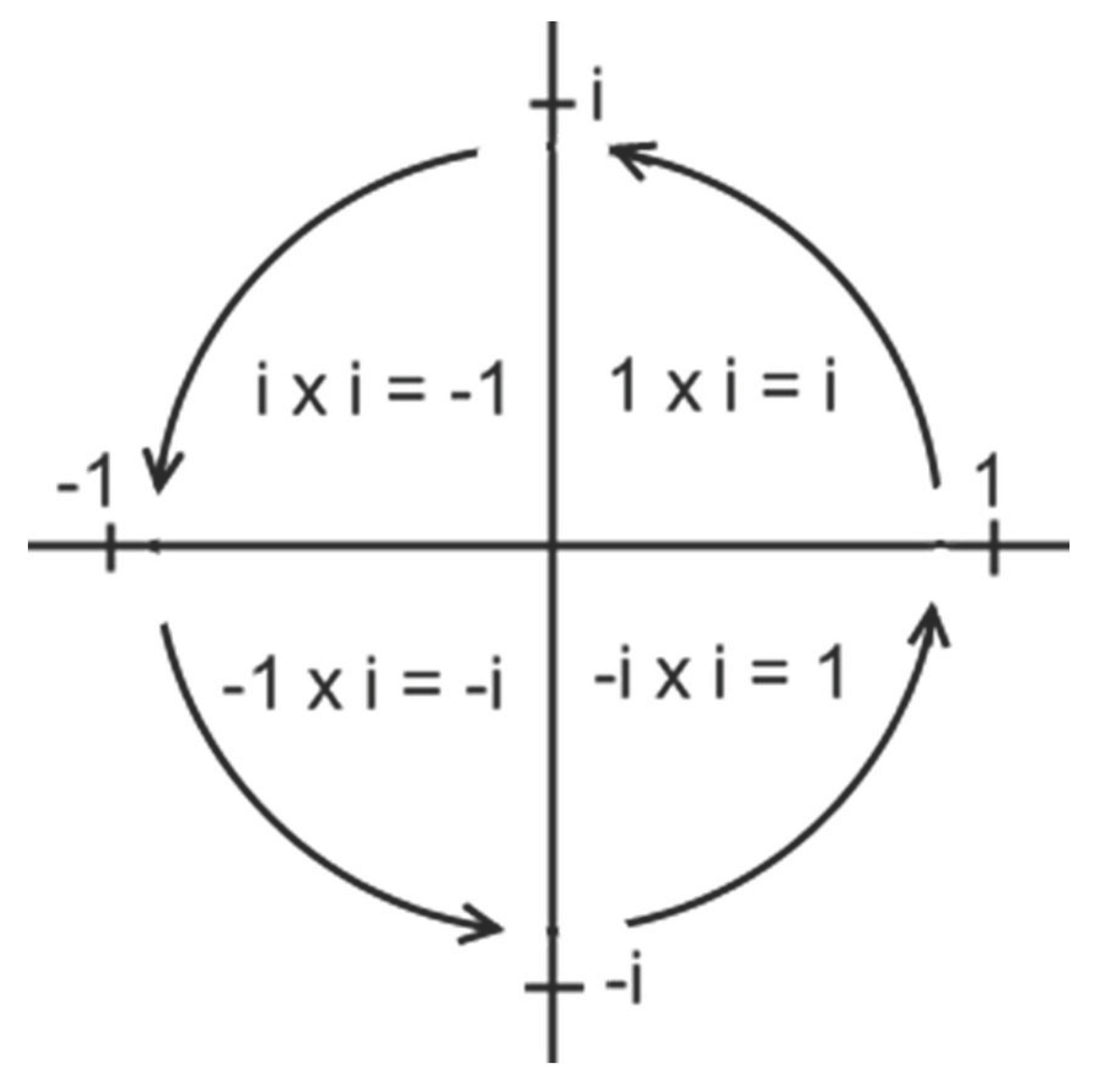
Celso Villas-Boas at the Federal University of São Carlos in Brazil and his colleagues argue that we don’t need to think of light as a wave to explain the results of the double-slit experiment. Their calculations suggest the dark and bright stripes in the interference pattern can be caused by some of the light particles being “dark photons” that have quantum properties which prevent them from interacting with the detector (they don’t light up the screen). They suggest that, in this case, light can be seen as fundamentally being just a particle. Here are some proposed connections to dark photons which may be seeds for further research. The concept of Dark Photons seems to reveal new mathematics and physics. It can show that reality is actually described by Complex maths in which the Real and Imaginary components cancel, causing light to not interact with a detector ... without light being dark. Mathematics’ Wick Rotation can exemplify Real-Imaginary cancellation if Wick isn’t restricted to being thought of as mere convenience or trickery. Wick is a circle containing a horizontal x-axis whose “real” ends are labelled 1 and -1, plus a vertical y-axis with “imaginary” ends i and -i. Whenever a point on this complex plane is multiplied by i, it moves a quarter rotation around the origin or center of the plane (counterclockwise). Start with 1, multiply by i then by i again (i2 = -1), then add 1 and -1 to get 0 (cancellation). This Complex maths even offers an explanation of the Cosmological Constant Problem - the large disagreement between observed values, and theoretical values, for the amount of energy in space. The binary digits introduced to solve this problem might even present a new way of looking at dark matter and dark energy. Physically, the idea of an electromagnetic wave is modified by Special Relativity’s interpretation of frames of reference so that electricity and magnetism aren’t merely intimately related but are identical.
Keywords:
dark photon
; complex maths
; real numbers
; imaginary numbers
; dark matter
; dark energy
; cosmological constant problem
; frames of reference
; electric-magnetic equivalence
Figure 1.
WICK ROTATION - Whenever a point on this complex plane is multiplied by i, it moves a quarter rotation around the origin or center of the plane (counterclockwise). Start with 1, multiply by i then by i again (i2 = -1), then add 1 and -1 to get 0 (cancellation of real and initially imaginary numbers).
Figure 1.
WICK ROTATION - Whenever a point on this complex plane is multiplied by i, it moves a quarter rotation around the origin or center of the plane (counterclockwise). Start with 1, multiply by i then by i again (i2 = -1), then add 1 and -1 to get 0 (cancellation of real and initially imaginary numbers).
Dark Matter and Dark Energy
This heading is a reply to the lack of evidence in physics for the existence of the particles of Dark Matter. While it’s possible to assume dark particles will eventually be detected, remaining open to other explanations is scientifically advisable. A modified view of dark matter is suggested here which resides on the y-axis of the Complex Plane and is only one dimensional. In that case, it wouldn’t be comprised of particles or have the 3 dimensions of familiar space (familiar space-time is on the x-axis). It would be one-dimensional (1D) like the electric pulses creating the binary digits (bits) of one and zero used in electronics. The bits may be thought of as the ultimate composition of fermions and bosons ... and as modified dark matter. Applying 1’s and 0’s to bosons and fermions was inspired by sources such as John Wheeler’s “it from bit”, [1] Max Tegmark’s Mathematical Universe Hypothesis, [2] and Melvin Vopson’s Information Physics. [3] The electric currents can be regarded as modified dark energy that has no connection with alleged cosmic expansion. The dark energy would be added to galaxies, preventing the rapidly orbiting stars in a galaxy’s outskirts from flying off into space. Paragraph from [4]
Hidden Electromagnetism in Cosmological Constant
In this view of the dark universe, the electromagnetism is present but hidden. The simplest explanation for dark energy is that it is an intrinsic, fundamental energy of space. This is the cosmological constant, usually represented bythe Greek letter Λ (Lambda). Particle theorists have realized that the cosmological constant can be interpreted as a measure of the energy density of the vacuum. A major problem is that quantum field theories predict a huge cosmological constant, about 120 orders of magnitude too large. This would need to be almost, but not exactly, cancelled by an equally large term of the opposite sign. Cancellation could be achieved by remembering that the number of binary digits in the space of the x-axis (which is described with positive numbers) is equal to the number of digits in the imaginary space of the y-axis (where the square of imaginary numbers produces negatives). The equally large number of real and imaginary bits cancel by union of their individual identities and “collapsing” into the Complex Plane. In the complex plane, the cancellation of the electric pulses on the two axes hide electromagnetism and allow only gravitational interaction - making cancellation almost, but not exactly, complete. Paragraph from [4]
Frames of Reference and Electric-Magnetic Equivalence
To start with the example of length contraction in Special Relativity - Einstein wrote in 1911 that
"It doesn't 'really' exist, in so far as it doesn't exist for a co-moving observer; though it 'really' exists, i.e. in such a way that it could be demonstrated in principle by physical means by a non-comoving observer." [5]
Demonstration "in principle by physical means by a non-comoving observer" is the same meaning as "demonstration by experiments performed by scientists not moving at the same speed as a studied property e.g. the speeds of light or electric currents". The classical electrical waveform is in the human frame of reference and is what Einstein’s 1911 writing called “demonstration by experiments performed by scientists not moving at the speed of light”. Now consider this quote -
“While an observer stationary with respect to an electric charge will see it as a source of electric field only, a second observer moving relative to the first will see the same charge as a source of both electric and magnetic fields in a way dictated by special relativity.” [6]
If every boson and fermion in the cosmos has binary digits as its ultimate composition, every object and event in space-time would be unified like seemingly separate objects/events in a simulation or computer game. The cosmos could then be regarded as equivalent to a single point. The universal frame of reference [also see “elliptical VTS geometry” in [7]] reveals that every point (in this case, on the classical wave) equals the universe, and the point occupies an infinite and eternal amount of space and time. Such a state may erroneously be regarded as pseudoscientific because it can’t possibly fit in with the human (classical) frame of reference. Such a frame describes a non-comoving experimental scientist who isn’t moving at the same speed as the electric charge. She or he detects both electricity and magnetism. However, it does fit in with the universal/quantum-mechanical frame of a co-moving observer who has identical motion and speed as the charge and sees the charge as a source of electric field only. The ONE difference between perception of an electric field only, or of both electric and magnetic fields, is the frame of reference. This means electricity and magnetism must be identical. The seeming difference would be due to the human reference frame embracing the classical picture of a waveform while the universal frame sees every point on the wave occupying an infinite and eternal amount of space and time.
References
- Jaeger, G. (2023). On Wheeler’s Quantum Circuit. In: Plotnitsky, A., Haven, E. (eds) The Quantum-Like Revolution. Springer, Cham. [CrossRef]
- Tegmark, M. Our Mathematical Universe. Random House/Knopf, January 2014.
- Information Physics Institute. IPI Publishing. https://www.informationphysicsinstitute.org/ipi-publishing.
- PDF) Modified Dark Matter, Modified Dark Energy, Deleting Thermodynamic Entropy, and Fixing the Cosmological Constant Problem. Available from: https://www.researchgate.net/publication/384811117_Modified_Dark_Matter_Modified_Dark_Energy_Deleting_Thermodynamic_Entropy_and_Fixing_the_Cosmological_Constant_Problem [accessed May 14 2025].
- Einstein, A. (1911). "Zum Ehrenfestschen Paradoxon. Eine Bemerkungzu V. Variĉaks Aufsatz". Physikalische Zeitschrift 12: 509–510.
- Penguin Encyclopedia 2006 - edited by David Crystal - 3rd edition, 2006 - article “electromagnetism”.
- Bartlett, R. “EDQG (ElectroDynamic Quantum Gravity)”. Available from: https://www.researchgate.net/publication/387083314_EDQG_ElectroDynamic_Quantum_Gravity [accessed May 14 2025].
Disclaimer/Publisher’s Note: The statements, opinions and data contained in all publications are solely those of the individual author(s) and contributor(s) and not of MDPI and/or the editor(s). MDPI and/or the editor(s) disclaim responsibility for any injury to people or property resulting from any ideas, methods, instructions or products referred to in the content. |
© 2025 by the authors. Licensee MDPI, Basel, Switzerland. This article is an open access article distributed under the terms and conditions of the Creative Commons Attribution (CC BY) license (http://creativecommons.org/licenses/by/4.0/).
Copyright: This open access article is published under a Creative Commons CC BY 4.0 license, which permit the free download, distribution, and reuse, provided that the author and preprint are cited in any reuse.


