

Submitted:
27 April 2025
Posted:
28 April 2025
You are already at the latest version
Abstract
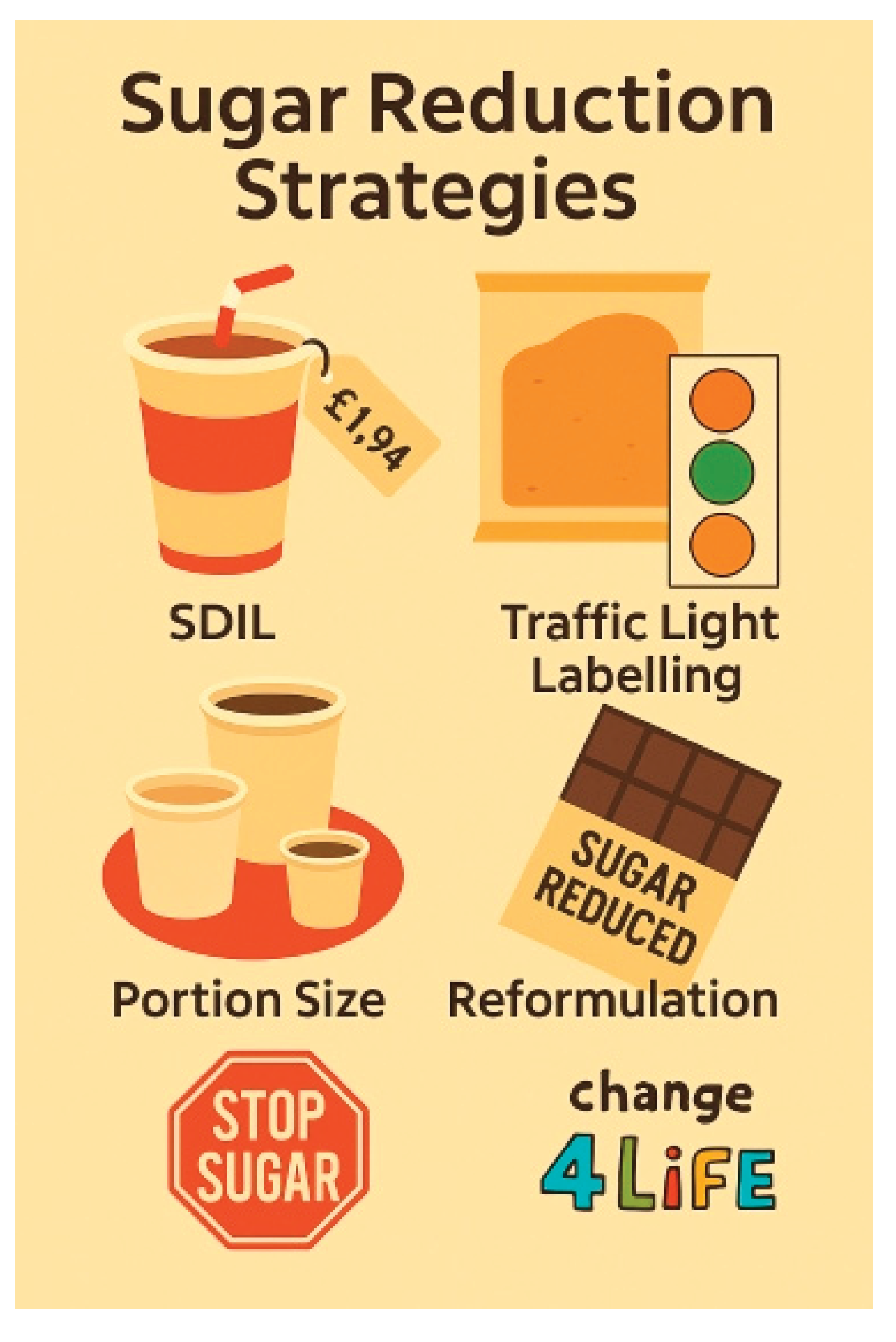
Excessive sugar consumption has been reported to be linked with various health issues such as obesity, diabetes, cardiovascular diseases, and dental problems. In the UK, effective strategies have been implemented to reduce sugar intake, including the Change4Life Sugar Smart campaign, product reformulation, traffic light labelling, portion control and the Soft Drinks Industry Levy (SDIL). This review of 11 empirical studies shows that product reformulation, especially in beverages and packaged foods, is effective, as consumers can prefer reduced-sugar alternatives when clearly labelled. The UK traffic light labelling scheme and portion control were also reported to help consumers make informed, healthier food choices. The SDIL, introduced in 2018, was also found to significantly lower sugary beverage consumption. While progress is evident, further nutrition education, public awareness, particularly for people with low socioeconomic status, and more comprehensive policies for long-term positive dietary behavioural shift are essential to limit diseases and conditions associated with high sugar consumption. Future research must evaluate the combined effects of these interventions and examine their long-term effectiveness across diverse population groups.
Keywords:
Sugar reduction strategies
; public health interventions
; nutrition education
; dietary behaviour
Graphic image
1. Introduction
Due to global urbanisation and economic expansion, consumers’ eating habits have changed, increasing their calorie intake [1,2]. Sugar (sucrose), an important food commodity that only the rich could afford in the 18th century, has become part of diets [3]. It has become more accessible over time, with various alternatives to cane sugar now being used in food and drinks [4]. If sugar is not consumed moderately, it can lead to obesity, overweight, diabetes mellitus, tooth decay, cardiovascular conditions and cancer [5]. Sugars in our diet come from natural sources like fruits, vegetables, milk, and honey, as well as added sources such as sugary drinks and baked goods. While staple foods contribute to overall sugar intake, most added and free sugars come from non-staple items like sweets and beverages. The term ‘free sugar’ refers to the sum of glucose, fructose, galactose, lactose, sucrose and maltose [6]. Diabetes, which is also a public health concern around the world, has been linked to the consumption of foods with high sugar content [7,8]. The National Diet and Nutrition Survey (NDNS) recently reported that free sugar intake for UK adults aged 65 and above was 9.4% of the overall energy rather than 5%, as recommended. For 11 to 18 years, it was 12.3% [9]. In the UK, 15.8% of people with diabetes were admitted to the hospital in 2014, 4.7 million people (about twice the population of Kansas) were diabetic in 2019, and this number was projected to be 5 million by 2025 [10]. Of the 4.7 million individuals who were reported to be diabetic, 90% were found to have type 2 diabetes (T2D) [10,11].
Obesity in the UK has grown over time due to the influence of different factors, such as energy-dense foods with high sugar content, and individuals not being involved in physical activities [12]. Tackling obesity in adults is crucial for improving overall health and reducing the risk of serious long-term illnesses. Obesity is closely associated with a range of chronic conditions, including heart disease, cancer, and stroke, which can significantly impact an individual's quality of life [13]. Based on body mass index (BMI), it is estimated that if excessive sugar intake persists, 50% of adults will be obese by 2050 [14].
Public Health England (PHE) has introduced the Soft Drinks Industry Levy (SDIL) as a proactive step to encourage healthier dietary choices. This initiative aims to reduce sugar consumption and promote a balanced diet by reducing the intake of non-nutritive foods across the UK [15]. Many consumers do not have enough information about the strategies and interventions implemented by the food industry and the government, such as the SDIL, which aims to reduce sugar content in foods and drinks. Data on consumers' preferences for sweet foods and beverages is also limited [16]. This review presents scientific studies that aim to educate the public about sugar consumption and create awareness that enables consumers to make healthier choices. The review also focuses on recent research exploring effective strategies for reducing sugar intake in the UK.
2. Methodology
2.1. Eligibility Criteria
The eligibility criteria are presented in Table 1.
2.2. Search Strategies
Key themes were looked up in search engines using a combination of terms without any restriction, using a combination of specific terms on DISCOVER of the University of Bedfordshire. The DISCOVER has several databases such as PubMed, Google Scholar, ScienceDirect, and BMC Medicine. Search terms were (Strategies for reduction of sugar in food and drinks in the UK retail market) AND (reducing sugar intake) AND (food and drinks) AND (UK OR England OR Britain). The following Boolean operators are used to streamline the search process: ('Strategy' OR 'Strategies') AND ('Reduction' OR 'Reduction') AND ('Sugar') OR ('Consumption' OR 'Consumption').
2.3. Screening Strategies and Selection Process
Articles were identified, screened using the inclusion and exclusion criteria, and assessed for quality before being included in the study. Research articles that did not meet the eligibility criteria were excluded from consideration. Figure 1 shows the PRISMA flow chart for this study.
The retrieved studies were five thousand three hundred and ninety-three (n = 5,395), and an additional nineteen studies were identified (n = 19). After removing studies based on the eligibility criteria of date, geography and review status (peer-reviewed), three hundred and twenty-seven (n = 327) remained. Two hundred and ninety-two (n = 292) secondary articles were screened. Research that did not analyse current strategies for reducing sugar intake and studies conducted outside the UK were also excluded. Thirty-four (n=34) studies qualified for full-text reading. After further screening and full-text reading, twenty-three (n=23) EU studies were excluded. The total number of studies included in this review is eleven (n=11), which included quantitative (n=5), qualitative (n=4) and mixed-method (n=2) studies.
2.4. Assessment of the Quality of the Selected Articles and Critical Appraisal
The quality evaluation was performed on the selected final articles using the checklist on the CASP (Critical Appraisals Skills Programme) tools [17]. The purpose of the critical appraisal is to determine the credibility of the selected articles [18]. The checklist collates information on the articles' main points; it helps recognise the adequacy of the research design, their positive aspects, how the sample was chosen, the analysis, and the method used to identify their drawbacks and applicability [19]. Table 2 indicates the articles screened and analysed using the CASP tools of different screening parameters.
2.5. Data Analysis
Data was analysed using an inductive thematic analysis. Thematic analysis assessed quantitative, qualitative, and mixed methods studies, providing a flexible way to analyse and identify frequently occurring data. It was also used to identify gaps in the study. Themes were categorised into five stages, which involve (1) getting to know the information (knowing what each study entails), (2) providing codes, (3) sourcing the themes (gathering re-occurring topics), (4) assessing the themes (knowing what each theme entails) and (5) naming the themes (segmenting the themes and naming) [31].
2.6. Ethical Consideration
Ethical considerations in research are rules that assist researchers in collecting and analysing data appropriately and accurately. A review study does not collect personal and confidential information from participants [32]. This study is a rapid review approach that did not involve human participants, so no ethical approval was sought.
3. Findings
3.1. Characteristics of the Included Studies
Eleven (n=11) studies met the inclusion criteria, which included five quantitative studies (n=5), four qualitative studies (n=4), and two mixed-method studies (n=2). The quantitative study included cross-over dietary intervention, cross-sectional studies, randomised controlled trials (RCTs), double-blind, opportunistic sampling, focus groups, and repeated cross-sectional surveys. The qualitative research included one-on-one online telephone interviews, follow-up, focus groups, and semi-structured interviews to assess strategies for reducing sugar consumption. There were also mixed-method studies, combining the quantitative and qualitative design methods. Table 3 describes the attributes of the included studies, which are segmented into different parts such as intervention type, study design/type, population, settings, participant characteristics, the purpose of the study, and findings.
3.2. Discussions of Key Themes from the Included Studies
Theme One: Change4life Sugar Smart (CSS) Campaign
Four studies reported using the CSS Campaign to reduce sugar intake in food and drinks (Table 3). The Change4Life program in the UK has been instrumental in educating individuals about the importance of measuring their food intake relative to their health. The Change4Life program offers educational resources, including pamphlets and digital tools, to encourage healthier food and lifestyle choices. These materials raise awareness about the risks of excessive sugar, saturated fat, and salt intake while promoting physical activity and balanced nutrition for better population health [20]. The Sugar Smart app enables consumers to scan food products for immediate information on their sugar content. It is part of the Change4Life initiative, which educates children and parents to make informed choices and adopt healthier eating habits [33,34].
Bradley et al. [27] conducted a one-on-one semi-structured interview with 20 parents concerning their children's sugar intake (5-11 years) and how to reduce it. The CSS Campaign strategies contributed to reducing free sugar by approximately 6.2 g/day and encouraged parents to show their readiness to reduce the amount of sugar consumed by their children. Forde and Solomon-Moore [28] created the Sugar Smart intervention to increase awareness of sugar consumption among food bank users and staff. They provided educational materials in food banks and evaluated their effectiveness through interviews with 14 participants (8 food bank staff and 6 volunteers) from the Trussell Trust Food Bank in Bristol. The study showcased that the participants' personal, psychological, and socioeconomic statuses particularly influenced their consumption of food and drink products with high sugar content. It also highlighted the positive changes in participants' eating habits, showcasing the intervention's effectiveness in promoting healthier choices.
The third study, Gardner [29], analysed two studies (mixed method), which included participants’ perceptions on the effect of the Change4life campaign and how to improve the diet consumed by school children in Newcastle Upon Tyne. Thirty participants (children and adults) were interviewed one-on-one for 30 to 40 minutes, and a 12-month follow-up was conducted. The intervention aimed to raise awareness and educate children and adults about controlling sugar consumption through the Change4Life smartphone app.
Swift et al. [30] conducted a mixed-method study on reducing sugar consumption using digital space strategies among participants, primarily parents and caregivers of school-aged children. Three studies were carried out: Study 1 (n=184) used a questionnaire, Study 2 (n=412) had an online parent forum, and Study 3 (n=618) had a Twitter and CSS app that encouraged and allowed participants to learn more about the importance of limiting sugar consumption in children and adults. The findings from three studies offered valuable insights into children's sugar consumption and had significant implications for public health. Study 1 revealed that 94.0% of the participants believed UK children consumed too much sugar, with 98.4% concerned about its health effects. This highlights the urgent need for interventions to reduce sugar intake. Significant barriers to reducing sugar intake included the home food environment (73.4%), media/advertising (60.9%), and parental influence (58.2%). Parents may hinder sugar reduction efforts due to their inconsistent dietary modelling, limited understanding of nutritional information, and resistance to healthier food choices, awareness and behaviours, even when they engage in digital tools like the Sugar Smart app. In the second study, 45.9% of participants expressed negative sentiments towards the Soft Drinks Industry Levy, while 35.2% were positive. This suggests a need for more effective policies and better communication about their benefits. Study 3 showed a positive reception for the Sugar Smart app, with 76.7% viewing it favourably for its ability to identify sugar content. These studies present the need for continued efforts to address children's sugar consumption and the potential of tools like the Sugar Smart app to support healthier choices.
The authors opined that the app plays a vital role in helping to reduce sugar intake to about 2% in children who participated in the CSS campaign, Forde and Solomon-Moore [28] highlighted how information-based interventions, such as CSS were used to create awareness, and Gardner [29] and Swift et al. [30] reported a similar positive shift pattern towards sugar intake.
3.3. Theme Two: Product Reformulation
Reformulation of products serves as a medium to reduce sugar intake. Markey, Lovegrove and Methven [24] conducted a quantitative study on consumers` acceptability of sugar-reduced food and drinks, which were reformulated with sweeteners. The study examined regular and sugar-reduced products such as baked beans, strawberry jam, milk chocolate, cola, and cranberry-raspberry juice. They used different reformulated products to determine if consumers would accept them, as their sensory characteristics have changed due to reformulation. Participants (n=616) were provided with seven beverages, including juice and soft drinks, and 19 foods, including pasta sauce, baked beans, muesli, puddings and sweet confectionery. Significant differences in consumers' overall liking (appearance, flavour, and texture) of the standard and reduced-sugar products were found, particularly higher preference for sugar-reduced formulations for beans and cola. The authors stated that consumer acceptability and sweetness were crucial in product reformulation. They also reported a considerable reduction in sugar consumption within the first 8 weeks of implementing the strategy.
Markey, Le Jeune and Lovegrove [22] conducted an RCT, a dietary and double-blinded study with 50 participants (16 males and 34 females) aged 20 to 49 randomly assigned to consume either regular sugar or sugar-reduced foods and beverages for 8 weeks and a 4-week follow-up. The selected product samples were baked beans, strawberry jam, milk chocolate, cola drink, and cranberry-raspberry juice. They also included the nutritional content of the products, manufacturer details, and information on sugar substitutes in reformulated versions (such as artificial sweeteners and sugar alcohols). The consumption of reformulated products yielded a remarkable decrease in sugar consumption.
3.4. Theme Three: Traffic Light Front of Pack Labelling
Two studies [21,26] featured traffic light labelling (TLL) strategies to reduce sugar consumption. Osman and Thornton [21] study aimed to promote continual eating of healthy food among adults of different age groups, ranging from 18 to 75, with a mean age of 37.9, using an opportunistic sampling method. Two experiments were conducted to investigate the impact of traffic light labelling on meal selection in a simulated canteen environment. Study 1 involved 120 participants, and Study 2 included 297. Participants were shown either single labels for caloric content or carbon emissions, or dual labels that included both. The results revealed a significant finding where TLL effectively guided participants to choose meals with lower calories and reduced carbon emissions, suggesting it could be a significant and valuable strategy for encouraging healthier and more sustainable meal choices.
Mauri et al. [26] researched the influence of a front-of-package (FOP) on the choice of low-sugar products such as yoghurt, ready meals, and smoothies among 272 participants over 18 years and residents of the UK. Participants were shown images of food products with labels indicating sugar content using either a traffic light or teaspoon label. The traffic light labels consisted of red, yellow, and green lights representing high, medium, and low sugar content. In the teaspoon labels, sugar levels were visually represented by two, four, or six teaspoons, corresponding to low, medium, and high sugar content. The intervention provided information to consumers to help identify the sugar contents in foods, even though the visual representation of the amount of sugar using a teaspoon was more informative to the participants.
TLL strategies have the potential to assist individuals in distinguishing between the sugar content and nutritional value of foods [35]. TLL identifies a food product's salt, fat, and sugar levels and whether it contains low, medium, or high calories [36]. Osman and Thornton [21] found that the TLL intervention was one strategy to reduce sugar intake. This strategy affected how individuals choose their diet and helped them change their behaviour towards healthier food. Elsewhere, TLL has been reported to be essential in creating consumer awareness by providing nutrition information about a food product, thereby enabling them to make informed, healthier food choices [37,38,39].
3.5. Theme Four: Food Portion Size Intervention
The food portion size strategies were featured in two studies [23,25]. Porter et al. [25] conducted a one-on-one semi-structured interview for first-time mothers and caregivers (n=25). The study aimed to create awareness of the portion size recommendation and how it should be applied when feeding one and 2-year-old children. The study reported that 37% of sweet snacks aimed at children were high in sugar, while only 8% were classified as low in sugar. Most parents were unfamiliar with the portion size recommendations and used their discretion to decide on the amount served.
Almiron-Roig et al. [23] conducted a study with 37 overweight women over five lunch visits using the Sussex Ingestion Pattern Monitor (SIPM), a real-time tool designed to track eating behaviour. The study examined how exposure to larger portion sizes influenced energy intake. In random order, participants consumed a lunch meal with different portion sizes (229, 303, 400, 529, or 700g). Meal eating parameters (bite size and bite speed, eating duration, eating speed, portion size and total calories consumed) were measured with the SIPM, which tracked the participants' eating behaviours by collecting data instantly as they ate rather than relying on retrospective self-reports or delayed measurements. The findings indicated that larger portions increased energy intake, highlighting the impact of portion size on eating patterns and dietary behaviours.
The principle of portion size strategies is to reduce the amount of sugar in foods, accessibility, and the probability of accepting a larger portion size of food when it is attractive [40]. According to Porter et al. [25], portion size education materials were given to new mothers during their first two years of motherhood in the UK, to familiarise themselves with the portion size guidance. The result indicated that the previous portion size guidance in the UK did not serve well because parents did not know the exact portion to utilise when feeding their children. The other study, Almiron-Roig et al. [23], focused on overweight women in the UK. An energy intake about 75% higher in the study was linked to overweight and obesity, which is a result of not being able to control their food and energy intake. However, a reduction in the size of bites and portions and the speed of eating can help minimise or control how individuals eat, and this serves as a strategy to prevent excessive food intake. Some empirical studies have made recommendations in terms of portion sizes, such as using smaller sizes of glasses and dishes, replacing big sizes of plates with smaller ones, regulating the reduction of larger quantities of foods, regulating the use of adjustable pricing (a strategy where the price of food items increases in proportion to the portion size, rather than offering larger sizes at discounted rates) and ensuring the packaging is labelled accurately on a single serving [41,42,43].
3.6. Theme Five: Soft Drink Industry Levy (SDIL)
The soft drink industry levy is a compulsory charge applied to UK-produced or imported soft drinks containing added sugar, and it came into force in April 2018. Drinks containing less than 5 grams of sugar per 100 ml (about 3.38 oz) are exempt from taxation to encourage healthier beverage choices. The rates have increased from 1 April 2025 to £1.94 per 10 litres for drinks containing 5 to 7.9 grams of sugar per 100 millilitres and £2.59 per 10 litres for drinks containing 8 grams or more of sugar per 100 millilitres [33,44]. These changes provide a wider availability of low-sugar options and promote overall well-being [45]
Adams et al. [20] conducted a repeat cross-sectional online survey involving healthy adults aged 18 to 64, and their opinions about the SDIL were investigated (n = 10,284). The survey gathered information during three periods: November to December 2017 (four months before the implementation of the SDIL), 2018 (eight months after), and 2019 (20 months after). The study reported a decrease in sugar intake from 72 to 67% after implementing the SDIL intervention in 2018. The study indicated strong support for SDIL among UK adults, which remained consistent from four months before implementation through eight and 20 months after. However, while perceptions of the levy’s effectiveness (a wide range of opinions and attitudes regarding the levy) remained high, there was a slight decrease in perceived effectiveness (individual assessment of the levy) following its implementation in 2018, with no significant change noted in 2019. By the end of the intervention, most participants continued to support the sugar levy. However, a follow-up study is necessary to determine if this support manifests in participants` sugar intake, particularly in their drink consumption.
3.7. Implications of the Study for Practice
The strategies to reduce sugar consumption have yielded encouraging and favourable results. The strategies outlined in this review were successfully implemented and are crucial in promoting better nutrition and overall health. By adopting these approaches, individuals can significantly lower their risk of health issues such as obesity, type 2 diabetes, and dental problems. The interventions/strategies were also diverse, focusing on differing consumer populations (such as parents, children and other individuals) and even the food manufacturers. For example, the sugar levy impacts the consumption of sugar by lowering the intake levels, and it affects the manufacturers or producers' sales levels as sugar-based drinks are taxed more than regular drinks.
4. Conclusions
This review highlights the UK's strategies for reducing sugar consumption. Strategies such as Change4Life campaigns, product reformulation, traffic light labelling, portion control, and the Soft Drinks Industry Levy are essential for raising awareness about the risks of excessive sugar consumption, and they have positively impacted consumers' food choices. Studies have shown that when manufacturers reduce sugar, consumers are generally willing to shift from consuming high-sugar to sugar-reduced food and drink products.
Even though some progress has been made in educating consumers on the health risks attributed to high sugar consumption, there is still a need for further nutrition education. In addition, more needs to be done to raise public awareness. This is because it is uncertain that most consumers, particularly in the UK, are aware of the long-term health risks of excessive sugar intake. We recommend more effective interventions on sugar intake that focus on the most vulnerable groups, including children and those with lower socioeconomic status.
A combination of the front-of-pack labelling, especially traffic lights, supportive government policies, and initiatives from food manufacturers presents a good direction for reducing sugar consumption in the UK. Further studies are needed to report the effectiveness of the existing strategies that promote healthier choices for foods containing sugar across different demographic variables like age, level of education, ethnicity, gender, and socioeconomic status.
Author Contributions
Conceptualisation, DO and AT; methodology, DO and AT; validation, AT; investigation, DO and AT; data curation, DO and AT; writing—original draft preparation, DO; writing—review and editing, DO and AT; supervision, AT. All authors have read and agreed to the published version of the manuscript.
Funding
This research received no external funding.
Institutional Review Board Statement
Not applicable.
Informed Consent Statement
Not applicable.
Data Availability Statement
Not applicable.
Acknowledgments
The authors thank Elizabeth Bailey, Dorcas Adeoye-Agboola and Mary Bankole for proofreading the manuscript.
Conflicts of Interest
The authors declare no conflicts of interest.
References
- Ren, Y.; Castro Campos, B.; Peng, Y.; Glauben, T. Nutrition transition with accelerating urbanization? Empirical evidence from rural China. Nutrients 2021, 13, 1–18. [Google Scholar] [CrossRef] [PubMed]
- Westbrook, G.; Angus, A. Top 10 Global Consumer Trends in 2022. Euromonitor International [Internet]. 2021;(January):82. Available from: http://www.portal.euromonitor.com/portal/analysis/tab.
- Deliza, R.; Lima, M.F.; Ares, G. Rethinking sugar reduction in processed foods. Vol. 40, Current Opinion in Food Science. Elsevier Ltd; 2021. p. 58–66.
- Farhat, G.; Dewison, F.; Stevenson, L. Knowledge and perceptions of non-nutritive sweeteners within the uk adult population. Nutrients 2021, 13, 1–14. [Google Scholar] [CrossRef] [PubMed]
- Huang, K.; Wang, Y. Advances in bio-based smart food packaging for enhanced food safety. Trends Food Sci Technol 2025, 159, 104960. [Google Scholar] [CrossRef]
- Erickson, J.; Slavin, J. Total, added, and free sugars: Are restrictive guidelines science - Based or achievable? Nutrients 2015, 7, 2866–2878. [Google Scholar] [CrossRef] [PubMed]
- Mantzari, E.; Vasiljevic, M.; Turney, I.; Pilling, M.M.T. Impact of warning labels on sugar-sweetened beverages on parental selection: An online experimental study. Prev Med Rep 2018, 12, 259–267. [Google Scholar] [CrossRef]
- VSMalik, B.P.G.B.J.P.D.F.H. Sugar-sweetened beverages, obesity, type 2 diabetes mellitus, and cardiovascular disease risk. Circulation 2010, 121, 1356–1364. [Google Scholar]
- British Nutrition Foundation [BNF]. Key findings from NDNS report for years 9 to 11 (combined) The National Diet and Nutrition Survey (NDNS) Report of Years 9 to [Internet]. 2024. Available from: https://www.gov.uk/government/statistics/ndns-results-from-years-9-to-11-2016-to-2017-and-2018-to-.
- International Diabetes Federation (IDF) Atlas. Diabetes around the world in 2021. 2021.
- Saeedi, P.; Petersohn, I.; Salpea, P.; Malanda, B.; Karuranga, S.; Unwin, N.; et al. Global and regional diabetes prevalence estimates for 2019 and projections for 2030 and 2045: Results from the International Diabetes Federation Diabetes Atlas, 9th edition. Diabetes Res Clin Pract. 2019, 157. [Google Scholar] [CrossRef]
- Baker, P.; Machado, P.; Santos, T.; Sievert, K.; Backholer, K.; Hadjikakou, M.; et al. Ultra-processed foods and the nutrition transition: Global, regional and national trends, food systems transformations and political economy drivers. Obesity Reviews 2020, 21, e13126. [Google Scholar] [CrossRef]
- Scheelbeek, P.F.D.; Cornelsen, L.; Marteau, T.M.; Jebb, S.A.; Smith, R.D. Potential impact on prevalence of obesity in the UK of a 20% price increase in high sugar snacks: Modelling study. The BMJ. 2019, 366. [Google Scholar] [CrossRef]
- Capehorn, M.S.; Haslam, D.W.; Welbourn, R. Obesity Treatment in the UK Health System. Vol. 5, Current obesity reports. 2016. p. 320–6.
- Scarborough, P.; Adhikari, V.; Harrington, R.A.; Elhussein, A.; Briggs, A.; Rayner, M.; et al. Impact of the announcement and implementation of the UK soft drinks industry levy on sugar content, price, product size and number of available soft drinks in the UK, 2015–2019: A controlled interrupted time series analysis. PLoS Med. 2020, 17. [Google Scholar] [CrossRef] [PubMed]
- Kirkpatrick, S.I.; Raffoul, A.; Maynard, M.; Lee, K.M.; Stapleton, J. Gaps in the evidence on population interventions to reduce consumption of sugars: A review of reviews. Vol. 10, Nutrients. MDPI AG; 2018.
- Answers, A. Examining Qualitative and Quantitative studies with CASP [Internet]. 2018 [cited 2021 Feb 14]. Available from: https://nursinganswers.net/essays/examining-qualitative-and-quantitative-studies-with-casp-nursing-essay.php.
- Harrison, R.; Jones, B.; Gardener, P.; Lawton, R. Quality assessment with diverse studies (QuADS): an appraisal tool for methodological and reporting quality in systematic reviews of mixed- or multi-method studies. BMC Health Serv Res. 2021, 21. [Google Scholar]
- Shaheen, N.; Shaheen, A.; Ramadan, A.; Hefnawy, M.T.; Ramadan, A.; Ibrahim, I.A.; et al. Appraising systematic reviews: a comprehensive guide to ensuring validity and reliability. Front Res Metr Anal. 2023, 8. [Google Scholar] [CrossRef] [PubMed]
- Braun, V.; Clarke, V. Using thematic analysis in psychology. Qual Res Psychol. 2006, 3, 77–101. [Google Scholar] [CrossRef]
- Suri, H. Systematic Reviews in Educational Research. Springer VS, Wiesbaden. 2020 [cited 2021 Mar 17]. p. 41–51 Ethical Considerations of Conducting Systematic Reviews in Educational Research. Available from: https://library.oapen.org/bitstream/handle/20.500.12657/23142/1007012.pdf?sequence=1#page=59.
- Adams, J.; Pell, D.; Penney, T.L.; Hammond, D.; Vanderlee, L.; White, M. Public acceptability of the UK Soft Drinks Industry Levy: Repeat cross-sectional analysis of the International Food Policy Study (2017-2019). Vol. 11, BMJ Open. BMJ Publishing Group; 2021.
- Osman, M.; Thornton, K. Traffic light labelling of meals to promote sustainable consumption and healthy eating. Appetite. 2019, 138, 60–71. [Google Scholar] [CrossRef]
- Markey, O.; Le Jeune, J.; Lovegrove, J.A. Energy compensation following consumption of sugar-reduced products: a randomized controlled trial. Eur J Nutr 2016, 55, 2137–2149. [Google Scholar] [CrossRef]
- Almiron-Roig, E.; Tsiountsioura, M.; Lewis, H.B.; Wu, J.; Solis-Trapala, I.; Jebb, S.A. Large portion sizes increase bite size and eating rate in overweight women. Vol. 139, Physiology and Behavior. Elsevier Inc.; 2015. p. 297–302.
- Markey, O.; Lovegrove, J.A.; Methven, L. Sensory profiles and consumer acceptability of a range of sugar-reduced products on the UK market. Food Research International. 2015, 72, 133–139. [Google Scholar] [CrossRef]
- Porter, A.; Langford, R.; Summerbell, C.; Tinner, L.; Kipping, R. A qualitative exploration of food portion size practices and awareness of food portion size guidance in first-time parents of one- to two-year-olds living in the UK. BMC Public Health. 2023, 23. [Google Scholar] [CrossRef]
- Mauri, C.; Grazzini, L.; Ulqinaku, A.; Poletti, E. The effect of front-of-package nutrition labels on the choice of low sugar products. Psychol Mark 2021, 38, 1323–1339. [Google Scholar] [CrossRef]
- Bradley, J.; Gardner, G.; Rowland, M.K.; Fay, M.; Mann, K.; Holmes, R.; et al. Impact of a health marketing campaign on sugars intake by children aged 5-11 years and parental views on reducing children’s consumption. BMC Public Health. 2020, 20. [Google Scholar] [CrossRef]
- Forde, H.; Solomon-Moore, E. A qualitative study to understand the potential efficacy of an information-based sugar reduction intervention among low socioeconomic individuals in the UK. Int J Environ Res Public Health. 2019, 16. [Google Scholar] [CrossRef] [PubMed]
- Ellen Lee Gardner, G. Exploring stakeholders’ views on the Change4Life “Sugar Smart” campaign and school food to improve children’s diets: two qualitative studies. 2020.
- Swift, J.A.; Strathearn, L.; Morris, A.; Chi, Y.; Townsend, T.; Pearce, J. Public health strategies to reduce sugar intake in the UK: An exploration of public perceptions using digital spaces. Nutr Bull 2018, 43, 238–247. [Google Scholar] [CrossRef]
- Bradley, J.; Gardner, G.; Rowland, M.K.; Fay, M.; Mann, K.; Holmes, R.; et al. Impact of a health marketing campaign on sugars intake by children aged 5-11 years and parental views on reducing children’s consumption. BMC Public Health. 2020, 20. [Google Scholar] [CrossRef] [PubMed]
- Public Health England. New Change4Life campaign encourages parents to ‘Be Food Smart’ [Internet]. 2017. Available from: https://www.nhs.uk/change4life.
- Kunz, S.; Haasova, S.; Rieß, J.; Florack, A. Beyond healthiness: The impact of traffic light labels on taste expectations and purchase intentions. Foods. 2020, 9. [Google Scholar] [CrossRef] [PubMed]
- Frohlich, X. The informational turn in food politics: The US FDA’s nutrition label as information infrastructure. Soc Stud Sci 2017, 47, 145–171. [Google Scholar] [CrossRef]
- Ogundijo, D.A.; Tas, A.A.; Onarinde, B. Factors influencing the perception and decision-making process of consumers on the choice of healthier foods in the United Kingdom: A systematic review using narrative synthesis. Int J Food Sci Technol. 2021. [Google Scholar] [CrossRef]
- Klotz, M.; Krpan, D.; Lohmann, P.M.; Galizzi, M.M.; Reisch, L.A. Stop, think, buy: An online randomised controlled experiment comparing the effects of traffic light nutritional labelling and price promotion on steering consumer food choice. Appetite 2025, 211, 108005. [Google Scholar] [CrossRef]
- Wakui, N.; Matsuoka, R.; Ichikawa, K.; Togawa, C.; Okami, A.; Kawakubo, S.; et al. Investigation of the 1-week effect of traffic light nutrition labeling on diet selection among Japanese university students: a randomized controlled trial. BMC Public Health. 2024, 24. [Google Scholar] [CrossRef]
- Hollands, G.J.; Shemilt, I.; Marteau, T.M.; Jebb, S.A.; Lewis, H.B.; Wei, Y.; et al. Portion, package or tableware size for changing selection and consumption of food, alcohol and tobacco. Vol. 2017, Cochrane Database of Systematic Reviews. John Wiley and Sons Ltd; 2015.
- Egnell, M.; Kesse-Guyot, E.; Galan, P.; Touvier, M.; Rayner, M.; Jewell, J.; et al. Impact of Front-of-Pack Nutrition Labels on Portion Size Selection: An Experimental Study in a French Cohort. Nutrients 2018, 10, 1268. [Google Scholar] [CrossRef]
- Steenhuis, I.; Poelman, M. Portion Size: Latest Developments and Interventions. Curr Obes Rep 2017, 6, 10. [Google Scholar] [CrossRef]
- Almiron-Roig, E.; Navas-Carretero, S.; Emery, P.; Martínez, J.A. Research into food portion size: Methodological aspects and applications [Internet]. Vol. 9, Food and Function. Royal Society of Chemistry; 2018 [cited 2021 Jun 23]. p. 715–39. Available from: https://pubs.rsc.org/en/content/articlehtml/2018/fo/c7fo01430a.
- HM Revenue & Customs. Check if your drink is liable for the Soft Drinks Industry Levy [Internet]. 2025. Available from: https://www.gov.uk/guidance/work-out-the-sugar-.
- Hashem, K.M.; Burt, H.E.; Brown, M.K.; Macgregor, G.A. Outcomes of sugar reduction policies, United Kingdom of Great Britain and Northern Ireland. Bull World Health Organ 2024, 102, 432–439. [Google Scholar] [CrossRef]
Figure 1.
PRISMA diagram of the selected articles.
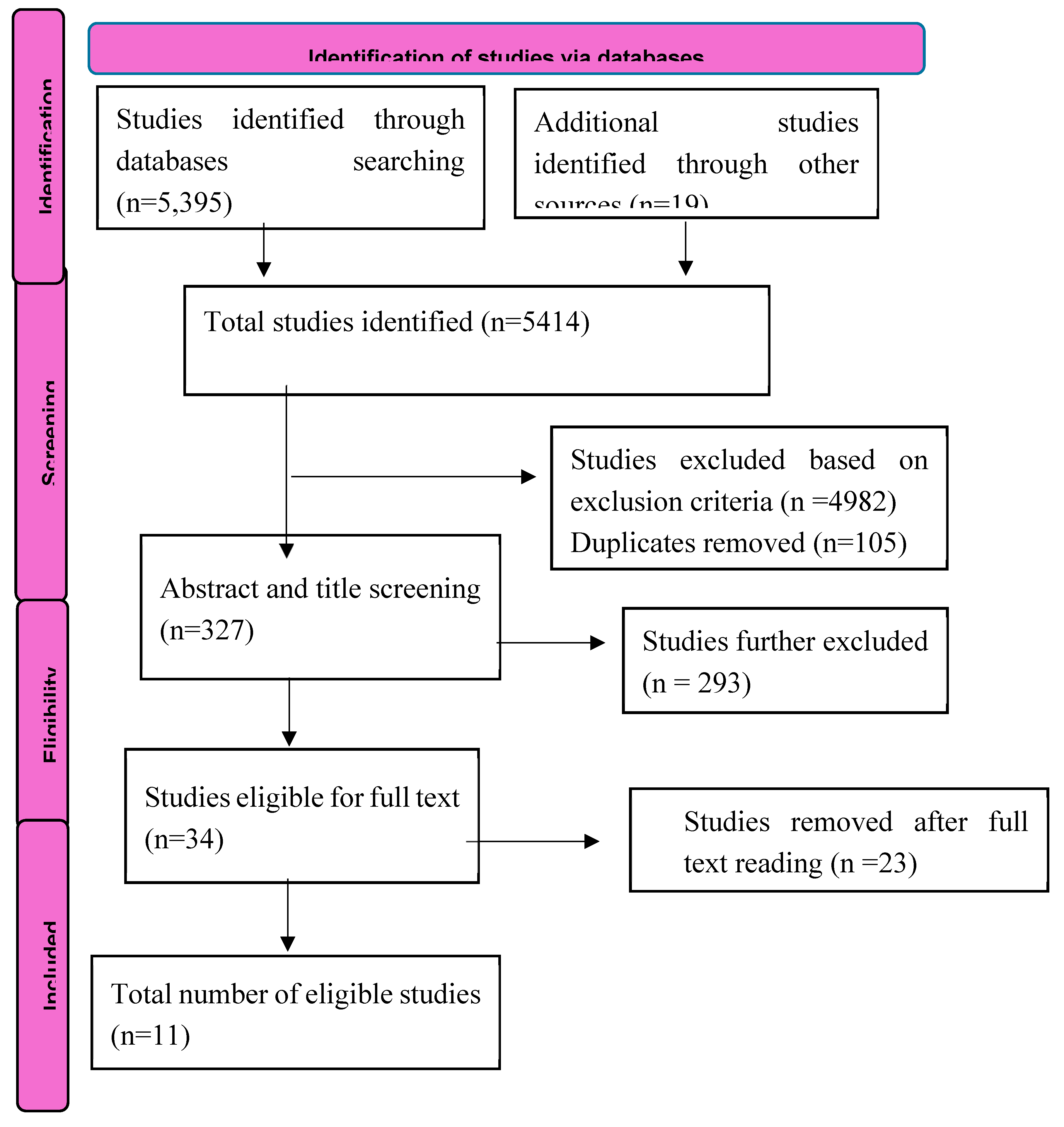

Table 1.
Inclusion and exclusion criteria.
| Inclusion criteria | Exclusion criteria |
|---|---|
| Studies that analysed the strategies for reducing sugar consumption in the UK retail market | Studies analysed the strategies for reducing sugar consumption outside the UK retail market |
| Peer-reviewed studies | Non-peer-reviewed data, such as news, books, reports |
| Articles that are written in the English language | Articles that are not written in the English Language |
| Publications from 2014 to 2024 | Articles published before 2014 |
| Primary studies comprising qualitative, quantitative or both (mixed method) | Secondary studies, such as reviews, reports, etc. |
Table 2.
A quality appraisal of included studies using the CASP tool on a Yes/No scale. (The studies were arranged by study type and date order within the study type).
Table 2.
A quality appraisal of included studies using the CASP tool on a Yes/No scale. (The studies were arranged by study type and date order within the study type).
| Study type | Author and year | Was the aim of the research clearly stated? Yes/No | Did the study design sufficiently meet the aims of the study? Yes/No | Was the recruitment strategy aligned with the research aims? Yes/No | Were ethical issues considered? Yes/No | Was the analysis of the data conducted vigorously? Yes/No | Are the findings in the study clearly stated? Yes/No | Does the conclusion section summarise the findings of the research? Yes/No | Are the limitations of the study clearly stated? Yes/No |
| Quantitative | Adams et al. [20] | Yes | Yes | Yes | Yes | Yes | Yes | Yes | Yes |
| Osman and Thornton [21] | Yes | Yes | Yes | Yes | Yes | Yes | Yes | Yes | |
| Markey, Le Jeune and Lovegrove [22] | Yes | Yes | Yes | Yes | Yes | Yes | Yes | Yes | |
| Almiron-Roig et al. [23] | Yes | Yes | Yes | Yes | Yes | Yes | Yes | Yes | |
| Markey, Lovegrove and Methven [24] | Yes | Yes | Yes | Yes | Yes | Yes | Yes | Yes | |
| Qualitative | Porter et al. [25] | Yes | Yes | Yes | Yes | Yes | Yes | Yes | Yes |
| Mauri et al. [26] | Yes | Yes | Yes | No | Yes | Yes | Yes | Yes | |
| Bradley et al. [27] | Yes | Yes | Yes | Yes | Yes | Yes | Yes | Yes | |
| Forde and Solomon-Moore [28] | Yes | Yes | Yes | Yes | Yes | Yes | Yes | Yes | |
| Mixed method | Gardner [29] | Yes | Yes | Yes | Yes | Yes | Yes | Yes | Yes |
| Swift et al. [30] | Yes | Yes | Yes | Yes | Yes | Yes | Yes | Yes |
Table 3.
The characteristics of the included studies, which are organised according to the type of intervention/strategy used to control sugar consumption. Blue (Change4life Sugar Smart campaign), yellow (product reformulation), orange (traffic light label), green (food portion size), and purple (SDIL).
Table 3.
The characteristics of the included studies, which are organised according to the type of intervention/strategy used to control sugar consumption. Blue (Change4life Sugar Smart campaign), yellow (product reformulation), orange (traffic light label), green (food portion size), and purple (SDIL).
| Author/year | Intervention type | Study design/type | Population | Settings | Participant characteristics | Purpose of the study | Findings |
|---|---|---|---|---|---|---|---|
| Swift et al. [30] | Change4Life Sugar Smart campaign | Mixed method | Healthy adult | Online survey, Online questionnaire |
Study 1- 184 online questionnaires. Study 2: 412 participants, Facebook parent forum. |
The study aims to create awareness among parents to reduce sugar in their children’s meals, the use of the strategies, and how people feel about the Change2Life Sugar Smart app |
Findings showed that public officials need to ensure that the implemented strategies are being followed appropriately. In this study, consumers accepted the importance of sugar intake. |
| Forde and Solomon-Moore [28] | Information-based intervention (IBI) “Sugar Smart” | Qualitative | Health Adult (Volunteer and food bank individuals) | Four foodbank stores are located in Bristol. A face-to-face semi-structured interview. | 14 individuals (8 food bank staff and 6 volunteers). | The purpose of the study is to evaluate people with low socio-capacity and to know about the factors and knowledge regarding their sugar consumption and their acceptance in the IBI. | The study concluded that the intervention effectively reduces sugar consumption, and the research also anticipates appropriate ways for people with low socio-economic status to embrace the IBI and its impact on other individuals. |
| Bradley et al. [27] | Change4life sugar smart campaign (CSS) | Qualitative | Adolescents/boys and girls | One-on-one semi-structured qualitative intervention. Duration: Between 1month, 10month and 12month 837 participants 539 follow-ups | Children 5-11years | This study aims to motivate parents to help reduce their children's food and drink. | The study shows that Change4Life's marketing campaigns helped reduce sugar. Consumers should be aware of the different sugars present in food and appropriate labelling should be done. |
| Gardner [29] | Information-based intervention “Change4life” sugar smart campaign | Mixed method | Children, adults (parents) and school staff | School-based in Newcastle upon Tyne Duration: 30- to 40-minute one-to-one interview. Follow-up: 12 months |
35 candidates, which include four staff from the canteen, 11 parents, 15 children, two council members, two head teachers and one deputy head. | To help educate parents on the method to control sugar for their young ones by using the Change4Life smartphone application | The study's findings explained that there may be fewer changes in sugar intake due to the food the children eat at school, which needs to be monitored, and the implementation of some measures to reduce excessive sugar intake at school. A corporation needs different stakeholders to help fight against the intake of excessive sugar. |
| Markey, Lovegrove and Methven >[24] | Product reformulation | Quantitative | Healthy consumers | Community centre-based settings | 116 participants 20 to 49 years |
The study aims to determine if consumers will accept the reformulated products. | Findings showed that product reformulation is one measure of reducing sugar consumption. They also found that the overall liking of regular and low-sugar products differs. |
| Markey, Le Jeune and Lovegrove [22] | Product reformulation | Quantitative/RCT/double-blinded/crossover dietary intervention | Healthy adult | Community-based/ UK household 8weeks control Follow up: 4 weeks |
50 participants (16 men and 34 women) Age 20 to 49 years |
It examines the effect of an 8-week sugar reformulation on the body's weight and energy balance. | The study's findings explained that product reformulation strategies help to reduce sugar consumption but have no other effect on the density of lipids and weight of the body. |
| Osman and Thornton [21] | Traffic light labelling intervention | Quantitative | Healthy adult | Opportunistic sampling method Duration: 5 minutes for 5 days |
Study 1: 120 participants 36 males/84 females. Age: 19-64 years. Study 2: 297 participants, 197 males/99 females/1 bigender. Age:18 to 75 |
The study aims to investigate how traffic light labelling affects food choice and to determine what consumers prefer by providing additional information on the label. |
Findings showed that traffic light labelling assists in behavioural change in consumers' choice of healthier meals. Traffic light labels is a means of providing and creating awareness for consumers. |
| Mauri et al. [26] | Front of package label (Traffic light) | Qualitative | Healthy adult | Community-based settings by invitation. Online study |
Study 1:199 participants Study 2: 272 participants Over 18 years of age |
It contributes to the effectiveness of using labels to watch out for sugar levels. | The outcome of the study stated that using a teaspoon label on the front-of-package (FOP) label will likely reduce the amount of sugar intake rather than using a traffic-light FOP label |
| Almiron-Roig et al. [23] | Food portion Size | Quantitative /cross-sectional | Overweight women | Community-based. Eating questionnaire Use of the Sussex ingestion pattern monitor (SIPM) |
37 overweight women 18 to 60 years |
To determine the outcome of the size of the portion on the time of meal intake, the amount of bite-sized portions, and the rate of eating | The study shows that eating large portions of food aids overconsumption. Appropriate changes will decrease the tendency to eat too much. |
| Porter et al. [25] | Food portion Size | Qualitative | Healthy adult (parent) | One-to-one, partially organised interview | Mixed adult Woman (first-time parent): 25. White:18. Higher level education: 24. Fathers = 2 |
The purpose is to create awareness among first-time mums about feeding their kids using portion size and food portion recommendations. | Findings showed that most parents are unaware of the six-portion guidance, and it also depends on the child's perception. |
| Adams et al. [20] | Soft Drink Levy (SDIL) | Quantitative/Repeat cross-sectional online survey | UK Household Healthy Adult | Online survey-based intervention. Duration: 2017 (4 months) before SDIL, 2018 (8 months), and 2019 (20 months after SDIL |
18-64 years Male and female School-level and beyond education |
To assess the degree of public willingness to the change between 4 months before and 20 months after the implementation of SDIL | The study describes the changes in sugar reduction after implementing the levy from 70% to 67%. |
Disclaimer/Publisher’s Note: The statements, opinions and data contained in all publications are solely those of the individual author(s) and contributor(s) and not of MDPI and/or the editor(s). MDPI and/or the editor(s) disclaim responsibility for any injury to people or property resulting from any ideas, methods, instructions or products referred to in the content. |
© 2025 by the authors. Licensee MDPI, Basel, Switzerland. This article is an open access article distributed under the terms and conditions of the Creative Commons Attribution (CC BY) license (http://creativecommons.org/licenses/by/4.0/).
Copyright: This open access article is published under a Creative Commons CC BY 4.0 license, which permit the free download, distribution, and reuse, provided that the author and preprint are cited in any reuse.


