

Submitted:
23 April 2025
Posted:
23 April 2025
You are already at the latest version
Abstract
Stored grain pests cause significant economic losses during cereal grain storage. Insecticides have long been central to pest control, but growing concerns over resistance, environmental harm, and human health demand alternative strategies. Diatomaceous earths (DEs) are safe, eco-friendly alternatives, though their efficacy depends on factors like temperature, humidity, dose, and insect species. This study assessed the insecticidal effects of two native raw (Ankara and Aydin) and one commercial (Silico-Sec) DEs against Rhyzopertha dominica (F.) and Sitophilus granarius (L.) on stored wheat. Five DE doses (0, 250, 500, 750, 1000 ppm) were tested under two temperatures (25°C, 30°C) and two humidity levels (40%, 60%). Mortality was assessed at 7, 14, and 21 days after treatment (DAT). All DEs caused higher mortality in S. granarius than R. dominica. The highest mortality occurred in S. granarius at 30°C and 40% RH with the highest dose. Aydin DE was most effective, but did not reach 100% mortality in S. granarius by 21 DAT. In contrast, it caused complete mortality in R. dominica under the same conditions. Survivors of both species produced no F1 progeny. Given similar conditions in Turkish storage facilities, native Aydin DE is a promising control option.
Keywords:
Rhyzopertha dominica
; Sitophilus granarius
; doses
; efficacy
; storage pests
1. Introduction
Wheat is a globally significant staple crop, essential to the food security of many countries [1,2]. A significant proportion of the world's population eats wheat in the form of bread, pasta, pastries, and cereals as a source of daily calories and protein [3]. Wheat is difficult to store [4] as pest infestation is a serious hazard associated with its storage [5]. Storage pests pose a serious threat to wheat and other cereal grains stored for later use [6]. Pest infestation during storage results in substantial economic losses, undermines food security, exacerbates food waste, and exerts adverse impacts on human health [4,7,8]. The feeding of insects on wheat reduces their weight, decreases nutrient contents, and contaminates them with frass leading to development of fungi and other microorganisms [4,8]. Thus, consumption of infested grains could lead to significant human health issues [8].
Lesser grain borer [Rhyzopertha dominica (F.) (Coleoptera: Bostrychidae)] infests stored wheat grains [9,10], causing significant damage to stored cereals in numerous regions of the world [11,12]. Whole, intact grains are primary host of R. dominica [10] and its infestation leads to economic losses for farmers, grain processors, and traders [4]. Granary weevil [Sitophilus granarius L. (Coleoptera: Curculionidae)] is another storage pest infesting and causing significant damage to stored wheat grains [13,14,15].
Several strategies are used to manage pest infestation in stored wheat [16,17,18]. Integrated pest management (IPM) practices are employed for monitoring, preventing, and controlling pest infestation in stored grains. These measures include examination and sanitation of storage facilities (Morrison et al., 2019a), adherence to appropriate temperature and humidity thresholds [20], use of diatomaceous earths (DEs) [21,22,23], pesticides [24,25] or fumigation [26,27]. However, the use of pesticides is being reevaluated due to their adverse impacts on the environment and non-target organisms [15,28,29]. In this context, use of DEs has been gaining popularity for two decades [21].
The DEs, also known as diatomite are naturally occurring sedimentary rock composed of fossilized remnants of minute algae, termed diatoms [30]. The DEs are commonly used for the management of stored grain pests [15,28,29], owing to their unique physical properties and negligible environmental impacts [21,31]. Furthermore, DEs are non-toxic to humans and other mammals [21]. The DEs provide long-term control over the target species as they stay dry and undisturbed after application. However, the major drawback of DEs is that they are usually only effective under higher doses, which reduces bulk density of stored grains [32]. Nevertheless, DEs can be safely manipulated without any known resistance in insect pests [33].
Temperature and humidity are the major environmental factors influencing the insecticidal efficacy of DEs [21]. The DEs adheres to the cuticle of the insects, causing desiccation and eventually mortality [34]. Relative humidity significantly alters the efficacy of DEs [32,35,36,37]. The efficacy of DEs may be reduced under higher relative humidity since insects can absorb water from the air, and generally efficacy is lessened once relative humidity reaches 70–75% [21]. Nonetheless, some studies have indicated that higher relative humidity had little impact on the effectiveness of DEs, implying that DEs exhibit minimal interaction with moisture [29,38]. Hence, there is no golden rule for the impact of relative humidity on the efficacy of DEs.
The efficacy of DEs significantly fluctuates under varying temperatures [32,37,39,40]. Higher efficacy of DEs is observed under elevated temperatures as insects dehydrate rapidly. Improved moisture-absorbing capacities of DEs at higher temperatures speeds up the desiccation process leading to high pest mortality [36,39,41,42]. Therefore, temperature must be optimized before the application of DEs.
Dose is another important factor determining the efficacy of DEs. Most DEs are effective under higher doses, i.e., 1000–3500 ppm [32]. Application of DEs at the appropriate concentration is crucial for effective insect control [43]. It is essential to distribute sufficient DEs to adequately cover the areas where pests are located. The pests are then killed when the DE particles absorb through the waxy covering on their exoskeleton, leaving them dehydrated and unable to move [34]. Therefore, it is crucial to apply optimum dose for getting the desired effects.
Although native and commercial DEs have been used to control R. dominica [44,45,46,47,48] and S. granarius [15,42,49,50], the interactive effect of temperature, relative humidity and doses on the efficacy of native raw and commercial DEs against lesser grain borer and granary weevil has been less studied. We hypothesized that higher concentrations of DEs would exhibit the highest efficacy under low humidity and high temperature. The results of the study will help to optimize native raw DE doses, temperature, and relative humidity for higher efficacy.
2. Materials and Methods
2.1. Experimental Site
This study was conducted at Entomology laboratory, Diyarbakır Plant Protection Research Institute, Diyarbakır Türkiye.
2.2. Diatomaceous Earths
The present study evaluated the efficacy of different doses of three DEs, e.g., Aydın, Ankara, and Silico-Sec on the mortality of lesser grain borer and granary weevil under different temperature and relative humidity conditions. Ankara DE was collected from the mineral deposits located in the Ankara province. The composition of the DE was 92.8% SiO2, 4.2% Al2O3, 1.5% Fe2O3, 0.6% CaO, 0.3% MgO, and a variable amount of water ranging from 1% to 5%. The mean particle size ranged from 8 to 12 μm. The Aydın DE was obtained from the mines located in the Aydın province. The composition of the DE was 94.2% SiO2, 4.6% Al2O3, 1.6% Fe2O3, 0.7% CaO, 0.3% MgO, and a variable amount of water ranging from 1–5%. The mean particle size ranges from 8 to 12 μm. Silico-Sec (a product of Biofarma) is currently available for commercial purchase in Germany. It is composed of 92% SiO2, 3% Al2O3, 1% Fe2O3, and 1% Na2O. The mean particle size ranges from 8 to 12 μm. The native raw DEs have comparable properties to the commercially available DE. Therefore, we were interested to know whether the native raw DEs cause similar mortality in lesser grain borer and granary weevil compared to the commercially available DE.
2.3. Study insects
The test insects (1000 adults for each species) lacking prior exposure to insecticides were collected from the breeding population at Plant Protection Research Institute Diyarbakir, Turkey. The insects were cultured on wheat grains in 1000 ml plastic containers under 25 ± 1°C, 65 ± 5% relative humidity and complete dark in environmental chambers. The cultures were maintained under identical conditions to produce subsequent generation adults. The newly emerged, same-aged adults were collected using a suction tube and used in the bioassays below.
2.4. Bioassay
Transparent plastic containers (200 g capacity) were used in the experiments. Five doses, i.e., 0, 250, 500, 750, and 1000 ppm of all DEs were included in the study. The whole grains of the ‘Pehlivan’ bread wheat variety were sterilized by exposing lots of grain to 55ºC for 48 h. Subsequently, 100 g of sterilized grains were placed in plastic containers and weighed amounts of each DE according to the doses below were added to grains and jars were shaken for 2 min to thoroughly mix the DEs. The control grains did not receive any DE. A total of 30 adults of each species (separately) were then released in each jar. Each treatment had 10 replications, and the experiment was repeated over time.
The jars were kept in incubators maintained at 25°C or 30°C with 40% or 60% relative humidity at each temperature. Dead and alive adults were counted at 7, 14 and 21 d after their release. Temperature and relative humidity were monitored with the Testo 174H brand temperature/humidity data logger (Titisee-Neustadt, Germany). The mortality data of the treatments were adjusted by Abbot’s formula and used in the statistical analysis.
2.5. F1 productivity
The alive adults (if any) after 21 d of their release were collected and kept under the same conditions for ~2 months to determine F1 progeny production.
2.6. Statistical analysis
The data of both insect species were analyzed and presented separately. An analysis of variance (ANOVA) was used to analyze the mortality data [51]. The normality and homogeneity of variance was evaluated before analyzing the data with ANOVA. The data were normally distributed; therefore, all analyses were performed on original data. The differences between the experiments were inferred with a post-hoc T-test, which were not significant. Therefore, data for both experiments were pooled for analysis. Three-way ANOVA was used to test the significance of main and interactive effects of temperature, relative humidity, and doses of DEs on mortality and progeny production. The least significant difference at 95% probability was used as a post-hoc test to separate the means upon a significant result from the ANOVA. Statistical analyses were conducted using SPSS statistical software version 21 [52]. All individual and interactive effects were significant; therefore, only three-way interactions were presented and interpreted in the study.
3. Results
The individual and interactive effects of temperature, relative humidity, and doses of all DEs significantly affected the mortality of R. dominica at 7, 14 and 21 DAT (Table 1).
The mortality linearly increased with time after treatment. Overall, the 1000 ppm dose of Aydın DE caused the highest mortality in R. dominica at all sampling dates, which was followed by Silico-Sec and Ankara DEs, respectively (Figure 1).
The three-way interaction of temperature, relative humidity and DE doses indicated that 1000 ppm dose of Aydın DEs under 30ºC temperature and 40% relative humidity caused the highest mortality in R. dominica at all data collection dates (Figure 2). The 1000 ppm dose of Ankara DE caused 31% mortality in R. dominica at 7 DAT under 30ºC and 40% relative humidity, which increased to 52% and 69% at 14 and 21 DAT, respectively. Similarly, the 1000 ppm dose of Aydin DE caused 38% mortality in R. dominica at 7 DAT under same conditions, which increased to 64% and 85% at 14 and 21 DAT, respectively. Likewise, the 1000 ppm dose of Silico-Sec resulted in 37% mortality of R. dominica at 7 DAT under 30ºC and 40% relative humidity, which increased to 61% and 81% at 14 and 21 DAT, respectively (Figure 2). The lowest dose (250 ppm) of all DEs caused the least mortality under 25ºC temperature and 60% relative humidity at all data collection intervals (Figure 2).
The mortality of S. granarius was significantly influenced by the individual and interactive effects of temperature, relative humidity, and DE doses at 7, 14, and 21 DAT (Table 2).
The mortality also linearly increased with time for S. granarius as observed in R. dominica. Overall, the 1000 ppm dose of Aydın DE caused the highest mortality in S. granarius at all sampling dates, which was followed by Silico-Sec and Ankara DEs, respectively (Figure 3).
Three-way interaction between temperature, relative humidity, and DE doses denoted that the highest mortality in S. granarius was recorded with the 1000 ppm dose of Aydın DE under 30ºC temperature and 40% relative humidity (Figure 4). The 1000 ppm dose of Ankara DE under 30ºC temperature and 40% relative humidity caused 70% mortality in S. granarius at 7 DAT, which increased to 74% and 100% at 14 and 21 DAT, respectively. Similarly, the 1000 ppm dose of Aydin DE under 30ºC temperature and 40% relative humidity resulted 86% mortality in S. granarius at 7 DAT, which increased to 91% and 100% after 14 and 21 DAT, respectively. Likewise, the 1000 ppm dose of Silico-Sec under the same conditions caused 83% mortality in S. granarius 7 DAT, which increased to 88% and 100% after 14 and 21 DAT, respectively (Figure 4). The lowest mortality was observed for 250 ppm does of all DEs under 25ºC temperature and 60% relative humidity at all data collection intervals (Figure 4).
The alive insects were followed for 2 months to record F1 progeny. However, no adult emergence was recorded in any of the treatments included in the study.
4. Discussion
The results revealed that different DEs caused significant mortality of both species under varying climatic conditions included in the study. Overall, all DEs caused higher mortality in S. granarius compared to R. dominica. The mortality of S. granarius was >70% at 7 DAT, indicating that the DEs could be successfully used for its management. On the other hand, the mortality of R. dominica was <40% at 7 DAT with all DEs, indicating that the species is less sensitive to the tested DEs. The mortality in R. dominica reached 60% at 14 DAT, while it was >85% in S. granarius. The differences among species may be attributed to their body size, morphological structure, and movement patterns. Body size has been reported to significantly influence the efficacy of insecticides [53]. Sitophilus granarius exhibits a larger body size (ranging from 3-5 mm) [54] compared to R. dominica (ranging from 2.5-3 mm) [55] and possesses distinct morphological characteristics such as numerous ovals on the pronotum and elytra, deep pits, and short, dense hairs. The larger body size probably provided larger surface area for DEs, which resulted in the higher mortality of S. granarius compared to R. dominica. In addition, Sitophilus spp. are often more mobile than R. dominica, at least in terms of walking patterns [56], so likely more quickly accumulate DEs on their cuticle.
Different temperatures, relative humidity levels and DE doses significantly altered the mortality of both species as hypothesized. All DEs caused higher mortality with their highest doses included in the study under 30ºC temperature and 40% relative humidity. Several studies have reported that the efficacy of DEs depend on the target species and environmental conditions faced by the DEs after their application [39,40,57,58,59,60,61]. Moreover, the nature and properties of DEs are the other strong driver affecting their efficacy [31,60,62]. The major aim of the study was to infer whether the native raw DEs could cause comparable mortality to commercial DE. The results revealed that the native raw Aydin DE caused similar and even higher mortality in both species than the commercial Silico-Sec DE included in the current study. Therefore, the native DE Aydin could be successfully used to control both stored pests of wheat grains in the country. Several earlier studies have indicated comparable efficacies of native raw DEs with commercially available ones [37,39,40]
The mortality of both species significantly increased by increasing DE doses and exposure duration. The higher doses (1000 ppm) of all DEs caused greater mortality to both species under high temperature (30ºC), low relative humidity (40%). Rapid dehydration in adults by absorbing lipids and disrupting cuticular waxes at low humidity and high temperature is thought to be the reason for high mortality. Several earlier studies have reported enhanced effectiveness of DEs at higher temperatures [36,37,39,42,49]. Increasing mobility of insects in response to rising temperatures and higher water loss are the main reasons for increased mortality of the stored pest species in the current study. Moreover, elevated temperatures are expected to lead to increased water loss [32,36,42,44]. Although most of the studies have indicated that higher temperature is more beneficial for DEs, a recent study indicated that sometimes higher efficacy of DEs could be observed under low temperature [63]. Stress caused by the low temperature and further stress by the application of DEs is reported to be the reason for higher DE efficacy under low temperature [63].
The insecticidal efficacies of the tested DEs significantly varied despite identical particle sizes. The Aydin DE caused the highest mortality followed by Silico-Sec and Ankara. The results indicated that the efficacy of DEs is dependent upon their source, likely as a function of their composition and enrichment with silica dioxide. Golob [64] reported differences in the efficacies of DEs across geological regions. Furthermore, numerous studies have documented noteworthy variations in the insecticidal properties of DEs derived from diverse geographic locations and mining sites [37,39]. Korunic [60]conducted a study on the insecticidal effectiveness and bulk density of 25 distinct DEs in stored commodities. The findings revealed that the insecticidal activity and bulk density of the DEs varied significantly. The literature suggests that the diverse effects of numerous DE formulations are likely attributed to variations in their morphological and physical properties [32,65].
The current study indicates that application of 1000 ppm for all DEs provided the highest mortality by both species. The 1000 ppm is equivalent to 1 kg DE per ton of grain, and this is the recommended dose for commercial DEs [31,38,66,67]. Hence, the native raw DE Aydin is a good candidate to use in the management of both stored pest species included in the current study.
The effectiveness of DEs is heavily influenced by relative humidity, owing to their significant absorptive capacity [21]. However, some studies have reported that the efficacy of DEs remains unaffected by relative humidity [42]. Some DEs may exhibit reduced efficacy under high humidity, compared to their performance under dry conditions. A decrease in the efficacy of DEs has been reported with increasing relative humidity from 55% to 65% against Tribolium confusum Jacquelin du Val (Coleoptera: Tenebrionidae) [21]. Appropriate relative humidity levels are crucial for protecting grains during storage. Relative humidity levels from 55% to 75% correspond to 10.5% to 14% moisture in the stored grain under equilibrium which is practical and feasible for extended storage periods [21]. Ogreten et al. [68] have recently reported that all DEs included in the current study caused higher mortalities in Tribolium confusum DuVal (Coleoptera: Tenebrionidae) under 30°C temperature and 40% relative humidity. The current study also revealed that the tested DEs were more effective at a lower relative humidity. Hence, the optimum relative humidity level for higher efficacy of the tested DEs in the current study would not exert negative impacts on the stored grains. Besides, storage facilities of the farmers in Türkiye have similar temperature and relative humidity during wheat storage [69]. Therefore, the DEs could be successfully used to control both tested species in stored wheat.
5. Conclusions
The present study indicated that the 1000 ppm dose of all DEs caused higher mortality under 30°C temperature and 40% relative humidity. Thus, it is imperative to utilize the DEs in the specified environmental conditions to enhance their efficacy. The native raw Aydin DE and the commercial DE Silico-Sec caused equivalent mortalities in both species. Therefore, native Aydin DE has the potential to effectively manage both species included in the current study. As a result, native Aydin DE could be utilized to manage Rhyzopertha dominica and Sitophilus granarius in stored wheat.
Author Contributions
All authors were actively involved in conceptualization, funding acquisition, project administration, experimentation, data collection, analysis, writing review and editing. Conceptualization, A.O., Ç.M.; methodology, A.O., Ç.M., T.A; investigation, Ç.M., A.O., S.E., and A.S.; formal analysis, Ç.M.; validation, G.V.B. and W.R.M.; writing—original draft preparation, Ç.M.; writing—review and editing, G.V.B. and W.R.M.; visualization, Ç.M.; project administration, A.O., Ç.M.; resources, A.O., T.A.; funding acquisition, A.O. All authors have read and agreed to the published version of the manuscript.
Data Availability Statement
All data generated or analyzed during this study are included in this published article.
Acknowledgments
This research was financially supported by the Republic of Turkey Ministry of Agriculture and Forestry, General Directorate of Agricultural Research and Policies under project number (TAGEM BS-13/12-01/01-01). The authors would like to thank the Ministry for their support.
Conflicts of Interest
The authors declare that they have no conflicts of interest.
Abbreviations
The following abbreviations are used in this manuscript:
| DE | Diatomaceous earth |
| DAT | Days after treatment |
References
- Shiferaw, B.; Smale, M.; Braun, H.-J.; Duveiller, E.; Reynolds, M.; Muricho, G. Crops That Feed the World 10. Past Successes and Future Challenges to the Role Played by Wheat in Global Food Security. Food Secur 2013, 5, 291–317. [Google Scholar] [CrossRef]
- Erenstein, O.; Jaleta, M.; Mottaleb, K.A.; Sonder, K.; Donovan, J.; Braun, H.-J. Global Trends in Wheat Production, Consumption and Trade. In Wheat Improvement; 2022.
- Ibba, M.I.; Gupta, O.P.; Govindan, V.; Johnson, A.A.T.; Brinch-Pedersen, H.; Nikolic, M.; Taleon, V. Editorial: Wheat Biofortification to Alleviate Global Malnutrition. Front Nutr 2022, 9. [Google Scholar] [CrossRef] [PubMed]
- Hassan, M.W.; Sarwar, G.; Farooqi, M.A.; Jamil, M. Extent and Pattern of Damage in Wheat Caused by Three Different Species of Storage Insect Pests. Int J Trop Insect Sci 2021, 41, 593–599. [Google Scholar] [CrossRef]
- Rizwan, M.; Atta, B.; Ali, M.Y.; Ashraf, I.; Arshad, M.; Tahir, M.; Rizwan, M.; Sabir, A.M.; Shehzadi, N.; Khalid, U. Bin; et al. The Comparison of Interstitial Relative Humidity and Temperatures of Hermetic and Polypropylene Bag for Wheat Grain Storage under Different Agro-Climatic Conditions of Rice-Wheat Ecosystem of Pakistan: Effect on Seed Quality and Protection against Insect Pests. J Stored Prod Res 2022, 96, 101936. [Google Scholar] [CrossRef]
- Kalpna; Hajam, Y.A.; Kumar, R. Management of Stored Grain Pest with Special Reference to Callosobruchus Maculatus, a Major Pest of Cowpea: A Review. Heliyon 2022, 8, e08703. [CrossRef]
- Wicochea-Rodríguez, J.D.; Rigou, P.; Lullien-Pellerin, V.; Chalier, P. A New Green Insecticide for Stored Wheat Grains: Efficiency against Rhyzopertha Dominica and Risk Assessment. J Cereal Sci 2021, 101, 103312. [Google Scholar] [CrossRef]
- Hubert, J.; Stejskal, V.; Athanassiou, C.G.; Throne, J.E. Health Hazards Associated with Arthropod Infestation of Stored Products. Annu Rev Entomol 2018, 63. [Google Scholar] [CrossRef] [PubMed]
- Potter, C. The Biology and Distribution of Rhizopertha dominica (Fab.). Transactions of the Royal Entomological Society of London 2009, 83, 449–482. [Google Scholar] [CrossRef]
- Edde, P.A. A Review of the Biology and Control of Rhyzopertha Dominica (F.) the Lesser Grain Borer. J Stored Prod Res 2012, 48, 1–18. [Google Scholar] [CrossRef]
- Toews, M.D.; Cuperus, G.W.; Phillips, T.W. Susceptibility of Eight U.S. Wheat Cultivars to Infestation by Rhyzopertha Dominica (Coleoptera: Bostrichidae). Environ Entomol 2000, 29, 250–255. [Google Scholar] [CrossRef]
- Mason, L.; McDonough, M. Biology, Behavior, and Ecology of Stored Grain and Legume Insects. Stored Product Protection 2011. [Google Scholar]
- Boniecki, P.; Koszela, K.; Świerczyński, K.; Skwarcz, J.; Zaborowicz, M.; Przybył, J. Neural Visual Detection of Grain Weevil (Sitophilus Granarius l.). Agriculture (Switzerland) 2020, 10. [Google Scholar] [CrossRef]
- Boniecki, P.; Piekarska-Boniecka, H.; Świerczyński, K.; Koszela, K.; Zaborowicz, M.; Przybył, J. Detection of the Granary Weevil Based on X-Ray Images of Damaged Wheat Kernels. J Stored Prod Res 2014, 56, 38–42. [Google Scholar] [CrossRef]
- Athanassiou, C.G.; Steenberg, T. Insecticidal Effect of Beauveria Bassiana (Balsamo) Vuillemin (Ascomycota: Hypocreaes) in Combination with Three Diatomaceous Earth Formulations against Sitophilus Granarius (L.) (Coleoptera: Curculionidae). Biological Control 2007, 40, 411–416. [Google Scholar] [CrossRef]
- Kumar, H.; Vijay, V.K.; Subbarao, P.M.V.; Chandra, R. Studies on the Application of Bio-Carbon Dioxide as Controlled Atmosphere on Pest Management in Wheat Grain Storage. J Stored Prod Res 2022, 95, 101911. [Google Scholar] [CrossRef]
- Huang, F.; Subramanyam, B. Management of Five Stored-Product Insects in Wheat with Pirimiphos-Methyl and Pirimiphos-Methyl plus Synergized Pyrethrins. Pest Manag Sci 2005, 61, 356–362. [Google Scholar] [CrossRef]
- Hagstrum, D.W.; Reed, C.; Kenkel, P. Management of Stored Wheat Insect Pests in the USA. Integrated Pest Management Reviews 1999, 4, 127–143. [Google Scholar] [CrossRef]
- Morrison, W.; Bruce, A.; Wilkins, R.; Albin, C.; Arthur, F. Sanitation Improves Stored Product Insect Pest Management. Insects 2019, 10, 77. [Google Scholar] [CrossRef]
- Beckett, S.J. Insect and Mite Control by Manipulating Temperature and Moisture before and during Chemical-Free Storage. J Stored Prod Res 2011, 47, 284–292. [Google Scholar] [CrossRef]
- Zeni, V.; Baliota, G. V.; Benelli, G.; Canale, A.; Athanassiou, C.G. Diatomaceous Earth for Arthropod Pest Control: Back to the Future. Molecules 2021, 26, 7487. [Google Scholar] [CrossRef]
- Shah, M.A.; Khan, A.A. Use of Diatomaceous Earth for the Management of Stored-Product Pests. Int J Pest Manag 2014, 60, 100–113. [Google Scholar] [CrossRef]
- Losic, D.; Korunic, Z. CHAPTER 10: Diatomaceous Earth, A Natural Insecticide for Stored Grain Protection: Recent Progress and Perspectives. In RSC Nanoscience and Nanotechnology; 2018; Vol. 2018-January.
- Afridi, I.A.K.; Parveen, Z.; Masud, S.Z. Stability of Organophosphate and Pyrethroid Pesticides on Wheat in Storage. J Stored Prod Res 2001, 37, 199–204. [Google Scholar] [CrossRef] [PubMed]
- Arthur, F.H. Aerosols and Contact Insecticides as Alternatives to Methyl Bromide in Flour Mills, Food Production Facilities, and Food Warehouses. J Pest Sci (2004) 2012, 85.
- Aulicky, R.; Stejskal, V. Efficacy and Limitations of Phosphine “Spot-Fumigation” against Five Coleoptera Species of Stored Product Pests in Wheat in a Grain Store - Short Note. Plant Protection Science 2015, 51, 33–38. [Google Scholar] [CrossRef]
- Bonjour, E.L.; Opit, G.P.; Hardin, J.; Jones, C.L.; Payton, M.E.; Beeby, R.L. Efficacy of Ozone Fumigation Against the Major Grain Pests in Stored Wheat. J Econ Entomol 2011, 104, 308–316. [Google Scholar] [CrossRef]
- Athanassiou, C.G.; Kavallieratos, N.G.; Economou, L.P.; Dimizas, C.B.; Vayias, B.J.; Tomanović, S.; Milutinović, M. Persistence and Efficacy of Three Diatomaceous Earth Formulations Against <I>Sitophilus Oryzae</I> (Coleoptera: Curculionidae) on Wheat and Barley. J Econ Entomol 2005, 98, 1404–1412. [Google Scholar] [CrossRef] [PubMed]
- Athanassiou, C.G.; Korunic, Z. Evaluation of Two New Diatomaceous Earth Formulations, Enhanced with Abamectin and Bitterbarkomycin, against Four Stored-Grain Beetle Species. J Stored Prod Res 2007, 43, 468–473. [Google Scholar] [CrossRef]
- Korunic, Z. Diatomaceous Earths: Natural Insecticides. Pesticidi i fitomedicina 2013, 28, 77–95. [Google Scholar] [CrossRef]
- Subramanyam, B.; Roesli, R. Inert Dusts. Alternatives to pesticides in stored-product IPM 2000, 321–380.
- Fields, P.; Korunic, Z. The Effect of Grain Moisture Content and Temperature on the Efficacy of Diatomaceous Earths from Different Geographical Locations against Stored-Product Beetles. J Stored Prod Res 2000, 36, 1–13. [Google Scholar] [CrossRef]
- Nikpay, A. Diatomaceous Earths as Alternatives to Chemical Insecticides in Stored Grain. Insect Sci 2006, 13. [Google Scholar] [CrossRef]
- Ebeling, W. Sorptive Dusts for Pest Control. Annu Rev Entomol 1971, 16, 123–158. [Google Scholar] [CrossRef]
- Sousa, A.H.; Faroni, L.R.A.; Andrade, G.S.; Freitas, R.S.; Pimentel, M.A.G. Bioactivity of Diatomaceous Earth to Sitophilus Zeamais (Coleoptera: Curculionidae) in Different Application Conditions. Revista Brasileira de Engenharia Agrícola e Ambiental 2013, 17, 982–986. [Google Scholar] [CrossRef]
- Arthur, F.H. Immediate and Delayed Mortality of Oryzaephilus Surinamensis (L.) Exposed on Wheat Treated with Diatomaceous Earth: Effects of Temperature, Relative Humidity, and Exposure Interval. J Stored Prod Res 2000, 37, 13–21. [Google Scholar] [CrossRef] [PubMed]
- Ciniviz, G.; Mu, C. Effectiveness of Some Native Diatomaceous Earth against Maize Weevil, Sitophilus Zeamais (Coleoptera: Curculionidae), under Controlled Conditions. Agriculture and Forestry 2020, 66. [Google Scholar] [CrossRef]
- Athanassiou, C.G.; Arthur, F.H. Bacterial Insecticides and Inert Materials. Recent advances in stored product protection 2018, 83–98. [Google Scholar]
- Şen, R.; Işekber, A.A.; Bozkurt, H.; Sağlam, Ö. Effect of Temperature on Insecticidal Efficiency of Local Diatomaceous Earth against Stored-Grain Insects. Turkish Journal of Entomology 2019, 441–450. [Google Scholar] [CrossRef]
- Alkan, M.; Erturk, S.; Firat, T.A.; Ciftci, E. Study of Insecticidal and Behavioral Effects and Some Characteristic of Native Diatomaceous Earth against the Bean Weevil, Acanthoscelides Obtectus (Coleoptera: Chrysomelidae). Fresenius Environ Bull 2019, 28, 2916–2922. [Google Scholar]
- Kavallieratos, N.G.; Athanassiou, C.G.; Vayias, B.J.; Maistrou, S.N. Influence of Temperature on Susceptibility of Tribolium Confusum (Coleoptera: Tenebrionidae) Populations to Three Modified Diatomaceous Earth Formulations. Florida Entomologist 2007, 90, 616–625. [Google Scholar] [CrossRef]
- Arthur, F.H. Toxicity of Diatomaceous Earth to Red Flour Beetles and Confused Flour Beetles (Coleoptera: Tenebrionidae): Effects of Temperature and Relative Humidity. J Econ Entomol 2000, 93, 526–532. [Google Scholar] [CrossRef]
- Athanassiou, C.G.; Vayias, B.J.; Dimizas, C.B.; Kavallieratos, N.G.; Papagregoriou, A.S.; Buchelos, C.Th. Insecticidal Efficacy of Diatomaceous Earth against Sitophilus Oryzae (L.) (Coleoptera: Curculionidae) and Tribolium Confusum Du Val (Coleoptera: Tenebrionidae) on Stored Wheat: Influence of Dose Rate, Temperature and Exposure Interval. J Stored Prod Res 2005, 41, 47–55. [Google Scholar] [CrossRef]
- Arthur, F.H. Evaluation of Methoprene Alone and in Combination with Diatomaceous Earth to Control Rhyzopertha Dominica (Coleoptera: Bostrichidae) on Stored Wheat. J Stored Prod Res 2004, 40, 485–498. [Google Scholar] [CrossRef]
- Kavallieratos, N.G.; Athanassiou, C.G.; Pashalidou, F.G.; Andris, N.S.; Tomanović, Ž. Influence of Grain Type on the Insecticidal Efficacy of Two Diatomaceous Earth Formulations AgainstRhyzopertha Dominica (F) (Coleoptera: Bostrychidae). Pest Manag Sci 2005, 61, 660–666. [Google Scholar] [CrossRef]
- Vassilakos, T.N.; Athanassiou, C.G.; Kavallieratos, N.G.; Vayias, B.J. Influence of Temperature on the Insecticidal Effect of Beauveria Bassiana in Combination with Diatomaceous Earth against Rhyzopertha Dominica and Sitophilus Oryzae on Stored Wheat. Biological Control 2006, 38, 270–281. [Google Scholar] [CrossRef]
- Wakil, W.; Riasat, T.; Ashfaq, M. Residual Efficacy of Thiamethoxam, Beauveria Bassiana (Balsamo) Vuillemin, and Diatomaceous Earth Formulation against Rhyzopertha Dominica F. (Coleoptera: Bostrychidae). J Pest Sci (2004) 2012, 85, 341–350. [Google Scholar] [CrossRef]
- Vardeman, E.A.; Arthur, F.H.; Nechols, J.R.; Campbell, J.F. Efficacy of Surface Applications with Diatomaceous Earth to Control Rhyzopertha Dominica (F.) (Coleoptera: Bostrichidae) in Stored Wheat. J Stored Prod Res 2007, 43, 335–341. [Google Scholar] [CrossRef]
- Arthur, F.H. Impact of Food Source on Survival of Red Flour Beetles and Confused Flour Beetles (Coleoptera: Tenebrionidae) Exposed to Diatomaceous Earth. J Econ Entomol 2000, 93, 1347–1356. [Google Scholar] [CrossRef]
- Golnaz Shams Insecticidal Effect of Diatomaceous Earth against Callosobruchus Maculatus (F.) (Coleoptera: Bruchidae) and Sitophilus Granarius (L.) (Coleoptera: Curculionidae) under Laboratory Conditions. African Journal Of Agricultural Reseearch 2011, 6. [CrossRef]
- Steel, R.G.D.; Torrie, J.H.; Dickey, D. Principles and Procedure of Statistics. A Biometrical Approach 3rd Ed. McGraw HillBookCo. Inc., New York 1997, 352–358.
- IBM SPSS Statistics for Windows. IBM Corp. Released 2012 2015.
- Busvine, J.R. A Critical Review of the Techniques for Testing Insecticides. A critical review of the techniques for testing insecticides. 2nd Edition. 1971. [Google Scholar]
- CABI Sitophilus Granarius (Grain Weevil). CABI Compendium 2022, CABI Compendium. [CrossRef]
- Wakil, W. Rhyzopertha Dominica (Lesser Grain Borer). CABI Compendium 2022, CABI Compendium. [CrossRef]
- Morrison, W.R.; Larson, N.L.; Brabec, D.; Zhang, A. Methyl Benzoate as a Putative Alternative, Environmentally Friendly Fumigant for the Control of Stored Product Insects. J Econ Entomol 2019, 112, 2458–2468. [Google Scholar] [CrossRef]
- Arthur, F.H. Immediate and Delayed Mortality of Oryzaephilus Surinamensis (L.) Exposed on Wheat Treated with Diatomaceous Earth: Effects of Temperature, Relative Humidity, and Exposure Interval. J Stored Prod Res 2000, 37, 13–21. [Google Scholar] [CrossRef] [PubMed]
- Arnaud, L.; Tran Thi Lan, H.; Brostaux, Y.; Haubruge, E. Efficacy of Diatomaceous Earth Formulations Admixed with Grain against Populations of Tribolium Castaneum. J Stored Prod Res 2005, 41, 121–130. [Google Scholar] [CrossRef]
- Vayias, B.J.; Athanassiou, C.G.; Kavallieratos, N.G.; Buchelos, C.T. Susceptibility of Different European Populations of Tribolium Confusum (Coleoptera: Tenebrionidae) to Five Diatomaceous Earth Formulations. J Econ Entomol 2006, 99, 1899–1904. [Google Scholar] [CrossRef]
- Korunic, Z. ReviewDiatomaceous Earths, a Group of Natural Insecticides. J Stored Prod Res 1998, 34, 87–97. [Google Scholar] [CrossRef]
- Dodanlı, A.; Mutlu, Ç. Biological Activity of Some Native Diatomaceous Earth Against Khapra, Trogoderma Granarium Everts (Coleoptera: Dermestidae), Larvae Under Laboratory Conditions. Uluslararası Tarım ve Yaban Hayatı Bilimleri Dergisi 2020, 44–54. [CrossRef]
- Quarles, W.; Winn, P.S. Diatomaceous Earth and Stored Product Pests. IPM practitioner 1996, 18, 1–10. [Google Scholar]
- Baliota, G. V.; Lampiri, E.; Athanassiou, C.G. Differential Effects of Abiotic Factors on the Insecticidal Efficacy of Diatomaceous Earth against Three Major Stored Product Beetle Species. Agronomy 2022, 12. [Google Scholar] [CrossRef]
- Golob, P. Current Status and Future Perspectives for Inert Dusts for Control of Stored Product Insects. J Stored Prod Res 1997, 33, 69–79. [Google Scholar] [CrossRef]
- Subramanyam, B.; Hagstrum, D.W. Alternatives to Pesticides in Stored-Product IPM; Springer Science & Business Media, 2012; ISBN 1461543533.
- Vayias, B.J.; Athanassiou, C.G. Factors Affecting the Insecticidal Efficacy of the Diatomaceous Earth Formulation SilicoSec against Adults and Larvae of the Confused Flour Beetle, Tribolium Confusum DuVal (Coleoptera: Tenebrionidae). Crop Protection 2004, 23, 565–573. [Google Scholar] [CrossRef]
- Baliota, G. V.; Athanassiou, C.G. Evaluation of a Greek Diatomaceous Earth for Stored Product Insect Control and Techniques That Maximize Its Insecticidal Efficacy. Applied Sciences 2020, 10, 6441. [Google Scholar] [CrossRef]
- Ogreten, A.; Eren, S.; Kaya, C.; Mutlu, C.; Ayaz, T.; Gaafar, A.R.Z.; ul Malook, S.; Mahmoud, R.M. Insecticidal Efficacy of Native Raw and Commercial Diatomaceous Earths against Tribolium Confusum DuVal (Coleoptera: Tenebrionidae) under Different Environmental Conditions. J King Saud Univ Sci 2023, 35. [Google Scholar] [CrossRef]
- Mutlu, Ç.; ÖĞRETEN, A.; KAYA, C.; MAMAY, M. Influence of Different Grain Storage Types on Khapra Beetle, Trogoderma Granarium Everts, 1898 (Coleoptera: Dermestidae), Infestation in Southeastern Anatolia (Turkey) and Its Resistance to Malathion and Deltamethrin. Turkish Journal of Entomology 2019, 131–142. [Google Scholar] [CrossRef]
Figure 1.
The influence of various diatomaceous earths’ doses on the mortality of Rhyzopertha dominica. The values presented are means ± SEM (n = 10). Bars with shared letters are not significantly different from each other (LSD, α = 0.05). The red arrows indicate the treatment causing the highest mortality of the species.
Figure 1.
The influence of various diatomaceous earths’ doses on the mortality of Rhyzopertha dominica. The values presented are means ± SEM (n = 10). Bars with shared letters are not significantly different from each other (LSD, α = 0.05). The red arrows indicate the treatment causing the highest mortality of the species.
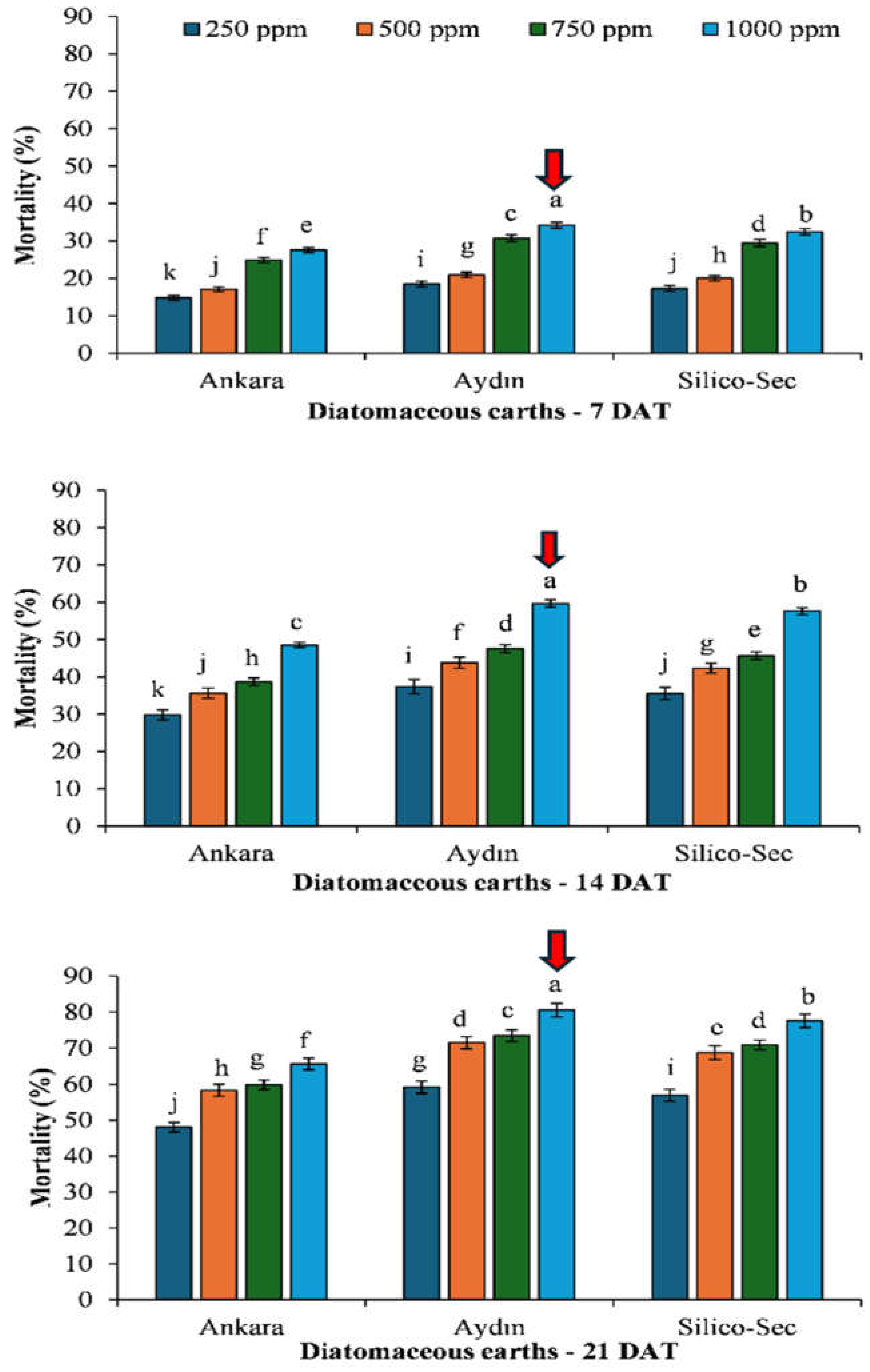
Figure 2.
The influence of temperature regimes, relative humidity levels and doses of DEs on the mortality of Rhyzopertha dominica. The values presented are means ± SEM (n = 10).
Figure 2.
The influence of temperature regimes, relative humidity levels and doses of DEs on the mortality of Rhyzopertha dominica. The values presented are means ± SEM (n = 10).
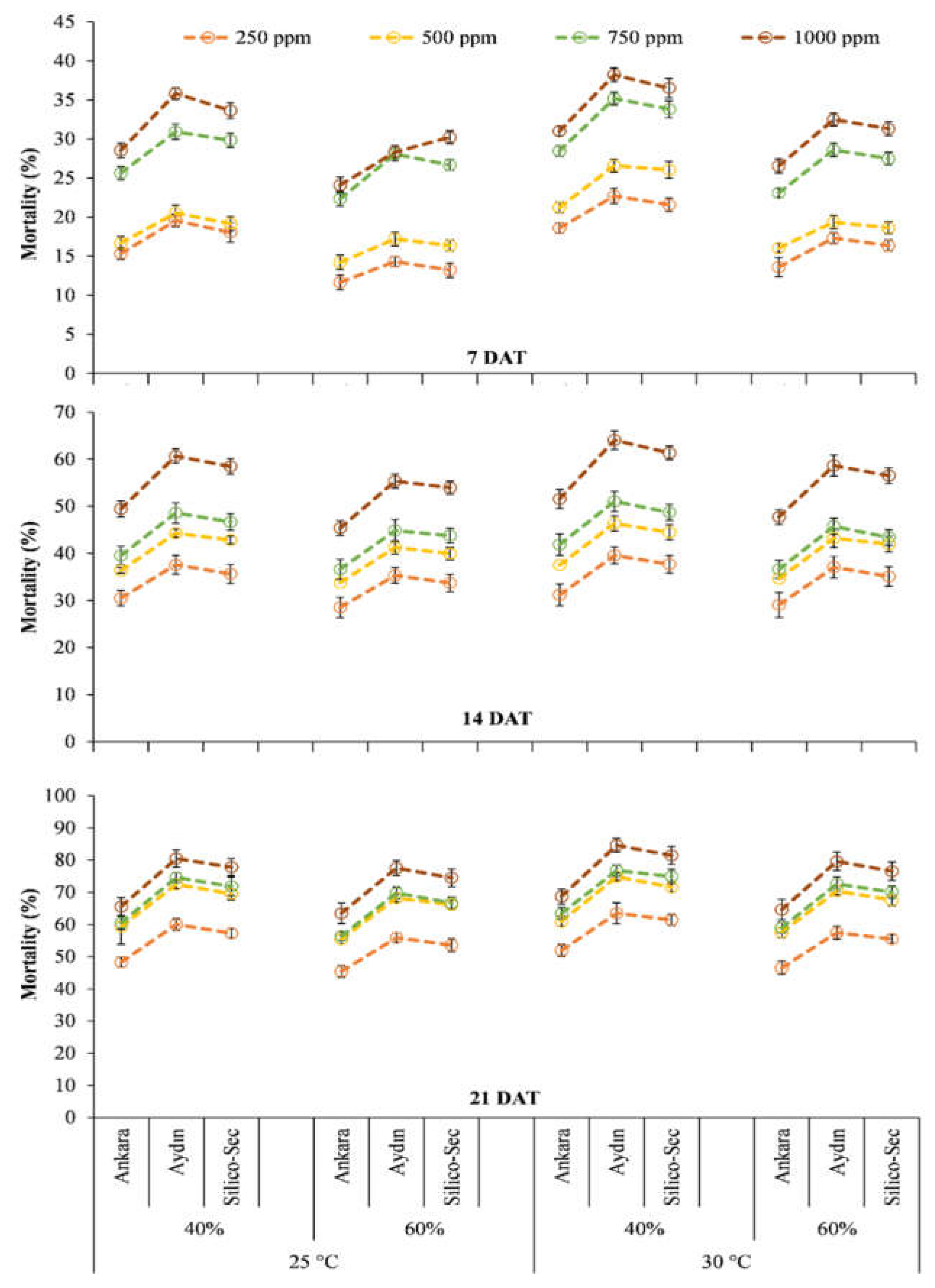
Figure 3.
The influence of DE doses on the mortality of Sitophilus granarius. The values presented are means ± SEM (n = 10). Bars with shared letters are not significantly different from each other (LSD, α = 0.05). The red arrows indicate the treatment causing the highest mortality of the species.
Figure 3.
The influence of DE doses on the mortality of Sitophilus granarius. The values presented are means ± SEM (n = 10). Bars with shared letters are not significantly different from each other (LSD, α = 0.05). The red arrows indicate the treatment causing the highest mortality of the species.
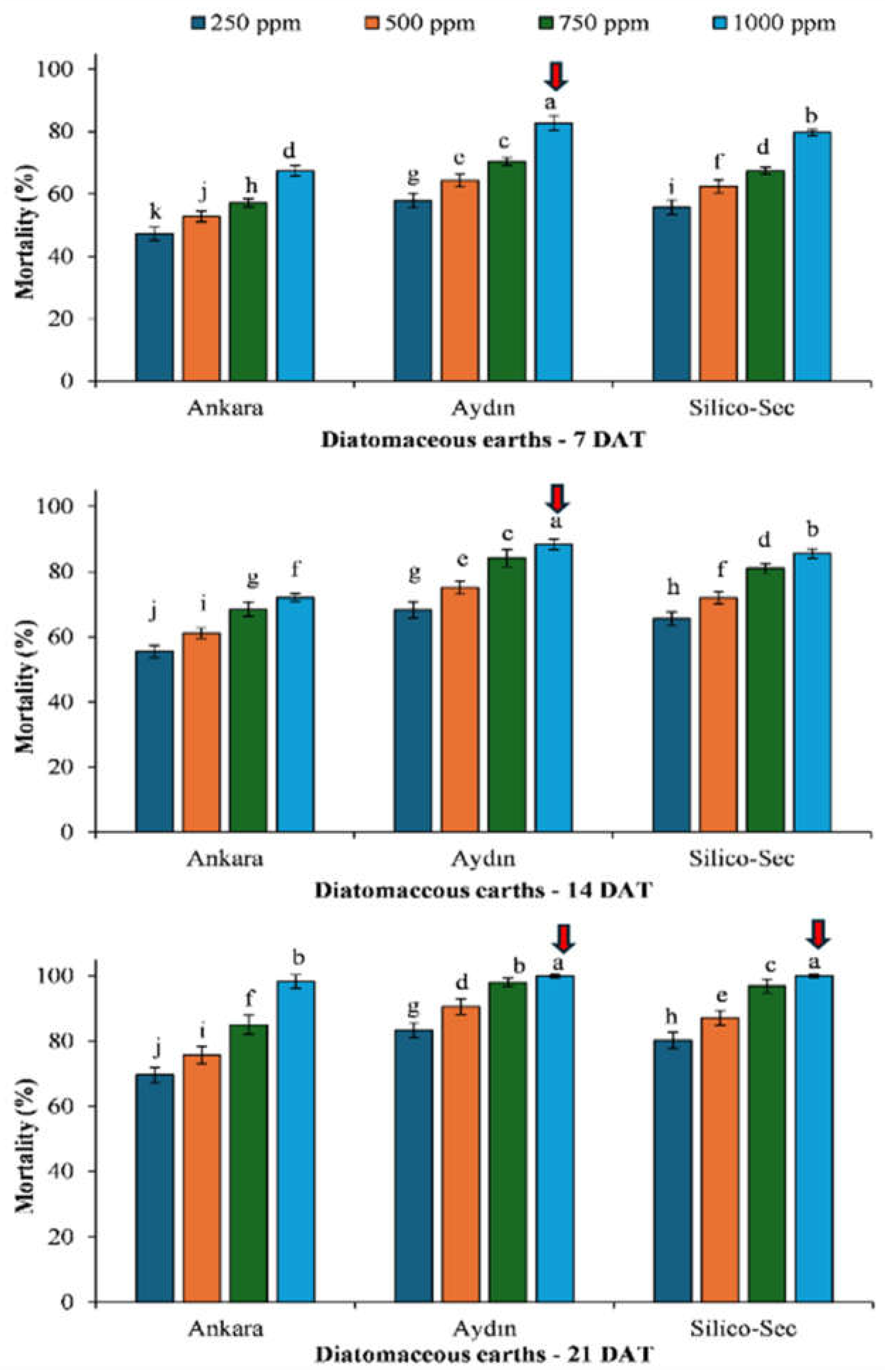
Figure 4.
The influence of temperature regimes, relative humidity levels and doses of DEs on the mortality of Sitophilus granarius. The values presented are means ± SEM (n = 10). .
Figure 4.
The influence of temperature regimes, relative humidity levels and doses of DEs on the mortality of Sitophilus granarius. The values presented are means ± SEM (n = 10). .
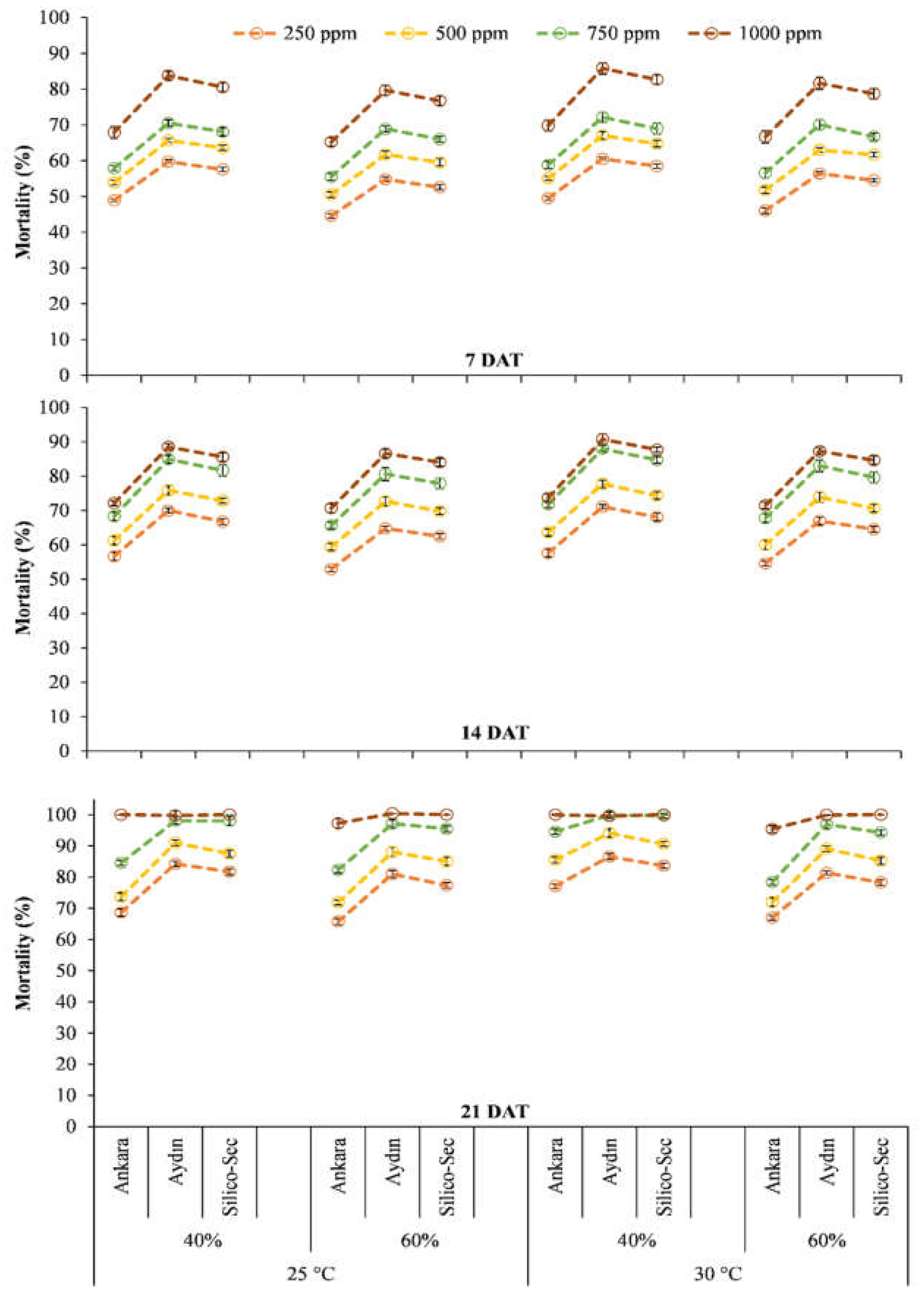

Table 1.
Analysis of variance (p and F values) for the main and interactive effects of different temperature regimes, relative humidity levels and various doses of diatomaceous earths on the mortality of Rhyzopertha dominica.
Table 1.
Analysis of variance (p and F values) for the main and interactive effects of different temperature regimes, relative humidity levels and various doses of diatomaceous earths on the mortality of Rhyzopertha dominica.
| 7 DAT | 14 DAT | 21 DAT | |||||
| Source of variation | DF | F value | P value | F value | P value | F value | P value |
| Temperature (T) | 1 | 1230.69 | < 0.0001 | 329.65 | < 0.0001 | 857.32 | < 0.0001 |
| Relative humidity (RH) | 1 | 3353.30 | < 0.0001 | 1301.84 | < 0.0001 | 2379.97 | < 0.0001 |
| Diatom dose (D) | 11 | 2157.03 | < 0.0001 | 2857.95 | < 0.0001 | 4085.85 | < 0.0001 |
| T × RH | 1 | 120.91 | < 0.0001 | 10.53 | 0.001 | 32.19 | < 0.0001 |
| T × D | 11 | 7.44 | < 0.0001 | 5.57 | < 0.0001 | 2.58 | 0.005 |
| RH × D | 11 | 3.37 | 0.000 | 10.69 | < 0.0001 | 3.86 | < 0.0001 |
| T × RH × D | 11 | 9.06 | < 0.0001 | 2.03 | 0.030 | 3.88 | < 0.0001 |
The bold values in the p value column indicate significant effect of the relative treatment.
Table 2.
Analysis of variance (p and F values) for the individual and interactive effects of different temperature regimes, relative humidity levels and various diatomaceous earths’ doses on the mortality of Sitophilus granaries
Table 2.
Analysis of variance (p and F values) for the individual and interactive effects of different temperature regimes, relative humidity levels and various diatomaceous earths’ doses on the mortality of Sitophilus granaries
| 7 DAT | 14 DAT | 21 DAT | |||||
| Source of variation | DF | F value | P value | F value | P value | F value | P value |
| Temperature (T) | 1 | 338.79 | < 0.0001 | 591.43 | < 0.0001 | 477.12 | < 0.0001 |
| Relative humidity (RH) | 1 | 2028.46 | < 0.0001 | 2258.31 | < 0.0001 | 2940.44 | < 0.0001 |
| Diatom dose (D) | 11 | 6417.59 | < 0.0001 | 6721.19 | < 0.0001 | 5921.60 | < 0.0001 |
| T × RH | 1 | 1.90 | < 0.0001 | 19.87 | < 0.0001 | 675.12 | < 0.0001 |
| T × D | 11 | 2.17 | < 0.0001 | 5.40 | < 0.0001 | 61.56 | < 0.0001 |
| RH × D | 11 | 11.99 | < 0.0001 | 13.38 | < 0.0001 | 109.50 | < 0.0001 |
| T × RH × D | 11 | 1.15 | < 0.0001 | 3.88 | < 0.0001 | 71.60 | < 0.0001 |
The bold values in the p value column indicate significant effect of the relative treatment
Disclaimer/Publisher’s Note: The statements, opinions and data contained in all publications are solely those of the individual author(s) and contributor(s) and not of MDPI and/or the editor(s). MDPI and/or the editor(s) disclaim responsibility for any injury to people or property resulting from any ideas, methods, instructions or products referred to in the content. |
© 2025 by the authors. Licensee MDPI, Basel, Switzerland. This article is an open access article distributed under the terms and conditions of the Creative Commons Attribution (CC BY) license (http://creativecommons.org/licenses/by/4.0/).
Copyright: This open access article is published under a Creative Commons CC BY 4.0 license, which permit the free download, distribution, and reuse, provided that the author and preprint are cited in any reuse.


