

Submitted:
18 April 2025
Posted:
21 April 2025
You are already at the latest version
Abstract
Fiber is one of the most important ingredients of fruit that has influence on gastrointesti-nal track and biochemical parameters of blood. Fiber has texturizing functions in the food processing. The fiber’s properties (water binding capacity, swelling, and oil holding ca-pacity ) and polysaccharide composition obtained from raspberry and blackberry fruit, juice and pomace divided into seed and seedless fractions were determined. Sequential extraction characterized the composition of polysaccharides depending on their solubility. The seedless fraction contains more hemicelluloses and homogalacturonan with higher water binding capacities, swelling, and oil holding capacities, and the seeds contain more cellulose, and their physical abilities are much lower. Water binding capacities were form 2.7 to 14.9 g/g, swelling from 3.3 to 11.1 ml/g, and oil holding capacities from 8.0 to 16.5 g/g. The sequential extraction showed that the main fraction was the Residue, followed by the weak alkali extractable pectin (DASP), and the hemicellulose (CASP). Wa-ter-extractable pectin (WSP) and chelating agent extractable pectin (ChSP) both constituted 8-9% of AIS each. In the pomace the main fraction was the Residue (40% AIS), followed by CASP (16% AIS), DASP and ChSP (6-7% AIS), and WSP and WR (3% AIS). The seeds composed of mostly of Residue (52-57% AIS vs. 24-36% AIS in seedless). In the seedless part the share of CASP hemicelluloses was higher (24-28% AIS vs. 12-15% in seeds). In the seedless part there was also more water-soluble pectin (WSP) (4-5% vs. 2-3% in seeds). By dividing berry pomace into seedless and seed fractions fiber with different composition and properties can be obtained.
Keywords:
Rubus idaeus L.
; Rubus fruticosus L.
; water binding capacity
; oil holding capacity
; swelling
1. Introduction
Raspberries (Rubus idaeus L.) and blackberries (Rubus fruticosus L.) are fruits that are often eaten fresh or frozen. They are also often processed into jams and juices. Raspberries and blackberries are a source of valuable antioxidant ingredients such as polyphenols and vitamins C, A, E. They also contain dietary fiber and essential and trace minerals [1,2].
The juice production process produces pomace. Raspberry and blackberry fruit pomace is a source of phenolic compounds [3] with ellagitannins being the most abundant, followed by anthocyanins, flavan-3-ols, and flavonols [4]. Raspberry and blackberry pomace primarily comprise of seeds and other parts, such as pulps and peels (seedless). The juice production process produces 10 to 12% of wet pomace. After drying, dry pomace constitutes 5 to 7% of the initial raw material (fruit), of which the seed fraction constitutes 92 to 95% [4]. Raspberry and blackberry pomace is concentrated source of various fiber fractions demonstrating notable functional like WBC, oil holding capacity, swelling capacity. Moreover, these anthocyanin-rich pomace is interesting due to their health-promoting properties and intensive color [5]. The functional properties of dietary fiber are associated with the physicochemical characteristics of cell wall polysaccharides, varying according to their composition [6,7]. Fiber with high water retention capacity is able to increase fecal bulk and reduce the gastrointestinal transit time. Fiber swelling is also able to increase viscosity of the digesta, which slows the absorption of nutrients from the intestinal mucosa and lowers the postprandial blood glucose and insulin response [8].The inclusion of the fiber with high water binding capacities in the diet of male rats appeared to facilitate the modulation of viscosity of stomach digesta and the reduction of food intake [8]. In food technology, dietary fiber with high water retention capacities acts as a functional ingredient able to modify the viscosity and texture of food products like pies, bread, and fiber with high fat absorption capacities allows stabilization of fat in emulsion-based products like processed meats; pâtés and sausage fillings [7,9]. Berry seeds contain oil, which is source of tocopherols (620.1–2166.7 mg kg−1) and α-linolenic acid (above 37%) [10] but the most prevalent part of pomace is dietary fiber constituting from 47 up to 65% of pomace dry matter [11]. Raspberry pomace addition to rats fed a high-fat diet decreased liver cholesterol, hepatic fibroblast growth factor receptor 4, peroxisome proliferator-activated receptor alpha, cecal ammonia and favorable changed bile acids profile in the cecum [11]. What is worth noting, the profile of bile acids largely depends on the enzymatic activity of the microbiota. Addition of finely ground raspberry pomace containing seeds to the high-fat diet reduced the cecal ammonia concentration and improved the metabolism of bile acids in the caecum by decreasing the concentration of secondary bile acids, deoxycholic and litocholic. Moreover, the same raspberry preparation reduced the concentration of cholesterol and bile acids in the liver. The molecular mechanisms responsible for regulating hepatic bile acids synthesis after treatment with finely ground raspberry pomace containing seeds might be associated with a reduction of FGF19, FGFR4 and PPARα levels in the liver. In contrast, finely ground seedless raspberry pomace increased activity of the β-glucosidase and production of butyric acid but did not change concentration of ammonia as well as the undesirably high levels of deoxycholic and litocholic acids in the caecum [11]. The production of bacterial short chain fatty acids (SCFAs), especially acetic and butyric acid is important for a health of the colon as butyrate in the colonic enterocytes is rapidly absorbed and metabolized and acts as anticancerogenic, whereas acetic acid is converted to acetyl-CoA contributing to lipogenesis [11,12]. Blackberry fiber divided of polyphenols incorporation to the rat diet also increased the production of propionate and butyrate in the cecum and improved the blood lipid profile. While extracted polyphenols beneficially decreased the activity of cecal β-glucuronidase, but they may have also increased cholesterol levels in blood [13].
When natural polysaccharides are extracted from edible fruits, they possess various important biological activities themselves, such as antioxidant, immunological, and hypoglycemic [14,15,16,17,18]. Dragon fruit pomace-derived polysaccharides in mice fed a high-fat diet were proven to significantly decrease body weight increase, abdominal fat accumulation, total cholesterol, triglycerides, and LDL-C concentrations, as well as elevation in HDL-C concentrations. Moreover, the dragon fruit polysaccharides improved glucose tolerance and prevented fat accumulation in the liver and adipose tissue. Moreover, dragon fruit polysaccharides exhibited anti-inflammatory properties, evidenced by reduced levels of pro-inflammatory cytokines (TNF-α, IL-1β, and IL-6) in the liver. Also, gut microbiota analysis indicated a shift toward beneficial bacteria (Romboutsia, Lachnospiraceae, Coriobacteriaceae, and Blautia) [19]. Molecular weight, content of arabinose, galactose, or glucuronic acid, and glycosyl linkage patterns of →3)-Arap-(1→, Araf-(1→, and →4)-Galp-(1→ are the main structural factors greatly affecting their properties [17].
Berry polysaccharides have been studied in vitro assays expressing anticancer activities [20] although still there exists a need to evaluate them in vivo studies using suitable animal models. However, the anticancer activity of the polysaccharides has been expressed in different units, making their comparison to each other and to conventional anticancer agents difficult. That is why, a comprehensive investigation of the structure-activity relationship of the polysaccharides is still needed [21].
The extracted polysaccharides can be used in the food industry. Blackberry polysaccharide was found beneficial for the quality improvement of meat products by the high cross-linking to myofibrillar protein of chicken breast meat network and the stabilizing the water distribution [22].
Although, there are studies that present nutritional and polyphenol composition of raspberry and blackberry pomace, sometimes even divide into seed and seedless fractions, proving that there are a good source of dietary fiber and ellagitannins with beneficial physiological response in gastrointestinal track [11,13], few studies are devoted to the polysaccharide composition of dietary fiber of the seed and seedless fractions. The aim of our study was to determine the changes occurring in the qualitative and quantitative composition of dietary fiber during juice production. Which polysaccharides pass from fruit to juice, and which remain in pomace. Does the composition of the seedless fraction of the pomace differ from the seed fraction in terms of polysaccharide composition?
2. Results and Discussion
2.1. Alcohol Insoluble Solids Composition
According to data presented in Table 1 juices contained the lowest AIS (up to 50 mg/g), raspberry and blackberry fruits over 300 mg/g. Pomace was characterized by AIS at the level of 630 to 840 mg/g. The main component of AIS of fruits was galacturonic acid, then glucose derived from cellulose, then xylose, arabinose, galactose and mannose. Mainly homogalacturonan and arabinogalactan passed into the juice. When we compare the content of AIS of juice, fruit, and pomace we can easily see that only small portion of polysaccharides passes into the juice. Most of polysaccharides stays in so-called waste pomace. Berry pomace is valuable raw material for obtaining dietary fiber and ellagitannins preparations [11,13].
In the pomace, cellulose and xylans were densified. As during the juice production pectinases were used to hydrolyze pectin to facilitate the process of pressing. That is why galacturonic acid passed into juice. The least soluble and non-hydrolysable cellulose and xylans were retained in the pomace. Similarly, in the raspberry pomace, especially in the seeds, 90% of the polyphenols, mostly tannins, are retained during the juice production [4]. Berry juice can be cloudy or clear. When juice is cloudy it contains pectin and its turbidity, viscosity, as well as nutrient retention is higher. When pectinases are used to obtain clear juice the process of pressing is easier, the juice is clear but part of pectin, along with polyphenols especially ellagitannins, is lost and the juice turbidity and viscosity are much lower [23].
Studies have shown that by dividing berry pomace into seed and pulp (seedless) fractions, it is possible to obtain dietary fiber preparations with different polysaccharide compositions and different physical properties [11,13]. Diving pomace into fraction is more economically justified for obtaining raw material with different composition and properties than separating fruit into morphological parts [24], which is very important for scientific research but not so much of economic value. Pomace can be obtain in high quantity in the food industry as a waste. Pomace after juice production is not a homogeneous material. Sieving on appropriate sieves (with a mesh diameter of 1 mm for blackberries and raspberries) allows the division of berry pomace into pulp (seedless) and seed parts. Diversified in terms of protein, fat and polyphenol content [11], they are a rich source of dietary fiber. Berry seeds have tough outer coating which is not disrupted during digestion processes in gastrointestinal track. When fine grinding is applied, only then the full potential of seeds in the form of polysaccharides, protein, oil, and polyphenols can be used [10,11]. Seedless fraction, on the other hand, consists of peels, cell walls, and fruit flesh. Physical differences are accompanied by differences in chemical composition. In our research we concentrated only on the composition of the dietary fiber and in the preparation steps (AIS procedure) the product was divided of sugars, polyphenols and oils. The seed fraction was characterized by a higher content of xylans, the seedless fraction contained equal amounts of arabinans, xylans and galactans. He et al. [25] obtained the blackberry crude polysaccharides (BCP) composed of 95.44% glucose, 2.01% arabinose, 1.81% galactose and 0.74% glucuronic acid as a result of extraction with 70% ethanol. These polysaccharides improved the quality of poultry breast meat. Yang et al 2022 [18] isolated a homogeneous acidic polysaccharide (RPP-2a), with a weight-average molecular weight (MW) of 55 582 Da from the pulp of raspberries through DEAE-Sepharose Fast Flow and Sephadex G-200 chromatography. The polysaccharide consisted of rhamnose, arabinose, galactose, glucose, xylose, galacturonic acid and glucuronic acid, with a molar ratio of 15.4:9.6:7.6:3.2:9.1:54.3:0.8 respectively. Yu et al. [16] isolated a water-soluble polysaccharide named RCP-II from raspberry fruits, which was an acidic heteropolysaccharide mainly composed of galacturonic acid, rhamnose, arabinose, xylose, glucose and galactose in a molar ratio of 1.00:0.55:1.19:0.52:0.44:1.90 respectively. RCP-II was a low-molecular-weight polysaccharide, and the average molecular weight was 4013 Da. The characteristic absorptive peaks of polysaccharide structure were determined by IR and the presence of alfa-galactose and beta-arabinose residues were confirmed by NMR analysis. RCP-II was proved to have certain antioxidant capability and non-enzymatic glycation inhibition activity. The chemical composition of a polysaccharide may influence its biological properties. Based on their structural information and immune-enhancing activity data using an artificial neural network Lu et al. [17] found that next to molecular weight, the content of arabinose, galactose or glucuronic acid as well as glycosyl linkage patterns of →3)-Arap-(1→, Araf-(1→, →4)-Galp-(1 → have the strongest influence on immunomodulatory activities.
2.2. Water Binding Capacity, Swelling, and Oil Holding Capacity
Analyzing the obtained results, it can be stated that differences in chemical composition caused differences in physicochemical properties (Table 2). Raspberry fruit and blackberry fruit were characterized by 6.5 and 6.7 g water/g WBC values. Seedless fraction WBC values were higher than for the fruits while seeds fraction had WBC values significantly lower than fruits or seedless fraction (raspberry- 4.2 g water/g and blackberry 2.7 g water/g). The swelling of fruit fiber was 4.8 and 5.6 ml/g for raspberry and blackberry, respectively. Again, seedless fraction expressed the highest swelling properties 11.1 and 8.5 ml/g for raspberry and blackberry seedless fraction, respectively and seed fraction the lowest, 3.8 and 3.3 ml/g for raspberry and blackberry, respectively. The hydration properties of fibers depend on the chemical structure of the component polysaccharides, as well as factors as porosity, particle size, ionic form, pH, temperature, ionic strength, and type of ions in solution [26]. Fruit and some cereal processing by-products had water holding capacities from 4.89 g/g (defatted rice bran) to 20.3 g/g for asparagus by-products, while swelling in water for sugar beet pulp was 11.5 and for algae 13.8 ml/g [26]. Rivas et al. [7] found that dietary fiber concentrates from winemaking by-products were characterized by 4.57 to 9.11 g/g water retention capacities. Tana et al. [8] found that while wheat bran had WBC of 3.92 g/g konjac flour, pregelatinized waxy maize starch, guar gum, and xanthan gum were characterized by WBC over 20 g/g. They also stated that the physicochemical properties of dietary fiber may affect postprandial satiety in model research on male rats. WBC of dietary fiber preparations commercially available from wheat fiber Vitacel (WF 200, WF 400, WF 600), manufacturer J. Rettenmaier & SohneGmbH, Germany, was 8.6, 11 and 4.9 g/g, accordingly. The preparations were concentrated in dietary fiber (96%) and consisted mostly of cellulose (72%), then hemicellulose (25.5%), and lignin (0.5%). The fiber of the series Vitacel was found to have a number of positive functional and technological properties that allows recommending it for all kinds of meat, fish, and confectionery products [9]. Oil holding capacities for fruit fiber was 16.5 and 12.2 g oil/g for raspberry and blackberry, respectively. Pomace had those values less, 8.8 and 8.5 g oil/g, respectively. When pomace was divided into seedless fraction and seeds fraction, again seedless fraction expressed higher values compared to seed fraction (11.7 and 9.5 g oil/g vs. 8.0 and 9.0 g oil/g). Oil holding capacities can be very diversified depending on fiber origin. Elleuch [26] found that OHC can vary from 1 for mango dietary fibers concentrate to 11.3 g oil/g for sugar cane bagasse (>0.3 mm) but high pressure micronisation creating 7.23 µm carrot insoluble fiber can increase the oil holding capacities up to 56 g oil/g compared to 1.92 g oil/g for control carrot fiber (123 µm). Rivas et al. [7] found that dietary fiber concentrates from winemaking by-products were characterized by 3.76 to 5.48 g oil/g oil retention capacity. In case of fat absorbability of dietary fiber preparations commercially available from wheat fiber Vitacel (WF 200, WF 400, WF 600) the values were from 3.7 to 12 g oil/g [9]. To sum up, berry pomace fiber could also be used as an ingredient in bakery and meat industry thanks to their relatively high water binding capacity, swelling, and oil holding capacity with seedless fraction being especially prominent.
2.3. Sequential Polysaccharide Extraction
Sequential extraction of polysaccharides allows the division of dietary fiber into polysaccharides with different properties. First stage: water releases weakly bound pectin (WSP -water soluble pectin), second stage: CDTA releases pectin linked by calcium bonds (ChSP -chelating agent soluble pectin); third stage: 0.1 mol/l Na2CO3 releases highly methylated pectin and dissolves pectin linked by ester bonds (DASP - diluted alkali soluble pectin), fourth stage: 4 mol/l NaOH + 1 g/l NaBH4 releases hemicelluloses and pectin with a high degree of branching strongly bound to cellulose microfibrils (CASP -concentrated alkali soluble polysaccharides), fifth stage: washing with water extracts the remaining branched pectin (WR - water residue). What remains (residue fraction) is insoluble and consists mainly of cellulose [27].
As a result of sequential extraction of polysaccharides, it was shown (Table 3) that raspberry fruit fiber, in addition to the residue fraction, was also rich in DASP and ChSP fractions. The fiber obtained from pomace in its entirety was characterized by a much lower share of these two fractions. The cellulose Residue fraction was thickened and the pectin fractions, i.e. WSP, ChSP and DASP, were lost. The share of the CASP fraction in pomace fiber and fruit fiber was similar (17% AIS vs. 18%). When the pomace was divided into seedless and seed fractions, the share of Residue in the seedless fraction decreased (22% AIS vs. 60% in seeds) and the share of the hemicellulose fraction increased 24% vs. 11% in seeds. In the case of the seedless fraction, the share of pectin fractions WSP, ChSP, DASP and even WR was higher.
Blackberry fruit fiber (Table 4) was not characterized by such a significant share of ChSP and DASP fractions as raspberry fruit fiber. The main fraction here was the Residue fraction (50% AIS), followed by a large share of the CASP hemicellulose fraction (13% AIS). Blackberry pomace as a whole was characterized by a concentrated Residue fraction (up to 58% AIS) in relation to fruit fiber. The seedless fraction was again poorer in the Residue fraction (26% AIS vs. 50%) than the seedless fraction and richer in the CASP hemicellulose fraction (25% vs. 5% AIS in seeds) and the weak alkali-soluble pectin fraction DASP (13 vs. 6% AIS), ChSP (10 vs. 7% AIS) and, to a lesser extent, in the WSP fraction (3 vs. 2.8%) and WR fractions (3.5 vs. 2.5%).
As a result of sequential extraction of polysaccharides in the case of berry fruit fiber, the main fraction was the Residue fraction, followed by the weak alkali extractable pectin fraction, i.e. the DASP fraction, and the hemicellulose fraction, i.e. polysaccharides that require strong alkali for extraction, i.e. the CASP fraction. Similar shares were found for water-extractable pectin, i.e. WSP fractions (8-9%), and chelating agent extractable pectin, i.e. ChSP fractions (8-9% AIS). Berry fruit pomace fiber contained mainly the Residue fraction (40% AIS), followed by CASP (16% AIS), DASP and ChSP (6-7% AIS), and WSP and WR (3% AIS). In the seed part, the Residue fraction had a much higher share than in the seedless part (52-57% AIS vs. 24-36% AIS), while in the seedless part the share of CASP hemicelluloses was increased (24-28% AIS vs. 12-15% in seeds). In the seedless part there was also more water-soluble pectin, i.e. the WSP fraction (4-5% vs. 2-3% in seeds).
In the next stage, the chemical composition of the fractions obtained by sequential extraction using the GC-FID method after hydrolysis in 1 mol/l sulfuric acid and conversion of the obtained simple sugars into volatile acetate alditols was analyzed, and galacturonic acid was determined using the spectrophotometric method. The main neutral sugar of dietary fiber in raspberry and blackberry fruits was glucose derived from cellulose (mainly the Residue fraction), followed by xylose, arabinose, galactose and mannose. Compared to fiber from fruits, there was more cellulose and xylans in the pomace. Hotchkiss et al. [28] also found that the strawberry pomace contained mostly glucose and xylose. In our research the first three obtained fractions, i.e. WSP, ChSP and DASP, contained most of the galacturonic acid in all cases. While the CASP, WR and Residue fractions contained only a few percent of galacturonic acid each. The fruits contained more galacturonic acid than the pomace, except for raspberries, where the amount of galacturonic acid in fruits and pomace was similar. After dividing the pomace into the seedless and seed parts, it turned out that the seedless fractions contained a similar profile of galacturonic acid as the fruits, while the seeds contained significantly lower shares of galacturonic acid.
3. Materials and Methods
3.1. Plant Material and Method of Preparing the Material for Further Analysis
A sample of berries of 1 kg each (raspberry (Rubus idaeus L.), blackberry (Rubus fruticosus L.) was subjected to laboratory processing into juice in conditions imitating industrial conditions. Frozen raspberry and frozen wild blackberries were obtained from Cajdex (Lodz, Poland). The fruit was ground (Zelmer, Rzeszów, Poland). Enzymation of the fruit pulp was carried out for 1 h at 45 °C using the enzyme preparation Rohapect 10L at a dose of 0.2 ml/kg of fruit. Then the juice was pressed on a manual laboratory press. Reflecting industrial conditions, water flushing (100% of the pomace weight) for 0.5 h was used and the mass was pressed for the second time. The efficiency of obtaining juice was 80%, the efficiency of obtaining wet pomace was 8%, with a water content of 30%. After freeze-drying at −32 °C for 48 h in the Christ Alpha 1-2 Plus freeze-dryer (Osterode am Harz, Germany) the obtained pomace was wiped through 1 mm sieves. Dried raspberry and blackberry pomace constituted 75% seeds and 25% pulp (seedless fraction). Sublimation-dried fruits, whole pomace, and pomace divided into seed and seedless fractions after grinding in liquid nitrogen in an analytical mill (IKA, Staufen, Germany were subjected to the procedure of obtaining AIS (alcohol insoluble solids, Section 3.2.) as described in [27]. The juices were precipitated in 78% ethyl alcohol and were also used to obtain AIS. In the obtained AIS, the composition of cell wall polysaccharides was determined using the derivatization method for volatile alditols and GC-FID determination (Section 3.4, 3.5., and 3.6) galacturonic acid content by spectrophotometric method (Section 3.7) and physicochemical properties in the form of WBC (water binding capacity, Section 3.8) according to [29]. In the next stage, sequential extraction of pectin from AIS obtained from freeze-dried fruits, whole pomace and pomace divided into seed and seedless fractions was carried out (Section 3.3). The chemical composition of the fractions obtained as a result of sequential extraction was determined by GC-FID after hydrolysis in 1 mol/l sulfuric acid and conversion of the obtained simple sugars into volatile acetate alditols (Section 3.4, 3.5., and 3.6), and galacturonic acid was determined by spectrophotometry (Section 3.7).
3.2. Alcohol Insoluble Solids (AIS) and Sequential Polysaccharide Extraction
AIS were obtained according to [30] (Figure 1). Approximately 5 g of dried powdered sample was mixed with 50 ml of ethanol 70% for 1 h at room temperature. Then, the sample was filtered under vacuum, the residue was washed several times with 70% ethanol. Then, the sample was washed twice with 25 ml of acetone/water/acetic acid mixture (v/v/v 60/39/1), then twice with acetone/water mixture (v/v 80/20), and twice with 100% acetone. The resulting solids were dried at 40 °C and weighed. The procedure was performed in duplicate for each sample material.
Sequential polysaccharide extraction was performed according to [27] (Figure 2). AIS samples (1.5 g) were extracted three times with 45 ml of water (2 h, 25 °C) in tubes and the solids were separated by centrifugation (10 000 g) from the supernatant. The supernatants were combined and freeze-dried in Christ Alpha 1-2 Plus freeze-dryer (Osterode am Harz, Germany) giving Water Soluble Pectin fraction (WSP). Then, the solid residue was extracted with 45 ml of 0.05 mol/l CDTA (trans-1,2-diaminocyclohexane-N,N,N′,N′-tetraacetic acid) at pH 5 for 16 h and then twice for 4 h, all at 25 °C. The solids were separated by centrifugation, supernatants were combined and dialyzed in dialysis tubing MWCO 12400 (Sigma-Aldrich, Poland) against 0.1 mol/l NaCl solution and then against water to 0 conductivity giving Chelating Agent Soluble Pectin fraction (ChSP). Then, the solid residue was extracted with 0.1 mol/l Na2CO3 for 16 h and again for 6 h, all at 25 °C. The obtained supernatants were combined and neutralized with acetic acid to pH 4-5 and then dialyzed against water and freeze-dried giving Diluted Alkali-Soluble Pectin fraction (DASP). Then, the residue was extracted with 4 mol/l NaOH + 1 g/l NaBH4 for 16 h and again for 8 h, all at 20 °C. The supernatants were combined and neutralized with acetic acid to pH ~ 4, then dialyzed against water and freeze-dried giving Concentrated Alkali-Soluble Polysaccharides (CASP). Then the residue was extracted with 45 ml portions of water until pH 7. All the supernatants were combined, neutralized to pH 4-5, dialyzed against water and freeze-dried giving Water residue fraction (WR). The solid residue after extractions was also freeze-dried giving Residue fraction.
3.4. Cell Walls Hydrolysis
Hydrolysis was carried out according to [27]. Approximately 8-12 mg of sample (AIS and Residue fraction) were weighed into test tubes, then 250 µl of 72% H2SO4 solution was added and mixed. The samples were incubated for 1 h at room temperature (prehydrolysis), then 1 ml of inositol solution with a concentration of 1 mg/ml (internal standard for GC) and 1.7 ml of distilled water were added. The samples were incubated at 100 °C for 3 h and then cooled to room temperature.
3.5. Pectin Hydrolysis
Approximately 8-12 mg of sample (AIS, sequential polysaccharide extraction fractions) were weighed into test tubes, 1 ml of inositol solution (internal GC standard) at a concentration of 1 mg/ml was added and mixed [31]. Then 1 ml of 2 mol/l H2SO4 solution was added, and the contents were mixed. The samples were heated at 100 °C for 3 h. The subsequent hydrolysis procedure was the same as the procedure described in cell walls hydrolysis. The procedure did not allow total cellulose hydrolysis into glucose but only hydrolyzed pectin and hemicelluloses giving NGlc – non-cellulosic glucose. All in triplicate. Cellulosic glucose was calculated by subtracting NGlc from total Glc.
3.6. Derivatization and Gas Chromatography
1 ml of each sample (obtained as described in section 3.4 and 3.5) was transferred into different tubes and neutralized with concentrated NH3·H2Oto make the solution pH greater than 9. Then, 0.1 ml of NaBH4 solution (100 mg/ml solution prepared in 3 mol/l NH3·H2O) was added and incubated for one hour at room temperature. After incubation, 0.1 ml of pure acetic acid was added to the samples. 1 ml of the prepared solution was transferred to a glass test tube and then added in the following order: 0.2 ml of N-methyl-imidazole, 3 ml of acetic anhydride, 5 ml of cold distilled water and 3 ml of CH2Cl2. The resulting aqueous phase was removed by water pump, and the organic phase was washed four times with 5 ml of 0.5 mol/l KHCO3 solution. The solutions remaining after washing were dissolved in 0.5 ml of CH2Cl2 and analyzed by GC. The procedure with prehydrolysis allowed total of cellulose hydrolysis into glucose. All in triplicate (the procedure was performed in triplicate for each tested material).
The analysis was performed using the Shimadzu GC - 2010 Plus chromatograph (Tokyo, Japan). The GC was equipped with the AOC - 20i autosampler and Hydrogen Peak Scientific hydrogen generator (Inchinnan, Scotland, UK). Hydrogen, helium, and air were used for the separation. The Zebron ZB-5 column (Phenomenex, USA) with dimensions of 30 m x 0.25 mm x 0.25 μm was used. Detection was carried out using a flame ionization detector (FID). The gas flow rate for the FID detector was: 30 ml/min for helium, 40 ml/min for hydrogen, and 400 ml/min for air, respectively. The temperature gradient was used: 15 minutes to 170 °C, then 200 °Cat 6 °C/min, then 10 minutes at 200 °C, and cooling to the initial temperature for 10 minutes. The injection temperature was 250 °C, and the volume was 1 μl in split mode (ratio 1:25). The sample flow rate through the column was 1.53 ml/min (total flow of 42.8 ml/min, purge flow 3.0 ml/min). Identification of the sugar alditols contained in the samples was made on the basis of the peak retention times on the chromatograms of the samples with the chromatograms of the standard solutions (rhamnose, fucose, arabinose, xylose, mannose, galactose, glucose, all Sigma-Aldrich). Inositol was used as internal standard (Sigma-Aldrich). Figure 3 is presenting chromatogram of raspberry fruit AIS after pectin hydrolysis.
3.7. Galacturonic Acid
The analysis was carried out according to [32]. In tubes, 0.5 ml of the sample (obtained by procedure of cell wall hydrolysis or by solubilizing the pectin fraction) was mixed with 3 ml of 0.0125 mol/l sodium tetraborate (Na2B4O7) reagent in concentrated sulfuric acid H2SO4 (96%) and carefully mixed. The tubes were incubated at 80 °C for 20 minutes. Then, the reaction was stopped by placing the tubes in a ice-water bath until the room temperature was reached. Then 50 μl of m-hydroxydiphenyl (MHDP) solution was added, the contents of tubes were mixed, and absorbance was measured at a wavelength 520 nm exactly after 10 minutes (at spectrum maximum). Galacturonic acid was used as a standard (Sigma-Aldrich). All in triplicate.
3.8. Water Binding Capacity
Hydration properties of fibers was carried out according to [33]. 100 mg of AIS was weighed in test tubes with 25 ml of distilled water at 4 °C. The tubes were centrifuged for 20 minutes at 10 700 g at 20 °C, the supernatant was removed immediately, and the pellet was dried at room temperature on a Schott funnel n° 1 for 2 h. The wet sediment was weighed, then dried at 120 °C for 2 h and weighed. WBC was expressed as the amount of water/dry sample.
3.9. Swelling
100 mg of AIS was weighed in test tubes with scale, and 5 ml of distilled water at 20 °C was added. The tubes were carefully mixed and stored for 24 hours. Swelling is calculated as milliliters of swollen material (swollen material column)/output weight of the product [33].
3.10. Oil Holding Capacity
1 g of AIS was weighed in test tubes with 5 ml of oil at room temperature. Then, stored for 24 hours. The tubes were then centrifuged for 20 minutes at 10700 g at 20°C, the supernatant was removed immediately. The sediment was weighed. OHC was expressed as oil quantity/dry sample (g/g) [33].
3.11. Statistical Analysis
The results are expressed as means and standard deviations. One-way Anova with Tukey test a statistical significance of p ≤ 0.05 was used (Statistica 12, Statsoft, Kraków, Poland).
4. Conclusions
The most part of fruit polysaccharides stays in the pomace, as only part of soluble polysaccharides pass to the juice. Berry pomace being a waste of food industry can be used as a source of raw material for obtaining dietary fiber preparation and extraction of polysaccharides.
The experiment proved that by dividing berry pomace into pulp (seedless) and seed part, it is possible to obtain fruit fiber with different chemical composition. The seedless part is similar to the fruit, where the flesh is a dominant part not the seeds, with more hemicelluloses and homogalacturonan than the pomace seed part, which contains more cellulose. The differences in chemical composition caused differences in physical properties. Fruit as well as seedless fraction express higher WBC, swelling and oil holding capacities than seed fraction. However, all fruit fiber had rather high physical properties (water binding capacities were form 2.7 to 14.9 g/g, swelling from 3.3 to 11.1 ml/g, and oil holding capacities from 8.0 to 16.5 g/g) and could be used in food industry as texturizing agents.
The sequential extraction of polysaccharides of berry fruit fiber, showed that the main fraction was the Residue fraction, then the weak alkali extractable pectin fraction (DASP), and the hemicellulose fraction (CASP). Water-extractable pectin (WSP) and chelating agent extractable pectin (ChSP) both constituted 8-9% of AIS. In case of pomace the main fraction was the Residue fraction (40% AIS), followed by CASP (16% AIS), DASP and ChSP (6-7% AIS), and WSP and WR (3% AIS). In the seed part, the Residue fraction had a much higher share than in the seedless part (52-57% AIS vs. 24-36% AIS), while in the seedless part the share of CASP hemicelluloses was increased (24-28% AIS vs. 12-15% in seeds). In the seedless part there was also more water-soluble pectin (WSP) (4-5% vs. 2-3% in seeds).
Separating berry pomace into seeds and seedless fractions allows on obtaining different functional products. Seedless fraction is rich in hemicellulose and has higher water binding properties that is why it has higher potential for digestion regulation by favorable gut microbiota modulation and increased short-chain fatty acid production. Seeds fraction rich in cellulose could be used in food industry especially in confectionery and bakery. To further expand the knowledge on properties of berry polysaccharides from seeds and seedless fractions studies on the digestion characteristics, short-chain fatty acid production, blood lipids parameters, and impacts on gut microbiota using animal models are planned.
Author Contributions
Conceptualization, M.K.; methodology, M.K.; software, M.K.; validation, J.M. and E.K.; formal analysis, M.K.; investigation, M.K.; resources, M.K, J.M..; data curation, M.K.; writing—original draft preparation, M.K.;; writing—review and editing, J.M. and E.K.; visualization, M.K..; supervision, J.M. and E.K. All authors have read and agreed to the published version of the manuscript.
Funding
This work was financed from statutory funds of the Institute of Food Technology and Analysis, Faculty of Biotechnology and Food Sciences, Lodz University of Technology, Poland.
Institutional Review Board Statement
Not applicable.
Informed Consent Statement
Not applicable.
Data Availability Statement
The data presented in this study are available on request from the corresponding author.
Conflicts of Interest
The authors declare no conflicts of interest
Abbreviations
The following abbreviations are used in this manuscript:
| Ara | arabinose |
| CASP | concentrated alkali soluble polysaccharides |
| CDTA | trans-1,2-diaminocyclohexane-N,N,N′,N′-tetraacetic acid |
| ChSP | chelating agent soluble pectin |
| DASP | diluted alkali soluble pectin |
| Fuc | fucose |
| Gal | galactose |
| GalA | galacturonic acid |
| Glc | glucose |
| Man | mannose |
| MHDP | m-hydroxydiphenyl |
| OHC | Oil holding capacity |
| Rha | rhamnose |
| WBC | water binding capacity |
| WR | water residue |
| WSP | water soluble pectin |
| Xyl | xylose |
References
- Kotuła M., Kapusta-Duch J., Smoleń S., Doskocil I. Phytochemical composition of the fruits and leaves of raspberries (Rubus idaeus L.)—conventional vs. organic and those wild grown. Appl. Sci. 2022, 12, 11783. [CrossRef]
- Jiang H., Zhang W., Li X., Xu Y., Cao J., Jiang W. The anti-obesogenic effects of dietary berry fruits: a review. Food Res. Int. 2021, 147, 110539. [CrossRef]
- Krivokapić S., Vlaović M., Damjanović V.B., Perović A. Perović S. Biowaste as a potential source of bioactive compounds—a case study of raspberry fruit p . Foods. 2021, 10, 706.
- Sójka M., Macierzyński J., Zaweracz W., Buczek M. Transfer and mass balance of ellagitannins, anthocyanins, flavan-3- ols, and flavonols during the processing of red raspberries (Rubus idaeus L.) to juice. J. Agric. Food Chem. 2016, 64, 5549−5563. [CrossRef]
- Cechoviˇciene I., Šlepetiene A., Gumbyte M., Paulauskiene A., Taraseviˇciene Ž. Composition and physicochemical properties of pomace of various cultivars of blackberry (Rubus fruticosus L.). Horticulturae. 2024, 10, 38. [CrossRef]
- Álvarez E.E.; Sánchez P.G. La fibra dietética. Nutr. Hosp. 2006, 21, 61–72.
- Rivas M.Á., Casquete R., Córdoba M.D.G., Ruíz-Moyano S., Benito M.J., Pérez-Nevado F., Martín A. Chemical composition and functional properties of dietary fibre concentrates from winemaking by-products: skins, stems and lees. Foods. 2021, 10, 1510. [CrossRef]
- Tana C., Wei H., Zhao X., Xub C., Peng J. Effects of dietary fibers with high water-binding capacity and swelling capacity on gastrointestinal functions, food intake and body weight in male rats. Food Nutr. Res. 2017, 61, 1308118. [CrossRef]
- Gorlov I.F., Giro T.M., Pryanishnikov V.V., Slozhenkina M.I., Randelin A. V., Mosolova N.I., Zlobina E.Y., Kulikovskiy A.V. Using the fiber preparations in meat processing. Mod. Appl. Sci.; 2015, 9, 54- 64. [CrossRef]
- Milala J., Grzelak- Błaszczyk K., Sójka M., Kosmala M., Dobrzyńska-Inger A., Rój E. Changes of bioactive components in berry seed oils during supercritical CO2 extraction. J. Food Process. Preserv. 2018, 42, e13368. [CrossRef]
- Fotschki B., Juśkiewicz J., Jurgoński A., Rigby N., Sójka M., Kołodziejczyk K., Mackie A., Zduńczyk Z. Raspberry pomace alters cecal microbial activity and reduces secondary bile acids in rats fed a high-fat diet. J. Nutr. Biochem. 2017, 46, 13–20. [CrossRef]
- Demigné C., Morand C., Levrat M.A., Besson C., Moundras C., Rémésy C. Effect of propionate on fatty acid and cholesterol synthesis and on acetate metabolism in isolated rat hepatocytes. Br. J. Nutr. 1995 , 74, 209-219. [CrossRef]
- Kosmala M., Jurgoński A., Juśkiewicz J., Karlińska E., Macierzyński J., Rój E., Zduńczyk Z.. Chemical composition of blackberry press cake, polyphenolic extract, and defatted seeds, and their effects on cecal fermentation, bacterial metabolites, and blood lipid profile in rats. J. Agric. Food Chem. 2017, 65, 5470−5479. [CrossRef]
- Cui G., Zhang W., Wang Q., Zhang A, Mu H., Bai H., Duan J. Extraction optimization, characterization and immunity activity of polysaccharides from Fructus Jujubae. Carbohydr. Polym. 2014, 111, 245–255. [CrossRef]
- Dou J., Meng Y.H., Liu L., Li J., Ren D.Y., Guo Y.R. Purification, characterization and antioxidant activities of polysaccharides from thinned-young apple. Int. J. Biol. Macromol. 2015, 72, 31–40. [CrossRef]
- Yu Z., Liu L., Xu Y., Wang L., Tenga X., Li X, Dai J. Characterization and biological activities of a novel polysaccharide isolated from raspberry (Rubus idaeus L.) fruits. Carbohydr. Polym. 2015, 132, 180–186. [CrossRef]
- Lu J., Yang Y., Hong E.-K., Yin X., Wang X., Wang Y., Zhang D. Analyzing the structure-activity relationship of raspberry polysaccharides using interpretable artificial neural network model. Int. J. Biol. Macromol. 2024, 264, 130354. [CrossRef]
- Yang Y., Yin X., Zhang D., Lu J., Wang X. Isolation, structural characterization and macrophage activation activity of an acidic polysaccharide from raspberry pulp. Molecules. 2022, 27, 1674. [CrossRef]
- Li G., He Y., Liew A., Huang C., Song B., Jia X., Sathuvan M., Zhong S., Cheong K.-L. Dietary polysaccharides from dragon fruit pomace, a co-product of the fruit processing industry, exhibit therapeutic potential in high-fat diet-induced metabolic disorders. Food Res. Int. 2025, 203, 115818. [CrossRef]
- Chen F., Ran L., Mi J., Yan Y., Lu L., Jin B., Li X., Cao Y. Isolation, Characterization and antitumor effect on DU145 cells of a main polysaccharide in pollen of Chinese wolfberry. Molecules 2018, 23, 2430. [CrossRef]
- Khan T., Date A., Chawda, K., Patel K. Polysaccharides as potential anticancer agents—a review of their progress. Carbohydr. Polym. 2019, 210, 412-428. [CrossRef]
- eng H, He Y, Fu Y, Xiong H, Lu M, Zhang C, Ai C, Cao H, Zhong, S, Chen L. Effects of blackberry (Rubus spp.) polysaccharide on the structure and thermal behavior of the myofibrillar protein of chicken breast meat. Food Chem. X, 2023, 20, 100914. [CrossRef]
- Sójka M., Nowakowska A., Hejduk A. Influence of enzymatic clarification, filtration, and pasteurization on ellagitannin and anthocyanin content in raspberry juices. Eur. Food Res. Technol., 2024, 250, 351–359. [CrossRef]
- Renard C M.G.C., Ginies C. Comparison of the cell wall composition for flesh and skin from five different plums. Food Chem., 2009, 114, 1042-1049. [CrossRef]
- He Y., Zhang C., Zheng Y., Xiong H., Ai C., Cao H., Xiao J., El-Seedi H., Chen L., Teng H. (2023). Effects of blackberry polysaccharide on the quality improvement of boiled chicken breast. Food Chem. X, 2023, 18, 100623. [CrossRef]
- Elleuch M., Bedigian D., Roiseux O., Besbes S., Blecker C., Attia H. Dietary fibre and fibre-rich by-products of food processing: characterisation, technological functionality and commercial applications: a review. Food Chem. 2011, 124, 411–421. [CrossRef]
- Kosmala M., Milala J., Kołodziejczyk K., Markowski J., Mieszczakowska M., Ginies C., Renard C.M.G.C. Characterization of cell wall polysaccharides of cherry (Prunus cerasus var. Schattenmorelle) fruit and pomace. Plant Foods Hum Nutr. 2009, 64, 279–285. [CrossRef]
- Hotchkiss A.T., Chau H.K., Strahan G.D., Nunez A., Harron A., Simon S., White A.K., Dieng S., Heuberger E.R., Black I., Yadav M.P., Welchoff M., Hirsch J.. Structural characterization of strawberry pomace. Heliyon. 2024, 10, e29787. [CrossRef]
- Kosmala M., Kołodziejczyk, K., Markowski, J., Mieszczakowska, M., Ginies, C., Renard C.M.G.C. Co-products of black-currant and apple juice production: hydration properties and polysaccharide composition. LWT- Food Sci. Technol. 2010, 43, 173-180. [CrossRef]
- Renard C.M.G.C. Variability in cell wall preparations: quantification and comparison of common methods. Carbohydr. Polym. 2005, 60, 515-522. [CrossRef]
- Saeman J.F., Moore W.E., Mitchell R.L., Millet M.A. Techniques for the determination of pulp constituents by quantitative paper chromatography. TAPPI 1954, 37:336-343 ID: 102319861.
- Blumenkrantz N., Asboe-Hansen G. New method for quantitative determination of uronic acids. Anal. Biochem. 1973, 54, 484-489. [CrossRef]
- Renard C.M.G.C., Thibault J.-F. Composition and physico-chemical properties of apple fibres from fresh fruits and industrial products. Lebensm.- Wiss. Technol. 1991, 24,523-527 ID: 81105517.
Figure 1.
Alcohol insoluble solids procedure.
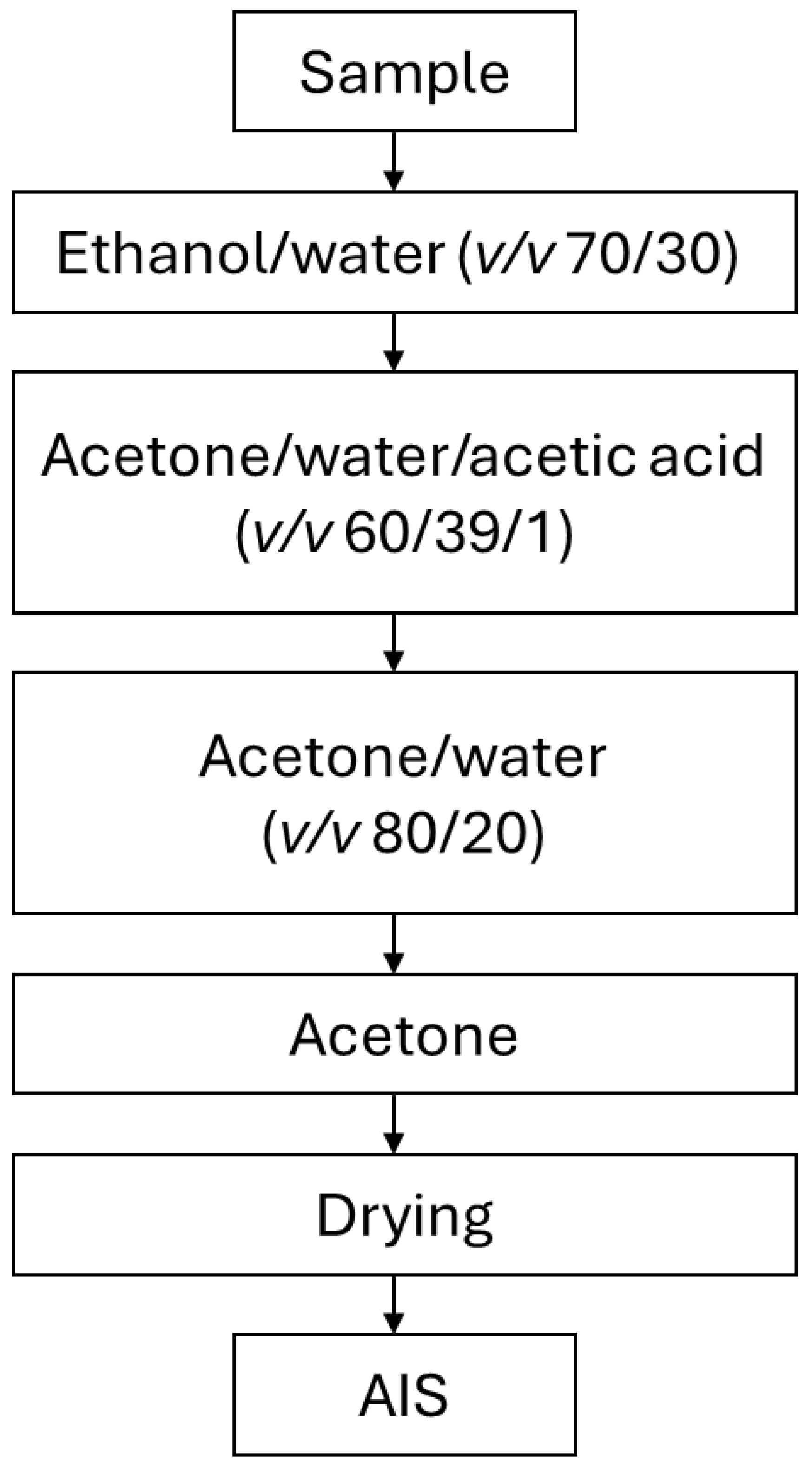
Figure 2.
Sequential pectin extraction scheme.
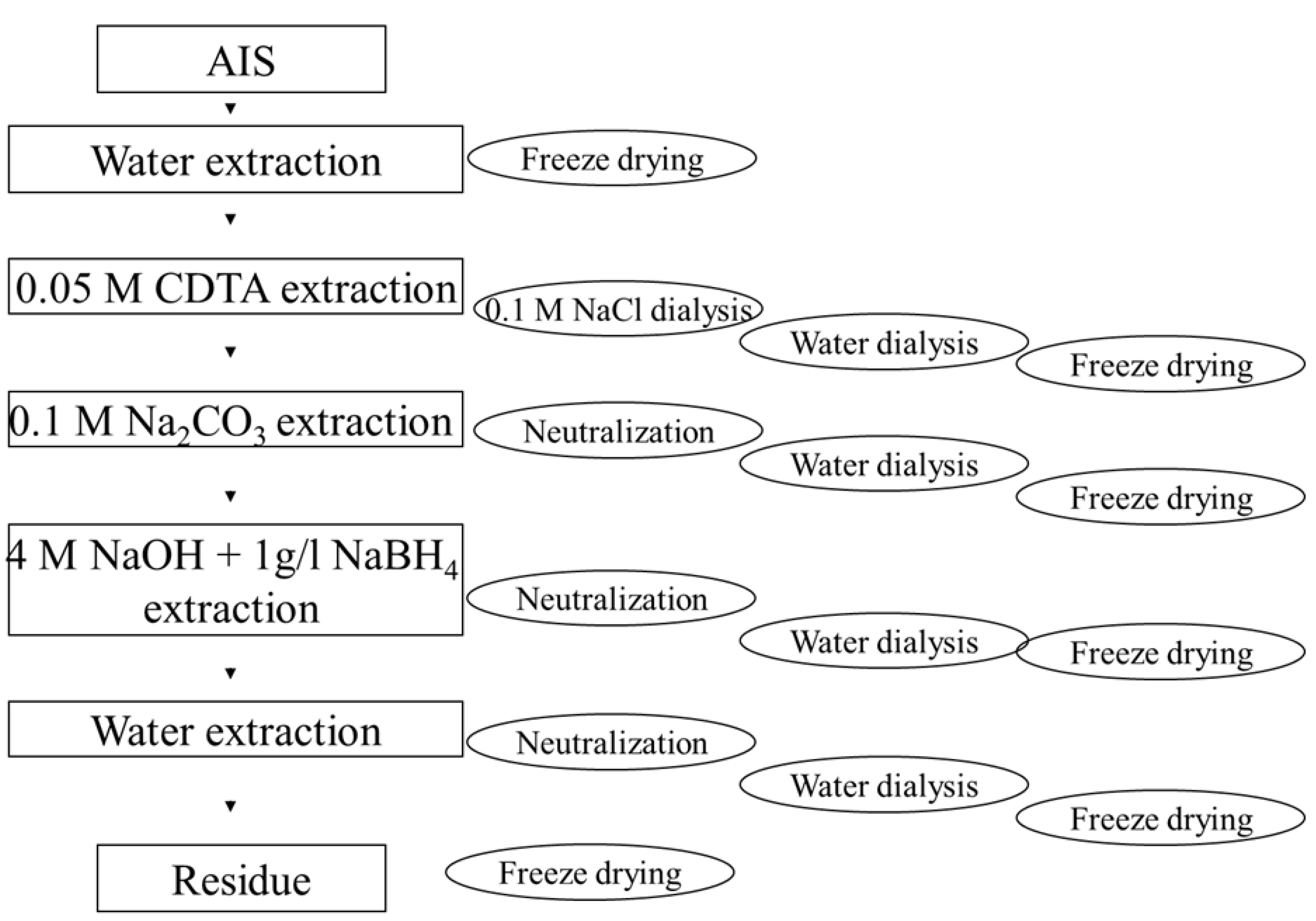
Figure 3.
Raspberry fruit after pectin hydrolysis procedure GC-FID chromatograph (B) and standards chromatograph (A). At 13.640 min rhamnitol per acetyl; 14.131 min fucitol per acetyl; 14.377 min arabinitol per acetyl; 15.461 min xylitol per acetyl; 23.225 min inositol per acetyl; 23.786 min mannitol per acetyl; 24.146 min glucitol per acetyl; 24.492 min galactitol per acetyl.
Figure 3.
Raspberry fruit after pectin hydrolysis procedure GC-FID chromatograph (B) and standards chromatograph (A). At 13.640 min rhamnitol per acetyl; 14.131 min fucitol per acetyl; 14.377 min arabinitol per acetyl; 15.461 min xylitol per acetyl; 23.225 min inositol per acetyl; 23.786 min mannitol per acetyl; 24.146 min glucitol per acetyl; 24.492 min galactitol per acetyl.
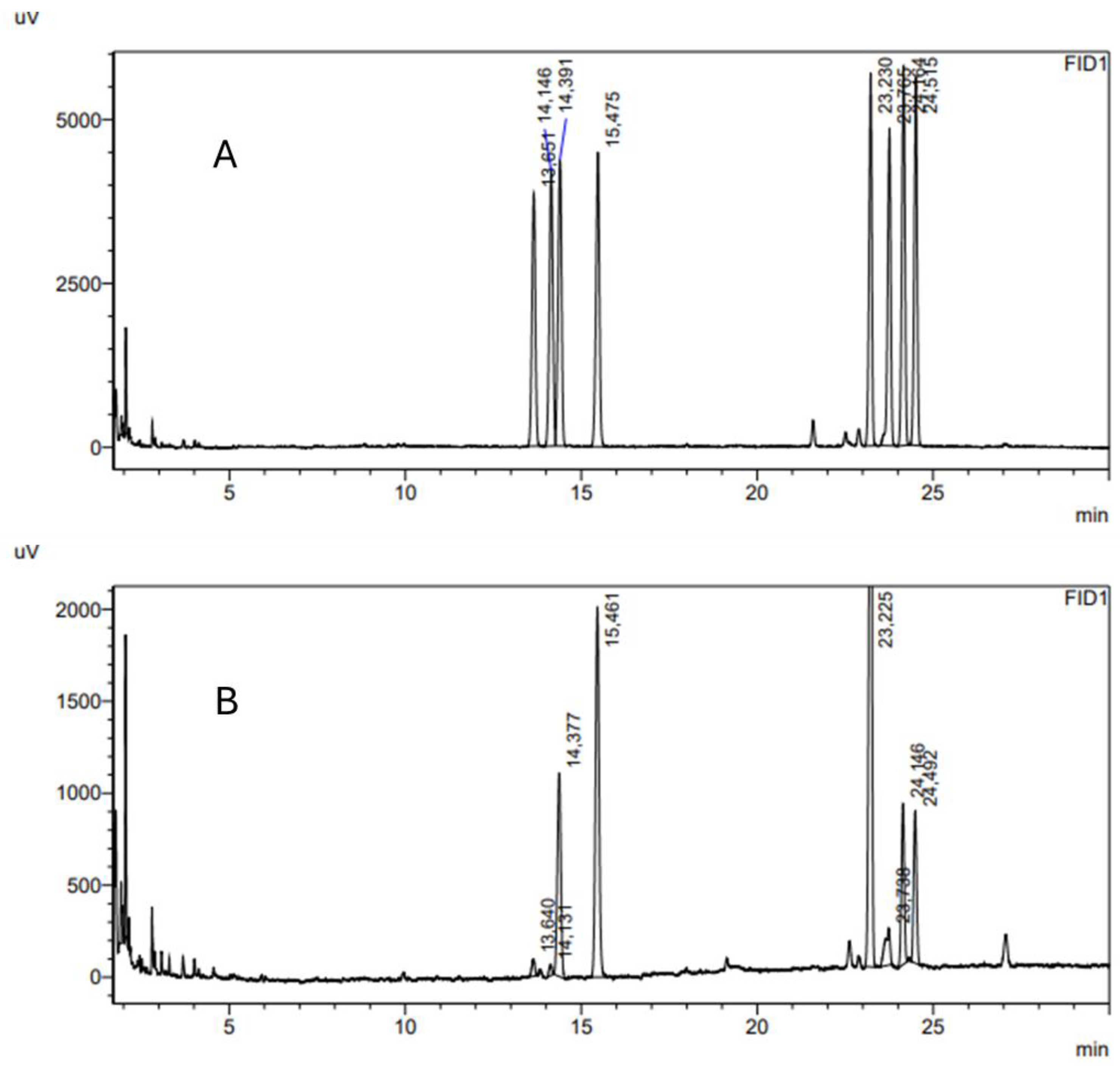

Table 1.
Yields (mg/g) and sugar composition (mg/g AIS) of the alcohol-insoluble solids.
|
Yield of AIS [mg/g] |
Rha [mg/g] |
Fuc [mg/g] |
Ara [mg/g] |
Xyl [mg/g] |
Man [mg/g] |
Gal [mg/g] |
Noncell Glc [mg/g] |
Cell Glc [mg/g] |
GalA [mg/g] |
|
| Raspberry | ||||||||||
| Fruit | 394±4f | 1±0c | 1±0cd | 16±5c | 39±9c | 6±1b | 12±4d | 12±0c | 64±6b | 305±21b |
| Pomace total | 812±10a | 1±0c | 1±0cd | 9±2e | 52±10ab | 6±3b | 9±1e | 5±2d | 66±13b | 219±52c |
| Pomace seedless fraction | 717±1d | 1±0d | 2±1b | 11±2de | 35±10c | 8±5ab | 18±3cd | 12±2c | 90±29ab | 177±32e |
| Pomace seed fraction | 775±11ab | 1±0cd | 1±0cd | 9±2e | 54±19ab | 4±1c | 7±2e | 3±0d | 49±3b | 172±14e |
| Juice | 38±0h | 9±1a | ND | 34±2b | 15±1e | 7±2b | 41±2a | 20±8b | ND | 278±16bc |
| Blackberry | ||||||||||
| Fruit | 333±11fg | 1±0c | 1±0cd | 20±3c | 46±14ab | 5±1bc | 10±1de | 3±0d | 59±17b | 247±20bc |
| Pomace total | 731±24cd | 1±0cd | 1±0c | 15±3c | 47±9ab | 5±2bc | 9±2e | 4±1d | 72±8ab | 176±22e |
| Pomace seedless fraction | 631±7e | 1±0cd | 3±0a | 31±4b | 25±9d | 8±5ab | 16±5cd | 12±7c | 102±12a | 236±30bc |
| Pomace seed fraction | 766±2bc | 1±0c | ND | 8±2e | 58±18a | 4±2c | 5±2e | 2±0d | 62±6b | 184±48e |
| Juice | 49±0h | 6±0b | ND | 67±2a | 3±1f | 10±2ab | 27±2b | 47±9a | ND | 363±59a |
| p | 0.000 | 0.000 | 0.000 | 0.000 | 0.000 | 0.001 | 0.000 | 0.000 | 0.000 | 0.000 |
Within the same column, means with different letters are significantly different at p≤0.05. ND- not detected .Yield of AIS-yield of AIS on dry weight basis, Rha – rhamnose, Fuc- fucose, Ara – arabinose, Xyl – xylose, Man- mannose, Gal- galactose, GalA- galacturonic acid, Noncell Glc- glucose determined without cellulose hydrolysis, Cell Glc-glucose exclusively from cellulose, calculated as glucose determined in hydrolysis minus glucose determined without hydrolysis of cellulose.
Table 2.
Water binding capacity, swelling, and oil holding capacity of fibers (AIS).
|
Water binding capacity [g water/g] |
Swelling [ml/g] |
Oil holding capacity [g oil/g] |
|
| Raspberry | |||
| Fruit | 6.5±0.9c | 4.8±0.2d | 16.5±0.3a |
| Pomace total | 8.5±0.2b | 3.7±0.0ef | 8.8±0.1ef |
| Pomace seedless fraction | 14.9±0.4a | 11.1±0.1a | 11.7±0.1c |
| Pomace seed fraction | 4.2±1.1d | 3.8±0.2e | 8.0±0.0g |
| Blackberry | |||
| Fruit | 6.7±0.9bc | 5.6±0.2c | 12.2±0.0b |
| Pomace total | 4.5±1.0d | 3.8±0.0e | 8.5±0.1f |
| Pomace seedless fraction | 13.0±1.7a | 8.5±0.3b | 9.5±0.1d |
| Pomace seed fraction | 2.7±0.3d | 3.3±0.1f | 9.0±0.0e |
| p | 0.000 | 0.000 | 0.000 |
Within the same column, means with different letters are significantly different at p≤0.05.
Table 3.
Sequential extraction of polysaccharides of raspberry fruit and pomace: yield and sugar composition of extracts (mg/g).
Table 3.
Sequential extraction of polysaccharides of raspberry fruit and pomace: yield and sugar composition of extracts (mg/g).
|
Yield [mg/g] |
Rha [mg/g] |
Fuc [mg/g] |
Ara [mg/g] |
Xyl [mg/g] |
Man [mg/g] |
Gal [mg/g] |
Glc [mg/g] |
GalA [mg/g] |
||
| Raspberry fruit | WSP | 74 | 2±0c | 1±0d | 47±5a | 24±2h | 15±1c | 25±2cd | 6±2fc | 436±38a |
| ChSP | 220 | 1±0d | ND | 10±3f | 5±2i | 6±5d | 3±1h | 2±4gf | 177±0ef | |
| DASP | 224 | 1±0d | ND | 18±5d | 6±0i | 2±1f | 6±1h | 3±0gg | 111±24fgh | |
| CASP | 182 | 2±0c | 3±0c | 26±1d | 59±4f | 8±0d | 17±1e | 52±3ef | 7±0i | |
| WR | 58 | 2±0c | ND | 8±0f | 59±7f | 1±1g | 4±0h | 12±2f | 27±2i | |
| Residue | 304 | 1±0d | ND | 3±0g | 118±2b | 6±1d | 5±0h | 253±3c | 67±5ghi | |
| Raspberry pomace total | WSP | 57 | 1±0d | 1±0d | 20±3d | 34±5g | 8±2d | 18±3e | 16±2f | 317±0bc |
| ChSP | 49 | 1±0d | ND | 7±1f | 4±0i | 3±3f | 1±1i | 2±1g | 150±23f | |
| DASP | 83 | 1±0d | ND | 18±1d | 7±1i | 1±1g | 7±1h | 6±0f | 222±115de | |
| CASP | 168 | 2±0c | 5±0b | 31±1c | 88±2e | 22±0b | 28±1b | 64±13e | 68±0ghi | |
| WR | 56 | 2±0c | ND | 13±2e | 52±4f | 1±0g | 4±1h | 13±0f | 33±2hi | |
| Residue | 463 | 1±0d | ND | 6±0g | 104±10cd | 5±1e | 5±0h | 345±25b | 63±6ghi | |
| Raspberry pomace seedless | WSP | 64 | 1±0d | 2±0d | 18±2d | 40±4g | 8±1d | 23±2d | 18±1f | 252±18cd |
| ChSP | 70 | 1±1d | ND | 15±4d | 6±2i | 2±2f | 5±2h | 0±1g | 335±150b | |
| DASP | 99 | 1±0d | ND | 19±2d | 4±0i | 1±0g | 8±0g | 3±0g | 422±20a | |
| CASP | 243 | 1±0d | 7±0a | 16±0d | 106±1c | 38±0a | 41±1a | 103±1d | 65±10ghi | |
| WR | 39 | 3±1bc | 1±0d | 19±6d | 61±3f | 2±1f | 11±4f | 51±8e | 13±7i | |
| Residue | 223 | 1±0d | ND | 5±0g | 30±5gh | 5±0e | 4±0h | 605±14a | 43±5hi | |
| Raspberry pomace seed | WSP | 13 | 1±0d | 1±0d | 13±0e | 23±3h | 9±1d | 11±1f | 17±1f | 263±10cd |
| ChSP | 58 | 0±1d | 1±0d | 2±1g | 4±2i | 5±1e | 1±1i | ND | 122±1fg | |
| DASP | 69 | 1±0d | ND | 12±3e | 6±1i | 1±1g | 5±1h | 5±1f | 378±0ab | |
| CASP | 110 | 4±0b | 4±0c | 47±2a | 97±1de | 16±1c | 27±1bc | 48±7e | 52±3ghi | |
| WR | 30 | 6±3a | 0±1d | 37±6b | 145±21a | 3±0f | 11±4f | 9±1f | 78±5ghi | |
| Residue | 601 | 1±0d | ND | 3±0g | 111±6bc | 6±1d | 4±0h | 246±10c | 44±10ghi | |
| p | 0.000 | 0.000 | 0.000 | 0.000 | 0.000 | 0.000 | 0.000 | 0.000 |
Within the same column, means with different letters are significantly different at p≤0.05. ND- not detected Rha – rhamnose, Fuc- fucose, Ara – arabinose, Xyl – xylose, Man- mannose, Gal- galactose, GalA- galacturonic acid, Glc- glucose, WSP—water soluble pectin, ChSP—chelating agent soluble pectin, DASP—diluted alkali soluble pectin, CASP—concentrated alkali soluble polysaccharides, Water residue -WR, Residue – the remaining insoluble fraction.
Table 4.
Sequential extraction of polysaccharides of blackberry fruit and pomace: yield and sugar composition of extracts (mg/g).
Table 4.
Sequential extraction of polysaccharides of blackberry fruit and pomace: yield and sugar composition of extracts (mg/g).
|
Yield [mg/g] |
Rha [mg/g] |
Fuc [mg/g] |
Ara [mg/g] |
Xyl [mg/g] |
Man [mg/g] |
Gal [mg/g] |
Glc [mg/g] |
GalA [mg/g] |
||
| Blackberry fruit | WSP | 50 | 3±1cde | 1±0efgh | 67±2abcd | 10±1ijk | 5±1fg | 28±2bc | 18±0ef | 585±50c |
| ChSP | 82 | 1±0def | ND | 24±8hijk | 4±1k | ND | 6±2ghij | ND | 247±39efg | |
| DASP | 67 | 4±0cd | ND | 73±10abc | 5±0k | 2±0jk | 15±3de | 5±1f | 465±27cd | |
| CASP | 131 | 2±0def | 6±0e | 46±1efg | 73±2de | 18±1c | 26±1c | 73±3cde | 50±12hi | |
| WR | 44 | 8±2ab | ND | 44±7efg | 24±3i | 1±1jk | 12±2defg | 3±0f | 12±0i | |
| Residue | 502 | 1±0def | ND | 4±0kl | 107±8ab | 4±0fghij | 4±1ij | 266±15b | 64±7hi | |
| Blackberry pomace total | WSP | 23 | 1±0ef | 1±0e | 26±0ghij | 25±0ih | 9±1de | 15±0de | 23±1def | 355±41de |
| ChSP | 60 | 1±0ef | ND | 10±2jkl | 5±1k | 2±1ghijk | 2±0j | ND | 240±78efg | |
| DASP | 85 | 1±1def | ND | 12±5ijkl | 3±1k | 1±0jk | 4±2hij | 6±2f | 154±5fgh | |
| CASP | 114 | 3±0cd | 7±0b | 57±1bcde | 92±1bc | 25±1b | 33±1ab | 80±14cd | 45±13hi | |
| WR | 44 | 6±2b | ND | 32±1fghi | 21±2ij | 1±0jk | 17±2d | 15±1ef | 15±3i | |
| Residue | 577 | 1±0def | ND | 4±0kl | 115±5a | 4±0fghij | 4±0hij | 277±3b | 60±3hi | |
| Blackberry pomace seedless | WSP | 30 | 1±0def | 3±0d | 70±12abc | 49±7fg | 10±3e | 30±7bc | 14±2f | 793±154b |
| ChSP | 102 | 3±1cdef | ND | 76±20ab | 5±2jk | 2±1ghijk | 13±4def | 1±0f | 264±2ef | |
| DASP | 128 | 2±1def | ND | 48±8def | 3±0k | 2±1jk | 11±2defg | 7±2f | 927±0a | |
| CASP | 248 | 2±0def | 9±0a | 37±1efgh | 93±5bc | 40±1a | 38±2a | 110±5c | 42±19hi | |
| WR | 35 | 9±1a | 1±0efg | 81±9a | 23±3i | 2±0ijk | 32±3abc | 18±2ef | 11±5i | |
| Residue | 257 | 1±0def | ND | 13±2ijkl | 40±19gh | 6±1ef | 6±1fghij | 612±87a | 47±4hi | |
| Blackberry pomace seed | WSP | 28 | 1±0def | 1±0ef | 19±2hijkl | 17±1ijk | 12±2e | 9±0efghi | 26±2def | 241±6efg |
| ChSP | 65 | ND | ND | 3±0l | 5±1k | 1±1ijk | 1±0j | ND | 126±6ghi | |
| DASP | 60 | ND | ND | 3±0l | 3±0k | 1±0jk | 1±0j | 4±1f | 139±63fghi | |
| CASP | 49 | 4±0cd | 3±0d | 55±1cde | 62±2ef | 5±0fgh | 16±0d | 28±7def | 62±4hi | |
| WR | 25 | 5±2bc | ND | 30±5fghi | 81±5cd | 2±0ijk | 11±2defgh | 8±1f | 18±13i | |
| Residue | 503 | 1±0def | ND | 2±0l | 122±3a | 5±0fghi | 3±0ij | 263±6b | 45±4hi | |
| p | 0.000 | 0.000 | 0.000 | 0.000 | 0.000 | 0.000 | 0.000 | 0.000 | 0.000 |
Within the same column, means with different letters are significantly different at p≤0.05. ND- not detected Rha – rhamnose, Fuc- fucose, Ara – arabinose, Xyl – xylose, Man- mannose, Gal- galactose, GalA- galacturonic acid, Glc- glucose, WSP—water soluble pectin, ChSP—chelating agent soluble pectin, DASP—diluted alkali soluble pectin, CASP—concentrated alkali soluble polysaccharides, Water residue WR, Residue – the remaining insoluble fraction.
Disclaimer/Publisher’s Note: The statements, opinions and data contained in all publications are solely those of the individual author(s) and contributor(s) and not of MDPI and/or the editor(s). MDPI and/or the editor(s) disclaim responsibility for any injury to people or property resulting from any ideas, methods, instructions or products referred to in the content. |
© 2025 by the authors. Licensee MDPI, Basel, Switzerland. This article is an open access article distributed under the terms and conditions of the Creative Commons Attribution (CC BY) license (http://creativecommons.org/licenses/by/4.0/).
Copyright: This open access article is published under a Creative Commons CC BY 4.0 license, which permit the free download, distribution, and reuse, provided that the author and preprint are cited in any reuse.


