

Submitted:
18 April 2025
Posted:
18 April 2025
You are already at the latest version
Abstract
This study focuses on showing drinking water problems, sustaining environmental conditions, river basin improvement, and heavy metals concentration reduction, using selected plants as a nature-based solution for degraded wetland ecosystems. Unconventional water treatments are increasingly tested as phytoremediation is an auxiliary part of effluent treatment systems or sanitary waste, which eliminate or mitigate toxic molecules present in water. Selected plants are intensively used for revegetation of degraded river basins and water amelioration systems throughout small-scale constructed wetlands in water bodies near to factories. Large-scale constructed wetlands use different plants. Several plants occur in natural wetlands and can be used in constructed ones. Many of those plants associate with arbuscular mycorrhizae fungi (AMF) plant-fungal ecological studies pointed out that among commonly used plants, vetiver grass (Chrysopogon zizanioides) and Urochloa brizantha, having vigorous deep roots, commonly used for revegetation and for arbuscular mycorrhizae (AMF) multiplication, respectively, developing infective propagules. Thypha species grow and are cultivated for sustainable water systems. Cyperaceae representants were also investigated. In the present study, recent reports on drinking water characteristics and amelioration were compiled to disseminate knowledge on water quality, treatment and conservation. Among vegetation types, the best candidate is Vetiver grass, which is resistant to pests and diseases being tolerant to climatic variations, probably by its efficient absorption of nutrients and the occurrence of associated AMF, most of Glomeraceae. Due to its economic importance for sustainable agricultural production and other uses besides its environmental services, as important promoters of soil health in wetlands, more detailed research is needed on the biotic interactions and inoculant production in those studied plants.
Keywords:
grass
; arbuscular mycorrhizae
; wetland
; soil
; grasses
; vetiver grass
Highlights
- In natural wetlands different plant species host different AMF.
- Aquatic plants in wetlands associate with diverse AMF
- Vetiver grass is preferred for artificial wetlands
1. Introduction
Due to the increasing interest in wetlands to obtain better water production and treatment besides reducing environmentally unfavorable emissions, the decrease in use of pesticides and fertilizers was proposed to improve ecosystem health and sustainability [1]. Human exposure to heavy metals through ingestion of contaminated food or uptake of drinking water can lead to their accumulation in plants and animals and humans. The excessive use of fertilizers and waste inputs has deteriorated soil and environment. However, the deleterious effects of pesticides are not totally examined A.G. Khan 2009 [2]. By chance, the effect of plants, manures, waste, compost, and biochar amendments to the soils and water is increasingly studied worldwide, as organic and natural ecosystems gained space. Thus, experiments on the implementation of plants by agriculture are rapidly increasing, in parallel selected plants and organic or regenerative agriculture adopted the addition of natural residues on horticultural plants and crops. Furthermore, the compatibility among biofertilizers and soil conditioners is also more investigated to support sustainable agricultural systems and to deal with the effects of global and especially climatic change. Thus, the mycorrhizal symbiosis, application of compost of selected waste [Hu et al(3], phosphate solubilizing microorganisms, microbial inoculants, and biochar are increasingly explored. Selected plants (Lopes and Duarte, 2017) [4] are intensively indicated for revegetation of degraded river basins and water amelioration systems throughout small-scale constructed wetlands in water bodies near to factories. Thus, large-scale constructed wetlands were also proposed. Among commonly used plants, vetiver grass (Chrysopogon zizanioides) Urochloa brizantha, Pennisetum purpureum, Urochloa decumbens and Pennisetum graucum are of particular interest for sewage research (Lopes and Duarte, 2017) [4] Atriplex numularia, Azolla caroliniana, Salvinia minima and Spirodela polyrhiza, Guadua angustifolia, Phyllostachys aurea, Phyllostachys bambusoides, Chrysopogon zizanioides, Zantedeschia aethiopica, were also selected for this purpose. Wetlands can purify water and help treat wastewater by removing pollutants, surplus of nutrients, and sediments from water, however little is known about the occurrence and function of AMF inhabiting wetland ecosystems besides the creation of ecological floating beds created for the remediation of polluted water bodies (Xu et al., 2021) [5]. As Plant-fungal ecological studies are increasing more root samples of selected plants are examined. Among indicated plants, Canna generalis, Cyperus alternifolius and Eichhornia crassipes were mentioned. Vetiver grass stans outs due to its resistance to pests and diseases being tolerant of climatic variations, probably due to efficient absorption of nutrients (Santos (2012) [6], and Siqueira (2014) [7], proposed experiments to evaluate the development of vetiver grass in constructed wetland systems. The morphological and anatomical development of its roots were affected by dissolved oxygen concentrations in effluent lagoons.; however, this plant species is tolerant and resilient in diverse adverse conditions of sludge treatment (Filho, 2014) [8] in various environments with adverse conditions, including sewage treatment lagoons. In Brazil, the water pollution of rivers leads to drinking water control (main agrotoxics used in the region) by municipalities (Table 2). In India, the concentrations of metals in rivers showed significant spatial variation between some metals like As, Mn, Fe, Cu and Se exceeding the drinking water standards at some sites. (Giri and Singh, 2014[9]). In South America, the perennial grass Urochloa brizantha, a tropical forage, associated with Arbuscular mycorrhizae fungi (AMF), which highly colonize its roots [10]. developing infective propagules. Urochloa decumbens is also used for arbuscular mycorrhizae multiplication, besides its cultivation for ensuring the sustainability of wetland systems. Moreover, these grass species are increasingly used as cover crops [5,6]. Some grass species actively propagate benefic microsymbionts, among them, Urochloa species. are frequently selected for intercropping to improve land use due to their high residue content [7]. Thus, the occurrence and life cycle of relevant symbionts such as the AMF in wetlands were previously investigated worldwide, Vetiver grass is utilized in pest management and its growth was studied when inoculated vs. non-inoculated, being intensively used for revegetation of degraded lands, Urochloa is also used for AMF taxonomic and plant - fungi ecological studies. Reports on AMF inoculation, and on AMF root colonization [8 Filho2014] indicated differences between the AMF species symbionts of wetland species. However, due to the lack of detailed data on this topic, more detailed research is needed to better understand the interactions with soil microbiota in this ecosystem. In the present study, with the purpose of examining the AMF associated with wetland plants, the AMF reports were compiled. The current study reviews the latest studies on vetiver-grass among other plant species used for removing pollutants from unconventional water. Regarding AMF-based inoculants at field conditions in the soil/ substrate, high values of spores were observed in the U. brizantha inoculated with Acaulospora longula, followed by plants inoculated with Acaulospora colombiana (and Acaulospora morrowiae (grasses in wetland ecosystems, with focus on its ecology including reports on their symbiosis. We searched the databases Scopus, and Google Scholar, with special attention to the most recent articles. In the Subarnarekha River Basin, India, the risk of metals on human health was evaluated using hazard quotients (HQ) and cancer risk by ingestion (adults and child), indicating that Mn was the most important pollutant leading to non-carcinogenic troubles. The carcinogenic risk of arsenic (As) for adults and child was within the acceptable cancer risk value of 1 × 10⁻⁴. The largest contributors to chronic risks were Mn, Co and As ( Giri and Singh, 2015) [.9]
2. Materials and Methods
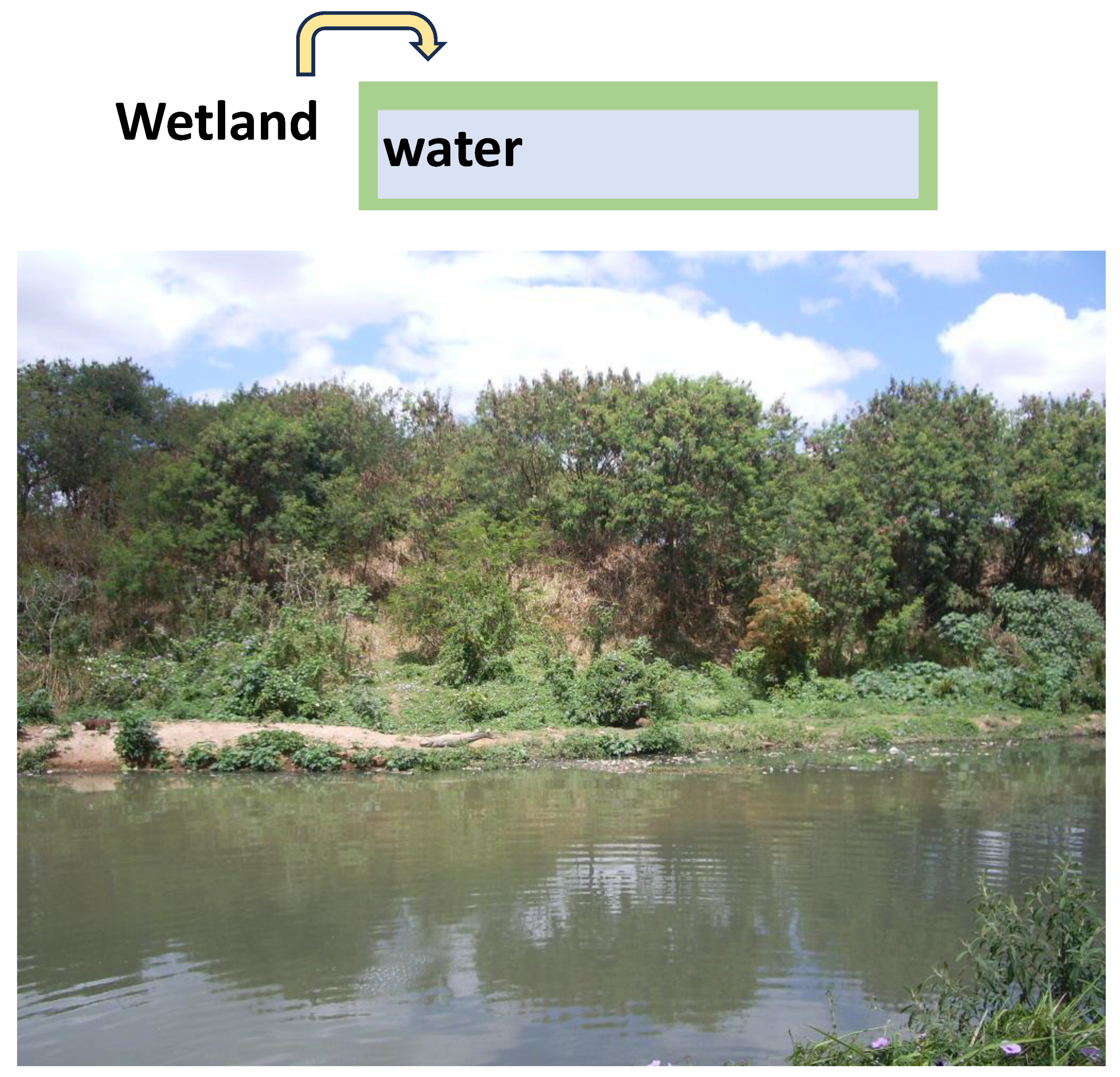
We searched for recent reports on unconventional water treatment. As example, Figure 1 shows an artificial lake (depth of 5 to 16 m), which receive domestic wastewater in Belo Horizonte, Brazil. The lake is fed by 8 small streams, like Sarandi and Ressaca.in a hilly area, within the plants growing grasses and mainly Typha species vegetation rapidly occupied a border being used for pasture by the local community cattle, and in other border a waste treatment station was installed. The lake tolerates the (rainy period (in February) and (dry period in September). In the reports on wetland, the efficiency of treatment of experimental systems was considered by some authors varying from medium to good for most of the parameters analyzed (Lopes and Duarte, 2017[4]).
2.2. Soil Chemical Characterization 2.3. AMF Associated to Wetland Plants
3. Results
Wetlands presented the occurrence of AMF, most Glomeraceae, was associated with vetiver grass. Compared to other reports, Claroideoglomus etunicatum was dominant among the isolated species of Glomeromycota (Table 2). The grass soil studied showed exclusive characteristics such as high amount of K due to commonly applied fertilization as reported previously by Pagano et al. [12]. This study showed the AMF species associated with grass and wetland plants, as well as potential for AMF inoculant formulation. Different AMF species (Acaulospora longula and Acaulospora colombiana) were previously reported by Barbosa et al. [10] as associated to U. brizantha in greenhouse, Brazil; however, vetiver grass was the favorite, considered a miracle plant.
Table 1 shows some available reports on wetland species.
Plant-fungal ecological studies pointed out that aquatic, wetland and terrestrial plants harbor arbuscular mycorrhizae (Xu et al., 2021. [5]; Wang and Qiu ,2006) [11]
Table 2. shows some standards of agrotoxics evaluated in drinking water from the municipalities of Santa Catarina state, Brazil. The drinking water samples are monitored for some common agrotoxics in the region.
Setyaningsih et al. (2018) investigated Typha angustifolia growing on waterlogged areas such as tailing dam, inoculated with arbuscular mycorrhizal fungi (AMF) plus compost and soil from gold mine tailings. Experiments were conducted in greenhouse by inoculating two AMF isolates (Glomus etunicatum and G. manihotis) to typha seedlings, which increased AMF colonization of typha roots besides plant growth.

Table 1.
Reports on AMF species in wetlands.
| Field/ greenhouse | Plant species | .. | Root colonization (%) | AMF species | Reference |
|
|---|---|---|---|---|---|---|
| Greenhouse | Typha | Claroideoglomus etunicatum, Glomus manihotis | Setyaningsih et al., 2018[.] | |||
| Greenhouse | Vetiver | >10 | Native inoculum, 200 spores per plant | [..]Lakmali et al.2021 | ||
| U. brizantha | Claroideoglomus | Pagano et al, (2016) | ||||
|
U. brizantha |
16 |
Acaulospora colombiana, A. longula, A. morrowiae Gigaspora margarita; Paraglomus occultum |
Barbosa et al.,2018[10] | |||
| Constructed wetland | Canna generalis, Cyperus alternifolius, and Eichhornia crassipes | Glomus, Acaulospora | Xu et al.2021 [5] |
NI: Not informed.
Table 2.
Agrotoxics evaluated in drinking water from the municipalities of Santa Catarina state, Brazil.
Table 2.
Agrotoxics evaluated in drinking water from the municipalities of Santa Catarina state, Brazil.
| 2.4D-2.4ST | Active principle | MVP | ||
|---|---|---|---|---|
| Glyphosate + AMPA | 500 | |||
| Alachlor |
Lindane |
20 |
||
| Chlordane | Metolachlor | 0.03 | ||
| DDT+DDE | Molinate | 6.0 | ||
| Pendimenthalin | trifluralin | 20.0 | ||
| Available P mg⋅kg−1 | 1.8 |
|||
| Endosulfan (αβsis) |
Endosulfan | |||
| Chlorpyrifos# | same | 30.0 | ||
| Lindane Aldrin |
2.0 0.03 |
2.0 | ||
| Atrazine | - | - | ||
| Heptachlor Methoxychlor |
Methylic Parathion | 20.0 |
NA: Not available. # concentration in water samples. Maximum value permitted (MVP) (µg L-1). Source: Brasil. Ministério da Saúde. Secretaria de Vigilância em Saúde. Departamento de Vigilância em Saúde Ambiental e Saúde do Trabalhador. Qualidade da água para consumo humano: cartilha para promoção e proteção da saúde, Brasília: Ministério da Saúde, Brazil2018.
The urgent acceptance of green infrastructure and nature-based arrangement of spaces, attention to ecosystem services of artificial water bodies has enhanced the quality of urban surroundings with environmentally friendly measures such as reclaimed water (treated wastewater) (Addo-Bankas et al., 2022). The AMF community structure in the studied wetlands showed dominance of Glomeraceae. AMF (were previously reported associated with wetland plants (Wang and Qiu, 2016) [11]. (Table 1). This study showed the AMF communities associated with wetlands, and thus the potential for AMF inoculant formulation. However, to understand the wetland ecology it is necessary to analyze the associated AMF species, the time of symbiosis establishment, root colonization and spore multiplication under different abiotic and biotic conditions. The hypothesis of this study is that wetland plants associate with diverse AMF species, which have different behaviors when colonizing this host plant. We examined the arbuscular mycorrhizae reported associated with wetland grass. The community structure was studied in a U. brizantha grassland in Brazil (Figure 2a), which showed a greater diversity of AMF compared to previous reports. Moreover, about 50 % of unviable AMF spores were estimated. Four genera of Glomeromycota, around five species were detected (Table 3). Wetland soil tolerates inundation showing exclusive characteristics, such as high amounts of soil organic matter. Wetlands in which herbs were planted had a high removal efficiency about the indicator pathogens, organic matter, LAS detergent in comparison to a control wetland (without canes) and could improve physicochemical parameters (DO, ammonia, nitrate, electrical conductivity, and pH) of wastewater. [12] Most studies were carried out a field conditions, the present study is the first to show in detail the AMF community associated to U. brizantha in a grass besides previous reports on root colonization [4,12], and to point out the potential for AMF inoculant formulation to improve sustainable plant cultivation at field conditions. Wetland ecology requires the use of efficient and economically viable strategies and techniques. Arbuscular mycorrhizal fungi (AMF) have been widely reported to occur in wetland plants. However , the factors that affect AMF colonization in wetland plants and its physiological functions in AMF inoculated plants were inadequately studied (Hu et al., 2020)[3]. Vetiver grass presented mycorrhizal colonization besides septate melanized hyphae from dark septate endophytic fungi (Machado et al., 2015) [..] . The association of the vetiver grass with Glomus was reported in soils contaminated with arsenic (Caporale et al. (2014). Also, the effect of Glomus mosseae in vetiver grass growing in cadmium-contaminated soils was registered (Karimi et al., 2014)[13]. using various plants, including common reeds (Phragmites australis) [14], water hyacinth (Eichhornia crasspies), water lettuce (Pistia stratiotes), bulrush (Typha), duckweed (Lemna, pampas grass (Cortaderia selloana), and Quinoa (Chenopodium quinoa willd, could be also investigated as they were proposed as a supplementary approach for unconventional water phytoremediation (Dorafshan et al. 2023) [15]3
4. Discussion
Among the vegetation associated with natural wetlands, some grass communities predominate. These plants associate with AMF, which provide tolerance to environmental stress. Most used plants are vetiver grass, an aromatic Poaceae plant, which can tolerate extreme climatic variations such as prolonged drought flood, and submergence. To understand wetland ecology important characteristics must be studied, such as soil properties, plant species, wet and dry periods, plant symbioses, and thus the potential for AMF inoculant formulation for this vegetation type. However, understanding the wetland ecology is important not only for environmental issues, but also for human life quality.
….
….
Filho, F. J. C. Anatomical characteristics of the root of Chrysopogon zizanioides (L.) Roberty. 2014. (Master thesis). Instituto de Ciências Biológicas, Programa de Pós-Graduação em Biodiversidade Vegetal, Universidade Federal de Goiás, Goiânia. 2014.: < https://repositorio.bc.ufg.br/tede/>. p.113.
Machado et al. (2015) highlighted that the thin roots of vetiver grass showed high shear strength, which contributed to a reduction in erosion processes. Thus, controlling soil erosive processes.
Glomus and Acaulospora were the most dominant and second most dominant genera of AMF in the three ecological floating beds (Xu et al., 2020). [5]
--Vetiver, a perennial grass with a great height(2m) and depth (3 m) is highly explored for restoring degraded lands as it can act as a natural barrier against erosion and pollution, due to a massive odorous root system is considered a Hyperaccumulator plant, as it can take up one or two specific metals in high concentrations into their tissues (Khan, 2009) [2].
Most Plants growing on degraded and heavy metals (HM) contaminated soils including vetiver grass, possess arbuscular mycorrhizae, indicating that these AMF tolerate HM and that they play an important role in the mycorrhizoremediation of stressed wetland soils (Khan, 2009). [2].
This study summarized the concentrations of PFASs in surface water, sediments, and aquatic organisms in typical freshwater basins in China, detailing their distribution characteristics and potential sources. The results indicated that since PFOA and PFOS were listed in the Stockholm Convention on Persistent Organic Pollutants, their manufacturing, use, and disposal have been effectively controlled, resulting in decreasing levels of PFOA and PFOS in the water environment.
(b)
The distribution behavior of various PFASs in different water media showed significant variation. The most severe surface water pollution was observed in East China, followed by Northeast and North China, with short-chain PFASs showing higher detection rates in surface water. Sediment pollution was the most severe in the east and north, followed by the northeast, with relatively lighter pollution in North and South China. Long-chain PFASs tended to accumulate more in sediments. Aquatic organisms exhibit nearly 100% detection rates for long-chain PFASs, as longer carbon chains facilitate greater accumulation in organisms. Higher PFAS concentrations were found in tissues and organs such as the liver.
(c)
The development of PFASs in China is currently entangled in a cycle of policy and legal restrictions, industrial production demand, the creation and use of new substitutes, and subsequent regulation and restriction of these substitutes. Continuous and proactive scientific research on PFASs, particularly on environmental sources and sinks, is essential. A transition to safer alternatives should be promoted to mitigate the impact of PFASs on human health and the environment.
(d)
Through single-substance risk assessment, a comprehensive comparison revealed that PFASs, in the majority of freshwater basins, were at a low-risk level, PFOS in some freshwater basins was at a moderate-risk level, and no freshwater basin was at a high-risk level. There is an urgent requirement for a hybrid risk assessment approach to comprehensively evaluate the risk level of a basin by integrating multiple substances.
(e)
Single methods for removing PFASs have distinct limitations, and the combination of multiple treatment technologies, as new, integrated treatment technologies hold outstanding prospects for the removal of PFASs.
Author Contributions
ND MP.: Conceptualization, Investigation, Methodology, Formal analysis, Writing—original draft and writing—review and editing. J.L.: Supervision, Project administration, Funding acquisition and writing—review and editing. R.J.: Supervision and Writing—review and editing. Y.Q.: Supervision and Writing—review and editing. J.M.: Software, Methodology. Z.W.: Supervision and Writing—review and editing. All authors have read and agreed to the published version of the manuscript.
Data Availability Statement
The data are contained within the article.
Conflicts of Interest
The authors declare that they have no competing financial interests or personal relationships that have appeared to influence the work reported in this paper.
References
- Addo-Bankas, O., Zhao, Y. Arlindo Gomes, A. Stefanakis, A. Challenges of Urban Artificial Landscape Water Bodies: Treatment Techniques and Restoration Strategies towards Ecosystem Services Enhancement. Processes 2022, 10(12), 2486; [CrossRef]
- Barbosa et al.2018 Arbuscular mycorrhizal fungi and Urochloa brizantha: symbiosis and spore multiplication. Viana Barbosa M., Pedroso, DF, Pinto, FA, dos Santos, JV., Carbone, MAC.
- Brasil. Ministério da Saúde. Secretaria de Vigilância em Saúde. Departamento de Vigilância em Saúde Ambiental e Saúde do Trabalhador. Qualidade da água para consumo humano: cartilha para promoção e proteção da saúde [recurso eletrônico] / Ministério da Saúde, Secretaria de Vigilância em Saúde, Departamento de Vigilância em Saúde Ambiental e Saúde do Trabalhador. – Brasília: Ministério da Saúde, 2018.
- Caporale, A. G. 2014. Effect of arbuscular mycorrhizal fungi (Glomus spp.) on growth and arsenic uptake of vetiver grass (Chrysopogon zizanioides L.) from contaminated soil and water system. Journal of Soil Science and Plant Nutrition, Temuco, v. 14, n. 4, p. 955-972, 2014.
- Dorafshan, M., M. Abedi-Koupai, J. Eslamian, S. Amiri, M.J.2023 Sustainability, 15(4), 3529;Vetiver Grass (Chrysopogon zizanoides L.): A Hyper-Accumulator Crop for Bioremediation of Unconventional Water. Sustainability 2023, 15(4), 3529; [CrossRef]
- Giri, S. and Singh, A.K. (2015) Human Health Risk Assessment via Drinking Water Pathway Due to Metal Contamination in the Groundwater of Subarnarekha River Basin, India. Environmental Monitoring and Assessment, 187, 63. [CrossRef]
- Hu, S, Chen, Z, Vosátka, M., Vymazal, J. 2020. Arbuscular mycorrhizal fungi colonization and physiological functions toward wetland plants under different water regimes. Science of The Total Environment,, 10, 137040.
- Khan, A.G. 2009). Role of Vetiver Grass and Arbuscular Mycorrhizal Fungi in Improving Crops Against Abiotic Stresses M. Ashraf et al. (eds.), Salinity and Water Stress, Chapter 12, © Springer Science + Business Media B.V. 2009.
- Lakmali, D, Karunarathna SC, Dauner, LAP; Yapa, N. Potential of Vetiver (Chrysopogon zizanioides L.), Inoculated with Arbuscular Mycorrhizal Fungi, To Improve Soil Quality in Degraded Soil. Chiang Mai J. Sci. 2021; 48(5): 1247-1258.
- Lopes,A., Duarte, NF. 2017. o tratamento de efluentes líquidos através de sistemas utilizando agentes de fitorremediação: uma revisão sistemática. Revista Gestão & Sustentabilidade Ambiental 6(1):432.
- Machado, Holanda L., Rodrigues Silva FS, MarandubaVS.,AJA, Bispo, J. 2015. Contribution of the root system of vetiver grass towards slope stabilization of the São Francisco River, Semina: Ciências Agrárias, Londrina, 36, 4, 2453-2464.
- Karimi, N.; Baharlouei, J.; Sabzalian, M. R. 2014. Effect of arbuscular mycorrhizal fungi on growth parameters of vetiver grass in a cd-contaminated soil. In: Internacional Conference On New Ideas In Agriculture, 1, 2014, Isfahan. Anais… Isfahan: Islamic Azad University Khorasgan Branch, 2014, p. 1.
- Wang and Qiu. 2006.Phylogenetic distribution and evolution of mycorrhizas in land plants.
- Pagano MCP., Duarte, NF, Corrêa EJAC, 2020.Effect of crop and grassland management on mycorrhizal fungi and soil aggregation. Applied soil Ecol., 147,.103385, Article 103385.
- Santos JS. Souza de oliveira lopes LJ , Mendonça, JJ , Rodrigues Holanda, FS , Marino, RH. arbuscular mycorrhizal fungi and dark septate endophytic fungi on the biomass development of vetiver grass. Rev. Caatinga, Mossoró, v. 31, n. 3, p. 602 – 611, jul. – set., 2018.
- Setyaningsih, L, Wulandari AS, Hamim H. 2018. Growth of typha grass (Typha angustifolia) on gold-mine tailings with application of arbuscular mycorrhiza fungi. Biodiversitas 19: 504-509.
- Siqueira.
- Wang, B., Qiu, YL. 2006.Phylogenetic distribution and evolution of mycorrhizas in land plants. Mycorrhiza 16, 299–363. [CrossRef]
- Xu, Z., Lv, Y., Fang, M. et al. Diverse and abundant arbuscular mycorrhizal fungi in ecological floating beds used to treat eutrophic water. Appl Microbiol Biotechnol 105, 6959–6975 (2021). [CrossRef]
Figure 1.
wetland at Pampulha lake, Minas Gerais, Brazil.
Disclaimer/Publisher’s Note: The statements, opinions and data contained in all publications are solely those of the individual author(s) and contributor(s) and not of MDPI and/or the editor(s). MDPI and/or the editor(s) disclaim responsibility for any injury to people or property resulting from any ideas, methods, instructions or products referred to in the content. |
© 2025 by the authors. Licensee MDPI, Basel, Switzerland. This article is an open access article distributed under the terms and conditions of the Creative Commons Attribution (CC BY) license (http://creativecommons.org/licenses/by/4.0/).
Copyright: This open access article is published under a Creative Commons CC BY 4.0 license, which permit the free download, distribution, and reuse, provided that the author and preprint are cited in any reuse.