

Submitted:
16 April 2025
Posted:
17 April 2025
You are already at the latest version
Abstract
This research presents a synthesis of social entrepreneurship (SE) in rural communities with a tourism vocation, through a systemic perspective applied to the case of Yecapixtla, Morelos, Mexico. Soft Systems Methodology (SSM) was used to diagnose the current state of the SE system in the Food and Beverage (F&B) sector, considering its alignment with the Sustainable Development Goals (SDGs). The study included direct observation, field notes, and systemic modelling tools such as the structured problem and the rich picture, in order to interpret the relationships among the actors involved. The results show that SE plays a strategic role in the sustainability of the destination but it faces conflicting relationships with government actors and structural limitations that hinder its consolidation. Optimal relationships were identified among community actors, as well as opportunities to improve tourism governance. The study concludes that the systemic approach enables a clearer view of the conflicts, capacities, and opportunities within the system, highlighting the need to create systemic strategies that strengthen SE as a driver of sustainable development.
Keywords:
Social entrepreneurship
; sustainability
; rural tourism
; rural communities
; systemic approach
; governance
1. Introduction
The challenges posed in the twenty-first century have made it clear that it is urgent to protect and preserve natural resources such as water, soil, and air, which are crucial for the development and continuity of human life. At present, it is imperative to incorporate sustainable factors and initiatives into enterprises so that they reduce their environmental impact in the production of goods and the provision of services. Addressing these environmental challenges means tackling and correcting the problems that arise during decision-making and in the development of processes. However, it is essential to implement a holistic approach that complements methods and guidelines, so that enterprises can be both profitable and sustainable [1].
Fulfilling the social, ecological, and ethical principles for business development has become a challenge that is not always achieved, even when enterprises attempt to ground their activities in socially responsible actions [2]. This situation highlights the importance of considering Social Entrepreneurship (SE), a social model in which social and environmental objectives are closely linked and occupy a central place in the development of business dynamics.
SE has gained relevance in recent years due to the virtues of its development, which seek socio-environmental benefit, especially in communities that combine organisational activities for both profit and non-profit purposes [3]. This type of entrepreneurship is characterised by its capacity to address various problems from a collaborative perspective, involving different actors who are part of that environment.In the academic sphere, SE represents a continuously growing field of research, driven by the emergence of innovative models focused on value creation [4]. There are different concepts and approaches in the academic literature that define it. According to Ledi [5], SE refers to social enterprises—whether for-profit or non-profit—that seek to balance the creation of social value through the application of business strategies designed to solve social problems, while ensuring their financial sustainability. With a similar approach, Zhang et al. [6] point out that SE can integrate the efficiency, innovation, and resources of traditional enterprises with the goals of non-profit organisations, enabling the identification and implementation of social, economic, and ecological values in their activities.
Peredo & McLean [7] define SE as a model oriented towards maximising social value with the aim of generating well-being and promoting the common good within a specific community. Zulfiqar et al. [8] identifies SE as a component of the solution to economic crises, providing innovative responses to unresolved social problems. Furthermore, it highlights its close relationship with the creation of social value, whose purpose is to improve societies and communities in order to enhance individual well-being.
In this regard, SE has made considerable progress in its understanding and application within both academic and business fields. This type of entrepreneurship cannot be understood solely from a conceptual perspective. Although social and ecological elements are fundamental to its structure, its true essence lies in its ability to translate those elements into concrete actions within specific contexts. Figure 1 illustrates the two-dimensional relationship of SE, integrating values and principles that guide its purpose so they can be translated into practical application.
In its practical dimension, values take shape through innovative and collaborative solutions that address specific social problems aimed at contributing to the well-being of concrete communities. Wang et al. [9] reinforce this idea by describing SE as a long-term solution to meet social needs through the creation, development, and implementation of opportunities oriented towards community benefit.
Under this perspective, SE is presented as a dynamic model that not only responds to immediate needs but also has a lasting impact on communities. Jørgensen et al. [10] highlight how SE, when applied to tourism dynamics, can contribute to the achievement of the Sustainable Development Goals (SDGs), which aim to mitigate climate change, adapt to its impacts, and promote sustainable solutions to protect the planet. This is particularly evident in developing regions, where SE fosters job creation, self-employment, and the strengthening of local development. Similarly, Dahles et al. [11] recognise SE as a key catalyst for sustainable communities due to its capacity to address environmental issues and promote local participation. In this sense, communities with a tourism vocation possess the necessary characteristics to enhance the strengths of SE, as noted by Mottiar [12], making it an essential tool for both socioeconomic and environmental development.
Therefore, this framework not only highlights the relationship between conceptual values and their practical implementation but also supports the relevance of SE from a comprehensive approach to balancing social, environmental, and economic objectives. This integration not only aligns with the SDGs but also demonstrates how SE can be adapted to specific contexts, such as rural communities with a tourism vocation.
The aim of this research is to diagnose the current situation of the actors that make up the SE system in the Food and Beverage (F&B) sector within the tourist community of Yecapixtla, Morelos. The purpose is to provide a Systemic Perspective on how these enterprises contribute to sustainability within tourism dynamics, in a context characterised by scenarios where natural resources are vulnerable. The selection of SE initiatives in the F&B sector responds to the need for them to adapt to the rapid changes of the environment, which increasingly demands that enterprises operate sustainably.
1.1. Communities with a Tourism Vocation
The development of tourism in rural communities represents an opportunity to strengthen the local economy, revitalise cultural identity, and promote sustainable development. Current research has shown that the expansion of rural tourism can generate positive impacts in these areas by improving infrastructure, the environment, and mitigating the effects of economic recession [13,14]. However, to ensure a balanced interaction, effective management is required to address the challenges associated with tourism activity, as well as external support for the development of structures and infrastructures that enable long-term sustainable solutions [15].
To understand the complex relationship between the components that influence rural tourism, it is necessary to adopt a comprehensive approach that examines the specific attributes and resources of the rural community. This approach must highlight the interventions needed to achieve regional and local objectives, ensuring that tourism is not only a source of income but also a mechanism to strengthen social cohesion and community well-being [16].
Within this context, the integration and active participation of the local population is a key element in maintaining balance and thus ensuring long-term sustainability. Involving communities in the planning and execution of tourism strategies contributes to the preservation of rural authenticity and facilitates the intergenerational transmission of local culture. This, in turn, enhances authentic experiences for visitors [17,18].
The importance of promoting a systemic approach that fosters the inclusion of vulnerable groups, strengthens rural entrepreneurship, and increases the competitiveness of tourism destinations has become an initiative that benefits all stakeholders involved [19]. The integration of innovative processes is fundamental to consolidating tourism as an effective tool for sustainable development, ensuring its positive impact on the community [20].
1.2. Yecapixtla, Morelos, Mexico
Yecapixtla is a municipality located in the northeast of the state of Morelos, Mexico, with a territorial area of 173.2 km² and an altitude ranging between 1,300 and 2,200 metres above sea level (Figure 2). Its population amounts to 56,083 inhabitants, with a growth of 19.8% over the last decade [21], and a projection indicating a sustained upward trend towards 2030 [22]. The local economy is mainly based on commerce (47.25%), services (34.91%), and manufacturing (17.19%) [23], with a total of 2,309 registered economic units. The economically active population represents 67% of inhabitants over the age of 12 [24].
Yecapixtla’s productive sector is mainly composed of small and medium-sized enterprises, with commerce and services as its primary economic activities. In 2024, a total of 2,309 economic units were registered, with a productive structure dominated by micro, small, and medium-sized enterprises [26]. Within the services sector, 806 economic units were identified, which provide employment to approximately 1,935 people. These activities play a fundamental role in the local economy by promoting self-employment and encouraging the development of businesses aimed at both serving the local population and supporting tourism [27].
From a development perspective, Yecapixtla faces challenges in managing its economic growth and attracting foreign investment. Nevertheless, its strategic location and productive diversification represent a key opportunity to strengthen local tourism, contributing to its consolidation as a sustainable and resilient destination.
1.3. Relationship with the SDGs
The SDGs represent a global call to action aimed at eradicating poverty, safeguarding the environment, and improving quality of life and opportunities for people worldwide [28]. Aligning practices, public policies, and activities with the SDGs offers significant benefits by promoting balanced development that encompasses fundamental aspects such as those mentioned above. Moreover, their adoption strengthens communities, stimulates local economies, and fosters responsible innovation, contributing to a more sustainable world. To maximise their impact, it is crucial to identify specific goals that respond to the particular challenges of each place. In this regard, the integration of the SDGs can generate significant progress in rural communities with a tourism vocation, as long as those goals are selected in alignment with the key components of the system under study.
In this article, the selected SDGs are essential for addressing the problems identified in rural communities with a tourism vocation, particularly those related to the system under study. These selected goals enable the articulation of a comprehensive approach that encompasses social, economic, and environmental dimensions for the common good.
1.3.1. SDG 1: No Poverty
The COVID-19 pandemic represented a significant setback in the development progress achieved so far, with an additional 90 million people falling into extreme poverty during 2020. By 2023, it was reported that only 47% of the global population had access to some form of social protection, while in low-income countries this coverage drops to just 23% [29]. In this context, various conceptual frameworks have emerged as key tools for understanding community livelihoods in regions rich in natural resources. These frameworks, originally designed to address rural poverty in the Global South [30], offer a comprehensive approach to analysing and tackling the socio-economic challenges present in these areas.
The goal of eradicating poverty in all its forms is particularly relevant for rural communities with a tourism vocation, where conditions of vulnerability are often more pronounced. The integration of SE presents itself as an effective strategy to promote income generation and local employment. This combination of factors not only improves living conditions but also fosters social equity and sustainable development in such communities, thereby contributing directly to the achievement of SDG 1.
1.3.2. SDG 8: Decent Work and Economic Growth
The economic disruption caused by the COVID-19 pandemic exposed the fragility of the global economy, highlighting the need for more resilient and sustainable economic models. This scenario also opened a window of opportunity to explore innovative alternatives that promote decent employment and inclusive growth, which aligns with SDG 8 [31]. In this context, SE emerges as a key tool for building a more equitable and supportive recovery. Its ability to integrate ethical and sustainable values into business practices makes it an essential mechanism to strengthen local economies, especially in communities with a tourism vocation.
Economic dynamism and the generation of decent employment depend directly on the implementation of business models that prioritise sustainability and inclusion. One example of this is the Fair Trade Model, which emerged in 1988 as a social movement aimed at supporting coffee producers in Mexico. This model seeks to promote economic growth by integrating small producers from developing countries into global markets [32]. Over time, this approach has expanded and influenced other sectors, encompassing a diversity of products and ethical practices that prioritise sustainability and equity across global supply chains.
From a theoretical perspective, Schumpeter’s proposal on radical innovation is key to studying the dynamics of developing economies. This approach emphasises market plasticity and uncertainty as catalysts for innovation, highlighting how entrepreneurship acts as a transformative agent. According to Schumpeter, entrepreneurs revolutionise economic structures from within and drive continuous processes of creativity that generate new economic opportunities and foster the emergence of disruptive business models [33].
1.3.3. SDG 12: Responsible Consumption and Production
According to a report by the United Nations Environment Programme (UNEP), plastic accounts for 85% of the waste that reaches the oceans. It is projected that by 2040, plastic emissions into aquatic ecosystems could nearly triple, reaching between 23 and 37 million tonnes annually [34]. However, the impact of this crisis is not uniform, as rural communities—whose livelihoods often depend on vulnerable natural resources—face particular challenges. This situation highlights the urgency for countries to prioritise sustainable practices, such as waste reduction and the minimisation of food loss.
Promoting SE can play a key role by encouraging economic models that optimise the use of natural resources, reduce environmental impact, and contribute to the fulfilment of SDG 12 through the incorporation of circular economy principles focused on sustainability [35].
Thus, entrepreneurship for community well-being focuses on establishing multidimensional well-being as its central objective, promoting various types of entrepreneurship: commercial, social, and institutional. This approach, based on a bottom-up strategy, holds greater potential to generate long-term sustainable value compared to traditional models. Examples of its application can be observed in mining regions of Antioquia, Colombia, where it has contributed to transforming underdeveloped local economies. Furthermore, by integrating responsible consumption and production practices, its contribution to SDG 12 is reinforced, highlighting the importance of balancing economic development with environmental sustainability [36]
1.3.4. SDG 13: Climate Action
The increase in global temperature by 1.1 °C above pre-industrial levels represents a global warning that demands a restructuring of human development as we know it. According to the United Nations [29], this rise has intensified both the frequency and magnitude of climate-related disasters, affecting an average of 151 million people annually between 2015 and 2021. If this trend continues, it is estimated that global temperature could exceed 1.5 °C by 2035.
Climate action has become an urgent necessity, and its success depends on the collaboration of all stakeholders. The alignment of climate policies with the values of younger generations may foster an identity rooted in sustainable behaviours and reduce the social pressure that can hinder the adoption of pro-climate actions [37].
In this context, sustainability indicators—such as those related to economy and society—play a key role in evaluating and monitoring the impact of human activities on the environment, providing essential tools to achieve long-term sustainability goals [38]. One of the sectors where these indicators are particularly relevant is tourism, due to its considerable environmental impact. Through the adoption of sustainable practices, tourism has the potential to contribute to climate change mitigation. In rural communities, where tourism and economic activities place significant pressure on ecosystems, the implementation of strategies based on these indicators is essential to minimise negative effects and strengthen resilience, thereby ensuring long-term sustainability [39].
1.3.5. SDG 17: Partnerships for the Goals
Financial reforms are an urgent necessity, particularly considering that 23% of national statistics institutes in low-income countries face severe programme deficits. To address this issue, a stimulus plan for the SDGs has been proposed, with annual funding of USD 500 billion until 2030 [29]. Despite the existence of voluntary regulatory frameworks, internal accountability regarding SDG compliance remains a challenge. According to Franco & Abe [40], these efforts must be complemented with external monitoring mechanisms, such as sustainability reports, which are often aligned with the principles of international networks and allow for a more objective assessment of progress in sustainable development. Nevertheless, evidence suggests that many companies adopting a sustainability approach base their actions on scattered initiatives—frequently in the form of corporate philanthropy—reflecting the absence of a cohesive strategy that effectively integrates the SDGs into their operations.
The success of effective SDG implementation, particularly in rural communities with a tourism vocation, depends on the articulation of strategic partnerships between governments, businesses, academia, and civil society. Such collaborations enable the creation of synergies that maximise the impact of sustainable initiatives and ensure their long-term viability.
Figure 3 illustrates how these goals interact within the context of rural communities with a tourism vocation. It represents a systemic approach in which social, economic, and environmental elements are interconnected, demonstrating that the achievement of the selected SDGs does not occur in isolation, but rather through the integration of collaborative strategies that maximise their impact on sustainable development.
This combination of elements emphasises the importance of selecting goals that respond to local needs and strengthen the capacity of communities to address global challenges from a local and sustainable perspective.
2. Methods
With the growing implementation of sustainable development and the need to strengthen local economies, it is essential to employ comprehensive approaches to study social enterprises in rural communities with a tourism vocation. This research adopted a systemic approach through the use of Soft Systems Methodology (SSM) [41], a flexible tool used to address problems with high social content from a phenomenological and hermeneutic perspective. In this context, SSM enables the development of a comprehensive diagnosis that facilitates the identification of solutions to the challenges associated with SE in the F&B sector in the rural community of Yecapixtla, Morelos.
This methodological process begins with the identification of the actors and entities that make up the system under study, taking into account the environmental, economic, and social context in which they operate. Based on this identification, the relationships among the system’s elements are studied and interpreted with the aim of developing a comprehensive diagnosis of the current situation.
Subsequently, a structural diagram of the system is constructed, in which each component is represented through specific icons, facilitating the visualisation of their interactions. This graphical representation is complemented by systemic mapping, known as a rich picture, which enables the identification of key relationships and critical factors that influence the issue. This is accompanied by the selection and comparison of relevant activity system models to identify those that best fit the system under study.
In addition, this research considered the SDGs within the dynamics of rural communities with a tourism vocation, allowing for the structuring of a critical discourse on the desirable and feasible changes within the system. Figure 4 illustrates the application of SSM in this context, detailing the study procedure for the implementation of solutions.
In this representation, SE in rural communities is evaluated through models of human activity systems, allowing for a process of comparison and adjustment that enables the implementation of improvement actions aimed at consolidating a system in homeostasis and resilience. These actions are directed towards strengthening SE in the F&B sector, promoting the integration of innovative practices and enhancing the competitiveness of rural tourism destinations.
Additionally, to strengthen the diagnosis, direct observation and field notes were carried out in Yecapixtla, Morelos, focusing on SE initiatives in the F&B sector. This stage of the work allowed for an interpretation of the current situation of the system under study, observing its relationship with the tourism environment, including the interaction among actors, tourism demand (weekdays, weekends, and during fairs), and physical and logistical constraints of the territory. With the support of these empirical tools, it was possible to observe how social, economic, and environmental dynamics are articulated in the daily practice of SE initiatives—some already aligned with the SDGs, and others with the potential to do so.
3. Results
As a result of the application of SSM, the structured mapping of the current problem situation was identified and developed. Figure 5 outlines this situation, showing the various actors involved, positioned according to their degree of influence and level of participation within the SE system in the F&B sector.
Structuring the problem enabled the construction of the rich picture (Figure 6), which incorporated both previously identified formal elements and other actors that directly influence the dynamics of SE. It also allowed for the interpretation of the interrelationships among the actors within the system under study, as well as the tensions and opportunities that form part of the current context.
Figure 6 illustrates a synthesis of the relationships among the actors that make up the SE system in the tourist community of Yecapixtla. The rich picture of the system under study is characterised by the integration of three types of relationships, according to their degree of influence and impact. Solid black lines indicate optimal relationships, in which active collaboration, constant communication, and shared goals are present. These are concentrated within the system in focus, which reflects the community's efforts to shift towards a more sustainable tourism dynamic that can endure over time. Dotted lines represent weak or fragmented links, characterised by the lack of mechanisms and strategies to coordinate the tourism dynamic of the area. One example of this is the limited adoption of public policies aimed at fulfilling the SDGs (1, 8, 12, 13, and 17), as well as the lack of recognition of SE initiatives by governmental institutions responsible for designing sustainable strategies in favour of the community and the environment.
Red lines, in turn, indicate conflicting relationships, where tensions, disagreements, or practices arise that hinder the functioning of the system. These relationships are predominantly controlled by government actors and agencies created to manage, coordinate, and plan the tourism dynamic and its derived impacts. Furthermore, to provide a more detailed interpretation of the relationships between the system’s components, Table 1 presents the classification of actors according to their systemic level.
The application of SSM reveals the complexity of the tourism dynamic within the system under study. By visualising how the actors interact, opportunities were identified to strengthen local sustainability. This holistic approach proves essential for progressing towards more collaborative, integrated, and resilient governance in tourism-oriented communities such as Yecapixtla.
4. Discussion
The application of SSM enabled a contrast between theoretical assumptions and the observed reality, reinforcing the applicability of the systemic approach to diagnose and interpret the dynamics of SE in rural communities with a tourism vocation. The combination of methodological tools—such as the rich picture, the systemic classification of actors, and direct observation—allowed the identification of the links that strengthen the system, as well as the factors that limit its homeostasis.
The complexity of activity across the macro-environment, environment, and system in focus demonstrates that, despite the adoption of sustainable practices by entrepreneurs in Yecapixtla, structural conditions continue to constrain their effectiveness and continuity. While SE is defined as a model that integrates and balances social, environmental, and economic goals, its performance in rural contexts is not linear. It became evident that SE initiatives in the F&B sector face considerable challenges in establishing optimal relationships with other actors. The presence of conflicting relationships with governmental institutions and global organisations reveals a disconnection between regulatory frameworks, public policies, and the actual needs of entrepreneurs in Yecapixtla. This lack of homeostasis within the system also compromises the achievement of the selected SDGs.
Thus, SE in Yecapixtla cannot be understood merely as a business strategy, as its creation and organisation emerge in a context of tension between local and institutional actors. This reveals the need to consolidate a platform that integrates all involved stakeholders and acknowledges the cultural, economic, and environmental specificities of the community.
Rural tourism could help improve living conditions in Yecapixtla by implementing tangible strategies adapted to the nature of the place. Therefore, adopting a systemic approach presents an opportunity to enhance tourism governance in Yecapixtla, along with the need to create structural conditions that enable SE initiatives to operate effectively and with greater influence. The creation of sustainability indicators tailored to Yecapixtla would provide a benefit at the "environment" level within the system under study, by offering measurements that reflect the reality of the elements contributing to sustainable development, thereby directly supporting the achievement of the identified SDGs.
This reflection becomes essential for advancing towards more just and sustainable development models in rural contexts, where SE can act as a true agent of change.
5. Conclusions
This research made it possible to identify the current state of SE in Yecapixtla, Morelos, as well as the key actors involved in this dynamic. It was found that optimal relationships are concentrated among community actors, while conflicting relationships are predominantly associated with governmental institutions and external entities. The results show that SE initiatives in the F&B sector play a strategic role in the sustainability of the tourist destination, but they face limitations in becoming consolidated. The lack of public policies and limited institutional continuity hinder their strengthening.
SSM made it possible to diagnose conflicts, discontinuities, and opportunities within the system. It is recommended to promote local governance platforms that encourage collaboration among actors and support the achievement of the SDGs through a territorial approach. This research confirms the importance of SE as a driver of sustainable development in rural communities with a tourism vocation, provided that the structural and governance conditions necessary for its continuity are ensured.
Author Contributions
Conceptualization, R.T.-P.; methodology and validation, I.B.-P. and R.T.-P.; formal analysis, Z.P.-M.; investigation and resources, M.L.R.-E., Z.P.-M. and L.M.H.-S.; data acquisition, L.M.H.-S. and I.B.-P.; writing—original draft preparation, Z.P.-M., M.L.R.-E., and R.T.-P. All authors have read and agreed to the published version of the manuscript.
Funding
This article is supported by Instituto Politécnico Nacional, México, through the project SIP 3420, granted by Secretaría de Investigación y Posgrado and Secretaría de Ciencia, Humanidades, Tecnología e Innovación (SECIHTI), México.
Institutional Review Board Statement
Ethical review and approval were waived for this study due to the nature of the research, which did not involve experiments on humans or animals, but consisted of observational and participatory methods in public settings with no risk to participants.
Informed Consent Statement
Not applicable. This study did not involve human participants in a way that required informed consent.
Data Availability Statement
The original contributions presented in this study are included in the article. Further inquiries can be directed to the corresponding author.
Acknowledgments
The authors acknowledge the collaboration of the local community in Yecapixtla, particularly the social entrepreneurs who shared their time and knowledge during the fieldwork. We also thank the support of the postgraduate programme in Systems Engineering at Instituto Politécnico Nacional for facilitating academic infrastructure and guidance.
Conflicts of Interest
The authors declare no conflicts of interest.
References
- Serzante, M.; Khudozhnyk, A. Reviewing Sustainability Measurement Methods for Enterprises. Sustain. 2023, 15. [Google Scholar] [CrossRef]
- Latter, S.; Bruce, F.; Baxter, S. A Conscious Convergence: Leading Innovation through Design Thinking; 2021; ISBN 9781914587108.
- Hidalgo, G.; Monticelli, J.M.; Bortolaso, I.V.; Hidalgo, G.; Monticelli, J.M.; Bortolaso, I.V. Social Capital as a Driver of Social Entrepreneurship. J. Soc. Entrep. 2024, 15, 182–205. [Google Scholar] [CrossRef]
- Gupta, P.; Chauhan, S.; Paul, J.; Jaiswal, M.P. Social Entrepreneurship Research: A Review and Future Research Agenda. J. Bus. Res. 2020, 113, 209–229. [Google Scholar] [CrossRef]
- Ledi, K.K. SDG Motivation and Social Entrepreneurial Intentions. The Moderating Roles of Institutional and Social Support. J. Soc. Entrep. 2024, 0, 1–24. [Google Scholar] [CrossRef]
- Zhang, X.; Sun, Y.; Gao, Y.; Dong, Y. Paths out of Poverty : Social Entrepreneurship and Sustainable Development. Front. Psychol. 2022, 13, 1–13. [Google Scholar] [CrossRef]
- Peredo, A.M.; McLean, M. Social Entrepreneurship: A Critical Review of the Concept. J. World Bus. 2006, 41, 56–65. [Google Scholar] [CrossRef]
- Zulfiqar, S.; Athar, M.; Khan, M.K.; Azfar, M.; Muhammad, A.; Iqbal, B.; Asmi, F.; Science, M. Opportunity Recognition Behavior and Readiness of Youth for Social Entrepreneurship Abstract : 2019, 1–19. [CrossRef]
- Wang, X.; Huang, Y.; Huang, K. How Does Social Entrepreneurship Achieve Sustainable Development Goals in Rural Tourism Destinations? The Role of Legitimacy and Social Capital. J. Sustain. Tour. 2024, 0, 1–19. [Google Scholar] [CrossRef]
- Jørgensen, M.T.; Hansen, A.V.; Sørensen, F.; Fuglsang, L.; Sundbo, J.; Jensen, J.F. Collective Tourism Social Entrepreneurship: A Means for Community Mobilization and Social Transformation. Ann. Tour. Res. 2021, 88, 103171. [Google Scholar] [CrossRef]
- Dahles, H.; Khieng, S.; Verver, M.; Manders, I. Social Entrepreneurship and Tourism in Cambodia: Advancing Community Engagement. J. Sustain. Tour. 2020, 28, 816–833. [Google Scholar] [CrossRef]
- Mottiar, Z. Exploring the Motivations of Tourism Social Entrepreneurs. Int. J. Contemp. Hosp. Manag. 2016, 28, 1137–1154. [Google Scholar] [CrossRef]
- Zhang, C.; Knight, D.W.; Li, Y.; Zhou, Y.; Zhou, M.; Zi, M. Rural Tourism and Evolving Identities of Chinese Communities in Forested Areas. J. Sustain. Tour. 2024, 32, 695–712. [Google Scholar] [CrossRef]
- Kim, S.; Kang, Y.; Park, J.; Kang, S.E. The Impact of Residents’ Participation on Their Support for Tourism Development at a Community Level Destination. Sustain. 2021, 13, 1–15. [Google Scholar] [CrossRef]
- Amoah, L.N.A.; Simatele, M.D. Food Security and Coping Strategies of Rural Household Livelihoods to Climate Change in the Eastern Cape of South Africa. Front. Sustain. Food Syst. 2021, 5. [Google Scholar] [CrossRef]
- Dana, L.-P.; Gurau, C.; Lasch, F. Entrepreneurship, Tourism and Regional Development: A Tale of Two Villages. Entrep. Reg. Dev. 2014, 26, 357–374. [Google Scholar] [CrossRef]
- Guan, J.; Zhu, D.; Cheng, S.; Li, Q. “It Is My Place”: Residents’ Community-Based Psychological Ownership and Its Impact on Rural Tourism Participation. J. Sustain. Tour. 2024, 0, 1–27. [Google Scholar] [CrossRef]
- Ekanayake, E.M.B.P.; Xie, Y.; Ahmad, S. Rural Residents’ Participation Intention in Community Forestry-Challenge and Prospect of Community Forestry in Sri Lanka. Forests 2021, 12, 1050. [Google Scholar] [CrossRef]
- Pérez, M.Z.; Patiño, A.R.; Tejeida, P.R. Capítulo 4: Una Perspectiva Sistémica Del Emprendimiento En El Fortalecimiento de Los Vínculos Urbano-Rurales En El Turismo. Ciudad. y comunidades sustentables buenas prácticas en Tur. [CrossRef]
- Maldonado-Erazo, C.P.; del Río-Rama, M. de la C.; Miranda-Salazar, S.P.; Tierra-Tierra, N.P. Strengthening of Community Tourism Enterprises as a Means of Sustainable Development in Rural Areas: A Case Study of Community Tourism Development in Chimborazo. Sustainability 2022, 14, 4314. [Google Scholar] [CrossRef]
- INEGI Yecapixtla, Morelos Available online: https://www.inegi.org.mx/app/areasgeograficas/?ag=070000170030#collapse-Resumen.
- CONAPO Mapa Interactivo de Indicadores de Población En México Con Base En La Conciliación Demográfica de México 1950-2019 y Proyecciones de La Población de México y Las Entidades Federativas 2020-2070. Available online: https://conapo.segob.gob.mx/work/models/CONAPO/pry23/PP/index.html.
- Data Mexico Yecapixtla, Municipality of Morelos Available online: https://www.economia.gob.mx/datamexico/en/profile/geo/yecapixtla.
- INEGI Demografía y Sociedad de Yecapixtla, Morelos Available online: https://www.inegi.org.mx/app/areasgeograficas/?ag=070000170030#collapse-Indicadores.
- INEGI Mapa de Yecapixtla, Morelos Available online: https://www.inegi.org.mx/app/areasgeograficas/?ag=070000170030#collapse-Mapas.
- Data Mexico Workforce and Salaries by Occupation Available online: https://www.economia.gob.mx/datamexico/en/profile/geo/yecapixtla#economy.
- INEGI Directorio Estadístico Nacional de Unidades Económicas. Yecapixtla, Morelos. Available online: https://www.inegi.org.mx/app/mapa/denue/?ag=17030.
- United Nations SDGs Available online: https://sdgs.un.org/es/goals.
- United Nations Informe de Los Objetivos de Desarrollo Sostenible. Spec. Ed. 2023, 83, 1–80. [CrossRef]
- Franco, I.B.; Minnery, J. SDG 1 No Poverty Building Sustainable Communities: A Framework for Supporting Community Livelihoods and Poverty Alleviation in Resource Regions. Actioning Glob. Goals Local Impact Towar. Sustain. Sci. Policy, Educ. Pract. 2020; 5–21. [Google Scholar]
- United Nations SDG 8: Decent Work and Economic Growth Available online: https://sdgs.un.org/goals/goal8#progress_and_info.
- Ribeiro-Duthie, A.C. SDG 8 Decent Work and Economic Growth. In; Franco, I.B., Chatterji, T., Derbyshire, E., Tracey, J., Eds.; Springer Singapore: Singapore, 2020; ISBN 978-981-32-9927-6. [Google Scholar]
- Schumpeter, J.A. Capitalism, Socialism and Democracy; routledge, 2013; ISBN 0203202058.
- UNEP From Pollution to Solution: A Global Assessment of Marine Litter and Plastic Pollution; United Nations Environment Programme, 2021; ISBN 978-92-807-3881-0.
- Smitskikh, K. V.; Titova, N.Y.; Shumik, E.G. The Model of Social Entrepreneurship Dynamic Development in Circular Economy. Univ. y Soc. 2020, 12, 248–253. [Google Scholar]
- Franco, I.B.; Newey, L. SDG 12 Responsible Consumption and Production. Sustainable Community Development through Entrepreneurship: Corporate-Based versus Wellbeing-Centred Approaches to Responsible Production. Actioning Glob. Goals Local Impact Towar. Sustain. Sci. Policy, Educ. Pract.
- Franco, I.B.; Tapia, R.; Tracey, J. SDG 13 Climate Action. In; Franco, I.B., Chatterji, T., Derbyshire, E., Tracey, J., Eds.; Springer Singapore: Singapore, 2020; ISBN 978-981-32-9927-6. [Google Scholar]
- Magazzino, C.; Zoundi, Z. Enhancing Climate Action Evaluation Using Artificial Neural Networks: An Analysis of SDG 13. Sustain. Futur. 2025, 9, 100439. [Google Scholar] [CrossRef]
- Mortimer, A.; Ahmed, I.; Johnson, T.; Tang, L.; Alston, M. Localizing Sustainable Development Goal 13 on Climate Action to Build Local Resilience to Floods in the Hunter Valley: A Literature Review. Sustain. 2023, 15. [Google Scholar] [CrossRef]
- Franco, I.B.; Abe, M. SDG 17 Partnerships for the Goals. In; Franco, I.B., Chatterji, T., Derbyshire, E., Tracey, J., Eds.; Springer Singapore: Singapore, 2020; ISBN 978-981-32-9927-6. [Google Scholar]
- Checkland, P. Systems Thinking, Systems Practice: Includes a 30-Year Retrospective. Wiley 1999. [Google Scholar]
- Checkland, P. Systems Thinking, Systems Practice; Wiley: Chichester, 2001. [Google Scholar]
Figure 1.
Construct of values and praxis of SE. Source: Author’s own work.
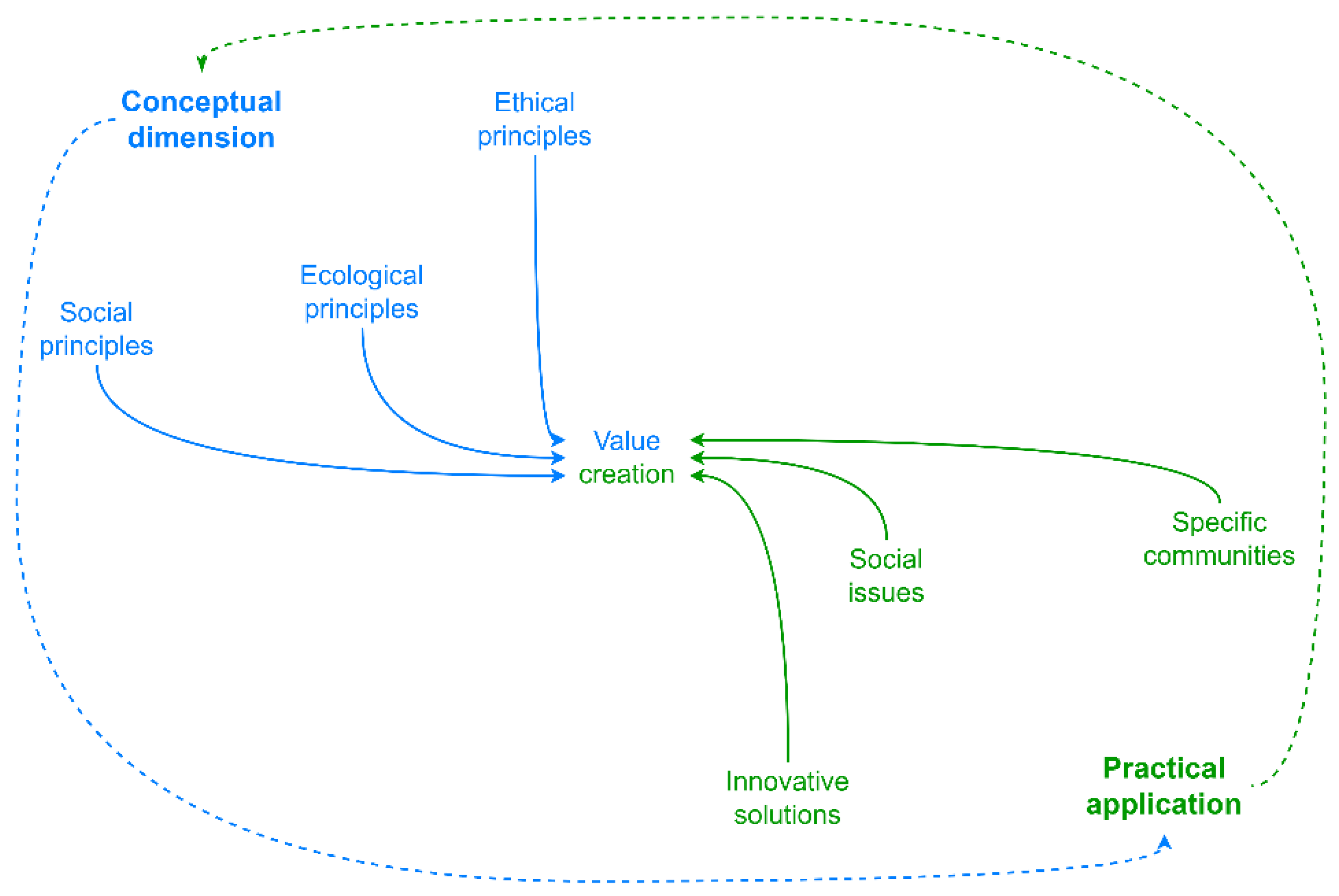
Figure 2.
Geographical map of Yecapixtla. Source: INEGI [25].
Figure 2.
Geographical map of Yecapixtla. Source: INEGI [25].
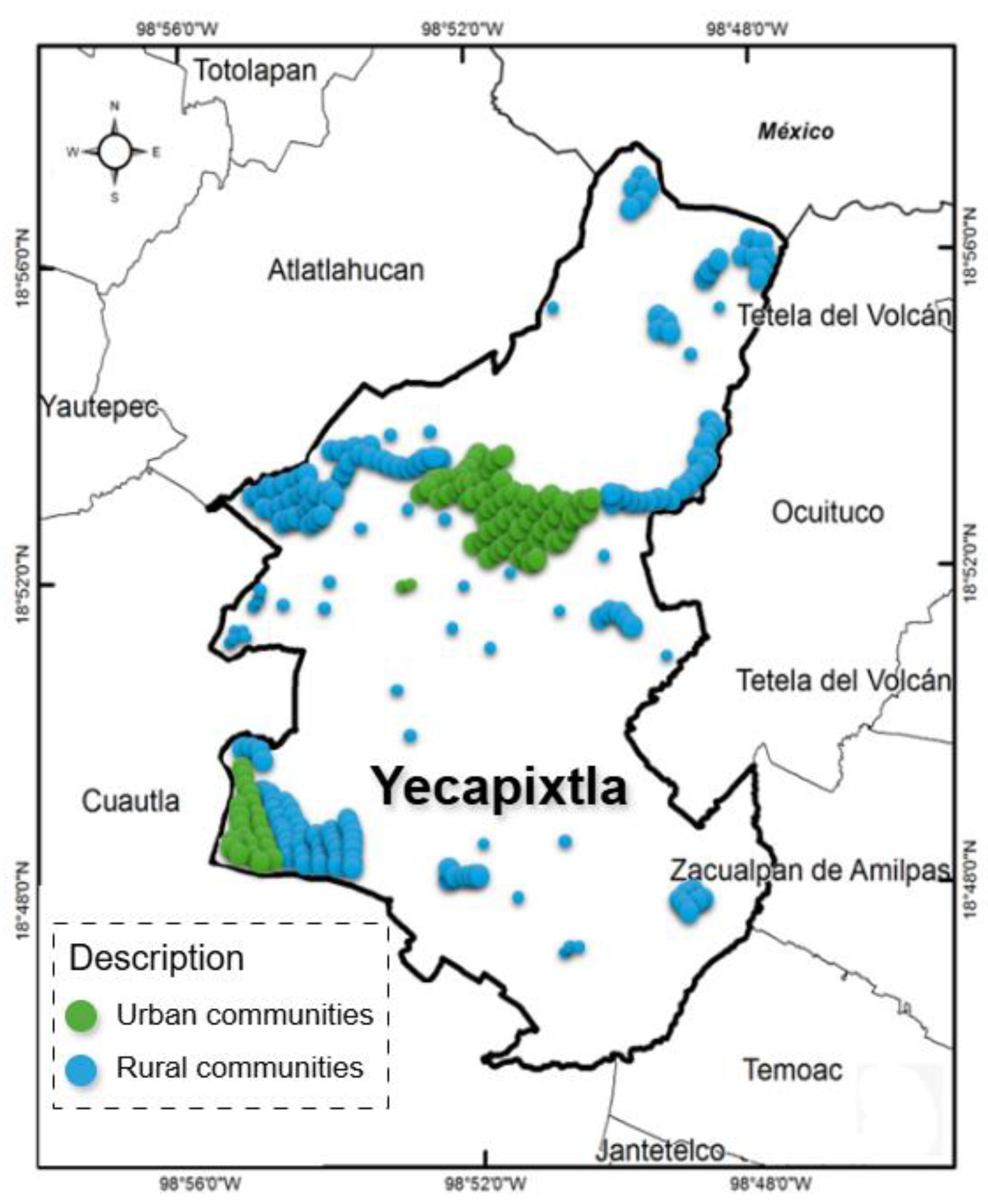
Figure 3.
SDGs in the dynamics of rural communities with tourism vocation. Source: Author’s own work.
Figure 3.
SDGs in the dynamics of rural communities with tourism vocation. Source: Author’s own work.
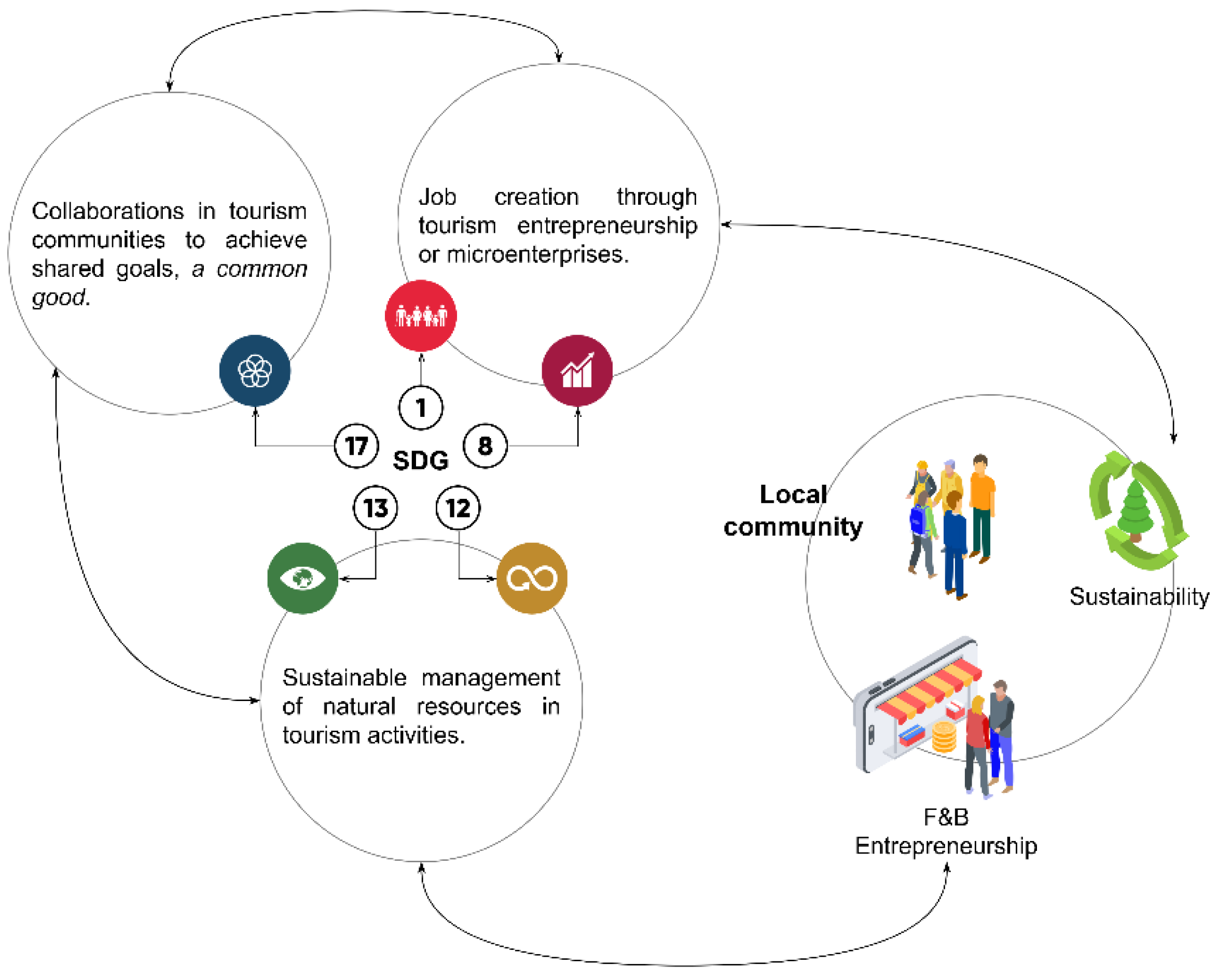
Figure 4.
Soft System Methodology in action. Source: Modified from Checkland [42].
Figure 4.
Soft System Methodology in action. Source: Modified from Checkland [42].
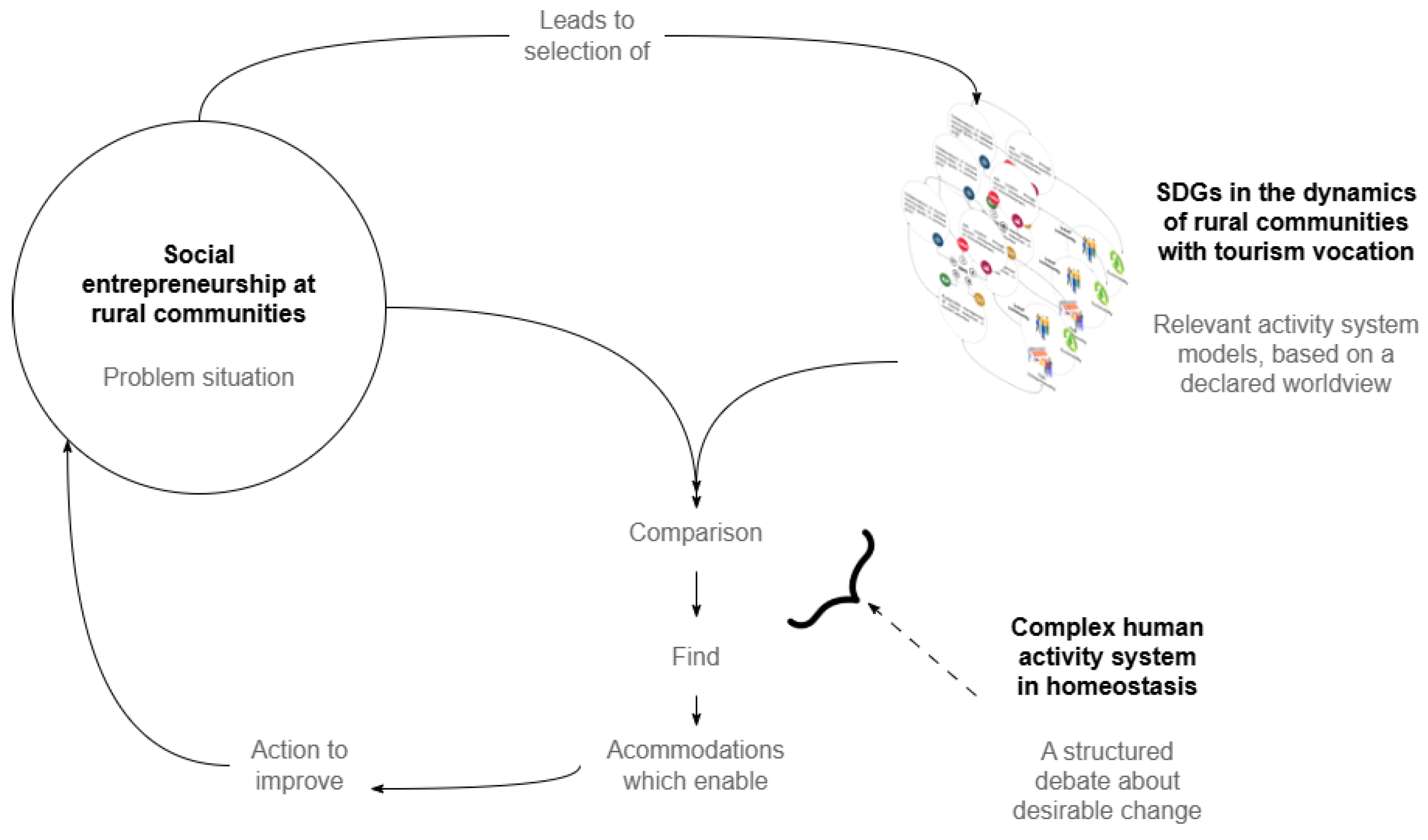
Figure 5.
Structured problem situation. Source: Author’s own work.
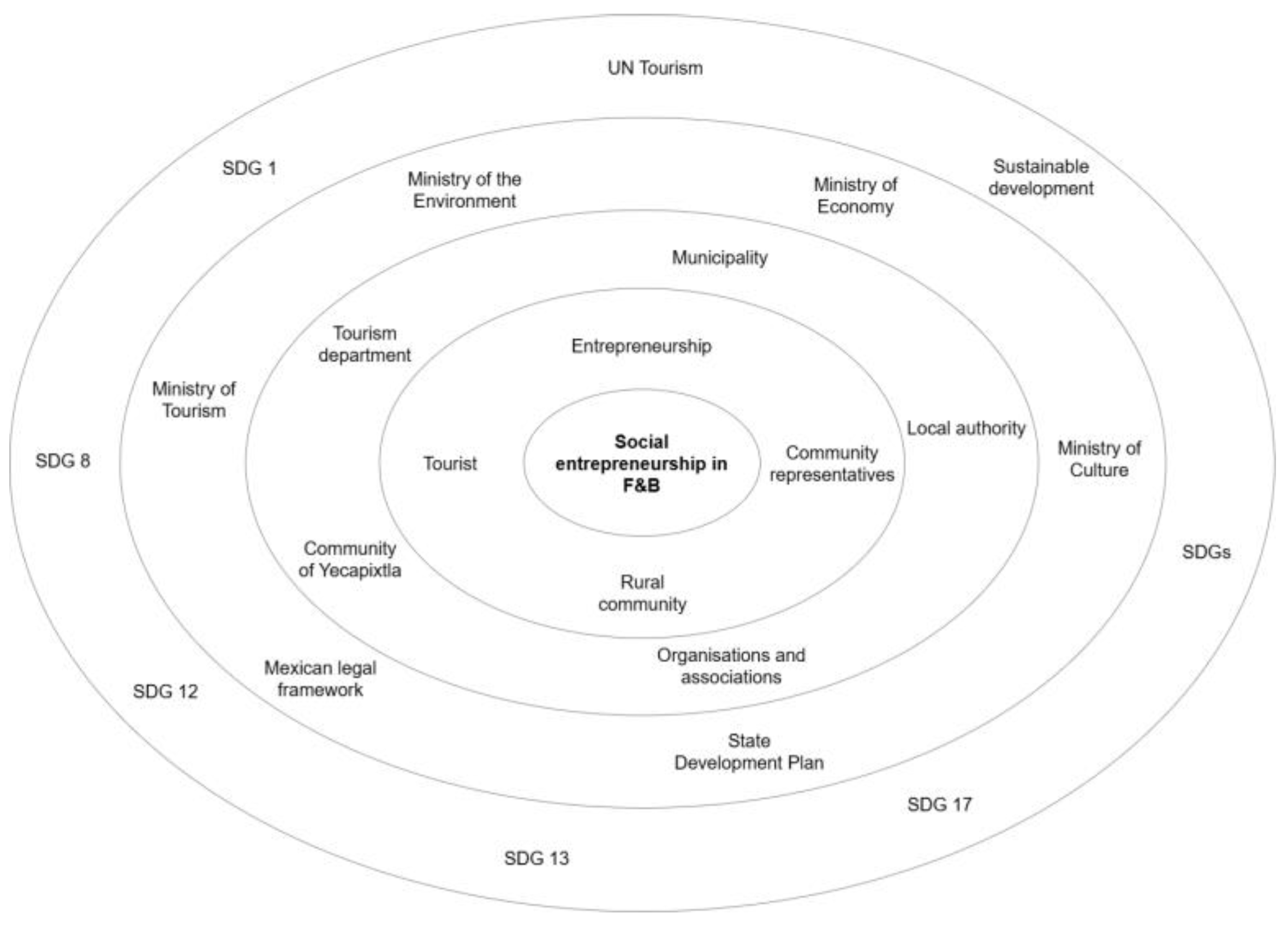
Figure 6.
System Rich Picture. Source: Author’s own work.
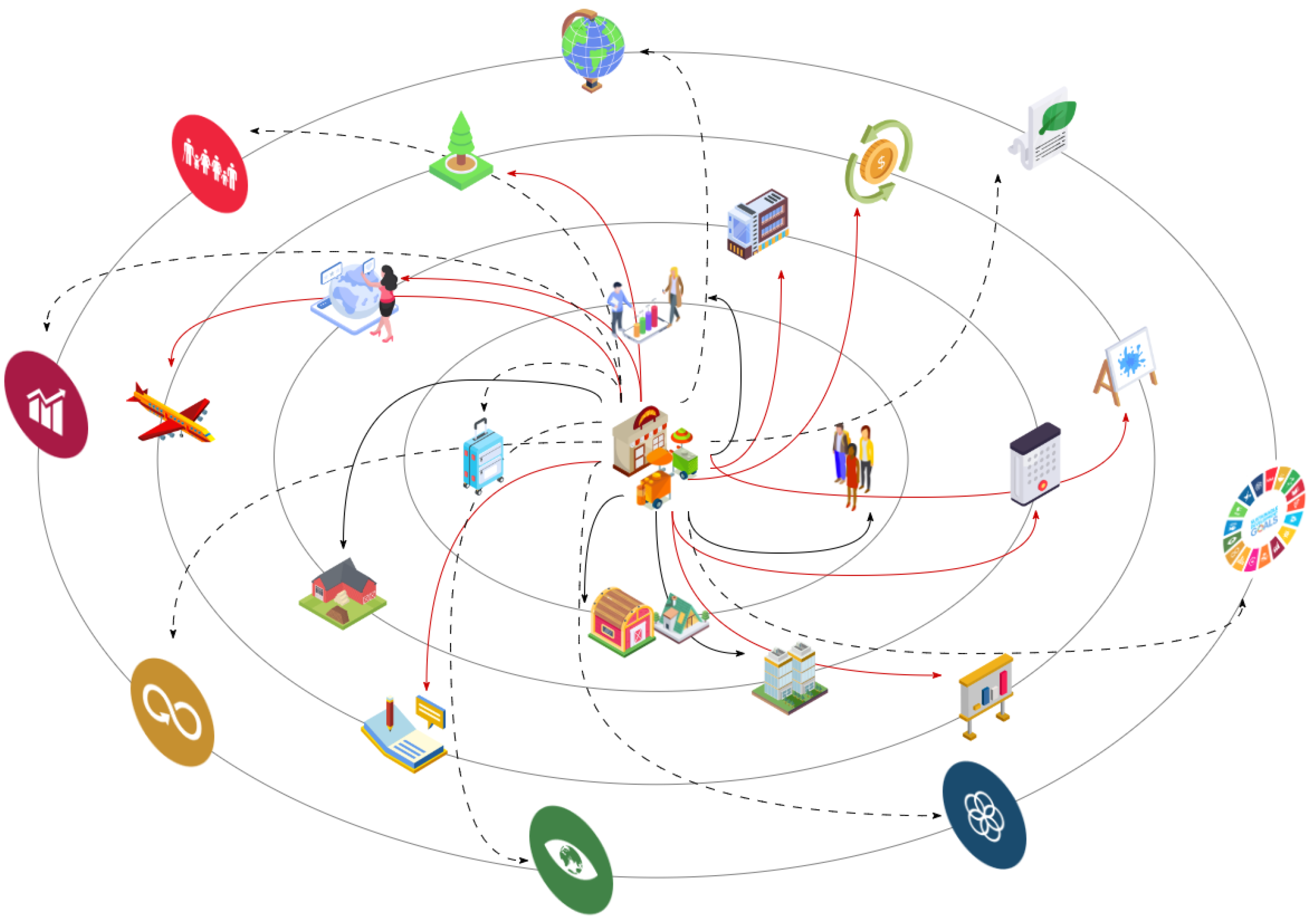

Table 1.
Levels of interpretation of the system under study.
| System level | Actors | Description |
|---|---|---|
System in focus 
|
Social enterprises in the F&B sector | It brings together the main agents of change within the community. Their connection to local identity gives them a strategic role in promoting sustainable practices and driving the economic revitalisation of Yecapixtla. Some actors demonstrate optimal relationships with one another, particularly when operating under principles of collaboration, mutual support, and a locally oriented economy. |
Environment  |
Community actors | This level includes municipal, state, and federal agencies, as well as rural development programmes and tourism and environmental institutions that directly influence the tourism dynamic in Yecapixtla. Their role is fundamental in the consolidation of governmental support networks, legitimacy, and sustainability. The highest number of conflicting relationships is concentrated within this environment, due to a lack of communication and training needed to position Yecapixtla as a sustainable tourist destination that supports SE initiatives. |
Macro-environment 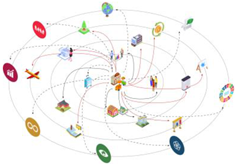 |
Government institutions and external entities | This level encompasses international organisations such as UN Tourism and the SDGs. While these actors hold a high level of influence, their degree of participation is variable. The results revealed discontinuous relationships due to the lack of continuity in projects, the design of centralised policies, or limited sensitivity to local realities. This highlights the structural challenges faced by SE initiatives in establishing effective links within the institutional framework. |
Source: Author’s own work.
Disclaimer/Publisher’s Note: The statements, opinions and data contained in all publications are solely those of the individual author(s) and contributor(s) and not of MDPI and/or the editor(s). MDPI and/or the editor(s) disclaim responsibility for any injury to people or property resulting from any ideas, methods, instructions or products referred to in the content. |
© 2025 by the authors. Licensee MDPI, Basel, Switzerland. This article is an open access article distributed under the terms and conditions of the Creative Commons Attribution (CC BY) license (http://creativecommons.org/licenses/by/4.0/).
Copyright: This open access article is published under a Creative Commons CC BY 4.0 license, which permit the free download, distribution, and reuse, provided that the author and preprint are cited in any reuse.


