

Submitted:
12 April 2025
Posted:
14 April 2025
You are already at the latest version
Abstract
Blue maize is a crop rich in several bioactive compounds, including anthocyanins, which is at risk of extinction due to monoculture practices. Carrot bagasse, considered a byproduct of the food industry, contains compounds that have been shown to benefit human health while also enhancing sustainability. On the other hand, ellagic acid, a phenolic acid with significant antioxidant capacity, is capable of preventing and assisting in the treatment of various pathologies. Regarding food technologies, extrusion is a process characterized by its use of low energy, which minimizes the degradation of nutrients and bioactive compounds compared to other technologies. In this sense, the objective of this research was to develop a functional food with high value of sensorial acceptance, desirable physicochemical and antioxidant properties, using an 85:13:2% mixture of nixtamalized blue maize dough, carrot bagasse flour, and ellagic acid, processed with optimal conditions of extrusion determined with a surface response model. Operational conditions were temperature of extrusion (TE = 120 – 170°C), and speed of screw (SS = 50 – 240 rpm), while response variables were physicochemical properties and antioxidant activity. The optimal operational conditions were found to be TE = 144°C and SS = 207 rpm, resulting in a mixture with high sensorial acceptability on a five-point hedonic scale. The optimized functional food may be used to promote the utilization of endemic ingredients and reduce food waste in the treatment of pathologies and prevention of diseases due to its high antioxidant activity attributed to phenolic and terpene compounds.
Keywords:
functional foods
; blue maize
; carrot bagasse
; ellagic acid
; extrusion
; second generation snacks
; food design
1. Introduction
The concept of functional food originated in Japan in the mid-1980s, when the Japanese government began providing financial assistance to research programs focused on the capacity of certain foods to influence physiological functions [1]. Nonetheless, to this day, a unique definition of functional food is non-existent.
Nowadays, the accepted definition of functional foods is “integral or whole foods, together with fortified foods, enriched or improved, that have a potentially beneficial effect on health when consumed as part of a varied diet in regular intervals at effective levels” [2,3]. These foods contain bioactive compounds that contribute to overall well-being, reducing the risk of disease. For this, a functional food must exhibit characteristics such as [4,5]: 1. They can be found in conventional foods with inherent sensorial characteristics; 2. Contain physiologically functional components that are not consumed in medicinal or therapeutic levels; 3. Impart physiological benefits scientifically proven when consumed as part of a regular diet, but not in the form of isolates of pills; 4. Scientifically and clinically proven safety for long-term consumption of the product for the target population; 5. Contain functional components (either nutrients or phytochemicals) present in their natural form or added to the food; and 6. It can be used for prevention and/or treatment of pathologies.
Functional and nutraceutical foods have been identified as one of the leading food categories where research and development are focused [3,6]. The total global market value of functional foods in 2019 was $177.77 billion; it is estimated that by 2027, this value may rise to $267.92 billion, representing a 50.71% increase [7]. According to Hasler [8], functional food demand is expected to continue increasing in the years to come, as consumers have developed an interest in self-care, primarily due to the rising costs associated with aging. In the USA, in particular, the functional food market increased from $68,600 million to $92,210 million from 2018 to 2023, with an annual rate of 6.6% [7], while in Mexico, the increase from 2018 to 2019 was 5.4%, with sales around $6.7 million [9].
On the other hand, sustainable food production seeks to diminish organic waste generation (SDG 12: responsible production and consumption) [5]. In this sense, carrot bagasse (Daucus carota L.), a byproduct of the agri-food industry, has been a research focus due to its potential for improving sustainability and circular economics [10]. This residue, traditionally disposed of, contains bioactive compounds such as dietary fiber, antioxidants, and vitamins, which can be leveraged for the production of functional foods and nutritional supplements [11]. The use of carrot bagasse in cereal elaboration for breakfasts rich in fiber through extrusion has improved the chemical characteristics and antioxidant capacity of these products [12]. Also, the transformation of carrot residues contributes to organic waste management and the reduction of dump loads [13]. The biorefinery of carrot byproducts enables the production of materials with added value, such as ethanol, carotenes used as antioxidants, and pectin, which serves as a natural thickener [14]. These applications not only optimize resource utilization but also create new market opportunities and encourage more sustainable agricultural practices.
Maize crops (Zea mays L.), including blue variety, are part of the biological and cultural patrimony of Latin American countries, including Mexico [15]. To this day, it can be classified into more than 250 species in the United States, with 59 of them found in Mexico [15]. From these species, several varieties have been derived, a result of the process of selection and improvement initiated by rural communities thousands of years ago, primarily in the Mesoamerican region. Blue maize phytochemicals have received less attention than those found in fruits, vegetables, and other cereals, including those from other maize species. Blue maize contains an elevated quantity of antioxidant compounds, such as anthocyanins and anthocyanidins, primarily cyanidins, as well as a higher protein content and more amylose, which reduces the glycemic index. Since blue maize is cultivated in an agroecological manner, it often produces less waste and requires a minimal number of pesticides and herbicides, or sometimes none. Additionally, nixtamalization has been shown to enhance protein quality and bioavailability, release antioxidant compounds (such as anthocyanins, ferulic acid, and anthocyanidins), inhibit the formation of aflatoxins, and increase niacin (vitamin B3) availability [16,17]. The consumption of blue maize and its derivatives and byproducts has been linked to a reduction in chronic disease risks, including cardiovascular diseases, type 2 diabetes, and certain types of cancer, as well as improvements in digestive tract health due to its anthocyanin content [15,18].
Ellagic acid is found in fruits such as pomegranates, persimmons, raspberries, black raspberries, strawberries, peaches, and plums, as well as in seeds like walnuts and almonds and certain vegetables. It can be found free or bound to other compounds, mostly with complex polymers called ellagitannins, which can be hydrolyzed at physiological pH and by intestinal microbiota, increasing its plasma levels after the intake of fruits and vegetables [18]. This acid is one of the primary antioxidants, along with ascorbic acid and α-tocopherol. Its intrinsic antioxidant properties have been attributed to its ability to eliminate free radicals, like essential vitamins. The presence of four hydroxyl groups and two lactones enables ellagic acid to eradicate a wide range of reactive oxygen species (ROS) and nitrogen reactive species [19]. Several studies have highlighted the potential of ellagic acid as a candidate for treating and preventing diseases and chronic inflammatory conditions, including type 2 diabetes mellitus, cardiometabolic diseases, and various types of cancer [20,21,22].
In this regard, dough and products with starch extrusion, such as those made from cereals, have been widely used in the food industry to produce snacks [23,24]. The process of extrusion enables the production of low-fat snacks. It promotes the formation of resistant starch, which contains fewer calories and contributes with energetic substrates to the intestinal microbiota [25]. As a result, extrusion has become more popular for the snacks generation with adequate nutritional content [26]. On the other hand, the food industry generates higher quantities of waste that are usually discarded in dumps and allowed to decompose [27]. Including this waste in technological processes can add value to the industry and reduce contamination related to these wastes, reducing the impact on ecosystems [28].
This research aimed to design and develop a functional food prospect composed of blue maize (Zea mays L.), carrot bagasse (Daucus carota L.), and ellagic acid through extrusion.
2. Materials and Methods
2.1. Raw Materials
Blue maize nixtamalized dough (Zea mays L.) was obtained from a local mill specializing in organic and agroecological blue maize from the State of Mexico, located in Zapopan, Jalisco, Mexico. The carrot bagasse was obtained from several natural juice establishments in Guadalajara, Jalisco, Mexico, where it was collected immediately after juice extraction to minimize exposure to air and the proliferation of microorganisms. Then, it was transported in hermetically sealed and refrigerated containers to maintain a temperature of 4°C. For storage, a refrigerated environment at 4°C and a relative humidity of 85-90% were established, using plastic or stainless-steel containers with hermetic seals. These containers were washed and disinfected with chlorine at a concentration of 100 ppm before use. Ellagic acid (90%) was purchased commercially from Pure Bulk Inc. (OR).
2.2. Dough Obtaining
Blue maize nixtamalized dough and carrot bagasse were dehydrated at 60°C for 8 h, and 60°C for 12 h, respectively, in a forced air circulation stove (Thermolyne Oven Series 9000, CA, USA), then, they were grounded in a blender (Oster, BPST02-B, OH, USA), and sieved in US 30 mesh to obtain particle sizes smaller than 595 µm. The mixture was composed of 85% blue maize dough, 13% carrot bagasse, and 2% ellagic acid.
2.3. Extrusion Process
The humidity level of the dough mixture was adjusted to 20% with purified water. Then, samples were processed in an extruder with one screw (Brabender Instruments Inc., model 20DN/8-235-00, CW, Germany), at a feeding rate of 30 g/min. The cylindrical extruder is divided into three heating zones; the first two were fixed with negative gradients of 15°C, corresponding to the experimental design of the third zone, which encompassed the matrix and exit die. The speed of screw was variated in accordance with the experimental design, using an exit diameter of 3 mm, and a screw with a compression relation of 3:1 (Table 1).
2.4. Physicochemical Characterization of Extruded Products
Expansion index (EI)
The extraction index (EI) was calculated by dividing the diameter of the extruded by the diameter of the exit die. 50 determinations were made for each treatment.
Apparent density or bulk density (BD)
The apparent density (g/cm³) was determined by dividing the weight of the extruded piece by its apparent volume (cm³). The apparent volume was determined using Equation 1.
where d (m) is the diameter of the extruded product and h (m) is the average length.
Hardness or penetration force (PF)
The penetration force (PF) to cut the expanded product was measured with a texture analyzer (TA-TX2, Stable Micro Systems, Ltd., UK). Extruded samples were placed horizontally on a platform, and a plain knife with a 1 mm thickness was used. The probe descent rate was 2 mm/s, and the maximum penetration distance was 3 mm. Thirty measurements were made for each treatment, and the results were expressed in Newtons (N).
Water absorption index (WAI) and Water solubility index (WSI)
The water absorption index and water solubility index were determined according to Navarro-Cortez et al. 26, modifying the weight from 1 to 3 g.
Free and bounded phenols with ABTS and DPPH
Methanolic extracts from crude and extruded samples were obtained to determine the radical-scavenging activity using the ABTS (2,2'-azino-bis(3-ethylbenzothiazoline-6-sulfonic acid)) and DPPH (2,2-diphenyl-1-picrylhydrazyl) methods, as described by Jinli Zhang et al. [29] for free phenols (FPI) and bound phenols (BPI). Each sample was measured in triplicate, and the average was used for the experimental design. The results for each radical were expressed as a percentage of inhibition, estimated with equation 2.
where Ablank and Asample are the absorption of the blank and sample, respectively.
2.5. Second-Generation Snack Optimization
Experimental Design and Statistical Analysis
A central rotatable experimental design with two independent variables was used as follow: Variables were dice temperature and screw speed, with five levels and thirteen experiments over nine response variables (expansion index (EI), apparent density (BD), penetration force (PF), water absorption index (WAI), water solubility index (WSI), antioxidant activity of free and bounded phenols with ABTS and DPPH). The data were analyzed and adjusted to a second-order regression model to obtain the regression coefficients. Graphs of surface response were obtained using the statistical package Design-Expert 13.0.5.0 (Stat-Ease, Inc., MN, USA). The importance of each term in the equation was further analyzed using an analysis of variance (ANOVA) for each variable. The model for surface response with linear, quadratic and interaction terms were used to relate each variable with the extrusion temperature and screw rotation speed.
Sensory Analysis
Two sensory tests were conducted with 34 untrained students and workers from the Centro Universitario de Ciencias Exactas e Ingenierías (CUCEI) of the Universidad de Guadalajara (UDG), comprising 17 women and 17 men, aged between 18 and 70 years, who typically consume snacks. Tests were divided into two categories: discriminatory-descriptive sensorial tests and a 5-point hedonic scale, both presented as a Likert-type survey. Panelists evaluated four extruded snacks with different temperatures and screw speed to determine which combination was the most accepted considering a scale from 1 to 4, where 1 was “bad” and 4 “excellent” [30]. The sample with the highest scores was further evaluated for color, texture, flavor, and acceptability using a hedonic scale of 5 points (1 = 'hated it', 2 = 'did not like', 3 = 'indifferent', 4 = 'liked', 5 = 'loved it') [31]. Panelists washed their mouths after tasting each sample.
Bromatology Analysis
The bromatological analysis of the extruded snacks produced with the optimum conditions (temperature 144°C, screw speed 207 rpm), according to the mathematical model, to determine the nutrimental composition of the food. The analyses were performed according to Mexican norms, and they included humidity (NMX-F-227-1982), ashes (NMX-FRO66-S-1978), protein (NMX-F608-NORMEX-2002), total, saturated and unsaturated fats (NMX-F-089-S-1978), dietary fiber (NOM-086-SSA1-1994), total carbohydrates (NOM-051-SCFI/SSAI-2010), total reducing sugars (NMX-F-312-NORMEX-2016), energetic content (NOM-051-SCFI/SSAI-2010), and sodium (NMX-F-360-S-1981). All analyses were duplicated, and results were expressed as the average.
Ellagic Acid Content in the Final Product
An HPLC (Agilent Technologies 1260 Infinity 1200 series) equipped with a diode arrange detector was used. The separation was conducted on a reverse-phase column (Hypersil ODS, 4.6 x 150 mm, 5 µm). The compounds were identified at a wavelength of 253 nm and a temperature of 40°C, with an injection volume of 10 µL. For the quantification of ellagic acid, a standard curve was constructed using a standard of 90% purity (PureBulk, Inc., Roseburg, OR 97471) in volumes ranging from 10 to 50 µL. Each point was measured in triplicate to ensure precision and reproducibility. The samples of the extruded snacks were prepared and diluted by injecting 10 µL under the conditions previously mentioned in the HPLC. Data obtained from DAD was used to determine the concentration of ellagic acid in samples, which was compared to the standard curve.
3. Results
Appearance of extruded snacks in the 13 runs to determine optimal temperature and screw speed are shown in Figure 1.
The parameters measured for each sample showed an R² value of ≥ 0.7 and an adequate precision (AP) of ≥ 4; thus, they were adjusted to the model, which included the expansion index, apparent density, penetration force, water absorption index, ABTS inhibition for free phenols, and DPPH inhibition for free phenols. These parameters were considered for the superposition of areas and the obtaining of optimal conditions for the formulation process. The other parameters, water solubility index, inhibition of bounded phenols by ABTS, and DPPH, were not considered for the analysis.
3.1. Regression Coefficients and ANOVA
The regression coefficients for the analyzed responses are presented in Table 2. Both factors, barrel temperature (BT) and screw speed (SS), showed a significant effect (p < 0.05) in their linear (β1) or quadratic (β11) terms on most of the responses studied, except for DPPH free phenol inhibition (DFPI). Furthermore, for PF and WAI, the reduced cubic model (β22 and β22β1) also had a significant effect. The interaction terms of the models (Table 2) were generally significant for five responses. Additionally, Table 3 shows the analysis of variance (ANOVA) for the analyzed response variables. The models were accurate for all responses, with values of R2 > 0.77, p of F (model) < 0.05 in four responses, and variability coefficient (CV) < 16% (except for PF and DFPI). However, all responses showed an adequate precision (> 5.5). Only two responses presented a significant lack of fit (BD and PF).
3.2. Expansion Index
The effect of the temperature and screw speed on the expansion index was analyzed, were results presented an statistically significance of p = 0.0018, R2 = 0.9057, and an adequated precision of 11.32 in the quadractic model of the ANOVA test. Figure 2 shows the inference of the independent variables “temperature” and “screw speed” on the “expansion index” variable, where high SS and low temperature favored a major EI of the extruded snacks. In contrast, low SS and high temperature had an inverse effect.
3.3. Apparent Density
In this study, the effect of temperature and SS on apparent density was determined, with results proving to be significant (p = 0.0132, R² = 0.8282, adequate precision = 8.4), as indicated by the quadratic model of the ANOVA test. The effect of the independent variables on apparent density is illustrated in Figure 3, where it can be observed that low SS and low temperatures result in higher densities. In contrast, for higher SS and medium-high temperatures (140–160°C), the density of the extruded snack is inferior.
3.4. Penetration Force
The influence of the independent variables on the penetration force had a significant impact (p = 0.0007, R2 = 0.927, adequate precision = 12.79) according to the quadratic model of the ANOVA test. Figure 4 illustrates the relationship between temperature and SS on PF, showing that snacks processed at low SS and temperature exhibited higher hardness (measured in N). In contrast, higher values of independent variables diminish it.
3.5. Water Absorption Index
For water absorption index (WAI), the effect of temperature and screw speed were not significant (p = 0.0944, R2 = 0.8297, adequate precision = 6.55), nevertheless, they had a meaningful tendency in the reduced cubic model of the ANOVA test, for which a significant relation between temperature and screew speed on WAI does not exists. High values of WAI (g/g) can be achieved when the extruded snack is treated at high SS and low temperatures, as shown in Figure 5.
3.6. Free Phenols Inhibition of ABTS
The free phenols inhibition of the ABTS radical (AFPI) were statistically significant for temperature and SS, in the quadractic model (p = 0.0176, R2 = 0.8123, adecuate precision = 9.74), according to the Design-Expert program, finding a relation between temperature and SS, and AFPI, with good adjustment to the model. In Figure 6, it can be seen that high SS and medium temperature (140–150°C) resulted in higher inhibition of the ABTS radical (%) compared to free phenols.
3.7. Free Phenols Inhibition of DPPH
A reduced cubic model (Design-Expert) was used to determine the influence of temperature and SS on the inhibition of DPPH with free phenols (DFPI). No significant difference was found, with a p-value of 0.1688, an R-squared value of 0.7754, and an adequate precision of 5.7; however, a good fit was determined. For this variable, both high and low SS (50 and 240 rpm) and medium-high temperatures (140–160 °C) resulted in higher inhibition of the DPPH radical (%) (Figure 7).
3.8. Optimum Design of Extruded Snacks
Figure 8 depics the superposition of areas of response variables regarding temperature and screw speed. Optimal responses were established with the parameters shown in Table 4. It should be noted that only response variables with R2 > 0.7 and an adequate precion > 4 were selected; which were EI, BD, PF, WAI, AFPI, and DFPI, while water solubility index (WSI), ABTS (ABPI) and DPPH (DBPI) inhibition with bounded phenols were excluded. According to the results, the optimum operational conditions were 207 rpm for screw speed, and 144°C for temperature.
3.9. Sensory Analysis
Discriminatory-descriptive sensorial tests on samples 3, 8, 10, and 12 are depicted in Figure 9, where an average score of 3.235 (n = 34) was found, corresponding to an intermediate level between “good” and “excellent”, indicating high acceptability of the product.
Further tests with a 5-point hedonic scale (Figure 10) puntuacted sample 8 with more responses for “liked it” (scale 4), followed by “loved it” (scale 5), and last “indifferent” (scale 3), from a total of 34 evaluations, which showed high acceptability (61.76% for “liked it”). Only 11.77% of the panelists selected “indifferent”, while no one chose 1 or 0 (“did not like it” and “hated it”, respectively). These results regarding sensorial and organoleptic characteristics highlight the acceptability of the product, suggesting high commercialization levels. Interestingly, the descriptions of panelists mentioned that the least liked parameter was the end flavor, described as “acidity.” In contrast, the crunchy and expanded texture, as well as the initial taste, were the most liked parameters.
3.10. Bromatological Characterization of Final Product
The nutritional content of the extruded product is presented in Table 5, where the nutritional information labeling was constructed by the Mexican Official Norm NOM-051-SCFI/SSA1-2010. Humidity, ashes, protein, total fats, saturated fats, unsaturated fats, dietary fiber, total carbohydrates, total reducing sugars, energetic content, and sodium were quantified.
3.11. Ellagic acid Content Determination with HPLC-DAD in Reversed Phase
The content of ellagic acid in the extruded snacks was measured using HPLC-DAD (Figure 11) to determine the loss and retained percentage. The test was performed in duplicate, and analysis showed a loss of 50.5% of ellagic acid.
3.12. Appearance of Extruded Snacks
Figure 12 depicts the appearance of the extruded snack obtained at optimal conditions of temperature (144°C) and screw speed (207 rpm).
4. Discussion
The utilization of food residues and waste, such as carrot bagasse, presents a significant opportunity for sustainable development and innovation in the food industry, particularly in the design and fabrication of functional foods aimed at enhancing consumer health and preventing various pathological conditions. Ellagic acid and bioactive compounds, such as anthocyanins and carotenoids, found in blue maize and carrots, respectively, have been shown to reduce the incidence of diseases like cardiovascular disease, metabolic syndrome, and type 2 diabetes mellitus, which are among the leading causes of mortality worldwide.
The integration of byproducts, such as carrot bagasse, in the formulation of these foods not only contributes to waste reduction but also offers nutritional and functional benefits, responding to the growing demand for innovative and healthy food. To date, no commercially available food products incorporating nixtamalized blue maize dough, carrot bagasse, and ellagic acid have been identified. This product contributes to the revalorization and reutilization of carrot bagasse, aligning with the Sustainable Development Goals (SDG) and incorporating agroecological, organic, and traditionally cultivated blue maize.
The significance of linear and quadratic regression coefficients suggest that temperature and screw speed had a considerable impact on the response variables of the extruded snacks [32]. This is consistent with previous studies that demonstrated the influence of these parameters on various extrusion processes. For example, Sahu et al. [33] found that temperature has a significant impact on the quality of the final product in polymer extrusion.
The variance analysis (ANOVA) confirms the precision of the models applied, indicating that the models are adequate to describe the relationship between the independent and response variables. The high adequate precision (> 5.5) and R² values above 0.77 reinforce the validity of the models. However, the lack of significant adjustment of BD and PF suggests that other factors not considered may have had a considerable impact. The results of this study provide a solid base for future research and optimization of processes applied in the industry.
The expansion index, which measures the increase in volume of food during the extrusion process, is crucial for evaluating the texture and quality of the final product, as a higher index generally results in a lighter and crunchier product. This parameter is critical during snacks and cereals production; in general, a high EI is associated to high temperature and screw speed in extrusion. Therefore, it is unusual that extruded products exhibit lower EI when processed at high temperature and low screw speed. Nonetheless, this could be attributed to several factors: 1) The composition of raw materials; if it is not the adequate, EI may be low even at high temperatures and screw speeds [34]. 2) Low humidity, since water is an expansion factor during extrusion [35]. 3) Cooling temperature: if it is too slow, EI may be reduced [36]. Another factor to consider for the EI is the viscoelastic properties of the extruded snacks. For samples with higher elastic moduli compared to the viscous moduli, expansion may be attributed to typical tensions, typically known as die swelling, which can occur at low temperatures and is associated with an increase in elasticity [37].
On the other hand, apparent viscosity refers to the relationship between the mass and volume of a substance, including the empty spaces between particles. In the food industry, BD is used to evaluate the texture and quality of products such as flour, cereals, and snacks. Low BD is associated with lighter and airier products, while high BD indicates more compact and denser food. In extruded foods, BD is a measure of quality in terms of texture, flavor, and consumer acceptance. For instance, a low BD may lead to the easy disintegration of the product, while a high BD may prove challenging to chew. Also, it may increase the porosity of the product, hence allowing the introduction of oxygen and humidity, which can accelerate lipid degradation and rancidity [38].
The importance of hardness, or penetration force (PF), in extruded foods lies in its role as an indicator of the quality and acceptance of the final product. An extruded food that is too difficult to chew may be undesirable for the consumer, while one that is too soft can be perceived as insipid or poorly attractive. In this sense, PF values obtained with a texturometer are used to evaluate the texture of food, allowing for the adjustment of processing parameters to improve quality [39]. It is worth noting that hardness is influenced by several factors, including raw material composition, processing conditions, and final product humidity, among others [40].
The reduction of hardness at high screw speeds and temperatures can be related to changes in the structure of the product during the extrusion process. At high speeds, pressure and temperature rise, which may favor expansion and, thus, increase porosity; consequently, these structural changes may lead to a softer product. On the other hand, high temperatures may increase the viscosity of the extruded food, making it more malleable, facilitating deformation, and reducing its hardness. Additionally, high temperatures cause the gelatinization of starch, resulting in a softer and less rigid structure [41]. Singh (2017) fabricated an extruded of maize starch and chickpeas flour; the authors found that increasing the temperature and screw speed during the process reduced the hardness of the final product [42]. Additionally, Gámez-Valdez et al. (2021) obtained similar results for an extruded product composed of amaranth and maize starch [43].
Another parameter used to determine the quality of extruded food is the water absorption index (WAI). It is defined as the capacity of the food to absorb water and modify its physicochemical and textural properties. Extrusion is a process where mixing of ingredients, their cocking, and compression takes place in a matrix to obtain a final product, in this sense, WAI plays an essential role in the quality of the final product, since it affects the texture of the extruded food [44]. In this study, it was observed that increasing the screw speed and reducing the temperature, WAI increased. This behavior can be attributed to the influence of the screw speed on the mixture and its homogenization, which facilitates the absorption of water. On the other hand, low temperatures reduce the denaturalization of proteins and starch gelatinization, allowing a higher capacity to absorb water [45]. Although no statistical differences were encountered, the results suggest that under specific conditions of temperature and screw speed, WAI may be significantly affected. It is recommended that future research focuses on increasing sample size and consider other factors that may affect WAI, including material composition and initial humidity [46].
Antioxidant activity, as determined by the ABTS assay, is a quantitative indicator of a substance's capacity to neutralize free radicals (Herrera-Cazares et al., 2021). In our study it was observed that high screw speeds in combination with medium temperature (140 – 150°C) resulted in higher antioxidant capacity for ABTS inhibition due to free phenols. This behavior can be explained by the optimization of operational variables that favor the liberation and preservation of phenolic compounds, which exhibit antioxidant activity [47]. In addition to the independent contributions of both variables to antioxidant activity, their interaction should also be highlighted. High screw speeds favored better mixing and homogenization, which facilitated the liberation of free phenols; on the other hand, medium temperature may be sufficient to inactivate enzymes responsible of the degradation of these phenols.
In contrast, the DPPH test is more sensitive to lipophilic compounds with antioxidant activity than ABTS. The antioxidants in the formulation of the extruded functional food are primarily hydrophilic (ellagic acid and anthocyanins), while the carotenoids from the carrot bagasse are lipophilic; however, its principal carotenoid is β-carotene, which lacks hydroxyl (OH) or lactone groups, and thus, its antioxidant capacity is relatively low. DPPH measures only the transfer of electrons, while ABTS also includes H+; hence, DPPH typically exhibits lower antioxidant activity [48].
Hossain and Jayadeep investigated the changes in liposoluble nutraceuticals, phenolics, and antioxidant activity of maize flour processed with 20%, 25%, and 30% humidity, as well as bioavailability in extruded foods at 20% humidity [49]. Extrusion significantly reduced the content of the components and antioxidant activity. Retention of phytosterols in extruded food was higher (77-100 %), followed by phenolics and flavonoids. Reducing power diminished three-fold, while DPPH inhibition and total antioxidant activities were half of the exhibited in the crude product. In the bioavailable fraction, the content of stigmasterol, β-sitosterol, and flavonoids was higher in the crude fraction, while phenolics and antioxidant activity remained unchanged. In general, maize flour extruded with 20% humidity enhanced the bioavailability of most bioactive compounds found in the lipidic fraction, phenolics, and antioxidants.
The exclusion of certain variables measured in this study can be justified with the need to ensure that only those variables with adequate adjustment to the model and high predictive capacity are considered. According to Thyashan et al. (2024), the inclusion of variables with low adjustment can lead to erroneous interpretations and reduce the model's precision [50]. In this study, optimum conditions were around 144°C for temperature and 207 rpm for screw speed. These values were determined by the superposition of areas, a technique that enables the identification of optimal operating conditions considering multiple response variables simultaneously [50]. The selection of optimum values is consistent with previous studies that demonstrated the importance of the screw speed and temperature on the quality of the extruded product. For instance, Hernández et al. found that screw speed of 100 – 180 rpm, and a temperature of 100 – 140°C were optimal for the production of extruded food with high physical and nutritional quality [51]. The adequate precision and high determination coefficient in this study reinforce the validity of the results obtained.
Regarding the sensory tests conducted on the extrudes, a high level of acceptability was found. Notably, participants did not score sample 8 with a 1 or 2 on the scale, and only 11.77% chose 3 (indifferent), which suggests that the product may be commercialized in terms of its sensorial and organoleptic properties [52]. The written descriptions mentioned that the least liked aspect of the product was the “acidity” flavor at the end; nonetheless, the crunchy and expanded texture, as well as the initial flavor, were factors that were highly accepted [53]. These findings are consistent with previous studies that have demonstrated that texture and initial flavor are key factors for the acceptance of food [54]. The results of this study indicate that sample 8 exhibits high sensorial acceptance, which may lead to successful commercialization. The combination of crunchy and expanded texture, along with the likeable initial flavor, contributes significantly to consumer acceptance.
Several key characteristics can be highlighted in the nutritional content of the final extrudes. The protein content was 8.9 g/100 g of product, which can contribute to the maintenance and repair of corporal tissues [55]. Also, the product can be considered as low in fat according to the Official Mexican Norms NOM-051-SCFI/SSA1-2010 (a product can be regarded as “low in fat” when it contains no more than 3 g of fat/100 g or 100 mL of product), since the fat content was of 2 g/100 g of product; this could assist to reducing the risk of suffer from cardiovascular diseases, along with a healthy lifestyle [56,57]. In addition, the product contains a moderate amount of fiber, which may contribute to moderate glycemic index properties. Carbohydrates that can produce energy account for 73.5 g, while total reducing sugars (7.0 g) maintain a moderate level. These parameters may become favorable for controlling blood glucose and preventing non-alcoholic steatohepatitis when combined with a healthy lifestyle and dietary patterns suitable for the population [15,58].
Interestingly, the energetic content of 348.3 kcal/100 g of product can be considered adequate for energy provision without exceeding daily recommendations, which is essential for maintaining corporal weight [59]. The product exhibits an energetic density inferior to that of commercial snacks, which typically range from 500 to 600 kcal, due to the high content of fats and oils added during the frying process. Finally, a sodium content of 83.0 mg can be considered low and beneficial for maintaining healthy arterial pressure [60]. Overall, extruded snacks offer a healthy nutritional profile, featuring a good balance of protein, dietary fiber, and carbohydrates, along with a low content of fat and sodium. These characteristics can contribute to the promotion of health and prevention of diseases.
The snacks prepared in this study were supplemented with ellagic acid, a polyphenol known for its multiple health benefits, including antioxidant, anticarcinogenic, and anti-inflammatory activities [18,21]. The loss of 50.5% of ellagic acid during the extrusion process was significant. However, the residual amount of 89 mg/10 g is considerable and can contribute to the health benefits of the final product [61]. Previous studies have demonstrated that ellagic acid may prevent certain types of cancer by inducing apoptosis of cancer cells and protecting the DNA from oxidative stress [62]. Additionally, anti-inflammatory properties may reduce the risk of developing chronic illnesses, such as arthritis and cardiovascular diseases [63]. Furthermore, the antioxidant capacity of ellagic acid is notable, as it can neutralize free radicals and reduce oxidative stress in the body, as well as neuronal damage [20,61].
The stability of ellagic acid depends on the procedure by which it is incorporated into the food. For example, Marić Boško et al. found that ellagic acid stability in raspberry extruded products is not significantly affected by temperature and screw speed during extrusion [64]. The authors successfully retain the content of ellagic acid above 60% under process conditions of up to 200°C, suggesting that adjusting this parameter may enhance the retention of the compound [64]. Although a loss of 50.5% of ellagic acid occurred during the extrusion procedure in this study, the residual content remained significant in terms of its contribution to health benefits, as intake above 28 mg daily has been shown to provide metabolic benefits [65]. Thus, optimizing the operational parameters of extrusion may improve the retention of ellagic acid, thereby maximizing its beneficial properties in the final product.
5. Conclusions
A functional snack was prepared from agroindustry residues, composed of bagasse from carrots, blue maize dough, and ellagic acid, through extrusion. This grass-based food can be considered an alternative in the development of functional snacks while also contributing to the utilization of waste produced in the industry, thereby adding value and promoting both ecological and human health perspectives.
From a functional perspective, the optimal conditions of temperature and screw speed of the extruder modulate the antioxidant capacity of the snacks. The experimental design should avoid extreme values, as a very low optimal temperature may hinder the liberation of bioactive compounds in the food matrix, making their absorption difficult and reducing their bioavailability. In addition, this food may serve as a nutritional option for populations seeking healthy alternatives to conventional snacks due to its low sugar and lipid content, as well as the incorporation of natural antioxidants such as ellagic acid, anthocyanins from blue maize, and carotenes from carrot bagasse. For this, the second-generation snacks described in this research may assist in the treatment and prevention of pathologies such as type 2 diabetes mellitus, insulin resistance, dyslipidemias, metabolic syndrome, atherosclerosis, and fatty liver disease associated to metabolic malfunction, all this integrated with a healthy lifestyle with regular exercise, and adequate dietary patrons according to everyone.
Author Contributions
Conceptualization, C.G.A., A.V.L. and K.N..; methodology, C.G.A. and A.M.P.; validation, C.G.A. and Y.S.N.; formal analysis, A.V.L., C.G.A. and K.N..; investigation, Y.S.N., A.V.L. y J.S.J.; resources, A.V.L., C.V.C. and KN.; data curation, Y.S.N. and C.G.A.; writing—original draft preparation, Y.S.N; writing—review and editing, C.GA., J.S.J. and C.V.C.; supervision, A.M.P. and C.G.A.; project administration, A.V.L. and C.G.A.; funding acquisition, A.V.L. All authors have read and agreed to the published version of the manuscript.
Funding
This research received no external funding.
Data Availability Statement
We encourage all authors of articles published in MDPI journals to share their research data. In this section, please provide details regarding where data supporting reported results can be found, including links to publicly archived datasets analyzed or generated during the study. Where no new data is created or where data is unavailable due to privacy or ethical restrictions, a statement is still required. Suggested Data Availability Statements are available in section “MDPI Research Data Policies” at https://www.mdpi.com/ethics.
Acknowledgments
Yaír Adonaí Sánchez Nuño holds a Doctora Scholarship from the Secretary of Science, Humanities, Technology and Innovation. (SECIHTI), Mexico. We also thank the PhD Program in Sciences in Microbiology and Molecular Biotechnology at the University Center of Exact Sciences and Engineering of the University of Guadalajara, Jalisco, Mexico, for the technical support.
Conflicts of Interest
The authors declare that they have no conflicts of interest.
References
- Dable-Tupas, G.; Otero, M.C.B.; Bernolo, L. Functional Foods and Health Benefits. In Functional Foods and Nutraceuticals: Bioactive Components, Formulations and Innovations; Egbuna, C., Dable Tupas, G., Eds.; Springer International Publishing: Cham, 2020; pp. 1–11. [Google Scholar] [CrossRef]
- Crowe, K.M.; Francis, C.; Academy of Nutrition and Dietetics. Position of the Academy of Nutrition and Dietetics: Functional Foods. J. Acad. Nutr. Diet. 2013, 113(8), 1096–1103. [Google Scholar] [CrossRef] [PubMed]
- Sánchez-Nuño, Y.A.; Villarruel-López, A. Moléculas provenientes de alimentos con posibilidad de uso en el desarrollo de alimentos funcionales y nutracéuticos para el adulto mayor: una revisión narrativa. Aliment. Cienc. Los Aliment. 2025, 22–42. [Google Scholar] [CrossRef]
- Gutiérrez-Grijalva, E.P.; Gaytán-Martínez, M.; Santos-Zea, L. Editorial: Trends in the Design of Functional Foods for Human Health. Front. Nutr. 2024, 11, 1393366. [Google Scholar] [CrossRef] [PubMed]
- Villarruel-López, A.; Sánchez-Nuño, Y.A.; Herrejón-Vázquez, E.E.; Flores-García, E.E.; Orozco-Enríquez, C. Propiedades funcionales, aprovechamiento industrial y potenciales usos de la zarzamora (Rubus spp.) sobre la salud humana. Aliment. Cienc. Los Aliment. 2025, 4–21. [Google Scholar] [CrossRef]
- Young, J. Guide to Functional Food Ingredients; Leatherhead Publishing, 2001. [Google Scholar]
- Functional Food Ingredients Market: Trends, Opportunities & Forecast [Latest]. MarketsandMarkets. Available online: https://www.marketsandmarkets.com/Market-Reports/functional-food-ingredients-market-9242020.html (accessed on 9 April 2024).
- Hasler, C.M. Functional Foods: Benefits, Concerns and Challenges—A Position Paper from the American Council on Science and Health. J. Nutr. 2002, 132(12), 3772–3781. [Google Scholar] [CrossRef]
- TECH®, R.T.F. Alimentos funcionales ganan terreno en mercado mexicano. THE FOOD TECH - Medio de noticias líder en la Industria de Alimentos y Bebidas. Available online: https://thefoodtech.com/tendencias-de-consumo/alimentos-funcionales-ganan-terreno-en-mercado-mexicano/ (accessed on 9 April 2024).
- Preciado-Saldaña, A.M.; Ruiz-Canizales, J.; Villegas-Ochoa, M.A.; Domínguez-Avila, J.A.; González-Aguilar, G.A. Aprovechamiento De Subproductos De La Industria Agroalimentaria. Un Acercamiento a La Economía Circular.
- Ferraz, D.; Pyka, A. Circular Economy, Bioeconomy, and Sustainable Development Goals: A Systematic Literature Review. Environ. Sci. Pollut. Res. 2023. [Google Scholar] [CrossRef]
- Hernández, P. de los Á. M.; Ortega, L.A.G.; López, G.B. Elaboración de una tortilla de maíz enriquecida con zanahoria (Daucus carota) y linaza (Linium usitatissimum) para controlar enfermedades cardiovasculares. UVserva 2024, No. 18, 401–413. [Google Scholar] [CrossRef]
- Amin, M.N.; Ashraf, M.; Kumar, R.; Khan, K.; Saqib, D.; Ali, S.S.; Khan, S. Role of Sugarcane Bagasse Ash in Developing Sustainable Engineered Cementitious Composites. Front. Mater. 2020, 7. [Google Scholar] [CrossRef]
- Otalora Orrego, D.; Martin G, D.A. Técnicas Emergentes de Extracción de β-Caroteno Para La Valorización de Subproductos Agroindustriales de La Zanahoria (Daucus Carota L.): Una Revisión. Inf. Téc. 2021, 85, 83–106. [Google Scholar] [CrossRef]
- Sánchez-Nuño, Y.A.; Zermeño-Ruiz, M.; Vázquez-Paulino, O.D.; Nuño, K.; Villarruel-López, A. Bioactive Compounds from Pigmented Corn (Zea Mays L.) and Their Effect on Health. Biomolecules 2024, 14. [Google Scholar] [CrossRef]
- López, O.P.; Lara, F.G.; Pérez, L.A.B. La nixtamalización y el valor nutritivo del maíz. Ciencias 2009, No. 092. [Google Scholar]
- Anayansi, E.-A.; Ramírez-Wong, B.; Torres-Chávez, P.I.; Barrón-Hoyos, J.M.; Figueroa-Cárdenas, J. de D.; López-Cervantes, J. La nixtamalización y su efecto en el contenido de antocianinas de maíces pigmentados, una revisión. Rev. Fitotec. Mex. 2013, 36(4), 429–437. [Google Scholar]
- Hidalgo-Lozada, G.M.; Villarruel-López, A.; Nuño, K.; García-García, A.; Sánchez-Nuño, Y.A.; Ramos-García, C.O. Clinically Effective Molecules of Natural Origin for Obesity Prevention or Treatment. Int. J. Mol. Sci. 2024, 25. [Google Scholar] [CrossRef] [PubMed]
- Kowshik, J.; Giri, H.; Kishore, T.K.K.; Kesavan, R.; Vankudavath, R.N.; Reddy, G.B.; Dixit, M.; Nagini, S. Ellagic Acid Inhibits VEGF/VEGFR2, PI3K/Akt and MAPK Signaling Cascades in the Hamster Cheek Pouch Carcinogenesis Model. Anticancer Agents Med. Chem. 2014, 14(9), 1249–1260. [Google Scholar] [CrossRef]
- Amor, A.J.; Gómez-Guerrero, C.; Ortega, E.; Sala-Vila, A.; Lázaro, I. Ellagic Acid as a Tool to Limit the Diabetes Burden: Updated Evidence. Antioxidants 2020, 9(12), 1226. [Google Scholar] [CrossRef] [PubMed]
- Hidalgo-Lozada, G.M.; Villarruel-López, A.; Martínez-Abundis, E.; Vázquez-Paulino, O.; González-Ortiz, M.; Pérez-Rubio, K.G. Ellagic Acid Effect on the Components of Metabolic Syndrome, Insulin Sensitivity and Insulin Secretion: A Randomized, Double-Blind, Placebo-Controlled Clinical Trial. J. Clin. Med. 2022, 11(19), 5741. [Google Scholar] [CrossRef]
- Lu, G.; Wang, X.; Cheng, M.; Wang, S.; Ma, K. The Multifaceted Mechanisms of Ellagic Acid in the Treatment of Tumors: State-of-the-Art. Biomed. Pharmacother. 2023, 165, 115132. [Google Scholar] [CrossRef]
- Ding, Q.-B.; Ainsworth, P.; Plunkett, A.; Tucker, G.; Marson, H. The Effect of Extrusion Conditions on the Functional and Physical Properties of Wheat-Based Expanded Snacks. J. Food Eng. 2006, 73(2), 142–148. [Google Scholar] [CrossRef]
- Hernández-Díaz, J.R.; Quintero-Ramos, A.; Barnard, J.; Balandrán-Quintana, R.R. Functional Properties of Extrudates Prepared with Blends of Wheat Flour/Pinto Bean Meal with Added Wheat Bran. Food Sci. Technol. Int. 2007, 13(4), 301–308. [Google Scholar] [CrossRef]
- Moreno-Espinoza, R.J.; Reyes-Moreno, C.; Gutiérrez-Dorado, R.; Milán-Carrillo, J.; Cuevas-Rodríguez, E.O.; Mora-Rochín, S.; Gómez-Favela, M.A.; Perales-Sánchez, J.X.K.; Moreno-Espinoza, R.J.; Reyes-Moreno, C.; Gutiérrez-Dorado, R.; Milán-Carrillo, J.; Cuevas-Rodríguez, E.O.; Mora-Rochín, S.; Gómez-Favela, M.A.; Perales-Sánchez, J.X.K. Alimento funcional para adultos mayores producido por extrusión a partir de granos integrales de maíz/frijol común. Acta Univ. 2021, 31. [Google Scholar] [CrossRef]
- Navarro-Cortez, R.O.; Aguilar-Palazuelos, E.; Castro-Rosas, J.; Falfán Cortés, R.N.; Cadena Ramírez, A.; Delgado-Licon, E.; Gómez-Aldapa, C.A. Physicochemical and Sensory Characterization of an Extruded Product from Blue Maize Meal and Orange Bagasse Using the Response Surface Methodology. CyTA - J. Food 2018, 16(1), 498–505. [Google Scholar] [CrossRef]
- Moving Forward on Food Loss and Waste Reduction; FAO, Ed. ; The state of food and agriculture; Food and Agriculture Organization of the United Nations: Rome, 2019. [Google Scholar]
- mike. ¿Qué es una dieta sostenible en el siglo XXI?. nutricion clinica en medicina - gam. 2024. Available online: https://nutricionclinicaenmedicina.com/que-es-una-dieta-sostenible-en-el-siglo-xxi/ (accessed on 9 April 2024).
- Zhang, J.; Ding, Y.; Dong, H.; Hou, H.; Zhang, X. Distribution of Phenolic Acids and Antioxidant Activities of Different Bran Fractions from Three Pigmented Wheat Varieties. J. Chem. 2018, 2018(1), 6459243. [Google Scholar] [CrossRef]
- Cárdenas-Mazón, N.V.; Cevallos-Hermida, C.E.; Salazar-Yacelga, J.C.; Romero-Machado, E.R.; Gallegos-Murillo, P.L.; Cáceres-Mena, M.E. Uso de pruebas afectivas, discriminatorias y descriptivas de evaluación sensorial en el campo gastronómico. Dominio Las Cienc. 2018, 4(3), 253–263. [Google Scholar] [CrossRef]
- da Cunha, D.T.; Assunção Botelho, R.B.; Ribeiro de Brito, R.; de Oliveira Pineli, L. de L.; Stedefeldt, E. Métodos Para Aplicar Las Pruebas de Aceptación Para La Alimentación Escolar: Validación de La Tarjeta Lúdica. Rev. Chil. Nutr. 2013, 40(4), 357–363. [Google Scholar] [CrossRef]
- Zapf, A.; Wiessner, C.; König, I.R. Regression Analyses and Their Particularities in Observational Studies. Dtsch. Ärztebl. Int. 2024, 121(4), 128–134. [Google Scholar] [CrossRef]
- Sahu, C.; Patel, S.; Tripathi, A.K. Effect of Extrusion Parameters on Physical and Functional Quality of Soy Protein Enriched Maize Based Extruded Snack. Appl. Food Res. 2022, 2. [Google Scholar] [CrossRef]
- Silva, I.C.V.; Damasceno-Silva, K.J.; Hashimoto, J.M.; Carvalho, C.W.P. de; Ascheri, J.L.R.; Galdeano, M.C.; Rocha, M. de M. Effect of Different Processing Conditions to Obtain Expanded Extruded Based on Cowpea. Braz. J. Food Technol. 2023, 26, e2022052. [Google Scholar] [CrossRef]
- Rodríguez-Miranda, J.; Gomez-Aldapa, C.; Castro-Rosas, J.; Ramirez-Wong, B.; Vivar-Vera, M.; Rosas, I.; Medrano Roldan, H.; Delgado, E. Effect of Extrusion Temperature, Moisture Content and Screw Speed on the Functional Properties of Aquaculture Balanced Feed. Emir. J. Food Agric. 2014, 26, 659–671. [Google Scholar] [CrossRef]
- Mathad, G.N.; Gavahian, M.; Lin, J. Effects of Extrusion Parameters on the Physicochemical Properties of Mung Bean–Brown Rice Extrudate for New Product Development. Int. J. Food Sci. Technol. 2025, 60(1). [Google Scholar] [CrossRef]
- Mohamed, I.O. Interaction of Starch with Some Food Macromolecules during the Extrusion Process and Its Effect on Modulating Physicochemical and Digestible Properties. A Review. Carbohydr. Polym. Technol. Appl. 2023, 5, 100294. [Google Scholar] [CrossRef]
- Kc, Y.; Mitchell, J.; Bhandari, B.; Prakash, S. Unlocking the Potential of Rice Bran through Extrusion: A Systematic Review. Sustain. Food Technol. 2024, 2(3), 594–614. [Google Scholar] [CrossRef]
- Rahman, M.S.; Al-Attabi, Z.H.; Al-Habsi, N.; Al-Khusaibi, M. Measurement of Instrumental Texture Profile Analysis (TPA) of Foods. In Techniques to Measure Food Safety and Quality: Microbial, Chemical, and Sensory; Khan, M.S., Shafiur Rahman, M., Eds.; Springer International Publishing: Cham, 2021. [Google Scholar] [CrossRef]
- Ali, I.M.; Forsido, S.F.; Kuyu, C.G.; Ahmed, E.H.; Andersa, K.N.; Chane, K.T.; Regasa, T.K. Effects of Extrusion Process Conditions on Nutritional, Anti-Nutritional, Physical, Functional, and Sensory Properties of Extruded Snack: A Review. Food Sci. Nutr. 2024, 12(11), 8755–8761. [Google Scholar] [CrossRef] [PubMed]
- Qiu, C.; Hu, H.; Chen, B.; Lin, Q.; Ji, H.; Jin, Z. Research Progress on the Physicochemical Properties of Starch-Based Foods by Extrusion Processing. Foods 2024, 13(11). [Google Scholar] [CrossRef]
- Singh, A. Development and Storage Study of Maize and Chickpea Based Extruded Snacks. Int. J. Curr. Microbiol. Appl. Sci. 2017. [Google Scholar] [CrossRef]
- Gámez-Valdez, L.C.; Gutiérrez-Dorado, R.; Gómez-Aldapa, C.A.; Perales-Sánchez, J.X.K.; Milán-Carrillo, J.; Cuevas-Rodríguez, E.O.; Mora-Rochín, S.; Reyes-Moreno, C.; Gámez-Valdez, L.C.; Gutiérrez-Dorado, R.; Gómez-Aldapa, C.A.; Perales-Sánchez, J.X.K.; Milán-Carrillo, J.; Cuevas-Rodríguez, E.O.; Mora-Rochín, S.; Reyes-Moreno, C. Effect of the Extruded Amaranth Flour Addition on the Nutritional, Nutraceutical and Sensory Quality of Tortillas Produced from Extruded Creole Blue Maize Flour. Biotecnia 2021, 23(2), 103–112. [Google Scholar] [CrossRef]
- Díaz-Batalla, L.; Hernández-Uribe, J.P.; Gutiérrez-Dorado, R.; Téllez-Jurado, A.; Castro-Rosas, J.; Pérez-Cadena, R.; Gómez-Aldapa, C.A. Nutritional Characterization of Prosopis Laevigata Legume Tree (Mesquite) Seed Flour and the Effect of Extrusion Cooking on Its Bioactive Components. Foods 2018, 7(8), 124. [Google Scholar] [CrossRef]
- Fuentes, O., H.A. Efecto de la temperatura y velocidad de rotación del tornillo en el proceso de extrusión de maíz, quinua y avena para la elaboración de harina pregelatinizada, Zamorano: Escuela Agrícola Panamericana. 2016. Available online: https://bdigital.zamorano.edu/handle/11036/5765 (accessed on 5 February 2025).
- Córdoba Mesa, F.A. Evaluación del proceso de extrusión de doble tornillo a partir del modelamiento y simulación en Dinámica de Fluidos Computacionales (CFD) para la obtención de alimentos. 2017. [Google Scholar]
- Pascual-Chagman, G.; Santa-Cruz-Olivos, J.; Hidalgo, A.; Benavente, F.; Pérez-Camino, M.C.; Sotelo-Mendez, A.; Paucar-Menacho, L.M.; Encina-Zelada, C.R. Aceite de Lupinus Mutabilis Obtenido Por Prensa Expeller: Análisis de Rendimiento, Caracterización Fisicoquímica, Capacidad Antioxidante, Ácidos Grados y Estabilidad Oxidativa. Sci. Agropecu. 2021, 12(2), 219–227. [Google Scholar] [CrossRef]
- Herrera-Cazares, L.A.; Luzardo-Ocampo, I.; Ramírez-Jiménez, A.K.; Gutiérrez-Uribe, J.A. .; Campos-Vega, R.; Gaytán-Martínez, M. Influence of Extrusion Process on the Release of Phenolic Compounds from Mango (Mangifera Indica L.) Bagasse-Added Confections and Evaluation of Their Bioaccessibility, Intestinal Permeability, and Antioxidant Capacity. Food Res. Int. 2021, 148, 110591. [Google Scholar] [CrossRef]
- Hossain, A.; Jayadeep, A. Impact of Extrusion on the Content and Bioaccessibility of Fat Soluble Nutraceuticals, Phenolics and Antioxidants Activity in Whole Maize. Food Res. Int. 2022, 161, 111821. [Google Scholar] [CrossRef]
- Thyashan, N.; Perera, Y.S.; Xiao, R.; Abeykoon, C. Investigation of the Effect of Materials and Processing Conditions in Twin-Screw Extrusion. Int. J. Lightweight Mater. Manuf. 2024, 7(3), 353–361. [Google Scholar] [CrossRef]
- Hernández Barrios, E.F.; Albis Arrieta, A.R.; Cervera Cahuana, S. Extrusión y calidad física en formulaciones de alimento para engorde de camarones: una revisión. Prospectiva 2024, 22(2). [Google Scholar]
- Maina, J.W. Analysis of the Factors That Determine Food Acceptability. Pharma Innov. J. 2018, 7(5), 253–257. [Google Scholar]
- Singh-Ackbarali, D.; Maharaj, R. Sensory Evaluation as a Tool in Determining Acceptability of Innovative Products Developed by Undergraduate Students in Food Science and Technology at The University of Trinidad and Tobago. J. Curric. Teach. 2014, 3(1), 10. [Google Scholar] [CrossRef]
- Mongi, R.J.; Gomezulu, A.D. Descriptive Sensory Analysis, Consumer Acceptability, and Conjoint Analysis of Beef Sausages Prepared from a Pigeon Pea Protein Binder. Heliyon 2022, 8(9), e10703. [Google Scholar] [CrossRef] [PubMed]
- Chu, A.S.; Delmore, B.; Chiu, E.S. High-Quality Dietary Protein: The Key to Healthy Granulation Tissue. Adv. Skin Wound Care 2024, 37(10), 520–527. [Google Scholar] [CrossRef]
- Ioniță-Mîndrican, C.-B.; Ziani, K.; Mititelu, M.; Oprea, E.; Neacșu, S.M.; Moroșan, E.; Dumitrescu, D.-E.; Roșca, A.C.; Drăgănescu, D.; Negrei, C. Therapeutic Benefits and Dietary Restrictions of Fiber Intake: A State of the Art Review. Nutrients 2022, 14(13), 2641. [Google Scholar] [CrossRef]
- Barber, T.M.; Kabisch, S.; Pfeiffer, A.F.H.; Weickert, M.O. The Health Benefits of Dietary Fibre. Nutrients 2020, 12(10), 3209. [Google Scholar] [CrossRef]
- Schwimmer, J.B.; Ugalde-Nicalo, P.; Welsh, J.A.; Angeles, J.E.; Cordero, M.; Harlow, K.E.; Alazraki, A.; Durelle, J.; Knight-Scott, J.; Newton, K.P.; Cleeton, R.; Knott, C.; Konomi, J.; Middleton, M.S.; Travers, C.; Sirlin, C.B.; Hernandez, A.; Sekkarie, A.; McCracken, C.; Vos, M.B. Effect of a Low Free Sugar Diet vs Usual Diet on Nonalcoholic Fatty Liver Disease in Adolescent Boys: A Randomized Clinical Trial. JAMA 2019, 321(3), 256–265. [Google Scholar] [CrossRef]
- Beniwal, S. Extrusion Technology and Its Effects on Nutritional Values. Food Nutr. Sci. - Int. J. 45289, 07. [Google Scholar]
- Xiao, H.; Yan, Y.; Gu, Y.; Zhang, Y. Strategy for Sodium-Salt Substitution: On the Relationship between Hypertension and Dietary Intake of Cations. Food Res. Int. Ott. Ont 2022, 156, 110822. [Google Scholar] [CrossRef]
- Zhu, H.; Yan, Y.; Jiang, Y.; Meng, X. Ellagic Acid and Its Anti-Aging Effects on Central Nervous System. Int. J. Mol. Sci. 2022, 23(18), 10937. [Google Scholar] [CrossRef] [PubMed]
- Čižmáriková, M.; Michalková, R.; Mirossay, L.; Mojžišová, G.; Zigová, M.; Bardelčíková, A.; Mojžiš, J. Ellagic Acid and Cancer Hallmarks: Insights from Experimental Evidence. Biomolecules 2023, 13(11), 1653. [Google Scholar] [CrossRef] [PubMed]
- Polce, S.A.; Burke, C.; França, L.M.; Kramer, B.; de Andrade Paes, A.M.; Carrillo-Sepulveda, M.A. Ellagic Acid Alleviates Hepatic Oxidative Stress and Insulin Resistance in Diabetic Female Rats. Nutrients 2018, 10. [Google Scholar] [CrossRef] [PubMed]
- Marić, B.D.; Bodroža, S.M.I.; Ilić, N.M.; Kojić, J.S.; Krulj, J.A. Influence of Different Extrusion Temperatures on the Stability of Ellagic Acid from Raspberry Seeds. Food Feed Res. 2018, 45(1), 19–25. [Google Scholar] [CrossRef]
- Kang, I.; Buckner, T.; Shay, N.F.; Gu, L.; Chung, S. Improvements in Metabolic Health with Consumption of Ellagic Acid and Subsequent Conversion into Urolithins: Evidence and Mechanisms12. Adv. Nutr. 2016, 7(5), 961–972. [Google Scholar] [CrossRef]
Figure 1.
Appearance of each extruded snack obtained for the determination of optimal processing conditions, with variable temperatures (120 – 170°C) and screw speed (50 – 240 rpm). Numbers represent each run.
Figure 1.
Appearance of each extruded snack obtained for the determination of optimal processing conditions, with variable temperatures (120 – 170°C) and screw speed (50 – 240 rpm). Numbers represent each run.
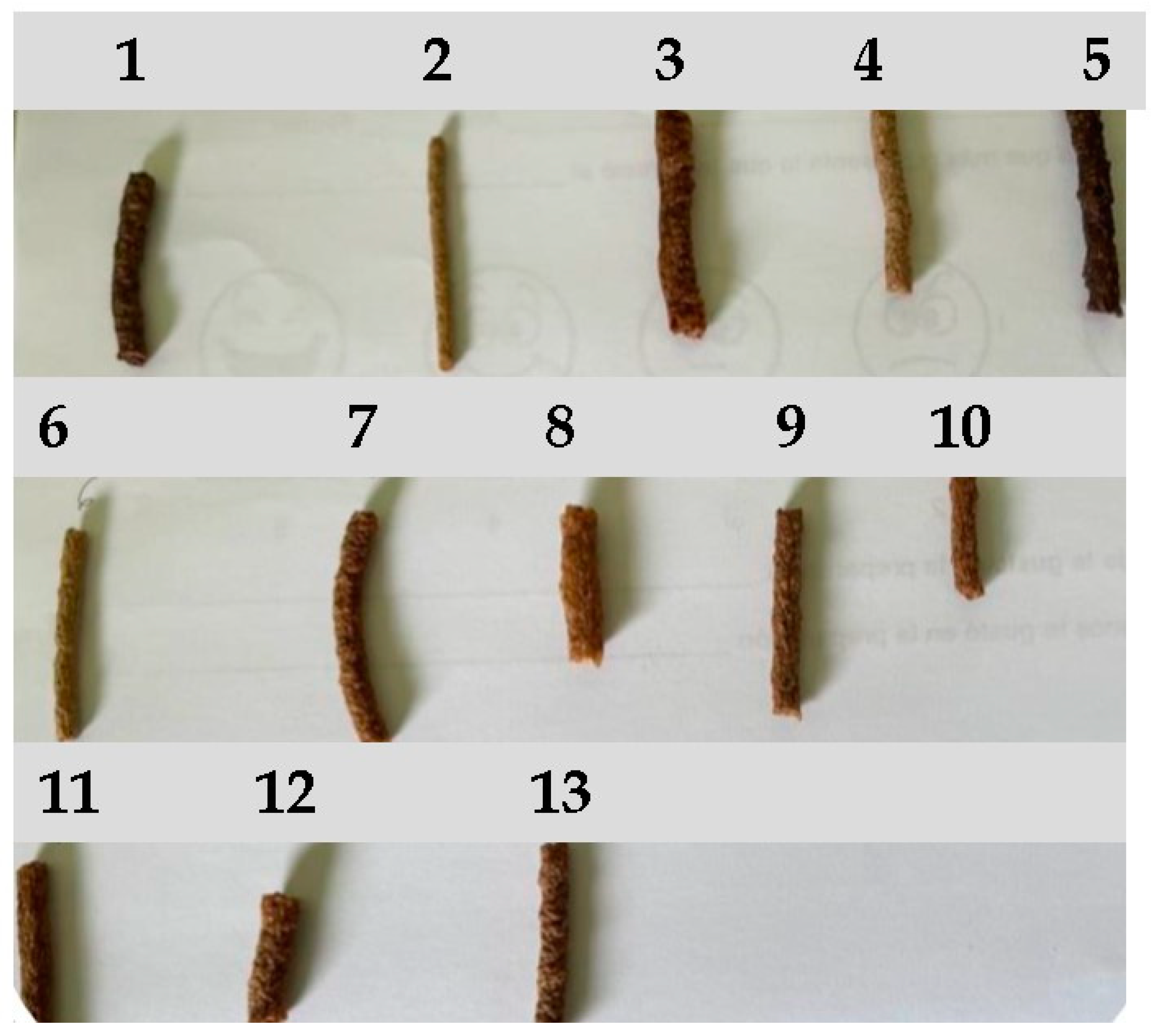
Figure 2.
Surface response of the effect of temperature and screw speed on expansion index. Quadratic model: p = 0.0018; R2 = 0.9057; Adeq. Precision = 11.3216.
Figure 2.
Surface response of the effect of temperature and screw speed on expansion index. Quadratic model: p = 0.0018; R2 = 0.9057; Adeq. Precision = 11.3216.
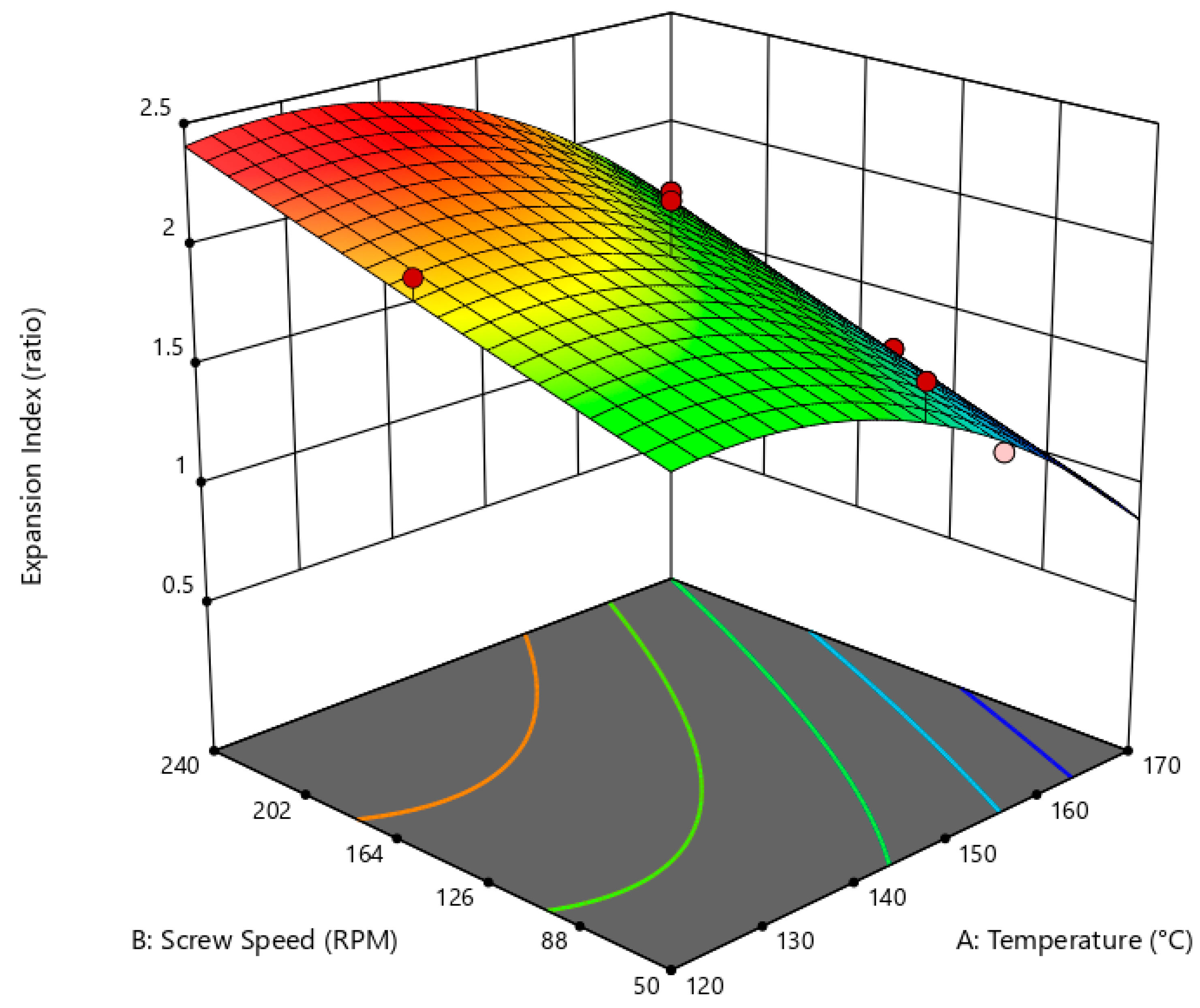
Figure 3.
Surface response of the effect of temperature and screw speed on appararent density. Quadratic model: p = 0.0132; R2 = 0.8282; Adeq. Precision = 8.4050.
Figure 3.
Surface response of the effect of temperature and screw speed on appararent density. Quadratic model: p = 0.0132; R2 = 0.8282; Adeq. Precision = 8.4050.

Figure 4.
Surface response of the effect of temperature and screw speed on penetration force. Quadratic model: p = 0.0007; R2 = 0.9270; Adeq. Precision = 12.7868.
Figure 4.
Surface response of the effect of temperature and screw speed on penetration force. Quadratic model: p = 0.0007; R2 = 0.9270; Adeq. Precision = 12.7868.
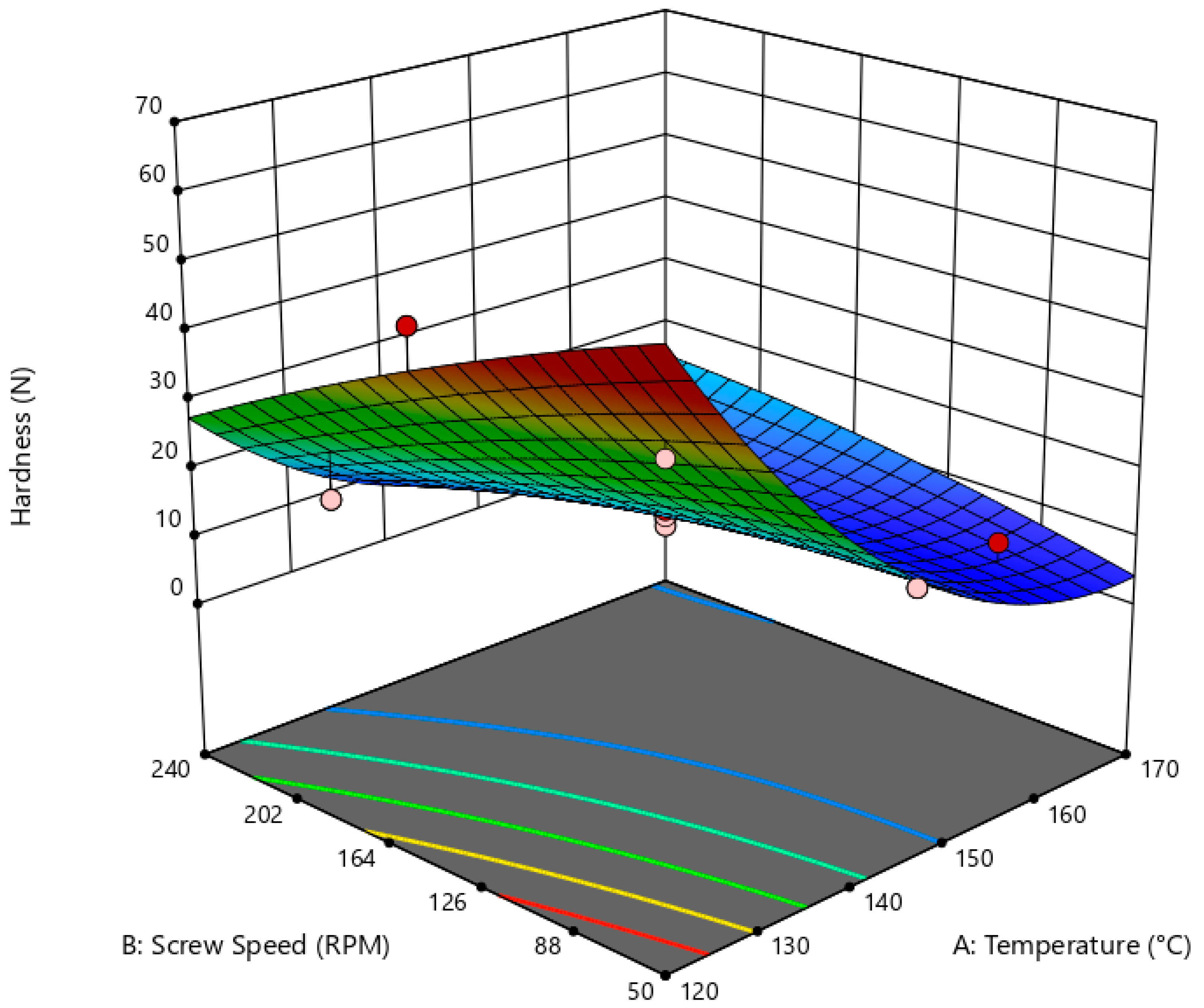
Figure 5.
Surface response of the effect of temperature and screw speed on water absorption index. Reduced cubic model: p = 0.0944; R2 = 0.8297; Adeq. Precision = 6.5469.
Figure 5.
Surface response of the effect of temperature and screw speed on water absorption index. Reduced cubic model: p = 0.0944; R2 = 0.8297; Adeq. Precision = 6.5469.
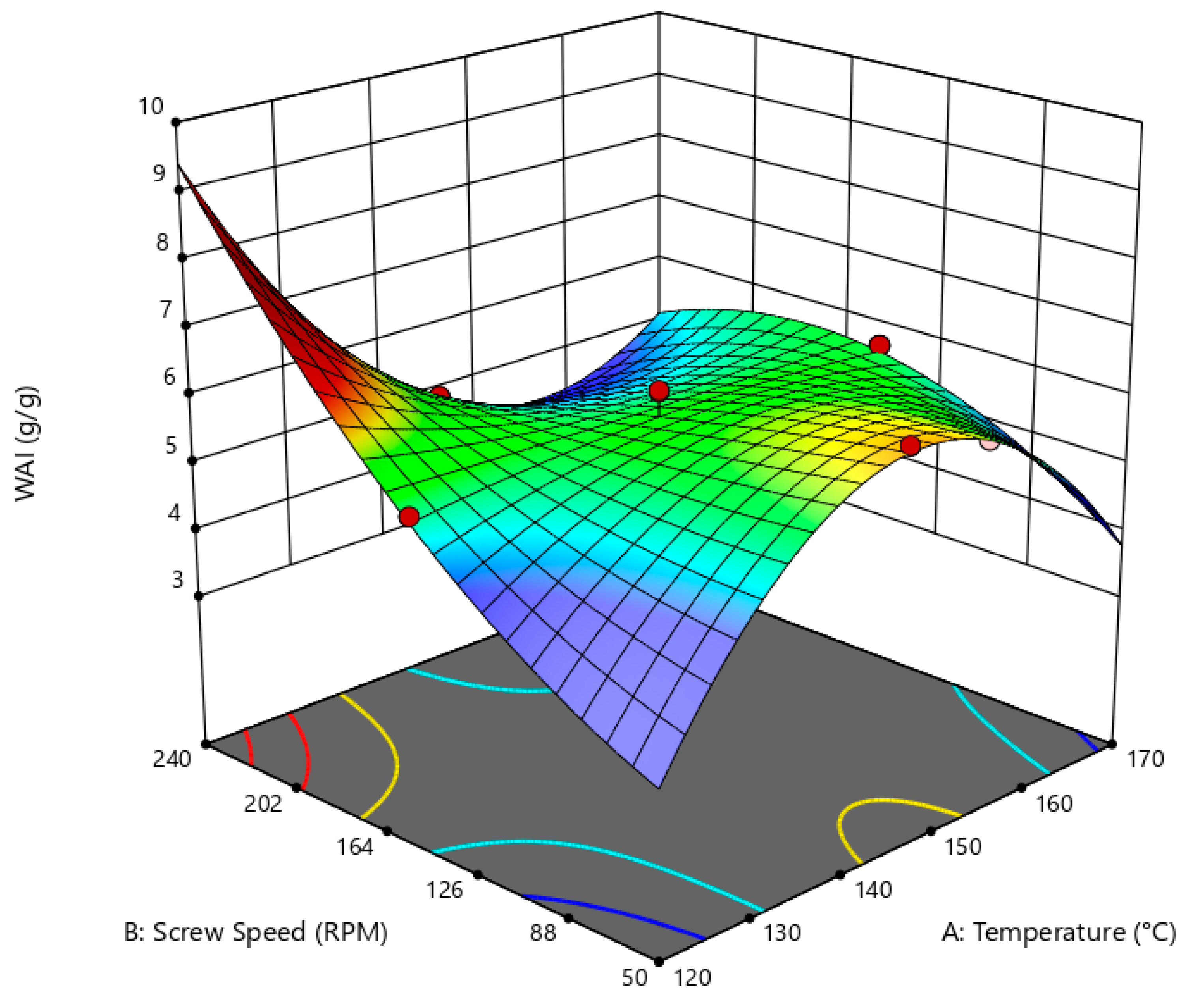
Figure 6.
Surface response of the effect of temperature and screw speed on ABTS inhibition with free phenols. Quadratic model: p = 0.0176; R2 = 0.8123; Adeq. Precision = 9.7396.
Figure 6.
Surface response of the effect of temperature and screw speed on ABTS inhibition with free phenols. Quadratic model: p = 0.0176; R2 = 0.8123; Adeq. Precision = 9.7396.
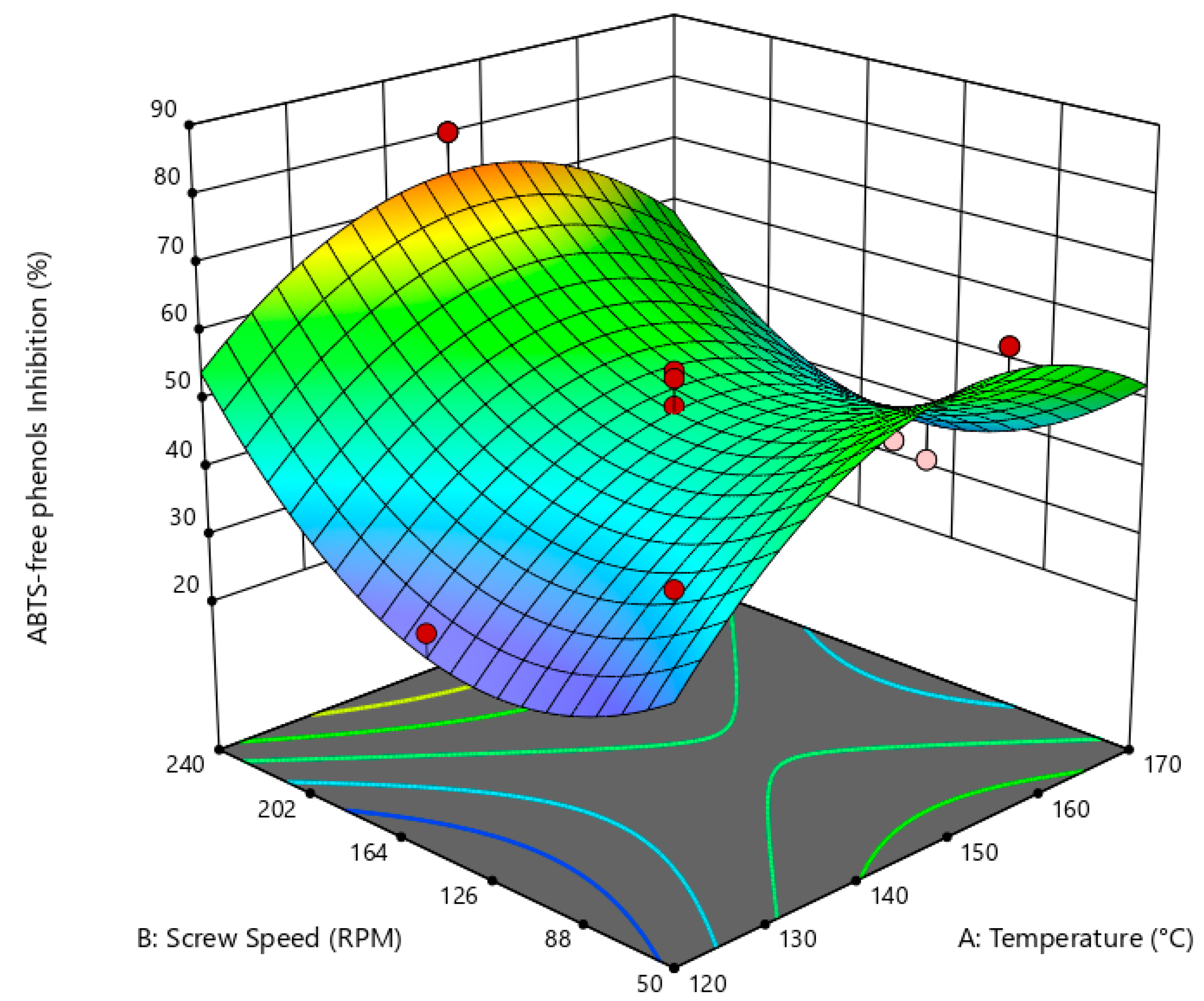
Figure 7.
Surface response of the effect of temperature and screw speed on DPPH inhibition with free phenols. Reduced cubic model: p = 0.1688; R2 = 0.7754; Adeq. Precision = 5.6930.
Figure 7.
Surface response of the effect of temperature and screw speed on DPPH inhibition with free phenols. Reduced cubic model: p = 0.1688; R2 = 0.7754; Adeq. Precision = 5.6930.
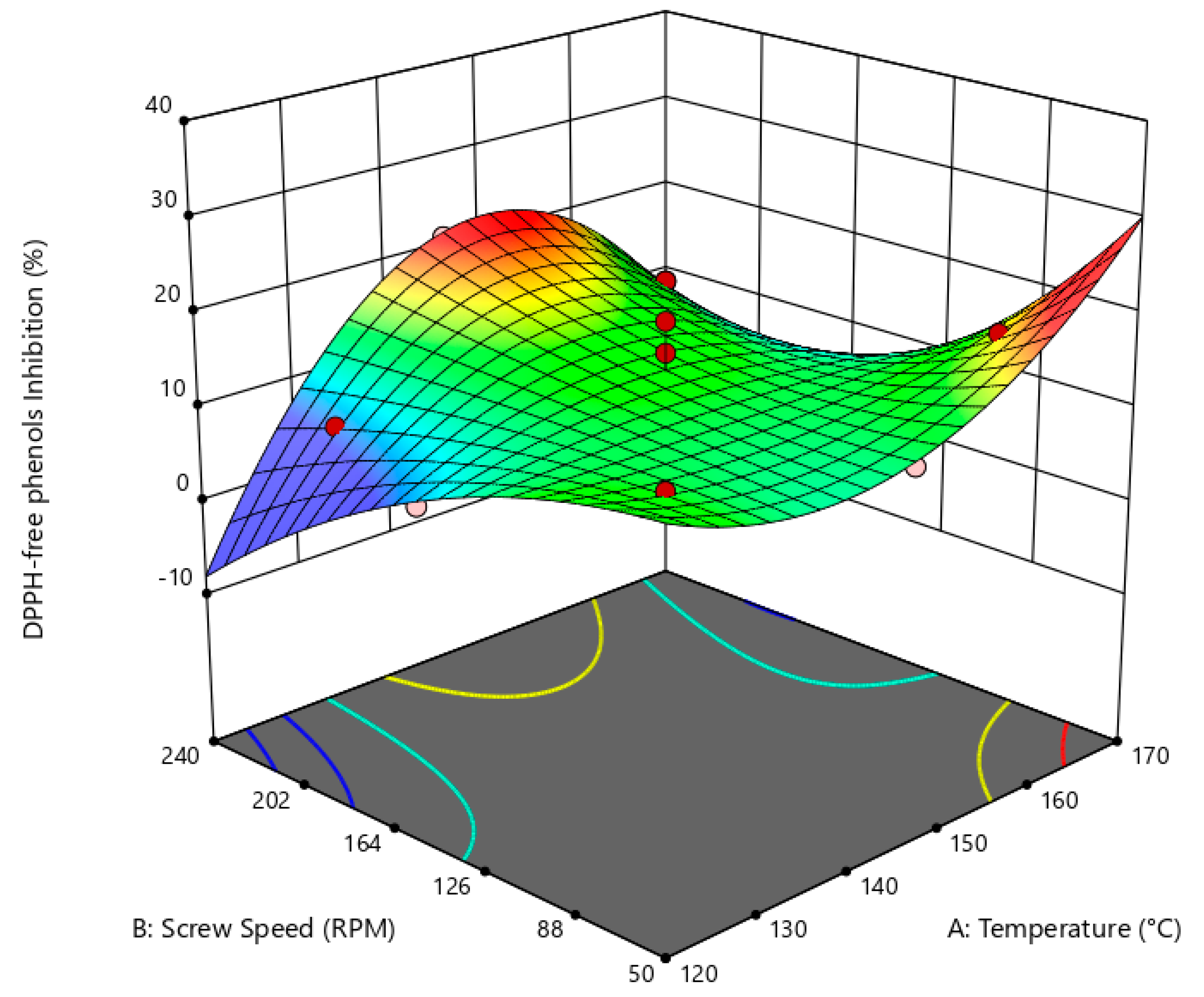
Figure 8.
Area superposition of EI, BD, PF, WAI, WSI, AFPI, ABPI, DFPI, and DBPI regarding temperature and screw speed in extrusion of snacks. Optimal operational conditions were established as 144 °C for temperature and 207 rpm for screw speed.
Figure 8.
Area superposition of EI, BD, PF, WAI, WSI, AFPI, ABPI, DFPI, and DBPI regarding temperature and screw speed in extrusion of snacks. Optimal operational conditions were established as 144 °C for temperature and 207 rpm for screw speed.
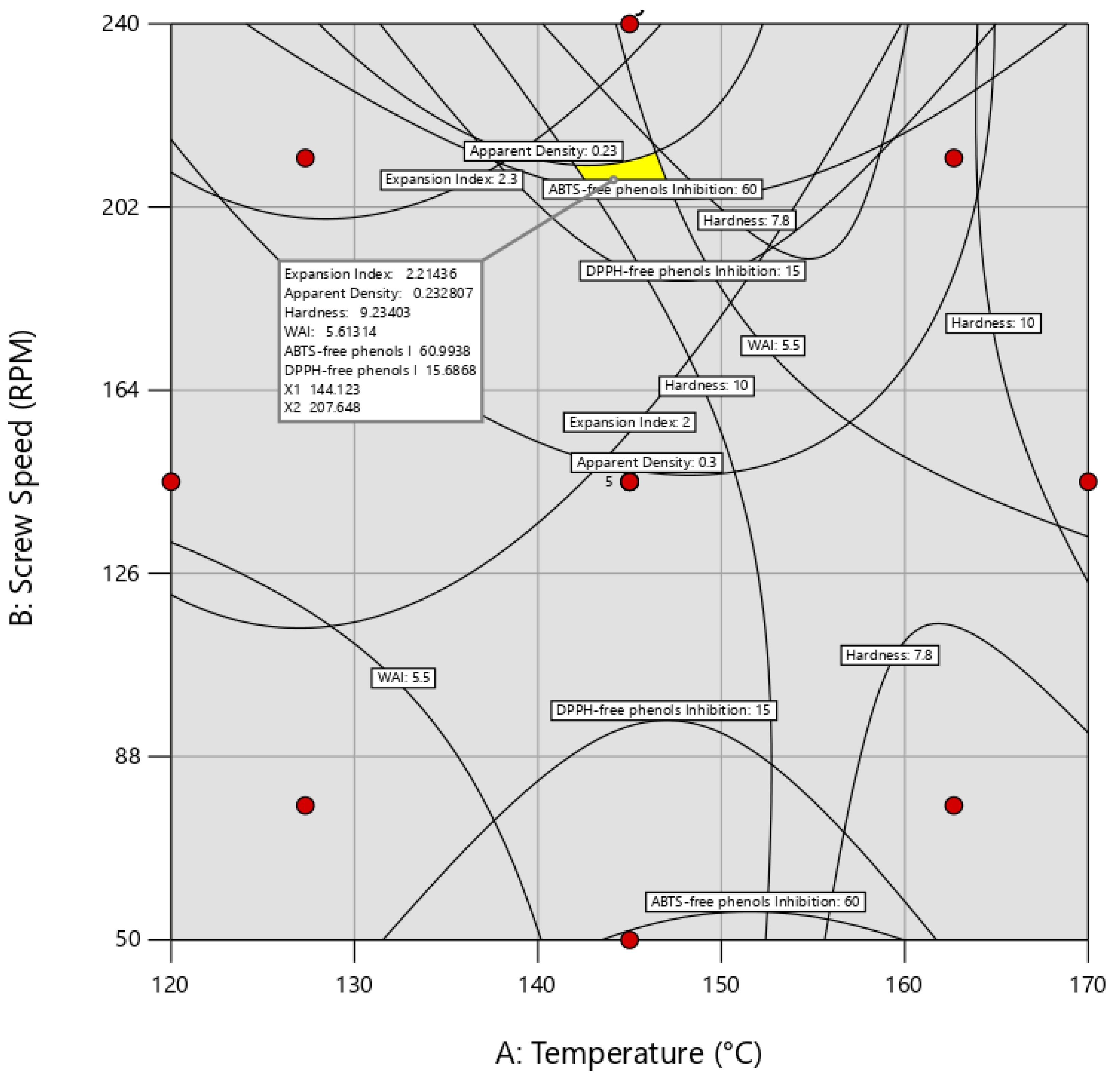
Figure 9.
Radar chart of discriminatory-descriptive sensorial test of samples 3, 8, 10, and 12. Qualitative parameters were evaluated on a scale of 1 to 4, with scores ranging from “good” to “excellent”; sample 8 was the most highly accepted. Sample 3 = 2.882, Sample 8 = 3.235, Sanoke 10 = 2.617; Sample 12 = 2.764. n = 34.
Figure 9.
Radar chart of discriminatory-descriptive sensorial test of samples 3, 8, 10, and 12. Qualitative parameters were evaluated on a scale of 1 to 4, with scores ranging from “good” to “excellent”; sample 8 was the most highly accepted. Sample 3 = 2.882, Sample 8 = 3.235, Sanoke 10 = 2.617; Sample 12 = 2.764. n = 34.
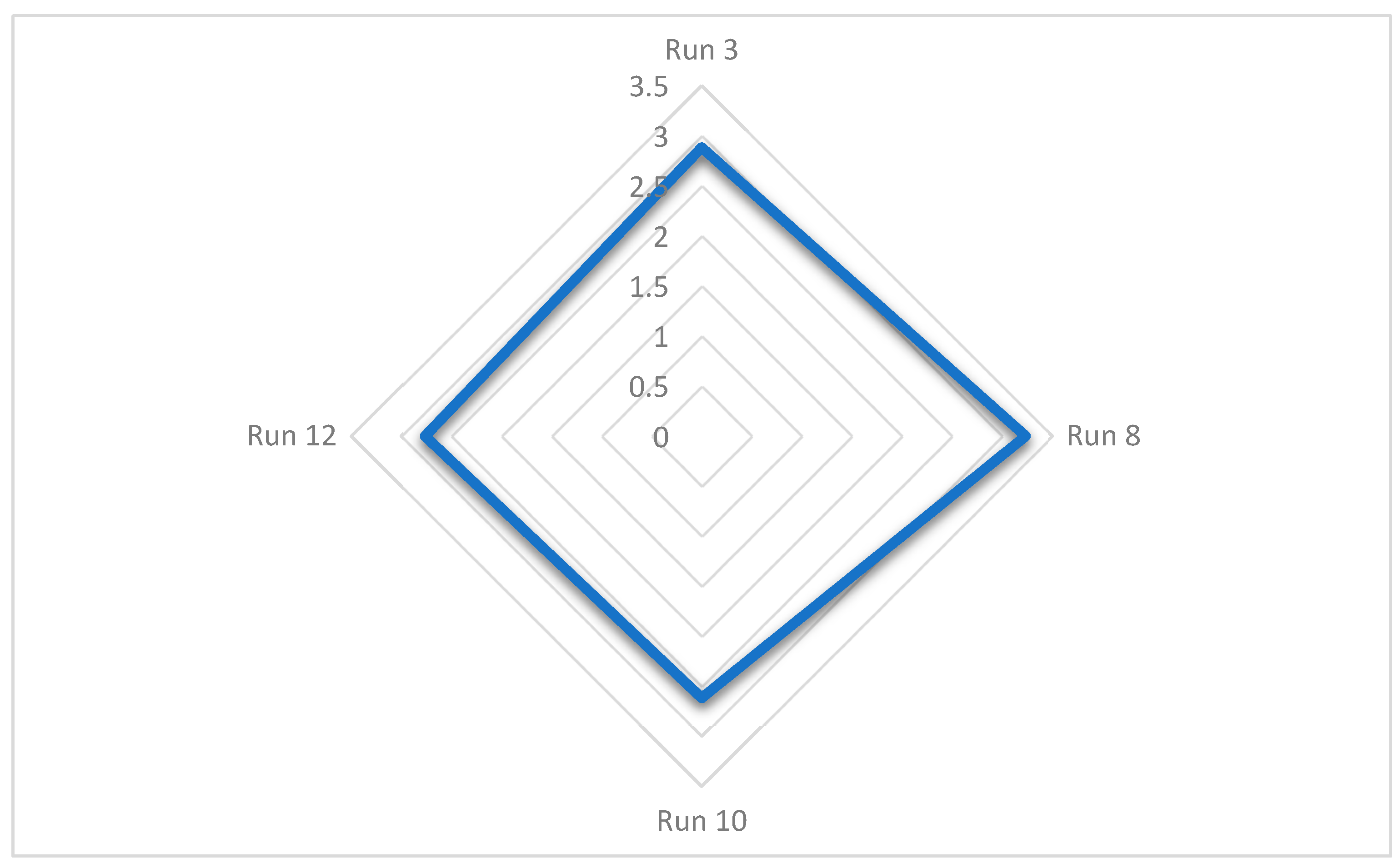
Figure 10.
Radar chart of 5-point hedonic scale of sample 8. Most participants concentrated in scale 4 (liked it), followed by 5 (loved it) and 3 (indifferent) (n = 34), demonstrating high acceptability. I hated it = 0%; I did not like it = 0%; Indifferent = 11.76%; I liked it = 61.76 %; I loved it = 26.48%. Total score = 4.15 (between “I liked it” and “ I loved it”).
Figure 10.
Radar chart of 5-point hedonic scale of sample 8. Most participants concentrated in scale 4 (liked it), followed by 5 (loved it) and 3 (indifferent) (n = 34), demonstrating high acceptability. I hated it = 0%; I did not like it = 0%; Indifferent = 11.76%; I liked it = 61.76 %; I loved it = 26.48%. Total score = 4.15 (between “I liked it” and “ I loved it”).
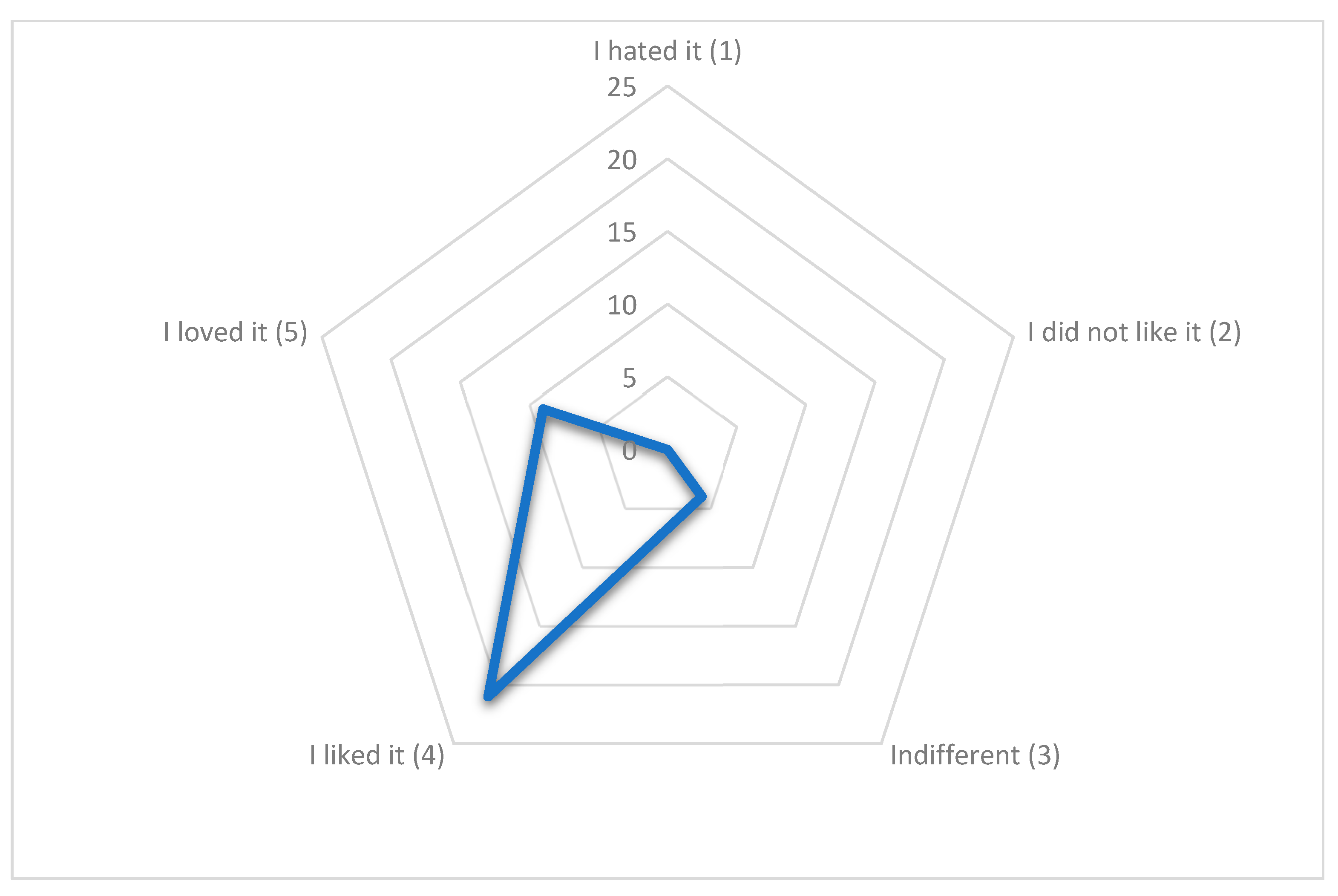
Figure 11.
Chromatogram of ellagic acid detection in extruded snacks, obtained at optimal operational conditions, with integration of the area under the curve.
Figure 11.
Chromatogram of ellagic acid detection in extruded snacks, obtained at optimal operational conditions, with integration of the area under the curve.
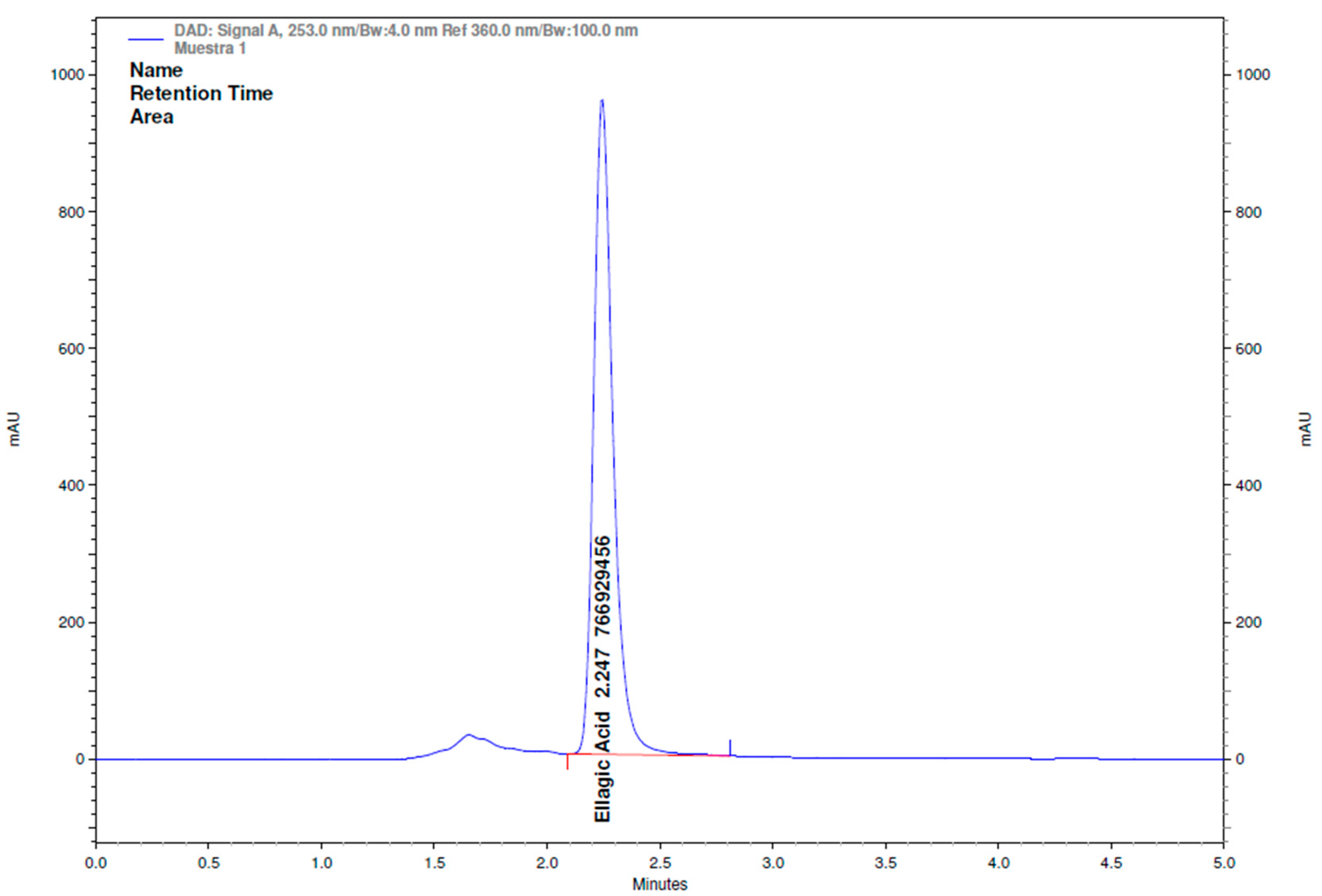
Figure 12.
The final extrudate was obtained at optimal processing conditions (144 °C and 207 rpm).
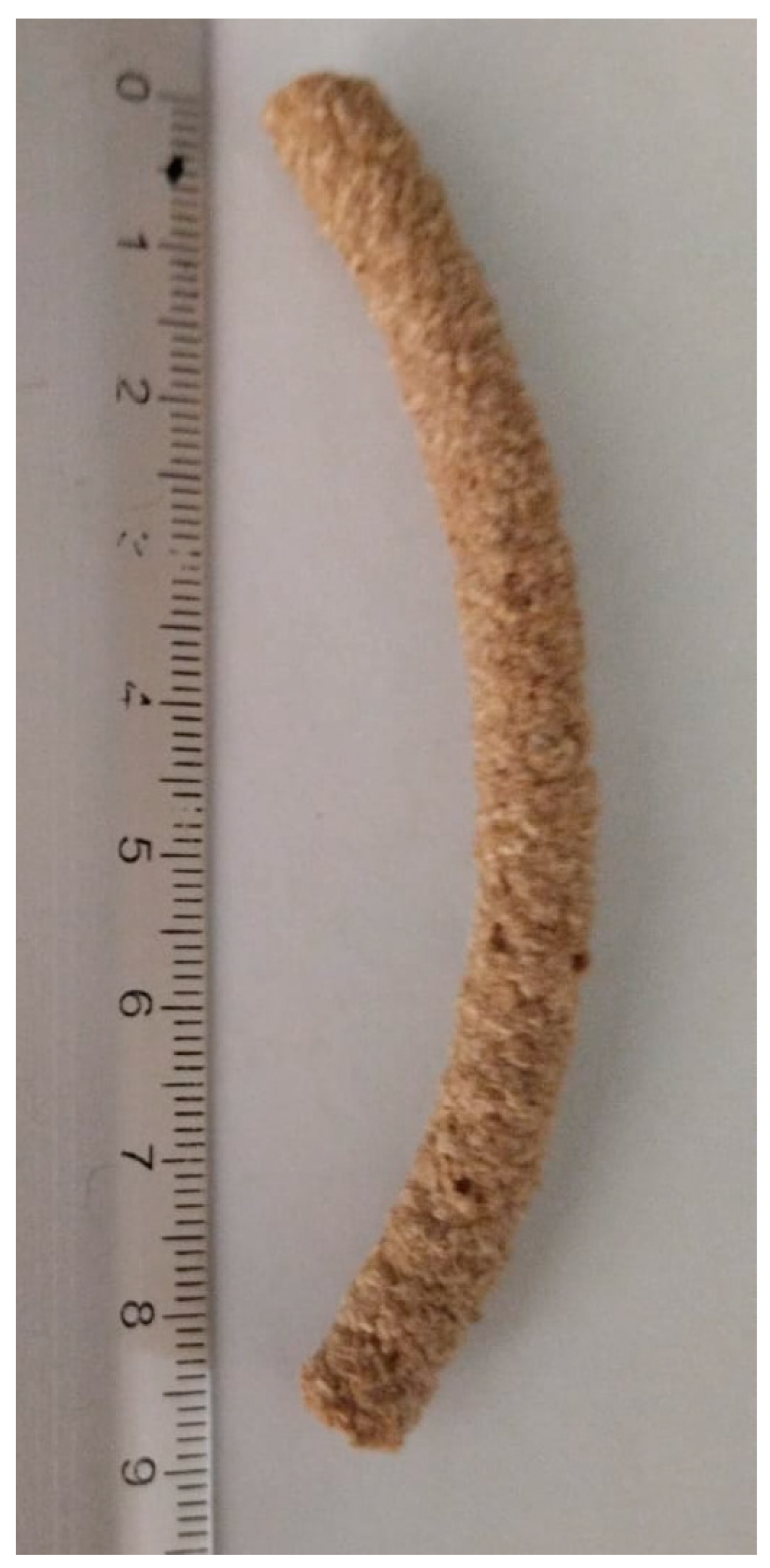

Table 1.
Experimental design used for formulation extrusion.
| Independent variables | ||||
|---|---|---|---|---|
| Coded | Actual | |||
| Treatment | X1 | X2 | BT (°C) | SS (rpm) |
| 1 | +1.414 | 0 | 170 | 145 |
| 2 | 0 | 0 | 145 | 145 |
| 3 | -1 | +1 | 127.322 | 212.175 |
| 4 | +1 | -1 | 162.678 | 77.8249 |
| 5 | -1.414 | 0 | 120 | 145 |
| 6 | 0 | +1.414 | 145 | 240 |
| 7 | 0 | 0 | 145 | 145 |
| 8 | 0 | 0 | 145 | 145 |
| 9 | +1 | +1 | 162.678 | 212.175 |
| 10 | -1 | -1 | 127.322 | 77.8249 |
| 11 | 0 | 0 | 145 | 145 |
| 12 | 0 | 0 | 145 | 145 |
| 13 | 0 | -1.414 | 145 | 50 |
Note: BT: Barrel temperature (°C); SS: Screw Speed (rpm).
Table 2.
Regression coefficients of the models and significance levels for analyzed responses.
| Coefficients | ||||||||
|---|---|---|---|---|---|---|---|---|
| Response | Intercept | Linear | Quadratic | Interaction | ||||
| A | B | AB | A2 | B2 | A2B | AB2 | ||
| EI | +1.96 | -0.41*** | +0.36** | +0.03 | +0.29* | +0.006 | +0.43 | +0.14 |
| BD (AD) | +0.30 | -0.02 | -0.13** | +0.06 | +0.09 | +0.04 | -0.16 | -0.15 |
| PF (H) | +13.21 | -17.27*** | -5.48* | +10.86* | +15.31** | -1.69 | -13.03 | +15.9* |
| WAI | +5.72 | +0.09 | -0.80* | -1.23* | -0.22 | -0.13 | +2.72* | -0.99 |
| AFPI | +48.60 | +5.72 | +6.66 | -3.66 | -17.52* | +18.69* | -26.55 | +15.99 |
| DFPI | +14.22 | -0.91 | +4.22 | +0.37 | -5.99 | +3.16 | -16 | +8.29 |
Note: EI, Expansion index; BD (AD), Bulk density (apparent density); PF (H), Penetration force (hardness); WAI, Water absorption index; AFPI, ABTS-free phenols inhibition; DFPI, DPPH-free phenols inhibition; A, B, … AB2, Regression coefficients. Numbers in bold refer to statistically significant p-values. *P < 0.05; **P < 0.01; ***P < 0.001.
Table 3.
Variance analysis for analyzed responses.
| Response | R2 | Adequate Precision | CV (%) | F value | p of F (model) | Lack of fit |
|---|---|---|---|---|---|---|
| EI | 0.9057 | 11.3216 | 7.62 | 13.44 | 0.0018 | 0.3526 |
| BD (AD) | 0.8282 | 8.4050 | 15.47 | 6.75 | 0.0132 | 0.0298 |
| PF (H) | 0.9270 | 12.7868 | 26.30 | 17.79 | 0.0007 | 0.0015 |
| WAI | 0.8297 | 6.5469 | 7.14 | 3.48 | 0.0944 | 0.5344 |
| AFPI | 0.8123 | 9.7396 | 15.00 | 6.06 | 0.0176 | 0.2124 |
| DFPI | 0.7754 | 5.6930 | 23.99 | 2.47 | 0.1688 | 0.7033 |
Note: CV, Coefficient of variation; EI, Expansion index; BD (AD), Bulk density (apparent density); PF (H), Penetration force (hardness); WAI, Water absorption index; AFPI, ABTS-free phenols inhibition; DFPI, DPPH-free phenols inhibition. Numbers in bold refer to statistically significant p-values.
Table 4.
Optimal ranges established for analyzed response variables.
| Response (dependent variable) | Low optimal range | High optimal range | Unit of measurement |
|---|---|---|---|
| EI | 2.00 | 2.30 | Ratio |
| BD (AD) | 0.23 | 0.30 | g/cm3 |
| PF (H) | 7.80 | 10.00 | N |
| WAI | 5.50 | 6.70 | g/g |
| AFPI | 60.00 | 80.00 | % |
| DFPI | 15.00 | 21.00 | % |
EI = Expansion index; BD (AD) = Bulk density (apparent density); PF (H) = Penetration force (hardness); WAI = Water absorption index; AFPI = ABTS-free phenols inhibition; DFPI = DPPH-free phenols inhibition.
Table 5.
Nutritional content per 100 g of final extruded produced at 144°C and 207 rpm of screw speed.
Table 5.
Nutritional content per 100 g of final extruded produced at 144°C and 207 rpm of screw speed.
| Determination | Result |
|---|---|
| Humidity | 6.5 g |
| Ashes | 2.4 g |
| Proteins | 8.9 g |
| Total fat | 2.0 g |
| Saturated fat | 2.0 g |
| Unsaturated fat | 0.0 g |
| Dietary fiber | 6.6 g |
| Total carbohydrates | 73.5 g |
| Total reducing sugars | 7.0 g |
| Energetic content | 348.3 kcal / 1457.3 kJ |
| Sodium | 83.0 mg |
Disclaimer/Publisher’s Note: The statements, opinions and data contained in all publications are solely those of the individual author(s) and contributor(s) and not of MDPI and/or the editor(s). MDPI and/or the editor(s) disclaim responsibility for any injury to people or property resulting from any ideas, methods, instructions or products referred to in the content. |
© 2025 by the authors. Licensee MDPI, Basel, Switzerland. This article is an open access article distributed under the terms and conditions of the Creative Commons Attribution (CC BY) license (https://creativecommons.org/licenses/by/4.0/).
Copyright: This open access article is published under a Creative Commons CC BY 4.0 license, which permit the free download, distribution, and reuse, provided that the author and preprint are cited in any reuse.


