

Submitted:
13 April 2025
Posted:
14 April 2025
You are already at the latest version
Abstract
Heritage-based urban regeneration is a crucial strategy for preserving cultural identity while fostering sustainable urban development. This study examines the case of Tarout Island, one of Saudi Arabia’s oldest continuously inhabited sites, which faces challenges related to urbanization, infrastructure deterioration, and heritage conservation. As part of Saudi Vision 2030, urban regeneration efforts must balance modernization with the protection of historical and cultural assets to maintain the island’s unique identity. Through a review of global, regional, and local case studies, this research identifies best practices in heritage-driven urban renewal, emphasizing adaptive reuse, sustainable tourism, community engagement, infrastructure integration, and environmental sustainability. The findings highlight the importance of a comprehensive regeneration framework that not only safeguards historical sites but also fosters economic growth, cultural continuity, and community participation. The study proposes a strategic framework for heritage-based urban regeneration in Tarout Island, integrating conservation policies, sustainable tourism models, and participatory planning approaches. Key challenges such as legal enforcement, funding constraints, and the risks of over-commercialization are also addressed. By adopting a holistic and sustainable approach, Tarout Island can serve as a model for heritage-driven urban development in Saudi Arabia, demonstrating how cultural preservation and modernization can coexist harmoniously.
Keywords:
heritage-based urban regeneration
; sustainable urban development
; cultural preservation
; adaptive reuse
; community engagement
; tarout island
; saudi arabia
1. Introduction
Urban planning is essential in shaping cities, particularly those with deep historical and cultural significance. Tarout Island, one of Saudi Arabia’s oldest inhabited sites, dates back over 5,000 years BC [1] and is renowned for its historical landmarks and archaeological sites. As part of Saudi Arabia’s Vision 2030 initiative, the nation is committed to sustainability [2]. Urban planners now face the challenge of modernizing the city while preserving its cultural heritage. Striking a balance between sustainable development and cultural preservation is crucial to maintaining Tarout Island’s unique identity.
Historically, Tarout Island has served as a vital hub for trade and cultural exchange due to its strategic location in the Qatif region (Figure 1). The island’s historical fortresses and traditional houses provide valuable insights into the civilizations that once thrived there [1]. However, in recent years, neglect, poor maintenance, and urban sprawl have posed significant threats to these cultural landmarks. Many historically significant sites remain underutilized, contributing to the island’s physical and cultural decline [3]. Inadequate infrastructure and limited community engagement in public spaces further exacerbate these issues, placing Tarout at risk of losing its distinct character and cultural vitality. Addressing these concerns necessitates a strategic approach that integrates heritage conservation with urban regeneration.
Tarout Island’s urban landscape suffers from a lack of cohesive planning, resulting in deteriorating infrastructure and neglected cultural sites. Public spaces remain underutilized, failing to support cultural and social activities that could enrich community life [1]. These factors reduce the island’s appeal to residents and visitors alike, undermining its potential as a vibrant and sustainable community rooted in its heritage. Despite its significance, Tarout lacks an integrated urban regeneration framework that aligns cultural preservation with contemporary development. Without intervention, the island risks losing not only its historical significance but also its potential to serve as a model for heritage-driven sustainable urban regeneration.
The rapid modernization driven by Vision 2030 presents both opportunities and challenges for Tarout Island. While the initiative aims to enhance infrastructure and boost tourism, it also risks overshadowing the need to preserve the island’s historical sites [2]. The absence of a well-structured urban planning strategy that integrates sustainability with heritage conservation threatens Tarout’s identity [1]. If left unaddressed, unplanned development may result in irreversible damage to heritage sites, loss of cultural identity, diminished tourism appeal, and environmental degradation. The lack of a balanced approach could lead to significant economic and cultural consequences [4,5].
While extensive research has been conducted on cultural preservation and sustainable urban development separately, few studies have examined their integration within the Saudi Arabian context. There is a notable research gap regarding smaller, historically significant locations like Tarout Island. This study seeks to bridge that gap by formulating practical recommendations that balance sustainability and heritage conservation in urban planning, using Tarout Island as a case study. These recommendations will address current challenges and offer strategies that can be adapted to other regions facing similar issues. By doing so, the research contributes to a deeper understanding of sustainable urban development.
The primary objective of this study is to provide evidence-based recommendations for sustainable urban planning on Tarout Island while prioritizing cultural heritage protection. The research will evaluate the current state of urban development and its impact on cultural heritage, identify key historical sites in need of protection, and analyze successful sustainable urban planning models from other regions to assess their applicability to Tarout. Additionally, the study will develop tailored recommendations that integrate sustainability goals with heritage conservation, ensuring a context-sensitive approach.
By examining global heritage-based urban regeneration projects, the study aims to extract valuable lessons and best practices that can be adapted to Tarout Island. It will propose an integrated approach to heritage conservation, urban regeneration, and sustainable tourism, positioning Tarout as a key destination within Saudi Arabia’s National Tourism Strategy. This research ultimately seeks to offer a framework that supports sustainable urban development while preserving the island’s cultural legacy, ensuring that modernization efforts enhance rather than erode its historical significance.
2. Literature Review
2.1. Urban Regeneration
Urban regeneration encompasses a range of approaches concerned with socio-economic and urban infrastructure problems, nurturing a sense of identity and belonging in communities [6,7]. Thus, urban regeneration has become crucial in the strategy of sustainable development since most urban centers around the world face issues of urban decline, environmental deterioration, and the loss of their cultural identity [8,9]. It is a process that merges economic, social, environmental, and institutional concerns to attain sustainable, inclusive, and economically viable urban settings. The concept of urban regeneration goes beyond mere physical redevelopment to socio-economic and cultural revitalization [10].
Awad and Jung [11] emphasize the necessity for a proper balance of all four pillars of sustainability: economic, social, environmental, and institutional, in the context of urban regeneration projects. Their study in Dubai stressed the role played by strategic frameworks, such as the Analytic Hierarchy Process, which gives priority to planning elements that contribute significantly toward a clear-cut urban strategy. Urban regeneration, focusing on the aspect of sustainability, comprises the improvement and rehabilitation not only of the physical space but also the consolidation of local identity and tourism in general, particularly in heritage or culturally important areas such as Deira. Cultural and social dimensions play a crucial role in urban regeneration, as testified by the discussion of culture-led strategies for regeneration by Hwang [12]. Examples of these would include places such as Jeonju Hanok Village, Korea, where neglected areas were redeveloped into thriving cultural and tourist hotspots through the preservation of traditional architecture and pride in residents. Other examples, such as the Changdong District in Changwon, drew upon the historical association with art and culture, developing an artist's destination, with community-led design juxtaposed against cultural marketing as a strategy to revive the area.
These examples reveal how urban regeneration can be most effective if the unique characteristics and histories of local communities are realized. Indeed, this is central to many regeneration initiatives, such as those discussed by Sepe [13] related to creative waterfront renewal. In cases like the HafenCity development in Hamburg, sensitive planning can weigh historic identity against modern urban demands. Besides that, HafenCity has developed a serious maritime tradition for this city by allowing historic warehouses to act as part of a new mixed-use development. This is another example of a mixed approach that integrates both new architectural design and historical context to create an overall narrative that is balanced and meaningful in the urban context. In the Gulf region, one example explored by Boussaa [8] could be the Msheireb project in Doha, showcasing how urban regeneration can reconstitute identity within historic cities. Together, these represent an adaptive reuse method that balances Qatari architectural traditionalism with city modernization and offers a method to sustain the current culture against growing urbanization. Such projects emphasize that urban regeneration need not repeat but reinterpret the past in the context of modern social ideals.
Despite these successes, implementing effective urban regeneration strategies remains challenging. Lawless [14] argues that Area Based Initiatives in the UK have been far from successful in achieving significant impacts on socio-economic transformations and are confined within physical transformations without addressing the needs of the wider community. The critique thus calls for an approach that is holistic in nature and involves a variety of stakeholders in development; strikes a balance between heritage conservation and development; and integrates local stories into urban design. Community involvement is one of the most common themes in most urban regeneration literature [15]. Participation by residents and stakeholders ensures that any form of regeneration is in line with the aspirations of the community and fosters a sense of ownership and belonging among residents [16,17]. As argued by Hwang [12], participative processes not only increase the legitimacy of projects related to regeneration but also build social cohesion and lead to sustainable development within the community.
In sum, urban regeneration, when purposed, is a multilayered process of balancing historical conservation and modern development with citizen participation. These strategies of thoughtful, inclusive urban regeneration have transformed cities from Dubai to Hamburg, from Changwon to Doha. Taking a multidimensional approach to the physical, social, and economic aspects, the urban regeneration process anchors dynamic and sustainable urban environments in respect for the past while offering a way toward the future. These perceptions lay a foundation on which similar strategies could be implemented in Tarout Island in order to enclose its outstanding characteristics and historical components within a new and contemporary urban fabric.
2.2. Heritage-Based Urban Regeneration
Heritage urban regeneration is a comprehensive strategy that connects cultural heritage preservation to sustainable urban development [18]. It focuses on leveraging cultural identity as a foundation for addressing contemporary urban challenges and creating spaces that integrate historical significance with modern functionality [19]. This review examines frameworks, methodologies, and global case studies to explore how such strategies could be applied to Tarout Island. By integrating historical preservation with sustainable urban planning, cities can balance development with cultural continuity, ensuring that the past is not lost in the wake of modernization.
Heritage, within urban regeneration, extends beyond the mere preservation of historic monuments and landmarks. It encompasses traditions, community customs, and cultural narratives that contribute to the social fabric of a place [20,21]. Elnokaly and Elseragy [22] emphasize that heritage is a dynamic asset capable of adapting to contemporary needs while retaining its historic character. In this regard, heritage serves as a catalyst for social cohesion, economic revitalization, and environmental sustainability. Within this context, it enables culture-based, open, and sustainable growth, particularly in areas with contested histories or a longstanding working-class presence [23]. Through adaptive reuse and community engagement, heritage-based urban regeneration can breathe new life into declining urban centers while preserving their historical significance [24].
The successful implementation of heritage-based urban regeneration requires well-structured paradigms and methodologies [21,25]. These range from systematic mapping and inventorying of heritage assets to detailed frameworks like the Heritage Set concept proposed by Amado and Rodrigues [26] in Luanda, Angola. This concept identifies culturally significant locations and integrates them into urban planning strategies. By preserving historic structures and revitalizing adjacent urban areas through mixed-use developments, such approaches demonstrate how heritage can stimulate economic development and foster community cohesion. In addition, technological advancements such as digital mapping, 3D modeling, and virtual reality simulations have enhanced the ability to document and visualize heritage sites, enabling planners to create more effective conservation strategies while allowing public engagement through interactive experiences.
A fundamental element in heritage-based regeneration is participatory planning [15,27]. This approach emphasizes the engagement of multidisciplinary stakeholders, including local residents, urban planners, and heritage specialists, in decision-making processes. For instance, Boeri et al. [28] illustrate how community workshops in Bologna, Italy, facilitated public participation, ensuring that urban interventions aligned with local priorities and values. Similarly, Knippschild and Zöllter [29] introduce the Urban Transformation Matrix in Görlitz, Germany, as a model for balancing conservation efforts with contemporary urban demands. Community engagement has consistently proven essential for the sustainability and social acceptance of regeneration projects [16,30]. It fosters a sense of ownership among residents, reduces conflicts over urban interventions, and ensures that the cultural identity of the area is preserved [31]. Without active community involvement, urban regeneration projects risk becoming top-down interventions that fail to reflect the needs and aspirations of the local population [32,33].
Heritage is increasingly viewed as a flexible resource capable of adapting to modern urban challenges. The rehabilitation of Carrera Séptima in Bogotá, Colombia, exemplifies how cultural initiatives can preserve an area's historical character while enhancing its functionality as a modern urban space [28]. This case underscores the idea that heritage, when perceived as a dynamic resource, can evolve to meet contemporary urban needs without compromising its intrinsic value. Furthermore, mixed-use development projects that incorporate historical elements into new constructions allow cities to blend tradition with modernity. Adaptive reuse of heritage buildings, such as converting old warehouses into cultural centers or residential spaces, provides sustainable solutions that reduce waste while maintaining architectural authenticity [34].
Several global case studies further illustrate the practical application of heritage-based regeneration strategies. In Luanda, Angola, the Metropolitan Plan incorporates heritage conservation into urban prioritization, addressing settlement challenges while preserving historical identity [26]. Similarly, the City Gate project in Valletta, Malta, showcases a balanced approach between historical preservation and modern architectural intervention. Through adaptive reuse and symbolic reconstruction, this project ensures that Valletta’s heritage remains relevant within a contemporary urban context [35]. These examples highlight the importance of integrating heritage conservation into long-term urban development policies, where historical structures serve not only as relics of the past but also as active components of urban life.
Another notable example is the "Eye of Sustainable Planning" initiative in Famagusta, Northern Cyprus. This project highlights the importance of cooperation between local communities and urban planners in heritage preservation. By integrating community insights with professional expertise, the initiative fosters a regeneration process that respects cultural values while addressing practical urban needs [23]. The Cultural Heritage and Urban Development (CHUD) project in Saida, Lebanon, further demonstrates this approach by incorporating local cultural practices into tourism development. By creating a heritage trail, the project successfully contributes to economic growth while maintaining the area's historical integrity [36]. Similar projects worldwide underscore the growing recognition of heritage as an economic asset that, if managed properly, can enhance tourism, attract investment, and create job opportunities for local communities.
Despite these successes, heritage-based urban regeneration faces several challenges. One of the primary concerns is striking a balance between heritage preservation and urban development. Socio-economic disparities often emerge, as regeneration projects risk displacing vulnerable populations due to the gentrification of historic neighborhoods [37]. To mitigate these risks, inclusive and participatory planning such as that implemented in Bologna and Görlitz becomes crucial. Additionally, securing funding for heritage projects remains a significant obstacle. Collaborative initiatives that foster public-private partnerships, as seen in the CHUD project, offer potential solutions through shared resources and strategic cooperation. Innovative financial mechanisms, such as heritage-based tax incentives, crowdfunding campaigns, and social impact investments, could also help bridge funding gaps and make heritage conservation more economically viable [38].
Education and public awareness also play a critical role in the success of heritage-based regeneration. Studies from Bukhara, Uzbekistan, highlight the necessity of public campaigns to raise awareness about heritage values, thereby garnering community support for preservation efforts [22]. Public institutions, cultural organizations, and academic institutions can contribute by promoting heritage appreciation through workshops, exhibitions, and educational programs. Furthermore, sustainability is an essential consideration. The Urban Heritage Dynamics framework emphasizes the need to integrate environmental sustainability into heritage-based regeneration strategies, ensuring that heritage sites contribute to broader sustainability objectives [39]. Climate change adaptation strategies, such as using eco-friendly materials in restoration projects and improving energy efficiency in historic buildings, further enhance the long-term viability of heritage conservation efforts.
Heritage-based urban regeneration presents a viable pathway for revitalizing cities such as Tarout Island. By strengthening cultural identity, it promotes economic, social, and environmental sustainability. Key success factors include participatory planning, adaptive reuse of heritage structures, and the integration of sustainable practices. Leveraging its rich cultural heritage, Tarout Island can develop a regeneration strategy that respects its historical legacy while embracing contemporary urban opportunities. Implementing best practices from successful international case studies could enable the island to create a thriving urban environment that merges the past with the future.
Ultimately, a well-planned heritage-driven approach ensures that the unique cultural narrative of Tarout Island is preserved. At the same time, it fosters inclusivity, resilience, and long-term sustainability in urban development. By drawing on international best practices and tailoring them to local contexts, Tarout Island can create a vibrant, sustainable urban environment that honors its past while securing its future. Through strategic investment, stakeholder collaboration, and innovative urban planning, heritage-based regeneration can pave the way for a balanced, culturally enriched urban future.
2.3. Case Studies on Heritage-Based Urban Regeneration
The selected case studies are relevant to the concept of heritage-led urban regeneration and specifically address the case of Tarout City. They demonstrate successful approaches to integrating cultural heritage conservation with urban growth objectives in a complementary manner, achieving economic development, environmental sustainability, and an improved quality of life for residents. By drawing insights from various methodologies and outcomes, these case studies offer valuable lessons for overcoming the challenges of preserving heritage while meeting contemporary urban demands. As a result, they provide a strong foundation for developing a potentially applicable regeneration framework for Tarout Island.
2.3.1. Global Case Study: Preserving the Historic Centre of Malaga, Spain
Stitched together out of European funding for heritage-led urban transformation, the regeneration of the historic center of Malaga, Andalusia, reflects the region's complex historical background, which includes Phoenician, Roman, and Muslim influences. By the late 20th century, the city center had struggled with economic stagnation, a declining population, and a deteriorating cultural heritage. In response to this, a comprehensive regeneration campaign began in the 1990s, supported by European Structural and Cohesion Funds. The approach aimed to balance the safeguarding of cultural heritage with urban development, fostering a vision for the future while respecting the past. Projects during this time ranged from the restoration of important landmarks, such as the Roman Theatre, to the adaptive reuse of archaeological sites and the improvement of public spaces.
Notable pedestrianization plans for Larios Street and Constitución Square have transformed these locations into cultural and commercial hubs for both residents and visitors. Cultural institutions, including the Picasso Museum and the Centre Pompidou, further solidified Malaga’s position as a global cultural tourism destination. Despite these successes in improving the urban environment and stimulating economic activity, significant challenges emerged. The focus on developing tourism led to rising property values, which, in turn, caused the displacement of locals and businesses a classic example of gentrification. In some areas, preservation efforts were undermined by the widespread practice of façade retention, diminishing the authenticity of the heritage fabric.
Moreover, some parts of the city were neglected, perpetuating inequalities in urban investment and development. The case of Malaga highlights the transformative potential of heritage-led urban revitalization, wherein cultural heritage acts as a catalyst for economic development and urban reactivation. However, it also underscores the importance of tourism strategies that balance the protection of authenticity with the inclusion of local communities [40]. This case study offers valuable lessons for Tarout Island on the need for greater equity in investment, sustainable planning, and local participation, which can lead to more inclusive and effective urban regeneration that respects local cultures.
2.3.2. Regional Case Study: The Historic Old Saida, Lebanon
One emerging regional model of heritage-led urban regeneration is the Cultural Heritage and Urban Development (CHUD) project in Old Saida, Lebanon. This ambitious initiative focused on the historic core of the city, an area that still preserved medieval architecture and urban fabric at its heart, while attempting to merge heritage conservation with economic growth and urban development. Central to the project was the creation of a heritage trail designed to connect significant historical sites, positioning cultural tourism as a key driver of socio-economic development. This trail not only showcased the rich history of the area but also aimed to boost tourism, contributing to the local economy.
The interventions within the CHUD project included the restoration of public spaces, the adaptive reuse of heritage structures, and the conservation of historical monuments. While these efforts succeeded in making the region more attractive to tourists, the initiative faced criticism for prioritizing projects aimed at attracting visitors over addressing the immediate needs of the local population. Many residents, living in inadequate housing conditions, did not directly benefit from the regeneration schemes. Furthermore, the lack of community involvement in both the planning and implementation stages, coupled with insufficient provision of tourist support resources such as wayfinding systems and public amenities, limited the project’s long-term sustainability and its overall impact on the local community.
By incorporating local voices and addressing environmental implications, the CHUD project offers a valuable blueprint for future initiatives where heritage conservation and socio-economic realities can coexist [36]. For Tarout Island, this case underscores the need for a more inclusive approach, where the needs of local communities are a central consideration in the planning process. Developing infrastructure that serves both residents and visitors, alongside fostering local participation, is crucial for the success of culture-driven regeneration projects focused on sustainability and community development.
2.3.3. Local Case Study: Historic Jeddah, Saudi Arabia
The restoration of Historic Jeddah, locally known as Al-Balad, is a leading example of heritage-based urban revitalization in the Kingdom [41]. Designated as a UNESCO World Heritage Site in 2014, the area is renowned for its distinctive architectural style, including coral stone structures and ornamental wooden balconies (Roshan) [42]. Historically, Jeddah served as a gateway for pilgrims traveling safely to Makkah and flourished as a multicultural trading port. Although its cultural significance is widely recognized, years of neglect and urban planning challenges have led to the deterioration of its historical fabric, threatening both its preservation and continued use [41].
Historic Jeddah is now undergoing a revival, with heritage being leveraged for economic, social, and cultural development. Major initiatives include restoring and adapting historic buildings, enhancing public spaces, and investing in infrastructure to support cultural tourism and local businesses. Stakeholder surveys, conducted primarily with residents, business owners, and cultural institutions, indicate strong support for the project. Many anticipate better economic opportunities, an improved quality of life, and increased cultural engagement. The initiative is designed not only to revitalize the area but also to strengthen community identity while preserving the historic and symbolic significance of the site.
However, the project has sparked discussions about artistic growth, modern urban needs, and concerns over gentrification, as well as skepticism regarding the adequacy of infrastructure improvements. Addressing these challenges will require effective coordination among stakeholders and sustained investment. Long-term sustainability can be achieved when heritage and urban development work together to support evolving community dynamics for future generations [41]. This case reinforces Tarout Island’s holistic development approach, which integrates cultural heritage with the well-being of local communities to ensure that urban regeneration leads to meaningful, value-added development.
2.3.4. A Comparative Analysis of Heritage-Based Urban Regeneration Case Studies
In this section, a comparative analysis of selected case studies is presented, covering global, regional, and local examples of heritage-based urban regeneration. The aim is to examine the strategies, challenges, and outcomes of these initiatives to better understand how cultural heritage preservation can be integrated with contemporary urban development. By evaluating these cases through key dimensions such as methodologies, sustainability, community engagement, and economic revitalization, the analysis highlights the diverse approaches taken in different contexts. Some projects focus on adaptive reuse and architectural conservation, while others leverage cultural heritage as a catalyst for tourism and economic growth. Understanding these variations provides insight into the factors that contribute to successful urban regeneration while also addressing the potential risks of gentrification, displacement, or loss of historical authenticity.
To provide a structured comparison, Table 1 summarizes the key attributes of each case study, offering an overview of their primary objectives, methodologies, and impacts. This comparative framework allows for a clearer assessment of how different cities balance heritage preservation with modern development needs, as well as the role of government policies, private sector investments, and community participation in shaping outcomes. By identifying best practices and common challenges, the analysis contributes to a deeper understanding of heritage-led urban regeneration and its potential to foster culturally rich, socially inclusive, and economically sustainable urban environments.
2.3.5. Key Lessons from Case Studies for Tarout Island
This study has explored key lessons learned from global, regional, and local case studies in the pursuit of regenerating Tarout Island, with a focus on merging cultural heritage preservation with sustainable urban development. A central question arises: how can we balance the preservation of historical and cultural resources with the demands of contemporary urban development? Achieving this balance requires a careful process that ensures development initiatives become an asset, rather than contributing to the erosion of the island’s unique heritage. Researchers have emphasized that sustainability is a key theme throughout the case studies, highlighting the necessity of adopting long-term approaches that consider environmental, economic, and social factors. Embedding sustainability into each stage of the regeneration process will be crucial for Tarout Island, ensuring lasting benefits for future generations.
The experiences of Malaga and Old Saida further reinforce the need to carefully manage tourism potential, as over tourism can lead to gentrification and undermine local identity. A cautious but deliberate approach to tourism development can help ensure that it supports, rather than displaces, local communities. In both cases, efforts to balance tourism growth with the preservation of cultural authenticity were key to avoiding the negative effects of uncontrolled urban expansion. Similarly, the preservation of both tangible and intangible heritage has been a priority in Historic Jeddah, where authenticity has been maintained through careful protection measures. For Tarout Island, it is vital to place a premium on the preservation of its culture and heritage, avoiding cosmetic restorations that could erode its distinctive character.
Finally, the importance of community engagement cannot be overlooked. The case studies consistently highlight the need to involve local people in the regeneration process from the outset, ensuring that they are active participants in shaping the future of their communities. These lessons should be applied to Tarout Island to ensure that its regeneration strategy is holistic, culturally preserved, and supported by the community. Moreover, it must include provisions for an economically viable future, ensuring that both residents and visitors can benefit from the long-term success of the regeneration efforts.
3. Materials and Methods
This study employs a qualitative research design, using a desktop-based approach to investigate and propose a framework for heritage-based urban regeneration in Tarout Island. By focusing on existing literature, policies, and case studies, this method allows for a comprehensive analysis of heritage preservation strategies and their integration into urban development [43]. The methodology emphasizes the theoretical and contextual understanding necessary for addressing the complex dynamics of cultural heritage and urban regeneration in the island's unique setting. The research is qualitative in nature, which is suitable for exploring the intricate relationships between heritage conservation, urban regeneration, and sustainable development [44]. This approach was selected because it allows for an in-depth examination of secondary data, which is central to constructing a conceptual framework for the study.
The study relies on secondary data collected through extensive desktop research, which includes a wide range of policy documents such as Saudi Vision 2030 and local urban planning guidelines, as well as international frameworks like UNESCO conventions. The analysis is informed by articles in academic journals, reports from institutions, and case studies from around the globe. The research specifically focuses on successful urban regeneration schemes derived from heritage resources to better reflect methodologies and outcomes that can be applied to Tarout Island’s regeneration framework. The study synthesizes these materials to create an integrated examination of heritage as a force for sustainable urban regeneration, using both thematic and comparative analysis to explore the key factors involved.
Thematic analysis is employed to identify recurring themes in the reviewed literature [45], focusing on aspects such as cultural preservation, urban regeneration, urban design, and sustainable tourism. Comparative analysis examines global case studies to determine their relevance to Tarout Island’s specific sociocultural and environmental context. Additionally, policy gap analysis is conducted to assess the alignment of existing national and local policies with the needs of heritage-based urban regeneration. This process identifies areas where additional measures or refinements are needed to support the regeneration framework. While the research relies on secondary data, ethical considerations ensure the integrity and credibility of sources, with due acknowledgment given to original authors and institutions. The study also respects the cultural significance and sensitivity of Tarout Island, ensuring that the recommendations align with its unique identity and values.
4. Tarout Island: A Legacy of History, Culture, and Challenges
Tarout Island is recognized as one of the oldest continuously inhabited regions in the Arabian Peninsula, with evidence of settlement dating back to the Neolithic period [46]. Over the centuries, it has played a pivotal role in trade, culture, and regional geopolitics. The island’s strategic location in the Arabian Gulf made it a center of commerce, religion, and governance across different historical periods [47]. Today, Tarout Island is an essential part of Saudi Arabia’s Vision 2030, which seeks to enhance cultural tourism and heritage conservation. The island’s historical richness, combined with its natural beauty and economic potential, makes it a crucial site for both academic research and tourism development. However, like many historical regions, it faces pressing challenges related to urbanization, environmental degradation, and conservation efforts.
4.1. Ancient History and Trade Significance
During the Dilmun civilization, Tarout Island emerged as a major trade hub connecting Mesopotamia, the Indus Valley, and other regions. The island's proximity to important trade routes made it a focal point for merchants dealing in spices, pearls, and textiles. Archaeological discoveries, including pottery, jewelry, and tools, highlight the island’s advanced craftsmanship and its role in ancient trade networks [48]. These artifacts reinforce Tarout’s influence in the exchange of goods, culture, and ideas, showing evidence of a sophisticated economic system that thrived on cross-border commerce. Excavations have also uncovered burial mounds and inscriptions that provide glimpses into the religious and societal structures of the time.
Temples dedicated to Mesopotamian deities suggest a significant cultural and spiritual interchange between civilizations [1]. This historical trade legacy continues to shape Tarout’s identity, even as modern economic shifts redefine its role in regional commerce. With its deep-water access and strategic location, the island played a key role in maritime trade, with goods from Persia, India, and Mesopotamia frequently passing through its ports. Historical sources suggest that Tarout was known for its high-quality pearls, which were highly sought after in ancient markets [49].
4.2. Islamic Era and Cultural Evolution
With the advent of Islam, Tarout Island continued to flourish, integrating into the Islamic caliphate’s economic and administrative systems. The island became a prominent trading center, with its ports facilitating the movement of goods between the Arabian Peninsula and the wider Indian Ocean trade network. Under successive Islamic rulers, Tarout remained a cultural melting pot where diverse communities coexisted, contributing to its rich heritage [49,50]. Islamic-era architectural remnants, including mosques and traditional markets, reflect the island’s deep-rooted connection to Islamic culture.
Maritime trade remained crucial, with the island’s skilled navigators and boat builders contributing to the wider Arabian Gulf economy. Many historical documents indicate that Tarout was a center of scholarship and religious learning during the early Islamic period, with prominent scholars and traders shaping the intellectual and economic landscape [49]. Today, Tarout’s historical legacy positions it as a key destination in Saudi Arabia’s efforts to preserve and promote its cultural heritage as part of Vision 2030 [2,51].
4.3. Historical Landmarks and Architecture
One of Tarout’s most significant landmarks is Tarout Castle Figure 2, believed to have origins dating back to the Dilmun period. The current structure is thought to have been rebuilt during the Portuguese occupation in the 16th century, showcasing the island’s strategic military importance [52]. Excavations near the castle have revealed a wealth of historical artifacts, including inscriptions and burial sites, shedding light on the civilizations that once thrived in the region [53]. Other important historical sites include ancient temples dedicated to Mesopotamian deities, which indicate a longstanding cultural connection to the broader Mesopotamian world [49].
Vernacular architecture, such as traditional coral stone houses and maritime heritage structures, illustrates the island’s historical reliance on the sea. Islamic heritage sites, including old mosques and wells from the Islamic era, highlight the island’s spiritual and economic role in earlier centuries [1,46,54]. The intricate architectural styles found in Tarout’s buildings demonstrate a blend of influences from different civilizations that passed through the island. The use of coral stone in construction, a technique developed to withstand the harsh Gulf climate, exemplifies the ingenuity of Tarout’s early inhabitants [54,55].
4.4. Socioeconomic Landscape
Tarout Island's economy has historically relied on fishing, with small-scale traders and craftsmen contributing to local commerce. The island’s pearl diving industry, once a dominant economic activity, has largely diminished due to modern developments. Today, fishing remains significant, but the local economy has diversified to include small enterprises, retail businesses, and emerging heritage tourism opportunities [1]. Despite these economic transitions, challenges persist. Many young residents migrate to nearby cities for better employment prospects [56], and there is a need for more specialized training in heritage conservation, sustainable industries, and modern trades.
Additionally, the island's aging population highlights the necessity of economic policies that encourage young talent to remain and contribute to local development. Strategic economic interventions, such as investing in tourism and promoting local crafts, could revitalize the island’s economy while preserving its cultural heritage. Government and private sector collaborations in the tourism sector could provide new employment opportunities and help sustain the island’s economic relevance.
4.5. Urbanization and Infrastructure Challenges
Tarout Island’s land use includes commercial, residential, agricultural, and heritage zones. However, rapid urbanization threatens its historical sites and agricultural lands. Encroachment on heritage sites due to modern developments has posed a serious challenge to preservation efforts [1]. Infrastructure limitations, such as poor road networks, inadequate public transportation, and unequal access to public amenities like schools and hospitals, further complicate urban planning. Aging water and sanitation systems require urgent upgrades to meet contemporary urban standards. Addressing these challenges will require a balanced approach that promotes sustainable urban expansion while safeguarding Tarout’s cultural and environmental assets. Without proper planning, the rapid urban sprawl could permanently damage the island’s cultural integrity, leading to the irreversible loss of historic sites.
4.6. Environmental Concerns and Climate Impact
Tarout Island is home to rich natural resources, including mangroves and coastal ecosystems that support biodiversity. However, environmental threats are mounting due to coastal erosion, pollution, and climate change. Unregulated coastal development and rising sea levels threaten the island’s natural and built heritage [57]. Industrial and marine pollution pose risks to both the environment and public health, while increasing temperatures and sporadic rainfall impact agriculture and water resources [1]. Long-term ecological preservation strategies must be integrated into urban planning to ensure the island’s environmental resilience. Conservation programs aimed at restoring mangroves and protecting coastal ecosystems could help mitigate some of these environmental risks.
4.7. Heritage Conservation Challenges
Despite its historical significance, Tarout faces severe conservation challenges. Weak legal protections and ineffective enforcement of heritage protection laws have left key sites vulnerable to damage [58]. Many restoration efforts lack the necessary funding, expertise, and strategic planning, leading to incomplete or unsustainable projects [59]. Environmental threats, including water pollution and sea level rise, further endanger cultural and natural landmarks [60]. Moreover, limited public awareness and participation hinder grassroots conservation efforts, making it difficult to foster a sense of ownership among the local population [58]. Educational programs and awareness campaigns could bridge the gap between the local community and preservation efforts, fostering a greater appreciation for Tarout’s heritage.
In summary, Tarout Island stands as a testament to centuries of cultural exchanges and historical evolution. While it faces pressing challenges, a strategic approach integrating heritage conservation, sustainable development, and community participation can safeguard its legacy. Strengthening legal protections for heritage sites, investing in infrastructure improvements, expanding heritage tourism initiatives, and promoting ecological preservation alongside urban development are key steps toward ensuring the island’s long-term sustainability.
5. Discussion
Urban regeneration has become a critical tool in balancing heritage conservation with sustainable urban development, particularly in historically rich locations like Tarout Island. The findings of this study emphasize the importance of integrating cultural preservation with modern urban planning, aligning with global best practices while addressing local challenges. This discussion explores the implications of these findings, comparing them to previous studies and international case studies that have successfully implemented heritage-based urban regeneration strategies.
5.1. The Role of Heritage-Based Urban Regeneration in Tarout Island
A heritage-based urban regeneration approach is essential to ensuring that Tarout Island maintains its historical and cultural identity while advancing socio-economic development. The island's strategic location and rich archaeological heritage make it a valuable site for preservation, yet it currently suffers from neglect, inadequate infrastructure, and unregulated urban expansion. Without a strategic framework, Tarout risks losing its unique cultural landscape to modernization pressures.
Similar concerns have been observed in HafenCity, Hamburg [13], and the Msheireb project in Doha [8], where urban planners successfully integrated historical elements into contemporary cityscapes. The HafenCity development balanced Hamburg’s maritime history with modern urban demands, while Msheireb’s redevelopment fused Qatari architectural traditionalism with modern infrastructure. These examples support the conclusion that Tarout Island must adopt a strategic framework that preserves its historical elements while fostering economic growth.
Beyond physical restoration, heritage-based urban regeneration plays a crucial role in strengthening local identity and fostering community pride [61]. As urban expansion continues in Saudi Arabia, historical areas like Tarout risk losing their intangible cultural heritage, local traditions, crafts, and oral histories. Effective urban regeneration should incorporate initiatives such as oral history documentation, community-led storytelling programs [62], and cultural education centers, ensuring that the living cultural heritage of the island is preserved and promoted alongside its physical structures [63]. Encouraging local artisans and traditional craftspeople to participate in heritage preservation efforts can also strengthen economic sustainability while maintaining cultural authenticity[21].
5.2. Sustainable Tourism as a Tool for Economic Development
Another critical finding of this study highlights the role of sustainable tourism in driving economic development in heritage-rich areas. While Saudi Arabia’s Vision 2030 aims to enhance tourism, there is a risk of over-commercialization, which could lead to gentrification and loss of authenticity. Tarout’s regeneration plan must ensure that tourism development does not displace local communities or erode its cultural heritage.
The case of Malaga, Spain, serves as a cautionary example. While Malaga’s heritage-led transformation revitalized its historic center and increased tourism, rising property values led to gentrification, displacing locals and traditional businesses [40]. A similar situation occurred in the Old Saida Cultural Heritage and Urban Development (CHUD) project in Lebanon, where restoration efforts prioritized tourist appeal over local community needs [36]. These examples highlight the risks associated with unchecked tourism development and emphasize the need for careful policy implementation.
To avoid such pitfalls, Tarout must adopt a balanced tourism strategy that safeguards historical sites while fostering local economic opportunities. Community-based tourism models, including cultural festivals, local artisanal markets, and guided heritage tours, can ensure that tourism benefits both residents and visitors. Additionally, eco-tourism initiatives can be integrated into the regeneration strategy to promote responsible tourism. Given Tarout Island’s coastal ecosystem and mangrove forests, a nature-heritage tourism model could attract visitors while preserving environmental assets. Establishing heritage trails that incorporate historical sites, local crafts, and nature reserves would ensure that tourism development aligns with both cultural and environmental sustainability.
Moreover, sustainable tourism policies should prioritize responsible visitor management, ensuring that infrastructure developments do not compromise historical integrity. Regulations limiting visitor numbers in sensitive heritage zones and encouraging green transportation options, such as cycling and walking routes, can help maintain a balance between economic growth and conservation.
5.3. Community Involvement in Regeneration Planning
Community participation emerges as a crucial factor for the long-term success of urban regeneration projects. Many heritage-driven initiatives fail when they are imposed top-down without local engagement [64]. Tarout’s residents must be active stakeholders in shaping the island’s urban future to ensure that interventions align with their cultural values and socio-economic needs.
Successful examples from Bologna, Italy [28], and Görlitz, Germany) [29], demonstrate that public workshops and participatory planning processes enhance the sustainability of urban transformations. In contrast, projects such as the CHUD initiative in Old Saida [36] and Jeddah’s Al-Balad restoration [65] faced local resistance due to insufficient community involvement, raising concerns about gentrification and inclusivity.
To ensure participatory planning in Tarout, heritage councils, resident advisory groups, and collaborative urban design workshops should be established. Additionally, local stakeholders must be provided with capacity-building programs, including heritage conservation training and urban planning awareness initiatives, empowering them as active contributors to the regeneration process.
Further, digital engagement platforms can be leveraged to involve younger generations, allowing them to contribute ideas and participate in heritage conservation efforts [66]. Social media campaigns, virtual heritage tours, and interactive storytelling projects can make community engagement more dynamic and inclusive [67], ensuring that diverse voices are heard in shaping Tarout’s future.
5.4. Adaptive Reuse of Heritage Structures for Economic and Cultural Revitalization
Adaptive reuse of heritage buildings is another key strategy for economic growth and cultural revitalization [68,69] in Tarout. Many historic sites remain underutilized, contributing to urban decline. Repurposing heritage structures for cultural, commercial, and public use can help reintegrate them into the urban fabric.
The Historic Jeddah project serves as a notable example, where abandoned coral stone houses were restored and repurposed for boutique hotels, cafes, and cultural spaces [70]. Similarly, in Valletta, Malta, heritage structures were converted into mixed-use developments, maintaining architectural authenticity while creating economic opportunities [35].
For Tarout, adaptive reuse can take various forms, such as transforming traditional houses into cultural centers or museums, rehabilitating historic markets into modern commercial hubs, converting old fortresses into public exhibition spaces or tourism offices, and creating artist residencies or co-working spaces in restored buildings [34]. By ensuring that these structures are not merely preserved but actively used, Tarout can maintain its historical integrity while fostering cultural and economic engagement.
Moreover, investment incentives for adaptive reuse projects, such as tax benefits and grants for property owners who restore historic buildings, could accelerate these initiatives and encourage private sector participation.
5.5. Integrating Environmental Sustainability into Regeneration Efforts
The study highlights that Tarout Island faces environmental threats, including coastal erosion, pollution, and climate change, which jeopardize both its natural and built heritage. Integrating environmental sustainability into urban regeneration is therefore a priority. Global case studies provide valuable lessons in this regard, such as the "Eye of Sustainable Planning" initiative in Famagusta, Cyprus, which demonstrated how coastal heritage sites can be preserved using sustainable construction methods. In Bukhara, Uzbekistan, heritage conservation efforts were coupled with public awareness campaigns on environmental sustainability [71].
For Tarout, incorporating green infrastructure, climate-resilient materials, and coastal protection measures into its urban regeneration framework is essential. Eco-friendly restoration techniques should be adopted to minimize damage to historical structures, ensuring that conservation efforts do not compromise the integrity of these sites [72]. Additionally, the integration of green roofs and energy-efficient retrofits in heritage buildings would help reduce environmental impact while preserving architectural authenticity [73]. Given the island’s coastal setting, mangrove conservation programs must be implemented to mitigate erosion and protect the natural ecosystem [74]. These strategies, when combined, will enable Tarout to achieve a balance between environmental sustainability and cultural preservation, ensuring a resilient and future-proof urban regeneration strategy.
This discussion underscores that heritage-based urban regeneration in Tarout Island must be holistic, integrating sustainable tourism, community engagement, adaptive reuse, and environmental sustainability. Comparisons with previous studies reveal common challenges such as gentrification, lack of community participation, and environmental risks, which must be addressed through tailored strategies. By learning from successful case studies and adapting best practices, Tarout can create a regeneration framework that balances cultural heritage with contemporary urban needs. With a strategic, community-driven approach, Tarout Island can emerge as a model for heritage-based urban regeneration in Saudi Arabia, preserving its historical legacy while fostering economic growth and environmental sustainability.
6. Proposed Framework for Heritage-Based Urban Regeneration in Tarout Island
A well-structured heritage-based urban regeneration framework is essential for preserving Tarout Island’s historical and cultural identity while fostering sustainable urban development. The framework proposed in this study is primarily based on a comprehensive review of the literature, an analysis of global case studies, and an assessment of the local context of Tarout Island. By integrating global best practices with local needs, this framework ensures heritage protection, community engagement, economic revitalization, and environmental sustainability.
As illustrated in Figure 3, this framework consists of five key components that form the foundation for heritage-based urban regeneration in Tarout Island. The first component focuses on preserving and adaptively reusing cultural heritage assets, ensuring that historical buildings and sites are maintained while serving contemporary purposes. The second component emphasizes sustainable tourism development, leveraging Tarout’s rich history to attract visitors while safeguarding the island from over-tourism and commercialization. The third component highlights the importance of community participation and stakeholder engagement, fostering local involvement in the decision-making process. The fourth component addresses infrastructure and urban design integration, ensuring that modern urban development aligns with heritage conservation. Finally, the fifth component focuses on environmental sustainability and climate resilience, integrating ecological protection measures into urban regeneration efforts.
6.1. Key Components of the Proposed Framework
6.1.1. Cultural Heritage Preservation and Adaptive Reuse
Cultural heritage preservation requires identifying and documenting archaeological sites, historic buildings, and cultural traditions. Restoration and conservation efforts should use sustainable materials and scientific restoration practices to maintain authenticity. Adaptive reuse strategies involve converting historic buildings into cultural centers, museums, and community spaces, repurposing old marketplaces into commercial hubs, and developing mixed-use spaces that blend heritage preservation with modern functionality. Providing incentives for property owners to restore and repurpose historical structures is also essential.
6.1.2. Sustainable Tourism Development
Sustainable tourism development should incorporate community-based tourism by supporting local entrepreneurs, establishing guided historical tours led by residents, and promoting heritage homestays. Tourism management strategies must include visitor policies to prevent over-tourism and gentrification, eco-tourism initiatives that integrate mangrove conservation with heritage visits, and zoning regulations to control commercial activities near heritage sites. Additionally, digital engagement and marketing efforts should use virtual and augmented reality to showcase Tarout’s history, develop online platforms with virtual tours, create mobile applications with heritage maps, and engage audiences through social media campaigns highlighting restoration efforts.
6.1.3. Community Participation and Stakeholder Engagement
Participatory planning involves forming heritage councils with local residents, historians, and planners, conducting public consultations and workshops, and involving local artists and cultural practitioners in restoration efforts. Education and capacity-building initiatives should provide training on heritage conservation for local craftsmen, introduce heritage education in schools, and develop youth programs such as heritage ambassador initiatives. Effective governance and policy development require establishing legal frameworks and incentives for private-sector investment, encouraging public-private partnerships, and implementing community-based monitoring programs for heritage site protection.
6.1.4. Infrastructure and Urban Design Integration
Smart and sustainable infrastructure upgrades should preserve the historical urban fabric while implementing green solutions such as permeable pavements and solar lighting. Underground utilities should be integrated to prevent visual disruptions to heritage landscapes. Public space activation strategies include revitalizing abandoned spaces into cultural and social hubs, developing pedestrian-friendly zones around heritage landmarks, and installing interactive heritage elements like digital kiosks and storytelling benches. Architectural guidelines should ensure that new constructions harmonize with traditional aesthetics, use local and sustainable materials, and limit high-rise developments near historical districts to maintain visual integrity.
6.1.5. Environmental Sustainability and Climate Resilience
Coastal and environmental conservation measures should include implementing coastal protection to mitigate erosion, restoring mangrove forests to promote biodiversity, and designating marine conservation zones to protect archaeological sites. Sustainable building practices should use eco-friendly materials, encourage rainwater harvesting and wastewater recycling, and promote landscaping with native plant species. Climate adaptation strategies should integrate resilience measures into urban planning for rising sea levels and extreme weather, develop emergency preparedness plans for heritage site protection, and implement passive cooling designs to reduce reliance on mechanical climate control.
6.2. Implementation Strategy
Implementing the proposed framework requires a phased approach to ensure effective and sustainable heritage-based urban regeneration in Tarout Island. This section outlines short-term, medium-term, and long-term strategies, each designed to build upon the previous stage. The short-term initiatives focus on establishing foundational efforts such as research, pilot projects, and community engagement. The medium-term goals aim to expand and institutionalize key initiatives, including infrastructure improvements and policy development. The long-term vision ensures the continuity and sustainability of heritage conservation, integrating advanced technologies and global best practices.
6.2.1. Short-Term Initiatives (1-3 Years)
Establishing a heritage management task force is a crucial first step. Conducting baseline studies on historical assets will help assess conservation needs. Pilot projects should be launched for adaptive reuse and sustainable tourism. Community engagement initiatives should raise awareness of heritage conservation, and a digital archive should be developed to document oral histories and historical records.
6.2.2. Medium-Term Goals (3-7 Years)
A phased heritage restoration program should be implemented, with a focus on priority areas. Cultural heritage trails and eco-tourism initiatives can help attract responsible tourism. Financial incentives should be introduced for heritage-based businesses. Infrastructure improvements should support sustainable mobility and pedestrian access. Heritage impact assessments should be mandated for new urban projects, and a heritage training institute should be established to equip local stakeholders with conservation skills.
6.2.3. Long-Term Vision (7+ Years)
Heritage preservation policies should be institutionalized as a core part of urban planning. Tarout Island should be positioned as a national model for heritage-driven regeneration. Smart city technologies can enhance heritage site management. International collaborations should be fostered to exchange best practices in sustainable heritage conservation. Regeneration efforts should expand to neighboring historical sites, creating a connected cultural tourism corridor. An international heritage research center in Tarout should be established to support ongoing conservation and academic research.
7. Conclusion
Heritage-based urban regeneration is a vital approach to preserving cultural identity while promoting sustainable development, particularly in historically rich locations like Tarout Island. This study has examined the intricate relationship between heritage conservation and urban regeneration, emphasizing the necessity of a strategic framework that aligns modernization efforts with cultural preservation. Through an extensive review of literature and global case studies, this research has underscored the potential of heritage-driven regeneration in shaping resilient, vibrant, and culturally enriched urban environments.
Through a comparative analysis of global, regional, and local case studies, this research has demonstrated that successful heritage-based urban regeneration relies on a multifaceted strategy. The case of Malaga, Spain, highlights both the economic benefits and risks associated with tourism-driven heritage revitalization, while Old Saida in Lebanon illustrates the importance of inclusive planning to prevent socio-economic disparities. Similarly, the regeneration of Historic Jeddah showcases how heritage conservation can be embedded within national development goals, as seen in Saudi Vision 2030. These examples emphasize the importance of integrating cultural preservation, community participation, and sustainable economic models into urban regeneration initiatives.
For Tarout Island, a well-structured regeneration framework must be built on five key pillars: cultural heritage preservation, sustainable tourism, community engagement, infrastructure integration, and environmental sustainability. Adaptive reuse of historic buildings should be prioritized to maintain the authenticity of cultural sites while repurposing them for modern functions such as museums, cultural centers, and public spaces. Sustainable tourism strategies must be developed to attract visitors without compromising the island’s identity, with a focus on community-based tourism initiatives that empower local artisans, businesses, and cultural practitioners. Community engagement must be central to the planning process, ensuring that residents actively contribute to decision-making and benefit from regeneration efforts. Moreover, infrastructure improvements should be carefully designed to enhance connectivity and urban livability without disrupting historical landscapes. Finally, environmental sustainability must be embedded in all aspects of urban regeneration, addressing coastal erosion, climate resilience, and eco-friendly building practices to ensure the long-term viability of conservation efforts.
While this study provides a foundational framework for heritage-based urban regeneration in Tarout Island, several challenges must be addressed to ensure successful implementation. Legal enforcement of heritage protection laws remains a key concern, as weak regulations could leave historical sites vulnerable to encroachment and demolition. Securing sustainable funding for conservation projects is another major challenge, requiring innovative financial models such as public-private partnerships, heritage-based tax incentives, and grants for restoration initiatives. Additionally, the risk of over-commercialization must be mitigated through responsible tourism policies that prevent excessive gentrification and displacement of local communities.
Looking ahead, further research is needed to explore the role of digital technologies in heritage conservation, such as 3D mapping, augmented reality experiences, and virtual reconstructions of historical sites. Additionally, interdisciplinary collaborations between urban planners, historians, environmentalists, economists, and local stakeholders will be essential in refining the proposed regeneration strategy. Future studies should also assess the socio-economic impacts of heritage-based regeneration in Saudi Arabia, measuring the effectiveness of policy interventions and identifying best practices for scaling similar projects across other historically significant locations in the region.
By adopting a holistic and sustainable approach to heritage-driven urban regeneration, Tarout Island has the potential to become a model for cultural preservation and modern urban development in Saudi Arabia. Its rich history, combined with forward-thinking planning strategies, can position the island as a key destination for heritage tourism, economic revitalization, and cultural innovation. If successfully implemented, the proposed framework can ensure that modernization efforts not only enhance urban infrastructure but also celebrate and sustain the island’s unique historical and cultural legacy for future generations.
Author Contributions
Conceptualization, M.A. and A.M.A.; methodology, M.A.; software, M.A.; validation, M.A., A.M.A. and M.S.A.; formal analysis, M.A.; investigation, M.A.; resources, M.A., A.M.A. and M.S.A.; data curation, M.A.; writing—original draft preparation, M.A.; writing—review and editing, M.A., A.M.A and M.S.A.; visualization, M.A.; supervision, A.M.A. and M.S.A; project administration, M.A.; funding acquisition, M.A. All authors have read and agreed to the published version of the manuscript.
Funding
This research received no external funding.
Institutional Review Board Statement
Not applicable.
Informed Consent Statement
Not applicable.
Data Availability Statement
The datasets generated and analyzed in this study are available upon request to the corresponding author.
Conflicts of Interest
The authors declare no conflicts of interest.
References
- UN-Habitat Qatif City Profile; United Nations Human Settlements Programme, 2019; p. 132;
- Saudi Vision 2030 Saudi Arabia Vision 2030; Saudi Arabia, 2016.
- Abou-Korin, A. Impacts of Rapid Urbanisation in the Arab World: The Case of Dammam Metropolitan Area, Saudi Arabia.; University Sains Malaysia: Pulau Pinang, Malaysia, 2011. [Google Scholar]
- Korkmaz, C.; Balaban, O. Sustainability of Urban Regeneration in Turkey: Assessing the Performance of the North Ankara Urban Regeneration Project. Habitat Int. 2020, 95, 102081. [Google Scholar] [CrossRef]
- Liu, Y.; Shen, L.; Ren, Y.; Zhou, T. Regeneration towards Suitability: A Decision-Making Framework for Determining Urban Regeneration Mode and Strategies. Habitat Int. 2023, 138, 102870. [Google Scholar] [CrossRef]
- Hu, J.; Chen, J.; Li, P.; Yan, J.; Wang, H. Systematic Review of Socially Sustainable and Community Regeneration: Research Traits, Focal Points, and Future Trajectories. Buildings 2024, 14, 881. [Google Scholar] [CrossRef]
- Atanasova, A. URBAN REGENERATION AND ITS IMPACT FOR SUSTAINABLE CITY DEVELOPMENT.; May 29 2020.
- Boussaa, D. Urban Regeneration and the Search for Identity in Historic Cities. Sustainability 2017, 10, 48. [Google Scholar] [CrossRef]
- Couch, C.; Dennemann, A. Urban Regeneration and Sustainable Development in Britain. Cities 2000, 17, 137–147. [Google Scholar] [CrossRef]
- Marta, B.; Giulia, D. Addressing Social Sustainability in Urban Regeneration Processes. An Application of the Social Multi-Criteria Evaluation. Sustainability 2020, 12, 7579. [Google Scholar] [CrossRef]
- Awad, J.; Jung, C. Extracting the Planning Elements for Sustainable Urban Regeneration in Dubai with AHP (Analytic Hierarchy Process). Sustain. Cities Soc. 2022, 76, 103496. [Google Scholar] [CrossRef]
- Hwang, K.H. Finding Urban Identity through Culture-Led Urban Regeneration. J. Urban Manag. 2014, 3, 67–85. [Google Scholar] [CrossRef]
- Sepe, M. Urban History and Cultural Resources in Urban Regeneration: A Case of Creative Waterfront Renewal. Plan. Perspect. 2013, 28, 595–613. [Google Scholar] [CrossRef]
- Lawless, P. Urban Regeneration: Is There a Future? People Place Policy Online 2010, 4, 24–28. [Google Scholar] [CrossRef]
- Hui, E.C.; Chen, T.; Lang, W.; Ou, Y. Urban Community Regeneration and Community Vitality Revitalization through Participatory Planning in China. Cities 2021, 110, 103072. [Google Scholar] [CrossRef]
- Tanrıkul, A. The Role of Community Participation and Social Inclusion in Successful Historic City Center Regeneration in the Mediterranean Region. Sustainability 2023, 15, 7723. [Google Scholar] [CrossRef]
- Xiao, S.; Li, L.; Ma, J.; Liu, D.; Li, J. A Study of Residents’ Intentions to Participate in the Renovation of Older Communities under the Perspective of Urban Renewal: Evidence from Zhangjiakou, China. J. Asian Archit. Build. Eng. 2023, 22, 1094–1109. [Google Scholar] [CrossRef]
- Pulles, K.; Conti, I.A.M.; Kleijn, M.B.D.; Kusters, B.; Rous, T.; Havinga, L.C.; Ikiz Kaya, D. Emerging Strategies for Regeneration of Historic Urban Sites: A Systematic Literature Review. City Cult. Soc. 2023, 35, 100539. [Google Scholar] [CrossRef]
- Chahardowli, M.; Sajadzadeh, H.; Aram, F.; Mosavi, A. Survey of Sustainable Regeneration of Historic and Cultural Cores of Cities. Energies 2020, 13, 2708. [Google Scholar] [CrossRef]
- Kim, S.; Kwon, H. Sustainable Regeneration through the Cultural Conversion of Urban Heritage. Sustainability 2020, 12, 2932. [Google Scholar] [CrossRef]
- Lak, A.; Gheitasi, M.; Timothy, D.J. Urban Regeneration through Heritage Tourism: Cultural Policies and Strategic Management. J. Tour. Cult. Change 2020, 18, 386–403. [Google Scholar] [CrossRef]
- Elnokaly, A.; Elseragy, A. Sustainable Heritage Development: Learning from Urban Conservation of Heritage Projects in Non Western Contexts. Eur. J. Sustain. Dev. 2013, 2. [Google Scholar] [CrossRef]
- Dogruyol, K.; Aziz, Z.; Arayici, Y. Eye of Sustainable Planning: A Conceptual Heritage-Led Urban Regeneration Planning Framework. Sustainability 2018, 10, 1343. [Google Scholar] [CrossRef]
- Natividade-Jesus, E.; Almeida, A.; Sousa, N.; Coutinho-Rodrigues, J. A Case Study Driven Integrated Methodology to Support Sustainable Urban Regeneration Planning and Management.
- Guttormsen, T.S.; Skrede, J.; Guzman, P.; Fouseki, K.; Bonacchi, C.; Pastor Pérez, A. Assemblage Urbanism: The Role of Heritage in Urban Placemaking. J. Cult. Herit. Manag. Sustain. Dev. 2023. [Google Scholar] [CrossRef]
- Amado, M.; Rodrigues, E. A Heritage-Based Method to Urban Regeneration in Developing Countries: The Case Study of Luanda. Sustainability 2019, 11, 4105. [Google Scholar] [CrossRef]
- Falanga, R.; Nunes, M.C. Tackling Urban Disparities through Participatory Culture-Led Urban Regeneration. Insights from Lisbon. Land Use Policy 2021, 108, 105478. [Google Scholar] [CrossRef]
- Boeri, A.; Bortoli, G.; Longo, D. CULTURAL HERITAGE AS A DRIVER FOR URBAN REGENERATION: COMPARING TWO PROCESSES.; Siena, Italy, September 4 2018; pp. 587–598.
- Knippschild, R.; Zöllter, C. Urban Regeneration between Cultural Heritage Preservation and Revitalization: Experiences with a Decision Support Tool in Eastern Germany. Land 2021, 10, 547. [Google Scholar] [CrossRef]
- Canesi, R.; D’Alpaos, C.; Marella, G. Alpaos, C.; Marella, G. A Case of Local Community Engagement for Urban Regeneration: The South Boston Area. In Urban Regeneration Through Valuation Systems for Innovation; Abastante, F., Bottero, M., D’Alpaos, C., Ingaramo, L., Oppio, A., Rosato, P., Salvo, F., Eds.; Green Energy and Technology; Springer International Publishing: Cham, 2022; ISBN 978-3-031-12813-4. [Google Scholar]
- Ahrar, S.; Wang, R. Towards an Inclusive Urban Regeneration: Community Engagement in India and China.; AMPS PROCEEDINGS SERIES 34.3, 2024.
- Kim, G.; Newman, G.; Jiang, B. Urban Regeneration: Community Engagement Process for Vacant Land in Declining Cities. Cities 2020, 102, 102730. [Google Scholar] [CrossRef]
- Li, X.; Zhang, F.; Hui, E.C.; Lang, W. Collaborative Workshop and Community Participation: A New Approach to Urban Regeneration in China. Cities 2020, 102, 102743. [Google Scholar] [CrossRef]
- Foster, G. Circular Economy Strategies for Adaptive Reuse of Cultural Heritage Buildings to Reduce Environmental Impacts. Resour. Conserv. Recycl. 2020, 152, 104507. [Google Scholar] [CrossRef]
- Ashworth, G.J.; Tunbridge, J.E. Multiple Approaches to Heritage in Urban Regeneration: The Case of City Gate, Valletta. J. Urban Des. 2017, 22, 494–501. [Google Scholar] [CrossRef]
- Al-hagla, K.S. Sustainable Urban Development in Historical Areas Using the Tourist Trail Approach: A Case Study of the Cultural Heritage and Urban Development (CHUD) Project in Saida, Lebanon. Cities 2010, 27, 234–248. [Google Scholar] [CrossRef]
- Ferilli, G.; Sacco, P.L.; Tavano Blessi, G.; Forbici, S. Power to the People: When Culture Works as a Social Catalyst in Urban Regeneration Processes (and When It Does Not). Eur. Plan. Stud. 2017, 25, 241–258. [Google Scholar] [CrossRef]
- Huston, S.; Rahimzad, R.; Parsa, A. ‘Smart’ Sustainable Urban Regeneration: Institutions, Quality and Financial Innovation. Cities 2015, 48, 66–75. [Google Scholar] [CrossRef]
- Fouseki, K.; Nicolau, M. Urban Heritage Dynamics in ‘Heritage-Led Regeneration’: Towards a Sustainable Lifestyles Approach. Hist. Environ. Policy Pract. 2018, 9, 229–248. [Google Scholar] [CrossRef]
- Hernández-Escampa, M.; Barrera-Fernández, D. The Impact of European Programmes on Heritage-Led Urban Regeneration Initiatives in the Historic Centre of Malaga. In Urban Regeneration in Europe; Altrock, U., Kurth, D., Eds.; Jahrbuch Stadterneuerung; Springer Nature Switzerland: Cham, 2024; ISBN 978-3-031-64772-7. [Google Scholar]
- Ricca, S. Urban Heritage in the Arabian Peninsula, the Experiences of Jeddah and Dubai. Built Herit. 2018, 2, 108–122. [Google Scholar] [CrossRef]
- Sahahiri, R.; Arrowsmith, C.; Alitany, A.A. Mapping the Historical Places: A Case Study of Promoting Tourism in Jeddah, the Kingdom of Saudi Arabia. Cogent Arts Humanit. 2019, 6, 1691315. [Google Scholar] [CrossRef]
- Ugwu, Chinyere. N.; Eze Val, H.U. Qualitative Research. IDOSR J. Comput. Appl. Sci. 2023, 8. [Google Scholar]
- Makateng, D.S.; Mokala, N.T. Understanding Qualitative Research Methodology: A Systematic Review. E-J. Humanit. Arts Soc. Sci. 2025; 327–335. [Google Scholar] [CrossRef]
- Qaissi, A. Exploring Thematic Analysis in Qualitative Research: In Advances in Data Mining and Database Management; Bentalha, B., Alla, L., Eds.; IGI Global, 2024; pp. 253–294 ISBN 979-8-3693-8689-7.
- Jabr, M.; Al-Salmi, A. Usus al-hifaz “ala al-taabi” al-mahali lil-bi’ah al-kharijiyah fi al-madina al-arabiya al-taqlidiyah: Qaryat Darin, Jazirat Tarout, al-Mamlakah al-Arabiyah al-Saudiyah [Principles of preserving the local character of the external environment in the traditional Arab city: Darin village, Tarout Island, Saudi Arabia]. Conf. Proc. Role Eng. Better Environ. Sustain. Dev. 1999, 803–821. [Google Scholar]
- Alaqeel, M. Features of Life in the Neolithic Sites in Saudi Arabi’s Eastren Region. Pak. J. Life Soc. Sci. PJLSS 2024, 22. [Google Scholar] [CrossRef]
- Yusuf, N. Empowering Economic Development by Promoting Saudi Arabia’s Cultural Heritage. J. Econ. Sustain. Dev. 2019, 10. [Google Scholar] [CrossRef]
- Carter, R.A. Sea of Pearls: Seven Thousand Years of the Industry That Shaped the Gulf; Arabian: London, 2012; ISBN 978-0-9571060-0-0. [Google Scholar]
- Eastern Arabia in the First Millenium BC; Avanzini, A. , Ed.; Arabia antica; “L’Erma” di Bretschneider: Roma, 2010; ISBN 978-88-8265-568-6. [Google Scholar]
- Sampieri, S.; Bagader, M. Sustainable Tourism Development in Jeddah: Protecting Cultural Heritage While Promoting Travel Destination. Sustainability 2024, 16, 9148. [Google Scholar] [CrossRef]
- Al-Tatar, S. Al Yamamah. 2023, pp. 8–11.
- Salam, Y. 1972,.
- Vernacular Architecture in Saudi Arabia: Revival of Displaced Traditions. In <i>Vernacular Architecture: Towards a Sustainable, Future</i>; Babsail, M.O. Vernacular Architecture in Saudi Arabia: Revival of Displaced Traditions. In Vernacular Architecture: Towards a Sustainable Future; Babsail, M.O., Al-Qawasmi, J., Eds.; CRC Press, 2014; pp. 119–124 ISBN 978-0-429-22679-3.
- Alnaim, M.M. Understanding the Traditional Saudi Built Environment: The Phenomenon of Dynamic Core Concept and Forms. World J. Eng. Technol. 2022, 10, 292–321. [Google Scholar] [CrossRef]
- Thompson, M. The Saudi ‘Social Contract’ Under Strain: Employment and Housing. POMEPS Stud. 2018, 31, 75–80. [Google Scholar]
- Griggs, G.; Reguero, B.G. Coastal Adaptation to Climate Change and Sea-Level Rise. Water 2021, 13, 2151. [Google Scholar] [CrossRef]
- Alshehaby, F. Assessing the Legal Protection of Intangible Cultural Heritage in Saudi Arabia: A Critical Analysis in the Context of the 2003 UNESCO Convention. Laws 2024, 13, 13. [Google Scholar] [CrossRef]
- Ali, A.G.M.; Elsheikha, A.A.A.; Elbanna, E.M.; Peinado, F.J.M. An Approach to Conservation and Management of Farasan Islands’ Heritage Sites, Saudi Arabia. Int. J. Conserv. Sci. 2018, 9, 245–256. [Google Scholar]
- El-Sorogy, A.S.; Youssef, M.; Al-Kahtany, K. Integrated Assessment of the Tarut Island Coast, Arabian Gulf, Saudi Arabia. Environ. Earth Sci. 2016, 75, 1336. [Google Scholar] [CrossRef]
- Ricci, L.; Mariano, C.; Perrone, F. Cultural Heritage Recognition through Protection of Historical Value and Urban Regeneration: CSOA Forte Prenestino. Land 2024, 13, 453. [Google Scholar] [CrossRef]
- Chen, X.; Zhu, H.; Yuan, Z. Contested Memory amidst Rapid Urban Transition: The Cultural Politics of Urban Regeneration in Guangzhou, China. Cities 2020, 102, 102755. [Google Scholar] [CrossRef]
- Lei, H.; Zhou, Y. Conducting Heritage Tourism-Led Urban Renewal in Chinese Historical and Cultural Urban Spaces: A Case Study of Datong. Land 2022, 11, 2122. [Google Scholar] [CrossRef]
- Perkin, C. Beyond the Rhetoric: Negotiating the Politics and Realising the Potential of Community-driven Heritage Engagement. Int. J. Herit. Stud. 2010, 16, 107–122. [Google Scholar] [CrossRef]
- Throsby, D.; Petetskaya, K. Heritage-Led Urban Rehabilitation: Evaluation Methods and an Application in Jeddah, Saudi Arabia. City Cult. Soc. 2021, 26, 100397. [Google Scholar] [CrossRef]
- Liang, X.; Lu, Y.; Martin, J. A Review of the Role of Social Media for the Cultural Heritage Sustainability. Sustainability 2021, 13, 1055. [Google Scholar] [CrossRef]
- Van Der Hoeven, A. Historic Urban Landscapes on Social Media: The Contributions of Online Narrative Practices to Urban Heritage Conservation. City Cult. Soc. 2019, 17, 61–68. [Google Scholar] [CrossRef]
- Arfa, F.H.; Zijlstra, H.; Lubelli, B.; Quist, W. Adaptive Reuse of Heritage Buildings: From a Literature Review to a Model of Practice. Hist. Environ. Policy Pract. 2022, 13, 148–170. [Google Scholar] [CrossRef]
- Mısırlısoy, D.; Günçe, K. Adaptive Reuse Strategies for Heritage Buildings: A Holistic Approach. Sustain. Cities Soc. 2016, 26, 91–98. [Google Scholar] [CrossRef]
- El-belkasy, M.I.; Wahieb, S.A. Sustainable Conservation and Reuse of Historical City Center Applied Study on Jeddah—Saudi Arabia. Sustainability 2022, 14, 5188. [Google Scholar] [CrossRef]
- Elnokaly, A.; Elseragy, A. Sustainable Urban Regeneration of Historic City Centres – Lessons Learnt.; Helsinki, Finland, 2011; Vol. 2.
- Burnham, B. A Blended Finance Framework for Heritage-Led Urban Regeneration. Land 2022, 11, 1154. [Google Scholar] [CrossRef]
- Cho, H.M.; Yun, B.Y.; Yang, S.; Wi, S.; Chang, S.J.; Kim, S. Optimal Energy Retrofit Plan for Conservation and Sustainable Use of Historic Campus Building: Case of Cultural Property Building. Appl. Energy 2020, 275, 115313. [Google Scholar] [CrossRef]
- Chow, J. Mangrove Management for Climate Change Adaptation and Sustainable Development in Coastal Zones. J. Sustain. For. 2018, 37, 139–156. [Google Scholar] [CrossRef]
Figure 1.
Trout Island location.
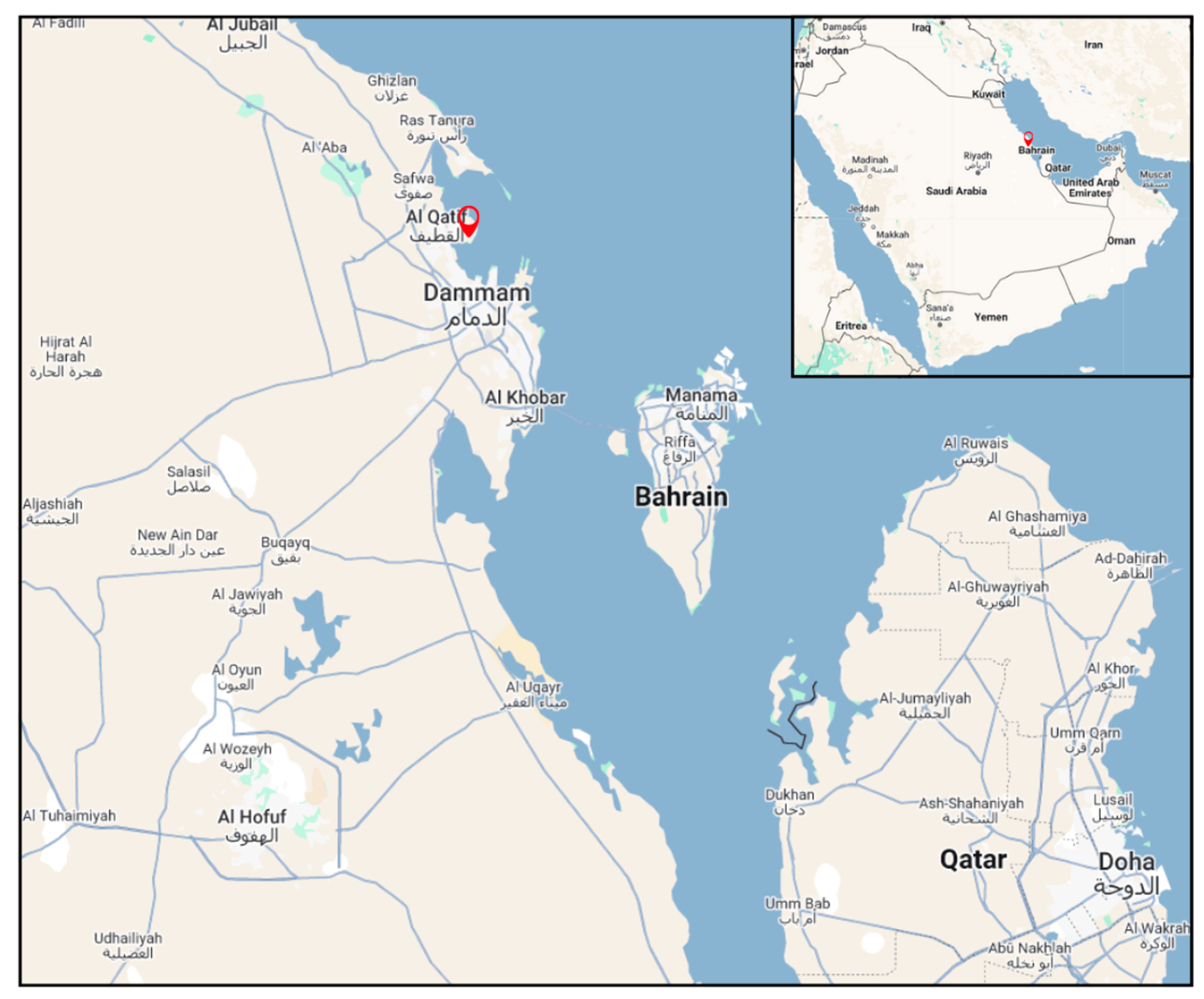
Figure 2.
Tarout Castle (Source: saudipedia.com).
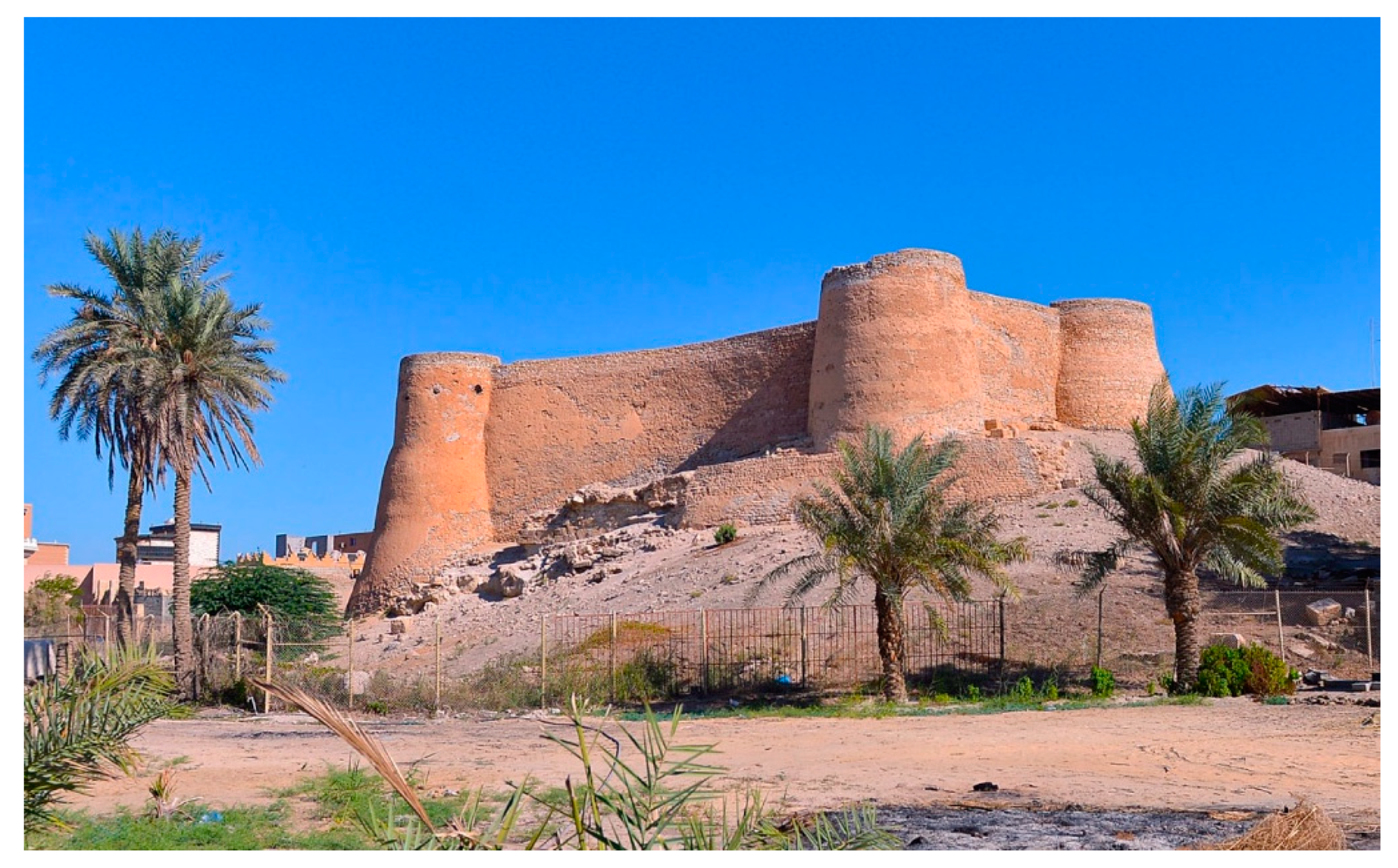
Figure 3.
Proposed framework for heritage-based urban regeneration on Tarout Island.
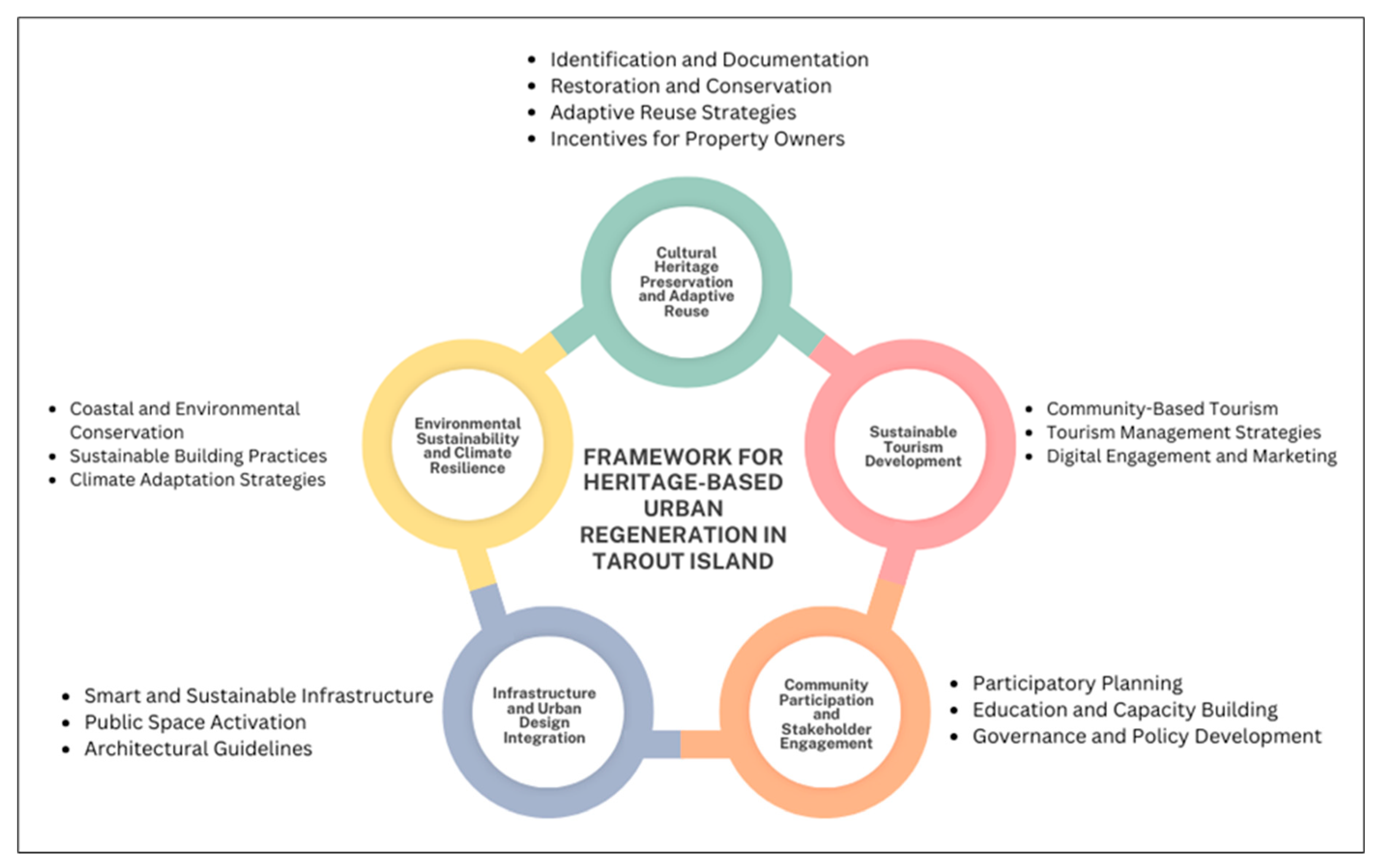

Table 1.
Comparative Analysis of Heritage-Based Urban Regeneration Case Studies.
| Criteria | Global Case Study | Regional Case Study | Local Case Study |
|---|---|---|---|
| Location | Malaga, Spain | Old Saida, Lebanon | Historic Jeddah, Saudi Arabia |
| Objectives | To safeguard cultural heritage while revitalizing urban spaces and promoting cultural tourism. | To restore and preserve historic areas while enhancing their appeal as cultural tourism destinations. | To conserve the historical identity of the area while fostering socio-economic and cultural renewal. |
| Methods | Restoration of key heritage sites, pedestrianizing major streets, adaptive reuse of heritage buildings, and creating cultural landmarks. | Development of heritage trails, rehabilitation of key sites, and collaboration with public and private stakeholders. | Community-inclusive restoration of heritage structures, infrastructure upgrades, and strategic stakeholder coordination. |
| Challenges | Balancing the preservation of heritage with modern tourism demands, preventing gentrification, and maintaining authenticity. | Ensuring community involvement, addressing infrastructure deficits, and mitigating the dominance of tourism. | Managing competing priorities of heritage conservation and modern urban requirements while achieving stakeholder alignment. |
| Goals | To enhance cultural identity, promote sustainable tourism, and modernize the city’s urban fabric while preserving heritage. | To boost cultural tourism, support local economic development, and protect architectural heritage. | To integrate heritage preservation with long-term community prosperity and sustainable urban growth. |
| Sustainability | Focused largely on tourism, with limited emphasis on inclusivity in broader urban development efforts. | Sustainability efforts are constrained, with disproportionate emphasis on tourism compared to local needs. | Embedded within Saudi Vision 2030, aiming for balanced and sustainable cultural and urban development. |
| Community Engagement | Moderate, with a focus on economic gains from tourism rather than directly addressing community needs. | Minimal, as local community input was not a primary focus of the regeneration strategy. | Improving through efforts to integrate local voices and balance diverse stakeholder interests. |
| Economic Revitalization | Significant boost to tourism and retail but with some displacement of local businesses due to rising costs. | Cultural tourism increased, but economic benefits for local residents remained limited. | Expansion of business and tourism opportunities, though with uneven distribution of economic advantages. |
| Heritage Authenticity | Partially compromised in some areas through superficial restoration focused on façades. | Largely retained, though tourism-driven interventions occasionally impacted authenticity. | Largely preserved, with attention given to both tangible and intangible cultural elements. |
| Cultural Impact | Strengthened cultural identity and increased international recognition through key cultural developments. | Preserved cultural memory but lacked substantial engagement with local traditions. | Fostered cultural pride and awareness, strengthening both local and national identity. |
| Tourism Integration | Integrated effectively, though often prioritized over local community needs and urban equity. | Tourism development outpaced improvements in local infrastructure and resident benefits. | Balanced integration of tourism within broader urban and cultural planning efforts. |
Disclaimer/Publisher’s Note: The statements, opinions and data contained in all publications are solely those of the individual author(s) and contributor(s) and not of MDPI and/or the editor(s). MDPI and/or the editor(s) disclaim responsibility for any injury to people or property resulting from any ideas, methods, instructions or products referred to in the content. |
© 2025 by the authors. Licensee MDPI, Basel, Switzerland. This article is an open access article distributed under the terms and conditions of the Creative Commons Attribution (CC BY) license (http://creativecommons.org/licenses/by/4.0/).
Copyright: This open access article is published under a Creative Commons CC BY 4.0 license, which permit the free download, distribution, and reuse, provided that the author and preprint are cited in any reuse.