
Submitted:
14 April 2025
Posted:
14 April 2025
You are already at the latest version
Abstract
This study investigates the effectiveness of custom-designed Augmented Reality (AR) animations in improving the acquisition of English idioms and slang among Iranian EFL learners. Non-native speakers, particularly Iranian learners, often face challenges with native speakers' idioms and slang, leading to communication difficulties. Despite the increasing interest in AR for language education, research on its impact on teaching idioms and slang to Iranian EFL learners is limited. This study aims to fill this gap by exploring how AR can enhance traditional educational methods. Custom-designed AR animations, accessible via smartphones, were developed to illustrate idioms and slang using tailored speech and visual elements. A mixed-methods research design was employed, incorporating pretest-posttest control and experimental groups. The study involved 40 students enrolled in English language teaching and translation courses at Imam Reza University. The experimental group used AR animations, while the control group relied on traditional Word documents displayed via a projector. Both groups completed a lesson unit on vocabulary over eight sessions, covering 13 American idioms and slang expressions. Quantitative data from multiple-choice tests were analyzed using IBM SPSS Statistics 27 with independent samples t-tests and descriptive analysis. Additionally, interview data from the experimental group were processed using MAXQDA 2020. Results indicated that the use of AR animations significantly enhanced the learning of English idioms and slang. Qualitative findings revealed high student satisfaction with the AR animations. The study recommends incorporating AR animations into various topics and grade levels for English learning among EFL learners.
Keywords:
Augmented Reality (AR)
; English Idioms and Slang
; Iranian EFL Learners
; Language Acquisition
1. Introduction
In today's digital age, mobile technology has become ubiquitous, with smartphones and tablets offering unprecedented access to information and resources. Among these advancements, Augmented Reality (AR) has emerged as a significant innovation in educational technology, providing interactive and immersive experiences that enhance language acquisition. AR overlays virtual objects and digital information onto the real world, allowing users to engage with computer-generated content within their physical environment. This fusion of virtual and real-world elements presents novel opportunities for enriching the learning experience, particularly in the realm of second language learning. Non-native English speakers, especially Iranian EFL learners, often face challenges in grasping English idioms and slang. These expressions carry cultural nuances and figurative meanings that are not readily apparent through literal translation, leading to confusion and reluctance in communication. Traditional teaching methods may not effectively bridge this gap, resulting in monotonous lessons that fail to engage learners or convey the richness of the language (Ahmadi & Zarei, 2020). The integration of innovative AR animations into language education offers a promising solution to these challenges. By utilizing AR, educators can create dynamic, interactive lessons that bring idiomatic and colloquial expressions to life, making them more accessible and engaging for learners. This technology transcends cultural and geographical limitations, allowing students to immerse themselves in authentic language contexts and interact with digital information in meaningful ways (Jamrus & Razali, 2019). Recent studies have highlighted the potential of AR to enhance learning motivation, investigative skills, and conceptual understanding (Vidak, 2022). AR provides interactive learning tools that enable learners to explore and experiment with language in ways that traditional methods cannot offer. The cost-effectiveness and accessibility of AR through mobile devices also address financial barriers associated with acquiring expensive educational materials like books, CDs, or flashcards (Yağiz & Izadpanah, 2013).
-
Research Questions
- Does the use of newly developed AR animations significantly affect Iranian EFL learners’ acquisition of English idioms and slang?
- How do Iranian EFL learners describe their experiences using AR in learning idioms and slang in real-life situations?
2. Literature Review
Augmented Reality (AR) has emerged as a revolutionary technology in the modern world, seamlessly integrated into smartphones, tablets, and computers. Its presence is increasingly significant in diverse fields such as psychological treatment, manufacturing, medicine, robotics, engineering, and electronics (Wedyan et al., 2022). As technological advancements continue and costs decrease, AR is expanding into new domains, including entertainment, advertising, and notably, educational technology. In education, AR is transforming traditional learning environments across various subjects like medicine, physics, biology, chemistry, geometry, mathematics, astronomy, history, foreign languages, and even pre-school and special needs education (Kesim & Ozarslan, 2012). By overlaying virtual information onto real-world settings, AR delivers immersive experiences that maximize natural and intuitive interactions in real-time. This technology allows users to perceive the real world augmented with computer-generated elements, including images, videos, text, 3D models, and sound (Wedyan et al., 2022). AR facilitates interactive learning by bringing virtual content into any indirect-world environment, thereby enhancing second language learning and language acquisition. Research indicates that AR significantly improves educational outcomes by deepening learners' understanding of the real world and extending it into an augmented learning environment. Multimedia-enhanced AR acts as a scaffold, activating background knowledge, motivating learners, and facilitating the learning process (Khoshnevisan, 2020). There are two main types of AR: Marker-based AR, which uses unique patterns or markers detected by the device's camera to trigger augmented experiences, and Marker-less AR, a more versatile type that does not require specific patterns but gathers information from the environment through the device's camera, accelerometer, digital compass, and GPS. In the context of language education, AR has been explored in various aspects of teaching and learning. It has shown positive effects on literacy development, vocabulary acquisition through game-based AR, and overall classroom engagement. However, there remains a need to examine its impact on more complex language constructs, such as idioms and slang. English idioms and slang are unique collections of sayings and phrases that often carry meanings not immediately apparent from the individual words.
Idioms express figurative meanings different from their literal interpretations and are commonly used by native speakers in everyday conversations (Khoshnevisan, 2020). Mastery of idioms enables learners to understand the workings of natural human language, gain deeper knowledge of human thought, and enhance language development (Ghanizadeh et al., 2022). Similarly, slang enriches language by conveying thoughts and emotions vividly, adding humor, and fostering a sense of belonging among speakers (Yultisa & Mardiah, 2018). Despite their importance, non-native speakers, including Iranian EFL learners, often struggle with idioms and slang due to their figurative nature and cultural nuances. Traditional teaching methods may not effectively address these challenges, and there are financial barriers for educators who need to invest in costly resources like books, CDs, flashcards, or movie downloads (Yağiz & Izadpanah, 2013). Consequently, learners may find the instruction uninspiring and may avoid engaging with these crucial language elements. The integration of AR into language education offers a promising solution. AR provides interactive learning tools that make learning idioms and slang more enjoyable and accessible by delivering cost-effective, immersive experiences through readily available mobile devices (Yağiz & Izadpanah, 2013). By leveraging AR technology, educators can transform traditional methods into technology-enhanced learning experiences that capture learners' interest and facilitate deeper understanding. While existing research highlights the potential benefits of AR in language education, there is a notable gap in the literature concerning the specific nuances of integrating AR for teaching idioms and slang to Iranian EFL learners. This study aims to address this gap by examining the effectiveness of innovative AR animations in enhancing learners' mastery of English idioms and slang, thereby contributing valuable insights to the field of language pedagogy.
3. Method
The current study employed a mixed-methods research design quantitative and qualitative with the primary aim of investigating the impact of augmented reality on the acquisition of idioms and slang among Iranian EFL learners. A quasi-experimental pre-test-post-test control and an experimental group design were utilized. While the EG received AR technology for learning idioms and slang, the CG adhered to traditional learning methods. For a deeper understanding of students’ feelings and experiences with AR technology in the EG group, the researcher incorporated a qualitative component at the end of the term.
3.1. Quantitative Phase
3.1.1. Participants
The quantitative phase involved 40 female’ Iranian EFL learners enrolled in English language teaching and translation courses at Imam Reza International University. The participants, aged between 20 and 38, were divided into two groups:
- Experimental Group (EG): 19 students
- Control Group (CG): 21 students
All participants were in their 3rd and 5th semesters and had comparable proficiency levels in English, ensuring homogeneity in the study.
3.1.2. Research Procedure
The quantitative phase spanned four weeks, consisting of eight instructional sessions conducted from September 25 to October 27, 2023. The instruction focused on teaching 13 American English idioms and slang expressions.
- Pretest Administration:
To assess the participants' baseline knowledge, a pretest was administered to both groups. The test was a multiple-choice questionnaire comprising 20 reliable questions sourced from the English Club website (https://www.englishclub.com), designed to evaluate their ability to recognize the correct meanings of idioms and slang.
- 2.
- Posttest Administration:
After completing the first multiple-choice questionnaire, a posttest identical in format to the pretest was administered to both groups. This was designed to measure any changes in the participants' proficiency in English idioms and slang resulting from the intervention.
- Instructional Intervention:
- Experimental Group (EG):
The EG received a Word file containing embedded AR QR codes for each idiom and slang expression. These codes were projected in the classroom and scanned by the students using their smartphones or via Telegram link, granting them access to innovative AR animations. The animations featured high-quality graphics and sound, providing an immersive and interactive learning experience that aimed to enhance language acquisition.
- b.
- Control Group (CG):
The CG received the same Word file without any QR codes. Instruction was delivered using traditional methods, with materials displayed via a projector. Students relied on textual descriptions and classroom discussions without the aid of AR technology.
Figure 1.
AR Animation of the Idiom Wolf in Sheep’s Clothing.

Figure 2.
AR Animation of the Idiom Couch Potato.
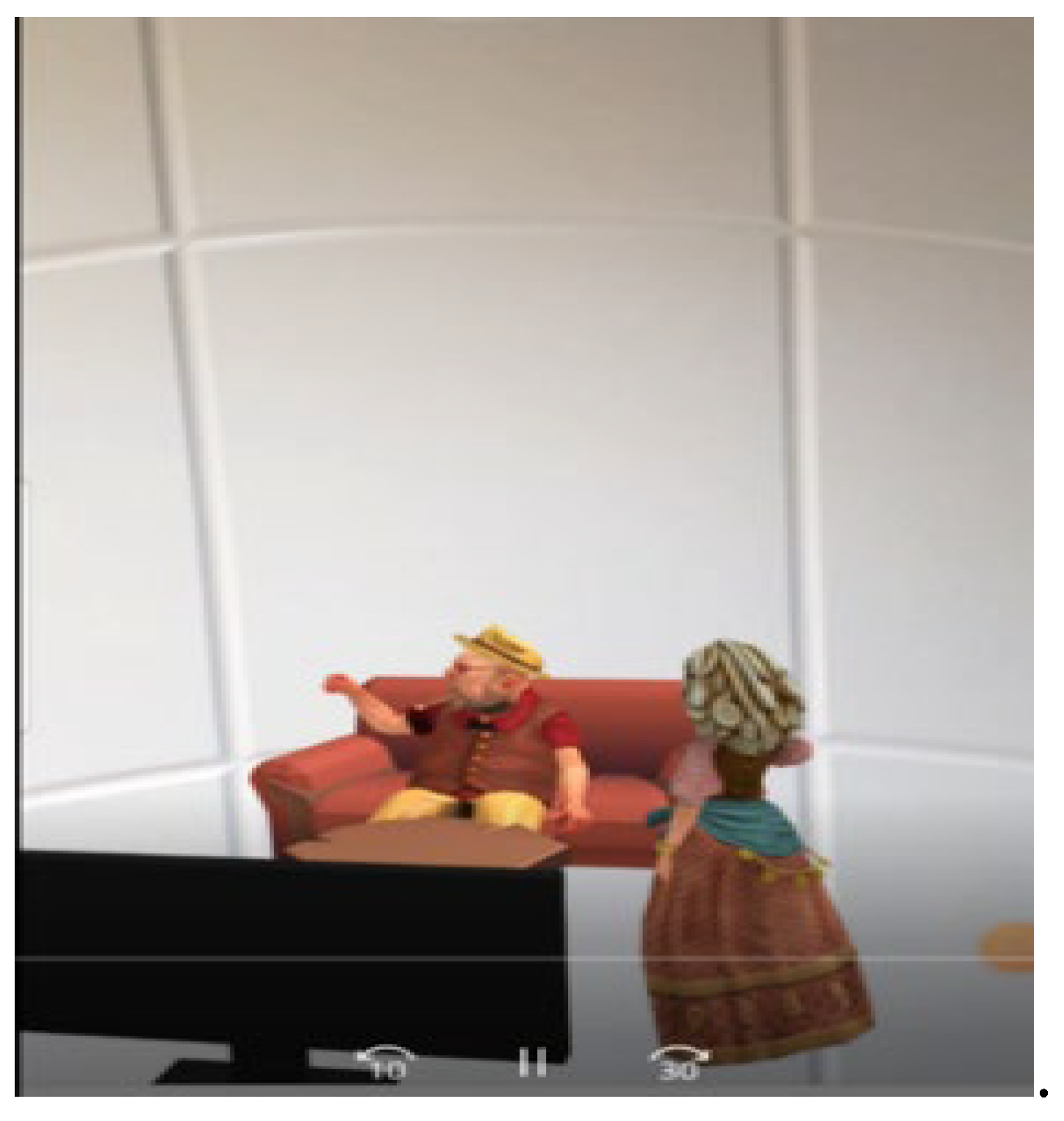
Figure 3.
AR Animation of the Slang Iced.

Figure 4.
Participants of the Experimental Groups.

3.1.3. Data Analysis
The quantitative data were analyzed using IBM SPSS Statistics version 27. Descriptive statistics were calculated, including mean scores, standard deviations, and effect sizes. An independent samples t-test was conducted to determine whether there were statistically significant differences between the performance of the experimental and control groups on the pretest and posttest.
3.1.4. Findings

| Tests Groups N Mean Std. Deviation Std. Error | Effect Size | Sig. (2-tailed) | |
| Pre-test Exp. 19 7.63 3.30 .75 Control 21 7.61 3.81 .83 Post-test Exp. 19 19.26 .87 .20 Control 21 11.19 5.86 1.27 |
2.99 3.04 |
<.001 |
In the pretest, both groups demonstrated similar proficiency levels:
Experimental Group: Mean = 7.63, SD = 3.30 Control Group: Mean = 7.61, SD = 3.81
This similarity indicates that the participants started with comparable knowledge of English idioms and slang. In the posttest, a substantial improvement was observed in the experimental group:
Experimental Group: Mean = 19.26, SD = 0.87 Control Group: Mean = 11.19, SD = 5.86
The experimental group's mean score increased significantly, while the control group showed a modest improvement. The effect size for the experimental group was 3.04, suggesting a large effect of the AR intervention on learning outcomes. An independent samples t-test confirmed that the difference in posttest scores between the groups was statistically significant (p < 0.001), indicating that the use of educational technology through AR animations had a positive impact on the language acquisition of English idioms and slang among Iranian EFL learners. The strong relationship between the use of AR technology and improved test scores highlights the effectiveness of technology-enhanced learning in second language learning contexts.
3.2. Qualitative Phase
To gain deeper insights into the learners' experiences with AR technology, a qualitative component was incorporated.
3.2.1. Participants
The qualitative phase involved the 19 students from the experimental group who experienced the AR-enhanced instruction.
3.2.2. Data Collection
After the posttest, semi-structured interviews were conducted to explore the students' feelings, perceptions, and experiences using AR in learning idioms and slang. The interviews aimed to understand:
- How do Iranian EFL learners describe their experiences using AR in learning idioms and slang in real-life situations?
3.2.3. Data Analysis
The qualitative data were analyzed using MAXQDA 2020 software. A thematic analysis was performed to identify common themes and patterns in the students' responses.
3.2.3.1. Findings from Qualitative Analysis
The qualitative analysis revealed several significant themes illustrating the learners' experiences with AR-enhanced instruction:
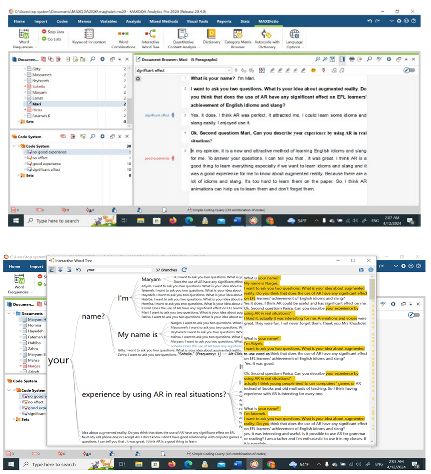
The interviews were audio-recorded with participants' consent and transcribed verbatim. Data analysis was conducted using MAXQDA 2020 software. A thematic coding approach was employed to identify prevalent themes and patterns within the participants' responses, providing deeper insights into their experiences with AR learning. Participants consistently reported that the use of AR animations made the learning process more engaging and enjoyable. The interactive and immersive nature of AR captured their attention and fostered a heightened interest in learning idioms and slang.
The visual and auditory features of the AR animations aided in better comprehension and retention of idiomatic expressions. Students found that associating images and sounds with phrases helped them grasp meanings more effectively.
- "Seeing the idioms visually represented helped me understand their meanings without just memorizing definitions." (Participant 7)
- "The animations made it easier to remember the idioms; they stuck in my mind because of the visuals." (Participant 15)
- "The AR animations were fascinating; they turned learning idioms into a fun activity." (Participant 3)
- "I felt more motivated to study because the AR made lessons exciting and different from traditional classes." (Participant 11)
Preliminary qualitative findings revealed:
- Increased Engagement: Students reported that the AR animations made learning more enjoyable and interactive.
- Enhanced Understanding: The visual and auditory elements helped them grasp the figurative meanings of idioms and slang more effectively.
- Ease of Use: Most students found the AR technology accessible and user-friendly through their smartphones.
- Positive Attitudes: There was a high level of satisfaction with the AR-enhanced instruction, with many expressing a desire for AR to be used in other language learning areas.
- Summary of Qualitative Findings
The qualitative insights highlight that the use of innovative AR animations significantly enriched the learning experience for Iranian EFL learners. The AR technology enhanced engagement, improved understanding and memory retention, and increased learners' confidence in using English idioms and slang in real-life situations. Additionally, the positive reception of AR suggests a readiness among learners to embrace educational technology as a core component of second language learning.
4. Discussion and Conclusions
This study explored the impact of innovative Augmented Reality (AR) animations on the learning of English idioms and slang among Iranian EFL learners, combining quantitative analysis with qualitative insights to provide a comprehensive understanding of the effectiveness of AR in language acquisition.
The quantitative findings revealed a significant enhancement in the comprehension and retention of idioms and slang when AR animations were utilized. The experimental group (EG), which received AR-enhanced instruction, outperformed the control group (CG) which adhered to traditional teaching methods. Specifically, the post-test scores demonstrated a statistically significant difference between the two groups (t = 6.235; p < .001). These results align with previous studies emphasizing the benefits of AR in language learning. For instance, Khoshnevisan (2020) observed significant improvements in learners’ achievements when utilizing AR-infused materials compared to traditional approaches. Similarly, Çakır (2015) found that university students learning English vocabulary with AR technology performed better and exhibited higher motivation levels. Akçayır (2016) also reported notable enhancements in students' word-learning processes when using AR applications. Collectively, these studies support the premise that AR technology can substantially improve learning outcomes in language education.
The qualitative findings further enriched the understanding of AR's effectiveness by capturing learners' experiences and perceptions. Semi-structured interviews with the EG participants revealed several key themes: learners found the AR animations captivating, which heightened their interest in learning idioms and slang. The immersive nature of AR made the learning process enjoyable, leading to sustained motivation. Moreover, the visual and interactive elements of AR helped learners grasp the figurative meanings of idioms and slang more effectively. Associating images and animations with expressions facilitated better memory retention and recall. Last, participants expressed enthusiasm about integrating technology into their learning experiences. They recognized the value of AR as an effective tool in modern education, expressing a desire for its application in other learning areas.
These qualitative insights corroborate the quantitative results, highlighting that AR not only improves academic performance but also positively influences learners' attitudes and engagement. This aligns with the findings of Jamrus and Razali (2021), who reported that AR applications significantly enhanced students’ speaking and reading skills and facilitated knowledge retention.
5. Implications for Language Pedagogy
These findings suggest that integrating AR into language instruction can effectively address common challenges faced by EFL learners in mastering idiomatic and colloquial expressions. Educators are encouraged to adopt AR and similar interactive learning tools to create more dynamic and engaging learning environments. Such technologies not only support the acquisition of complex language constructs but also promote learner autonomy and sustained motivation.
Glossary
- Augmented Reality (AR):
- A technology that overlays digital information (such as images, videos, or sound) onto the real world to enhance learning experiences.
- Descriptive Analysis:
- A type of statistical analysis that summarizes data to show patterns, such as averages or variability within a dataset.
- Effect Size:
- A measure that quantifies the strength of the difference between two groups, is used to determine the impact of augmented reality on learners' performance.
- Idioms:
- Expressions in a language where the meaning is not directly inferred from the individual words, often culturally specific.
- Independent Samples T-Test:
- A statistical method used to compare the means of two groups to see if there is a significant difference between them.
- MAXQDA:
- A software used for qualitative data analysis, employed in the study to analyze interview responses from participants
- Mixed-Methods Research Design:
- A research approach that combines both quantitative (numerical) and qualitative (descriptive) methods to gain comprehensive insights.
- Multiple-Choice Test:
- A test format where participants select the correct answer from several options provided, used in the study to assess idiom and slang knowledge.
- Pre-test/Post-test Control Group Design:
- A research design where participants are tested before and after an intervention, with one group receiving the intervention and another (the control group) not, to compare the outcomes.
- Slang:
- Informal words or phrases that are more commonly used in spoken language, often unique to particular groups or regions.
References
- Ahmadi, M., & Zarei, A. (2020). Learning L2 idioms: The role of verbal mnemonics. Iranian Journal of Applied Language Studies, 12(1), 1–28. [CrossRef]
- Akçayır, M., & Akçayır, G. (2017). Advantages and challenges associated with augmented reality for education: A systematic review of the literature. Educational Research Review, 20, 1–11. [CrossRef]
- Bursalı, H., & Yılmaz, R. (2019). Effect of augmented reality applications on secondary school students' reading comprehension and learning permanency. Computers in Human Behavior, 95, 126–135. [CrossRef]
- Carmigniani, J., Furht, B., Anisetti, M., Ceravolo, P., Damiani, E., & Ivkovic, M. (2011). Augmented reality technologies, systems and applications. Multimedia Tools and Applications, 51(1), 341–377. [CrossRef]
- EnglishClub. (n.d.). English resources for learners and teachers. Retrieved September 1, 2023. Available online: https://www.englishclub.com.
- Fotovatnia, Z., & Khaki, G. (2012). The effect of three techniques for teaching English idioms to Iranian TEFL undergraduates. Theory and Practice in Language Studies, 2(2), 272–281. [CrossRef]
- Ghanizadeh, A., Jahedizadeh, S., & Movaghar, F. (2022). The effect of mobile-assisted language learning (MALL) on Iranian EFL learners’ idiom learning and perceptions of classroom activities. Iranian Journal of Applied Language Studies, 14(1), 87–108. [CrossRef]
- Jamrus, M. H. M., & Razali, A. B. (2019). Augmented reality in teaching and learning English reading: Realities, possibilities, and limitations. International Journal of Academic Research in Progressive Education and Development, 8(4), 724–737. [CrossRef]
- Jamrus, M. H. M., & Razali, A. B. (2021). Acceptance, readiness, and intention to use augmented reality (AR) in teaching English reading among secondary school teachers in Malaysia. Asian Journal of University Education, 17(4), 312–326. [CrossRef]
- Kesim, M., & Özarslan, Y. (2012). Augmented reality in education: Current technologies and the potential for education. Procedia - Social and Behavioral Sciences, 47, 297–302. [CrossRef]
- Khoshnevisan, B. (2020). The effects of augmented reality (AR)-infused idiom material on Iranian students’ idiom achievements, motivation, and perceptions [Doctoral dissertation, University of South Florida]. USF Tampa Graduate Theses and Dissertations https://digitalcommons.usf.edu/etd/8234.
- Vidak, A., Šapić, I. M., & Mešić, V. (2022). Augmented reality in teaching about physics: A systematic review. In International Physics Conference in Bosnia and Herzegovina (p. 25). Physical Society in the Federation of Bosnia and Herzegovina.
- Wedyan, M., Falah, J., Elshaweesh, O., Alfalah, S., & Alazab, M. (2022). Augmented reality-based English language learning: Importance and state of the art. Electronics, 11(17), Article 2692. [CrossRef]
- Yağız, O., & Izadpanah, S. (2013). Language, culture, idioms, and their relationship with the foreign language. Journal of Language Teaching and Research, 4(5), 953–957. [CrossRef]
- Yultisa, N., & Mardiah, M. (2018). The effect of using English slang words on students’ speaking skills: Tenth-grade students of SMA Negeri 1 Hinai Kabupaten Langkat. Serunai: Jurnal Ilmiah Ilmu Pendidikan, 3(2), 108–118. [CrossRef]
Disclaimer/Publisher’s Note: The statements, opinions and data contained in all publications are solely those of the individual author(s) and contributor(s) and not of MDPI and/or the editor(s). MDPI and/or the editor(s) disclaim responsibility for any injury to people or property resulting from any ideas, methods, instructions or products referred to in the content. |
© 2025 by the authors. Licensee MDPI, Basel, Switzerland. This article is an open access article distributed under the terms and conditions of the Creative Commons Attribution (CC BY) license (http://creativecommons.org/licenses/by/4.0/).
Copyright: This open access article is published under a Creative Commons CC BY 4.0 license, which permit the free download, distribution, and reuse, provided that the author and preprint are cited in any reuse.


