

Submitted:
10 April 2025
Posted:
14 April 2025
You are already at the latest version
Abstract
Controlled Environment Agriculture (CEA) offers a protected system for agricultural production; however, it remains vulnerable to diseases, particularly root diseases such as Pythium root rot and Fusarium wilt. Sustainable and eco-friendly agricultural practices, including the use of plant-beneficial microbes, can help mitigate these harmful diseases. These microbes produce natural antibiotics and promote Induced Systemic Resistance (ISR), which enhances nutrient uptake, stress tolerance, and disease resistance. While plant-beneficial microbes have been applied in conventional cropping systems, they have yet to be fully integrated into CEA-based systems. Oxygen availability in the root zone is critical for the functionalities of beneficial microorganisms. Insufficient levels of dissolved oxygen (DO) can hinder microbial activity, lead to the accumulation of harmful compounds, and cause stress to the plants. Contemporary aeration technologies, such as novel oxygenated nanobubble technology, provide better oxygen distribution and promote optimal microbial proliferation, enhancing plant resilience. Hydroponic and soilless substrate-based systems of CEA productions have significant potential to integrate beneficial microbes, increase crop yields, reduce diseases, and improve resource use efficiency. This review aims to summarize the significance of dissolved oxygen and the potential impact of novel nanobubble technology in CEA for managing root zone diseases while increasing crop productivity and sustainability.
Keywords:
Sustainable disease management
; dissolved oxygen
; oxygenated nanobubbles
; Controlled Environment Agriculture
1. Introduction
Controlled-environment agriculture (CEA) crop production addresses modern agricultural challenges and ensures sustainability and nutritional security. The increasing demand for year-round, locally grown produce in urban markets, and the need to address climate change and food deserts drive interest in CEA [1,2]. CEA offers resilience to climate change by protecting crops from extreme weather, pests, and diseases, ensuring a stable and reliable food supply in an unpredictable environment [3]. By minimizing land use, preserving natural ecosystems, and conserving biodiversity, CEA plays a critical role in creating a sustainable and efficient agricultural system to meet the growing global demand for food [4]. CEA encompasses various technologies, from simple greenhouse systems to advanced indoor vertical farms. These sophisticated approaches often integrate recirculating hydroponic systems, artificial LED lighting, HVAC systems for precise heating and cooling, and robotic harvesting. Environmental parameters such as temperature, humidity, light, and CO2 concentrations can be controlled to optimize plant growth with improved resource use efficiency [1]. High-valued fruits and vegetables, including strawberries, tomatoes, basil, and lettuce, microgreens, are efficiently growing in the CEA system due to offering relatively short growth cycles and taking the seasonal variation out of the equation [5]. Studies indicate that strawberries grown in CEA have higher yields and better fruit quality than those grown in traditional open fields. Additionally, in CEA, enhanced nutritional content in leafy greens like basil and lettuce has also been reported [5].
Beneficial microorganisms stimulate root development and activate systemic defense systems to maintain the healthy growth of plants, and some work as biocontrol for various disease management [6,7,8]. These are primarily aerobic microbes, thrive in oxygen-rich environments and are involved in regulating rhizosphere ecosystems and plant growth and development [9]. Implementing beneficial organisms to improve the efficiency of nutrient use and plant health has great potential for sustainable CEA production.
The pathogenic attack could be devastating for the CEA production system. However, various factors need to be established, and further technological incorporation in the CEA system is required to ensure sustainability and efficient production systems. As such, dissolved oxygen (DO) and the benefits of DO at the physiological level have been discussed previously [10,11]. DO is also critical for maintaining a healthy root zone. DO is significant for plant health because it promotes improved root growth and function. High-quality irrigation water with saturated levels of DO could improve nutrient and water uptake, photosynthetic capacity, and plant stress resistance [12]. In the CEA system, hydroponics and soil-less substrate-based crop productions use enclosed and recirculating water for plant growth, and it provides a habitat for fast pathogen growth [13]. Among these pathogens, Pythium root rot, Fusarium wilt, Rhizoctonia root rot, Phytophthora root rot, bacterial wilt, and Verticillium wilt are the most often occurring root zoon diseases in crops, including tomato, strawberry, and lettuce. The DO in the root zone could enhance beneficial microbes, including biocontrol agent growth [14]. These root zone bacterial communities could be altered by utilizing micro-nanobubbles in irrigation, resulting in enhancing nitrification and improving the interactions between soil fertility and microorganism, leading to higher sugarcane yield [15,16].
The integration of technologies maintaining a higher level of DO along with beneficial microbes has the potential to increase the efficiency of biopesticide, providing stronger microbial protection in integrated pest management (IPM) inside CEA systems to improve its sustainability. In this review, we focused on the technologies available for maintaining higher dissolved oxygen (DO) and the impact of oxygenated nanobubbles on the growth of beneficial microorganisms and root zone disease management in CEA.
2. Methodology
A systematic review method was employed in this study, to collect, screen, and synthesize relevant articles of nanobubbles technologies in modern agriculture systems. Mostly, the literature search was primarily focused on research articles published between 2014 and 2025, as the majority of nanobubbles/dissolved oxygen applications in agriculture developed withing this period. However, a few articles, published before 2014, were also included due to their significance of fundamental knowledge. Comprehensive search was performed, including SCOPUS, Web of Science, google scholars, Science direct, using the following keywords: nanobubbles in agriculture, dissolved oxygen in plants growth, plant growth-promoting bacteria, oxygenated nanobubbles in crop productions, etc. An initial screening was conducted based on the titles and abstracts, and full text of the relevant articles were reviewed for eligibility. Key information, such as experimental results, methods of action, and the benefits and limitations of nanobubble technologies in modern agriculture, particularly in controlled-environment agriculture. Finally, prospective perspectives were developed based on the findings and represented in figures using Biorender to demonstrate oxygenated nanobubble technology in controlled-environmental agriculture.Hydroponics and soilless crop production systems are the most promising and efficient methods to increase productivity and prevent transmitted diseases [17]. However, these methods are not entirely immune to diseases, particularly root zoon diseases, that could interrupt the plant's health and productivity in CEA [18].
3. Major Root Zone Diseases in Hydroponics and Soilless Substrate-Based (CEA) Plant Production System
Hydroponics and soilless crop production systems are the most promising and efficient methods to increase productivity and prevent transmitted diseases [17]. However, these methods are not entirely immune to diseases, particularly root zoon diseases, that could interrupt the plant's health and productivity [18]. In CEA, plants are grown with highly rich nutrient solutions using soilless media such as peat moss, coco coir, perlite, and Rockwool. The enclosed and recirculating water in these systems provides an optimal environment for the rapid growth of pathogens [13]. These systems' most common root zone diseases are Pythium root rot, Fusarium wilt, Rhizoctonia root rot, Phytophthora root rot, bacterial wilt, and Verticillium wilt. These infections could cause significant production losses and damage crops, including tomatoes, strawberries, and lettuce.
Fusarium wilt is a soil-borne fungus caused by Fusarium oxysporum and infects a wide range of crops [13,18]. This pathogen attacks the vascular system, causing yellowing leaves, wilting, and, eventually, plant death [22]. Fusarium wilt is the most difficult to manage in a hydroponic culture system because it can survive in the growing media and equipment, causing recurrence [13]. This infection causes higher production losses, increases disease control expenditures, and, in the extreme, can lead to replanting [22]. In a hydroponic system, a moist environment and warm conditions allow the growth of another pathogen, Rhizoctonia solani, which causes Rhizoctonia root rot. This pathogen significantly damages the root systems of crops, leading to poor water and nutrient uptake. This disease rapidly spreads through the nutrient solution in hydroponic systems, causing symptoms such as growth inhibition, wilting, and yellowish leaves [24]. Overwatering or inadequate water drainage in soilless media such as coco coir and peat may create an optimal environment for fungal growth such as Rhizoctonia [31,32]. The difficulty in detecting this infection at the early phase causes rapid root damage, stunted growth, and eventually serious crop loss in hydroponic and soilless cultures. Significant crop losses occurred by oomycetes such as Phytophthora spp. causes Phytophthora root rot in hydroponic and soilless culture systems [26]. This disease damages roots, leading to impaired water and nutrient uptake and considerable yield losses [27]. Annual yield losses owing to many bacterial infections, such as Bacterial wilt in the hydroponic and soilless systems, might cause 30 to 100% yield losses in different crop cultivation ([33,34]). Bacterial wilt is caused by Ralstonia solanacearum, which clogs water-conducting tissues (xylem) and prevents water transport [35]. This disease causes plants to wilt, turn yellow, and eventually die within a few days of infection. It is challenging to eradicate if introduced once, leading to excess yield losses. Higher density of plants in CEA-based production systems with shared recirculating irrigation systems and warm and moist environments spread the disease more rapidly than in conventional open fields [1]; [36]. More sustainable technological approaches are needed in CEA disease management that could boost the plant's natural defense system and are preferable for biobased disease management strategies.

Table 1.
The list of common root zone diseases in hydroponic and soilless agriculture systems.
| Diseases | Relevant Pathogens | Crops | Impacts | References |
| Pythium Root Rot | Pythium spp. | Strawberries, lettuce, basil | Significant yield loss, plant death | [19,20] |
| Fusarium Wilt | Fusarium oxysporum | Strawberries, tomato | Reduced growth, wilting, plant death | [21,22] |
| Rhizoctonia Root Rot | Rhizoctonia solani | Lettuce, tomato, ornamental plants, barley, canola | Root rot, reduced yield | [23,24,25] |
| Phytophthora Root Rot | Phytophthora spp. | Strawberries, lettuce | Severe root rot, plant collapse | [26,27] |
| Bacterial Wilt | Ralstonia solanacearum | Tomato | Rapid wilting, plant death | [28,29] |
| Verticillium Wilt | Verticillium dahliae | Strawberries | Stunted growth, leaf chlorosis, yield loss | [30] |
4. Oxygenated Nanobubbles Production Techniques and Their Significance in CEA-Based Crop Productions
Oxygenated nanobubbles are a newly developed technique gaining popularity in CEA systems to maintain higher dissolved oxygen levels in irrigation water. Nanobubbles are little gas-filled spheres measuring 200 nm in diameter that may exhibit remarkable stability in watery conditions for extended durations [16,37]. Oxygenated nanobubbles elevate the dissolved oxygen level in irrigation water, continually supplying oxygen to the plant roots, improving nutrient absorption, promoting robust root development, and ensuring healthy plant growth [38]. Research indicates that oxygenated nanobubbles improve crop output and quality in hydroponic systems by maintaining optimal oxygen levels in the plant root zone. [38] demonstrated that oxygenated nanobubbles improved the soil porosity and pore connectivity, which allows deep irrigation and better oxygenation to the crop root zone (Figure 1). Due to the characteristics of nanobubbles, such as small diameter, negative surface charge, large interfacial surface area, high gas transfer, and stagnation time in deep water hydroponic culture [39]. These unique properties of oxygenated nanobubbles allow oxygen to be delivered in deep root zones at higher capacity in hydroponics and soilless plant culture systems (Figure 1). The effective levels of oxygenation might be attained by utilizing nanobubbles technology, which offers more efficient benefits than any traditional aeration [16]. Nanobubbles are distinguished by their small size along with the elevated oxygen concentration in irrigation water. Nanobubbles provide a transfer of more than 85% of oxygen into the irrigation water [16,37].
Various strategies are employed to deliver oxygenated nanobubbles in irrigation water within CEA, considering the specific crops and agricultural systems. One promising approach is mechanical stirring, which efficiently generates nanobubbles smaller than 200 nm [40]. Another innovative technique that provides significant control over size and distribution involves the use of nanoscale pores membranes, which require sophisticated membrane materials to generate nanobubbles measuring 360-720 nm [41]. The microfluidic method is also an excellent option for precise control over nanobubble size (500 nm), yet its implementation is complex and costly [42]. Additional methods, including acoustic and hydrodynamic cavitation, generate nanobubbles efficiently ranging from 200 to 300 nm; however, the control over the size and production of nanobubbles relies on the flow rate and pressure conditions [43,44].
Table 2.
The list of different types of nanobubble generation techniques used in crop production systems.
Table 2.
The list of different types of nanobubble generation techniques used in crop production systems.
| Nanobubble Generation Techniques | Diameter of Nanobubble | Principle of methods | Advantages | Disadvantages | References |
| Mechanical Stirring | 150-200 nm | Introducing gas into a liquid to generate bubbles | Simple to implement, cost-effective | For a small amount of nanobubble production | [40,45] |
| Nanoscale Pore Membrane | 360-720 nm | Imposing gas flow across nanoporous membranes | Precise control in size and distribution | Membrane clogging | [41,46] |
| Microfluidic Method | Highly controllable < 500 nm | Gas and liquid combined in microchannels to produce controlled bubbles | High precision in size, integrated with other processes | Complex and expensive | [42] |
| Acoustic Cavitation | 200-301 nm | Utilizing ultrasonic waves to generate bubbles by rapid compression and expansion. | Rapid production of nanobubbles, energy-efficient | Requires specialized equipment and limited size control | [43] |
| Hydrodynamic Cavitation | < 200-301 nm | Changes in pressure inside a fluid induce cavitation, resulting in the formation of bubbles. | Simple to implement and low-cost | Flow rate and pressure could impact the production | [43,44] |
| Dissolved Gas Release | Depending on gas solubility | Dissolving gas at elevated pressure, followed by pressure release to generate bubbles | Simple, inexpensive | Limited size control | [12] |
| Periodic Pressure Variation | Size decreases with exposure. | Periodically adjusting pressure to facilitate the dissolution and precipitation of bubble. | Precise control in uniform bubble production | Small-scale production | [47] |
| Hydraulic Air Compression | Increases in outlet pipe height | Gas is hydraulically compressed and combined with liquid to generate bubbles. | Cost-effective production of nanobubbles at low cost | Limited control size, distribution | [48] |
5. The Impact of Dissolved Oxygen and Beneficial Microbes in Root Zone Diseases
Irrigation water quality is crucial for CEA systems, directly impacting the plant's growth and development. For instance, low or high pH and electrical conductivity levels in irrigation water could affect the root system, reducing plant growth and productivity [49,50]). Oxygen maintenance is essential for root respiration in root cells, which is required for nutrient absorption and plant growth [51,52,53]. In deep water hydroponics and substrate-based CEA crop production systems, dissolved oxygen (DO) plays a significant role in maintaining a healthy root system and prevents hypoxic conditions in the root zone, leading to asphyxiation and proliferation of anaerobic pathogens [54,55]. Recent research showed that high DO levels in irrigation water significantly boost the plant's defense and yield in hydroponically grown crops such as lettuce and tomato [54,55]. Furthermore, DO has an impact on the plant's systemic immunity by manipulating different biochemical pathways involved in activating defense, such as phytohormones and reactive oxygen species (ROS) [12,56,57]. Moreover, increased oxygen availability stimulates the accumulation of metabolites, which have antimicrobial activity in response to pathogen attacks [58;59]. Therefore, adequate oxygenation is crucial for activating the complex defense mechanism in plant cells, which inhibits root zone diseases.
In greenhouse-based agriculture, these beneficial microbes, such as mycorrhizal fungi, plant growth-promoting rhizobacteria (PGPR), and beneficial nematodes, play a significant role in boosting plant health by inducing systemic resistance mechanisms [60,61]. To maintain environmentally friendly and sustainable agriculture in CEA, promoting beneficial microbes could offer a unique and highly effective approach to controlling diseases. Reports showed that beneficial microbes such as Mycorrhizal fungi significantly enhance plants' resistance to pathogens by forming a symbiotic association with plants' roots [21]. Additionally, it was found that beneficial fungi were involved in determining plants' root architecture, which is integrally linked to plants' defense-related metabolites, phytohormones, and vital nutrients [12,62,63].
6. Integration between oxygenated nanobubbles and beneficial microbes
Promoting different beneficial microbes in CEA systems may be crucial in controlling root zone diseases. The interaction of plant-beneficial bacteria, such as plant-growth-promoting bacteria (PGPB) and biocontrol microbes, may help address many difficulties, such as pathogen attacks, while also promoting nutrient uptake and improving stress tolerance [64,65,66]. Beneficial microbes, which involve plant growth, development, and ISR activation, primarily maintain aerobic respiration, which requires optimum oxygen availability [9]. Without sufficient dissolved oxygen (DO), these microbes cannot convert ammonia and nitrate, resulting in harmful levels of toxic compounds in irrigated water. This can cause stress and weaken the plant's defense system. In addition, the growth of pathogenic microorganisms thrives in the absence of significant levels of oxygen [9]. Higher dissolved oxygen in irrigation water improved the growth of beneficial bacteria in the root zone [54,59]. The increased proliferation of beneficial microbes in the plant's root zone may trigger systemic signals, including phytohormones, and activate the induced systemic resistance (ISR) in the plant's distal regions. [65] found that ISR-related genes (NPR1, PDF1.2) can regulate stomatal closure, inhibiting typical pathogenic attacks in controlled agricultural systems. Mycorrhizal spp. could improve the interaction with the plant root zone, enhancing nutrient uptake and plant resistance during higher oxygen levels [67]. This indicates beneficial bacteria in high-oxygen environments can outcompete many pathogens, including Pythium, Fusarium, and Phytophthora, which thrive in lower oxygen conditions [68]Thus, maintaining high levels of dissolved oxygen in irrigation water effectively benefits the growth of beneficial microbes and the sustainable management of root zone diseases.
7. Conclusion and Future Perspectives
An oxygen deficiency modifies root architecture and may potentially impact shoot morphology, including stomatal closure and the retardation of leaf expansion due to insufficient root-zone oxygenation [69]. In deep water culture (DWC), plant roots are submerged in the nutrient solution, and aeration is needed to ensure enough oxygen supply for better productivity. However, the traditional aeration system for providing dissolved oxygen in irrigation cannot always be effective, especially in high temperatures. Nanobubbles, also known as ONs (oxygen nanobubbles), is a cutting-edge and effective method of delivering dissolved oxygen in controlled environment agriculture (CEA) systems [12]. Nanobubbles are a chemical-free oxidant consistently present in physical and biological reactions. Moleaer claims that its nanobubbles technology can potentially enhance the dissolved oxygen (DO) level by up to 300% compared to the conventional aeration procedure [59]. Consequently, the presence of oxygenated nanobubbles enhances irrigation quality, leading to improved soil microbial properties and nutrient absorption. Enhancing the oxygen transit rate to plant roots benefits rhizosphere bacteria that stimulate plant immunity-related phytohormones that ultimately inhibit root zone pathogens [12,56].
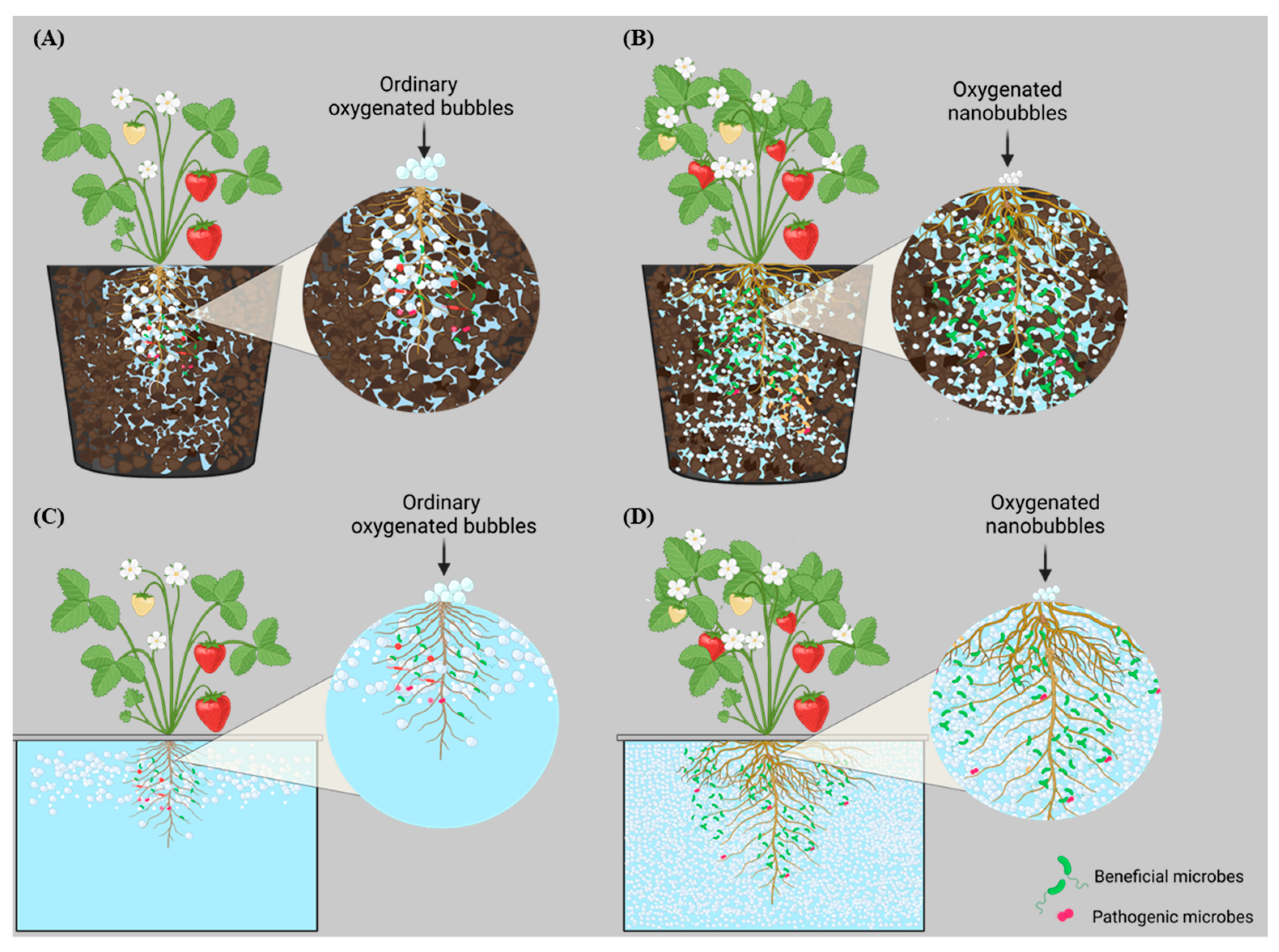
Sustainable irrigation systems are necessary to efficiently utilize water resources for agriculture, particularly for controlled-environmental agriculture systems, including soilless substrates and deep-water hydroponic systems, in which nanobubble technology might prove effective in increasing water use efficiency. One of the most significant attributes of nanobubbles is their capacity to lower the surface tension of water, allowing them to penetrate soil or soilless substrates, resulting in improved infiltration to the root zone where it is most needed. Nanobubble technology provides irrigation water that contains an optimal level of dissolved oxygen in soilless substrates or deep hydroponic systems, which may promote the growth of beneficial bacteria, improve plant resistance, and eventually prevent anaerobic bacteria that cause root zone diseases. This technology could significantly enhance the efficiency of beneficial microbes within the CEA production system. The future of modern agriculture appears promising considering nanobubbles technology may persist in challenging climates, utilize water and nutrients more efficiently, and create higher yields in controlled environment agriculture. Integrating nanobubbles with beneficial microbes in plant growth and production is unexplored; thus, future research on their interactions for crop production requires attention, particularly in controlled-environmental agriculture systems. Modern sustainable aeration systems, such as nanobubble technology, can effectively sustain desired oxygen levels in the root zone even in high temperatures. This technology could significantly enhance the efficiency of beneficial microbes within the CEA production system. By adopting this approach, we can develop sustainable biobased management strategies to address root zone diseases in CEA and beyond. Improved plant health, achieved through sustained optimal oxygen levels, will foster the growth of beneficial microbes that bolster plant immunity (Figure 2) and synergistically enhance CEA production.
Author Contributions
Writing the original draft, M. A. M.; conceptualization, writing critical revision and editing, supervision, project administration, T. I.
Funding
This study was financially supported by University of Tennessee Knoxville startup funds allocated to Tabibul Islam.
Institutional Review Board Statement
N/A
Conflicts of Interest
The authors declare that there is no conflict of interest.
References
- Gómez, C.; Currey, C.J.; Dickson, R.W.; Kim, H.J.; Hernández, R.; Sabeh, N.C.; Raudales, R.E.; Brumfield, R.G.; Laury-Shaw, A.; Wilke, A.K.; et al. Controlled Environment Food Production for Urban Agriculture. HortScience 2019, 54, 1448–1458. [Google Scholar] [CrossRef]
- Goodman, W.; Minner, J. Will the Urban Agricultural Revolution Be Vertical and Soilless? A Case Study of Controlled Environment Agriculture in New York City. Land use policy 2019, 83, 160–173. [Google Scholar] [CrossRef]
- Benke, K.; Tomkins, B. Future Food-Production Systems: Vertical Farming and Controlled-Environment Agriculture. Sustainability: Science, Practice and Policy 2017, 13, 13–26. [Google Scholar] [CrossRef]
- The State of Food and Agriculture 2021. The State of Food and Agriculture 2021 2021. [CrossRef]
- Dsouza, A.; Newman, L.; Graham, T.; Fraser, E.D.G. Exploring the Landscape of Controlled Environment Agriculture Research: A Systematic Scoping Review of Trends and Topics. 2023. [Google Scholar] [CrossRef]
- Ortiz, A.; Sansinenea, E. The Role of Beneficial Microorganisms in Soil Quality and Plant Health. Sustainability 2022, Vol. 14, Page 5358 2022, 14, 5358. [Google Scholar] [CrossRef]
- Bhattacharyya, P.N.; Jha, D.K. Plant Growth-Promoting Rhizobacteria (PGPR): Emergence in Agriculture. World Journal of Microbiology and Biotechnology 2011 28:4 2011, 28, 1327–1350. [Google Scholar] [CrossRef]
- Misra, V.; Mall, A.K.; Singh, D. Rhizoctonia Root-Rot Diseases in Sugar Beet: Pathogen Diversity, Pathogenesis and Cutting-Edge Advancements in Management Research. The Microbe 2023, 1, 100011. [Google Scholar] [CrossRef]
- Lecomte, S.M.; Achouak, W.; Abrouk, D.; Heulin, T.; Nesme, X.; Haichar, F. el Z. Diversifying Anaerobic Respiration Strategies to Compete in the Rhizosphere. Front Environ Sci 2018, 6, 427325. [Google Scholar] [CrossRef]
- Becker, K. Understanding Dissolved Oxygen. Available online: https://www.growertalks.com/Article/?articleid=22058 (accessed on 23 March 2025).
- Bonachela, S.; Vargas, J.A.; Acuña, R.A. Effect of Increasing the Dissolved Oxygen in the Nutrient Solution to Above-Saturation Levels in a Greenhouse Watermelon Crop Grown in Perlite Bags in a Mediterranean Area. Acta Hortic 2005, 697, 25–32. [Google Scholar] [CrossRef]
- Wang, Y.; Wang, S.; Sun, J.; Dai, H.; Zhang, B.; Xiang, W.; Hu, Z.; Li, P.; Yang, J.; Zhang, W. Nanobubbles Promote Nutrient Utilization and Plant Growth in Rice by Upregulating Nutrient Uptake Genes and Stimulating Growth Hormone Production. Sci Total Environ 2021, 800. [Google Scholar] [CrossRef] [PubMed]
- Song, W.; Zhou, L.; Yang, C.; Cao, X.; Zhang, L.; Liu, X. Tomato Fusarium Wilt and Its Chemical Control Strategies in a Hydroponic System. Crop Protection 2004, 23, 243–247. [Google Scholar] [CrossRef]
- Compant, S.; Duffy, B.; Nowak, J.; Clément, C.; Barka, E.A. Use of Plant Growth-Promoting Bacteria for Biocontrol of Plant Diseases: Principles, Mechanisms of Action, and Future Prospects. Appl Environ Microbiol 2005, 71, 4951. [Google Scholar] [CrossRef]
- Zhou, Y.; Bastida, F.; Zhou, B.; Sun, Y.; Gu, T.; Li, S.; Li, Y. Soil Fertility and Crop Production Are Fostered by Micro-Nano Bubble Irrigation with Associated Changes in Soil Bacterial Community. Soil Biol Biochem 2020, 141, 107663. [Google Scholar] [CrossRef]
- Wang, Y.; Wang, T. Preparation Method and Application of Nanobubbles: A Review. Coatings 2023, Vol. 13, Page 1510 2023, 13, 1510. [Google Scholar] [CrossRef]
- Rajendran, S.; Domalachenpa, T.; Arora, H.; Li, P.; Sharma, A.; Rajauria, G. Hydroponics: Exploring Innovative Sustainable Technologies and Applications across Crop Production, with Emphasis on Potato Mini-Tuber Cultivation. Heliyon 2024, 10, e26823. [Google Scholar] [CrossRef]
- Suárez-Cáceres, G.P.; Pérez-Urrestarazu, L.; Avilés, M.; Borrero, C.; Lobillo Eguíbar, J.R.; Fernández-Cabanás, V.M. Susceptibility to Water-Borne Plant Diseases of Hydroponic vs. Aquaponics Systems. Aquaculture 2021, 544, 737093. [Google Scholar] [CrossRef]
- Ishiguro, Y.; Otsubo, K.; Watanabe, H.; Suzuki, M.; Nakayama, K.; Fukuda, T.; Fujinaga, M.; Suga, H.; Kageyama, K. Root and Crown Rot of Strawberry Caused by Pythium Helicoides and Its Distribution in Strawberry Production Areas of Japan. Journal of General Plant Pathology 2014, 80, 423–429. [Google Scholar] [CrossRef]
- Koike, S. PYTHIUM WILT: MAIN ROOT ROT DISEASE OF LETTUCE | Trical Diagnostics. Available online: https://www.tricaldiagnostics.com/2018/10/26/pythium-wilt-main-root-rot-disease-of-lettuce/ (accessed on 23 March 2025).
- Hao, J.; Wuyun, D.; Xi, X.; Dong, B.; Wang, D.; Quan, W.; Zhang, Z.; Zhou, H. Application of 6-Pentyl-α-Pyrone in the Nutrient Solution Used in Tomato Soilless Cultivation to Inhibit Fusarium Oxysporum HF-26 Growth and Development. Agronomy 2023, 13, 1210. [Google Scholar] [CrossRef]
- Koike, S.T.; Gordon, T.R. Management of Fusarium Wilt of Strawberry. Crop Protection 2015, 73, 67–72. [Google Scholar] [CrossRef]
- Dijst, G.; Schneider, J.H.M. Flowerbulbs Diseases Incited by Rhizoctonia Species. Rhizoctonia Species: Taxonomy, Molecular Biology, Ecology, Pathology and Disease Control 1996, 279–288. [Google Scholar] [CrossRef]
- Williamson-Benavides, B.A.; Dhingra, A. Understanding Root Rot Disease in Agricultural Crops. Horticulturae 2021, Vol. 7, Page 33 2021, 7, 33. [Google Scholar] [CrossRef]
- Tewoldemedhin, Y.T.; Lamprecht, S.C.; McLeod, A.; Mazzola, M. Characterization of Rhizoctonia Spp. Recovered from Crop Plants Used in Rotational Cropping Systems in the Western Cape Province of South Africa. 2007, 90, 1399–1406. [Google Scholar] [CrossRef] [PubMed]
- Hutton, D.G.; Forsberg, L.I. Phytophthora Root Rot in Hydroponically Grown Lettuce. Australasian Plant Pathology 1991, 20, 76–79. [Google Scholar] [CrossRef]
- Amimoto, K. SELECTION IN STRAWBERRY WITH RESISTANCE TO PHYTOPHTHORA ROOT ROT FOR HYDROPONICS. Acta Hortic 1992, 273–278. [Google Scholar] [CrossRef]
- Itoh, M.; Iwasaki, Y. Control of Ralstonia Solanacearum in Tomato Hydroponics Using a Polyvinylidene Fluoride Ultrafiltration Membrane. Acta Hortic 2018, 1227, 299–304. [Google Scholar] [CrossRef]
- Elsayed, T.R.; Jacquiod, S.; Nour, E.H.; Sørensen, S.J.; Smalla, K. Biocontrol of Bacterial Wilt Disease Through Complex Interaction Between Tomato Plant, Antagonists, the Indigenous Rhizosphere Microbiota, and Ralstonia Solanacearum. Front Microbiol 2020, 10, 484496. [Google Scholar] [CrossRef]
- Cockerton, H.M.; Li, B.; Vickerstaff, R.J.; Eyre, C.A.; Sargent, D.J.; Armitage, A.D.; Marina-Montes, C.; Garcia-Cruz, A.; Passey, A.J.; Simpson, D.W.; et al. Identifying Verticillium Dahliae Resistance in Strawberry through Disease Screening of Multiple Populations and Image Based Phenotyping. Front Plant Sci 2019, 10, 442989. [Google Scholar] [CrossRef] [PubMed]
- Yan, K.; Ma, Y.; Bao, S.; Li, W.; Wang, Y.; Sun, C.; Lu, X.; Ran, J. Exploring the Impact of Coconut Peat and Vermiculite on the Rhizosphere Microbiome of Pre-Basic Seed Potatoes under Soilless Cultivation Conditions. Microorganisms 2024, 12, 584. [Google Scholar] [CrossRef]
- Lawson, L. Rhizoctonia Root Rot: Symptoms And How To Control | PT Growers and Consumers. Available online: https://www.pthorticulture.com/en-us/training-center/rhizoctonia-root-rot-symptoms-and-how-to-control (accessed on 23 March 2025).
- Benti, E.A. Control of Bacterial Wilt (Ralstonia Solanacearum) and Reduction of Ginger Yield Loss through Integrated Management Methods in Southwestern Ethiopia. Open Agric J 2023, 17. [Google Scholar] [CrossRef]
- Yuliar, Y.; Asi Nion, Y.; Toyota, K. Recent Trends in Control Methods for Bacterial Wilt Diseases Caused by Ralstonia Solanacearum. Microbes Environ 2015, 30, 1–11. [Google Scholar] [CrossRef]
- Peeters, N.; Guidot, A.; Vailleau, F.; Valls, M. Ralstonia Solanacearum, a Widespread Bacterial Plant Pathogen in the Post-Genomic Era. Mol Plant Pathol 2013, 14, 651–662. [Google Scholar] [CrossRef] [PubMed]
- Bhattarai, K.; Ogden, A.B.; Pandey, S.; Sandoya, G. V; Shi, A.; Nankar, A.N.; Jayakodi, M.; Huo, H.; Jiang, T.; Tripodi, P.; et al. Improvement of Crop Production in Controlled Environment Agriculture through Breeding. Front Plant Sci 2025, 15, 1524601. [Google Scholar] [CrossRef]
- Water Quality Solutions Team Nanobubble Aeration Explained – Water Quality Solutions. Available online: https://waterqualitysolutions.com.au/nanobubble-aeration-explained/ (accessed on 23 March 2025).
- Chen, W.; Bastida, F.; Liu, Y.; Zhou, Y.; He, J.; Song, P.; Kuang, N.; Li, Y. Nanobubble Oxygenated Increases Crop Production via Soil Structure Improvement: The Perspective of Microbially Mediated Effects. Agric Water Manag 2023, 282, 108263. [Google Scholar] [CrossRef]
- Deboer, E.J.; Richardson, M.D.; Gentimis, T.; McCalla, J.H. Analysis of Nanobubble-Oxygenated Water for Horticultural Applications. Horttechnology 2024, 34, 769–773. [Google Scholar] [CrossRef]
- Etchepare, R.; Oliveira, H.; Nicknig, M.; Azevedo, A.; Rubio, J. Nanobubbles: Generation Using a Multiphase Pump, Properties and Features in Flotation. Miner Eng 2017, 112, 19–26. [Google Scholar] [CrossRef]
- Kukizaki, M.; Goto, M. Size Control of Nanobubbles Generated from Shirasu-Porous-Glass (SPG) Membranes. J Memb Sci 2006, 281, 386–396. [Google Scholar] [CrossRef]
- Xu, J.; Salari, A.; Wang, Y.; He, X.; Kerr, L.; Darbandi, A.; de Leon, A.C.; Exner, A.A.; Kolios, M.C.; Yuen, D.; et al. Microfluidic Generation of Monodisperse Nanobubbles by Selective Gas Dissolution. Small 2021, 17, 2100345. [Google Scholar] [CrossRef]
- Alam, H.S.; Sutikno, P.; Soelaiman, T.A.F.; Sugiarto, A.T. Bulk Nanobubbles: Generation Using a Two-Chamber Swirling Flow Nozzle and Long-Term Stability in Water. J Flow Chem 2022, 12, 161–173. [Google Scholar] [CrossRef]
- Wu, M.; Song, H.; Liang, X.; Huang, N.; Li, X. Generation of Micro-Nano Bubbles by Self-Developed Swirl-Type Micro-Nano Bubble Generator. Chemical Engineering and Processing - Process Intensification 2022, 181, 109136. [Google Scholar] [CrossRef]
- Senthilkumar, G.; Purusothaman, M.; Rameshkumar, C.; Joy, N.; Sachin, S.; Siva Thanigai, K. Generation and Characterization of Nanobubbles for Heat Transfer Applications. Mater Today Proc 2021, 43, 3391–3393. [Google Scholar] [CrossRef]
- Ahmed, A.K.A.; Sun, C.; Hua, L.; Zhang, Z.; Zhang, Y.; Zhang, W.; Marhaba, T. Generation of Nanobubbles by Ceramic Membrane Filters: The Dependence of Bubble Size and Zeta Potential on Surface Coating, Pore Size and Injected Gas Pressure. Chemosphere 2018, 203, 327–335. [Google Scholar] [CrossRef]
- Wang, Q.; Zhao, H.; Qi, N.; Qin, Y.; Zhang, X.; Li, Y. Generation and Stability of Size-Adjustable Bulk Nanobubbles Based on Periodic Pressure Change. Scientific Reports 2019 9:1 2019, 9, 1–9. [Google Scholar] [CrossRef]
- Yang, S.; Tsai, P.; Kooij, E.S.; Prosperetti, A.; Zandvliet, H.J.W.; Lohse, D. Electrolytically Generated Nanobubbles on Highly Orientated Pyrolytic Graphite Surfaces. Langmuir 2009, 25, 1466–1474. [Google Scholar] [CrossRef] [PubMed]
- Cowan, N.; Ferrier, L.; Spears, B.; Drewer, J.; Reay, D.; Skiba, U. CEA Systems: The Means to Achieve Future Food Security and Environmental Sustainability? Front Sustain Food Syst 2022, 6, 891256. [Google Scholar] [CrossRef]
- Craveiro, D. Why Controlled Environment Agriculture (CEA) Is the Future of Farming. Available online: https://www.danthermgroup.com/uk/insights/why-controlled-environment-agriculture-cea-is-the-future-of-farming (accessed on 23 March 2025).
- Peters Ben The Correct Oxygen Content in the Roots of a Plant. Available online: https://royalbrinkman.com/knowledge-center/technical-projects/correct-oxygen-in-roots-plant (accessed on 23 March 2025).
- Moleaer Oxygen Uptake by Roots Is Critical for Plant Respiration. Available online: https://www.moleaer.com/blog/horticulture/high-plant-yields-oxygen-uptake-by-roots-is-critical-for-plant-respiration (accessed on 23 March 2025).
- Ben-Noah, I.; Friedman, S.P. Review and Evaluation of Root Respiration and of Natural and Agricultural Processes of Soil Aeration. Vadose Zone Journal 2018, 17, 1–47. [Google Scholar] [CrossRef]
- Ouyang, Z.; Tian, J.; Yan, X.; Shen, H. Effects of Different Concentrations of Dissolved Oxygen or Temperatures on the Growth, Photosynthesis, Yield and Quality of Lettuce. Agric Water Manag 2020, 228, 105896. [Google Scholar] [CrossRef]
- Suyantohadi, A.; Kyoren, T.; Hariadi, M.; Purnomo, M.H.; Morimoto, T. Effect of High Consentrated Dissolved Oxygen on the Plant Growth in a Deep Hydroponic Culture under a Low Temperature. IFAC Proceedings Volumes 2010, 43, 251–255. [Google Scholar] [CrossRef]
- Saeed, Q.; Xiukang, W.; Haider, F.U.; Kučerik, J.; Mumtaz, M.Z.; Holatko, J.; Naseem, M.; Kintl, A.; Ejaz, M.; Naveed, M.; et al. Rhizosphere Bacteria in Plant Growth Promotion, Biocontrol, and Bioremediation of Contaminated Sites: A Comprehensive Review of Effects and Mechanisms. Int J Mol Sci 2021, 22. [Google Scholar] [CrossRef]
- Mamun, M. Al; Lee, B.R.; Park, S.H.; Muchlas, M.; Bae, D.W.; Kim, T.H. Interactive Regulation of Immune-Related Resistance Genes with Salicylic Acid and Jasmonic Acid Signaling in Systemic Acquired Resistance in the Xanthomonas–Brassica Pathosystem. J Plant Physiol 2024, 302, 154323. [Google Scholar] [CrossRef]
- Yemelyanov, V. V.; Puzanskiy, R.K.; Shishova, M.F. Plant Life with and without Oxygen: A Metabolomics Approach. Int J Mol Sci 2023, 24. [Google Scholar] [CrossRef] [PubMed]
- Moleaer Root Respiration: Why Plants Need Oxygen to Thrive. Available online: https://www.moleaer.com/blog/horticulture/root-respiration (accessed on 23 March 2025).
- Deguine, J.P.; Aubertot, J.N.; Flor, R.J.; Lescourret, F.; Wyckhuys, K.A.G.; Ratnadass, A. Integrated Pest Management: Good Intentions, Hard Realities. A Review. Agronomy for Sustainable Development 2021 41:3 2021, 41, 1–35. [Google Scholar] [CrossRef]
- Zhang, T.; Jian, Q.; Yao, X.; Guan, L.; Li, L.; Liu, F.; Zhang, C.; Li, D.; Tang, H.; Lu, L. Plant Growth-Promoting Rhizobacteria (PGPR) Improve the Growth and Quality of Several Crops. Heliyon 2024, 10, e31553. [Google Scholar] [CrossRef] [PubMed]
- Caruso, T.; Mafrica, R.; Bruno, M.; Vescio, R.; Sorgonà, A. Root Architectural Traits of Rooted Cuttings of Two Fig Cultivars: Treatments with Arbuscular Mycorrhizal Fungi Formulation. Sci Hortic 2021, 283, 110083. [Google Scholar] [CrossRef]
- Jan, M.; Muhammad, S.; Jin, W.; Zhong, W.; Zhang, S.; Lin, Y.; Zhou, Y.; Liu, J.; Liu, H.; Munir, R.; et al. Modulating Root System Architecture: Cross-Talk between Auxin and Phytohormones. Front Plant Sci 2024, 15, 1343928. [Google Scholar] [CrossRef] [PubMed]
- Chen, W.; Bastida, F.; Liu, Y.; Zhou, Y.; He, J.; Song, P.; Kuang, N.; Li, Y. Nanobubble Oxygenated Increases Crop Production via Soil Structure Improvement: The Perspective of Microbially Mediated Effects. Agric Water Manag 2023, 282, 108263. [Google Scholar] [CrossRef]
- Yu, Y.; Gui, Y.; Li, Z.; Jiang, C.; Guo, J.; Niu, D. Induced Systemic Resistance for Improving Plant Immunity by Beneficial Microbes. Plants 2022, 11, 386. [Google Scholar] [CrossRef]
- Zhu, L.; Huang, J.; Lu, X.; Zhou, C. Development of Plant Systemic Resistance by Beneficial Rhizobacteria: Recognition, Initiation, Elicitation and Regulation. Front Plant Sci 2022, 13, 952397. [Google Scholar] [CrossRef] [PubMed]
- Wahab, A.; Muhammad, M.; Munir, A.; Abdi, G.; Zaman, W.; Ayaz, A.; Khizar, C.; Reddy, S.P.P. Role of Arbuscular Mycorrhizal Fungi in Regulating Growth, Enhancing Productivity, and Potentially Influencing Ecosystems under Abiotic and Biotic Stresses. Plants 2023, Vol. 12, Page 3102 2023, 12, 3102. [Google Scholar] [CrossRef]
- Scholten Bruce and Pasini Federico Breathing Oxygen into Roots - Greenhouse CanadaGreenhouse Canada. Available online: https://www.greenhousecanada.com/breathing-oxygen-into-roots/ (accessed on 23 March 2025).
- Balliu, A.; Zheng, Y.; Sallaku, G.; Fernández, J.A.; Gruda, N.S.; Tuzel, Y. Environmental and Cultivation Factors Affect the Morphology, Architecture and Performance of Root Systems in Soilless Grown Plants. Horticulturae 2021, Vol. 7, Page 243 2021, 7, 243. [Google Scholar] [CrossRef]
Figure 1.
Oxygenated nanobubbles technology improves water movement in soil-less plant growing substrate and maintains higher dissolved oxygen soil-less plant growing substrate and deep-water hydroponics system. (A) Conventional irrigation water with ordinary oxygenated bubbles movement in the soil-less substrate; (B) Oxygenated nanobubbles movement in the soil-less substrate; (C) Ordinary oxygenated bubbles in deep deep-water hydroponic systems; (D) Oxygenated nanobubbles in deep-water hydroponic systems.
Figure 1.
Oxygenated nanobubbles technology improves water movement in soil-less plant growing substrate and maintains higher dissolved oxygen soil-less plant growing substrate and deep-water hydroponics system. (A) Conventional irrigation water with ordinary oxygenated bubbles movement in the soil-less substrate; (B) Oxygenated nanobubbles movement in the soil-less substrate; (C) Ordinary oxygenated bubbles in deep deep-water hydroponic systems; (D) Oxygenated nanobubbles in deep-water hydroponic systems.
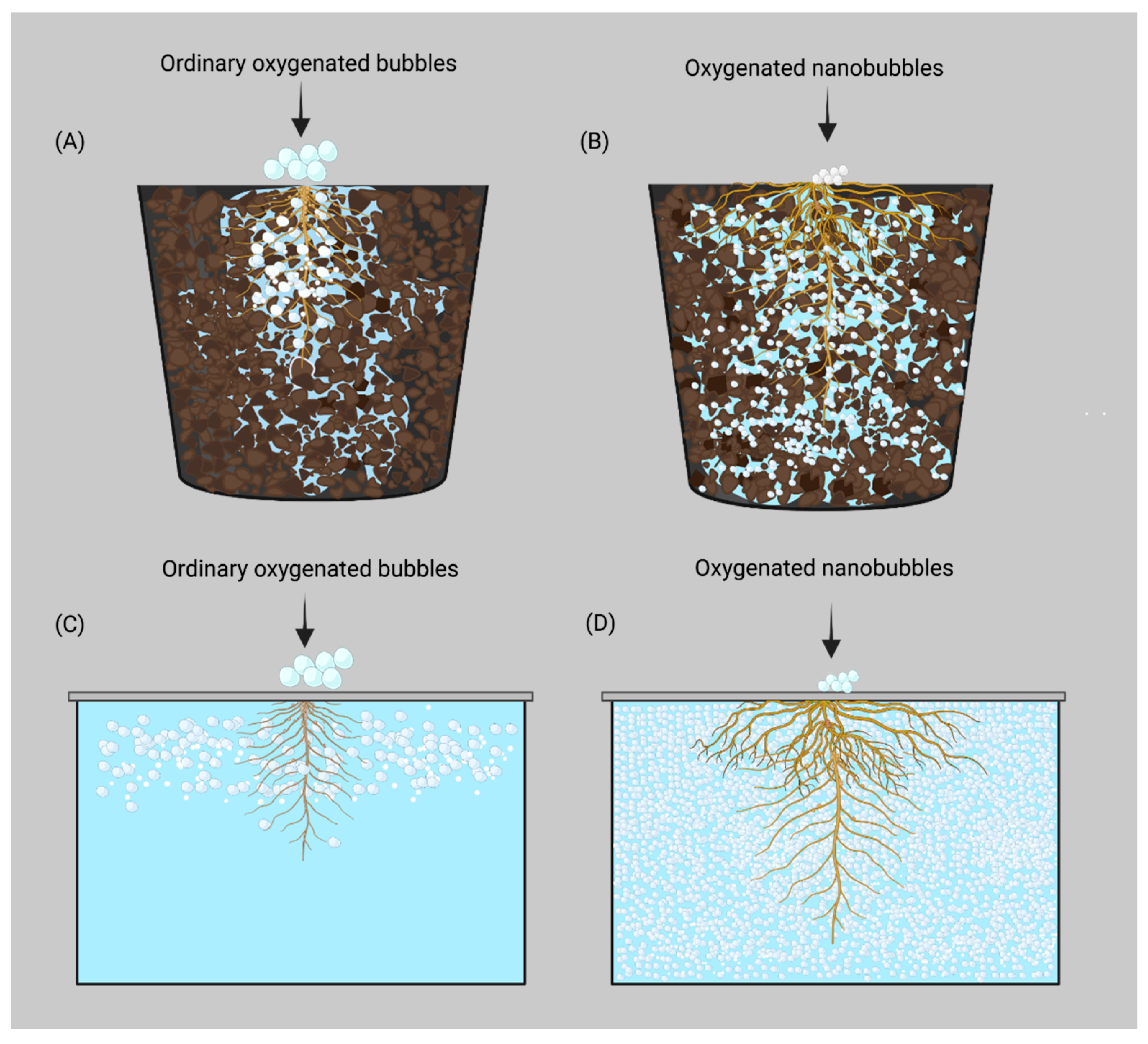
Figure 2.
This diagram shows how integrating oxygenated nanobubbles and beneficial microbes improves beneficial microbe's proliferation, plant growth, development, and productivity. (A) Ordinary oxygenated bubbles in the soilless substrate; (B) Oxygenated nanobubbles in the soilless substrate; (C) Ordinary oxygenated bubbles in a deep-water hydroponic system; (D) Oxygenated nanobubbles in a deep-water hydroponic system.
Figure 2.
This diagram shows how integrating oxygenated nanobubbles and beneficial microbes improves beneficial microbe's proliferation, plant growth, development, and productivity. (A) Ordinary oxygenated bubbles in the soilless substrate; (B) Oxygenated nanobubbles in the soilless substrate; (C) Ordinary oxygenated bubbles in a deep-water hydroponic system; (D) Oxygenated nanobubbles in a deep-water hydroponic system.
Disclaimer/Publisher’s Note: The statements, opinions and data contained in all publications are solely those of the individual author(s) and contributor(s) and not of MDPI and/or the editor(s). MDPI and/or the editor(s) disclaim responsibility for any injury to people or property resulting from any ideas, methods, instructions or products referred to in the content. |
© 2025 by the authors. Licensee MDPI, Basel, Switzerland. This article is an open access article distributed under the terms and conditions of the Creative Commons Attribution (CC BY) license (http://creativecommons.org/licenses/by/4.0/).
Copyright: This open access article is published under a Creative Commons CC BY 4.0 license, which permit the free download, distribution, and reuse, provided that the author and preprint are cited in any reuse.


