
Submitted:
10 April 2025
Posted:
11 April 2025
You are already at the latest version
Abstract
Music has a direct impact on human self-awareness through the semantic rules of language within a mathematical framework. A precise mathematical relationship exists between language, thought, imagination, consciousness, awareness, and self-awareness, rooted in the understanding of meaning and knowledge stored in memory. Music can enhance self-awareness, thereby directly influencing the neuroplasticity of the brain and shaping human personality. This study examines the formation process of self-awareness blocks in the brain and the mathematical connections between musical intervals, rhythm, and meaning. By analyzing the semantic aspects of numbers and language in the formation process of self-awareness and exploring the relationship between the meaning of numbers and the sensory reflection of musical intervals, the influence of music on human self-awareness is evaluated. The connection between various fields of self-awareness and the building blocks of these fields with musical motifs in phrases and sentences is among the findings of this research. This study elucidates how music can target and selectively affect the brain to assist in treating mental and physical illnesses, achieved through the precise articulation of musical phrases.
Keywords:
self-awareness
; neuroplasticity
; semantic mathematics
; music and consciousness
; language and thought
; brain functional networks
; rhythm and musical intervals
; emotion regulation
; cognitive neuroscience
; music therapy
; language-time cycle
; human personality and brain development
1. Introduction
Music is the universal language that not only serves as a tool for expressing emotions but also stands as the most powerful medium for conveying thoughts and instantly embedding them in the audience's mind [1]. Its therapeutic impact on both mental and physical health has long been a focal point of human attention [2].
Art is the language of expressing emotions, and humanity has created arts to express events and thoughts rooted in personal emotions [3]. Arts can directly and unambiguously convey emotions, which are the foundation of thought, to the audience. Among these, music is the most powerful tool for shaping the brain, owing to the property of neuroplasticity [4]. Before music, humans become familiar with rhythm. Rhythm has a direct impact on the speed of the cycles of thought, imagination, consciousness, and ultimately self-awareness [5]. Rhythms of life, the cycles of day and night, and so on align human thought and logic with time through the brain [6]. Therefore, rhythm forms the framework of music because music is contemporaneous with time and cannot exist without its passage [7].
Music has a direct relationship with language, as thought and imagination cannot be understood without language [8]. Emotions are the sum of thought, imagination, and human consciousness in the brain [9]. Consequently, the connection between the limbic system and the human heart is the center for music perception in the brain [10].
Music is composed of intervals and scales. Musical intervals stimulate parts of human memory that directly affect deductive reasoning and also cause changes in the limbic system and consciousness [11]. Scales can directly transfer human consciousness and self-awareness over time [12]. While human awareness and self-awareness depend on their knowledge of the surrounding environment, the enhancement of consciousness and self-awareness allows humans to grasp many truths beyond linguistic description [13]. This phenomenon arises precisely by creating a specific sense of human emotions in defining natural facts [14].
The coloring of instruments, the physics of sound, harmony, and counterpoint each have different impacts on individuals [15]. In Eastern sciences, music has been considered a therapeutic tool, with various scales inspired by the philosophy of nature and constellations [16]. Different scales were tailored to individuals with different temperaments and humors. The mathematical and geometric relationships between the twelve constellations and the twelve modes of Persian music highlight this connection [17].
Music affects the brain in a way akin to alcoholic beverages; it is inherently intoxicating yet lacks the harmful effects of alcohol. However, the misuse of music can influence human personality, thought, and ultimately reasoning. The length of musical phrases can impact the depth of human thought. Moreover, the structure of musical phrases—such as ascending, descending, cadence, and resolution—induces movement and imagery in the imagination, directly implanting ideas in the audience's mind.
In this article, we discuss the impact of music on self-awareness in the brain from the perspective of physics and mathematics. Finally, we propose a framework for a precise understanding of the effects of music in inducing thought, reasoning, and physical well-being .
2. The Mathematical Geometry and Structural Framework of Self-Awareness
Intelligence is the logical result of intellect, which establishes the binary logic of deductive reasoning in the human brain. Thought, in essence, is the comparison of new information with stored memory. This means that the retrieval of information from memory depends on external stimuli. The ultimate outcome of thought is imagination and visualization, which create consciousness in the present moment. The depth and scope of thought and imagination are directly related to knowledge, and as a result, the consciousness derived from thought and imagination covers the individual’s perception of past, present, and future.
The convergence of the functions of consciousness and awareness leads to the emergence of higher-dimensional self-awareness. Human self-awareness is the quantum field of the brain, which is extended across time. Considering the two hemispheres of the brain and the corpus callosum, the cycle of thought and imagination—leading to self-awareness—is repeated countless times via the corpus callosum. The speed of this cycle depends on the pineal gland, the limbic system, and the medulla oblongata.
The role of language in creating self-awareness is tied to external facts and stimuli. In other words, the meaning and understanding of the truths of the surrounding world in the brain follow mathematical structures dependent on physics. Accordingly, the semantic categorization of words related to time, place, and objects in the brain adheres to mathematical rules. For instance, all words associated with sadness, suffering, illness, and so on are uniformly stored in the brain. Similarly, verbs related to time are stored separately. Grammar, in essence, forms the framework of human awareness. On this basis, music—an art reliant on the passage of time—artificially moves human self-awareness through time. Self-awareness is essentially a cycle that emerges from the processing of information over time, based on language and meaning. Figure 1.
Based on the definition of self-awareness and brain waves, a mathematical model can be designed to explain the formation of self-awareness. Self-awareness is a quantum field that emerges from awareness in three dimensions of time. (2.1) If the relationship between imagination, thought, and the threshold of stimulation for deductive reasoning is expressed fractally and exponentially, the ratio of thought to imagination leads to the generation of consciousness over time. In Equation (2.2), a represents the intensity of thought, I represents the intensity of imagination, and T denotes the combination of thought and imagination. θ indicates the difference between the two factors a and b, which correspond to the ratio of memory information and environmental information, respectively. Based on Fourier series, self-awareness can be defined as a quantum field where variations in the density of information, dependent on thought and imagination, take shape in the structure of fractal dimensions over time, resembling a wave-like function.
The probability of the presence of a specific meaning, such as X, in the cycle of thought depends on the ratio of the density function of concepts to the total probability of all concepts stored in memory. (2.3)
Consciousness, in this mathematical model, has a direct correlation with Fourier series at the level of brain waves. The level of consciousness at the present moment is represented by ϕ, and ω denotes the fundamental frequency, which depends on the type of brain wave.(2.4)
3. Impact of Rhythmic Patterns on Neural States and Self-Awareness
Rhythm is a natural factor that emerges from the sequence of regular beats over time. Different patterns, based on syllables tied to time, can create semantic thought. Accordingly, rhythm can directly control the cycle of self-awareness formation and influence the perception of time in the brain. The perception of time is often dependent on the role of grammar in relation to time. Based on syllabic patterns, semantically integrated words can be recalled through rhythm.
Thus, rhythm plays a significant role in conveying emotions and can directly affect the activity of the sympathetic and parasympathetic nerves. Different rhythms can align the brain with alpha, gamma, or beta states. Cadences in musical rhythms, which follow mathematical and geometric rules, have a direct impact on the analysis of information in the brain. The predictability of cadence and rhythm enhances neuroplasticity and facilitates the formation of new neural structures. Therefore, rhythm can directly influence human personality. Furthermore, rhythm acts as a key factor in the transfer of awareness and self-awareness beyond knowledge and memory through time. Rhythm creates an exceptionally fast perception of time and, much like REM sleep, is accompanied by the processing and categorization of information. The tempo speed of each rhythm can fundamentally alter its rhythmic meaning. In this context, it is the weight of music that establishes a profound connection with language through syllables. The harmony between weight and rhythm forms the structure of sentences and the intrinsic patterns of music. The creation of elliptical centrifugal movement within the structure of rhythm and weight occurs when rhythm and weight are not in alignment. Consequently, the intrinsic emotions of rhythm are dependent on weight, which is controlled through cadence. (3.1)
In the return cycle of self-awareness, a represents an angle that is directly associated with the musical downbeat. Additionally, the ratio of a to b indicates the discrepancy between weight and rhythm, which, accompanied by changes in cadence or elliptical eccentricity, can lead to alterations in the listener's emotions.
4. Mathematical Physics and Semantic Foundations of Musical Scales
The human brain recognizes musical notes individually. This phenomenon is attributed to the connection between the brain's fractal structure and the golden ratio. The intervals between musical notes are linked to the golden ratio and the Fibonacci sequence. Accordingly, the threshold for stimulation to categorize a sound in memory acts as a semantic key. The combination of these intervals can target various areas; for instance, the unison, fifth, and octave intervals are musically physiologically pleasing and induce relaxation. Considering the auditory cortex in the brain and the role of each hemisphere in processing musical components, the impact of rhythm and frequency on the limbic system and self-awareness can be studied. An octave consists of 1200 cents, and the logarithmic relationship between intervals directly explains the impact of these intervals on the brain. (4.1) Natural time divisions are aligned with the golden ratio. Accordingly, the ratio of musical intervals to frequency can be dependent on the golden ratio. This dependency on the golden ratio demonstrates harmony and overlap with the fractal structure of the brain.
Based on the frequency ratio, we can express intervals as angles, allowing us to calculate emotional impact over time. (4.2)
Musical intervals, much like colors, can directly influence human emotions. A musical piece is akin to a painting, crafted from various colors, dimensions, and concepts. The fundamental point is that dissonant and consonant intervals serve as both the means and the drivers for shaping the brain. Blue can inspire motivation and vitality in humans, while red, by influencing blood pressure and heart rate, can induce sleep or momentary excitement. Based on this principle, musical intervals can be classified according to mathematical ratios, similar to how colors are categorized. Figure 2
The frequency difference between the major second interval and the minor second interval reflects the distinctiveness of scales in expressing musical ideas and phrases. Each scale conveys unique emotions, expressions, and thoughts. Each scale serves as an algebraic environment for intervals, ultimately conveying its inner thoughts to the audience through rhythm. In Eastern music, scales are aligned with various modes and are inspired by the zodiac. The twelve musical maqams are scaled based on the twelve zodiac constellations. The angles formed between the constellations and the moon associated with each constellation have played a role in shaping these maqams. The brightest star would serve as the pivotal note (Shahid) in the structure.
5. Mathematical Patterns in Language and Meaning
Words are stored in the brain as unified meanings. Consequently, when recalling the meaning of a word, an image or emotion might also be summoned. However, this varies among individuals. Words themselves are stored based on related meanings. In syllabic languages, meaning is sometimes preserved in poetic meters. For instance, the Hazaj Musaddas Mahzuf meter has a sad tone, and poems in this meter cannot convey joy.
Additionally, the meaning of words can be visual. Essentially, in syllabic languages, words are stored in the brain based on sounds and syllables. For example, the word "Sky" consists of two sections and five sounds. The relationship between vowels and consonants follows specific mathematical patterns. These patterns serve as the foundation for unified information storage in the brain. The connection between numbers and language hinges on the phonetic key, a structure shaped by the Fibonacci sequence and the sound acquisition process during infancy. Table 1
Accordingly, a mathematical connection can be established between meaning and numbers. Using the summation of internal digits, all numbers can be classified into nine numerical groups. For instance, the number 54 belongs to group 9. These nine semantic groups can encompass all words. The intensity and quality of a word's meaning are influenced by the various phases of internal digit summation. Additionally, there are methods for the semantic normalization of numbers. Table 2
Considering the presence of inhibitory neurons and the reversal of information during comparisons, various numerical patterns can be analyzed over time. (5.1)
Based on this, the intervals of a musical scale can be interpreted in terms of their meanings. Based on this, a musical motif can be analyzed semantically according to the position of notes within a scale. This topic has often been researched by musicians, and highly complex rules have been established to express meaning in music. For example, a descending melody creates a sense of despair in the listener. The reason for this phenomenon is the integrated semantic recall of information in the brain. When a syllable is heard in a specific part of a scale, words, emotions, and memories associated with that syllable are retrieved. The selective behavior of certain musical syllables in the brain depends on the rhythm, structure of the melody, and the scale. (5.2)
Whenever a motif is heard, semantic recall of memory information, along with the comparison of these with the reversed recalled information and the prediction of the motif's melody over time through imagination and perception, shifts human self-awareness through time. The result of this information comparison is an emotionally complex outcome. Human consciousness and awareness, guided by logic and reason, transform this complex number into an emotional reaction in the present through changes in heart rate and blood pressure mediated by the medulla oblongata. Accordingly, this wave-like response can also be represented by a wave function. (5.3)
Whenever a motif is imagined, the process of recalling semantic memories, coupled with the comparison of reversed information and the projection of the motif's melody through imagination, temporally adjusts human self-awareness. This comparison yields an emotionally nuanced result. Human consciousness, guided by rational thought and logic, converts this complex response into an immediate emotional reaction via changes in heart rate and blood pressure regulated by the medulla oblongata. Such wave-like reactions can be mathematically represented as dynamic oscillatory functions in time.(5.4)
6. Results
Based on the connection between music, meaning, and language, melodies and motifs can be interpreted in terms of thought induction by music, and purposeful motifs can be designed from the perspective of thought. For example, a Quarter Note, by slowing the rhythm and self-awareness at a specific interval of the scale, emphasizes a particular meaning. This sudden pause stimulates the brain in the cycle of thought-imagination-awareness and prepares the mind for the logical interpretation of music for the next melody. Additionally, the syllabic structure of the melody and motif, which opposes the cadence movement, leads to the creation of new neural pathways in the brain. Accordingly, a new meaning relative to a specific subject is generated in the brain. This pause requires prior definition or can itself serve as the initiation and expression of a subject. Therefore, movement plays a fundamental role in defining the intended pause.
Accordingly, self-awareness can be defined in various dimensions from a psychological perspective. For instance, self-awareness of the body, social status, love, career, ideology, family, and so on. Each dimension of self-awareness arises from an individual's awareness of time and may interact and influence one another. From this perspective, the value of music lies in the harmony it creates between the fields of human self-awareness and their overlap. For example, there is no logical connection between an individual's self-awareness of their social status and their love. However, music can create logical definitions within a complex space that legitimizes their love. This phenomenon is precisely similar to the satisfaction of emotional human needs through poetry. Music conveys truths in an imaginary realm in such a way that, for moments, the individual fully feels the reality of that thought or idea. Based on the phenomenon of mirror neurons, music can simulate a logical result within the overlap of two fields of self-awareness in an imaginary realm for the individual. After listening to a piece of music, the individual can make more effective decisions based on the outcomes obtained. Consequently, targeted musical compositions can be designed to aid in the treatment of mental illnesses.
Depending on the rhythm, the note that interrupts the cycle of awareness varies. For instance, in a 2/4 rhythm, the quarter note is entirely synchronized with the cadence of the rhythm. Each motif from a phrase encompasses independent fields of self-awareness, which ultimately influence the building blocks of a complete field of self-awareness within a full musical phrase. Figure 3 Accordingly, every field of self-awareness in the brain itself contains smaller fields of reasoning, thought, imagination, consciousness, and awareness. (6.1)
Descending movement induces a sense of despair and hopelessness in the listener, based on the music neurology. Considering the meaning of numbers, this movement can be directed toward expressing the intended thought.
The tempo speed of a rhythm can activates and stimulate the specific section of the brain it is intended to target. Figure 4
Considering the existence of various semantic fields and self-awareness in the brain, as well as the impact of rhythm and tempo on activating and influencing different fields, music can be purposefully composed and mixed for specific regions of the brain. Based on the lateralization of the nervous system and the role of equalizers and various effects in altering the meaning of a musical motif, the precise final mix of a piece can affect the brain point by point. Figure 5 Due to the property of neuroplasticity, the effects will be targeted towards the activity of the desired regions. Additionally, the impact of music on the coordination between the sympathetic and parasympathetic systems can, through precise control, influence specific hormones and blood circulation, contributing to the improvement and management of a disease.
6. Discussion
Music is the most powerful tool for shaping the brain. More precisely, it is considered the strongest instrument for communication and control. Although music is an interdisciplinary product encompassing the humanities, experimental sciences, ideology, and metaphysics, it has not yet found its rightful place and role in human society. The combination of musical intervals with colors and precise structural harmony, producing similar effects on the brain, can make the immediate impacts of music valuable for other studies. The profound connection between music, language, and self-awareness reveals deep links with mathematics, philosophy, and physics.
This study paves the way for interpreting universal pieces for other researchers in the field of neuroscience, based on physics and semantic neural mathematics. Although this perspective requires further research, study, and fieldwork, the connection between psychological concepts such as thought-awareness and self-awareness with mathematics can be considered a bold step towards new research.
Furthermore, experiments on brain entanglement have demonstrated the synchronization of two human brains through the application of musical concepts.[18] This research outlines the foundations and structure of a musical piece in creating similar constructs within a human ecosystem, forming the cornerstone for further studies in education, disease treatment, and addressing social problems.
Funding
This study was carried out entirely without financial backing or sponsorship. All resources and efforts were provided by the authors, ensuring impartiality and self-sufficiency throughout the research process.
Acknowledgments
We sincerely express our gratitude to all esteemed professors, dear friends, and beloved family members for their unwavering support, both materially and emotionally. Your encouragement and guidance have been pivotal in completing this research, and we are deeply appreciative of your contributions to this journey.
Conflict of Interest
The authors affirm that no conflicts of interest are associated with this study. All research, analysis, and conclusions have been conducted independently, without any external influence or competing interests that might compromise the integrity of the work.
References
- Zhi, Liang, et al. "Research on music therapy from 2013 to 2022: a bibliometric and visualized study." Frontiers in psychiatry 15 (2024): 1323794. [CrossRef]
- De Simone, Flavia, et al. "Psychology and art: exploring new ways of interaction." Frontiers in Psychology 16 (2025): 1542235. [CrossRef]
- Le, Jingqi, Wangyan Deng, and Tao Le. "Music Therapy in Depression: Exploring Mechanisms and Efficacy in Rat Models." Brain Sciences 15.4 (2025): 338.338.doi.org/10. 3390.
- Delogu, Franco, et al. "The effects of music on cognition and action, volume II." Frontiers in Human Neuroscience 19 (2025): 1557542.doi.org/10.3389/fnhum.2025. 1557.
- Navarro, Serena. "Music and self-awareness: A relationship or not?." Behavioural Sciences Undergraduate Journal 2.1 (2015): 24-35. doi.org/10. 2917.
- Fuyi, Y. (2025). Biological Rhythms. In The ECPH Encyclopedia of Psychology (pp. 147-148). Singapore: Springer Nature Singapore.doi.org/10. 1007. [Google Scholar]
- Alperson, Philip. "Musical time" and music as an" art of time." The Journal of Aesthetics and Art Criticism 38.4 (1980): 407-417.doi.org/10. 2307.
- Schön, Daniele, and Benjamin Morillon. "Music and language." The Oxford handbook of music and the brain. Oxford University Press, 2019. 391-416.
- Izard, Carroll E. Human emotions, 2013.
- Nedelcu, Alin Horatiu, et al. "THE LIMBIC SYSTEM IN ADULT HUMAN BRAINS–COMPARATIVE MORPHOMETRIC ANATOMO-IMAGISTIC STUDY." Romanian Journal of Oral Rehabilitation 16.4 (2024).doi : 10.6261/RJOR.2024.4.16.
- Reyes-Lagos, José Javier, et al. "Response to music on the nonlinear dynamics of human fetal heart rate fluctuations: A recurrence plot analysis." Chaos: An Interdisciplinary Journal of Nonlinear Science 35.2 (2025).doi.org/10.1063/5. 0236.
- Lancioni, Giulio E., et al. "Music stimulation for people with disorders of consciousness: A scoping review." Brain Sciences 11.7 (2021): 858.doi.org/10. 3390.
- Villalobos, Dolores, Umberto Bivona, and Juan Botella. "Self-awareness interventions after acquired brain injury: A systematic review and meta-analysis." Rehabilitation Psychology (2025). doi.org/10. 1037.
- Overall, Jeffrey. "Psychology of Consciousness: Theory, Research, and Practice." (2025).
- Lakhani, Nikhil. Musical Acoustics Fundamentals, 2025.
- Kwon, Chan-Young, Hyunsu Kim, and Sung-Hee Kim. "The modernization of oriental music therapy: five-element music therapy combined with Artificial Intelligence." Healthcare. Vol. 12. No. 3. MDPI, 2024.doi.org/10. 3390.
- Pacholczyk, Jozef. "Music and Astronomy in the Muslim World." Leonardo 29.2 (1996): 145-150.
- Mousavi, Seyed Kazem. "Information Transfer by Quantum Entanglement in the Brain." (2024). [CrossRef]
Figure 1.
The two hemispheres of the brain are interconnected through the corpus callosum. Thought leads to imagination, and imagination forms consciousness and awareness, which in turn give rise to self-awareness. Awareness is the radius of self-awareness, and self-awareness, in dimensional terms, represents a quantum field of higher dimensions. The role of language in the fractal structure of the brain and in understanding meaning and language is clearly evident. Additionally, the reflection of brain activity in the outer cortex is the primary factor in creating the cycle of self-awareness. The perception of the passage of time depends on the rhythm of this cycle, which can vary. While during deep sleep, self-awareness can exist without consciousness. The effect of music on increasing or decreasing self-awareness is also clearly observable.
Figure 1.
The two hemispheres of the brain are interconnected through the corpus callosum. Thought leads to imagination, and imagination forms consciousness and awareness, which in turn give rise to self-awareness. Awareness is the radius of self-awareness, and self-awareness, in dimensional terms, represents a quantum field of higher dimensions. The role of language in the fractal structure of the brain and in understanding meaning and language is clearly evident. Additionally, the reflection of brain activity in the outer cortex is the primary factor in creating the cycle of self-awareness. The perception of the passage of time depends on the rhythm of this cycle, which can vary. While during deep sleep, self-awareness can exist without consciousness. The effect of music on increasing or decreasing self-awareness is also clearly observable.
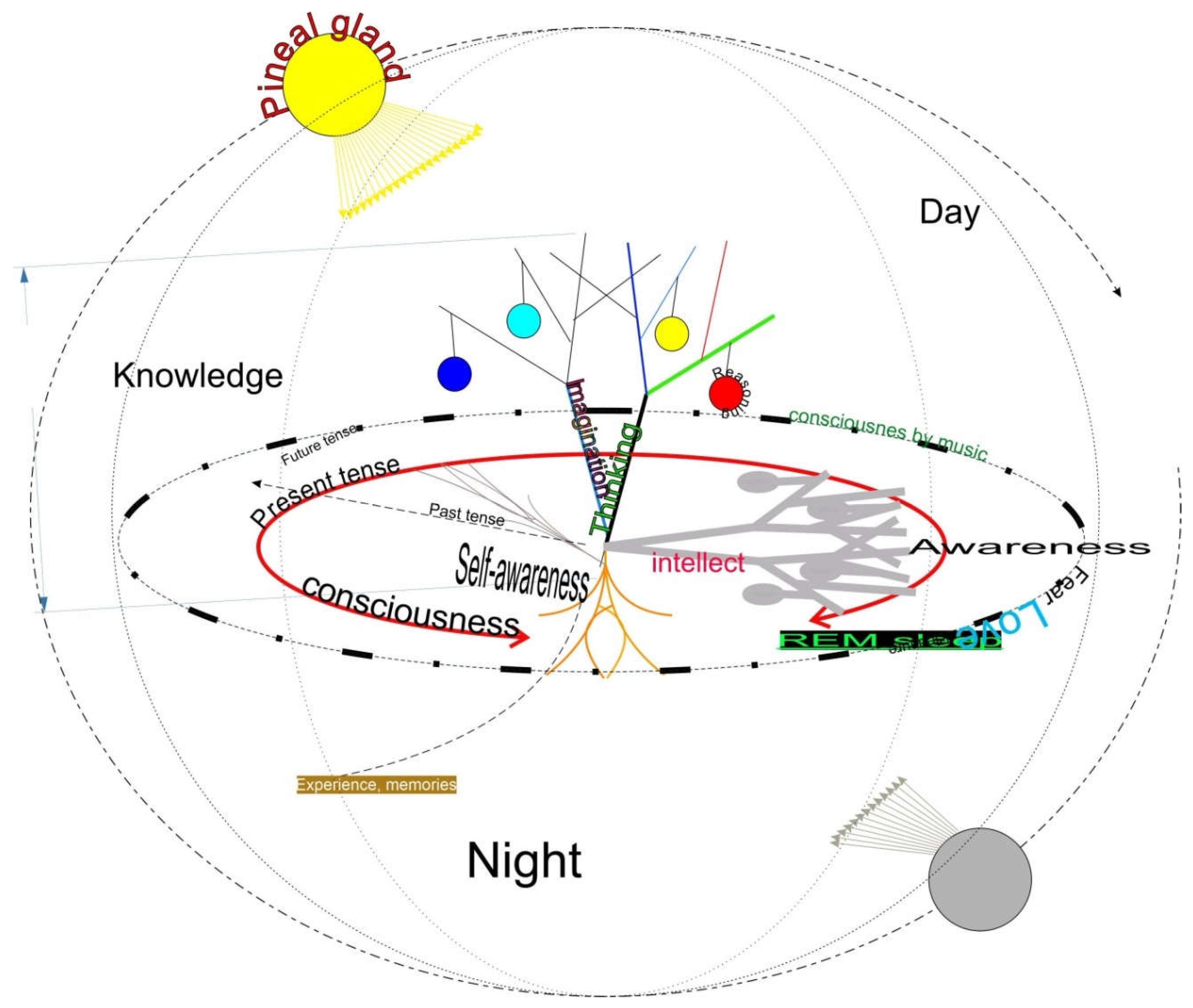
Figure 2.
Dissonant intervals, such as the second and seventh, are represented by the color red, although their feedback may be entirely reversed. Based on the introduced piece, the induced feeling is completely energetic and epic. Accordingly, two types of associations between musical intervals and colors can be identified: completely consonant and blended intervals, as well as semi-consonant and dissonant intervals, and their connection with the spectrum and colors is demonstrated.
Figure 2.
Dissonant intervals, such as the second and seventh, are represented by the color red, although their feedback may be entirely reversed. Based on the introduced piece, the induced feeling is completely energetic and epic. Accordingly, two types of associations between musical intervals and colors can be identified: completely consonant and blended intervals, as well as semi-consonant and dissonant intervals, and their connection with the spectrum and colors is demonstrated.
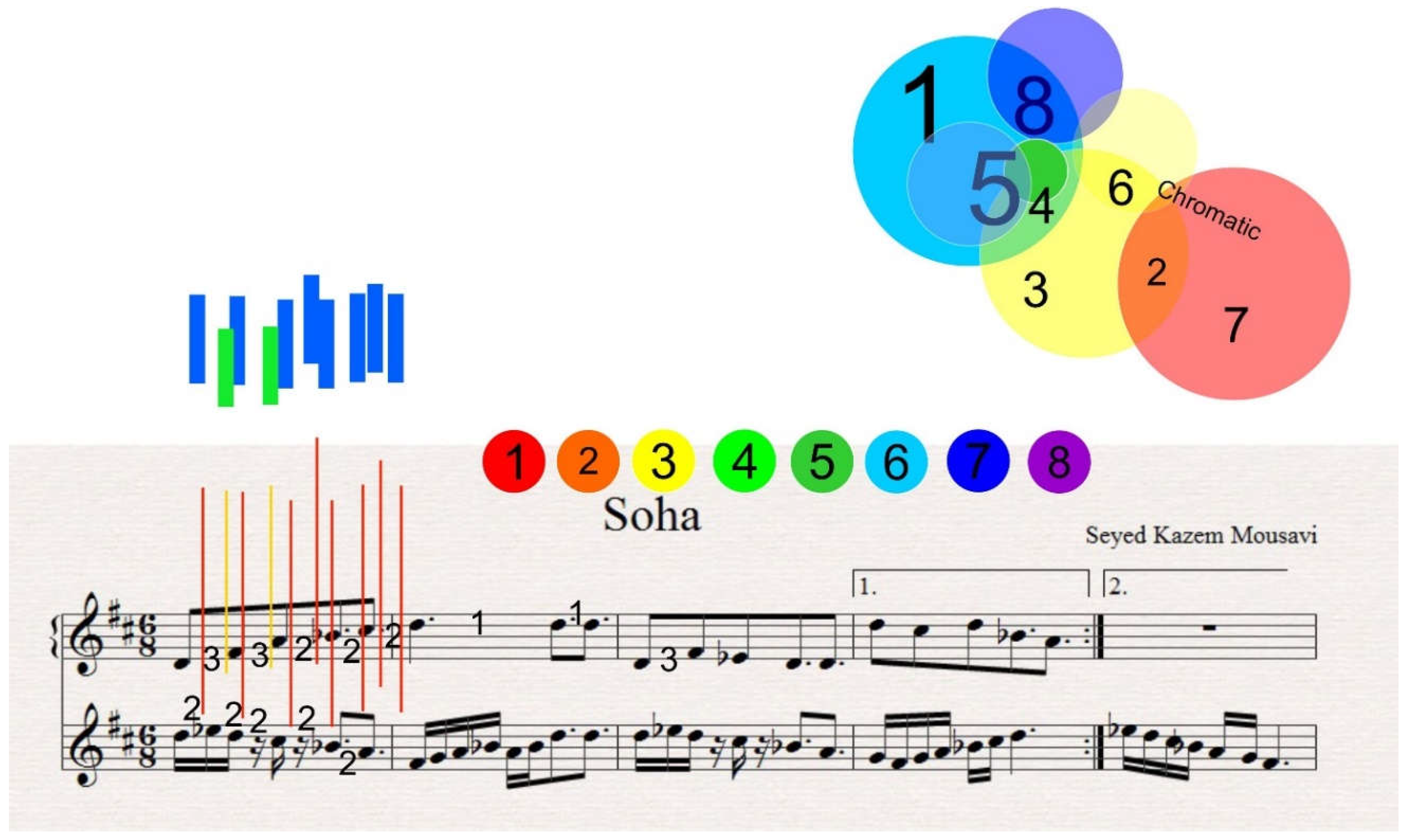
Figure 3.
Most musical rhythms are binary (2/4) or ternary (3/4), and even irregular rhythms follow similar patterns. The first beat stimulates thought, the weaker subsequent beat leads to conclusion, and ultimately imagination emerges. This phenomenon induces awareness in humans, while the awareness generated within each measure of time results in relative self-awareness for that measure. A musical phrase, akin to the first beat, stimulates thought for comparing sentences and understanding meaning. After hearing the first half of the phrase, the brain begins to imagine in alignment with the second half. The rhythm of thought, imagination, and eventually self-awareness in humans is guided and controlled by the tempo and the sentences within the music.
Figure 3.
Most musical rhythms are binary (2/4) or ternary (3/4), and even irregular rhythms follow similar patterns. The first beat stimulates thought, the weaker subsequent beat leads to conclusion, and ultimately imagination emerges. This phenomenon induces awareness in humans, while the awareness generated within each measure of time results in relative self-awareness for that measure. A musical phrase, akin to the first beat, stimulates thought for comparing sentences and understanding meaning. After hearing the first half of the phrase, the brain begins to imagine in alignment with the second half. The rhythm of thought, imagination, and eventually self-awareness in humans is guided and controlled by the tempo and the sentences within the music.
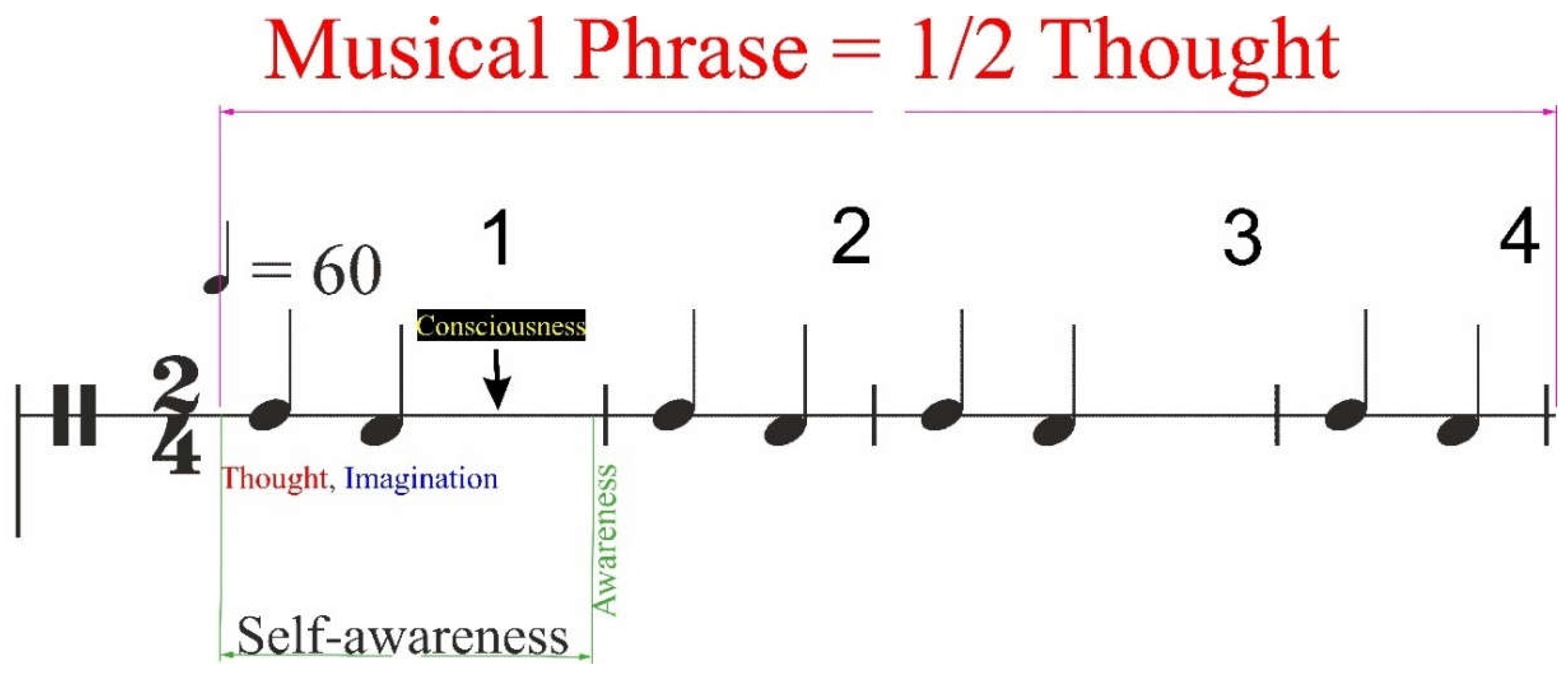
Figure 4.
In the mentioned example, the movement of a melody starts from the tonic note of the C major scale in the first phrase, and in the second and third phrases, cadences and the impact of sentences are demonstrated through scale changes. Considering the brain’s interpretation of numbers, descending sentences with intervals of two may create despair and a sense of failure in the listener, yet based on the silence at the end of each phrase, different effects of cadence emerge in the listener. The overall interval of each motif and phrase establishes the logic of a phrase, which connects smaller fields of self-awareness to larger ones. Accordingly, fields of meaning are activated within the brain. Regarding the final phrase, which features an upward and mirror-like movement compared to other phrases, it conveys the logic of the sentences to the listener through mirror neurons. Although the combination of C major and D minor in the first half of the phrase seems to evoke dissonance in the listener, the final phrase offers a logical interpretation of an unpleasant event over time.
Figure 4.
In the mentioned example, the movement of a melody starts from the tonic note of the C major scale in the first phrase, and in the second and third phrases, cadences and the impact of sentences are demonstrated through scale changes. Considering the brain’s interpretation of numbers, descending sentences with intervals of two may create despair and a sense of failure in the listener, yet based on the silence at the end of each phrase, different effects of cadence emerge in the listener. The overall interval of each motif and phrase establishes the logic of a phrase, which connects smaller fields of self-awareness to larger ones. Accordingly, fields of meaning are activated within the brain. Regarding the final phrase, which features an upward and mirror-like movement compared to other phrases, it conveys the logic of the sentences to the listener through mirror neurons. Although the combination of C major and D minor in the first half of the phrase seems to evoke dissonance in the listener, the final phrase offers a logical interpretation of an unpleasant event over time.
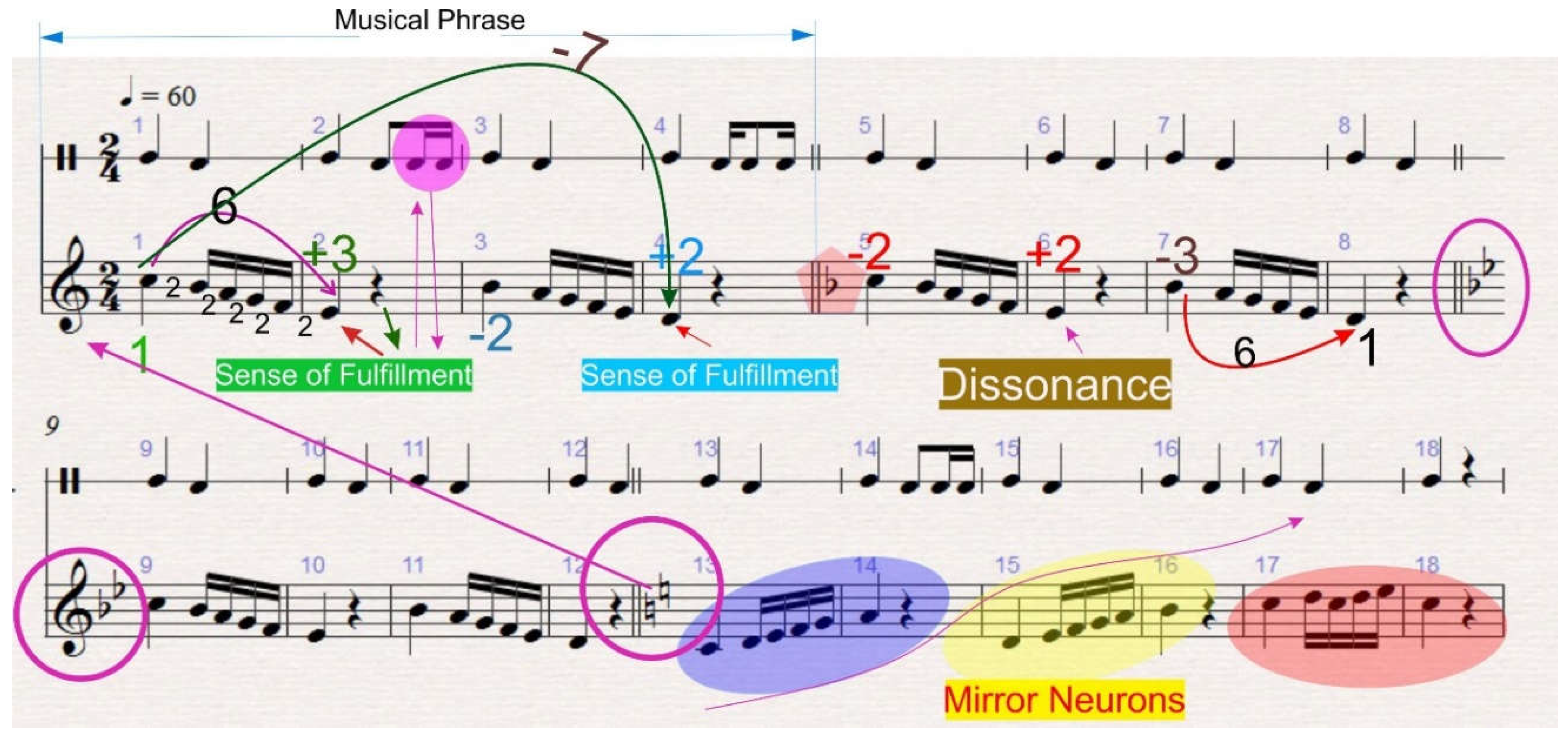
Figure 5.
This image illustrates the individual and combined roles of pan, equalizer, and effects in amplifying imagination within a composition by directing sound to the bass range and applying reverb effects, as well as adjusting the pan to target a specific area of the brain. The impact of equalizer feedback and pan in arranging instruments, based on the semantic rules of numbers in the arrangement of intervals and harmony—such as percussion, wind instruments, and more—intensifies and targets the effect of a melody on a particular region of the brain effectively.
Figure 5.
This image illustrates the individual and combined roles of pan, equalizer, and effects in amplifying imagination within a composition by directing sound to the bass range and applying reverb effects, as well as adjusting the pan to target a specific area of the brain. The impact of equalizer feedback and pan in arranging instruments, based on the semantic rules of numbers in the arrangement of intervals and harmony—such as percussion, wind instruments, and more—intensifies and targets the effect of a melody on a particular region of the brain effectively.
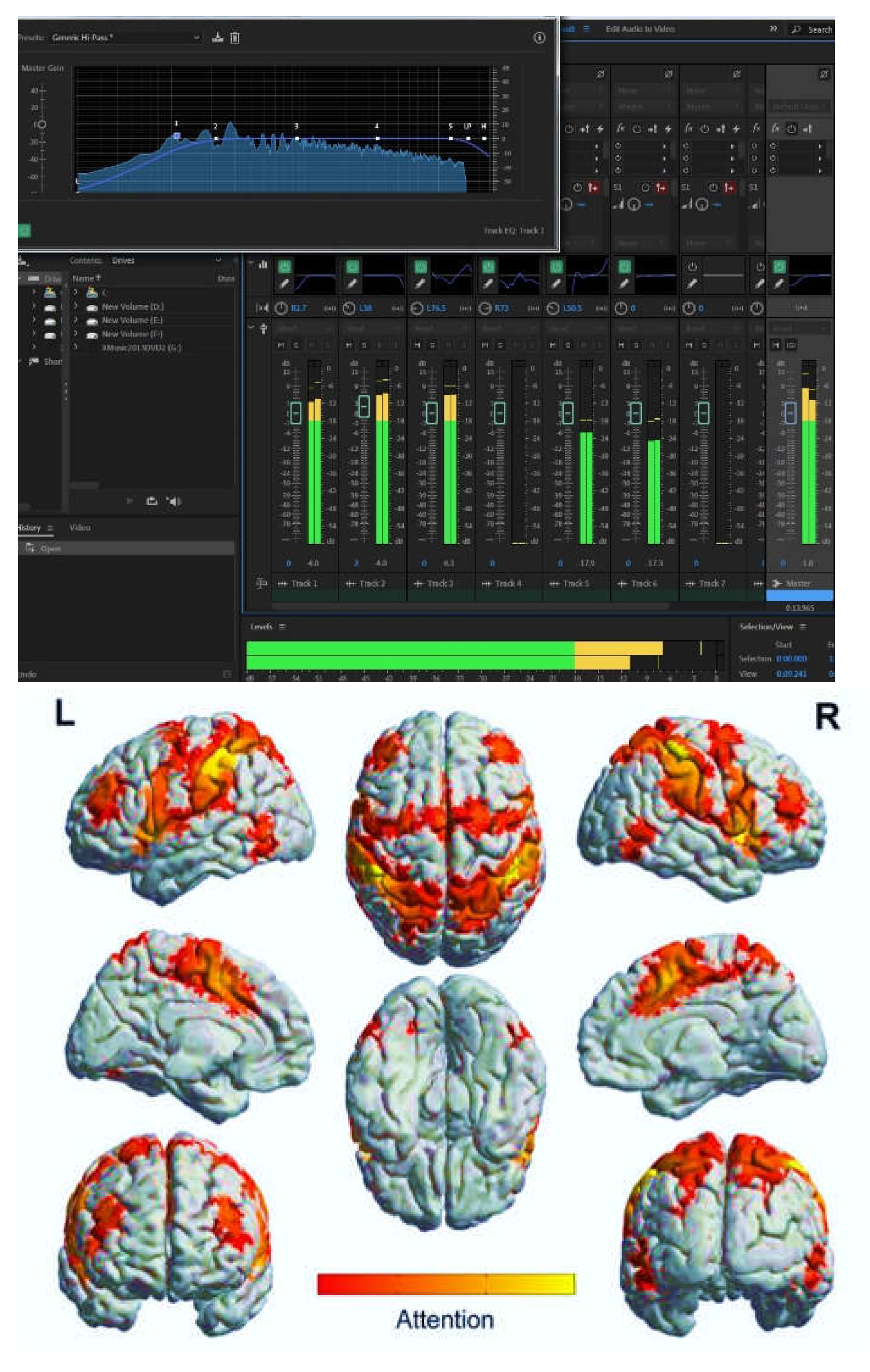

Table 1.
The table categorizes phonetic sounds into groups based on their API symbols, discretion of usage, and sound type. Each group possesses specific semantic characteristics.
Table 1.
The table categorizes phonetic sounds into groups based on their API symbols, discretion of usage, and sound type. Each group possesses specific semantic characteristics.
| Group | API Symbols | Discretion | Sound Type |
|---|---|---|---|
| 1 | /a/, /u/, /i/, /h/, /j/, /ɜ/ | Core vowels widely used | Basic Vowels |
| 2 | /æ/, /ɛ/, /ɒ̃/ | Advanced vowels with niche usage | Complex Vowels |
| 3 | /b/, /p/, /m/ | Sounds formed with gentle lip closure | Soft Consonants |
| 5 | /r/, /z/, /l/ | Sounds with tongue vibration or light touch | Vibrational Consonants |
| 8 | /t/, /d/, /n/, /z/ | Sounds from various contact or closures | Mixed Consonants |
| 13 | /ʔ/, , /h/, /x/ | Sounds produced in nasal or throat regions | Hard Consonants |
| 21 | /dʒ/, /s/, /tʃ/, /ʃ/, /ʒ/ | Mixture of blockage and friction | Compound Consonants |
| 34 | /f/, /v/, / | Sounds with air friction | Fricative Consonants |
| 55 | /k/, /ɡ/ | Sounds formed with full closure in the throat | Deep Block Consonants |
Table 2.
The table categorizes numerical values into groups based on their meanings. Each group possesses semantic characteristics that can be interpreted both positively and negatively.
Table 2.
The table categorizes numerical values into groups based on their meanings. Each group possesses semantic characteristics that can be interpreted both positively and negatively.
|
1 - Unity: Representing singularity, wholeness, and the beginning of existence. 2 - Creation: Symbolizing the act of originating, duality, and the interplay of opposites. 3 - Substance: Reflecting materiality, foundation, and tangible existence. 4 - Leadership, Insight: Suggesting wisdom, order, authority, and structured stability. 5 - Joy: Signifying happiness, freedom, and exploration. 6 - Continuity: Referring to the passage, rhythm, and structure of time. 7 - Devotion, Sacred: Linked with love, spirituality, and divine connection. 8 - Strength: Indicating power, ambition, and mastery. 9 - Transcendence: Representing metaphysics, enlightenment, and realms beyond the physical. |
Disclaimer/Publisher’s Note: The statements, opinions and data contained in all publications are solely those of the individual author(s) and contributor(s) and not of MDPI and/or the editor(s). MDPI and/or the editor(s) disclaim responsibility for any injury to people or property resulting from any ideas, methods, instructions or products referred to in the content. |
© 2025 by the authors. Licensee MDPI, Basel, Switzerland. This article is an open access article distributed under the terms and conditions of the Creative Commons Attribution (CC BY) license (http://creativecommons.org/licenses/by/4.0/).
Copyright: This open access article is published under a Creative Commons CC BY 4.0 license, which permit the free download, distribution, and reuse, provided that the author and preprint are cited in any reuse.


