

Submitted:
27 April 2025
Posted:
28 April 2025
You are already at the latest version
Abstract
Thyroid disorders (TD) and diabetes mellitus (DM) represent significant metabolic pathologies with an important global burden. Diabetes, characterized by chronic hyperglycemia, induces widespread dysregulation of lipid, protein, and carbohydrate metabolism. The thyroid gland, a central regulator of endocrine homeostasis, modulates metabolic processes through the secretion of thyroid hormones. A complex bidirectional relationship exists between type 2 diabetes mellitus (T2DM) and thyroid dysfunction, wherein each condition may exacerbate the pathophysiological consequences of the other. At the core of this interplay lies insulin resistance, a fundamental mechanism underlying their coexistence and mutual aggravation. A comprehensive understanding of the physiological, biochemical, and molecular mechanisms would undoubtedly uncover new perspectives on T2DM, particularly concerning thyroid status alterations. Grasping the clinical correlation between these widespread endocrine disorders is crucial for customizing treatments for individuals confronting both conditions. This narrative review seeks to offer an understanding of the epidemiological, pathophysiological, and clinical dimensions of the relationship between thyroid dysfunction and type 2 diabetes mellitus. Considering the substantial clinical ramifications of concurrent T2DM and TD, it is imperative to institute suitable screening and management approaches for both endocrine disorders to guarantee optimal care for patients.
Keywords:
type 2 diabetes mellitus
; insulin resistance
; hypothyroidism
; hyperthyroidism
; thyroid disorders
1. Introduction
Diabetes mellitus (DM) ranks among the most common chronic pathological conditions, primarily attributable to impaired pancreatic β-cell function, frequently developing in the setting of IR. With swift economic progress, profound shifts in lifestyles, and an aging demographic, T2DM has emerged as a prominent public health challenge worldwide, particularly in developing nations. As per the most recent data from the International Diabetes Federation (IDF), the global prevalence of T2DM among adults reached 536.6 million individuals (10.5%) in 2021. Projections indicate that by 2045, there will be 783.2 million people (12.2%) living with diabetes globally [1,2].
Thyroid conditions are frequently encountered within the broader population, with a notable prevalence across diverse demographic groups. Overt hypothyroidism affects approximately 0.2% to 5.3% of the European population and 0.3% to 3.7% of individuals in the USA, depending on the diagnosis criteria and studied demographics. Large-scale longitudinal studies in the UK reveal an incidence rate of 3.5–5.0 per 1000 for women and 0.6–1.0 per 1000 for men in spontaneous hypothyroidism [3,4]
On the flip side, the prevalence of overt hyperthyroidism ranges from 0.2% to 1.3% in iodine-sufficient regions globally. In the United States National Health and Nutrition Examination Survey (NHANES III), overt hyperthyroidism was identified in 0.5% of the population, with an additional 0.7% having subclinical hyperthyroidism, leading to an overall prevalence of 1.3%. Similar rates have been reported in studies from various countries such as Sweden, Denmark, Norway, and Japan. A meta-analysis of European studies estimated a mean prevalence rate of 0.75% and an incidence rate of 51 per 100,000 per year [3,5]
The interplay between diabetes and thyroid dysfunction has been a subject of research for decades [6]. Researchers have predominantly delved into the prevalence of thyroid disease among individuals with type 1 diabetes, considering its autoimmune origin. In contrast, the association between T2DM and TD has remained relatively understudied.
2. Materials and Methods
A comprehensive and systematic literature search was conducted to explore the relationship between TD and T2DM. The search was performed across three major databases—PubMed, Google Scholar, and the Cochrane Library—covering literature published from January 2004 to February 2024. Searches were restricted to publications in English and to studies involving adult human subjects (≥18 years).
We used a combination of keywords and Medical Subject Headings to capture relevant studies. Search terms included: “thyroid dysfunction” AND “type 2 diabetes mellitus”, “hypothyroidism” AND “type 2 diabetes mellitus”, “hyperthyroidism” AND “type 2 diabetes mellitus”, “subclinical hypothyroidism” OR “thyroid function” AND “insulin resistance”, “thyroid disorders” AND “type 2 diabetes” AND “guidelines”. Boolean operators “AND” and “OR” were used to combine the search terms, and additional manual screening of reference lists from related articles and recent reviews was conducted to identify further eligible studies.
Inclusion Criteria:
- Peer-reviewed articles published between January 2004 and February 2024
- Adult populations aged 18 years and above
- Studies investigating the association between thyroid function (hypothyroidism, hyperthyroidism, subclinical dysfunction) and T2DM
- Observational studies (cohort, case-control, cross-sectional) and interventional studies
- Clinical guidelines from internationally recognized endocrinology and diabetes organizations
Exclusion Criteria:
- Non-English language publications
- Pediatric or adolescent populations (<18 years)
- Studies focused exclusively on type 1 diabetes or gestational diabetes
- Animal experiments or in vitro research
- Case reports, editorials, letters to the editor, or opinion pieces without original research data
- Articles lacking a clear diagnostic definition for thyroid dysfunction
A total of 1,387 records were identified from database searches. After removing 382 duplicates, 1,005 titles and abstracts were screened. Of these, 142 full-text articles were assessed for eligibility. Based on inclusion and exclusion criteria, 21 studies were included in the final synthesis (Figure 1).
Additionally, we examined current screening guidelines for TD in patients with T2DM, as issued by the American Diabetes Association (ADA), American Thyroid Association (ATA), and European Thyroid Association (ETA). These recommendations were reviewed to identify potential gaps in practice and to inform evidence-based clinical suggestions.
3. Results
3.1. Unravelling the Prevalence of Thyroid Dysfunction in T2DM
Certain investigations propose a reciprocal impact of diabetes and TD on each other. The Third National Health and Nutrition Examination Survey (NHANES III), a substantial cross-sectional survey comprising 17,353 participants in the USA, uncovered that hypothyroidism affected 4.6% of the study cohort, while hyperthyroidism affected 1.3% of participants. Furthermore, NHANES III noted an increased prevalence of thyroid dysfunction in individuals with diabetes in comparison to those without diabetes [7].
Certain studies have indicated a greater prevalence of thyroid dysfunction in patients with T2DM compared to the general population, with varying estimates across studies. The data from selected studies regarding the prevalence of hypo/hyperthyroidism in T2DM subjects are presented in Table 1 [8,9,10,11,12,13,14,15,16,17].
3.2. Thyroid Hormones and Glucose Metabolism: Insights into T2DM Pathogenesis
The immediate regulation of cellular metabolic processes relies heavily on the interplay between insulin and glucagon, two hormones released by the beta and alpha cells located in the pancreatic islets. However, a substantial body of evidence indicates the significant impact of TH on the maintenance of glucose levels in the body, with their collective effects alongside insulin determining the specific metabolic pathways for glucose and lipids. For instance, both triiodothyronine (T3) and insulin seem to modulate the activities of key regulatory proteins responsible for glucose uptake into cells, as well as those crucial for the metabolic cascades of glucose and lipids [19].
Previous literature reviews detail the effects of insulin and TH on various tissues of the body. TH demonstrate both insulin-like actions and actions that oppose insulin in multiple organs. These actions are usually finely balanced and any deficiency or excess of TH can disrupt this balance, leading to disturbances in carbohydrate metabolism [20,21]
Conversely, diabetes can affect thyroid function in various ways. In diabetes, the response of thyroid-stimulating hormone (TSH) to thyrotropin-releasing hormone can become impaired, leading to hypothyroidism and subsequently lower levels of T3. This decrease in T3 levels might also be due to reduced conversion of T3 from T4 in diabetes, as evidenced by studies showing a reversible decrease in deiodinase activity and hepatic thyroxine concentration induced by hyperglycemia [22,23]. On the other hand, there are studies suggesting that a short-term excess of T3 could induce IR, potentially contributing to the development of T2DM [24]
The association between TH levels and the risk of developing T2DM remains a subject of considerable debate within the scientific community. Findings from human studies have been inconsistent: some investigations suggest that elevated TSH levels and reduced free thyroxine (FT4) concentrations are linked to hyperglycemia and IR, while others report no significant association [25,26,27,28]. These discrepancies highlight the need for a more comprehensive assessment of the relationship between TSH, FT4, and T2DM.
3.3. Thyroid Dysfunction and Insulin Resistance: Partners in T2DM Pathogenesis?
IR denotes a state wherein the responsiveness of target cells to regular levels of insulin is diminished. This state often coexists with an array of metabolic and cardiovascular abnormalities, collectively termed as “insulin resistance syndrome”[33].
The prevalent forms of human IR typically align with obesity and physical inactivity, yet pinpointing a singular cellular basis for these conditions continues to elude researchers. T2DM results from pancreatic β-cell dysfunction, frequently on the background of IR, and is explained by genetic, environmental, and metabolic factors. Persistent overnutrition drives hyperinsulinemia, β-cell failure, and disease progression, with obesity—particularly visceral and hepatic fat—being a key contributor [34,35,36,37]. IR impairs β-cell insulin secretion, increases lipolysis and elevates non-esterified fatty acids (NEFA), further disrupting the metabolic balance. Beyond glycemic control, IR is independently linked to macrovascular and microvascular complications, including diabetic cardiomyopathy and chronic kidney disease [33,38]
Alterations in thyroid function, including both hypothyroidism and hyperthyroidism, have been implicated in the development of IR, mirroring the disturbances in glucose metabolism typically observed in T2DM [39,40]
TH are integral to glucose metabolism and insulin sensitivity, with their dysregulation contributing to IR in both hypo and hyperthyroid states. In hyperthyroidism, elevated TH levels enhance hepatic glucose production and turnover, leading to hepatic IR and impaired glucose tolerance. Conversely, hypothyroidism is associated with IR predominantly in peripheral tissues, such as skeletal muscle and adipose tissue, resulting in decreased glucose uptake and utilization. These alterations in insulin sensitivity underscore the critical role of thyroid function in maintaining metabolic homeostasis and highlight the importance of monitoring and managing IR in patients with TD to prevent the progression of metabolic complications [40]
TH significantly influence the expression and function of glucose transporters, notably GLUT2, GLUT3, and GLUT4, across various tissues. In a clinical study, Maratou et al. (2009) demonstrated that patients with overt and subclinical hypothyroidism exhibited decreased insulin-stimulated glucose uptake in monocytes, attributed to impaired translocation of GLUT4 transporters to the plasma membrane, indicating peripheral IR. Conversely, the same study observed increased baseline expression of GLUT3 and GLUT4 transporters in monocytes from patients with overt and subclinical hyperthyroidism, suggesting an adaptive response to heightened metabolic demands [41,42].
In preclinical models, perinatal hypothyroidism in rats was shown to impair the normal transition of GLUT4 and GLUT1 expression in heart and brown adipose tissue, highlighting the tissue-specific regulation of GLUT4 by TH. Furthermore, administration of T3 in hypothyroid rats increased GLUT4 mRNA and protein expression in skeletal muscle, enhancing both basal and insulin-stimulated glucose uptake [43,44,45,46]. Regarding GLUT2, TH has been found to regulate its expression in the liver. Specifically, T3 administration in hypothyroid rats led to a significant upregulation of hepatic GLUT2 mRNA and protein levels, facilitating increased hepatic glucose output [45,47].
These findings collectively underscore the pivotal role of TH in modulating glucose transporter expression and function, contributing to alterations in glucose metabolism observed in thyroid dysfunctions.
Another potential pathogenetic mechanism for the development of IR in hypothyroidism is associated with a decreased blood flow in peripheral tissues [48]
Independently on their etiology, both hypo and hyperthyroidism may affect glucose regulation in diabetic patients as well as in non-diabetic subjects [49]
3.4. Hypothyroidism and T2DM: Is There a Link Between T2DM and Hypothyroidism?
Hypothyroidism is the most prevalent thyroid disorder in the adult population. Some studies suggest a higher prevalence of overt hypothyroidism among individuals with T2DM compared to the general population, although the link between subclinical hypothyroidism and T2DM remains contentious. The coexistence of T2DM and hypothyroidism is becoming increasingly recognized in clinical settings. While the individual metabolic impacts of T2DM and hypothyroidism are well-documented, there is a notable scarcity of research examining the combined metabolic consequences when both conditions are present [41,50,51,52,53,54,55,56].
TH have an influence on the regulation of insulin secretion. In the case of hypothyroidism, a reduction in insulin production by pancreatic beta cells has been observed, while hyperthyroidism tends to enhance beta-cell sensitivity to catecholamines or glucose, likely due to an increase in beta-cell mass. Additionally, thyrotoxicosis is associated with enhanced insulin clearance. These thyroid hormone-related alterations are thought to elevate the risk of developing T2DM and may contribute to the progression of diabetic complications or exacerbate existing diabetic symptoms [23,57,58,59].
Hypothyroidism is associated with several metabolic alterations, including reduced glucose absorption from the gastrointestinal tract, prolonged peripheral glucose accumulation, diminished gluconeogenesis, decreased hepatic glucose production, and impaired glucose disposal [60]. In association with T2DM, hypothyroidism can influence glucose metabolism through various mechanisms. For instance, subclinical hypothyroidism may contribute to IR by reducing the rate of insulin-stimulated glucose transport, potentially due to alterations in the GLUT2 gene translocation. Recent studies have also suggested that hypothyroidism reduces renal insulin clearance, thereby lowering the physiological demand for insulin [61]
IR has been consistently linked to hypothyroidism in multiple preclinical and in vitro studies, which have shown diminished insulin sensitivity in peripheral muscle tissues under hypothyroid states [62]. Dysregulated leptin metabolism has also been proposed as a possible contributing factor to this pathological process. Although several studies have highlighted a correlation between hypothyroidism and IR, the discrepancies in some findings point to the need for further exploration of this relationship[61].
The variability in the prevalence of hypothyroidism across different diabetic populations can be attributed to several factors, including the adequacy of iodine intake, which influences the baseline thyroid function of the population, as well as the presence of goiter. Other metabolic factors, such as the prevalence of glycemic disturbances, metabolic syndrome, and comorbidities associated with thyroid dysfunction, also play a role. From an epidemiological standpoint, the overall prevalence of diabetes within the population further contributes to this variability. In essence, studies examining the comorbidities of diabetes and TD are often population-specific [17].
3.5. Effects of Hyperthyroidism on Glucose Metabolism
The incidence of clinically manifest T2DM has increased in the context of thyrotoxicosis since Rohdenburg first showed that elevated TH levels cause disruptions in carbohydrate metabolism and established the connection within TH and DM [63]. IR and poor regulation of glucose are commonly linked to hyperthyroidism, with overt diabetes identified in 2-3% of cases and glucose intolerance described in around 50% of hyperthyroid patients. Numerous studies have been conducted to determine the underlying mechanism of how hyperthyroidism affects the decline in glycemic control [20,64,65,66,67,68,69].
Hyperthyroidism can create insulin IR through some of the following potential mechanisms: it increases intestinal glucose absorption, induces postprandial hyperglycemia, increases hepatic glucose output, higher levels of free fatty acids (FFAs), reduced insulin secretion, and decreased sensitivity to insulin in peripheral tissues [40,67,69,70,71].
Hyperthyroidism increases glucose demand, primarily met by enhanced hepatic gluconeogenesis (fasting state) and Cori cycle activity (postprandial and fasting states). Fasting-state lipolysis elevates glycerol and non-esterified fatty acids (NEFAs), with glycerol and amino acids from proteolysis serving as gluconeogenic substrates. NEFAs stimulate gluconeogenesis and fuel oxidation in peripheral tissues. Postprandially, insulin-stimulated glucose uptake in skeletal muscle is normal or elevated due to increased perfusion, but glycogen synthesis is impaired, favoring lactate production and Cori cycle activation. This cycle acts as a glucose-lactate buffer for metabolic flexibility. Postprandial lipolysis suppression facilitates glucose utilization by insulin-resistant muscle, preserving fat stores [72,73,74,75].
Excessive hepatic glucose production is a critical factor in peripheral IR, glucose intolerance, and hyperinsulinemia. In thyrotoxicosis, increased glycogenolysis and hepatic glucose output contribute to impaired glucose tolerance, promoting progression from prediabetes to diabetes and exacerbating hyperglycemia in T2DM.
Both T2DM and hyperthyroidism share pathophysiological mechanisms, including β-cell dysfunction, IR, altered glucagon secretion, increased intestinal glucose absorption, and elevated catecholamine levels [19,23,76,77,78].
Among these, IR represents the primary link between thyroid dysfunction and T2DM. Hepatic IR is driven by excessive glucose output rather than fasting hyperinsulinemia, and elevated hepatic glucose production is a major determinant of increased fasting plasma glucose in T2DM [61,67]. Skeletal muscle IR further disrupts glucose homeostasis, contributing to metabolic deterioration[38,66]. Additionally, IR influences lipid metabolism, reinforcing the link between thyroid dysfunction and T2DM [77,79,80].
3.6. Genetic Influences on Thyroid Function and Glucose Metabolism
TH significantly influence glucose metabolism through genetic regulation of various metabolic pathways. Key genes involved include mitochondrial uncoupling proteins (UCP-3), glucose transporters (GLUT-4, GLUT-1), and PGC-1α. T3 enhances GLUT-4-mediated glucose transport, while UCP-3 affects fatty acid oxidation and glucose metabolism. TH receptors (TRα1, TRβ1, TRβ2) modulate metabolic processes, with TRβ isoforms maintaining hypothalamic-pituitary-thyroid axis homeostasis [80,81].
Genetic factors substantially determine thyroid function and glucose metabolism. Studies indicate that up to 67% of circulating TH and TSH concentrations are genetically determined, suggesting a genetic ‘set point’ for individual thyroid function [81]. Genetic factors are recognized as major contributors to the inter-individual variability in circulating levels of TSH and FT4, accounting for an estimated 58–71% of this variation [82].
Deiodinases (D1, D2, D3) regulate T3 bioavailability, impacting insulin responsiveness. Variants such as Thr92Ala in D2 are associated with IR and altered glucose turnover in skeletal muscle and adipose tissue [83,84,85]. Furthermore, hyperthyroidism enhances GLUT-2 expression, lipid peroxidation, and catecholamine-mediated lipolysis, disrupting lipid metabolism and reinforcing IR.
In summary, genetic influences on thyroid function significantly impact glucose metabolism through the regulation of key metabolic genes and pathways. Understanding these genetic interactions is crucial for developing targeted therapeutic strategies for metabolic disorders involving TD and impaired glucose metabolism.
Table 2 highlights studies from the literature that substantiate the bidirectional influence between TD and T2DM, reinforcing the complex interplay between these conditions.
4. Conclusions
Due to the complex interplay between thyroid function and diabetes, it is recommended to adopt a systematic and comprehensive strategy for thyroid assessment in individuals with T2DM, especially those with challenging comorbidities. The management of hypo/hyperthyroidism plays a pivotal role in achieving improved control over concurrent conditions.
Identifying and addressing latent hypothyroidism in these patients stands to augment their overall quality of life. Consequently, it becomes imperative to identify instances where hypothyroidism contributes to morbidity, and specifically where it underlies suboptimal management of concurrent medical conditions.
Moreover, existing literature supports the notion that TD, particularly hypothyroidism, frequently coexists with DM, potentially exacerbating metabolic derangements and complicating therapeutic regimens. As such, routine screening for TD in diabetic populations, especially in those exhibiting challenging clinical profiles, becomes a prudent clinical approach.
Accumulating evidence points to a bidirectional relationship between TD and T2DM, wherein each condition may exacerbate the development, progression, and management of the other. These findings underscore the necessity of early identification and appropriate management of TD in individuals with diabetes, with the aim of optimizing clinical outcomes and minimizing the risk of complications.
Author Contributions
Conceptualization, D.T. and A.A.; methodology, D.T.; software, D.T.; validation, A.M., M.C. and D.P.; formal analysis, D.P.; investigation, A.A.; resources, C.G.; data curation, C.D.; writing—original draft preparation, D.T and A.A..; writing—review and editing, C.G.; visualization, C.G.; supervision, C.G.; project administration, D.P. All authors have read and agreed to the published version of the manuscript.
Funding
This research received no external funding.
Institutional Review Board Statement
Not applicable.
Informed Consent Statement
Not applicable.
Data Availability Statement
No new data were created or analyzed in this study. Data sharing is not applicable to this article.
Conflicts of Interest
The authors declare no conflicts of interest.
Abbreviations
The following abbreviations are used in this manuscript:
| NHANES III | Third United States National Health and Nutrition Examination Survey |
| NHIRD | National Health Insurance Research Database |
| UCP-3 | Uncoupling Proteins |
| GLUT | Glucose Transporter in the plasma membrane |
| NEFA | Noesterified Fatty Acids |
| T2DM | Type 2 Diabetes Mellitus |
| TSH | Thyroid-Stimulating Hormone |
| TH | Thyroid Hormones |
| SHR | Sublinical Hyperthyroidism |
| FT4 | Free Thyroxine |
| CVD | Cardiovascular Disease |
| TD | Thyroid Disorders |
| DM | Diabetes Mellitus |
| T3 | Triiodothyronine |
| IR | Insulin Resistance |
| HR | Hyperthyroidism |
References
- Committee ADAPP, ElSayed NA, Aleppo G, Bannuru RR, Beverly EA, Bruemmer D, et al. Summary of Revisions: Standards of Care in Diabetes—2024. Diabetes Care 2024;47:S5–10. [CrossRef]
- IDF Diabetes Atlas 10th edition. n.d.
- Taylor PN, Albrecht D, Scholz A, Gutierrez-Buey G, Lazarus JH, Dayan CM, et al. Global epidemiology of hyperthyroidism and hypothyroidism. Nat Rev Endocrinol 2018;14:301–16. [CrossRef]
- Chiovato Flavia Magri Allan Carlé L. Hypothyroidism in Context: Where We’ve Been and Where We’re Going. Adv Ther n.d.;36. [CrossRef]
- Han C, He X, Xia X, Li Y, Shi X, Shan Z, et al. Subclinical hypothyroidism and type 2 diabetes: A systematic review and meta-analysis. PLoS One 2015;10. [CrossRef]
- Roa Dueñas OH, Van Der Burgh AC, Ittermann T, Ligthart S, Ikram MA, Peeters R, et al. Thyroid Function and the Risk of Prediabetes and Type 2 Diabetes. Journal of Clinical Endocrinology and Metabolism 2022;107:1789–98. [CrossRef]
- Hollowell JG, Staehling NW, Dana Flanders W, Harry Hannon W, Gunter EW, Spencer CA, et al. Serum TSH, T4, and Thyroid Antibodies in the United States Population (1988 to 1994): National Health and Nutrition Examination Survey (NHANES III). J Clin Endocrinol Metab 2002;87:489–99. [CrossRef]
- Khassawneh AH, Al-Mistarehi AH, Alaabdin AMZ, Khasawneh L, Alquran TM, Kheirallah KA, et al. Prevalence and predictors of thyroid dysfunction among type 2 diabetic patients: A case–control study. Int J Gen Med 2020;13:803–16. [CrossRef]
- Bukhari S, Ali G, Memom M, Sandeelo N, Alvi H, Talib A, et al. Prevalence and predictors of thyroid dysfunction amongst patients with Type 2 diabetes mellitus in Pakistan. J Family Med Prim Care 2022;11:2739. [CrossRef]
- Ogbonna SU, Ezeani IU, Okafor CI, Chinenye S. Association between glycemic status and thyroid dysfunction in patients with type 2 diabetes mellitus. Diabetes, Metabolic Syndrome and Obesity 2019;12:1113–22. [CrossRef]
- Shrestha B, Rai CK. Hypothyroidism among Type 2 Diabetic Patients Visiting Outpatient Department of Internal Medicine of a Tertiary Care Centre: A Descriptive Cross-sectional Study. Journal of the Nepal Medical Association 2023;61:325–8. [CrossRef]
- Ishay A, Chertok-Shaham I, Lavi I, Luboshitzky R. Prevalence of subclinical hypothyroidism in women with type 2 diabetes. n.d.
- Raghuwanshi PK, Rajput DPS, Ratre BK, Jain R, Patel N, Jain S. Evaluation of thyroid dysfunction among type 2 diabetic patients. Asian J Med Sci 2014;6:33–7. [CrossRef]
- Mehalingam V, Sahoo J, Bobby Z, Vinod K. Thyroid dysfunction in patients with type 2 diabetes mellitus and its association with diabetic complications. J Family Med Prim Care 2020;9:4277. [CrossRef]
- Elgazar EH, Esheba NE, Shalaby SA, Mohamed WF. Thyroid dysfunction prevalence and relation to glycemic control in patients with type 2 diabetes mellitus. Diabetes and Metabolic Syndrome: Clinical Research and Reviews 2019;13:2513–7. [CrossRef]
- Chubb SAP, Peters KE, Bruce DG, Davis WA, Davis TME. The relationship between thyroid dysfunction, cardiovascular morbidity and mortality in type 2 diabetes: The Fremantle Diabetes Study Phase II. Acta Diabetol 2022;59:1615–24. [CrossRef]
- Subekti I, Pramono LA, Dewiasty E, Harbuwono DS. Thyroid Dysfunction in Type 2 Diabetes Mellitus Patients. vol. 49. 2017.
- Pramanik S, Ghosh S, Mukhopadhyay P, Bhattacharjee R, Mukherjee B, Mondal SA, et al. Thyroid status in patients with Type 2 diabetes attending a Tertiary Care Hospital in Eastern India. Indian J Endocrinol Metab 2018;22:112–5. [CrossRef]
- Eom YS, Wilson JR, Bernet VJ. Links between Thyroid Disorders and Glucose Homeostasis. Diabetes Metab J 2022;46:239–56. [CrossRef]
- Venditti P, Reed TT, Victor VM, Di Meo S. Insulin resistance and diabetes in hyperthyroidism: a possible role for oxygen and nitrogen reactive species. Free Radic Res 2019;53:248–68. [CrossRef]
- Mullur R, Liu YY, Brent GA. Thyroid Hormone Regulation of Metabolism. Physiol Rev 2014;94:355. [CrossRef]
- Rong F, Dai H, Wu Y, Li J, Liu G, Chen H, et al. Association between thyroid dysfunction and type 2 diabetes: a meta-analysis of prospective observational studies. BMC Med 2021;19. [CrossRef]
- Biondi B, Kahaly GJ, Robertson RP. Thyroid Dysfunction and Diabetes Mellitus: Two Closely Associated Disorders. Endocr Rev 2019;40:789–824. [CrossRef]
- Solá E, Morillas C, Garzón S, Gómez-Balaguer M, Hernández-Mijares A. Association between diabetic ketoacidosis and thyrotoxicosis. Acta Diabetol 2002;39:235–7. [CrossRef]
- Hage M, Zantout MS, Azar ST. Thyroid disorders and diabetes mellitus. J Thyroid Res 2011;2011. [CrossRef]
- Jali M V., Kambar S, Jali SM, Pawar N, Nalawade P. Prevalence of thyroid dysfunction among type 2 diabetes mellitus patients. Diabetes and Metabolic Syndrome: Clinical Research and Reviews 2017;11:S105–8. [CrossRef]
- Demitrost L, Ranabir S. Thyroid dysfunction in type 2 diabetes mellitus: A retrospective study. Indian J Endocrinol Metab 2012;16:334. [CrossRef]
- Raghuwanshi PK, Rajput DPS, Ratre BK, Jain R, Patel N, Jain S. Evaluation of thyroid dysfunction among type 2 diabetic patients. Asian J Med Sci 2014;6:33–7. [CrossRef]
- Jun JE, Jee JH, Bae JC, Jin SM, Hur KY, Lee MK, et al. Association Between Changes in Thyroid Hormones and Incident Type 2 Diabetes: A Seven-Year Longitudinal Study. Https://HomeLiebertpubCom/Thy 2017;27:29–38. [CrossRef]
- de Vries TI, Kappelle LJ, van der Graaf Y, de Valk HW, de Borst GJ, Nathoe HM, et al. Thyroid-stimulating hormone levels in the normal range and incident type 2 diabetes mellitus. Acta Diabetol 2019;56:431–40. [CrossRef]
- Chang CH, Yeh YC, Shih SR, Lin JW, Chuang LM, Caffrey JL, et al. Association between thyroid dysfunction and dysglycaemia: a prospective cohort study. Diabetic Medicine 2017;34:1584–90. [CrossRef]
- Al-Geffari M, Ahmad NA, Al-Sharqawi AH, Youssef AM, Alnaqeb D, Al-Rubeaan K. Risk factors for thyroid dysfunction among type 2 diabetic patients in a highly diabetes mellitus prevalent society. Int J Endocrinol 2013;2013. [CrossRef]
- Lee SH, Park SY, Choi CS. Insulin Resistance: From Mechanisms to Therapeutic Strategies. Diabetes Metab J 2021;46:15. [CrossRef]
- Ahmed A, Atkinson RL. Obesity | Complications. Encyclopedia of Human Nutrition 2005:406–13. [CrossRef]
- Gupta A. Etiopathogenesis of insulin resistance. Understanding Insulin and Insulin Resistance 2022:231–73. [CrossRef]
- Insulin Resistance - an overview | ScienceDirect Topics n.d. https://www.sciencedirect.com/topics/medicine-and-dentistry/insulin-resistance (accessed April 26, 2025).
- Courtney CH, Olefsky JM. Insulin Resistance. Mechanisms of Insulin Action: Medical Intelligence Unit 2023:185–209. [CrossRef]
- Zhao X, An X, Yang C, Sun W, Ji H, Lian F. The crucial role and mechanism of insulin resistance in metabolic disease. Front Endocrinol (Lausanne) 2023;14:1149239. [CrossRef]
- Kocatürk E, Kar E, Küskü Kiraz Z, Alataş Ö. Insulin resistance and pancreatic β cell dysfunction are associated with thyroid hormone functions: A cross-sectional hospital-based study in Turkey. Diabetes and Metabolic Syndrome: Clinical Research and Reviews 2020;14:2147–51. [CrossRef]
- Gierach M, Gierach J, Junik R. Insulin resistance and thyroid disorders. Endokrynol Pol 2014;65:70–6. [CrossRef]
- Maratou E, Hadjidakis DJ, Kollias A, Tsegka K, Peppa M, Alevizaki M, et al. Studies of insulin resistance in patients with clinical and subclinical hypothyroidism. Eur J Endocrinol 2009;160:785–90. [CrossRef]
- Matsuzu K, Segade F, Wong M, Clark OH, Perrier ND, Bowden DW. Glucose transporters in the thyroid. Thyroid 2005;15:545–50. [CrossRef]
- Weinstein SP, Haber RS. Differential regulation of glucose transporter isoforms by thyroid hormone in rat heart. BBA - Molecular Cell Research 1992;1136:302–8. [CrossRef]
- Matthaei S, Trost B, Hamann A, Kausch C, Benecke H, Greten H, et al. Effect of in vivo thyroid hormone status on insulin signalling and GLUT1 and GLUT4 glucose transport systems in rat adipocytes. Journal of Endocrinology 1995;144:347–57. [CrossRef]
- Santalucía T, Palacín M, Zorzano A. T3 strongly regulates GLUT1 and GLUT3 mRNA in cerebral cortex of hypothyroid rat neonates. Mol Cell Endocrinol 2006;251:9–16. [CrossRef]
- Torrance CJ, Devente JE, Jones JP, Dohm GL. Effects of Thyroid Hormone on GLUT4 Glucose Transporter Gene Expression and NIDDM in Rats. Endocrinology 1997;138:1204–14. [CrossRef]
- Lyu J, Imachi H, Yoshimoto T, Fukunaga K, Sato S, Ibata T, et al. Thyroid stimulating hormone stimulates the expression of glucose transporter 2 via its receptor in pancreatic β cell line, INS-1 cells. Scientific Reports 2018 8:1 2018;8:1–10. [CrossRef]
- Dimitriadis G, Mitrou P, Lambadiari V, Boutati E, Maratou E, Panagiotakos DB, et al. Insulin Action in Adipose Tissue and Muscle in Hypothyroidism. J Clin Endocrinol Metab 2006;91:4930–7. [CrossRef]
- Sotak S, Felsoci M, Lazurova I. Type 2 diabetes mellitus and thyroid disease: A two-sided analysis. Bratislava Medical Journal 2018;119:361–5. [CrossRef]
- Bermúdez V, Salazar J, Añez R, Rojas M, Estrella V, Ordoñez M, et al. Metabolic Syndrome and Subclinical Hypothyroidism: A Type 2 Diabetes-Dependent Association. J Thyroid Res 2018;2018. [CrossRef]
- Alsolami AA, Alshali KZ, Albeshri MA, Alhassan SH, Mohammed A, Qazli, et al. Association between type 2 diabetes mellitus and hypothyroidism: A case–control study. Int J Gen Med 2018;11:457–61. [CrossRef]
- Chiovato Flavia Magri Allan Carlé L. Hypothyroidism in Context: Where We’ve Been and Where We’re Going. Adv Ther n.d.;36. [CrossRef]
- Nair A, Jayakumari C, Jabbar PK, Jayakumar R V., Raizada N, Gopi A, et al. Prevalence and Associations of Hypothyroidism in Indian Patients with Type 2 Diabetes Mellitus. J Thyroid Res 2018;2018. [CrossRef]
- Fang T, Deng X, Wang J, Han F, Liu X, Liu Y, et al. The effect of hypothyroidism on the risk of diabetes and its microvascular complications: a Mendelian randomization study. Front Endocrinol (Lausanne) 2023;14. [CrossRef]
- Talwalkar P, Deshmukh V, Bhole M. Prevalence of hypothyroidism in patients with type 2 diabetes mellitus and hypertension in india: A cross-sectional observational study. Diabetes, Metabolic Syndrome and Obesity 2019;12:369–76. [CrossRef]
- Brenta G, Caballero AS, Nunes MT. Case finding for hypothyroidism should include type 2 diabetes and metabolic syndrome patients: A Latin American Thyroid Society (LATS) position statement. Endocrine Practice 2019;25:101–5. [CrossRef]
- Martinez B, Ortiz RM. Thyroid hormone regulation and insulin resistance: Insights from animals naturally adapted to fasting. Physiology 2017;32:141–51. [CrossRef]
- Majeed S, Hussein M, Abdelmageed RM. The Relationship Between Type 2 Diabetes Mellitus and Related Thyroid Diseases. Cureus 2021;13:e20697. [CrossRef]
- Bar-Tana J. Insulin Resistance, Secretion and Clearance –Taming the Three Effector Encounter of Type 2 Diabetes. Front Endocrinol (Lausanne) 2021;12:741114. [CrossRef]
- Althausen TL, Stockholm M. INFLUENCE OF THE THYROID GLAND ON ABSORPTION IN THE DIGESTIVE TRACT. Https://DoiOrg/101152/Ajplegacy19381233577 1938;123:577–88. [CrossRef]
- Hussein SMM, AbdElmageed RM. The Relationship Between Type 2 Diabetes Mellitus and Related Thyroid Diseases. Cureus 2021;13. [CrossRef]
- Dimitriadis G, Parry-Billings M, Bevan S, Leighton B, Krause U, Piva T, et al. The effects of insulin on transport and metabolism of glucose in skeletal muscle from hyperthyroid and hypothyroid rats. Eur J Clin Invest 1997;27:475–83. [CrossRef]
- Rohdenburg GL. THYROID DIABETES. Endocrinology 1920;4:63–70. [CrossRef]
- Singh I, Srivastava MC. Hyperglycemia, keto-acidosis and coma in a nondiabetic hyperthyroid patient. Metabolism 1968;17:893–5. [CrossRef]
- Chambers TL. Coexistent coeliac disease, diabetes mellitus, and hyperthyroidism. Arch Dis Child 1975;50:162–4. [CrossRef]
- Mitrou P, Raptis SA, Dimitriadis G. Insulin action in hyperthyroidism: A focus on muscle and adipose tissue. Endocr Rev 2010;31:663–79. [CrossRef]
- Maratou E, Hadjidakis DJ, Peppa M, Alevizaki M, Tsegka K, Lambadiari V, et al. Studies of insulin resistance in patients with clinical and subclinical hyperthyroidism. Eur J Endocrinol 2010;163:625–30. [CrossRef]
- Butterfield WJH, Whichelow MJ. Are thyroid hormones diabetogenic?. A study of peripheral glucose metabolism during glucose infusions in normal subjects and hyperthyroid patients before and after treatment. Metabolism 1964;13:620–8. [CrossRef]
- Orsetti A, Collard F, Jaffiol C. Abnormalities of carbohydrate metabolism in experimental and clinical hyperthyroidism: Studies on plasma insulin and on the A- and B-chains of insulin. Acta Diabetologia Latina 1974;11:486–92. [CrossRef]
- Seino Y, Taminato T, Kurahachi H, Ikeda M, Goto Y, Imura H. Comparative insulinogenic effects of glucose, arginine and glucagon in patients with diabetes mellitus, endocrine disorders and liver disease. Acta Diabetol Lat 1975;12:89–99. [CrossRef]
- Gierach M, Gierach J, Junik R. Insulin resistance and thyroid disorders. Endokrynol Pol 2014;65:70–6. [CrossRef]
- Dimitriadis GD, Raptis SA. Thyroid hormone excess and glucose intolerance. Exp Clin Endocrinol Diabetes 2001;109 Suppl 2. [CrossRef]
- Mendez DA, Ortiz RM. Thyroid hormones and the potential for regulating glucose metabolism in cardiomyocytes during insulin resistance and T2DM. Physiol Rep 2021;9:e14858. [CrossRef]
- Mitrou P, Raptis SA, Dimitriadis G. Insulin Action in Hyperthyroidism: A Focus on Muscle and Adipose Tissue. Endocr Rev 2010;31:663–79. [CrossRef]
- Salleh M, Ardawi M, Khoja SM. Effects of hyperthyroidism on glucose, glutamine and ketone-body metabolism in the gut of the rat. International Journal of Biochemistry 1993;25:619–24. [CrossRef]
- Wang C. The Relationship between Type 2 Diabetes Mellitus and Related Thyroid Diseases. J Diabetes Res 2013;2013:390534. [CrossRef]
- Grigoriadis G, Koufakis T, Kotsa K. Epidemiological, Pathophysiological, and Clinical Considerations on the Interplay between Thyroid Disorders and Type 2 Diabetes Mellitus. Medicina 2023, Vol 59, Page 2013 2023;59:2013. [CrossRef]
- Taylor PN, Albrecht D, Scholz A, Gutierrez-Buey G, Lazarus JH, Dayan CM, et al. Global epidemiology of hyperthyroidism and hypothyroidism. Nat Rev Endocrinol 2018;14:301–16. [CrossRef]
- Duntas LH, Orgiazzi J, Brabant G. The interface between thyroid and diabetes mellitus. Clin Endocrinol (Oxf) 2011;75:1–9. [CrossRef]
- Hussein SMM, AbdElmageed RM. The Relationship Between Type 2 Diabetes Mellitus and Related Thyroid Diseases. Cureus 2021;13:e20697. [CrossRef]
- panicker V. Genetics of Thyroid Function and Disease. Clin Biochem Rev 2011;32:165.
- Sterenborg RBTM, Steinbrenner I, Li Y, Bujnis MN, Naito T, Marouli E, et al. Multi-trait analysis characterizes the genetics of thyroid function and identifies causal associations with clinical implications. Nature Communications 2024 15:1 2024;15:1–18. [CrossRef]
- Biondi B, Kahaly GJ, Robertson RP. Thyroid Dysfunction and Diabetes Mellitus: Two Closely Associated Disorders. Endocr Rev 2019;40:789–824. [CrossRef]
- Eom YS, Wilson JR, Bernet VJ. Links between Thyroid Disorders and Glucose Homeostasis. Diabetes Metab J 2022;46:239. [CrossRef]
- Medici M, Visser TJ, Peeters RP. Genetics of thyroid function. Best Pract Res Clin Endocrinol Metab 2017;31:129–42. [CrossRef]
- Zuanna TD, Pitter G, Canova C, Simonato L, Gnavi R. A systematic review of case-identification algorithms based on italian healthcare administrative databases for two relevant diseases of the endocrine system: Diabetes mellitus and thyroid disorders. Epidemiol Prev 2019;43:17–36. [CrossRef]
- Lee SA, Choi DW, Kwon J, Lee DW, Park EC. Association between continuity of care and type 2 diabetes development among patients with thyroid disorder. Medicine (United States) 2019;98. [CrossRef]
- Chen RH, Chen HY, Man KM, Chen SJ, Chen W, Liu PL, et al. Thyroid diseases increased the risk of type 2 diabetes mellitus: A nation-wide cohort study. Medicine (United States) 2019;98. [CrossRef]
- Jun JE, Jee JH, Bae JC, Jin SM, Hur KY, Lee MK, et al. Association between Changes in Thyroid Hormones and Incident Type 2 Diabetes: A Seven-Year Longitudinal Study. Thyroid 2017;27:29–38. [CrossRef]
Figure 1.
Flow diagram of the article inclusion process.
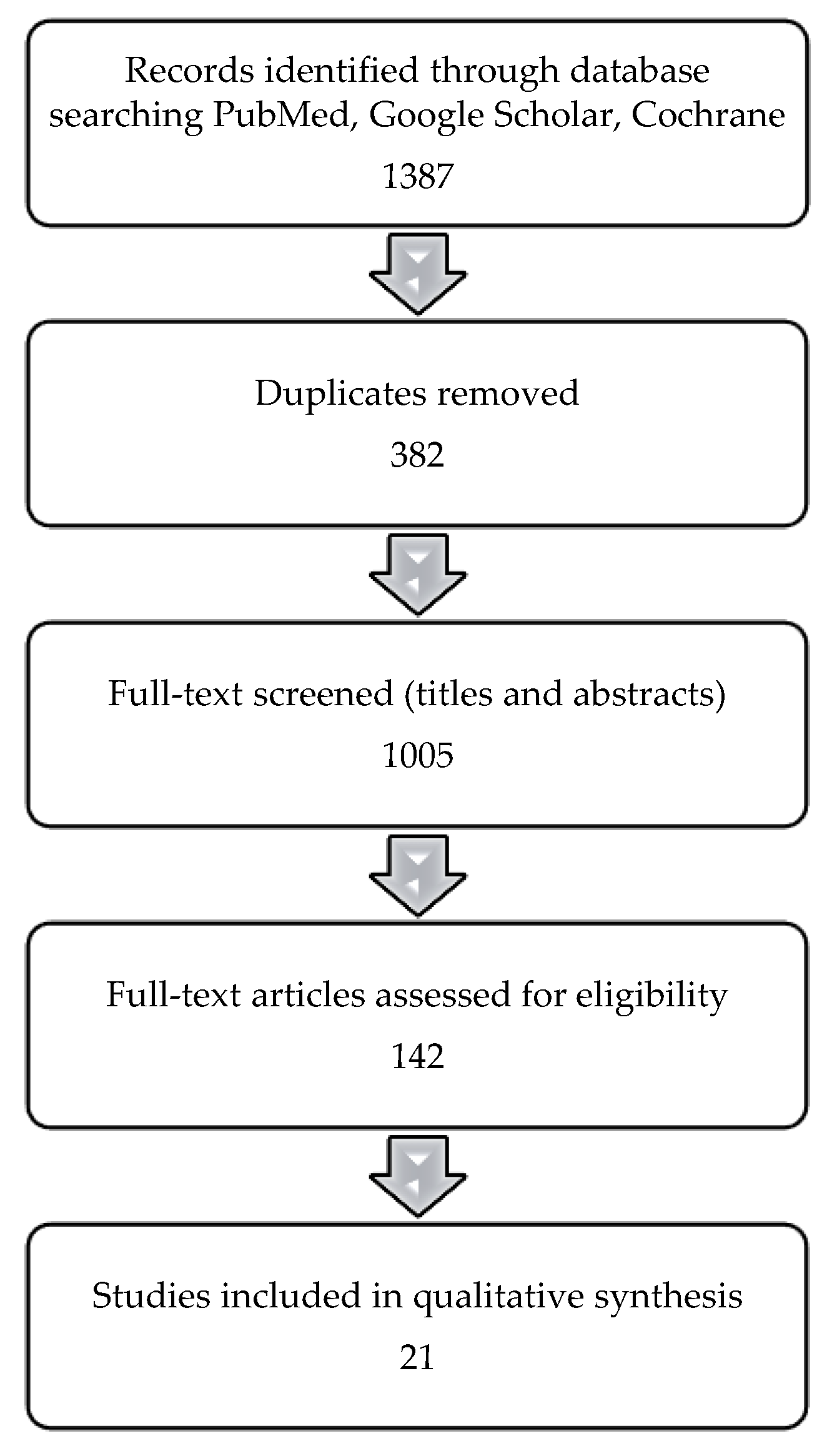

Table 1.
Comparison of studies introduced in current research containing information on the relationship between thyroid dysfunction and type 2 diabetes mellitus.
Table 1.
Comparison of studies introduced in current research containing information on the relationship between thyroid dysfunction and type 2 diabetes mellitus.
| First Author, Title | T2DM Participants |
Hypothyroidism (Subclinical + Overt) |
Hyperthyroidism (Subclinical + Overt) |
| Khassawneh AH, “Prevalence and predictors of thyroid dysfunction among type 2 diabetic patients: A case-control study”[8] | 998 | 220 (22,04%) |
46 (4,61%) |
| Bukhari S, “Prevalence and predictors of thyroid dysfunction amongst patients with Type 2 diabetes mellitus in Pakistan”[9] |
317 |
82 (25,8%) |
35 (11%) |
| Ogbonna SU, “Association between glycemic status and thyroid dysfunction in patients with type 2 diabetes mellitus”[10] | 354 | 44 participants – thyroid dysfunction (12.4 %) |
|
| Shrestha B, “Hypothyroidism among Type 2 Diabetic Patients Visiting Outpatient Department of Internal Medicine of a Tertiary Care Centre: A Descriptive Cross-sectional Study”[11] | 384 | 127 (33.07%) |
No data |
| Ishay A, “Prevalence of subclinical hypothyroidism in women with type 2 diabetes”[12] | 410 (women) |
37 (9%) *just subclinical |
No data |
| Raghuwanshi PK, “Evaluation of thyroid dysfunction among type 2 diabetic patients”[13] | 40 | 10 (25%) |
1 (2,5%) |
| Mehalingam V, “Thyroid dysfunction in patients with type 2 diabetes mellitus and its association with diabetic complications”[14] | 331 | 46 (13,9%) |
12 (3,6%) |
| Essmat HE, “Thyroid dysfunction prevalence and relation to glycemic control in patients with type 2 diabetes mellitus”[15] |
200 | 40 (20%) |
18 (9%) |
| Chubb SAP, “The relationship between thyroid dysfunction, cardiovascular morbidity and mortality in type 2 diabetes: The Fremantle Diabetes Study Phase II”[16] |
1250 | 76 | 3 |
| Subekti I, “Thyroid Dysfunction in Type 2 Diabetes Mellitus Patients”[17] | 303 | 23 (7,6%) |
7 (2,3%) |
| Pramanik S, “Thyroid Status in Patients with Type 2 Diabetes Attending a Tertiary Care Hospital in Eastern India”[18] | 100 | 26 (26%) |
0 (0%) |
Table 2.
Bidirectional Relationship Between Thyroid Dysfunction and Type 2 Diabetes: A Review of Key Studies.
Table 2.
Bidirectional Relationship Between Thyroid Dysfunction and Type 2 Diabetes: A Review of Key Studies.
| First Author, Title | Publication Year | Type | Key Findings |
| Shrestha B, “Hypothyroidism among Type 2 Diabetic Patients Visiting Outpatient Department of Internal Medicine of a Tertiary Care Centre: A Descriptive Cross-sectional Study”[11] |
2023 |
A Descriptive Cross-sectional Study |
A total of 384 subjects with T2DM participated in the study using convenience sampling. Hypothyroidism prevalence was 33.07% (95% CI: 28.36-37.78) among patients, with 56 (44.09%) males and 71 (55.90%) females. Mean age was 55.17±7.53 years. Hypothyroidism prevalence exceeded rates from similar studies in comparable studies [11]. |
| Bukhari S, “Prevalence and predictors of thyroid dysfunction amongst patients with Type 2 diabetes mellitus in Pakistan”[9] | 2022 | Descriptive cross-sectional study | TD, especially hypothyroidism, is more common in individuals with T2DM, with a higher prevalence observed in women [9]. |
| Chubb SAP, The relationship between thyroid dysfunction, cardiovascular morbidity and mortality in type 2 diabetes: The Fremantle Diabetes Study Phase II[16] |
2022 | Original article | In the Fremantle Diabetes Study Phase II, involving 1,250 individuals with T2DM and no prior TD, subclinical hypothyroidism emerged as the most frequent thyroid dysfunction (77.2%). Over a 6.2–6.7 year follow-up, subclinical hypothyroidism was not significantly associated with increased risk of cardiovascular events or mortality (p > 0.05), despite correlations with risk factors such as lower eGFR and higher systolic blood pressure [16] |
| Rong F, “Association between thyroid dysfunction and type 2 diabetes: a meta-analysis of prospective observational studies”[22] |
2021 | Research Article | This meta-analysis has demonstrated an association between TD and an elevated risk of developing T2DM. However, the evidence does not support an association between thyroid dysfunction and CVD events or overall mortality in individuals with T2DM. Consequently, measurement of TSH levels in individuals with risk factors for diabetes may assist in the further assessment of T2DM risk [22]. |
| Khassawneh AH, “Prevalence and predictors of thyroid dysfunction among type 2 diabetic patients: A case-control study”[8] | 2020 | Case-Control Study | In patients with T2DM, TD was observed in 26.7% of cases, higher than the 13.7% seen in non-diabetic controls (p < 0.001). Subclinical hypothyroidism was the most prevalent form of pathology. The condition was more likely in individuals over 50 years old (p < 0.001), women (p = 0.013), among those with goiter (p = 0.029) and in patients with poor glycemic control [8]. |
| Mehalingam V, “Thyroid dysfunction in patients with type 2 diabetes mellitus and its association with diabetic complications”[14] |
2020 | Original article | The prevalence TD among 331 patients with T2DM was found to be 17.5%. Hypothyroidism was observed in 13.9% of participants, while hyperthyroidism was noted in 3.6%. Thyroid dysfunction was more prevalent among female patients. The study did not find a significant association between TD and diabetic complications such as nephropathy, neuropathy, retinopathy, or cardiovascular disease (p > 0.05)[14] |
| Ogbonna SU, “Association between glycemic status and thyroid dysfunction in patients with type 2 diabetes mellitus”[10] |
2019 | Original Research | In this study, the mean HbA1c was significantly higher in T2DM patients with TD compared to those without (8.1 ± 1.9% vs 5.1 ± 1.2%, p = 0.001). Additionally, a positive linear relationship was observed between HbA1c levels and the presence of TD (regression coefficient = 1.89, p = 0.001). It suggests that poor glycemic control may be associated with an increased risk of TD in individuals with T2DM [10]. |
| Zuanna TD, “A Systematic Review of Case-Identification Algorithms Based on Italian Healthcare Administrative Databases for Two Relevant Diseases of the Endocrine System: Diabetes Mellitus and Thyroid Disorders”[86] |
2019 | Systematic Review | This systematic review examined algorithms for identifying cases of DM and TD using Italian healthcare administrative databases. The authors concluded that while numerous algorithms exist for identifying DM using healthcare administrative databases, the literature on TDs is relatively sparse, and further validation and implementation of these algorithms are needed. [86]. |
| Elgazar EH, “Thyroid dysfunction prevalence and relation to glycemic control in patients with type 2 diabetes mellitus”[15] |
2019 | cross-sectional study | A cross-sectional study of 200 T2DM patients and 200 controls found significantly elevated TSH and T3 levels in diabetics (P < 0.001). Thyroid dysfunction was more common in those with poor glycemic control (HbA1c ≥ 8%) and longer diabetes duration. Subclinical hypothyroidism was the most frequent thyroid disorder observed [15]. |
| Chen RH, “Thyroid diseases increased the risk of type 2 diabetes mellitus A nation-wide cohort study”[88] |
2019 | Research Article | In a nationwide cohort study, patients with TD had higher cumulative incidence T2DM compared to the control group, with a log-rank p-value < 0.0001. The development between TD and T2DM was strongest within the first year after TD diagnosis. Female patients and those aged 18–64 years exhibited higher incidence of T2DM compared to controls (p < 0.0001) [88]. |
| Pramanik S, “Thyroid Status in Patients with Type 2 Diabetes Attending a Tertiary Care Hospital in Eastern India”[18] |
2018 | Original article | In this study of 100 diabetes patients, thyroid function was assessed. Subclinical hypothyroidism was found in 23% of patients, overt hypothyroidism in 3%, and positive thyroid autoantibodies in 13.1%. All patients were iodine sufficient. About one in four diabetes patients had TD. Routine thyroid screening is recommended. The success of the salt iodination program in this region is noted[18]. |
| Alsolami AA, “Association between type 2 diabetes mellitus and hypothyroidism: a case–control study”[51] |
2018 | A case-control study | It analyzed 121 cases and 121 controls. The study found higher risk rates of hypothyroidism in patients with T2DM. Multivariate analysis revealed a stronger association between T2DM and hypothyroidism, with an odds ratio (OR) of 4.14 (P<0.001). The results suggest that T2DM patients are at an elevated risk for developing hypothyroidism. Improved management of T2DM may help mitigate this risk [51]. |
| Jun JE, “Association between changes in thyroid hormones and incident type 2 diabetes: A seven-year longitudinal study”[89] | 2017 | Research Article | In a cohort of 6,235 euthyroid individuals without DM, monitored annually between 2006 and 2012, variations in TH levels were evaluated in relation to incident T2DM. Over 25,692 person-years of follow-up, 229 new T2DM cases were identified. After adjusting for confounders, individuals in the highest tertile of TSH change (2.5–4.2 μIU/mL) demonstrated an increased risk of developing T2DM (p for trend=0.027) compared to those with smaller TSH changes. Notably, baseline TH levels were not predictive of diabetes risk. These findings indicate that even subtle changes in thyroid function, within the normal range, can influence the risk of developing T2DM [89]. |
| Raghuwanshi PK,“Evaluation of thyroid dysfunction among type 2 diabetic patients”[13] |
2014 | Original Article | In a cohort of 80 subjects, TD was significantly more prevalent in T2DM patients than in controls (p < 0.05). Hypothyroidism and subclinical hypothyroidism were observed in 10% and 15% of diabetic patients, respectively, compared to 2.5% and 7.5% in non-diabetic individuals [13]. |
Disclaimer/Publisher’s Note: The statements, opinions and data contained in all publications are solely those of the individual author(s) and contributor(s) and not of MDPI and/or the editor(s). MDPI and/or the editor(s) disclaim responsibility for any injury to people or property resulting from any ideas, methods, instructions or products referred to in the content. |
© 2025 by the authors. Licensee MDPI, Basel, Switzerland. This article is an open access article distributed under the terms and conditions of the Creative Commons Attribution (CC BY) license (http://creativecommons.org/licenses/by/4.0/).
Copyright: This open access article is published under a Creative Commons CC BY 4.0 license, which permit the free download, distribution, and reuse, provided that the author and preprint are cited in any reuse.


