
Submitted:
07 April 2025
Posted:
08 April 2025
You are already at the latest version
Abstract
Melanoma remains one of the most aggressive and treatment-resistant malignancies, despite advances in targeted therapies and immunotherapies. Drug resistance continues to be a major challenge, limiting long-term therapeutic success. Epigenetic regulators, particularly histone deacetylases (HDACs), play a crucial role in melanoma progression and therapy resistance by modulating gene expression, chromatin accessibility, and non-histone protein functions. HDACs influence key oncogenic pathways, including the MAPK, PI3K/AKT, and WNT/β-catenin signaling cascades, contributing to resistance against BRAF/MEK inhibitors and immune checkpoint blockade therapies.
HDACs also modulate the tumor microenvironment by regulating immune cell infiltration, cytokine production, and stromal interactions, thereby promoting an immunosuppressive milieu that supports tumor survival. Given their pivotal role in drug resistance, HDAC inhibitors (HDACis) have emerged as promising therapeutic agents. HDACis induce apoptosis, suppress tumor proliferation, and enhance immune responses by reactivating tumor suppressor genes and modulating epigenetic landscapes. Preclinical and clinical studies indicate that combining HDACis with existing therapies, such as BRAF/MEK inhibitors or immune checkpoint inhibitors, can overcome resistance and improve treatment efficacy.
Despite their potential, challenges remain, including toxicity, patient selection, and the identification of optimal combination strategies. Ongoing research aims to develop selective HDACis with improved efficacy and reduced adverse effects. This review comprehensively explores the role of HDACs in melanoma drug resistance, their interaction with key signaling pathways, and the therapeutic potential of HDAC inhibition. A deeper understanding of HDAC-mediated resistance mechanisms will aid in developing novel strategies to enhance melanoma treatment outcomes and overcome therapeutic resistance.
Keywords:
Histone deacetylases
; melanoma
; drug resistance
; HDAC inhibitors
; epigenetic regulation
; targeted therapy resistance
1. Introduction
Melanoma, an aggressive and treatment-resistant form of skin cancer, continues to pose significant challenges despite advancements in therapeutic strategies. As the deadliest form of skin cancer, melanoma is highly metastatic and often exhibits resistance to conventional therapies, resulting in poor prognosis and limited treatment options for advanced-stage patients. Conventional chemotherapy, including agents such as dacarbazine, temozolomide, and platinum-based drugs, often demonstrates limited efficacy due to intrinsic and acquired resistance mechanisms that undermine treatment efficacy [1].
In recent years, the development of targeted therapies has revolutionized melanoma treatment. The identification of driver mutations in genes such as BRAF (present in approximately 40-60% of melanomas), NRAS, and KIT has led to the development of molecularly targeted inhibitors that specifically block oncogenic signaling pathways [2]. Among them, BRAF mutations are found in approximately 50% of cutaneous melanomas, leading to constitutive activation of the mitogen-activated protein kinase (MAPK) pathway. BRAF inhibitors (e.g., vemurafenib and dabrafenib) and MEK inhibitors (e.g., trametinib and cobimetinib) have demonstrated significant clinical efficacy by targeting the MAPK/ERK signaling pathway, resulting in improved progression-free survival in patients with BRAF-mutant melanoma. However, these therapies are often plagued by the rapid development of acquired resistance through compensatory activation of alternative pathways or secondary mutations [3]. Parallel to targeted therapies, immunotherapy has emerged as a powerful treatment modality for melanoma. Immune checkpoint inhibitors, particularly anti-PD-1 (e.g., pembrolizumab, nivolumab) and anti-CTLA-4 (e.g., ipilimumab) antibodies, have demonstrated unprecedented success in enhancing antitumor immune responses and achieving durable responses in a subset of patients [4]. Nevertheless, resistance to immunotherapy also remains a formidable challenge, with many patients exhibiting primary or acquired resistance through mechanisms such as impaired antigen presentation, alterations in immune cell composition within the tumor microenvironment, and activation of immune-inhibitory pathways. Resistance mechanisms include secondary mutations, activation of compensatory signaling pathways, and epigenetic modifications [5]. Despite these advancements, therapeutic resistance remains a prevalent issue, necessitating the exploration of novel targets and combination strategies to improve patient prognosis.
Epigenetic modifications control gene expression, at a transcriptional, post-transcriptional or post-translational level, without altering the DNA nucleotides’ sequence. Epigenetic regulation plays a crucial role in melanoma progression and drug resistance [6]. Histones facilitate the organisation of DNA into nucleosomes and their acetylation status alters the formation of the chromatin structure. The reversible acetylation and deacetylation are regulated by histone acetyltransferases (HATs) and histone deacetylases (HDACs). Histone deacetylases (HDACs) are key epigenetic regulators that modulate chromatin structure and gene expression by removing acetyl groups from histone and non-histone proteins. These modifications alter the activation state of various intracellular networks, including proliferation, differentiation, apoptosis, and immune evasion [7]. In melanoma, dysregulated HDAC activity contributes to tumorigenesis, metastasis, and therapy resistance by repressing tumor suppressor genes and promoting oncogenic signaling pathways [8].
Recent studies have highlighted the role of HDACs in drug-resistant melanoma [9,10,11,12,13,14,15]. HDACs modulate key survival pathways such as the MAPK, PI3K/AKT, and WNT/β-catenin pathways, contributing to resistance against targeted therapies and immune checkpoint inhibitors. Additionally, HDACs regulate the tumor microenvironment by influencing immune cell infiltration, cytokine production, and extracellular matrix remodeling.
Given their role in melanoma pathogenesis, HDAC inhibitors (HDACis) have been explored as potential therapeutic agents. Several HDAC inhibitors, including vorinostat, romidepsin, and panobinostat, have shown promise in preclinical and clinical studies [14]. These agents induce apoptosis, inhibit tumor cell proliferation, and enhance the efficacy of existing therapies. Combination strategies involving HDAC inhibitors and targeted or immunotherapies are being actively investigated to overcome resistance and improve treatment outcomes.
This review provides a comprehensive overview of the role of HDACs in melanoma drug resistance. We discuss their classification, function, and mechanistic involvement in resistance pathways. Additionally, we explore current therapeutic strategies targeting HDACs and highlight the challenges and future directions in the field. Understanding the epigenetic mechanisms underlying melanoma drug resistance may pave the way for novel treatment approaches, ultimately improving patient outcomes.
2. HDAC Biology and Classification
2.1. Overview of HDAC Biology
The human genome is composed of DNA tightly coiled around histone proteins, forming compact chromosomes within 23 pairs of chromosomes, which contain approximately 6.47 billion base pairs and encode over 20,000 genes. If the DNA from a single human cell were stretched out, it would be about 2 meters long, yet fits into a nucleus of only 6 µm in diameter due to chromatin packaging [16,17]. This chromatin adopts a "beads-on-a-string" structure, where histone proteins (H1, H2A, H2B, H3, and H4) interact with DNA, forming nucleosomes that further coil into compact 30 nm chromatin fibers [16]. Histone tails, which are rich in positively charged lysine and arginine residues, facilitate interactions with the negatively charged DNA backbone. These histone proteins are vital for regulating DNA accessibility for transcription and replication.
Histone acetylation and deacetylation, processes mediated by histone acetyltransferases (HATs) and histone deacetylases (HDACs), play a critical role in controlling gene expression. HATs neutralize the positive charge on histones, loosening chromatin structure and allowing RNA polymerase II to access DNA and initiate gene transcription. In contrast, HDACs restore the positive charge on histones, tightening chromatin and preventing RNA polymerase from accessing the DNA, thereby repressing gene expression [18]. This dynamic regulation of chromatin structure is essential for maintaining a balanced gene expression profile. Disruptions in HAT and HDAC activity can lead to aberrant gene expression, chromatin instability, and the development of epigenetic diseases. As a result, regulating the activity of HATs and HDACs is crucial for proper gene expression, and HDAC inhibitors are being explored as potential therapeutic agents for cancer and other diseases associated with chromatin misregulation.
2.2. HDAC Classification and Function
HDACs are a family of enzymes that remove acetyl groups from histone and non-histone proteins, leading to chromatin condensation and transcriptional repression [19]. They are classified into four classes (Table 1) with class I and II HDACs primarily responsible for the deacetylation of lysine residues on the N-terminal tails of histones. HDACs interact with various partners through specific domains to regulate their activity.
- Class I HDACs (HDAC1, 2, 3, 8): Class I HDACs predominantly interact with corepressors such as SMRT (Silencing Mediator for Retinoid and Thyroid receptors) and N-CoR (Nuclear Receptor Corepressor). These corepressors contain LXXLL motifs, which bind to the repression domains of HDACs, forming complexes that facilitate gene silencing. The catalytic domain of HDAC1/2 interacts with these corepressors and with histone tails or non-histone proteins, leading to the deacetylation of lysine residues and chromatin condensation, preventing transcription of critical genes involved in cell cycle regulation, apoptosis, and DNA repair [20]. Predominantly nuclear, involved in cell proliferation, survival, and differentiation. These HDACs play a key role in tumorigenesis by repressing tumor suppressor genes and promoting oncogenic pathways [21].
- Class II HDACs (HDAC4, 5, 6, 7, 9, 10): Class II HDACs are involved in regulating cellular processes by interacting with kinase signaling pathways and transcription factors [22]. For instance, HDAC6 interacts with tubulin, a non-histone protein involved in microtubule dynamics. HDAC4 and HDAC5 interact with MEF2 (Myocyte enhancer factor 2), a transcription factor involved in muscle differentiation and apoptosis [23]. HDAC6, in particular, regulates microtubule stability and autophagy, influencing cancer cell survival [24]. The non-histone deacetylase domains Class II HDACs allow them to interact with cytoskeletal proteins and transcription factors, such as BCL6 (involved in B-cell activation), which is important in lymphoid malignancies like lymphoma [25]. Their ability to shuttle between the nucleus and cytoplasm and their regulation of transcriptional complexes make them critical in cancer cell migration, invasion, and metastasis.
- Class III HDACs (Sirtuins): NAD+-dependent catalytic domain of sirtuins regulate the acetylation of both histone and non-histone proteins [26]. They also interact with coactivators such as PGC-1α, a transcriptional coactivator involved in mitochondrial biogenesis and metabolic regulation, and FOXO, a transcription factor linked to stress resistance and longevity [27]. In cancer, the dysregulation of Sirtuins contributes to altered cellular metabolism, resistance to cell death, and tumor progression. SIRT1 and SIRT3 have been implicated in melanoma progression and resistance to targeted therapies. SIRT1 deacetylates p53, a tumor suppressor protein, altering its function in DNA damage response and apoptosis. SIRT1 also interacts with NF-κB, a transcription factor associated with inflammation and cancer progression [28].
- Class IV HDAC (HDAC11): Shares characteristics with both Class I and II HDACs and influence immune cell function, particularly by interacting with immune-specific transcription factors such as NF-κB and STAT proteins [29]. It plays a role in modulating inflammatory responses and cytokine signaling. Additionally, HDAC11’s regulation of T cell differentiation and macrophage polarization can impact cancer progression, as immune cells influence tumor growth and metastasis [30].

Table 1.
HDAC Classification and summarizes the drug resistant mechanisms in melanoma.
| HDAC Classification | HDAC Isoform(s) | Localization | Role in Melanoma | Key Characteristics |
| Class I | HDAC1, HDAC2, HDAC3, HDAC8 | Nucleus | - HDAC1 and HDAC2 are overexpressed in melanoma cells, promoting proliferation and migration. | - p53 Activation: Resistance to chemotherapy due to p53 mutations or silencing. |
| - HDAC3 promotes epithelial-mesenchymal transition (EMT) and enhances melanoma cell migration, invasion, and metastasis. | - MAPK Pathway Re-activation: Re-activation of MAPK signaling after BRAF/MEK inhibition. | |||
| Class II | HDAC4, HDAC5, HDAC7, HDAC9 | Nucleus, Cytoplasm | - HDAC4 and HDAC5 mediate changes in gene expression that promote the resistance of melanoma cells to apoptotic signals. | - Drug Efflux Pumps: Overexpression of P-glycoprotein and MRP1 efflux pumps contributing to resistance to chemotherapeutic drugs like doxorubicin. |
| Class III (Sirtuins) | SIRT1, SIRT2, SIRT3, SIRT5, SIRT6 | Nucleus, Cytoplasm, Mitochondria | - SIRT1 is linked to melanoma progression and resistance by maintaining the stemness of melanoma cells, promoting survival under stress, and enhancing DNA repair mechanisms. | - Immune Escape: Sirtuins contribute to immune evasion by inhibiting T-cell activation and promoting melanoma cell survival in immune-dense environments. |
| Class IV | HDAC11 | Nucleus | - HDAC11 is involved in regulating cellular metabolism and is implicated in melanoma cells' adaptation to hypoxic conditions, which are prevalent in the tumor microenvironment. | - Metabolic Reprogramming: HDAC11 plays a role in regulating metabolic pathways that provide resistance to therapies targeting cellular metabolism. |
| Class I/II Dual | HDAC6 | Nucleus, Cytoplasm | - HDAC6 regulates cell motility and is crucial for the invasion and metastasis of melanoma cells. | - EMT Induction: HDAC6 promotes the expression of mesenchymal markers like N-cadherin and vimentin, contributing to the acquisition of a drug-resistant phenotype. |
| Class I/II Dual | HDAC10 | Nucleus, Cytoplasm | - HDAC10 is implicated in melanoma cell survival and resistance by regulating both apoptotic and cell cycle pathways. | - Cell Cycle Dysregulation: Inhibition of cell cycle checkpoints (via HDAC10) contributes to resistance in melanoma by promoting unchecked proliferation. |
3. Mechanistic Involvement of HDACs in Melanoma Drug Resistance
The mechanistic involvement of HDACs in melanoma drug resistance encompasses their ability to modulate key oncogenic pathways, influence the tumor microenvironment, and alter the expression of genes crucial for cell survival and therapeutic response (Figure 1).
3.1. Epigenetic Regulation of Drug Resistance Genes
Epigenetics (heritable non-structural changes in gene expression), is one of the major mechanisms that pushes chemotherapy towards acquired resistance [6].
HDACs play a central role in the epigenetic regulation of gene expression by catalyzing the removal of acetyl groups from histone tails, leading to chromatin compaction and transcriptional repression. This activity can silence tumor suppressor genes and enhance the expression of oncogenes, thereby contributing to melanoma development and resistance to various therapies [14]. Non-coding RNA (microRNAs) and DNA methylation processes, which are part of epigenetics, play a role in the response of tumors to chemotherapy as well as acquired drug resistance [31,32].
One of the key mechanisms by which HDACs mediate drug resistance is through the repression of pro-apoptotic genes. For example, HDAC1 and HDAC2 have been shown to downregulate the expression of BIM, a pro-apoptotic protein that plays a crucial role in initiating cell death in response to targeted therapies like BRAF and MEK inhibitors [33]. This downregulation of BIM reduces the sensitivity of melanoma cells to these inhibitors, promoting their survival [34]. In addition to BIM, HDACs can also modulate the expression of other apoptosis-related genes, such as those in the TRAIL/DR5 pathway, further contributing to the evasion of cell death [35]. Furthermore, HDACs influence the expression of genes involved in DNA damage repair, such as BRCA1 and RAD51 [36]. By modulating the expression and activity of these repair genes, HDACs can enhance the ability of melanoma cells to survive under therapeutic stress, such as that induced by chemotherapy or radiation.
Beyond their effects on histone proteins, HDACs also regulate the acetylation status and activity of various non-histone proteins, including transcription factors and signaling mediators. For instance, HDAC6 deacetylates HSP90, a chaperone protein that stabilizes several oncogenic client proteins, including BRAF and AKT [37]. This deacetylation by HDAC6 can affect the stability and activity of these proteins, influencing melanoma cell adaptation and resistance to targeted therapies [38]. Similarly, HDAC3 has been shown to interact with β-catenin, a key effector of the WNT signaling pathway, and modulate its transcriptional activity, thereby promoting immune evasion and reducing the effectiveness of immune checkpoint inhibitors [39]. These examples illustrate the multifaceted role of HDACs in epigenetic regulation and their impact on drug resistance in melanoma.
3.2. HDACs and Regulation of Drug Efflux Pumps
Drug efflux pumps, particularly ATP-binding cassette (ABC) transporters, play a significant role in mediating drug resistance in melanoma and other cancers by actively transporting chemotherapeutic agents out of the cells, thus reducing their intracellular concentration and therapeutic efficacy.
P-glycoprotein (P-gp), also known as multidrug resistance protein 1 (MDR1) or ABCB1, is a key ABC transporter that confers resistance to a wide range of chemotherapeutic drugs. In melanoma, HDACs have been implicated in the regulation of P-gp expression. Specifically, HDAC1 and HDAC2 can promote the transcription of P-gp by deacetylating transcription factors such as NF-κB and AP-1, leading to their activation and increased binding to the MDR1 promoter [40,41]. This increased P-gp expression results in enhanced efflux of chemotherapeutic drugs like doxorubicin, cisplatin, and taxanes, reducing their effectiveness [42].
In addition to P-gp, other ABC transporters, including multidrug resistance-associated proteins (MRPs), such as MRP1 (ABCC1), MRP2 (ABCC2), and MRP5 (ABCC5), also contribute to drug resistance by effluxing various chemotherapeutic agents. HDACs, particularly HDAC2, have been shown to regulate the expression of these MRPs as well [43]. Inhibition of HDAC activity, especially using HDAC inhibitors, can downregulate the expression of these drug efflux pumps, thereby increasing the intracellular accumulation of chemotherapeutic agents and restoring drug sensitivity in melanoma cells.
3.3. HDACs and the Evasion of Apoptosis
Evasion of apoptosis, or programmed cell death, is a critical mechanism by which melanoma cells develop resistance to therapy. HDACs play a pivotal role in regulating the expression and activity of both pro-apoptotic and anti-apoptotic proteins, allowing melanoma cells to survive and proliferate despite therapeutic intervention [1,43,44].
The tumor suppressor protein p53 is a key mediator of apoptosis in response to DNA damage induced by chemotherapy and radiation [15]. Activation of p53 leads to the transcription of pro-apoptotic genes, such as BAX and PUMA. However, HDACs, particularly HDAC1, HDAC2, and HDAC3, can deacetylate p53, thereby inhibiting its transcriptional activity and reducing its ability to induce apoptosis [11,45]. This deacetylation of p53 impairs its binding to DNA and its ability to activate the transcription of its target genes, contributing to the survival of melanoma cells in the presence of DNA-damaging agents.
In addition to p53, HDACs regulate the expression and activity of other proteins involved in apoptosis. For example, HDAC1 and HDAC3 can deacetylate and suppress the expression of p21, a cyclin-dependent kinase inhibitor that can also function as a pro-apoptotic mediator [8]. Conversely, HDACs can upregulate the expression of anti-apoptotic proteins, such as Bcl-2 and Survivin [44]. These proteins inhibit mitochondrial outer membrane permeabilization, preventing the release of pro-apoptotic factors like cytochrome c and blocking the apoptotic cascade. By modulating the balance between pro-apoptotic and anti-apoptotic factors, HDACs contribute to the ability of melanoma cells to evade apoptosis and develop drug resistance.
3.4. HDACs and DNA Repair Mechanisms
The ability of melanoma cells to efficiently repair DNA damage induced by chemotherapy and radiation is a significant contributor to drug resistance. HDACs are involved in several DNA repair pathways, and their dysregulation can enhance the capacity of melanoma cells to survive DNA-damaging therapies.
Homologous recombination (HR) and non-homologous end joining (NHEJ) are the two major pathways that repair DNA double-strand breaks (DSBs), which are commonly induced by chemotherapeutic agents like cisplatin and radiation. [46]. HDACs have been shown to interact with key repair proteins involved in both HR and NHEJ. For example, HDACs can deacetylate proteins such as DNA-PKcs and Ku70/80, which are involved in NHEJ, and Rad51, which is crucial for HR, thereby enhancing their activity and promoting efficient DNA repair [10,47,48]. This enhanced DNA repair capacity enables melanoma cells to better tolerate and survive the DNA damage caused by therapy.
Inhibition of HDAC activity can impair DNA repair mechanisms and sensitize melanoma cells to chemotherapy and radiation [49,50]. HDACs also influence other DNA repair pathways, such as base excision repair (BER), which repairs single-strand DNA breaks caused by alkylating agents and oxidative stress [51]. HDACs can regulate the activity of proteins like Poly ADP-ribose polymerase 1 (PARP1), a key enzyme involved in DNA repair, by modulating its acetylation status [52]. Inhibition of HDACs can lead to increased PARP1 activity and the accumulation of DNA damage, which can sensitize melanoma cells to therapies that induce DNA damage.
3.5. HDACs and Epithelial-Mesenchymal Transition (EMT)-Mediated Drug Resistance
Epithelial-mesenchymal transition (EMT) is a cellular process by which epithelial cells lose their cell-cell adhesion and polarity and acquire mesenchymal characteristics, including increased motility, invasiveness, and resistance to apoptosis [53]. EMT plays a critical role in melanoma metastasis and the development of drug resistance.
HDACs regulate the expression and activity of key transcription factors that drive EMT, such as Snail, Slug, ZEB1, and Twist [54,55]. These transcription factors repress the expression of epithelial markers like E-cadherin and promote the expression of mesenchymal markers, including N-cadherin, vimentin, and fibronectin, leading to the acquisition of a more invasive and drug-resistant phenotype [56]. HDACs can deacetylate these EMT-inducing transcription factors, enhancing their stability, nuclear localization, and transcriptional activity, thereby promoting EMT and facilitating the transition to a more drug-resistant, mesenchymal-like state [57]. Melanoma exhibits a remarkable ability to undergo phenotypic switching, a process wherein melanoma cells transition between different cellular states, including proliferative and invasive phenotypes [58]. A key transcription factor involved in this process is ZEB1 (Zinc Finger E-box Binding Homeobox 1), which is a potent inducer of epithelial-to-mesenchymal transition (EMT). ZEB1 represses the expression of epithelial adhesion molecules, such as E-cadherin, and promotes the expression of mesenchymal markers, including N-cadherin [59]. The upregulation of N-cadherin enhances cell-cell adhesion, contributing to the invasiveness and metastatic potential of melanoma cells. Furthermore, ZEB1 activation is tightly regulated by HDAC-mediated chromatin remodeling, which facilitates the transcriptional repression of E-cadherin and other epithelial markers, supporting the mesenchymal phenotype. This phenotypic switching not only enhances melanoma invasiveness but also confers resistance to targeted therapies, complicating treatment outcomes [60]. The HDAC-driven regulation of ZEB1 and N-cadherin expression represents a critical mechanism underlying melanoma drug resistance and metastatic progression [61].
HDAC inhibitors have shown potential in reversing EMT in melanoma, restoring the expression of epithelial markers, and reducing mesenchymal characteristics. This reversal of EMT can enhance the sensitivity of melanoma cells to chemotherapy and targeted therapies by inhibiting the pathways that mediate therapy resistance [62]. Targeting HDACs to reverse EMT represents a potential strategy to reprogram melanoma cells and make them more susceptible to therapy.
3.6. Role of HDACs in Tumor Microenvironment and Immune Evasion
The tumor microenvironment (TME), a complex milieu of cells, extracellular matrix, and signaling molecules surrounding the tumor, plays a crucial role in melanoma progression and therapy response. HDACs have emerged as key regulators of TME dynamics and immune evasion.
HDACs can promote angiogenesis, the formation of new blood vessels, by modulating the expression of pro-angiogenic factors such as vascular endothelial growth factor (VEGF) [41]. Inhibition of HDACs can downregulate VEGF expression, impairing tumor vascularization and limiting melanoma growth. Furthermore, HDACs influence the activity of cancer-associated fibroblasts (CAFs), which contribute to tumor progression through extracellular matrix remodeling and secretion of growth factors. HDACs can enhance the pro-tumorigenic properties of CAFs, further supporting melanoma growth and metastasis [63].
HDACs also regulate the expression and activity of matrix metalloproteinases (MMPs), a family of enzymes that degrade the extracellular matrix, facilitating melanoma cell invasion and metastasis [64]. Beyond their effects on the TME, HDACs play a pivotal role in immune evasion, enabling melanoma cells to escape immune surveillance. HDACs can suppress the expression of major histocompatibility complex (MHC) molecules on melanoma cells, thereby reducing their recognition and killing by cytotoxic T lymphocytes [65]. Conversely, inhibition of HDACs has been linked to increased MHC class I and II expression, enhancing the immune recognition of melanoma cells [66]. HDAC6-regulated adipokine leptin and resistin in melanoma which regulate FASN, Hsp90, Cav-1, P-gp levels and reduces the therapeutic response [67].
Moreover, HDACs can upregulate the expression of immune checkpoint molecules, such as programmed death-ligand 1 (PD-L1), on melanoma cells, contributing to immune evasion by inhibiting T-cell activation and promoting T-cell exhaustion [68]. Preclinical studies suggest that combining HDAC inhibitors with immune checkpoint blockade can produce synergistic effects in restoring antitumor immunity [69]. HDACs also modulate the production of cytokines and chemokines within the TME, shaping the immune landscape and influencing the recruitment and activity of immune cells. For example, HDAC inhibition can enhance the secretion of pro-inflammatory cytokines, fostering an immune-permissive environment [70]. Conversely, HDACs can also support the recruitment and function of regulatory T cells (Tregs), which suppress antitumor immune responses [71]. Targeting HDACs to reduce Treg-mediated immunosuppression represents a potential strategy to improve immune responses against melanoma.
The emergence of resistance to immune checkpoint inhibitors, such as anti-PD-1 antibodies, is a major clinical challenge in melanoma treatment [72]. HDACs have been implicated in contributing to PD-1 resistance by modulating the TME and immune evasion mechanisms. As mentioned earlier, HDACs can upregulate PD-L1 expression, suppress antigen presentation, and promote Treg function, all of which can reduce the efficacy of anti-PD-1 therapies. The combination of HDAC inhibitors with immune checkpoint blockade is being actively investigated as a strategy to overcome resistance and enhance antitumor immunity [69].
3.7. HDAC and Cross-Talk Pathways Leading to Melanoma Drug Resistance
HDACs contribute to melanoma drug resistance by engaging in complex cross-talk with several key signaling pathways that regulate tumor cell survival, proliferation, and immune evasion.
HDACs can modulate the activity of the MAPK and PI3K/AKT pathways, which are critical for cell growth and survival, and their dysregulation is frequently observed in melanoma [15]. HDAC-mediated deacetylation can influence the expression and activity of components of these pathways, leading to resistance to targeted therapies such as BRAF and MEK inhibitors [73]. HDACs can also influence the Janus kinase/signal transducer and activator of transcription (JAK/STAT) pathway by modulating cytokine signaling. Alterations in the JAK/STAT pathway can contribute to immune evasion and resistance to immune checkpoint inhibitors. By affecting cytokine signaling, HDACs can help tumor cells escape immune surveillance [37]. HDACs also regulate the WNT/β-catenin signaling pathway, which plays a role in melanoma progression and immune evasion. HDACs can modulate β-catenin expression and activity, and elevated levels of β-catenin have been associated with reduced T-cell infiltration into the tumor microenvironment, contributing to resistance to immune checkpoint inhibitors [74,75].
The tumor microenvironment (TME) and hypoxia significantly contribute to melanoma's aggressive nature and its resistance to various therapeutic strategies. Hypoxic conditions, prevalent in rapidly growing melanomas due to insufficient and abnormal vasculature, activate hypoxia-inducible factors (HIFs), particularly HIF-1α and HIF-2α [76,77]. These transcription factors drive the expression of genes involved in angiogenesis, metabolic reprogramming, survival, and invasion, enhancing tumor aggressiveness and therapy resistance. HDACs, especially Class I and II HDACs, have been demonstrated to influence the hypoxia-driven transcriptional program by modulating the acetylation status of HIFs and associated co-factors. [77,78]. For example, HDAC inhibitors have been shown to reduce HIF-1α transcriptional activity, thereby impairing the expression of VEGF and other pro-angiogenic factors essential for melanoma survival and resistance [79]. Moreover, the TME’s cellular composition, including immune cells, fibroblasts, endothelial cells, and extracellular matrix components, creates a pro-survival niche that can mitigate the efficacy of HDAC-targeted therapies. HDACs regulate immune evasion mechanisms by modulating the expression of immune checkpoint molecules and the recruitment of immunosuppressive cells like regulatory T cells (Tregs) and myeloid-derived suppressor cells (MDSCs) [80]. Hypoxia further exacerbates this immunosuppressive landscape by promoting HDAC-mediated silencing of tumor-associated antigen expression and cytokine production [63]. The cooperative influence of HDACs, hypoxia, and TME remodeling in melanoma has profound implications for drug resistance. Hypoxia-induced HDAC activation enhances the plasticity of melanoma cells and induces phenotypic plasticity and therapy resistance in melanoma via the tyrosine kinase receptors ROR1 and ROR2 [81].
4. Therapeutic Implications of Targeting HDACs
HDACs have emerged as critical regulators of melanoma progression and therapeutic resistance, making them compelling targets for drug development. HDACs influence key oncogenic signaling pathways, such as MAPK, PI3K/AKT, and NF-κB, which are frequently deregulated in melanoma and contribute to tumor proliferation, survival, and immune evasion [82]. Given the challenges of treatment resistance, targeting HDACs has shown promise in restoring drug sensitivity and improving therapeutic outcomes.
Several HDAC inhibitors (HDACis), including vorinostat, panobinostat, and entinostat, have demonstrated preclinical efficacy in sensitizing melanoma cells to conventional therapies such as BRAF/MEK inhibitors, chemotherapy, and immunotherapy [12,13,47,68]. Clinically, HDAC inhibitors are being evaluated as monotherapies and in combination strategies to enhance the durability of treatment responses. Emerging studies suggest that HDAC inhibition can modulate immune checkpoint expression, potentially enhancing the efficacy of immunotherapies like anti-PD-1/PD-L1 and anti-CTLA-4 antibodies. Furthermore, HDACis have been shown to impact the tumor microenvironment by reducing fibrosis, altering immune cell infiltration, and reversing resistance-associated epigenetic changes.
Despite these promising effects, challenges such as toxicity, lack of isoform specificity, and resistance to HDACis remain barriers to clinical translation [83]. Addressing these limitations through the development of selective HDAC inhibitors, optimized dosing regimens, and biomarker-driven patient selection strategies is critical for realizing their full therapeutic potential. As research advances, HDAC-targeted therapies may play a pivotal role in improving patient prognosis by overcoming drug resistance, enhancing treatment efficacy, and extending survival in melanoma patients.
4.1. Targeting HDACs to Overcome Drug Resistance in Melanoma
Histone deacetylase inhibitors (HDACis) play a crucial role in overcoming drug resistance in melanoma by reversing the deacetylation of histones and non-histone proteins, thereby altering chromatin structure and transcriptional activity (Table 2).
Vorinostat (SAHA), a pan-HDAC inhibitor targeting Class I, II, and IV HDACs, has been shown to enhance drug efficacy by inhibiting drug efflux pumps and modulating the expression of genes involved in cell survival and apoptosis [84]. It has also been shown to enhance the cytotoxic effects of chemotherapy agents like dacarbazine by disrupting DNA repair mechanisms. However, the clinical efficacy of vorinostat as a single agent in melanoma has been limited, partly due to its broad spectrum of activity and associated toxicities [84,85]. Panobinostat, a potent pan-HDAC inhibitor, has been explored in combination with BRAF inhibitors, but its clinical use has been limited by significant toxicities. Panobinostat exhibits pro-apoptotic effects by acetylating p53 and Bax while downregulating anti-apoptotic proteins such as Bcl-2 and Bcl-xL [86,87]. It also inhibits tumor growth and metastasis by reversing EMT and has demonstrated synergy with BRAF inhibitors like vemurafenib, improving therapeutic outcomes in BRAF-mutant melanoma [88].
Romidepsin, another pan-HDAC inhibitor, has demonstrated modest single-agent activity but has shown more promise in combination with chemotherapy or immunotherapy. It can modulate the expression of immune-related genes and enhance the anti-tumor immune response, potentially overcoming resistance to immunotherapy [89]. It also upregulates p21, inducing cell cycle arrest, and inhibits DNA repair proteins such as Ku70/80 and DNA-PKcs, rendering melanoma cells more susceptible by oncogenic and immune pathways reprogramming [89,90]. Belinostat, primarily targeting Class I and II HDACs, has been investigated in combination with dacarbazine, showing some synergistic effects in preclinical models. It induces histone hyperacetylation, reactivating tumor suppressor genes like p21 and p53, and inhibiting angiogenesis via downregulation of VEGF and bFGF [91].
Valproic acid (VPA), a weaker HDAC inhibitor, also exhibits anti-melanoma effects by modulating epigenetic modifications, promoting histone acetylation, and reactivating tumor suppressor genes [15]. It sensitizes melanoma cells to chemotherapy by inhibiting drug efflux transporters, reverses EMT, and enhances the effects of targeted therapies such as BRAF and MEK inhibitors by modulating acetylation within the MAPK pathway [92]. Several novel HDAC inhibitors, including entinostat (MS-275), tucidinostat, and trichostatin A (TSA), are being investigated for their ability to overcome melanoma drug resistance [93,94,95]. Entinostat has shown promise in combination with immune checkpoint inhibitors, potentiating anti-tumor immune responses and overcoming PD-1 inhibitor resistance. Tucidinostat sensitizes melanoma cells to chemotherapy by modulating apoptotic pathways and inhibiting DNA repair mechanisms, while TSA induces cell cycle arrest and apoptosis in resistant melanoma cells. Recently Givinostat targets oncogenic BRAF in SK-MEL-28 and A375 melanoma cells depending on p53 status [11]. Collectively, HDAC inhibitors represent a promising therapeutic strategy to counteract drug resistance in melanoma by targeting multiple resistance mechanisms, including drug efflux, apoptosis evasion, EMT, and impaired DNA repair.
Resistance to BRAF and MEK inhibitors often limits their effectiveness in mlenaoma. Combining HDAC inhibitors with these targeted therapies are well tolerated and has shown promising [96]. For instance, panobinostat, a pan-HDAC inhibitor, synergizes with vemurafenib, a BRAF inhibitor, by inhibiting epithelial-mesenchymal transition (EMT) and reducing tumor invasion [86]. Similarly, vorinostat enhances the effects of BRAF and MEK inhibitors by modulating key proteins in the MAPK pathway, improving therapeutic outcomes [84,96].
Immune checkpoint inhibitors, such as anti-PD-1 and anti-CTLA-4, are central to melanoma treatment, but many patients develop resistance. HDAC inhibitors, like entinostat, have been shown to enhance the effectiveness of anti-PD-1 therapy by modulating the tumor microenvironment and increasing T-cell infiltration [93,97]. Additionally, romidepsin has demonstrated the ability to augment anti-tumor immunity by increasing tumor immunogenicity and activating CD8+ T cells [89]. Romidepsin also shown to enhances the effects of mTOR inhibitors and promoting apoptosis in resistant melanoma cells [90]. Similarly, a combination of a JNK inhibitor with temozolomide showed a synergistic effect by interfering both with the tumor cells and the tumor microenvironment [63]. Recently HDACi, along with extra-terminal domain protein (BET) inhibitor mivebresib, showed a reversal of gene signatures that are linked to increased metastatic risk in melanoma [98]. VPA also shown the potential to serve chemosensitizer and radiosensitizer by DNA Double-strand Breaks for Boronophenylalanine-mediated neutron capture therapy in melanoma cells [13,99,100,101]. Combining HDAC inhibitors with other epigenetic modulators, such as DNA methyltransferase inhibitors, has shown potential in overcoming resistance. Entinostat in combination with decitabine (a DNA methyltransferase inhibitor) has been found to reactivate silenced tumor suppressor genes and enhance treatment sensitivity in melanoma [93]. Clinical trials evaluating these isoform-selective HDAC inhibitors, both as single agents and in combination, are ongoing and hold promise for improving melanoma treatment outcomes.
4.2. Combination Therapies with HDAC Inhibitors
Given the complex mechanisms of drug resistance in melanoma, combination therapies involving HDAC inhibitors have emerged as a promising strategy to enhance treatment efficacy and overcome resistance. HDAC inhibitors can synergize with targeted therapies, chemotherapy, and immunotherapy by modulating various cellular processes and signaling pathways.
4.2.1. HDAC Inhibitors and Targeted Therapies
The combination of HDAC inhibitors with BRAF and MEK inhibitors has shown potential in overcoming resistance to targeted therapies in melanoma. HDAC inhibitors can restore the expression of tumor suppressor genes and modulate signaling pathways that contribute to resistance, such as the PI3K/AKT pathway. Preclinical studies have demonstrated that HDAC inhibitors can enhance the anti-proliferative and pro-apoptotic effects of BRAF and MEK inhibitors in melanoma cells [102]. Clinical trials evaluating these combinations have shown mixed results, with some studies reporting improved progression-free survival but also increased toxicities. For instance, panobinostat, a pan-HDAC inhibitor, synergizes with vemurafenib, a BRAF inhibitor, by inhibiting epithelial-mesenchymal transition (EMT) and reducing tumor invasion [103]. Similarly, vorinostat enhances the effects of BRAF and MEK inhibitors by modulating key proteins in the MAPK pathway, improving therapeutic outcomes [84]. Further optimization of dosing regimens and patient selection strategies is needed to maximize the therapeutic benefit of these combinations.
4.2.2. HDAC Inhibitors and Immunotherapy
The combination of HDAC inhibitors with immunotherapy, particularly immune checkpoint inhibitors, represents a promising approach to enhance anti-tumor immune responses and overcome resistance to immunotherapy [68]. HDAC inhibitors can modulate the expression of immune checkpoint molecules, such as PD-L1, and enhance the infiltration and activity of anti-tumor immune cells [70]. Preclinical studies have shown that HDAC inhibitors can synergize with immune checkpoint inhibitors to promote tumor regression and prolong survival in melanoma models [72]. Clinical trials evaluating these combinations are ongoing and have shown some encouraging results, with increased response rates and improved progression-free survival observed in some patients [93]. For example, entinostat has shown promise in combination with immune checkpoint inhibitors, potentiating anti-tumor immune responses and overcoming PD-1 inhibitor resistance [59,63]. However, the optimal timing, dosing, and sequencing of these combinations need to be further investigated to maximize their efficacy and minimize toxicity.
4.2.3. HDAC Inhibitors and Chemotherapy
HDAC inhibitors have also been explored in combination with conventional chemotherapy agents to enhance their cytotoxic effects and overcome resistance. HDAC inhibitors can modulate DNA repair mechanisms, cell cycle regulation, and apoptosis pathways, thereby increasing the sensitivity of melanoma cells to chemotherapy. Preclinical studies have demonstrated synergistic effects between HDAC inhibitors and chemotherapy agents such as dacarbazine and temozolomide [104]. Clinical trials evaluating these combinations have shown limited success, with significant toxicities and only modest improvements in efficacy observed in some studies. Further research is needed to identify the most effective chemotherapy agents and dosing regimens for combination with HDAC inhibitors in melanoma treatment.
4.3. Preclinical and Clinical Trial Outcomes of HDAC Inhibitors in Melanoma
Preclinical studies have demonstrated that HDAC inhibition can enhance drug sensitivity, suppress tumor progression, and modulate immune responses.
4.3.1. HDAC Inhibitors as Potential Adjuncts to Existing Melanoma Therapies
One of the primary mechanisms of resistance to BRAF inhibitors (vemurafenib, dabrafenib) and MEK inhibitors (trametinib, cobimetinib) is the reactivation of the MAPK signaling cascade through alternative pathways. HDAC inhibitors, particularly panobinostat and vorinostat, have been shown to prevent this reactivation by modulating chromatin accessibility and repressing compensatory signaling pathways [96]. In BRAF-mutant melanoma cell lines, HDAC inhibition led to the downregulation of EMT markers, restoration of E-cadherin expression, and reduced tumor cell invasiveness, all of which contribute to enhanced sensitivity to targeted therapy [58].
HDAC inhibitors have also demonstrated immunomodulatory effects by reprogramming the tumor microenvironment (TME) and restoring antigen presentation. In melanoma models, entinostat (HDAC1/HDAC3 inhibitor) and romidepsin (HDAC1/HDAC2 inhibitor) have been shown to upregulate MHC class I and II molecules, thereby enhancing melanoma antigen presentation to cytotoxic T cells [66,93]. Additionally, HDAC inhibition reduces regulatory T cells (Tregs) and myeloid-derived suppressor cells (MDSCs), which are known to promote an immunosuppressive microenvironment [71,80]. These findings provide a compelling rationale for combining HDAC inhibitors with ICIs to overcome primary or acquired resistance to PD-1/PD-L1 blockade.
Melanoma cells frequently exhibit enhanced DNA damage repair capacity, contributing to resistance against chemotherapy and radiation [105]. HDAC inhibitors, particularly vorinostat and valproic acid, impair homologous recombination repair by downregulating RAD51 and BRCA1, thereby increasing tumor vulnerability to DNA-damaging agents. Furthermore, HDAC inhibition downregulates ATP-binding cassette (ABC) transporters such as P-glycoprotein (P-gp) and MRP1, reducing drug efflux and enhancing intracellular accumulation of chemotherapeutics like dacarbazine and temozolomide [106].
4.3.2. Clinical Trials: Evaluating HDAC Inhibitors in Melanoma Therapy
Despite encouraging preclinical data, clinical trials of HDAC inhibitors in melanoma have faced challenges related to toxicity, limited efficacy as monotherapy, and patient selection.
A phase II trial of vorinostat (NCT00121225) in metastatic melanoma found that while some patients exhibited stable disease, the overall response rate (ORR) was less than 10% [85]. The primary limitations were hematologic toxicity (thrombocytopenia), fatigue, and gastrointestinal side effects, highlighting the challenges of HDAC inhibition as a standalone therapy.
Given their ability to suppress MAPK pathway reactivation, HDAC inhibitors have been tested in combination with BRAF and MEK inhibitors. In a phase I trial (NCT02032810) evaluating panobinostat + vemurafenib, the combination showed improved disease control rates compared to vemurafenib alone [86]. However, dose-limiting toxicities, including QT prolongation and myelosuppression, required careful dose adjustments, underscoring the need for isoform-selective HDAC inhibitors with improved safety profiles [9].
Immune checkpoint inhibitors (ICIs) have revolutionized melanoma treatment, but many patients develop resistance. The PEMDAC phase II trial (NCT02697630) evaluated entinostat in combination with pembrolizumab (anti-PD-1) in patients with ICI-resistant melanoma [93,107]. The study found that HDAC inhibition restored sensitivity to PD-1 blockade in a subset of patients, leading to prolonged responses. However, the trial also reported immune-related adverse events (irAEs), including colitis and hepatitis, raising concerns about unintended immune modulation.
Similarly, a phase I/II trial (NCT03024437) testing romidepsin + nivolumab (anti-PD-1) demonstrated increased tumor T-cell infiltration, although the clinical responses remained modest [108]. These findings highlight the potential for HDAC inhibition to reprogram the TME in favor of anti-tumor immunity, but also emphasize the need for better biomarkers to identify patients most likely to benefit from this approach.
5. Challenges and Risks
Despite the therapeutic potential of HDAC inhibitors in melanoma, several challenges remain that need to be addressed to improve their clinical efficacy and safety.
5.1. Pleiotropic Effects and Dose-Limiting Toxicity
HDAC inhibitors affect multiple cellular processes beyond tumor suppression, leading to systemic toxicity. Common adverse effects include myelosuppression, gastrointestinal distress, neurotoxicity (cognitive impairment, mood changes), and cardiac toxicity (QT prolongation). These toxicities have limited the maximum tolerated dose (MTD) in clinical trials, reducing their therapeutic window.
5.2. Lack of Isoform Selectivity and Off-Target Effects
Many first-generation HDAC inhibitors target multiple HDAC isoforms, resulting in widespread epigenetic alterations. To mitigate this issue, isoform-selective HDAC inhibitors (e.g., HDAC6-selective drugs) are being developed to improve safety while maintaining anti-tumor efficacy.
5.3. Resistance Mechanisms and Tumor Adaptation
HDAC inhibition can induce compensatory activation of alternative survival pathways, such as JAK/STAT, NF-κB, and WNT/β-catenin signaling, allowing melanoma cells to evade therapy. To address this, researchers are investigating dual epigenetic targeting strategies, such as combining HDAC inhibitors with DNA methyltransferase (DNMT) inhibitors or BET inhibitors, to prevent adaptive resistance.
5.4. Immune Modulation: A Double-Edged Sword
While HDAC inhibitors can enhance immune responses by increasing tumor immunogenicity, they can also suppress innate immune function by altering cytokine secretion or promoting Treg-mediated immunosuppression. This underscores the need for careful dose optimization and biomarker-driven patient selection to maximize therapeutic benefit while minimizing unintended immune dysregulation.
6. Future Directions
A key unresolved question is the precise contribution of individual HDAC isoforms to drug resistance in melanoma. While HDAC1, HDAC2, and HDAC6 have been implicated in resistance mechanisms, the roles of other HDAC family members remain poorly understood. Investigating the isoform-specific functions of HDACs could help refine therapeutic targeting strategies and minimize adverse effects. Additionally, the mechanisms by which melanoma cells adapt to prolonged HDAC inhibition require further exploration. Evidence suggests that epigenetic plasticity enables melanoma cells to bypass HDACi-induced cytotoxicity, but the specific molecular pathways involved are not well-defined. Understanding these compensatory mechanisms could guide the development of combination therapies to prevent or overcome resistance.
Future research should also focus on the potential of HDACis to enhance the efficacy of immunotherapy. While preclinical studies suggest that HDACis can modulate immune checkpoint expression and promote T-cell infiltration, clinical trials assessing their synergistic effects with immune checkpoint inhibitors are still limited. Identifying biomarkers that predict response to HDACis in combination with immunotherapies could facilitate patient stratification and improve clinical outcomes. Another promising avenue for future investigation is the interplay between HDACs and non-coding RNAs, such as microRNAs and long non-coding RNAs, which are increasingly recognized as key regulators of drug resistance. Deciphering these epigenetic networks could reveal novel therapeutic targets and biomarkers for melanoma treatment.
Lastly, the development of reliable epigenetic biomarkers to predict response to HDAC-targeted therapies remains an unmet need. Given the complexity of epigenetic regulation, integrating multi-omics approaches, such as transcriptomics, chromatin accessibility profiling, and proteomics, could provide a comprehensive understanding of HDAC-driven resistance mechanisms. Advances in single-cell epigenomics may also help identify subpopulations of melanoma cells that are particularly susceptible to HDAC inhibition, paving the way for personalized treatment strategies. Addressing these challenges will be crucial for maximizing the therapeutic potential of HDACis in overcoming drug resistance in melanoma.
7. Conclusions
While HDAC inhibitors (HDACis) hold significant promise for overcoming drug resistance in melanoma, several challenges must be addressed to realize their full therapeutic potential. One major obstacle is the toxicity associated with HDACis, which can hinder their clinical application. The non-selective nature of some HDAC inhibitors can lead to off-target effects, impacting healthy tissues and causing adverse side effects. Additionally, the transient effects of HDACis pose a challenge to their long-term effectiveness in melanoma treatment.
Future research should prioritize the development of isoform-selective HDAC inhibitors. These selective inhibitors aim to minimize off-target effects, reducing toxicity and improving the safety profile of HDAC inhibitors. Identifying predictive biomarkers is another crucial area of focus. Biomarkers can aid in patient stratification, enabling clinicians to personalize treatment strategies and accurately predict which patients are most likely to respond to HDAC inhibitor therapy.
Furthermore, exploring novel combination therapies is essential. Combining HDAC inhibitors with other epigenetic modulators or immune-modulating agents may enhance therapeutic efficacy by simultaneously targeting multiple resistance mechanisms. Finally, a deeper understanding of the resistance mechanisms that melanoma cells develop against HDAC inhibitors is critical. Elucidating these mechanisms will facilitate the development of more effective combination approaches and optimize the integration of HDAC inhibitors into melanoma treatment regimens.
Author Contributions
Conceptualization, writing—original draft preparation, review and editing (BSK), author read and agreed to the published version of the manuscript.
Funding
This research received no external funding.
Acknowledgments
The Figure 1 was created with BioRender.com.
Conflicts of Interest
The authors declare no conflict of interest.
References
- Smith, J.; Cust, A.E.; Lo, S.N. Risk factors for subsequent primary melanoma in patients with previous melanoma: a systematic review and meta-analysis. Br J Dermatol 2024, 190, 174–183. [Google Scholar] [PubMed]
- Castellani, G.; Buccarelli, M.; Arasi, M.B.; Rossi, S.; Pisanu, M.E.; Bellenghi, M.; et al. BRAF Mutations in Melanoma: Biological Aspects, Therapeutic Implications, and Circulating Biomarkers. Cancers (Basel) 2023, 15. [Google Scholar]
- Al Hmada, Y.; Brodell, R.T.; Kharouf, N.; Flanagan, T.W.; Alamodi, A.A.; Hassan, S.Y.; et al. Mechanisms of Melanoma Progression and Treatment Resistance: Role of Cancer Stem-like Cells. Cancers (Basel) 2024, 16. [Google Scholar]
- Klein-Brill, A.; Amar-Farkash, S.; Rosenberg-Katz, K.; Brenner, R.; Becker, J.C.; Aran, D. Comparative efficacy of combined CTLA-4 and PD-1 blockade vs. PD-1 monotherapy in metastatic melanoma: a real-world study. BJC Rep 2024, 2, 14. [Google Scholar] [PubMed]
- Kalal, B.S.; Upadhya, D.; Pai, V.R. Chemotherapy Resistance Mechanisms in Advanced Skin Cancer. Oncol Rev 2017, 11, 326. [Google Scholar] [PubMed]
- Karami Fath, M.; Azargoonjahromi, A.; Soofi, A.; Almasi, F.; Hosseinzadeh, S.; Khalili, S.; et al. Current understanding of epigenetics role in melanoma treatment and resistance. Cancer Cell Int 2022, 22, 313. [Google Scholar]
- Li, G.; Tian, Y.; Zhu, W.G. The Roles of Histone Deacetylases and Their Inhibitors in Cancer Therapy. Front Cell Dev Biol 2020, 8, 576946. [Google Scholar]
- Florenes, V.A.; Skrede, M.; Jorgensen, K.; Nesland, J.M. Deacetylase inhibition in malignant melanomas: impact on cell cycle regulation and survival. Melanoma Res 2004, 14, 173–181. [Google Scholar]
- Wang, L.; Leite de Oliveira, R.; Huijberts, S.; Bosdriesz, E.; Pencheva, N.; Brunen, D.; et al. An Acquired Vulnerability of Drug-Resistant Melanoma with Therapeutic Potential. Cell 2018, 173, 1413–1425. [Google Scholar]
- Krumm, A.; Barckhausen, C.; Kucuk, P.; Tomaszowski, K.H.; Loquai, C.; Fahrer, J.; et al. Enhanced Histone Deacetylase Activity in Malignant Melanoma Provokes RAD51 and FANCD2-Triggered Drug Resistance. Cancer Res 2016, 76, 3067–3077. [Google Scholar]
- Celesia, A.; Franzo, M.; Di Liberto, D.; Lauricella, M.; Carlisi, D.; D'Anneo, A.; et al. Oncogenic BRAF and p53 Interplay in Melanoma Cells and the Effects of the HDAC Inhibitor ITF2357 (Givinostat). Int J Mol Sci 2023, 24. [Google Scholar]
- Drzewiecka, M.; Gajos-Michniewicz, A.; Hoser, G.; Jasniak, D.; Barszczewska-Pietraszek, G.; Sitarek, P.; et al. Histone Deacetylases (HDAC) Inhibitor-Valproic Acid Sensitizes Human Melanoma Cells to Dacarbazine and PARP Inhibitor. Genes (Basel) 2023, 14. [Google Scholar]
- Kalal BS, Pai VR, Behera SK, Somashekarappa HM. HDAC2 Inhibitor Valproic Acid Increases Radiation Sensitivity of Drug-Resistant Melanoma Cells. Med Sci (Basel) 2019, 7. [Google Scholar]
- Palamaris, K.; Moutafi, M.; Gakiopoulou, H.; Theocharis, S. Histone Deacetylase (HDAC) Inhibitors: A Promising Weapon to Tackle Therapy Resistance in Melanoma. Int J Mol Sci 2022, 23. [Google Scholar]
- Kalal, B.S.; Pai, V.R.; Upadhya, D. Valproic Acid Reduces Tumor Cell Survival and Proliferation with Inhibitors of Downstream Molecules of Epidermal Growth Factor Receptor Pathway. Journal of Pharmacology and Pharmacotherapeutics 2018, 9, 11–16. [Google Scholar] [CrossRef]
- Strahl, B.D.; Allis, C.D. The language of covalent histone modifications. Nature 2000, 403, 41–45. [Google Scholar]
- Woodcock, C.L.; Ghosh, R.P. Chromatin higher-order structure and dynamics. Cold Spring Harb Perspect Biol 2010, 2, a000596. [Google Scholar]
- Yang, J.; Gong, C.; Ke, Q.; Fang, Z.; Chen, X.; Ye, M.; et al. Insights Into the Function and Clinical Application of HDAC5 in Cancer Management. Front Oncol 2021, 11, 661620. [Google Scholar]
- Park, S.Y.; Kim, J.S. A short guide to histone deacetylases including recent progress on class II enzymes. Exp Mol Med 2020, 52, 204–212. [Google Scholar]
- Luo, Y.; Jian, W.; Stavreva, D.; Fu, X.; Hager, G.; Bungert, J.; et al. Trans-regulation of histone deacetylase activities through acetylation. J Biol Chem 2009, 284, 34901–34910. [Google Scholar]
- Seto, E.; Yoshida, M. Erasers of histone acetylation: the histone deacetylase enzymes. Cold Spring Harb Perspect Biol 2014, 6, a018713. [Google Scholar] [CrossRef]
- Yang, X.J.; Gregoire, S. Class II histone deacetylases: from sequence to function, regulation, and clinical implication. Mol Cell Biol 2005, 25, 2873–2884. [Google Scholar] [CrossRef] [PubMed]
- McKinsey, T.A.; Zhang, C.L.; Olson, E.N. Activation of the myocyte enhancer factor-2 transcription factor by calcium/calmodulin-dependent protein kinase-stimulated binding of 14-3-3 to histone deacetylase 5. Proc Natl Acad Sci U S A 2000, 97, 14400–14405. [Google Scholar] [CrossRef] [PubMed]
- Passaro, E.; Papulino, C.; Chianese, U.; Toraldo, A.; Congi, R.; Del Gaudio, N.; et al. HDAC6 Inhibition Extinguishes Autophagy in Cancer: Recent Insights. Cancers (Basel) 2021, 13. [Google Scholar]
- Lemercier, C.; Brocard, M.P.; Puvion-Dutilleul, F.; Kao, H.Y.; Albagli, O.; Khochbin, S. Class II histone deacetylases are directly recruited by BCL6 transcriptional repressor. J Biol Chem 2002, 277, 22045–22052. [Google Scholar] [CrossRef] [PubMed]
- Singh, C.K.; George, J.; Chhabra, G.; Nihal, M.; Chang, H.; Ahmad, N. Genetic Manipulation of Sirtuin 3 Causes Alterations of Key Metabolic Regulators in Melanoma. Front Oncol 2021, 11, 676077. [Google Scholar] [CrossRef]
- Shah, S.; Kalal, B.S. Oxidative stress in cervical cancer and its response to chemoradiation. Turk J Obstet Gynecol 2019, 16, 124–128. [Google Scholar] [CrossRef]
- Chouhan, S.; Kumar, A.; Muhammad, N.; Usmani, D.; Khan, T.H. Sirtuins as Key Regulators in Pancreatic Cancer: Insights into Signaling Mechanisms and Therapeutic Implications. Cancers (Basel) 2024, 16. [Google Scholar]
- Liu Y, Tong X, Hu W, Chen D. HDAC11: A novel target for improved cancer therapy. Biomed Pharmacother 2023, 166, 115418. [Google Scholar]
- Sriramareddy, S.N.; Faiao-Flores, F.; Emmons, M.F.; Saha, B.; Chellappan, S.; Wyatt, C.; et al. HDAC11 activity contributes to MEK inhibitor escape in uveal melanoma. Cancer Gene Ther 2022, 29, 1840–1846. [Google Scholar] [CrossRef]
- Arif, K.M.T.; Elliott, E.K.; Haupt, L.M.; Griffiths, L.R. Regulatory Mechanisms of Epigenetic miRNA Relationships in Human Cancer and Potential as Therapeutic Targets. Cancers (Basel) 2020, 12. [Google Scholar] [CrossRef]
- Cazzato, G.; Sgarro, N.; Casatta, N.; Lupo, C.; Ingravallo, G.; Ribatti, D. Epigenetics and Control of Tumor Angiogenesis in Melanoma: An Update with Therapeutic Implications. Cancers (Basel) 2024, 16. [Google Scholar] [CrossRef] [PubMed]
- Heinemann, A.; Cullinane, C.; De Paoli-Iseppi, R.; Wilmott, J.S.; Gunatilake, D.; Madore, J.; et al. Combining BET and HDAC inhibitors synergistically induces apoptosis of melanoma and suppresses AKT and YAP signaling. Oncotarget 2015, 6, 21507–21521. [Google Scholar] [CrossRef] [PubMed]
- Jazirehi, A.R.; Kurdistani, S.K.; Economou, J.S. Histone deacetylase inhibitor sensitizes apoptosis-resistant melanomas to cytotoxic human T lymphocytes through regulation of TRAIL/DR5 pathway. J Immunol 2014, 192, 3981–3989. [Google Scholar] [CrossRef]
- Gillespie, S.; Borrow, J.; Zhang, X.D.; Hersey, P. Bim plays a crucial role in synergistic induction of apoptosis by the histone deacetylase inhibitor SBHA and TRAIL in melanoma cells. Apoptosis 2006, 11, 2251–2265. [Google Scholar] [CrossRef] [PubMed]
- Song, L.; McNeil, E.M.; Ritchie, A.M.; Astell, K.R.; Gourley, C.; Melton, D.W. Melanoma cells replicate through chemotherapy by reducing levels of key homologous recombination protein RAD51 and increasing expression of translesion synthesis DNA polymerase zeta. BMC Cancer 2017, 17, 864. [Google Scholar] [CrossRef]
- M L, P PV, T K, M P, E S, J P, et al. Essential role of HDAC6 in the regulation of PD-L1 in melanoma. Mol Oncol 2016, 10, 735–750. [Google Scholar] [CrossRef]
- Mielczarek-Lewandowska, A.; Hartman, M.L.; Czyz, M. Inhibitors of HSP90 in melanoma. Apoptosis 2020, 25, 12–28. [Google Scholar]
- El-Hage, P.; Petitalot, A.; Monsoro-Burq, A.H.; Maczkowiak, F.; Driouch, K.; Formstecher, E.; et al. The Tumor-Suppressor WWOX and HDAC3 Inhibit the Transcriptional Activity of the beta-Catenin Coactivator BCL9-2 in Breast Cancer Cells. Mol Cancer Res 2015, 13, 902–912. [Google Scholar] [CrossRef] [PubMed]
- Molinari, A.; Toccacieli, L.; Calcabrini, A.; Diociaiuti, M.; Cianfriglia, M.; Arancia, G. Induction of P-glycoprotein expression on the plasma membrane of human melanoma cells. Anticancer Res 2000, 20, 2691–2696. [Google Scholar]
- Emmons, M.F.; Faiao-Flores, F.; Sharma, R.; Thapa, R.; Messina, J.L.; Becker, J.C.; et al. HDAC8 Regulates a Stress Response Pathway in Melanoma to Mediate Escape from BRAF Inhibitor Therapy. Cancer Res 2019, 79, 2947–2961. [Google Scholar] [CrossRef] [PubMed]
- Molinari, A.; Calcabrini, A.; Meschini, S.; Marra, M.; Stringaro, A.; Toccacieli, L.; et al. What is the relationship between P-glycoprotein and adhesion molecule expression in melanoma cells? Melanoma Res 2002, 12, 109–114. [Google Scholar] [CrossRef]
- Colone, M.; Calcabrini, A.; Toccacieli, L.; Bozzuto, G.; Stringaro, A.; Gentile, M.; et al. The multidrug transporter P-glycoprotein: a mediator of melanoma invasion? J Invest Dermatol 2008, 128, 957–971. [Google Scholar] [CrossRef]
- Facchetti, F.; Previdi, S.; Ballarini, M.; Minucci, S.; Perego, P.; La Porta, C.A. Modulation of pro- and anti-apoptotic factors in human melanoma cells exposed to histone deacetylase inhibitors. Apoptosis 2004, 9, 573–582. [Google Scholar] [CrossRef] [PubMed]
- Bandyopadhyay, D.; Mishra, A.; Medrano, E.E. Overexpression of histone deacetylase 1 confers resistance to sodium butyrate-mediated apoptosis in melanoma cells through a p53-mediated pathway. Cancer Res 2004, 64, 7706–7710. [Google Scholar] [CrossRef]
- Bai Y, Zhao H, Liu H, Wang W, Dong H, Zhao C. RNA methylation, homologous recombination repair and therapeutic resistance. Biomed Pharmacother 2023, 166, 115409. [Google Scholar]
- Munshi, A.; Kurland, J.F.; Nishikawa, T.; Tanaka, T.; Hobbs, M.L.; Tucker, S.L.; et al. Histone deacetylase inhibitors radiosensitize human melanoma cells by suppressing DNA repair activity. Clin Cancer Res 2005, 11, 4912–4922. [Google Scholar] [CrossRef]
- Roos, W.P.; Krumm, A. The multifaceted influence of histone deacetylases on DNA damage signalling and DNA repair. Nucleic Acids Res 2016, 44, 10017–10030. [Google Scholar] [CrossRef] [PubMed]
- Kalal, B.S.; Modi, P.K.; Najar, M.A.; Behera, S.K.; Upadhya, D.; Prasad, T.S.K.; et al. Hyperphosphorylation of HDAC2 promotes drug resistance in a novel dual drug resistant mouse melanoma cell line model: an in vitro study. Am J Cancer Res 2021, 11, 5881–5901. [Google Scholar] [PubMed]
- Kalal, B.S.; Modi, P.K.; Upadhya, D.; Saha, P.; Prasad, T.S.K.; Pai, V.R. Inhibition of bone morphogenetic proteins signaling suppresses metastasis melanoma: a proteomics approach. Am J Transl Res 2021, 13, 11081–11093. [Google Scholar]
- Kusakabe, M.; Kakumu, E.; Kurihara, F.; Tsuchida, K.; Maeda, T.; Tada, H.; et al. Histone deacetylation regulates nucleotide excision repair through an interaction with the XPC protein. iScience 2022, 25, 104040. [Google Scholar] [CrossRef]
- Czyz, M.; Toma, M.; Gajos-Michniewicz, A.; Majchrzak, K.; Hoser, G.; Szemraj, J.; et al. PARP1 inhibitor olaparib (Lynparza) exerts synthetic lethal effect against ligase 4-deficient melanomas. Oncotarget 2016, 7, 75551–75560. [Google Scholar] [CrossRef] [PubMed]
- Kalluri, R.; Weinberg, R.A. The basics of epithelial-mesenchymal transition. J Clin Invest 2009, 119, 1420–1428. [Google Scholar] [CrossRef] [PubMed]
- Wels, C.; Joshi, S.; Koefinger, P.; Bergler, H.; Schaider, H. Transcriptional activation of ZEB1 by Slug leads to cooperative regulation of the epithelial-mesenchymal transition-like phenotype in melanoma. J Invest Dermatol 2011, 131, 1877–1885. [Google Scholar] [CrossRef]
- Peinado, H.; Ballestar, E.; Esteller, M.; Cano, A. Snail mediates E-cadherin repression by the recruitment of the Sin3A/histone deacetylase 1 (HDAC1)/HDAC2 complex. Mol Cell Biol 2004, 24, 306–319. [Google Scholar] [CrossRef] [PubMed]
- Diaz-Nunez, M.; Diez-Torre, A.; De Wever, O.; Andrade, R.; Arluzea, J.; Silio, M.; et al. Histone deacetylase inhibitors induce invasion of human melanoma cells in vitro via differential regulation of N-cadherin expression and RhoA activity. BMC Cancer 2016, 16, 667. [Google Scholar] [CrossRef] [PubMed]
- Pedri, D.; Karras, P.; Landeloos, E.; Marine, J.C.; Rambow, F. Epithelial-to-mesenchymal-like transition events in melanoma. FEBS J 2022, 289, 1352–1368. [Google Scholar] [CrossRef]
- Pagliuca, C.; Di Leo, L.; De Zio, D. New Insights into the Phenotype Switching of Melanoma. Cancers (Basel) 2022, 14. [Google Scholar] [CrossRef]
- Najem, A.; Soumoy, L.; Sabbah, M.; Krayem, M.; Awada, A.; Journe, F.; et al. Understanding Molecular Mechanisms of Phenotype Switching and Crosstalk with TME to Reveal New Vulnerabilities of Melanoma. Cells 2022, 11. [Google Scholar] [CrossRef]
- Richard, G.; Dalle, S.; Monet, M.A.; Ligier, M.; Boespflug, A.; Pommier, R.M.; et al. ZEB1-mediated melanoma cell plasticity enhances resistance to MAPK inhibitors. EMBO Mol Med 2016, 8, 1143–1161. [Google Scholar] [CrossRef]
- Otake S, Itoh Y, Omata C, Saitoh M, Miyazawa K. ZEB1 and oncogenic Ras constitute a regulatory switch for stimulus-dependent E-cadherin downregulation. Cancer Sci 2021, 112, 205–216. [Google Scholar] [CrossRef] [PubMed]
- Pearlman, R.L.; Montes de Oca, M.K.; Pal, H.C.; Afaq, F. Potential therapeutic targets of epithelial-mesenchymal transition in melanoma. Cancer Lett 2017, 391, 125–140. [Google Scholar] [CrossRef] [PubMed]
- Gatti, L.; Sevko, A.; De Cesare, M.; Arrighetti, N.; Manenti, G.; Ciusani, E.; et al. Histone deacetylase inhibitor-temozolomide co-treatment inhibits melanoma growth through suppression of Chemokine (C-C motif) ligand 2-driven signals. Oncotarget 2014, 5, 4516–4528. [Google Scholar] [CrossRef]
- Liu, J.; Luan, W.; Zhang, Y.; Gu, J.; Shi, Y.; Yang, Y.; et al. HDAC6 interacts with PTPN1 to enhance melanoma cells progression. Biochem Biophys Res Commun 2018, 495, 2630–2636. [Google Scholar] [CrossRef]
- Booth L, Roberts JL, Poklepovic A, Kirkwood J, Dent P. HDAC inhibitors enhance the immunotherapy response of melanoma cells. Oncotarget 2017, 8, 83155–83170. [Google Scholar] [CrossRef] [PubMed]
- McKinsey, T.A.; Kuwahara, K.; Bezprozvannaya, S.; Olson, E.N. Class II histone deacetylases confer signal responsiveness to the ankyrin-repeat proteins ANKRA2 and RFXANK. Mol Biol Cell 2006, 17, 438–447. [Google Scholar] [CrossRef] [PubMed]
- Malvi, P.; Chaube, B.; Singh, S.V.; Mohammad, N.; Vijayakumar, M.V.; Singh, S.; et al. Elevated circulatory levels of leptin and resistin impair therapeutic efficacy of dacarbazine in melanoma under obese state. Cancer Metab 2018, 6, 2. [Google Scholar] [CrossRef] [PubMed]
- Borcoman E, Kamal M, Marret G, Dupain C, Castel-Ajgal Z, Le Tourneau C. HDAC Inhibition to Prime Immune Checkpoint Inhibitors. Cancers (Basel) 2021, 14. [Google Scholar]
- Woods DM, Sodre AL, Villagra A, Sarnaik A, Sotomayor EM, Weber J. HDAC Inhibition Upregulates PD-1 Ligands in Melanoma and Augments Immunotherapy with PD-1 Blockade. Cancer Immunol Res 2015, 3, 1375–1385. [Google Scholar] [CrossRef]
- Gatla, H.R.; Muniraj, N.; Thevkar, P.; Yavvari, S.; Sukhavasi, S.; Makena, M.R. Regulation of Chemokines and Cytokines by Histone Deacetylases and an Update on Histone Decetylase Inhibitors in Human Diseases. Int J Mol Sci 2019, 20. [Google Scholar] [CrossRef]
- Zheng, D.X.; Bozym, D.J.; Tarantino, G.; Sullivan, R.J.; Liu, D.; Jenkins, R.W. Overcoming Resistance Mechanisms to Melanoma Immunotherapy. Am J Clin Dermatol 2025, 26, 77–96. [Google Scholar] [PubMed]
- Li, W.; Gu, J.; Fan, H.; Zhang, L.; Guo, J.; Si, L. Evolving cancer resistance to anti-PD-1/PD-L1 antibodies in melanoma: Comprehensive insights with future prospects. Crit Rev Oncol Hematol 2024, 201, 104426. [Google Scholar] [CrossRef]
- Yeon, M.; Kim, Y.; Jung, H.S.; Jeoung, D. Histone Deacetylase Inhibitors to Overcome Resistance to Targeted and Immuno Therapy in Metastatic Melanoma. Front Cell Dev Biol 2020, 8, 486. [Google Scholar] [CrossRef]
- Kovacs, D.; Migliano, E.; Muscardin, L.; Silipo, V.; Catricala, C.; Picardo, M.; et al. The role of Wnt/beta-catenin signaling pathway in melanoma epithelial-to-mesenchymal-like switching: evidences from patients-derived cell lines. Oncotarget 2016, 7, 43295–43314. [Google Scholar] [CrossRef] [PubMed]
- Billin, A.N.; Thirlwell, H.; Ayer, D.E. Beta-catenin-histone deacetylase interactions regulate the transition of LEF1 from a transcriptional repressor to an activator. Mol Cell Biol 2000, 20, 6882–6890. [Google Scholar] [CrossRef] [PubMed]
- Shi Y, Gilkes DM. HIF-1 and HIF-2 in cancer: structure, regulation, and therapeutic prospects. Cell Mol Life Sci 2025, 82, 44. [Google Scholar] [CrossRef] [PubMed]
- Malekan, M.; Ebrahimzadeh, M.A.; Sheida, F. The role of Hypoxia-Inducible Factor-1alpha and its signaling in melanoma. Biomed Pharmacother 2021, 141, 111873. [Google Scholar] [CrossRef]
- Kim, J.Y.; Cho, H.; Yoo, J.; Kim, G.W.; Jeon, Y.H.; Lee, S.W.; et al. HDAC8 Deacetylates HIF-1alpha and Enhances Its Protein Stability to Promote Tumor Growth and Migration in Melanoma. Cancers (Basel) 2023, 15. [Google Scholar]
- Zbytek, B.; Peacock, D.L.; Seagroves, T.N.; Slominski, A. Putative role of HIF transcriptional activity in melanocytes and melanoma biology. Dermatoendocrinol 2013, 5, 239–251. [Google Scholar] [CrossRef]
- Ibrahim, A.; Mohamady Farouk Abdalsalam, N.; Liang, Z.; Kashaf Tariq, H.; Li, R. ; LOA; et al. MDSC checkpoint blockade therapy: a new breakthrough point overcoming immunosuppression in cancer immunotherapy. Cancer Gene Ther. 2025. [Google Scholar] [CrossRef]
- O'Connell, M.P.; Marchbank, K.; Webster, M.R.; Valiga, A.A.; Kaur, A.; Vultur, A.; et al. Hypoxia induces phenotypic plasticity and therapy resistance in melanoma via the tyrosine kinase receptors ROR1 and ROR2. Cancer Discov 2013, 3, 1378–1393. [Google Scholar] [CrossRef] [PubMed]
- Almutairi F, Tucker SL, Sarr D, Rada B. PI3K/ NF-kappaB-dependent TNF-alpha and HDAC activities facilitate LPS-induced RGS10 suppression in pulmonary macrophages. Cell Signal 2021, 86, 110099. [Google Scholar] [CrossRef]
- Shi, M.Q.; Xu, Y.; Fu, X.; Pan, D.S.; Lu, X.P.; Xiao, Y.; et al. Advances in targeting histone deacetylase for treatment of solid tumors. J Hematol Oncol 2024, 17, 37. [Google Scholar] [CrossRef]
- Huijberts, S.; Wang, L.; de Oliveira, R.L.; Rosing, H.; Nuijen, B.; Beijnen, J.; et al. Vorinostat in patients with resistant BRAF(V600E) mutated advanced melanoma: a proof of concept study. Future Oncol 2020, 16, 619–629. [Google Scholar] [CrossRef] [PubMed]
- Haas, N.B.; Quirt, I.; Hotte, S.; McWhirter, E.; Polintan, R.; Litwin, S.; et al. Phase II trial of vorinostat in advanced melanoma. Invest New Drugs 2014, 32, 526–534. [Google Scholar] [CrossRef]
- Ibrahim, N.; Buchbinder, E.I.; Granter, S.R.; Rodig, S.J.; Giobbie-Hurder, A.; Becerra, C.; et al. A phase I trial of panobinostat (LBH589) in patients with metastatic melanoma. Cancer Med 2016, 5, 3041–3050. [Google Scholar] [CrossRef] [PubMed]
- El Omari, N.; Bakrim, S.; Khalid, A.; Abdalla, A.N.; Almalki, W.H.; Lee, L.H.; et al. Molecular mechanisms underlying the clinical efficacy of panobinostat involve Stochasticity of epigenetic signaling, sensitization to anticancer drugs, and induction of cellular cell death related to cellular stresses. Biomed Pharmacother 2023, 164, 114886. [Google Scholar] [CrossRef]
- Woods, D.M.; Woan, K.; Cheng, F.; Wang, H.; Perez-Villarroel, P.; Lee, C.; et al. The antimelanoma activity of the histone deacetylase inhibitor panobinostat (LBH589) is mediated by direct tumor cytotoxicity and increased tumor immunogenicity. Melanoma Res 2013, 23, 341–348. [Google Scholar] [CrossRef] [PubMed]
- Fragale, A.; Stellacci, E.; Romagnoli, G.; Licursi, V.; Parlato, S.; Canini, I.; et al. Reversing vemurafenib-resistance in primary melanoma cells by combined romidepsin and type I IFN treatment through blocking of tumorigenic signals and induction of immunogenic effects. Int J Cancer 2023, 153, 1080–1095. [Google Scholar] [CrossRef]
- Patel, R.P.; Thomas, J.R.; Curt, K.M.; Fitzsimmons, C.M.; Batista, P.J.; Bates, S.E.; et al. Dual Inhibition of Histone Deacetylases and the Mechanistic Target of Rapamycin Promotes Apoptosis in Cell Line Models of Uveal Melanoma. Invest Ophthalmol Vis Sci 2021, 62, 16. [Google Scholar] [CrossRef]
- El Omari, N.; Bakrim, S.; Khalid, A.; Albratty, M.; Abdalla, A.N.; Lee, L.H.; et al. Anticancer clinical efficiency and stochastic mechanisms of belinostat. Biomed Pharmacother 2023, 165, 115212. [Google Scholar]
- Faiao-Flores, F.; Smalley, K.S. Histone deacetylase inhibitors: a promising partner for MEK inhibitors in uveal melanoma? Melanoma Manag 2019, 6, MMT29. [Google Scholar] [CrossRef] [PubMed]
- Ny, L.; Jespersen, H.; Karlsson, J.; Alsen, S.; Filges, S.; All-Eriksson, C.; et al. The PEMDAC phase 2 study of pembrolizumab and entinostat in patients with metastatic uveal melanoma. Nat Commun 2021, 12, 5155. [Google Scholar] [PubMed]
- Lili, M. Tucidinostat plus toripalimab in patients with unresectable or metastatic melanoma: An open-label, single-arm phase II study. JCO. 2024, 42, e21527. [Google Scholar]
- Mazzio, E.A.; Soliman, K.F.A. Whole-transcriptomic Profile of SK-MEL-3 Melanoma Cells Treated with the Histone Deacetylase Inhibitor: Trichostatin A. Cancer Genomics Proteomics 2018, 15, 349–364. [Google Scholar] [CrossRef]
- Embaby, A.; Huijberts, S.; Wang, L.; Leite de Oliveira, R.; Rosing, H.; Nuijen, B.; et al. A Proof-of-Concept Study of Sequential Treatment with the HDAC Inhibitor Vorinostat following BRAF and MEK Inhibitors in BRAFV600-Mutated Melanoma. Clin Cancer Res 2024, 30, 3157–3166. [Google Scholar]
- Agarwala, S.S.; Moschos, S.J.; Johnson, M.L.; Opyrchal, M.; Gabrilovich, D.; Danaher, P.; et al. Efficacy and safety of entinostat (ENT) and pembrolizumab (PEMBRO) in patients with melanoma progressing on or after a PD-1/L1 blocking antibody. Journal of Clinical Oncology 2018, 36 15_suppl, 9530. [Google Scholar] [CrossRef]
- Yenisehirli, G.; Borges, S.; Braun, S.S.; Zuniga, A.N.; Quintana, G.I.; Kutsnetsoff, J.N.; et al. Identification of targetable epigenetic vulnerabilities in uveal melanoma. bioRxiv. 2024.
- Lai, Z.Y.; Li, D.Y.; Huang, C.Y.; Tung, K.C.; Yang, C.C.; Liu, H.M.; et al. Valproic Acid Enhances Radiosensitization via DNA Double-strand Breaks for Boronophenylalanine-mediated Neutron Capture Therapy in Melanoma Cells. Anticancer Res 2022, 42, 3413–3426. [Google Scholar] [CrossRef]
- Shyu, Y.M.; Liu, L.Y.; Chuang, Y.J. Synergistic Effect of Simultaneous versus Sequential Combined Treatment of Histone Deacetylase Inhibitor Valproic Acid with Etoposide on Melanoma Cells. Int J Mol Sci 2021, 22. [Google Scholar] [CrossRef]
- Majalakere, K.; Kunhana, S.B.; Rao, S.; Kalal, B.S.; Badiadka, N.; Sanjeev, G.; et al. Studies on imidazo[2,1-b][1,3]benzothiazole derivatives as new radiosensitizers. SN Applied Sciences 2020, 2. [Google Scholar] [CrossRef]
- Faiao-Flores, F.; Emmons, M.F.; Durante, M.A.; Kinose, F.; Saha, B.; Fang, B.; et al. HDAC Inhibition Enhances the In Vivo Efficacy of MEK Inhibitor Therapy in Uveal Melanoma. Clin Cancer Res 2019, 25, 5686–5701. [Google Scholar] [CrossRef] [PubMed]
- Gallagher, S.J.; Gunatilake, D.; Beaumont, K.A.; Sharp, D.M.; Tiffen, J.C.; Heinemann, A.; et al. HDAC inhibitors restore BRAF-inhibitor sensitivity by altering PI3K and survival signalling in a subset of melanoma. Int J Cancer 2018, 142, 1926–1937. [Google Scholar] [CrossRef] [PubMed]
- Ryden, V.; El-Naggar, A.I.; Koliadi, A.; Ladjevardi, C.O.; Digkas, E.; Valachis, A.; et al. The role of dacarbazine and temozolomide therapy after treatment with immune checkpoint inhibitors in malignant melanoma patients: A case series and meta-analysis. Pigment Cell Melanoma Res 2024, 37, 352–362. [Google Scholar] [CrossRef]
- Kalal, B.S.; Fathima, F.; Pai, V.R.; Sanjeev, G.; Krishna, C.M.; Upadhya, D. Inhibition of ERK1/2 or AKT Activity Equally Enhances Radiation Sensitization in B16F10 Cells. World J Oncol 2018, 9, 21–28. [Google Scholar] [CrossRef]
- Ung, J.; Kassai, M.; Tan, S.F.; Loughran, T.P.; Jr Feith, D.J.; Cabot, M.C. The Drug Transporter P-Glycoprotein and Its Impact on Ceramide Metabolism-An Unconventional Ally in Cancer Treatment. Int J Mol Sci 2024, 25. [Google Scholar] [CrossRef]
- Jespersen, H.; Olofsson Bagge, R.; Ullenhag, G.; Carneiro, A.; Helgadottir, H.; Ljuslinder, I.; et al. Concomitant use of pembrolizumab and entinostat in adult patients with metastatic uveal melanoma (PEMDAC study): protocol for a multicenter phase II open label study. BMC Cancer 2019, 19, 415. [Google Scholar] [CrossRef]
- Johnson, D.B.; Peng, C.; Sosman, J.A. Nivolumab in melanoma: latest evidence and clinical potential. Ther Adv Med Oncol 2015, 7, 97–106. [Google Scholar] [CrossRef] [PubMed]
Figure 1.
Mechanisms of HDAC-Mediated Drug Resistance in Melanoma.
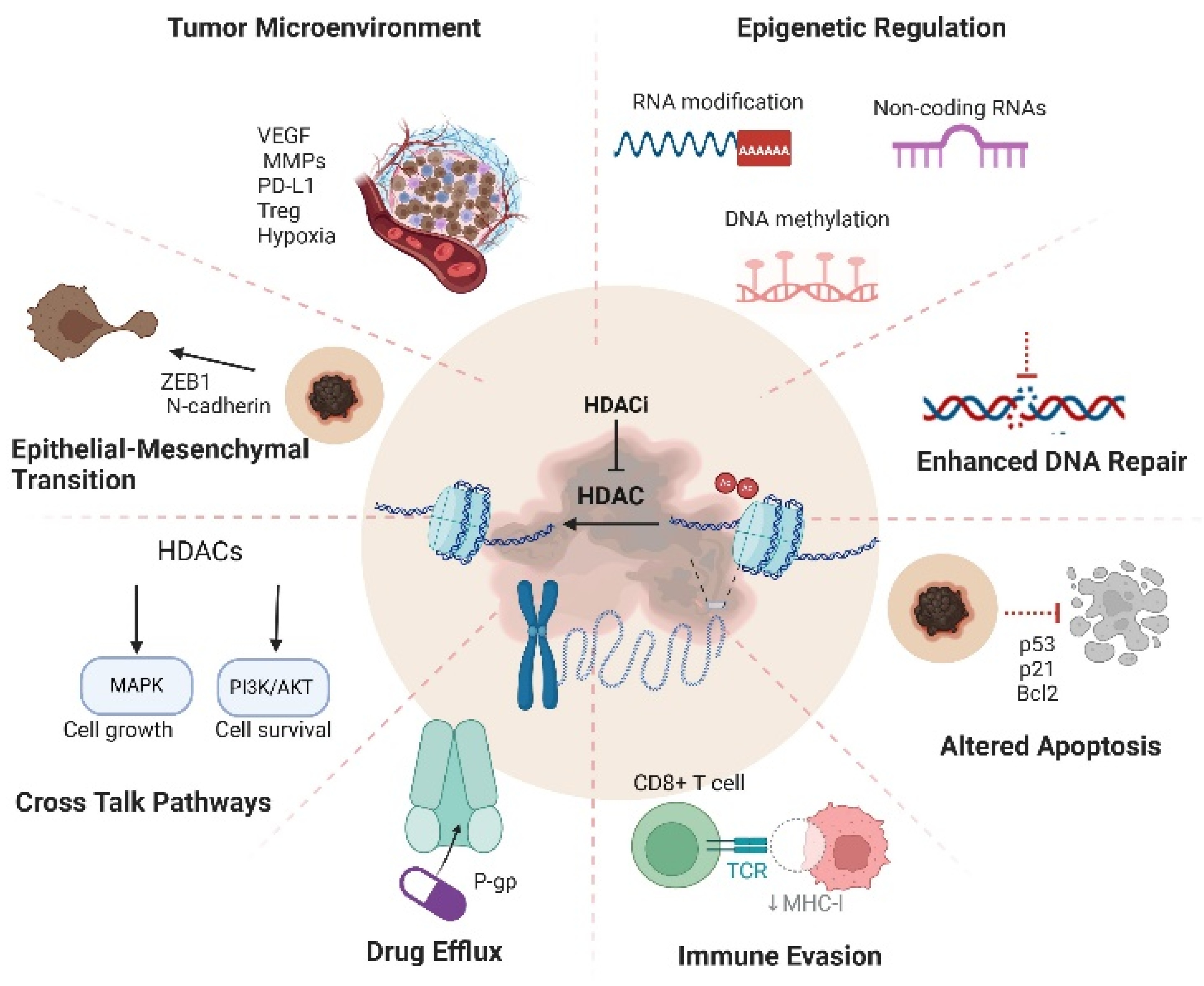
Table 2.
Summary of different HDAC inhibitors, their anticancer mechanisms in melanoma.
| HDAC Inhibitor | Class Specificity | Mechanism of Action | Combination Therapy | Clinical Outcome |
| Vorinostat (SAHA) | Pan-HDACi | Inhibits HDACs, leading to the accumulation of acetylated histones and non-histone proteins. Induces cell cycle arrest, apoptosis, and differentiation. | BRAF/MEK inhibitors; Chemotherapy | Variable efficacy; Overcomes resistance in some cases but significant toxicities observed. |
| Romidepsin | Class I selective | Potent inhibitor of Class I HDACs. Alters the expression of genes involved in cell survival and apoptosis. | Chemotherapy; Immunotherapy | Modest single-agent activity; Synergistic effects in combination, but toxicity remains a concern. |
| Belinostat | Pan-HDACi | Inhibits Class I and II HDACs. Modulates the expression of oncogenes and tumor suppressor genes. | Dacarbazine; PD-1 inhibitors | Limited efficacy as monotherapy; Potential to enhance immunotherapy response. |
| Panobinostat | Pan-HDACi | Non-selective inhibitor of Class I, II, and III HDACs. Disrupts multiple signaling pathways. | BRAF inhibitors; Bortezomib | Significant toxicities; Efficacy in overcoming resistance is limited by adverse effects. |
| Entinostat | Class I selective | Selective inhibitor of HDAC1 and HDAC3. Restores the expression of tumor suppressor genes. | BRAF/MEK inhibitors; Immunotherapy | Promising preclinical results; Clinical trials show potential to enhance targeted therapy and immunotherapy. |
| Givinostat | Class II selective | Inhibits HDAC6 and HDAC8. Affects cell motility, invasion, and immune modulation. | Chemotherapy; Targeted therapy | Preclinical efficacy in reducing metastasis; Clinical trials ongoing. |
Disclaimer/Publisher’s Note: The statements, opinions and data contained in all publications are solely those of the individual author(s) and contributor(s) and not of MDPI and/or the editor(s). MDPI and/or the editor(s) disclaim responsibility for any injury to people or property resulting from any ideas, methods, instructions or products referred to in the content. |
© 2025 by the authors. Licensee MDPI, Basel, Switzerland. This article is an open access article distributed under the terms and conditions of the Creative Commons Attribution (CC BY) license (http://creativecommons.org/licenses/by/4.0/).
Copyright: This open access article is published under a Creative Commons CC BY 4.0 license, which permit the free download, distribution, and reuse, provided that the author and preprint are cited in any reuse.


