

Submitted:
27 March 2025
Posted:
01 April 2025
You are already at the latest version
Abstract
As the flipped classroom model gains traction in mathematics education, questions remain about its effectiveness across diverse classroom settings. This study surveyed 266 senior/upper secondary second-year students to gain insights into their experiences of learning mathematics in flipped classrooms during an academic term. It assessed their perspectives on the model’s implementation, strategies utilized, opportunities and challenges encountered, and suggestions for improvement. The research obtained data through questionnaires, classroom observations, and semi-structured interviews. Quantitative data from the questionnaires underwent processing with descriptive statistics and the Wilcoxon Signed-Rank test for paired samples, while qualitative data from observations and interviews passed through thematic analysis. The findings demonstrate a statistically significant improvement in participants’ experiences post-intervention, highlighting the positive impact of flipped classrooms on student engagement and academic achievement. Although students report challenges related to time management and self-paced learning, they value the autonomy and flexibility provided by video lessons and pre-class learning resources. The study suggests that, while the flipped classroom model holds promise for improving student engagement and achievement in senior secondary mathematics, it is paramount to address issues like planning, resource availability, technology access, teacher preparation, and student participation for success. The study further recommends that teachers provide structured guidance for pre-class tasks and establish supportive classroom environments to help students adapt to this technology-mediated model.
Keywords:
Students' experiences
; flipped classroom (FC) model
; senior secondary schools (SSS)
; student engagement and achievement
; flipped learning benefits and challenges
; improvement measures
1. Contextual Overview
1.1. Introduction
Studies have consistently exposed the limitations of traditional teaching methods in secondary mathematics education, particularly in engaging students and improving achievement. These shortcomings necessitate a shift toward innovative approaches such as the flipped classroom (FC) model. A systematic review of 33 studies by Ajmal and Hafeez (2021) reveals that the flipped classrooms (FCs) produced measurable gains in engagement, problem-solving skills, and academic achievement across 22 cases. Notably, students in the FCs demonstrated greater participation in cooperative learning activities and critical thinking relative to their counterparts in traditional classrooms. This shift toward innovative instructional strategies is especially crucial in an era defined by rapid technological advancements, which have reshaped various fields and reinforced the importance of mathematics education. Mathematics is not only fundamental to disciplines such as science, engineering, and finance, but it also plays a key role in developing the critical thinking skills necessary for navigating an increasingly complex world (Abah et al., 2017; Drijvers & Sinclair, 2024; Modeste et al., 2023). Given evolving educational demands, there is a pressing need to adopt instructional methods that enhance student learning and engagement.
Research indicates that traditional teaching techniques have neither actively engaged students nor catered to their diverse learning preferences, highlighting the necessity for student-driven strategies that promote deeper understanding and retention of mathematical concepts (Dan & Mohamed, 2023; Lo & Hew, 2021; Tomas et al., 2019). One such strategy is the FC model, which transforms the educational landscape by shifting content delivery outside the classroom, allowing for more interactive and collaborative in-class learning experiences (Cevikbas & Kaiser, 2022; Esperanza et al., 2023; Vuong, 2018). The FC is a technology-enhanced instructional model that has recently become quite popular. It features two primary phases: the computer-based individual instruction conducted outside of class and the collaborative group learning during classroom time. In the out-of-class phase (mostly at home), students engage with video lessons and additional learning resources, often sourced online or sometimes teacher-created (Bishop & Verleger, 2013; Esperanza et al., 2023). This opportunity to undertake a self-regulated study enables students to grasp key concepts before participating in the face-to-face classroom session. Consequently, the in-class time is dedicated to more interactive activities, such as collaborative problem solving and personalized student support from the teacher (Dan & Mohamed, 2023; Strohmyer, 2016).
Since its rise in the 2000s, the FC has evolved appreciably over time, causing a major shift in educational practices and teaching strategies. Spearheaded by educators like Bergmann and Sams, the FC emerged to address the limitations of traditional lecture-based instruction. Initially focused on moving learning content delivery outside of the classroom, the model has since emphasized student engagement and active learning (Abah et al., 2017; Dan & Mohamed, 2023). Researchers now examine its impact on factors such as motivation, satisfaction, and perceived learning outcomes. By integrating technology and blended learning, the FC combines online pre-class preparation with interactive in-class activities, offering richer learning experiences. Embraced across disciplines, from science, technology, engineering and mathematics (STEM) to humanities, it deploys digital tools and multimedia resources to increase student engagement. This method has continually developed through teacher and student feedback, adapting to different contexts and advancing educational technology to be impactful (Lo & Hew, 2021; Strohmyer, 2016).
The FC, otherwise called the inverted classroom, has increasingly garnered global notice as a transformative instructional strategy in recent years, particularly in the context of secondary education (Cevikbas & Kaiser, 2022; Egara & Mosimege, 2024; Makinde, 2020; Olakanmi, 2017). This teaching approach inverts the traditional learning paradigm by delivering instructional content outside of the classroom, reserving class time for interactive learning activities that engage students in discussions, problem-solving exercises, and collaborative projects (Bergmann & Sams, 2012; Ölmefors & Scheffel, 2021). The strategies frequently adopted to support the FC students include instructional videos, readings, online discussion forums, interactive quizzes, class discussions, and group work activities (Cevikbas & Kaiser, 2022; Makinde, 2020). Notably, the effectiveness of this approach has been widely established across various educational settings, showcasing its potential to raise student engagement and academic performance (Lai & Hwang, 2016; Lo & Hew, 2021). Its effectiveness varies greatly, hinging on critical factors such as the classroom structure, quality of instructional content, availability and application of appropriate technology, incorporation of active learning strategies, opportunities for collaboration and peer interaction, level of student motivation and engagement, student learning preferences, and teacher ability to guide learning through discussions and feedback (Esperanza et al., 2023; Ölmefors & Scheffel, 2021).
The study context is Nigeria, which education policy transitioned from the 6-3-3-4 structure to the 9-3-4 system in 2006. The reform aligns with the Education for All (EFA) initiative under the Millennium Development Goals (Unterhalter, 2014) and aims to enhance skill-based learning for workforce preparedness (FRN, 2013; Ukpong et al., 2023). The first phase of the 9-3-4 education system, commonly called Universal Basic Education (UBE), requires nine years of free and compulsory schooling for all Nigerian children. This phase consists of six years in primary school followed by three years in junior secondary school (JSS) (Egugbo & Salami, 2021; FRN, 2013). The second phase includes three years in senior secondary school (SSS), while the final phase consists of a minimum of four years in tertiary institutions.
Under this framework, mathematics is a compulsory subject for tertiary education eligibility, requiring students to attain at least a 50% credit pass in the Senior School Certificate Examination (SSCE) (Adeyemi, 2010; FRN, 2013; Salman et al., 2011). However, student achievement in mathematics at the SSCE has been persistently low despite series of interventions from the government and stakeholders (Agah, 2020). Traditional teaching methods – often reliant on teacher-dominated instruction, limited student engagement and passive learning – have proven less effective in fostering deep mathematical understanding (Makinde, 2020). Conversely, the FC model enables students to engage with content before class, promoting active participation, collaboration, and critical thinking, which are key skills for solving complex mathematical problems (Cevikbas & Kaiser, 2022; Lo & Hew, 2021).
While there is an expanding body of literature pointing to the positive impact of the FC model, critical gaps remain in research concerning its implementation in Nigerian secondary schools. Many existing studies so far are situated within the Western or higher education settings, leaving gaps in empirical evidence about the effectiveness of this model in diverse educational settings like Nigeria. Additionally, challenges such as varying levels of digital literacy among students and disparities in access to technology must be managed for successful implementation (Abah et al., 2017; Egara & Mosimege, 2024; Makinde, 2020). Reflecting on this, the current study aims to gather feedback from senior school students regarding their mathematics instruction experiences in the FCs, showcasing the model's potential to enhance student engagement and academic performance. Anticipated findings could contribute to best practices for flipped learning in senior secondary mathematics across Nigeria and other regions.
1.2. Problem Statement
Teaching senior secondary mathematics in Nigeria is fraught with challenges, including the necessity to adhere to standardized curricula, fulfill homework requirements, and prepare students for high-stake assessments from external examining bodies. These demands create a challenging learning environment where students often struggle to engage meaningfully with mathematical concepts (Cevikbas & Kaiser, 2022; Esperanza et al., 2023; Muir, 2021; Refugio, 2020). Traditional teaching methods, typified by passive, teacher-ruled instruction, exacerbate these issues, leading to poor engagement, low achievement, and limited retention of essential mathematical concepts. While the FC model has gained prominence as a transformative alternative, its application in Nigerian senior secondary mathematics remains underexplored. This study addresses these gaps by examining measurable shifts in students’ learning experiences, identifying opportunities and challenges in FC implementation, and determining improvement measures to optimize its effectiveness in enhancing engagement and outcomes. To this end, the study provides answers to the following questions:
1.3. Research Questions
- 1.
- What statistically significant differences occur in senior secondary students’ initial and final experiences of learning mathematics in flipped classroom environments?
- 2.
- What opportunities and challenges do senior secondary students identify in flipping their mathematics classrooms?
- 3.
- What improvement measures do senior secondary students suggest to maximize their flipped mathematics learning experiences?
The following null hypotheses is formulated to guide the inquiry:
H0: There are no statistically significant differences in senior secondary students’ initial and final experiences of learning mathematics in flipped classroom environments.
1.4. Literature Review
The FC model is increasingly recognized as an innovative teaching approach across various educational levels, particularly in higher education (Baig & Yadegaridehkordi, 2023, Kissi, 2017). It redefines traditional teaching by shifting the initial presentation of new content to out-of-class settings — typically through pre-recorded video materials — and utilizing in-class time for active and collaborative learning activities (Bergmann & Sams, 2012; Cevikbas & Kaiser, 2022). Studies have shown its effectiveness in boosting student engagement and academic performance in diverse contexts (Efiuvwere & Fomsi, 2019). Nevertheless, scholars stress the importance of conducting more rigorous studies to validate its broader applicability (Akor & Atuzie, 2023; Zainuddin & Halili, 2016). Given that the present study investigates senior secondary students’ perceptions of the FCs for mathematics instruction in Nigeria, understanding the global trends alongside African and Nigerian perspectives on the model’s adoption is critical. Accordingly, this literature review begins with an overview of international research before narrowing its scope to African and Nigerian contexts to assess its relevance.
In a qualitative study conducted in the U.S., Sierra (2015) explored undergraduate students’ experiences with learning mathematical analysis in a FC setting, employing observations, student work, and focus group interviews as data sources. Underpinned by experiential learning theory, the study found that while students valued the interactive nature of the in-class sessions, they faced challenges managing pre-class assignments. The study suggested that structured guidance is necessary to help students adapt to FC learning. Its emphasis on student experiences can inform how Nigerian teachers might address similar challenges when implementing the FCs for senior secondary mathematics.
In another U.S. study, Esperanza et al. (2023) conducted a mixed-method study in a California high school, exploring the impact of the FCs on Grades 10 and 11 students enrolled in Algebra classes. It adopted surveys, end-activity evaluations and classroom observations for gathering data, and analyzed the data both qualitatively and quantitatively to examine the interplay among factors like gender, ethnicity and students’ attitudes towards mathematics. The study reported that the FC increased students’ engagement with mathematics, boosted their confidence in learning, and enhanced in class, allowing self-paced learning. It also found that gender and ethnicity influenced attitudes and performance. The study then recommends refining the FC model to better address diversity and conducting more research at the secondary level. These insights highlight the essence of student feedback in evaluating the FCs and their potential to enhance mathematics instruction, offering guidance for adapting the model to diverse Nigerian settings.
Furthermore, Cevikbas and Kaiser (2022) carried out a qualitative study in Germany focusing on student engagement within a FC comprising 33 high school mathematics students. From a social constructivist perspective, and using observations, student work analysis and interviews, they discovered that the model positively influenced students’ cognitive, behavioral and emotional engagement in mathematics while highlighting reduced engagement due to incomplete pre-class tasks or negative perceptions of the FCs. Successful implementation relied on social interaction and interactive designs. The researchers recommend refining FC methods to address pre-class preparation challenges, creating interactive environments, and expanding secondary-level research. These findings stress the need to assess engagement and adapt FC approaches for diverse students, which is relevant for senior secondary mathematics instruction in Nigeria.
Oakes et al. (2018) is another Europe-based study which explored the responses of four teachers and their A-Level students to the FC approach in mathematics. Grounded in constructivist theory, the research used qualitative interviews and focus group discussions to assess perceptions of engagement before and after the FC implementation. Thematic analysis revealed that teachers declared the FC approach beneficial, despite that they encountered challenges with time-consuming video preparation. They noted issues with students completing video homework, attributing these to their attitudes toward homework. Students too appreciated the benefits of the FCs despite missing the interactivity of traditional instruction. They valued the flexibility of learning at their own pace, pausing videos for note-taking, and receiving teacher support for harder problems. However, they documented students’ inability to ask questions during video homework a drawback. Both groups perceived deeper understanding through the FCs but raised concerns about the sustainability of video lesson production. The study stressed the urgency of addressing student attitudes and instructional design when applying the FC model, offering insights relevant to Nigerian senior secondary mathematics instruction.
Muir and Geiger (2016) assessed the affordances of the FC approach in a grade 10 mathematics class in Australia. The case study involved employing observations and interviews to gather useful information from 25 students and their teacher over one semester. Grounded in socio-cultural theory, the findings uncovered that students benefited from collaborative learning cultivated by the FC model while also experiencing difficulties with self-directed, out-of-class learning tasks. The researchers suggest that providing structured support for pre-class activities is essential for maximizing student engagement and success in the FC settings. Their insights can shape how Nigerian teachers might structure their own FCs to boost student mathematics learning gains.
Rachmawati et al. (2019) undertook an exploration of teachers' perceptions regarding how to apply the FC model in mathematics instruction at Indonesian schools. The research utilized surveys distributed to 150 teachers across different regions, complemented by qualitative interviews. This mixed-method approach allowed for a comprehensive analysis of the perceived benefits, such as enhanced engagement, alongside challenges like technological constraints faced by educators during implementation phases. The study was framed within an educational technology framework that emphasizes active learning principles throughout instruction processes. Notably, the study recorded significant enthusiasm among teachers about flipping their mathematics classrooms. Despite existing barriers, these findings are valuable for guiding strategies for effective integration of the FC model across diverse educational contexts, including Nigeria's senior secondary education system.
Turning to African perspectives, Kissi (2017) examined FC adoption in high schools across developing countries, identifying barriers such as internet accessibility, high video production costs, and inadequate teacher preparedness. Their literature-based study proposed an alternative FC model that incorporates offline resources like DVDs and social media-based microlearning to facilitate implementation in low-resourced environments. The study emphasized that most FC models are designed for higher education and fail to meet the specific needs of high schools in developing countries. Their recommendations for cost-effective technological solutions and teacher training could be pertinent for FC adoption in Nigeria.
Similarly, Baingana (2024) conducted a systematic review and empirical analysis of randomized controlled trials on application of the FCs in African K-12 education. The study confirmed that while the FCs can enhance learning experiences, their success depends on access to digital resources and sustained teacher support. The study’s findings indicate that blended learning models—incorporating both offline and online resources—were particularly beneficial for students in remote and underserved areas. The study recommends increased investment in infrastructure and further research into the FC adaptation strategies for African classrooms.
Within the Nigerian context, where this study is situated, Makinde (2020) implemented a quasi-experimental study evaluating the FC adoption in mathematics instruction among 275 senior secondary students in Lagos. The study found that students exposed to the FCs performed better in post-tests and retention assessments compared to those in traditional classrooms. However, findings also uncover that adopting the FCs in Nigeria is constrained by limited internet access and inadequate teacher preparation. The author recommends the use of offline FC methods, such as pre-recorded lessons on CDs, to accommodate students with limited connectivity, emphasizing the need for teacher training to ensure effective adoption. Makinde’s study aligns with the present research exploring students' experiences with FC adoption in senior secondary mathematics instruction in Nigeria.
Efiuvwere and Fomsi (2019) also executed a quantitative study in Port Harcourt, Nigeria, involving 104 senior secondary school year-two students (SSS2) sourced from two schools. They compared the Flipped Classroom Strategy (FCS) with the Teacher- Centered Method (TCM) to assess its impact on students' interests in mathematics. Using a validated Mathematics Interest Scale (MIS), the study concluded that the FCS increased engagement and interest, though challenges like infrastructure and pre-class preparation persisted. The researchers recommend addressing these barriers, refining the FCS strategies, and expanding research on its impact in diverse contexts. These findings offer insightful guidance for implementing the FC model for Nigerian senior secondary mathematics by emphasizing strategies to enhance engagement and overcome challenges.
The reviewed literature highlights the growing adoption of the FC model in mathematics education across diverse contexts, with varying degrees of student acceptance. While numerous studies indicate that the model can transform learning experiences, challenges related to student preparedness, digital access, and instructional adaptation remain. The findings from international, African, and Nigerian studies underscore that successful FC adoption requires strategic planning, ongoing support for students and teachers, and the integration of flexible learning resources. These insights represent a foundation for the current study, which seeks to examine students’ feedback on the use of flipping the classrooms for senior secondary mathematics instruction in Nigeria. By addressing adoption-related challenges and refining implementation strategies, Nigerian teachers can create more student-centered learning environments that support engagement, collaboration, and deeper mathematical understanding.
1.4. Theoretical Framework
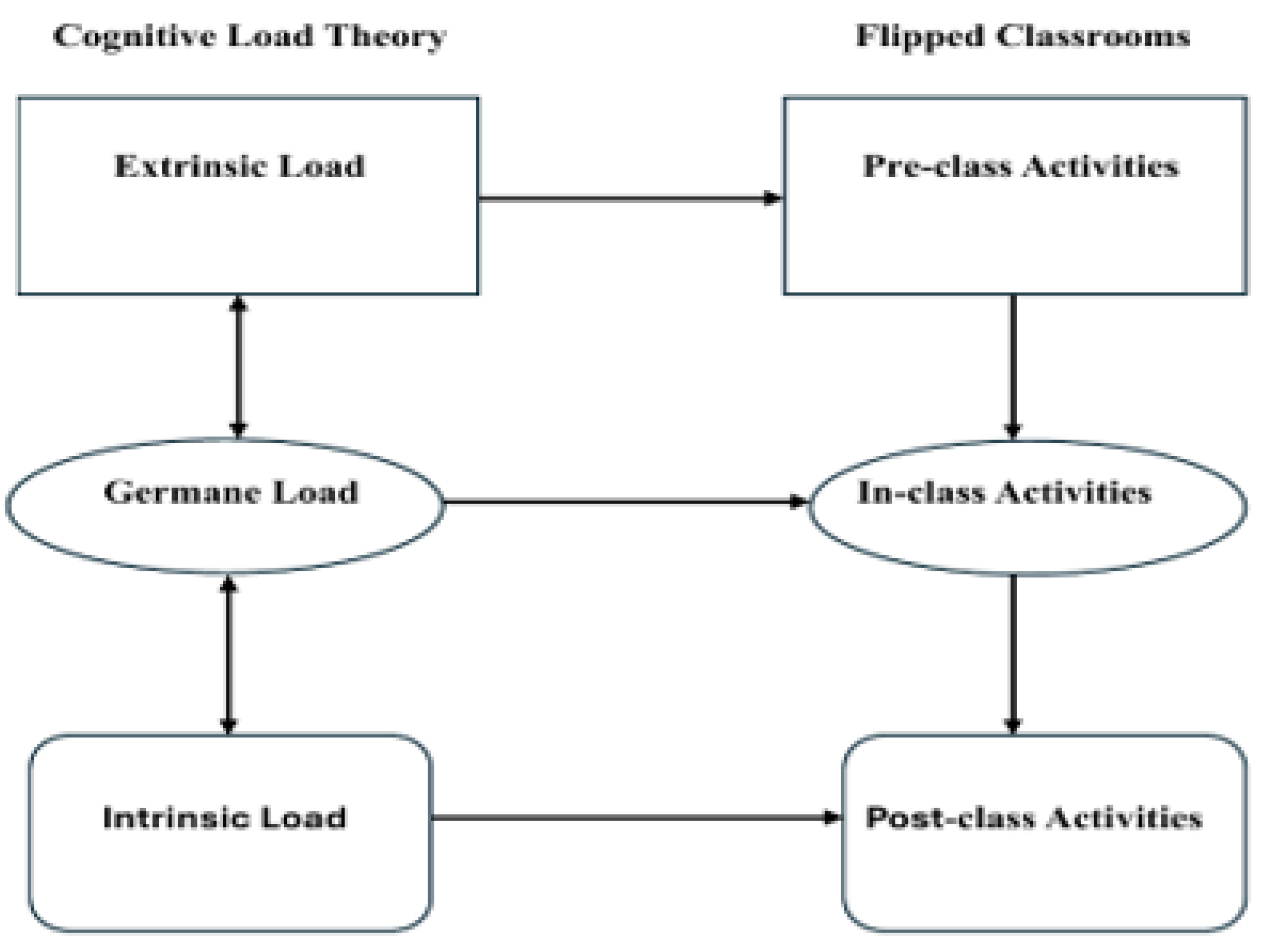
Cognitive Load Theory (CLT) provides the theoretical foundation for this study, illustrating how its tenets strengthen the FC model. Proposed by John Sweller in the late 1980s, CLT originated from his research on problem-solving strategies, driven by a desire to understand how instructional design affects learning efficiency. Sweller emphasizes the limitations of working memory and the necessity of minimizing extraneous cognitive load to improve learning outcomes. The theory offers guidelines to teachers on how to present information that optimizes cognitive processing and facilitates schema construction (Martella, 2024; Sweller, 1988). Over time, CLT has gained support from various teachers and researchers who have applied its principles in diverse contexts, with numerous studies (e.g., Dhlamini & Mogari, 2011; Gillmor et al., 2015; Martella, 2024; Paas & van Merriënboer, 2020) demonstrating its effectiveness in enhancing mathematics learning experiences. Commenting on the compatibility of the FC model and CLT, Akkaraju (2016) argues that the model aligns well with cognitive architecture, as it meaningfully coordinates with both working memory and long-term memory. Noting that CLT reinforces FCs, this study evaluated the perspectives of second-year senior secondary school students (SSS2) in Nigeria on their FC mathematics learning experiences, guided by CLT principles (see Figure 1).
CLT posits that students have a limited capacity for processing information in their working memory. For maximal learning experiences, effective instructional design must consider the different forms of cognitive load – intrinsic, extraneous, and germane (Leahy & Sweller, 2019). The FC model is well-suited to CLT tenets because it facilitates pre-instructional engagement, reduces extraneous load, manages intrinsic load, and promotes germane load through targeted instructional practices. This alignment offers a valuable framework for exploring how the FCs can improve student engagement and learning (Akkaraju, 2016). CLT supports the FCs by addressing how information is processed and learned. It posits that managing cognitive load effectively enhances learning by minimizing unnecessary cognitive load during class through pre-class content exposure (Paas & van Merriënboer, 2020).
As established in research (Akkaraju, 2016; Gillmor et al., 2015; Rim, 2021; Sze & Nasri, 2022), CLT is a robust framework that substantially increases learning outcomes within the FC model. Its three types – extrinsic, germane, and intrinsic cognitive load – strategically harmonize with the three FC stages: pre-class, in-class, and post-class. In the pre-class stage, extrinsic cognitive load is effectively minimized through thoughtfully designed instructional materials, such as engaging videos and other learning resources. This approach not only sharpens students' focus on essential concepts but also reduces distractions, laying a strong foundation for successful learning. During in-class activities, the emphasis shifts to germane cognitive load, where interactive and problem-solving tasks come into play. These activities enable students to actively apply their pre-class knowledge, cultivating higher-order thinking skills and deeper understanding. Finally, in the post-class stage, intrinsic cognitive load is managed through reflective assignments that gradually increase in complexity. This reinforces learning and ensures that students can navigate challenging learning content with confidence. By strategically managing cognitive load throughout these stages, teachers can boost student engagement and retention, establishing a compelling theoretical basis for exploring the transformative potential of FCs in enhancing educational outcomes. Figure 1 illustrates the alliance between CLT and FC to raise learning outcomes.
Pre-instructional engagement is a key component of CLT that emphasizes the benefits of students interacting with instructional content at their own pace prior to class. In this study, students were tasked with self-studying learning resources including video lessons, worked examples and worksheets on the relevant mathematics topic ahead of each class. This approach aimed to familiarize them with new concepts and reduce cognitive overload during in-class activities. Consequently, students might be better prepared for in-depth learning during collaborative sessions (Esperanza et al., 2023; van Nooijen et al., 2024). Another significant aspect of CLT is the reduction of extraneous cognitive load, which often arises from traditional lectures that present large amounts of information in a short time. By shifting direct instruction outside the classroom, the FC model minimizes this extraneous load, enabling students to focus on understanding and applying concepts during class time. This study examined how this shift impacts student focus and comprehension during collaborative problem-solving sessions (Ho & Chan, 2016; Sun et al., 2024).
Effective management of intrinsic cognitive load is also vital for student success. In an FC context, students engage with complex materials incrementally, which might help them tackle challenging topics. This gradual exposure allows them to apply their knowledge effectively during class discussions and activities (van Nooijen et al., 2024; Paas & van Merriënboer, 2020). Additionally, the FC model facilitates germane cognitive load by providing opportunities for meaningful learning activities that promote deeper understanding and retention. Class time dedicated to problem-solving and collaborative projects fosters an environment where students can engage more deeply with the material they have prepared beforehand (Ho & Chan, 2016).
Self-regulated learning is another critical component of CLT, which strengthens the FC principle encouraging students to take responsibility for their learning by engaging with learning content independently before class. This autonomy not only boosts students’ motivation but also helps them develop skills for effective management of their cognitive loads and study habits (Ho & Chan, 2016; Paas & van Merriënboer, 2020; Sun, et al., 2024). Students' perceptions of their self-regulation skills within this context are also noteworthy. Furthermore, targeted instructional design is key to managing cognitive loads effectively within the FC framework. Instructional materials should be designed with the CLT principles in mind, incorporating scaffolding techniques and retrieval practice to support learning while preventing overload (Ho & Chan, 2016; van Nooijen et al., 2024).
Finally, immediate feedback mechanisms during active learning sessions are essential for a proper management of cognitive loads. FC facilitates instant support from peers and the teacher during collaborative activities, assisting students in clarifying misconceived ideas before they become entrenched. This feedback loop is crucial for maintaining student engagement and enhancing overall learning experiences (Sun et al., 2024). Summarily, the current study leverages CLT as its theoretical basis for exploring how the FC influences student learning experiences, engagement, and academic performance in SSS mathematics. The anticipated findings could yield constructive insights for shaping instructional policies and practices that foster greater student engagement and improved mathematics learning outcomes.
Figure 1.
Cognitive Load Theory as a Framework for Flipped Classrooms (Specifically designed by researchers of this study).
Figure 1.
Cognitive Load Theory as a Framework for Flipped Classrooms (Specifically designed by researchers of this study).
1.6. Overview of Strategies Applied while Learning Mathematics in the FC Environments
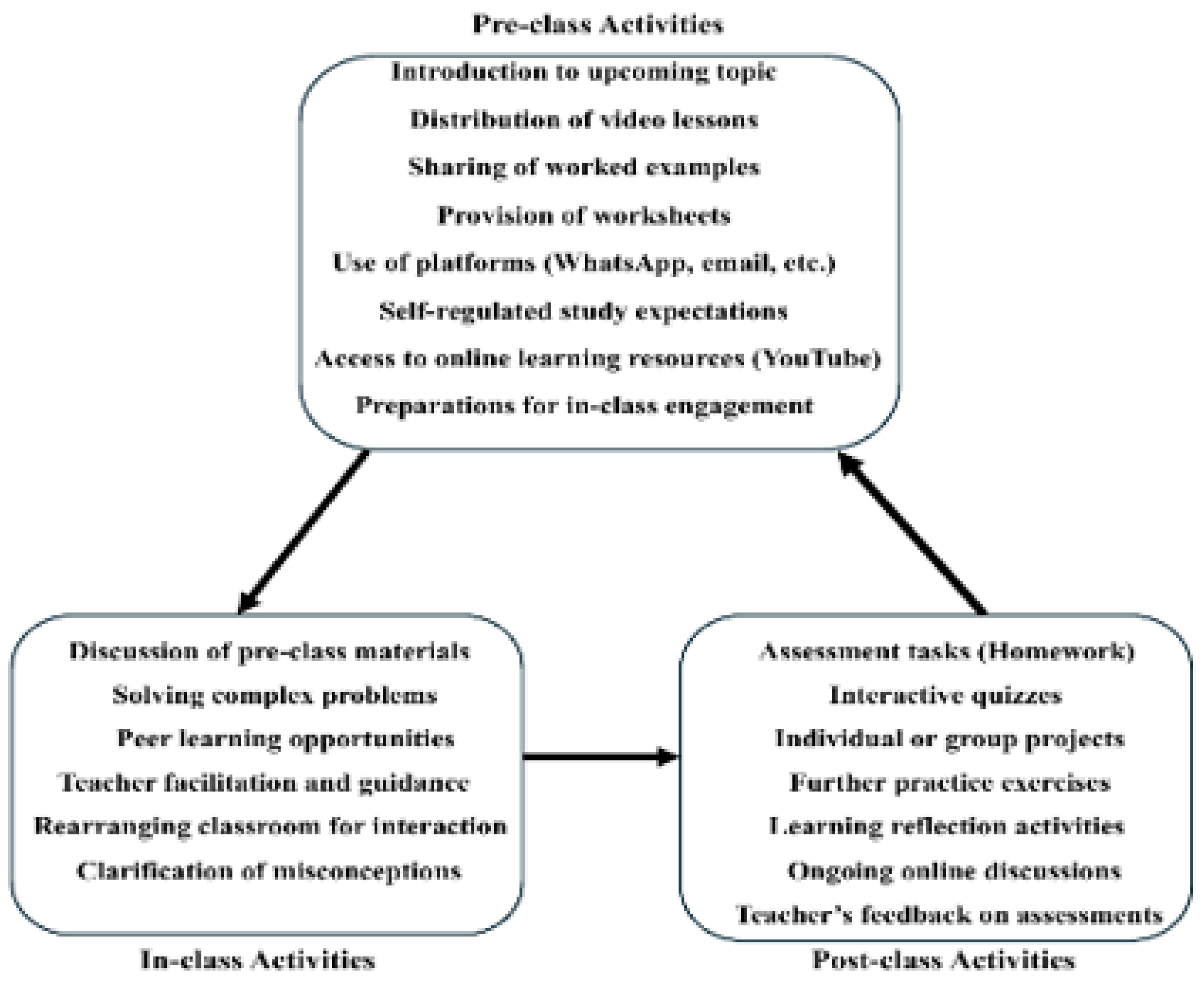
Prior to each in-class lesson, the teacher introduced the upcoming topic and distributed pre-class materials, including video lessons featuring embedded quizzes, interactive exercises, and discussion prompts, along with worked examples and worksheets. These resources, shared mainly through WhatsApp, Bluetooth and emails, were meant to prepare students for classroom discussions. Most of the instructional materials were sourced from YouTube's Online Education Resources (OER), while some were prepared by the teachers to align closely with the lesson objectives. Students were instructed to watch the video lessons and study the other learning resources at their own pace as their out-of-class activities (mostly at home), enabling them to familiarize themselves with the content and gain its basic ideas before class. In the FC model, Olakanmi (2017) remarks, students engage with lower-order cognitive activities outside of class and tackle higher-order tasks within the classroom. Buttressing this, Dan and Mahomed (2023) submit that this structure enables them to manage their own learning process, encouraging independent work and individualized learning.
These preparations allowed in-class time to focus on solving complex problems and discussing challenging concepts, with the teacher facilitating interactive quizzes and group work activities in classrooms arranged to suit collaboration. The seating structure encouraged peer interaction, enabling students to learn from one another while working together on higher-order questions. Classroom observation improves instructional quality by enabling teachers to analyze classroom interactions and identify areas for enhancement. This approach helps educators recognize their strengths and weaknesses, encouraging them to refine their teaching methods (Granström et al., 2023). Without accurate evaluations of classroom practices, educational administrators cannot effectively enhance teaching and learning processes (Farah & Chandler, 2018).
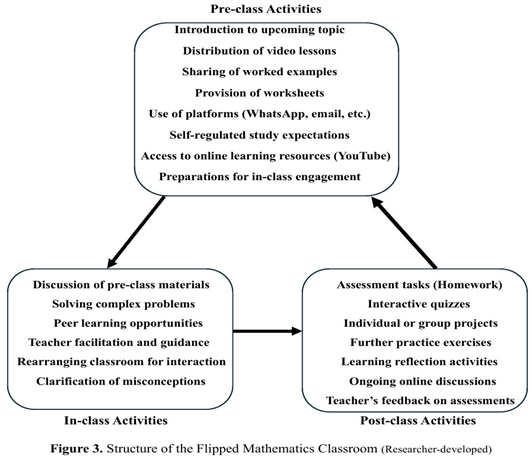
After each in-class session, the learning process continued with the post-class activities designed to reinforce and expand upon the concepts learned. These activities included assessment tasks such as quizzes and assignments to evaluate students' understanding of the content covered. Students also engaged in individual and/or group projects that applied concepts to real-world scenarios, cultivating deeper learning. Additional practice exercises were provided to help solidify their skills, while reflection activities encouraged students to consider their learning experiences and identify areas for improvement. Online discussions presented a platform for an ongoing interaction about the learning material, enabling students to ask questions and share ideas beyond the classroom. Teacher feedback sessions on post-class assessments guided students in increasing their understanding. Altogether, these components enable continued engagement with the content beyond the classroom experience, promoting comprehensive learning. Involvement in post-class activities is essential for reinforcing learning, supporting independent study, facilitating feedback, and encouraging collaboration among students, leading to better educational outcomes (Dong, 2016; Ma, 2023). Figure 3 summarizes the components of the FC model applied.
2. Methodology
2.1. Research Design
This study executed an explanatory, sequential mixed-method design that integrated the questionnaires, classroom observations and semi-structured interviews in two stages. In the first stage, it collected and analyzed the quantitative data reflecting participants’ perspectives on FCs gathered through questionnaires. At stage two, it utilized the qualitative insights arising from the classroom observations and semi-structured interviews to triangulate the quantitative findings. This practice, Creswell (2021) remarks, provides a richer interpretation of the statistical findings. Figure 2 is the diagrammatic representation of the study design.
Figure 2.
Explanatory Sequential Mixed-Method Design (Researcher-designed).
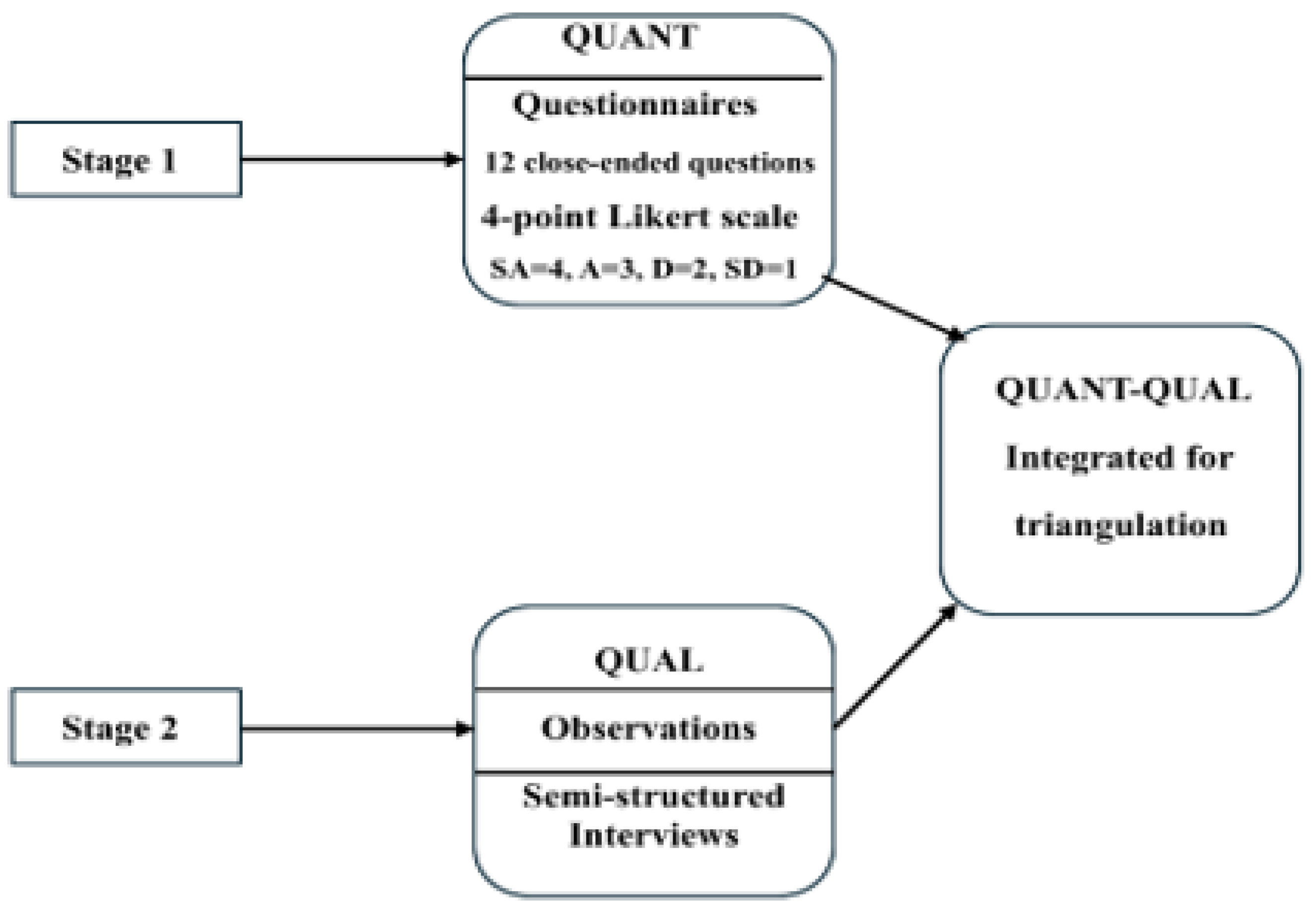
Figure 3.
Structure of the Flipped Mathematics Classroom (Researcher-developed).
2.2. Participant Selection Process
This study sampled 266 students from four secondary schools in a Local Government Area of Ibadan, Oyo State, Nigeria. Of 13 secondary schools approached, nine consented, and four were randomly chosen (). Cohen et al. (2018) comment that careful sampling ensures equal representation and robust statistical results. The study targeted the senior secondary second-year (SSS 2) students because the year-one (SSS 1) students were deemed too immature for flipped learning (Ölmefors & Scheffel, 2021), while those in the third year (SSS 3) were busy preparing for their external Senior Secondary Certificate Examinations. The selected schools had varying numbers of SSS 2 classes: two schools had four classes each, one had five, and one had three. Stratified random sampling was applied to refine the sample to n = 266 (see Table 1). As stated by Cohen et al. (2018), this method divides populations into subgroups (or strata) for better representation, improving accuracy and reducing errors. For anonymity, the schools were coded Q, R, S, and T, and the classes labeled A to P. Table 1 to 3 outline the sample breakdown by size, age, and gender.

Table 1.
Sample Size (n = 266) Randomly Stratified.
| School | Q | R | S | T | Total | ||||||||||||
| Class | 1 | 2 | 3 | 4 | 5 | 1 | 2 | 3 | 4 | 1 | 2 | 3 | 4 | 1 | 2 | 3 | 16 |
| Student | 48 | 51 | 49 | 53 | 58 | 54 | 51 | 44 | 48 | 48 | 46 | 42 | 52 | 50 | 51 | 49 | 794 |
| Sample | Q = 67 | R = 55 | S = 76 | T = 68 | 266 | ||||||||||||
| Q1 | Q2 | R1 | R2 | S1 | S2 | T1 | T2 | 266 | |||||||||
Table 2.
Distribution of Participants (n = 266).
|
Schools |
Number of Students | |||||||
| Gender | Ages |
Total |
||||||
|
M |
F |
Lower Ages | Upper Ages | |||||
| ≤ 16 | 17 | 18 | 19 | ≥ 20 | ||||
| Q | 33 | 34 | 8 | 22 | 17 | 14 | 6 | 67 |
| R | 28 | 27 | 5 | 29 | 12 | 5 | 4 | 55 |
| S | 38 | 38 | 7 | 38 | 21 | 8 | 2 | 76 |
| T | 33 | 35 | 9 | 29 | 20 | 5 | 5 | 68 |
| Total | 132 | 134 | 29 | 118 | 70 | 32 | 17 | 266 |
2.3. Development and Validation of Instruments
The researchers designed the questionnaire, classroom observation protocol and semi-structured interview guide for data collection. These tools were developed through a thorough literature search, expert consultations, and analysis of related studies that utilized similar instruments. Input from three experienced mathematics educators and a psychometrist led to the significant revisions of the instruments, establishing their face and content validity. Pilot testing with 78 students from two secondary schools outside the main study demonstrated reliability, with Cronbach’s Alpha coefficients of 0.71, 0.74, and 0.72 for the questionnaire, observation protocol, and interview guide, respectively. These values reflect an acceptable internal consistency for all instruments, suggesting their reliability in measuring the intended constructs (Johnson, 2017).
The questionnaire, named Flipped Mathematics Classroom Student Feedback Questionnaire (FMC-SFQ), featured two sections: Section A centered on participants’ demographics, and Section B focused on their FC learning experiences. Participants’ demographics (illustrated in Table 2 and Table 3) may be considered representative of the population in terms of gender (males = 132 and females = 134) and age (younger group: and older group: ). Collecting participants’ demographic details in research enhances contextualization, generalizability, and analytical robustness of the findings, highlighting participant diversity for meaningful conclusions and actionable recommendations (Fassett et al., 2022; Ziegenfuss et al., 2021). The FMC-SFQ adopted a 4-point Likert scale to measure participants’ perspectives on their FC learning experiences, with responses ranging from 1 (strongly disagree) to 4 (strongly agree). Asún, Rdz-Navarro and Alvarado (2016) note that this scale promotes clarity, definitive responses, and ease of quantitative data analysis while reducing ambiguity and improving reliability. Dan and Mohamed (2023) attest to the ability of questionnaires to quantify responses and simplify administration, enabling the researcher to gather information from a large sample size. They consider questionnaires reliable as the researcher is often absent during completion, reducing potential influence on respondents.
The Flipped Mathematics Classroom Observation Protocol (FMC-OP) was created to assess four essential performance areas – classroom environments, teaching practices, student interaction, and overall FC implementation. These were organized into Section A to D, all in alignment with the study objectives. Essentially, the Primary Researcher (PR) used the FMC-OP to confirm adherence to ideal FC practices. In the view of Lindorff and Sammons (2018), depending on a study's specific contexts and goals, a classroom observation protocol explores connections between teaching practices and learning outcomes, compares instructional methods across classrooms, evaluates subject-specific practices, and supports professional development initiatives.
The Flipped Mathematics Classroom Semi-structured Interview Guide (FMC-SIG) was constructed to elicit participants' learning experiences with the FC model. Informed by Hammer and Wildavsky (2018), an effective interview guide should include questions that facilitate deep exploration of participants' experiences and knowledge for optimal data collection. The key elements of the FMC-SIG include open-ended wording, neutrality, one question at a time, and clear phrasing. Comprising ten open-ended questions, FMC-SIG was structured into two sections: Section A (question 1 to 5) focused on identifying the opportunities and challenges they encountered, while Section B (question 6 to 10) sought to gather their suggestions for FC improvement. The FMC-SIG prompted participants to elaborate on their responses to the questionnaire-items, digging into the actual reasons for evaluating their learning experiences the way they did. By integrating feedback from both quantitative and qualitative measures, this study intends to elevate the overall effectiveness of FC mathematics instruction, ultimately contributing to improved educational outcomes.
2.4. Training the Teachers Prior to Implementation
Over the course of a two-day training session, participating teachers were instructed on how to implement the FC model to achieve student engagement and active learning. They were guided on how to effectively incorporate technology into their teaching practices, selecting appropriate digital tools to optimize student learning experiences. Besides, they were trained to use various assessment strategies to monitor student progress and provide timely feedback. The teachers were also equipped with methods to adapt lessons to address diverse learning needs, ensuring that all students could thrive within the FC framework. Teachers learned the importance of clearly explaining the FC dynamics to their students prior to implementation, detailing the roles they would play in this new learning context. Basically, the training was designed to equip the teachers with essential knowledge and skills to successfully implement the FC model, thereby promoting more interactive and impactful learning experiences for the students. Holmes et al. (2022) note that training teachers is vitally important for proper implementation of educational interventions, guaranteeing consistent delivery across classrooms, minimizing variability, improving student outcomes, and leading to more reliable research results.
2.5. Procedure for Capturing Participants’ FC Learning Experiences
Participants received mathematics instruction via the FC approach over ten weeks. The Primary Researcher (PR) paid unscheduled visits to the four participating schools twice: after two weeks to capture participants’ initial FC experiences, and at the end of the tenth week to document their post-FC experiences. These visits aimed to assess changes in participants’ learning experiences over time. Crucially, the PR deliberately chose to conduct these visits unannounced to minimize the influence of prior preparation on classroom practices, ensuring an authentic representation of typical FC implementation. This approach is consistent with research suggesting that unannounced observations can provide a more accurate evaluation of an intervention's effectiveness in real-time settings by capturing genuine classroom dynamics (Cook, 2015; Tarusha & Bushi, 2024). Furthermore, as Nussbaum (2017) argues, while the researcher’s presence can be complex, careful consideration of the research set-up is essential for accurate data analysis. During the visits, the PR carried out lesson observations to ensure teachers adhered to FC practices, utilizing the FMC-OP to record findings, noting whether students had accessed video lessons and supplementary materials before class. Most videos were sourced from online platforms and shared with students via WhatsApp and Bluetooth. Students arrived prepared with both digital and printed materials, demonstrating prior engagement with the content. Classroom observations are valuable in mixed-method research, enhancing data triangulation, providing contextual insights, complementing quantitative results, and yielding rich narratives. They also facilitate flexible design and the integration of qualitative insights into the analysis (Ertesvåg et al., 2020; Lin-dorff & Sammons, 2018).
On each visit, the PR administered questionnaires with assistance from participating mathematics teachers. The first round was conducted during lesson periods in the second week, resulting in 251 completed questionnaires because 15 participants were absent. The second round took place during the tenth week, with 254 questionnaires distributed (12 absentees), yielding 242 completed returns. Participants were instructed to complete the questionnaires over the weekend to allow time for reflection. From the returned questionnaires, three respondents from each school were randomly selected for semi-structured interviews conducted post-FC, totaling twelve participants. This sample size was appropriate for qualitative research, enabling in-depth exploration without overwhelming data collection (Boddy, 2016; Vasileiou et al., 2018). Semi- structured interviews follow a flexible framework focused on a main topic, enabling researchers to reasonably explore emerging themes — beyond the items outlined in the interview guide — and gain deeper insights (Hammer & Wildavsky, 2018; Magaldi & Berler, 2020). This adaptability allowed the researchers of this study to adjust questions when necessary based on participants' responses, effectively capturing diverse contexts and behavior.
2.6. Reducing Biases in the Study
To safeguard its integrity, the study intentionally applied the following bias-mitigating measures, drawing on insights from the literature (e.g. Arias, 2023; Clark & Vealé, 2018). It included only those schools that expressed the desire to participate to resolve selection bias, creating a more representative sample of participants. To minimize response bias, it allowed anonymity in questionnaire responses, thereby encouraging participants to provide honest feedback without fear of repercussions. Before use, it standardized its classroom observation protocol to counter observer bias, allowing for consistent data collection across classrooms. It carefully validated all its data-gathering instruments to prevent measurement bias, ensuring that the tools accurately reflected student experiences and perspectives. Finally, its data analysis focused on objectivity to lessen confirmation bias, avoiding preconceived assumptions about flipped classrooms. Taking these actionable steps strengthened the study’s validity and reliability, clarifying student feedback on the FC implementation.
2.7. Ethical Measures
Approvals were obtained from the Ministry of Education Ethics Review Committee before beginning the study. Informed written consent was secured from both students and their parents, ensuring transparency regarding the study's objectives and procedures. Participation in the study was entirely voluntary, and participants were informed of their right to withdraw their data until it is irreversibly anonymized, recognizing the challenges of fully anonymizing complex datasets. They were clearly briefed on the anonymization process, withdrawal procedures, deadlines, and potential implications (Arellano et al, 2023; Christoffersen, 2018). These measures were implemented to uphold participants’ rights and welfare throughout the research process.
3. Results
RQ-1:
What statistically significant differences occur in senior secondary students’ initial and final experiences of learning mathematics in flipped classroom environments?
H0:
There are no statistically significant differences in senior secondary students’ initial and final experiences of learning mathematics in flipped mathematics environments.
3.1. Flipped Classroom Performance Ratings across Schools
Providing the reports of the two visits to participating teachers’ classrooms serves as a rational basis for answering RQ-1. The classroom observation report of the two visits highlights a steady progression in the implementation of the FC model across the four participating schools. During the first visit, adherence to FC practices was moderate, with implementation percentages ranging from 58% to 62%. By the second visit, there was a marked increase, with implementation percentages reaching 82% to 91%, indicating improved integration of FC strategies. Teachers exhibited greater use of instructional videos, facilitated deeper discussions, and provided more guidance on complex pre-class tasks. Students, in turn, showed increased engagement by arriving better prepared with relevant pre-class materials, collaborating more effectively, and actively participating in discussions. These findings suggest that as teachers and students gained experience with FC strategies, their practices improved, reinforcing the model’s potential for enhancing senior secondary mathematics instruction.
Table 3.
Reports of Classroom Observation Visits 1 and 2 across Schools.
| Observation Criteria | Schools | ||||||||
| Q | R | S | T | ||||||
| 1 | 2 | 1 | 2 | 1 | 2 | 1 | 2 | ||
| Section A: Classroom Environments | |||||||||
| 1. | Classroom arrangement for flipped learning | 3 | 5 | 3 | 4 | 3 | 5 | 3 | 5 |
| 2. | Availability of relevant technological resources for in-class use | 3 | 4 | 2 | 3 | 3 | 3 | 2 | 4 |
| 3. | Evidence of pre-class materials brought to class for clarification and discussion | 2 | 4 | 3 | 4 | 3 | 5 | 3 | 5 |
| Section B: Teaching Practices | |||||||||
| 4. | Usage of instructional videos for in-class lesson | 3 | 4 | 3 | 4 | 3 | 4 | 3 | 4 |
| 5. | Teacher clarifies and guides students in solving unclear, complex pre-class tasks. | 3 | 5 | 3 | 5 | 3 | 5 | 3 | 4 |
| Section C: Student Interaction | |||||||||
| 6. | Students ask and answer questions in class. | 3 | 5 | 3 | 4 | 3 | 5 | 4 | 5 |
| 7. | Students collaborate and provide feedback on pre-class to their different groups. | 3 | 4 | 3 | 4 | 3 | 4 | 4 | 5 |
| 8. | Teacher actively engages and motivates students in class. | 3 | 5 | 3 | 5 | 3 | 5 | 3 | 4 |
| Section D: Overall Implementation | |||||||||
| 9. | Implementation of FCs is generally in line with best practices. | 3 | 5 | 3 | 4 | 3 | 5 | 3 | 4 |
| Total (45) | 26 | 41 | 26 | 37 | 27 | 41 | 28 | 40 | |
| Percentage (%) | 58% | 91% | 58% | 82% | 60% | 91% | 62% | 89% | |
Table 4.
Classroom Observation Rating Scale.
| Rating Description | Very Good | Good | Average | Below Average | Weak |
| Score | 5 | 4 | 3 | 2 | 1 |
3.2. Analysis of Questionnaire Responses
Participants’ responses to the questionnaire items, starting from their initial FC experiences to their post-FC experiences are analyzed below. For a robust and reliable comparison of these two sets of experiences, only the responses from 242 students who completed both questionnaires were analyzed. Participants who only completed one instead of both the initial-FC and post-FC questionnaires were excluded, resulting in the analysis of the data from 242 students who completed both questionnaires. Focusing on this matched sample ensures data integrity, statistical validity and bias elimination (Illowsky & Dean, 2015).
3.2.1. Analysis of Participants’ Initial-FC Experiences
3.2.2. Analysis of Participants’ Post-FC Experiences
3.2.3. Descriptive Statistics for Participants’ Initial-FC and Post- FC Experiences
The comparison in Table 9 of participants’ initial-FC experiences with their post-FC experiences reveals considerable improvements in students' perceptions of their experiences with receiving mathematics instruction in FC contexts. Specifically, the mean score increased from 633.92 to 882.25, indicating a notable improvement in students' overall experiences. Similarly, the median rose from 621 to 899.5, suggesting that most students had more positive experiences after the FC implementation. The standard deviation decreased from 103.36 to 60.31, reflecting reduced variability in responses post-FC. Additionally, the range narrowed from 326 to 192, meaning a greater consistency in students' post-FC experiences. Both the first quartile (Q1) and the third quartile (Q3) shifted upward post-FC, with Q1 increasing from 545 to 853 and Q3 rising from 703 to 929. This means an overall improvement across the distribution of responses. Also, the coefficient of variation dropped from 0.1631 to 0.0684, further supporting that post-FC experiences were not only more positive but also more consistent among students. These findings suggest that students perceived that the FC model has the potential to enhance student engagement, satisfaction, and understanding of mathematical concepts by promoting active learning and collaborative problem solving. Overall, the results reveal positive differences between students’ initial and post-FC experiences.
3.2.4. The Wilcoxon Signed-Rank Test for Two Dependent Samples
It remains to determine whether the differences noted in students’ experiences post-FC are statistically significant. Understanding this helps in interpreting the practical implications of the findings. The Wilcoxon Signed-Rank Test is employed for this purpose. This test is a robust non-parametric alternative to the paired t-test, particularly suitable for data that is either non-normally distributed or ordinal in nature as is the case in this study as revealed by the paired t-test. It is ideal for analyzing paired observations, such as pre- and post-intervention measurements, allowing the evaluation of changes within the same group over time. By assessing the median differences and considering both the magnitude and direction of changes, this test provides a comprehensive analysis that is resilient to outliers and skewed distributions (McClenaghan, 2024; Statistics Kingdom, n. d.).
Table 10.
A Synopsis of the Wilcoxon Signed-Rank Test.
| Parameter | Value |
| P-value | 0.00001252 |
| t | 6.9249 |
| Sample size (n) | 12 |
| Average of differences | 248.3333 |
| SD of differences | 124.2266 |
| Normality p-value | 0.2737 |
| A priori power | 0.4919 |
| Post hoc power | 1 |
| Skewness | -0.7309 |
| Excess kurtosis | -0.3739 |
3.2.5. Interpretation of the Wilcoxon Signed-Rank Test
(a) Statistical significance: The extremely low p-value of .00001252 is a pointer that the difference between participants’ initial and post-FC experiences is highly statistically significant, suggesting a strong likelihood that the observed improvement in experiences is not due to random chance.
(b) Magnitude of change: The average difference of 248.3333 with a standard deviation of 124.2266 reflects a substantial and consistent improvement in participants' experiences after implementing flipped classrooms.
(c) Normality assumption: The normality p-value = 0.2737 suggests that the differences are approximately normally distributed, supporting the robustness of the results despite the test’s non-parametric nature.
(d) Power analysis: The post-hoc power of 1 confirms that the test has sufficient statistical power to detect true effects, ensuring reliability in identifying significant differences between initial and post-FC scores. The low a priori power (0.4919) highlights that the initial assumptions might have underestimated the actual power required for detecting changes.
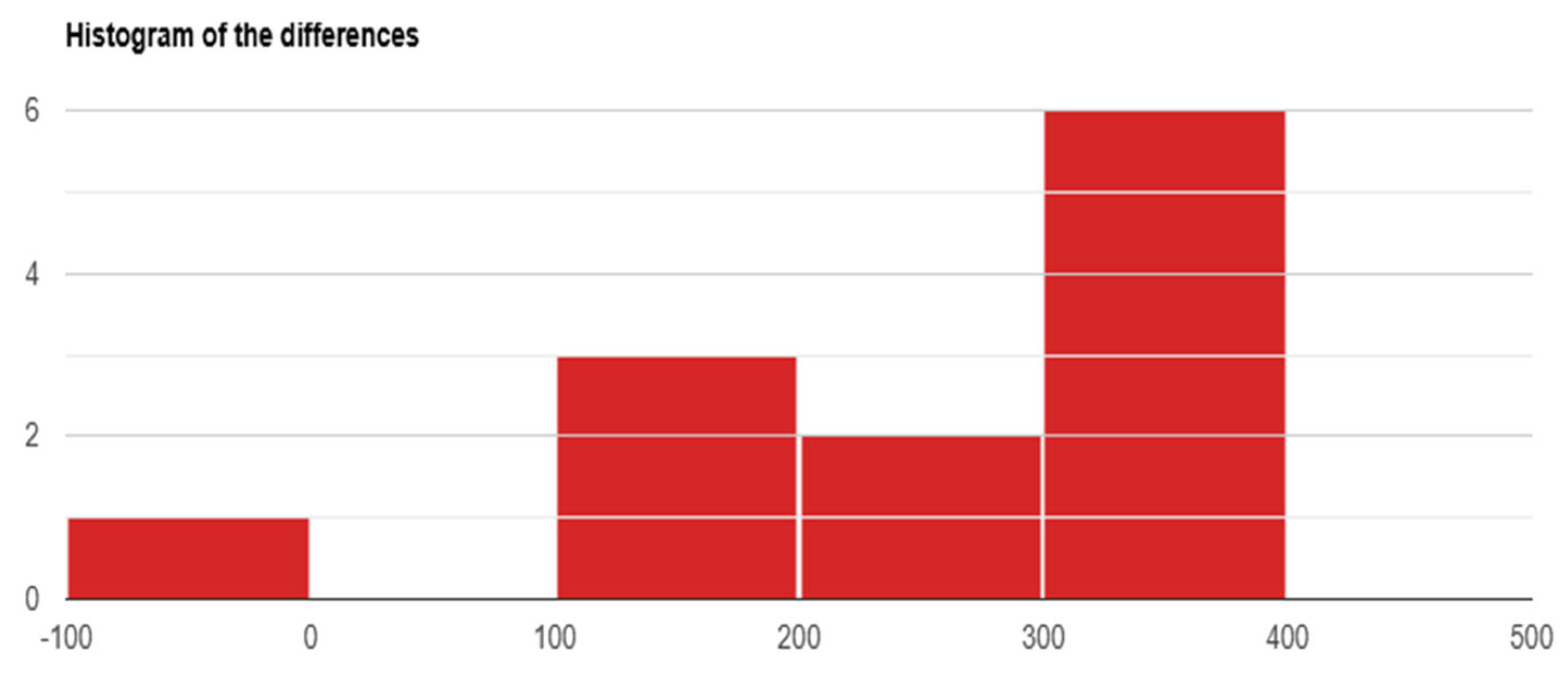
(e) Distribution characteristics: The skewness (-0.7309) and excess kurtosis (-0.3739) values indicate a slightly negatively skewed distribution with relatively light tails compared to a normal distribution. This suggests that most participants experienced improvements, with fewer extreme differences in either direction.
(f) Final interpretation of results: Overall, the results strongly show that participants' experiences improved significantly from their initial level to post-FC phase. The substantial average difference and high statistical significance demonstrate that flipped classrooms had a meaningful positive impact on students' experiences, as measured by participants’ responses to the questionnaire items. Hence, we reject the null hypothesis stating that there are no significant differences between students’ initial and post-FC experiences of learning mathematics in a FC setting. This answers research question 1.
Figure 4.
Distribution Wilcoxon (n = 242 participants).
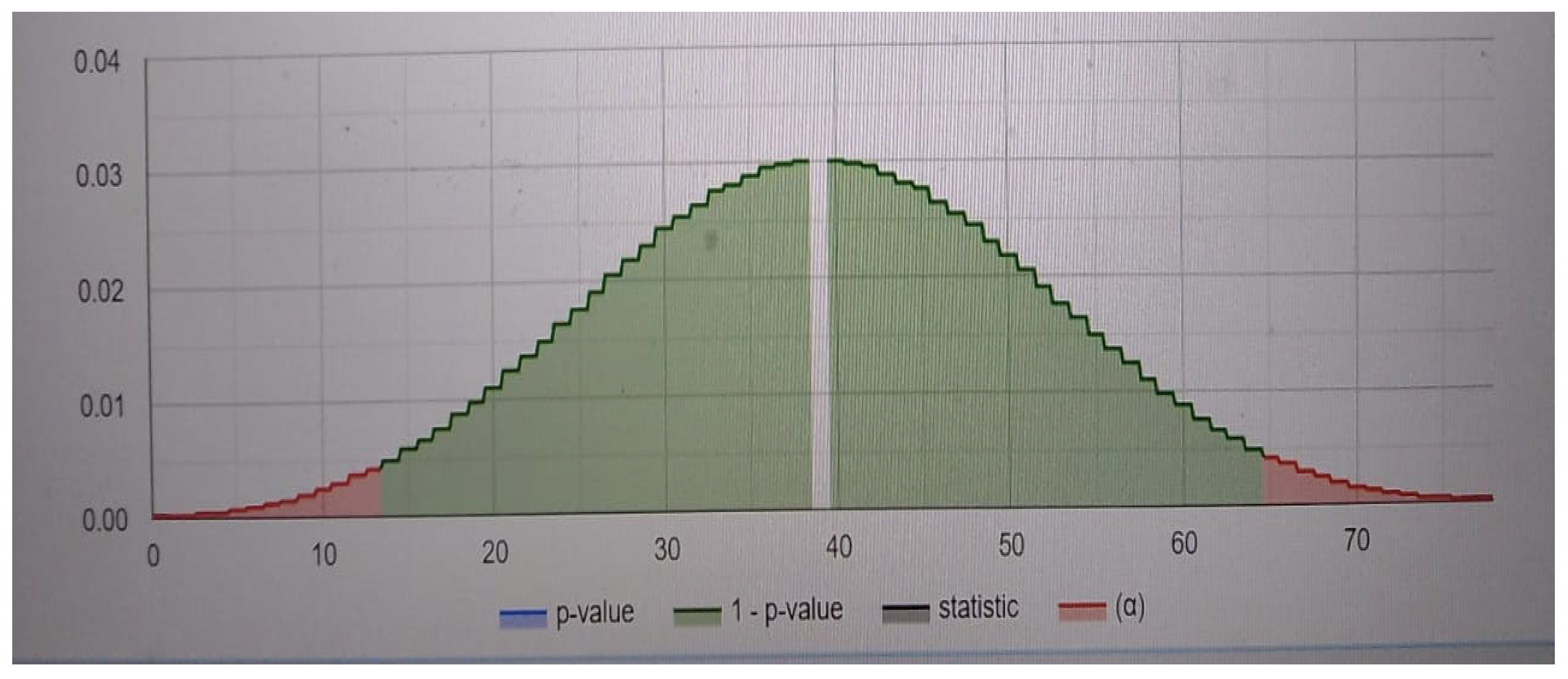
Figure 5.
Wilcoxon Statistics (W+) Figure 6. Averages and Medians.
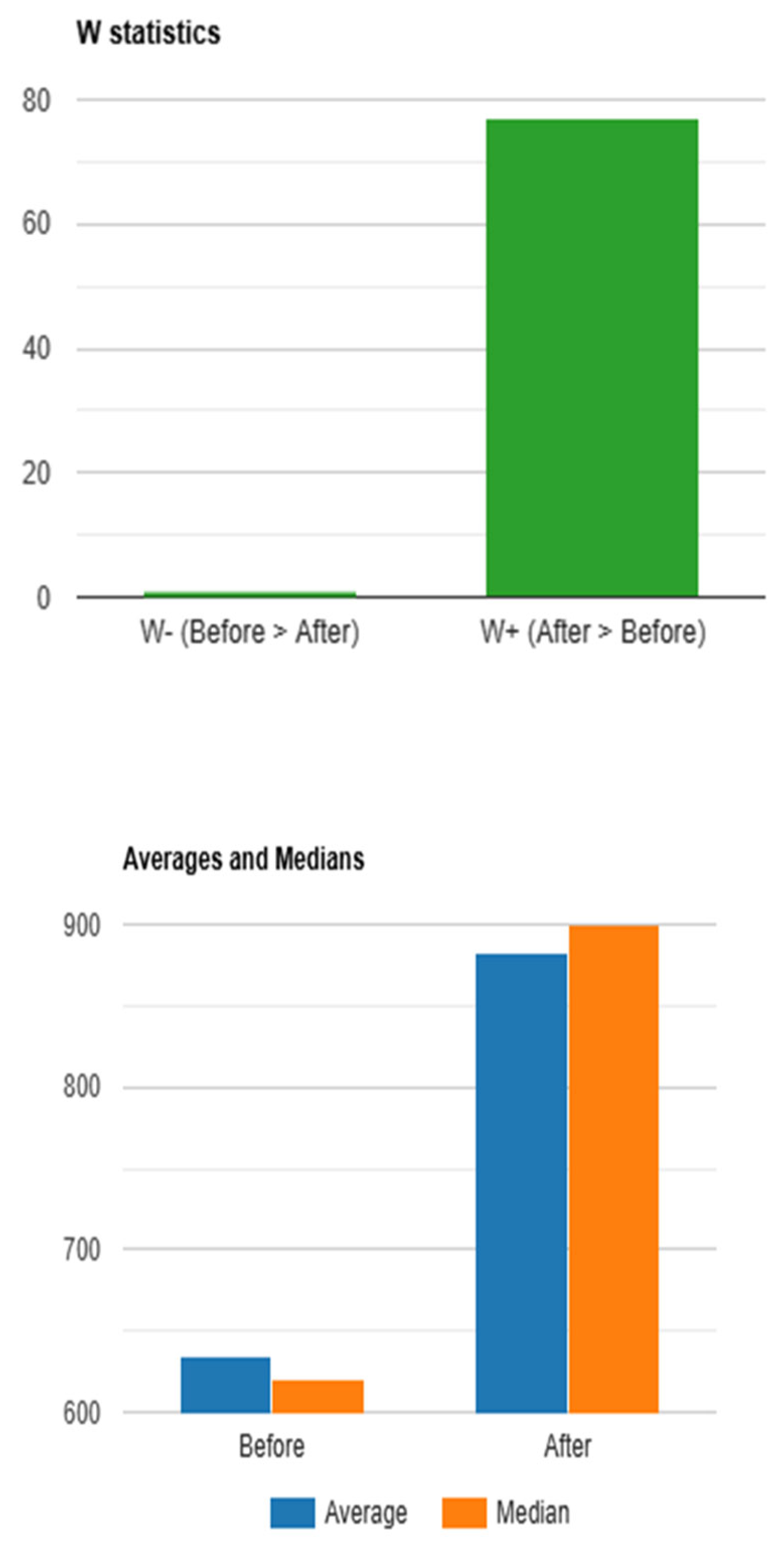
Figure 7.
Histogram of the Differences.
3.3. Thematic Analysis of the Semi-structured Interview Data
Data from the semi-structured interviews were analyzed in themes, following the six-step thematic analysis process recommended by Terry et al. (2017). Initial familiarization with the data facilitated a comprehensive understanding, while identifying relevant data segments led to the generation of initial codes. These codes were later organized into broader themes during the theme-searching phase. A thorough review and refinement process ensured that the themes accurately reflected the dataset, and finally, themes were defined and named (as shown in the subsequent section) to align with the research questions. For easy analysis of the interview data, the twelve participants interviewed were coded: Stu-1, Stu-2, Stu-3, …, Stu-12.
The PR collaborated with two experienced researchers in mathematics and science education to code the data and identify themes. After initial coding, they convened to resolve discrepancies in their codes, facilitating deeper interpretation and consensus on categorization. Guest et al. (2020) assert that such discussions are crucial for triangulating insights and refining themes collectively. To assess coding consistency, Fleiss Kappa intercoder reliability testing was performed, yielding a high agreement score of 0.82 among the researchers. According to O’Connor & Joffe (2020), Fleiss’s Kappa is particularly useful for three or more coders, offering flexibility and measuring overall agreement in diverse datasets.
RQ-2:
What opportunities and challenges do senior secondary students identify in flipping their mathematics classrooms?
3.3.1. Opportunities and Challenges Participants Identified in Flipped Classrooms (FCs)
Insights into the opportunities and challenges that participants recognized while learning in FCs emerged from their responses to question 1 to 5 (Section A of the FMC-SIG):
1. What aspects of the flipped mathematics classroom do you find most beneficial for your learning?
2. Can you describe any challenges you faced while participating in the flipped mathematics classroom?
3. How do you feel about the availability and accessibility of pre-class materials e.g. videos, worked examples, worksheets, etc.?
4. In what ways do you think the flipped mathematics classroom format affects your engagement during lessons?
5. How do you perceive the role of peer interactions in your learning process within the flipped mathematics classroom?
(a) Opportunities Participants Experienced in Flipped Classrooms
(i) Flexible learning: Participants highlighted the flexibility of accessing pre-class materials, such as instructional videos, worked examples, and worksheets, at their own pace. Stu-2 stated, "Having the freedom to revisit video lessons multiple times has really helped me understand maths concepts better." Similarly, Stu-6 remarked, "I could plan my study schedule around other activities, which made learning less stressful for me." Stu-9 added, "This flexibility allowed me to review topics before exams without feeling rushed." Stu-11 noted, "I could pause and rewind videos to ensure I grasped each step." Other participants gave similar responses, stressing that the flexibility in the use of the FC model allowed them to tailor their learning to individual needs and timelines, improving their comprehension and confidence. The opinions expresses by Stu-1, Stu-7, and Stu-10 are similar to the afore-stated.
(ii) Active engagement: Participants acknowledged that the FC approach facilitated active engagement during in-class sessions. They believed that it provides students with opportunities to engage deeply with mathematics concepts and focus on higher-order thinking skills. Stu-4 commented, "The pre-class activities prepared me to participate more actively in discussions during class." In support, Stu-9 shared, "We had more time in class to work on challenging mathematics tasks with the teacher's guidance, which made difficult topics easier for us to understand." Stu-1 noted, "I felt more confident asking questions in class because I had already explored the basics at home." Stu-8 added, "Discussing with my classmates not only cleared my doubts but also improved my confidence in tackling complex problems." Stu-5 observed, "The interactive nature of the class encouraged us to think critically and apply concepts in practical situations." This perspective by Stu-5 was also conveyed by Stu-3, Stu-6, Stu-10 and Stu-12.
(iii) Peer collaboration: Participants reported that in-class activities fostered collaboration among peers, enabling students to share insights and clarify doubts collectively. Stu-2 noted, "Working in groups during class helped me see different ways of solving problems." Stu-8 added, "Discussing with my classmates not only cleared my doubts but also improved my confidence in tackling complex problems." Stu-3 shared, "Collaboration allowed us to learn from each other's strengths and weaknesses." Stu-10 commented, "With the learning method, we could divide tasks and work together more efficiently. This reduces stress and makes learning more enjoyable." Stu-12 observed, "Peer feedback is very helpful. It helped me identify areas where I needed more practice." In their responses, Stu-4, Stu-7 and Stu-11 stated that the interactive nature of FCs encourages teamwork and peer learning, enhancing their overall learning experiences.
(b) Challenges Participants Encountered while Learning in Flipped Classrooms
(i) High self-discipline required: Participants admitted that maintaining self-discipline and motivation for completing pre-class assignments was challenging. They further mentioned that the heavy workload resulting from the use of FCs occasionally overwhelmed them, impacting their readiness for class. Stu-3 explained, "It was hard to keep up with the workload of pre-class activities alongside other schoolwork." Similarly, Stu-10 stated, "Sometimes I struggled to manage my time effectively, which affected my preparation for in-class sessions." Stu-6 noted, "I often procrastinated on watching videos until the last minute, which made it difficult for me to fully absorb the material." Stu-9 added, "The lack of immediate feedback on pre-class work made it hard to stay motivated." Stu-5 contributed, "I had to create a strict schedule to ensure I completed all assignments on time." This same point was raised by Stu-8, Stu-9 and Stu-11.
(ii) Limited accessibility to necessary technological resources: Some participants expressed that they faced difficulties accessing online materials due to unreliable internet or a lack of suitable digital devices. Limited digital literacy and the cost of data were also mentioned as additional barriers, further widening the gap in access to flipped learning resources. Stu-5 said, "I often couldn’t watch the videos because our home internet is very slow." Stu-11 echoed this concern: "I don’t have a personal laptop or tablet, so I had to rely on shared devices at home." Stu-2 commented, "Even when I had access to devices, the quality of the internet connection was inconsistent, which disrupted my learning." Stu-8 noted, "I had to visit the library frequently to access reliable internet, which added to my travel time." Stu-4 observed, "The lack of resources made it difficult to keep up with peers who had better access to technology." Stu-9 added, "Sometimes, even when I could connect, I struggled with using some of the online tools, which made learning frustrating." Stu-1, Stu-3, Stu-6, Stu-7, and Stu-10 also shared the different ways in which the limited accessibility to technological resources had hindered them from fully benefitting from the FC model.
(iii) Learning disparities: Differences in prior knowledge among classmates created challenges during in-class discussions. These disparities sometimes led to gaps in understanding and made it difficult for some students to fully engage with the material. Stu-7 observed, "Some of us struggled to keep up because we didn’t have the same background knowledge as others." Stu-12 added, "It was frustrating when others moved ahead quickly while I was still trying to understand the basics." Stu-1 noted, "I felt left behind when discussions became too advanced, and I couldn’t contribute meaningfully." Stu-5 observed, "I had to spend extra time reviewing foundational concepts before class to feel prepared." Stu-6 commented, "The teacher tried to address these gaps, but sometimes it felt like those students were moving too fast for those of us who needed more support." Stu-9 and Stu-10 communicated the same concern, though in different ways.
Having identified the opportunities and challenges associated with the FCs, research question 2 is clarified.
Table 11.
Theme Composition Overview (Opportunities and Challenges).
| S/N | Theme | Participants per Theme | n(Participants) |
| Opportunities | Stu- | ||
| 1. | Flexible learning | 2, 6, 9, 11, 1, 7, 10 | 7 |
| 2. | Active engagement | 4, 9, 1, 8, 5, 3, 6, 10, 12 | 9 |
| 3. | Peer collaboration | 2, 8, 3, 10, 12, 4, 7, 11 | 8 |
| Challenges | |||
| 1. | High self-discipline required | 3, 10, 6, 9, 5, 8, 9, 11 | 8 |
| 2. | Limited access to necessary resources | 5, 11, 2, 8, 4, 1, 3, 6, 7, 12 | 10 |
| 3. | Learning disparities | 7, 12, 5, 6, 9, 10 | 6 |
RQ-3:
What improvement measures do senior secondary students suggest to maximize their flipped mathematics learning experiences?
3.3.2. Improvement Measures for Optimal Flipped Classroom Learning Experiences
Responding to question 6 to 10 (Section A of the FMC‐SIG) below, participants recommended
the following measures – categorized as theme (i) to (v) – for improving FCs to maximize student
learning experiences:
6. How do you think the flipped classroom pre-class resources (e.g., videos, worked examples, worksheets) can be improved on?
7. Are there any support mechanisms (e.g., tutoring, study groups) that you believe would enhance your learning experience?
8. How could in-class activities be modified to better support your understanding of mathematical concepts?
9. What feedback would you give your teachers regarding their flipped classroom instructional strategies?
10. What is the most important change that could be made to improve your overall flipped mathematics classroom experience?
(i) Need to enhance pre-class materials: Participants emphasized the need to diversify pre-class learning materials to accommodate different learning styles. Their belief is that the approach would enhance student engagement and comprehension by catering to diverse learning preferences. Stu-2 suggested, "Including more examples and explanations in video lessons would help me understand concepts better." Adding to this, Stu-6 suggested, "Interactive elements like quizzes and discussion prompts within video lessons could keep us engaged and motivated." Stu-9 noted, "Using practical examples would make the learning content more understandable and interesting." Stu-11 shared, "Having more visual aids and animations in videos would help clarify complex concepts." Sharing a sentiment related to that of Stu-6, both Stu-10 and Stu-5 proposed that effective FCs could include mathematics video lessons with relevant quizzes and games.
(ii) Providing additional support mechanisms: Participants stressed the importance of extra support mechanisms to reinforce concepts covered in class. By providing them with additional resources, participants opined, students could better grasp and retain mathematical concepts within the FC framework. Stu-3 expressed, "Study groups and tutoring sessions outside of regular class hours would be of a great help." Stu-10 added, "Structured peer-to-peer learning opportunities would allow us to clarify doubts and learn from each other's strengths." Stu-5 noted, "Having a mentor or peer leader in each study group could guide discussions and ensure we stay on track." Stu-8 observed, “Having these support groups would help us understand better and also make us more connected as a group.” In their own case, Stu-1, Stu-6, Stu-7 and Stu-12 shared a common sentiment, recommending that student require more of video lessons with interactive activities, embedded quizzes, and discussion prompts.
(iii) Modification of in-class activities: For improved FCs, participants proposed modifying in-class activities to include more hands-on and practical applications of mathematical concepts. This recommendation is based on the idea that practical in-class activities help students grasp and value how mathematics applies to real life. Stu-1 stated, "Introducing more collaborative projects and problem-solving activities would make lessons more engaging and relevant." Stu-4 added, "Using more common activities in class would help us see the practical applications of what we're learning." According to Stu-7, "Mathematics quiz competitions during class could motivate us to apply mathematical concepts creatively." Stu-12 shared, "These activities would not only enhance our understanding but also prepare us for greater challenges." Stu-10, Stu-2 and Stu-3 gave responses that align with positions taken by other participants on this theme.
(iv) Improving Feedback Practices: Participants urged teachers to give students timely feedback on class participation and pre-class assignments. They noted that timely and constructive feedback from teachers could make their flipped learning of mathematics more rewarding. Stu-6 emphasized, "Regular feedback would help us track our progress and identify areas where we need improvement." Stu-9 added, "Knowing how we're performing would motivate us to work harder and stay focused." Stu-2 noted, "Feedback should be specific and constructive; it has to give clear steps for improvement." Stu-11 shared, "Giving us a clear explanation of evaluation criteria will make us understand what is expected of us." The importance of prompt teacher feedback in enriching students’ mathematics learning in flipped classrooms was also highlighted by Stu-12, Stu-7, Stu-4 and Stu-5.
(v) Greater focus on individual learning needs: Participants advocated for differentiated instructional strategies to accommodate varying levels of understanding within FCs. They noted that addressing individual student’s learning needs could create more inclusive and effective FC environments for all students. Stu-5 stated, "Personalized activities which make clear aspects not clear to individual students can help everyone learn better." Stu-8 added, "Teachers should identify how we learn best and teach us in a way that works for each of us." For Stu-3, “providing additional resources for students who need extra support would be beneficial." Stu-10 shared, "Sincerely, allowing students to learn at their own speed will really be helpful." Stu-1, Stu-6 and Stu-7 also agreed with this perspective.
With these measures suggested for improving FCs, research question 3 has been answered.
Table 12.
Theme Composition Overview (Improvement Measures for FCs).
| S/N | Theme | Participants per Theme | n(Participants) |
| 1. | Need to enhance pre-class materials | 2, 6, 9, 11, 10, 5 | 6 |
| 2. | Providing additional support mechanisms | 3, 10, 5, 8, 1, 6, 7, 12 | 8 |
| 3. | Modification of in-class activities | 1, 4, 7, 12, 10, 2, 3 | 7 |
| 4. | Improving Feedback Practices: | 6, 9, 2, 11, 12, 7, 4, 5T | 8 |
| 5. | Greater focus on individual learning needs | 5, 8, 3, 10, 1, 6, 7 | 7 |
4. Discussion of Results
The study's results suggest that senior secondary students had positive experiences with receiving their mathematics instruction through the FC model. Notably, participants found that the FC model promoted student engagement, motivation, and understanding of mathematical concepts. These results are consistent with previous research (e.g., Akçayır & Akçayır, 2018; Awidi & Paynter, 2019) highlighting the model’s potential for active learning and collaborative problem solving. The results also comply with Dan and Mohamed (2023), who similarly reported favorable student opinions of the FC model through quantitative analysis. Moreover, the findings reflect Ölmefors and Scheffel (2023), who noted that high school students appreciated the flexibility and engagement offered by the FC model. The statistically significant improvement in participants’ post-FC experiences underscores the effectiveness of this pedagogical approach in enhancing academic achievement, consistent with findings from Cevikbas and Kaiser (2022) and Esperanza et al. (2023). These results validate the rejection of the null hypothesis, affirming that FCs can create a meaningful difference in student achievement in senior secondary mathematics.
Participants pinpointed several opportunities inherent in the FC model, including flexible learning, active engagement, and peer collaboration. The ability to access pre-class materials at their own pace enabled students to take greater responsibility for their learning, aligning with findings by Estriegana et al. (2019), who noted that FCs promote autonomy and self-regulated learning. The interactive nature of in-class activities encouraged deeper engagement with content, as observed in studies by Ma (2023). Collaborative problem-solving during class sessions fostered a supportive learning environment, echoing the conclusions of Ölmefors and Scheffel (2021). These benefits highlight how FCs can address traditional classroom limitations by shifting passive learning to active participation, promoting higher-order thinking skills as noted by Vuong et al. (2018).
Despite these benefits, participants also reported challenges they encountered with learning mathematics in FCs. The need for students to independently engage with pre-class materials was a barrier for some, being in harmony with findings by Lo and Hew (2017), who emphasized the importance of fostering self-regulation in FC settings. Students faced difficulties accessing digital tools or materials, a challenge also noted by Vuong et al. (2018) in flipped EFL classrooms. Additionally, variability in students' prior knowledge created gaps during collaborative activities, as highlighted by Strohmyer (2016). These challenges underscore the need for tailored strategies to ensure equitable access and support for all students, including addressing technological barriers and varying levels of student readiness as noted by Akçayır and Akçayır (2018).
To address these challenges, participants recommended the following measures for improvement. They suggested diversifying pre-class materials to accommodate different learning styles, a suggestion supported by Dan and Mohamed (2023). Providing additional support mechanisms, such as study groups and tutoring sessions, was proposed to reinforce concepts, aligning with suggestions from Lo and Hew (2021). Incorporating hands-on tasks linked to real-world applications can deepen conceptual understanding, as noted by Sun et al. (2024). Timely feedback on participation and assignments was emphasized as critical for tracking progress, consistent with Estriegana et al. (2019). Finally, differentiated instruction to address diverse levels of understanding was advocated, echoing recommendations from Awidi and Paynter (2019). These recommendations tally with broader suggestions from previous research, such as streamlining pre-class activities and enhancing support systems for both students and teachers (Vuong et al., 2018), addressing technological issues (Akçayır & Akçayır, 2018), and incorporating diverse instructional strategies (Awidi & Paynter, 2019).
The prominent findings recorded by the present study – resonating with the insights of the aforementioned related studies – reinforce the dual nature of the FC in senior secondary mathematics education. While the model demonstrates measurable benefits in engagement and performance, its success is contingent on managing systemic issues like teacher support and resource accessibility. The interplay between these advantages and limitations points to the need for context-specific adaptations to maximize the model’s effectiveness.
5. Conclusions
This study applied a mixed-method approach to explore senior secondary students’ experiences with mathematics instruction in the FC environments. Although students reported having generally positive experiences with the model, the statistically significant improvements in their post-FC ratings relative to initial assessments indicate increased learning satisfaction. Students appreciated the autonomy and flexibility the model presented, as well as the opportunities for engagement with higher-order mathematical concepts during in-class sessions and individualized teacher support. However, they experienced challenges, including unequal access to technology and reliable internet, poor time management for pre-class assignments, and peer learning differences.
In their suggestions for improving FC adoption in senior secondary mathematics education, students reiterated the necessity of diversified pre-class materials to accommodate varied learning preferences, additional support mechanisms to deepen conceptual understanding, practical, hands-on in-class activities, timely feedback on participation and assignments, and greater focus on individualized learning needs. These actionable recommendations, grounded in students’ first-hand experiences, underscore the FC model’s capacity to transform senior secondary mathematics education, provided the structural constraints currently limiting its optimal effectiveness are systematically resolved. Building on these student-driven insights, this study proposes that, for richer students’ FC learning experiences, deploying mobile-friendly platforms and offline content will allow students to access materials on smartphones or tablets and download them for offline use. Besides, offering short video lessons, various content formats (such as audio and text), and simplified online tools can help fulfil diverse technological needs, ensuring all students can participate, even in resource-constrained settings.
6. Limitations of the Study
The study may encounter the following potential limitations. Its findings may face limited generalizability due to the specificity of the context of the participating schools, which may not reflect broader educational settings. Variability in teachers' implementation of the FC model could lead to inconsistent student experiences, while unequal access to technology may affect engagement with pre-class materials. Time management challenges and the risk of overwhelming content could hinder effective flipped learning, and success often depends on teacher training and support. Cultural and contextual factors may also influence student attitudes toward the model, restricting result interpretation. Furthermore, the study’ reliance on self-reported data may introduce biases. Therefore, caution should be taken in the interpretation of the study’s results.
7. Recommendations for Future Actions
This study recommends that educational institutions adopt tailored instructional strategies in FC classrooms to enhance student engagement and learning outcomes. Teacher training programs should be developed to equip teachers with the necessary skills and resources to effectively facilitate the model, ensuring they can meet diverse student needs. Additionally, schools should invest in technology and infrastructure to provide students with equitable access to pre-class materials, thereby minimizing barriers to participation. In cases where access to digital resources remains limited, practical, low-tech alternatives or offline solutions — such as printed study guides, pre-loaded USB drives, or recorded lectures on local networks — should be explored to ensure inclusivity. Establishing regular feedback mechanisms will improve the approach based on student experiences.
Moreover, cultural factors should be considered in the adaptation of the FC model, as disparities in teacher and student expectations, learning norms, and home-study contexts may affect its effectiveness. Understanding these cultural influences will assist in designing contextually relevant implementation strategies. Finally, for the impactful use of the model in improving secondary mathematics education, teachers, school administrators, and policymakers need to establish necessary support structures for it. Future research should include longitudinal studies to measure the long-term impact of the FC model across different senior secondary subjects and learning environments.
Implications of Findings for Policy and Practice
- The study offers empirical evidence on the FC model’s capacity to improve student engagement and academic performance, aligning with findings from previous research that emphasize the benefits of active learning strategies in mathematics education.
- The study's insights into student perspectives on benefits and challenges in learning mathematics through the FCs may inform teachers and policymakers about best practices for effective application of the model to better meet students’ educational needs.
- By pinpointing specific areas for improvement based on student feedback, the research may guide curriculum development and instructional design to foster more engaging, student-centered learning experiences that boost conceptual understanding, technological accessibility, and overall academic performance in flipped mathematics classrooms.
- Furthermore, the findings may influence educational policy by advocating for increased training and resources for teachers to facilitate successful flipped mathematics classroom implementations.
- Overall, this study enriches the understanding of flipped mathematics instruction and its implications for improving educational outcomes in secondary education.
Author Contributions
Conceptualization, Adebayo Omoniyi; Formal analysis, Adebayo Omoniyi; Investigation, Adebayo Omoniyi; Methodology, Adebayo Omoniyi; Supervision, Loyiso Jita and Thuthukile Jita; Validation, Loyiso Jita and Thuthukile Jita; Writing – original draft, Adebayo Omoniyi; Writing – review & editing, Adebayo Omoniyi, Loyiso Jita and Thuthukile Jita.
Funding
No external funding received for the research.
Institutional Review Board Statement
Ethical clearance (2023_MoE/OYS-MEREC/215, 3 February 2023) was obtained from the Ministry of Education Research Ethics Committee prior to the inquiry.
Informed Consent Statement
Participants’ written informed consents were obtained.
Data Availability Statement
The study’s dataset is available with the Corresponding Author.
Acknowledgments
We duly appreciate the schools, teachers and students involved in the study.
Conflicts of Interest
No conflict of interests to disclose.
References
- Abah, J. A.; Anyagh, P. I.; Age, T. J. A flipped applied mathematics classroom: Nigerian university students' experience and perceptions. Abacus 2017, 42(1), 78-87. ffhal-01596571f. [Google Scholar]
- Adeyemi, T. O. Credit in mathematics in senior secondary certificate examinations as a predictor in educational management in universities in Ondo and Ekiti States. Nigeria. Middle-East Journal of Scientific Research 2010, 5, 235–244. [Google Scholar] [CrossRef]
- . [CrossRef]
- Agah, M. P. The relevance of mathematics education in the Nigerian contemporary society: Implications to secondary education. Journal of Education, Society and Behavioral Science 2020, 33(5), 36–43. [Google Scholar] [CrossRef]
- Ajmal, S. F.; Hafeez, M. Critical Review on Flipped Classroom Model Versus Traditional Lecture Method. International Journal of Education and Practice 2021, 9(1), 128–140. [Google Scholar] [CrossRef]
- Akçayır, G.; Akçayır, M. The flipped classroom: A review of its advantages and challenges. Computers & Education 2018, 126, 334–345. [Google Scholar] [CrossRef]
- Akkaraju, S. The role of flipped learning in managing the cognitive load of a threshold concept in physiology. Journal of Effective Teaching 2016, 16(3), 28–43. [Google Scholar]
- Akor, V. O.; Atuzie, C. Expository review of flipped classroom model: An innovative teaching approach for universities in Nigeria. Contemporary Journal of Education and Development 2023, 3(12). [Google Scholar]
- Arellano, L.; Alcubilla, P.; Leguízamo, L. Ethical considerations in informed consent. IntechOpen 2023. [Google Scholar] [CrossRef]
- Arias, F. D.; Navarro, M.; Elfanagely, Y.; Elfanagely, O. Biases in research studies. In Translational surgery; Academic Press, 2023; pp. 191–194. [Google Scholar] [CrossRef]
- Asún, R. A.; Rdz-Navarro, K.; Alvarado, J. M. Developing multidimensional Likert scales using item factor analysis: The case of four-point items. Sociological Methods & Research 2016, 45(1), 109–133. [Google Scholar] [CrossRef]
- Awidi, I. T.; Paynter, M. The impact of a flipped classroom approach on student learning experience. Computers & Education 2019, 128, 269–283. [Google Scholar] [CrossRef]
- Baig, M. I.; Yadegaridehkordi, E. Flipped classroom in higher education: a systematic literature review and research challenges. International Journal of Educational Technology in Higher Education 2023, 20(1), 61. [Google Scholar] [CrossRef]
- Baingana, J. K. The impact of flipped classroom models on K-12 education in African countries, 2024.
- Bergmann, J.; Sams, A. Flip your classroom: Reach every student in every class every day; International Society for Technology in Education, 2012; pp. 120–190. [Google Scholar]
- Bishop, J. L.; Verleger, M. A. The flipped classroom: A Survey of the research. In 120th ASEE National Conference and Exposition, Atlanta, GA (Paper ID 6219); American Society for Engineering Education, 2013. [Google Scholar]
- Boddy, C. R. Sample size for qualitative research. QM Research 2016, 19(4), 426–432. [Google Scholar] [CrossRef]
- Cevikbas, M.; Kaiser, G. Student engagement in a flipped secondary mathematics classroom. International Journal of Science and Mathematics Education 2022, 20(7), 1455–1480. [Google Scholar] [CrossRef]
- Christoffersen, A. Data protection and anonymity considerations for equality research and data; Advance HE, 2018. [Google Scholar]
- Clark, K. R.; Vealé, B. L. Strategies to enhance data collection and analysis in qualitative research. Radio. Tech. 2018, 89(5), 482CT–485CT. [Google Scholar]
- Cohen, L.; Manion, L.; Morrison, K. Research methods in education, 8th ed.; Routledge, 2018. [Google Scholar]
- Cook, L. T. Using frequent, unannounced, focused, and short classroom observations to support classroom instruction . Doctoral Thesis, National Louis University, 2015. [Google Scholar]
- Creswell, J. W. A concise introduction to mixed methods research. Sage Publication 2021, 2, 1–12. [Google Scholar]
- Dan, L.; Mohamed, H. B. Enhancing student motivation in a flipped classroom: An investigation of innovative teaching strategies to improve student learning. Education Administration: Theory and Practice 2023, 29(2), 510–525. [Google Scholar] [CrossRef]
- Dhlamini, J. J.; Mogari, D. Using a cognitive load theory to account for the enhancement of high school learners’ mathematical problem-solving skills. In Proceedings of the ISTE 2011 International Conference: Towards Effective Teaching and Meaningful Learning in MST; October 2011; pp. 309–326. [Google Scholar]
- Dong, X. Application of flipped classroom in college English teaching. Creative Education 7 2016, 1335–1339. [Google Scholar] [CrossRef]
- Drijvers, P.; Sinclair, N. The role of digital technologies in mathematics education: Purposes and perspectives. ZDM–Mathematics Education 2024, 56(2), 239–248. [Google Scholar] [CrossRef]
- Efiuvwere, R. A.; Fomsi, E. F. Flipping the mathematics classroom to enhance senior secondary students’ interest. International Journal of Mathematics Trends and Technology 2019, 65(2), 95–101. [Google Scholar] [CrossRef]
- Egara, F. O.; Mosimege, M. Effect of flipped classroom learning approach on mathematics achievement and interest among secondary school students. Education and Information Technologies 2024, 29(7), 8131–8150. [Google Scholar] [CrossRef]
- Egugbo, C. C.; Salami, A. T. Policy analysis of the 6–3-3–4 policy on education in Nigeria. Journal of Sustainable Development in Africa 2021, 23(1), 44–53. [Google Scholar]
- Ertesvåg, S. K.; Sammons, P.; Blossing, U. Integrating data in a complex mixed-methods classroom interaction study. British Educational Research Journal 2020. [Google Scholar] [CrossRef]
- Esperanza, P. J.; Himang, C.; Bongo, M.; Selerio, E., Jr.; Ocampo, L. The utility of a flipped classroom in secondary Mathematics education. International Journal of Mathematical Education in Science and Technology 2023, 54(3), 382–415. [Google Scholar] [CrossRef]
- . [CrossRef]
- Estriegana, R.; Medina-Merodio, J. A.; Barchino, R. Analysis of competence acquisition in a flipped classroom approach. Computer Applications in Engineering Education 2019, 27(1), 49–64. [Google Scholar] [CrossRef]
- Farah, Y. N.; Chandler, K. L. Structured observation instruments assessing instructional practices with gifted and talented students: A review of the literature. Gifted Child Quarterly 2018, 62(3), 276–288. [Google Scholar] [CrossRef]
- Fassett, K. T.; Wolcott, M. D.; Harpe, S. E.; McLaughlin, J. E. Considerations for writing and including demographic variables in education research. Currents in Pharmacy Teaching and Learning 2022, 14(8), 1068–1078. [Google Scholar] [CrossRef]
- Federal Republic of Nigeria (FRN) National Policy on Education, 6th ed.; NERDC Press, 2013.
- Gillmor, S. C.; Poggio, J.; Embretson, S. Effects of reducing the cognitive load of mathematics test items on student performance. Numeracy 2015, 8(1), 4. [Google Scholar] [CrossRef]
- Granström, M.; Kikas, E.; Eisenschmidt, E. Classroom observations: How do teachers teach learning strategies? In Frontiers in Education. In Frontiers Media SA; March 2023; Vol. 8. [Google Scholar] [CrossRef]
- Hammer, D.; Wildavsky, A. The open-ended, semi-structured interview: An (almost) operational guide. In Craftways; Routledge, 2018; pp. 57–101. [Google Scholar] [CrossRef]
- Ho, W. K.; Chan, P. S. On the efficacy of flipped classroom: Motivation and cognitive load. In Developing 21st century competencies in the mathematics classroom: Yearbook 2016, Association of Math. Educators; 2016; pp. 213–240. [Google Scholar] [CrossRef]
- Holmes, S. R.; Reinke, W. M.; Herman, K. C.; David, K. An examination of teacher engagement in intervention training and sustained intervention implementation. School Mental Health 2022, 14(1), 63–72. [Google Scholar] [CrossRef]
- Illowsky, B.; Dean, S. Introductory statistics; OpenStax College, 2015. [Google Scholar]
- Johnson, A. Reliability, Cronbach’s alpha. In The SAGE Encyclopedia of communication research methods; SAGE Publications, Inc, 2017; Vol. 4, pp. 1415–1417. [Google Scholar] [CrossRef]
- Johnson, G. B. Student perceptions of the flipped classroom. Master’s dissertation, University of British Columbia, 2013. [Google Scholar]
- Kissi, P. S. Proposed flipped classroom model for high schools in developing countries. New Trends and Issues Proceedings on Humanities and Social Sciences 2017, 4(4), 150–158. [Google Scholar] [CrossRef]
- Lai, C. L.; Hwang, G. J. A self-regulated flipped classroom approach to improving students’ learning performance in a mathematics course. Computers & Education 2016, 100, 126–140. [Google Scholar] [CrossRef]
- Leahy, W.; Sweller, J. Cognitive load theory, resource depletion and the delayed testing effect. Educational Psychology Review 31 2019, 457–478. Available online: https://link.springer.com/article/10.1007/s10648-019-09476-2. [CrossRef]
- Lindorff, A.; Sammons, P. Going beyond structured observations: Looking at classroom practice through a mixed method lens. ZDM–Mathematics Education 50 2018, 521–534. [Google Scholar] [CrossRef]
- Lo, C. K.; Hew, K. F. A critical review of flipped classroom challenges in K-12 education: Possible solutions and recommendations for future research. Research and Practice in Technology-Enhanced Learning 2017, 12, 1–22. [Google Scholar] [CrossRef]
- Lo, C. K.; Hew, K. F. Student engagement in mathematics flipped classrooms: Implications of journal publications from 2011 to 2020. Frontiers in Psychology 12 2021, 672610. [Google Scholar] [CrossRef]
- Ma, Y. Exploration of flipped classroom approach to enhance critical thinking skills. Heliyon 2023, 9(11). [Google Scholar] [CrossRef]
- Magaldi, D.; Berler, M. Zeigler-Hill, V., Shackelford, T. K., Eds.; Semi-structured interviews. In Encyclopedia of personality and individual differences; Springer, 2020; pp. 4825–4830. [Google Scholar] [CrossRef]
- Makinde, S. O. Impact of flipped classroom on mathematics learning outcome of senior secondary school students in Lagos, Nigeria. African Journal of Teacher Education 2020, 9(2), 23–42. [Google Scholar] [CrossRef]
- Martella, A. M.; Lawson, A. P.; Robinson, D. H. How scientific is cognitive load theory research compared to the rest of educational psychology? Education Sciences 2024, 14(8), 920. [Google Scholar] [CrossRef]
- McClenaghan, E. The Wilcoxon Signed-Rank test. Informatics. 14 May 2024. Available online: https://www.technologynetworks.com/informatics/articles/the-wilcoxon-signed-rank-test-370384.
- Modeste, S.; Giménez, J.; Lupiáñez Gómez, J. L.; Carvalho e Silva, J.; Nguyen, T. N. Coherence and relevance relating to mathematics and other disciplines. In Mathematics curriculum reforms around the world: The 24th ICMI study; Springer, 2023; pp. 151–172. [Google Scholar]
- Muir, T. Self-determination theory and the flipped classroom: A case study of a senior secondary mathematics class. Mathematics Education Research Journal 2021, 33(3), 569–587. [Google Scholar] [CrossRef]
- van Nooijen, C. C.; de Koning, B. B.; Bramer, W. M.; Isahakyan, A.; Asoodar, M.; Kok, E.; Paas, F. A cognitive load theory approach to understanding expert scaffolding of visual problem-solving tasks: A scoping review. Educational Psychology Review 2024, 36(1), 12. [Google Scholar] [CrossRef]
- Nussbaum, L. Moore, E., Dooly, M., Eds.; Doing research with teachers. In Qualitative approaches to research on plurilingual education; 2017; pp. 46–67. [Google Scholar] [CrossRef]
- Oakes, D.; Davies, A.; Joubert, M.; Lyakhova, S. Exploring teachers’ and students’ responses to the use of a flipped classroom teaching approach in mathematics. Proceedings of the BSRLM, King’s College. London 2018, 38(3), 1–6. [Google Scholar]
- Olakanmi, E. E. The effects of a flipped classroom model of instruction on students’ performance and attitudes towards chemistry. Journal of Science Education and Technology 26 2017, 127–137. [Google Scholar] [CrossRef]
- Ölmefors, O.; Scheffel, J. High school student perspectives on flipped classroom learning. Pedagogy, Culture & Society 2021, 31(4), 707–724. [Google Scholar] [CrossRef]
- Paas, F.; van Merriënboer, J. J. Cognitive-load theory: Methods to manage working memory load in the learning of complex tasks. Current Directions in Psychological Science 2020, 29(4), 394–398. [Google Scholar] [CrossRef]
- Refugio, C. N.; Bulado, M. I. E. A.; Galleto, P. G.; Dimalig, C. Y.; Colina, D. G.; Inoferio, H. V.; Nocete, M. L. R. Difficulties in teaching senior high school general mathematics: Basis for training design. Cypriot Journal of Educational Sciences 2020, 15(2), 319–335. [Google Scholar] [CrossRef]
- Rim, S. An Investigation into the Effects of Flipped Classroom Teaching Model on EFL Learners’ Vocabulary Knowledge. Master’s dissertation, Ministry of Higher Education, 2021. [Google Scholar]
- Salman, M. F.; Yahaya, L. A.; Adewara, A. A. Mathematics education in Nigeria: Gender and spatial dimensions of enrolment. International Journal of Embedded Systems 3 2011, 15–20. [Google Scholar] [CrossRef]
- Sierra, H. Students' Experiences in a Mathematics Analysis Flipped Classroom. Master’s Dissertation, Chapman University, California, 2015. [Google Scholar]
- Statistics Kingdom Wilcoxon Signed-Rank Test Calculator. n.d. Available online: https://www.statskingdom.com/175wilcoxon_signed_ranks.html.
- Strohmyer, D. A. Student perceptions of flipped learning in a high school maths classroom. Doctoral dissertation, Walden University, 2016. [Google Scholar]
- Sun, S. W.; Evans, P.; Martin, A. J. Load reduction instruction: Exploring its applicability in a Chinese-speaking secondary school context. Teaching and Teacher Education 148 2024, 104689. [Google Scholar] [CrossRef]
- Sweller, J. Cognitive load during problem solving: Effects on learning. Cognitive Science 1988, 12(2), 257–285. [Google Scholar] [CrossRef]
- Sze, C. A.; Nasri, N. M. The role of the flipped learning in the English language learning and students’ motivation: A systematic review. International Journal of Academic Research in Progressive Education and Development 2022, 11(2), 1122–1154. [Google Scholar] [CrossRef]
- Tarusha, F.; Bushi, J. The role of classroom observation, its impact on improving teacher’s teaching practices. European Journal of Theoretical and Applied Sciences 2024, 2(2), 718–723. [Google Scholar] [CrossRef] [PubMed]
- Terry, G.; Hayfield, N.; Clarke, V.; Braun, V. Willig, C., W., S. Rogers, Eds.; Thematic analysis. In The SAGE handbook of qualitative research in psychology; SAGE Publications Ltd, 2017; pp. 17–36. [Google Scholar] [CrossRef]
- Tomas, L.; Evans, N. S.; Doyle, T.; Skamp, K. Are first year students ready for a flipped classroom? A case for a flipped learning continuum. International Journal of Educational Technology in Higher Education 2019, 16(1), 1–22. [Google Scholar] [CrossRef]
- Ukpong, J. S.; Alabekee, C.; Ugwumba, E.; Ed, M. The challenges and prospects in the implementation of the National Education System: The case of 9-3-4. The Pacific Journal of Science and Technology 2023, 24(1), 88–96. [Google Scholar]
- Unterhalter, E. Measuring education for the millennium development goals: Reflections on targets, indicators, and a post-2015 framework. Journal of Human Development and Capabilities 2014, 15(2–3), 176–187. [Google Scholar] [CrossRef]
- Vasileiou, K.; Barnett, J.; Thorpe, S.; Young, T. Characterising and justifying sample size sufficiency in interview-based studies: Systematic analysis of qualitative health research over a 15-year period. BMC Medical Research Methodology 2018, 18, 1–18. [Google Scholar] [CrossRef]
- Vuong, N. H. A.; Tan, C. K.; Lee, K. W. Students' perceived challenges of attending a flipped EFL classroom in Viet Nam. Theory and Practice in Language Studies 2018, 8(11), 1504–1510. [Google Scholar] [CrossRef]
- Zainuddin, Z.; Halili, S. Flipped classroom research and trends from different fields of study. International Review of Research in Open and Distributed Learning 2016, 17(3), 313–340. [Google Scholar] [CrossRef]
- Ziegenfuss, J. Y.; Easterday, C. A.; Dinh, J. M.; JaKa, M. M.; Kottke, T. E.; Canterbury, M. Impact of demographic survey questions on response rate and measurement: A randomized experiment. Survey Practice 2021, 14(1). [Google Scholar] [CrossRef]
Table 5.
Participants’ Responses (n = 242) Regarding their Initial Learning Experiences with Flipped Classrooms.
Table 5.
Participants’ Responses (n = 242) Regarding their Initial Learning Experiences with Flipped Classrooms.
|
S/N |
Questionnaire Items |
Responses | |||
| SA | A | D | SD | ||
| 4 | 3 | 2 | 1 | ||
| 1. | Each student got self-paced pre-class materials: video lessons, worked-out examples and worksheets. | 123 | 38 | 22 | 59 |
| 2. | I got sufficient, supportive instructions from my teacher that enabled me to engage well with the pre-class tasks. | 62 | 87 | 58 | 35 |
| 3. | I spent quality time studying pre-class learning materials at home before the in-class activities. | 64 | 91 | 26 | 61 |
| 4. | Seating arrangement and student grouping supported effective flipped classroom | 132 | 44 | 39 | 27 |
| 5. | I participated well in in-class tasks: discussions, group work, and collaborative problem solving. | 59 | 64 | 53 | 66 |
| 6. | The teacher elaborated on video lesson content and worked examples and clarified difficult mathematical concepts during in-class session. | 87 | 71 | 52 | 32 |
| 7. | The pre-class resources I explored at home facilitated my understanding of vital mathematics concepts during in-class discussions. | 54 | 38 | 83 | 67 |
| 8. | The flipped-classroom approach greatly engaged and motivated me to learn. | 57 | 48 | 64 | 73 |
| 9. | A flipped classroom allows efficient use of class time, improving students’ understanding. | 47 | 52 | 86 | 57 |
| 10. | Flipped learning of mathematics poses some challenges, e.g. it requires much effort and time. | 169 | 36 | 16 | 21 |
| 11. | Generally, my flipped mathematics classroom experience is more exciting and rewarding than that of traditional teaching methods that my class adopted in the past terms. | 51 | 27 | 78 | 86 |
| 12. | I recommend the use of the flipped classroom for future mathematics lessons. | 43 | 32 | 76 | 91 |
Table 6.
Weighted Responses (n = 242) Regarding Participants’ Initial FC Learning Experiences.
| S/N | Questionnaire Items | SA | A | D | SD | T |
| 1. | Each student got self-paced pre-class materials: video lessons, worked-out examples and worksheets. | 492 | 114 | 44 | 59 | 709 |
| 2. | I got sufficient instructions from my teacher that enabled me to engage well with the pre-class tasks. | 248 | 261 | 116 | 35 | 660 |
| 3. | I spent quality time studying the pre-class learning materials outside of class before the in-class activities. | 256 | 273 | 52 | 61 | 642 |
| 4. | Seating arrangement and student grouping supported effective flipped classroom | 528 | 132 | 78 | 27 | 765 |
| 5. | I participated well in in-class tasks: discussions, group work, and collaborative problem solving. | 236 | 192 | 106 | 66 | 600 |
| 6. | The teacher elaborated on video lesson content and worked examples and clarified difficult mathematical concepts during in-class session. | 348 | 213 | 104 | 32 | 697 |
| 7. | The pre-class resources I explored at home facilitated my understanding of vital mathematics concepts during in-class discussions. | 216 | 114 | 166 | 67 | 563 |
| 8. | The flipped-classroom approach greatly engaged and motivated me to learn. | 228 | 144 | 128 | 73 | 523 |
| 9. | A flipped classroom allows efficient use of class time, improving students’ understanding. | 188 | 156 | 172 | 57 | 573 |
| 10. | Flipped learning of mathematics poses some challenges, e.g. it requires much effort and time. | 676 | 108 | 32 | 21 | 837 |
| 11. | Generally, my flipped mathematics classroom experience is more exciting and rewarding than that of traditional teaching methods that my class adopted in the past terms. | 204 | 81 | 156 | 86 | 527 |
| 12. | I recommend the use of the flipped classroom for future mathematics lessons. | 172 | 96 | 152 | 91 | 511 |
Table 7.
Participants’ Responses (n = 242) Based on their Post-FC Learning Experiences.
|
Items |
Questionnaire-items |
Responses | |||
| SA | A | D | SD | ||
| 4 | 3 | 2 | 1 | ||
| 1. | Each student got self-paced pre-class materials: video lessons, worked-out examples and worksheets. | 226 | 16 | 0 | 0 |
| 2. | I got sufficient, supportive instructions from my teacher that enabled me to engage well with the pre-class tasks. | 91 | 119 | 32 | 0 |
| 3. | I spent quality time studying the pre-class learning materials at home before the in-class activities. | 81 | 122 | 31 | 8 |
| 4. | Seating arrangement and student grouping supported effective flipped classroom | 206 | 30 | 6 | 0 |
| 5. | I participated well in in-class tasks: discussions, group work, and collaborative problem solving. | 212 | 24 | 6 | 0 |
| 6. | The teacher elaborated on video lesson content and worked examples and clarified difficult mathematical concepts during in-class session. | 218 | 16 | 6 | 2 |
| 7. | The pre-class resources I explored at home facilitated my understanding of vital mathematics concepts during in-class discussions. | 190 | 36 | 10 | 6 |
| 8. | The flipped-classroom approach greatly engaged and motivated me to learn. | 176 | 36 | 19 | 11 |
| 9. | A flipped classroom allows efficient use of class time, improving students’ understanding. | 196 | 21 | 15 | 10 |
| 10. | Flipped learning of mathematics poses some challenges, e.g. it requires much effort and time. | 108 | 134 | 0 | 0 |
| 11. | Generally, my flipped mathematics classroom experience is more exciting and rewarding than that of traditional teaching methods that my class earlier adopted. | 206 | 18 | 9 | 9 |
| 12. | I recommend the use of the flipped classroom for future mathematics lessons. | 200 | 28 | 8 | 6 |
Table 8.
Weighted Responses (n = 242) Based on their Post-FC Experiences.
| S/N | Questionnaire-items | SA | A | D | SD | Total |
| 1. | Each student got self-paced pre-class materials: video lessons, worked-out examples and worksheets. | 904 | 48 | 0 | 0 | 952 |
| 2. | I got sufficient, supportive instructions from my teacher that enabled me to engage well with pre-class tasks. | 364 | 357 | 64 | 0 | 785 |
| 3. | I spent quality time studying the pre-class learning materials at home before the in-class activities. | 324 | 366 | 62 | 8 | 760 |
| 4. | The seating arrangement and student grouping supported effective flipped classroom activities. | 824 | 90 | 12 | 0 | 926 |
| 5. | I participated well in in-class tasks: discussions, group work, and collaborative problem solving. | 848 | 72 | 12 | 0 | 932 |
| 6. | The teacher elaborated on video lesson content and worked examples and clarified difficult mathematics concepts during in-class session. | 872 | 48 | 12 | 2 | 934 |
| 7. | The pre-class resources I explored at home facilitated my understanding of complex mathematics concepts during in-class discussions. | 760 | 108 | 20 | 6 | 894 |
| 8. | The flipped-classroom approach greatly engaged and motivated me to learn. | 704 | 108 | 38 | 22 | 872 |
| 9. | A flipped classroom allows efficient use of class time, improving students’ understanding | 784 | 63 | 30 | 10 | 887 |
| 10. | Flipped learning of maths poses some challenges e.g. it requires much effort and time | 432 | 402 | 0 | 0 | 834 |
| 11. | Generally, my flipped mathematics classroom experience is more exciting and rewarding than that of traditional teaching methods that my class earlier adopted. | 824 | 54 | 18 | 9 | 905 |
| 12. | I recommend the use of the flipped classroom for future mathematics lessons. | 800 | 84 | 16 | 6 | 906 |
Table 9.
Comparison of Descriptive Statistics for Participants’ Initial- and Post-FC Experiences.
| Variable | n | Mean | Median | SD | Min. | Max. | Range | Q1 | Q3 | Coefficient of Variation. |
| Initial-FC Experience | 242 | 633.92 | 621 | 103.36 | 511 | 837 | 326 | 545 | 703 | 0.1631 |
| Post-FC Experience | 242 | 882.25 | 899.5 | 60.31 | 760 | 952 | 192 | 853 | 929 | 0.0684 |
Disclaimer/Publisher’s Note: The statements, opinions and data contained in all publications are solely those of the individual author(s) and contributor(s) and not of MDPI and/or the editor(s). MDPI and/or the editor(s) disclaim responsibility for any injury to people or property resulting from any ids, methods, instructions or products referred to in the content. |
© 2025 by the authors. Licensee MDPI, Basel, Switzerland. This article is an open access article distributed under the terms and conditions of the Creative Commons Attribution (CC BY) license (http://creativecommons.org/licenses/by/4.0/).
Copyright: This open access article is published under a Creative Commons CC BY 4.0 license, which permit the free download, distribution, and reuse, provided that the author and preprint are cited in any reuse.


