

Submitted:
31 March 2025
Posted:
01 April 2025
You are already at the latest version
Abstract
Cage aquaculture in Lake Kariba, Zambia, is critical to the region’s fish production but faces significant challenges in disease outbreaks. This study assessed the Knowledge, Attitudes, and Practices (KAP) of aquaculture producers in Siavonga concerning fish health and disease risk management. Data were collected through structured interviews with 14 producers, representing small, medium, and large-scale farms. The study aimed to identify gaps in biosecurity awareness and practices, particularly in relation to disease prevention and control.The results showed that knowledge of biosecurity and disease risks was predominantly low across all farm scales. Specifically, 90% of small-scale producers and 100% of medium-scale producers exhibited low knowledge, while 50% of large-scale producers showed low knowledge. Attitudes toward biosecurity were generally negative, with 90% of small-scale producers holding negative attitudes, compared to 50% of large-scale producers who demonstrated positive attitudes. The implementation of disease management practices was more consistent in medium- and large-scale operations, with 100% of large-scale farms following moderate to good practices, compared to 100% poor practices in small-scale farms.Significant gaps in adherence to best biosecurity practices were observed, particularly in small-scale farms. For instance, 60% of small-scale farms did not follow quarantine procedures, and only 20% assessed disease risks pre-movement. In contrast, 100% of large-scale farms implemented quarantine measures and assessed disease risks before moving fish.This study highlights the need for targeted interventions to improve biosecurity knowledge and practices, especially among small-scale producers, who constitute 71.4% of the respondents. Training, resource allocation, and policy enforcement are crucial to addressing these gaps and mitigating the risk of disease outbreaks that threaten the aquaculture sector’s sustainability in Lake Kariba.
Keywords:
Biosecurity
; Aquaculture
; Tilapia
; Zambia
Introduction
Aquaculture, particularly the cage-based system, has emerged as a crucial facet of global food production, contributing significantly to the nutritional needs of populations worldwide (Boyd et al., 2020). The sustained growth of this industry, however, is not without challenges, as the intensification of aquaculture operations amplifies the risk of disease outbreaks (Little et al., 2018; Subasinghe et al., 2023). The growth of the aquaculture industry has been substantially constrained by the potential impact of disease outbreaks (Garza et al., 2019; Ferreira et al., 2021).
Cage aquaculture, in particular, has experienced elevated occurrences of disease, primarily attributed to the substantially increased biomass of fish per unit area, thereby attracting a greater influx of pathogens to the production system (Quiñones et al., 2019; Cascarano et al., 2021; Valenti et al., 2021). Globally, diseases that have been reported in cage production of tilapia include streptococcosis, lactococcosis, motile aeromonad septicaemia, tilapia lake virus (TiLV) and infectious spleen kidney necrosis virus (ISKNV) (Dong et al., 2017; Jansen, Dong and Mohan, 2019; Abu-Elala, Abd-Elsalam and Younis, 2020; Ramírez-Paredes et al., 2021). Globally, bacterial infections caused by Lactococcus garvieae, Aeromonas hydrophila, Streptococcus agalactiae, and Streptococcus iniae are the most frequent causes of disease outbreaks in Nile tilapia (Oreochromis niloticus) production (Dong et al., 2015; Abu-Elala, Abd-Elsalam and Younis, 2020). Here we need a sentence about diseases that have been frequently experienced on Lake Kariba
Lake Kariba covers an area of 5,580 km2 and is shared with Zimbabwe (te Velde et al., 2022). It is the largest aquaculture production water body in Zambia. Siavonga district on lake Kariba is the largest cage culture production region in Zambia, producing over 30,000 tonnes of Nile tilapia annually (Zhang et al., 2023). The increasing number of fish farms in addition to the scaling up of fish production quantities by the farms in the area underscores the need for good biosecurity practices to prevent and control disease outbreaks. Since 2014, bacterial disease outbreaks have been reported in both large-scale and small-scale cage culture production facilities (Bwalya et al., 2020; Siamujompa et al., 2023). Lactococcus garvieae, Aeromonas hydrophila, Streptococcus agalactiae, were reported to cause massive mortalities thereby affecting productivity of the farmers (Bwalya et al., 2020; Siamujompa et al., 2023). Risk factors of disease outbreaks among Nile tilapia farmers which include high stocking density and poor husbandry practices (Ndashe et al., 2023).
The evaluation and management of biosecurity risks are critical for preventing fish disease outbreaks and minimizing the transmission of pathogens within aquaculture systems, particularly in high-production areas such as Lake Kariba. Effective biosecurity strategies not only safeguard the health of farmed fish populations but also support the sustainability and resilience of aquaculture operations. This study aimed to assess the levels of knowledge, attitudes, and practices (KAPs) among cage aquaculture producers regarding biosecurity practices and disease management. Additionally, it aimed to examine the relationship between these KAPs and demographic factors, providing insights into how producer characteristics influence biosecurity awareness and implementation.
MATERIALS AND METHODS
Study Area
The study was conducted in the Siavonga district (16.5323°S, 28.7111°E) located in the Southern Province of Zambia [Figure 1]. This area was strategically selected due to its high concentration of cage fish farms spanning large, medium, and small-scale operations, making it a representative site for assessing aquaculture practices across diverse production scales. For the purposes of this study, fish farms were classified based on their annual production capacity: small-scale farms were defined as those producing less than 100 tons annually, medium-scale farms had production levels between 10 and 500 tons, and large-scale farms exceeded 500 tons per year. This classification allowed for a nuanced analysis of biosecurity knowledge, attitudes, and practices (KAPs) across farms of varying operational scales, thereby providing insights into the unique challenges and opportunities faced by each category within the aquaculture industry. The study was conducted over a four-month period, from February to May 2024.
Respondent Selection
Aquaculture producers participating in the study were selected from a comprehensive list of active cage culture operators provided by the District Fisheries Office in Siavonga. At the time of the study, 12 producers were actively engaged in fish farming operations. The study was conducted over a four-month period, from February to May 2024, ensuring adequate time for data collection and participant engagement. To capture a complete and representative dataset, all 12 producers were included in the study, encompassing a range of production scales and operational practices. This inclusive approach provided a robust foundation for analyzing biosecurity knowledge, attitudes, and practices (KAPs) across the diverse aquaculture landscape in Siavonga.
Data Collection
The research team developed the questionnaire in English, and its content was rigorously revised and validated to ensure clarity, relevance, and accuracy. Participant responses were collected through a structured questionnaire designed to comprehensively assess biosecurity practices and disease management in aquaculture. Interviews lasted approximately 50 minutes per participant.
The questionnaire was organized in two distinct sections to facilitate systematic data collection. Section 1 focused on farm characteristics, gathering information on parameters such as annual production, average fish weight at harvest, and the respondent’s role on the farm. Section 2 was dedicated to assessing participants' knowledge, attitudes, and practices (KAPs) concerning biosecurity practices and disease management. This structured approach enabled the collection of detailed, reliable data to evaluate the relationship between farm characteristics and biosecurity measures, providing valuable insights for strengthening disease prevention and management strategies in aquaculture.
Data Management and Analysis
The collected data was entered into an MS Excel spreadsheet, cross-checked for accuracy, and thoroughly cleaned for consistency. Each validated questionnaire item was analyzed independently, with responses scored as either 1 (correct) or 0 (incorrect). Correctness of responses was evaluated based on established best aquaculture practices and biosecurity management standards.
To assess participant performance within each KAP category, the sum of scores for each section was calculated for every respondent. Knowledge levels among aquaculture producers were categorized as high (80.0–100.0%), medium (60.0–79.0%), or low (≤59.0%). Attitude levels were classified as positive (>50%) or negative (<50%). Practice levels were evaluated as good (80.0–100.0%), moderate (60.0–79.0%), or poor (≤59.0%).
Descriptive analysis was used to examine the distribution of KAP levels across various demographic factors, providing insights into the performance in each category. The analysis focused on summarizing the frequency and percentage distribution of knowledge, attitude, and practice levels among the fish producers based on their demographic characteristics. Statistical analysis was performed using DataTab software.
RESULTS
Demographics
All 14 producers were interviewed for this study. The demographic characteristics of fish farms involved in the study on Lake Kariba, Siavonga, reveal key insights into production scales, harvesting practices, and farm management. The majority of farms (71.4%) function as small-scale operations, producing less than 100 tons annually. Medium- and large-scale operations were less prevalent, with 14.3% of farms reporting annual production between 100 and 499 tons, and 14.3% producing over 500 tons per year. Regarding average body weight at harvest, the majority of fish were harvested at 351–400 grams (42.9%), followed by 300–350 grams (35.7%). Smaller harvest weights (200–300 grams) and larger weights (400–450 grams and above 550 grams) were less frequently reported, each accounting for 7.1% of farms.
In terms of management roles, 85.7% of respondents identified as farm owners, while only 14.3% were managers, indicating a high level of direct involvement by owners in farm operations.
Knowledge on Fish Health and Disease Risk Management
In terms of understanding biosecurity and disease risks, only 50% of small-scale farms reported awareness of disease risks, with 30% indicating no understanding and 20% uncertain. Medium- and large-scale farms demonstrated better awareness, with 50% of respondents in both scales understanding disease risks, while the remaining half were unsure. Awareness of the biosecurity plan was low among small-scale farms, with only 10% acknowledging familiarity, while medium-scale farms were uncertian and large-scale farms 50% reported full awareness. Similarly, awareness of biosecurity duties was higher among medium- and large-scale farms (50%), compared to only 30% of respondents from small-scale farms. Notably, only large-scale farms reported briefing visitors on biosecurity measures [Table 2].
Regarding biosecurity guidelines and documentation, small-scale farms demonstrated limited adherence to basic fish quarantine standards, with only 30% following these protocols, while 60% were unaware of the standards. In contrast, medium- and large-scale farms showed higher adherence, with 50% implementing basic quarantine measures. Best management practices for handling sick fish were more commonly followed, with 70% of small-scale farms and 100% of medium-scale farms reported non-adherence and large-scale farms reporting 100% adherence. However, only 10% of small-scale farms implemented protocols for separating sick and healthy fish, compared to full adherence in medium- and large-scale operations. Additionally, only 10% of small-scale farms included disease testing in their records, while medium- and large-scale farms reported full implementation [Table 2].
The levels of knowledge among fish producers on Lake Kariba reveal significant gaps in understanding biosecurity practices and fish health management. A substantial majority of producers (87.5%) demonstrated low knowledge levels, indicating limited awareness of essential practices necessary for effective disease prevention and management. The remainder (12.5%) exhibited medium knowledge levels, suggesting some awareness but insufficient understanding to meet optimal biosecurity standards. Notably, none of the respondents achieved a high level of knowledge, highlighting the complete absence of advanced understanding among producers in the region.
Attitudes towards Fish Health and Disease Risk Management
Among small-scale farms, the majority (70%) lacked a designated biosecurity officer, with only 10% reporting the presence of one, compared to 50% of medium-scale farms and 100% of large-scale farms. Similarly, only 40% of small-scale farms included biosecurity in staff induction programs, while all medium- and large-scale farms (100%) incorporated biosecurity training. Regarding funding, 80% of small-scale farms reported no allocation for biosecurity, contrasting with 50% and 100% of medium- and large-scale farms, respectively, that had dedicated resources [Table 3].
In terms of proactive risk management, 30% of small-scale farms reported implementing risk management measures. In comparison, 50% of medium-scale farms applied such measures, while large-scale farms demonstrated full implementation (100%). Preference for manufactured feeds was observed in 70% of small-scale farms, with all medium- and large-scale farms (100%) adopting this practice [Table 3]
Preparedness for emergencies was notably lacking in small- and medium-scale farms, with no training provided to staff on outbreak management or regular reviews of emergency procedures. In contrast, large-scale farms demonstrated full adherence (100%) in training and emergency review practices. Regarding external partnerships for diagnostics, only 40% of small-scale farms reported such collaborations, compared to 50% of medium-scale farms and 100% of large-scale farms [Table 3].
The majority (66.7%) of the respondent exhibit a negative attitude, while the remainder showed a positive attitude toward biosecurity measures and disease management practices.
Practice on Fish Health and Disease Risk Management
Regarding farm and facility biosecurity, all farms reported the presence of nearby fish farms within 1km in their vicinity. Only 20% of small-scale farms assessed water source biosecurity, compared to 50% among medium- and large-scale farms. Similarly, while 30% of small-scale farms conducted biosecurity risk assessments, large-scale farms demonstrated complete adherence. Entry and exit biosecurity measures were enforced by large-scale farms. However, small and medium farms did not maintain visitor or staff logs [Table 4].
In terms of fish movement, only 20% of small-scale farms assessed disease risks pre-movement, compared to 100% adherence among medium- and large-scale farms. Transportation permits were only obtained by 20% of small-scale farms and all large-scale farms. Quarantine facilities for new fish were present in just 20% of small-scale farms, compared to 50% of large-scale farms and 100% of medium-scale farms. Fish movement records were maintained by only 70% of small-scale farms, while medium- and large-scale farms demonstrated full adherence [Table 4].
For disease management, 90% of small-scale farms implemented prompt removal of sick or dead fish, and full adherence among medium- and large-scale farms. Preventive measures to avoid fish escape were reported by 70% of small-scale farms, while medium- and large-scale farms reported 100% compliance. Moreover, 70% of small-scale farms used separate equipment for fish of different health statuses, while 50% of medium- and large-scale farms reported adherence to the best management practice [Table 4].
Under Diagnostics and Testing, none of the small- and medium scale farms were equipped for disease diagnosis, whereas only 50% of large-scale farms had capacity to diagnosis diseases on farm. Only 20% of small-scale farms had protocols for external diagnostics, compared to 50% of medium-scale farms and of large-scale farms [Table 4].
The majority of producers (83.33%) exhibited poor practices, reflecting significant gaps in the implementation of biosecurity measures and disease prevention strategies. The remainder demonstrated moderate practices, indicating partial compliance with recommended biosecurity standards. Notably, none of the producers achieved a good practice level (0%), suggesting a widespread lack of consistent adherence to effective disease management protocols
Influence of Farm Demographics on Farmers' Knowledge, Attitudes, and Practices: A Descriptive Analysis
The descriptive analysis highlights the distribution of KAP levels and their association with demographic variables, including harvest biomass per year, average body weight at harvest, and role on the farm, among fish producers on Lake Kariba, Siavonga.
Knowledge Status was predominantly low across all demographics. Small- and medium-scale producers exhibited 90% and 100% low knowledge, respectively. In large-scale producers, 50% showed low knowledge levels. Producers harvesting fish with body weights of 200–300 g, 351–400 g, and 401–450 g showed 100% low knowledge, while those harvesting fish over 451 g exhibited a more balanced distribution between low and medium knowledge levels. Similarly, farm owners exhibited 91.7% low knowledge, while managers showed 50% medium knowledge.
Attitude Status was predominantly negative across all demographic groups. Small-scale producers (producing less than 100 tonnes) exhibited 90% negative attitudes, while producers harvesting larger fish (over 451 g) showed 100% positive attitudes. Farm owners had predominantly negative attitudes (66.7%), whereas managers demonstrated a higher proportion of positive attitudes (50%).
In contrast, Practice Levels showed notable variation with demographic variables. Farms producing over 500 tonnes demonstrated 100% moderate practices, while smaller-scale producers exhibited predominantly poor practices. Producers harvesting fish weighing above 451 g were more likely to adopt moderate practices (66.7%), compared to 100% poor practices among those harvesting smaller fish. Similarly, managers demonstrated better practices (66.7% moderate) than farm owners (90% poor).

Table 5.
Distribution of Knowledge, Attitude, and Practice Levels Among Fish Producers in Lake Kariba, Siavonga by Demographic Variables.
Table 5.
Distribution of Knowledge, Attitude, and Practice Levels Among Fish Producers in Lake Kariba, Siavonga by Demographic Variables.
| Variables | Knowledge Status | Attitude Status | Practice Level | ||||||
|---|---|---|---|---|---|---|---|---|---|
| Low | Medium | High | Negative | Positive | Poor | Moderate | Good | ||
| Harvest Biomas Per Year (Tonnes) | <100 | 9 (90.0%) | 1 (10.0%) | 0 (0%) | 9 (90.0%) | 1 (10.0%) | 10 (100%) | 0 (0%) | 0 (0%) |
| 100 to 500 | 2 (100%) | 0 (0%) | 0 (0%) | 1 (50%) | 1 (50%) | 2 (100%) | 0 (0%) | 0 (0%) | |
| >500 | 1 (50%) | 1 (50%) | 0 (0%) | 0 (0%) | 2 (100%) | 0 (0%) | 2 (100%) | 0 (0%) | |
| Average Body Weight at Harvest (g) | 200 to 300 | 1 (100%) | 0 (0%) | 0 (0%) | 1 (100%) | 0 (0%) | 1 (100%) | 0 (0%) | 0 (0%) |
| 301 to 350 | 4 (80%) | 1 (20%) | 0 (0%) | 2 (40%) | 3 (60%) | 5 (100%) | 0 (0%) | 0 (0%) | |
| 351 to 400 | 6 (100%) | 0 (0%) | 0 (0%) | 6 (100%) | 0 (0%) | 6 (100%) | 0 (0%) | 0 (0%) | |
| 401 to 450 | 1 (100%) | 0 (0%) | 0 (0%) | 1 (100%) | 0 (0%) | 1 (100%) | 0 (0%) | 0 (0%) | |
| >451 | 1 (50%) | 1 (50%) | 0 (0%) | 0 (0%) | 1 (100%) | 0 (0%) | 1 (100%) | 0 (0%) | |
| Role on farm | Owner | 11 (91.7%) | 1 (8.3%) | 0 (0%) | 8 (66.7%) | 4 (33.3%) | 12 (100%) | 0 (0%) | 0 (0%) |
| Manager | 1 (50.0%) | (1 (50.0%) | 0 (0%) | 1 (50.0%) | 1 (50.0%) | 1 (50.0%) | 1 (50.0%) | 0 (0%) | |
Discussion
Biosecurity represents a fundamental approach to mitigating the introduction and spread of diseases within livestock farming systems, including aquaculture operations (Subasinghe et al., 2023). Assessing the current status of KAPs related to biosecurity in the context of fish health and disease risk management is crucial, particularly in rapidly growing aquaculture regions such as Lake Kariba in Zambia. Such assessments provide essential insights that contribute to safeguarding the development of the aquaculture industry, ensuring the sustainability of production systems, and protecting significant investments in aquaculture enterprises (Hasimuna, Maulu and Mphande, 2020).
The study revealed that the majority of respondents were farm owners indicating a hands-on management style typical of small-scale enterprises with minimal delegation of responsibilities. This reliance on owner-driven operations, is characteristic for small-scale aquaculture, as they may not afford to hire skilled labour. This may hinder the adoption of professionalized management practices and advanced biosecurity measures, which are essential for sustainable aquaculture development (López-Carresi et al., 2014). Over half the farms operate at a small scale, producing less than 100 tonnes of fish annually, with medium-scale operations (100–500 tonnes) accounting for 14.3%, and larger-scale farms, including those producing over 500 tonnes per year, each representing 14.3% of the total. This distribution highlights the prevalence of small-scale aquaculture in the region, likely driven by insufficient capital, and infrastructure. These findings emphasize the need for targeted interventions to support small-scale producers through capacity-building programs, technical assistance through extension service provision, and improved access to financial resources. Such measures could enhance productivity, encourage the adoption of biosecurity protocols, and ensure long-term sustainability (Aly and Fathi, 2024). Additionally, optimizing growth strategies and harvest practices could further strengthen the aquaculture industry, promoting resilience and sustainable development in regions like Lake Kariba.
The study revealed significant variations in knowledge levels among aquaculture producers, with a substantial proportion demonstrating limited understanding of biosecurity principles. This aligns with findings from Uganda's Rwenzori area, where fish farmers exhibited gaps in awareness of water quality management, a critical component of biosecurity (Ssekyanzi et al., 2022). Globally, limited knowledge of disease transmission and preventive strategies remains a common challenge in aquaculture systems, increasing the risk of pathogen spread if unaddressed (Assefa and Abunna, 2018; Aly and Fathi, 2024). Notably, farms producing over 500 tonnes annually and harvesting fish with an average body weight above 550 grams demonstrated medium knowledge levels in disease prevention and biosecurity management, likely due to their capacity to employ biosecurity managers who oversee and implement disease management protocols effectively. In contrast, small-scale producers often lack such resources, highlighting the need for targeted educational interventions. Tailored training programs for small-scale producers should focus on pathogen transmission pathways and practical biosecurity measures to bridge knowledge gaps and enhance disease prevention efforts (Bera et al., 2018; Hasimuna, Maulu and Mphande, 2020). By equipping producers with the necessary knowledge and skills, these interventions can improve biosecurity practices and support the sustainable growth of the aquaculture industry.
The study further revealed that aquaculture producers with positive attitudes toward biosecurity management were relatively few, with such attitudes predominantly observed among producers with annual production capacities of 100 tonnes or more. This trend indicates that higher production capacities may foster a more positive attitude toward disease prevention, as the economic impact of disease outbreaks is significantly greater due to higher levels of investment in these operations. Additionally, a higher percentage of positive attitudes was observed among managers compared to business owners, likely reflecting the critical role of managers in commercial operations, where they are tasked with making risk-based decisions to prevent losses from the introduction and spread of pathogens. Strengthening positive attitudes among small- and medium-scale producers is crucial for sustainable aquaculture development.
The study revealed significant deficiencies in biosecurity practices, particularly in maintaining fish movement records, implementing quarantine measures, and adhering to disinfection protocols. The absence of quarantine facilities for introduced fish poses a heightened risk of pathogen introduction, a challenge well-documented in other aquaculture systems (Perera et al., 2005; Wright et al., 2023). Furthermore, the lack of proper segregation of cages based on fish health status and inadequate sanitation practices exacerbates disease risks, underscoring the necessity for standardized operational procedures to mitigate these vulnerabilities. Routine biosecurity audits, coupled with the provision of adequate resources for compliance, are essential to addressing these gaps effectively. Farms producing over 100 tonnes annually and harvesting fish with an average body weight of 450 grams demonstrated moderate levels of biosecurity practices, mirroring their relatively positive attitudes toward biosecurity management. This correlation suggests that larger-scale operations with higher production capacities are more inclined to adopt better biosecurity measures, likely due to their greater capacity to allocate resources and mitigate potential economic losses associated with disease outbreaks.
Production capacity and the ability to produce larger fish at harvest significantly influenced attitudes, and practices related to biosecurity. Aquaculture operations with production capacities exceeding 100 tonnes per year were more likely to adopt biosecurity measures and demonstrate improved practices, reflecting their greater resource availability and heightened awareness of the economic risks associated with disease outbreaks. To foster the holistic growth of the aquaculture sector in the Lake Kariba region, it is imperative to implement tailored capacity-building programs that specifically address the needs of small- and medium-scale producers. These programs should focus on equipping producers with the skills, resources, and knowledge necessary to enhance biosecurity compliance and support sustainable aquaculture practices.
The findings of this study hold particular significance for the sustainable development of aquaculture, especially in light of the global threats posed by disease outbreaks such as ISKNV, lactococcosis, epizootic ulcerative syndrome (EUS), and TiLV (Jansen, Dong and Mohan, 2019; Abu-Elala, Abd-Elsalam and Younis, 2020; Ramírez-Paredes et al., 2021). These diseases have resulted in substantial economic losses and ecological disruptions across aquaculture systems worldwide. Implementing robust biosecurity frameworks—encompassing disease surveillance, emergency response plans, and advanced diagnostic capabilities—is crucial for mitigating these risks and protecting aquaculture production systems (Subasinghe et al., 2023). Furthermore, adherence to biosecurity standards is vital not only for safeguarding local aquaculture operations but also for maintaining competitiveness in international trade and ensuring the long-term resilience of the industry.
The study highlights the critical need for comprehensive capacity-building initiatives, the formulation and enforcement of robust biosecurity policies that should include guidelines and protocols on how to respond to emergency fish disease outbreaks. Effective collaboration among government agencies, research and academic institutions, and aquaculture producers is imperative to advance biosecurity research and ensure the practical application of findings. Such coordinated efforts are essential to enhancing the resilience and sustainability of aquaculture operations in rapidly growing regions.
Overall, this research highlights critical gaps in the KAPs of aquaculture producers on Lake Kariba. Addressing these gaps through targeted interventions, policy enforcement, and collaborative efforts will be pivotal in fostering a resilient and sustainable aquaculture industry capable of meeting the growing demand for fish while safeguarding against disease risks. These findings contribute to the broader understanding of biosecurity challenges and opportunities in aquaculture, providing a foundation for future research and policy development.
Conclusions
The findings of this study reveal low levels of knowledge, attitudes, and practices related to fish health and disease risk management among aquaculture producers on Lake Kariba in Siavonga, Zambia. These deficiencies represent a significant barrier to the sustainable growth of the aquaculture industry in the region. The limited awareness and inadequate implementation of biosecurity measures increase the vulnerability of aquaculture systems to infectious fish disease outbreaks, which could result in substantial economic and ecological impacts on the region. Addressing these gaps is critical to safeguarding the industry’s development and resilience.
Acknowledgments
We would like to express our sincere gratitude to the fish farmers in the study areas for their cooperation and support as they were crucial for the successful completion of this research. Additionally, we are grateful for the facilitation provided by the Ministry of Fisheries and Livestock through the Department of Fisheries whose assistance was essential in ensuring the smooth execution of this study.
References
- Abu-Elala, N.M., Abd-Elsalam, R.M. and Younis, N.A., 2020. Streptococcosis, Lactococcosis and Enterococcosis are potential threats facing cultured Nile tilapia (Oreochomis niloticus) production. Aquaculture research, 51(10), pp.4183-4195.Available at:. [CrossRef]
- Aly, S.M. and Fathi, M., 2024. Advancing aquaculture biosecurity: a scientometric analysis and future outlook for disease prevention and environmental sustainability. Aquaculture International, 32(7), pp.8763-8789. Available at:. [CrossRef]
- Assefa, A. and Abunna, F., 2018. Maintenance of fish health in aquaculture: review of epidemiological approaches for prevention and control of infectious disease of fish. Veterinary medicine international, 2018(1), p.5432497. Available at:. [CrossRef]
- Bera, K.K., Karmakar, S., Jana, P., Das, S., Purkait, S., Pal, S. and Haque, R., 2018. Biosecurity in aquaculture: an overview. Aqua International, 18(12), pp.42-46.
- Boyd, C.E., D'Abramo, L.R., Glencross, B.D., Huyben, D.C., Juarez, L.M., Lockwood, G.S., McNevin, A.A., Tacon, A.G., Teletchea, F., Tomasso Jr, J.R. and Tucker, C.S., 2020. Achieving sustainable aquaculture: Historical and current perspectives and future needs and challenges. Journal of the world aquaculture society, 51(3), pp.578-633. Available at:. [CrossRef]
- Bwalya, P., Simukoko, C., Hang'ombe, B.M., Støre, S.C., Støre, P., Gamil, A.A., Evensen, Ø. and Mutoloki, S., 2020. Characterization of streptococcus-like bacteria from diseased Oreochromis niloticus farmed on Lake Kariba in Zambia. Aquaculture, 523, p.735185. Available at:. [CrossRef]
- Cascarano, M.C., Stavrakidis-Zachou, O., Mladineo, I., Thompson, K.D., Papandroulakis, N. and Katharios, P., 2021. Mediterranean aquaculture in a changing climate: temperature effects on pathogens and diseases of three farmed fish species. Pathogens, 10(9), p.1205. Available at:. [CrossRef]
- Dong, H.T., Nguyen, V.V., Le, H.D., Sangsuriya, P., Jitrakorn, S., Saksmerprome, V., Senapin, S. and Rodkhum, C., 2015. Naturally concurrent infections of bacterial and viral pathogens in disease outbreaks in cultured Nile tilapia (Oreochromis niloticus) farms. Aquaculture, 448, pp.427-435. Available at:. [CrossRef]
- Dong, H.T., Techatanakitarnan, C., Jindakittikul, P., Thaiprayoon, A., Taengphu, S., Charoensapsri, W., Khunrae, P., Rattanarojpong, T. and Senapin, S., 2017. Aeromonas jandaei and Aeromonas veronii caused disease and mortality in Nile tilapia, Oreochromis niloticus (L.). Journal of Fish Diseases, 40(10), pp.1395-1403. Available at:. [CrossRef]
- Ferreira, J.G., Taylor, N.G., Cubillo, A., Lencart-Silva, J., Pastres, R., Bergh, Ø. and Guilder, J., 2021. An integrated model for aquaculture production, pathogen interaction, and environmental effects. Aquaculture, 536, p.736438. Available at:. [CrossRef]
- Garza, M., Mohan, C.V., Rahman, M., Wieland, B. and Häsler, B., 2019. The role of infectious disease impact in informing decision-making for animal health management in aquaculture systems in Bangladesh. Preventive veterinary medicine, 167, pp.202-213. Available at:. [CrossRef]
- Hasimuna, O.J., Maulu, S. and Mphande, J. (2020) ‘Aquaculture Health Management Practices in Zambia: Status, Challenges and Proposed Biosecurity Measures’, 11(584), p. 7. Available at: . [CrossRef]
- Jansen, M.D., Dong, H.T. and Mohan, C.V. (2019) Tilapia Lake virus: a threat to the global tilapia industry? Reviews in Aquaculture. Available at:. [CrossRef]
- Little, D.C., Young, J.A., Zhang, W., Newton, R.W., Al Mamun, A. and Murray, F.J., 2018. Sustainable intensification of aquaculture value chains between Asia and Europe: a framework for understanding impacts and challenges. Aquaculture, 493, pp.338-354. Available at:. [CrossRef]
- López-Carresi, A., Fordham, M., Wisner, B., Kelman, I. and Gaillard, J.C., 2014. Disaster management. International Lessons in Risk Reduction, Response and Recovery. London: Earthscan.Available at: https://api.taylorfrancis.com/content/books/mono/download?identifierName=doi&identifierValue=10.4324/9780203082539&type=googlepdf (Accessed: 9 December 2024).
- Ndashe, K., Hang’ombe, B.M., Changula, K., Yabe, J., Samutela, M.T., Songe, M.M., Kefi, A.S., Njobvu Chilufya, L. and Sukkel, M., 2023. An Assessment of the risk factors associated with disease outbreaks across tilapia farms in Central and Southern Zambia. Fishes, 8(1), p.49. Available at:. [CrossRef]
- Perera RP, Jones BR, Beers PE, Kleeman S, McGladdery S. Maintaining biosecurity in aquaculture systems: a constraint or a challenge. In 6th Symposium on Diseases in Asian Aquaculture 2005. Available at: https://researchportal.murdoch.edu.au/esploro/outputs/conferencePaper/Maintaining-biosecurity-in-aquaculture-systems-A/991005540356307891 (Accessed: 9 December 2024).
- Quiñones, R.A., Fuentes, M., Montes, R.M., Soto, D. and León-Muñoz, J., 2019. Environmental issues in Chilean salmon farming: a review. Reviews in aquaculture, 11(2), pp.375-402. Available at:. [CrossRef]
- Ramírez-Paredes, J.G., Paley, R.K., Hunt, W., Feist, S.W., Stone, D.M., Field, T.R., Haydon, D.J., Ziddah, P.A., Nkansa, M., Guilder, J. and Gray, J., 2021. First detection of infectious spleen and kidney necrosis virus (ISKNV) associated with massive mortalities in farmed tilapia in Africa. Transboundary and Emerging Diseases, 68(3), pp.1550-1563. Available at:. [CrossRef]
- Siamujompa, M., Ndashe, K., Zulu, F.C., Chitala, C., Songe, M.M., Changula, K., Moonga, L., Kabwali, E.S., Reichley, S. and Hang’ombe, B.M., 2023. An investigation of bacterial pathogens associated with diseased Nile tilapia in small-scale cage culture farms on Lake Kariba, Siavonga, Zambia. Fishes, 8(9), p.452. Available at:. [CrossRef]
- Ssekyanzi, A., Nevejan, N., Kabbiri, R., Wesana, J. and Stappen, G.V., 2022. Knowledge, attitudes, and practices of fish farmers regarding water quality and its management in the rwenzori region of Uganda. Water, 15(1), p.42. Available at:. [CrossRef]
- Subasinghe, R., Alday-Sanz, V., Bondad-Reantaso, M.G., Jie, H., Shinn, A.P. and Sorgeloos, P., 2023. Biosecurity: Reducing the burden of disease. Journal of the World Aquaculture Society, 54(2), pp.397-426. Available at:. [CrossRef]
- Valenti, W.C., Barros, H.P., Moraes-Valenti, P., Bueno, G.W. and Cavalli, R.O., 2021. Aquaculture in Brazil: past, present and future. Aquaculture Reports, 19, p.100611. Available at:. [CrossRef]
- Wright, A., Li, X., Yang, X., Soto, E. and Gross, J., 2023. Disease prevention and mitigation in US finfish aquaculture: A review of current approaches and new strategies. Reviews in Aquaculture, 15(4), pp.1638-1653. Available at:. [CrossRef]
- Zhang, L., Maulu, S., Hua, F., Chama, M.K. and Xu, P., 2023. Aquaculture in Zambia: the current status, challenges, opportunities and adaptable lessons learnt from China. Fishes, 9(1), p.14. Available at:. [CrossRef]
Figure 1.
Map of Zambia with an insert of the northern region of Lake Kariba where Siavonga, the study area, is located.
Figure 1.
Map of Zambia with an insert of the northern region of Lake Kariba where Siavonga, the study area, is located.
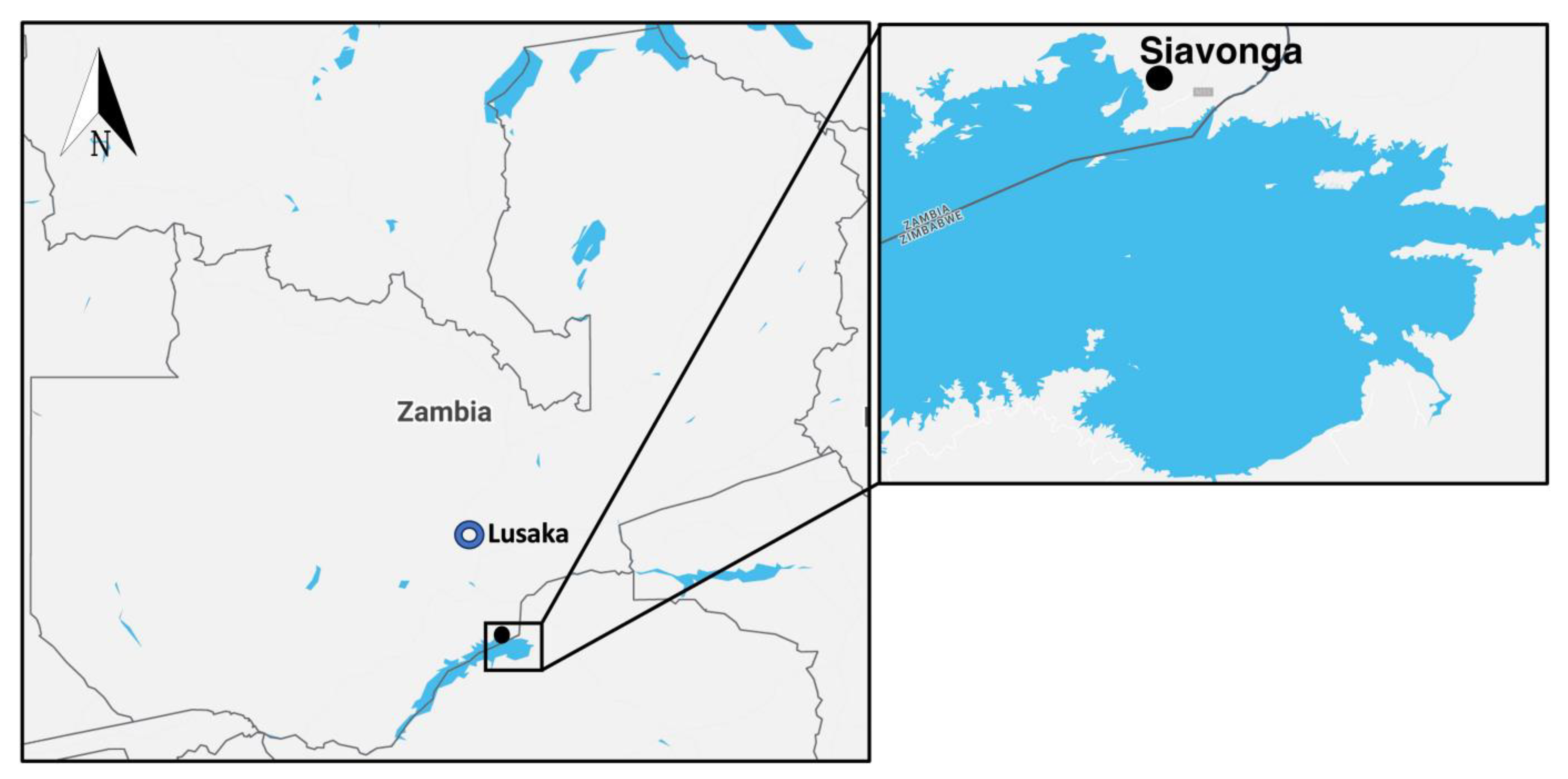
Table 1.
Demographic Characteristics of Fish Farms on Lake Kariba, Siavonga.
| Variable | n(%) |
|---|---|
| Harvest Biomas Per Year (Tonnes) | |
| <100Tons | 10 (71.4%) |
| 100 to 500 Tons | 2 (14.3%) |
| >500 Tons | 2 (14.3%) |
| Average Body Weight at Harvest (g) | |
| 200 to 300 | 1(7.1%) |
| 301 to 350 | 5 (35.7%) |
| 351 to 400 | 6 (42.9%) |
| 401 to 450 | 1(7.1%) |
| Above 451 | 1(7.1%) |
| Role on farm | |
| Owner | 12 (85.7%) |
| Manager | 2 (14.3%) |
Table 2.
Knowledge of Fish Health and Biosecurity Practices Among Aquaculture Producers on Lake Kariba, Siavonga.
Table 2.
Knowledge of Fish Health and Biosecurity Practices Among Aquaculture Producers on Lake Kariba, Siavonga.
| Questions | Response | Small Scale (n=10) | Medium Scale (n=2) | Large Scale (n=2) |
|---|---|---|---|---|
| Understanding Biosecurity and Disease Risks | ||||
| Staff understand disease risks? | Maybe | 2 (20%) | 1 (50%) | 0 (0%) |
| No | 3(30%) | 0 (0%) | 1 (50%) | |
| Yes | 5 (50%) | 1 (50%) | 1 (50%) | |
| Staff understand biosecurity plan? | Maybe | 4 (40%) | 2 (100%) | 0 (0%) |
| No | 5 (50%) | 0 (0%) | 1 (50%) | |
| Yes | 1 (10%) | 0 (0%) | 1 (50%) | |
| Staff aware of biosecurity duties? | Maybe | 2 (20%) | 1 (50%) | 0 (0%) |
| No | 5 (50%) | 0 (0%) | 1 (50%) | |
| Yes | 3 (30%) | 1 (50%) | 1 (50%) | |
| Visitors briefed on biosecurity? | No | 12 (100%) | 2 (100%) | 0 (0%) |
| Yes | 0 (0%) | 0 (0%) | 2 (100%) | |
| Biosecurity Guidelines and Documentation | ||||
| Guidelines for quarantine health? | Maybe | 1 (10%) | 0 (0%) | 0 (0%) |
| No | 6 (60%) | 2 (100%) | 1 (50%) | |
| Yes | 3 (30%) | 0 (0%) | 1 (50%) | |
| Guidelines for handling sick fish? | No | 3 (30%) | 2 (100%) | 0 (0%) |
| Yes | 7 (70%) | 0 (0%) | 2 (100%) | |
| Criteria for sick-healthy fish contact? | No | 9 (90%) | 0 (0%) | 2 (100%) |
| Yes | 1 (10%) | 2 (100%) | 2 (100%) | |
| Disease testing included in records? |
Yes | 1 (10%) | 2 (100%) | 2 (100%) |
| No | 8 (80%) | 0 (0%) | 0 (0%) | |
| Maybe | 1 (10%) | 0 (0%) | 0 (0%) | |
Table 3.
Attitudes Toward Fish Health and Disease Risk Management Among Aquaculture Producers on Lake Kariba, Siavonga.
Table 3.
Attitudes Toward Fish Health and Disease Risk Management Among Aquaculture Producers on Lake Kariba, Siavonga.
| Questions | Response | Small Scale (n=10) | Medium Scale (n=2) | Large Scale (n=2) |
|---|---|---|---|---|
| Commitment to Biosecurity | ||||
| Biosecurity officer assigned? | Maybe | 2 (20%) | 0 (0%) | 0 (0%) |
| No | 7 (70% | 1 (50%) | 0 (0%) | |
| Yes | 1 (10%) | 1 (50%) | 2 (100%) | |
| Biosecurity included in induction? | Not sure | 2 (20%) | 0 (0%) | 0 (0%) |
| No | 4 (40%) | 0 (0%) | 0 (0%) | |
| Yes | 4 (40%) | 2 (100%) | 2 (100%) | |
| Funds allocated for biosecurity | No | 8 (80%) | 1 (50%) | 0 (0%) |
| Yes | 2 (20%) | 1 (50%) | 2 (100%) | |
| Proactive Risk Management | ||||
| Risk management actions implemented? | Maybe | 2 (20%) | 1 (50%) | 0 (0%) |
| No | 5 (50%) | 0 (0%) | 0 (0%) | |
| Yes | 3 (30%) | 1 (50%) | 2 (100%) | |
| Preference for manufactured feeds | No | 3 (30%) | 0 (0%) | 0 (0%) |
| Yes | 7 (70%) | 2 (100%) | 2 (100%) | |
| Preparedness and Emergency Response | ||||
| Staff trained on outbreaks emergencies? | No | 10 (100%) | 2 (100%) | 0 (0%) |
| Yes | 0 (0%) | 0 (0%) | 2 (100%) | |
| Regular emergency training reviews? | No | 10 (100%) | 2 (100%) | 0 (0%) |
| Yes | 0 (0%) | 0 (0%) | 2 (100%) | |
| External partnerships for diagnostics? | Yes | 4 (40%) | 1 (50%) | 2 (100%) |
| No | 4 (40%) | 1 (50%) | 0 (0%) | |
| Maybe | 2 (20%) | 0 (0%) | 0 (0%) | |
Table 4.
Practices in Fish Health and Disease Risk Management Among Aquaculture Producers on Lake Kariba, Siavonga.
Table 4.
Practices in Fish Health and Disease Risk Management Among Aquaculture Producers on Lake Kariba, Siavonga.
| Questions | Response | Small Scale (n=10) | Medium Scale (n=2) | Large Scale (n=2) |
|---|---|---|---|---|
| Farm and Facility Biosecurity | ||||
| Nearby fish farms (Within 1Km) | No | 0 (0%) | 0 (0%) | 0 (0%) |
| Yes | 10 (100%) | 2 (100%) | 2 (100%) | |
| Water source biosecurity assessed? | Maybe | 2 (20%) | 1 (50%) | 1 (50%) |
| No | 6 (60%) | 0 (0%) | 0 (0%) | |
| Yes | 2 (20%) | 1 (50%) | 1 (50%) | |
| Conducted biosecurity risk assessment? | Not Sure | 1 (10%) | 0 (0%) | 0 (0%) |
| No | 6 (60%) | 2 (100%) | 0 (0%) | |
| Yes | 3 (30%) | 0 (0%) | 2 (100%) | |
| Staff receive biosecurity training? | No | 9 (90%) | 2 (100%) | 0 (0%) |
| Yes | 1 (10%) | 0 (0%) | 2 (100%) | |
| Visitor and staff log maintained? | No | 10 (100%) | 2 (100%) | 0 (0%) |
| Yes | 0 (0%) | 0 (0%) | 2 (100%) | |
| Entry/exit biosecurity measures enforced? | No | 10 (100%) | 2 (100%) | 0 (0%) |
| Yes | 0 (0%) | 0 (0%) | 2 (100%) | |
| Access to sensitive areas restricted? | No | 9 (75%) | 2 (100%) | 1 (50%) |
| Yes | 3 (25%) | 0 (0%) | 1 (50%) | |
| Fish Movement | ||||
| Disease risks assessed pre-movement? | No | 8 (80%) | 0 (0%) | 0 (0%) |
| Yes | 2 (20%) | 2 (100%) | 2 (100%) | |
| Transportation permits obtained? | No | 8 (80%) | 2 (100%) | 0 (0%) |
| Yes | 2 (20%) | 0 (0%) | 2 (100%) | |
| Quarantine facilities for new fish? | No | 8 (80%) | 2 (100%) | 1 (50%) |
| Yes | 2 (20%) | 0 (0%) | 1 (50%) | |
| Introduced fish isolated? | Not sure | 2 (20%) | 0 (0%) | 2 (100%) |
| No | 6 (50%) | 2 (100%) | 0 (0%) | |
| Yes | 2 (20%) | 0 (0%) | 0 (0%) | |
| Fish introduced with known health status? | Not sure | 4 (40%) | 0 (0%) | 0 (0%) |
| No | 4 (40%) | 0 (0%) | 0 (0%) | |
| Yes | 2 (20%) | 2 (100%) | 2 (100%) | |
| Health measures for new fish? | No | 8 (80%) | 2 (100%) | 0 (0%) |
| Yes | 2 (20%) | 0 (0%) | 2 (100%) | |
| Fish movement between sites allowed? | No | 5 (50%) | 1 (50%) | 0 (0%) |
| Yes | 5 (50%) | 1 (50%) | 2 (100%) | |
| Criteria for fish movement | No | 8 (80%) | 2 (100%) | 0 (0%) |
| Yes | 2 (10%) | 0 (0%) | 2 (100%) | |
| Fish movement records maintained | Yes | 7 (70%) | 2 (100%) | 2 (100%) |
| No | 3 (30%) | 0 (0%) | 0 (0%) | |
| Disease Management | ||||
| Staff assigned by cage risk? | No | 3 (30%) | 2 (100%) | 1 (50%) |
| Yes | 7 (70%) | 0 (0%) | 1 (50%) | |
| Staff prioritize healthy fish-first visits? | Maybe | 2 (20%) | 1 (50%) | 1 (50%) |
| No | 8 (80%) | 0 (0%) | 1 (50%) | |
| Yes | 0 (0%) | 1 (50%) | 0 (0%) | |
| Fish age-group cages managed separately? | No | 1 (10%) | 0 (0%) | 0 (0%) |
| Yes | 9 (90%) | 2 (100%) | 2 (100%) | |
| Measures to prevent fish escape? | Maybe | 1 (10%) | 0 (0%) | 0 (0%) |
| No | 2 (20%) | 0 (0%) | 0 (0%) | |
| Yes | 7 (70%) | 2 (100%) | 2 (100%) | |
| Prompt removal of sick/dead fish? | No | 1 (10%) | 0 (0%) | 0 (0%) |
| Yes | 9 (90%) | 2 (100%) | 2 (100%) | |
| Separate equipment for health statuses? | No | 3 (30%) | 1 (50%) | 1 (50%) |
| Yes | 7 (70%) | 1 (50%) | 1 (50%) | |
| Diagnostics and Testing | ||||
| Facility equipped for fish disease diagnosis | No | 10 (100%) | 2 (100%) | 1 (50%) |
| Yes | 0 (%) | 0 (0%) | 1 (50%) | |
| Protocols for external diagnostics? | No | 8 (80%) | 1 (50%) | 1 (50%) |
| Yes | 2 (20%) | 1 (50%) | 1 (50%) | |
Disclaimer/Publisher’s Note: The statements, opinions and data contained in all publications are solely those of the individual author(s) and contributor(s) and not of MDPI and/or the editor(s). MDPI and/or the editor(s) disclaim responsibility for any injury to people or property resulting from any ideas, methods, instructions or products referred to in the content. |
© 2025 by the authors. Licensee MDPI, Basel, Switzerland. This article is an open access article distributed under the terms and conditions of the Creative Commons Attribution (CC BY) license (http://creativecommons.org/licenses/by/4.0/).
Copyright: This open access article is published under a Creative Commons CC BY 4.0 license, which permit the free download, distribution, and reuse, provided that the author and preprint are cited in any reuse.