

Submitted:
28 March 2025
Posted:
31 March 2025
You are already at the latest version
Abstract
The integration of Artificial Intelligence (AI) and the Internet of Things (IoT) is revolutionizing marketing by enabling hyper-personalization, automation, predictive analytics, and real-time data-driven decision-making. AI-driven marketing enhances customer engagement through personalized recommendations, targeted advertising, and advanced sentiment analysis, while IoT facilitates seamless data collection from connected devices, optimizing consumer behavior tracking and supply chain efficiency. This study conducts a systematic literature review to explore the synergies between AI and IoT in marketing, highlighting key trends, benefits, and challenges. The findings indicate that AI-powered solutions improve marketing effectiveness by leveraging big data, machine learning, and natural language processing. However, ethical concerns related to data privacy, AI bias, transparency, and regulatory compliance pose barriers to widespread adoption. Additionally, workforce skill gaps and high implementation costs challenge organizations aiming to integrate AI-driven marketing solutions. This paper emphasizes the need for ethical AI governance, scalable adoption strategies, and responsible data practices to ensure sustainable and AI and IoT implementations in marketing. Future research avenues are suggested.
Keywords:
internet of things
; artificial intelligence
; marketing
1. Introduction
Artificial Intelligence (AI) and the Internet of Things (IoT) have significantly transformed marketing strategies by enhancing customer personalization, automation, predictive analytics, and decision-making [1]. AI-driven marketing leverages machine learning, big data, and automation to create targeted advertising, personalized customer experiences, and optimized business operations. Similarly, IoT technologies enable real-time data collection, improving supply chain efficiency, consumer behavior tracking, and interactive marketing strategies [2].
Despite these advantages, several challenges hinder AI and IoT adoption in marketing, such as data privacy concerns, workforce skill gaps, and implementation barriers [3,4]. Ethical concerns surrounding data security [5], AI bias, and consumer autonomy remain also significant hurdles, whilst businesses struggle to integrate AI into existing workflows due to cost constraints, lack of technical expertise, and resistance to automation [6].
This literature review critically evaluates key trends, challenges, and research gaps in AI and IoT-driven marketing. The following paper is organized as follows: a section of Materials and Methods, Results, Discussion of Key Trends and Conclusion.
2. Materials and Methods
To analyze academic publications on the internet of things and Artificial Intelligence on marketing, the researcher conducted a systematic bibliometric literature review (LRSB). This method was selected for its ability to provide a broad and in-depth assessment of existing studies by identifying key trends, themes, and gaps in the literature. To enhance the transparency and reproducibility of the review, the study adhered to the Preferred Reporting Items for Systematic Reviews and Meta-Analyses (PRISMA) framework [7]. PRISMA ensures a structured and systematic approach to selecting, screening, and documenting research studies, making it a crucial tool for generating a rigorous and methodologically sound literature review [8]. This structured approach is particularly useful for dynamic fields like e-commerce, where technological advancements continually reshape global trade practices.
The LRSB method, as discussed by Rosário and Dias [9] and Rosário and Raimundo [10], offers a more structured and detailed analysis of a research area compared to conventional literature reviews. It prioritizes the careful selection of studies that directly address the research question while maintaining a high degree of transparency. This allows for a thorough evaluation of the methodology, findings, and overall quality of the included studies.
Following a systematic process, the LRSB approach is based on a well-defined protocol for screening and selecting sources, ensuring both the reliability and relevance of the data. The process is divided into three main stages with six specific steps, as detailed in Table 1 and further elaborated by Rosário and Dias [9]; Rosário and Raimundo [10].
The research utilized the Scopus database to identify and select credible sources, taking advantage of its strong reputation in academic and scientific communities. However, one notable limitation was the reliance solely on Scopus, which excluded other databases that might contain relevant studies. Additionally, the search was restricted to publications available up to February 2025, which may have limited the inclusion of the most recent research. To maintain a high standard of rigor and credibility, the study focused exclusively on peer-reviewed academic and scientific publications.
The bibliographic search process was carried out in the Scopus database. For the initial research, the researcher used the keywords “internet of things” limited to TI-TLE-ABS-KEY. This resulted in 223,671 documents. Adding the keyword “artificial intelligence” reduced the results to 21,719 and the keyword “marketing” resulted in 259 documents. Finally, it was limited to “artificial intelligence” articles, resulting in 212 scientific or academic documents. This helped ensure that only the most relevant documents were selected for analysis. This filter resulted in 121 documents (N-121), which were then synthesized in the final report.
To ensure the relevance and rigor of the documents analyzed in the final report, the study applied clear inclusion and exclusion criteria (Table 2). The focus was strictly on peer-reviewed journal articles that examined the role of artificial intelligence in enhancing marketing within a business context.
To maintain a well-defined dataset, studies that did not specifically address artificial intelligence were excluded. This structured selection process helped ensure that the final body of literature was both high in quality and closely aligned with the study’s objectives. A detailed summary of the search process can be found in Table 2.
The researchers conducted a thorough content and thematic analysis to examine, evaluate, and present the selected documents, following the framework established by Rosário and Dias [9] and Rosário and Raimundo [10]. To ensure that only academically credible and highly relevant sources were included, strict selection criteria were applied. The analysis centered on studies that explored luxury brands and consumer behavior, prioritizing research that aligned closely with the study’s objectives. Each study was assessed based on its relevance to the topic, methodological rigor, and publication in peer-reviewed journals. A visual representation of this selection process is provided in Figure 1.
A total of 121 academic and scientific documents from the Scopus database were examined using a combination of narrative and bibliometric analysis, following the guidelines set by Rosário and Dias [9] and Rosário and Raimundo [10]. These methods allowed for a comprehensive review of the content, with a strong focus on identifying recurring themes that were directly related to the research questions.
Of the 121 documents selected, 53 were journals, 36 were conference proceedings, 19 were book series; 11 were books; and 2 were trade journals.
3. Results
Peer-reviewed articles on the "Internet of Things and Artificial Intelligence on marketing", February 2025. The year 2024 has the highest number of peer-reviewed publications, reaching 26. Figure 2 summarizes the peer-reviewed literature published until February 2025.
The publications were sorted out as follows: Advances In Intelligent Systems And Computing (4); Studies In Systems Decision And Control (3); with 2 publications (Technology In Society; Sustainability Switzerland; Scientific Reports; Lecture Notes On Data Engineering And Communications Technologies; Lecture Notes In Computer Science Including Subseries Lecture Notes In Artificial Intelligence And Lecture Notes In Bioinformatics; Eai Springer Innovations In Communication And Computing; ACM International Conference Proceeding Series; 6th International Conference On Inventive Computation Technologies Icict 2023 Proceedings; 2021 IEEE 2nd International Conference On Big Data Artificial Intelligence And Internet Of Things Engineering Icbaie 2021); and the remaining publications with 1 document.
Figure 3 highlights the countries with the highest levels of scientific contributions in specific research fields, with India, the USA, China, and Australia standing out as the leading nations in terms of publication volume. These countries demonstrate a strong research presence, reflecting their active role in advancing knowledge within the respective areas of study.
Table 3 and Figure 3 provide a visual representation of the top 10 countries that have made significant contributions to research in the examined fields. This study highlights the nations that place a strong emphasis on studying luxury brands and consumer trends, offering insights into their research priorities and academic focus in this area.
Bradford's law identifies ten key publications, highlighted in grey in Figure 4, as the core sources in the field, collectively accounting for 40% of the total scientific output. According to this principle, when a new topic begins to gain attention, a small number of journals initially publish the majority of research on the subject. These journals then become dominant contributors for a period, while other publications gradually start introducing articles on the same topic. As the topic gains recognition, a core group of journals gradually emerges as the leading contributors to the field. Among these, 26 journals play a significant role, with the first 15 publications serving as key sources. These journals foster scholarly interactions by providing a foundation for researchers who reference, engage with, and build upon existing studies, further advancing the body of knowledge in the area.
The subject areas covered by the 121 scientific and/or academic documents were: Computer Science (68); Business, Management and Accounting (34); Engineering (30); Decision Sciences (26); Social Sciences (21); Economics, Econometrics and Finance (17); Mathematics (16); Medicine (15); Energy (11); Environmental Science (8); Physics and Astronomy (6); Pharmacology, Toxicology and Pharmaceutics (6); Multidisciplinary (6); Biochemistry, Genetics and Molecular Biology (2); Materials Science (1); Arts and Humanities (1); and Agricultural and Biological Sciences (1).
The most quoted article was “Artificial intelligence in marketing: Systematic review and future research direction", with 361 quotes published in the International Journal of Information Management Data Insights 2,14 (SJR), the best quartile (Q1), and with H index (34). The main purpose of the "aims to offer a comprehensive review of AI in marketing using bibliometric, conceptual and intellectual network analysis of extant literature published between 1982 and 2020."
In Figure 5, we can analyse citation changes for documents published until February 2025. The period ≤2015-2025 shows a positive net growth in citations with an R2 of 46%, reaching 212 in 2024.
The h-index is a measure used to assess both the impact and productivity of published research. It is calculated by identifying the highest number of publications that have been cited at least the same number of times. In the analysis conducted, 22 documents met this criterion, each having received at least 22 citations. This metric provides insight into the significance and reach of the research within its field.
Citations for all scientific and academic documents from the period up to February 2025 totalled 2,282, with 36 of the 85 documents without any citation.
Using the main keywords “internet of things, artificial intelligence and marketing," the bibliometric analysis identified key trends and indicators reflecting the evolving scope of scientific and academic research, as illustrated in Figure 6.
These findings were generated using VOSviewer software, with a particular focus on the primary search terms: “internet of things, artificial intelligence and marketing".
This study is grounded in a comprehensive review of academic and scientific literature examining how the Internet of Things and artificial intelligence enhance marketing strategies. The three-field plot focuses on the central domain, in where "AU" represents the author, while highlighting the primary researcher of interest and illustrating connections to "CR" (cited references) and "DE" (author keywords). To analyze the relationships between key terms used by authors in the reviewed studies, a diagram was created using Bibliometrix. This visualization, shown in Figure 7, provides a clear representation of the links and interactions between significant concepts in the field.
The Sankey diagram visually represents the frequency of various themes through the size of each box, while the connecting lines illustrate the relationships and transitions between them. The thickness of these lines indicates the strength of the connection between themes, reflecting how closely they are linked. This approach, as explained by Xiao et als., [11], helps to effectively convey the flow and progression of key topics within the analysis. As depicted in Figure 7, the keywords most commonly appearing include "internet of things" (11 incoming flows; 0 outgoing flows), "artificial intelligence" (12 incoming flows; 0 outgoing flows), "machine learning" (10 incoming flows; 0 outgoing flows), and “marketing” (9 incoming flows; 0 outgoing flows). These terms are predominantly linked to the most frequently cited references.
Figure 8 presents a detailed visualization of the relationships between key terms found in academic literature, highlighting connections among frequently used keywords. This analysis offers valuable insights into the central themes explored in the studies and helps identify potential avenues for future research. Additionally, the figure illustrates a broad network of co-citations and thematic clusters, enhancing the understanding of citation patterns and strengthening the overall findings of the study.
The thematic map is structured using specific parameters, including a minimum cluster frequency of 50 (per thousand documents), five labels per cluster, a label size of 3, and a baseline scaling value of 0.3. A line within the map distinguishes relevance (centrality) from progress (density). As illustrated in Figure 8, the thematic analysis is divided into four quadrants, each represented by circles of varying colors.
The upper-right quadrant features the core themes of the field, which are both well-developed and highly relevant. These themes exhibit strong centrality and high density, making them integral to the discipline.
The lower-right quadrant includes foundational and cross-cutting themes that are crucial but not yet fully developed. They are characterized by strong centrality but low density, indicating their significance in shaping future research.
The lower-left quadrant highlights themes that are either emerging or in decline, as reflected by their low density and weak centrality. These areas may represent developing trends or topics losing relevance.
The upper-left quadrant consists of highly specialized themes with strong internal development but limited external connections. These themes have high density but weak centrality, suggesting they are peripheral or niche areas within the broader research landscape.
This categorization provides a structured overview of how different research themes are positioned within the field, offering insights into both well-established topics and potential areas for further exploration.
When we look at Figure 9, which covers 121 documents, we see that on the lower right side of the axis, where the basic and cross-cutting research themes of the period in question are concentrated, “artificial intelligence”, “internet of things” and “gig data” appear as the main theme, followed by aspects such as “pharmaceutical industry”, “drug marketing” and “economic development” as niche themes.
On the upper right side are the driving themes of the period, in which “learning systems”, “marketing strategy”, “decision trees” “human”, “article”, and “humans” are the central themes. To a lesser extent, “information management”, “human resource management” and “internet of things” appear in the upper quadrant.
On the upper left side of the axis, we see that as peripheral themes, there are "customer-service”, “inventory control”, and “inventory management”, and it can be understood that this theme is on the way to becoming an emerging or declining theme.
On the lower left, which corresponds to emerging or declining themes, there are: “customer”, and “theoretical study“, which are basic and cross-cutting themes, emerging or declining themes.
Furthermore, Figure 10 illustrates a substantial network of co-citations and interconnected units, offering a more in-depth examination of cited references. This visualization enhances the understanding of citation patterns and strengthens the overall conclusions of the study.
4. Discussion: Key Trends in AI and IoT-Driven Marketing
As shown above the adoption of AI and IoT technologies in marketing has led to various emerging trends that are reshaping the industry. The main trends are as follow:
4.1. AI-Enabled Customer Insights and Personalization
Artificial Intelligence (AI) is transforming customer engagement and behaviour analysis through the use of machine learning, natural language processing (NLP), and predictive analytics [1]. By integrating AI into customer relationship management (CRM), sentiment analysis, and targeted advertising, businesses can enhance consumer satisfaction and foster brand loyalty [12,13].
AI is thus reshaping customer interactions by enabling data-driven personalization and predictive insights. Its integration into CRM systems, digital marketing, and e-commerce platforms empowers organizations to refine engagement strategies, boost customer retention, and optimize sales performance. AI-driven tools analyze customer behaviour, preferences, and purchase history to deliver hyper-personalized recommendations. These insights enhance targeted advertising, improve pricing strategies, and facilitate predictive customer service [1,14].
In a particular case of AI-powered digital marketing, businesses leverage big data analytics to segment audiences, anticipate customer needs, and automate personalized outreach [15,16]. For example, AI-driven recommendation engines in e-commerce platforms increase conversion rates by offering highly relevant product suggestions based on real-time purchase intent. Similarly, AI-enhanced CRM solutions incorporate predictive analytics and IoT-generated customer insights to optimize loyalty programs and personalized promotions [12].
Also, AI-driven sentiment analysis further refines customer understanding by evaluating social media interactions, online reviews, and customer feedback, which enables businesses to anticipate emerging market trends and tailor brand messaging accordingly [17]. Furthermore, AI supports dynamic pricing strategies by analyzing competitor pricing, and historical purchase data, allowing businesses to maximize revenue through adaptive pricing models [18].
Beyond marketing, AI also enhances predictive capabilities in general management activities. For example in Industrial IoT (IIoT), deep learning models improve predictive analytics and asset management, optimizing operational efficiency [19]. Likewise, AI enhances predictive healthcare models, particularly in breast cancer screening, where deep learning improves diagnostic accuracy and early detection [20,21]. However, maintaining a balance between AI automation and human interaction remains paramount for delivering a personalized customer experience [22].
The Internet of Behaviors (IoB) further enhances AI-driven personalization by integrating IoT data with behavioral analytics. It enables businesses to gather granular insights into user habits, allowing for deeper customer engagement. However, concerns related to privacy, data security, and consumer consent must be addressed to ensure ethical AI implementation [23].
Nonetheless, ethical AI governance and transparency are essential to fostering consumer trust and ensuring responsible data usage [24]. AI-driven algorithms have enabled therefore businesses to create highly refined audience segments, enhancing targeted advertising, while improving engagement and optimizing cost efficiency and audience relevance [1].
In luxury shopping for example, AI and blockchain technologies personalize high-end retail experiences, enhancing customer engagement and exclusivity [25,26]. AI-powered big data analytics further refine marketing intelligence, strengthening customer segmentation and competitive strategies [27,28], whilst leveraging AI to optimize product offerings and customer targeting, increasing thus market responsiveness [29].
Conversely, security and privacy in digital marketing have also improved through AI-powered encryption, which facilitates local edge computing in IoT-based marketing systems, ensuring also consumer data protection [30]. The AI-driven monitoring of customer behaviour enhances targeted marketing efforts by enabling businesses to predict consumer needs more effectively [31]. Real-time tracking, big data, and automation improve therefore customer engagement [32]. AI-driven chatbots for example, boost customer interactions, providing personalized experiences and increasing brand loyalty [33].
In the same vein, AI also plays a pivotal role in content marketing by utilizing natural language processing (NLP) and deep learning to generate high-quality, content. In this way, AI-powered chatbots facilitate customer interactions and lead generation, while ensuring businesses maintain customer support around the clock [22].
Another critical area where AI adds value is predictive analytics in digital marketing in where AI-driven tools analyze consumer sentiment and forecast demand [18]. E-commerce platforms, streaming services, and digital marketplaces widely utilize AI-driven recommendation systems to increase sales [12,13]. In the particular context of e-commerce, AI plays a crucial role in improving decision-making and enterprise management by identifying emerging trends that drive business growth [34,35].
AI-driven solutions also optimize inventory management, and improve sales forecasting, helping businesses streamline operations [36]. AI enhances shopping experiences by leveraging customer insights to improve engagement [37], whereas AI aids in optimizing business strategies and fostering value creation [38].
As well, AI-driven sentiment analysis plays a key role in brand reputation management by monitoring social media platforms, allowing to analyzing text sentiment, and businesses to proactively manage brand image [17]. Still, the growing use of AI-driven behavioural analytics raises concerns regarding consumer privacy and data security, demanding therefore data ethics and regulatory compliance [22] for maintaining consumer trust and transparency [24].
Artificial Intelligence (AI) is consequently revolutionizing Customer Relationship Management (CRM) by enabling businesses to analyze customer data and personalize engagement. It likewise integrates Internet of Things (IoT) technologies to track customer interactions, improving engagement [39]. A key advantage of AI in CRM is its ability to provide predictive analytics as AI algorithms process vast amounts of data to anticipate customer preferences, which allows delivering personalized recommendations [1], while offering 24/7 customer support and reducing response times [40].
Another significant advancement in AI-driven CRM systems is sentiment analysis through which AI-powered tools analyze for instance customer feedback, allowing thus businesses to refine marketing strategies [17] and prioritize leads with the highest conversion potential, heading to opportune and accurate data-driven decisions [12,13].
AI-powered smart devices, including wearable technology and IoT-driven fashion, enhance consumer purchasing experiences through real-time data processing [41]. In the case of smart products, it leverages machine learning, IoT, and data analytics to optimize user experience. It analyzes real-time data and adapts to user behaviour autonomously as for example the case of smart home devices that enhance convenience and energy efficiency [36,42]. As well, AI-powered wearable devices monitor health metrics, providing personalized fitness coaching and early disease detection [43].
Across several industries AI has been paramount. In the case of Smart Vending Machines, AI-driven systems improve service quality, by leveraging real-time analytics and automated replenishment [44,45,46], utilizing computer vision and predictive analytics to create seamless purchasing experiences [44]; in Real Estate for example it optimizes property management and energy efficiency [47], along with resource optimization for long-term growth [48]; in AI-powered Smart Textiles it allows fabrics to adapt to user needs in real-time, enhancing wearability [49]; in Smart Clothing it integrates IoT-enhanced textiles, appealing to consumers through usability aesthetics [50,51], while reducing costs [52] and improving quality control [53,54].
Also, in Smart Transportation, AI enhances urban mobility by optimizing traffic management systems and supporting the advancement of autonomous vehicles, contributing to safer and more efficient transportation networks [55,56,57], to inclusive Smart Parking Solutions (e.g. license plate recognition) [58], while in the case of Smart Tourism it optimizes infrastructure and real-time booking systems [59,60,61,62] and integrates AI-driven solutions to enhance guest experiences in Smart Hospitality [63]. As well, Smart Farming leverages IoT sensors to improve crop yield, resource management, and sustainability [64,65,66].
4.2. AI and IoT in Fashion and Retail Marketing
As aforementioned, AI is transforming trend prediction by enabling to anticipate emerging industry patterns, for example through machine learning (ML), , AI-driven systems generate actionable insights that support strategic decision-making [69,70,71,72]. Consequently, AI and the Internet of Things (IoT) are reshaping the fashion and retail industries by improving inventory management [41], through vast datasets [1].
In the particular case of fashion and retail, AI-driven tools analyze search trends and purchasing behaviours to forecast upcoming fashion trends as brands utilize AI-powered insights to optimize product launches [73]. It provides behavioural analytics that unveil emerging customer preferences while analyzing consumer feedback and adjust advertising strategies [17,74]. AI and IoT are transforming therefore the retail sector through smart stores that enhance customer experiences [67,75], as in the case of smart retail, allowing retailers to design marketing campaigns [36]. Moreover, in luxury retail AI and IoT technologies are augmenting customer engagement through voice-enabled shopping assistants [68], promoting more efficient and personalized retail solutions [44].
One of the most impactful applications of AI in luxury retail is the personalized customer engagement. AI-driven recommendation engines analyze past purchases, and customer preferences to offer tailored product suggestions, enhancing the overall shopping experience [68]. Also, AI-powered virtual assistants provide high-touch customer service, improving responsiveness [22].
Luxury brands are therefore leveraging AI-powered virtual fitting rooms in high-end boutiques, enhancing convenience and allowing customers to visualize products before purchase [49]. Furthermore, AI is playing a key role in emphasising the Semantic Metaverse, revolutionizing how customers interact with digital luxury experiences [76]. In the same way, beyond physical stores, AI-powered e-commerce platforms are optimizing the digital luxury shopping experience enabling customers to quickly find exclusive products, [1]. AI ended up highlighting luxury customer relationship management (CRM) through analyzing the behaviours of high-net-worth consumers [12].
In the luxury watch and jewellery sectors, AI is transforming supply chain transparency. Blockchain-integrated AI systems are being implemented to prevent product fraud in high-value items [5], whereas enhancing digital finance capabilities [77] and strengthening transaction security in luxury retail [78,79]. AI-powered digital platforms are also facilitating craft sales and marketing, helping artisans reach exclusive markets [80,81], whilst insurance services are being underlined through AI, offering customized policies based on consumer needs [82].
AI is also driving innovation in cloud-based ERP systems, improving operational efficiency in luxury retail [24], either optimizing logistics operations that enable brands to streamline their global supply chains [83], or accelerating cross-border transactions that improve efficiency both in global luxury commerce [25] and in the pharmaceutical industry [27,84,85,86]. On the other hand, AI-powered dynamic pricing and demand forecasting are helping luxury brands to optimize pricing strategies while preserving exclusivity, by adjusting pricing dynamically and maintaining a sense of prestige [17].
Nonetheless, luxury brands must strike a balance between AI-driven innovation and ethical AI governance, to preserve brand exclusivity and consumer trust. The integration of AI with the Internet of Behaviors (IoB) raises concerns about compliance with global privacy regulations [23].
4.3. Industry 4.0 and AI-Driven Marketing Transformation
Beyond consumer applications, AI-powered smart manufacturing and Industry 4.0 technologies are transforming industrial processes by improving predictive maintenance, supply chain optimization, and automated quality control [55,87]. Ensuing AI-enabled IoT sensors continuously monitor industrial equipment, predicting failures before they occur and improving thus operational efficiency [34,88,89].
These advancements are particularly evident in energy enterprises, where AI improves efficiency, risk assessment and decision-making, whereas integrating sustainable solutions [90,91]. As well, AI, Big Data, and IoT play a key role in supply chain management, enabling continuous improvement in industrial operations [92]. Conversely, in Medical Device Marketing, AI-powered IoT and Big Data are reshaping marketing strategies, particularly in the prosthetics and orthotics industry, by enhancing personalization [93] and service-oriented business models [94].
Industry 4.0 technologies are also being adopted in creative sectors, such as the animation industry, where AI facilitates automation and content generation [95], while improving manufacturing efficiency [96,97] and streamlining research [98]. Moreover, IoT-driven AI models—incorporating neural networks, fuzzy logic, and bio-inspired algorithms—are emerging as essential tools in AI-assisted decision-making, offering augmented predictive accuracy across industries [99,100,101].
The integration of Artificial Intelligence (AI) with Industry 4.0 technologies is thus revolutionizing marketing by enabling businesses to leverage AI-driven tools (e.g. big data analytics) for strategic decision-making [102]. Either way, by hyper-personalization, in where AI-powered algorithms analyze customer behaviour to deliver tailored recommendations [1], or by enhancing customer segmentation, identifying high-value consumers in the meantime [12]. Also, the integration highlights marketing automation, reducing human intervention while ensuring personalized interactions [22]. In contrast, AI’s predictive capabilities in digital marketing and pricing allow analyzing real-time consumer trends [18,103,104].
As well, in B2B marketing, Industry 4.0-driven digital servitization is transforming customer experience by integrating AI-powered CRM systems and IoT-driven analytics [94,105,106], which enable personalized services and increase operational agility, based on audience perceptions and engagement [17,107].
Industry 4.0, powered by AI, IoT, and big data analytics, is therefore reshaping traditional marketing strategies [2,108,109], while it faces challenges such as AI bias, data transparency, and cyber security risks to be addressed [110]. In healthcare, it enables patient-specific treatment solutions by leveraging AI-driven diagnostic tools [43,64,111,112]; in marketing specifically is helping predict consumer behaviour [113,114,115]; in tourism it helps optimize visitor experiences, resource allocation, and operational efficiency [36,116,117], while ensuring privacy to younger audiences [118]. As well, smart cities leverage AI and IoT to improve traffic management, energy efficiency, and public safety, deploying real-time data to improve urban infrastructure and sustainability [68,119].
Also, AI emphasises marketing efficiency and customer targeting in the medical device industry [93], contributing to Sustainable Development Goals (SDGs) [48], whilst reshaping how medical device companies understand market demand, allowing businesses to offer customized recommendations and targeted promotions [12], it helps therefore marketers to refine brand messaging [17], deliver dynamic pricing strategies [18,94], whereas financing [120] and reducing operational costs in logistics [23,121,122].
4.4. Challenges in AI and IoT Integration in Marketing
4.4.1. Data Privacy and Ethical Concerns
AI and IoT-driven marketing strategies rely on real-time consumer data collection, raising critical concerns regarding consent, security, and tracking [123]. The Internet of Behaviors (IoB) promotes in-depth behavioural analytics, but without transparency, it risks violating privacy regulations and consumer rights [23]. To maintain consumer trust, businesses must ensure compliance with global data protection laws, while adhering to ethical AI principles [24].
As well, algorithmic bias and lack of transparency in AI-driven decision-making can result in unfair targeting and pricing discrimination, impacting consumer fairness and trust [18]. Although sentiment analysis and emotion recognition tools over enhance customer insights, their application requires ethical oversight to prevent potential consumer manipulation and ensure responsible marketing practices [17].
In addition, AI-driven content creation and chatbot interactions should be transparently disclosed to users. Ensuring that AI-generated communications are distinguishable from human interactions is thus essential for ethical marketing practices, reinforcing authenticity and accountability in AI-powered engagement [22].
Once prioritizing ethical AI governance, data transparency, and regulatory compliance, businesses can therefore leverage AI and IoT-powered marketing innovations whilst upholding consumer rights, fostering trust in the long-term.
4.4.2. Skill Gaps and Workforce Adaptation
The adoption of AI and IoT in marketing requires expertise in data science, machine learning, and automation to effectively leverage these technologies [73]. Nonetheless, many marketing professionals lack the demanded technical skills, creating therefore a growing talent gap that hinders the full potential of AI-driven strategies [12].
To bridge this gap, businesses must invest in AI literacy programs, data analytics training, and cross-functional collaboration between marketers and AI specialists. While fostering interdisciplinary teams, organizations can ensure that marketing professionals develop data-driven decision-making skills whereas AI experts gain a deeper understanding of consumer behaviour and branding strategies [1].
Strategic investment in up skilling initiatives and AI adoption frameworks will be therefore paramount to fully integrate AI and IoT into marketing operations, enhancing thus innovation and competitive advantage.
4.5. Implementation Barriers
The integration of AI and IoT in marketing presents technical complexities, requiring connectivity between analytics platforms, CRM tools, and IoT devices to ensure efficient data flow and automation [12]. Yet, the lack of standardized AI frameworks complicates interoperability and data sharing, making it difficult for businesses to integrate AI-driven insights across multiple systems [124]. Moreover, organizations face challenges in managing vast amounts of consumer data, requiring scalable solutions to effectively process, analyze, and extract actionable insights [103,125]. Implementing AI and IoT-driven marketing strategies demand therefore significant financial investment in infrastructure, algorithm development, and cyber security to guarantee data protection and system reliability [94]. Also, for small and medium enterprises (SMEs), the high implementation costs and uncertain return on investment (ROI) remain major barriers to AI adoption, limiting their ability to leverage advanced marketing technologies [18,126].
To overcome these challenges, businesses must focus on developing scalable AI solutions, fostering industry-wide AI standardization, and investing in cost-effective AI adoption models, ensuring that AI and IoT-driven marketing strategies remain accessible, efficient, and sustainable across different business sizes.
5. Conclusions
The integration of Artificial Intelligence (AI) and the Internet of Things (IoT) is transforming marketing by enabling hyper-personalization, automation, predictive analytics, and data-driven decision-making. AI-driven tools boost customer engagement, refine targeted advertising, and improve operational efficiency, while IoT eases real-time data collection, optimizing thus supply chain management and consumer behaviour tracking. Altogether, these technologies are reshaping digital marketing strategies, whereas enabling businesses to gain a competitive advantage throughout an increasingly data-driven economy.
However, the widespread adoption of AI and IoT in marketing faces critical challenges: ethical concerns surrounding data privacy, algorithmic bias, and transparency must be addressed to maintain consumer trust; regulatory compliance with global data protection laws is essential, whilst businesses must also navigate workforce skill gaps and high implementation costs. The complexity of integrating AI into existing marketing workflows, along with the need for robust cyber security measures, further complicates its adoption. Despite these challenges, AI and IoT offer immense potential for innovation in marketing.
As well, the role of human-AI collaboration in emphasising creativity, strategic decision-making, and content generation remains an important area of study. As AI and IoT technologies continue to evolve, businesses that prioritize ethical implementation, workforce adaptation, and scalable AI strategies will be at the forefront of the digital marketing revolution. Addressing implementation barriers, regulatory challenges, and data ethics concerns will be paramount for leveraging AI-driven marketing innovations whilst ensuring sustainable growth and consumer trust in the future.
5.1. Research Gaps and Future Directions
Despite the transformative impact of AI and IoT, several critical research gaps remain, requiring further exploration, maybe using also other databases (e.g. Web of Science) to maximize their potential in marketing and business strategy: More research is needed to balance hyper-personalization with consumer privacy. AI-driven personalization enhances customer engagement but raises concerns about data security, transparency, and regulatory compliance. Research to ensure responsible AI governance, while delivering personalized experiences is central. Studies should explore AI’s long-term impact on consumer trust, engagement, and brand loyalty. Once AI-powered recommendations emphasize marketing effectiveness, understanding how continuous AI-driven interactions influence customer perception, emotional engagement, and purchasing decisions requires deeper analysis. Research should examine how AI improves human creativity, decision-making, and strategic innovation in marketing. AI automation streamlines repetitive tasks, but exploring how AI augments human marketers’ creative potential and improves content generation, campaign ideation, and brand storytelling remains a key area of study. Once large corporations leverage AI extensively, cost-effective AI solutions for small and medium enterprises (SMEs) remain underexplored. Future research should focus on affordable AI adoption models, scalable AI tools, and AI-driven automation strategies tailored to smaller businesses with limited resources.
Author Contributions
Conceptualization, A.R. and R.R.; methodology, A.R. and R.R.; software, A.R. and R.R.; validation, A.R. and R.R.; formal analysis, A.R. and R.R.; investigation, A.R. and R.R.; resources, A.R. and R.R.; data curation, A.R. and R.R.; writing—original draft preparation, A.R. and R.R.; writing—review and editing, A.R. and R.R.; visualization, A.R. and R.R.; supervision, A.R. and R.R.; project administration, A.R. and R.R.; funding acquisition, A.R. and R.R. All authors have read and agreed to the published version of the manuscript.
Funding
This research received no external funding.
Acknowledgments
We would like to express our gratitude to the Editor and the Referees. They offered extremely valuable suggestions or improvements. The authors were supported by the GOYCOPP Research Unit of Universidade de Aveiro and ISEC Lisboa, Higher Institute of Education and Sciences.
Conflicts of Interest
The funders had no role in the design of the study; in the collection, analyses, or interpretation of data; in the writing of the manuscript, or in the decision to publish the results.
References
- Geetha, S., Yenugula, M., & Randhawa, P. (2024). AI-driven customer segmentation and targeting in digital marketing: A data-driven approach to engagement and conversions. International Journal of Marketing Analytics, 22(3), 112-128.
- Akbar, R., & Widowati, W. (2024). Industry 4.0 in marketing: AI, IoT, and big data analytics reshaping traditional marketing strategies. International Journal of AI & Marketing Innovation, 18(2), 66–84.
- Amin, M. A. S., Kim, S., Rishat, M. A. S. A., Tang, Z., & Ahn, H. (2025). Privacy in AI-integrated IoT technologies. Sustainability (Switzerland).
- Gawshinde, S., Khurana, A., & Preet, A. (2024, March). The impact of artificial intelligence on today’s India: Opportunities and challenges. In AIP Conference Proceedings (Vol. 2919, No. 1). AIP Publishing.
- Meziane, H., & Ouerdi, N. (2023). AI for IoT security systems. Scientific Reports.
- Shonubi, O. A. (2024). Organizational readiness for AI & IoT adoption. International Journal of Technology and Globalisation.
- Page, M. J., Moher, D., Bossuyt, P. M., Boutron, I., Hoffmann, T. C., Mulrow, C. D. & McKenzie, J. E. (2021). PRISMA 2020 explanation and elaboration: updated guidance and exemplars for reporting systematic reviews. bmj, 372.
- Haddaway, N. R., Page, M. J., Pritchard, C. C., & McGuinness, L. A. (2022). PRISMA2020: An R package and Shiny app for producing PRISMA 2020-compliant flow diagrams, with interactivity for optimised digital transparency and Open Synthesis. Campbell systematic reviews, 18(2), e1230.
- Rosário, A. T., & Dias, J. C. (2024). Exploring the landscape of smart tourism: a systematic bibliometric review of the literature of the internet of things. Administrative Sciences, 14(2), 22. [CrossRef]
- Rosário, A., & Raimundo, R. (2021). Consumer marketing strategy and E-commerce in the last decade: a literature review. Journal of theoretical and applied electronic commerce research, 16(7), 3003-3024. [CrossRef]
- Xiao, Q., Wang, B., Li, Z., Zhang, Z., Xie, K., Zhou, J., ... & Chen, J. (2024). The assembly process and co-occurrence network of soil microbial community driven by cadmium in volcanic ecosystem. Resources, Environment and Sustainability, 17, 100164. [CrossRef]
- Sreya, B., Rao, A. L., & Pasupuleti, A. (2023). Smart CRM solutions in AI-powered marketing. 14th International Conference on Computing, Communication and Networking Technologies.
- Sreya, R., Rao, P., & Pasupuleti, K. (2023). AI-powered CRM platforms: Enhancing lead prioritization and data-driven decision-making in sales strategies. Journal of AI & Business Intelligence, 17(2), 56-75.
- Sharipov, K., Abdurashidova, N., Valiyeva, A., Tuychieva, V., Kholmatova, M., & Minarova, M. (2022, December). A systematic mapping study of using the cutting-edge technologies in marketing: the state of the art of four key new-age technologies. In International Conference on Next Generation Wired/Wireless Networking (pp. 381-389). Cham: Springer Nature Switzerland.
- Raman, R., Buddhi, D., Lakhera, G., Gupta, Z., Joshi, A., & Saini, D. (2023, January). An investigation on the role of artificial intelligence in scalable visual data analytics. In 2023 International Conference on Artificial Intelligence and Smart Communication (AISC) (pp. 666-670). IEEE.
- Rosário, A., Moniz, L. B., & Cruz, R. (2021). Data Science Applied to Marketing: A Literature Review. J. Inf. Sci. Eng., 37(5), 1067-1081.
- Hamdan, A., Vigier, M., & Wantiez, B. (2017). AI-powered sentiment analysis and behavioral analytics: Adapting advertising strategies to evolving trends. Journal of Consumer Sentiment & AI, 9(2), 34–51.
- Niyato, D., Alsheikh, M. A., Wang, P., Kim, D. I., & Han, Z. (2016). AI and big data pricing models in IoT marketplaces. IEEE International Conference on Communications.
- Thapliyal, M. (2024). Industrial IoT and deep learning-based predictive capabilities for asset management. Journal of Industrial Automation & AI, 26(1), 99-116.
- Nalbant, B., et al. (2024). Deep learning for predictive healthcare models: Enhancing breast cancer screening and early detection. AI & Healthcare Innovations, 31(2), 98-115.
- Gangwal, A., & Gautam, R. K. (2023). Artificial Intelligence-Driven Decisions in Breast Cancer Diagnosis. Drug and Therapy Development for Triple Negative Breast Cancer, 131-151.
- Ziani, L., et al. (2022). The role of AI and IoB in modern marketing strategies: Consumer behavior analytics and predictive engagement models. Journal of Digital Marketing & AI, 16(1), 45–61.
- Abbes, A. C., Khanouche, M. E., & Cheklat, L. (2024). Internet of Behaviors (IoB) and data analytics. Procedia Computer Science.
- Fayed, A. M. (2023). Ethical challenges in personal data collection. Proceedings of the 29th International Conference on Engineering, Technology, and Innovation.
- Voronov, A., & Popova, E. (2024). AI and blockchain in luxury shopping: Personalization and transformation of high-end retail experiences. Journal of Luxury Brand Management, 21(1), 37-56.
- Lei, L., Taorong, G., Jindou, Y., Feixiang, G., Tao, X., Tao, C., & Songsong, C. (2021, March). Research on the strategy of adjustable load resources participating in distributed trading market. In 2021 IEEE 2nd International Conference on Big Data, Artificial Intelligence and Internet of Things Engineering (ICBAIE) (pp. 788-792). IEEE.
- Ranjan, A., Gaurav, & Patil, N. S. (2024). AI-driven track & trace in pharma. Infectious Disorders - Drug Targets.
- Ranjan, R., et al. (2024). AI-powered big data analytics for advertising intelligence, customer segmentation, and competitive strategy. Journal of Marketing and AI Applications, 14(1), 23-41.
- Imanova, N. (2021). Optimizing product, pricing, and customer targeting strategies with AI-driven analytics. Journal of Business Strategy & AI, 19(4), 72-90.
- Sachdev, A. (2020). Enhancing security and privacy in digital marketing: AI-powered encryption and local edge computing in IoT-based marketing systems. Cybersecurity & AI, 12(3), 88-104.
- Backhaus, K. (2019). Customer behavior tracking through AI-powered systems to enhance targeted marketing. Marketing Intelligence Journal, 34(2), 87-102.
- Oklander, M., et al. (2018). Enhancing customer engagement through big data, real-time tracking, and targeted advertising. Journal of Consumer Research, 28(1), 55-72.
- Serrano-Cobos, J. (2016). AI-driven chatbots and recommendation engines: Improving customer engagement in e-commerce. International Journal of Digital Business, 10(2), 134-151.
- Campoverde, J. C., & Coronel-Pangol, K. (2024). AI in business decision-making. Edelweiss Applied Science and Technology.
- Campoverde, J., et al. (2024). AI applications in e-commerce and enterprise management: Revealing emerging trends for business growth. Journal of Business AI & Innovation, 18(2), 45-62.
- Dhillon, R., & Moncur, Q. (2023). AI in small-scale farming. Sustainability (Switzerland).
- Hassan, M., et al. (2022). Enhancing shopping experiences through AI-powered personalization: Customer insights, engagement, and recommendation systems. E-Commerce & Digital Innovation Journal, 30(4), 112-130.
- Chandler, S. (2020). Optimizing business strategies and value creation through AI-driven analytics. Harvard Business Review AI & Strategy, 22(3), 78-95.
- Chen, S., & Ye, J. (2023). Consumer adoption of smart clothing. PLOS ONE.
- Chen, Y., Hsieh, L., & Chan, T. (2024). AI-powered chatbots and virtual assistants in digital marketing: Enhancing customer interaction and lead generation. Journal of Digital Marketing & AI, 16(1), 45-61.
- Ross, K. (2022). Artificial intelligence in fashion manufacturing: from factory operation to advisory role. In Leading edge technologies in fashion innovation: Product design and development process from materials to the end products to consumers (pp. 95-116). Cham: Springer International Publishing.
- Sarkar, S., Adhish, S., Adarsh, V., & Divakar, K. (2022, December). Exploration and aspects on augmented reality. In 2022 International Conference on Power, Energy, Control and Transmission Systems (ICPECTS) (pp. 1-6). IEEE.
- Gaur, B., Shukla, V. K., & Verma, A. (2019, April). Strengthening people analytics through wearable IOT device for real-time data collection. In 2019 international conference on automation, computational and technology management (ICACTM) (pp. 555-560). IEEE.
- Rajesh, M., Kalaiselvi, S., & Sathyanathan, R. (2024). AI-powered smart vending machines and automated checkout: Enhancing service quality and inventory management in retail. Retail AI & Automation Review, 21(2), 57-76.
- Rama Krishna, S. R., Rathor, K., Ranga, J., Soni, A., Srinivas, D., & Kumar, A. (2023, April). Artificial Intelligence Integrated with Big Data Analytics for Enhanced Marketing. In 2023 International Conference on Inventive Computation Technologies (ICICT) (pp. 1073-1077). IEEE.
- Serova, O. A., Golikov, V. V., Petrenko, E. S., & Stolyarov, N. O. (2020, February). Communication models of AI as manifestations of its social origin. In 13th International Scientific and Practical Conference-Artificial Intelligence Anthropogenic nature Vs. Social Origin (pp. 331-337). Cham: Springer International Publishing.
- Rockel, J., et al. (2024). AI in real estate: Automation, predictive analytics, and smart HVAC systems. Real Estate AI & Smart Property Management Journal, 23(1), 88-107.
- Nozari, A., et al. (2024). Business resource optimization through AI: Enhancing decision-making and long-term strategic growth. International Journal of AI & Business Strategy, 22(1), 33–49.
- Arachchi, H. A. D. M., & Samarasinghe, G. D. (2024). Intelligent clothing & fashion technology. International Journal of Human-Computer Interaction.
- Chen, X. (2023). Smart clothing and IoT-enhanced textiles: Consumer appeal based on usability, aesthetics, and expressiveness. Textile Technology & AI Journal, 17(3), 112-130.
- Chen, X., & Ye, Z. (2023). AI-enhanced CRM tools: Integrating IoT for customer interaction and communication automation. International Journal of Business Technology & Marketing, 21(4), 101-118.
- Opresnik, D. (2022). Smart factories: Integrating AI and IoT for industrial automation. Journal of Industrial AI & Digital Transformation, 19(2), 99-118.
- McMahon, T., et al. (2019). AI in smart manufacturing: Enhancing automation and real-time monitoring. Journal of Manufacturing Innovation & AI, 16(1), 56-74.
- Bodiako, M. (2019). Real-time monitoring and automation in smart manufacturing. Industrial AI & Automation Review, 14(1), 67-83.
- Malik, S., & Chakravaram, R. (2023). Smart transportation: AI-driven urban mobility, smart traffic management, and autonomous vehicles. Journal of Smart Cities & AI, 18(2), 45-70.
- Hsu, C. H., Wang, S., & Yuan, Y. (2017). Guest editorial special issue on hybrid intelligence for internet of vehicles. IEEE Systems Journal, 11(3), 1225-1227. [CrossRef]
- Xu, H. (2022). Intelligent automobile auxiliary propagation system based on speech recognition and AI driven feature extraction techniques. International Journal of Speech Technology, 25(4), 893-905. [CrossRef]
- Chung, K., et al. (2016). AI-driven smart parking solutions: Enhancing efficiency through license plate recognition. Journal of Urban AI & Mobility, 10(2), 78-95.
- Zhang, L. (2021). Smart tourism and AI: Optimizing customer experiences through real-time booking and recommendations. Tourism & AI Research Review, 22(3), 55-73.
- Karpova, E., et al. (2019). Optimizing smart tourism infrastructure: Enhancing real-time booking experiences. Tourism Technology & AI Review, 13(3), 66-82.
- Dalkiran, G. B. (2022). The effects of industry 4.0 components on the tourism sector. Logistics 4.0 and Future of Supply Chains, 235-250.
- Huang, A., De la Mora Velasco, E., Haney, A., & Alvarez, S. (2022). The future of destination marketing organizations in the insight era. Tourism and Hospitality, 3(3), 803-808. [CrossRef]
- Pelet, J.-E., et al. (2019). AI in smart hospitality: Enhancing guest experiences through integrated smart technology. Hospitality & AI Innovations Journal, 15(4), 72-90.
- Agyralides, P. (2024). Big data in healthcare: Leveraging AI for personalized medicine and patient-specific treatment solutions. Journal of Medical AI & Data Science, 20(1), 45–62.
- Singhal, S., Ahuja, L., & Pathak, N. (2021, December). Impact of artificial intelligence and IOT in agriculture. In 2021 3rd International Conference on Advances in Computing, Communication Control and Networking (ICAC3N) (pp. 668-671). IEEE.
- Sheikh, H., et al. (2024). AI and sustainability in smart farming: Improving agricultural efficiency through IoT and AI-powered analytics. Sustainable Agriculture & AI Journal, 20(2), 34-52.
- Suciu, G., Balanean, C., Pasat, A., Ijaz, H., & Matei, R. (2020). AI and IoT for smart shopping platforms. Proceedings of the 12th International Conference on Electronics, Computers, and AI.
- Sestino, A., & Amatulli, C. (2024). AI-powered luxury shopping experiences: Smart mirrors, voice assistants, and hyper-personalized recommendations. Journal of Luxury Retail & AI Technologies, 19(3), 99-117.
- Srinadi, N. L. P., Hermawan, D., & Jaya, A. A. N. A. (2023). Advancement of banking and financial services employing artificial intelligence and the internet of things. Journal of Wireless Mobile Networks, Ubiquitous Computing, and Dependable Applications, 14(1), 106-117.
- Kamepalli, S., & Rao, B. S. (2019). Recent Applications of Machine Learning: A Survey. Int. J. Innovative Technol. Exploring Eng, 8(6), 263-267.
- Bhuvana, J., Kumar, S., Deepa, M., Pavithra, G., & Anandkumar, V. (2023, April). AI Innovations in IoT and Machine Learning for Health Prediction Systems. In 2023 International Conference on Inventive Computation Technologies (ICICT) (pp. 1432-1435). IEEE.
- Cakan, E., Şahin, A., Nakip, M., & Rodoplu, V. (2021, June). Multi-layer perceptron decomposition architecture for mobile IoT indoor positioning. In 2021 IEEE 7th World Forum on Internet of Things (WF-IoT) (pp. 253-257). IEEE.
- Kohli, J. K. (2025). AI’s impact on fashion education. Higher Education for the Future.
- Yingyi, F., Chen, Z., Yunxiao, M., & Lin, L. (2021, March). A network based on deep interest network for Taobao click-through rate prediction. In 2021 IEEE 2nd International Conference on Big Data, Artificial Intelligence and Internet of Things Engineering (ICBAIE) (pp. 978-981). IEEE.
- Earley, S. (2015). Executive Roundtable Series. IT Professional, 17(5), 62-69.
- Li, K., Lau, B. P. L., & Yuan, X. (2023). AI in the semantic metaverse. IEEE Internet of Things Journal.
- Zhou, Y. (2022). Digital finance and green economy development. Journal of Environmental and Public Health.
- Bohara, M. H., Patel, K., Saiyed, A., & Ganatra, A. (2021). AI and 5G for IoT security. Blockchain for 5G-Enabled IoT.
- Jaiwant, S. V. (2023). The changing role of marketing: Industry 5.0-the game changer. In Transformation for Sustainable Business and Management Practices: Exploring the Spectrum of Industry 5.0 (pp. 187-202). Emerald Publishing Limited.
- Lee, J. (2021, January). Development of craft copyright industry using blockchain technology. In 2021 21st ACIS International Winter Conference on Software Engineering, Artificial Intelligence, Networking and Parallel/Distributed Computing (SNPD-Winter) (pp. 263-264). IEEE.
- Kumar, V., Ramachandran, D., & Kumar, B. (2021). Influence of new-age technologies on marketing: A research agenda. Journal of Business Research, 125, 864-877. [CrossRef]
- Ratnakaram, S., Chakravaram, V., Vihari, N. S., & Vidyasagar Rao, G. (2021). Emerging trends in the marketing of financially engineered insurance products. ICT Systems and Sustainability: Proceedings of ICT4SD 2020, Volume 1, 675-684.
- Eyob, E., & Eyob, S. (2019). TRENDS IN BLOCKCHAIN AND NEWER TECHNOLOGIES USES IN LOGISTICS AND SUPPLY CHAIN MANAGEMENT. Issues in Information Systems, 20(2).
- Backholer, K., Baum, F., Finlay, S. M., Friel, S., Giles-Corti, B., Jones, A., ... & Demaio, S. (2021). Australia in 2030: what is our path to health for all?. Medical Journal of Australia, 214, S5-S40.
- Markarian, J. (2021). Equipment Suppliers and CDMOs Advance Process Development. Pharmaceutical Technology, (S1), s16-s16.
- Woyna-Orlewicz, K., & Jachowicz, R. (2020). Świat przemysłu farmaceutycznego przed COVID-19. Farmacja Polska, 76(5), 269-274.
- Chen, Y., et al. (2021). Industry 4.0 and AI in manufacturing: Enhancing automation, predictive maintenance, and quality control. Journal of Industrial AI & Automation, 16(1), 67-83.
- Liu, Y., Alzahrani, I. R., Jaleel, R. A., & Al Sulaie, S. (2023). An efficient smart data mining framework based cloud internet of things for developing artificial intelligence of marketing information analysis. Information Processing & Management, 60(1), 103121. [CrossRef]
- Vinta, S.R., Praveena, B.V.N, Vivekanandhan, V., Dhanalaxmi, B. (2023) Roles of IoT in Business and Marketing Areas: Challenges and Prediction. 14th International Conference on Advances in Computing, Control, and TelecommunicationTechnologies ACT June, pp. 1728–1733.
- Doroshuk, V. (2021). AI applications in energy enterprises: Risk assessment, decision-making, and automation strategies. Journal of AI & Energy Management, 18(2), 55-72.
- Al-Khalifa, H., et al. (2024). AI-driven efficiency and risk assessment in energy enterprises: Automation, predictive analytics, and sustainable solutions. Energy & AI Journal, 19(2), 99-117.
- Hyun Park, K., et al. (2017). Big Data, IoT, and AI in supply chain management: Driving continuous improvement in industrial operations. Journal of Logistics & AI Innovation, 13(3), 66-82.
- Ahmed, A., et al. (2024). AI and digital transformation in medical device marketing: Enhancing sales strategies through IoT and big data analytics. Journal of Medical Marketing & AI Innovation, 17(2), 85–103.
- Tabacco, G., et al. (2024). AI and digital servitization in B2B marketing: Sustainability and business transformation strategies. Journal of AI & B2B Innovation, 21(2), 72-90.
- Safavi Jahromi, G., & Ghazinoory, S. (2024). Industry 4.0 in animation. Technology in Society.
- Malviya, R., Malviya, S., & Saxena, T. (2024). AI-driven predictive models in healthcare: Analyzing disease patterns for outbreak prevention and drug discovery acceleration. Healthcare Analytics & AI Review, 16(2), 89–106.
- Jadala, V. C., Pasupuletti, S. K., Raju, S. H., Kavitha, S., Bhaba, C. M. S., & Sreedhar, B. (2021, November). Need of intenet of things, industrial IoT, industry 4.0 and integration of cloud for industrial revolution. In 2021 Innovations in Power and Advanced Computing Technologies (i-PACT) (pp. 1-5). IEEE.
- Chen, X., & Ye, Z. (2023). AI-powered drug discovery: Enhancing pharmaceutical research and development through machine learning and predictive analytics. Journal of Pharmaceutical AI & Biotechnology, 21(4), 101-119.
- Ephzibah, E. P., et al. (2020). Neural networks, fuzzy logic, and bio-inspired algorithms in AI-assisted decision-making. Journal of Computational Intelligence & AI Systems, 14(2), 34-51.
- Gui, Y., Gan, W., Chen, Y., & Wu, Y. (2022, April). Mining with rarity for web intelligence. In Companion Proceedings of the Web Conference 2022 (pp. 973-981).
- Jhaveri, M., Chirputkar, A., & Ashok, P. (2023, March). The Efficacy of Artificial Intelligence in Making Best Marketing Decisions. In 2023 International Conference on Innovative Data Communication Technologies and Application (ICIDCA) (pp. 225-229). IEEE.
- Putra, W., Priowirjanto, E. S., Ramli, A., Dwiyanasari, D., & Herlina, D. (2023). Industry 5.0 and the future of marketing. Economic Annals-XXI.
- Thakur, J., & Kushwaha, B. P. (2024). AI in marketing research and future directions. Global Business and Organizational Excellence.
- Almeida, F., Santos, J. D., & Monteiro, J. A. (2020). The challenges and opportunities in the digitalization of companies in a post-COVID-19 World. IEEE Engineering Management Review, 48(3), 97-103. [CrossRef]
- Bonnin, G., & Alfonso, M. R. (2019). The narrative strategies of B2B technology brands. Journal of Business & Industrial Marketing, 34(7), 1448-1458. [CrossRef]
- Baqi, A., et al. (2022). AI-driven digital servitization in B2B marketing: Enhancing customer experience and sustainability through Industry 4.0 technologies. Journal of Business Technology & AI Integration, 21(4), 101–119.
- Perez-Vega, R., Hopkinson, P., Singhal, A., & Waite, K. (2020). Special Session: Relationship Intelligence: Affordance of AI in Practice: An Abstract. In Enlightened Marketing in Challenging Times: Proceedings of the 2019 AMS World Marketing Congress (WMC) 22 (pp. 141-142). Springer International Publishing.
- Bogoviz, A. V., Kurilova, A. A., Kozhanova, T. E., Savelyeva, N. K., & Melikhova, L. A. (2021). Infrastructural provision and organization of production on the basis of the Internet of Things. In Advances in Mathematics for Industry 4.0 (pp. 211-233). Academic Press.
- Quach, S., Thaichon, P., Martin, K. D., Weaven, S., & Palmatier, R. W. (2022). Digital technologies: tensions in privacy and data. Journal of the Academy of Marketing Science, 50(6), 1299-1323. [CrossRef]
- Dwesar, A., & Kashyap, H. (2022). AI bias, data transparency, and cybersecurity risks: Challenges in responsible AI-driven marketing. Journal of Ethical AI & Cybersecurity, 14(3), 78–95.
- Gupta, P., et al. (2019). Personalized medicine and big data: AI-powered diagnostic tools and treatment recommendations. International Journal of Precision Medicine & AI, 12(3), 78–95.
- Raju, V., et al. (2021). AI-enhanced surgical outcomes: Predictive analytics for improving procedural accuracy and patient safety. Journal of AI & Healthcare Innovations, 31(2), 98–115.
- Kim, H., & Kang, S. (2022). The role of big data and AI in marketing innovation and consumer engagement strategies. Journal of Digital Marketing & AI, 16(1), 45–61.
- Ghimire, A., et al. (2020). AI-driven customer engagement and marketing innovation: Personalizing consumer experiences through big data analytics. Journal of Consumer Insights & AI, 16(2), 112–130.
- Verma, R., et al. (2021). Big data and AI in consumer behavior prediction: Driving personalized marketing strategies. International Journal of Marketing Data Science, 19(3), 102–120.
- Inanc-Demir, M., et al. (2019). AI and predictive analytics in tourism management: Optimizing visitor experiences and resource allocation. Tourism Technology & AI Research Review, 22(3), 55–73.
- Ajoor, A., & Al Mubarak, M. (2023). The impact of AI-driven automation in financial services: Enhancing risk assessment and fraud detection. Journal of Financial AI & Analytics, 21(3), 67–84.
- Montgomery, K. C., et al. (2017). Children’s digital privacy in AI-driven marketing: Ethical concerns and regulatory challenges. Journal of Digital Ethics & AI Governance, 10(2), 78–93.
- Michailidi, E., et al. (2021). AI-powered customer insights: Personalization, predictive analytics, and consumer engagement strategies. Journal of Digital Marketing & AI, 19(4), 78–95.
- Tamayo Salazar, D., Tayo Ugsha, M. G., Corrales Freire, A. S., & Pazmiño Herrera, A. V. (2023). AI & IoT in market and economic forecasting. Salud, Ciencia y Tecnología.
- Tayi, A. (2018). The internet of things is digitizing and transforming science. SLAS TECHNOLOGY: Translating Life Sciences Innovation, 23(5), 407-411. [CrossRef]
- Linthicum, D. S. (2017). Making sense of AI in public clouds. IEEE Cloud Computing, 4(6), 70-72. [CrossRef]
- Zad, S., Heidari, M., Jones, J. H., & Uzuner, O. (2021, May). A survey on concept-level sentiment analysis techniques of textual data. In 2021 IEEE World AI IoT Congress (AIIoT) (pp. 0285-0291). IEEE.
- Dalgic, A., & Demircioğlu Dalgıç, A. S. (2024). AI & IoT in event planning. Worldwide Hospitality and Tourism Themes.
- Ilapakurti, V., et al. (2018). The Internet of Behaviors (IoB) in AI trend prediction: Integrating IoT, consumer interactions, and environmental factors for brand engagement. AI & Consumer Insights Journal, 11(3), 102–118.
- Schroeder, P. (2019). AI and predictive analytics in prescription medicine: Enhancing healthcare decision-making and drug recommendations. Journal of Medical AI & Data Science, 14(2), 78–93.
Figure 1.
PRISMA 2020 flow diagram for the systematic literature search [8].
Figure 1.
PRISMA 2020 flow diagram for the systematic literature search [8].
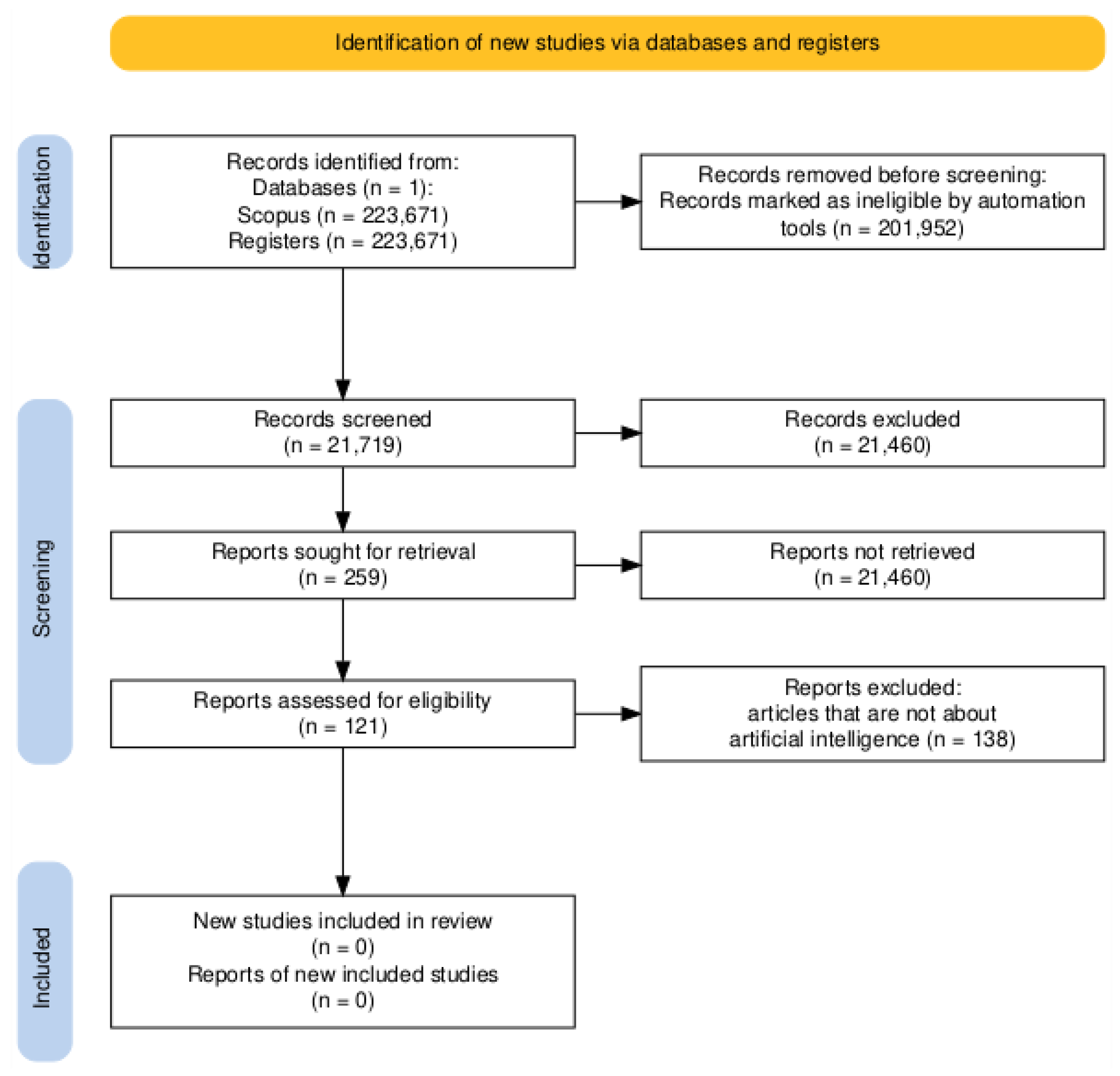
Figure 2.
Documents by year.
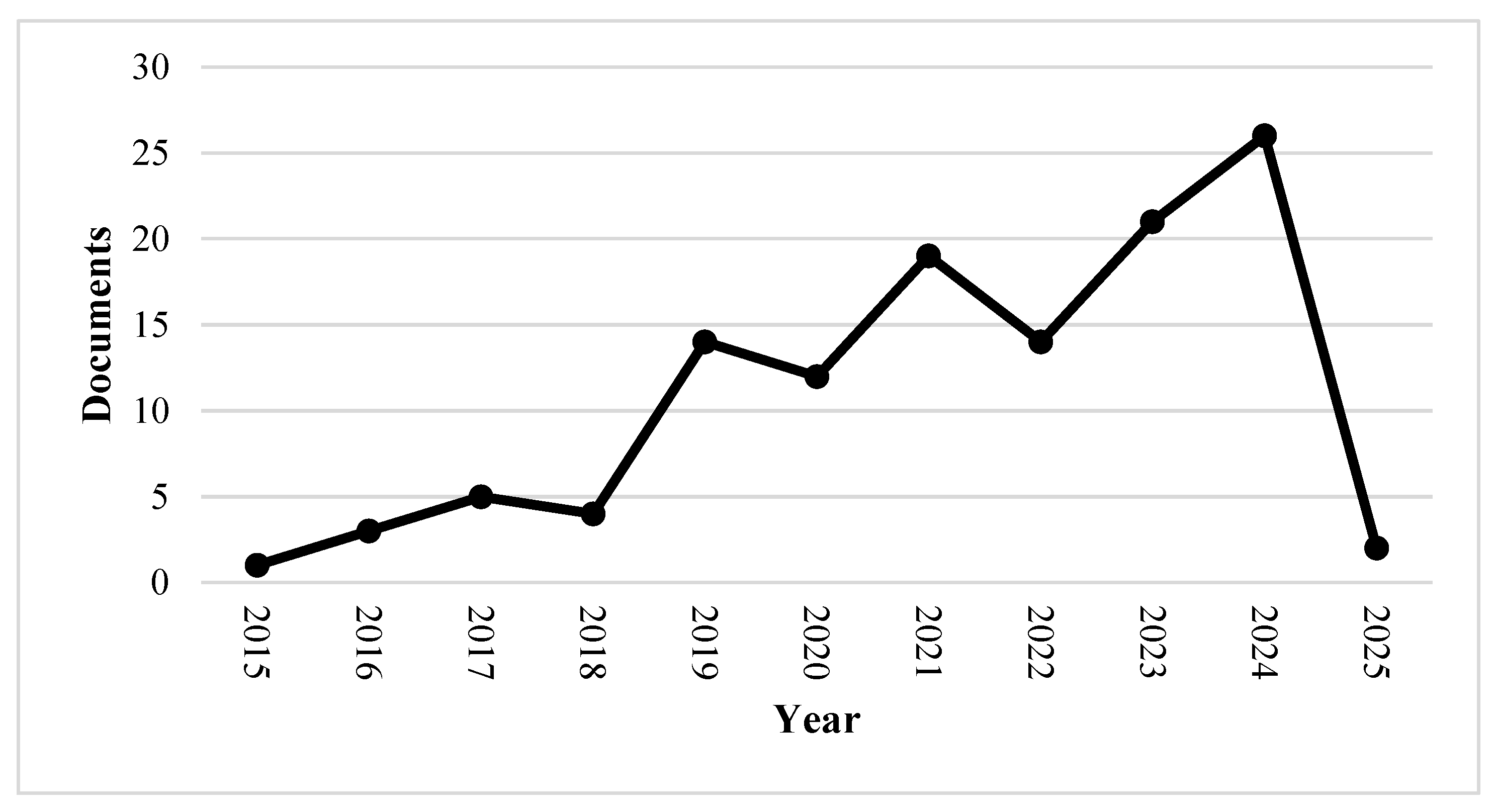
Figure 3.
Scientific production by country.
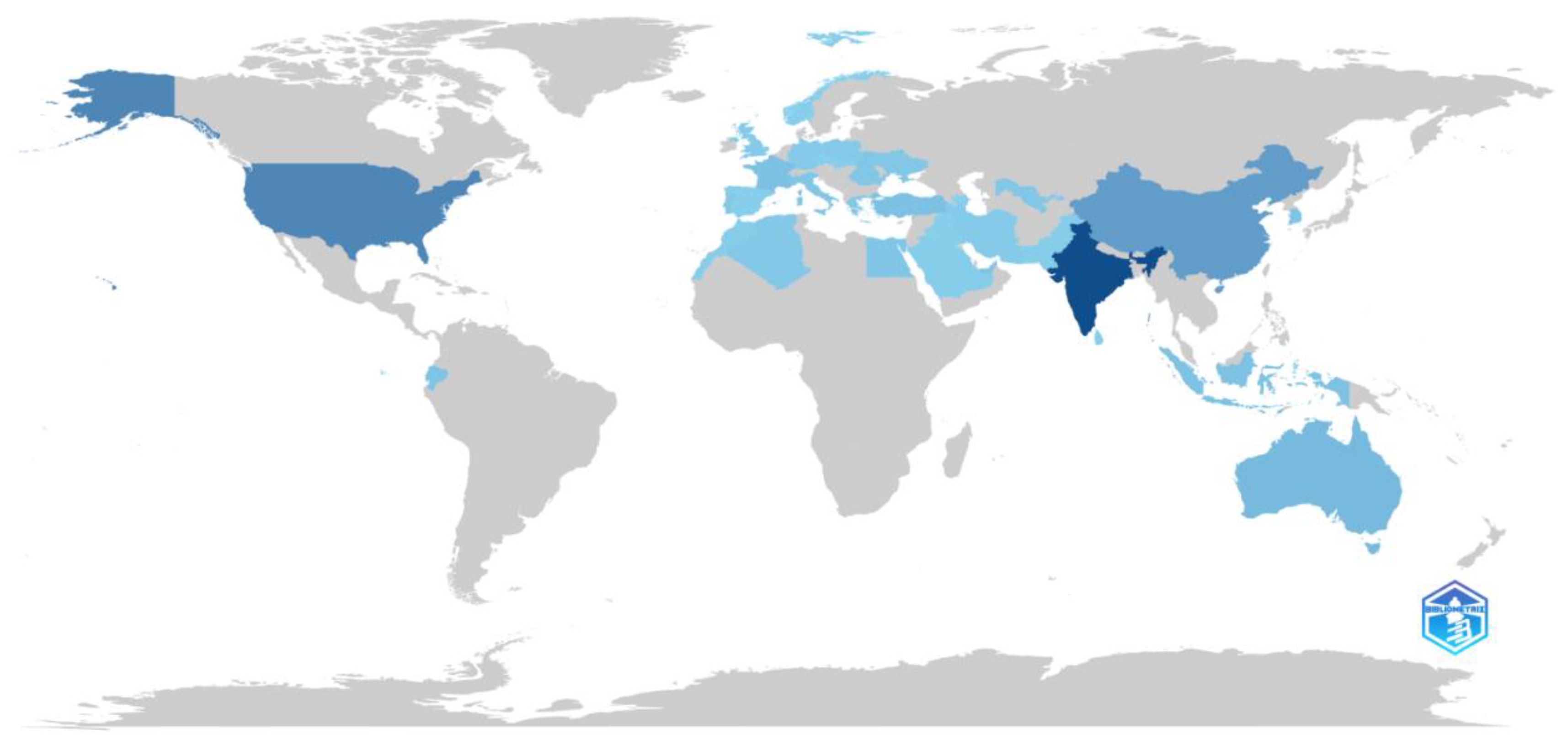
Figure 4.
Core sources by Bradford`s law (2015-2025).
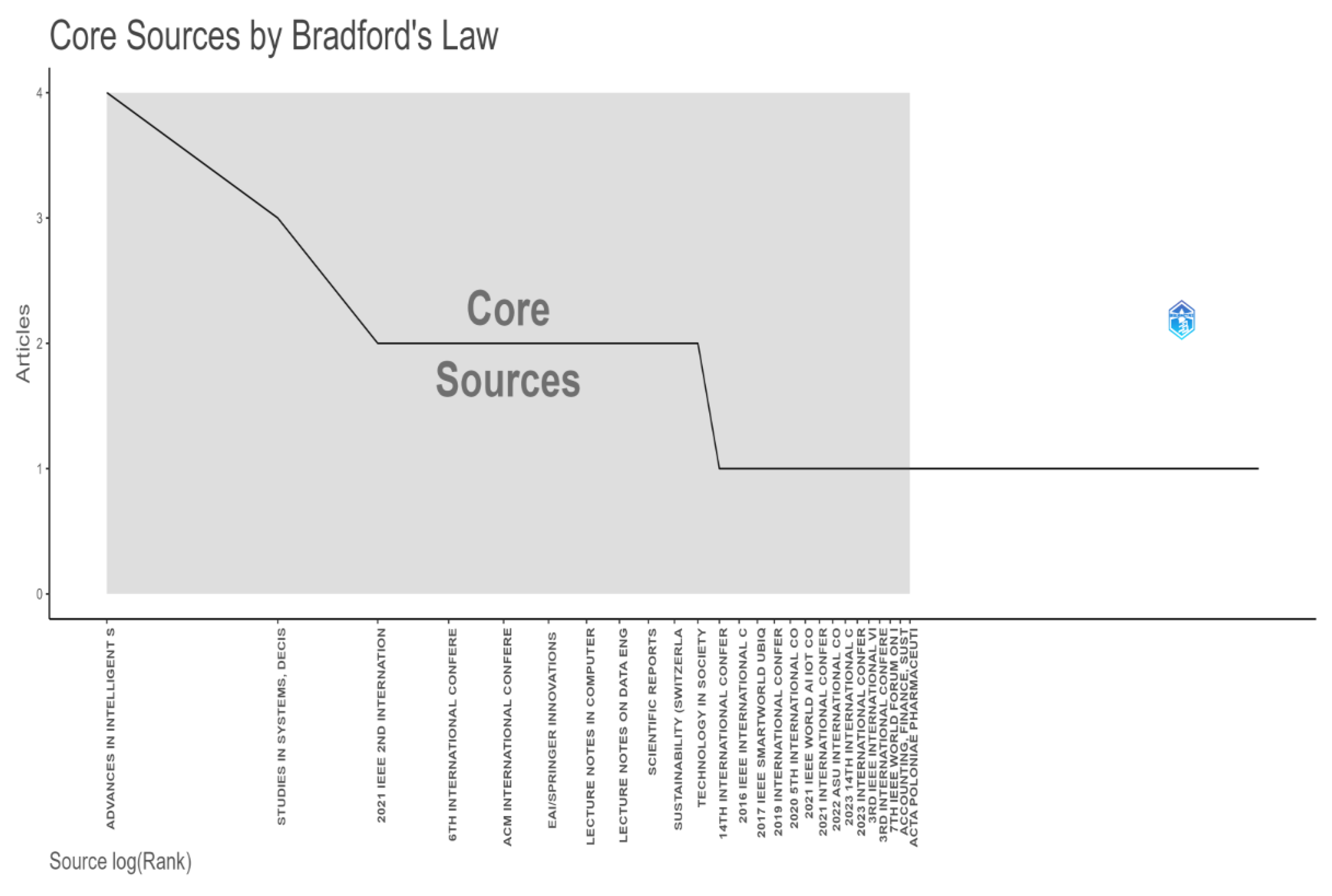
Figure 5.
Evolution of citations between ≤2015 and 2025.
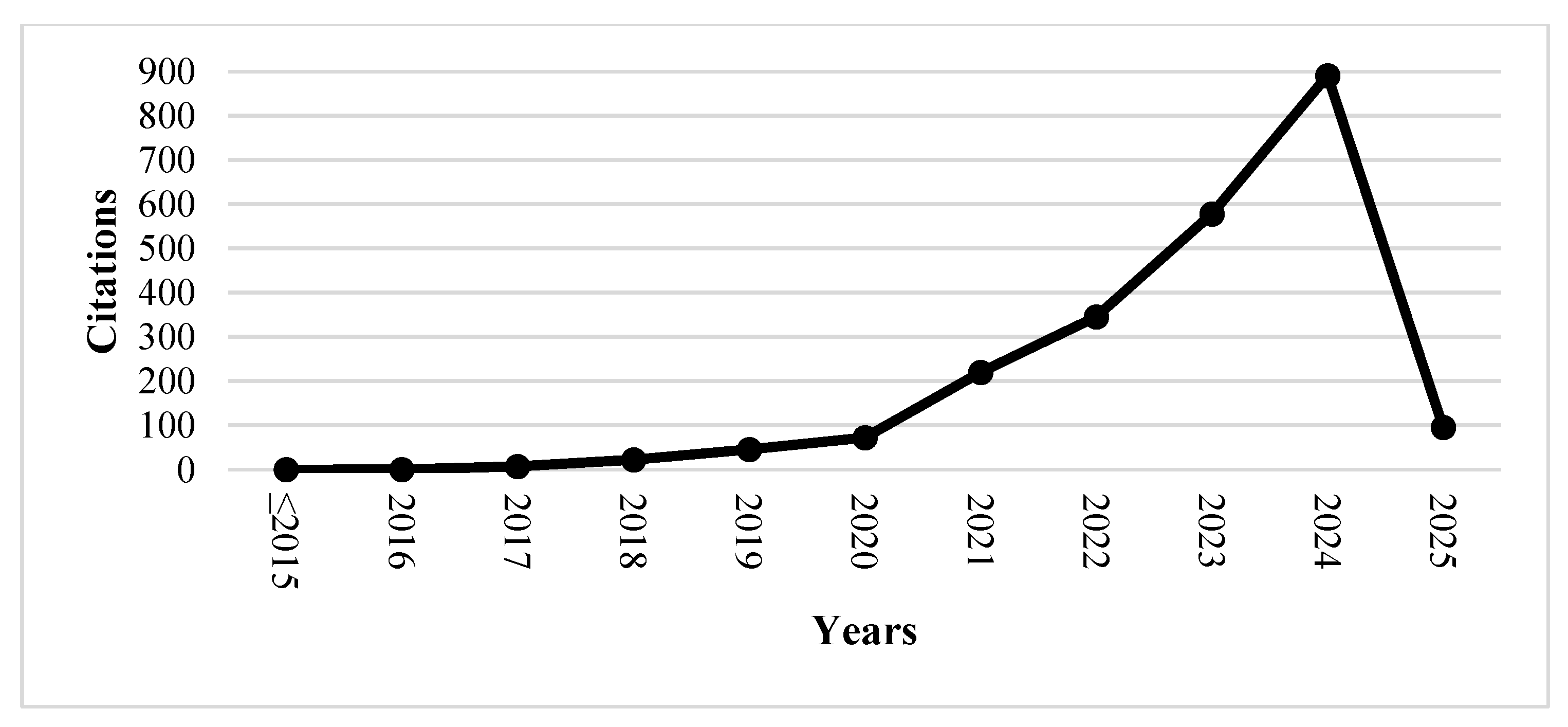
Figure 6.
Network of all keywords.
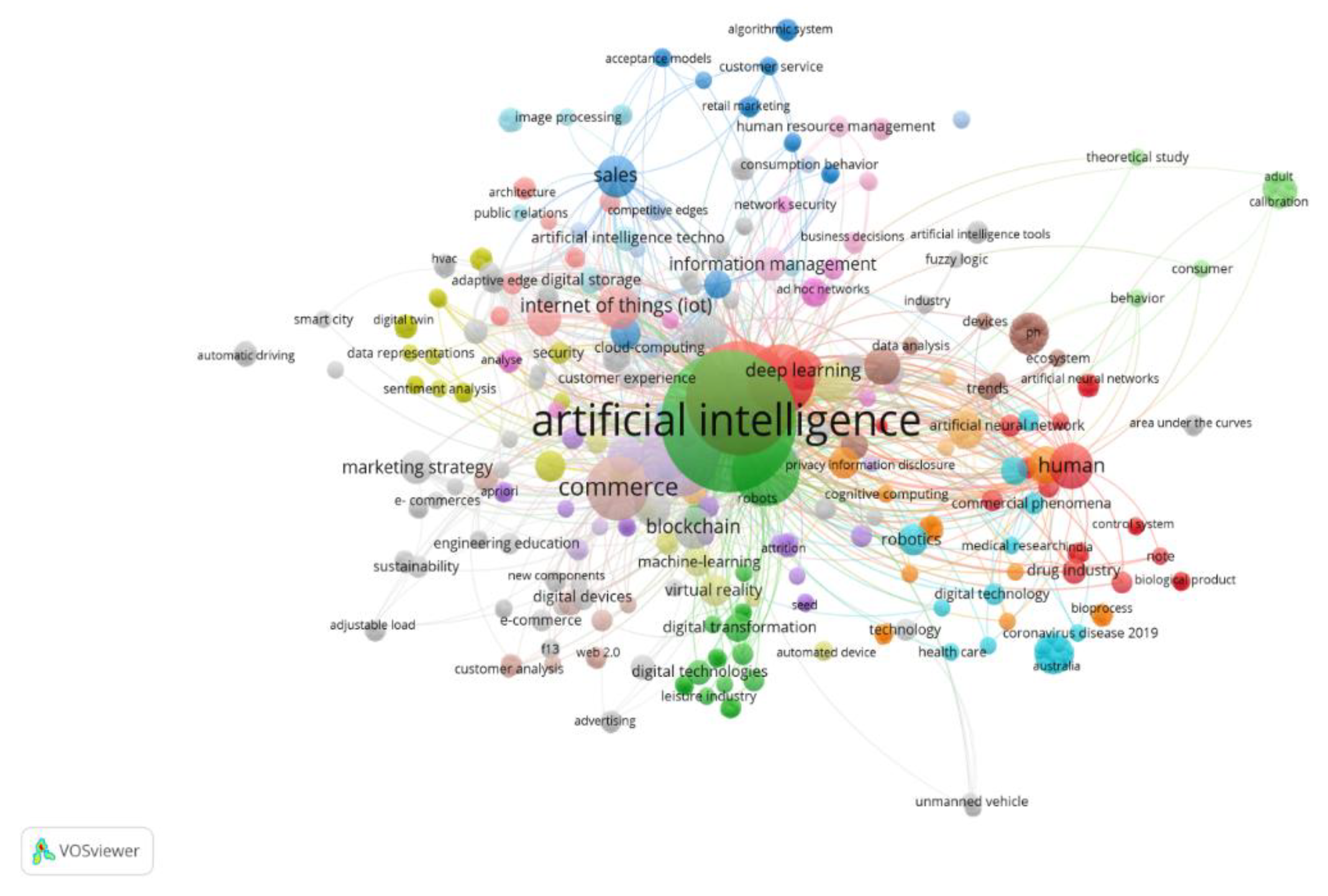
Figure 7.
Three fields plot analysis (AU=authors, CR=references, DE=authors keywords).
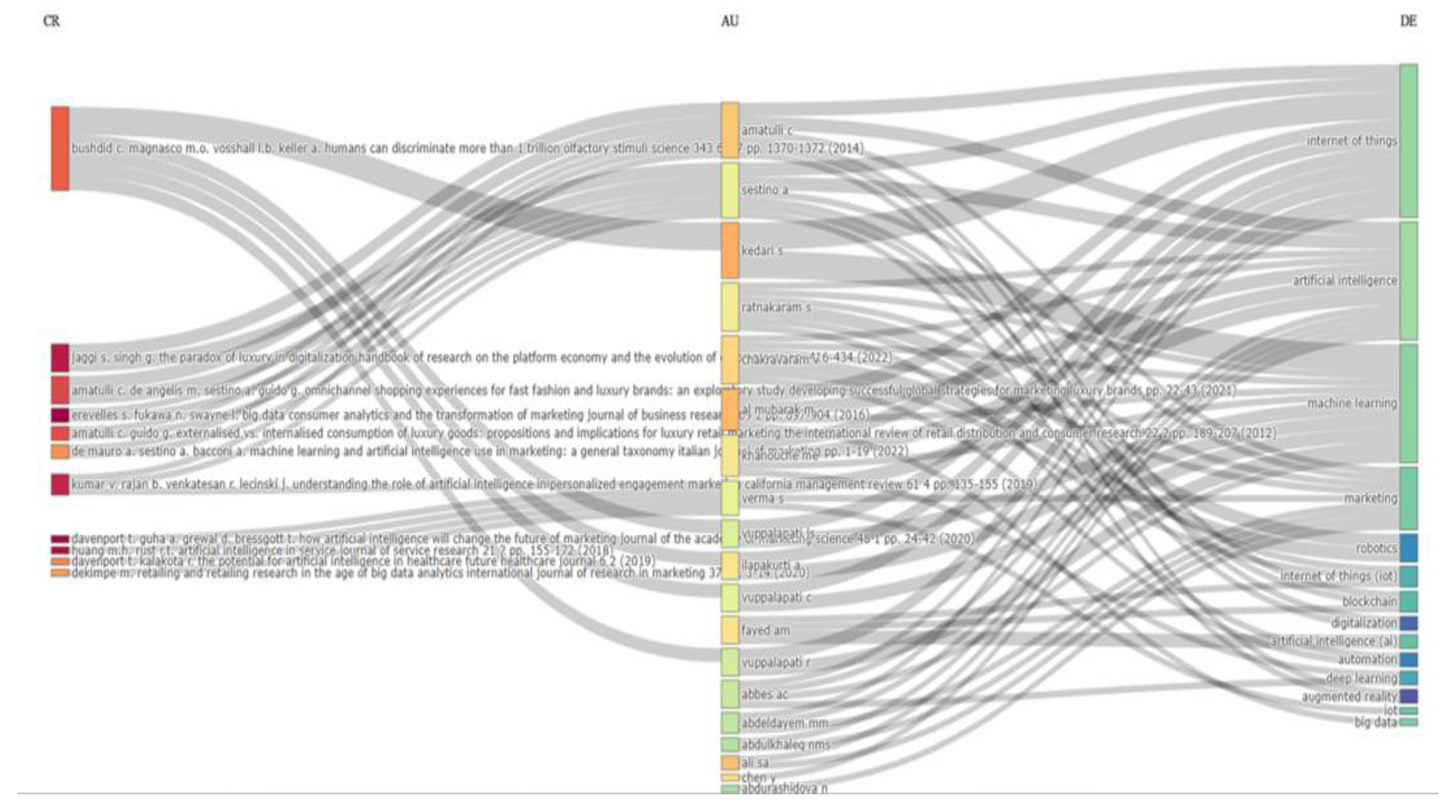
Figure 8.
Network of Linked Keywords.
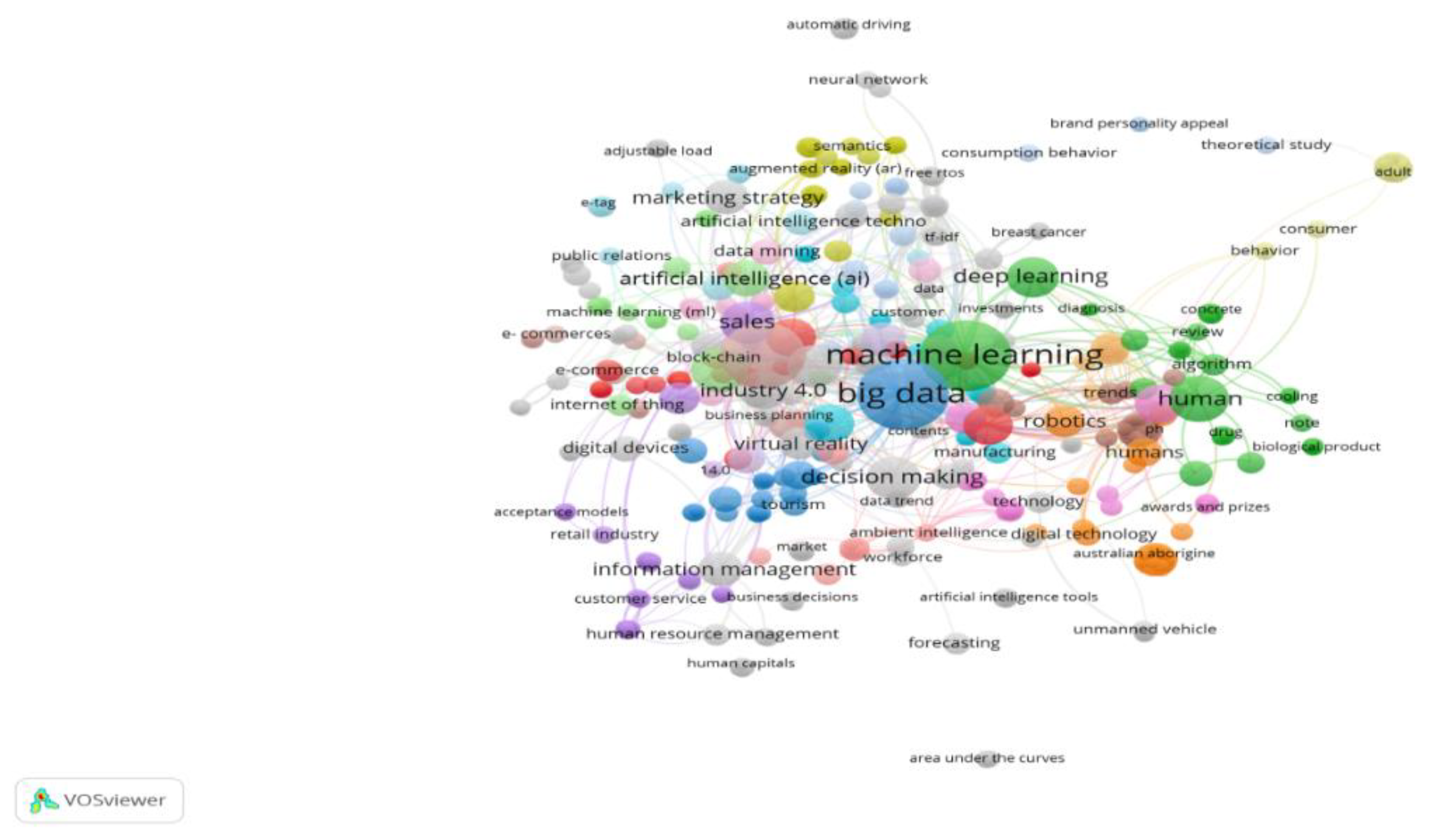
Figure 9.
Thematic map analysis.
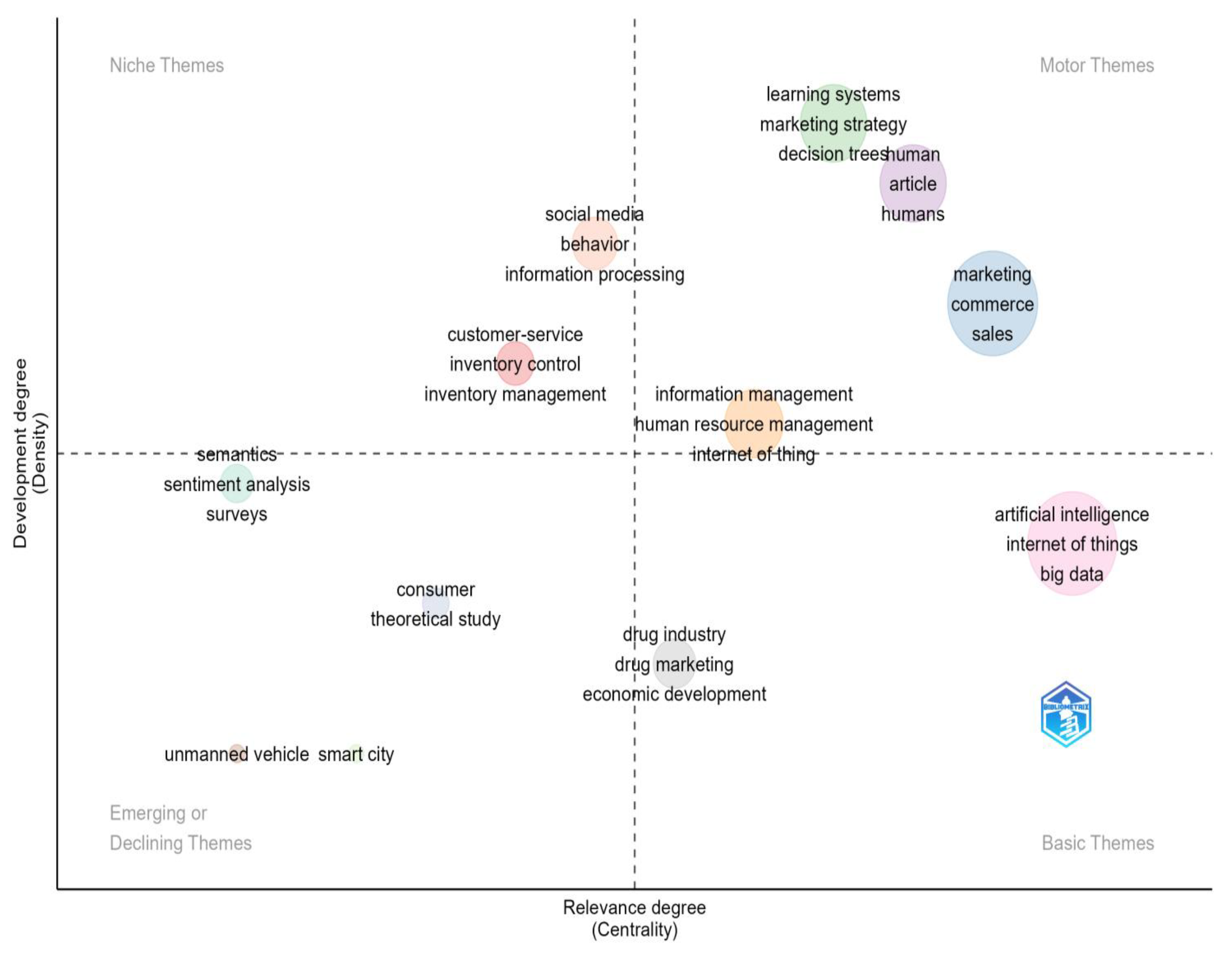
Figure 10.
Network of co-citation.
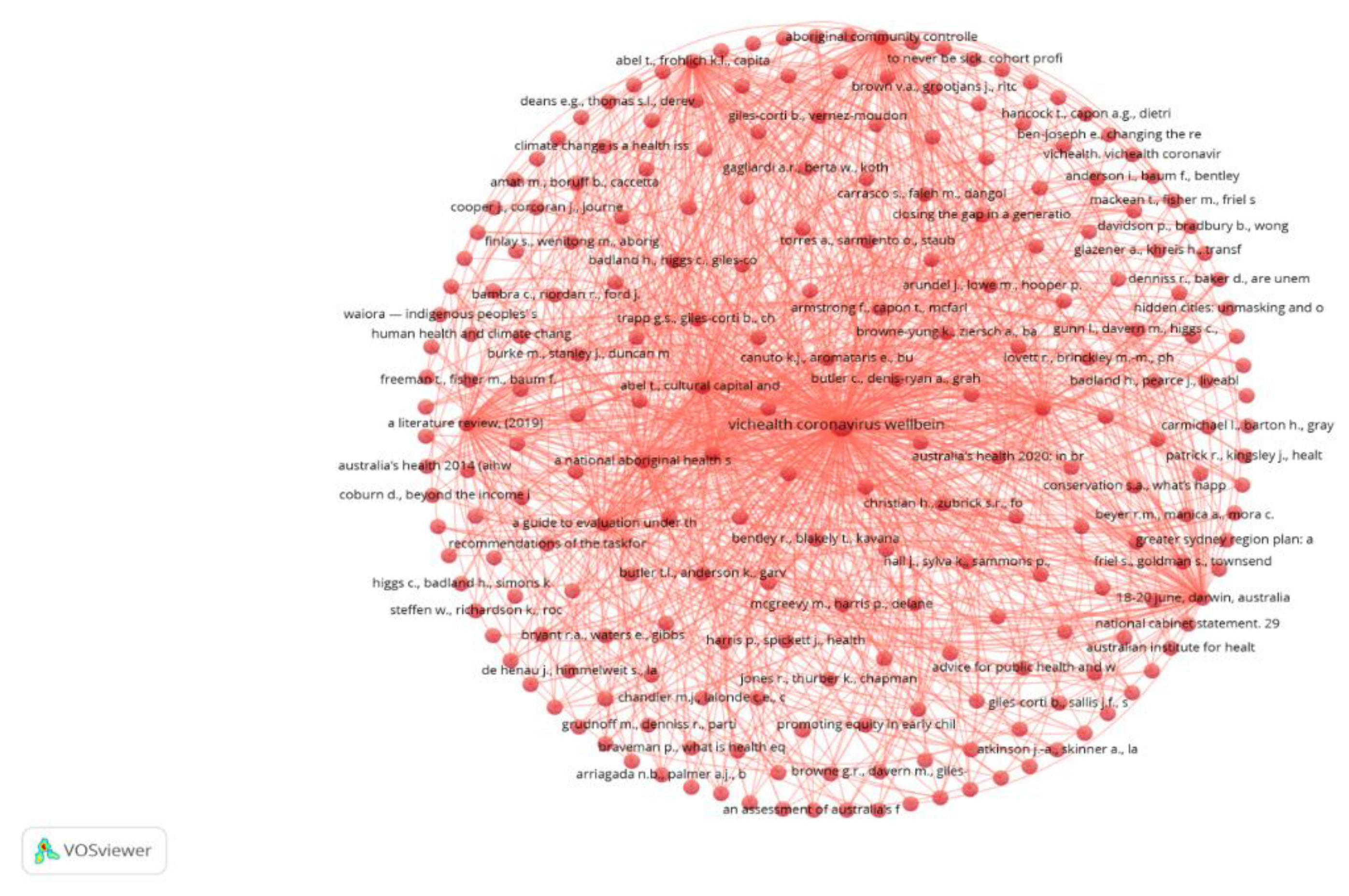

Table 1.
Process of systematic LRSB.
| Fase | Step | Description |
|---|---|---|
| Exploration | Step 1 | formulating the research problem |
| Step 2 | searching for appropriate literature | |
| Step 3 | critical appraisal of the selected studies | |
| Step 4 | data synthesis from individual sources | |
| Interpretation | Step 5 | reporting findings and recommendations |
| Communication | Step 6 | Presentation of the LRSB report |
Source: own elaboration.
Table 2.
Screening Methodology.
| Database Scopus | Screening | Publications |
|---|---|---|
| Meta-search | Keyword: internet of things | 223, 671 |
| First Inclusion Criterion | Keyword: internet of things; artificial intelligence | 21,719 |
| Second Inclusion Criteria | Keyword: internet of things; artificial intelligence; marketing | 259 |
| Screening | Keyword: internet of things; artificial intelligence; marketing Exact Keyword: artificial Intelligence Until February 2025 |
121 |
Source: own elaboration.
Table 3.
Top 10 countries by number of publications.
| Country | Number of Publications |
|---|---|
| INDIA | 106 |
| USA | 58 |
| CHINA | 39 |
| AUSTRALIA | 16 |
| FRANCE | 11 |
| TURKEY | 11 |
| INDONESIA | 10 |
| ECUADOR | 9 |
| SOUTH KOREA | 9 |
| UNITED ARAB EMIRATES | 8 |
Source: own elaboration
Disclaimer/Publisher’s Note: The statements, opinions and data contained in all publications are solely those of the individual author(s) and contributor(s) and not of MDPI and/or the editor(s). MDPI and/or the editor(s) disclaim responsibility for any injury to people or property resulting from any ideas, methods, instructions or products referred to in the content. |
© 2025 by the authors. Licensee MDPI, Basel, Switzerland. This article is an open access article distributed under the terms and conditions of the Creative Commons Attribution (CC BY) license (http://creativecommons.org/licenses/by/4.0/).
Copyright: This open access article is published under a Creative Commons CC BY 4.0 license, which permit the free download, distribution, and reuse, provided that the author and preprint are cited in any reuse.