

Submitted:
26 March 2025
Posted:
27 March 2025
You are already at the latest version
Abstract
Proximal femoral fractures (PFFs) are the most frequent bone fractures in elderly people. In Italy, from 2007 to 2017, there were 906,111 hospitalizations for hip fractures. These fractures are expected to reach up to 21.3 million globally by 2050 because of aging. Femoral neck fractures in elderly people are usually treated with protheses. Hemiarthroplasty has been the treatment of choice. However, high-demand patients require total hip replacement. A dual mobility cup is more powerful than total hip arthroplasty or hemiarthroplasty and has less complications. We did a search of the literature about the best choice between a dual mobility cup and hemiarthroplasty in treatment of femur neck fracture. In this literature review, we found many works that show better results in patients treated with dual mobility total hip arthroplasty, compared to hemiarthroplasty. In elderly people femoral neck fractures, dual mobility total hemiarthroplasty should be the solution of choice except for cases with internal or anesthetic problems, which should have a less invasive intervention.
Keywords:
femur neck fracture
; hemiarthroplasty
; partial hip replacement
; dual mobility cup
1. Introduction
Proximal femoral fractures (PFFs) are the most frequent bone fractures in elderly people. In Italy, from 2007 to 2017, there were 906,111 hospitalizations for hip fractures. Moreover, in 11 years, the hip fractures rates increased by 14.3% in women and 29.4% in men [1]. Several authors [2,3] describe an increasing incidence of proximal femur fractures in elderly. Oulianski et al. [4] reported a decrease of 21.64% in PFF per week during the COVID-19 pandemic compared to the pre-covid period. The median age of patients hospitalized with a diagnosis of PFF was 83 years, and the incidence of diagnosis increased with age from 145.3 events per 100,000 person-years among patients aged 65–69 years old to 3563 in subjects aged 95–99 years old [5]. These fractures are expected to reach up to 21.3 million globally by 2050 as a consequence of aging [6].
The incidence of proximal femoral fractures among people aged 65 years or older varies in different countries depends on age, sex, comorbidities, and lifestyle. It peaks at 85–89 years, it affects more women than men, and it is exacerbated by cognitive disfunction and institutionalization [7]. However, Walter at al. [8] found a general decrease in the incidence of head/neck fractures by about 26.6% between 2009 and 2019.
The costs related to this fracture represent an important burden for healthcare systems worldwide. The total combined health care and loss of productivity costs reached €456M and increased with age, following the pattern of incidence [9]. Roberts et al. [10] declared that in 2011 in the USA, hip fracture treatment was 13th out of the top 20 most expensive diagnoses for Medicare.
2. Anatomic Reference
The proximal femur is characterized by a head and neck and two large bone projections, the greater and lesser trochanthers. The head of the femur articulates with the acetabulum, creating an enarthrosis articulation. The greater and lesser trochanthers are important because they provide muscular insertion at the hip muscles. The joint capsule encloses the hip joint and is attached medially to the acetabulum margin, laterally at the intertrochanteric line on the anterior aspect, and at the base of the neck at the posterior aspect [11].
The vascular supply at proximal femur passes through the vascular ring of the femoral head. It is formed by the medial femoral circumflex artery and lateral femoral circumflex artery. Terminal branches arise from these vessels and provide vascular supply to the femoral head. These branches can be destroyed following displaced hip fractures, and the vascularization of the femoral head can be interrupted. This generate osteonecrosis of the femoral head [12,13].
3. Diagnosis
There is usually a history of fall or low energy trauma, followed by pain in the hip or groin [14], but in 2-3% of cases, there is no a history of trauma, and the fracture may be pathologic or secondary to stress fracture [15]. Patients with displaced femoral neck fractures usually present a shortened and externally rotated limb and inability to bear weight [16]. Patient examination may also reveal tenderness to palpation over the groin and anterior hip and pain with log roll maneuver (passive internal and external rotation of lower leg), but ecchymosis is typically not initially present [17].
A patient with stress, non-displaced, or impacted fractures may lack deformity and may able to bear weight; however, they could have non-specific symptoms such as groin pain and pain during axial compression [18]. It is important to underscore that physical findings do not differ significantly from extracapsular fractures, so on a clinical basis, the hip fractures groups are difficult to distinguish. Therefore, radiological diagnosis plays an important rule for the correct diagnosis of proximal femur fractures (PFFs).
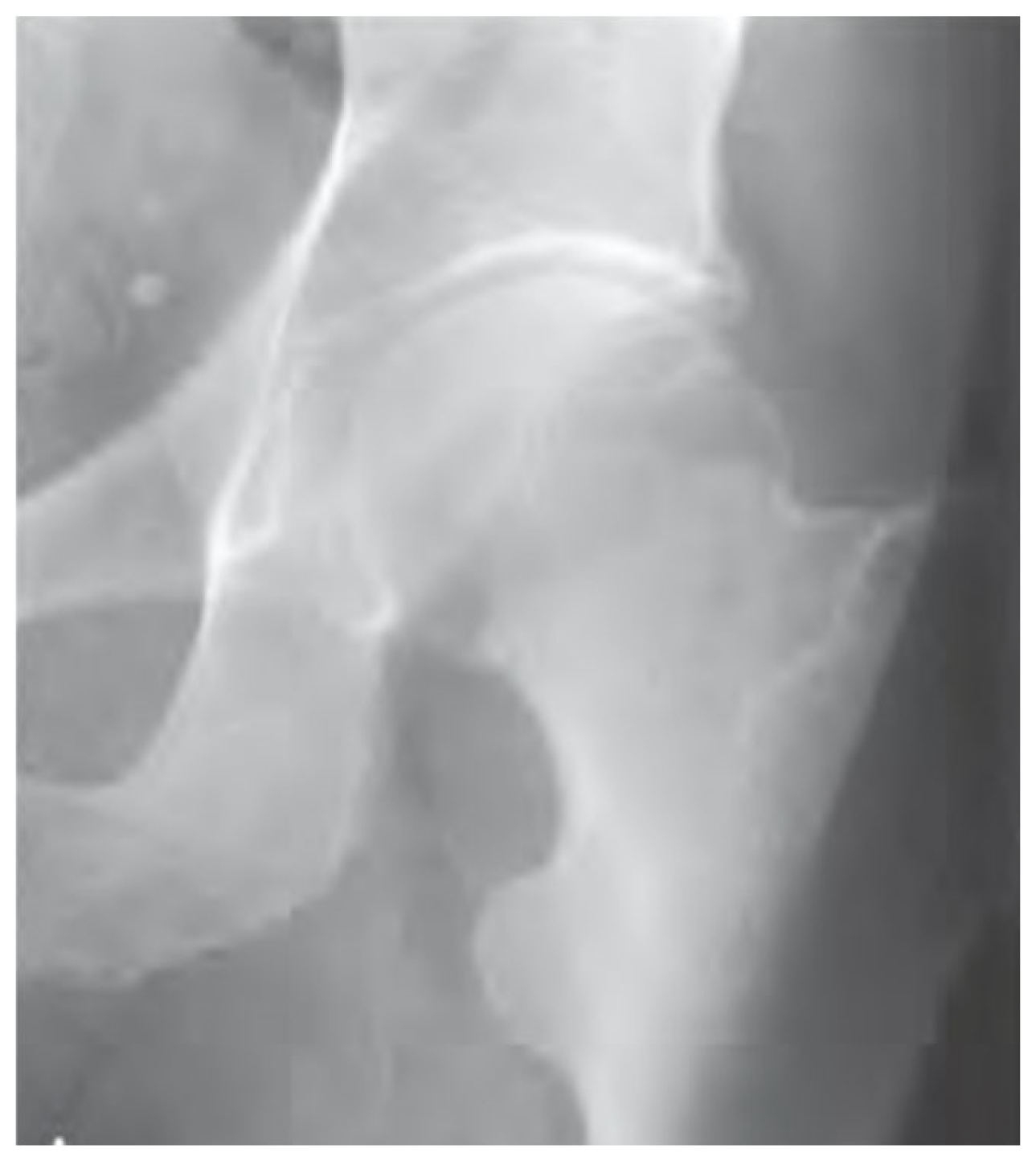
Cross table lateral view and anterior-posterior (AP) X-rays are the appropriate initial diagnostic test for hip fractures (Figure 1). A frog leg view is not recommended because the positioning of the limb results in severe pain [19]. On the anteroposterior (AP) pelvis, the evaluation of the integrity of Shenton’s arch can help the diagnosis in an undisplaced fracture. A break in this line will reveal a subtle intracapsular fracture [20].
Magnetic resonance (MR) imaging has been considered more sensitive than a computed tomography (CT) scan for femoral neck fractures. However, there are no enough data comparing MR imaging with current CT technology, which affords thinner slices and high-quality reconstructions. Often, the greater availability of CT imaging leads to it being used rather than MR imaging for first-line screening [21,22].
4. Classification
Classifications are important for orthopedic surgeons because they help the surgeon in diagnosis and correct decision making [23]. Proximal femur fractures can be classified based on the relationship with the hip articular capsule in extracapsular fractures (trochanteric fractures) or intracapsular fractures (femoral neck fractures) [24]. Each one requires a different surgical treatment. In this paper, we will discuss only intracapsular fractures.
In Garden’s classification, the fracture is assessed on AP view x-ray with the following [25]:
- Type 1: incomplete and undisplaced
- Type 2: complete undisplaced (Figure 1)
- Type 3: partial displacement and misalignment of trabecular bone
- Type 4: complete displaced
Pauwels’ classification [26] is based on the obliquity of the fracture line, which is described as the angle between the tangential the plane tangential to the most superior aspect of the femoral head and the fracture (Type 1: angle <30°, Type 2: angle of 30-50°, Type 3: angle >50°.
According to the AO classification system [27], femoral neck fractures are classified as AO31B. In addition, there are many subgroups according to the features of the fracture:
AO31B1.1: valgus impacted fracture;
AO31B1.2: nondisplaced fracture;
AO31B1.3: displaced fracture;
AO31B2.1: simple fracture;
AO31B2.2 multifragmentary fracture;
AO31B2.3: shear fracture;
AO31B3: basicervical fracture;
5. Treatment
5.1. Conservative Treatment
Nowadays, the gold standard in displaced femoral neck fractures is surgical treatment. However, there are some exceptional cases where there is space for non-surgical treatment [28]:
- Life expectancy is short, and the risks of the intervention exceed the potential benefits;
- Inveterate fractures with signs of consolidation;
- The patient is constantly lying in bed;
- When the patient refuses the surgical treatment.
5.2. Hemiarthroplasty (HA)
Endoprosthesis, partial prosthesis, or hemiarthroplasty consists of partial replacement of the hip. After removing the femoral head, the femoral canal is prepared, and then the femoral stem is placed. We distinguish between unipolar prostheses, which are used less and less, and bipolar prostheses. The femoral head of a bipolar hip prosthesis (BHP) consists of a steel outer shell and polyethylene liner with an inner steel head moving inside [29]. In this type of surgery, no treatment is carried out on the acetabulum. The stem can be held on the femur by press fit or by using cement.
HA is indicated in patients whose self-sufficiency and physical activity are limited [30]. The advantages of this procedure are limited surgical time and less invasive surgery than total prosthesis. On the other hand, there are some complications related to this surgery. Common complications are dislocation periprosthetic fracture, acetabular erosion, and leg-length inequality. Less frequently seen complications include neurovascular injury and capsular interposition [31].
Kizkapan et al. [32] described that pelvic morphologic features and surgical factors affect dislocation. Graulich et al. [33] found that dementia and insufficient posterior wall angle were associated with higher risk of dislocation in HA. Olesen et al. [34] cited dementia as the only risk factor for dislocation in HA.
Falsetto et al. [35] found that dementia and low preoperative lateral center-edge angle were associated with increased risk of dislocation in HA after femur neck fracture. Lumbar spinal fusion (LSF) was found to be an independent risk factor for increased joint complications in patients undergoing either a THA or hemiarthroplasty for displaced femoral neck fractures [36]. Macheras et al. [37,38] showed that age is a significant factor in acetabular wear after HA surgery. Particularly, patients <75 years old showed more acetabular wear than patients >75 years old.
5.3. Total Hip Arthroplasty (THA)
In THA, we replace some parts of the upper femur and acetabulum with biocompatible materials [39]. Younger, more active patients have better outcomes with total hip replacement, thus making the slightly increased risk of complications with the procedure acceptable [40]. Others authors stated that THA must be recommended for patients with displaced femur neck fractures if the patients had a life expectancy >4 years and in patients younger than 80 years [41]. However, THA to treat femoral neck fractures in elderly patients is associated with a significantly higher risk of 12-month dislocation [42].
5.4. Dual Mobility Total Hip Arthroplasty (DM-THA)
The dual mobility cup (DMC) concept was proposed by Professor Gilles Bousquet in 1974 [43]. Due to a simulated large-head articulation and increased jumping distance, DMCs can contribute to a high range of motion in the hip joint and reduce the risk of instability [44]. It allows for increased range of motion prior to impingement and dislocation. However, there are some complications related to a dual mobility hip implant that every orthopedic surgeon must know. They are intraprosthetic dislocation [45,46], corrosion, and femoral notching [47,48]. Some authors [48] found higher rates of heterotopic ossification in DM-THA than THA in patients with femur neck fracture.
4. Discussion
Hip HA has been the first choice in patients with age >65 years and several comorbidities. Nowadays, we are seeing healthy aging of the population with many patients >65 years old with hip fracture that are active, sporty, and have high functional demand. THA is the best treatment for this patient group with better medium-term functional results and quality of life and lower acetabular erosion rate. HA is better in reducing hospital stay, surgery time, blood loss, and dislocation rates [50]. DM-THA could be the solution for dislocation problems. It leads to a higher range of motion, a higher jumping distance, and reduced dislocation risk. In this paper, we wanted to assess the pros and cons of HA and DM-THA, and we wanted to offer our opinion about the best treatment in elderly patients with femur neck fracture.
Boukebous et al. [51] did a case-control retrospective study and declared that the frailest patients treated with DM-THA showed low dislocation risk without increasing the mortality rate at 1 year. Patients who are not frail will benefit equally from undergoing HA or THA. Kim et al. [52] did a retrospective cohort study and found a better clinical outcome (Harris Hip Score (HHS)) without disadvantages in mortality or dislocation rate in the DM-THA group than the HA group in a short-term observation.
Fahad et al. [53] did a retrospective cohort study and declared that DM-THA can be considered as a primary treatment modality in relatively young and active elderly patients with a displaced femur fracture. In fact, DM-THA provides a better hip functional outcome and does not increase mortality or morbidity compared to HA. Bensen et al. [54] found significantly better rates of dislocation and reoperation of any kind in the DM-THA group compared to the HA group.
Rotini et al. [55] conducted a case-control study analyzing surgical timing and hemoglobin loss. They found that surgery time was 12 min longer in the DM-THA group than the HA group, and hemoglobin loss was lower in the DM-THA group. Moreover, they declared that DM-THA did not lead to an increase in mortality, morbidity, bleeding, or dislocation rates when compared to bipolar HA. They reported that DM-THA could be considered as treatment of choice for displaced femur neck fracture, especially in healthy and active patients.
Ukaj et al. [56] found a significant difference in dislocation rates and postoperative HHS in a case-control study. Rates were better in the DM-THA group compared to the HA group. No significant differences were found in operative time and hemoglobin loss in both groups. Valcaregni et al. [57] found a lower cumulative incidence of re-operation for any reason in the DM-THA group (9%) than the HA group (19%) with femur neck fracture. They did not find higher postoperative mortality in the DM-THA group compared to the HA group.
Albanese et al. [58] did a systematic review of the literature and meta-analysis of the outcomes and reported an overall lower risk dislocation using DM-THA compared with both THA and HA. Moreover, they found lower rates of revision surgery in DM-THA compared with HA. Other case studies have shown good results and patient satisfaction [59,60,61,62,63,64,65,66].
Jinnai et al. [67] described good clinical outcomes, quick recovery of walking ability, no dislocation, and a low one-year mortality rate in patients with femur neck fracture treated with DM-THA and a direct anterior approach. Assi et al. [68] investigated the mortality rate, clinical outcomes, and functional outcomes in a population having specific rituals involving extreme hip positions as part of their daily activities. They showed excellent clinical and functional results with DM-THA. Patients with rituals and customs involving extreme hip positions were able to resume their daily activities. Moreover, they showed a low mortality rate with the use of DM-THA.
Carulli et al. [69] studied the results of revisions by dual mobility cups in unstable HA. They found no recurrence of dislocation, the American Society of Anesthesiologists (ASA) score remained unchanged, and they also noted an improvement in HHS postoperatively. They reported that DM-THA is a successful option in HA revision for dislocation.
The benefit of DM-THA versus HA is controversial in patients with neurological disease. El-Deeb et al. [70] did a prospective cohort study on patients with PFF, neuromuscular disorders, and cognitive dysfunction who were candidates for THA and above 60 years. They found that DM-THA is effective in preventing early dislocation in this cohort of patients. Zhuang et al. [71] investigated the outcome of PFF in patient with ipsilateral residual poliomyelitis treated with DM-THA. They declared that DM-THA is effective in strengthening stability and reducing the risk of dislocation and is suitable for patients with neuromuscular disease.
Henawy et al. [72] studied the outcome of DM-THA in hemiplegic patients with osteoarthritis or femur neck fracture. They showed that DM-THA provides both efficacy and stability with good outcomes. Others authors described a rare case report about a patient with a femur neck fracture and neurological disease treated with DM-THA and reported good functional outcomes [73,74]. On the other hand, Cnudde et al. [75] showed similar rates of dislocation in patients with femur neck fracture and neurological disease treated both with HA and DM-THA. However, there are studies in the literature that have not shown a clear improvement of DM-THA compared to HA in femur neck fracture [76]. Mufarrih et al. [77] found similar dislocation and mortality rates between DM-THA and HA, but no one has found better results in HA compared to DM-THA.
5. Conclusions
Femoral neck fractures will increasingly pose a challenge to traumatologists as the average life expectancy and patients’ demands are increasing. In this literature review, we found many works that show better results in patients treated with DM-THA compared to HA. In elderly people with femoral neck fractures, DM-THA should be the solution of choice except for cases where there are internal or anesthetic problems, which need a less invasive intervention.
Author Contributions
Conceptualization, G.T. and M.S.; methodology, A.V.; software, C.C.; validation, G.S.; formal analysis, M.S.; investigation, B.L.; resources, C.C.; data curation, M.S.; writing—original draft preparation, C.C.; writing—review and editing, M.S.; visualization, G.S.; supervision, G.T.; project administration, V.P. All authors have read and agreed to the published version of the manuscript.
Funding
This research received no external funding
Data Availability Statement
Data are contained within the article.
Conflicts of Interest
The authors declare no conflicts of interest.
Abbreviations
The following abbreviations are used in this manuscript:
| PFF | Proximal femur fractures |
| HA | Hemiarthroplasty |
| THA | Total hip arthroplasty |
| DM-THA | Dual mobility total hip arthroplasty |
| AO |
References
- Unim, B.; Minelli, G.; Da Cas, R.; Manno, V.; Trotta, F.; Palmieri, L.; Galluzzo, L.; Maggi, S.; Onder, G. Trends in hip and distal femoral fracture rates in Italy from 2007 to 2017. Bone 2020, 142, 115752. [Google Scholar] [CrossRef] [PubMed]
- Piscitelli, P.; Tarantino, U.; Chitano, G.; Argentiero, A.; Neglia, C.; Agnello, N.; Saturnino, L.; Feola, M.; Celi, M.; Raho, C.; et al. Updated incidence rates of fragility fractures in Italy: extension study 2002-2008. 2011, 8, 54–61. [Google Scholar] [PubMed]
- Arakaki, H.; Owan, I.; Kudoh, H.; Horizono, H.; Arakaki, K.; Ikema, Y.; Shinjo, H.; Hayashi, K.; Kanaya, F. Epidemiology of hip fractures in Okinawa, Japan. J. Bone Miner. Metab. 2010, 29, 309–314. [Google Scholar] [CrossRef] [PubMed]
- Oulianski, M.; Rosinsky, P.J.; Fuhrmann, A.; Sokolov, R.; Arriola, R.; Lubovsky, O. Decrease in incidence of proximal femur fractures in the elderly population during the Covid-19 pandemic: a case–control study. BMC Musculoskelet. Disord. 2022, 23, 1–7. [Google Scholar] [CrossRef]
- Longo, U.G.; Viganò, M.; de Girolamo, L.; Banfi, G.; Salvatore, G.; Denaro, V. Epidemiology and Management of Proximal Femoral Fractures in Italy between 2001 and 2016 in Older Adults: Analysis of the National Discharge Registry. Int. J. Environ. Res. Public Heal. 2022, 19, 16985. [Google Scholar] [CrossRef]
- Gullberg, B.; Johnell, O.; Kanis, J.A. World-wide Projections for Hip Fracture. Osteoporos. Int. 1997, 7, 407–413. [Google Scholar] [CrossRef]
- Viganò, M; Pannestrì, F; Listorti; Banfi, G. Proximal hip fractures in 71,920 elderly patients: incidence, epidemiology, mortality and costs from a retrospective observational study. BMC Public Health. 2023 Oct 10;23(1):1963.
- Walter, N; Szymshi, D; Kurtz, S. M; Lowenberg D, W; Alt, W; Lau, E. C; Rupp, M. Epidemiology and treatment of proximal femoral fractures in the elderly U.S. population. Sci Rep. 2023 Aug 5;13(1):12734.
- Zeelenberg, M.; Hartog, D.D.; Panneman, M.; Polinder, S.; Verhofstad, M.; Van Lieshout, E. Trends in incidence, health care consumption, and costs for proximal femoral fractures in the Netherlands between 2000 and 2019: a nationwide study. Osteoporos. Int. 2023, 34, 1389–1399. [Google Scholar] [CrossRef]
- Roberts, K. C.; Timothy Brox, W.; Jevsevar, D. S.; Sevarino, K. Management of hip fractures in the elderly. J Am Acad Orthop Surg. 2015 Feb;23(2):131-7.
- Drake, R. L. ; Wayne Vogl; Mitchell, A.W. M. Gray’s basic anatomy, 3rd ed. Publisher: ELSEVIER, Philadelphia, 2023. [Google Scholar]
- Gullberg, B.; Johnell, O.; Kanis, J.A. World-wide Projections for Hip Fracture. Osteoporos. Int. 1997, 7, 407–413. [Google Scholar] [CrossRef]
- Drake, R. L. ; Wayne Vogl, A; Mitchell, A. W. M, Tibbits, R, Eds.; Richardson, P. Gray’s atlas of anatomy first edition. Pubisher: Churchill Livingston, London 2007. [Google Scholar]
- Solomon, L; Warwick, D; Nayagam, S. Apley’s system of orthopaedics and fractures, 9th edition. Publisher: Hachette UK Company, London 2010.
- Hitesh Gopalan U; Gopalan’s Evidence Based Orthopaedics Principles, international edition. Sicot India initiative, 2015. P.
- Sluttilel, P; Rossi, L; Camino-Willhuber, G. Orthopaedics and trauma, Current Conceps and Best Practices. Publisher: Springer, Gewerbestrasse Switzerland 2024.
- Schroeder, J.D.; Turner, S.P.; Buck, E. Hip Fractures: Diagnosis and Management. 2022, 106, 675–683.
- Egol, K.A.; KOVAL, K. J; ZUCKERMAN, J. Handbook of Fractures, sixth edition; Publisher: Wolters Kluwer, 2019. [Google Scholar]
- LeBlanc, K. E.; Muncie Jr, H. L. ; LeBlanc,.L.L. Hip fracture: diagnosis, treatment, and secondary prevention. Am Fam Physician. 2014 Jun 15;89(12):945-51.
- White, T.O; Mackenzie, S. P. McRae’s Orthopaedic trauma and emergency fracture management, fourth edition. Publisher: Elvesier, 15 sept 2023. P.
- Chapman, V.; Mohana-Borges, A.V.R.; Chung, C.B.; Resnick, D.; Vinson, E.N.; Major, N.M.; Helms, C.A.; Perrich, K.D.; Goodwin, D.W.; Hecht, P.J.; et al. Bone and Joint Imaging 3rd ed. Am. J. Roentgenol. 2006, 186, E14–E14. [Google Scholar] [CrossRef]
- Helms, C. A. Fundamentals of skeletal radiology, 5th edition. Publisher: Elvesier, Philadelphia, 2020. P.
- Mittal, R.; Banerjee, S. Proximal femoral fractures: Principles of management and review of literature. J. Clin. Orthop. Trauma 2012, 3, 15–23. [Google Scholar] [CrossRef]
- Lu, Y.; Uppal, H. S. Hip Fractures: Relevant Anatomy, Classification, and Biomechanics of Fracture and Fixation. Geriatr Orthop Surg Rehabil. 2019 Jul 3:10:2151459319859139.
- Collin, P. G.; D’antoni, A. V.; Loukas, M.; Oskouian, R. J.; Tubbs, R. S. Hip fractures in the elderly-: A Clinical Anatomy. Clin Anat. 2017 Jan;30(1):89-97.
- Pauwels, F.; Enke, F. Der Schenkelhalsbruch : ein mechanisches Problem. BJS, 36. 19 April.
- JOT, Journal of Orthopaedic trauma, fracture and dislocation classification Compendium – 2018. Volume 32 Number 1 Supplement January 2018.
- SIOT guidelines, proximal femur fractures in elderly people p. 39.
- Zofka, P. [Bipolar hip hemiarthroplasty]. Acta Chir Orthop Traumatol Cech. 2007 Apr;74(2):99-104.
- Guyen, O. Hemiarthroplasty or total hip arthroplasty in recent femoral neck fractures? Orthop Traumatol Surg Res. S: 2019 Feb;105(1S), 2019. [Google Scholar]
- Domingue, G.; Warren, D.; Koval, K. J.; Riehl, J. T. Complications of Hip Hemiarthroplasty. Orthopedics. 2023 Jul-Aug;46(4):e199-e209.
- Kizkapan, T.B.; Misir, A.; Uzun, E.; Oguzkaya, S.; Ozcamdalli, M. Factors affecting dislocation after bipolar hemiarthroplasty in patients with femoral neck fracture. Injury 2020, 51, 663–669. [Google Scholar] [CrossRef] [PubMed]
- Graulich, T.; Graeff, P.; Jaiman, A.; Nicolaides, S.; Pacha, T.O.; Örgel, M.; Macke, C.; Omar, M.; Krettek, C.; Liodakis, E. Risk factors for dislocation after bipolar hemiarthroplasty: a retrospective case–control study of patients with CT data. Eur. J. Orthop. Surg. Traumatol. 2020, 31, 627–633. [Google Scholar] [CrossRef]
- Sapienza, M.; Di Via, D.; Vaccalluzzo, M.S.; Costarella, L.; Pavone, V.; Testa, G. Comparative Analysis of Cemented and Cementless Straight-Stem Prostheses in Hip Replacement Surgery for Elderly Patients: A Mid-Term Follow-up Study. Prosthesis 2024, 6, 540–550. [Google Scholar] [CrossRef]
- Falsetto, A.; Dobransky, J.; Kreviazuk, C.; Papp, S.; Beaulé, P.E.; Grammatopoulos, G. Instability after hip hemiarthroplasty for femoral neck fracture: an unresolved problem. Can. J. Surg. 2022, 65, E128–E134. [Google Scholar] [CrossRef]
- Ofa, S.A.; Lupica, G.M.; Lee, O.C.; Sherman, W.F. Complications following total hip arthroplasty and hemiarthroplasty for femoral neck fractures in patients with a history of lumbar spinal fusion. Arch. Orthop. Trauma Surg. 2021, 143, 817–827. [Google Scholar] [CrossRef]
- A Macheras, G.; Pallis, D.; Tsivelekas, K.; Ampadiotaki, M.M.; Lepetsos, P.; Tzefronis, D.; Kateros, K.; A Papadakis, S. Acetabular erosion after bipolar hip hemiarthroplasty for femoral neck fracture in elderly patients: a retrospective study. HIP Int. 2023, 34, 402–408. [Google Scholar] [CrossRef]
- Biščević, M.; Smrke, D. Structural differences between hip endoprostheses, and implications on a hip kinetics. Bosn. J. Basic Med Sci. 2005, 5, 84–88. [Google Scholar] [CrossRef]
- Slavkovic, N.; Vukasinovic, Z.; Bascarevic, Z.; Vukmanovic, B. [Total hip arthroplasty]. Srp Arh Celok Lek. 2012 May-Jun;140(5-6):379-84.
- Neri, T.; Philippot, R.; Klasan, A.; Putnis, S.; Leie, M.; Boyer, B.; Farizon, F. Dual mobility acetabular cups for total hip arthroplasty: advantages and drawbacks. Expert Rev. Med Devices 2018, 15, 835–845. [Google Scholar] [CrossRef]
- Lewis, D.P.; Wæver, D.; Thorninger, R.; Donnelly, W.J. Hemiarthroplasty vs Total Hip Arthroplasty for the Management of Displaced Neck of Femur Fractures: A Systematic Review and Meta-Analysis. J. Arthroplast. 2019, 34, 1837–1843.e2. [Google Scholar] [CrossRef]
- Eldestein, A. I.; Dillingham, T. R.; McGinley E., L.; Pezzin, L. E. Hemiarthroplasty Versus Total Hip Arthroplasty for Femoral Neck Fracture in Elderly Patients: Twelve-Month Risk of Revision and Dislocation in an Instrumental Variable Analysis of Medicare Data. J Bone Joint Surg Am. 2023 Nov 1;105(21):1695-1702.
- Neri, T.; Philippot, R.; Klasan, A.; Putnis, S.; Leie, M.; Boyer, B.; Farizon, F. Dual mobility acetabular cups for total hip arthroplasty: advantages and drawbacks. Expert Rev. Med Devices 2018, 15, 835–845. [Google Scholar] [CrossRef] [PubMed]
- Bellanova, P; Goronzy, J; Riedel, R; Grothe, T; Hartmann, A; Gunther, K.P. Dual-Mobility Cups in Primary Total Hip Arthroplasty. Z Orthop Unfall. 2023 Feb;161(1):74-84.
- Lima, T. L.; Pallottino, A. d. B.; Franco, J. S.; Chami, S. M.; Scorza, B. J.; de Morais, B. B. Early Intraprosthetic Dislocation of Total Hip Arthroplasty with Double Mobility Implant: Case Report. Rev Bras Ortop (Sao Paulo). 2022 Sep 26;59(3):e475-e478.
- Shaikh, A.; Desai, M.; Somani, V.; Shahare, P.; Agarwal, R. Intraprosthetic Dislocation of Dual Mobility Total Hip Arthroplasty: A Case Report and Review of Literature. J. Orthop. Case Rep. 2023, 13, 50–53. [Google Scholar] [CrossRef] [PubMed]
- Clair, A. J.; Buchalter, D. B.; Kugelman, D. N. ; Deshmukh, A, J.; Aggarwal, V. K.; Rozell, J. C. Dual Mobility in Total Hip ArthroplastyBull Hosp Jt Dis (2013). 2022 Mar;80(1):4-10.
- Rashed, R.A.; Abdalaziz, A.; Veivenn, V.Y.; Tetali, S.R.; Choudry, Q.A.; Sloan, A.G.; Helm, A. Is dual mobility cup total hip replacement associated with increased incidence of heterotopic ossification compared to conventional total hip replacements in fracture neck of femur patients? Injury 2020, 51, 2676–2681. [Google Scholar] [CrossRef] [PubMed]
- van Heumen, M.; Heesterbeek, P.J.C.; Swierstra, B.A.; Van Hellemondt, G.G.; Goosen, J.H.M. Dual mobility acetabular component in revision total hip arthroplasty for persistent dislocation: no dislocations in 50 hips after 1–5 years. J. Orthop. Traumatol. 2014, 16, 15–20. [Google Scholar] [CrossRef]
- Tang, X.; Wang, D.; Liu, Y.; Chen, J.; Zhou, Z.; Li, P.; Ning, N. The comparison between total hip arthroplasty and hemiarthroplasty in patients with femoral neck fractures: a systematic review and meta-analysis based on 25 randomized controlled trials. J. Orthop. Surg. Res. 2020, 15, 1–15. [Google Scholar] [CrossRef]
- Boukebous, B.; Boutroux, P.; Zahi, R.; Azmy, C.; Guillon, P. Comparison of dual mobility total hip arthroplasty and bipolar arthroplasty for femoral neck fractures: A retrospective case-control study of 199 hips. Orthop. Traumatol. Surg. Res. 2018, 104, 369–375. [Google Scholar] [CrossRef]
- Kim, Y.T.; Yoo, J.-H.; Kim, M.K.; Kim, S.; Hwang, J. Dual mobility hip arthroplasty provides better outcomes compared to hemiarthroplasty for displaced femoral neck fractures: a retrospective comparative clinical study. Int. Orthop. 2018, 42, 1241–1246. [Google Scholar] [CrossRef]
- Fahad, S.; Khan, M.Z.N.; Aqueel, T.; Hashmi, P. Comparison of bipolar hemiarthroplasty and total hip arthroplasty with dual mobility cup in the treatment of old active patients with displaced neck of femur fracture: A retrospective cohort study. Ann. Med. Surg. 2019, 45, 62–65. [Google Scholar] [CrossRef]
- Bensen, A.S.; Jakobsen, T.; Krarup, N. Dual mobility cup reduces dislocation and re-operation when used to treat displaced femoral neck fractures. Int. Orthop. 2014, 38, 1241–1245. [Google Scholar] [CrossRef]
- Rotini, M.; Farinelli, L.; Natalini, L.; De Rosa, F.; Politano, R.; Cianforlini, M.; Pacetti, E.; Procaccini, R.; Pasquinelli, F.M.; Gigante, A. Is Dual Mobility Total Hip Arthroplasty Surgery More Aggressive than Hemiarthroplasty when Treating Femoral Neck Fracture in the Elderly? A Multicentric Retrospective Study on 302 Hips. Geriatr. Orthop. Surg. Rehabilitation 2022, 13. [Google Scholar] [CrossRef]
- Ukaj, S.; Zhuri, O.; Ukaj, F.; Podvorica, V.; Grezda, K.; Caton, J.; Prudhon, J.L.; Krasniqi, S. Dual Mobility Acetabular Cup Versus Hemiarthroplasty in Treatment of Displaced Femoral Neck Fractures in Elderly Patients: Comparative Study and Results at Minimum 3-Year Follow-up. Geriatr. Orthop. Surg. Rehabilitation 2019, 10. [Google Scholar] [CrossRef] [PubMed]
- Valcarenghi, J.; Martinov, S.; Chahidi, E.; Jennart, H.; Quoc, E.B.; Dimanche, M.C.; Hupez, A.; Bhogal, H.; Hafez, K.; Callewier, A.; et al. Hip fractures re-operation compared with death at two year in elderly patients: lowest risk of revision with dual mobility total hip arthroplasty than with bipolar hemiarthroplasty or internal fixation of Garden I and II. Int. Orthop. 2022, 46, 1945–1953. [Google Scholar] [CrossRef] [PubMed]
- Albanese, K.M.; Deshmane, P.; Patil, N.; Larsen, D.A.; Ordway, N.R. Dual-Mobility Articulations in Femoral Neck Fractures: A Systematic Review of the Literature and Meta-analysis of the Outcomes. J. Am. Acad. Orthop. Surg. 2021, 29, e618–e627. [Google Scholar] [CrossRef] [PubMed]
- Tabori-Jensen, S.; Hansen, T.B.; Bøvling, S.; Aalund, P.; Homilius, M.; Stilling, M. Good function and high patient satisfaction at mean 2.8 years after dual mobility THA following femoral neck fracture: a cross-sectional study of 124 patients. Clin. Interv. Aging, 13. [CrossRef]
- Canton, G.; Monghnie, A.; Ratti, C.; Murena, L. Dual Mobility Total Hip Arthroplasty in the Treatment of Emoral Neck Fracture: A Systematic Review of the Literature. Recent Adv Arthroplasty 2018.
- Adam, P.; Philippe, R.; Ehlinger, M.; Roche, O.; Bonnomet, F.; Molé, D.; Fessy, M.-H. Dual mobility cups hip arthroplasty as a treatment for displaced fracture of the femoral neck in the elderly. A prospective, systematic, multicenter study with specific focus on postoperative dislocation. Orthop. Traumatol. Surg. Res. 2012, 98, 296–300. [Google Scholar] [CrossRef]
- Uriarte, I.; Moreta, J.; Jimenez, I.; Legarreta, M.J.; Mozos, J.L.M.d.L. Dual-mobility cups in total hip arthroplasty after femoral neck fractures: A retrospective study comparing outcomes between cemented and cementless fixation. Injury 2020, 52, 1467–1472. [Google Scholar] [CrossRef]
- Rashed, R.A.; Sevenoaks, H.; Shabaan, A.M.; Choudry, Q.A.; Hammad, A.S.; Kasem, M.S.; El Khadrawe, T.A.; El Dakhakhny, M.M. Functional outcome and health related quality of life after dual mobility cup total hip replacement for displaced femoral neck fractures in middle aged Egyptian patients. Injury 2018, 49, 667–672. [Google Scholar] [CrossRef]
- Nich, C.; Vandenbussche, E.; Augereau, B.; Sadaka, J. Do Dual-Mobility Cups Reduce the Risk of Dislocation in Total Hip Arthroplasty for Fractured Neck of Femur in Patients Aged Older Than 75 Years? J. Arthroplast. 2015, 31, 1256–1260. [Google Scholar] [CrossRef]
- Zhang, Z.; Xu, G.; Cao, L.; Sun, W.; Zeng, X.; Xiong, N.; Wang, S.; Yu, W.; Liu, Q.; Lin, H. Dual-Mobility Cup Total Hip Arthroplasty for Displaced Femoral Neck Fractures: A Retrospective Study With a Median Follow-Up of 5 Years. Geriatr. Orthop. Surg. Rehabilitation 2021, 12. [Google Scholar] [CrossRef]
- Darrith, B.; Courtney, P. M.; Della Valle, C. J. Outcomes of dual mobility components in total hip arthroplasty: a systematic review of the literature. Bone Joint J. 2018 Jan;100-B(1):11-19.
- Jinnai, Y.; Homma, Y.; Baba, T.; Zhuang, X.; Kaneko, K.; Ishijima, M. Use of Dual Mobility Acetabular Component and Anterior Approach in Patients With Displaced Femoral Neck Fracture. J. Arthroplast. 2021, 36, 2530–2535. [Google Scholar] [CrossRef]
- Assi, C.C.; Barakat, H.B.; Caton, J.H.; Najjar, E.N.; Samaha, C.T.; Yammine, K.F. Mortality Rate and Mid-Term Outcomes of Total Hip Arthroplasty Using Dual Mobility Cups for the Treatment of Femoral Neck Fractures in a Middle Eastern Population. J. Arthroplast. 2019, 34, 333–337. [Google Scholar] [CrossRef] [PubMed]
- Carulli, C.; Macera, A.; Matassi, F.; Civinini, R.; Innocenti, M. The use of a dual mobility cup in the management of recurrent dislocations of hip hemiarthroplasty. J. Orthop. Traumatol. 2015, 17, 131–136. [Google Scholar] [CrossRef] [PubMed]
- El-Deeb, M.A.; Said, M.M.; El-Rahman, T.M.A.; Attalah, A.H.A.A.; Abdelaziz, A.M.; Hassan, Y.E.-S. Dual Mobility Cup in Fractures of the Femoral Neck in Neuromuscular Disorders and Cognitive Dysfunction Patients above 60 years-old. 2023, 11, 757–764. [CrossRef]
- Zhuang, T.-F.; Huan, S.-W.; Luo, S.-M.; She, G.-R.; Wu, W.-R.; Chen, J.-Y.; Liu, N.; Zha, Z.-G. Outcomes of dual mobility articulation total hip arthroplasty in ipsilateral residual poliomyelitis. Int. Orthop. 2021, 46, 489–496. [Google Scholar] [CrossRef] [PubMed]
- Henawy, A.T.; Badie, A.A. Dual mobility total hip arthroplasty in hemiplegic patients. SICOT-J 2017, 3, 40. [Google Scholar] [CrossRef]
- Bhosale, P.B.; Pawar, A.V.; Patel, G.B.; Rathod, P.P. Central Fracture-Dislocation of the Hip with Ipsilateral Femoral Neck Fracture in an Elderly Patient with Parkinsonism Managed with Dual Mobility Total Hip Arthroplasty: A Case Report and Review of Literature. J. Orthop. Case Rep. 2024, 14, 26–30. [Google Scholar] [CrossRef]
- Mahajan, N. P.; Gagod, L. L.; Chandanwale, A. S.; Kumar G S, P.; Narvekar, M.; Kamble, M. The Neck of Femur Fracture in an Elderly Patient with Schizophrenia and Parkinsonism Managed with Dual Mobility Total Hip Replacement- A Rare Case Report. J Orthop Case Rep. 2021 Jun;11(6):32-35.
- Cnudde, P. H. J.; Natman, J.; Hailer, N. P.; Rogmark, C. Total, hemi, or dual-mobility arthroplasty for the treatment of femoral neck fractures in patients with neurological disease: analysis of 9,638 patients from the Swedish Hip Arthroplasty Register. Bone Joint J. 2022 Jan;104-B(1):134-141.
- Saleem, A.; Lin, C.C.; Anil, U.; Rivero, S.M. Arthroplasty treatment options for femoral neck fractures in the elderly: A network meta-analysis of randomized control trials. Injury 2024, 55, 111875. [Google Scholar] [CrossRef]
- Mufarrih, S.H.; Qureshi, N.Q.; Masri, B.; Noordin, S. Outcomes of total hip arthroplasty using dual-mobility cups for femoral neck fractures: a systematic review and meta-analysis. HIP Int. 2020, 31, 12–23. [Google Scholar] [CrossRef]
Disclaimer/Publisher’s Note: The statements, opinions and data contained in all publications are solely those of the individual author(s) and contributor(s) and not of MDPI and/or the editor(s). MDPI and/or the editor(s) disclaim responsibility for any injury to people or property resulting from any ideas, methods, instructions or products referred to in the content. |
© 2025 by the authors. Licensee MDPI, Basel, Switzerland. This article is an open access article distributed under the terms and conditions of the Creative Commons Attribution (CC BY) license (http://creativecommons.org/licenses/by/4.0/).
Copyright: This open access article is published under a Creative Commons CC BY 4.0 license, which permit the free download, distribution, and reuse, provided that the author and preprint are cited in any reuse.


