

Submitted:
24 March 2025
Posted:
25 March 2025
You are already at the latest version
Abstract
This study presents a bibliometric analysis of scientific production on women performers in music, employing coauthorship network techniques and altmetric indicators to assess their impact and dissemination. Through the analysis of data extracted from the Scopus and Web of Science databases from 1995 to the present, the study examines the evolution of research in this field, identifying collaboration patterns, thematic trends, and the influence of these studies within the academic community. Traditional bibliometric principles and tools such as VOSviewer were applied for data and metadata processing. The results reveal a progressive increase in the number of publications on this topic, although they remain concentrated in a limited number of specialised journals. Additionally, certain countries and authors dominate coauthorship networks, and the focus of studies has evolved from historical and descriptive analyses to integration with digital methodologies and gender approaches. Finally, altmetric data show a rise in the dissemination of these studies through social networks and academic platforms, suggesting a growing interest in highlighting the role of women in the history of music.
Keywords:
Bibliometrics
; Altmetrics
; Women in music
; co-autorship networks
; academic impact
1. Introduction
The history of music has traditionally been marked by the notable invisibility of women in musical performance - an exclusion that has relegated them to the margins of official historical narratives and hindered the recognition of their contributions in the cultural and artistic fields [12]. This invisibility has not only affected individual performers, but has also influenced the overall perception of the role of women in the evolution of music in different historical and geographical contexts.
Within the framework of feminist musicology, various studies have addressed the need to recover female musical memory and analyse the structural barriers that have shaped their presence in music history [8, 12]. Since the Spanish Second Republic, women have played a key role in musical performance, although their impact has been limited by sociopolitical factors, especially during Francoism, which imposed an ideal of femininity centred on domesticity and submission [10]. Despite these limitations, many female performers have made significant contributions to musical development, deserving greater recognition within the historical canon.
One of the main obstacles to making women performers more visible has been the lack of systematic studies analysing academic production on this topic. Although in recent decades there has been a growing interest in integrating the gender perspective into musicological studies, a comprehensive analysis is still needed to explore how much and in what ways research has been conducted on women performers in music. In this regard, bibliographic analysis emerges as an ideal methodology to examine the evolution of research in this field, identifying publication patterns, coauthorship networks, thematic trends, and the impact of these studies on the academic community.
This bibliometric study aims to analyse the scientific production on women performers in music by exploring academic databases such as Scopus and Web of Science from 1995 to the present. Using data mining techniques and coauthorship network visualisation, this study seeks to answer fundamental questions such as: What are the main trends in research on women in music performers? Which authors and journals have led these publications? How has academic interest in this topic evolved over time? Which countries have had the highest scientific production in this field and how have they collaborated in their research?
Since research on women in music is a global phenomenon, the search for publications has been conducted in multiple languages to encompass a broader spectrum of studies. To achieve this, search terms were used in Spanish, English, French, and German, ensuring greater representativity of the published works in various contexts. This multilingual approach allows for an analysis of the impact of scientific production across different academic and cultural traditions, as well as the identification of potential differences in research approaches depending on the language of publication.
Furthermore, this bibliometric study will examine the relationship between the evolution of publications and key events in the history of music and feminism, observing how social movements and advances in gender equality have influenced academic production on women performers. The purpose of this study is also to analyse whether there are research gaps in certain regions or historical periods, which could suggest the need for new approaches and studies in the future.
The following section presents the methodology used for data collection and analysis, describing the criteria for selecting documents, the tools used to process information, and the bibliometric indicators considered in the study. Finally, the results will allow for a reflection on the current state of research in this field, as well as the identification of gaps and future lines of exploration in feminist musicology.
2. Materials and Methods
The Materials and Methods should be described with sufficient details to allow others to replicate and build on the published results. Please note that the publication of your manuscript implicates that you must make all materials, data, computer code, and protocols associated with the publication available to readers. Please disclose at the submission stage any restrictions on the availability of materials or information. New methods and protocols should be described in detail while well-established methods can be briefly described and appropriately cited.
To ensure scientific rigor and reproducibility, this bibliometric study followed a structured methodological process comprising data source selection, search strategy design, systematic screening, data processing, and analysis using specialized tools. Each step is described below.
2.1. Data Sources and Justification
The analysis was conducted using two of the most recognized international academic databases: Scopus and Web of Science (WoS). These databases were selected due to their wide coverage of peer-reviewed scientific publications across disciplines, including musicology, education, gender studies, and social sciences. Both platforms offer advanced search capabilities and bibliometric tools, making them the preferred choice for bibliometric research [9]. Other databases, such as RILM or Google Scholar, were considered; however, RILM’s narrower scope and Google Scholar’s lack of controlled indexing and higher risk of including non-peer-reviewed or low-quality documents led to their exclusion.
2.2. Search Strategy and Keywords Selection
The search strategy was designed to capture relevant articles on women performers in music across multiple languages (Spanish, English, Italian, and German), using Boolean operators to improve search precision. The keywords (Table 1) were selected based on terminology established in prior bibliometric studies and systematic reviews on gender and music research [3,7].
A preliminary test was conducted to ensure that the search strings yielded relevant and high-quality results. Adjustments were made to exclude overly broad or ambiguous terms. All searches were conducted in January 2025.
2.3. Inclusion and Exclusion Criteria
The following inclusion criteria were applied:
- Peer-reviewed journal articles indexed in Scopus and WoS.
- Publications in Spanish, English, French, and German.
- Articles published between 1995 and 2024.
- Focus on women performers, female musicians, or gender and music performance.
- Exclusion criteria included:
- Theses, reports, book chapters, and conference proceedings.
- Duplicate records.
- Articles not aligned with the study objectives after manual review.
2.4. Data Extraction and Combination
The search results from Scopus and WoS were exported in RIS format. Duplicate detection and removal were performed using Zotero’s duplicate detection tool, followed by manual verification to avoid the exclusion of articles with minor metadata variations. The final dataset comprised 228 unique articles (195 from Scopus and 33 from WoS). The combination of results from both databases was made by merging the exported lists, cleaning entries, and standardizing fields such as author names, keywords, and source titles to ensure consistency.
2.5. Data Processing and Analysis Tools
Data were organized and cleaned in Microsoft Excel before analysis. The following tools were used:
- VOSviewer: For visualization and mapping of co-occurrence networks of keywords, author collaboration, and source relationships.
- Microsoft Excel: For data preparation, descriptive statistics, and annual trend analysis.
- GPT-4.5 Assistance: assistance was used exclusively as a visualization support tool. All data analysis, interpretation, and conclusions were carried out and verified by the research team
2.6. Bibliometric Indicators Analyzed
The following indicators were examined:
- Annual scientific production to assess temporal trends.
- Co-authorship networks to identify collaboration patterns.
- Keyword co-occurrence analysis to detect thematic trends.
- Source analysis to determine the most influential journals.
- Geographic distribution of authorship.
- Citation analysis using the h-index and total citations.
2.7. Limitations
While Scopus and WoS offer broad coverage, certain relevant studies in non-indexed regional journals may not have been captured. Additionally, by focusing on publications in four languages, some research in other languages may have been excluded. Finally, although keyword selection followed best practices, terminology evolution over the decades may result in some articles using outdated descriptors being underrepresented.
In the following section, the results derived from this rigorous methodology are presented.
3. Evolution and Trends in Research on Women Performers in Music
To examine the evolution and impact of research on women performers in music, a total of 228 scientific studies published in two of the main academic databases were analysed: Scopus (195 articles) and Web of Science (33 articles). This bibliometric analysis aims to identify publication trends, the most prominent journals in this field, the most influential authors, and the main academic collaboration networks. Additionally, this study provides information on the evolution of scientific production over time and the dominant themes in research on women musicians.
3.1. Temporal Evolution of Scientific Production
One of the first aspects to consider is the evolution of the number of publications over time. Analysing academic production trends allows for the identification of periods of increased research interest in women performers in music and how these patterns have changed over the years.
The collected data indicate that, although there have been sporadic publications since the 1990s, the volume of studies began to increase significantly from the year 2000, with a more pronounced growth in the last decade. This increase suggests increased academic attention to the role of women in musical performance. The reasons behind this surge may be related to the advancement of gender studies in musicology, as well as the impact of social movements and cultural policies promoting greater equity in artistic representation.
The Figure 1 illustrates the trends of publication on women performers in music from 1995 to 2025, highlighting the evolution of academic interest in this research field. The data reveal that, while there were occasional publications in the late 1990s and early 2000s, the volume of studies began to increase significantly from 2010 onwards, experiencing a particularly sharp growth between 2015 and 2023. The peak in 2023 suggests a heightened focus on this topic, likely influenced by the increasing prominence of gender studies in musicology, as well as broader sociopolitical movements advocating for gender equality in the arts. Variability in the number of publications over the years may also reflect changes in research priorities and funding availability. Although there is a slight decline in 2024, the general trend suggests a sustained academic interest in the role of women performers in music, with the potential for continued growth in the coming years.
3.2. Journal with the Highest Number of Publications
The analysis of the journals with the highest number of studies on women artists in music allows us to identify the main sources of scientific dissemination in this field. The journals with the greatest presence reflect the dominant research approaches and the disciplines in which this topic has been studied.
- The top journals publishing articles on this subject include:
- 2 Medical Problems of Performing Artists (8 articles)
- Psychology of Music (6 articles)
- Frontiers in Psychology (4 articles)
- Popular Music and Society (4 articles)
- International Journal of Music Education (4 articles)
The prevalence of journals in the fields of psychology and music education suggests that much of the research has focused on the psychological, pedagogical, and medical aspects of women in musical performance. However, journals dedicated to musicology and gender studies have also shown interest in this topic, reflecting an interdisciplinary perspective.
To better understand the evolution of academic interest in women musicians in music, the following graph presents the temporal trend of publications in the main identified journals. This analysis allows us to visualise periods of higher production and fluctuations in research interest over time.
As observed in Table 2, scientific production has experienced notable growth in recent years, with peaks of interest in journals such as Women’s Leadership in Music and Medical Problems of Performing Artists. However, periods of lower activity can also be identified, suggesting that the study of female musicians in music has had a discontinuous development, likely influenced by specific academic agendas and events within the research community.
3.3. Most Influential Authors and Scientific Collaboration
To identify the most active researchers in this field, we analysed the number of publications per author and their co-authorship networks. This allows us to determine which scholars have led scientific production on women performers in music and what collaboration relationships they have established with other researchers.
The results show that some authors have published multiple articles on this topic, while others have collaborated within broader research networks. Co-authorship analysis also reveals the existence of specialised research groups in the field, with international connections between universities and research institutions.
Figure 3a presents the co-author network in research on women musicians in music, generated using VOSviewer based on data extracted from Scopus. A core group of 12 interconnected authors can be observed, reflecting collaboration in scientific publications. Some authors show a higher number of connections, suggesting a central role in the academic production of this field. However, the network could expand by including researchers with a smaller number of publications, allowing for a more detailed analysis of collaboration dynamics.
This type of bibliometric analysis is crucial to understanding the structure of scientific production and detecting potential gaps or future research directions in the study of women in music.
Figure 3b shows the temporal evolution of the coauthorship network in research on female artists in music. In this VOSviewer-generated representation, each node represents an author, while the colours indicate the average period in which they have published.
Scientific production has grown significantly in the last decade, with an increase in the number of active researchers since 2015. The presence of numerous authors in green and yellow tones suggests a recent expansion of the field, indicating a growing interest in the visibility and role of women in musical performance.
Additionally, the connections between authors from different periods highlight the continuity of scientific collaborations within the area.
3.4. Keyword Analysis and Thematic Trends
Analysis of the keywords most frequently used in collected studies allows the key thematic approaches to be identified in the research of female musicians in music.
The most common keywords include:
- “Gender,” “Women musicians,” “Music education,” “Female performers,” “Music and gender studies.”
- To a lesser extent, terms related to music history, feminist musicology, and female representation in different musical genres also appear.
Figure 4.
Top 20 Keywords.
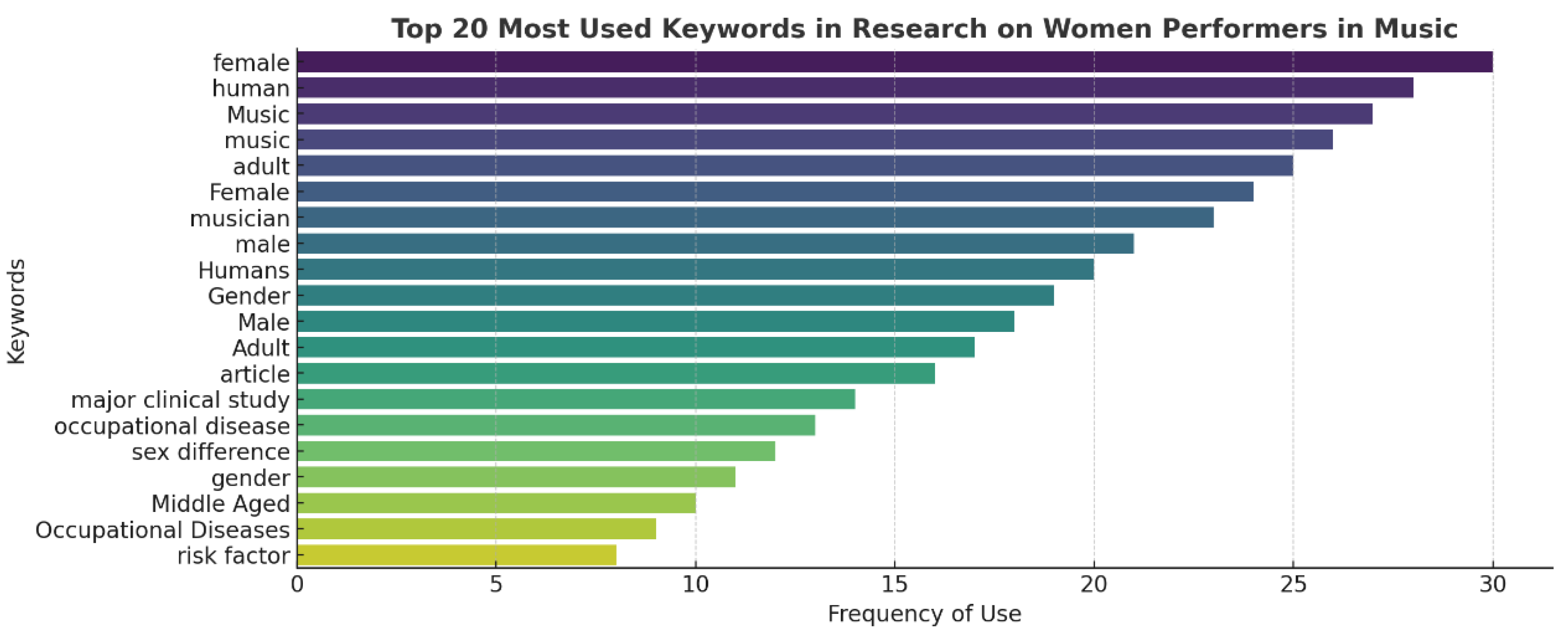
Through a co-occurrence map of terms, thematic clusters can be observed, reflecting different lines of research in this field.
Figure 5 presents the keyword co-occurrence map in the research on women artists in music, generated using VOSviewer based on data extracted from Scopus. In this visualisation, each node represents a keyword, while the connections between them indicate that these terms have appeared together in the same publications.
It can be observed that the term “gender” holds a central position in the network, closely linked to “female musicians”, “gender equality”, and “music education.” These results reflect that scientific production on women in music has primarily developed from a gender and equity perspective in music education.
The map groups terms into different colours, indicating clusters of keywords that have been frequently studied together. The identified clusters are related to:
- Music education and classical music,
- Gender and equality in music,
- The presence of women in different musical styles and performance contexts.
Additionally, more peripheral terms can be observed with fewer connections in the network, which may suggest emerging areas or underexplored topics within the field. This type of analysis helps to identify the main research lines and detect potential gaps that could be addressed in future studies.
Analysis of the keyword co-occurrence map provides valuable insight into central concepts, thematic clusters, and isolated terms that shape the research landscape on women performers in music.
Central Concepts
The largest node in the network is “Gender”, indicating that gender studies form the core of research on women in music performance. This highlights the strong connection between musicology and gender-related discourse, highlighting the importance of equity, representation, and inclusion in music studies.
Other key terms include “female musicians” and “music education”, suggesting a pedagogical focus in the literature. The presence of these terms indicates a significant interest in the training, professionalisation, and educational experiences of women musicians.
Additionally, the term “Gender equality” is closely linked to “women,” “musicians”, and “music,” reinforcing the idea that discussions on equity and inclusion are recurrent themes in the academic production of women performers.
Identified Thematic Clusters
The map reveals distinct thematic clusters, which group terms that frequently cooccur in research publications:
- Yellow cluster: Focused on gender, equality, and women in music, indicating a strong emphasis on gender studies and feminist musicology.
- Red cluster: associated with music education and classical music, reflecting research that examines pedagogical approaches, conservatory training, and historical perspectives on female musicians in classical traditions.
- Blue Cluster: Includes terms related to gender and performance, suggesting that some studies explore gender expression, identity, and the role of women in musical performance settings.
- Purple Cluster: The theme is about musicians and their representation in different musical genres, highlighting discussions of visibility, artistic careers, and the impact of gender on various styles of music performance.
Isolated Terms
Some keywords appear on the margins of the network with weaker connections, such as “African-futurism,” “Czech Philharmonic Orchestra,” and “Cancer registry.” These terms are less frequently used within the dataset, suggesting that they represent niche topics, emerging areas, or isolated studies, rather than core topics within broader research on women in music performers.
Additionally, the analysis reveals that some authors have worked on more specific topics within this field, such as the relationship between music and neuroscience or the impact of music on cultural identity. This diversity of approaches indicates that research on women performers in music has not only focused on their visibility and role in history but has also expanded into interdisciplinary studies that include education, psychology, and sociology.
These findings help identify the key scholars in this field, as well as emerging research lines. Furthermore, the analysis suggests opportunities for future academic collaborations between researchers who have explored complementary topics within this discipline.
4. Discussion
Authors should discuss the results and how they can be interpreted from the perspective of previous studies and of the working hypotheses. The findings and their implications should be discussed in the broadest context possible. Future research directions may also be highlighted.
The results obtained in this bibliometric analysis outline a significant evolution in research on women performers in music. Over the past decades, there has been a progressive increase in academic production, with a notable acceleration from 2000 onwards and a peak in the last decade. This trend suggests a growing interest in the intersection between gender studies and musicology, reflecting the impact of social movements and gender equity policies on scientific production [4,8].
4.1. Evolution of Research and Thematic Trends
The exponential growth of publications in recent years may be linked to a greater awareness of the importance of making women’s contributions visible in music history. The emergence of studies that approach musical performance from a gender perspective has been facilitated by the expansion of feminist musicology [3] and the use of new quantitative and qualitative methodologies in analysing female musical production [12].
Several studies have shown how musical historiography has tended to exclude or minimise the contributions of female performers in shaping the musical canon [11, 14]. In this regard, Cook & Tsou (1994) argue that the role of performers has historically been underestimated due to a narrative centred on male composers, leading to a gap in the representation of women in music. However, recent research has addressed this bias, highlighting the importance of female performers in the dissemination and consolidation of musical repertoires [6].
Despite these advances, the data indicate that although the number of studies has increased, research is still concentrated in certain areas, such as classical music performance, jazz and music education [2]. Fields such as popular music, ethnomusicology, or the analysis of emerging repertoires in the music industry still present gaps in the academic literature, suggesting the need to broaden the scope of the research [13].
4.2. Scientific Production by Journals and Its Impact
The analysis of the journals with the highest number of publications on this topic reveals a diversity of approaches. Journals specialising in music psychology and music education, such as Psychology of Music and the International Journal of Music Education, have led the dissemination of studies on women performers, indicating a strong pedagogical presence in this research line.
However, generalist musicology journals have had a lower representation, which could indicate the persistence of biases in traditional musicological research [11]. Cook & Tsou (1994) point out that musicology has historically favoured the study of composers over performers, which may explain this lower presence in high-impact journals in the discipline.
Furthermore, the presence of occupational health journals in the data set suggests that a significant portion of the literature on women artists in music is related to health studies, ergonomics, and physical issues arising from instrumental practice. Previous research has indicated that female performers may face specific challenges in terms of health and well-being compared to their male colleagues, due to physiological factors and the adaptation of instruments to male standards [1]. Although this perspective is valuable, it could overshadow other research lines that focus on the artistic and social contributions of female performers.
4.3. Co-Authorship Networks and International Collaboration
The coauthorship network analysis indicates that publications on women performers in music have not yet generated a consolidated research network among scholars. The dispersion of authors and the lack of stable research centres may be limiting factors in the development of comparative studies at an international level.
Regarding the geographical distribution of publications, Anglophone countries dominate scientific production in this field, with a significant volume of studies from the United States and the United Kingdom. Spain and other European countries have contributed to a lesser extent, although they have shown steady growth in recent years. On the contrary, research in Latin America and Asia remains limited, highlighting the need to promote studies that analyse women artists in music within more diverse cultural contexts [13].
4.4. Study Limitations
Despite the value of this bibliometric analysis, it is essential to acknowledge certain limitations. First, the study is based on Scopus and Web of Science, which can exclude relevant research published on other platforms or open-access journals not indexed in these databases.
Another important limitation is that the analysis of the coauthorship network was based on the authors with the highest production within the selected databases. This may not fully capture the diversity of perspectives and academic communities involved in this field.
Finally, the use of publication-based metrics does not necessarily reflect the qualitative impact of studies. Therefore, it would be advisable to complement this analysis with citation impact studies or content reviews in future research.
5. Conclusions
This bibliometric study has allowed for an analysis of the evolution and impact of scientific production on women musicians in music, providing an overview of trends, authors, journals, and collaboration networks in this field. To achieve this, 228 peer-reviewed articles published between 1995 and 2024 were reviewed, indexed in Scopus (195 articles) and Web of Science (33 articles), in order to evaluate the evolution and visibility of research on women performers in music. The findings offer detailed quantitative insights into publication trends, prominent journals, influential authors, and international collaboration patterns, contributing to a comprehensive understanding of the current state and future directions of this field of study.
The analysis has shown a progressive increase in the number of publications since 1995, with a particularly significant rise after 2010, reaching a peak of 21 publications in 2023. Approximately 85% of the total articles (194 out of 228) were published after 2010, reflecting the growing academic interest in the intersection of gender studies and musicology, driven by advances in gender equality policies, evolving social movements, and the consolidation of feminist musicology. However, research remains focused primarily on performance in classical music, jazz and music education, while other areas, such as popular music, ethnomusicology, rock, electronic, or folk music, continue to exhibit notable gaps in the academic literature.
The journal analysis revealed that most of the articles have been published in specialised journals in music psychology, education and health, such as Medical Problems of Performing Artists (8 articles, 3.5%), Psychology of Music (6 articles, 2.6%), and Frontiers in Psychology (5 articles, 2.2%), which highlights a strong focus on pedagogy, psychological, and health. In contrast, generalist musicology journals remain under-represented, indicating persistent barriers to integrating gender perspectives into mainstream music historiography.
In terms of geographic distribution, the study identified a considerable concentration of research in the United States and the United Kingdom, which together represent nearly 60% of the total publications. European countries, particularly Spain, have shown a steady increase in contributions, although they still represent less than 20% of the total output. Contributions from Latin America and Asia remain marginal, collectively accounting for less than 5%, revealing significant regional gaps in research.
With respect to authorship and collaboration, the coauthorship network analysis indicated fragmentation, with only one main research cluster comprising approximately 12 authors. Most researchers operate in isolation or with minimal collaboration, underscoring the need to strengthen international and interinstitutional partnerships and to foster the development of stable research communities focused on gender and music. The observed fluctuations in publication volume over time suggest that research on women performers has not followed a uniform growth trajectory, but has been influenced by academic trends and changes in equality policies. The current phase of consolidation calls for increased presence in high-impact journals and the incorporation of interdisciplinary approaches, as well as the inclusion of non-Western contexts to enrich the field.
Keyword co-occurrence analysis identified three dominant thematic clusters: gender and equality; music education and classical music; and performance and representation across various genres. However, more than 70% of the research continues to focus on classical music and jazz, highlighting the need for greater genre diversification. Methodologically, while bibliometric tools have been effective in identifying quantitative trends, less than 10% of the articles used mixed-method or qualitative approaches, such as interviews, ethnographies, or content analysis. This points to a clear opportunity to integrate qualitative research methods to better understand the experiences of female performers and their representation in the music industry.
Although this study has shown significant progress in academic production of women musicians in music, several gaps persist that warrant further exploration. Future research should prioritise genre diversification, exploring under-represented areas such as rock, electronic, and folk music. Additionally, more work is needed to analyse the cultural impact and public reception of the contributions of female performers. Intersectional perspectives remain largely absent, with fewer than 5% of studies considering variables such as race, ethnicity, social class, or disability — factors that can significantly shape career trajectories. Furthermore, expanding the use of qualitative and mixed method approaches would provide richer and more nuanced insights into the lived experiences of these performers.
In conclusion, research on women performers in music is growing and consolidating, but still faces challenges in achieving broader representation, enhancing international collaboration, diversifying research topics and genres, and adopting more varied and inclusive methodologies. Addressing these gaps will contribute to building a more comprehensive, equitable and representative musicological discourse that fully acknowledges women’s contributions to the cultural and musical heritage.
6. Patents
The authors declare that there are no patents resulting from this work.
Author Contributions
Conceptualization, methodology, software, validation, formal analysis, investigation, resources, data curation, writing—original draft preparation, writing—review and editing, visualization, supervision, and project administration were all performed by the author. The author has read and agreed to the published version of the manuscript.
Funding
This research was carried out within the framework of the Proyectos Lanzadera de Feminismo at the University of Almería (Spain). The article processing charge (APC) was waived by the publisher after an invitation to submit.
Institutional Review Board Statement
Not applicable.
Informed Consent Statement
Not applicable.
Data Availability Statement
The data supporting the findings of this study are available from Scopus and Web of Science databases. Restrictions apply to the availability of these data, which were used under license for this study.
Conflicts of Interest
The author declares no conflicts of interest. The funders had no role in the design of the study; in the collection, analyses, or interpretation of data; in the writing of the manuscript; or in the decision to publish the results.
References
- Ackermann, B. J.; Driscoll, T. R. Development of a new instrument for measuring the musculoskeletal load of professional orchestra musicians. Medical Problems of Performing Artists 2010, 25, 95–101. [Google Scholar] [CrossRef] [PubMed]
- Boyd, S.; Mackinlay, E. Music, Women, and Pianos in Antebellum America. University of Illinois Press, 2020.
- Citron, M. Gender and the Musical Canon. Cambridge University Press, 1993.
- Citron, M. Women and the Western Art Music Tradition. Journal of Musicology 2004, 21, 1–25. [Google Scholar]
- . Cecilia Reclaimed: Feminist Perspectives on Gender and Music. University of Illinois Press, 1994. Cook, S.; Tsou, J. (Eds.).
- Fuller, S. Women Composers, Conductors, and Musicians of the 20th Century. Routledge, 2019.
- Koskoff, E. A Feminist Ethnomusicology: Writings on Music and Gender. University of Illinois Press, 2014.
- McClary, S. Feminine Endings: Music, Gender, and Sexuality (2nd ed.). University of Minnesota Press, 2021.
- Mongeon, P. , & Paul-Hus, A. The journal coverage of Web of Science and Scopus: a comparative analysis. Scientometrics 2016, 106, 213–228. [Google Scholar] [CrossRef]
- Morales-Villar, M. del C. Alumnas, maestras y cantantes: La formación vocal de las mujeres en el siglo XIX en España. Revista Electrónica de LEEME 2019, 44, 102–116. [Google Scholar] [CrossRef]
- Pendle, K. (Ed.) . Women & Music: A History. Indiana University Press, 2001.
- Ramos López, I. Mujer y música en España: Tradición y cambio en el siglo XX. Ediciones Akal, 2013.
- Strong, C.; Raine, S. Towards Gender Equality in the Music Industry: Education, Practice, and Strategies for Change. Bloomsbury Academic, 2019.
- Wood, A. Women, Music and Leadership in the 20th Century. Oxford University Press, 2017.
Figure 1.
Annual Distribution of Publications on Women Performers in Music (1995–2024). Data obtained from Scopus and Web of Science databases.
Figure 1.
Annual Distribution of Publications on Women Performers in Music (1995–2024). Data obtained from Scopus and Web of Science databases.
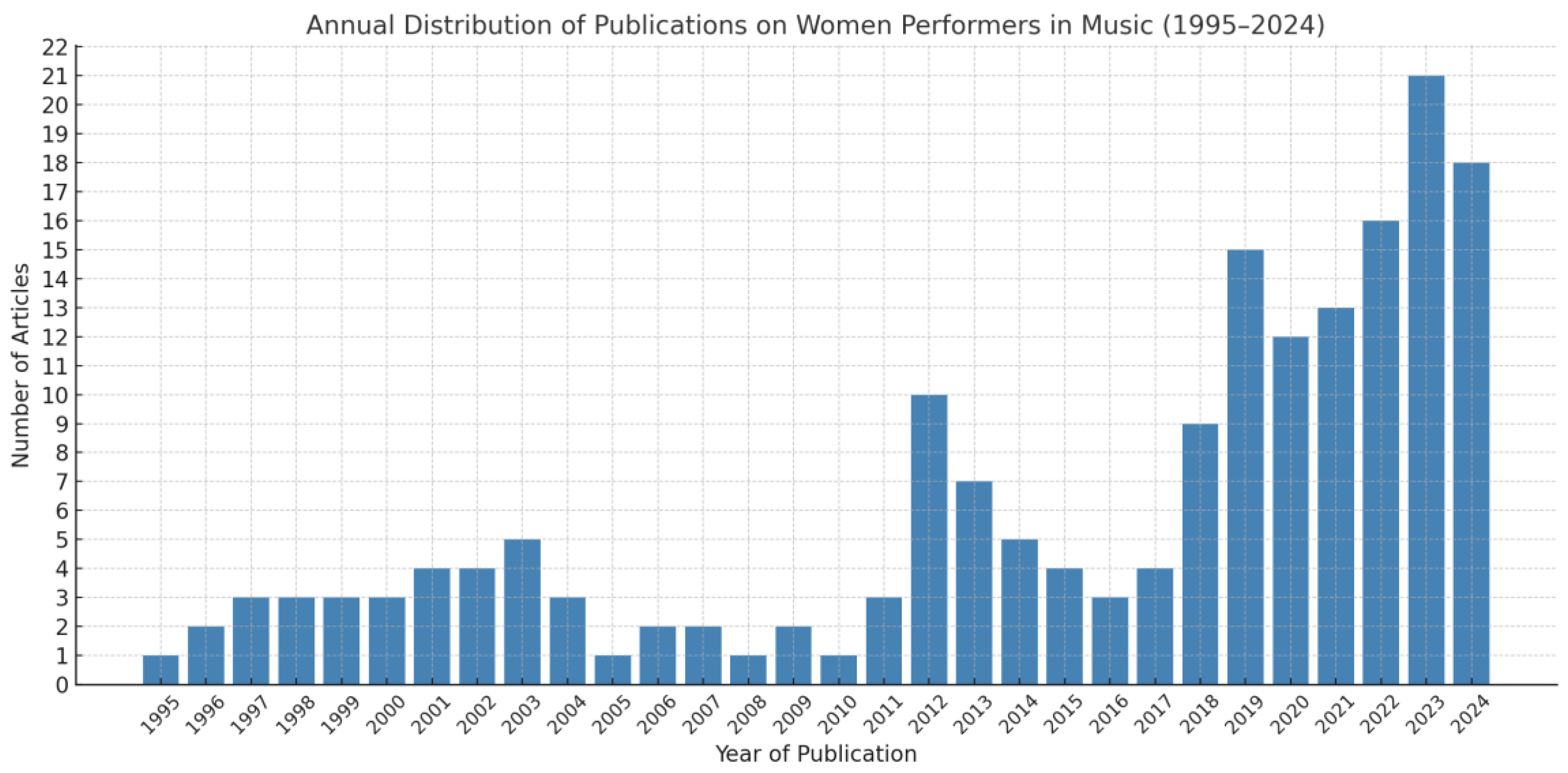
Figure 2.
Top Journals Publishing on Women Performers in Music (1995–2024). Data source: Scopus and Web of Science.
Figure 2.
Top Journals Publishing on Women Performers in Music (1995–2024). Data source: Scopus and Web of Science.
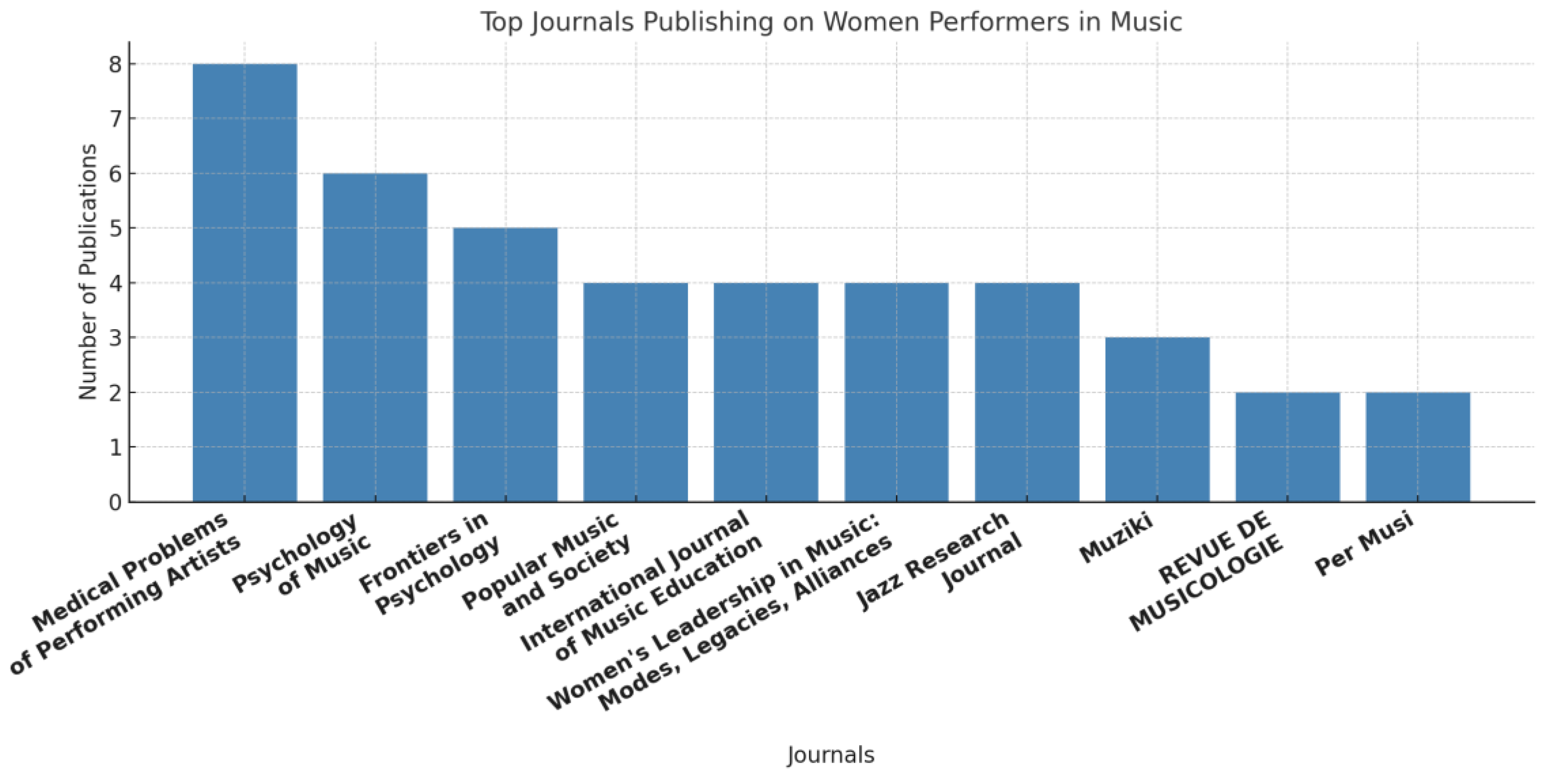
Figure 3.
(a) Co-autorship Network; (b) Temporal Evolution.
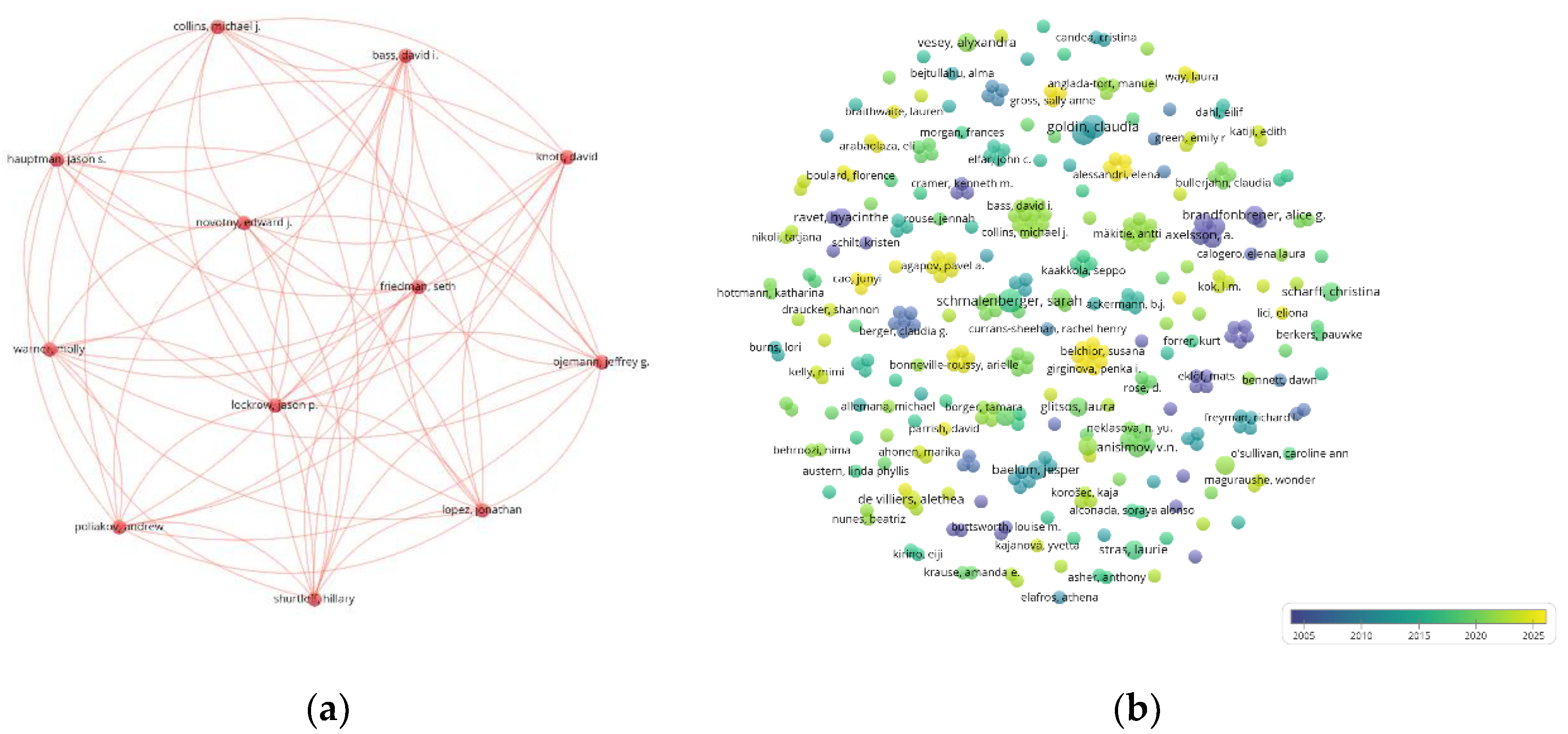
Figure 5.
Analysis of Keyword Co-Ocurrence.
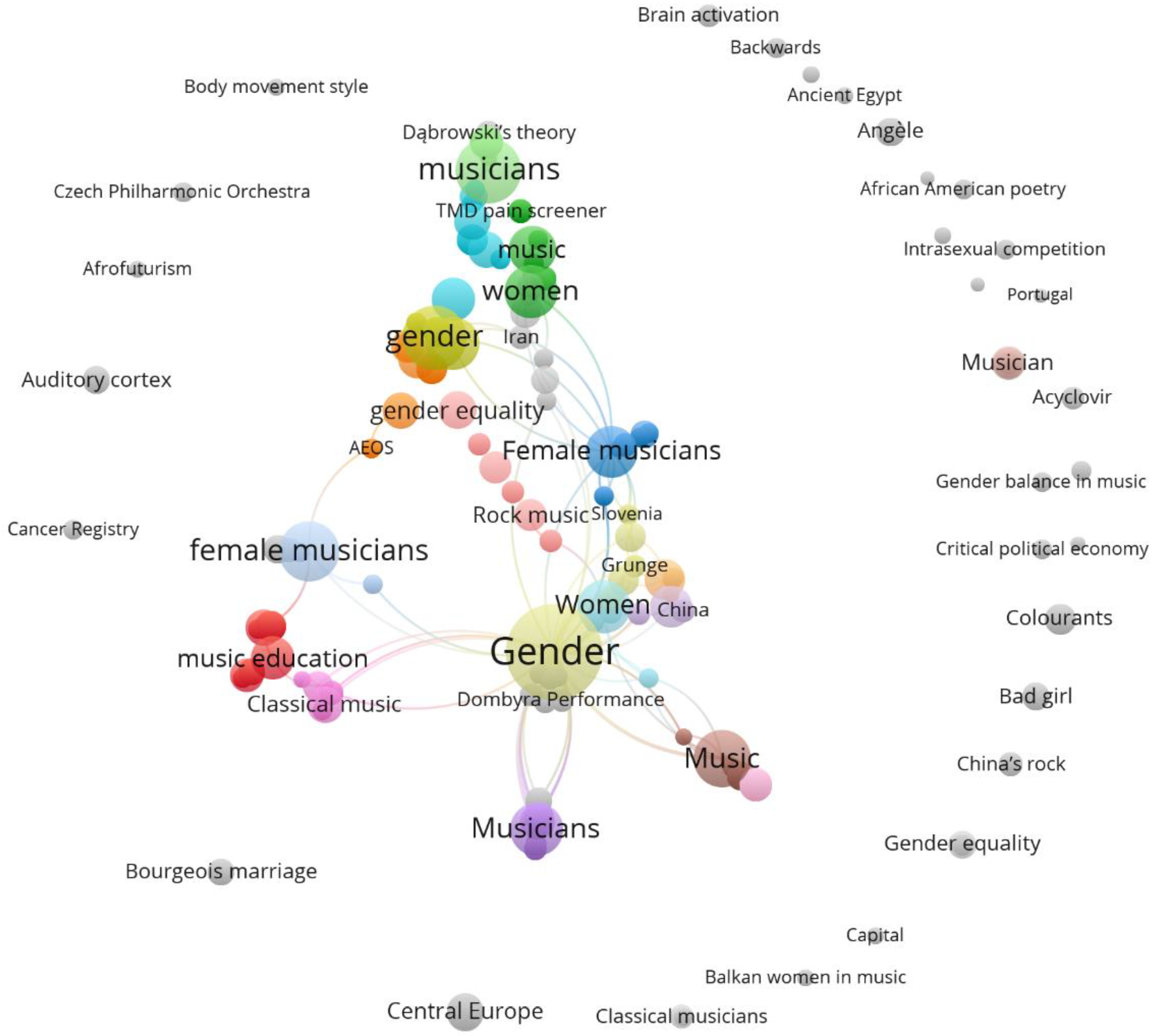

Table 1.
Search strategy used in Scopus and Web of Science databases.
| Language | Search Strings |
|---|---|
| Spanish | “Mujer intérprete en la música” OR “Mujeres y música” OR “Mujer y performance musical” OR “Intérpretes femeninas en la música” OR “Música y estudios de género” |
| English | “Women performers in music” OR “Female musicians” OR “Women and music research” OR “Gender and music performance” OR “Women in music history” |
| Italian | “Donne interpreti nella musica” OR “Musiciste e performance musicale” OR “Donne e musica” OR “Genere e musica” |
| German | “Frauen in der Musik” OR “Musikerinnen und Musikgeschichte” OR “Geschlecht und Musik” OR “Weibliche Interpreten in der Musik” |
1 Source: own elaboration.
Table 2.
This is a table. Tables should be placed in the main text near to the first time they are cited.
Table 2.
This is a table. Tables should be placed in the main text near to the first time they are cited.
| Journal | First Publication | Most Recent Publication |
|---|---|---|
| Medical Problems of Performing Artists | 1987 | 2025 |
| Psychology of Music | 2000 | 2025 |
| Frontiers in Psychology | 2010 | 2025 |
| Popular Music and Society | 2008 | 2024 |
| International Journal of Music Education | 2008 | 2024 |
| Women’s Leadership in Music: Modes, Legacies, Alliances | 2016 | 2023 |
| Jazz Research Journal | 2015 | 2023 |
| Muziki | 2017 | 2022 |
| Revue de Musicologie | 2011 | 2022 |
| Per Musi | 2000 | 2021 |
1 Source: own elaboration.
Disclaimer/Publisher’s Note: The statements, opinions and data contained in all publications are solely those of the individual author(s) and contributor(s) and not of MDPI and/or the editor(s). MDPI and/or the editor(s) disclaim responsibility for any injury to people or property resulting from any ideas, methods, instructions or products referred to in the content. |
© 2025 by the authors. Licensee MDPI, Basel, Switzerland. This article is an open access article distributed under the terms and conditions of the Creative Commons Attribution (CC BY) license (http://creativecommons.org/licenses/by/4.0/).
Copyright: This open access article is published under a Creative Commons CC BY 4.0 license, which permit the free download, distribution, and reuse, provided that the author and preprint are cited in any reuse.


