

Submitted:
12 March 2025
Posted:
13 March 2025
You are already at the latest version
Abstract
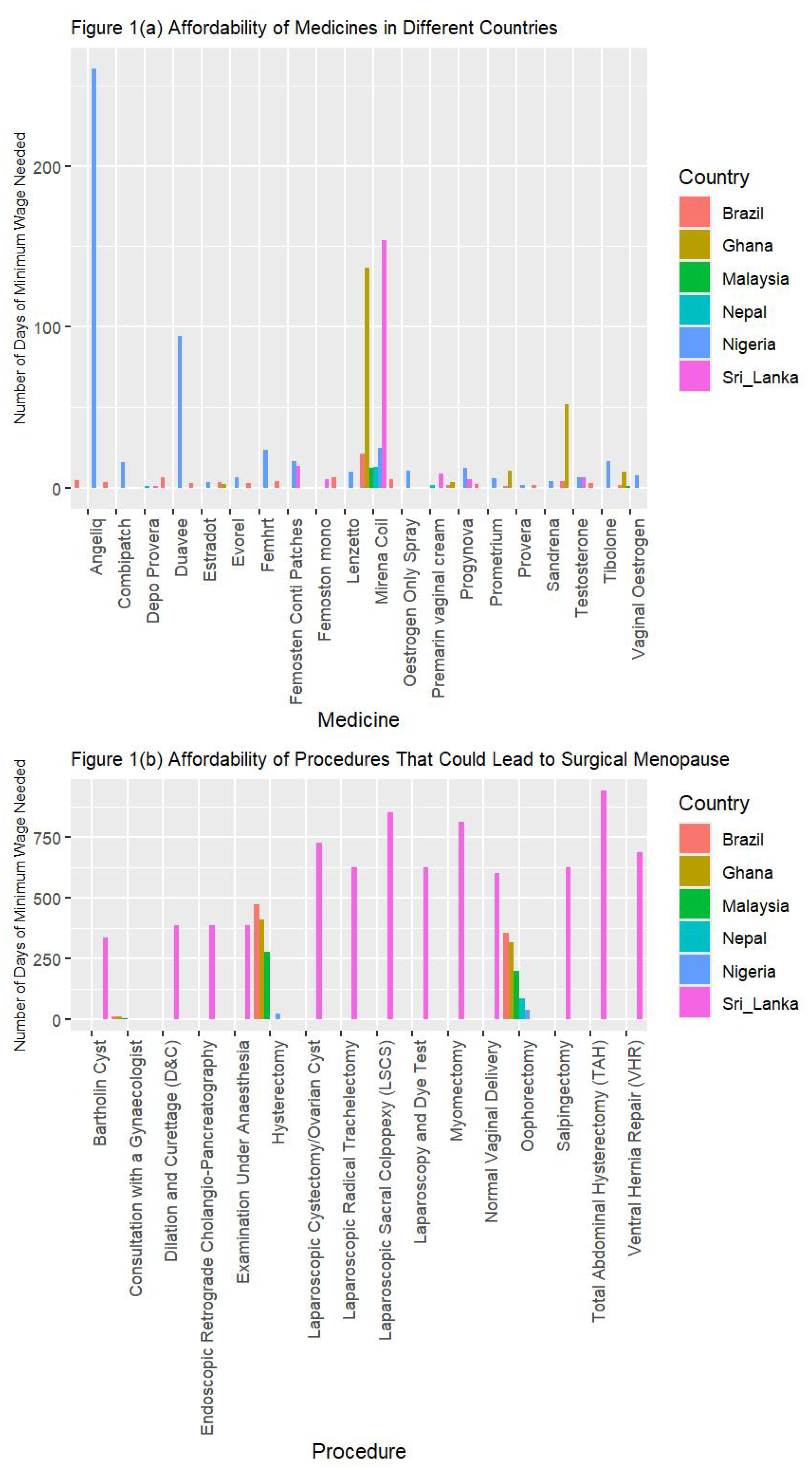
Background Women globally spend a significant portion of their lives experiencing perimenopausal and menopausal symptoms, which can severely affect their quality of life. Hormone Replacement Therapy (HRT) has proven effective in alleviating symptoms such as hot flushes, sleep disturbances, and mood disorders. However, disparities in access to HRT exist, especially in low- and middle-income countries (LMICs), where socioeconomic factors and healthcare availability may limit treatment access.AimWe aimed to explore economic barriers and disparities to access to HRT across Brazil, Ghana, Malaysia, Nepal, Nigeria and Sri Lanka. Methods An exploratory study was conducted using publicly available data from national healthcare databases, pharmacies, and hospital formularies from Brazil, Ghana, Malaysia, Nepal, Nigeria, and Sri Lanka. The availability and cost of common HRT medicines, including oral and transdermal therapies, were analysed alongside of surgical procedures. Affordability was assessed by comparing the cost of a two-month HRT supply to the number of days of minimum wage work required to cover the cost. Additionally, Gross National income (GNI) per capita was also collected to contextualise these findings.Findings The availability of HRT medicines varied widely across the six countries, with Brazil and Nigeria offering a broader range of options compared to Ghana and Nepal. Pricing disparities were significant, with the cost of medicines such as the Mirena Coil requiring over 21 days of minimum wage work in Brazil and more than 260 days in Nigeria for Angeliq. Affordability remained a critical issue across LMICs, with high out-of-pocket costs restricting access to essential menopausal treatments.Conclusion This study reveals substantial economic barriers to accessing HRT in LMICs, driven by high costs and limited availability. Healthcare policy reforms to improve access and affordability of HRT in these regions are urgently needed. These findings can inform strategies to reduce healthcare inequalities and enhance women’s health outcomes globally.
Keywords:
Introduction:
Methods:
Data Sources and Collection
Cost Analysis and Affordability Measure
Outcome Measures
- Female labour force participation in the selected countries
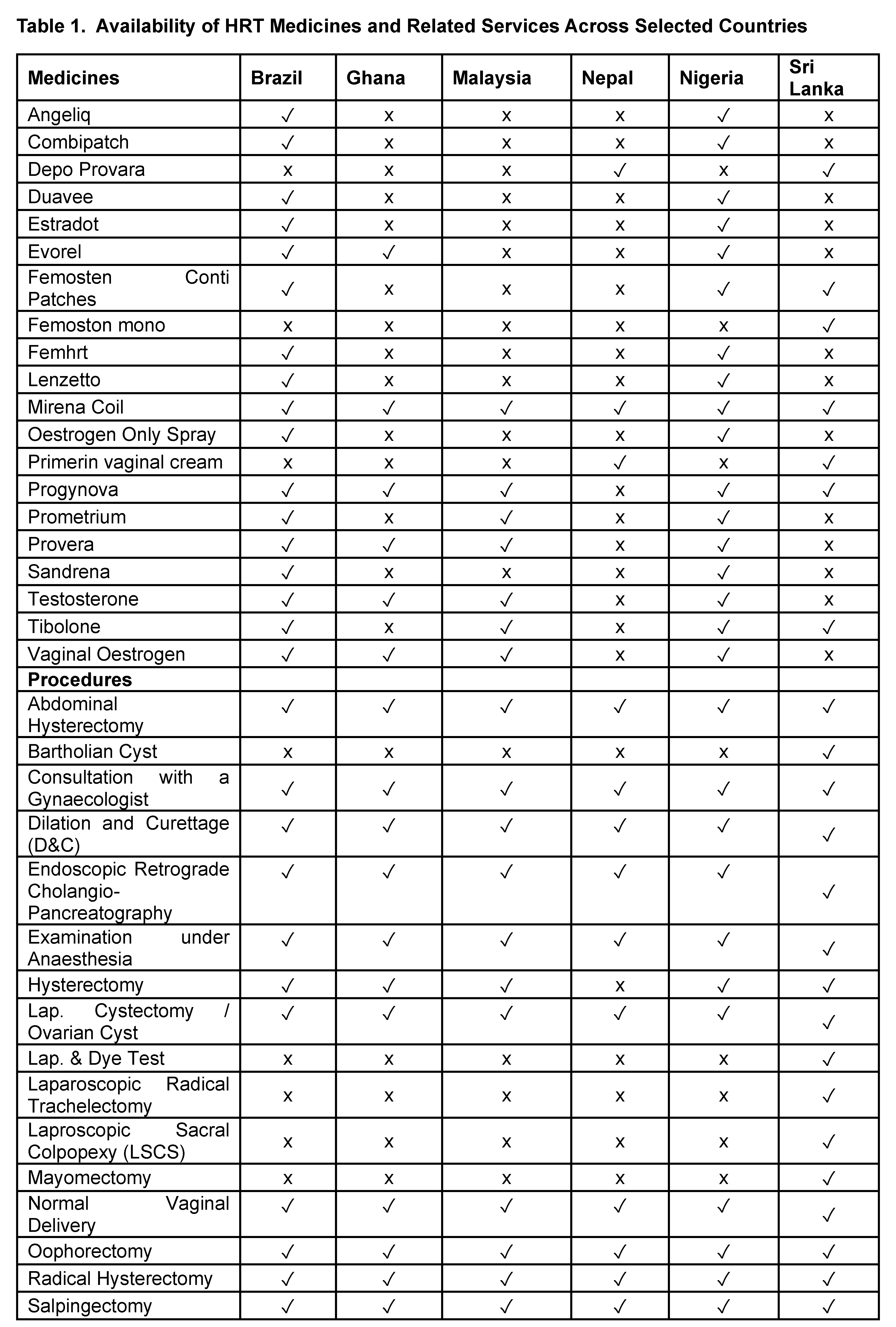
- Availability of HRT medicines and menopause-related gynaecological and surgical services by assessing the number and type of HRT medicines and services available in each country. The list of medicines and services was initially developed by consultation among the MARIE project members.
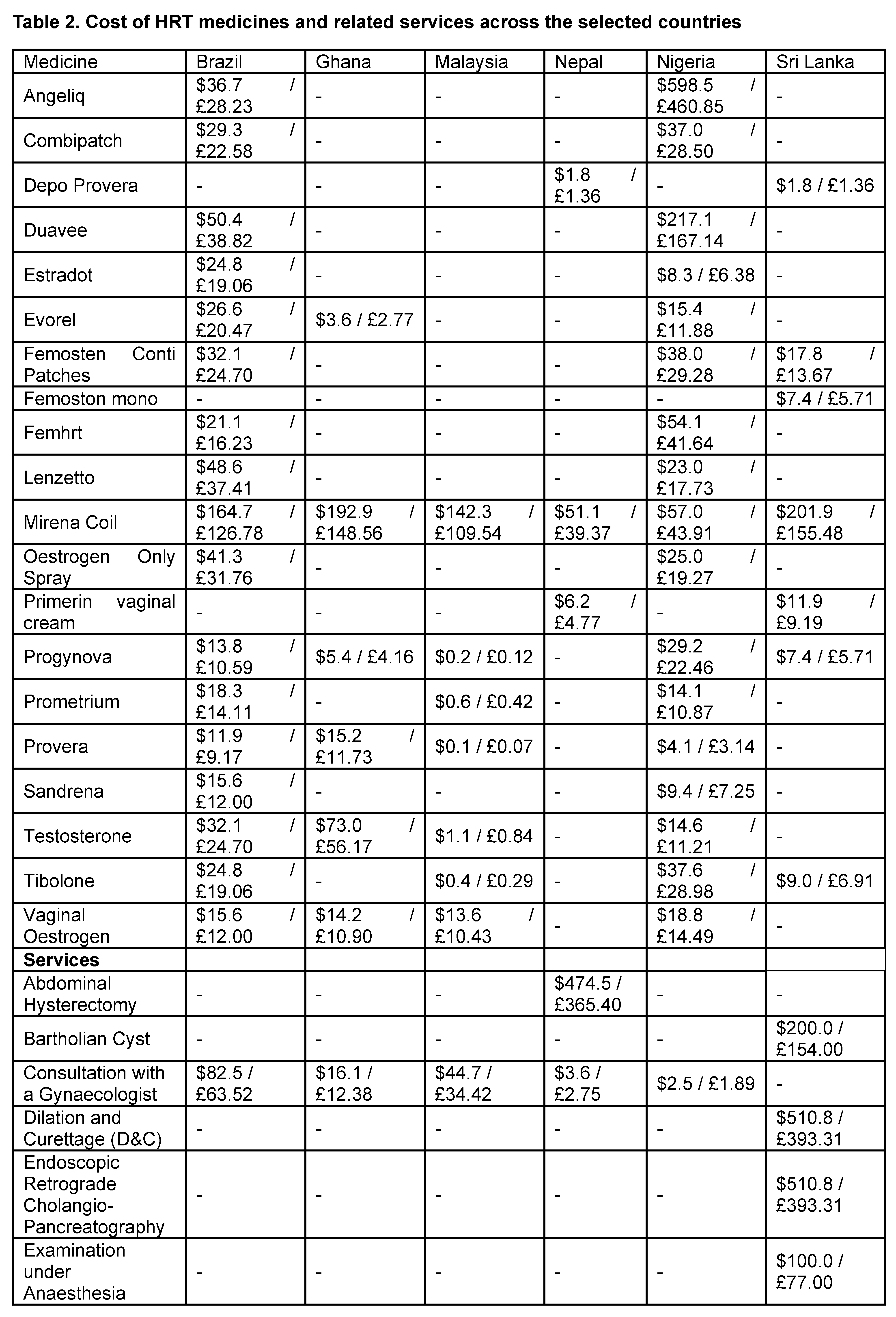
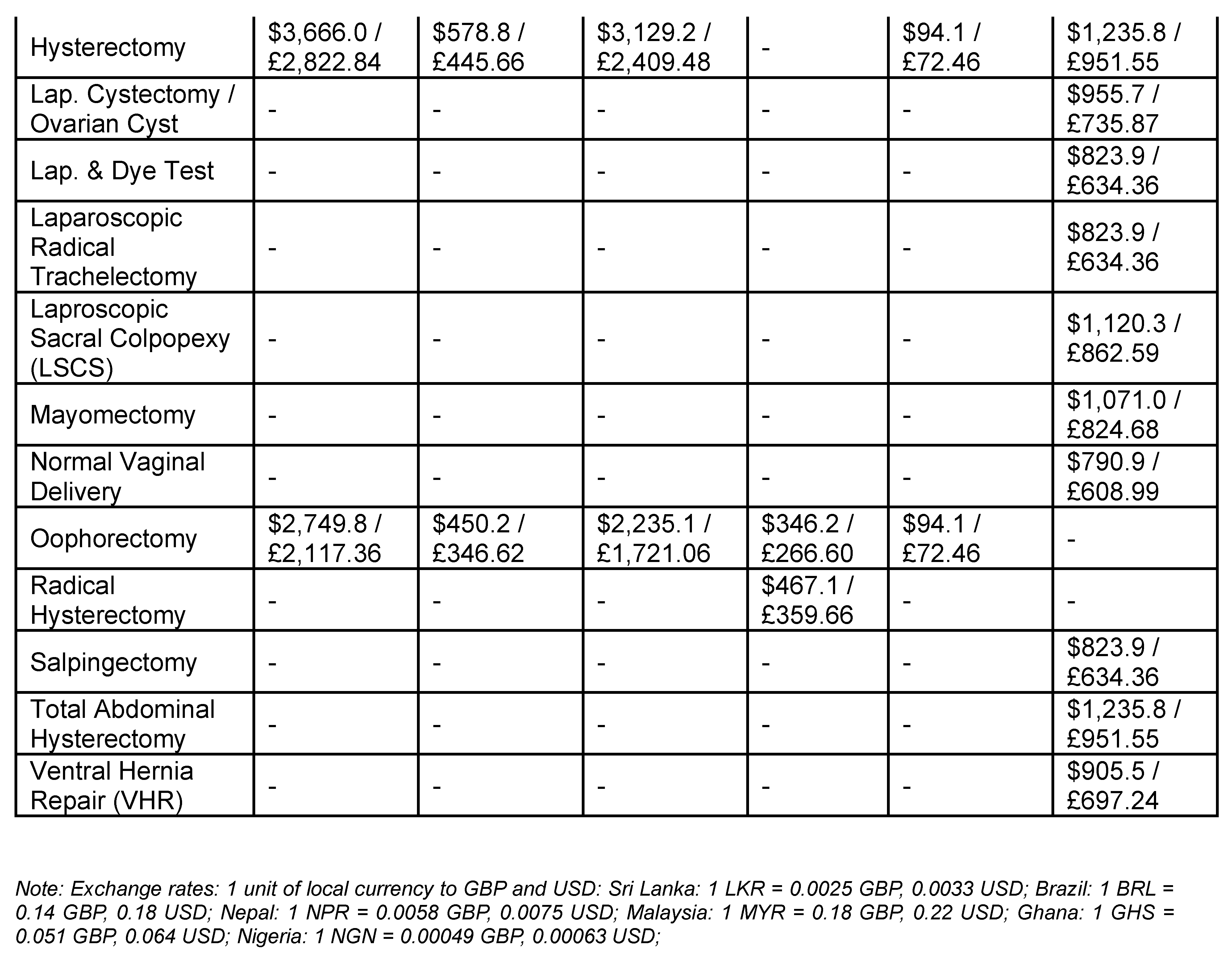
- The cost of HRTs and menopause-related gynaecological and surgical services were calculated as the price of individual medicines and services, which were collected in local currencies and converted to USD for standardisation.
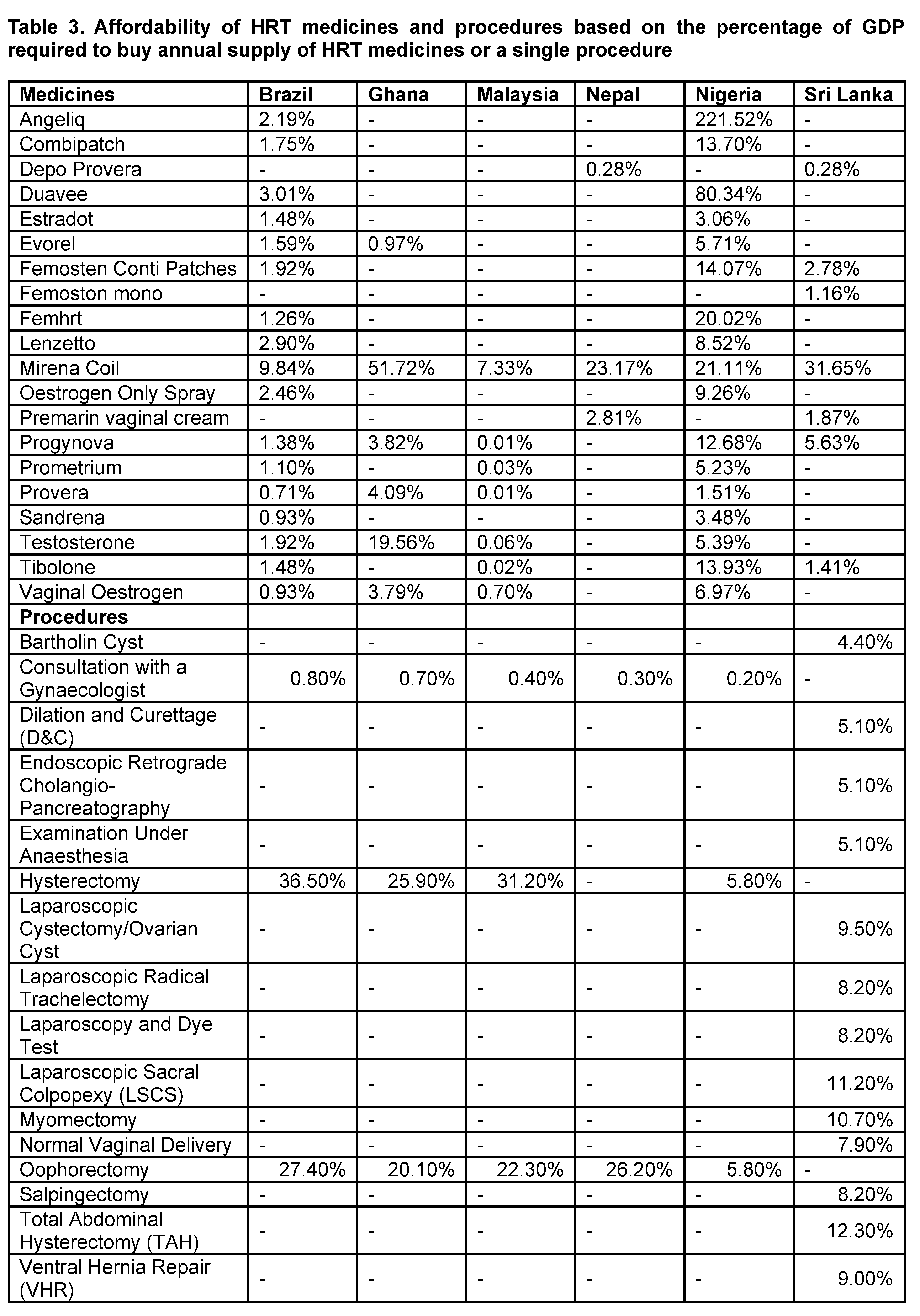
- The affordability of HRTs and menopause-related gynaecological and surgical services is calculated by dividing each prescription's price (usually for two months) by the daily minimum wage in each country and the annual supply of medicines GNI per capita income.
Data Analysis
Ethical Considerations
Results:
Female Labour Force Participation
Availability of HRT Medicines and Related Services Across Selected Countries

Cost of HRT Medicines and Related Services Across Selected Countries
Discussion:
Comparison to High-Income Countries (HICs)
Socioeconomic and Cultural Implications
Practical Implication
Strengths and Limitations
Conclusions:
Supplementary Materials
Author Contributions
Funding
Availability of data and material
Conflicts of interest
Code availability
Ethics approval
Consent to participate
Consent for publication
References
- Yengo L, Vedantam S, Marouli E, Sidorenko J, Bartell E, Sakaue S, et al. A saturated map of common genetic variants associated with human height. Nature. 2022;610(7933):704-12.
- Avis NE, Crawford SL, Greendale G, Bromberger JT, Everson-Rose SA, Gold EB, et al. Duration of menopausal vasomotor symptoms over the menopause transition. JAMA internal medicine. 2015;175(4):531-9.
- Whiteley J, Wagner J-S, Bushmakin A, Kopenhafer L, DiBonaventura M, Racketa J. Impact of the severity of vasomotor symptoms on health status, resource use, and productivity. Menopause. 2013;20(5):518-24.
- Challenge, A. Ageing in the Twenty-First Century.
- Shifren JL, Gass ML, Group NRfCCoMWW. The North American Menopause Society recommendations for clinical care of midlife women. Menopause. 2014;21(10):1038-62.
- World Health Organization. Menopause 2024 [Available from: https://www.who.int/news-room/fact-sheets/detail/menopause.
- Davis SR, Baber R, Panay N, Bitzer J, Perez SC, Islam RM, et al. Global consensus position statement on the use of testosterone therapy for women. The journal of sexual medicine. 2019;16(9):1331-7.
- Roser M. OWID Homepage. Our World in Data. 2024.
- World Bank Group. GNI per capita, Atlas method (current US$) - East Asia & Pacific, [Available from: https://data.worldbank.org/indicator/NY.GNP.PCAP.CD?locations=Z4.
- Trading Economics. Minimum Wages | Asia, [Available from: https://tradingeconomics.com/country-list/minimum-wages?continent=asia.
- Williams RE, Levine KB, Kalilani L, Lewis J, Clark RV. Menopause-specific questionnaire assessment in US population-based study shows negative impact on health-related quality of life. Maturitas. 2009;62(2):153-9.
- Tabuzo MMB, Hernandez MALU, Chua AE, Maningat PD, Chiu HHC, Jamora RDG. Pituitary Adenoma in the Philippines: A Scoping Review on the Treatment Gaps, Challenges, and Current State of Care. Medical Sciences. 2024;12(1):16.
- Hamoda H, Panay N, Arya R, Savvas M, Society BM, Concern WsH. The British Menopause Society & Women’s Health Concern 2016 recommendations on hormone replacement therapy in menopausal women. Post Reproductive Health. 2016;22(4):165-83.
- Townsend, J. Hormone replacement therapy: assessment of present use, costs, and trends. British journal of general practice. 1998;48(427):955-8.
- Department of Health & Social Care (UK). New scheme for cheaper hormone replacement therapy launches London, United Kingdom: Department of Health and Social Care (UK); 2023 [Available from: https://www.gov.uk/government/news/new-scheme-for-cheaper-hormone-replacement-therapy-launches.
- Jaff, N. Does one size fit all? The usefulness of menopause education across low and middle income countries. Maturitas. 2023;173:38.
- Klynveld Peat Marwick Goerdeler (KPMG). When will I retire? Sydney, Australia: KPMG; 2022.
- Dvorkin MA, Shell H. A cross-country comparison of labor force participation. Economic Synopses. 2015(17).
- World Economic Forum. Global Gender Gap Report 2023. Geneva, Switzerland: World Economic Forum; 2023 June 2023.
- Williamson, J. Menopause: The silent economic crisis2023. Available from: https://www.financialstandard.com.au/news/menopause-the-silent-economic-crisis-179798921.
- Goldin, C. The U-shaped female labor force function in economic development and economic history. National Bureau of Economic Research Cambridge, Mass., USA; 1994.
- Jayachandran, S. How economic development influences the environment. Annual Review of Economics. 2022;14(1):229-52.
- Hunter MS, O'Dea I, Britten N. Decision-making and hormone replacement therapy: a qualitative analysis. Social Science & Medicine. 1997;45(10):1541-8.
- Ma J, Drieling R, Stafford RS. US women desire greater professional guidance on hormone and alternative therapies for menopause symptom management. Menopause. 2006;13(3):506-16.
- Koysombat K, Mukherjee A, Nyunt S, Pedder H, Vinogradova Y, Burgin J, et al. Factors affecting shared decision-making concerning menopausal hormone therapy. Annals of the New York Academy of Sciences. 2024;1538(1):34-44.
- Palacios S, Stevenson JC, Schaudig K, Lukasiewicz M, Graziottin A. Hormone therapy for first-line management of menopausal symptoms: Practical recommendations. Women's Health. 2019;15:1745506519864009.
- Griffiths, F. Women's control and choice regarding HRT. Social science & medicine. 1999;49(4):469-82.
- Griffiths, F. Women's decisions about whether or not to take hormone replacement therapy: influence of social and medical factors. British Journal of General Practice. 1995;45(398):477-80.
Disclaimer/Publisher’s Note: The statements, opinions and data contained in all publications are solely those of the individual author(s) and contributor(s) and not of MDPI and/or the editor(s). MDPI and/or the editor(s) disclaim responsibility for any injury to people or property resulting from any ideas, methods, instructions or products referred to in the content. |
© 2025 by the authors. Licensee MDPI, Basel, Switzerland. This article is an open access article distributed under the terms and conditions of the Creative Commons Attribution (CC BY) license (http://creativecommons.org/licenses/by/4.0/).