
Preprint
Article

This version is not peer-reviewed.

The Mechanism of Traditional Manufacturing Enterprise Resource Restructuring on Supply Chain Resilience Under the Background of Digital Transformation – from the Perspective of Resource Orchestration

A peer-reviewed article of this preprint also exists.

Submitted:

11 March 2025

Posted:

12 March 2025

You are already at the latest version

Abstract

Based on the background of digital transformation, this paper analyzes the influence mechanism of resource orchestration on the improvement of supply chain resilience from the perspective of resource orchestration theory, proposes a theoretical mechanism model, and explores the mechanism of resource orchestration motivation-resource orchestration under digital transformation (resource construction - capability transformation - value creation: supply chain resilience). Using a single case and proceduralized grounded method, the logical relationship with causality is effectively analyzed, and the mechanism and results of resource orchestration in different scenarios for improving supply chain resilience under digital transformation are accurately shown. The results show that supply chain resource construction (redundant resources, technical resources, internal resources and external resources) and capability transformation (manufacturing capabilities, digital platform capabilities and innovation capabilities) have positive effects on supply chain resilience (active and passive resiliency). Through resource construction and capacity transformation under the background of digital transformation, traditional manufacturing enterprises can help improve productivity, solve the contradiction between mass production and customization, expand the market and supply chain system, solve the supply shortage crisis and collaborative innovation, so as to improve the supply chain resilience. It provides a reference for traditional enterprise resource orchestration and optimization of supply chain resilience.

Keywords: 
;  ;  

1. Introduction

In the current era of unprecedented changes in a century, frequent natural disasters, the COVID-19 pandemic, and the "stranglehold" on our country's key technologies by developed countries led by the United States, such as "black swan" and "gray rhino" events, reflect the uncertainty and complexity(VUCA) characteristics of the market situation [1]. In today's increasingly VUCA world, the business models and supply chains of our country's traditional manufacturing enterprises face the risk of being disrupted at any time, such as the sudden breakage of enterprises in the supply chain [2], and enterprises must change in time to improve their digital maturity to enhance their agility [3]. According to the World Bank's estimates, the supply chain disruption caused by COVID-19 has led to a global loss of GDP of about 5%, and many enterprises have even gone bankrupted because they cannot resume operations [4,5]. In this new environmental situation, traditional enterprises are facing the brutal situation of "either turn over or sink" [6], urgently need to reconsider on how to improve supply chain resilience through transformation. The rapid and cost-effective recovery of supply chains from unexpected disruptions caused by emergencies is increasingly valued by global scholars [7].
In the context of the digital economy era, the emergence of new business models driven by new technologies such as artificial intelligence and big data analysis is reshaping the industrial and supply chains. The application of digital technology enables enterprises to integrate and utilize resources more effectively, improving the efficiency of flexible resource allocation [8]. At the 2023 COSMOPlat Digital Ecology Conference, it was mentioned that over one million enterprises have successfully achieved digital transformation through the COSMOPlat platform's "Chasing the Light Plan". Many supply chain enterprises have also utilized e-commerce platform resources to achieve resource sharing by managing the logistics, information flow, capital flow, and data flow of the supply chain [9]. However, many enterprises still face difficulties such as insignificant data effects after applying the above-mentioned digital technologies for transformation [10], and digital technologies have not played the expected role, even becoming a kind of "decoration" [11]. Therefore, this study has triggered the thinking: emerging digital technologies have powerful technological mechanisms, and previous studies have suggested that digital transformation can help improve supply chain resilience. However, why does the effect of digital transformation show significant heterogeneity in practice? In other words, why is there a gap between the technology's actual utility and its desired efficacy? Existing studies on the mechanism of digital transformation affecting supply chain resilience are weak and cannot solve the puzzle of gap existence.
Therefore, based on practical observations and existing research foundations, this study proposes core research questions. Firstly, regarding the question of technology, how can the application outcome of digital transformation be improved? Secondly, regarding the issue of practices, why are there obstacles that affect the effectiveness of digital transformation in enhancing supply chain resilience, and how can they be resolved? To effectively answer the above research questions, it is necessary to conduct detailed analysis rooted in the Chinese context. In 2020, China's industrial scale accounted for 30% of the global manufacturing industry. However, the "2023 Accenture China Enterprise Digital Transformation Index Research" shows that more than half (53%) of the surveyed Chinese companies plan to continue increasing their digital investment, but after digital transformation, changes must occur at various levels within the organization, including adjustments to the business core [12], exchange of resources and capabilities [13,14], and restructuring of processes and structures [15], in order to be considered a successful digital transformation [16]. Essence is a kind of organizational study that includes the characteristic elements of organizational structure and the reconstruction of resources. Therefore, it is particularly necessary to explore the dual logical relationship between "resource constructing behavior and supply chain resilience characteristics" in the context of digital transformation. Therefore, it is particularly important to explore the dual logical relationship between 'resource reconstruction behaviors' and 'supply chain resilience characteristics' in the context of digital transformation. Specifically, what are the resource factors that influence supply chain resilience, and how does resource reconstruction behavior after digital transformation affect supply chain resilience? What role do digital transformation and resource restructuring motivations play in these interactions? How do the above factors work together to affect supply chain resilience?
To answer the above research questions, this article adopts a deductive research approach and conducts research based on resource orchestration theory. The resource orchestration theory, based on the core theory of "resource reconstruction - capability transformation - value creation", introduces digital transformation elements that are relevant to the research factors of this article. It can provide a theoretical analysis perspective for exploring the logical relationship between the elements of "resource reconstruction behavior — supply chain resilience characteristics". At the same time, considering the specific context, this article incorporates the motivation for resource orchestration into the analysis and proposes a cyclic interactive analysis framework of "resource restructuring behavior — supply chain resilience characteristics" under the background of digital transformation. Subsequently, through the method of case grounded, the mechanism affecting supply chain resilience is deeply analyzed, and corresponding recommendations are proposed.

2. Literature Review

2.1. Research on Supply Chain Resilience

Sudden disruptions [2] and disturbances [17] in the supply chain will increase the level of supply chain risk, and supply chain resilience is the ability to cope with supply chain risks.
Previous studies have typically divided supply chain resilience into two dimensions: active resilience and passive resilience. Passive resilience of a supply chain refers to the flexibility and responsiveness shown in the face of sudden environmental changes [18]. It is the capability of a supply chain to swiftly respond and restore its operational state after an unexpected event causes the supply chain to break [19,20]. Active supply chain resilience refers to the proactive planning capability to identify and predict potential risks [21], the resilience to resist supply chain vulnerabilities in volatile environments [22], and the learning ability [23] to flexibly apply innovative solutions [24] to ensure stable operation [25,26], complete supply chain structure, and smooth supply, and ensuring the interconnection of logistics, information, and capital flows [2]. After-the-fact capabilities of passive supply chain resilience do not allow for quick and cost-effective recovery, and it is more important to prepare a flexible emergency plan in advance to respond to sudden disruptions [27].
Factors influencing supply chain resilience are primarily categorized into resources and capabilities. From a resource-based perspective, after a supply chain interruption, empowering digital technologies for enterprises [28], other enterprises within the supply chain acting as social capital [23], high-quality human resources (high-quality employees) [29], and the level of cooperation and integration between enterprises [30] are regarded as critical resources for enhancing supply chain resilience. From a capability based perspective, response speed, flexibility [29], environmental perception [31], logistics informatization level [32], modular manufacturing technology [33], supply chain network design, emergency planning, knowledge management capability [34], market predicting capability, and risk assessing capability [35] are all considered effective ways to enhance supply chain resilience. However, more research regards supply chain resilience itself as a dynamic capability [36].

2.2. Research on Related Resources That Affect Supply Chain Resilience

From a resource-based perspective, previous research on the factors influencing supply chain resilience has mainly focused on four aspects: redundant resources, technological resources [37], internal resources, and external resources. Internal resources include organizational resources and human resources; External resources of an enterprise refer to those resources that serve as a link between external supply chain partners, including inter organizational relationship resources and cooperation resources [2].
Redundant resources can play a buffering role in supply chain disruptions, including the utilization of information technology, multi-sourcing procurement [38], emergency inventory [39], backup of production capacity, backup of transportation routes, multi-point storage [40], emergency plans for supply chain disruptions (long-term and short-term plans) [41], diversified risk diversification, and strategic material reserves [42].
Technical resources include information technology [37] and visualization tools [43] to improve the recovery efficiency of supply chain disruption by improving the efficiency of information processing. The modular manufacturing technology enhances production flexibility, and the shortage of a certain product caused by supply chain disruption can be compensated by modularized production of diversified products, thus enhancing supply chain resilience [33]. Digital technology has transformed the internal management mode, production and operation system and core business process of enterprises. At the same time, the organizational changes brought by it have gradually blurred the boundaries of organizations and businesses, supported enterprises to connect with a large number of potential customers and realize cooperation, and integrated and monitored potential suppliers through digital technology [42].
Enterprise internal resources, including human resources and organizational resources. First, highly skilled employees are better able to cope and recover when the supply chain breaks [43]. Employees with strong emotional commitment [44], team management [45], knowledge training related to employee emergency management, cross-departmental risk management team building and performance feedback mechanism establishment and other human resource management measures can improve supply chain resilience [46].
Internal resources of an enterprise include human resources and organizational resources. First, highly skilled employees are better equipped to cope with and recover from supply chain disruptions [43]. Employees with high emotional commitment [44], effective team management [45], knowledge training on emergency management, cross-departmental risk management team building, and the establishment of performance feedback mechanisms are all human resource management measures that can enhance supply chain resilience [46].
External resources are the resources that link the supply chain partners across the border, and the resources that play the role of link, including the relationship resources and cooperation resources among organizations. Based on the perspective of cooperative resources, flexible contract design and risk-sharing cooperation mechanism between enterprises and on-chain partners are conducive to enterprises coping with supply chain disruptions [47]. Based on the perspective of relational resources, building reliable social capital with supply chain partners [48], short-term cooperation with external stakeholders [49], and building interdependent and trusting relationships with suppliers and customers [45,50] are conducive to the active participation of relevant parties in restoring normal operations, thereby improving supply chain resilience.

2.3. Research on the Relationship Between Enterprise Digital Transformation and Supply Chain Resilience

The research on the relationship between enterprise digital transformation and supply chain resilience, based on specific cases and data, highlights different mechanisms through various pathways: From the perspective of direct pathways, some scholars have studied the role of digital transformation in enhancing supply chain resilience [51] from the perspectives of innovation spillover effects [52], risk control [53], network structure [54], social network analysis [55], supply chain spillover [56], and supplier allocation and inventory [42], Other scholars, in addition to digital transformation, have also studied the joint mechanisms of communication, trust [57], supply chain diversification [58], research and development expenditures, and contingency factors [51] on supply chain resilience; From the perspective of indirect pathways, some scholars have discussed the impact of supply chain resilience on innovation performance in the context of digital transformation [59], and the impact of supply chain duality on supply chain resilience [60]; Yin et al. [58] used supply chain integration as a mediating variable and environmental uncertainty as a moderating variable, while Feng et al. [61] studied the impact of digital transformation on supply chain resilience by using supply chain collaboration as a mediating variable and enterprise size as a moderating variable; In addition, Liu Xiaohui's [62] research has shown that supply chain resilience plays an intermediary role in the relationship between digital transformation and business performance of circulation enterprises, and there is an indirect transmission mechanism.
In addition, many empirical studies focus on highlighting the impact pathway, using different perspectives and methods to study the impact of digital transformation on supply chain resilience, and combining it with empirical data for verification and analysis, in order to obtain more scientific and accurate conclusions. At present, the commonly used models are structural equation modeling [51,52,54,55,56,57,61,62] and Fuzzy Set Qualitative Comparative Analysis (fsQCA) methods [51,58,60].
The resource orchestration theory suggests that effective coordination, allocation, utilization, and management of resources [63] are more important than the resources themselves [64]. Digital technology has gradually become an important way to enhance supply chain resilience by reshaping organizational structures and supply chains [51].Previous studies have discussed the impact mechanism of digital transformation on supply chain resilience from a resource-based perspective, mainly focusing on how digital transformation can transcend organizational boundaries, integrate and restructure other enterprise resources in the supply chain, which are considered the foundation for maintaining business operations [65].From the perspective of resource allocation, Yin divides digital transformation into the breadth and depth of digital transformation, which is one of the paths to enhance supply chain resilience [51,58].

2.4. The Application of Resource Orchestration Theory

The limited related studies based on digital transformation, resource orchestration theory, and supply chain resilience focus on the deployment of digital transformation assets (big data, cloud computing, IoT, blockchain, and other digital assets), divided into two dimensions: the depth and breadth of digital transformation, namely the scale of enterprise deployment (frequency of using digital technology) and the scope (quantity) of collaborative effects. The digital transformation assets of enterprises are all orchestrated within internal resources. In fact, enterprises not only need to orchestrate digital transformation assets related to internal resources, but also require a broader resource scheduling and orchestration, which is currently relatively blank.
Firstly, resource orchestration explains how to utilize resources, such as supply chain integration [66], deployment of information systems between supply chain enterprises [67], supplier participation in buyer new product development processes [68] and opening the "black box" of supply chain sustainability learning processes [69]. Secondly, resource orchestration describes the resulting outputs of utilizing resources, such as supply chain flexibility [70],supply chain agility [71] and improved supplier flexibility [72].

2.5. Literature Review

The existing domestic and foreign research has conducted extensive explorations on the relationship between digital transformation and supply chain resilience, providing a solid theoretical basis for the development of this study. The operational frameworks of the impact of digital transformation on supply chain resilience in domestic and foreign research provides a wealth of factual basis for this study; The resource elements that affect supply chain resilience, such as redundant resources, technological resources, internal and external resources of the enterprise, can also provide guidance for the construction of a theoretical framework in this article. It is worth noting that the "Research Report on the Development of China's Digital Economy (2023)" released by the China Academy of Information and Communications Technology shows that the scale of China's digital economy in 2022 will be 50.2 trillion yuan. However, according to research by McKinsey & Company and Boston Consulting Group (BCG), the success rate of digital transformation for Chinese enterprises does not exceed 30%. Therefore, in the context of China, digital transformation must undergo changes at various levels within the organization, including adjustments to the business core [73], exchange of resources and capabilities [13,14], and reorganization of processes and structures [15], in order to be considered a successful digital transformation [16]. In China, there is a greater focus on the operational logic within organizations [75].
However, existing domestic and foreign studies have discussed the impact of resource orchestration on supply chain resilience in the context of digital transformation from the theoretical perspective of resource orchestration theory, most of which consider the factors affecting supply chain resilience from a single perspective and intermediary variables, and lack dynamic in-depth analysis of the interaction, interaction logic and interaction outcomes among influencing factors. At the same time, the application of empirical methods cannot deeply trace the evolution process of the improvement of supply chain resilience through resource reconstruction, and it is difficult to effectively extract the causative mechanism among its influencing factors. In addition, few studies consider both the context of digital transformation and the motivation for resource orchestration as dynamic evolution factors. To sum up, existing studies have paid little attention to the potential evolution process and the specific causative mechanism behind it, and failed to explain how the above factors jointly and dynamically affect the improvement of supply chain resilience. Some scholars have pointed out that after digital transformation, organizations must change in all aspects, such as the exchange of resources and capabilities [13,14] and the reorganization of processes and structures [15] will be considered successful [16]. Therefore, it is particularly important to explore the interaction mechanism among factors that influence the improvement of supply chain resilience and the potential evolution process of the interaction. Therefore, the impact mechanism analysis of resource reconfiguration on supply chain resilience under the background of digital transformation is the breakthrough of this study.

3. Methodology

3.1. Research Theory

The resource orchestration theory is defined as the resource management process that involves the construction of resource combinations, the formation of resource bundling capabilities, and the creation of value through utilization capabilities. It emphasizes the collaboration between resource management processes [76], unveils the "black box" of the process from resources to value creation, and clarifies the relationship between resources and capabilities, as well as their roles in achieving sustainable value creation [77]. It is an improvement of the resource-based view from an action perspective [78].
How to orchestrate resources has become particularly important. The resource management model proposed by Sirmon et al. [77] consists of the following three steps : companies can purchase, acquire, and accumulate the necessary digital resources from diverse social resource pools, and combine them accordingly (resource construction); companies maintain, enrich, and explore new resource combinations to enhance their ability to create value (ability transformation); and ultimately use these abilities to create new value that can affect the supply chain (value creation).
It can be seen that the logic and assumptions of resource orchestration theory are very consistent with the issues concerned in this paper. This paper constructs an analytical framework of "Resource orchestration motivation - Resource orchestration under digital transformation". At the same time, it also provides a theoretical basis for interpreting the process of how the digital transformation of traditional manufacturing enterprises improves the supply chain resilience by referring to the theoretical framework of resource orchestration.
The resource-based theory proposes that the resources owned by enterprises are limited and cannot be fully invested in all aspects. Therefore, enterprises will comprehensively analyze the external environment and their own goals, and then tilt limited resources towards the direction that the enterprise considers important. It is not only necessary to fully utilize existing resources and capabilities, but also to develop new resources and capabilities [79]. In the context of the digital economy, digital technology has injected digital momentum into economic operations, and digital transformation is conducive to optimizing supply chain configuration [80]. It can not only achieve external resource control for enterprises, but also achieve internal resource integration [42]. Compaks has accelerated the long-term strategic transformation of enterprises, accelerated internationalization, and deployed more flexible business models, all of which are closely related to enterprise resource orchestration. Digital transformation can enhance external resource management capabilities by improving enterprise risk perception and effectively strengthening bargaining power; At the same time, the digital transformation of enterprises is not only about applying digital technology to traditional production and manufacturing processes, but more importantly, it involves comprehensive changes in the internal management logic, organizational framework, production and operation of enterprises, releasing more internal resources from traditional production and organizational management and tilting towards supply chain management.

3.2. Proceduralized Grounded Method

This study employs a longitudinal single-case study methodology to investigate the dynamic processes and internal mechanisms of how resource restructuring affects supply chain resilience in traditional manufacturing enterprises undergoing digital transformation. This methodological choice is justified by two key considerations: First, it enables the exploration of emerging situation. The situation of supply chain resilience is a new product of the development of the times, and the management practices behind resilience have not been deeply interpreted. Furthermore, research examining organizational resource restructuring in the context of digital transformation remains exploratory, making case studies particularly suitable for theory building through the analysis of novel empirical situation [81]. Second, this approach facilitates process mechanism investigation. The construction of competitive advantage inherently represents a dynamic evolutionary process. Compared to multiple-case approaches, a longitudinal single-case study enables more sustained and in-depth analysis of a specific research subject, allowing us to address not only "how" but also "why" questions, thereby generating more theoretically insightful process models.
The theoretical understanding of how digital transformation enhances supply chain resilience in traditional manufacturing firms remains nascent, and conventional statistical regression methods prove inadequate for uncovering the underlying mechanisms of this relationship. Grounded theory, as an inductive research methodology, aims to construct new concepts and theories through systematic processes of induction, comparison, analysis, and iterative abstraction of conceptual relationships [82]. Strauss [83] proposed a proceduralized grounded method for standardizing the coding process, which includes three processes: open coding, axial coding, and selective coding. Based on representative models, concepts and categories are organized to form a new theoretical framework.
Our adoption of a proceduralized grounded theory approach is justified by three key considerations. First, this method accommodates pre-established research problems [84], making it particularly suitable for investigating how digital transformation enhances supply chain resilience in traditional manufacturing enterprises. Second, supply chain resilience improvement involves multiple interacting factors. The proceduralized grounded method excels at systematically extracting, consolidating, and identifying these factors from existing data, particularly when analyzing complex, multifactorial phenomena. Third, the process of enhancing supply chain resilience through digital transformation is inherently dynamic. The proceduralized grounded method is particularly well-suited for analyzing such dynamic phenomena and developing theoretical models that capture underlying mechanisms.
In summary, this study adopted a proceduralized grounded method and performed corresponding operations using Nvivo11 software.

3.3. Case Selection and Collection

Following theoretical sampling principles, we selected RongCheng Compaks New Energy Automobile Co., Ltd. (hereafter "Compaks") as our case study subject. This selection was based on three key considerations:
First, while quantitative research emphasizes representative sampling, qualitative research sampling focuses on selecting cases that comprehensively illuminate the research topic. This approach enables in-depth exploration from multiple perspectives, revealing the complexity and richness of the phenomenon under study [85]. Following this principle, we selected Compaks as our case subject. The company's trajectory — from a small enterprise with limited production capacity and customer base in 2014 to the nation's leading exporter for seven consecutive years—exemplifies how resource orchestration through digital transformation can enhance supply chain resilience in traditional manufacturing enterprises.
Second, this case follows the principle of extremity. Compaks' successful navigation of external environmental challenges presents a valuable opportunity to examine supply chain resilience under extreme conditions. Our investigation of resource orchestration during digital transformation requires a case that demonstrates diversity in both core technologies and solution domains, thereby enhancing the external validity of our findings.
Third, the case enterprise is representative and insightful and has high adaptability to the research problem in this paper. Moreover, the case enterprise has more network information and high data availability.
To ensure the robustness of our findings, we employed data triangulation from three primary sources: (1) internal data, including the recorded speech of leaders of Compaks and the company summaries; (2) publicly available external materials, including various forms of interviews, official website news and other related reports, social media (such as public accounts) publicity materials, books, etc; (3) participatory observation, including physical stores participation in offline activities, with the qualitative data totaling over 33,000 words in total.

4. Data Analysis Process

4.1. Open Coding

Open coding involves labeling enterprise data, identifying and defining key facts and phenomena, extracting interrelated concepts, and defining categories [86], comprising the following two steps:
The conceptualization stage: the conceptualization phase involves detailed analysis of case data through systematic coding, where key themes such as digitalization, resources, and supply chain are identified and conceptualized using descriptive phrases. This iterative process involves coding new data, conducting constant comparisons, refining codes, and merging similar concepts until theoretical saturation is reached.
Categorization stage: an higher level of abstract analysis building upon the conceptualization stage. It aims to deeply explore the theoretical basis and assumptions behind the case and extract the essence of the case content. To better capture the dynamics of supply chain resilience enhancement through digital transformation, we structured our analysis into two distinct phases: ‘resource orchestration motivation’ and ‘resource orchestration under digital transformation’. Through systematic analysis of commonalities across these phases, we developed an initial framework of concepts and categories.
Through open coding analysis of 2/3 (22000 words) of the original data of the case enterprise, a total of 39 concepts and 13 categories were identified. This rigorous analytical approach revealed both the critical factors in enhancing supply chain resilience through digital transformation and provided practical insights for organizations seeking to strengthen their supply chain resilience through resource orchestration.

4.2. Axial Coding

Axial coding builds upon open coding results, using cluster analysis to establish relationships between categories to form more systematic, generalized categories [87]. Based on the intrinsic and logical relationships among open coding categories, we integrated these findings into four principal categories (see Table 1). For example, resource orchestration motivation, based on open coding, a1 (lack of user communication), a3 (weak technical foundation), a4 (over-reliance on exports), a5 (financing difficulties), a6 (difficult to find parts), a7 (fragmented procurement), a9 (weak risk resistance) and other related concepts have been extracted after repeated Based on the research and analysis of category A1 (Supply side risk perception), including a1, a3-7 and a9, this paper believes that the above concepts are aligned with the main category of "resource orchestration motivation", and determines the category connotation "Driven by factors such as supply side and demand side problems, and fierce external competitive environment, traditional manufacturing enterprises need to rely on transformation to cope with".

4.3. Selective Coding

Selective coding involves the iterative identification of core categories with robust explanatory potential during the coding process, associating them, continuously comparing and optimizing them, validating the relationships between categories [88], and establishing a system architecture for "the mechanism of digital transformation to enhance supply chain resilience". Based on the 39 concepts and 13 categories derived from open coding (see Table 1), and the four principal categories identified through axis coding, the story line is refined by combining the analysis of original case data and comparing with relevant literature and research reports.
  • Motivation for resource orchestration. Compaks was established in 2014. Driven by factors such as internal supply chain problems, fierce external competitive environment, and national policy adjustments, traditional manufacturing enterprises face an urgent need for transformation. Digital transformation has become a necessary path to enhance supply chain resilience.
  • Resource orchestration under digital transformation. Compaks strategically acquires and configures supply chain resources from its wider ecosystem based on organizational needs. The company then leverages these digital resources to optimize its management and production processes, developing distinctive capabilities in operations, digital platforms, and innovation. These enhanced capabilities result in improved supply chain resilience and value creation.
  • Value creation. Based on the perspective of resource orchestration theory, Compaks Company improves supply chain resilience through digital transformation from the perspective of improving Supply chain active resilience and supply chain passive resilience.

4.4. Theoretical Saturation Test

To test for theoretical saturation — the point at which additional data collection no longer generates new theoretical insights — we analyzed the remaining one-third of our case data (approximately 11,000 words). A total of 39 concepts were obtained through open coding analysis, and the 12 newly extracted categories were found to coincide with the 13 subcategories obtained by the research, indicating that each category in the model has been fully developed. Therefore, the category coding obtained in this paper has reached saturation.

5. Theoretical Model Construction

From the preceding case analysis and the three data encoding processes, our analysis reveals three key dimensions of resource orchestration during digital transformation: resource construction, capability transformation, and value creation. Based on this, the four categories of resource orchestration motivation, resource construction, capability transformation, and value creation can be used to explain the path of digital transformation to enhance supply chain resilience, and the four progressively form a progressive framework driving traditional manufacturing enterprises to enhance supply chain resilience. Based on this, a core category model of "the mechanism of traditional manufacturing enterprises' digital transformation to enhance supply chain resilience" can be constructed. As shown in Figure 1, under the combined driving factors of supply-side and demand-side in the supply chain, the process of enhancing supply chain resilience in traditional manufacturing enterprises includes two parts: resource orchestration motivation and resource orchestration under digital transformation. After traditional manufacturing enterprises enhance supply chain resilience, it is necessary to evaluate the resilience enhancement process and analyze the new next round of supply chain resilience goals to continuously improve resilience and optimize enterprise competitiveness.

5.1. Resource Orchestration Motivation—Market Environment Risk Perception

This paper reflects the “antecedents of resource orchestration” are reflected by the “perceived risk of market environment” in this paper.
Traditional manufacturing supply chains face multifaceted risks stemming from both internal and external factors, including technological constraints, market competition, and unexpected disruptions such as epidemics. Demand disruption typically arises when consumers suddenly buy large quantities of products or suddenly stop buying products due to sudden changes in product quality, environmental factors, or personal preferences [89]. Supply disruption, on the other hand, occurs when suppliers in a supply chain may not be able to provide products downstream in a timely manner and in sufficient quantities as planned due to unforeseen events [89]. Studies have shown that supply chain disruptions are significantly associated with firm performance [90], with firms losing up to 40% of their market capitalization as a result of supply chain disruptions [2].
Effective risk management requires entrepreneurs to Possess acute awareness of market environment risks, whether for proactive prevention or reactive response. Market environment risk perception is the entrepreneur's perception of the risk of the market environment in which the enterprise is located [91]. Market environment situation is the main source of information for entrepreneurs' market environment risk perception. Market conditions serve as key indicators for strategic decision-making and strategic behavior, with entrepreneurs require regularly assessing the alignment between their production、technological and capabilities with current or future market demands [91]. On the one hand, the high complexity of the market environment and the asymmetry of market information make it impossible for entrepreneurs to accurately predict the market situation. On the other hand, both the market and the environment are dynamic, and the digital age is traveling at high speed and market conditions are changing rapidly, entrepreneurs will worry about whether their products and technologies can be accepted by the future market environment, which leads to the need for entrepreneurs to be vigilant in preventing and responding to unforeseen events in a timely manner.

5.1.1. Supply Side Risk Perception

In 2014, Compaks set foot in the RV market dominated by European and American companies. As a start-up company, Compaks has problems such as small scale, low output, weak technical foundation, financing difficulties, difficulty in finding parts, fragmentation of parts procurement and weak anti-risk ability, leading to multiple risks on the supply side of the supply chain. As digital transformation increasingly plays a role in value creation activities, the extent to which enterprises explore and utilize digital resources is an important way for enterprises to avoid risks in a changing environment. However, the value creation of a certain digital resource obtained for the past problems of the enterprise is difficult to fully leverage, and it is difficult to solve the supply chain risk problems faced by the enterprise in other situations, and it cannot directly improve the supply-side resilience of the supply chain of traditional manufacturing enterprises. Therefore, the resource orchestration motivation of manufacturing enterprises gradually turns to the reconstruction and replacement of the missing capabilities of enterprises. As Compaks' General Manager Liu Shaoxun noted:
"Despite our expertise in RV manufacturing, we still face challenges in personalized customization and end-to-end process control. This necessitates external professional support for system optimization."

5.1.2. Demand Side Risk Perception

The nascent domestic RV industry faces multiple demand-side challenges: limited customer base, dependency on dealer orders, insufficient direct customer communication, and overreliance on exports. These vulnerabilities are further compounded by market volatility and external disruptions such as the pandemic. In the face of competitors with large scale, high output and solid customer base, Compaks needs to rely on improving product quality to win orders to prevent the risk of supply chain demand disruption, and transformation is imminent. Compaks' Head of Customs Affairs, Li Longlong, highlighted these operational challenges:
"The complexity of parts management, frequent order modifications, and unexpected cancellations not only tie up capital but also significantly disrupt our production planning."

5.2. Resource Orchestration Under Digital Transformation

This study examines enterprise digital transformation through the lens of resource orchestration, encompassing three key dimensions: resource construction (including redundant resources、technological、internal and external resources), capability transformation (manufacturing capabilities, digital platform capabilities, and innovation capabilities), and the result of resource orchestration,’ value creation’ manifested through enhanced supply chain resilience.

5.2.1. resource Construction

Resource construction refers to the process in which enterprises acquire or purchase necessary resources across borders, while divesting non-essential resources to construct resource combinations. In the social resource pool, digital platforms developed by large enterprises have sufficient resources and capabilities, and enterprises can purchase and acquire core technology resources of the platform [92]. So traditional enterprises can leverage the resource allocation and linkage of large platforms, combine their own resources for bundling and restructuring, and develop new capabilities to help themselves overcome organizational inertia and change resistance [93], enabling their digitalization to be achieved [94].
First of all, in the face of the complex and changing external environment, Wang Weiyuan, the chairman of Compaks, as a senior manager, supported transformation, actively sought cooperation resources, found COSMOPlat platform for cooperation, and finally Campaigns decided to use the "cloud", seek solutions from the industrial Internet, and carry out intelligent digital transformation. The supply chain risk of Compaks comes from the demand for new product production or new solutions to solve problems. There are also certain issues with production efficiency and cost control, which require upgrading and transforming technical resources to enhance efficiency while reducing costs Compaks has invested about 80 million yuan to purchase new equipment, upgrade production lines, and implement digital management systems such as ERP and PLM to achieve intelligent manufacturing transformation. At the same time, the COSMOPlat platform also connects a large number of upstream and downstream industry ecological resources of RVs, including module suppliers with over 700 resources, including more than 300 upstream resources of RVs, which include advantageous upstream resources such as doors, windows, televisions, and air conditioning in the industry. It also includes designers with rich experience who can provide services for domestic RV design, connecting the entire industry chain and optimizing production modes. As users' demand for RVs becomes increasingly inclined towards customization and specialization, Compaks needs to solve the contradiction between customization and large-scale production. Based on previous cooperation, Compaks obtained the relational resource of the COSMOPlat platform, and cooperated with the COSMOPlat platform to obtain the empowerment of seven nodes including interactive customization, innovative design, precision marketing, module procurement, intelligent manufacturing, smart logistics, and smart services. In 2019, Compaks also obtained the cross-border supply chain platform product of the COSMOPlat platform, which connected a series of tedious operations related to sea freight export, such as orders, booking, dispatching, customs clearance, etc. At the same time, Compaks contacted the Haier Group team to conduct remote collaborative production through video conferencing, provide training to its newly hired employees, improve production efficiency, and increase response speed to market changes to enhance supply chain resilience. During the epidemic, Compaks established a holistic mindset and put forward the slogan of "grabbing time, ensuring goals, and working hard for 90 days". The workshop delivery team leader Pei Zhanbao said:
‘The final assembly workshop provides training for newly hired employees, makes reasonable arrangements for employees on the three production lines, and collaborates deeply with the Haier Group team through remote video production.’

5.2.2. Capability Transformation

The common and crucial capabilities in manufacturing enterprises include manufacturing capability, innovation capability, and digital platform capability [95].
Manufacturing capability:
Manufacturing capability refers to the ability to deliver quality and quantity products on time, which is reflected in aspects such as production technology, equipment, and personnel expertise (including high-quality human resources) [96]. Compaks has invested hundreds of millions of yuan in the digital and intelligent production line transformation, which has connected the design and production links, achieved the sharing and interconnection of product design and research and development, production and manufacturing, iterative upgrading and other processes. After users place orders at the terminal, these departments will synchronously receive information, achieve full process data collaboration, help improve user experience, boost order volume and product profits. Compaks has purchased COSMOPlat's 'Sindar' smart RV camping ecological solution, which has strong technological support and improved manufacturing capabilities in four aspects: interactive customization, open innovation, module procurement, and intelligent production. Log in to the Compaks RV Home RV Special Parts Public Service Platform, and through the interactive module, customize models according to user demands. Enterprises can produce customized products according to their needs. As General Manager Liu Shaoxun introduced,
“Under the new supply and demand relationship, the procurement cost of raw materials such as galvanized sheet for enterprises is lower, and the production cycle of products is further compressed from 35 days to 20 days.”
As users' demand for RVs becomes increasingly inclined towards customization and specialization, Compaks needs to address the contradiction between customization and mass production. There are also certain issues with the production efficiency and cost control of Compaks, which require technological upgrades to improve efficiency and reduce costs. Compaks also faces the problem of insufficient market adaptability. Compaks has utilized the COSMOPlat platform to carry out intelligent design and transformation throughout the entire process, achieving personalized customization and efficient assembly line production, and improving manufacturing capabilities. Seven customized modules are centered around user experience, and users can choose corresponding product options according to their needs. At the same time, the average production cycle of the product has been shortened from 35 days to 20 days, significantly improving the response speed of enterprises to market changes, and the comprehensive procurement cost has also been reduced by 7.3%.
Innovation capability:
Innovation capability refers to the ability to create new products and processes [97]. Traditional manufacturing enterprises can obtain cutting-edge high-quality related knowledge through big data resources [97], and achieve new value creation through iterative innovation [98].
Compaks' manufacturing process is complex and cumbersome, requiring high production collaboration capabilities from suppliers. It is necessary to understand and control the corresponding resource and quality scheduling capabilities of suppliers. Compaks has formed a technical team of over 150 people and invests 5% of its annual sales revenue into technology research and development. Compaks RV has over 120 invention patents and utility model patents. The COSMOPlat industrial Internet public service platform for motorhome industry jointly built by Compaks and Haier Group allows users to customize motorhomes based on scenarios, participate in the whole life cycle of motor homes, and transform into an ‘Internet factory’ in the motorhome industry, which helps to realize the deep integration and development of industrialization and informatization, manufacturing and service industries.
Digital platform capabilities:
Digital platform capability refers to the ability of enterprises to adapt to and utilize the functions provided by digital platforms, and achieve continuous iteration and change in their own business [99]. The digital platform includes functions such as providing services (such as customs declaration, logistics, financing, etc.), linking, information sharing, and gathering resources, which help enterprises to conduct real-time searches, grasp the needs of competitors and customers, obtain the latest information, product innovation, customer communication, etc.
According to the case study, Compaks leveraged the COSMOPlat platform to make its supply chain into a ‘plug and play’ module, develop an adaptive digital approach to supply chain management, and build an online data collection and analysis platform, thereby Significantly enhancing its risk management and control capabilities. By utilizing advanced technologies and equipment such as blockchain and Internet of Things in the cross-border supply chain platform of COSMOPlat platform, Compaks provides customers with transparent and integrated cross-border supply chain solutions. At the same time, the integrated supply chain management system of COSMOPlat platform is also used to achieve continuous iterative changes in its own business from all aspects, such as: the use of SaaS system tools tailored according to its own needs, and the whole process of orders, booking, vehicle dispatch, customs declaration and other related maritime exports.

5.2.3. Value Creation - Enhancing Supply Chain Resilience

Traditional manufacturing enterprises urgently need to enhance supply chain resilience through digital transformation, but the logic of active resilience and passive resilience is different (see Table 2). Although Compaks faces different supply chain risks from the perspectives of active prevention and passive response, they both attempt to improve supply chain resilience through digital transformation.
Table 2. Comparison of supply chain active resilience and passive resilience logics in the context of digital transformation of enterprises.
categories Supply chain active resilience Supply chain passive resilience
trigger point Intra-organizational active
prevention
Organize external contingencies to force
quality of performance progressive radical
space dimension Business level (local) → Strategic level (overall) Strategic level (overall) → Business level (local)
time dimension time-slack time-limited
Enhancing Resilient Paths Select, acquire, and purchase the necessary digital resources, following established goals Select, acquire, and purchase the necessary digital resources, dynamically adjust goals
Supply chain active resilience:
In the early days, Compaks' products had low profitability, limited scale, low production output, and few customers. Therefore, Compaks purchased new equipment to upgrade its production line. After the transformation of digital management systems such as ERP and PLM, the average production cycle of the production line was reduced from 35 days to 20 days, significantly improving the market responsiveness.
Compaks has always faced the dilemma of the conflict between large-scale production and customization. Compaks RV Home has therefore cooperated with COSMOPlat to jointly build a dedicated parts public service platform. Through interactive modules, customized products are produced according to user needs, and personalized customization of body color, engine power, etc. is achieved, with a product premium of 63% and an order volume increase of 62%, enhancing flexibility in customiztion.
Compaks used to be a contract manufacturer for Australian RV dealerships, which could only arrange production through dealer orders. Therefore, Compaks obtained the cross-border supply chain platform resources of COSMOPlat and connected the entire process nodes of the export cross-border supply chain of ‘Compaks RV’. From Europe, America, Japan and South Korea to Australia, the export volume of enterprise trailer RVs has skyrocketed, proactively preventing the risk of supply chain demand side disruption.
Compaks has expanded its supply chain system to enhance user experience, moving from manufacturing supply chain to service supply chain. Compaks uses COSMOPlat's integrated supply chain management system to customize SaaS system tools according to user business scenarios, simplifying a series of tedious operations related to sea freight export, such as orders, booking, dispatching, customs clearance, etc., achieving a visual and controllable full process effect, shortening delivery cycles by 20%, reducing logistics costs, and accelerating circulation speed. And cooperate with the COSMOPlat platform to build a motorhome industry park in South Korea, forming a Northeast Asia motorhome smart park centered on Rongcheng and expanding to the whole Asia. Together with the Rongcheng City Government, build the Rongcheng Good Luck Corner Campsite, create the ‘Sindar’ model campsite, and build a more resilient supply chain system.
Supply chain passive resilience:
The arrival of the epidemic has disrupted the normal supply and operation of Compaks, facing a crisis of supply chain disruption.
In the early stages of the epidemic, transportation and logistics were obstructed, and raw material supply was suspended one after another, leading to a severe situation of production shutdown. Compaks relied on the procurement module of the COSMOPlat platform to source resources achieving a 3-day solution to the problem of lightweight sheet materials for RVs and a 1-day solution to the supply problem of sandwich sheets. It also lowered the procurement cost of galvanized sheet, one of the main materials for RV production, by 12% and the comprehensive cost of module procurement by 7.3%. Compaks RV production board has a shortage of 1500 sheets, resulting in the inability to execute 400 orders. Compaks released information on the COSMOPlat enterprise resumption of work and production online service platform, and on the same day, manufacturers contacted to compensate for the "broken chain", solving the supply chain crisis and improving supply chain resilience.
Compaks realized the difficulties in customs inspection and quarantine, the lack of fixed locations, and poor sampling environments under the impact of the epidemic. Therefore, it chose to collaborate with the resources of the COSMOPlat platform for innovation, and in just 15 days, created a stable, comfortable, and safe quarantine cabin, providing intelligent air management, cabin disinfection, and other functions for quarantine work, improving the intelligence level of the quarantine cabin, and seizing corresponding opportunities while solving crises.

6. Discussion

This study aims to examine the correlation between supply chain resource restructuring and supply chain resilience based on resource orchestration theory and applied it in the manufacturing industry. Based on textual data, we found that resource restructuring of enterprises in the situation of digital transformation has a positive impact on supply chain resilience. The results based on resource orchestration theory and Proceduralized grounded method indicate that the construction of supply chain resources (redundant resources, technological resources, internal resources, and external resources) and capability transformation (manufacturing capabilities, digital platform capabilities, and innovation capabilities) have a positive impact on supply chain resilience (active resilience and passive resilience). Traditional manufacturing enterprises can improve productivity, solve the contradiction between large-scale production and customization, expand the market and supply chain system, solve supply chain crises, and promote collaborative innovation through resource construction and capability transformation in the situation of digital transformation, thereby enhancing supply chain resilience. Specifically, according to the resource orchestration theory, these findings are consistent with Prior studies that digital transformation has improved supply chain resilience [51]. Gu and Huo et al. [2] studied the impact of supply chain from both active and passive perspectives, which is consistent with the results of this study. That is to say, traditional manufacturing enterprises have restructured their resources through digital transformation and transformed them into their own capabilities, thereby enhancing supply chain resilience. Based on the research of Yin et al. [58], we have developed a theoretical model to provide traditional manufacturing enterprises with relevant theories on supply chain resilience by constructing supply chain resources and transforming capabilities.

6.1. Theoretical Contribution

This study has made the following scholarly contributions to the existing body of literature.
Firstly, this study is a supplement to the theory of supply chain resilience management. Previous studies have only focused on the resilience of supply chains under normal conditions [100], and have limitations in discussing it from the perspective of passive resilience of supply chains. This study extends previous research by using the grounded method to investigate the model of how the resource restructuring process of traditional manufacturing enterprises in the situation of digital transformation enhances supply chain resilience. It integrates the risk perception of the market environment, resource orchestration theory, and knowledge related to supply chain resilience. This study refines the process of resource orchestration and demonstrates the mechanism of constructing and transforming internal and external resources into one's own capabilities orchestration theory defensively examines the relationship between supply chain resource restructuring and supply chain resilience in traditional manufacturing enterprises under the background of digital transformation, making the research questions more targeted and comprehensive.
Secondly, this study contributes to the theory of supply chain resilience. In this study, risks are addressed from two dimensions: active resilience and passive resilience of the supply chain, and resilience issues are jointly solved. These practices have contributed to the theory of supply chain resilience in a specific way [101], which is valuable to Chinese manufacturing enterprises to overcome the crisis faced by the supply chain in the context of anti-globalization. In addition, through the study of manufacturing enterprises, the specific methods of this case can serve as guidance for other enterprises.

6.2. Conclusions and Future Directions

This study investigated traditional Chinese enterprises and drew the following conclusions based on resource orchestration theory. Firstly, under the background of digital transformation, the resource restructuring of enterprises has a positive impact on supply chain resilience through resource orchestration. Secondly, the evolution of resource orchestration under digital transformation is manifested in resource construction and capability transformation. This article aims to expand the application scope of supply chain resilience theory. In addition, this study calls for traditional manufacturing industries to utilize digital transformation and improve their risk prevention and response capabilities to emergencies through resource orchestration. The advantage of this article is that, on the one hand, it uses case studies to address specific issues of supply chain resilience, making the research more demonstrative. On the other hand, when we conduct research in the digital age, we can find a large amount of enterprise data that is representative of digital transformation. This study draws on mature resource orchestration theories to analyze the current practical situation, providing novel insights for using Chinese methods to solve Chinese problems.
Although enterprises are increasingly concerned about supply chain resilience facing interruption risks, it is worth studying whether the impact of digital transformation on the supply chain resilience of traditional manufacturing enterprises is sustainable over the long term. Firstly, future research can develop horizontal case studies to demonstrate the specific operations of different companies in digital transformation. Secondly, this study mainly focuses on traditional manufacturing enterprises and does not represent the characteristics of suppliers or retailers. In the future, research can be conducted on different types of supply chain members. In addition, this study is based on the Chinese background, and future research can explore the methodological applicability in other countries and regions. Finally, this study focuses on the perspective of resource orchestration and investigates the impact of digital transformation on supply chain resilience. Future research can explore other perspectives or mediating mechanisms.

Supplementary Materials

The following supporting information can be downloaded at: 1. https://www.cosmoplat.com/ 2. https://www.haier.com/press-events/news/20220414_178880.shtml 3. https://www.cosmoplat.com/news/detail?newsid=2918 4. https://www.haier.com/haier-ecosystem/list/20200619_130369.shtml 5. https://www.cosmoplat.com/news/detail?newsid=2918 6. https://zhuanlan.zhihu.com/p/127115817 7. https://www.cosmoplat.com/news/detail?newsid=6303 8. https://zhuanlan.zhihu.com/p/415075397 9. https://www.cosmoplat.com/news/detail?newsid=765 10. https://www.cosmoplat.com/news/detail?newsid=3064 11. https://www.cosmoplat.com/news/detail?newsid=765 12. https://www.cosmoplat.com/news/detail/?newsid=6403 13. https://cn.chinadaily.com.cn/a/202110/12/WS61655d47a3107be4979f2145.html 14. https://baijiahao.baidu.com/s?id=1792532257932389312 15. https://t.cj.sina.com.cn/articles/view/7688172958/1ca40359e00101kf4g 16. https://www.yoojia.com/article/10375265025868839244.html 17. https://new.qq.com/rain/a/20200810A02L2300 18. https://xinsanban.eastmoney.com/Article/NoticeContent?id=AN202404291631598327&pageIndex=1 19. https://www.compaksrv.com/?aboutus/ 20. https://new.qq.com/rain/a/20240314A0865900 21. https://www.whnews.cn/news/node/2024-01/30/content_7306671.htm 22. DOI:10.19616/j.cnki.bmj.2023.11.001. 23. DOI:10.28264/n.cnki.ngjcd.2023.000889. 24. Ziwei,Lv,; Ning,Zhang,; Xin,Cheng. Research on the process of digital empowerment of industrial Internet platform: a case study of COSMOPLat. Management Case Study and Review, 2023, 16 (3), 353-362

Author Contributions

Conceptualization, H.L. and H.Z.; methodology, H.L.; software, H.L.; validation, J.H. and T.W.; formal analysis, H.L.; investigation, H.L.; resources, F.Q.; data curation,H.L.; writing—original draft preparation, H.L.; writing—review and editing, H.L.; visualization, H.L. and H.Z.; supervision, T.W.; project administration, H.Z. All authors have read and agreed to the published version of the manuscript.

Funding

Institutional Review Board Statement

Ethical review and approval were waived for this study due to in general ethical review, it is believed that if the data information used in the study is publicly available (through publicly accessible online platforms or open databases, etc.) and the researcher records the information in a way that does not directly identify the subject’s identity or indirectly identify it through relevant identifiers, ethical review and approval can be waived. Secondly, our research subjects are users of the RongCheng Compaks New Energy Automobile Co., Ltd. and Haier COSMOPlat industrial internet platformin China . This two are open online, the data we are involved in are all publicly available information.

Informed Consent Statement

Informed consent was obtained from all subjects involved in the study.

Data Availability Statement

The data presented in this study are available on request from the corresponding author.

Conflicts of Interest

The authors declare no conflicts of interest.

References

  1. Li,P. “Organizational resilience under VUCA conditions: analytical framework and practical insights”, Tsinghua Management Review, 2020,Vol. 6.
  2. Gu,M.H.; Huo,B.F. A review of supply chain resilience research: theory and impact mechanisms. Supply Chain Management, 2020,1, 11, 3.
  3. Fletcher, G.; Grifths, M. Digital transformation during a lockdown. Int J Inf Manage ,2020,55:102185.
  4. Badhotiya, G.K.; Soni, G.; Jain, V.; Joshi, R. and Mittal, S. Assessing supply chain resilience to the outbreak of COVID-19 in Indian manufacturing firms, Operations Management Research, 2022,No. 15, 1161-1180.
  5. Ozdemir, D.; Sharma, M.; Dhir, A. and Daim, T. Supply chain resilience during the COVID-19 pandemic, Technology in Society, 2022,Vol. 68, 101847.
  6. Li,W.A.; Chen,C.H.; Zhang,X.M.; Mao,J.Y et al. 《Construction of governance mechanisms and crisis management in the face of major public health emergencies -- ‘Responding to the New Crown Pneumonia Epidemic, expert commentary》, Economic Management,2020. No. 3.
  7. Melnyk, S.A.; Davis,E.W.; Spekman,R.E.;Sandor,J.Outcome-driven supply chains. MIT Sloan Management Review, 2010,51,32–38.
  8. Zhu, S.J.; Luo, Y.; Duan, W.J. Service oriented manufacturing, markup rate distribution, and resource allocation efficiency [J] China Industrial Economy, 2021 (4): 62-80.
  9. Yu, Y.G.; Zheng, S.M.; Huo, B.F. Frontier Topics in Platform Supply Chain Management Theory and Methods [J] Management Science, 2021, 34 (6): 60-66.
  10. Zhang, H.P.; Hu, S.X. Research on the Promotion Strategy of "Internet plus Government Affairs Service" Cross departmental Data Sharing, Intelligence Magazine, 2018, Issue 12.
  11. Zheng, L. "Fill in the blanks and leave blank spaces in digital governance", People's Forum Academic Frontiers, 2021,Issue 23.
  12. Karimi J.; Walter Z. The role of dynamic capabilities in responding to digital disruption: a factorbased study of the newspaper industry. J Manag Inf Syst ,2015,32(1):39–81.
  13. Cha KJ.; Hwang T.; Gregor S.An integrative model of IT-enabled organizational transformation: a multiple case study. Management Decision, 2015,Vol. 53( 8), pp. 1755-1770.
  14. Yeow A.; Soh C.; Hansen R. Aligning with new digital strategy: a dynamic capabilities approach. The Journal of Strategic Information Systems, 2017:43-58. [CrossRef]
  15. Resca A.; Za S.; Spagnoletti P. Digital platforms as sources for organizational and strategic transformation: a case study of the Midblue project. Journal of Theoretical and Applied Electronic Commerce Research, 2013, 8(2):71-84. [CrossRef]
  16. Nadkarni, S.; Reinhard Prügl. Digital transformation: a review, synthesis and opportunities for future research. Management Review Quarterly, 2020,1-109.
  17. Wang, J.G, .; Feng, Q.Q .; Kai, Qi.A study of supply chain competitiveness under supply disruption and demand perturbation. Industrial Engineering, 2021,24(3), 9.
  18. Lei, Cheng.; Xinyu,Ai. Factor Marketized Allocation, Supply Chain Elasticity and Distribution Firm Performance [J]. Research on Business Economics, 2022(5).
  19. Heckmann, I.; Comes, T.; Nickel, S. A critical review on supply chain risk - definition, measure and modeling. Omega-International Journal of Management Science 2015, 52, 119–132. [Google Scholar] [CrossRef]
  20. Hägele, S.; Grosse, E.; Ivanov, D. Supply chain resilience: A tertiary study. International Journal of Integrated Supply Management,2022,16(1), 52. [CrossRef]
  21. Pettit,T J.; Croxton,K L.; Fiksel J. The evolution of resilience in supply chain management: A retrospective on ensuring supply chain resilience[J]. Journal of Business Logistics, 2019, 40(1). [CrossRef]
  22. Ekanayake, E.M.A.C.; Shen ,G.Q.; Kumaraswamy, M. Supply chain resilience: Mapping the knowledge domains through a bibliometric approach. Built Environment Project and Asset Management, 2021,11(4), 705–721.
  23. ALI, A.; MAHFOUZ, A.; ARISHA, A.Analyzing supply chain resilience:integrating the constructs in a concept mapping framework via a systematic literature review[J]. Supply chain management- an international journal,2017(1), 16-39.
  24. Kamalahmadi, M.; Parast, M. A review of the literature on the principles of enterprise and supply chain resilience:Major findings and directions for future research[J]. International Journal of Production Economics, 2016, 171(1), 116–133.
  25. Johnson, N.; Elliott, D.; Drake, P. Exploring the role of social capital in facilitating supply chain resilience. Supply Chain Management: An International Journal,2013, 18(3), 324–336. [CrossRef]
  26. Hohenstein, N. O.; Feisel, E.; Hartmann, E.; Giunipero, L.; Maria Jesus Saenz, P.; Xenophon Koufteros, D. Research on the phenomenon of supply chain resilience a systematic review and paths for further investigation. International Journal of Physical Distribution & Logistics Management, 2015.45(1/2), 90–117. [CrossRef]
  27. SEOK, H.; KIM, K.; NOF S, Y. Intelligent contingent multi - sourcing model for resilient supply networks[J]. Expert systems with applications, 2016, 51, 107–119. [Google Scholar] [CrossRef]
  28. Zhu, H.P. Research on the Relationship between Supply Chain Capability, Supply Chain Flexibility and the Performance of Commerce and Distribution Enterprises [J]. Research on Business Economy,2020,(21).
  29. Cheng K L.Enhancing effects of supply chain resilience: insights from trajectory and resource - based perspectives [J]. Supply chain management - an international journal,2017,22(4),329 - 340.
  30. BRUSSET, X.; TELLER, C. Supply chain capabilities,risks,and resilience [J]. International journal of production economics 2017, 184, 59–68. [Google Scholar]
  31. LEE S M.; RHA J S. Ambidextrous supply chain as a dynamic capability: building a resilient supply chain [J]. Management decision,2016,54(1), 2 - 23.
  32. HAZEN B T.; BYRD T A. Toward creating competitive advantage with logistics information technology [J]. International journal of physical distribution & logistics management,2012,42(1) ,8 - 35.
  33. ROBERTA PEREIRA C.; CHRISTOPHER M.; DA SILVA A L. Achieving supply chain resilience: the role of procurement [J]. Supply chain management - an international journal,2014,19(5- 6), 626 - 642.
  34. ZHU, X.Q. How big data analytic capability affects supply chain performance-an analysis based on supply chain resilience perspective[J]. China Circulation Economy,2021, 35(06),84-93. [CrossRef]
  35. LAM J S, L.; BAI X, W.A. quality function deployment approach to improve maritime supply chain resilience[J]. Transportation research part E - logistics and transportation review 2016, 92, 16–27. [Google Scholar]
  36. CHOWDHURY M M H.; QUADDUS M. Supply chain readiness,response and recovery for resilience [J].Supply chain management - an international journal,2016,21(6),709 - 731.
  37. BRIDGETTE S - T.; BRANICKI L. Creating resilient smes: why one size might not fit all [J]. International journal of production research, 2011,49 ( 18) : 5565 - 5579.
  38. Yao, W.X.; Chen, Q. Post processing of Supply Chain Stress Testing: A Perspective of Elastic Supply Chain [J] Research on Technology Management, 2015, (4): 193-197.
  39. Yin, Q.Q.; Xu, J. The Impact of Elastic Supply Network on Enterprise Development and Implementation Strategies [J] Journal of Beijing Jiaotong University (Social Sciences Edition), 2013, (1): 61-66.
  40. KHALILI S M.; JOLAI F.; TORABI S A. Integrated production - distribution planning in two - echelon systems: a resilience view [J]. International journal of production research,2017,55 ( 4) : 1040 - 1064.
  41. PONOMAROV S Y.; HOLCOMB M C. Understanding the concept of supply chain resilience[J]. International journal of logistics management,2009,20 ( 1) : 124 - 143.
  42. Ge, X.T.; Xie, J.G.; Yang, H.N. Digital Transformation and Enterprise Supply Chain Resilience: Evidence from Chinese Listed Companies and Suppliers [J] Journal of Zhongnan University of Economics and Law, 2024, (03): 136-150. [CrossRef]
  43. TUKAMUHABWA B.; STEVENSON M.; BUSBY J. Supply chain resilience in a developing country context: a case study on the interconnectedness of threats,strategies and outcomes[J]. Supply chain management - an international journal,2017,22 ( 6) : 486 - 505.
  44. JAARON A A M.; BACKHOUSE C J. Service organisations resilience through the application of the vanguard method of systems thinking: a case study approach [J]. International journal of production research,2014,52 ( 7) : 2026 - 2041.
  45. DATTA P. Supply network resilience: a systematic literature review and future research [J]. International journal of logistics management,2017,28 ( 4) : 1387 - 1424.
  46. BLACKHURST J.; DUNN K S.; CRAIGHEAD C W. An empirically derived framework of global supply resiliency [J]. Journal of business logistics,2011,32 ( 4) : 374 - 391.
  47. CARVALHO H.; DUARTE S.; MACHADO V C. Lean,agile,resilient and green: divergencies and synergies[J]. International journal of lean six sigma,2011,2 ( 2) : 151 - 179.
  48. ALI I.; NAGALINGAM S.; GURD B. Building resilience in SMEs of perishable product supply chains: enablers,barriers and risks [J]. Production planning & control,2017,28 ( 15) : 1236 - 1250.
  49. GABLER C B.; RICHEY R G.; STEWART G T . Disaster resilience through public - private short - term collaboration [J]. Journal of business logistics,2017,38 ( 2) : 130 - 144.
  50. JAIN V.; KUMAR S.; SONI U,et al. Supply chain resilience: model development and empirical analysis [J]. International journal of production research,2017,55 ( 22) : 6779 - 6800.
  51. Yin, W. Identifying the pathways through digital transformation to achieve supply chain resilience: an fsqca approach. Environmental Science and Pollution Research, 2023,30(4), 10867-10879.
  52. Wang, L.S.; PANG, Z.Q.; Xing, Q. Innovation spillover effect of enterprise digital transformation: Based on the perspective of industrial chain and supply chain resilience [J/OL]. Soft Science,2024, (11) : 1-12.
  53. Gao, Y.; Leng, Y.B.; Shan,B.A. Control Supply Chain Risks in Digital Transformation: A New Way to Improve Supply Chain Resilience. J. Organ. End User Comput. 2022,34, 7, 1–18. [CrossRef]
  54. Zhang, W.; XIAO, Y.; WANG, N.H. Study on the resilience of international trade supply chain in the process of digital transformation: from the perspective of network structure under the impact of uncertain events [J/OL]. Journal of Management,2021, 11 (08), 1-19 https://cfffgc1d129f57bb244a4h0fonb699fkbx6pcofgfy.eds.tju.edu.cn/kcms/detail/41.1408.F.20241014.1122.012.html.
  55. Song, D.L.; Liu,F.J.; Ding,W.L. Enterprise and supply chain resilience: digital transformation based on social network analysis perspective [J]. Journal of southeast university (philosophy and social sciences e dition), 2024, 26 (5) ,47-60 + 149 + 2.
  56. Yuan,Y.H.; Wu, D.D. Enterprise digital transformation and supply chain resilience: from the perspective of supply chain spillover [J/OL]. Systems Engineering Theory and Practice, 2019, 11 (08), 1-22. https://cfffgc1d129f57bb244a4h0fonb699fkbx6pcofgfy.eds.tju.edu.cn/kcms/detail/11.2267.N.20240905.1101.002.html.
  57. Faruquee, M.; Paulraj, A.; Irawan, CA. Strategic supplier relationships and supply chain resilience: is digital transformation that precludes trust benefcial? Int J Oper Prod Manag, 2021, 41, 1192–1219. [Google Scholar] [CrossRef]
  58. Yin,W.; Ran,W. Supply Chain Diversification, Digital Transformation, and Supply Chain Resilience: Configuration Analysis Based on fsQCA. Sustainability. 2022, 14(13), 7690.
  59. Zeng, H.Y.; Yu, Y.B. Study on the impact of supply chain elasticity on innovation performance in the context of digital transformation [J]. Logistics Technology, 2019,47(08),100-103+107. (in Chinese). [CrossRef]
  60. Tian, J.L.; Li, H.C. The influence of duality on supply chain Resilience under digital transformation: A configuration study based on fsQCA [J]. The circulation economy, 2024, (17) : 113-116. The.
  61. Feng, D.; Zhang, H.J.The impact of digital transformation on supply chain resilience - A moderated mediation model. Journal of Xi'an Petroleum University (Social Science Edition) ,2024,(02), 1-8+16.
  62. Liu, X.H. Digital transformation, supply chain resilience and distribution firms' business performance. Research on Business Economics,2023,(2), 161-164.
  63. Ye, F .; Liu, K .; Li, L.X et al. Digital supply chain management in the COVID-19 crisis: An asset orchestration perspective [J]. International Journal of Production Economics, 2022, 245: 108396.
  64. Sirmon,D. G. ,M. A. Hitt,and R. D. Ireland. Managing Firm Resources in Dynamic Environments to Create Value: Looking Inside the Black Box[J]. Academy of Management Review,2007,32,( 1) : 273 - 292.
  65. Wang, H.H .; Du, M. International research hotspots and evolution of digital innovation: a visual analysis [J]. Science and Technology Progress and Countermeasures, 2021, 38(21):9. (in Chinese).
  66. Liu,H. F.; S. B. Wei,and W. L. Ke,et al. The Configuration between Supply Chain Integration and Information Technology Competency: A Resource Orchestration Perspective[J]. Journal of Operations Management,2016,( 44) : 13 - 29.
  67. Zhang,C. , L,X., J. Dhaliwal. Alignments between the Depth and Breadth of Inter-organizational Systems Deployment and Their Impact on Firm Performance[J]. Information & Management,2016,53,( 1) : 79 - 90.
  68. Miao,F.; G. P. Wang., P. Jiraporn. Key Supplier Involvement in IT-enabled Operations: When Does it Lead to Improved Performance? [J]. Industrial Marketing Management,2018,( 75) : 134 - 145.
  69. Gong,Y.; F,Jia.; S. Brown,et al. Supply Chain Learning of Sustainability in Multi-tier Supply Chains[J]. International Journal of Operations & Production Management,2018,38,( 4) : 1061 - 1090.
  70. Burin,R. G.; M. N. Perez-Arostegui.; J. Llorens-Montes. Ambidexterity and IT Competence Can Improve Supply Chain Flexibility? A Resource Orchestration Approach[J]. Journal of Purchasing and Supply Management, 2020,26,( 2) : 1 - 15.
  71. Gligor,D.; M. Holcomb.; M. J. Maloni,et al. Achieving Financial Performance in Uncertain Times: Leveraging Supply Chain Agility[J]. Transportation Journal,2019,58,( 4) : 247 - 279.
  72. Gligor,D. Performance Implications of the Fit Between Suppliers’Flexibility and Their Customers’ Expected Flexibility: A Dyadic Examination[J]. Journal of Operations Management,2018,( 58 - 59) : 73 - 85.
  73. Karimi J.; Walter Z. The role of dynamic capabilities in responding to digital disruption: a factorbased study of the newspaper industry. Journal of Management Information Systems, 2015, 32(1):39-81. [CrossRef]
  74. Resca A.; Za S.; Spagnoletti P. Digital platforms as sources for organizational and strategic transformation: a case study of the Midblue project. Journal of Theoretical and Applied Electronic Commerce Research, 2013, 8(2):71-84. [CrossRef]
  75. Fan,B.; Chen,L. "Research on the Big Data Capability of Government Departments - From an Organizational Perspective", Public Administration Review, 2017,Issue 1.
  76. Helfat,C.E.; S.Finkelstein.; W. Mitchell,et al. Dynamic Capabilities: Understanding Strategic Change in Organizations[M]. Malden,MA: Blackwell,2007.
  77. Sirmon,D. G.; M. A. Hitt.; R. D. Ireland. Managing Firm Resources in Dynamic Environments to Create Value: Looking Inside the Black Box[J]. Academy of Management Review,2007,32,( 1) : 273 - 292.
  78. Zhang, Q.; Hua, Z.B. Review of Resource Scheduling Theory and Its Research Progress [J] Economic Management, 2020,42 (09): 193-208. [CrossRef]
  79. Cheng, Z.Q.; Xu,J.F. Compilation of the Theoretical Framework of Resource View [J]. Foreign Economics and Management, 2002, 24 (7): 6-13.
  80. Wu, Q.; Yao,Y.X. Enterprise digital transformation and supply chain configuration: centralization or diversification. China Industrial Economy, 2023 (8): 99-117.
  81. Gioia, D.A.; Corley, K.G.; Hamilton, A.L.,”Seeking Qualitative Rigor in Inductive Research: Notes on the Gioia Methodology”,Organizational Research Methods,2013,16(1),pp. 15~31.
  82. Jia, X. D.; Liang, H. The 'jungle' of rooted theory, past and future. Research Management, 2020,(05), 151-163. [CrossRef]
  83. GLASERB G.; STRAUSS AL.The discovery of grounded theory: strategies for qualitative research[M].Chicago: Aldine,1967, 40-136.
  84. Jia, X. D.; Liang, H. A preliminary study on the paradigm of Chinese local management theory construction based on the “rooted spirit”[J]. Journal of Management, 2016, 13(3),11. [CrossRef]
  85. Kamez K. Constructing a rooted theory: a practical guide to qualitative research [M]. Bian, G.Y. Translation. Chongqing:Chongqing University Press,2009.
  86. EISENHARDT K M.Theory building from cases: opportunities and challenges[J]. Academy of Management Journal,2007,50(1), 25-32.
  87. LI,L,; TAO,H.Y. Dynamic Mechanism of Shanzhai Mode Formation and Its Implications for Domestic Brands[J]. Research Management,2013,34(2),112-119.
  88. MILESMB.; HUBERMANA,M.Qualitative data analysis: an expanded source book[M].Thousand Oaks:Sage Publications,1994,119-123.
  89. YongJian,Li.; KL,Xue.; W,Wang.A Review of Research on Supply Chain Disruption Management. Nankai University Business School, China Institute of Corporate Governance,2016, Tianjin 300071, China.
  90. Parast,M.M.; Subramanian,N. An Examination of The Effect of Supply Chain Disruption Risk Drivers on Organizational Performance: Evidence from Chinese Supply Chains[J]. Supply Chain Management an International Journal,2021,26(4), 548—562.
  91. Weifeng,XU.; Qingsong,RUAN.; Guodong,GUANG. Private entrepreneurs' external environment risk perception and corporate innovation investment[J]. Research Management,2021, 42(03), (pp.160-171). [CrossRef]
  92. Kretschmer T., Leiponen A., Schilling M, et al. Platform ecosystems as meta-organizations: Implications for platform strategies[J]. Strategic Management Journal, 2022, 43(3): 405-424.
  93. Cui, M., Pan, S. L. Developing focal capabilities for e-commerce adoption: A resource orchestration perspective. Information Management,2015, 52(2), 200–209.
  94. Cutolo, D., Kenney, M. Platform-Dependent Entrepreneurs: Power Asymmetries, Risks, and Strategies in the Platform Economy. ERPN: Start-Up & Small Business Finance (Sub-Topic), 2019.
  95. Ma, H.J., Wang,J.J., Su, Z.F. How small and medium-sized manufacturing enterprises can allocate resources and utilize digital opportunities under the background of digital transformation: a study on fsQCA based on resource allocation theory [J]. Nankai Management Review, 2024, 27 (4): 90-100. [CrossRef]
  96. Avenyo E K.; Tregenna F.; Kraemer-Mbula E. Do productive capabilities affect export performance? Evidence from African firms[J]. The European Journal of Development Research, 2021, 33(2), 304-329.
  97. Sheng, W.Z.; Chen,J. Research on Measurement Indicators of Innovation Capability of Small and Medium sized Manufacturing Enterprises [J]. Journal of Management Engineering, 2015, 29 (04), 49-55.
  98. Ben Arfi W.; Hikkerova L. Corporate entrepreneurship, product innovation, and knowledge conversion: the role of digital platforms[J]. Small Business Economics, 2021, 56(3), 1191-1204.
  99. Li L.; Su F.; Zhang W, et al. Digital transformation by SME entrepreneurs: A capability perspective[J]. Information Systems Journal, 2018, 28(6), 1129-1157.
  100. Hosseini, S.; Ivanov, D.; Dolgui, A. Review of quantitative methods for supply chain resilience analysis. Transportation Research Part E: Logistics and Transportation Review 2019, 125, 285–307. [Google Scholar]
  101. Pellegrino, R. The role of risk management in buyer-supplier relationships with a preferred customer status for total quality management. TQM Journal. 2020, 32, 959–981. [Google Scholar] [CrossRef]
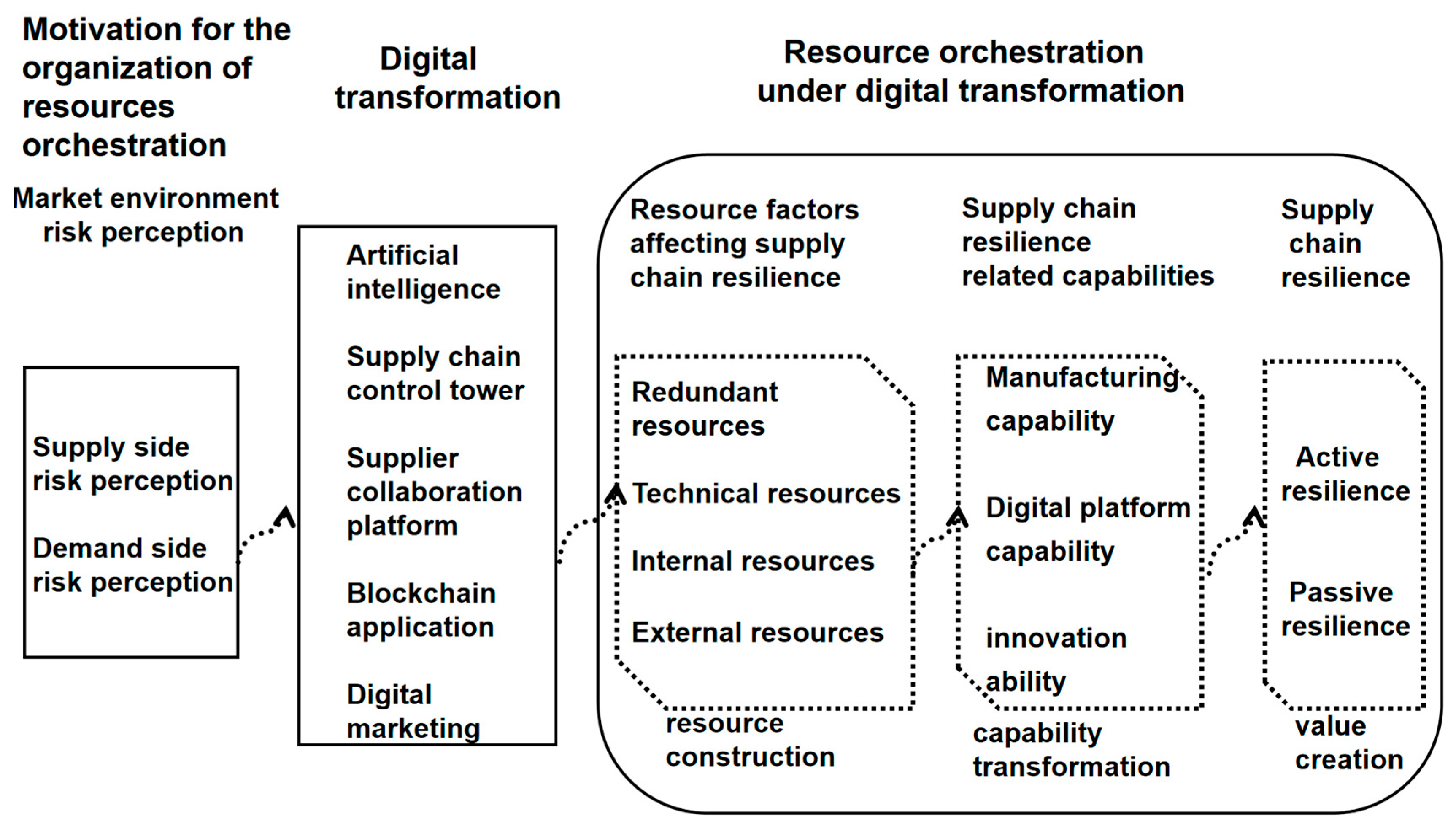
Figure 1. Mechanism model of resource orchestration to enhance supply chain resilience in the situation of digital transformation.
Preprints 152021 g001
Table 1. Open coding of the mechanism of action of digital transformation to improve supply chain resilience.
development logic Case Information conceptualization categorization


Motivation for the organization of resources orchestration
Compaks -Australian caravan dealers: the industry started late, the development is slow; caravan enterprises are many but not strong, it is difficult to form a scale, the production is subject to the dealer's orders, and the profit of the product is also slow to go up. Small scale, low production, few customers, Compass wants to get orders, can only rely on product quality.
The caravanning industry is backward in terms of manufacturing process and efficiency, the quality of caravanning modification is not uniform, the caravan leasing and traveling supporting services are not perfect, and the user experience is poor, and many other problems. In China, the caravanning industry and caravanning tourism is still in its infancy, and caravanning enterprises generally have problems such as fragmented procurement of parts, difficult to find accessories, poor communication with users, weak technical foundation and financing difficulties.
The Compaks' head of customs Li Longlong said, parts varieties, brands, specifications are complicated, customers delete parts or even cancel the order occurs from time to time, “high-priced with all the parts that do not need to be used, not to mention the occupation of funds, but also affects the implementation of the company's production plan.”
Wang Weiyuan, chairman of the board, said, “Affected by the epidemic, the shortage of materials, raw material prices, poor shipping logistics and other factors impact, personalized customization on the industrial chain, supply chain put forward higher requirements.”
a1. Lack of user communication

a2. Subject to dealer orders
a3. Weak technical foundation
a4. Over-reliance on exports
a5. Financing difficulties
a6. Hard to find accessories

a7. Procurement fragmentation

a8. The industry is backward


a9. Weak anti-risk ability


a10. Impact of the epidemic

a11. Market changes


A1. Supply-side risk perception(a2, a3, a5, a6, a7, a9)


A2.Demand-side risk perception(a1, a4, a8, a10, a11)


Resource orchestration under digital transformation (resource building - capacity transformation - value creation)


The person in charge, Yu Hui, introduced that after resuming work on February 8th, due to the impact of the epidemic, the original board supplier was unable to start work. The enterprise resumption and production increase service platform on the COSMOPlat platform quickly solved the procurement needs.
Wang Weiyuan has decided to cooperate with COSMOPlat to jointly create a sub platform for the RV industry based on user experience, hoping to promote the transformation of old and new driving forces of Kangpaisi and accelerate the transformation and upgrading of enterprise intelligent manufacturing. The enterprise has invested approximately 80 million yuan to purchase new equipment, upgrade production lines, and implement digital management systems such as ERP and PLM.
Pei Zhanbao stated that he has deep cooperation with the Haier Group team, conducting remote collaborative production through video, providing training to newly hired employees, and improving production efficiency;
Campaigner will go to the "cloud" to seek solutions from the industrial Internet and carry out intelligent digital transformation.
In 2019, the headquarters of Compaks Company acquired cross-border supply chain platform products from the COSMOPlat platform. The platform utilizes an integrated supply chain management system deployed in the cloud to streamline a series of tedious operations related to sea freight exports, including orders, booking, dispatching vehicles, and customs clearance. Two overseas warehouses have been established in South Korea and Australia, with a total storage area of over 7000 square meters, and there are continuous orders for RV exports.
Compaks has purchased technology from the COSMOPlat platform for digital and intelligent transformation. The entire production process has been optimized, making Compaks the first intelligent manufacturing and interconnected factory in the RV industry in China. Traditional RVs have been upgraded to intelligent RVs, achieving shared and interconnected product design and development, production and manufacturing, iterative upgrades, and other links.
Compaks has partnered with universities such as Tsinghua University, Harbin Institute of Technology, and Shandong University of Technology to launch a new round of patent research and development. The company has established a technical team of over 150 people and invests 5% of its annual sales revenue into technology research and development. On the Compaks car, more than 120 invention patents and utility model patents are loaded.
In 2018, with the help of Sindar, an ecological brand in the camping industry, "Compaks RV" transformed from enterprise led to user led, linking connected factories, smart appliances, connected vehicles, RV campsites, and travel enthusiasts into an ecosystem, upgrading traditional houses and vehicles into mobile smart homes and enhancing user experience.
a12. Data Interworking - Structured capital
a.13 Multi-Source Procurement

a14 Business leadership support
a15 Cooperation with Internet platforms
a.16 Co-building - Cognitive Capital
a17 Purchase the device
a18. Buy digital technology


a19. Training digital talent

a.20. Establishment of relationship resource

a21. Organizational changes
a22. Management model change
a23. Management model innovation
a24. Solution change
a25. Changes in production patterns
a26. Enterprise intelligent manufacturing upgrade
a27. Production process optimization

a28. Research and development in cooperation with universities
a29. R&d in cooperation with the platform


a30. Based on the user perspective.
a31. Establishment of new production patterns
a32. Product innovation


AA3. Redundant Resources (a13)


A4. Organizational Resources (a13)

A5. Technical Resources (a14,a15)


A6. Human Resources (a19)

A7. Cooperation Resources (a15,a16)

A8.Relationship resources (a12,a16,a.18)


A9. Manufacturing Capacity (a21-a24)

A10. Digital platform capability (a25,a26, a27)

A11. Innovation ability
(a28-a32)


value creation
On the manufacturing side, COSMOPlat RV Industry Intensive Purchasing Service provides a stable supply chain solution for Compaks. The procurement module has reduced the purchase price of galvanized sheet, one of the main materials for RV production, by 12% and the overall cost of module procurement by 7.3% ......
During the epidemic, Compaks relied on the resources of the COSMOPlat platform to realize a 3-day solution for lightweight panels for caravans and a 1-day solution for the supply of sandwich panels.
Under the influence of the epidemic, customs inspection and quarantine is difficult, there is no fixed place, and the sampling environment is poor, Compaks relies on the resources of the COSMOPlat platform, and creates the inspection and quarantine square cabin in just 15 days, which provides the inspection and quarantine work with a stable, comfortable, and safe place with the functions of intelligent air management and disinfection of the square cabin.
The User Interaction module enables companies to get designs and orders directly from users,the car body color, engine power and other personalized customization are realized, realizing a 63% product premium and a 62% increase in orders.
The caravan enterprises also take the policy wind to set up “overseas warehouse” in foreign countries. Under this mode, enterprises can prepare goods for export in advance according to the historical order situation, compared with the traditional “order - production - export” mode, faster delivery, better customer experience, but also to facilitate the enterprise according to the maritime logistics, container and other conditions to flexibly adjust the delivery and Reduce costs.

a33. Improved procurement efficiency


a34. Flexible supply and demand


a35. Disruptive innovation


a36. Personalized customization

a37. Operational flexibility

a38. Reduce costs and increase efficiency

a39. Production flexibility


A12. Supply chain proactive flexibility improvement (a33, a36, a37,a38,a39)


A13. Supply chain passive resilience improvement (a34,a35)
Table 2. Supply Chain Resilience Improvement Path Main Scop.
main category support category connotation of category
Market environment risk perception
(Motivation for resource orchestration)

Resource factors affecting supply chain resilience
(Resource Construction)


Capability related to supply chain resilience
(Ability Conversion)


Improvement of supply chain resilience
(Value creation)
Supply side risk perception
Demand side risk perception


Redundant resources
Technical resources
Internal resources
External resources


Manufacturing capability
Digital platform capability
Innovation capability


Supply chain active resilience improvement
Supply chain passive resilience improvement
Driven by internal problems and a fiercely competitive external environment, traditional manufacturing companies need to rely on resource orchestration to deal with

Obtain and purchase relevant resources that the enterprise lacks from the social resource pool, and construct resources by combining them with existing resources according to its own needs

Enterprises utilize orchestration resources to enhance their manufacturing, digital platform, and innovation capabilities


Resource orchestration under digital transformation can improve procurement efficiency, personalize customization, achieve cost reduction and efficiency improvement, and disruptive innovation, while expanding new markets. Improved the active and passive resilience of the supply chain, and continued to analyze its own risks and needs
Disclaimer/Publisher’s Note: The statements, opinions and data contained in all publications are solely those of the individual author(s) and contributor(s) and not of MDPI and/or the editor(s). MDPI and/or the editor(s) disclaim responsibility for any injury to people or property resulting from any ideas, methods, instructions or products referred to in the content.
Copyright: This open access article is published under a Creative Commons CC BY 4.0 license, which permit the free download, distribution, and reuse, provided that the author and preprint are cited in any reuse.
Prerpints.org logo

Preprints.org is a free preprint server supported by MDPI in Basel, Switzerland.

Subscribe

Disclaimer

Terms of Use

Privacy Policy

Privacy Settings

© 2025 MDPI (Basel, Switzerland) unless otherwise stated