

Submitted:
03 March 2025
Posted:
04 March 2025
You are already at the latest version
Abstract
Building integrated photovoltaic systems (BIPV) is a strategy to achieve energy self-sufficiency in buildings. However, photovoltaic (PV) energy production presents challenges due to its intermittent nature, characterized by variations and uncertainties associated with solar radiation and interference from the building's surroundings. Therefore, BIM enables energy simulations and solar performance analyses during the design phase of buildings. In this context, this paper aims to identify the key strategies for integrating BIM and photovoltaic energy production systems and how these ap-proaches support the development of sustainable projects. This paper applies the sys-tematic literature review methodology associated with bibliometric analysis, content analysis, and coding of 63 articles. The findings reveal an annual research growth rate of 19.62%, with contributions from 268 authors and an international co-authorship rate of 22.22%. The paper identifies the core research trends in the BIM-PV context through thematic maps. It identifies four dimensions (divided into 32 codes) related to BIM-PV projects related to BIPV applications, parametric tools for energy simulation, challenges, and potential benefits. The literature findings are summarized in four the-oretical propositions structured in an integrative framework. Finally, the article maps five key applications of BIM-PV integration, their problems to solve, and the limita-tions of establishing theoretical and managerial contributions.
Keywords:
sustainability
; net zero energy buildings
; photovoltaic
; design
; project
1. Introduction
The Architecture, Engineering, and Construction (AEC) sector represents a source of global carbon dioxide emissions, contributing approximately 37% of the total. Residential and non-residential buildings account for 28% of these emissions, underscoring their considerable environmental impact [1]. Furthermore, the sector's operational energy demand constitutes 34% of global energy consumption, evidencing its role in energy usage patterns and its influence on global sustainability challenges [1]. In response to the energy and sustainability demands of the AEC sector, the transition to sustainable energy solutions has become an emerging topic [2]. Renewable energy sources such as solar power offer viable alternatives for energy self-sufficiency in buildings. In addition, constructing photovoltaic (PV) systems on rooftops reduces dependence on fossil fuels and greenhouse gas emissions [3]. In this way, the AEC sector is challenged to develop construction technologies and environmental assessment methods in projects that integrate photovoltaic systems and sustainable building planning [1,4,5]. To address this challenge, this article suggests using Building Information Modeling (BIM) to integrate photovoltaic systems from the early stages of the project.
In the context of photovoltaic projects, BIM enables energy simulations and solar performance analyses during the design phase of buildings. Based on local climate data, BIM optimizes the position, inclination, and arrangement of solar panels on roofs, maximizing energy capture and enhancing the efficiency of the photovoltaic system. In addition, BIM advances in identifying areas with shading, such as structural obstacles or neighboring buildings, allowing adjustments to the project to minimize energy losses [6]. The BIM framework in the design phase refers to the methodological approach that guides the application of parametric modeling during the development of architectural and engineering projects. BIM integrates detailed three-dimensional modeling with multidisciplinary analyses at this stage, promoting coordination between architecture, structures, and installations (electrical, hydraulic, and air conditioning) [7]. The framework covers defining standards, interoperability protocols, levels of development (LOD), and preparing the BIM Execution Plan (BEP), ensuring collaboration between the professionals involved. In addition, it allows for the performance of simulations, such as energy performance studies, natural lighting analysis, and clash detection identification [8].
Photovoltaic energy is one of the strategies to achieve energy self-sufficiency in buildings. However, photovoltaic (PV) energy generation presents challenges due to its intermittent nature, characterized by variations and uncertainties associated with solar radiation and interference from the building's surroundings (such as shading from neighboring buildings) [9]. Furthermore, building-integrated photovoltaics (BIPV) systems face implementation barriers, such as efficient integration between the PV system and architectural components such as facades, roofs, and windows. This requires design solutions and architectural compatibility. In addition, climatic variations and the orientation of the building impact the energy efficiency of the system. From an economic perspective, high initial installation costs and an extended return on investment curve limit its adoption in commercial and residential projects [10]. Furthermore, the fragmentation of the design process in the AEC sector, combined with the lack of standardization and interoperability of digital tools, limits collaboration between disciplines and impacts the energy performance of the adopted solutions [6].
While the body of knowledge related to photovoltaic projects in the AEC industry explores alternatives to enhance solar energy production through the application of different materials for solar panels [1,3,9], the literature on BIM in sustainable projects seeks to propose solutions in the various dimensions of the framework [2,8,11,12]. However, there is a gap in the literature related to integrating photovoltaic projects and BIM technologies for simulations in three-dimensional models during the project design phase.
In this context, this paper aims to identify the key strategies for integrating BIM and photovoltaic energy production systems and how these approaches support the development of sustainable projects. This paper applies the systematic literature review methodology associated with bibliometric analysis, content analysis, and coding. This article also seeks to answer the following research question: How can the BIM framework for photovoltaic energy planning be implemented in the design phase of sustainable projects?
Thus, this paper contributes to the literature on the AEC and sustainability industry. First, the paper identifies the research trends and groupings between BIPV and BIM through thematic maps. The article also identifies four dimensions related to BIM-PV projects, including BIPV applications, parametric tools for energy simulation, challenges of BIM-PV integration, and potential benefits. The article also summarizes the findings of the literature in four theoretical propositions structured in a framework. The article makes theoretical and managerial contributions by proposing an integrative framework that explores the means for BIM-PV integration in sustainable projects.
The key novelty of this paper lies in a framework for BIM-PV integration, which extends beyond bibliometric mapping to examine its practical applications. This study consolidates fundamental dimensions that illustrate how BIM enhances the planning of photovoltaic systems, providing a structured codification of these applications. The research highlights design processes, such as 3D modeling for regional analysis, generative design for optimizing solar panel positioning, forecasting energy generation and demand, and simulating a building's net energy balance.
To support this integration, the study also analyzes parametric tools and strategic technologies used in BIM-PV modeling, categorizing them into five main computational toolsets. While these innovations offer significant advancements, the paper also identifies six key barriers that hinder BIM-PV adoption in practice, addressing technical, financial, and operational feasibility challenges.
Another distinguishing feature of this research is identifying 10 potential benefits of BIM-PV, reinforcing its importance in sustainable project development. To further consolidate its findings, the study presents four theoretical propositions that expand the understanding of BIM-PV interactions in the AEC industry. Finally, the study comprehensively analyzes BIM-PV limitations, structured into five key application areas.
2. Theoretical Background
2.1. BIM Application for PV Systems in the AEC Industry
The Architecture, Engineering, and Construction (AEC) industry is characterized by its complexity, fragmentation, and dependence on interdisciplinary collaboration, involving multiple stakeholders throughout the project life cycle. This sector deals with tight deadlines, cost control, risk management, and environmental impact [13]. The motivation for adopting BIM arises from improving operational efficiency, reducing errors and rework, increasing interoperability between teams, and facilitating integrated project management [7].
The BIM concept in the AEC industry has evolved from its initial conception as a computer-aided design tool to a multidimensional and integrated approach throughout the entire life cycle of buildings. This methodology encompasses both the digital representation of the physical and functional characteristics of a building and the processes inherent in the creation, management, and use of this information during its useful life [4,7]. BIM enables the generation and management of detailed digital models, which provide strategic support to project teams. BIM models enable simulations and optimizations in projects. Furthermore, this approach integrates information management practices in construction, covering both the strategic and operational aspects necessary for monitoring the processes associated with the building life cycle [2,8].
BIM enables the integration of solar energy generation solutions at the earliest stages of architectural design. This allows designers to develop a detailed three-dimensional (3D) digital model of the building. In urban development, modeling and simulation of PV systems presents challenges compared to systems installed in open fields due to the complexity of urban morphology, including shading, orientation, and spatial limitations. BIM-based tools allow the storage and management of physical and functional information of the building in a comprehensive and accurate digital model that can facilitate analyses and simulations for energy optimization in cities [6].
To integrate solar energy generation into the project through BIM, the recommended level of development (LOD) is at least LOD 300 (Detailed Development). This LOD is recommended for the design phase, as it contains enough graphical and non-graphical information to model photovoltaic systems, solar capture surfaces, orientation, and energy efficiency. This level allows the model to be used for energy simulations and feasibility studies. However, it is essential to analyze system interoperability, including integrating photovoltaic panels, structures, and electrical systems. This is important to resolve interferences (clash detection); therefore, it is essential to evolve this integration to LOD 350 (Coordination). For the construction phase, LOD 400 should include information on photovoltaic components with technical and assembly specifications [14,15,16].
Levels of Development (LOD) is a standardized framework for defining the level of detail and accuracy that should be included in a BIM model at different project stages. This standardization is essential to ensure clear communication between stakeholders throughout the life cycle of a project. The American Institute of Architects (AIA) and the Associated General Contractors of America (AGC) have developed a widely used system that segments the model into different development levels based on the information's level of detail and reliability. LODs are a guide that defines the depth of information to be included in BIM models at each stage [17,18,19]. LOD framework is divided into six levels, each describing the degree of information detail throughout the project lifecycle:
- LOD 100 – Conceptual Design: This level corresponds to the project's conceptual phase, where the model displays only the basic shapes and dimensions of elements, emphasizing overall design intent.
- LOD 200 – Schematic Design: At this stage, the model provides approximate information regarding quantities, sizes, shapes, and element locations. It supports the analysis of spatial relationships and preliminary design concepts.
- LOD 300 – Detailed Design: This level incorporates precise geometric information, such as sizes, shapes, and component details. It is crucial for developing construction documents and coordinating multiple project disciplines.
- LOD 350—Construction Documentation: This level focuses on construction documentation and adds detailed assemblies and fabrication information. It facilitates the creation of technical documents, such as shop drawings and assembly instructions.
- LOD 400 – Fabrication and Assembly: This level provides maximum model detail, including specific connection and assembly information. The model is suitable for production, prefabrication, and on-site installation processes.
- LOD 500 – As-Built Model: Known as the 'as-built' model, it accurately reflects the actual conditions of the completed building. This level is essential for facility management and maintenance throughout the building's lifecycle.
BIM integration with photovoltaic systems is at the 6D level, covering sustainability and energy efficiency, focusing on analyses beyond geometric modeling (3D). At this level, energy simulations are performed to assess the potential for solar generation, considering factors such as orientation, inclination, shading, and seasonal performance. In addition, integration allows the analysis of the energy impact of the building, which promotes means for the development of renewable energy use strategies. The 6D approach also includes life cycle analyses (LCA - Life Cycle Assessment), allowing the estimation of the environmental impacts of the photovoltaic system from production and installation to operation and disposal [20,21].
Data sharing between different BIM software can be done through the Industry Foundation Classes (IFC) scheme. IFC is an open and standardized data format developed by buildingSMART International, designed to enable interoperability and information exchange between different software used in the BIM process. IFC is structured as an object-oriented data model that stores and describes geometric, structural, energy, material, and construction component information throughout the entire building life cycle [14,15,16].
However, the Building Integrated Photovoltaics (BIPV) design process is fragmented, occurring in independent phases, such as architectural design and photovoltaic design, conducted by different professionals using specific tools for each domain. Architects use software such as AutoCAD, ArchiCAD, and SketchUp, which, although robust for architectural design, offer limited support for PV system design. On the other hand, photovoltaic engineers use specialized tools, such as PVsyst and Retscreen, for dimensioning and simulating energy performance and specific solutions, such as partial shading models and optimization of panel connections. This sectorized approach generates incompatibility between models, making it difficult to synchronize modifications made at different stages of the project, which results in rework, increased costs, and inefficiencies. The lack of interoperability between tools and the dependence on specialists to resolve conflicts between models make projects expensive and complex [22].
However, the Sustainable Development Goals (SDG) Agenda for 2030 includes the provision of clean and sustainable energy and realizing sustainable communities [23]. Therefore, distributed solar PV, such as BIPV, is expected to account for almost half the annual capacity additions within solar PV. An advantage of BIPV is that it produces renewable energy on-site without requiring additional land area. One of the promising strategies of BIPV is the combination of energy efficiency with sustainable design, contributing to reducing the carbon footprint and promoting energy self-sufficiency. In addition to generating electricity from sunlight, BIPV systems can provide thermal insulation, daylight control, and acoustic protection, integrating aesthetic, functional, and sustainability aspects into architectural projects [10].
The BIM-PV framework can effectively guide the AEC industry toward sustainable outcomes. This integration can help establish indicators to enhance the attainment of sustainable building certifications, such as the Building Research Establishment Environmental Assessment Method (BREEAM), Leadership in Energy and Environmental Design (LEED), GREEN STAR (GS), and the Comprehensive Assessment System for Built Environment Efficiency [24] BIMPV framework also enables the planning of renewable energy generation directly in the building's construction elements. By incorporating photovoltaic panels into facades and roofs, BIPV systems allow buildings to generate clean energy while also fulfilling aesthetic functions. In the context of projects aimed at energy self-sufficiency, this approach increases the areas available for solar capture, optimizing energy generation and directly contributing to achieving energy neutrality goals, as in the case of Net Zero Energy Buildings (NZEBs). NZEBs are buildings designed to produce, over a year, the same amount of energy that they consume. To achieve this balance, one of the main strategies is generating renewable energy, emphasizing photovoltaic systems installed on roofs. These systems convert solar energy into electricity, directly contributing to the building's energy self-sufficiency [1,24].
Finally, BIM is essential for efficiently planning and implementing BIPV systems, especially in projects that seek to achieve net zero energy balance. BIM's multidimensional functionalities allow solar simulations to be carried out, considering orientation, inclination, and possible shading throughout the year. Predictive analysis in BIM models can be integrated with PV systems to justify interventions that maximize energy efficiency and extend the life of solar panels [24]. This data-driven approach also continuously optimizes energy consumption, ensuring that NZEBs maintain their net-zero energy balance over time [9].
2.2. BIPV Perspectives Development in Buildings
Photovoltaic energy is expected to accelerate global decarbonization efforts by promoting the production of clean and abundantly available energy. The literature has sought to develop strategies for integrating PV energy production with the use of available areas on the roofs of buildings [25]. PV cell types can be classified into silicon-based and non-silicon-based materials. Silicon-based options are more affordable and durable, making them suitable for roofs and facades. In addition, silicon-based thin-film PV modules offer flexibility for architectural design, allowing them to be adapted to different shapes in conjunction with membranes or kinetic systems. The BIPV market offers four main product categories: sheets, tiles, modules, and glazing with solar cells [26].
Despite the falling costs of PV technology, AEC professionals are still hesitant to incorporate it into building envelopes. One of the main reasons is the fragmentation in the production of PV system components, such as modules, inverters, storage units, and supporting infrastructure, which different suppliers develop. The fierce competition in the AEC sector reduces the time available for research and innovation, as there is pressure to achieve rapid financial returns. Furthermore, implementing high-quality PV modules entails additional costs related to feasibility studies, electrical layout, aesthetic design, and software development [26].
[27] identifies 19 barriers to implementing BIPV, covering regulatory, financial, technical, and institutional challenges. The main barriers include difficulties obtaining government approval and uncertainties in long-term BIPV policies. From an economic perspective, the high initial cost and an extended return on investment discourage developers and investors. Additionally, the lack of life-cycle cost analyses, demonstration projects, and appropriate design tools limits its practical implementation in the AEC sector. However, this paper explores how BIM can overcome several barriers to implementing BIPV identified by [27], especially in technical obstacles, standardization, and integration between agents in the AEC sector.
It is necessary to use BIM to overcome some regulatory barriers in BIPV systems since several countries have implemented regulations to make BIM mandatory or encouraged in public and private projects. In the United Kingdom, BIM has been required for public projects since 2016, following the guidelines of ISO 19650. In the United States, the General Services Administration (GSA) has adopted BIM for federal projects since 2003, based on the National BIM Standard (NBIMS). Singapore implemented CORENET X, requiring BIM for large projects since 2015. In the European Union, Directive 2014/24/EU recommends using BIM in public procurement, and countries such as Germany, France, and the Netherlands have made it mandatory for government-funded projects. In Brazil, Decree 10.306/2020 provides for the gradual adoption of BIM in public projects since 2021. China offers incentives for the use of BIM in infrastructure and sustainable buildings. Norway, which has required BIM for public projects since 2010, focuses its application on sustainability and renewable energy solutions.
However, literature has shown that it is possible to develop BIM-PV integration even in the design phase. For example, [28] presents a design-driven approach to integrating high-performance PV systems into building facades. To this, the authors use parametric modeling and solar simulation. The methodology employed involved the creation of a facade pixelation system, in which the PV modules were distributed according to the solar potential of each building area. To this end, the Rhino software and the Grasshopper Ladybug plug-in generated an annual solar radiation map. This allowed the definition of optimal zones for the installation of the panels. In addition to the intelligent distribution of the PV modules, the research incorporated the "shingled" module technology developed by the Solar Energy Research Institute of Singapore (SERIS). This technology allows for a greater density of solar cells within the modules and reduces resistive losses, increasing energy efficiency by up to 15%.
[25] proposes simulating a PV system installed in a near-zero energy building (NZEB) with PVSOL. The authors developed a machine-learning model based on local climate data. The study presented a performance ratio (PR) of 81.9% in the first year, representing the PV system's operational efficiency compared to its theoretical energy generation potential. The initial investment of USD 435,600 has a predicted payback period of 11.42 years, while PVSOL is estimated to be 14.9 years.
[29] analyzes the solar potential, architectural modeling, financial feasibility, and environmental impacts of projects to simulate distributed PV systems on the roofs of a community. The results indicate that the installation of 79 units generates 1,328.74 MWh annually. This meets residents' energy needs and provides a surplus to the electricity grid. The use of light-colored PV panels and elevated pavilion-type structures meets the aesthetic standards of the projects in terms of local architecture while maximizing energy efficiency and rooftop utilization. The life cycle assessment confirmed the project's economic viability, presenting an internal rate of return of 5.82% and a discounted payback period of 15.31 years, considering additional architectural integration costs. In addition, the installation reduced 24,754.77 tons of CO₂ over 25 years.
Furthermore, [26] argues that the integration between BIM systems and BIPV technology is generally limited to analyzing solar potential on facades and automated solar panel positioning without considering prefabricated building solutions. However, a fertile field of research related to BIM-PV integration is needed to develop sustainable projects in the AEC industry.
Although PV technology can potentially drive energy transition and decarbonization, its adoption in the AEC industry still faces regulatory, economic, and technical challenges [27]. The literature highlights that BIM-PV integration enhances standardization and design optimization and improves collaboration among AEC stakeholders [30]. Research shows that BIM can strengthen the integration of PV systems in buildings, from solar potential analysis and parametric modeling to cost-benefit and life cycle assessments. Although BIM-PV integration is still primarily focused on solar mapping and automating panel positioning, there is a vast field of research and innovation, especially in developing solutions at the design stage [31].
3. Materials and Methods
This research adopts a systematic literature review methodology, combining bibliometric analysis, content analysis, and thematic coding of the main topics addressed in the literature related to BIM and photovoltaic systems. Bibliometric analysis allows identifying research trends and collaboration networks through a quantitative approach to understanding the development of the field. Content analysis allows a qualitative investigation by examining the recurrence of concepts and theoretical applications—the coding of the discussed themes structures and categorizes the literature findings [2,32,33].
The research structures the data analysis into four stages, as illustrated in Figure 1. First, the study's search strategy is defined, followed by refining the search criteria to compose the final sample. Subsequently, the collected data is analyzed. Each of these stages is detailed in the following subsections.
3.1. Search Strategy
The search strategy adopted in this research applies search strings to ensure the retrieval of scientific publications on integrating Building Information Modeling (BIM) with photovoltaic systems. The string used — ["Building information model*" OR BIM] AND [photovoltaic OR "solar energy" OR "solar panel"] — was applied to the Web of Science and Scopus databases, recognized for their comprehensiveness and academic rigor [34].
The search strings were designed to cover studies relating BIM to photovoltaic technologies. Careful selection of these strings is essential to ensure the search is comprehensive and covers relevant research [35]. As a result, 86 scientific documents were identified in the Web of Science and 193 scientific documents in Scopus. These two databases aim to ensure coverage of the existing literature and increase the representativeness of the studies analyzed.
The data collection process considered all publications up to 2024 to ensure the most comprehensive and up-to-date coverage of the literature. This time frame was chosen to capture the latest advancements and trends in the field, reflecting the most recent academic developments.
3.2. Search Refinement
The search refinement process was applied to ensure the selected studies' relevance and quality, considering only journal articles published in English until 2024. This filtering resulted in 80 articles from Scopus and 58 from Web of Science. The datasets from both databases were merged using RStudio, and the bibliographic records were exported in “.bib” format for further processing. During this step, 50 duplicated documents were identified and removed, resulting in a final dataset of 88 unique articles for analysis.
Specifically for removing duplicates, the “.bib” files obtained from the databases were imported into the RStudio environment using the convert2df() function to convert the metadata to BibTeX format. The two databases were combined using the mergeDbSources() function with the remove.duplicated = TRUE parameter. The code used counts duplicate records before and after the merger, considering the title of the articles as the main criterion. In addition, the metadata was standardized by converting the titles to lowercase letters to avoid false duplicates resulting from formatting variations. The consolidated database was exported in Excel format using the write.xlsx() function. Finally, the bibliometrix library was used for data exploration, bibliometric visualization, and analysis.
3.3. Final Sample Composition
The 88 articles were read in full to assess their adherence to the scope of the research on integrating BIM with photovoltaic systems. During this analysis, criteria such as the study's objective, the methodology applied, the level of detail on BIM, and its relationship with the design, implementation, or management of photovoltaic systems were considered. Furthermore, this paper sought to identify whether the articles provided empirical data, models, structures, or practical applications demonstrating this interaction. Based on this assessment, 25 articles were excluded for not meeting the established criteria, resulting in a final sample of 63 articles that effectively contributed to understanding the topic investigated.
The exclusion of 25 articles during the complete analysis of the manuscripts was based on criteria to ensure that only studies aligned with the scope of the research were maintained. The first exclusion criterion was the lack of explicit integration between BIM and photovoltaic systems, eliminating studies that addressed these topics without demonstrating their interrelationship in design, implementation, or management processes. Furthermore, articles focused on the operations and maintenance of photovoltaic systems were removed because, although relevant to the performance of these systems, they did not address the contribution of BIM to their implementation or management. Another criterion was the exclusive emphasis on technological advances in solar cells and photovoltaic materials because these studies, although essential for solar energy development, do not involve BIM as an analysis or integration tool. Likewise, research focused on daylight simulation, sustainable sanitation, and environmental certifications were excluded because they did not directly address the modeling and planning of photovoltaic systems with BIM. The sample was tabulated in codes from 1 to 63, ordered from the most recent article to the oldest, as shown in Appendix A at the end of this paper.
3.4. Inclusion and Exclusion Criteria
The inclusion and exclusion criteria applied throughout the study are summarized in Table 1, which details the selection process across different stages. In the search strategy stage, all papers published until 2024 that contained the defined research strings were considered, while non-article documents, such as book chapters or conference papers, were excluded. During search refinement, duplicate articles identified in Scopus and Web of Science (WoS) were removed, ensuring that only one version of each study was retained. Finally, in the final sample composition, studies were selected based on their explicit integration of BIM and PV systems, their methodological details, and their provision of empirical data, models, or practical applications. Articles that merely mentioned BIM and PV systems separately, focused on operations and maintenance, or exclusively addressed technological advancements in solar cells, daylight simulation, or environmental certifications—without direct relevance to BIM for PV system modeling and planning—were excluded.
3.4. Data Analysis
Data analysis was conducted in two main stages: bibliometric and content analysis. Initially, data exploration was performed through bibliometric analysis using the Bibliometrix package in the RStudio software, following the guidelines of [33]. Bibliometrix allows the identification of scientific production over time, the most influential authors, journals with the most significant impact, collaboration networks between researchers, and thematic trends through thematic maps.
After the bibliometric analysis, content analysis was performed based on the 63 articles in the final sample. Mendeley managed references and coded the data, allowing publication organization and categorization.
The coding process was structured to identify and categorize the main themes addressed in the literature. Initially, the articles were organized in Mendeley, where tags and annotations were assigned according to the topics discussed in each publication. Thus, a detailed reading of the texts was carried out to extract key concepts systematically and group them into thematic categories. To ensure consistency and traceability, the extracted data were tabulated in Excel. This process followed an iterative approach, refining categories as new codes emerged from the literature until the sample was saturated [36,37,38].
With this approach, it was possible to structure the main discussions in the literature, identifying BIM applications for optimizing photovoltaic projects, energy modeling methodologies, implementation challenges, and benefits of integrating these technologies for energy efficiency and sustainability.
4. Results
4.1. Bibliometric Analysis to Sample Characterization
The sample covers 63 scientific papers published between 2014 (the year of the first published paper about BIM-PV) and 2024. These documents are sourced from 42 journals, with an annual growth rate of 19.62%, and 268 authors contributed to these publications, with an international co-authorship rate of 22.22%. The studies exhibit an average of 4.54 co-authors per document.
This sample integrates the evolution of research on BIM associated with photovoltaic systems. The annual scientific production shows increased publications recently, especially from 2020 onwards. This indicates increased academic interest due to the search for energy efficiency and sustainable construction practices, as shown in Figure 2 [6,39,40].
The data analysis shows increased scientific production on integrating BIM and photovoltaic systems in the main sample journals Energies, Energy and Buildings and Sustainability, as shown in Figure 3. No articles were registered in these sources in the first years (2014-2016), with the first publication occurring in Sustainability in 2017. From 2020 onwards, an increase in the number of publications was observed, especially in Energies, which went from 2 articles in 2020 to 8 in 2024. Energy and Buildings also stand out in 2024 by publishing five articles. In turn, Sustainability steadily increased over the period, reaching its peak in 2023 and 2024, with five publications each year.
Based on Bradford's Law (Figure 4), the analysis of the most relevant and core sources highlights the concentration of scientific knowledge in journals in energy, sustainable construction, and civil engineering. Energies, Energy and Buildings, Sustainability, Applied Sciences-Basel, and Civil Engineering and Architecture emerge as core sources according to the Bradford distribution, representing the principal outlets for research on BIM and photovoltaic systems. The predominance of these journals in the sample underscores a focus on technological innovation and energy efficiency, particularly in integrating digital technologies with sustainable construction practices.
The sample presents geographic and thematic diversity, with case studies in different types of buildings, including residential, commercial, educational, and public, and in various climatic conditions, such as tropical, temperate, and dense urban regions [14,41]. Some of the articles explore the application of Building-Integrated Photovoltaics (BIPV), focusing on energy simulations, parametric design, photovoltaic module layout optimization, and energy performance evaluation [42,43,44]. In addition, there is an emphasis on technological approaches such as the integration of BIM with Machine Learning, Digital Twin, Historic Building Information Modeling (HBIM and Geographic Information Systems (GIS) [15,45,46].
The percentage distribution of scientific production by country shows that China leads with 24% of publications, followed by Italy with 10%. Australia, Canada, South Korea, Turkey, and the United States contribute equally with 5% each, as shown in Figure 5. India and Sweden represent 3% each, as do France, Hungary, Indonesia, and the United Kingdom. Countries such as Malaysia, Austria, Ecuador, Japan, Qatar, and Ukraine account for 2% of production. Brazil, Germany, Egypt, Lebanon, Malta, the Netherlands, Pakistan, Poland, and Singapore each have 1%, as do Belgium, Cyprus, Iraq, New Zealand, and North Macedonia, which have the lowest contributions.
As shown in Figure 6, the analysis of citations by country reveals that China has the highest total number of citations (157), although its average citation per article is 14.30. The United Kingdom stands out with an average of 38.00 citations per article, totaling 114 citations. Brazil has 84 citations in total. Canada has 78 citations in total and an average of 26.00 per article. Italy and South Korea have 71 and 40 citations, respectively, with averages of 10.10 and 13.30. Australia and the United States have 32 and 24 citations, respectively, with an average of 8.00 per article.
The most cited article, [47], with 84 citations, emphasizes the dissemination of building-integrated photovoltaic (BIPV) systems by training architects and students familiar with the BIM environment. The study used Rhinoceros CAD, Grasshopper, and Ladybug to evaluate BIPV envelopes in institutional buildings in Brasília. The authors highlight the importance of integrating 3D modeling and energy simulation tools to improve the design process. Second, [48], with 72 citations, investigated the use of BIM in interdisciplinary education for architecture, civil engineering, and environmental engineering students through a project based on the Solar Decathlon. The study demonstrated how BIM facilitates interdisciplinary collaboration, enabling the development of more sustainable and integrated projects, but also identified challenges, such as resistance to the use of BIM and the lack of ready-made family libraries. The study by [49] addressed using BIM to retrofit existing buildings, assessing the feasibility of transforming them into nearly zero energy buildings (nZEBs). The paper applied 3D laser scanning to create building energy models (BEM) and proposed solutions that could reduce energy costs by 14.1%, increase photovoltaic power generation by 24.13%, and decrease CO₂ emissions by 4306 kg CO₂eq/a.
The strategy for BIM-PV integration is based on parametric modeling, computational simulations, and life cycle analysis (LCA) [50,51]. Many articles apply tools such as Rhinoceros, Grasshopper, Ladybug, OpenStudio, and PVSITES, integrating them into the BIM environment for advanced energy performance simulations [47,52]. In addition, some studies present proposals for BIM-based workflows for energy retrofitting existing buildings, addressing energy efficiency, and reducing carbon emissions [42,53]. These strategies seek to optimize energy performance in architectural projects and construction processes. In addition, approaches such as Information Theory are used for data integration and workflow automation. These theoretical groupings are reaffirmed in the keyword co-occurrence network, as shown in Figure 7.
The central cluster in Figure 7 (blue) represents the theoretical relationship of the BIM-PV topic. The field of knowledge of this application is architectural design, which involves the conception and planning of physical spaces, encompassing aesthetics, functionality, and environmental performance, associated with information theory, which studies the quantification, storage, and transmission of information, providing the basis for efficient digital modeling in BIM. These two fields form the theoretical framework that supports energy simulations in BIM models, promoting innovation in the AEC sector by guiding the industry towards the development of smart buildings (gray cluster) and various strategies for photovoltaic energy simulations (purple, orange, pink, red and green clusters).
Regarding the sample's thematic distribution (Figure 8), there is also a contribution from research focused on sustainability and Net-Zero Energy Buildings, with an emphasis on design strategies, solar potential assessment, microgrid planning, and the impact of BIPV technologies [41,54,55]. Studies on historic buildings highlight the potential of HBIM to enable the integration of advanced photovoltaic systems, respecting architectural and cultural constraints [56,57].
In the technological aspect, the sample includes research that explores parametric optimization techniques for positioning solar panels with multi-objective algorithms, aiming to maximize energy generation and minimize costs and environmental impact [49,58]. Furthermore, studies based on Digital Twin and BIM-GIS demonstrate the potential of real-time integrated modeling to improve the energy management of intelligent buildings [45,46].
4.2. BIM Applications for BIPV Projects
The authors perform BIM model simulations at the project's design stage for effective sustainability-oriented BIM-PV integration. The goal is to optimize the layout of the solar panel distribution to avoid obstacles on the roof of the buildings that could cause shading, such as machine rooms, water tanks, and chimneys. To justify the implemented design solutions, the authors use machine learning algorithms to predict daily energy production [6]. In this way, they create documentation that justifies the costs involved in implementing solar panels and the energy savings generated over the years, in addition to supporting the viability of the projects.
In the context of generative design, [37] combines parametric modeling with evolutionary algorithms (NSGA-II) to explore multiple design alternatives. First, the parametric BIM model identifies candidate surfaces (such as walls and windows) based on semantic characteristics. Then, a parametric simulation model calculates the solar irradiation received by each surface and estimates the energy generated. The NSGA-II optimization module generates multiple solutions (initial population), which are evaluated by the parametric model based on objectives such as maximizing energy generation and minimizing life cycle cost. The algorithm applies selection, crossover, and mutation mechanisms to iteratively improve the solutions until it forms the Pareto frontier, offering design alternatives with different prices and energy efficiency [58].
Table 2 presents the main applications of BIM in BIPV projects, highlighting different dimensions of use for the integration between digital modeling and photovoltaic generation. The applications range from initial context analyses, such as the assessment of regional conditions with 3D models (BPS_1) and the estimation of areas for panels based on the IFC scheme (BPS_2), to advanced processes, such as energy balance simulations (BPS_5) and forecasting of energy generation and demand (BPS_8 and BPS_9). Table 2 also highlights the role of BIM as an interoperability facilitator, highlighting the exchange of information in real-time (BPS_4), which is essential for multidisciplinary collaboration. Design-oriented applications, such as optimizing PV module layout with generative design (BPS_7) and predicting shading by neighboring buildings (BPS_10), are critical to maximizing energy efficiency. In addition, Table 2 addresses the use of advanced technologies, such as the application of point clouds for surface extraction (BPS_6) and the optimization of roof design (BPS_11), essential for improving photovoltaic performance in complex buildings.
In the design phase of sustainable projects, these variables influence the design process of engineers and architects by integrating climate analysis, energy simulations, and design optimizations in the BIM environment, allowing for more assertive decisions from the conceptual phase. Engineers can perform detailed simulations of energy potential, evaluate the efficiency of different photovoltaic configurations, and optimize system performance. Architects, in turn, use these analyses to adjust the orientation, volumetry, and design of facades and roofs, balancing aesthetics and energy efficiency [42,43,45]. In addition, interoperability and real-time information exchange between professionals facilitate the integration of passive and active solutions, allowing for rapid adjustments based on simulation results. This collaborative and multidisciplinary approach, enabled by BIM, reduces design conflicts, accelerates the decision-making process, and promotes the development of more efficient and sustainable buildings [50,59,60].
Simulations of photovoltaic systems on building roofs modeled in BIM follow the logic of the Physical Array Reconfiguration (PAR) strategy, which consists of adjusting the physical position of photovoltaic modules without modifying their electrical connections. This approach optimizes solar energy capture, where shading from neighboring buildings, antennas, or chimneys can negatively impact energy performance. By applying the PAR concept in simulations, designers use parametric modeling and irradiation analysis to test different positioning configurations, seeking maximum energy efficiency based on factors such as solar orientation, roof slope, and seasonal variations in the sun's path [61].
[30] highlight strategies to optimize the performance of BIPV systems in different buildings. The authors note that, in small buildings with large roof areas, the greater availability of radiation on roofs can compensate for the shortage of facade surfaces suitable for BIPV, allowing up to 30% of energy demand to be met. The study also emphasizes prioritizing energy efficiency over aesthetics on roofs since these surfaces have less visual impact. In retrofit projects, the authors suggest new structures, such as canopies, to expand solar capture areas that have modified their architectural volume to increase the usable area for solar panels. On facades shaded by neighboring buildings, installing BIPV as brise-soleils is recommended to capture solar radiation and control internal heating. The study also highlights the importance of designing ventilation on the back of photovoltaic modules, especially in hot and sunny climates, to minimize heat losses and prevent overheating of the building, ensuring greater efficiency of the BIPV system [47].
[42] analyzed the energy generation potential of photovoltaic systems integrated into residential buildings in a tropical area using 3D modeling with the BIM software Revit. The simulation of different photovoltaic technologies (monocrystalline, polycrystalline, and amorphous) indicated that energy generation could exceed residential consumption by up to 1700%, evidencing the feasibility of meeting current and future electricity demand. The study also emphasized that buildings with simple roofs maximize solar capture, while complex roof shapes result in self-shading and efficiency losses [62]. Integrating solar irradiation data and information from photovoltaic (PV) panels into BIM models is achieved by directly incorporating climate parameters and technical specifications into the modeling tools. Software such as Revit (with the Insight 360 plug-in), Rhinoceros/Grasshopper (with Ladybug and Honeybee), and Solarius-PV allow the import of hourly climate data obtained from databases such as Photovoltaic Geographical Information System (PVGIS) to generate solar irradiance maps on the building surfaces. These maps are integrated into the BIM model, where the technical properties of the solar panels, such as efficiency, thermal coefficient, and nominal power, are linked to the modeled elements [63].
Furthermore, due to the high complexity involved in simulations of BIPV systems on facades, the analysis process tends to be computationally intensive, resulting in long processing times. The use of cloud computing infrastructures is a strategy to accelerate simulations since it allows the use of distributed computing resources for parallel processing, optimizing the execution of complex tasks in less time. In addition to the performance gain, cloud-based platforms provide flexibility and collaborative efficiency during the design and analysis phases of BIM-PV systems, enabling distributed computing and shared remote access [43]. Based on this discussion, this article suggests the following proposition:
Proposition 1 (P1): Applying BIM in BIPV projects during the design phase enhances photovoltaic energy production by integrating energy simulations, parametric optimizations, and strategic architectural decisions, resulting in sustainable and energy-efficient buildings.
4.3. Parametric BIM Energy Modeling Tools
Machine learning models improve the precision of PV energy estimates by utilizing historic energy generation data as the target variable and considering dynamic metrological variables as features. Also, the representative software for parametric design systems includes Grasshopper for Rhino and Dynamo for Revit [60]. Furthermore, the simulation of the energy generation of a BIM-PV system involves the creation of a model that integrates the parameters of the natural environment, urban context, building envelopes, and PV components. Since BIM-PV systems are integral parts of the building envelope, modeling is performed using BIM tools such as Skelion for SketchUp, INSIGHT for Revit, and the Ladybug and Honeybee tools for Rhinoceros 3D/Grasshopper, which are used due to their ability to perform parametric solar simulations [43].
Some research integrates BIM-PV by applying photogrammetry and artificial intelligence techniques to automate predicting solar energy production in existing buildings. This process involves acquiring the building's three-dimensional data (point cloud) through photogrammetry. The data goes through a pre-processing stage, in which filters and cleaning algorithms are applied to remove noise and unwanted points. Then, the planes are segmented, extracting the relevant surfaces, such as facades and roofs. At the same time, a set of meteorological data is organized, which includes variables for predicting photovoltaic generation, such as solar radiation levels, temperature, humidity, and wind speed, in addition to BIM model parameters, such as helpful roof area, orientation, and slope. Subsequently, the process is automated using machine learning and deep learning algorithms, which analyze patterns in this data to make predictions of photovoltaic energy generation [64].
Table 3 presents the main parametric tools and strategic technologies applied to BIPV projects. The integration of artificial intelligence (AI), with a focus on machine learning (ML) and deep learning (DL), allows advanced time series analysis and point cloud segmentation, optimizing the interpretation of large volumes of data and energy forecasts in time series. Tools such as Grasshopper and Ladybug, integrated with Rhinoceros, simulate solar radiation and plan the positioning of photovoltaic panels. Photogrammetry makes it possible to capture point clouds of buildings, facilitating the extraction of surfaces for solar analysis, especially in retrofit projects. The PVGIS system, a specific tool for solar potential estimations, provides accurate climate data integrated into BIM simulations to predict photovoltaic energy generation. Finally, Revit (with Dynamo) is used to simulate different solar panel layouts, perform radiation analysis, and compare energy scenarios directly in the BIM model [43,53,63].
Among the most widely used machine learning algorithms for forecasting photovoltaic (PV) energy generation and solar irradiation, the following stand out: K-Nearest Neighbors (KNN), known for its efficiency in identifying patterns based on proximity; Decision Trees, which are used to model decisions considering multiple climate variables; Support Vector Regression (SVR), which can capture non-linear relationships in time series; and Random Forest, applied in predictive analysis by combining multiple decision trees [6,64].
Methods such as Physical Array Reconfiguration (PAR) and Electrical Array Reconfiguration (EAR) are applied under the condition of Dynamic Partial Shading (D-PSCs) with the support of BIM tools. Using software such as Revit, Rhinoceros (Rhino), and Grasshopper, it is possible to create different D-PSC scenarios in buildings, simulating shading variations in urban areas. For example, modeling performed with Rhino and Grasshopper in conjunction with the Ladybug plug-in generates a detailed hourly irradiance matrix on the building envelopes (roofs and facades). These irradiance data are used as inputs for designing the BIPV (Building-Integrated Photovoltaics) system, modeled in the Matlab-Simulink environment, where the power and energy losses are calculated. These indicators allow evaluation of the performance of the photovoltaic system under different reconfiguration strategies (PARs and EARs) in dynamic shading conditions, offering subsidies to optimize the energy performance and efficiency of the photovoltaic project integrated into the building [61,65]. Based on this discussion, this article suggests the following proposition:
Proposition 2 (P2): Using parametric tools in BIM-PV projects highlights the multidisciplinary technological evolution of the architecture, engineering, and construction industry.
4.3. BIM-PV Integration Challenges
The literature highlights that the main challenges in installing photovoltaic systems in buildings are related to environmental and meteorological factors, such as cloud cover, dust accumulation, and shading. Solar simulations require accurate input data for a reliable analysis of the solar energy generation potential, making the quality of meteorological information a critical factor. Incident solar radiation can be obtained through ground-based weather stations or meteorological satellites or be estimated by mathematical models, and the choice of the source directly influences the quality of the parameters used in the simulations [14,23,58].
Furthermore, global or regional climate databases, commonly integrated into solar simulation software, provide average radiation estimates. In contrast, local databases provide more accurate projections by incorporating detailed spatial and temporal analyses of the specific environment. This difference highlights the importance of choosing appropriate data sources to increase the accuracy of energy simulations in BIM-integrated solar energy projects [14,59,62].
BIM-PV integration faces several challenges related to the complexity of solar radiation simulations, which are essential to estimate the potential for photovoltaic energy generation accurately. One of the main obstacles is the influence of multiple factors on the radiation potential, such as geographic location, urban morphology (neighboring buildings and projected shadows), building geometry and orientation, presence of mechanical installations on the roof (such as ducts and antennas), and the characteristics of the PV modules themselves (size, type, and orientation). In addition, radiation analysis is susceptible to the layout of PV modules since their arrangement, shape, and inclination changes can generate internal shadows (particularly on vertical facades), impacting energy efficiency. This scenario requires that simulations be repeated for each layout alternative, not just once, making the process computationally intensive [62,66].
The lack of universal standards and difficulties in converting between formats such as IFC, gbXML, and CSV limit the exchange of information between BIM platforms (such as Revit) and PV simulation software (such as PVSyst, Solarius-PV, and EnergyPlus). Integrated simulations involving large BIM models and complex irradiance simulations (such as Ladybug/Honeybee with Radiance) can be computationally demanding, resulting in slow processes [53]. Furthermore, the total payback period for the BIM-PV system is around 10 years, with a positive net present value in the whole life span of 20 years [67].
In this context, Table 4 presents the main challenges in BIM-PV integration in sustainable projects, highlighting technical, financial, and operational barriers that impact the performance and viability of photovoltaic projects integrated into the BIM environment. The lack of a complete regional historical series (BIC_1) hinders solar generation simulations, affecting energy forecasting and the assertiveness of performance analyses. The challenge of high demand for computational performance (BIC_2) arises from the complexity of energy simulations, such as parametric analyses and dynamic shading modeling, requiring high computer processing power. In addition, the high initial costs (BIC_3) associated with implementing BIM technologies and photovoltaic systems represent a barrier, especially in retrofit or small-scale projects. Software interoperability and compatibility (BIC_4) is another challenge since the exchange of information between different platforms (such as Revit, PVGIS, and Rhinoceros/Grasshopper) is often limited by incompatible file formats or the lack of common standards such as IFC. The long payback period (BIC_5), caused by the slow amortization of initial costs, reduces the economic attractiveness, especially in regions with low incentives for renewable energy. Finally, the quality of input data (BIC_6), including climate and topographic or material data inaccuracies, compromises the simulations' effectiveness and energy forecasts' reliability.
Based on this discussion, this paper suggests the following proposition:
Proposition 3 (P3): BIM-PV integration is plagued by technical, financial, and operational barriers that impact the performance and viability of PV projects integrated into the BIM environment.
4.4. Potential Benefits of BIM-PV Integration
At the level of life cycle analysis, authors such as [15,50,59] address the study of embodied energy during the construction, use, and demolition phases of buildings, with an emphasis on the choice of materials and the evaluation of the energy performance of photovoltaic (PV) systems. In the design phase of PV plants and 3D models, BIM allows for energy performance simulations, facilitating the optimization of the layout and efficiency of solar panels in the project. In addition, integrated modeling with LCA enables environmental assessment, considering impacts from manufacturing and installing PV systems to their operation and disposal. This contributes to reducing the carbon footprint throughout the building's life cycle. This integrated approach promotes using renewable energy sources, such as solar energy, reducing dependence on fossil fuels and minimizing greenhouse gas emissions. In the AEC industry, developing projects aligned with NZEB principles requires an integrated approach that covers all phases of the building life cycle, from design to operation. The design phase is essential to ensure that energy efficiency and renewable energy generation strategies are incorporated into sustainable projects. In this phase, BIM allows for the creation of detailed digital models integrating disciplines such as architecture, structural, electrical, and hydraulic engineering [15,54,68].
Table 5 presents the main potential benefits of BIM-PV integration in energy efficiency, sustainability, and technological innovation in AEC industry projects. Among the environmental gains, reducing carbon emissions (PB_1) and contributing to climate policies (PB_2) stand out, aligning projects with global decarbonization goals. In economic terms, BIM-PV integration facilitates calculating return on investment (PB_3) during the design phase, optimizing financial decision-making, and accelerating obtaining environmental certifications (PB_4), such as LEED and BREEAM. Integrating photovoltaic data into BIM models (PB_5) enables automated energy analyses, while life cycle analysis (PB_6) allows measuring environmental and economic impacts at all project phases. Regarding energy efficiency, the approach contributes to meeting the requirements of Net-Zero Energy buildings (PB_7) by integrating simulations of renewable energy consumption and generation. From an operational point of view, process automation (PB_8), such as parametric simulations and energy calculations, reduces development time and design errors. In addition, BIM-PV integration promotes energy resilience (PB_9), favoring projects with greater energy autonomy and security against fluctuations in the electrical grid. Finally, the application in retrofitting existing buildings (PB_10) expands the possibilities for energy rehabilitation, modernizing old buildings with integrated photovoltaic systems.
[50] Analyzes the performance of different HVAC (Heating, Ventilation, and Air Conditioning) systems under six climate conditions, focusing on integrating BIM and fuzzy logic-based methods to reduce uncertainties. The research considers 36 scenarios, varying the energy source (electricity, natural gas, and solar) and including photovoltaic (PV) panels, performing life cycle assessments and energy simulations. The BIM model was developed in Revit, allowing the survey of materials and the quantification of environmental impacts, while the HOT2000 software was used for energy simulations. The fuzzy approach was applied to analyze multiple criteria to classify the scenarios according to environmental and economic performance. The results show that integrating PV panels is essential to reducing carbon footprint. Still, its efficiency depends on the climate location and the integration strategy with HVAC systems. Increasing the photovoltaic capacity or including batteries would be necessary in cold climates to ensure greater energy efficiency during the winter [16,50]. Based on this discussion, this article suggests the following proposition:
Proposition 4 (P4): Integrating BIM with photovoltaic projects in the design phase of sustainable projects generates environmental, economic, and energy efficiency benefits and enhances the automation of intelligent processes.
Finally, Figure 9 shows the frequency of codes, which was determined by counting the number of articles mentioning each code; about 63 articles were analyzed. For each code within the dimensions BIM-PV systems application (BPS), Parametric tools (PTS), BIM-PV Integration Challenges (BIC), and Potential Benefits (PB), the number of articles in which it appears was identified. Then, relative frequency was calculated by dividing the number of articles mentioning the code by the total of 63 articles and multiplying by 100 to express the result as a percentage. Thus, in the BPS group, the most frequent code is BPS_11 (29%), related to the optimization of roof design, followed by BPS_7 (21%), which deals with the optimization of the layout of photovoltaic modules with generative design. Other codes, such as BPS_10 (19%) and BPS_8 (17%), also stand out. In the parametric tools group (PTS), the code PTS_5 stands out with 40%, indicating a strong presence in parametric modeling and simulation, while PTS_4 (19%) also stands out. As for the BIM-PV integration challenges (BIC), the frequency is distributed with codes such as BIC_1, BIC_2, BIC_5, and BIC_6, presenting 22% each, and BIC_4 (24%). Finally, in the potential benefits (PB) category, PB_1 (29%) and PB_7 (27%) have higher frequencies in the sample.
5. Discussion
The results of this paper identify the strategies for integrating BIM with photovoltaic energy production systems and how these approaches support the development of sustainable projects. The main findings of the literature on BIM and PV systems are discussed. Answering the research question introduced in this manuscript, implementing a BIM framework for photovoltaic energy planning during the design phase of sustainable projects requires integrating technological tools, collaborative processes, and parametric analyses focusing on energy efficiency and sustainability. This approach ranges from data collection to continuous performance assessment. Planning decisions in the design phase of AEC projects are based on predictive simulations and integrated analyses of BIM models with photovoltaic simulations.
First, the literature highlights that collecting and integrating data into the BIM environment is essential. This includes incorporating historical regional and climate data series obtained from databases such as PVGIS and climate monitoring agencies to ensure the accuracy of solar simulations. In addition, innovative approaches expand their findings by using photogrammetry and point clouds to capture the geometry of the building for the extraction of surfaces such as facades and roofs. Integrating energy and PV performance data should occur directly in the BIM model, using tools such as Revit, Dynamo, and Solarius-PV [16,42,59].
Energy simulations and parametric analyses are performed to optimize the project. Tools such as Ladybug, Honeybee, and EnergyPlus allow for the prediction of energy generation and consumption potential. Using generative design through Grasshopper and Dynamo facilitates the creation of multiple alternatives for solar panel layouts for different shading, tilt, and orientation conditions. The efficient exchange of information between AEC professionals in BIM models is achieved by adopting open interoperability standards, such as IFC. However, a challenge still to be overcome is integrating specialized software for photovoltaic projects into BIM environments [43,47]. In addition to energy simulations, the BIM framework should incorporate economic and sustainability analyses, such as life cycle assessments and cost-benefit analyses, to justify the implementation of the PV project at the design stage. This allows designers to assess energy performance and environmental and financial impacts throughout the entire life cycle of the building. Automation via Dynamo or Python scripts can be used to generate energy reports [20,66].
This paper also suggests four propositions throughout the results. Proposition 1 highlights the role of BIM in enhancing photovoltaic energy generation by integrating energy simulations, generative design, and strategic architectural decisions oriented towards sustainable projects. Proposition 2 highlights the influence of the application of parametric tools in the BIM-PV environment as a reflection of the multidisciplinary technological evolution in the AEC sector. Proposition 3 addresses the technical, financial, and operational barriers that compromise the feasibility of BIM-PV integration. In the technical aspect, interoperability limitations stand out due to the lack of common standards between software and high computational performance requirements. Financial barriers include high implementation costs, such as software licensing and specialized training, and the extended return on investment period. Proposition 4 highlights BIM-PV integration's environmental, economic, energy, and operational benefits in sustainable projects. From a sustainable perspective, BIM-PV enables projects with high energy performance, favoring compliance with standards such as Net-Zero Energy Buildings.
Furthermore, this paper proposes the framework shown in Figure 10 that explores BIM-PV integration and identifies the propositions discussed in these manuscripts. It is argued that BIM-PV integration begins with collecting data about the building and its deployment area, including geometry, energy profile, and climate data. This process involves an in-situ data acquisition system in which inverter performance parameters are captured and transmitted through autonomous or government data loggers. Simultaneously, meteorological estimates of parameters influencing PV generation are acquired and obtained from satellite-based software and local weather stations. In addition, queries can be made to climate databases, supported by Python scripts for the automated collection and processing of data on energy production and meteorological variables [41].
Then, the building is modeled in a BIM environment using software such as Autodesk Revit [65]. For example, the analysis of the photovoltaic potential on the building surfaces is conducted using Insight 360, a Revit plug-in that offers functionalities for solar irradiation simulations and energy capacity assessments to meet electrical demand. However, the photovoltaic generation capacity can be analyzed in the Solarius-PV software, which allows the modeling of the photovoltaic plant, including real characteristics of the system, and makes it possible to perform energy production analyses, considering the correct positioning of the solar panels based on geographic coordinates (latitude, longitude, and elevation) [53,68].
In this way, simulation in BIM models considers solar radiation data from climate databases integrated into software or manually entered from direct measurements. This modeling also includes the analysis of remote shading caused by distant elements, such as reliefs, buildings, and vegetation, based on photographic surveys integrated into the solar diagram of the site. Nearby shading, caused by adjacent structures (walls, antennas, and chimneys), is simulated directly in the plant layout, considering seasonal, daily, and hourly variations [68]. In the last phase, the simulation results are verified and validated, with the estimate of the monthly energy generated by the photovoltaic plant. To increase the reliability of the predictions, it is recommended to compare the simulation results with different climate data sources such as PVGIS [46].
The central argument developed in this article is that BIM-PV systems should be integrated during the design phase of projects. The development of sustainable buildings must consider energy efficiency, economic viability, and environmental impacts. Poorly planned architectural solutions can increase electricity consumption, compromising the ability of the photovoltaic system to meet demand [63]. For example, glazed facades increase thermal gain, requiring greater use of air conditioning. At the same time, poor solar orientation can cause high heat peaks in the afternoon, reducing energy efficiency, even with PV in operation. Another example is poor roof planning, where the solar panels are installed with inadequate inclination, lack of optimized orientation for solar capture, or interference from shading by architectural elements [54,69].
In this context, BIM-PV integration during the design phase enhances renewable energy production at a multidisciplinary level, typical of the BIM framework, which combines 3D modeling, energy simulations (6D), and life cycle analysis (7D) [15,20]. In the context of the BIM framework, this integration is done efficiently in the design phase since this is where predictive analyses and parametric optimizations are performed. The findings of this research show that in 6D BIM, tools such as EnergyPlus and DesignBuilder are applied to ensure that the PV system's energy generation can meet the maximum possible operational energy demand, bringing the building closer to the condition of a Net Zero Energy Building. Through 7D BIM (LCA), simulation results are integrated with environmental impact data throughout the life cycle of solar panels, quantifying the carbon footprint. The collaborative flow is made possible by interoperable platforms based on IFC, ensuring consistency and integration of data throughout the entire project life cycle [20,23,69].
Finally, the literature highlights that BIM-PV integration impacts the three dimensions of sustainability. From an environmental perspective, BIM-PV integration contributes to reducing environmental impact by enabling the creation of projects that optimize renewable energy generation and minimize energy consumption. From an economic perspective, integration optimizes resource management by analyzing investments through simulations in 3D BIM models during the design phase. Promoting energy-efficient projects also contributes to social equity, mainly when applied to social housing, by reducing electricity costs and increasing access to renewable sources. Furthermore, building projects aligned with sustainability goals strengthens environmental awareness and encourages more responsible practices in the communities involved.
5.1. AEC Industry Applications and Limitations
The literature on innovation in BIM-PV integration in the design phase of projects offers different types of applications and their limitations, as shown in Table 6. The design and integration of photovoltaic systems on rooftops represent one of the main applications of BIM-PV by enabling performance simulations, optimizing solar panel positioning, and predicting energy generation. However, challenges such as inconsistencies in performance, limited accuracy in solar simulations, and difficulties in interoperability between BIM software and PV analysis tools persist. [43] compared different simulation tools, such as SAM, PVsyst, and BIMsolar, and identified that traditional PV software has difficulties dealing with complex facade geometries and detailed shadow modeling, which directly impacts the accuracy of energy calculations. Evaluating performance metrics such as IEC 61724 standards enables comparison between theoretical and experimental results, refining design strategies. However, reliance on external climate data, interoperability issues, and the inability of BIM to accurately simulate PV module degradation over time are limitations that impact energy predictions [70].
Parametric modeling is one of the applications for simulating net-zero or positive energy balance buildings. These simulations consider solar orientation, building typology, and energy efficiency strategies. [59] applied parametric modeling to adapt the Powerhouse Standard to the Andean equatorial climate. However, the application of this approach faces challenges such as a lack of accurate local data, limitations in integrating prefabricated components, and dependence on external infrastructure for recycling photovoltaic modules at the end of their life cycle [50,71].
Energy performance-based BIM modeling is applied to simulate buildings with high electricity consumption, excessive cooling demand in tropical climates, and the need for optimized design approaches. [72] analyzed the impact of semi-transparent photovoltaic facades on hotels in Jakarta to reduce thermal load and improve energy efficiency despite challenges such as high initial costs and dependence on shading conditions. However, barriers such as difficulties in exchanging data between software, geometric distortions in panel modeling, and the need for sizeable computational capacity to process complex simulations still limit its application on a large scale in the AEC sector [45,56].
Spatial analysis to predict renewable energy generation potential represents another essential aspect of BIM-PV. Using spatiotemporal analysis allows for detecting inefficiencies in energy use and developing interactive visualization platforms. [73] proposed iARTS, an augmented reality system that will enable residents to visualize and understand their energy consumption in real-time. However, the lack of continuous energy monitoring, dependence on active user participation, and difficulties in interoperability between different simulation and monitoring systems reduce the effectiveness of this approach.
Finally, building energy retrofit simulation has been applied to achieve carbon neutrality goals through the need to reduce emissions from the AEC sector. Detailed analysis of the energy demand and environmental impact of different retrofit strategies allows renewable energy-oriented planning for sustainable cities. However, the complexity of modeling multiple systems, economic feasibility issues, and regulatory and governance challenges remain obstacles to the large-scale implementation of these solutions [23,74].
6. Conclusion, Implications, and Future Directions for Research
This research developed an integrated framework for BIM-PV projects that can be applied in photovoltaic planning during the design phase of sustainable projects. The study shows that the success of implementing the BIM-PV framework is related to the ability to integrate parametric tools, promote interoperability between platforms and predictive simulations, and assess the life cycle of projects. In addition, the study reinforces that investments in technological innovation, professional qualification, and open standards for data sharing are essential to overcome the identified barriers and expand the adoption of BIM-PV integration.
This research offers managerial contributions by proposing a strategic framework that guides professionals in the AEC industry in implementing BIM-PV projects with a focus on energy efficiency and sustainability. The research identifies the main barriers and benefits of BIM-PV integration and systematizes the main parametric tools used in the literature. In project management, the study demonstrates that this integration allows simultaneous analysis of multiple scenarios, such as photovoltaic panel layouts, shading, and energy balance. This provides documentation that can be implemented in project charters to justify the high costs of implementing solar panels. This approach also facilitates the achievement of goals such as Net-Zero Energy Buildings. For portfolio managers, especially in public projects such as social housing or sustainable public buildings, the framework presented serves as a reference for implementing renewable energy solutions integrated into the project life cycle. In addition to the management contributions, the research aligns directly with the UN Sustainable Development Goals (SDGs). The goals covered by the research are SDG 7 – Affordable and Clean Energy, SDG 9 – Industry, Innovation and Infrastructure, SDG 11 – Sustainable Cities and Communities, SDG 12 – Responsible Consumption and Production, and SDG 13 – Climate Action.
For AEC industry professionals, this paper's findings highlight the importance of standardizing workflows and interoperability between BIM and PV software. Tools such as Revit, PVsyst, Ladybug Tools, and Solarius PV have complementary functionalities, but the lack of direct integration between them results in manual processes and loss of efficiency. Thus, the paper highlights the importance of developing compatibility protocols or dedicated plug-ins for data connection between parametric modeling and PV simulation to reduce errors and optimize the workflow of designers and engineers.
Another practical recommendation involves incorporating life cycle analysis (LCA) directly into the BIM environment, allowing designers to assess the environmental impact of PV systems from the design phase. Currently, energy performance analyses are fragmented, limiting the view of the impact over time. Integrations with environmental databases, such as EPD (Environmental Product Declarations) and Sustainability Assessment tools (LEED, BREEAM), would help quantify carbon emissions, energy efficiency, and payback time of BIPV and BAPV systems in buildings.
In addition, using artificial intelligence to predict the energy performance of BIM-PV systems can improve the reliability of simulations. Learning models based on local weather data, energy consumption patterns, and seasonal variations can increase the accuracy of predictions and improve the management of distributed generation. Another important recommendation is the adoption of BIM-PV in the retrofit and renovation sector of existing buildings. Finally, governments and regulators should encourage the adoption of BIM-PV in public policies and sustainable urban projects. Tax incentives, mandatory certifications, and financing for buildings that integrate renewable energy with BIM modeling could accelerate the implementation of these technologies in the industry.
This research has limitations that offer opportunities for future research. The main restriction refers to the temporality of the sample since the metadata set is limited to scientific articles published until 2024. As technology evolves, the literature findings can integrate other innovative strategies for BIPV systems, and new BIM software can be developed. In addition, the BIM-PV integration strategies discussed in this article do not encompass the discussion of regional, economic, and climate challenges faced in countries, specifically in developing countries.
As a direction for future research, it is recommended that multidisciplinary technologies be applied in the predictive analysis of solar irradiation, roof layout optimization, and generative design of 3D BIM models. Future studies can investigate how predictive algorithms can contribute to optimizing the performance of BIPV systems in megacities with multiple shading and orientation variables. Furthermore, it is recommended that future research expands the interoperability analysis between different BIM platforms, seeking solutions that improve data compatibility and integration between energy simulation tools and parametric modeling. Developing open standards and workflows based on Common Data Environments (CDE) should be investigated to overcome the identified technical barriers. Another relevant direction is the practical application of the BIM-PV framework in real case studies, especially in energy retrofit projects of existing buildings. Future research should also explore the social dimension of BIM-PV integration, investigating how adopting renewable technologies impacts social housing projects, especially in regions with low energy infrastructure.
Author Contributions
Conceptualization, J.L.A. and R.P.P.; methodology, J.L.A., R.P.P., and A.T.A.F.; validation, R.P.P., and A.T.A.F.; investigation, J.L.A.; data curation, A.T.A.F.; writing—original draft preparation, J.L.A.; writing—review and editing, J.L.A. and R.P.P.; supervision, R.P.P.; project administration, R.P.P., and A.T.A.F. All authors have read and agreed to the published version of the manuscript.
Funding
This study was financed in part by the Coordenação de Aperfeiçoamento de Pessoal de Nível Superior – Brasil (CAPES) – Finance Code 001.
Institutional Review Board Statement
Not applicable.
Informed Consent Statement
Not applicable.
Data Availability Statement
Some or all data, models, or code that support the findings of this study are available from the corresponding author upon reasonable request.
Acknowledgments
The authors would like to thank the Conselho Nacional de Desenvolvimento Científico e Tecnológico (CNPq ).
Conflicts of Interest
The authors declare no conflicts of interest.
Abbreviations
The following abbreviations are used in this manuscript:
| AEC | Architecture, Engineering, and Construction |
| BIM | Building Information Modeling |
| BIPV | Building integrated photovoltaic systems |
| IFC | Industry Foundation Classes |
| LCA | Life cycle analysis |
| LOD | Levels of development |
| NZEBs | Net Zero Energy Buildings |
| PV | Photovoltaic |
| PVGIS | Photovoltaic Geographical Information System |
Appendix A
Appendix A.1

Table A1.
Sample Codes.
| Authors and codes | |
| 1. Giovanni et al. (2024) | 33. Abbasi and Noorzai (2021) |
| 2. Shao et al. (2024) | 34. Zhao et al. (2021) |
| 3. Zalamea-León et al. (2024) | 35. Quintana et al. (2021) |
| 4. Choi (2024) | 36. Jately et al. (2021) |
| 5. Piras and Muzi (2024) | 37. Lu et al. (2021) |
| 6. Kathiravel et al. (2024) | 38. Sayary and Omar (2021) |
| 7. Abouelaziz and Jouane (2024) | 39. Koshevyi et al. (2021) |
| 8. Riantini et al. (2024) | 40. Emeara et al. (2021) |
| 9. Ji et al. (2024) | 41. Fitriani et al. (2021) |
| 10. Yang et al. (2024) | 42. Sporr et al. (2020) |
| 11. Zhang et al. (2024) | 43. Homood et al. (2020) |
| 12. Forastiere et al. (2023) | 44. Al-Janahi et al. (2020) |
| 13. Yildirim and Polat (2023) | 45. Freitas et al. (2020) |
| 14. Waqas et al. (2023) | 46. Salimzadeh et al. (2020) |
| 15. Lucchi and Agliata (2023) | 47. Habibi et al. (2020) |
| 16. Liu et al. (2023) | 48. Taha et al. (2020) |
| 17. Yang et al. (2023) | 49. Kaewunruen et al. (2019) |
| 18. Poshnath et al. (2023) | 50. Devetaković et al. (2019) |
| 19. Hamzah and Go (2023) | 51. Innocent and Ramalingam (2019) |
| 20. Kim et al. (2023) | 52. Amoruso et al. (2018) |
| 21. Changsaar et al. (2022) | 53. Ning et al (2018) |
| 22. Szalay et al. (2022) | 54. Fitriaty and Shen (2018) |
| 23. Lu et al. (2022) | 55. Jin et al. (2018) |
| 24. Valencia et al. (2022) | 56. Elinwa et al. (2017) |
| 25. Vahdatikhaki et al. (2022) | 57. Satish and Sheikh (2017) |
| 26. Ahmed and Megahed (2022) | 58. Hung and Peng (2017) |
| 27. Sornek and Papis-Fraczek (2022) | 59. Fitriaty et al. (2017) |
| 28. Ragnoli et al. (2022) | 60. Chou et al. (2017) |
| 29. Spasevski and Stoilkov (2022) | 61. Saran et al. (2015) |
| 30. Fitriani et al (2022) | 62. Radmehr et al. (2014) |
| 31. Lin et al. (2021) | 63. Huang et al. (2014) |
| 32. Heo et al. (2021) | |
Note: Sample references - https://l1nk.dev/968MK.
References
- Myint NN, Shafique M, Zhou X, Zheng Z. Net zero carbon buildings: A review on recent advances, knowledge gaps and research directions. Case Studies in Construction Materials 2025;22:e04200. [CrossRef]
- Lins EJM, Palha RP, Sobral M do CM, Araújo AG de, Marques ÉAT. Application of Building Information Modelling in Construction and Demolition Waste Management: Systematic Review and Future Trends Supported by a Conceptual Framework. Sustainability 2024;16:9425. [CrossRef]
- Serat Z, Chen X, Zuo H, Li J. Design strategies for building rooftop photovoltaic systems: Efficiency and grid integration. Journal of Building Engineering 2025;100:111693. [CrossRef]
- Araujo CMB de, Alves JL. How to unlock BIM capabilities in the design phase to project success for long-term organization development? Engineering, Construction and Architectural Management 2024. [CrossRef]
- Araújo AG, Pereira Carneiro AM, Palha RP. Sustainable construction management: A systematic review of the literature with meta-analysis. J Clean Prod 2020;256:120350. [CrossRef]
- Di Giovanni G, Rotilio M, Giusti L, Ehtsham M. Exploiting building information modeling and machine learning for optimizing rooftop photovoltaic systems. Energy Build 2024;313:114250. [CrossRef]
- Palha RP, Hüttl RMC, Costa e Silva AJ da. BIM interoperability for small residential construction integrating warranty and maintenance management. Autom Constr 2024;166:105639. [CrossRef]
- Cassandro J, Mirarchi C, Gholamzadehmir M, Pavan A. Advancements and prospects in building information modeling (BIM) for construction: a review. Engineering, Construction and Architectural Management 2024. [CrossRef]
- Zhi Y, Sun T, Yang X. A physical model with meteorological forecasting for hourly rooftop photovoltaic power prediction. Journal of Building Engineering 2023;75:106997. [CrossRef]
- Lillo-Bravo I, Lopez-Roman A, Moreno-Tejera S, Delgado-Sanchez JM. Photovoltaic energy balance estimation based on the building integration level. Energy Build 2023;282:112786. [CrossRef]
- Cao H, Huang M. Building Information Modeling Technology Capabilities: Operationalizing the Multidimensional Construct. Sustainability 2023;15:14755. [CrossRef]
- Mandičák T, Spišáková M, Mésároš P. Sustainable Design and Building Information Modeling of Construction Project Management towards a Circular Economy. Sustainability 2024;16:4376. [CrossRef]
- Nascimento CRS de MS, Almeida-Filho AT de, Palha RP. A TOPSIS-based framework for construction projects’ portfolio selection in the public sector. Engineering, Construction and Architectural Management 2023. [CrossRef]
- Lu X, Li G, Zhou L, Hao L, Lv G, Lin B. Photovoltaic potential estimation for various surface components of urban residential buildings based on Industry Foundation Classes data. Energy Sci Eng 2022;10:3741–65. [CrossRef]
- Abbasi S, Noorzai E. The BIM-Based multi-optimization approach in order to determine the trade-off between embodied and operation energy focused on renewable energy use. J Clean Prod 2021;281:125359. [CrossRef]
- Sporr A, Zucker G, Hofmann R. Automatically Creating HVAC Control Strategies Based on Building Information Modeling (BIM): Heat Provisioning and Distribution. Energies (Basel) 2020;13:4403. [CrossRef]
- Jung DE, Kim S, Han S, Yoo S, Jeong H, Lee KH, et al. Appropriate level of development of in-situ building information modeling for existing building energy modeling implementation. Journal of Building Engineering 2023;69:106233. [CrossRef]
- Gerrish T, Ruikar K, Cook M, Johnson M, Phillip M. Using BIM capabilities to improve existing building energy modelling practices. Engineering, Construction and Architectural Management 2017;24:190–208. [CrossRef]
- Abualdenien J, Borrmann A. Ensemble-learning approach for the classification of Levels Of Geometry (LOG) of building elements. Advanced Engineering Informatics 2022;51:101497. [CrossRef]
- Changsaar C, Abidin NI, Khoso AR, Luenhui L, Yaoli X, Hunchuen G. Optimising energy performance of an Eco-Home using Building Information Modelling (BIM). Innovative Infrastructure Solutions 2022;7:140. [CrossRef]
- Araújo AG de, Carneiro AMP, Palha RP. Predictive Methodology for the Quantification of Environmental Aspects in Urban Infrastructures. Sustainability 2020;12:7636. [CrossRef]
- Ning G, Kan H, Zhifeng Q, Weihua G, Geert D. e-BIM: a BIM-centric design and analysis software for Building Integrated Photovoltaics. Autom Constr 2018;87:127–37. [CrossRef]
- Galal Ahmed K, Megahed M. A Simplified Method for BIPV Retrofitting of Emirati Public Housing with Preserved Architectural Identity: A Pilot Study. Sustainability 2022;14:5227. [CrossRef]
- Parvin K, Hossain MJ, Arsad AZ, Ker PJ, Hannan MA. Building energy technologies towards achieving net-zero pathway: A comprehensive review, challenges and future directions. Journal of Building Engineering 2025;100:111795. [CrossRef]
- Aksoy Tırmıkçı C, Yavuz C, Özkurt C, Çarklı Yavuz B. Machine learning-assisted evaluation of PVSOL software using a real-time rooftop PV system: a case study in Kocaeli, Turkey, with a focus on diffuse solar radiation. International Journal of Low-Carbon Technologies 2025;20:223–33. [CrossRef]
- Lau SY, Chen T, Zhang J, Xue X, Lau SK, Khoo YS. A new approach for the project process: prefabricated building technology integrated with photovoltaics based on the BIM system. IOP Conf Ser Earth Environ Sci 2019;294:012050. [CrossRef]
- Chen T, Sun H, Tai KF, Heng CK. Analysis of the barriers to implementing building integrated photovoltaics in Singapore using an interpretive structural modelling approach. J Clean Prod 2022;365:132652. [CrossRef]
- Chen T, Lau SY, Zhang J, Xue X, Lau SK, Khoo YS. A design-driven approach to integrate high-performance photovoltaics devices on the building façade. IOP Conf Ser Earth Environ Sci 2019;294:012030. [CrossRef]
- Zhang Y, Cao Y, Chen T, Lucchi E. Optimized Community-Level Distributed Photovoltaic Generation (DPVG): Aesthetic, Technical, Economic, and Environmental Assessment of Building Integrated Photovoltaic (BIPV) Systems. Journal of Building Engineering 2025:112085. [CrossRef]
- Stojan Spasevski, Vlatko Stoilkov. Estimating rooftop photovoltaics placement on administrative building using Building Information Modelling. RE&PQJ 2024;20. [CrossRef]
- Tian J, Ooka R, Lee D. Multi-scale solar radiation and photovoltaic power forecasting with machine learning algorithms in urban environment: A state-of-the-art review. J Clean Prod 2023;426:139040. [CrossRef]
- Tranfield D, Denyer D, Smart P. Towards a Methodology for Developing Evidence-Informed Management Knowledge by Means of Systematic Review. British Journal of Management 2003;14:207–22. [CrossRef]
- Aria M, Cuccurullo C. bibliometrix : An R-tool for comprehensive science mapping analysis. J Informetr 2017;11:959–75. [CrossRef]
- Alves JL, de Carvalho MM. Bridging Knowledge Management and Capabilities in Innovative Projects: An Integrative Framework. Project Management Journal 2023. [CrossRef]
- Silva JCS, Almeida Filho AT de. A systematic literature review on solution approaches for the index tracking problem. IMA Journal of Management Mathematics 2024;35:163–96. [CrossRef]
- Skjott ML, Korsgaard S. Coding qualitative data: a synthesis guiding the novice. Qualitative Research Journal 2019;19:259–70. [CrossRef]
- O’Connor C, Joffe H. Intercoder Reliability in Qualitative Research: Debates and Practical Guidelines. Int J Qual Methods 2020;19:160940691989922. [CrossRef]
- Almeida-Filho AT de, de Lima Silva DF, Ferreira L. Financial modelling with multiple criteria decision making: A systematic literature review. Journal of the Operational Research Society 2021;72:2161–79. [CrossRef]
- Poshnath A, Rismanchi B, Rajabifard A. Adoption of Renewable Energy Systems in common properties of multi-owned buildings: Introduction of ‘Energy Entitlement.’ Energy Policy 2023;174:113465. [CrossRef]
- Fitriani H, Rifki M, Foralisa M, Muhtarom A. Investigation of Energy Saving Using Building Information Modeling for Building Energy Performance in Office Building. Civil Engineering and Architecture 2022;10:1280–92. [CrossRef]
- Hamzah AH, Go YI. Design and assessment of building integrated PV (BIPV) system towards net zero energy building for tropical climate. E-Prime - Advances in Electrical Engineering, Electronics and Energy 2023;3:100105. [CrossRef]
- Forastiere S, Piselli C, Pioppi B, Balocco C, Sciurpi F, Pisello AL. Towards Achieving Zero Carbon Targets in Building Retrofits: A Multi-Parameter Building Information Modeling (BIM) Approach Applied to a Case Study of a Thermal Bath. Energies (Basel) 2023;16:4757. [CrossRef]
- Jing Yang R, Zhao Y, Dev Sureshkumar Jayakumari S, Schneider A, Prithivi Rajan S, Leloux J, et al. Digitalising BIPV energy simulation: A cross tool investigation. Energy Build 2024;318:114484. [CrossRef]
- Lehtola V, V. , Koeva M, Elberink SO, Raposo P, Virtanen JP, Vahdatikhaki F, et al. Digital twin of a city: Review of technology serving city needs. International Journal of Applied Earth Observation and Geoinformation 2022;114:102915. [CrossRef]
- Zhang A, Wang F, Li H, Pang B, Yang J. Carbon emissions accounting and estimation of carbon reduction potential in the operation phase of residential areas based on digital twin. Appl Energy 2024;376:123155. [CrossRef]
- Heo J, Moon H, Chang S, Han S, Lee D-E. Case Study of Solar Photovoltaic Power-Plant Site Selection for Infrastructure Planning Using a BIM-GIS-Based Approach. Applied Sciences 2021;11:8785. [CrossRef]
- Freitas J de S, Cronemberger J, Soares RM, Amorim CND. Modeling and assessing BIPV envelopes using parametric Rhinoceros plugins Grasshopper and Ladybug. Renew Energy 2020;160:1468–79. [CrossRef]
- Jin R, Yang T, Piroozfar P, Kang B-G, Wanatowski D, Hancock CM, et al. Project-based pedagogy in interdisciplinary building design adopting BIM. Engineering, Construction and Architectural Management 2018;25:1376–97. [CrossRef]
- Zhao L, Zhang H, Wang Q, Wang H. Digital-Twin-Based Evaluation of Nearly Zero-Energy Building for Existing Buildings Based on Scan-to-BIM. Advances in Civil Engineering 2021;2021. [CrossRef]
- Kathiravel R, Zhu S, Feng H. LCA of net-zero energy residential buildings with different HVAC systems across Canadian climates: A BIM-based fuzzy approach. Energy Build 2024;306:113905. [CrossRef]
- Szalay Z, Szagri D, Bihari Á, Nagy B, Kiss B, Horváth M, et al. Development of a life cycle net zero carbon compact house concept. Energy Reports 2022;8:12987–3013. [CrossRef]
- Jately V, V. BV, Azzopardi S, Azzopardi B. Design and Performance Investigation of a Pilot Micro-Grid in the Mediterranean: MCAST Case Study. Energies (Basel) 2021;14:6846. [CrossRef]
- Yildirim M, Polat H. Building Information Modeling Applications in Energy-Efficient Refurbishment of Existing Building Stock: A Case Study. Sustainability 2023;15:13600. [CrossRef]
- Kaewunruen S, Sresakoolchai J, Kerinnonta L. Potential Reconstruction Design of an Existing Townhouse in Washington DC for Approaching Net Zero Energy Building Goal. Sustainability 2019;11:6631. [CrossRef]
- Amoruso FM, Dietrich U, Schuetze T. Development of a Building Information Modeling-Parametric Workflow Based Renovation Strategy for an Exemplary Apartment Building in Seoul, Korea. Sustainability 2018;10:4494. [CrossRef]
- Lucchi E, Agliata R. HBIM-based workflow for the integration of advanced photovoltaic systems in historical buildings. J Cult Herit 2023;64:301–14. [CrossRef]
- Sornek K, Papis-Frączek K. Development and Tests of the Solar Air Heater with Thermal Energy Storage. Energies (Basel) 2022;15:6583. [CrossRef]
- Vahdatikhaki F, Salimzadeh N, Hammad A. Optimization of PV modules layout on high-rise building skins using a BIM-based generative design approach. Energy Build 2022;258:111787. [CrossRef]
- Zalamea-León E, Astudillo-Gomezcoello J, Orellana-Castro D, Barragán-Escandón A. Housing Development through the BIM Methodology to Reach the Powerhouse Standard by Applying Rammed-Earth Techniques and Solar Energy. Journal of Architectural Engineering 2024;30. [CrossRef]
- Choi H-S. Experimental Infrastructure Design for Energy-Independent Car Park Building Based on Parametric Photovoltaic Facade System. Applied Sciences 2024;14:8448. [CrossRef]
- Shao C, Migan-Dubois A, Diallo D. Performance of BIPV system under partial shading condition. Solar Energy 2024;283:112969. [CrossRef]
- Fitriaty P, Shen Z. Predicting energy generation from residential building attached Photovoltaic Cells in a tropical area using 3D modeling analysis. J Clean Prod 2018;195:1422–36. [CrossRef]
- Yang RJ, Imalka ST, Wijeratne WMP, Amarasinghe G, Weerasinghe N, Jayakumari SDS, et al. Digitalizing building integrated photovoltaic (BIPV) conceptual design: A framework and an example platform. Build Environ 2023;243:110675. [CrossRef]
- Abouelaziz I, Jouane Y. Photogrammetry and deep learning for energy production prediction and building-integrated photovoltaics decarbonization. Build Simul 2023:189–205. [CrossRef]
- Lin Q, Kensek K, Schiler M, Choi J. Streamlining sustainable design in building information modeling BIM-based PV design and analysis tools. Archit Sci Rev 2021;64:467–77. [CrossRef]
- Salimzadeh N, Vahdatikhaki F, Hammad A. Parametric modeling and surface-specific sensitivity analysis of PV module layout on building skin using BIM. Energy Build 2020;216:109953. [CrossRef]
- Quintana S, Huang P, Saini P, Zhang X. A preliminary techno-economic study of a building integrated photovoltaic (BIPV) system for a residential building cluster in Sweden by the integrated toolkit of BIM and PVSITES. Intelligent Buildings International 2021;13:51–69. [CrossRef]
- Waqas H, Shang J, Munir I, Ullah S, Khan R, Tayyab M, et al. Enhancement of the Energy Performance of an Existing Building Using a Parametric Approach. Journal of Energy Engineering 2023;149. [CrossRef]
- Ji Y, Lv J, Li HX, Liu Y, Yao F, Liu X, et al. Improving the performance of prefabricated houses through multi-objective optimization design. Journal of Building Engineering 2024;84:108579. [CrossRef]
- Liu M, Liu C, Xie H, Zhao Z, Zhu C, Lu Y, et al. Analysis of the Impact of Photovoltaic Curtain Walls Replacing Glass Curtain Walls on the Whole Life Cycle Carbon Emission of Public Buildings Based on BIM Modeling Study. Energies (Basel) 2023;16:7030. [CrossRef]
- Piras G, Muzi F. Energy Transition: Semi-Automatic BIM Tool Approach for Elevating Sustainability in the Maputo Natural History Museum. Energies (Basel) 2024;17:775. [CrossRef]
- Riantini LS, Machfudiyanto RA, Rachmawati TSN, Rachman MDA, Fachrizal R, Shadram F. Energy Efficiency Analysis of Building Envelope Renovation and Photovoltaic System in a High-Rise Hotel Building in Indonesia. Buildings 2024;14:1646. [CrossRef]
- Chou C-C, Chiang C-T, Wu P-Y, Chu C-P, Lin C-Y. Spatiotemporal analysis and visualization of power consumption data integrated with building information models for energy savings. Resour Conserv Recycl 2017;123:219–29. [CrossRef]
- Valencia A, Hossain MdU, Chang N-B. Building energy retrofit simulation for exploring decarbonization pathways in a community-scale food-energy-water-waste nexus. Sustain Cities Soc 2022;87:104173. [CrossRef]
Figure 1.
Methodological research process.
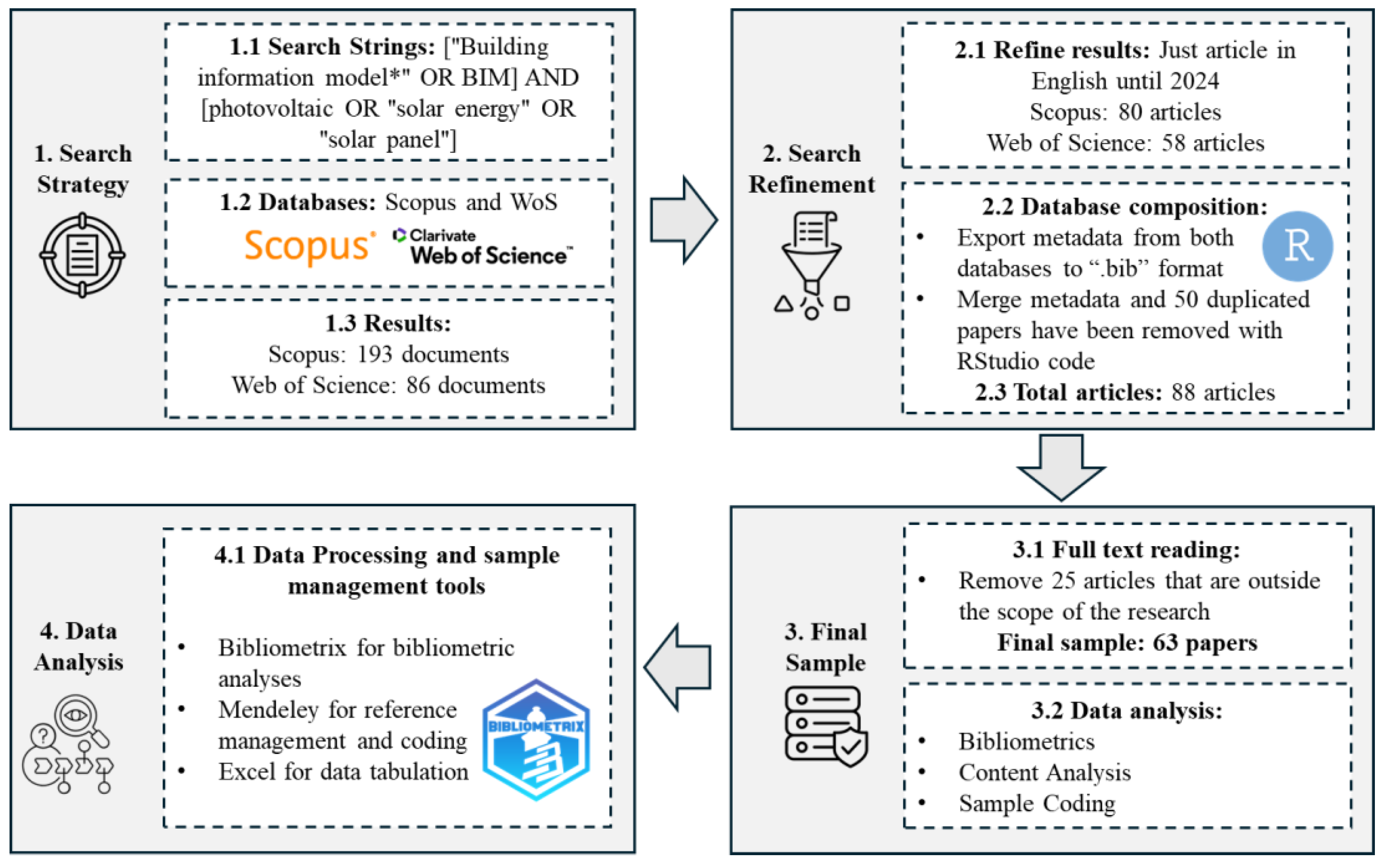
Figure 2.
Annual Scientific Production.
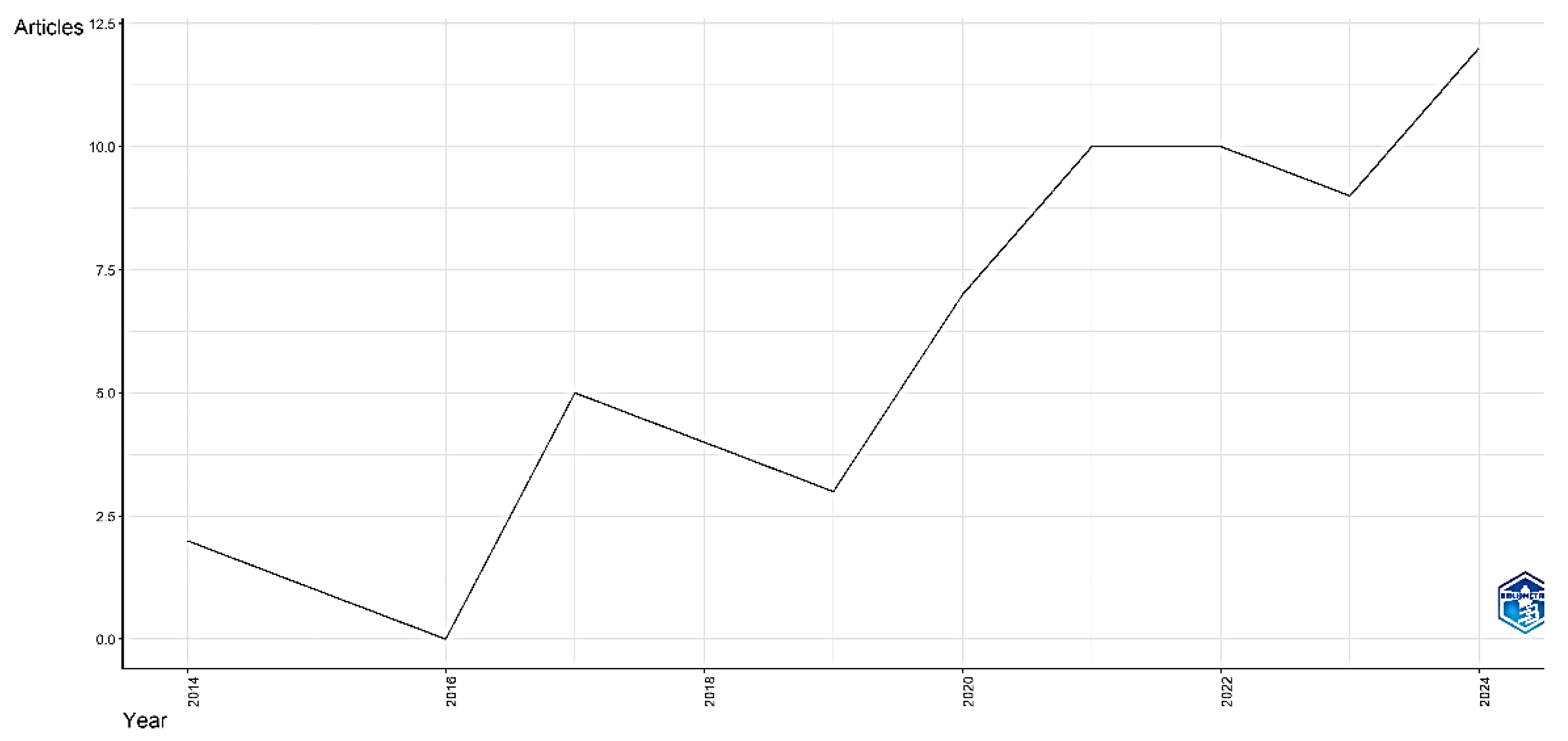
Figure 3.
Sources' Production over Time.
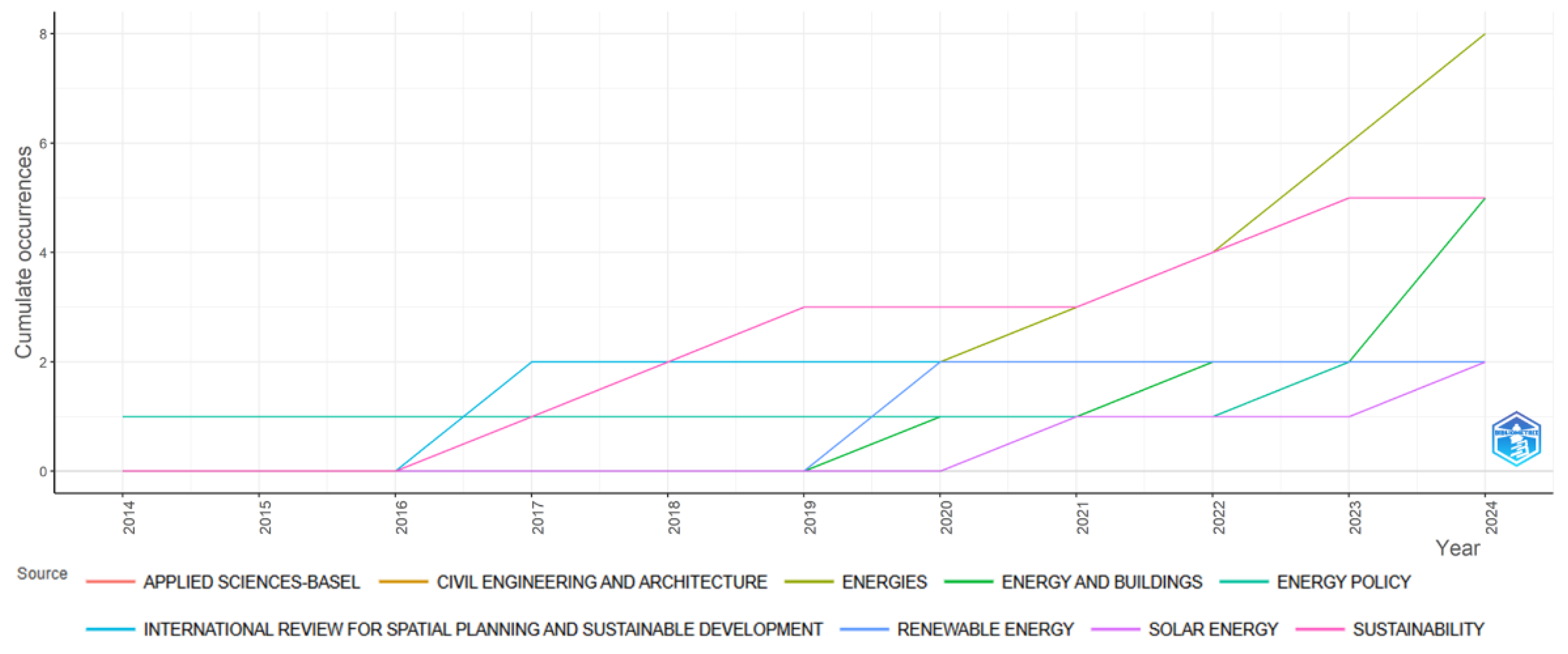
Figure 4.
Most Relevant Sources and Core Sources by Bradford's Law.
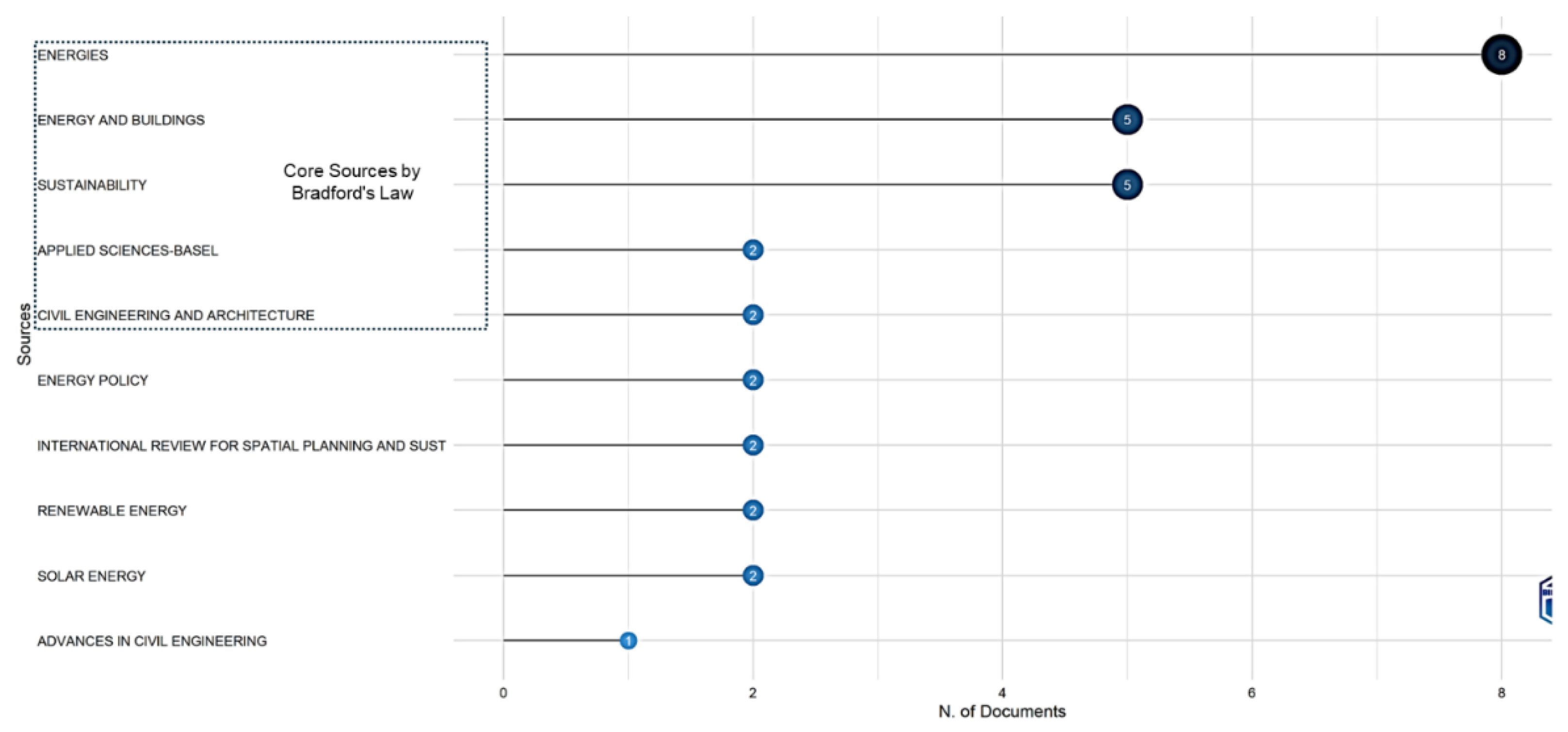
Figure 5.
Countries' Scientific Production.
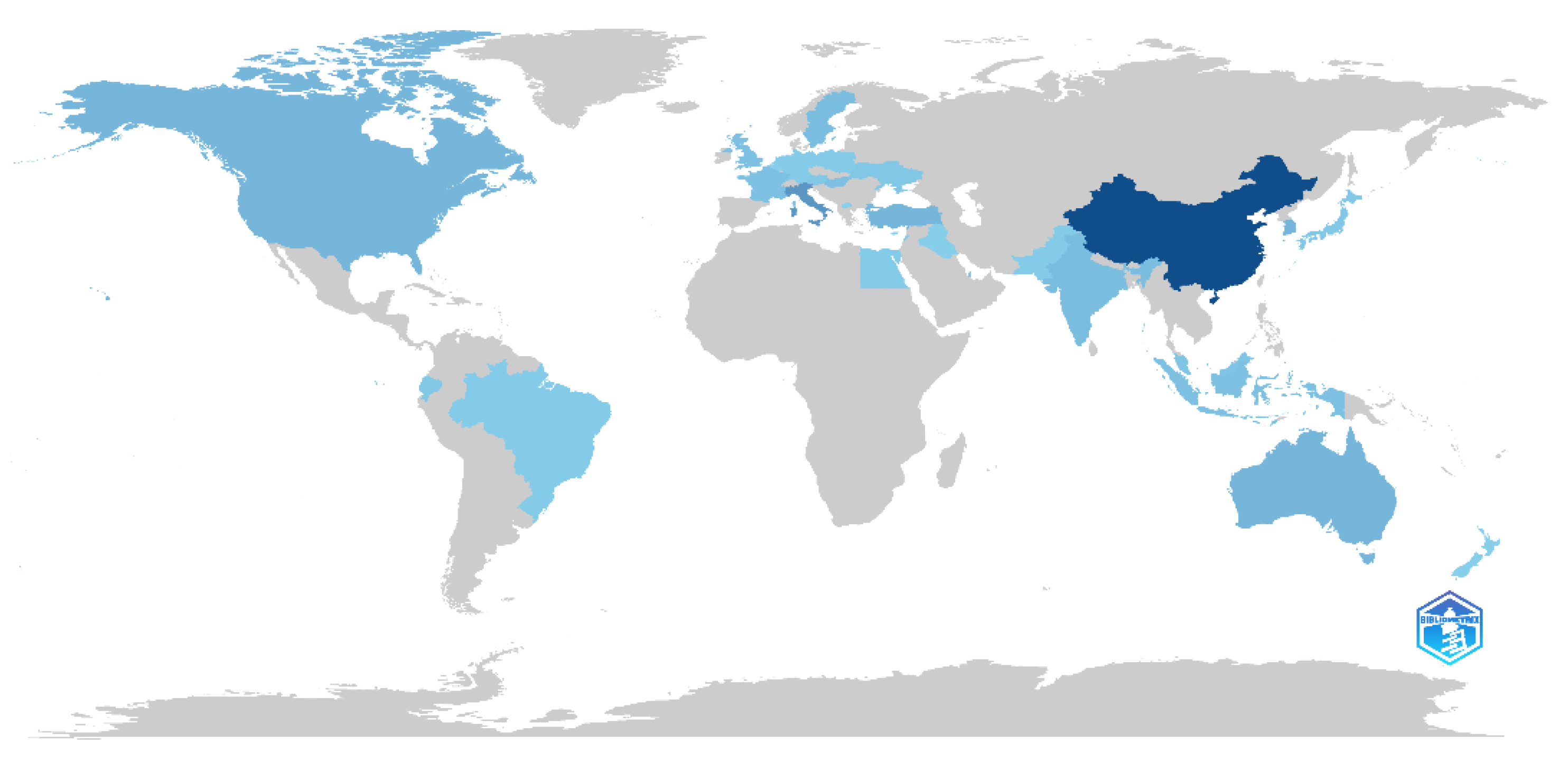
Figure 6.
Citations by country.
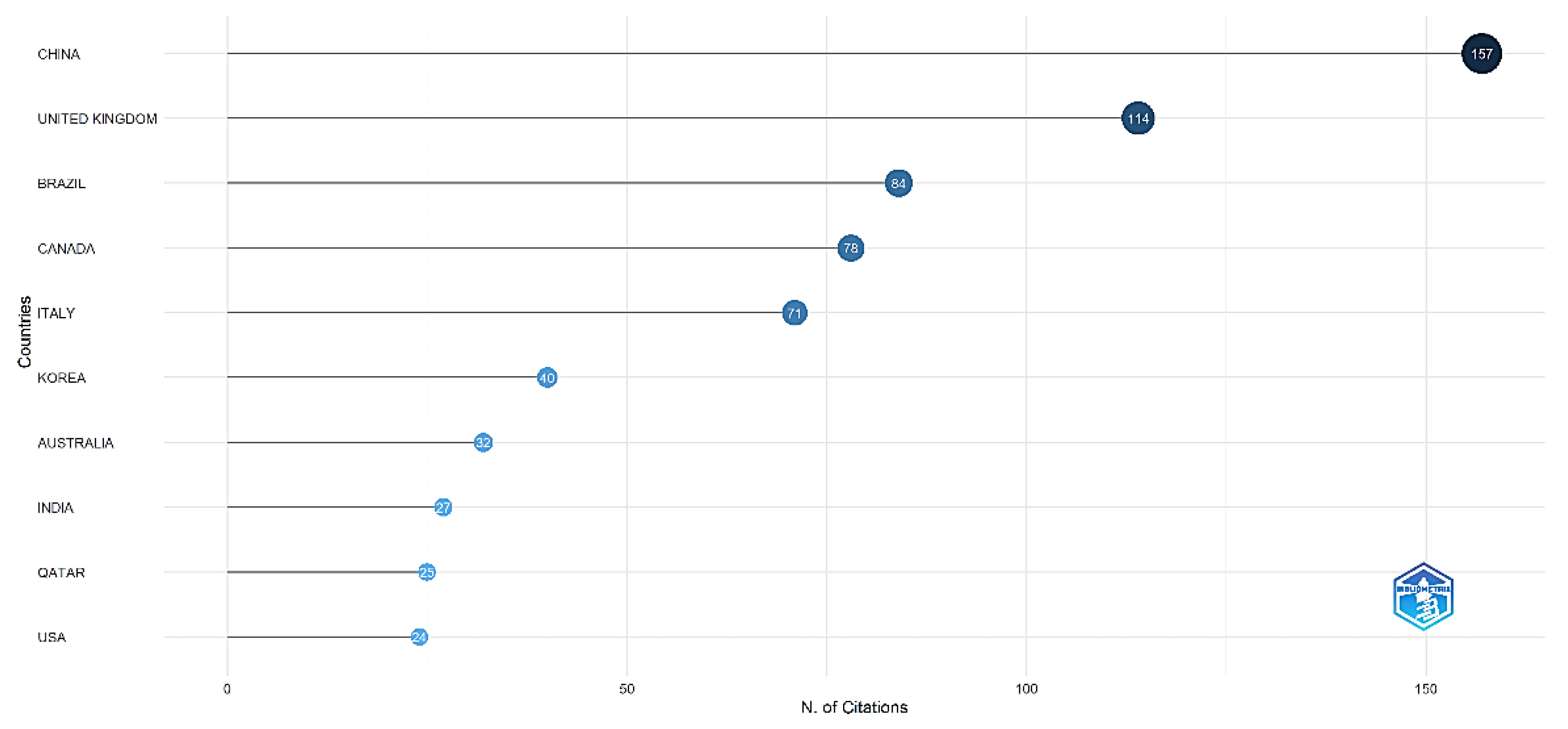
Figure 7.
Co-occurrence Network.
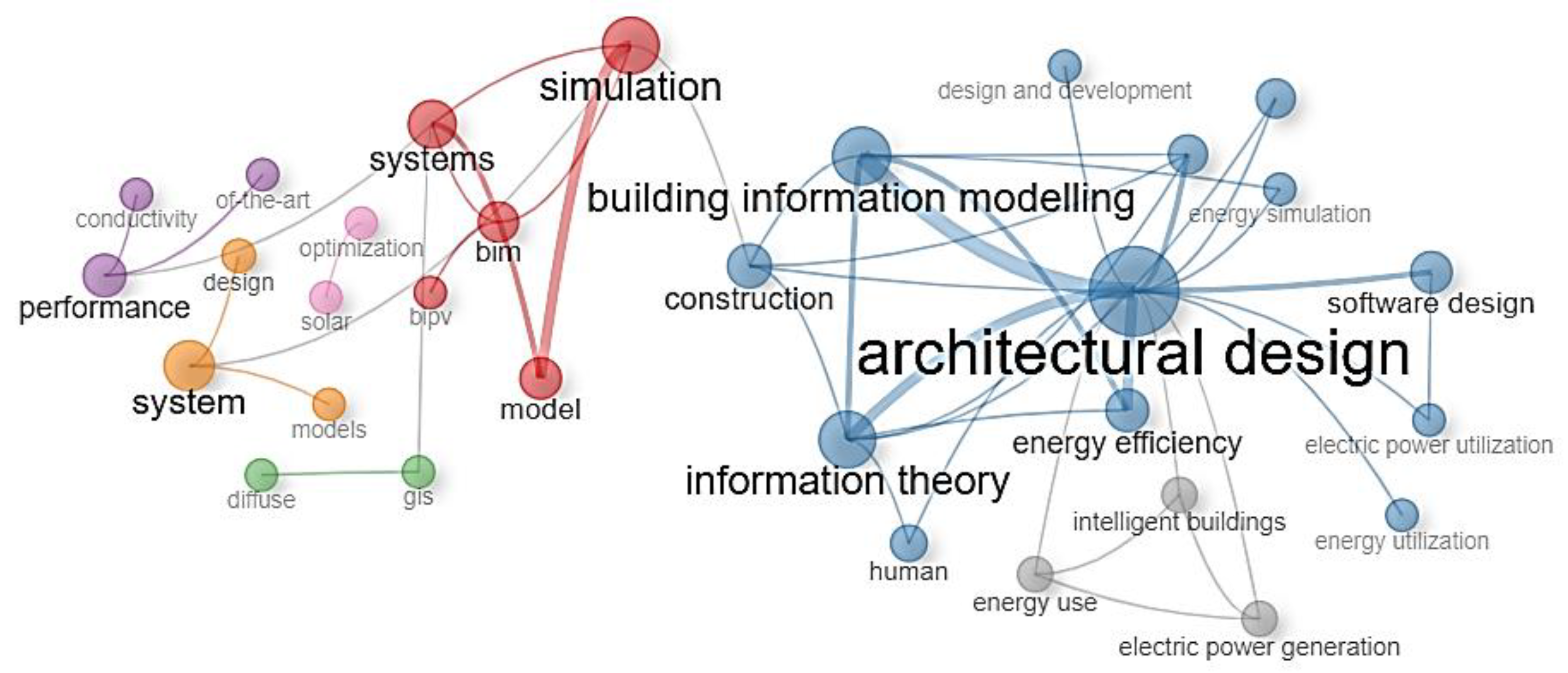
Figure 8.
Thematic Map.
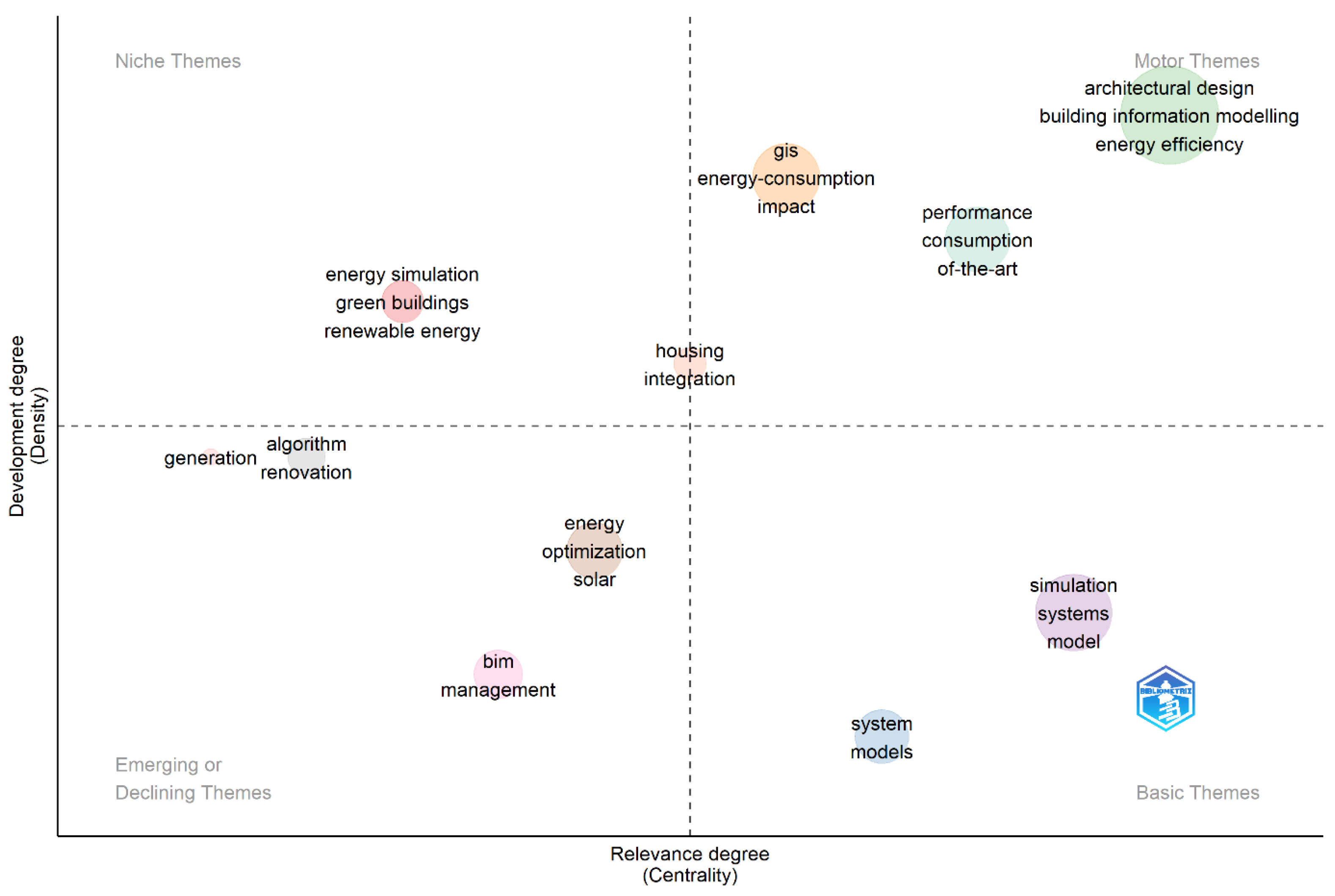
Figure 9.
Code frequency in the sample.
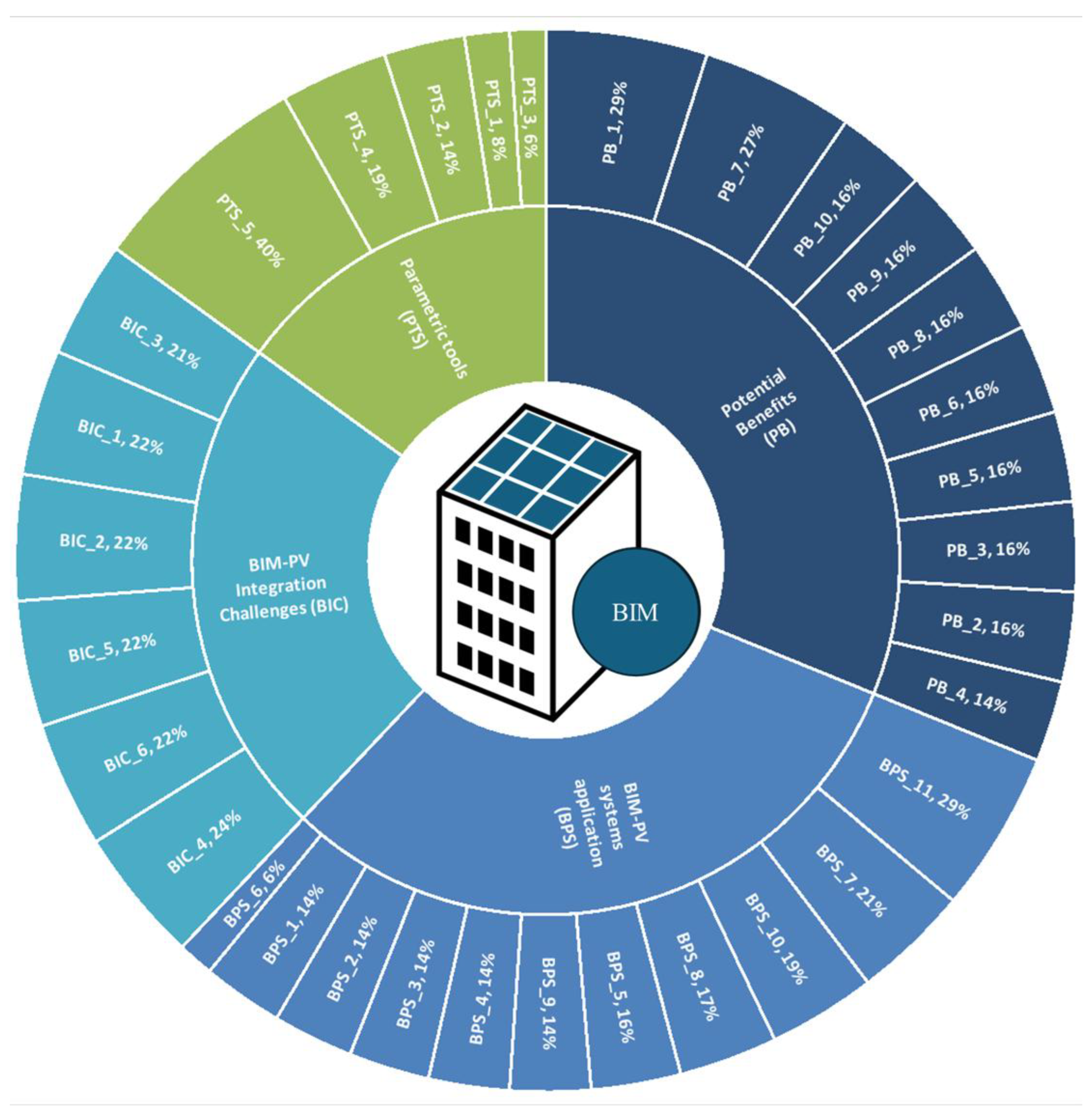
Figure 10.
Sustainable Design in Building Integrated Photovoltaic Systems with BIM Framework.
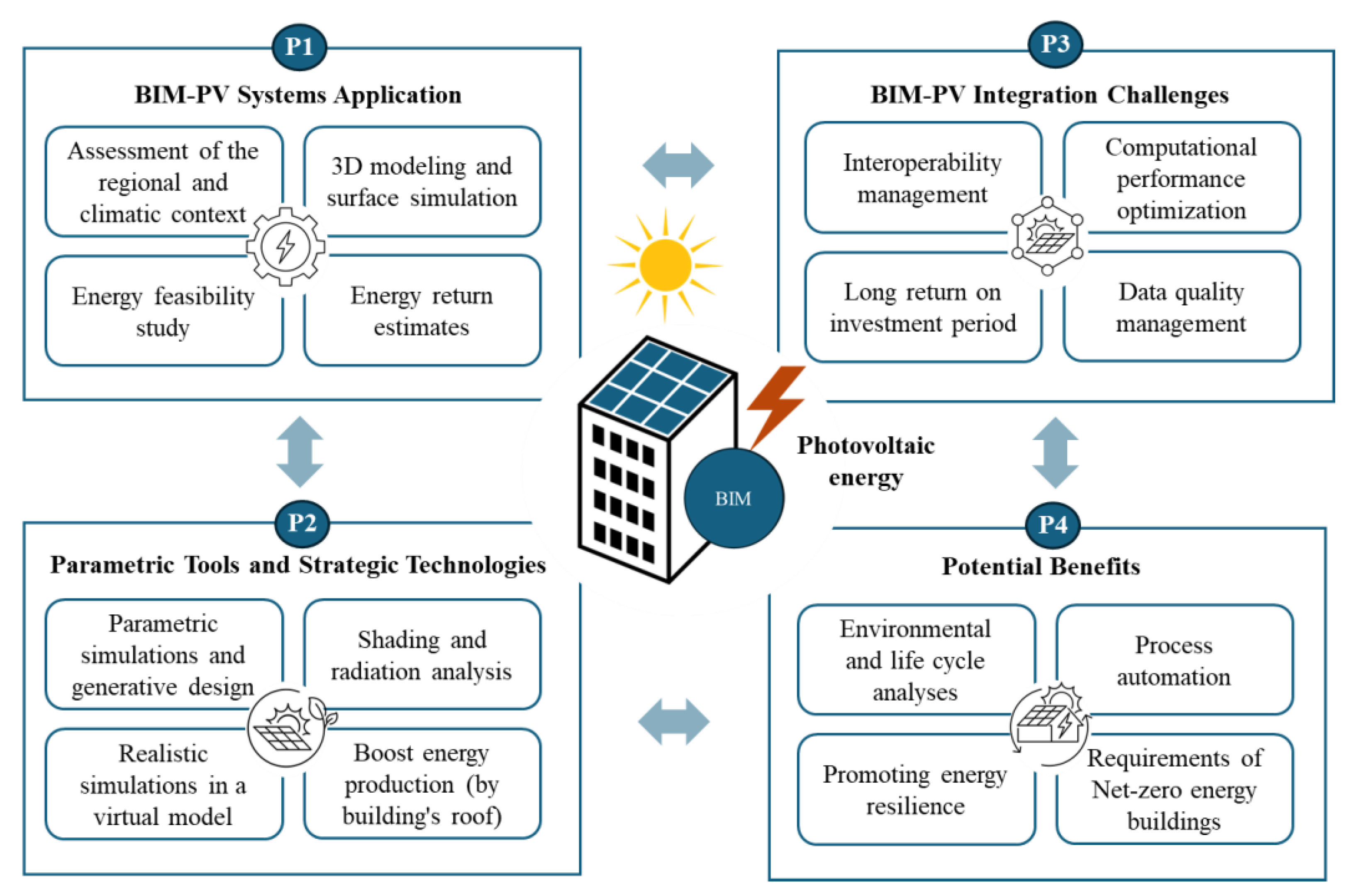
Table 1.
Inclusion and exclusion criteria.
| Stage | Inclusion criteria | Exclusion criteria |
|---|---|---|
| Search Strategy |
- All papers published until 2024. - All papers that contain the defined research strings. |
- Documents that are not articles, reviews, or early access. |
| Search Refinement |
In cases where duplicate articles in Scopus and WoS were identified, only one version was retained in the dataset to avoid redundancy | - Exclude duplicated documents |
| Final Sample Composition | - The study should explicitly address the integration between BIM and PV systems. - It should present detailed information on the use of BIM and its relationship with the design, implementation, or management of PV systems. - The paper should provide empirical data, models, frameworks, or practical applications demonstrating the interaction between BIM and PV systems. |
- Studies that mention BIM or photovoltaic systems separately without demonstrating their interrelationship in the design, implementation, or management processes of buildings and projects in the AEC industry. Papers focused only on the operations and maintenance of photovoltaic systems without considering the role of BIM in the implementation or management of these systems. - Studies that deal exclusively with technological advances in solar cells and photovoltaic materials without involving BIM as an analysis or integration tool. - Research focused on daylight simulation, sustainable sanitation, or environmental certifications without a direct relationship with the modeling and planning of BIM-PV. |
Table 2.
BIM Applications for BIPV Projects.
| Dimension | Code | Description | Applications | Sample code |
|---|---|---|---|---|
| BIM-PV systems application (BPS) |
BPS_1 | Assess the regional conditions with a 3D model | Generated a 3D urban model using Rhino + Grasshopper to evaluate shading conditions. | 7,10,17,22,27,32,42,43,45, 46,50,53,56,61,63. |
| BPS_2 | Estimate the potential area and location of PV modules on the building's surface with IFC schema | Used IFC schema in Revit to detect available rooftop areas for PV placement. | 23,24,26,28,30,35,37,39,42, 45,53,55. |
|
| BPS_3 | Evaluate different design concepts | Compared different façade PV layouts using Revit Solar Analysis Plugin. | 10,13,15,19,20,21,34,42,44, 45,46,50,58. |
|
| BPS_4 | Exchange of information on a real-time basis | Implemented BIM 360 for real-time collaboration between architects and engineers. | 2,12,10,21,28,41,51,56,62. | |
| BPS_5 | Net balance simulation (e.g., electricity generated from solar energy) | Simulated net energy balance using the System Advisor Model. | 22,26,30,35,41,46,47,52,53,57. | |
| BPS_6 | Point clouds for surface extraction | Extracted surface features using LiDAR point clouds + CloudCompare. | 7,10,28,34. | |
| BPS_7 | Optimization of PV modules layout with generative design | Grasshopper + Galapagos for automated PV panel arrangement. | 9,16,17,21,25,26,29,30,36,42,44,46,53. | |
| BPS_8 | Power generation forecast | Forecasted PV output with machine learning models in Python. | 1,3,17,21,30,43,44,46,51,54,60. | |
| BPS_9 | Power demand forecast | Modeled energy demand variations using EnergyPlus simulation or solar irradiation data. | 3,16,19,21,30,43,46,54,59. | |
| BPS_10 | Predicted shading due to neighboring buildings | Applied Heliotrope Solar plugin for real-time shading prediction. | 2,17,19,23,31,41,44,45,53, 54,59,63. |
|
| BPS_11 | Roof design optimization | Implemented parametric roof designs in Grasshopper. | 1,2,15,19,22,23,24,26,28,29, 30,31,42,44,45,46,47,50. |
Note: The code description is shown in Appendix A.
Table 3.
Parametric tools and strategic technologies.
| Dimension | Code | Main tools | Applications | Sample code |
|---|---|---|---|---|
| Parametric tools and strategic technologies (PTS) |
PTS_1 | Artificial Intelligence | ML and DL applications in time series and point cloud segmentation. | 1,7,9,33,37. |
| PTS_2 | Grasshopper and Ladybug (Rhinoceros) | Assess radiation and plan the positioning of solar panels on the roofs of buildings. | 2,4,10,14,19,33, 42,45,52. |
|
| PTS_3 | Photogrammetry | Capture the point cloud of the building for extraction of facades and roofs. | 7,15,34,37. | |
| PTS_4 | PVGIS | Estimate the potential for solar energy Generation. | 1,7,10,11,17,19, 23,24,25,32,36,53 |
|
| PTS_5 | Revit (Dynamo) | Simulate different solar panel positions and analyze solar radiation in the building | 1,2,4,5,6,8,10,13,14,19,21,25,30,31,35,39,44,45,48, 50,52,54,55,60,62 |
Note: The code description is shown in Appendix A.
Table 4.
BIM-PV Integration Challenges.
| Dimension | Code | Description | Sample code |
|---|---|---|---|
| BIM-PV Integration Challenges (BIC) |
BIC_1 | Complete regional historical series | 3,8,12,15,20,23,28,33,43,45,48,54,60,63. |
| BIC_2 | High Computational Performance | 5,7,10,14,19,21,26,29,32,42,46,51,53,56. | |
| BIC_3 | Initial investment costs | 8,9,13,16,21,22,26,31,40,46,50,52,61. | |
| BIC_4 | Software Interoperability | 2,9,10,14,19,21,30,35,37,39,43,45,50,54,61. | |
| BIC_5 | Prolonged payback period | 8,9,17,18,22,24,27,31,35,40,46,52,59,62. | |
| BIC_6 | Quality of input data | 1,7,10,13,17,19,27,37,41,46,48,53,57,62. |
Note: The code description is shown in Appendix A.
Table 5.
Potential Benefits of BIM-PV Integration.
| Dimension | Code | Description | Sample code |
|---|---|---|---|
| Potential Benefits (PB) |
PB_1 | Carbon reduction | 1,3,8,9,12,13,16,19,22,30,34,38,46,49, 54,56,58,60. |
| PB_2 | Contribution to climate policies | 11,10,27,43,46,48,50,55,57,63. | |
| PB_3 | Facilitate the calculation of the return on investment of PV systems at the design stage | 8,21,22,26,28,43,45,46,50,58. | |
| PB_4 | Facilitates obtaining environmental certifications | 15,17,28,32,45,47,51,52,56. | |
| PB_5 | Integration of PV data into BIM models | 28,29,30,33,45,48,50,51,54,57. | |
| PB_6 | Lifecycle analysis | 3,6,9,13,16,17,22,30,33,54. | |
| PB_7 | Meet the requirements of Net-zero energy buildings | 6,8,9,11,12,13,18,19,21,22,33,34,38, 46,48,49,55. |
|
| PB_8 | Process automation | 2,7,9,16,21,24,29,45,52,59. | |
| PB_9 | Promoting energy resilience | 3,8,23,28,32,45,48,50,55,59. | |
| PB_10 | Retrofitting existing buildings | 12,13,14,15,21,24,26,45,50,61. |
Note: The code description is shown in Appendix A.
Table 6.
Main AEC industry applications and limitations.
| BIM-PV integration | Problem to solve | Limitations | Sample code |
|---|---|---|---|
| Design and integration of rooftop PV systems | Performance inconsistencies; Limited accuracy in solar simulations; Integration challenges; Optimize PV placement; Improve energy forecasting and predict real-world performance; Evaluate performance metrics (e.g., IEC 61724 standards) to compare theoretical and experimental results; and refine design strategies. | The dependence on external climate data, Software interoperability, and BIM simulations cannot fully account for the aging of PV modules and efficiency losses. | 1,2,4,7,9,17,25, 29,31,35,37,40, 42,47,50,53,55, 59,62,63. |
| Parametric modeling to create a net-zero or energy-positive building design | Reduce the environmental footprint of buildings; Lack of integration between renewable energy and building design; Deficiency in life-cycle assessments for building energy efficiency. | Lack of precise local data; Limited prefabrication integration; Dependence on external PV recycling infrastructure. | 3,5,6,12,14,22, 34,38,43,45,46, 48,49,52. |
| BIM-based modeling of energy performance | Excessive electricity consumption; High cooling demands in tropical climates; Need for an optimized design approach; Energy performance uncertainties; High operational carbon emissions. | High initial investment costs; Dependence on shading conditions; Inconsistent data exchange; Geometric distortions in modeling; Computational inefficiency that requires extensive processing time. | 8,10,11,13,15,16, 21,27,30,33,39, 41,57. |
| Spatial analysis to predict the potential renewable energy generation | Inefficient energy allocation; Performing spatiotemporal analysis to detect inefficient energy use; Developing an interactive visualization platform. | Lack of real-time energy monitoring; Dependence on user participation; Interoperability challenges. | 18,20,23,28,32, 36,44,54,56,60, 61. |
| Building energy retrofit simulation | Interdependency of urban resource systems; Carbon neutrality targets; Simulation of energy demand and carbon footprint reduction for different retrofit strategies. | Complexity of multi-system modeling; Economic feasibility; Governance and policy challenges. | 24,26,51,58. |
Disclaimer/Publisher’s Note: The statements, opinions and data contained in all publications are solely those of the individual author(s) and contributor(s) and not of MDPI and/or the editor(s). MDPI and/or the editor(s) disclaim responsibility for any injury to people or property resulting from any ideas, methods, instructions or products referred to in the content. |
© 2025 by the authors. Licensee MDPI, Basel, Switzerland. This article is an open access article distributed under the terms and conditions of the Creative Commons Attribution (CC BY) license (http://creativecommons.org/licenses/by/4.0/).
Copyright: This open access article is published under a Creative Commons CC BY 4.0 license, which permit the free download, distribution, and reuse, provided that the author and preprint are cited in any reuse.