

Submitted:
03 March 2025
Posted:
04 March 2025
You are already at the latest version
Abstract
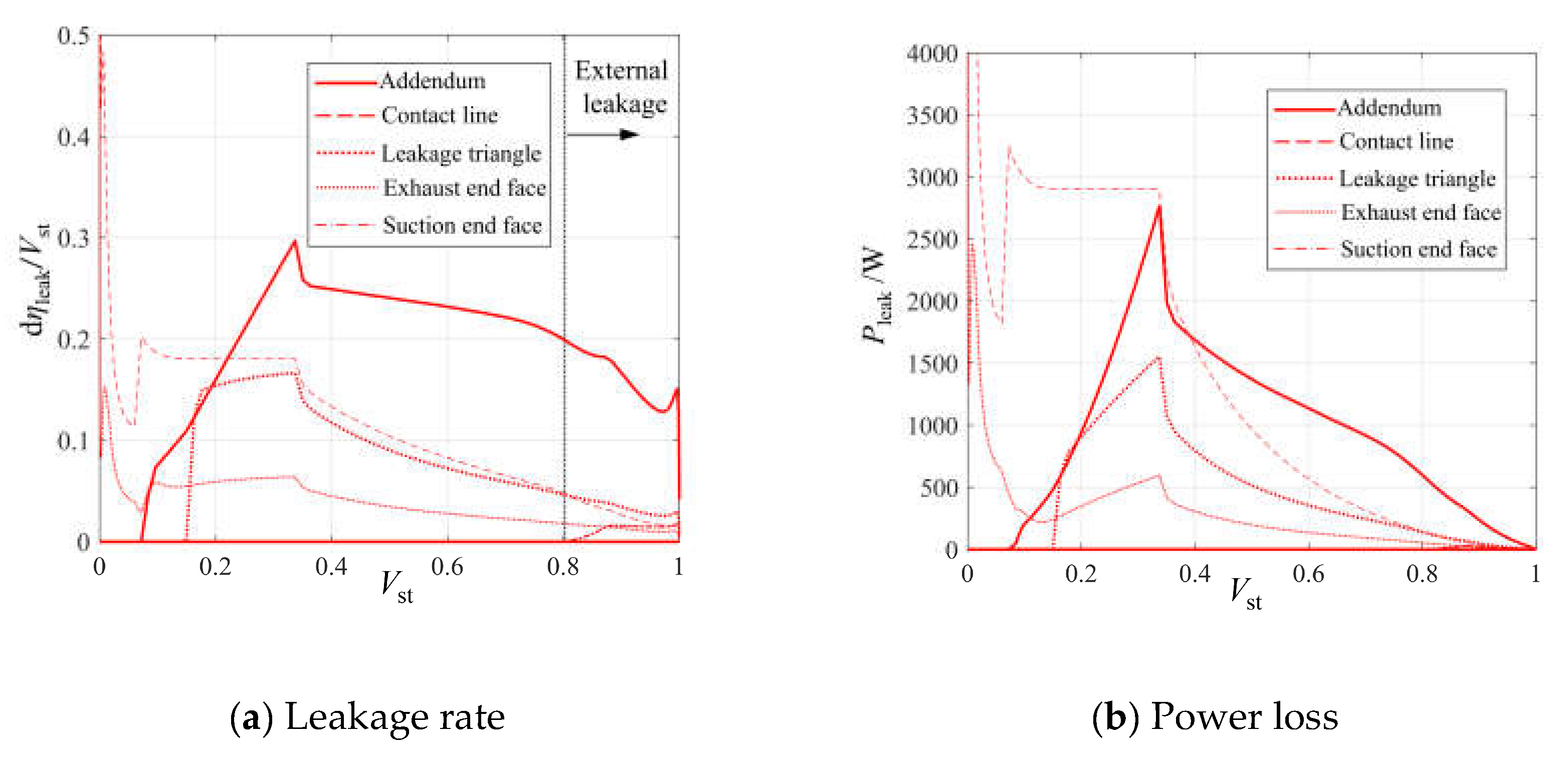
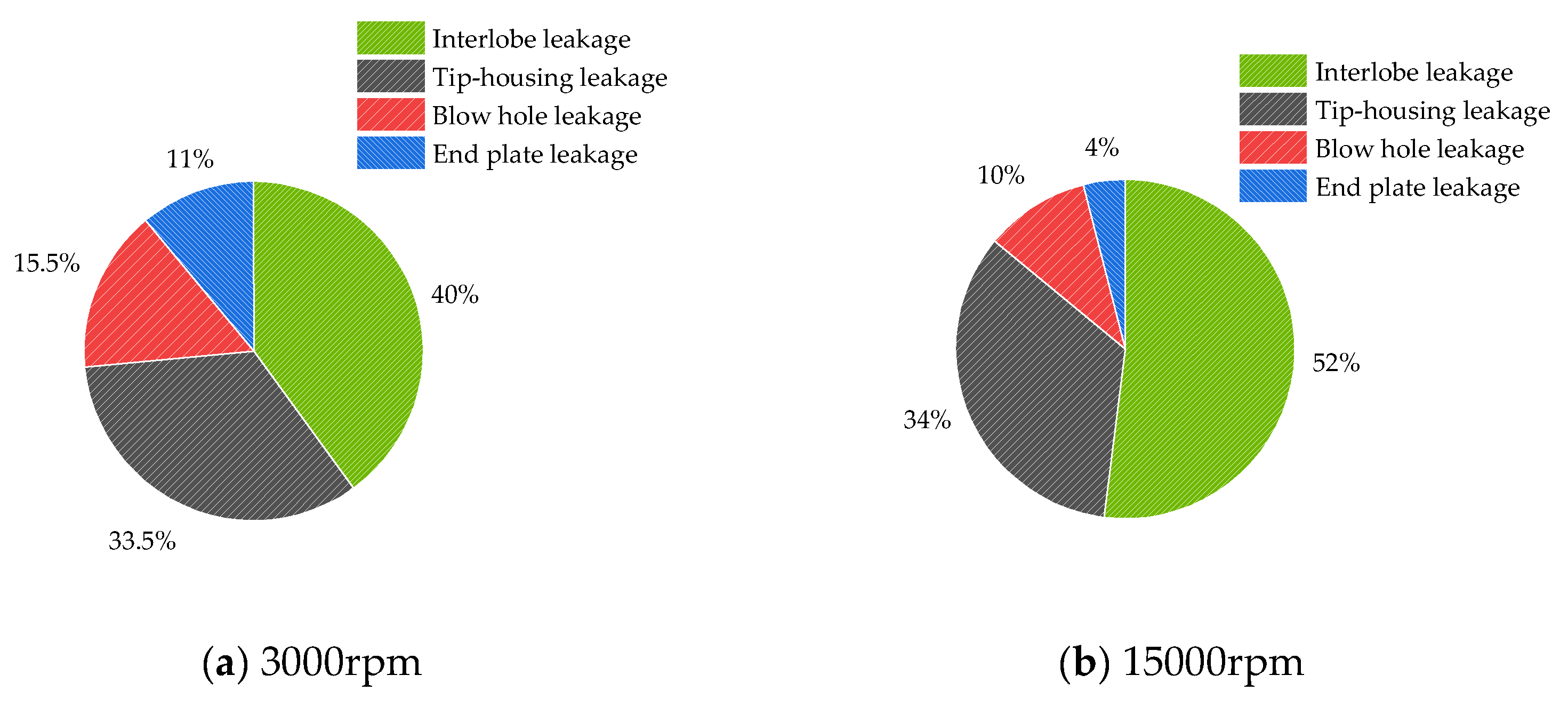
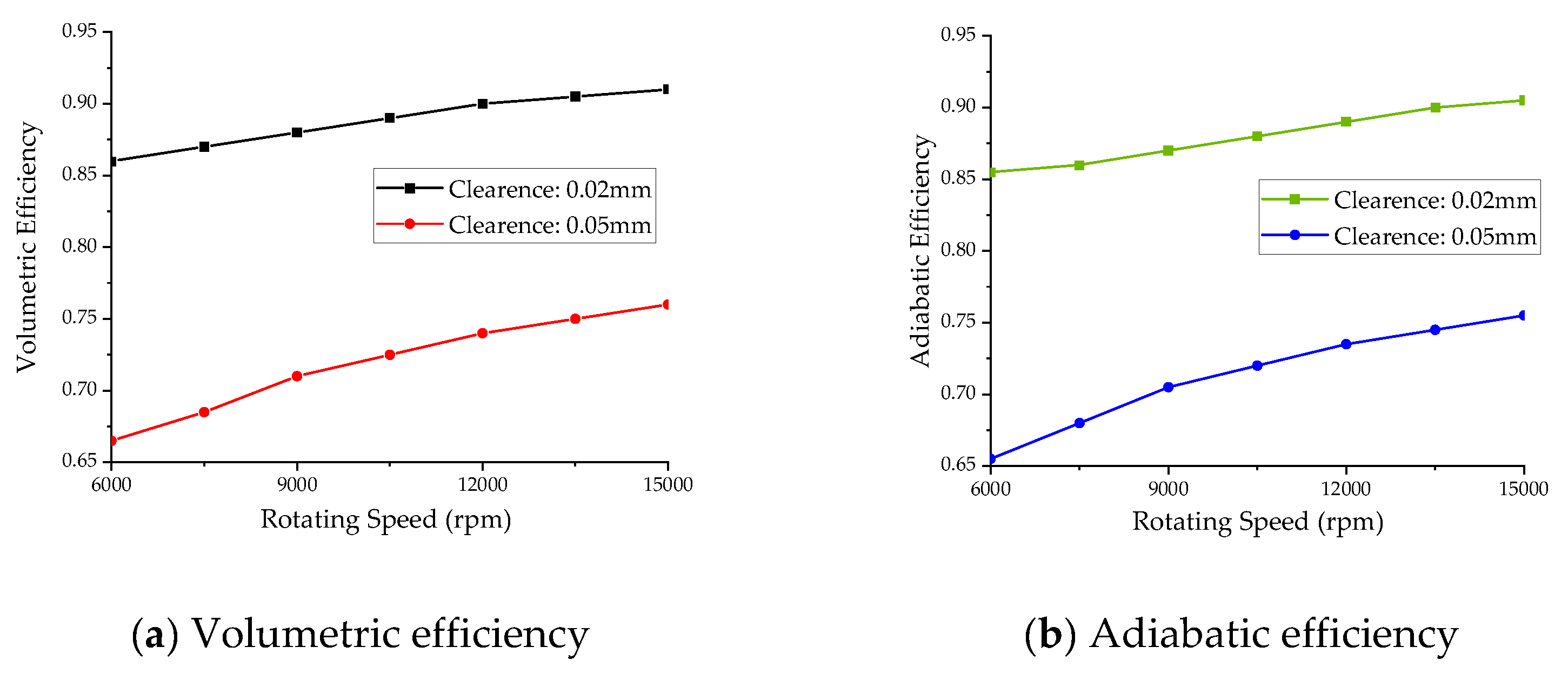
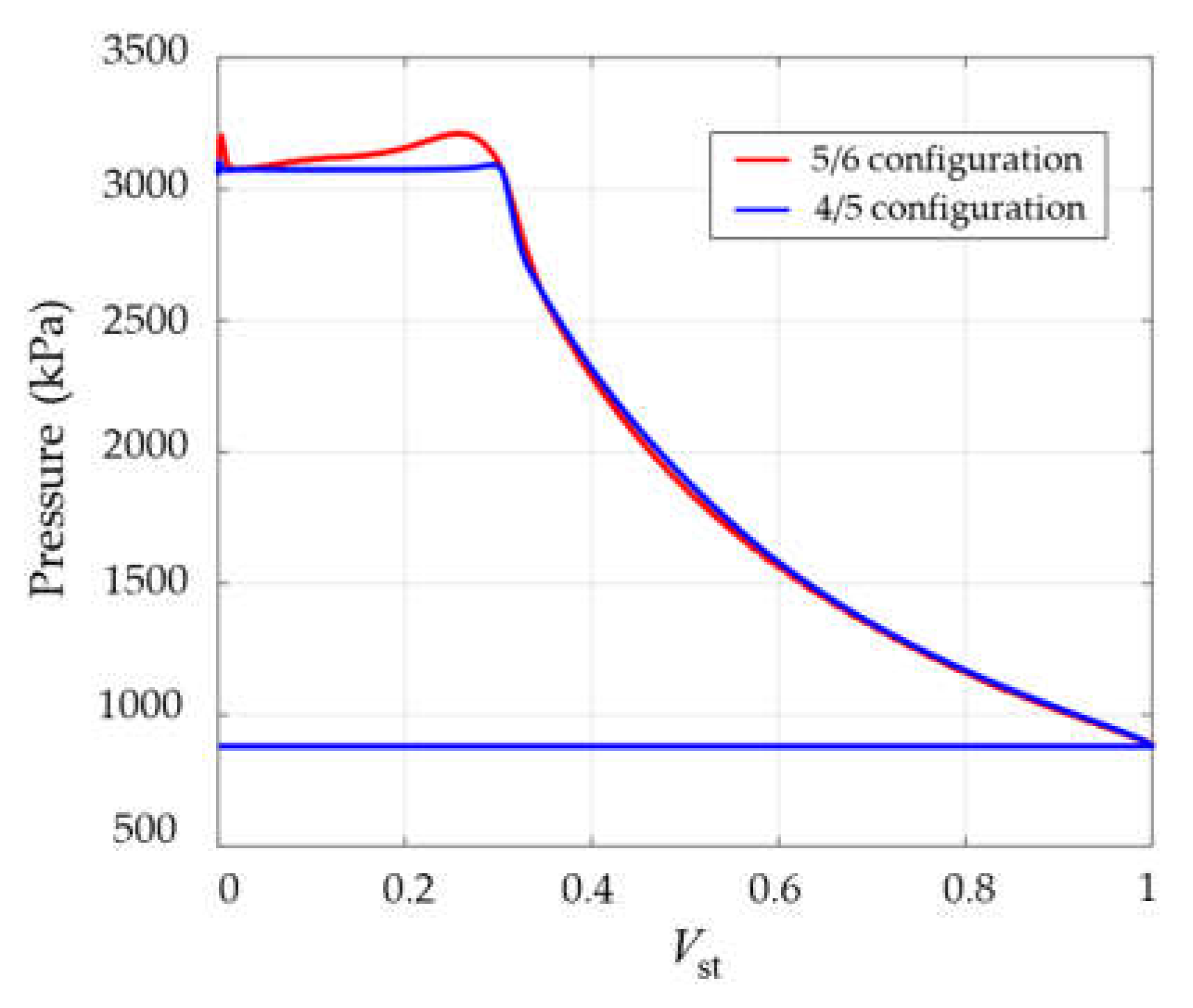
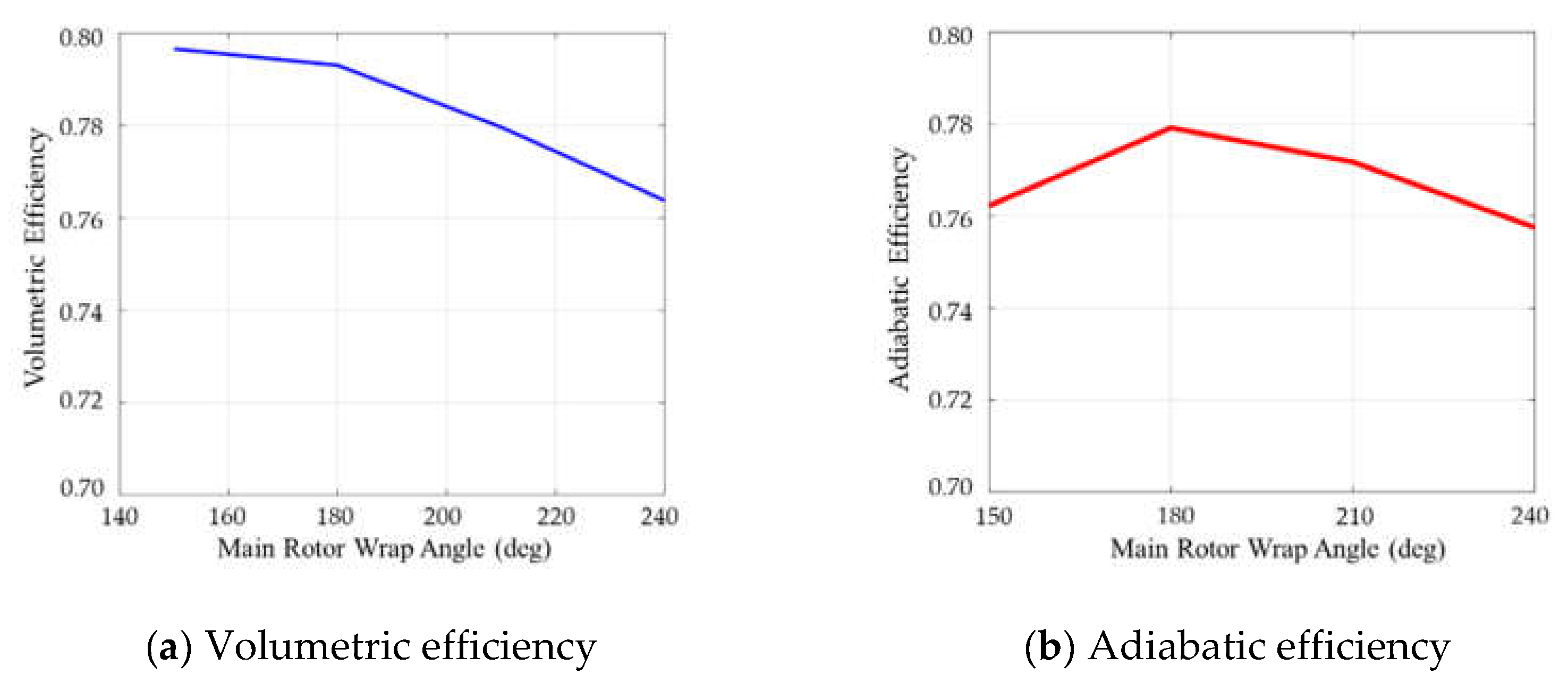
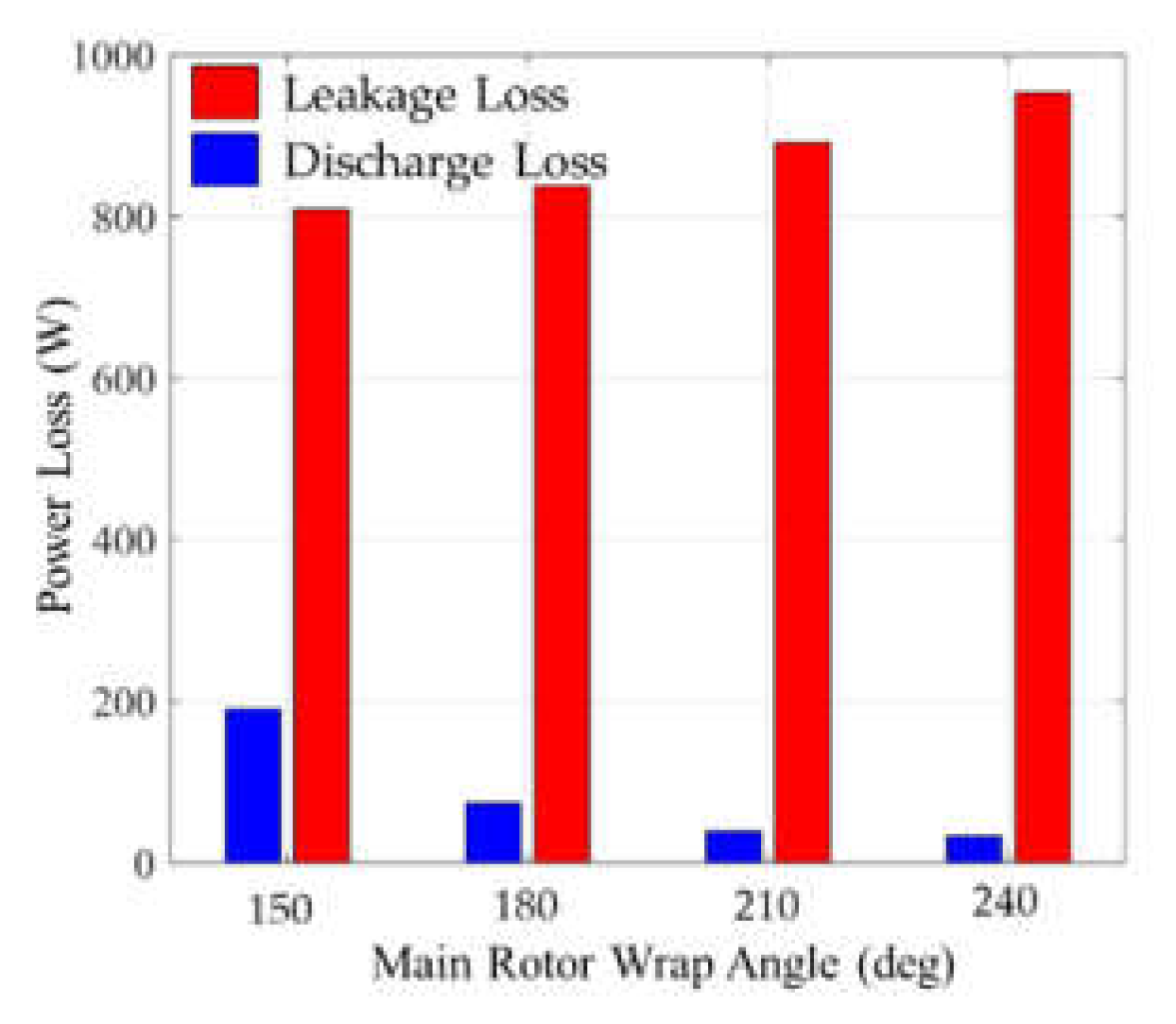
To investigate the performance of high-speed miniaturized screw refrigeration compressors, this study designed rotors with identical theoretical displacement but varying rated speeds. A normalized analysis established quantitative evaluation criteria for geometric performance, while an exergy analysis model assessed leakage exergy losses. Thermodynamic modeling evaluated the impact of different clearances and rated speeds on performance. The computational fluid dynamics (CFD) simulations analyzed gas forces and torque acting on the rotors. The study reveals that while tooth tip leakage represents the largest volumetric leakage in screw compressors, contact line leakage contributes most significantly to power losses. When the rated speed increases from 3000 rpm to 15000 rpm, contact line leakage remains the dominant source of power loss, with its relative contribution showing a marked increase. The rate of efficiency improvement with increasing speed follows a non-linear relationship, demonstrating diminishing returns at ultra-high speeds where further speed elevation provides negligible efficiency gains. For compressors with identical cylinder dimensions, reducing the number of lobes decreases discharge pressure fluctuations and power consumption. Larger wrap angles increase contact line length and discharge port area, reducing volumetric efficiency while creating a trade-off between leakage and discharge losses, resulting in an optimal wrap angle that maximizes adiabatic efficiency.
Keywords:
1. Introduction
2. Structural Comparison
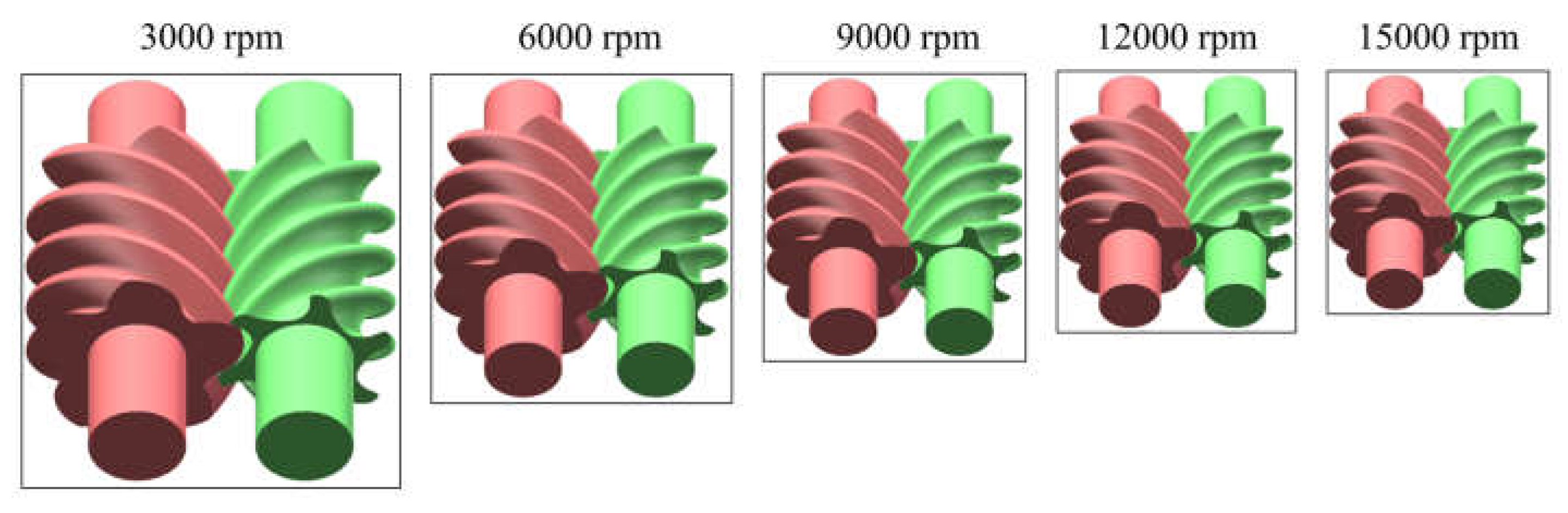
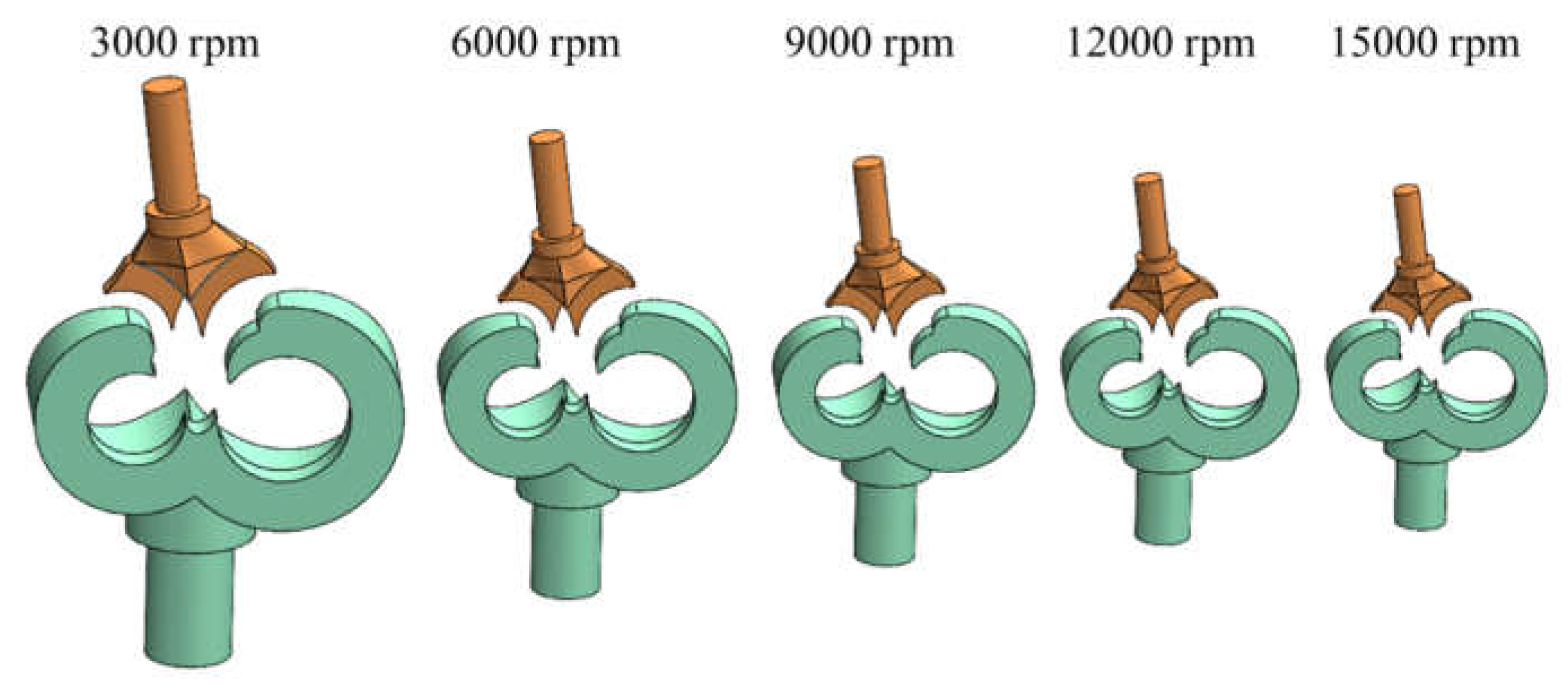
2.1. Rotor and Ports Profile
2.2. Component Structure and Size

| Parameters | 3000rpm | 6000rpm | 9000rpm | 12000rpm | 15000rpm |
|---|---|---|---|---|---|
| diameter of male rotor /mm | 90.5000 |
71.8299 | 62.7492 | 57.0114 | 52.9247 |
| diameter of the female rotor /mm | 74.1818 | 58.8781 | 51.4348 | 46.7316 | 43.3818 |
| length of the rotor /mm | 90.5000 |
71.8299 | 62.7492 | 57.0114 | 52.9247 |
| center distance /mm | 68.0000 | 53.9716 | 47.1486 | 42.8373 | 39.7666 |
| rotor weight /kg | 5.6492 | 2.8247 | 1.8831 | 1.4123 | 1.1299 |
3. Theoretical Model
3.1. Geometric Property Model
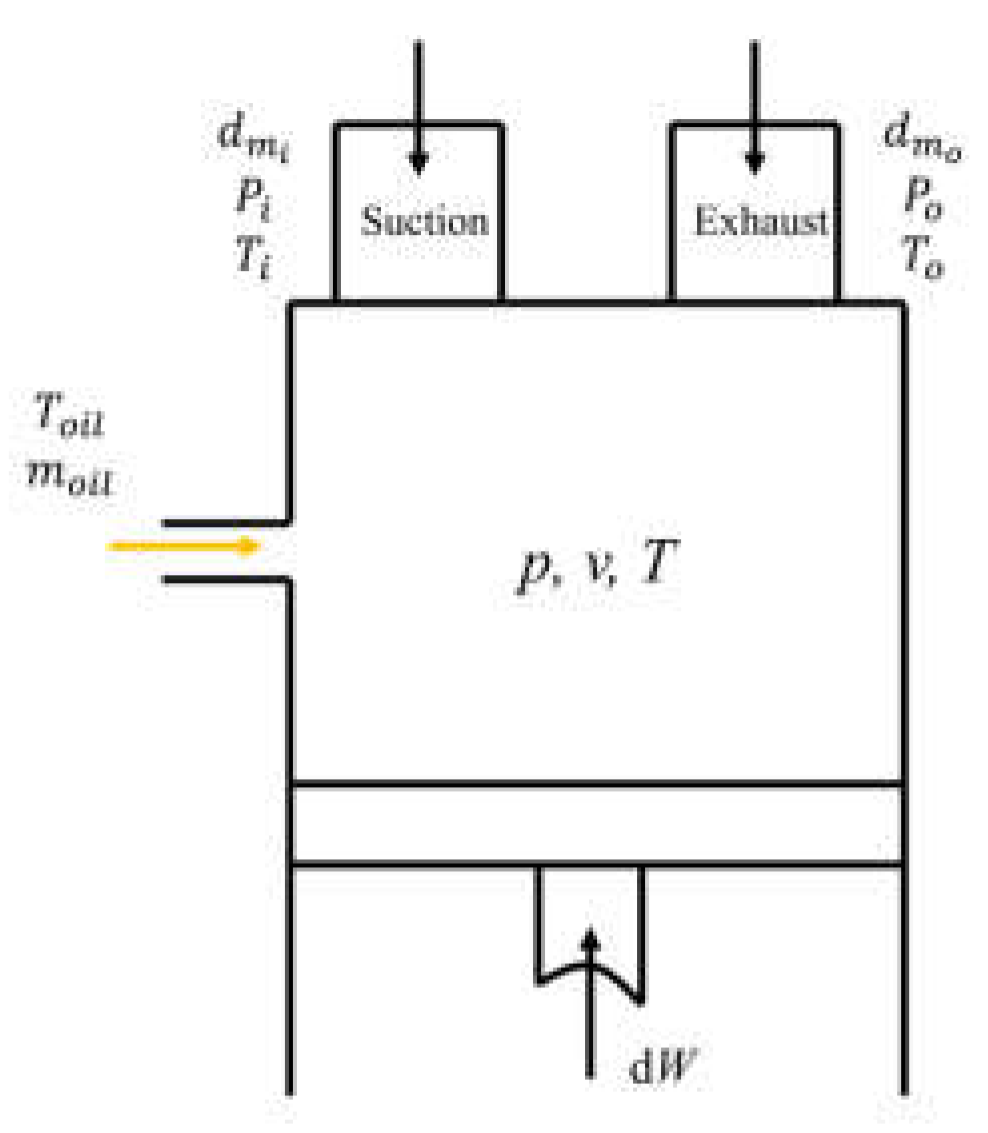
3.2. Thermodynamic Model
4. Numerical Model
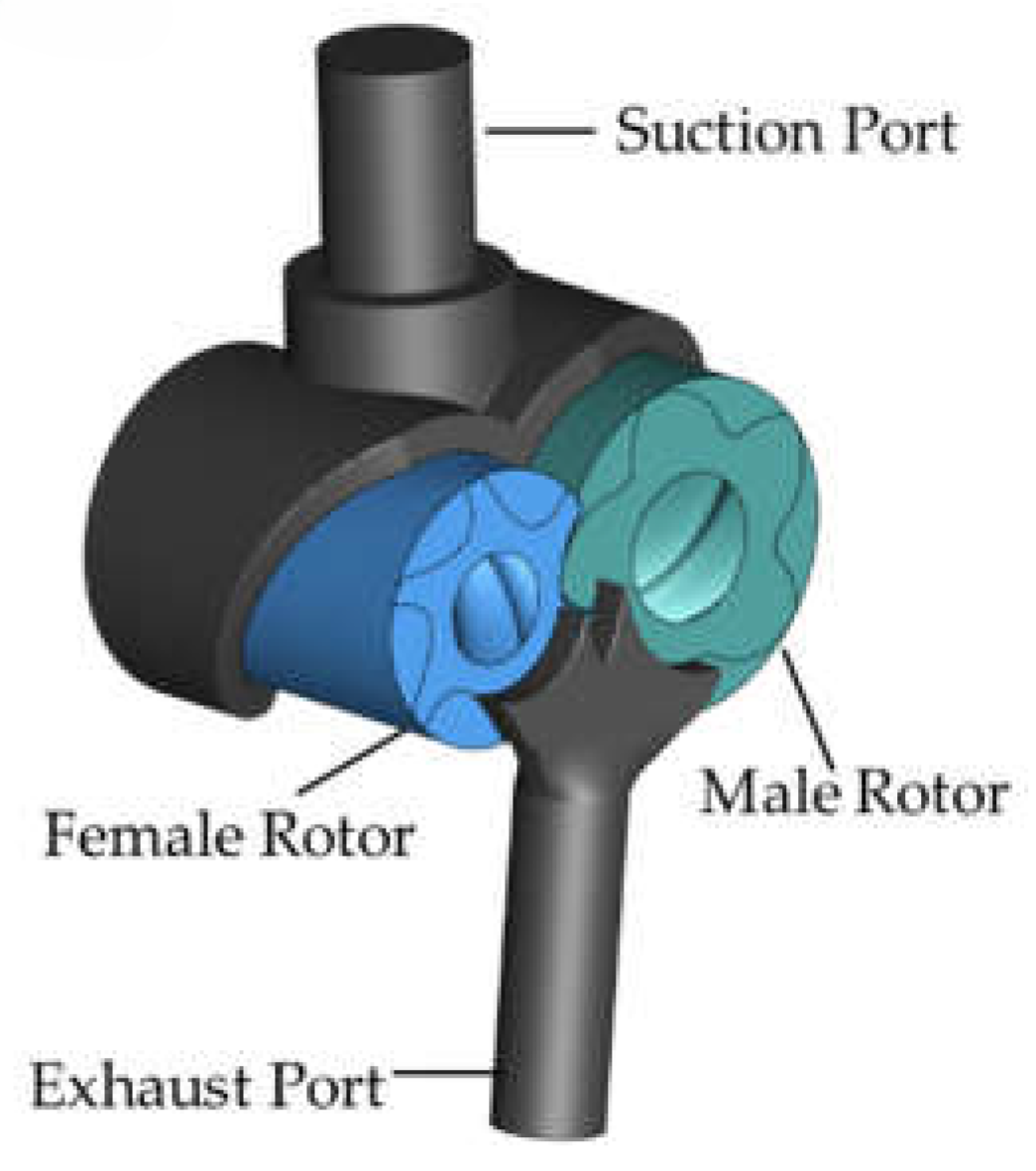
4.1. Control Volume and Grids of the Fluid Domain
4.2. Independence Verification
5. Results and Analysis
5.1. Difference of Leakage Characteristic
5.2. Performance of Different Rotors at Rated Rotational Speed
5.3. Gas Force of Different Rotors at Rated Rotational Speed
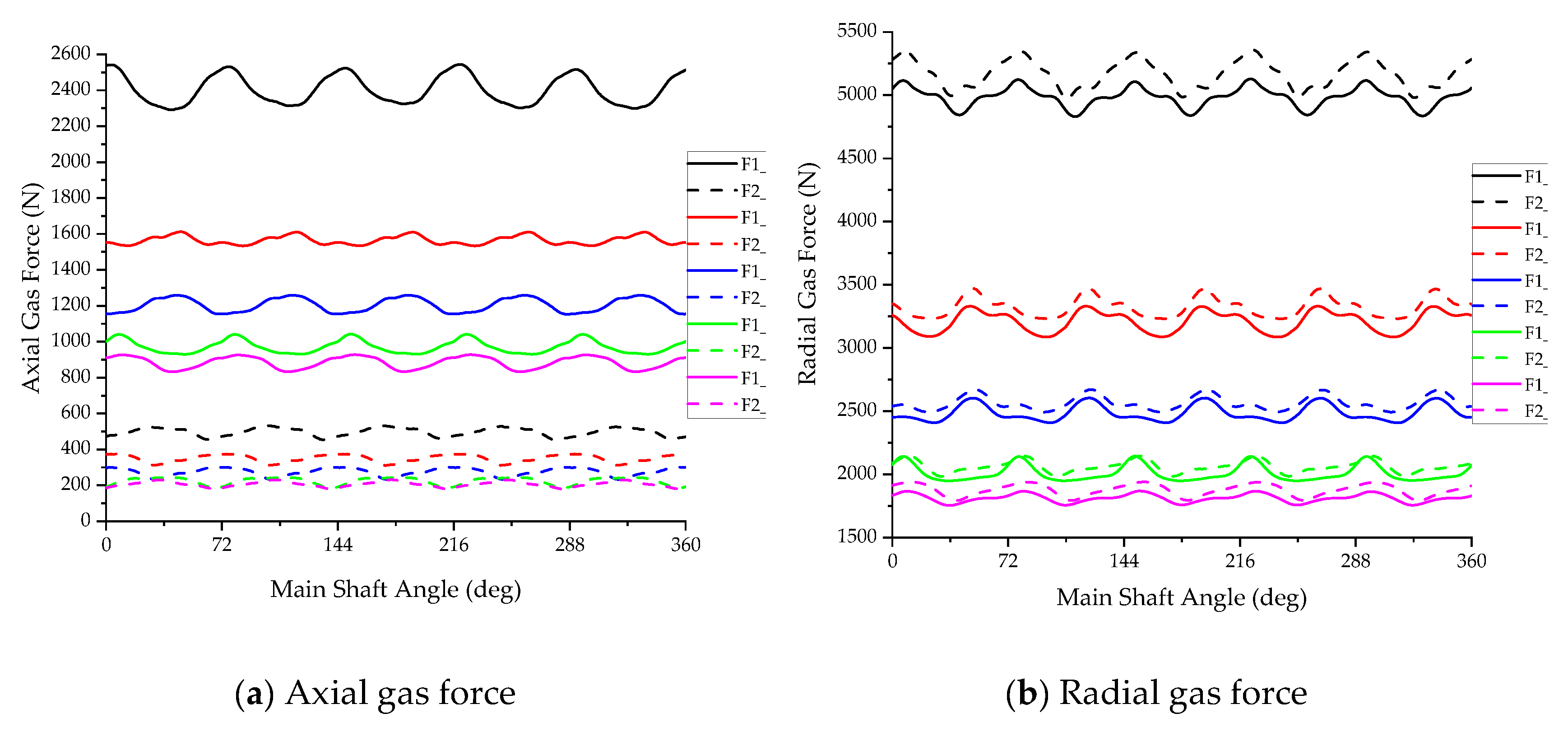
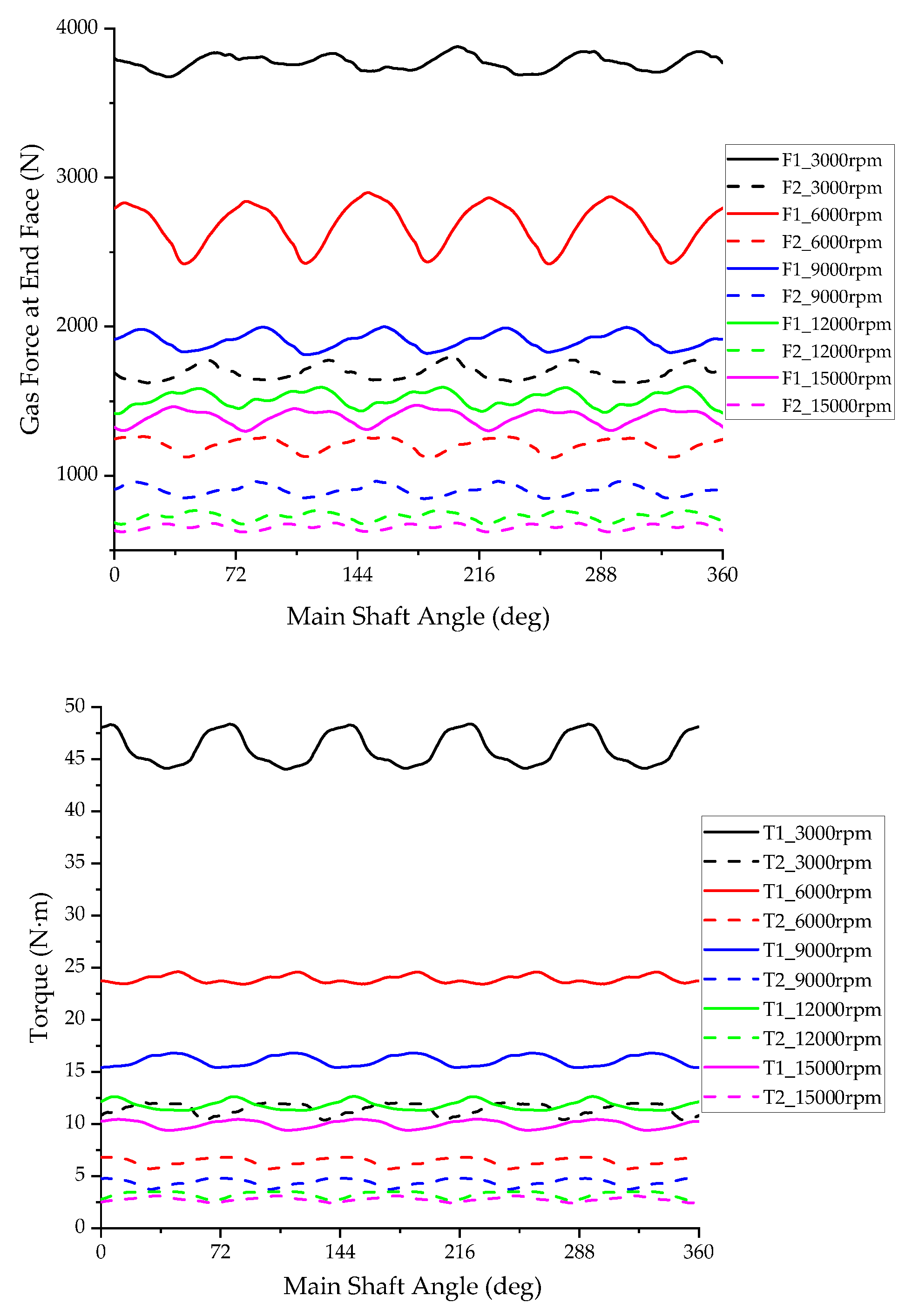
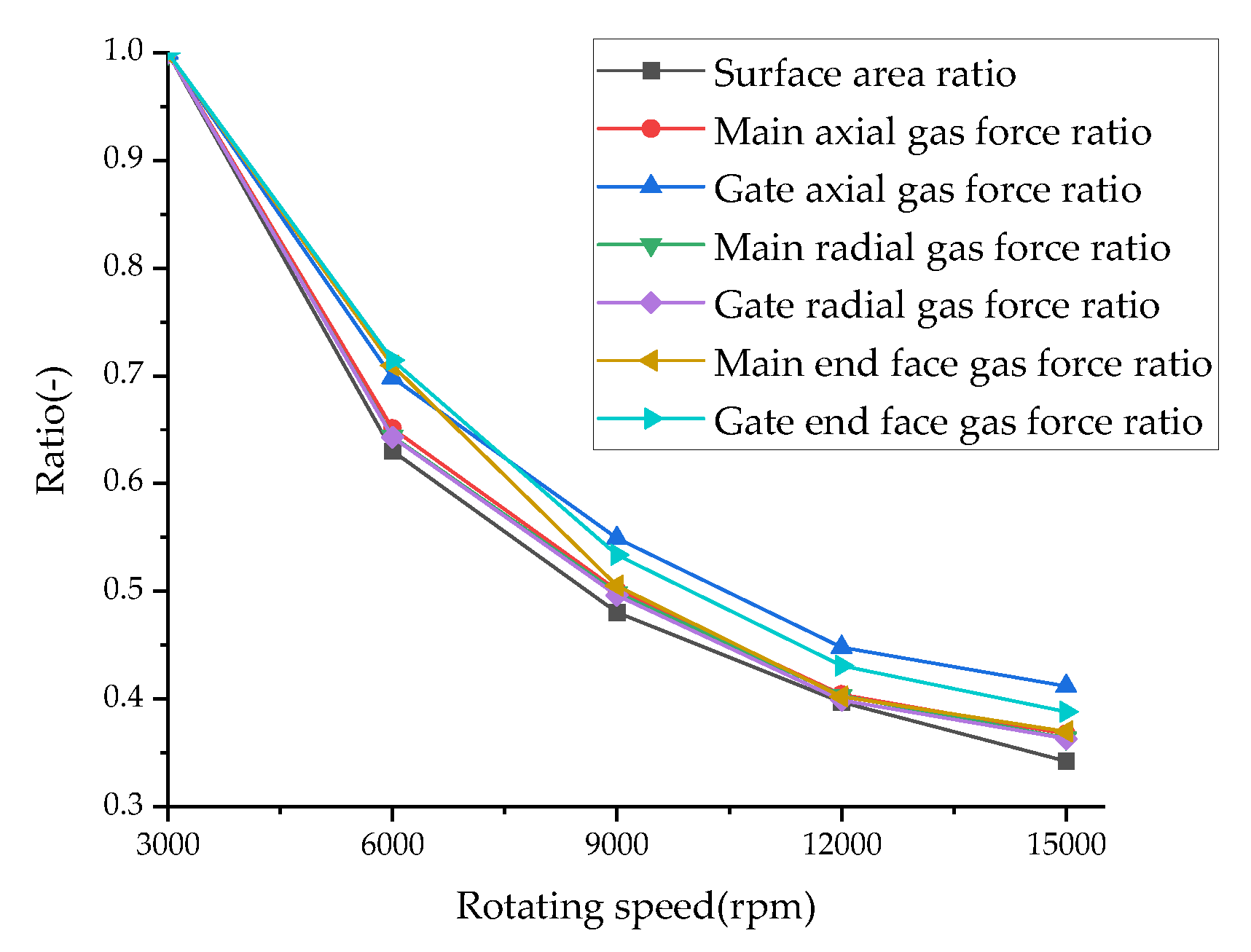
5.4. The Effect of Rotor Configuration and Wrap Angle
6. Conclusions
Funding
Conflicts of Interest
Nomenclature
| Inlet enthalpy | ||
| Outlet enthalpy | ||
| Mass flow | ||
| Actual intake mass flow rate | ||
| Inlet flow rate | ||
| Leakage mass flow rate | ||
| Outlet flow rate | ||
| Intake mass flow rate | ||
| Theoretical intake mass flow rate | ||
| Pressure | ||
| Pressure of high-pressure chamber | ||
| Pressure of low-pressure chamber | ||
| Time | ||
| Internal Energy | ||
| Velocity | ||
| Inlet velocity | ||
| Outlet velocity | ||
| Exergy | ||
| Indicated power | ||
| Power loss | ||
| Heat quantity | ||
| Temperature of high-pressure chamber | ||
| Temperature of low-pressure chamber | ||
| Working chamber volume | ||
| Bulit-in volume ratio | ||
| Normalized working chamber volume | ||
| Volume of the working chamber at the end of suction | ||
| Adiabatic efficiency | ||
| Dimensionless leakage mass flow ratio | ||
| Volumetric efficiency | ||
| Density | ||
| Angular velocity | ||
| Main shaft angle | ||
| Enthalpy difference |
References
- Abdan, S.; Stosic, N.; Kovacevic, A.; Smith, I.; Asati, N. Oil drag loss in oil-flooded, twin-screw compressors. Proceedings of the Institution of Mechanical Engineers. Part E: Journal of Process Mechanical Engineering 2023, 237, 1137–1144. [Google Scholar]
- Wang, C.; Wang, B.; Liu, M. , Xing, Z. A review of recent research and application progress in screw machines. Machines 2022, 10, 62. [Google Scholar] [CrossRef]
- Zhang, Z.; Ma, K.; Li, D.; He, Z. Theoretical performance comparison of R410A small refrigeration screw compressors and scroll compressors. Fluid Machinery. 2023, 51, 71–80. [Google Scholar]
- Matuzović, M.; Rane, S.; Patel, B.; Kovačević, A.; Tuković, Ž. Analysis of conjugate heat transfer in a roots blower and validation with infrared thermography. International journal of thermofluids 2022, 16, 100234. [Google Scholar] [CrossRef]
- Yang, J.; Xu, M.; Lu, Z. Design of Twin-Screw Compressor Rotor Tooth Profile with Meshing Clearance Based on Graphic Method and Alpha Shape Algorithm. J. Shanghai Jiaotong Univ. (Sci.) 2023, 28, 243–254. [Google Scholar] [CrossRef]
- Wu, H.; Liang, M.; Chen, S.; Wu, G.; Huang, H.; Xu, S.; Xing, Z. Research on thermal deformation and clearances of oil-free twin screw compressor under cryogenic conditions. Proceedings of the Institution of Mechanical Engineers, Part E: Journal of Process Mechanical Engineering 2024, 09544089241233944.
- Rane, S.; Kovačević, A.; Stošić, N.; Smith, I. K. Bi-directional system coupling for conjugate heat transfer and variable leakage Gap CFD analysis of twin-screw compressors. In IOP Conference Series: Materials Science and Engineering, London, United Kingdom, 2021.
- Petrescu, V.; Tomescu, S.; Vasile, E.; Stănescu, T.; & Slujitoru, C. (2023, October). The Influence of Clearances on Energy Efficiency in Screw Compressors. In 11th International Conference on ENERGY and ENVIRONMENT (CIEM), Bucharest, Romania, 2023.
- Willie, J.; Sachs, R. Structural and torsional vibration and noise analysis of a dry screw compressor. Proceedings of the Institution of Mechanical Engineers, Part E: Journal of Process Mechanical Engineering 2017, 23, 4–13. [Google Scholar] [CrossRef]
- Wu, Y. R.; Tran, V. T. Dynamic response prediction of a twin-screw compressor with gas-induced cyclic loads based on multi-body dynamics. International Journal of refrigeration 2016, 65, 111–128. [Google Scholar] [CrossRef]
- Chen, W.; Zhang, Z.; He, Z.; Xing, Z. Characteristicsx and suppression of NVH in twin screw refrigeration compressors. In IOP Conference Series: Materials Science and Engineering, London, United Kingdom, 2019.
- Wu, X.; Xing, Z.; Chen, W.; Wang, X. Performance investigation of a pressure pulsation dampener applied in the discharge chamber of a twin screw refrigeration compressor. International Journal of Refrigeration 2018, 85, 70–84. [Google Scholar] [CrossRef]
- Zhou, M.; Chen, W.; He, Z.; Xing, Z. Research on control techniques of vibration and noise in twin screw refrigeration compressor. Refrigeration and Air-conditioning 2019, 19, 55–60. [Google Scholar]
- Yang, S.; Ouyang, W.; Wang, L.; Yu, Z. Experimental investigation of sound reduction for twin-screw compressor based on oil supply optimization. Fluid Machinery. 2021, 49, 7–13. [Google Scholar]
- Liu, M.; Wang, C.; Li, Y.; Li, Y.; Liu, L.; Xing, Z. Experimental Investigation on the Effect of Water Cooling on a Dry Twin-Screw Air Compressor for Proton Exchange Membrane Fuel Cells. Appl. Sci. 2024, 14, 2537. [Google Scholar] [CrossRef]
- Wagner, J.; Markham, D. Design of a compact, lightweight screw-type compressor for refrigeration systems. In 15th IEEE Intersociety Conference on Thermal and Thermomechanical Phenomena in Electronic Systems (ITherm), Las Vegas, USA, 2016.

| Parameter | Numerical Value |
|---|---|
| number of the teeth | 5/6 |
| wrap angle of the male /° | 270 |
| diameter of male rotor /mm | 90.5 |
| length of the rotor /mm | 90.5 |
| diameter of the female rotor /mm | 74.1818 |
| theoretical capacity /(m3/h) | 51.8 |
| Parameter | Numerical Value |
|---|---|
| Refrigerant | R410A |
| Evaporating temperature (℃) | 3 |
| Condensing temperature (℃) | 50 |
| Inhalation superheat (℃) | 5 |
| Clearance (mm) | 0.02 |
| Gas dryness | 0.95 |
| Rotation speed (rpm) | 3000 |
| Internal volume ratio | 2.85 |
| Specific heat capacity at constant pressure of lubricating oil (J/(kg·℃)) | 1880 |
| Configuration | Radial Nodes | Circumferential Nodes (Main/gate rotor) |
Axial Nodes | Mass flow rate/kg·s-1 | Power/kW |
|---|---|---|---|---|---|
| 1 | 15 | 200/150 | 90 | 0.292 | 17.01 |
| 2 | 18 | 200/150 | 90 | 0.298 | 17.09 |
| 3 | 20 | 200/150 | 90 | 0.307 | 17.15 |
| 4 | 20 | 260/200 | 90 | 0.311 | 17.28 |
| 5 | 20 | 300/260 | 50 | 0.295 | 17.06 |
| 6 | 20 | 300/260 | 70 | 0.309 | 17.23 |
| 7 | 20 | 300/260 | 90 | 0.317 | 17.45 |
| 8 | 20 | 300/260 | 110 | 0.318 | 17.48 |
Disclaimer/Publisher’s Note: The statements, opinions and data contained in all publications are solely those of the individual author(s) and contributor(s) and not of MDPI and/or the editor(s). MDPI and/or the editor(s) disclaim responsibility for any injury to people or property resulting from any ideas, methods, instructions or products referred to in the content. |
© 2025 by the authors. Licensee MDPI, Basel, Switzerland. This article is an open access article distributed under the terms and conditions of the Creative Commons Attribution (CC BY) license (http://creativecommons.org/licenses/by/4.0/).


