

Submitted:
26 February 2025
Posted:
27 February 2025
You are already at the latest version
Abstract
The building industry contributes to the global environmental challenges, however sustainable solutions provide opportunities for a relevant architectural response. It’s the architect’s role to design with consideration of those issues and potential solutions. The objective of this paper was to evaluate the extent to which architecture graduates demonstrate their knowledge about sustainability principles. 346 Bachelor's and Master's theses, defended at the Faculty of Architecture, Wrocław University of Science and Technology in 2023, were analysed in terms of frequency of occurrence of sustainable priority areas distinguished based on key contemporary policies. In order to validate and compare the results, a baseline from projects submitted to sustainable competition was prepared. The analysis revealed that only 40% of the examined theses addressed priority areas. An average difference of 56.6% in the frequency of occurrence of priority areas was noted between theses and competitions abstracts. Furthermore, tendencies within frequency of occurrence of sustainability priorities, as well as formal requirements of the Polish higher education system, were identified and reviewed. Based on all findings, preliminary diagnoses and respective recommendations were proposed. This study is a foundation for further research on architecture graduates’ readiness to tackle environmental challenges within architecture.
Keywords:
sustainability
; policies in education
; comparative assessment
; Bachelor's Degree
; Master's Degree
; architectural education
; architectural thesis analysis
; causal-comparative research
1. Introduction
One of the key challenges in sustainable development is its effective implementation. Alarming data on various global crises highlight the urgent need for radical measures to enable widespread changes in how societies operate. Given that the built environment is predominantly a human creation, it is evident that the processes of spatial planning and design must undergo significant transformation.
In this context, architectural education is faced with the complexity of sustainable development principles and the challenge of effectively conveying their meaning. The dominant need appears to be the systematisation of knowledge and the identification of the most effective methods for teaching sustainability. This is particularly critical in light of projected threats and the global policies designed to address them within the 2030 and 2050 timeframes.
Reforms in the current education system are essential, as it is evident that the existing framework is not yielding the desired outcomes in terms of tangible and visible improvements to the built environment. This raises the fundamental question: how can architectural education about sustainability be effectively revised? Addressing this question involves a complex and multi-stage process. Firstly, it is assumed that architectural education for sustainability (AES) requires the identification of priorities central to the so-called “green transformation” of Higher Education Institutions (HEIs). For this purpose, the requirements outlined in three key documents – the United Nations (UN) Agenda 2030 for Sustainable Development Goals (SDGs), the European Green Deal (EGD), and the New European Bauhaus (NEB) – were adopted as guiding frameworks.
Secondly, it was assumed that the most suitable approach for a preliminary investigation into the integration of sustainability in architectural education would be to examine its measurable outputs, specifically theses. The research was initiated at the home institution, the Faculty of Architecture at Wrocław University of Science and Technology (FA-WUST), within the scope permitted by the available research material. The method employed serves as a preliminary examination for subsequent, more extensive studies to be conducted following the collection of comprehensive data.
The adopted methodology enabled the measurement of the occurrence of sustainability-related terms in the titles, abstracts, and keywords (the written components) of theses defended at the FA-WUST in 2023. Although this approach does not provide a complete representation of architectural education in Poland, it offers insights into trends and challenges faced by architecture faculties in the country. Furthermore, it allows for the identification of the aspects and forms of sustainability addressed by students, as well as those that require additional educational efforts.
1.1. Review of EU and UN Policies in the Context of Sustainability
Due to the ongoing transgression of planetary boundaries, which according to the Stockholm Resilience Centre at Stockholm University has already been exceeded in six out of nine critical areas [1], including the dominant criterion of climate change in the global scientific discourse, directly caused by human activity [2], the construction sector worldwide is facing substantial challenges. This is because, as current estimates suggest, buildings globally consume 34% of final energy and are responsible for 37% of greenhouse gas emissions [3] while in the European Union (EU) these figures are 40% and 36% respectively [4]. In the light of the transgression of other planetary boundaries as well (biosphere integrity, novel entities, land system change, freshwater change, biochemical flows), there is increasing pressure to make comprehensive changes in key areas of human activity. An example of this urgency is the warning issued by 11,000 scientists from across the globe, declaring that Planet Earth is facing a climate emergency which highlights the urgent need for action [5].
The response to this crisis the EU has introduced several legislative measures, including the European Climate Law [6]. This law establishes the primary objective of climate policy: balancing greenhouse gas emissions and removals across the Union by no later than 2050. It also sets an interim target of reducing net greenhouse gas emissions by at least 55% by 2030 compared to 1990 levels. The European Climate Law forms part of the European Commission’s broader legislative initiative, the EGD [7], which is to align the EU’s policies on climate, energy, transport, and taxation policies to achieve these goals. Meeting these ambitious targets within such a short timeframe requires decisive action within the building sector, including significant improvements in energy efficiency (e.g., reducing primary energy consumption by 40.5% [8]), increasing the share of renewable energy sources (to 42.5% by 2030) [9], decarbonising the construction industry and renovating the existing building stock. Moreover, on 14 July 2021. the European Commission adopted the “Fit for 55” package [10], which consolidates these initiatives and provides an enhanced legal framework to facilitate their implementation.
Achieving these objectives will require European countries to undertake decisive action, calling for the involvement of highly skilled specialists. Some of these efforts will directly pertain to areas of architectural practice. Consequently, significant changes in the education and training of future architects and academics will be essential. This need is underscored by the 6th IPCC Report, which highlights a tendency to neglect key areas—such as the circular economy, a cornerstone of the EGD—in architectural education [11].
1.2. Review of EU and UN Policies in the Context of Sustainability
The potential of higher education in achieving the Sustainable Development Goals (SDGs) has been recognised in numerous initiatives on the international UN forum. For instance, the 2030 Agenda for Sustainable Development [12] highlights the importance of ensuring access to quality education, including architectural education, under Goal 4. Specifically, point 4.7, commits to ensuring that, by 2030, all learners acquire the knowledge and skills necessary to promote sustainable development. As part of this effort, the Higher Education Sustainability Initiative (HESI) has been operating since 2012. HESI is a partnership between the United Nations and educational institutions worldwide, serving as a platform that enables higher education institutions to make commitments and initiatives for sustainable development, as well as share experiences and best practices. Under HESI, universities commit to activities such as integrating sustainable development into their curricula, conducting research on sustainable development, promoting sustainable practices on university campuses, and supporting community action in pursuit of sustainable development [13].
Similarly, professional associations such as the International Union of Architects (UIA) also recognise the importance of higher education in achieving the SDGs. This understanding was articulated as early as 1993 in the Declaration of Interdependence for a Sustainable Future. Principle 10 of the declaration states that ‘the initial education and Continuing Professional Development of Architects should recognise the need for a wide range of knowledge and insights from the Arts, Culture and Humanities, the Natural and Social Sciences, and the Technologies as a basis for understanding the behaviour and management of ecological systems, and for creating ecologically sustainable forms of production, development and settlement’ [14]. Subsequently, the Copenhagen Declaration (2009) emphasised that the primary objective of the UIA is to ‘require more and better education and training on Sustainability by Design within existing academic and professional development programmes’ [15].
A consequence of the Agenda 2030 and the United Nations Educational, Scientific and Cultural Organization (UNESCO) Plan of Action is the current policy of the EU to promote education for sustainable development. As early as 2002, the Maastricht Declaration on Global Education was adopted as part of the implementation of the 8 Millennium Sustainable Development Goals. Following the World Summit on Sustainable Development in Johannesburg in 2002, the European Economic Commission’s Strategy on Education for Sustainable Development (ESD) was adopted. To be most effective, ESD should proceed in two ways:
(i) by integrating ESD topics into all relevant subjects, programmes and courses;
(ii) by providing subject specific thematic programmes and courses; provide insight into the issue of global, regional, national and local environmental problems [16].
The Millennium Summit (2015) redefined the Millennium Sustainable Development Goals, which provided further impetus for legislative work at EU level. The European Commission Communication (2020) on achieving the European Education Area by 2025 [17] and other key documents [18,19,20] identified green and digital transformation and its promotion and acceleration as one of the EU’s key priorities. The European Commission Communication (2020) European Skills Agenda for sustainable competitiveness, social fairness and resilience [20] announced support for the development of a set of basic green skills for the labour market. This agenda aims to foster a generation of environmentally conscious professionals and green economic actors, by integrating environmental and climate issues into the curricula of general education, higher education, vocational education and training, as well as research.
The agenda specifically highlights the construction sector, stating that up-skilling efforts must focus on energy and resource efficiency, decentralised renewable energy solutions, closed-loop systems, digital transformation, and the renovation of existing buildings in line with accessibility requirements.
One of the most recent documents most closely related to ESD is the Council Recommendation (2022) on learning for the green transition and sustainable development, [21] which proposes:
- making green transition and sustainable development one of the priority areas of education and training policies and programmes;
- providing opportunities for learners to understand issues related to the climate crisis and sustainable development in both formal and non-formal learning (e.g., in extra-curricular activities and youth work);
- providing support to educators to deepen their knowledge and develop the skills needed to teach about the climate crisis and sustainability.
As evident from the above overview, there is a clear political consensus on the importance of education in sustainability. However, the question remains whether this consensus is being effectively translated into practice by academic education communities.
1.3. Studying Architecture in Poland in the Context of Sustainability
In the academic year 2023/24, there were 24 higher education institutions in Poland offering degree programmes, that entitled graduates to apply for a licence to design in the architectural specialisation, in accordance with Articles 15 and 16 of the Construction Law [22]. All these universities are listed in Table A1, Apendix C, which specifies: the levels of study (Bachelor’s, Master’s, Doctoral); the type of university according to the Polish Science database [23]; and the name of the faculty or institute responsible for the field of study.
Out of these 24 universities, 11 provide architecture studies at all three levels (engineering, master’s and doctoral). Three universities educate only future engineers (State University of Applied Sciences in Racibórz, University of Applied Sciences in Nysa, Academy of Film, Art and Design) and only one offers a unified master’s programme (Warsaw University of Technology). Higher education in Poland is regulated by various legal acts, the most significant being the Law on Higher Education and Science [24], which defines the organisational and formal framework for the operation of public universities. In the context of architectural studies, the Regulation of the Minister of Science and Higher Education of 18 July 2019 on the standard of education preparing for the profession of architect [25] (hereinafter referred to as the ‘Standards’) is particularly important. The Standards outline the structure, scope, and learning outcomes for single-cycle and two-cycle master’s degree programmes. Based on these Standards, higher education institutions develop the so-called Graduate Profiles. The Standards specify groups of courses, detailing the minimum number of hours and ECTS credits required, while the specific curriculum is determined by the individual university’s regulations. Five groups of courses are defined: Design, Design Context, Supplementary Classes, Professional Practice and Diploma. These categories were used as the foundation for this study. The learning outcomes for each level of study defined in the Standards are categorised into: knowledge, skills, competences. Since these references are repeated at each level of study, they can be considered an essential part of an architect’s education. Key phrases in the learning outcomes that relate to sustainability include:
- environmental protection and ecology,
- conservation of the surrounding environment,
- responsibility for environmental protection,
- responsibility for shaping the environment and landscape,
- the importance of the natural environment,
- the role and importance of the natural environment in design,
- ecologically responsible sustainable design,
- environmental considerations,
- principles of energy-efficient design,
- energy-efficient building design.
Similarly, key competences in this area include:
- the ability to recognise the relationship between people and architecture, as well as architecture and the environment,
- the ability to evaluate the state of land use,
- the use of methods and tools to implement ecologically responsible sustainable design,
- protection and conservation of the surrounding environment,
- fostering responsibility for technical decisions, the protection of cultural and natural heritage, and the transmission of these values to future generations,
- understanding the role of the natural environment in architectural design, urban planning and spatial planning, along with the importance of spatial order and sustainable development.
Based on the analysis of online sources, descriptions of graduate profiles offered by all 24 universities in Poland were reviewed. In cases where a clearly defined graduate profile was unavailable (explicitly named in the description or indirectly referenced), the declared educational outcomes (as a priority) or general descriptions of the study programme provided on university websites were examined. A total of 39 websites, including their sub-pages, containing educational outcomes declared by HEIs in the field of architecture were analysed (Appendix A, Table A1). Most HEIs explicitly cite the requirements of the Standards without offering additional descriptions or links. Only three universities—Lublin University of Technology, Bydgoszcz University of Science and Technology, and the University of Ecology and Management—provide more extensive descriptions of graduate profiles.
One of the most frequently occurring provisions is the preparation of graduates who “know and understand advanced issues concerning architecture and urban planning, useful for designing architectural objects and urban complexes in the context of social, cultural, natural, historical, economic, legal, and other non-technical conditions of engineering activity, integrating knowledge gained during the studies” [26].
In conclusion, there is room for doubt as to whether such generalised wording is sufficient to provide universities—and subsequently teaching staff—with clear guidance on the topics that should be covered during classes to effectively prepare graduates for the requirements of the contemporary labour market and global challenges. Consequently, it can be concluded that the current provisions of the Standards in Poland strike a balance. On the one hand, they emphasise the need to address sustainable development. On the other hand, they grant universities significant freedom in interpreting and shaping their curricula.
It is worth mentioning that in 2011, the main Polish opinion-forming institutions in architectural matters (the Polish Architects’ Council, the Association of Polish Architects, the Society of Polish Town Planners, the Chamber of Architects of the Republic of Poland) published a document entitled Polish Architectural Policy. This document established a set of holistic objectives for improving Polish architecture and was intended as a foundation for further governmental initiatives, aiming to incorporate these objectives into official legislation. Integral to these goals was a clear direction for enhancing the level of architectural education which included conducting research on ‘sustainable design and spatial order’, and integrating design and theoretical subjects in the educational standards to address issues of spatial order as a prerequisite for sustainable development [27].
1.4. Current Architectural Student Competitions: Relative Occurrence of Terms Related to Sustainability
An integral component of architectural education—and subsequently professional practice—is participation in design competitions. They reflect contemporary industry and design trends. Participation in competitions that focus on sustainability allows students to evaluate their projects against clearly defined rating criteria and provides an opportunity to incorporate sustainable solutions into their designs [28]. The extent to which sustainability is addressed in architectural student competitions was analysed based on a review of 80 recent competitions held between 2020 and 2024. These competitions, aimed at students and young architects, were published on the well-established platform competitions.archi [29]. The findings of this analysis are presented in Figure 1.
Almost 28% of the analysed competitions explicitly referred to sustainability in their introductory summary, making it an integral part of the design task. Another 41% referred to at least one design characteristic aligned with a sustainable approach as defined by the SDGs. These primarily focused on the regeneration of the designated site or buildings, and also included themes such as providing quality education or reducing inequalities. Only about 1/5 of the analysed contests did not refer to sustainable development concepts or its key aspects.
The analysis of competition criteria revealed a similar pattern. More than 2/3 of the competitions, that provided assessment criteria, evaluated submitted designs based on their sustainability or environmental impact. Key aspects of the SDGs, regeneration of the context, and social impact were also decisive in evaluation process. Only a minority of competitions failed to reference sustainability or the key aspects of the SDGs.
In summary, sustainability and related subjects have become an integral part of contemporary design tasks within competitions. Sustainability is not only a recurring theme but also a critical metric for assessing the success of submitted designs. Over the years, there has been a noticeable trend towards requiring specific energy saving solutions, and towards achieving sustainable outcomes in competition entries [30]. Furthermore, the evaluation of architectural competitions in Poland between 2018-2022, conducted by Grzegorzewska, Kaczmarek, and Kirschke, shows the significance of well-constructed judging criteria in ensuring the future implementation of sustainable solutions [30]. This highlights the necessity of incorporating such knowledge and standards during architectural education.
2. State of Research
2.1. Overview of International Research on ESD Challenges
A significant body of research has been conducted on the implementation of ESD [31,32,33,34,35], much of which focuses on the challenges associated with this process. As early as 2005, Stasinopoulos [36] proposed a comprehensive classification of obstacles, identifying seven criteria specifically related to academia. Subsequent studies have continued to highlight and emphasise these issues:
- ‘fringe reputation’ (knowledge offered in elective classes),
- ‘number crunching’ (emphasis on quantitative rather than qualitative matters),
- ‘The Beaux Arts tradition’ (societal ethics or environmental awareness are not embedded in the agenda but only technical and aesthetic aspects), lack of support,
- ‘the old guard’ (limited knowledge and lack of experience of tutors),
- ‘holistic vs. fragmented’ (conventional linear approach where different technical skills are segregated in different departments),
- ‘what crisis?’ (little systematic awareness of the relationship of building and urban design with vital environmental issues),
- ‘lack of support’.
An additional, conclusion was the initial observation of a lack of research in developing countries, a gap that has gradually narrowed since the start of the so-called ‘ESD decade’ (2005-2014). This shift is also reflected in the increasing number of publications from Poland after 2015 [37,38,39,40].
The lack of a holistic approach to sustainable design is also highlighted by Altomonte et al. who says that architecture curricula ‘should seek to bridge this divide and develop pedagogies that combine both technical and holistic issues of sustainability with a design approach that is inventive, creative and responsive to pressing environmental needs’ [41] (p. 3). Probst [42] further notes that in most of the reviewed literature sustainability was not introduced as an educational prompt for epistemological, ontological, and ethical debate, but rather as an educational end. According to Probst, the least controversial learning outcome related to sustainable development was knowledge, with most studies demonstrating that awareness or understanding is a prerequisite for learning about sustainable development.
Altomonte et al. [43] in the EDUCATE project (Environmental Design in University Curricula and Architectural Training in Europe, 2009-2012) [44] also emphasise that government regulations in some Eastern European countries fail to comprehensively promote the implementation of sustainability in education. They underscore the urgent need to train academic staff—particularly in developing countries—in sustainability leadership, as well as the necessity of updating curricula and clearly defining the concept of sustainability.
2.2. Overview of Research on Sustainable Architectural Education in Poland
A study of the number of Polish publications on selected aspects of sustainability in HEIs, conducted by the Pietrzak, Kraciuk, Cieciora, Kacperska, Łukasiewicz, and Dębski team in 2023, showed that this is an important topic for contemporary researchers, and publishing on this topic was considered one way to promote and educate about sustainability [45]. The following review of the current literature on AES in Poland is based on 30 contemporary articles published from 2015 to 2024. This timeline is based on the greater availability of research material observed since the aforementioned ‘ESD decade’.
Many of the articles analysed below were published in WTE&TE (World Transactions on Engineering and Technology Education) (18) and MDPI Sustainability (5). Both platforms are often used to promote ideas and issues on AES (Appendix B, Table A3).
The specific topics of the work on AES in Poland are diverse. Research is carried out with regard to both Bachelor’s and Master’s Degree [38]. The analysed articles are mainly from the Cracow University of Technology (12) and WUST (8) (Appendix B, Table A4). The research topics are mainly related to the activities carried out at the respective centres. The researchers note that each university in Poland represents its own didactic path, and thus also its own way of introducing sustainability into the curriculum [46,47].
Within the analysed literature on AES in Poland, the following aspects were identified:
- reasons for conducting research,
- methods of conducting research,
- proposed didactic activities for the development of AES.
The basic and universal reason for research in the field of AES in Poland is the search for an appropriate way to teach and organise knowledge about sustainability. Jagiełło-Kowalczyk states that it is necessary to implement AES from the early stages of education [48]. The creation of common, universal and coherent educational programmes may also be helpful [49,50]. Students’ general knowledge of sustainable development appears to be gradually improving [40], however Brzezicki and Jasiolek note gaps in that field, which should be recognised and addressed within a didactic process [51].
Based on the literature review, three basic ways of investigating the state of contemporary architectural education in Poland were distinguished. The topic was investigated through:
- review of curricula (28 articles),
- analysis of student work (18 articles),
- conducting a survey among students (11 articles).
Among the analysed works, there were various ways of recognising the multifaceted nature of sustainability. Recurring basis for understanding the concept of sustainability on several occasions were SDGs [51,52,53,54], EGD [39], [53], and NEB [39], [55] criteria. These references appear mainly in more recent studies, after 2021, and thus provide a legitimate basis for analysing the sustainability within students’ work.
Currently, no research comprehensively examines students’ skills, knowledge about sustainability, or the outcomes of teaching processes, based on a broad overview of student work, encompassing a larger sample than one or a few course groups. Gil-Mastelarczyk analyses a broader selection of theses that were awarded in competitions [56]. However, these represent the best theses completed between 2017 and 2019 and, as such, offer only a partial view of the overall educational outcomes for architectural studies.
Individual analysed research papers seek and define various possible corrective actions and potentially effective teaching methods, the dominant ones being:
- an understanding of the different aspects of sustainability and their systematisation (20 articles),
- interdisciplinary approaches (20 articles),
- collaboration (e.g., working in groups, with external actors) (19 articles),
- conducting research as an integral part of the design process (18 articles),
- introducing supporting tools (e.g., BIM, analytical tools) (13 articles),
- thinking and acting locally (13 articles),
- thinking and acting globally (13 articles),
- creating a grading and evaluation system for created projects (for students and teachers) (11 articles).
The listed didactic initiatives do not constitute a holistic and comprehensive teaching plan implemented throughout the years of study, but rather represent isolated actions within selected courses. It is also important to note that different teaching units, including foreign ones, provide diverse approaches to similar topics. Therefore, the exchange of experiences between different courses and HEIs is particularly valuable and beneficial for the overall development of knowledge on sustainable architectural education [53,57,58].
3. Materials and Methods
The analysis of the occurrence of sustainable solutions in theses submitted to FA-WUST was conducted, with priority areas identified based on SDGs, EGD and NEB. This analysis enabled the identification of specific aspects related to sustainability. Furthermore, a comparative baseline was established by examining the results of a similar analysis of the best projects submitted to the international student competition dedicated to sustainable architecture - the Architecture Student Contest by Saint-Gobain 2024, as discussed in Section 1.4.
3.1. Primary Research Materials
The primary material for this research comprises of 346 theses, including 175 Bachelor’s theses and 171 Master’s theses, in Architecture, all defended in 2023 at the FA-WUST. Access was obtained to the titles, abstracts, and keywords, which are collectively defined as the available research material. The collection was retrieved from the university’s open-access thesis archive system [59]. Obtaining permission to access the full content of the theses proved impossible. Consequently, no qualitative analysis of the theses was conducted, as discussed in the Limitations of the Study (Section 6.2).
3.2. Identification of Priority Areas
Based on a review of contemporary policies dedicated to sustainability and an analysis of the current literature on the subject, it was assumed that the most significant documents for categorizing sustainability issues in the context of architectural education are the SDGs, EGD and NEB. A review of these documents was conducted, and a synthetic summary of their targets was created. This summary served as the foundation for identifying priority areas, which, in turn, provided the basis for analysing the collected research material.
1. The SDGs, outlined in the document Transforming our World: the 2030 Agenda for Sustainable Development [60] adopted by the UN in 2015 in New York, comprise of 17 goals supported by a total of 231 unique indicators. Out of these, 9 goals are directly related to the construction sector. However, a preliminary analysis of the research material revealed that non-architectural issues could also become the focus of student work. Consequently, all 17 goals were adopted as priority areas of the SDGs, as presented in Table 1.
2. EGD – the EU document introduced in 2019 to ensure a climate-neutral Europe by 2050, defines priority areas as presented in Table 2. A discrepancy has been identified in the number of targets between the English and Polish versions [61] of the EGD steps. For the purposes of this study, which focuses on Polish materials, a Polish categorization was adopted.
3. The NEB programme, announced in 2020 by the President of the European Commission, Ursula von der Leyen, “calls on all Europeans to imagine and build together a sustainable and inclusive future that is beautiful for our eyes, minds, and souls“ [62]. The initiative seeks to inspire a movement that facilitates and guides the transformation of societies based on three interconnected values: Sustainability, from climate goals to circularity, zero pollution, and biodiversity; Aesthetics, quality of experience and style beyond functionality; Inclusion, from valuing diversity to securing accessibility and affordability. Initiative as a collaborative space where architects, artists, students, engineers, designers work together. For the purposes of this analysis, four priority areas of NEB were identified, as presented in Table 3.
Due to their complexity and broad scope, which enables the most comprehensive analysis, the SDGs were considered as the baseline document. The 17 SDG priority areas were matched with corresponding priority areas from the EGD and NEB (Appendix C, Table A5). Non-Related Elements (N.R) were also identified, including the following SDG priority areas: SDG 1 - No Poverty, SDG 3 - Good Health and Well-being, SDG 4 - Quality Education, SDG 5 - Gender Equality, SDG 6 - Clean Water and Sanitation, SDG 10 - Reduced Inequalities, SDG 16 - Peace, Justice and Strong Institutions, SDG 17 - Partnership for the Goals. The links between the priority areas for the three key documents are depicted in Figure 2.
3.3. Auxiliary Priority Area
Priority areas have been supplemented with an additional independent Auxiliary Priority Area, which focuses on regeneration and revitalisation in architecture. This theme also appears in the competition guidelines (Section 1.4). During the analysis of the research material, this topic emerged as a prominent theme in the theses, primarily due to the presence of the specialisation ‘Architecture and Historic Preservation’ at FA-WUST. As a result, it was added as a priority area to complement the categorisation of the data within the thesis recognition process across the three documents.
3.4. Key topics of Priority Areas
During the research process, the adopted priority areas for each of the three documents (SDGs, EGD, NEB) were described and defined through key topics—distinctive terms identified during the analysis of the research material that pertain to sustainability (Appendix D, Table A6) [63,64]. Manual data processing involved categorising these key topics, initially using the SDGs as the basic framework due to its comprehensive set of priority areas. The occurrence of key topics in the research material allowed for the assignment of individual theses to specific priority areas. By establishing connections between the priority areas of the SDGs and those outlined in the other two documents (Figure 2 and Appendix C, Table A5), key topics were similarly linked to the specific priority areas of the EGD and NEB.
Key topics were also assigned for the Auxiliary priority area, primarily focusing on the improvement of existing spaces and buildings through increased energy efficiency, responsible management of materials, and heritage and history education [65,66,67,68]. The following key topics were distinguished in this context: regeneration, adaptation, repair, modernisation, renovation, and revitalisation (Appendix D, Table A6).
The database of key topics enabled recognition of the elements of sustainable development considered by the graduates. It is intended to serve as a foundation for developing more advanced, automated methods for searching key topics and analysing significant volumes of work in the context of sustainability.
3.5. Method of Examining Theses
Manual data processing was conducted using Excel for data aggregation, and an internal thesis database was established to identify relevant priority areas for each of the three available elements of the research material: title, abstract, and keywords.
Causal-comparative research [69] was employed to analyse quantitative differences within the available research material across the theses. Comparative research was performed in three stages:
1. frequency of occurrence of priority areas,
2. relative frequency of occurrence of priority areas in comparison with comparative baseline, as described in Section 3.6,
3. comparative analysis of Bachelor’s and Master’s Degree,
Frequency of occurrence of priority areas in the title, abstract, and keywords, enabled the categorization of papers into two groups: those rated positively (containing at least one key topic) and those rated negatively (lacking any key topics), indicating the percentage of papers that do not contain any priority area. At this stage, if a thesis addressed multiple priority areas, it was treated as a single unit.
The second stage examined the relative frequency of occurrence of priority areas in comparison with comparative baseline [70]. Dissertations with a positive mark in the abstract were assigned to specific priority areas (SDGs, EGD, NEB with Auxiliary). The analysis was conducted on the entire set of dissertations, including both positive and negative marked papers. The relative frequency of occurrence of priority areas was determined by dividing the number of occurrences of a given priority area by the total number of dissertations, expressed as a percentage. This step aimed to explore the relationship between the frequency of specific priority areas and their occurrence in the theses, identifying areas with greater and lesser prevalence.
It is important to note that a thesis must contain at least one priority area, with a maximum of up to eighteen priority areas (in the case of SDGs with the Auxiliary). Thus, a single thesis may address multiple priority areas. Furthermore, each defined priority area can only be mentioned once within a given abstract, even if several distinct key topics are identified for the same priority area within the paper.
The final stage involved conducting a comparative analysis of the available research material from Bachelor’s in Architecture and Master’s theses. This comparison enabled an examination of the relationship between theses at different academic levels, focusing on the frequency and relative frequency of occurrence of priority areas.
3.6. The Comparative Baseline - Architecture Student Contest by Saint-Gobain 2024
In order to establish a reference point and verify whether there is a correlation in achieved results between the diploma theses and competition works, a comparative baseline was developed. The source for this baseline, was the internationally recognised Saint-Gobain Architecture Student Contest, a well-established competition focusing on sustainable architecture. The primary objective of the competition is to promote sustainability, help students develop projects focused on wellbeing and minimisation of the environmental impact.
Each year, organisers provide participants with a unique task, which includes a specific site for intervention and a functional programme. The competition addresses both new construction and the renovation of existing buildings. The organisers also define judging criteria that emphasise the sustainability of the project as a key evaluation factor. Participants are supported with tools for daylight and sunlight analysis, as well as life cycle assessment, to enhance the environmental and functional quality of their designs.
As such, the Contest provides a good reference point for understanding the expected degree of sustainability within a project and how it correlates to the differentiated priority areas. The analysis of the abstracts submitted for this Contest also offers an opportunity to verify whether students preparing sustainable projects explicitly reference these aspects within the summaries of their work. This verification helps to determine whether the examination of abstracts is a valid method for assessing the level of sustainable approaches in diploma projects.
For the purpose of this study, 29 best works selected as finalists in the 2024 edition of the Contest were analysed. The students were tasked with designing a temporary housing for the students and researchers, as well as a permanent housing for the residents of Viikki, near Helsinki. The judging criteria referenced sustainability and were divided into 4 aspects [71]:
- 30 % - architecture of the new construction area;
- 30 % - sustainable construction of the new construction area;
- 20 % - architecture of the renovation area;
- 20 % - sustainable construction of the renovation area.
Thus, the development of a project in a sustainable way contributed to up to 50 % of the final score.
As part of the submitted work, students provided both a title and an abstract. Titles were typically concise and differed significantly from the descriptive format used for diploma project titles. Therefore, titles were not considered for further analysis. Abstracts, on the other hand, were typically a few sentences long and closely resembled those found in diploma projects. Consequently, abstracts were included in the creation of the comparative baseline.
The methodology for analysing the abstracts submitted for the Contest followed the same approach as the one used for analysing diploma project abstracts.
4. Results
4.1. Frequency of Occurrence of Priority Areas
4.1.1. Frequency of Occurrence of Priority Areas in all Theses
The overall results regarding the frequency of occurrence of priority areas are presented in Figure 3. It is evident that, out of the 346 papers analysed, the highest occurrence rate among the three examined elements is found in the abstracts, with a frequency of 60%.
4.1.2. Comparison of Frequency of Occurrence Of Priority Areas in Bachelor’s and Master’s Theses
The comparative analysis of the occurrence of priority areas in Bachelor’s and Master’s theses in Architecture is illustrated in Figure 4. The analysis revealed that Master’s theses incorporate key topics in their abstracts approximately 70% of the time, whereas Bachelor’s theses do so around 50% of the time (Figure 3).
An examination of thesis topics and keywords shows minimal differences between the two degree levels. The average disparity in the frequency of occurrence of priority areas between the two groups is 7 percentage points.
4.2. The Relative Frequency of Occurrence of Different Priority Areas in the Comparative Baseline
The analysis of abstracts from the best works submitted to the Saint-Gobain Architecture Student Contest demonstrated that sustainability was a crucial factor in their development. All of these works referenced at least one of the priority areas, with the winning entries addressing at least six priority areas (within the SDG priority areas only).
Furthermore, the analysis of the contest abstracts confirms that when assessment criteria are centred on sustainability, the projects are also explicitly focused on this aspect, which is evident in their abstracts. However, even projects prioritising environmental impact do not reference all of the priority areas equally but rather respond to them to a significant degree.
The results of this analysis are presented in Figure 5.
1. SDGs (Figure 5a)
A comparison of the relative frequency of the occurrence of identified priority areas within the SDGs showed those which were an integral part of creating sustainable architecture and defined the level of understanding and focus on sustainability. Those were SDG 11, SDG 13 and SDG 15. With some exceptions, almost all of the final contest proposals referred to those priority areas. Similarly, incorporation of SDG 12, was connected to over 60% of all designs, and SDG 9 and SDG 10 was referred to by over 40% of them. Those priority areas are not strictly related to the function of the designed architecture and show the general incorporation of sustainable solutions. Hence, the above 6 priority areas (SDG 9 - Industry, Innovation and Infrastructure, SDG 10 - Reduced Inequalities, SDG11 - Sustainable Cities and Communities, SDG 12 - Responsible Consumption and Production, SDG 13 - Climate Action, SDG 15 - Life on Land) can be identified as the most relevant for the comparative baseline, since they are most often referred to by students regardless of the design idea and are not strictly connected to the contest task.
Also notable among the contest works, but less frequently prioritized, were SDG 3 - Good Health and Well-being, SDG 7 - Affordable and Clean Energy. These areas were referenced in approximately one-third of all designs and can be considered universal, regardless of the specific design topic of a given project.
Other priority areas were rarely mentioned within the analysed projects’ descriptions. Many of these are not directly related to architecture (e.g., SDG 16, SDG 17), while others may only appear if explicitly integrated into the design topic or function (e.g., SDG 1, SDG 2, SDG 8).
2. EGD (Figure 5b)
The majority of EGD priority areas were included in almost all considered student projects. These refer to EGD 3 - Climate neutrality and adaptation to climate change, EGD 4 - Clean and circular economy, EGD 5 - Building and renovating in an energy and resource efficient way, EGD 6 - Sustainable and smart mobility, EGD 7 - Zero pollution for a toxic-free environment, EGD 8 - Ecosystem and biodiversity restoration and conservation. These are connected to architecture, general in nature and not strictly connected to a chosen design topic.
The less often appearing but still occurring priority areas were EGD 1 - Fair, Healthy, and Environmentally-friendly Food System, EGD 2 - Clean, Affordable, and Secure Energy. The first one might be more connected to the subject of a given design, thus appearing rarely. The second one is fundamental for sustainable energy design, but connected to specific solutions and not necessarily the most crucial for basic summaries of conceptual designs prepared for the analysed competition.
3. NEB (Figure 5c)
All NEB priority areas were included by almost all student projects considered, in no less than 83% of them. High scores for those parameters might be attributed to the general nature of the division of the priority areas, which allows for more conceptual relation to sustainability within the competition projects.
4. Auxiliary (Figure 5)
The Auxiliary priority area - Revitalisation was also often considered, appearing in approximately one-third of all designs. However, this was closely linked to the main design task, which involved both new construction and renovation.. This priority area fell within the middle range of references compared to the more detailed priority areas of the SDGs, and within the lower range compared to the more general priority areas of EGD and NEB. Nonetheless, it was significant and was included by students.
4.3. Relative Frequency of Occurrence of Different Priority Areas
To analyse students’ understanding and the significance of various aspects of sustainability, a comparative analysis was performed on the relative occurrence of each predefined priority area across all theses. This analysis identified the priority areas with the highest and lowest frequency of occurrence within the SDGs, EGD, NEB, and Auxiliary priority areas. The findings were then interpreted in the context of the comparative baseline established by the 2024 Saint-Gobain Architecture Student Contest (Section 4.2).
4.3.1. Relative Frequency of Occurrence of Different Priority Areas in all Theses
The results of the study indicate that key topics were identified in 60% of all thesis abstracts (Figure 3), which were subsequently attributed to specific priority areas within the SDGs, EGD and NEB (Appendix D, Table A6). In comparison, the corresponding result for the 2024 Saint-Gobain Architecture Student Contest is 40 percentage points higher. Each competition entry contained at least one key topic (Section 4.2).
The most diverse results were observed for the SDGs, due to the broad range of priority areas, which facilitates a more detailed analysis. The results for EGD and NEB were higher in percentage terms, as key topics for these concepts are more consolidated and grouped. The results are presented in Figure 6.
1. SDGs (Figure 6a)
SDG 11 - Sustainable Cities and Communities and SDG 13 - Climate Action exhibit the highest relative frequency of occurrence, accounting for approximately 20% of all papers. In the majority of thesis abstracts analysed, these priority areas (SDG 11 and SDG 13) appear alongside other priority areas, with only isolated cases where they occur independently.
Approximately twice as low frequency (9-14%) is related to: SDG 3 - Good Health and Well-being, SDG 10 - Reduced Inequalities, SDG 12 - Responsible Consumption and Production, and SDG 15 - Life and Land.
Surprisingly, SDG 7 - Affordable and Clean Energy, a critical topic in sustainable architectural design, demonstrates a notably low frequency (4%). However, when present, this priority area is typically addressed in conjunction with other key topics.
Other SDGs exhibit near-zero or negligible frequency.
A comparison with the comparative baseline highlights the most significant deviation of 79 percentage points for SDG 15. In the remaining cases, as observed in the thesis abstracts, the competition abstracts also achieve some of the highest scores in SDG 11, SDG 13, with slightly lower scores in SDG 12. However, notable distinctions persist, including a 60 percentage point difference disadvantaging the thesis abstracts. Furthermore, in SDG 7, SDG 9, and SDG 10, competition paper abstracts outperform thesis abstracts by 26 to 39 percentage points.
2. EGD (Figure 6b)
The four most frequent priority areas from the EGD in the thesis abstracts account for approximately one-third of all theses. These areas are: EGD 3 - Climate Neutrality and Adaptation to Climate Change, EGD 4 - Clean and Circular Economy, EGD 5 - Building and Renovating in an Energy and Resource Efficient Way, EGD 6 - Sustainable and Smart Mobility.
The results for EGD 1 - Fair, Healthy and Environmentally-friendly Food System and EGD 2 - Clean, Affordable and Secure Energy are close to zero.
The four most frequent priority areas of EGD of the thesis abstracts (EGD 3, EGD 4, EGD 5, EGD 6) align with those observed in competition abstracts. However, the proportion of competition abstracts covering these areas is nearly 100%, compared to approximately 30–40 % in thesis abstracts. The largest disparity (74 percentage points) pertains to EGD 8 - Ecosystem and Biodiversity Restoration and Conservation. The least frequent priority areas for both thesis and competition abstracts are EGD 1 and EGD 2, although competition abstracts exceed thesis abstracts in EGD 2 by 33 percentage points. This indicates that it was possible to address sustainable energy design in the abstracts, even though this priority area requires more specific solutions to be described.
3. NEB (Figure 6c)
Within the NEB category, NEB 2 - Circularity demonstrates the highest frequency of occurrence, and is present in two-fifths of all papers. Half as many occurrences were recorded for NEB 1 - Climate Goals and NEB 3 - Zero Pollution. The least frequent topics pertain to NEB 4 - Biodiversity.
The largest difference between competition and thesis abstracts (74 percentage points) is observed in NEB 4. Key topics included by diploma students were generally location-specific and emphasized ecosystem protection but rarely proposed specific solutions. In other priority areas (NEB 1, NEB 2, NEB 3), competition abstracts consistently achieve values between 83% and 97%, compared to 24–39% in thesis abstracts. As a result, there are significant differences in the occurrence of priority areas between the thesis abstracts and the comparative baseline, which in all areas achieves very high scores.
4. Auxiliary (Figure 6)
Independent of SGDs, EGDs, NEB, the Auxiliary category achieves a high relative frequency, appearing in 10% of thesis abstracts. Thus, this result is almost equivalent to the second group with the highest relative frequency of occurrence of priority areas in SDGs (SDG 3, SDG 10, SDG 12, SDG 15).
However, compared to competition abstracts, this category is 17 percentage points higher, to the disadvantage of diploma theses. Notably, competition task required building renovation, which may have contributed to the increased representation of this category (Section 3.6).
4.3.2. Relative Frequency of Occurrence of Different Priority Areas in Bachelor’s and Master’s Diplomas
A comparative summary of relative frequency of occurrence of priority areas in SDGs, EGD, NEB with Auxiliary was conducted for Bachelor’s and Master’s theses. The results enabled the identification of differences in the inclusion of specific priority areas, highlighting those that occur more or less frequently at each level of study. In the context of the analysed competition paper abstracts, no significant discrepancies were found in the relative frequency of occurrence of priority areas in SDGs, EGD, NEB. The identified results do not significantly influence the interpretation of the results beyond those already discussed (Section 4.3.1). The results are presented in Figure 7.
1. SDGs (Figure 7a)
SDG 11 - Sustainable Cities and Communities and SDG 13 - Climate Action, exhibit the highest relative frequency in both analysed cases. Nevertheless, a difference of 9 percentage points is observed for SDG 13 with Master’s graduates more frequently addressing key topics related to tackling climate change than Bachelor’s graduates. A similar difference (9 percentage points) is evident for SDG 12 - Responsible Consumption and Production. Although in this case, the advantage is seen in the abstracts of Bachelor’s papers. Key topics in these abstracts include the use of timber structures, cross-laminated timber (CLT), lightweight frame structures, and the ease of assembly and disassembly (Appendix D, Table A6). Manual data processing revealed that the abstracts often included the purpose of these structures—namely, reducing the building’s carbon footprint while ensuring material efficiency, adaptability, and future recyclability. Conversely, Master’s theses demonstrate an almost negligible occurrence in this area. The other SDG priority areas exhibit similar values, with Master’s theses showing a predominance in the inclusion of key topics.
2. EGD (Figure 7b)
For the priority areas of EGD, regardless of the degree program, the highest scores are recorded for: EGD 3 - Climate Neutrality and Adaptation to Climate Change, EGD 4 - Clean and Circular Economy, EGD 5 - Building and Renovating in an Energy and Resource Efficient Way, with none falling below 30%. The largest difference, averaging 8 percentage points, pertains to EGD 3 and EGD 7 - Zero Pollution for a Toxic-free Environment. The smallest differences (2 percentage points) occur for EGD 6 - Sustainable and Smart Mobility. Master’s theses consistently score higher than Bachelor’s theses across all categories. Overall, the scores are relatively even, with only minor differences between the levels of study.
3. NEB (Figure 7b)
For the priority areas of NEB, the highest score is attributed to NEB 2 - Circularity, with values consistently exceeding 30% across both degree levels. The greatest difference is observed in NEB 1 - Climate Goals, where Bachelor’s papers achieve an incidence 10 percentage points lower. The smallest dissimilarity of 4-percentage-point, is recorded for NEB 4 - Biodiversity. Similar to the EGD priority areas, Master’s theses outperform Bachelor’s theses across all NEB categories, though the differences between study levels remain relatively minor.
4. Auxiliary (Figure 7)
The disparity between first- and second-degree theses in the Auxiliary category is particularly pronounced. Based on the available material, Master’s theses surpass Bachelor’s theses by 13 percentage points. Bachelor’s theses show an almost negligible presence in this category.
The key topics in this category are often closely linked to the thesis topic, focusing on renovation, adaptation, modernization, or revitalisation of a specific space or building. The majority of these topics correspond to the specialization “Architecture and Historic Preservation” at the Master’s level. As a result, Master’s thesis abstracts disproportionately contribute to the overall score in the Auxiliary category (Figure 6).
4.4. Summary of the Analysis of Abstracts in Theses and Competitions
The relative frequency of occurrence of priority areas in SDGs, EGD, NEB with Auxiliary reveals significant differences between competition abstracts and thesis. The former surpass the performance of the former latter in all analysed priority areas, with differences reaching over 70 percentage points.
It is noteworthy that while all competition abstracts include at least one key topic (100%), only 60% of thesis abstracts meet this criterion (Figure 2).
The analysis further reveals that the inclusion of priority areas at the second-degree level demonstrates an average difference of 1.5 percentage points in favour of Master’s degree theses. Bachelor’s dissertations surpass Master’s degree theses only in a few isolated cases.
Overall, the occurrence of key topics in thesis abstracts is on average, more than 50% lower compared to the results of competition paper abstracts. Considering the above, it can be concluded that the findings indicate an insufficient level of balance in the integration of priority areas within diploma theses at the FA-WUST.
4.4.1. Validation of the Research Method
The above comparison of results for thesis abstracts and competition abstracts does not, however, confirm the effectiveness of the method in assessing students’ understanding and implementation of sustainable solutions in their projects. To verify this, a correlation analysis was conducted between the results of thesis abstracts and competition abstracts using the r-Pearson correlation coefficient (p), on the assumption that a strong correlation would be indicated by p > 0.8 [72] confirms the correctness of the method used (Figure 8). Based on the percentage results of relative frequency of occurrence of priority areas in (a) SDGs, (b) EGD, (c) NEB (with Auxiliary), correlation coefficients were calculated for each of the three groups, which are [73,74] according to the graphs presented below:
The correlation results for all studied groups have high positive values (p > 0.5) and in the case of correlations for SDGs priority areas and EGDs priority areas the r-Pearson correlation coefficient value is p > 0.8, which means a very strong correlation. Only in the case of NEBs priority areas is the p < 0.8, but at the same time, due to the small number of pairs tested (5), the significance value is 0.21 which allows this result to be interpreted as statistically insignificant.
The above analysis indicates that, regardless of the group studied, the interest in and reporting of individual key topics relative to others is consistent with differences observed only in the degree of interest (measured as frequency of occurrence). In conclusion, the applied method of examining student work produces strongly correlated results across different groups, which supports the credibility of the findings and confirms the method’s applicability to various student groups.
5. Discussion
5.1. Observed Trends in Student Work
5.1.1. Occurrence of Priority Areas
A key finding of the survey of student theses is the generally low incidence of priority areas, which were considered to be an indicator of sustainability. Approximately half of the student theses surveyed did not refer to sustainability in any way. The relative frequency of occurrence of each of the priority areas did not exceed 40%. This is notably low, especially in relation to the comparative baseline of the competition abstracts.
The average discrepancy in the relative frequency of occurrence for SDG criteria between thesis abstracts and competition abstracts is 23.3%, ranging from 64% (SDG 11 - Sustainable Cities and Communities) to 0% (SDG 5 - Gender Equality, SDG 16 - Peace, Justice and Strong Institutions, SDG 17 - Partnership for the Goals). For the EGD criteria, the average difference is 69.8%, while for the NEB criteria, it is 76.8%. The overall average difference across all criteria is 56.6%.
5.1.2. Generality of prioritized areas
The variation in the occurrence of individual priority areas is primarily attributed to the level of generality inherent in these categories and their relevance to architecture. Broader priority areas, such as SDG 11 - Sustainable Cities and Communities or SDG 13 - Climate Action, occur more frequently because a larger number of key topics can be associated with them. This is particularly evident in the case of NEB and EGD, which exhibit higher percentage scores due to the greater conceptual scope encompassed by their respective priority areas.
5.1.3. Sustainability Issues in Theses
Students, in collaboration with their supervisors, select thesis topics and define the issues to be addressed. As a result, while projects may not explicitly contain sustainable solutions, they often engage with sustainability-related issues. For instance, priority areas such as SDG 1 - No Poverty, SDG 2 - Zero Hunger, SDG 3 - Good Health and Well-being, SDG 4 - Quality Education, SDG 5 - Gender Equality, SDG 10 - Reduced Inequalities, and SDG 14 - Life Below Water, are occasionally referenced. The designed architecture addresses these priority areas through its intended function. For example, architectural designs focused on enhancing user health align with SDG 3, encompassing facilities like health centres, assistance centres, or spaces aimed at improving mental and physical well-being. Similarly, topics addressing social inequalities, such as creating facilities for individuals with various disabilities, contribute to SDG 10.
5.1.4. Specialisation of Studies
The type of specialisation offered at the FA-WUST may influence the selection of thesis topics and, consequently, the relative frequency of specific priority areas. Currently, the second-degree programme at the FA-WUST offers two specialisations: “Architecture and Urban Planning” (available in both Polish and English) and “Architecture and Historic Preservation” [75,76]. The choice of the thesis topic may be dictated by the experience acquired during the studies, resulting from the study programme, which varies for each specialization [77,78]. This connection was accounted for through the inclusion of the Auxiliary priority area, representing topics primarily selected within the “Architecture and Historic Preservation” specialisation. Future research should explore the potential variability of the Auxiliary category based on the specialisation or the profiles of other universities.
5.1.5. Technological Solutions vs. Sociological Issues
The research highlights a very limited representation of categories such as SDG 6 - Clean Water and Sanitation, SDG 7 - Affordable and Clean Energy, SDG 9 - Industry, Innovation and Infrastructure, EGD 2 - Clean, Affordable and Secure Energy. These priority areas are associated with specific technological solutions and represent the essence of sustainable design. On the one hand the use of solar or wind energy in contemporary buildings may be considered typical and self-evident, possibly explaining their omission in abstracts. On the other hand, referencing these priority areas often requires specialised technical knowledge, which may contribute to their lower frequency. References to soft skills as well as sociological issues appear more frequently in the analysed materials, indicating the need for specific and detailed technical knowledge among students.
Furthermore, a greater recurrence of certain solutions, such as CLT (cross-laminated timber) or green roofs and walls, was observed. Their frequent inclusion in theses suggests that these solutions are likely emphasised and promoted during studies.
5.2. Potential Areas of Neglect
5.2.1. Curriculum
The authors argue that the insufficient presence of priority areas in the titles, abstracts, or keywords of works can partly be attributed to an the way the curriculum for Bachelor’s and Master’s Degree is constructed. Its analysis highlights significant gaps in the curriculum content, particularly the absence of references to SDG-related keywords in the subject charters. For instance, on the Bachelor’s degree, out of 107 courses offered, only 11 subject charters (10.3%) include SDG-related topics. Moreover, when considering the percentage of time dedicated to SDG-related content within these courses, it represents only 4% of the total curriculum at the Bachelor’s level.
It is also noteworthy that only a portion of the undergraduate courses are mandatory. An analysis of the syllabus for mandatory courses revealed that out of 54 required courses, only 5 (9.3%) address SDG-related topics. When factoring in the percentage of time allocated to SDGs within these mandatory courses, the content would account for just 5.3% of the total material presented in the compulsory curriculum at the undergraduate level.
The better performance in the occurrence of priority areas in master’s degree papers can partly be attributed to the more extensive educational offerings in the Master’s Degree courses compared to the Bachelor’s Degree courses. An analysis of the syllabi for the Master’s Degree revealed that out of the 62 courses offered, as many as 22 of them (35.5%) include SDG-related topics. Furthermore, when considering the percentage of time allocated to SDGs within these courses, this content accounts for 13.1% of the total curriculum at the Master’s Degree. This is more than three times the percentage observed at the Bachelor’s Degree, although still considered insufficient by the authors.
It is important to note that a majority of the courses at the Master’s Degree are elective. An analysis of the syllabi for mandatory courses found that, out of 15 required courses, 6 (40.0%) include SDG-related topics. When factoring in the percentage of time allocated to SDGs within these mandatory courses, the content represents 18.9% of the total material presented in the compulsory curriculum at the Master’s Degree.
5.2.2. Thesis Requirements
The requirements for theses at Bachelor’s and Master’s Degree level at the university under study can also explain the results obtained. These requirements are outlined in documents spanning only a few pages, which partially replicate the Standards described in Section 1.3. They are highly general and make no direct reference to sustainability [80].
The engineering thesis topics proposed by the faculty do not address sustainability in any way. Master’s thesis topics, on the other hand, allow for more freedom and may include architectural and urban design. This suggests a lack of motivation to incorporate the principles of sustainable design into thesis work. Although changes to the requirements are currently underway, they are not the subject of public debate at the FA-WUST.
The motivation to incorporate sustainability into theses is often driven by student competitions. Students are generally willing to participate in competitions, provided that they fulfil the formal requirements. An analysis of thesis titles indicates that approximately 7% of them are based on competition guidelines. The most frequently referenced competitions include international ones such as the Architecture Student Contest by Saint-Gobain, Retreat for the Blind, and Kaira Looro. The aforementioned competitions emphasize sustainability, requiring participants to develop specific solutions addressing sustainability within their projects. Notably, competitions like Saint-Gobain and Kaira Looro offer an extensive range of educational resources, including webinars, access to specialized software, and presentations [80,81,82]. These materials support students in addressing competition tasks and simultaneously encourage them to integrate both the specific requirements of the competitions (e.g., use of local materials, energy demand and life cycle assessment calculations) and broader sustainability considerations into their theses.
5.2.3. Educational Standards for Architects
The current provisions of the Standards for the education of architects (discussed in Section 1.3), which require Polish universities to incorporate the principles of sustainable development, simultaneously grant them considerable freedom of interpretation. The only mechanism for monitoring compliance with the Standards is through periodic inspections conducted by the Polish Accreditation Committee (PKA) at faculties of architecture.
The provisions within the Standards, which outline the expected educational outcomes, can be summarised into three main areas: environmental protection and ecology, sustainable design, and energy-efficient building design. Compared to the detailed provisions of key frameworks such as the SDGs, EGD, and NEB, these Standards are overly general and fail to explicitly address specific issues, such as Climate Goals, Circularity, Zero Pollution, or Biodiversity, as emphasised in the NEB. The lack of detailed guidance in the Standards can result in key sustainability issues being marginalised and significant variations in teaching quality across courses and universities. As evidenced by the analysed theses, the current level of autonomy granted to universities does not always lead to the effective implementation of the requirements. In addition to outlining the content of subject groups and learning outcomes, the Standards could incorporate more precise and modern recommendations. Redefining the Standards for the education of future architects to address today’s global challenges requires not only re-evaluating their content but also revising the process itself.
Documents such as the SDGs, EGD, and NEB dedicate hundreds of pages to sustainability. To make this extensive content more practical for educational purposes, a hierarchy should be introduced. The Standards could outline general principles of sustainability, while course plans could include specific thematic modules with examples of best practices. To ensure clarity in the required range of knowledge, skills, and competences, key areas of sustainability should be defined using updated terminology aligned with current UN and EU policies. Reducing higher education to a set of expected learning outcomes, such as a student simply “knows,” “knows how to,” or “possess,” is insufficient for modern AES. The current higher education system, which prioritises procedures and measurable outcomes, moves away from its core values, restricts the development of analytical skills, and does not encourage exploration, experimentation, or critical thinking. It fails to equip students with the ability to address complex problems in a balanced manner. The public consultation and feedback process for the Standards, according to the government’s legislative centre, lasted only three months. It can be assumed that a longer consultation period would have ensured a better outcome and increased the likelihood of incorporating diverse perspectives, and a more thorough understanding of the specifics of architectural education, particularly AES. Additional time would have allowed for the involvement of a broader range of stakeholders, including academics, practitioners, and sustainability experts.
6. Conclusions
6.1. Main Results
The research that is presented in this article is based on measuring the occurrence of sustainability-related terms in the titles, abstracts, and keywords of theses defended in 2023 at the FA-WUST. This provides a practical, relatively quick, and objective method of identifying the presence of sustainability-related issues in architectural education.
The adopted method has enabled verification of the current state of sustainability teaching at the FA-WUST. While it does not capture the entirety of Polish architectural education, it highlights general trends, identifies potential areas of neglect, and suggests possible improvements. The priority areas identified in the analysed material reflect the values and elements emphasised in the current education process. Their absence, however, may suggest marginalisation of certain issues, which offers valuable insights..
It was found that nearly half of the examined theses made no reference to sustainability. The identified priority areas for AES are currently not being integrated into design assignments. This indicates that, in the Polish model of teaching, sustainability is not treated as an integral and inseparable part of contemporary architecture, diverging significantly from the comparative baseline represented by the analysed competition entries.
Sustainability is also not inherently embedded in the narrative of Bachelor’s and Master’s theses projects. Information about this aspect of a project is often excluded from its basic set of information. As demonstrated by the comparative baseline, when project prioritises sustainability, which forms the basis for further project evaluation, this focus is clearly reflected in the project’s abstract.
This study offers an initial insight into the challenges faced by faculties of architecture in Poland. Diploma theses, which should encapsulate the knowledge and skills acquired throughout the course of study, fail to address sustainability issues in nearly half of all cases. While the analysis presented here establishes a basic causal link between this condition, and the provisions of the law and current procedures, it is essential for understanding the legal framework and institutional processes that underpin HEIs.
An additional, yet unexplored, dimension of sustainability within HEIs is the cultural context surrounding the topic. This includes the teacher-student relationship, the development of sustainability awareness within student groups, and individual student engagement with sustainability issues. As the analysis of the current curriculum indicates, HEIs are not adequately supported by the existing Standards. These Standards should therefore be adjusted to align with the priorities and terminology outlined in key UN and EU documents. In Poland, the Forum of Deans of Faculties of Architecture is actively addressing this issue; however, the outcomes of this process have not yet been made publicly available. Student competitions that motivate participants to design sustainable buildings and engage with sustainability issues beyond their formal coursework can play a significant role in improving the quality of education, particularly in addressing current global challenges.
6.2. Limitations of the Study
The following limitations were encountered during the study of the theses:
- lack of access to the full content of the theses, including the full description and the graphic design,
- the limitation of the study to one year of graduation in one university,
- the nature of the evaluation conducted based on the SDGs, EGD, and NEB frameworks.
Due to the scope of the available research material, the study does not include a content analysis of the full theses. Instead, it focuses on a quantitative assessment rather than a qualitative evaluation of the solutions described by the students. Consequently, it is not possible to determine whether the principles of sustainable architecture design were implemented in these theses or whether they were implemented correctly.
However, it is important to note that the analysed diplomas received a passing grade, indicating that they should meet the requirements for diploma theses, which are aligned with the Standards for the Education of Architects.
A comparison of the diploma projects with the competition entries revealed that when sustainability is a relevant and integral part of a thesis, forming the basis for evaluating the effectiveness of the design, vocabulary related to the topic appears to a very high degree in the abstracts. While the inclusion of a qualitative analysis of the full scope of the work could have provided more in-depth insights, the analysis of the basic summaries demonstrated that the scope included was sufficient to achieve the intended research objectives.
The scope of the preliminary research presented here was limited to a single year of graduate students at the FA-WUST, due to restricted access to broader materials as a result of the thesis archiving system used at the time. Despite the authors’ efforts, permission to view full works was not granted. Consequently, the data represents the results of a single year of graduates from the selected university. However, the findings are considered a foundation for further and more comprehensive research, for which the authors have since gathered additional material.
The chosen method of assessing theses, based on the key issues outlined in the three most important UN and EU documents, carries an inherent risk of generalisations. By their nature, priority areas encompass a broad spectrum of implementation in architecture, ranging from thesis topics to specific solutions. The authors deliberately selected this preliminary research approach to understand and document such implications as a preparatory step for further studies.
Additionally, this research intentionally limited its scope by not analysing the study programme or subject charters in detail. The limitations of the chosen method were acknowledged, with the focus placed on measurable aspects of sustainability implementation in architectural education.
6.3. Future Research
This research provides an effective initial approach to comparing teaching trends on a larger scale, thereby complementing the existing body of research on sustainability implementation in architectural education. It has successfully identified gaps and outlined directions for more advanced and detailed future studies.
The next step in ESD research involves an in-depth examination of thesis requirements, study programmes, and subject charters at the FA-WUST, followed by a comprehensive analysis of the gathered theses. The research carried out to date should be viewed as a preliminary study and groundwork for more extensive large-scale analyses. To date, the authors have gained access to 3,925 theses defended at the FA-WUST between 2016 and 2022, which include both descriptive and design components. Based on the experience gathered in this study, the authors plan to develop advanced digital tools to facilitate the analysis of this extensive research material.
To obtain comprehensive data on the level of sustainability implementation in Polish architectural education, analysing diploma theses from various faculties of architecture can provide valuable insights, particularly in identifying trends of change over the years.
Future research should prioritise a qualitative analysis of the awareness of participants in the teaching process regarding sustainability. This analysis should address aspects such as teaching methods, teaching attitudes, the degree of teacher and student engagement with sustainability issues, and approaches to promoting critical thinking. Another essential step would involve examining the extent to which sustainability is integrated into the annual strategies of different universities. For long-term and broad-perspective research, creating an adequate comparative baseline will be crucial. This baseline will provide a more nuanced reference point for evaluating results on a larger scale. The use of competition entries and conditions as part of the comparative analysis is justified, as it enables tracking changes in architectural education from year to year, alongside shifts observed in sustainable student competitions that influence trends in contemporary architectural design. Future studies should also account for the variability of the Auxiliary category, which may differ depending on the specialisation or profile of various universities. Therefore, it will be important to introduce an Auxiliary priority area that represents the topics chosen across all analysed specialisations at faculties of architecture, such as ‘Architecture and Urbanism,’ ‘Architecture and Historic Preservation,’ and similar fields.
Author Contributions
Conceptualization, A.B. and K.S. and M.S. and L.K-O. and K.C.; methodology, A.B. and K.S. and M.S. and L.K-O. and K.C.; formal analysis, M.S. and K.S. and L.K-O.; investigation, A.B. and K.S. and M.S. and L.K-O and K.C.; resources, A.B. and K.S. and M.S. and L.K-O and K.C.; data curation, A.B. and K.S. and M.S. and L.K-O and K.C.; writing—original draft preparation, A.B. and K.S. and M.S. and L.K.O. and K.C.; writing—review and editing, A.B. and L.K-O.; visualization, M.S. and K.S. and L.K-O; supervision, A.B. and L.K-O; project administration, A.B. All authors have read and agreed to the published version of the manuscript.
Funding
This research received no external funding.
Conflicts of Interest
The authors declare no conflicts of interest.
Abbreviations
The following abbreviations are used in this manuscript:
| AES | Architectural education for sustainability |
| HEI | Higher Education Institutions |
| UN | United Nations |
| EU | European Union |
| SDGs | Sustainable Development Goals |
| EGD | European Green Deal |
| NEB | New European Bauhaus |
| FA-WUST | Faculty of Architecture at Wrocław University of Science and Technology |
| WUST | Wrocław University of Science and Technology |
| HESI | Higher Education Sustainability Initiative |
| ESD | Education for Sustainable Development |
| MDPI | Multidisciplinary Digital Publishing Institute |
| WTE&TEPKA | World Transactions on Engineering and Technology EducationPolish Accreditation Committee |
Appendix A

Table A1.
Higher education institutions (HEIs) in Poland offering architecture programmes in the 2023/24 academic year, completion of which entitles graduates to apply for a licence to practise architectural design, with limited or unlimited scope.
Table A1.
Higher education institutions (HEIs) in Poland offering architecture programmes in the 2023/24 academic year, completion of which entitles graduates to apply for a licence to practise architectural design, with limited or unlimited scope.
| University Name | University Type according to OPI/PIB | Offered level of education | Name of the faculty/department/unit |
|---|---|---|---|
| Cracow University of Technology | polytechnic | 1/2/3 | Faculty of Architecture |
| Gdańsk University of Technology | polytechnic | 1/2/3 | Faculty of Architecture |
| Wroclaw University of Science and Technology | polytechnic | 1/2/3 | Faculty of Architecture |
| Warsaw University of Technology | polytechnic | 1/2/3 | Faculty of Architecture |
| Silesian University of Technology | polytechnic | 1/2/3 | Faculty of Architecture |
| Lublin University of Technology | polytechnic | 1/2 | Faculty of Civil Engineering and Architecture |
| Poznan University of Technology | polytechnic | 1/2/3 | Faculty of Architecture |
| Lodz University of Technology | polytechnic | 1/2/3 | Faculty of Civil Engineering, Architecture and Environmental Engineering |
| Bialystok University of Technology | polytechnic | 1/2 | Faculty of Architecture |
| West Pomeranian University of Technology in Szczecin | university | 1/2/3 | Faculty of Architecture |
| Bydgoszcz University of Science and Technology | agricultural | 1/2 | Faculty of Civil Engineering, Architecture and Environmental Engineering |
| Opole University of Technology | polytechnic | 1/2/3 | Faculty of Civil Engineering and Architecture |
| Rzeszow University of Technology | polytechnic | 1/2/3 | Faculty of Civil and Environmental Engineering, and Architecture |
| Andrzej Frycz Modrzewski Krakow University | higher education | 1/2/3 | Faculty of Architecture and Fine Arts |
| University of Zielona Góra | university | 1/2 | Faculty of Structural Engineering, Architecture and Environmental Engineering |
| Kielce University of Technology | polytechnic | 1/2 | Faculty of Civil Engineering and Architecture |
| University of Ecology and Management | higher education | 1/2 | Faculty of Architecture |
| Academy of Silesia | vocational college | 1/2/3 | Faculty of Architecture, Construction and Applied Arts |
| Sopot University of Applied Sciences | vocational college | 1/2 | Faculty of Architecture, Engineering and Art |
| State University of Applied Sciences in Racibórz | vocational college | 1 | Faculty of Architecture |
| University of Applied Sciences in Nowy Targ | vocational college | 1/2 | Technical Institute |
| University of Applied Sciences in Nysa | vocational college | 1 | Faculty of Architecture |
| Academy of Film, Art and Design | higher education | 1 | Faculty of Architecture |
| University College of Enterprise and Administration in Lublin | vocational college | 1/2 | Faculty of Technical Sciences |
Table A2.
Online sources of information on graduate profiles, learning outcomes, and general programme descriptions declared by universities offering architecture education. The URLs of subpages and downloadable materials have not been disclosed (accessed on 14 May 2024).
Table A2.
Online sources of information on graduate profiles, learning outcomes, and general programme descriptions declared by universities offering architecture education. The URLs of subpages and downloadable materials have not been disclosed (accessed on 14 May 2024).
Appendix B
Table A3.
Summaryof articles analysed as part of a review of research on sustainable architectural education in Poland in the context of academic journals.
Table A3.
Summaryof articles analysed as part of a review of research on sustainable architectural education in Poland in the context of academic journals.
| Articles | Journal |
|---|---|
| [46,47,48,50,53,55,56,57,83,84,85,86,87,88,89,90,91,92] | World Transactions on Engineering and Technology Education |
| [39,52,53,55,94] | Sustainability, MDPI |
| [95] | Buildings, MDPI |
| [38,40,50,59,96,97] | other |
Table A4.
Summaryof articles analysed as part of a review of research on sustainable architectural education in Poland.
Table A4.
Summaryof articles analysed as part of a review of research on sustainable architectural education in Poland.
| Articles | University |
|---|---|
| [38,48,49,51,53,55,59,88,89,90,93,96] | Cracow University of Technology |
| [39,40,46,51,57,83,94,96] | Wrocław University of Science and Technology |
| [57,85,86,87] | Kielce University of Technology |
| [51,91,92,94] | Academy of Fine Arts in Cracow |
| [54,56] | Gdańsk University of Technology |
| [50,53,54,55,58] | other |
Appendix C
Table A5.
Summary of priority areas of the SDGs with corresponding EGD and NEB equivalents.
| EGD | SDGs | NEB |
|---|---|---|
| - | No poverty | - |
| Fair, Healthy and Environmentally-friendly Food System | Zero Hunger | - |
| - | Good Health and Well-being | - |
| - | Quality Education | - |
| - | Gender Equality | - |
| - | Clean Water and Sanitation | - |
| Clean, Affordable and Secure Energy Climate Neutrality and Adaptation to Climate Change Clean andCircular Economy Building and Renovating in an Energy and Resource Efficient Way Sustainable and Smart Mobility |
Affordable and Clean Energy | Climate Goals |
| Clean and Circular Economy | Decent Work and Economic Growth | - |
| Clean and Circular Economy Building and Rrenovating in an Eenergy and Rresource Eefficient Wway Sustainable and Smart Mobility Zero Pollution for a Toxic-free Environment |
Industry, Innovation and Infrastructure | Circularity Zero Pollution |
| - | Reduced Inequalities | - |
| Building and Rrenovating in an Eenergy and Rresource Eefficient Wway Clean and Circular Economy Sustainable and Smart Mobility Climate Neutrality and Adaptation to Climate Change |
Sustainable Cities and Communities | Circularity |
| Clean and Circular Economy Building and Rrenovating in an Eenergy and Rresource Eefficient Wway |
Responsible Consumption and Production | Circularity |
| Climate Neutrality and Adaptation to Climate Change Zero Pollution for a Toxic-free Environment Clean and Circular Economy |
Climate Action | Climate Goals Zero Pollution |
| Ecosystem and Biodiversity Restoration and Conservation | Life Below Water | Climate Goals Biodiversity |
| Ecosystem and Biodiversity Restoration and Conservation | Life on Land | Climate Goals Biodiversity |
| - | Peace, Justice and Strong Institutions | - |
| - | Partnership for the Goals | - |
Appendix D
Table A6.
The table presents an author-developed database of manually researched key topics defining the priority areas of the SDGs.
Table A6.
The table presents an author-developed database of manually researched key topics defining the priority areas of the SDGs.
| priority area number | SDG | Key topics |
|---|---|---|
| 1 | No Poverty | architecture building concepts combating poverty; affordable housing, temporary buildings (eg. support homeless people/migrants on their journey to stability and ownership) |
| 2 | Zero Hunger | architecture building concept improving malnutrition conditions in underserved regions; permaculture, urban agriculture, farms, vertical farm, vertical gardens, community gardens |
| 3 | Good Health and Well-being | comfort, daylight, well-being, fresh air, clean air, mechanical ventilation (eg. to provide fresh and filter air), natural ventilation, building overheating, healthy microclimate, mental health, healing architecture, ergonomic, areas for physical activity |
| 4 | Quality Education | schools, educational centers, and kindergartens, with particular attention to communities with limited access to formal education systems; environmental/climate/regional/sustainable education (eg. educational centers focused on raising ecological and environmental awareness within communities, enhancing knowledge about sustainable design) |
| 5 | Gender Equality | tolerance, gender equality, buildings designed to support gender equality, such as women’s centers that provide opportunities for personal development and financial independence |
| 6 | Clean Water and Sanitation | rainwater, rainwater harvesting, grey water, water treatment plant, greywater, water filtration, water recirculation |
| 7 | Affordable and Clean Energy | renewable energy sources (RES), energy savings, energy storage, energy efficiency, energy sufficiency, energy need for heating and cooling, energy performance, U-value, passive/active strategies, passive house, heating, cooling, convection, heat recovery, solar chimney (eg. utilizes renewable solar energy for passive heating and ventilation, significantly reducing reliance on traditional energy sources), solar gains, thermal buffer, wind turbines, low-energy, self-sufficient, autonomous |
| 8 | Decent Work and Economic Growth | rationality, investment, work-life balance, coworking |
| 9 | Industry Innovation and Infrastructure | innovative solutions (eg. that improve energy efficiency, optimisation), high-tech, computer-aided design, modularity, prefabrication, algae, hempcrete (eg. as example of innovative, more efficient and sustainable use of materials), machine learning, BIM, simulations, artificial intelligence (AI), 3D printing |
| 10 | Reduced Inequalities | accessibility, disability, inclusivity, universal design, accessible architecture, education (eg. referring to regions with limited access), visually impaired, hearing impaired, single mothers, social exclusion, social anxiety, wheelchairs, refugees, migrants, homeless individuals, assistive architecture, rehabilitation, resocialization (eg. reintegration in the country for war migrants, addressing the challenges of isolation) |
| 11 | Sustainable Cities and Communities | sustainability, sustainable development |
| social aspects: social activation, local activity centers, community, habitat, coliving, cohousing, coworking, local community integration, reduce isolation and increase social integration, surveys (eg. engage communities in the design process) | ||
| context narrative: context (refers to the environmental, social, economic, cultural, and geographical factors of a project’s location, analyzed to create effective, tailored solutions), environmental conditions, natural environment, heritage conservation, cultural preservation, environmental impact, ecological corridors, vernacular architecture, house on water (eg. growing need for architecture that is adaptive to both changing climatic conditions and local environmental factors) | ||
| transportation issues: low-emission transport, low carbon footprint, car-free community, public transport, bicycles, carsharing, shared cars, electric vehicles, vehicle charging | ||
| 12 | Responsible Consumption and Production | embodied energy, carbon footprint, ecological footprint, circular economy, low-emission, zero-emission, zero-waste, waste (eg. using waste materials for building), segregation resource recovery, reduction, recycling, reduce, reuse, recycle, closed-loop system, LCA, local materials, low-carbon footprint materials, cross-laminated timber (CLT) (eg. reducing CO2 emissions; renewable material, possible recycling), wooden structure, rammed earth, earth building, low tech (eg. use of natural, local materials, easy to repair) |
| 13 | Climate Action | climate changes, climatic gentrification, global warming, sustainability, sustainable development, resilience, regeneration, climate manifestation, climate neutral, decarbonization, protection of ecosystems, environmental impact, nature-based solutions, smart bioclimatic design; greenery enhancing climate resilience: eg. cool roofs, urban greenery, green roofs, green walls, eco-walls, green bus stop, rain gardens, tree planting), house on water (e.g., result from climate change and the rising sea levels worldwide); actions focusing of affordable and clean energy; utilising local culture, topographic and climatic conditions |
| 14 | Life Below Water | blue-green infrastructure, natural compensation (eg. using natural systems like wetlands to mitigate negative impacts), ecosystems (eg. water reservoir, wetlands), biodiversity (water ecosystems), natural/environmental analysis (e.g of water flow, water ecosystems, migration); retention, rainwater, water treatment plant, greywater, biophilic design (eg. design spaces with water elements), hydroponics, rain gardens |
| 15 | Life and Land | blue-green infrastructure, natural compensation, natural/environmental analysis, resources, restoration of biologically active surfaces, biodiversity, ecosystems, fourth nature, allocentric design, biophilia, bionics, biomimicry, rain gardens, green walls, green roofs, pollinators in cities, cool roofs, urban greenery, green roofs, green walls, eco-walls, green bus stop, rain gardens, tree planting |
| 16 | Peace, Justice and Strong Institutions | not found |
| 17 | Partnership for the Goals | not found |
| Additional | ||
| 18 | Auxiliary∗ | regeneration, adaptation, repair, modernization, renovation, revitalisation |
∗ collected through the analysis of the thesis titles, abstracts and keywords, this represents the most significant group, as presented in Section 3.3.
References
- Richardson, J.; Steffen, W.; Lucht, W.; Bendtsen, J.; Cornell, S.E.; et al. Earth Beyond Six of Nine Planetary Boundaries. Sci. Adv. 2023, 9, 37.
- IPCC. Summary for Policymakers. In Climate Change 2021: The Physical Science Basis. Contribution of Working Group I to the Sixth Assessment Report of the Intergovernmental Panel on Climate Change; Masson-Delmotte, V.; Zhai, P.; Pirani, A.; Connors, S.L.; Péan, C.; Berger, S.; et al., Eds.; Cambridge University Press: Cambridge, UK, 2021; In Press.
- United Nations Environment Programme. Global Status Report for Buildings and Construction: Beyond Foundations: Mainstreaming Sustainable Solutions to Cut Emissions from the Buildings Sector; UNEP: Nairobi, Kenya, 2024. [CrossRef]
- Directive (EU) 2024/1275 of the European Parliament and of the Council of 24 April 2024 on the Energy Performance of Buildings, EU, Brussels. Available online: https://eur-lex.europa.eu/legal-content/EN/TXT/?uri=OJ:L_202401275 (accessed on 24 August 2024).
- Ripple, W.J.; Wolf, C.; Newsome, T.; Barnard, P.; Moomaw, W.; de Moura, C. World Scientists’ Warning of a Climate Emergency. BioScience 2020, 70, 8–12. [CrossRef]
- Regulation (EU) 2021/1119 of the European Parliament and of the Council of 30 June 2021 Establishing the Framework for Achieving Climate Neutrality and Amending Regulations (EC) No 401/2009 and (EU) 2018/1999 (‘European Climate Law’).
- European Commission. Delivering the European Green Deal. Available online: https://ec.europa.eu/info/strategy/priorities-2019-2024/european-green-deal/delivering-european-green-deal_en (accessed on 24 August 2021).
- Directive (EU) 2023/1791 of the European Parliament and of the Council of 13 September 2023 on Energy Efficiency and Amending Regulation (EU) 2023/955 (Recast). Available online: https://eur-lex.europa.eu/legal-content/EN/TXT/?uri=OJ%3AJOL_2023_231_R_0001&qid=1695186598766 (accessed on 20 September 2024).
- Directive (EU) 2023/1791 of the European Parliament and of the Council of 13 September 2023 on Energy Efficiency and Amending Regulation (EU) 2023/955 (Recast). Available online: https://eur-lex.europa.eu/legal-content/EN/TXT/?uri=OJ%3AJOL_2023_231_R_0001&qid=1695186598766 (accessed on 20 September 2024).
- European Commission. European Green Deal: Commission Proposes Transformation of EU Economy and Society to Meet Climate Ambitions. Available online: https://ec.europa.eu/commission/presscorner/detail/en/IP_21_3541 (accessed on 24 August 2021).
- Bashmakov, I.A.; Nilsson, L.J.; Acquaye, A.; Bataille, C.; Cullen, J.M.; de la Rue du Can, S.; Fischedick, M.; Geng, Y.; Tanaka, K. Industry. In IPCC, Climate Change 2022: Mitigation of Climate Change. Contribution of Working Group III to the Sixth Assessment Report of the Intergovernmental Panel on Climate Change; Shukla, P.R.; Skea, J.; Slade, R.; Al Khourdajie, A.; van Diemen, R.; et al., Eds.; Cambridge University Press: Cambridge, UK, and New York, NY, USA, 2022; pp. 1213. [CrossRef]
- UN General Assembly. Transforming Our World: The 2030 Agenda for Sustainable Development, A/RES/70/1, 21 October 2015. Available online: https://www.refworld.org/legal/resolution/unga/2015/en/111816 (accessed on 15 May 2024).
- Available online: https://sdgs.un.org/HESI (accessed on 15 May 2024).
- Declaration of Interdependence for a Sustainable Future, AIA/UIA, 1993.
- Cox, L. Copenhagen Declaration as of December 7, 2009. Proj. Baikal 2011, 8. [CrossRef]
- UN Economic Commission for Europe, Committee on Environmental Policy. UNECE Strategy for Education for Sustainable Development; High-Level Meeting of Environment and Education Ministries, Vilnius, 17–18 March 2005.
- European Commission. Communication (COM/2020/625 Final) from the Commission to the European Parliament, the Council, the European Economic and Social Committee, and the Committee of the Regions on Achieving the European Education Area by 2025, 30 September 2020.
- Council Resolution on a Strategic Framework for European Cooperation in Education and Training Towards the European Education Area and Beyond (2021–2030) (2021/C 66/01).
- European Commission. Communication (COM/2020/628 Final) from the Commission to the European Parliament, the Council, the European Economic and Social Committee, and the Committee of the Regions: A New ERA for Research and Innovation.
- European Commission. Communication (COM(2020) 274 Final) from the Commission to the European Parliament, The Council, the European Economic and Social Committee, and the Committee of the Regions: European Skills Agenda for Sustainable Competitiveness, Social Fairness, and Resilience. Available online: https://eur-lex.europa.eu/legal-content/EN/TXT/?uri=CELEX%3A52020DC0274 (accessed on 15 May 2024).
- Council Recommendation of 16 June 2022 on Learning for the Green Transition and Sustainable Development (2022/C 243/01).
- Ustawa Prawo Budowlane, Tekst jednolity: Dz.U. 2023 poz. 682, z późniejszymi zmianami. https://isap.sejm.gov.pl/isap.nsf/DocDetails.xsp?id=WDU20230000682. (accessed on 15 May 2024).
- OPI/PIB Science Poland. https://nauka-polska.pl/#/home/search?_k=oap4pt. (accessed on 15 May 2024).
- Ustawa z dnia 20 lipca 2018 r. - Prawo o szkolnictwie wyższym i nauce z późniejszymi zmianami. https://isap.sejm.gov.pl/isap.nsf/DocDetails.xsp?id=WDU20180001668. (accessed on 15 May 2024).
- Rozporządzenie Ministra Nauki i Szkolnictwa Wyższego z dnia 18 lipca 2019 r. w sprawie standardu kształcenia przygotowującego do wykonywania zawodu architekta. https://isap.sejm.gov.pl/isap.nsf/DocDetails.xsp?id=WDU20190001359. (accessed on 15 May 2024).
- Rozporządzenie Ministra Nauki i Szkolnictwa Wyższego z dnia 18 lipca 2019 r. w sprawie standardu kształcenia przygotowującego do wykonywania zawodu architekta, https://isap.sejm.gov.pl/isap.nsf/DocDetails.xsp?id=WDU20190001359. (accessed on 15 May 2024). Rozdział “Studia drugiego stopnia”, Section III, subsection 1.1.3, p. 19. (accessed on 15 May 2024).
- Polska Polityka Architektoniczna. Polityka jakości krajobrazu, przestrzeni publicznej, architektury, Polska Rada Architektury; SARP; TUP; Izba Architektów RP Polish Architectural Policy 2011. Warszawa.
- Celadyn, M. Green Building Awards as a tool for building knowledge of the sustainable design of interiors. World Transactions on Engineering and Technology Education 2019, 17, 254–259.
- Competitions.archi. Available online: https://competitions.archi/ (accessed on 20 September 2024).
- Grzegorzewska, M.; Kaczmarek, A.; Kirschke, P. Environmental Assessments in Architectural Competitions in Poland in the Years 2018–2022. Buildings 2023, 13, 2839. [CrossRef]
- Evans, N.; Ferreira, J.-A. What Does the Research Evidence Base Tell Us about the Use and Impact of Sustainability Pedagogies in Initial Teacher Education? Environment Education Research 2020, 26, 27–42.
- Probst, L. Higher Education for Sustainability: A Critical Review of the Empirical Evidence 2013–2020. Sustainability 2022, 14, 3402. [CrossRef]
- Porras Álvarez, S.; Lee, K.; Park, J.; Rieh, S.-Y. A Comparative Study on Sustainability in Architectural Education in Asia—With a Focus on Professional Degree Curricula. Sustainability 2016, 8, 290. [CrossRef]
- Altomonte, S.; Rutherford, P.; Wilson, R. Mapping the Way Forward: Education for Sustainability in Architecture and Urban Design. Corp. Soc. Responsib. Environ. Manag. 2014, 21, 143–154.
- Alkaher, I.; Avissar, I. Assessing the Impact of a Program Designed to Develop Sustainability Leadership Amongst Staff Members in Higher Education Institutes: A Case Study from a Community of Practice Perspective. Environment Education Research 2018, 24, 492–520. [CrossRef]
- Stasinopoulos, T.N. Sustainable Architecture Teaching in Non-Sustainable Societies. In Proceedings of the 22nd Conference on Passive and Low Energy Architecture, Beirut, Lebanon, 13–16 November 2005.
- Bonenberg, W.; Kapliński, O. The Architect and the Paradigms of Sustainable Development: A Review of Dilemmas. Sustainability 2018, 10, 100. [CrossRef]
- Celadyn, W. Postgraduate studies and sustainable architecture. Global Journal of Engineering Education 2018, 20, 54–58.
- Sadowski, K. Implementation of the New European Bauhaus Principles as a Context for Teaching Sustainable Architecture. Sustainability 2021, 13, 10715. [CrossRef]
- Bać, A.; Cebrat, K. Evolving the Education Process of Designing Sustainable Built Environment: A Case Study. In Proceedings of the 2nd International Multidisciplinary Scientific Conference on Social Sciences and Arts, SGEM 2015: Conference Proceedings, Albena, Bulgaria, 26 August–1 September 2015; Book 4: Arts, Performing Arts, Architecture and Design: History of Arts, Contemporary Arts, Performing and Visual Arts, Architecture and Design; STEF92 Technology: Sofia, Bulgaria, 2015; pp. 377–384.
- Altomonte, S.; Rutherford, P.; Wilson, R. Mapping the Way Forward: Education for Sustainability in Architecture and Urban Design. Corp. Soc. Responsib. Environ. Manag. 2014, 21, 143–154. [CrossRef]
- Probst, L. Higher Education for Sustainability: A Critical Review of the Empirical Evidence 2013–2020. Sustainability 2022, 14, 3402. [CrossRef]
- Altomonte, S.; Yannas, S.; Herde, A.; Riemer, A.; Cangelli, E.; Horvath, S.; LopezDeAsiain, M. Education for Sustainable Environmental Design. The Educate Project; Educate Press: Nottingham, UK, 2012; ISBN: 978-0-9573450-2-7.
- Altomonte, S.; Cadima, P.; Yannas, S.; Herde, A.; Riemer, H.; Cangelli, E.; LopezDeAsiain, M.; Horvath, S. Educate! Sustainable Environmental Design in Architectural Education and Practice. In Proceedings of the PLEA2012—28th Conference: Opportunities, Limits & Needs Towards an Environmentally Responsible Architecture, Lima, Peru, 7–9 November 2012.
- Cieciora, M.; Dębski, M.; Kacperska, E.; Kraciuk, J.; Łukasiewicz, K.; Pietrzak, P. Publication Activity of Public Higher Education Institutions in Poland Corresponding to the Idea of Sustainable Energy Development – Results of a Cluster Analysis. Journal of Intercultural Management 2023. Społeczna Akademia Nauk, 15, 4, 200-224. [CrossRef]
- Drapella-Hermansdorfer, A. The path to sustainability: Architectural education for the future. World Transactions on Engineering and Technology Education 2018, 16, 237–238.
- Haupt, P. Design with nature and design for the people - the principles of architectural education. World Transactions on Engineering and Technology Education 2018, 16, 70–74.
- Jagiello-Kowalczyk, M. Integration of sustainable design issues from the first stage of the education process of architecture students. World Transactions on Engineering and Technology Education 2017, 15, 23–27.
- Abyzov, V.; Bulakh, I.; Ustinova, I.; Safronova, O.; Safronov, v.; Semyroz, N. Sustainable Design in Architecture (The Case Study of the Educational Process at Universities in Poland and Ukraine). Civil Engineering and Architecture 2023, 11, 3, 1255–1266. [CrossRef]
- Celadyn, M.; Celadyn, W. Toward the consistency of architecture and interior architecture curricula to accomplish sustainability goals. World Transactions on Engineering and Technology Education 2023, 21, 153–158.
- Brzezicki, M.; Jasiolek, A. A Survey-Based Study of Students’ Expectations vs. Experience of Sustainability Issues in Architectural Education at Wroclaw University of Science and Technology, Poland. Sustainability 2021, 13, 10960. [CrossRef]
- Avsec, S.; Jagiełło-Kowalczyk, M. Investigating Possibilities of Developing Self-Directed Learning in Architecture Students Using Design Thinking. Sustainability 2021, 13, 4369. [CrossRef]
- Burda, I.; Zielonko-Jung, K.; Moutard, L.; Vapard, A.; Durand, A. Towards ecological transformation: developing architectural education and research through L’Art Urbain initiatives. World Transactions on Engineering and Technology Education 2024, 22, 64–69.
- Avsec, S.; Jagiełło-Kowalczyk, M.; Żabicka, A. Enhancing Transformative Learning and Innovation Skills Using Remote Learning for Sustainable Architecture Design. Sustainability 2022, 14, 3928. [CrossRef]
- Taraszkiewicz, A.; Taraszkiewicz, K. Ideas of the New European Bauhaus (NEB) in architectural education. World Transactions on Engineering and Technology Education 2024, 22, 12–17.
- Gil-Mastelarczyk, J. Architectural education in the formation of the built environment with sustainable features. World Transactions on Engineering and Technology Education 2020, 18, 146–151.
- Ceylan, S.; Jablonska, J. Sustainable architecture in education. World Transactions on Engineering and Technology Education 2021, 19, 96–101.
- Schneider-Skalska, G. Sustainable design in education – continuity and integration. CESB16 - Central Europe Towards Sustainable Building 2016: Innovations for Sustainable Future 2016, 1594–1601.
- Archive of Diploma Theses. Available online: https://apd.usos.pwr.edu.pl/catalogue/ (accessed on 18 May 2024).
- United Nations, Department of Economic and Social Affairs, Sustainable Development, Transforming our World: the 2030 Agenda for Sustainable Development. Available online: https://docs.un.org/en/A/RES/70/1 (accessed on 18 May 2024).
- European Commission, The European Green Deal. Striving to be first climate-neutral continent. Available online: https://commission.europa.eu/strategy-and-policy/priorities-2019-2024/european-green-deal_en (accessed on 18 May 2024).
- European Union, New European Bauhaus. Available online: https://new-european-bauhaus.europa.eu/about/about-initiative_en (accessed on 18 May 2024).
- Netti, G. SOCI SDG Handbook; Lum Jean Monnet University: Italy, n.d.; pp. 8-65.
- Mossin, N.; Stilling, S.; Bøjstrup, T.C.; Larsen, V.G.; Lotz, M.; Blegvad, A., Eds. The 17 Goals. In An Architecture Guide to the UN 17 Sustainable Development Goals, 2nd ed.; KADK: Copenhagen, Denmark, 2021; pp. 13–154.
- Retrofitting Existing Buildings To Improve Sustainability And Energy Performance. Available online: https://www.wbdg.org/resources/retrofitting-existing-buildings-improve-sustainability-and-energy-performance (accessed on 18 May 2024).
- Implementing Sustainability Measures in Existing Buildings. Available online: https://www.alpinme.com/sustainability-existing-buildings/ (accessed on 18 May 2024).
- Luca, E.; Sulc, I.; Haselsteiner, E. Regenerative Heritage. In Sustainability, Restorative to Regenerative; Brown, M.; Haselsteiner, E.; Apró, D.; Kopeva, D.; Luca, E.; Pulkkinen, K.-L.; Vula Rizvanolli, B., Eds.; COST Action CA16114 RESTORE, RESTORE Working Group One: Restorative Sustainability: Vienna, Austria, 2018; pp. 69–76.
- Vos, G.A.; Oostra, M.A.; Van Oppen, C. Circular Buildings: Strategies and Case Studies, 2nd ed.; Netherlands Enterprise Agency (Rijksdienst voor Ondernemend Nederland, RVO): Netherlands, 2020; pp. 18–27.
- Creswell, J.W.; Creswell, J.D. The Selection of a Research Approach. In Research Design: Qualitative, Quantitative, and Mixed Methods Approaches, 5th ed.; SAGE Publications, Inc.: Los Angeles, CA, USA, 2018; pp. 51–52, 60.
- Relative frequency. Available online: https://unacademy.com/content/jee/study-material/mathematics/relative-frequency/ (accessed on 30 December 2024).
- Saint-Gobain, Edition Helsinki 2024, Contest task presentation. Available online: https://architecture-student-contest.saint-gobain.com/last-editions/edition-helsinki-2024 (accessed on 20 September 2024).
- Newcastle University. Strength of Correlation. Available online: https://www.ncl.ac.uk/webtemplate/ask-assets/external/maths-resources/statistics/regression-and-correlation/strength-of-correlation.html (accessed on 28 January 2025).
- Freedman, D.; Pisani, R.; Purves, R. Statistics (International Student Edition), 4th ed.; WW Norton & Company: New York, USA, 2007.
- Social Science Statistics. Pearson’s Correlation Coefficient Calculator. Available online: https://www.socscistatistics.com/tests/pearson/default2.aspx (accessed on 28 January 2025).
- Architektura i Urbanistyka. Available online: https://wa.pwr.edu.pl/kandydaci/studia-ii-stopnia-2/architektura-i-urbanistyka (accessed on 18 May 2024).
- Architektura i Ochrona Zabytków. Available online: https://wa.pwr.edu.pl/kandydaci/studia-ii-stopnia-2/architektura-i-ochrona-zabytkow (accessed on 18 May 2024).
- Specjalność Architektura i Urbanistyka. Available online: https://wa.pwr.edu.pl/studenci/studia-i-stopnia-2/programy-studiow-2/architektura-ii-stopnia/specjalnosc-architektura-i-urbanistyka (accessed on 18 May 2024).
- Specjalność Architektura i Ochrona Zabytków. Available online: https://wa.pwr.edu.pl/studenci/studia-i-stopnia-2/programy-studiow-2/architektura-ii-stopnia/specjalnosc-architektura-i-ochrona-zabytkow (accessed on 18 May 2024).
- Zasady dyplomowania na studiach inżynierskich. Zasady dyplomowania na studiach magisterskich. Available online: https://wa.pwr.edu.pl/studenci/studia-i-stopnia-2/dyplomanci-ii(accessed on 18 May 2024).
- Architecture Student Contest Saint Gobain. Edition 2024 Helsinki. Available online: https://architecture-student-contest.saint-gobain.com/edition-2024-helsinki (accessed on 18 May 2024).
- Architecture Student Contest Saint Gobain. Tools and Trainings. Available online: https://architecture-student-contest.saint-gobain.com/saint-gobain-solutions (accessed on 18 May 2024).
- Kaira Looro Competition. Available online: https://www.kairalooro.com/competition_2025_nursery_school/en_about.html (accessed on 30 December 2024).
- Widera, B.; Woźniczka, A. Developing sustainable resilience through forecasting and backcasting in architectural education. World Transactions on Engineering and Technology Education 2022, 20, 39–44.
- Gil-Mastelarczyk, J. Impact of engineering education on sustainable local architectural practice. World Transactions on Engineering and Technology Education 2020, 18, 473–478.
- Gil-Mastelarczyk, J.; Kowalczyk, M. Sustainability in selected design strategies in architectural education. World Transactions on Engineering and Technology Education 2023, 21, 241–247.
- Gil-Mastelarczyk, J. Developing engineering competence and engagement in the sustainable development idea through a flexible and creative approach. World Transactions on Engineering and Technology Education 2022, 20, 124–130.
- Schneider-Skalska, G. Sustainability and environmental protection in housing design education. World Transactions on Engineering and Technology Education 2018, 16, 101–107.
- Celadyn, W. Energy as an issue in architectural diploma designs. World Transactions on Engineering and Technology Education 2018, 16, 12–17.
- Schneider-Skalska, G. Interdisciplinary education of architects both globally and locally. World Transactions on Engineering and Technology Education 2018, 16, 356–361.
- Celadyn, M. Environmental sustainability considerations in an interior design curriculum. World Transactions on Engineering and Technology Education 2017, 15, 317–322.
- Celadyn, M. Inner space elements in environmentally responsible interior design education. World Transactions on Engineering and Technology Education 2016, 14, 495–499.
- Kobylarczyk, J. Examples of students’ sustainable design through association activities in the Faculty of Architecture at Cracow University of Technology. World Transactions on Engineering and Technology Education 2017, 15, 374–378.
- Celadyn, M. Integrative Design Classes for Environmental Sustainability of Interior Architectural Design. Sustainability 2020, 12, 7383. [CrossRef]
- Cisek, E.; Jaglarz, A. Architectural Education in the Current of Deep Ecology and Sustainability. Buildings 2021, 11, 358. [CrossRef]
- Butelski, K. (2021). Sustainable Architectural Education, Between Theory and Practice - The Case of Lesser Poland. Preprints 2021. [CrossRef]
- Bać, A.; Kazanecka-Olejnik, L. Architectural Education – The Case Study. The Living Laboratory of Sustainability. In Proceedings of the 37th PLEA Conference, Sustainable Architecture and Urban Design, Wrocław, Poland, 26-28 June 2024, 1579–1584. [CrossRef]
Figure 1.
Occurrence of terms related to sustainability within (a) the introductory summary; (b) the assessment criteria.
Figure 1.
Occurrence of terms related to sustainability within (a) the introductory summary; (b) the assessment criteria.
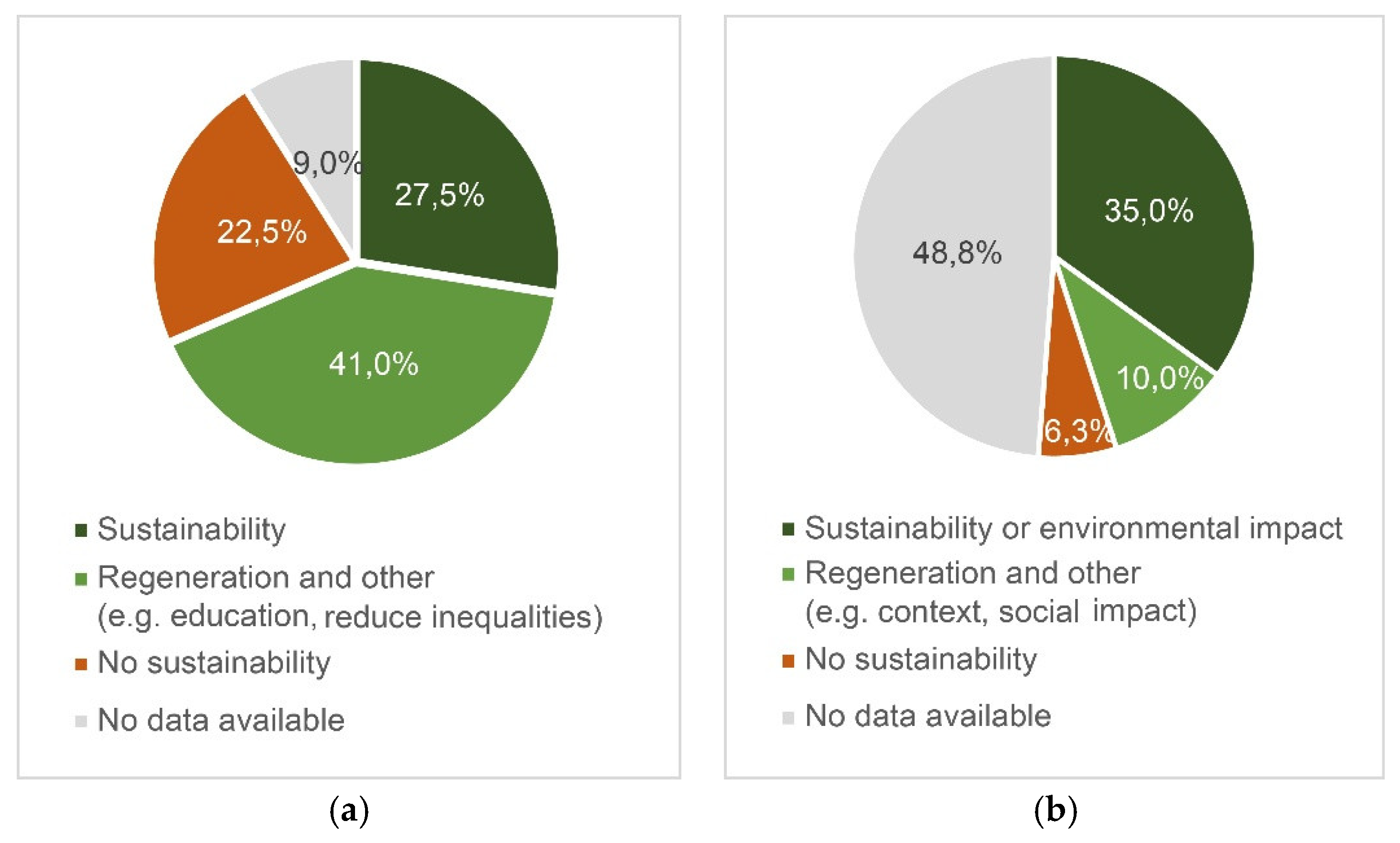
Figure 2.
Summary of the SDGs priority areas (centre) with the corresponding EGD (left), NEB (right) priority areas, along with highlighting N.R (non-related with SDGs) priority areas.
Figure 2.
Summary of the SDGs priority areas (centre) with the corresponding EGD (left), NEB (right) priority areas, along with highlighting N.R (non-related with SDGs) priority areas.
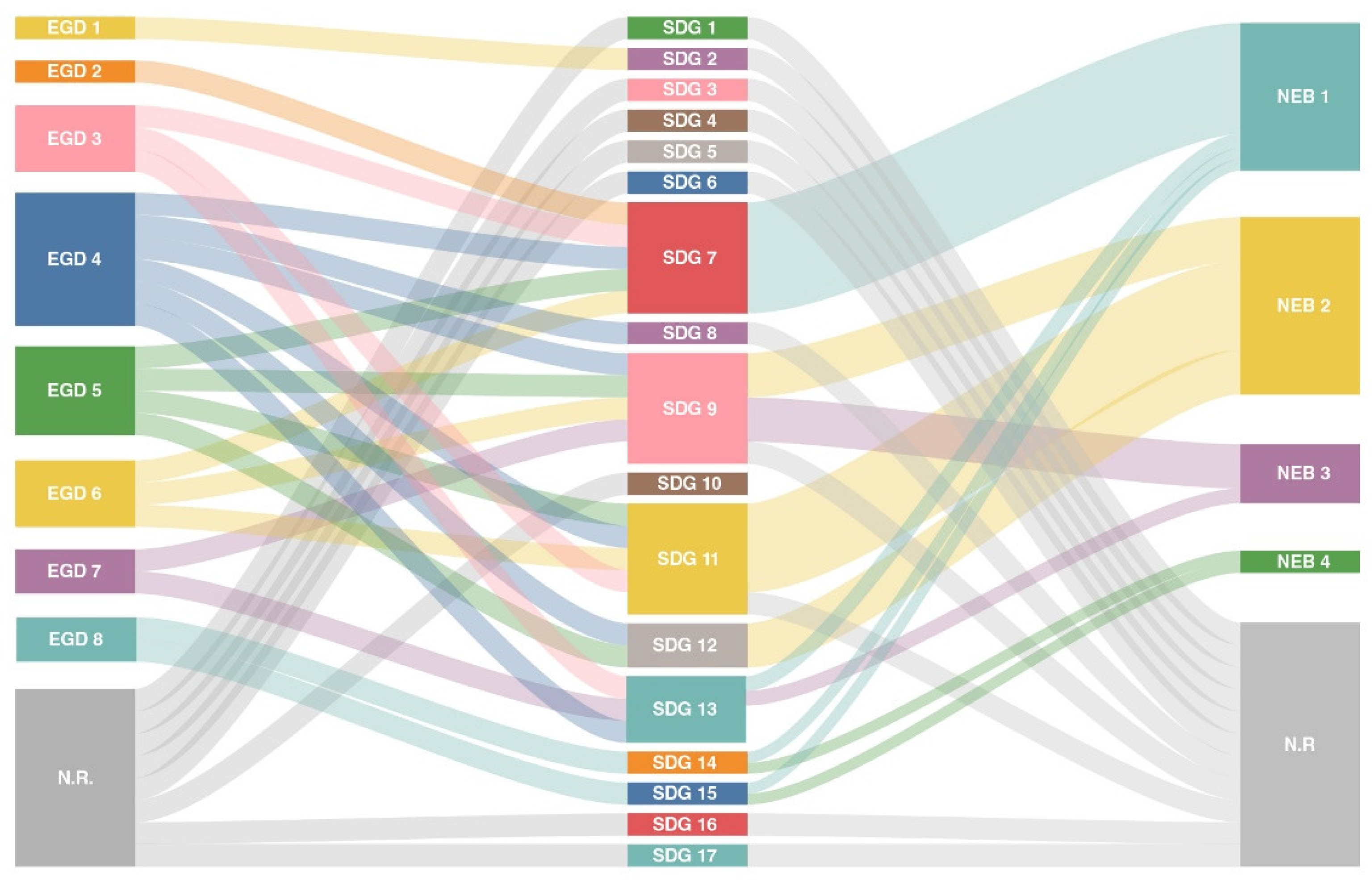
Figure 3.
Frequency of occurrence of priority areas in titles, abstracts, keywords of all examined theses.
Figure 3.
Frequency of occurrence of priority areas in titles, abstracts, keywords of all examined theses.
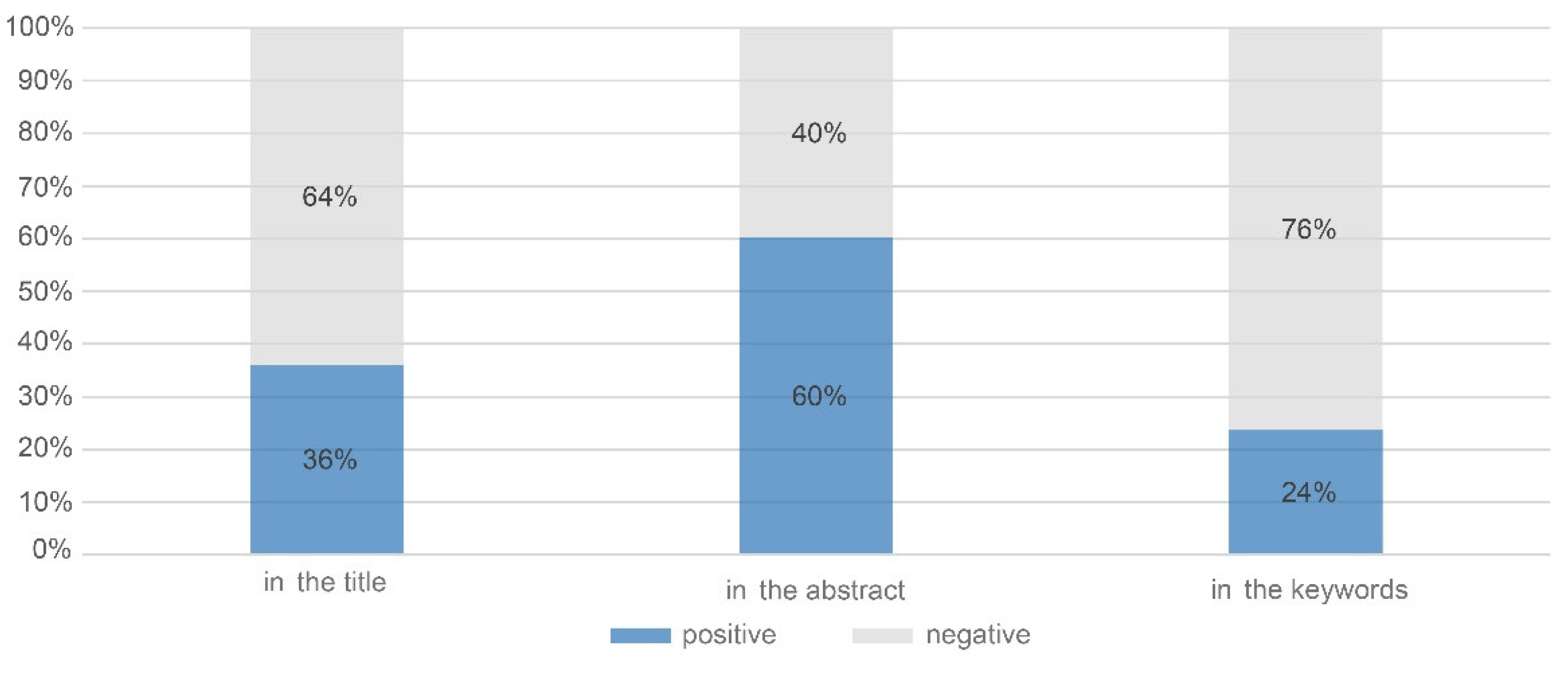
Figure 4.
Comparison of frequency of occurrence of priority areas in titles, abstracts, keywords of all Bachelor’s and Master’s theses.
Figure 4.
Comparison of frequency of occurrence of priority areas in titles, abstracts, keywords of all Bachelor’s and Master’s theses.
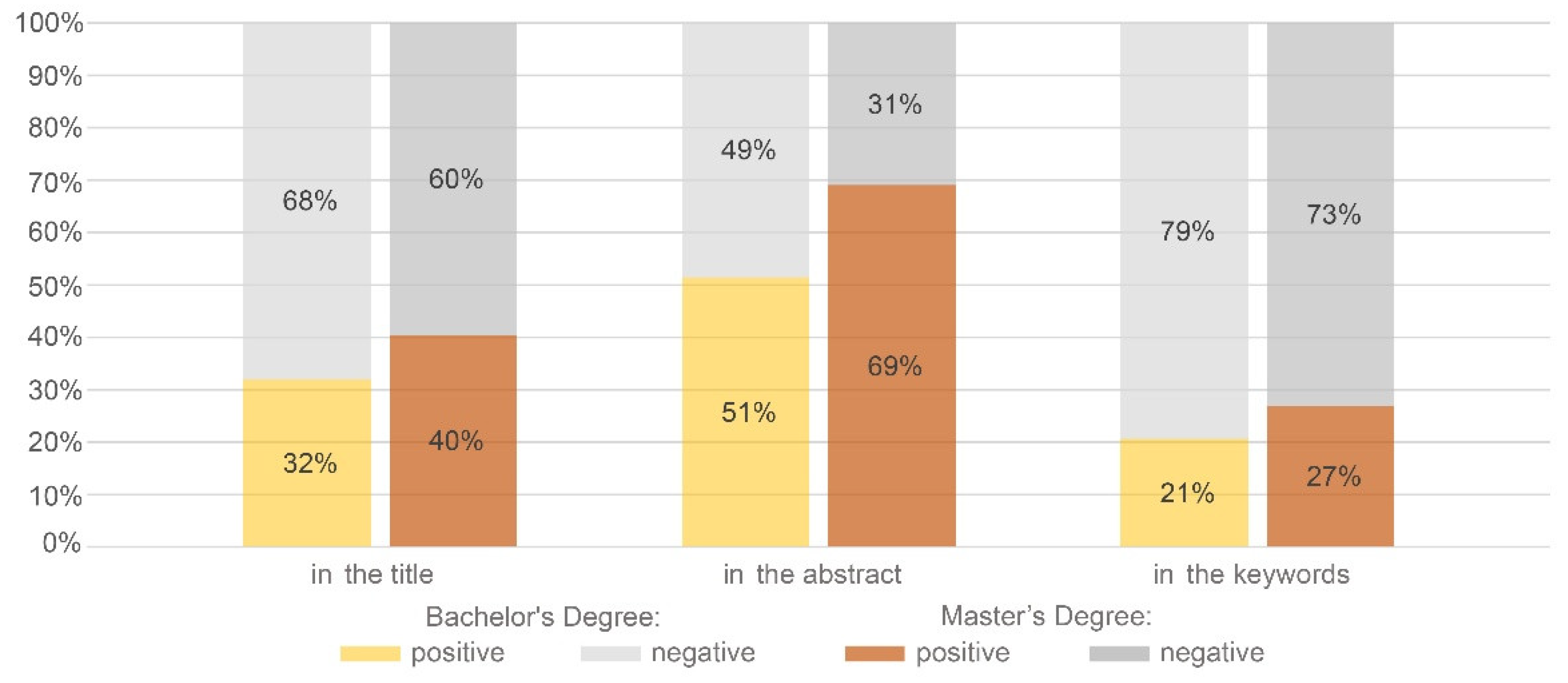
Figure 5.
Comparison of relative frequency of occurrence of priority areas in (a) SDGs; (b) EGD; (c) NEB (with Auxiliary) priority areas in the architecture competition abstracts.
Figure 5.
Comparison of relative frequency of occurrence of priority areas in (a) SDGs; (b) EGD; (c) NEB (with Auxiliary) priority areas in the architecture competition abstracts.

Figure 6.
Comparison of relative frequency of occurrence of priority areas in (a) SDGs; (b) EGD; (c) NEB (with Auxiliary) priority areas in the diploma projects in relation to the comparative baseline (Section 4.2).
Figure 6.
Comparison of relative frequency of occurrence of priority areas in (a) SDGs; (b) EGD; (c) NEB (with Auxiliary) priority areas in the diploma projects in relation to the comparative baseline (Section 4.2).
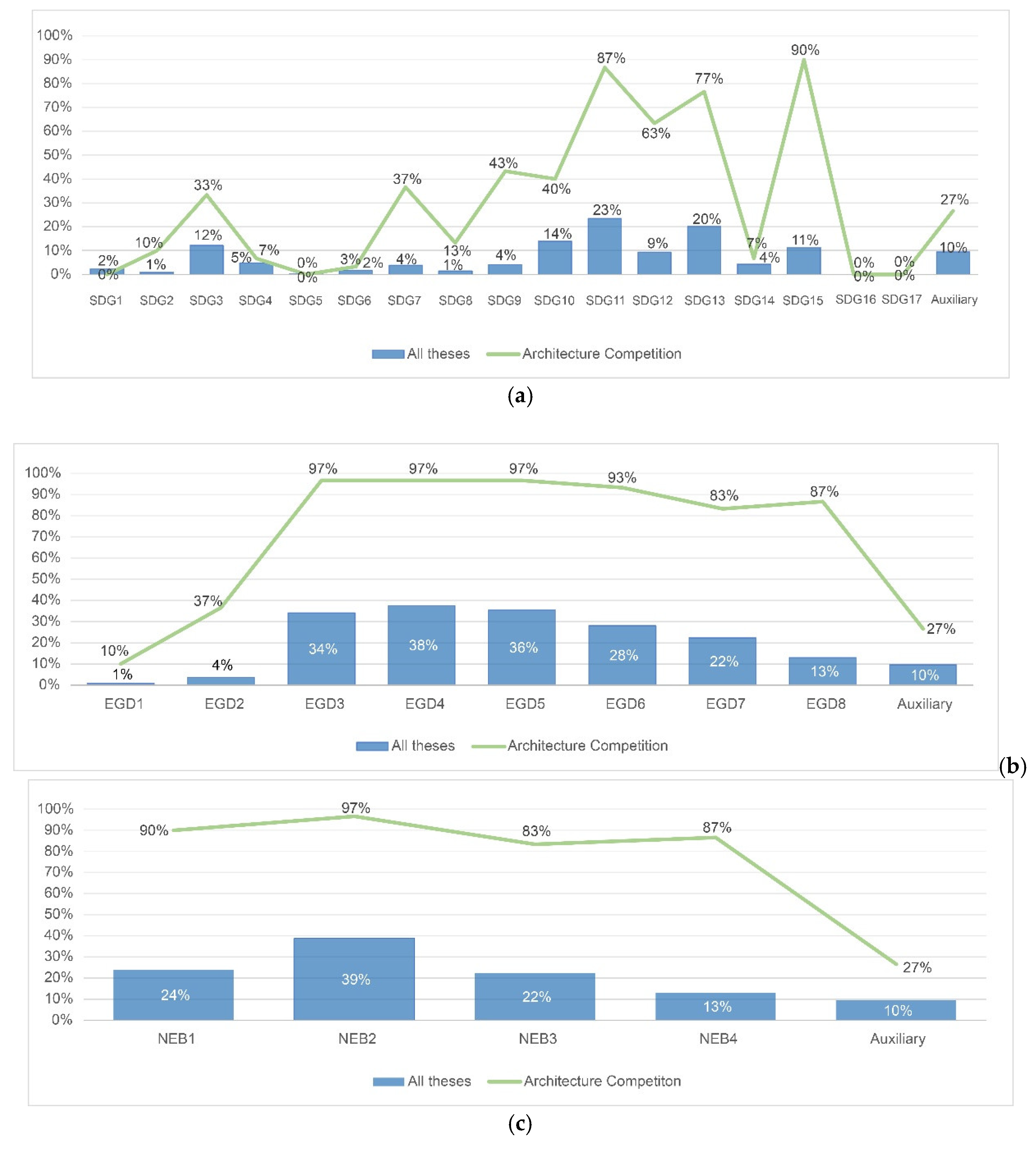
Figure 7.
Comparison of relative frequency of occurrence of priority areas in (a) SDGs; (b) EGD; (c) NEB (with Auxiliary) priority areas in Bachelor’s and Master’s theses in relation to the comparative baseline (Section 4.2).
Figure 7.
Comparison of relative frequency of occurrence of priority areas in (a) SDGs; (b) EGD; (c) NEB (with Auxiliary) priority areas in Bachelor’s and Master’s theses in relation to the comparative baseline (Section 4.2).

Figure 8.
Positive correlations between diploma projects and contest projects in: SDGs priority areas (a), EGDs priority areas (b), NEBs priority areas (c). The X-axis shows the values of relative frequency of occurrence of priority areas in diploma projects (for SDGs, EGDs and NEBs, respectively), while the Y-axis shows the values of relative frequency of occurrence of priority areas in contest projects (for SDGs, EGDs and NEBs, respectively) taken from Section 4.3.2 (Figure 7).
Figure 8.
Positive correlations between diploma projects and contest projects in: SDGs priority areas (a), EGDs priority areas (b), NEBs priority areas (c). The X-axis shows the values of relative frequency of occurrence of priority areas in diploma projects (for SDGs, EGDs and NEBs, respectively), while the Y-axis shows the values of relative frequency of occurrence of priority areas in contest projects (for SDGs, EGDs and NEBs, respectively) taken from Section 4.3.2 (Figure 7).
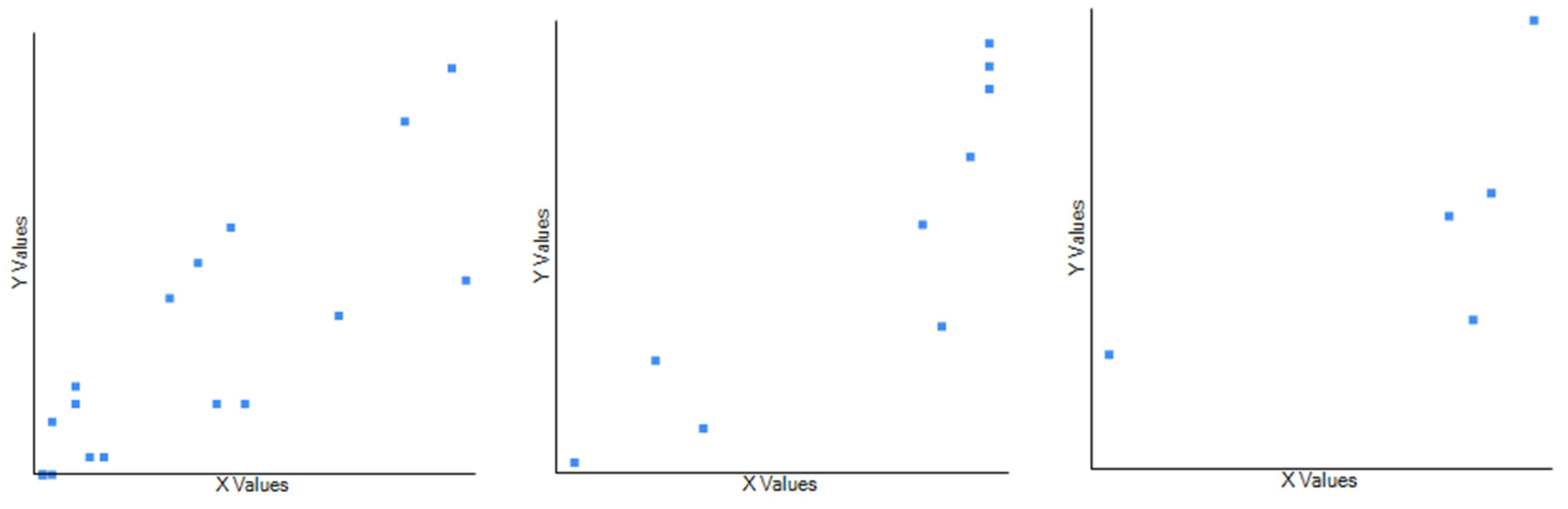
Table 1.
SDGs priority areas.
| Designation | Complete designation |
|---|---|
| SDG 1 | No Poverty |
| SDG 2 | Zero Hunger |
| SDG 3 | Good Health and Well-being |
| SDG 4 | Quality Education |
| SDG 5 | Gender Equality |
| SDG 6 | Clean Water and Sanitation |
| SDG 7 | Affordable and Clean Energy |
| SDG 8 | Decent Work and Economic Growth |
| SDG 9 | Industry, Innovation and Infrastructure |
| SDG 10 | Reduced Inequalities |
| SDG 11 | Sustainable Cities and Communities |
| SDG 12 | Responsible Consumption and Production |
| SDG 13 | Climate Action |
| SDG 14 | Life Below Water |
| SDG 15 | Life and Land |
| SDG 16 | Peace, Justice and Strong Institutions |
| SDG 17 | Partnership for the Goals |
Table 2.
EGD priority areas.
| Designation | Complete designation |
|---|---|
| EGD 1 | Fair, Healthy and Environmentally-friendly Food System |
| EGD 2 | Clean, Affordable and Secure Energy |
| EGD 3 | Climate Neutrality and Adaptation to Climate Change |
| EGD 4 | Clean and Circular Economy |
| EGD 5 | Building and Renovating in an Energy and Resource Efficient Way |
| EGD 6 | Sustainable and Smart Mobility |
| EGD 7 | Zero Pollution for a Toxic-free Environment |
| EGD 8 | Ecosystem and Biodiversity Restoration and Conservation |
Table 3.
NEB priority areas.
| Designation | Complete designation |
|---|---|
| NEB 1 | Climate Goals |
| NEB 2 | Circularity |
| NEB 3 | Zero Pollution |
| NEB 4 | Biodiversity |
Disclaimer/Publisher’s Note: The statements, opinions and data contained in all publications are solely those of the individual author(s) and contributor(s) and not of MDPI and/or the editor(s). MDPI and/or the editor(s) disclaim responsibility for any injury to people or property resulting from any ideas, methods, instructions or products referred to in the content. |
© 2025 by the authors. Licensee MDPI, Basel, Switzerland. This article is an open access article distributed under the terms and conditions of the Creative Commons Attribution (CC BY) license (http://creativecommons.org/licenses/by/4.0/).
Copyright: This open access article is published under a Creative Commons CC BY 4.0 license, which permit the free download, distribution, and reuse, provided that the author and preprint are cited in any reuse.


