

Submitted:
24 February 2025
Posted:
25 February 2025
You are already at the latest version
Abstract
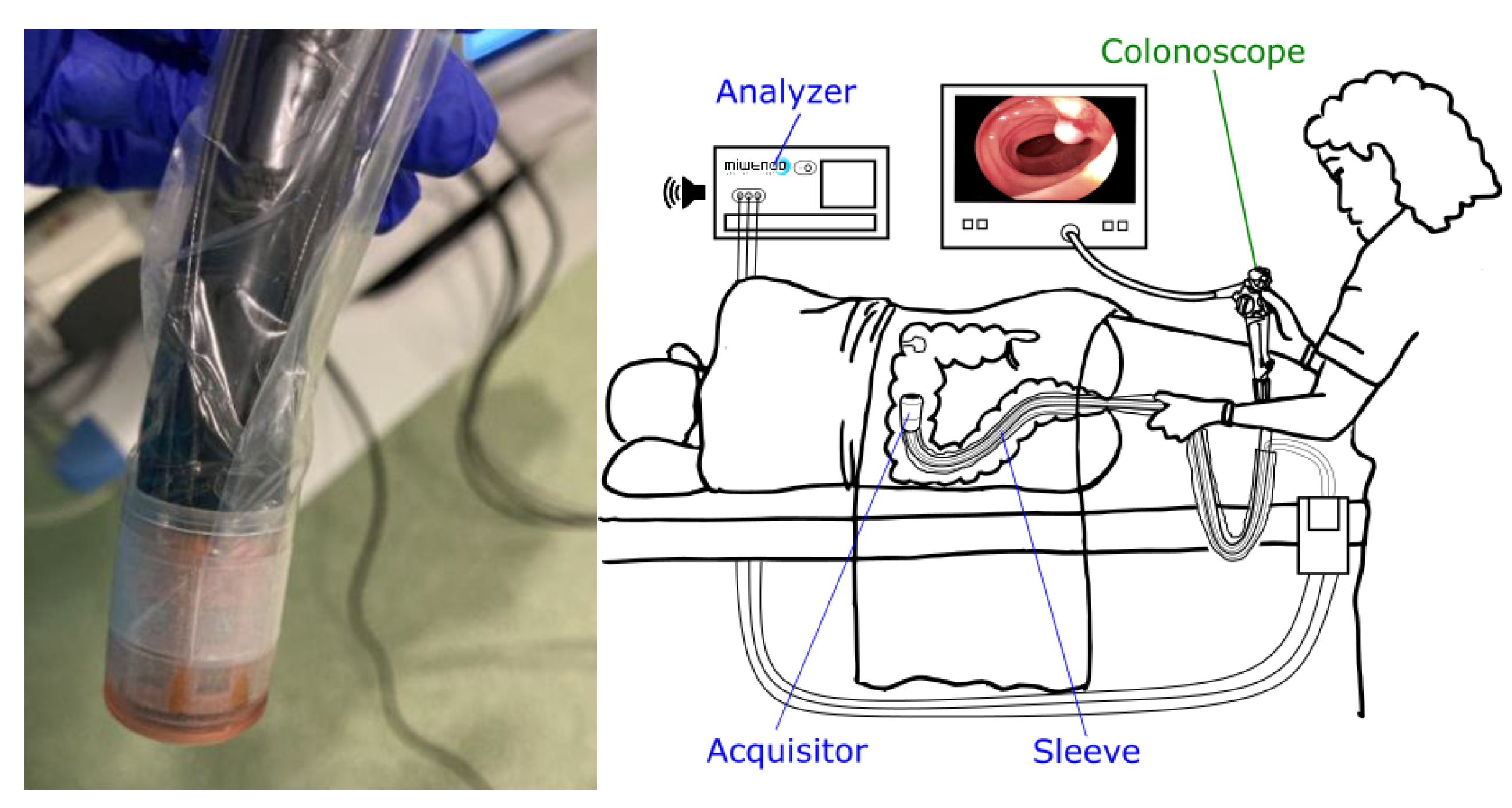
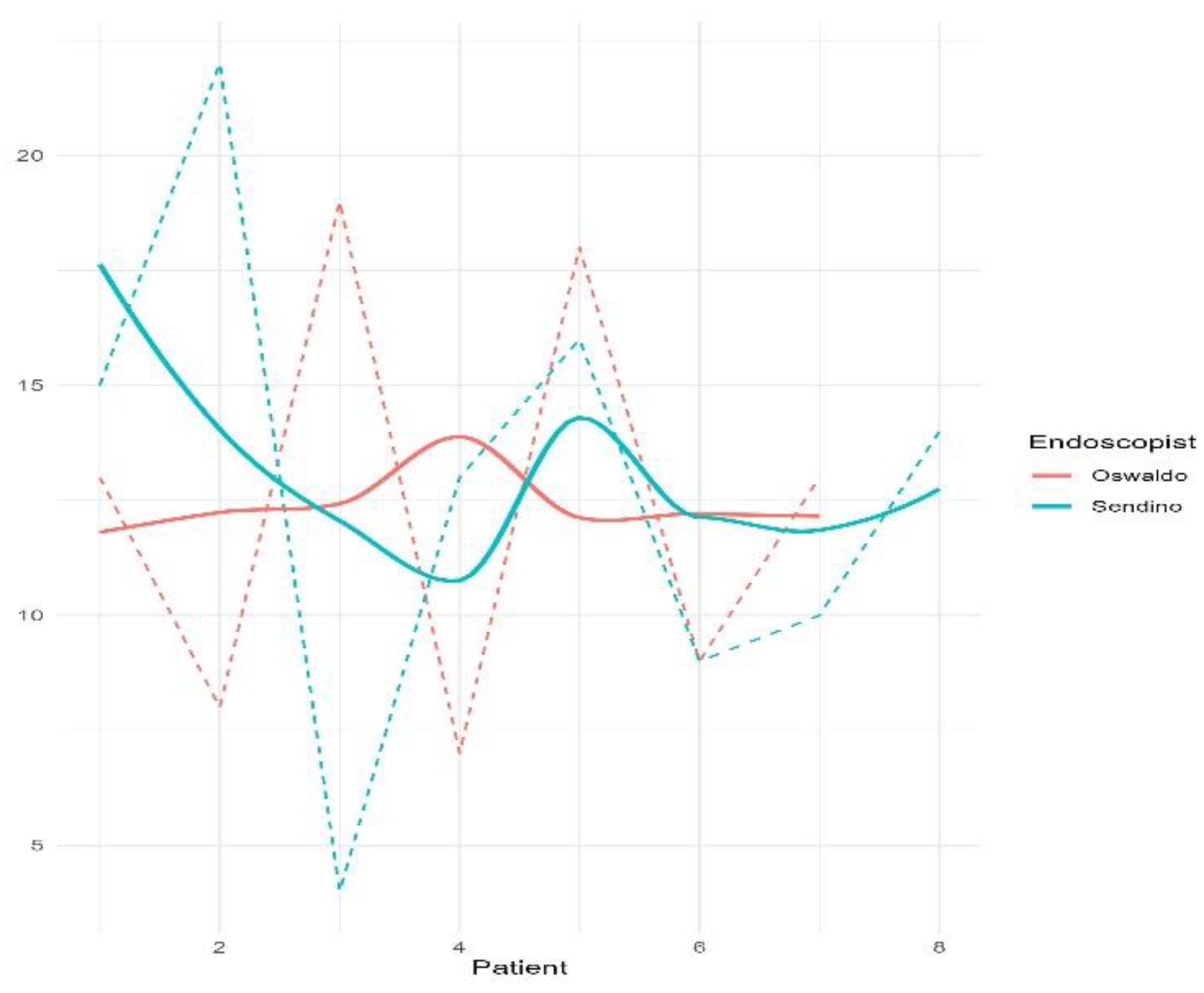
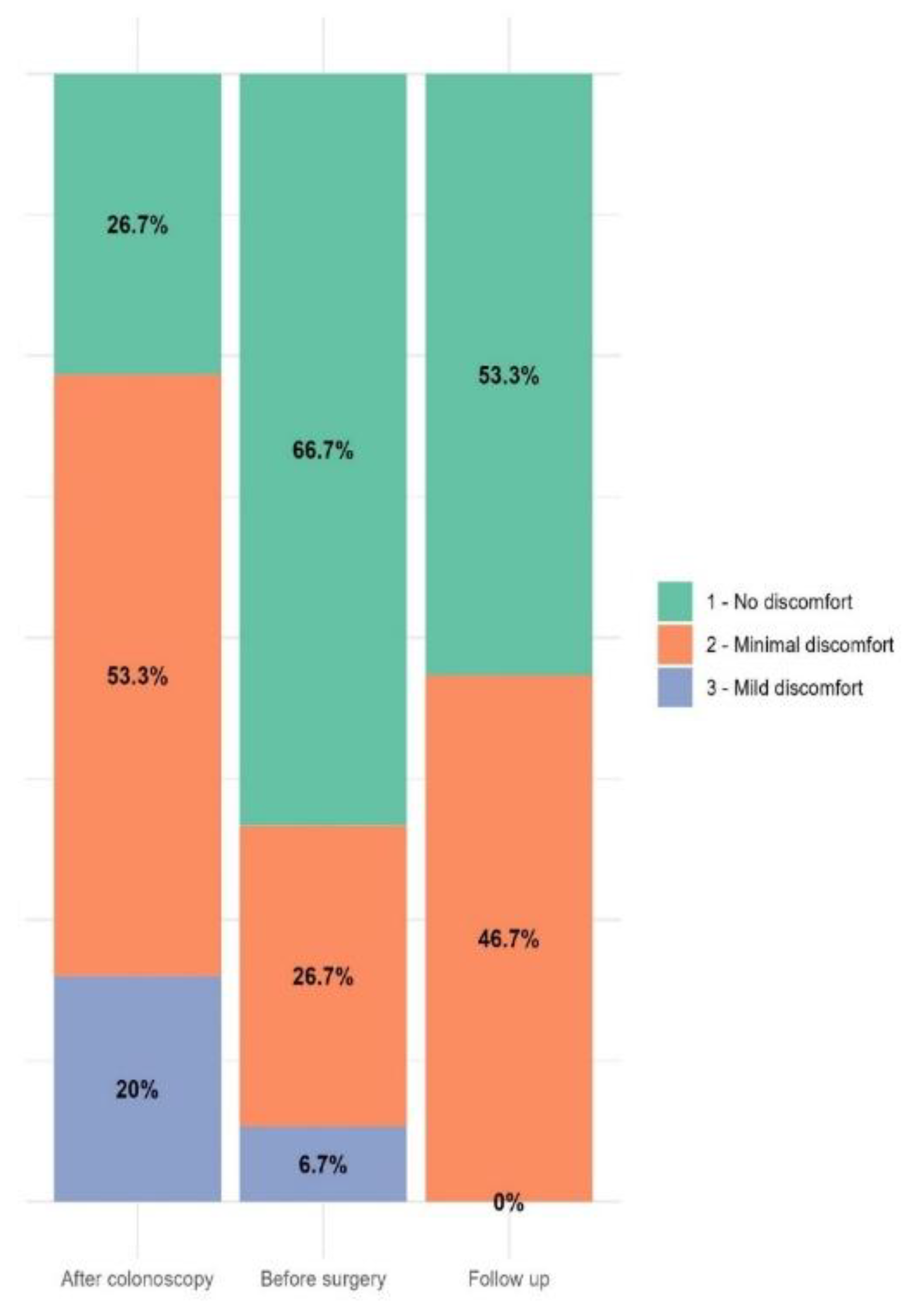
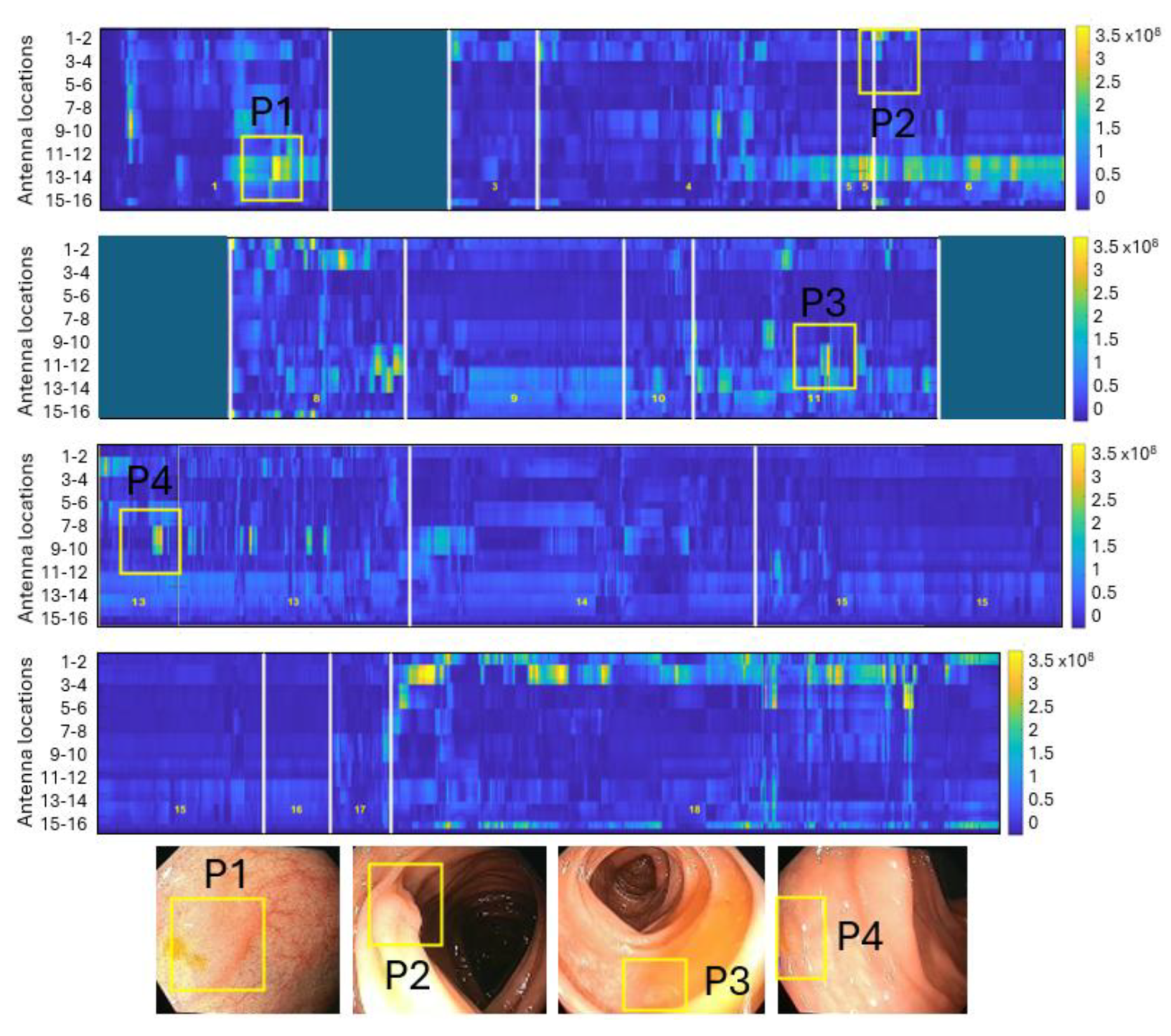
Background/Objectives: Microwave imaging can obtain anatomical and functional images of the colon and has demonstrated to detect polyps based on their dielectric properties. This study aims to evaluate the feasibility, safety and performance of micro-wave-based colonoscopy for diagnosis of polyps in humans. Methods: single-center, prospective, observational study. Patients referred for elective outpatient diagnostic co-lonoscopy were included. A device provided with microwave antennas was attached to the tip of a conventional colonoscope. The primary outcomes were rate of cecal intubation, adverse events, mural injuries and performance metrics for detection of polyps. Secondary outcomes were: patients’ subjective feedback, procedural time and perception of difficulty by the endoscopist. Results: 15 patients were enrolled. Cecal intubation rate was 100% with a mean time of 12.7±4.9 min (range 4-22). Use of the device did not affect the endoscopic image and polypectomy was successfully performed in all cases. In a scale from 0 (not difficult) to 4 (very difficult), the maneuverability during the insertion was considered < 2 in the 86.7% (13/15) of colonoscopies. Only 16 incidents were reported in 14 patients: 11 (67%) superficial hematomas, 2 minor rectal bleedings, 1 anal fissure, 1 rhinorrhea and 1 headache. Most of the patients (94%) referred no discomfort or minimal discomfort before discharge (Gloucester score 1 and 2, respectively). In the six patients with 23 polyps used for the performance analysis, the sensitivity and specificity were 86.9% and 72.0%, respectively. Conclusions: microwave-based colonoscopy is safe and feasible and has the potential of detecting polyps.
Keywords:
1. Introduction
2. Materials and Methods
Patient Selection and Study Design
Microwave Imaging Description
Endoscopic Procedures
Performance Assessment
Adverse Events
Outcomes
Statistical Analysis
3. Results
3.1. Feasibility Results
3.2. Safety
3.3. Performance
4. Discussion
5. Conclusions
Author Contributions
Funding
Institutional Review Board Statement
Informed Consent Statement
Data Availability Statement
Conflicts of Interest
Abbreviations
| CRC | Colorectal cancer |
| MWI | Microwave imaging |
| TP | True positives |
| TN | True negatives |
| FP | False positives |
| FN | False negatives |
| AE | Adverse events |
| AI | Artificial intelligence |
| ADR | Adenoma detection rate |
| ASGE | American Society for Gastrointestinal Endoscopy |
References
- Bray, F.; Laversanne, M.; Sung, H.; Ferlay, J.; Siegel, R.L.; Soerjomataram, I.; Jemal, A. Global cancer statistics 2022: GLOBOCAN estimates of incidence and mortality worldwide for 36 cancers in 185 countries. CA Cancer J Clin. 2024, 68, 229–63. [Google Scholar] [CrossRef] [PubMed]
- Zauber, A.G.; Winawer, S.J.; O’Brien, M.J.; Lansdorp-Vogelaar, I.; van Ballegooijen, M.; Hankey, B.F.; Shi, W.; Bond, J.H.; Schapiro, M.; Panish, J.F.; Stewart, E.T.; Waye, J.D. Colonoscopic Polypectomy and Long-Term Prevention of Colorectal-Cancer Deaths. N. Engl. J. Med. 2012, 366, 687–96. [Google Scholar] [CrossRef] [PubMed]
- Sanduleanu, S.; le Clercq, C.M.C.; Dekker, E.; Meijer, G.A.; Rabeneck, L.; Rutter, M.D.; Valori, R.; Young, G.P.; Schoen, R.E. Definition and taxonomy of interval colorectal cancers: A proposal for standardising nomenclature. Gut. 2015, 64, 1257–67. [Google Scholar] [CrossRef] [PubMed]
- Rutter, M.D.; Beintaris I,; Valori R. ; Chiu H.M.; Corley D.A.; Cuatrecasas M.; Dekker E.; Forsberg A.; Gore-Booth J.; Haug U.; Kaminski M.F.; Matsuda T.; Meijer G.A.; Morris E.; Plumb A.A.; Rabeneck L.; Robertson D.J.; Schoen R.E.; Singh H.; Tinmouth J.; Young G.P.; Sanduleanu S. World Endoscopy Organization Consensus Statements on Post-Colonoscopy and Post-Imaging Colorectal Cancer. Gastroenterology. 2018, 155, 909–925.e3. [Google Scholar] [CrossRef] [PubMed]
- Pohl, H.; Robertson, D.J. Colorectal cancers detected after colonoscopy frequently result from missed lesions. Clin. Gastrenterol. Hepatol. 2010, 8, 858–64. [Google Scholar] [CrossRef] [PubMed]
- ASGE Technology Committee; Konda V. ; Chauhan S.S.; Abu Dayyeh B.K.; Hwang J.H.; Komanduri S.; Manfredi M.A.; Maple J.T.; Murad F.M.; Siddiqui U.D.; Banerjee S. Endoscopes and devices to improve colon polyp detection. Gastrointest. Endosc. 2015, 81, 1122–9. [Google Scholar] [CrossRef]
- Fernández-Esparrach, G.; Garrido, A.; Sont, R.; Dghoughi, W.; Marcoval, S.; Cuatrecasas, M.; López-Prades, S.; de Lacy, F.B.; Pellisé, M.; Belda, I.; et al. Microwave-Based Colonoscopy: Preclinical Evaluation in an Ex Vivo Human Colon Model. Gastroenterol. Res. Pract. 2022, 2022, 9522737. [Google Scholar] [CrossRef] [PubMed]
- Guardiola, M.; Buitrago, S.; Fernández-Esparrach, G.; O’Callaghan, J.; Romeu, J.; Cuatrecasas, M.; Córdova, H.; González Ballester, M.A.; Cámara, O. Dielectric properties of colon polyps, cancer, and normal mucosa: Ex vivo measurements from 0.5 to 20 GHz. Med. Phys. 2018, 45, 3768–3782. [Google Scholar] [CrossRef] [PubMed]
- Garrido, A.; Sont, R.; Dghoughi, W.; Marcoval, S.; Romeu, J.; Fernández-Esparrach, G.; Belda, I.; Guardiola, M. Phantom Validation of Polyp Automatic Detection using Microwave Endoscopy for Colorectal Cancer Prevention and Early Detection. IEEE Access 2021, 9, 148048–148059. [Google Scholar] [CrossRef]
- Garrido, A.; Guardiola, M.; Neira, L.M.; Sont, R.; Córdova, H.; Cuatrecasas, M.; Flisikowski, K.; Troya, J.; Sanahuja, J.; Winogrodzki, T.; Belda, I.; Meining, A.; Fernández-Esparrach, G. Preclinical Evaluation of a Microwave-Based Accessory Device for Colonoscopy in an In Vivo Porcine Model with Colorectal Polyps. Cancers (Basel). 2023, 15, 3122. [Google Scholar] [CrossRef] [PubMed]
- Endoscopic Classification Review Group. Update on the Paris Classification of Superficial Neoplastic Lesions in the Digestive Tract. Endoscopy. 2005, 37, 570–8. [Google Scholar] [CrossRef] [PubMed]
- Cotton, P.B.; Eisen, G.M.; Aabakken, L.; Baron, T.H.; Hutter, M.M.; Jacobson, B.C.; Mergener, K. ; Nemcek Jr A; Petersen B.T.; Petrini J.L.; Pike I.M.; Rabeneck L.; Romagnuolo J.; Vargo J.J. A lexicon for endoscopic adverse events: report of an ASGE workshop. Gastrointest. Endosc 2010, 71, 446–454. [Google Scholar] [CrossRef] [PubMed]
- Lenze, F.; Beyna, T.; Lenz, P.; Heinzow, H.S.; Hengst, K.; Ullerich, H. Endocuff-assisted colonoscopy: A new accessory to improve adenoma detection rate? Technical aspects and first clinical experiences. Endoscopy. 2014, 46, 610–3. [Google Scholar] [CrossRef] [PubMed]
- Beyna, T.; Schneider, M.; Pullmann, D.; Gerges, C.; Kandler, J.; Neuhaus, H. Motorized spiral colonoscopy: A first single-center feasibility trial. Endoscopy. 2018, 50, 518–23. [Google Scholar] [CrossRef] [PubMed]
- Triadafilopoulos, G.; Watts, H.D.; Higgins, J.; van Dam, J. A novel retrograde-viewing auxiliary imaging device (Third Eye Retroscope) improves the detection of simulated polyps in anatomic models of the colon. Gastrointest. Endosc. 2007, 65, 139–44. [Google Scholar] [CrossRef]
- ASGE Technology Committee; Abu Dayyeh B. K.; Thosani N.; Konda V.; Wallace M.B.; Rex D.K.; Chauhan S.S.; Hwang J.H.; Komanduri S.; Manfredi M.; Maple J.T.; Murad F.M.; Siddiqui U.D.; Banerjee S. ASGE Technology Committee systematic review and meta-analysis assessing the ASGE PIVI thresholds for adopting real-time endoscopic assessment of the histology of diminutive colorectal polyps. Gastrointest. Endosc. 2015, 81, 502.e1–502.e16. [Google Scholar] [CrossRef]
- Hassan, C.; Wallace, M.B.; Sharma, P.; Maselli, R.; Craviotto, V.; Spadaccini, M.; Repici, A. New artificial intelligence system: First validation study versus experienced endoscopists for colorectal polyp detection. Gut. 2020, 69, 799–800. [Google Scholar] [CrossRef] [PubMed]
- Cheng, W.B.; Moser, M.A.; Kanagaratnam, S.; Zhang, W.J. Overview of upcoming advances in colonoscopy. Dig. Endosc. 2012, 24, 1–6. [Google Scholar] [CrossRef] [PubMed]
- Hirst, A.; Philippou, Y.; Blazeby, J.; Campbell, B.; Campbell, M.; Feingerg, J.; Rovers, M.; Blencowe, N.; Pennell, C.; Quinn, T.; Rogers, W.; Cook, J.; Kolias, A.G.; Agha, R.; Dahm, P.; Sedrakyan, A.; McCulloch, P. No surgical innovation without evaluation: evolution and further development of the IDEAL Framework and Recommendations. Ann Surg. 2019, 269, 211–20. [Google Scholar] [CrossRef]

| ’N=15 | |
| Gender, n (%) Men Women |
9 (60%) 6 (40%) |
| Age, mean+SD (range), years | 59.5+6.7 (51-73) |
| Indication for colonoscopy, n (%) Surveillance after polypectomy Abdominal pain Lower GI bleeding |
9 (69.2%) 3 (23.1%) 1 (7.7%) |
| Boston scale, mean+SD (range) | 7.9+1.3 (6-9) |
| Cecal intubation rate, n (%) | 15 (100%) |
| Time to cecum, mean+SD (range), minutes | 12.7+4.9 (4-22) |
| Withdrawal time, mean+SD (range), minutes | 8.4±3.1 min (5-16) |
| Total procedure time, mean+SD (range), minutes | 26.6+6.7 (16-40) |
| Adenoma detection rate, n (%) | 13 (87%) |
| Total polyps per patient, mean+SD (range), n | 2.9+2.4 (range 0-7) |
| Histology Adenoma with LGD, n (%) Hyperplastic, n (%) SSL, n (%) Not retrieved |
28 (60.9%) 10 (21.7%) 1 (2.2%) 7 (15.2%) |
| Incidents | Frequency | Related to MiWendo |
|---|---|---|
| Mucosal abrasions, n (%) Bleeding, n (%) Anal fissure, n (%) Headache, n (%) Rhinorrhea, n (%) |
11 (73.3%) 2 (13.3%) 1 (6.7%) 1 (6.7%) 1 (6.7%) |
Yes Yes Yes No No |
| Patient | Number of polyps | Size (mm) | Morphology | Histology | Location | Detected |
|---|---|---|---|---|---|---|
| 1 | 1 | 4 | 0-IIa | SSL | SF | Yes |
| 2 | 8 | 6 2 2 3 2 4 3 10 |
0-IIa 0-IIa 0-IIa 0-IIa 0-IIa 0-IIa 0-IIa 0-IIa |
Adenoma Adenoma Hyperplastic Adenoma Hyperplastic Adenoma Adenoma Hyperplastic |
AC AC TC TC TC DC DC SC |
Yes Yes No Yes Yes Yes Yes Yes |
| 3 | 5 | 3 4 8 12 2 |
0-Is 0-IIa 0-Is 0-IIa 0-IIa |
Adenoma Adenoma Adenoma Adenoma Adenoma |
AC AC HF TC TC |
Yes Yes No Yes Yes |
| 4 | 4 | 10 8 5 2 |
0-IIb 0-IIa 0-IIa 0-IIa |
Adenoma Adenoma Adenoma Adenoma |
C TC SC SC |
Yes Yes Yes Yes |
| 5 | 1 | 3 | 0-IIa | Hyperplastic | TC | Yes |
| 6 | 4 | 2 2 3 4 |
0-IIa 0-IIa 0-IIa 0-IIa |
Hyperplastic Hyperplastic Adenoma Adenoma |
AC HF TC SC |
Yes No Yes Yes |
| All polyps N=23 |
Adenomas N=16 |
|
|---|---|---|
| True positives | 20 | 15 |
| False positives | 14 | 14 |
| True negatives | 36 | 36 |
| False negatives | 3 | 1 |
| Sensitivity | 86.9% | 93.7% |
| Specificity | 72% | 72% |
| PPV | 58.8% | 51.7% |
| NPV | 92.3% | 97.3% |
Disclaimer/Publisher’s Note: The statements, opinions and data contained in all publications are solely those of the individual author(s) and contributor(s) and not of MDPI and/or the editor(s). MDPI and/or the editor(s) disclaim responsibility for any injury to people or property resulting from any ideas, methods, instructions or products referred to in the content. |
© 2025 by the authors. Licensee MDPI, Basel, Switzerland. This article is an open access article distributed under the terms and conditions of the Creative Commons Attribution (CC BY) license (http://creativecommons.org/licenses/by/4.0/).