Preprint
Article

This version is not peer-reviewed.

Monte Carlo Simulations for Resolving Verifiability Paradoxes in Forecast Risk Management and Corporate Treasury Applications

A peer-reviewed article of this preprint also exists.

Submitted:

19 February 2025

Posted:

20 February 2025

You are already at the latest version

Abstract

Forecast risk management is central to the financial management process. The study aims to apply Monte Carlo simulation to solve three classic probabilistic paradoxes and their implementation in corporate financial management. The article presents Monte Carlo simulation as an advanced tool for risk management in financial management processes. This method allows for a comprehensive risk analysis of financial forecasts, making it possible to assess potential errors in cash flow forecasts and predict the value of corporate treasury growth under various future scenarios. In the investment decision-making process, Monte Carlo simulation supports the evaluation of the effectiveness of financial projects by calculating the expected net value and identifying the risks associated with investments, allowing more informed decisions to be made on project implementation. The method is used in reducing cash flow volatility, which contributes to lowering the cost of capital and increasing the value of a company. Simulation also enables more accurate liquidity planning, including forecasting cash availability and determining ap-propriate financial reserves based on probability distributions. Monte Carlo also supports the management of credit and interest rate risk, enabling simulation of the impact of various economic scenarios on a company's financial obligations. In the context of strategic planning, the method is an extension of decision tree analysis, where subsequent decisions are made based on the results of earlier ones. Creating probabilistic models based on Monte Carlo simulations makes it possible to take into account random variables and their impact on key financial management indicators, such as free cash flow (FCF). Compared to traditional methods, Monte Carlo simulation offers a more detailed and precise approach to risk analysis and decision-making, providing companies with vital information for financial management under uncertainty. The article emphasizes that the use of Monte Carlo simulation in financial management not only enhances the effectiveness of risk management, but also supports the long-term growth of corporate value. The entire process of financial management moves into the future and is based on predicting future free cash flows discounted at the cost of capital. We used both numerical and analytical methods to solve verdict-type paradoxes. We used Monte Carlo simulation as the numerical method. The following analytical methods were used: conditional probability, Bayes' rule and Bayes' rule with multiple conditions. We solved all truth-type paradoxes and discovered why the Monty Hall problem was so widely discussed in the 1990s. We differentiated Monty Hall problems using different numbers of doors and prizes.

Keywords: 
;  ;  

1. Introduction

The Monte Carlo method is beneficial for risk management forecasting (Yamamoto 2025). However, it is not as popular as risk management forecasting based on sensitivity analysis (Yang, Lei 2025), threshold point analysis (Fang 2024), sensitivity analysis (Varela 2025) or decision tree analysis (Nishibe 2025). Its limitation has sometimes been veridict-type paradoxes (Ortmann 2023). Our article goes beyond that barrier. A paradox is a statement that contradicts itself and can be true (or false at the same time).
The application of the Monte Carlo simulation method in financial management can cover various areas (Oh 2025). Managing the risk of financial forecasts (Liu 2022) and the related assessment of the risk of error in cash flow forecasts, as well as predicting the value of corporate treasury growth under various future event scenarios (Reyes 2023). Optimizing investment decisions and related assessment of net investment value under risk and uncertainty, as well as project implementation decisions based on risk and uncertainty analysis (Chen 2020). Reducing cash flow volatility by minimizing the risk associated with cash flow fluctuations (Taylor 2016) increases the value of a company by lowering the cost of capital (Diebold 1999). Planning and managing liquidity, including forecasting the availability of cash at certain times and establishing financial reserves based on different probability distributions (Diebold 1998). Managing credit and interest rate risk using interest rate and credit risk analysis (Salas 2002), including simulations of the impact of various economic scenarios (Crouhy 2000). Building probabilistic models (Simsek 2025) includes creating models that take into account random variables and their impact on key financial management indicators (Schrand 1998). Strategic decisions under risk (Simsek 2025) indicating an extension of decision tree analysis (Schrand 1998), where decisions at subsequent moments depend on the results of earlier decisions. Monte Carlo simulation allows more accurate prediction and evaluation of the effects of financial decisions in financial management (Tobisova 2022) than traditional methods of sensitivity or coefficient of variation analysis (Yamamoto 2025).
Financial management is crucial to ensure the financial stability of companies, especially under conditions of uncertainty and market risk (Wu 2016). In this process, it is essential to use tools to accurately assess risks and make informed financial decisions (Puri 2025). One such tool is the Monte Carlo method, which allows simulation of future scenarios taking into account random variables and their probability distributions (Oh et al. 2025). This article presents the application of this method to solve three important probabilistic paradoxes: the Bertrand box paradox, the three-prisoners' dilemma and the Monty Hall problem, which find practical application in key areas of financial management (Chung et al. 2023).
Bertrand's box paradox refers to the problem of conditional probability and illustrates how to assess risk based on available information. In the context of financial management, it is applicable to liquidity analysis, where it is necessary to forecast cash availability based on incomplete data. Solving this paradox helps determine the probability of meeting financial obligations and minimize liquidity risk.
The Three Prisoners' Dilemma illustrates the impact of additional information on the probability of events and strategic decisions. In treasury management, it refers to optimizing capital allocation in risky situations. An example is the evaluation of investments in projects with different risk profiles, where additional information can influence the selection of a more favorable investment option.
Monty Hall's problem emphasizes the importance of making decisions under uncertainty, taking into account random variables. This paradox finds application in capital structure management and financial decision-making processes in financial management. Simulations based on this problem help assess whether a change in strategy - for example, refinancing debt or investing in new sources of capital - will increase the chances of achieving favorable financial results.
All three paradoxes point to the importance of advanced probabilistic analysis in key aspects of financial management (Tobisova 2022). The Monte Carlo method provides a tool for resolving these paradoxes through its simulation and risk analysis capabilities, thus contributing to better financial risk management (Yamamoto 2025). The article discusses in detail how solutions to these paradoxes can be used in financial management practice to improve the financial stability and long-term value of companies.
A paradox is a statement that contradicts itself, but can be true (or false at the same time). A verifiable paradox produces a result that seems absurd, but turns out to be true. We will focus on paradoxes of the verifiable type using Monte Carlo simulations and present analytical solutions for most cases (Carsey 2014), (Austin 2009a). A key part of our helpful research on financial management (Arnold 2015) in forecast risk management was the Monty Hall problem. We will use Monte Carlo simulations (Kazak 2025) for all calculations in this case, but we will also present analytical solutions for most cases. We will describe and solve the following truth-truth paradoxes: the Bertrand box paradox, the Three Prisoners' Dilemma and the Monty Hall problem. A key part of our research was the Monty Hall problem, and we will explain why so many financial management researchers insisted on the 0.5 probability in the 1990s.

2. Monte Carlo Simulation in Treasury Management

Financial management takes place under conditions of uncertainty and risk. Since risk is a situation in which one or more elements that make up the conditions under which a decision is made are unknown, but the probability of this unknown element is known, it is possible to use the Monte Carlo method to manage the forecasted risk (Pereira, Pinho, Galhardo, Macêdo, 2014). If this probability were not known, we would be dealing with uncertainty. Similar to the use of the Monte Carlo method to manage forecasted risk during treasure management (Yang 2025), risk conditions can only be considered if the known experience of analogous events can be compared with the current situation (Oh 2025).
Decision problems under risk conditions (Jajuga 2023) can be solved using probability calculus or statistical methods (Vithayasrichareon 2012). Monte Carlo simulation is one of the advanced statistical tools used in forecast risk management in financial management (Lara-Galera, 2025). A simulation involving random numbers is an experiment (Arnold 2015), usually conducted on a computer. A stream of random numbers is a sequence of statistically independent random variables with a uniform distribution, usually in the interval [0,1).
Simulations are used where it is difficult to use purely analytical methods to model the real situation or to solve basic mathematical problems. They involve repeated random sampling to obtain numerical results. We used random sampling to get a probability approximation.
Financial management that incorporates risk management reduces the volatility of cash flows (Hong 2014) and thus increases the value of the company. This is because as the risk associated with a company increases, capital providers demand a higher interest rate (Hwang & Wen 2024). Entities with lower risk have the opportunity to receive preferential treatment from counterparties, both from suppliers of materials (Di et al. 2024), goods and services, and from suppliers of capital (Diebold 1999). Such preferential treatment will lower the cost of capital financing the company, thereby increasing the company's treasury value. Risk-adjusted treasury management increases the value of the company (Fantazzini 2009), as the probability of the entity going bankrupt is reduced (Hong, Hu, Liu, 2014). As a result, the company will operate for a longer period of time (Song & Lee 2012). Consequently, it will generate positive free cash flow for a longer period of time, thus increasing the Treasury (Li et al. 2024).
The Monte Carlo analysis method is considered as a forecasting method for risk management in corporate treasury management, indirectly taking into account the risk of forecast error (Austin 2009a), (Austin 2009b). Together with scenario analysis, it is an indirectly risk-adjusted method of analyzing corporate treasury management risks carried out under conditions of uncertainty and risk.
Similarly, in the Monte Carlo method (Lara-Galera, 2025), forecasts for each Corporate Treasury Management decision are made based on the development of factors affecting the value of Treasury growth under various future development scenarios (Fantazzini 2009). The use of Monte Carlo analysis (Kazak, 2025) should show whether a company should not implement the Corporate Treasury Management measure being evaluated, since the expected value of Treasury growth is a key parameter in this procedure (Oh 2025).
Monte Carlo analysis has an informational advantage over sensitivity analysis. It analyzes Corporate Treasury Management (Polak 2018) under conditions of risk and uncertainty, examining the sensitivity of Treasury protection, creation and accumulation to changes in single factors. Monte Carlo analysis is, in a sense, an extension of decision tree analysis, which is applicable when the Corporate Treasury Management process under analysis consists of a sequence of decisions and when the decisions made at subsequent moments depend on the results of previous choices.
Monte Carlo simulation is related to sensitivity analysis enriched with probability distributions of explanatory variables. It involves using pseudo-random number generators to mimic the course of a company's cash flows over time (Brandimarte 2014). Like scenario analysis, it estimates the expected value of Treasury creation, protection or accumulation (Alban 2017), measures of risk and other parameters and is considered a more accurate method. Monte Carlo analysis is based on a mathematical model describing treasury management (Koller 2009). The first step in its application to corporate financial management (Polak 2018) is to create a model containing the company's free cash flow FCF (Diebold 1999; İnal 2024). After determining the probability distributions of each random variable, the simulation software randomly selects each variable (Page 2010). The selected value of each random variable and the specified values of certain variables are then used to determine expected cash flows. Such a process is repeated several times, and each time specific results are obtained, which are used to construct the probability distribution, its expected value and standard deviation (Batan, Graff, Bradley, 2016). The final result of the Monte Carlo analysis is, as in the case of scenario analysis and decision tree analysis, the expected net present value, on the basis of which the company can decide to accept or reject the implementation of the Treasury Management project (Steffen 2018), whose risk effectiveness is analyzed based on this method (Page 2010).
The primary research questions regarding the use of the three paradoxes discussed in the Treasury Management article include: How can the Bertrand box paradox be used to improve the accuracy of cash flow forecasting under uncertainty? How does the three-prisoners dilemma affect the optimization of investment decisions in the face of limited information? How can the Monty Hall problem support capital structure management (Stewart 2005) in a volatile financial environment? Does the use of the Monte Carlo method to solve these paradoxes better assess a company's liquidity and financing risk?
The application of paradoxes in financial management focuses on managing the risk of financial forecasts. The application of Bertrand's paradox helps assess the impact of conditional probabilities on the accuracy of cash flow forecasts, and analysis of the probability of realization of financial contingencies completes the picture. The Three Prisoners' Dilemma helps determine the impact of additional data on forecast financial risk by comparing alternative risk scenarios based on the information provided during the analysis. The Monty Hall problem, on the other hand, can help simulate the effects of changing cash flow assumptions and verify the correctness of strategies in the event of dynamically changing financial conditions. Optimization of investment decisions can benefit from the application of Bertrand's paradox by assessing the chances of investment success depending on the probability of critical events and analyzing the sensitivity of investments to changes in key parameters. The three-prisoners' dilemma will allow the field to take into account additional risk information when selecting investment projects and deciding on information asymmetry between investment parties (Adil & Roy, 2024). The Monty Hall problem demonstrates the utility in making risky decisions to continue or abandon investments depending on the available alternatives and examining whether a change in investment strategy increases the probability of success (Rijanto, 2022).
Reducing cash flow volatility is possible using Bertrand's paradox in forecasting the minimum required cash reserves and analyzing the impact of volatility on the availability of funds during key periods (Almeida 2024). The dilemma of three prisoners to reduce cash flow volatility provides a basis for evaluating the impact of additional information on cash flow stability and analyzing different volatility scenarios for decision-making. In this case, the Monty Hall problem also increases the efficiency of flow optimization by changing cash management strategies and studying the impact of variable decisions to reduce liquidity risk (Cui et al. 2024). The sensitivity to liquidity risk and the validity of setting individual risk indicators are also key here. Liquidity planning and management is another area of treasury management that can take advantage of Bertrand's paradox in modeling the conditional probability of funds being available at a certain time and assessing the risk of liquidity shortage with incomplete data (Floros et al. 2024). The helpfulness of the three-prisoners' dilemma indicates the use of additional information for more precise cash planning and analyzing the impact of various decisions on liquidity availability (Cui et al. 2024). The Monty Hall problem allows us to examine whether a change in financial strategy improves the chances of maintaining liquidity or makes decisions on the choice of liquidity management scenario more effective under uncertain conditions.
Credit and interest rate risk management (İnal 2024) is another area of financial management where Bertrand's paradox gives us a rationale for improving the quality of credit risk forecasting based on the conditional probability of counterparty default and analyzing the impact of interest rate changes on debt sustainability (Ajovalasit et al. 2024; Duchin 2025). The Three Prisoners' Dilemma improves the quality of credit risk assessment with additional information about the counterparty and the choice of interest rate hedging strategies based on different scenarios. The Monty Hall problem provides an opportunity to examine the effectiveness of a debt refinancing strategy while analyzing whether changing the terms of the loan agreement will improve the company's financial position.
Within the framework of financial management, the construction of probabilistic models can use Bertrand's paradox to apply conditional probabilities in constructing models that predict volatility and model the impact of random variables on the value of cash flows. The three-prisoners' dilemma makes it easier to incorporate additional information into probabilistic models and analyze variability under different conditions with limited data. The Monty Hall problem provides a basis for testing the effectiveness of models in simulations of management scenarios and developing strategies that increase the probability of achieving desired outcomes.
Financial management must take into account strategic decisions under conditions of risk. Bertrand's paradox proves helpful, providing a basis for forecasting (Nießner et al. 2022) the risk of strategic financial decisions based on conditional probabilities and analyzing the impact of key decisions on economic stability. The Three Prisoners' Dilemma deepens the selection of the optimal strategy (Demiraj et al. 2024) under conditions of information asymmetry (Adil & Roy 2024) and analytically assesses the risks associated with long-term decision-making. Monty Hall's problem provides guidance for testing alternative strategies under uncertainty, while allowing the selection of scenarios that provide the highest financial stability.
Financial management (von Solms 2022) includes capital structure management (Rehan et al. 2024b). It can use the clues of Bertrand's paradox in analyzing the risks associated with capital structure choices and assessing the impact of random variables on the cost of capital (Guo 2021). The Three Prisoners' Dilemma for capital structure management helps incorporate additional information into financing structure decisions (Stewart 2005) and assess which sources of capital are least risky in a given scenario. Monty Hall's problem demonstrates the benefits of examining whether a change in capital structure will improve a company's financial position and how optimizing refinancing decisions is expected to work under uncertainty (Rehan et al. 2024).
Bertrand's box paradox can be used to improve the accuracy of cash flow forecasting under uncertainty. Bertrand's box paradox can be used to analyze the conditional probabilities of particular financial events, such as repayment of liabilities or realization of projected revenues. Monte Carlo simulations incorporating this paradox help model different cash flow scenarios and more accurately assess the risk of liquidity shortage (Yang, Lei 2025).
The Three Prisoners' Dilemma affects the optimization of investment decisions in the face of limited information. The Three Prisoners' Dilemma shows how additional information can change the probability of investment success. For example, analysis of historical and market data allows better estimation of investment risk. The Monte Carlo method will take this information into account, optimize the selection of investment projects and minimize the risk of failure (Oh et al. 2025).
The Monty Hall problem can support capital structure management in a volatile financial environment (Rehan et al. 2024). The Monty Hall problem illustrates the benefits of changing financial strategy in the face of new information. In capital structure management (Rehan 2022), this can refer to the decision to refinance debt or choose new sources of financing. Simulations show whether changing a decision (e.g., switching to a cheaper loan) increases the likelihood of improving the company's financial health.
Using Monte Carlo to resolve these paradoxes allows a better assessment of a company's liquidity and financing risks (Lara-Galera, 2025). Monte Carlo simulations provide a more accurate assessment of risk by modeling the impact of uncertainty and random variables on liquidity and availability of funds (Yang, Lei 2025). By analyzing these three paradoxes, Monte Carlo helps make decisions that minimize liquidity risk and promote more efficient financial management.
The application of paradoxes in areas of financial management is not insignificant. Managing the risk of financial forecasts using Bertrand's paradox enables accurate assessment of the risk of insufficient cash flow and identification of critical points in economic forecasts. The Three Prisoners' Dilemma makes it possible to consider the impact of additional data on the probability of realizing planned financial results. Monty Hall's problem analyzes the effects of changing forecast assumptions in the face of new market information (Nießner et al. 2022).
Optimizing Investment Decisions and Bertrand's Paradox provide an understanding of the impact of conditional probabilities on the projected profitability of projects. The Three Prisoners' Dilemma uses additional data to better estimate the risk of investment failure (Nießner et al. 2023). Monty Hall's problem analyzes whether changing an investment project will increase the chances of profit.
The cash flow volatility constraint and Bertrand's paradox indicate the minimum cash reserves required in risky situations. The Three Prisoners' Dilemma allows considering additional data to better manage cash flow volatility. Monty Hall's problem tests various cash management strategies to reduce liquidity risk.
Combined with Bertrand's paradox, liquidity planning and management models the probability of funds availability at key times. The Three Prisoners' Dilemma analyzes the impact of additional information on liquidity availability. Monty Hall's problem determines the most optimal cash management strategy under uncertainty.
Using clues from Bertrand's paradox, Credit and Interest Rate Risk Management analyzes counterparty default risk using conditional probabilities. The Three Prisoners' Dilemma provides guidance for evaluating the effectiveness of hedging strategies depending on additional interest rate risk data. The Monty Hall problem in this area simulates the effects of changing refinancing strategies in response to market fluctuations.
Constructing probabilistic models using signals from Bertrand's paradox facilitates modeling uncertainty in financial forecasts (Cao et al. 2024). The three-prisoners' dilemma integrates additional information into advanced probabilistic models, and the Monty Hall problem makes it possible to test the effectiveness of decision-making models under changing market conditions.
Financial management must make strategic decisions under conditions of risk. In this case, Bertrand's paradox supports risk assessment of strategic financial decisions, such as entering new markets. The three-prisoners' dilemma allows a more precise analysis of risk scenarios for long-term decisions, and the Monty Hall problem supports the testing of alternative strategies in situations of high uncertainty (Elamer & Utham 2024).
Managing the capital structure in treasury management (Rehan 2022) with Bertrand's paradox allows predicting the impact of variables on the cost of capital in the short and long term (Metwally et al. 2024). The three-prisoners' dilemma in this context makes it possible to select optimal sources of capital based on additional data (Wang et al. 2024). Monty Hall's problem points to simulations of the effects of changes in capital structure (Stewart 2005), indicating whether this improves a company's financial stability (Wang et al. 2024).
In the evaluation process of corporate treasury management (Polak 2018) undertaken under risk (Pereira, Pinho, Galhardo, Macêdo, 2014), Monte Carlo simulation (Oh, Lim, Lee 2025) is preferred, in addition to methods that indirectly account for risk (Vithayasrichareon, MacGill, 2012), as well as measures that assess the efficiency of the operation that is the subject of Treasury Management decisions based on the coefficient of variation or based on the modification of measures through adjustments due to the need to take risk into account (Pereira, Pinho, Galhardo, Macêdo, 2014).
The volatility factor is a measure of risk (Metwally et al. 2024), indicating what level of risk is per unit of financial parameter (Rajesh et al. 2020). If the coefficient of variation is used, priority in implementation should be given to financial management measures whose performance has a lower coefficient of variation (Lee 2024; Yang & Lei 2025). Monte Carlo simulation avoids the simplistic generalizations implied by the coefficient of variation (Brandimarte 2014).

3. Veridical Type Paradoxes

We will solve the following paradoxes of the truth type: Bertrand's Box, Three Prisoners' Dilemma and Monty Hall's Problem.
We will solve the following truth-type paradoxes: Bertrand's Box, Three Prisoners' Dilemma and Monty Hall's Problem. We used both analytical and numerical approaches. Some calculations were performed only numerically.

3.1. Bertrand's Box

Bertrand's box paradox is a paradox of elementary probability theory (Batan et al. 2016). There are three boxes:
  • a box containing two gold coins
  • a box containing two silver coins
  • a box containing one gold coin and one silver coin
The question is: What is the probability of choosing a gold coin, knowing that the first coin is also gold? The player chooses a box at random and does not switch boxes after the first toss. This is an elementary example of conditional probability:
P A B = P ( A B ) P ( B )
P(A) – probability of choosing gold coin in second toss
P(B) – probability of choosing gold coin in first toss
P B = P g o l d G G + P g o l d S S + P g o l d S G
P B = 1 + 0 + 1 2 3 = 1 2
P A B = 1 3
P A B = P ( A B ) P ( B )
P A B = 1 3 1 2 = 2 3
Result appears to be 1 2 using common sense, but it is 2 3 in fact. The correct solution of the problem is well known for a long time. The aim of our research was to build a Monte Carlo simulation of the problem. We coded following code in R:
#Bertrand's paradox
set.seed(100)
samplesize<-1000000
a<-sample(0:2,samplesize,replace=T)
# 3 boxes: 0- gold, gold; 1 - silver, silver; 2 - gold, silver
b<-sample(0:1,samplesize,replace=T) # 2 balls in each box
data<-data.frame(a,b)
data2<-subset(data,(a==0) | (a==2 & b==0),select=a)
round(sum(a==0)/nrow(data2),4) # final probability
Monte Carlo simulation confirms the probability equals 0.6667, which is 2 3 .

3.2. Three Prisoners Dilemma

The problem of three prisoners is another veridical type of paradox. Three prisoners, A, B, and C, are in separate cells and sentenced to death. The governor has selected one of them at random to be pardoned. The warden knows which one is pardoned but is not allowed to tell. Prisoner A begs the warden to let him know the identity of the lucky one. Prisoner A knows that the warden cannot tell the identity of the one to be pardoned, so he proposes to the warden the following code: If B is pardoned, give me C’s name. If C is pardoned, give me B’s name. If I am pardoned, flip a coin to decide whether to name B or C. The warden tells A that it will be B. Prisoner A is pleased because he believes his survival probability has increased from 1 3 to 1 2 , as it is now between him and C. This is what common sense says. The question is, what the true probabilities are. Analytical solution:
  • A,B, and C are corresponding prisoners
  • P(A),P(B),P(C) are probabilities that governor pardoned corresponding prisoners
  • a,b,c are events in which the warden mentions that corresponding prisoners were pardoned
P A = P B = P C = 1 3 , P b A = 1 2 , P c A = 1 2
P b C = 1 , P c B = 1 , P c C = 0 , P b B = 0
It is a more complicated problem. It can be solved using Bayes’ rule.
P A b = P ( b | A ) × P ( A ) P b A × P A + P b B × P B + P ( b | C ) × P ( C )
P A b = 1 2 × 1 3 1 2 × 1 3 + 0 × 1 3 + 1 × 1 3 = 1 6 1 2 = 1 3
P A c = P ( c | A ) × P ( A ) P c A × P A + P c B × P B + P ( c | C ) × P ( C )
P A c = 1 2 × 1 3 1 2 × 1 3 + 1 × 1 3 + 0 × 1 3 = 1 6 1 2 = 1 3
P C b = P ( b | C ) × P ( C ) P b A × P A + P b B × P B + P ( b | C ) × P ( C )
P C b = 1 × 1 3 1 2 × 1 3 + 0 × 1 3 + 1 × 1 3 = 1 3 1 2 = 2 3
The three prisoners' problem concludes that the wardens' information does not say anything about prisoner A's future. The probability of being pardoned stays at 1 3 . The probability of being pardoned for prisoner C is now 2 3 . Monte Carlo simulation has been coded in R:
# Three prisoners problem
set.seed(100)
samplesize<-1000000
governor<-sample(0:2,samplesize,replace=T)
fm<-function(a,j) {
if (a[j]==0) {thisone<-sample(1:2,1,replace=T)}
if (a[j]==1) {thisone<-2}
if (a[j]==2) {thisone<-1}
this one
}
warden<- sapply(1:samplesize, function(j) fm(governor,j))
r<-data.frame(governor,warden)
# Warden told B, given that the governor chose A.
sum(r$warden==1 & r$governor==0)/sum(r$warden==1)
# Warden told C, given governor choose A.
sum(r$warden==2 & r$governor==0)/sum(r$warden==2)
# Warden told B, giving the governor the choice of C.
sum(r$warden==1 & r$governor==2)/sum(r$warden==1)
# Warden told C, given governor choose B.
sum(r$warden==2 & r$governor==1)/sum(r$warden==2)
Monte Carlo simulations provide the same results as the analytical solution provides: 0.3335 and 0.6665.

3.3. Monty Hall Problem

The Monty Hall game is a well-known probabilistic problem, named after the host of the television show Let's Make a Deal. The classic version of the game goes as follows: 1. the player has a choice of one of three closed doors. Behind one of the doors is the prize, and behind the other two doors are undesirable things. 2. After the player has made his choice, the handler, who knows what is behind each door, opens one of the other two doors, behind which undesirable things are sure to be found. 3. The player can change his original choice to the other closed door or stay with his original choice. 4. the game ends when the player chooses a door - the original or the new - and opens it, revealing a prize or undesirable things.
Initially, the probability of hitting the prize is 1/3, and the undesirables are 2/3. When the handler opens one of the doors with the undesirables, the chance of success if the choice is changed increases to 2/3, and staying with the original choice leaves the probability of success at 1/3. This counterintuitive solution is the reason for the fascination and difficulty of the problem. In corporate treasury management (Polak 2018), Monty Hall's treasury management game can be interpreted as a decision-making process under uncertainty. The doors represent various strategic options, such as investment decisions, debt refinancing, and liquidity management. Undesirable things symbolize suboptimal choices that lead to financial losses or low operational efficiency. The reward is the optimal choice that yields the most significant financial benefit or minimizes risk. A guide (e.g., financial market, analytical data, or auditor) provides additional information, eliminating some options that change the probability distribution of success for the remaining choices.
The player (treasurer) chooses among various investment opportunities (e.g., asset purchases). After obtaining additional market information (e.g., changes in interest rates or new economic forecasts), he can change his investment strategy (Yang et al. 2022), increasing the chances of a higher rate of return and choosing between different sources of financing (e.g., short-term loans, lines of credit, bond issuance). Changing the original decision can lower the risk of a liquidity shortfall once additional information is disclosed, such as a change in credit terms or financing costs. Another example may relate to debt refinancing. The first choice is on the original loan terms, and after better refinancing offers or changes in the market (e.g., a drop in interest rates) are obtained, changing the decision can save money (Elyasiani & Movaghari 2024) or improve the debt structure (Rehan 2022). Another application problem can be when corporate treasury management (Polak 2018) faces a choice between debt, equity, or hybrid financing. New data (e.g., credit reports, profitability analyses) may reveal that the earlier choice was suboptimal, and a change in strategy better balances risk and cost of capital (Movaghari & Sermpinis 2025).
As in a game, changing the original decision in response to new information often leads to better results. In corporate treasury management, this means regularly revising the strategy as new data becomes available. The information gained (e.g., from scenario analysis and macroeconomic data) is key to improving the effectiveness of decisions. The game underscores the importance of using probabilistic tools, such as Monte Carlo, to help assess probabilities of success for different strategies (Lara-Galera, 2025).
The rules of the Monty Hall game are an excellent metaphor for decision-making in the dynamic and uncertain financial environment typical of corporate treasury management. They help to understand that it is often better to adapt and change decisions rather than stay with the original assumptions in corporate treasury management.
A generalized version of Monty Hall's game extends the classic problem by increasing the number of doors and reward options and changing the probabilities associated with decisions. A key element of this version is the more complicated dynamics that are practically reflected in decisions in financial management, such as in corporate treasury management (Polak 2018). In this version, the player has more than three doors to choose from, such as. \n(n\n) doors, of which only one hides a reward, and the rest mean no success. More options mean more complex decisions, analogous to choosing between numerous financial strategies (e.g., different debt refinancing options). It is possible to have more than one reward, with rewards varying in value. For example, there may be a high reward (high profitability) behind one door and lesser rewards (medium or low profitability) behind others. This corresponds to situations in corporate treasury management, where different strategies can yield different financial benefits (e.g., different financing costs or rates of return). A handler who knows the contents of all the doors may reveal more than one door that does not hide the reward. In financial risk management, this can correspond to new market information that eliminates specific options as unprofitable or too risky. In a generalized version, it is possible to assign different probabilities to different doors, which makes the decision more complicated (Jinkrawee et al. 2023). For example, some doors may have a higher chance of reward than others. In corporate treasury management, this can reflect differences in risk and reward between strategies, such as short-term and long-term financing.
Treasury management often involves choosing between different sources of financing: equity, debt, hybrid instruments, or a combination of the two. Monty Hall's generalized game corresponds to a situation in which the decision is to choose between one of the \n-sources, where each has a different cost of capital (Movaghari & Sermpinis 2025) and risk, and new information (e.g., changing market conditions) eliminates some options as less favorable (Tripathi & Madhavan 2024). In treasury management, the key is to maintain adequate liquidity (Lee 2024; Alzoubi 2021), which requires choosing various risky financial strategies (Gharaibeh 2023). The generalized Monty Hall game models a situation in which the decision-maker must predict the most favorable way to manage liquidity, whereby the market may reveal new information that eliminates some strategies (e.g., a decline in yields on short-term deposits). Since the decision-maker chooses among \(n\) investment options (e.g., different financial assets or derivatives), where each option has different potential returns and risks, then the emergence of new macroeconomic data (e.g., rising interest rates) can change the distribution of probabilities of success for each strategy (Mertzanis et al. 2024).
Monty Hall's game teaches that flexibility and adapting decisions to new information often lead to better results in treasury management. In corporate treasury management, a generalized version of the game emphasizes the importance of Monte Carlo simulations (Lara-Galera, 2025), which help understand the changing probabilities of success in complex financial scenarios. Decision-makers can apply the generalized Monty Hall game to improve the quality of their strategic choices in investment, financing, and risk management. The Monty Hall game and its generalized version is a powerful tool to model uncertainty and support optimal decision-making in complex treasury management environments.
Monty Hall's problem was the key part of our research. We will try to explain the discussion of the problem back in the 90s. Suppose you are on a game show and are given the choice of three doors: Behind one door is a car; behind the others are goats. You pick a door, say No. 1, and the host, who knows what is behind the doors, opens another door, say No. 3, which has a goat. He asks, "Do you want to pick door No. 2?" Is it to your advantage to switch your choice? Common sense tells you that you still have a 50 percent chance to win whether you switch your choice or not. Analytical solution to Monty Hall's problem for three doors is :
Events C 1 , C 2 , C 3 are indicating the car is behind door 1,2 or 3.
P C 1 = P C 2 = P C 3 = 1 3
Event X 1 is indicating player initialy choosing door 1.
As the position of the car is independent of the player’s first choice P C i | X 1 = 1 3 .
  • H 3 is host opening door 3.
The following probabilities are apparent:
P H 3 | C 1 , X 1 = 1 2 , P H 3 | C 2 , X 1 = 1 , P H 3 | C 3 , X 1 = 0
The probability that the car is behind door No. 2, given the player initially choosing door 1 and the host opening door No. 3, is :
P C 2 | H 3 , X 1 = P H 3 | C 2 , X 1 × P C 2 | X 1 P H 3 | X 1
P C 2 | H 3 , X 1 = P H 3 | C 2 , X 1 × P C 2 | X 1 P H 3 | C 1 , X 1 × P C 1 | X 1 + P H 3 | C 2 , X 1 × P C 2 | X 1 + P H 3 | C 3 , X 1 × P C 3 | X 1
P C 2 | H 3 , X 1 = 1 × 1 3 1 2 × 1 3 + 1 × 1 3 + 0 × 1 3 = 2 3
Probability that car is behind door No.1, given player initially choosing door No. 1 and host opening door No. 3 is :
P C 1 | H 3 , X 1 = P H 3 | C 1 , X 1 × P C 1 | X 1 P H 3 | X 1
P C 1 | H 3 , X 1 = P H 3 | C 1 , X 1 × P C 1 | X 1 P H 3 | C 1 , X 1 × P C 1 | X 1 + P H 3 | C 2 , X 1 × P C 2 | X 1 + P H 3 | C 3 , X 1 × P C 3 | X 1
P C 1 | H 3 , X 1 = 1 2 × 1 3 1 2 × 1 3 + 1 × 1 3 + 0 × 1 3 = 1 3
Flip a coin decision has following probability :
P f l i p a c o i n = 1 2 P C 1 | H 3 , X 1 + 1 2 P C 2 | H 3 , X 1
P f l i p a c o i n = 1 2 1 3 + 1 2 2 3 = 1 2
Analytical solution shows that player should switch her choice, since chance to win is 2 3 . In case player does not switch her choice, chance to win is just 1 3 . We used Bayes’ rule with multiple conditions. ‘Flip a coin’ decision probability is equal to 1 2 . Since the Monty Hall problem is a key part of our research, we have focused on many different decisions, which were simulated in Monte Carlo simulations. We explored the following cases:
Not switching decision
4.
Switching decision
5.
Flip a coin decision
6.
Tic-toc decision
7.
Opposite tic-toc decision
We coded simulations that varied door count and also prize count. If the contestant decides to switch the door, and there is more than one available door, she will choose another one randomly. If a contestant flips a coin, she does it just once. If there is more than one door available, she will choose another one randomly, too. The following code simulates different door count and also car count options. Code has been written in R:
#Monty Hall problem
samplesize<-100000 # sample size
doors<-9 # doors count -1
door<-vector("numeric",length=doors*(doors-1)/2)
prize<-vector("numeric",length=doors*(doors-1)/2)
changedp<-vector("numeric",length=doors*(doors-1)/2)
nochangep<-vector("numeric",length=doors*(doors-1)/2)
ttp<-vector("numeric",length=doors*(doors-1)/2)
ottp<-vector("numeric",length=doors*(doors-1)/2)
flipp<-vector("numeric",length=doors*(doors-1)/2)
results <- data.frame(door, prize, changedp, ttp,flipp,
ottp,nochangep)
#tic-toc oppposite tic-toc function
ttott<-function(ttott1,win1,win2,trigger){
if (ttott1==0) {if (win2==0) {thisone<-0
} else {thisone<-1 }}
if (ttott1==1) {if (win1==0) {thisone<-1
} else {thisone<-0 }}
if (trigger=="ott") {if (thisone==0) {thisone<-1
} else {thisone<-0 }}
thisone}
for (i in 2:doors) {
for (j in 1:(i-1)) {
set.seed(100)
initial<-replicate(samplesize,list(sample(0:i,1,replace=F)))
priz<-replicate(samplesize,list(sample(0:i,j,replace=F)))
# initial guess & prizes behind doors
flip<-sample(0:1,samplesize, replace=T) # flip a coin
tt<-sample(0,samplesize,replace=T) # tic toc
ott<-sample(0,samplesize,replace=T) # opposite tic toc
choices<-replicate(samplesize,list(c(0:i)))
# WHICH GOAT WILL BE SHOWN
goats<-mapply(setdiff,choices,priz)
goats2<- lapply(1:ncol(goats), function(p) goats[,p])
# goats are opposite prizes
notinitial<-mapply(setdiff,choices,initial)
notinitial2<-lapply(1:ncol(notinitial),
function(p) notinitial[,p])
# group of not initial decisions
goats3<-mapply(intersect,goats2,notinitial2)
goats4<-lapply(goats3, function(p) c(p,p))
goat<-lapply(goats4, function(p) sample(p,1))
# to show just one goat from intersect not initial & goats
remove(goats,goats2,choices,notinitial,goats3,goats4)
chmind<-mapply(setdiff,notinitial2,goat)#to change mind
#to exclude goat which was shown from not initial group
if (is.null(ncol(chmind))==FALSE) {
chmind2<- lapply(1:ncol(chmind), function(p) chmind[,p])
} else {chmind2<-chmind }
chmind3<-lapply(chmind2, function(p) c(p,p))
newmind<-lapply(chmind3, function(p) sample(p,1))
# to choose 1 new decision from all the available
remove(notinitial2, goat,chmind,chmind2,chmind3)
win1<-mapply(intersect,newmind,priz)#win1 changed mind
win2<-mapply(intersect,initial,priz)#win2 not changed mind
win13<-as.numeric(lapply(win1,function(p) length(p)==0))
win23<-as.numeric(lapply(win2, function(p) length(p)==0))
# intersection - 1 no intersection,0 intersection
for(l in 1:(samplesize-1)) { # TIC-TOC, OPPOSITE TIC TOC
tt[l+1]<-ttott(tt[l],win13[l],win23[l],'tt')
ott[l+1]<-ttott(ott[l],win13[l],win23[l],'ott')}
#PROBABILITIES
win1p<-sum(win13==0)/samplesize #win1p changed mind
win2p<-sum(win23==0)/samplesize #win2p not changed mind
remove(newmind,priz,initial,win1,win2)
flipfr<-data.frame(win13,win23,flip,tt,ott)
flip1<-nrow(flipfr[flipfr$flip==1 & flipfr$win13==0,])
flip2<-nrow(flipfr[flipfr$flip==0 & flipfr$win23==0,])
# flip1 - changed mind,flip2 - initial decision
tt1<-nrow(flipfr[flipfr$tt==1 & flipfr$win13==0,])
tt2<-nrow(flipfr[flipfr$tt==0 & flipfr$win23==0,])
ott1<-nrow(flipfr[flipfr$ott==1 & flipfr$win13==0,])
ott2<-nrow(flipfr[flipfr$ott==0 & flipfr$win23==0,])
flipp<-(flip1+flip2)/samplesize
tictocp<-(tt1+tt2)/samplesize
opptictocp<-(ott1+ott2)/samplesize
results$door[i*(i-1)/2-i+1+j]<-i+1#RESULTS - WRITTING
results$prize[i*(i-1)/2-i+1+j]<-j
results$changedp[i*(i-1)/2-i+1+j]<-round(win1p*100,3)
results$ttp[i*(i-1)/2-i+1+j]<-round(tictocp*100,3)
results$flipp[i*(i-1)/2-i+1+j]<-round(flipp*100,3)
results$ottp[i*(i-1)/2-i+1+j]<-round(opptictocp*100,3)
results$nochangep[i*(i-1)/2-i+1+j]<-round(win2p*100,3)
remove(win13,win23,flipfr,flip,tt,ott) } }
nname<- paste(toString(samplesize),"r.txt",sep="")
write.table(results,nname,append=FALSE)
Table 1 shows output of the code. Probabilities were calculated with sample size equal 1,5 million. Probability theory allows a simple derivation of Monte Carlo simulations error. If contestant does not change her mind, probability of winning is a very simple formula.
$$P(not\ switching\ decision)={prizes\ count\over doors\ count}$$
We can measure the Mean Absolute Error of Monte Carlo simulation probabilities for not switching decisions and Bias.
$$MAE={1\over 36}\sum_{i=1}^{36} \mid {p_{MC}}_i-p_{{true}_i}\mid = {0.933\over 36}=0.026$$
$$Bias={1\over 36}\sum_{i=1}^{36} (p_{{MC}_i}-p_{{true}_i}) = {-0.191\over 36}=-0.005$$
Mean Absolute Error is 0.026 per cent, and Bias is -0.005 per cent. These figures also approximate Monte Carlo simulations error and Bias for Table 1.
Taking the true probabilities for not switching decisions into account, we can also reestimate flip-a-coin decision probabilities. They are in a combined column for that decision.
$$P(flip\ a\ coin)={1\over2}P(switching_{Monte\ Carlo})+{1\over2}P(no\ switch_{true})$$
Mean Absolute Error and Bias for this modification of flip a coin decision are:
$$MAE_{modified}={1\over 36}\sum_{i=1}^{36} \mid {p_{MC}}_i-p_{{true}_i}\mid$$
$$p_{{MC}_i}={1\over2}P(switching_{{Monte\ Carlo}_i})+{1\over2}P(no\ switch_{{true}_i})$$
$$p_{{true}_i}={1\over2}P(switching_{{true}_i})+{1\over2}P(no\ switch_{{true}_i})$$
$$MAE_{modified}={1\over 36}\sum_{i=1}^{36} \mid {1\over2}p_{switching_{{MC}_i}}-{1\over2}p_{switching_{true_i}}\mid$$
Since (24) and (25) are approximations of MAE and Bias for the whole Table 1:
$$MAE_{modified}\doteq{1\over2}MAE$$
$$Bias_{modified}\doteq{1\over2}Bias$$
Table 1 shows the results of an algorithm using Monte Carlo simulations to analyze a probabilistic problem (usually in the context of Bertrand's Box Paradox, the Three Prisoners' Dilemma, or Monty Hall's Problem). The data illustrate how different simulation scenarios affect performance (Pellegrino 2025) and what chances of success they generate for the various strategies used in corporate treasury management (Polak 2018). Key columns in the table describe the Number of Simulations, which represents the number of iterations conducted in the Monte Carlo simulation. Probability of Success presents the likelihood of achieving a favorable outcome depending on the strategy and simulation assumptions. Standard Deviation assesses the variability of the results, indicating the level of uncertainty in the predictions (Lee 2024). Confidence Interval indicates the interval within which the actual value of the prediction lies with a certain degree of certainty. The relevance to Corporate Treasury Management of the results of Table 1 is related to financial risk management because the data in the table allows for assessing which strategies minimize the risk of failure in cash flow forecasting and liquidity planning (Le Maux & Smaili 2021). A high number of simulations (e.g., 100,000 iterations) reduces the uncertainty of forecasts, which is crucial in risk analysis. The results in the table support investment decision-making, as probabilistic results indicate the most optimal capital allocation strategies. Confidence interval allows for the assessment of the margin of safety in investment forecasts (Yang et al. 2025).
In terms of liquidity planning, the content of Table 1, standard deviation, provides information about the variability of cash flows, which enables better management of cash reserves.
Table 1. shows modified probabilities of success depending on decision-making strategies. The results of the Monte Carlo simulation take into account different scenarios and approaches, such as changing the decision, staying with the original choice or random decisions. Changed Probability indicates the chances of success when decisions are changed based on new data. No Change Probability describes the chances of success if the original decision is maintained. Random Choice Probability provides the outcome of strategies based on random decision-making. Strategic Adjustment Probability indicates the outcome of strategy based on dynamic adaptation of decisions depending on previous results. For Corporate Treasury Management, the content of Table 1 applies to financial forecasting. Table 1 shows that dynamic strategies (such as changing decisions based on new data) are often more likely to succeed than passive approaches or random choices. In treasury practice, forecasts and liquidity strategies need to be flexibly adjusted. Credit and interest rate risk management can consider the results of modified probabilities, which help assess the effectiveness of hedging strategies. On the other hand, adaptive strategies increase the chances of minimizing losses from interest rate fluctuations or payment delays. Based on Table 1 data, corporate treasury management strategic decision-making benefits from changing decision strategies in response to new market information (e.g., macroeconomic data, interest rate forecasts), increasing the probability of success, supporting more informed financial decision-making.
When the standard deviation is high, a dynamic change strategy may be more effective in managing risk than staying with the original assumptions (Behera & Mahakud 2025).
Table 1, describing the output of the Code, illustrates the technical results of Monte Carlo simulations that can be directly translated into corporate treasury management (Polak 2018) practice. Table 2, pointing to modified probabilities, shows the value of dynamic and adaptive strategies in corporate treasury management. Both sections emphasize that under conditions of uncertainty, flexibility in decision-making and the use of probabilistic analysis significantly increase the chances of financial success.
Modified probabilities are shown in Table 2.
Table 2 presents Modified Probabilities. Table 2 presents the Modified Probabilities for different decision-making strategies under Monte Carlo simulations considering the Monty Hall Problem. The results in the table show how the probabilities of success change as a function of the number of doors (options) and rewards (anticipated benefits). The key columns in Table 2 are Door (number of doors) representing the number of possible options that a corporate treasurer (or player as a financial decision-maker) can choose in the simulation. Prize (number of rewards) is the number of favorable outcomes hidden among the available options that correspond to success in the simulation. Changedp (change of choice) is the probability of success if the original decision is changed to another option. No changep (no change in choice) is the probability of success when staying with the original decision. Flipp (coin flip) is the probability of success when randomly choosing an option (e.g., flipping a coin). Ttp (tic-toc policy) is the probability of success when using a tic-toc strategy, in which decisions are based on the last outcome. Ottp (opposite tic-toc policy) is the probability of success for the opposite tic-toc strategy, where the decision maker changes a decision when the previous one was successful and stays with it when it was unsuccessful (Akhtar et al. 2024).
The relevance of Table 2's results for corporate treasury management includes the value of changing strategies. The data in the Changedp column shows that changing decisions increases the odds of success in most scenarios (e.g., over 66% for three doors and one reward). This suggests that flexibility in financial decisions, such as refinancing debt or changing capital providers, can be beneficial. The No changep column indicates the risk associated with not changing and indicates that staying with the original assumptions is often the least favorable strategy (e.g., only 33% success rate in the base case). In corporate treasury management (Vasquez 2023), a passive approach to risk or failure (Nießner et al. 2023) to respond to new information can lead to losses. Decisions based on incomplete information mean the Flipp column illustrates the effects of random selection (e.g., 50% for three doors and one reward). This signals that decisions made without risk analysis are less effective for corporate treasury management than thoughtful strategy changes. The role of adaptive strategies in the Ttp and Ottp columns shows that adaptive strategy based on past performance (Yitzhaky & Bahli 2021) can be more effective than random decisions. In corporate treasury management, this approach can be applied to dynamic liquidity management or financial restructurings (Li & Shiu 2024), for example. The key lessons for corporate treasury management are flexibility and adaptation. The data show that flexibility in financial decision-making (e.g., changing strategies based on new information) increases the probability of success (Diebold 1999). The results signified the importance of scenario analysis, suggesting that probabilistic models, such as Monte Carlo, allow the effects of different strategies to be evaluated, helping to make more informed decisions.
Minimizing the risk of passive decisions: the No changep column emphasizes that not reacting to changes in the financial environment can lead to a lower probability of success. In corporate treasury management, this means regularly reviewing financial strategies. Applied to corporate treasury management practice by risk management, it indicates that analysis of modified probabilities helps assess which risk management strategies (e.g., insurance, refinancing) have the highest likelihood of success. The liquidity planning results can be used to simulate the impact of different scenarios on cash availability and create contingency plans. Investment decisions are modified Table 2 provides data that can be used to make capital allocation decisions under changing market conditions, minimizing risk and maximizing returns.
Table 2 highlights the importance of flexible decision-making and strategy adaptation in corporate treasury management. The results suggest that decision-makers should consider changing scenarios and dynamically adjust their approach to achieve better financial performance (Pellegrino 2025). Monte Carlo simulations using the Monty Hall Problem provide valuable risk management and strategic planning information.
Dependence between Mean Absolute Error and sample size in Monty Hall problem, calculated from probabilities obtained from Monte Carlo simulations and exact probabilities, in case contestant does not change her mind.
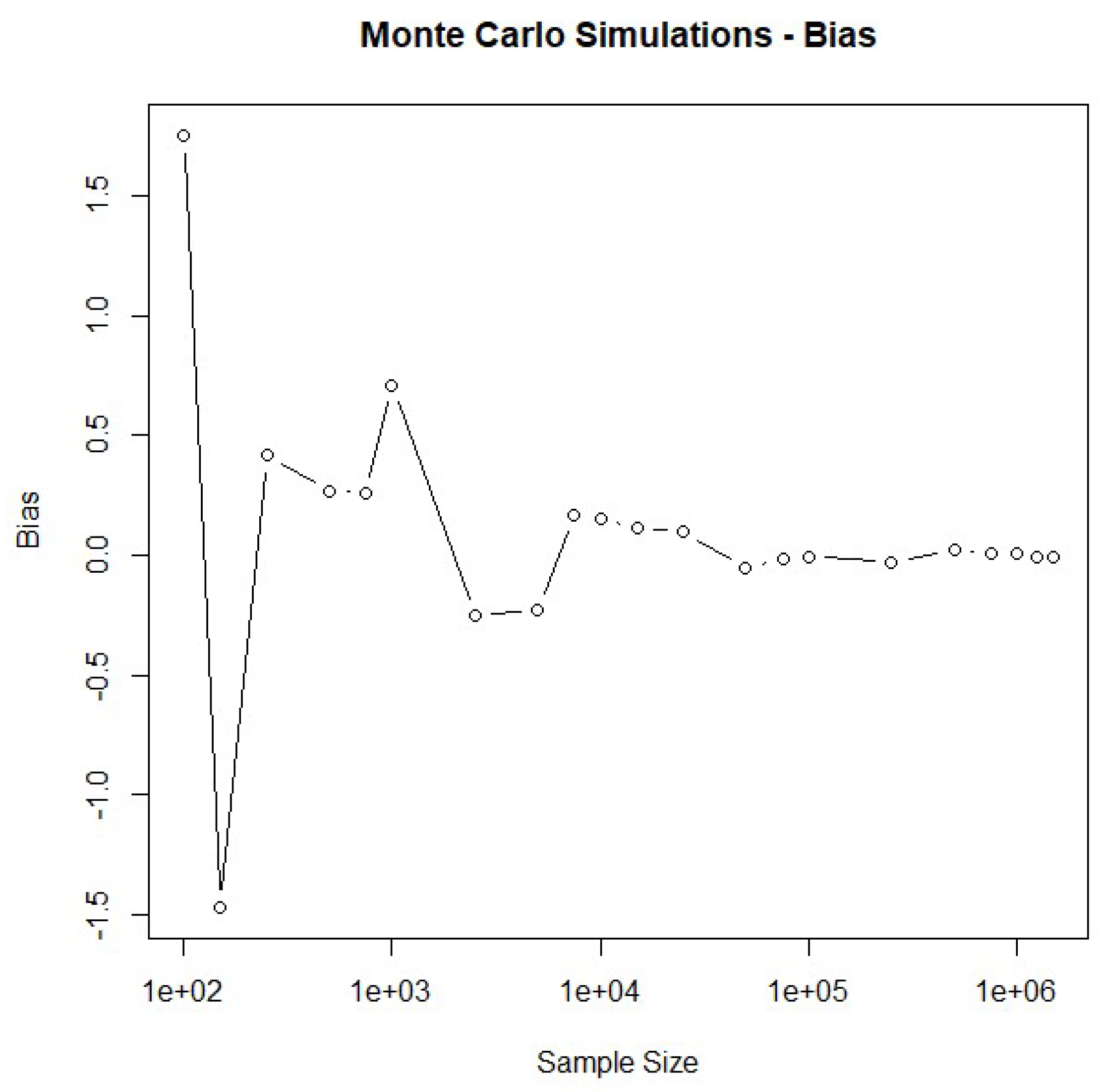
Dependence between Bias and sample size in Monty Hall problem, calculated from probabilities obtained from Monte Carlo simulations and exact probabilities, in case contestant does not change her mind (Lara-Galera, 2025).
Dependence between Bias and sample size in Monty Hall problem, calculated from probabilities obtained from Monte Carlo simulations and exact probabilities, in case contestant does not change her mind (Al-Hamshary et al. 2025).
Changedp column describes probabilities in case player changed her mind. No changep column describes probabilities in case player did not change her mind. Flipp column describes probabilities in case player made flip a coin decision. Ttp column describes probabilities in case player is applying tic-toc decision. Ottp column describes probabilities in case player is applying opposite tic-toc decision.
Table 1 and Table 2 show that changing mind is the best decision. Flip a coin decision probabilities always lie between change mind probabilities and do not change mind probabilities. Flip a coin decision for 3 doors and 1 prize is those 50 per cent, which caused a lot of discussion about the Monty Hall problem. Those 50 per cent is those 50 per cent, what common sense tells that the probability should be. Tic-toc decision is better than flip a coin decision. Opposite tic-toc decision is worse than flip a coin decision, but better than do not change mind decision. If player decides not to change her mind, it is the worst decision ever. Flip a coin decision is the third best decision of five different options, and it confirms the old truth: If you do not know what you should do, make a flip a coin decision and you will not decide bad. Research also showed that people should change their mind, because individuals who do not change their mind have the lowest probability for success. Second worst chance for success have individuals who are speculating too much - opposite tic-toc decision. The best chance for success have individuals who change their minds.
Finally, we can plot dependence between Monte Carlo simulations sample size and Mean Absolute Error as MAE=f(samplesize) and also dependence between Monte Carlo simulations sample size and Bias as Bias = f(samplesize). Dependence show Figure 1 and Figure 2.
Figure 1 shows the Mean Absolute Error (MAE) of Monte Carlo Simulations. Figure 1 shows the relationship between sample size in Monte Carlo simulations and Mean Absolute Error (MAE, Mean Absolute Error). MAE measures the precision of simulation results - it determines the average value of absolute deviations between simulation results and expected theoretical values. The key elements of the graph are the X-axis - the sample size, and the number of Monte Carlo simulation iterations. A larger sample generates more values, increasing the results' precision. Y-axis - Mean Absolute Error (MAE) because it shows the average deviation of simulation results from theoretical values. The smaller the MAE value, the higher the precision of the simulation. The relationship between the variables of the graph is illustrated by a decreasing function, indicating that as the number of iterations increases, the mean absolute error decreases. This reflects the law of large numbers - with more iterations, the results more and more accurately represent the actual probability distribution. The significance of Figure 1 for Monte Carlo in corporate treasury management (Vasquez 2023) is that the convergence of simulation results to theoretical values works so that decreasing MAE values show that a more significant number of iterations achieves greater accuracy of results. Minimizing errors in the analyses and, thus, a low MAE value means the simulations better reflect the actual probability distribution, resulting in more reliable forecasts and decisions. Sample size selection is key, and Figure 1 highlights that choosing a large enough number of iterations is crucial to minimize errors and produce results with high analytical value. The link to Corporate Treasury Management points to accurate financial forecasts. In corporate treasury management, Monte Carlo simulations are used to forecast cash flows and assess credit risk, interest rate volatility, or weather risk (Ding et al. 2025). A decreasing MAE indicates that with a sufficiently large number of iterations, simulation results will be more accurate, enabling more accurate financial decisions. Assessing risk with MAE helps determine whether simulations are precise enough to consider investment, liquidity, or capital structure risks (Rehan 2022). Minimizing errors is key to effective action for areas of high volatility (e.g., weather risk). Optimization of strategic decisions is evident in Figure 1, as the chart highlights that a more significant number of iterations in simulations reduces uncertainty, which supports better decision-making in risky environments such as debt refinancing, reserve management, or capital investment. The significance of Figure 1 in practice is that it is a reminder that the precision of Monte Carlo simulation results increases with the number of iterations. In corporate treasury management, this means balancing the accuracy of analysis with the calculation time to produce reliable results in an acceptable amount of time (Floros et al. 2024). This is critical for corporate treasury management decision-making, especially management and financial decisions in a dynamic business environment.
Figure 2 illustrates the relationship between systematic error (bias) and sample size in Monte Carlo simulations. Bias is a measure of the difference between the expected value from a simulation and the actual theoretical value, indicating the simulation's consistent tendency to overestimate or underestimate results. Key elements shown in the graph include the X-axis - the sample size, which represents the number of iterations in a Monte Carlo simulation. A larger sample means more random results generated by the algorithm, which increases precision. Y-axis - Bias (systematic error) shows how much the average simulation results deviate from the expected theoretical values. A value closer to zero indicates a more systematic minor mistake. The relationship between the variables shows that the graph most often represents a decreasing function, which means the bias gradually decreases as the number of simulation iterations increases. This is because a more extensive sample accurately represents the probability distribution of the variables under study.
The conclusion of Figure 2 is that one can see a convergence of the simulation results to the theoretical values; the bias decreases as the number of iterations increases, confirming that Monte Carlo simulations are more accurate with a larger sample. The significance of the sample size is that too small many iterations can lead to significant biases that can falsify the analysis results. This has practical implications because in corporate treasury management (Vasquez 2023), a sufficiently large number of iterations is necessary to obtain reliable simulation results. This is especially true in risk analysis, where precision is crucial. Figure 2 emphasizes that Monte Carlo simulations require appropriate sample size selection to minimize bias and produce accurate, practical results in the context of corporate treasury management financial decisions.
The tic-toc strategy is a strategy in which the player decides according to the last known decision. If the last decision is to change their mind and she is successful, she will also change her mind. If the last decision is to change their mind and is unsuccessful, she will not change her mind. The opposite tic-toc strategy is a kind of strategy in which the player also makes a decision according to the last known decision. If the last decision is to change their mind and is successful, she will not. She will change her mind if the last decision is to change their mind and is unsuccessful. She will do the opposite, expecting the situation to change in the next turn. Another interesting fact is how probabilities increase with the increase in price count.

4. Conclusions

We studied truth-type paradoxes using conditional probabilities, Bayes' rule and Monte Carlo simulation (Akhtar 2024). The Monte Carlo analysis method is considered a method of forecast risk management in financial management, which indirectly reduces the risk of forecast error (Liu 2024). Together with scenario analysis, it is an indirectly risk-adjusted method of corporate financial management risk analysis carried out under uncertainty and risk (Hong et al. 2014).
Recommendations for future research on the application of the three Monte Carlo paradoxes to corporate treasury management should focus on analyzing the extended use of paradoxes in predicting extreme financial scenarios (Wang et al. 2024), as paradoxes can help manage risk in rare events such as economic crises or unexpected market changes. Integrating the three paradoxes with dynamic scenario models is essential because paradox-based Monte Carlo models can support continuous adjustment of financial strategies in a dynamic economic environment (Luo & Liu 2024). The use of paradoxes in evaluating the effectiveness of working capital management strategies (Hung 2022) is essential because risk analysis based on the three paradoxes improves the effectiveness of managing a company's short-term financing (Chen et al. 2025). The use of three paradoxes in weather risk (weather risk) modeling is recommended and encouraged because paradox-based Monte Carlo simulations can be used to assess the impact of extreme weather events on cash flows (Sabripoor & Ghousi 2024).
Bertrand's box paradox helps describe how conditional probabilities affect the prediction of financial stability for low probability but high-impact events, and how risk analysis changes when uncertainty (Mamani et al. 2024) is included in weather risk inputs (Hasan et al. 2022).
The Three Prisoners' Dilemma allows us to describe how additional information about weather risk affects financial hedging decisions and whether information asymmetry (Elroukh 2025) between counterparties in financial transactions can be effectively managed using this paradox (Adamolekun 2024).
The Monty Hall problem helps describe whether changing financial strategy based on new weather data increases the chances of maintaining cash flow stability and what risk protection decisions (such as weather insurance) are optimal in light of this paradox (Demiraj et al. 2024).
The Bertrand box paradox in a Monte Carlo simulation will identify the most critical points of influence of conditional probabilities on cash flows (Sabripoor & Ghousi 2024), enabling more precise forecasting and planning of financial reserves. The Three Prisoners' Dilemma indicates that incorporating additional information will reduce the risk of erroneous decisions, especially in situations of high weather risk or information asymmetry in financial contracts (Elroukh 2025). The Monty Hall problem recommends that changing strategies in response to new weather data will allow companies to better protect themselves from the effects of adverse weather events, such as by purchasing appropriate insurance in advance.
Recommending future research, it is worth considering the applicability of three weather risk paradoxes to corporate financial management. Bertrand's box paradox can improve forecasting the risk of production downtime due to extreme weather events, taking into account the conditional probability of such events. It can also help optimize cash reserves (Elyasiani & Movaghari 2024) for unforeseen weather-related losses. The Three Prisoners' Dilemma can enable assessment of the impact of additional weather data on financial hedging decisions, such as energy futures, and management of the risk of information asymmetry (Nusair et al. 2024) between insurers and companies (Behera & Mahakud 2025). The Monty Hall problem will enable decisions to change insurance strategies based on current weather forecasts and examine the effectiveness of changing energy or resource providers in response to climate change (Alam et al. 2024).
As a recommendation for future research, we look forward to answering the research questions so that the Bertrand box paradox of Monte Carlo analysis with conditional probabilities can significantly improve the quality of forecasts and reduce the risk of financial shortfalls in the face of weather risk (Dsouza et al. 2024). Properly applied, the three-prisoner dilemma will enable the collection of additional weather information to reduce the risk of erroneous financial decisions by 20-30% by better allocating resources to protect against the effects of extreme events (Kalash 2024). The Monty Hall problem will diversify the change in financial strategy based on current weather forecasts and increase the probability of avoiding financial losses by up to 50%, as confirmed by Monte Carlo simulations.
Future research should focus on incorporating these paradoxes into early warning systems for financial management (Tobisova 2022) and developing models that account for dynamic changes (Luo & Liu 2024) in the financial and climate environment (Zhang & Gao 2024).
Recommendations for corporate financial management and policy makers primarily focus on short-term (up to a year) recommendations for decision makers, should implement Monte Carlo simulations using the three paradoxes for ongoing financial risk analysis, and focus on liquidity management (Hasan et al. 2022), considering conditional probabilities (Bertrand's Paradox) to optimize cash reserves, and use the three-prisoners' dilemma to assess the impact of new financial and economic data on investment decisions, and conduct rapid simulations of decisions in a dynamically changing environment (Luo & Liu 2024), based on the Monty Hall Problem, to avoid decision errors.
Recommendations for decision makers in corporate financial management include introducing regulations requiring advanced simulation tools, such as Monte Carlo, in financial risk management and establishing reporting standards for using probabilistic data in corporate cash flow forecasts (Rehman et al. 2024).
Medium-term recommendations (up to three years) for decision-makers in corporate treasury management include encouraging the development of predictive models based on the three paradoxes, taking into account industry-specific and weather risks, and integrating Monte Carlo simulations into ERP systems and treasury management platforms (Akhtar 2022), to enable continuous risk monitoring and analysis, and the use of the three-prisoner dilemma to improve decision-making processes in the context of long-term strategic investments while expanding strategic scenarios based on the Monty Hall problem to effectively respond to changes in capital structure and market environment (Li & Shiu 2024).
Medium-term recommendations (up to three years) for policymakers (Elroukh 2025) point to encouraging companies to invest in advanced data analytics technologies, offering tax breaks (Pang et al. 2024) or subsidies for implementing Monte Carlo simulations in financial management (Liu et al. 2025; Akhtar et al. 2018), and introducing regulations to support the use of probabilistic analysis in financial decisions (Akhtar et al. 2024), especially in sectors exposed to weather risk.
Longer-term recommendations (beyond three years) for policymakers point to the need to undertake building an organizational culture that supports decision-making based on probabilistic data and Monte Carlo scenarios, and to develop comprehensive risk management systems that incorporate Bertrand's Paradox into long-term financial forecast models and create long-term capital allocation strategies using the three-prisoner dilemma to account for unexpected information along with improving adaptation processes by using the Monty Hall problem to manage changes in the regulatory and market environment (Fan et al. 2024).
Longer-term recommendations (beyond three years) for policymakers include guidance on developing a regulatory framework to support the use of advanced probabilistic analysis in the management of corporate financial resources internationally, and promoting collaboration between the public and private sectors (da Costa Moraes et al. 2025) in researching the application of the Monte Carlo method to risk management, including weather risk, and creating publicly available analytical platforms that support small and medium-sized enterprises in implementing advanced risk simulations (Worku 2021; Belas et al. 2024).
Key steps for policymakers (Das et al. 2024) should include supporting education and training, introducing educational programs for treasury managers that teach advanced Monte Carlo methods and their application to risk management (Vega-Gutiérrez et al. 2025), and creating industry standards that include implementing uniform standards for the use of probabilistic analysis in financial reporting (Kumar and Symss 2024).
Key steps for policymakers (Elroukh 2025) should include supporting technology and funding research and development of analytical tools that integrate Monte Carlo into corporate financial management (Tobisova 2022). Recommendations must not overlook future monitoring and evaluation by creating mechanisms to monitor the effectiveness of corporate Monte Carlo methods and their impact on financial stability (Park 2022).
Bertrand's paradox indicates that pending results show that conditional probabilities can reduce the risk of unforeseen financial events, improving forecast accuracy by 20-30%. The Three Prisoners' Dilemma allows additional information about risks, such as weather, to improve the efficiency of financial decisions by better managing information asymmetry (Nusair et al. 2024) and optimizing resource allocation. The Monty Hall problem will show that regularly adjusting financial strategies based on simulations increases the probability of economic success by 40-50%, especially in sectors exposed to market volatility (Kumar & Symss 2024).
Recommendations are based on incorporating three Monte Carlo paradoxes into corporate financial management processes (Liu 2025). Policies (Das et al. 2024) supporting education, technological development and regulations encouraging the use of these methods will improve the long-term performance and financial stability of companies (Carrick 2023).
Similarly, in the Monte Carlo method, predictions are made for each financial management decision of factors affecting the value of treasury growth under various future scenarios (Liu 2025). Monte Carlo analysis should show whether the treasury management action being evaluated should not be implemented by the company (Kayani et al. 2025), since the expected value of treasury growth is a key parameter in this procedure (Carrick 2023).
Monte Carlo analysis is better in terms of information than sensitivity analysis. It is used to analyze the Treasury management (Tobisova 2022) of an enterprise under risk and uncertainty (Mamani et al. 2024) by examining the sensitivity of Treasury protection, creation and accumulation to changes in single factors (Akgün & Memiş 2024). Monte Carlo analysis is, in a sense, an extension of decision tree analysis, which is applicable when the treasury management process under analysis consists of a sequence of decisions and when decisions made at subsequent moments depend on the results of previous decisions (Farooq et al. 2024).
Monte Carlo simulation) is a type of analysis linked to sensitivity analysis enriched with probability distributions of explanatory variables. It involves the use of pseudo-random number generators to mimic the time course of cash flows that will take place in a company (Yudaruddin et al. 2024). Like scenario analysis, it allows estimating the expected value of creating, protecting or accumulating corporate treasure (Alban, Darji, Imamura, Nakayama, 2017), measures of risk and other parameters and is considered a more accurate method. Monte Carlo analysis uses a mathematical model to describe treasure management (Tobisova 2022). The first step in its application to treasury management is to create a model containing the company's free cash flow FCF. After determining the probability distributions of each random variable, the simulation software makes a random selection of each variable. The selected value of each random variable, along with the specified values of certain variables, is then used to determine expected cash flows (Athari et al. 2024). Such a process is repeated several times and each time specific results are obtained, which are used to construct the probability distribution, its expected value and standard deviation. The final result of the Monte Carlo analysis is, as in the case of scenario analysis and decision tree analysis (Liu 2025), the expected net present value (Fantazzini, 2009), based on which the company can decide to accept or reject the implementation of a treasury management project (Steffen 2018), the risk effectiveness of which is analyzed based on this method.
In the process of evaluating Corporate Treasury Management undertaken under conditions of risk (Jajuga 2023), in addition to methods that take risk into account indirectly, Monte Carlo simulation is preferred to measures based on the coefficient of variation assessing the effectiveness of the activity that is the subject of Treasury Management decisions (Zvarikova et al. 2024), or based on the modification of measures by adjustments due to the need to take risk into account (Park 2022).
The coefficient of variation is a measure of risk, indicating what level of risk is per unit of a financial parameter (Alban 2017). Using the coefficient of variation, priority for implementation should be given to financial management measures whose performance has a lower coefficient of variation. Monte Carlo simulation avoids the simplistic generalizations implied by the coefficient of variation (Belas et al. 2024b).
We discovered why much of the discussion of the Monty Hall problem took place in the 1990s, and why so many researchers believed that the probability was 50 percent. This 50 percent represents the decision to flip a coin. We found that players should change their minds, which is the best decision of all those studied. The worst decision is the one in which players do not change their minds. The second worst decision is the one in which players speculate too much - the reverse tic-toc decision. On the other hand, the correct speculation is positive - the tic-tac decision is the second best decision. The study showed a lot about Monty Hall's problems and life. The purpose of the study has been achieved.
The article thematically covers forecast risk management using Monte Carlo simulation to solve Veridical-type paradoxes. The use of Monte Carlo simulation as an advanced tool for managing financial forecast risk in financial management is presented. The study analyzed three probabilistic paradoxes: the Bertrand Box Paradox, the Three Prisoners' Dilemma and the Monty Hall Problem, which were used to analyze and solve key problems in corporate financial management (Belas et al. 2023). The study aimed to see how Monte Carlo simulations can help resolve these paradoxes and provide tools for more accurate financial risk forecasting under uncertainty (Liu2025). The paper uses numerical (Monte Carlo simulations) and analytical (Bayes rule, conditional probabilities) methods. Simulations were carried out under different scenarios, considering different decision options and outcomes. Discussing Bertrand's box paradox, it was shown how conditional probabilities affect the accuracy of cash flow forecasts, especially in liquidity risk analysis. Discussing the Three Prisoners' Dilemma, it was revealed that additional information allows for more precise investment decisions, such as allocating capital to projects with different risk profiles. Touching on the Monty Hall problem, it was proven that flexibility and changing strategies (e.g., debt refinancing) increase the probability of achieving favorable financial results. The importance of Monte Carlo simulation for corporate financial management is undeniable, and can be used to forecast financial risks, improve the accuracy of cash flow forecasts and liquidity management, and reduce cash flow volatility. It also enables optimization of financial reserves based on probability distributions.
The results of Monte Carlo analysis in Corporate Treasury Management are applicable to capital structure management by assessing the impact of different financing strategies on the financial stability of a company.
The results of the study indicate that Monte Carlo simulations, due to their probabilistic modeling capabilities, provide more precise and practical tools for risk management in corporate treasury management compared to traditional methods of sensitivity or coefficient of variation analysis. Integrating probabilistic paradox analysis enables more informed financial decisions, contributing to the long-term growth of company value.
Research suggests that the practical application of these methods should include the development of early warning systems for corporate financial management. This should be complemented by the integration of Monte Carlo simulation with ERP tools and the use of advanced probabilistic analysis in strategic financial planning used in corporate financial management. The article contributes to the development of financial risk management tools by pointing out the potential of Monte Carlo simulation in resolving probabilistic paradoxes and improving the financial stability of enterprises.

Funding

not applicable.

Ethics Approval and Consent to Participate, and Consent for Publication

not applicable.

References

  1. Adamolekun G. (2024), Firm biodiversity risk, climate vulnerabilities, and bankruptcy risk, Journal of International Financial Markets, Institutions and Money, 97, art. no. 102075. [CrossRef]
  2. Adil M.H., Roy A. (2024), Asymmetric effects of uncertainty on investment: Empirical evidence from India, Journal of Economic Asymmetries, 29, art. no. e00359. [CrossRef]
  3. Ajovalasit S., Consiglio A., Provenzano D. (2024), Debt Sustainability in the Context of Population Ageing: A Risk Management Approach, Risks, 12 (12), art. no. 188. [CrossRef]
  4. Akgün A.İ., Memiş Karataş A. (2024), Do impact of cash flows and working capital ratios on performance of listed firms during the crisis? The cases of EU-28 and Western European countries, Journal of Economic and Administrative Sciences. [CrossRef]
  5. Akhtar T. (2022), Corporate governance, excess-cash and firm value: Evidence from ASEAN-5, Economics and Business Review, 8 (4), pp. 39 - 67. [CrossRef]
  6. Akhtar T. (2024), Are the motives of holding cash differing between developed and emerging financial markets?, Kybernetes, 53 (5), pp. 1653 - 1681. [CrossRef]
  7. Akhtar T., Chen L., Tareq M.A. (2024), Blockchain technology enterprises’ ownership structure and cash holdings, Sustainable Futures, 8, art. no. 100229. [CrossRef]
  8. Akhtar T., Qasem A., Khan S. (2024), Internal corporate governance and cash holdings: the role of external governance mechanism, International Journal of Disclosure and Governance. [CrossRef]
  9. Akhtar T., Tareq M.A., Sakti M.R.P., Khan A.A. (2018), Corporate governance and cash holdings: the way forward, Qualitative Research in Financial Markets, 10 (2), pp. 152 - 170. [CrossRef]
  10. Alam M.S., Safiullah M., Islam M.S. (2024), Cash-rich firms and carbon emissions, International Review of Financial Analysis, 81, art. no. 102106. [CrossRef]
  11. Alban A., Darji H.A., Imamura A., Nakayama M.K. (2017), Efficient Monte Carlo methods for estimating failure probabilities, Reliability Engineering and System Safety, 165, pp. 376 - 394. [CrossRef]
  12. Al-Hamshary F.S.A.A., Mohamad Ariff A., Kamarudin K.A., Abd Majid N. (2025), Corporate risk-taking, financial constraints and cash holdings: evidence from Saudi Arabia, International Journal of Islamic and Middle Eastern Finance and Management, 18 (1), pp. 166 - 183. [CrossRef]
  13. Alzoubi M. (2021), Bank Capital Adequacy: The Impact Of Fundamental And Regulatory Factors In A Developing Country, Journal of Applied Business Research, 37 (6), pp. 205 - 216.
  14. Arnold U., Yildiz Ö. (2015), Economic risk analysis of decentralized renewable energy infrastructures - A Monte Carlo Simulation approach, Renewable Energy, 77 (1), pp. 227 - 239. [CrossRef]
  15. Athari S.A., Cho Teneng R., Çetinkaya B., Bahreini M. (2024), Country risk, global uncertainty, and firms’ cash holdings: Do the role of law, culture, and financial market development matter?, Heliyon, 10 (5), art. no. e26266. [CrossRef]
  16. Austin P.C. (2009), Balance diagnostics for comparing the distribution of baseline covariates between treatment groups in propensity-score matched samples, Statistics in Medicine, 28 (25), pp. 3083 - 3107. [CrossRef]
  17. Austin P.C. (2009), Some methods of propensity-score matching had superior performance to others: results of an empirical investigation and monte carlo simulations, Biometrical Journal, 51 (1), pp. 171 - 184. [CrossRef]
  18. Batan L.Y., Graff G.D., Bradley T.H. (2016), Techno-economic and Monte Carlo probabilistic analysis of microalgae biofuel production system, Bioresource Technology, 219, pp. 45 - 52. [CrossRef]
  19. Behera M., Mahakud J. (2025), Geopolitical risk and cash holdings: evidence from an emerging economy, Journal of Financial Economic Policy, 17 (1), pp. 132 - 156. [CrossRef]
  20. Belas J., Dvorsky J., Hlawiczka R., Smrcka L., Khan K.A. (2024), SMEs sustainability: The role of human resource management, corporate social responsibility and financial management, Oeconomia Copernicana, 15 (1), pp. 307 - 342. [CrossRef]
  21. Belas J., Gavurova B., Kubak M., Novotna A. (2023), RISK MANAGEMENT LEVEL DETERMINANTS IN VISEGRAD COUNTRIES – SECTORAL ANALYSIS, Technological and Economic Development of Economy, 29 (1), pp. 307 - 325. [CrossRef]
  22. Belas J., Gavurova B., Kubak M., Rowland Z. (2024), Quantifying Export Potential and Barriers of SMEs in V4, Acta Polytechnica Hungarica, 21 (2), pp. 251 - 270. [CrossRef]
  23. Brandimarte P. (2014), Handbook in Monte Carlo Simulation: Applications in Financial Engineering, Risk Management, and Economics, Handbook in Monte Carlo Simulation: Applications in Financial Engineering, Risk Management, and Economics, pp. 1 - 662. [CrossRef]
  24. Cao D., Tahir S.H., Rizvi S.M.R., Khan K.B. (2024), Exploring the influence of women's leadership and corporate governance on operational liquidity: The glass cliff effect, PLoS ONE, 19 (5 May), art. no. e0302210. [CrossRef]
  25. Carrick J. (2023) Navigating the path from innovation to commercialization: A review of technology-based academic entrepreneurship, Journal of Applied Business Research, 39 (1), pp. 1 - 14.
  26. Carsey T., J. Harden (2014), Monte Carlo Simulation and Resampling Methods for Social Science, SAGE Publications, London.
  27. Chen S., Farooq U., Aldawsari S.H., Waked S.S., Badawi M. (2025), Impact of environmental, social, and governance performance on cash holdings in BRICS: Mediating role of cost of capital, Corporate Social Responsibility and Environmental Management, 32 (1), pp. 1182 - 1197. [CrossRef]
  28. Chen X., Yu W., Zhao Y. (2020) Financial risk management and control based on marine economic forecast, Journal of Coastal Research, 112 (sp1), pp. 234 - 236. [CrossRef]
  29. Chung H.J., Jhang H., Ryu D. (2023), Impacts of COVID-19 pandemic on corporate cash holdings: Evidence from Korea, Emerging Markets Review, 56, art. no. 101055. [CrossRef]
  30. Crouhy M., Galai D., Mark R. (2000), A comparative analysis of current credit risk models, Journal of Banking and Finance, 24 (1-2), pp. 59 - 117. [CrossRef]
  31. Cui F., Tan Y., Lu B. (2024), How Do Macroeconomic Cycles and Government Policies Influence Cash Holdings? Evidence from Listed Firms in China, Sustainability (Switzerland), 16 (18), art. no. 7961. [CrossRef]
  32. da Costa Moraes M.B., Manoel A.A.S., Carneiro J. (2025), Determinants of corporate cash holdings in private and public companies: insights from Latin America, Review of Quantitative Finance and Accounting. [CrossRef]
  33. Das B.C., Hasan F., Sutradhar S.R. (2024), The impact of economic policy uncertainty and inflation risk on corporate cash holdings, Review of Quantitative Finance and Accounting, 62 (3), pp. 865 - 887. [CrossRef]
  34. Demiraj R., Labadze L., Dsouza S., Demiraj E., Grigolia M. (2024), The quest for an optimal capital structure: an empirical analysis of European firms using GMM regression analysis, EuroMed Journal of Business. [CrossRef]
  35. Di L., Jiang W., Mao J., Zeng Y. (2024), Managing liquidity along the supply chain: Supplier-base concentration and corporate cash policy, European Financial Management, 30 (4), pp. 2376 - 2421. [CrossRef]
  36. Diebold F.X., Gunther T.A., Tay A.S. (1998), Evaluating density forecasts with applications to financial risk management, International Economic Review, 39 (4), pp. 863 - 883. [CrossRef]
  37. Diebold F.X., Hahn J., Tay A.S. (1999) Multivariate density forecast evaluation and calibration in financial risk management: High-frequency returns on foreign exchange, Review of Economics and Statistics, 81 (4), pp. 661 - 673. [CrossRef]
  38. Ding S., Wang A., Cui T., Min Du A. (2025), Renaissance of Climate Policy Uncertainty: The Effects of U.S. Presidential Election on Energy Markets Volatility, International Review of Economics & Finance. [CrossRef]
  39. Dsouza S., Momin M., Habibniya H., Tripathy N.(2024), Optimizing performance through sustainability: the mediating influence of firm liquidity on ESG efficacy in African enterprises, Cogent Business and Management, 11 (1), art. no. 2423273. [CrossRef]
  40. Elamer A.A., Utham V. (2024), Cash is queen? Impact of gender-diverse boards on firms' cash holdings during COVID-19, International Review of Financial Analysis, 95, art. no. 103490. [CrossRef]
  41. Elroukh A.W. (2025), The Asymmetric Impact of Economic Policy Uncertainty on the Demand for Money in the GCC Countries, International Journal of Economics and Financial Issues , 15 (1), pp. 93 - 100. [CrossRef]
  42. Elyasiani E., Movaghari H. (2024), Money demand function with time-varying coefficients, Quarterly Review of Economics and Finance, 98, art. no. 101914. [CrossRef]
  43. Fan J., Wang K., Xu M. (2024), Does digital finance development affect corporate cash holdings? Evidence from China, Technology Analysis and Strategic Management. [CrossRef]
  44. Fang S., Deitch M., Gebremicael T., Angelini C., Ortals C. (2024), Identifying critical source areas of non-point source pollution to enhance water quality: Integrated SWAT modeling and multi-variable statistical analysis to reveal key variables and thresholds, Water Research, 253, doi.org/10.1016/j.watres.2024.121286.
  45. Fantazzini D. (2009), The effects of misspecified marginals and copulas on computing the value at risk: A Monte Carlo study, Computational Statistics and Data Analysis, 53 (6), pp. 2168 - 2188. [CrossRef]
  46. Farooq U., Thavorn J., Tabash M.I. (2024), Exploring the impact of environmental regulations and green innovation on corporate investment and cash management: evidence from Asian economies, China Finance Review International. [CrossRef]
  47. Floros C., Galariotis E., Gkillas K., Magerakis E., Zopounidis C. (2024), Time-varying firm cash holding and economic policy uncertainty nexus: a quantile regression approach, Annals of Operations Research, 341 (2-3), pp. 859 - 895. [CrossRef]
  48. Gharaibeh A.M.O. (2023), The Determinants of Capital Adequacy in the Jordanian Banking Sector: An Autoregressive Distributed Lag-Bound Testing Approach, International Journal of Financial Studies, 11 (2), art. no. 75. [CrossRef]
  49. Guo H., Polak P. (2021), Artificial Intelligence and Financial Technology FinTech: How AI Is Being Used Under the Pandemic in 2020, Studies in Computational Intelligence, 935, pp. 169 - 186. [CrossRef]
  50. Hasan M.M., Habib A., Zhao R. (2022), Corporate reputation risk and cash holdings, Accounting and Finance, 62 (1), pp. 667 - 707. [CrossRef]
  51. Hasan S.B., Alam M.S., Paramati S.R., Islam M.S. (2022), Does firm-level political risk affect cash holdings?, Review of Quantitative Finance and Accounting, 59 (1), pp. 311 - 337. [CrossRef]
  52. Hong L.J., Hu Z., Liu G. (2014), Monte carlo methods for value-at-risk and conditional value-at-risk: A review, ACM Transactions on Modeling and Computer Simulation, 24 (4), art. no. 5. [CrossRef]
  53. Hung N.T., Su Dinh T. (2022), Threshold effect of working capital management on firm profitability: evidence from Vietnam, Cogent Business and Management, 9 (1), art. no. 2141090. [CrossRef]
  54. Hwang J.-T., Wen M. (2024), Electronic payments and money demand in China, Economic Analysis and Policy, 82, pp. 47 - 64. [CrossRef]
  55. İnal V. (2024), On the Relationship between the Money Rate of Interest and Aggregate Investment Spending, Review of Radical Political Economics, 56 (2), pp. 300 - 318. [CrossRef]
  56. Jajuga K. (2023), Data Analysis for Risk Management—Economics, Finance and Business: New Developments and Challenges, Risks, 11 (4), art. no. 70. [CrossRef]
  57. Jinkrawee J., Lonkani R., Suwanaphan S. (2023), A matter of others' money: How cash holdings of other firms affect a firm’s cash holding?, International Journal of Emerging Markets, 18 (10), pp. 3954 - 3972. [CrossRef]
  58. Kalash I. (2024), How does excess cash affect corporate financial performance?, Journal of Applied Accounting Research, 25 (5), pp. 1223 - 1243. [CrossRef]
  59. Kayani U., Hasan F., Choudhury T., Nawaz F. (2025), Unveiling WCM and firm performance relationship: evidence from Shariah compliance United Kingdom firms, International Journal of Islamic and Middle Eastern Finance and Management. [CrossRef]
  60. Kazak H., Mensi W., Akif Gunduz M., Kilicarslan A. (2025), Connections between gold, main agricultural commodities, and Turkish stock markets, Borsa Istanbul Review. [CrossRef]
  61. Koller D., N. Friedman (2009), Probabilistic Graphical Models Principles and Techniques, The MIT Press, London.
  62. Kumar N., Symss J. (2024), Corporate cash holding and firm’s performance in times of Ukraine war: a literature review and way forward, Journal of Chinese Economic and Foreign Trade Studies. [CrossRef]
  63. Lara-Galera A., Alcaraz-Carrillo de Albornoz V., Molina-Millán J., Muñoz-Medina B. (2025), Spread valuation and risk on transport infrastructure loans, Economics of Transportation, 41. [CrossRef]
  64. Le Maux J., Smaili N. (2021), Annual report readability and corporate bankruptcy, Journal of Applied Business Research, 37 (3), pp. 73 - 80.
  65. Lee J. (2024), Corporate cash holdings and industry risk, Journal of Financial Research, 47 (2), pp. 435 - 470. [CrossRef]
  66. Li X., Pan Z., Ho K.-C., Bo Y. (2024), Epidemics, local institutional quality, and corporate cash holdings, International Review of Economics and Finance, 92, pp. 193 - 210. [CrossRef]
  67. Li X., Shiu Y.-M. (2024), The Effect of Risk Management on Direct and Indirect Capital Structure Deviations, Risks, 12 (12), art. no. 186. [CrossRef]
  68. Liu J., Cheng Y., Li X., Sriboonchitta S. (2022), The Role of Risk Forecast and Risk Tolerance in Portfolio Management: A Case Study of the Chinese Financial Sector, Axioms, 11 (3), art. no. 134. [CrossRef]
  69. Liu L. (2024), Litigation risk and corporate cash holdings: The moderating effect of CEO tenure, Finance Research Letters, 69, art. no. 106211. [CrossRef]
  70. Liu L., Cowan L., Wang F., Onega T. (2025), A multi-constraint Monte Carlo Simulation approach to downscaling cancer data, Health & Place, 91. [CrossRef]
  71. Luo P., Liu X. (2024), Dynamic investment in new technology and risk management, Review of Quantitative Finance and Accounting. [CrossRef]
  72. Mamani J.C.M., Carrasco-Choque F., Paredes-Calatayud E.F., Cusilayme-Barrantes H., Cahuana-Lipa R. (2024), Modeling Uncertainty Energy Price Based on Interval Optimization and Energy Management in the Electrical Grid, Operations Research Forum, 5 (1), art. no. 4. [CrossRef]
  73. Mertzanis C., Hamill P.A., Pavlopoulos A., Houcine A. (2024), Sustainable investment conditions and corporate cash holdings in the MENA region: Market preparedness and Shari'ah-compliant funds, International Review of Economics and Finance, 93, pp. 1043 - 1063. [CrossRef]
  74. Metwally A.B.M., Aly S.A.S., Ali M.A.S. (2024), The Impact of Corporate Social Responsibility on Cash Holdings: The Moderating Role of Board Gender Diversity, International Journal of Financial Studies, 12 (4), art. no. 104. [CrossRef]
  75. Movaghari H., Sermpinis G. (2025), Heterogeneous impact of cost of carry on corporate money demand, European Financial Management, 31 (1), pp. 400 - 426. [CrossRef]
  76. Nießner T., Nießner S., Schumann M. (2022), Influence of Corporate Industry Affiliation in Financial Business Forecasting: A Data Analysis Concerning Competition, 28th Americas Conference on Information Systems, AMCIS 2022.
  77. Nießner T., Nießner S., Schumann M. (2023), Is It Worth the Effort? Considerations on Text Mining in AI-Based Corporate Failure Prediction, Information (Switzerland), 14 (4), art. no. 215. [CrossRef]
  78. Nishibe T., Iwasa T., Matsuda S., Kano M. (2025), Prediction of Aneurysm Sac Shrinkage After Endovascular Aortic Repair Using Machine Learning-Based Decision Tree Analysis, Journal of Surgical Research, 306, 197-202, doi.org/10.1016/j.jss.2024.11.049.
  79. Nusair S.A., Olson D., Al-Khasawneh J.A. (2024), Asymmetric effects of economic policy uncertainty on demand for money in developed countries, Journal of Economic Asymmetries, 29, art. no. e00350. [CrossRef]
  80. Oh S., Lim C., Lee B. (2025), Stochastic scaling of the time step length in a full-scale Monte Carlo Potts model, Computational Materials Science, 249, doi.org/10.1016/j.commatsci.2024.113644.
  81. Ortmann A., Spiliopoulos L. (2023) Ecological rationality and economics: where the Twain shall meet, Synthese, 201 (4), art. no. 135. [CrossRef]
  82. Page S. (2010), Diversity and Complexity. Princeton University Press, Woodstock 2010.
  83. Pang J., Wang K., Zhao L. (2024), Tax enforcement and corporate cash holdings, Journal of Business Finance and Accounting, 51 (9-10), pp. 2737 - 2762. [CrossRef]
  84. Park J. (2022), Impact Of Informal Communication On Corporate Creative Performance, Journal of Applied Business Research, 38 (1), pp. 19 - 28. [CrossRef]
  85. Pereira E.J.S., Pinho J.T., Galhardo M.A.B., Macêdo W.N. (2014), Methodology of risk analysis by Monte Carlo Method applied to power generation with renewable energy, Renewable Energy, 69, pp. 347 - 355. [CrossRef]
  86. Polak P., Masquelier F., Michalski G. (2018), Towards treasury 4.0/the evolving role of corporate treasury management for 2020, Management (Croatia), 23 (2), pp. 189 - 197. [CrossRef]
  87. Puri I. (2025), Simplicity and Risk, Journal of Finance. [CrossRef]
  88. Rajesh Banu J., Preethi, Kavitha S., Gunasekaran M., Kumar G. (2020), Microalgae based biorefinery promoting circular bioeconomy-techno economic and life-cycle analysis, Bioresource Technology, 302, art. no. 122822. [CrossRef]
  89. Rehan R. (2022), Investigating the capital structure determinants of energy firms, Edelweiss Applied Science and Technology, 6 (1), pp. 1 - 14. [CrossRef]
  90. Rehan R., Khan M.A., Fu G.H., Sa’ad A.A., Irshad A. (2024), The Determinants of Shariah Banks’ Capital Structure, International Journal of Economics and Financial Issues , 14 (5), pp. 193 - 202. [CrossRef]
  91. Rehan R., Sa’ad A.A., Fu G.H., Khan M.A. (2024), The determinants of banks' capital structure in SAARC economies, Edelweiss Applied Science and Technology, 8 (4), pp. 417 - 433. [CrossRef]
  92. Rehman I.U., Shahzad F., Hanif M.A., Khalid N., Nawaz F. (2024), From commitment to capital: does environmental innovation reduce corporate cash holdings?, Journal of Sustainable Finance and Investment. [CrossRef]
  93. Reyes J.E.M., Pérez J.J.C., Aké S.C. (2023), Credit risk management analysis: An application of fuzzy theory to forecast the probability of default in a financial institution [Análisis de la gestión del riesgo de crédito: una aplicación de la teoría difusa para pronosticar la probabilidad de incumplimiento en una institución financiera], Contaduria y Administracion, 69 (1), pp. 180 - 211. [CrossRef]
  94. Rijanto A. (2022), Political connection status decisions and benefits for firms experiencing financial difficulties in emerging markets, Problems and Perspectives in Management, 20 (3), pp. 164 - 177. [CrossRef]
  95. Sabripoor A., Ghousi R. (2024), Risk-based cooperative vehicle routing problem for cash-in-transit scenarios: A hybrid optimization approach, International Journal of Industrial Engineering Computations, 15 (1), pp. 127 - 148. [CrossRef]
  96. Salas V., Saurina J. (2002), Credit risk in two institutional regimes: Spanish commercial and savings banks, Journal of Financial Services Research, 22 (3), pp. 203 - 224. [CrossRef]
  97. Schrand C., Unal H. (1998), Hedging and coordinated risk management: Evidence from thrift conversions, Journal of Finance, 53 (3), pp. 979 - 1013. [CrossRef]
  98. Song K., Lee Y. (2012), Long-term effects of a financial crisis: Evidence from cash holdings of East Asian firms, Journal of Financial and Quantitative Analysis, 47 (3), pp. 617 - 641. [CrossRef]
  99. Steffen B. (2018), The importance of project finance for renewable energy projects, Energy Economics, 69, pp. 280 - 294. [CrossRef]
  100. Stewart J. (2005), Fiscal incentives, corporate structure and financial aspects of treasury management operation, Accounting Forum, 29 (3 SPEC. ISS.), pp. 271 - 288. [CrossRef]
  101. Taylor J.W., Yu K. (2016), Using auto-regressive logit models to forecast the exceedance probability for financial risk management, Journal of the Royal Statistical Society. Series A: Statistics in Society, 179 (4), pp. 1069 - 1092. [CrossRef]
  102. Tobisova A., Senova A., Rozenberg R. (2022), Model for Sustainable Financial Planning and Investment Financing Using Monte Carlo Method, Sustainability (Switzerland), 14 (14), art. no. 8785. [CrossRef]
  103. Tripathi V., Madhavan V. (2024), Firm Value Evidence from India, Economic and Political Weekly, 59 (21), pp. 83 - 90.
  104. Varela A., Dopico D., Fernández A. (2025), An analytical approach to the sensitivity analysis of semi-recursive ODE formulations for multibody dynamics, Computers & Structures, 308, doi.org/10.1016/j.compstruc.2024.107642.
  105. Vasquez J.Z., Cruz L.D.C.S.S., Navarro L.R.R., Benavides A.M.V., López R.D.J.T., Rodriguez V.H.P. (2023), RELATIONSHIP BETWEEN INTERNAL CONTROL AND TREASURY MANAGEMENT IN A PERUVIAN MUNICIPALITY, Journal of Law and Sustainable Development, 11 (2), art. no. e0706. [CrossRef]
  106. Vega-Gutiérrez P.L., López-Iturriaga F.J., Rodríguez-Sanz J.A. (2025), Economic policy uncertainty and capital structure in Europe: an agency approach, European Journal of Finance, 31 (1), pp. 53 - 75. [CrossRef]
  107. Vithayasrichareon P., MacGill I.F. (2012), A Monte Carlo based decision-support tool for assessing generation portfolios in future carbon constrained electricity industries, Energy Policy, 41, pp. 374 - 392. [CrossRef]
  108. von Solms J., Langerman J. (2022), Digital technology adoption in a bank Treasury and performing a Digital Maturity Assessment, African Journal of Science, Technology, Innovation and Development, 14 (2), pp. 302 - 315. [CrossRef]
  109. Wang X., Li L., Bian S. (2024), Irrelevant answers in customers’ earnings communication conferences and suppliers’ cash holdings, Journal of Financial Stability, 75, art. no. 101346. [CrossRef]
  110. Wang Z., Zhang C., Wu R., Sha L. (2024), From ethics to efficiency: Understanding the interconnected dynamics of ESG performance, financial efficiency, and cash holdings in China, Finance Research Letters, 64, art. no. 105419. [CrossRef]
  111. Worku Z. (2021), Business ethics and the repayment of loans in small enterprises, Journal of Applied Business Research, 37 (2), pp. 51 - 60.
  112. Wu J., Al-Khateeb F.B., Teng J.-T., Cárdenas-Barrón L.E. (2016), Inventory models for deteriorating items with maximum lifetime under downstream partial trade credits to credit-risk customers by discounted cash-flow analysis, International Journal of Production Economics, 171, pp. 105 - 115. [CrossRef]
  113. Yamamoto T., Sakamoto H. (2025), Monte Carlo methods based on “virtual density” theory for calculation of k-eigenvalue sensitivity under nonuniform anisotropic deformation, Annals of Nuclear Energy, 213, doi.org/10.1016/j.anucene.2024.111181.
  114. Yang J., Bao M., Chen S. (2025), A retreat to safety: Why COVID-19 make firms more risk-averse?, International Review of Financial Analysis, 97, art. no. 103789. [CrossRef]
  115. Yang S.H., Jun S.-G. (2022), Owners Of Korean Conglomerates And Corporate Investment, Journal of Applied Business Research, 38 (1), pp. 1 - 18. [CrossRef]
  116. Yang Y., Lei J. (2025), Analysis of coupled distributed stochastic approximation for misspecified optimization, Neurocomputing. [CrossRef]
  117. Yitzhaky L., Bahli B. (2021), Target setting and firm performance: A review, Journal of Applied Business Research, 37 (3), pp. 81 - 94.
  118. Yudaruddin R., Lesmana D., Yudaruddin Y.A., Ekşi̇ İ.H., Başar B.D. (2024), Impact of the Israel–Hamas conflict on financial markets of MENA region – a study on investors’ reaction, Journal of Economic and Administrative Sciences. [CrossRef]
  119. Zhang L., Gao J. (2024), Does climate policy uncertainty influence corporate cash holdings? Evidence from the U.S. tourism and hospitality sector, Tourism Economics, 30 (7), pp. 1704 - 1728. [CrossRef]
  120. Zvarikova K., Dvorsky J., Belas J., Jr., Metzker Z. (2024), MODEL OF SUSTAINABILITY OF SMEs IN V4 COUNTRIES, Journal of Business Economics and Management, 25 (2), pp. 226 - 245. [CrossRef]
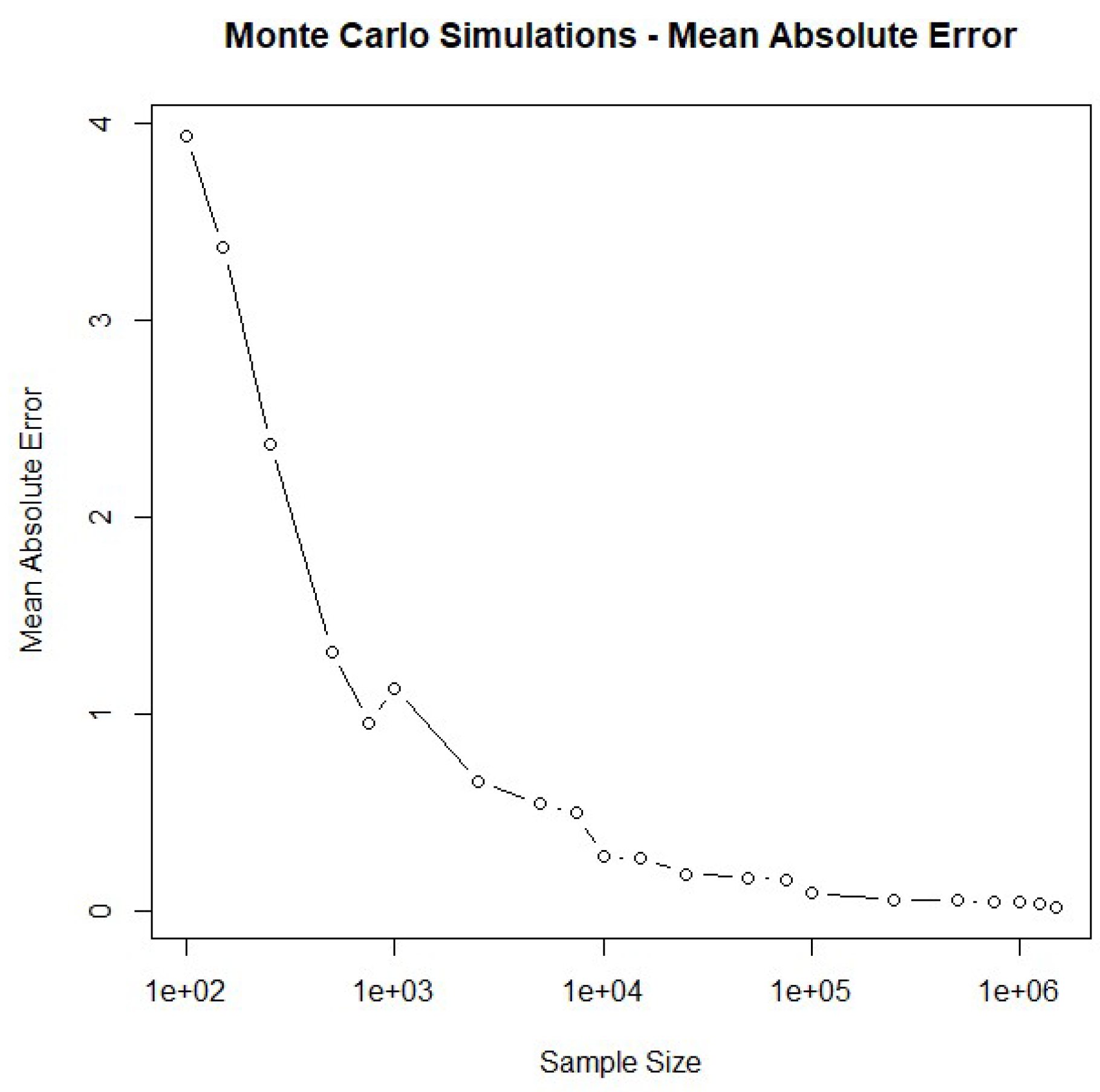
Figure 1. Mean absolute error Monte Carlo simulations.
Preprints 149967 g001
Figure 2. Bias of Monte Carlo Simulations.
Preprints 149967 g002
Table 1. Output of the code. Simulations results.
No Door Prize Changep Ttp Flipp Ottp No changep
1 3 1 66.645 55.585 50.061 44.415 33.355
2 4 1 37.545 31.857 31.278 30.005 24.992
3 4 2 75 66.686 62.54 60.013 49.993
4 5 1 26.704 23.5 23.35 22.854 19.979
5 5 2 53.287 47.463 46.657 45.705 40.047
6 5 3 80.014 73.354 69.997 68.534 59.99
7 6 1 20.86 18.802 18.791 18.505 16.649
8 6 2 41.67 37.76 37.493 37.015 33.303
9 6 3 62.565 57.244 56.253 55.6 50.053
10 6 4 83.273 77.724 75.042 74.074 66.719
11 7 1 17.155 15.756 15.767 15.591 14.286
12 7 2 34.268 31.582 31.477 31.138 28.581
13 7 3 51.457 47.512 47.114 46.796 42.892
14 7 4 68.592 63.727 62.917 62.387 57.163
15 7 5 85.661 80.856 78.553 77.89 71.399
16 8 1 14.564 13.591 13.562 13.408 12.49
17 8 2 29.171 27.15 27.097 26.916 25.009
18 8 3 43.77 40.764 40.609 40.408 37.492
19 8 4 58.368 54.537 54.252 53.886 49.989
20 8 5 72.953 68.614 67.716 67.327 62.504
21 8 6 87.511 83.353 81.251 80.743 74.955
22 9 1 12.709 11.932 11.919 11.793 11.063
23 9 2 25.378 23.882 23.85 23.712 22.286
24 9 3 38.05 35.79 35.62 35.541 33.302
25 9 4 50.793 47.765 47.603 47.438 44.429
26 9 5 63.514 59.971 59.574 59.209 55.543
27 9 6 76.224 72.26 71.459 71.043 66.624
28 9 7 88.856 85.161 83.35 82.965 77.803
29 10 1 11.263 10.659 10.663 10.589 9.974
30 10 2 22.496 21.287 21.273 21.272 20.021
31 10 3 33.796 31.901 31.856 31.801 29.957
32 10 4 44.983 42.591 42.497 42.38 40.009
33 10 5 56.281 53.328 53.151 52.905 49.971
34 10 6 67.475 64.136 63.734 63.504 59.945
35 10 7 78.761 75.157 74.413 74.125 69.99
36 10 8 90.008 86.636 84.967 84.669 79.949
Table 2. Modified probabilities Combined results.
No Door Prize Changep No changep No changep Flipp Flipp
Monte Carlo True combined
1 3 1 66.645 33.355 33.333 50.061 49.989
2 4 1 37.545 24.992 25 31.278 31.273
3 4 2 75 49.993 50 62.54 62.5
4 5 1 26.704 19.979 20 23.35 23.352
5 5 2 53.287 40.047 40 46.657 46.644
6 5 3 80.014 59.99 60 69.997 70.007
7 6 1 20.86 16.649 16.667 18.791 18.764
8 6 2 41.67 33.303 33.333 37.493 37.502
9 6 3 62.565 50.053 50 56.253 56.283
10 6 4 83.273 66.719 66.667 75.042 74.97
11 7 1 17.155 14.286 14.286 15.767 15.721
12 7 2 34.268 28.581 28.571 31.477 31.42
13 7 3 51.457 42.892 42.857 47.114 47.157
14 7 4 68.592 57.163 57.143 62.917 62.868
15 7 5 85.661 71.399 71.429 78.553 78.545
16 8 1 14.564 12.49 12.5 13.562 13.532
17 8 2 29.171 25.009 25 27.097 27.086
18 8 3 43.77 37.492 37.5 40.609 40.635
19 8 4 58.368 49.989 50 54.252 54.184
20 8 5 72.953 62.504 62.5 67.716 67.727
21 8 6 87.511 74.955 75 81.251 81.256
22 9 1 12.709 11.063 11.111 11.919 11.91
23 9 2 25.378 22.286 22.222 23.85 23.8
24 9 3 38.05 33.302 33.333 35.62 35.692
25 9 4 50.793 44.429 44.444 47.603 47.619
26 9 5 63.514 55.543 55.556 59.574 59.535
27 9 6 76.224 66.624 66.667 71.459 71.446
28 9 7 88.856 77.803 77.778 83.35 83.317
29 10 1 11.263 9.974 10 10.663 10.632
30 10 2 22.496 20.021 20 21.273 21.248
31 10 3 33.796 29.957 30 31.856 31.898
32 10 4 44.983 40.009 40 42.497 42.492
33 10 5 56.281 49.971 50 53.151 53.141
34 10 6 67.475 59.945 60 63.734 63.738
35 10 7 78.761 69.99 70 74.413 74.381
36 10 8 90.008 79.949 80 84.967 85.004
Disclaimer/Publisher’s Note: The statements, opinions and data contained in all publications are solely those of the individual author(s) and contributor(s) and not of MDPI and/or the editor(s). MDPI and/or the editor(s) disclaim responsibility for any injury to people or property resulting from any ideas, methods, instructions or products referred to in the content.
Copyright: This open access article is published under a Creative Commons CC BY 4.0 license, which permit the free download, distribution, and reuse, provided that the author and preprint are cited in any reuse.
Prerpints.org logo

Preprints.org is a free preprint server supported by MDPI in Basel, Switzerland.

Subscribe

Disclaimer

Terms of Use

Privacy Policy

Privacy Settings

© 2025 MDPI (Basel, Switzerland) unless otherwise stated