

Submitted:
16 February 2025
Posted:
17 February 2025
You are already at the latest version
Abstract
Infections with H5N1, a type of pathogenic avian influenza (HPAI) virus, are spreading among livestock farmers, particularly among dairy cows in the United States. Until now, HPAI/H5N1 has rarely infected humans, but transmission from H5N1-infected dairy cows to dairy workers has been reported. Additionally, cases of human-to-human transmission of H5N1 have been reported. It is thought that perhaps, during the process of repeated amplification and replication of H5N1 viral genes in the mammary tissue of dairy cows, genetic mutations occurred that make H5N1 more susceptible to human infection. As more human spillover events are identified, there is pressing need to apply a one health approach to better characterize circulating highly pathogenic avian influenza (HPAI) viruses in wild migratory birds globally. It is important to develop a comprehensive international strategy for surveillance and monitoring systems in wild birds so the epidemiology of HPAI can be compared between countries and regions. In this review, we discusse the importance of One Health in preventing the spread of highly pathogenic avian influenza/H5N1.
Keywords:
highly pathogenic avian influenza
; H5N1
; influenza virus
; Bird
High pathogenicity avian influenza (HPAI) H5N1 clade 2.3.4.4b has caused ongoing outbreaks of disease ("H5 bird flu") in wild birds, from 2021, throughout much of North and South America, Europe, Asia and Africa, and into Antarctica and its islands. HPAI/H5N1 clade 2.3.4.4b is an infectious disease caused by influenza A viruses of the family orthomyxoviridae, specifically strains H5N1 or H7N1, [1] that cause morbidity and mortality in both bisrds and mammals including humans. Outbreaks of HPAI cause significant economic loss in the poultry sector, amounting to billions of dollars globally, with low and middle-income countries (LMICs) bearing the brunt of such outbreaks. [2]
HPAI viral infections are a major problem for poultry farms, with occasional outbreaks in humans that have led to 888 human deaths between January 1, 2003 and 28 March 2024. [3] HPAI has been detected in over 400 species of poultry and wild birds. [4] Although it was traditionally thought that domestic poultry largely maintained and transmitted HPAI, more recent research findings have established that wild, migratory birds are a major risk factor for the transmission of different HPAI genotype HPAI virus and are the vectors of long-distance dispersal of HPAI viruses. [5,6,7,8,9] Furthermore, the emergence of different HPAI genotypes and the rapid diversification of HPAI viruses via recombination events seems to be occurring in wild birds. [10,11] Thus, to effectively monitor and control HPAI globally, it is necessary to have timely detection, prevention, and control the HPAI virus in wild birds.
To date, most plans and policies related to HPAI control have focused on preventive and control measures on domestic poultry. Not enough attention has been paid to prevention and control measures in wild birds, which is likely due to limited surveillance and research of HPAI among wild birds and the competing priorities of other public health problems. It is necessary to identify and address key knowledge gaps of HPAI in wild birds to direct surveillance and monitoring programs, understand their role in transmission of the HPAI viruses, and characterize transmission dynamics of HPAI in wild birds, as such efforts could potentially identify efficient and cost-effective interventions. The United States Department of Agriculture’s (USDA) Animal and Plant Health Inspection Service (APHIS) is taking emergency action to help protect the critically endangered California condors after several have died from HPAI. [12] APHIS has approved the emergency use of HPAI vaccine in an attempt to prevent additional deaths of these birds. The U.S. Fish and Wildlife Service (USFWS) approached APHIS about vaccination after a California condor was found dead in late March and then confirmed positive for HPAI at APHIS’ National Veterinary Services Laboratories. Since then, 13 condors have died and were confirmed to have HPAI, and two others are in recovery at a rehabilitation center.
In contrast to domestic poultry, which primarily relies of bird culling and habitat destruction as the control measures, innovative alternative strategies are important to monitor and control HPAI in wild birds. First risk- assessment is necessary to understand the population and area at high risks. Then risk-based active surveillance and monitoring involving both domestic and wild birds should be targeted to those areas and population at high risks such as water bodies, wild bird migration stopover sites, and common foraging areas for wild birds and domestic birds where aquatic birds and migratory birds are concentrated. This proactive targeted surveillance and monitoring system may aid better understanding of the epidemiology of HPAI virus, drivers of virus maintenance, and transmission pathways and help in implementing measures to early detect and response to HPAI virus and help break the chain of transmission of the virus. Thus, continuous vigilance, strict biosecurity measures and hygiene on poultry farms, and public health measures such as use of personal protective equipment (PPE) while visiting poultry farms and following proper cleaning and disinfection before and after visiting wild bird habitats including wetlands would be the best feasible option to control HPAI in both domestic and wild birds.
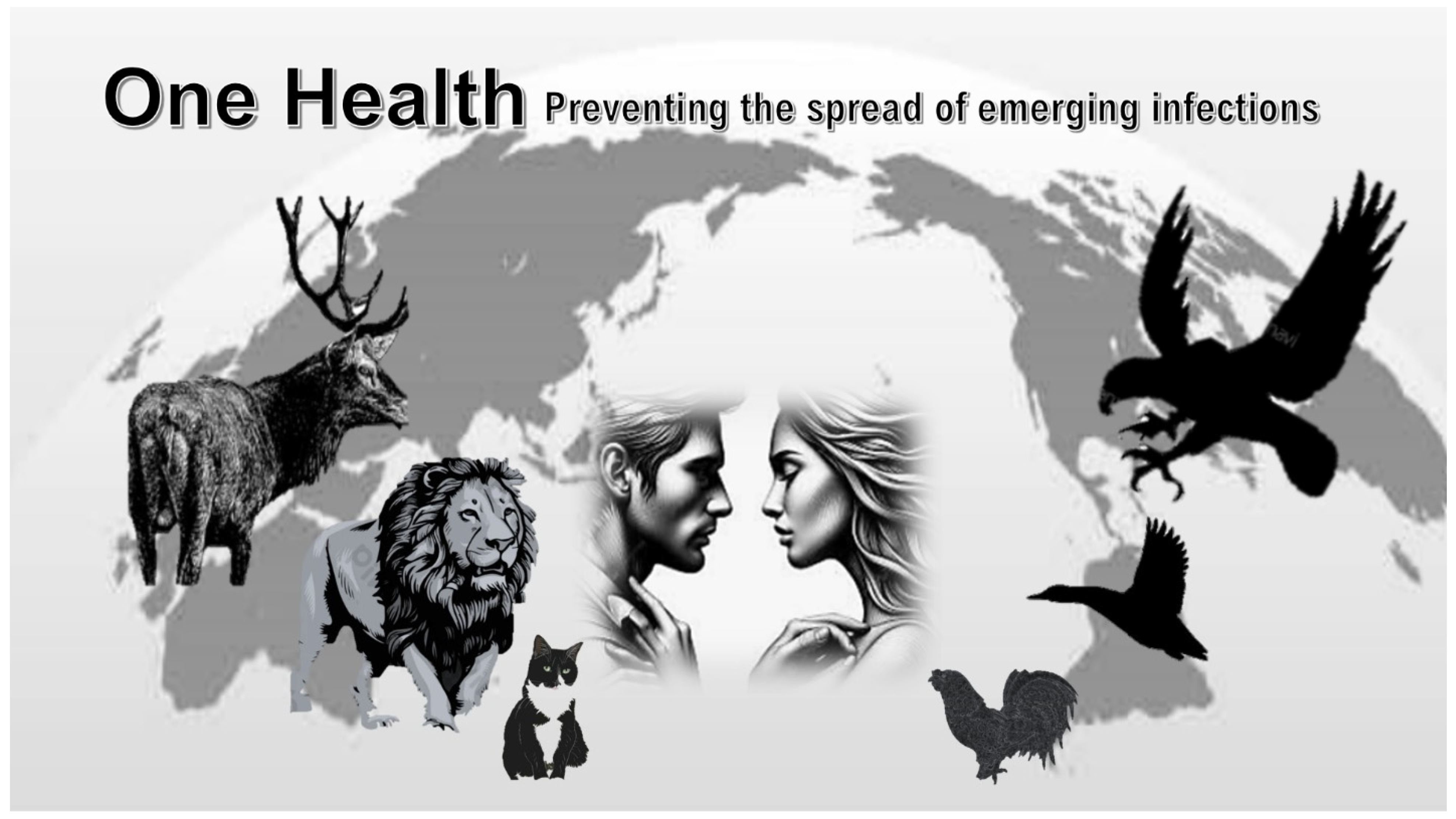
Finally, in order to effectively prevent and control HPAI in wild birds, rigorous surveillance, early detection and control and biosecurity measures and development and dissemination of vaccines to prevent the spread of HPAI infection are the keys; thus, current employed plans and policies related to HPAI control should be revised and active framework for the risk assessment, surveillance and monitoring of HPAI in wild birds should be incorporated into HPAI control plan so as to effectively control HPAI in wild birds and domestic birds and safeguard poultry industry, wild bird species and protecting humans health. This should involve joint action by professionals from wildlife sectors, animal health sectors and scientists working on avian influenza through coordinated “One-health” approach (Figure 1). The areas where wild birds are concentrated should be under an increased state of alertness, closely monitored and any unusual deaths in those areas should be investigated promptly to track the possible source of infections and possible contacts and reported to higher authority, which help to better monitor and control the spread of HPAI.
Currently, there is no N5H1 vaccine on the market to prevent the spread of infection by N5H1, so vaccines to prevent the spread of infection by other types of influenza viruses are administered in combination. [13] Vaccination with successive heterologous vaccines may represent the best alternative to widely protect valuable or endangered bird species against HPAI virus infection. [13,14] Vaccination with successive heterologous vaccines may represent the best alternative to widely protect valuable and/or endangered bird species against highly pathogenic AI virus infection. In 2005, European Commission directive 2005/744/EC allowed controlled vaccination against avian influenza (AI) virus of valuable avian species housed in zoos. In 2006, 15 Spanish zoos and wildlife centers began a vaccination program with a commercial inactivated H5N9 vaccine.
In the past, preclinical studies using mice and other small animals have been conducted to examine the efficacy of vaccines against novel viruses. Currently, preclinical studies using fillets are being conducted to examine the anti-infectious effect of novel vaccines against highly pathogenic avian influenza virus (HPAI) H5N1. [15,16] Preclinical results have shown that serum collected from fillets vaccinated with mRNA-based (HPAI) H5N1 vaccines protected fillets from HPAI/H5N1 infection. [15,16]
Other preclinical studies using mice and fillets have shown that even if vaccination has an inhibitory effect on novel virus infection, it does not necessarily mean that vaccination in humans will have an inhibitory effect on virus infection. Constructing new vaccines against novel viruses therefore requires sufficient virological and biotechnological knowledge.
Some may argue that investing in the control of HPAI in wild birds is a waste of resources as the majority of cases of HPAI are found in domestic birds with only sporadic cases seen in wild birds. However, recent published papers have shown that preventive and control measures in wild birds can significantly reduce the incidence of HPAI outbreaks in domestic poultry [17,18], indicating that preventing and controlling HPAI in wild birds is a cost-effective strategy for the control of HPAI.
Therefore, there is an urgent need to control HPAI in wild migratory birds, which can be accomplished by developing and implementing a system for comprehensive surveillance and monitoring systems in wild birds to identify the situation of HPAI in wild birds and enforcing preventive and control measures at wild-and-domestic bird interface. Control measures should be designed to interrupt transmission within wildlife and spillover events between domestic and wild birds, as HPAI virus has been shown to readily recombine with a high risk of cross-species transmission events.
Author contribution: TH, KPA, and SP were involved in the study design, data collection, data review and interpretation, and manuscript writing. TH, KPA, and SP were involved in the literature search, study design, data collection, data interpretation, and manuscript writing. TH, KPA, and SP were involved in data collection and interpretation. TH, KPA, and SP were involved in data collection and interpretation and manuscript writing. TH, KPA, and SP were involved in the study conception and design, data analysis and interpretation, and manuscript writing. TH and IK were the medical leads for AstraZeneca, and they participated in the data collection and evaluation and manuscript writing and editing. TH and IK were the lead physicians and were involved in the study design and conduct, data analysis and interpretation, and manuscript review.
Funding
This clinical research was performed using research funding from the following: Japan Society for Promoting Science for TH (grant no. 19K09840), START-program Japan Science and Technology Agency (JST) for TH (grant no. STSC20001), National Hospital Organization Multicenter Clinical Study for TH (grant no. 2019-Cancer in general-02), and Japan Agency for Medical Research and Development (AMED) (grant no. 22ym0126802j0001), Tokyo, Japan. The funders had no role in the study design, data collection and analysis, decision to publish, or preparation of the manuscript.
Informed Consent Statement
This research is not clinical research, therefore Informed consent is not required.
Data Availability Statement
Data are available on various websites and have also been made publicly available. More information can be found in the first paragraph of the Results section. The transparency document associated with this article can be found in the online version at https://kyoto.hosp.go.jp/html/guide/medicalinfo/clinical research/expand/gan.html (accessed on 18 May 2024).
Acknowledgments
The authors want to thank Dr. Yoshiihiro Kawaoka at medical information Center of AstraZeneca Inc. for providing clinical research information. The authors also want to acknowledge all medical staff for clinical research at Kyoto University School of Medicine and the National Hospital Organization Kyoto Medical Center.
Competing interests: The authors declare no conflict of interest.
References
- Verhagen, J. H. , Fouchier, R. A. M. & Lewis, N. Highly pathogenic avian influenza viruses at the wild–domestic bird interface in europe: Future directions for research and surveillance. Viruses 2021. [CrossRef]
- Mcleod, A. , Morgan, N., Prakash, A. & Hinrichs, J. Economic and social impacts of avian influenza. FAO 8, (2005). https://openknowledge.fao.org/server/api/core/bitstreams/d77b93a7-c441-456f-a5c8-12d81c53b1e8/content.
- FAO. Human infection with avian influenza A(H5) viruses. (2024). Avian Influenza Weekly Update Number 983. World Health Organization. ai_20250131.
- FAO. Scientific Task Force on Avian Influenza and Wild Birds statement on: H5N1 High pathogenicity avian influenza in wild birds - Unprecedented conservation impacts and urgent needs. 26 (2023). https://openknowledge.fao.org/server/api/core/bitstreams/9b880198-02d2-4eda-a860-d1a56299bc31/content. 8801.
- Global Consortium for H5N8 and Related Influenza Viruses. Role for migratory wild birds in the global spread of avian influenza H5N8. Science, 2016 Oct 14;354(6309):213-217. [CrossRef]
- Van der Kolk, J. H. Role for migratory domestic poultry and/or wild birds in the global spread of avian influenza? Veterinary Quarterly ( 2019. [CrossRef] [PubMed]
- Wille, M. & Waldenström, J. Weathering the Storm of High Pathogenicity Avian Influenza in Waterbirds. 2023. [CrossRef]
- Lv X, Li X, Sun H, Li Y, Peng P, Qin S, Wang W, Li Y, An Q, Fu T, Qu F, Xu Q, Qin R, Zhao Z, Wang M, Wang Y, Wang Y, Zeng X, Hou Z, Lei C, Chu D, Li Y, Chai H. Emerg Infect Dis. 2022 May;28(5):1039-1042. . [CrossRef]
- Teitelbaum CS, Masto NM, Sullivan JD, Keever AC, Poulson RL, Carter DL, Blake-Bradshaw AG, Highway CJ, Feddersen JC, Hagy HM, Gerhold RW, Cohen BS, Prosser DJ. North American wintering mallards infected with highly pathogenic avian influenza show few signs of altered local or migratory movements. Sci. Rep. 2023. [CrossRef]
- Dugan, V. G.; et al. The evolutionary genetics and emergence of avian influenza viruses in wild birds. PLoS Pathog. ( 2008. [CrossRef] [PubMed]
- Avian Flu Diary. Continued expansion of high pathogenicity avian influenza H5 in wildlife in South America and incursion into the Antarctic region. OFFLU statement ( 2023.
- https://afludiary.blogspot.com/2023/12/offlu-report-continued-expansion-of.
- USDA. USDA takes action to help protect endangered California Condors from highly pathogenic avian influenza. (2023). Animal and Plant Health Inspection Service U.S. DEPARTMENT OF AGRICULTURE. https://www.aphis.usda.
- Vergara-Alert, J.; et al. Comprehensive serological analysis of two successive heterologous vaccines against H5N1 avian influenza virus in exotic birds in zoos. Clin. Vaccine Immunol. ( 2011. [CrossRef] [PubMed]
- WOAH. Considerations for emergency vaccination of wild birds against high pathogenicity avian influenza in specific situations. (2023). https://www.woah.org/app/uploads/2024/01/vaccination-wild-birds-hpai-outbreak-dec2023.
- Shiho Chiba, Maki Kiso, Shinya Yamada, Kazuhiko Someya, Yoshikuni Onodera, Aya Yamaguchi, Satoko Matsunaga, Nao Jounai, Seiya Yamayoshi, Fumihiko Takeshita, and Yoshihiro Kawaoka, "Protective effects of an mRNA vaccine candidate encoding H5HA clade 2.3.4.4b against the newly emerged dairy cattle H5N1 virus," eBioMedicine. [CrossRef]
- Hatta M, Hatta Y, Choi A, Hossain J, Feng C, Keller MW, Ritter JM, Huang Y, Fang E, Pusch EA, Rowe T, De La Cruz JA, Johnson MC, Liddell J, Jiang N, Stadlbauer D, Liu L, Bhattacharjee AK, Rouse JR, Currier M, Wang L, Levine MZ, Kirby MK, Steel J, Di H, Barnes JR, Henry C, Davis CT, Nachbagauer R, Wentworth DE, Zhou B. An influenza mRNA vaccine protects ferrets from lethal infection with highly pathogenic avian influenza A(H5N1) virus. Sci Transl Med. 2024 Dec 18;16(778):eads1273. [CrossRef]
- Pandit, P. S. , Bunn, D. A., Pande, S. A. & Aly, S. S. Test-Modeling highly pathogenic avian influenza transmission in wild birds and poultry in West Bengal, India. Sci. Rep. 3, 1–8 (2013). doi:. [CrossRef]
- Keawcharoen J, van den Broek J, Bouma A, Tiensin T, Osterhaus AD, Heesterbeek H.. Wild birds and increased transmission of highly pathogenic avian influenza (H5N1) among poultry, Thailand. Emerg. Infect. Dis. (2011). 2011 Jun;17(6):1016-22. [CrossRef]
Figure 1.
As the concept of One Health indicates, the conservation of the Earth's ecosystems can only be achieved through the cooperation of both human and animal health. To achieve and maintain this, efforts to maintain the health of both humans and animals are necessary. One Health initiative is important for preventing the spread of emerging infectious diseases.
Figure 1.
As the concept of One Health indicates, the conservation of the Earth's ecosystems can only be achieved through the cooperation of both human and animal health. To achieve and maintain this, efforts to maintain the health of both humans and animals are necessary. One Health initiative is important for preventing the spread of emerging infectious diseases.
Disclaimer/Publisher’s Note: The statements, opinions and data contained in all publications are solely those of the individual author(s) and contributor(s) and not of MDPI and/or the editor(s). MDPI and/or the editor(s) disclaim responsibility for any injury to people or property resulting from any ideas, methods, instructions or products referred to in the content. |
© 2025 by the authors. Licensee MDPI, Basel, Switzerland. This article is an open access article distributed under the terms and conditions of the Creative Commons Attribution (CC BY) license (http://creativecommons.org/licenses/by/4.0/).
Copyright: This open access article is published under a Creative Commons CC BY 4.0 license, which permit the free download, distribution, and reuse, provided that the author and preprint are cited in any reuse.