
Submitted:
14 February 2025
Posted:
14 February 2025
You are already at the latest version
Abstract
Australia fulfils more than half of the Pakistan pulses demand. However, Pakistan’s increasing reliance on imports has attracted global exporters, posing an emerging challenge to Australia’s market share and chain competitiveness. Literature suggests that strengthening actors’ relationships and building trust in the value chain can leverage chain competitiveness. This study, therefore, aimed at improving the chain competitiveness in the Australia-Pakistan pulses export value chain, focusing on actors’ relationships and trust. Primary data were collected using semi-structured interviews with pulses processors and exporters in Australia, and importers, wholesalers, processors, retailers and consumers in Pakistan. The data were analysed based on five relationship and trust components: dynamic capability, co-innovation, effective communication, resource sharing, and knowledge sharing, using NVivo12. The cause-and-effect of each variable within the component results in a qualitative system dynamics model: Causal Loop Diagram. The results indicate that sharing resources between the actors is limited and driven by transactional relationships—a primary barrier to competitiveness. The relational gap and trust between exporters and importers are widening due to unexpected switches in trade partners by importers. The differing actors’ priorities further impair this issue: importers are primarily focused on finding budget-friendly products, while exporters emphasise product quality, innovation, and standardisation. Building a trustworthy platform that facilitates access to resources, information, and knowledge among value chain actors can strengthen relationships and foster trust. This, in turn, enhances the overall competitiveness of the value chain.
Keywords:
competitiveness
; export
; import
; relationships
; trust
; value chain
1. Introduction
Australia has become the major global exporter of pulses [1,2]. Despite having the highest global minimum daily wage [3,4], the Australian pulses industry remains highly competitive worldwide [5,6], particularly in South Asia, a leading market for pulses [7] [8]. Australia exports a variety of pulses, including chickpeas, broad beans, lentils, mung beans, and peas. The primary destinations for these exports are Pakistan, India, Bangladesh, and Sri Lanka, which together account for 60% of total exports, valued at $1.99 billion [9] [10].
Pakistan has emerged as a preferred destination for pulses exporters [11]. The continuous decline in pulses production and productivity [12], along with growing demand, has increased Pakistan’s reliance on imports to bridge the domestic supply gap [13]. According to the Pakistan Agricultural Research Council, 2024, 50% of chickpeas and 20% of lentils are imported annually to meet domestic demand. More than half of this demand in Pakistan is fulfilled by pulses imported from Australia [2]. Recently, countries such as Canada, the USA, Russia, and Turkey have also exported pulses to Pakistan [7,11]. However, Australian-grown chickpeas (Desi and Kabuli) and red lentils have high demand in Pakistan [14].
The growing consumer preference and the recent increase in pulses trade between Australia and Pakistan indicate that Australian pulses hold a sign[19,20ificant market share in Pakistan’s pulses industry [1]. However, an increasing number of pulses traders started to compete with Australia in trading pulses to Pakistan. This rising competition has compelled Australia to explore and strengthen its competitive advantages to maintain its position in the pulses export market to Pakistan [1,15]. Achieving a sustainable competitive advantage in the export-import requires strengthening the relationships and trust among value chain actors [16,17,18].
The value chain concept has become a key approach to enhancing industry competitiveness by prioritising product pricing, differentiation, and cost-minimisation strategies [19,20]. Strengthening interrelationships among value chain actors supports these priorities while fostering innovation, trust, and fair distribution of consumer value, ultimately leading to value addition and improved chain competitiveness [21,22,23]. Additionally, the relationships among chain actors reinforce shared knowledge, efficient governance, dynamic capabilities, and effective communication[24], fostering a competitive advantage within the value chain [25]. However, the literature indicates that there is a substantial gap in exploring actors’ relationships[22,23] that focused on export-consumer relationships in developing a competitive value chain system [26].
Moreover, developing chain competitive advantages revolves around the theoretical foreground of the Commitment-Trust theory of Relational Marketing [27], the resource-based view (RBV) and Dynamic Capabilities (DC) [24]. The Commitment-Trust theory of Relational Marketing provides the foundation to build long-term collaboration, and options for conflict resolutions and promote constructive interactions to minimise chain uncertainties [25]. RBV support the efficient and effective management of the industry’s resources, processes, and chain structure to improve the industry’s competitiveness [28]. Similarly, DC helps to cope with rapid and unpredictable changes in the value chain, thus increasing resiliency [29,30]. These theoretical concepts are prioritised based on their contribution to building internal competing strategies that influence the chain components to drive the relationships among chain actors.
Building on these theoretical foundations, this study aims to address the research question: How can the Australia-Pakistan pulses export value chain remain sustainably competitive while delivering shared benefits to value chain actors in both countries? To answer the research question, this study employed a value chain framework and developed a qualitative System Dynamics (SD) model to analyse critical components and their interactions across the value chain. The adoption of a system dynamics methodology enables the inclusion of multiple actors and facilitators to assess potential policy interventions within the value chain system [31,32].
The study is structured as follows: Section 2 outlines the study’s conceptual framework. The research methodology is presented in Section 3. The study’s findings and their implications are presented in section 4. Section 5 then provides an in-depth discussion of the factors influencing competitiveness and the opportunities for leveraging strategic advantages. Finally, the study ends by highlighting the study’s main conclusion in section 6.
2. Conceptual Framework
This study developed a conceptual framework under the theoretical landscapes of competitive advantage to explore the relationship dimension within the value chain system. This framework constitutes five components: dynamic capability, co-innovation, effective communication, shared knowledge, and shared resources. How these five components are important to strengthen the chain actor’s relationships and trust are briefly reviewed and presented below.
DC is important in the value chain to identify potential destructive events and helps to apply resilience strategies [29]. The role of DC is prominent when the value chain is longer, complex and involves of large number of actors [30]. Similarly, co-innovation complements the technology and organisational capacity, thus improving the quality and increasing the decision-making capacity [33,34].
In addition, effective communication is a powerful tool of mediation that increases the level of trust between the trade partners directly and indirectly in the decision-making process [35,36]. This decision-making process, together with product value addition is further supported by sharing knowledge between the partners [37]. Knowledge sharing prevents the bullwhip effect in the value chain, though it depends on the kind of shared knowledge [38].
The previous findings on value chain analysis also suggest that sharing resources reduces the cost of production and promotes competitive advantage [39]. It promotes the relationship by reducing transactional costs [40]. Thus, this study develops a conceptual framework based on these five components within the boundaries of the value chain. It employs a value chain analytical framework that supports a systems thinking approach to understand the interconnections among the five components and their variables (Figure 1).
3. Methods
3.1. System Boundary
This study set the boundary using a value chain framework that includes pulses producers and exporters from Australia and importers, wholesalers, processors, retailors and consumers from Pakistan. The exporters from Australia ship the pulses to Pakistan, where importers and wholesalers receive the shipments. Retailers, including supermarkets and small vendors, make the pulses available to end consumers. Throughout this process, regulatory frameworks, quality control measures, and supply chain logistics play critical roles in ensuring efficiency and product integrity.
3.2. Qualitative System Dynamic Modelling
Modelling the value chain using SD modelling helps understand the system’s dynamic behaviour over time [41] by analysing the relationship between the components that affect chain competitiveness. The modelling process comprises the following stages: 1) Problem articulation, which emphasises the underlying symptoms of the event. 2) Formulation of the dynamic hypothesis, 3) Formulation of the simulation model, 4) Model testing, and 5) Policy design and evaluation [41,42]. This paper focused on the first two steps.
This study highlights the systemic issue of fluctuating pulses trade between Australia and Pakistan and underscores the need for sustainable competitive strategies to strengthen relationships and trust among value chain actors. Similarly, this study proposes a dynamic hypothesis that actors’ dynamic capabilities influence their relationships and trust with other actors, ultimately impacting chain competitiveness. Furthermore, this hypothesis was supported by identifying key themes governing relationship components derived through NVivo analysis.
3.3. Data Collection
This study collected primary data using a purposive sampling technique in 2022/2023. The semi-structured interviews were conducted through online platforms such as Zoom, WhatsApp, and telephone calls due to limited budget and time constraints. A total of 28 semi-structured interviews were conducted, including exporters (5), importers (5), wholesalers (2), processors (6), retailers (5) and consumers (5). Additionally, ten respondents from Pakistan provided consumer-related insights. The information from respondents was recorded after receiving their consent the ensure their pseudonyms in the interest of anonymity. The average interview time was 19 minutes. The respondents’ details and the interview records are given in Appendix 1.
Respondents were initially contacted via email or telephone to explore their willingness to participate in this research; those who responded positively were further contacted to schedule the interview. Probing questions and interview guidelines were designed to pursue deeper perspectives. The initial questions were structured to collect the data focusing on product flow, value addition, logistics, information flow, and relationship based on the value chain analysis (VCA) method proposed by [21]. Following the structured questions, data related to relationships were collected within the boundary of five components identified from the review: dynamic capability, co-innovation, effective communication, shared knowledge, and shared resources.
3.4. Data Analysis
This study analyses the data in three different stages. At first, the value chain mapping was developed based on the interviewee’s response and desktop search results. Second, semi-structured interviews were coded and analysed using the computer-assisted qualitative data analysis software NVivo12. Finally, the SD modelling results in a Causal Loop Diagram, presenting the causal relationships between the components and behaviour of the system across the pulse export value chain. Employing a system thinking approach overcomes the limitations of Nvivo in qualitative analysis, such as the inability to articulate the system boundaries, factors cause-and-effect and feedback system [43,44].
This study used VensimPLE software to develop the CLD. The CLD was derived from the result to understand how the system behaviour manifests and analyse the system’s complexity [41,45]. The presence of a feedback loop, reinforcing (R), and balancing loop (B) in the CLD explores the variable that reinforces and balances the system in determining chain competitiveness.
4. Results
4.1. Value Chain Mapping
Value Chain Map (VCM) was developed using the data collected from semi-structured interviews. Pulses producers in Australia were consulted informally regarding their production. The value chain mapping began with grain handlers and extended to consumers, encompassing upstream producers and exporters in Australia, as well as downstream importers, wholesalers, processors, retailers and consumers in Pakistan (Figure 2).
4.2. Relationship Components and Their Drivers
Primary information derived from the interview was coded using the NVivo software. The respondent’s response with similar information was coded under the same nodes. The codes were categorised into five components to explore the relational gap in the value chain. The linkage for each component and their existing relationships to their relative variables were derived based on the respondent’s responses (Figure 3).
The drivers of the value chain competitiveness were analysed based on five components: dynamic capability, co-innovation, effective communication, shared knowledge and shared resources. The result indicated that dynamic capability was built on the industry’s physical resources, firm assets, human resources, and technology. Co-innovation was mainly attributed to product and varietal development and export-import standard settings. Farm mechanisation and cropping areas were the major parts of the physical resources. Production scale, practices, processes, and agility directly relate to the firm’s assets and technology to achieve cost-effective production. Similarly, the chain’s dynamic capability and available human resources determine the employees’ experiences and expertise to improve the chain’s competitiveness.
Effective communication is the component that relates to product and process. Value chain actors mainly communicated on the product standards, delivery and transparency. However, knowledge sharing was limited to human, relational and organisational capital. Employee performance, shared effort, co-planning and managerial activities were the variables related to those capitals.
Resources, another component determining chain competitiveness, were shared at economic, social and technological levels. Profit margin, consumer value, social relationships and processing practices were major variables affecting three shared resource levels in developing value chain competitiveness. Thus, the interaction among the above-mentioned components with chain resources is crucial to building the relationships and, thereby chain’s competitiveness. Details of interacting variables and their relationship are presented in the next section.
4.3. Dynamic Hypothesis
Analysing the value chain actors’ responses, a CLD was to illustrate a dynamic hypothesis, system structure and problem behaviour within the five components that drive the actors’’ relationships and trust (Figure 4). The result of the inter-relationship among these five components and their variables impacting chain relationships, thereby competitiveness, is presented in individual sections below. The causal relationship generating feedback loops were constructed based on output derived from Nvivo (Table 1).
4.3.1. Co-Innovation
Co-innovation occurs when upstream and downstream value chain actors can jointly develop an innovative product or process. Results showed that exporters played a significant role in product innovation. Furthermore, the combined effort from exporters and importers is crucial for the value creation and pricing of limited pulses products in the chain. By considering product innovation and quality products, Australian exporter ensures consumer attributes (R5). Moreover, exporters contacted importers before shipping and collected information about the product requirements (R4). Indeed, exporters and importers exchange ideas on improving the product and the process; however, information sharing is limited to support co-innovation.
We have very good relations with grain handlers and importers as part of food safety; they need to share all the information because we need them for system analysis and product design (EX4, Personal communication, Aug 2, 2021).
Being an important food grain, Pakistani consumers were highly concerned with the price rather than the quality. Exporters claimed they had made efforts to obtain sufficient information on demand, product quality and attributes from the trading partners. However, accessing this information is challenging due to the transactional relationships between them. In addition, importers were found to be considering the price and interested in the low-cost product rather than the product quality and innovation.
We buy Nugget and Nipper lentils and Desi and Kabuli chickpeas from Australia. If we have options, we prefer domestic pules because consumers believe it is organic and good in taste. We don’t have much domestic supply so the second-best option is Australia, in Australia pulses, our concern is price rather than quality because most Pakistan consumer looks for cheaper lentil and chickpea (IM5, personal communication, Sept 12, 2021).
Regarding process innovation, the pulses value chain did not exhibit costly technologies that are challenging to copy. However, co-innovation was observed in product processing and delivery scheduling. Pulse was mainly exported from Australia as whole grain and further processed in Pakistan to overcome high processing costs. The quality parameters such as climatic backup for dried grain harvest, appealing colour, enough distributors and outlets, homogenous products with niche-specific demand, and experienced growers make Australian pulses competitive in the Pakistani market. Thus, the study shows that product innovation was a concern at the exporter’s end, and price reduction was at the importers’ end.
We buy Desi chickpeas 90% from Australia. Australians are best because they are good at splitting. Splitting of yellow pea and desi chickpea both have yield conversion of 80-82%. The second reason we can get in volume, production in Australia is about 800,000 mt tonnes per year. We also get from Tanzania and Ethiopia; however, they have a 70-80 thousand ton supply capacity (IM1, personal communication, Sept 10, 2021)
4.3.2. Dynamic Capability
Dynamic capability answers the question, How does the Australian pulses industry perform differently than other competing partners? The CLDs developed in Figure 4 illustrate the dynamic interaction and capability of Australian and Pakistan pulses industry competitiveness. The balancing loop B1 and reinforcing loops R1, R2 and R3 show the DC and competitiveness of the system.
With the growing global demand for pulses, the Australian government prioritised pulses research and development, targeting consumer value through desired product attributes, quality and standard. In addition, shared knowledge and resources invested in production, years of experience, and administration support the dynamic role of pulse exporters.
Value chain actors emphasise physical and human resources, firm assets, and technology to pursue dynamic capability. Physical resources include the development of storage facilities, warehouses, processing plants, available farmland, and its best utilisation at the Australian end. Further, substantial human resources such as experienced growers, plant breeders, processors, and marketers have enhanced Australian pulses capability (R3).
We have been doing pulses trading for the last 20 years; we are better than others because of our dried grain and our number of distributors and outlets (EX1, Personal communication, Aug 2, 2021).
In addition, firm assets that support demand stability and timely supply ease the trading process. Flexibility in the supply, availability of differently specified grain sizes, logistic capacity, and chain management facilitated the dynamic capability (R2). Moreover, the technology used in farm mechanisation, irrigation, processing, and delivery scaled up the DC (R1).
The result indicates that in Pakistan, investment in the resources in the pulses sector was negligible, and the market volatility was high. Due to the increasing uncertainty and seasonal fluctuation in the pulses demand, Australian exporters started exploring other countries to export pulses.
4.3.3. Effective Communication
Effective communication between the actors generates novel ideas to improve the chain competitiveness, though it could be affected by cultural and geographical differences. Furthermore, regular communication was an effective means of developing transparency between the exporters and importers. However, the results showed that downstream and upstream value chain actors frequently communicated on relevant issues such as crop status, stock levels, estimated supply and demand, and domestic supply, but they disregarded opportunities for innovation and sharing resources. The communication platform they frequently used was email and WhatsApp.
Australian suppliers are good we have good relations; however, if someone is new, it takes time to build relations and trust. We regularly communicate through WhatsApp(IM3, personal communication, Sept 11, 2021).
Importers from Pakistan reported that the Australian exporters are open-minded and easily approachable. In contrast, Australian exporters stated that Pakistani importers are reserved; they could switch their trade partners anytime. Importers communicate frequently only to maintain a better relationship and reduce the search cost. These cross-cultural and geographical differences influence pulses trade between Australia and Pakistan. Moreover, the existing gap in effective communication between actors holds the potential to improve the chain competitiveness, as represented in B3 and R6 in the CLD.
Australian, easy communicate, one or alternate we have frequent communication, social media are helping us to communicate frequently (IM2, personal communication, Sept 11, 2021).
4.3.4. Shared Knowledge
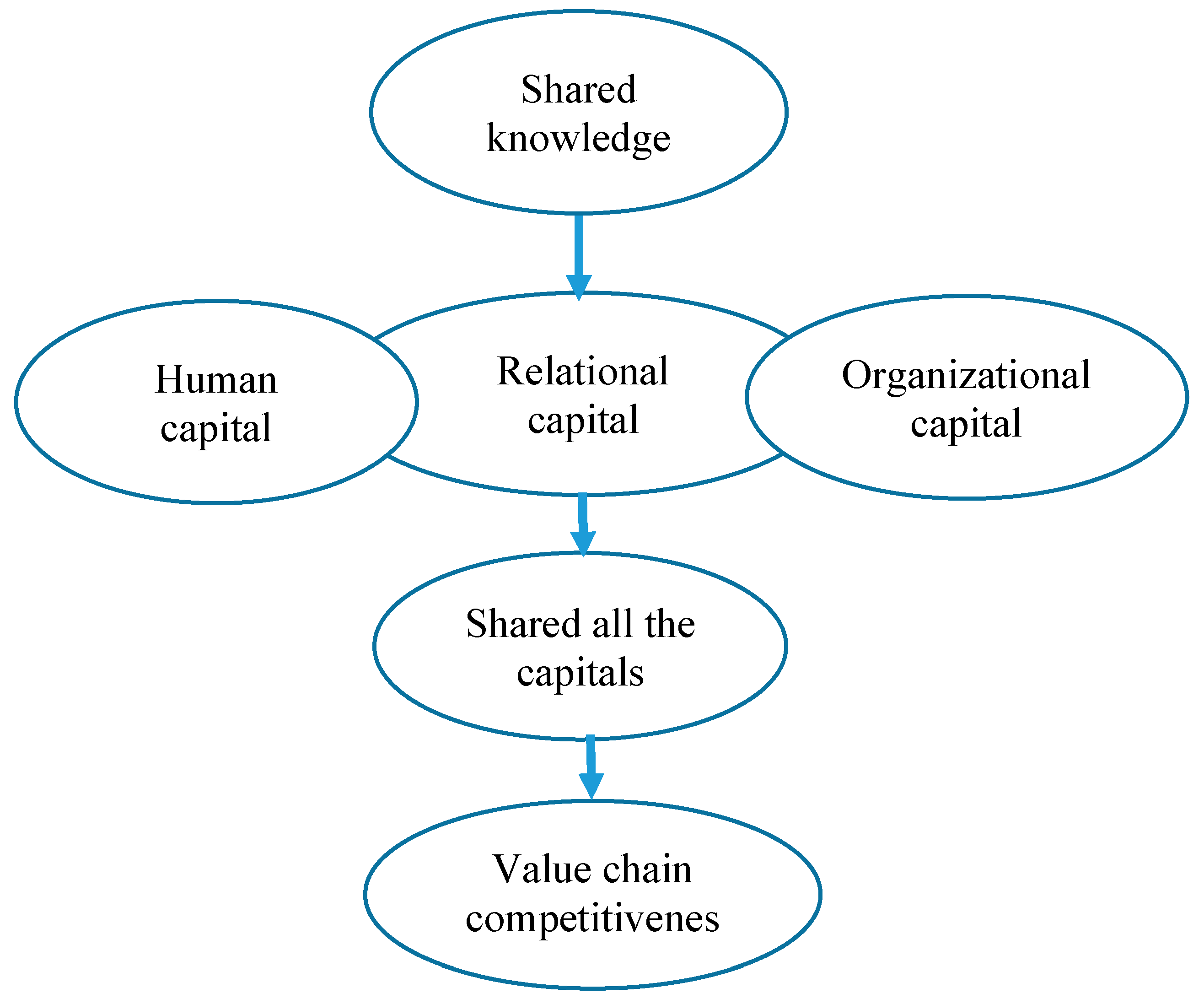
Shared knowledge is one of the drivers that encourage shared resources. Moreover, shared knowledge is a pillar of the dynamic capability that enhances the organisation’s competitiveness. Results showed that the importers and exporters shared their knowledge in three broad categories: Human capital (R10), Relational capital (R9), and Organisational capital (B5) (Figure 3). Human capital was crucial in the value chain because experience, innovation, employment capability and workshops were shared, positively impacting competitiveness. For instance, they had webinars before and after harvesting pulses to know the expected demand and supply.
Australian exporters are the best in the world; we share knowledge through webinars before and after crop harvest in Pakistan and Australia that helped us in planning. We also talked regularly, especially before shipping(IM4, personal communication, Sept 11, 2021).
Secondly, relational capital showed that exporters and importers shared resources to establish relationships between them and consumers. Both downstream and upstream actors shared knowledge to satisfy the consumer with their product. In addition, they shared the market information to establish relationships and make a sustainable competitive value chain. For instance, EX1 (Personal communication, Aug 2, 2021) reported that the “Pakistan market is volatile, unstable, and very, very low free cash flow, cash flow crunch all the times. Volatile market and cash flow crunch are the default risk we are dealing with.”
The Australia-Pakistan pulses value chain had organisational capital, such as administrative procedures for trade and delivery and receivable protocols. However, results showed that both sides did not share holistic information (price, production technologies, consumer value, demand and supply capability), which has been affecting the chain competitiveness. Moreover, organisational capital showed that critical information and knowledge remain within the organisation.
Figure 5.
Shared knowledge and its relationships with the value chain competitiveness.
4.3.5. Shared Resources
A value chain having shared resources facilitates actors’ relationships and its sustainable use. Sharing resources without compromising shared value increases the value chain’s competitiveness. Results indicate that economic, technological, and social resources were being shared across the value chain at a basic level. Balancing loop B4 demonstrates that improved collaboration among the chain actors reduces the propensity of actors/partners leaving the chain who share economic resources like profit. However, results indicate that the studied chain and their actors shared inadequate economic resources to foster collaboration between them.
Both exporters and importers have an investment in pulses processing, primary processing is done in Australia and splitting is in Pakistan. Demand is collected based on the connections overseas. We are building Network with traders, speculators, brokers, and end-user. (EX3, Personal communication, Aug 11, 2021).
Technology and shared resources among the value chain actors are presented on reinforcing loop R7. The technology used in production, processing and delivery is represented as process innovation in the CLD that enhances the ownership and consumer value. Moreover, the exporters and importers shared technological resources such as grain processing technology, storage practices, grain treatment methods, and packaging. Exporters reported that they must maintain a certain level of anonymity in trade; they would not like to share each detail with importers due to their organisational policy.
Social resources like information and services impact the value chain competitiveness. For example, limited information flow from consumers to importers and exporters and vice-versa affects the understanding of consumer value. Thus, this study found that the chain’s inadequate information on consumer value constantly influenced chain competitiveness at both ends. Moreover, pulses consumers in Pakistan claimed they did not get the desired product attributes; instead, the product had impurities such as debris, weed seed, bricks, floppy grain, and unknown origin.
I believe we are consuming domestic lentils and chickpeas, we don’t know if Pakistan also imports lentils and chickpeas, I think many Pakistani consumers are unaware of the overseas pulses they have regularly consumed (CON2, personal communication, Sept 14, 2021).
Indeed, the Australia-Pakistan pulses export value chain was weakly coordinated because of basic relationships, weak information flow, and low switching costs (R8). Exporters agreed that the Pakistani pulses market is competitive, inefficient, extremely fragmented, fragile and volatile. This is because several small-scale importers and brokers exist in the Pakistan pulses market, which has less financial capacity to continue the trade relationships in the long run.
….it’s a volatile market with very, very low, pretty free cash flow. OK, so that cash flow crunches all the time. So, after that, we actively defaulted on regularly and are managing that default risk, which is the major issue we deal with in Pakistan(EX2, personal communication, Aug 11, 2021).
Results also showed that value chain actors share their resources mainly for the short-term profit margin. At the same time, importers are obliged to follow legal buying contracts; however, importers were inadvertent to show their commitment towards contracts due to market volatility.
With the fluctuation in price, sometimes somebody might have bought something at a very high price, and when they seek the goods from us, the price might have fallen hundreds of dollars. For example, buyers have legal contracts with us and then are going to receive goods at a high price all around then, the market is much lower, and they will be losing money when they come to sell those goods they’ve received(EX5, personal communication, Aug 20, 2021).
In a nutshell, the following relationships have been observed in the shared resources across the value chain.

Table 2.
Basis for comparative analysis of relationships and resources.
| Strong | High level of collaboration, a joint effort on problem-solving. | Desired to establish long-term relationships but are guided mainly by short-term profit. |
| Basic | Transactional relationships, although they have an efficient flow of information and frequent communication. | Those partners who are new to the business and motivated by the short-term profit margin. |
| Resources | Shared | Less shared |
5. Discussion
Both tangible and intangible resources, along with their sharing among chain actors, are crucial for determining value chain competitiveness and enhancing overall chain performance [46] [47]. This study found that exporters and importers sharing resources results in strong relationships and a high level of collaboration and vice-versa. In addition, withholding resources within the value chain actors suppresses chain competitiveness and surges market volatility [48]. In line with the above statement, this study revealed that resource sharing was less prioritised in the Australia-Pakistan pulses export, decreasing chain competitiveness.
….it’s a volatile market with very, very low, pretty free cash flow. OK, so that cash flow crunches all the time. So, after that, we actively defaulted on regularly and are managing that default risk which is the major issue we deal with in Pakistan(EX2, personal communication, Aug 11, 2021).
Moreover, resource sharing becomes challenging when it is scarce and expensive [49]. The existing economic, social, cultural, and geographical differences between upstream (exporters; Australia) and downstream (importers; Pakistan) actors are a significant factor affecting pulses export value chain competitiveness. Meanwhile, Australian exporters were found to be more concerned about building strong relationships to enhance chain competitiveness [50] than Pakistani importers [13]. However, to what extent sharing resources could result in developing a competitive value chain is still debatable. Thus, the study highlights a future scope in exploring the resource sharing extent and its alternative options to strengthen the relationship between exporters and importers.
Access and utilisation of resources increase the dynamic capability [51]. In parallel with the above statement, this study indicates that Australia has more resources to support the chain competitiveness than Pakistan, using its dynamic capabilities.
Enough cropping areas for pulses production, a large number of distributors and outlets and less delivery cost are our strengths compared to our competitors (EX1, Personal communication, Aug 2, 2021).
Although Australian exporters enjoy dynamic resources and capability, the pulses industry is continuously combating the changing episodic environment and competing with other pulses exporters worldwide. To overcome this fluctuating environment, exporters can develop a resilient approach to enhance industry competitiveness [29]. Sharples and Milham found that the competitiveness of Australian agriculture is based on four long-term principles 1) Government investment in agricultural research and education to improve the managerial and technical capacity of the agricultural worker. 2) Public sector assistance on agriculture and other trade supportive services to increase agriculture’s competitiveness. 3) Legislating to amend existing rules and barriers to grow exports and reduce the per-unit cost of production. 4) Balancing the short-term profit motives of farmers with sustainable and controlled use of land and other resources [3].
In contrast, a developing country, Pakistan, endorsed the pulses industry-specific policy and programs to meet domestic demand and strengthen its value chain [13,14]. For example, to ensure domestic production and consumption, Pakistan’s government placed a 35 per cent export tariff on pulses in 2007 [11]. The purpose of implementing the pulses export ban policy was to increase production and availability in the domestic market [12]. However, the policy adversely impacts the pulses industry, increasing import volume and price fluctuation [14]. Nevertheless, one of the main reasons for policy failure in developing countries was ignorance of the institution’s role in policy development [52,53]. Ellis highlighted that Pakistan’s agricultural policy focused on food security, though it ignores the other aspects of the value chain: building research, technology, education, and developing skilled human resources at the institutional level [54]. Consequently, domestic production has not increased as expected and the value chain becomes weaker. Thus, Pakistan should foucs on creating, utilising, and upgrading the embedded resources to increase the dynamic capability and competitiveness of the pulses industry.
Co-innovation in the chain leverages competitiveness by improving chain efficiency, reducing cost, and increasing quality. It acts as a basis for competitive advantage that can be achieved by unique competencies such as human resources, finances, and technologies [55]. Meanwhile, co-innovation needs investment, idea generation, development, and diffusion across the actors to achieve chain competitiveness [56,57]. This study found that co-innovation in the pulses export value chain was minimal to support long-term competitiveness. Indeed, co-innovation in the chain was found in product quality, standard and consumer-preferred products in the Australian pulses, enhancing competitiveness.
Additionally, research advances, climatic conditions, available resources and supportive government policies at the Australian end have a greater potential to develop the chain competitiveness through co-innovation. In contrast, Pakistan’s pulses industry exhibits high price volatility and low switching costs, where importers prioritise mainly short-term profits and overlook co-innovation. In the interim, co-innovation on post-harvest management practices and processing has been less prioritised at the exporter’s and importer’s end. Therefore, importers from Pakistan require co-innovation initiatives to improve the pulses export value chain competitiveness. Indeed, a significant role in co-innovation from Australian exporters cannot be ignored.
Information flow across the value chain actors requires effective communication to enhance the chain’s competitiveness [58]. Communication between exporters and importers improves chain efficiency through proper product demand and supply forecasting, and delivery planning. However, in the pulses export value chain, information flow was unidirectional, resulting in a communication gap in understanding the consumer value. Likewise, communication for sustainable business approaches and co-innovation was least focused on the pulses trade. This study revealed that effective communication helps to enhance chain transparency, reduce search costs and contribute to sustainability. The results aligned with De Silva and Ratnadiwakara that communication facilitates producers to decrease the search cost and assist value chain actors to meet demand and supply on time [59].
Effective communication supports cooperation, trustworthiness, commitment, and coordination, enabling chain competitiveness [60]. This study demonstrates that actors involved in the Australia-Pakistan pulses export value chain have communication mainly focusing on product specification, price setting, and scheduling delivery. As a result, the chain necessitates a conducive trade environment for coordination, trustworthiness and commitment at both ends.
The Australian-Pakistan pulses export value chain featured a basic relationship sharing limited knowledge between actors. Relationships, a value chain dimension, are critical to sharing knowledge and improving chain performance. Sharing knowledge across the chain enforces value chain competitiveness [61]. For instance, strong relationships expedite the intensity of shared knowledge, whereas weak and intricate relationships lose the trustworthiness to share [62].
The study adds significant evidence in highlighting the importance of relationships in the value chain in developing chain competitiveness. It emphasises gaps and options to surge chain competitiveness in the Australia-Pakistan pulses export value chain context. Furthermore, the study found that shared knowledge between the value chain actors is limited to understanding the administrative procedure, product transaction and product processing practice. Both exporters and importers were sceptical, though they had tried to ensure long-term relationships.
The commitment-trust theory developed by Morgan and Hunt suggests that relational aspects are important to upgrade the organisation’s performance and enhance the chain competitiveness [27]. However, literature shows that cultural differences between the actors also affect trade opportunities and chain competitiveness [63]. The study indicated that relational benefits and shared values were found to be below anticipated levels, with trust and ethical considerations being notably deficient. Thus, the Australia-Pakistan pulses export value chain is driven by high volatility (price, quantity, quality and market), which has low switching costs. In essence, enhancing competitiveness in the current chain requires substantial improvement in sharing knowledge, co-innovation, communication, strengthening relationships and stamping out embedded opportunistic behaviour.
6. Conclusions
This paper has shown an opportunity to develop the competitiveness of the Australia-Pakistan pulses export value chain through the relationships aspect. The CLD demonstrate variable interactions in the system based on components such as co-innovation, dynamic capability, effective communication, shared resources and shared knowledge. Building strong relationships and trust between value chain actors with regular sharing of resources, knowledge, and information was found to be a less prioritised area. The upstream value chain actors exert a significant level of engagement with the aforementioned areas compared to the downstream. Moreover, product value was the exporter’s major concern, while the importer’s was price.
Pakistani importers show interest in dealing with multiple exporters from different countries, resulting in a basic relationship with the Australian exporter. As a result, the whole chain has received inadequate chain-wide attention in identifying problems within the relationship and trust. This might be due to the partial information flow dominated in the pulses value chain from importers to exporters.
Though Australian pulses meet more than half of the Pakistan pulses demand, consumers were found to be unaware of pulses’ origin. In conclusion, sharing resources, information and knowledge focusing on consumer preferences regarding unique quality features of Australian pulse exporters might work as a milestone to improve chain competitiveness. Simultaneously, importers in Pakistan require an initiative to coordinate with Australian exporters to improve long-term competitiveness through co-innovation, communication, dynamic capability, sharing resources and shared knowledge.
Funding
This research received no external funding.
Institutional Review Board Statement
The study did not involve humans or animals in a way that required Institutional Review Board (IRB) approval.
Informed Consent Statement
Consent was obtained by email or through verbal communication from all participants before conducting the interviews. This study did not involve any participants whose data or personal details require written consent for publication.
Data Availability Statement
All the relevant data will be made available when required.
Acknowledgments
The authors acknowledge financial support from the University of Queensland Research Training Scholarship scheme to carry out this research.
Conflicts of Interest
No conflicts of interest to declare.
Other statement
The author(s) employed ChatGPT as a resource to enhance the readability of this article. Following the use of this tool/service, the author(s) diligently reviewed and edited the content as necessary and bear full responsibility for the publication’s content.
Appendix A
Table A1.
List of respondents and interview details.
| Code of respondent | Stage of Involvement | Experience in the field | Representative country | Interview duration (Minutes: seconds) |
|---|---|---|---|---|
| EX1 | Export | 25 | Australia | 27:32 |
| EX2 | Export | 20 | Australia | 34:28 |
| EX3 | Export | 6 | Australia | 13:09 |
| EX4 | Export | 20 | Australia | 39:30 |
| EX5 | Export | 15 | Australia | 31:16 |
| PRA1 | Process | 6 | Australia | 13:09 |
| PRA2 | Process | 20 | Australia | 24:36 |
| PRA3 | Process | 18 | Australia | 20:12 |
| PRA4 | Process | 15 | Australia | 21:12 |
| IM1 | Import | 22 | Pakistan | 15:18 |
| IM2 | Import | 15 | Pakistan | 26:09 |
| IM3 | Import | 20 | Pakistan | 27:32 |
| IM4 | Import | 12 | Pakistan | 23:00 |
| IM5 | Import | 18 | Pakistan | 16:37 |
| PRP1 | Process | 25 | Pakistan | 18:59 |
| PRP2 | Process | 20 | Pakistan | 15:25 |
| WHL1 | Wholesalers | 17 | Pakistan | 14:00 |
| WHL2 | Wholesalers | 25 | Pakistan | 25:00 |
| RT1 | Retailers | 12 | Pakistan | 10:00 |
| RT2 | Retailers | 8 | Pakistan | 11:12 |
| RT3 | Retailers | 18 | Pakistan | 12:14 |
| RT4 | Retailers | 20 | Pakistan | 8:45 |
| RT5 | Retailers | 7 | Pakistan | 5:15 |
| CON1 | Consumption | Life long | Pakistan | 25:51 |
| CON2 | Consumption | Life long | Pakistan | 40:26 |
| CON3 | Consumption | Life long | Pakistan | 16:04 |
| CON4 | Consumption | Life long | Pakistan | 9:56 |
| CON5 | Consumption | Life long | Pakistan | 12:15 |
| Total 28 respondents | ||||
References
- United Nations. "International Trade Statistics Yearbook ": Department of Economic and Social Affairs, Statistics Division 2023.
- DAFF. "Insight – Australia Is a Key Global Exporter of Pulses." Department of Agriculture, Fisheries and Forestry, https://www.agriculture.gov.au/about/news/insight-australia-key-global-exporter-pulses#:~:text=Australia's%20pulse%20production%20has%20grown,(876%20kt)%20after%20India. (.
- Sharples, Jerry A, and Nick Milham. "Long-Run Competitiveness of Australian Agriculture." (1990).
- Employsure. "Minimum Wage in Australia." Employsure.com.au (.
- Acciani, C, A De Boni, F Bozzo, and R Roma. "Pulses for Healthy and Sustainable Food Systems: The Effect of Origin on Market Price. Sustainability 2021, 13, 185." s Note: MDPI stays neu-tral with regard to jurisdictional claims in …, 2020. [CrossRef]
- PA. "Australian Pulse Industries (2020 Posters)." Pulse Australia, https://www.pulseaus.com.au/storage/app/media/uploaded-files/PULSEAU004_AGIC%20A1%20Posters_CB2020-opt.pdf (.
- Joshi, PK, and P Parthasarathy Rao. "Global Pulses Scenario: Status and Outlook." Annals of the New York Academy of Sciences 1392, no. 1 (2017): 6-17.
- Watts, P. "Global Pulse Industry: State of Production, Consumption and Trade; Marketing Challenges and Opportunities." Pulse foods: Processing, quality and nutraceutical applications (2011): 437-64.
- AEGIC. "Australian Pulses." Australia: Australian Export Grains Innovation Centre (AEGIC), 2020.
- DAFF. "Insight – Australia Is a Key Global Exporter of Pulses." Australian Government, Department of Agriculture, Fisheries and Forestry, 2024.
- Vanzetti, David, Elizabeth Petersen, and Saima Rani. "Pulses Policy in Pakistan: An Empirical Analysis." Pakistan Economic and Social Review 60, no. 1 (2022): 1-21.
- Rani, Saima, Hassnain Shah, Umar Farooq, and Bushra Rehman. "Supply, Demand, and Policy Environment for Pulses in Pakistan." Pakistan J. Agric. Res 27, no. 2 (2014).
- Ullah, Aman, Tariq Mahmud Shah, and Muhammad Farooq. "Pulses Production in Pakistan: Status, Constraints and Opportunities." International Journal of Plant Production 14, no. 4 (2020): 549-69.
- Vanzetti, David, EH Petersen, and Saima Rani. "Economic Review of the Pulses Sector and Pulses-Related Policies in Pakistan." Paper presented at the Mid-Project Workshop of ACIAR Project ADP/2016/140 “How can policy reform remove constraints and increase productivity in Pakistan 2017.
- Department of Primary Industries and Regional Development. "Cropping Pulses." Government of New South Wales, 2024.
- de Vries, Jasper R, James A Turner, Susanna Finlay-Smits, Alyssa Ryan, and Laurens Klerkx. "Trust in Agri-Food Value Chains: A Systematic Review." International Food and Agribusiness Management Review 26, no. 2 (2023): 175-97.
- Marques Vieira, Luciana, and W Bruce Traill. "Trust and Governance of Global Value Chains: The Case of a Brazilian Beef Processor." British Food Journal 110, no. 4/5 (2008): 460-73.
- Trienekens, Jacques H. "Agricultural Value Chains in Developing Countries a Framework for Analysis." International Food and Agribusiness Management Review 14, no. 2 (2011): 51-82.
- Porter, Michael E. "The Value Chain and Competitive Advantage." Understanding business processes 2 (2001): 50-66.
- Kumar, Dilip, and PV Rajeev. "Value Chain: A Conceptual Framework." International journal of engineering and management sciences 7, no. 1 (2016): 74-77.
- Collins, RC, Benjamin Dent, and LB Bonney. "A Guide to Value-Chain Analysis and Development for Overseas Development Assistance Projects." A guide to value-chain analysis and development for overseas development assistance projects. (2016).
- Dong-Jin, Lee, and Jee-In Jang. "The Role of Relational Exchange between Exporters and Importers Evidence from Small and Medium-Sized Australian Exporters." Journal of small business management 36, no. 4 (1998): 12.
- Styles, Chris, Paul G Patterson, and Farid Ahmed. "A Relational Model of Export Performance." Journal of international business studies 39, no. 5 (2008): 880-900.
- O’Connor, Neale G, Sandra C Vera-Muñoz, and Francis Chan. "Competitive Forces and the Importance of Management Control Systems in Emerging-Economy Firms: The Moderating Effect of International Market Orientation." Accounting, Organizations and Society 36, no. 4-5 (2011): 246-66. [CrossRef]
- Wu, Mei-Ying, Yung-Chien Weng, and I-Chiao Huang. "A Study of Supply Chain Partnerships Based on the Commitment-Trust Theory." Asia Pacific Journal of Marketing and Logistics 24, no. 4 (2012): 690-707. [CrossRef]
- Patton, Michael Quinn. Qualitative Research & Evaluation Methods: Integrating Theory and Practice: Sage publications, 2014.
- Morgan, Robert M, and Shelby D Hunt. "The Commitment-Trust Theory of Relationship Marketing." Journal of marketing 58, no. 3 (1994): 20-38.
- Collins, Ray, and Benjamin Dent. "Value Chain Management and Postharvest Handling." In Postharvest Handling, 319-41: Elsevier, 2022.
- Chowdhury, Md Maruf H, and Mohammed Quaddus. "Supply Chain Resilience: Conceptualization and Scale Development Using Dynamic Capability Theory." International journal of production economics 188 (2017): 185-204. [CrossRef]
- Masteika, Ignas, and Jonas Čepinskis. "Dynamic Capabilities in Supply Chain Management." Procedia-Social and Behavioral Sciences 213 (2015): 830-35.
- Aboah, Joshua, Mark MJ Wilson, Kathryn Bicknell, and Karl M Rich. "Ex-Ante Impact of on-Farm Diversification and Forward Integration on Agricultural Value Chain Resilience: A System Dynamics Approach." Agricultural Systems 189 (2021): 103043. [CrossRef]
- Muflikh, Yanti Nuraeni, Carl Smith, and Ammar Abdul Aziz. "A Systematic Review of the Contribution of System Dynamics to Value Chain Analysis in Agricultural Development." Agricultural Systems 189 (2021): 103044. [CrossRef]
- Bitzer, Verena, and Jos Bijman. "From Innovation to Co-Innovation? An Exploration of African Agrifood Chains." British Food Journal 117, no. 8 (2015): 2182-99.
- Salmela, Erno, and Janne Huiskonen. "Co-Innovation Toolbox for Demand-Supply Chain Synchronisation." International Journal of Operations & Production Management 39, no. 4 (2019): 573-93.
- Fischer, Christian. "Trust and Communication in European Agri-Food Chains." Supply Chain Management: An International Journal 18, no. 2 (2013): 208-18.
- Talluri, Srinivas, RC Baker, and Joseph Sarkis. "A Framework for Designing Efficient Value Chain Networks." International journal of production economics 62, no. 1-2 (1999): 133-44. [CrossRef]
- Myers, Matthew B, and Mee-Shew Cheung. "Sharing Global Supply Chain Knowledge." MIT Sloan management review (2008).
- Huang, Chun-Che, and Shian-Hua Lin. "Sharing Knowledge in a Supply Chain Using the Semantic Web." Expert Systems with Applications 37, no. 4 (2010): 3145-61. [CrossRef]
- Brandon-Jones, Emma, Brian Squire, Chad W Autry, and Kenneth J Petersen. "A Contingent Resource-Based Perspective of Supply Chain Resilience and Robustness." Journal of supply chain management 50, no. 3 (2014): 55-73. [CrossRef]
- Wu, Long, Cheng-Hung Chuang, and Chien-Hua Hsu. "Information Sharing and Collaborative Behaviors in Enabling Supply Chain Performance: A Social Exchange Perspective." International journal of production economics 148 (2014): 122-32. [CrossRef]
- Sterman, John D. Business Dynamics : Systems Thinking and Modeling for a Complex World. Boston: Irwin/McGraw-Hill, 2000.
- Maani, Kambiz, and R. Y. Cavana. Systems Thinking, System Dynamics : Managing Change and Complexity. 2nd ed. Auckland, N.Z.: Prentice Hall, 2007.
- Welsh, Elaine. "Dealing with Data: Using Nvivo in the Qualitative Data Analysis Process." Paper presented at the Forum qualitative sozialforschung/Forum: qualitative social research 2002.
- Blismas, Nick G, and Andrew RJ Dainty. "Computer-Aided Qualitative Data Analysis: Panacea or Paradox?" Building research & information 31, no. 6 (2003): 455-63.
- Haraldsson, Hörđur V. Introduction to System Thinking and Causal Loop Diagrams: Department of chemical engineering, Lund University Lund, Sweden, 2004.
- Maghsoudi, Amin, and Ala Pazirandeh. "Visibility, Resource Sharing and Performance in Supply Chain Relationships: Insights from Humanitarian Practitioners." Supply Chain Management: An International Journal (2016). [CrossRef]
- Aykol, Bilge, and Leonidas C Leonidou. "Exporter-Importer Business Relationships: Past Empirical Research and Future Directions." International Business Review 27, no. 5 (2018): 1007-21. [CrossRef]
- Van Donk, Dirk Pieter, and Taco Van Der Vaart. "A Case of Shared Resources, Uncertainty and Supply Chain Integration in the Process Industry." International journal of production economics 96, no. 1 (2005): 97-108.
- Daudi, Morice. Trust in Sharing Resources in Logistics Collaboration. Universität Bremen, 2018.
- Ariyawardana, Anoma, and Ray Collins. "Value Chain Analysis across Borders: The Case of Australian Red Lentils to Sri Lanka." Journal of Asia-Pacific Business 14, no. 1 (2013): 25-39. [CrossRef]
- Ilham, Ilham, Badri Munir Sukoco, Anis Eliyana, Tanti Handriana, and Heri Cahyo Bagus Setiawan. "Dynamic Capabilities Information Technology Enabler for Performance Organization." Library Philosophy and Practice (e-Journal) (2021).
- Kamal, Marium. "Institutional Failure: A Challenge to Good Governance in Pakistan." South Asian Studies 35, no. 01 (2020): 101-18.
- Khan, Mushtaq. "State Failure in Developing Countries and Institutional Reform Strategies." Toward pro-poor policies: aid, institutions, and globalization (2004): 165-96.
- Ellis, Frank. Agricultural Policies in Developing Countries: Cambridge university press, 1992.
- Lee, Sang M, David L Olson, and Silvana Trimi. "Co-Innovation: Convergenomics, Collaboration, and Co-Creation for Organizational Values." Management decision (2012).
- Botha, Neels, James A. Turner, Simon Fielke, and Laurens Klerkx. "Using a Co-Innovation Approach to Support Innovation and Learning : Cross-Cutting Observations from Different Settings and Emergent Issues." Outlook on agriculture 46, no. 2 (2017): 87-91. [CrossRef]
- Hansen, Morten T, and Julian Birkinshaw. "The Innovation Value Chain." Harvard business review 85, no. 6 (2007): 121-30, 42.
- Kess, Pekka, Kris MY Law, Rapee Kanchana, and Kongkiti Phusavat. "Critical Factors for an Effective Business Value Chain." Industrial Management & Data Systems (2010). [CrossRef]
- De Silva, Harsha, and Dimuthu Ratnadiwakara. "Using Ict to Reduce Transaction Costs in Agriculture through Better Communication: A Case-Study from Sri Lanka." LIRNEasia, Colombo, Sri Lanka, Nov (2008).
- Mohr, Jakki, and Robert Spekman. "Characteristics of Partnership Success: Partnership Attributes, Communication Behavior, and Conflict Resolution Techniques." Strategic management journal 15, no. 2 (1994): 135-52.
- Ferrer, Mario, Ricardo Santa, Paul W Hyland, and Phil Bretherton. "Relational Factors That Explain Supply Chain Relationships." Asia Pacific Journal of Marketing and Logistics (2010). [CrossRef]
- Tseng, Shu-Mei, and Pei-Shan Lee. "The Effect of Knowledge Management Capability and Dynamic Capability on Organizational Performance." Journal of enterprise information management (2014). [CrossRef]
- Lee, Dong-Jin. "The Effect of Cultural Distance on the Relational Exchange between Exporters and Importers: The Case of Australian Exporters." Journal of Global Marketing 11, no. 4 (1998): 7-22.
Figure 1.
Conceptual framework.
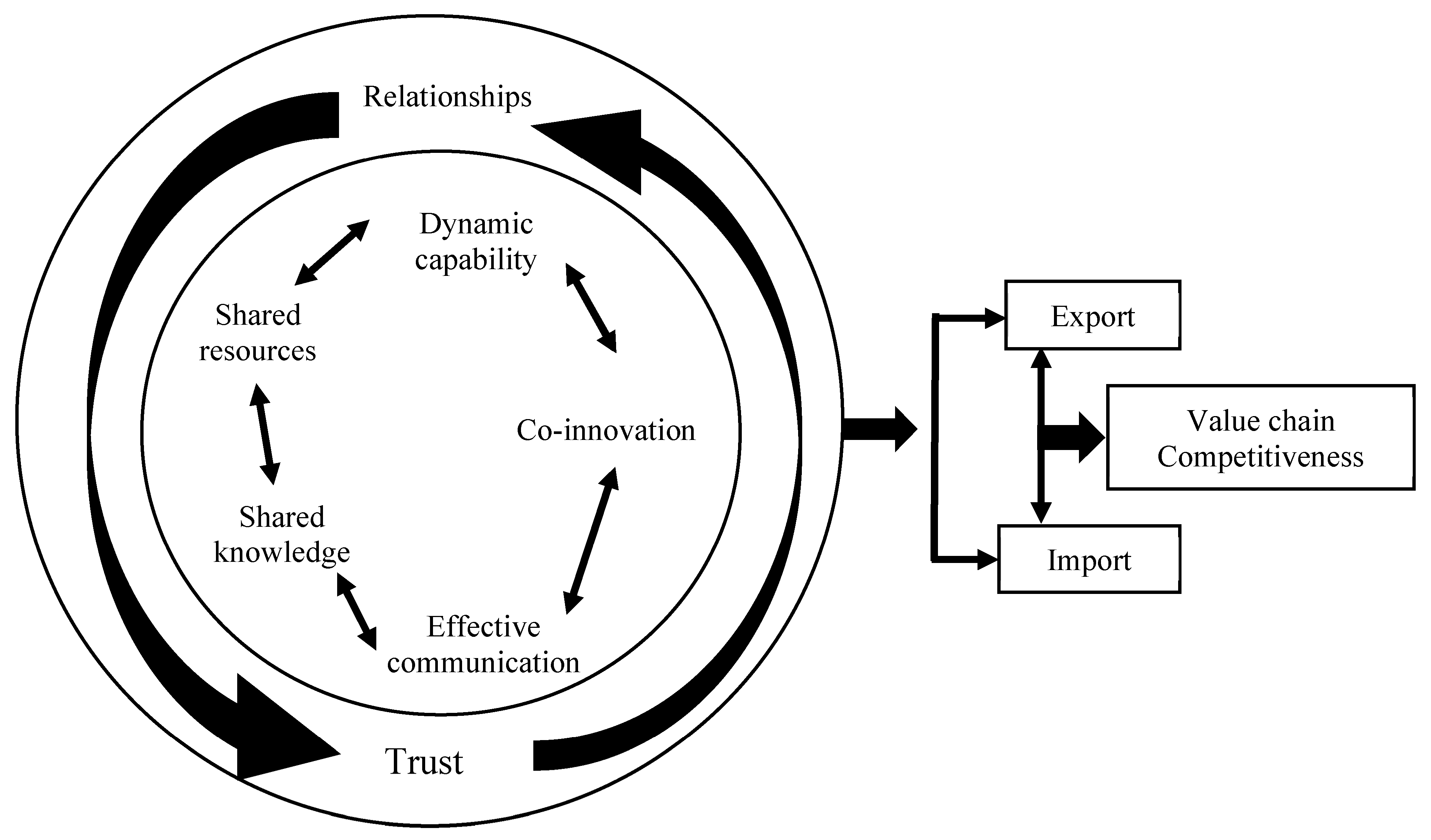
Figure 2.
Value chain map for pulses export (Australia)-import (Pakistan).
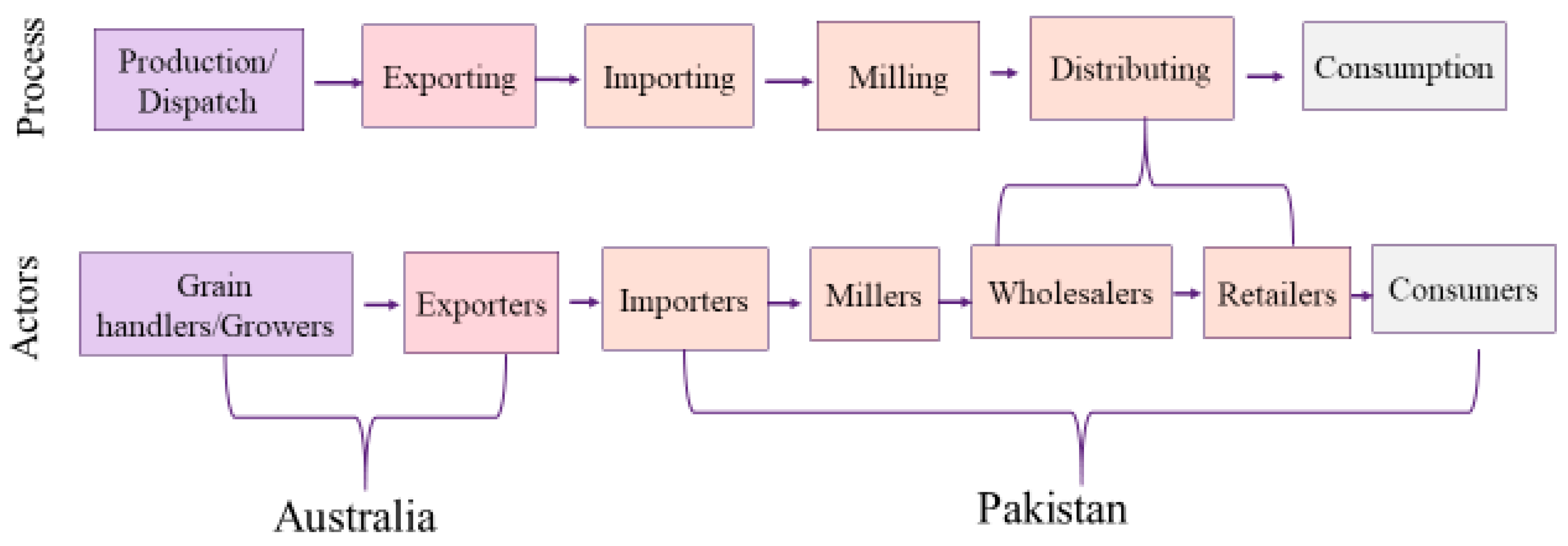
Figure 3.
Drivers of relational components contributing to the value chain competitiveness.
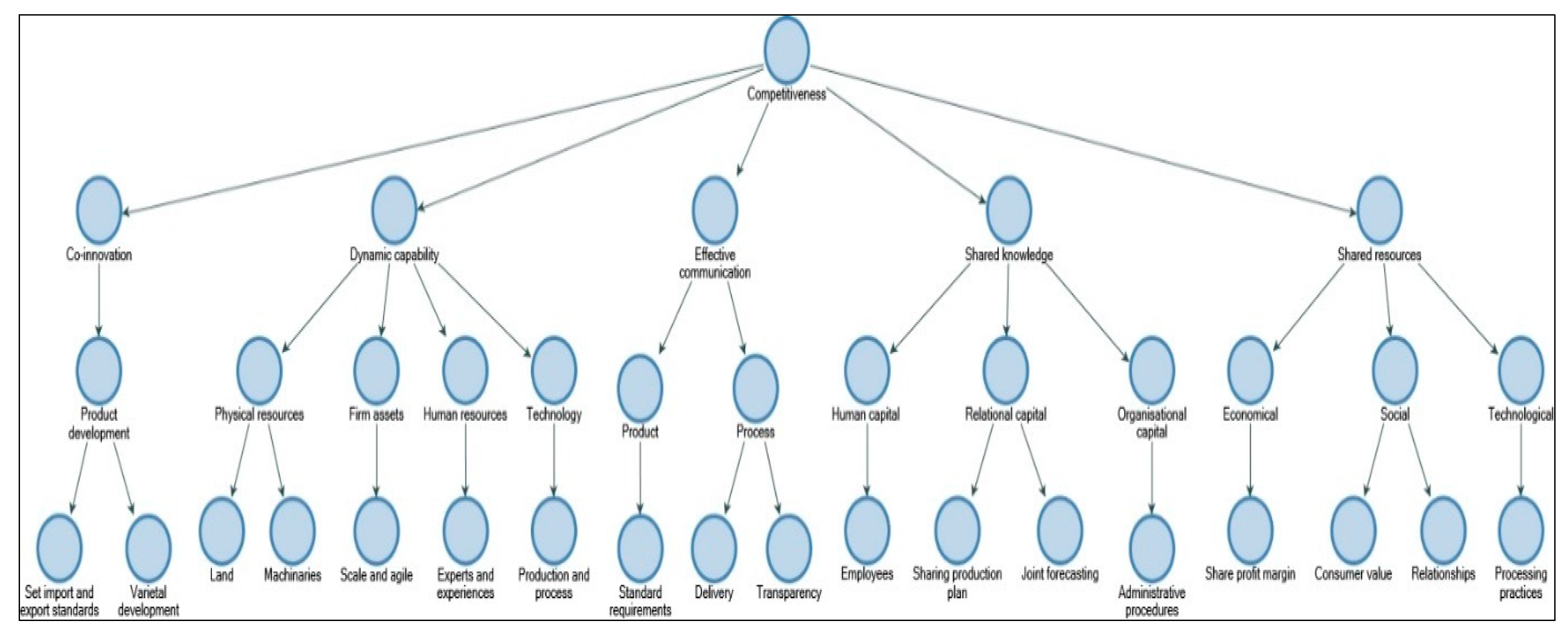
Figure 4.
CLD shows five different components and their interactions.
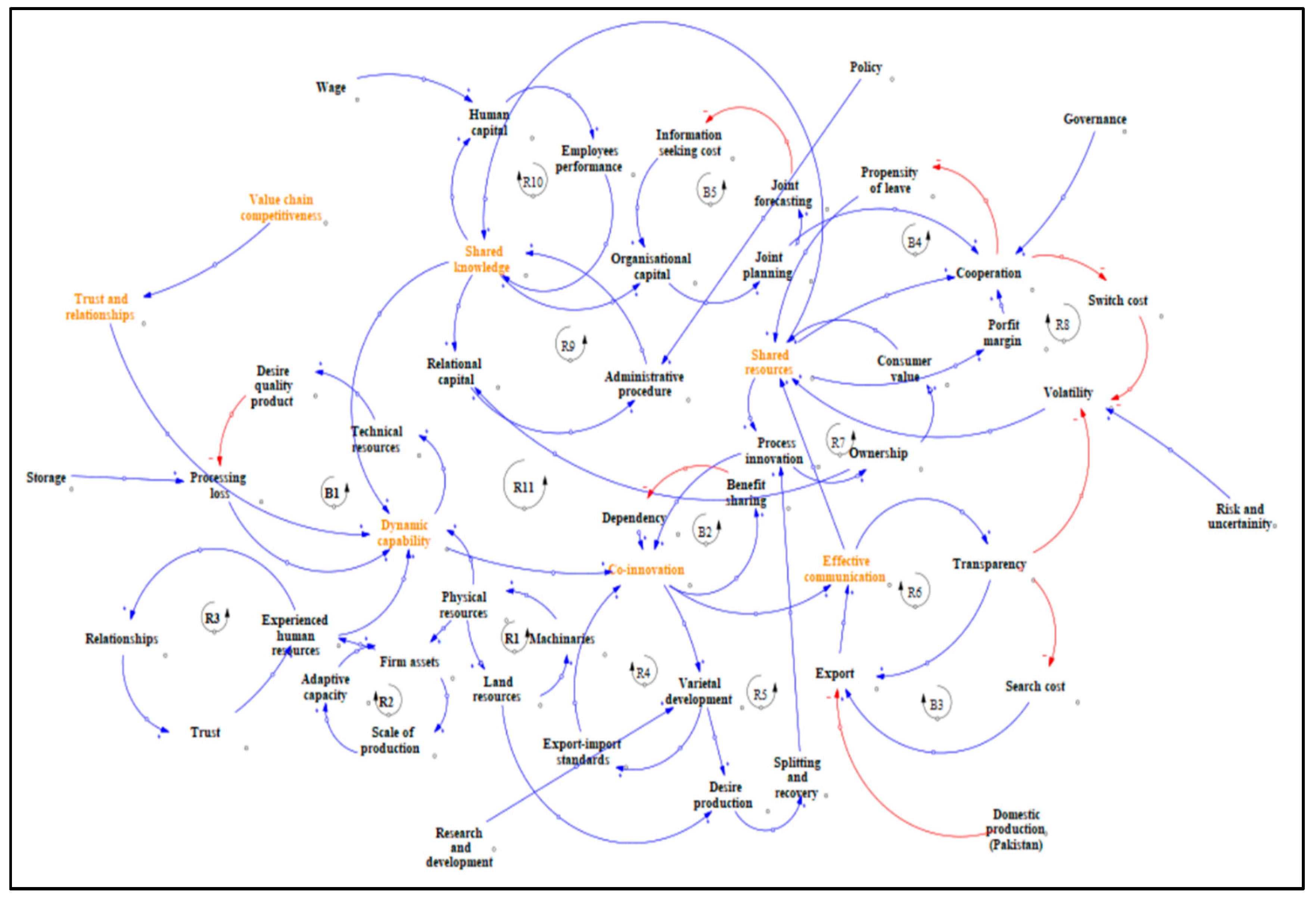
Table 1.
Feedback loops in Causal Loop Diagram.
| Balancing loops | Variables |
| B1 | Dynamic capability (+) Technical resources (+) Desire quality product (-) Processing loss (+) |
| B2 | Co-innovation (+) Benefit-sharing (-) Dependency (+) |
| B3 | Effective communication (+) Transparency (-) Search cost (+) Export (+) |
| B4 | Shared resources (+) Profit margin (+) Cooperation (-) propensity to leave (+) |
| B5 | Organisational capital (+) Joint Planning (+) Joint forecasting (+) Information seeking cost (-) |
| Reinforcing loops | Variables |
| R1 | Physical resources (+) Land resources (+) Machinery (+) |
| R2 | Firm assets (+) Scale of production (+) Adaptive capacity (+) |
| R3 | Experienced human resources (+) Relationships (+) Trust (+) |
| R4 | Co-innovation (+) Varietal development (+) Export-import standards (+) |
| R5 | Co-innovation (+) Varietal development (+) Desire production (+) Splitting and recovery (+) Process innovation (+) |
| R6 | Effective communication (+) Transparency (+) Export (+) |
| R7 | Shared resources (+) Process innovation (+) Ownership (+) Consumer value (+) |
| R8 | Shared resources (+) Cooperation (+) Switch cost (-) Volatility (-) |
| R9 | Shared knowledge (+) Relational capital (+) Administrative procedure (+) |
| R10 | Shared knowledge (+) Human capital (+) Employee performance (+) |
| R11 | Dynamic capability (+) Co-innovation (+) Effective communication (+) Shared resources (+) Shared knowledge (+) |
Disclaimer/Publisher’s Note: The statements, opinions and data contained in all publications are solely those of the individual author(s) and contributor(s) and not of MDPI and/or the editor(s). MDPI and/or the editor(s) disclaim responsibility for any injury to people or property resulting from any ideas, methods, instructions or products referred to in the content. |
© 2025 by the authors. Licensee MDPI, Basel, Switzerland. This article is an open access article distributed under the terms and conditions of the Creative Commons Attribution (CC BY) license (http://creativecommons.org/licenses/by/4.0/).
Copyright: This open access article is published under a Creative Commons CC BY 4.0 license, which permit the free download, distribution, and reuse, provided that the author and preprint are cited in any reuse.