

Submitted:
10 February 2025
Posted:
12 February 2025
You are already at the latest version
Abstract
In this research, structural type mortars reinforced with coconut fibers were elaborated. These fibers were previously treated with linseed oil and paraffin wax. The fibers were cut to lengths of 1, 2 and 5 cm, and weighed, in order to obtain a ratio of 0.5 % and 1 % weight with respect to the amount of cement. The fibers were characterized by Thermogravimetric Analysis (TGA), Derivative Thermogravimetry (DTG) and Fourier Transform Infrared Spectrometry (FTIR). In addition, the chemical resistance of the fibers was evaluated by exposing them to a concentrated Ca (OH)2 solution that simulated the alkaline medium of cement. The fiber-reinforced mortars were mechanically characterized by compression and flexural tests, which were performed at 7, 21 and 28 days after processing. In this paper, the effect of the hydrophobic substance used to protect the fiber against the alkaline medium of the cement, the length of the fiber and the percentage by weight of the fiber on the compressive and flexural strength of the mortars were studied. The results showed that the highest compressive and flexural strength were obtained with the composites reinforced with coconut fiber of volume 0.5%, length of 1 cm and paraffin wax as impregnation substance.
Keywords:
Reinforcement
; mortar
; coconut fiber
; compressive strength
; flexural strength
1. Introduction
Disposal of agricultural residues is an environmental problem in many countries. Incorporating these residues into cementitious products is a practice that has been commonly used to solve these environmental problems. One of the most commonly used agricultural waste by-products are natural fibers, including coconut, banana, sugarcane, jute, sisal, corn and other fibers. The purpose of incorporating these fibers into the cementitious material is to improve the ductility, toughness, flexibility and fracture resistance of the resulting material, among other benefits [1,2]. In addition, they are readily available, economical, low density, biodegradable, non-toxic, energy efficient and environmentally friendly [1,3]. Coconut fiber (CF), extracted from discarded coconut shells, has a unique orientation of cellulose and hemicellulose, and this, combined with a lower concentration of these components compared to other plant fibers, reduces water absorption and minimizes bulk. disruption of the cementitious matrix [4]. However, assessing the durability of these fibers is important, as natural materials tend to be biodegradable. For example, natural fibers with high cellulose content (e.g. bamboo, kraft pulp and cotton wool) tend to exhibit poor durability in highly alkaline environments. In the case of conventional concrete, which has an alkaline matrix with an initial pH typically around 12 to 14, the use of such fibers can be problematic. Compared to other natural fibers, coconut fiber has a low decomposition rate, which is explained by its high lignin content. However, despite its higher lignin content and lower cellulose content, some research has shown that coconut fiber is sensitive to alkalis and may also have some sensitivity to drying shrinkage or volumetric changes due to alternating wetting and drying [5]. For this reason, in recent years, efforts have been made to improve the quality of this type of composite material. The alkaline environment generated by the calcium hydroxide Ca (OH)2 and the presence of calcium ions, which react with the cellulose breaking the polymeric chains, causes a significant reduction in the strength of the composite material. Additionally, the volumetric changes of the fibers on the matrix and the predisposition to microorganism attack in humid environments must also be taken into account [6,7]. To reduce deterioration and increase the durability of cement mortars reinforced with vegetable fibers, it is necessary to modify the composition of the matrix in order to limit the effect of alkaline compounds that cause cellulose to reduce its reinforcing capacity. This can be achieved by proper control of the dosage of raw materials through a mix design, which allows obtaining a performance similar to that of mortars prepared with Portland cement. The second option is to modify the surface of the fibers by using hydrophobic substances to coat them, protecting them from the alkaline environment to which they would be exposed and reducing the amount of water that can be absorbed by the fiber, which will provide stability in the cement matrix [8]. In this work, structural mortars reinforced with coconut fiber were developed to determine the influence of the protective substance, the length and weight percentage of the fiber on the mechanical properties of the reinforced mortar.
2. Materials and Methods
2.1. Elaboration of the Mortar
The mortar under study was designed using the methodology proposed by Sánchez [9], which made it possible to define the respective proportions of cement, water and fine aggregate, obtaining a mortar with a plastic consistency of 110%. The cement used is Argos Portland type I (14.81 kg), with a specific weight of 3.12 g/cm3 and 98% fineness. The sand (56.88 kg) used is cubic and rough textured with a fineness modulus of 2.25, dry bulk density of 2.54 g/cm3, nominal density of 2.62 g/cm3, water absorption percentage of 1.21 and a particle size d80 of 0.088 cm. The quantities used in the mixture are as follows: Coir fiber (0.5%) 0.074 kg; Coir fiber (1%) 0.1481 kg; water 10.96kg and Water/Cement (A/C) ratio of 0.74. Table 1 shows the design of experiments applied in this study. As response variables, the effect of the hydrophobic substance on the fibers, fiber length and fiber ratio on the compressive and flexural strength will be evaluated. Table 1 summarizes the design of experiments used in this research, whose response variable is the compressive and flexural strength, with the following possible factors influencing the mechanical properties: protective substance, fiber length and percentage by weight.
2.2. Fiber Preparation and Conditioning of the Fibers
Figure 1 summarizes the methodology for the preparation and conditioning of the fibers. Paraffin wax and linseed oil were used as protective hydrophobic substances, since they do not deteriorate the mortar and are economical.
2.3. Physicochemical Characterization of Fibers
Archimedes' principle was used to determine the density (ρ) of the coconut fiber Equation 1.
ΔV: Volume of liquid displaced.
The resistance of the fibers to alkaline environments was evaluated by analyzing the weight loss of the fibers after contact with a 1N Ca (OH)2 1N solution at 20°C for 7, 21 and 28 days. For this purpose, 0.2 g of each fiber sample (W1) was introduced in 100 ml of solution. After this, the fibers were dried at a temperature of 105ºC until constant weight (W2). The percentage of chemical resistance (Pcr) was determined according to equation 2 [14].
Characterization of the fibers coated with the hydrophobic substances such as linseed oil and paraffin wax were performed using a LEICA MC 120 HD 25 X/9.5 stereomicroscope at a magnification of 160X and resolution of 1050 lp / mm, (0.95 μm). Additionally, the fibers were characterized using the Fourier transform infrared spectroscopy (FTIR) technique in the range of 400 - 4000 cm-1 in a Shimadzu IRAffinity- 1 FTIR and thermal degradation was evaluated by thermogravimetric analysis (TGA) using a Thermogravimetric Analyzer model HI-Res Modulated TGA 2950 using an inert nitrogen atmosphere with a flow rate of 50 ml/min at a constant heating rate of 10 ºC/min from 25ºC and 750°C.
2.4. Mechanical Characterization
The mechanical behavior of the coconut fiber reinforced mortars was evaluated by means of compression tests according to NTC 673 [10] using cylindrical specimens of 5.08 cm x 10.16 cm [12] and bending tests according to INV.E-324-07 [13] using rectangular specimens with dimensions of 4 x 4 x 16 cm at a spindle speed of 10 mm/min in a YUEKE universal machine. The specimens were manufactured in duplicate and tested at 7, 21 and 28 days.
3. Results and Discussion
3.1. Physicochemical Characterization of Fibers
3.1.1. Chemical Resistance
The main problem with the use of natural fibers in cementitious matrices is fundamentally associated with their durability, since the alkalinity of the matrix and the instability of the fiber cause a loss of strength of the composite material in the long term. This is mainly due to the fact that cement-based compounds are characterized by being alkaline, that is, by having a high pH. Some authors comment that the alkalinity of the water present in the pores of the matrix deteriorates the natural fiber to such a high degree that it even reaches the point of completely nullifying its action as a reinforcement material [14]. The deterioration process of natural fibers takes place when the composite is subjected to dry-wet cycles, mainly due to the environmental conditions to which they are exposed, such as variations in relative humidity and natural ageing in outdoor environments [15].
The first dry cycle in a natural fiber-reinforced matrix occurs when the cross-section of the fibers decreases as a result of water loss. This causes a lack of adhesion between the fiber-matrix, and it is here that empty spaces or gaps begin to appear in the interface [14]. In the first wet cycle, cement hydration products such as calcium hydroxide dissolve in the water, forming a solution that is absorbed by the fibers. During the second dry cycle, the water in the compound and the water contained in the fiber evaporate, respectively, so the solution moves towards the fibers, causing calcium hydroxide to be deposited on the surface and the lumen or inner part of the fiber, causing mineralization of the fibers. These cycles are repeated continuously, bombarding the fibers with calcium hydroxide, which causes them to densify with highly alkaline products and consequently decreases their mechanical strength. In this way, when the fiber is immersed in an alkaline solution, the hydroxyl ions are incorporated into the cellulose, forming an isosacchagrinic acid, while when the cellulose is dried, it returns to its original state; however, calcium ions (Ca2+) bind to the ends of the acidic compound and break the cellulose chains when the fibers dry out [14,15]. Figure 2 (paraffin-protected) and Figure 3 (flaxseed-protected) show the surface behavior of coconut fiber after being immersed in a Ca (OH)2 solution for 0, 7, 21, and 28 days.
Figure 2a and Figure 3a show the surface characteristics of the coconut fibers before contact with Ca(OH)2, which were protected with hydrophobic agents such as paraffin wax and linseed oil, respectively. A good protection of the fibers is noted, which guarantees a good performance of the reinforced mortar. Figure 2b shows the condition of the fiber once the 7 days submerged in Ca (OH)2 have elapsed, the presence of calcium hydroxide (small white areas) can be seen in the small pores of the fiber, these places were exposed to the alkaline environment of the solution, presenting weight loss and obtaining a percentage of chemical resistance of 67.66 %. After 21 days (Figure 2c), greater degradation is observed compared to what was observed after 7 days, it is noted that the small fibers are mostly coated with calcium hydroxide. The chemical resistance obtained in this case was 60.97%. However, after 28 days it can be noticed that the white areas are sparse, this is because the impregnating substance coated most of the surface of the fiber, preventing the alkaline medium of the solution from completely degrading the fiber. The presence of precipitated Ca (OH)2 crystals on the surface is noted. The percentage of chemical resistance for this sample was 82,68 %. As for the coconut fibers coated with linseed oil (Figure 3), the surface condition of the fiber can be seen after 7 days of immersion in Ca (OH)2 (Figure 3b), where it is observed that the degradation is little, since the presence of white regions is lower, so it could be said that the linseed oil waterproofed a large part of the surface of the strands of the coconut fibers, preventing weight loss.
This result can be seen in the chemical resistance of the fiber, which was 84.48%. After 21 days (Figure 3c), it is noted that some regions remain exposed to the alkaline medium of the solution where the concentration of Ca (OH)2 on the surface of the fiber increases. It should be noted that a few areas were degraded by the solution, obtaining a chemical resistance of 82.97%. However, after 28 days of immersion in the calcium hydroxide solution, it is observed that the fiber has degraded. Most of the fiber is coated by calcium hydroxide crystals, presenting a considerable weight loss and degradation of the fiber. The percentage of chemical resistance was 31.87%. In conclusion, after 28 days of immersion in Ca (OH)2, paraffin wax showed the best protection to the coconut fibers due to the better interaction between their molecular structures since they present similarities in the composition of their chains (long chains). The molecular chains of coconut fibers are of the glucose type while those of paraffin wax are of the hydrocarbon type [16].
3.1.2. Fourier Transform Infrared Spectroscopy (FT-IR)
Figure 4 shows the infrared spectra for coated and uncoated coconut fiber. Figure 4a identified an absorption peak at 3407 cm-1 representing an axial deformation of the OH (hydroxyl) bond, and was assigned to polysaccharides such as cellulose, lignin and hemicellulose, essential components of fiber [17,18]. The peak at 2932 cm−1 indicates the presence of scattered wax in the coconut fibers, attributable to C≡C stretching [19]. In addition, the peaks of O-H stretching associated with carboxylic acid (2357 cm-1), the peak belonging to the RNH"R groups of secondary amines (1657 cm-1) [20,21], and the peak present at 1080 cm-1 are attributed to the stretching of the C-O-C group present in cellulose [19].
Figure 4b shows the behavior of the infrared spectra of coconut fibers coated with kerosene and immersed in Ca (OH)2 for 7, 21 and 28 days. The presence of different peaks associated with lignin phenols and hydroxyls of cellulose and hemicellulose (peak 1) is noted [22]. Peaks associated with the symmetric elongation of C-H bonds (peak 2) [23], the asymmetric CH2 strain of cellulose (2850 cm-1) corresponding to CH2-CO are also observed. Peak 4 shows a series of intense and sharp bands representing the bending of all active methylene and peaks belonging to the stretching of the nitro group - CNO2 (878 cm-1). Similarly, the presence of fluoroalkanes (peak 5) is noted, which is attributed to the use of paraffin wax as a hydrophobic substance and which is made up of a series of hydrocarbons and elements such as F, Cl, Br, among others. Peaks associated with the balance of the -(CH2)n group, are present when n ≥4 (718 cm-1). The peak representing carbon dioxide (O=C=O) (2356 cm-1) was only found in samples taken at 21 and 28 days [20,21,24,25,26].
Figure 4c shows the infrared spectra of coconut fiber coated with linseed oil after being immersed in Ca (CO)2 for 7, 21 and 28 days. Peak 1 represents the vibrations of the O-H bonds proper to the phenols of lignin and to the hydroxyl peaks of cellulose and hemicellulose [22], to the COOH vibrations; stretching of the O-H of carboxylic acid (3000-2201 cm-1), to the symmetrical elongation of the vibrations of the C-H bonds (2918 cm-1), vibrations of the structure of the rings (C=C) characteristic of lignin (1581 cm-1), the region between 1439 and 1252 cm-1 is associated with the C=H group of lignin [27], the peaks belonging to the vibrations of the C-H bond (1046 cm-1), the peaks belonging to the stretch of the nitro group CNO2 (889 cm-1), the peak associated with the C-H bond (695 cm-1). After 28 days, peaks associated with the vibrations of the carbonyl groups of hemicellulose (1736 cm-1), peaks associated with the asymmetric vibrations of methylene and peaks associated with the stretching of the O-H group of carboxylic acid (2363 cm-1) were observed [20,21,25]. It is important to highlight that the peaks associated with the O-H vibrations belonging to the lignin phenols and the hydroxyl peaks of cellulose and hemicellulose (3400-3420 cm-1) do not show significant changes after 7, 21 and 28 days, which would indicate that no degradation occurred.
3.1.3. Thermal Analysis
Figure 5 summarizes the thermogravimetric behavior of the coconut fiber before being coated with the hydrophobic substances used in this study. Three important stages of weight loss with increasing temperature have been identified. The first stage (25°C-114.4°C), which corresponds to the loss of moisture in the sample (7.28%) [28,29]. The second stage (114.4°C-336.9°C), which corresponds to the degradation of hemicellulose, cellulose and part of the lignin [30], this stage represents 52.67% of the weight loss of the sample and the volatiles products generated during decomposition are water, CO and CO2 [28]. The third stage (336.9 °C-739.7°C) corresponds to the decomposition of cellulose and the remaining lignin in the coconut fiber [24,31] and represents 22.16% of the weight loss of the sample.
Jimenez et al. [32]. stated that even at temperatures above 550°C, fiber degradation processes are the product of the deterioration of some polysaccharides, lignin and certain inorganic substances. Using the derivative thermogravimetry (DTG) technique, the change in mass of uncoated coconut fiber was analyzed with respect to time, presenting two representative peaks, the first at 195°C (decomposition of hemicellulose) and the second at 319°C (decomposition of cellulose). The second peak shows the highest rate of fiber degradation [33,34].
Figure 6 summarizes the thermogravimetric behavior of coconut fiber coated with linseed oil and paraffin wax compared to the unprotected material. It can be observed in Figure 6a the presence of 4 regions of weight loss. The first zone represents the humidity loss of the material (20-167°C). 5.5% loss in the linseed oil coated fiber and 5.7% loss in the paraffin wax coated fiber were obtained.
The second zone (167-417°C) represents the degradation of cellulose, hemicellulose, part of the lignin, carbohydrates, sugars, starches, etc. 31.4 % weight loss in the linseed oil coated fiber and 38.3 % in the paraffin wax coated fiber were obtained. The third zone (417-492°C) corresponds to the decomposition of hemicellulose with weight losses of 30.6% by weight of the fiber coated with linseed oil and 34.2% of the fiber coated with paraffin wax. Finally, the fourth zone (492-687°C) represents the decomposition of cellulose and the final residue, which according to [32] would be attributed to the final degradation of lignin, since its degradation occurs in the range between 100-900°C.
When evaluating the variation of coconut fiber weight with time as a function of temperature (Figure 6b), a significant improvement in the thermal stability of the fibers when coated was observed due to the inhibition of hemicellulose decomposition (near 195°C). The sample of coconut fiber coated with linseed oil shows 5 temperature peaks, a peak at 74 °C for water vaporization, a peak at 308 °C representing the simultaneous degradation of the main components of the fibers, and three peaks at 470 °C, 547 °C and 634 °C (Linseed oil decomposition). For the paraffin coconut fiber sample, it was observed that 5 peaks of maximum weight loss were generated, which correspond to the temperature of 75 °C, 308 °C, 472 °C, 543 °C and 613 °C (Paraffin wax decomposition).
3.2. Mechanical Evaluation
3.2.1. Compressive Strength
The physical and mechanical properties of cement-based composites that are reinforced with natural fibers can be affected by many factors such as: 1. Characteristics of the fibers: type, surface properties, length and weight percentage used [35]. Nature of cement and mix design and 3. Shape, casting and curing of the composites [36]. It is important to highlight that all the parameters on the compatibility between the fiber and the cement matrix always seek the most homogeneous possible distribution of the reinforcement fibers, which greatly impacts the mechanical properties of the material.
Figure 7 shows the results obtained when mortars reinforced with fibers coated with hydrophobic substances such as paraffin wax and linseed oil were subjected to compression. It is clearly observed a better compression behavior of the mortars reinforced with coconut fibers coated with paraffin wax (Figure 7a) than those obtained in the mortars reinforced with coconut fibers coated with linseed oil (Fiber 7b) after 28 days of curing. This behavior can be explained by the capacity of paraffin wax to reduce the water absorption capacity of the coconut fiber by modifying the physicochemical characteristics of the fiber/mortar interface. According to Figure 7a, the highest compressive strength was obtained by adding coconut fibers of 1 cm in length coated with paraffin wax in proportions of 0.5% to the mortar. The maximum value reported was 13.08 MPa. A similar behavior in compressive strength was reported by Osorio et al [6] in 2007 when using 0.5% bagasse fibers treated in 5% Ca(OH)2 for 24 hours.
Fiber size determines the arrangement and alignment as a reinforcement material with short fibers being randomly distributed while long fibers are more regularly arranged. When a unit axial load aligned parallel to the direction of the fibers is applied, the maximum strength of the mortar is obtained. In this work, the highest compressive strengths were obtained with the use of short fibers, which in their distribution presented an isotropic behavior to the applied mechanical stresses. Fujiyama et al. (2014) found that the addition of Sisal fibers with different lengths did not produce an increase in the compressive strength of mortars. However, they found that long fibers negatively affect the compressive strength compared to short fibers attributing it to the increase to the porosity of the mortar [37].
Another important factor in the mechanical characteristics of a composite material is the proportion of the reinforcing agent. Aziz et al. [35] reported that when a high amount of fiber is used during the mortar preparation process, it tends to clump, which makes the mixing process more difficult, generating adherence between the fibers and the matrix and decreasing its mechanical strength since it can increase the porosity of the material. [38,39]. In addition, a higher fiber content in the mortar has a significant effect on water absorption by the material. [40]. Figure 7b shows an adverse effect of coconut fiber reinforcement coated with linseed oil on the compressive strength compared to the reference sample. This behavior may be due to the greater deterioration of the fiber due to a low protection by the linseed oil, which allowed a greater negative effect of the alkaline agents of the cement reducing the adherence of the fibers to the cementitious matrix generating spacings in the fiber-matrix interface producing lower compressive strength of the material due to the reduction in the compactness of the cement [6]. Another possible cause of the compressive behavior of the material under study was the bleeding phenomenon that occurs when a high water-cement ratio is used during the mortar generation process [16].
3.2.2. Flexural Strength
Figure 8 shows the flexural behavior of mortars reinforced with coconut fibers coated with paraffin wax and linseed oil. A better flexural behavior was observed in the fiber-reinforced mortars impregnated with paraffin (Figure 8a) compared to those protected with linseed oil (Figure 8b). This behavior may be due to the lower water absorption capacity of the fiber when coated with kerosene, allowing a lower degradation of the reinforcement material in the presence of the alkaline environment of the cement, favoring a higher adhesion between fiber and matrix generating a higher flexural strength as reported by Juárez et al. (2004) [16].
According to the results presented in Figure 8, it is observed that after 28 days of mortar curing, the highest flexural strengths were obtained compared to the reference sample (3.09 MPa) with the addition of 0.5 wt.% of paraffin coated coconut fiber reinforcement. The highest values reported were 4.432 MPa (length 1 cm) and 3.968 MPa (length 2 cm). Fiber length is an important variable in the flexural behavior of the material, the presence of long fibers allows alignment towards a specific direction, however, a unidirectional orientation would generate an anisotropic material which would result in low mechanical properties under loads parallel to the fibers [41]. Due to this, mortars reinforced with 1 cm fibers in proportion 0.5 wt.% (short fibers) are aleatory aligned showing an isotropic behavior under mechanical stresses. Juarez C. et al. [16] reported increases in the flexural strength of concrete reinforced with 0.5% by volume of lechuguilla fiber, this mechanical strength decreased as the volume of the reinforcing fiber increased. Quintero et al [40] showed that the addition of coconut fiber improves the flexural strength of concrete when its volume percentage was 0.5% by volume and 5 cm in length. In addition to this, Zou et al [4] showed that the addition of coconut fibers to a phosphorus and magnesium-based cement significantly improves the flexural strength reaching 13.49 MPa (15.7% higher than that obtained in the unreinforced material). It is worth noting that the incorporation of coconut fibers to cement-based materials contributes to waste recycling.
The enhancement in flexural strength is attributed to the ability of fiber reinforcements to increase the toughness of the matrix through various mechanisms. Cracks that form in the matrix are transferred to the fibers, which absorb energy and impede crack propagation. However, if the bond between the fiber and the matrix is weak, the fibers may begin to detach from the matrix, increasing the likelihood of fractures [40], in such cases, the crack is forced to navigate around the fibers to continue its progression, a process that consumes energy and consequently raises the fracture toughness. Moreover, when a crack starts to form in the matrix, the intact fibers can act as a bridge over the crack, exerting compressive stress that restricts the crack from fully opening [40].
4. Conclusions
When evaluating the mechanical behavior of the structural mortar reinforced with coconut fibers, an increase in compressive and flexural strength of 84.27% and 43.32%, respectively, was obtained in comparison with the unreinforced mortar. This indicates that this type of fiber is a good alternative as a reinforcing agent, especially the fibers added in low proportions (0.5% by weight), since they do not hinder mixing. As for the short fibers (1 cm), they produce an isotropic behavior in the material since they are randomly aligned, improving the mechanical resistance.
By means of thermogravimetric analysis it was possible to determine the presence of four stages during the thermal degradation of coconut fibers. 1. loss of fiber humidity. 2. presence of extractives in the sample, 3. thermal degradation of cellulose and hemicellulose and 4. Degradation of lignin (occurs between 100-900°C). Additionally, paraffin wax was found to increase the chemical resistance of the fiber, reducing its water absorption capacity and offering good protection against the alkaline environment of the cement. The hydrophobic protection of the fibers with paraffin wax and linseed oil slightly increases their thermal stability.
Author Contributions
Conceptualization, M.-J. M.-A., O.-F. H.-C. and C.-A. P.-Y.; Methodology, O.-F. H.-C and M.-J. M.-A; Formal analysis M.-J. M.-A.; Investigation, M.-J. M.-A., O.-F. H.-C. and C.-A. P.-Y.; Writing—original draft, M.-J. M.-A. and O.-F. H.-C.; Writing—review & editing, M.-J. M.-A., O.-F. H.-C. and C.-A. P.-Y. All authors have read and agreed to the published version of the manuscript.
Funding
No applicable.
Data Availability Statement
The original contributions presented in the study are included in the article, further inquiries can be directed to the corresponding author.
Conflicts of Interest
The authors declare no conflict of interest.
References
- Thanushan, K. & Sathiparan, N. Mechanical performance and durability of banana fibre and coconut coir reinforced cement stabilized soil blocks. Materialia, 2022, vol 21. https://doi.org/10.1016/j.mtla.2021.101309.
- Agopyan, V., Jr, H., John, V. & Cincotto, M. Developments on vegetable fibre-cement based materials in São Paulo, Brazil: An overview. Cem. Concr. Compos. 2005, vol 27, pp 527–536. https://doi.org/10.1016/j.cemconcomp.2004.09.004.
- Varghese, A. & Unnikrishnan, S. Mechanical strength of coconut fiber reinforced concrete. Mater. Today Proc. (2023) doi:10.1016/j.matpr.2023.05.637.
- Zou, Q., Ye, X., Huang, X., Zhang, W. & Zhang, L. Influence of elevated temperature on the interfacial adhesion properties of cement composites reinforced with recycled coconut fiber. J. Build. Eng. 2014, vol 98. https://doi.org/10.1016/j.jobe.2024.111270.
- Crucho, J. M. L., Picado-Santos, L. G. de & Neves, J. M. C. das. Assessment of the durability of cement-bound granular mixtures using reclaimed concrete aggregate and coconut fiber. Constr. Build. Mater, 2024, vol 441, https://doi.org/10.1016/j.conbuildmat.2024.137550.
- Osorio Saraz, J. A., Varón Aristizabal, F. & Herrera Mejía, J. A. Comportamiento mecánico del concreto reforzado con fibras de bagazo de caña de azúcar. Dyna , 2007,vol 74, pp 69–79.
- Coutts, R. S. P. A review of Australian research into natural fibre cement composites. Nat. Fibre Reinf. Cem. Compos, 2005, vol 27,pp 518–526. https://doi.org/10.1016/j.cemconcomp.2004.09.003.
- Arnon Bentur & Mindess Sidney. Fibre Reinforced Cementitious Composites. (CRC Press, 2014).
- Diego Sanchez de Guzman. Tecnología Del Concreto y Del Mortero. (Bhandar Editores LTDA, 2001).
- Icontec. Norma Técnica Colombiana. Concretos. Ensayo de Resistencia a la Compresión de Especímenes Cilíndricos de Concreto. NTC 673. (2010).
- ASTM C470/C470M-02. Standard Specification for Molds for Forming Concrete Test Cylinders Vertically. (2002).
- Icontec. Norma Técnica Colombiana. Concretos. métodos de ensayo para determinar la evaluación en el laboratorio y en obra, de morteros para unidades de mampostería simple y reforzada. NTC 3546. (2003).
- Resistencia a la flexión de morteros de cemento hidraúlico I.N.V.E - 324- 07. (2007).
- Llerena Encalada, A. Estudio de compuestos cementicios reforzados con fibras vegetales. Trabajo fin de master, 2014, Universitat Politècnica de Catalunya, Barcelona.
- Acevedeo de la espriella, M. A. & Luna Velasco, M. S. Tratamiento químicos superficiales para el uso de fibras naturales en la construccioón:concretos y morteros. Monografia título Ingeniero Civil, 2021, Universidad de Cartagena.
- Juarez Alvarado, C. A. Concretos base cemento Portland reforzados con fibras naturales (Agave Lechugilla), como materiales para construcción en México. Tesis Doctoral, 2002, Universidad Autónoma de Nuevo León.
- Bilba, K., Arsene, M.-A. & Ouensanga, A. Study of banana and coconut fibers: Botanical composition, thermal degradation and textural observations. Bioresour. Technol. 2007,vol 98, pp 58–68. https://doi.org/10.1016/j.biortech.2005.11.030.
- Hernandez-Vidal, N., Bautista, V., Morales, V., Ordóñez, W. & Osorio, E. Caracterización química de la Fibra de Coco (Cocus nucifera L.) de México utilizando Espectroscopía de Infrarrojo (FTIR). Ing. Región, 2018, vol 20, pp 67–71.
- Ceron Meneses, Y. P., Alban Bolaños, P., Grass Ramírez, J. F. & Camacho Muñoz, R. Caracterización física, química, térmica y mecánica de fibras de coco de la Costa Pacífica del Cauca con potencial como refuerzo de materiales compuestos de matriz polimérica. Biotecnol. En El Sect. Agropecu. Agroindustrial, 2024, vol 22, pp 30–42. https://doi.org/10.18684/rbsaa.v22.n2.2024.2291.
- Contreras, J., Trujillo, A., Arias, O., Perez, L. J. B. & Delgado, F. E. Espectroscopía ATR-FTIR de celulosa: aspecto instrumental y tratamiento matemático de espectros. in (2010).
- Romero, P., Marfisi, S., Oliveros, P., Rojas de Gáscue , B. & Peña, G. Obtención de Celulosa Microcristalina a partir de Desechos Agrícolas del Cambur (Musa Sapientum). Síntesis de Celulosa Microcristalina. Rev. Iberoam. Polímeros , 2014, vol 15, pp 286–300.
- Luo, Z. et al. Comparison of performances of corn fiber plastic composites made from different parts of corn stalk. Ind. Crops Prod, 2017, vol 95, pp 521–527. https://doi.org/10.1016/j.indcrop.2016.11.005.
- Sanou, I., Bamogo, H., Sory, N., Gansoré, A. & Millogo, Y. Effect of the coconut fibers and cement on the physico-mechanical and thermal properties of adobe blocks. Heliyon, 2024, vol 10, pp 1-15. https://doi.org/10.1016/j.heliyon.2024.e38752.
- Olonade, K. A. & Savastano Junior, H. Performance evaluation of treated coconut fibre in cementitious system. SN Appl. Sci, 2023,vol 5, pp 1-16. https://doi.org/10.1007/s42452-023-05444-2.
- Carrillo Navarrete, F. Caracterización estructural de fibras lyocell y su comportamiento frente a procesos de degradación, Tesis Doctoral, 2002, Universitat Politècnica de Catalunya.
- Ssemujju Lubowa, P., Ndiritu, H., Oketch, P. & Mutua, J. Coconut Fiber Pyrolysis: Bio-Oil Characterization for Potential Application as an Alternative Energy Source and Production of Bio-Degradable Plastics. World Journal of Engineering and Technology, 2024, vol. 12.
- Moshi, A. A. M. et al. Characterization of a new cellulosic natural fiber extracted from the root of Ficus religiosa tree. Int. J. Biol. Macromol. 2020, vol 142, pp 212–221. https://doi.org/10.1016/j.ijbiomac.2019.09.094.
- Paricaguán, B. et al. Degradación térmica de fibras de coco con tratamiento químico provenientes de mezclas de concreto (estudio cinético). Rev. Ing. UC, 2013, 20, pp 60–67.
- Pineda Gomez, P., Coral, D. F., Rivera Ramos, D. & Rosales Rivera, A. Estudio de las propiedades térmicas de harinas de maíz producidas por tratamiento térmico-alcalino. Ingeniería y Ciencia, 2011, vol. 7, pp 119–142.
- Ferreira, S. R., Silva, F. de A., Lima, P. R. L. & Toledo Filho, R. D. Effect of fiber treatments on the sisal fiber properties and fiber–matrix bond in cement based systems. Constr. Build. Mater, 2015, 101, pp 730–740. https://doi.org/10.1016/j.conbuildmat.2015.10.120.
- Wei, J. & Meyer, C. Degradation rate of natural fiber in cement composites exposed to various accelerated aging environment conditions. Corros. Sci, 2014, 88, pp 118–132. https://doi.org/10.1016/j.corsci.2014.07.029.
- Jimenez, A., Betancourt, S., Gañán, P. & Cruz, L. Degradación térmica de fibras naturales procedentes de la calceta de plátano. (Estudio cinético). Rev. Latinoam. Metal. Mater, 2009, 29, pp 215–219.
- Juarez, C., Valdes, P. & Durán, A. Fibras naturales de lechuguilla como refuerzo en materiales de construcción. Revista Ingeniería de Construcción, 2004, vol. 19, pp 83-92.
- Wei, J. & Meyer, C. Utilization of rice husk ash in green natural fiber-reinforced cement composites: Mitigating degradation of sisal fiber. Cem. Concr. Res, 2016, vol 81, pp 94–111. https://doi.org/10.1016/j.cemconres.2015.12.001.
- Aziz, M. A., Paramasivam, P. & Lee, S. L. Prospects for natural fibre reinforced concretes in construction. Int. J. Cem. Compos. Lightweight Concr, 1981, vol 3, pp 123–132.
- Chakraborty, S., Kundu, S. P., Roy, A., Adhikari, B. & Majumder, S. B. Polymer modified jute fibre as reinforcing agent controlling the physical and mechanical characteristics of cement mortar. Constr. Build. Mater, 2024, vol 49, pp 214–222. https://doi.org/10.1016/j.conbuildmat.2013.08.025.
- Fujiyama, R., Darwish, F. & Pereira, M. V. Mechanical characterization of sisal reinforced cement mortar. Theor. Appl. Mech. Lett, 2014, vol 4, pp 1-5. https://doi.org/10.1063/2.1406102.
- Yan, L., Kasal, B. & Huang, L. A review of recent research on the use of cellulosic fibres, their fibre fabric reinforced cementitious, geo-polymer and polymer composites in civil engineering. Compos. Part B Eng, 2016, vol 92, pp 94–132. https://doi.org/10.1016/j.compositesb.2016.02.002.
- Hwang, C.-L., Tran, V.-A., Hong, J.-W. & Hsieh, Y.-C. Effects of short coconut fiber on the mechanical properties, plastic cracking behavior, and impact resistance of cementitious composites. Constr. Build. Mater, 2016, vol 127, pp 984-992. https://doi.org/10.1016/j.conbuildmat.2016.09.118.
- Quintero García, S. L. & González Salcedo, L. O. Uso de fibra de estopa de coco para mejorar las propiedades mecánicas del concreto. Ing. Desarro, 2011, vol 20, pp 134–150.
- Gonzalez Salcedo, L. O. Influencia de los componentes del concreto reforzado con fibras en sus propiedades mecánicas. (2013).
Figure 1.
Methodology for fiber preparation.
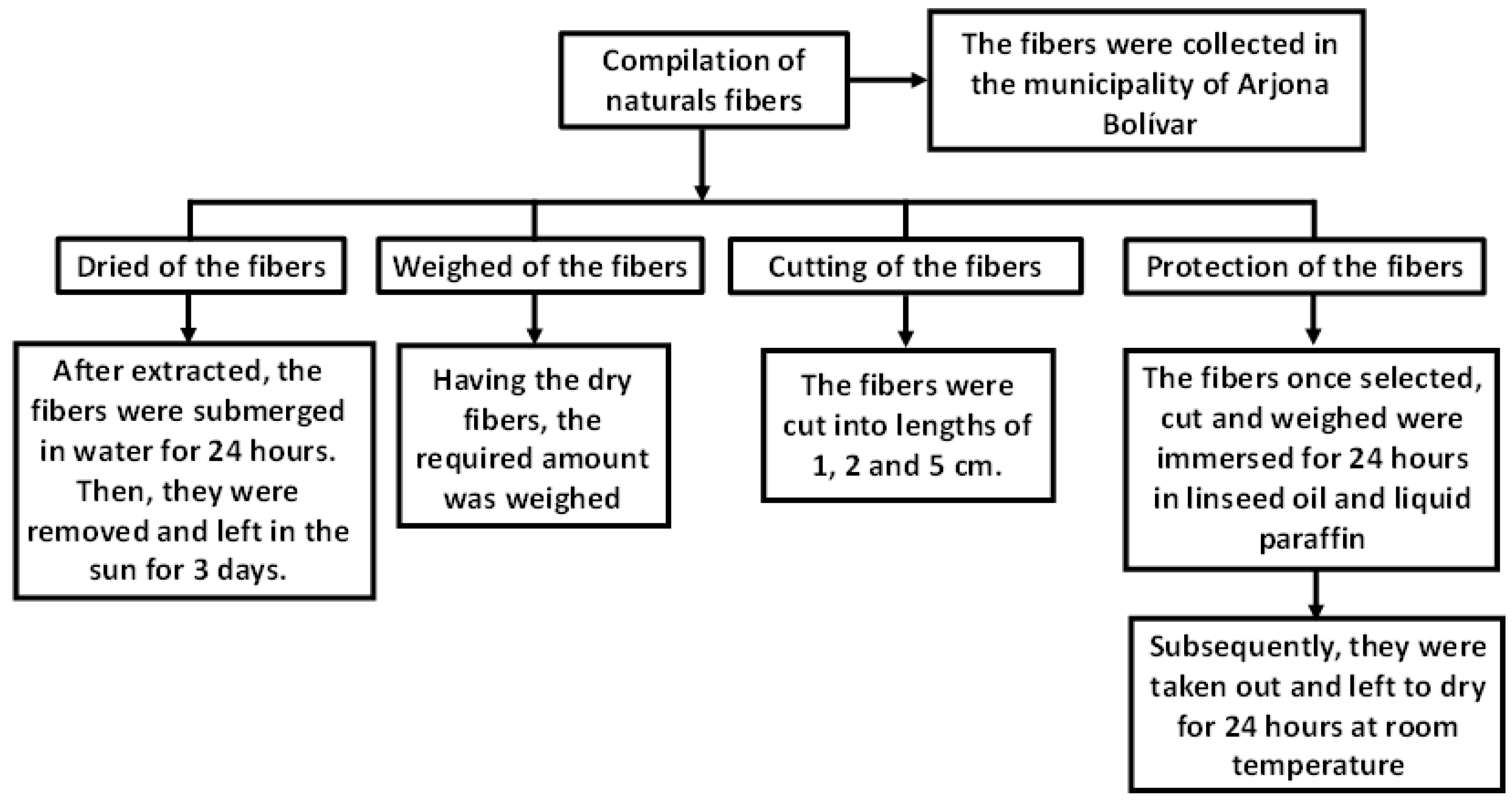
Figure 2.
Surface behavior of paraffin-protected coconut fiber during the immersion process in Ca (OH)2 for a) 0 days, b) 7 days, c) 21 days and d) 28 days.
Figure 2.
Surface behavior of paraffin-protected coconut fiber during the immersion process in Ca (OH)2 for a) 0 days, b) 7 days, c) 21 days and d) 28 days.
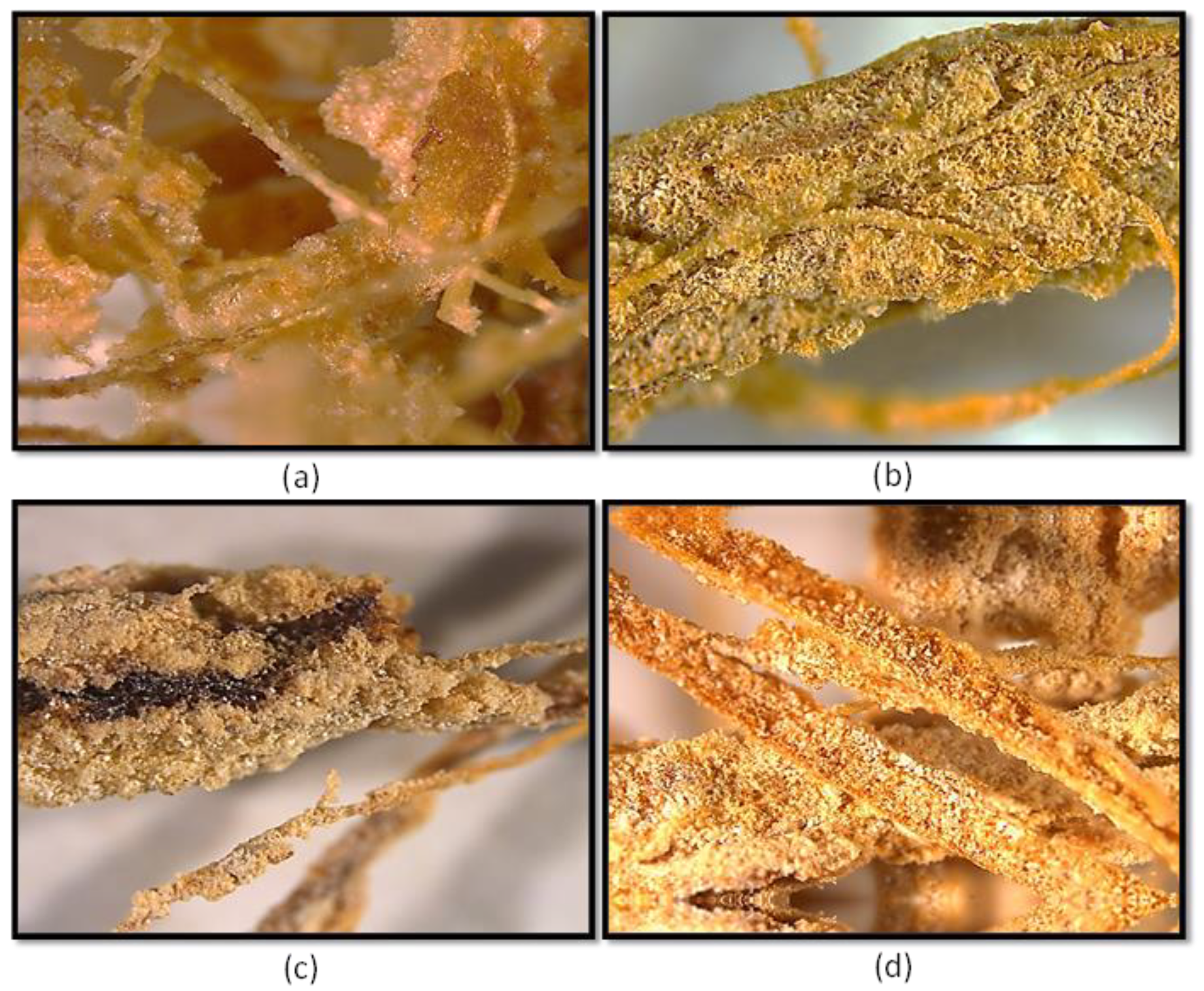
Figure 3.
Surface behavior of coconut fiber protected with linseed oil during the immersion process in Ca (OH)2 for a) 0 days, b) 7 days, c) 21 days, and d) 28 days.
Figure 3.
Surface behavior of coconut fiber protected with linseed oil during the immersion process in Ca (OH)2 for a) 0 days, b) 7 days, c) 21 days, and d) 28 days.
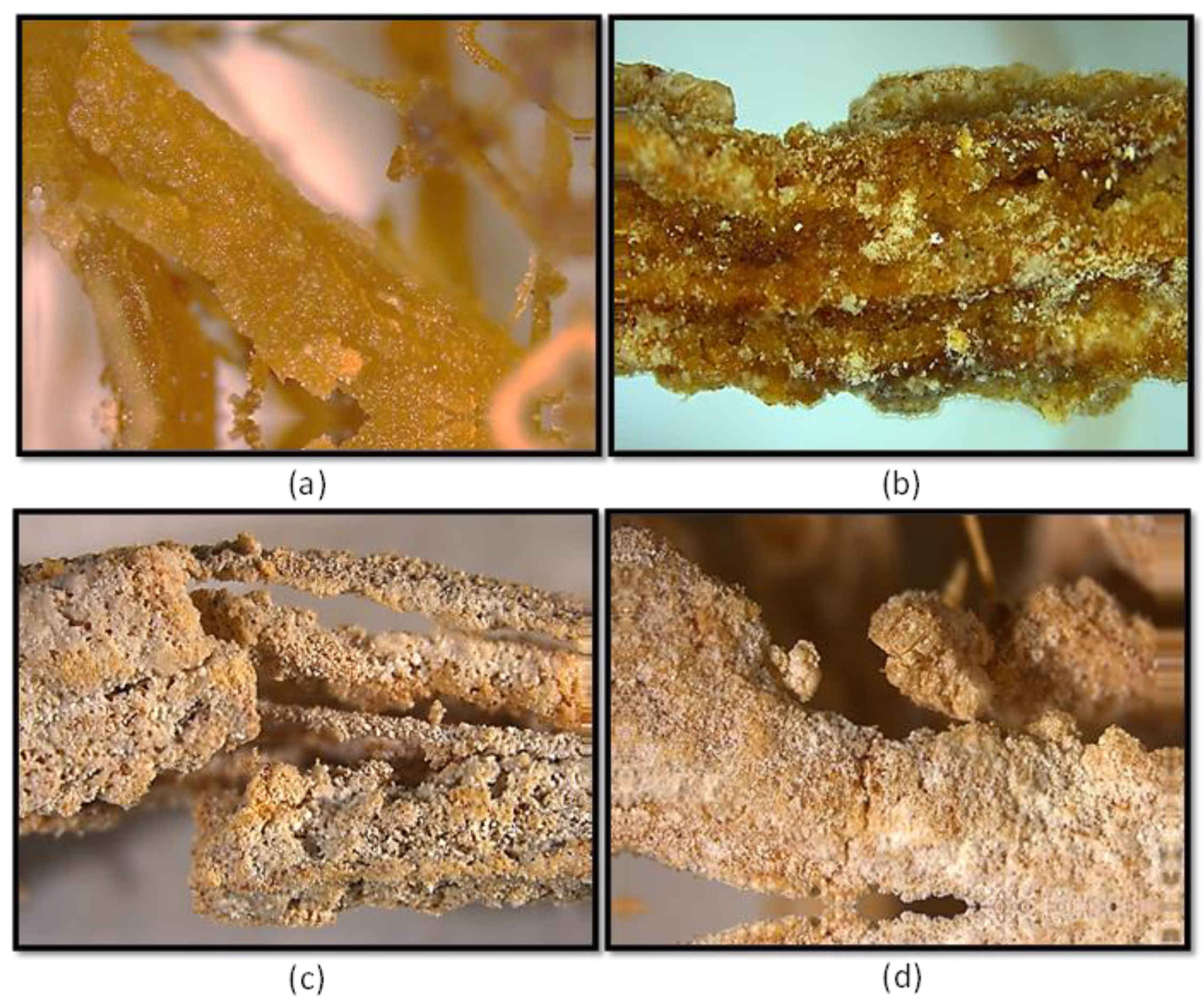
Figure 4.
FT-IR spectrum of coir a) Uncoated, b) coated with paraffin, and c) coated with linseed dipped in Ca (OH)2.
Figure 4.
FT-IR spectrum of coir a) Uncoated, b) coated with paraffin, and c) coated with linseed dipped in Ca (OH)2.
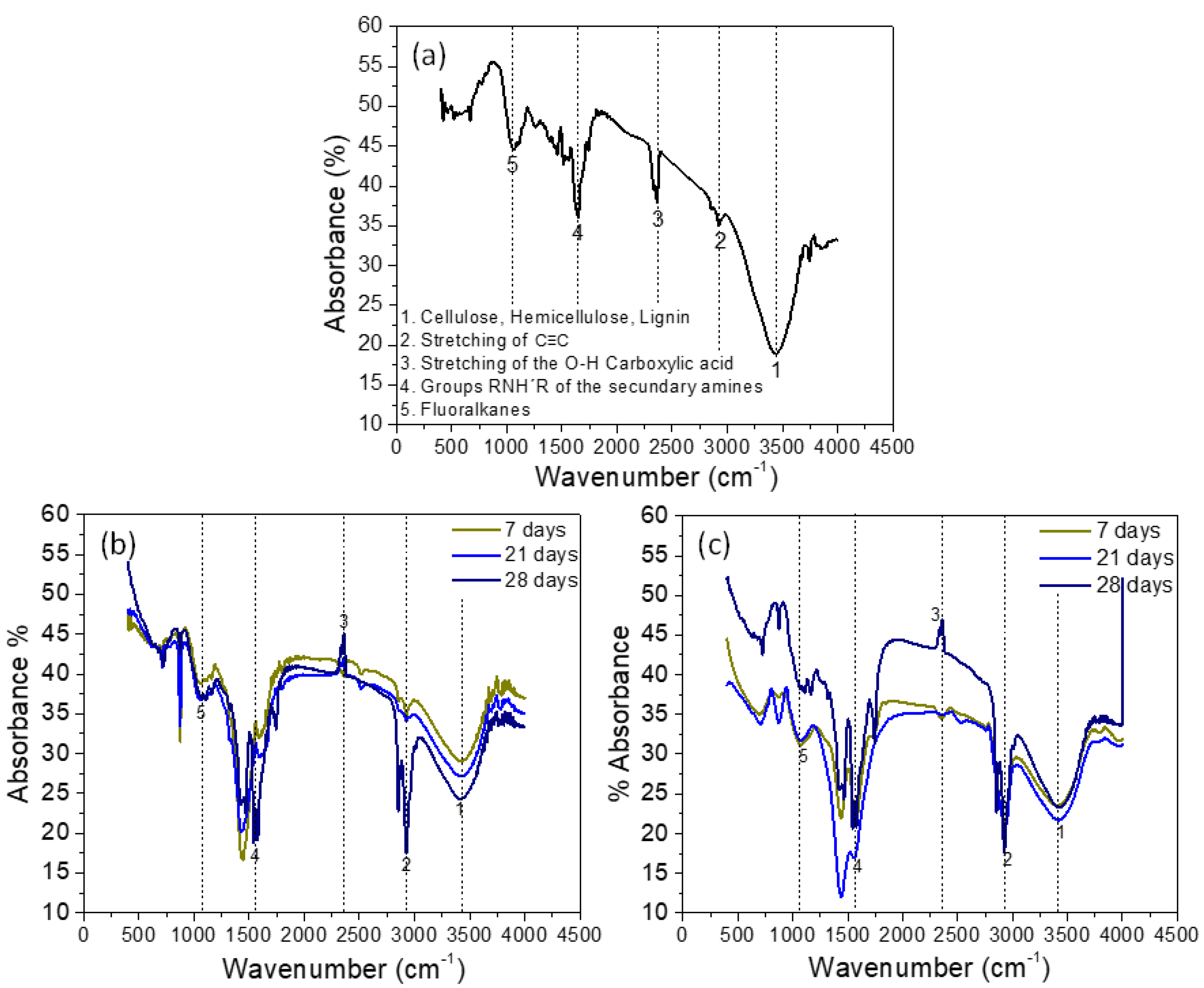
Figure 5.
Untreated coconut fiber breakdown thermogram.
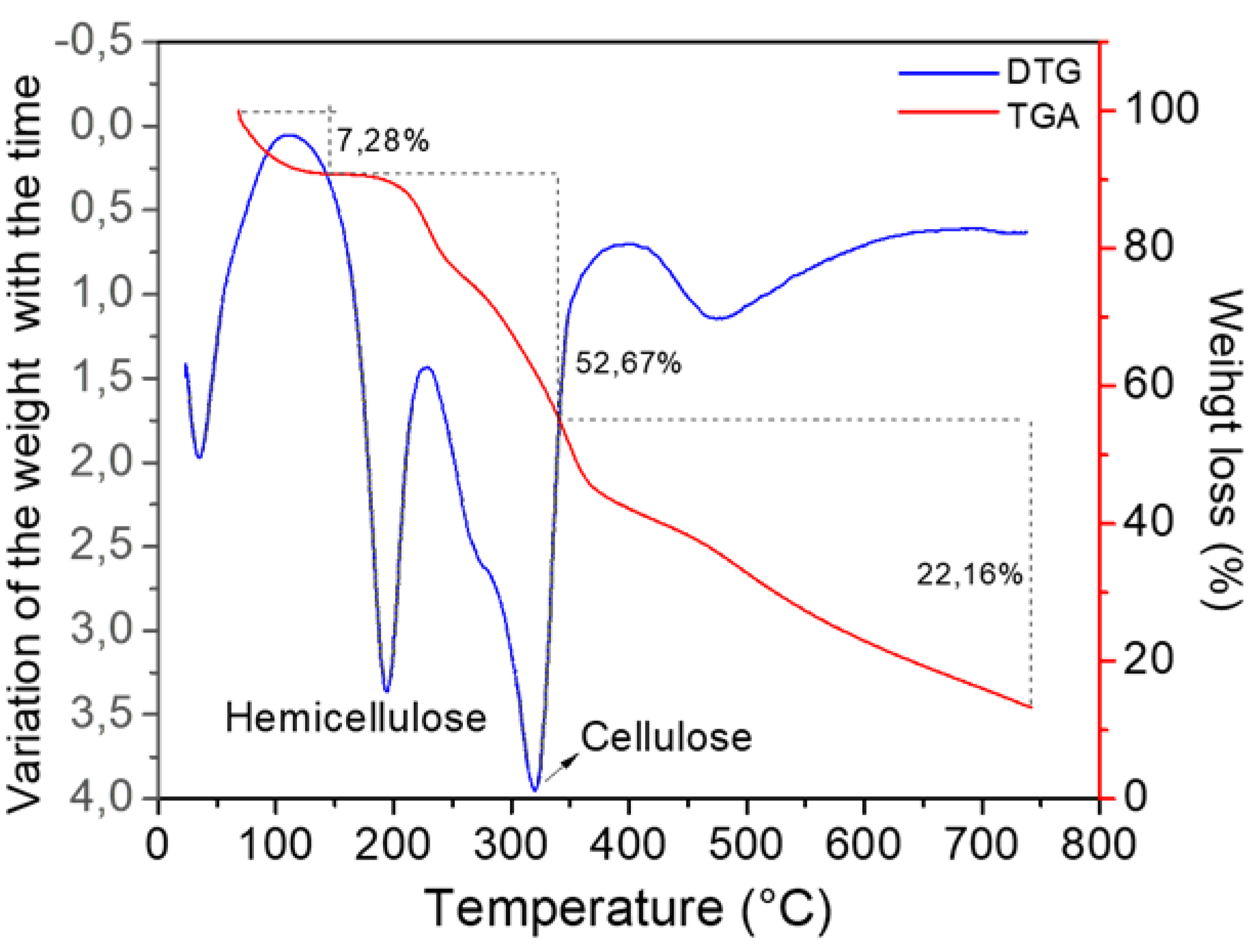
Figure 6.
(a) TGA curve and (b) DTG curve of paraffin- and linseed-coated coconut fibers.
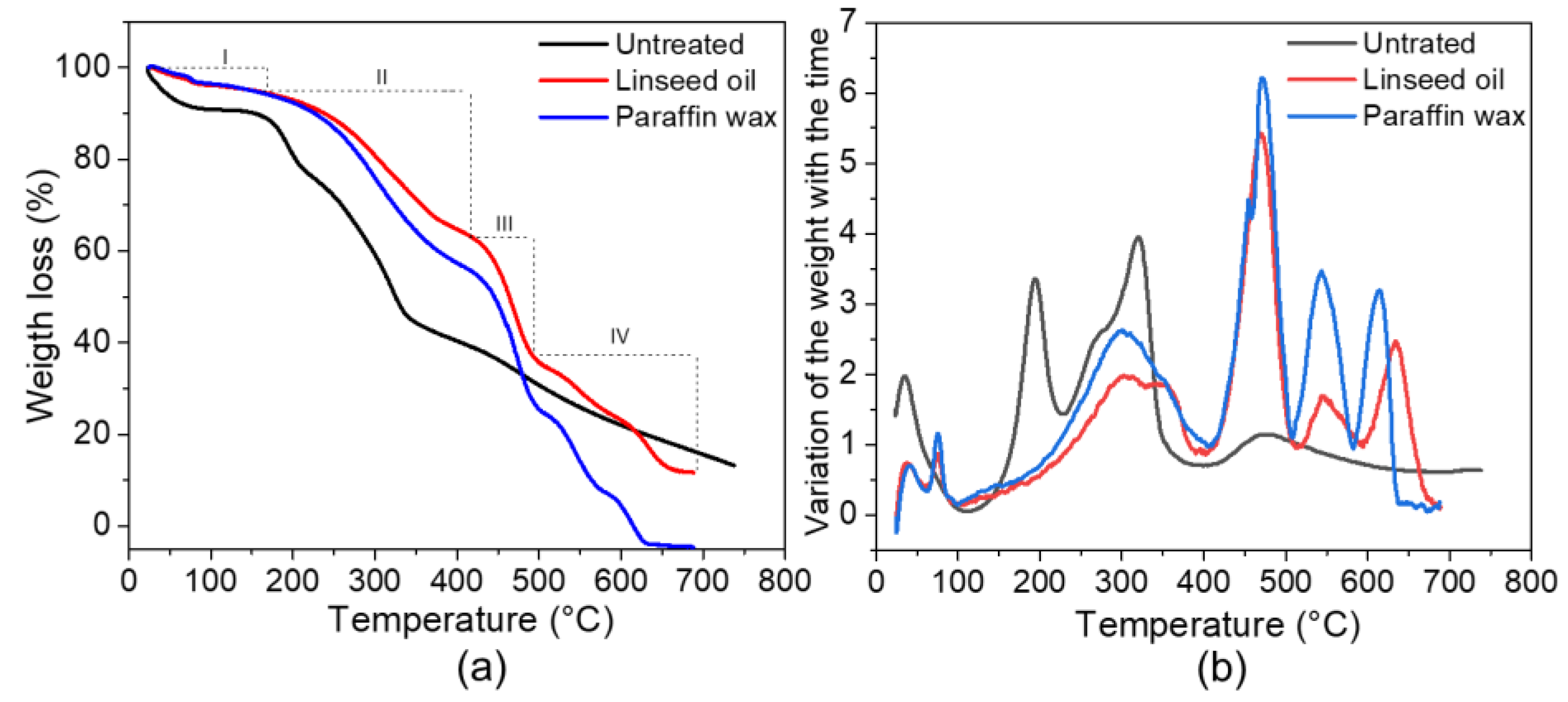
Figure 7.
Compression behavior of fiber-reinforced mortars coated with (a) paraffin wax and (b) linseed oil.
Figure 7.
Compression behavior of fiber-reinforced mortars coated with (a) paraffin wax and (b) linseed oil.
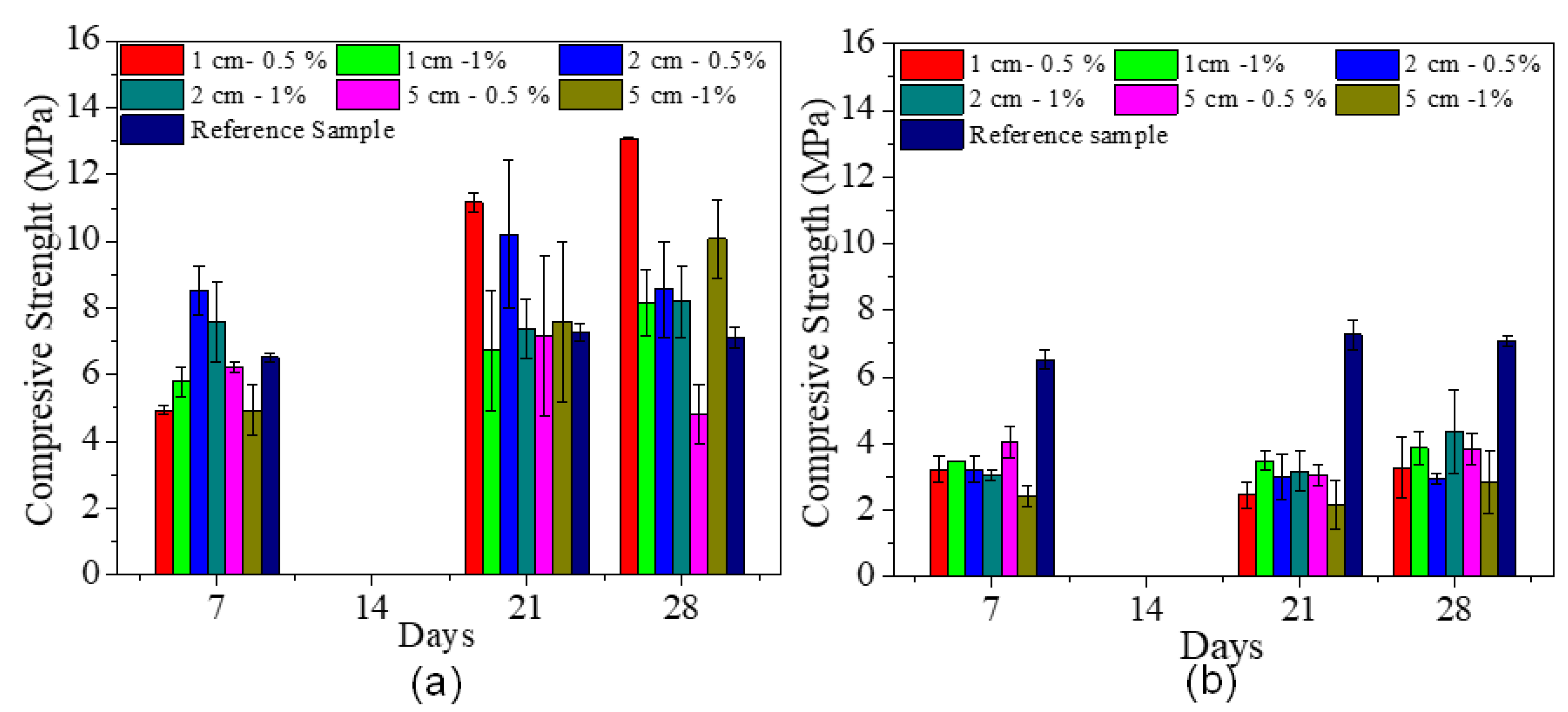
Figure 8.
Flexural behavior of fiber-reinforced mortars coated with a) paraffin wax and b) linseed oil.
Figure 8.
Flexural behavior of fiber-reinforced mortars coated with a) paraffin wax and b) linseed oil.
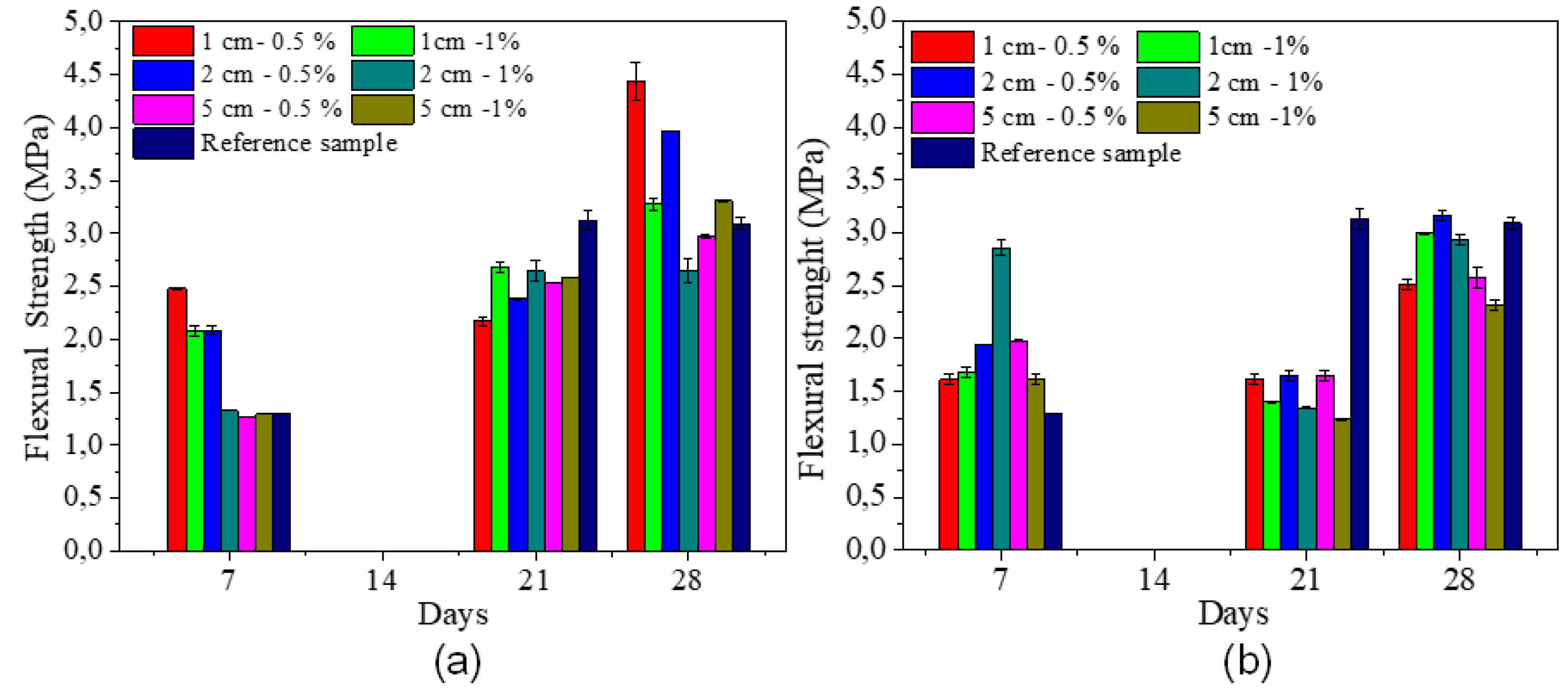

Table 1.
Design of experiments implemented in this study.
| Fiber type | Protective substance |
Length (cm) |
Percentage by weight |
Number of specimens |
|
Coconut fiber |
Linseed Oil |
1 | 0,5 | 12 |
| 1 | 12 | |||
| 2 | 0,5 | 12 | ||
| 1 | 12 | |||
| 5 | 0,5 | 12 | ||
| 1 | 12 | |||
|
Paraffin wax |
1 | 0,5 | 12 | |
| 1 | 12 | |||
| 2 | 0,5 | 12 | ||
| 1 | 12 | |||
| 5 | 0,5 | 12 | ||
| 1 | 12 | |||
| Control mortar | 6 | |||
| Total | 150 | |||
Disclaimer/Publisher’s Note: The statements, opinions and data contained in all publications are solely those of the individual author(s) and contributor(s) and not of MDPI and/or the editor(s). MDPI and/or the editor(s) disclaim responsibility for any injury to people or property resulting from any ideas, methods, instructions or products referred to in the content. |
© 2025 by the authors. Licensee MDPI, Basel, Switzerland. This article is an open access article distributed under the terms and conditions of the Creative Commons Attribution (CC BY) license (http://creativecommons.org/licenses/by/4.0/).
Copyright: This open access article is published under a Creative Commons CC BY 4.0 license, which permit the free download, distribution, and reuse, provided that the author and preprint are cited in any reuse.


